CULTURE
©︎ ATDEF team
©︎ ATDEF team
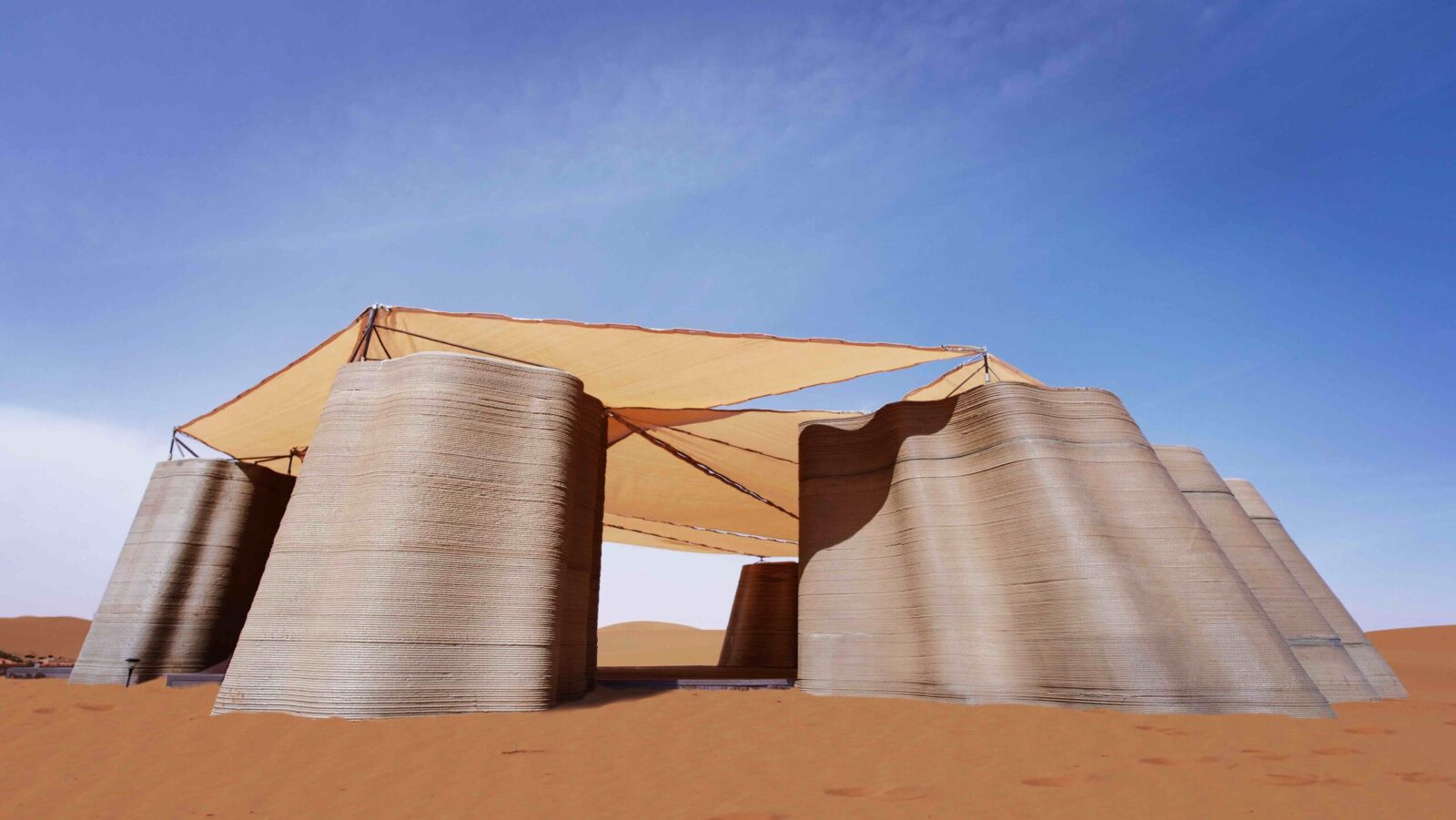
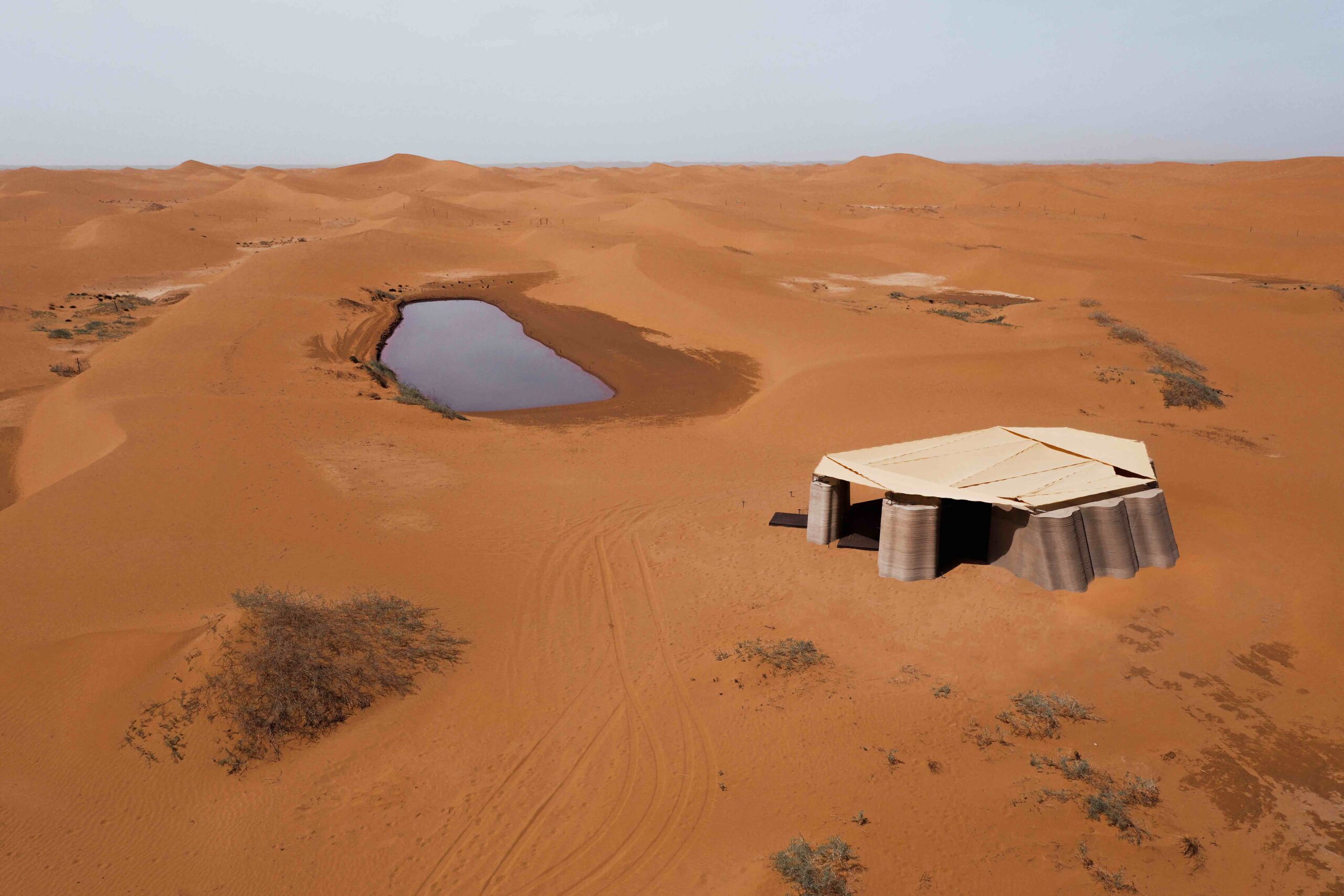
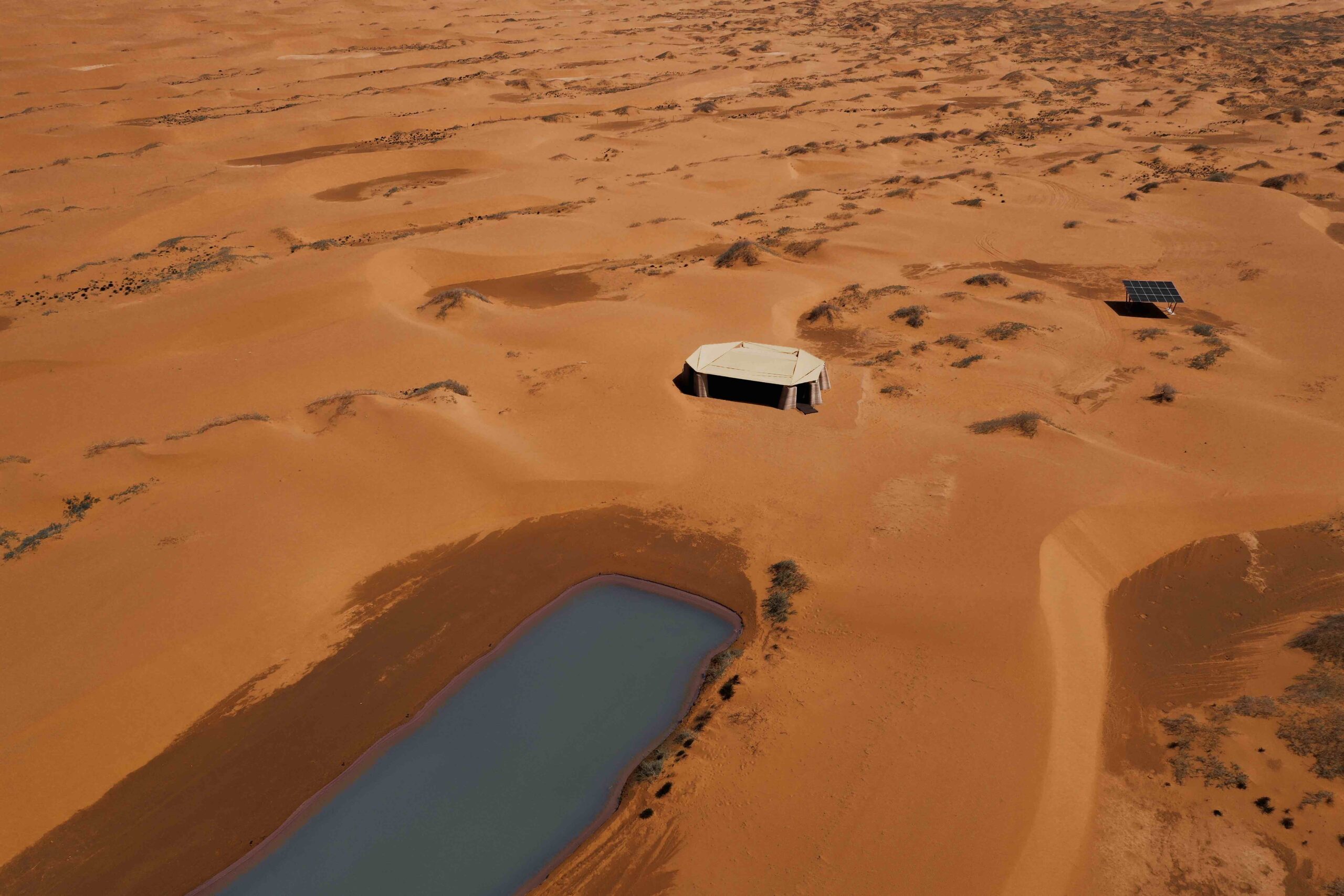
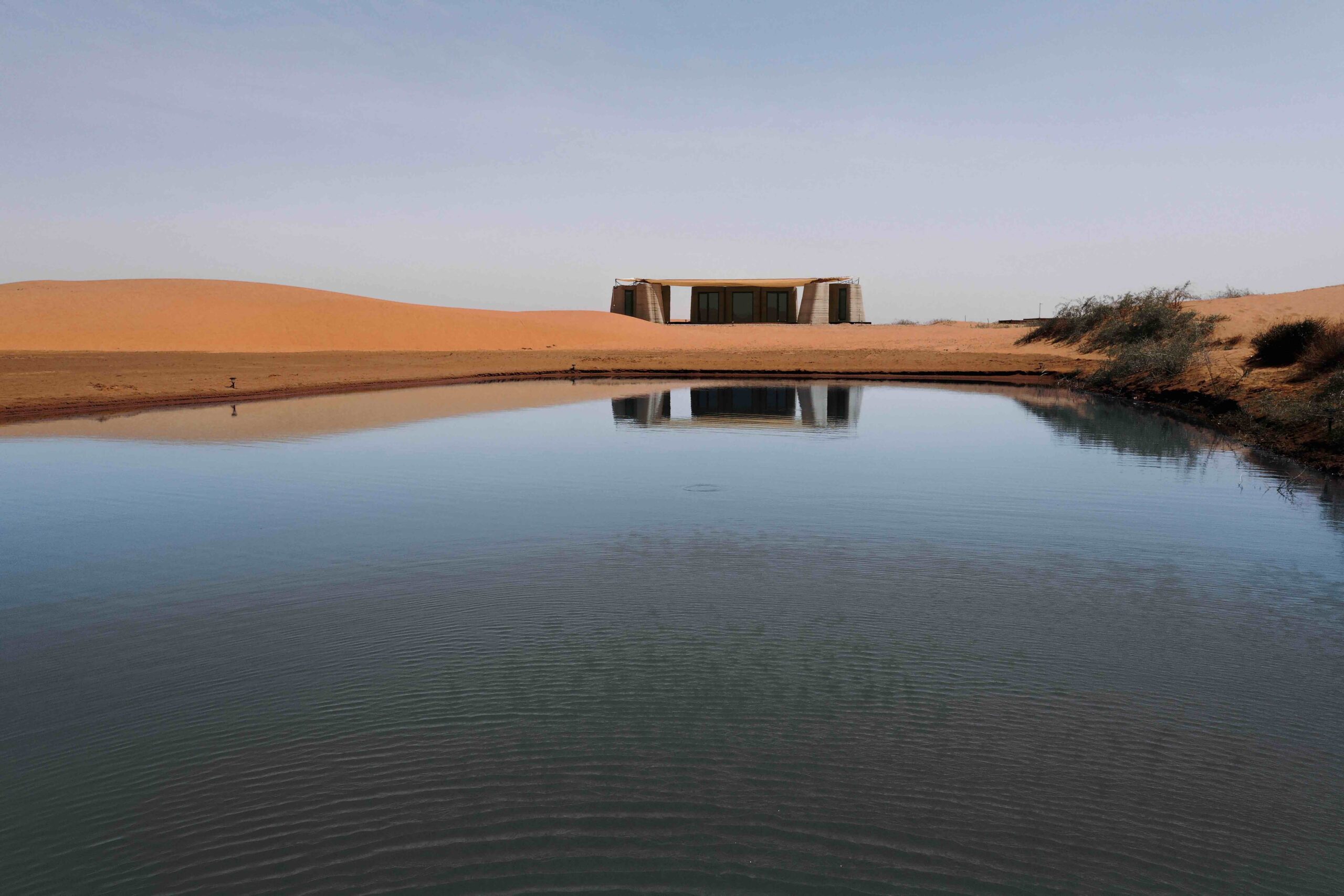
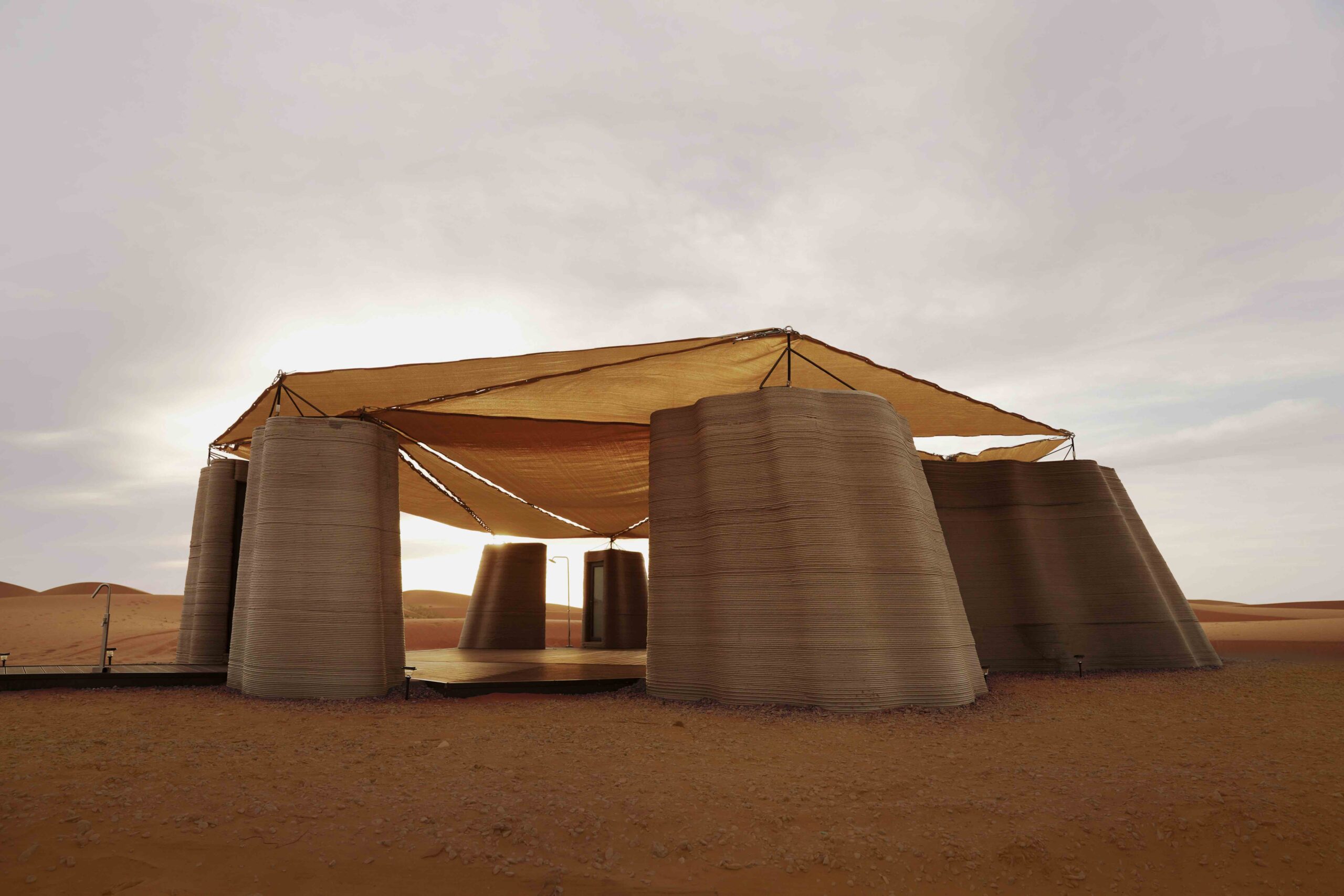
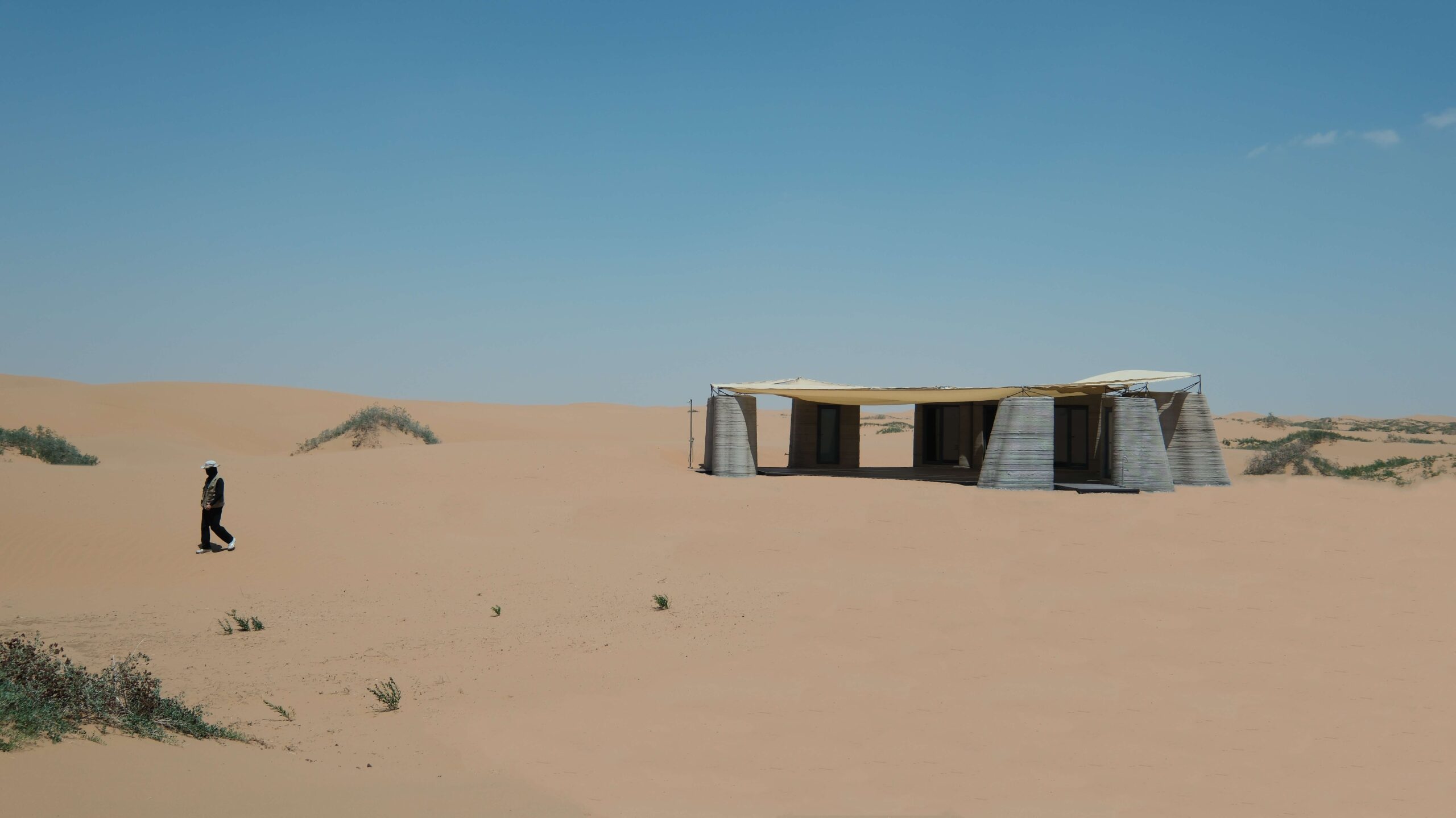
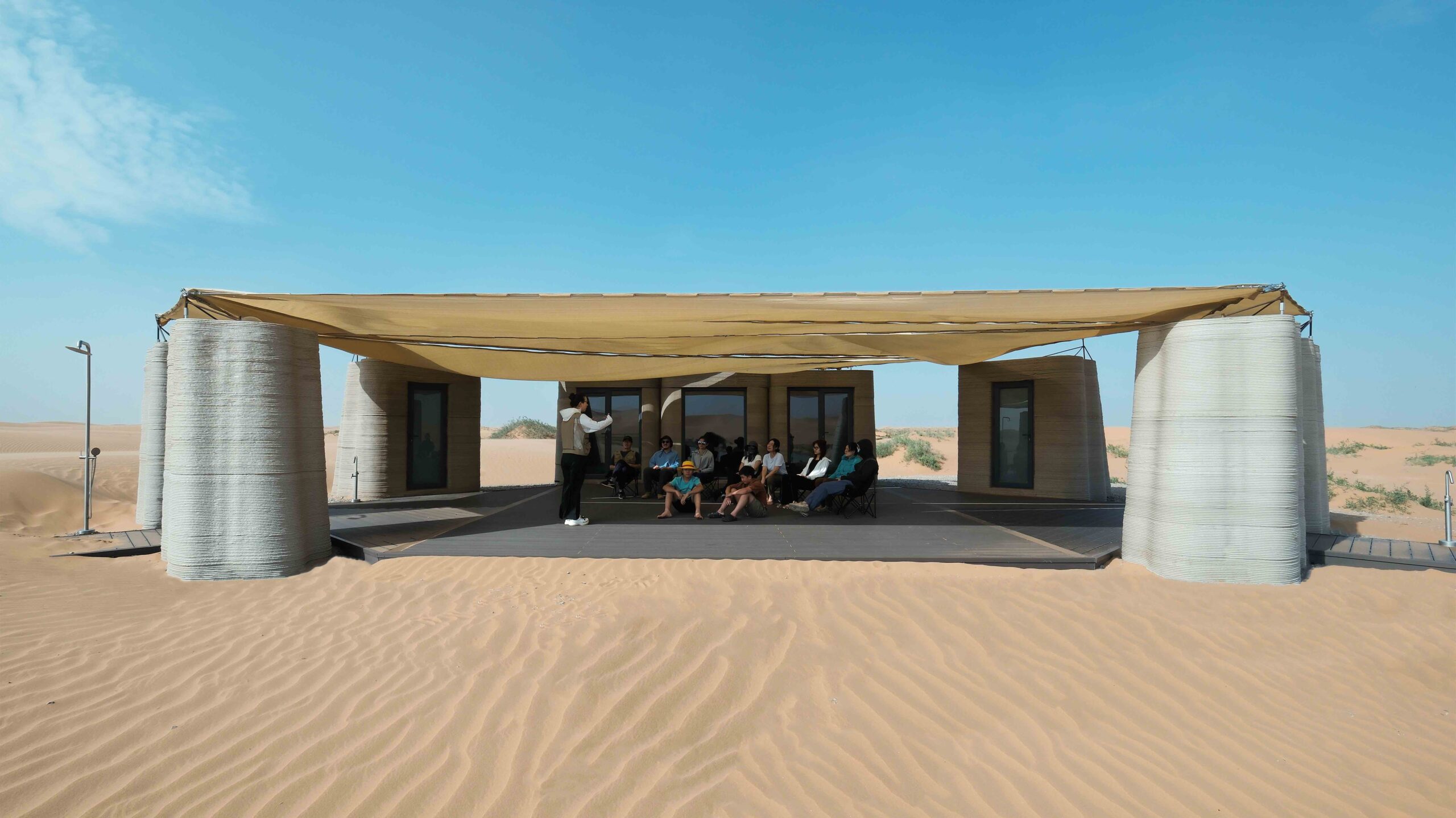
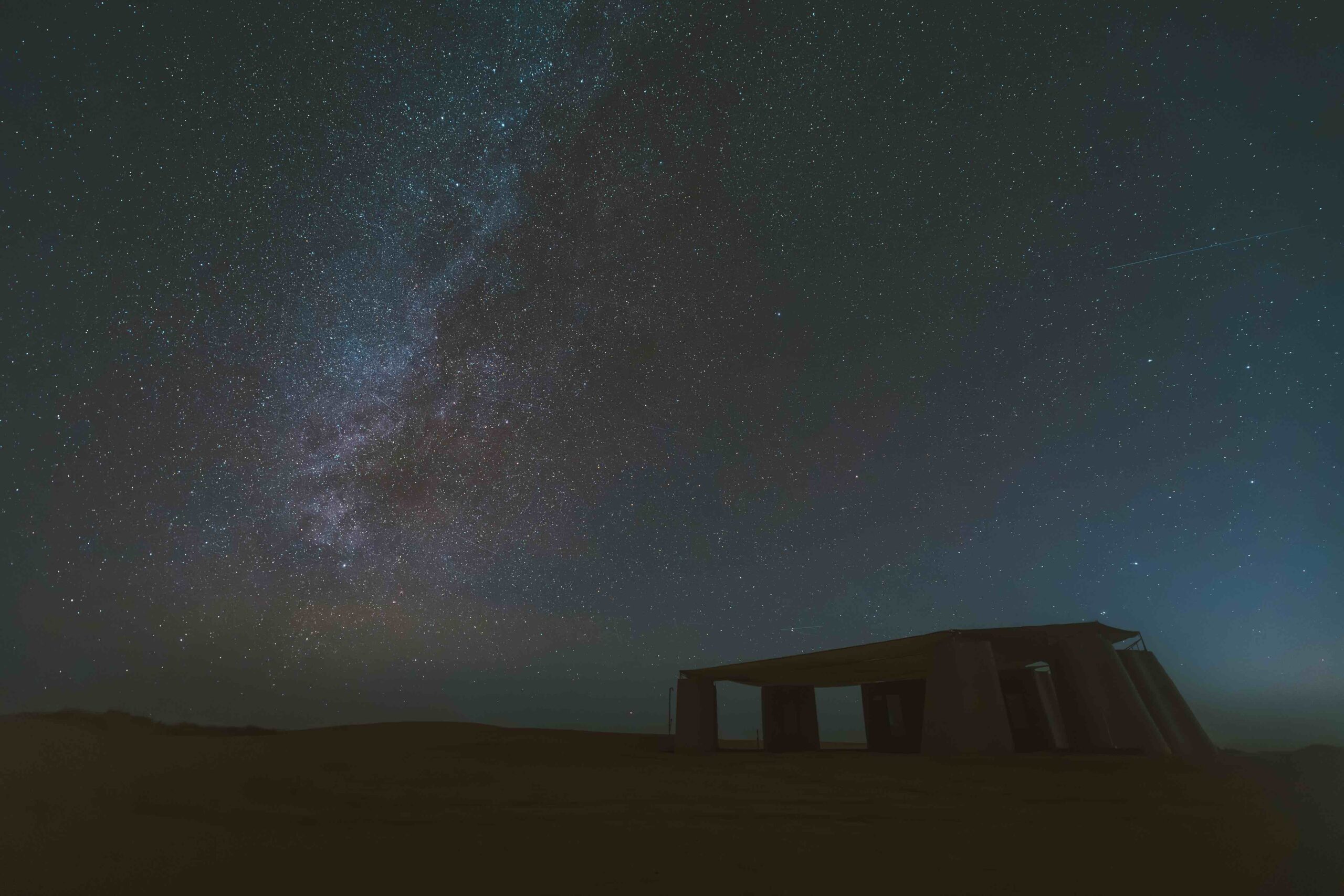
内モンゴル自治区に位置する〈デザート・アーク(Desert Ark)〉は、中国初となる砂漠環境での3Dコンクリートプリント建築です。
砂漠化防止のために活動する非営利団体の活動のために建設されたキャンプであり、北京とシリコンバレーで設立された建築スタジオ designRESERVEが設計しました。
注目しそうなポイント
- モジュール化とプレファブリケーションによる現地施工2日での組立完了
- 環境への影響を抑える、移設・再利用が可能な「可逆的施工手法」
- 最大風速34m/sに耐えるための風荷重を抑えた有機的フォルム
- ゼロエネルギー運用を実現するオフグリッド太陽光発電システム
(以下、designRESERVEから提供されたプレスキットのテキストの抄訳)
砂漠の環境再生を担う実験的建築
本プロジェクトは、中国初となる砂漠環境に実現した3Dコンクリートプリント技術による公共建築である。内モンゴル自治区の生態系回復を支援するだけでなく、将来の人類の宇宙居住環境に向けた建築プロトタイプとしての役割も担う。
©︎ ATDEF team
©︎ ATDEF team
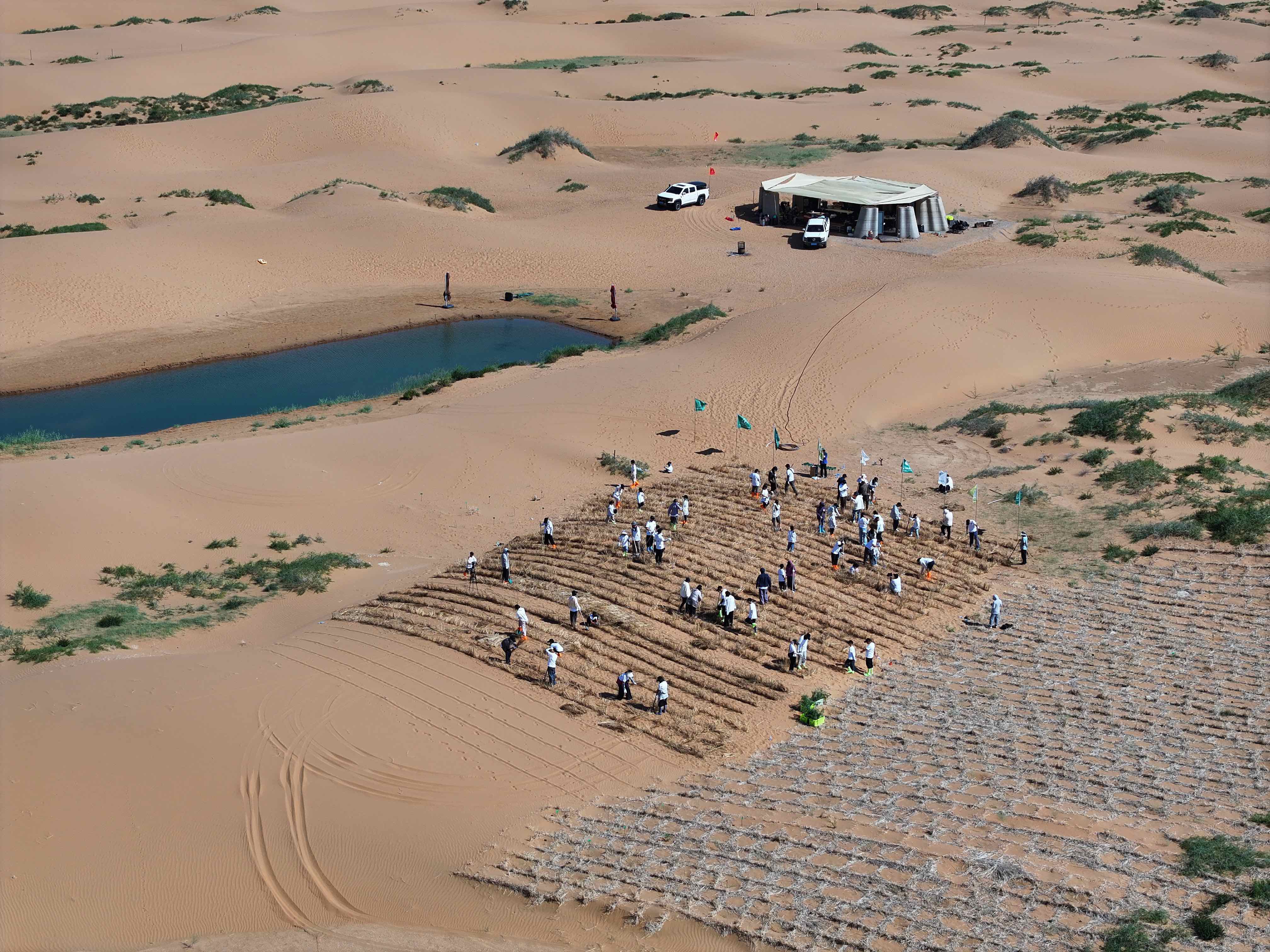
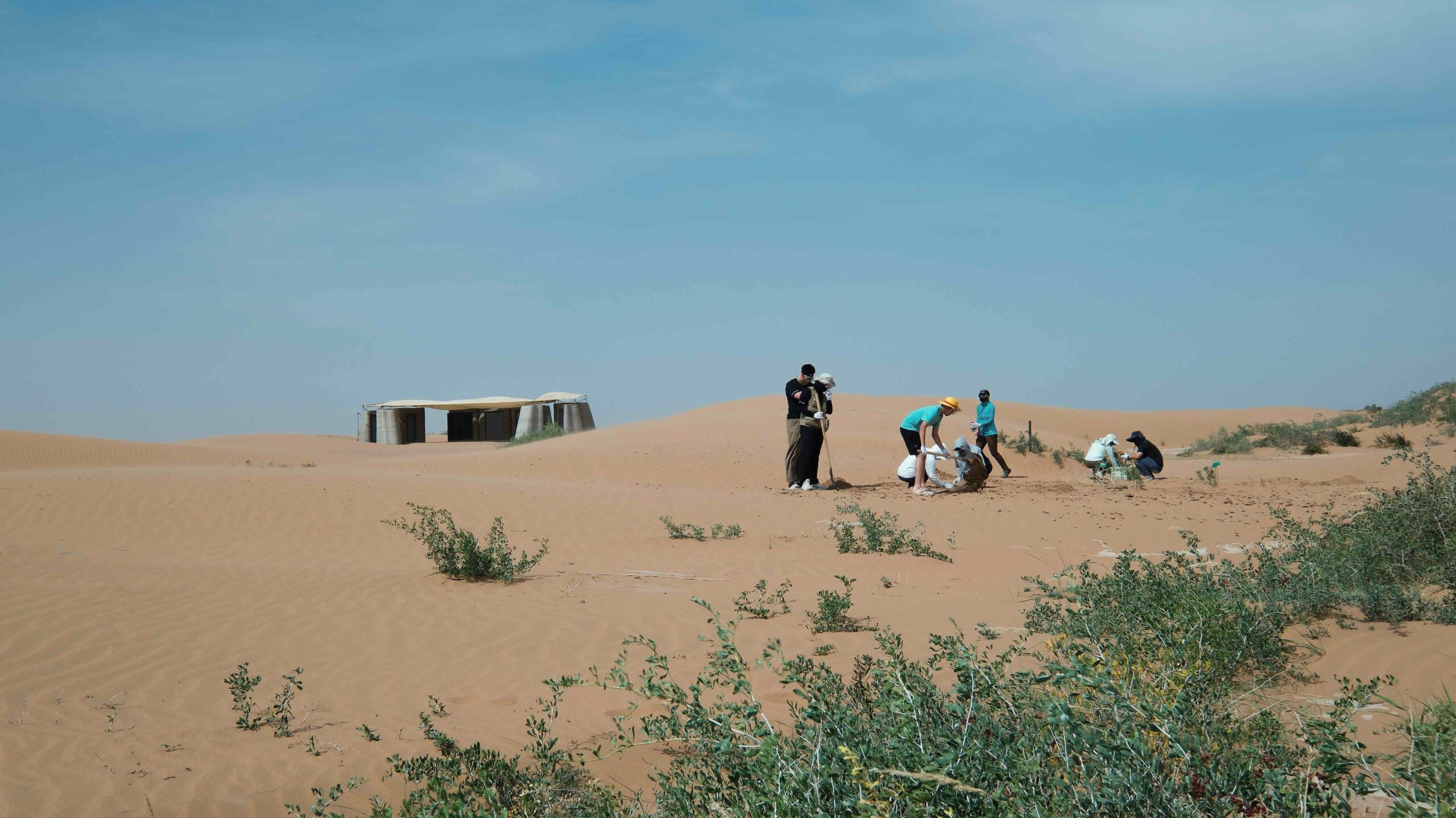
トングリ砂漠は中国で4番目に大きく、最南端に位置する砂漠である。1990年代初頭から、非営利団体が砂漠の東側への危険な拡大を食い止めるため、砂漠の縁辺部で植樹活動を続けてきた。
designRESERVEは同団体からの委託を受け、植樹ボランティアが野外作業中に宿泊・支援施設を利用できる新たなキャンプサイトを設計した。過酷な現地条件、制約された予算と工期を考慮し、designRESERVEは3Dコンクリートプリント技術を用いたプロトタイプを開発し、多様な用途に対応する設計を実現した。
©︎ ATDEF team
©︎ ATDEF team
「砂漠の箱舟」としての建築
トングリ砂漠は東アジアにおける砂嵐の主要発生源であるが、2000年代以降、国際基金・地方政府・非営利団体の協働により、生態系の回復が進んでいる。
非営利団体「トングリ砂漠砂漠化防止生態公益基地」は、持続可能な植林アプローチと国内外ボランティアの支援を受け、顕著な成果を上げてきた。彼らは自らを「砂漠封じの森のレンジャー」と称し、過酷な気象条件の中で活動を続けている。
©︎ ATDEF team
©︎ ATDEF team
designRESERVEに課せられた課題は、彼らの活動を支える耐久性のあるモジュール式シェルターシステムを構築し、同時に公共環境教育の拠点としても機能させることであった。
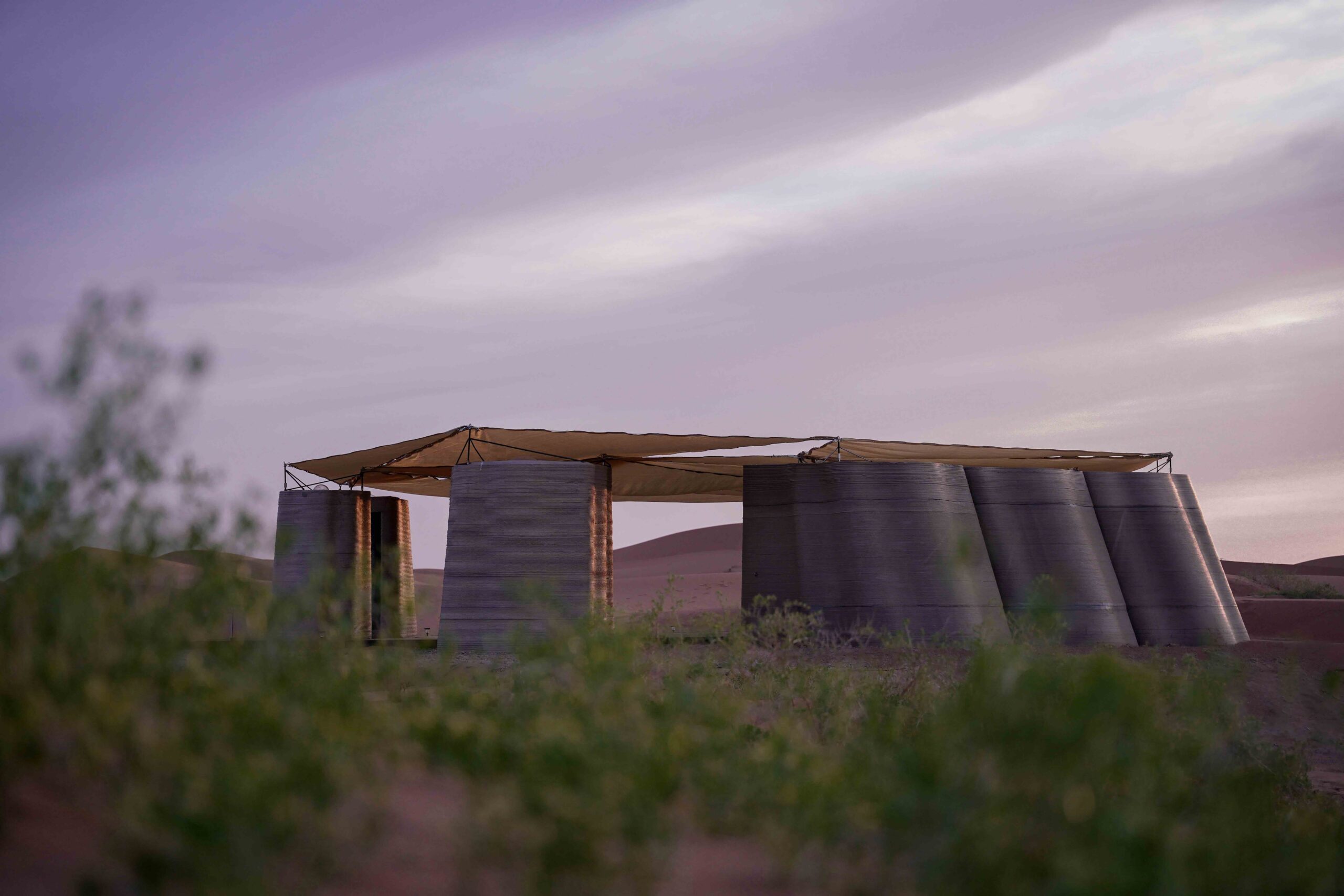
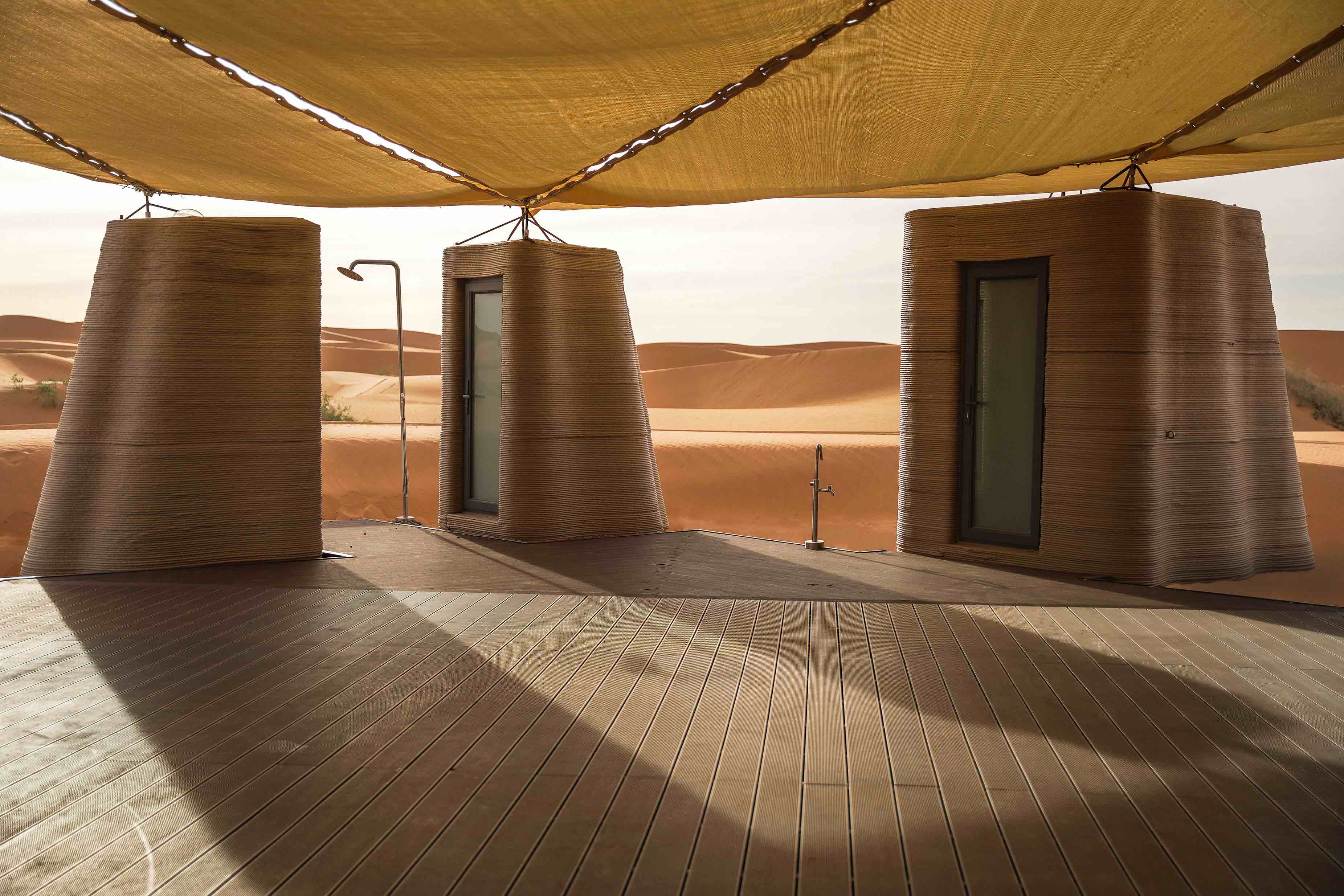
キャンプはリビングルーム、キッチン、トイレ、シャワー、倉庫を収容する9つのモジュールユニットで構成される。各ユニットは輸送と組立の効率を最適化した設計となっており、〈デザート・アーク〉と呼ばれるこの集合体は、囲まれたレイアウトにより安全で美しく、精神的な支えとなる避難所を形成している。
©︎ ATDEF team
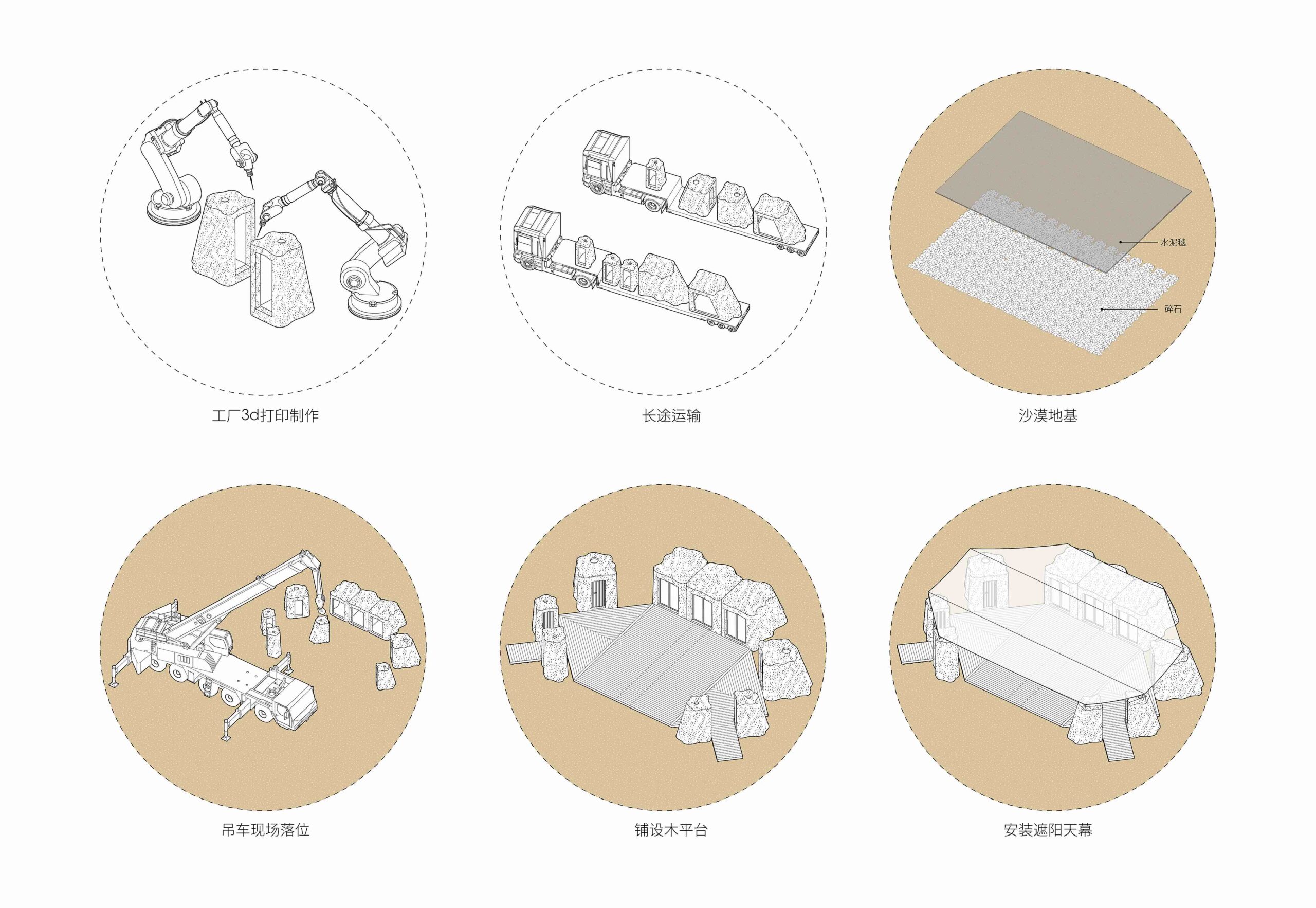
Diagram of 3D printing and assembling the camp ©︎ designRESERVE
建設は以下6つの主要フェーズで構成されている。
フェーズ1:無錫(むしゃく)市の工場にてロボット3Dコンクリートプリント(R3DCP)システムを用いてユニットをプレファブリケーション化
フェーズ2:トラックでの砂漠現場への輸送
フェーズ3:現地の遊牧民の協力によりユニットを設置
フェーズ4:環境負荷を最小限に抑えるため、再利用可能な貨物パレットによるデッキ基礎を整備
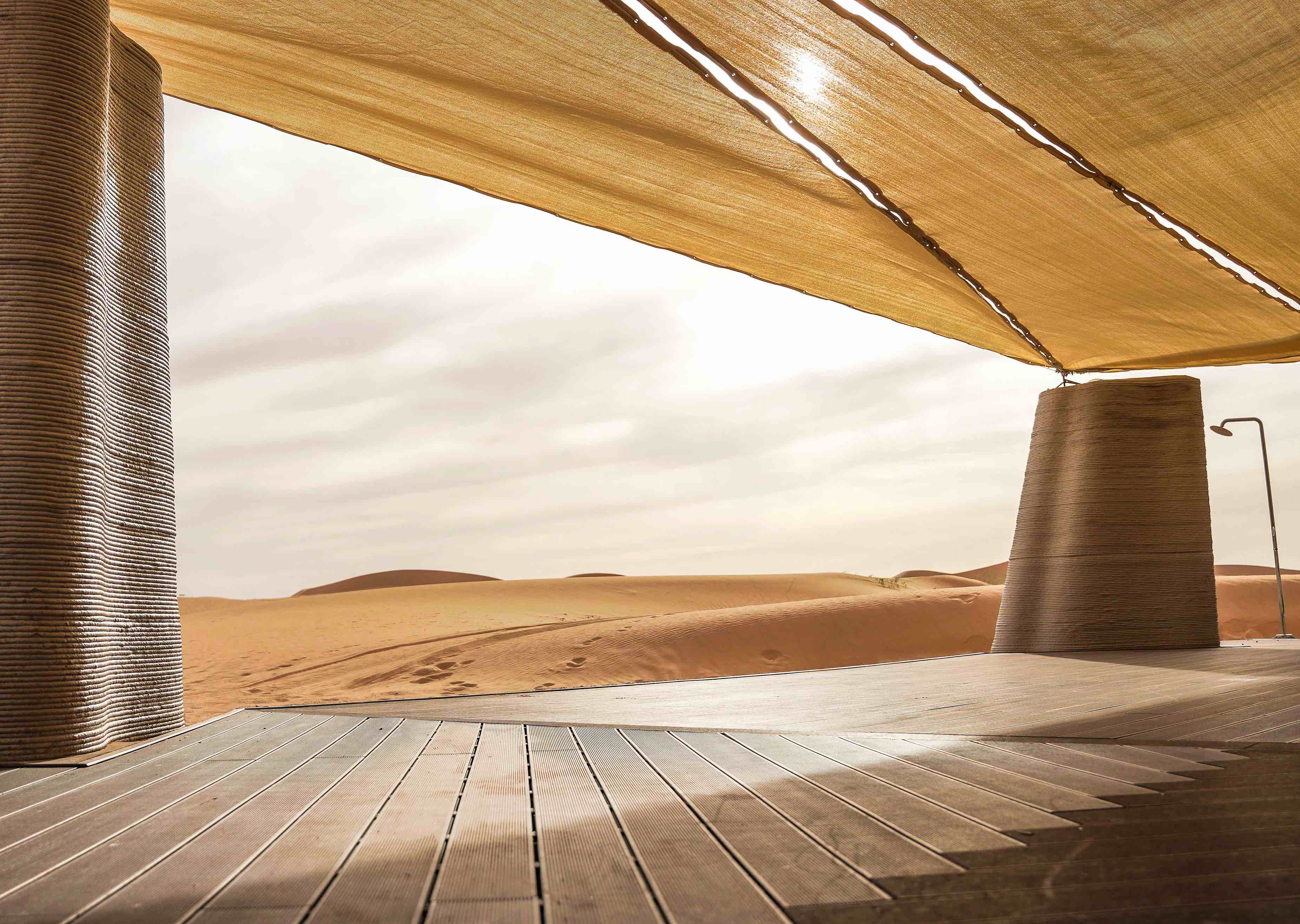
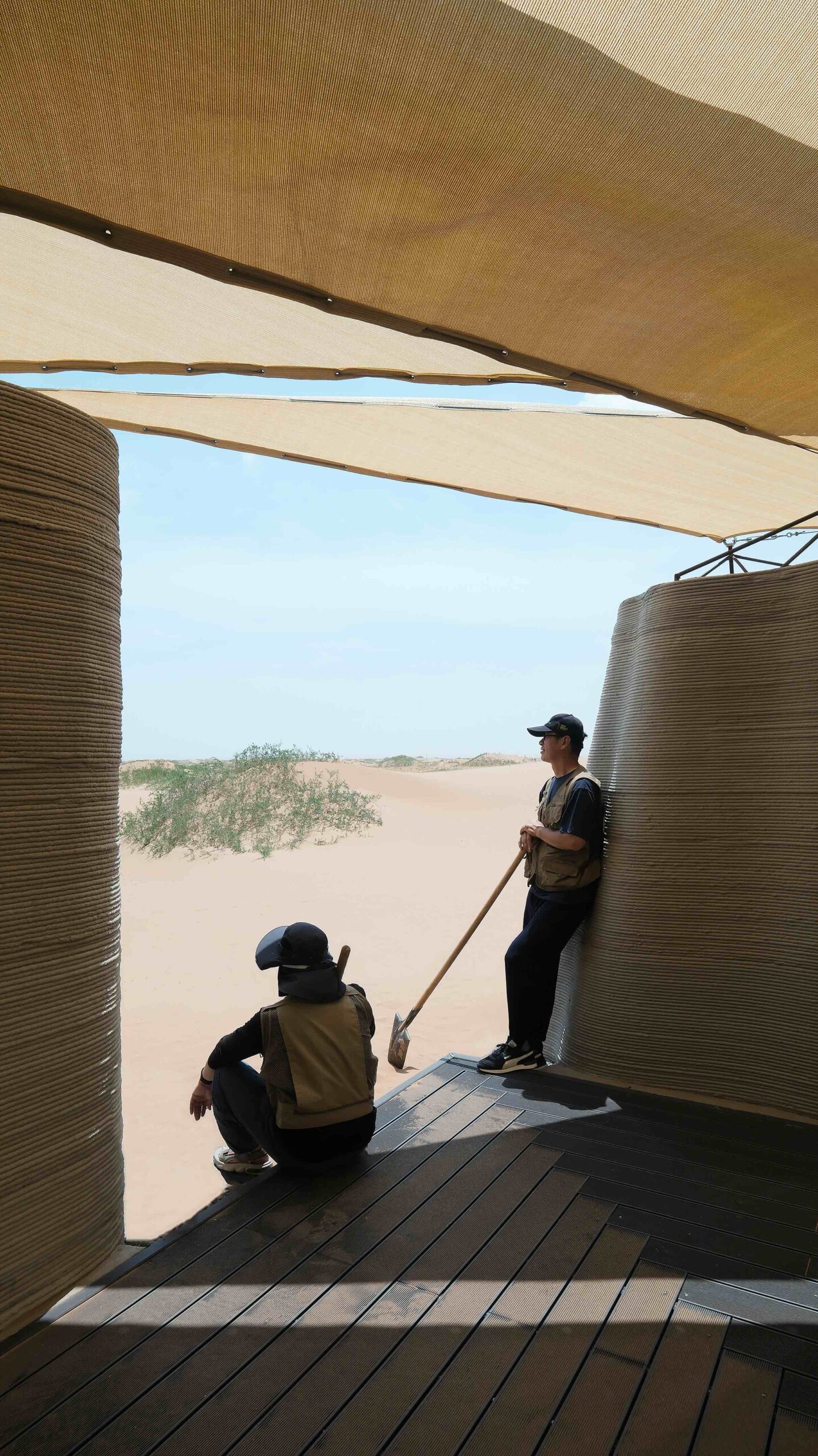
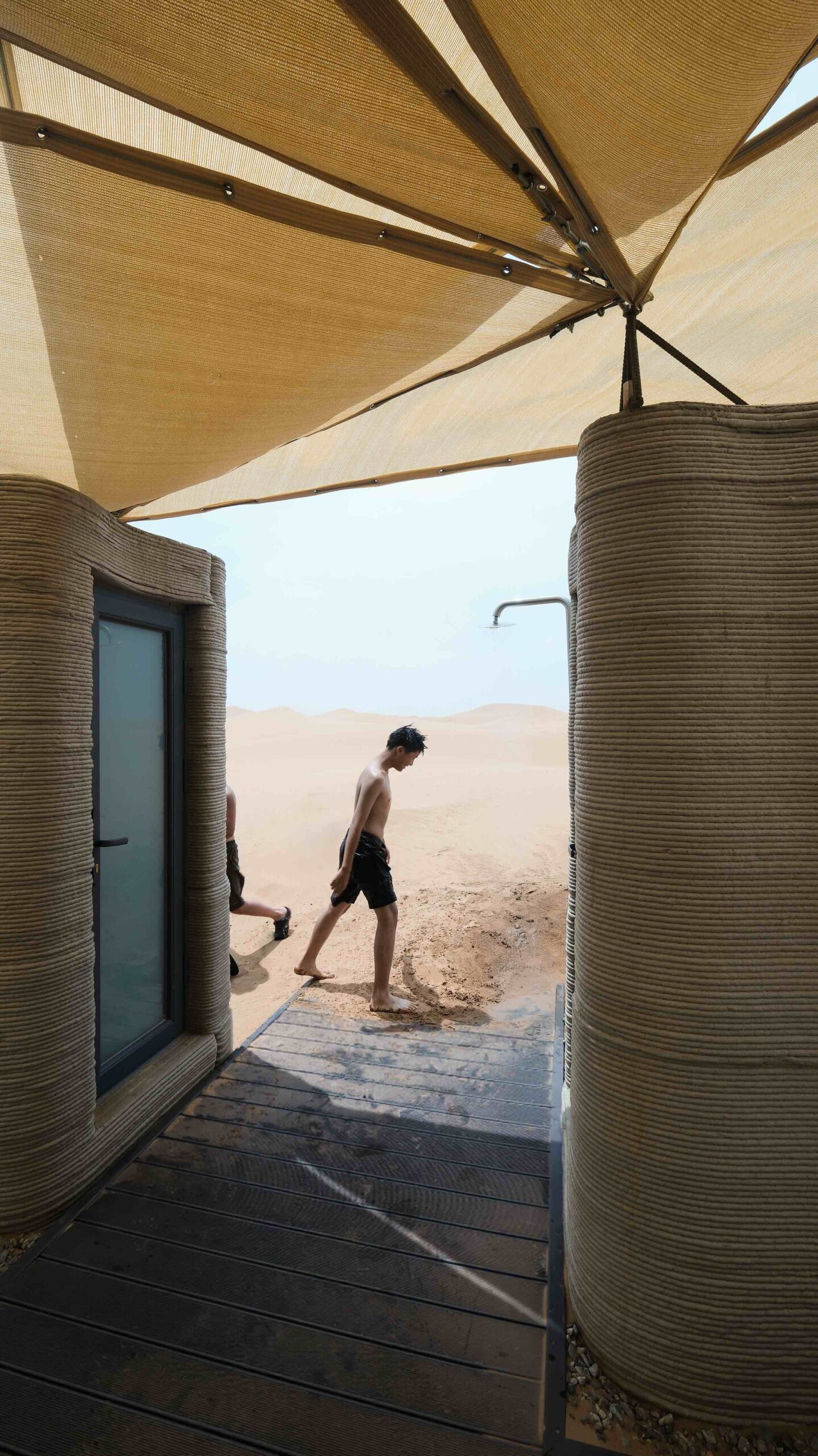
フェーズ5:共有スペースとして木質プラスチック複合材デッキを構築し、夏季の太陽熱を軽減する格納式キャノピーを設置
フェーズ6:低放射率ガラスドア、給排水設備、太陽光パネルなどの生活支援システムを設置
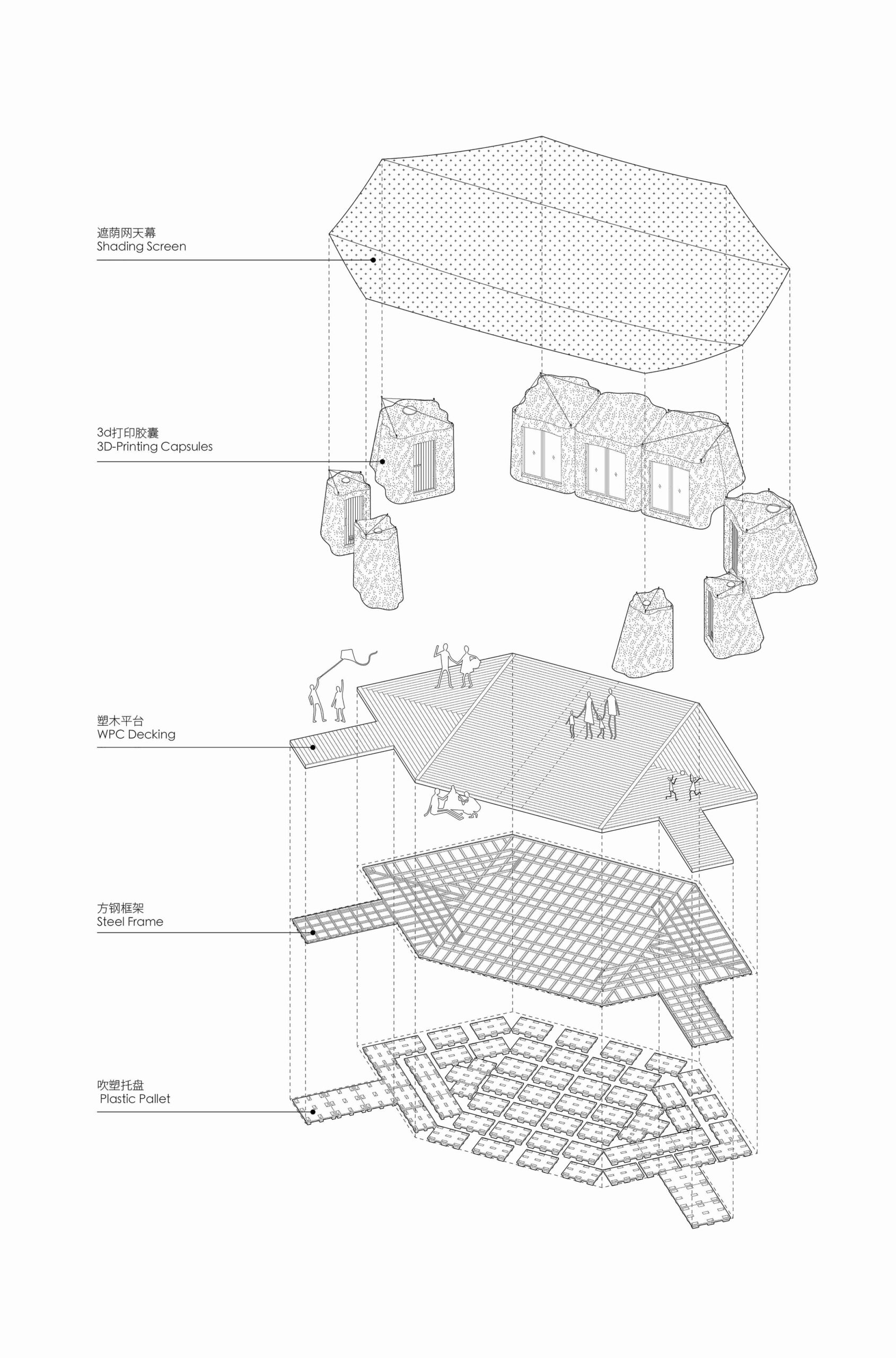
Anatomy of the camp ©︎ designRESERVE
プロジェクトの革新性:砂漠での迅速施工と自然への応答
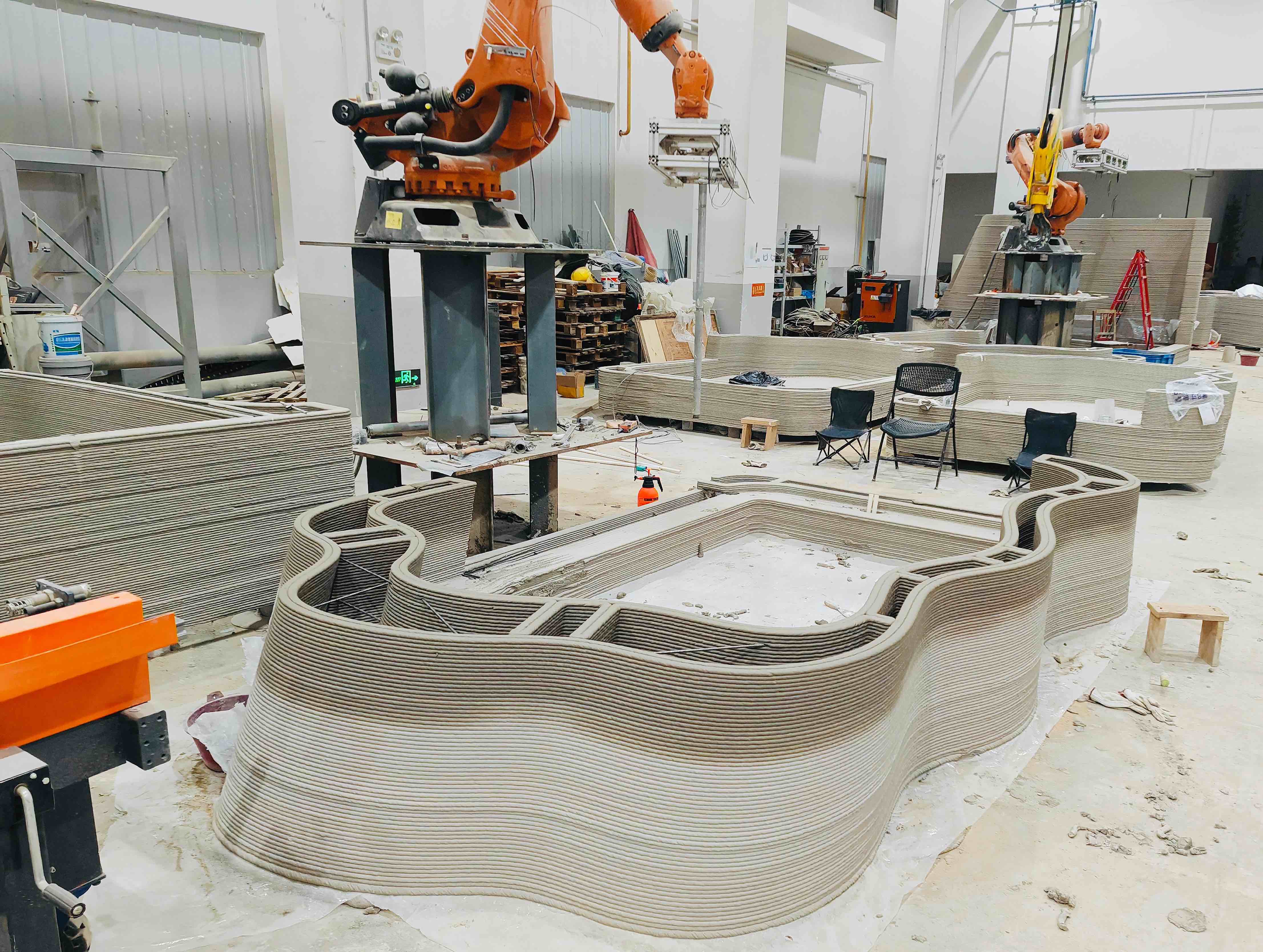
過酷な建設環境と短い工期を踏まえ、設計チームは清華大学・徐偉国教授の研究室による支援を受け、3Dコンクリート印刷技術を採用した。
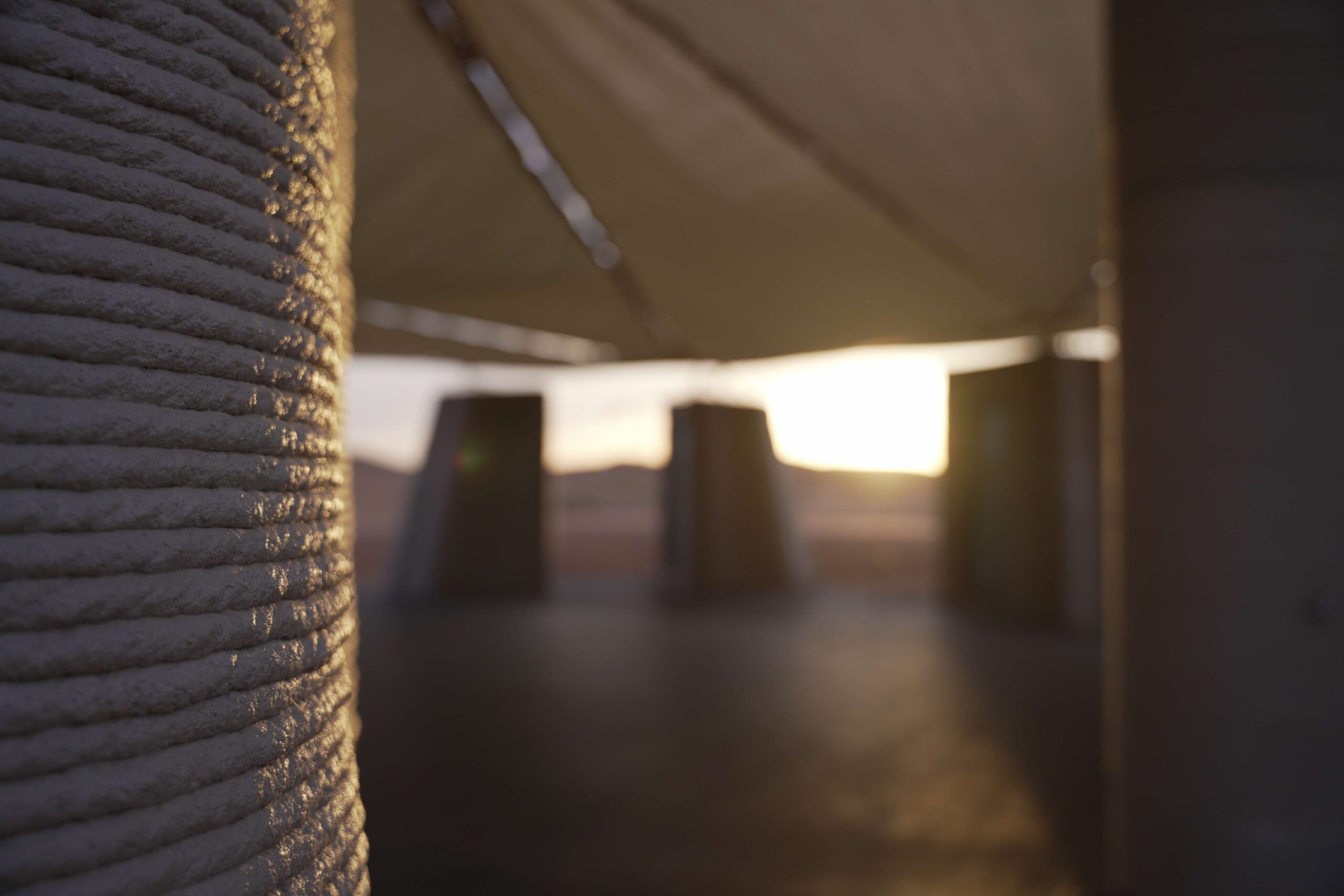
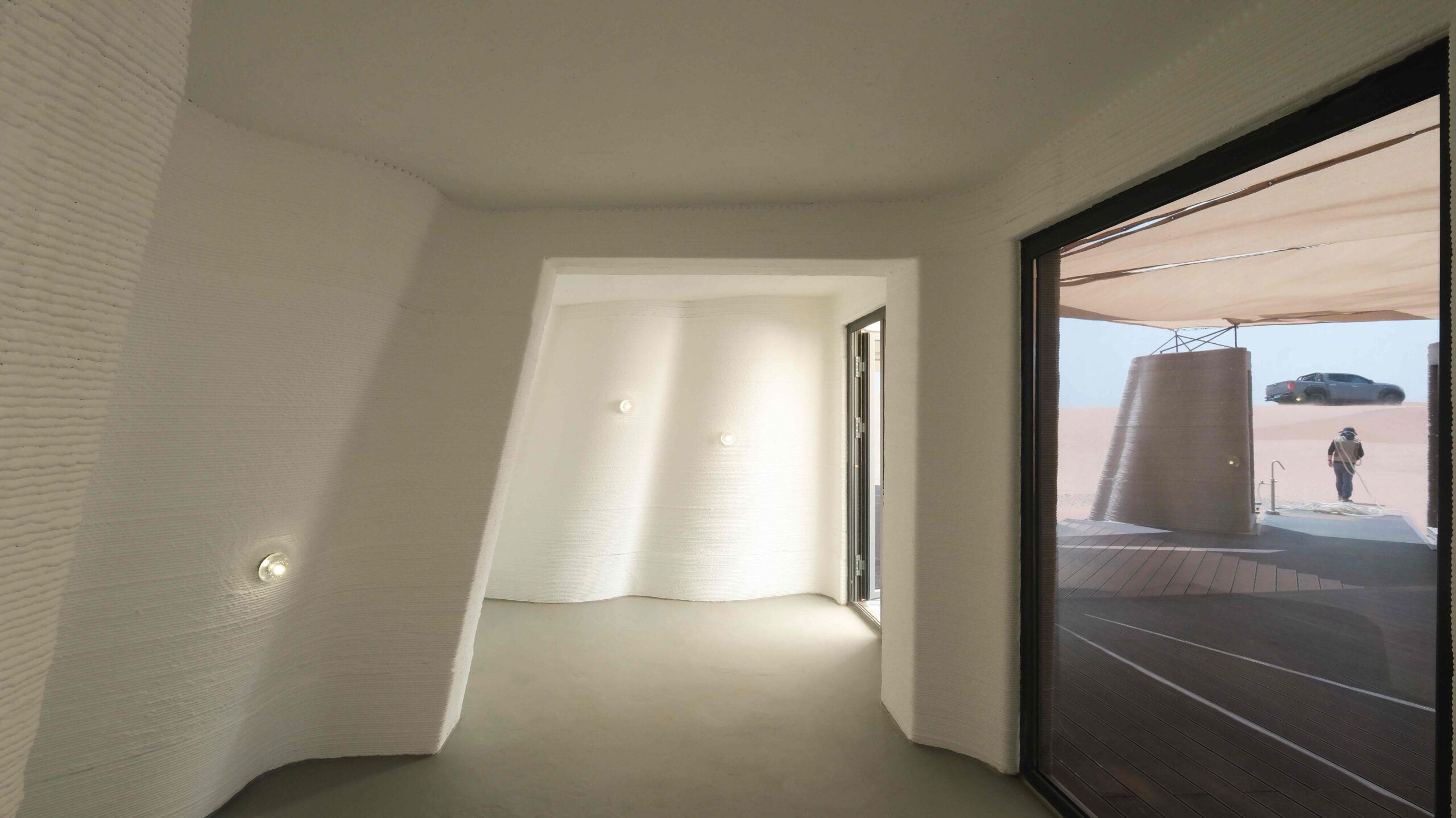
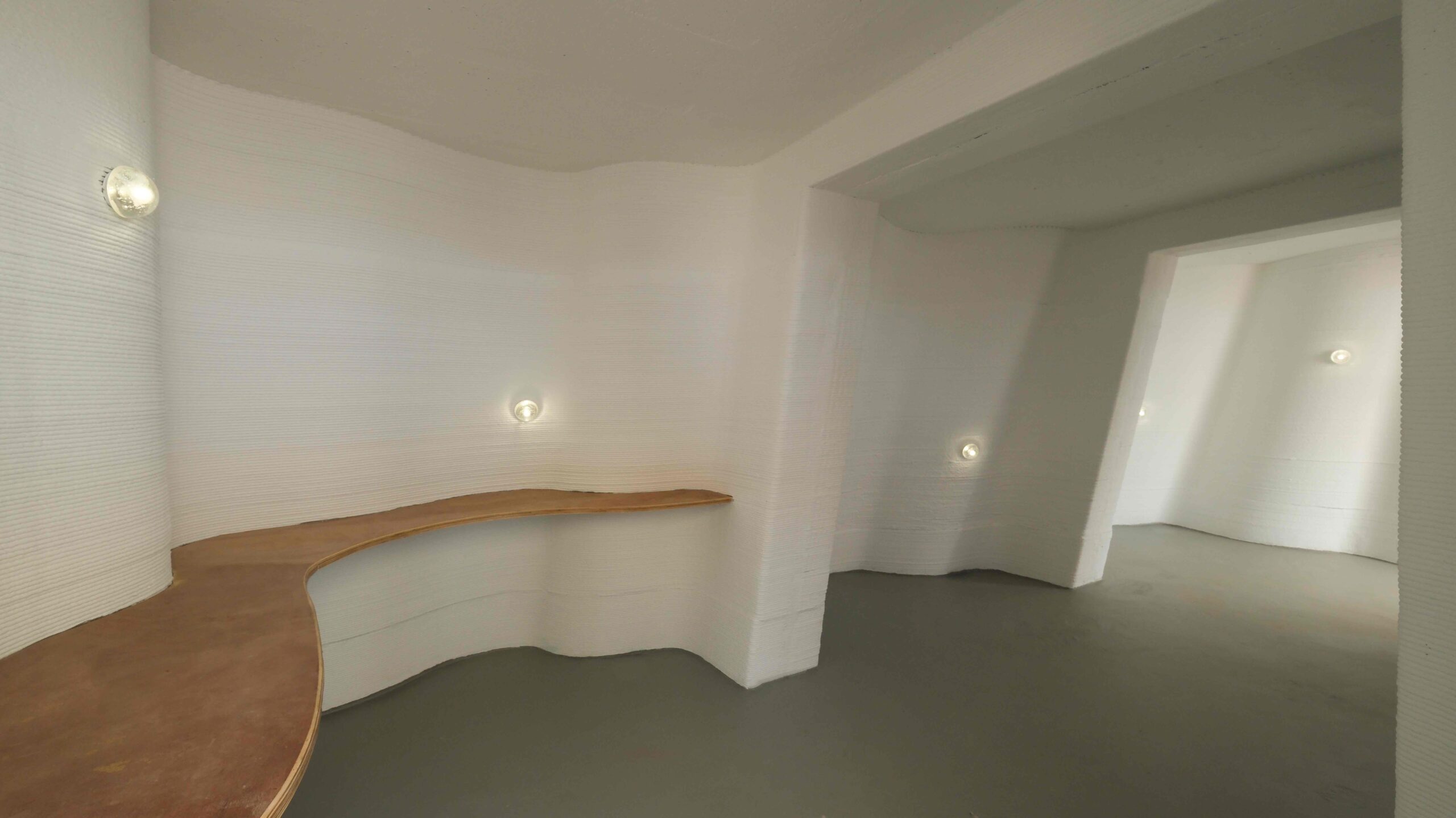
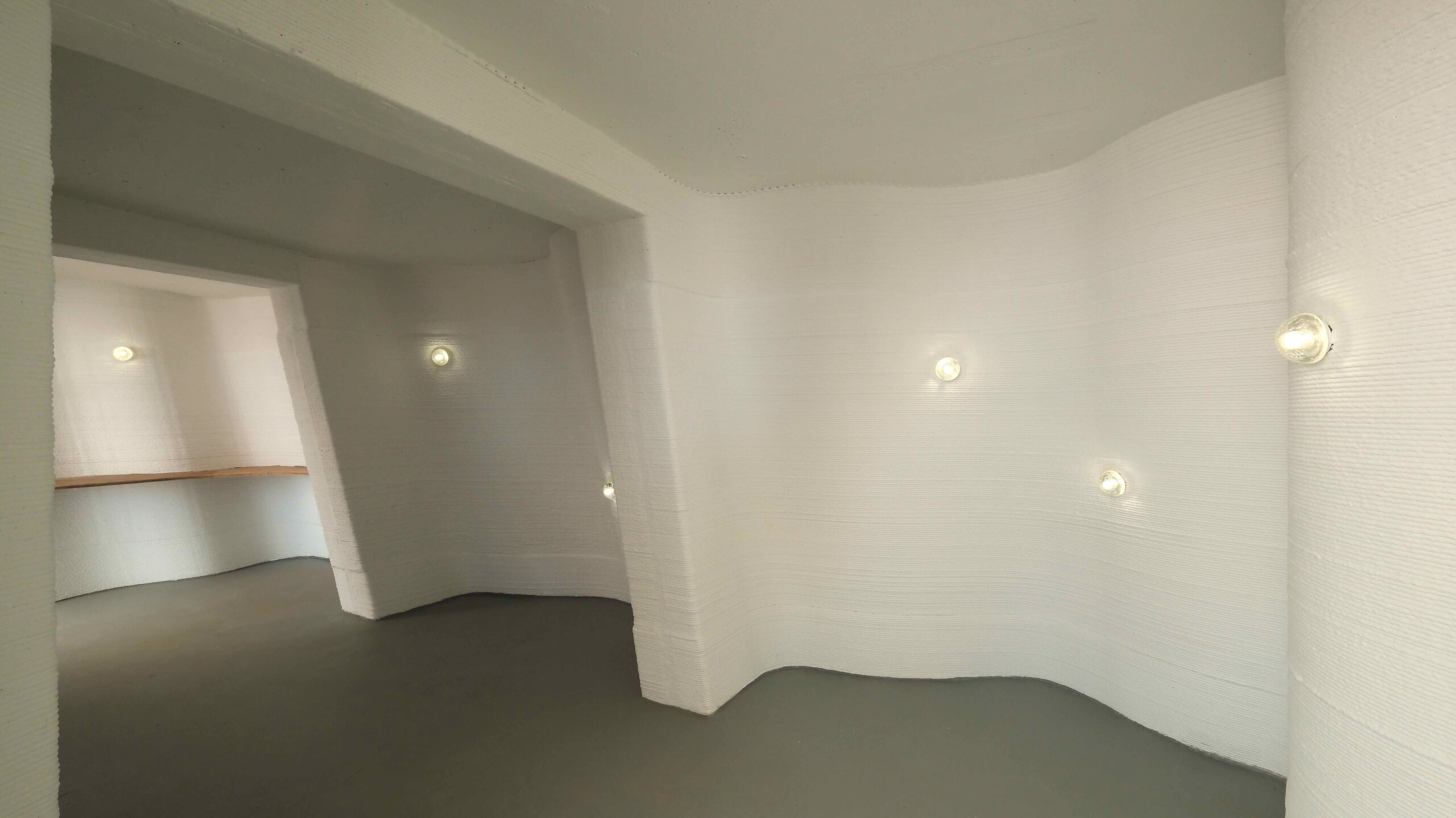
150m²のキャンプに必要な機能を9つのモジュールユニットに分割し、リビング、キッチン、浴室、収納などをそれぞれに配置した。主要な内装設備は工場でコンクリート本体と一体化して設計され、現場作業を最小限に抑えた。
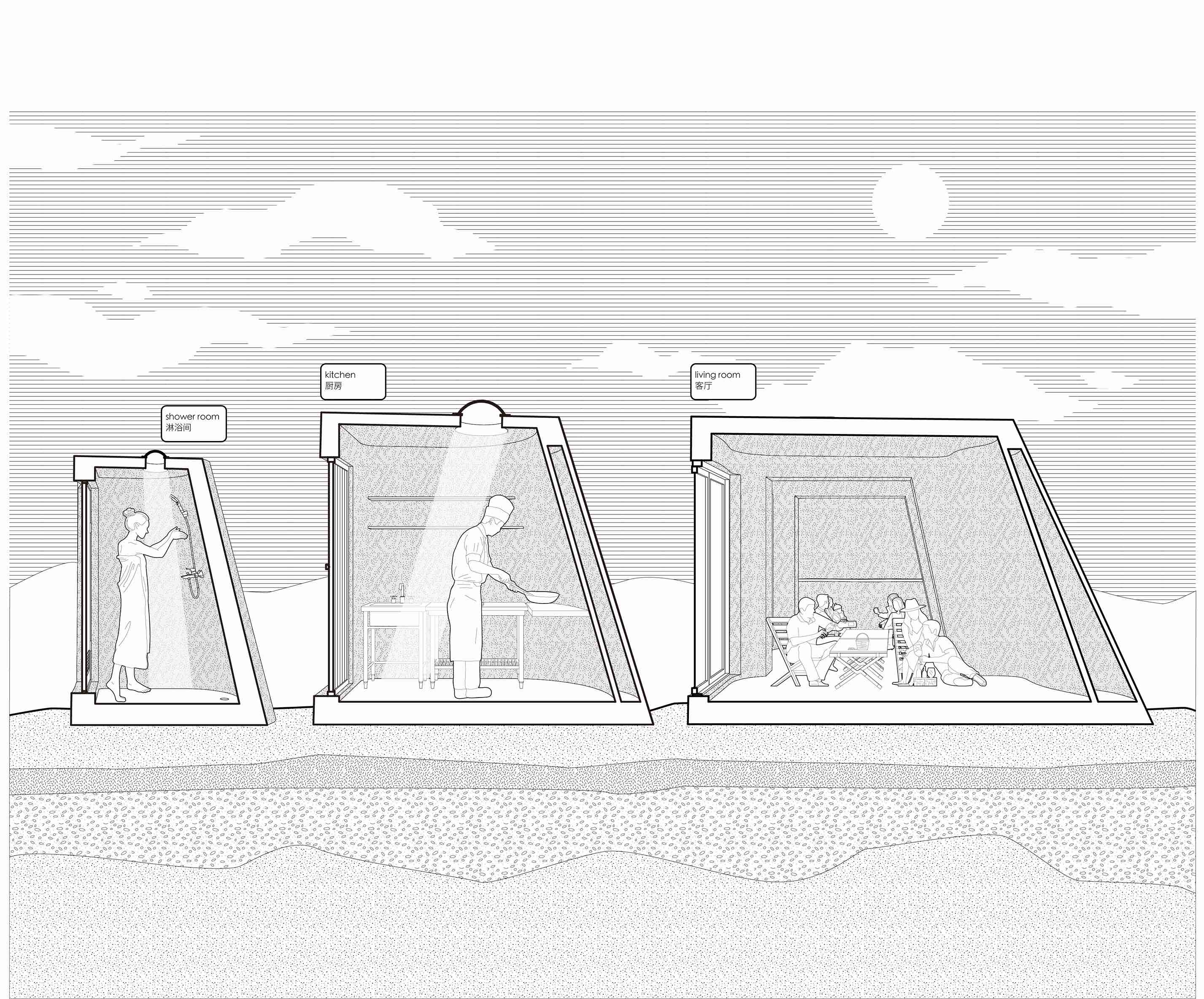
Three types of units ©︎ designRESERVE
現地の遊牧民と一般車両を活用し、すべてのユニットはわずか2日で組み立てが完了した。
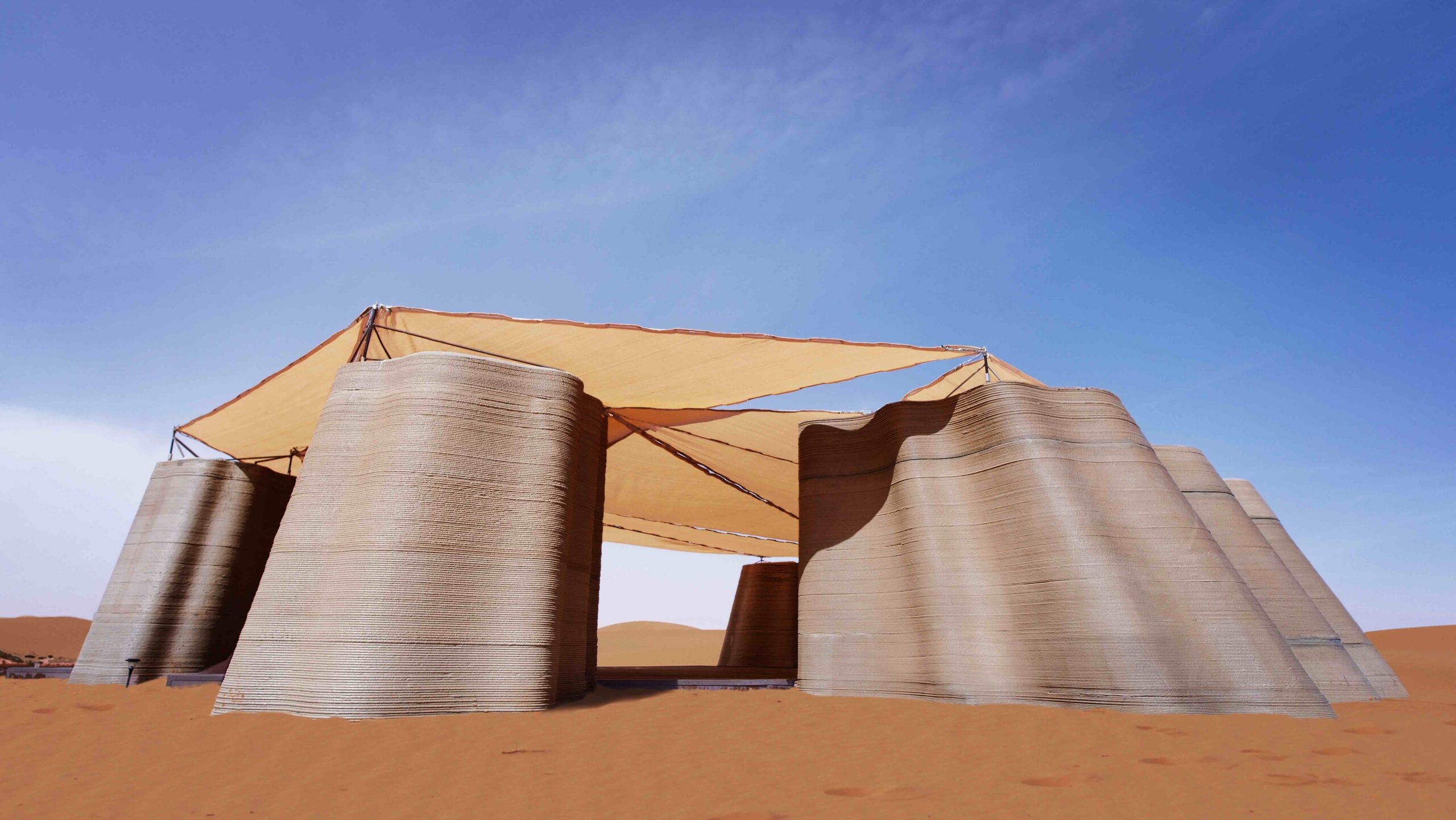
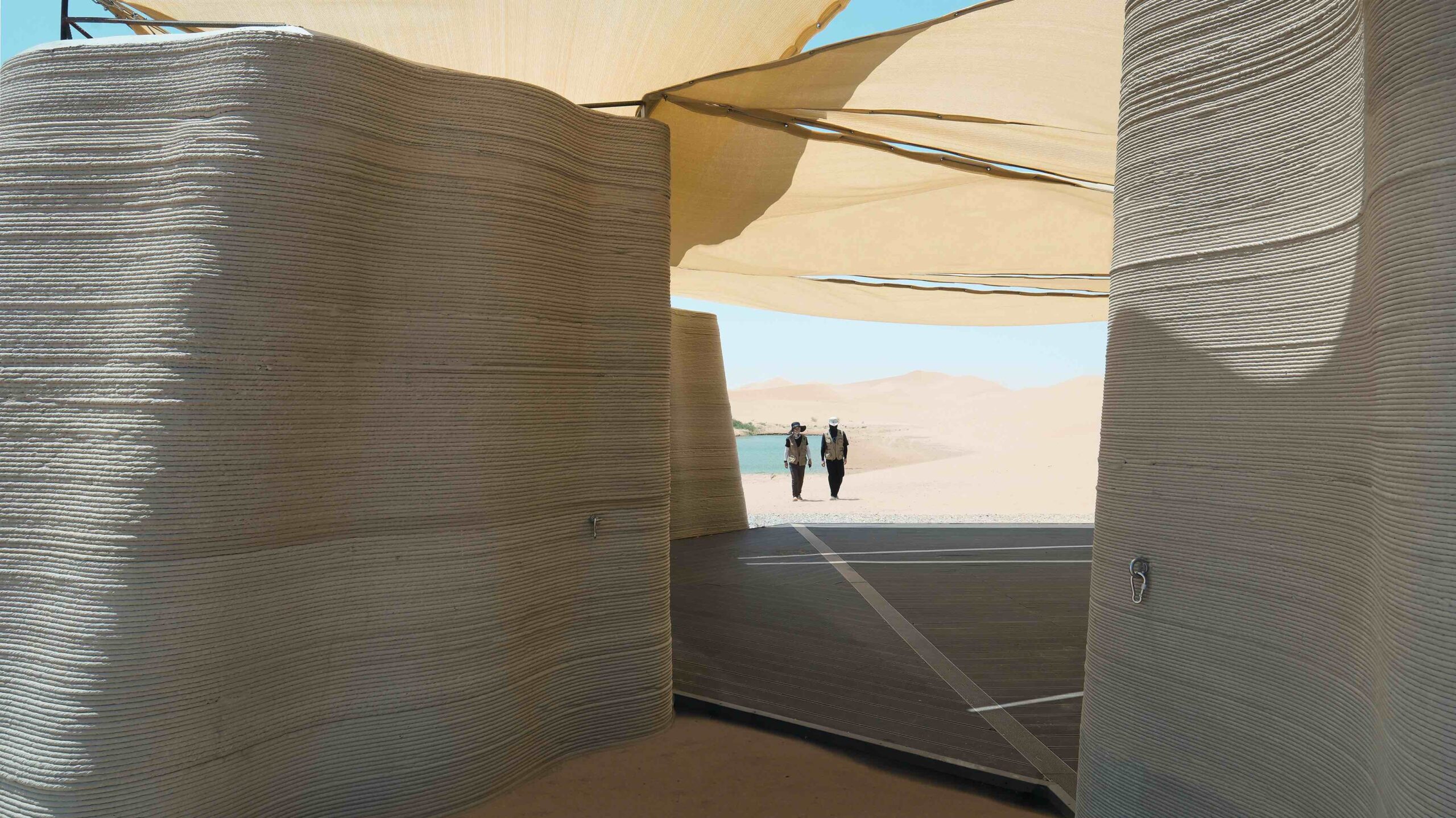
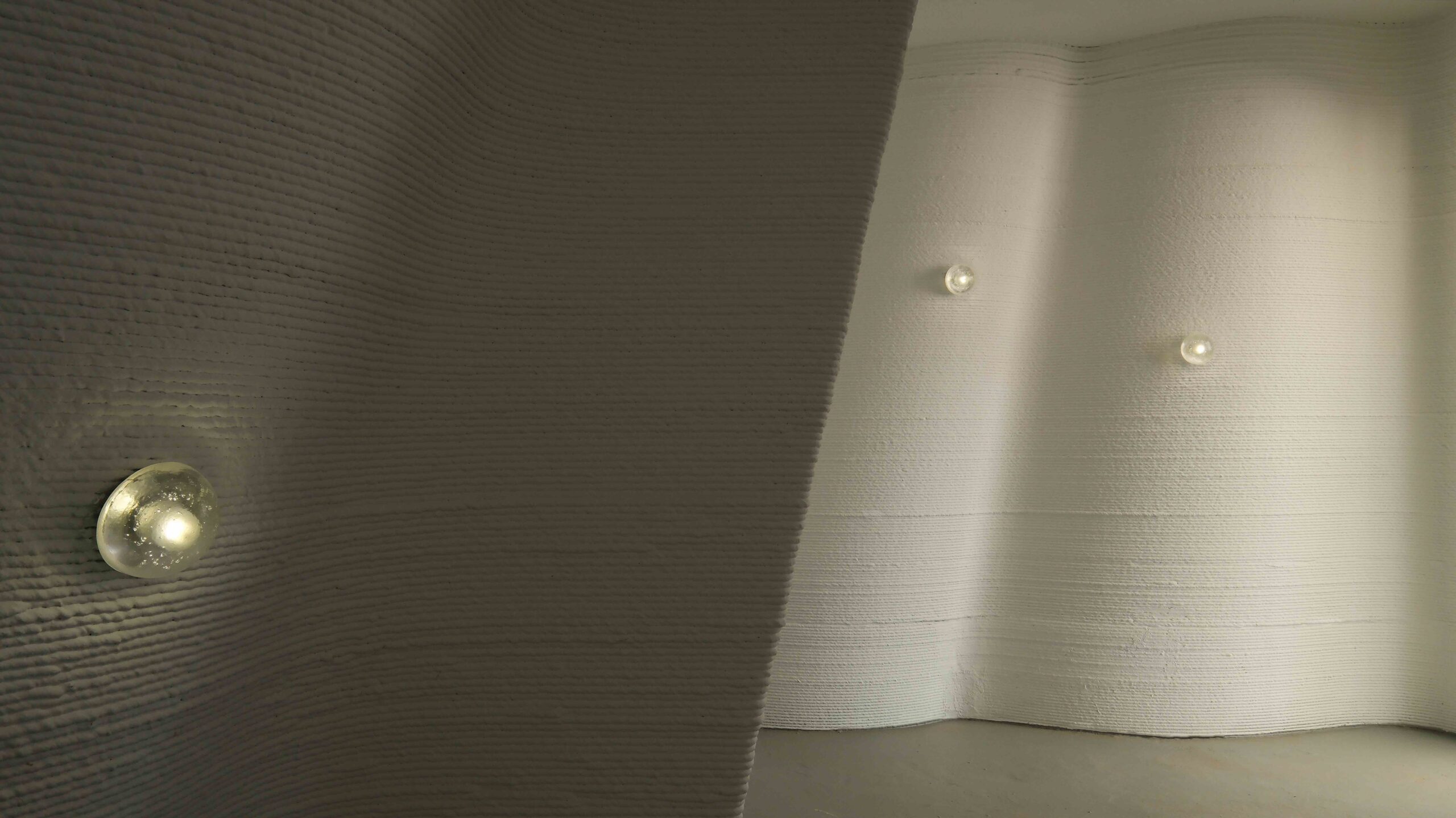
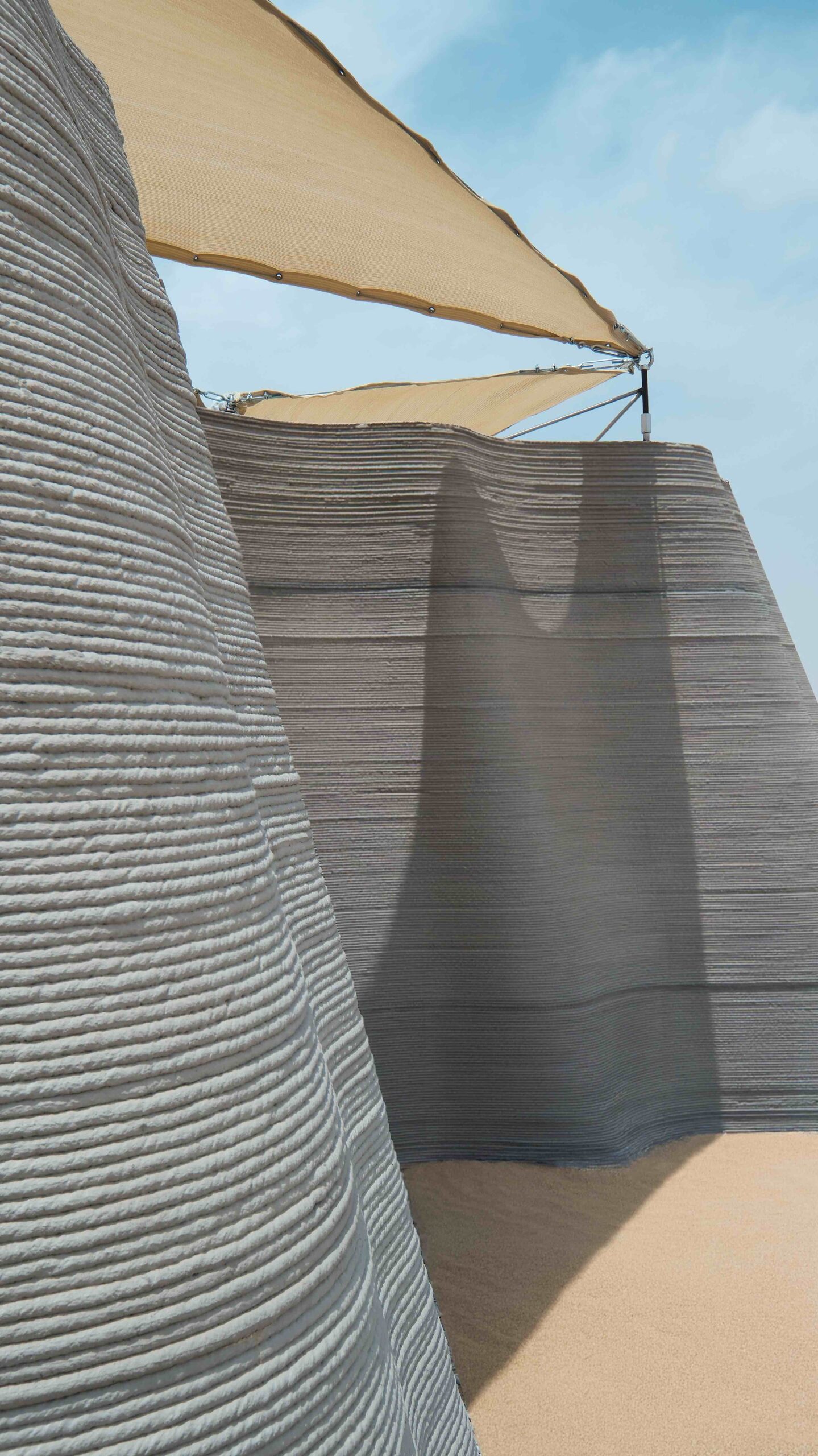
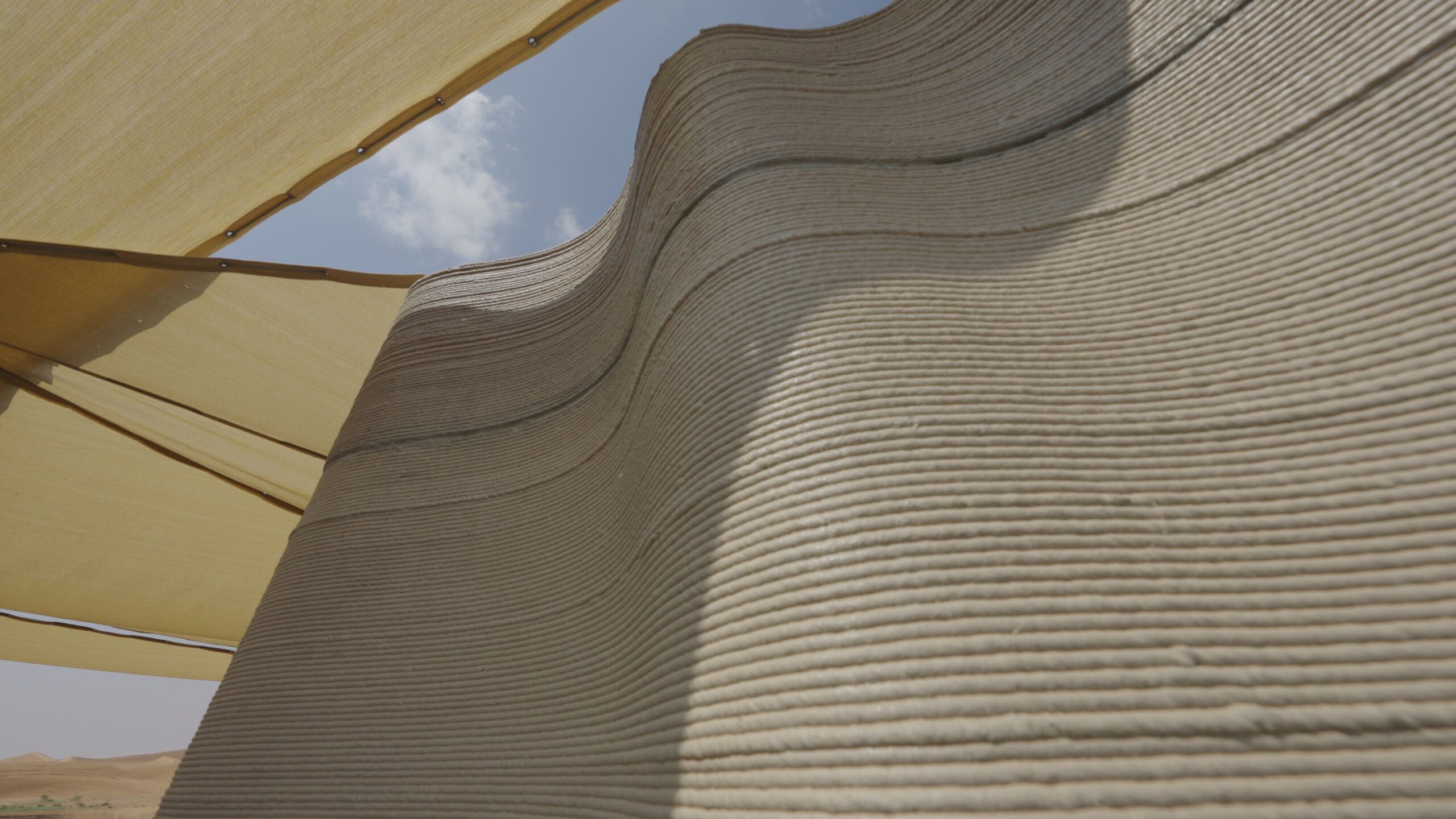
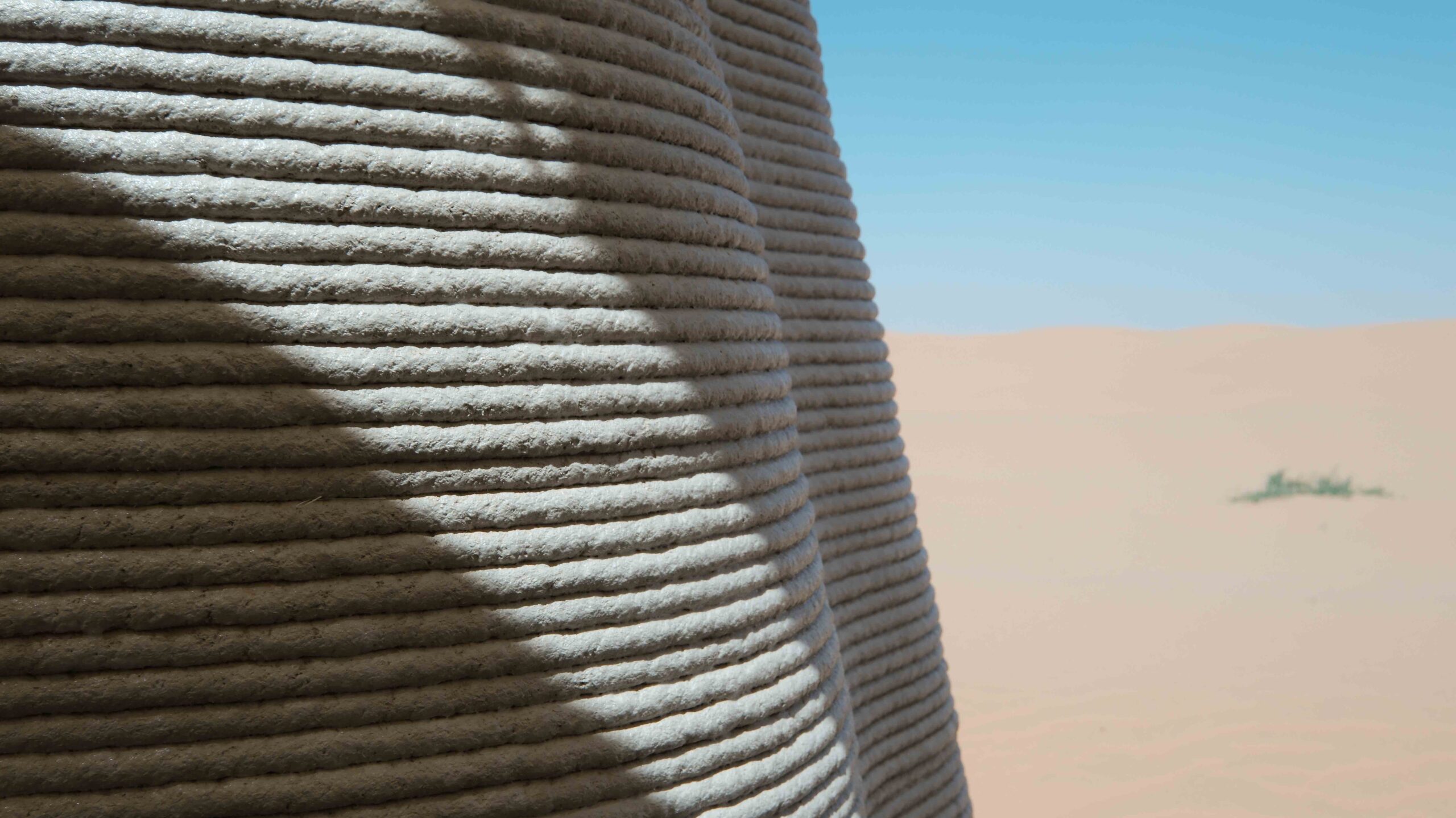
記録上最大風速34m/sの暴風に対応するため、ユニット外形は風荷重を抑える有機的な曲線で構成されている。滑らかな表面は周囲の砂丘の起伏と呼応し、砂を主成分とするプリントコンクリートが自然との調和を生み出している。
©︎ Zhipeng Lin
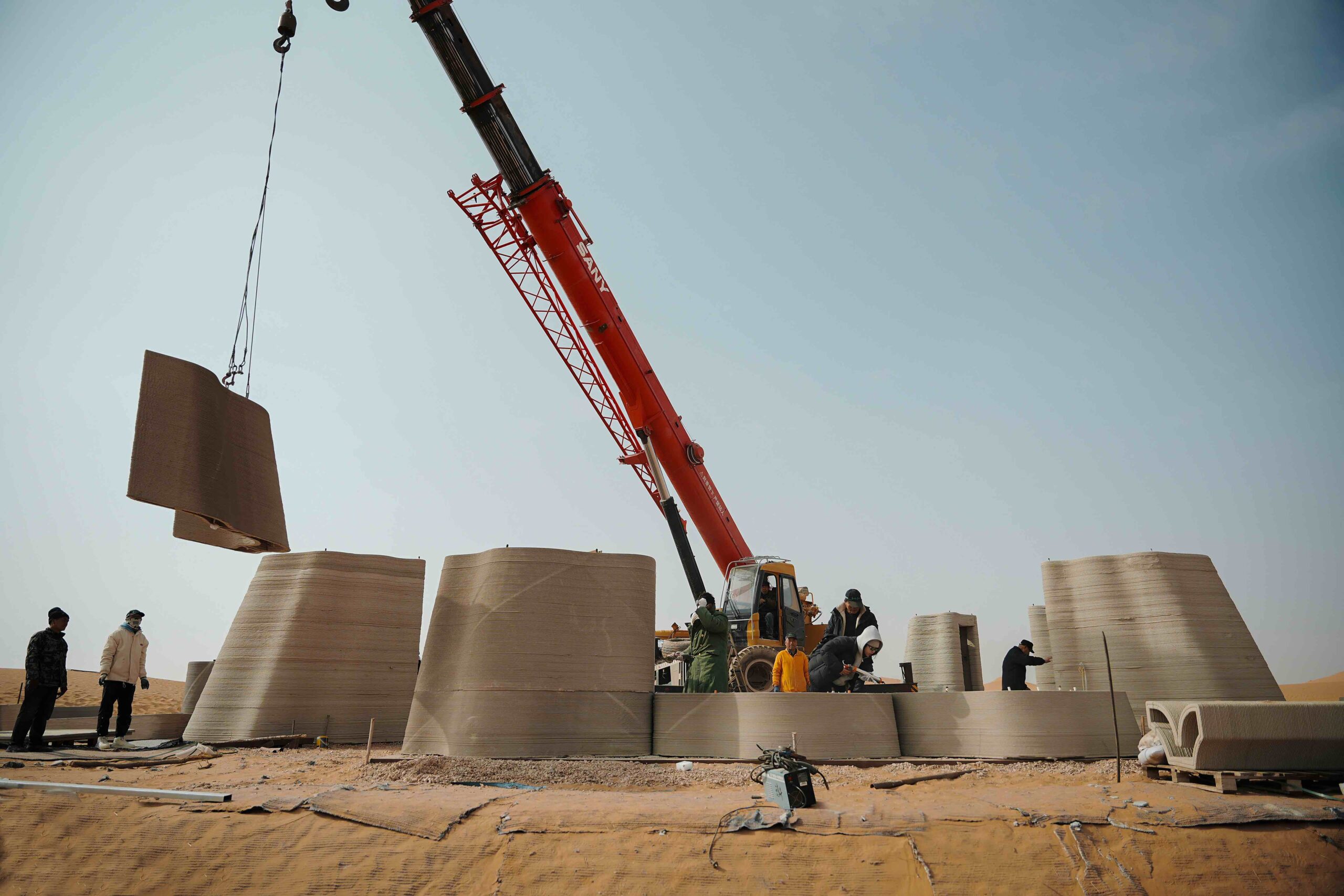
©︎ ATDEF team
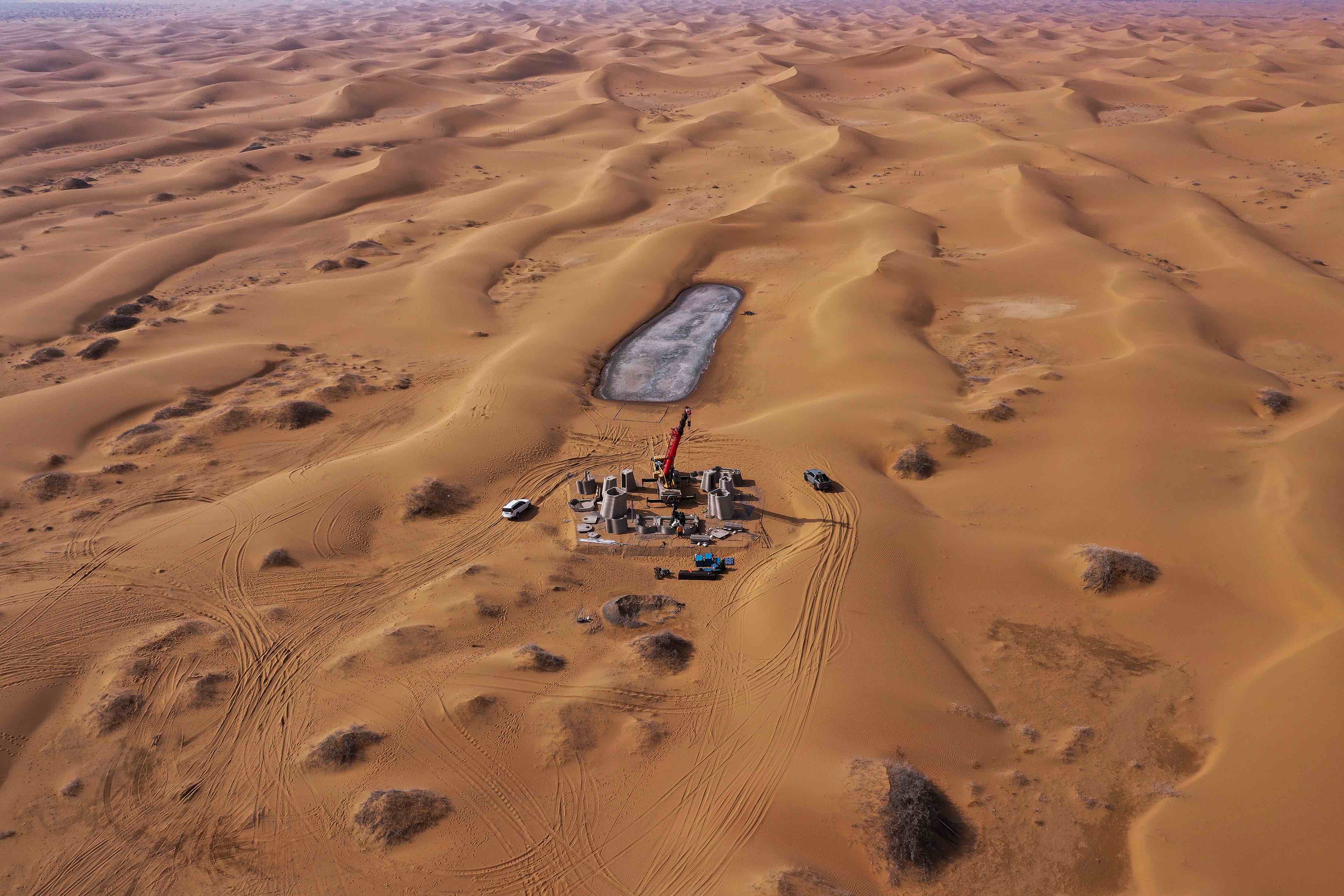
©︎ ATDEF team
設計上の利点:可逆的構法とゼロエネルギー運用
本プロジェクトでは、環境負荷を最小化するための可逆的施工手法を採用している。3Dプリントユニットは砂上に直接設置され、自重で安定化している。木製デッキは再利用可能な貨物パレットを鋼管で連結し、砂上に”浮かぶ”構造を形成している。
これにより、現場での工期・コスト・エネルギー消費を大幅に削減し、砂漠の変動地形にも柔軟に対応できる構造を実現した。
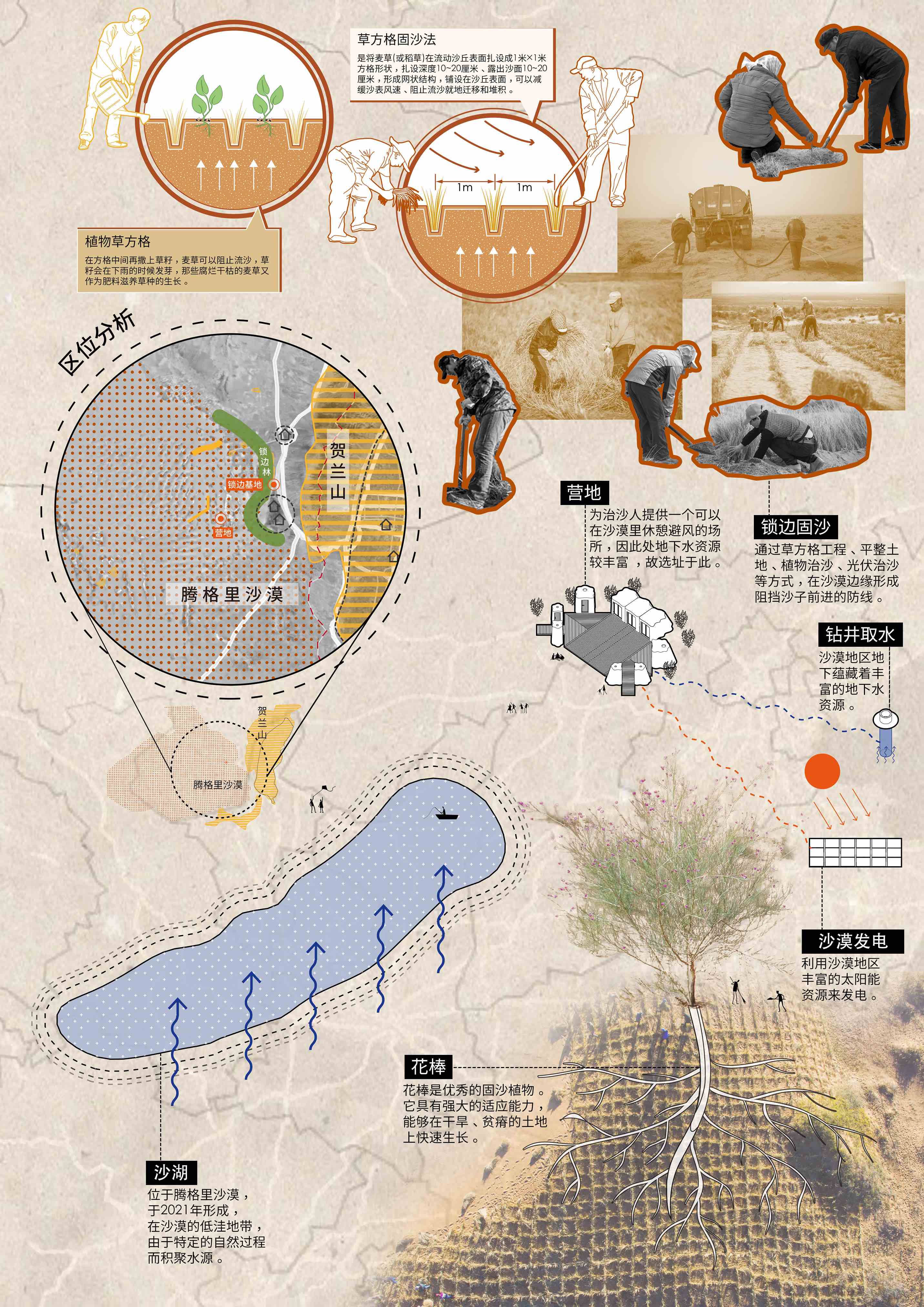
Diagram of locked-edge forest practice ©︎ designRESERVE
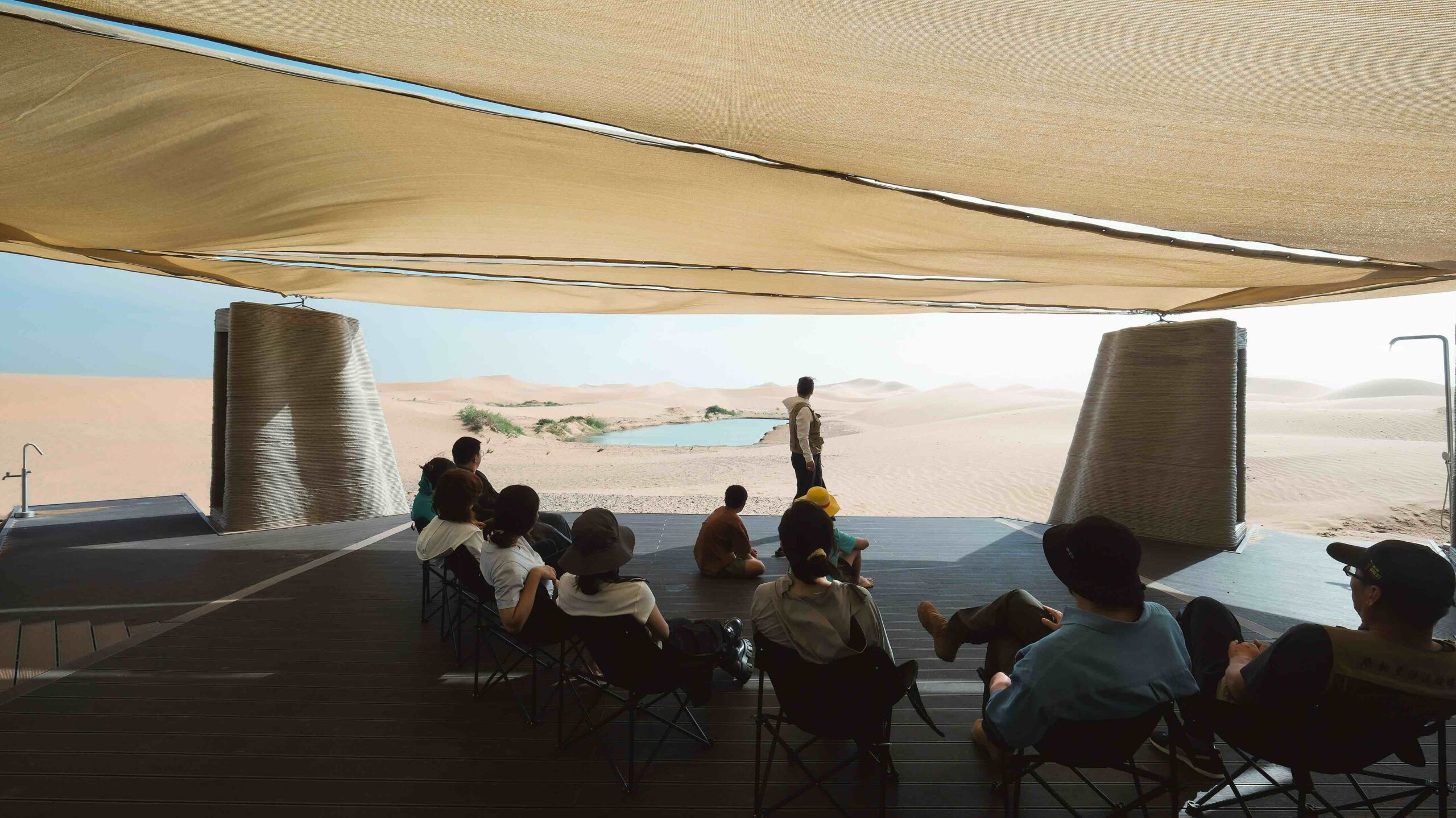
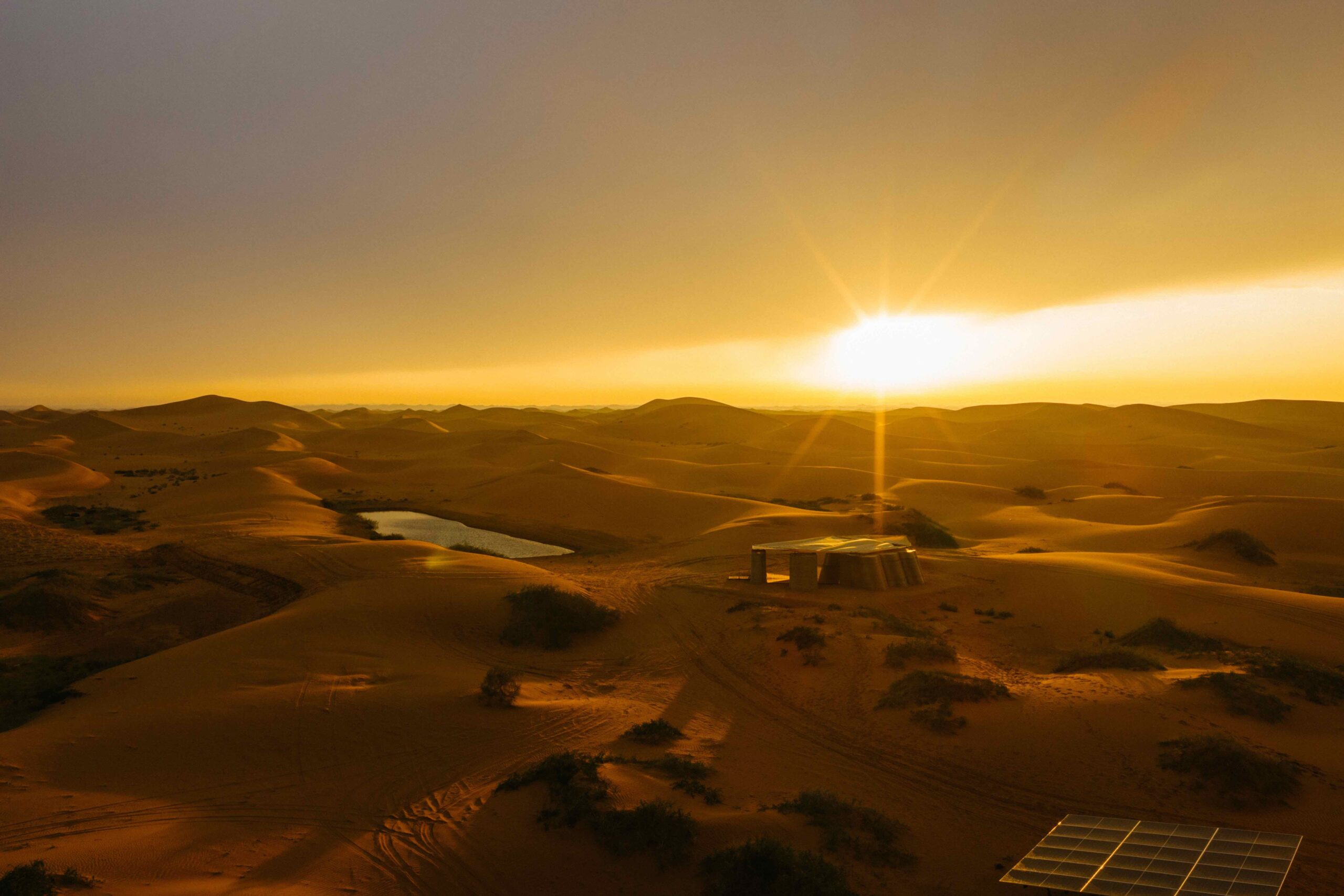
敷地に隣接する砂漠湖は賀蘭山脈の地下水によって満たされ、植栽や生活用水の供給源となっている。排水は生分解性浄化槽で濾過・再生され、灌漑や肥料として100%再利用される。
また、夏季にはキャノピーが直射日光を遮断し、空調設備を不要にする。冬季は大開口のガラスドアや天窓から十分な採光を得て、厚みのあるコンクリート壁と空洞構造が断熱効果を発揮する。外気温がマイナス30℃に達する環境下でも快適な室温を維持する。
高効率ソーラーパネルによる完全自立型のオフグリッド発電システムが全電力を供給し、ゼロカーボンを実現する。
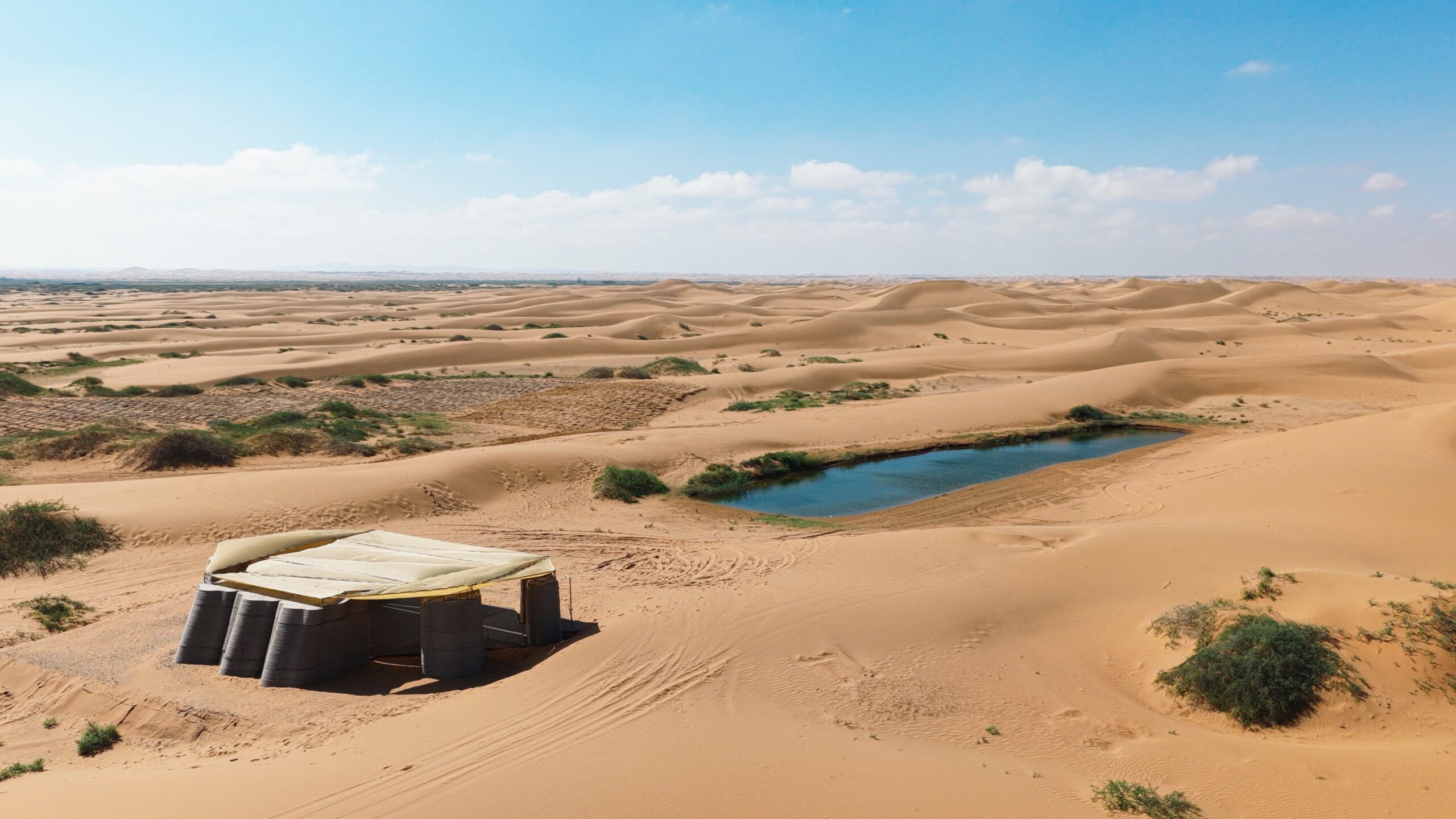
©︎ Ziwen Hu
©︎ ATDEF team
砂漠と未来をつなぐ建築の可能性
中国初の砂漠における3Dプリントコンクリート建築〈デザート・アーク〉は、極限環境における建築技術の応用可能性を示すものである。本プロジェクトは、内モンゴル自治区における生態系回復の一助となると同時に、未来の宇宙居住に向けた建築的実験として新たな地平を切り開いている。
©︎ Huaer Lin
©︎ Huaer Lin
©︎ Huaer Lin
©︎ Huaer Lin
©︎ Huaer Lin
©︎ Huaer Lin
©︎ Huaer Lin
©︎ Huaer Lin
©︎ Ziwen Hu
©︎ Huaer Lin
©︎ Huaer Lin
©︎ Huaer Lin
©︎ Huaer Lin
©︎ Huaer Lin
©︎ Yong Hu
©︎ Yong Hu
以下、designRESERVEのリリース(英文)です。
Desert Ark
Abstract
As China’s first 3D-printed concrete structure in desert environment, the project not only supports ecological restoration in Inner Mongolia, but also serves as an architectural prototype for future extraterrestrial habitat of humankind.Project Summary
Tengger Desert is the fourth largest and southern most desert in China. Since early 90’s, a non-profit organization had been planting trees on the fringe of the desert to contain its hazardous expansion eastward. Commissioned by the organization, designRESERVE has designed a new campsite which provides shelter and supporting facilities for tree planting volunteers during field operation. Considering the severe site conditions, restrained budget and timeframe for construction, designRESERVE developed prototypes with 3D concrete printing technology to accommodate various types of use.Key Details
The Tengger Desert, a major source of sandstorms threatening East Asia, has seen remarkable ecological restoration since the early 2000s through collaborative efforts of international funds, local government and non-profit organizations. Established by Mr. Wu Xiangrong in Alxa Left Banner, a non-profit group with initiative of “Planting Trees, Planting Hearts” has made the most outstanding achievement through sustainable planting approach and with the aids of volunteers from all over China and overseas.The rangers of desert-locking forest, as they call themselves, often endure extreme weather conditions during long time operations in desert. Commissioned to design a field camp for rangers and volunteers, designRESERVE’s task is to create a durable, modular shelter system that also serves as a platform for public environmental education. The camp comprises nine modular units accommodating living room, kitchen, restrooms, showers, and storage. Each unit’s size and weight are optimized for transportation and fast assembly in remote desert areas. Arranged in an enclosed layout, the cluster, also called “Desert Ark”, provides a secure, aesthetically powerful, and spiritually enforcing retreat in the middle of desolate land.
The process of construction includes six major phases:
Phase 1_3D-printed concrete units are prefabricated by Robotic 3D Concrete Printing (R3DCP) system in a factory of Wuxi.
Phase 2_Deliver units by truck to desert site
Phase 3_Install the units on site with help of local herdsmen.
Phase 4_Prepare the foundation for deck, with reusable cargo pallets for minimal environmental impact.
Phase 5 _ Build wood-plastic composite deck as common area for all units with retractable canopy to reduce solar heating in summer.
Phase 6_Install life supporting system including Low-E glass doors, water supply, drainage and solar panels.Project Innovation
Given the desert’s harsh construction conditions and limited time frame, design team employed 3D concrete printing technology (supported by Prof. Xu Weiguo’s lab from Tsinghua University) for rapid on-site installation. Instead of building a concentrated volume, the required program of 150 sqm campsite is divided into nine modular units accommodating living room, kitchen, restrooms, bathroom, and storage. Most key interior fixtures are designed to integrate with the prefabrication of concrete body in the factory, resulting in minimized site laboring and easier maintenance. All concrete units are assembled on site in only two working days, with the aid of local herdsmen and regular vehicles and equipment.Considering the site’s exposure to constant storm as strong as 34m/s in record, the profile of units is articulated with undulant curves to minimize wind load. The fluent texture of building surface corresponds to the rolling landscape of surrounding dunes. Since the major component of printed concrete is essentially alternative form of sand, the campsite thus achieves great harmony with nature both aesthetically and physically.
Design Benefits
The project utilizes reversible construction methods to minimize environmental impact, with the possibility of future relocations as reforestation program expands. The 3-D printed concrete units sit directly on sand and stabilized by their own weight. The wooden deck is supported by a network of reusable cargo pallets tied together with steel pipes. Physically as well as symbolically, the whole campsite is floating on sand. This approach significantly reduces the construction time, cost and energy consumption on site, while enhances the structure’s resilience to ever-changing contour of the desert.Adjacent to the site, lies an intermittent desert lake fed by groundwater from nearby Helan Mountains, providing natural water supply for planting and camp activities. Using biodegradable septic tank to collect and filtrate drainage, the campsite is able to recycle 100% sewage for irrigation and fertilization of planted trees.
In Summertime when daytime temperature could reach 45℃ high, the canopy covering
campsite effectively screens heat over deck and concrete modules, eliminating the use of air-conditioning. During wintertime, all rooms could receive sufficient sun light through large opening of glass door or skylight. The thickness and cavity of concrete wall become an excellent insulation layer, maintaining indoor thermal comfort even during winter nights with outdoor temperature as low as minus 30℃. The campsite is fully powered by off-grid PV system consisted of high-efficiency solar panels, resulting in zero carbon emission level and a fully self-sustainable project.As China’s first 3D-printed concrete structure in desert, Desert Ark shows promising application of the 3D concrete printing technology in extreme environment. The project not only supports ecological restoration in ethnic minority region of Inner Mongolia, but also serves as an architectural prototype for future extraterrestrial habitat of humankind.
designRESERVE 公式サイト
https://www.designreserve.co/detail.html?title=DesertArk
【購読無料】空間デザインの今がわかるメールマガジン TECTURE NEWS LETTER
RECOMMENDED ARTICLE
![[大阪・関西万博]トイレや休憩所などを紹介_トイレ2](https://magazine-asset.tecture.jp/wpcms/wp-content/uploads/2025/08/20162251/toilet2_20250409_004-min-900x675.jpg)