CULTURE
©︎ Spaces by Conie
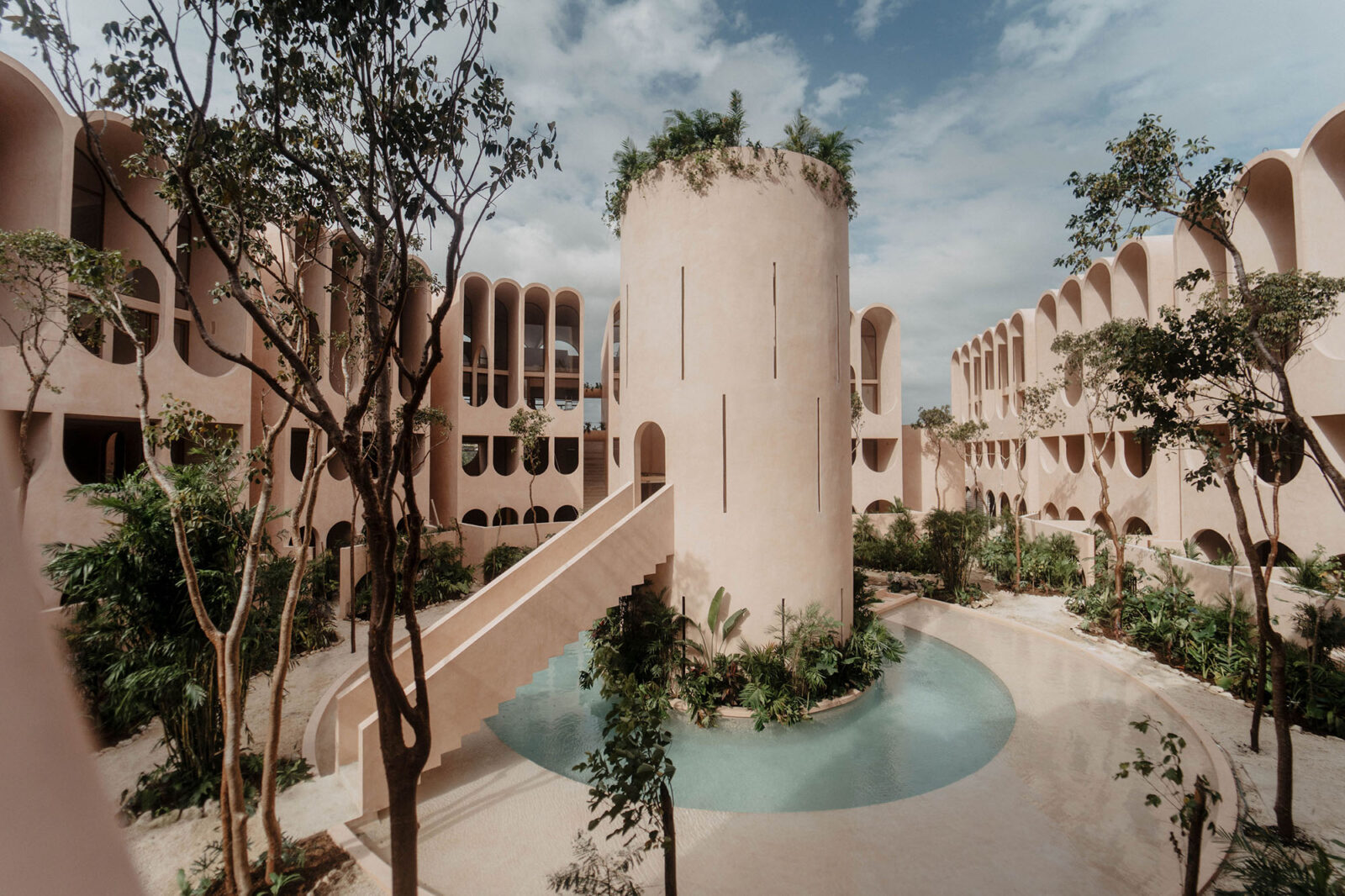
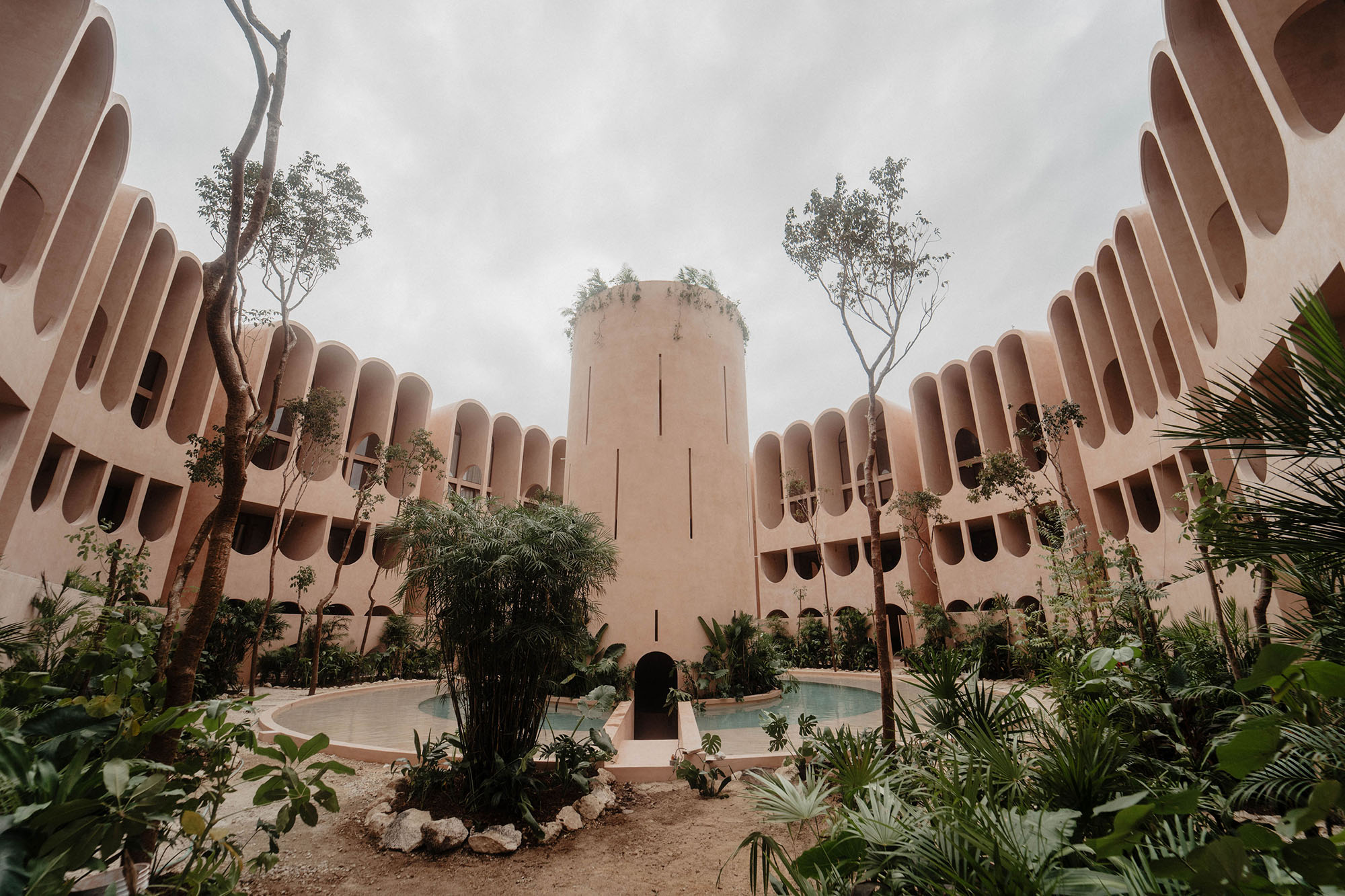
メキシコのトゥルムに位置する〈バベル(Babel)〉は、「バベルの塔」という神話的モチーフを建築的に再解釈したデザインが特徴的な、短期滞在と長期居住を統合した宿泊・居住施設です。
地域・環境・経済的サステナビリティに注力した建築でもあり、メキシコを拠点に活動するスタジオ V Tallerが設計しました。
注目ポイント
- 建築を地域と環境の「再生力」として再定義する試み
- 「押し付けではなく統合」という哲学に基づく自然との共生的設計
- 一時的/恒久的居住を共存させコミュニティを形成
- 研究と調査に基づき「生態的再生」と「経済的持続可能性」を両立する開発モデル
(以下、V Tallerから提供されたプレスキットのテキストの抄訳)
©︎ Estudio Albers
「再生の力」として再定義する建築
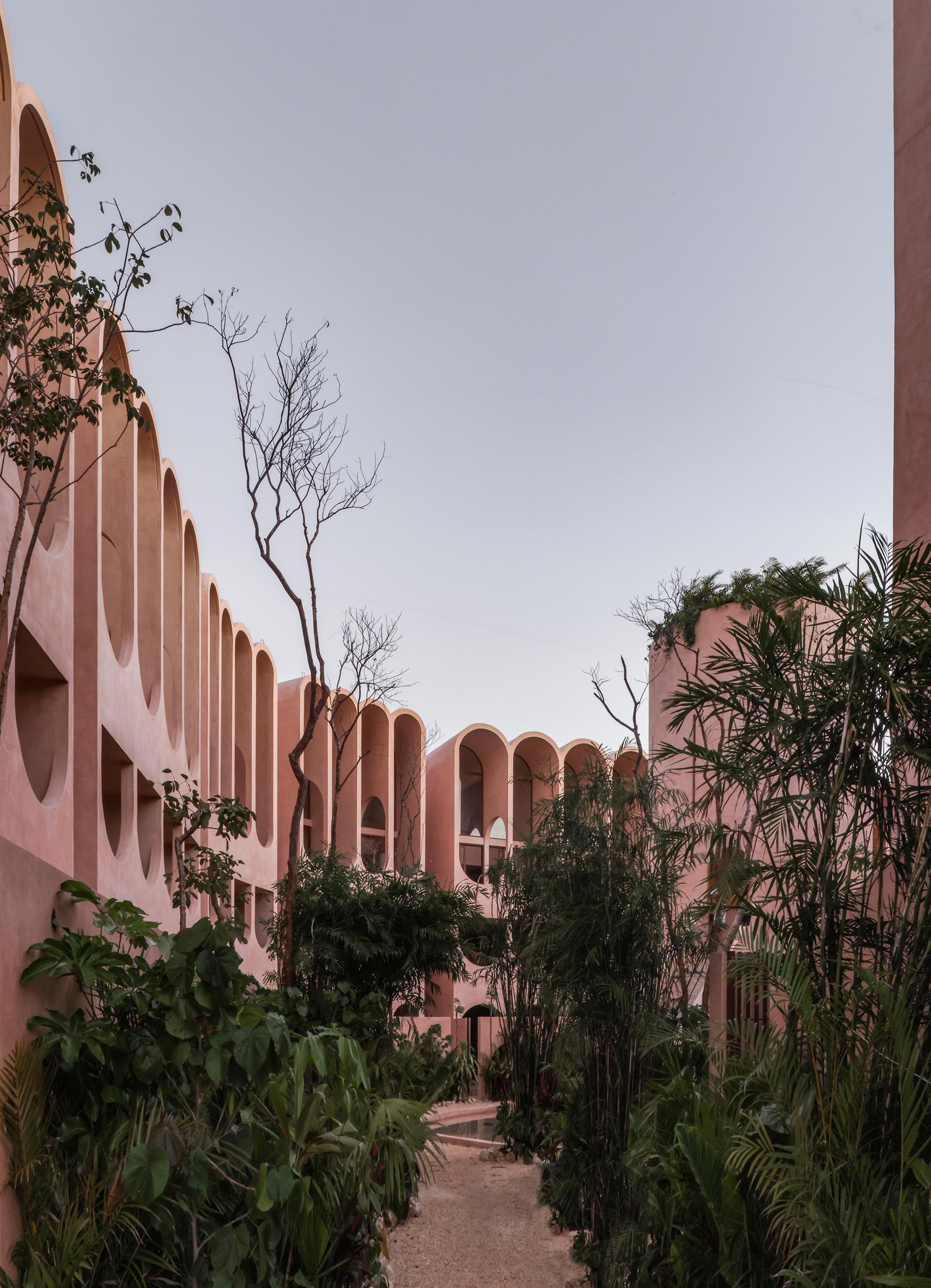
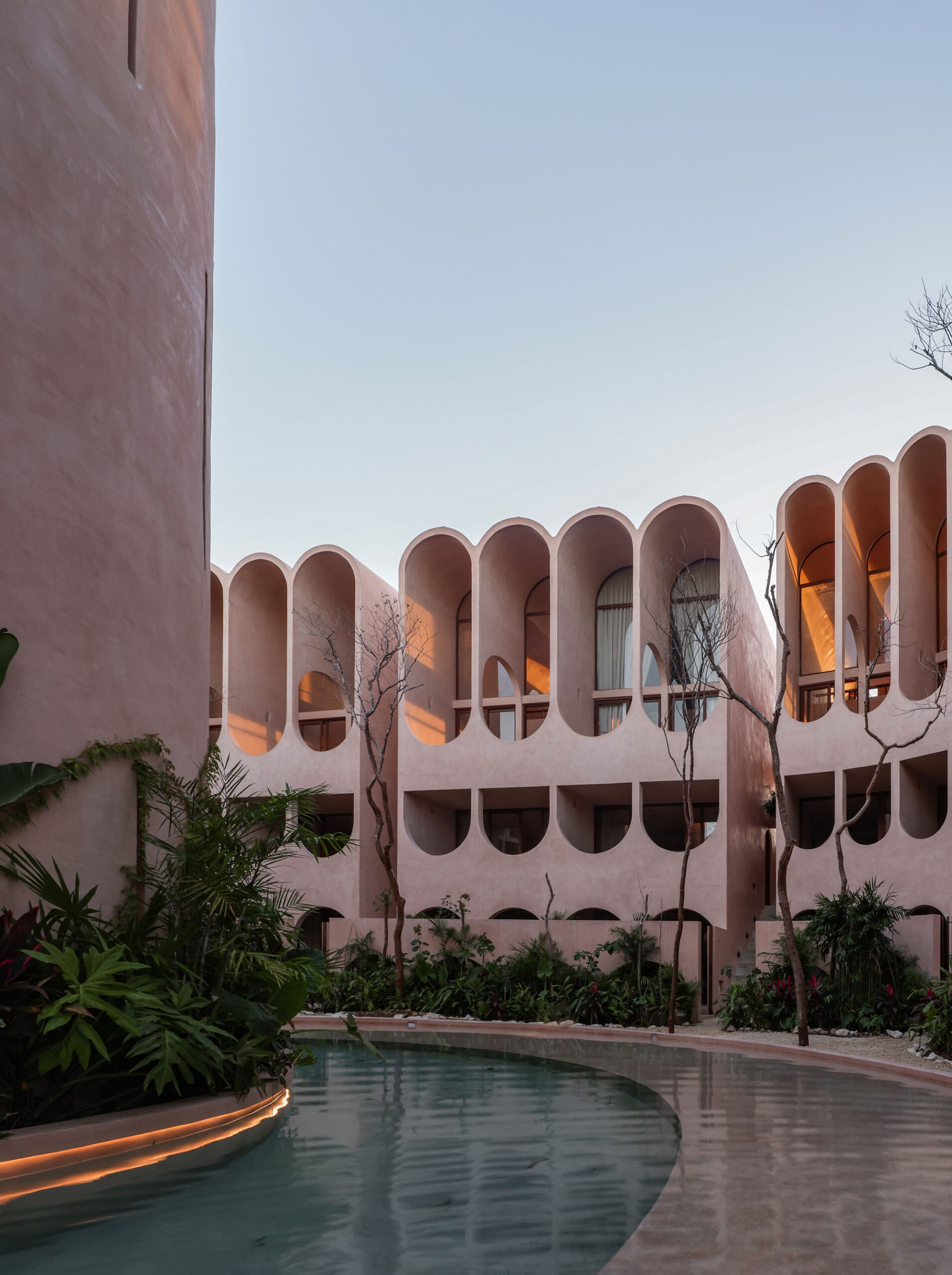
〈バベル〉は、空間・時間・環境の交差点に対する建築的応答であり、建築を景観への押し付けではなく再生の力(regenerative force)として再定義するものである。神話上のバベルの塔に着想を得て設計されており、構築された空間を進化的で柔軟性のある没入型体験へと変容させる。
無秩序な観光開発による森林破壊とインフラ過負荷に苦しむトゥルム地域のために設計された本プロジェクトは、環境との調和、経済的持続可能性、長期居住性を両立させる持続可能な代替案を提示する。
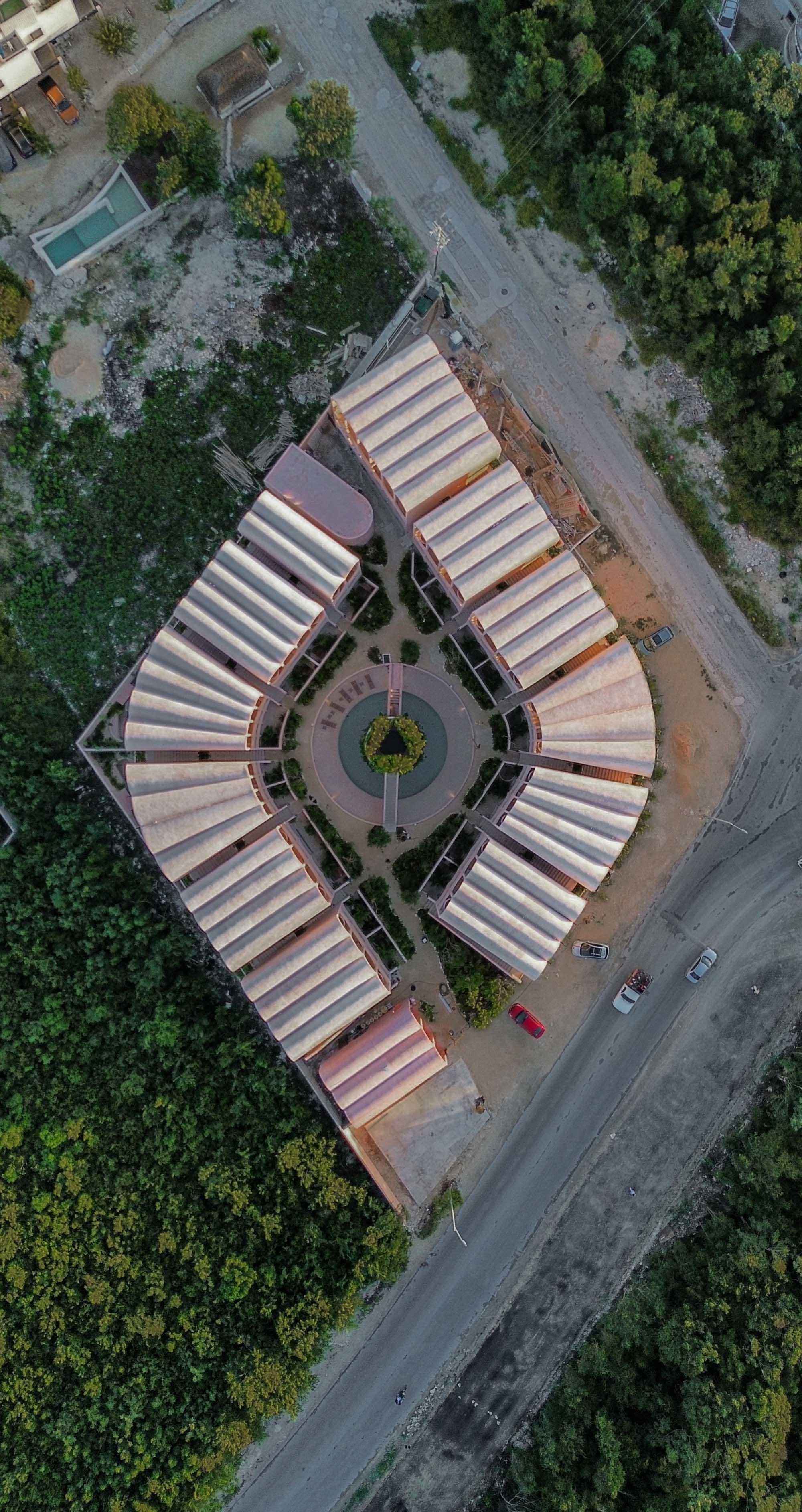
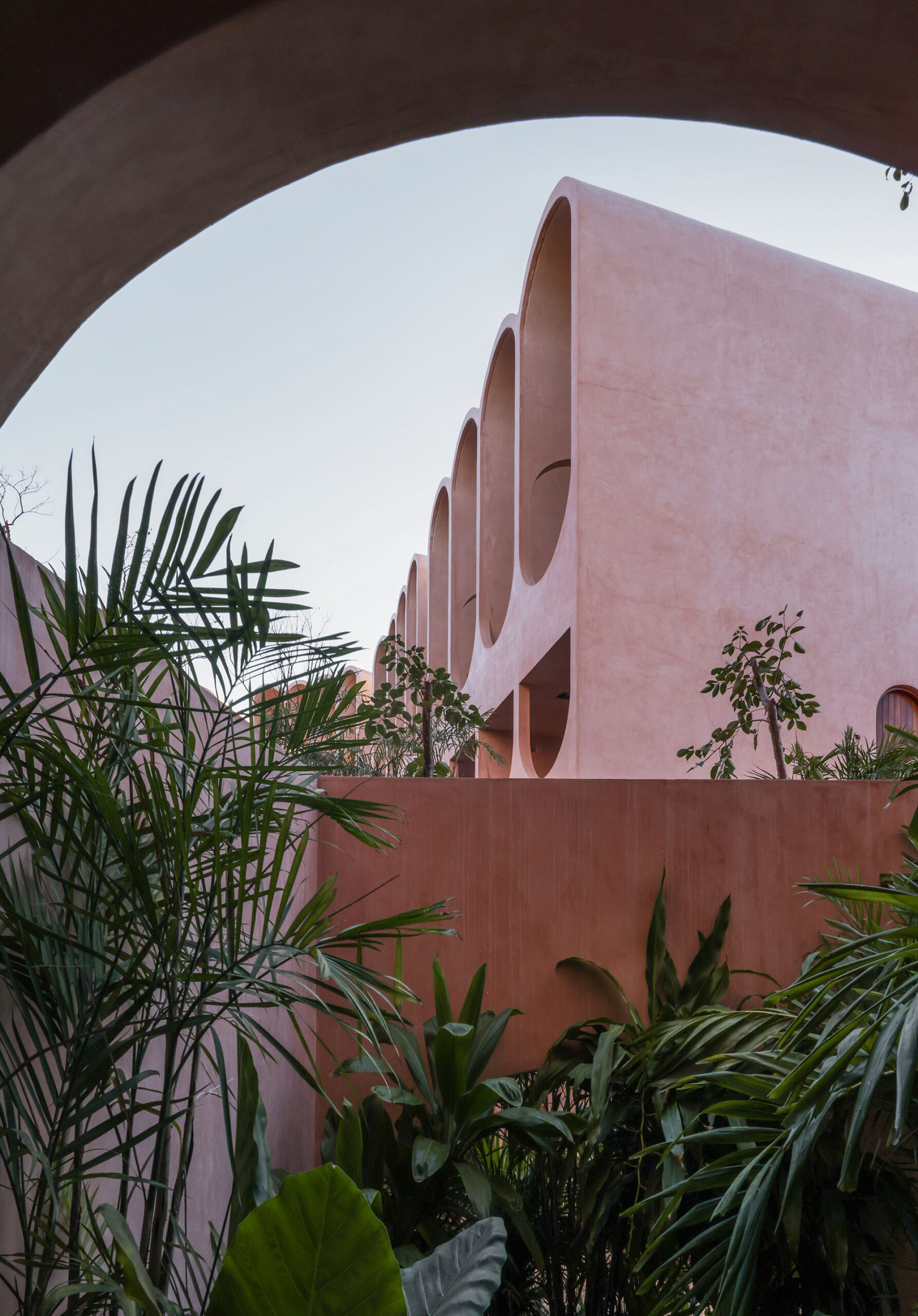
水平動線を垂直コアに置き換えることで密度を最適化し、自然が空間を取り戻す余地を残す。その形態は中庭を中心に空洞と実体の相互作用から生まれ、物理的・概念的な結束を保証している。
©︎ Estudio Albers
瞑想の器としてのタワー
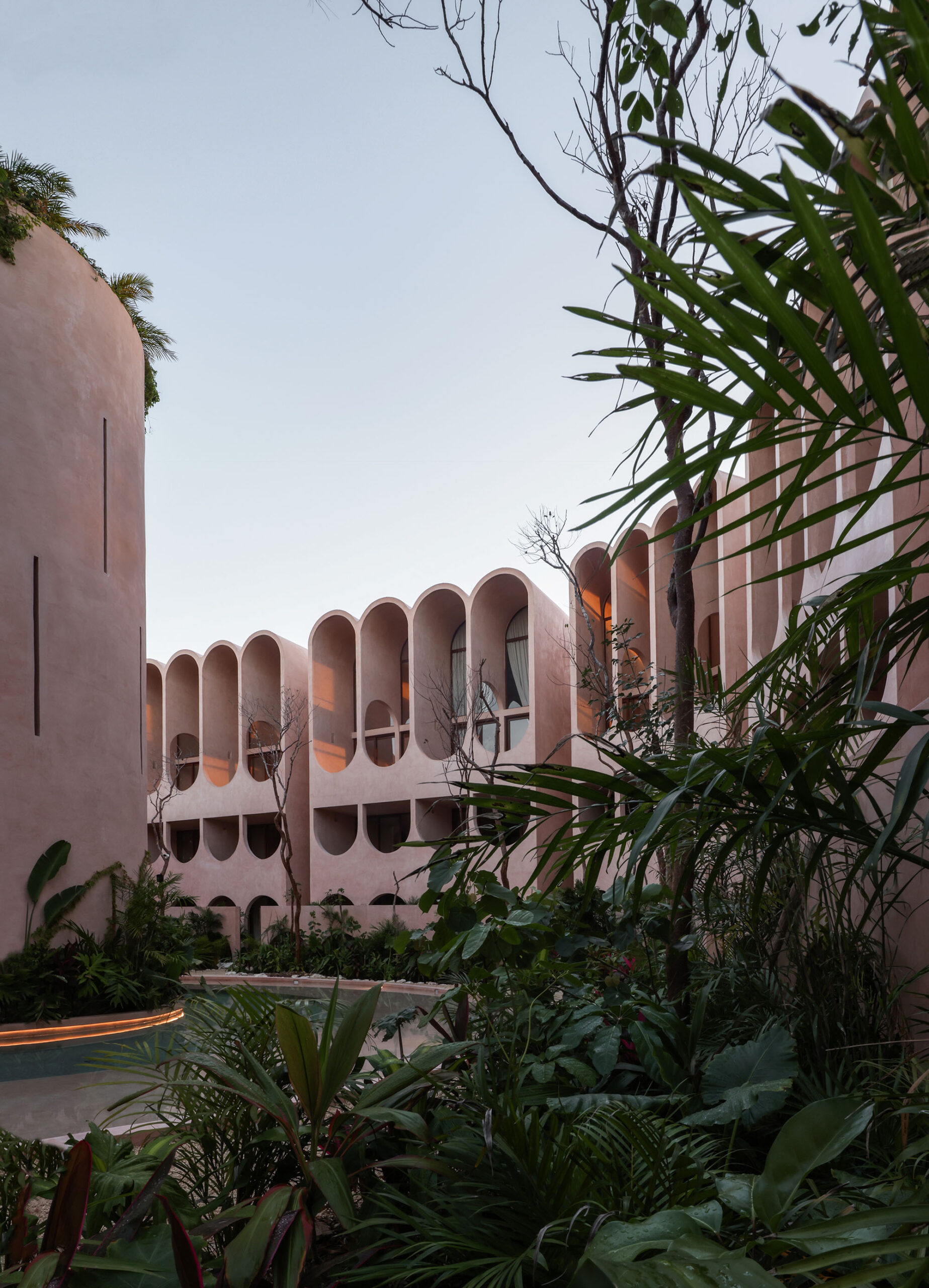
〈バベル〉は単なる建築物の構築ではなく、建築が自然に溶け込む居住可能なキャンバスを創造する。タワーは光、物質性、空間圧縮によって形作られる瞑想の器となる。生物気候学的戦略が空気、水、植生を統合し、持続可能な空間を育む。光は透過して影を落とし、水は反射して冷却し、自然気流は機械的介入なしに快適性を高めている。
〈バベル〉は詩的かつ意図的な共存を通じて人間の存在を景観に織り込み、建築環境と自然界の関係を再定義するパラダイムシフトを体現している。
©︎ Estudio Albers
持続可能な観光モデルへの転換
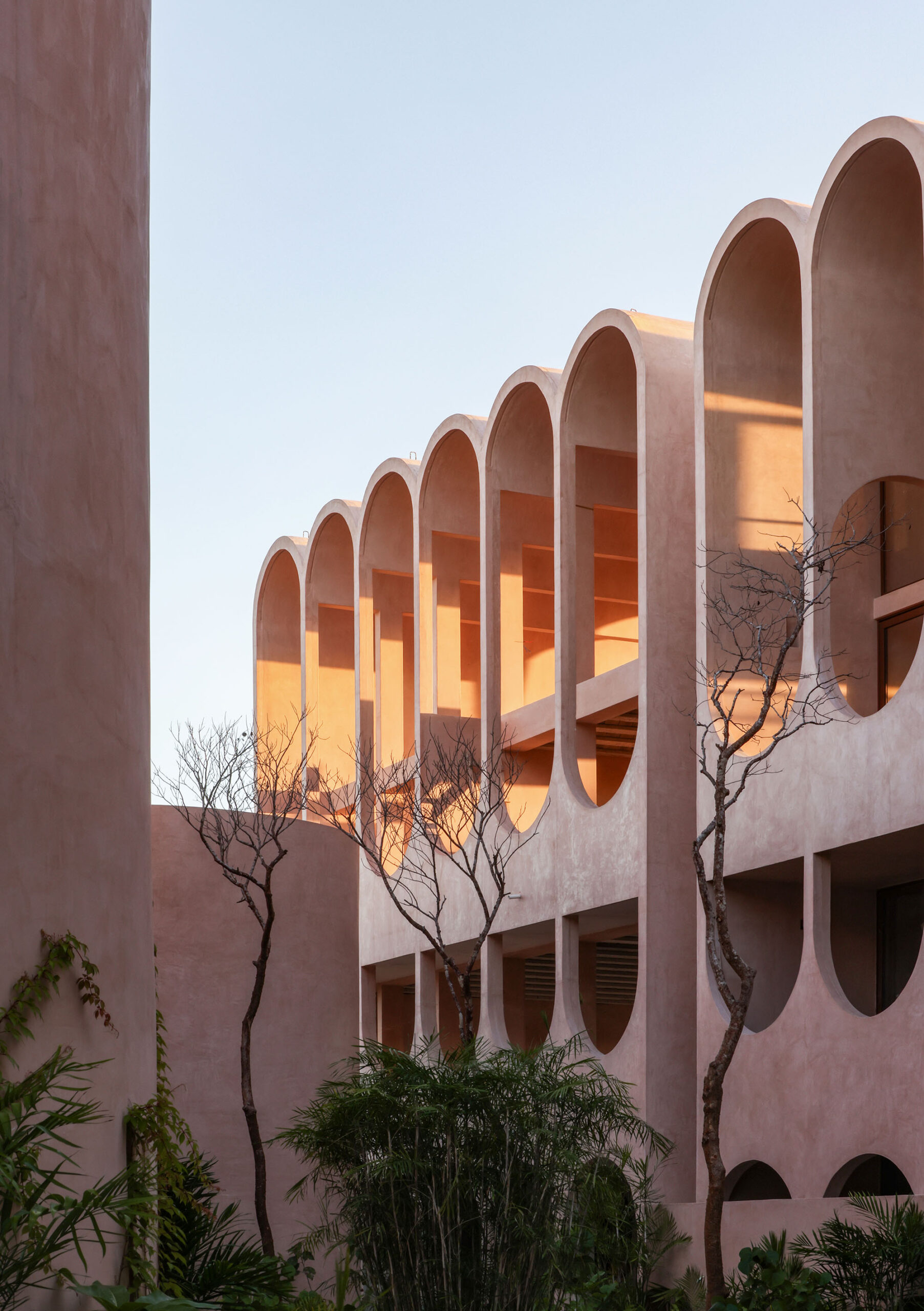
〈バベル〉はトゥルムにおける建築・観光・生態学の関係を再定義し、環境負荷と都市拡大に直面する地域における持続可能な開発の緊急課題に応えるものである。メキシコのスタジオV Tallerが設計した本プロジェクトは、低密度・高影響型の観光モデルから脱却し、土地使用を30%削減しつつ植生を再統合し、地下水の涵養を支える垂直型アプローチを提案する。
これにより〈バベル〉は、ホスピタリティへの建築的応答であると同時に、建築環境と自然が均衡の取れた枠組み内で共存する再生可能な景観を実現している。
©︎ Estudio Albers
パッシブクーリングを実現する中央の庭園
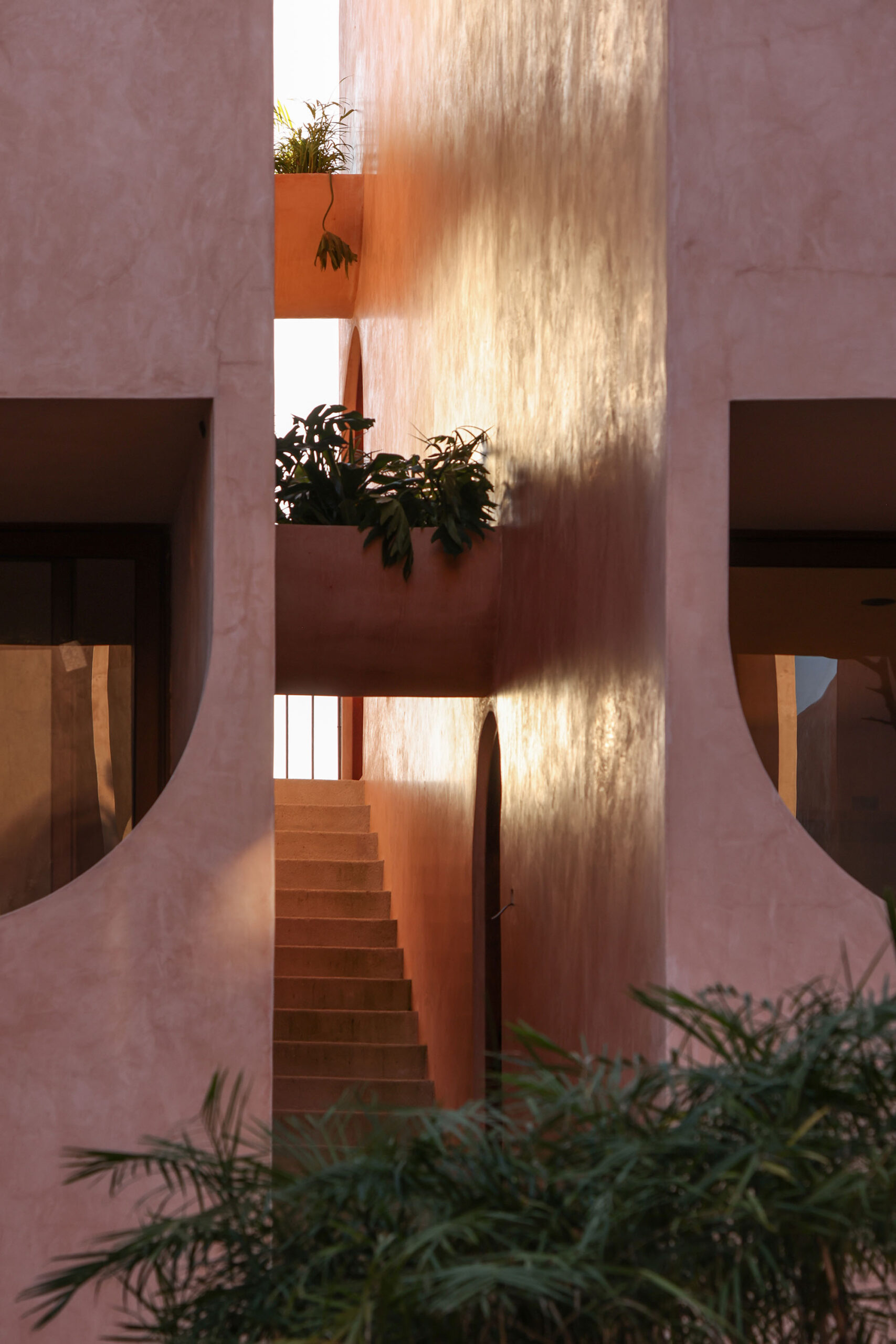
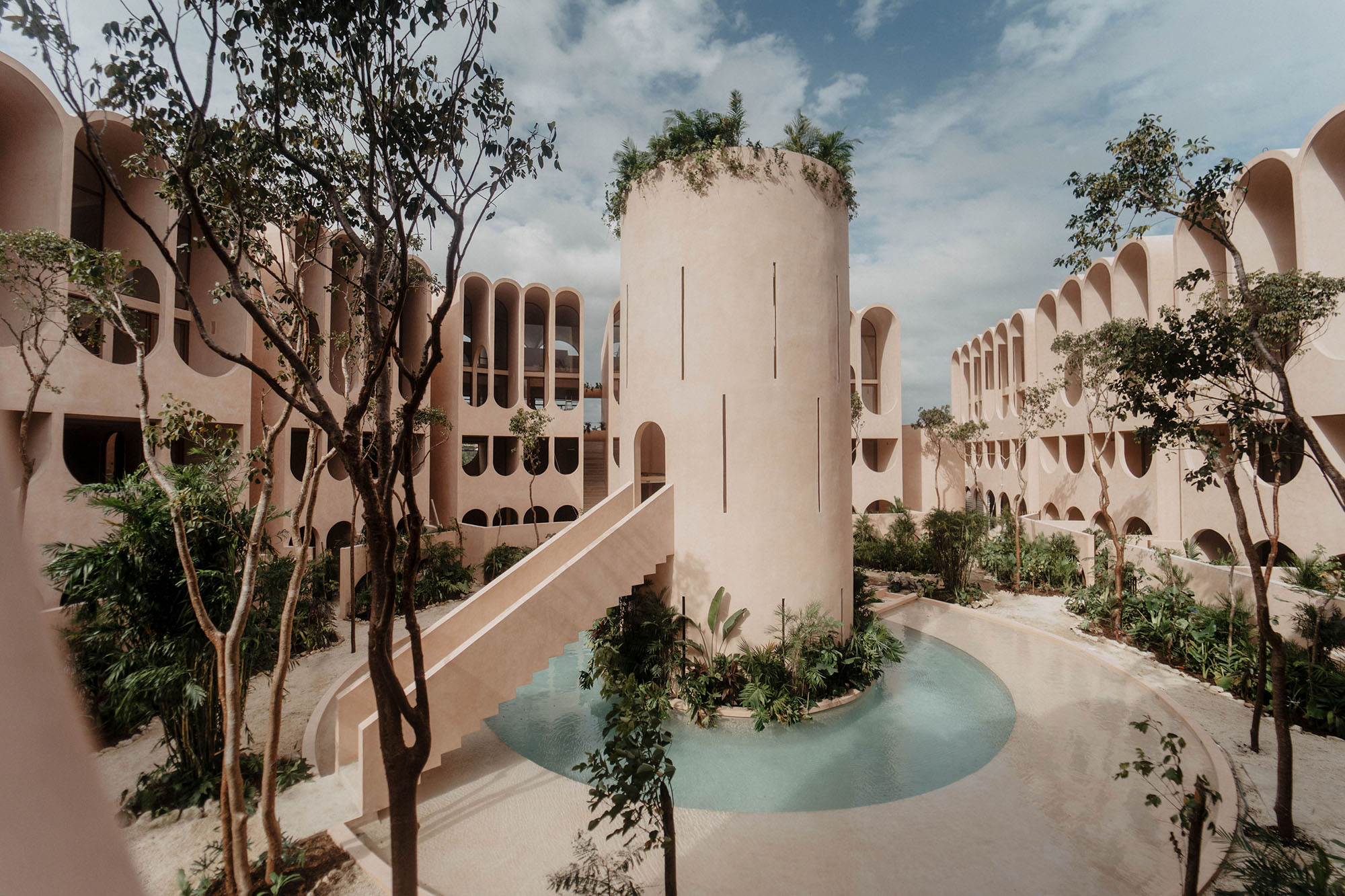
〈バベル〉の空間構成は目のような形状の平面を基軸とし、居住ユニットが3層に配置されることで土地利用を最適化すると同時に、森林再生と気候調節のための空間を確保する。中央の中庭は気流と自然冷却を促進し、機械的介入なしに自然温和な環境を創出する。
©︎ Estudio Albers
一時的居住と恒久的居住を共存させて生み出すコミュニティ
建物のプログラムとしては、短期賃貸と長期居住が共存するハイブリッド型ホスピタリティモデルを統合し、年間を通じた経済的・社会的安定を実現する。一時的居住と恒久的居住のバランスにより、観光主導型プロジェクトにありがちな経済的変動を回避し、活発なコミュニティ形成を促進する。
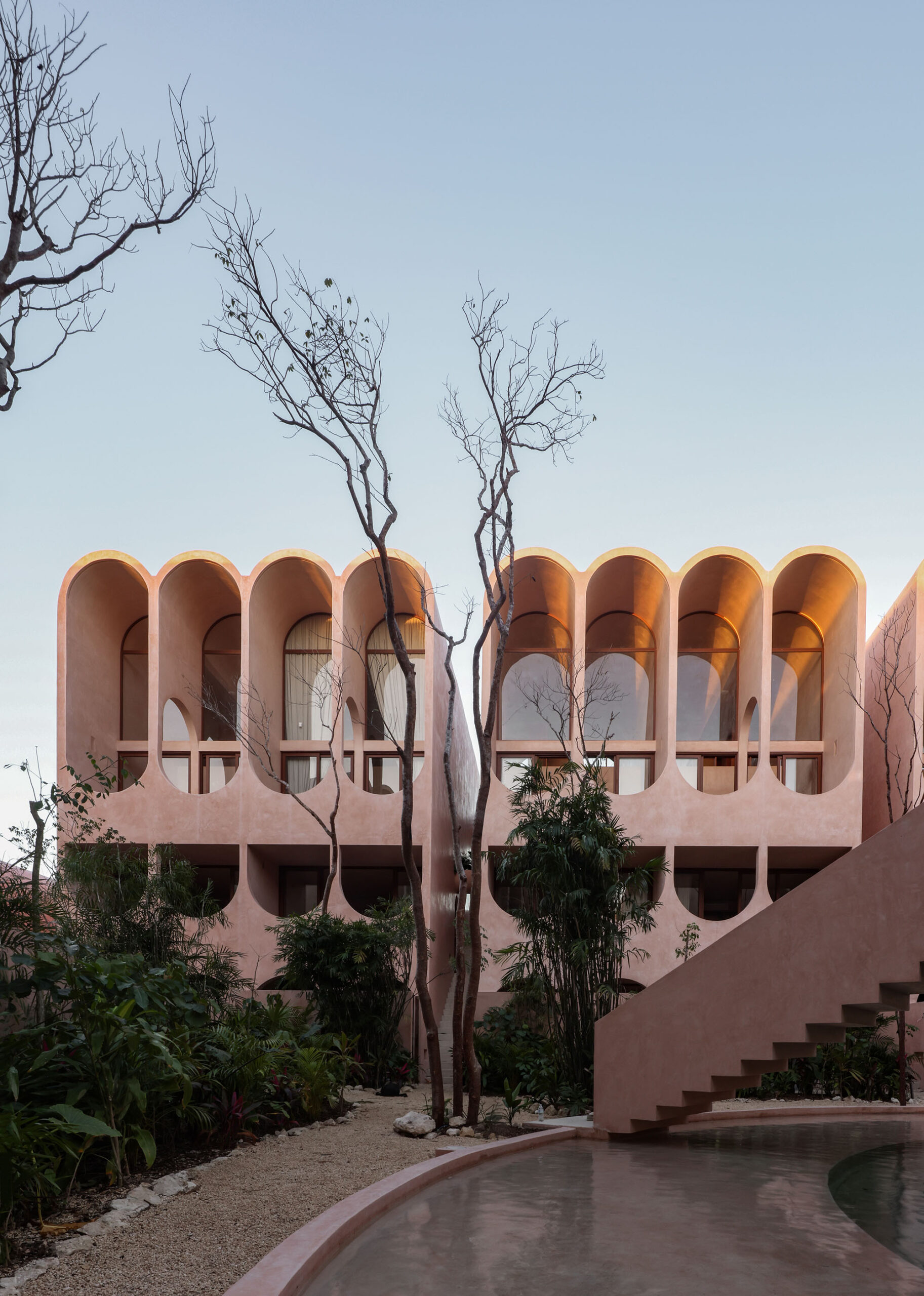
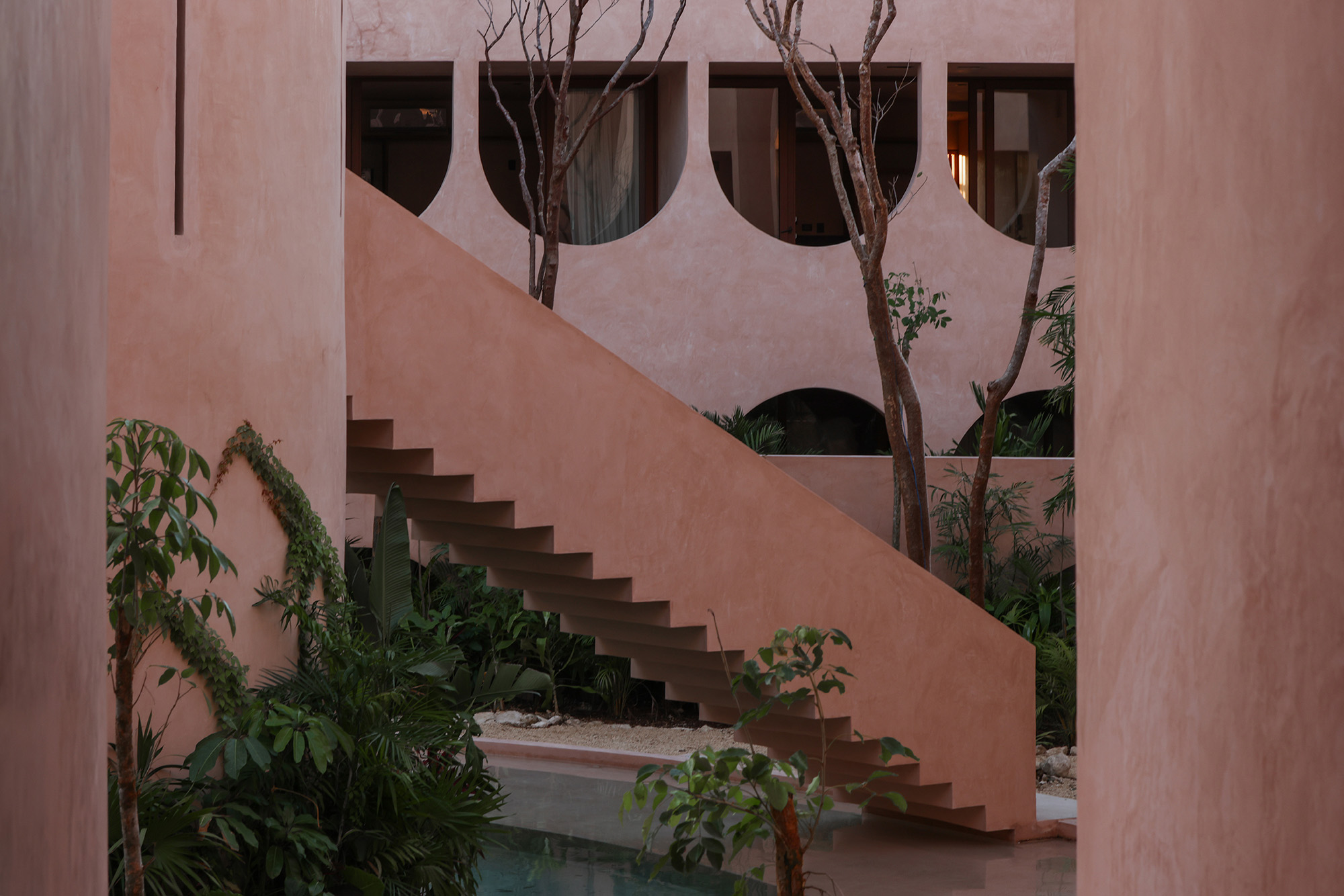
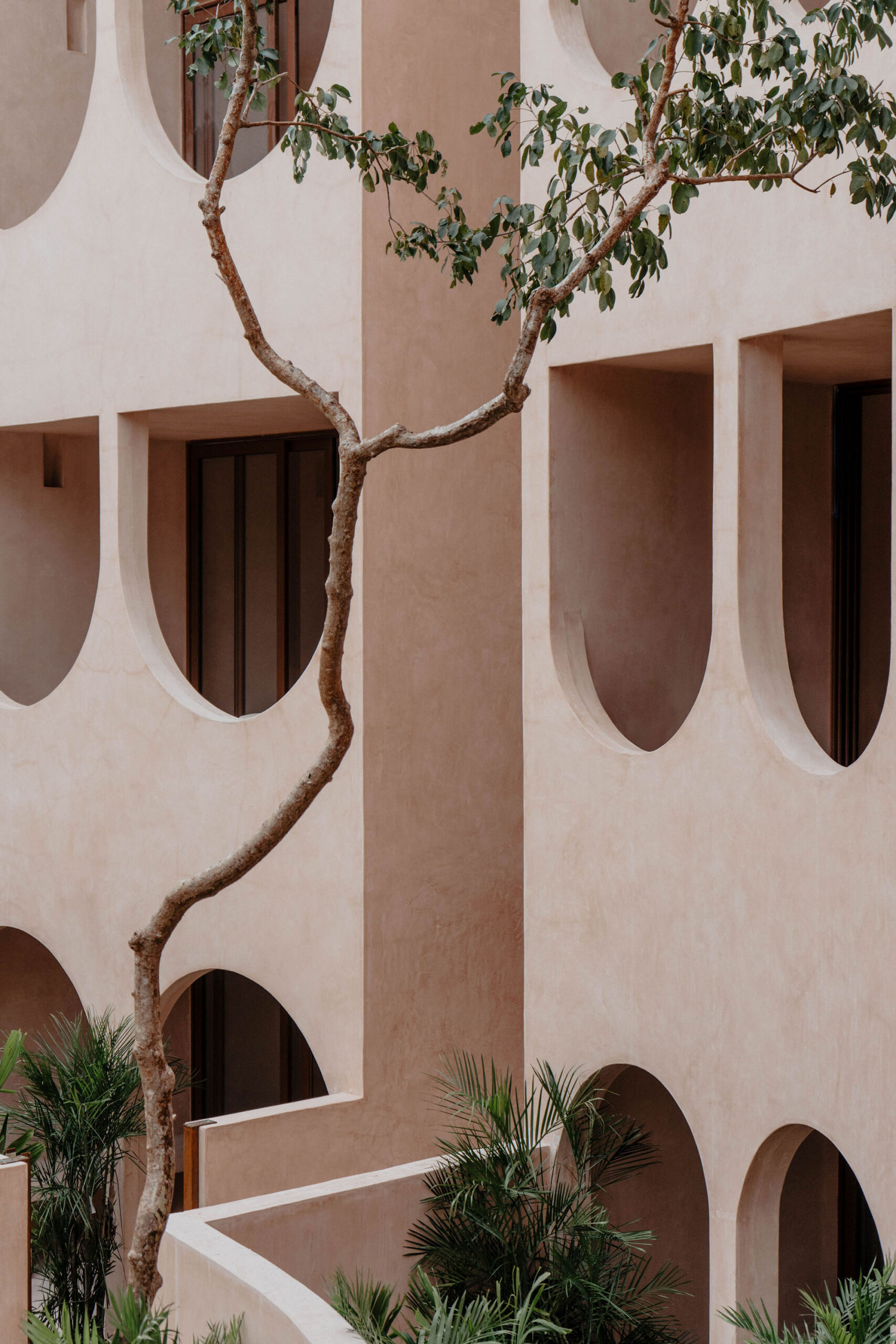
空間は圧縮と拡張の連続として設計され、細い階段は光のトンネルとなり、アーチに囲まれた開放的な二重高天井空間へと導かれる。この制約と開放性の相互作用が空間認識を高め、建築・素材・自然光との没入的な結びつきを強化する。流動的な空間適応の原理は居住ユニットの設計にも拡張され、各空間は機能性と周囲環境とのシームレスな対話を両立させている。
©︎ Estudio Albers
居住ユニットと「押し付けではなく統合」の哲学
各住戸は自給自足型の居住空間として構想されており、キッチン、リビング・ダイニングエリア、専用浴室、ジャグジー付き庭園、寝室を統合している。
プログラムは一貫しつつも、曲線構造内での位置に応じてレイアウトが微妙に変化し、各住戸が配置に有機的に適応することを保証する。この適応性は快適性と効率性を最大化するだけでなく、建築空間と自然景観の関係性を深化させ、〈バベル〉の「押し付けではなく統合」という哲学を体現している。
©︎ Estudio Albers
©︎ Estudio Albers
リトリートとしての共同空間
〈バベル〉はプライベート居住空間に加え、共同利用型・ウェルネス志向の空間群を配置し、総合的なリトリートとしての理念を強化する。
コワーキングスペースは自然との一体感を求める働き手に柔軟な環境を提供し、スパ&ウェルネスセンターにはハーブスチームルーム、マッサージキャビン、瞑想エリアを備える。敷地内レストラン&バーでは地元産食材を用いたベジタリアンメニューとモクテルを提供し、禅庭園やASMRルーム、ヨガスタジオなどが心身の再接続とマインドフルな生活を支援する。
©︎ Estudio Albers
光を操る中央タワー
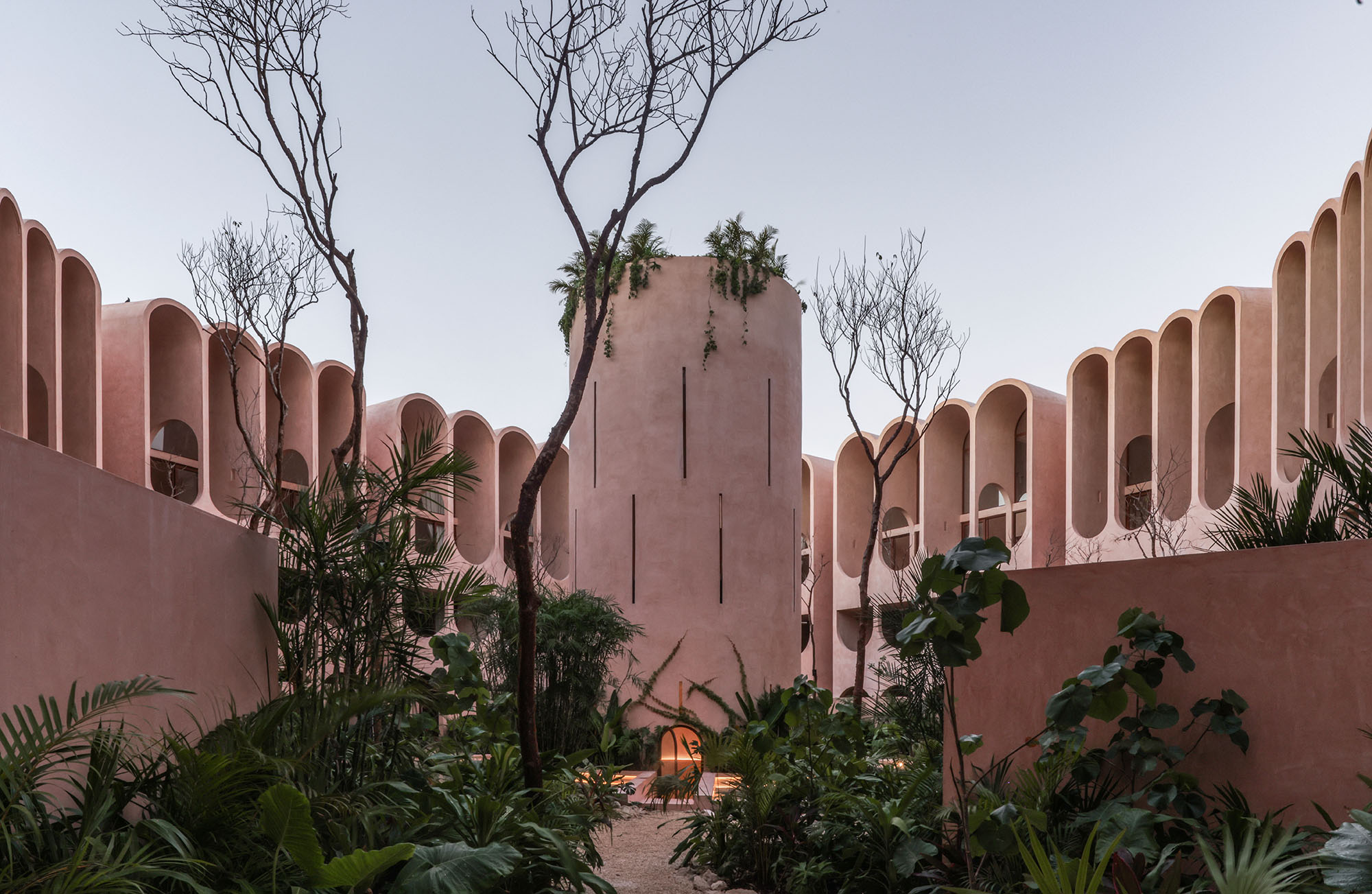
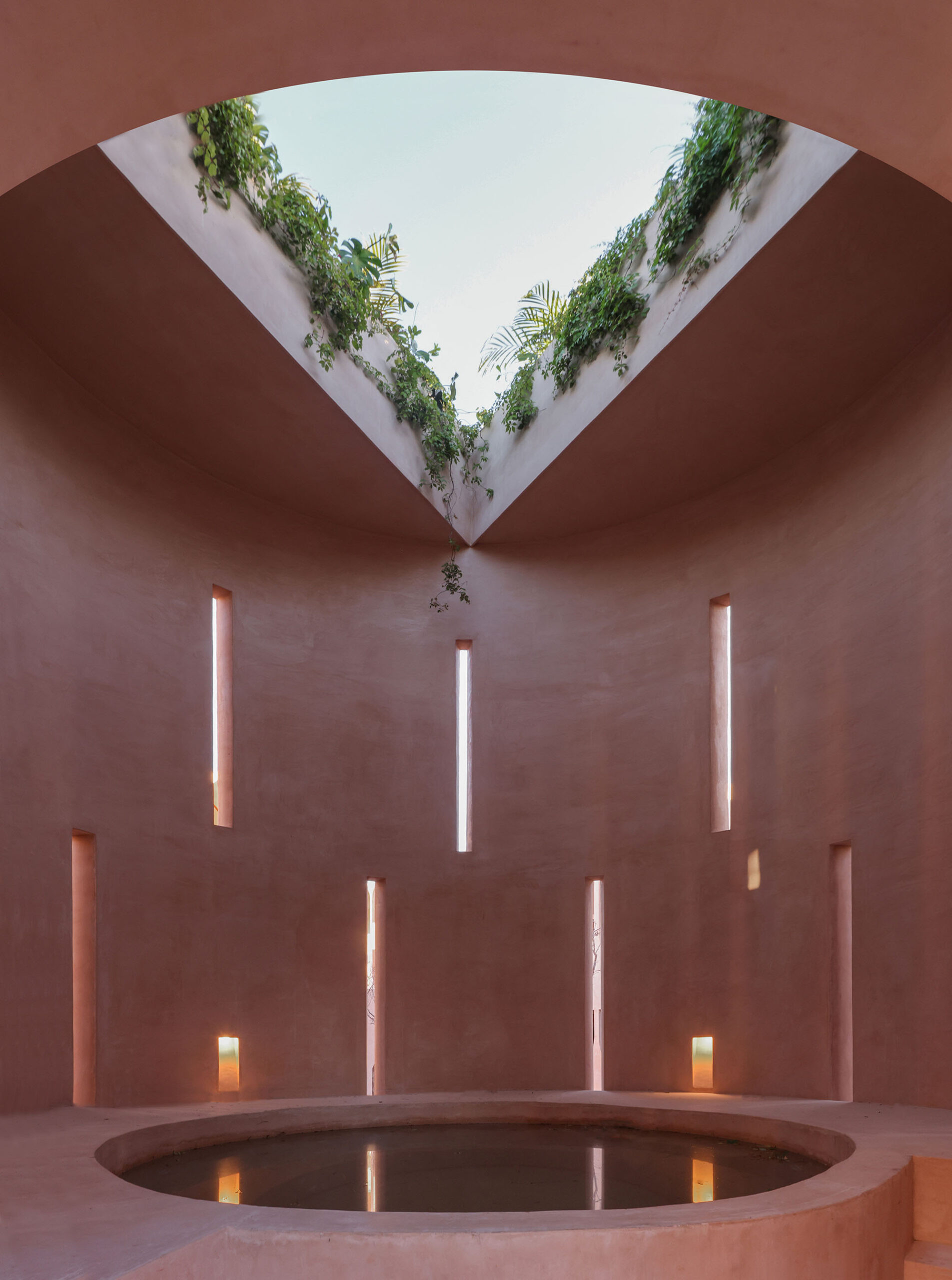
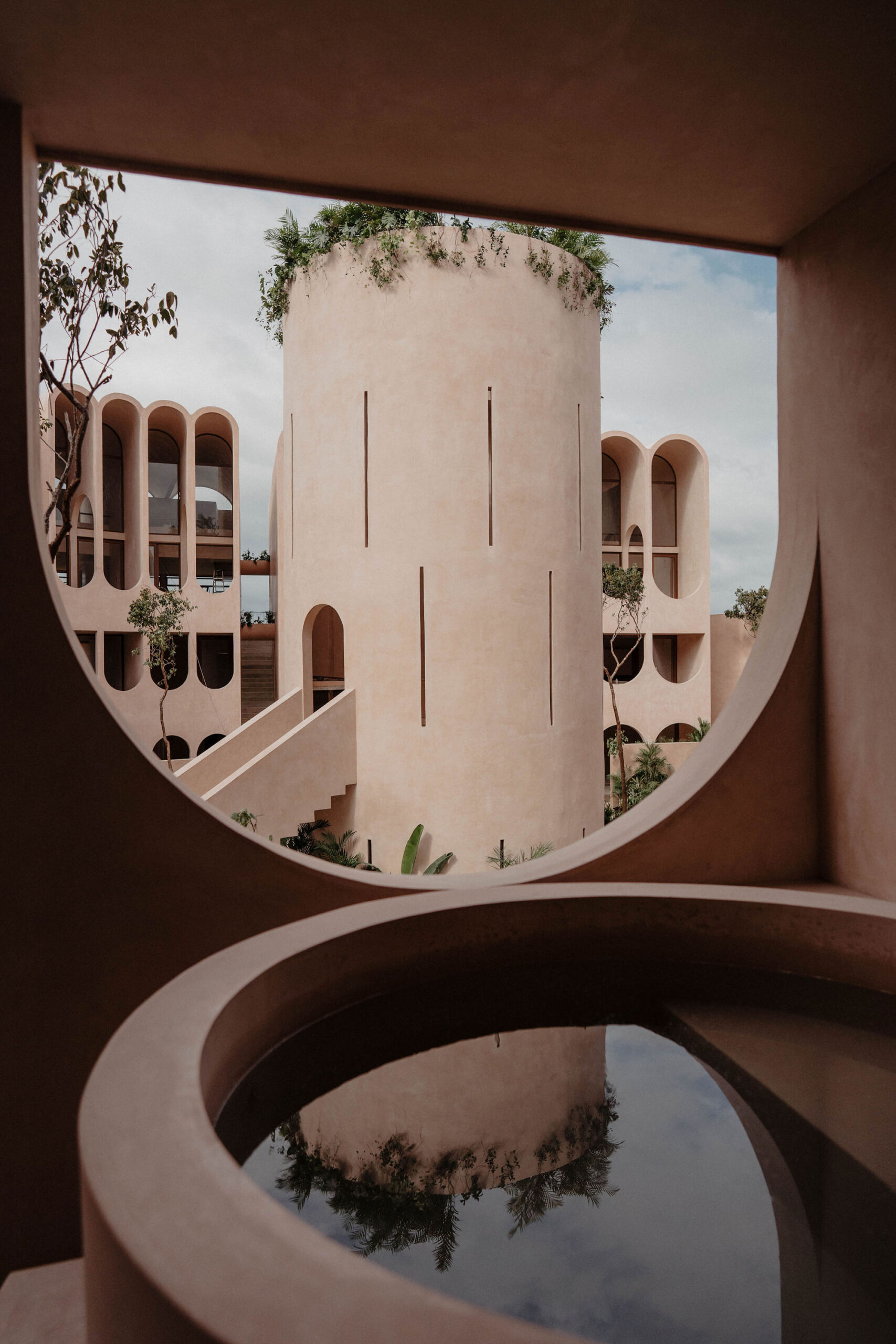
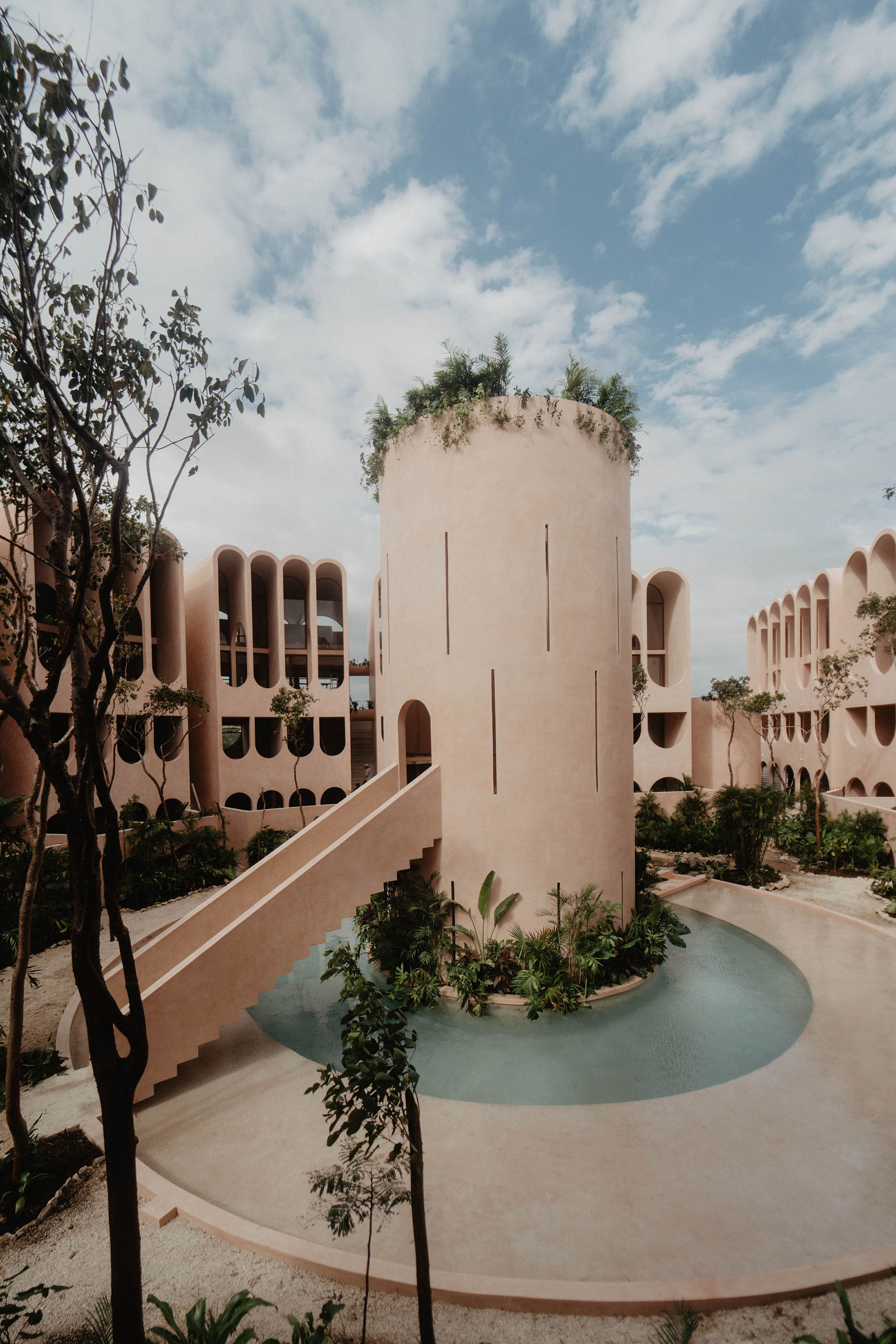
プロジェクトの中核をなす中央タワーは、空間のアンカーであり、光をフレームに収める体験装置でもある。建物の中央に位置しながらも支配的なランドマークとして主張するのではなく、動線を調整し、概念的深みを強化する。
ハマム建築、インドの階段井戸、メキシコのヴィラから着想を得た開口部は、日光を濾過しながら1日を通じて変化する明暗のリズミカルな対話を生み出す。
©︎ Estudio Albers
この光への制御された操作が、建築と空間が融合する没入型の感覚体験へとタワーを変容させる。頂上部に配された三角形の開口部は空の一片を切り取り、周辺からの雑念を排除し、天体の動きとの親密な関わりを誘う。
彫刻的なジェスチャーを超え、この塔は方位と内省の道具として、構築された空間・時間・周囲の景観の関係性を強化する。質量と虚空、堅牢性と開放性の相互作用を通じて、バベルの基本理念「建築が単なる住居ではなく、人間の経験と自然界の媒介者となること」を体現している。
©︎ Estudio Albers
地域に根ざす素材と職人技
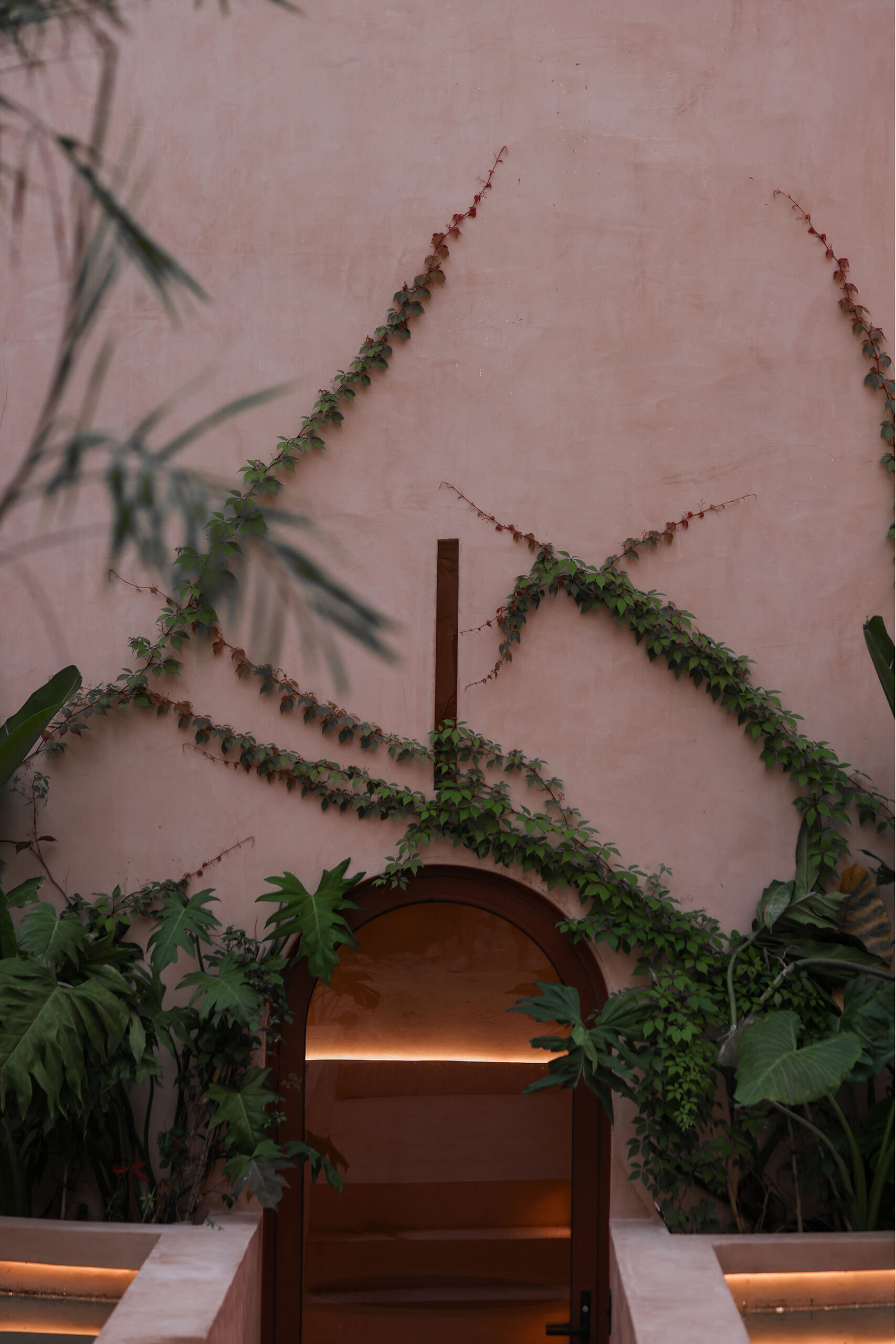
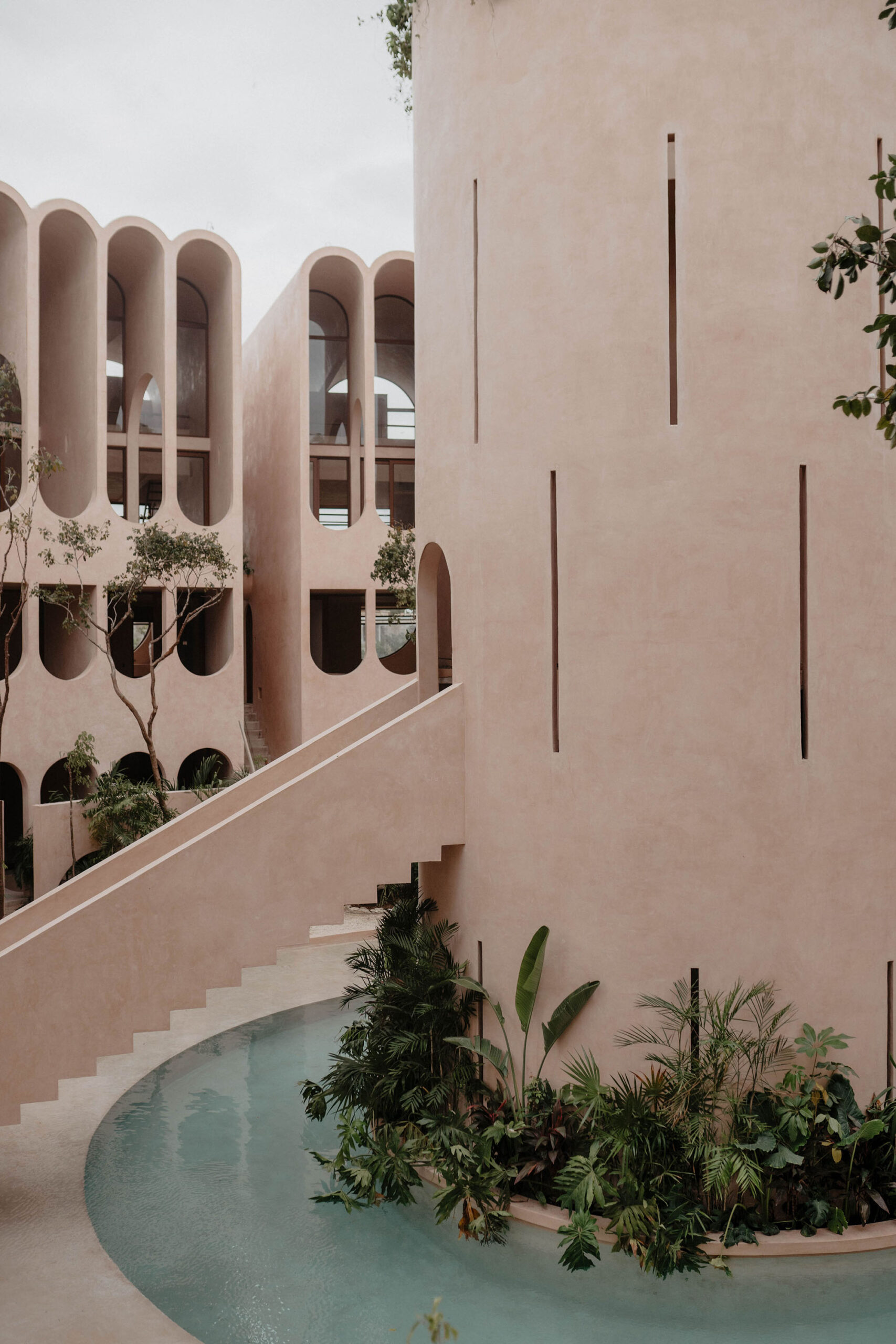
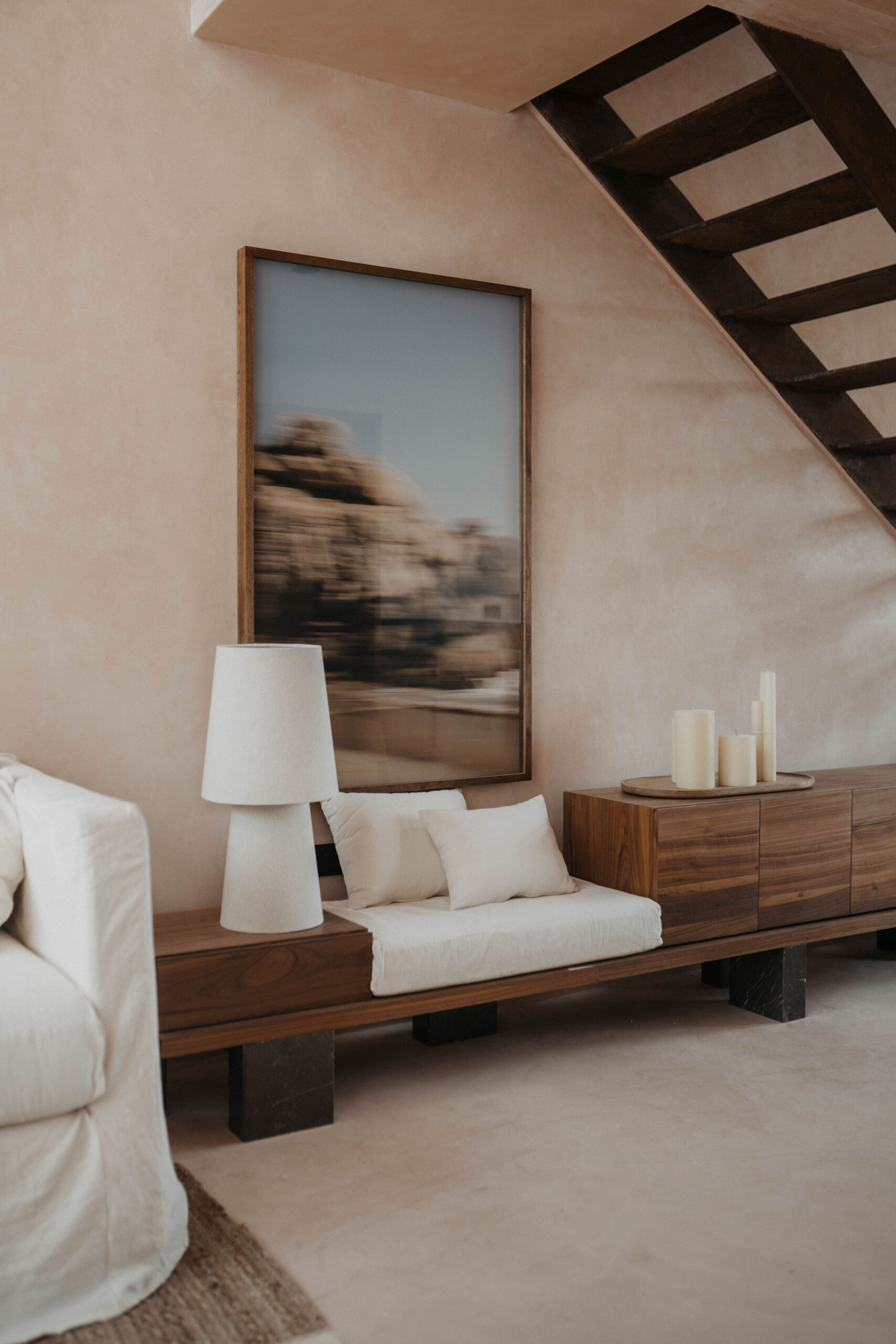
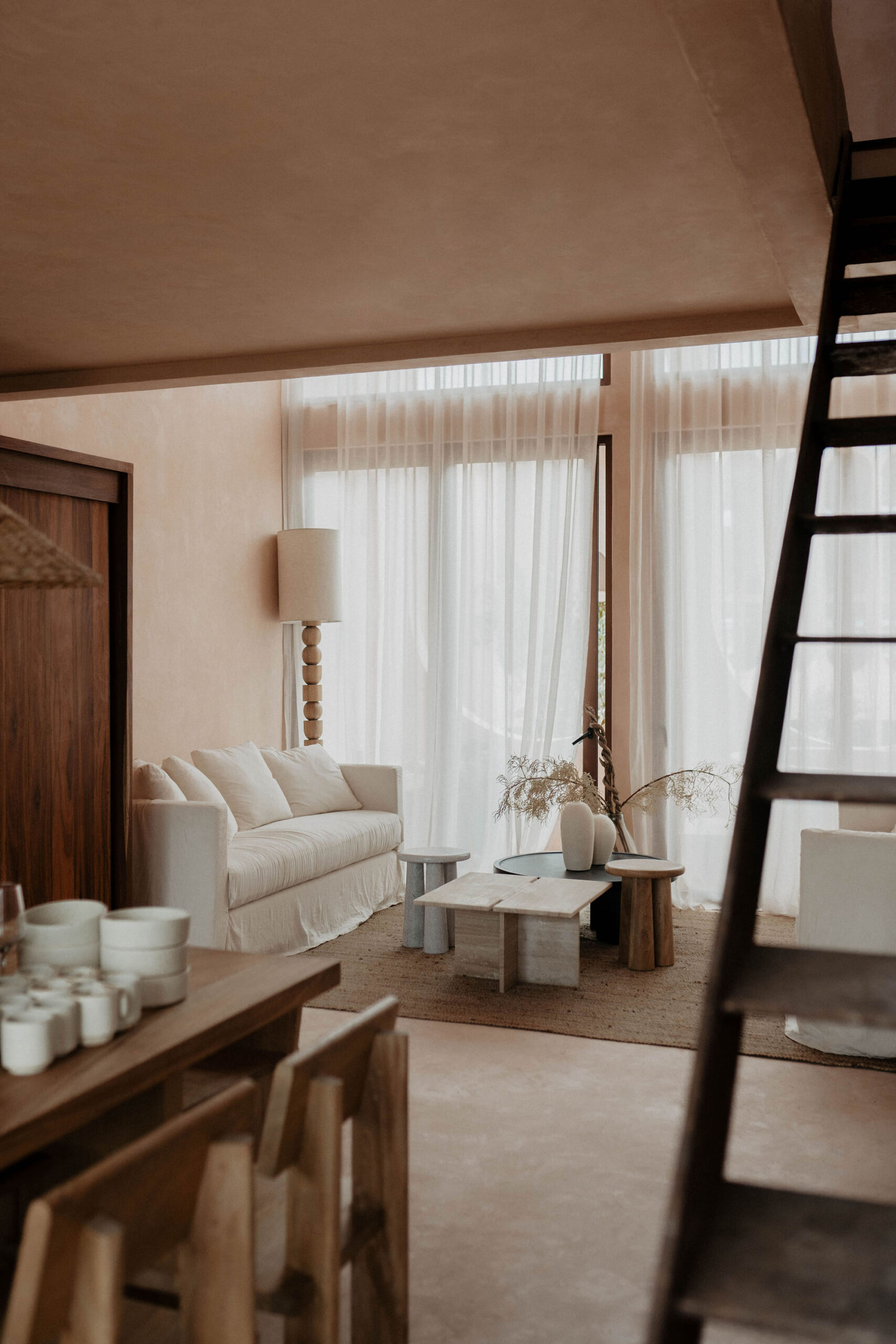
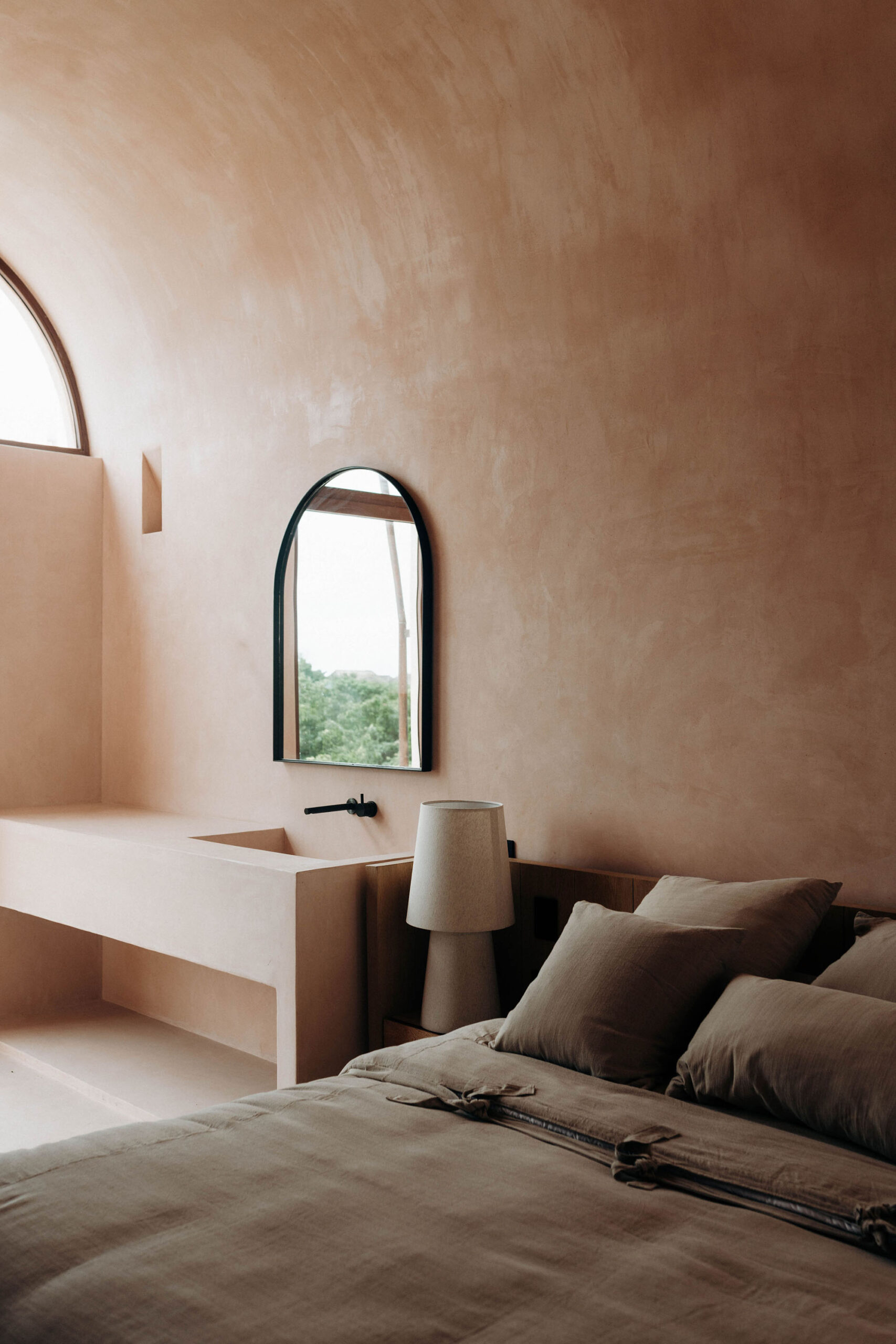
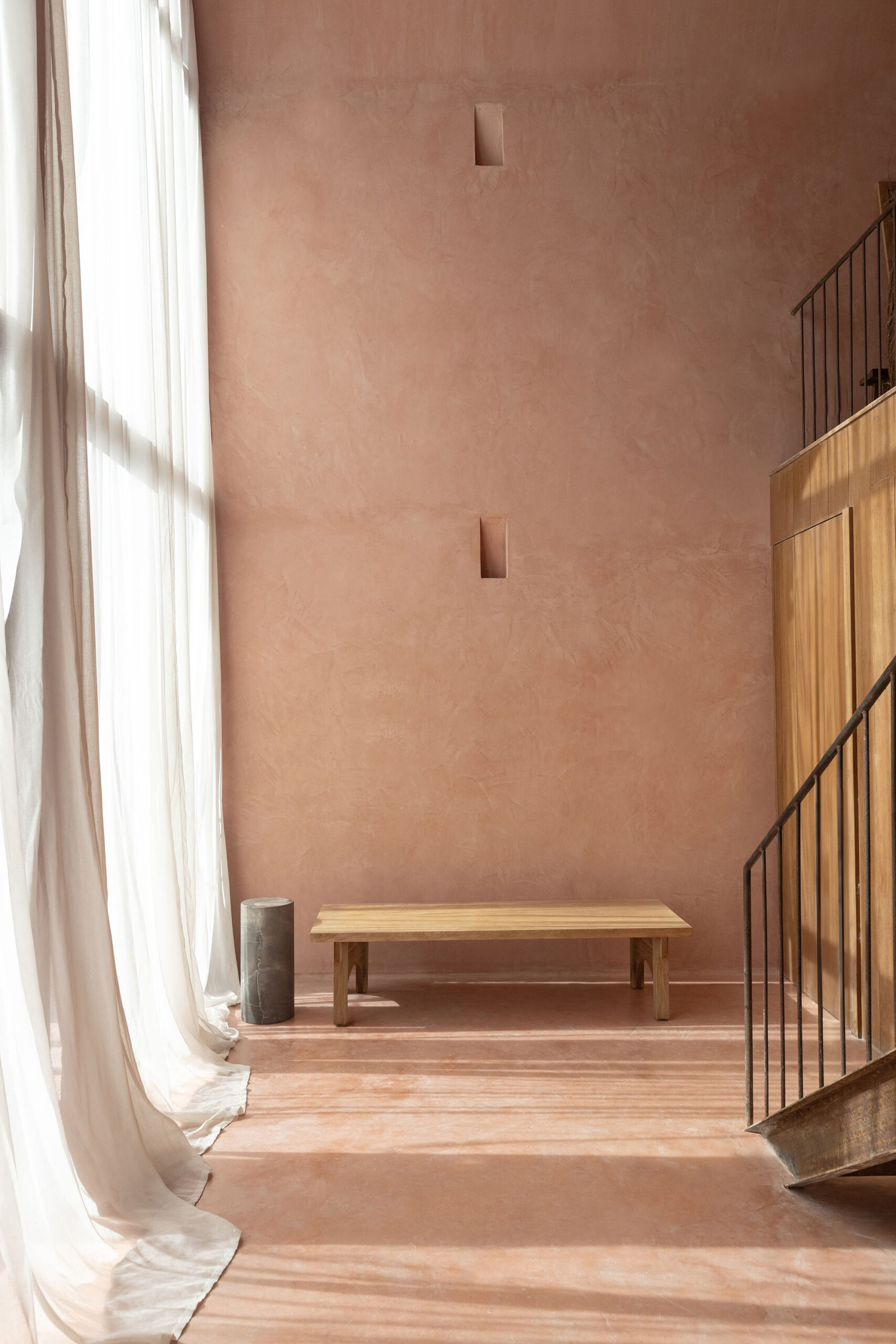
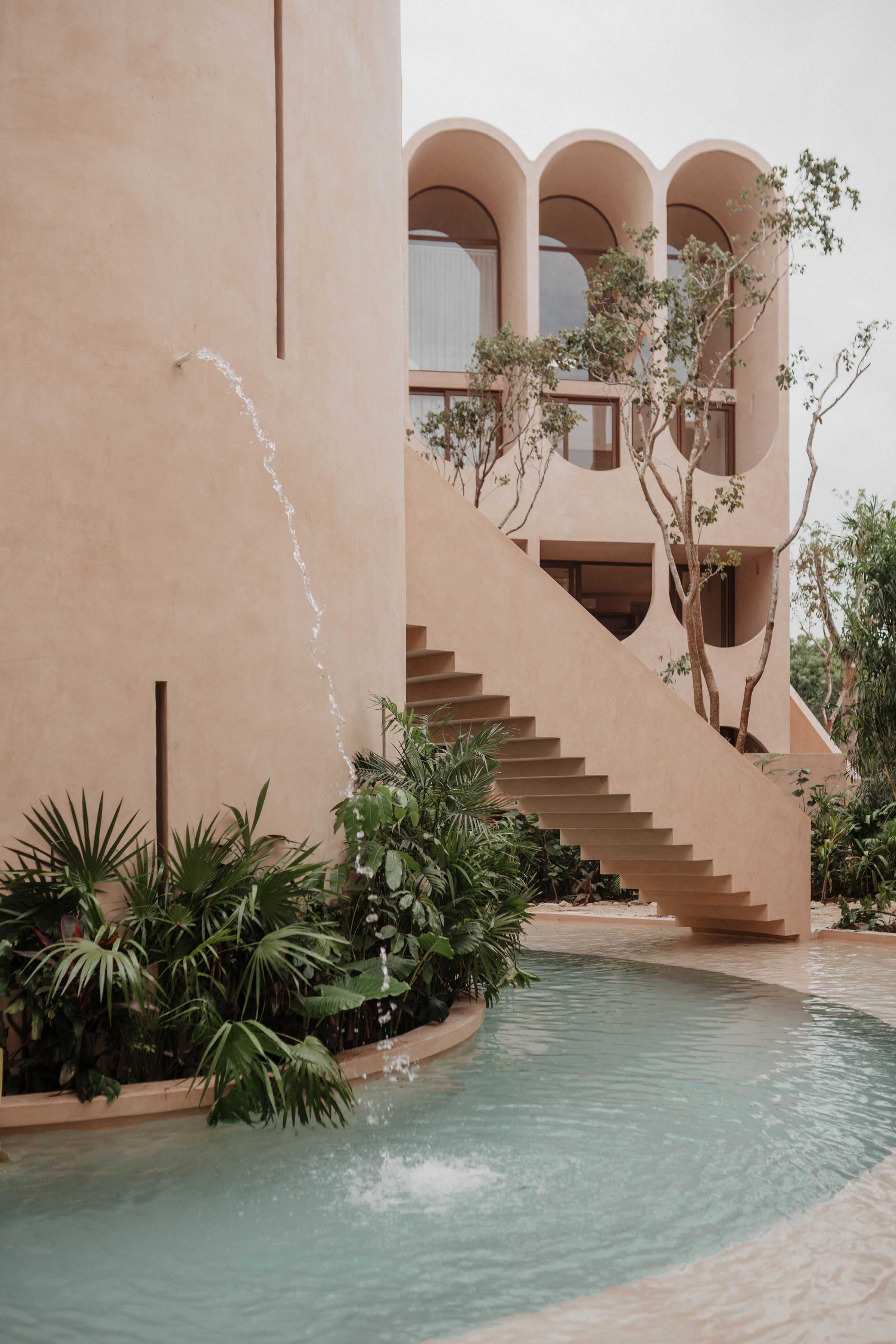
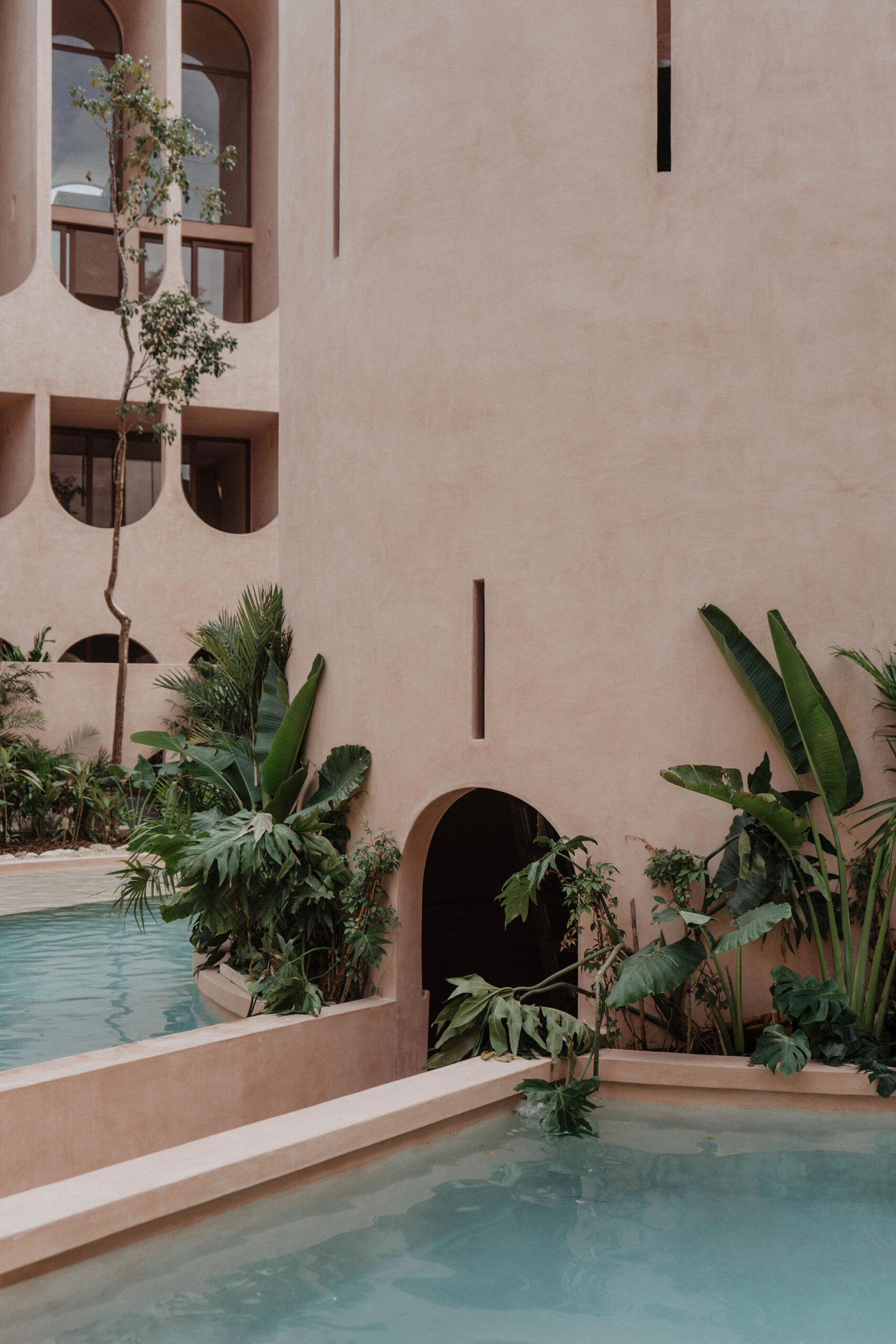
素材選定は持続可能性・耐久性・地域性を均衡させるよう慎重に行われた。主要外装仕上げ材はユカタン半島産の伝統的石灰系漆喰「チュクム」であり、耐湿性・断熱性・低メンテナンス性を兼ね備える。手作業で層状に塗布されるこの素材は、室温を自然に調節し、人工的な冷房の必要性を低減する。
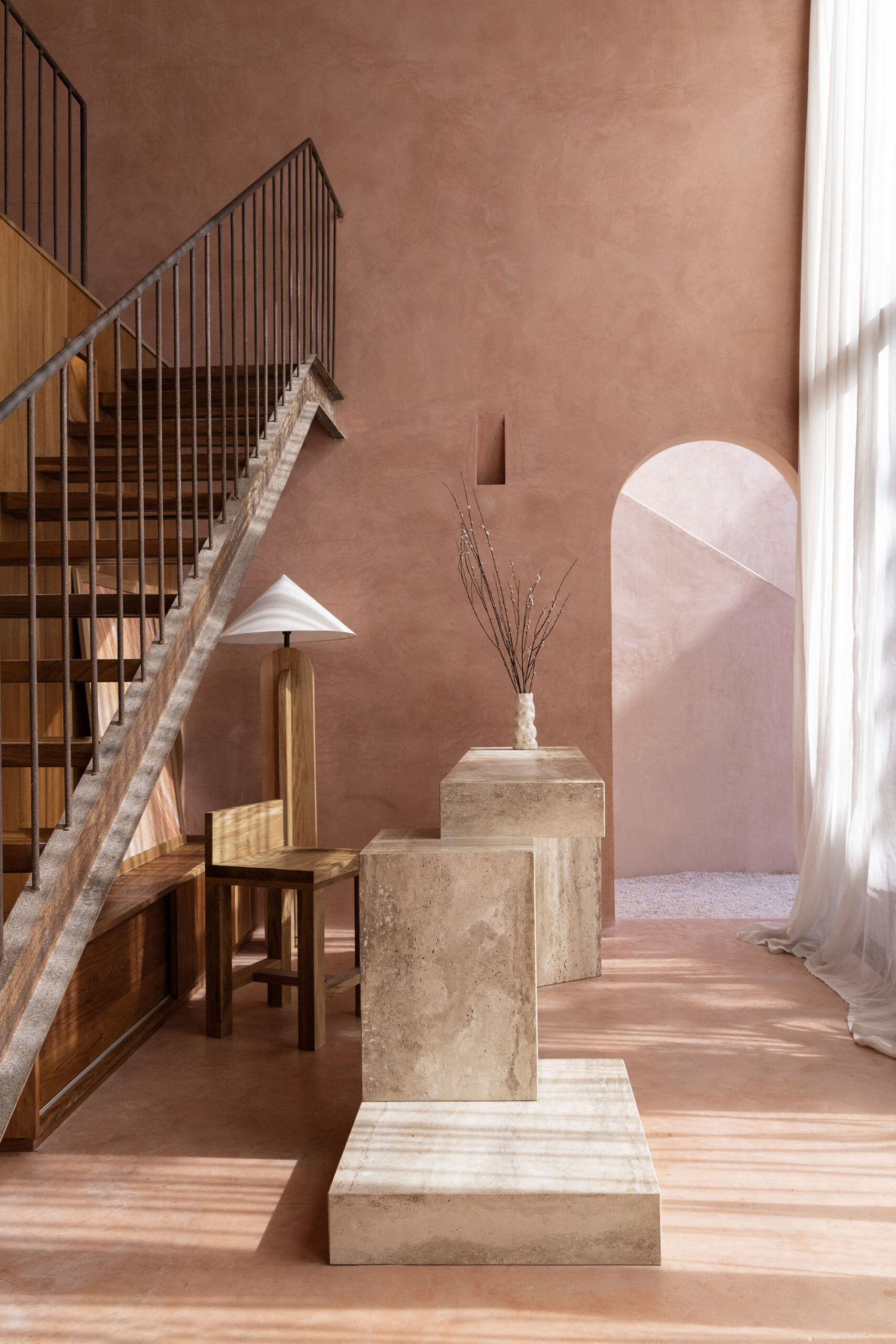
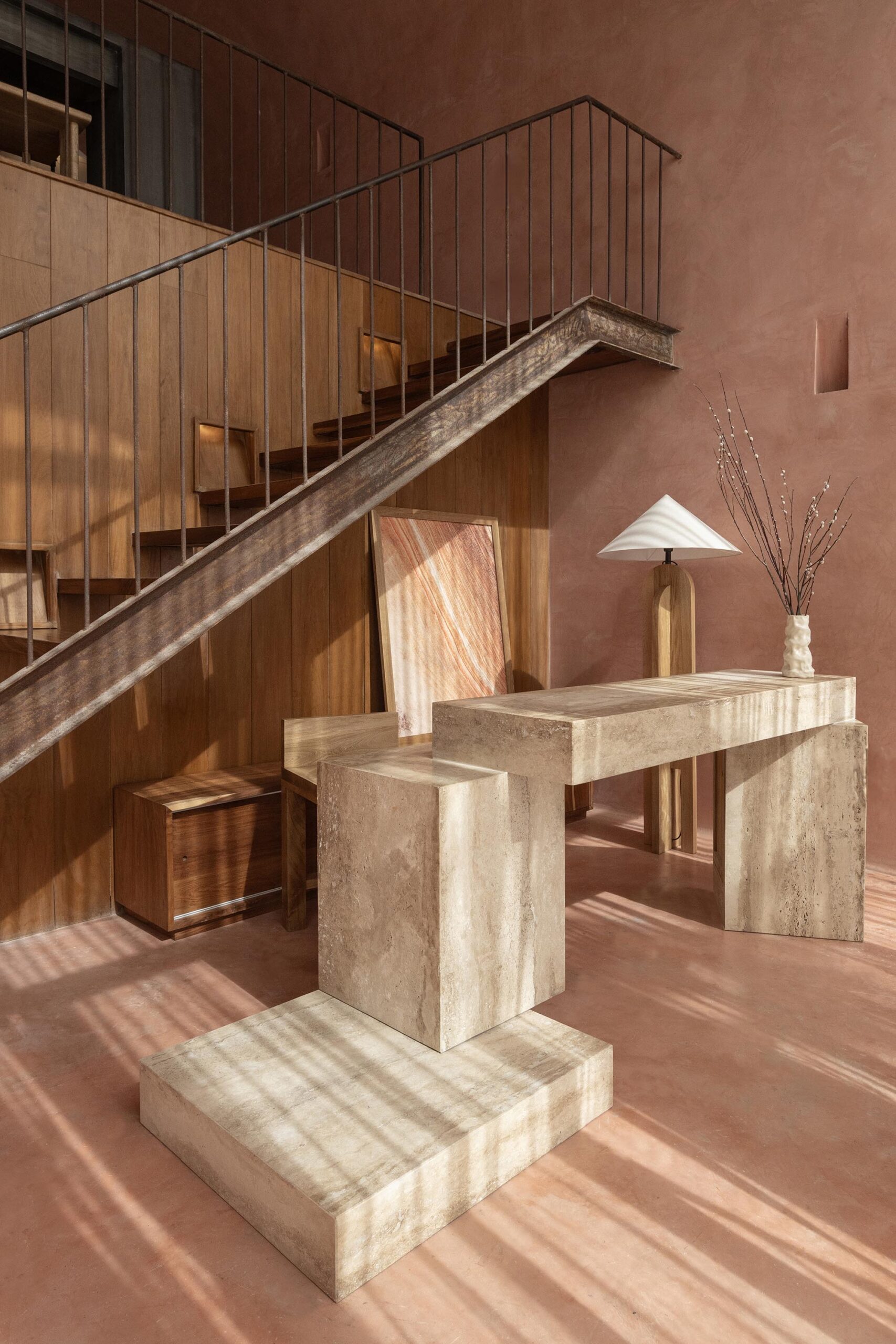
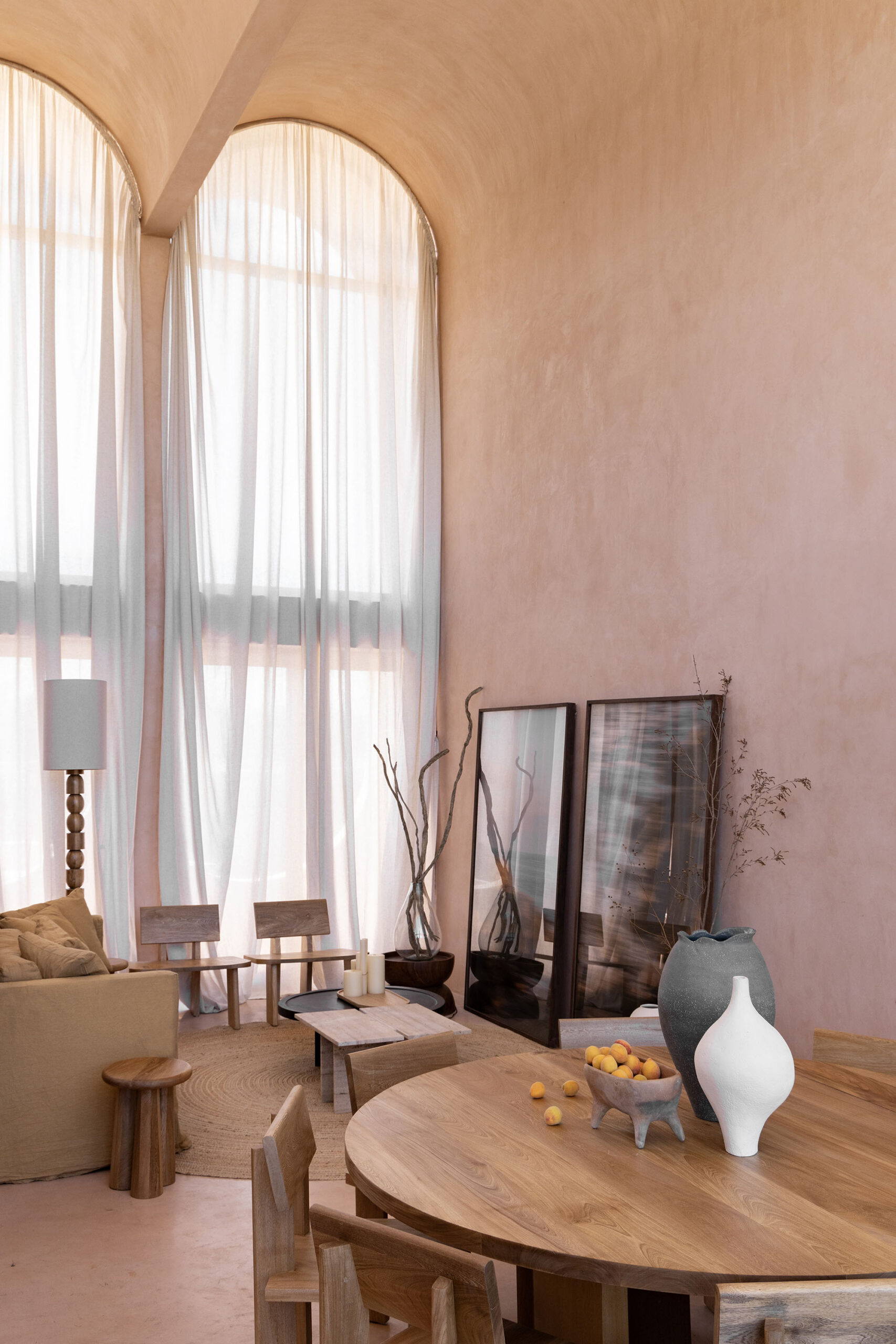
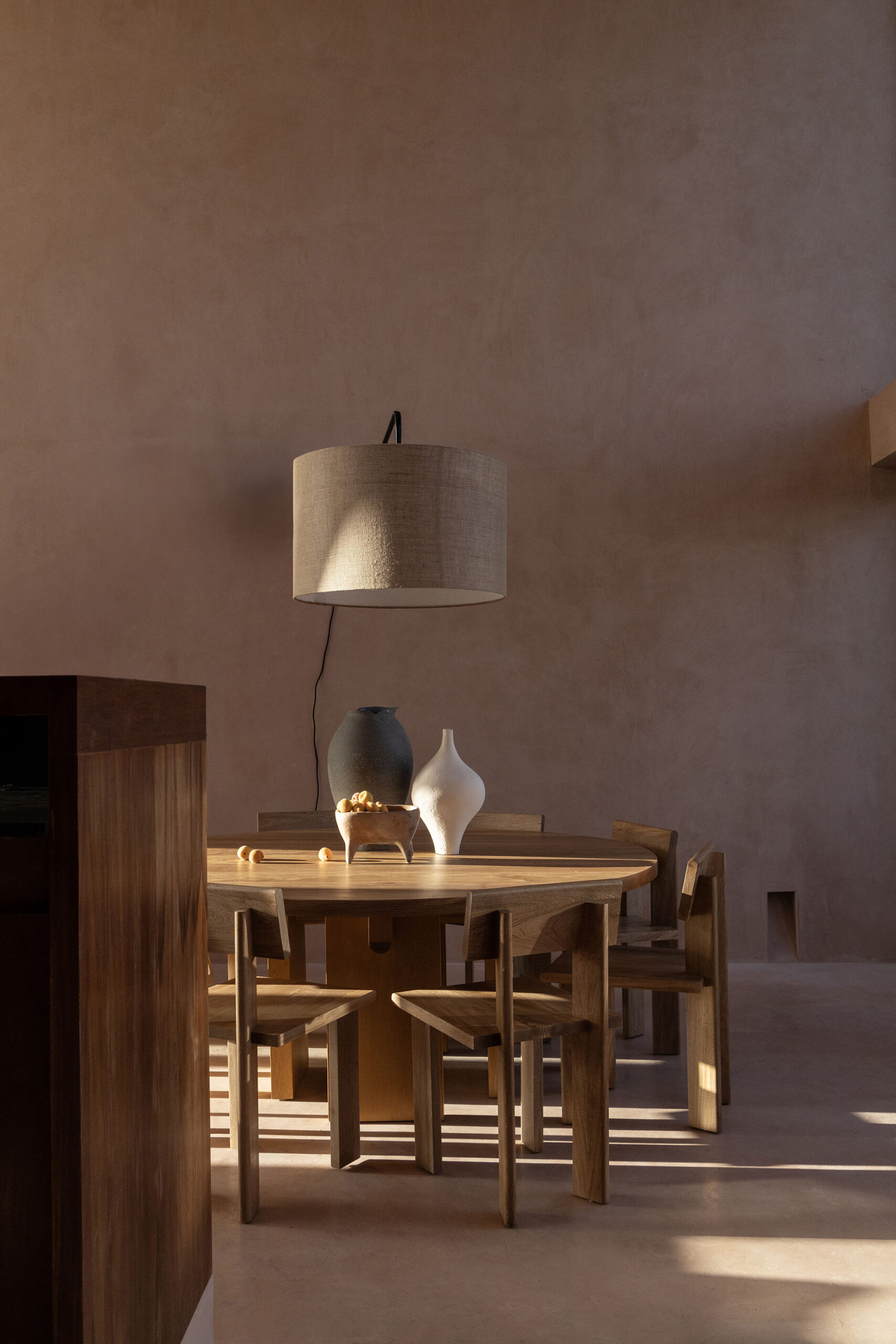
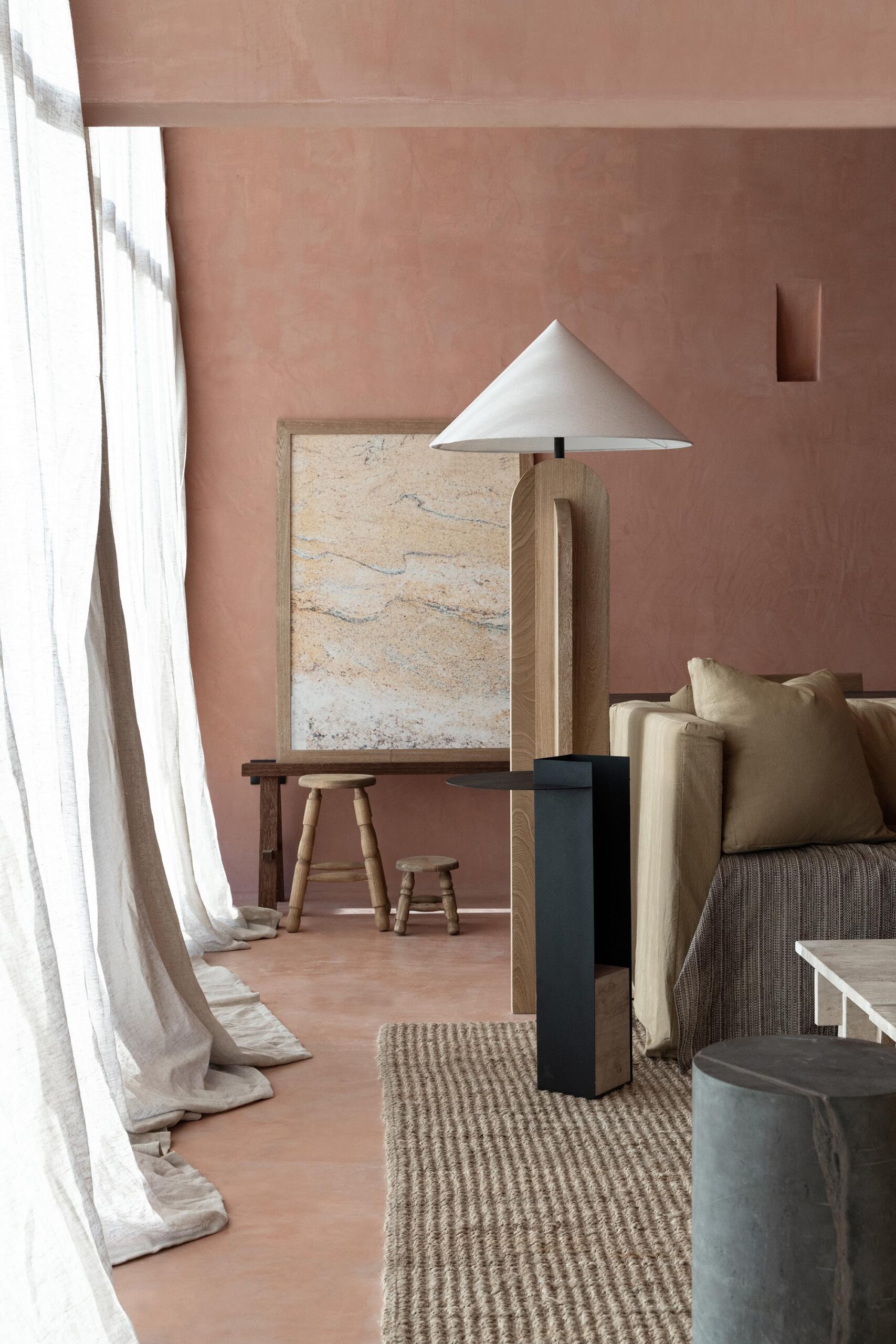
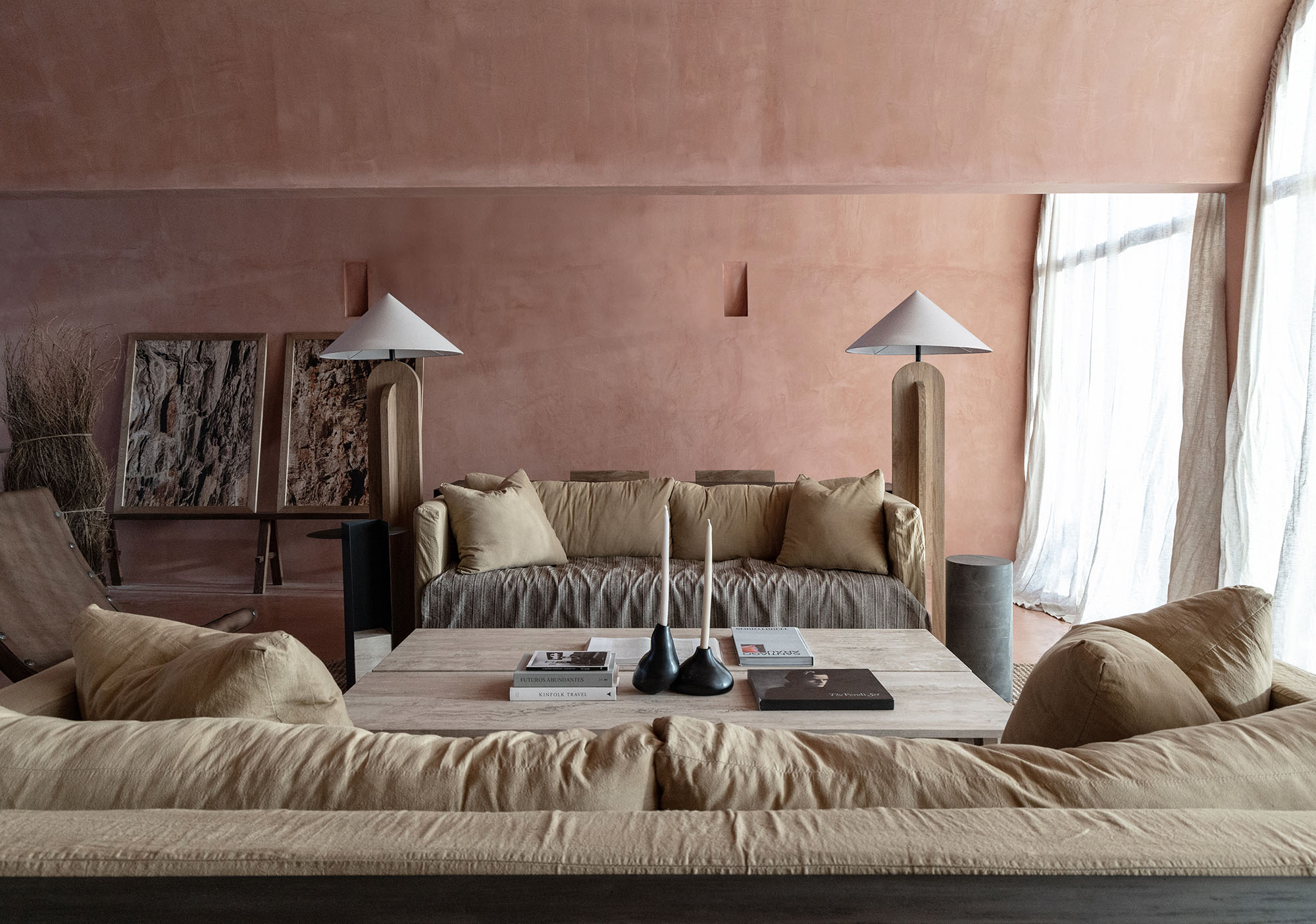
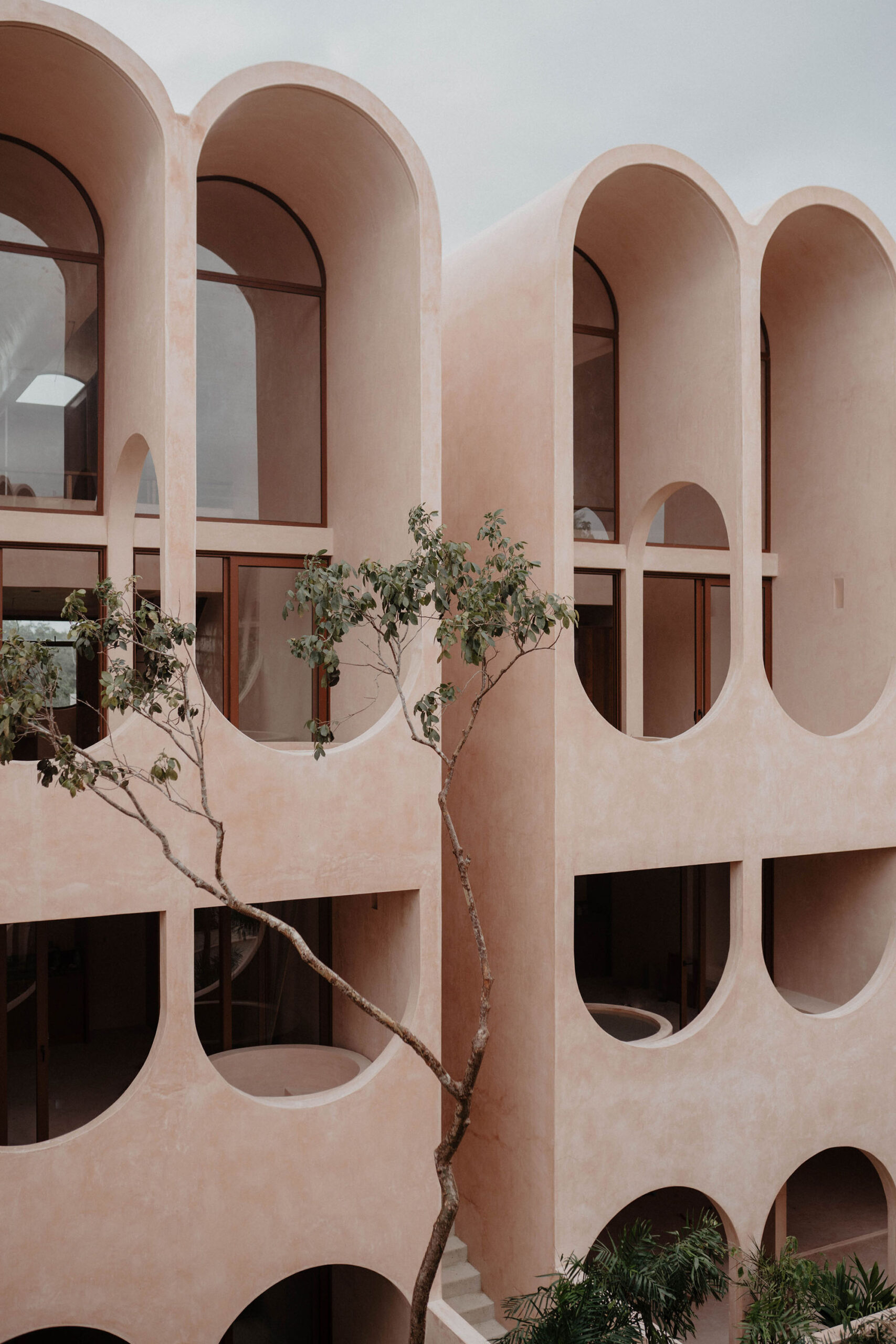
鉱物系顔料による柔らかなピンク色調は光条件に応答し、建築を風景に溶け込ませる。内部では熱帯木材と手づくりの粘土要素が温かみをもたらし、地域の職人技による雰囲気を強化している。これらの素材は、美的・機能的特性だけでなく、手工芸生産の統合を通じて地域経済を支えるためにも選定された。
©︎ Estudio Albers
地域文化と経済の循環を生む建築
〈バベル〉は従来のリゾート型開発に代わる選択肢を提案し、一時的な観光から、より深く関わり、地域に根ざした体験へと移行させる。短期滞在と長期居住の統合は、地域経済を混乱させがちな空き家サイクルを防ぎ、より安定したコミュニティを育む。
このモデルは季節変動を超えた経済的持続可能性を確保し、一時的な観光地ではなく自立した都市的プレゼンスを創出する。
©︎ Spaces by Conie
経済的回復力に加え、〈バベル〉は地域の文化的生産と深く関わり合う建築であり、地域で制作された家具、織物、陶器を取り入れることで、文化的継続性と素材の真正性への取り組みを強化する。
これらの要素は単なる装飾的選択ではなく、プロジェクトのアイデンティティに不可欠な部分であり、〈バベル〉の建築言語が地域文脈に根ざし続けることを保証している。
©︎ Spaces by Conie
「生態的再生」と「経済的持続可能性」を両立する開発モデル
〈バベル〉はホスピタリティ建築に対する固定概念に挑戦し、高密度開発と生態系回復が対立する制約ではなく、補完的な力として機能し得ることを証明している。空間効率性、素材の本質性、生物気候学的戦略を優先することで、本プロジェクトは持続可能な観光のための再生的枠組みを確立する。
建築を孤立した対象として扱うのではなく、〈バベル〉は構築された空間と自然の継続的な相互作用を育み、光・植生・空気が居住体験を形づくる。コンパクトで効率的、文脈を認識した建築が生態的再生と経済的持続可能性の両方を支え得ることを示し、責任ある開発モデルとなる。
「実体と虚空」「動きと静寂」「密度と開放性」の原理を統合することで、〈バベル〉は持続可能な居住の新たなパラダイムを提案し、観光が搾取と過剰を超え、共存と再生のモデルへと進化し得ることを示している。
©︎ Spaces by Conie
垂直モデルによる環境負荷の低減
〈バベル〉は革新的なデザインと持続可能な建設が、急速で制御不能な都市成長の課題にどのように対処可能であるかを体現している。垂直モデルを採用し地盤の変位を最小限に抑えることで、〈バベル〉は総敷地面積3,510m²に床面積6,176m²を実現した。実際の建築フットプリントはわずか2,155m²である。
この設計戦略は、従来の水平開発と比較して土地消費量を約40%削減し、建設を集中させつつ広大なオープンスペースを保全する。都市計画研究によれば、垂直モデルは都市の無秩序な拡大と関連環境影響を最大30%削減し、新規開発の総合的なカーボンフットプリントを低減できることが示されている。
©︎ Spaces by Conie
利用可能空間の最大化に加え、この垂直アプローチは緑地と生態系再生のための十分な余地を残すことで環境的な持続可能性を高める。建築面積と占有土地面積の比率を最適化することで、〈バベル〉は急成長地域における高密度化を支援すると同時に、天然資源と生物多様性を保護する。
研究によれば、地面被覆率を低減した開発は土壌密閉効果を大幅に緩和し、地域水文を保全することで、より健全な都市生態系と強靭な水管理システムに貢献する。
©︎ Spaces by Conie
構造・素材・エネルギー効率の戦略
ここからは、〈バベル〉を持続可能な建築のモデルと位置づける技術的・建設的戦略を探っていく。〈バベル〉は59戸の住戸から成る3層構成となっており、各住戸は周囲環境とシームレスにつながる設計となっている。
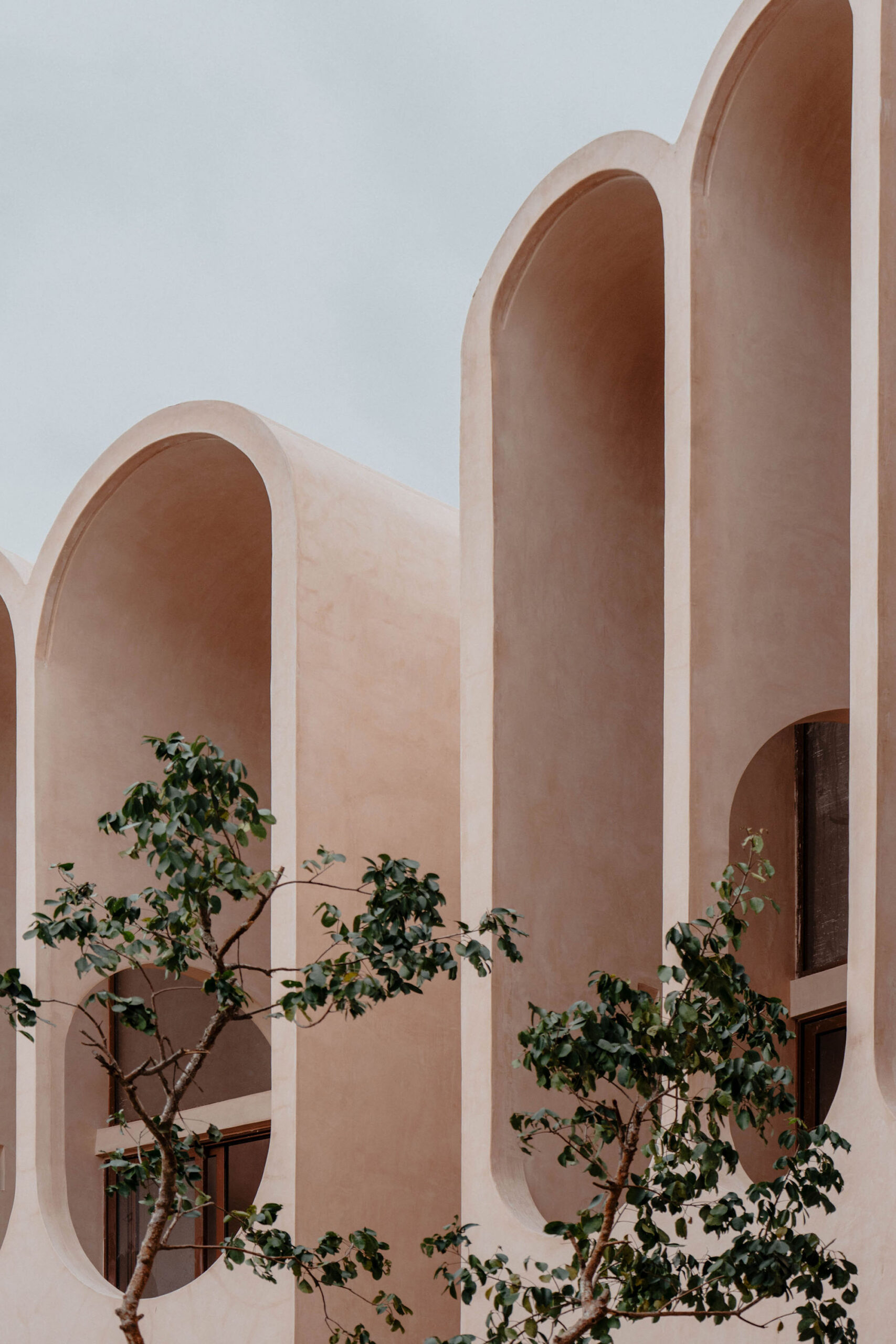
主要仕上げ材「チュクム」は優れた断熱性と耐久性をもつ。熱伝導率が約0.5~0.7 W/mK(合成仕上げ材の典型値0.7~1.0 W/mKを大幅に下回る)という特性により、優れた断熱性を発揮し、エネルギー消費の削減に寄与する。
©︎ Spaces by Conie
さらに、湿気に対する固有の耐性と最小限のメンテナンス要件により、10~15年ごとに再塗装やシーリングが必要な従来のスタッコとは異なり、チュクムは大幅に長い間隔でメンテナンスが不要となり、その頻度は最大10分の1にまで低減することが可能である。
適切に施工・維持管理された場合、チュクムは現代の典型的なスタッコ仕上げの外装寿命50~80年を大きく超え、100年を超える耐久性を発揮する。
©︎ Spaces by Conie
調査に基づき地域を活性化するプロジェクト
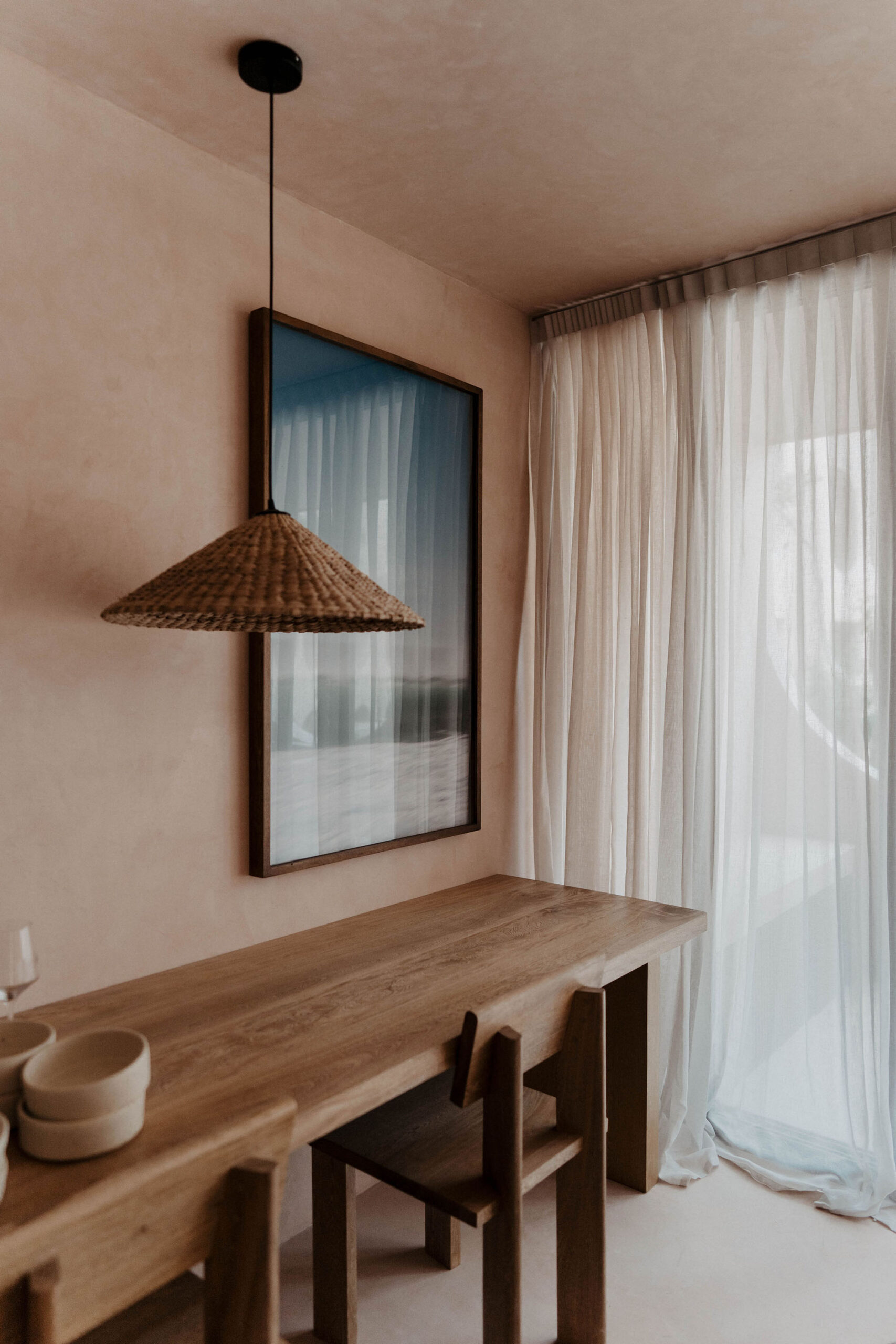
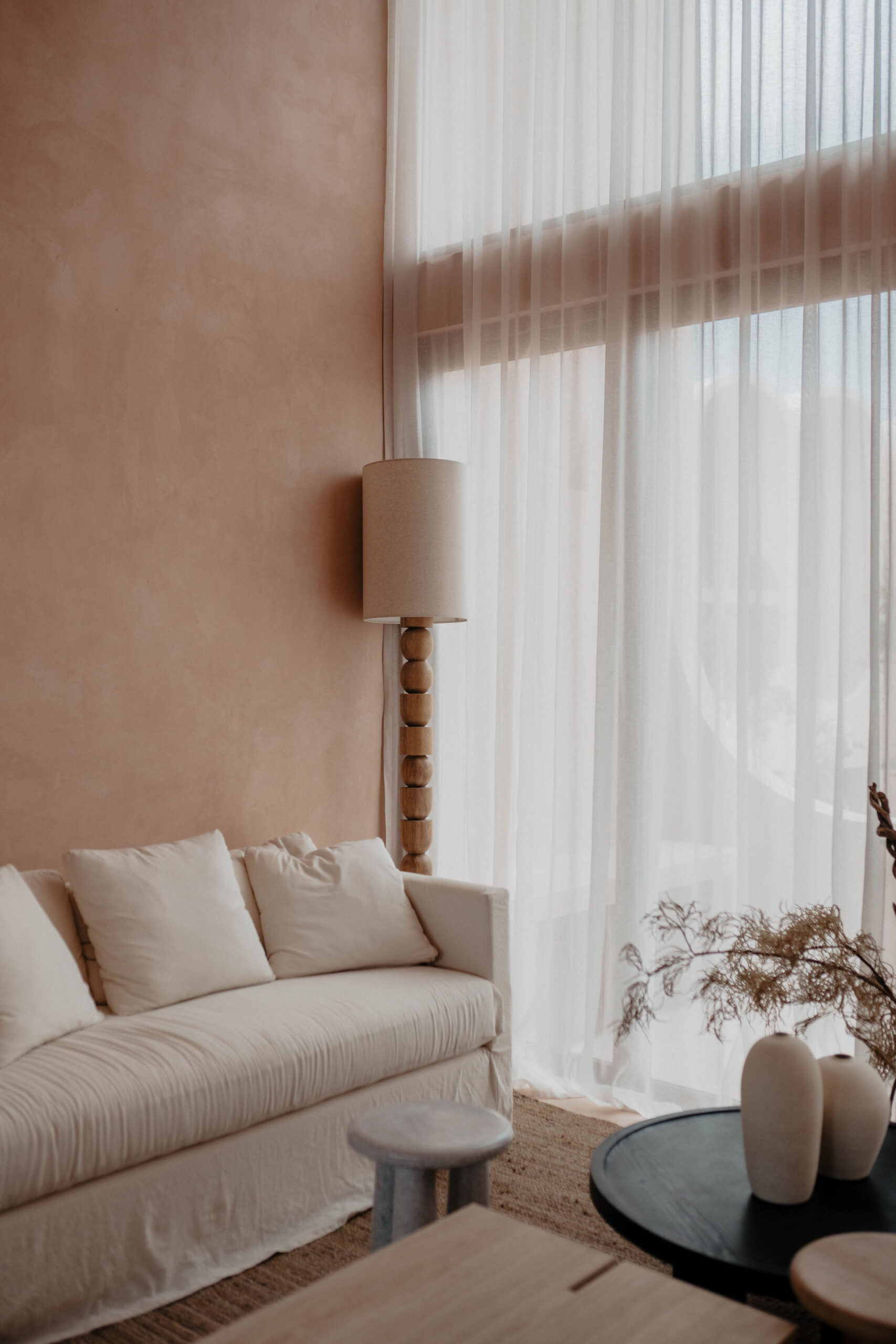
内部では、地元産の熱帯木材と手づくりの粘土要素をデザインに採用した。これらの素材は美的・機能的特性に加え、地域の職人技を支援し地域経済を活性化させる観点から選定された。
調査によれば、「熟練した地元労働力への1ドルの投資は、地域内で1.5~2.5倍の経済波及効果を生み出す」とされている。地元で消費された資金が複数回循環することで、地域所得が増加し失業率が低下するためである。
©︎ Spaces by Conie
メキシコなどの地域では、専門職人を雇用するプロジェクトにより、資材の無駄削減、輸送コストの低減、手戻りの減少を通じて8~12%のコスト削減が可能だと地元建設協会は報告している。
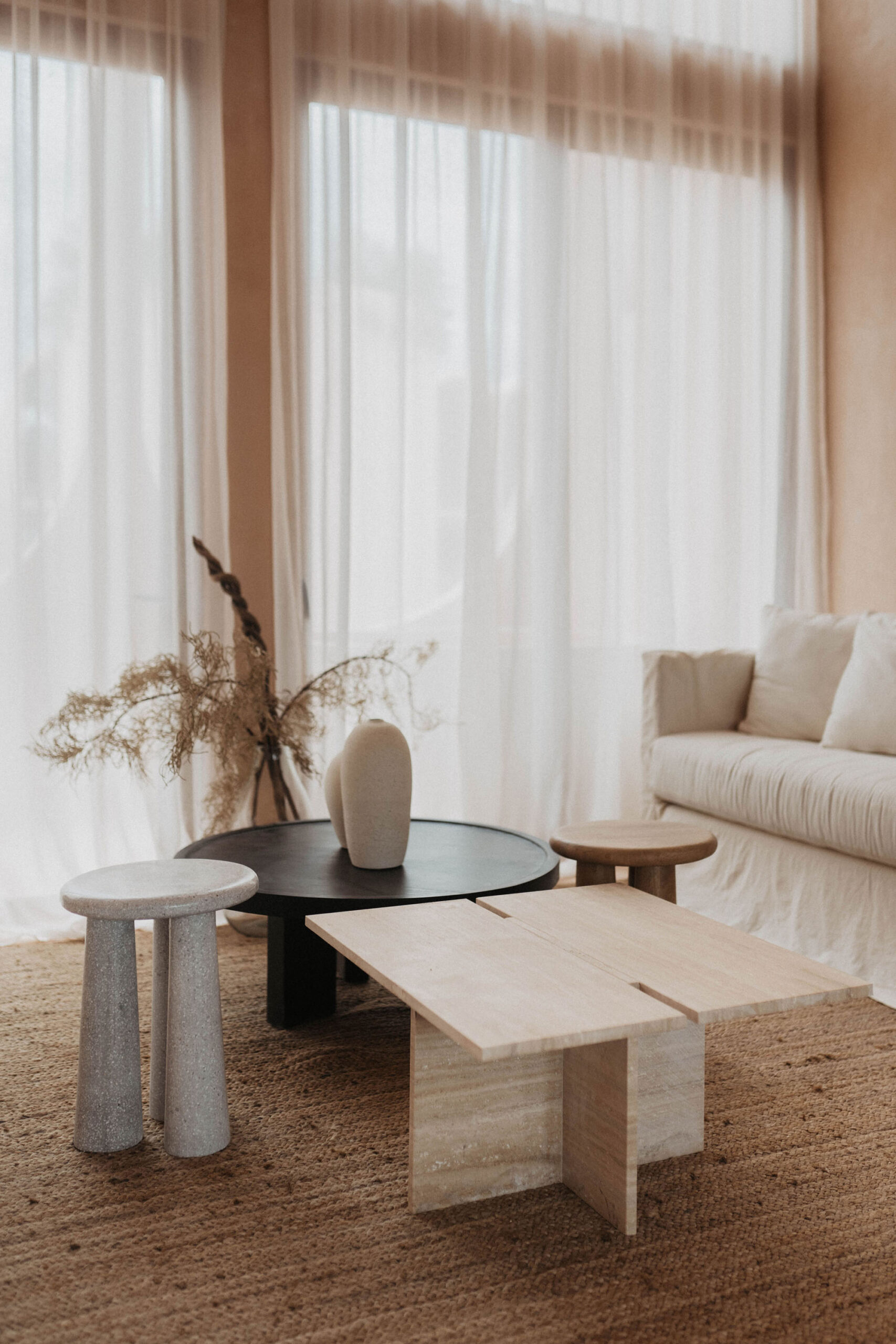
さらに、地元の専門家を雇用することで伝統技術や文化遺産が守られ、プロジェクトの経済的持続可能性も高まる。織物や地域で製作された家具の統合は、プロジェクトの文化的つながりをさらに強化し、軽やかさとシンプルさを強調した温かみのある質感あるインテリアを創出すると同時に、地域社会に測定可能な経済的利益をもたらすのである。
©︎ Spaces by Conie
バベルの構成要素の製造は、伝統的職人技と現代的建築技術を融合させ、プロジェクトに文化的真正性を付加している。構造システムは鉄筋コンクリートで構成され、地域の気候条件に適応しつつ耐性を確保する。
現場打ちコンクリートで建設されたタワーは、慎重に配置された開口部を通じて光を濾過するよう設計され、1日を通して光と影の動的な相互作用を生み出す。このコンセプトは、現代的なデザイン原則と伝統的技法、気候対応戦略を融合させたことで知られるインドの著名建築家バルクリシュナ・ドーシから直接的な着想を得ている。ドーシの作品と同様に、〈バベル〉のデザインは「マスとヴォイド」の関係性を重視し、タワーは空間の核であると同時に瞑想的な場としての役割も果たす。
©︎ Spaces by Conie
サステナビリティとウェルビーイングの両立
〈バベル〉の建設では、熱性能の向上とエネルギー需要の削減を目的とした一連の生物機構学的戦略を統合することで、効率性と環境責任を優先した。例えば、中庭の最適配置や自然通風といったパッシブデザイン戦略の導入により、冷房負荷を最大30%削減でき、機械式空調システムへの依存を大幅に低減できることが実証されている。
〈バベル〉の設計では中庭を中心とする配置が自然気流を促進し、類似プロジェクトでは従来設計比で冷房エネルギー消費を25~40%削減する効果が確認されている。さらに、アーチ状の天井や開口部を設けることで直射日光を拡散させ、太陽熱取得を約20~25%低減できるだけでなく、建物内の自然採光も向上させる。自然照明の改善は人工照明のエネルギー使用量を最大50%削減すると同時に、居住者のウェルビーイングと視覚的快適性にも寄与する。
©︎ Spaces by Conie
地域の課題に即した、水管理と建築デザインの統合
水管理は本プロジェクトの持続可能性戦略の基盤である。透水性舗装と緑化濾過ゾーンにより雨水が自然に土壌へ浸透し、米国環境保護庁(EPA)の研究結果が裏付けるように降水量の70~90%を効果的に捕捉ことで雨水流出量を大幅に削減する。
この手法は都市洪水のリスクを低減するだけでなく、帯水層の涵養を促進する。これはトゥルムにおいて特に重要であり、地域の脆弱な生態系を保全するには水に配慮した都市計画が不可欠である。水に配慮した都市設計の研究によれば、こうした戦略は地下水涵養を20~30%向上させ、より持続可能な水供給を確保できるとされている。
©︎ Spaces by Conie
さらに、タワーを囲む円形プールは、「微気候の調節」と「空間認識の向上」という2つの目的を果たす。水面は酷暑期に周囲気温を2~3℃低下させ、周辺空気を冷却すると同時に、その反射特性により内部空間の自然採光を強化する。
効率的な水管理と建築デザインの統合は、地域の水資源を保全するだけでなく、エネルギー性能を向上させ、より強靭で快適な都市環境の構築に貢献する。
©︎ Lazarillo
設備統合による効率化とデザインの一体化
本プロジェクトの重要な革新点は、垂直動線コアへのサービスシステム統合により、建設工程と長期運用双方を効率化したことである。研究によれば、空調・給排水・電気システムを建物コアに組み込むことで、屋上別設置を要する従来工法と比較し、設備配管コストを最大15%削減、工期を10~20%短縮可能である。
©︎ Lazarillo
屋上露出設備を排除することで、感熱機器への太陽熱取得を低減し、エネルギー効率を向上させるとともに、建物寿命にわたる維持管理コストを最小化する。さらに、サービスインフラを構造内に隠蔽することで美的統一性が向上し、視覚的な雑然さが解消されるため、より洗練された建築表現が実現される。
研究によれば、このような統合設計アプローチは、サービスエリアでの熱吸収を減少させることで全体のエネルギー消費を5~10%削減できると同時に、メンテナンスを簡素化し、建物のユーティリティネットワークの耐障害性を高める。この包括的戦略により、プロジェクトは運用効率と視覚的に統一された都市形態の両方を達成する。
©︎ Lazarillo
再生と継承の建築モデル
〈バベル〉の建設プロセスは、持続可能な建築が実現可能であるだけでなく経済的にも成立することを実証している。伝統的職人技と現代技術を融合させることで、革新性と文化的継承のバランスを確立し、素材の慎重な選定、空間効率化、生物気候戦略の統合により、トゥルムのような脆弱な生態系における責任ある開発の新たな基準を打ち立てた。
意図的な設計と施工を通じて、〈バベル〉は建築が再生の力であると同時に経済的・社会的持続可能性の触媒となり得ることを証明し、自然界との調和を優先する将来の開発に向けた説得力のあるモデルを提供する。
ルイス・カーンの「マスとボイド」の技法、地域の建築伝統、光と空気の自然なリズムから着想を得た〈バベル〉は、環境配慮型建築が機能性、気候対応性、人間体験のバランスをいかに成功裏に実現できるかを再定義する。
©︎ Lazarillo
©︎ Lazarillo
©︎ Lazarillo
©︎ Lazarillo
©︎ Spaces by Conie
©︎ Spaces by Conie
©︎ Spaces by Conie
©︎ Spaces by Conie
以下、V Tallerのリリース(英文)です。
Babel
V Taller
Babel is an architectural response to the intersection of space, time, and environment, redefining architecture as a regenerative force rather than an imposition on the landscape. Inspired by the mythical Tower of Babel, it transforms built space into an evolving, flexible, and immersive experience. Designed for Tulum, a region suffering from deforestation and overburdened infrastructure due to unchecked tourism, Babel offers a sustainable alternative that balances environmental integration, economic viability, and long-term livability. By replacing horizontal circulation with vertical cores, the project optimizes density while allowing nature to reclaim space. Its form emerges from the interplay of voids and solids, centered around a courtyard that ensures both physical and conceptual cohesion.
Rather than merely constructing a building, Babel creates a habitable canvas where architecture dissolves into nature. The tower becomes a vessel for contemplation, shaped by light, materiality, and spatial compression. Bioclimatic strategies integrate air, water, and vegetation, fostering sustainable spaces. Light filters through, casting shadows, while water reflects and cools, and natural airflow enhances comfort without mechanical intervention.
Babel represents a paradigm shift, weaving human presence into the landscape through poetic and purposeful coexistence, redefining the relationship between built environments and the natural world.
Babel redefines the relationship between architecture, tourism, and ecology in Tulum, responding to the urgent need for sustainable development in a region facing environmental strain and urban expansion. Designed by Mexican studio V Taller, the project moves away from low-density, high-impact tourism models, proposing a vertical approach that reduces land use by 30% while reintegrating vegetation and supporting groundwater recharge. In doing so, Babel is not only an architectural response to hospitality but also a regenerative landscape, ensuring that the built environment and nature coexist within a balanced framework.
The spatial organization of Babel is structured around an eye-shaped floor plan, where the housing units are arranged across three levels, optimizing land use while allowing space for reforestation and climate regulation. The central courtyard enhances airflow and passive cooling, creating a naturally temperate environment without mechanical intervention. This program integrates a hybrid hospitality model, where short-term rentals coexist with long-term residences, ensuring economic and social stability throughout the year. The balance between temporary and permanent living avoids the economic fluctuations typical of tourism-driven projects, fostering an engaged community.
Babel is designed as a sequence of spatial transitions, where circulation unfolds as a journey of compression and expansion. Narrow staircases serve as tunnels of light, guiding movement toward expansive, double-height interiors framed by arches. This interplay between restriction and openness enhances spatial perception, reinforcing an immersive connection between architecture, materiality, and natural light. Movement through the spaces is guided by light and spatial transitions.
This same principle of fluid spatial adaptation extends into the design of the residential units, where each space is configured to maintain both functionality and a seamless dialogue with its surroundings.
This sequence of compression and expansion heightens the user’s awareness of space and reinforces the connection with the natural environment.
Each unit is conceived as a self-sufficient living space, integrating a full kitchen, a living and dining area, a private bathroom, a garden with an integrated jacuzzi, and a bedroom. While the program remains consistent, the layout subtly shifts depending on the unit’s position within the curved structure, ensuring that each residence adapts organically to its placement. This adaptability not only maximizes comfort and efficiency but also enhances the relationship between the built space and the natural landscape, reinforcing Babel’s architectural philosophy of integration rather than imposition.
Beyond the private living areas, Babel incorporates a series of communal and wellness-oriented spaces that reinforce the development’s identity as a holistic retreat. A coworking space offers a flexible environment for those seeking a workspace integrated into nature. The spa and wellness center, equipped with herbal steam rooms, massage cabins, and meditation areas, fosters relaxation and reconnection. The on-site restaurant and bar emphasize a vegetarian menu and mocktails made from locally sourced ingredients, reinforcing the project’s commitment to sustainability. A Zen garden provides a contemplative outdoor retreat, while an ASMR room with a sleep concierge offers an immersive sensory experience designed to enhance relaxation. The yoga studio allows for both group and individual practice, reinforcing the project’s emphasis on well-being and mindful living.
At the heart of the project, the central tower functions as both a spatial anchor and an experiential device for framing light. Positioned at the geometric centroid of the complex, it does not impose itself as a dominant landmark but instead orchestrates circulation and reinforces the project’s conceptual depth. Inspired by hammam architecture, Indian stepwells, and Mexican villas, its carefully calibrated openings filter daylight, generating a rhythmic interplay of brightness and shadow that evolves throughout the day. This controlled manipulation of light transforms the tower into an immersive sensory experience, where architecture and atmosphere converge. At its summit, a triangular aperture isolates a fragment of the sky, eliminating peripheral distractions and inviting an intimate engagement with celestial movement.
More than a sculptural gesture, the tower is a tool for orientation and reflection, reinforcing the relationship between built space, time, and the surrounding landscape. Through its interplay of mass and void, solidity and openness, it embodies Babel’s fundamental approach—where architecture serves not only as shelter but as a mediator between human experience and the natural world.
The project’s material palette was carefully selected to balance sustainability, durability, and regional identity. The primary exterior finish is chukum, a traditional limestone-based stucco from the Yucatán Peninsula, valued for its humidity resistance, thermal regulation, and minimal maintenance. Applied in handcrafted layers, this material naturally regulates indoor temperatures, reducing the need for artificial cooling. Its soft pink pigmentation, achieved through mineral-based pigments, allows the architecture to blend into the surrounding landscape while subtly responding to changing light conditions.
For interior spaces, tropical woods and handcrafted clay elements create a warm, textural contrast while reinforcing regional craftsmanship. These materials were chosen not only for their aesthetic and functional qualities but also to support local economies through the integration of artisanal production.
Babel proposes an alternative to traditional resort-style developments, shifting away from the transient nature of tourism toward a more engaged and embedded experience. The integration of short-term and long-term habitation fosters a more stable community, preventing the vacancy cycles that often disrupt local economies. This model ensures that the development remains economically viable beyond seasonal fluctuations, creating a self-sustaining urban presence rather than a temporary tourist enclave.
Beyond economic resilience, Babel engages deeply with local cultural production. The incorporation of regionally crafted furniture, woven textiles, and ceramics reinforces the project’s commitment to cultural continuity and material authenticity. These elements were not merely decorative choices but an integral part of the project’s identity, ensuring that Babel’s architectural language remains rooted in the local context.
Babel challenges the preconceived notions of hospitality architecture, proving that high-density development and ecological restoration can function as complementary forces rather than opposing constraints. By prioritizing spatial efficiency, material authenticity, and bioclimatic strategies, the project establishes a regenerative framework for sustainable tourism. Rather than treating architecture as an isolated object, Babel fosters a continuous interaction between built space and nature, where light, vegetation, and air shape the experience of inhabitation. The project serves as a model for responsible development, demonstrating that compact, efficient, and contextually aware architecture can support both ecological renewal and economic sustainability.
By integrating principles of mass and void, movement and stillness, density and openness, Babel proposes a new paradigm for sustainable habitation, demonstrating that tourism can evolve beyond extraction and excess into a model of coexistence and renewal.
Babel exemplifies how innovative design and sustainable construction can address the challenges of rapid, uncontrolled urban growth. By adopting a vertical model with minimal ground displacement, Babel achieves a built area of 6,176 m² on a total land area of 3,510 m², while its actual building footprint is only 2,155 m². This design strategy—reducing land consumption by nearly 40% compared to conventional horizontal developments—concentrates construction while preserving significant open spaces. Studies in urban planning have shown that vertical models can reduce urban sprawl and associated environmental impacts by up to 30%, ultimately lowering the overall carbon footprint of new developments.
In addition to maximizing usable space, this vertical approach enhances environmental sustainability by leaving ample room for green spaces and ecological regeneration. By optimizing the ratio of built area to land occupied, Babel not only supports higher density in a rapidly growing zone but also protects natural resources and biodiversity. Research indicates that developments with reduced ground coverage can significantly mitigate soil sealing effects and preserve local hydrology, contributing to healthier urban ecosystems and more resilient water management systems. This section explores the technical and construction strategies that position Babel as a model of sustainable architecture.
The project spans three levels and contains a total of 59 units arranged along its eye-shaped layout. Each residential unit is designed to maximize comfort and efficiency, featuring a fully equipped kitchen, a combined living and dining area, a private bathroom, a garden with an integrated jacuzzi, and a bedroom. The layout of each unit subtly varies depending on its position within the curved structure, ensuring that every residence maintains a seamless connection with its surroundings.
The material palette of Babel reflects a strong commitment to sustainability and regional identity. The primary exterior finish is chukum, a traditional limestone-based stucco from the Yucatán Peninsula. With a thermal conductivity of approximately 0.5–0.7 W/mK—significantly lower than the 0.7–1.0 W/mK typical of synthetic finishes—chukum offers superior insulation, helping reduce energy consumption. Additionally, its inherent resistance to humidity and minimal maintenance requirements mean that, unlike conventional stucco—which may require repainting or sealing every 10–15 years—chukum can go significantly longer without intervention, potentially up to ten times less frequently. When properly applied and maintained, chukum can extend the life of a building’s exterior well beyond the 50–80 years typical of modern stucco finishes, with a durability that may exceed 100 years. Its soft pink hue, achieved through mineral-based pigments, allows the architecture to blend harmoniously with the natural landscape.
For interior spaces, the design favors locally sourced tropical woods and handcrafted clay elements. These materials were selected not only for their aesthetic and functional qualities but also to support local artisanship and stimulate the regional economy. Studies show that every dollar invested in skilled local labor generates an economic multiplier of 1.5 to 2.5 within the community, as locally spent money circulates multiple times—boosting local income and reducing unemployment. In regions like Mexico, local construction associations report that projects employing specialized artisans can achieve cost savings of 8–12% due to reduced material waste, lower transportation costs, and less rework. Furthermore, hiring local experts preserves traditional techniques and cultural heritage, while enhancing the project’s economic sustainability. The integration of woven textiles and regionally crafted furniture further reinforces the project’s cultural connection, creating warm, textural interiors that emphasize lightness and simplicity—while also delivering measurable economic benefits to the local community.
The fabrication of Babel’s components combines traditional craftsmanship with modern construction techniques, adding a layer of cultural authenticity to the project. The structural system is composed of reinforced concrete, ensuring resilience while adapting to the region’s climatic conditions. The tower, constructed using cast-in-place concrete, was designed to filter light through carefully positioned openings, creating a dynamic interplay of light and shadow throughout the day. This concept draws direct inspiration from Balkrishna Doshi, the renowned Indian architect known for blending modern design principles with traditional techniques and climate-responsive strategies. As in Doshi’s work, Babel’s design emphasizes the relationship between mass and void, with the tower serving both as a spatial anchor and a contemplative space.
The construction of Babel prioritized efficiency and environmental responsibility by integrating a suite of bioclimatic strategies aimed at enhancing thermal performance and reducing energy demand. For example, studies have shown that the incorporation of passive design strategies—such as optimized courtyard layouts and natural cross-ventilation—can reduce cooling loads by up to 30%, significantly decreasing reliance on mechanical air conditioning systems. In Babel’s layout, a courtyard-centered configuration promotes natural airflow, which, in comparable projects, has been shown to lower cooling energy consumption by 25% to 40% compared to conventional designs. Furthermore, the inclusion of vaulted ceilings and arched openings not only diffuses direct sunlight—reducing solar heat gain by approximately 20–25%—but also enhances natural daylighting within the building. Improved natural illumination has been linked to reductions in artificial lighting energy use by as much as 50%, while also contributing to occupant well-being and visual comfort.
Water management is a cornerstone of the project’s sustainability strategy. Permeable paving and landscaped filtration zones enable the natural infiltration of rainwater into the soil, effectively capturing between 70% and 90% of precipitation—figures supported by studies from the U.S. EPA—and significantly reducing stormwater runoff. This approach not only lowers the risk of urban flooding but also supports aquifer recharge, which is especially critical in Tulum, where water-sensitive urban planning is essential to preserve the region’s fragile ecosystem. Research in water-sensitive urban design suggests that such strategies can enhance groundwater recharge by 20–30%, ensuring a more sustainable water supply.
Additionally, the circular pool surrounding the tower serves a dual purpose: regulating the microclimate and enhancing spatial perception. Its water surface can lower ambient temperatures by 2–3°C during peak heat periods, cooling the surrounding air, while its reflective properties amplify natural light within the interior spaces. This integration of efficient water management with architectural design not only conserves local water resources but also improves energy performance and contributes to a more resilient and comfortable urban environment.
A key innovation in the project was the integration of service systems within the vertical circulation cores, streamlining both construction and long-term operations. Research indicates that embedding HVAC, plumbing, and electrical systems into the building’s core can reduce utility distribution costs by up to 15% and shorten construction time by 10–20% compared to conventional methods requiring separate rooftop installations. By eliminating exposed rooftop systems, the building also reduces solar heat gain on sensitive equipment, improving energy efficiency and minimizing maintenance costs over the building’s lifespan. Moreover, concealing service infrastructure within the structure enhances aesthetic coherence and eliminates visual clutter, contributing to a more refined architectural expression.
Studies have shown that integrated design approaches like this can reduce overall energy consumption by 5–10%, due to decreased heat absorption in service areas, while also simplifying maintenance and increasing the resilience of the building’s utility network. This holistic strategy ensures that the project achieves both operational efficiency and a visually cohesive urban form.
Babel’s construction process demonstrates that sustainable building is not only achievable but also economically viable. By combining traditional craftsmanship with modern techniques, the project strikes a balance between innovation and cultural continuity. The thoughtful selection of materials, efficient use of space, and integration of bioclimatic strategies establish a new benchmark for responsible development in fragile ecosystems like Tulum.
Through its deliberate design and construction, Babel proves that architecture can serve as both a regenerative force and a catalyst for economic and social sustainability, offering a compelling model for future developments that prioritize harmony with the natural world. Drawing inspiration from Louis Kahn’s mastery of mass and void, regional construction traditions, and the natural rhythms of light and air, Babel redefines how architecture in environmentally sensitive contexts can successfully balance functionality, climate responsiveness, and human experience.Location: Tulum, Quintana Roo, Mexico
Plot: 3,510 m²
Built Area: 6,178 m²
Date of Completion: April 2024Architecture: V Taller
Architects: Miguel Valverde and Daniel Villanueva
Design Team: Andrea Castro and Karina Ortega
Construction: Empresa MAQTE and Bramah Desarrollos (Ricardo Ávila)
Interior Design: Carlos y Pablo
Lighting Design: Carlos y Pablo and V Taller
Photography: Albers Studio, Spaces by Conie, Lazarillo and Daniel Villanueva
V Taller 公式サイト
https://www.vtaller.com
【購読無料】空間デザインの今がわかるメールマガジン TECTURE NEWS LETTER
RECOMMENDED ARTICLE