
CULTURE
© Arch-Exist
© Arch-Exist
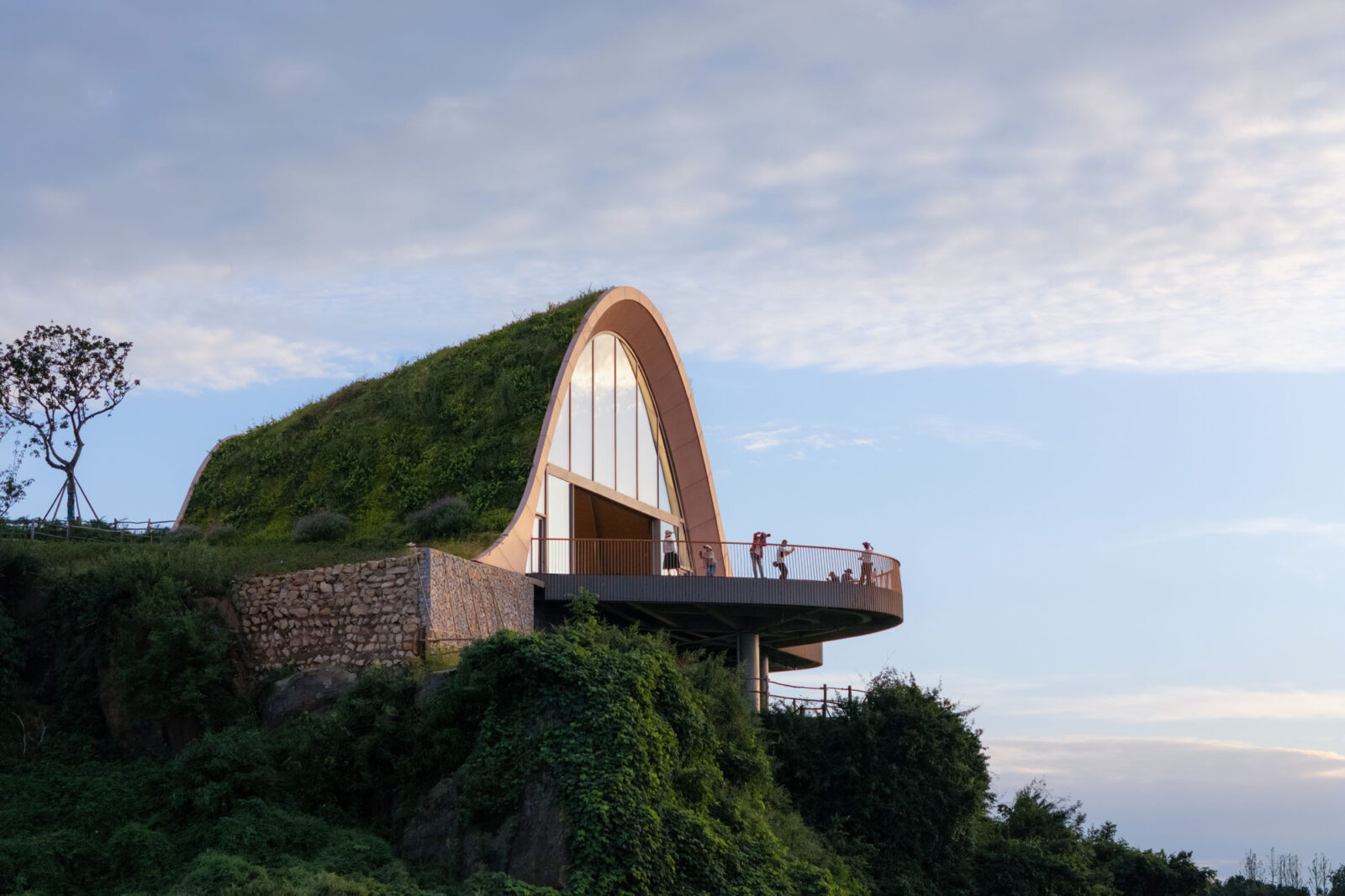
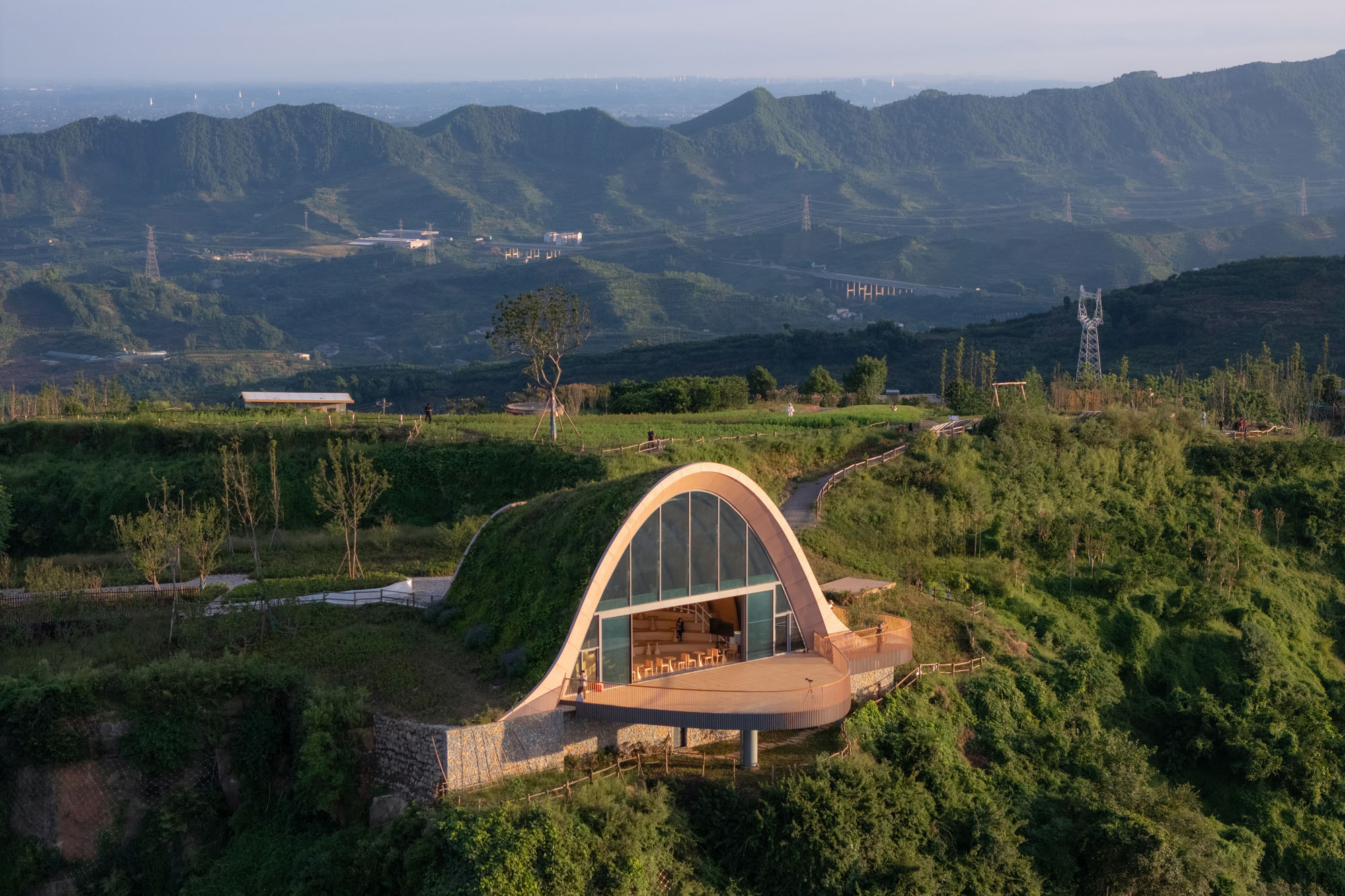
中国・四川省の蒲江(ほこう)県に位置する〈蒲江プラットフォーム(Pujiang Platform)〉は、開発が進むまちの丘に溶け込む、土と植物に覆われた木造施設です。
オランダ・ロッテルダムを拠点とする建築家集団MVRDVが設計しました。
注目ポイント
- かつての地形を復元・再生する、土に覆われた建築
- 規制や慣習により採用が進まない中国建設業界おける「木造構造」の採用
- 丘の勾配を活かした内部の階段状観覧席と大開口によるパノラマビュー
- 緑化や自然換気など、意匠と融合した環境エンジニアリング
(以下、MVRDVから提供されたプレスキットのテキストの抄訳)
© Arch-Exist
© Arch-Exist
丘陵地に溶け込む土葺き木造展望台
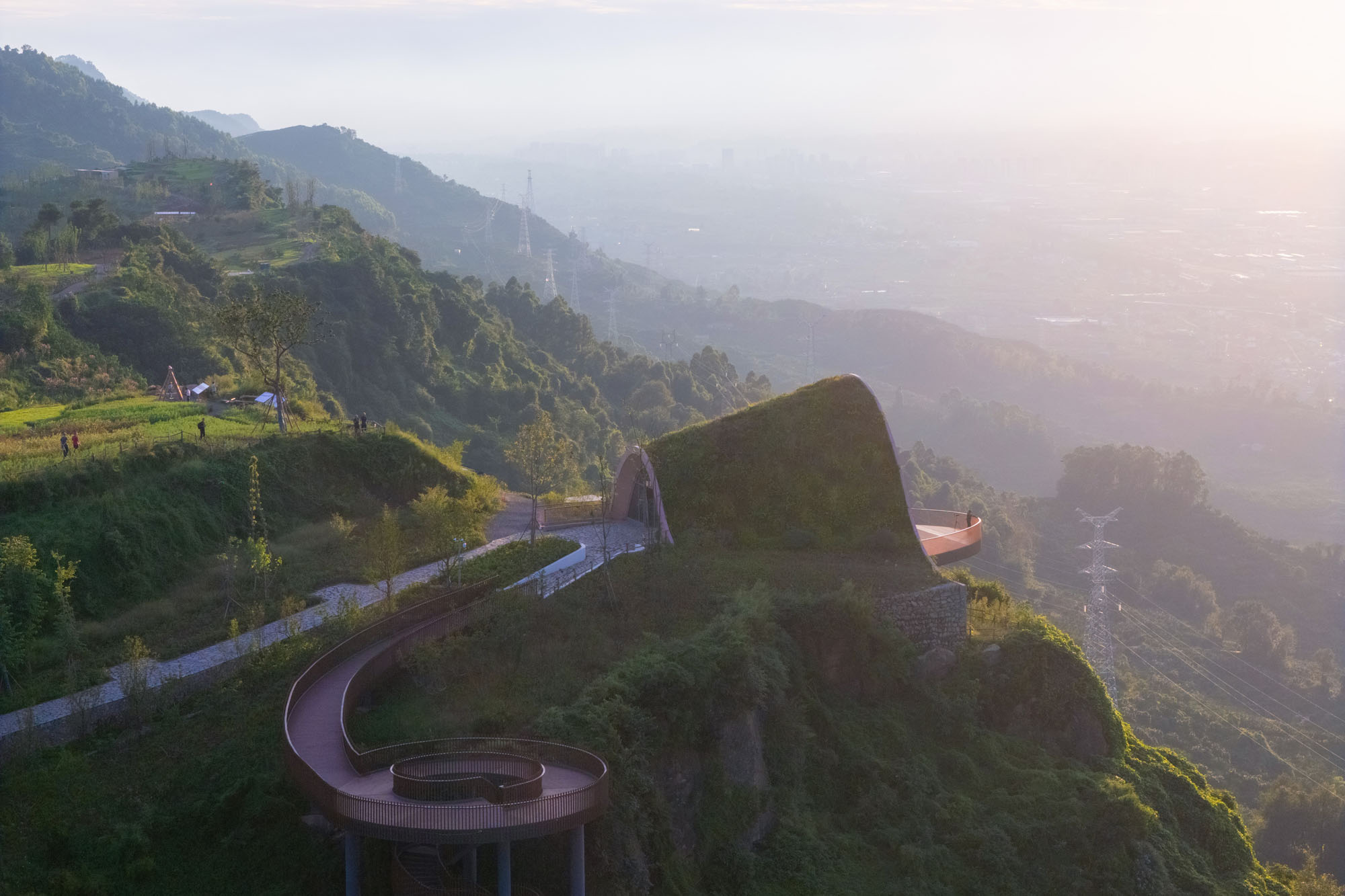
MVRDVは、成都南部の丘陵地に位置する、アーチ状の土葺き木造パビリオンで構成された展望施設〈蒲江プラットフォーム〉の建設を完了した。本プロジェクトは、中国中部の壮大な自然美を活かした観光地であると同時に、イベントスペースとしての機能も兼ね備えている。
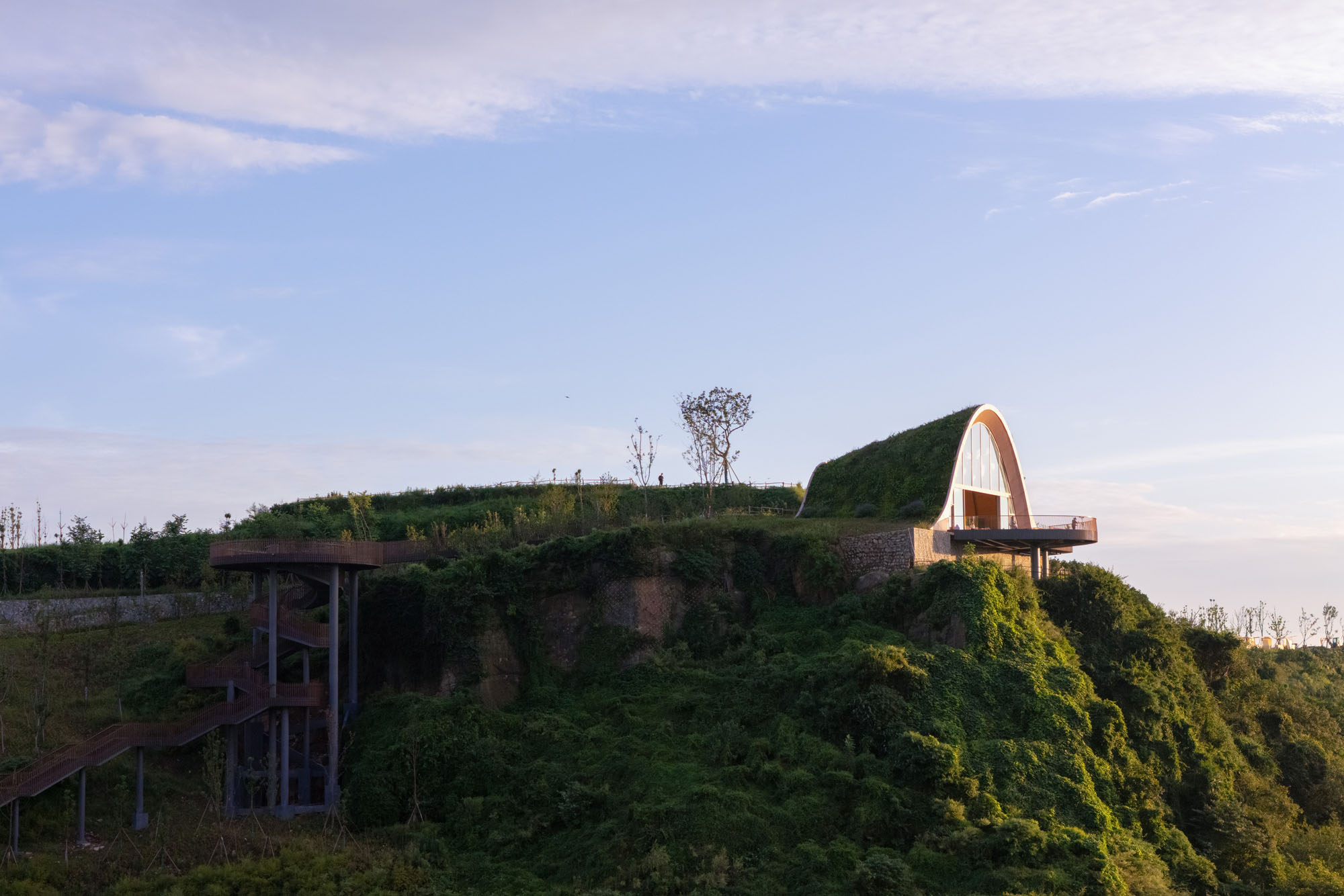
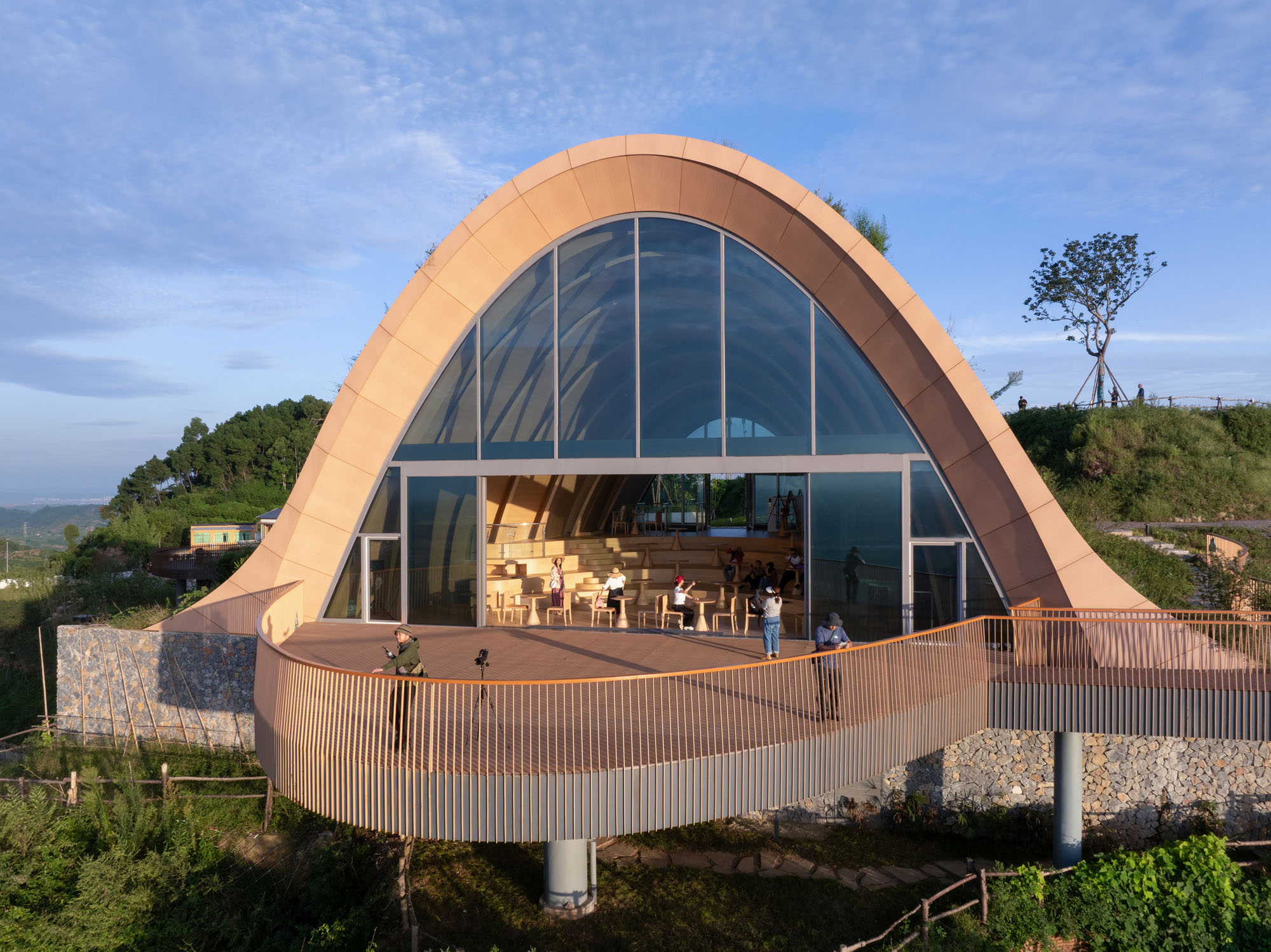
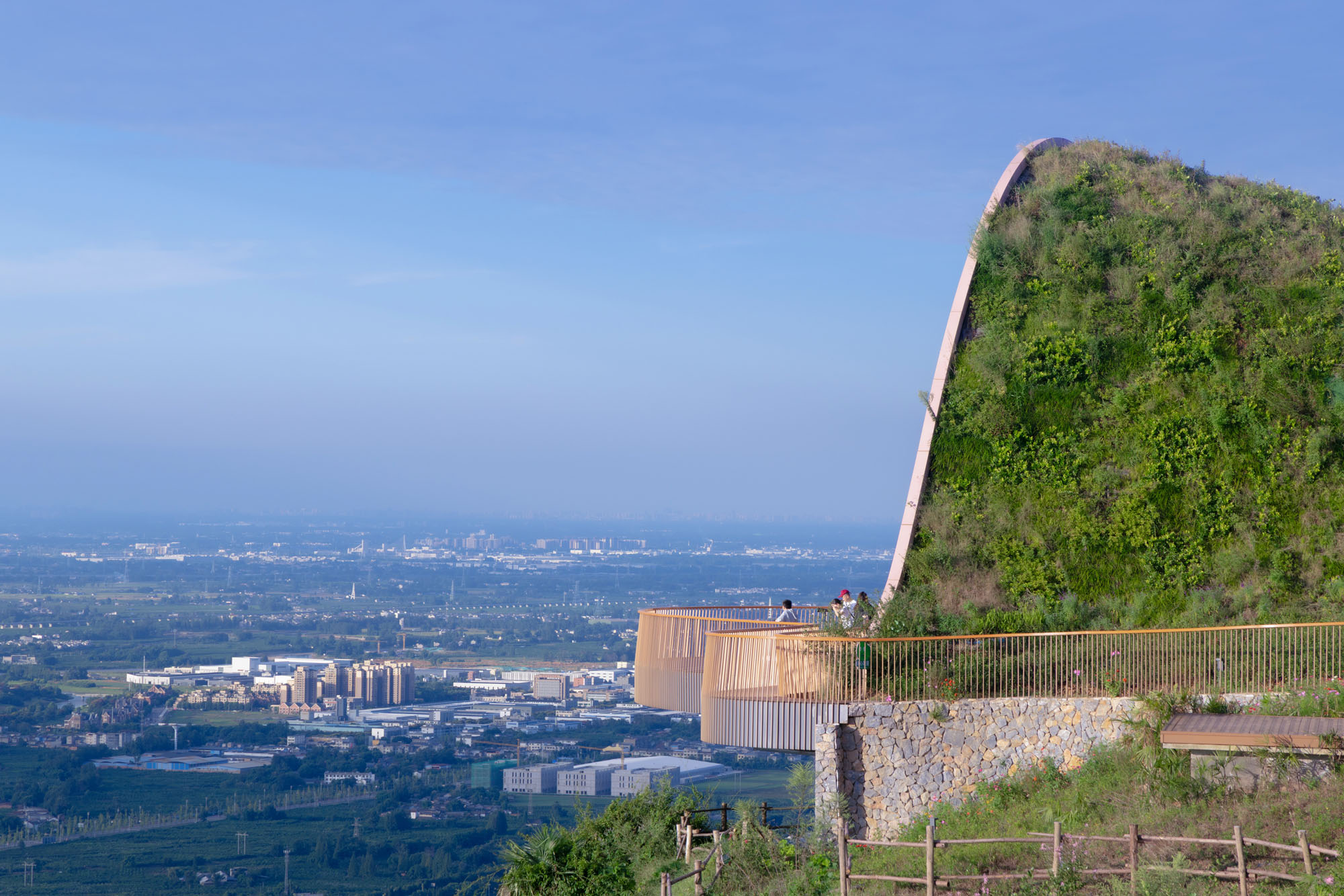
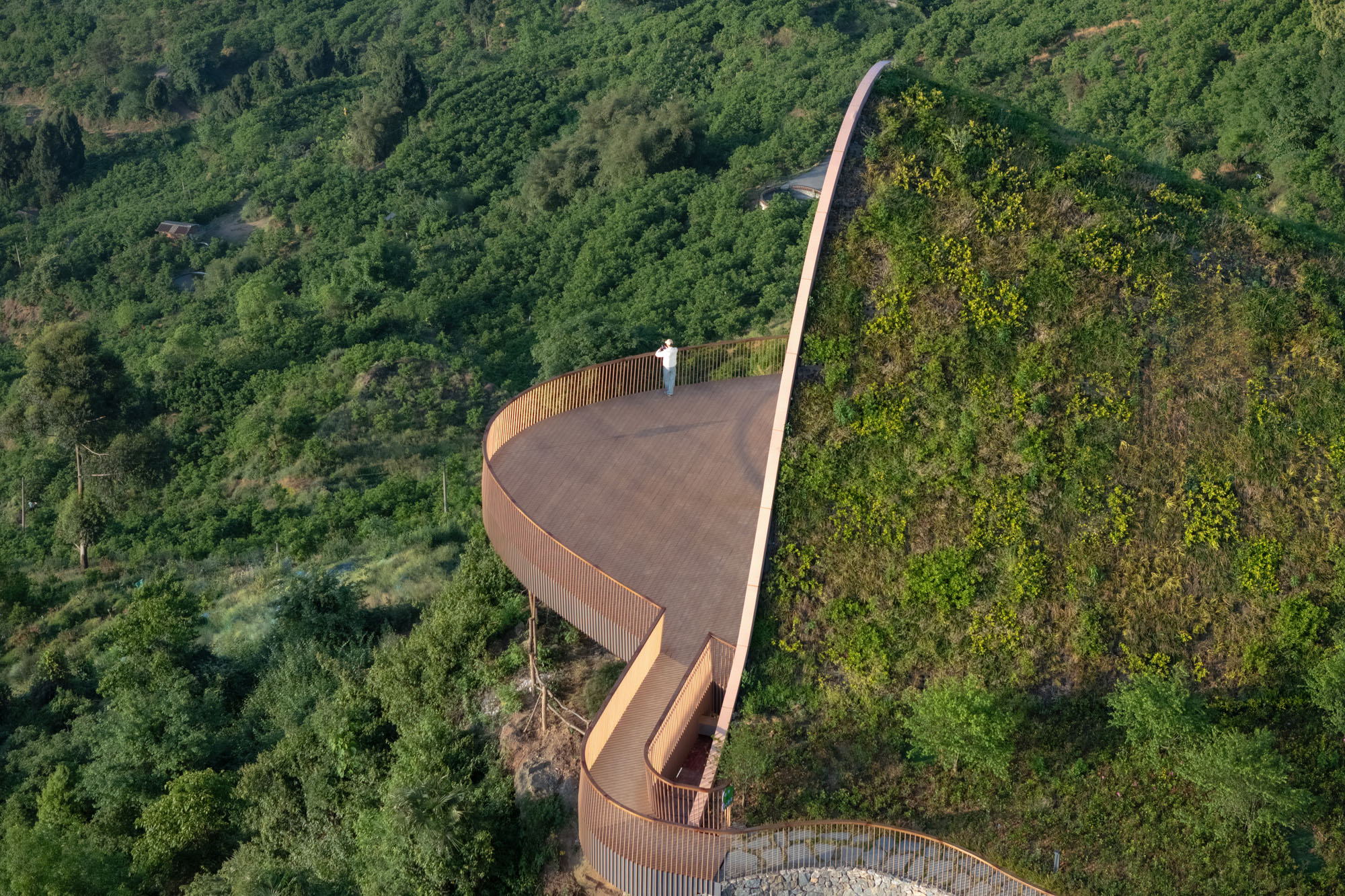
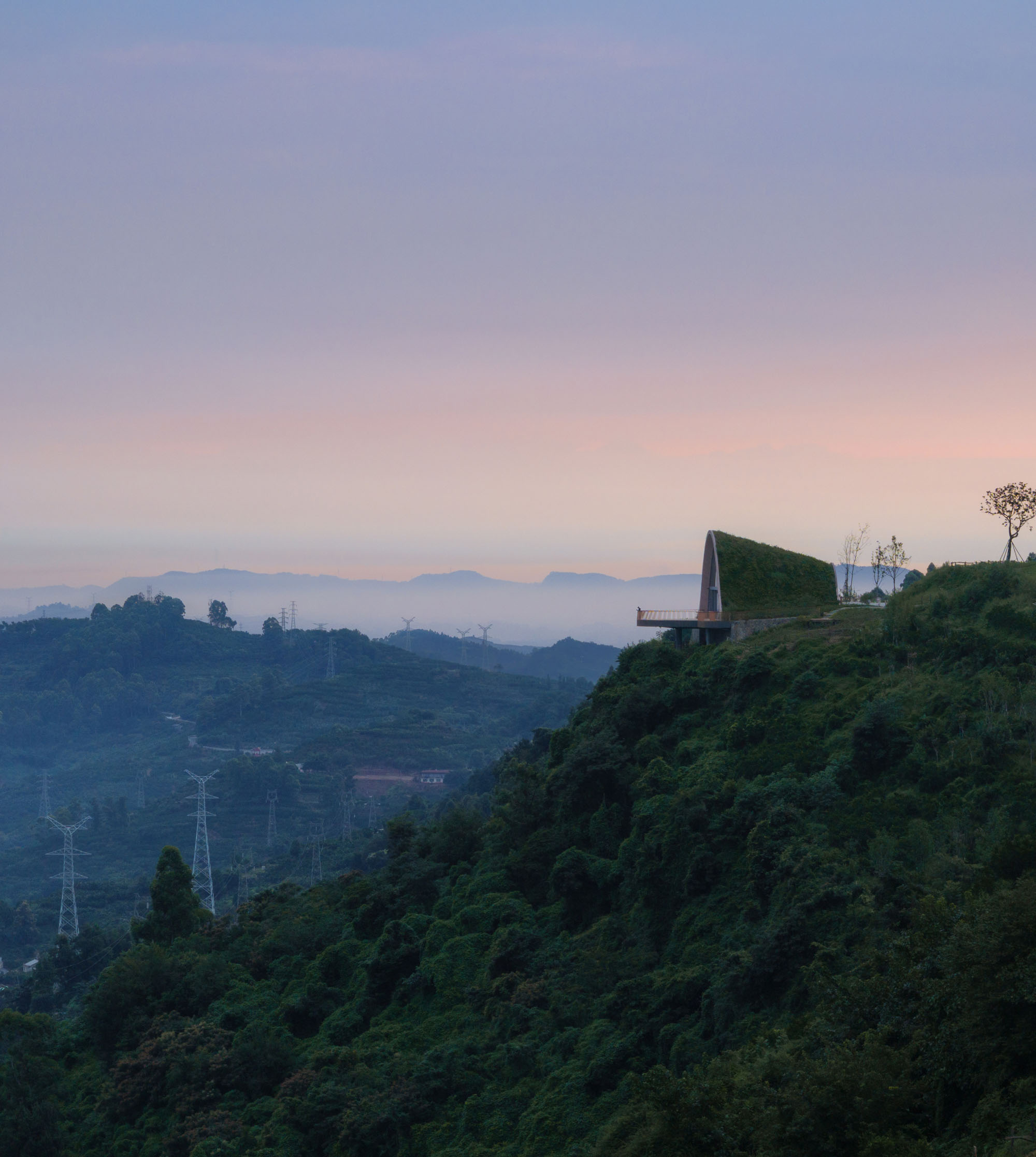
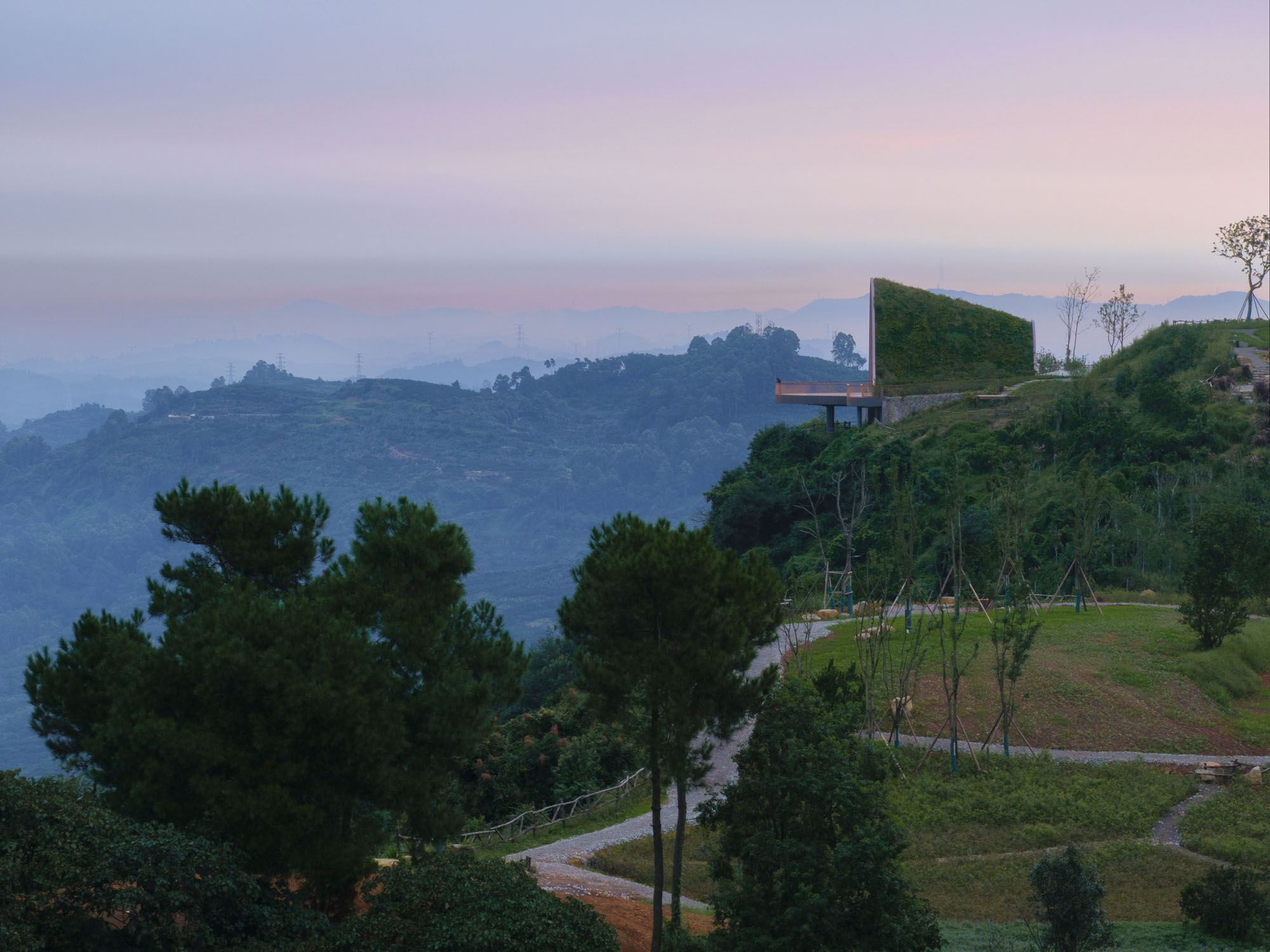
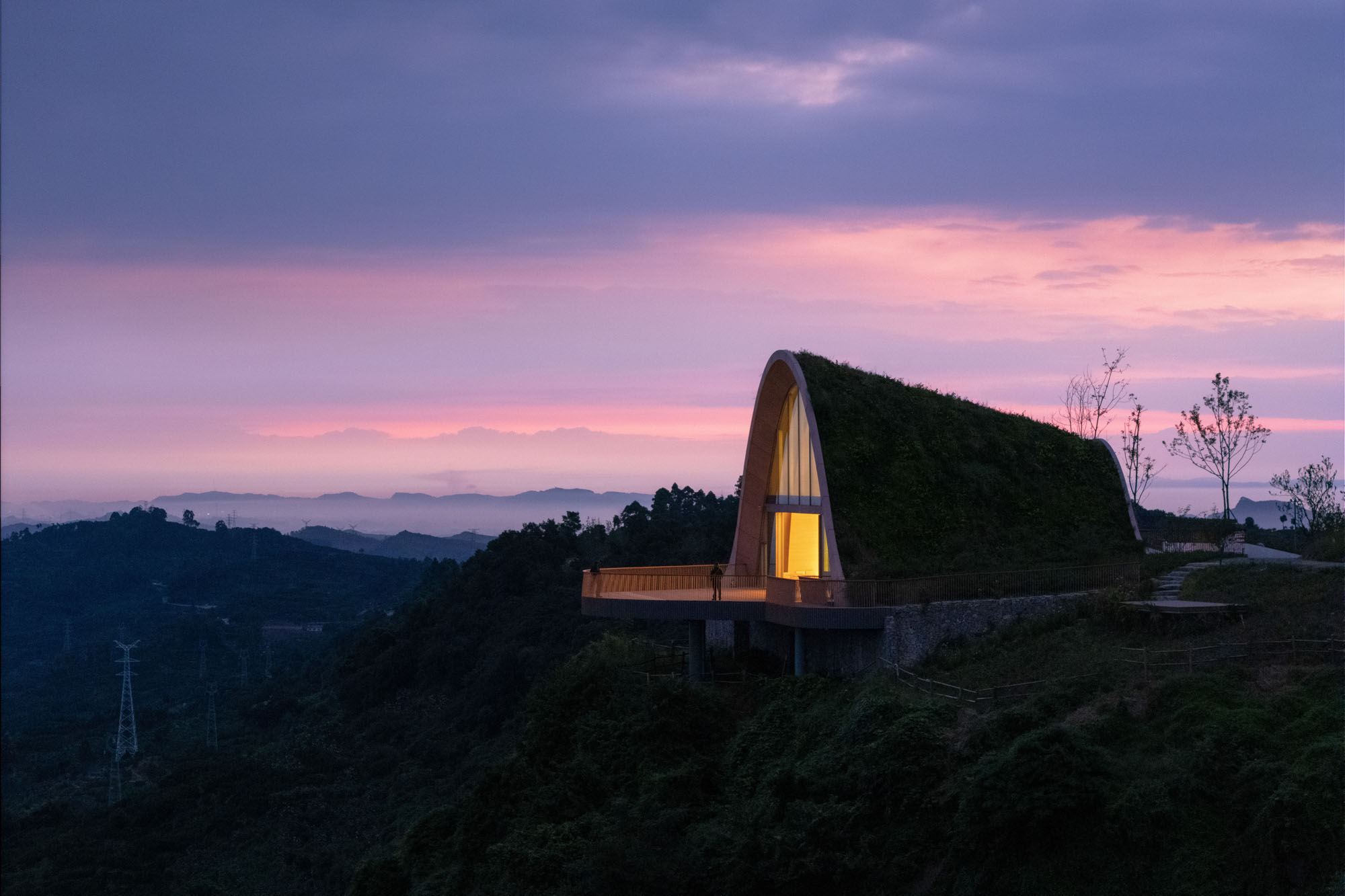
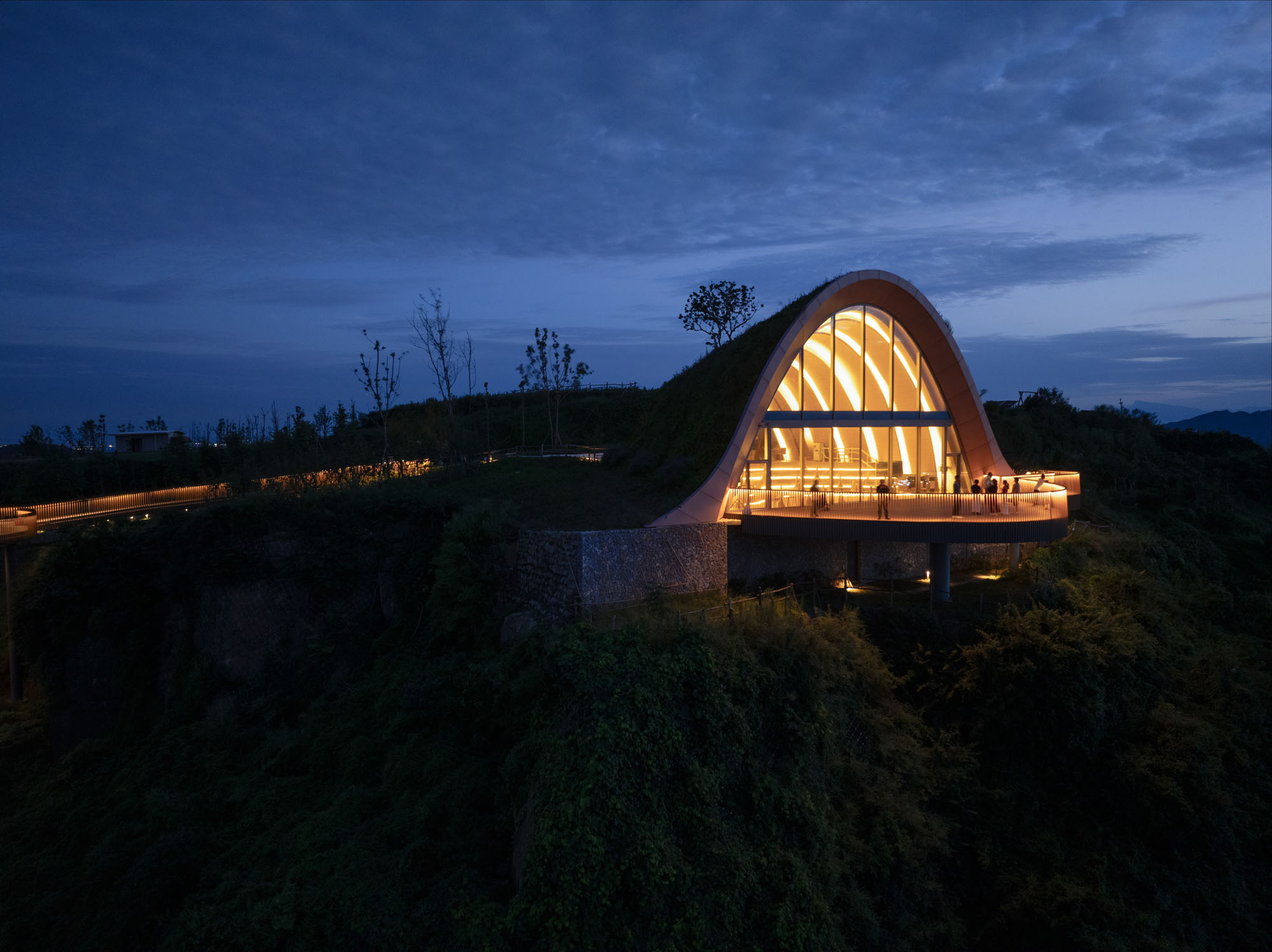
平野から見上げると目印となる存在感を保ちつつ、周囲の自然環境と調和するよう設計されたその姿は、土を被った木造アーチ構造によって望遠鏡のような形状を描き出し、斜面上に張り出した広大な展望窓とバルコニーへと来訪者を誘い込む。
© Arch-Exist
観光と交流の拠点となる既存展望台の再生
成都市南西部にて開発が進む新都市・蒲江は、住民に高品質で持続可能なライフスタイルを提供することを目指している。浦江の東側に広がる丘陵地帯には、成長を続ける町と背後に広がる邛崍(きょうらい)山脈のパノラマを一望できる、簡素な既存展望台が存在していた。
MVRDVは蒲江県計画資源局からの委託のもと、この展望台をアップグレードすることにより、観光客にとって魅力的な目的地へと変貌させると同時に、結婚式から政府の会議に至るまで、あらゆるイベントに対応可能な空間へと昇華させた。
Architecture concept
かつての地形を復元するデザインと木造への挑戦
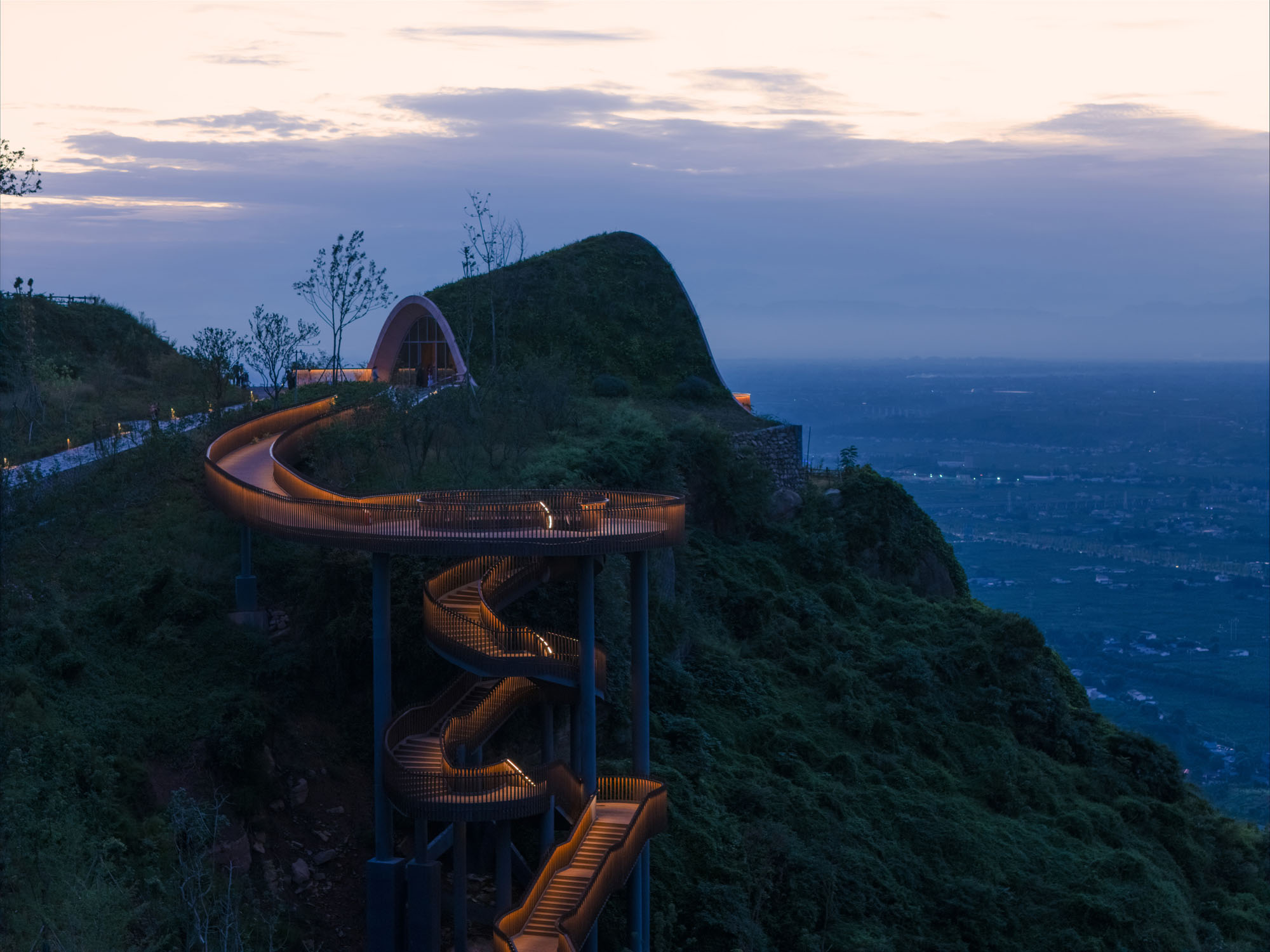
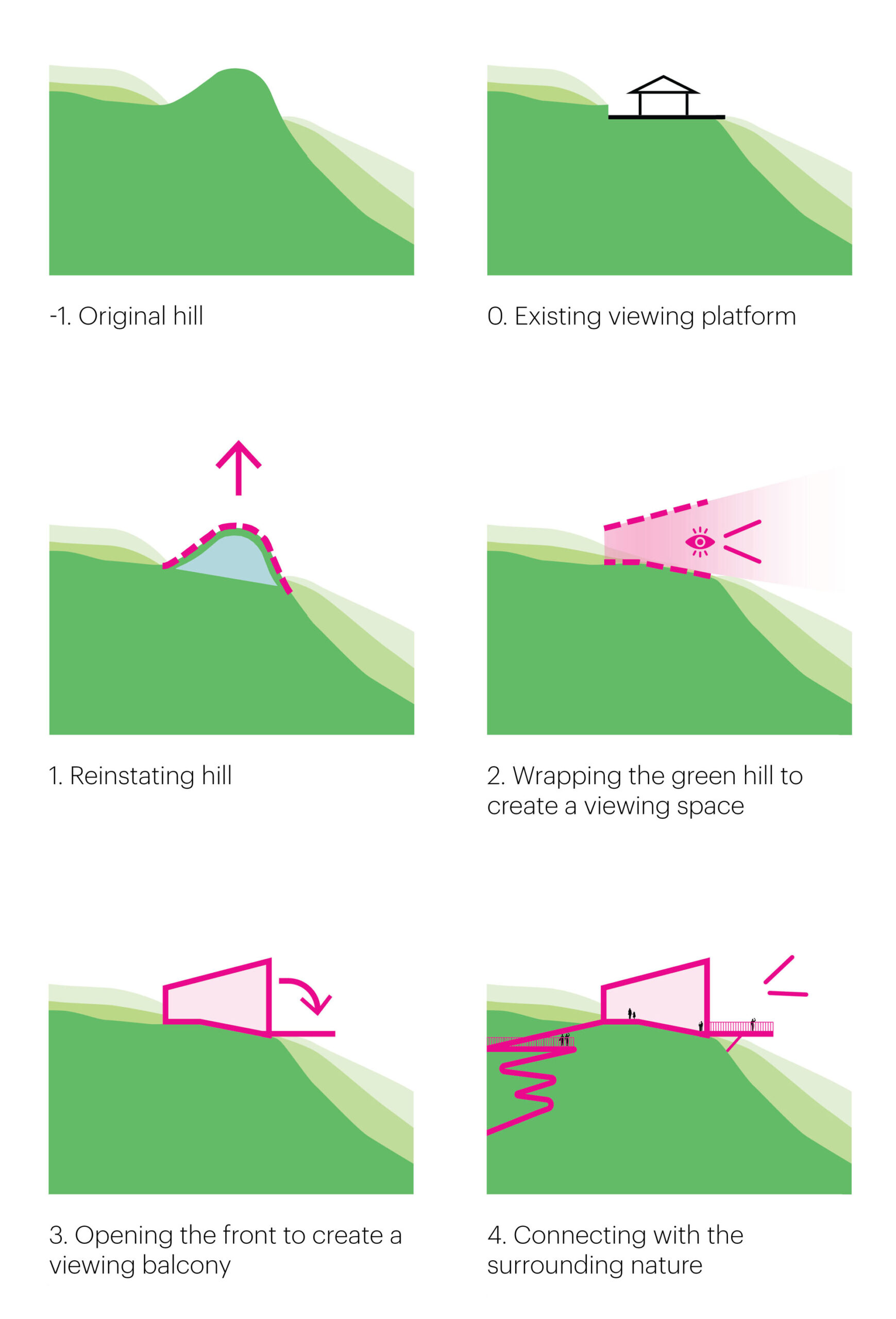
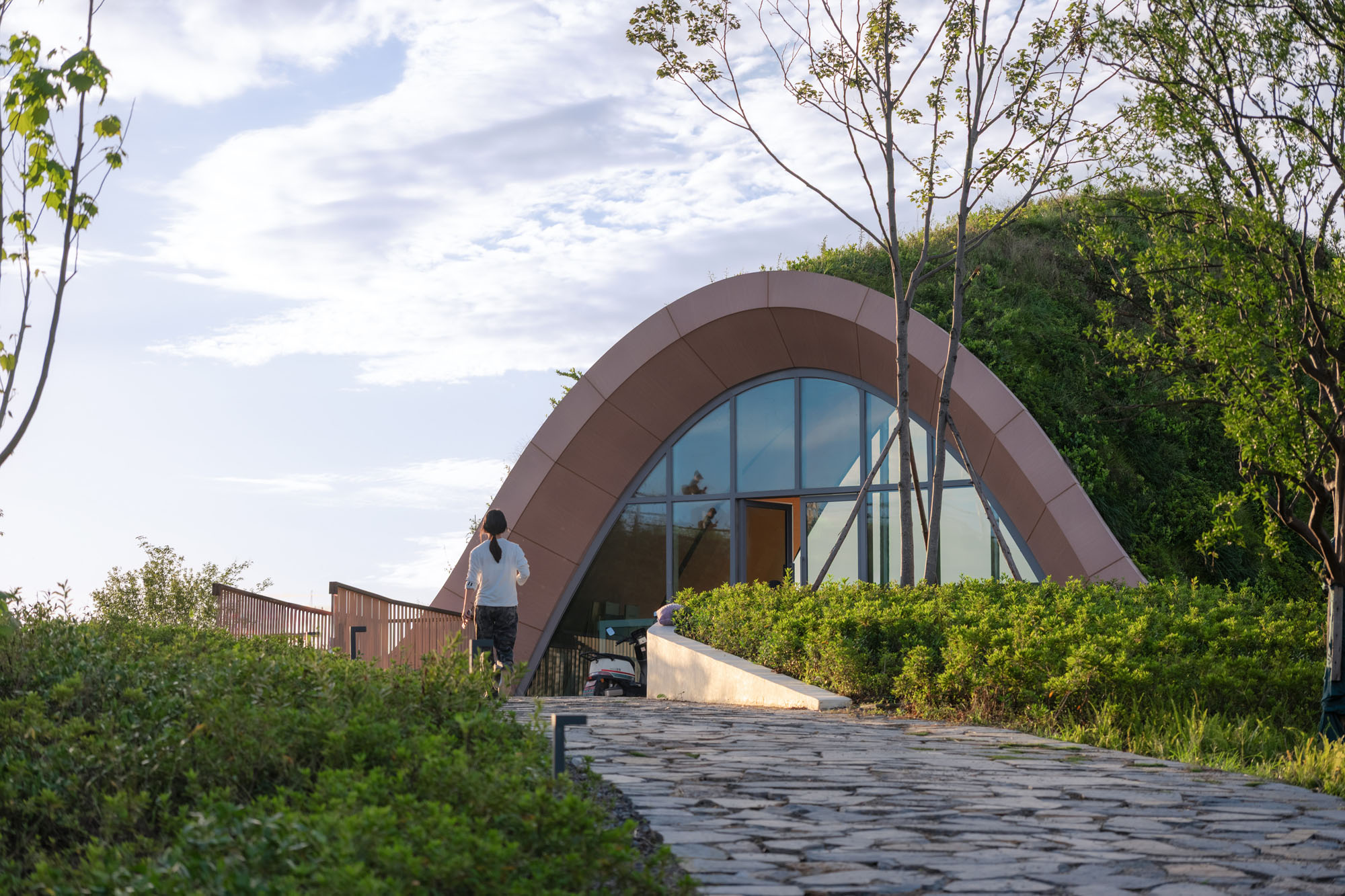
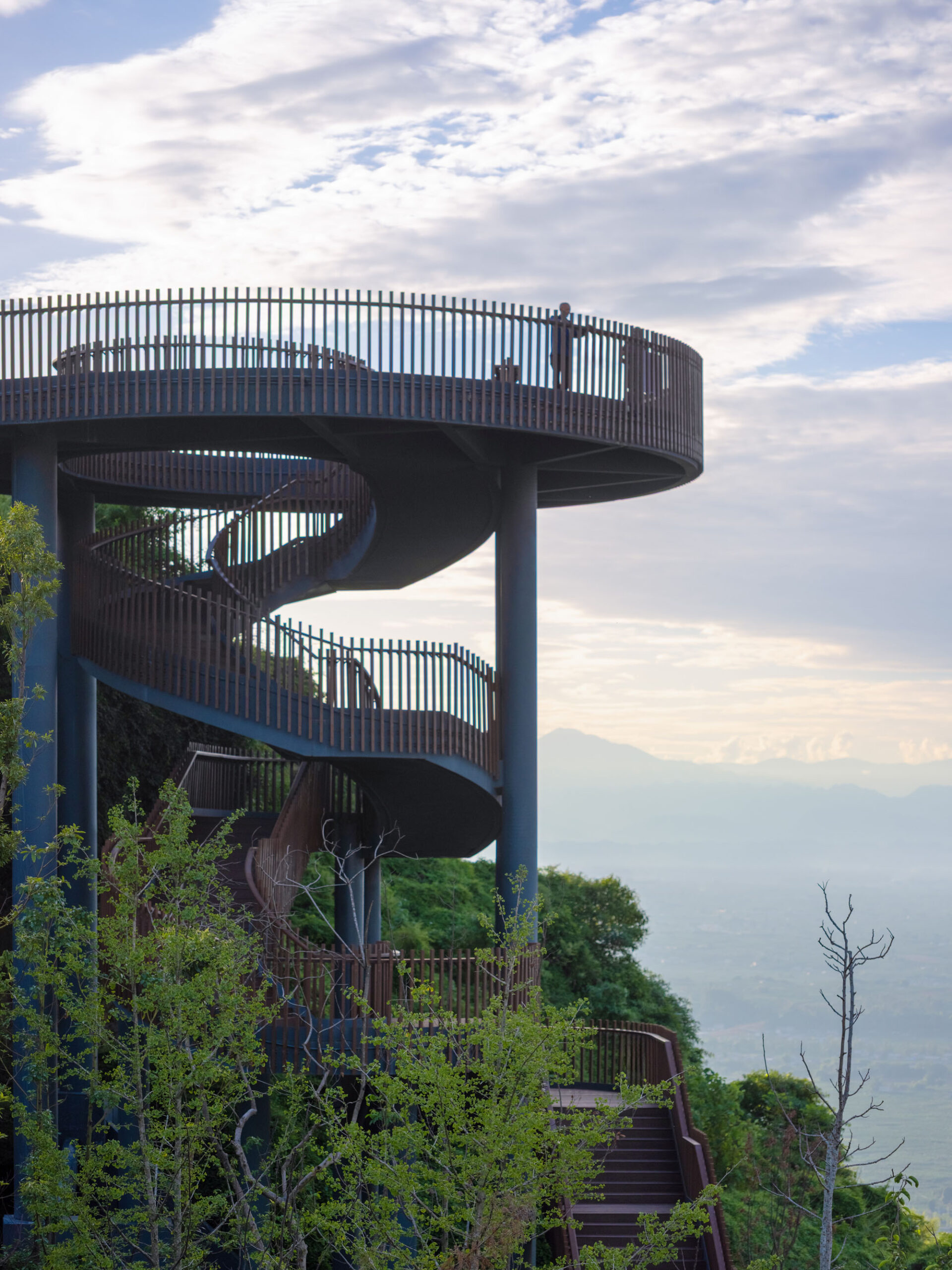
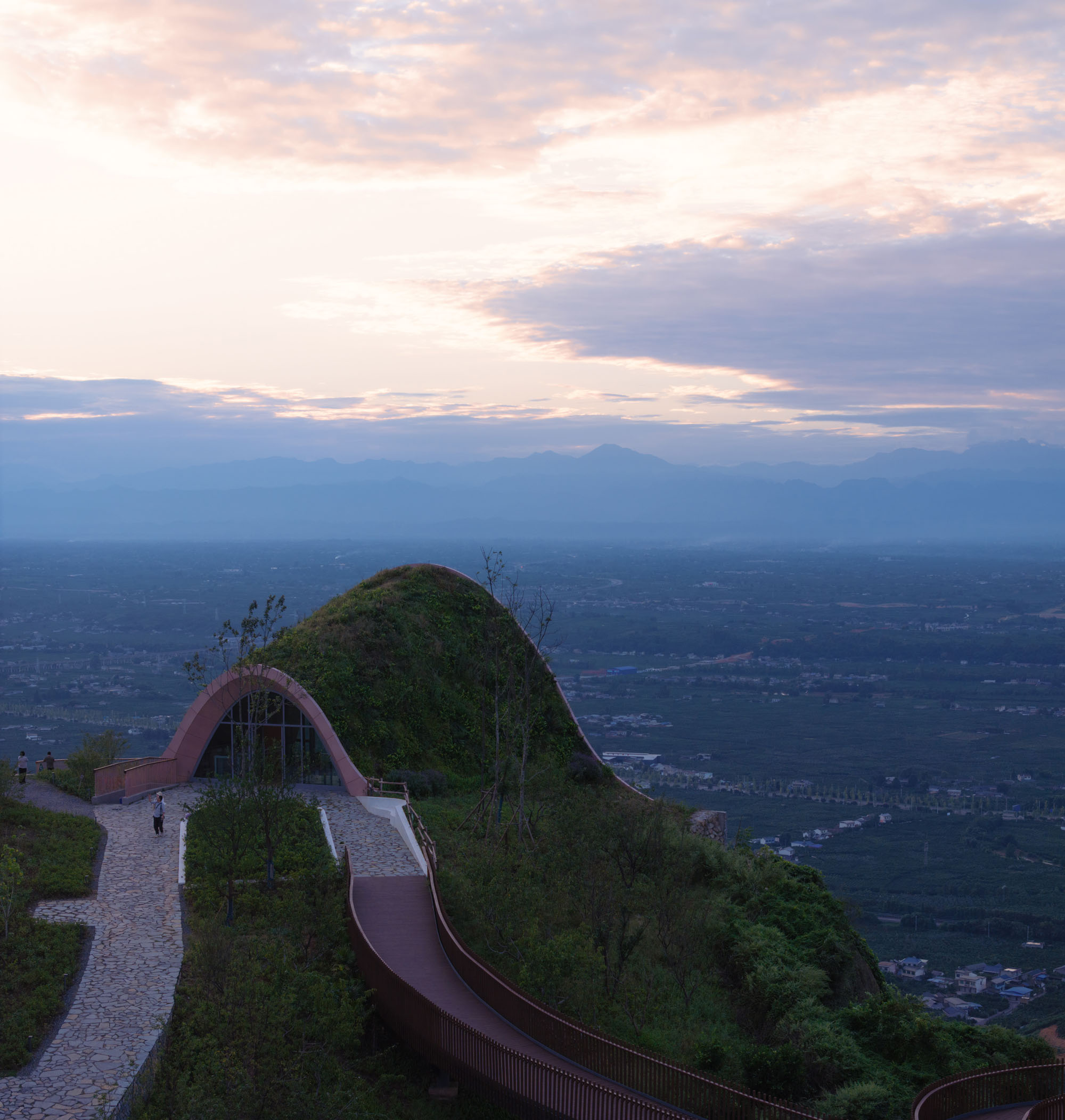
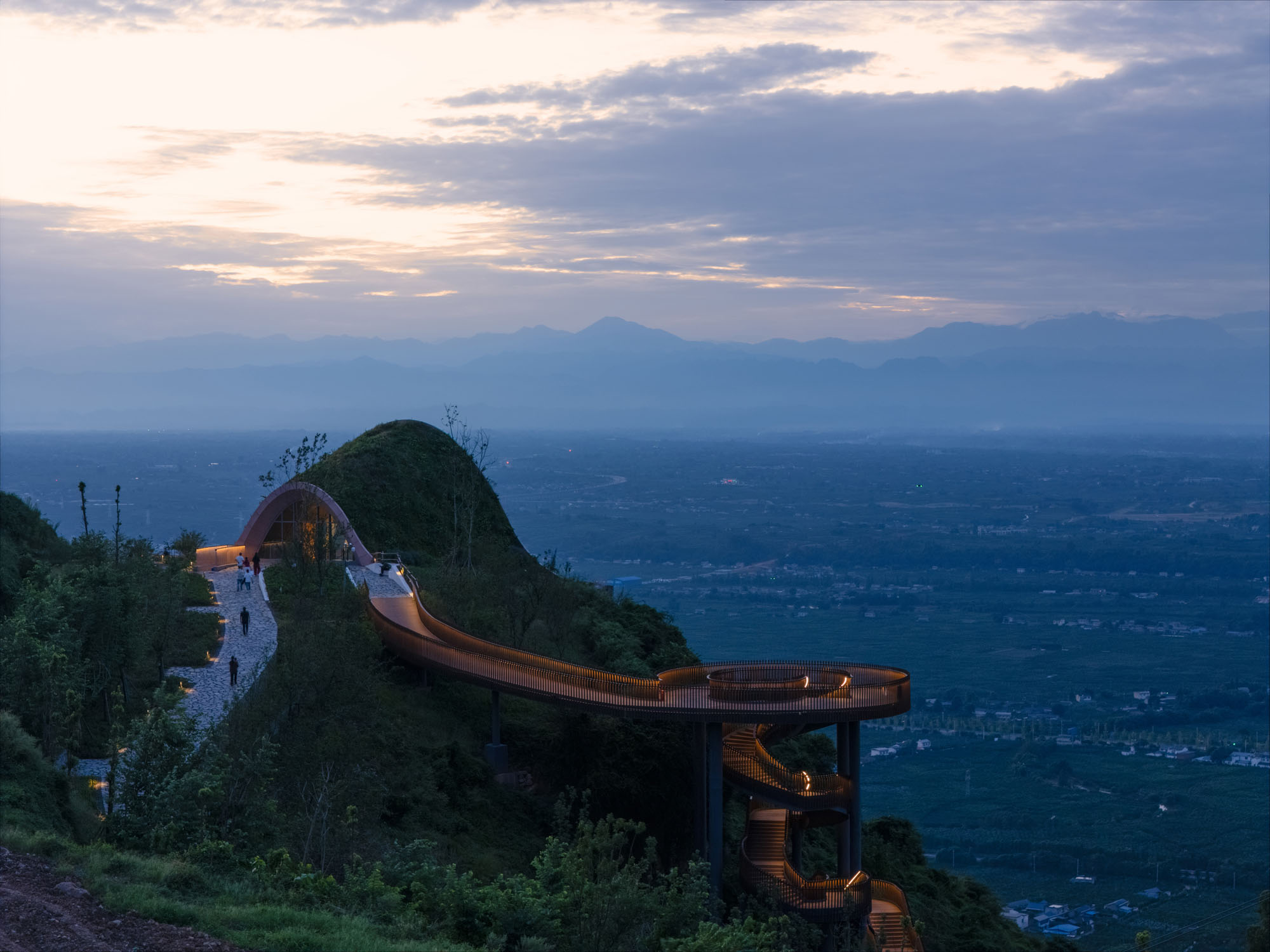
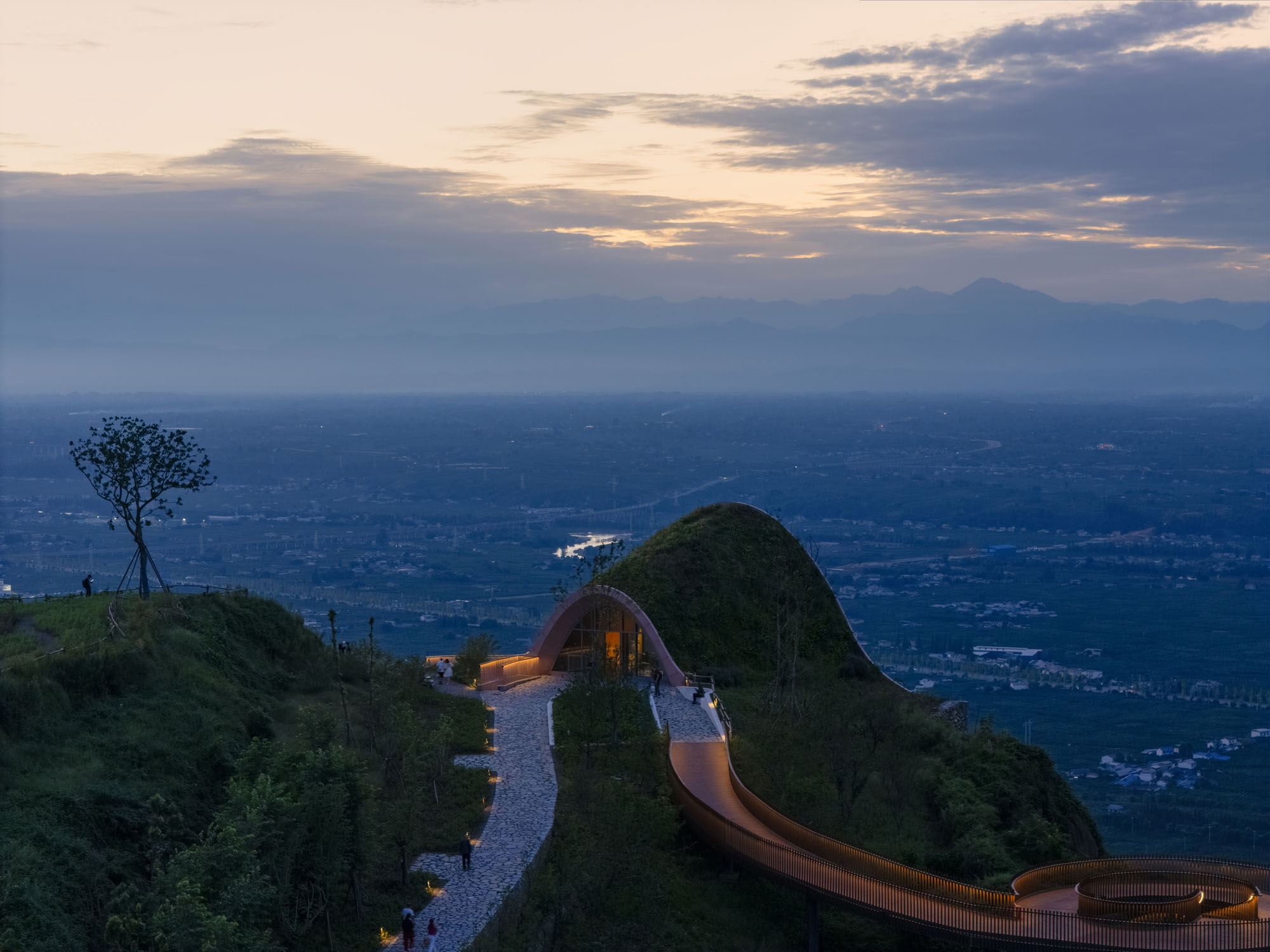
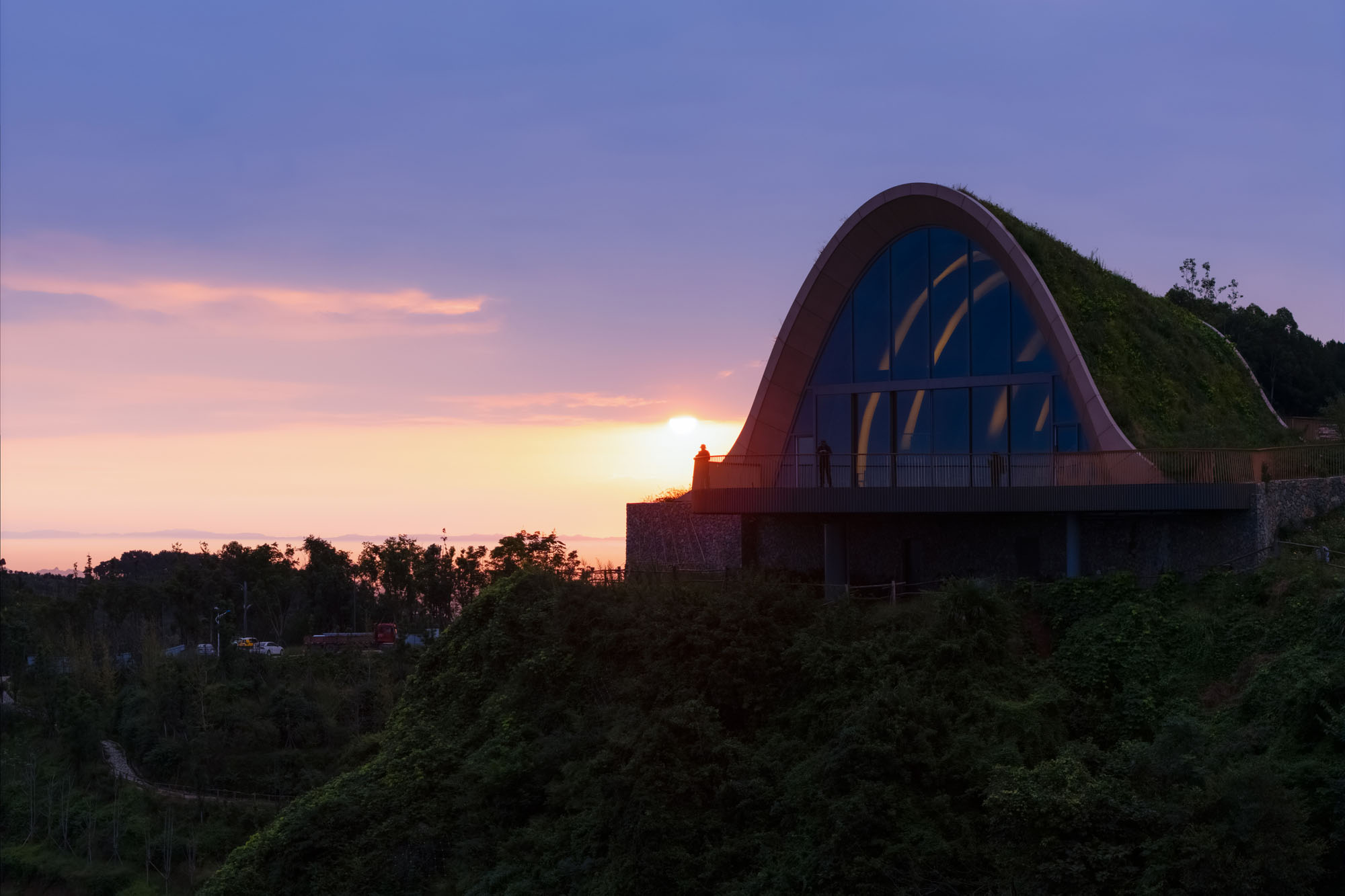
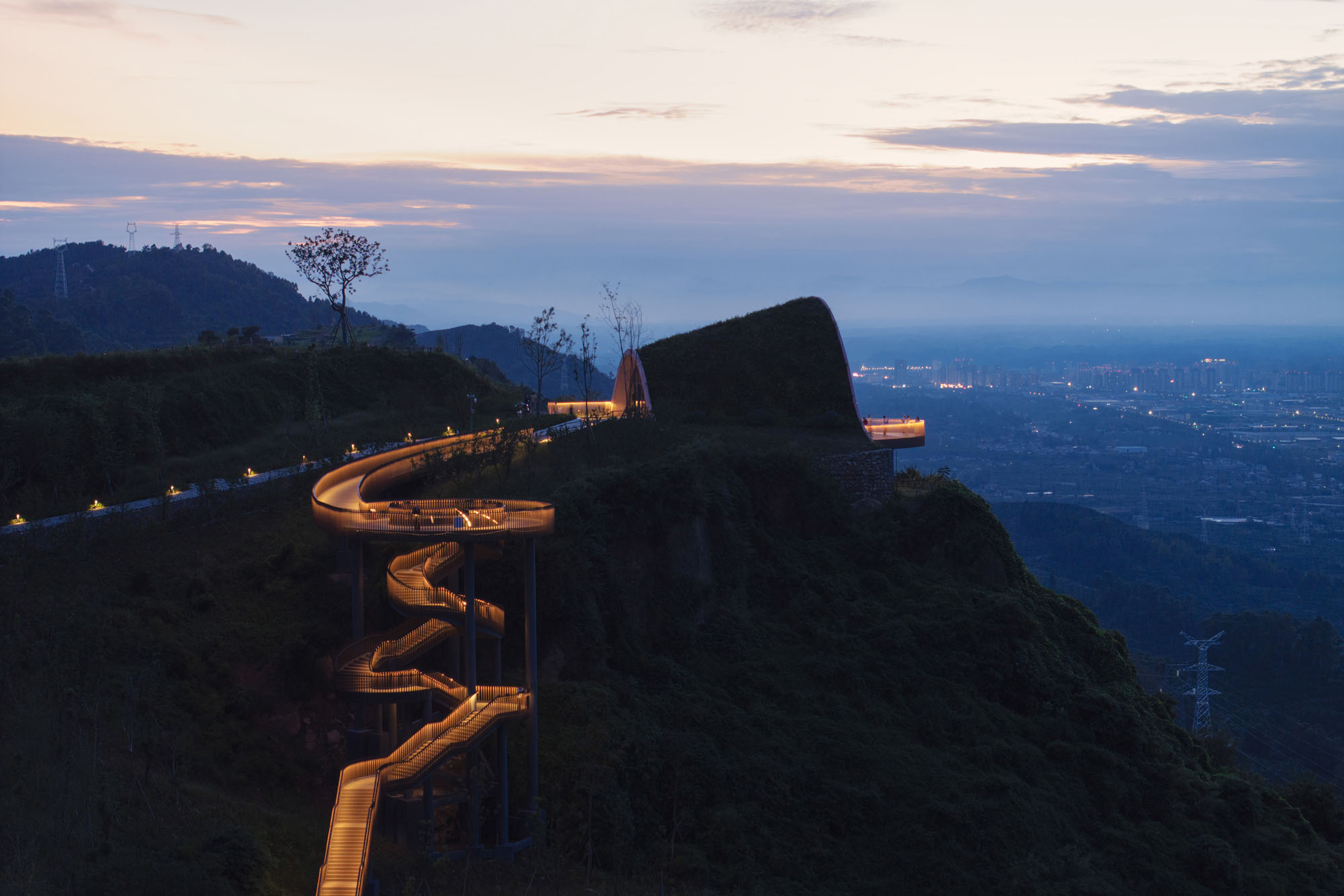
MVRDVの設計は、既存の展望台が建設された際に丘が平坦化されていたという事実への「気づき」からスタートしている。景観に溶け込む土で盛られたアーチ型パビリオンを創出することで、かつてそこにあった丘の姿を再現したのである。また、設計に際しては遊歩道のネットワークも改良され、螺旋階段構造に組み込まれた二次展望台を含め、複数のルートで展望台へアクセスできるよう計画された。
パビリオン本体には木造構造が採用されており、これは中国の建設業界において木材利用の拡大を促進するための実証例としての役割も担っている。木材は炭素排出量の削減に有効であるにもかかわらず、中国の規制や業界全体は依然としてその大規模な採用には消極的である。
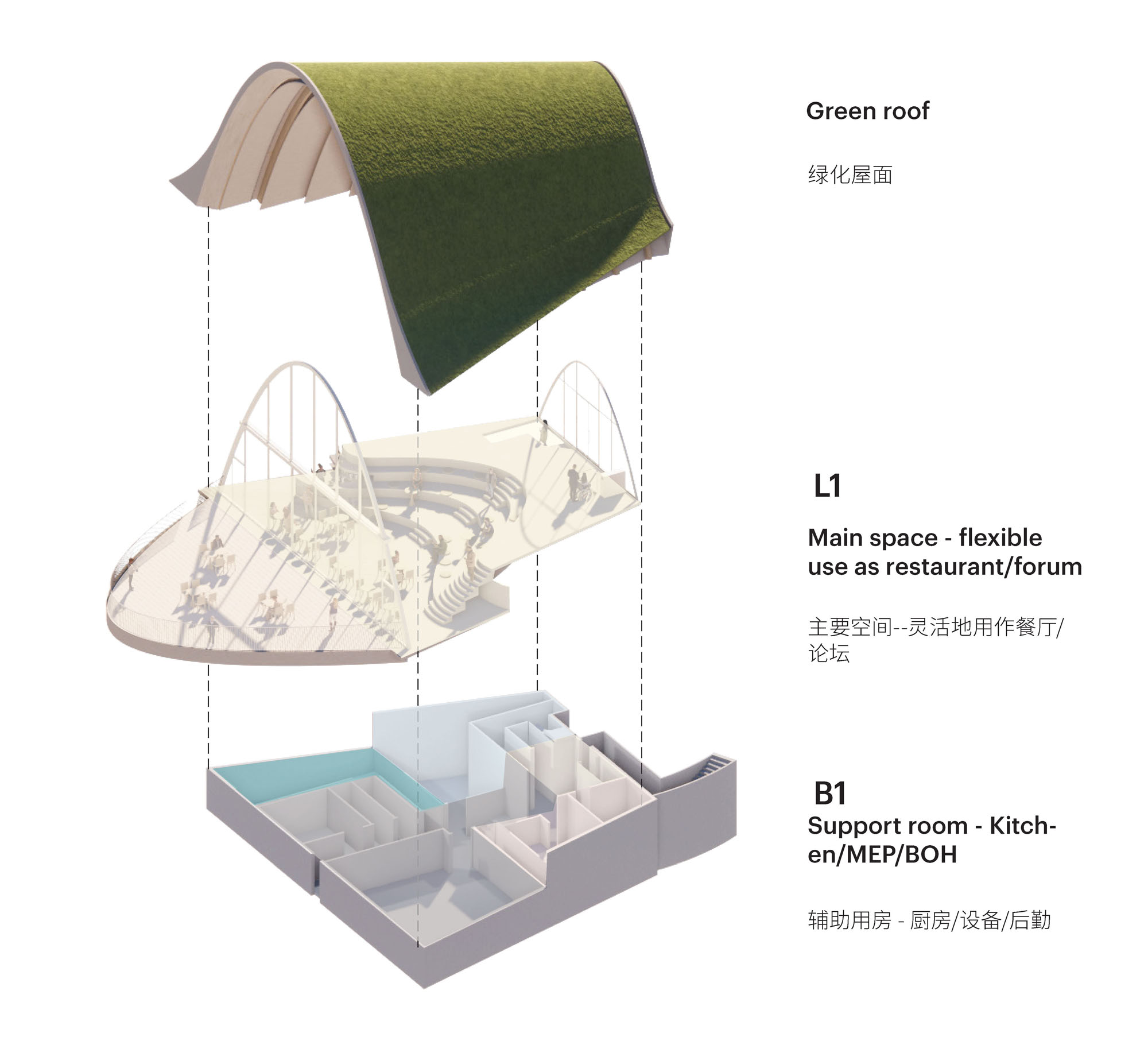
Spatial strategy
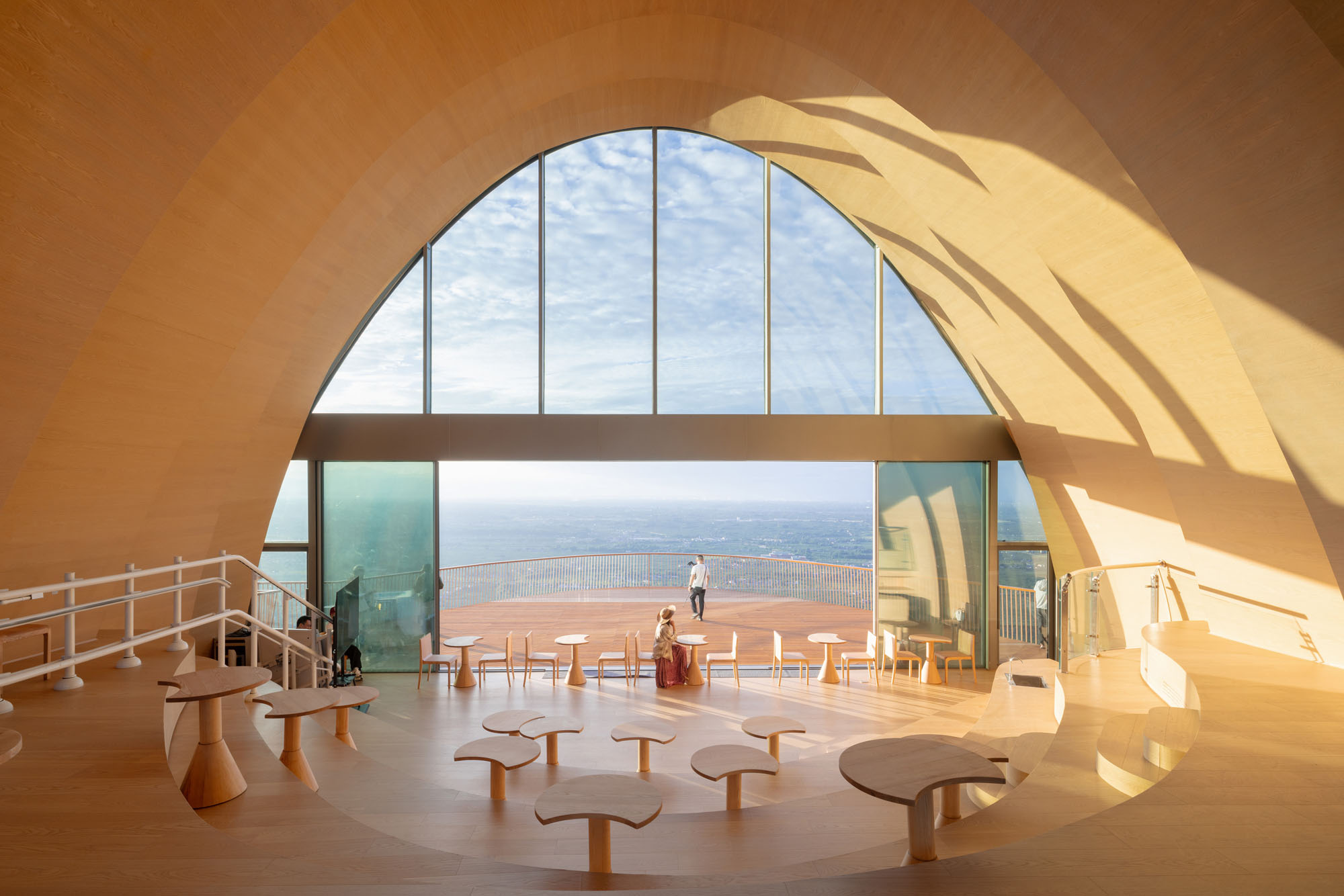
内外をシームレスにつなぐ観覧席と大開口
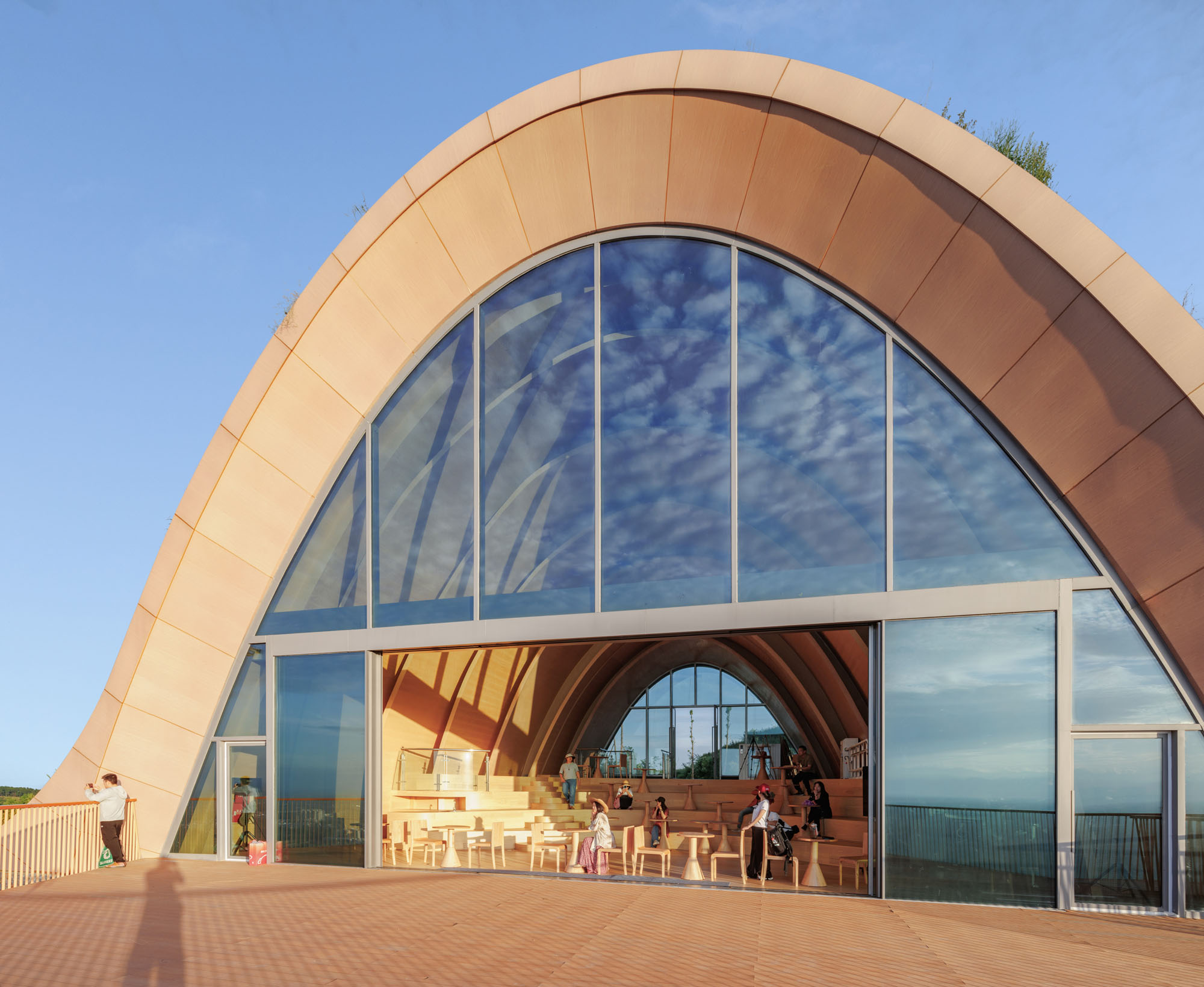
パビリオンへは、建物の南東側にある土盛りに埋め込まれた小さなガラスファサードからアプローチする。内部空間は、屋根が上方へ、床が下方へと傾斜しており、丘の勾配に沿った構成となっている。
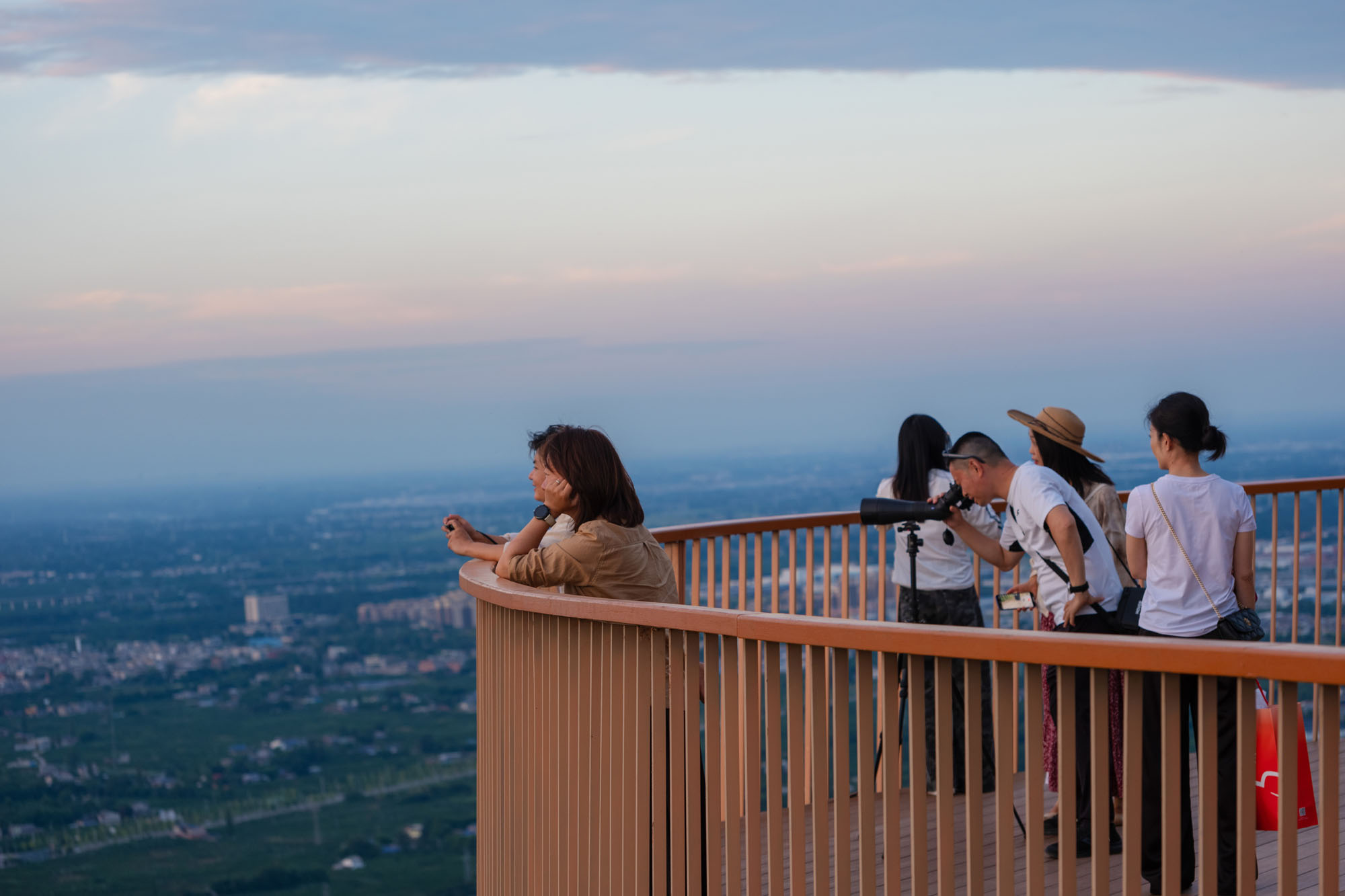
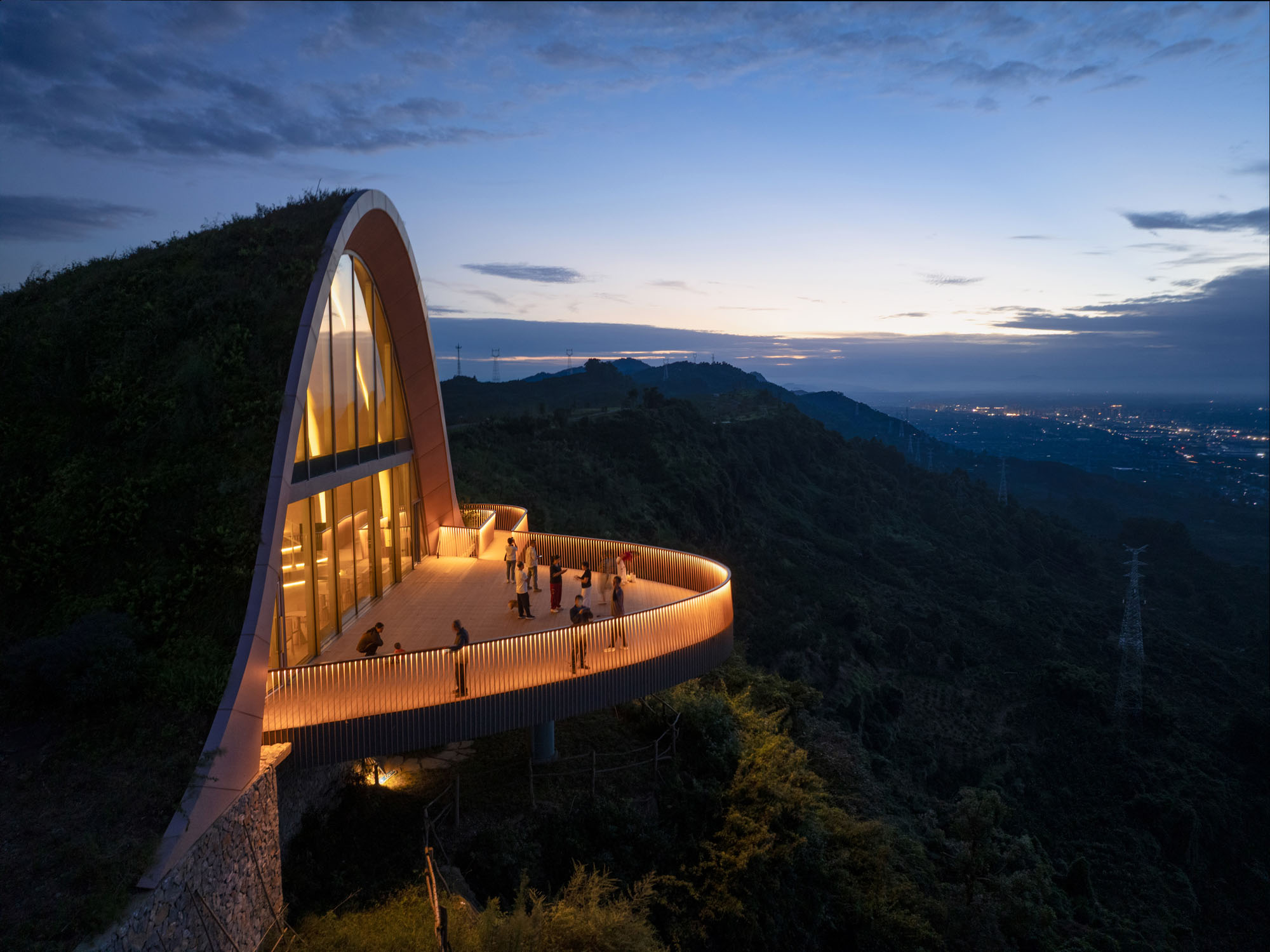
この傾斜は観覧席を形成し、プレゼンテーションに最適であるほか、反対側に設けられた高さ10mものガラスファサード越しに風景を眺めながら座る場所としても機能する。このファサードには特大のスライドドアが組み込まれており、内部空間を外部の展望バルコニーへと開放することで、内と外のつながりを最大化し、必要に応じてバルコニーを屋内空間の延長として利用することを可能としている。
© Arch-Exist
© Arch-Exist
風景への最小限の介入
「この地域の丘陵は実に壮観な景観である。だからこそ、景観への影響を抑えつつ、その眺望を最大限に活かすことが課題となった。緑化屋根を備えた丘状のパビリオンを配置することで、私たち自身の影響を最小限に抑えるだけでなく、かつて存在した丘を再現した。自然を保護し尊重するこの行為こそが設計の本質であり、それは木材などのバイオベース素材を採用した建設手法にも継承されている。これらの持続可能な素材は、このような自然環境に与える影響をより低減するものである。」
MVRDV創設パートナー
ヤコブ・ファン・ライス(Jacob van Rijs)
© Arch-Exist
© Arch-Exist
敷地の生態系を活かしたランドスケープと動線計画
プロジェクトのランドスケープデザインは、敷地内に既に存在する要素を強化することを目指している。植栽計画は敷地の現在の生物多様性を反映しており、パビリオンの屋根を覆う土盛りの上でも、わずか10cmという土壌深さながら、多様な草花や低木を育むことが可能である。また、既存の水路は雨水の収集と灌漑に活用されている。
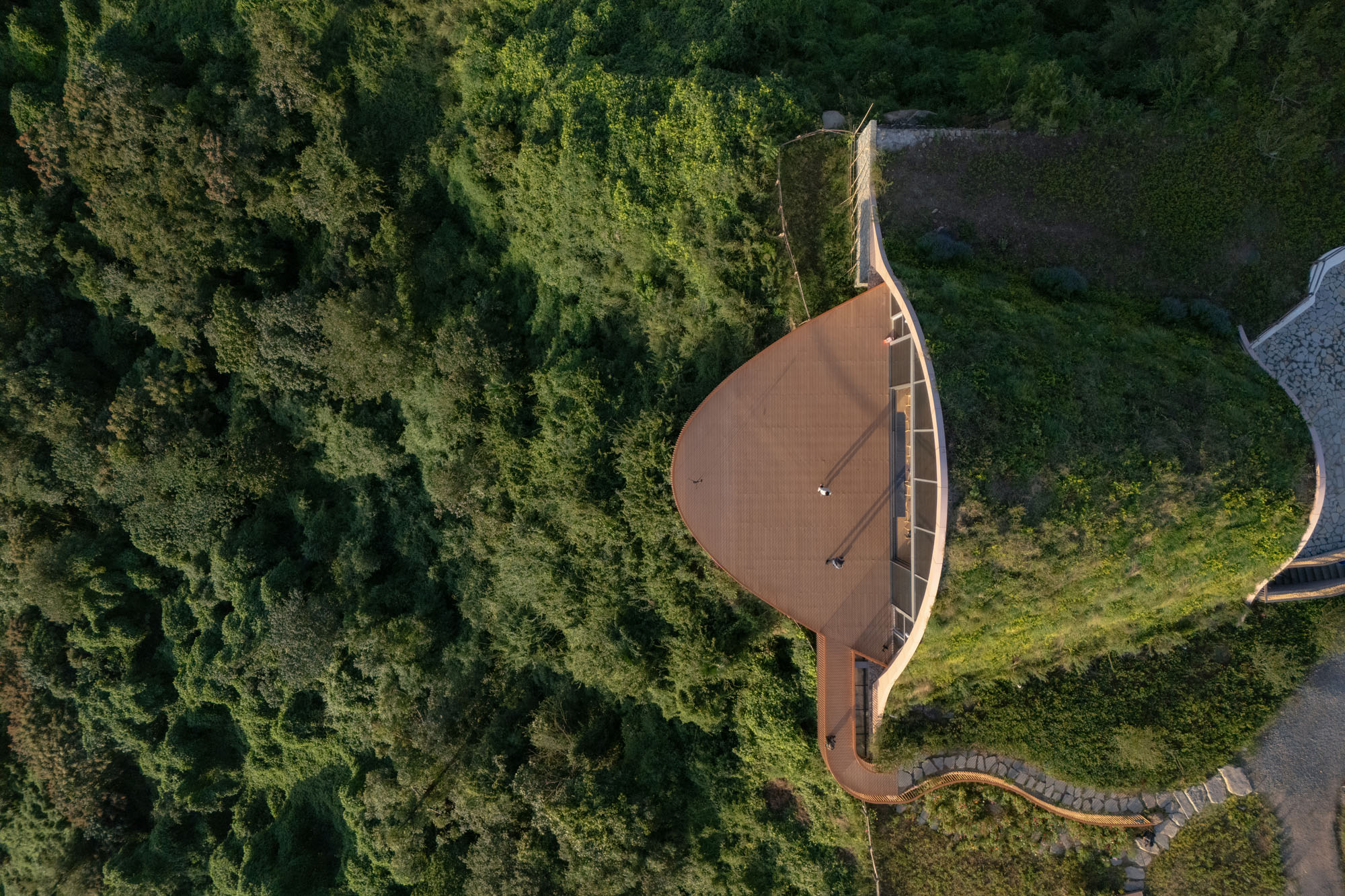
設計では敷地内の既存の歩道を活かしつつ、それらをループ状に連結するための階段を追加した。階段の頂上には円形の二次展望台が配置され、遠方の山々から近郊の自然環境に至るまで、360度の眺望を提供している。
© Arch-Exist
© Arch-Exist
多様な環境戦略による炭素排出量の削減
プロジェクトでは、建設時の炭素排出量(エンボディド・カーボン)を低く抑える木造構造に加え、運用時の排出削減に向けた多様な戦略が組み込まれている。
土に覆われた屋根とその植生は高い断熱性と蓄熱性を提供し、温度変化の影響を軽減する。天井は自然換気によって空間を冷却できるよう層状に構成されている。また、大型の窓を北向きに配置し、屋根の張り出しや周囲の樹木によって小さな入口壁を直射日光から保護することで、太陽熱取得を最小限に抑えている。さらに、パビリオンのエネルギー需要の一部は地中熱ヒートポンプによって賄われている。
© Arch-Exist
持続可能なまちのシンボル
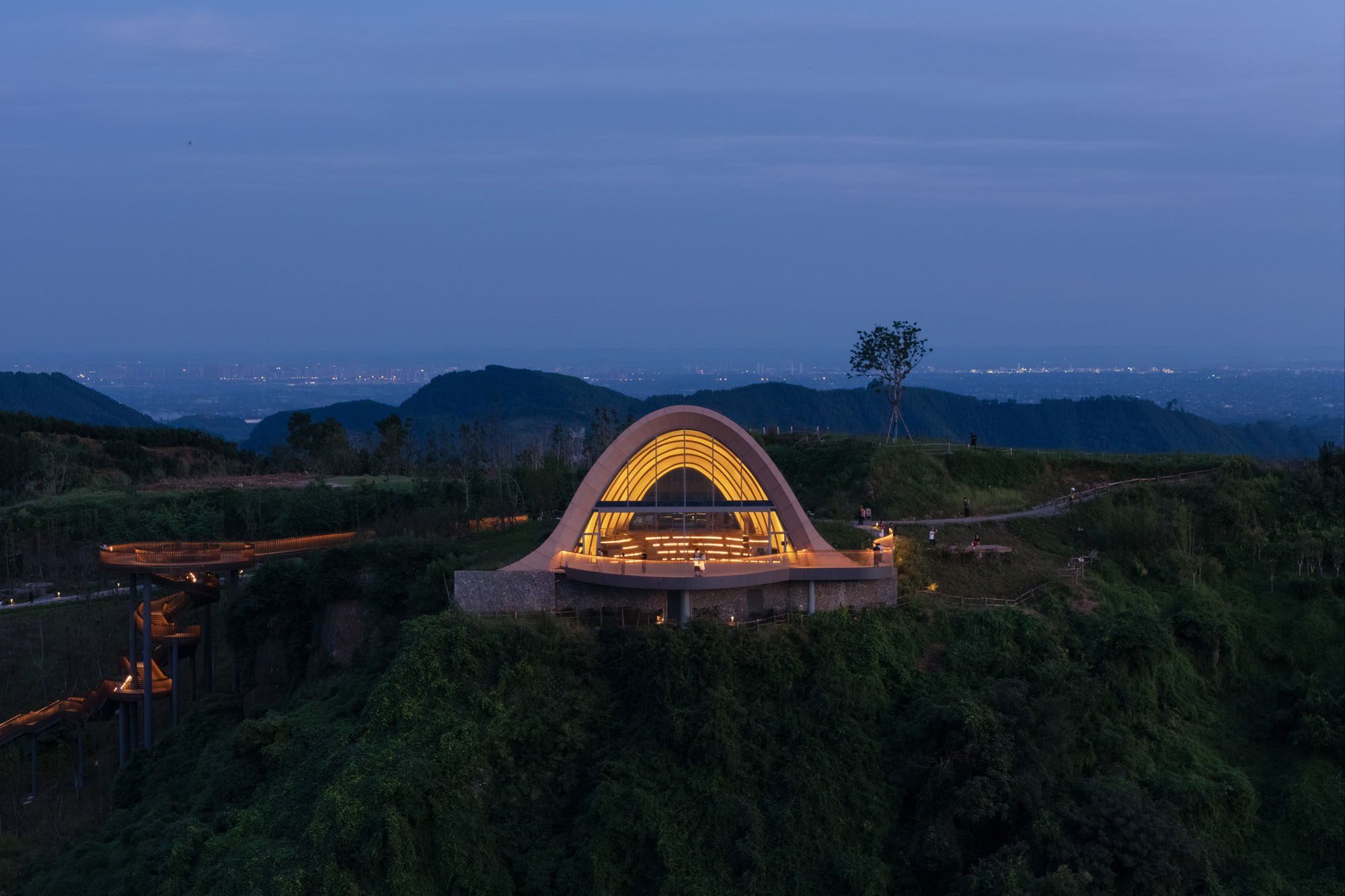
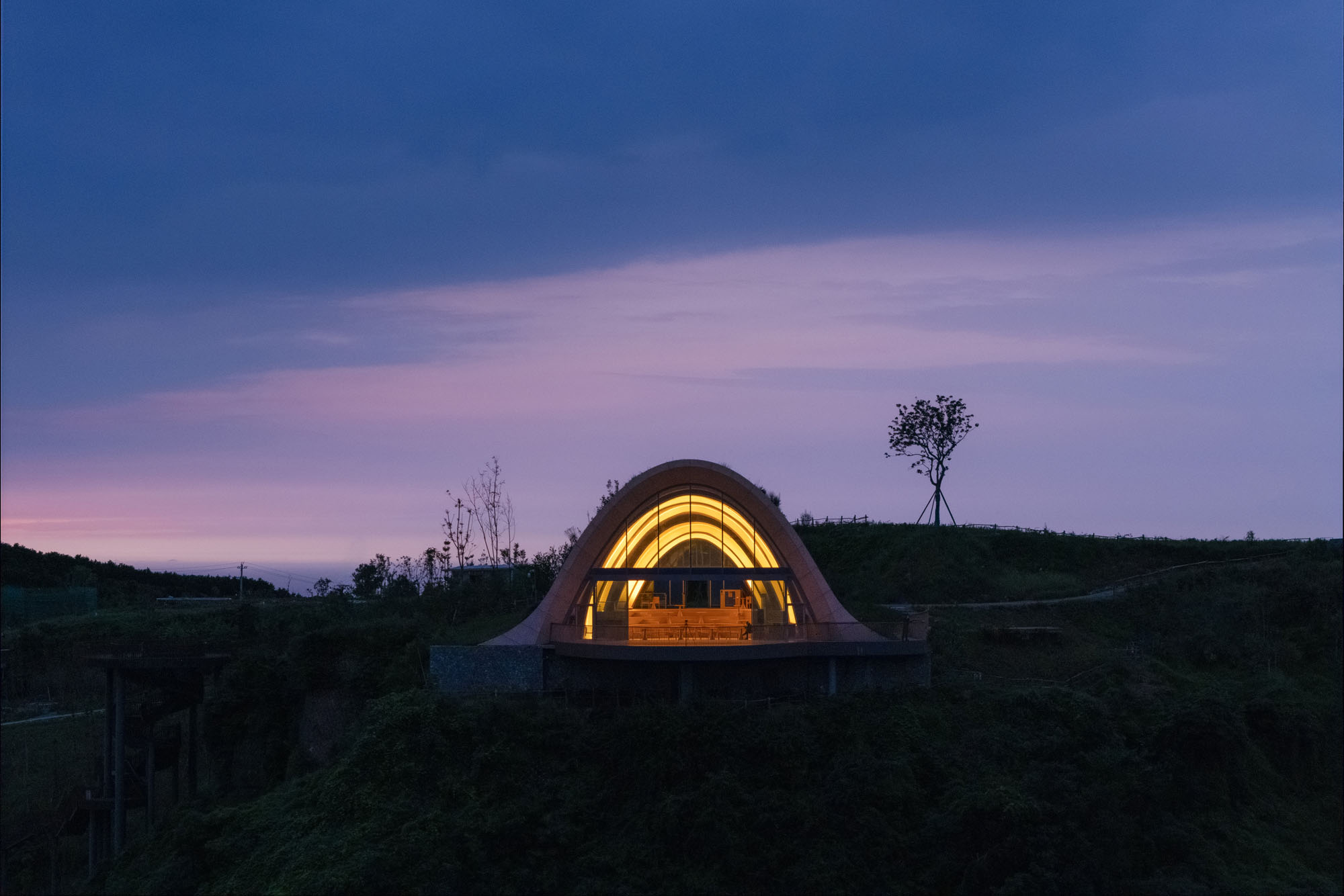
これらの持続可能な特徴により〈蒲江プラットフォーム〉は、丘のふもとで発展する持続可能なまちのアイデンティティを体現する存在となっている。訪れる地元住民や観光客は、自然環境にシームレスに溶け込む持続可能な建築の実例を目の当たりにし、夜になれば窓から漏れる光が丘の中の灯台となり、平野からもはっきりとその姿を認めることができるのである。
© Arch-Exist
© Arch-Exist
© Arch-Exist
© Arch-Exist
© Arch-Exist
© Arch-Exist
© Arch-Exist
© Arch-Exist
© Arch-Exist
© Arch-Exist
© Arch-Exist
© Arch-Exist
© Arch-Exist
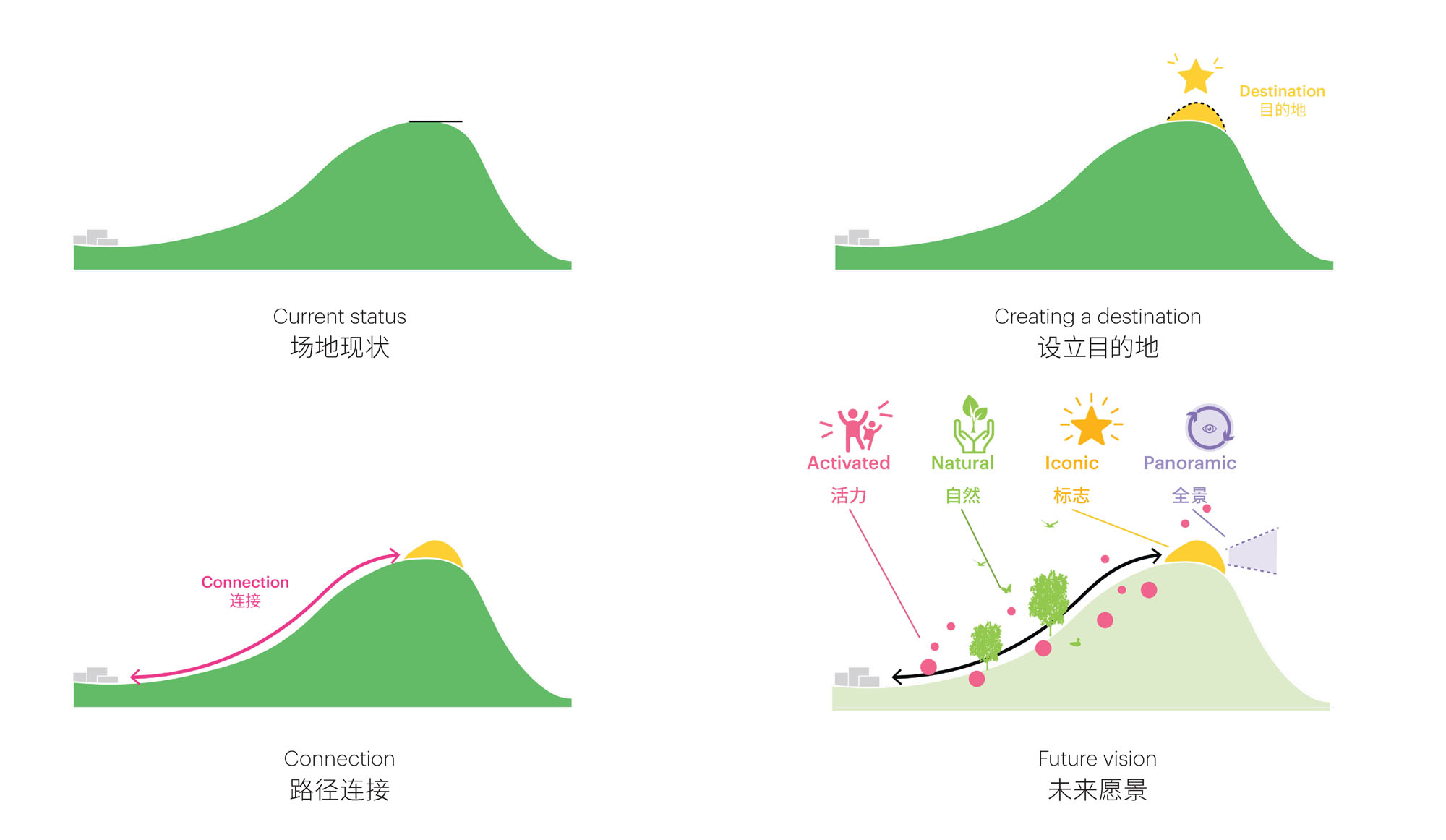
Masterplan concept
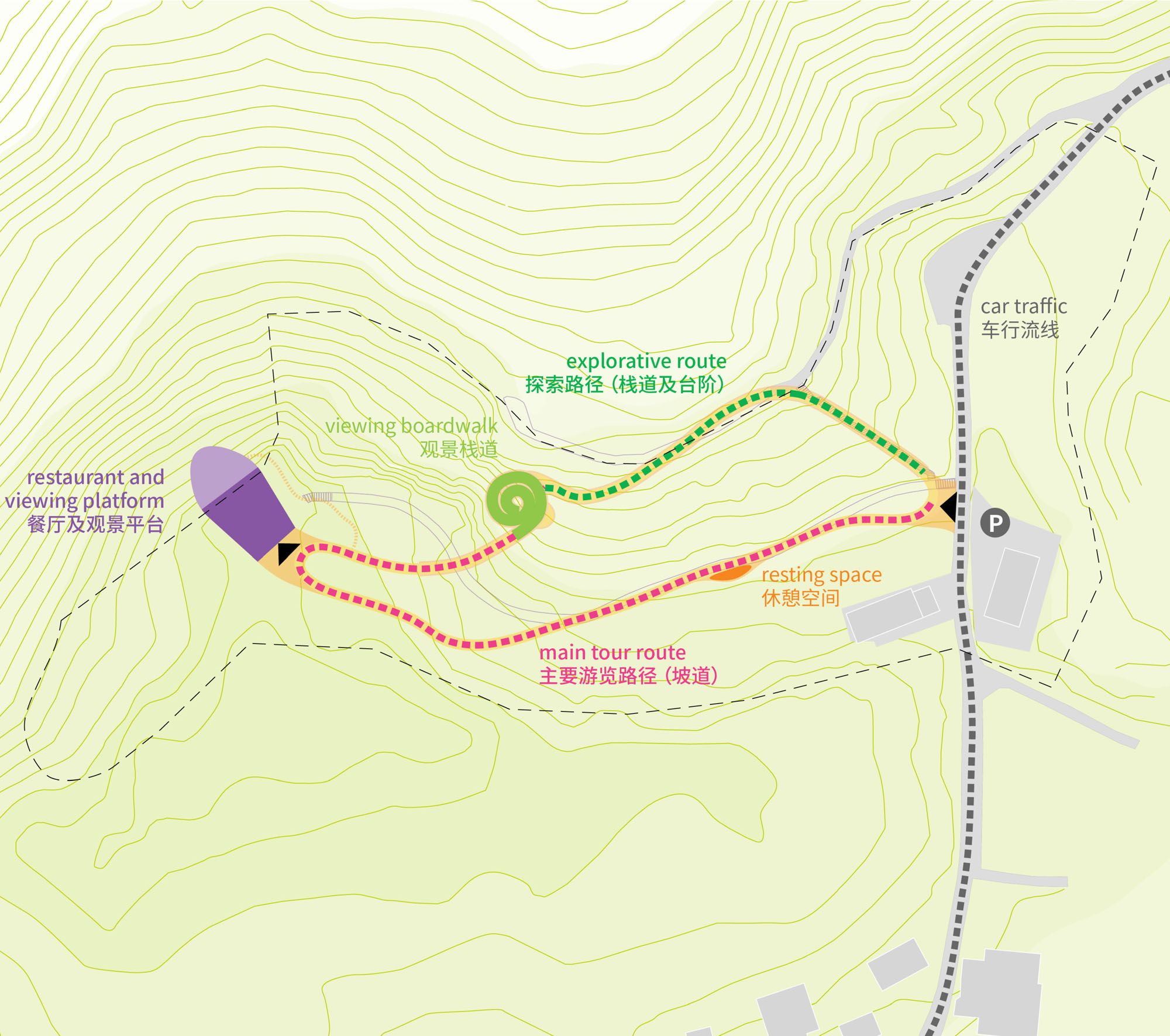
Site map
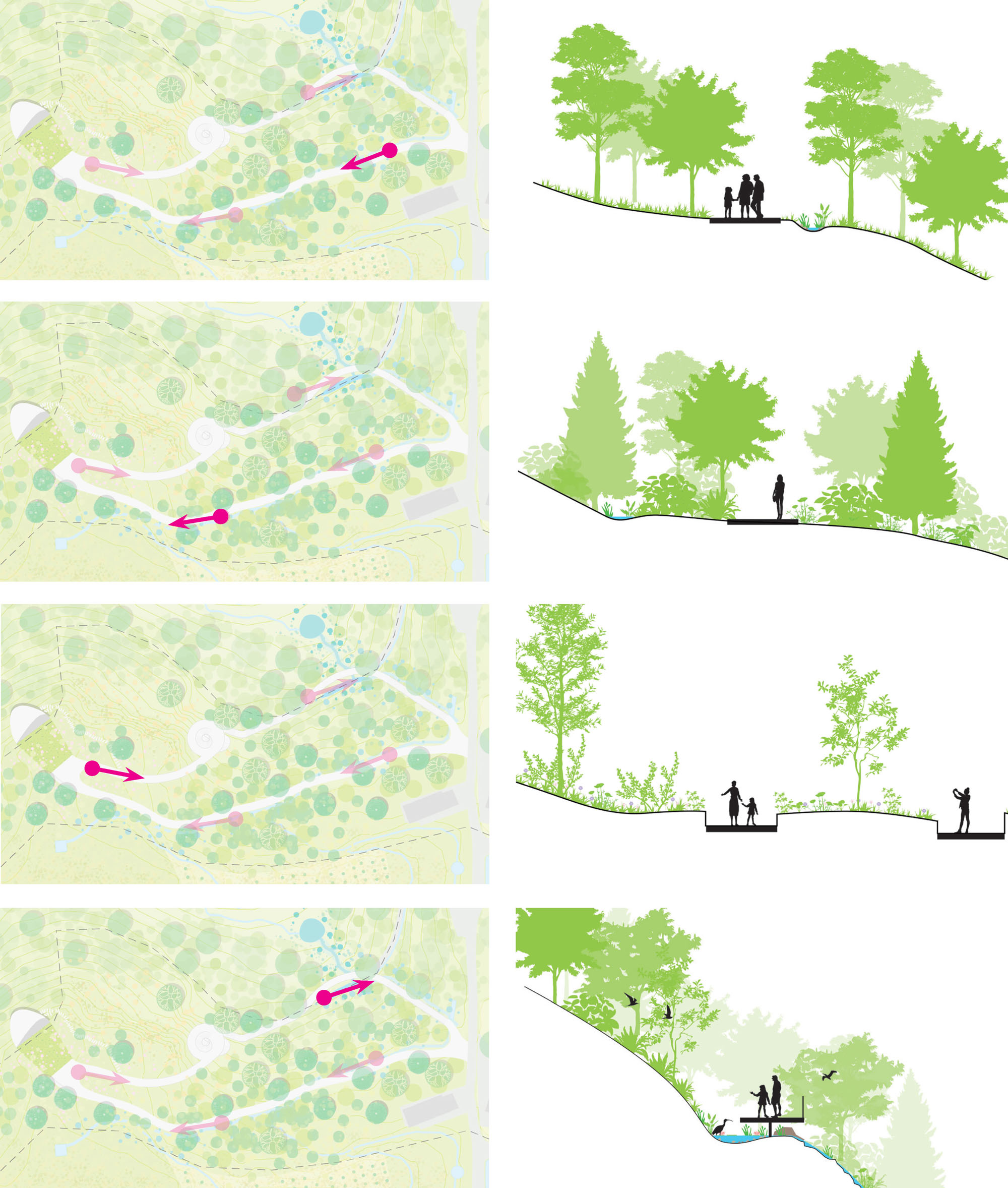
Path sequence
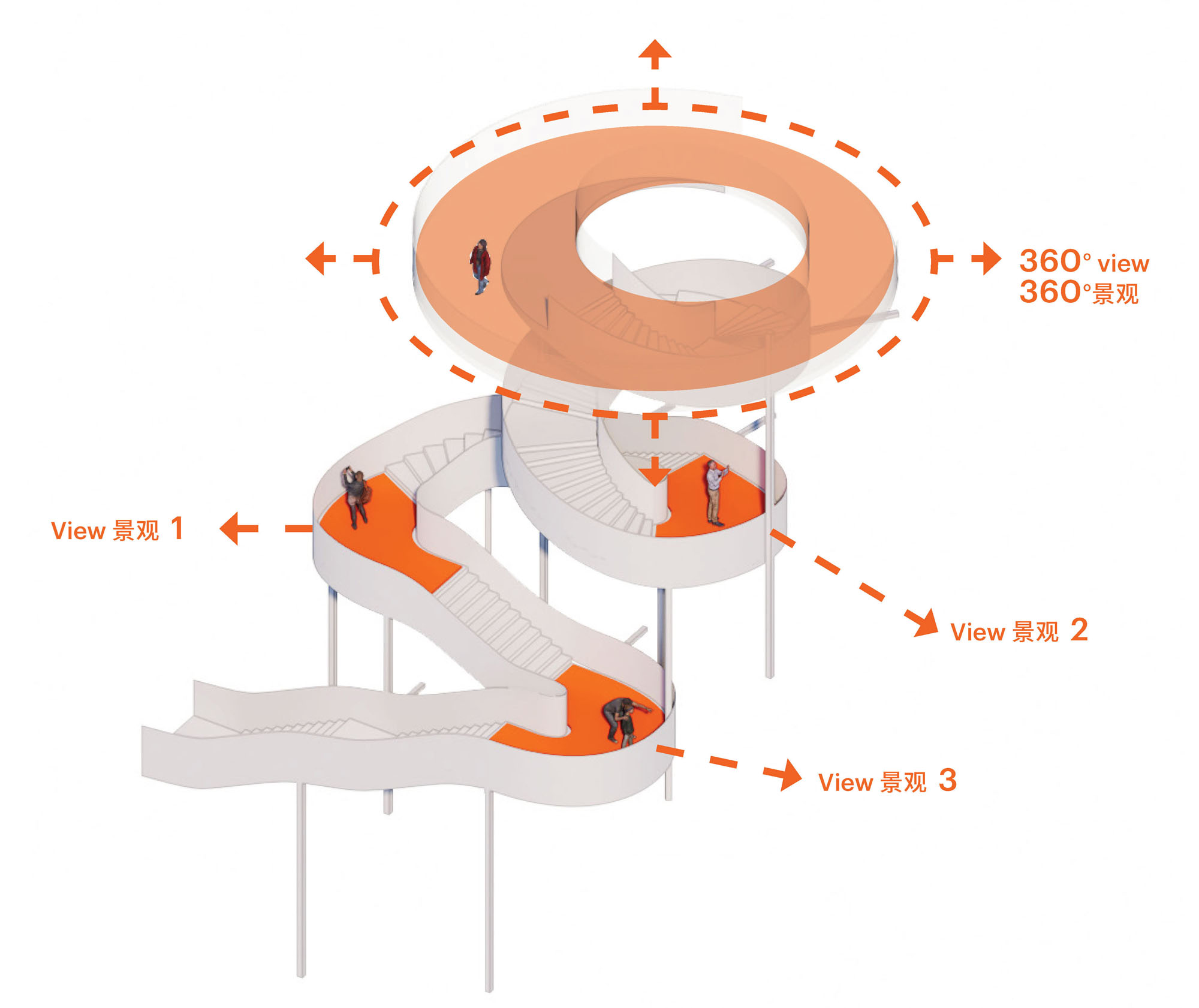
Observation deck concept
以下、MVRDVのリリース(英文)です。
MVRDV completes Pujiang Platform, a timber pavilion and viewpoint that blends in with nature in the hills of Chengdu
MVRDV has completed construction on the Pujiang Platform, a viewpoint comprising an arched, earth-covered timber pavilion perched among the hills to the south of Chengdu. The project serves as both a visitor destination and an event space that takes advantage of the spectacular natural beauty of central China. Designed to blend into nature while also standing out as a beacon when seen from the plains below, the structure of earth-covered timber arches takes a telescopic shape, drawing visitors to the expansive viewing window and balcony that projects out over the slope.
The new town of Pujiang is currently under development to the southwest of Chengdu, with the intention of providing its residents a high-quality, sustainable lifestyle. In the hills to the east of Pujiang, a simple existing viewpoint offered commanding views over the growing town and the panorama of the Qionglai Mountain range behind it. MVRDV was commissioned by Pujiang County Planning and Resources Bureau to upgrade this viewpoint, turning it into a desirable destination for tourists, as well as an event space capable of hosting everything from weddings to government meetings.
MVRDV’s design started from the revelation that the hill was flattened during the construction of the pre-existing viewing platform. By creating an arched pavilion covered with an earth berm that blends into the landscape, the design creates an echo of the hill that existed before. The design also improves the path network to add multiple routes to the viewpoint, including by adding a secondary viewing platform incorporated into a twisting staircase structure. The pavilion itself is made using a timber structure, serving as a demonstration to encourage greater adoption of wood in the Chinese construction industry; despite the benefits of wood in reducing the carbon emissions, Chinese regulations and industry at large remain hesitant to adopt the material at scale.
The pavilion is entered via a small glass façade set into the earth berm on the building’s south-east side. Inside, the roof slopes upwards as the floor slopes downward, conforming to the slope of the hill. This slope forms a tribune that is ideal for presentations, or simply for sitting to take in the landscape through the 10-metre-tall glass façade at the other end. This façade incorporates a pair of oversized sliding doors that open the interior to the viewing balcony outside, maximising the connection between inside and out and allowing the balcony to serve as an extension of the indoor space when required.
“The hills of this region are truly a spectacular sight, so one of the challenges we faced was to make the most of those views while reducing the impact on the landscape”, says MVRDV founding partner Jacob van Rijs. “By adding a hill-shaped pavilion with a green roof we not only minimise our own impact, but we recreated the hill that was there before. This act of preserving and respecting nature is the essence of the design, which is continued in the construction approach, using bio-based materials such as wood that are more sustainable and thus have less impact on natural environments such as this one.”
The landscape design of the project aims to enhance what already exists at the site. The plants used reflect the site’s current biodiversity – including on the earth berm over the pavilion’s roof which, with a soil depth of 10 centimetres, is capable of hosting a wide variety of grasses, flowers, and small bushes. Meanwhile, existing waterways are used for rainwater collection and irrigation.
The design incorporates the pathways that already existed on the site, adding a staircase to connect them into a loop. Atop the staircase is the circular secondary viewing platform, offering 360-degree views of both the distant mountains as well as the nearby natural environment.
In addition to the project’s wood structure, which helps to keep its embodied carbon emissions low, the design incorporates a variety of strategies to reduce operational emissions. The earth berm and its greenery provide a significant amount of insulation and thermal mass, reducing the effect of temperature changes, while the ceiling is layered in a way that allows natural ventilation to cool the space. Solar gain is kept to a minimum, thanks to the north-facing orientation of the large window, and the roof overhang and surrounding trees that protect the smaller entrance wall from direct sunlight. Meanwhile, a portion of the pavilion’s energy requirements are provided by a geothermal heat pump.
These sustainable features ensure the Pujiang Platform reflects the identity of the emerging sustainable town at the foot of the hill. Upon visiting, local residents and tourists alike see a demonstration of sustainable architecture that seamlessly integrates into its natural surroundings, and at night, the light shining from its window turns it into a beacon in the hills, clearly visible from the plains below.
Facts
Project Name: Pujiang Platform
Location: Pujiang, China
Year: 2022–2025
Client: Pujiang County Planning and Resources Bureau
Size and Programme: 414 m2 Event pavilion and viewing platform
Sustainability certification: China Green Building Label: 2 StarsCredits
Architect: MVRDV
Founding Partner in charge: Jacob van Rijs
Partner: Wenchian Shi
Director MVRDV Shanghai: Peter Chang
Design Team: Kyo Suk Lee, Olga Marelja, Geert Folmer, Guido Boeters, Cai Zheli, Shanshan Wu, Alexander Forsch, Ilaria Furbetta, Yihong Chen, Jiamen Li, Shing Yat Tam, Yifei Zhang, Cai Huang, Seunghan Yeum, Gioele Colombo, Xinyuan Zhang
MVRDV Climate: Alexander Forsch
Visualisations: Antonio Luca Coco, Angelo La Delfa, Fady Yassa, Lorenzo D’Alessandro, Ciprian Buzdugan, Luana La Martina, Marco Fabri, Stefania Trozzi
Copyright: MVRDV Winy Maas, Jacob van Rijs, Nathalie de VriesPartners:
Co-architect: 四川省建筑设计研究院有限公司 (Sichuan Provincial Architectural Design and Research Institute Co., Ltd, 简称SADI)
Contractor: 成都建工第三建筑工程有限公司 (Chengdu Third Construction Engineering Of CDCEG)
Photography: © Arch-Exist
MVRDV 公式サイト
https://www.mvrdv.com/projects/943/pujiang-platform
【購読無料】空間デザインの今がわかるメールマガジン TECTURE NEWS LETTER
RECOMMENDED ARTICLE


![[大阪・関西万博]国内パビリオン紹介_PASONA NATUREVERSE](https://magazine-asset.tecture.jp/wpcms/wp-content/uploads/2025/07/22105432/1a466ff408fe3e81d4c005c6b5532f7b-900x674.jpg)

