CULTURE
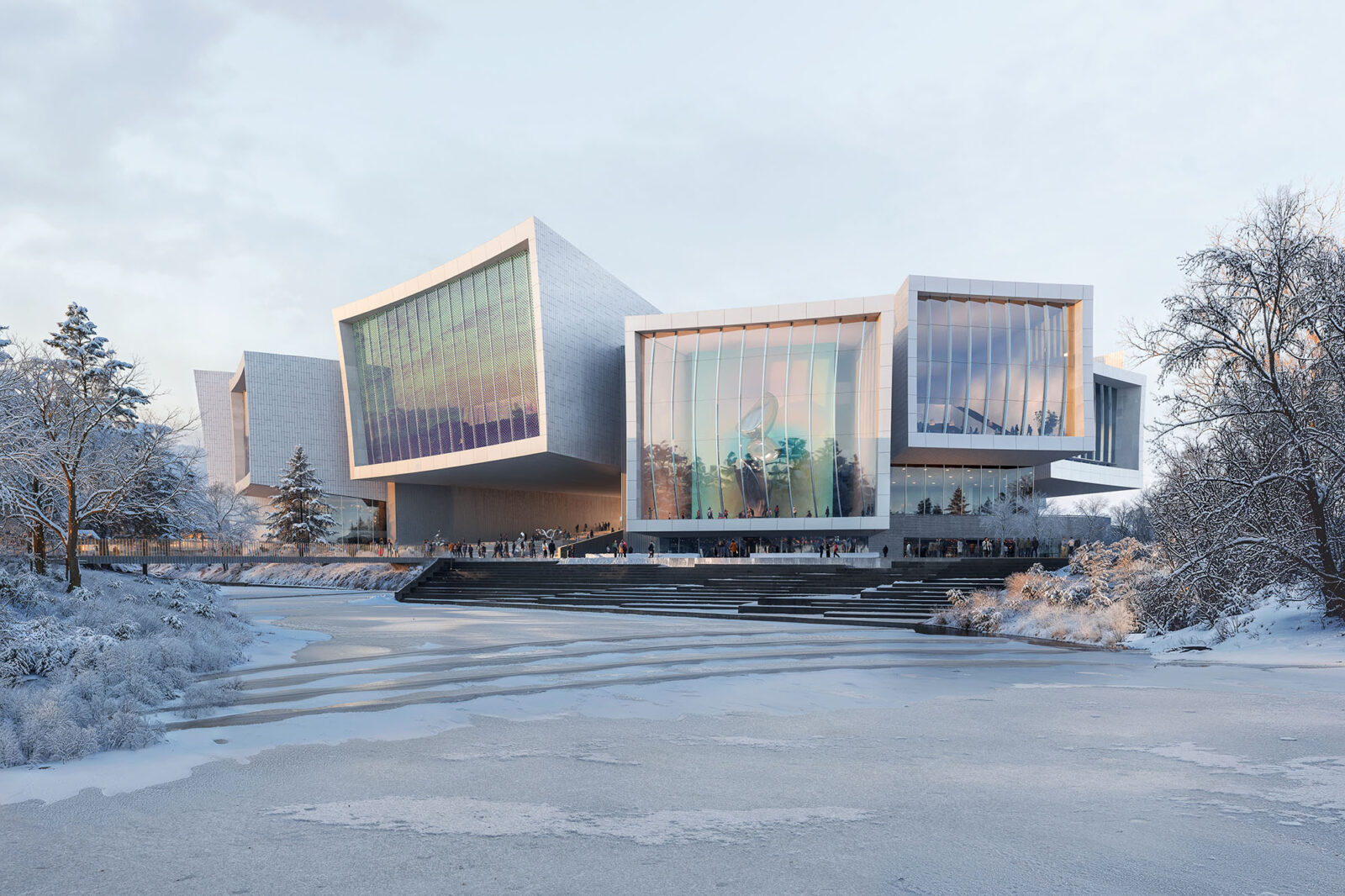
〈北京美術館(Beijing Art Museum)〉のコンペティションが行われ、スノヘッタ(Snøhetta)と北京建築設計研究院(BIAD)による設計チームが勝利しました。
〈北京図書館〉に続くスノヘッタによる北京の大型プロジェクトであり、2025年12月31日に着工しており、2029年の開館を予定しています。
注目ポイント
- 美術館の特性である”収集”と”顕現”を体現するコンセプト「ビジョン」
- ランドマークとしても機能する彫刻的なボリューム
- 美術館の中心に配された、万華鏡のようなアトリウム
- 歴史的伝統と現代的創造性の架け橋となる展示
(以下、スノヘッタから提供されたプレスキットのテキストの抄訳)
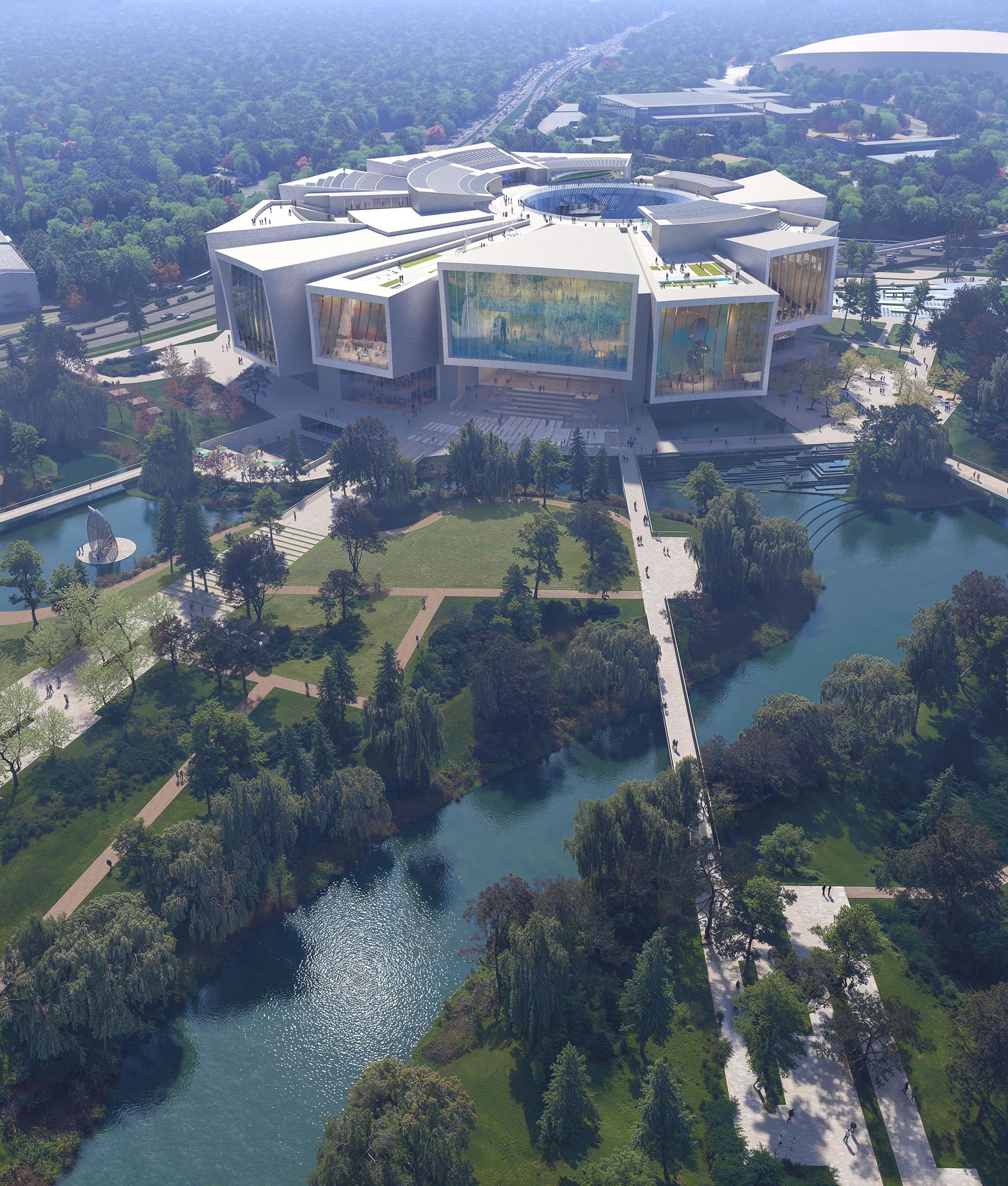
Image by Proloog
スノヘッタはBIADと共同で、北京市通州区に建設される〈北京美術館〉の設計コンペティションにおいて勝利を収めた。このランドマークとなるプロジェクトは、国際的に高い評価を受け2023年に開館した〈北京図書館〉に続き、スノヘッタが中国の首都・北京で手掛ける2つ目の主要文化施設となる。
多様な芸術と都市開発の触媒としての美術館
延べ床面積11万m²を超えるこの新美術館は、美術品や無形文化遺産から、ファッションデザイン、現代アートに至るまで、極めて多様な芸術形態を展示する空間となる。歴史的伝統と現代的創造性の架け橋となる本施設は、活気に満ちた北京の芸術・文化シーンにおける新たな灯台となるべく構想された。
また、単なる文化拠点としての役割にとどまらず、地域コミュニティのための市民的な集いの場として、さらには周辺エリアにおける新都市開発の触媒としての機能も担うことになる。
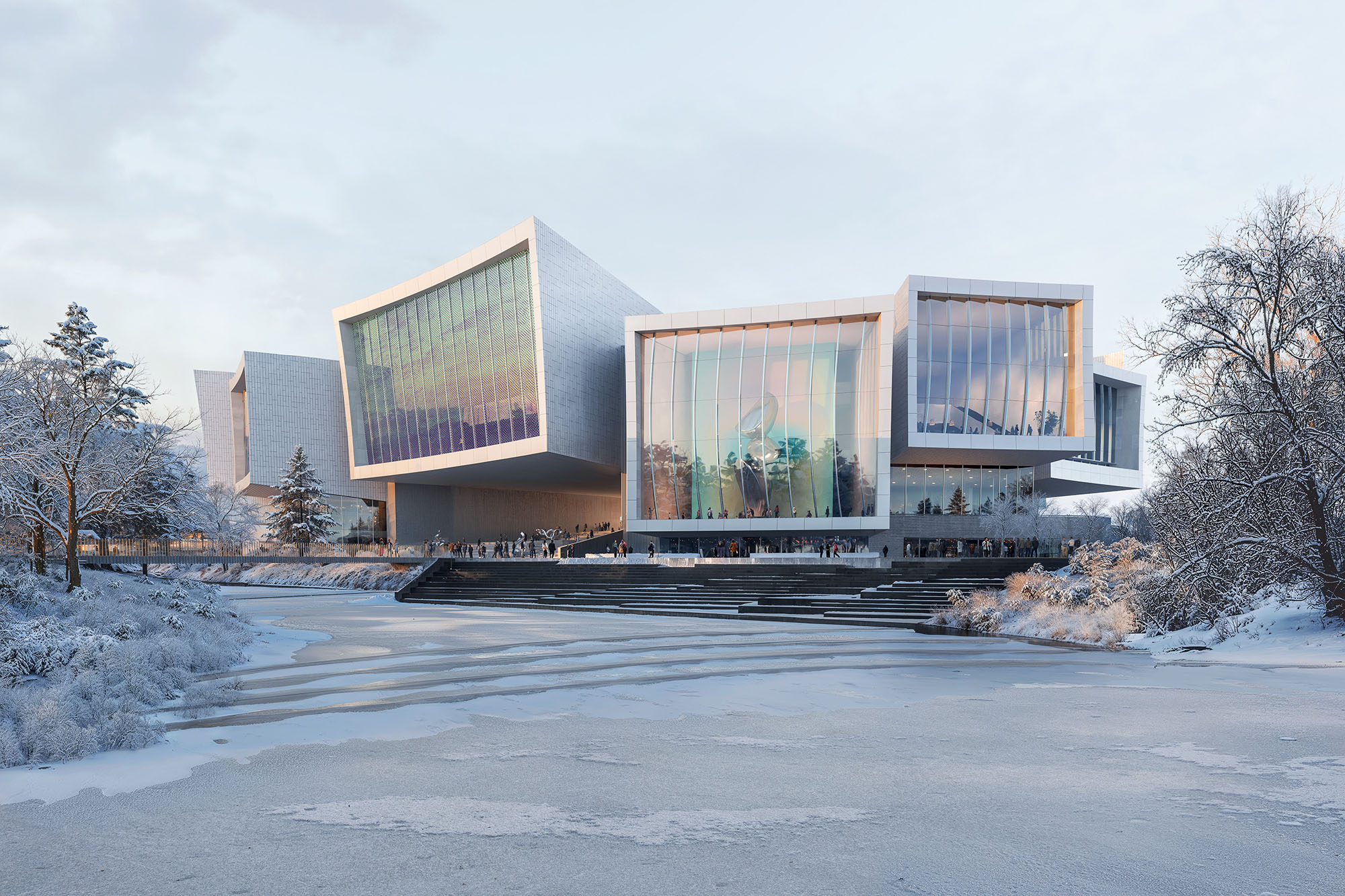
Image by Proloog
美術館の特性である”収集”と”顕現”を体現するコンセプト「ビジョン」
設計提案では「ビジョン」というコンセプトを採用し、美術館がもつ2つの志向性「収集・集積」と「展示・顕現」を具現化している。
本美術館は、文化や知識の単なる守護者・鑑賞者ではなく、鑑賞という行為を美的体験へと昇華させる触媒として構想されている。それはすなわち、鑑賞を芸術へと変容させる存在である。このコンセプトは、抽象と具体をつなぐ多次元的な対話を創出し、アーティストと観客、歴史と未来、建築と景観、個人とコミュニティ、そして都市と世界を結びつける。
美術館はアイデアが交差し、視点が集約される生きた結節点となり、創造性と解釈の連続性を育む場となる。〈北京美術館〉は多元的な表現と知覚の多様性を錬成する炉であり、無数のビジョンが共存し繁栄する場である。「ビジョン」というコンセプトは、思考と想像の支流を集める海のように、この豊かさを受け入れることを志向している。
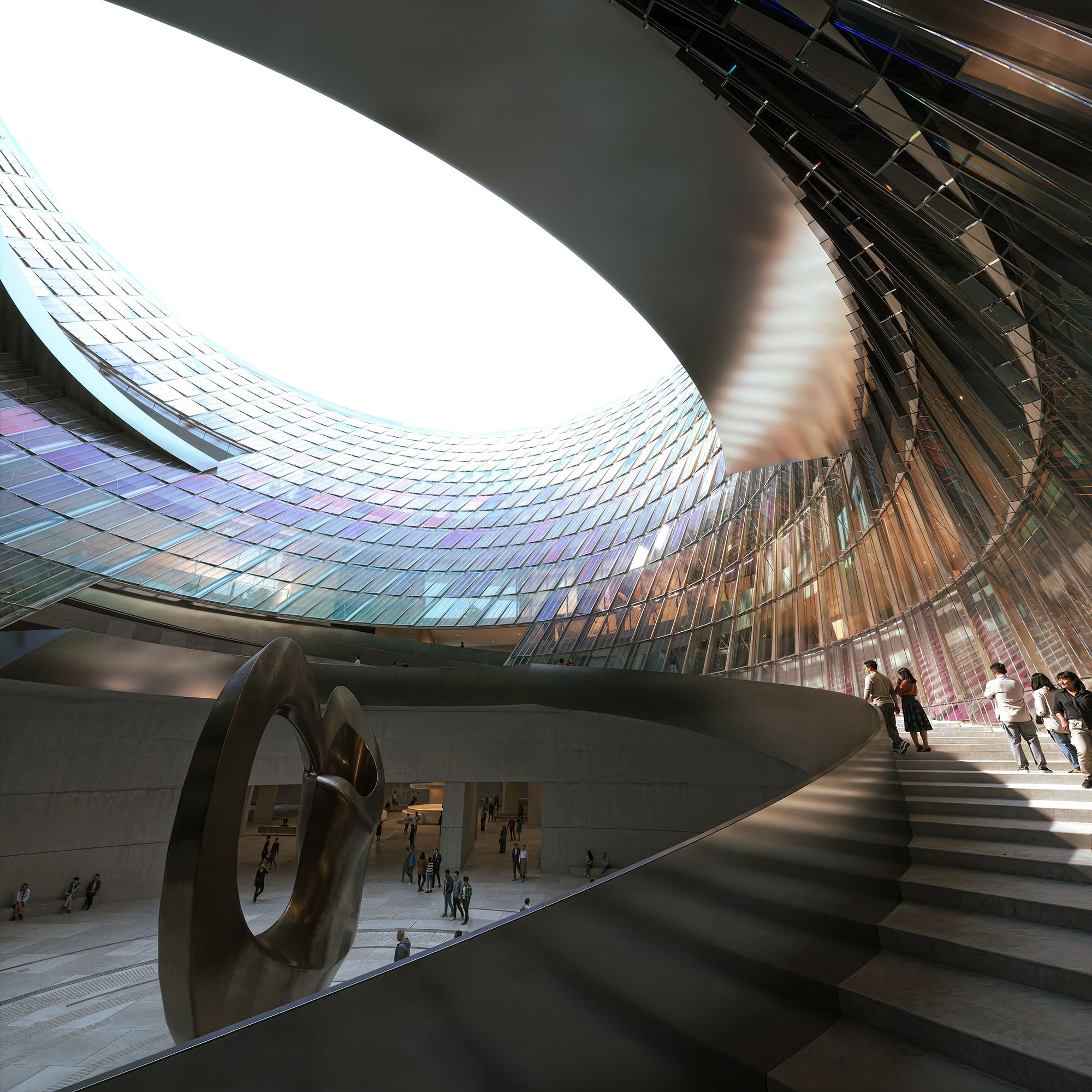
Image by Proloog
地下鉄と直結する彫刻的なボリューム
地下鉄路線の上部に位置する美術館は、交通の要所としての機能も兼ね備え、来訪者を芸術の世界へとスムーズに導く。
建物は中心核から放射状に広がる彫刻的なボリュームをもち、レンズのように波打つファサードが建物と景観の境界を融解させる。これにより、地域コミュニティと関わりをもつダイナミックな公共領域が創出される。この設計は、プログラムの複雑性と多様な利用者体験を調和させ、柔軟性と包括性を確保するものである。
万華鏡のようなアトリウムと螺旋状のギャラリー
美術館の中心には、万華鏡のようなアトリウムが配置されている。これは重力のように作用し、さまざまなプログラム要素を内側へと引き寄せる役割を果たす。この円形空間には、展示や交流のための半開放的なポケットが複数階層にわたって設けられ、建物全体に垂直的なつながりと空間的連続性をもたらす。
ギャラリー、収蔵庫、および支援機能はアトリウムを取り囲むように螺旋状に配置され、周囲の景観を一望できる花弁状のボリュームへと延びていく。これにより、外を「見る」体験と、外から「見られている」感覚が並置される空間構成となっている。
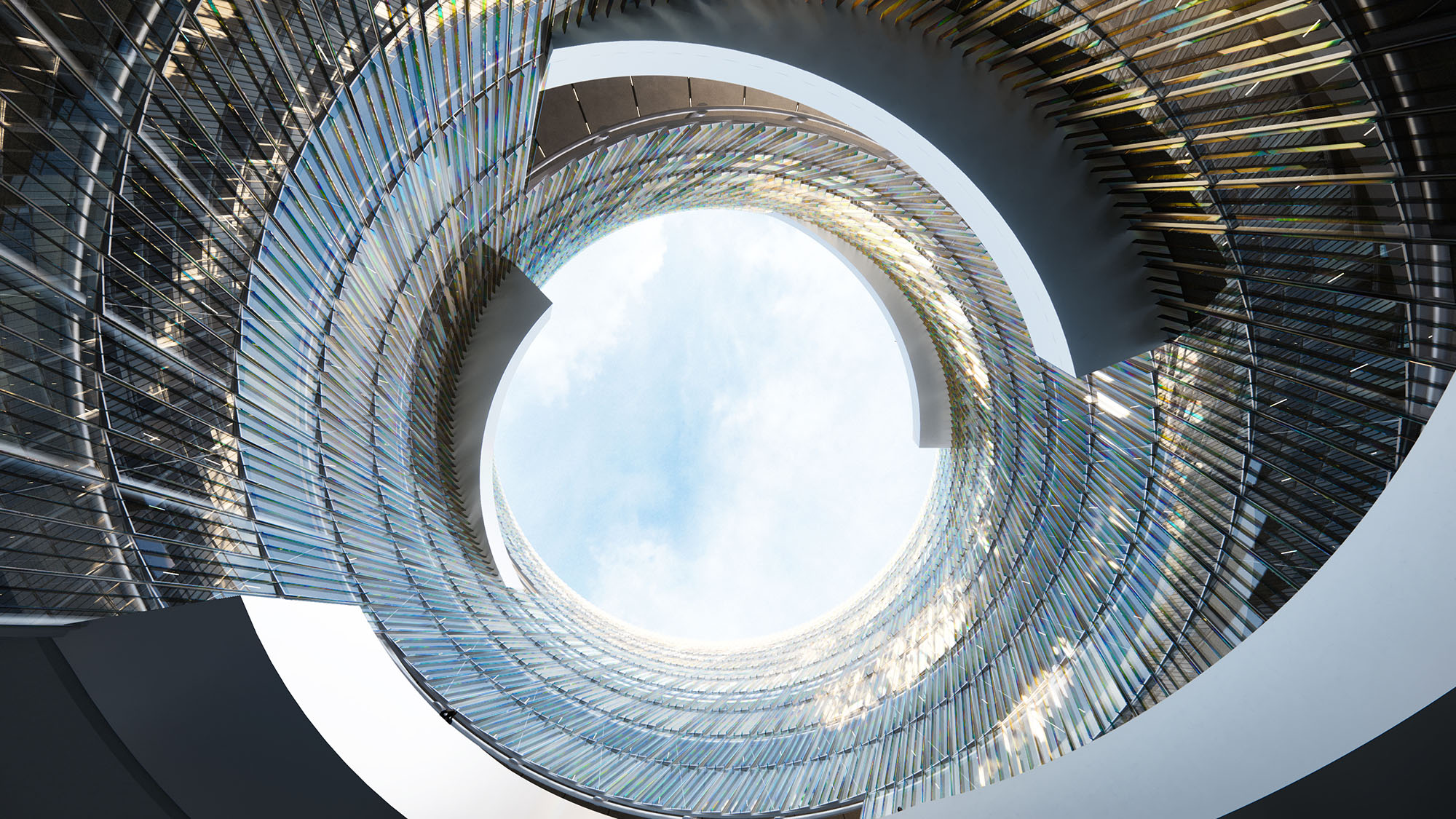
Image by Snøhetta
建築・景観・インテリアが融合する文化的タペストリー
ランドスケープデザインは、放射状に広がる建築言語の有機的な延長として構想されており、彫刻の展示や対話、屋外での交流を誘発する広々とした市民空間へと展開する。
これは単なる建物の付属物ではなく、建築・景観・インテリアが融合し、統一された文化的タペストリーを形成する空間的連続体である。この相乗効果により、〈北京美術館〉は物理的な境界を超越し、その存在感と共鳴を都市構造の奥深くまで投影する。過去・現在・未来を貫く時間の連続性を称えつつ、人・思想・体験を結集する場となるのである。
サステナビリティと今後のスケジュール
〈北京美術館〉は持続可能性を計画の中核に据えている。屋根には太陽光パネルが設置され、ランドスケープデザインには「スポンジシティ」の理念に沿った水管理戦略が組み込まれており、建築と生態系の調和的な均衡を実現している。
なお、本プロジェクトは2025年12月31日に着工しており、2029年の開館を予定している。
以下、スノヘッタのリリース(英文)です。
Snøhetta together with BIAD win the competition to design the Beijing Art Museum
Framed by Vision: Shaping the Evolving Urban LandscapeSnøhetta, in collaboration with Beijing Institute of Architectural Design (BIAD), has won the competition to design the Beijing Art Museum in Tongzhou District, Beijing. This landmark project will mark Snøhetta’s second major cultural institution in the Chinese capital, following the internationally acclaimed Beijing Library, which opened in 2023.
Spanning over 110,000 square meters, the new art museum will showcase a diverse range of art forms – from fine arts and intangible cultural heritage to fashion design and contemporary art. By bridging historical traditions and modern creativity, the art museum is poised to become a new beacon for Beijing’s thriving art and cultural scene. Beyond its role as a cultural hub, the art museum will also serve as a civic gathering place for the local community and a catalyst for the new urban development in the area.
The design proposal adopts the concept of “vision,” manifesting the dual ambition of the museum: to collect and gather, and to exhibit and reveal. It is envisioned not merely as a custodian and connoisseur of culture and knowledge, but as a catalyst that elevates the act of viewing into an aesthetic experience—transforming observation into art. This concept orchestrates a multidimensional dialogue, bridging the abstract and the tangible: connecting artists with audiences, history with the future, architecture with landscape, individuals with communities, and cities with the world. The museum becomes a living nexus where ideas intersect and perspectives converge, fostering a continuum of creativity and interpretation. The Beijing Art Museum is a crucible of pluralistic expression and perceptual diversity—a place where countless visions coexist and flourish. The idea of “vision” aspires to embrace this richness, like an ocean gathering the tributaries of thought and imagination.
Positioned above a metro line, the museum doubles as a transportation hub, linking visitors to the art world. Its sculptural massing radiates outwards from a central core, while lens-like, rippled facades dissolve boundaries between building and landscape, establishing a dynamic public realm that engages the local community. The design harmonizes programmatic complexity and the diverse user experiences, ensuring flexibility and inclusivity.
At the heart of the museum lies a kaleidoscopic atrium that acts as a gravitational pull, drawing various program elements inward. This circular space features semi-open pockets for exhibitions and social interaction across multiple levels, creating vertical connectivity and spatial continuity throughout the building. Galleries, storage, and support functions spiral around the atrium, extending into petal-like volumes that offer panoramic views of the surrounding context, juxtaposing the experience of looking out with a sense of being seen.
The landscape design, conceived as an organic extension of the building’s radiating architectural language, unfolds into generous civic realms that invite sculptures, dialogues and outdoor engagement. It is not merely an adjunct but a spatial continuum—where architecture, landscape, and interior coalesce into a unified cultural tapestry. Through this synergy, the Beijing Art Museum transcends its physical boundaries, projecting its presence and resonance into the urban fabric and beyond. It becomes a place of convergence—connecting people, ideas, and experiences—while celebrating the continuum of time across past, present, and future.
The Beijing Art Museum integrates sustainability at its core, featuring photovoltaic panels on the roof and a resilient landscape design that incorporates water management strategies aligned with sponge city principles—creating a harmonious balance between architecture and ecology.
The Beijing Art Museum broke ground on December 31, 2025 and is estimated to open in 2029.
Beijing Art Museum
Year: 2025 –
Status: ongoing
Location: Beijing
Size: 118,861 sqm
Client: Beijing Fine Art Academy
Construction Management: Beijing Investment Group Co.,Ltd.
Concept and Schematic Design: Snøhetta, BIAD
Construction Design: BIAD
Scope: Architecture, Landscape Architecture, Interior Architecture
Typology: Museum & Gallery, Public Space, Destination, Education & Research
Images: Proloog, Snøhetta
スノヘッタ 公式サイト
https://www.snohetta.com
【購読無料】空間デザインの今がわかるメールマガジン TECTURE NEWS LETTER
RECOMMENDED ARTICLE