CULTURE
©︎ CreatAR Images
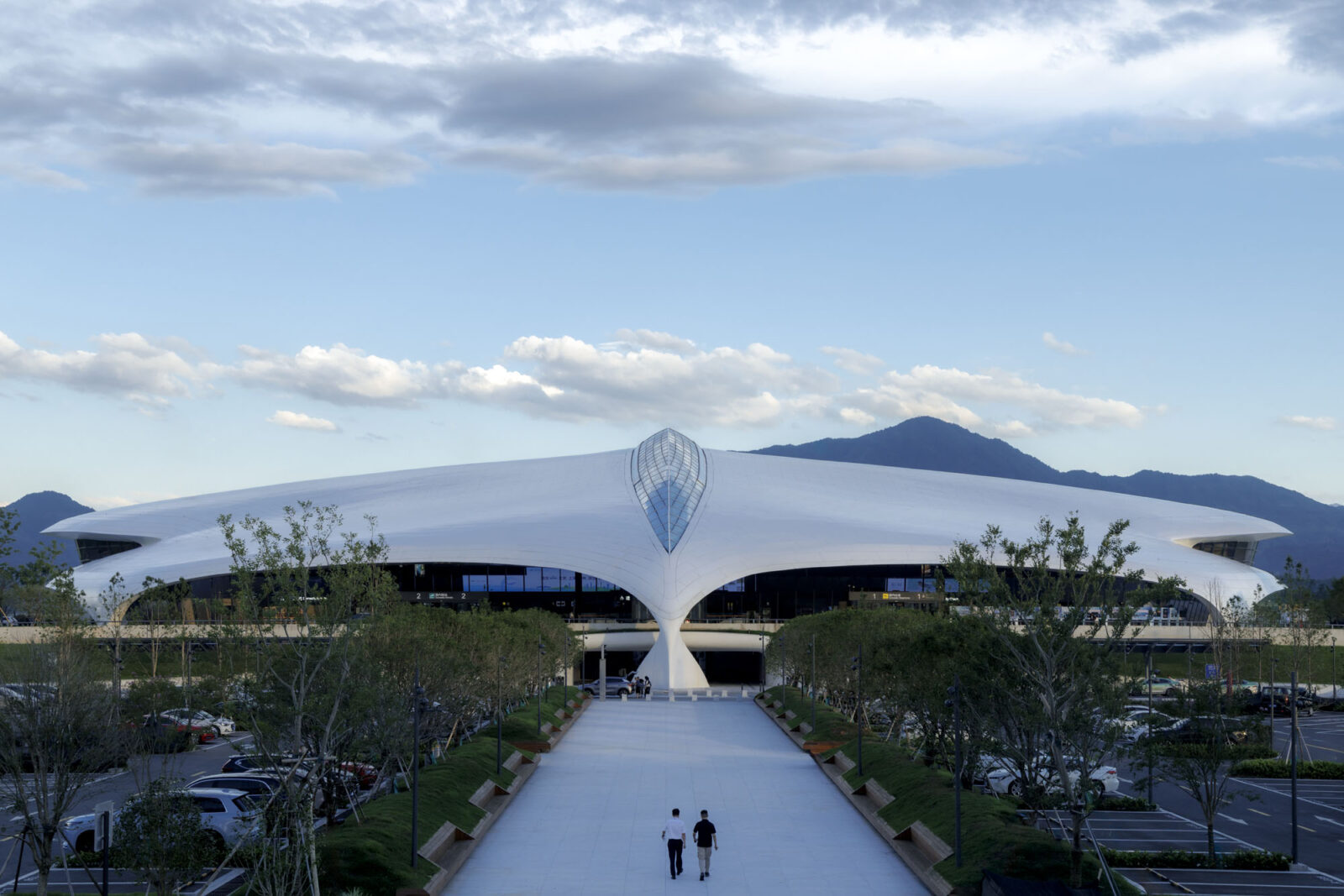
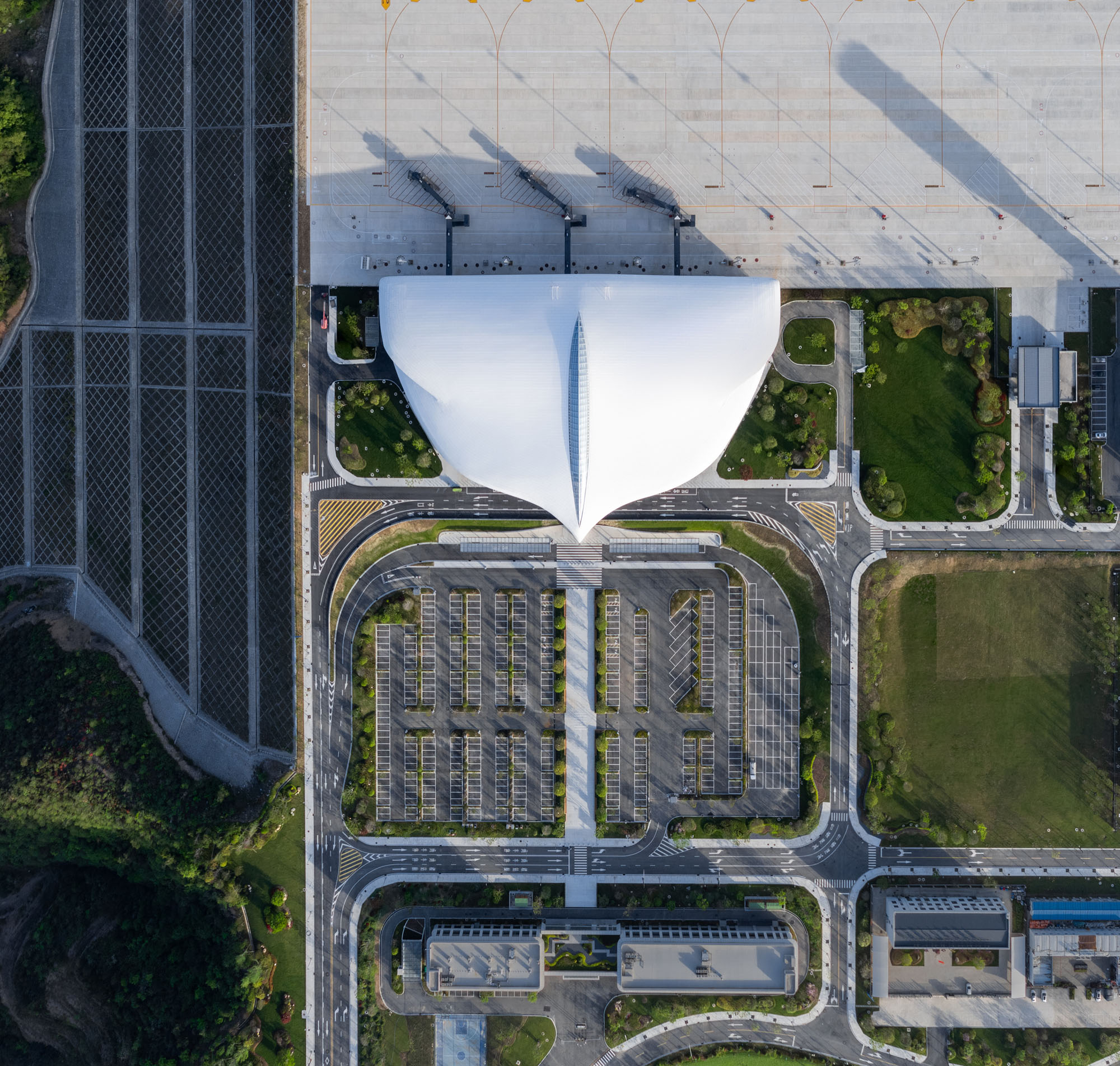
中国・浙江省の山岳地帯にMADアーキテクツ(MAD Architects)が設計した新たな交通結節点〈麗水空港(Lishui Airport)〉が正式に運用を開始しました。
17年もの歳月と大規模な造成工事を経て完成した本施設は、高低差100mに及ぶ複雑な地形に対し、建築を「インフラ」としてではなく、稜線に静かに佇む「白い鳥」のような風景の一部として定着させています。
注目ポイント
- 極限の地形への応答とランドスケープの連続性
- 「1.5階建て」による断面計画の効率化
- 環境と呼応する銀白色のアルミシェルと傘型架構デザイン
(以下、MADアーキテクツから提供されたプレスキットのテキストの抄訳)
©︎ blackstation
地域悲願の航空ネットワーク直結
MADアーキテクツが設計を手がけた〈麗水空港〉が、正式に運用を開始した。これにより、同地域は中国国家航空ネットワークと初めて直接結ばれることとなる。2008年の着工から17年に及ぶ計画・建設期間を経て完成したこのプロジェクトは、浙江省南西部の山岳地帯に新たな歴史の幕を開ける存在である。
©︎ CreatAR Images
極限の地形に挑む大規模造成
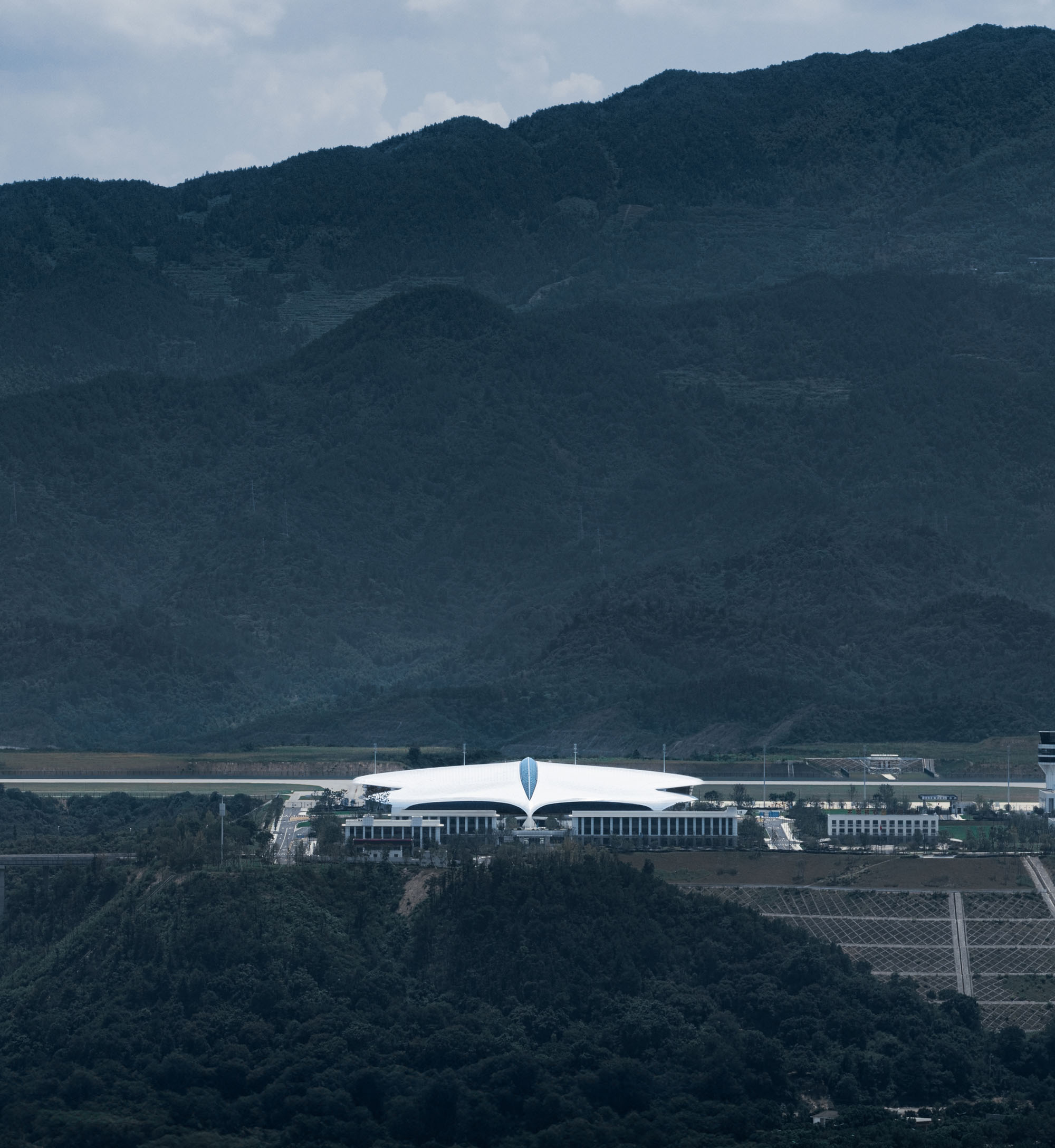
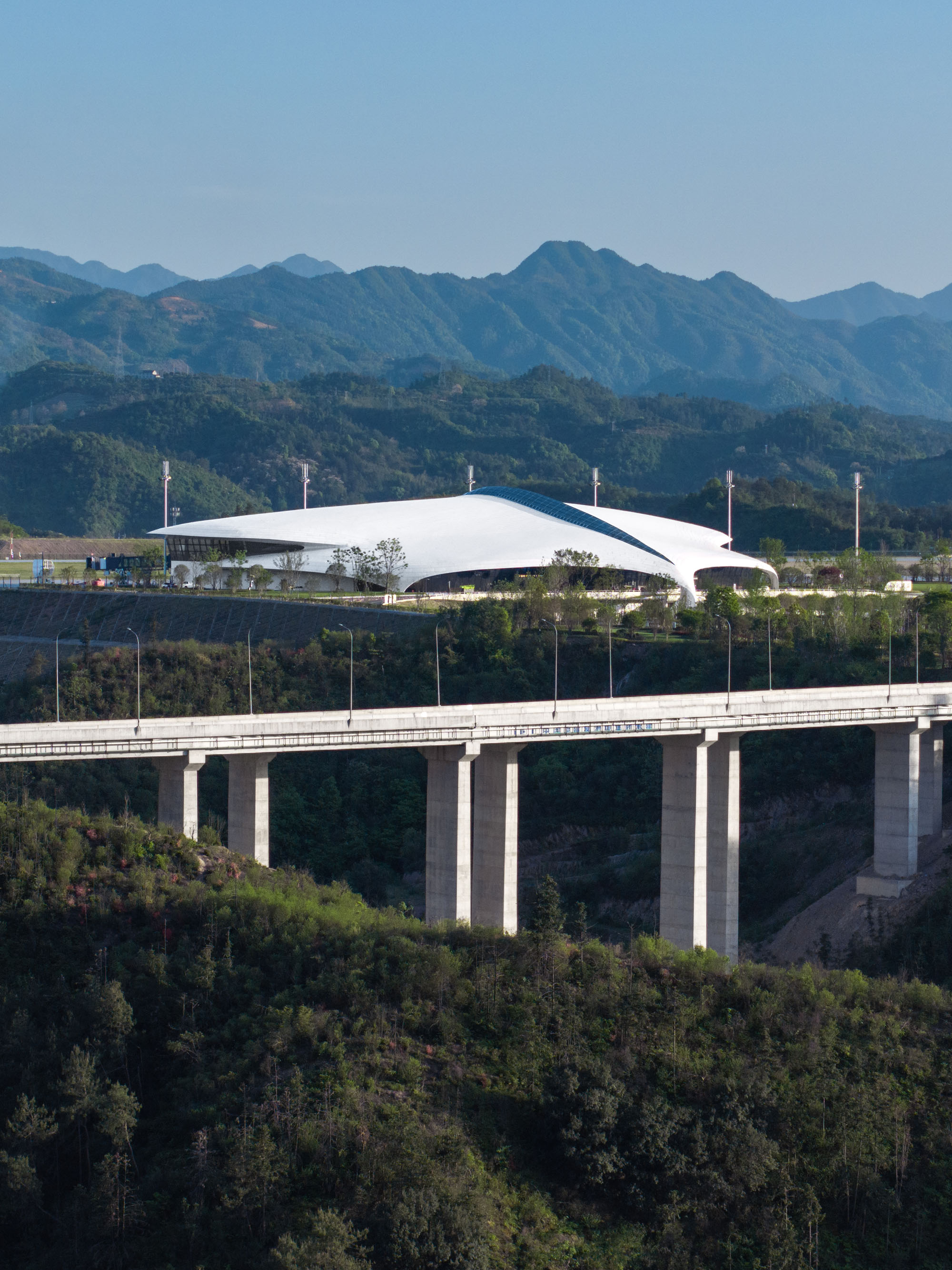
麗水中心部から南西約15kmに位置する同空港は、大規模な土地造成によって形成された低山と丘陵の谷間に建つ。建設にあたっては膨大な盛土・切土工事が必要となり、一部区域ではその高低差が約100mに達した。こうした背景から、麗水空港は華東地域において最も地形的に複雑な空港プロジェクトの1つに数えられている。
©︎ Ding Junhao
施設概要と運用能力
空港の敷地面積は2,267ヘクタールに及ぶ。ターミナルビルの延床面積は約12,000m²で、8機の駐機ベイを備えている。初期段階の運用能力としては、年間100万人の旅客数と4,000トンの貨物取扱量を見込んでいる。
©︎ CreatAR Images
インフラを超えた「市民の場」への転換
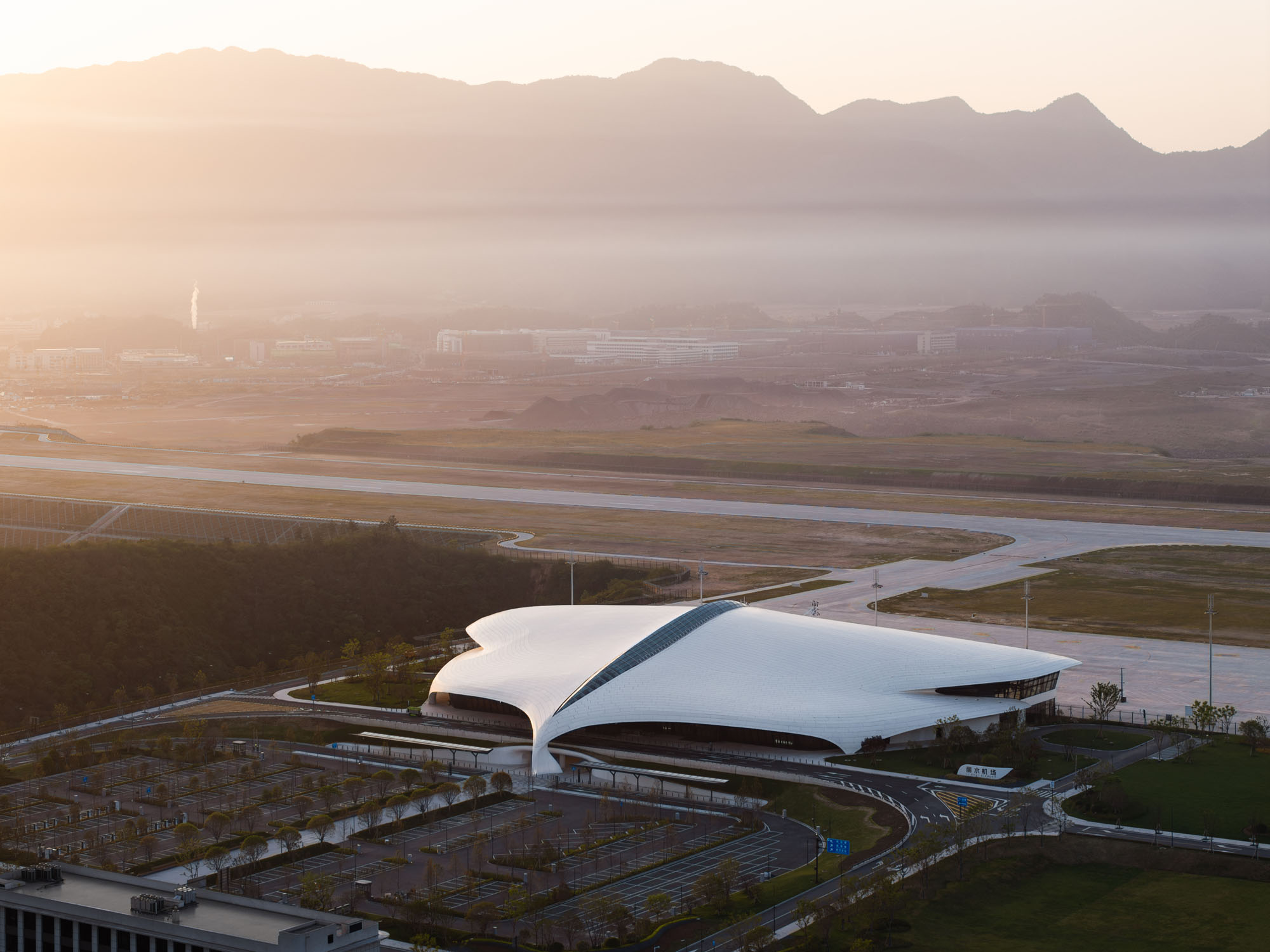
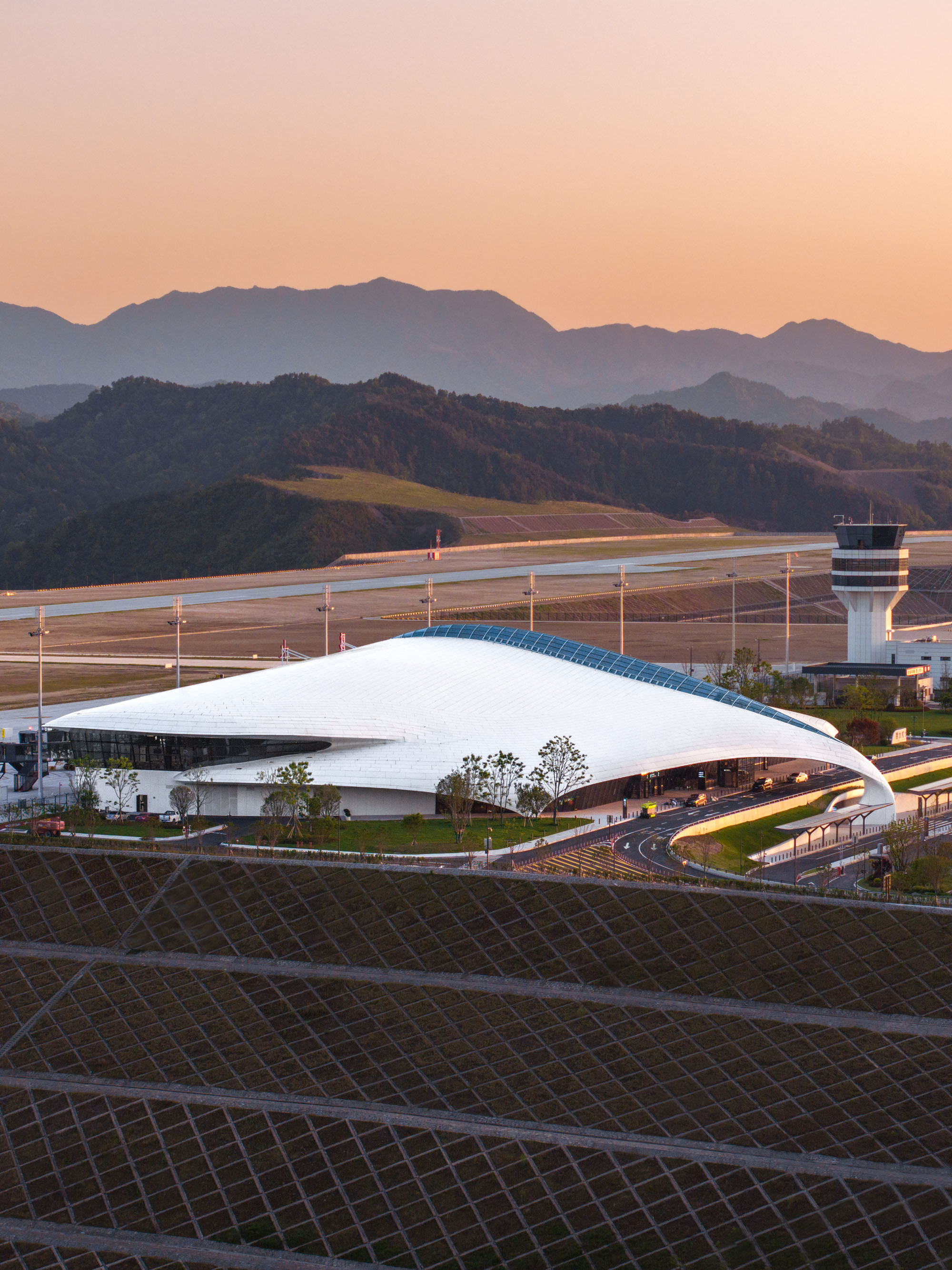
従来、空港は純粋に機能的なインフラとして捉えられ、日常的な都市生活から切り離される傾向にあった。しかし〈麗水空港〉においてMADは、単なる交通の要衝にとどまらない新たなモデルを提案している。それは、市民空間であり、生態学的なランドマークであり、さらには旅行者に静謐なひとときを提供する「心理的移行の場」としての空港である。
©︎ Ding Junhao
自然と共鳴する建築形態
建築コンセプトは、周囲の景観から直接的な着想を得ている。ターミナルは敷地の自然な起伏に沿うように配置され、緩やかな傾斜によって地形に溶け込む。柔らかく連続するボリュームと流動的な幾何学形状により、建物は山々と森の間に静かに佇む白い鳥のような外観を呈している。
©︎ blackstation
風景の一部となる屋根のデザイン
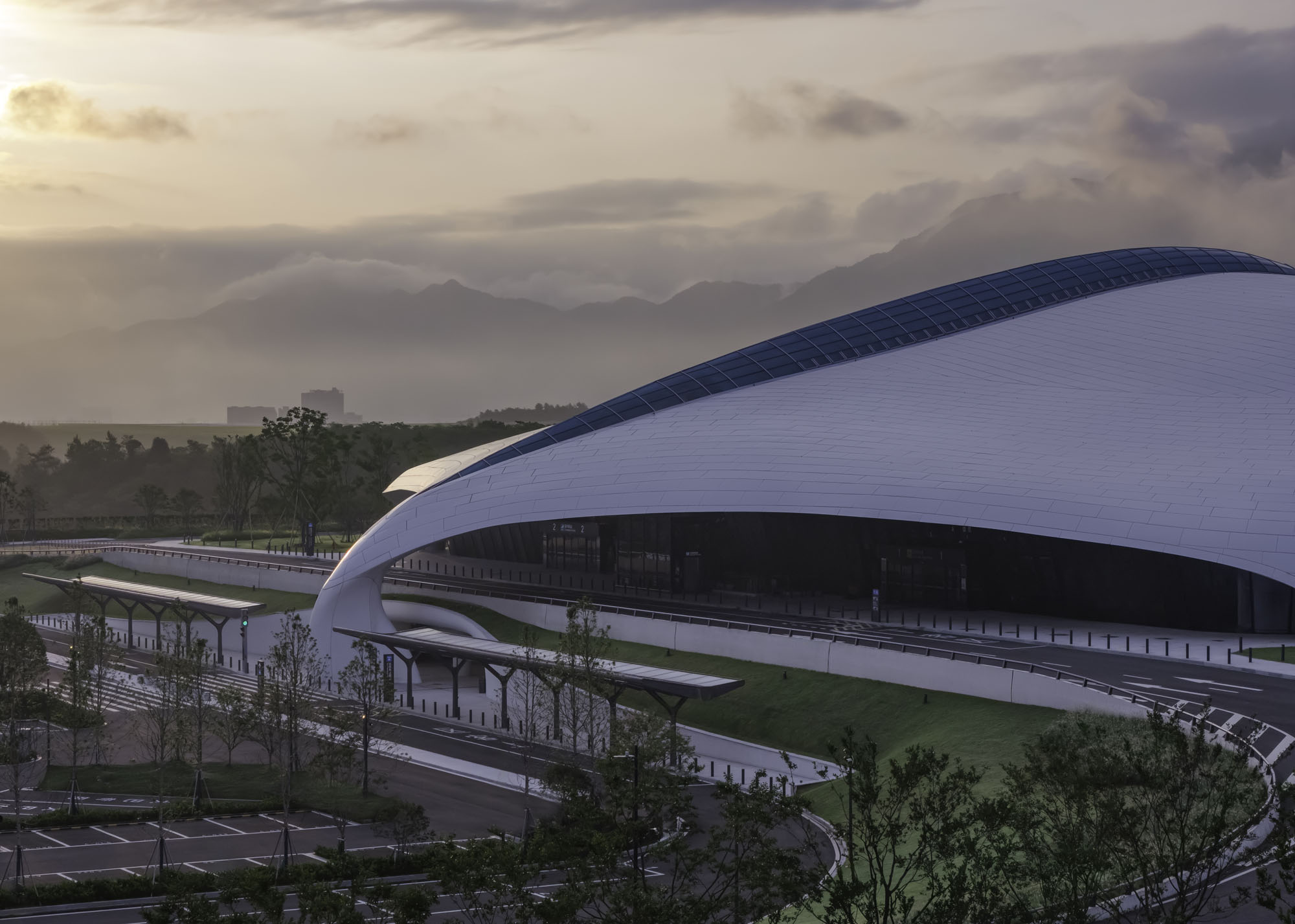
ターミナルの二重構造の屋根は銀白色のアルミニウムパネルで覆われ、光や天候の変化に応答しながら、コンパクトかつ表現力豊かなシルエットを描き出す。その屋根のラインは、霧に包まれた丘や飛翔する鳥のイメージを喚起し、建築を孤立した物体としてではなく、広大な景観の一部として認識させている。
©︎ Arch Exist
コンパクトな空間と自然との対話
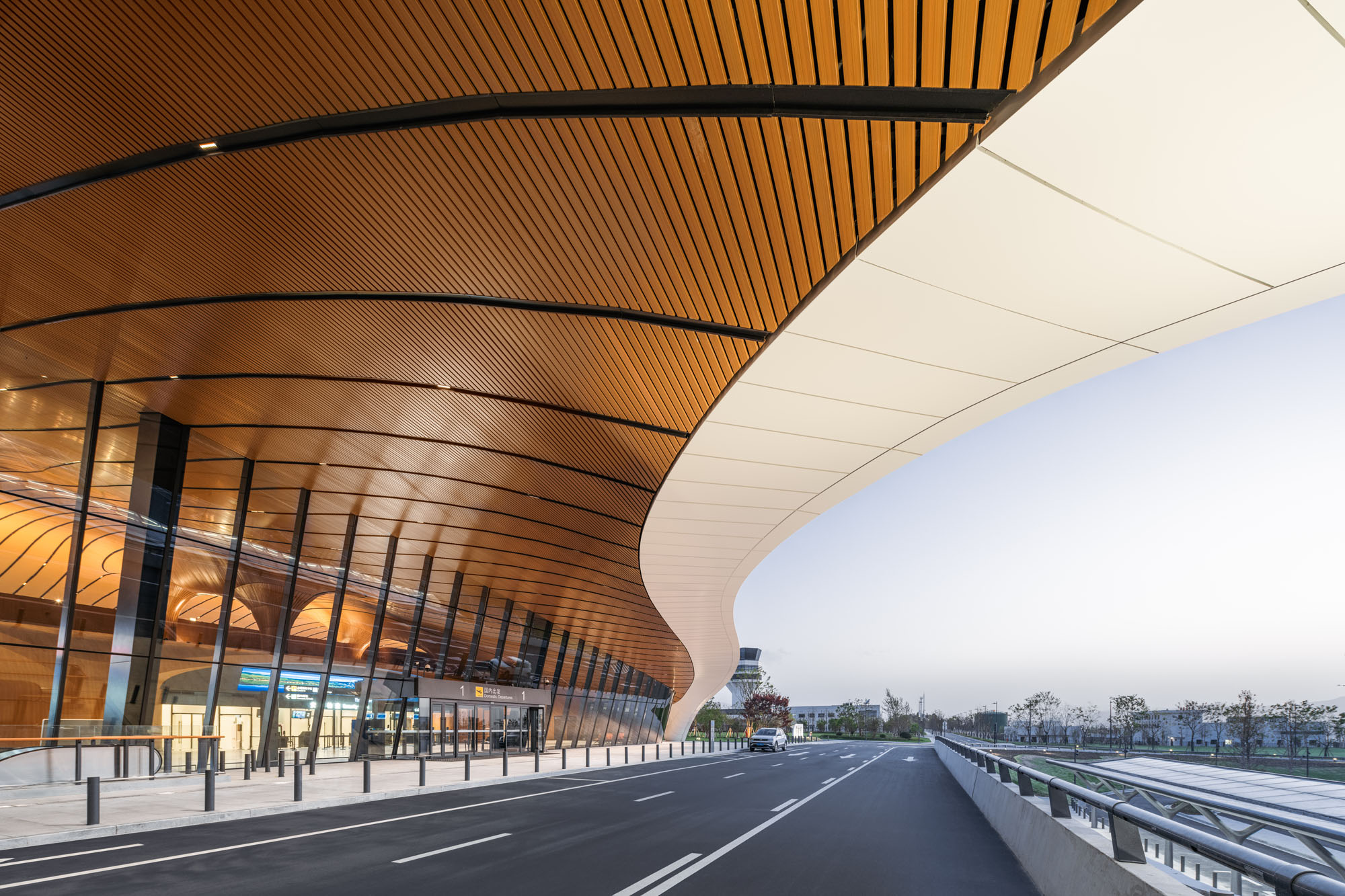
「温かみのある色調と自然な質感の素材を用い、明るく開放的な内部空間を創出した。1.5階建てのレイアウトを採用することで、空港としてのコンパクトさを維持しつつ、日常の快適性を支え、自然と対話できる空間を実現している。」
MADアーキテクツ創設者
マー・ヤンソン
©︎ CreatAR Images
光と素材が織りなす内部空間
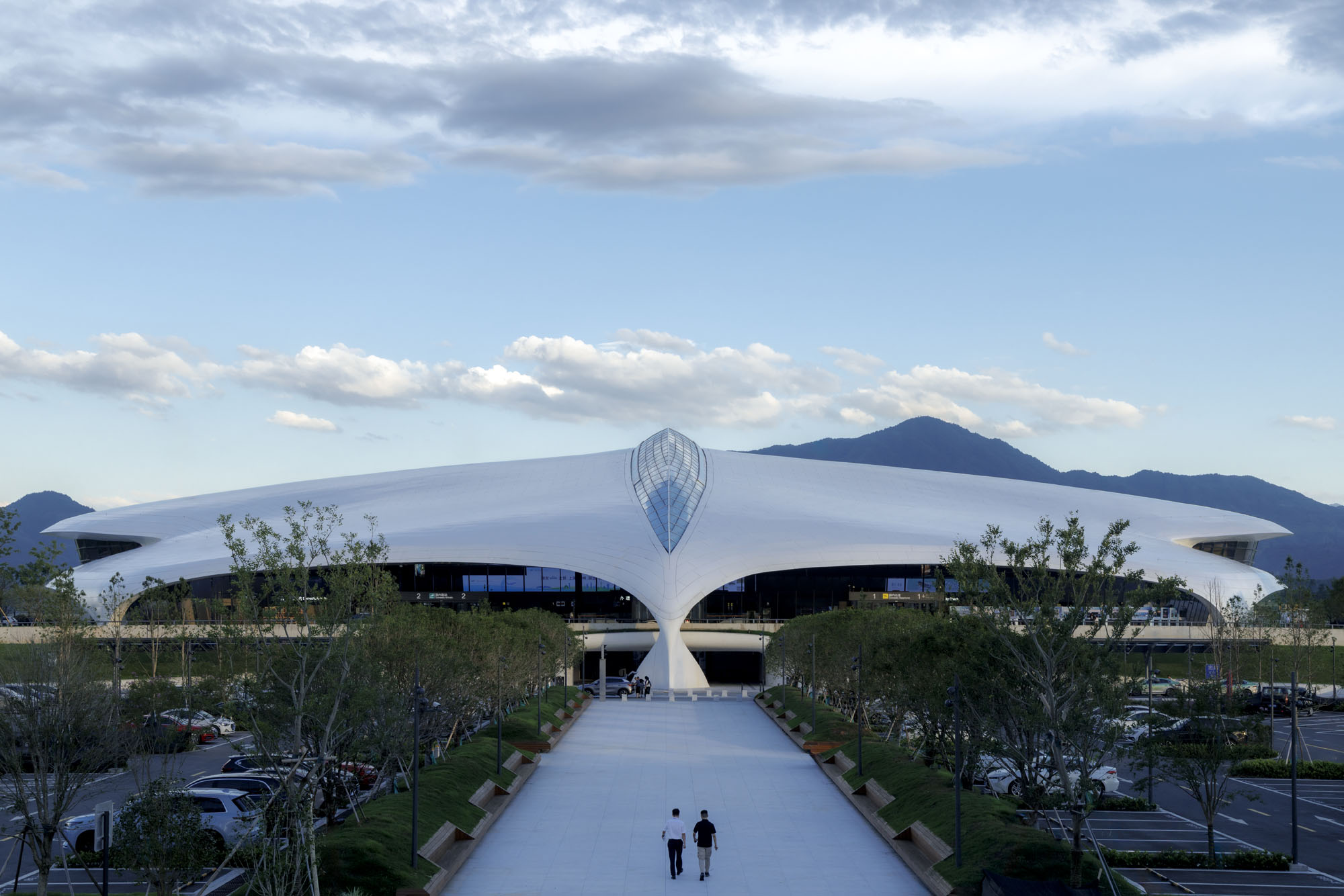
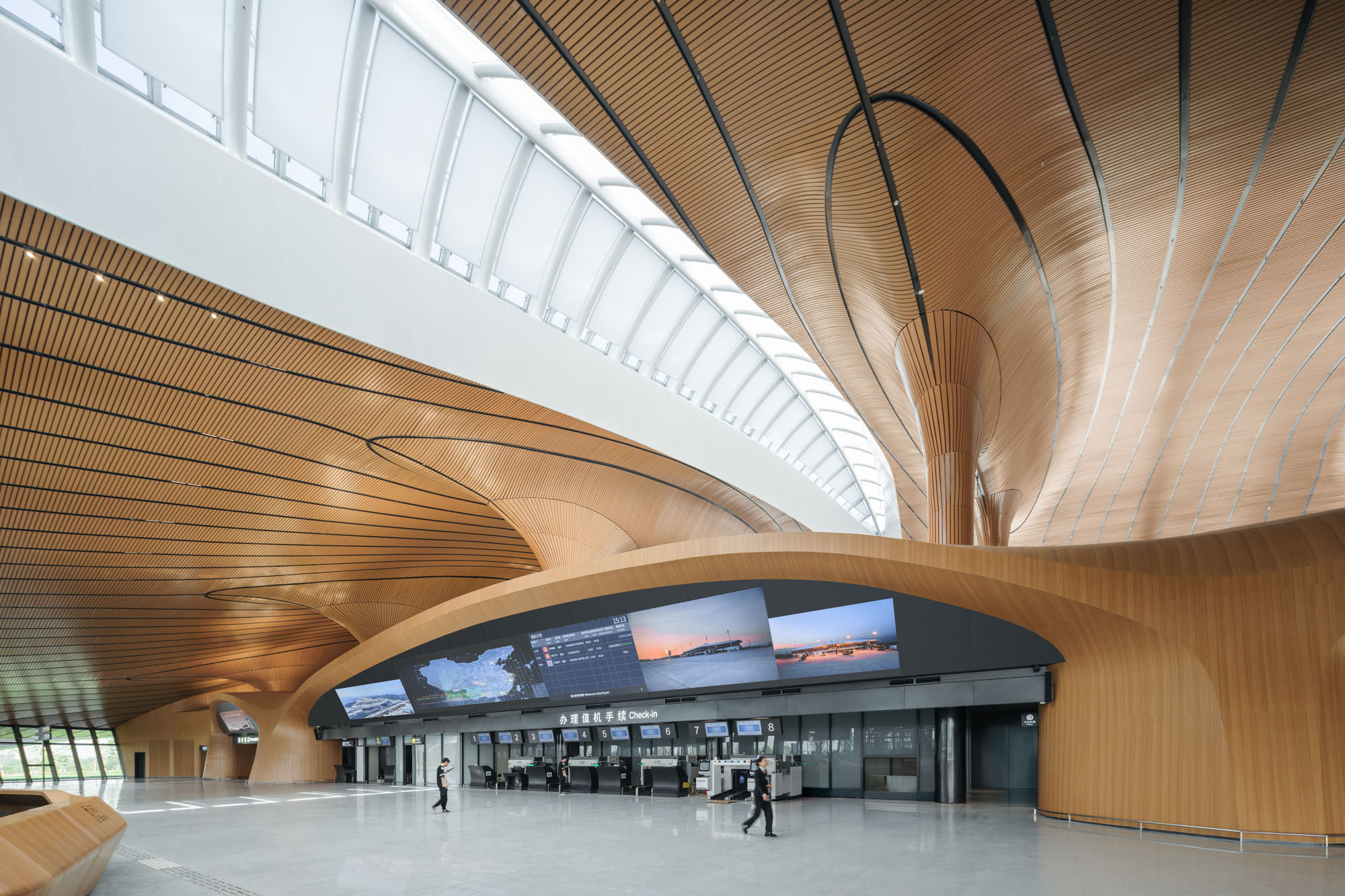
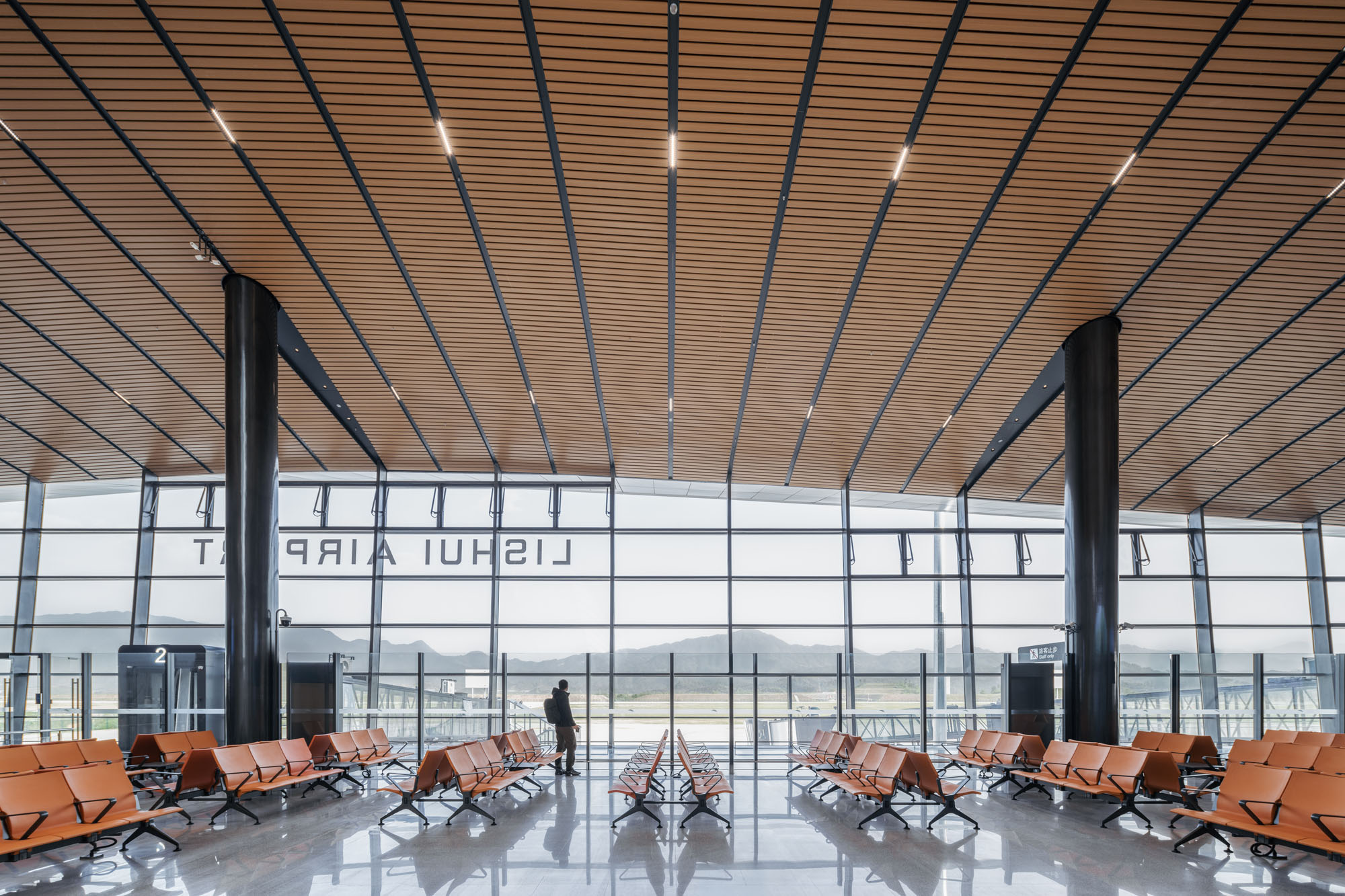
内部では、14本の傘型構造柱が軽量屋根を支え、木目調のグリルが空間に温もりと視覚的なリズムをもたらしている。屋根の頂部には紡錘形の天窓が設けられ、ターミナルの奥深くまで自然光を導き、刻々と変化する光が空間に生命を吹き込んでいる。
環境性能と静穏な待合環境
透明なカーテンウォールは内外の境界を曖昧にし、周囲の山々を額縁のように切り取る。1階ロビーの天井高は4.5mから13mへとダイナミックに変化し、大規模交通施設特有の過剰なスケール感を排しながら、エネルギー消費を抑えた精緻な空間体験を生み出した。また、内装パネルの間に組み込まれた細長い音響スリットが騒音を吸収し、静かで快適な待合環境を提供している。
©︎ CreatAR Images
効率的な動線設計
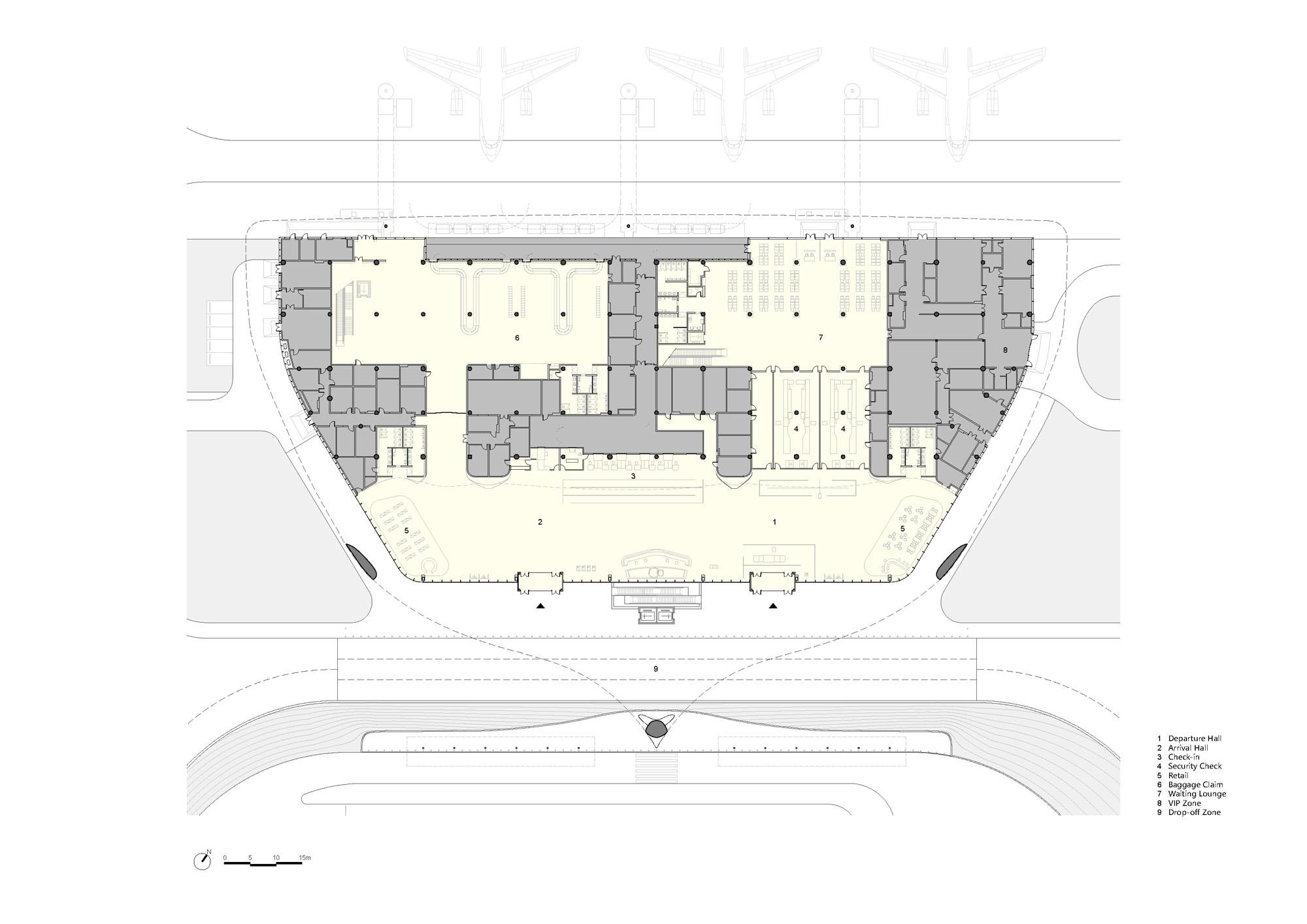
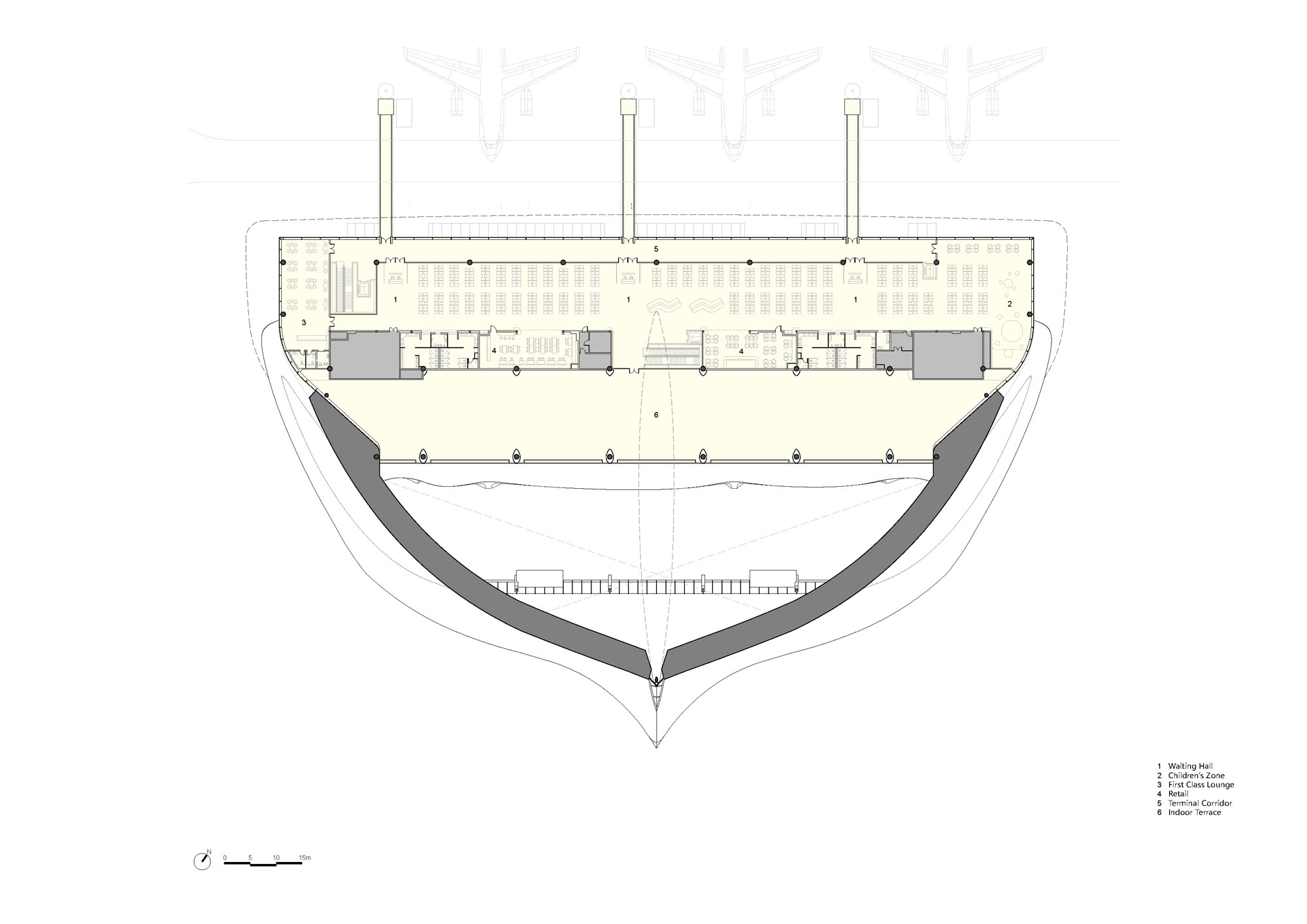
ターミナルは1.5階建ての断面戦略に基づいて構成されている。地上階の到着エリアと上層階の出発ラウンジを連結する2層吹き抜けのエントランスホールがその中核をなす。このコンパクトな垂直動線により、乗客の流れを効率化しながら、階層を跨いだ視覚的な連続性を確保している。
地形を活かしたアプローチ
ターミナルの地下には、自然の地形に沿った沈床式の駐車場が配置されている。建物下を走る緑豊かな中央プロムナードは、乗客を出発ロビーへと直感的に誘導する。山岳地帯という制約に対し、環境を分断するのではなく、建築的な連続性によって解決を図った設計となっている。
©︎ CreatAR Images
将来の拡張性と展望
本設計は将来の需要増も見据えている。長期マスタープランでは、旅客処理能力は2030年までに180万人、2050年までに500万人に達すると予測されており、国際線ターミナルを増設するための空間も確保されている。
都市の玄関口としての役割
2025年末までに、〈麗水空港〉は複数の国内線を運営し、主要な経済拠点や観光地域とのネットワークを確立する予定である。同空港は、都市を支えるインフラのゲートウェイであると同時に、市民を迎え入れる玄関口としての役割を担っていく。
1F plan
2F plan
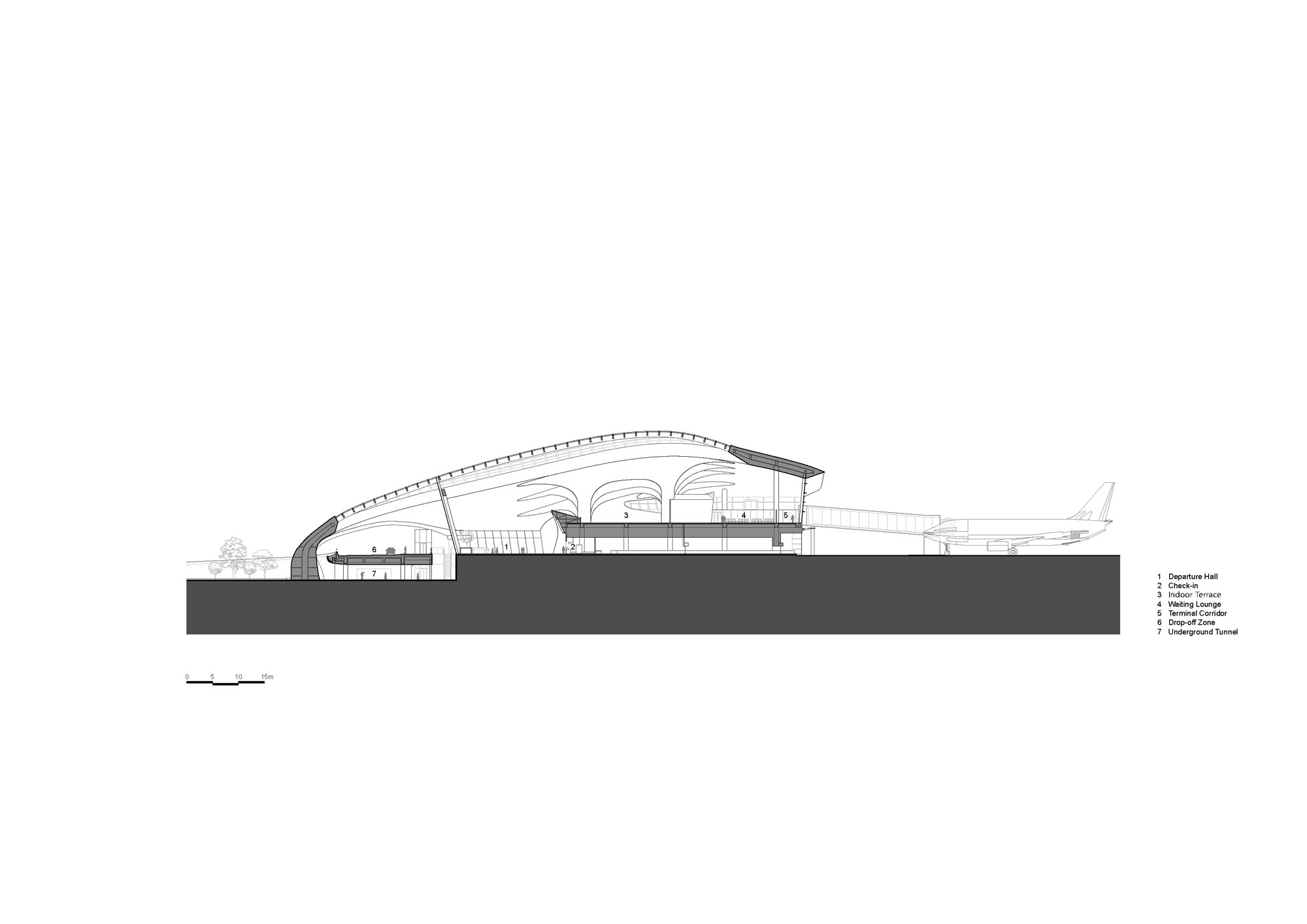
Section
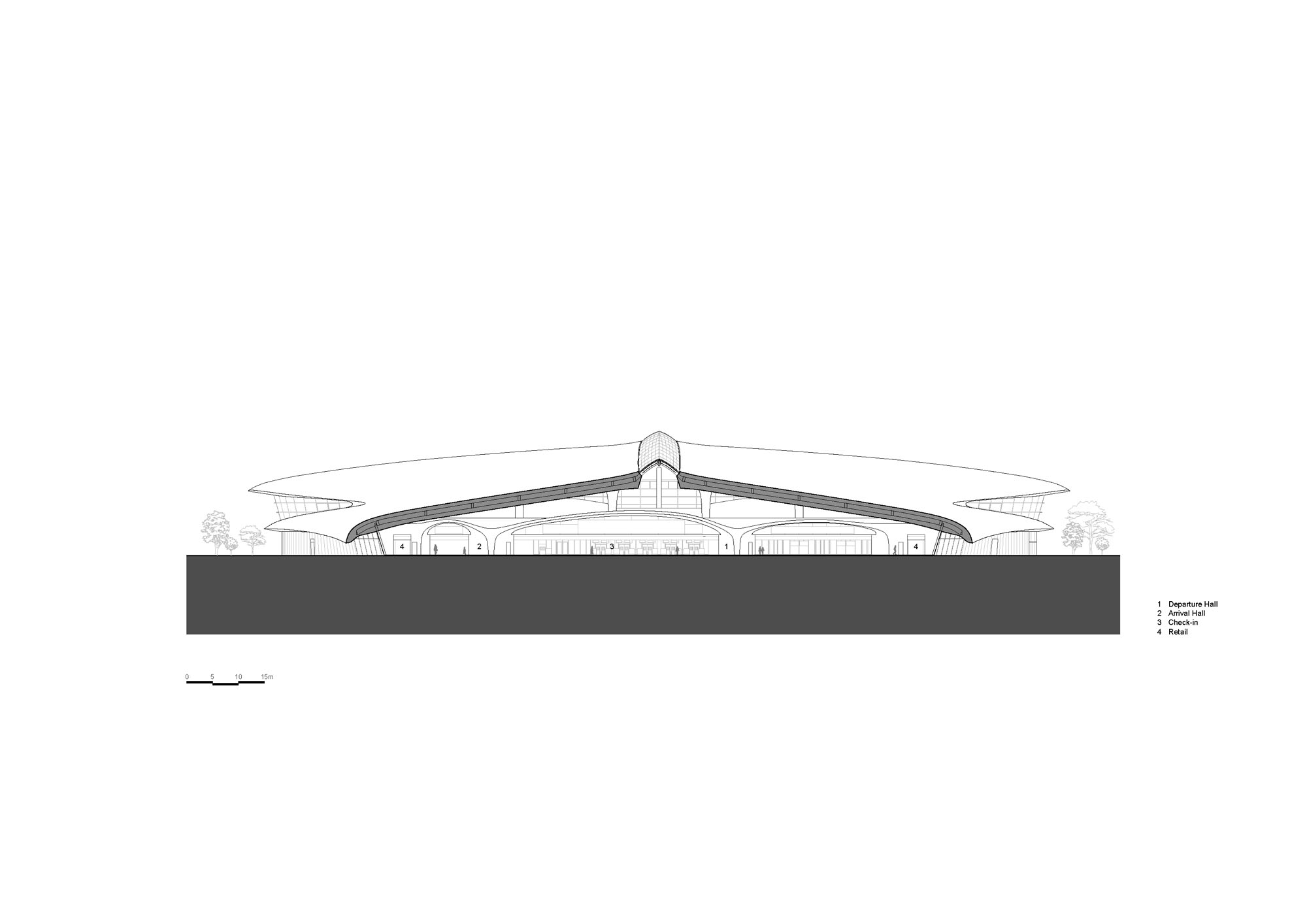
Section
以下、MADアーキテクツのリリース(英文)です。
Mountain Airport | MAD’s Lishui Airport in Zhejiang Officially Opens
The Lishui Airport in Zhejiang Province, designed by MAD, has officially begun operations, marking the regions first direct connection to China’s national aviation network. Initiated in 2008 and completed after 17 years of planning and construction, the project signals a new chapter for the mountainous of southwestern Zhejiang.
Located about 15 kilometers southwest of Lishui’s center, the airport sits within a low mountain and foothill valley shaped through extensive land reclamation. The construction required significant earthworks with cut-and-fill differences reaching nearly 100 meters in certain areas. As a result, Lishui Airport ranks amongst the most topographically complex airport projects in East China.
The airport site spans 2,267 hectares. The terminal building measures approximately 12,000 square meters and includes eight aircraft parking bays. In its initial phase, the airport is designed to handle up to one million passengers annually, alongside a cargo throughput capacity of 4,000 tons.
Traditionally conceived as purely functional infrastructure, airports are often detached from daily urban life. With Lishui Airport, MAD proposes an alternative model: a transportation hub that also operates as a civic space, an ecological landmark, and a place of psychological transition, offering travelers a moment of calm within the movement of travel.
The architectural concept draws directly from the surrounding landscape. The terminal follows the natural contours of the site, its gently sloping from integrating into the terrain. Soft, continuous volumes and fluid geometries give the building the appearance of a white bird resting quietly among the mountains and forests.
The terminal’s double-layered roof is clad in silver-white aluminum panels, creating a compact yet expressive silhouette that responds to changing light and weather. The roofline evokes the imagery of mist-covered hills and birds in flight, allowing the architecture to register as part of the broader landscape rather than an isolated object.
Ma Yansong explains: “We used materials with warm tones and natural textures to create a bright and airy interior. By adopting a one and a half story layout, the airport remains compact, while supporting daily comfort and engaging in a dialogue with nature.”
Fourteen umbrella-shaped structural columns support the lightweight roof, while wood-toned interior grilles introduce warmth and visual rhythm. At the roof’s apex, a spindle-shaped skylight brings daylight deep into the terminal, animating the interior with changing natural light.
Transparent curtain walls dissolve the boundary between inside and outside, framing views of the surrounding mountains. The first-floor lobby varies in height, ranging from approximately 4.5 meters to 13 meters, creating a carefully calibrated spatial experience that avoids the excess scale typical of large transport halls while reducing energy consumption. Narrow acoustic slots integrated between interior panels help absorb noise, contributing to a quieter and more comfortable waiting environment.
The terminal is organized around a one-and-a-half-story sectional strategy, anchored by a double height entrance hall that links the ground floor arrival spaces with the upper-level departure lounge. This compact vertical organization streamlines passenger circulation while maintaining visual continuity across levels.
Below the terminal, a sunken parking structure follows the natural terrain. A landscaped central promenade runs beneath the building, guiding passengers intuitively towards the departure hall and resolving the challenges posed by the mountainous site through architectural continuity rather than separation.
The design also anticipates future growth. Under the long-term master plan, passenger capacity is projected to reach 1.8 million by 2030 and 5 million by 2050, with provisions for the addition of an international terminal.
By the end of 2025, Lishui Airport will operate multiple domestic destinations, establishing connections to major economic centers and key tourist regions, while positioning the airport as both an infrastructure gateway and a civic threshold to the city.
Lishui Airport
Lishui, China
2018 – 2025Site Area: 2,267 hectares
Building Area: 12,100 sqm
Building Height: 23.95 mPrincipal Partners in Charge: Ma Yansong, Dang Qun, Yosuke Hayano
Associate Partners in Charge: Liu Huiying, Kin Li
Design Team: Sun Shouquan, Zhang Xiaomei, Peng Kaiyu, Lei Lei, Yang Xuebing, Sun Mingze, Luo Yiyun, Yin Jianfeng, Punnin Sukkasem, Zhu Yuhao, Yao RanClient: Lishui Airport Construction Headquarters
Architectural Design: MAD
Executive Architects: CAAC NEW ERA AIRPORT DESIGN INSTITUTE COMPANY LIMITED
Interior Design: MAD, Shanghai Xian Dai Architectural Decoration & Landscape Design Research Institute CO., Ltd
Façade Consultant: RFR Shanghai
Landscape Consultant: Z’ scape Landscape Planning and Design, Huadong Engineering Corporation Limited
Architecture and Landscape Lighting Consultant: Ning field lighting design Corp., Ltd.
Interior Lighting Consultant: Shanghai Xian Dai Architectural Decoration & Landscape Design Research Institute CO., Ltd
Construction: Beijing Construction Engineering Group
Photography: Ding Junhao, CreatAR Images, blackstation, Arch Exist
Video: blackstation
MADアーキテクツ 公式サイト
https://www.i-mad.com
【購読無料】空間デザインの今がわかるメールマガジン TECTURE NEWS LETTER
RECOMMENDED ARTICLE