CULTURE
©︎ Stijn Bollaert
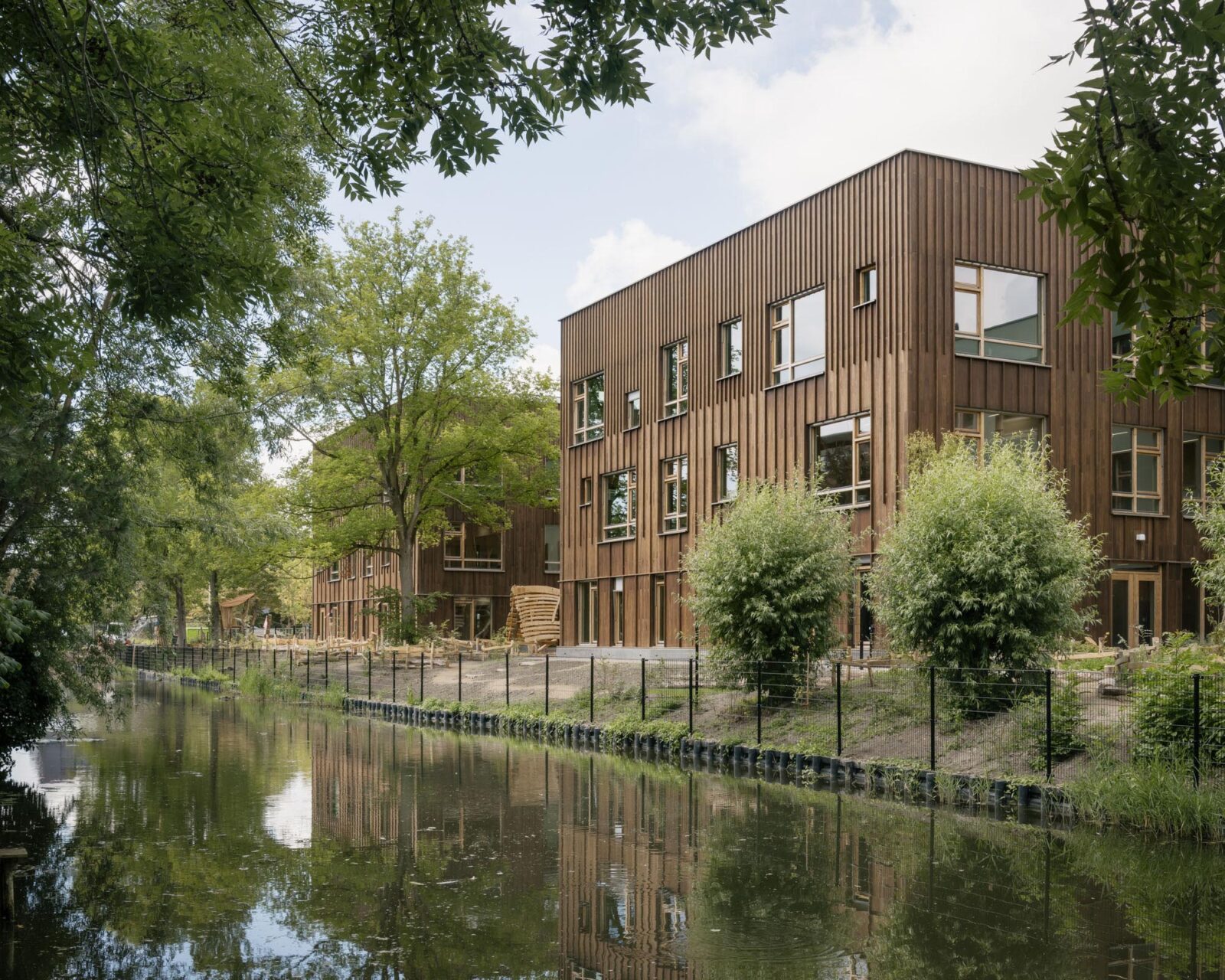
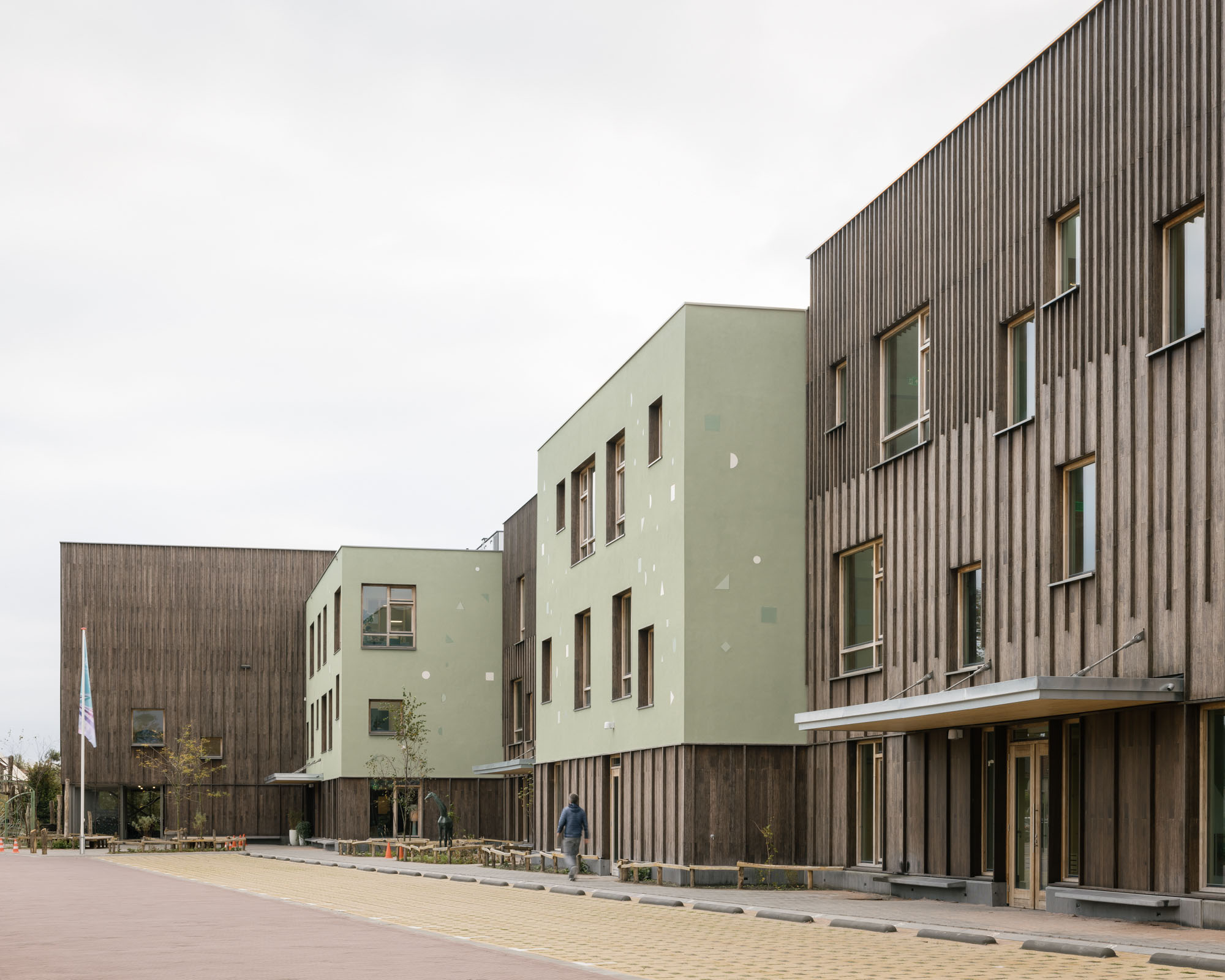
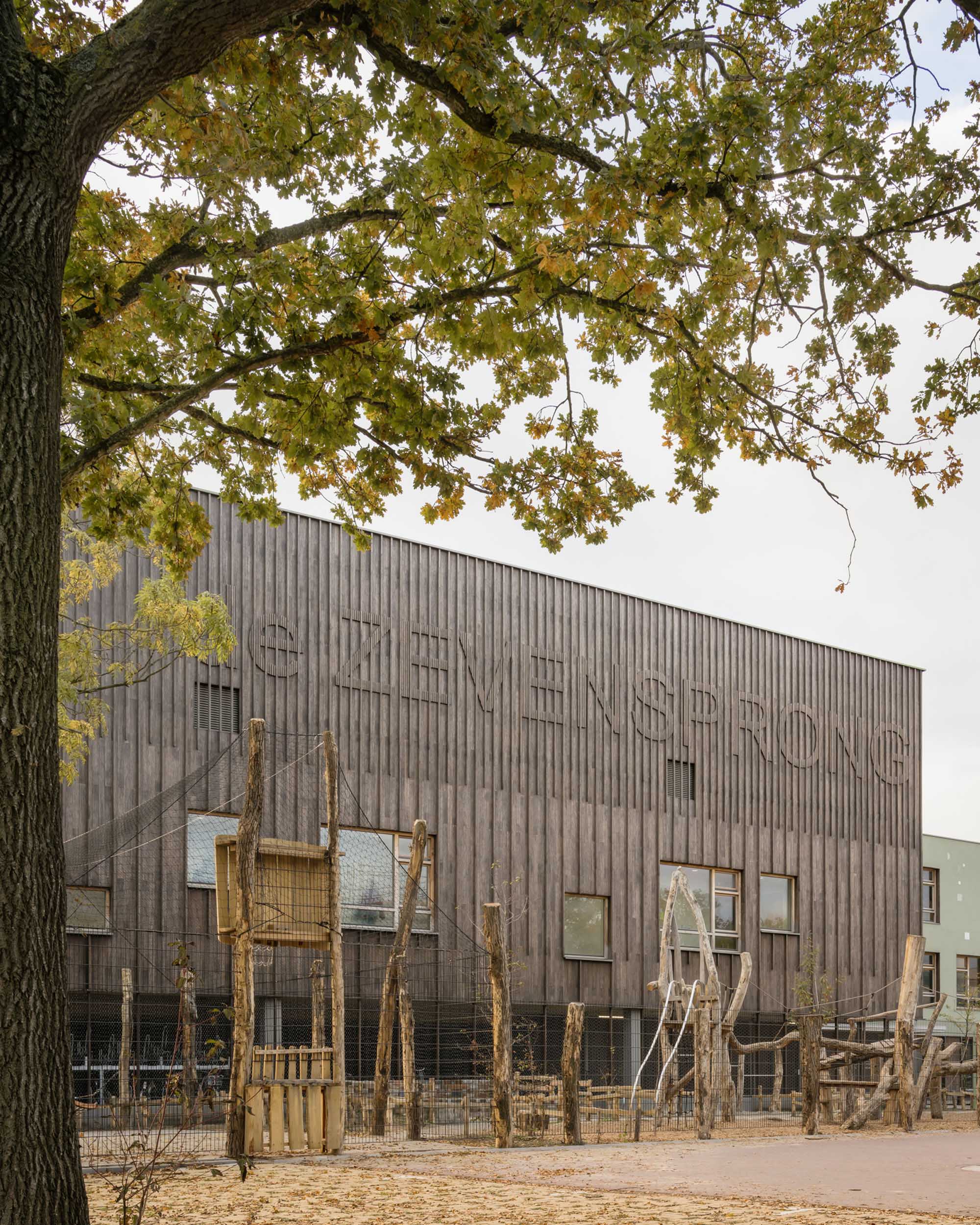
オランダ・ホールンに建つ〈デ・ゼーフェンスプロング(de Zevensprong)〉は、分散していた5つの学校施設を集約した、特別支援教育やケアなど多岐にわたる機能を備えた統合型児童・専門センターです。
オランダ最大級の木造小学校であり、アムステルダムを拠点とする建築設計事務所 KRFTが設計しました。
注目ポイント
- 5つの「パビリオン」に分節した、子供の目線に立ったヒューマンスケール
- 感覚過敏に配慮した、柔らかな色彩計画と自然素材の採用
- プレファブリケーションやバイオベース素材を駆使した循環型建築
(以下、KRFTから提供されたプレスキットのテキストの抄訳)
©︎ Stijn Bollaert
初等教育の新たな建築的基準を打ち立てる〈デ・ゼーフェンスプロング〉
2月9日、オランダ・ホールンに新設された統合型児童・専門センター〈デ・ゼーフェンスプロング〉が開校した。アムステルダムを拠点とする建築スタジオKRFTが設計を手がけたこの施設は、特別支援(初等)教育を行っていた5つの旧拠点を統合し、学習・ケア・保育・スポーツのための持続可能な環境を実現したものである。ここでは子供たちが居心地良く自由に成長でき、専門家たちが「子供第一(the child comes first)」という共通のビジョンのもと協働する場となっている。
©︎ Stijn Bollaert
©︎ Stijn Bollaert
子供の目線に立ったヒューマンスケールな建築
本プロジェクトは、アムステルダムの研究機関スティヒティング・メヴロウ・メイヤー(Stichting Mevrouw Meijer)が主導した設計調査に端を発しており、複数の建築家に対して、複雑な要件に対するビジョンの構築が求められた。
多様な学習困難を抱える子供たちを受け入れるにあたり、分散していた5つの学校施設には、継続性と個別対応、そして人間的なスケールを提供できる単一の場所が必要であった。
©︎ Stijn Bollaert
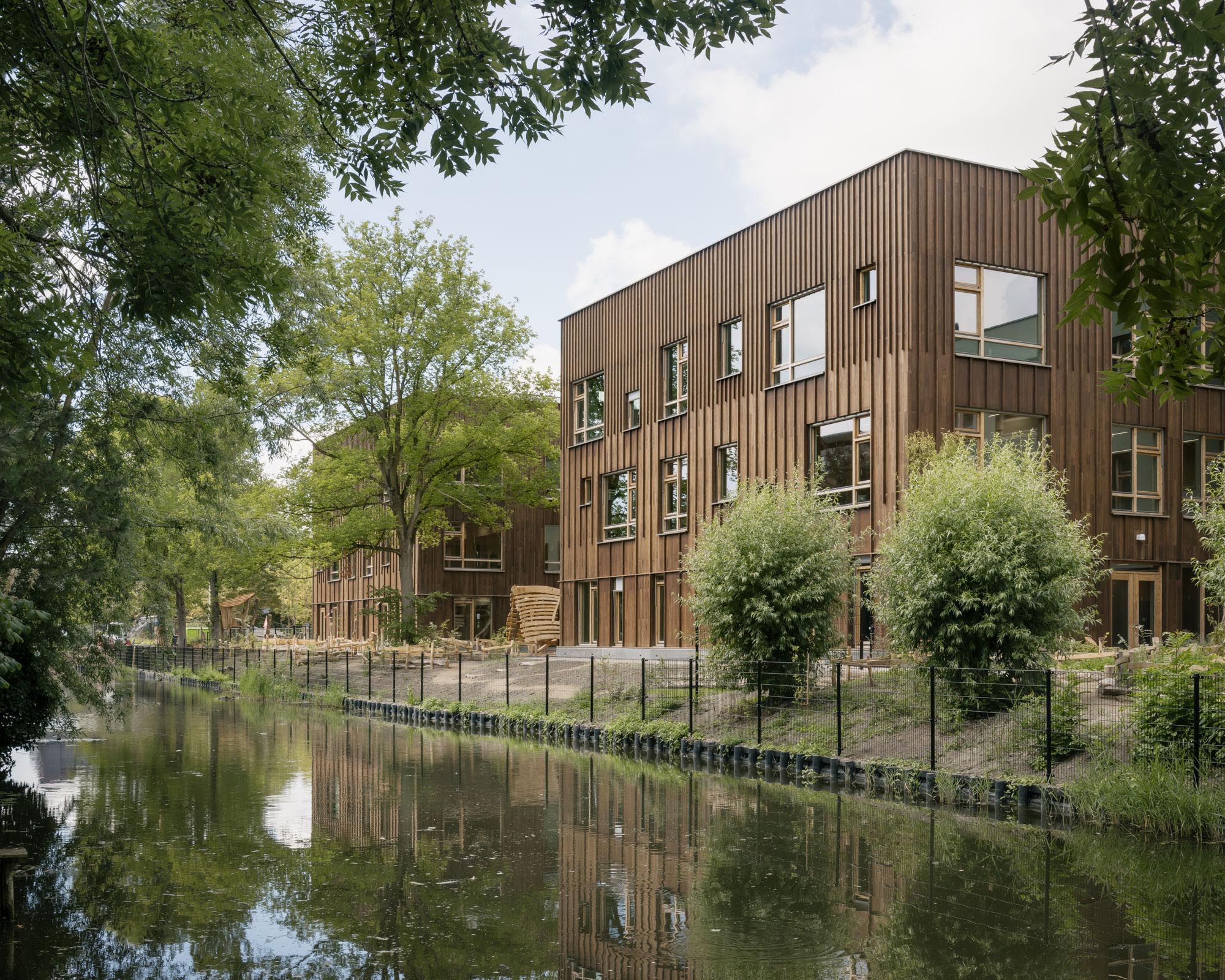
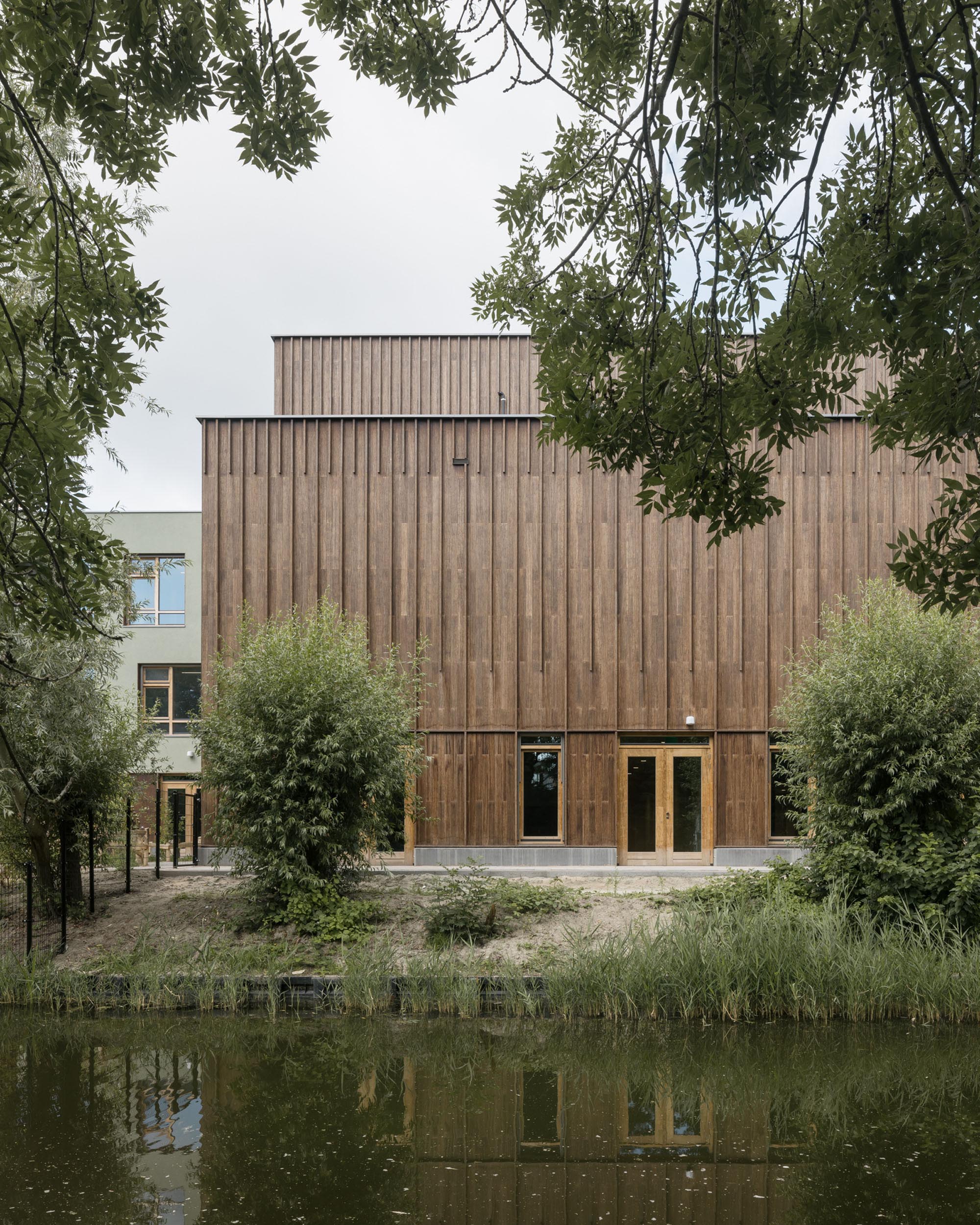
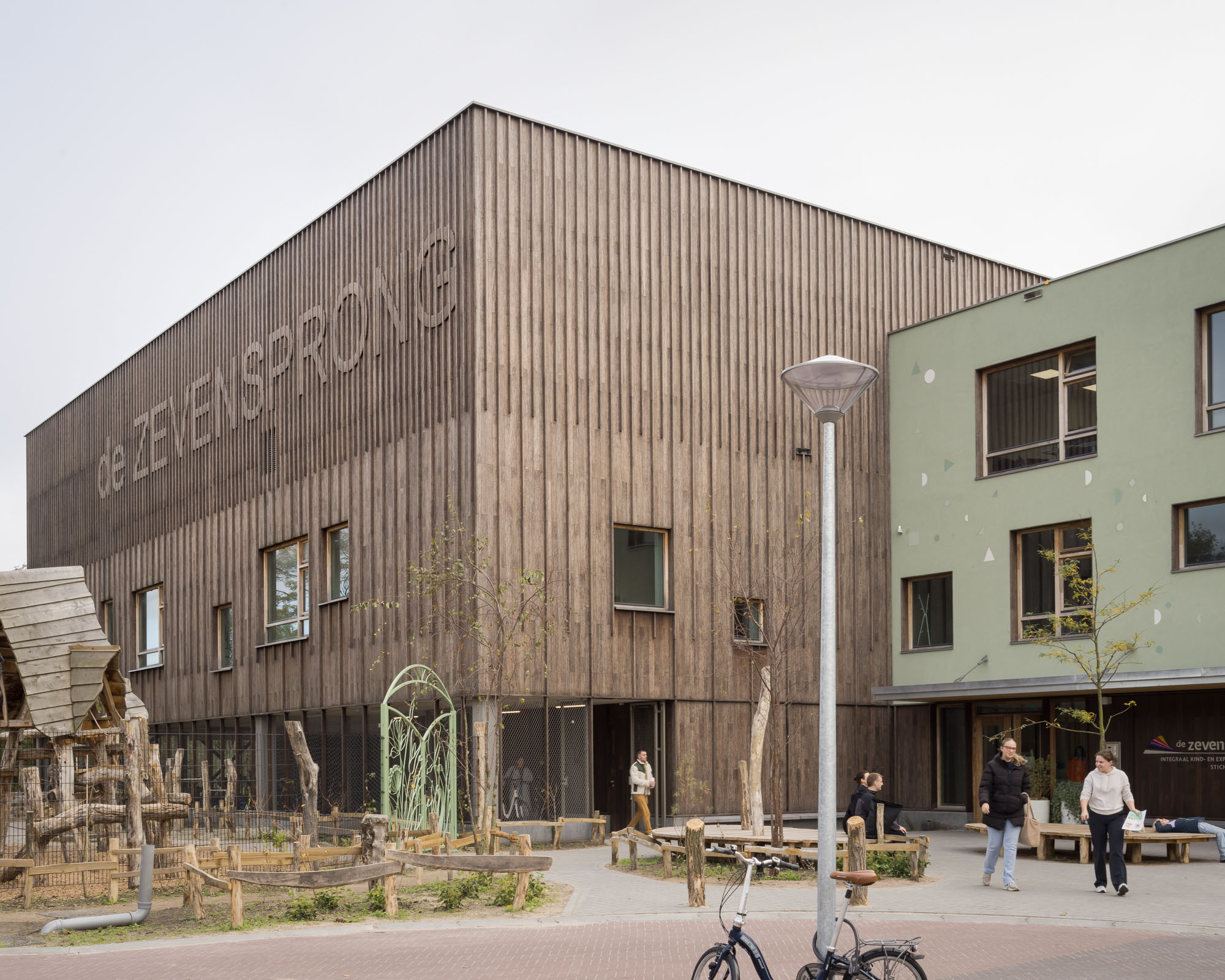
KRFTは、すべての機能を単一の巨大なボリュームに統合するのではなく、「パビリオン」というタイポロジーを提案した。緑豊かな景観の中に5つの低層の「家」を配置することで、学校は地に足がついた感覚をもち、理解しやすく、自然と密接に結びついた空間となった。
「これは単なる校舎以上の存在である。子供たちが安全を感じ、自分のペースで成長できる場所、そして教育、ケア、保育が文字通り1つの屋根の下に集結する場所なのである。」
〈デ・ゼーフェンスプロング〉ディレクター
エライン・ピーエン(Eline Peen)
©︎ Stijn Bollaert
©︎ Stijn Bollaert
明快さと静けさをもたらすパビリオン構成
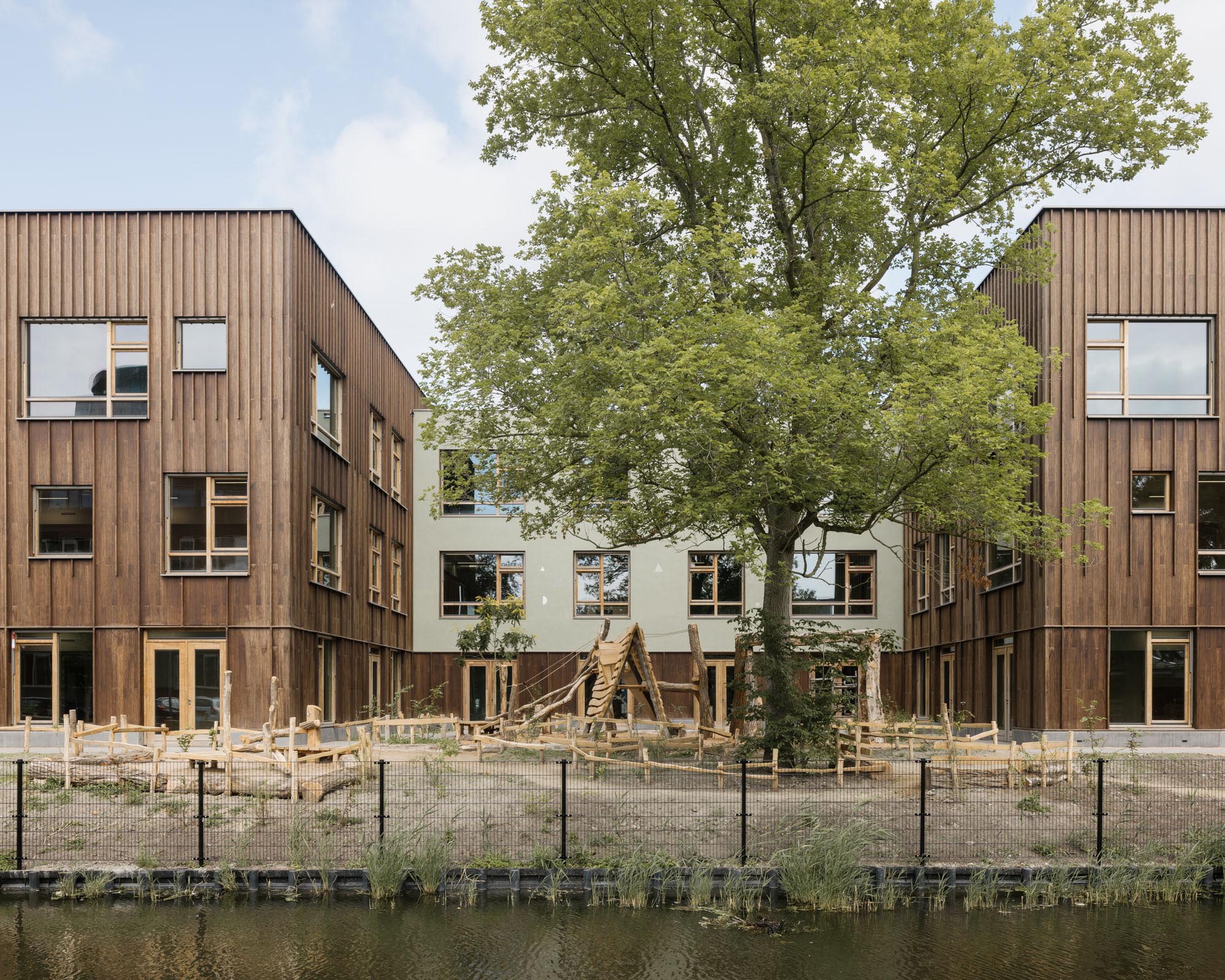
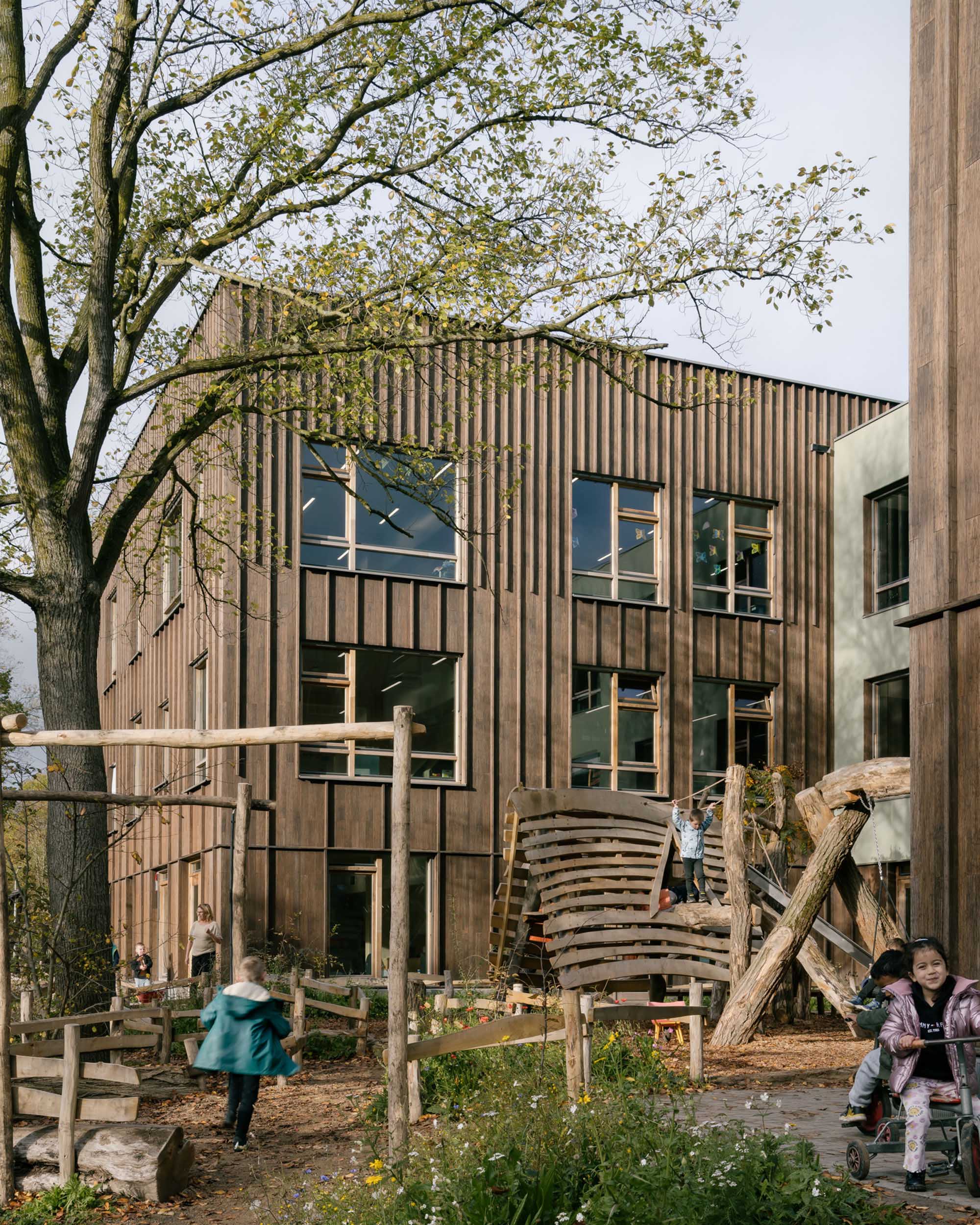
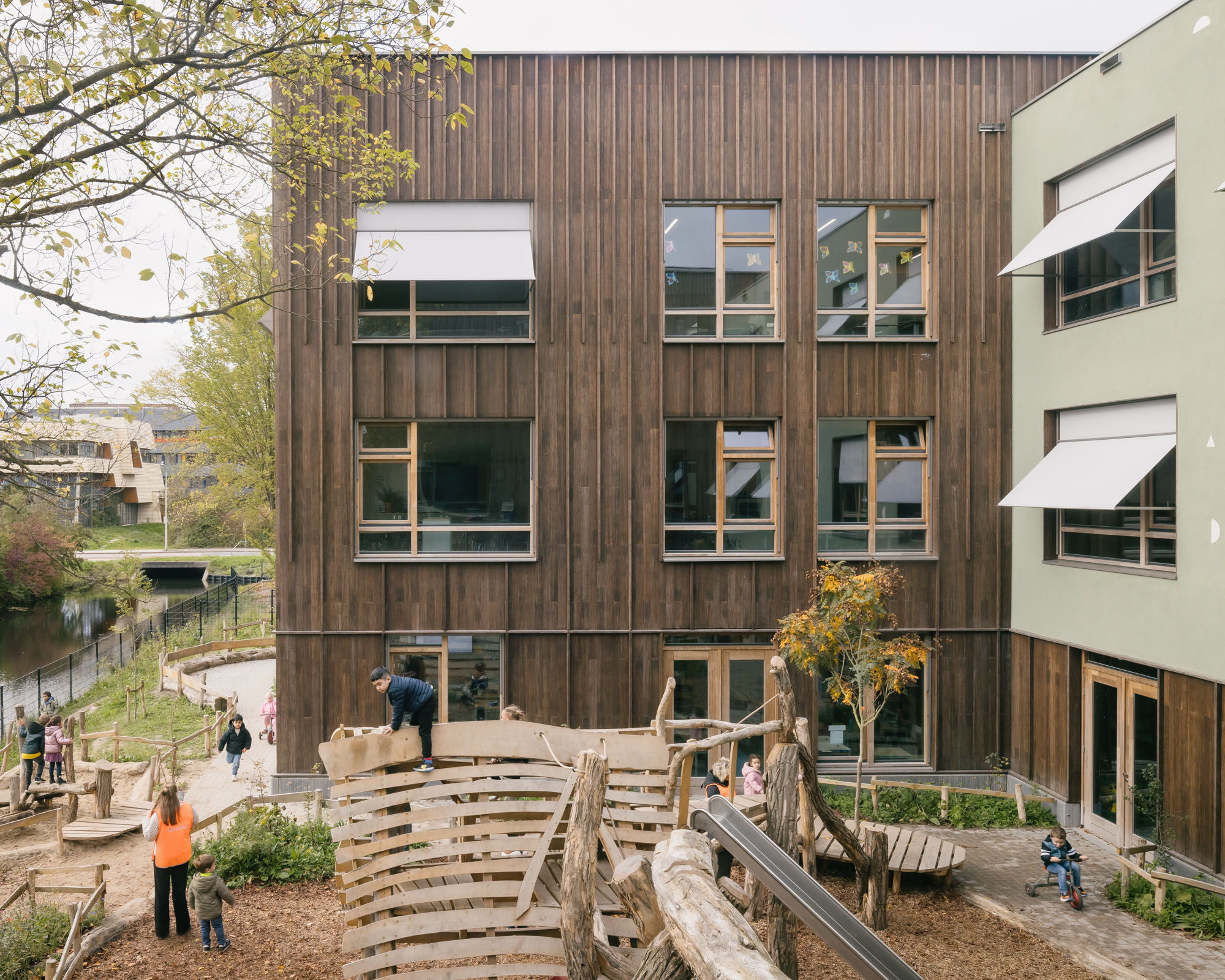
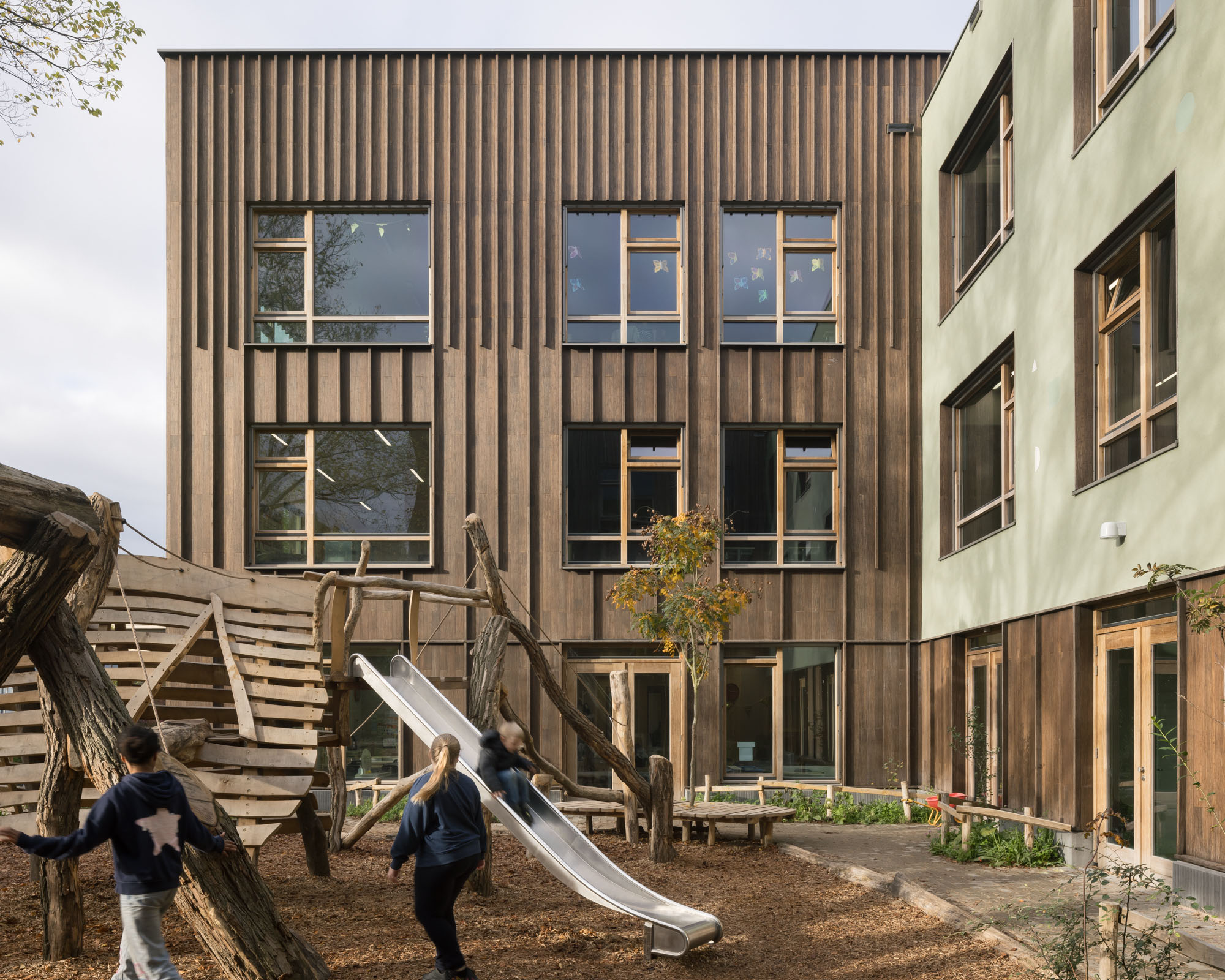
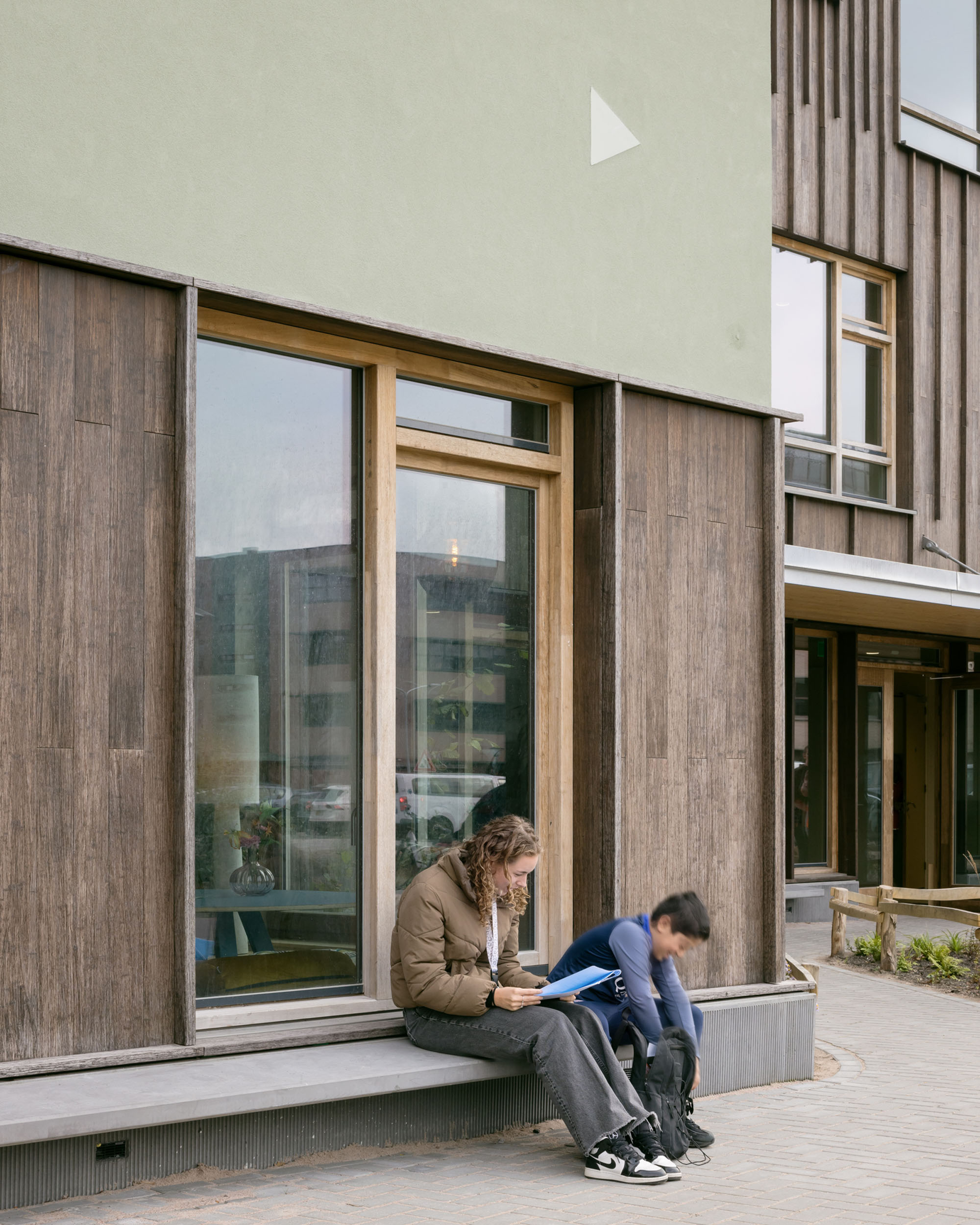
敷地面積は広大であるが、建物は小さな「学校」単位に分割され、それぞれが独立した入口と子供にふさわしいスケールを備えている。明るい緑色の漆喰と濃い茶色の竹材が交互に配されたファサードは、親しみやすく触覚的で、遊び心にあふれた表情を見せる。内部計画においては、明快さと静けさが提供されている。教室は各パビリオンごとに、開放的な緑の学習中庭を囲むように配置されている。
©︎ Stijn Bollaert
©︎ Stijn Bollaert
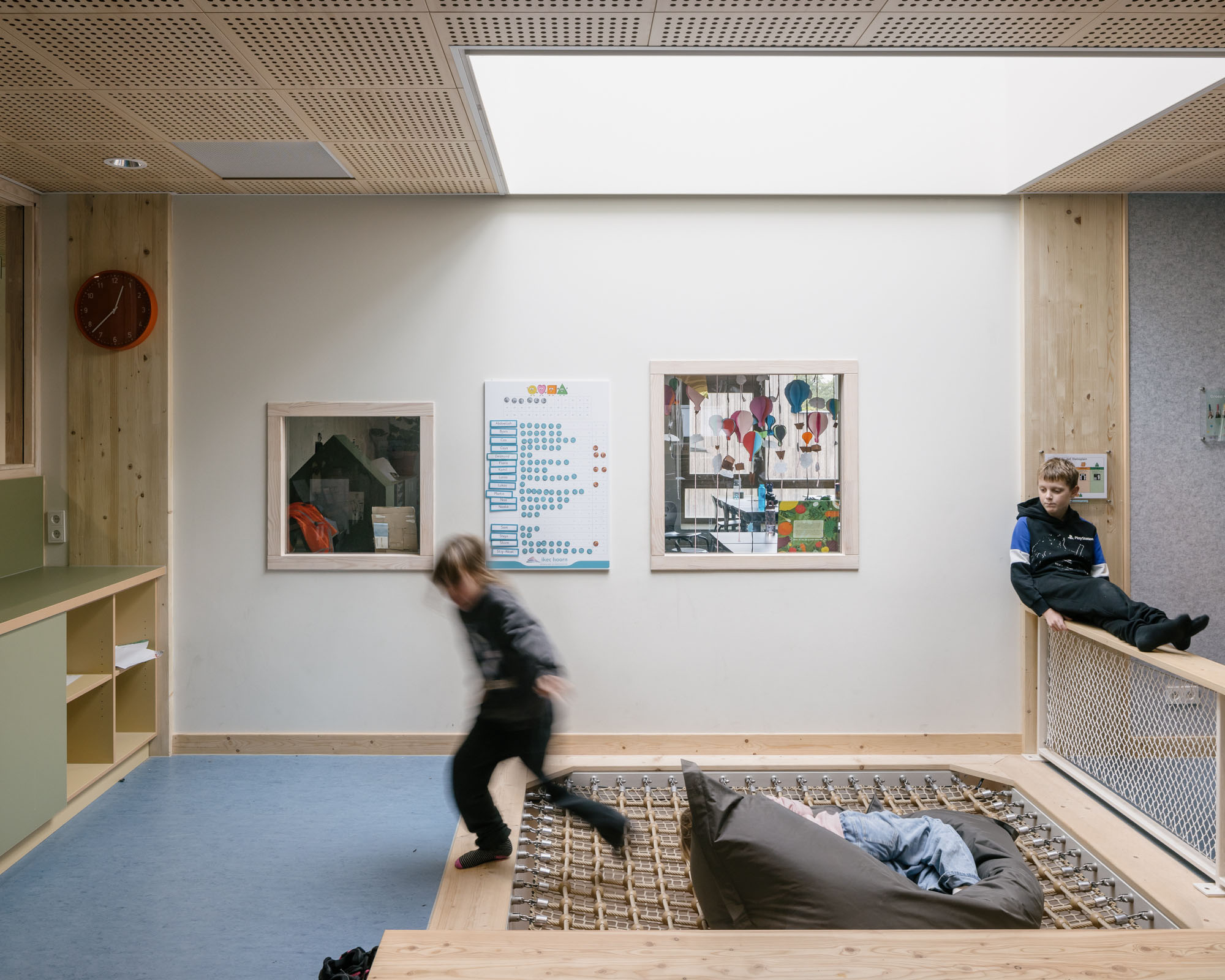
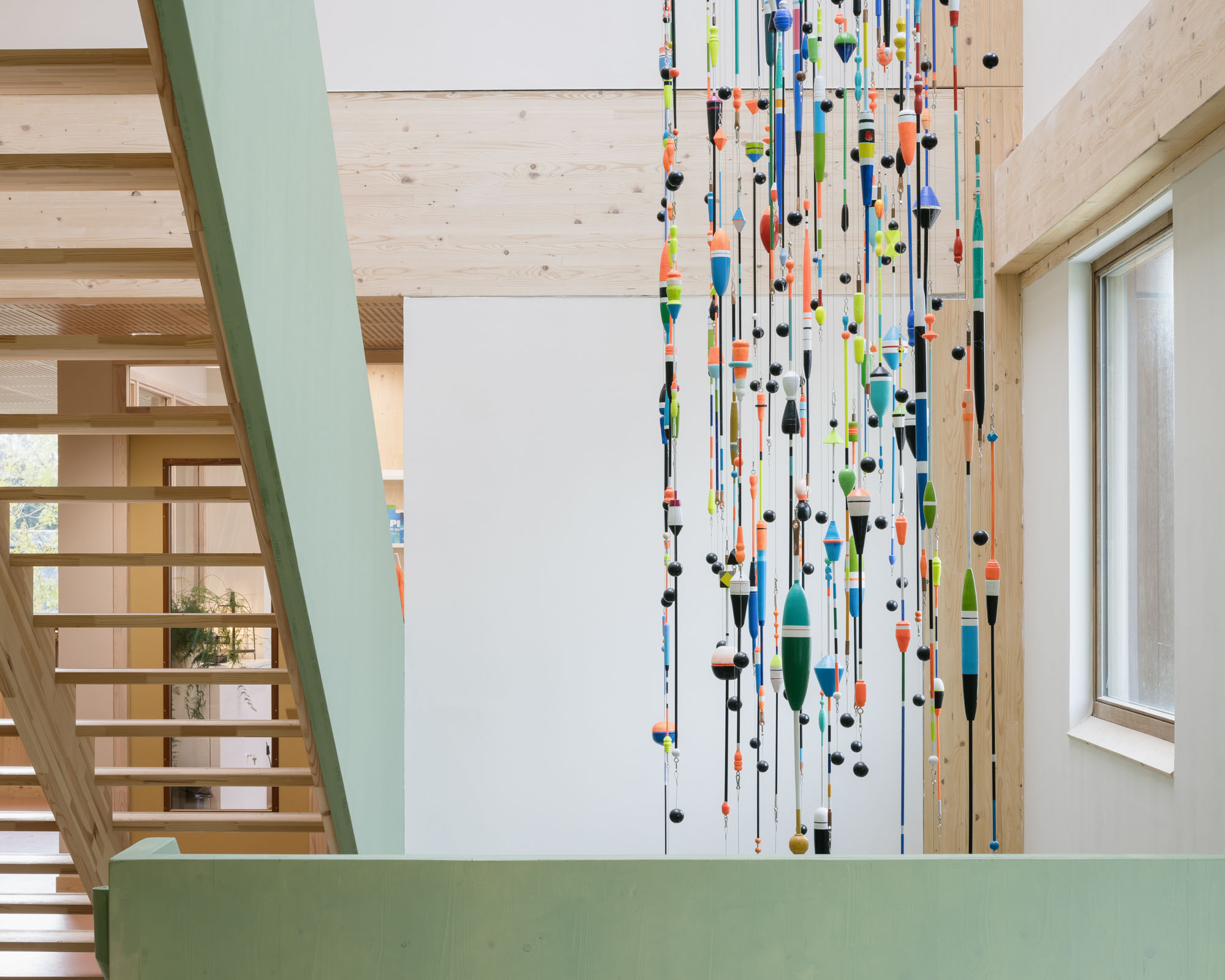
階段状に構成されたパビリオンは、建物の奥深くまで自然光を取り込みながら、すべての教室から周囲の緑豊かな屋外空間を望めるよう設計されている。
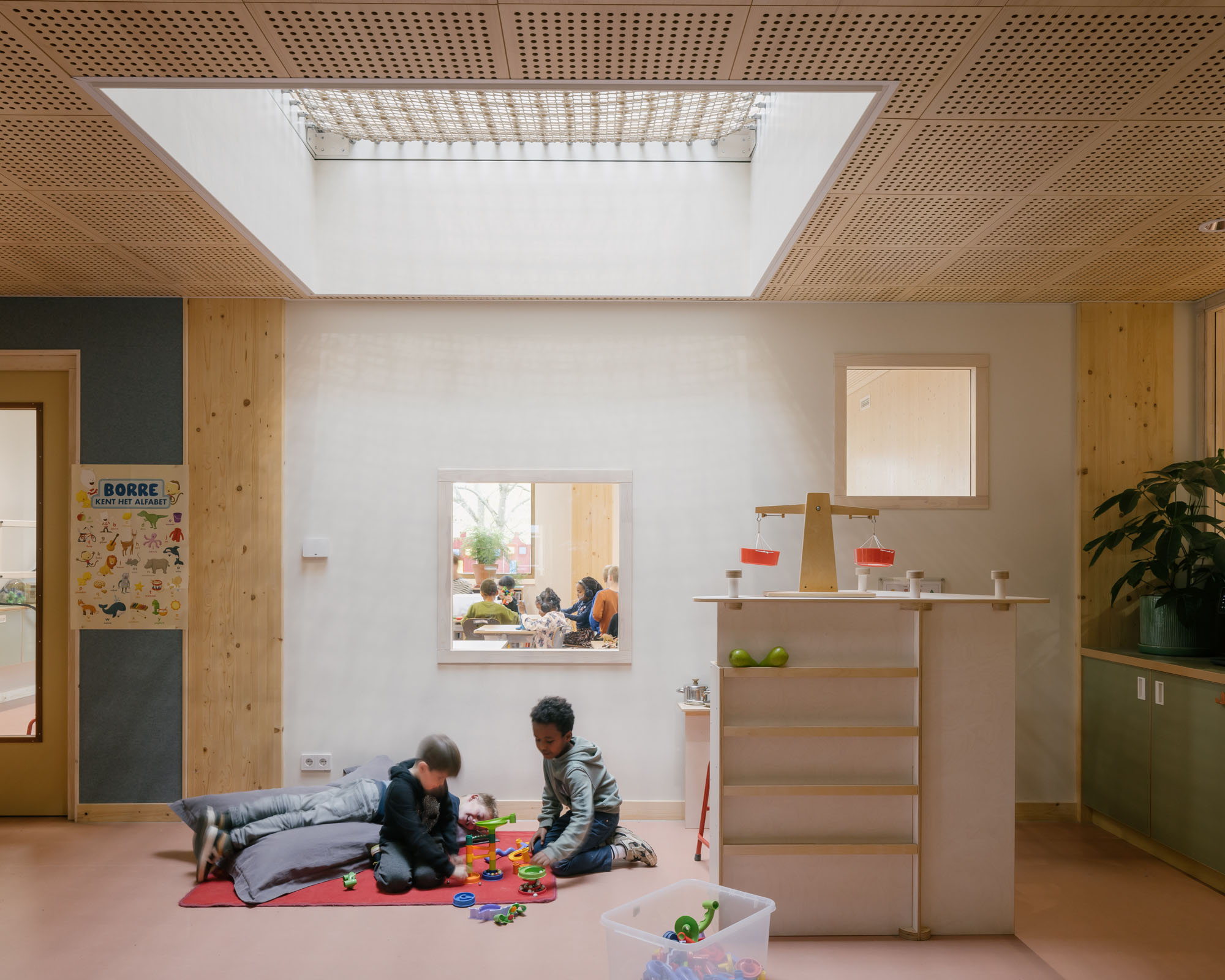
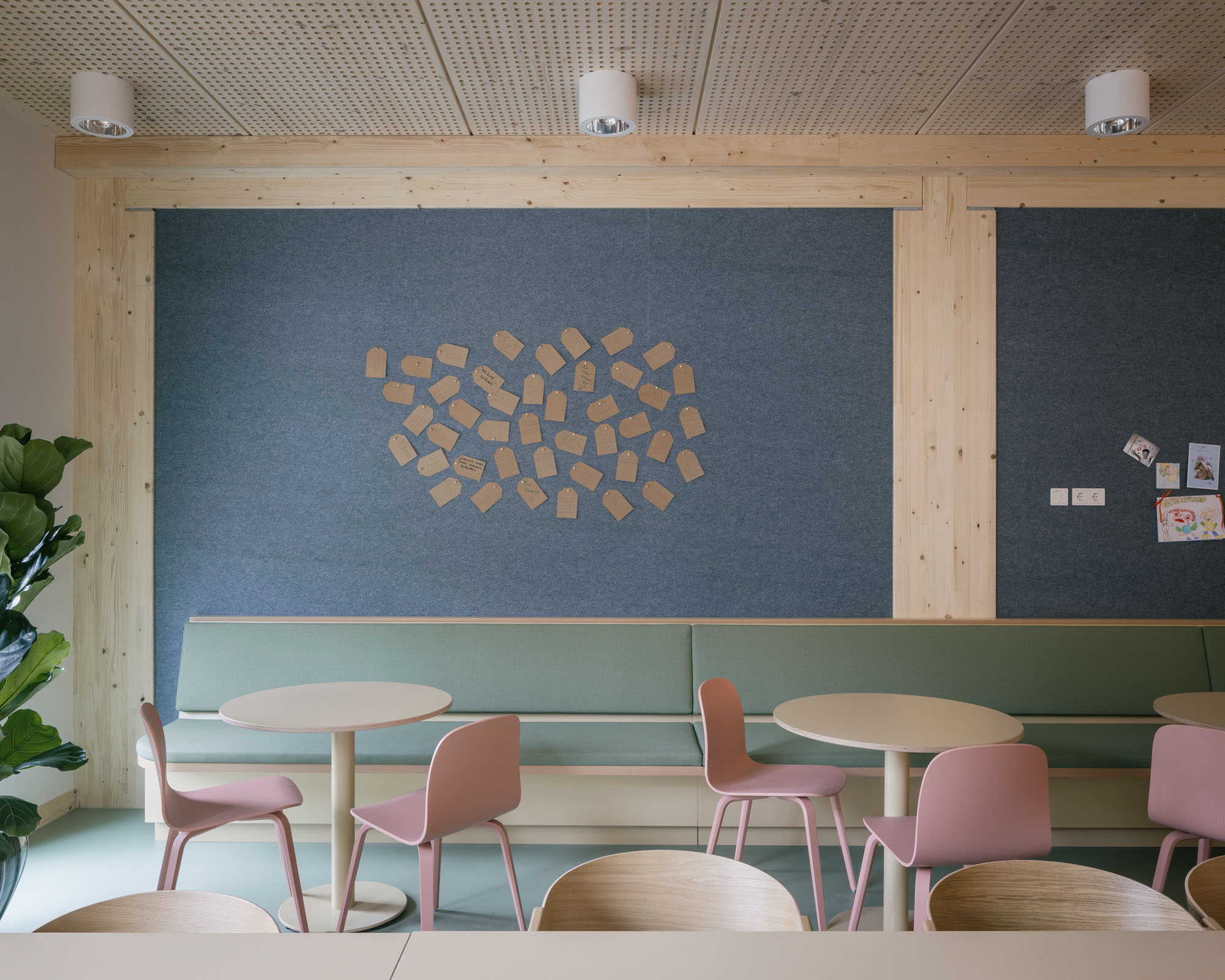
大きな窓と明確な視界が、グループ間のつながりや、隣接する自然を基調とした遊び場との連携を強化する。また、建物の中核には「プラートハウス(対話の家)」が位置し、保護者、専門家、教師が集うカジュアルな交流の場として機能する。
©︎ Stijn Bollaert
©︎ Stijn Bollaert
感覚過敏な児童に配慮した安心できる環境設計
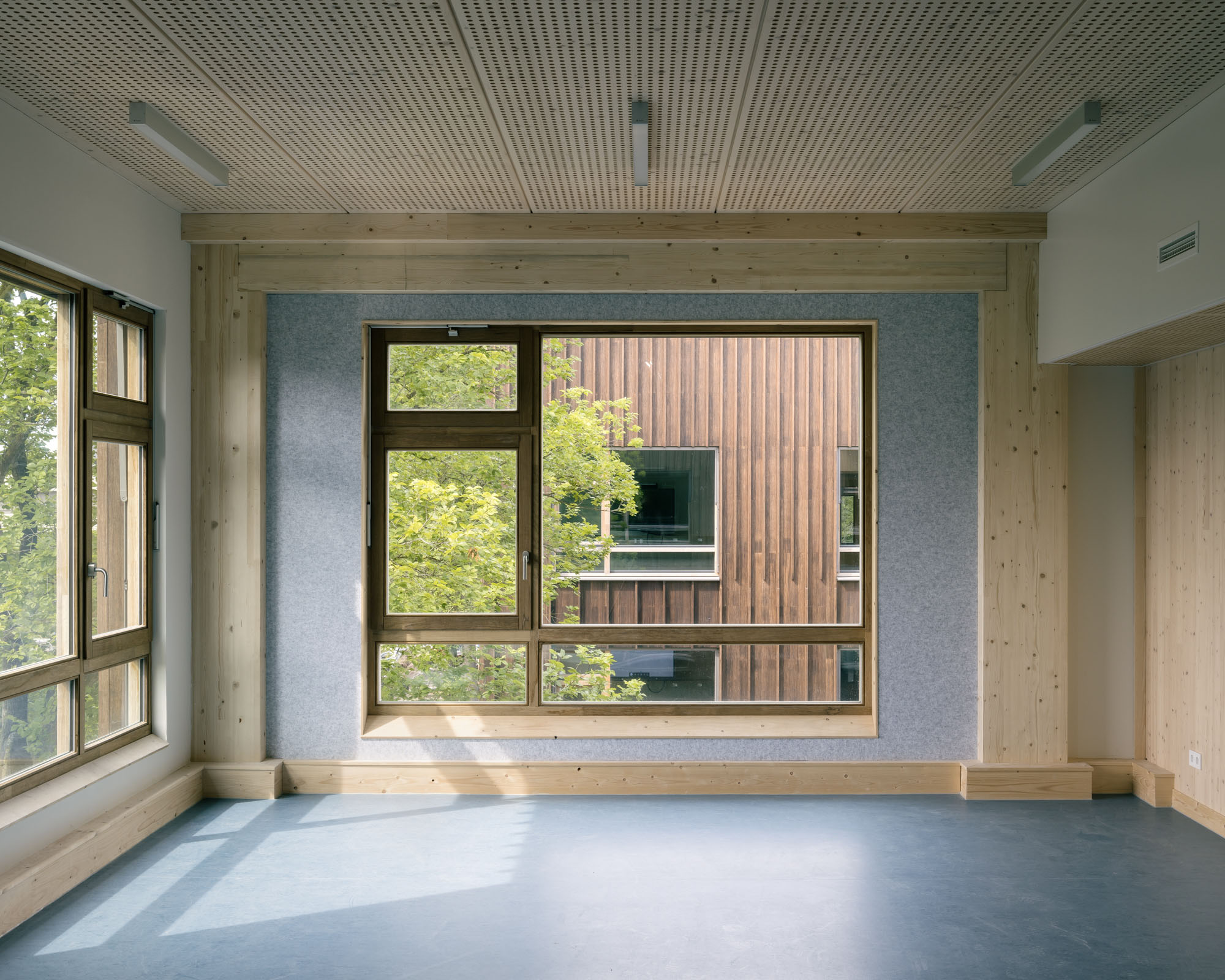
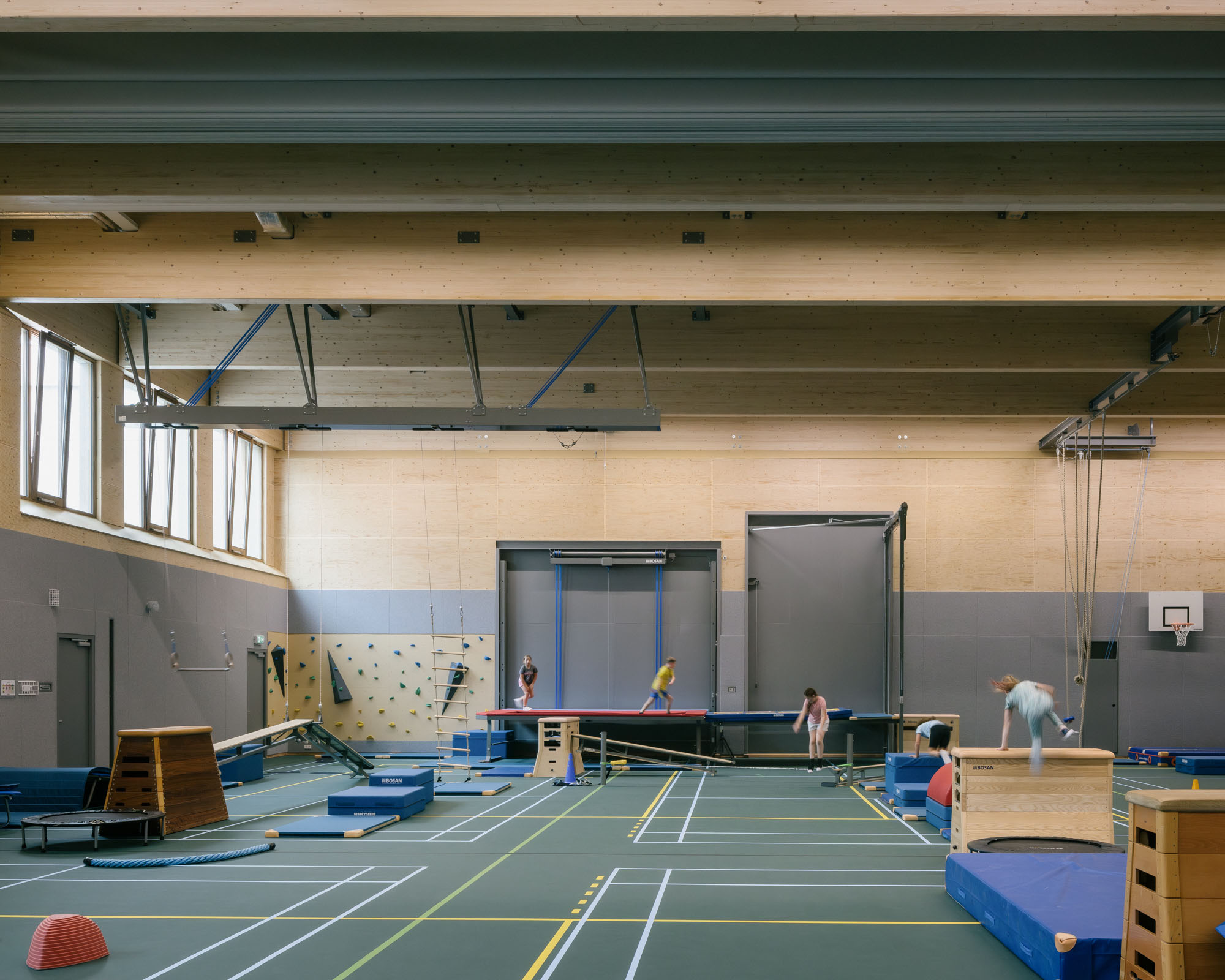
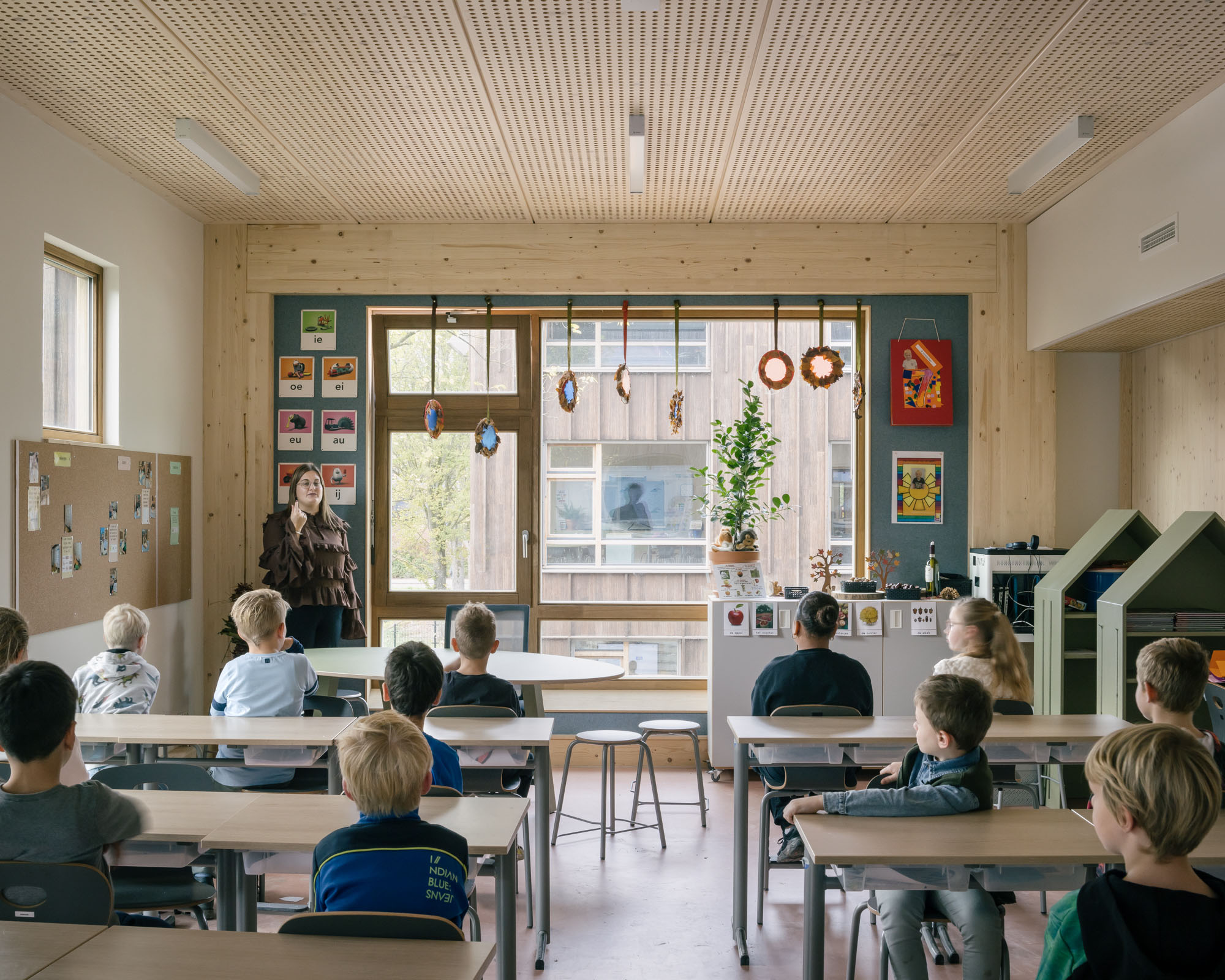
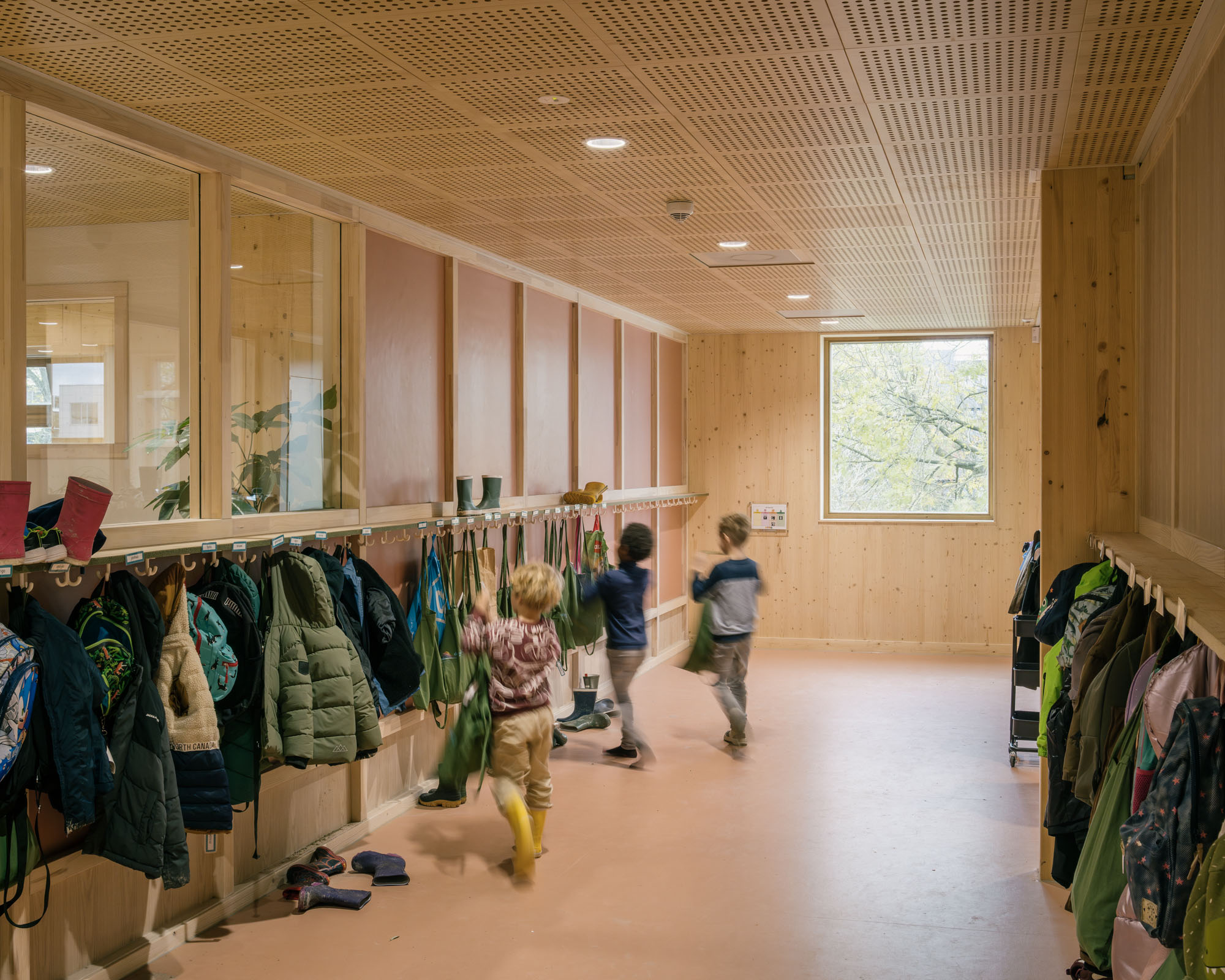
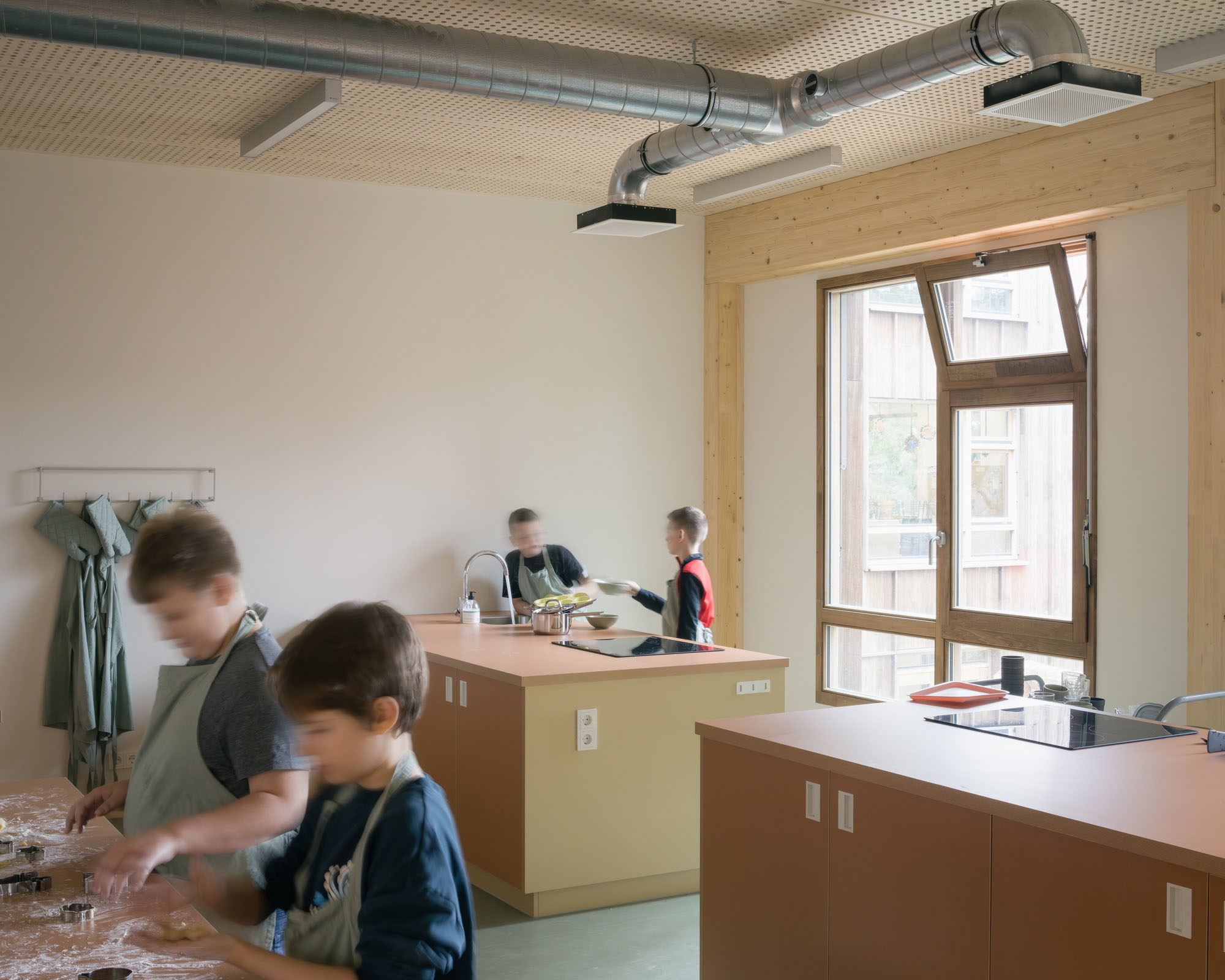
設計では、感覚過敏のある児童への配慮も徹底されている。柔らかな色彩、天然素材、そして木製の天井や壁による温かな音響設計が、穏やかで安心感のある環境を創出している。
「私たちは明快さ、静寂、安心感を核とした場所を創造しようと考えた。児童が拠り所を見出し、専門家が共通のビジョンから協働する意欲を喚起する建築を目指したのである。」
KRFT建築家兼パートナー
オスカー・フォス(Oscar Vos)
©︎ Stijn Bollaert
©︎ Stijn Bollaert
「パリ・プルーフ(Paris Proof)」基準を満たす革新的な素材選択
延べ床面積約7,000m²を誇る当センターは、オランダ最大級の木造小学校の1つであり、パリ協定の目標(世界の気温上昇を1.5℃に抑える)に適合していることを示す「パリ・プルーフ(Paris Proof)」基準を満たしている。
構造は開放的な木造骨組みを基盤としており、軽量で解体可能、かつ適応性に優れている。木製床システムと、蒸気透過性のあるバイオベースの外壁(天然断熱材採用)が、健康的な室内環境と大幅な気候フットプリントの削減に貢献している。
オランダではこの規模での採用例がまだ少ない圧縮竹によるファサードは、耐久性、防火性、長寿命性を兼ね備えている。また、プレファブリケーション工法、乾式工法、資材の再利用により、建設時の排出量をさらに削減した。
©︎ Stijn Bollaert
©︎ Stijn Bollaert
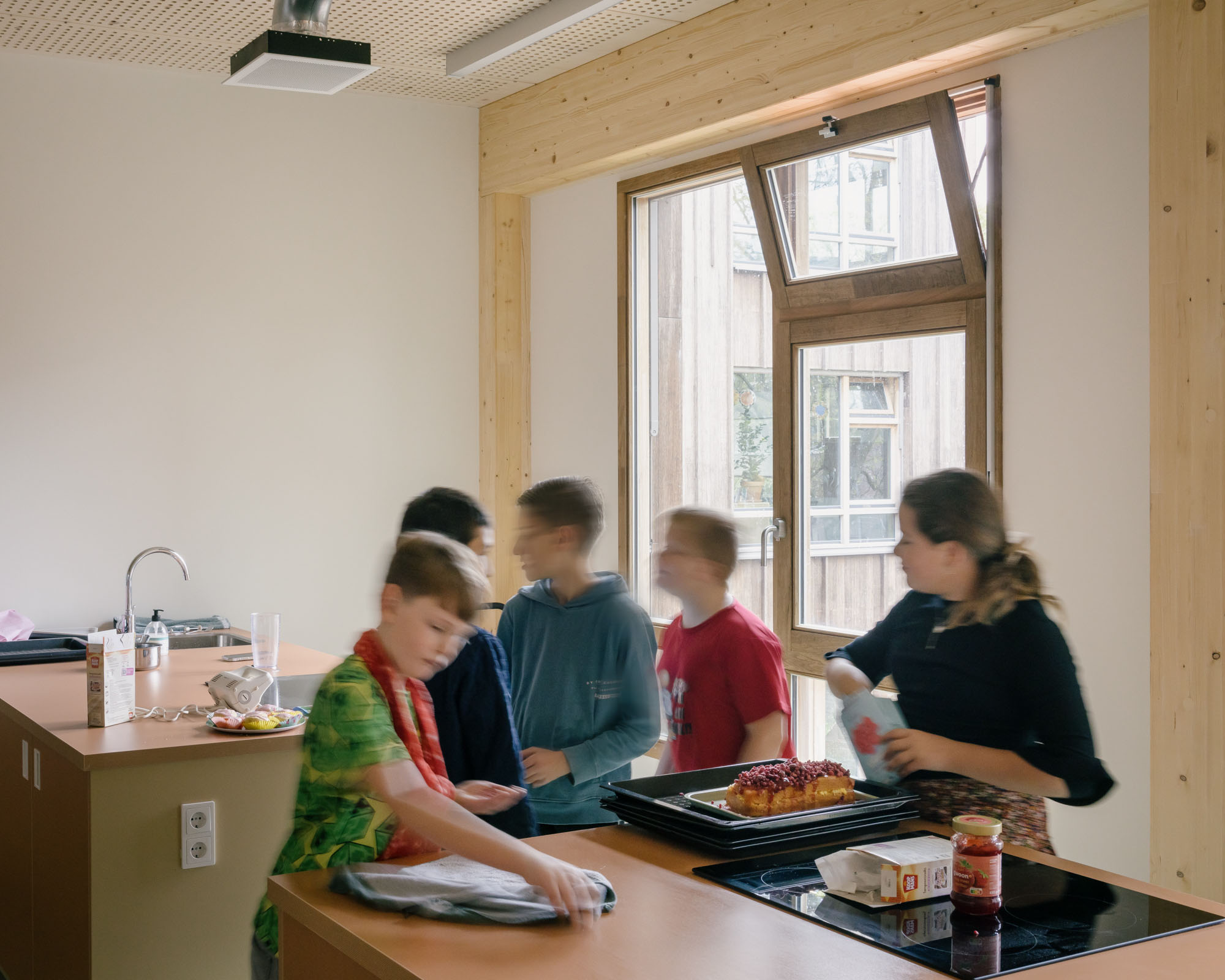
「学校をパリ協定基準に適合させるのは簡単な作業ではない。あらゆる材料選択において革新的なアプローチが求められる。構造体・ファサード・仕上げ材に天然素材を採用した結果、建物内に長期的に200万kgのCO2(1m²当たり285kg)が固定化された。同時に、製造時の排出炭素量を1m²当たり315kg(CO2換算)に抑え、パリ協定の気候目標に適合している」
「最大の革新は、無垢材を用いた開放構造であり、これは一石二鳥の効果をもたらす。それは環境負荷が低く、解体可能で循環型であり、用途変更にも適応する。しかしそれだけではない。バイオベースの外壁、木製窓枠、木質繊維断熱材、さらには最終的な内装仕上げに至るまで、あらゆる決定が気候への影響を評価された上でなされたのである。」
KRFT建築家兼パートナー
オスカー・フォス
©︎ Stijn Bollaert
©︎ Stijn Bollaert
©︎ Stijn Bollaert
©︎ Stijn Bollaert
©︎ Stijn Bollaert
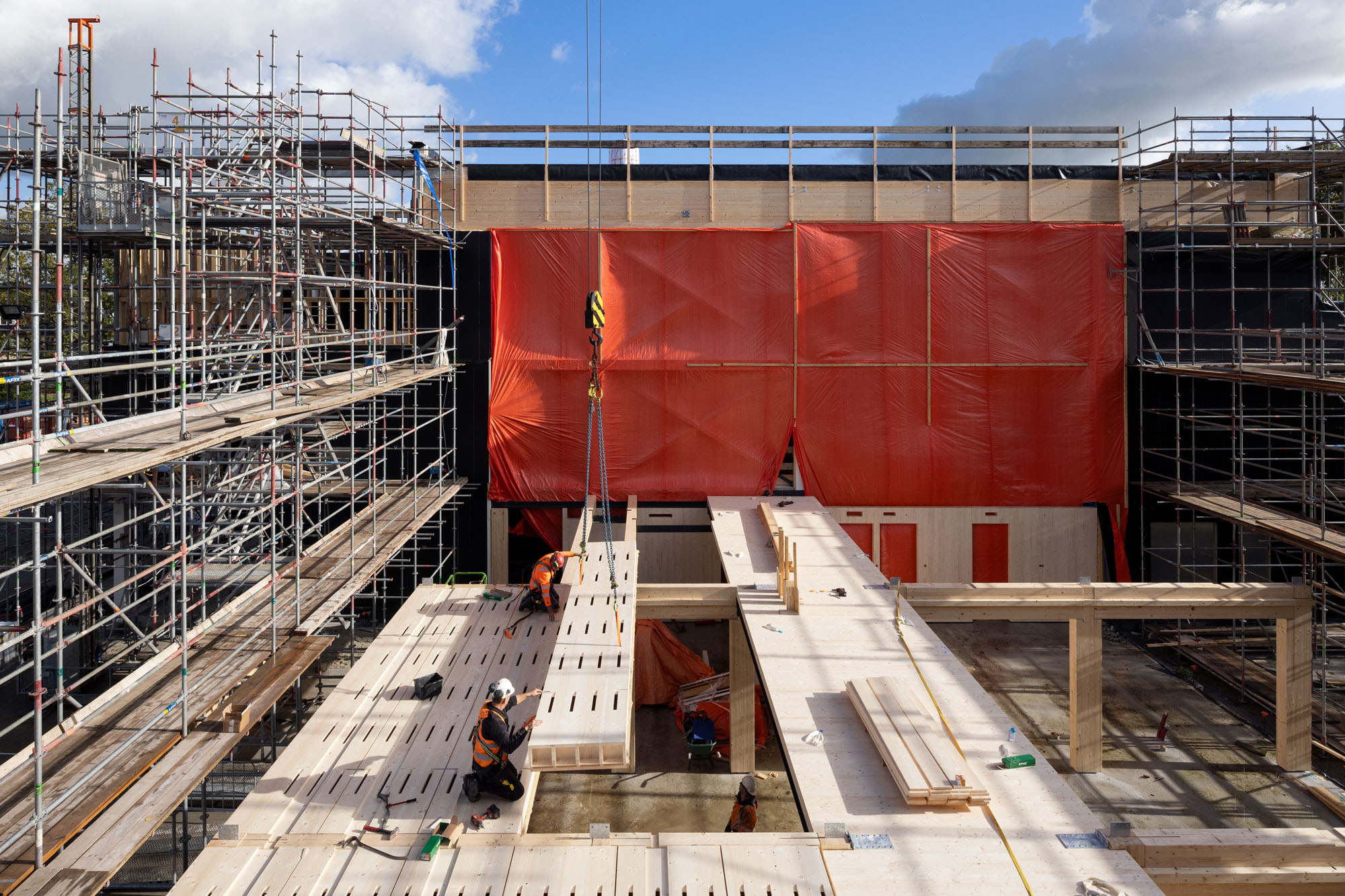
Construction ©︎ Christian van der Kooy
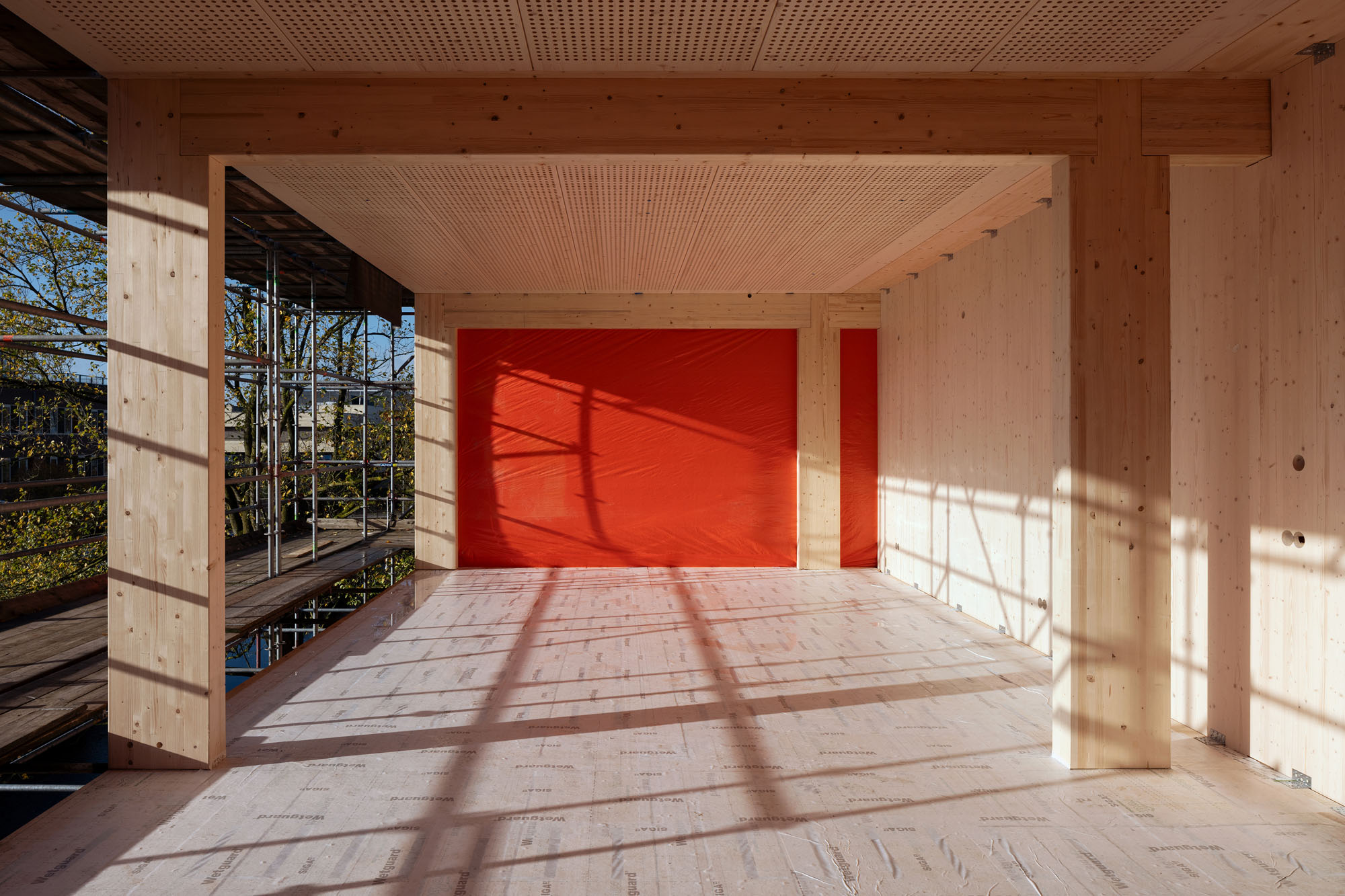
Construction ©︎ Christian van der Kooy
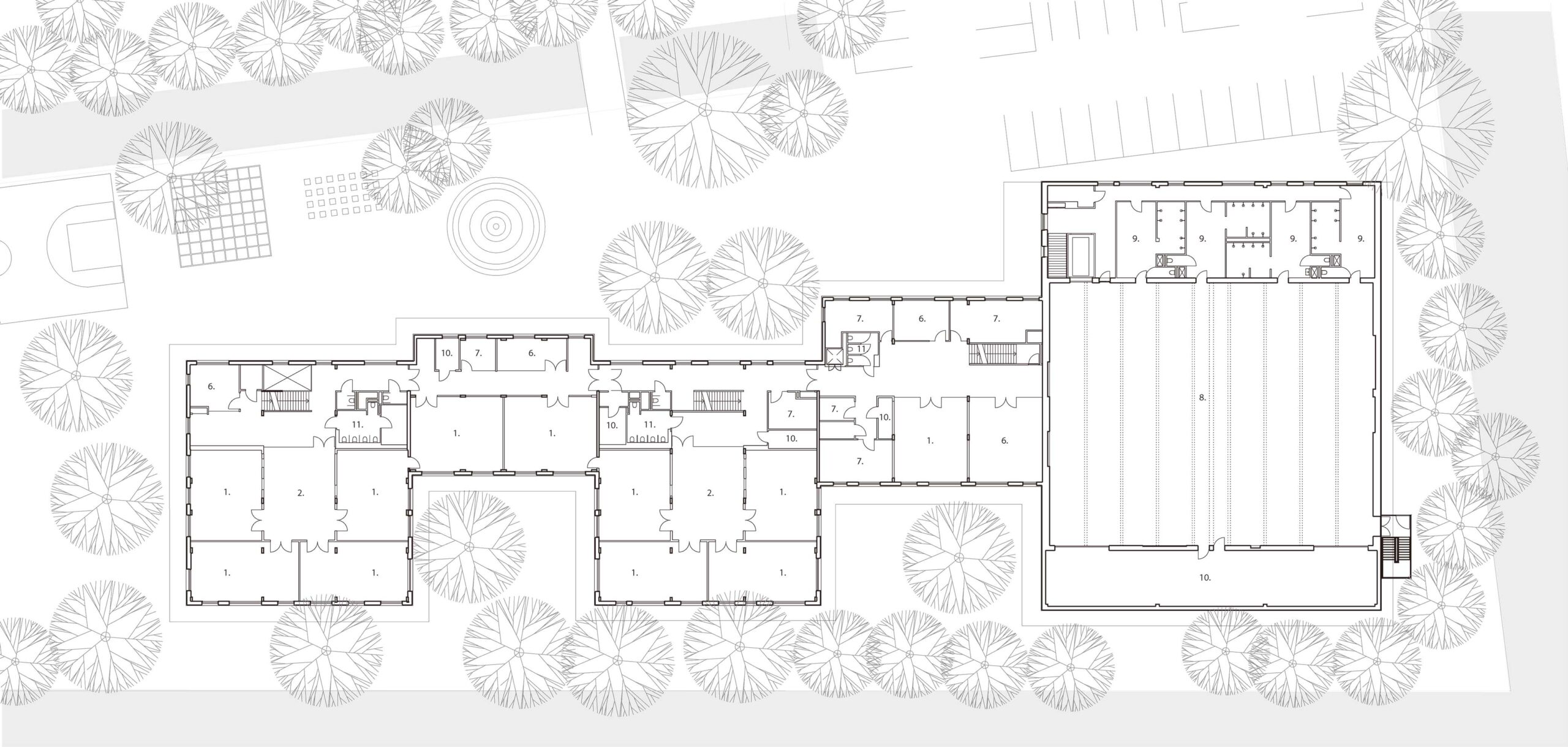
1F plan
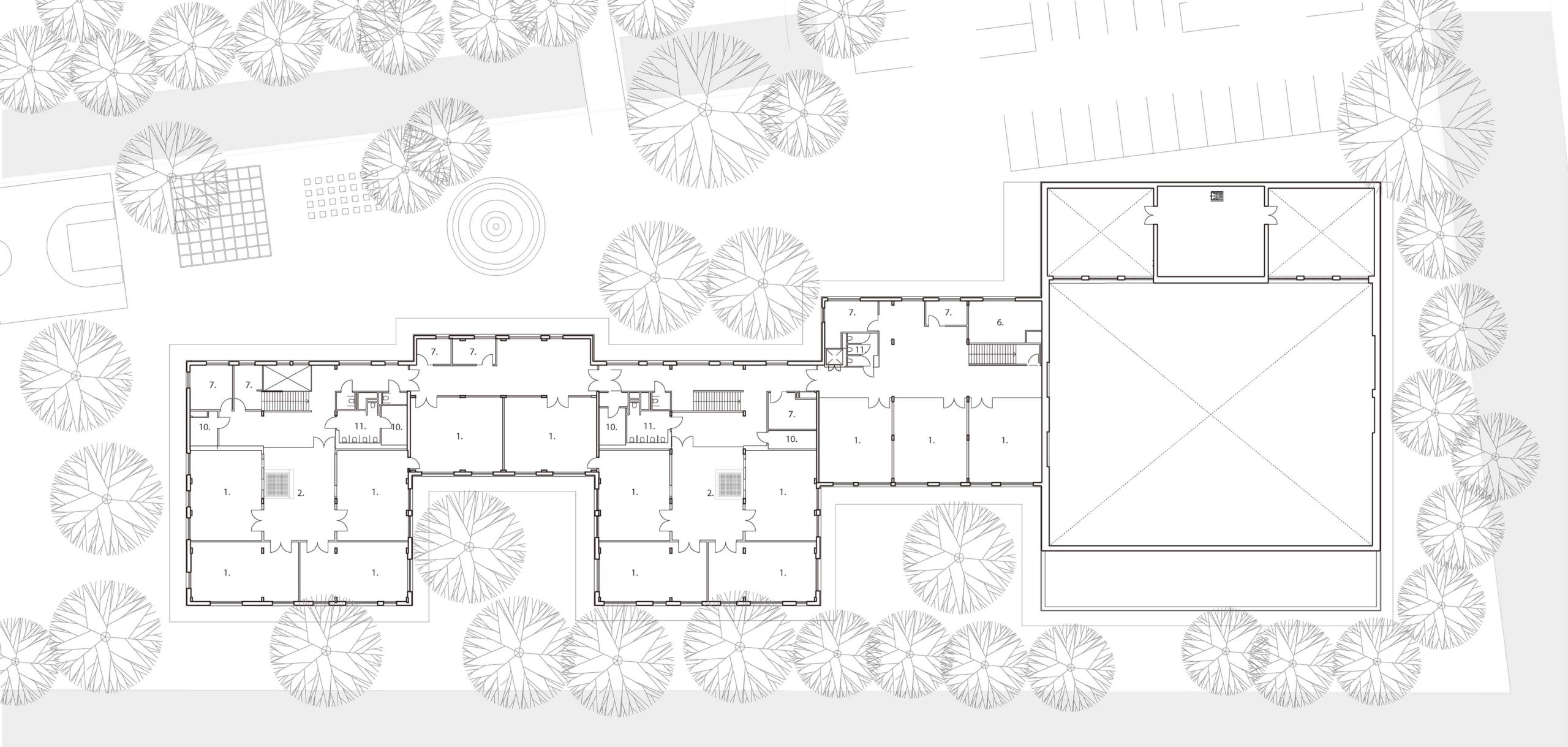
2F plan
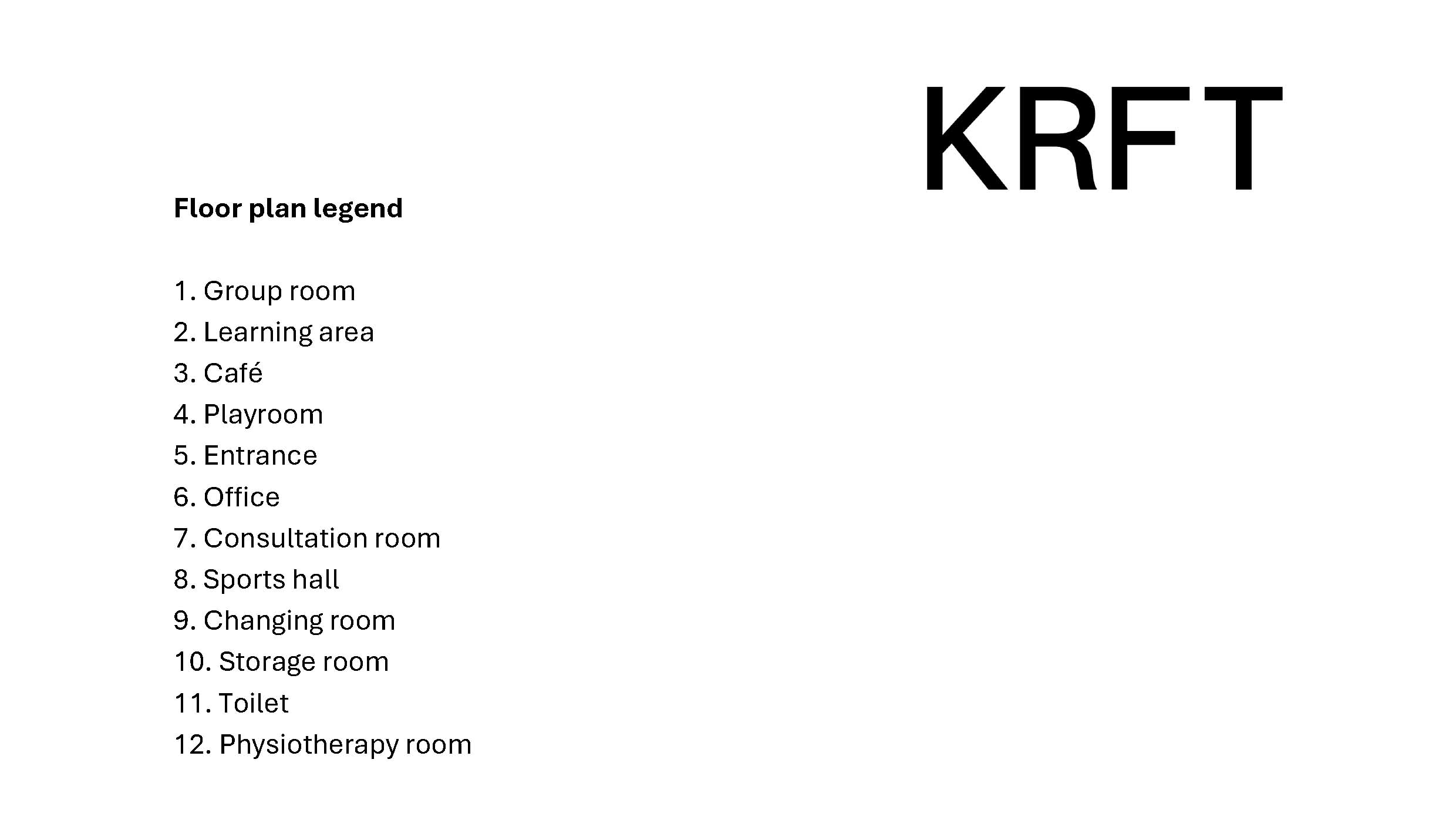
Floor plan legend
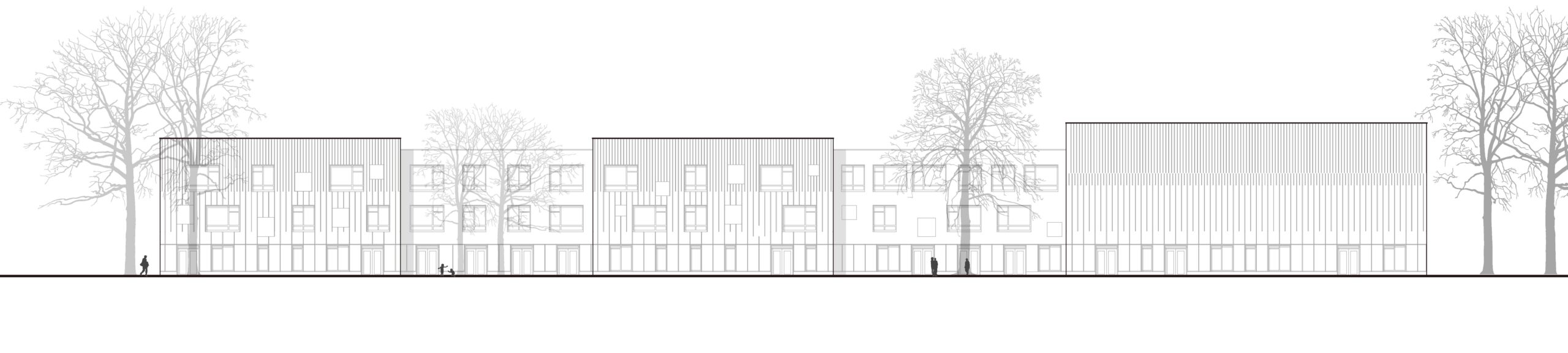
Elevation
以下、KRFTのリリース(英文)です。
Integrated Child and Expertise Centre ‘de Zevensprong’ in Hoorn (NL) opens doors
Architect studio KRFT sets new standard for special education9th of February, Hoorn, the Netherlands – This school year marks the opening of ‘de Zevensprong’, the new Integrated Child and Expertise Centre in Hoorn, the Netherlands. Designed by Amsterdam architecture studio KRFT, the building brings together five former locations for special (primary) education into one sustainable environment for learning, care, childcare and sport. The centre is a place where children feel at home, can develop freely, and where professionals work side by side with one shared vision: the child comes first.
Architecture at a child’s scale
The commission followed a design study initiated by Stichting Mevrouw Meijer, inviting several architects to develop a vision for this complex brief. Five dispersed school locations serving children with diverse learning difficulties required a single place that could offer continuity, personal attention, and a human scale. Rather than consolidating everything into one large volume, KRFT proposed a ‘pavilion’ typology — five low-rise “houses” set within a green landscape — allowing the school to feel grounded, legible and closely connected to nature. “It is more than just a school building,” says Eline Peen, Director of de Zevensprong. “It is a place where children feel safe, can grow at their own pace and where education, care and childcare quite literally come together under one roof.”A pavilion structure that brings clarity and calm
Although large in footprint, the building is broken down into smaller ‘schools’, each with its own entrance and a scale that resonates with the child. The alternating light-green plaster and dark-brown bamboo create a friendly, tactile and playful façade. Inside, the plan provides clarity and calm: classrooms are organized per pavilion around open, green learning courts.The stepped pavilions draw daylight deep into the building while offering views of the surrounding green outdoor spaces from every classroom. Large windows and clear sightlines strengthen the connections between groups and the adjacent (nature-based) play areas. At the heart of the building lies the ‘Praathuis’: an informal meeting place where parents, specialists and teachers can gather.
The design also carefully considers children with sensory sensitivities. Soft colours, natural materials and warm acoustics, created through timber ceilings and walls, ensure a calm and comforting environment. “We wanted to create a place where clarity, tranquillity and a sense of security are central,” explains Oscar Vos, architect and partner at KRFT. “A building that gives children something to hold onto and inspires professionals to collaborate from one shared vision.”
Radical material choices for a Paris Proof school
With nearly 7,000 m² of floor area, the centre is one of the largest timber primary schools in the Netherlands and meets the Paris Proof thresholds. The construction is based on an open timber skeletal frame — light, demountable and adaptive. Timber floor systems and vapour-open, bio-based façades with natural insulation contribute to a healthy indoor climate and a significantly reduced climate footprint. The pressed-bamboo façade which is still rarely applied at this scale in the Netherlands, combines durability, fire safety and longevity. Prefabrication, dry construction methods and the reuse of materials further reduced emissions during construction.Vos: “Making a school Paris Proof is no simple task; you must be radical in every material choice. Thanks to natural materials in the structure, façades and finishes, 2 million kg of CO₂ (285 kg CO₂ per m²) is stored in the building for the long term. At the same time, this limits the embodied carbon to 315 kg CO₂-eq per m². In doing so, we align with the Paris climate targets. The biggest step was an open structure in solid timber. This cuts both ways: it has a low environmental impact, is demountable and therefore circular, and is adaptable in use. But it doesn’t stop there: a bio-based façade, wooden window frames, wood-fibre insulation, and even the final interior finishes—every decision had to be assessed for its climate impact.”
About KRFT Architecture Studio
KRFT is an international architecture studio led by partners Thomas Dieben and Oscar Vos. With projects in the Netherlands, Belgium and the UK, the practice focuses on transformative architecture that responds to social needs in the public domain. Each project is rooted in its environment, drawing on existing contexts while aiming for robust, sustainable and future-oriented solutions. KRFT’s work fosters community, learning and play, creating buildings designed to endure. The studio’s international team combines entrepreneurial drive with a clear sense of responsibility towards clients, users and the planet.
KRFT 公式サイト
http://www.krft.nl/
【購読無料】空間デザインの今がわかるメールマガジン TECTURE NEWS LETTER
RECOMMENDED ARTICLE