CULTURE
©︎ Iwan Baan
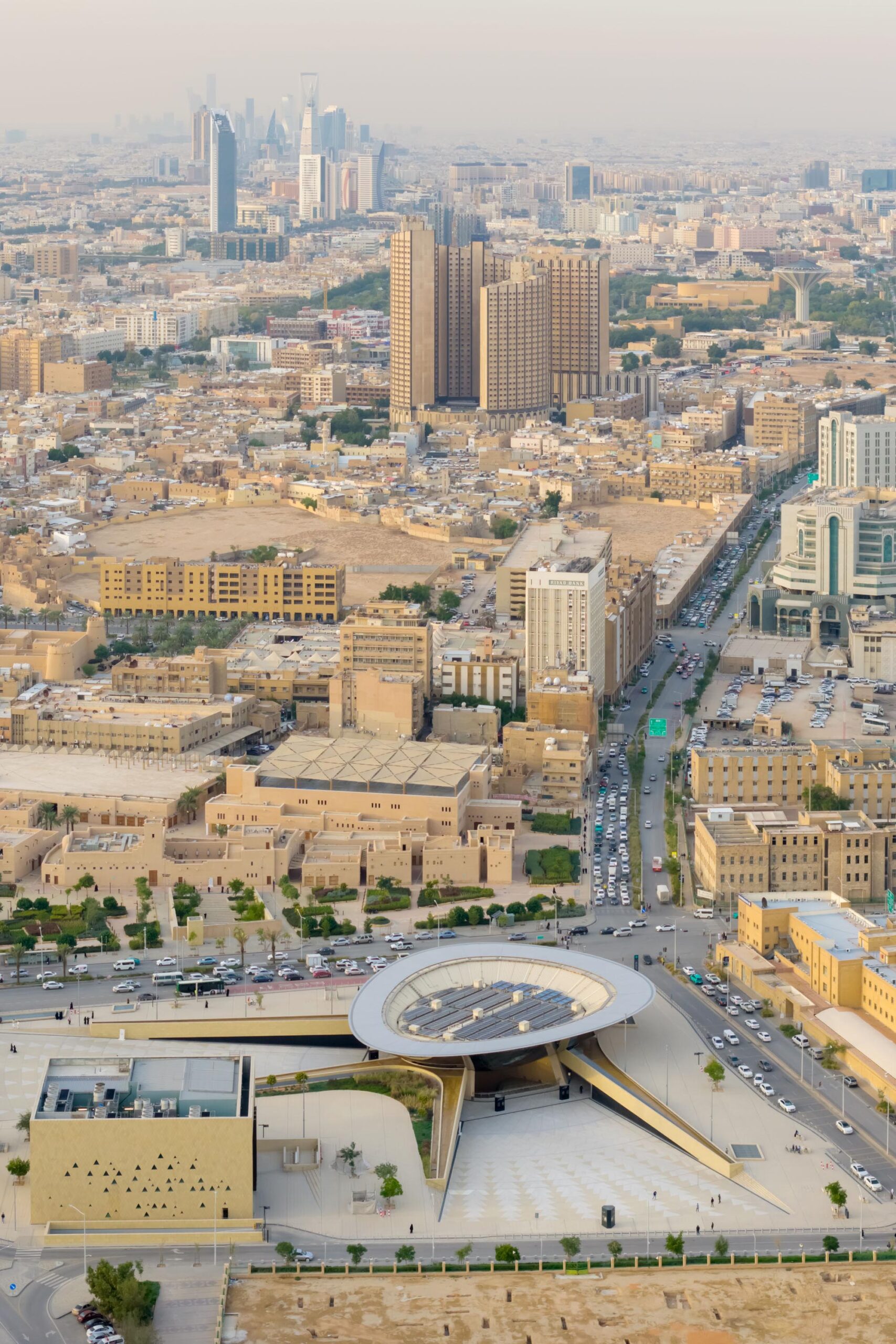
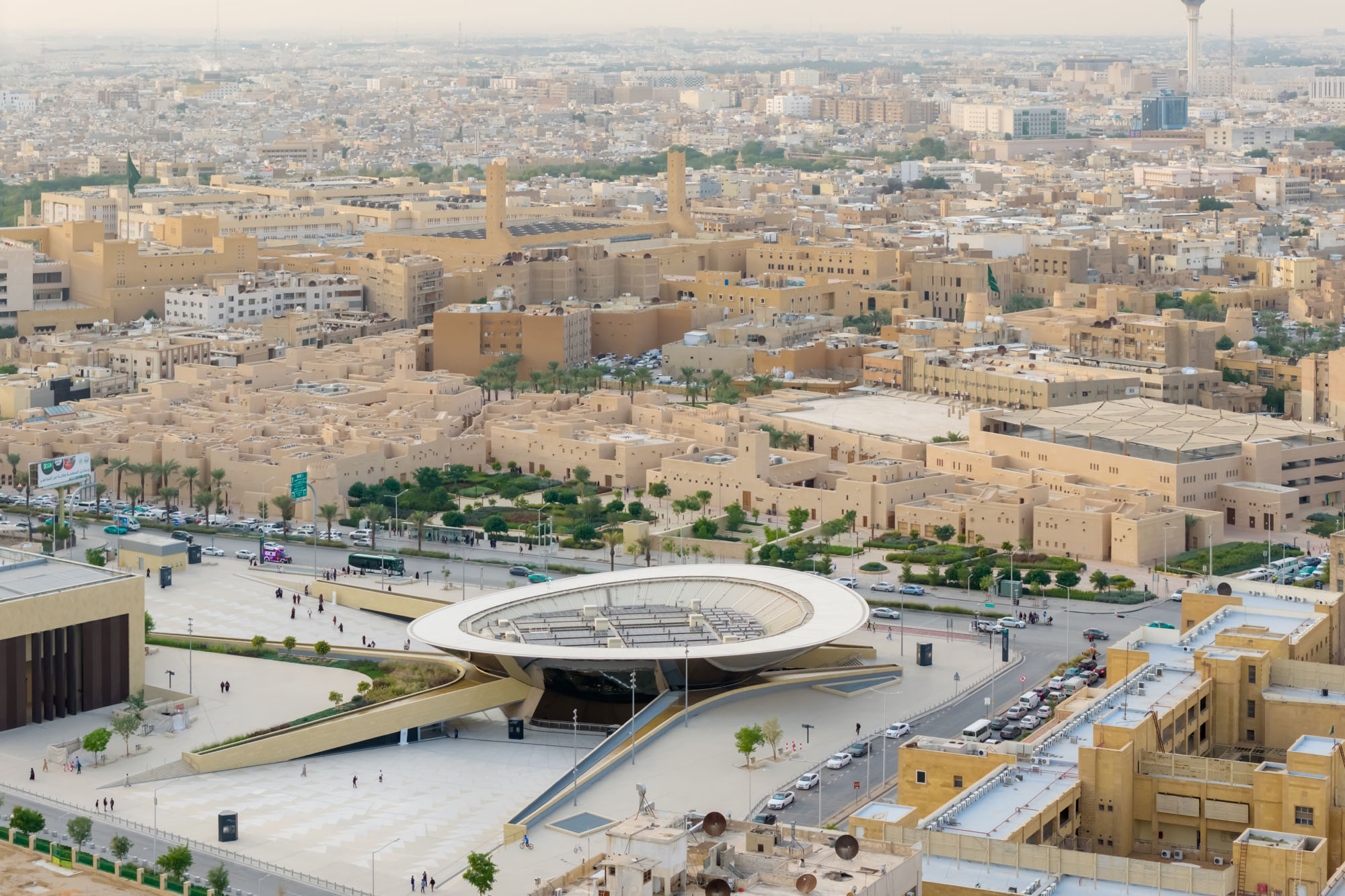
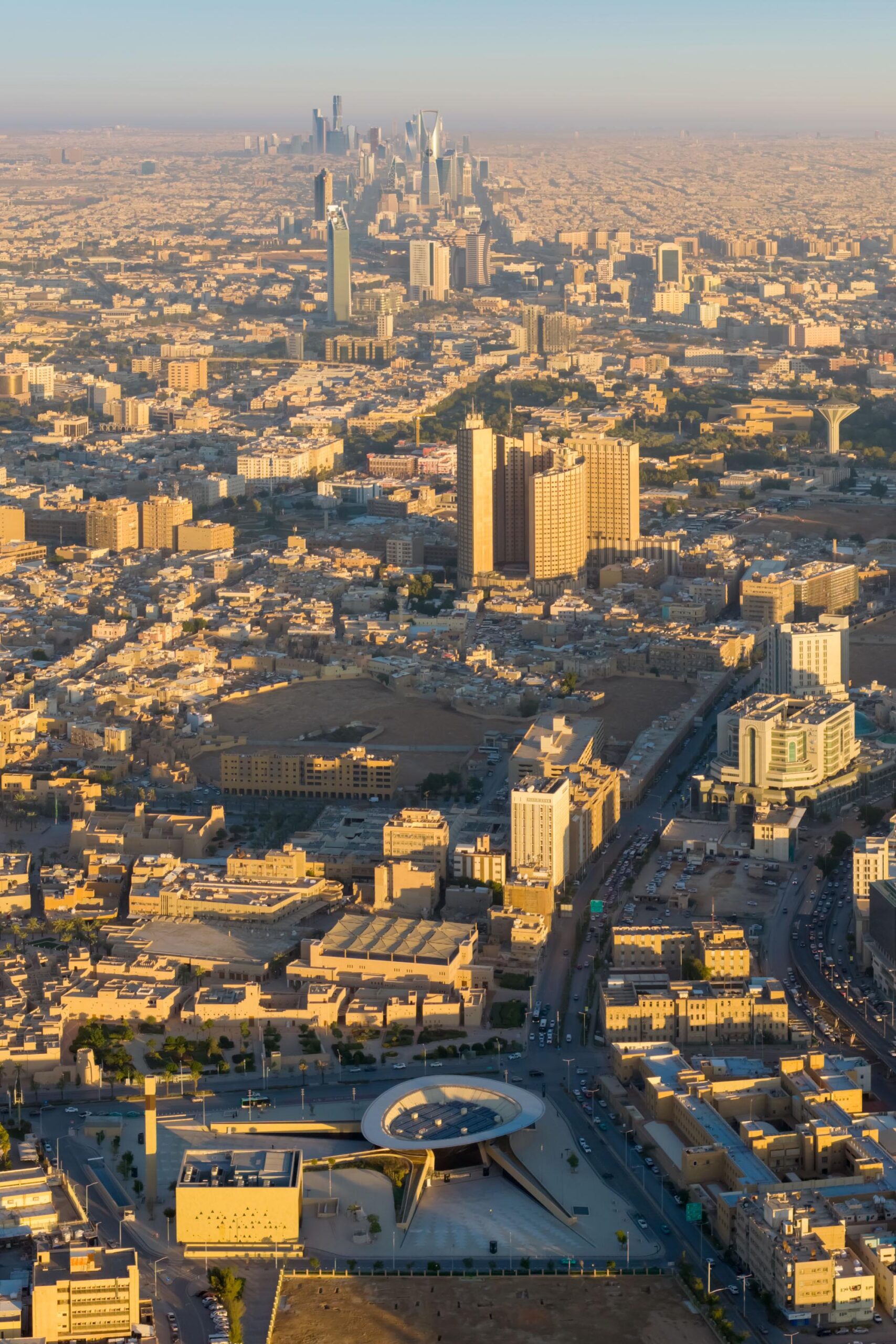
サウジアラビアの首都リヤドにスノヘッタ(Snøhetta)が設計した〈カスル・アル・ホクム地下鉄駅(Qasr AlHokm Metro Station)〉は、新設された地下鉄ネットワークの主要2路線をつなぐ結節点となる交通インフラです。
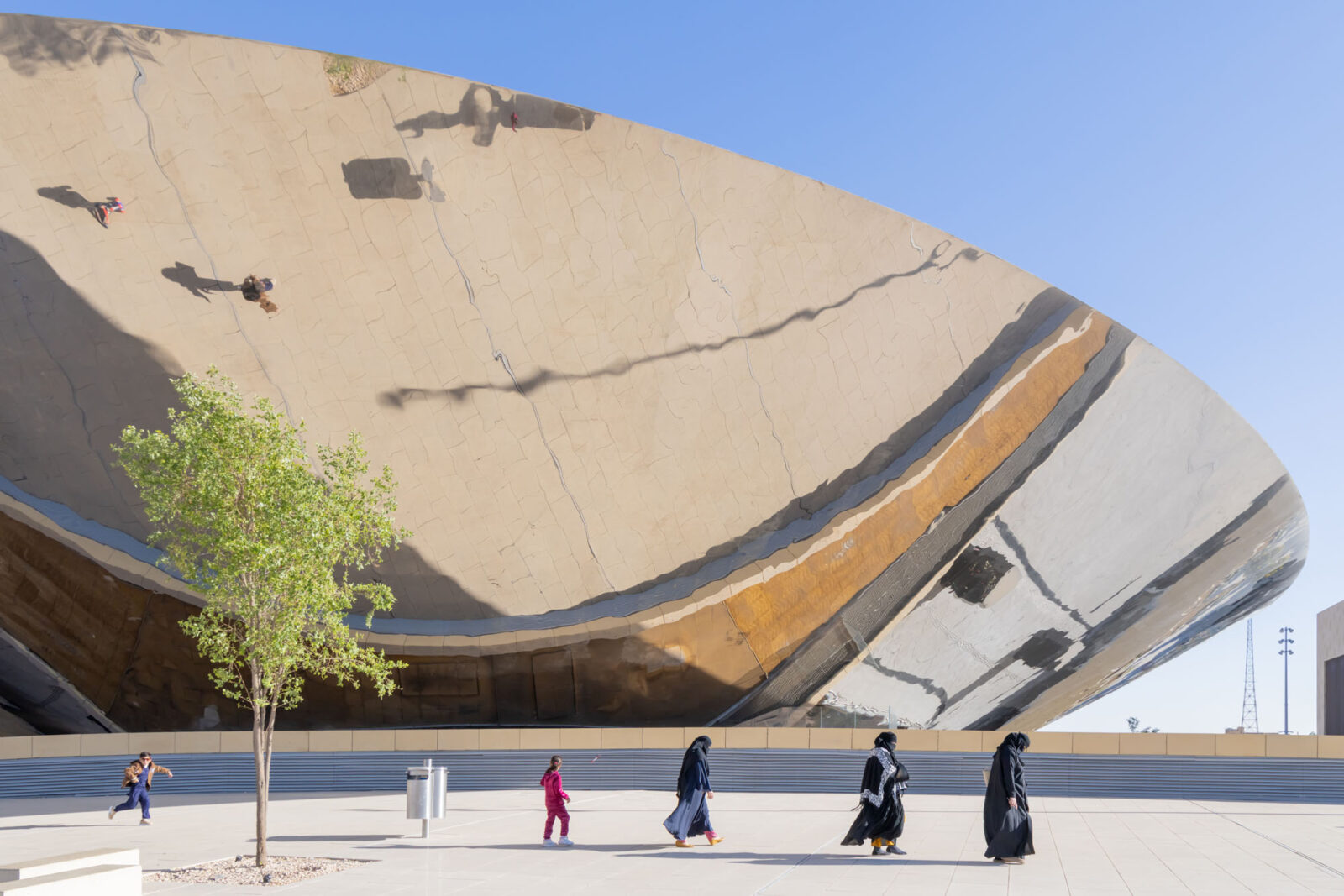
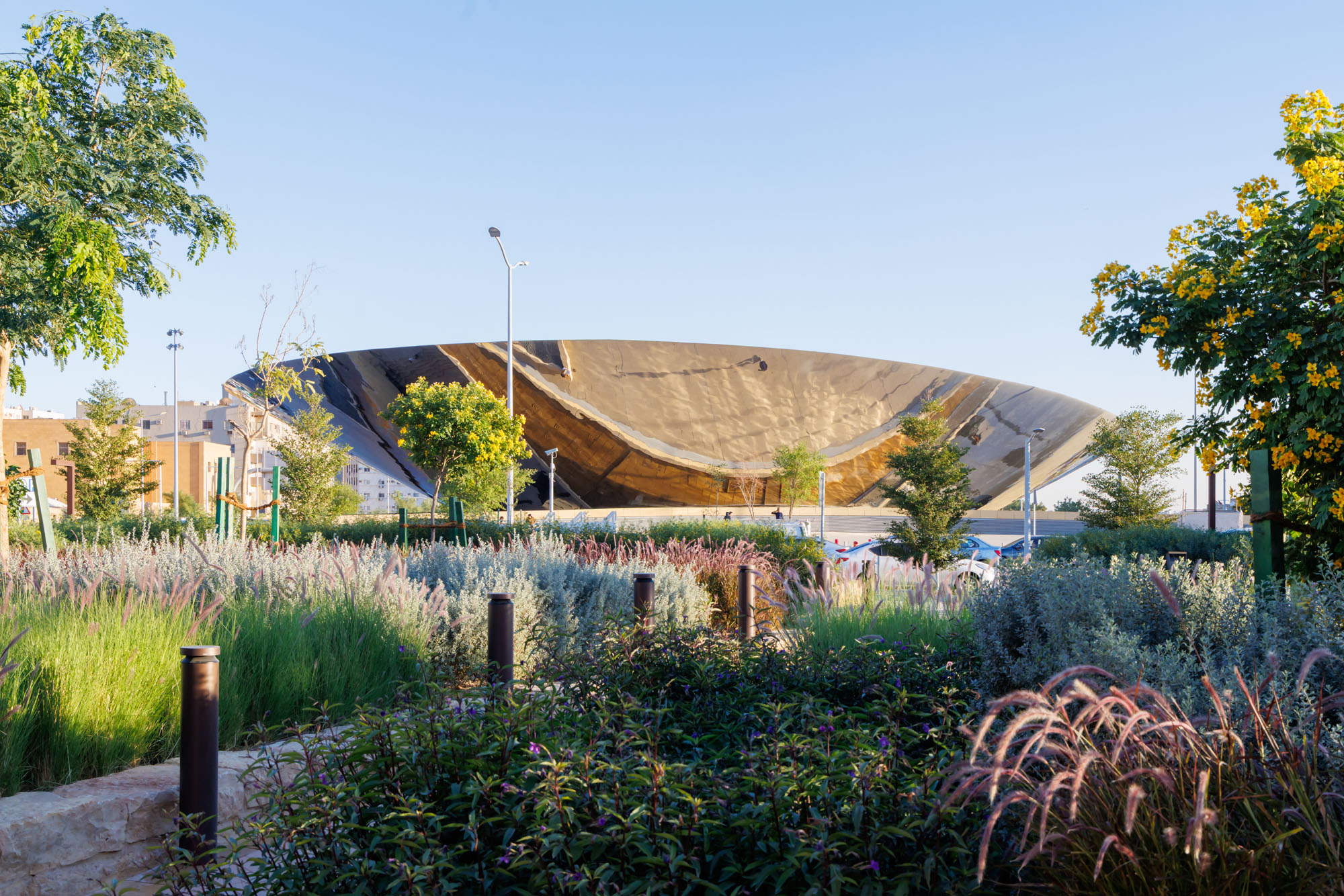
潜望鏡のように機能する巨大な鏡面状のステンレス製キャノピーを頂き、周辺の歴史的な街並みと新しいインフラをシームレスに結びつけています。
注目ポイント
- まちと地下を視覚的につなぐ、鏡面ステンレスの巨大キャノピー
- 歴史的文脈とシームレスに連続する市民広場
- ガラスチューブがもたらすダイナミックな空間体験と経路誘導
- 環境制御とアートが融合する地下35mのオアシス
(以下、スノヘッタから提供されたプレスキットのテキストの抄訳)
©︎ Iwan Baan
©︎ Iwan Baan
リヤドのモビリティを向上する〈カスル・アル・ホクム地下鉄駅〉
リヤドの〈カスル・アル・ホクム地下鉄駅〉は、サウジアラビアの首都に新設された地下鉄ネットワークの主要路線2本を接続する結節点である。低排出な交通手段を誰もが利用できるようにするだけでなく、市内の主要地区を結び、急成長を遂げる都市の交通渋滞緩和に大きく貢献している。
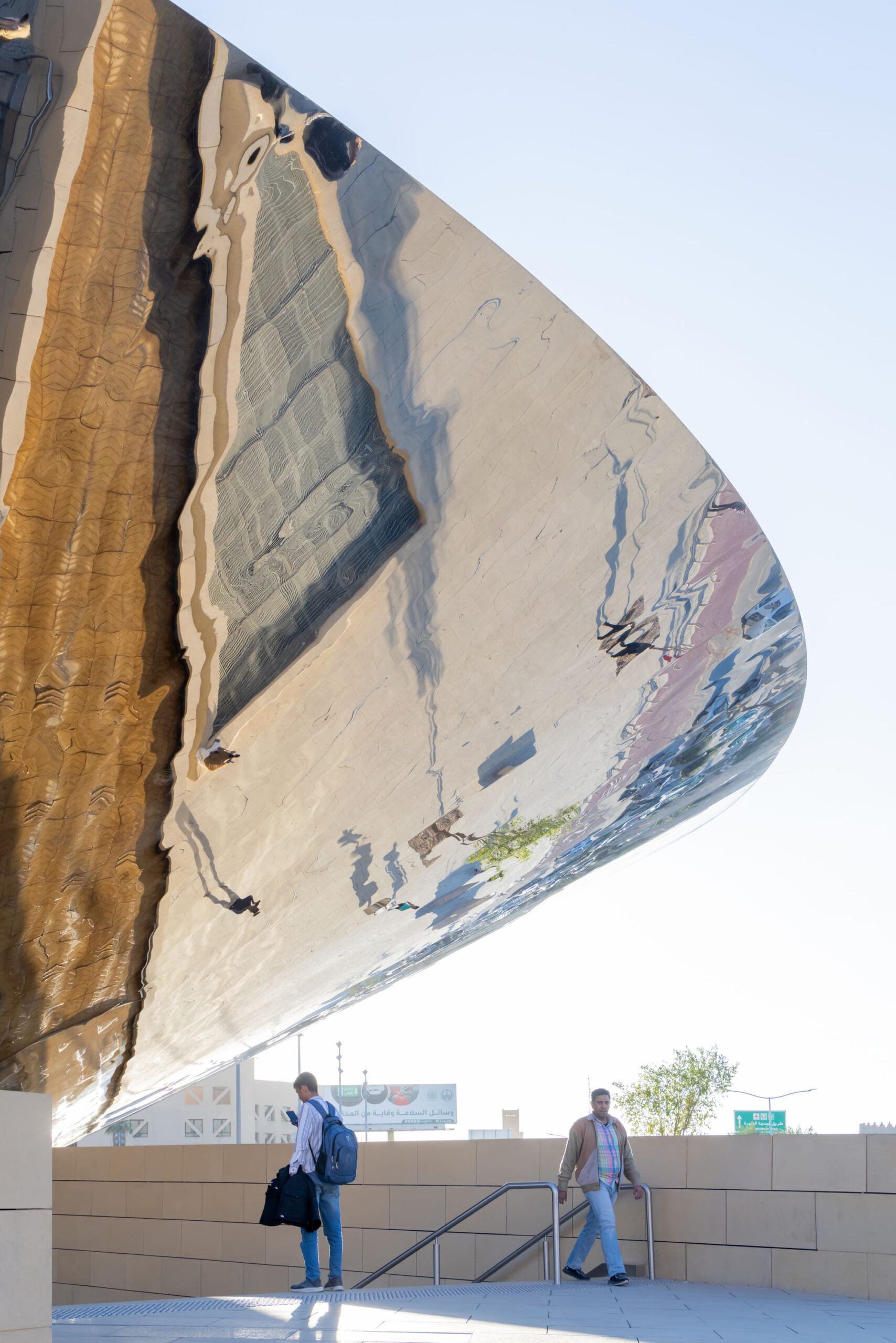
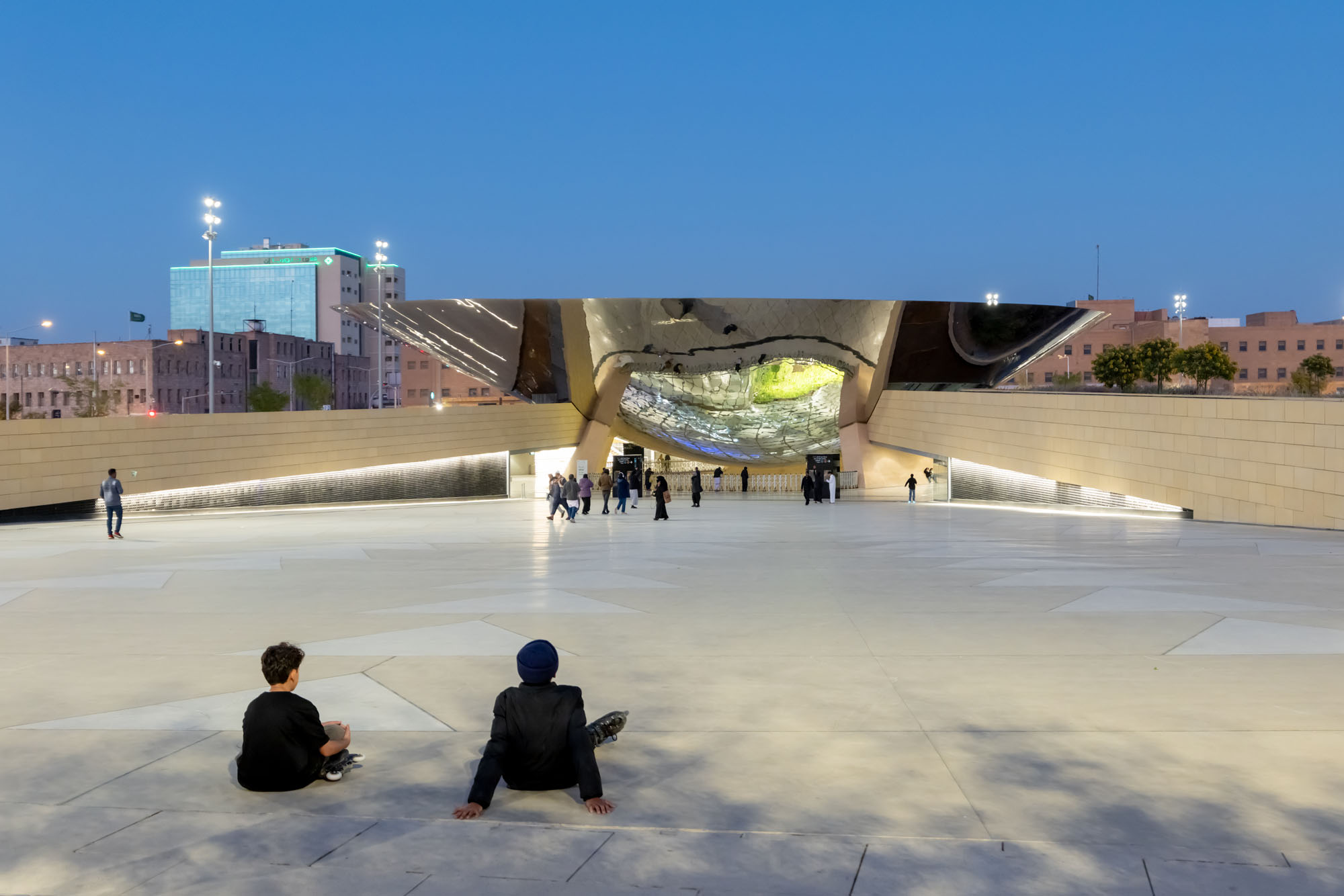
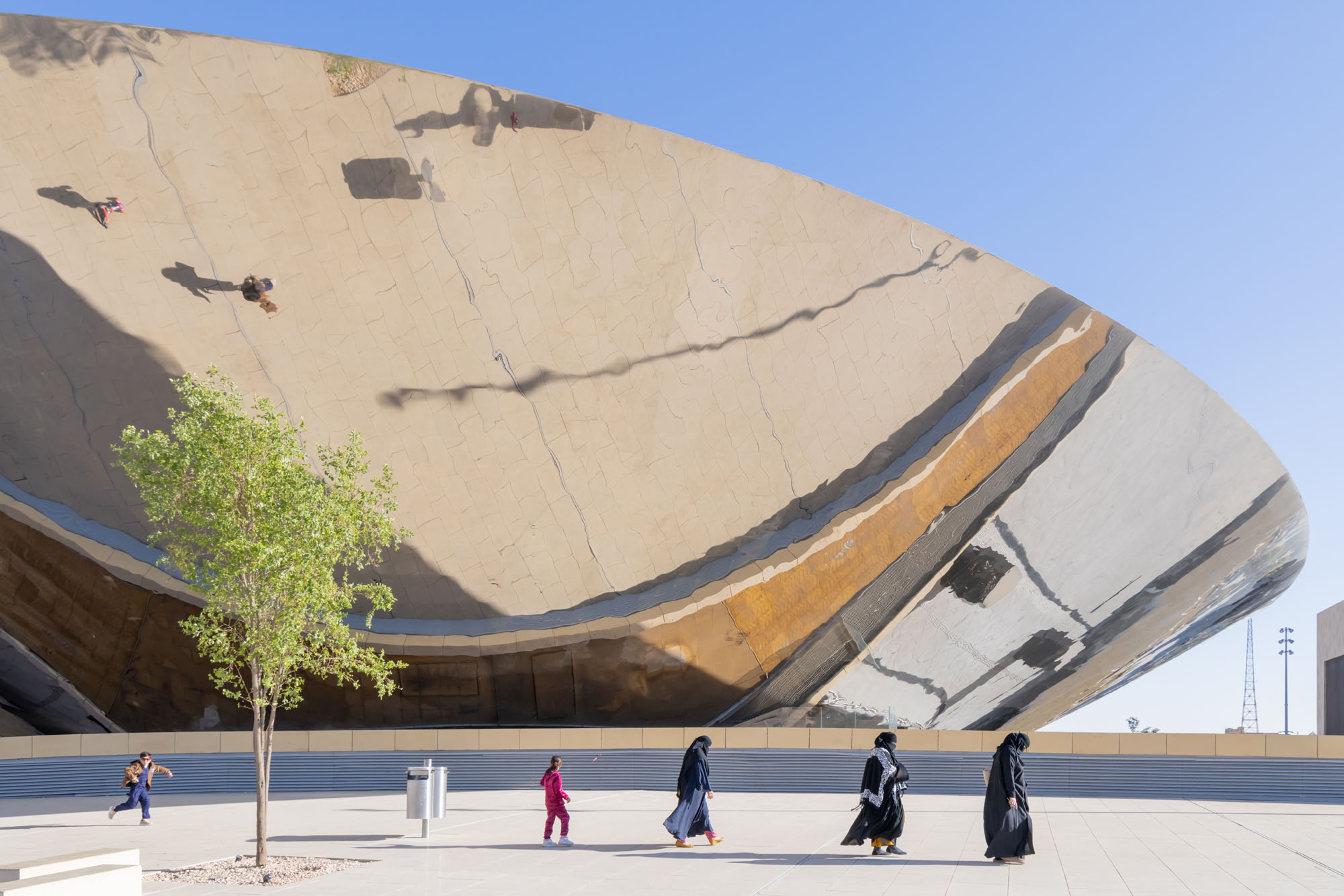
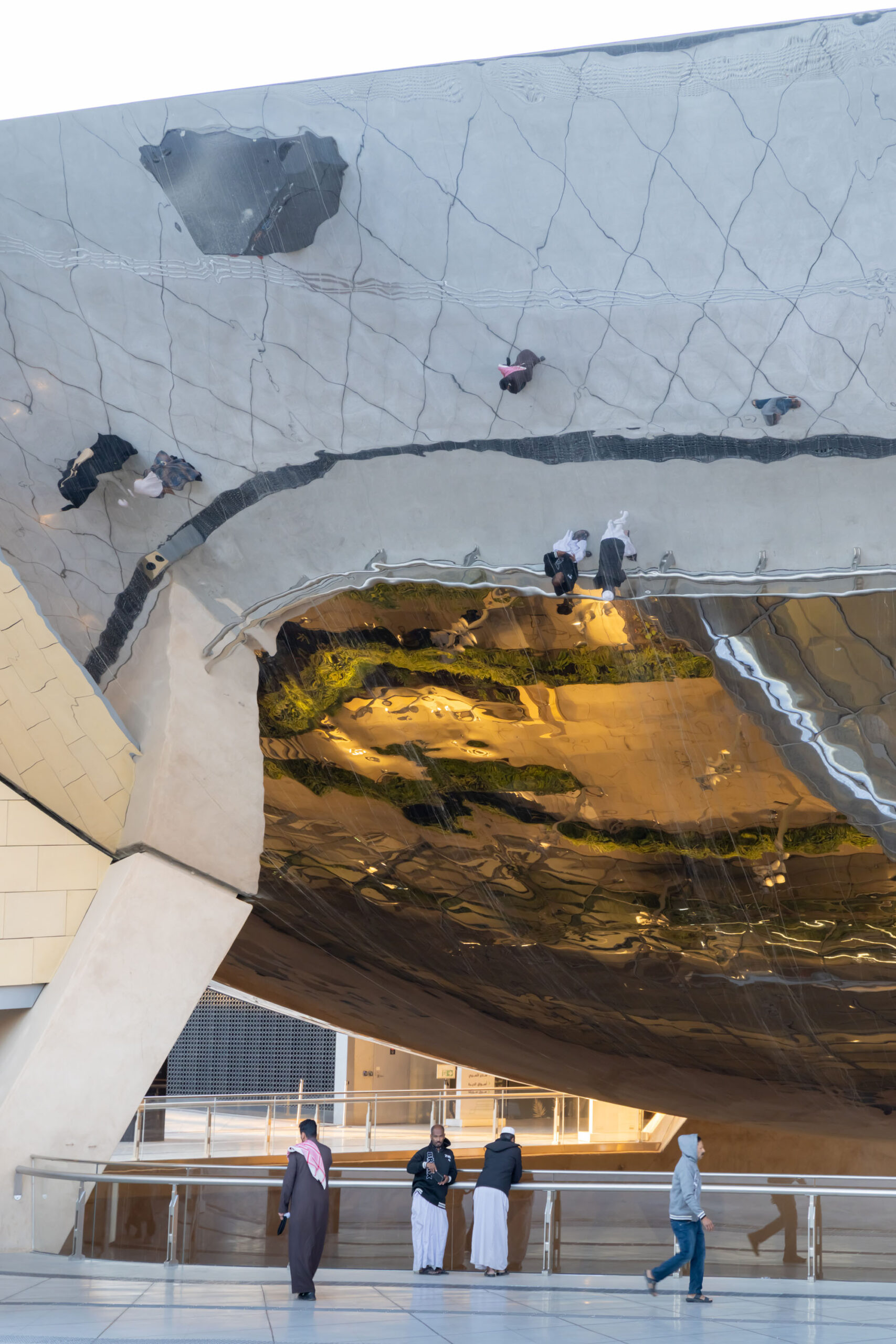
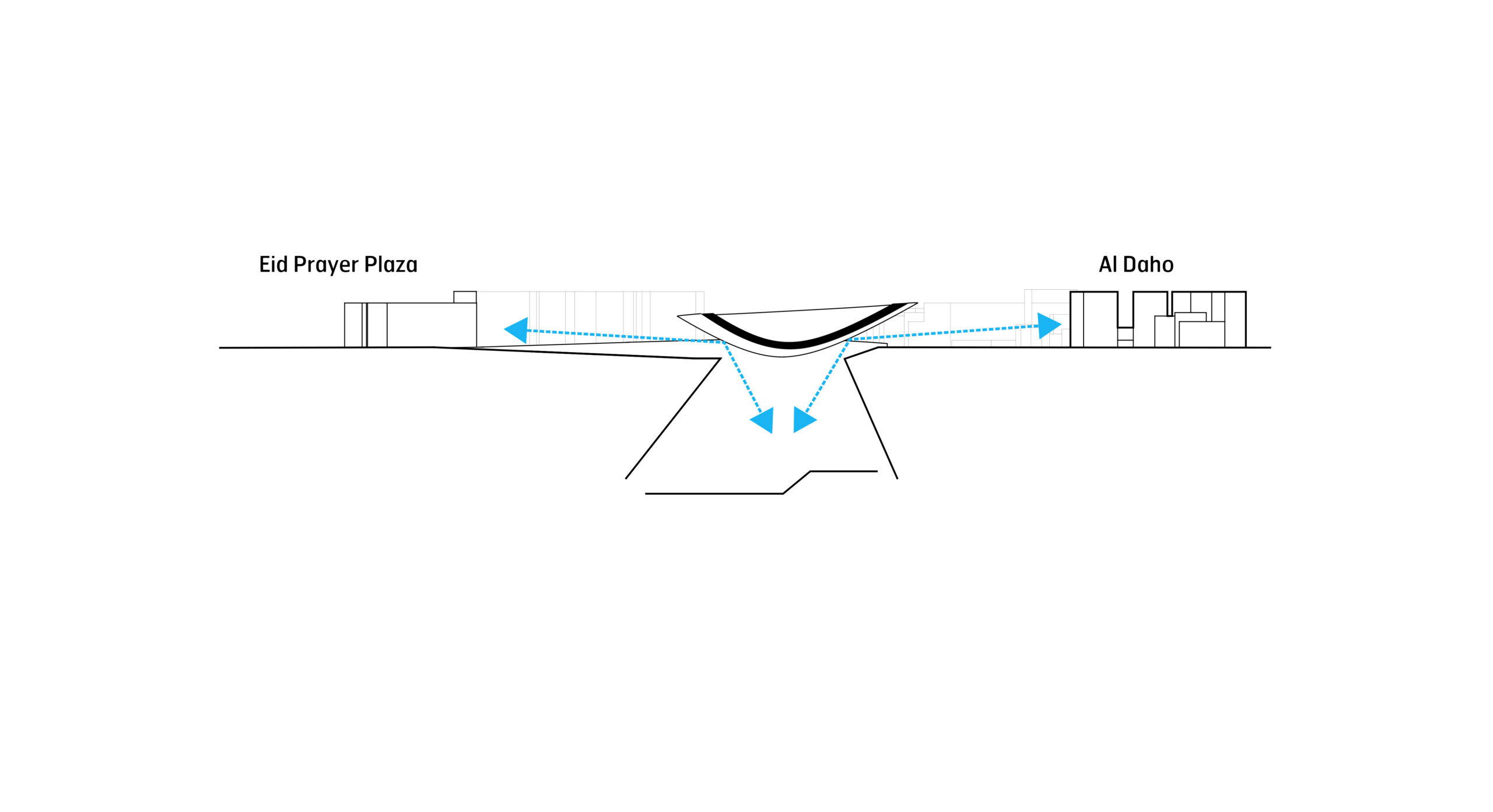
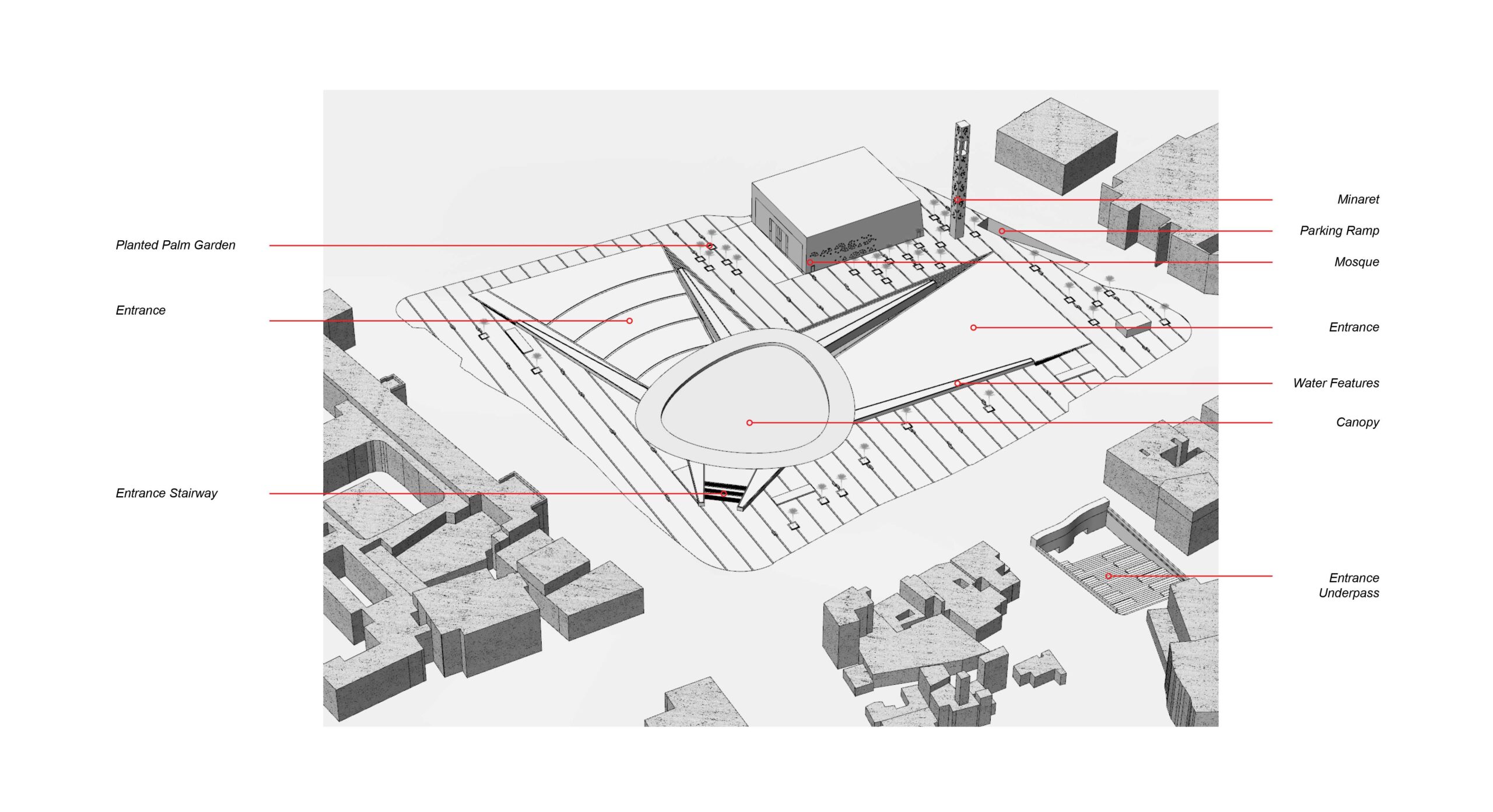
本駅は、大型のステンレス製キャノピーを備えた開放的な歩行者広場として設計されている。潜望鏡のような仕組みをもつ鏡面状の張り出し構造によって各階が視覚的に連結されており、外部の風景を内部に、内部の様子を外部に映し出す。それと同時に、自然光を地下駅へと導き、周辺の公共エリアに快適な日陰を提供している。
©︎ Iwan Baan
©︎ Iwan Baan
祈りの場とシームレスにつながる公共空間
リヤドの歴史的中心部に位置し、旧宮殿や古い日干しレンガの建築群に近接するこの敷地は、重要なイード(祝祭)の礼拝広場に隣接している。この広場は、毎年行われる祭事の際に集結し、そして解散していく数万人規模の人々の流動を収容できる規模で設計されている。
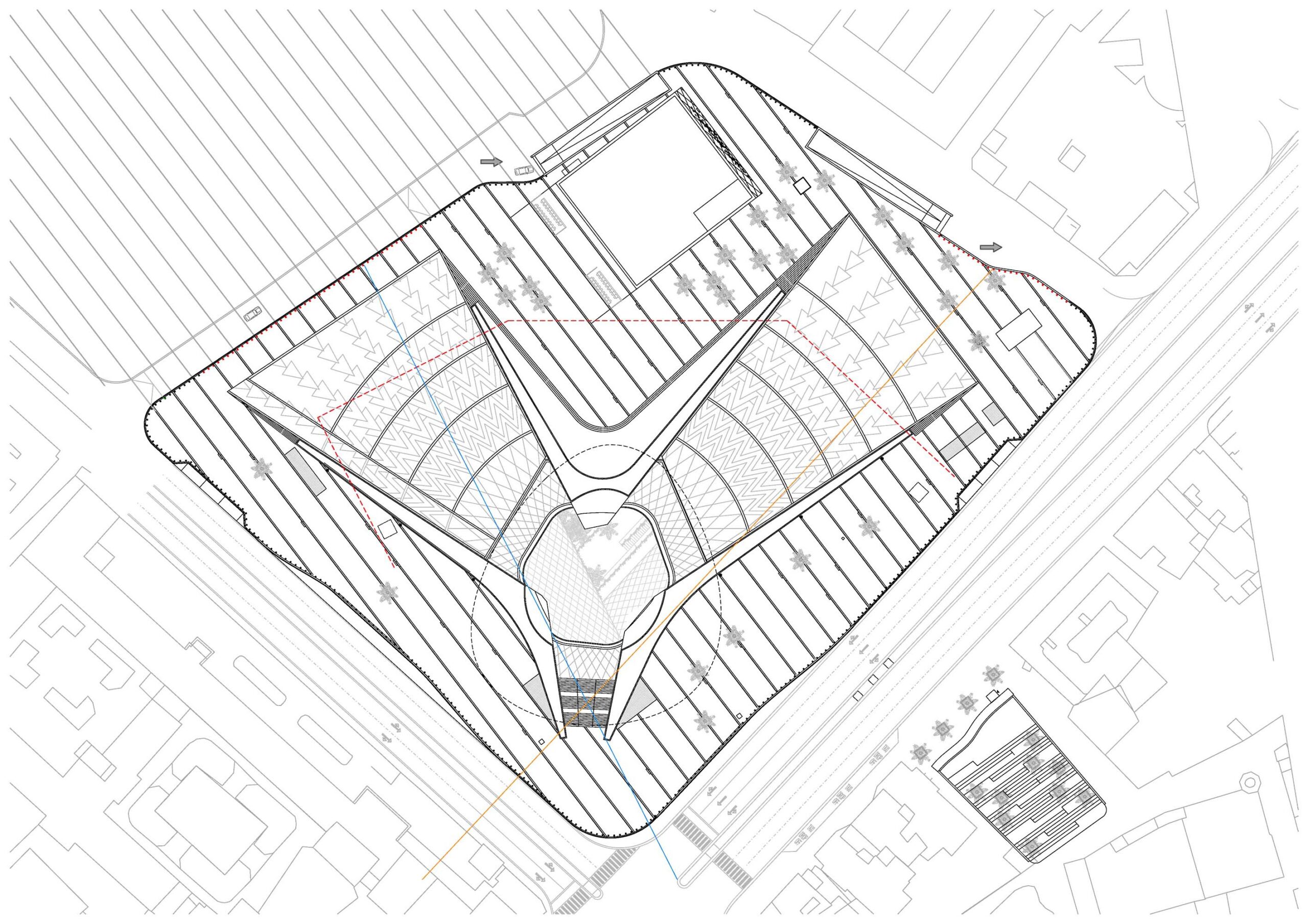
広場エリアには滑らかなテラゾー舗装が敷き詰められ、敷地の端まで延びることで、そこが明確に公共の市民空間であることを示している。この広大な空間は、地下鉄駅と新モスク(敷地構造の大幅な変更に伴い本プロジェクト内で再建)の公共機能に専念するための、統一された地表面を形成している。
また、メッカの方向に沿って配置された照明付きの排水路により、この空間はモスクの屋外の延長としても機能し、内部と外部をシームレスに融合させている。
©︎ Iwan Baan
©︎ Iwan Baan
まちのランドマークとなるキャノピー
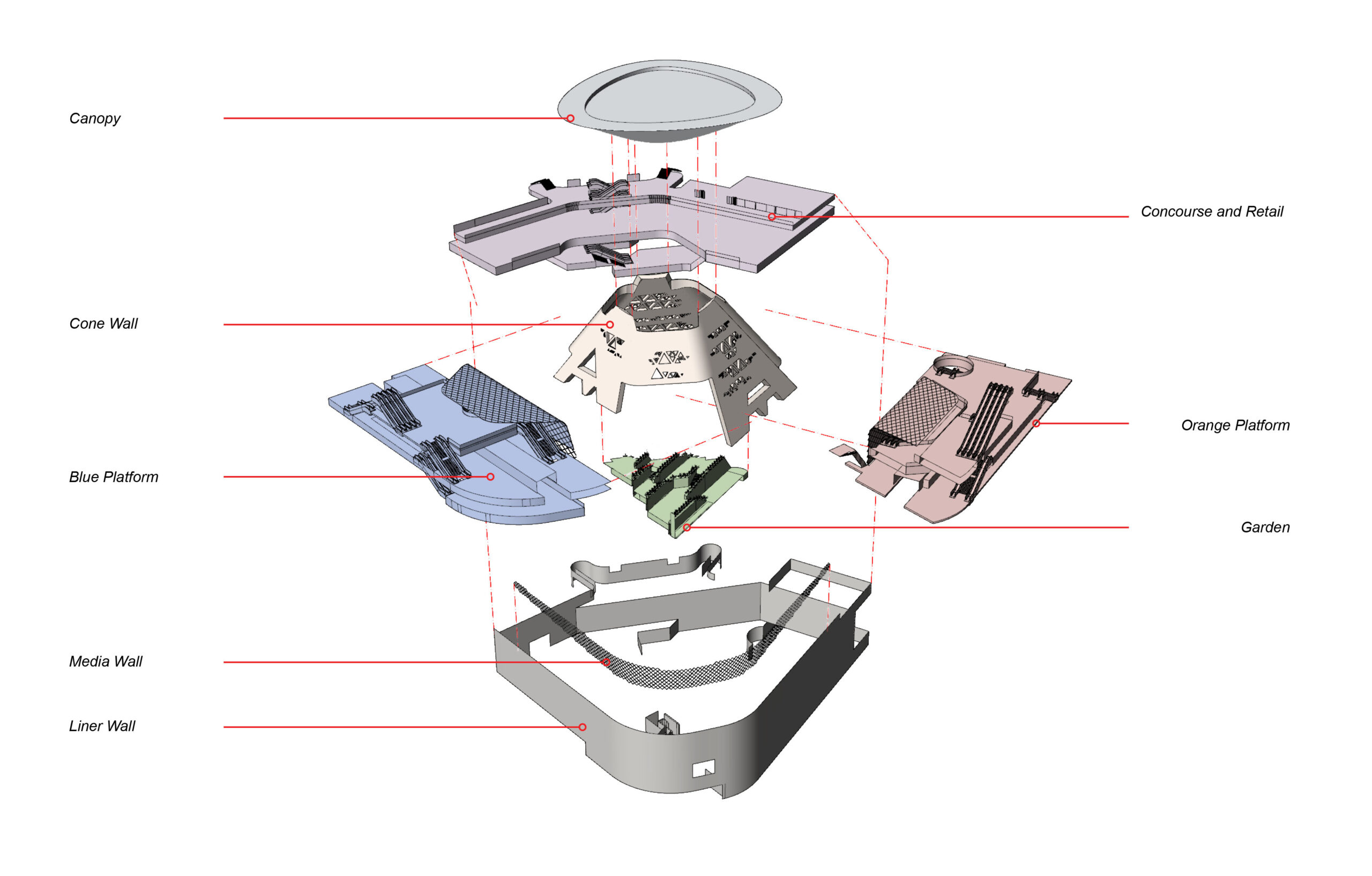
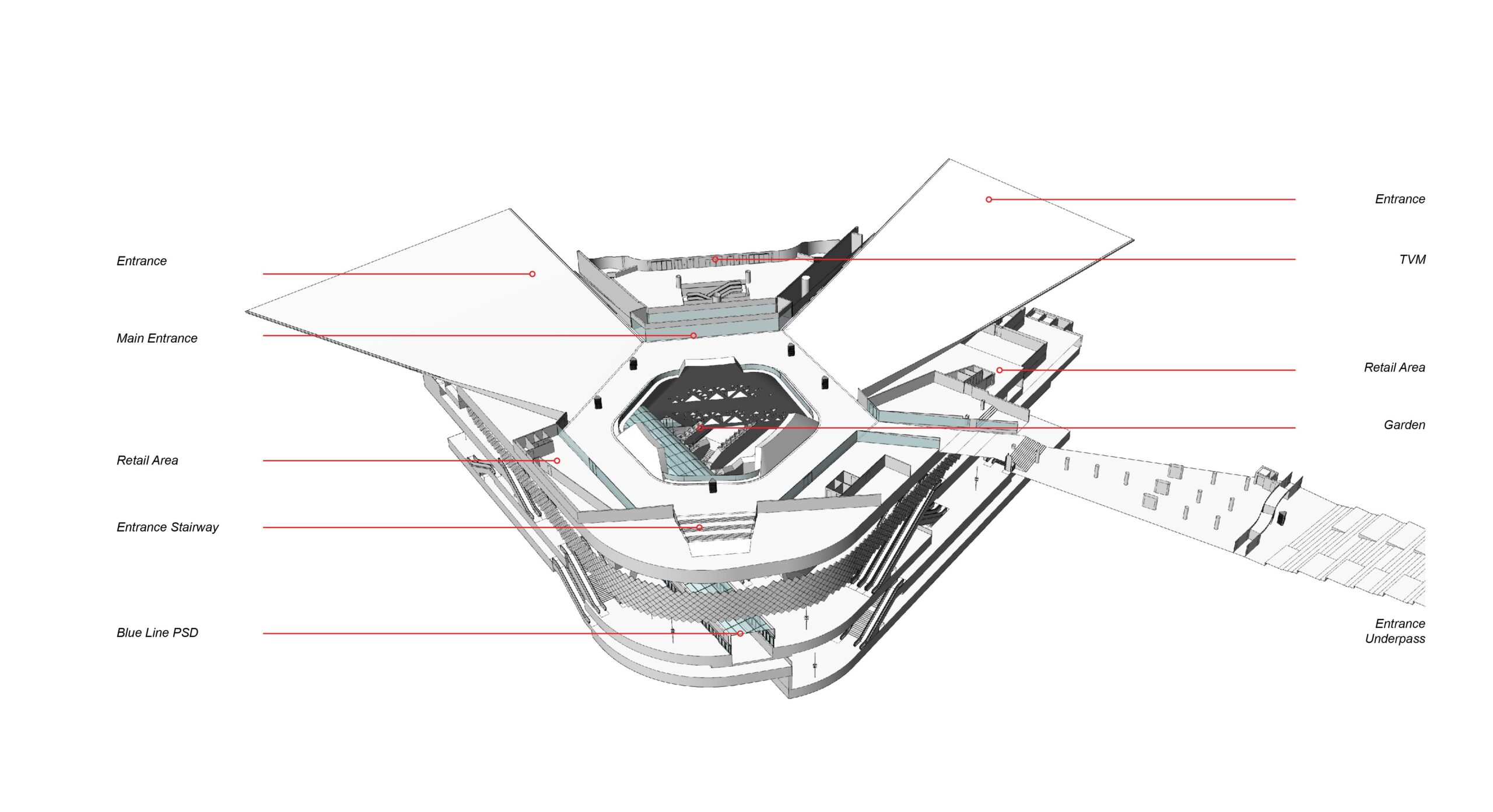
鋼製のキャノピーは空間の焦点となり、駅のメインエントランスを力強く示している。その光沢のある外装は、8mm厚の二重曲面ステンレス鋼パネルで構成されており、完全に溶接・研磨されることで、滑らかで継ぎ目のない美しい外観を実現している。
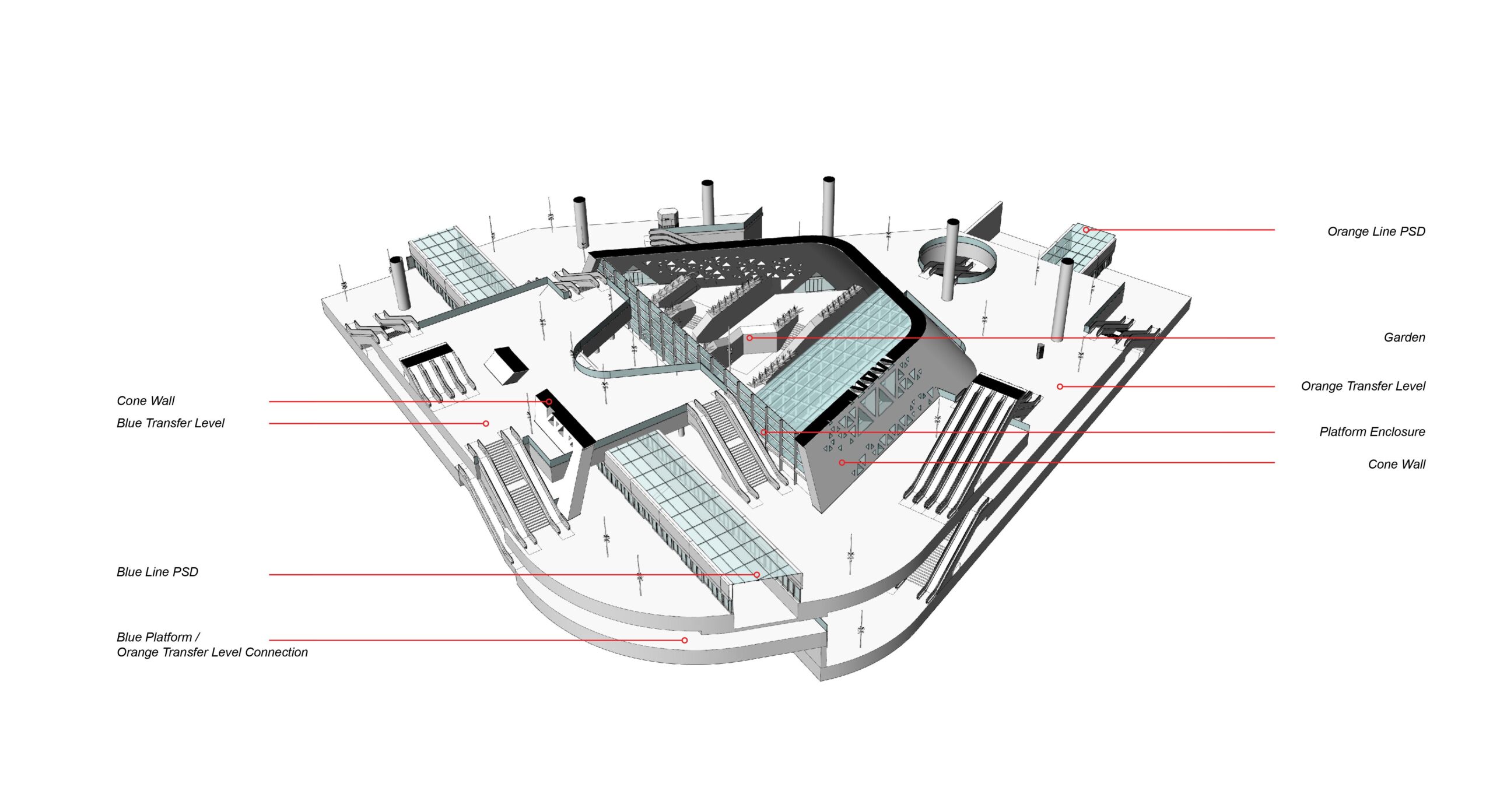
支持構造である鋼製空間フレーム(ステンレス外装との接続用に調整可能なタイロッドを備えた、軽量かつ高強度の鋼構造)により、キャノピーは基部である巨大な円錐状の壁を超えて上方に大きく張り出している。一方、地下レベルの傾斜した内壁は、地域の伝統建築に着想を得たレンダリング仕上げで覆われている。
建築上の統一要素として、また建物内におけるオリエンテーション(方向確認)のポイントとしての役割も果たすこの鋼鉄製のキャノピーは、その鏡のような表面から間接的な太陽光を下方へと反射させる。さらに、エネルギー生産用の太陽光発電パネルが、キャノピー屋根の上部に取り付けられている。
「電車を降りて見上げると、キャノピーの下側にまちの360度の景色が映し出される。そのため、自分が街のどこにいるのかがすぐに認識できるのである。同様に、まちから駅に向かう場合、キャノピーを見上げると、その下で行われているすべての活動が映し出されている。」
プロジェクトリーダー兼パートナー
ロバート・グリーンウッド(Robert Greenwood)
©︎ Iwan Baan
歴史と未来を視覚的につなぐ交差空間
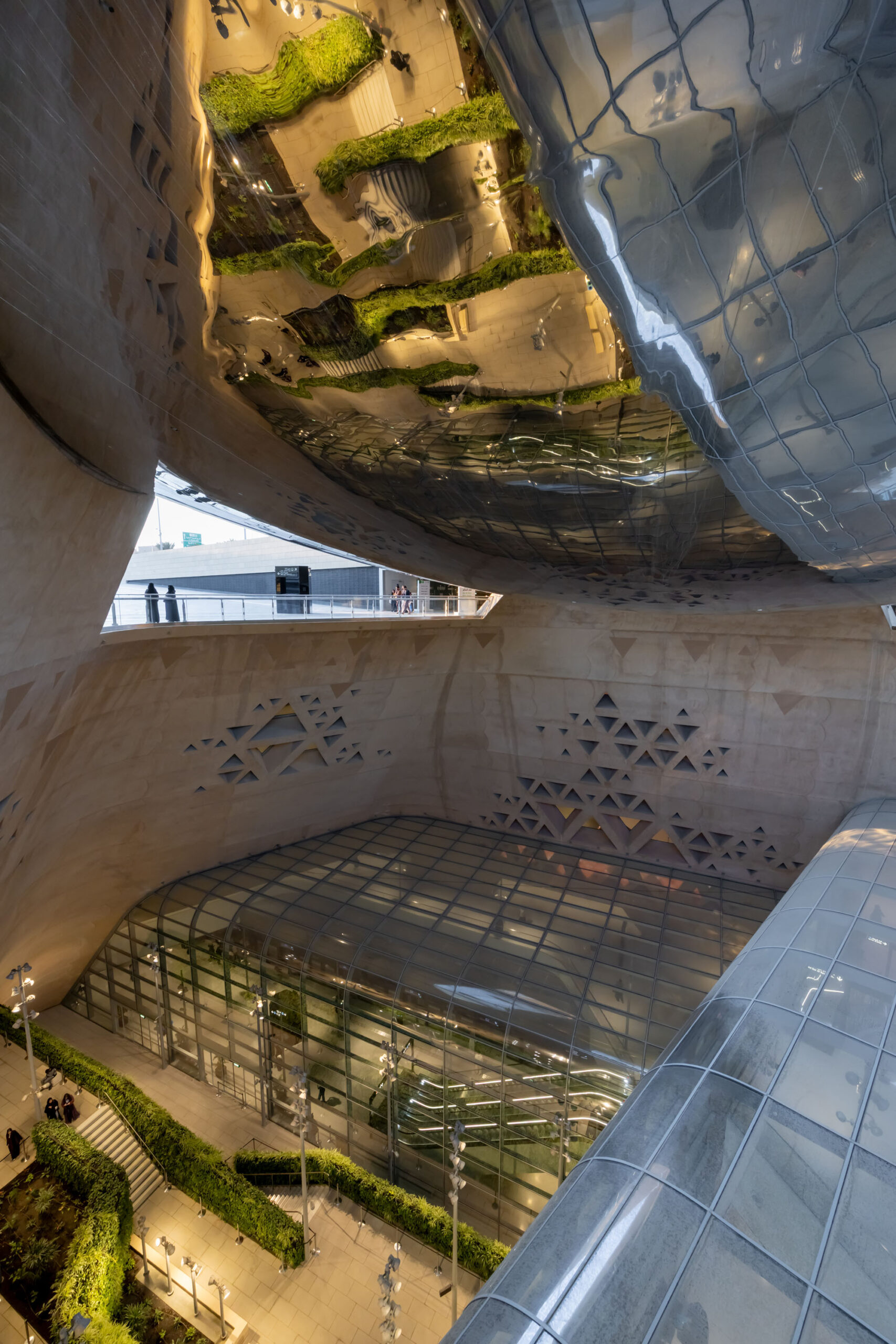
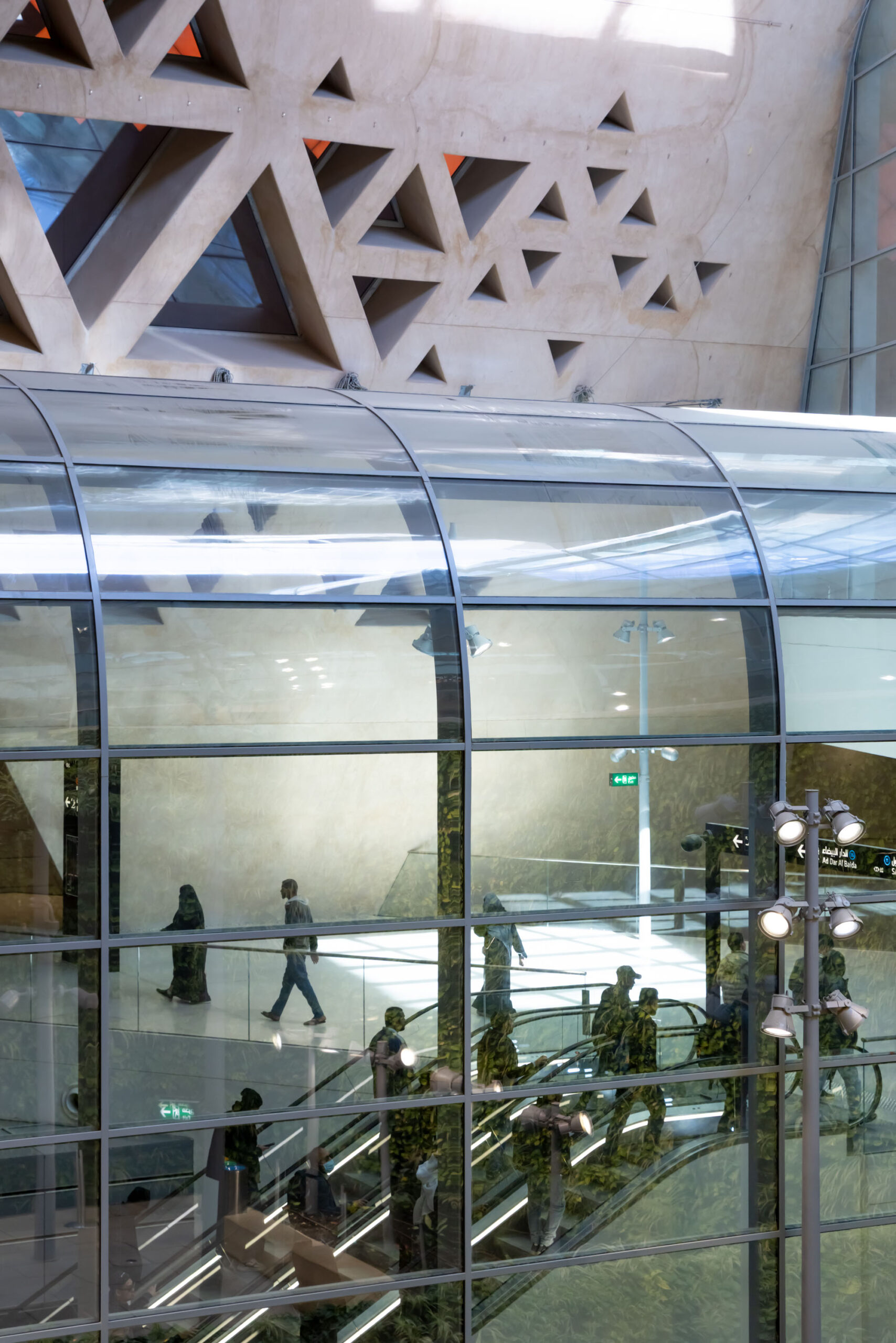
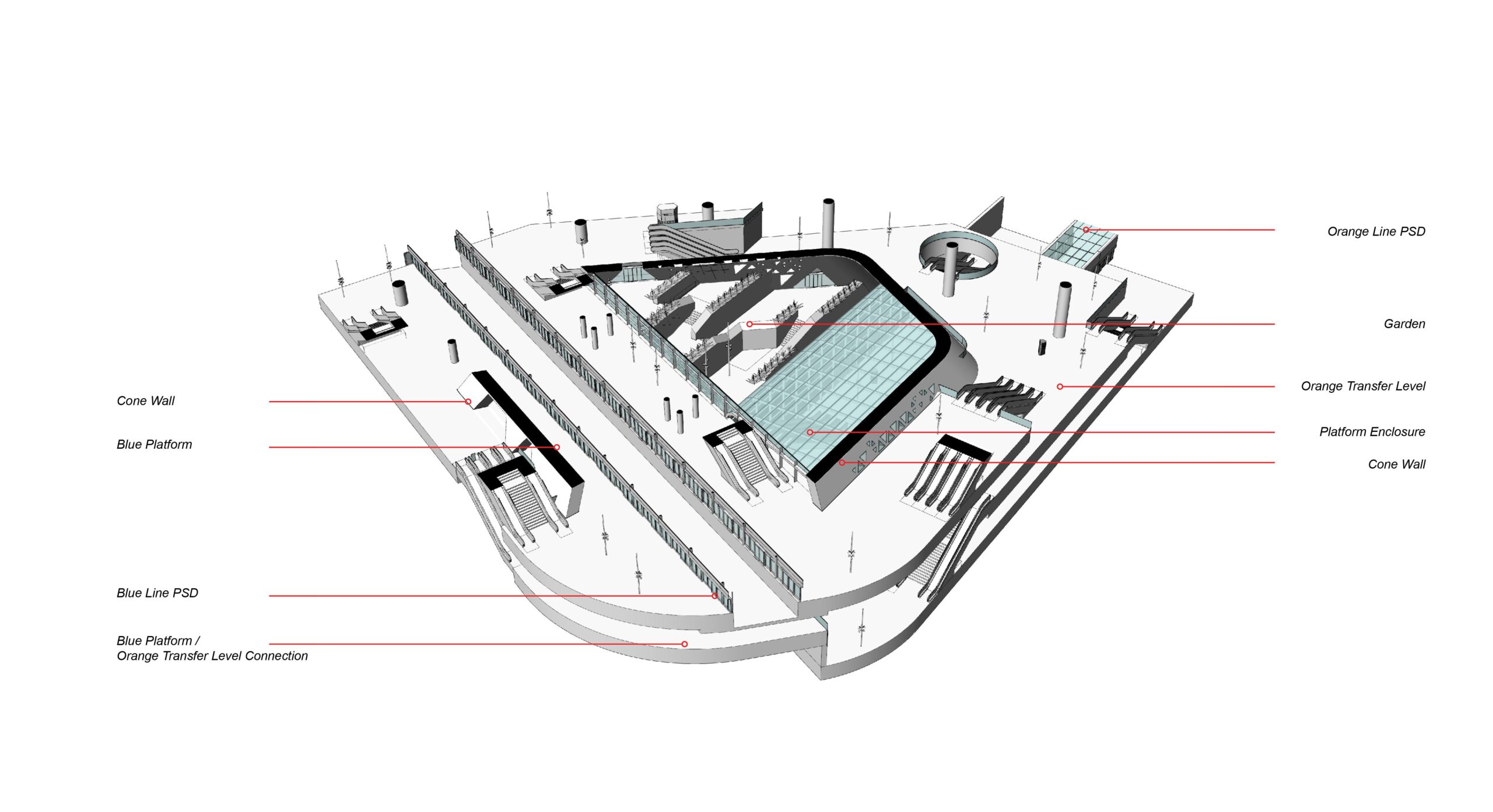
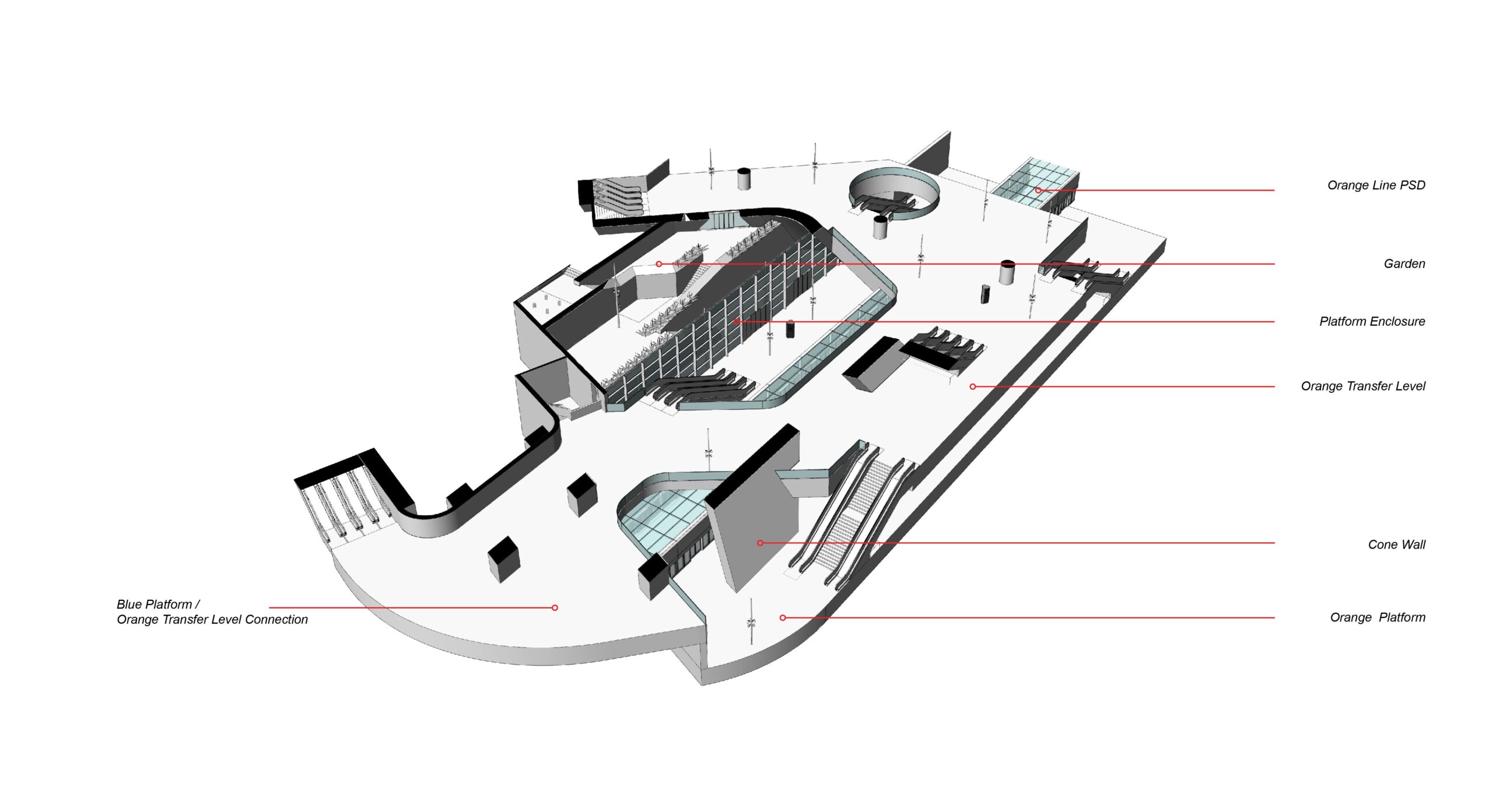
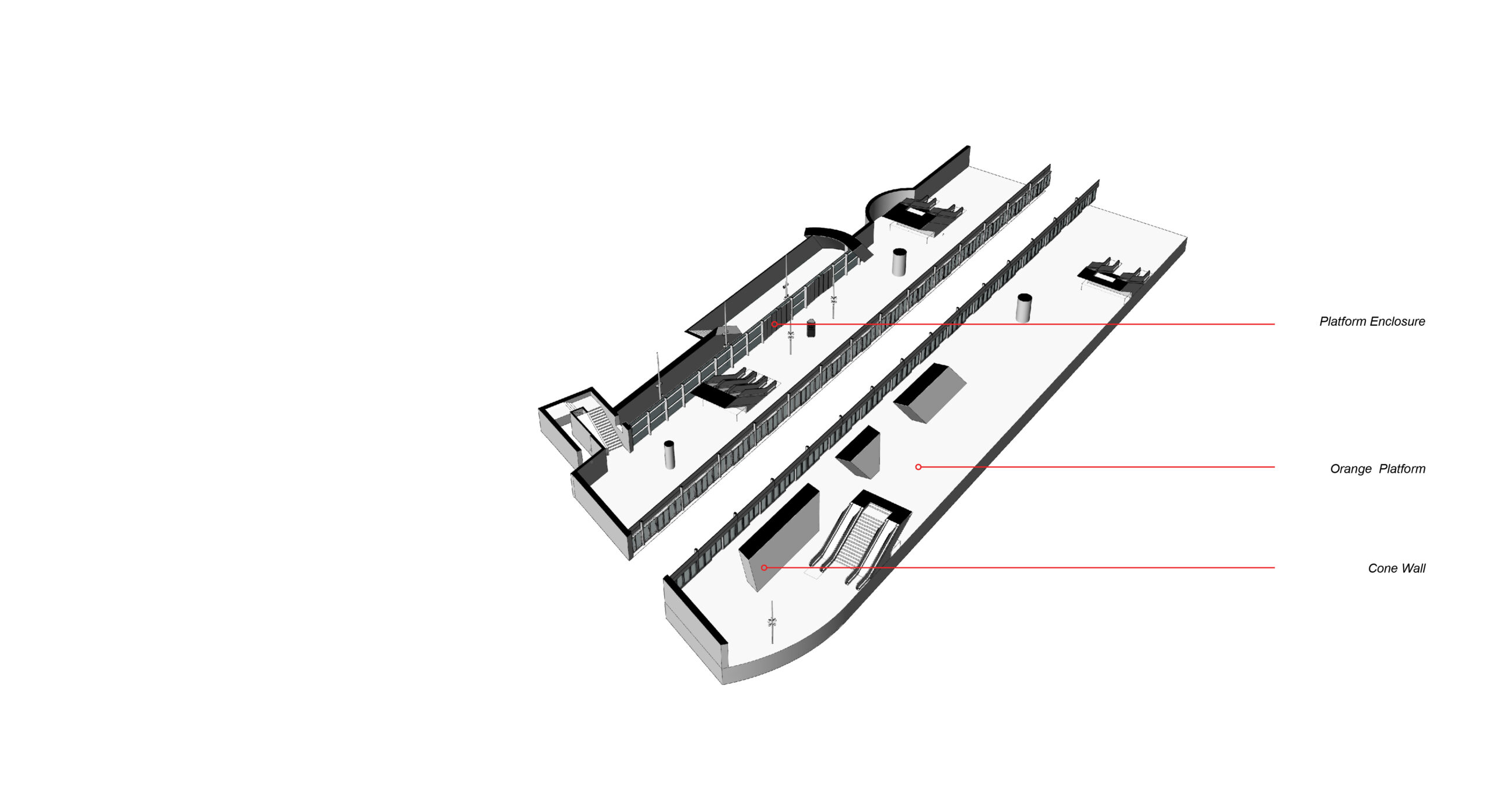
2つの地下鉄路線は、透明なチューブに包まれてオープンスペースを横断しており、印象的な視覚的効果を生み出すとともに、駅全体の道案内機能を強化している。
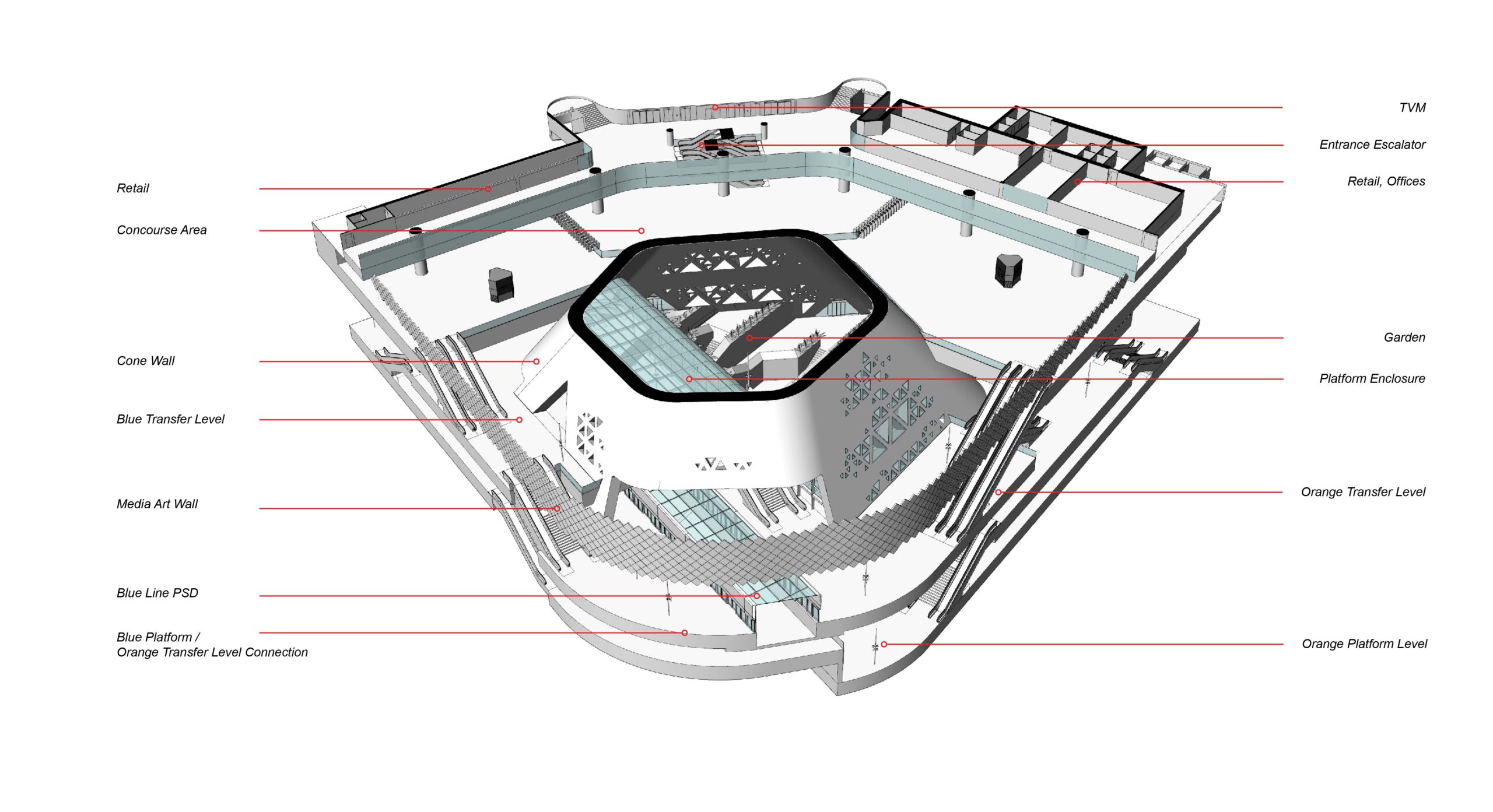
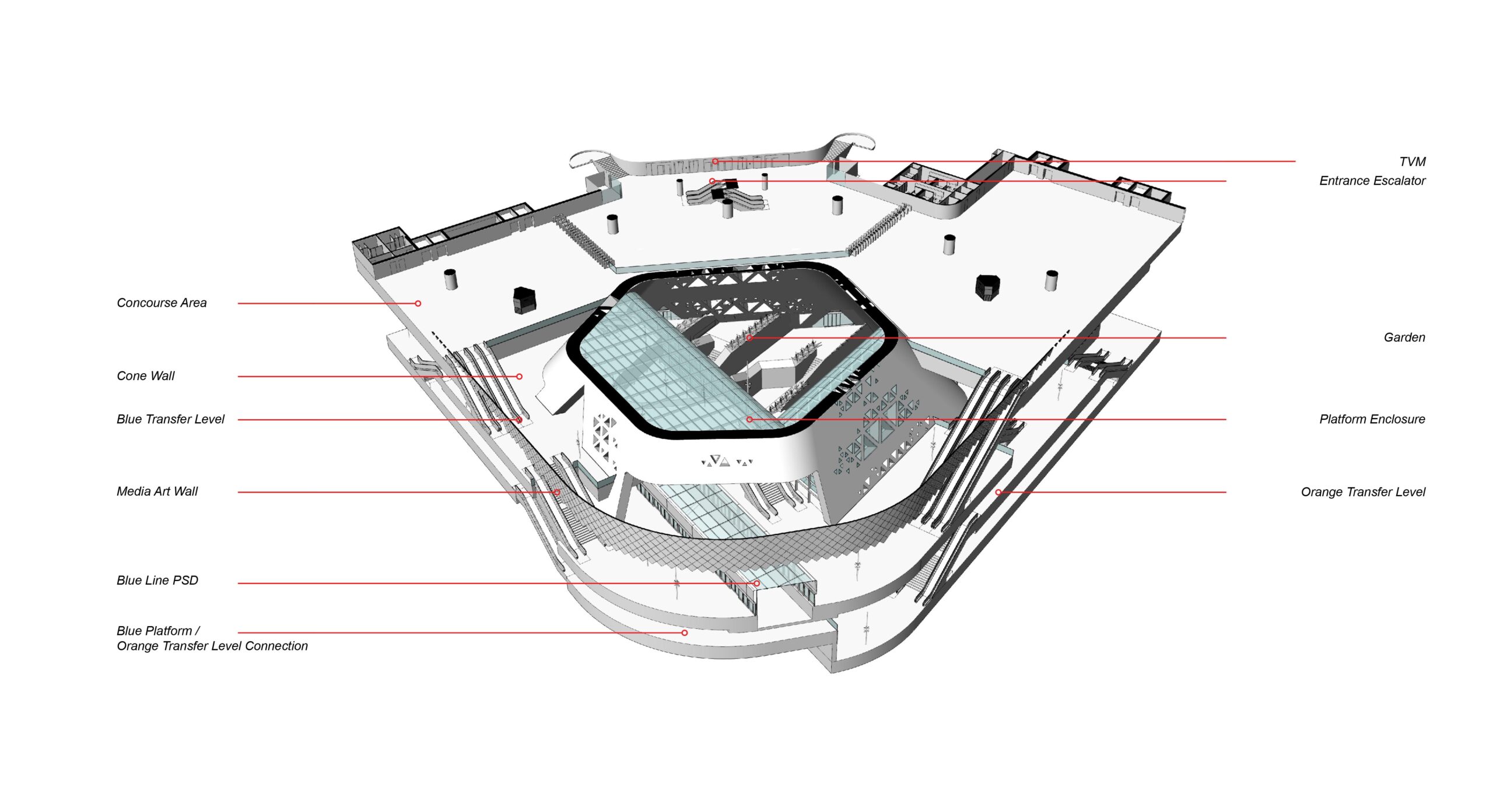
プラットフォームは、アトリウムの空間に突き出た大きなガラス管にそれぞれ囲まれており、屋内と屋外のシームレスな統合を実現している。これにより、到着する乗客と出発する乗客の双方に対して、プラットフォームの空間を壮大なアトリウムへと開放している。
電車に乗って通り過ぎるだけの乗客にとっても、この光景はリヤドの歴史的なダウンタウンの重要性と、歴史あるものと新しいものとのつながりを象徴する体験となる。
「リヤドにおける公共交通の導入は画期的な前進である。この駅は性別や社会的地位に関わらず、すべての市民のための場所として設計されており、環境的・社会的な持続可能性を促進するものである。新設の広場と庭園は公共領域をさらに強化し、近隣コミュニティに貴重な共有空間を提供している。」
スノヘッタ 創設パートナー
ケティル・トラーダル・ソーセン(Kjetil Trædal Thorsen)
©︎ Iwan Baan
©︎ Iwan Baan
快適な環境を提供する地下のオアシス
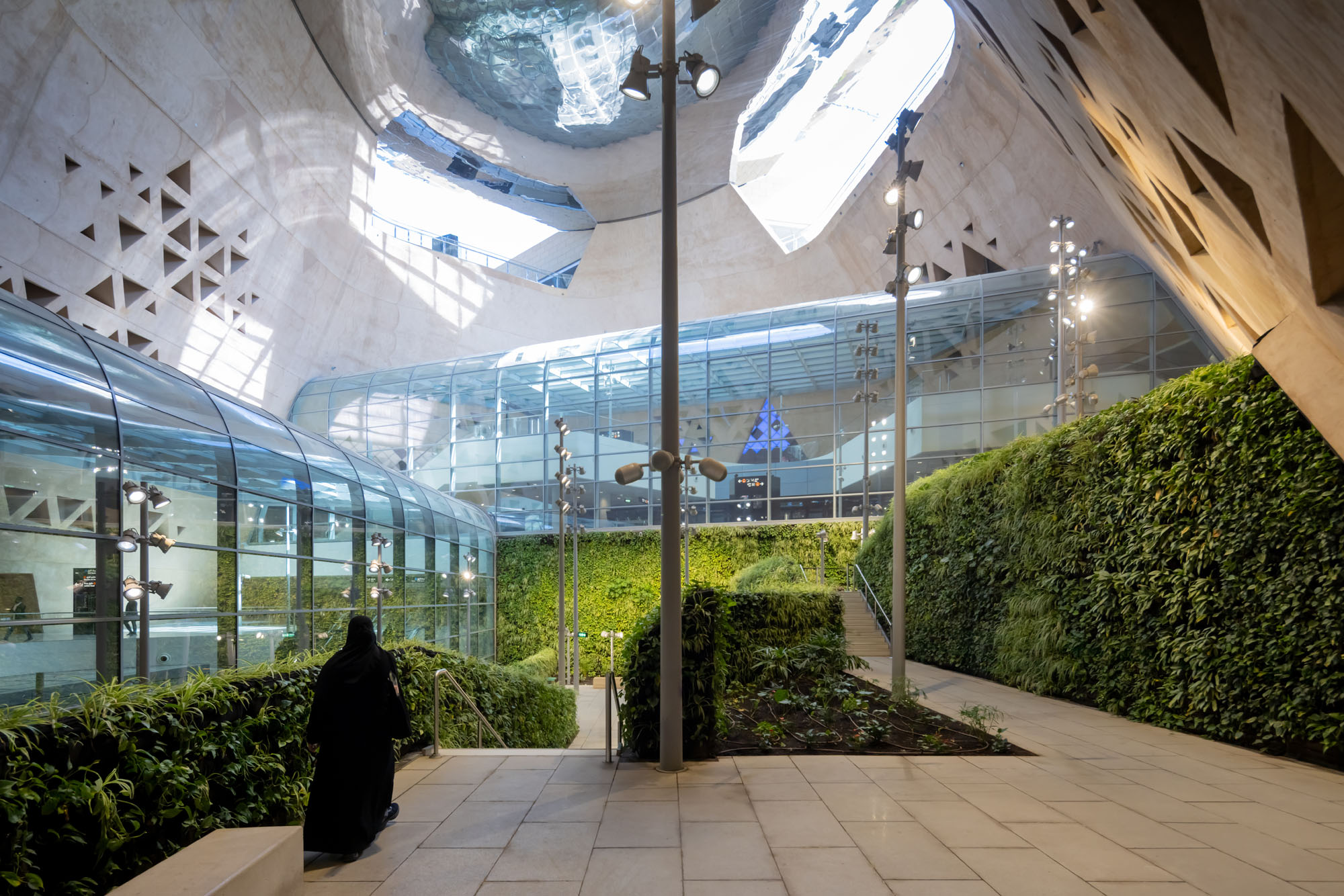
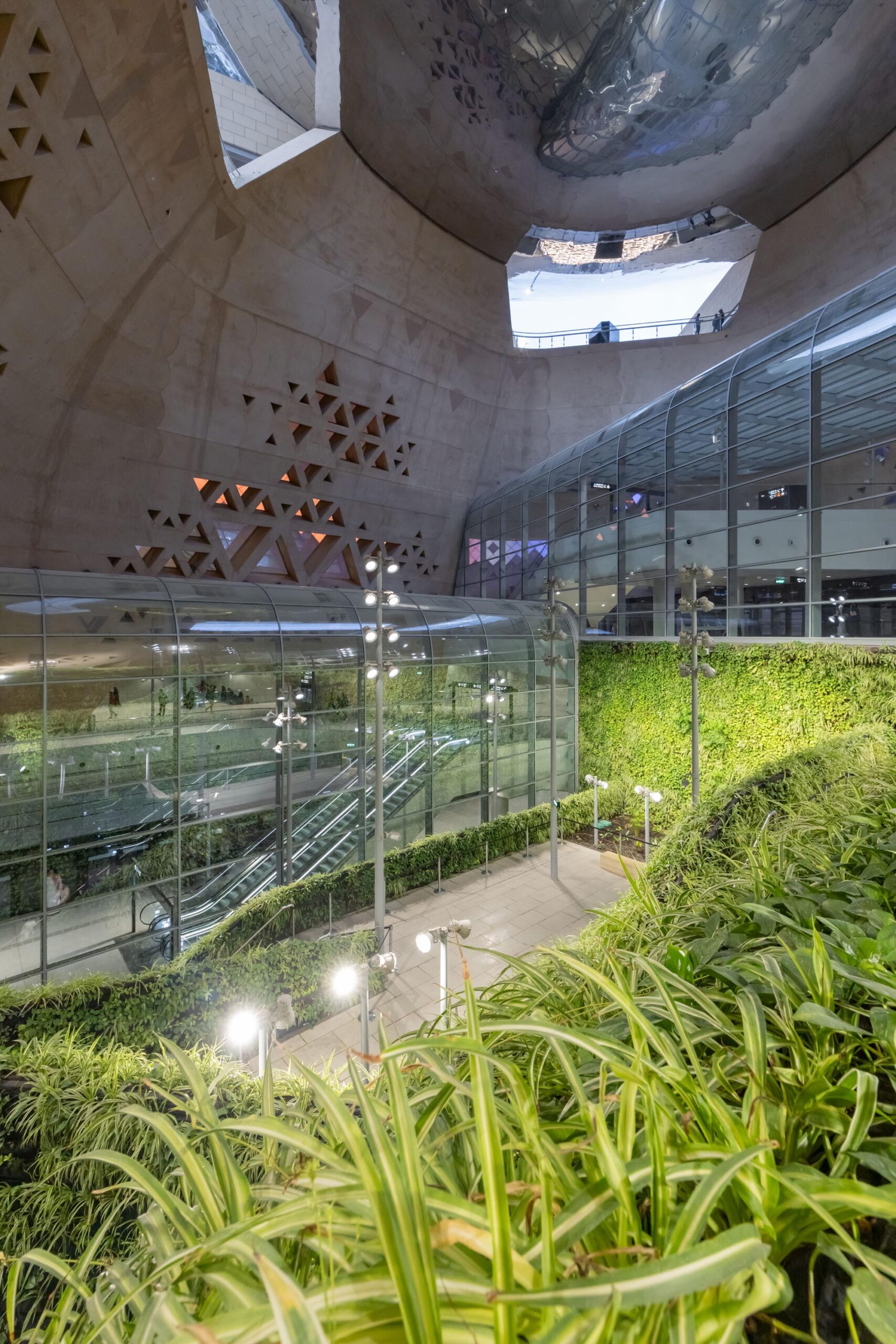
アトリウムの基部には、誰もがアクセス可能で温度調節された庭園が設けられている。2つの路線と乗換階から行き来できるこの庭園では、乗客が列車を待つ間、日陰となる緑地でくつろぐことができる。
市街地の地表面から約35mの地下に位置するこの庭園は、暑い夏季であっても温和な環境を維持する。なお、灌漑用水には舗装された広場エリアと上部のキャノピーから集められた水が活用されている。
©︎ Iwan Baan
©︎ Iwan Baan
伝統様式と最先端メディアアートの調和
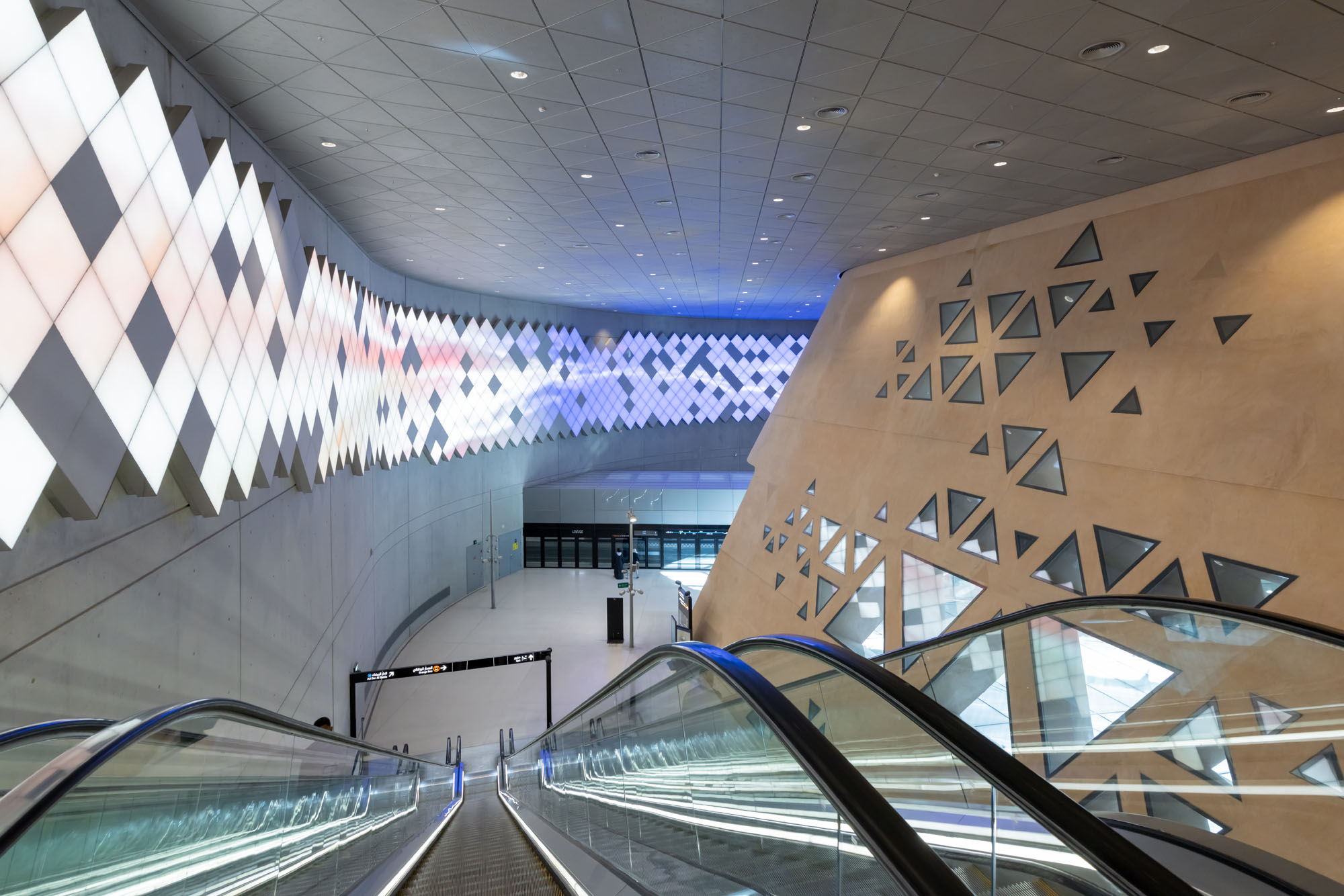
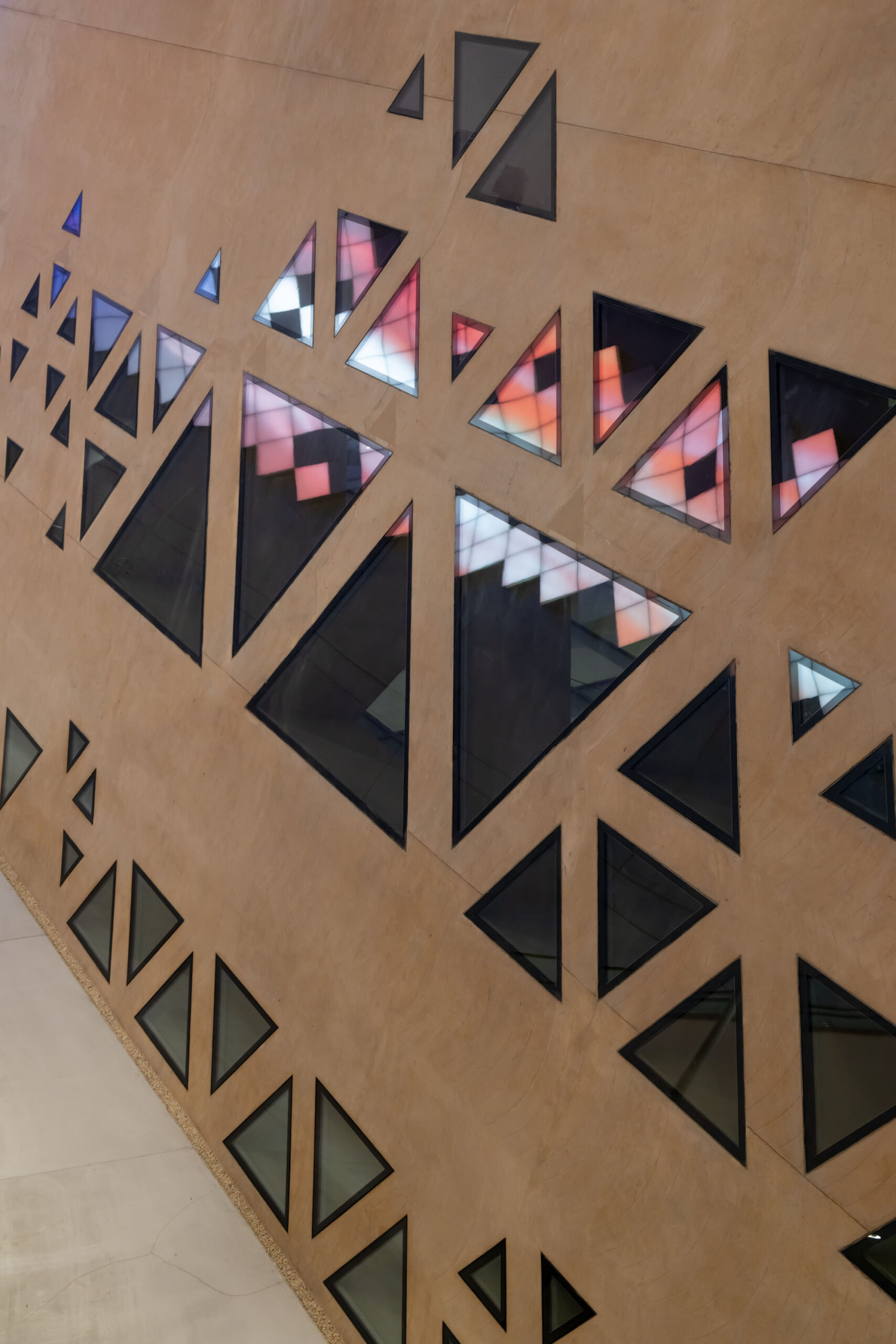
駅がもつ歴史的背景を尊重し、内側アトリウムの壁面には伝統的なナジディ様式のモチーフに着想を得た窓切り模様が施され、周辺地域の建築的特徴を色濃く反映している。駅の異なる区画間にほのかな視界の繋がりを生み出すように設計されたこの模様は、3種類のサイズの三角形彫刻326個で構成されており、アトリウム内に柔らかな光を導き入れる役割を果たす。
コンクリートの円錐壁の外側では、ライナー壁に全長100mを超える連続したメディアアートのインスタレーションが施されており、光と芸術的な演出を可能にしている。音響・照明・映像ユニットを組み合わせた879枚のパネルで構成されるこのメディアアート壁は、独立したデザイン要素であると同時に、空間の動的な背景としても機能する。
メディア壁を横切る光の移り変わりは、主要な動線空間のスケールとプロポーションをユーザーに直感的に理解させ、方向感覚と全体的な経路誘導戦略の両方をサポートしている。表示されるコンテンツは変化するものの、メディアアート壁は常に滑らかで落ち着いた視覚表現を維持するよう設計されており、高速で走る列車とそれに向かう人々の絶え間ない流れに対して、意図的な対比をもたらしている。
©︎ Iwan Baan
©︎ Iwan Baan
©︎ Snøhetta
©︎ Snøhetta
©︎ Snøhetta
©︎ Snøhetta
©︎ Snøhetta
©︎ Snøhetta
©︎ Snøhetta
©︎ Snøhetta
©︎ Snøhetta
©︎ Snøhetta
©︎ Snøhetta
以下、スノヘッタのリリース(英文)です。
Qasr AlHokm Metro Station
Elevating urban mobility in the city of RiyadhIntroduction
The Qasr Al Hokm Metro Station in Riyadh is connecting two of the main lines in the Saudi capital’s brand-new metro network. In addition to making low-emission transport available to everyone, it links key districts and helps reduce traffic congestion in the rapidly growing city.
The station is designed as an open pedestrian plaza with a large stainless-steel canopy. The station levels are visually linked through the mirror-like overhang structure – like a periscope – reflecting the outside inwards and the inside outward, while also directing natural light into the underground station and providing shade to the surrounding public areas.
Technical details
Typologies: Public Space, Infrastructure
Status: Completed
Location: Riyadh, Saudi Arabia
Client: Royal Commission Riyadh City (RCRC)
Collaborators: Crew, One Works
Size: 20 000 m², 8 underground levels
Certification: Green Building Rating System: LEED 2009, Gold CertificationHistorical & cultural context
Situated in the historic heart of Riyadh, close to the original palace and the old adobe buildings, the site lies next to an important Eid prayer field, dimensioned to accommodate the movement of many thousands of people gathering and dispersing during the annual event.
The plaza area has a smooth terrazzo surface that extends to the edges of the site, clearly designating it as an open civic realm. This generous public space creates a unified surface dedicated to the public functions of the metro station and the new mosque, which was reconstructed as part of the project to accommodate significant changes to the site’s structural layout.
The illuminated drainage channels aligned with Makkah allows the space to function as an outdoor extension of the mosque, seamlessly blending interior and exterior.
A point of orientation
The steel canopy serves as the focal point and marks the main entrance to the station. Its shiny outer surface is made from 8 mm double curved stainless-steel panels that are fully welded together and polished to create a smooth, seamless appearance.
The supporting steel spaceframe – a strong, lightweight steel structure with adjustable tie rods for the connection to the stainless skin – allows the canopy to extend above and beyond its base: a massive cone wall. Beneath ground level, the sloping interior walls are finished with a rendered surface inspired by the area’s traditional architecture.
Acting as both a unifying architectural element and a point of orientation within the building, the steel canopy also reflects indirect sunlight downward from its mirrorlike surface. PV panels for energy production are mounted on the upper side of the canopy roof.
When you come off the train and look up, you see a 360-degree view of the city reflected on the underside of the canopy. So, you get an immediate picture of where you are in the city. Likewise, if you’re coming from the city, you look up into the canopy, and it mirrors everything that happens below.
Robert Greenwood Project Leader and PartnerConnecting lines
The two metro lines traverse the open space within transparent tubes, creating a striking visual presence and enhancing wayfinding throughout the station.
The platforms are each encapsulated within large glass tubes protruding into the atrium void space – allowing for a seamless integration between interior and exterior, and opening the platform space up to the grandness of the atrium for both arriving and departing passengers.
For passengers merely passing through on the train, the sight signifies the importance of the Riyadh historic downtown and the link between history and the new.
The arrival of public transport in Riyadh represents a remarkable step forward. This station is designed as a place for all citizens, regardless of gender or social status, and promotes both environmental and social sustainability. The new plaza and garden further strengthen the public realm, providing valuable shared spaces for the nearby communities.
Kjetil Trædal Thorsen Founding partner, SnøhettaUnderground garden
At the base of the atrium, an accessible, tempered garden has been established. The garden can be accessed from the two lines and the transfer level, allowing passengers to relax in a shaded, green space while waiting for their train.
Located at around 35 meters below city level, the garden maintains a temperate environment even during the hot summer periods. Water for irrigation is collected from the paved plaza areas and canopy above.
Merging traditions and new media art
With respect for the station’s historic setting, the inner atrium walls are adorned with a windowcut pattern inspired by traditional Najdi motifs, echoing the architectural character of the surrounding neighborhoods. Designed to create subtle glimpses between the different sections of the station, the patterned openings – formed by 326 triangular carvings in three different sizes – also filter light gently into the atrium.
Outside of the concrete cone, a liner wall is decorated with a continuous media art installation more than 100 metres long, designed for light and artistic displays. Composed of 879 panels – a mix of acoustic, lighting, and video units – the media art wall functions both as a standalone design feature and as a dynamic backdrop.
The shifting movement of light across the media wall helps users understand the scale and proportions of the main circulation space, supporting both orientation and the overall wayfinding strategy. While its content will vary, the media art wall has been developed to maintain a smooth, calm visual expression, offering a deliberate contrast to the high speed of the trains and the flow of people moving toward them.
スノヘッタ 公式サイト
https://snohetta.prezly.com
【購読無料】空間デザインの今がわかるメールマガジン TECTURE NEWS LETTER
RECOMMENDED ARTICLE