

CULTURE
©︎ IKSHA
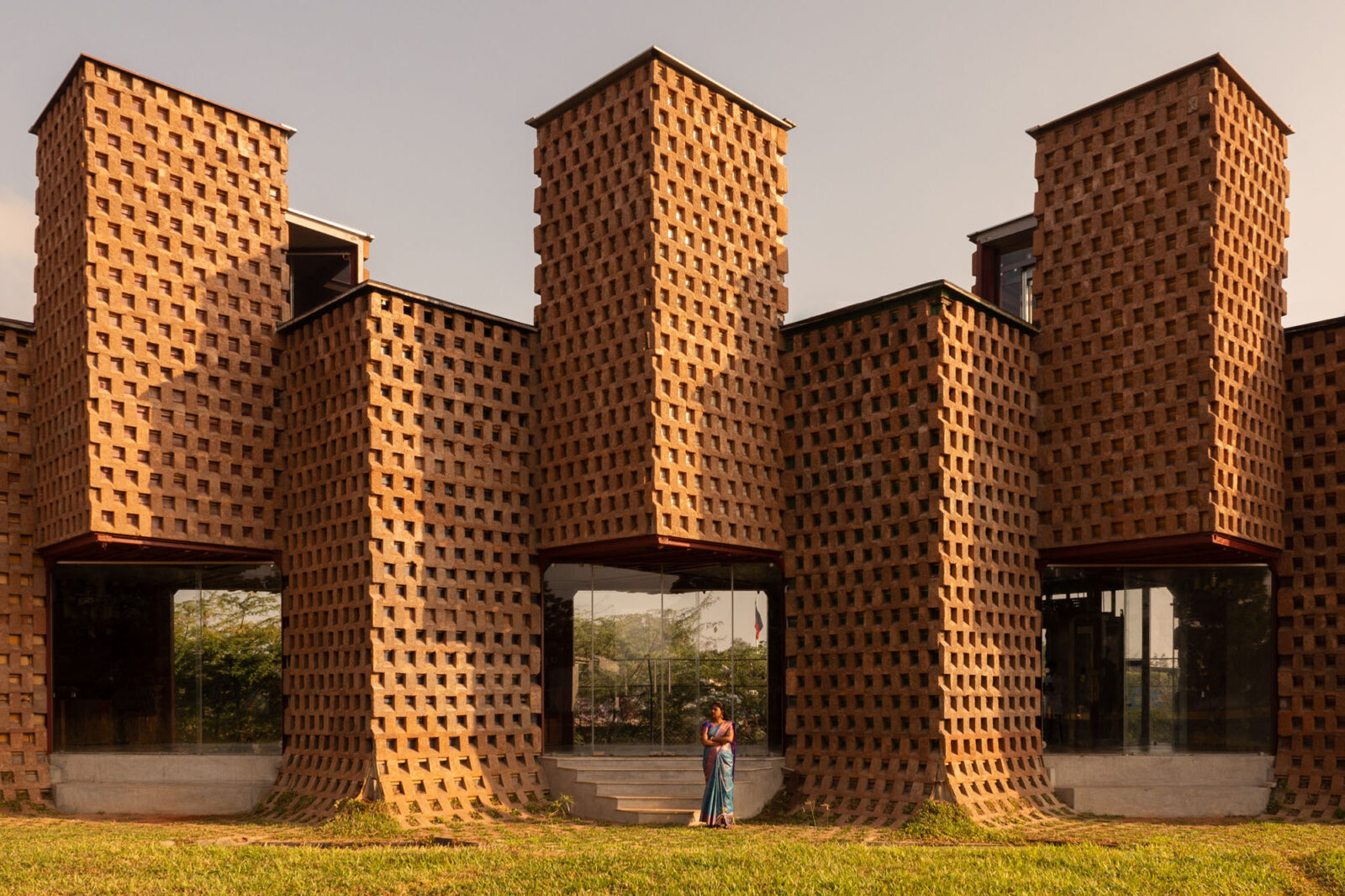
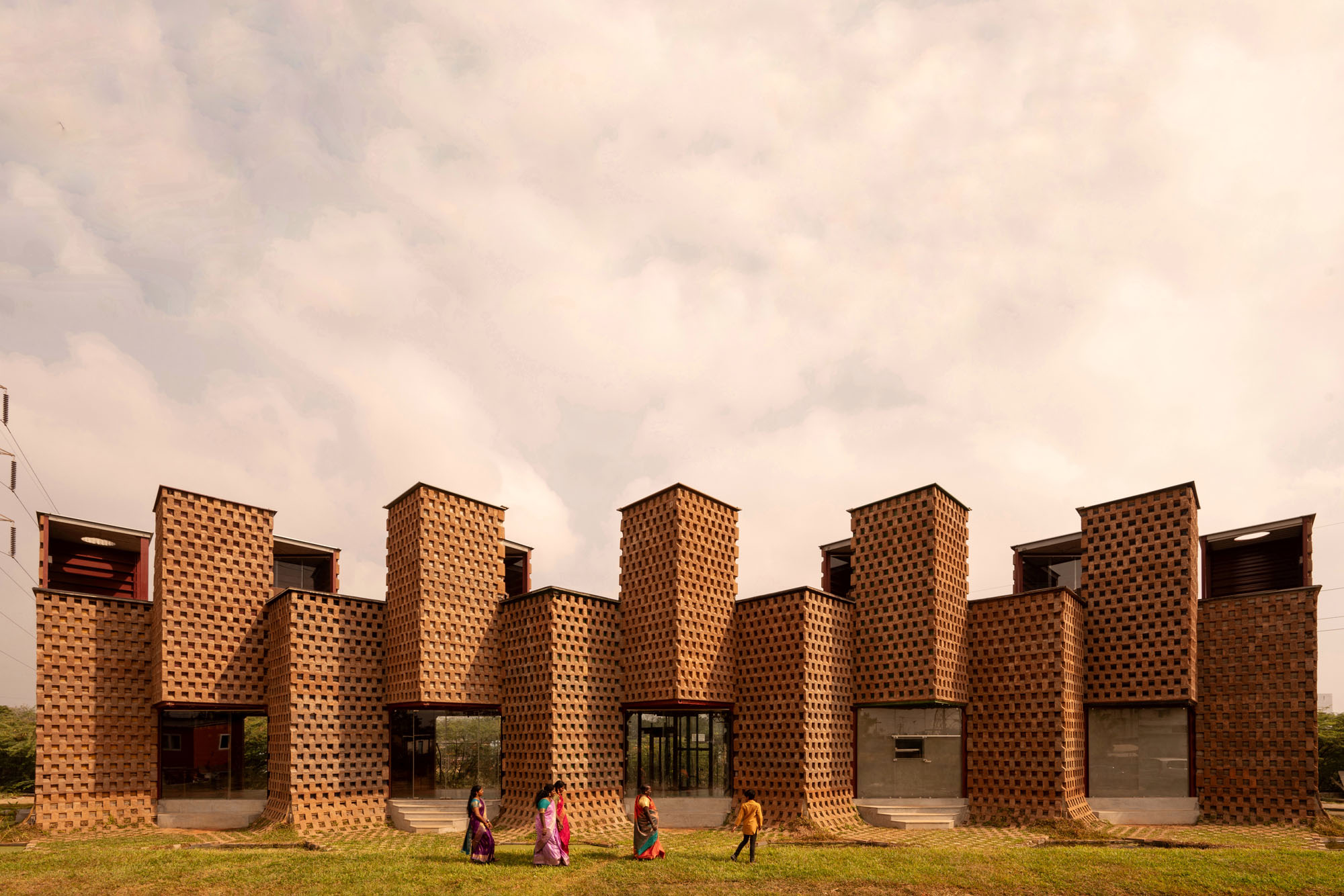
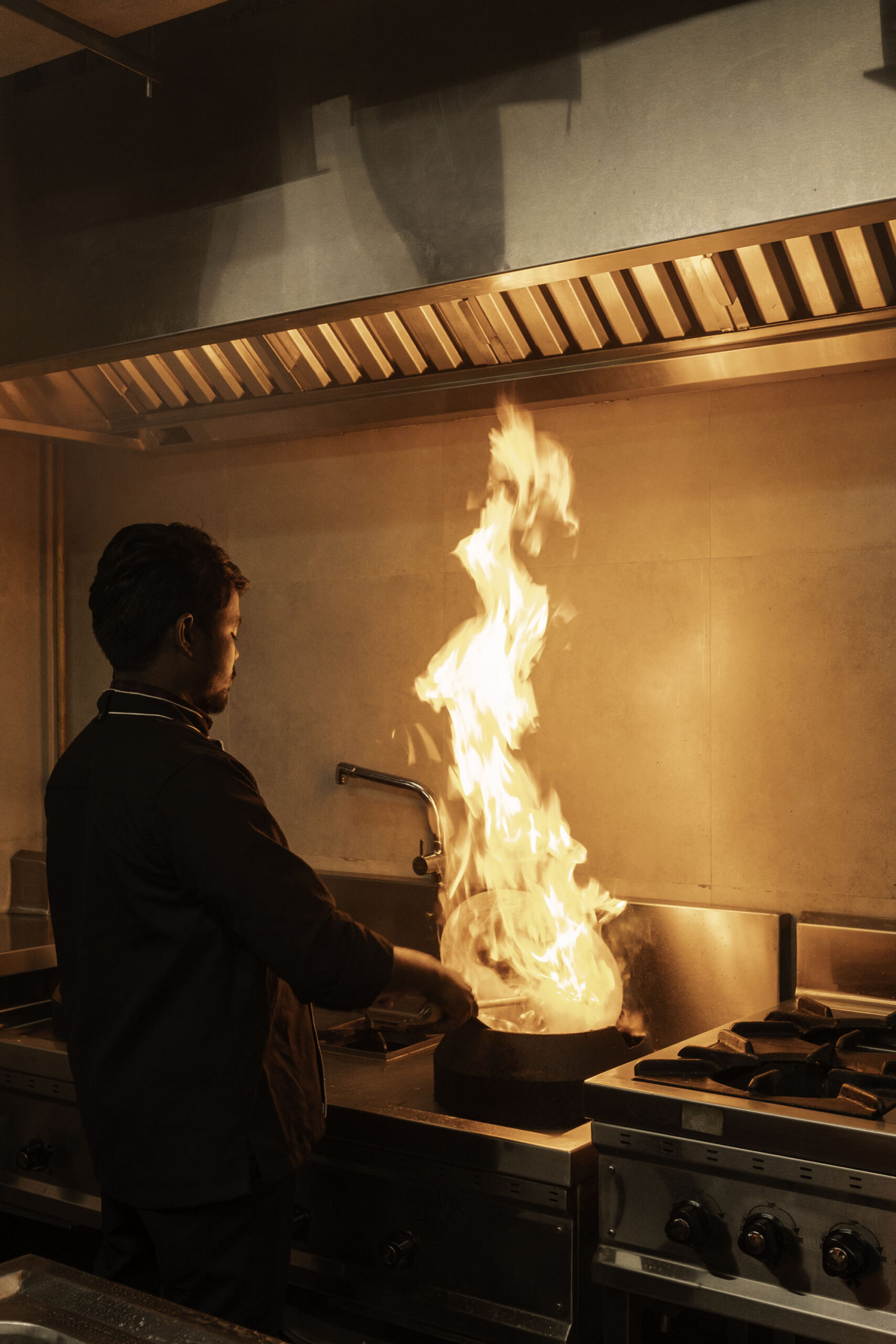
インドの港湾都市トゥティコリンに誕生した〈Petti Restaurant〉は、泥と廃棄物を用いた建築に特化するインドの設計事務所ウォールメーカーズ(WALLMAKERS)が手がけたレストランです。
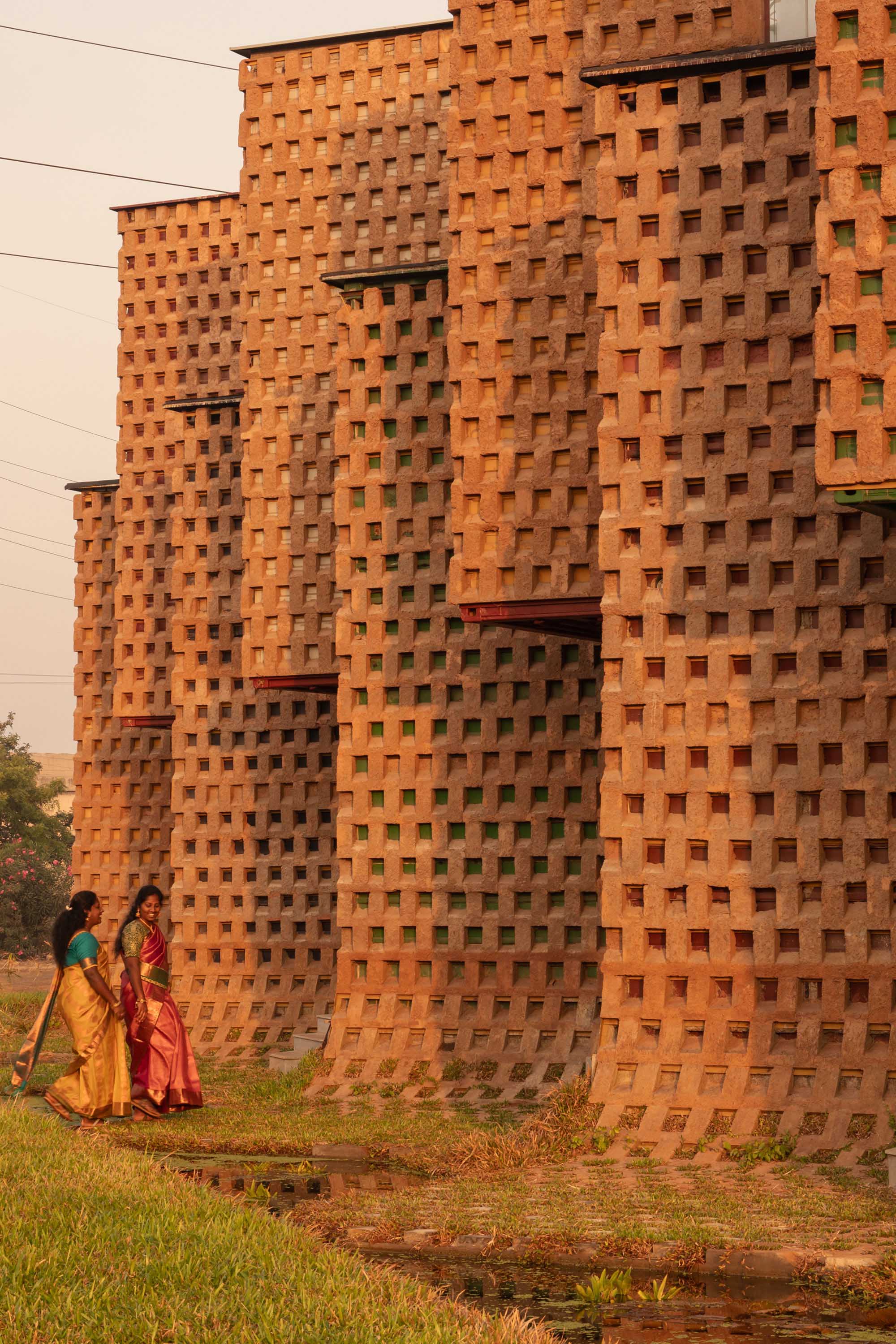
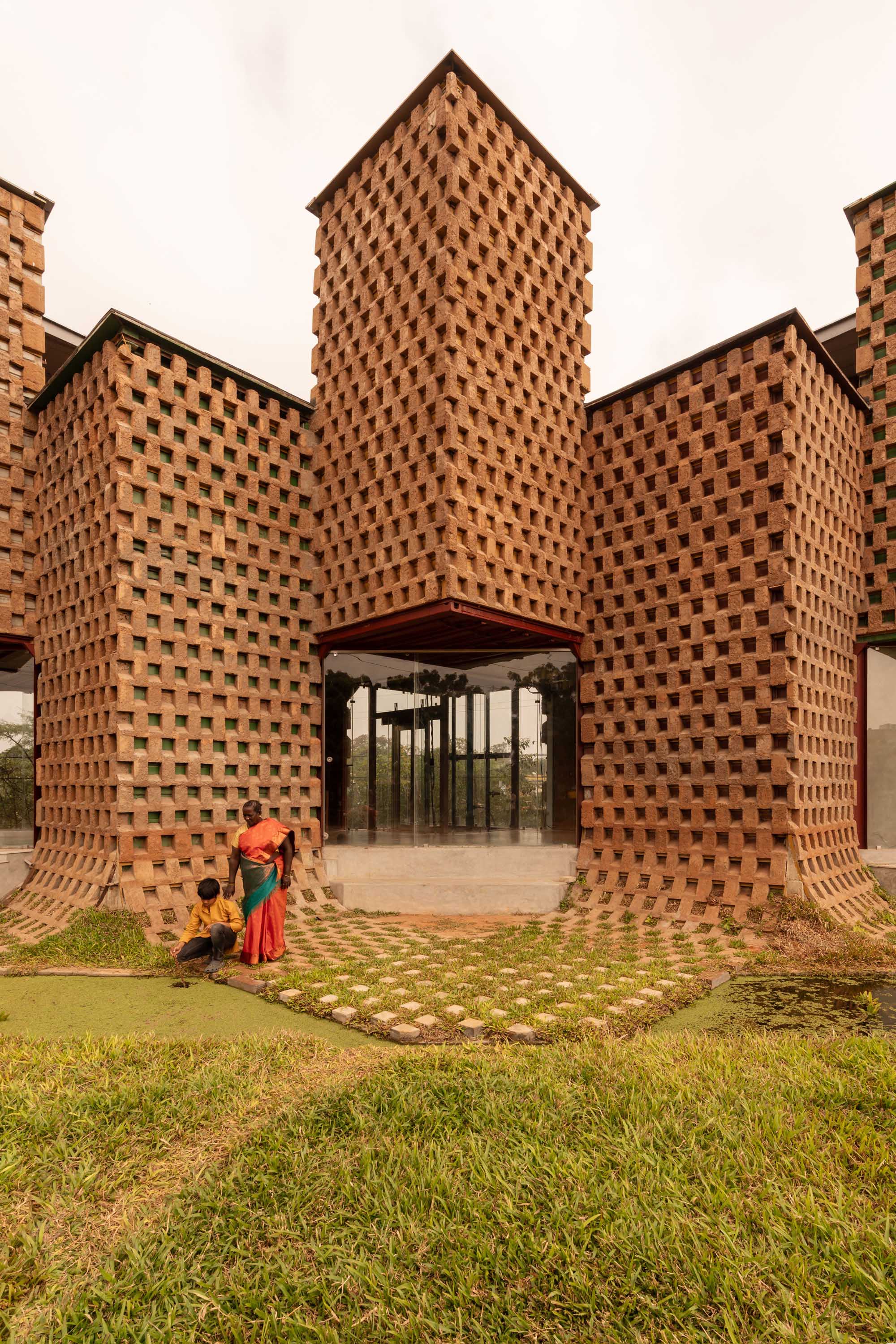
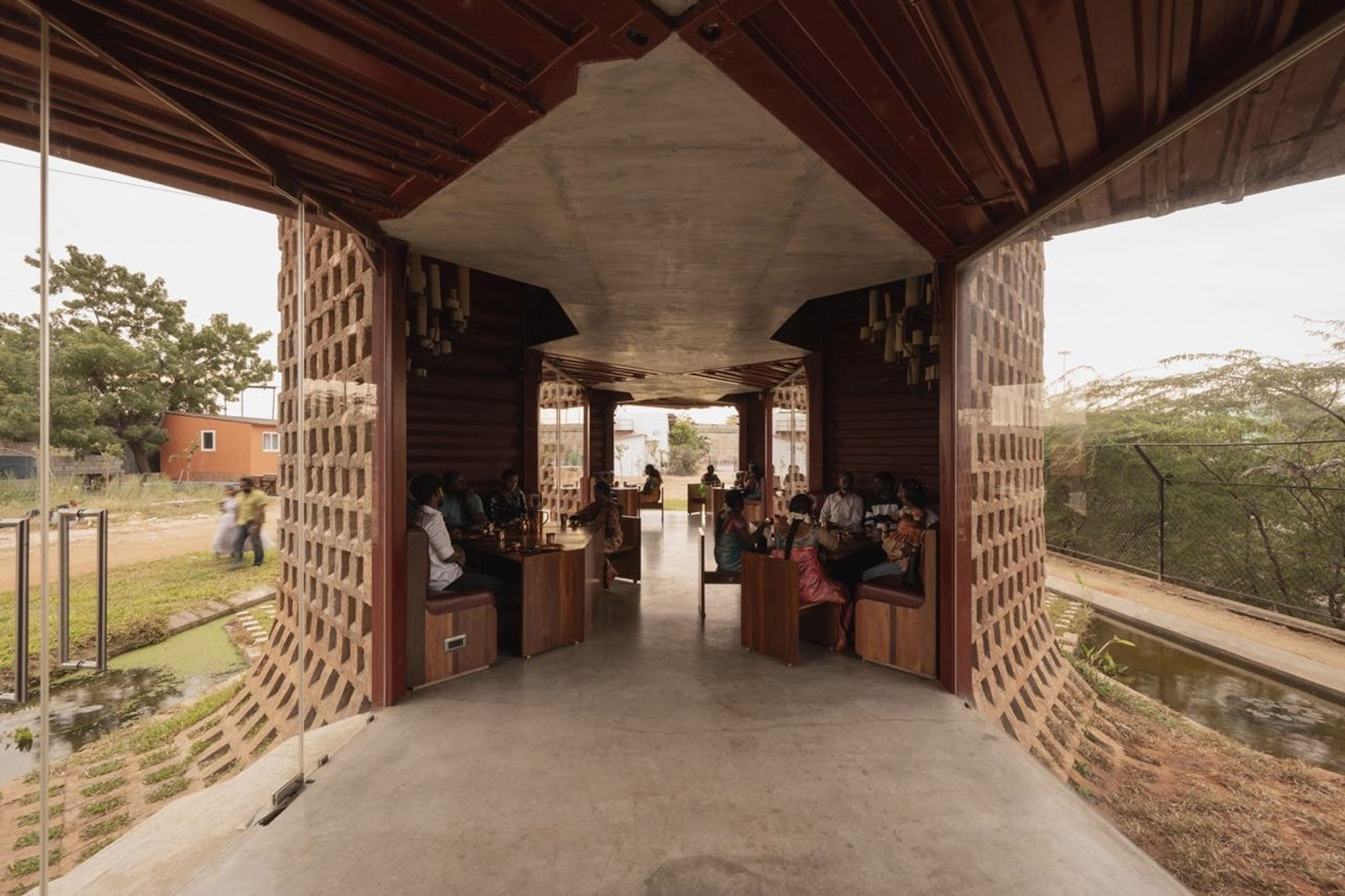
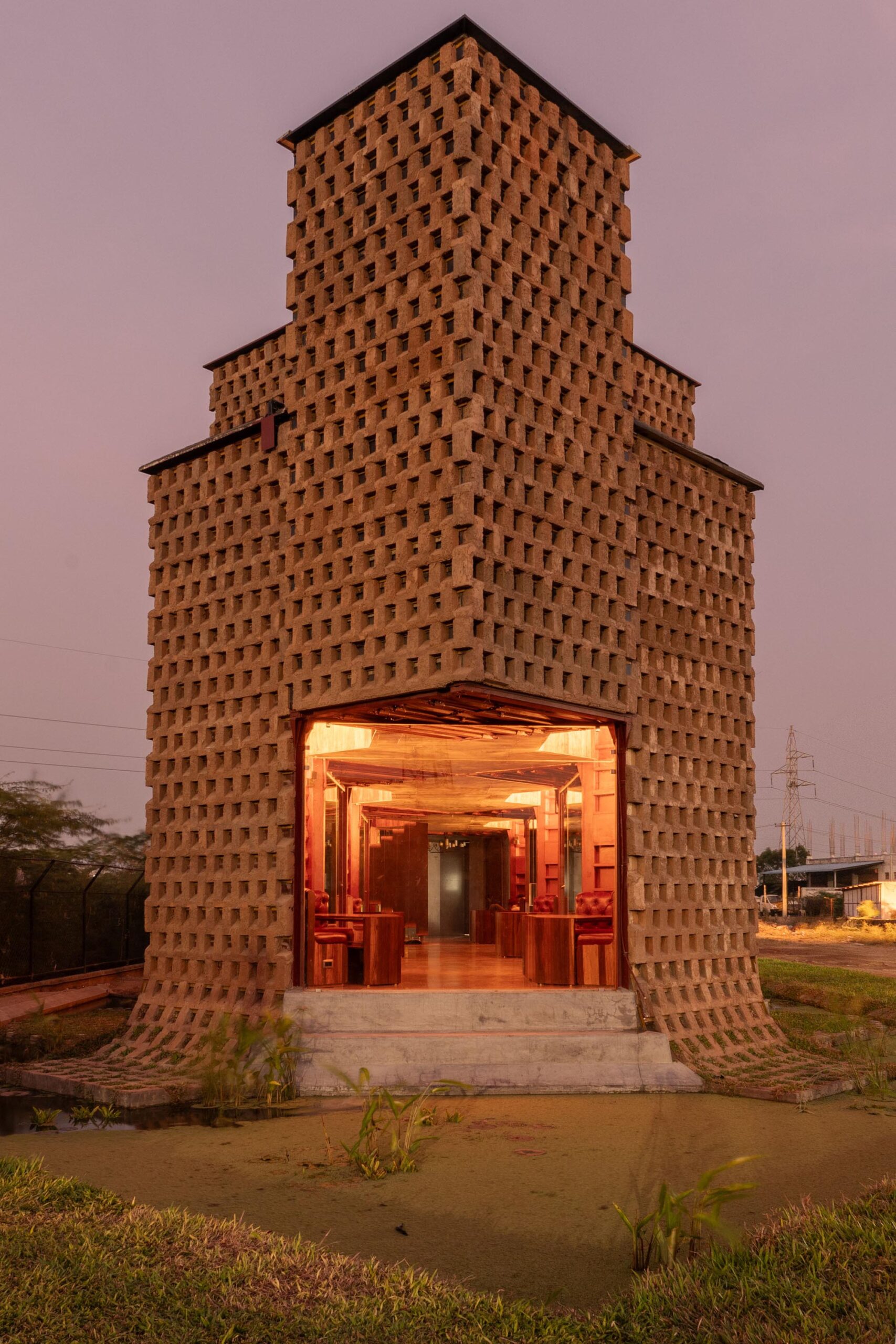
海洋廃棄物である輸送用コンテナと、その外壁に流し込んだ泥という相反する素材を融合させ、熱帯気候に適応した空間を生み出しています。
注目ポイント
- コンテナの「垂直配置」による空間拡張
- 空調負荷を低減する、コンテナ配置と泥のパターンによるパッシブデザイン
- 輸送コンテナをアップサイクルしたモジュール建築
(以下、ウォールメーカーズから提供されたプレスキットのテキストの抄訳)
©︎ IKSHA
©︎ IKSHA
港湾都市の記憶を継承する、スチールと泥の融合
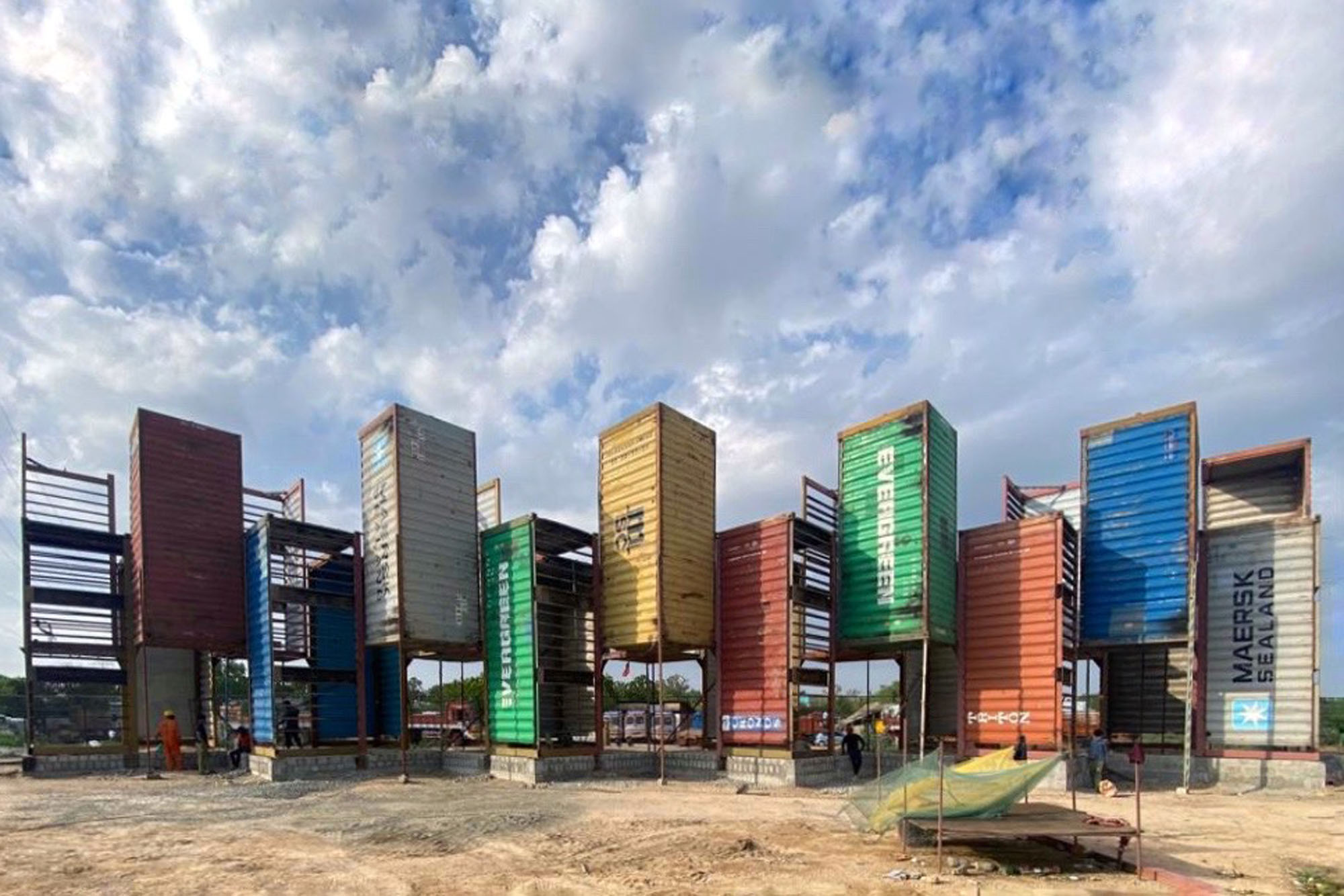
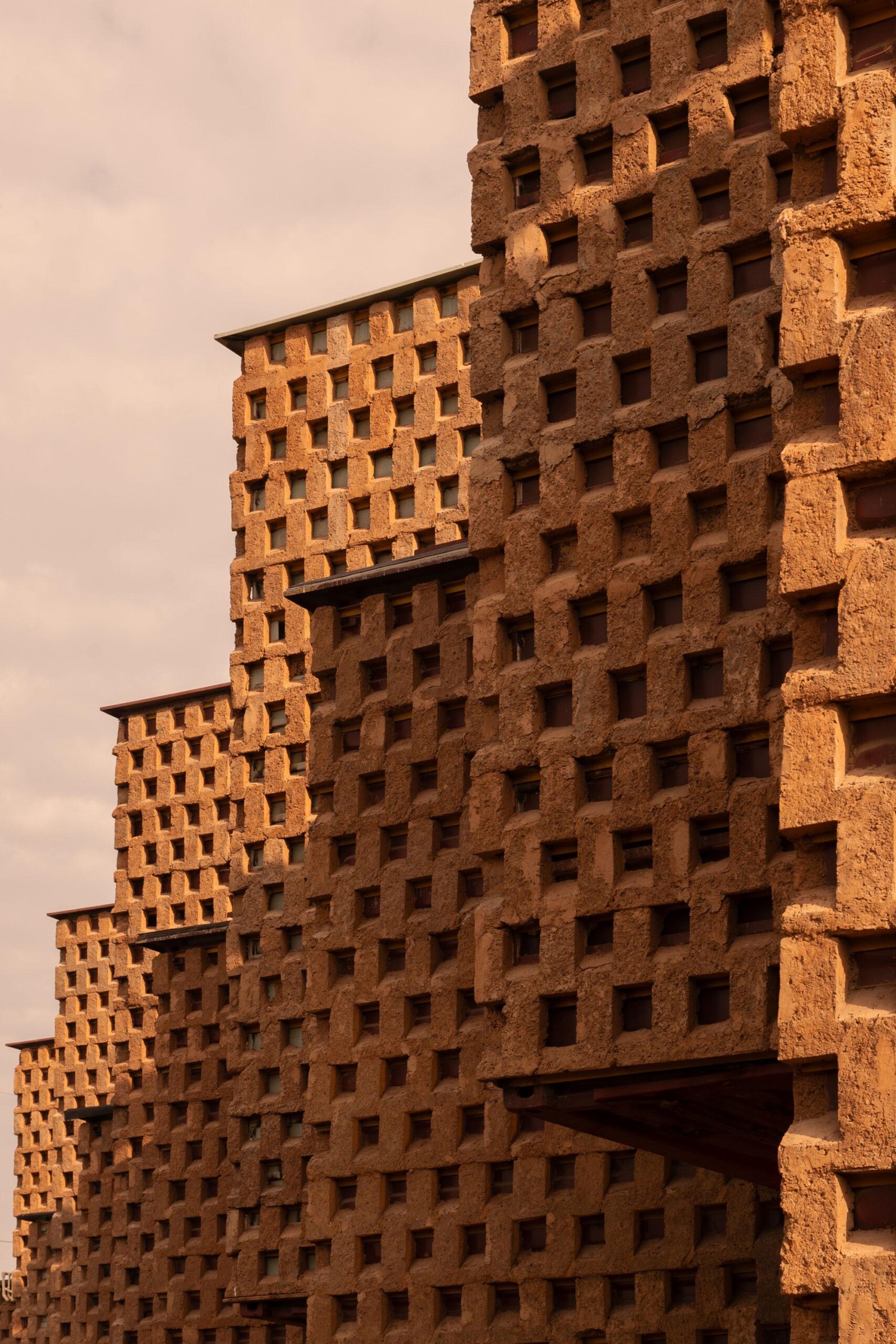
港湾都市トゥティコリンは、過去2000年にわたり海上貿易の中心地として栄えてきた。市内に廃棄された膨大な数のコンテナに触発され、我々は通常組み合わせることのない2つの素材「スチールと泥」を融合させることにした。
©︎ IKSHA
©︎ IKSHA
垂直のコンテナが織りなす空間と、熱帯気候への最適化
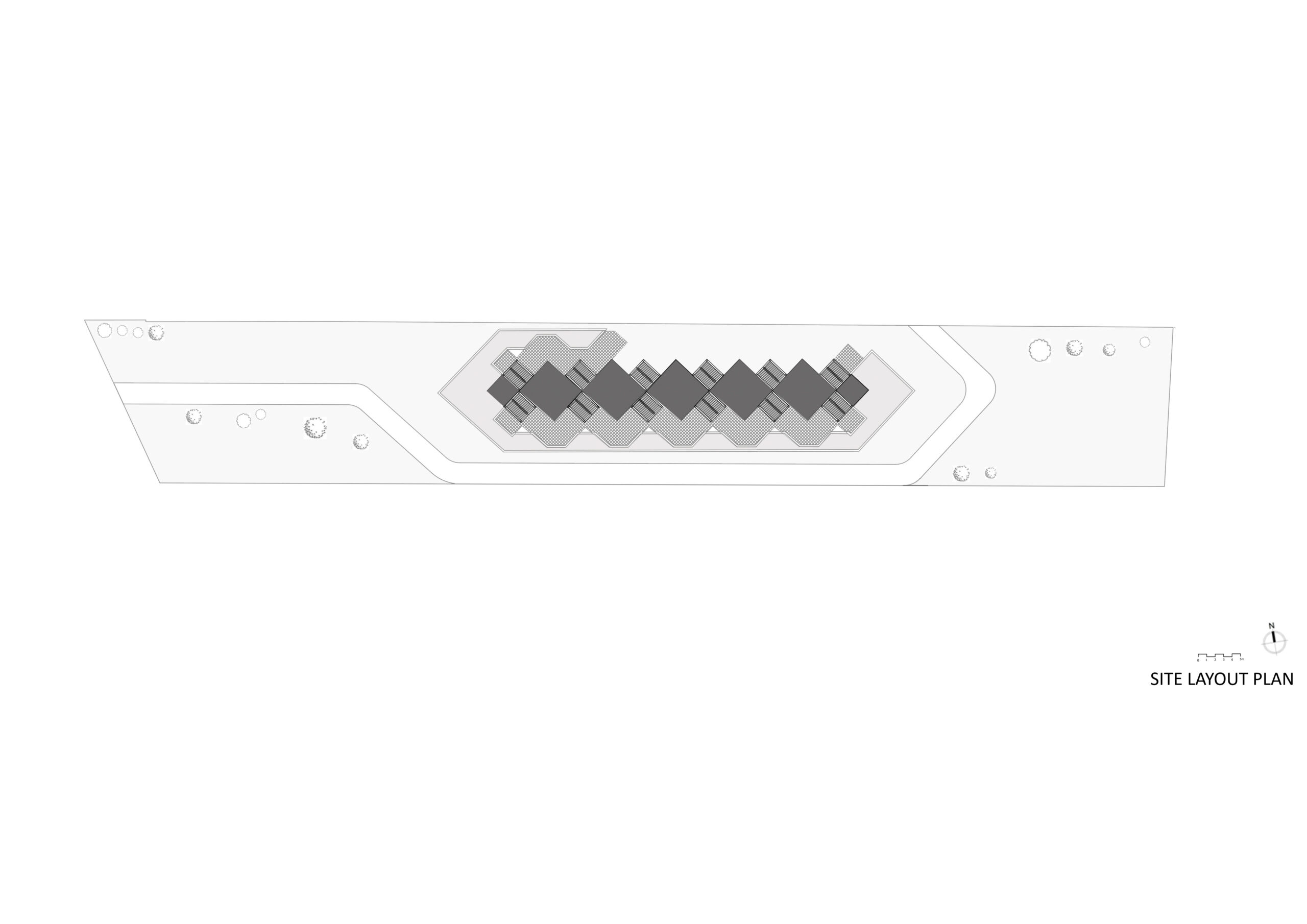
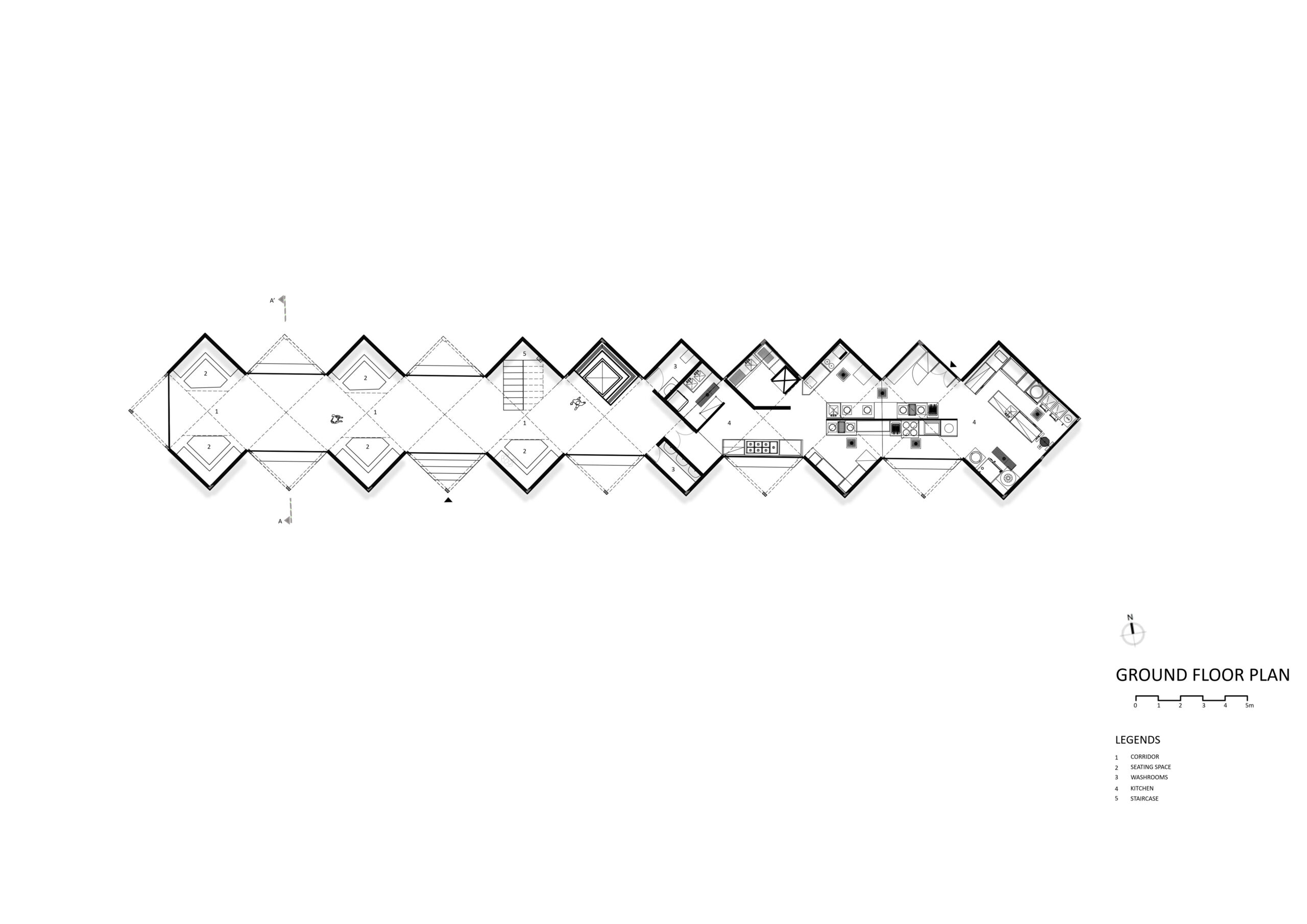
トゥティコリンに建設された200人収容可能なレストランの敷地は、非常に狭く細長い土地であった。私たちは、最も放置されがちな海洋廃棄物の1つである輸送用コンテナを活用し、モジュール式建築の可能性を探求したいと考えた。
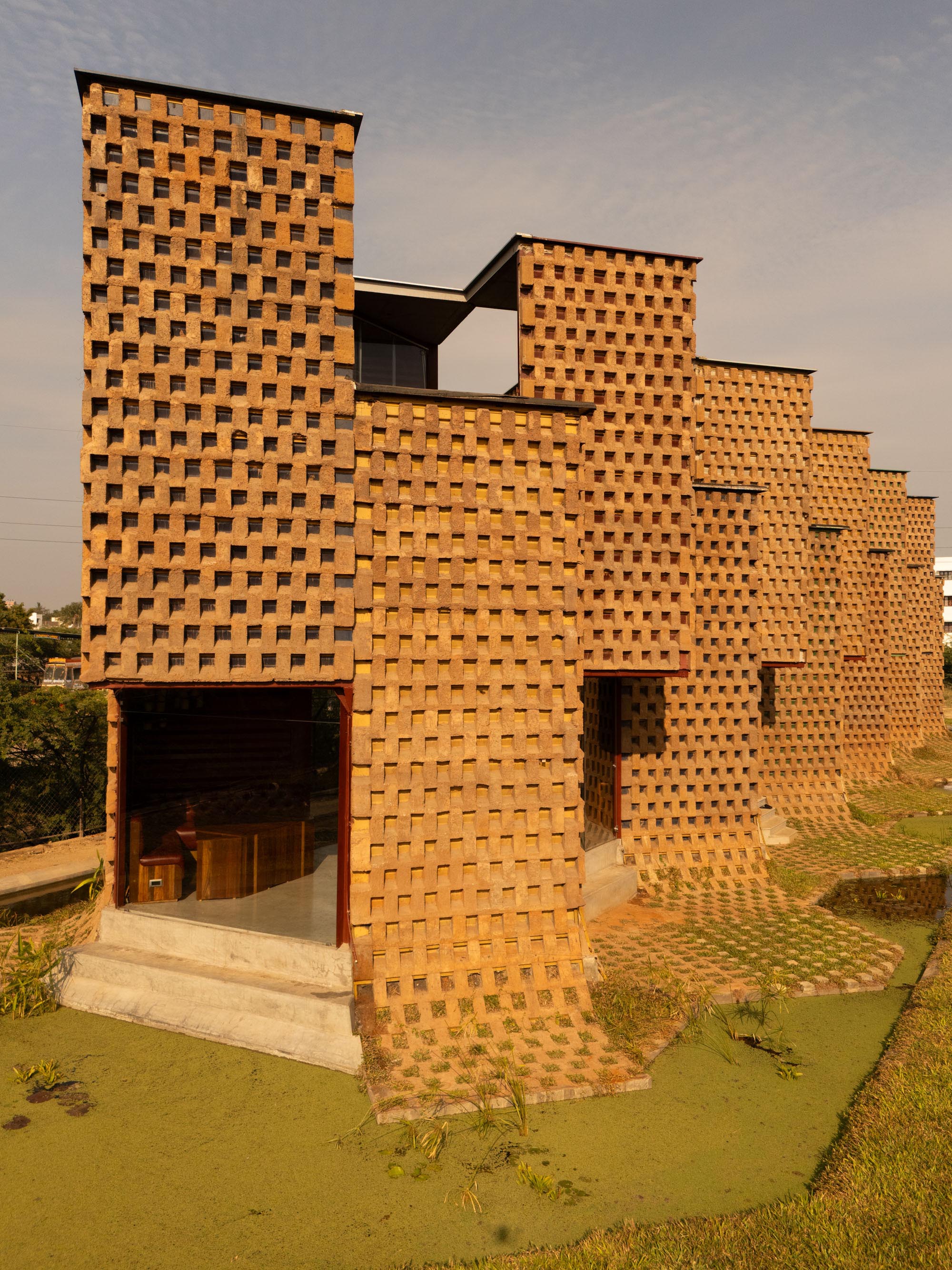
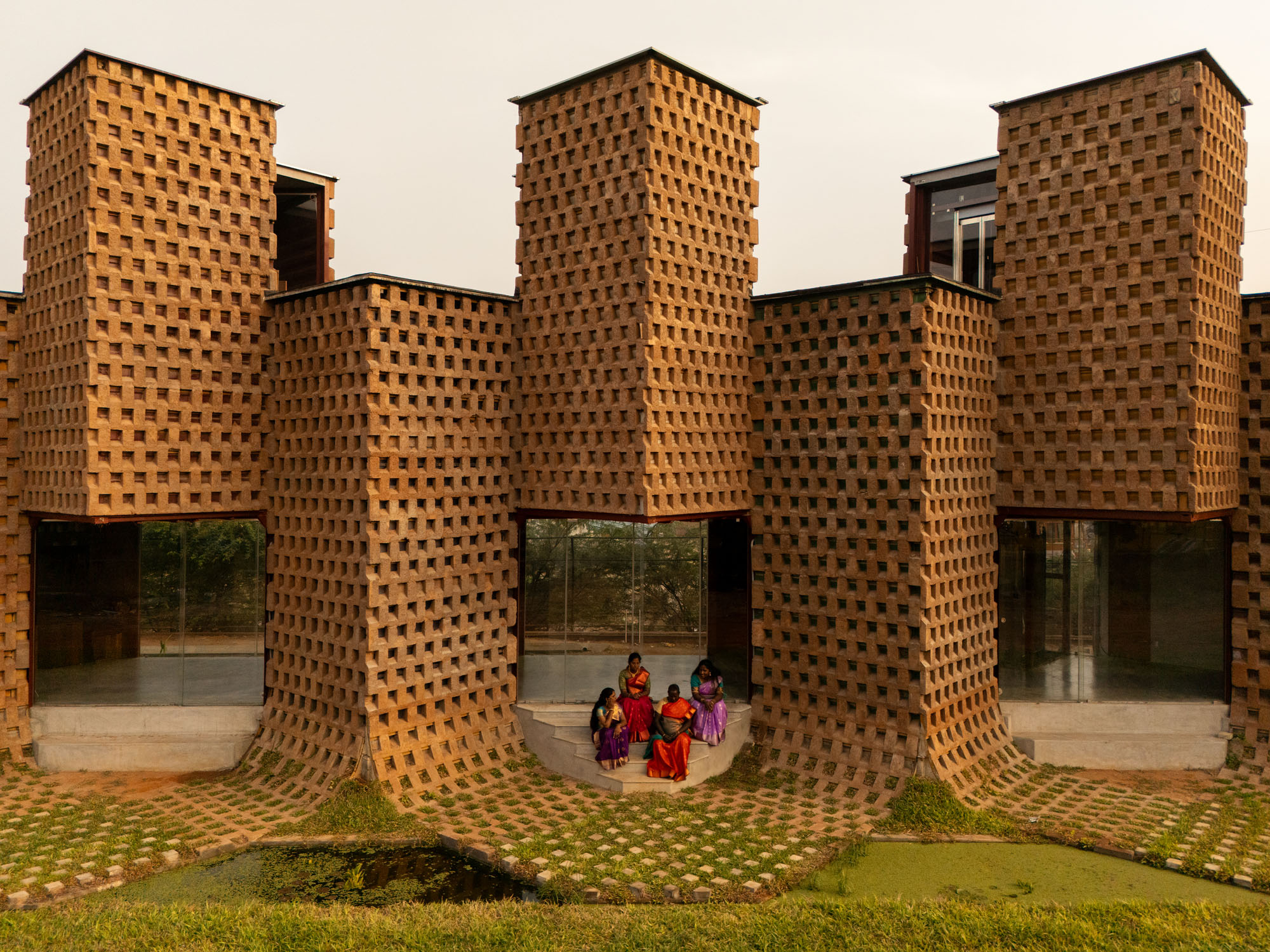
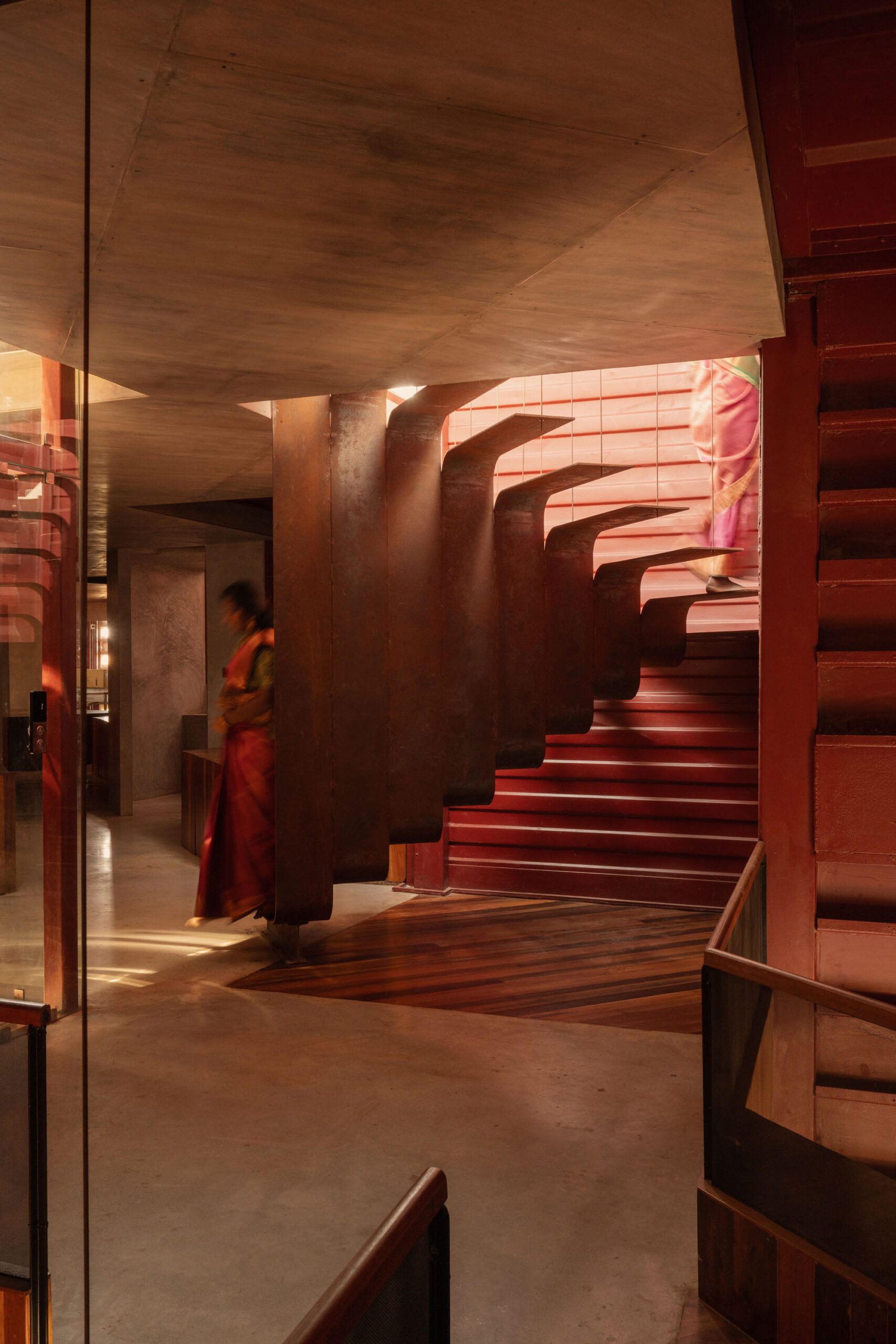
コンテナを水平に設置した場合の一般的な天井高である2.4mよりも高い空間を確保するため、各コンテナを垂直に設置している。12基の切断済みコンテナは、クレーンを用いて1週間で設置され、その後溶接されて建物の基本構造を形成した。さらに、各階をつなぐためにいくつかの鉄筋コンクリートスラブが追加されている。
©︎ IKSHA
©︎ IKSHA
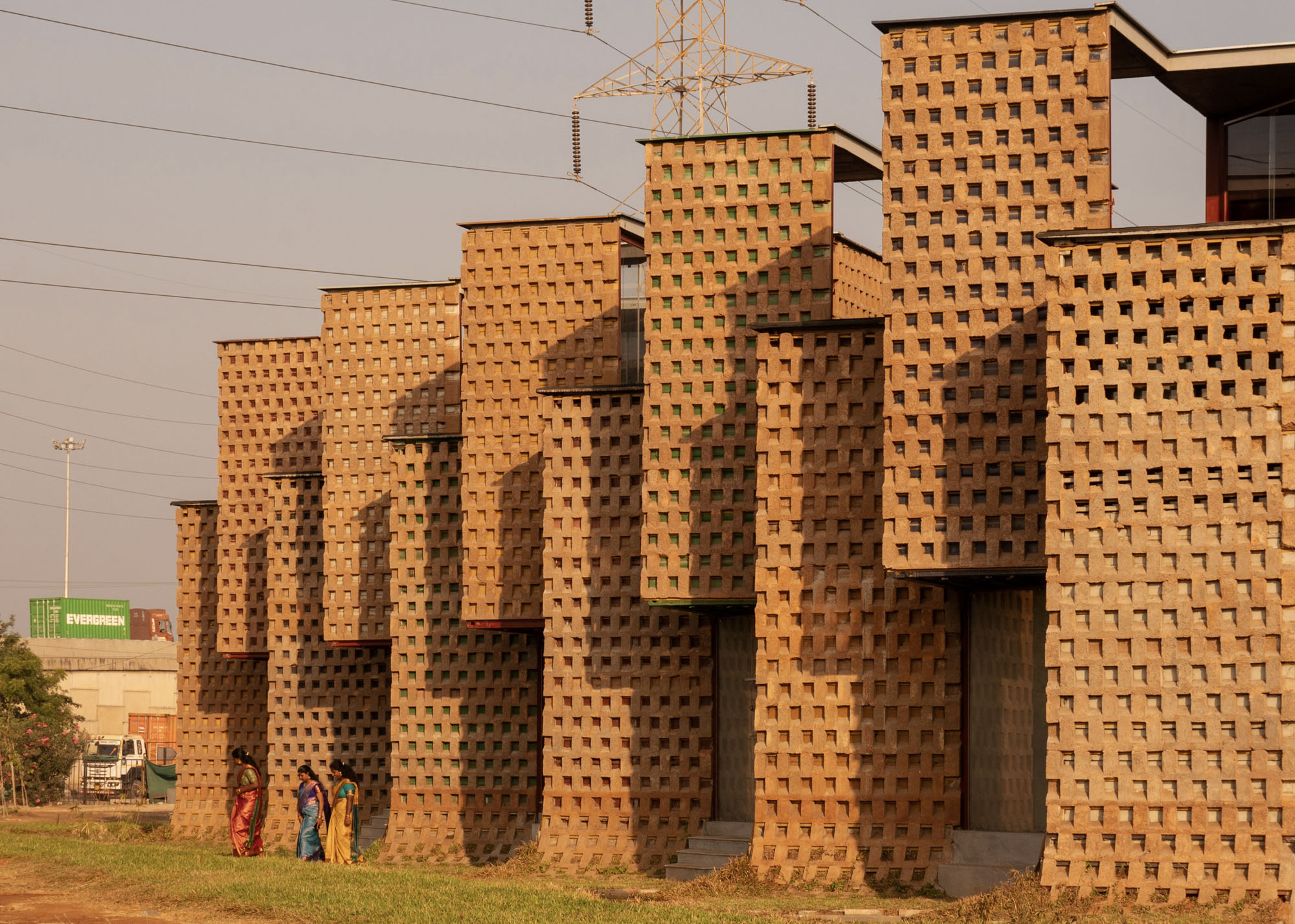
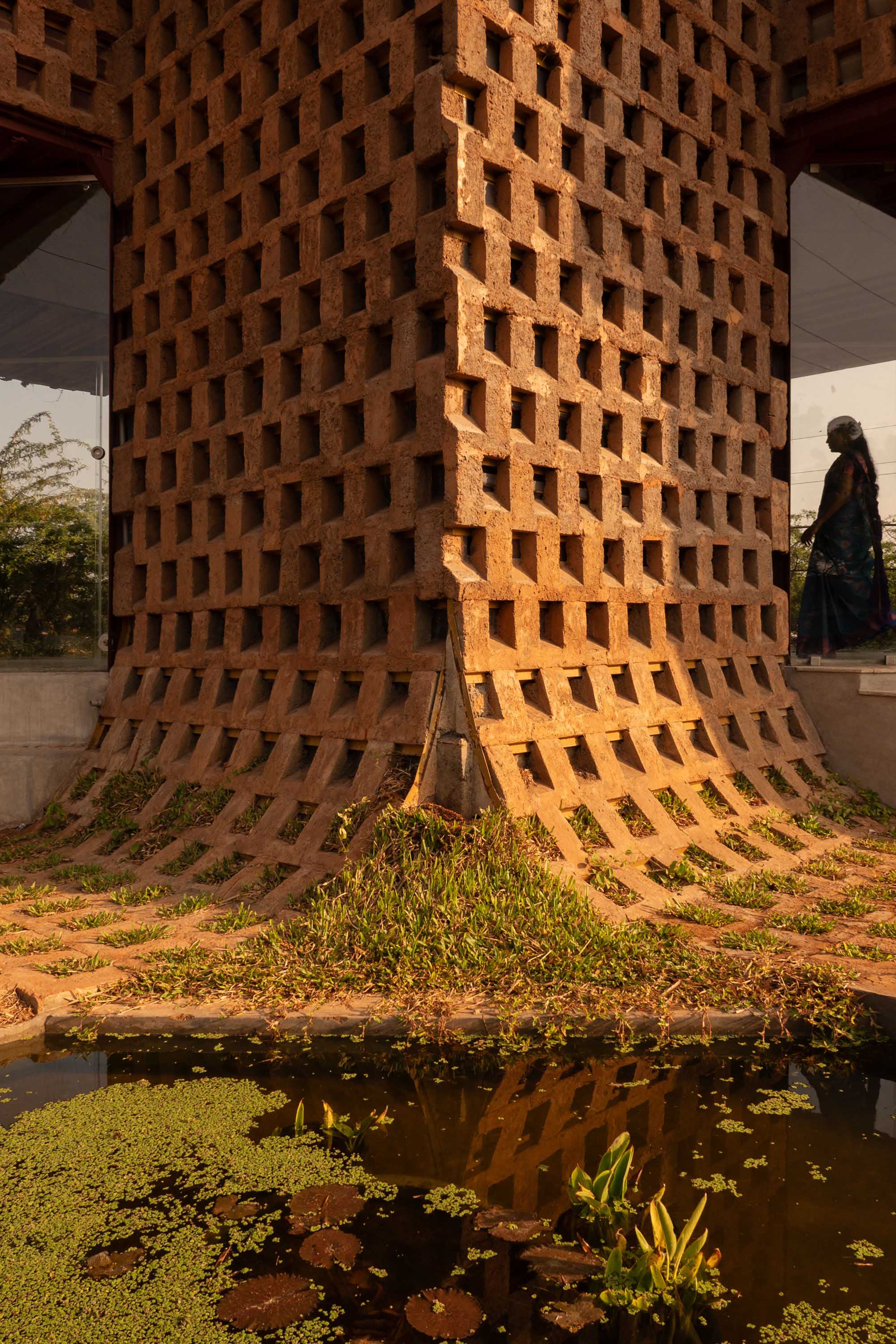
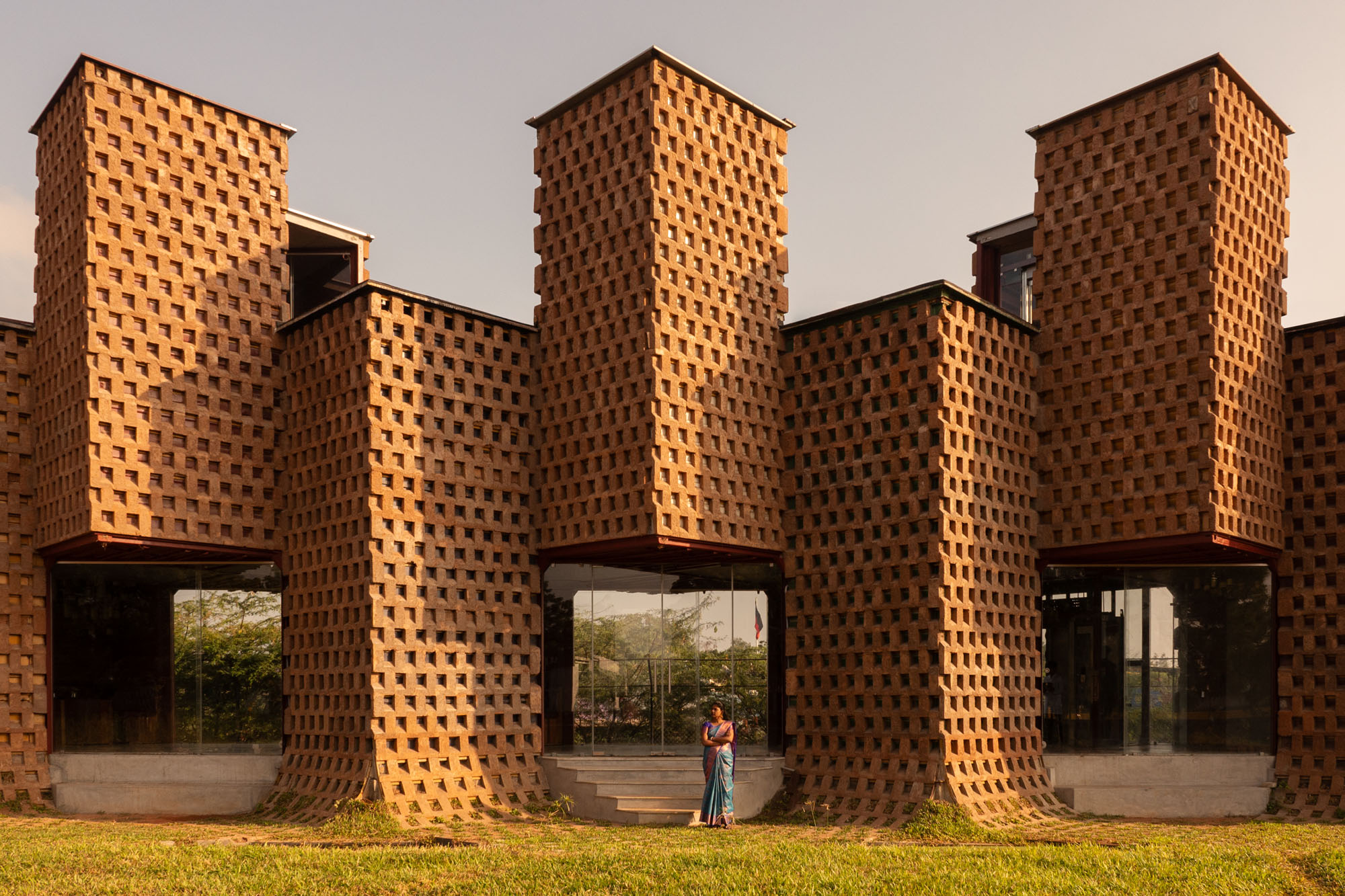
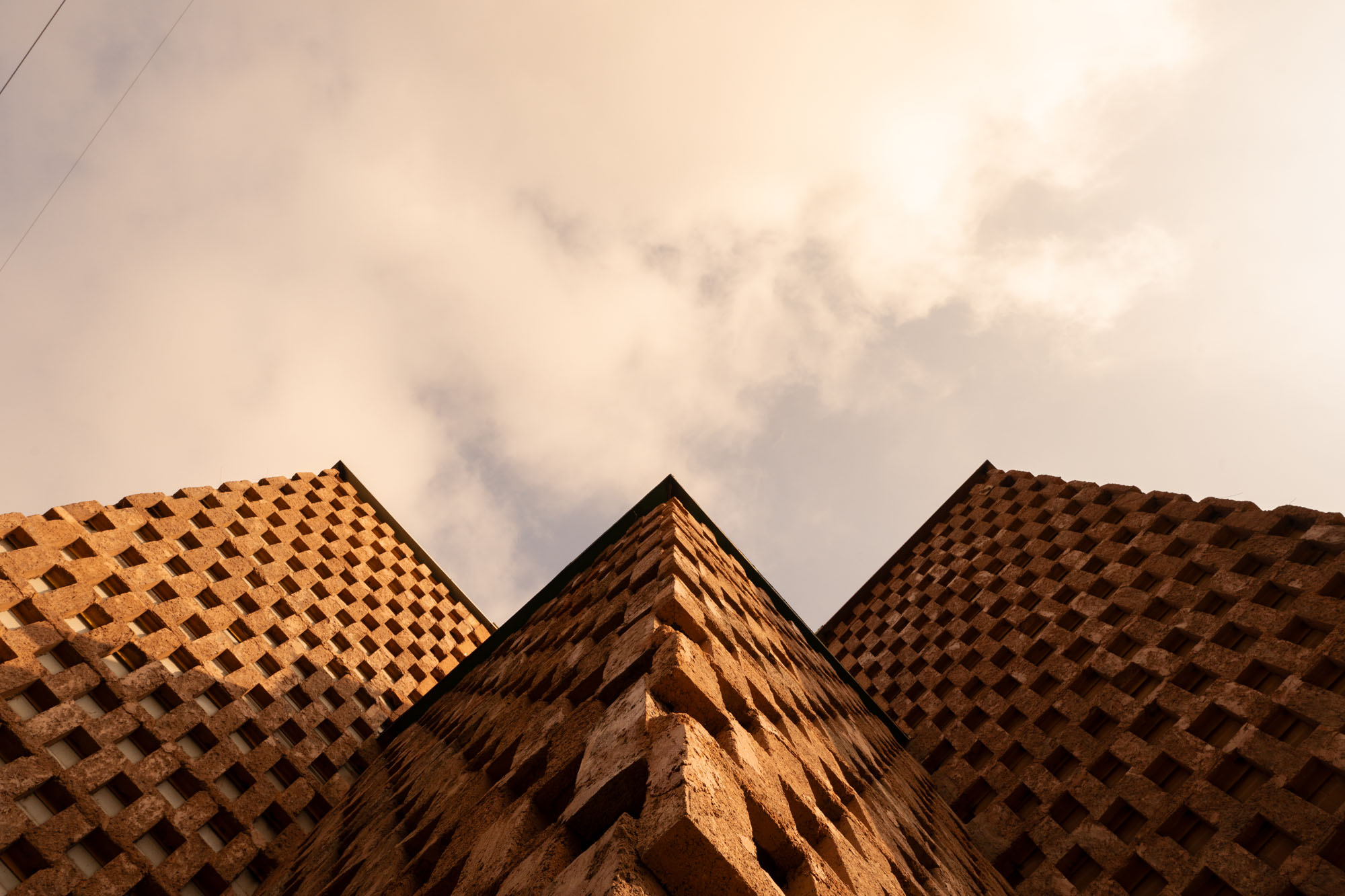
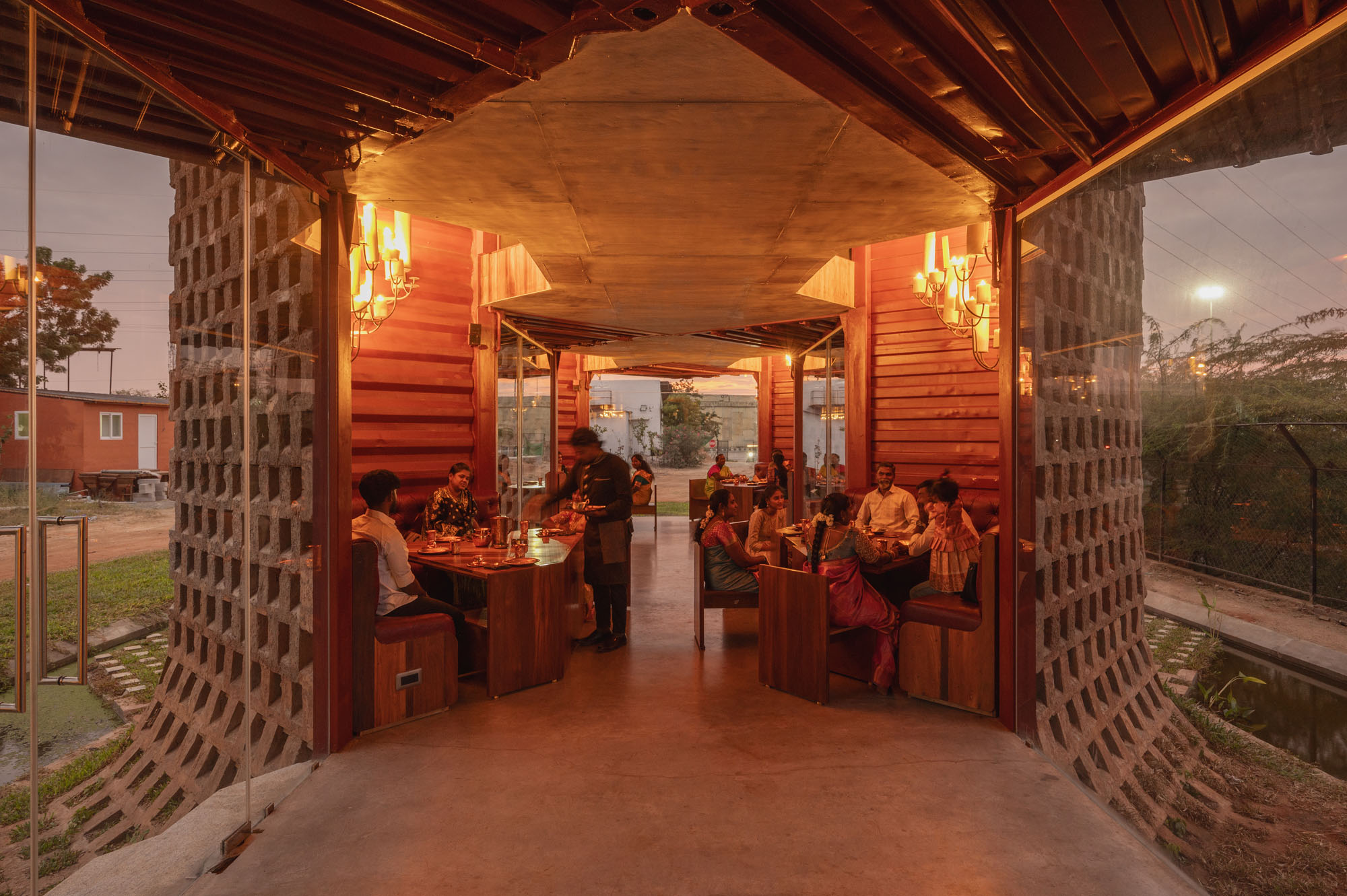
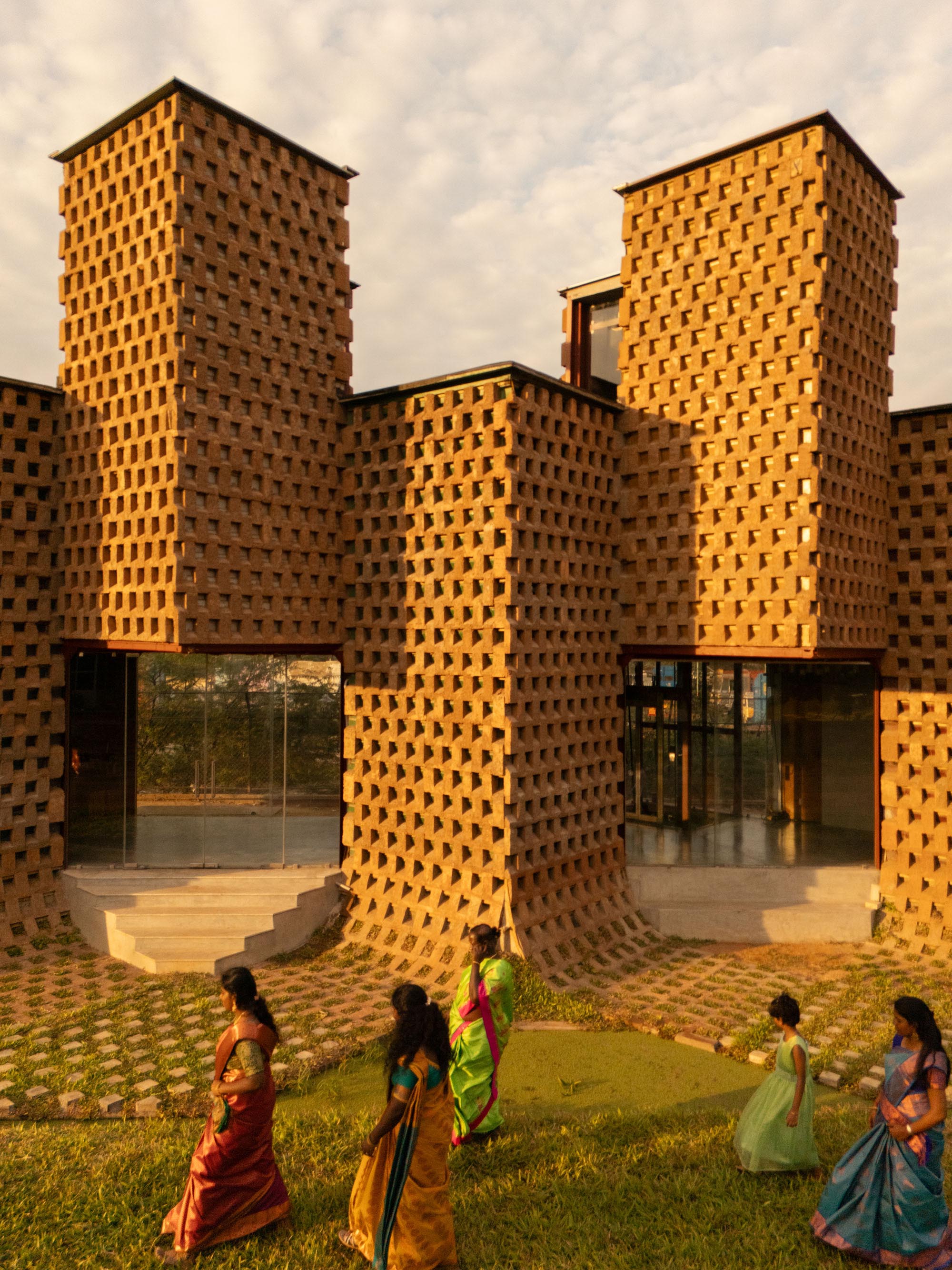
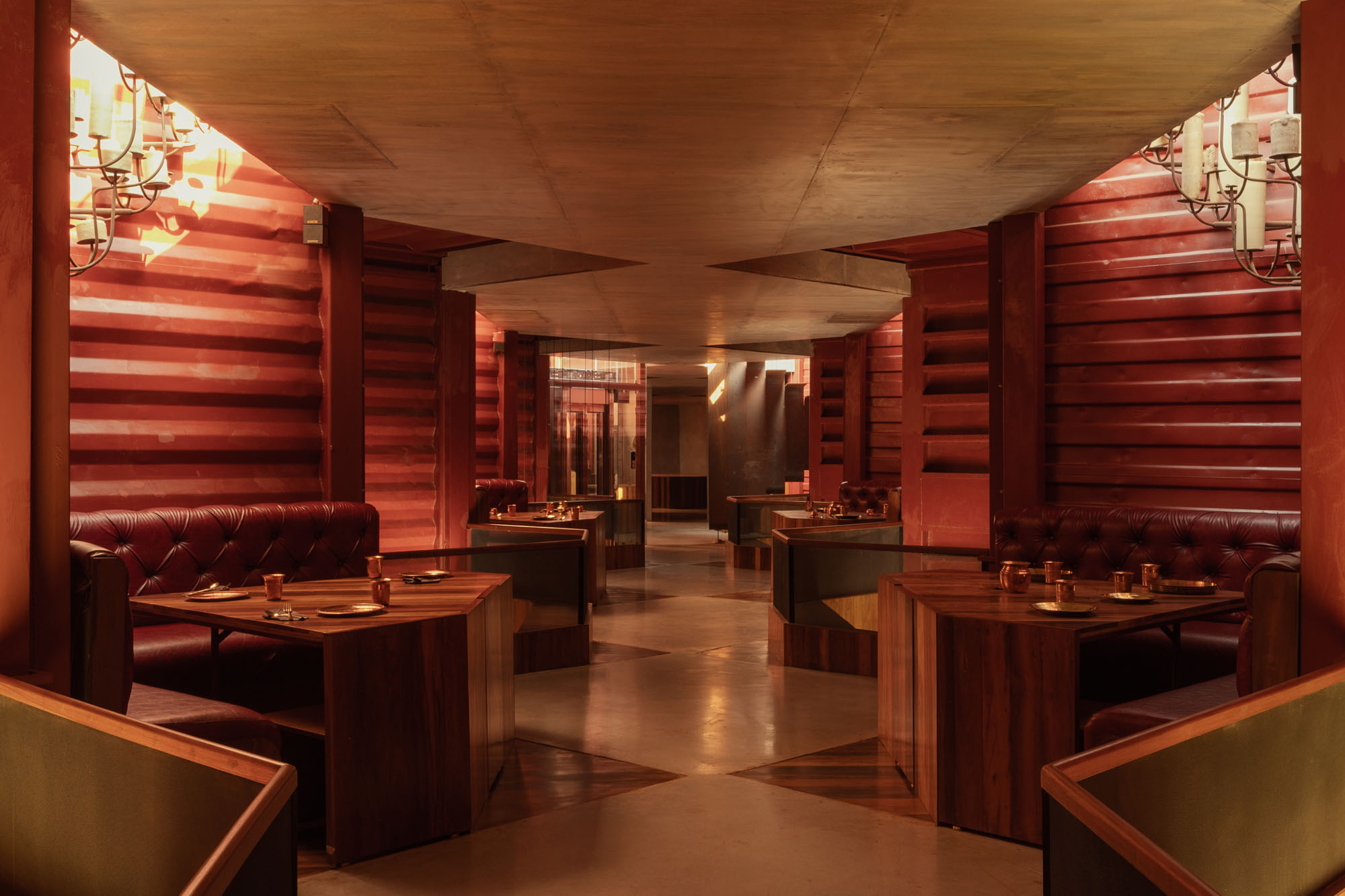
年間を通じて暑い地域の開放的な敷地に位置するため、熱の侵入を抑え断熱性を高めるべく、コンテナの外壁面に土を流し込んで層を形成した。さらに、断熱効率を高め、空調システムへの負荷を38%削減するため、配置パターンを交互に凹ませた形に変更している。
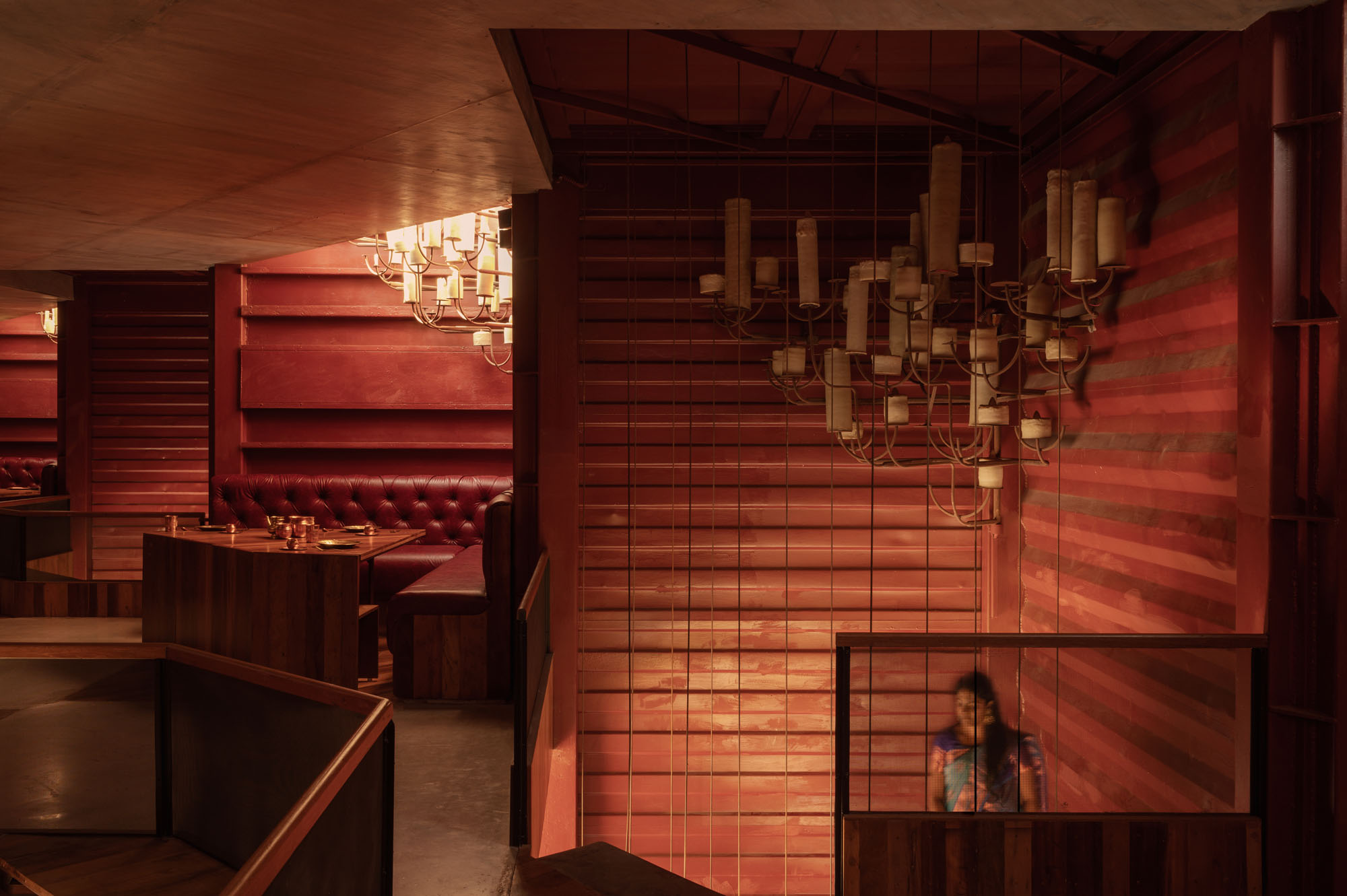
コンテナを1つおきにずらして配置し、南向きの1階には壁の開口部を設けない設計とした。この浮遊するようなコンテナの配置により、自然換気におけるより良い通風を可能にしている。
©︎ IKSHA
©︎ IKSHA
©︎ IKSHA
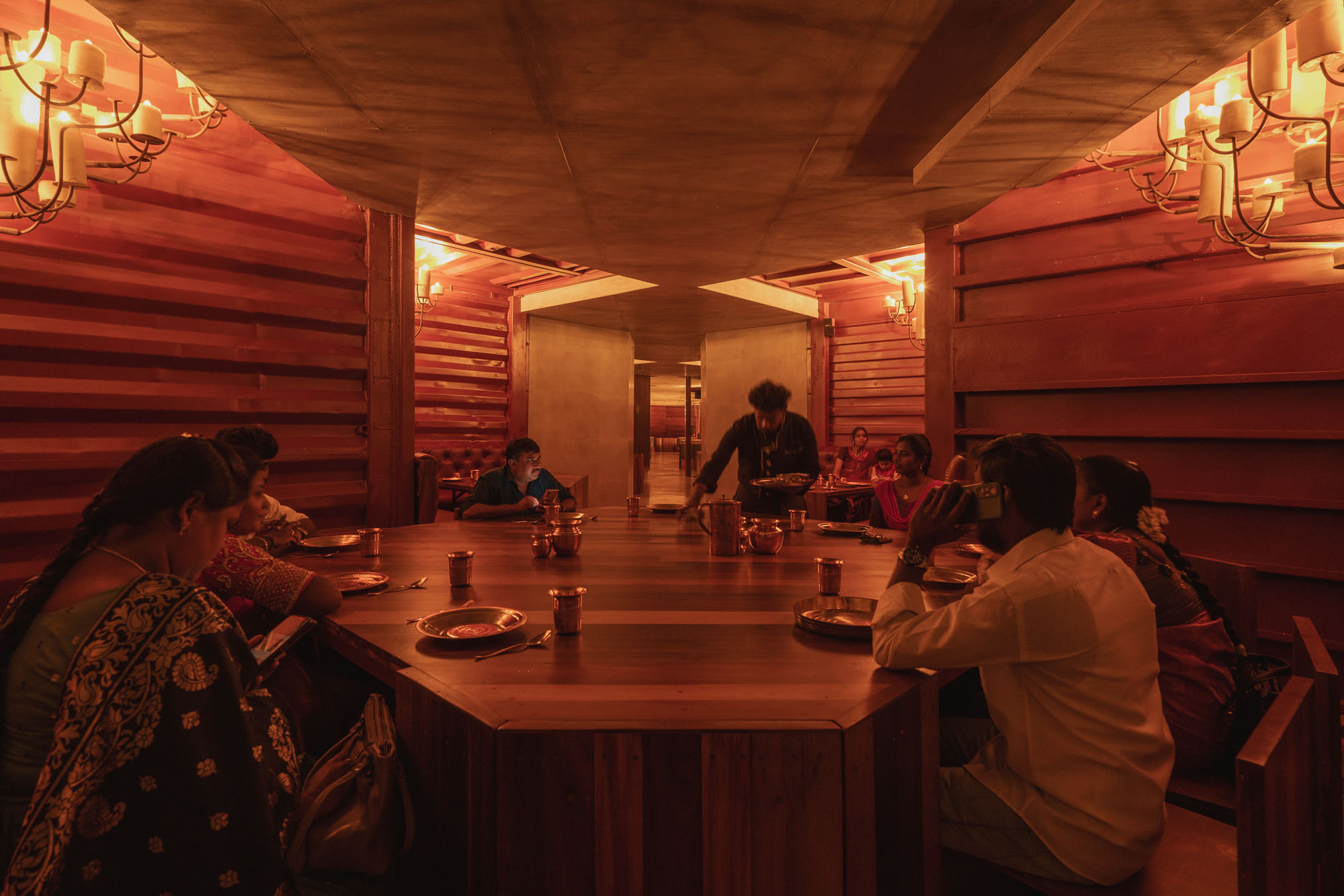
素朴な質感が生きるインテリアと、建築資源としての「箱」
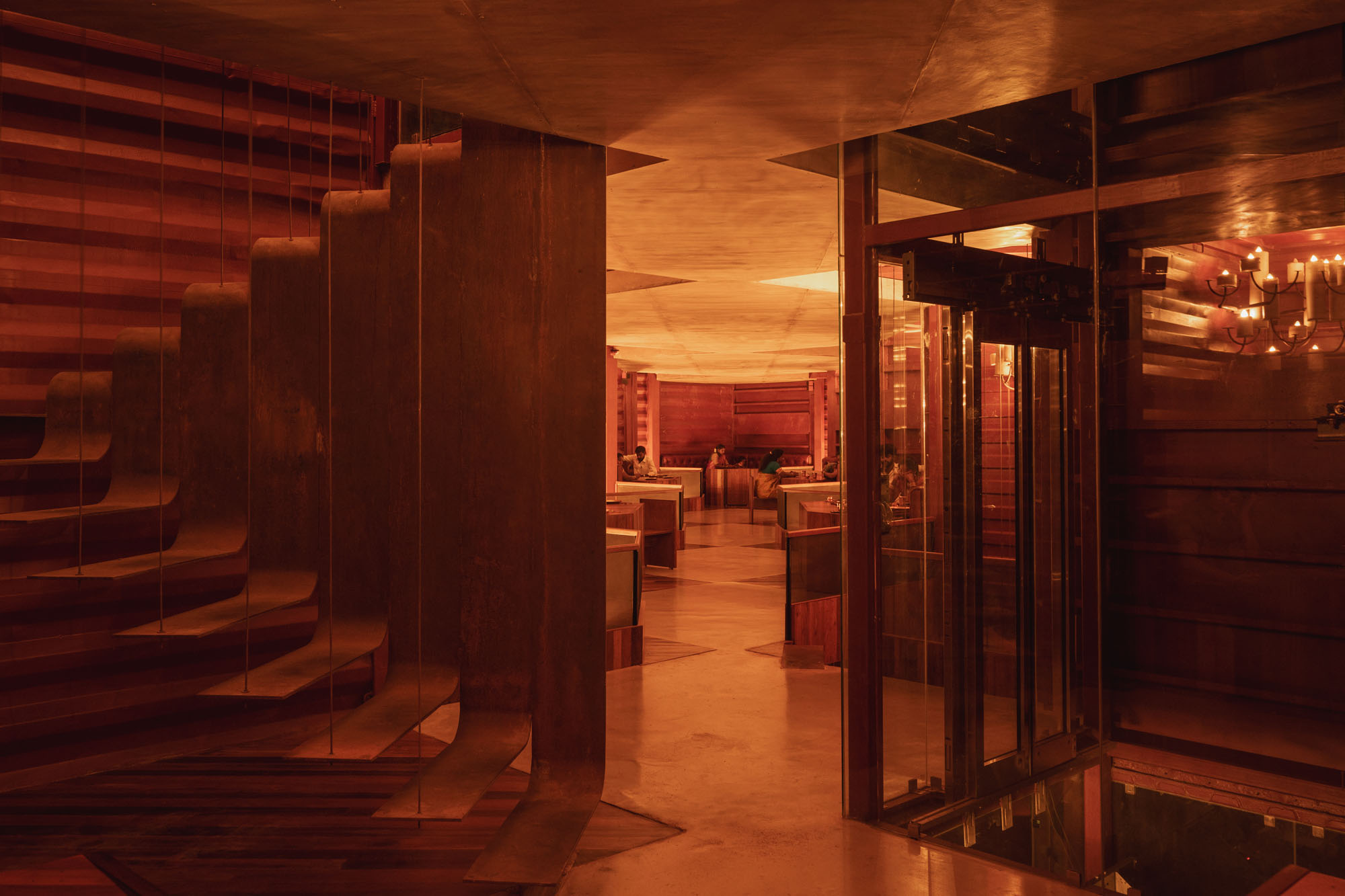
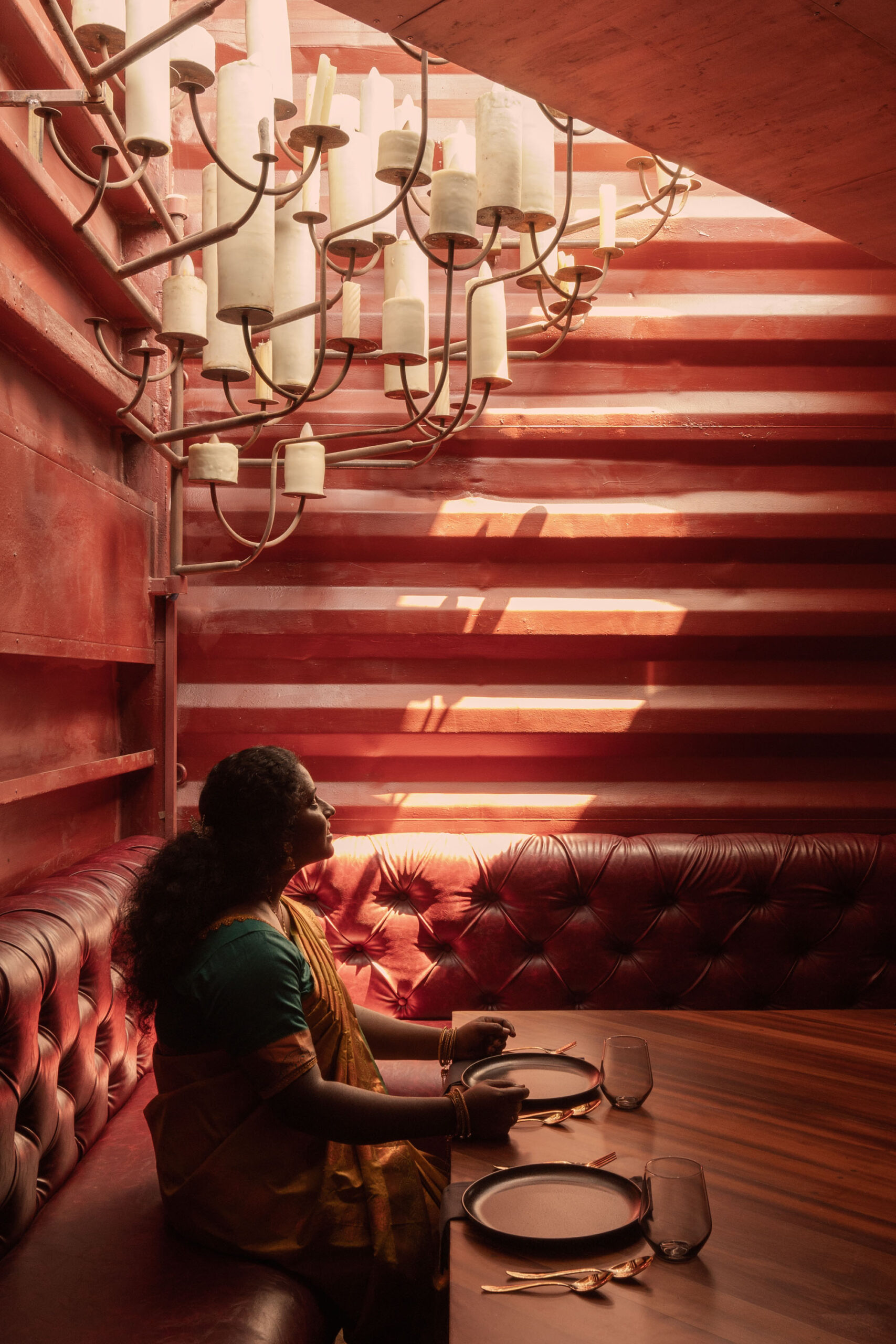
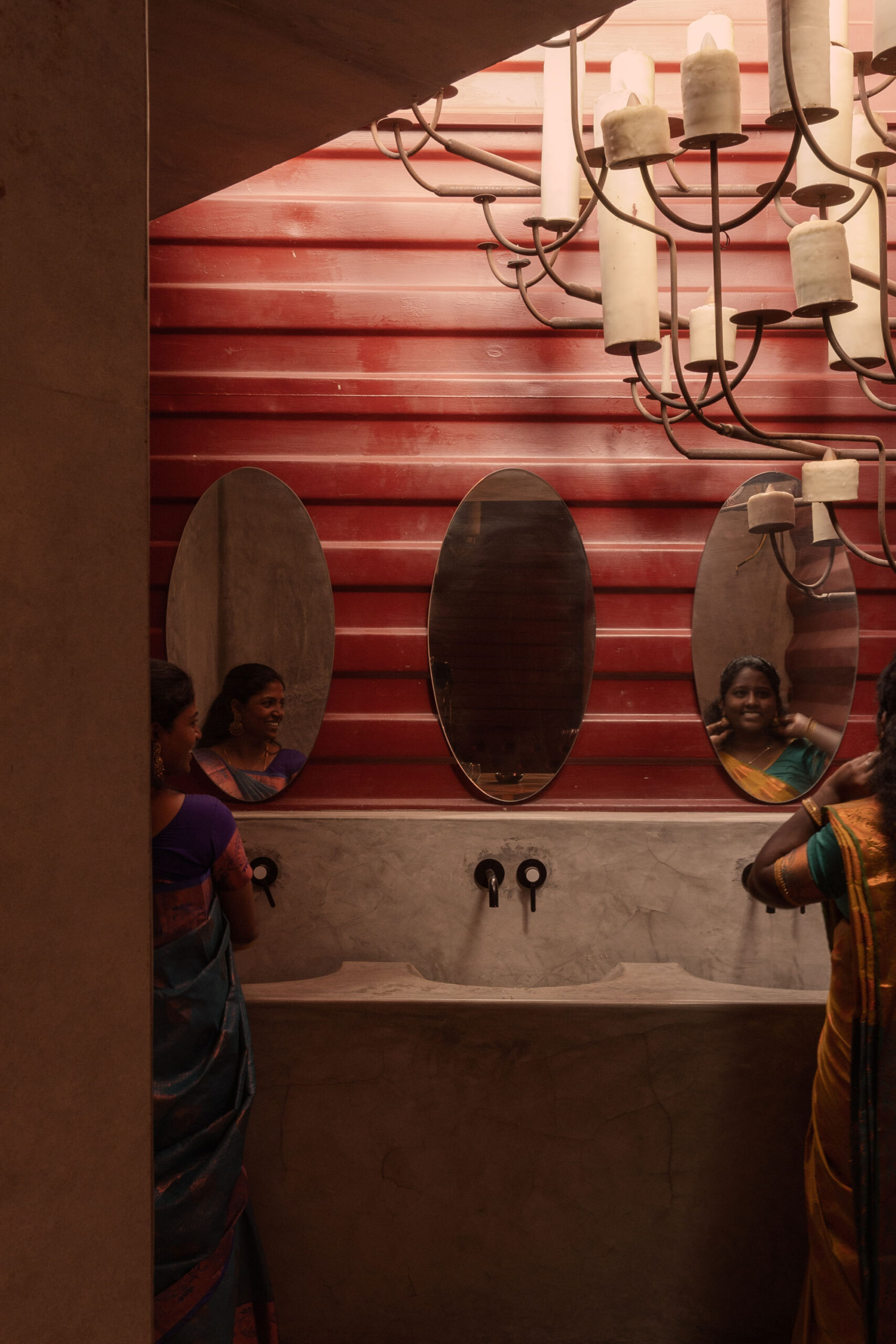
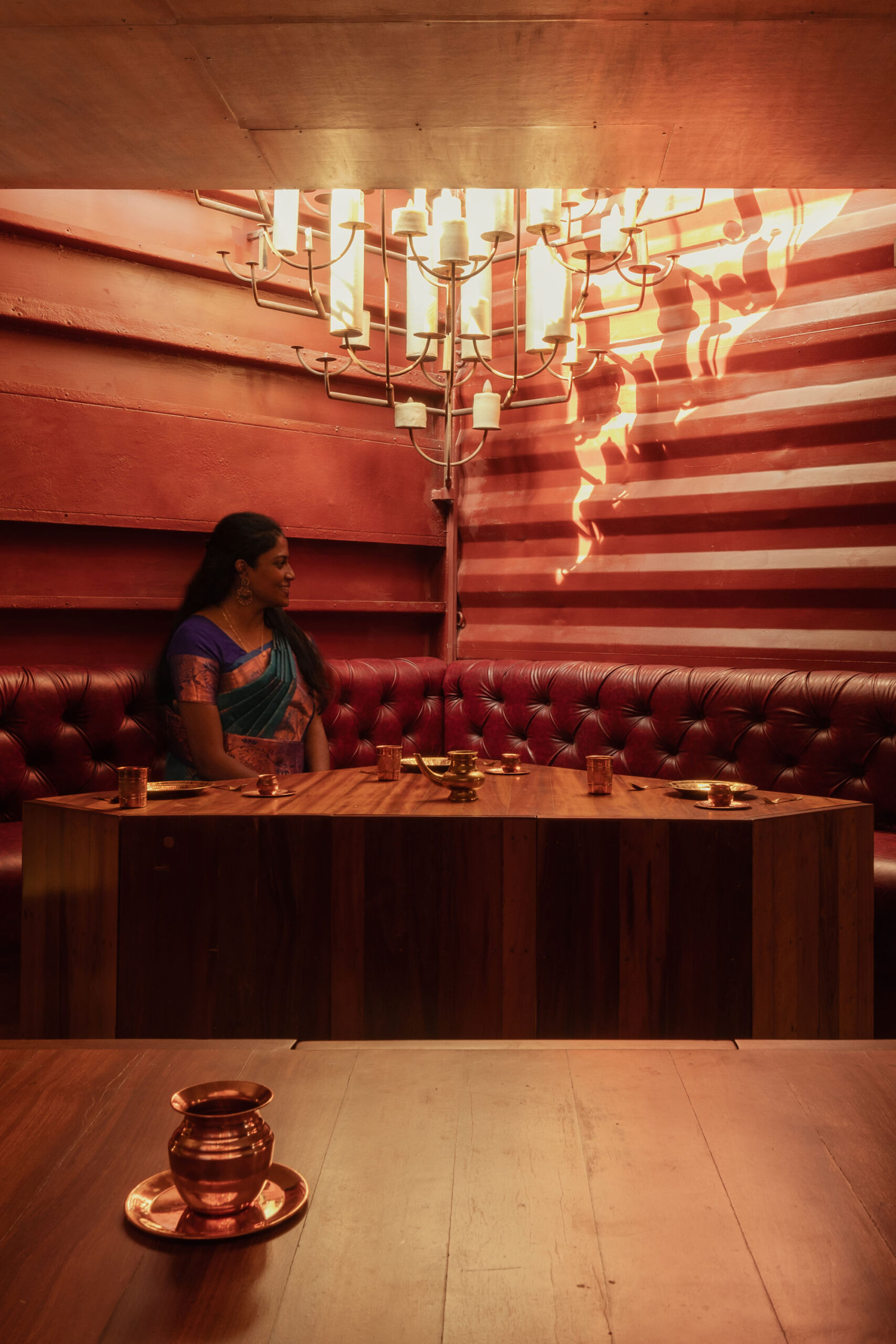
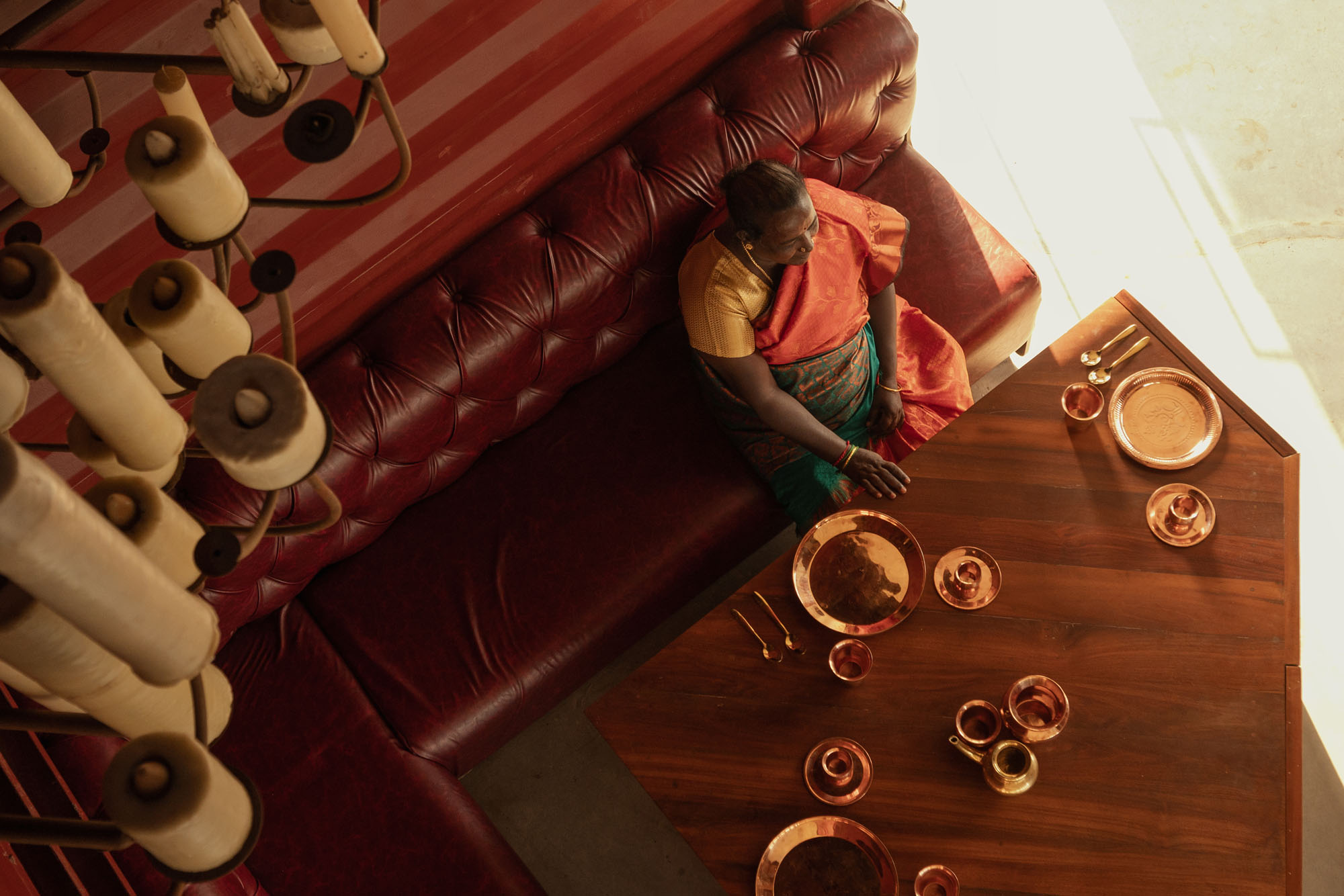
インテリアは、コンテナ本来の素朴で自然な質感を活かして設計されており、隅々に居心地の良い座席エリアが設けられている。狭い敷地内であっても、各グループが独自のプライベートな空間を確保できるようレイアウトが計画された。各座席スペースは、日中は天窓から自然光が差し込み、夜間は古いワックスとパイプを用いて特注で製作されたシャンデリアによって照らし出される。床材には、廃棄されたデッキ材と酸化材が使用されている。
タミル語で「箱」を意味する「Petti」レストランは、適切な外観処理を施すことで、主要な海洋廃棄物である輸送用コンテナが、熱効率に優れた建材として熱帯の都市部で幅広く活用できることを示す好例である。
©︎ IKSHA
©︎ IKSHA
©︎ IKSHA
©︎ IKSHA
©︎ IKSHA
©︎ IKSHA
©︎ IKSHA
©︎ IKSHA
©︎ IKSHA
©︎ IKSHA
©︎ IKSHA
©︎ IKSHA
©︎ IKSHA
©︎ IKSHA
©︎ IKSHA
Site plan
Ground floor plan
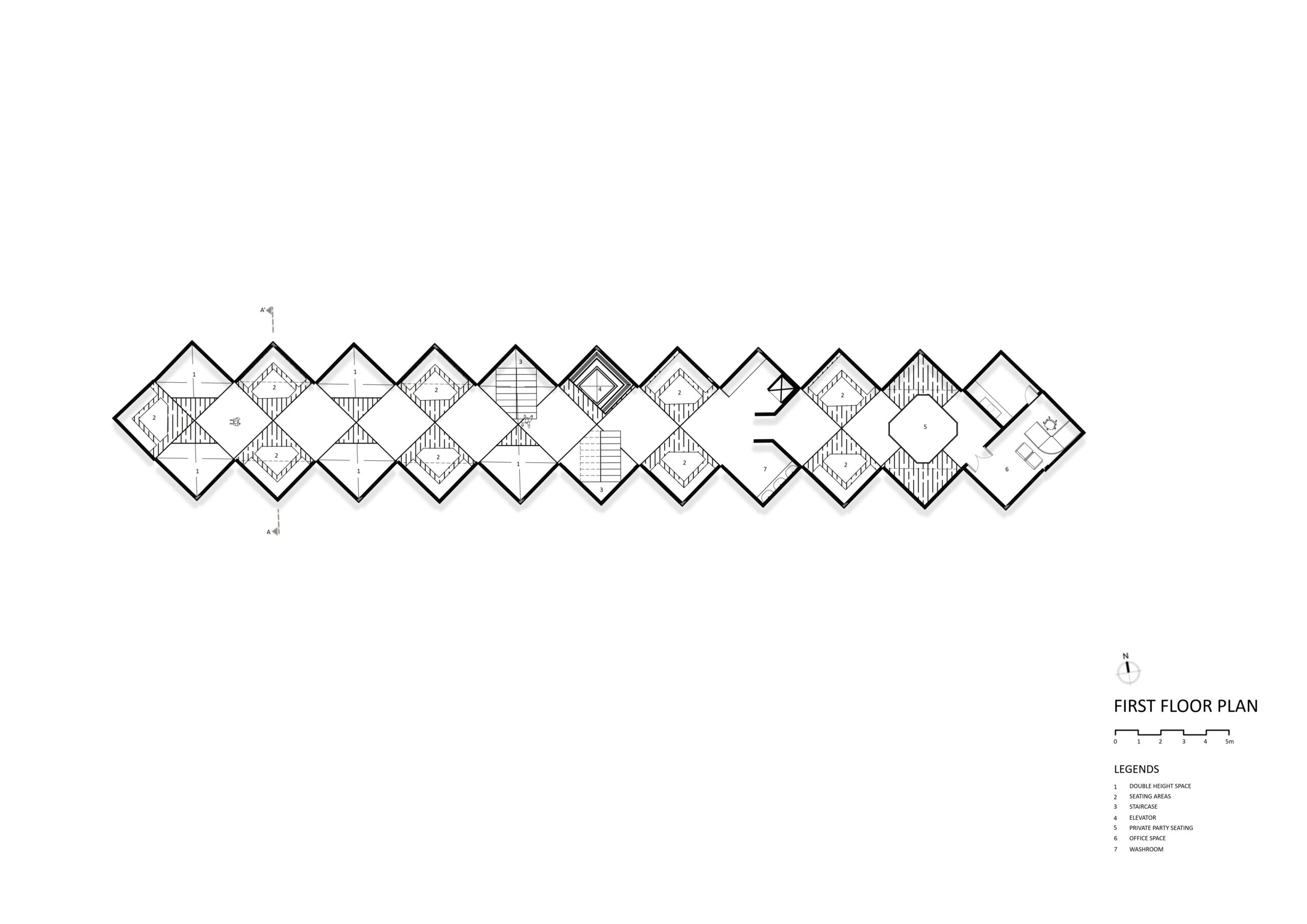
1st floor plan
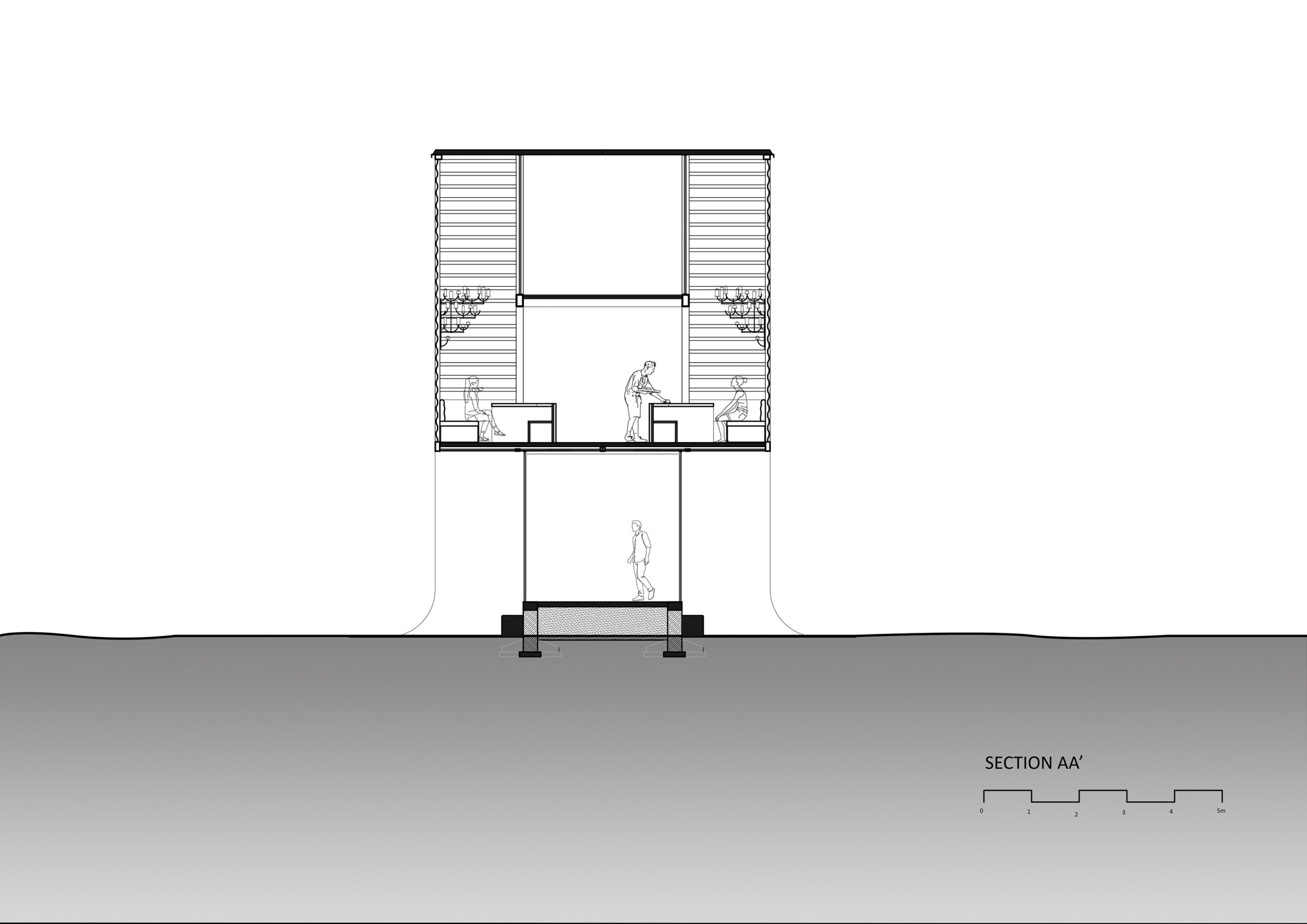
Section
以下、ウォールメーカーズのリリース(英文)です。
Project Name: PETTI RESTAURANT
Office Name: WALLMAKERS
Office Website: www.wallmakers.org
Social Media Accounts: @ar.vinudaniel , @oshin.mariam.varughese
Contact email: clients.wallmakers@gmail.com
Firm Location: INDIA
Completion Year: 2026
Gross Built Area (m2/ ft2):- 4720 ft2.
Project Location: Tuticorin, Tamil Nadu
Program / Use / Building Function: Restaurant
Lead Architects: VINU DANIEL, OSHIN MARIAM VARUGHESE
Lead Architects e-mail:vinudaniel@gmail.com, oshivarughese@gmail.com
Junior Architects : Rajesh KhannaPhotographer
Photo Credits: IKSHA
Social Media Accounts: @iksha.in
Photographer’s e-mail: studio.iksha@gmail.comProject Description:Tuticorin, a port city, has been the center of maritime trade for the last 2000 years. The sheer number of shipping containers discarded in the city made us combine two materials that are usually not combined: steel and mud.The site in Tuticorin, for building a 200 people capacity restaurant was a very narrow and linear plot of land. We wanted to utilise one of the most abandoned marine wastes: shipping containers and also explore modular construction. Each container was set vertically, as we wanted better room heights, as opposed to the 2.4m dimensions that are generally available when containers are set horizontally. The 12 cut containers were placed using a crane in a span of 1 week and then welded together to form the basic structure of the building along with a few RCC slabs that were added to connect at the floor levels. Being situated in an open site in a region that was hot throughout the year, we added a layer of poured earth on the external surface of the containers to reduce the heat gain and provide insulation. The pattern was further worked out to make it an alternatively recessed one for better thermal efficiency and to reduce the load on the air conditioning systems by 38%. Every alternate container was staggered and we designed the South facing first floor without any wall openings so that the floating containers allowed for better ventilation ( In the case of a passively ventilated scenario ).The interiors were designed keeping up with the raw and natural texture of the container to create cozy seating areas in the corners. The layout was planned in a way that it allowed each group of guests to have their own private niche, even within such a narrow plot. Each seating space is naturally lit during the day with a skylight and by a chandelier in the evenings,which has been custom designed with old wax and pipes. Discarded deck wood and oxide form the flooring of the project. “PETTI” Restaurant, meaning ‘box’ in Tamil, is a prime example that with the right facade treatment, shipping containers which is a major marine waste can be used extensively as a thermally efficient material in Tropical urban areas .
ウォールメーカーズ 公式サイト
https://www.wallmakers.org
【購読無料】空間デザインの今がわかるメールマガジン TECTURE NEWS LETTER
RECOMMENDED ARTICLE



