CULTURE
©︎ Vivek Eadara
©︎ Vivek Eadara
インドのハイデラバード郊外に位置する〈オーヴァ・イラム(Aurva Illam)〉は、インドを拠点に土を用いた建築の設計・建設を手がける Iki Buildsが設計した住宅です。
廃棄素材や土を用いた触覚的な素材感と、徹底したパッシブデザインによりエアコン不要の熱的自律性を融合させ、現代における新たなラグジュアリーのあり方を提示しています。
注目ポイント
- 気候制御装置として機能するパッシブデザイン
- 廃棄物と土を活用した生態学的・熱的アプローチ
- 機能と気候を形態化する「ボリューム・エクスプレッショニズム」
- 開放感とプライバシーを両立する空間の階層操作
(以下、Iki Buildsから提供されたプレスキットのテキストの抄訳)
©︎ Vivek Eadara
©︎ Vivek Eadara
©︎ Vivek Eadara
現代の新たなラグジュアリーを体現するパッシブデザインの住宅
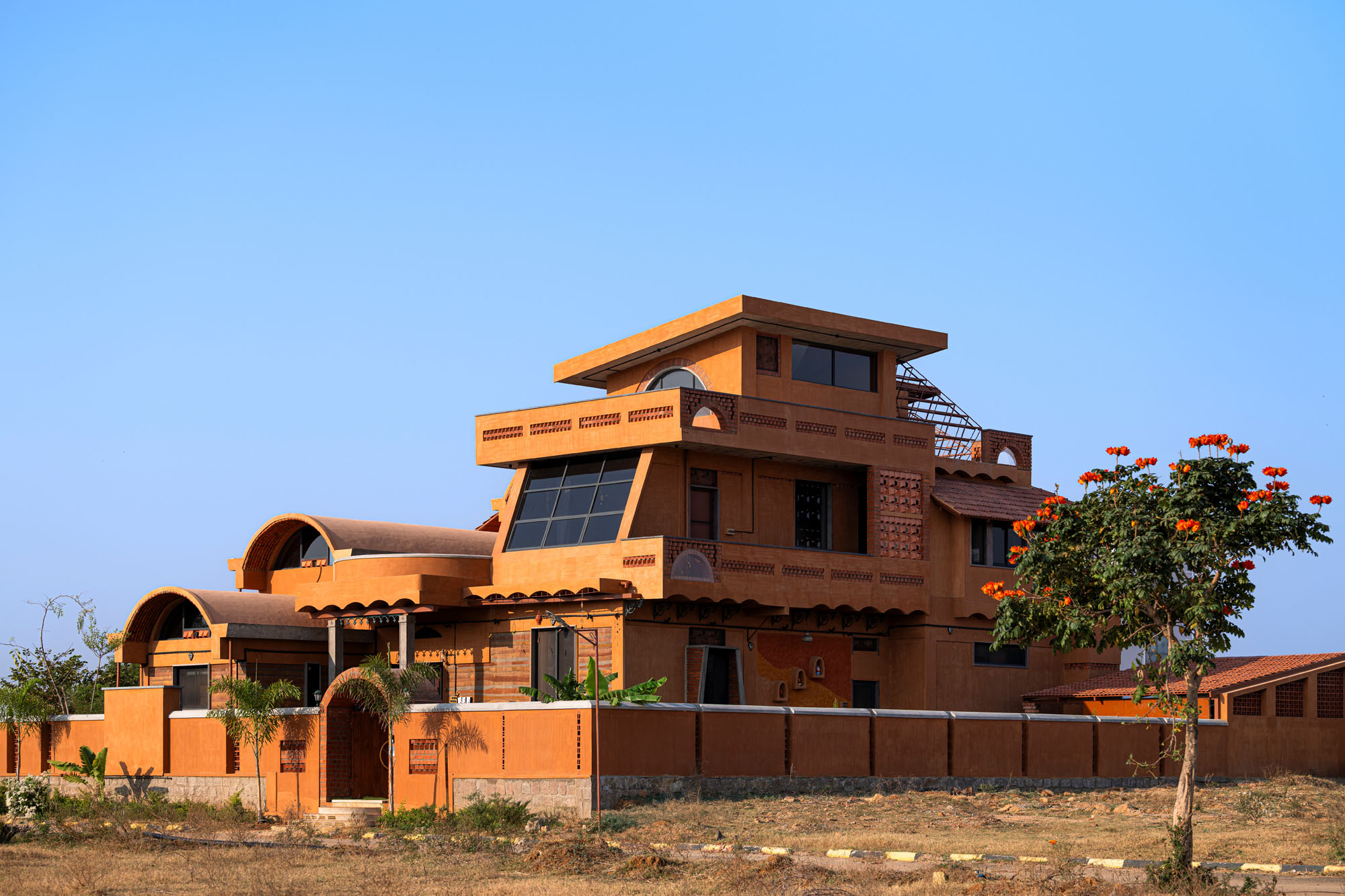
ハイデラバードの拡大する都市の縁に位置する〈オーヴァ・イラム〉は、サンスクリット語の「オーヴァ(大地)」とタミル語の「イラム(家)」を組み合わせた名称であり、「カスケードする大地」として構想された住宅のプロトタイプである。
このプロジェクトは、人新世における現代のラグジュアリーを、一切の妥協なく再定義するものである。ありふれたガラスと大理石のパラダイムを拒絶し、この住宅は新たなステータスシンボルを提案する。それは、オーダーメイドの素材感、熱的自律性、そしてエアコン不要の暮らしである。
©︎ Vivek Eadara
©︎ Vivek Eadara
©︎ Vivek Eadara
開放とプライバシーを両立する空間論理
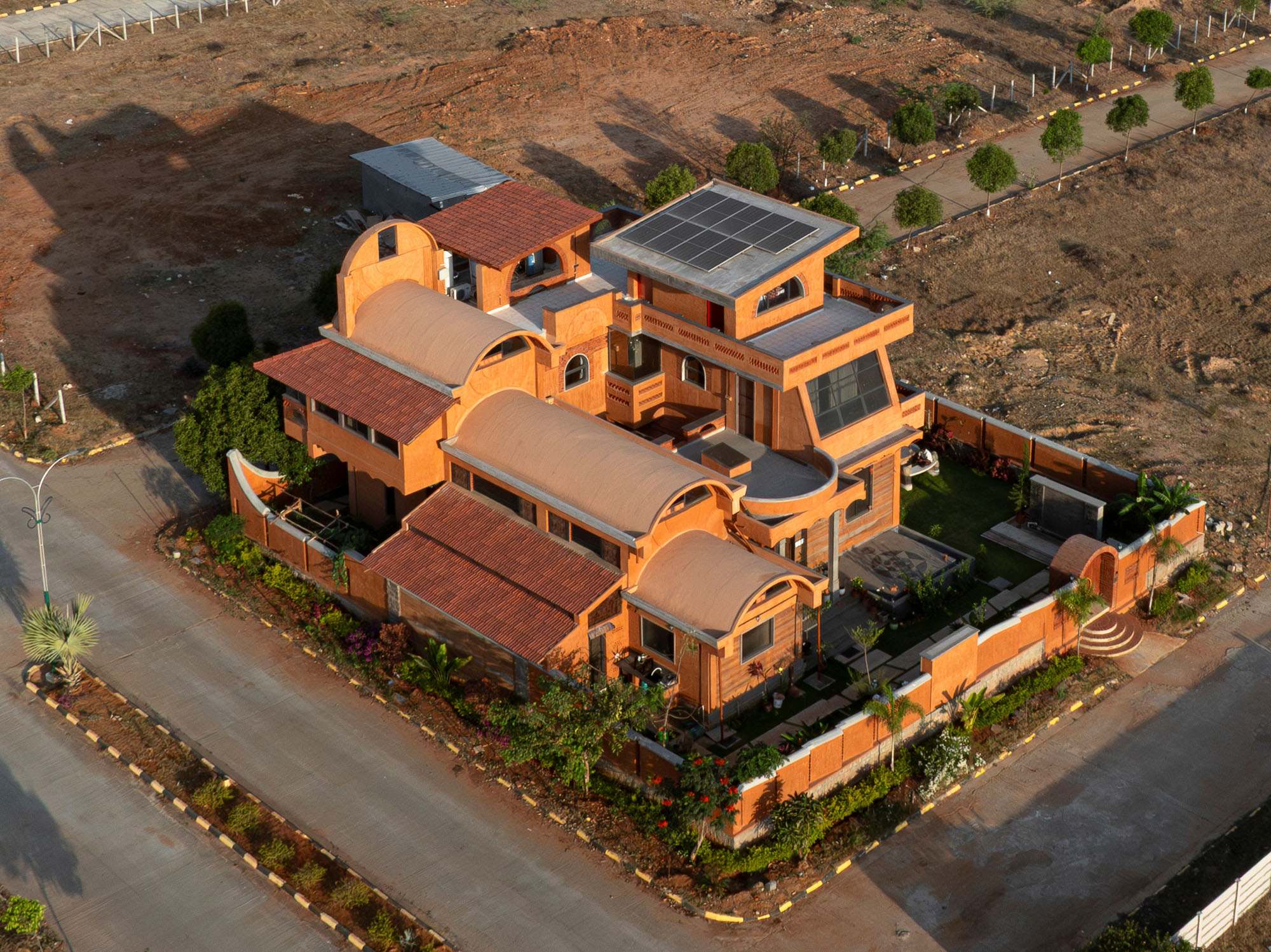
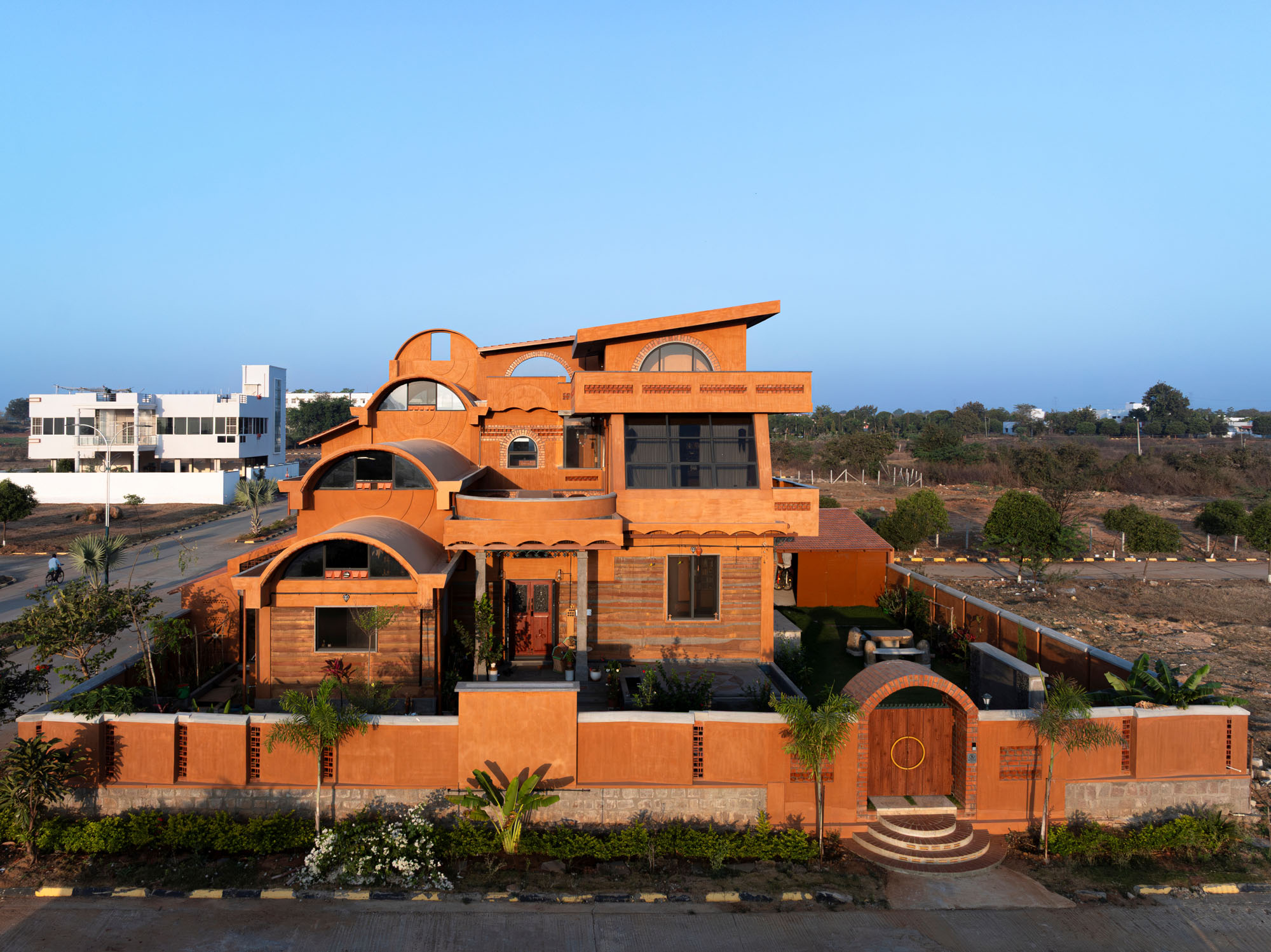
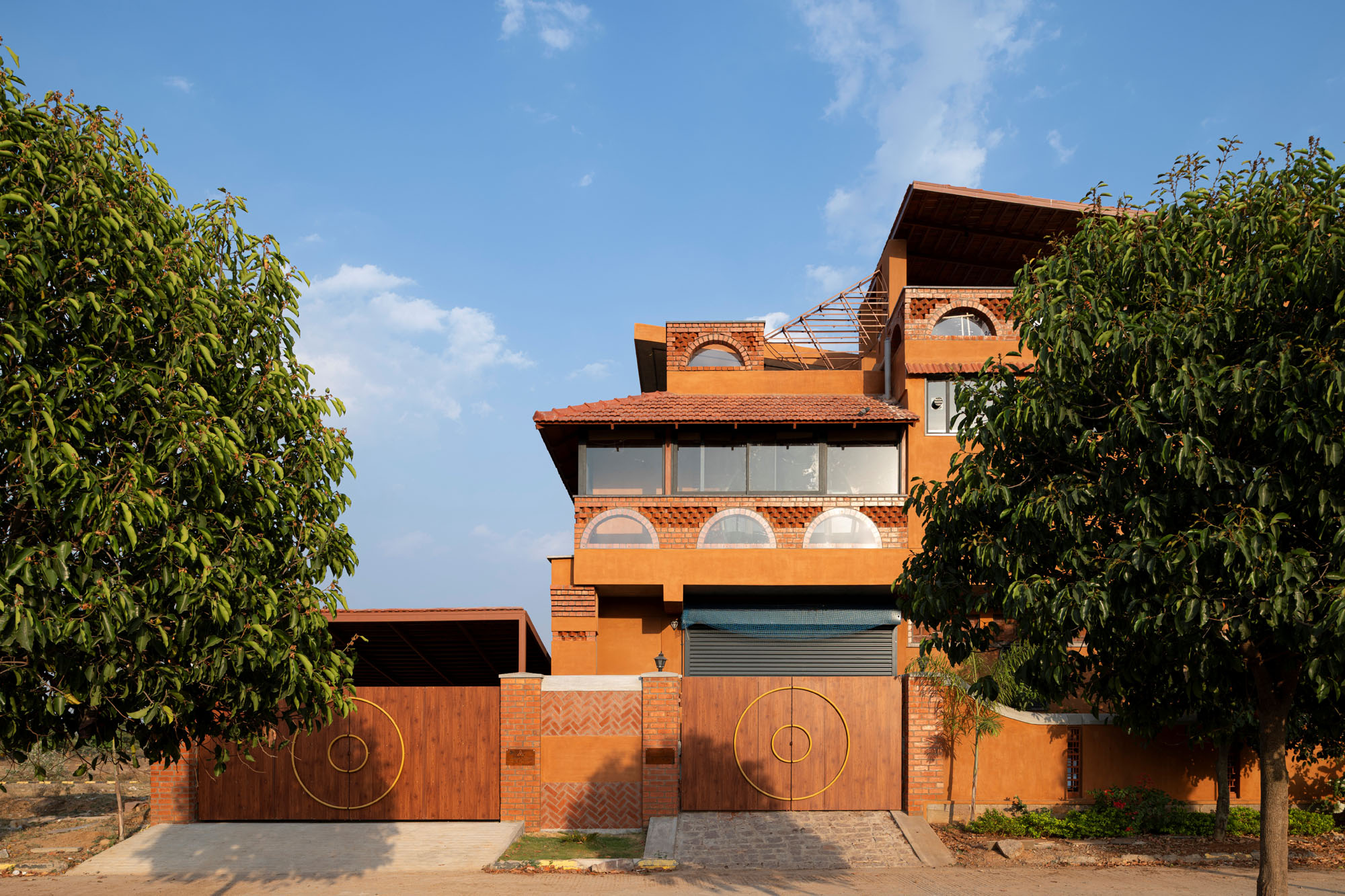
市内から約60km離れたこのプロジェクトは、三方を道路に囲まれ、西側に公共公園を望む角地に位置しており、プライバシーと開放感のバランスを取るという古典的な課題を抱えている。
同時に、設計の核心となる野心は、建築における深遠な二面性への渇望によって駆動されていた。すなわち、厳格かつ高度に最適化された空間論理と、詩的で触覚的な素材感、そして手作りの不完全さに対する深い敬意とを、シームレスに融合させることである。
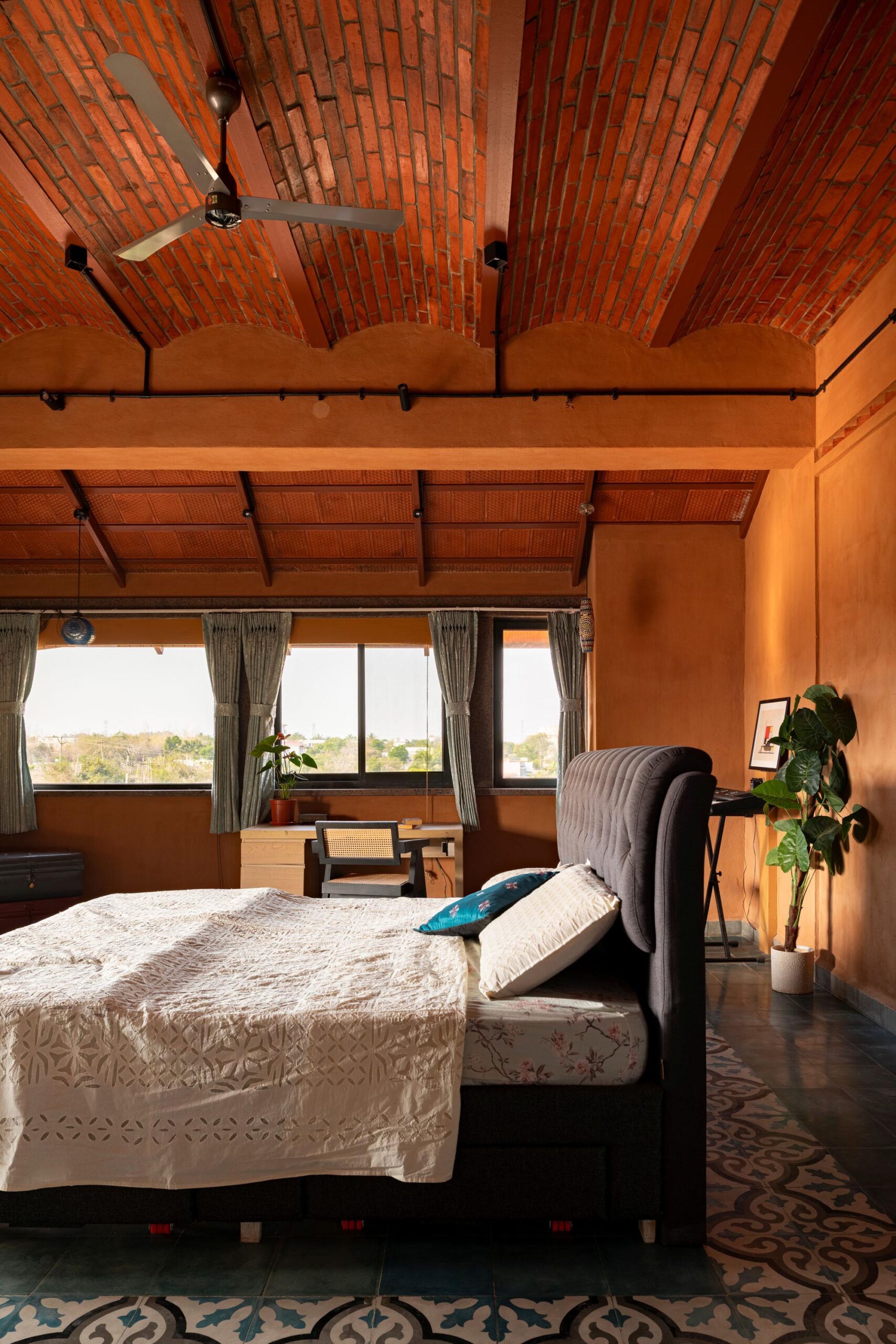
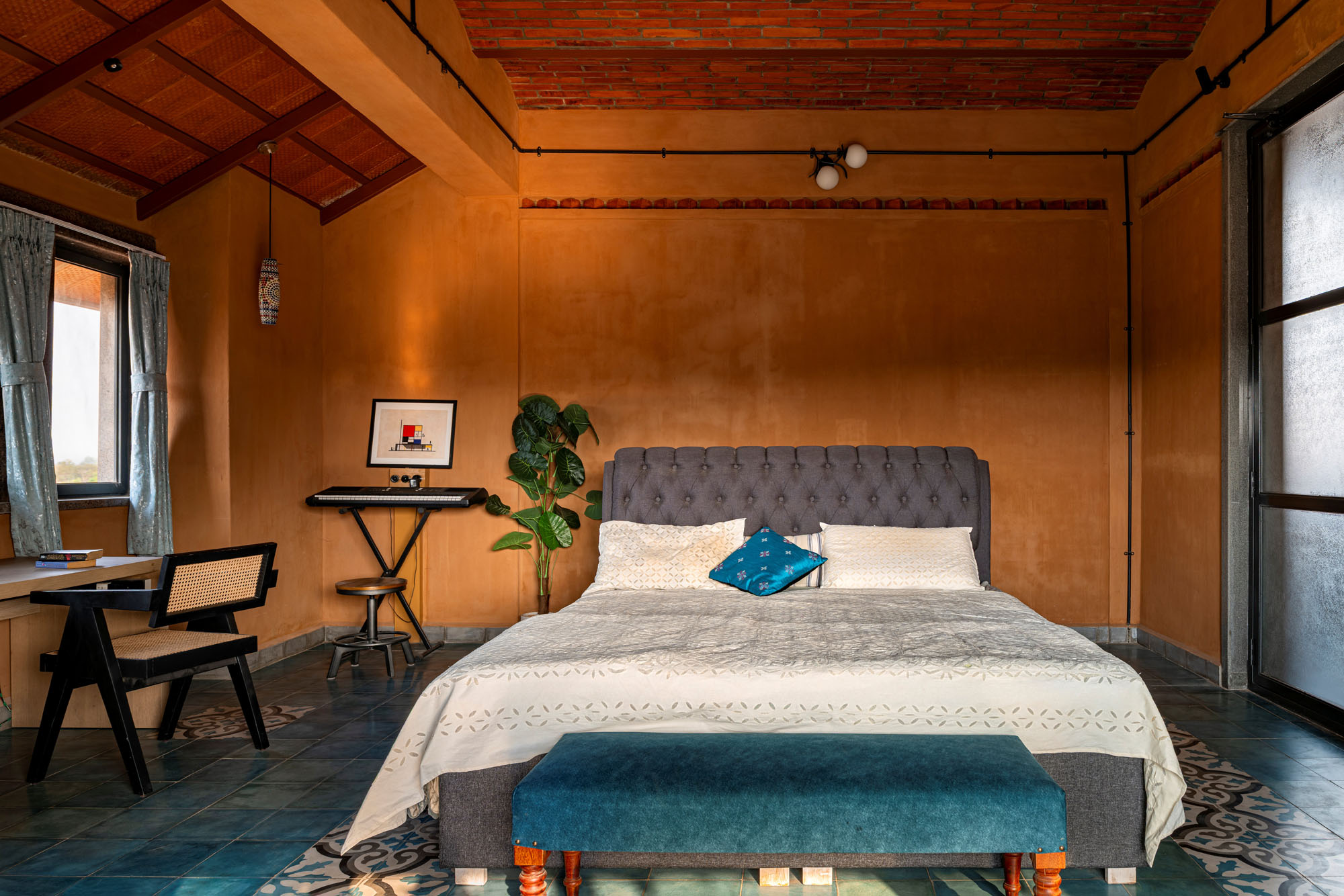
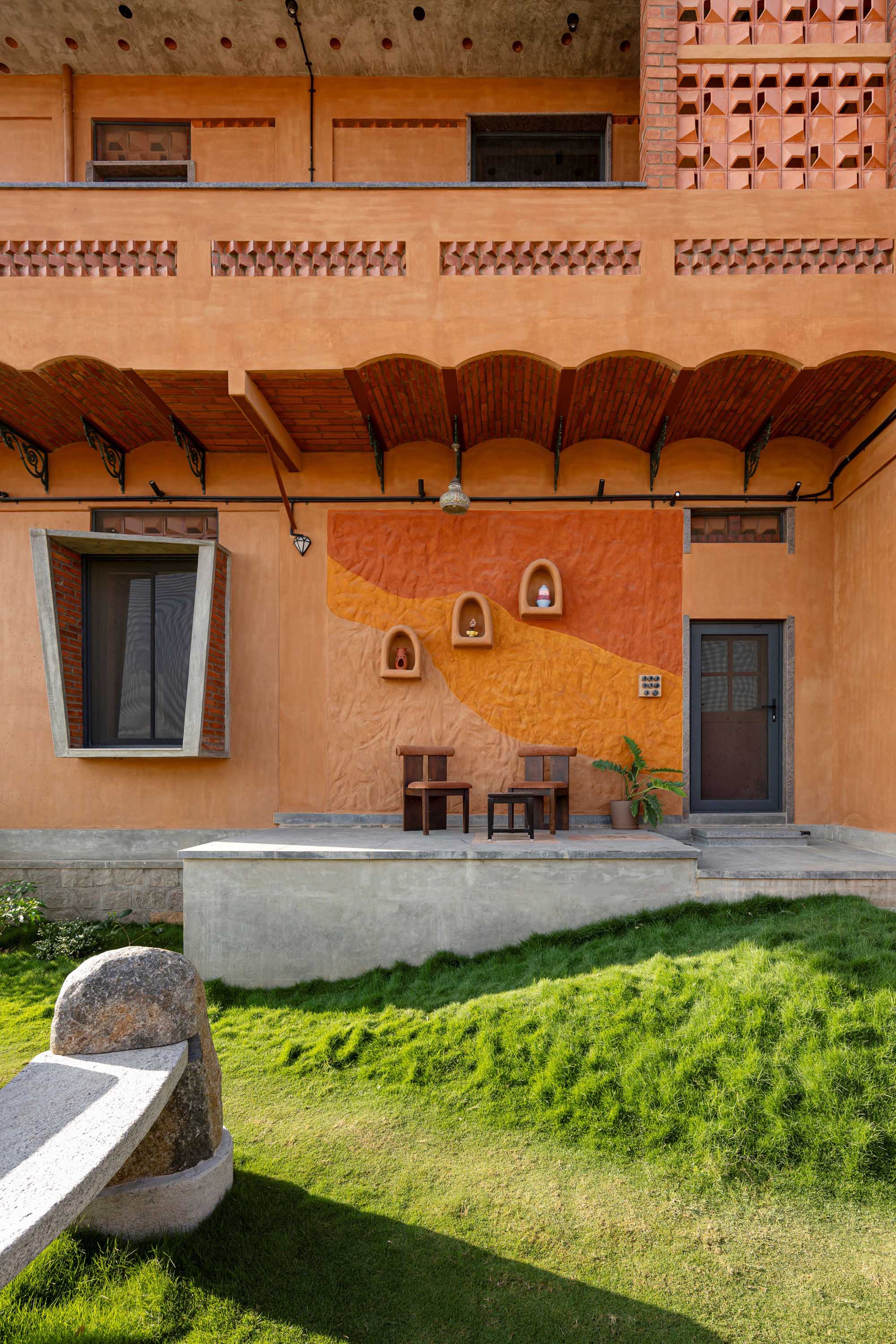
高い塀による防御的な贅沢や内向きの閉鎖性を拒絶し、建築的解決策として、臆することのない開口部を大胆に取り入れている。空間の階層、スクリーン、高低差を活用して通り沿いのエッジと関わりつつ、マスタースイートを含む主要なボリュームを西側の樹冠に向かって大胆に開放している。
©︎ Vivek Eadara
©︎ Vivek Eadara
気候に応答する「ボリューム・エクスプレッショニズム」
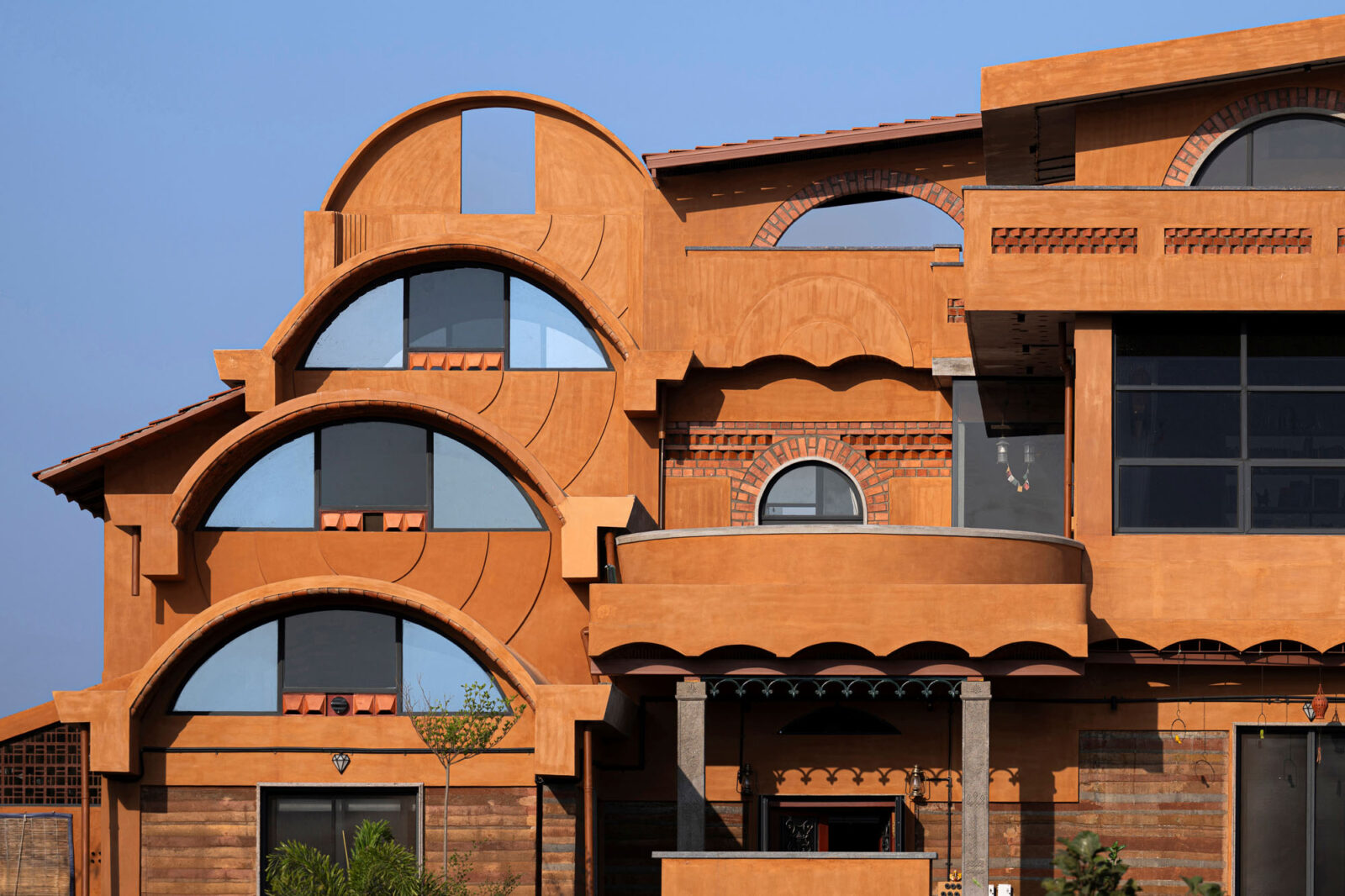
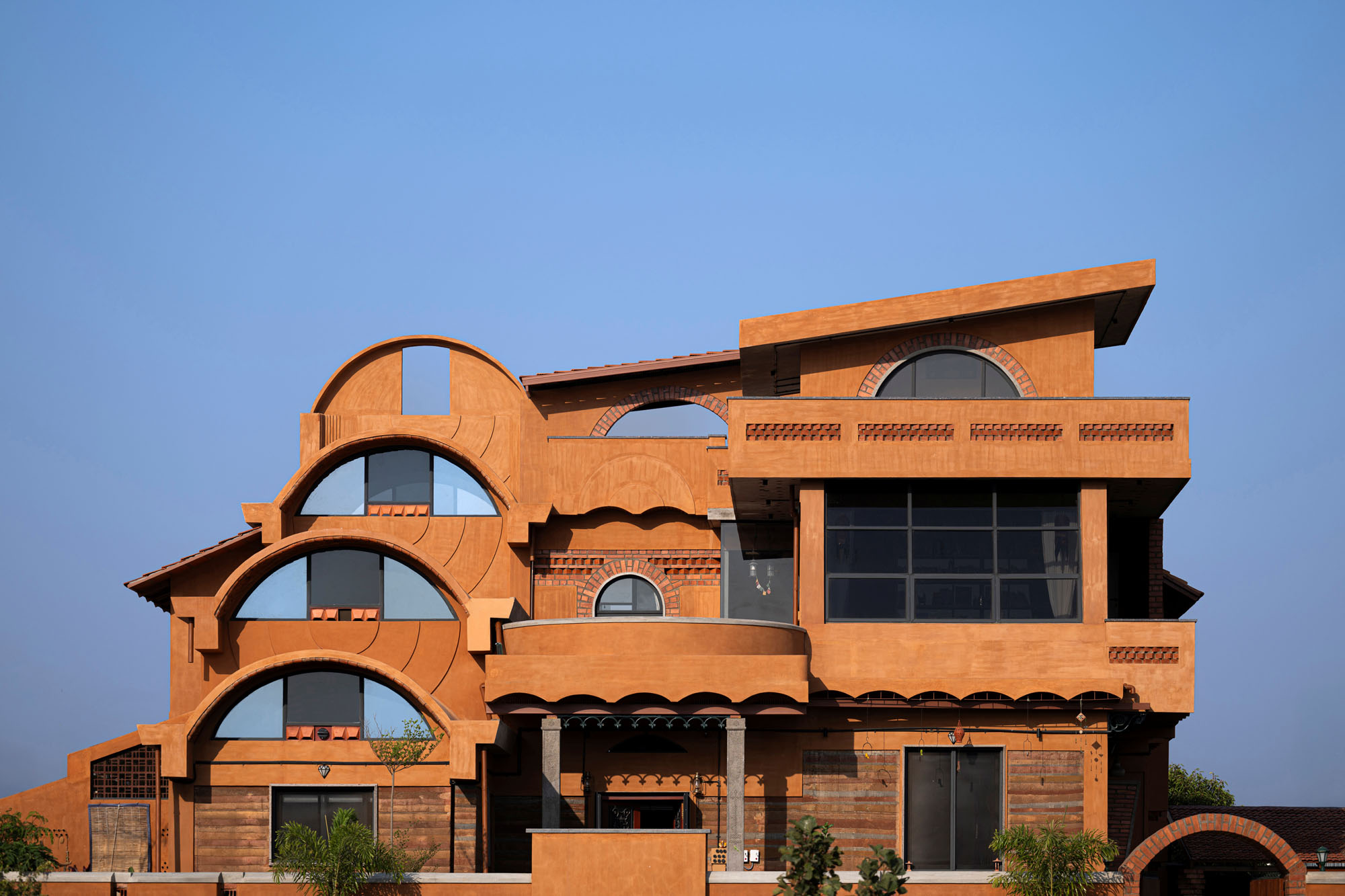
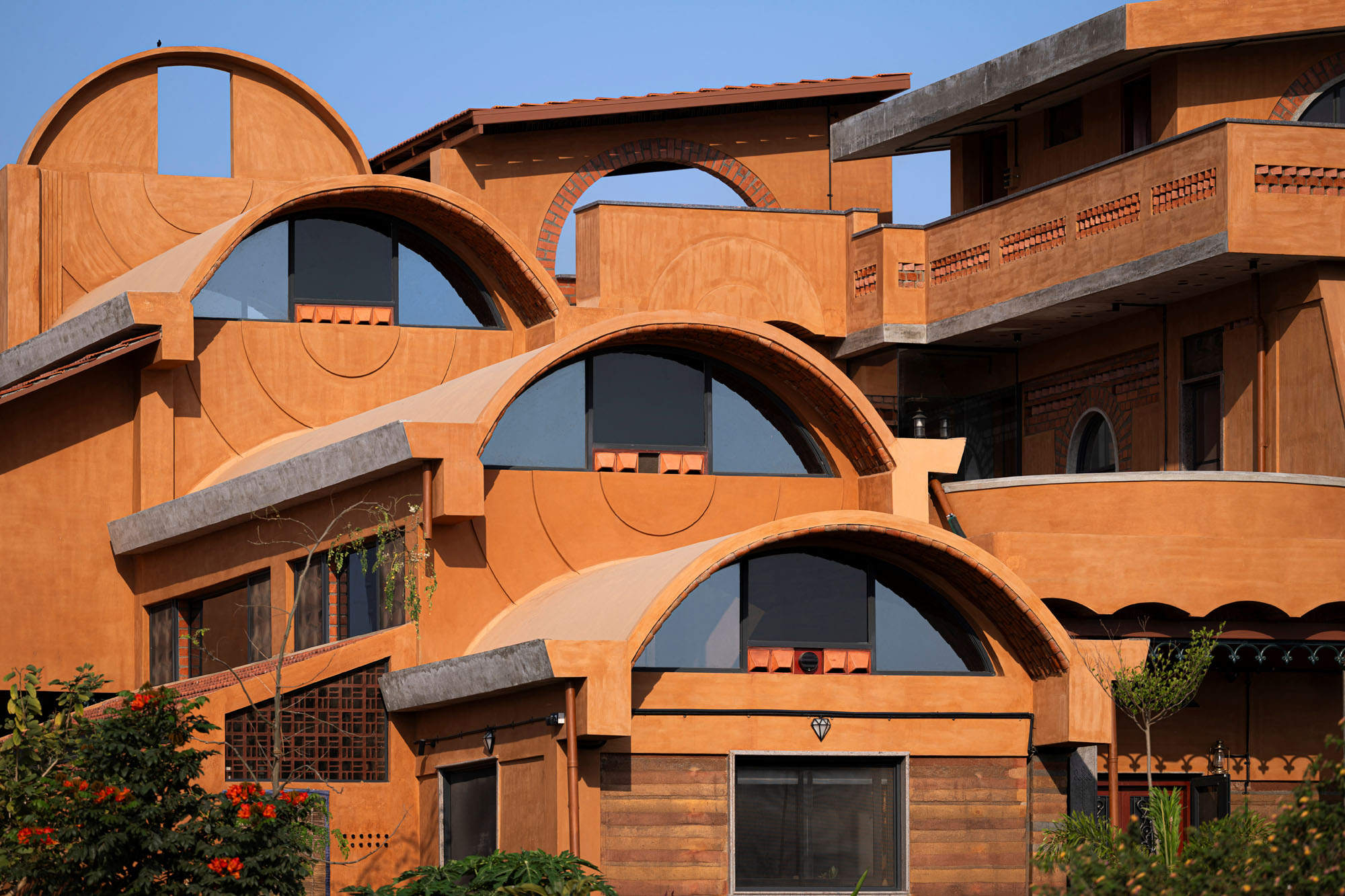
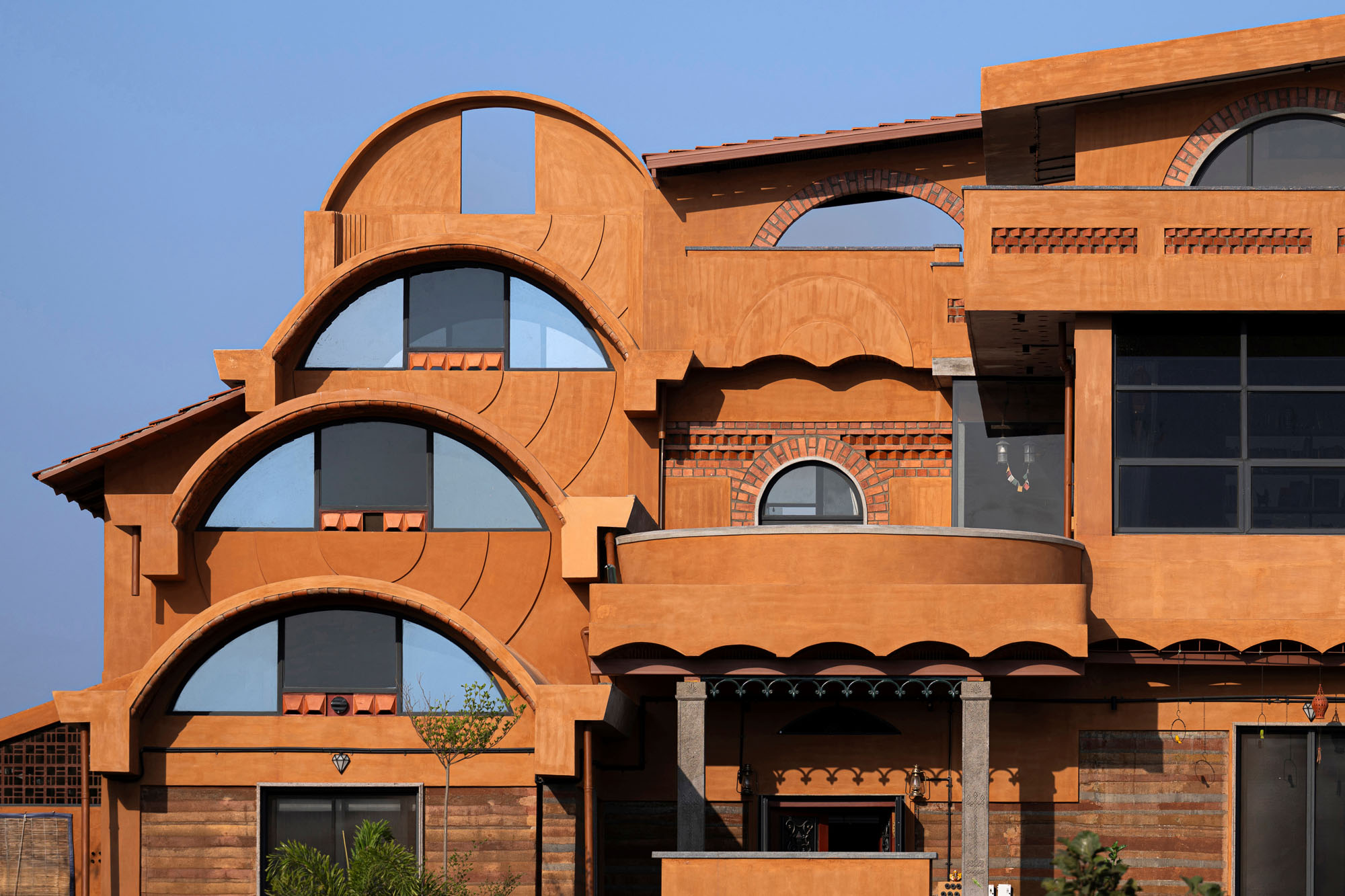
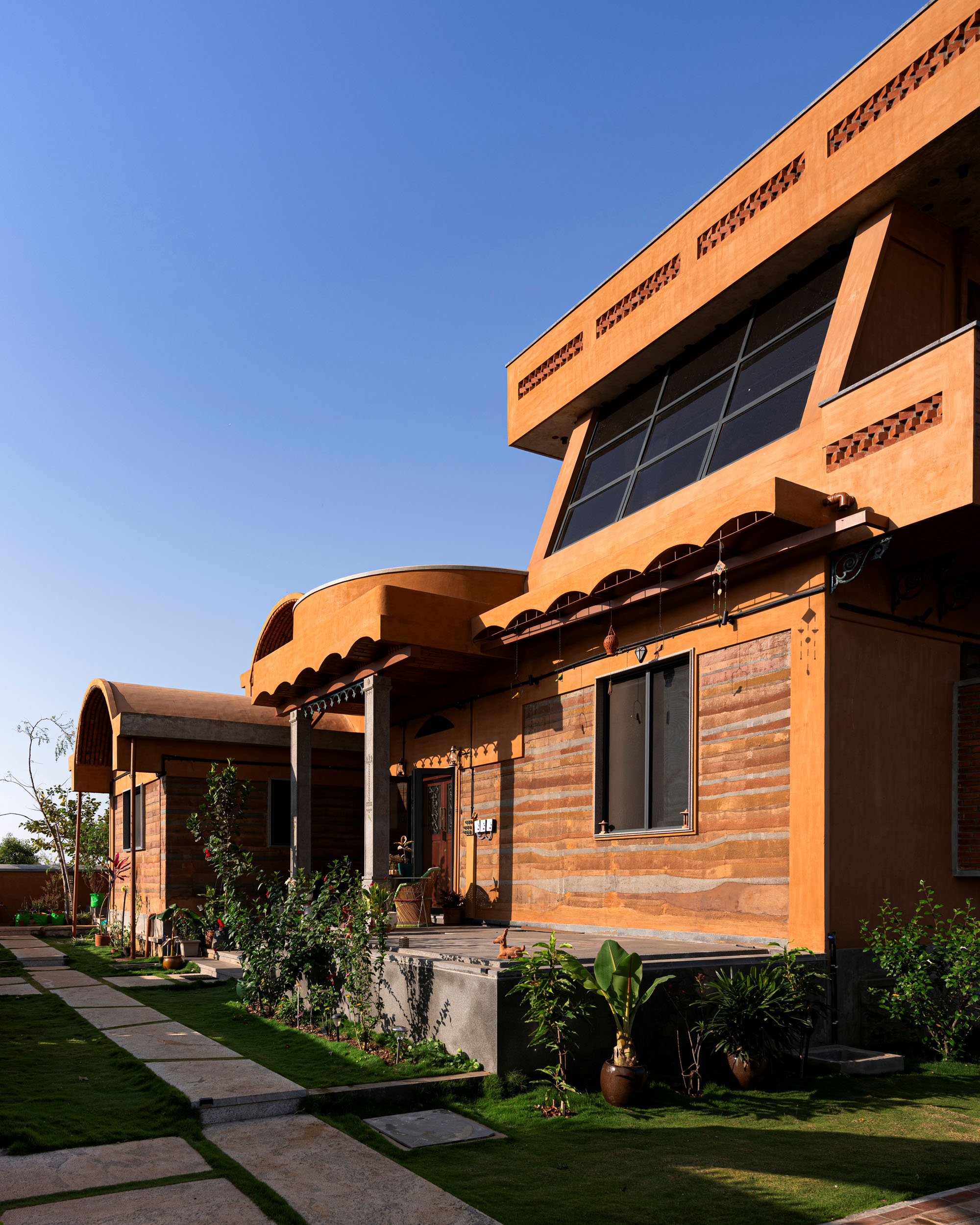
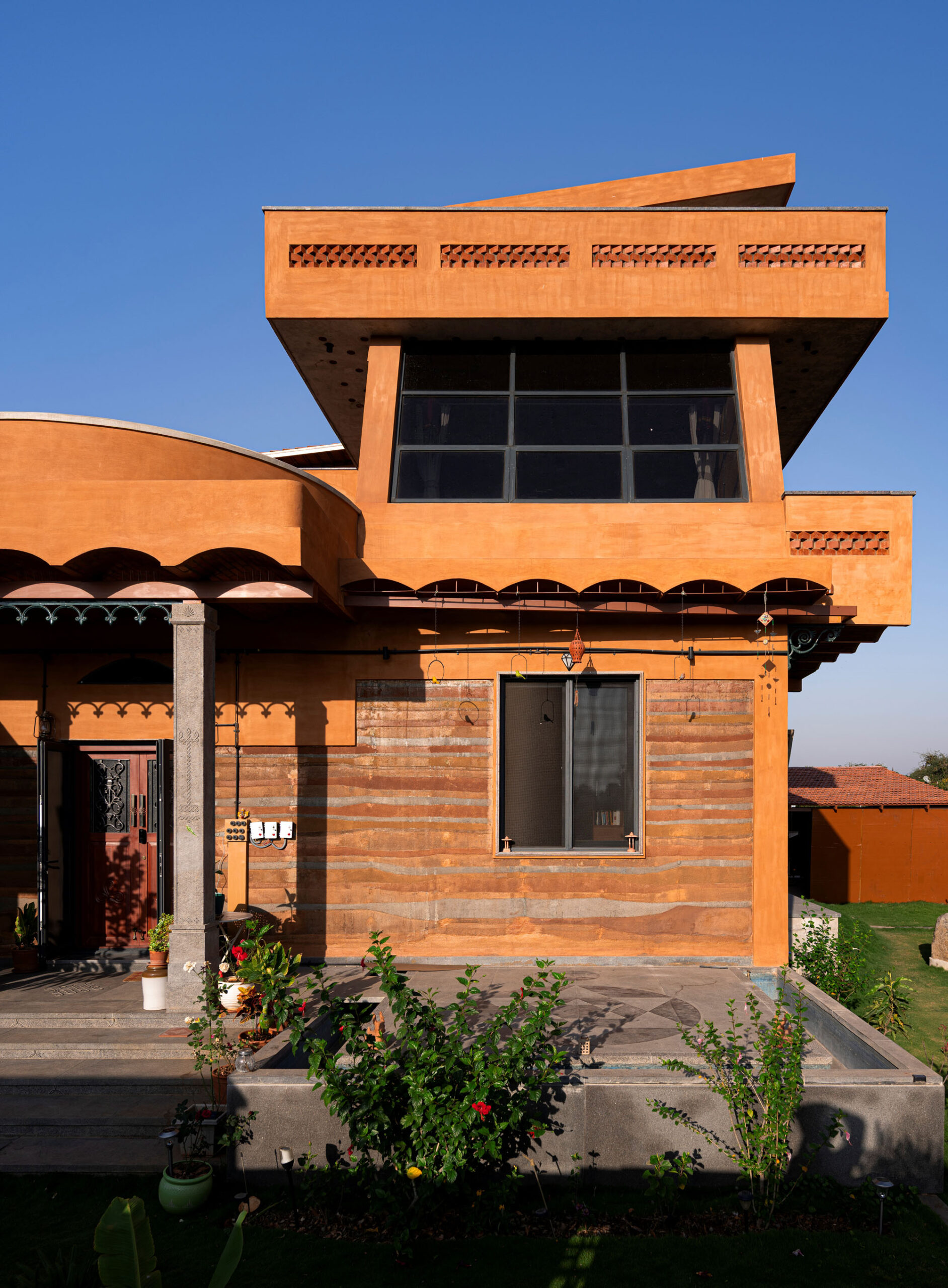
デザイン哲学の中心にあるのは「ボリューム・エクスプレッショニズム」であり、建物のダイナミックな立面は、単なる装飾ではなく、実際の機能と気候への対応を忠実に映し出した地図となっている。
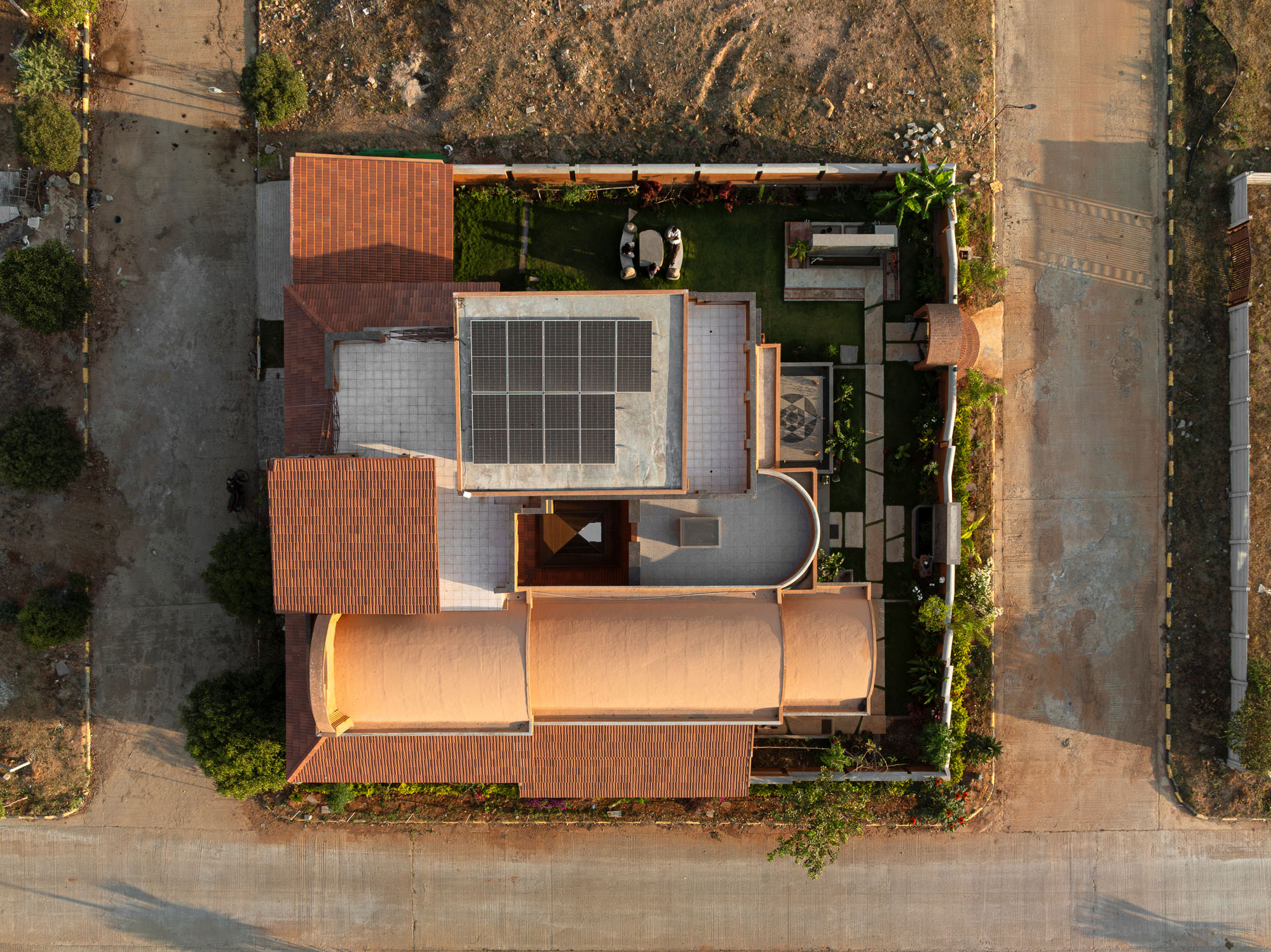
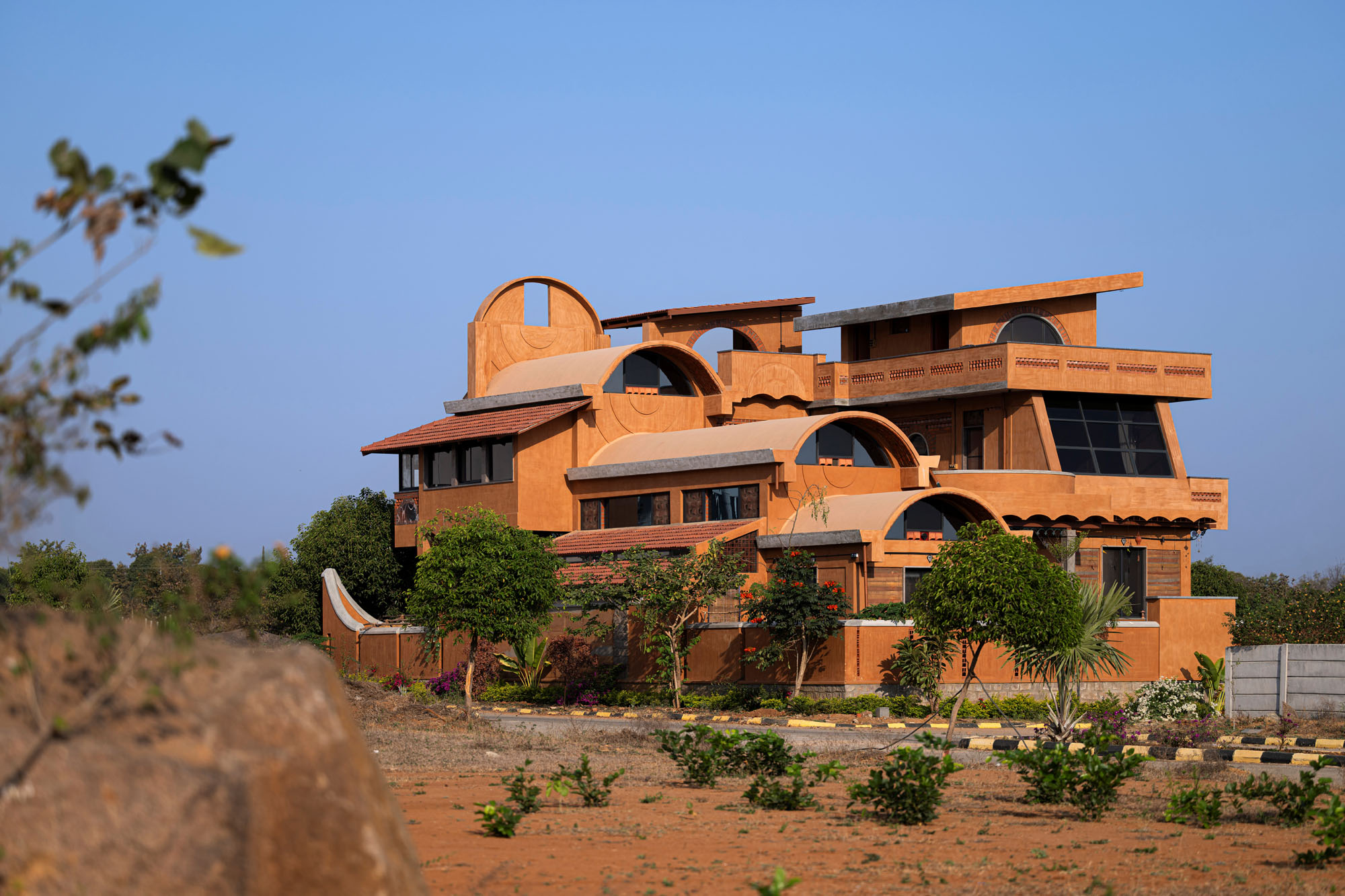
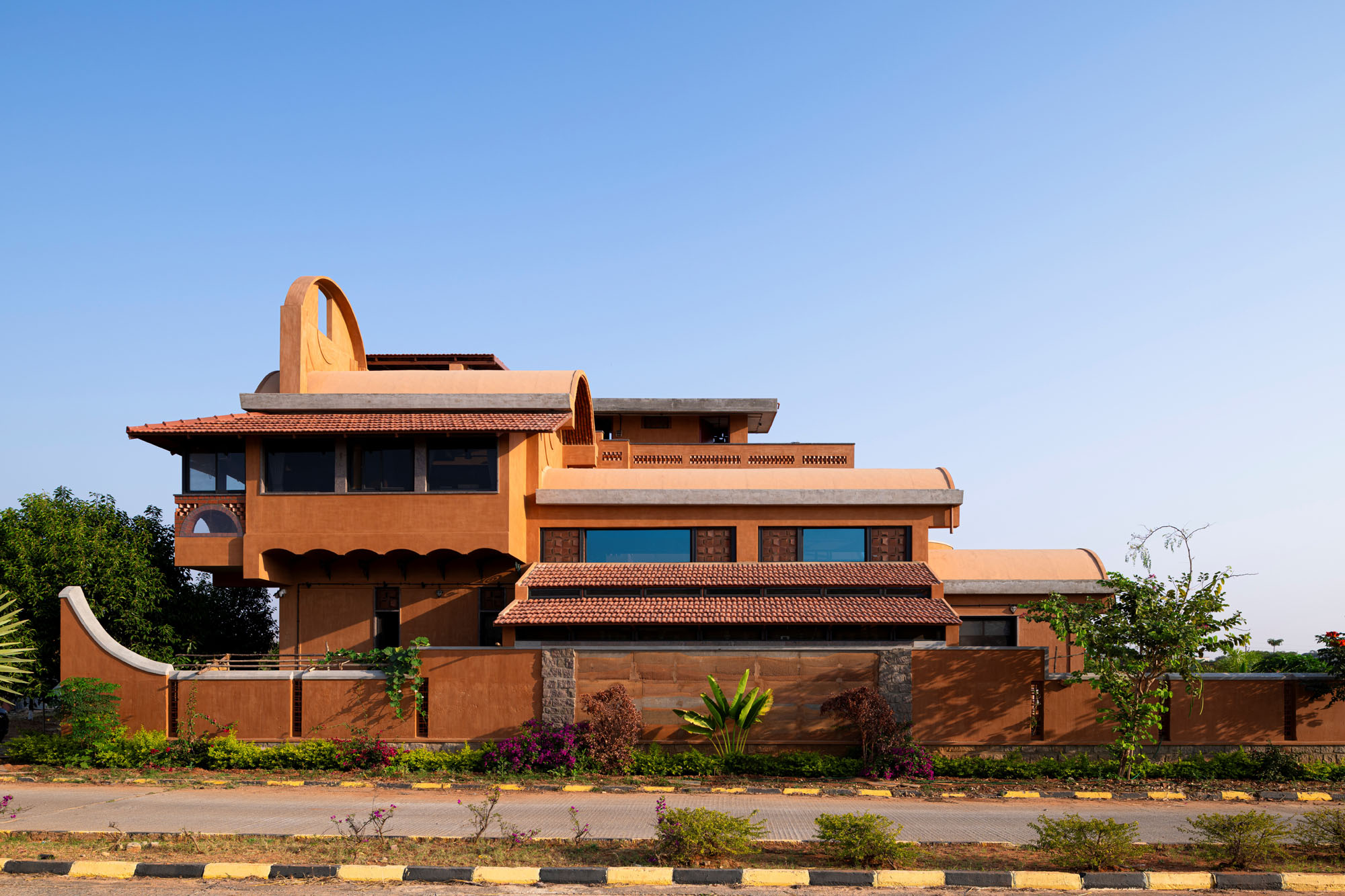
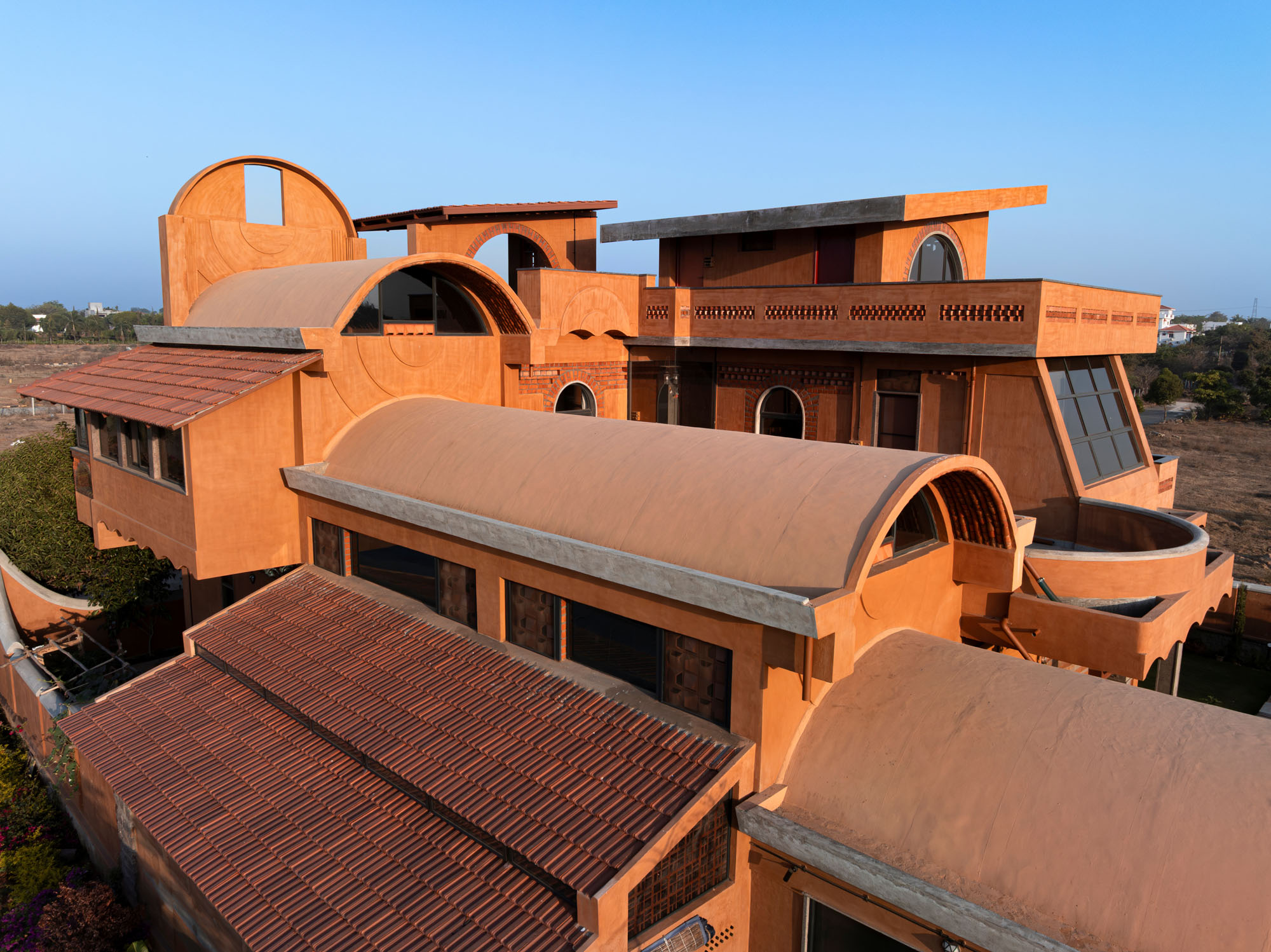
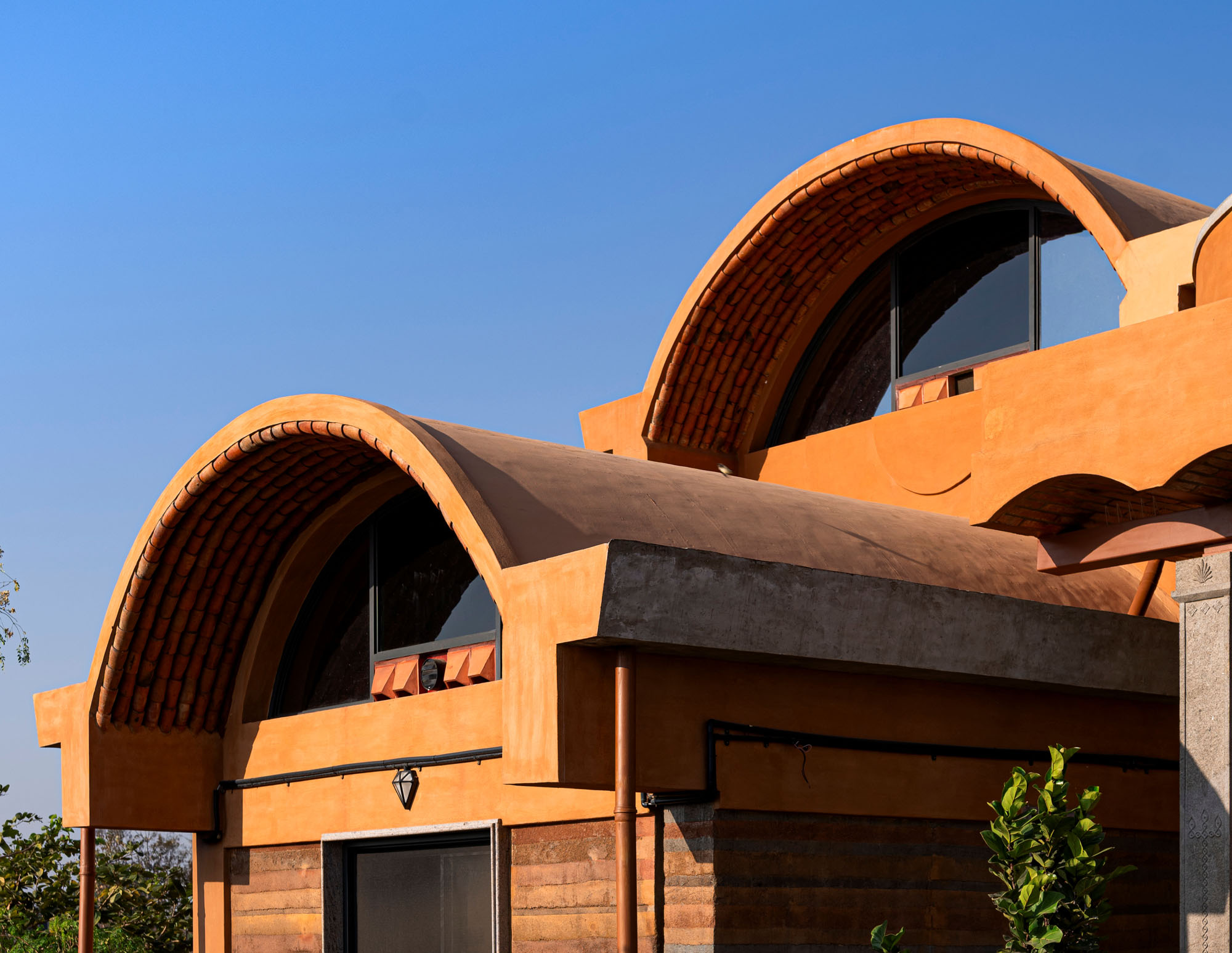
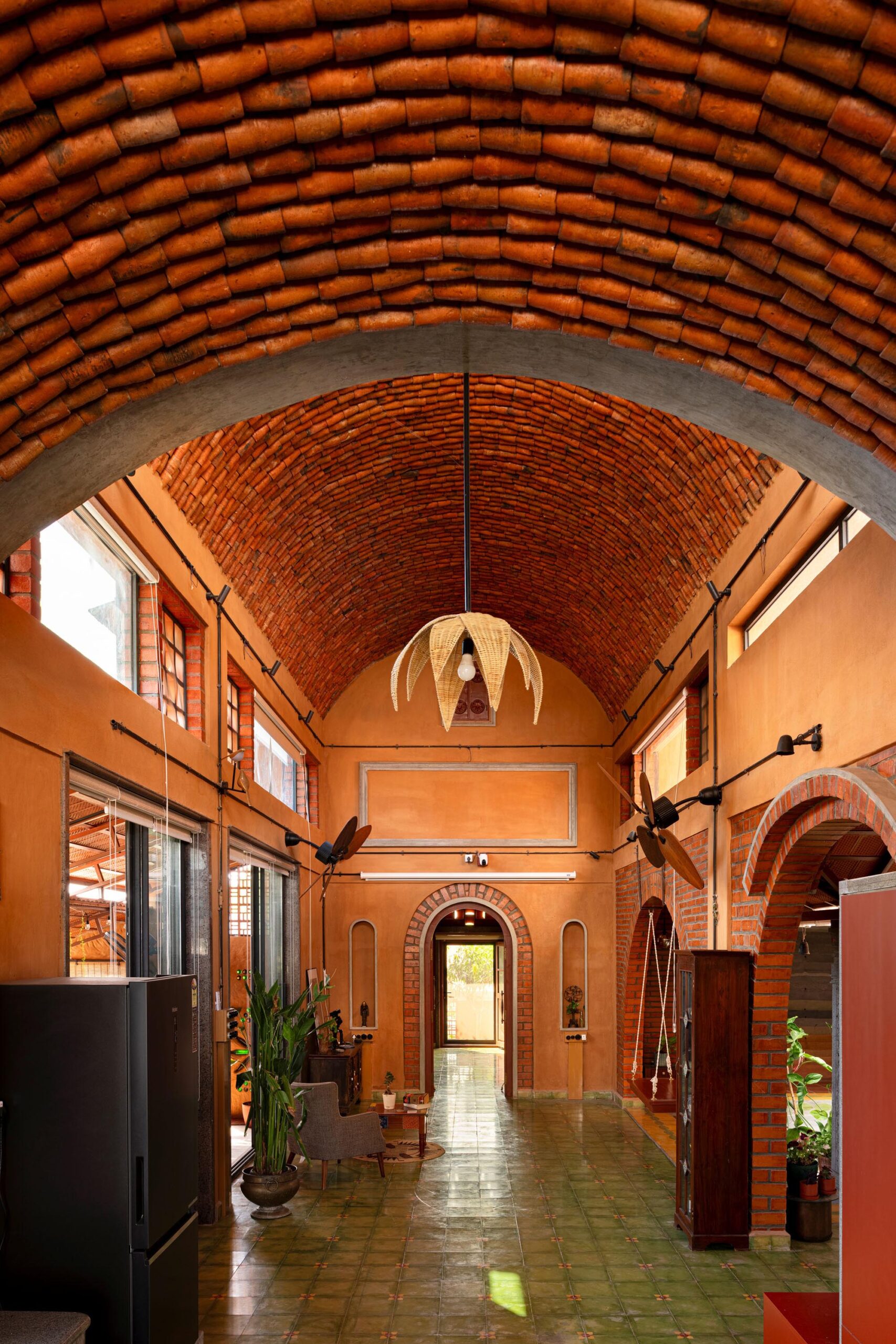
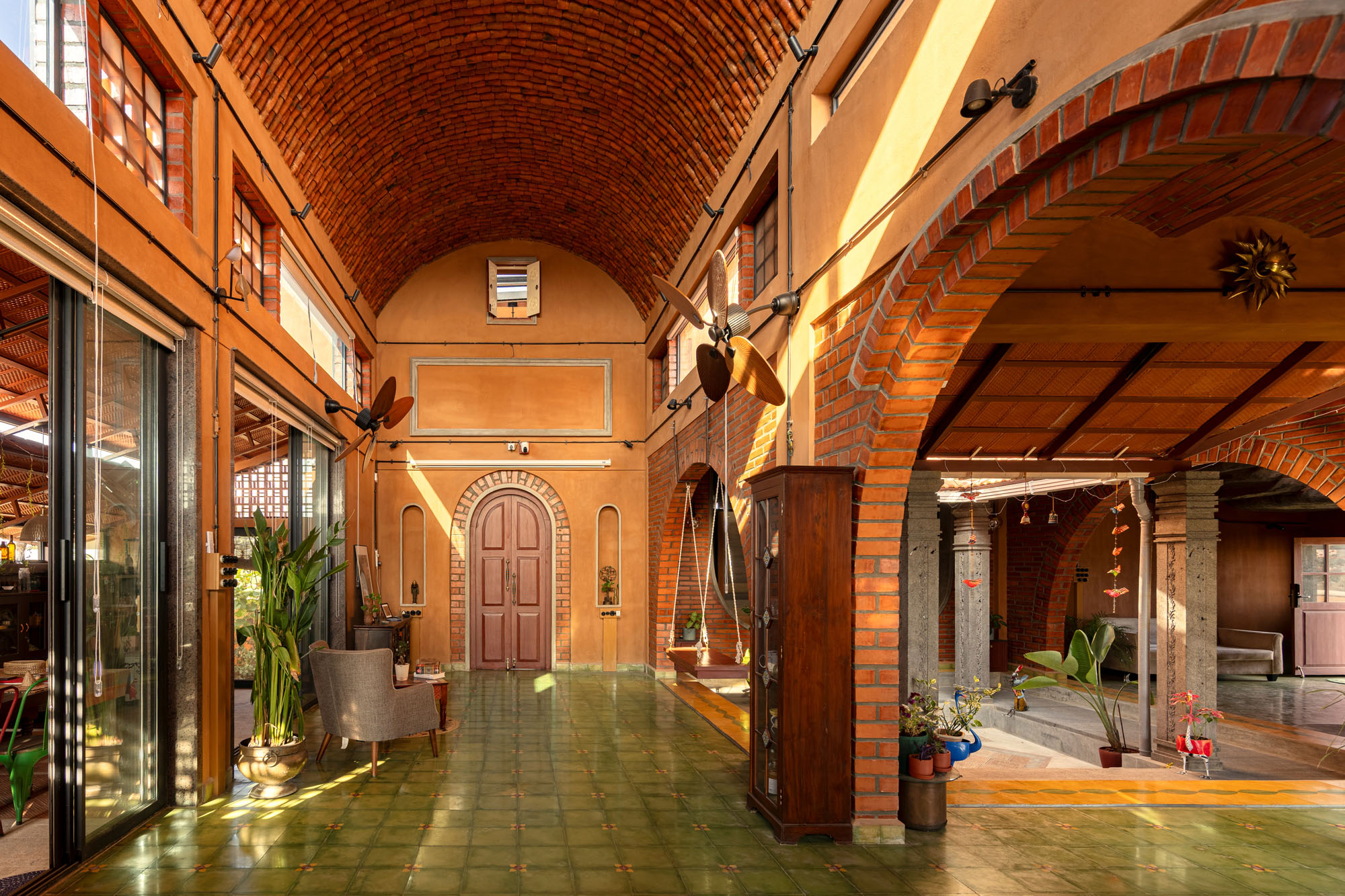
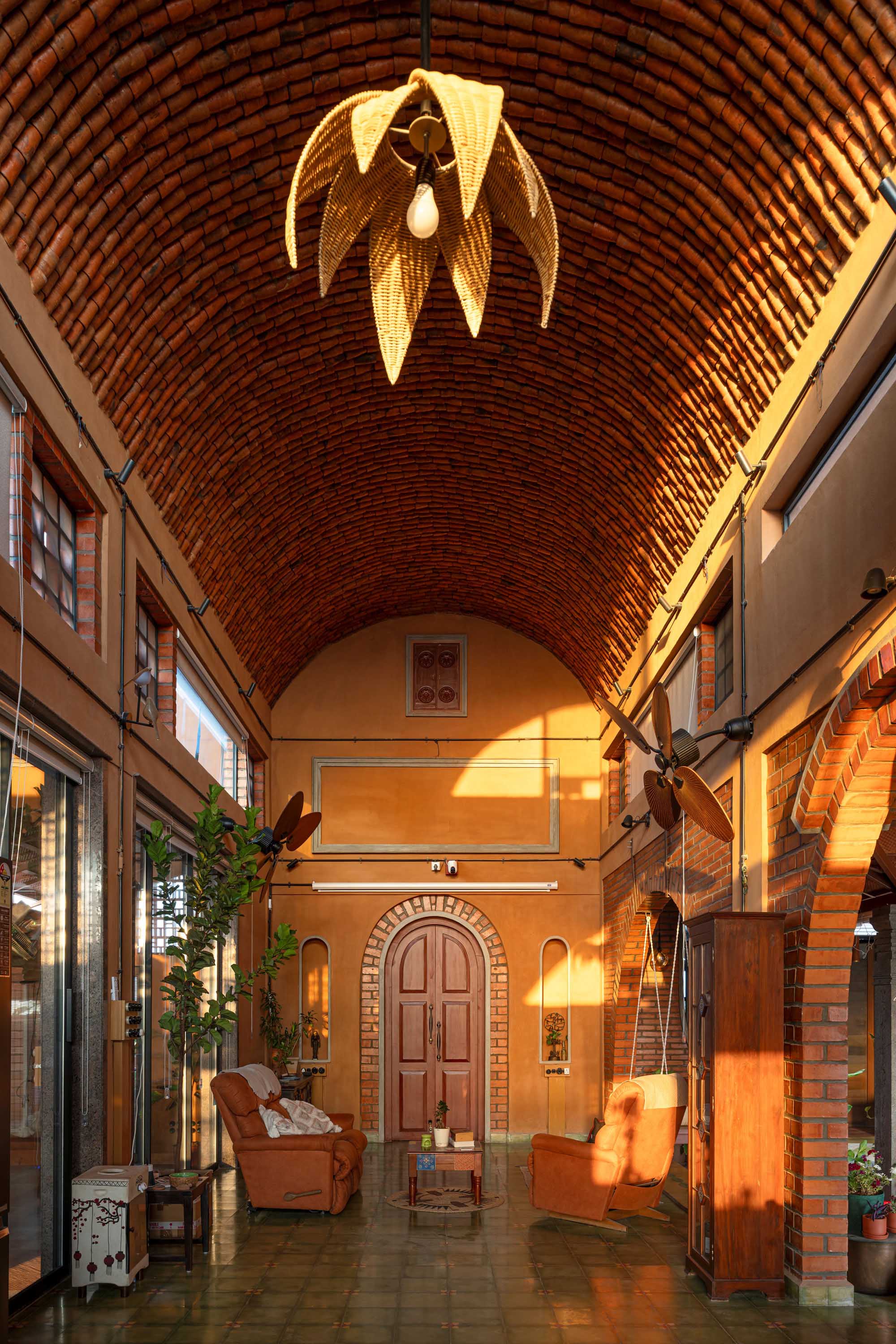
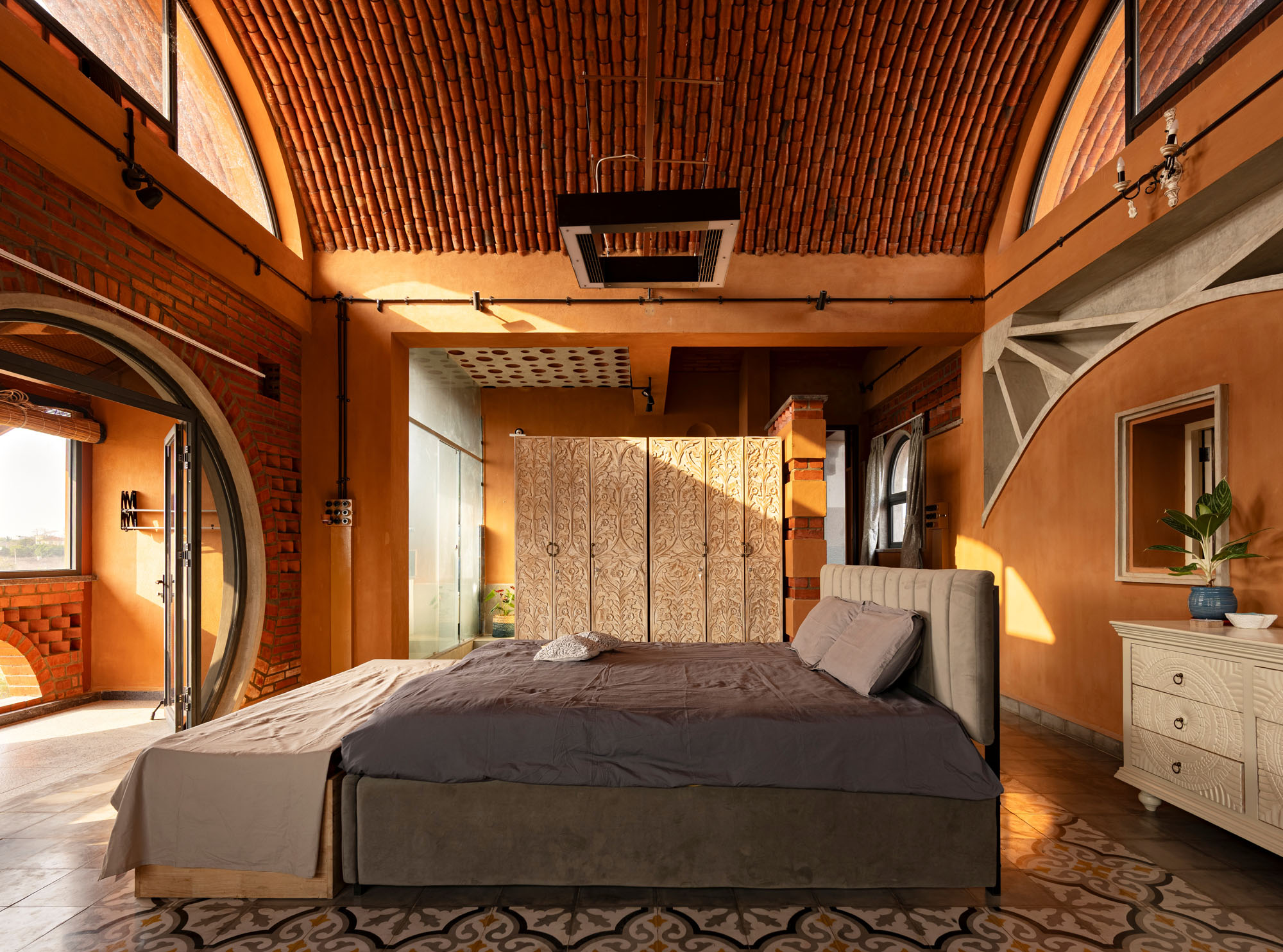
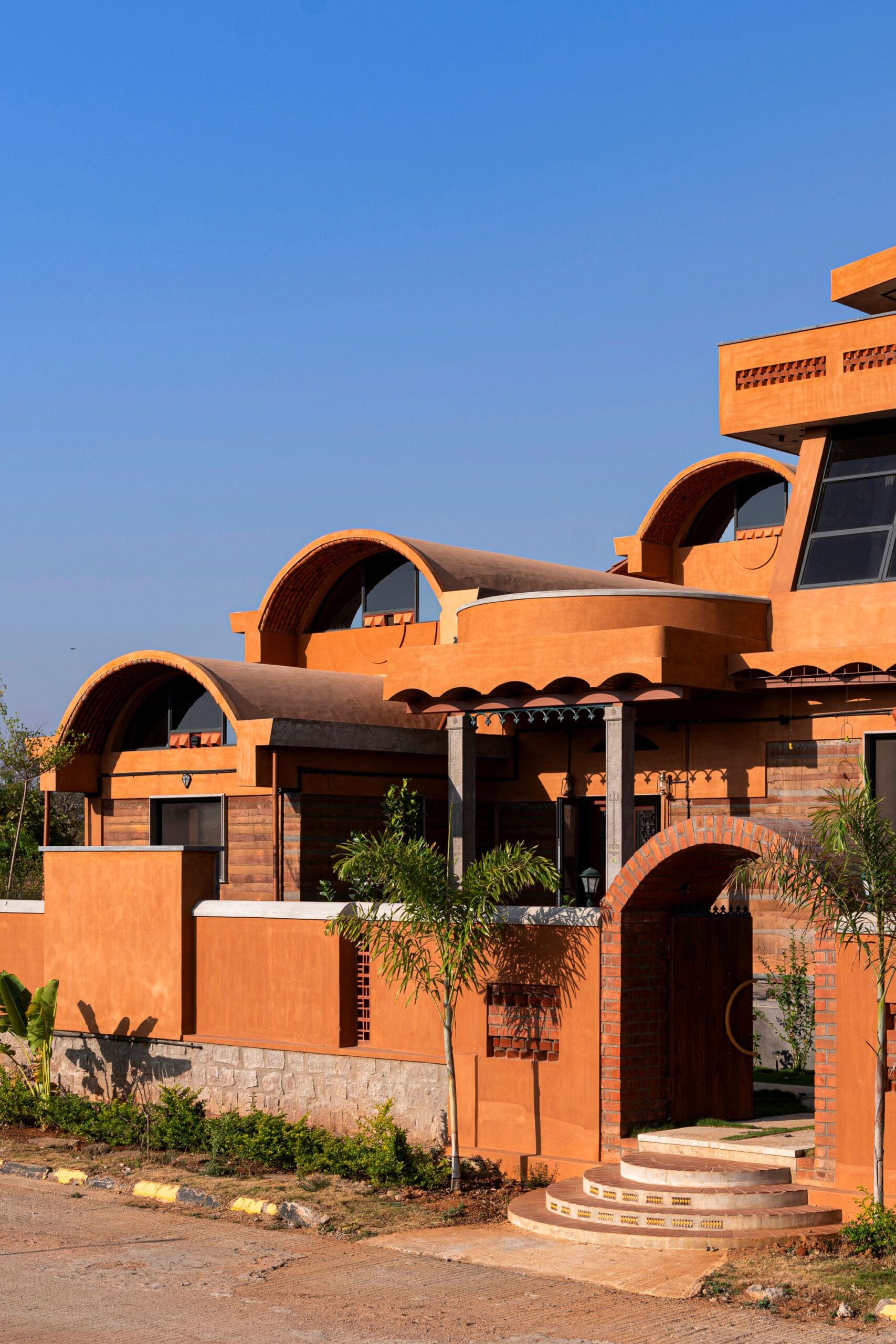
そのマスキングは、この「カスケードする大地」というコンセプトを文字通り具現化し、上昇するヴォールトの連なりとして展開する。それは、パッシブソーラーの装置として機能しつつ、日々の儀式を規定するカスケード状のランドスケープである。
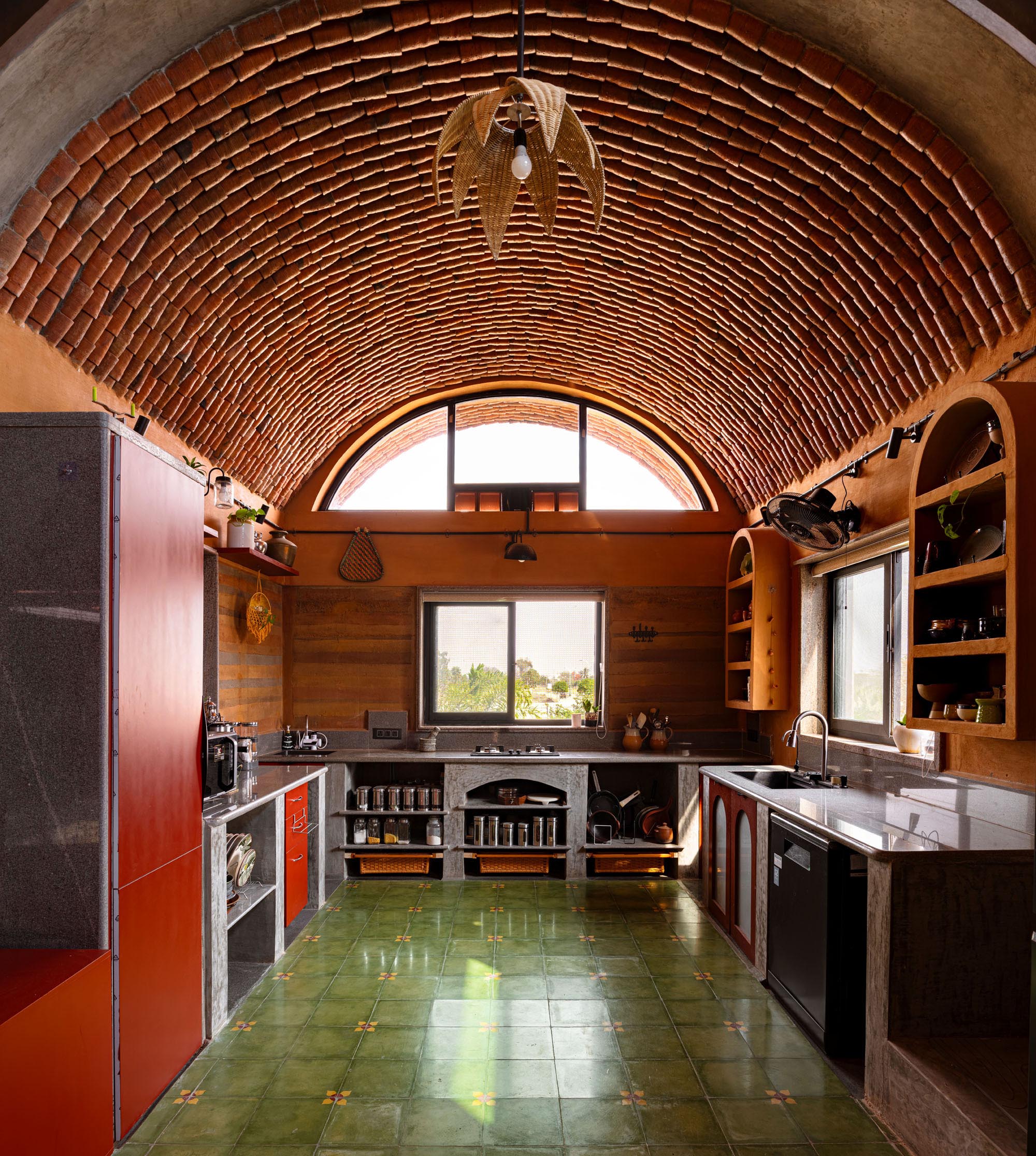
地面に根ざしたキッチンなどの低いボリュームは、吹き抜けのリビングコンコースへと段差を上げていき、頂上のスイートへと至る。この幾何学構造により、高いヴォールトが低いテラスに保護的な影を落とし、厳しい午後の日差しから室内を守りつつ、柔らかな光を捉える。
©︎ Vivek Eadara
©︎ Vivek Eadara
©︎ Vivek Eadara
廃棄物を変容させる生態学的アプローチ
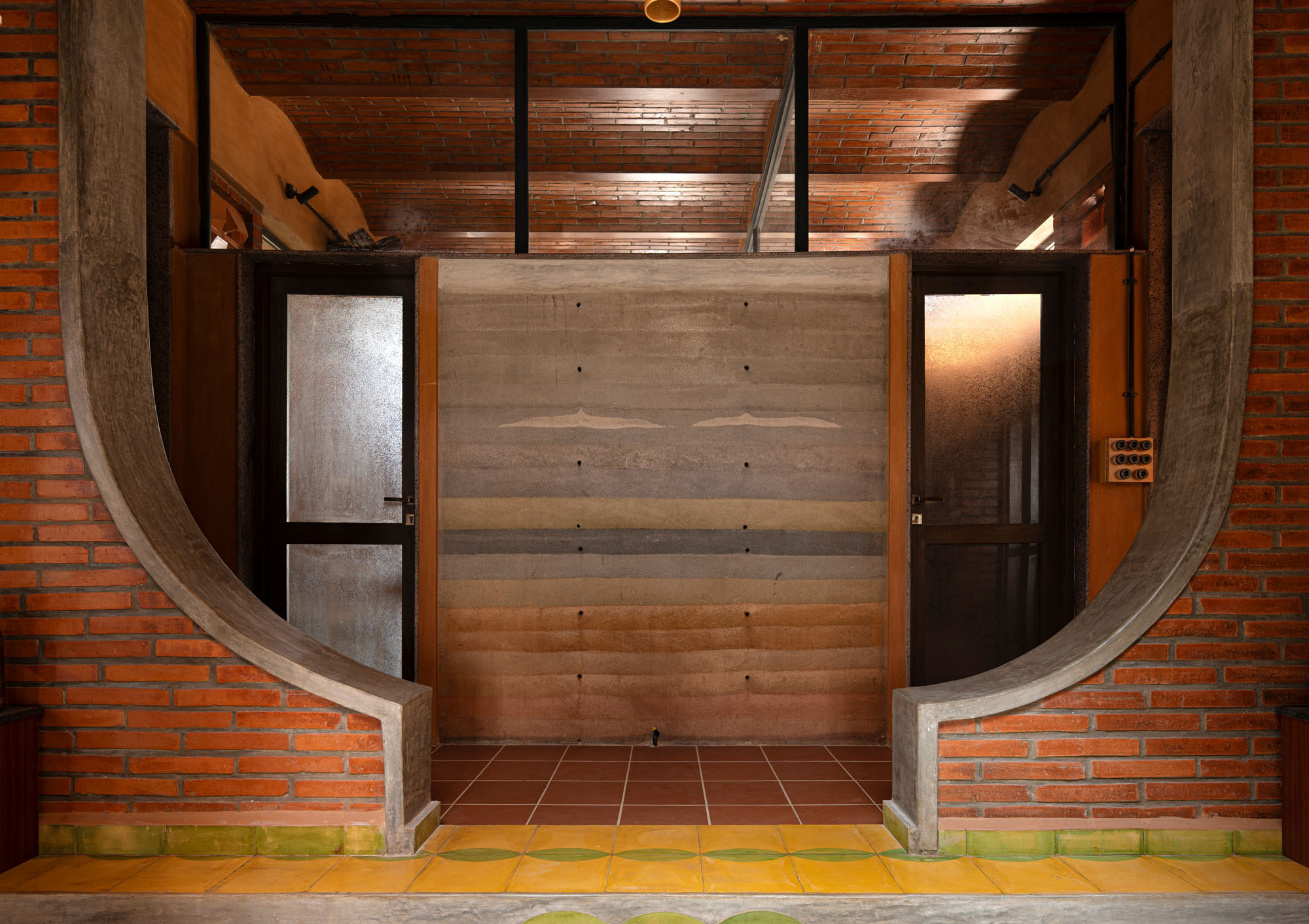
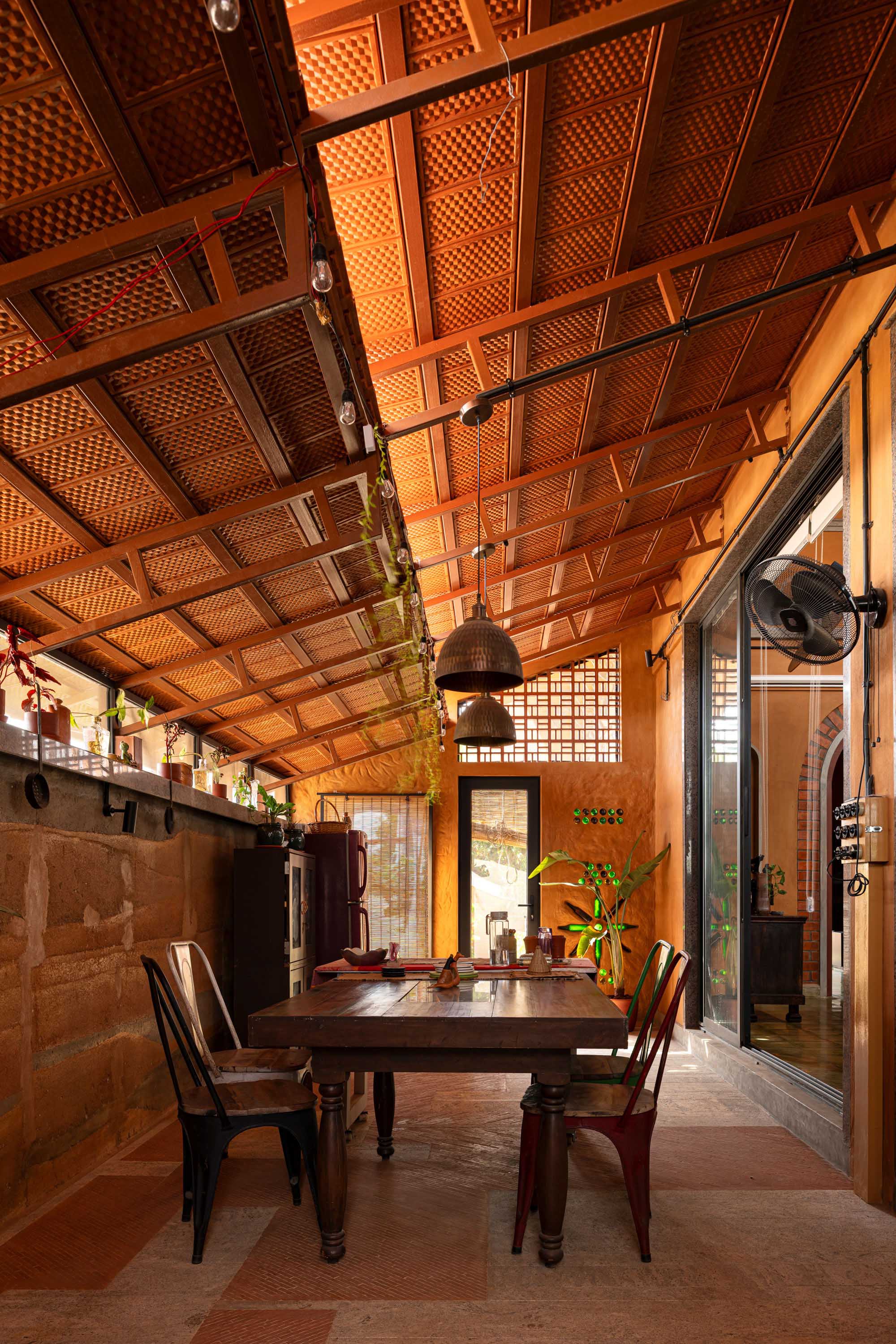
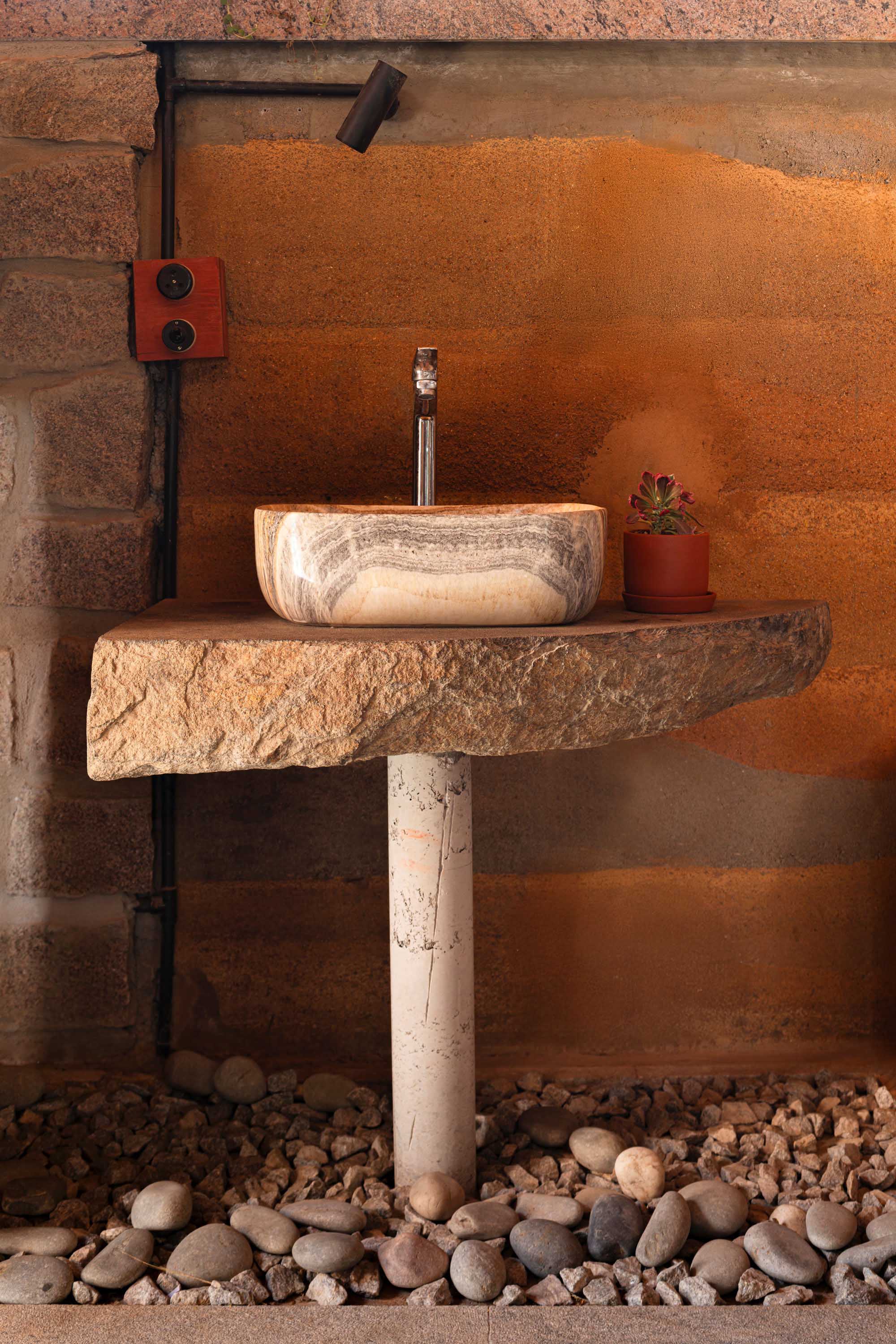
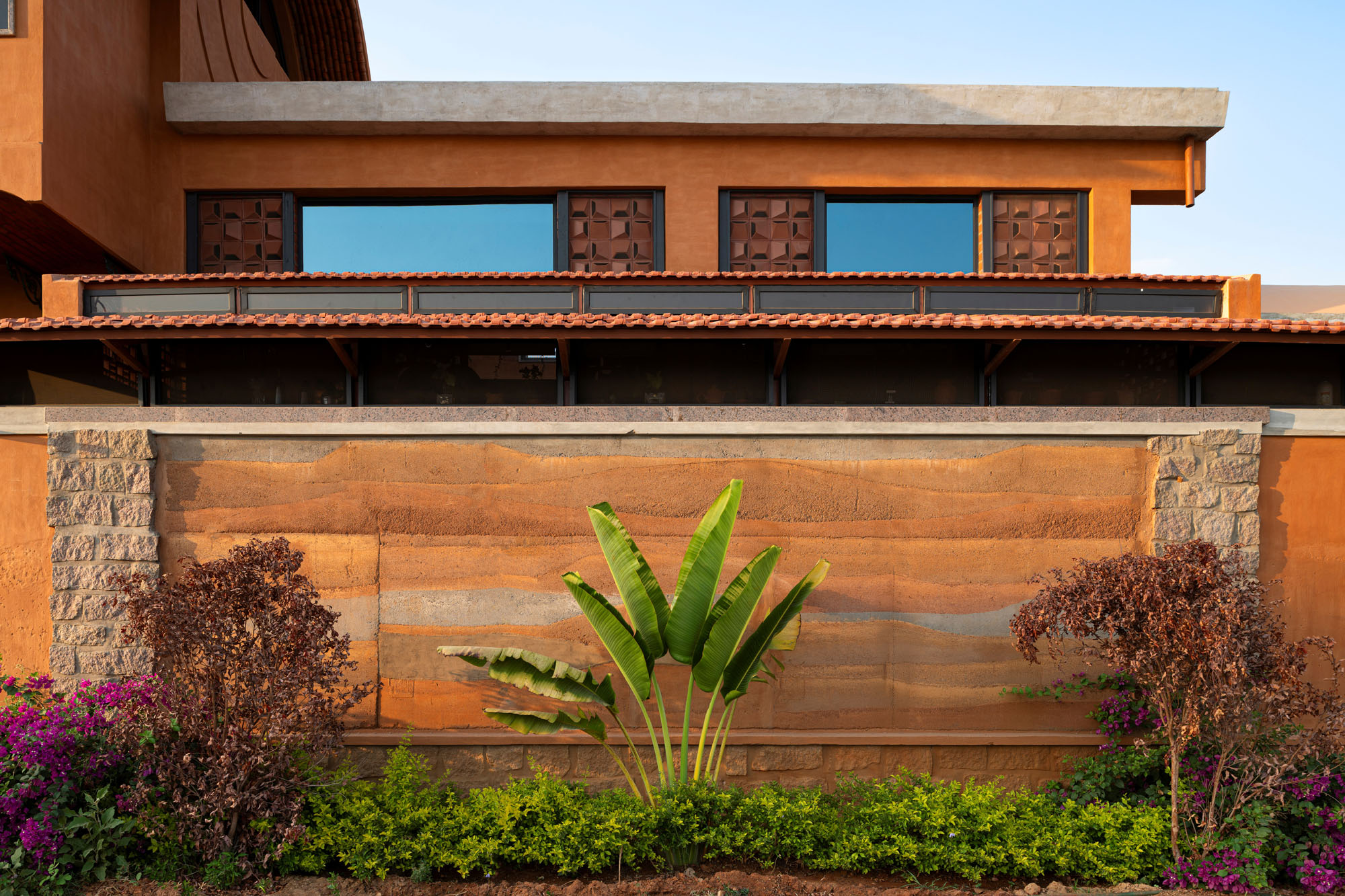
素材の面において、この住宅は生態学的循環性と創意工夫に関する興味深い試みである。主要な外壁は廃棄された採石場の石屑を再生利用し、岩石廃棄物を一体型の流し込み土製蓄熱体へと変容させ、昼夜のサイクルにおける熱の伝達を遅らせる。
東側の入り口では、生々しく縞模様の入った版築の層が、敷地の深層地質との直接的で触覚的なつながりを提供している。これら2つの土壁は、石灰とセメントを7%未満に抑えて固化されており、構造的な耐久性を確保しつつ、土壌の通気性と環境への配慮を保っている。
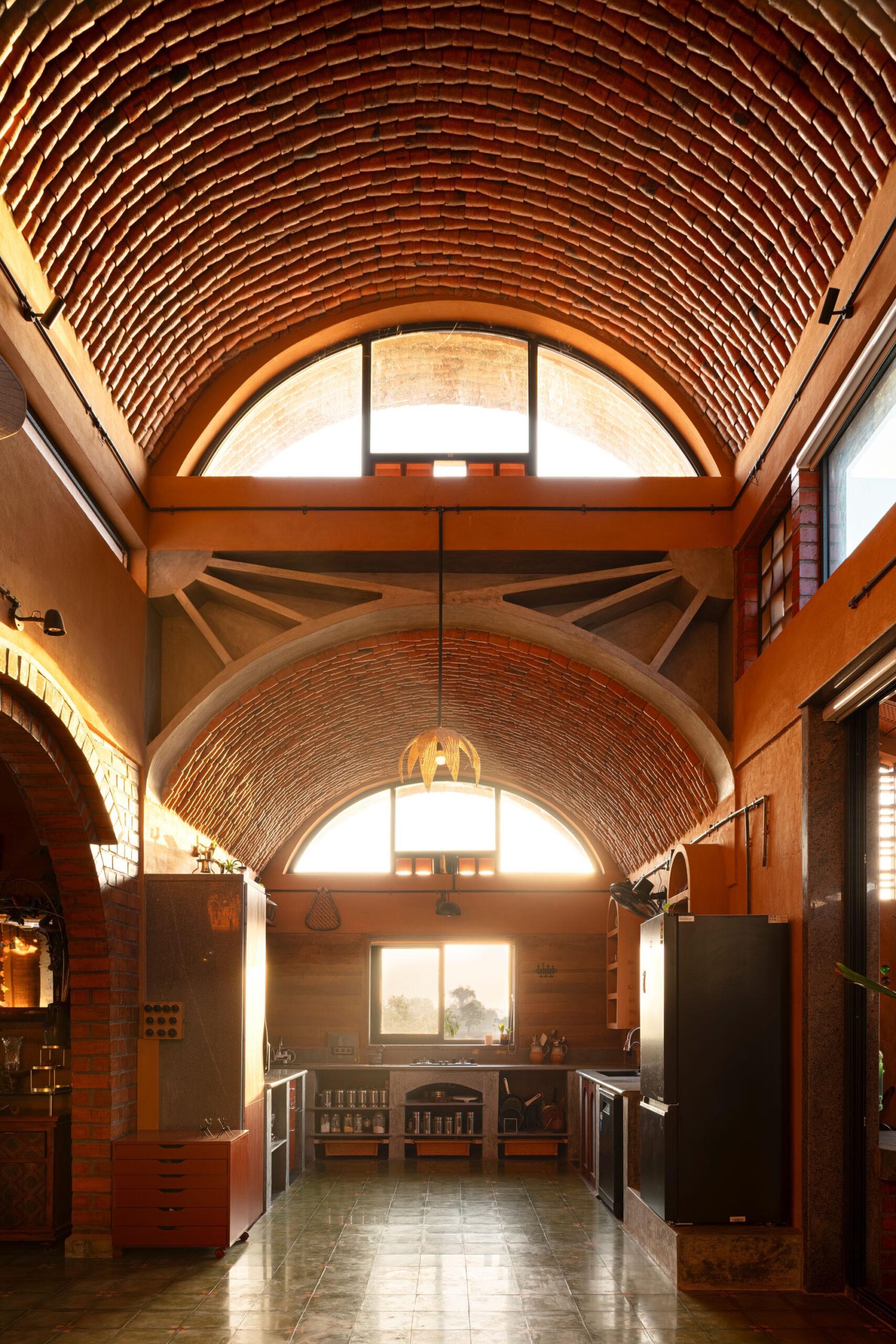
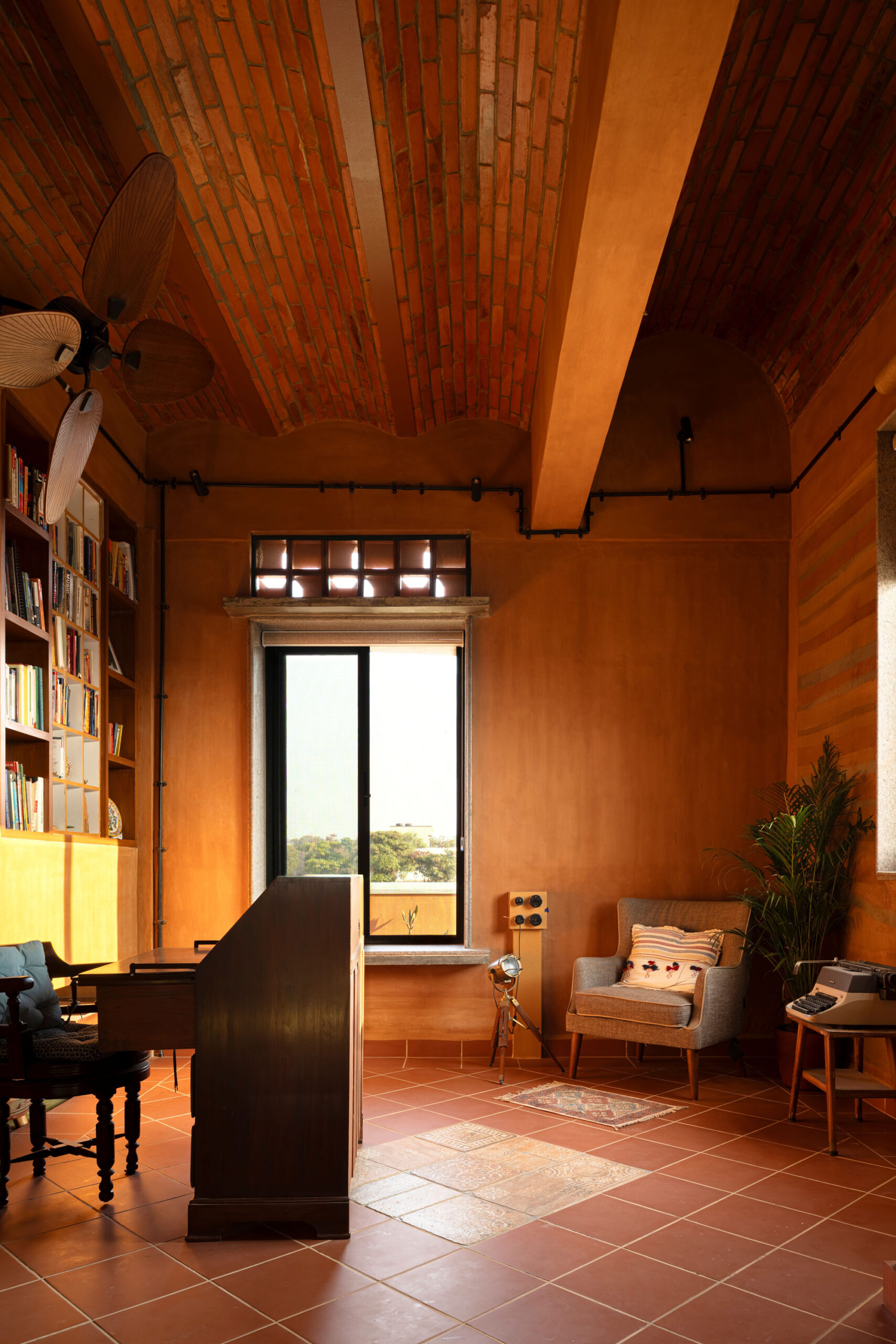
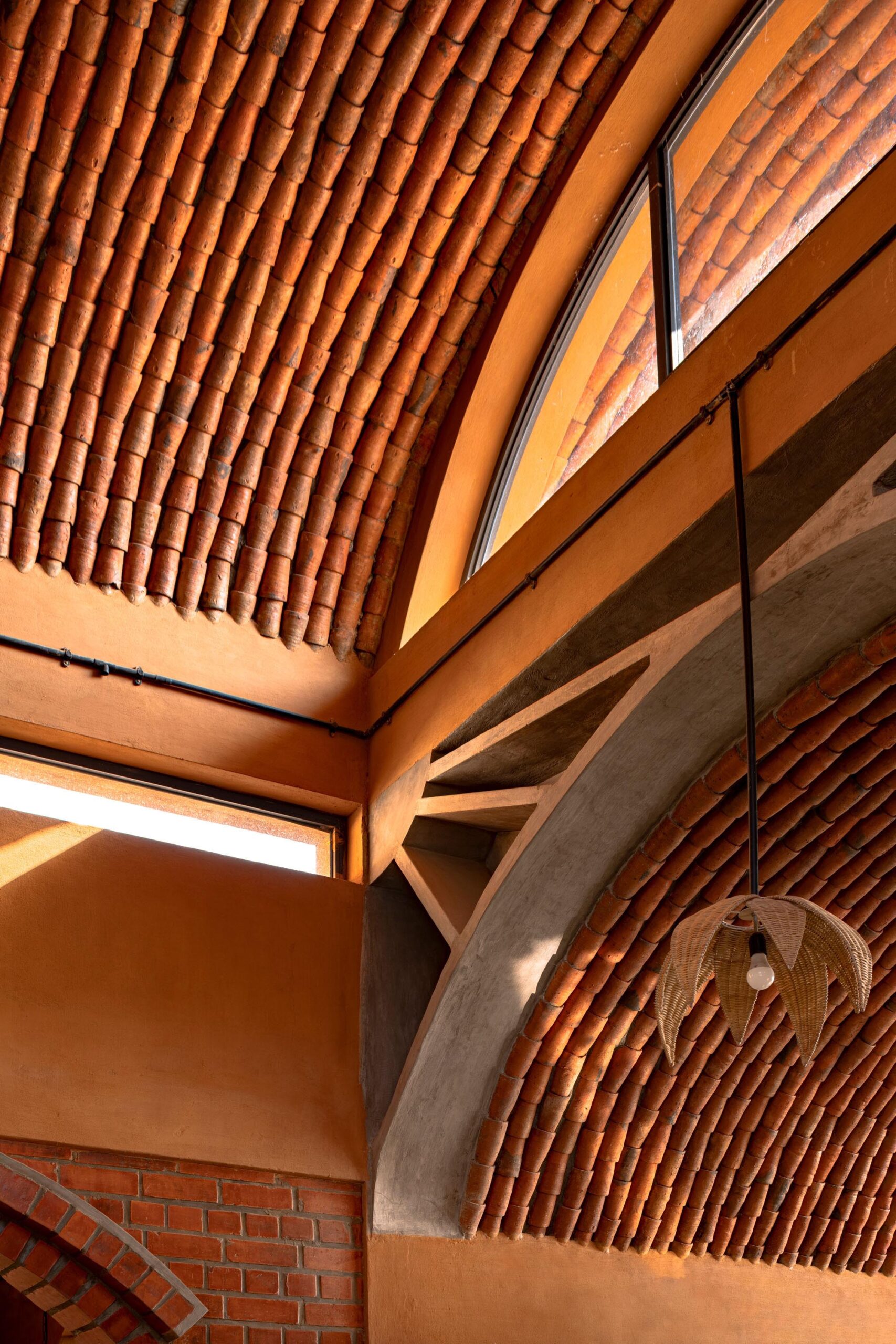
屋根の造形は「空隙」の科学を活用している。互いに噛み合うテラコッタ製のグナ管が断熱空気を閉じ込め、レンガのジャックアーチが再利用された構造用鋼材の間に圧縮されている。
©︎ Vivek Eadara
©︎ Vivek Eadara
©︎ Vivek Eadara
手仕事と幾何学が織りなす感覚的な対比
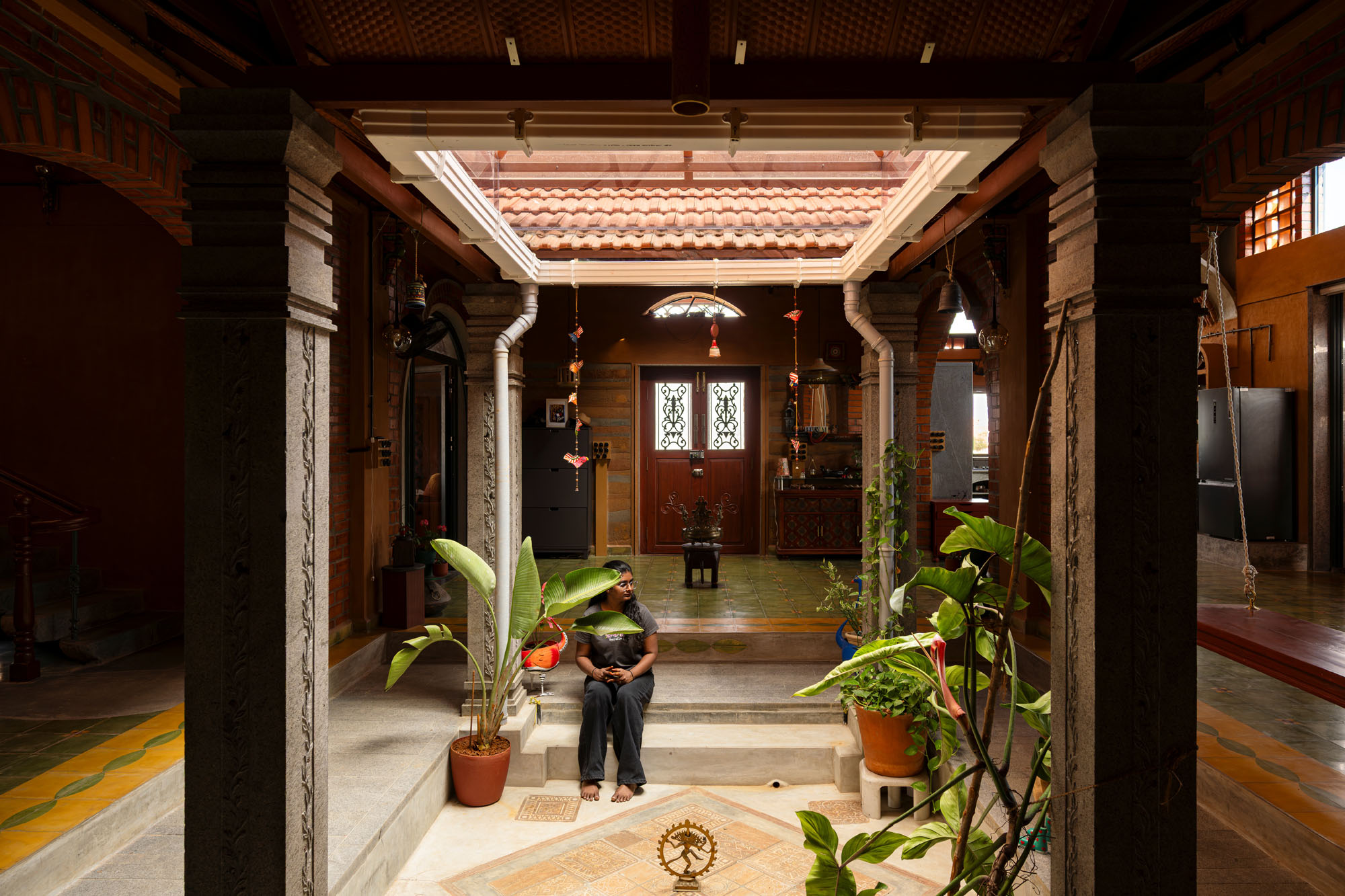
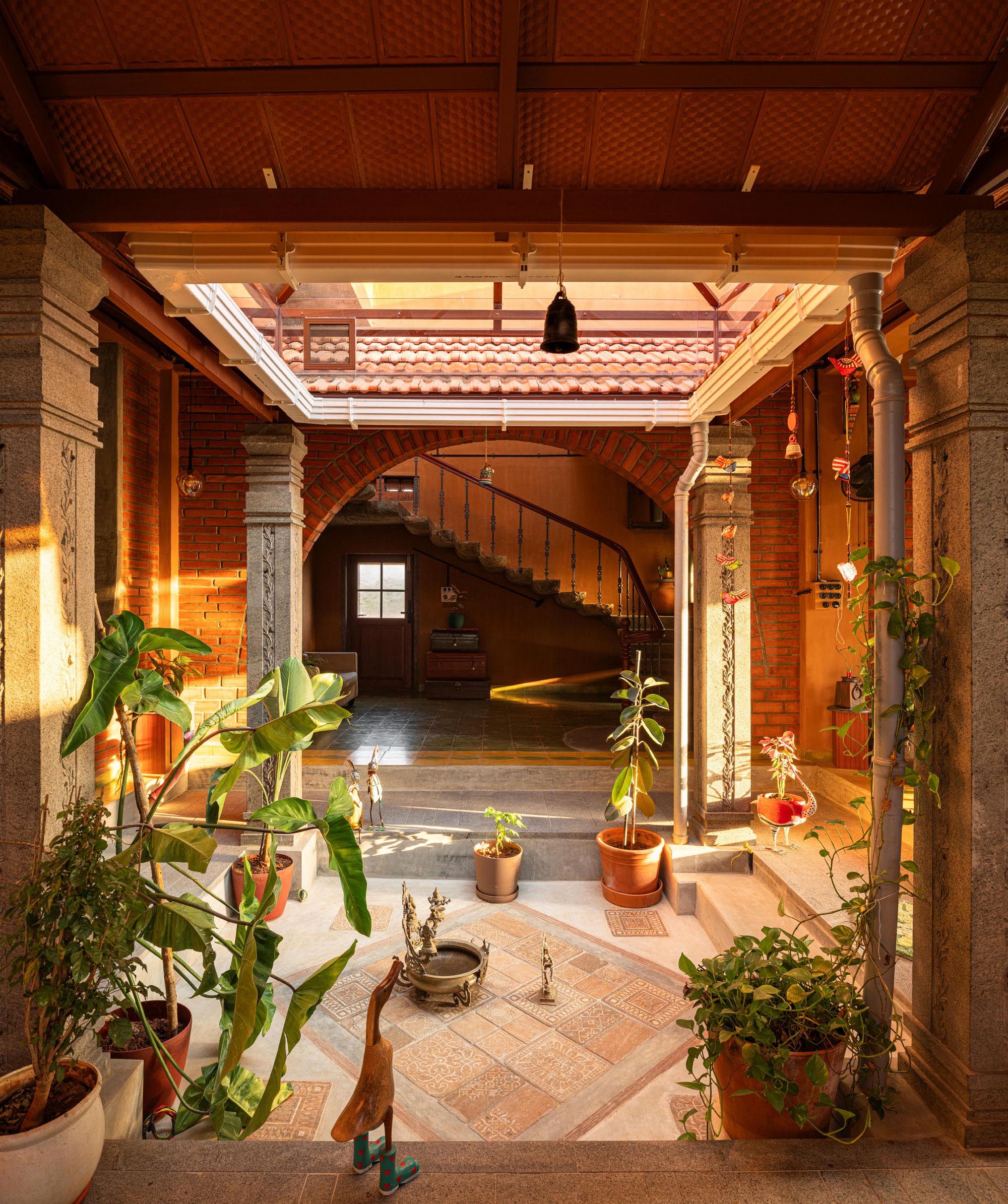
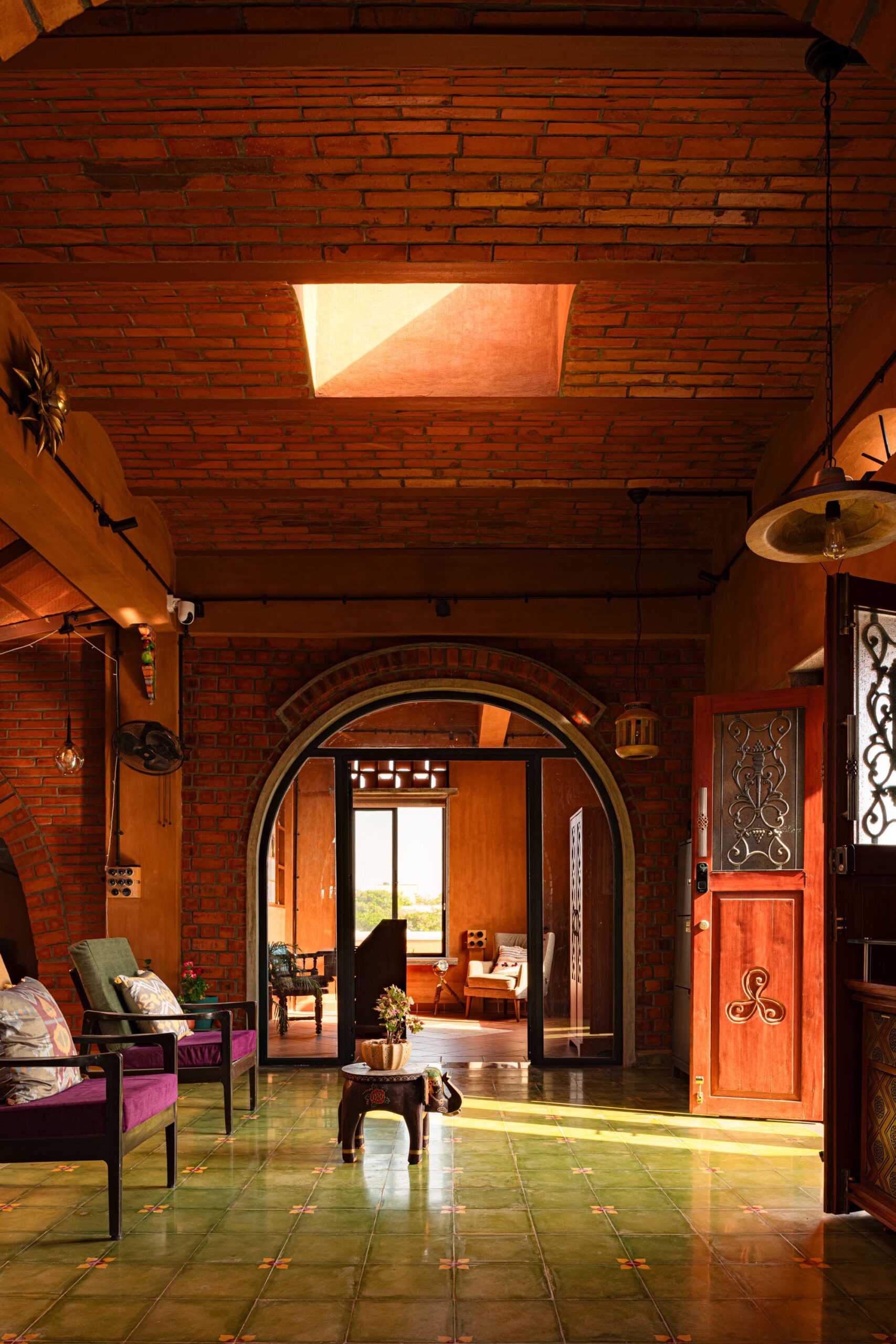
空間的には、この住宅は劇的で感覚的な対比を演出している。吹き抜けのリビングホールは粘土の大聖堂のような役割を果たし、中央の「ムトラム」と呼ばれる涼しい中庭を両側から囲んでいる。
キッチンは、日差しを浴びて広がるコンクリートのリブと、空間に黄金色の朝光を注ぎ込む巨大な半円形の採光窓を特徴とし、日常の営みを映画のようなイベントへと昇華させる。片持ち式の粗削り花崗岩の階段は、繊細な鋳鉄製の手すり子に対して石の背骨のような役割を果たし、天窓の光に照らされた垂直方向の動線を縁取っている。これらの力強い要素は、手作りのアタンギディ床タイルのガラスのような光沢と美しく対照をなし、この家を深い伝統工芸に根ざしたものにしている。
©︎ Vivek Eadara
©︎ Vivek Eadara
建築自体が機能する高度な気候制御装置
〈オーヴァ・イラム〉は、最終的には高度に調整された気候制御装置として機能し、機械的な冷房なしに完全な熱的快適性を実現している。上昇するボリュームはスタック効果を利用し、中庭から涼しい空気を自然に引き込み、頂部のテラコッタ製ジャリを通して熱気を排出する。
モンスーンさえも魅力的な建築的イベントとして捉えられており、雨水は露出したフェロセメント製の雨樋を伝って地下の貯水タンクへと流れ込み、一滴の無駄も生じない。この住居は、再生可能な建築が人間の体験を高め得ることを証明しており、再生された石の破片と構造物理学を、詩的で持続可能な暮らしの永続的な遺産へと変容させている。
©︎ Vivek Eadara
©︎ Vivek Eadara
©︎ Vivek Eadara
©︎ Vivek Eadara
©︎ Vivek Eadara
©︎ Vivek Eadara
©︎ Vivek Eadara
©︎ Vivek Eadara
©︎ Vivek Eadara
©︎ Vivek Eadara
©︎ Vivek Eadara
©︎ Vivek Eadara
©︎ Vivek Eadara
©︎ Vivek Eadara
©︎ Vivek Eadara
以下、Iki Buildsのリリース(英文)です。
Project Name: Aurva Illam
Office Name: IKI Builds
Office Website: https://ikibuilds.com/home/
Social Media Accounts: https://www.instagram.com/iki.builds/?igsh=MWw3cmJjMnNweXBseA%3D%3D
Contact email: ikibuilds@gmail.com
Firm Location: HyderabadCompletion Year: 2024
Gross Built Area (m2/ ft2): 5660 ft2
Project Location: Kadthal , Hyderabad
Program / Use / Building Function: ResidentialLead Architects: Vamshidhar Reddy , Mounica Reddy
Lead Architects e-mail: Vamshi.sama1994@gmail.com , reddymounica35@gmail.comPhotographer
Photo Credits: Vivek Eadara
Photographer’s Website: https://www.vivekeadara.com/
Photographer’s e-mail: studio@vivekeadara.comProject DescriptionAurva Illam: A “Cascading Earth” on Hyderabad’s Urban EdgeSet against the expanding urban edge of Hyderabad, Aurva Illam a name bridging the Sanskrit Aurva (of the earth) and the Tamil Illam (home) is a residential prototype conceived as a “cascading earth” that unapologetically redefines modern luxury for the Anthropocene. Rejecting the ubiquitous glass-and-marble paradigm, the home proposes a new status symbol: bespoke materiality, thermal autonomy, and zero-air-conditioning living.Situated roughly sixty kilometers from the city, the project occupies a corner plot bordered by roads on three sides and a public park to the west, presenting the classic challenge of balancing privacy with exposure. Concurrently, the core design ambition was driven by a desire for a profound architectural duality: seamlessly uniting rigorous, highly optimized spatial logic with a deep reverence for poetic, tactile materiality and handcrafted imperfection. Rejecting the defensive luxury of high compound walls and inward-looking blindness, the architectural response embraces unapologetic fenestration. It utilizes spatial hierarchy, screening, and level differences to engage the street edge while boldly opening the primary volumes, including the master suite, to the western tree canopy.The design philosophy centers on volumetric expressionism, where the building’s dynamic elevation is a truthful map of lived function and climate response rather than applied styling. The massing literally manifests this “cascading earth” concept, unfolding as a sequence of ascending vaults—a cascading landscape that dictates daily rituals while functioning as a passive solar instrument. Lower volumes, such as the grounded kitchen, step up to a double-height living concourse, culminating in the summit suite. This geometry allows higher vaults to cast protective shadows over lower terraces, shielding the interiors from harsh afternoon heat while capturing gentler light.Materially, the home is an intriguing essay in ecological circularity and resourcefulness. The primary envelope resurrects discarded quarry stone debris, transforming lithic waste into monolithic, poured-earth thermal batteries that delay heat transfer across day and night cycles. At the eastern threshold, raw, striated layers of rammed earth offer an immediate, tactile connection to the site’s deeper geology. Both earthen expressions are stabilized with less than seven percent lime and cement, ensuring structural longevity while preserving the soil’s breathable, eco-friendly nature. The roofscape utilizes the science of the void: interlocked terracotta Guna tubes trap insulating air, and brick jack-arches compress between repurposed structural steel.Spatially, the home orchestrates dramatic, sensory contrasts. A double-height living hall acts as a cathedral of clay, flanking a central cooling courtyard known as the Mutram. The kitchen elevates daily routine into a cinematic event, featuring exposed sunburst concrete ribs and a massive lunette light cannon that pours golden morning light into the space. A cantilevered rough-cut granite staircase serves as a lithic spine against delicate cast-iron balusters, framing skylight-washed vertical movement. These rugged elements contrast beautifully with the glass-like sheen of handmade Athangudi floor tiles, rooting the home in deep heritage craft.Aurva Illam ultimately operates as a highly tuned climate engine, achieving complete thermal comfort without mechanical cooling. Its ascending volumes harness the stack effect, naturally drawing cool air from the courtyard and exhausting hot air through apex terracotta jaalis. Even the monsoon is treated as an engaging architectural event; rainwater physically cascades along exposed ferrocement gutters into underground harvesting tanks for zero-drop wastage. The residence proves that regenerative architecture can elevate the human experience, turning resurrected stone debris and structural physics into a lasting legacy of poetic, sustainable living.
Iki Builds 公式サイト
https://ikibuilds.com
【購読無料】空間デザインの今がわかるメールマガジン TECTURE NEWS LETTER
RECOMMENDED ARTICLE