ヘルツォーク&ド・ムーロンによる、共産主義時代のアルバニアを象徴する〈パレス・オブ・コングレス〉の再生プロジェクト
アルバニアの首都ティラーナの中心部に佇む、共産主義時代の象徴的な建築〈パレス・オブ・コングレス(Palace of Congresses)〉再生する、ヘルツォーク&ド・ムーロン(Herzog & de Meuron)によるプロジェクトが発表されました。
1980年代に建てられた既存のパレスの改修と、新タワーの建設、隣接するランドマークという3つの介入により構成されています。
注目ポイント
- 歴史に敬意を払いつつ、近代的な多機能ハブへと再生する「パレスの改修」
- 都市の”緑の軸”を内部へ引き込む「ランドスケープ」
- 伝統の幾何学を再解釈しつつ環境性能を両立する「超高層タワー」
(以下、ヘルツォーク&ド・ムーロンから提供されたプレスキットのテキストの抄訳)
© Herzog & de Meuron
共産主義時代の建築〈パレス・オブ・コングレス〉の歴史と再生
1986年、アルバニアの首都ティラーナを構成する主要軸の1つ「デシュモレト・エ・コンビット大通り」沿い、市の「緑の心臓」とも呼ばれるティラーナ公園の近くに建設された〈パレス・オブ・コングレス〉は、共産主義建築の代表的な例である。
もともとはアルバニア共産党の委託によって建てられ、国家の公式行事や式典、政治的集会の場として使用されてきた。
共産主義の崩壊後、この建物はコンサート、会議、フェスティバル、展覧会などに使用され、市民のランドマークとして、また国の近現代史の重要な証人として立ち続けてきた。当時としては革新的な建物であったが、現在の複合施設は大幅な刷新を必要としている。インフラはもはや現代の機能的要求を満たしておらず、ティラーナ市はここを現代的で多機能なハブへと変貌させることを目指している。
© Herzog & de Meuron / Visualization: RENWERK
ヘルツォーク&ド・ムーロンによる、歴史への敬意と都市への接続を両立する再生プロジェクト
2026年6月、ヘルツォーク&ド・ムーロンはこの活性化プロジェクトのコンペを勝ち取った。私たちの提案は、〈パレス・オブ・コングレス〉の歴史的なアイデンティティを維持し、称えつつ、都市との関係性を強化するものである。
的を絞った介入、都市との接続性の改善、そしてプログラムの柔軟性の刷新を通じて、プロジェクトは建物の公共的な役割を高め、将来にわたる有用性を確固たるものにする。
この野心的な試みは、官民パートナーシップ(PPP)の枠組みによって支えられている。既存建物の改修と並行して、コンペの要項では、〈パレス・オブ・コングレス〉の改修費用を賄うための開発として、約48,000 m²の新しい多目的タワーの導入を求めている。このタワーはプロジェクトの財務的・運用的な枠組みを支え、パレスの刷新を可能にし、公共の文化施設としての長期的な役割を維持することに貢献する。
© Herzog & de Meuron / Visualization: RENWERK
3つの介入:ランドスケープ、既存パレスの改修、新タワー
この提案は、西側の新しいランドスケープ・構想、屋上への増築を含む既存パレスの改修、および東側の新しいタワーの3つの相互補完的な介入によって定義されている。
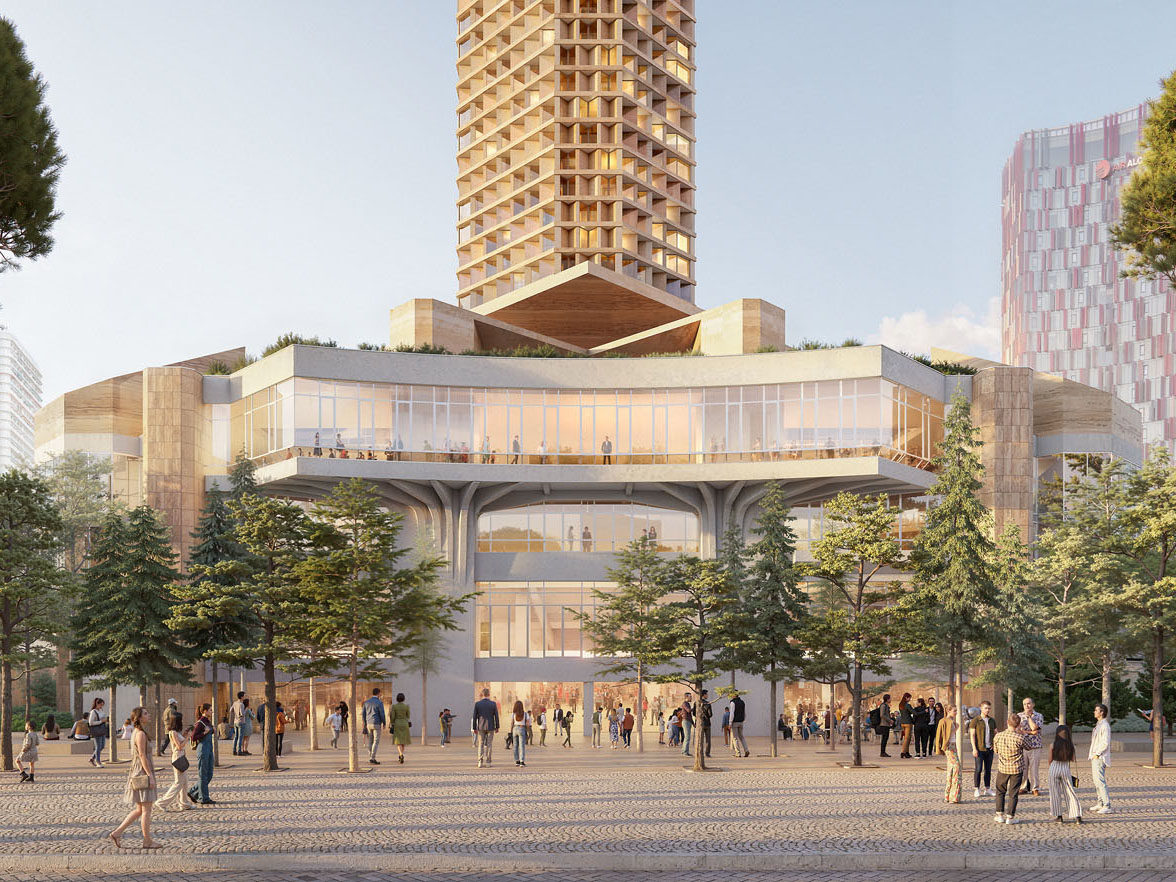
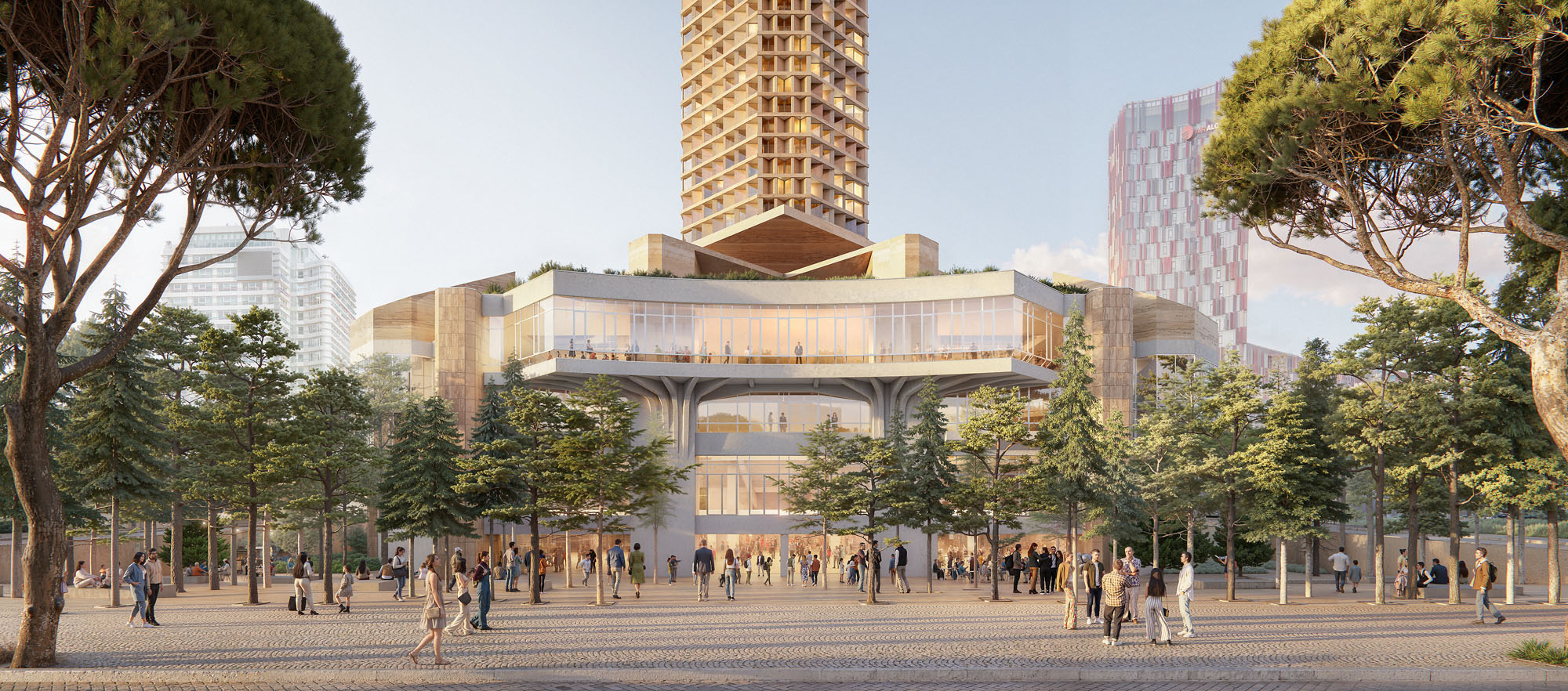
緩やかな傾斜をもつ樹木のある広場として再形成された新しい「パレス・ガーデン(Palace Garden)」は、緑豊かな大通りを拡張し、既存建物の記念碑的な威圧感を和らげ、都市とパレスの間に緩やかな移行帯をつくり出す。これによりアクセシビリティが向上し、日常的な利用やインフォーマルな集まり、大規模なイベントのための、日陰のある公共スペースが生まれる。
既存建物の上の新しい屋上パビリオン「パレス・テラス(Palace Terrace)」は、タワーと接続し、レストラン、カフェ、イベントルーム、小規模な会議スペースを備えた新しい公共空間を創出する。
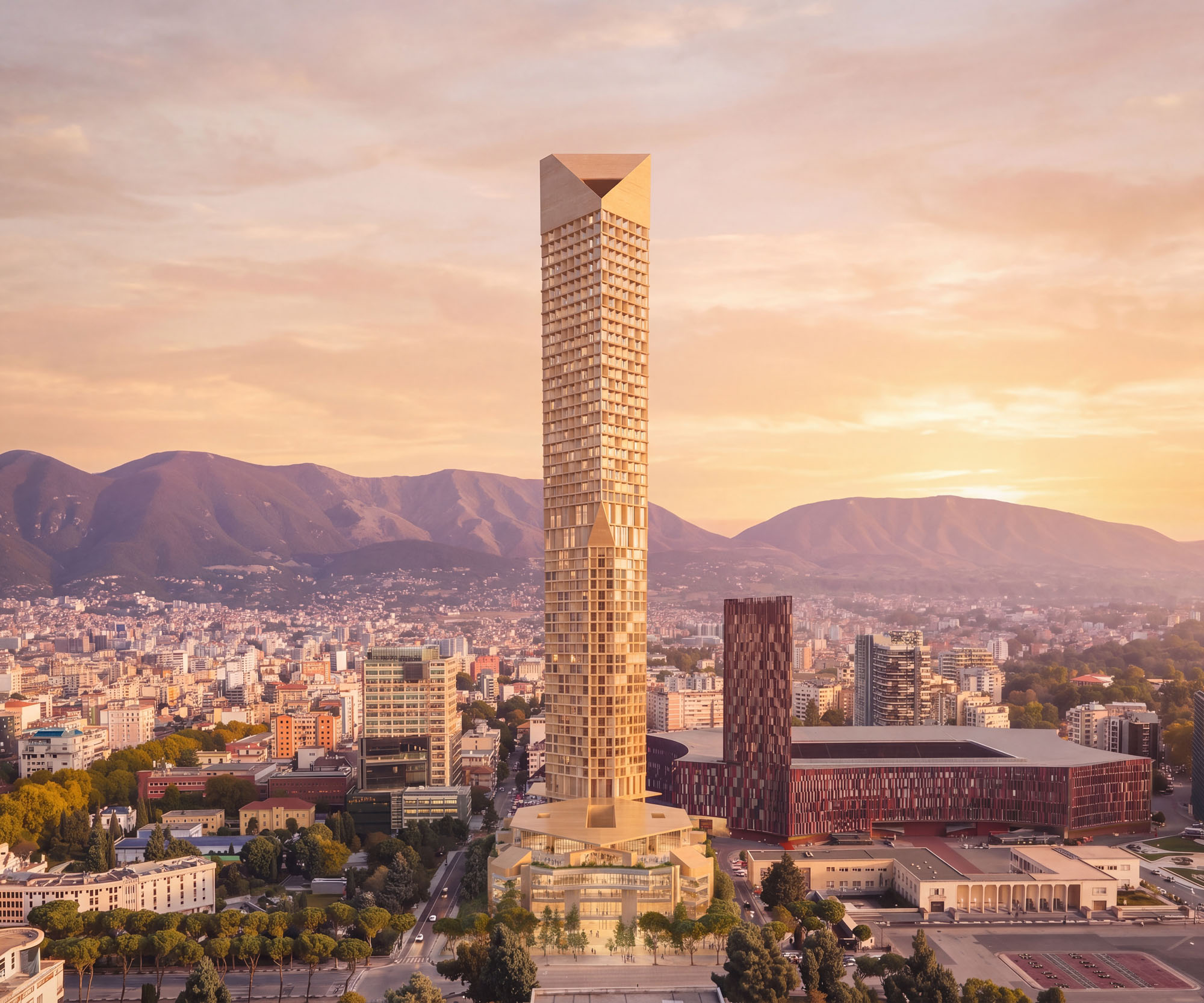
東側では、急速に高層化が進むティラーナの都市文脈の中に新しいタワーが立ち上がり、既存の歴史的建造物から敬意を持った距離を保ちながら、都市における垂直的な存在感を確立する。ランドスケープ、アクセス可能な屋上、そしてタワーが一体となり、〈パレス・オブ・コングレス〉に新たな都市のあり方を枠付けする。
© Herzog & de Meuron
既存の〈パレス・オブ・コングレス〉の保存と再生
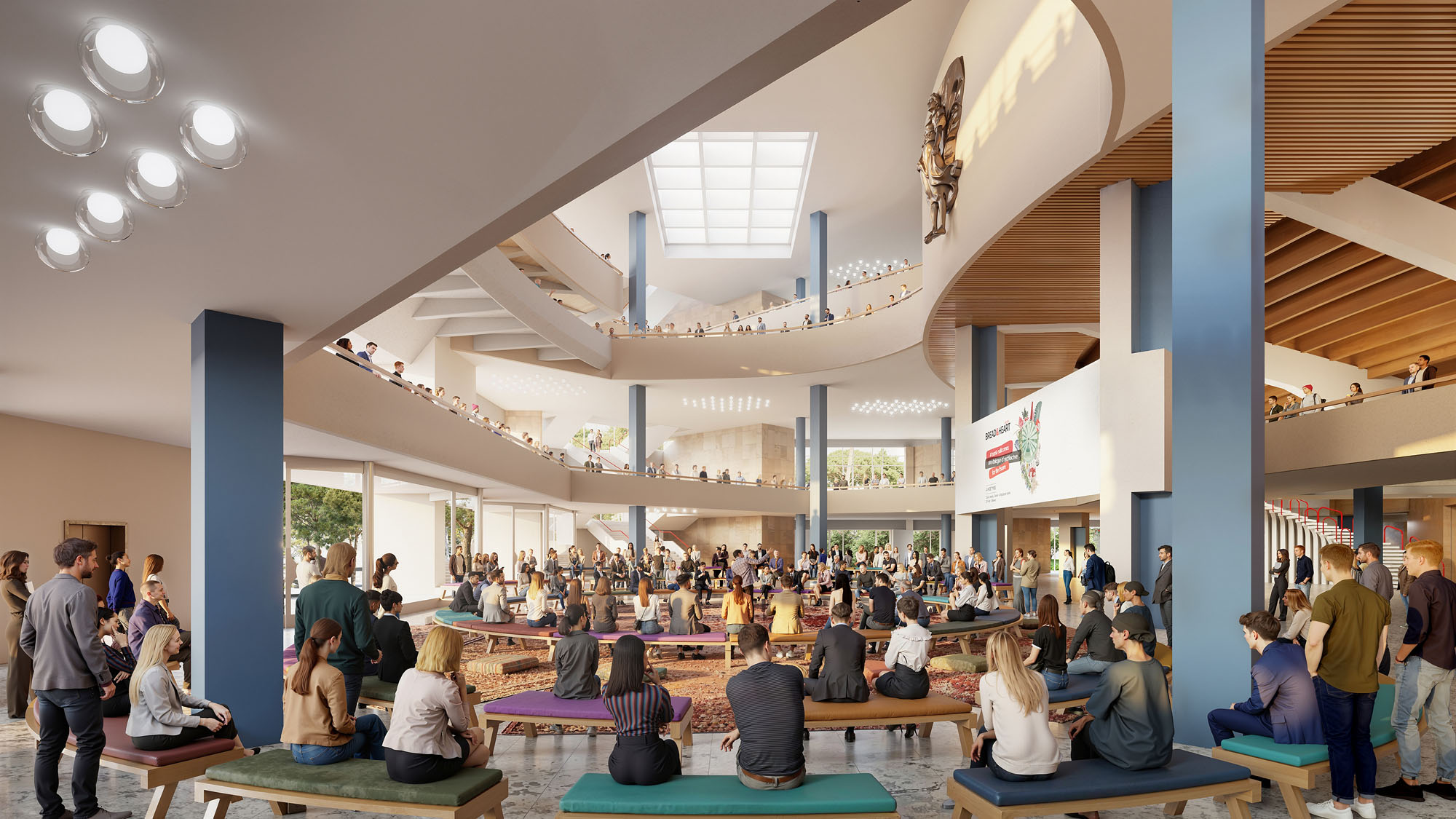
既存の〈パレス・オブ・コングレス〉は、本プロジェクトにおける文化的な中心として保存される。既存のエントランスフロアは開放され、誰もがアクセスできるホワイエへと生まれ変わり、パレス・ガーデンの公共空間を建物内へと引き込む。中階の床スラブの一部を撤去することで、ホワイエは内部の奥深くまで日の光を届ける高いアトリウムとなる。この広々とした空間は、インフォーマルな集い、展覧会、動線、一時的なインスタレーションを支え、プロジェクトの中心に共有の「都市のリビングルーム」をつくり出す。
特徴を保ちつつアップグレードする「メインオーディトリアム」
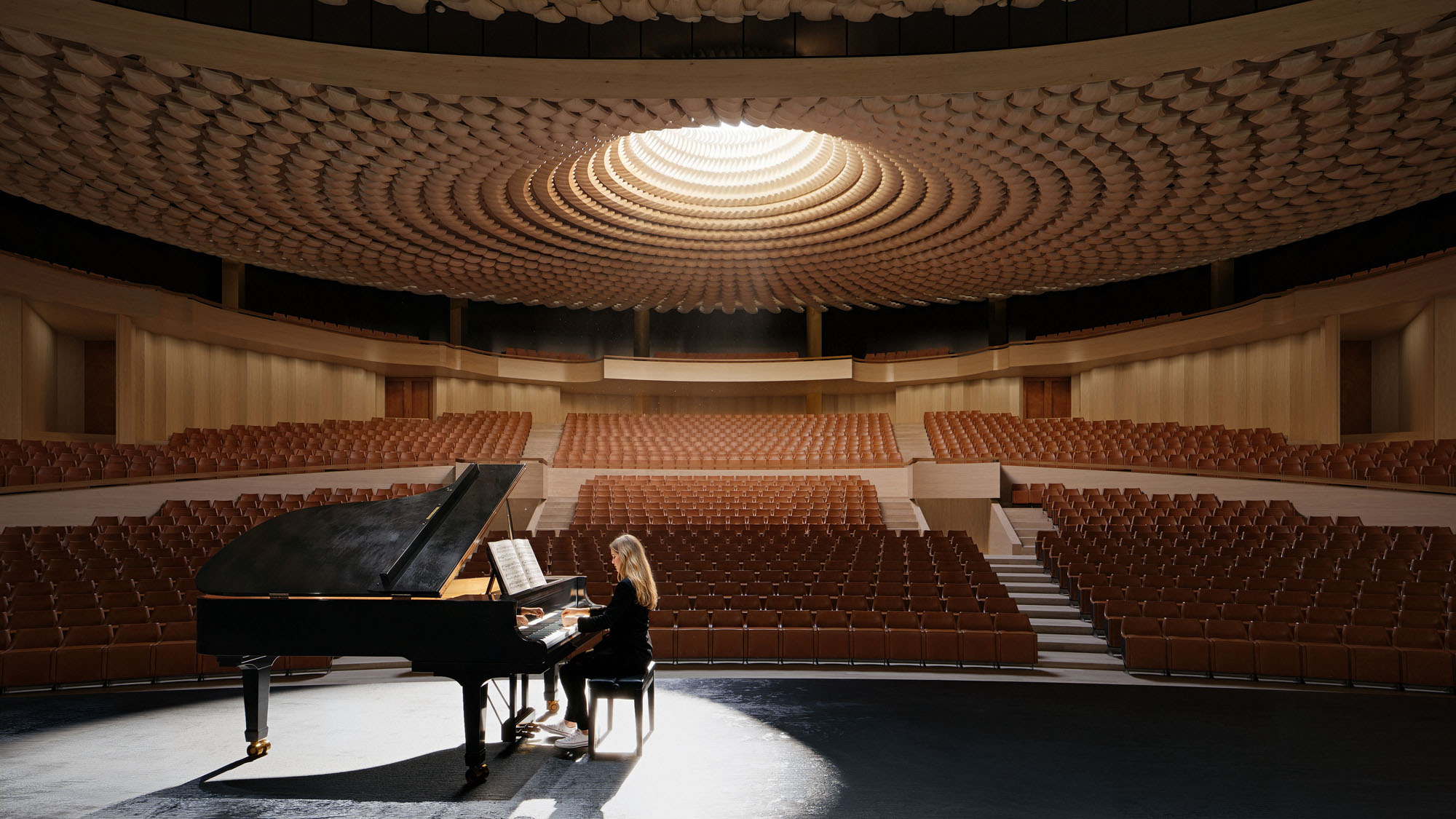
メインオーディトリアムは、その空間的特徴を残しつつアップグレードされる。座席の追加と新しいバルコニー階の設置により、見通しを改善しながら、収容人数を2,100人から2,350人に増やす。既存の星型の天井は、技術的なインフラを統合し、ホール内に制御された自然光を取り入れるために再構成される。ホール全体の新しい座席、音響の改善、最新の技術システムにより、パフォーマンスの質が向上し、より大きな柔軟性がもたらされる。
都市の風景を望む屋上イベント空間「パレス・テラス」
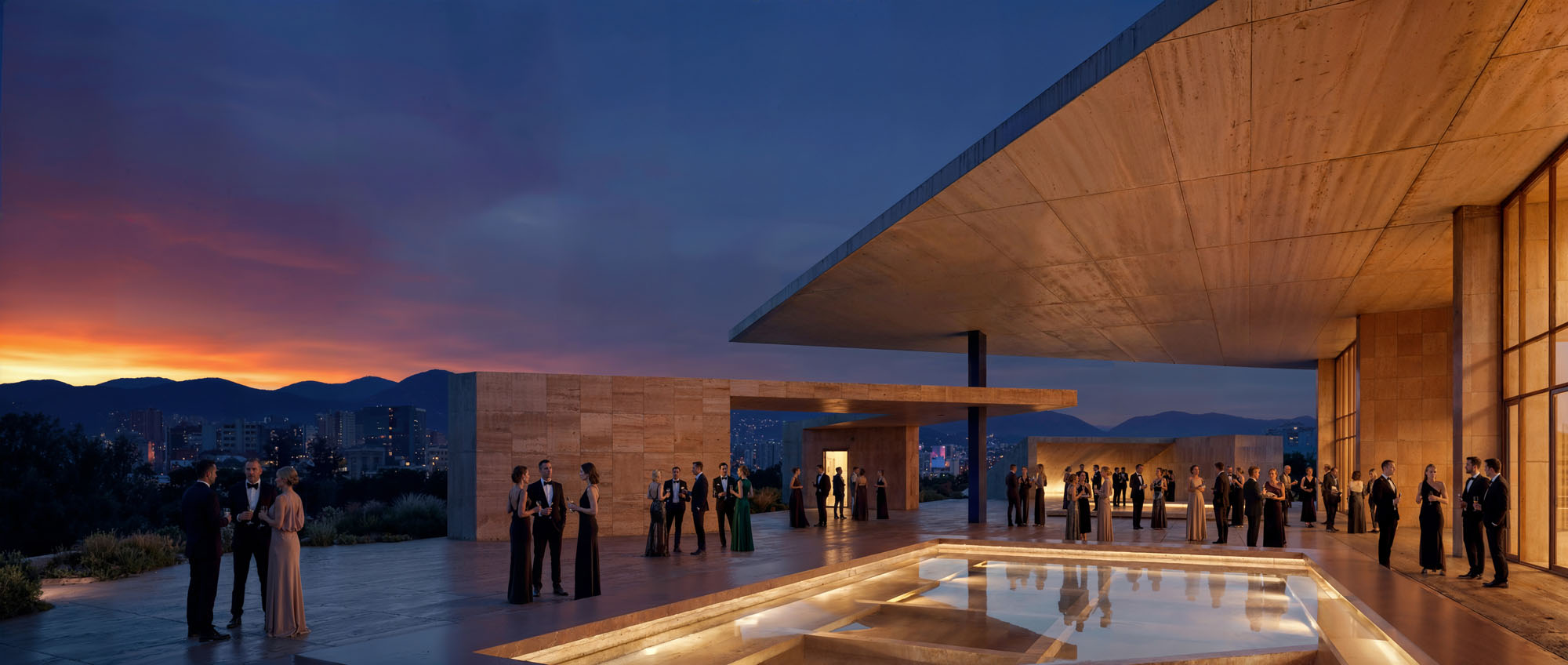
屋上レベルでは、既存の構造が新しい居住可能なトラス構造に置き換わる。パレス・テラスは、イベント機能を地下から屋上へと移転させ、元の3部屋(計730人収容)から、ティラーナのパノラマの景色を望む約1,100人収容の4部屋へと生まれ変わらせる。屋外の円形劇場が屋上の景観に組み込まれ、タワーとのつながりを生み出す。オーディトリアムのプログラムを上方に拡張することで、テラスは独立して運営することも、下のホールと組み合わせて運営することも可能になり、両方のレベルで同時にイベントを開催できるようになる。レストラン、カフェ、イベントスペースが、1日を通じて屋上を活性化させる。
© Herzog & de Meuron
伝統を未来へつなぐ新タワー
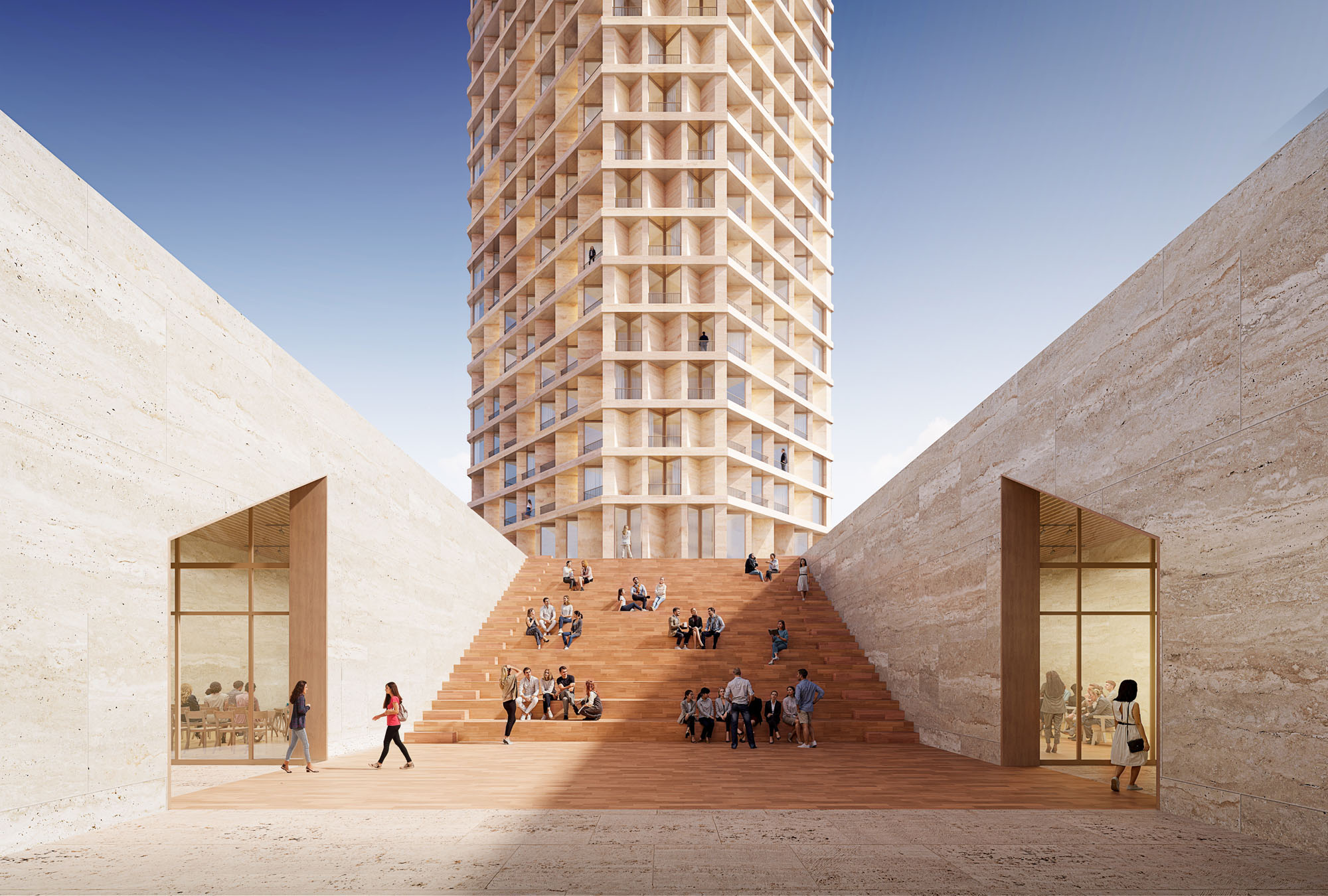
ホテルとオフィスを収容する新しいタワーは、ヴァナキュラーな原理と、1980年代の〈パレス・オブ・コングレス〉のデザインに影響を与えたものと同じ伝統的な言及によって形づくられている。そのボリュームは上層階に向かってシフトしており、地上レベルに開放感を生み出している。その面取りされた幾何学形状は、都市の中での建物の見え方を定義し、周囲の近隣地域やその先に対して異なる表情を見せる。
ファサードは、地域の気候条件に対応するため、40:60の窓対壁比率を採用し、パッシブ遮光戦略を組み合わせている。環境性能を重視し、垂直のブレードがブリーズ・ソレイユとして導入され、日射熱の獲得を抑えつつ、タワーの外皮に深みと表情を与えている。対称性と明快さを持ってデザインされたタワーは、既存建物の建築言語に敬意をもって調和している。
このプロジェクトは「保存」と「変革」を組み合わせており、既存の構造を公共のアンカーとして維持しながら、地上階、内部、および屋上にわたってプログラムを拡張する新しい空間を導入している。これらの介入が一体となることで、〈パレス・オブ・コングレス〉、周囲の都市、そして新しいミクストユース開発の間の関係性が強化され、ティラーナの新たな目的地でありランドマークが確立される。
© Herzog & de Meuron
以下、ヘルツォーク&ド・ムーロンのリリース(英文)です。
No. 708
Palace of Congresses
Tirana, Albania
Competition 2026
Project 2026-Built in 1986 along one of Tirana’s main axes, Boulevard Dëshmorët e Kombit, and near the city’s green heart, Tirana Park, the Palace of Congresses is a prominent example of communist architecture. Originally commissioned by the Albanian Communist Party, it has served as a venue for official state functions, national ceremonies and political gatherings. After the fall of communism, the Palace housed concerts, conferences, festivals, and exhibitions, and continued to stand both as a civic landmark and an important witness to the country’s recent history. An innovative building for its time, the complex now requires substantial renewal – its infrastructure no longer meets modern day functional requirements, and the City of Tirana aims to transform it into a modern, multifunctional hub.
Herzog & de Meuron won the competition for the revitalization project in June 2026. Our proposal preserves and celebrates the historical identity of the Palace of Congresses while strengthening its relationship with the city. Through targeted interventions, improved urban connections, and renewed programmatic flexibility, the project enhances the building’s public role and secures its continued relevance. This ambition is supported by the framework of a public-private partnership: alongside the renovation of the existing building, The brief further introduces a new mixed-use tower of approximately 48,000 m², whose development finances the renovation of the Palace of Congresses. The tower supports the project’s financial and operational framework, enabling the Palace’s renewal and helping secure its long-term role as a public cultural venue.
A new urban ensemble
The proposal is defined by three complementary interventions: a new landscape concept to the west, renovation of the existing Palace including an addition to the rooftop, and a new tower to the east. Reshaped as a gently sloping plaza with trees, the new Palace Garden extends the green boulevard, softens the monumentality of the existing building, and creates a gradual transition between the city and the Palace. It improves accessibility and introduces a shaded public space for everyday use, informal gatherings and larger events. A new roof pavilion above the existing building, the Palace Terrace, connects to the tower and creates a new public space with restaurants, cafes, event rooms and smaller-format conference spaces. To the east, a new tower rises within Tirana’s rapidly evolving high-rise context, establishing a vertical presence within the city while maintaining a respectful distance from the existing monument. Together, the landscape, accessible rooftop and tower frame a new urban condition for the Palace of Congresses.
Preserving and revitalizing the existing Palace of Congresses
The existing Palace of Congresses is preserved as the cultural center of the project. The existing entrance level is opened and transformed into a publicly accessible foyer, extending the public realm of the Palace Garden into the building. By removing portions of the intermediate floor slab, the foyer becomes a tall atrium that brings daylight deep into the interior. This generous space supports informal gathering, exhibitions, circulation, and temporary installations, creating a shared urban living room at the heart of the project.
The main auditorium is upgraded while preserving its spatial character. Additional seating and a new balcony level increase audience capacity from 2’100 to 2’350 while improving sightlines. The existing star-shaped ceiling is reconfigured to integrate technical infrastructure and introduce controlled daylight into the hall. New seating, acoustic improvements, and updated technical systems throughout the auditorium enhance performance quality and allow for greater flexibility.
At roof level, the existing structure is replaced by a new habitable truss. The Palace Terrace relocates event functions from the basement to the roof, replacing the original three rooms for a total of 730 people with four rooms accommodating approximately 1’100 offering panoramic views over Tirana. An outdoor amphitheater is integrated into the roofscape and creates a connection to the tower. Extending the auditorium program upward, the terrace can operate independently or in combination with the hall below, enabling events to take place across both levels simultaneously. Restaurants, cafés, and event spaces activate the roof throughout the day.
The Tower
The new tower, accommodating a hotel and offices, is shaped by vernacular principles and the same traditional references that informed the design of the Palace of Congresses in the 1980’s. Its mass shifts toward the upper levels, creating openness at ground level. Its chamfered geometry defines the building’s perception within the city, presenting different faces toward the surrounding neighborhoods and beyond. The façade follows a 40:60 window-to-wall ratio combined with passive shading strategies to address the local climatic conditions. Driven by environmental performance, vertical blades are introduced as brise soleils, reducing solar gain while giving depth and articulation to the tower’s envelope. Designed with symmetry and clarity, the tower respectfully aligns with the architectural language of the existing building The project combines preservation and transformation, retaining the existing structure as a public anchor while introducing new spaces that extend programming across the ground floor, interior, and roof. Together, these interventions strengthen the relationship between the Palace of Congresses, the surrounding city, and the new mixed-use development, establishing a new destination and landmark for Tirana.
ヘルツォーク&ド・ムーロン 公式サイト
https://www.herzogdemeuron.com/