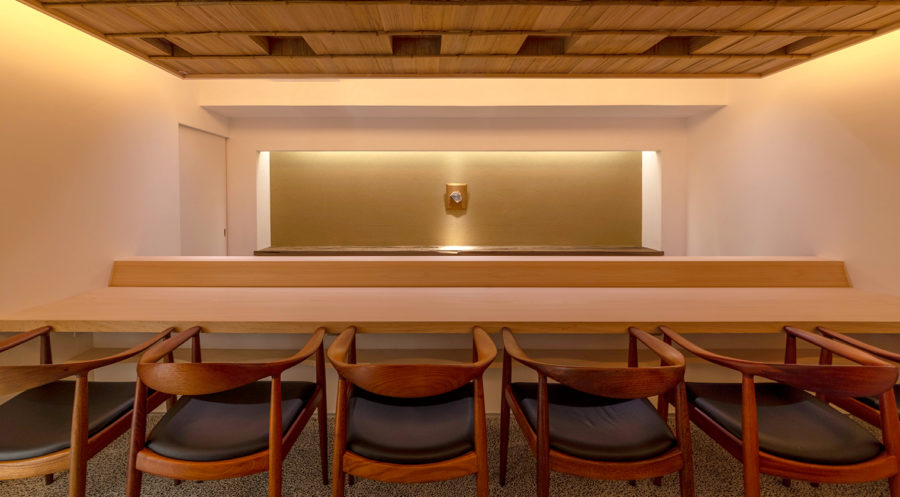
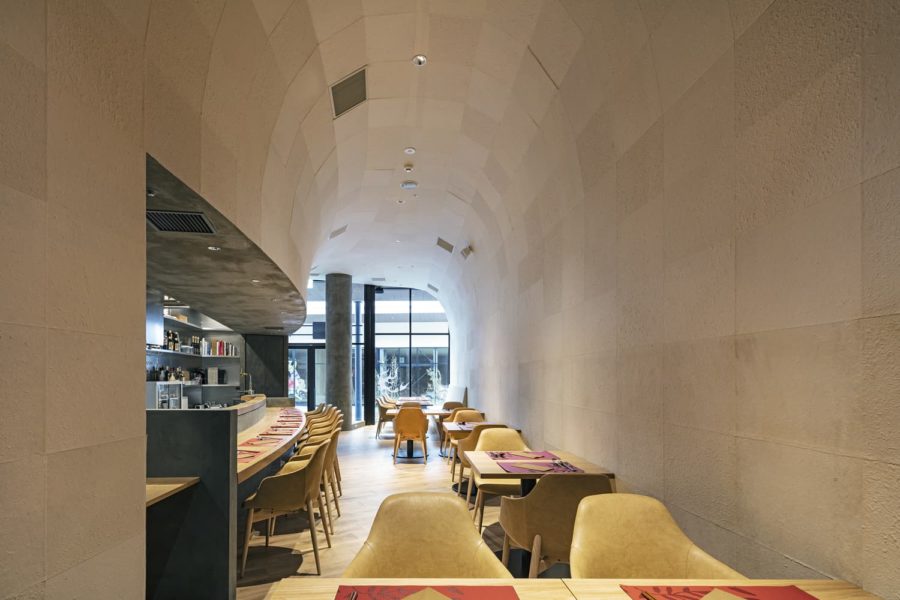
〈ARCADE HOTEL〉が位置する吉原商店街は、新規出店が見られる一方で、高齢化や後継者不足、来街者の減少といった全国の商店街と共通する課題を抱えている。
加えて、この地区は1960年代の防災建築街区事業によって鉄筋コンクリート造の共同建築群が形成され、複数地権者による一体建築が連続する独特の都市構造となった。そのため、建て替えには広範な合意形成が不可欠であり、地方都市の経済状況も相まって、建築更新が停滞しやすい状況にある。一方で、商店街には老舗の生鮮店や和菓子店、地元に愛される居酒屋など魅力に溢れる店舗が多く、富士山の景観をはじめとする、この場所ならではの要素も随所に見られる。
勝亦丸山建築計画は、吉原商店街を拠点として活動を始めてから10年以上が経ち、イベントやリサーチ、設計といった実践を通して、継続的にこの街の課題に向き合ってきた。このプロジェクトは、そうした取り組みの延長線上に位置づけられるものであり、現在はその先に続く構想も動き始めている。
吉原は1600年ごろから東海道の宿場町「吉原宿」として栄え、富士登山の玄関口でもあった。もともと「旅人が滞在する」ことを前提に発展してきた都市だが、1960年代の防災建築街区化や自動車交通の普及により、その滞在文化は次第にかたちを失っていった。私たちはこの歴史を現代に再接続する方法として、商店街にホテルというプログラムを挿入し、再び“滞在地”として立ち上げることを目指した。
約10年間遊休化していたビルをリノベーションし、〈ARCADE HOTEL〉を商店街体験の基点として開業した。宿泊という用途は、活用が難しい2階以上のフロアまで含めて建物全体の再生を可能にする。また本計画は、地域に点在する資源を活用し、まち全体を1つの宿に見立てる取り組みでもあり、その起点としてロビーを設けることで、商店街全体へとひらかれた仕組みをつくり出している。
本プロジェクトが掲げる提供価値は「3rd LOCAL」である。故郷(1st LOCAL)でも特別な旅先(2nd LOCAL)でもない、第三の“帰りどころ”としての滞在を目指し、適度な距離感や関わりの深さ、ワクワクしつつも緊張しない感覚を空間と運営に組み込んでいる。また、初めてローカルに踏み込む際に生じる不安をやわらげるため、「安心なローカル」というコミュニケーションコンセプトを設定し、旅人がまちへ入る“最初の一歩”を支える仕組みを整えている。
建築デザインでは、「清と濁のコントラスト」をコンセプトとした。富士山や湧水に象徴される“清”と、商業のエネルギーや夜のネオンが孕む“濁”を共存させ、吉原の二面性を空間に翻訳することを意図している。
什器には、私たちが開発している「Placemaking Kit(http://placemaking.co.jp/)」を採用した。家具と造作の間のスケールへと調整し、ホテル空間に合わせて構成を再設計している。
(丸山裕貴、勝亦優祐)
A hotel inserted into the shopping district, capturing the sense of distance from the city
The Yoshihara Shopping District, where the ARCADE HOTEL is located, faces challenges common to shopping districts nationwide: an aging population, a shortage of successors, and declining visitor numbers, despite some new store openings.
Furthermore, this area developed a unique urban structure in the 1960s through the Disaster Prevention Building Block Project. This resulted in a series of reinforced concrete buildings, collectively constructed by multiple landowners. Consequently, rebuilding requires extensive consensus-building. Combined with the economic conditions of regional cities, this creates an environment where building renewal tends to stagnate. On the other hand, the shopping district is filled with charming stores, including long-established fresh produce shops, traditional Japanese confectionery stores, and beloved local izakayas. Unique elements specific to this location, such as views of Mount Fuji, are also found throughout.
Katsumata Maruyama Architectural Planning has been based in the Yoshiwara Shopping District for over a decade, continuously addressing the neighborhood’s challenges through events, research, and design. This project extends those efforts, with further concepts now beginning to take shape.
Yoshiwara flourished as the post town “Yoshiwara-juku” along the Tokaido Road from around 1600, serving as the gateway for Mount Fuji climbers. Originally developed around the premise of “travelers staying,” its culture of lingering gradually lost its form due to the 1960s disaster-resistant building block development and the spread of automobile traffic. We aimed to reconnect this history with the present by inserting a hotel program into the shopping district, reestablishing it as a “place to stay.”
We renovated a building that had been vacant for about ten years and opened the ARCADE HOTEL as the starting point for the shopping district experience. The lodging function enables the regeneration of the entire building, including the upper floors that were difficult to utilize. Furthermore, this project leverages scattered local resources, conceptualizing the town as a whole as one inn. By establishing a lobby as its starting point, it creates a mechanism open to the entire shopping district.
The value proposition this project champions is “3rd LOCAL”. It aims to create a stay experience that is neither a hometown (1st LOCAL) nor a special travel destination (2nd LOCAL). Still, rather a third “place to return to.” This is achieved by incorporating a sense of appropriate distance, depth of connection, and excitement without tension into both the space and its operations. Furthermore, to alleviate the anxiety that often accompanies first steps into a local area, a communication concept called “Safe Local” was established. This concept supports travelers taking their “first step” into the town.
The architectural design concept is “the contrast between purity and turbulence.” It aims to translate the duality of Yoshiwara into the space by coexisting the ‘purity’ symbolized by Mount Fuji and spring water with the “turbulence” inherent in commercial energy and nighttime neon.
For the fixtures, we adopted our proprietary “Placemaking Kit (http://placemaking.co.jp/)”. Scaled to fit between furniture and built-in elements, its configuration was redesigned specifically for the hotel space.
(Yuki Maruyama, Yusuke Katsumata)
【ARCADE HOTEL】
所在地:静岡県富士市吉原2-9-26
用途:ホテル
事業主体:富士山まちづくり
竣工:2024年
設計:勝亦丸山建築計画
担当:丸山裕貴、勝亦優祐
総合プロデュース:勝亦優祐(勝亦丸山建築計画)
コミュニケーション戦略:馬場宏樹
グラフィックデザイン:田中裕希
大工家具:鳥澤建築
左官:折笠左官
家具:古地由莉香+循環ワークス
造園:白坂 誠(庭山水)
看板施工:美助人
施工:富士スパイラル工業
撮影:千葉正人
工事種別:リノベーション
構造:RC造
規模:地上4階
建築面積:70.55m²
延床面積:266.93m²
設計期間:2023.07-2023.12
施工期間:2023.12-2024.06
【ARCADE HOTEL】
Location: 2-9-26 Yoshiwara, Fuji-shi, Shizuoka, Japan
Principal use: Hotel
Project operator: Mt. Fuji Community Development
Completion: 2024
Architects: Katsumata Maruyama Architects
Design team: Yuki Maruyama, Yusuke Katsumata
General production: Yuki Maruyama / Katsumata Maruyama Architects
Communication strategy: Hiroki Baba
Graphic design: Yuki Tanaka
Custom-built furniture: Torisawa Kenchiku
Plaster work: Orikasa sakan
Furniture: Yurika Kochi + JUNKAN WORKS
Landscape: Niwasansui
Signage construction: BisKeTTo
Construction: FUJI SPIRAL INDUSTRY
Photographs: Masato Chiba
Construction type: Renovation
Main structure: RC
Building scale: 4 stories
Building area: 70.55m²
Total floor area: 266.93m²
Design term: 2023.07-2023.12
Construction term: 2023.12-2024.06