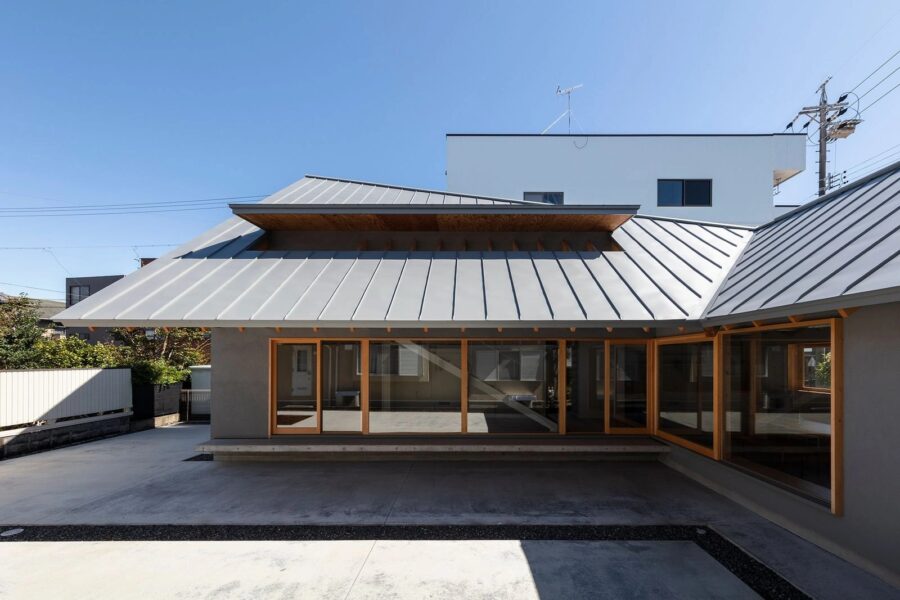
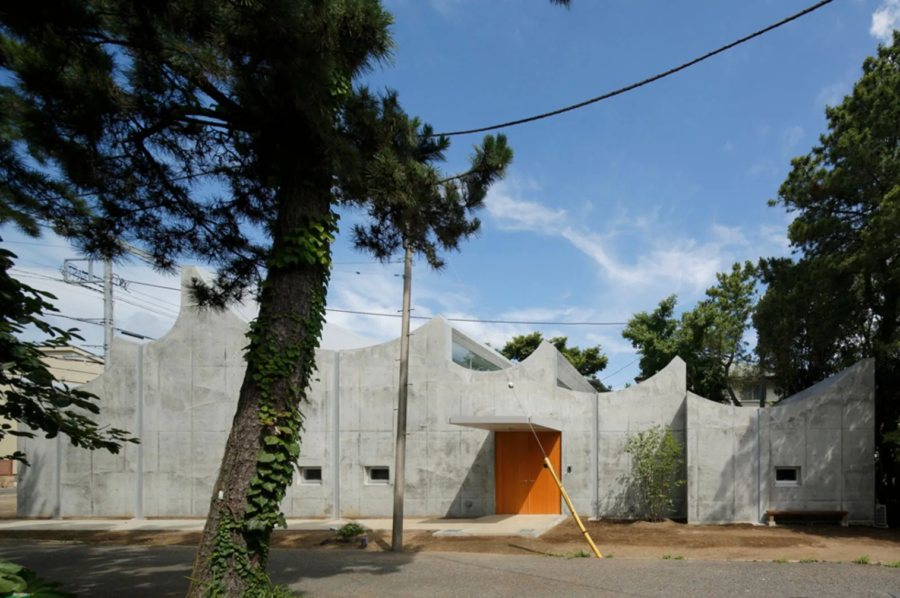
庭へ向けて明るく大きな窓のついた家が欲しい。この月並みな想いから⾃邸の計画は始まった。しかし敷地は住戸間の見合いが起こる東京の住宅密集地であり、敷地奥に建物を大きく開くことは現実的に難しい。そのため前面道路に向かって生活空間を開き庭を配置する方針としたが、道路は敷地の北側に位置しており、北向きの窓だけで明るい庭の風景をつくるには限界があった。
そこで2階の北側に大きな窓を開け、そこから日の光を求めるように道路際の空中を迂回する線形テラス「飾り庭」を伸ばしていく。飾り庭はやわらかい曲線を描きながら建物の影を逃れ、ダイニングの北側採光窓からの⾵景に煌めきを与え、都市と住宅の間に緩衝領域をつくる。
内部は敷地の高低差を利用したスキップフロアとし、道路側の飾り庭と敷地奥の奥庭のふたつの庭への視線の抜けを全体に発生させ、それらの庭を交互に望む一筆書きの螺旋形の動線を計画した。さらに思い入れのある器、本、写真、植木などをこれまでの自分たちの生活の表象ととらえ、それらを飾りとして設えるための棚によって動線を包み込むことで、住宅に小さな美術館のような程よい緊張感をつくり、これからの生活を肌理細やかなものにするための意欲が醸成されていくと考えた。
2階の扉から飾り庭に出て植木に⽔を撒くと、通りすがりの人びととの会話が発⽣し、⼦供たちが喜んでいる姿が⾒える。ここでは植物も含めた「飾り」が人、住まい、そして都市の心理的な繋がりを生み、個人住宅が都市に対して開かれた公器としてのふるまいを見せる。
アールヌーヴォーやポストモダンのように建築そのものに装飾表現を施すのではなく、現代で通俗的に批判されがちな建築における装飾の新しい形式と役割を示し、都市住宅での生活に彩りを添える。
(生沼広之)
"Kazari" Connects People, Houses, and the City
This project is an architect’s home and office located in a densely populated residential area of Tokyo. As there were other houses adjacent to the boundary of the site on all sides except for the north side where the road is located, it was decided to install a large window facing the road, but the challenge was how to create a bright garden view through the north-facing window.
Therefore, a curved terrace called the “Kazari Garden” was extended from the large second-floor window, circling in the air along the road in search of sunlight. The Kazari Garden’s smooth curves escape the shadow of the building, adding a sparkle to the view from the north-facing dining room window, creating a buffer zone between the city and the residence.
The interior features a split-floor design that takes advantage of the site’s elevation difference. Views to the Kazari Garden and Back Garden are generated throughout the building, and a spiral circulation system was planned that alternates between these gardens. Furthermore, we considered cherished vessels, books, photographs, plants, etc. to be representations of our lives up to now, and by surrounding the flow of movement with shelves on which to display these items, we thought that we could create just the right amount of tension in the home, like a small art museum, and foster the motivation to live mindfully in the future.
Stepping out through the second-floor door into the Kazari Garden and watering the plants sparks conversations with passersby, and children can be seen delighted. “Kazari” (= ornament, decoration), including the plants, creates a psychological connection between people, house, and city, and the house behaves as a public entity open to the city.
Rather than applying decorative expression to the architecture itself, as in Art Nouveau and Postmodernism, this work demonstrates a new form and role for decoration in architecture, a style that was once called crime and is often criticized in the modern world, making life in urban homes more fulfilling.
(Hiroyuki Oinuma)
【中野の住宅】
所在地:東京都中野区
用途:戸建住宅
クライアント:個人
竣工:2025年
設計:生沼広之建築設計事務所
担当:生沼広之
構造設計:三野裕太(三野建築構造研究所)
施工:山下工務店
撮影:関 拓弥、生沼広之
工事種別:新築
構造:木造
規模:地上2階
敷地面積:126.50m²
建築面積:61.27m²
延床面積:96.38m²
設計期間:2022.07-2024.06
施工期間:2024.07-2025.04
【House in Nakano】
Location: Nakano-ku, Tokyo, Japan
Principal use: Residence
Client: Individual
Completion: 2025
Architects: Hiroyuki Oinuma Architect & Associates
Design team: Hiroyuki Oinuma
Structural design: Yuta Mino / Mino Structural Engineers
Construction: Yamashita Construction
Photographs: Takuya Seki, Hiroyuki Oinuma
Construction type: New Building
Main structure: Wood
Building scale: 2 stories
Site area: 126.50m²
Building area: 61.27m²
Total floor area: 96.38m²
Design term: 2022.07-2024.06
Construction term: 2024.07-2025.04