映画『の・ようなもの のようなもの』に、志ん田(松山ケンイチ)と志ん魚(伊藤克信)と夕美(北川景子)が誤って捨てられた「ある物」を取り戻すため必死にゴミ収集車を追いかけるシーンが出てくる。谷中の街並みを背景にしたこの場面は、映画の空気感を象徴的に表すとても印象的なシーンである。
このいかにも谷中らしい風景として映っていた場所が、本プロジェクトの計画地である。この場面の背景に見えていた大きな家は大正時代から建つ母屋にあたり、広い敷地内にはこの他に、住宅が2軒、木造アパートが2軒建っていた。これらの建物に囲まれた中庭はさまざまな樹々に覆われ、一画には小さな祠があってお稲荷様まで祀られていた。建主は先代から受け継いだこの土地と建物、生活を大切に守り続け、今も毎朝毎夕のお参りを欠かさない暮らしを営まれている。
最初にご相談があったのは2016年。第1期計画として、まずは母屋の建て替えを行うこととなった。母屋は昔ながらの日本家屋で、建主とともに居間に座り先代の歴史や思い出をうかがっていると、都心にいることなどすっかり忘れるほど、ゆっくりとした時間が流れていた。じっくり中を見渡せば、もちろん全体的に老朽化が進んでいたが、この建物が良質な部材で1つひとつ丁寧につくられていることがうかがい知れる。床柱・床框、雪見障子・襖などの建具類、欄間、敷石・沓脱石、さまざまな部材や調度品、解体後廃棄するにはあまりにももったいない。多少のキズは建て主と先代の思い出が刻まれているようである。この場所に刻まれた記憶を継承するように、これらの部材をできるだけ保存し、建て替える住宅の中に取り入れる計画とした。
計画にあたっては、ありとあらゆる部材の採寸から始め、柱間・鴨居の高さ等、単純な尺間で合わないところも部材に合わせ基本計画段階で細やかに寸法調整を行った。新築でありながらも、あたかも昔から存在していたような住まいを目指した。前面の道に対しては、改めて谷中らしい背景となるべく、切妻平入りで深い庇をもつ形式とした。
母屋の建築後、続けて第2期工事として、敷地南側に平屋の賃貸住宅を建設、さらには中庭の整備を行った。中庭は大きく環境を変えることのないように、木々の配置は変えず新たな中低木を添える程度としている。また使われていない池を組み直して枯池として整えつつ、踏み石を配置し直すことで回遊しやすい道を整えた。祠前の鳥居はそのまま材を更新してつくり変え、枯池にかかる橋とともに小さな参道を整備した。建主が行う変わらない日常がただ継続されることを願っている。(作庭:エービーデザイン・正木 覚 氏)
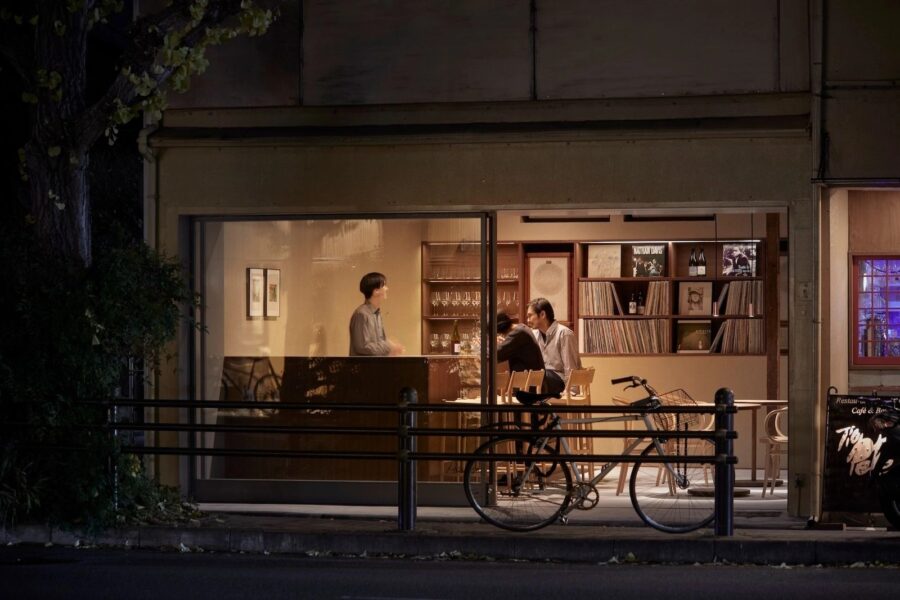
2022年より第3期の計画がスタートする。母屋と繋がるように、道路沿いに賃貸の店舗+住宅を計画した。谷中は歴史ある寺町のもつ静けさと、活気ある下町の賑やかさを合わせもつ街である。このプロジェクトが単体の建築計画にとどまらず、谷中の街づくりの一端を担えるようにと考え、建主との相談の中で、このようなプログラムの選択となった。現在、1階には和食を提供する店が入り、通りにはほどよい活気がこぼれている。
一連の建築には、デザイナー井田明子 氏によって、「tomoss yanaka」というネーミングを付けていただいた。「庭の風情に心が癒やされる静寂」「和やかな光が作り出す空間」的なイメージとともに、「そっと光を灯すように、昔と今を優しく照らし続ける」こと、がイメージされている。過去から受け渡されてきた大切な街づくりへの関わりとして今後もじっくりと向き合い続けていきたいプロジェクトである。
(山﨑壮一)
Residences and retail stores that preserve the memory of the land and contribute to urban development
In the film “Something Like Something Like”, there is a scene where Shinden (Kenichi Matsuyama), Shintoto (Katsunobu Ito), and Yumi (Keiko Kitagawa) frantically chase after a garbage truck to retrieve “a certain item” that was accidentally thrown away. Set against the backdrop of Yanaka’s streetscape, this scene is a highly memorable one that symbolically captures the film’s atmosphere.
The location depicted in this quintessentially Yanaka scene is the site of this project. The large house visible in the background of this scene is the main residence, built during the Taisho era. Within the spacious grounds, there were also two other houses and two wooden apartment buildings. The courtyard, surrounded by these buildings, was lined with various trees, and in one corner stood a small shrine dedicated to Inari. The client has continued to cherish and protect this land, these buildings, and this way of life inherited from previous generations, and still leads a life in which they never fail to pay their respects every morning and evening.
We were first consulted in 2016. As the first phase of the project, it was decided to rebuild the main house. The main house was a traditional Japanese dwelling. As I sat in the living room with the owner, listening to stories of the previous generation’s history and memories, time passed so slowly that I completely forgot I was in the heart of the city. Upon a closer look inside, while the building was certainly showing signs of age, it was clear that it had been meticulously crafted piece by piece using high-quality materials. The floor posts and sills, the fixtures such as the snow-viewing sliding screens and fusuma doors, the transoms, the paving stones and shoe-removal stones—all these various materials and furnishings were far too precious to discard so simply after demolition. Even the minor scratches seemed to bear the memories of the client and their predecessors. To carry forward the memories etched into this place, we planned to preserve as many of these materials as possible and incorporate them into the new house.
The planning process began with measuring every single component. Even where standard dimensions—such as column spacing or lintel heights—did not align, we made meticulous adjustments during the basic planning phase to accommodate the existing materials. Our goal was to create a home that, despite being newly built, felt as though it had always been there. Facing the street, we adopted a gabled, single-story entrance design with a deep eave to create a backdrop that embodies Yanaka’s distinctive character.
Following the completion of the main house, Phase 2 of the project involved constructing a single-story rental residence on the southern side of the property and landscaping the courtyard. To avoid drastically altering the courtyard’s environment, the arrangement of existing trees was left unchanged, with only a few new shrubs and small trees added. Additionally, an unused pond was redesigned as a dry pond, and stepping stones were repositioned to create a path that facilitates easy exploration. The torii gate in front of the shrine was rebuilt using new materials while retaining the original structure, and a small approach path was created alongside the bridge spanning the dry pond. We hope that the client’s unchanging daily life will continue here. (Landscape Design: AB Design, Toru Masaki)
The third phase of the project will begin in 2022. We planned a mixed-use building featuring retail space and residential units along the street, designed to connect with the main house. Yanaka is a neighborhood that combines the tranquility of a historic temple district with the liveliness of a bustling downtown area. We hoped this project would go beyond being merely an architectural plan and play a role in Yanaka’s overall development; this program was selected through discussions with the client. Currently, a restaurant serving Japanese cuisine occupies the first floor, bringing a pleasant liveliness to the street.
Designer Akiko Ida named this series of buildings “tomoss yanaka.” The name evokes images of “a tranquility that soothes the soul with the charm of a garden” and “spaces created by gentle light,” while also conveying the idea of “gently illuminating the past and present, as if softly lighting a lamp.” This is a project we intend to continue engaging with thoughtfully as a meaningful contribution to the town’s development, built on the past.
(Soichi Yamasaki)
【tomoss yanaka】
所在地:東京都台東区
用途:戸建住宅(1期)、賃貸住宅(2期)、店舗、賃貸住宅(3期)
クライアント:個人
竣工:2019年(1+2期)、2024年(3期)
設計:山﨑壮一建築設計事務所
担当:山﨑壮一
構造設計:間藤早太(間藤構造設計事務所)(1+2期)、大野博史(オーノJAPAN)(3期)
外構:正木 覚(エービーデザイン)
ロゴ・サイン:井田明子(Alien)
施工:星野 穣、四方 洋(渡辺富工務店)
撮影:小川重雄
工事種別:新築
構造:木造
規模:地上2階(1期)、平屋(2期)、地上2階(3期)
敷地面積:424.60m²(1期)、165.58m²(2期)、134.60m²(3期)
建築面積:118.96m²(1期)、58.66m²(2期)、72.25m²(3期)
延床面積:197.88m²(1期)、56.18m²(2期)、133.46m²(3期)
設計期間:2017.08-2019.02(1期)、2018.02-2019.02(2期)、2022.10-2023.12(3期)
施工期間:2019.03-2019.12(1+2期)、2024.01-2024.09(3期)
【tomoss yanaka】
Location: Okutama-machi, Nishitama-gun, Tokyo, Japan
Principal use: Residence (Phase 1), Rental Housing (Phase 2), Store / Rental Housing (Phase 3)
Client: Individual
Completion: 2019 (Phases 1+2), 2024 (Phase 3)
Architects: Soichi Yamasaki Architects
Design team: Soichi Yamasaki
Structural design: Mato Structural Design Office (Phases 1+2), Ohno JAPAN (Phase 3)
Landscape Design: AB Design
Logo & Signage: Alien
Construction: WATANABE TOMI CORPORATION
Photographs: Shigeo Ogawa
Construction type: New building
Main structure: Wood
Building scale: 2 stories (Phase 1), 1 story (Phase 2), 2 stories (Phase 3)
Site area: 424.60 m² (Phase 1), 165.58 m² (Phase 2), 134.60 m² (Phase 3)
Building area: 118.96 m² (Phase 1), 58.66 m² (Phase 2), 72.25 m² (Phase 3)
Total floor area: 197.88 m² (Phase 1), 56.18 m² (Phase 2), 133.46 m² (Phase 3)
Design term: 2017.08-2019.02 (Phase 1), 2018.02-2019.02 (Phase 2), 2022.10-2023.12 (Phase 3)
Construction term: 2019.03-2019.12 (Phases 1+2), 2024.01-2024.09 (Phase 3)