

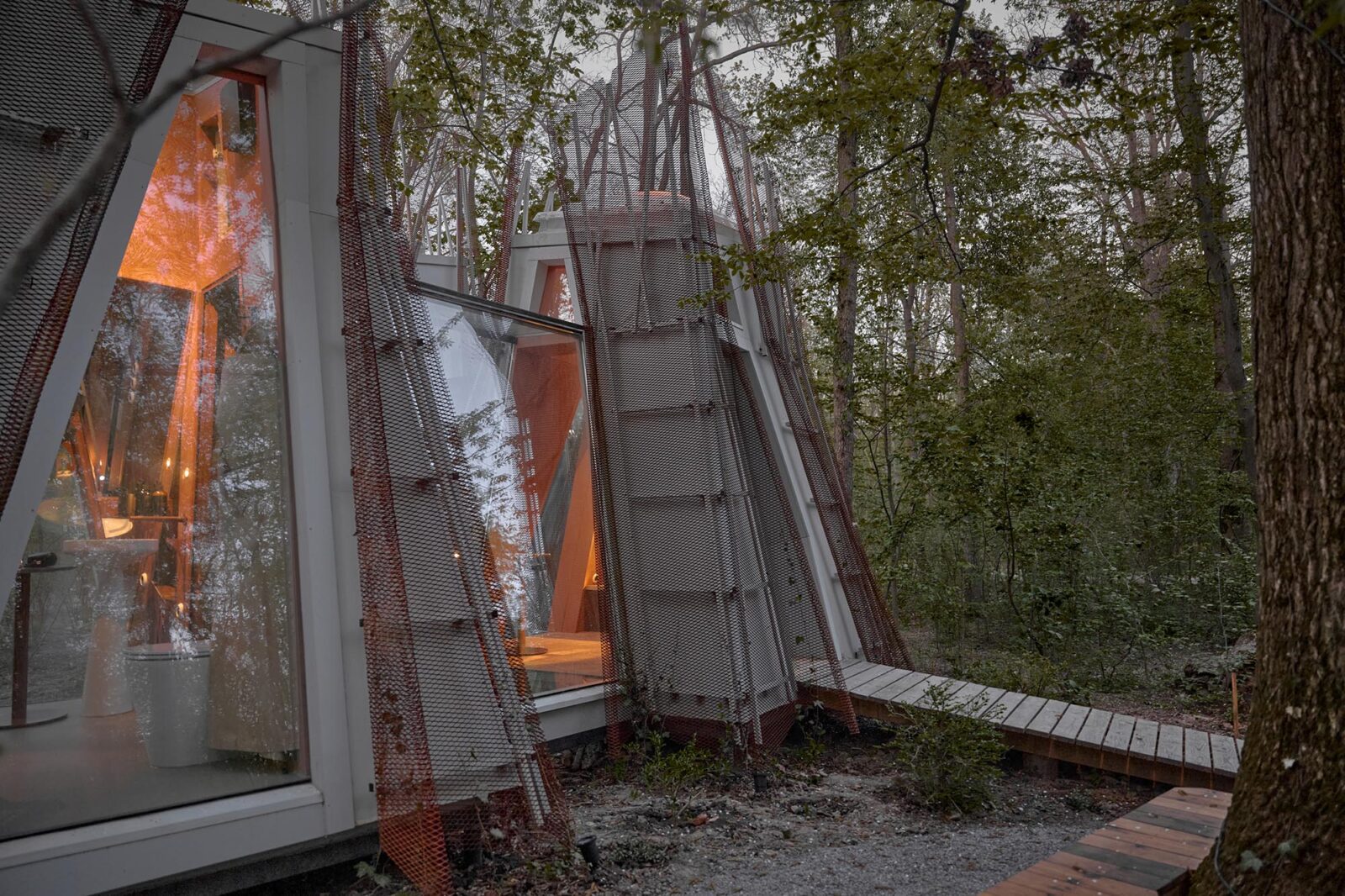
森に溶け込むテントのようなホテル - モジュール化により多様な敷地に対応可能な住居システム〈Namety〉
© Dmytro Seliuk
© Dmytro Seliuk
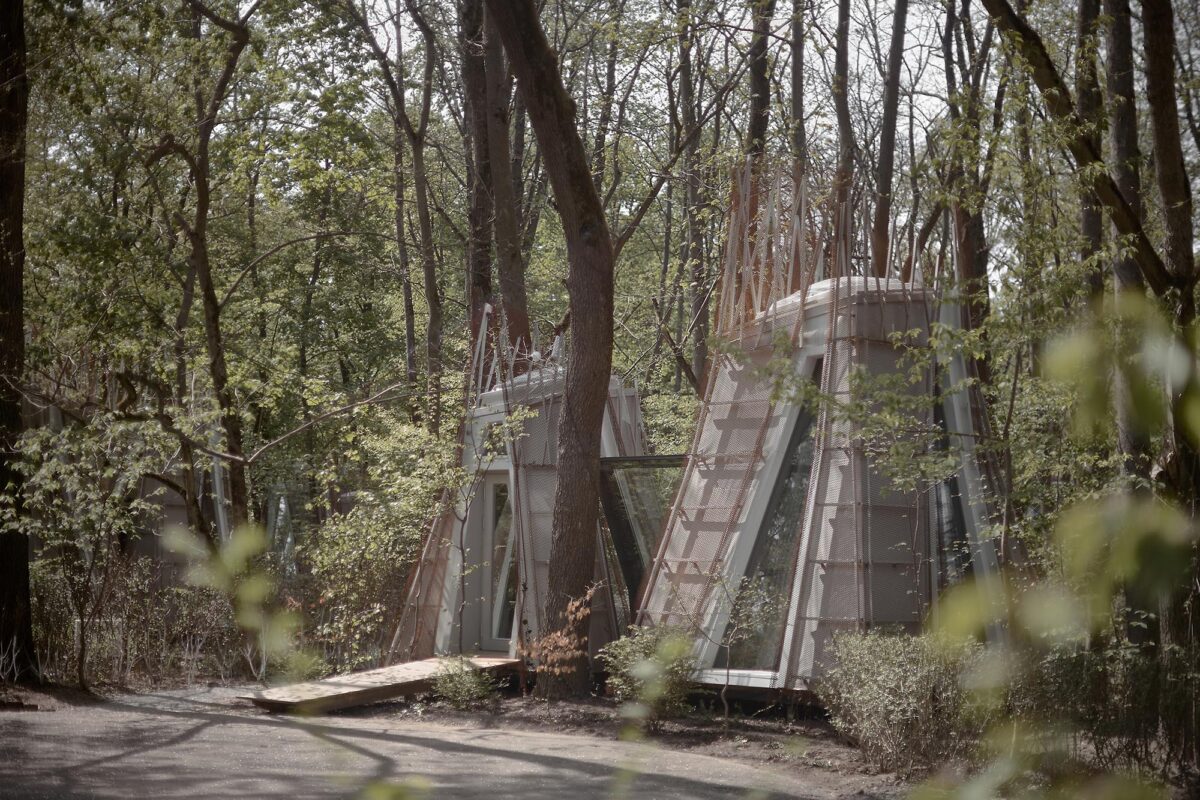
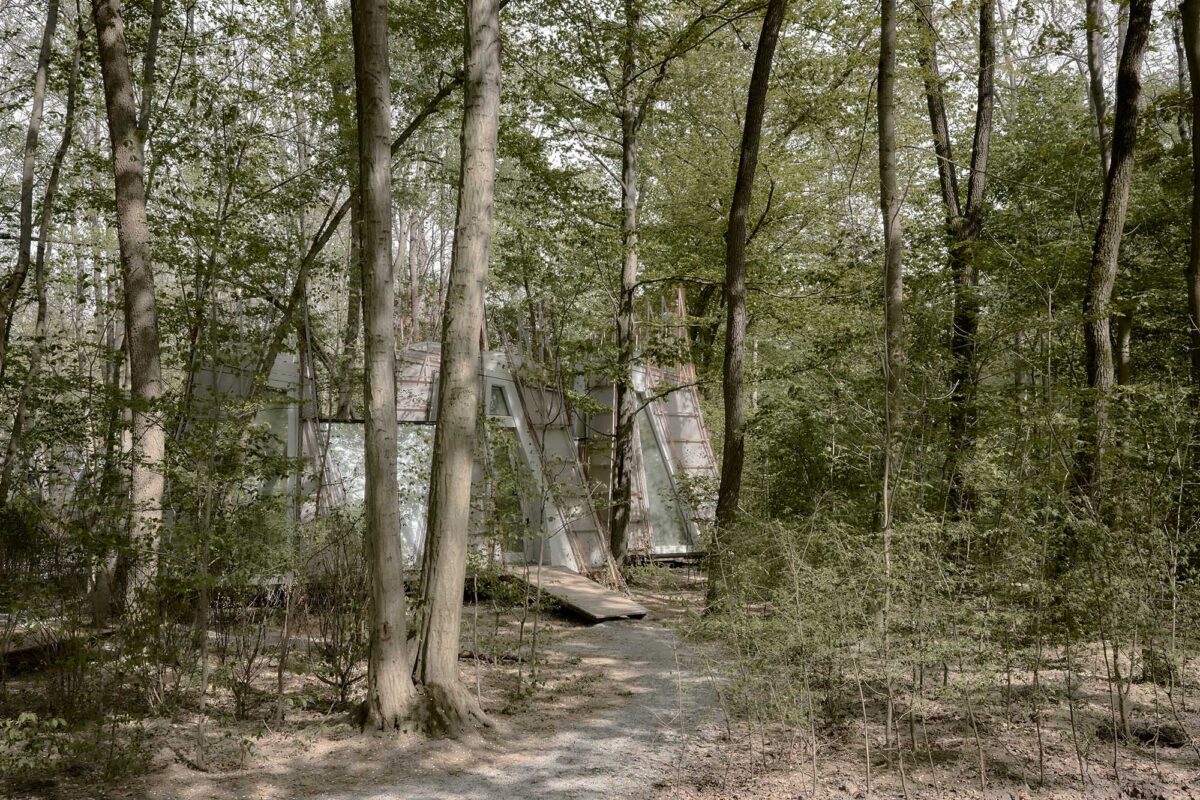
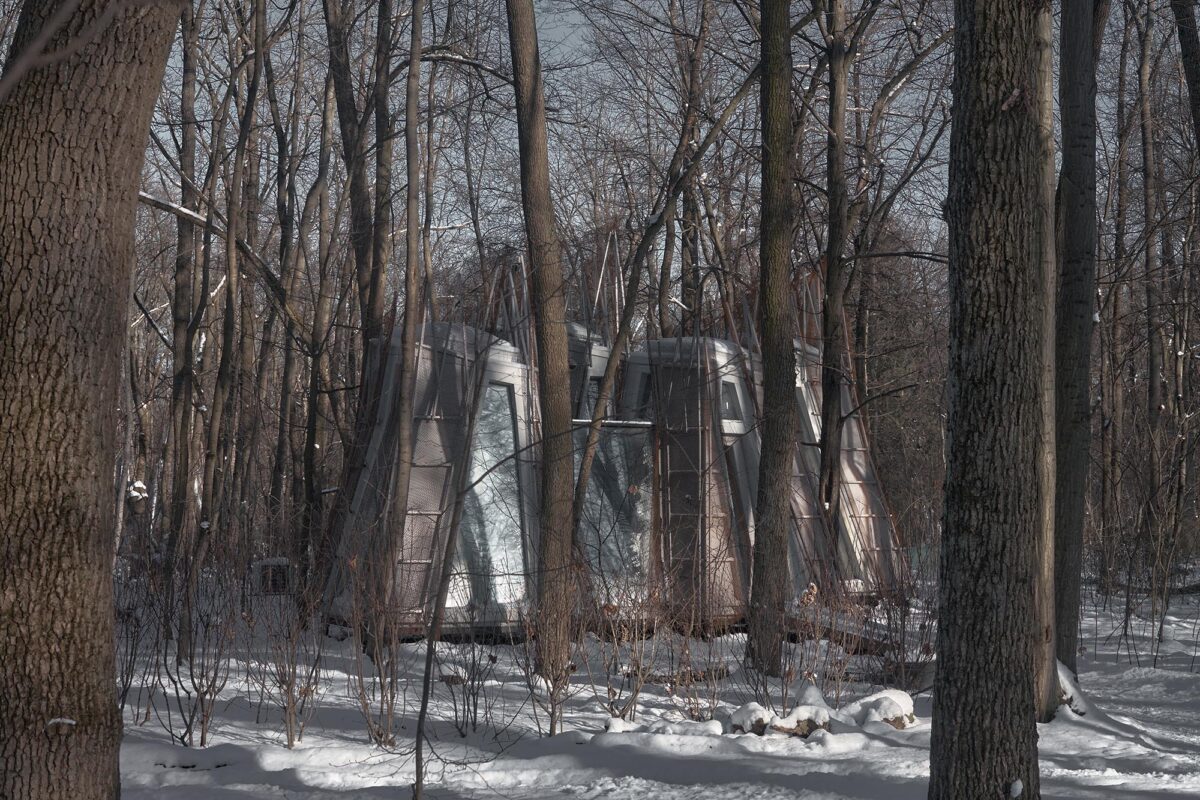
ウクライナ・キーウの建築スタジオ ロマン&ドミトロ・セリウク(Roman & Dmytro Seliuk)が設計した〈Namety〉は、庭園、公園、森などの自然環境の中や、木々の間や空き地に簡単に設置できる、宿泊施設向けのモジュール式住居システムです。
このシステムを用いた初のパークホテルは、12のモジュールを組み合わせたホテル・サウナ施設として、キーウの展示施設内の公園エリアに設置されました。
注目ポイント
- 子供の頃の「秘密基地」や「テント」での体験を原点としたプロジェクト
- テント状のモジュールと透明な廊下で構成
- 各モジュールに割り当てられた浴室や寝室といった「単一の機能」
- モジュールを自由に組み合わせることで、柔軟な配置が可能
(以下、ロマン&ドミトロ・セリウクから提供されたプレスキットのテキストの抄訳)
© Dmytro Seliuk
© Dmytro Seliuk
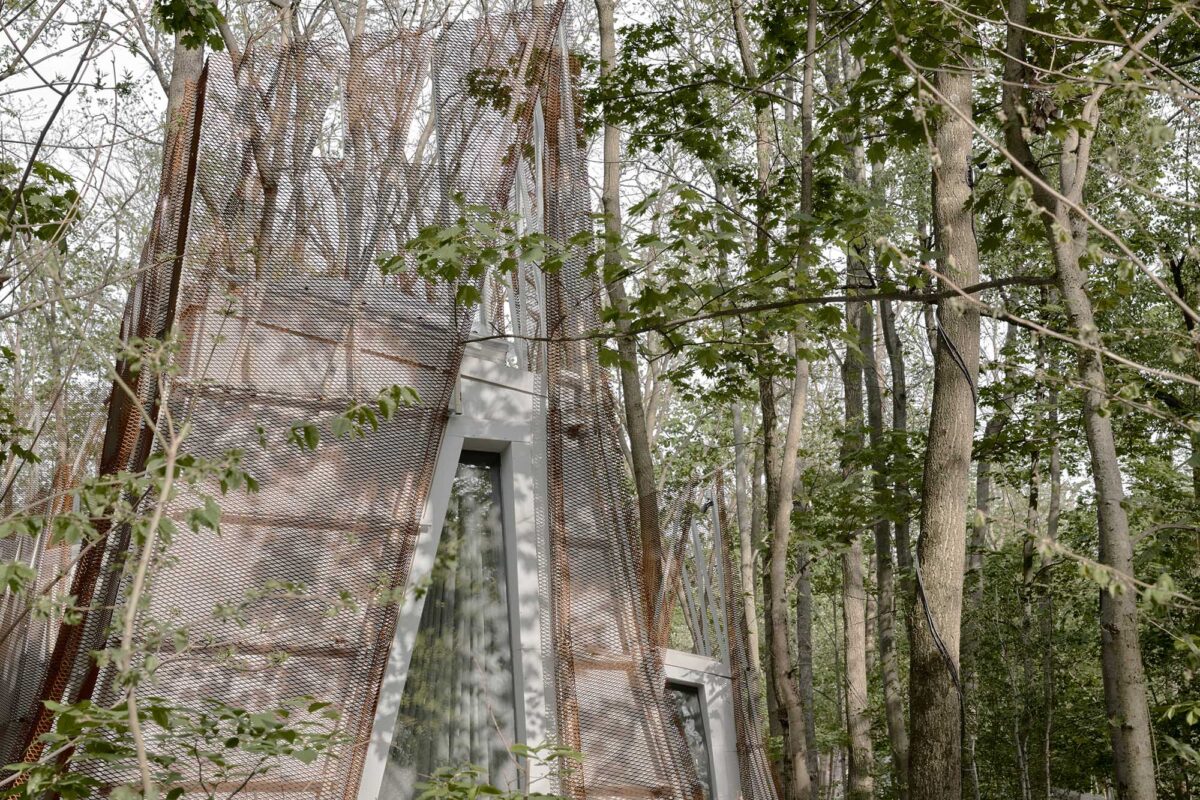
このプロジェクトは、子供の頃、テントや森で集めた枝や木で造ったシンプルな小さな秘密基地で夏休みを過ごした記憶から着想を得ている。
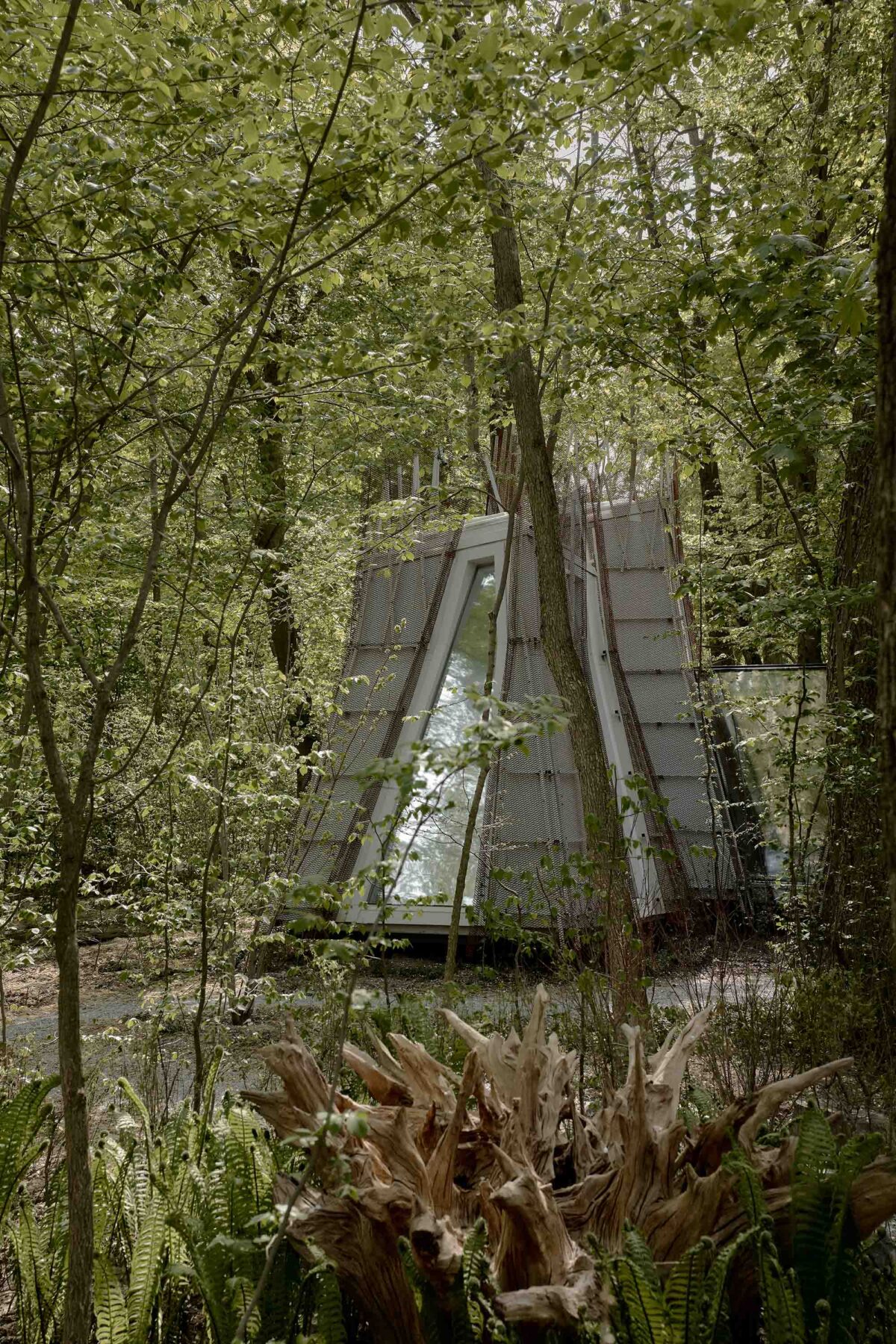
〈Namety〉の構造は、「単一機能」と「バリエーション」という2つの原則に従っている。モジュールは、それぞれの用途に最適な最小限の設計となっており、1つのモジュールに対し1つの機能が割り当てられている。
© Dmytro Seliuk
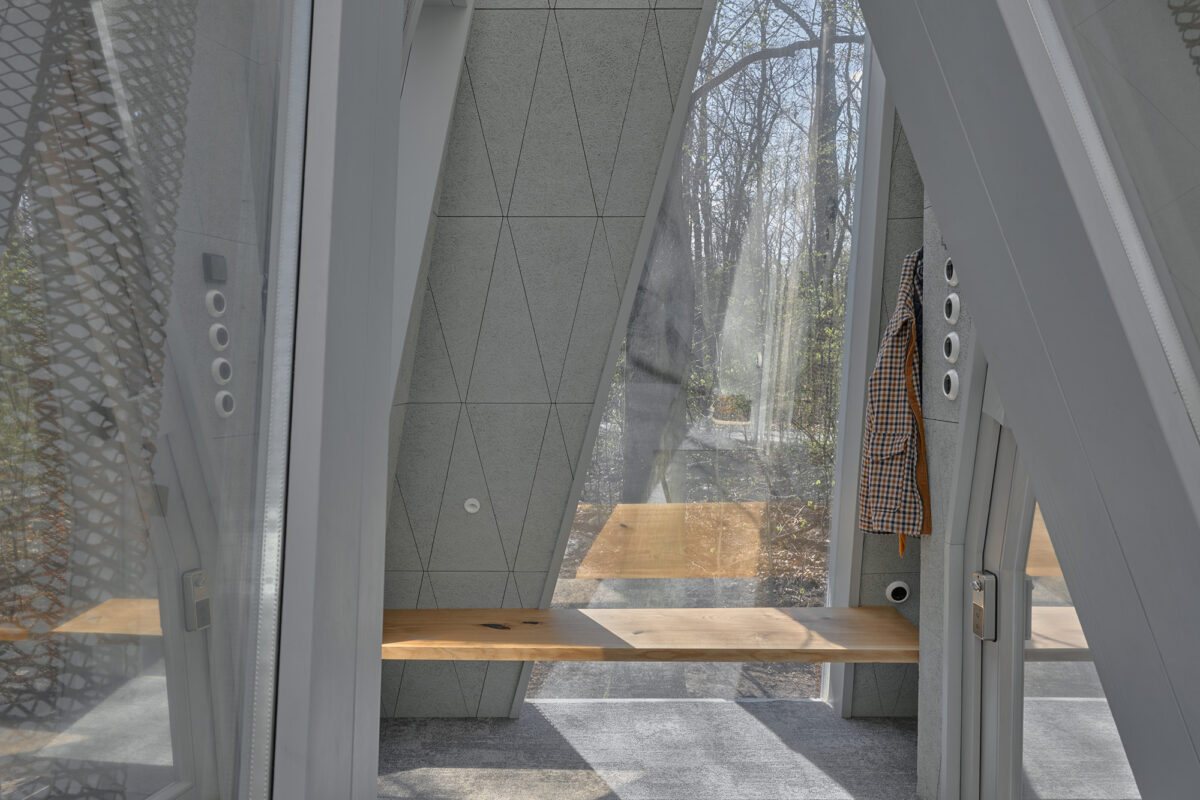
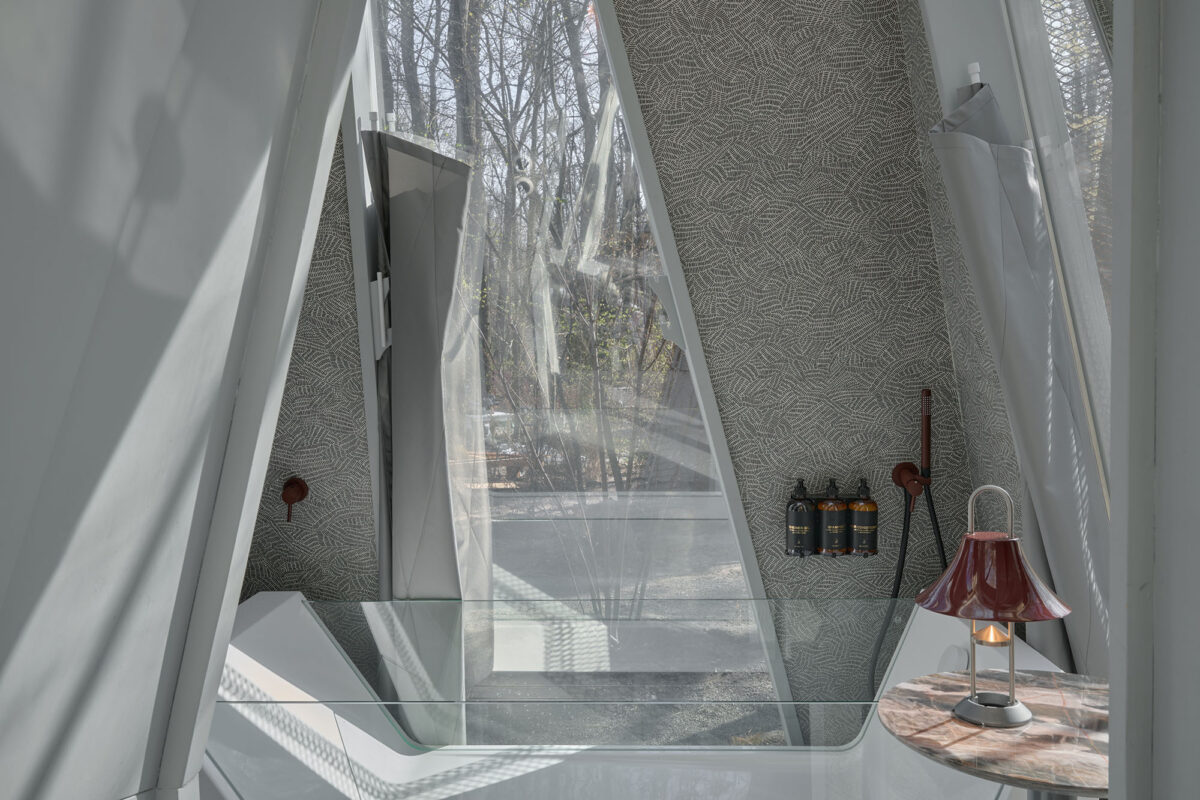
モジュールには小型と大型というサイズに違いがあり、小型モジュールはホール、更衣室、浴室、補助室など、大型モジュールはリビングルーム、寝室、サウナなどとして使用することができる。
これらを任意に組み合わせ、敷地条件に応じて柔軟に対応可能である点が、このシステムの汎用性を支えている。
© Dmytro Seliuk
© Dmytro Seliuk
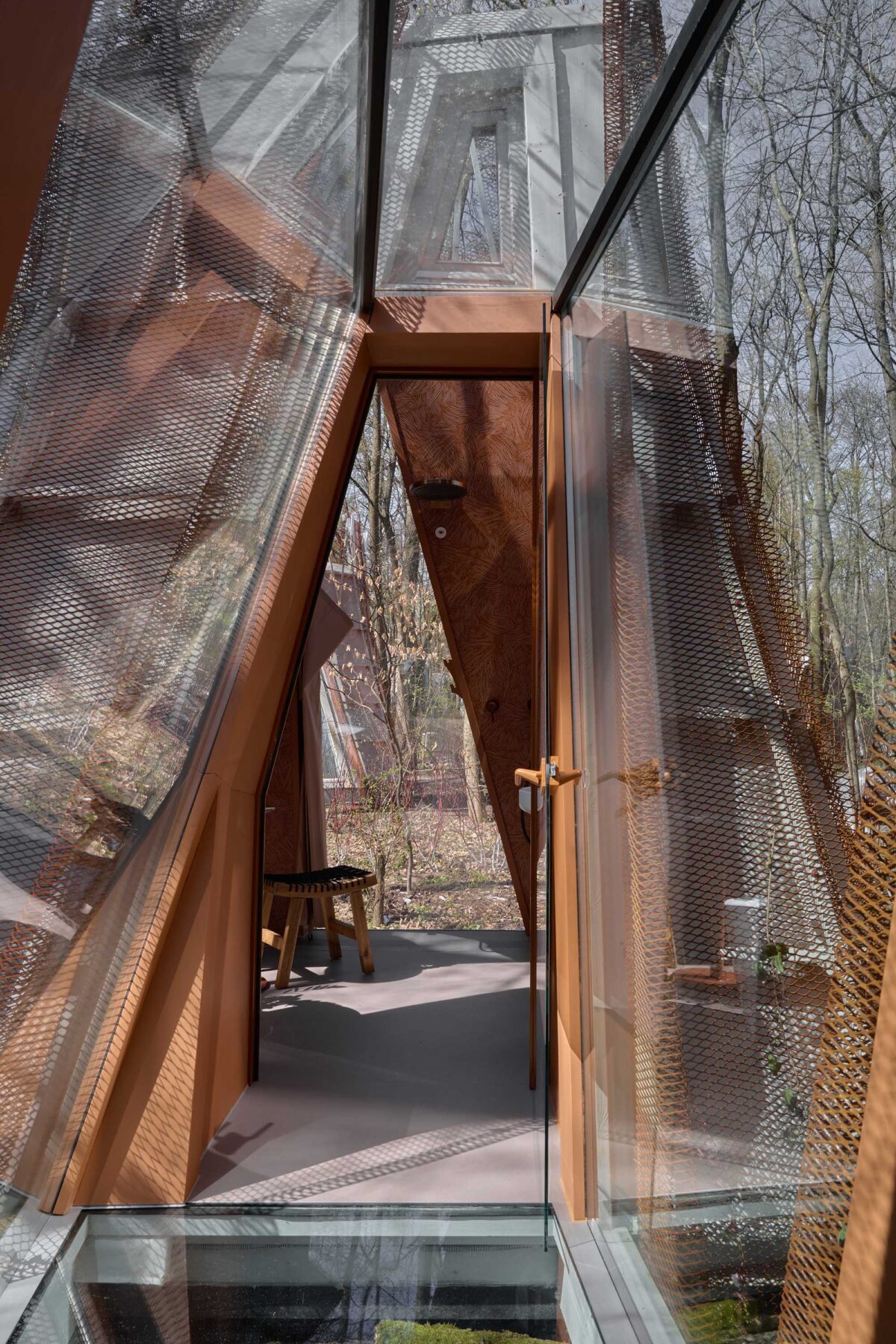
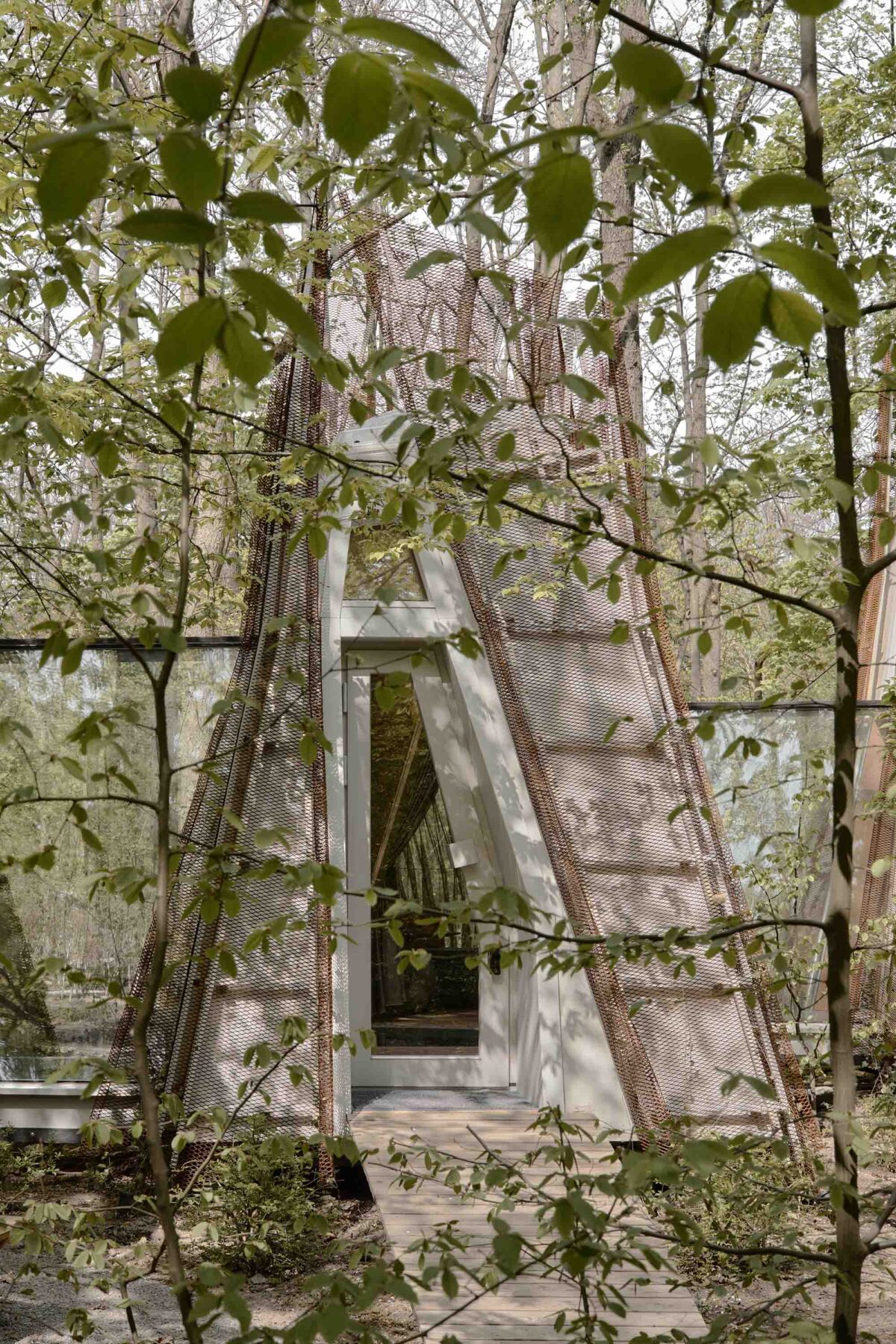
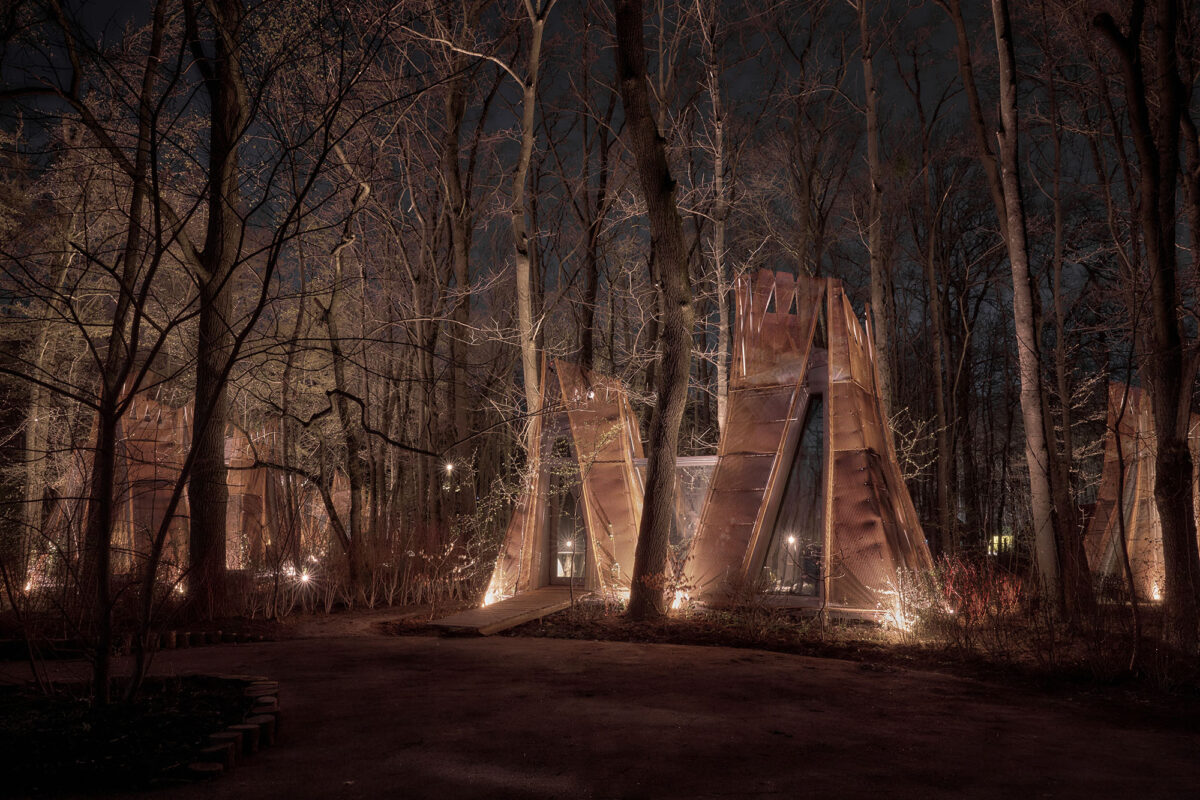
モジュールの接続方法は、テントを基本単位と見なし、その芸術的な存在感を強調することを重視している。
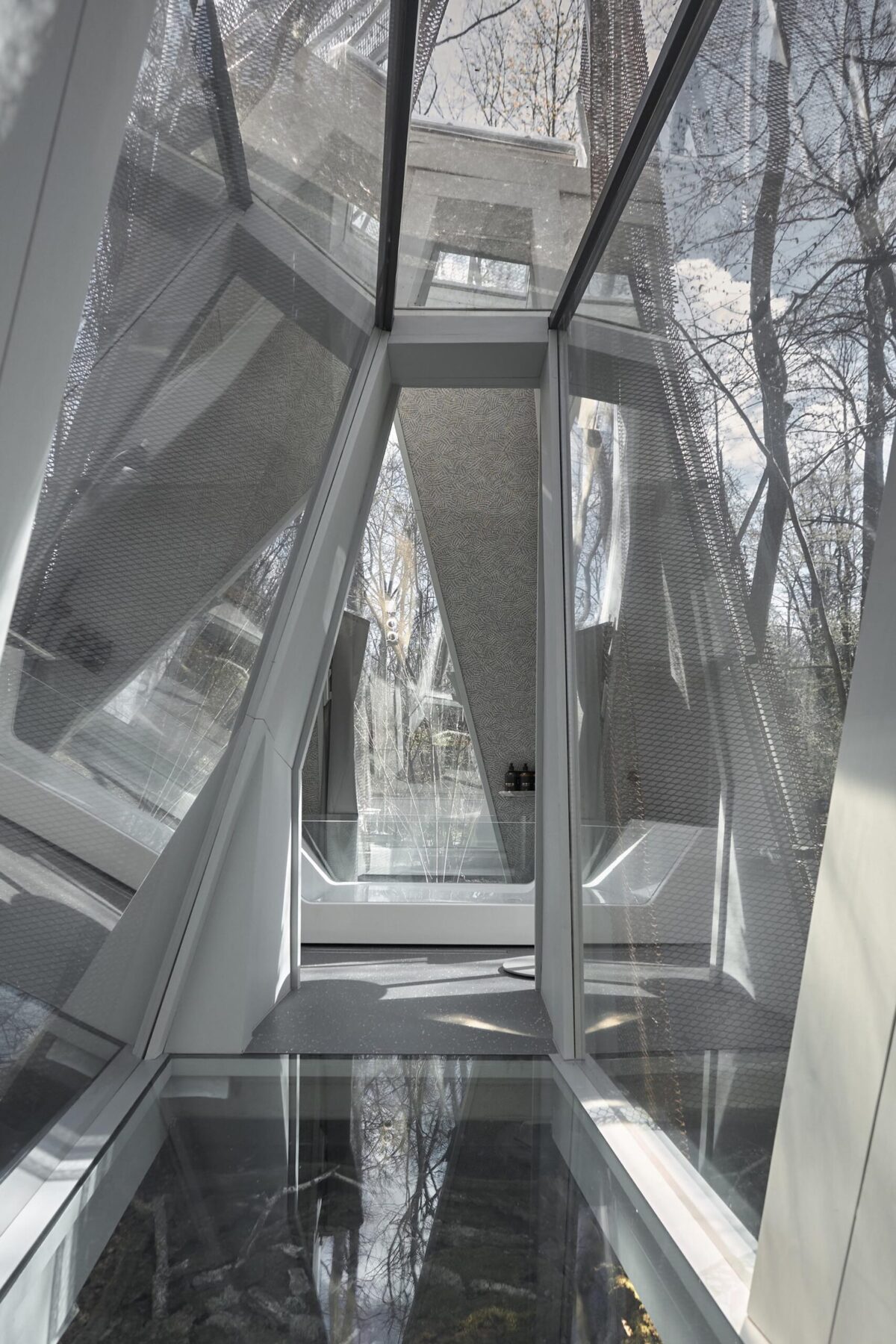
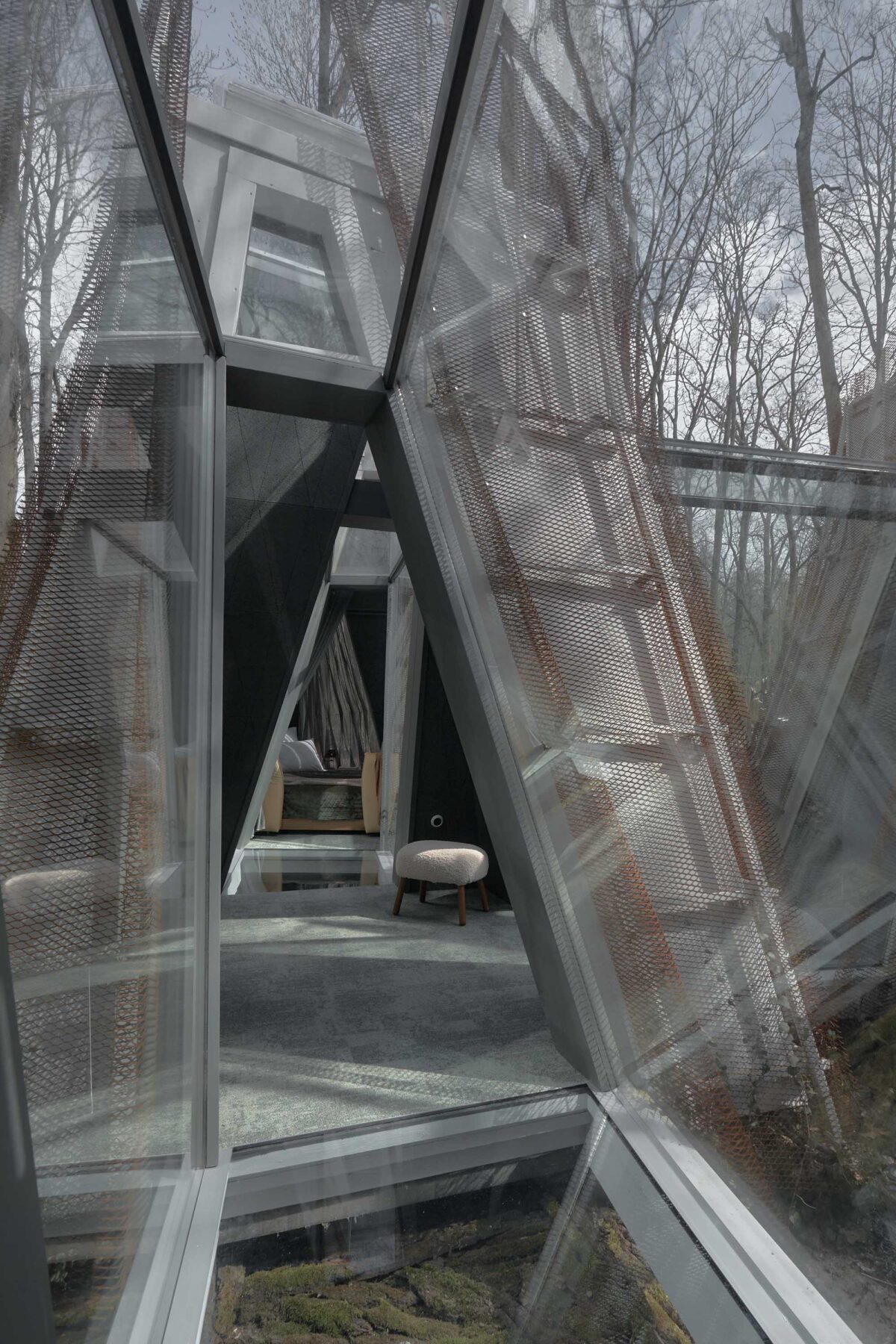
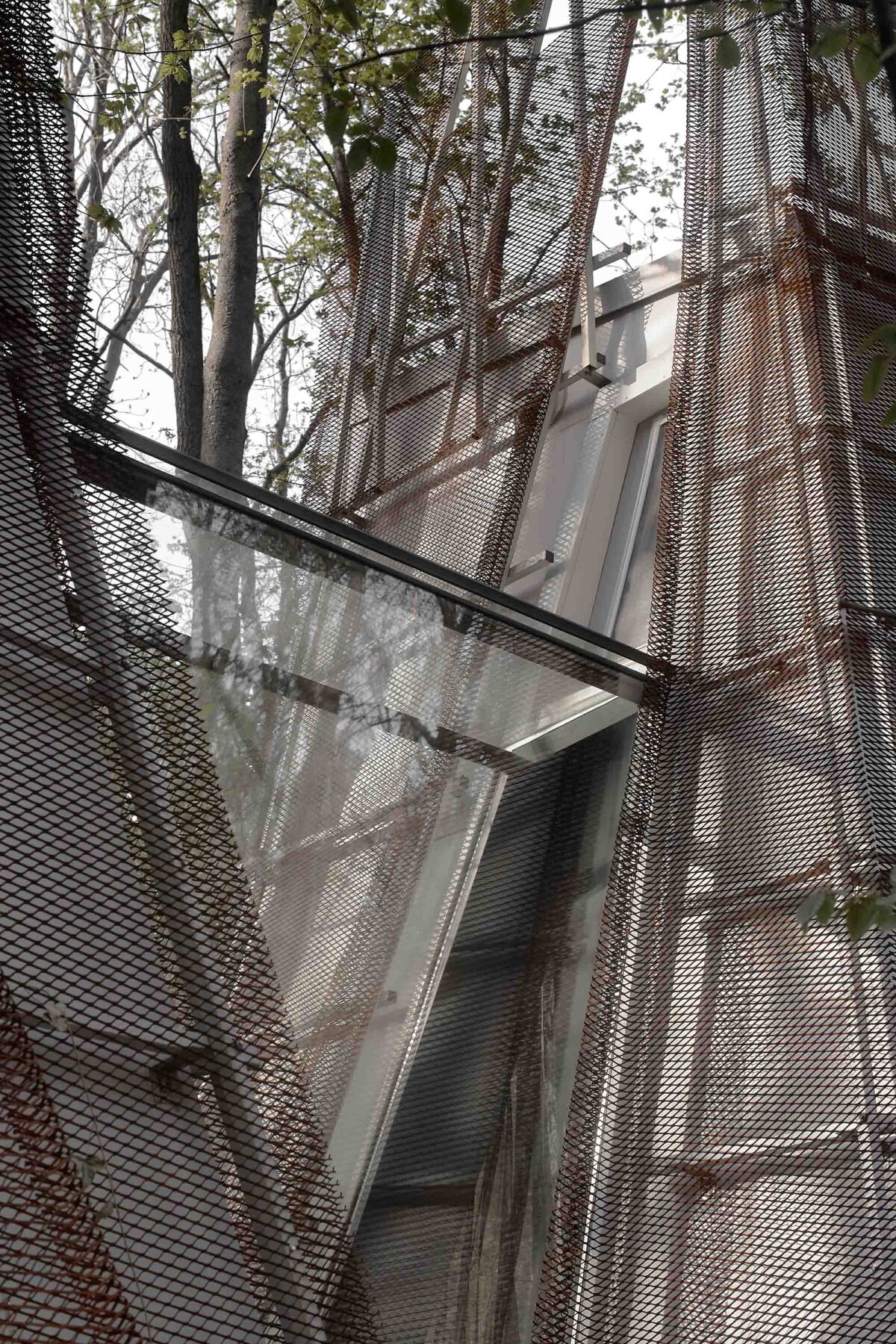
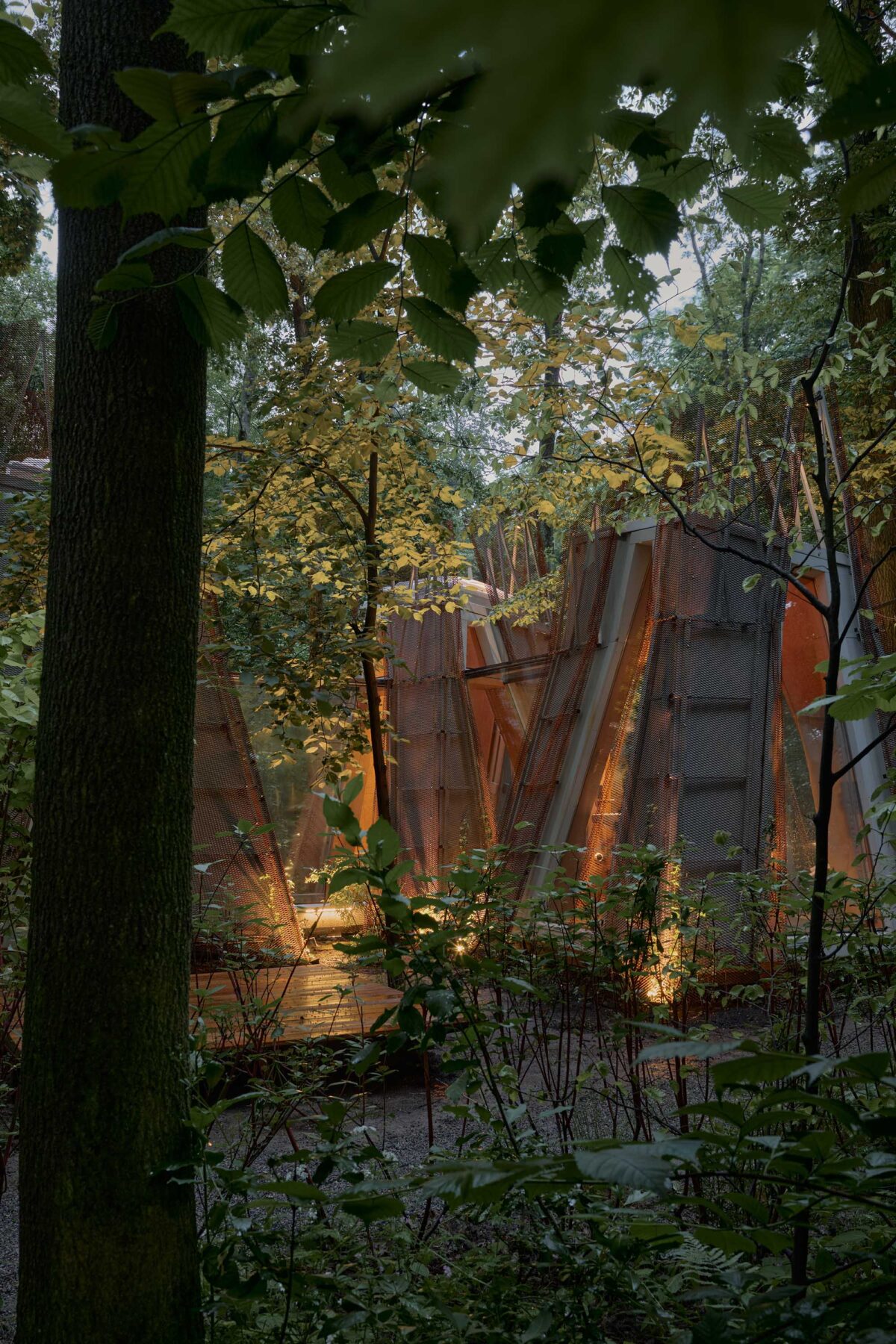
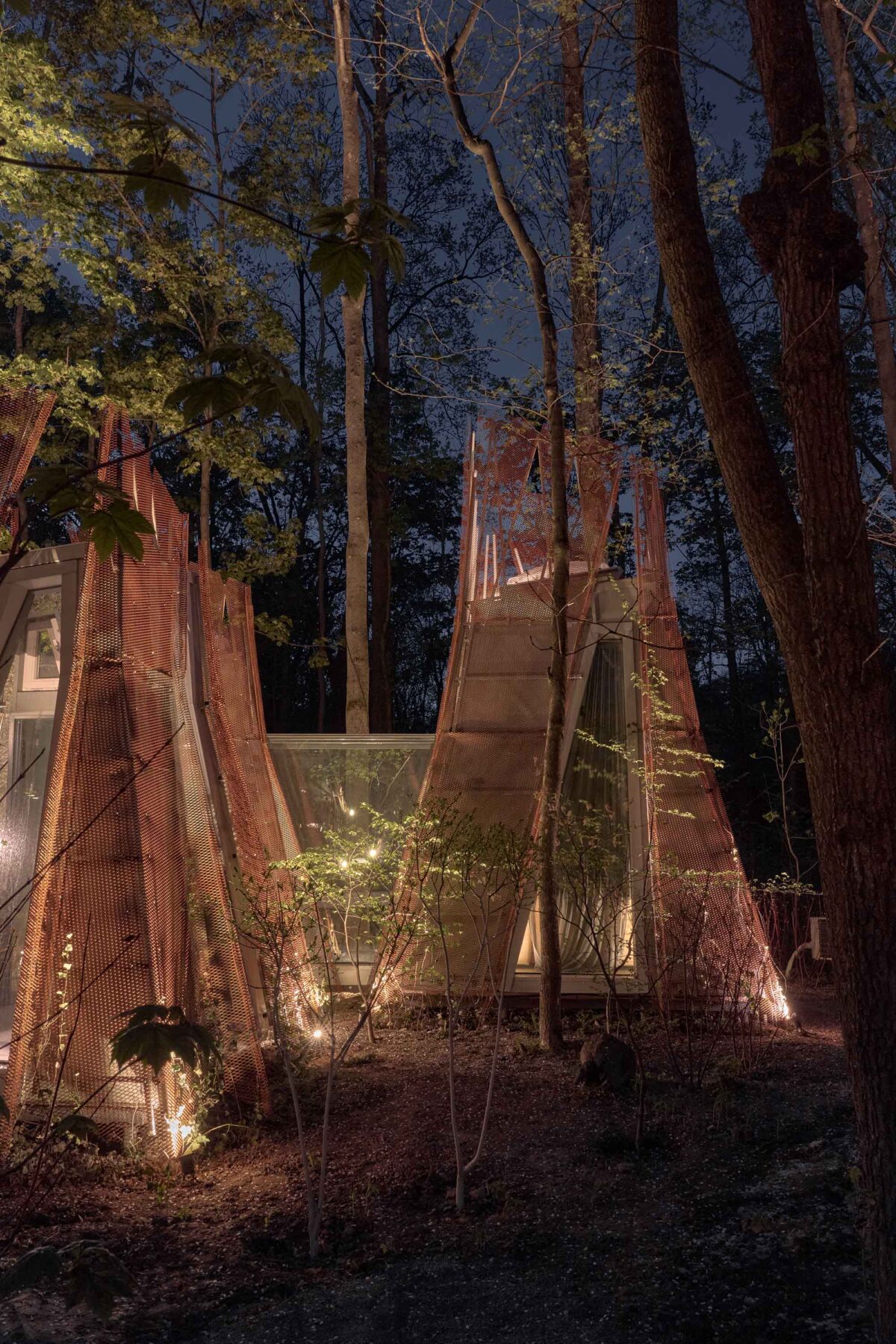
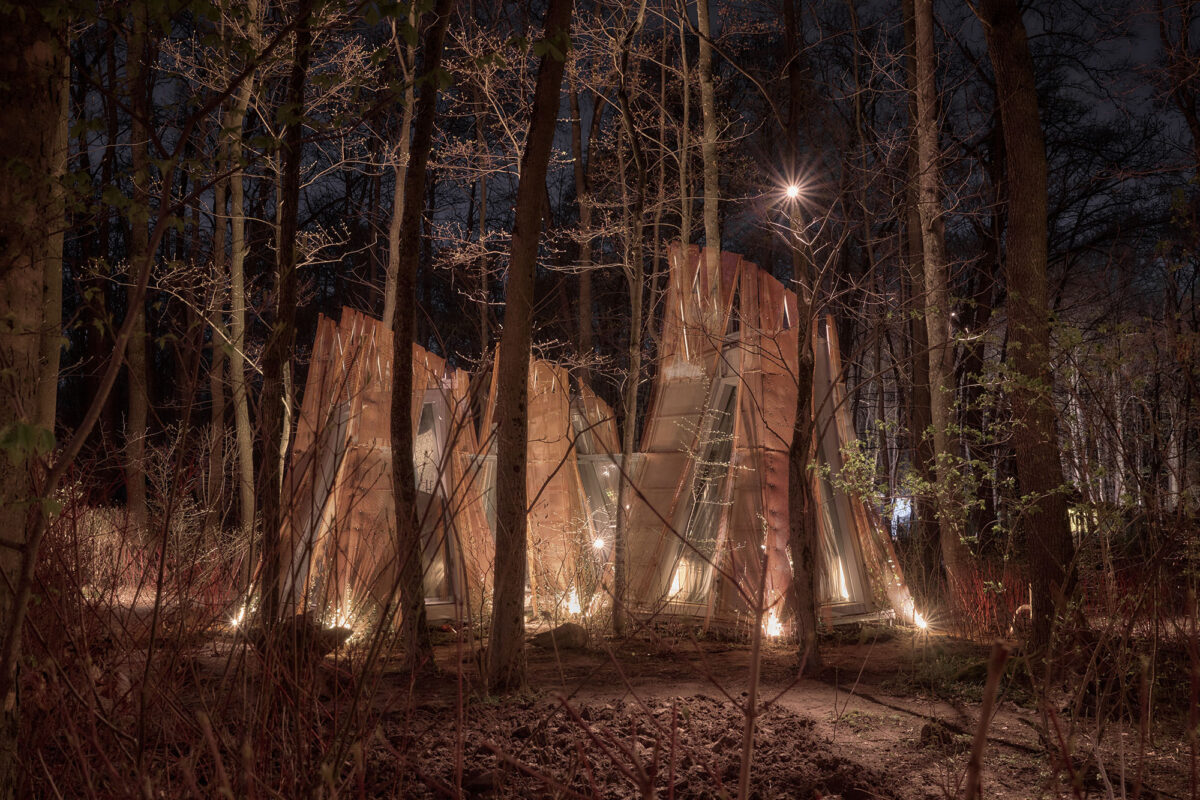
モジュール間の移行要素(第3の要素)は、床・壁・天井すべてが透明なガラスで構成されており、建築的な構成を豊かにする。この接続角度の自由度により、モジュール同士は移動・回転が可能となり、森にランダムに配置されたテントのような景観を生み出す。
© Dmytro Seliuk
このプロジェクトは、対立するテーマと芸術的イメージの統合を軸としている。
第1の対比は、感覚的な「記憶」と「夢」の間に存在する。自己創造的なマイクロスペースに対する過去の経験と、未来的な空間への夢とが交差する。
第2の対比は、素材における「環境との対比」を通じて、「環境との統一性」を実現するというものである。
© Dmytro Seliuk
© Dmytro Seliuk
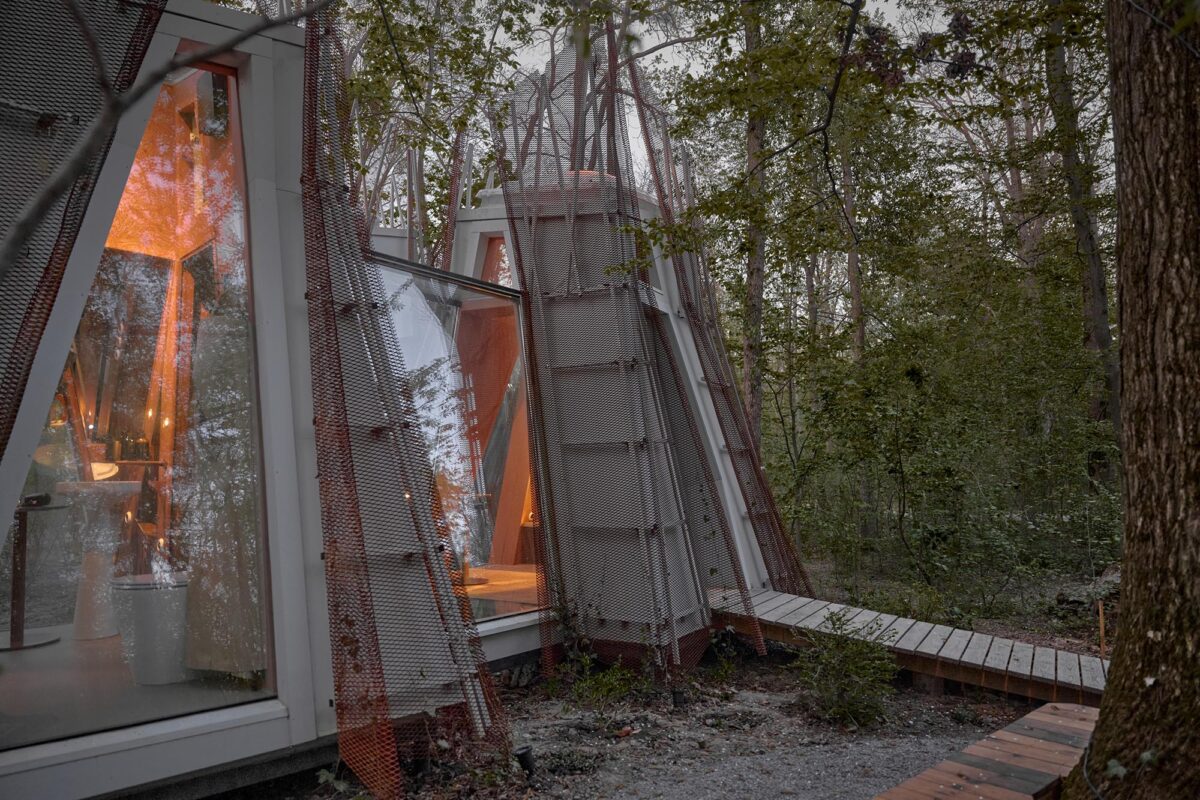
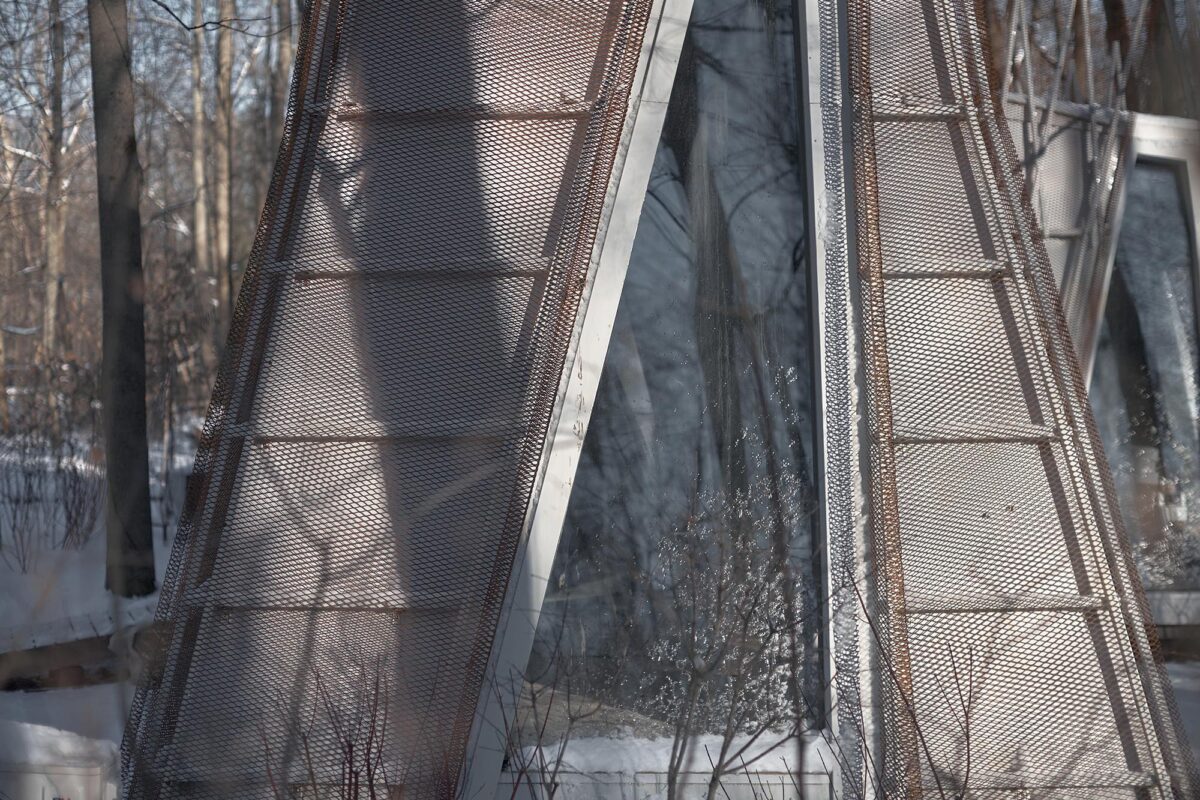
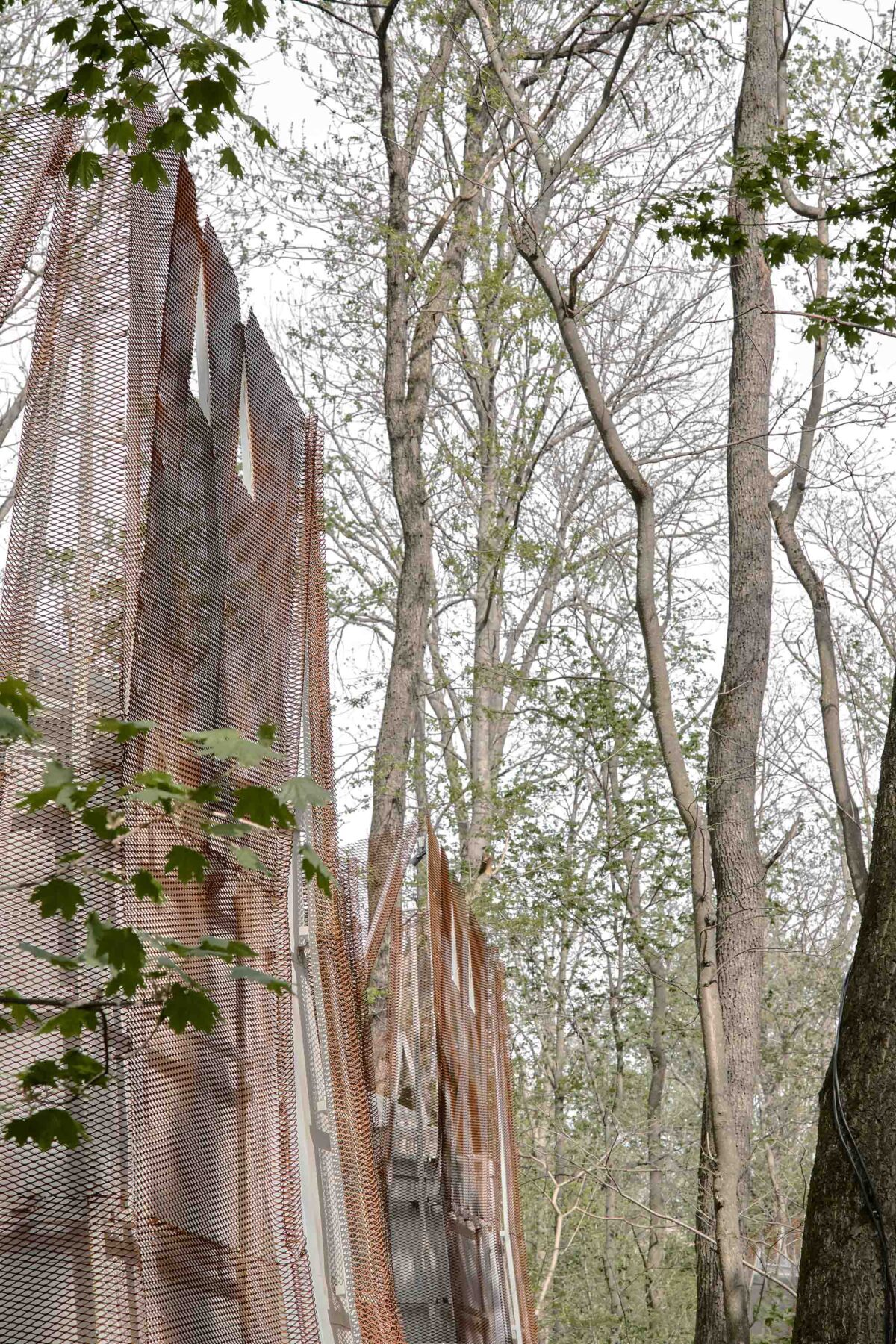
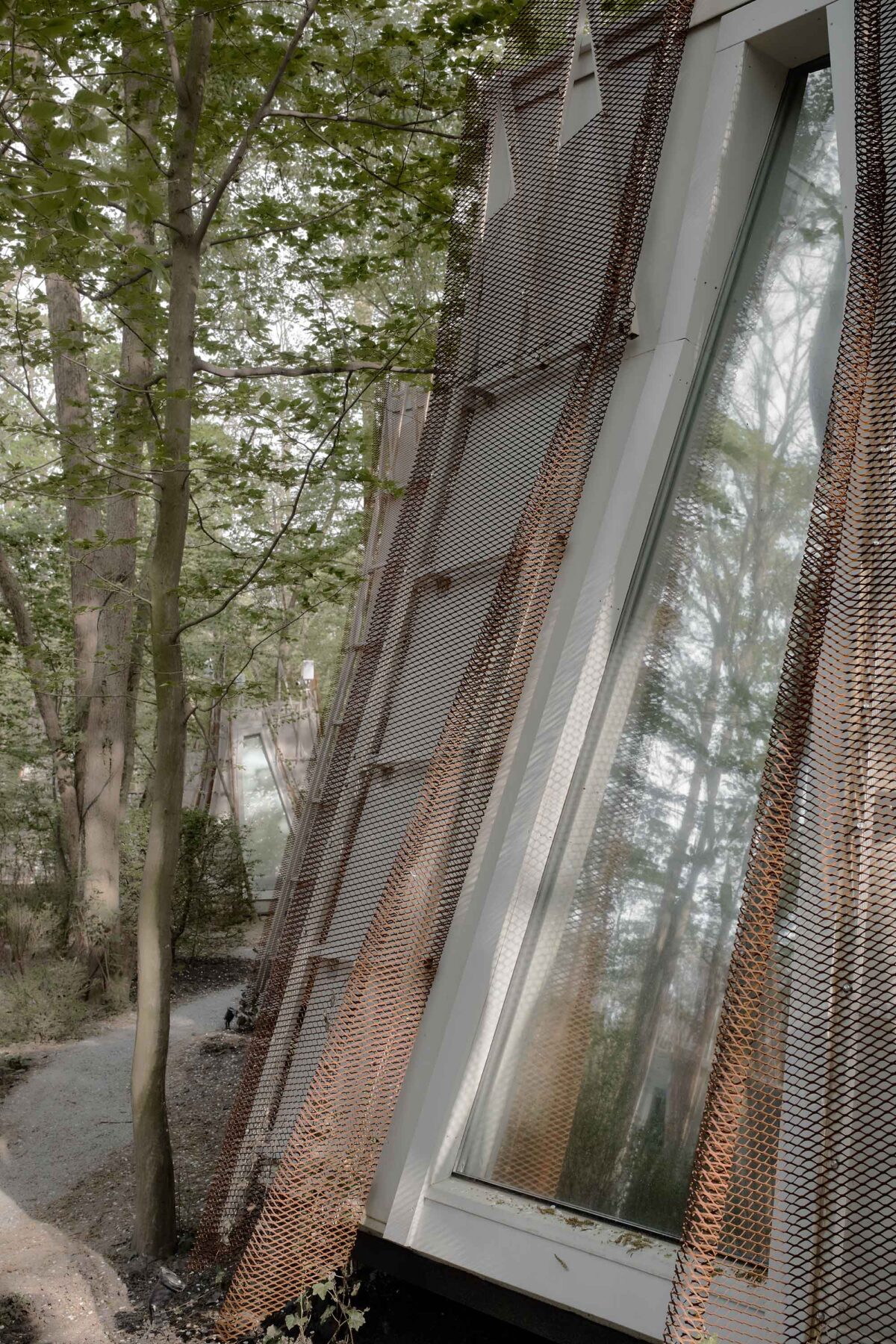
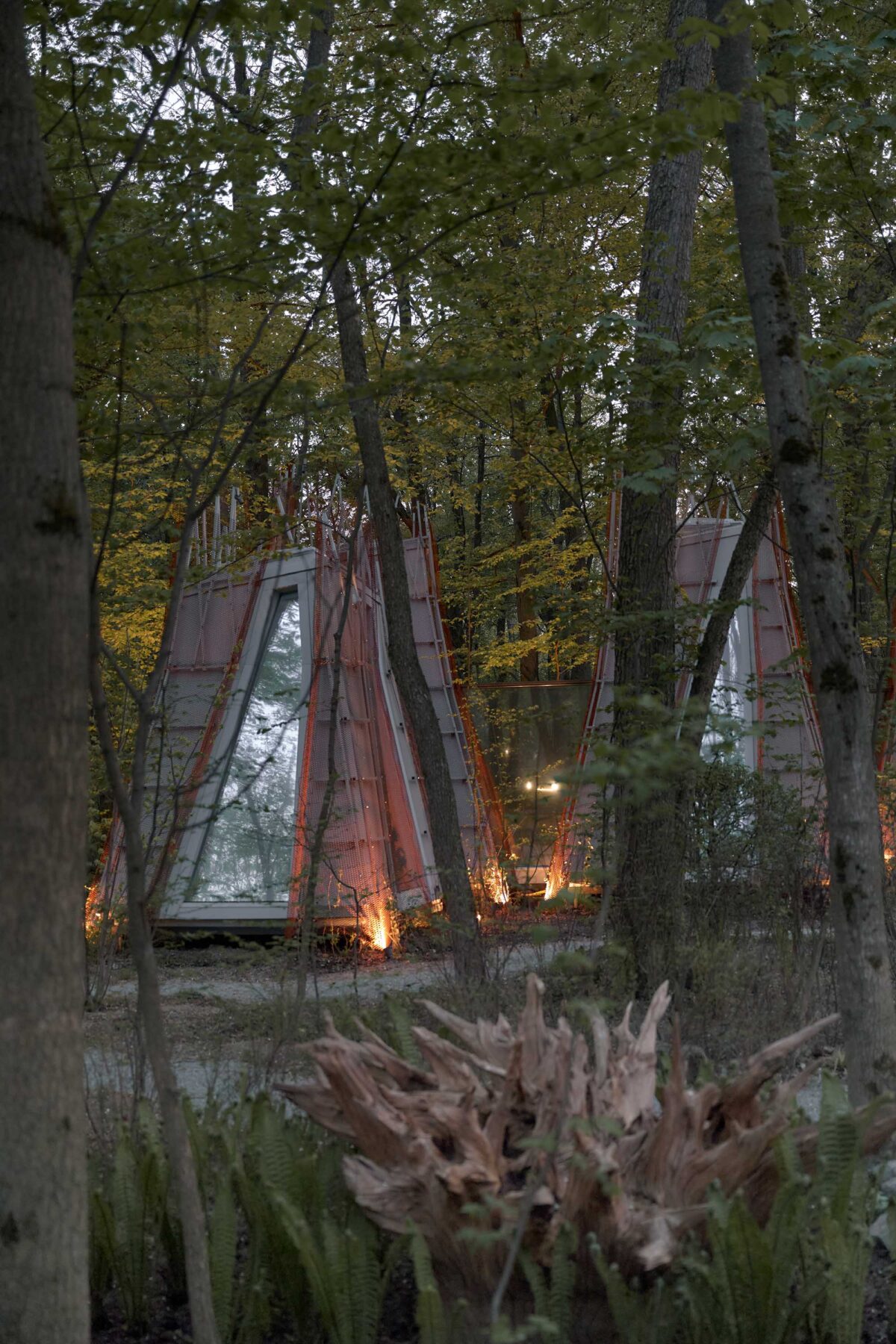
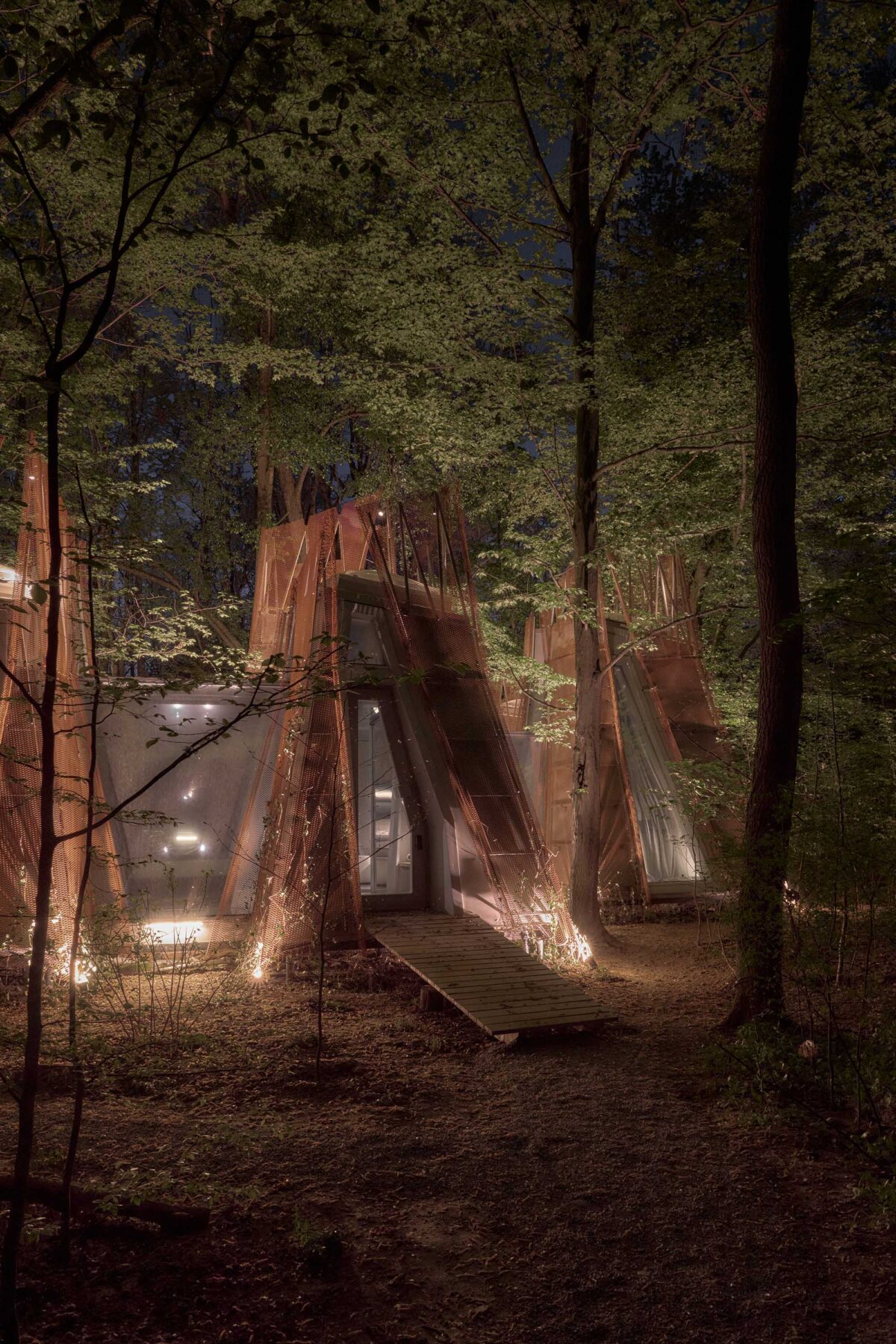
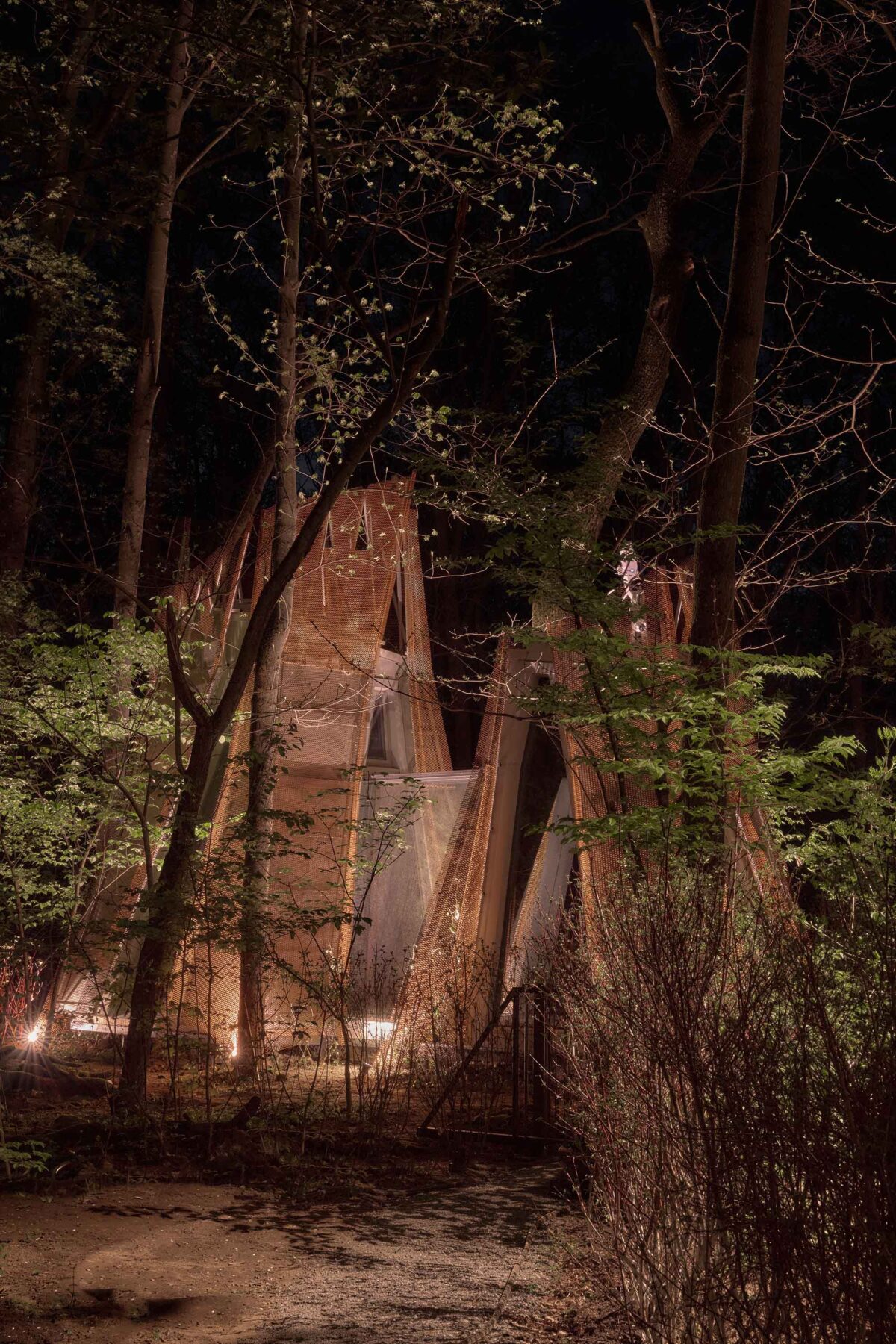
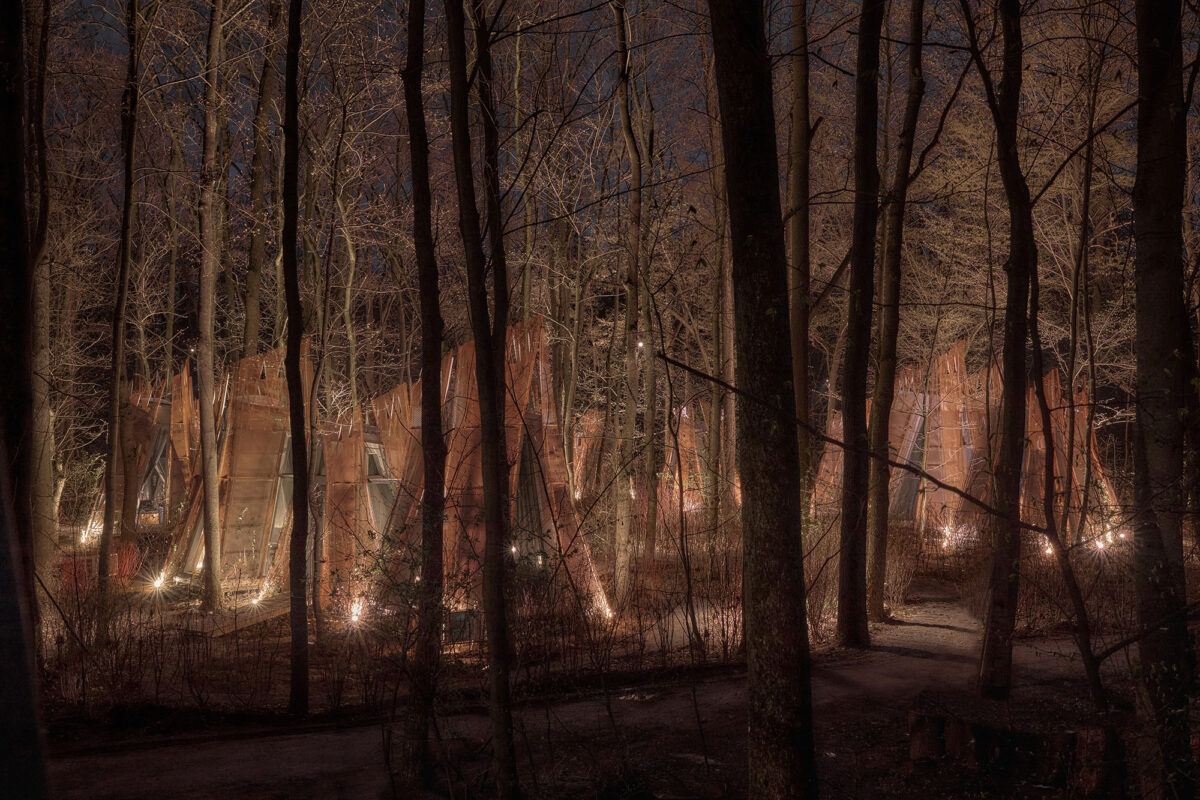
淡い色のテントシェルは、季節や時間帯によって周囲の色を反射し、夜には外側の半透明なコールテン鋼のメッシュがテント内部の光を際立たせる。これにより、窓からの光ではなく、布のようなボリューム全体が輝く様子が強調される。
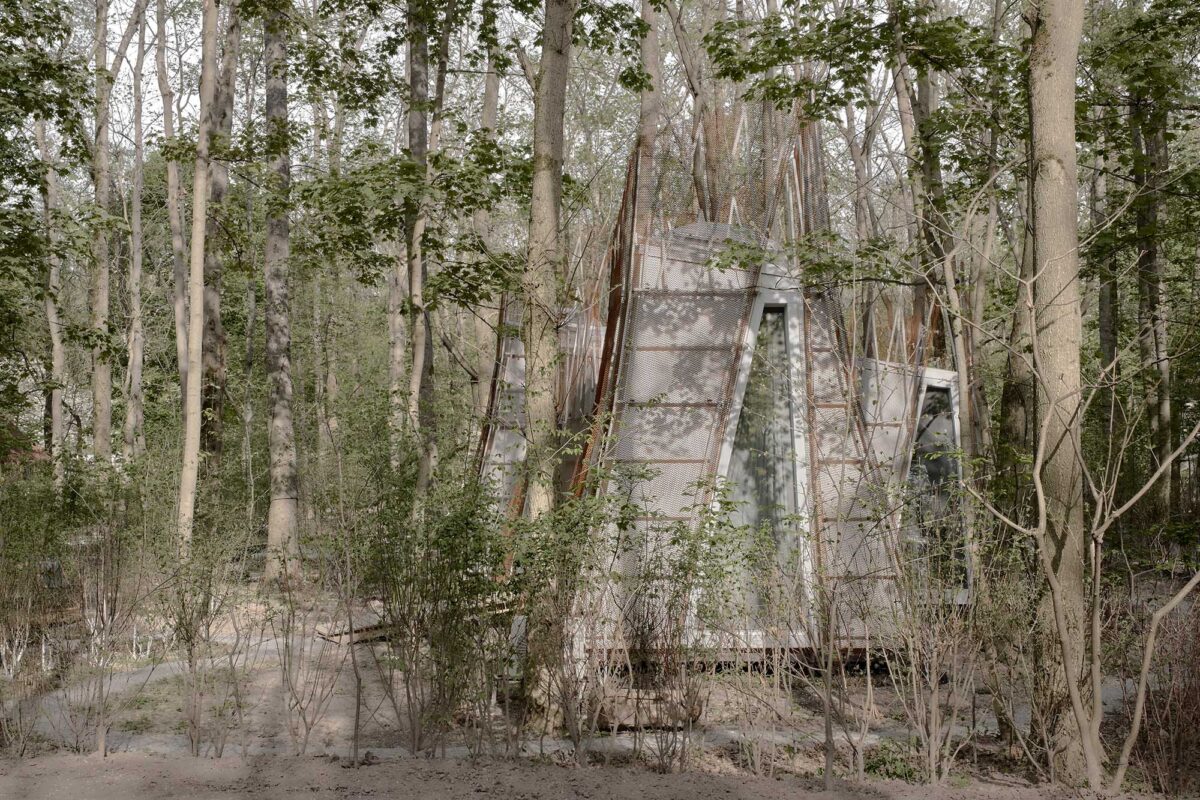
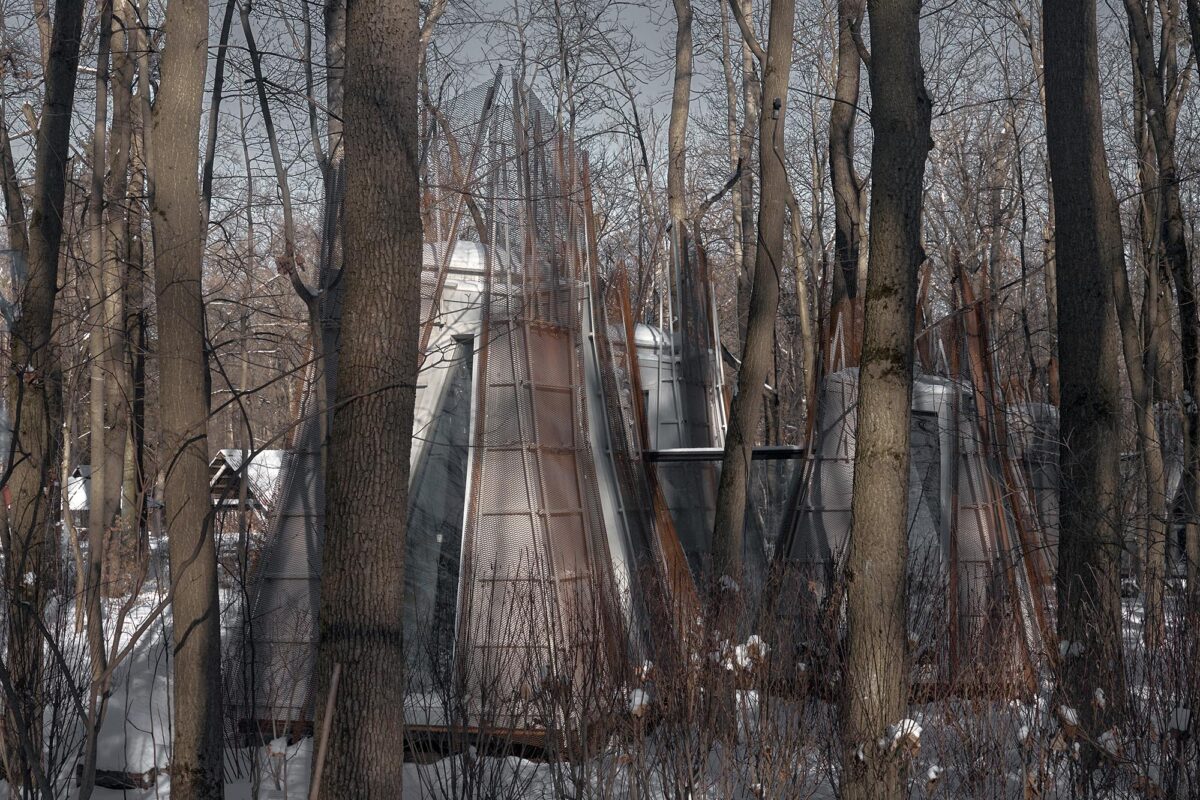
昼間は、外殻が風に揺れる架空のテント布のように見え、入口・窓・モジュール間の接続部分に生命感を与える。構造は細い枝のようなフレームの上に浮かび上がり、建築と自然の間に滑らかなシルエットの移行を生み出している。
© Dmytro Seliuk
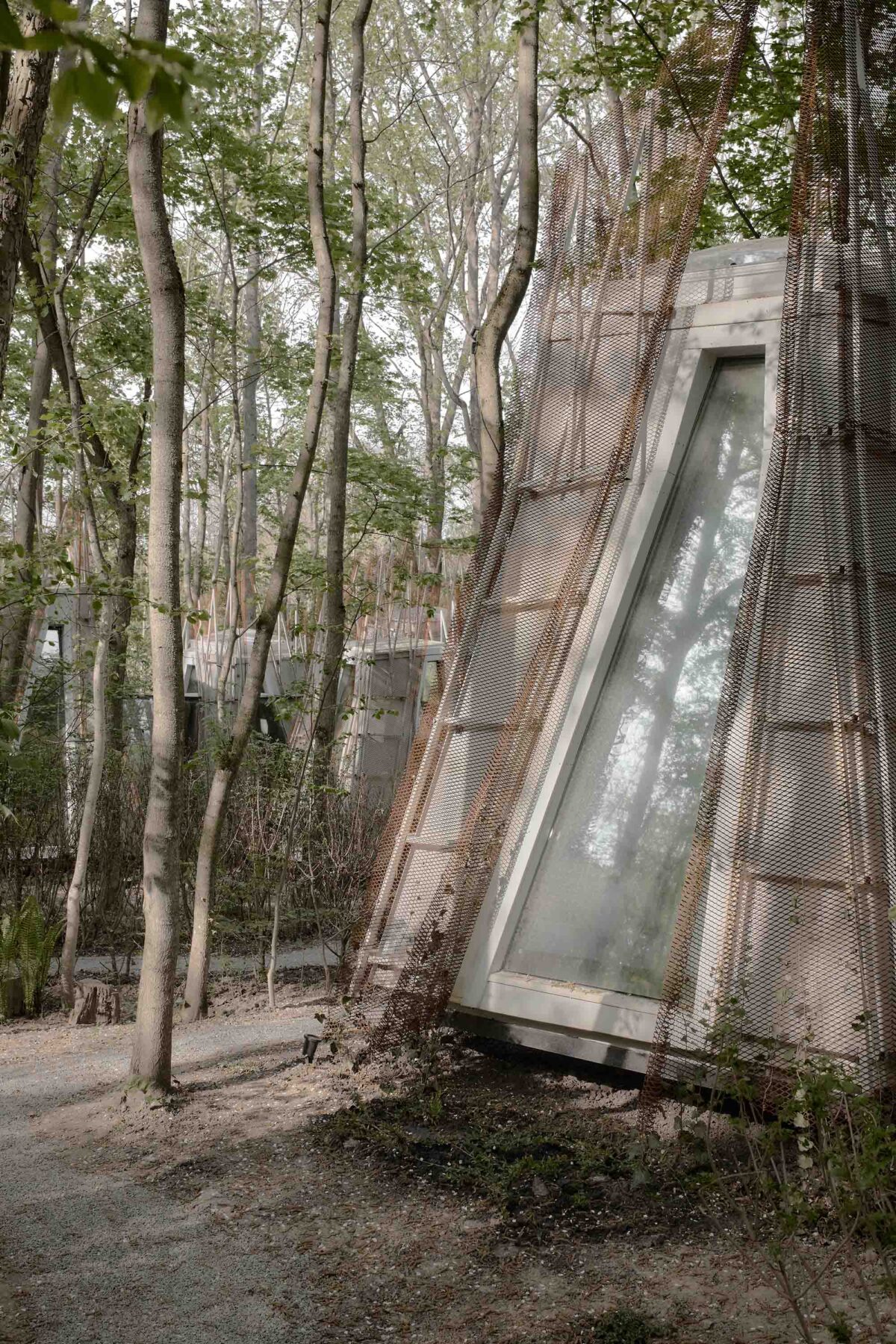
窓形状には台形を採用し、巻き上げたテント布のテーマを反映している。各モジュールは四面に窓をもち、天窓も備えることで、多方向からの採光と自然との一体感を演出する。
天井や廊下を排除し、傾斜した壁と台形窓という非伝統的な形態により、空間に対する感覚や相互作用を再構築している。接続角度によって各モジュールの窓が異なる方向を向き、それぞれ異なる風景が現れる。日常に新たな視点を提供する設計である。
© Dmytro Seliuk
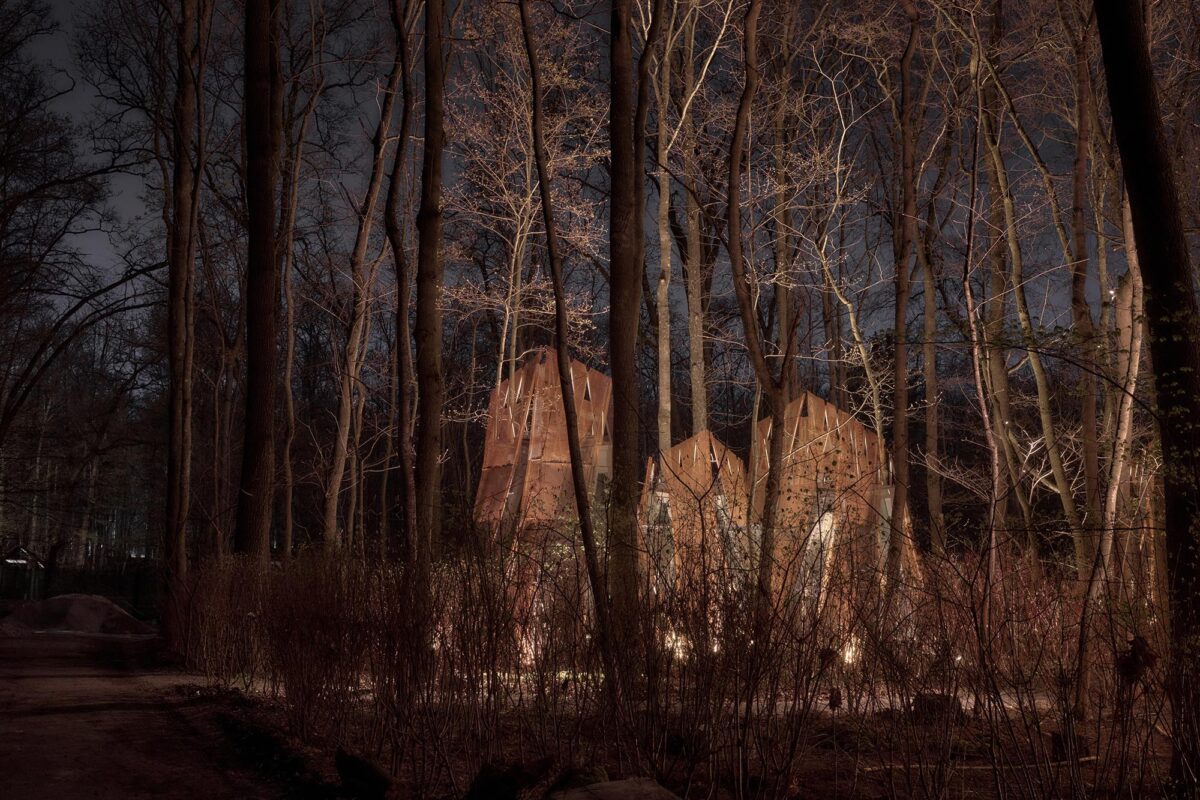
このモジュールシステムを使用した初のパークホテルは、ウクライナ・キーウの展示施設内の公園エリアに設置された。
ホテルは12の独立した組み合わせから成り、一部はホテルユニットとして、もう一部はサウナ施設として設計されている。受付や補助施設もモジュール内に含まれている。
このホテルは密集した樹木の中に位置し、1本の木も伐採することなく、若木を追加することで周辺環境をさらに豊かにしている。
© Dmytro Seliuk
このプロジェクトは戦争中に開発・実施された。キーウは前線から遠く離れているが、ミサイル攻撃の脅威に常にさらされている。このプロジェクトは、戦争の二重性と、この時代における平和な生活の幻影を反映している。
プロジェクトには、軍が敵のドローンから車両を保護するために使用する金属網に似た粗い金属網と、いつ壊れるか分からない脆いガラスが使用されている。これは、その瞬間の粗暴さと脆さを表している。
© Dmytro Seliuk
© Dmytro Seliuk
© Dmytro Seliuk
© Dmytro Seliuk
© Dmytro Seliuk
© Dmytro Seliuk
© Dmytro Seliuk
© Dmytro Seliuk
© Dmytro Seliuk
© Dmytro Seliuk
© Dmytro Seliuk
© Dmytro Seliuk
© Dmytro Seliuk
© Dmytro Seliuk
© Dmytro Seliuk
以下、ロマン&ドミトロ・セリウクのリリース(英文)です。
NAMETY (tents):
Modular housing system for hospitality.The idea
Create small houses that can easily be located between trees in gardens, parks and forests.Image
The project is inspired by memories of first going on holiday in a tent (Namety) or in a simple, small shelter made of stick and branches collected in the forest as a child.Structure
The planning structure follows two principles: mono-function and variation. Mono-function is expressed as spaces with a single use. The modules are designed to be as minimal as possible for their intended function. One module, one function. Accordingly, there is a difference in size between smaller and larger modules. The smaller modules can be used for a hall, dressing room, bathroom or auxiliary room. The larger ones can be living rooms, bedrooms, saunas, etc.
The ability to create any combination of these two modules and adjust them to the limited space of the site is what makes them so versatile.Connection
The method of combining modules prioritises the artistic vision of the project, identifying and highlighting the tent as the primary unit. The transition between the modules, the third element of the modular system, is completely transparent, with glass floors, walls and ceilings. This transition architecture enriches the composition of each finished combination. This is the angle of connection, which allows each module to shift and rotate relative to the neighbouring one, creating the effect of randomly placed tents in a forest.Architecture
It is based on the contrast between theses and the unity of a holistic artistic image, which becomes an integral part of the environment.
The first contrast in terms of sensuality is between memories and dreams. Past events and the experience of self-made micro-spaces are contrasted with dreams of futuristic spaces. The second thesis in the material embodiment concerns materials that contrast with the environment, thereby achieving unity with it. Depending on the season or time of day, this light-coloured tent shell reflects the surrounding colours. It also enhances the night-time image created by the outer translucent corten steel mesh. The tent appears to glow from within, shifting the emphasis from the windows at night to the volume of the smooth ‘fabrics’. During the day, the second shell performs several functions. It resembles the fabric of an imaginary tent that has been blown open around the entrances, windows, and transitions from module to module by the wind. The grid rises above the main volume of the building on thin frames resembling branches and sticks, creating a smooth transition of silhouette between the architecture and the environment.
The trapezoidal shape of the windows follows the theme of rolled-up tent fabric. Each module has windows on four sides, allowing for various combinations, as well as a roof window. This creates a feeling of openness in the interior, contributing to the sensation of being in nature. In contrast to traditional living spaces, this design features sloping walls and trapezoidal windows, as well as an absence of ceilings and corridors. These elements transform the principles of leisure architecture and focus more on altering the perception of space and interaction with it. They offer an opportunity to view the world from a different perspective. Thanks to the combination system, each module — small, large or transition — has four windows facing in a unique direction due to the angle of connection in the finished combination. This creates the effect of a new landscape outside the window and a different perspective on everyday things.Location
The first modular park hotel was installed in the park area of the exhibition complex in Kyiv. The hotel consists of twelve separate combinations with various compositions and contents. One part is intended for the hotel, another for the sauna complex, and the reception and auxiliary facilities are also housed in modules on the site. The complex is located amongst dense tree planting, demonstrating careful integration into the natural environment. Not a single tree was cut down; instead, young forest cultures were added to enrich the surrounding area.LOCATION: UKRAINE – KYIV
DESIGNER: ROMAN & DMYTRO SELIUK
PROJECT YEAR: 2025
PHOTO: DMYTRO SELIUKAbout
Roman and Dmytro Seliuk founded the architectural studio in Kyiv, Ukraine, in 2008. The studio specialises in designing private estates, landscapes, interiors and custom furniture. Their architectural projects are based on respect for tradition and the preservation of identity. At the intersection of Ukrainian culture and world heritage, the architects strive to make Ukrainian architecture recognizable in the world by its own style. They experiment with and reconsider the experience of previous generations in response to the challenges of our time. At the same time, they ensure the integrity and appropriateness of the architectural solutions in each project. Roman and Dmytro Seliuk are lecturers at the National Academy of Fine Arts and Architecture in Kyiv.Website
https://seliuk.design/en/PS.:
Nowadays
The project was developed and implemented during the war. Although Kyiv is far from the front line, it is constantly under threat from missile attacks. The project reflects the duality of war and a semblance of peaceful life in these times. It features rough metal mesh, similar to that used by the military to protect vehicles from enemy drones, as well as fragile glass that could shatter at any moment. It is the rudeness and fragility of the moment. At the time of the project’s completion, the war is still on and Ukraine continues to defend itself and believe in victory. Roman Seliuk, the author of the project, has served in the Armed Forces of Ukraine for three years.
ロマン&ドミトロ・セリウク 公式サイト
https://seliuk.design/en/proekti/arhitektura/nameti/


![[Report]方丈庵から生き方を問う、21_21 DESIGN SIGHT 企画展「方丈記に学ぶ –生きるを編み直す小さな建築–」会場レポート](https://magazine-asset.tecture.jp/wpcms/wp-content/uploads/2026/09/01181900/20260828hojoki-ex_01_mag-endo4350-900x676.jpeg)