

ヘルツォーク&ド・ムーロンが描く循環型建築 - 現地の木と粘土で生み出すサステナブルなオフィスビル〈Hortus〉
© Maris Mezulis
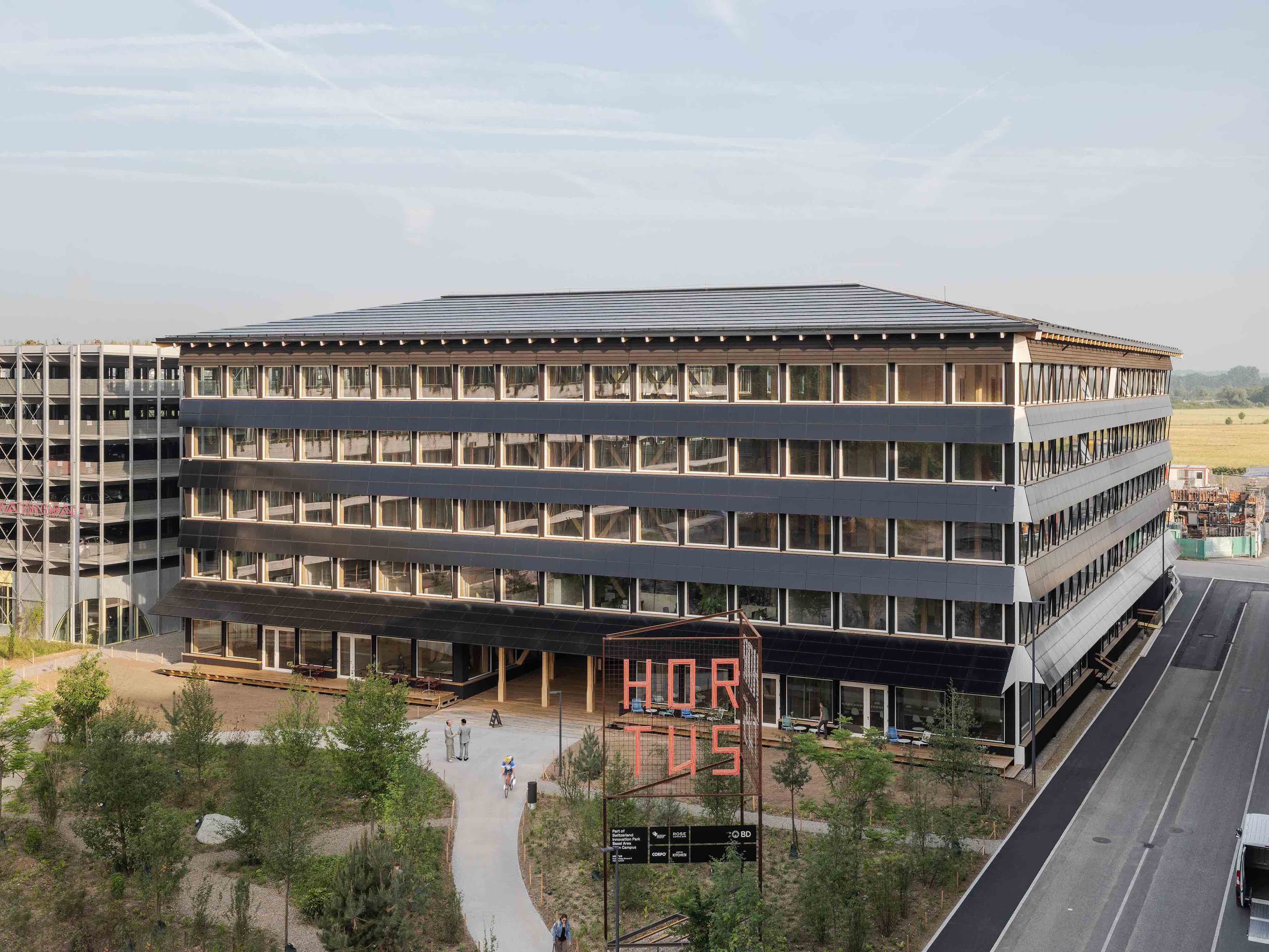
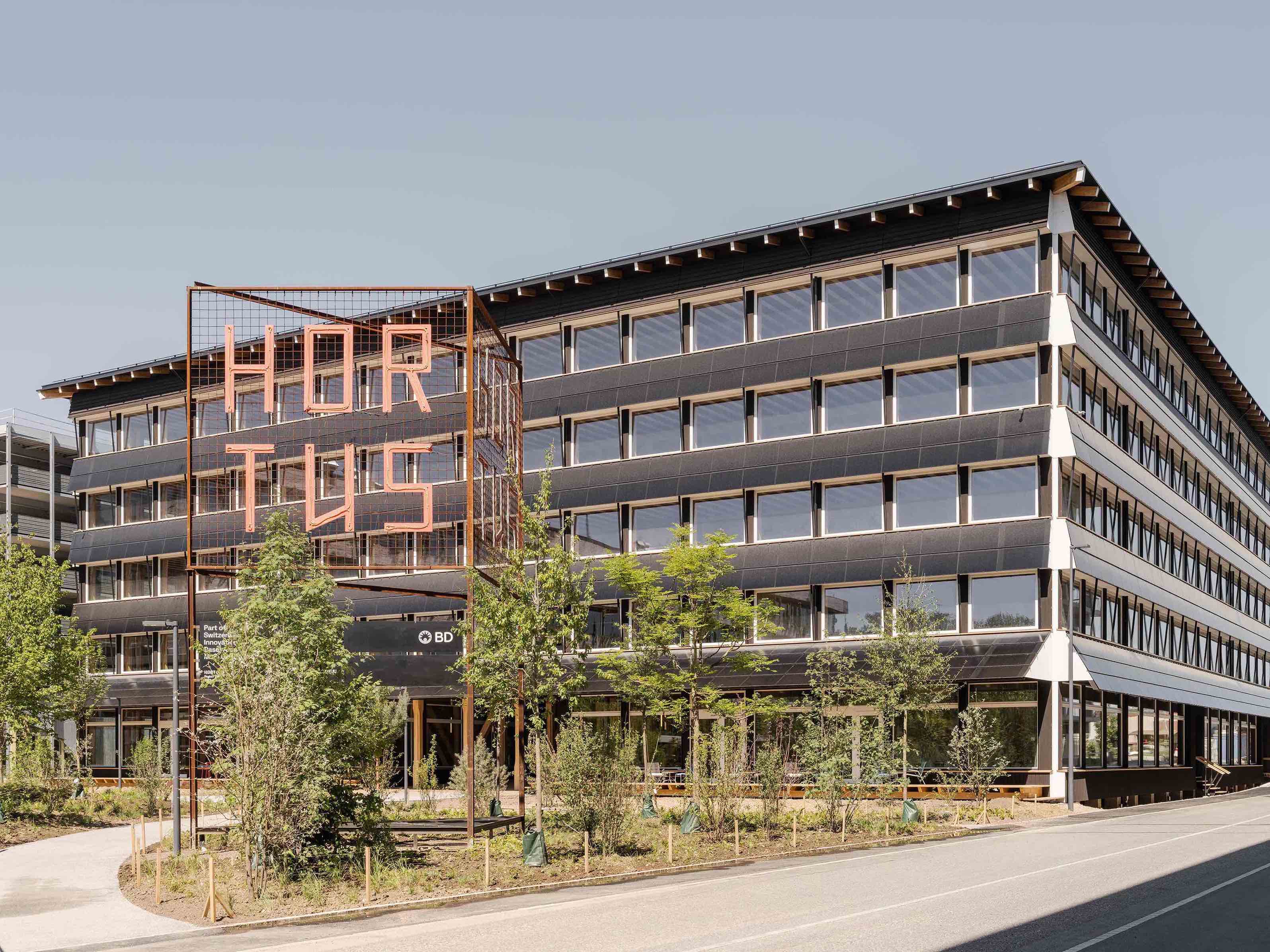
スイスのアルシュヴィルに建つ〈Hortus〉は、あらゆる側面でサステナビリティを探求した木造オフィスビルです。
持続可能な建築が地域資源の循環を生み出しつつ、美的で健康的であり、経済・環境・社会に利益をもたらし得ることを証明するモデルケースとして、ヘルツォーク&ド・ムーロン(Herzog & de Meuron)が設計しました。
注目ポイント
- 「ゆりかごからゆりかごまで(Cradle to Cradle)」を実践した循環型建築の実例
- 地面から浮いた木造建築により夏に冷気を、冬には暖気を取り込む地熱活用
- 地元の木材と現場採取の粘土を活用したハイブリッド床システムを開発
- モジュール化やプレファブ、伝統的な接合部による分解・再利用可能な構法
(以下、ヘルツォーク&ド・ムーロンから提供されたプレスキットのテキストの抄訳)
© Maris Mezulis
© Maris Mezulis
© Maris Mezulis
次世代テクノロジー企業のための持続可能なオフィスビル
ライフサイエンス企業が集積するスイスのイノベーションパーク「アルシュヴィル(Allschwil)」は、現在も拡張を続けている。ここに位置する持続可能なオフィスビル〈Hortus〉は、バーゼル都市圏に進出する次世代テクノロジー企業のために、現代的かつ柔軟な職場環境を創出する建築である。
クライアントであるSenn社は、再生可能かつリサイクル可能な建材による革新的でサステナブルなオフィスの設計をヘルツォーク&ド・ムーロンに委託し、建設時のグレーエネルギーの最小化、運用時のエネルギー最適化、さらに自家発電による余剰エネルギーの創出を統合した設計プロセスが開始した。
約600席のワークスペースを備えるこの建築は、建設から31年後に建設時のエネルギー消費を完全に相殺する見込みである。Senn社および専門設計チームとの協働により、ドイツ語圏でも屈指の持続可能なオフィスビルが実現した。

© Maris Mezulis
© Maris Mezulis
緑のアトリウムがもたらすオアシス空間
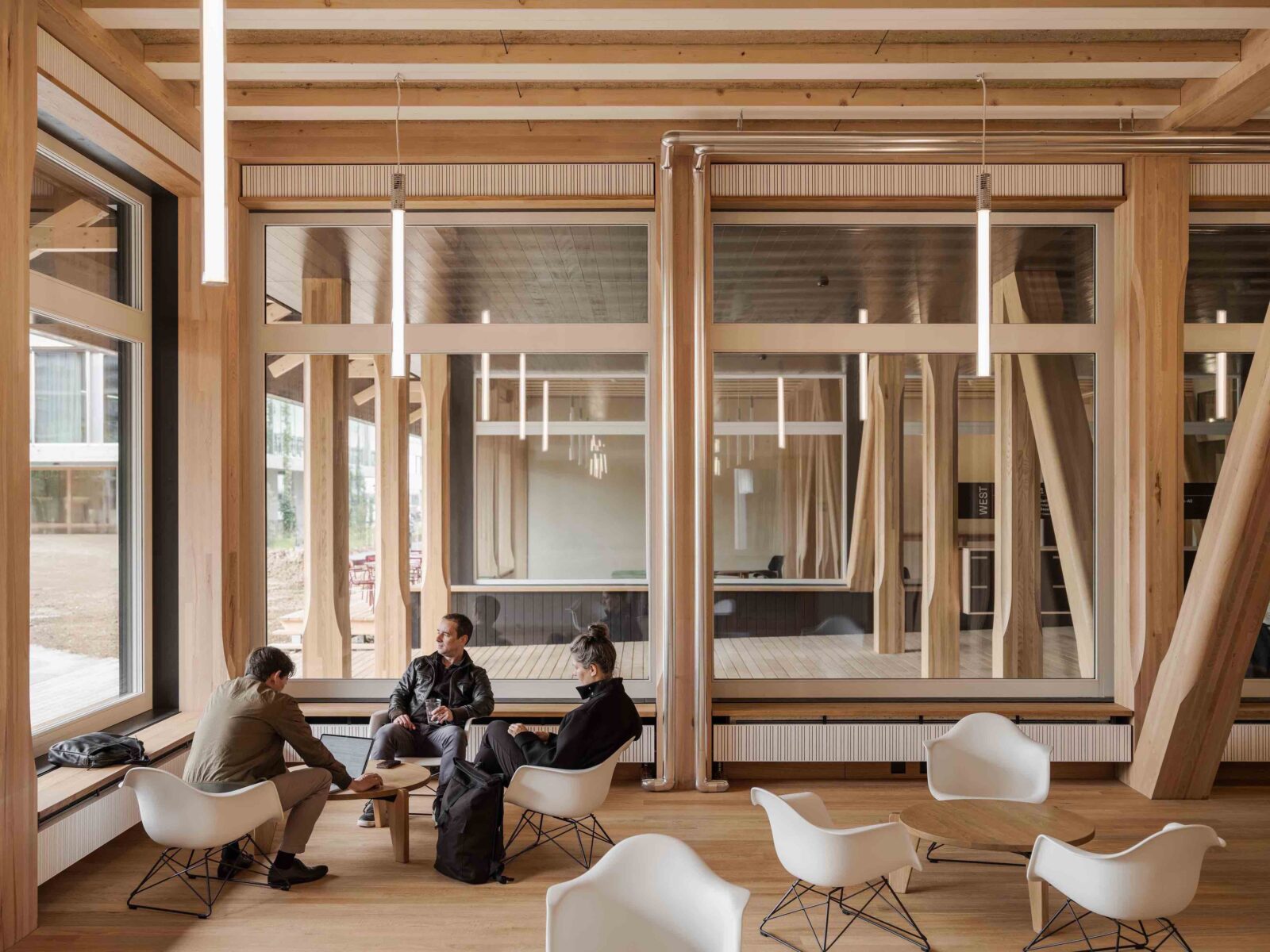
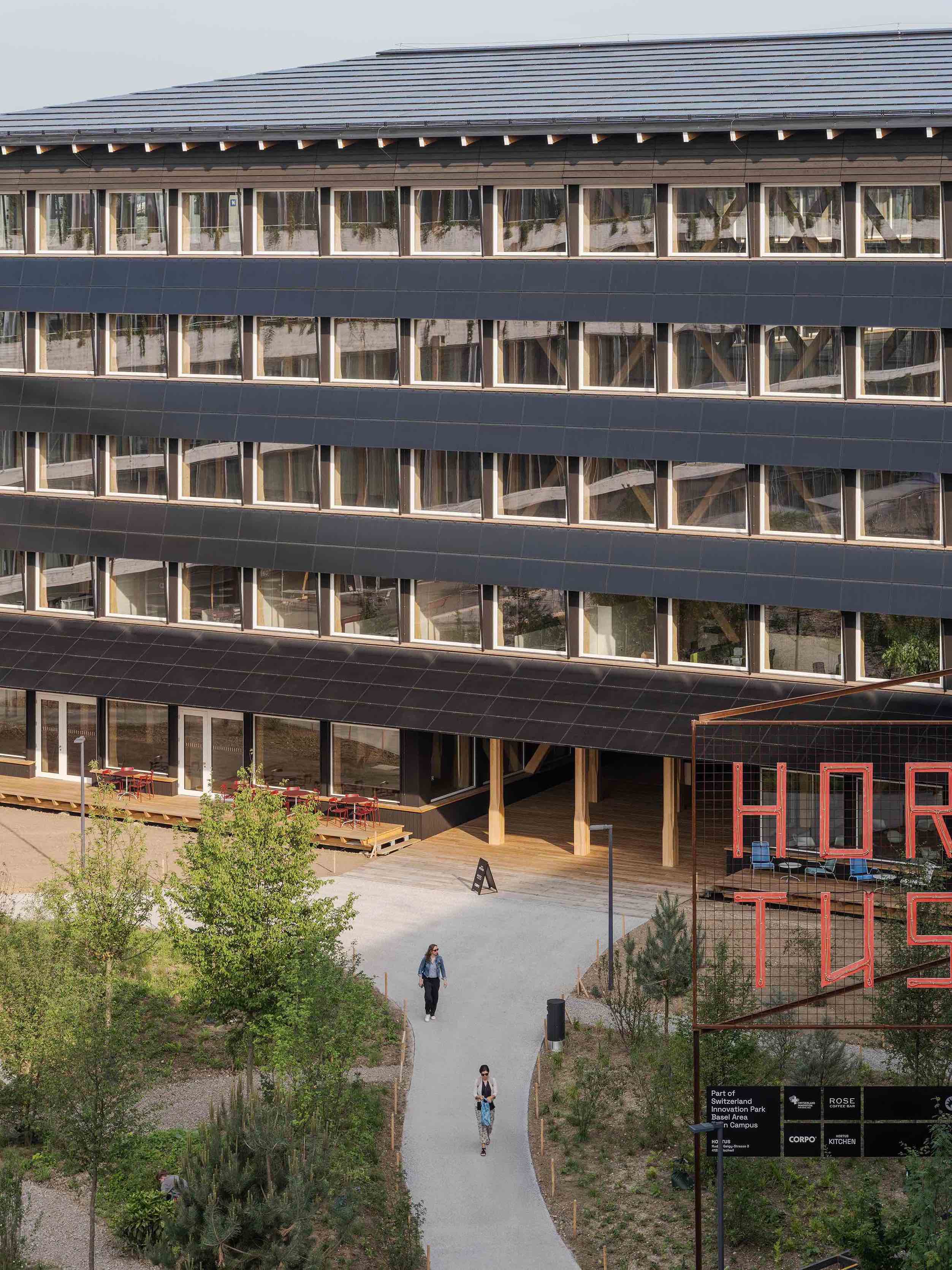
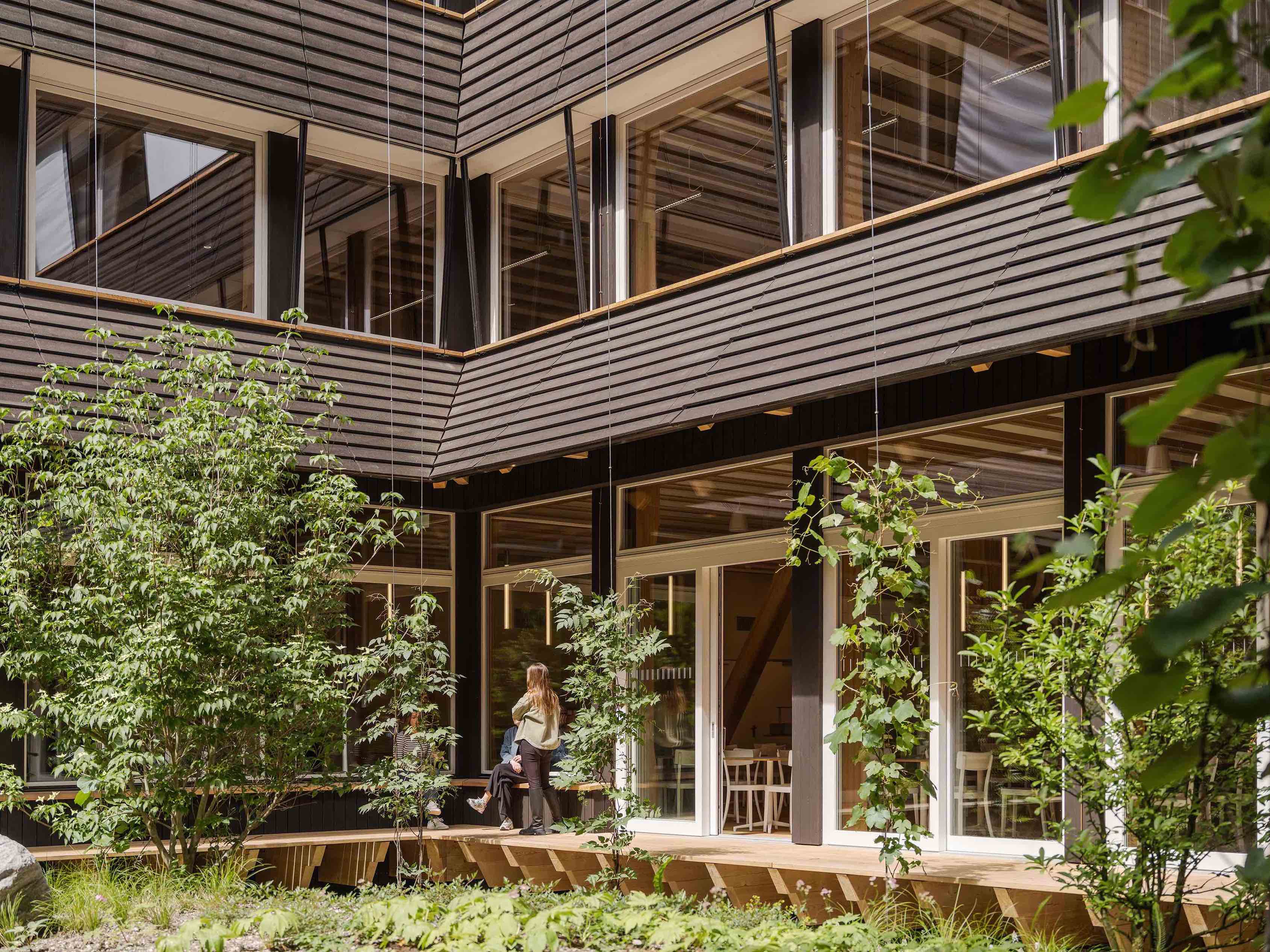
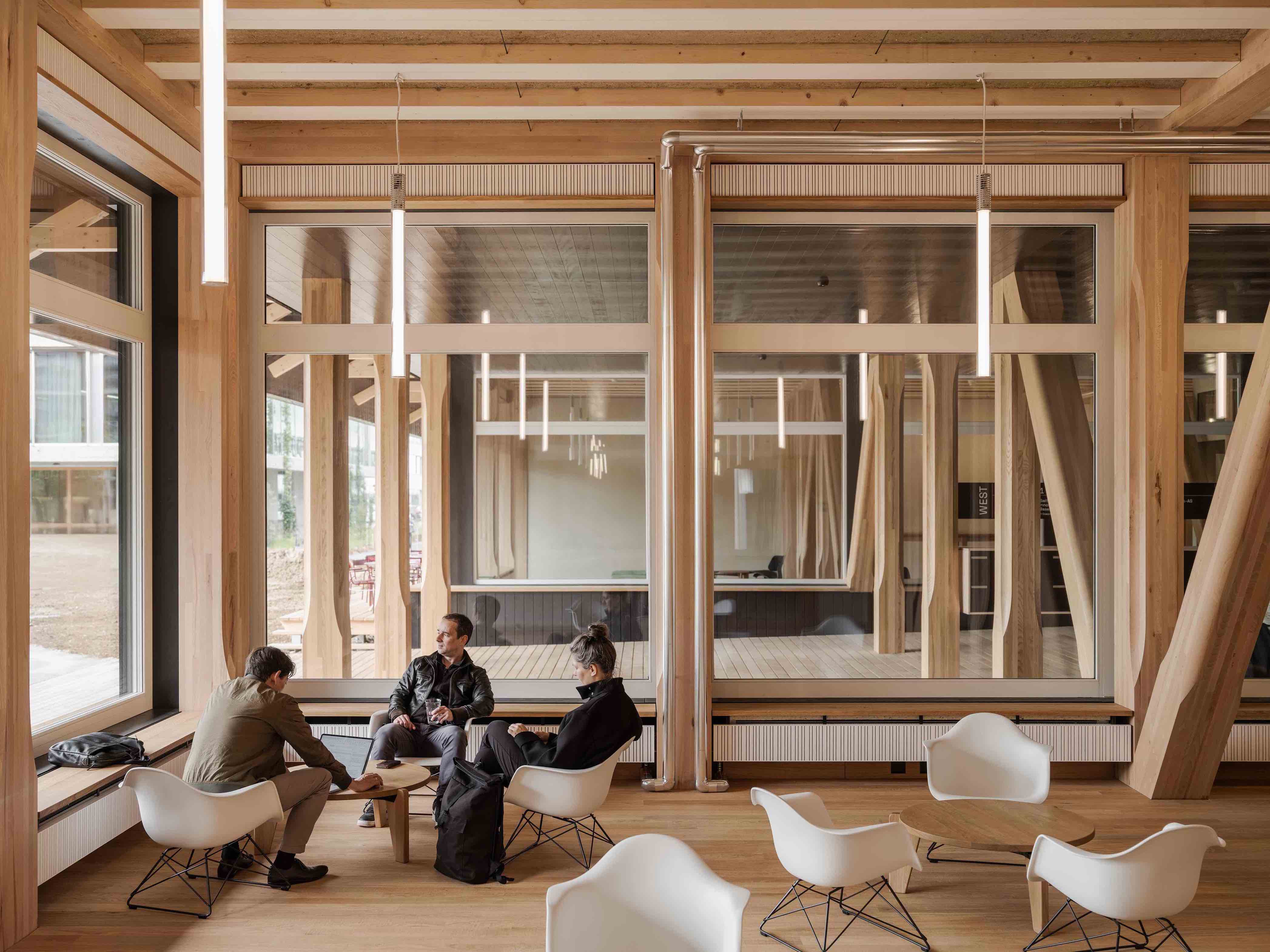
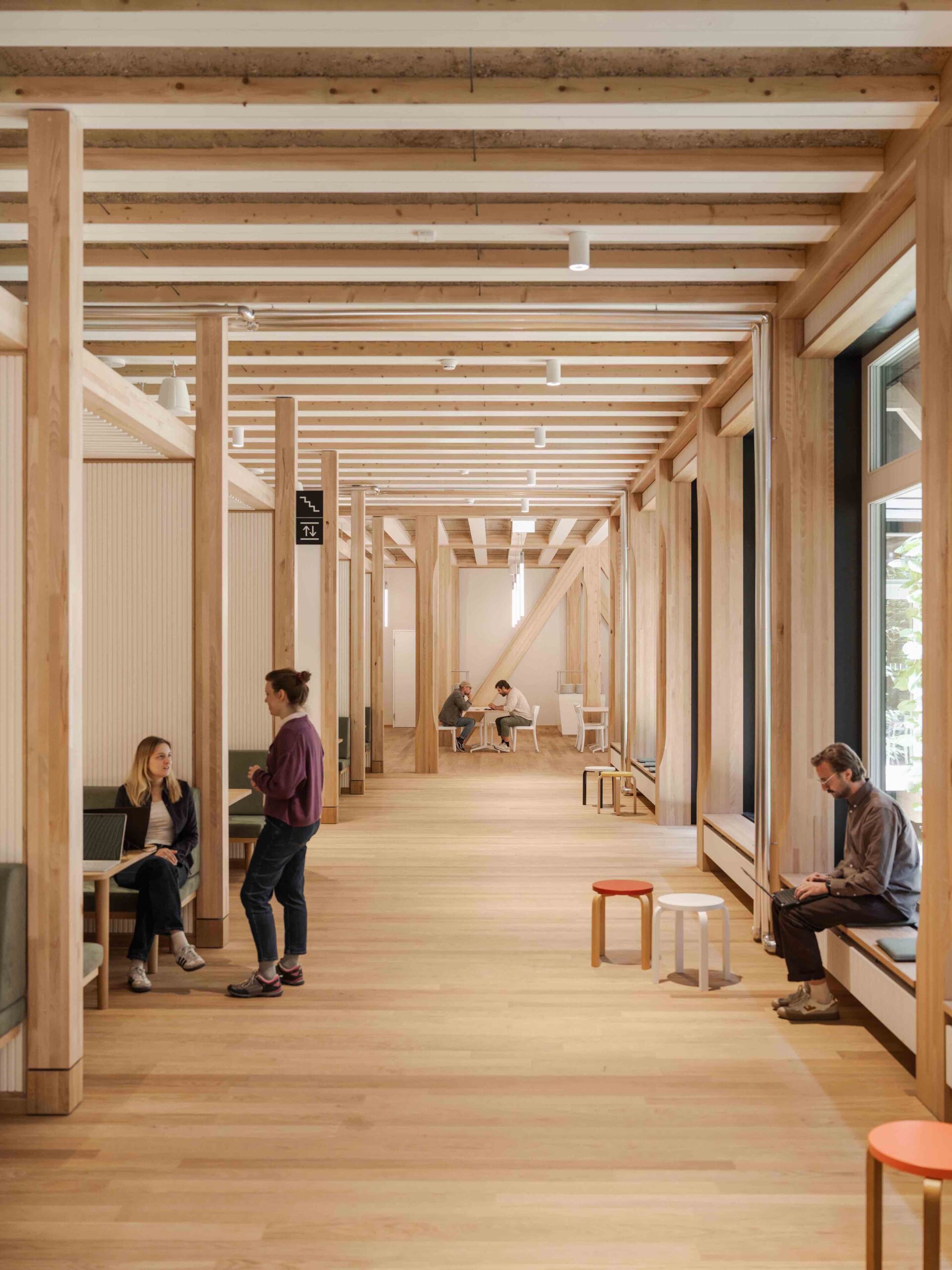
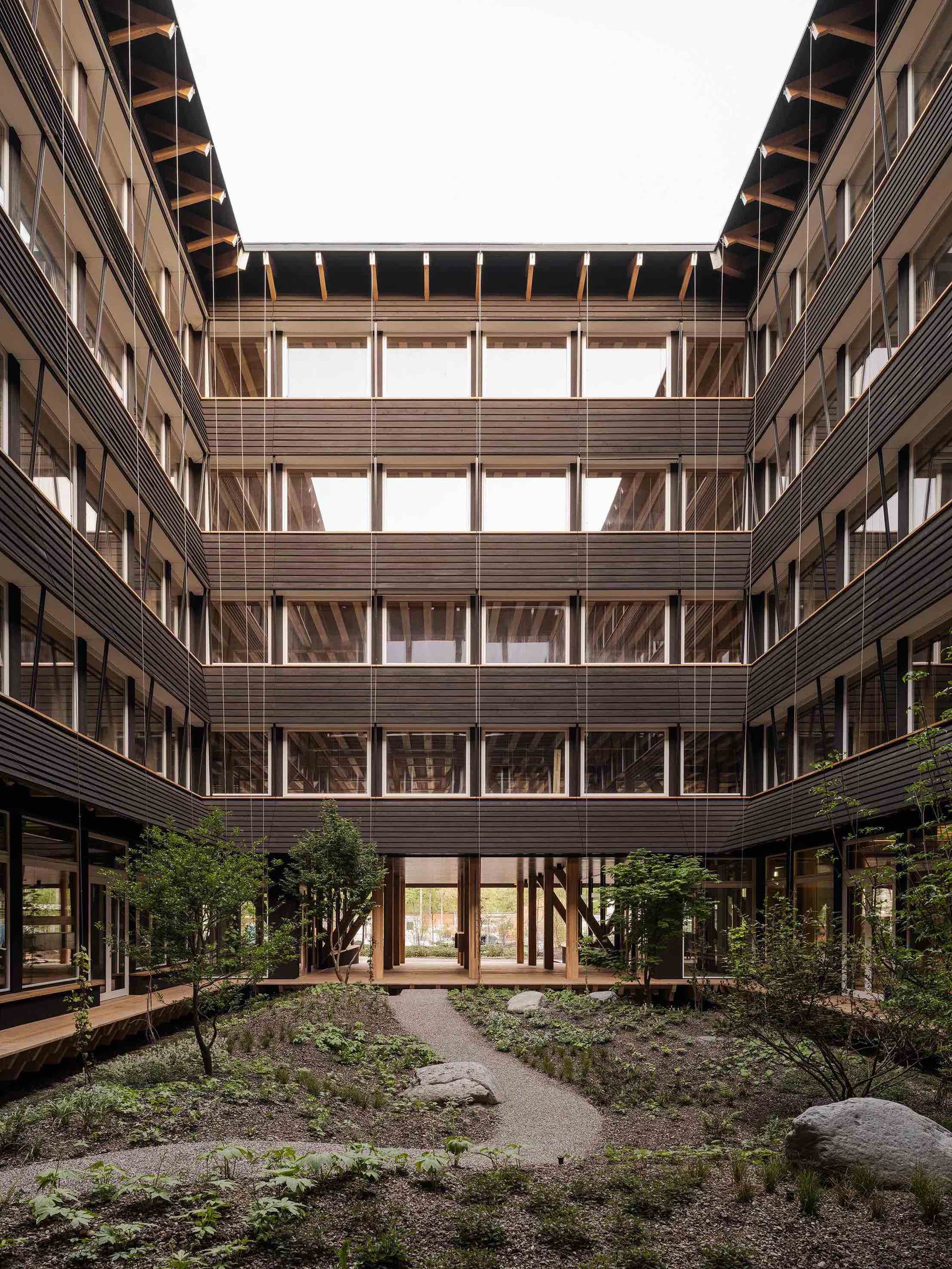
中央の緑豊かなアトリウムを囲むように配置された建物は、支柱の上に建ち、地面からわずかに浮いている。4階建ての木造構造と版築天井をもち、南側にはランドスケープアーキテクトであるピート・ウードルフ(Piet Oudolf)が設計した庭園へとつながる広い通路が開かれている。
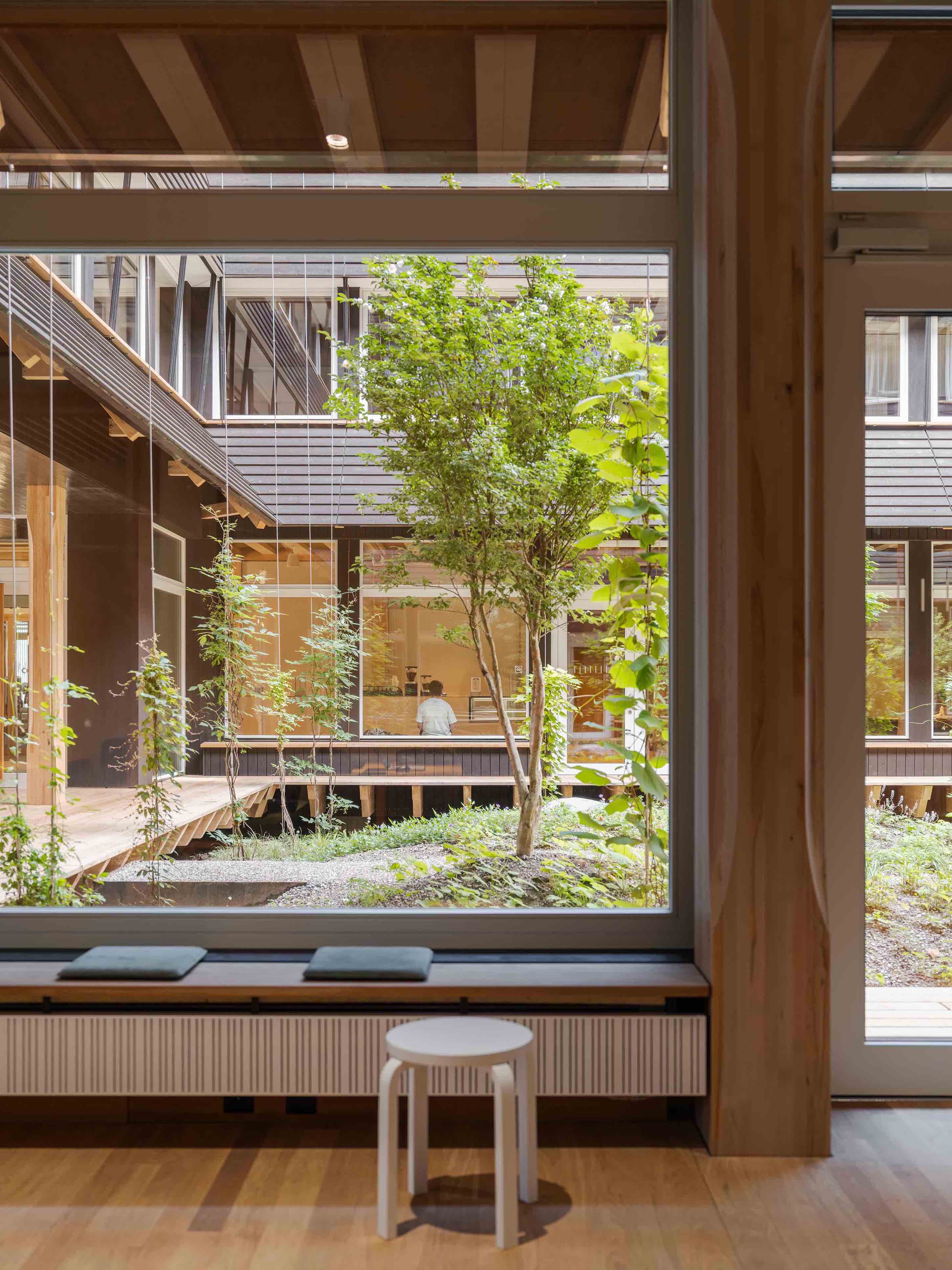
中庭のファサードには高木低木、草花、多年草、つる植物が植えられ、曲線を描く砂利道に沿って豊かな植生が展開する。庭園の下部には雨水貯留タンクが設けられ、植物の潅水や衛生設備の水源として利用されている。
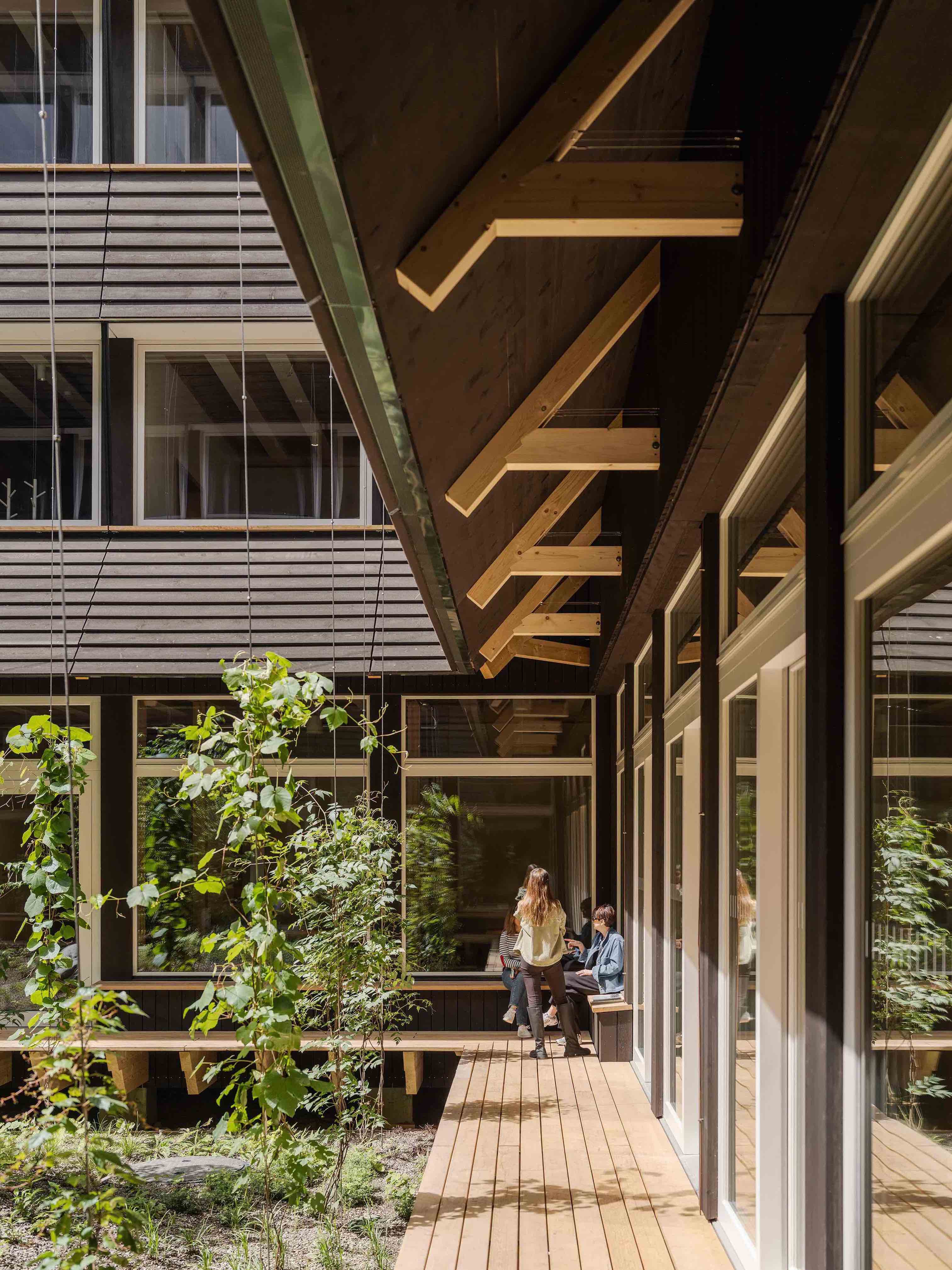
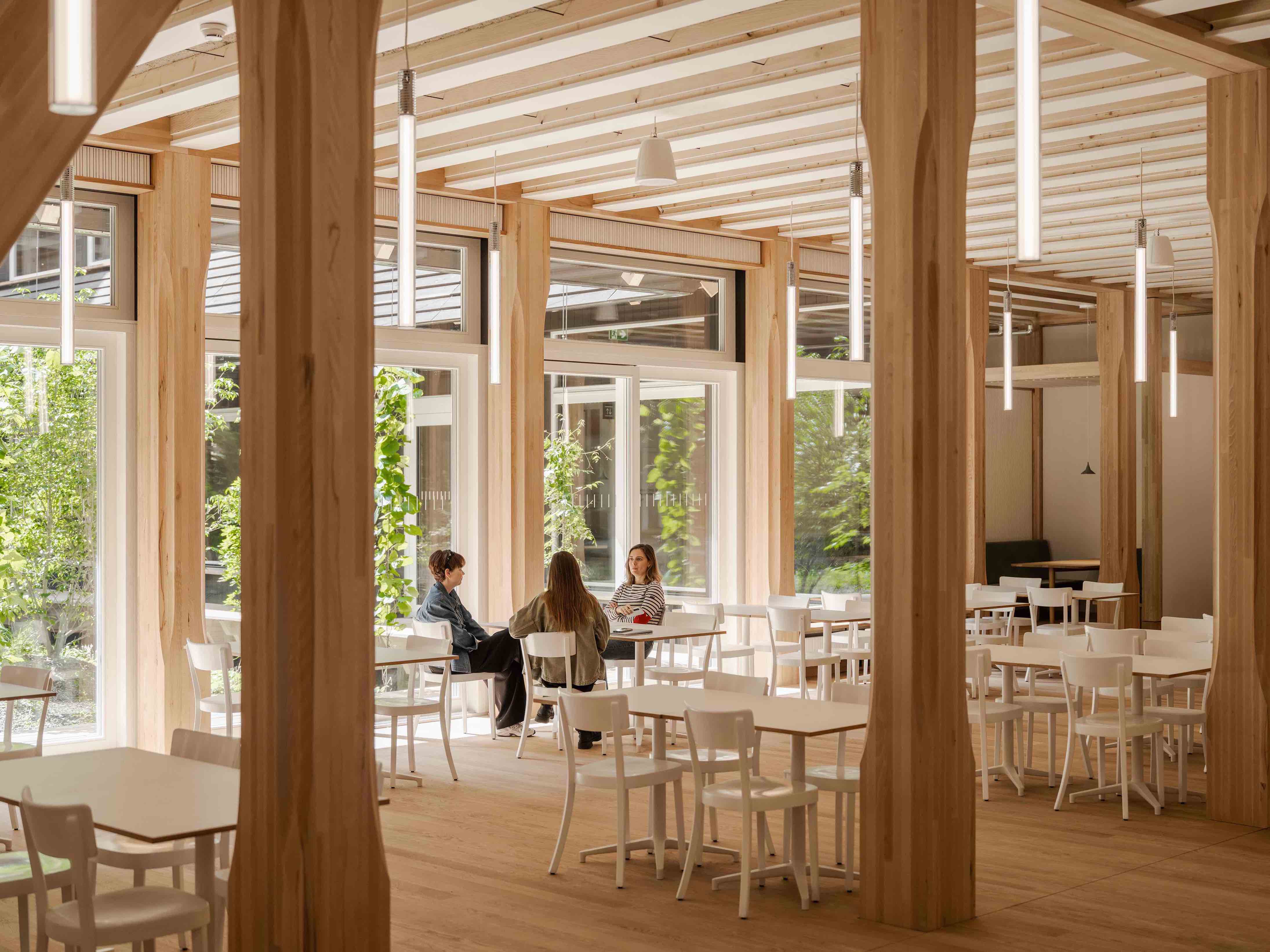
屋根付き木製ベランダを備えたアトリウムは、従業員や訪問者のためのレクリエーション空間として機能する。外部利用が可能な会議室に加え、1階にはレストランやカフェバー併設のジム、一般客が利用できるニッチ席が配置されている。

© Maris Mezulis
© Maris Mezulis
© Maris Mezulis
共同利用を促す柔軟なオフィスレイアウト
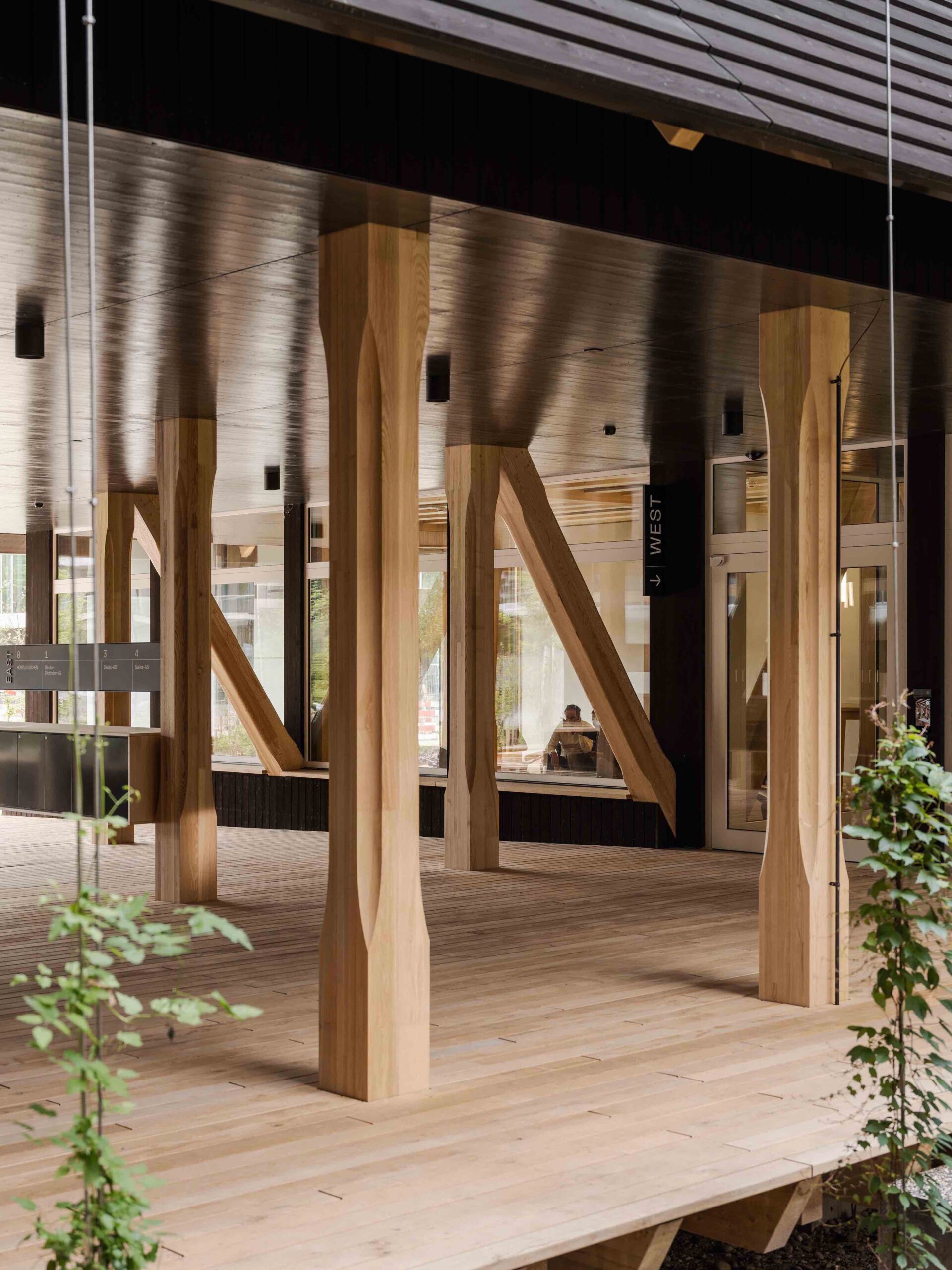
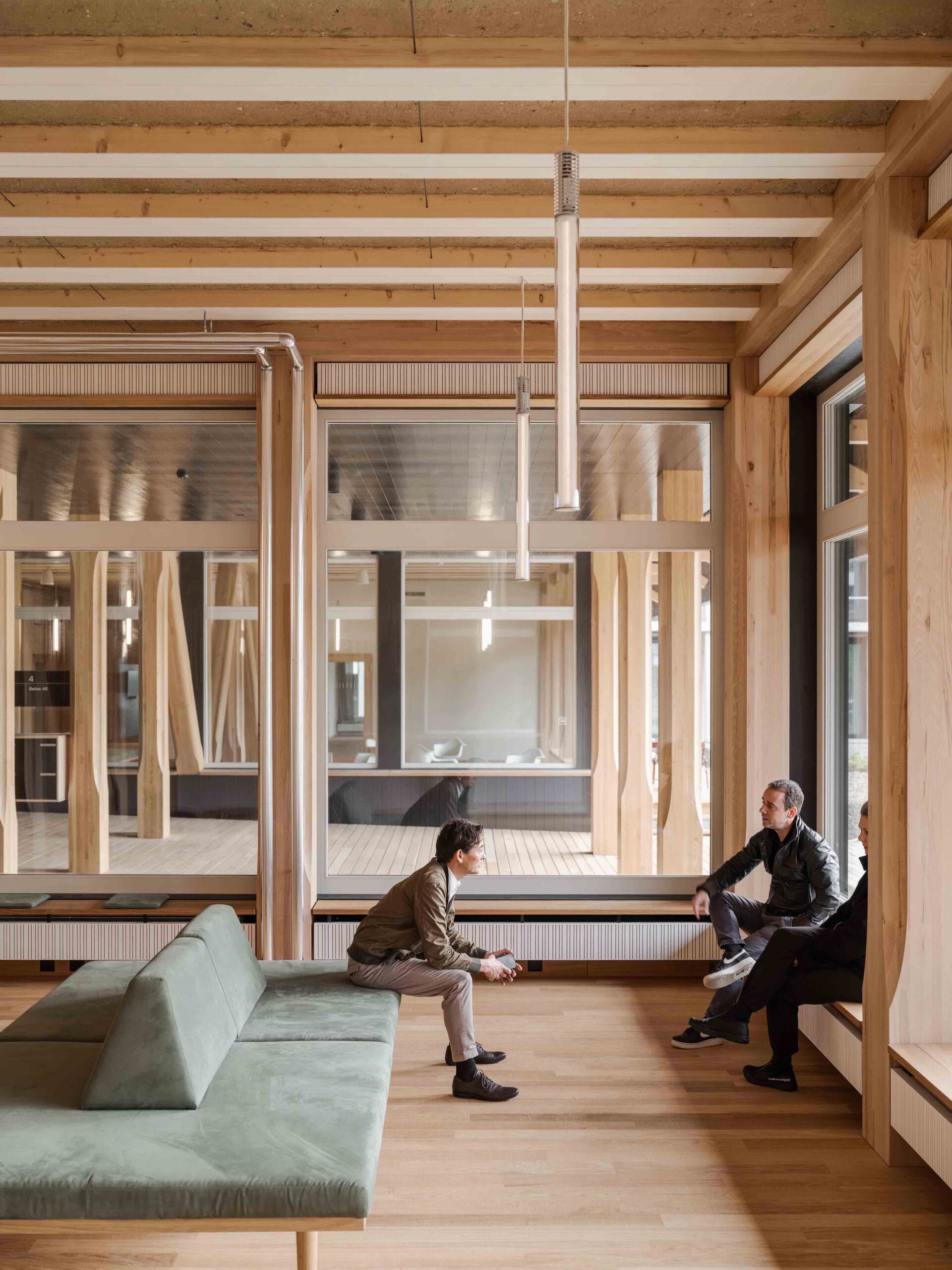
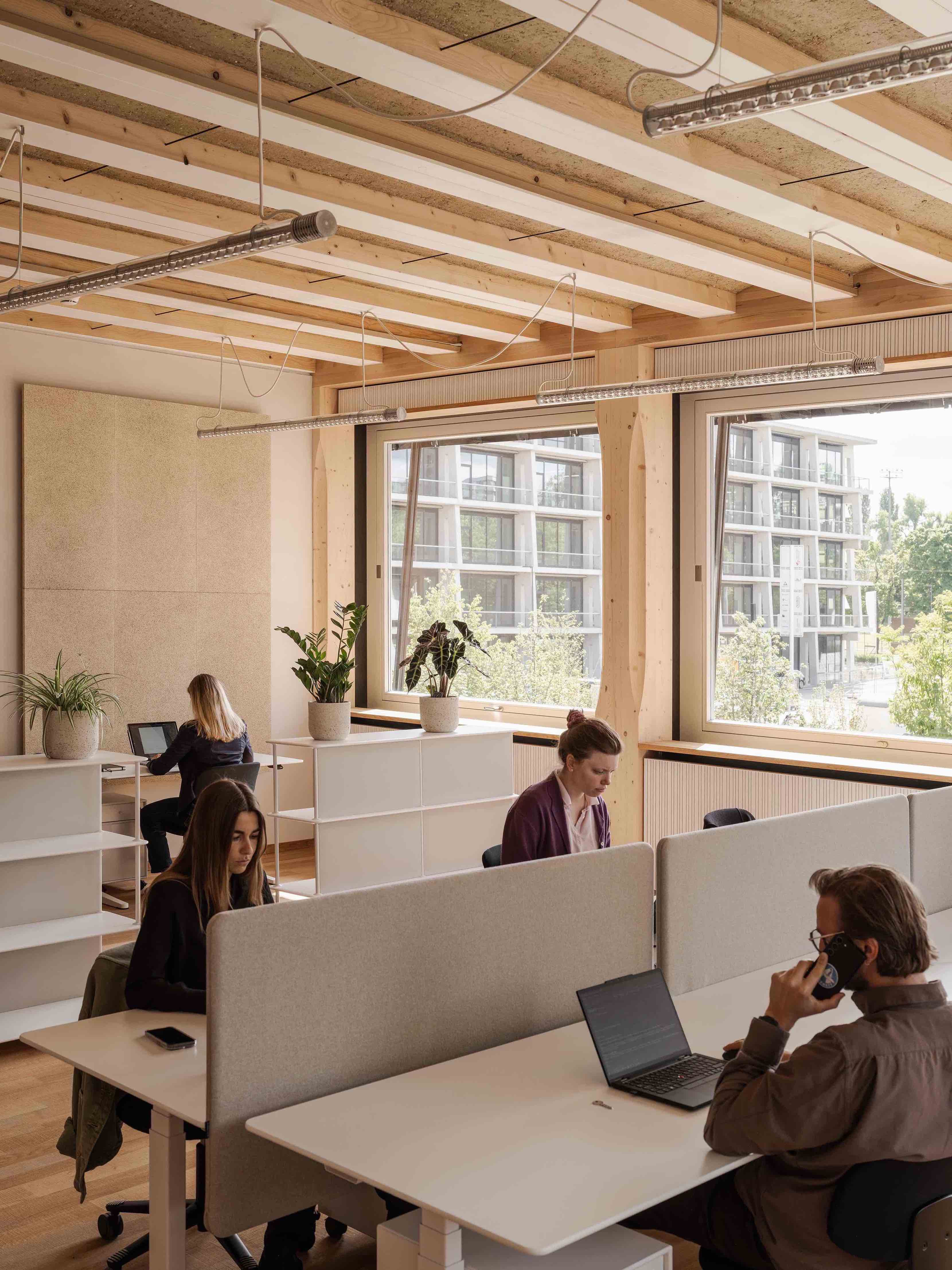
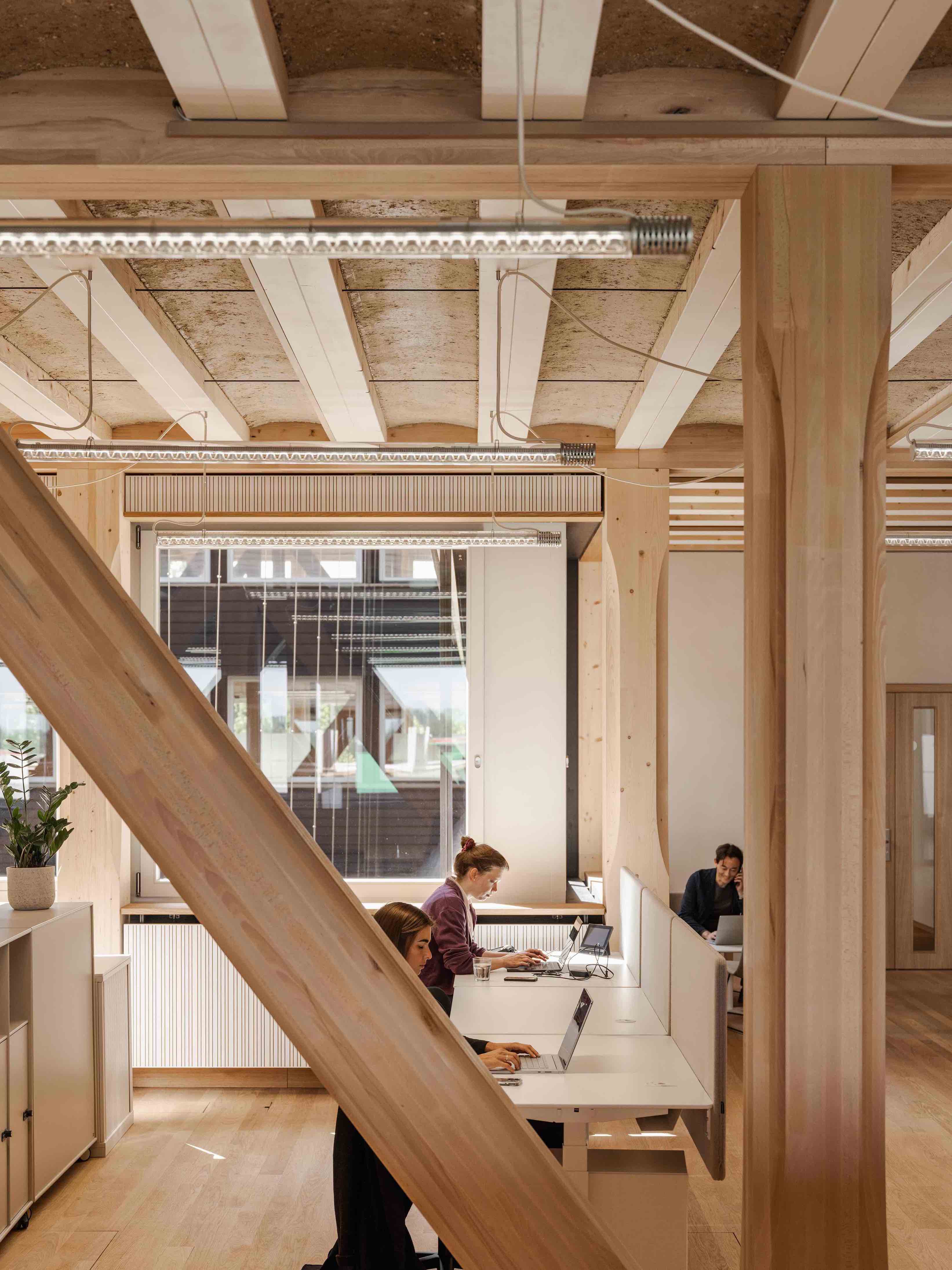
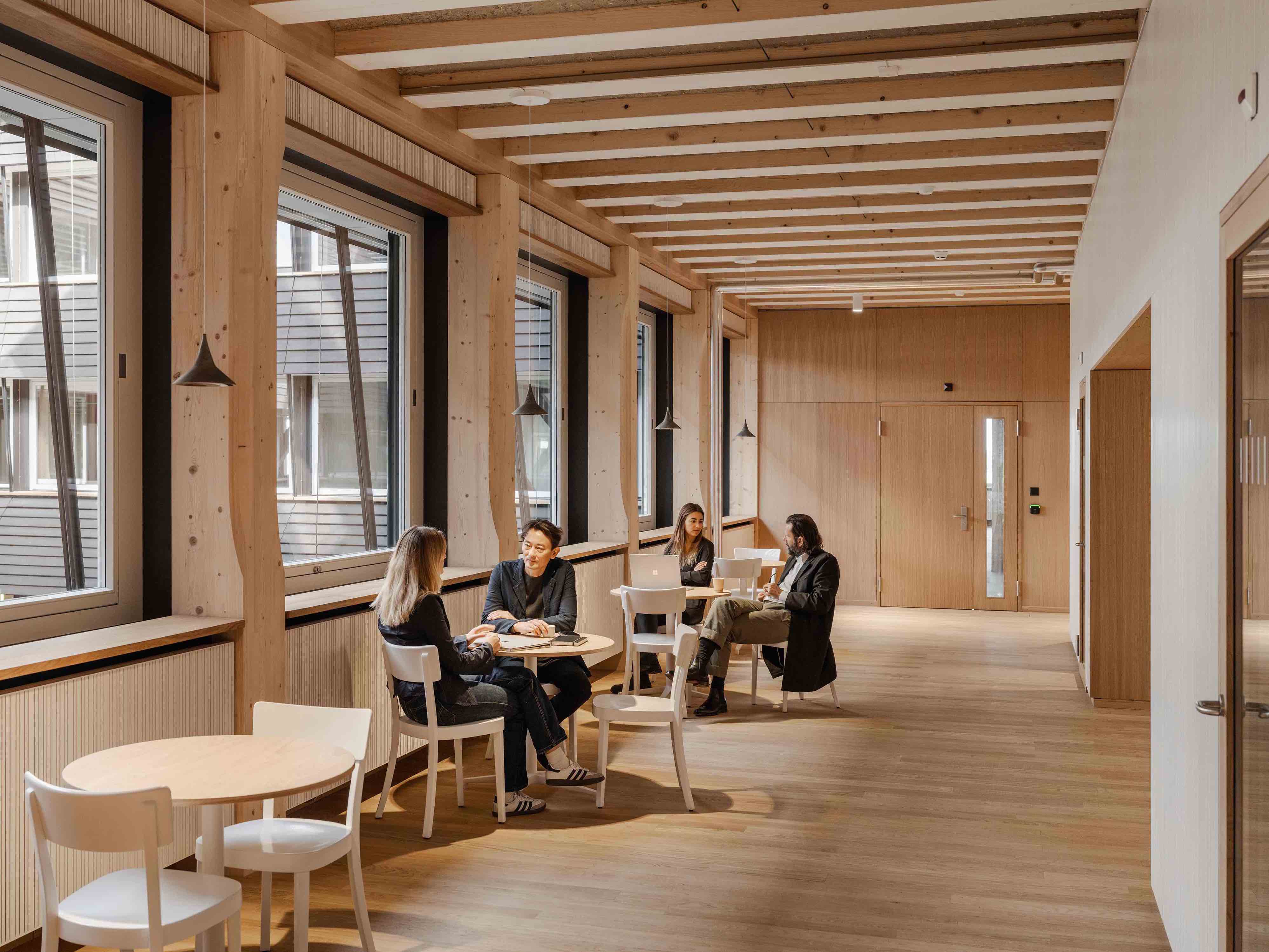
約10,000m²のオフィススペースを提供する4層の上層階はオープンプランとなっており、従業員の交流と関与を促進する。開放的なレイアウトは柔軟性と多様な利用を可能にし、チームはニーズに応じて、屋内またはベランダの屋外にある様々なサイズの保護された座席エリアやオープンな座席エリアを利用できる。
一部のエリアは他の利用者とも共有されており、各階には共用のラウンジと簡易キッチンが設けられている。1階と公園に面した南側のベランダは、すべての訪問者が利用可能となっている。
© Maris Mezulis
© Maris Mezulis
循環する素材と「ゆりかごからゆりかごまで」の原則
〈Hortus〉は”House of Research, Technology, Utopia, and Sustainability(研究・技術・ユートピア・持続可能性の館)”の略称であり、革新的なサステナビリティの実験場を意味する。設計プロセスは素材の科学的分析から始まり、環境特性や物理的特性をもとに建築資材を比較・選定した。
主要基準の1つは、再生可能資源由来の天然素材であることだった。「ゆりかごからゆりかごまで(Cradle to Cradle)」の原則に基づき、すべての建築部材が将来の再利用を見据えてカタログ化されている。天井モジュールに用いられた粘土は、寿命を迎えた後に土壌へ還元可能である。木材・圧縮粘土・セルロースなどの再生素材を厳選することで、〈Hortus〉のモジュラー木フレーム構造は高い環境配慮を実現している。
金属製接続部を避け、伝統的な木工技術を用いたことで、建物が寿命を迎えた際には容易に分解・再利用できる構成となっている。
© Maris Mezulis
© Maris Mezulis

© Maris Mezulis
近隣の木材と現場の粘土で生み出す新しい床システム
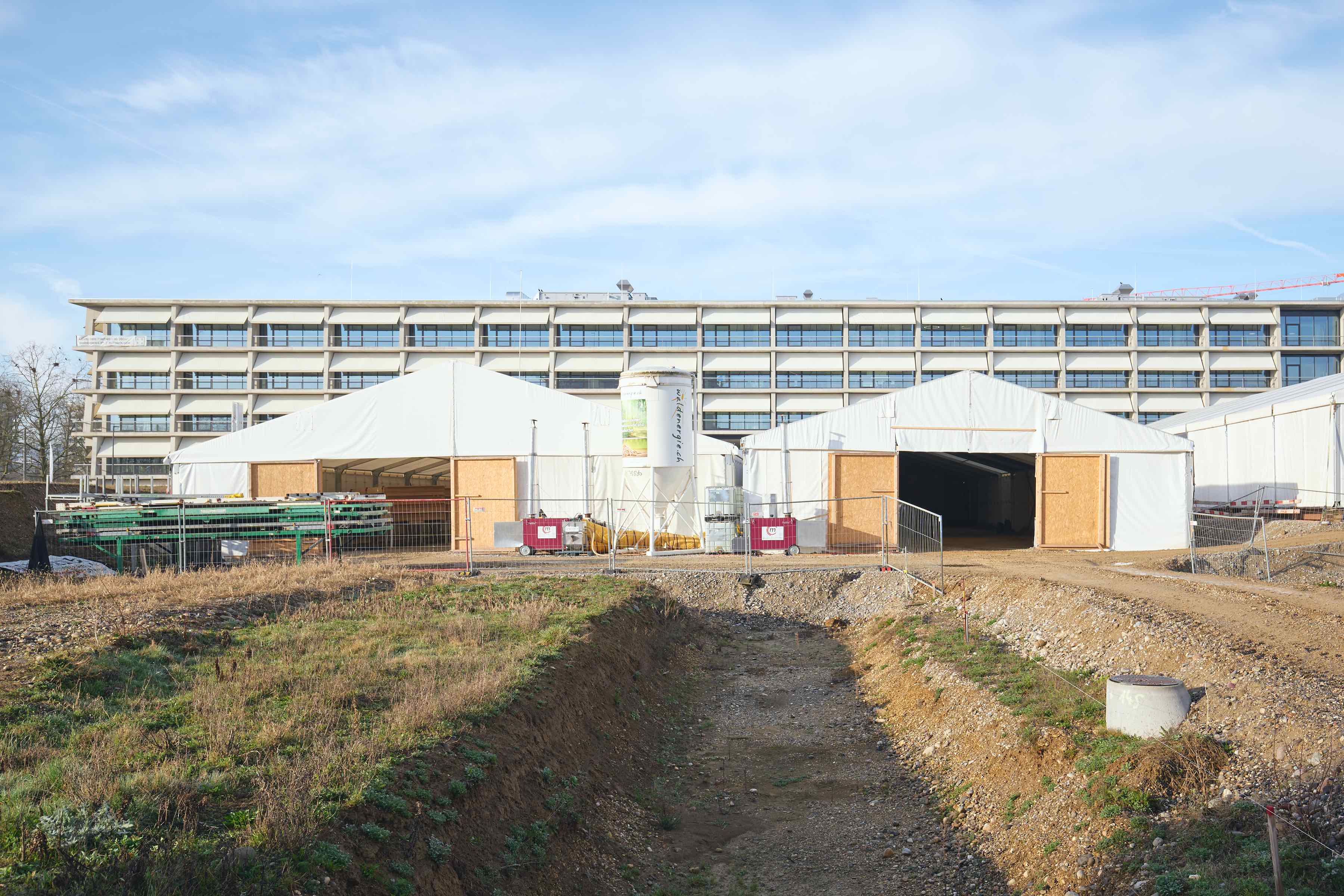
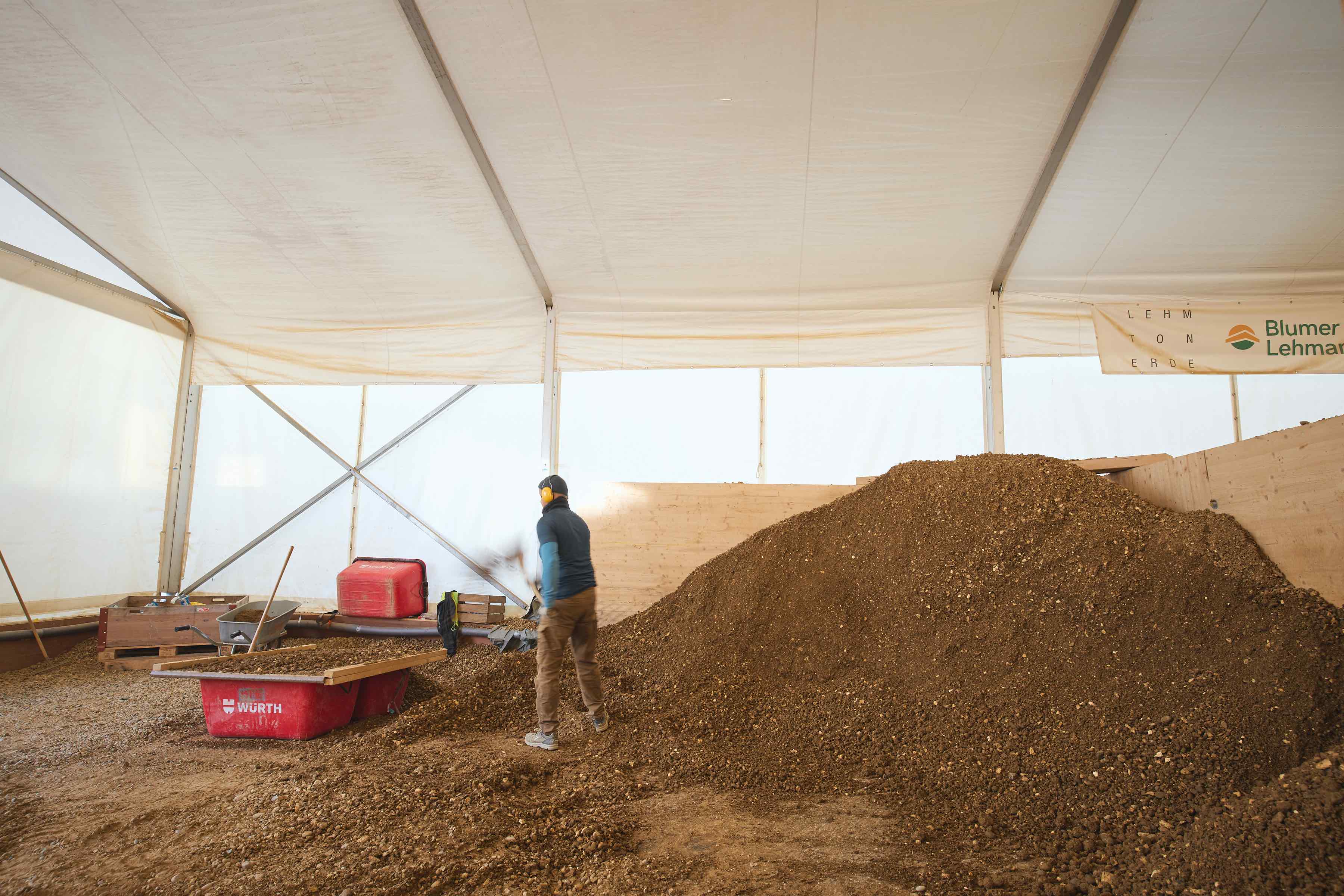
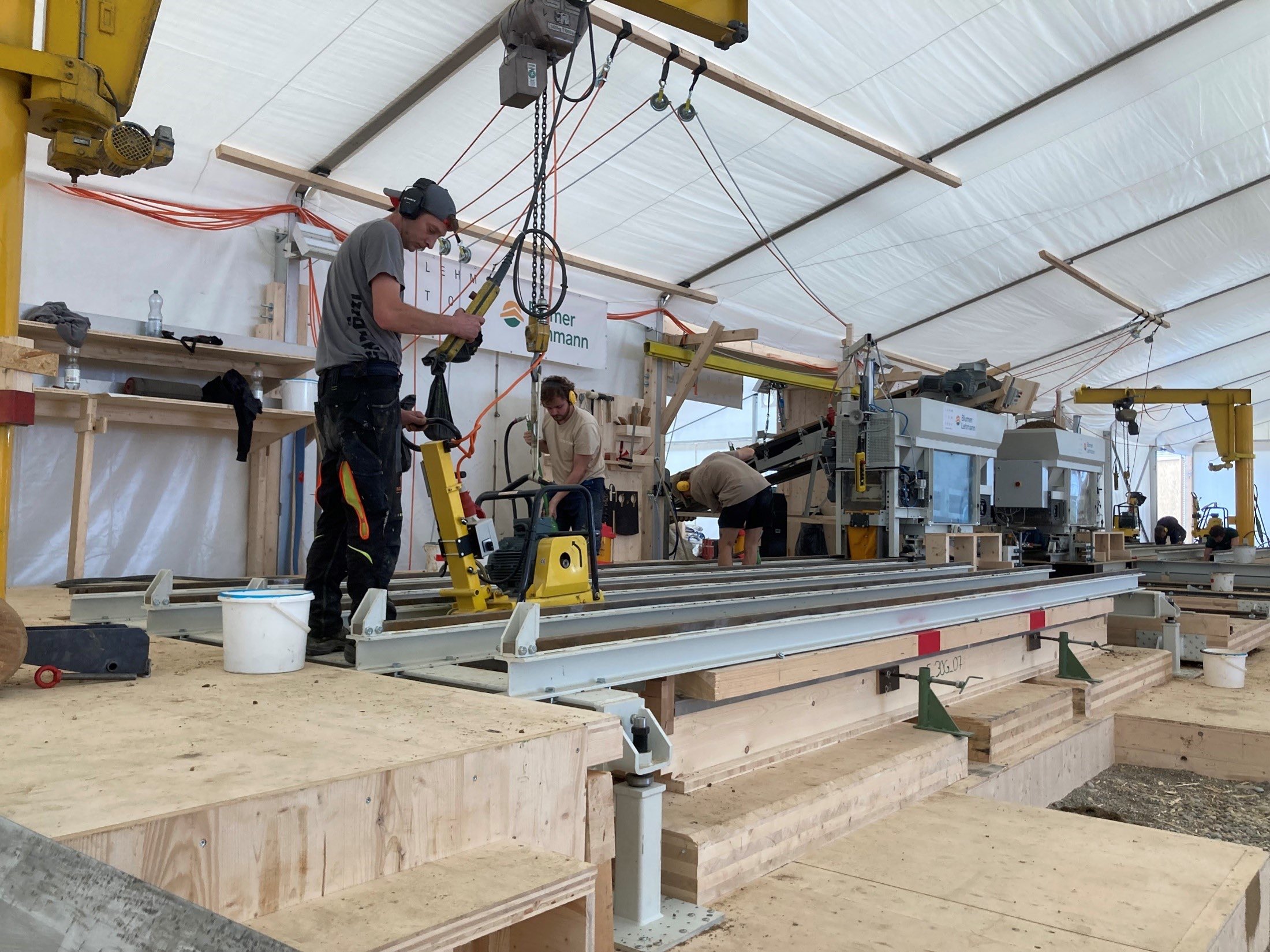
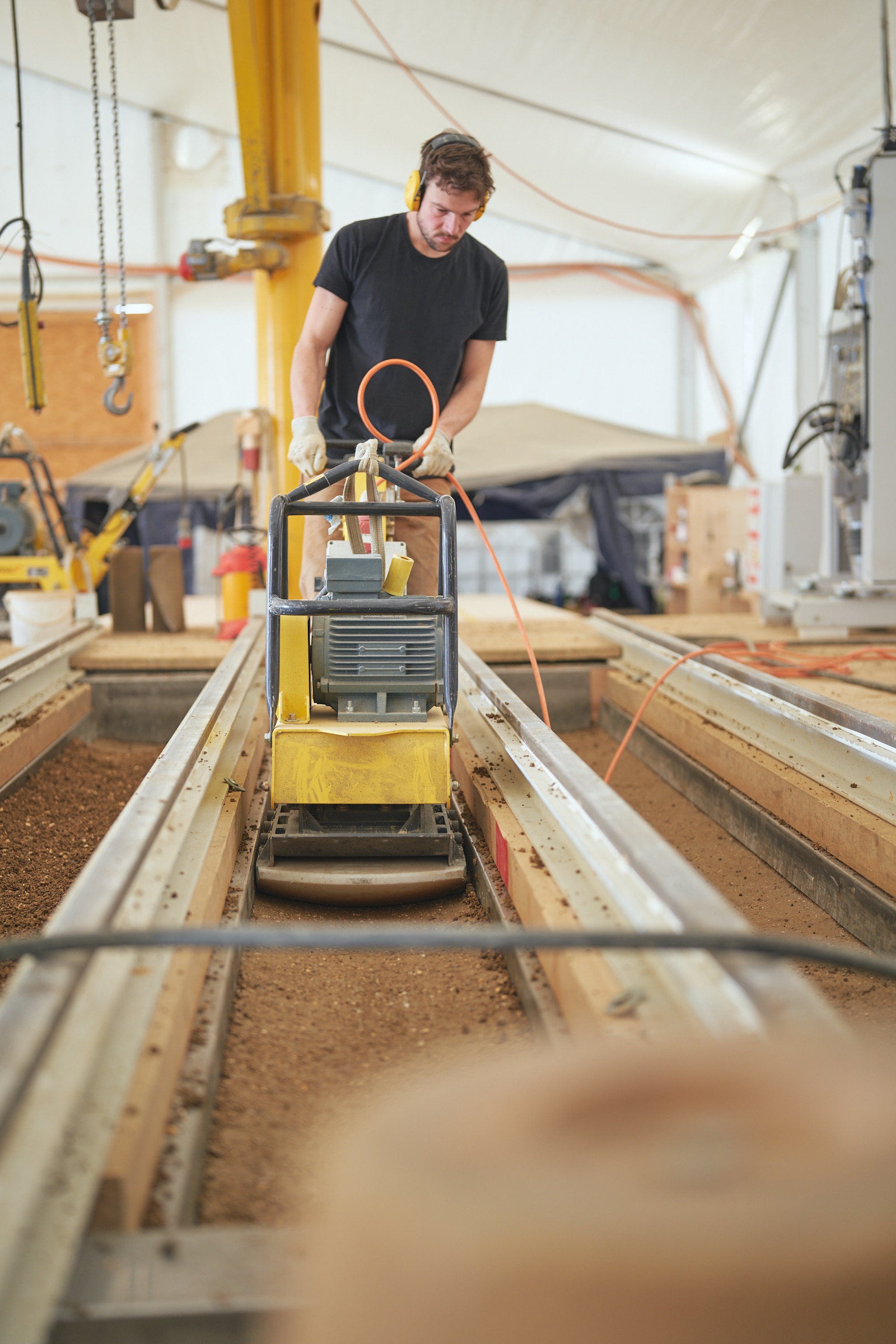
ZPF Engineers社と共同で、長方形の木材要素と圧縮粘土によるハイブリッド床システムを開発した。また、Blumer Lehmann社およびLehm Ton Erde社の協力により、天井モジュールが完成した。各要素は近隣の森林で伐採した木材を用いたプレファブリケーションの木フレームで構成され、梁間に粘土をアーチ状に圧縮して充填している。
高密度の粘土は防火性能をもつと同時に、夏季には蓄熱体として過剰な熱を吸収する役割を果たす。粘土は建設現場で採取され、建物横に設けられた仮設工場で床スラブを製造した。Lehm Ton Erde社が〈Hortus〉のために開発した特別プロセスにより、現場で生成した粘土混合物を木製モジュールに直接打ち込む方式を採用している。
この粘土・木材床システムの炭素排出量は、同等の耐荷重をもつ従来のコンクリート床と比較して10分の1以下である。
©︎ Senn, Photo: David Walter
©︎ Senn, Photo: David Walter
© Herzog & de Meuron, Photo: Alexander Franz
©︎ Senn, Photo: David Walter
エネルギー・ポジティブとカーボン削減
設計の目標は、建物のカーボンフットプリントを極限まで抑制することであった。〈Hortus〉は包括的な持続可能性コンセプトを組み込み、SIA 2040など既存の環境基準を大きく上回る性能を実現している。
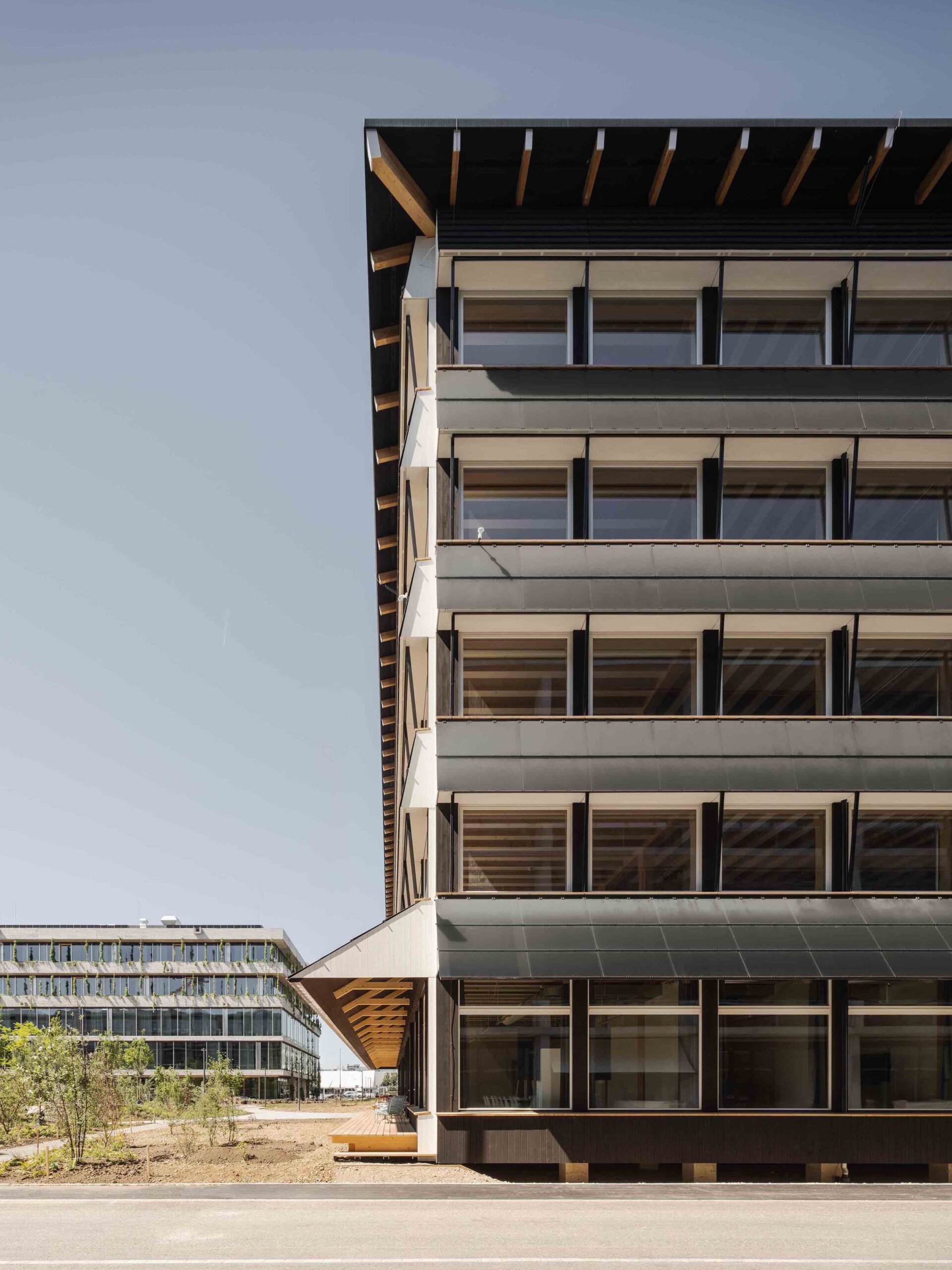
コンパクトな建築形態がエネルギー損失を抑制し、コンクリート基礎をもたない構造によって建物は地表から浮遊するように佇む。建物下の空気層は夏季に冷気を、冬季に暖気を保ち、地熱エネルギーによる冷暖房と連動して室温を調整する。
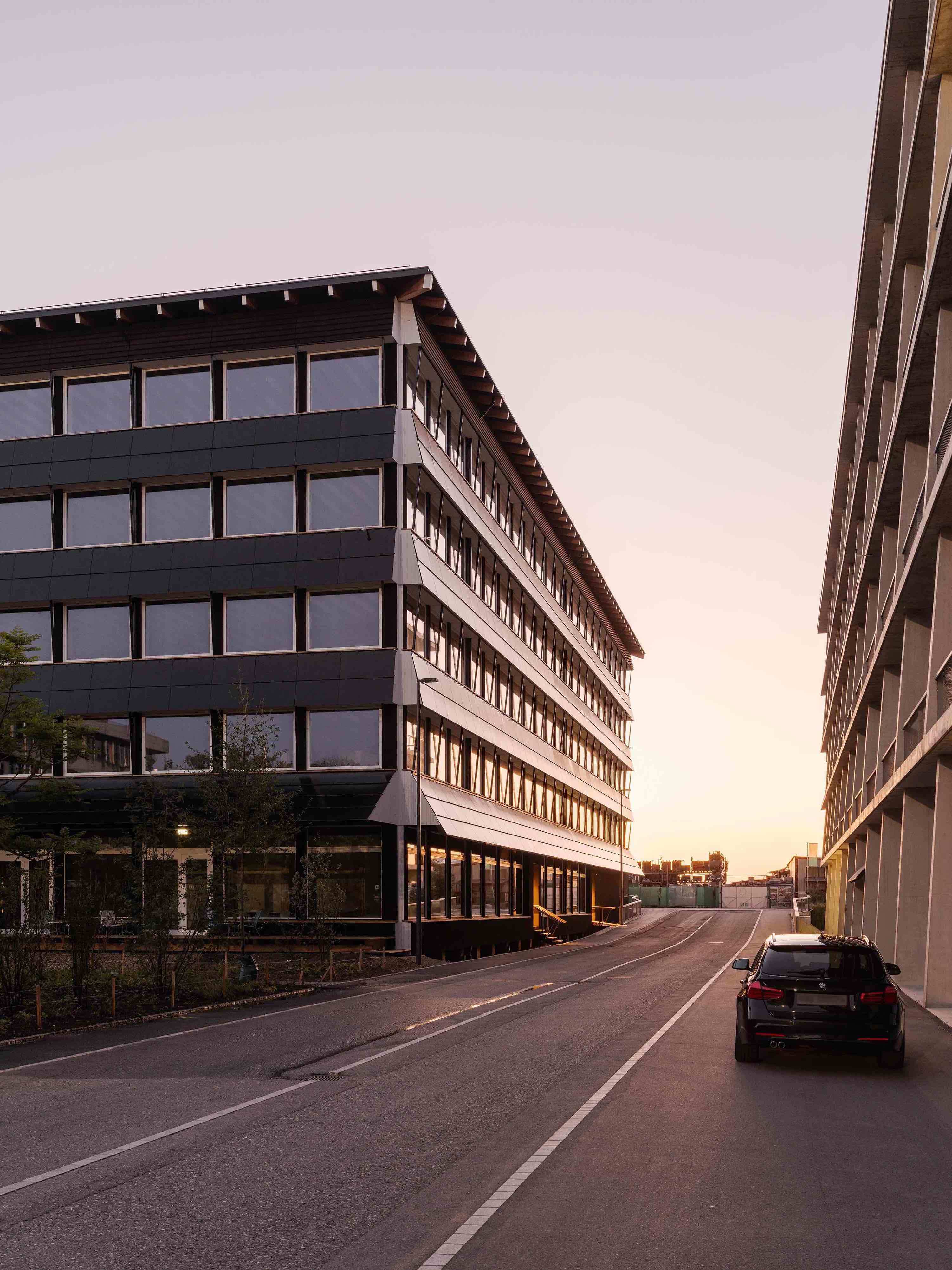
さらに、屋根および欄干に沿って設置された約5,000m²の太陽光発電パネルが再生可能エネルギーを供給する。このシステムは運用初日から余剰電力を生み出し、建設に要した埋蔵エネルギーは31年以内に完全償却される見込みである。
© Maris Mezulis
© Maris Mezulis
ヘルツォーク&ド・ムーロンにおける持続可能性の理念
ヘルツォーク&ド・ムーロンは、持続可能性を建築業界の中心的課題と位置づけている。これは建築物そのものに限らず、人々の生活様式にも内在すべき価値であり、環境的・経済的・社会文化的条件の均衡を追求する総合的アプローチが求められる。
国際エネルギー機関(IEA)および世界経済フォーラム(WEF)の報告によれば、建設分野は世界の原材料・エネルギー消費の約40%を占める主要なCO2排出源でもある。建築家として、この統計に変化をもたらすことが使命であると私たちは考える。
© Maris Mezulis
© Maris Mezulis
気候中立な建築を実現するためには、環境配慮型の設計原則に加え、各地理的・都市的・文化的文脈に応じた最適解を探る継続的プロセスが不可欠である。そのためには高い革新性と解決志向のデザインが求められる。
〈Hortus〉は、持続可能な建築が地域資源の循環を生み出しつつ、美的であり、健康的であり、経済・環境・社会に利益をもたらし得ることを証明する事例である。
© Maris Mezulis
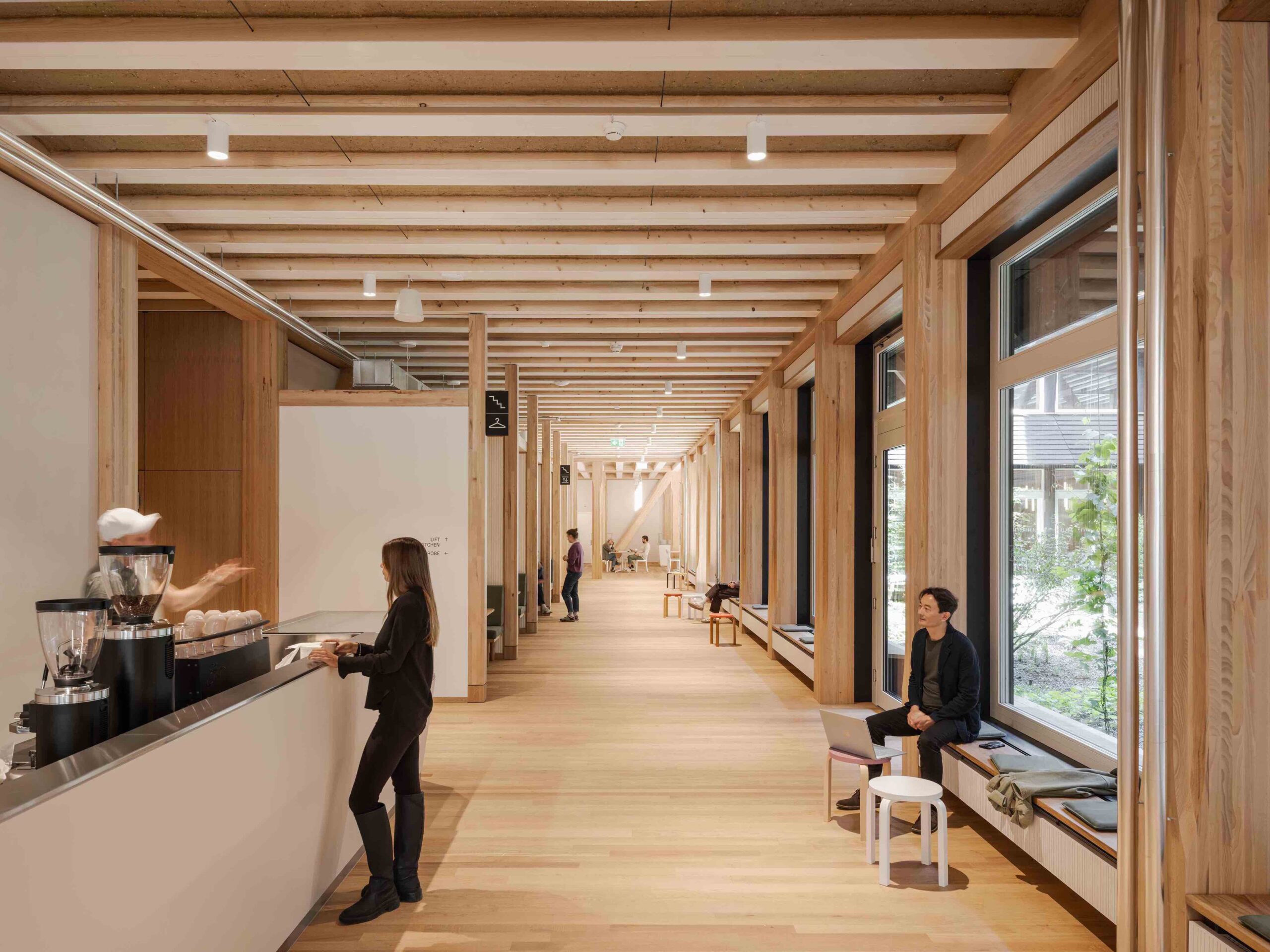
© Maris Mezulis
「私たちは新たな思考が必要である。持続可能性は、私たちが生み出すあらゆるもの、いや、あらゆる行動の最優先事項であるべきであり、これにより独自の美しさを備えた予想外の驚くべき建築が生まれるだろう。これは挑戦であると同時に刺激的な動機でもある。なぜなら美的規範に疑問を投げかけ、新たなアプローチを開拓するからだ。」
ジャック・ヘルツォーク(Jacques Herzog)
ヘルツォーク&ド・ムーロン共同創設者
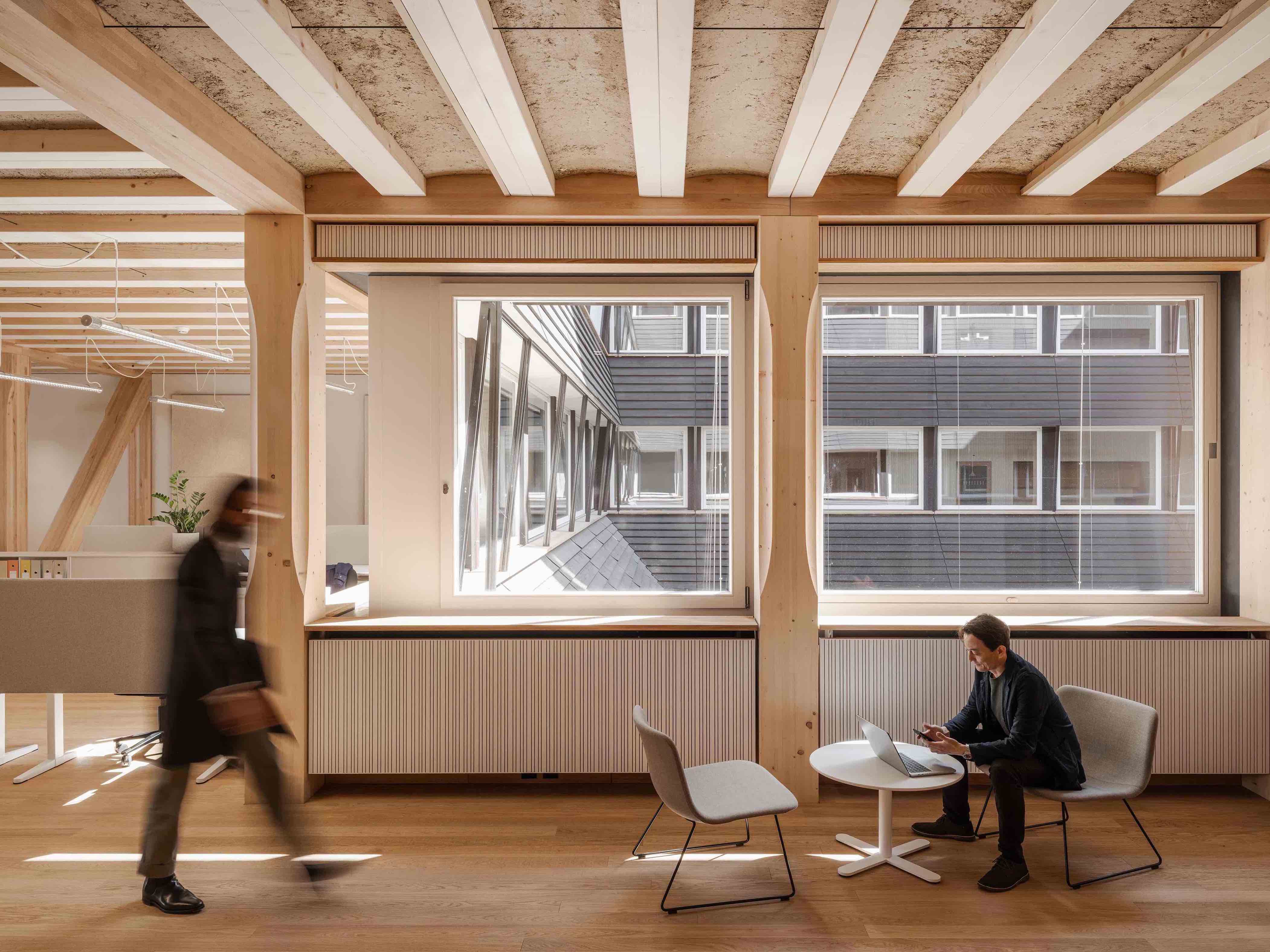
© Maris Mezulis
「〈Hortus〉は最大限の生態学的持続可能性を体現しており、この主張はこれ以上拡張し得ないほど徹底している。建築はレゴの原理にしたがって設計されており、すべての要素はモジュール式であり完全に分解可能で、自然へ還すか他の建物へ再利用できる。私たちは癒しの建築の原理をオフィスビルへ転用した。自然素材、光、空気質への配慮、緑の中庭を通じた自然とのつながり、社会的交流の促進が、健康的でインスピレーションを与える環境を生み出す。」
ステファン・マルバッハ(Stefan Marbach)
ヘルツォーク&ド・ムーロン シニアパートナー
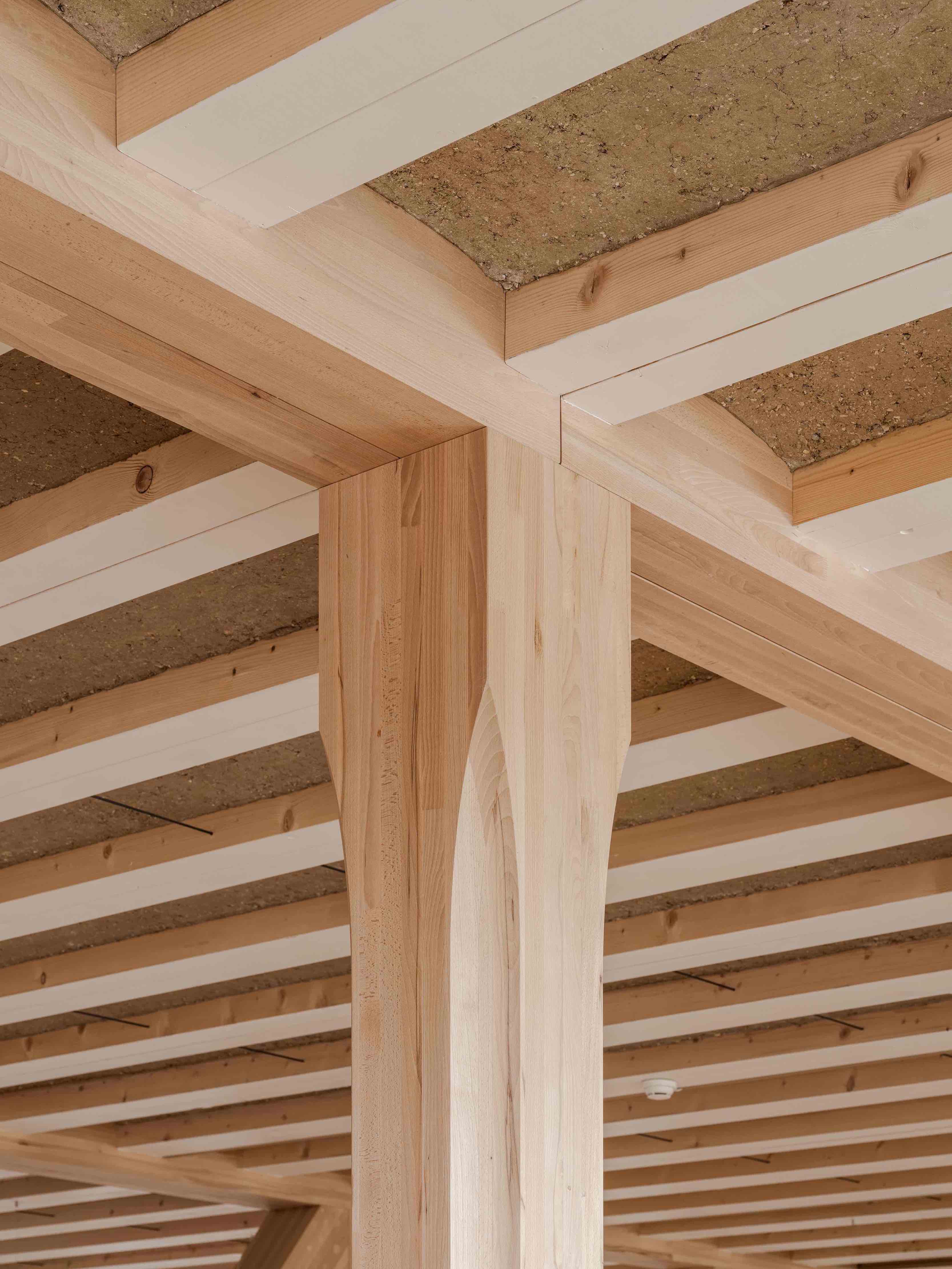
© Maris Mezulis
「〈Hortus〉は、人々のウェルビーイングを重視した魅力的な場所を創出するために、建築においていかに徹底的な持続可能性が可能かを示した。このプロジェクトを契機に、ヘルツォーク&ド・ムーロンは社内にサステナビリティチームを結成した。私たちは、設計プロセスの早い段階から、持続可能性をその不可欠な要素と捉えている。専門家チームとして、概念的な思考、経験、最新のデジタルツールを用いて意思決定に貢献している。〈Hortus〉が気候保護と資源保全に真に貢献しているのと同様に、この専門知識を他のプロジェクトにも活用することが私たちの使命である。」
アレクサンダー・フランツ(Alexander Franz)
ヘルツォーク&ド・ムーロン サステナビリティ責任者

© Maris Mezulis
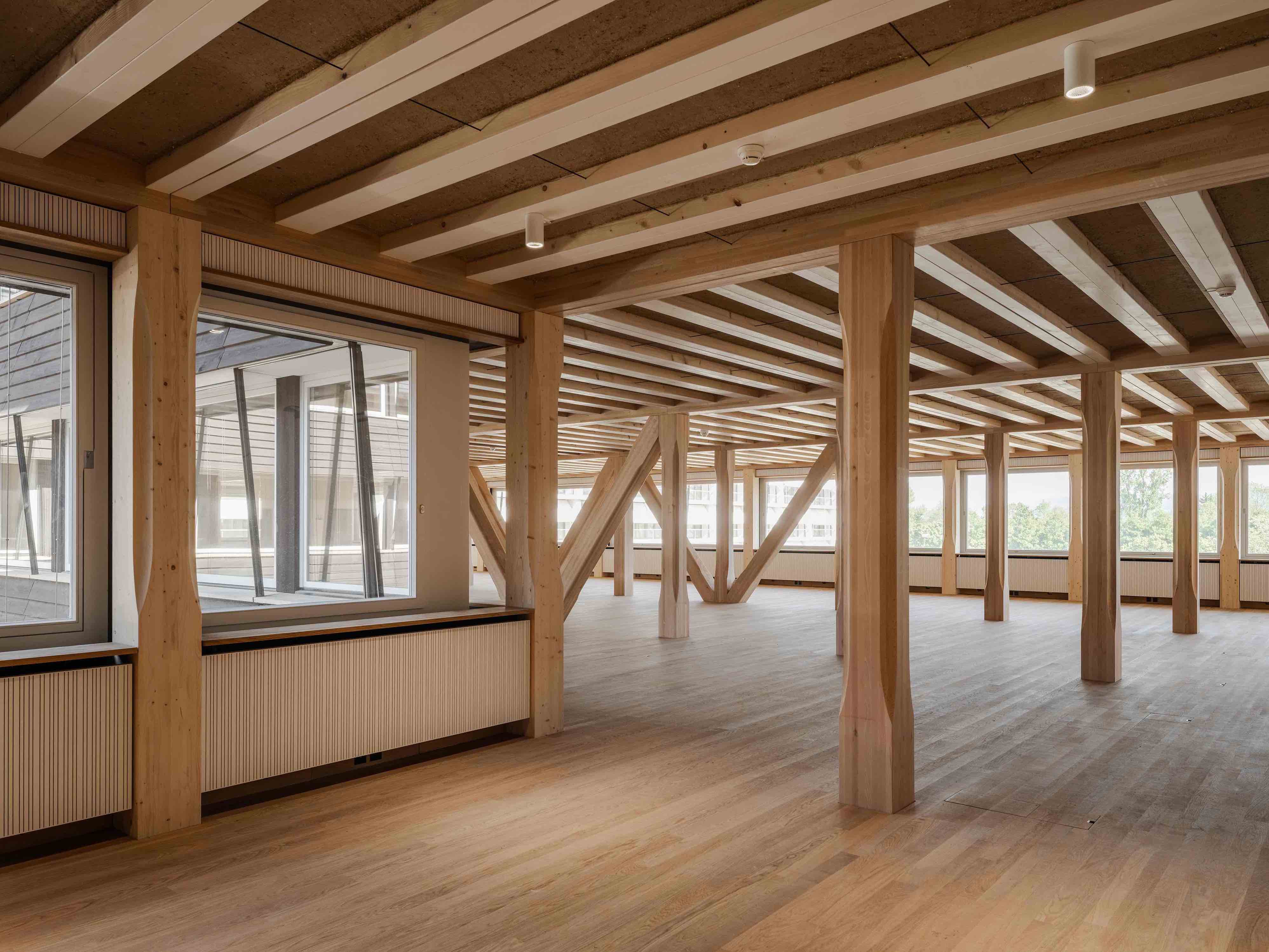
© Maris Mezulis

© Maris Mezulis

© Maris Mezulis

© Maris Mezulis
© Maris Mezulis
© Maris Mezulis
以下、ヘルツォーク&ド・ムーロンのリリース(英文)です。
No. 543
Hortus
Allschwil, Switzerland
Project 2020 – 2022
Realization 2023 2025The Switzerland Innovation Park, Allschwil, home to life sciences enterprises, continues to grow. The sustainable Hortus office building creates a modern and flexible working environment for a new generation of technology companies that are settling in the Basel metropolitan region. Our client, Senn, commissioned us to design a radically sustainable office building made of renewable and recyclable building materials. The brief initiated a design process aimed at combining the lowest possible grey energy during construction, an energy-optimized concept during operation, and a surplus of self-generated energy. After 31 years, the building, which has around 600 workplaces, will have fully offset the energy used during its construction. Our collaboration with Senn and a team of experienced specialist planners has resulted in one of the most sustainable office buildings in the German-speaking world.
Atrium as Green Oasis
The building wraps around a green atrium. It stands on stilts, floating slightly above the ground. The four-storey timber-frame construction with rammed-earth ceilings opens to a wide passageway in the south that leads to a garden designed by landscape architect Piet Oudolf. Tall shrubs, grasses, flowering perennials, and climbing plants on the courtyard façades provide dense greenery along a curved gravel path. Underneath the garden is a rainwater collection tank that is used for watering the plants and for the sanitary facilities.
The atrium, with its covered wooden veranda, serves as a recreational area for employees and visitors to take a break. In addition to other meeting rooms available for external parties to rent, the ground floor provides a restaurant, a gym with a café bar, and seating niches for the public.Collaborative Use
The open plans of the four upper floors, which offer approximately 10,000 m2 of office space, encourage employee engagement and exchange. The open layouts allow for flexibility and variety in use. Depending on their needs, teams have access to protected or open seating areas of various sizes, either inside or outside on the veranda. Some areas are shared with the other users. Each floor has communal lounges and kitchenettes. The ground floor and the veranda facing south towards the park are accessible for all visitors.Materials in Circulation
HORTUS stands for House of Research, Technology, Utopia, and Sustainability. It focuses on innovative sustainability concepts. The design process began with a scientific analysis of materials, in which construction materials were tested and compared based on their environmental and physical characteristics. One of the main criteria was that they be naturally sourced from renewable materials. Following the “cradle-to-cradle” principle, all building components were cataloged for future reuse. The clay from the ceiling modules can be returned directly to the ground. The reduced palette of renewable materials, including wood, compressed clay, and cellulose highlights the ecological principles of Hortus’s modular timber-frame construction. Timber joinery was employed to avoid metal connections so that, at the end of the building’s lifespan, the components can be easily dismantled and reused.New Floor System
In collaboration with ZPF Engineers, we developed a hybrid floor system consisting of rectangular timber elements and compressed clay. We perfected the ceiling modules with the help of Blumer Lehmann and Lehm Ton Erde. Each hybrid element consists of a prefabricated wooden frame made with timber harvested from nearby forests. Clay is compressed in the form of a vault between the inlaid wooden beams of the frame. The dense clay provides fire protection and serves as a thermal mass in the summer, absorbing excess heat.The floor slabs have been produced locally. The clay is excavated from the construction site, and each floor slab was manufactured in a field factory next to the building. Using a process specially developed for Hortus by Lehm Ton Erde, the clay mixture was produced directly on site and tamped into the wooden modules. The carbon emissions of the clay-timber floor system are causes ten times less than a conventional flat concrete floor with a comparable load capacity.
Energy Positive and Carbon Reduction
The design aims to drastically minimize the building’s carbon footprint and incorporates a holistic sustainability concept. It substantially exceeds guidelines for environmentally sustainable buildings, such as SIA 2040. The compact building form reduces energy loss. Not having a concrete basement, the building essentially floats over the landscape. The air underneath the building is cool in the summer and warm in the winter. Together with geothermal energy for heating and cooling, it regulates the room temperature. A photovoltaic surface of approximately five thousand square meters on the roof and along the parapets provides renewable solar energy. This system generates a surplus from day one, therefore the embodied energy necessary for constructing the building will be fully amortized within 31 years.Sustainability at Herzog & de Meuron
Herzog & de Meuron understands sustainability as a key challenge of the building industry. Sustainability should be a feature not only of our built environment but also of how we live in it, with a focus on a holistic approach. The goal is to create a balance of environmental, economic, and socio-cultural conditions.According to studies by the IEA (International Energy Agency) and the WEF (World Economic Forum), the construction sector is responsible for the consumption of approximately 40 percent of all raw materials and energy and is simultaneously one of the main producers of carbon emissions worldwide. As architects, we see it as our task to influence this statistic. The question of how to plan a climate-neutral building is an architectural challenge that not only requires environmentally sound building principles but also committing to an ongoing process to find the best possible approach for each individual situation. This requires a high level of innovation and solution-oriented design, custom-tailored for each geographic, urban, and cultural context.
The example of Hortus demonstrates that sustainable architecture can act as a local source of energy and raw materials, while simultaneously being aesthetic, healthy to build and occupy, and useful for the economy, the environment, and our society.
Herzog & de Meuron 2025
“We need to think anew: sustainability should be at the forefront of everything we produce – indeed, everything we do. This will result in unexpected and surprising architecture with a beauty of its own.
It is a challenge, but it is also a stimulating incentive, because it questions aesthetic norms and opens up new approaches for us.”
Jacques Herzog, Herzog & de Meuron“Hortus stands for maximum ecological sustainability – the claim can hardly be extended any further.
The architecture follows the Lego principle: all elements are modular. They can be completely disassembled and either returned to nature or reused for other buildings. We transferred the principles of healing architecture to office buildings. The careful consideration of natural materials, light, air quality, the connection to nature via the green inner courtyard, and the promotion of social interaction create an environment that is healthy and inspiring.”
Stefan Marbach, Senior Partner Herzog & de Meuron“Hortus has shown how radical sustainability in architecture is possible in order to create an attractive place focusing on the wellbeing of people. The project initiated the formation of an internal Herzog & de Meuron Sustainability Team. We see sustainability as an integral part of the design process at an early stage. As a team of experts, we contribute to decision-making with conceptual thinking, our experience and the latest digital tools. Just as Hortus is making a real contribution to climate protection and resource conservation, it is our task to transfer this expertise to other projects.”
Alexander Franz, Lead Sustainability Herzog & de Meuron
ヘルツォーク&ド・ムーロン 公式サイト
https://www.herzogdemeuron.com/projects/543-hortus/

![[Interview]iF Design代表のウヴェ氏に聞く、建築と都市の2026年メガトレンド](https://magazine-asset.tecture.jp/wpcms/wp-content/uploads/2026/07/23221054/iF_AwardCeremony_2026_AwardCeremony-82-900x600.jpg)
![[Report]激変する時代の中で、建築とデザインはどう拡張するか。「iF DESIGN AWARD 2026」授賞式&最新トレンド](https://magazine-asset.tecture.jp/wpcms/wp-content/uploads/2026/07/24010304/iFDesignTrendConference26-45-900x600.jpg)
![[Report]RUI Architectsが可動モジュールを設計して松竹のアートスペースをリニューアル、柿落とし展「継承のトランジション」の会場デザインも担当](https://magazine-asset.tecture.jp/wpcms/wp-content/uploads/2026/07/24141011/20260713shutl_press11-01309-c-900x629.jpeg)
![[Interview]BIM図面審査がスタート! さまざまな設計者のニーズに応えるVectorworksによる「限界のないデザイン」の世界](https://magazine-asset.tecture.jp/wpcms/wp-content/uploads/2026/07/13084316/rinterview_vectorworks_056-e1784200974912-900x555.jpg)