都市の流動性に応答する"動きの建築" - ジャカルタの特性と課題に対応する可動式インスタレーション〈キネマティック・パビリオン〉
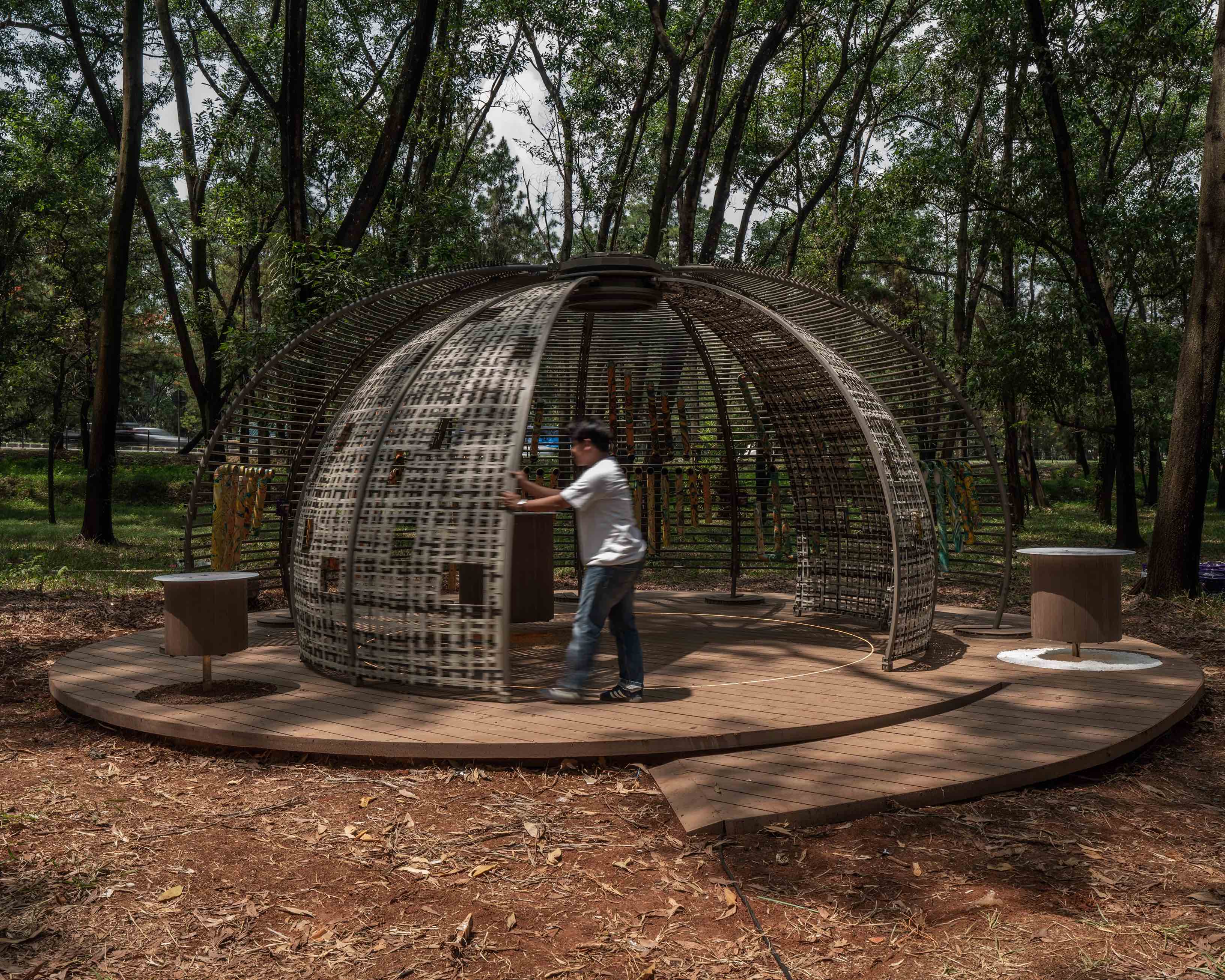
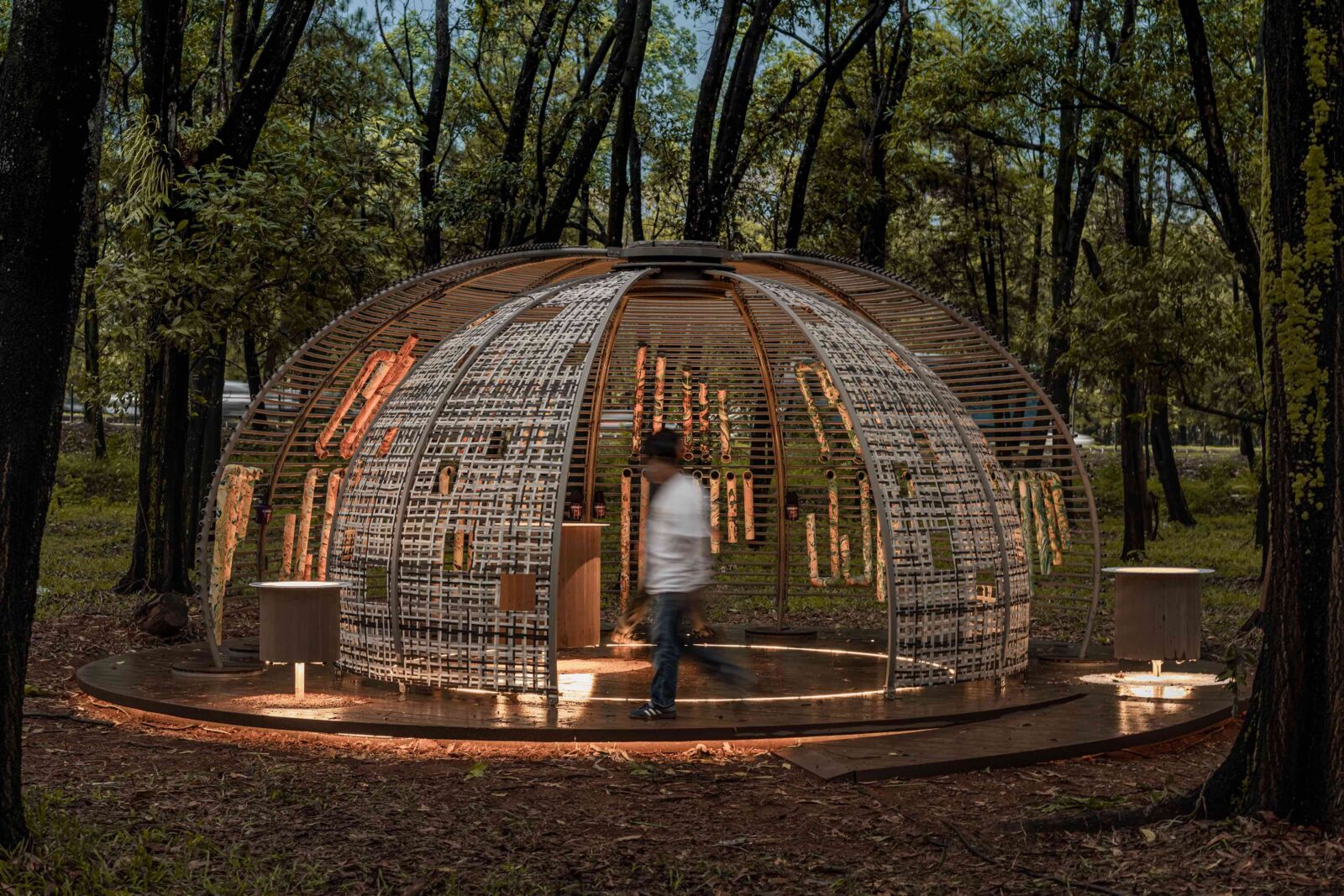
Kinematic Pavilion 2.0, Photo: Artehaus
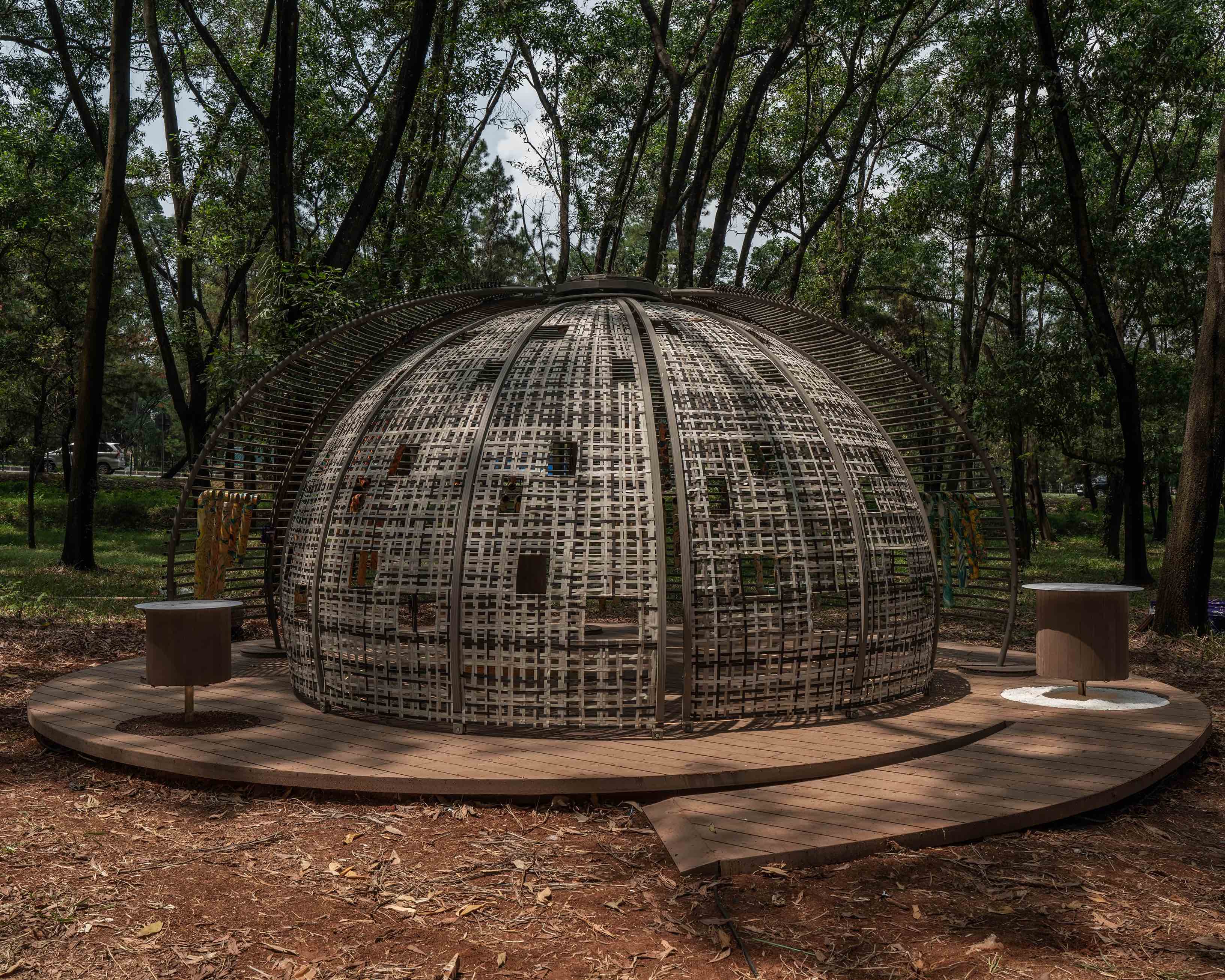
Kinematic Pavilion 2.0, Photo: Artehaus
〈キネマティック・パビリオン(Kinematic Pavilion)〉は、インドネシア・ジャカルタの高密度かつ躍動感あふれる都市特性と、公共空間の不足に対応するため開発された、移設可能な可動式パビリオンです。
アートと建築を融合させた建築・インテリアデザインスタジオ ヘレン・アグスティン・スタジオ(Helen Agustine Studio)が設計しました。
注目ポイント
- コミュニティの流動性や創造的活動を反映・促進する「可動式・適応型建築」
- 緑青銅板、再生プラスチック、籾殻などのアップサイクル・循環型素材の活用
- パフォーマンスに応答する舞台〈キネマティック・パビリオン1.0〉
- 建築自体がパフォーマーとなる楽器的建築〈キネマティック・パビリオン2.0〉
(以下、ヘレン・アグスティン・スタジオから提供されたプレスキットのテキストの抄訳)
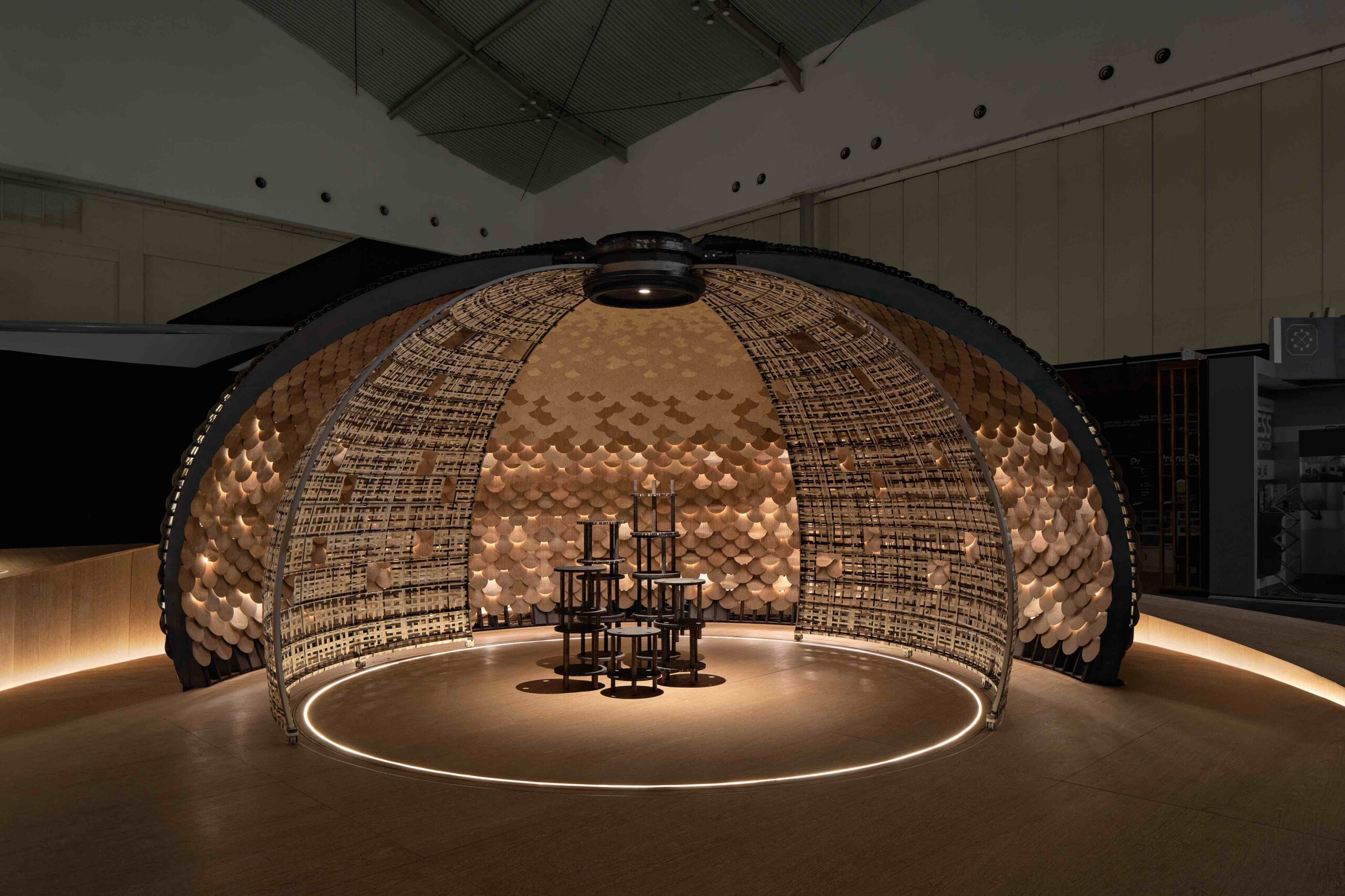
Kinematic Pavilion 1.0, Photo: Mario Wibowo
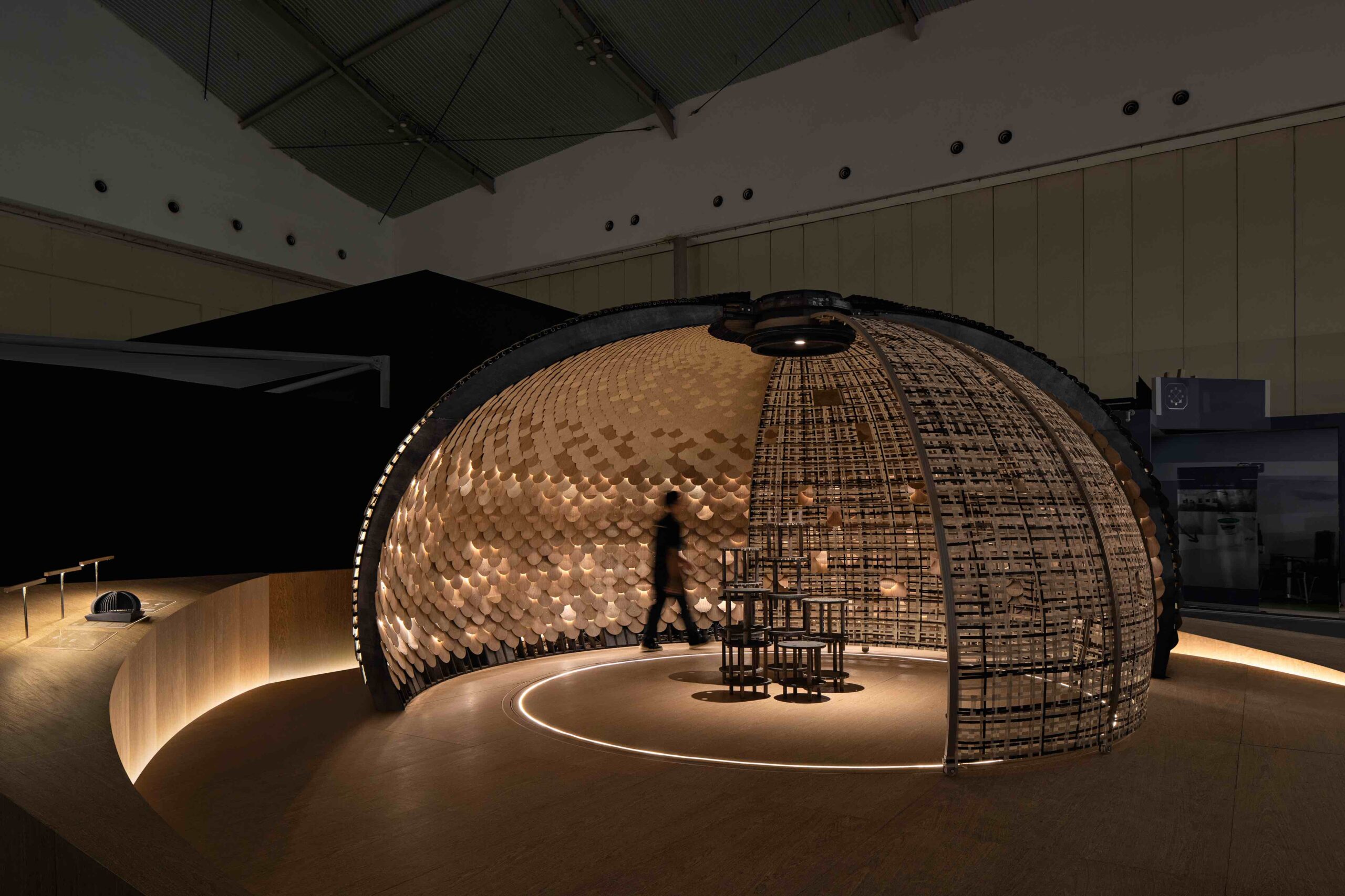
Kinematic Pavilion 1.0, Photo: Mario Wibowo
都市の流動性に応答する動きの建築
ジャカルタは高密度で躍動感にあふれる都市であり、その文化的エネルギーは常に変化している。その一方で、包括的な公共空間の不足が創造的活動の展開を制約しているのが現状である。
パフォーマンス、展示、教育のための会場はしばしば硬直的で制度的な印象を与え、コミュニティの流動的な特性を捉えきれていない。
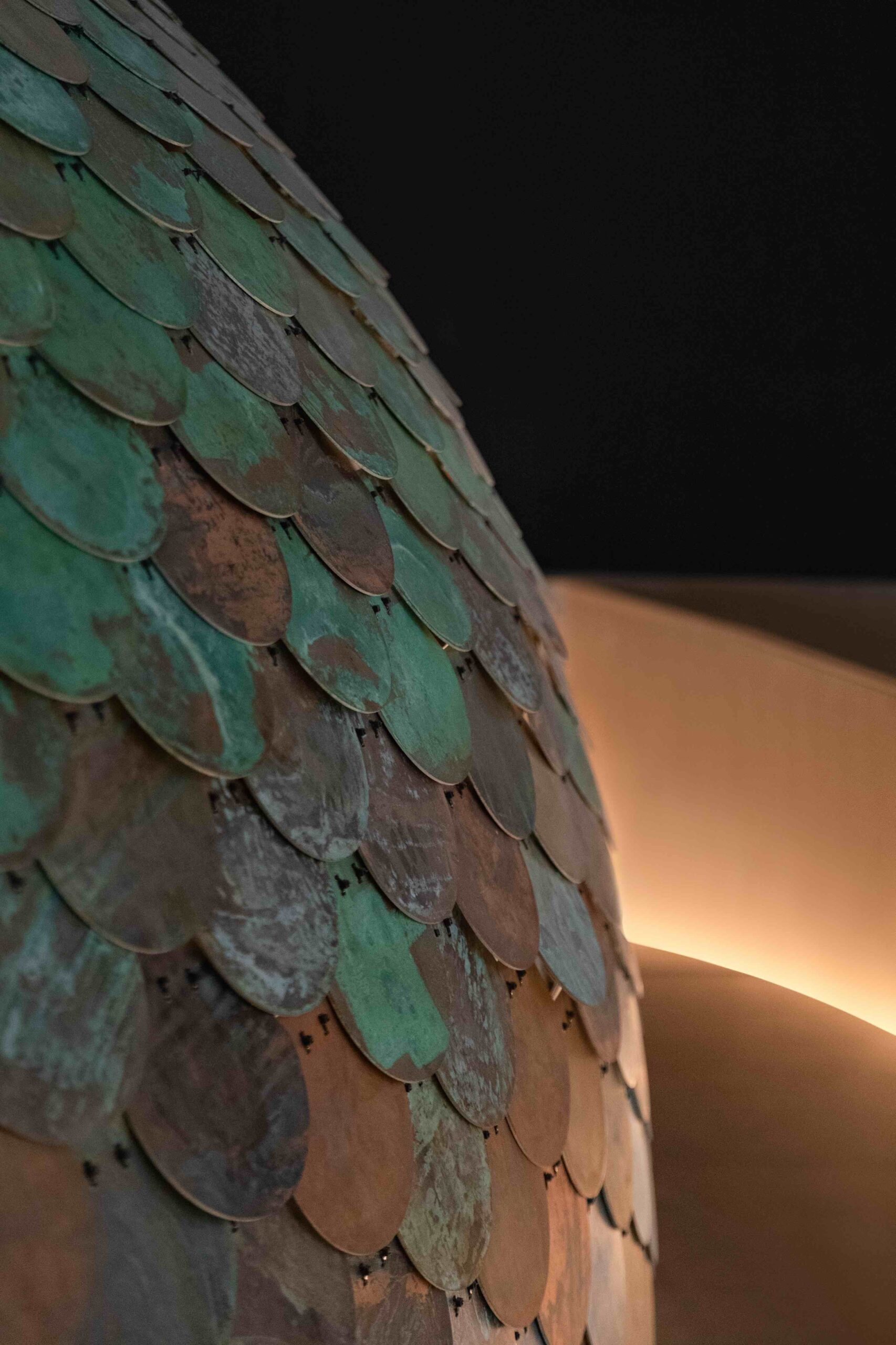
Kinematic Pavilion 1.0, Photo: Mario Wibowo
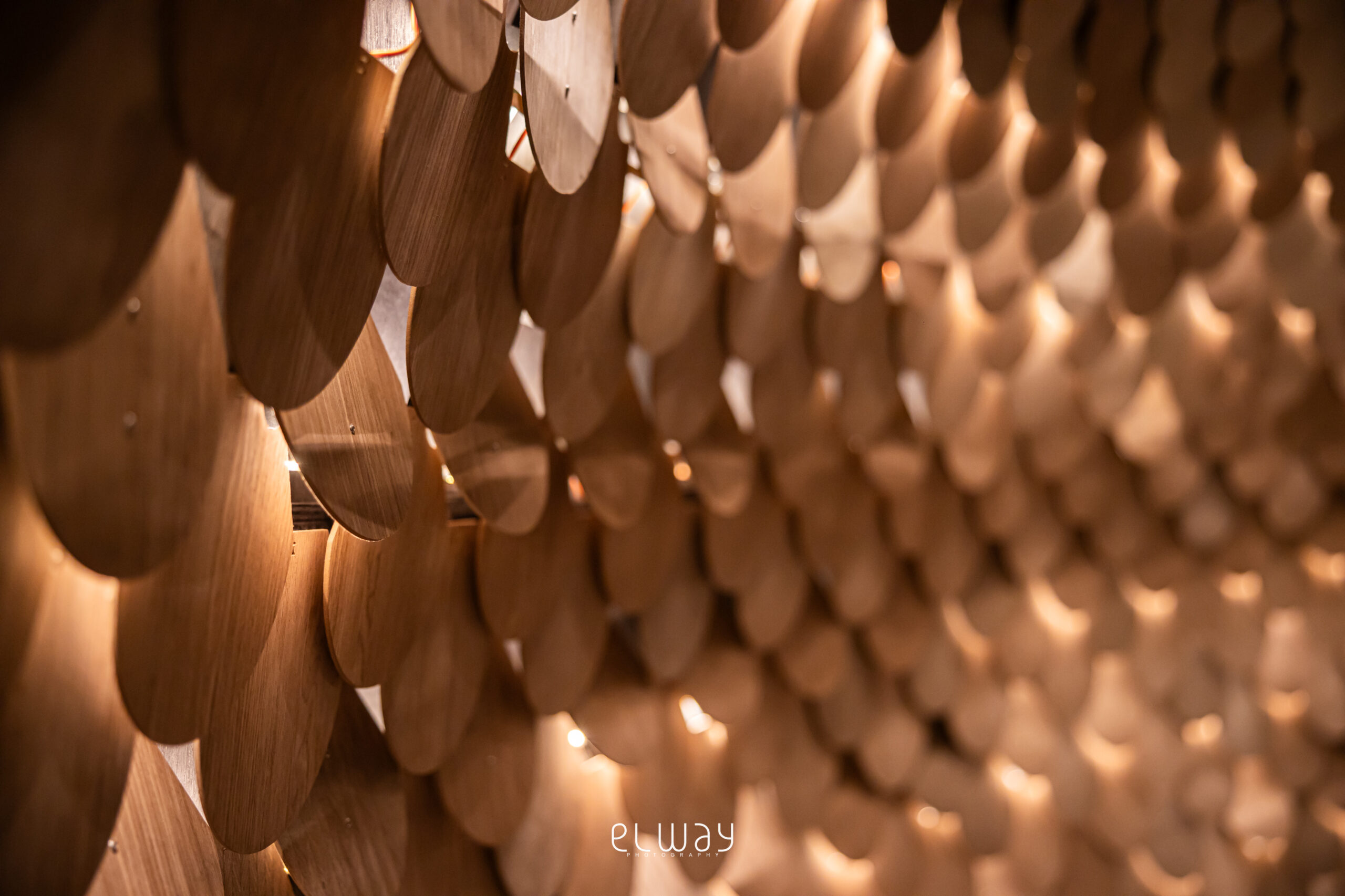
Kinematic Pavilion 1.0, Photo: Elway Studio
このような環境において〈キネマティック・パビリオン〉は、創造的活動へのアクセスを広げるための対抗策となる提案である。変容可能で可動式、多様な場所・機能・コミュニティに適応する建築インスタレーションとして構想された本作は、パフォーマンスの舞台から展示スペース、都市のランドマークからインタラクティブな楽器まで、複数の役割を果たす。
テクノロジーと職人技、持続可能な素材の探求を融合させつつ、ジャカルタの社会的・空間的現実に根ざしている。
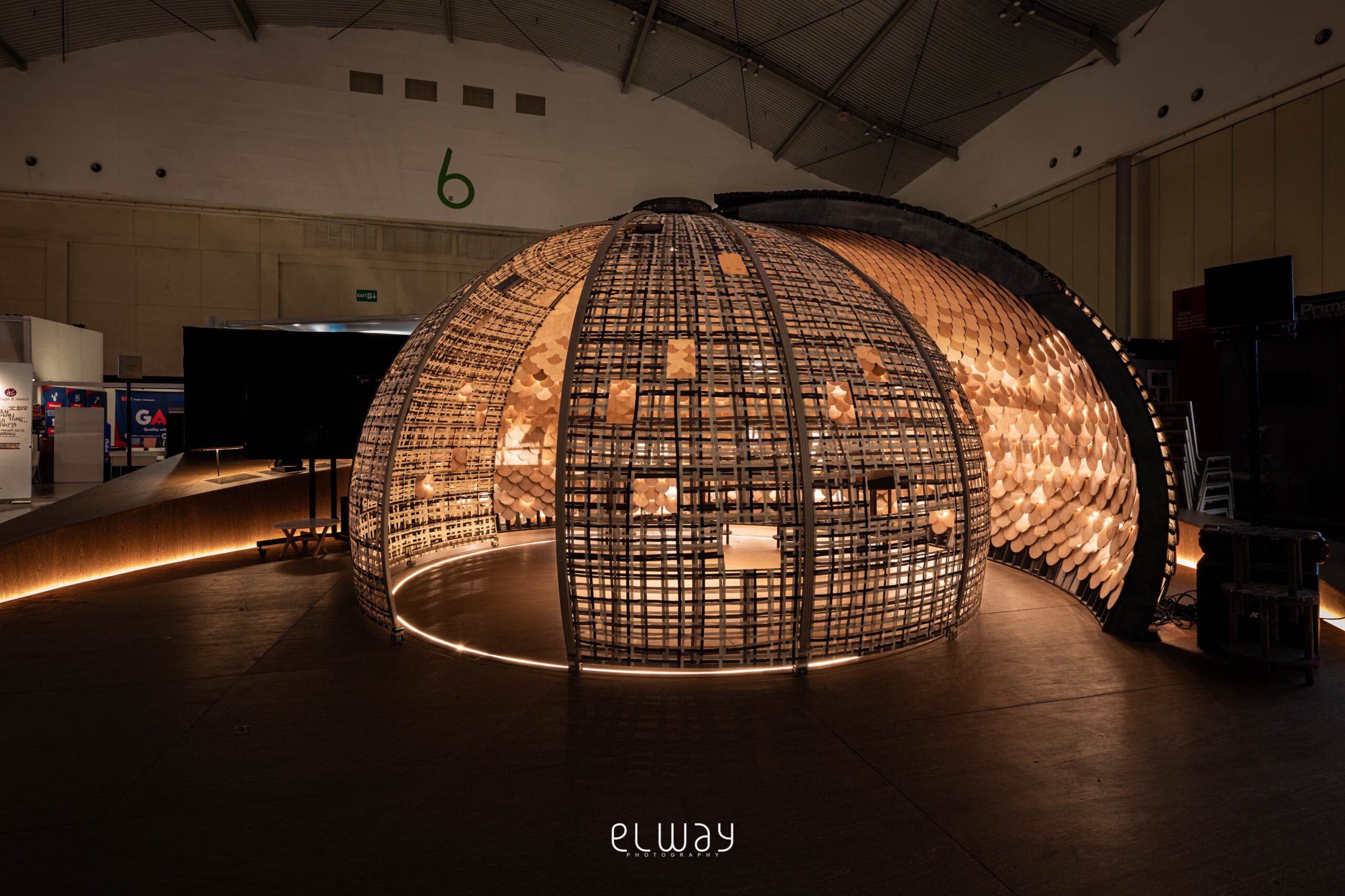
Kinematic Pavilion 1.0, Photo: Elway Studio
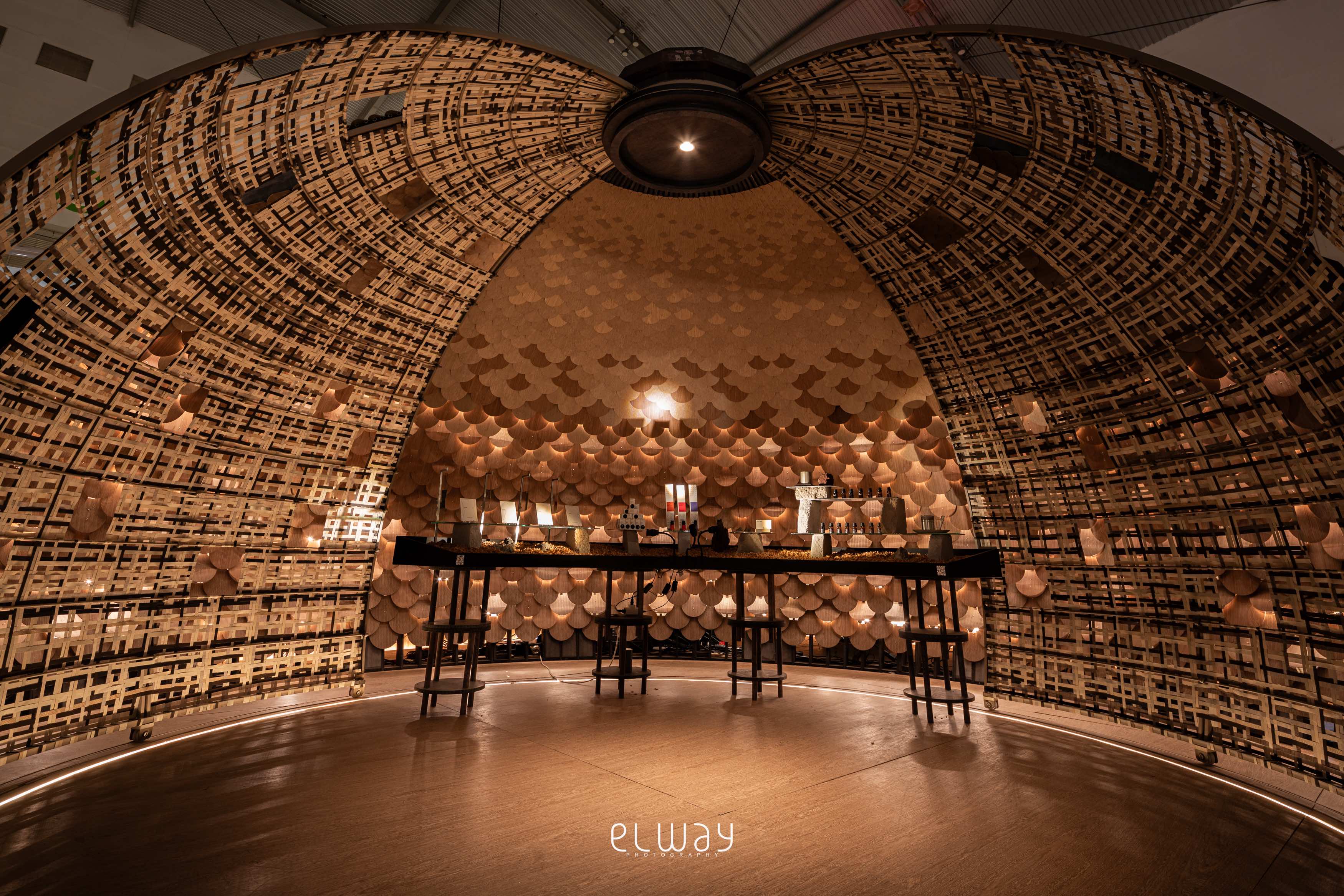
Kinematic Pavilion 1.0, Photo: Elway Studio
パフォーマンスに応答する舞台としてのパビリオン
〈キネマティック・パビリオン〉は当初、建築とダンスの関係性を探求する建築イベントのための移動式舞台として開発された。
ドーム形状は、開閉可能なカメラレンズのメカニズムに着想を得たものであり、没入型の360°空間体験を創出する。パフォーマーと来場者はインスタレーションの一部として動き、相互作用を通じて空間を形づくり、活性化させる。
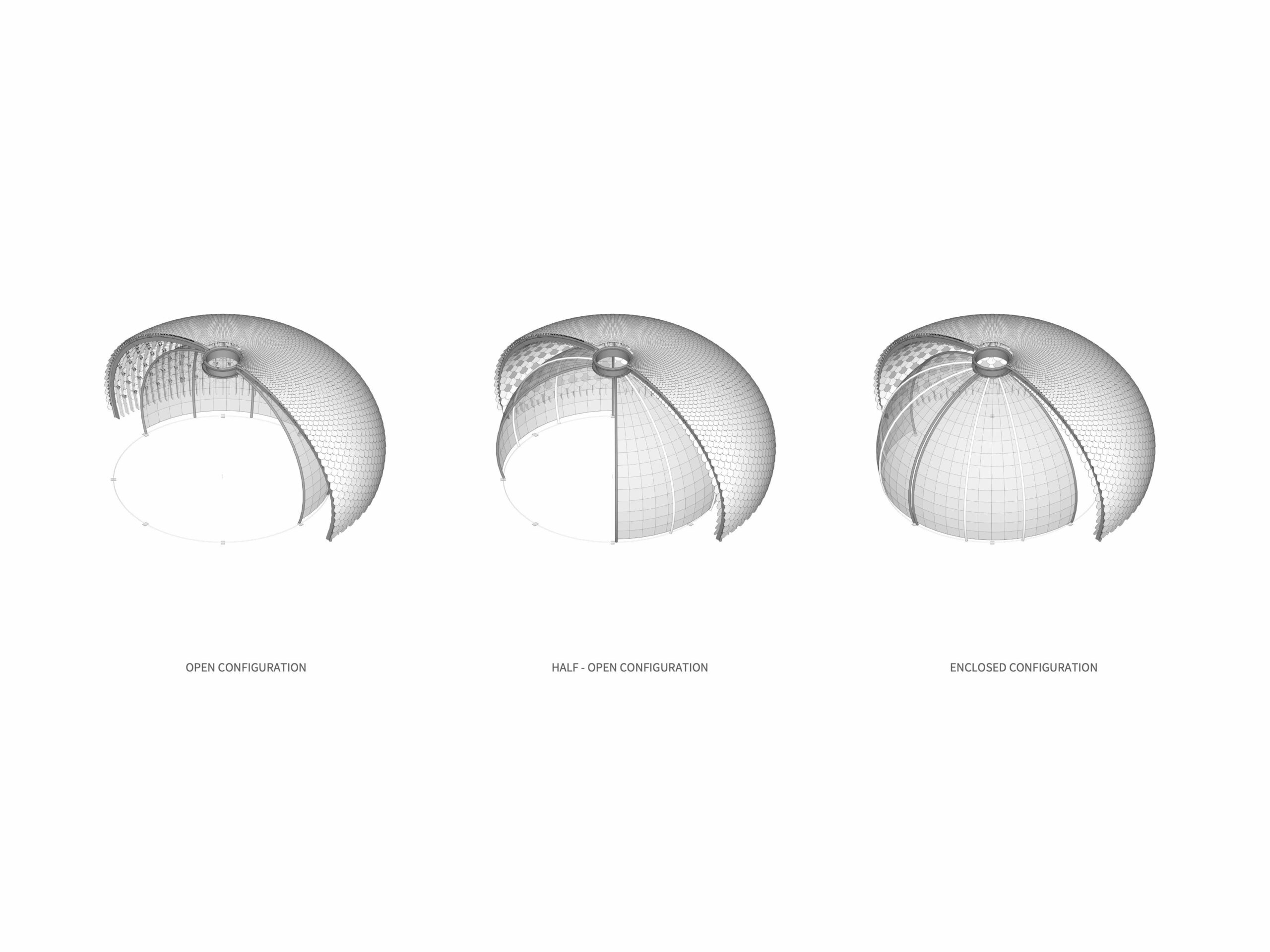
Kinematic Pavilion 1.0, Isometric configuration
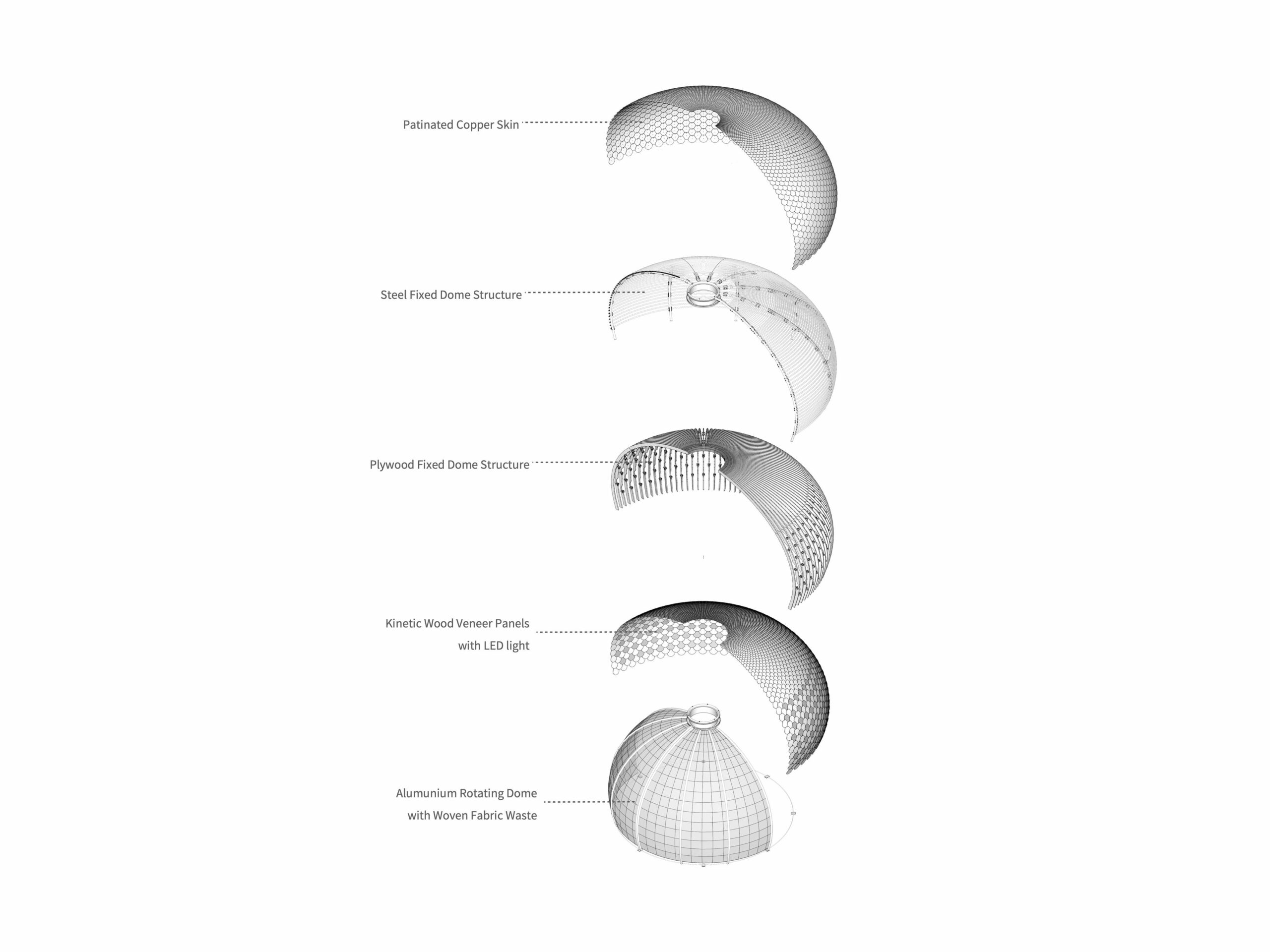
Kinematic Pavilion 1.0, Isometric exploded
内層スキンにはロボット式キネティックシステムが搭載され、音楽のリズムに合わせて動くようプログラムされており、パフォーマンスに応答する建築的背景を形成する。外層スキンには再生可能性を考慮して緑青銅板を採用し、日光を受けながら時とともに優雅に経年変化する。
また、廃棄されたロールブラインドを裁断し、回転するドーム構造に編み込むことで、軽やかな伝統的舞台幕を想起させる。
Video by Elway Studio
Video by Elway Studio
森にたたずむ楽器的建築としてのパビリオン
ビンタロの森へ移設された後、パビリオンは開放的なアナログ音楽建築として再構想された。ドームは再利用しつつ外皮を取り除くことで自然との直接的な関わりを可能にした。
新たに鉛フリーのPVCパイプでつくられたトンゴフォン(tongophone)打楽器が追加され、音楽家によって単純な音階に調律されたことで、年齢や背景を超えた自発的で包括的な音楽的協働を促した。
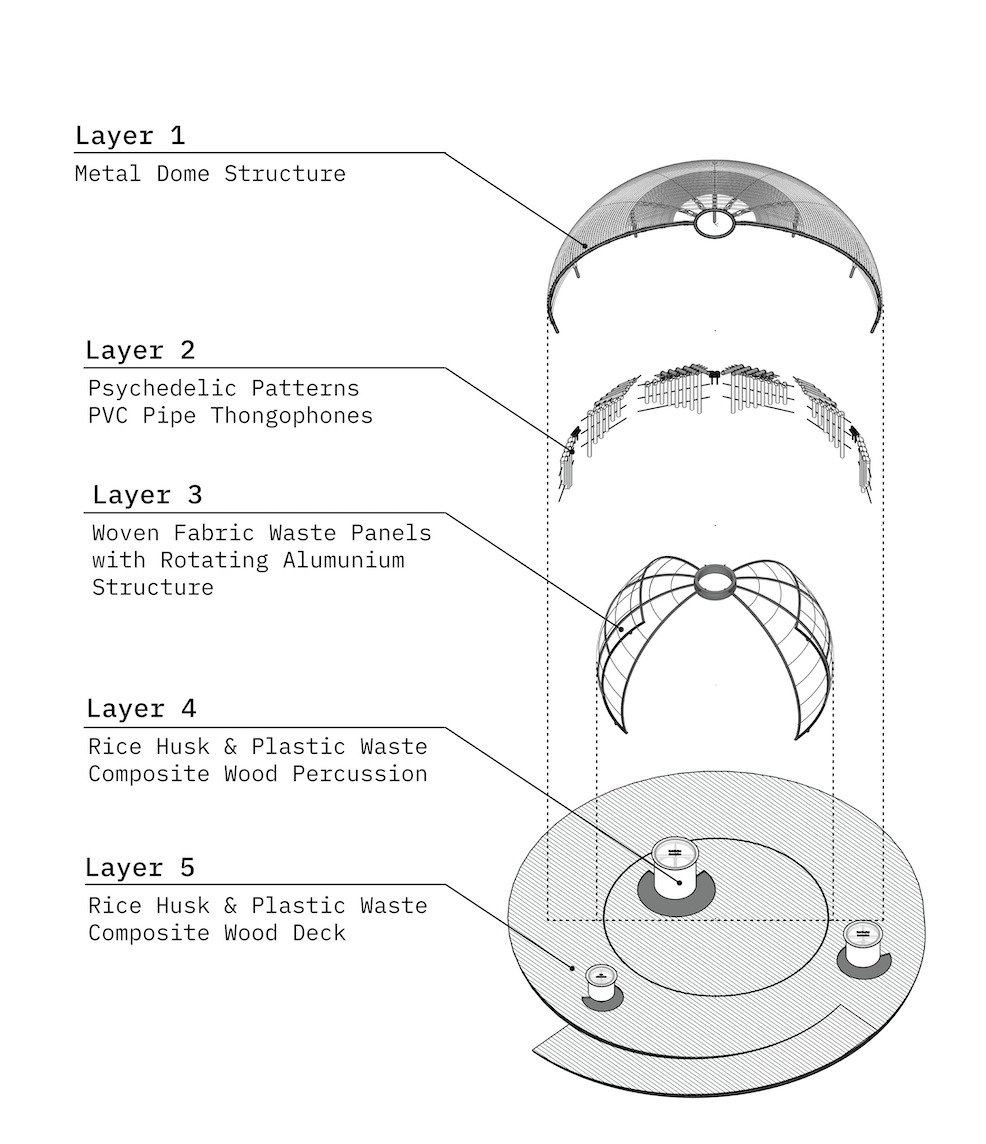
Kinematic Pavilion 2.0, Isometric
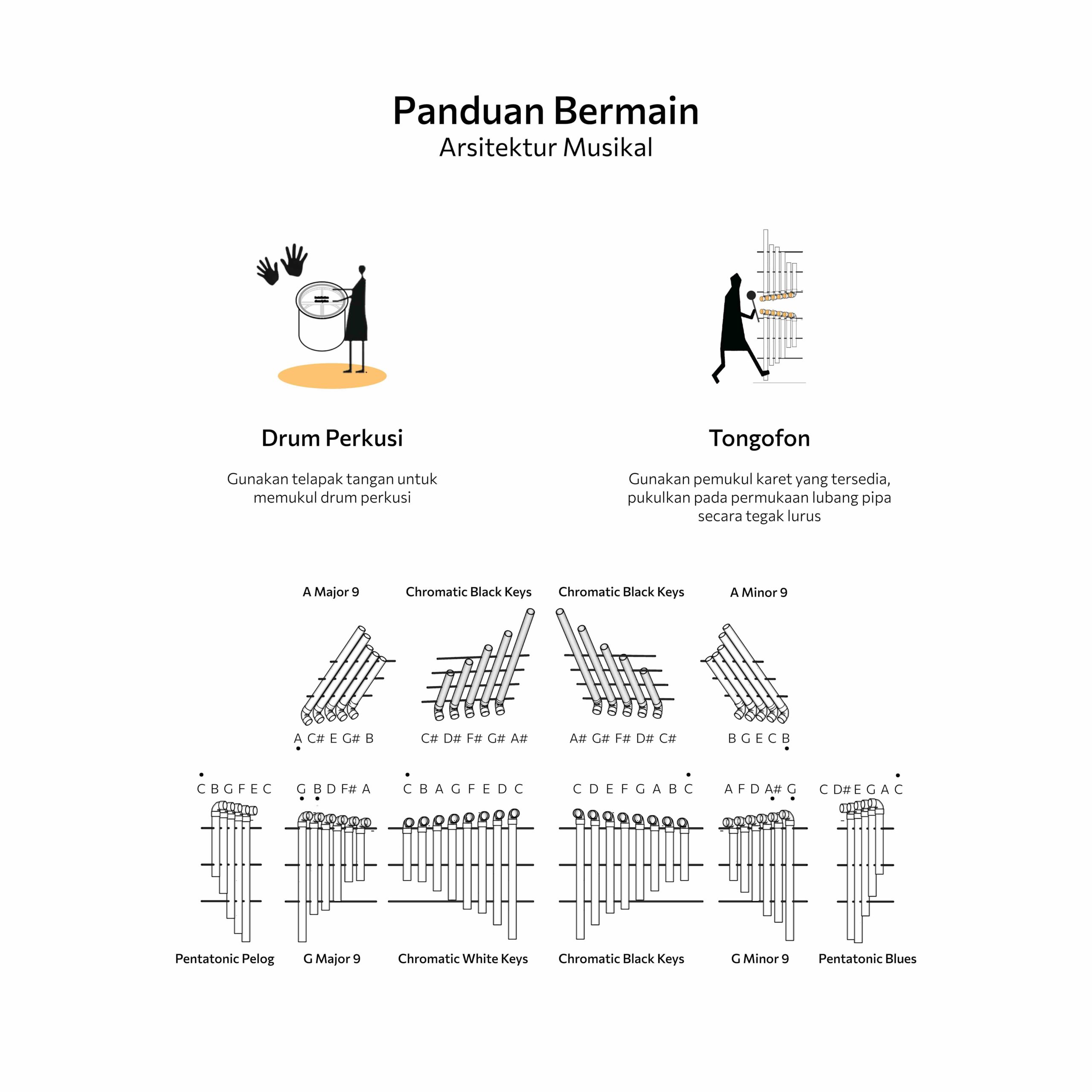
Kinematic Pavilion 2.0, Tongophone Musical Intrument Instruction_11zon
第2の生命を得たこのパビリオンは、パフォーマンスのための空間であると同時に、パフォーマーそのものでもある。再生プラスチックと籾殻でつくられたドラムや床材は、アップサイクル素材がもつ新たな音楽的・触覚的可能性を探求する。
素材だけでなく鋼構造体そのものも再利用され、異なる場所やコミュニティに応じて再設計・適応されることで、建築としての寿命と意味を再発明し続けている。
Video by Artehaus
適応と参加を軸とする新たな建築のかたち
〈キネマティック・パビリオン〉は、建築を静的で機能特化したものとみなす従来の概念に挑戦し、インドネシアにおける適応的かつ包括的なデザインの先進的モデルを提示する。空間が限られ、文化的生活が軽視されがちな都市環境において、利用者が実験と文化的活動を展開できる進化的プラットフォームを提供している。
本作はスペクタクルに依存せず、工芸的感性、触覚的相互作用、循環的素材利用といったローテクの知恵を重視する。編みブラインド、再生プラスチック、PVCパイプといった日常素材は、持続可能でアクセスしやすい構成要素として再解釈されている。
建築・音楽・コミュニティ参加を融合させることにより、〈キネマティック・パビリオン〉はデザインを単なる物体から、地域社会と深く結びついたインタラクティブな体験へと変容させる。
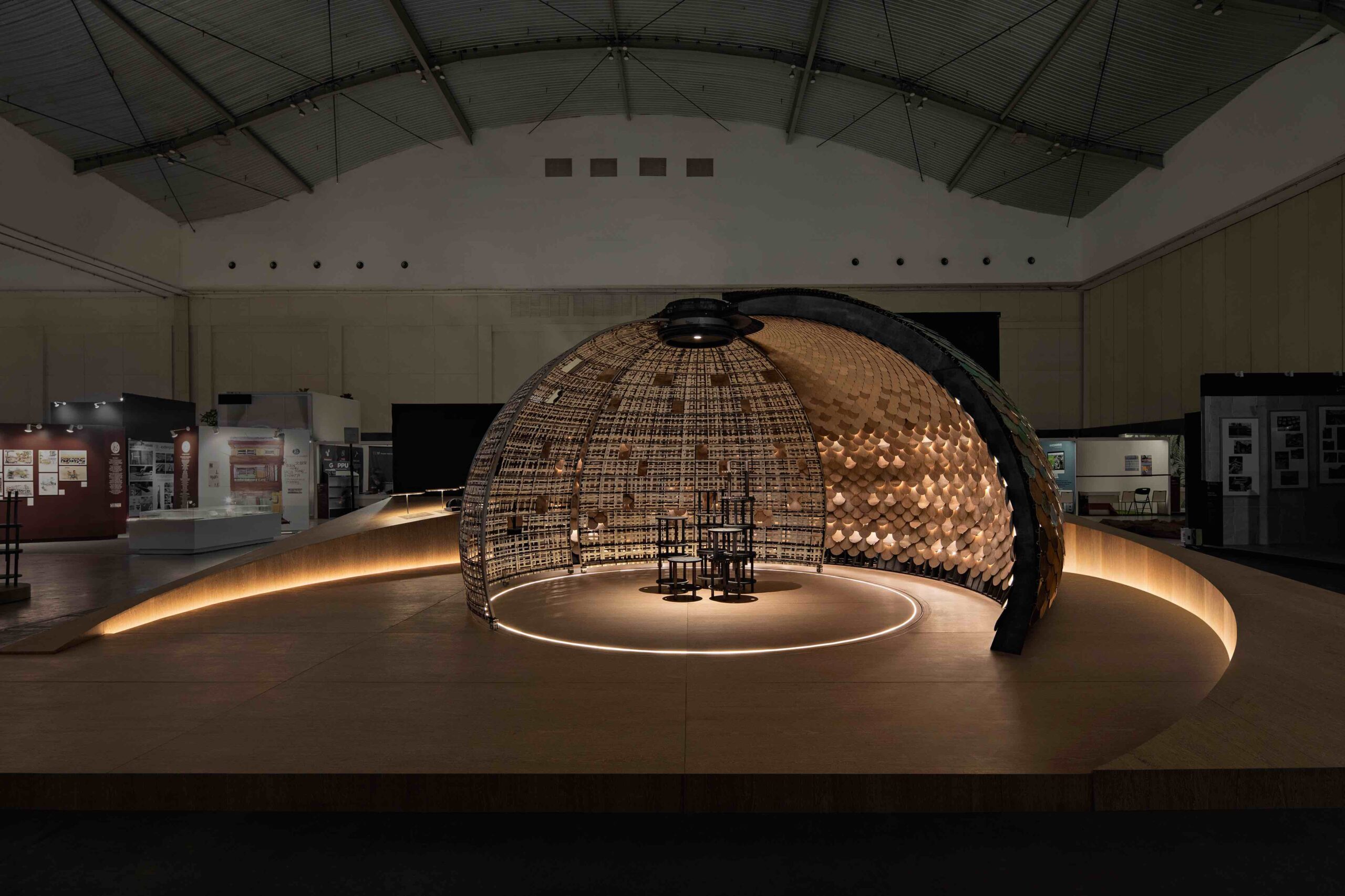
Kinematic Pavilion 1.0, Photo: Mario Wibowo
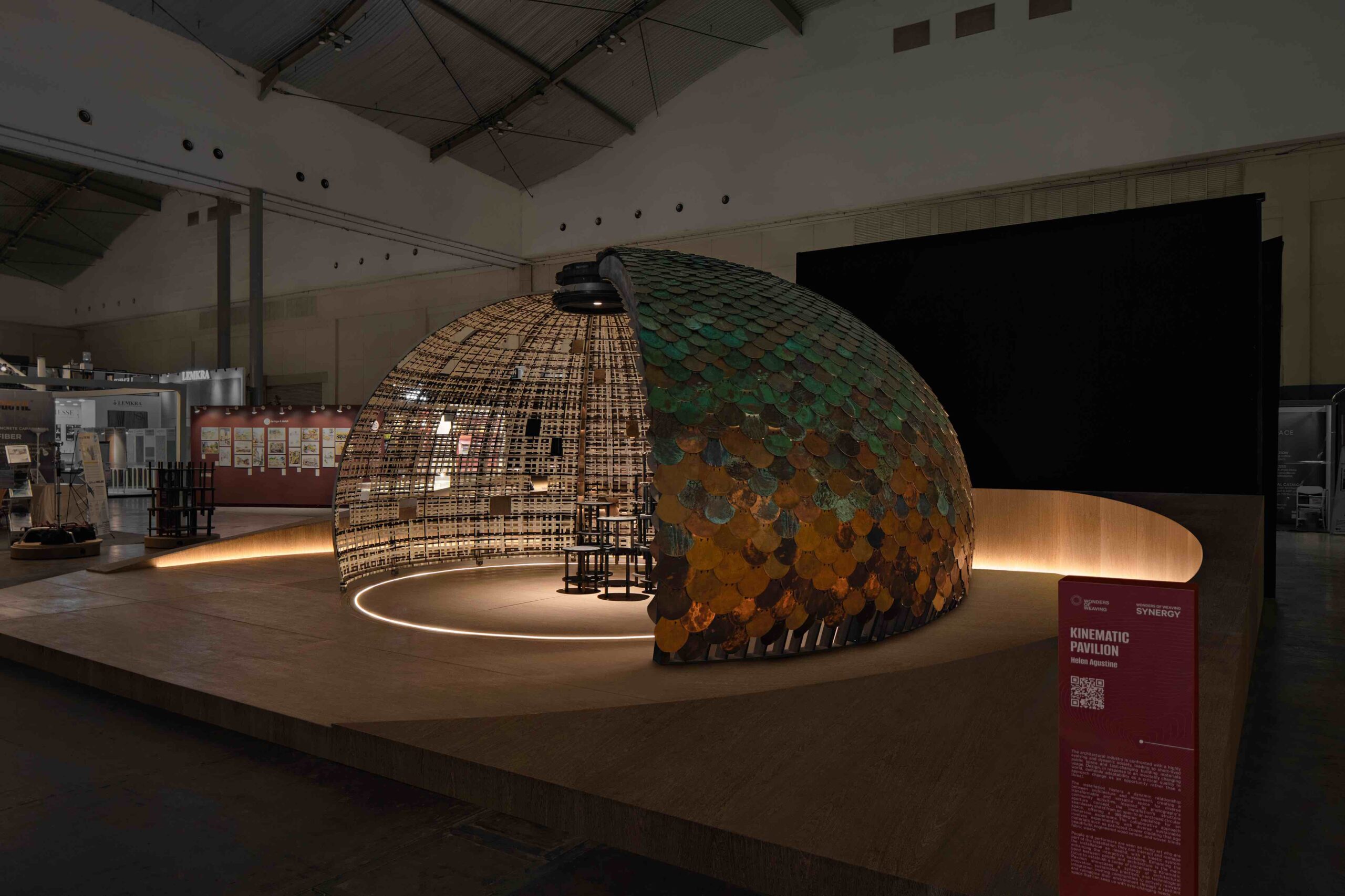
Kinematic Pavilion 1.0, Photo: Mario Wibowo
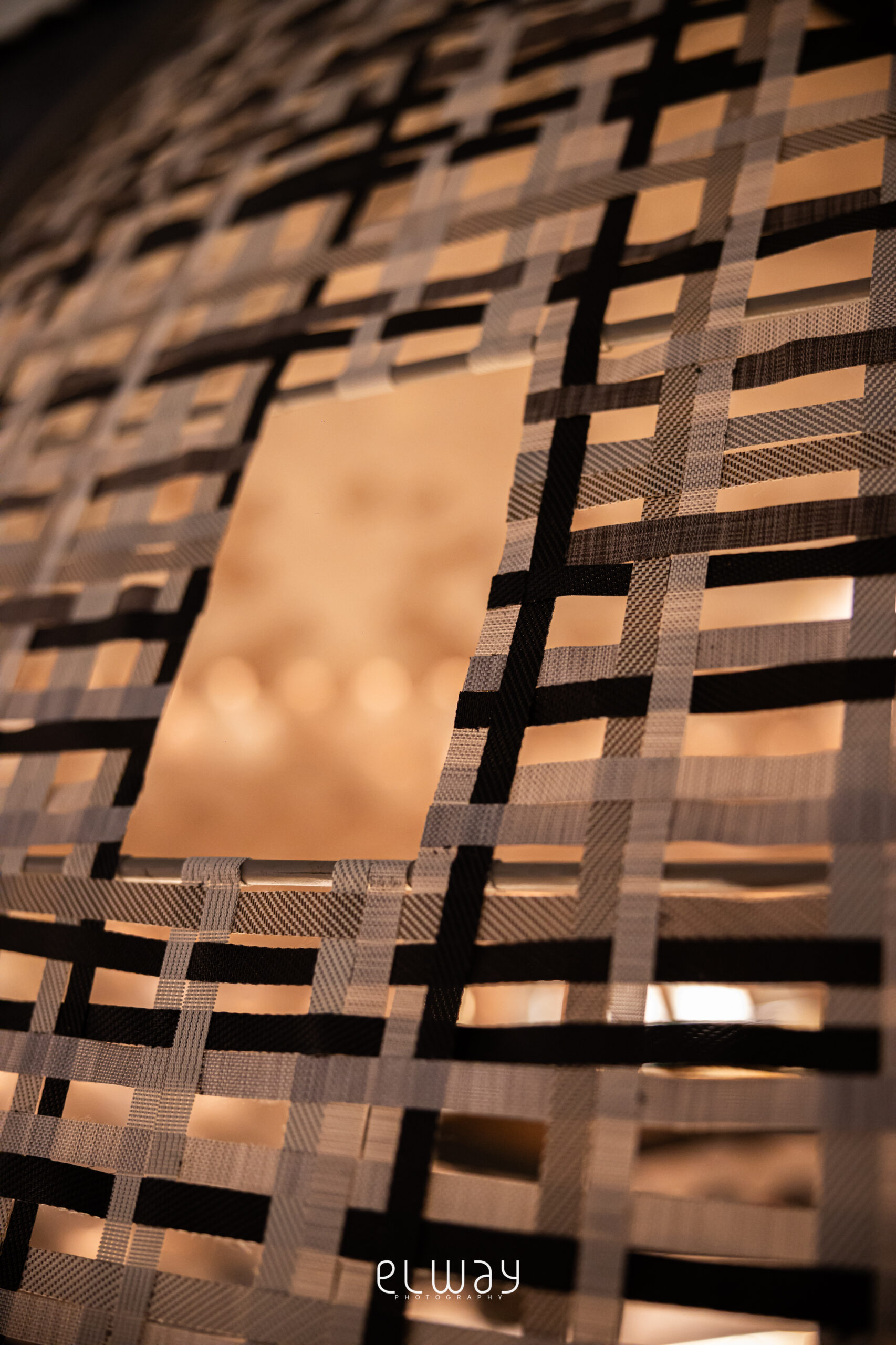
Kinematic Pavilion 1.0, Photo: Elway Studio
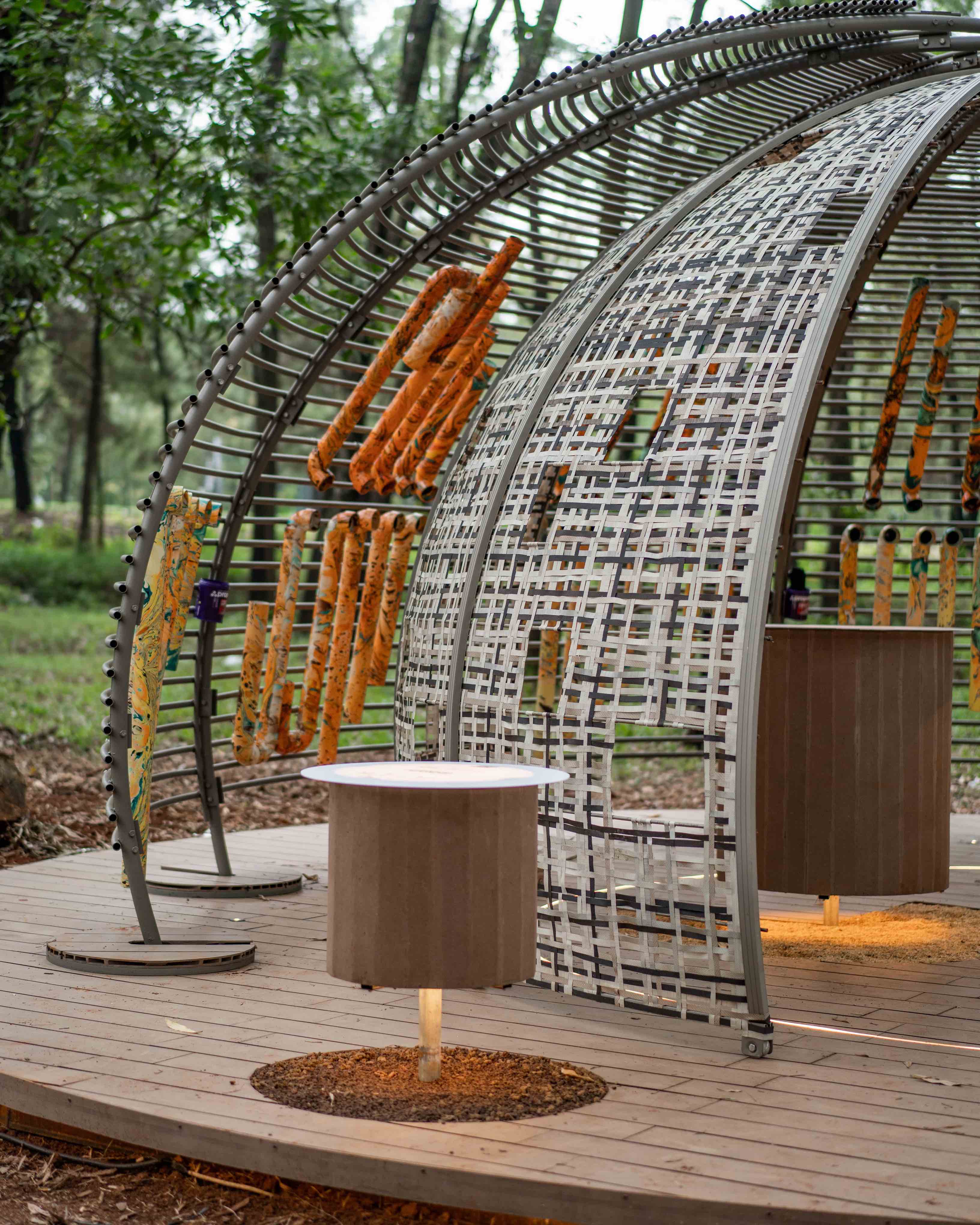
Kinematic Pavilion 2.0, Photo: Artehaus
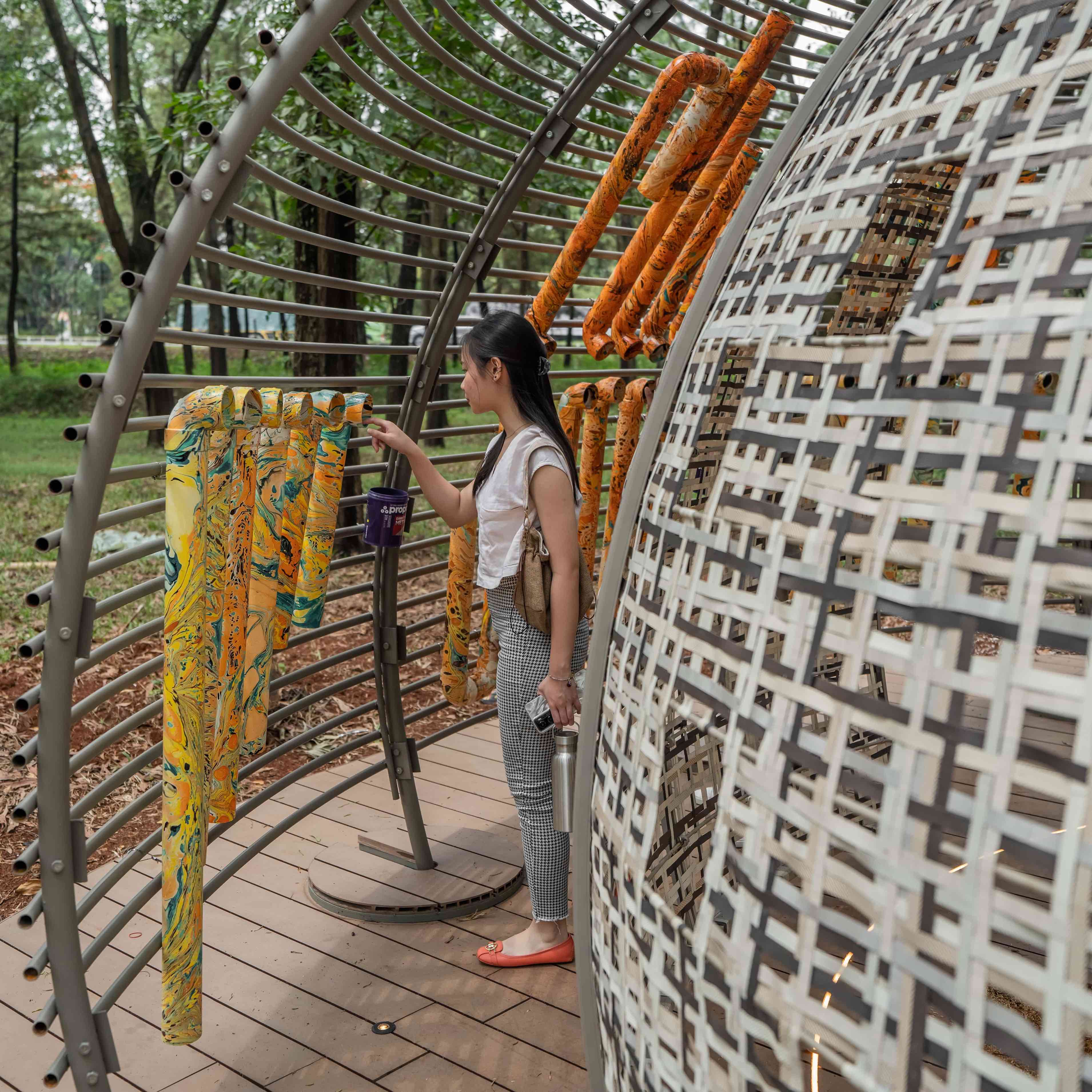
Kinematic Pavilion 2.0, Photo: Artehaus
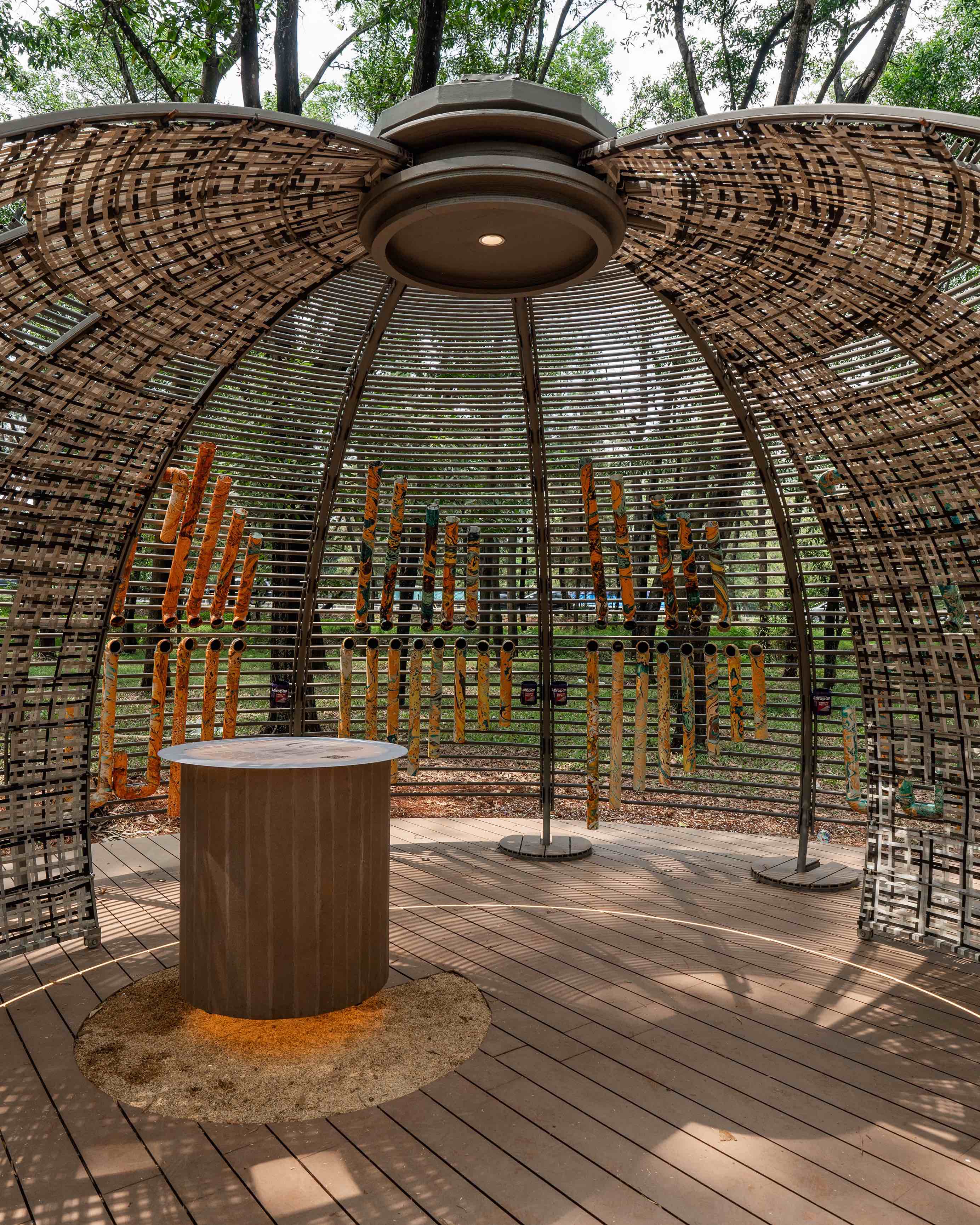
Kinematic Pavilion 2.0, Photo: Artehaus
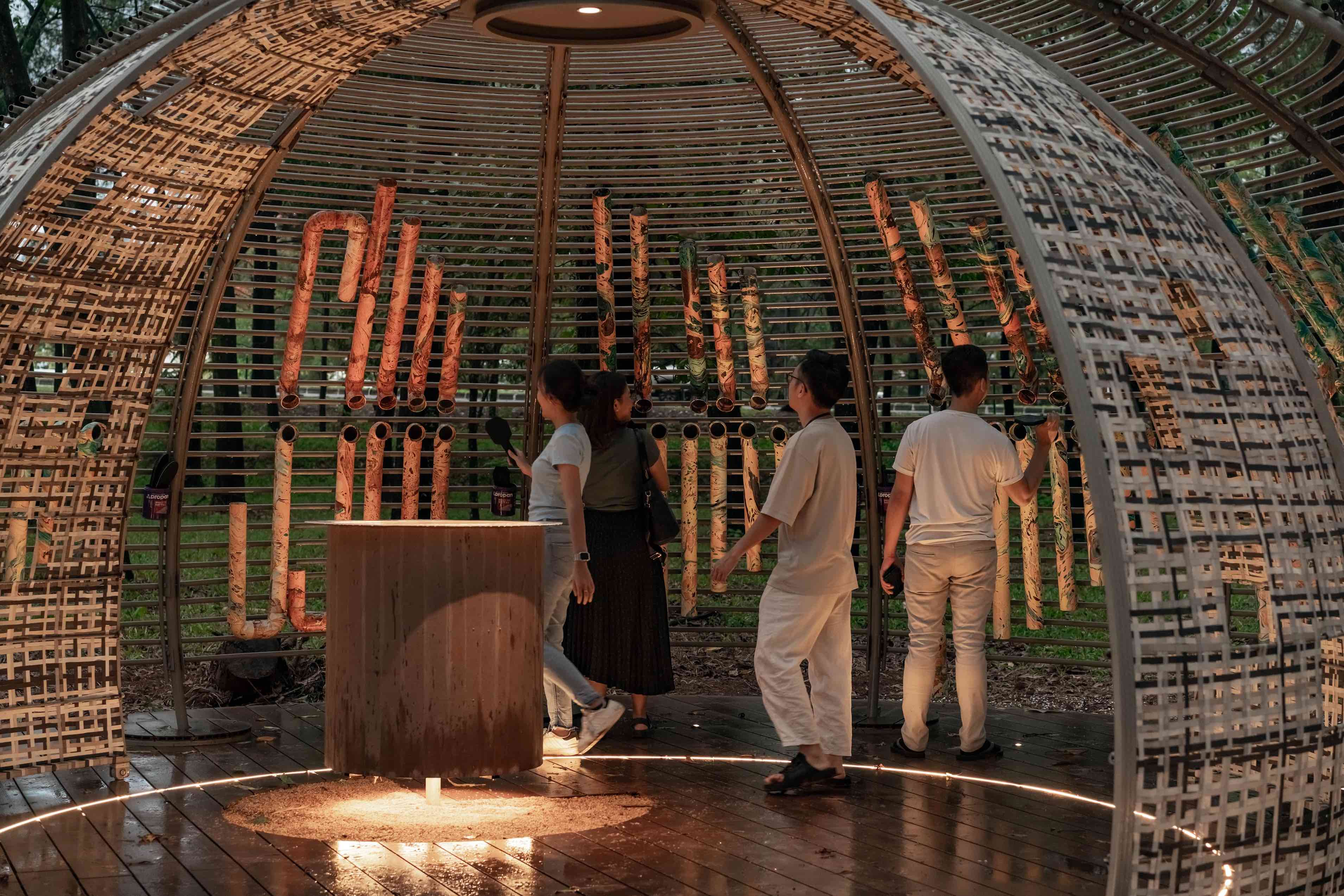
Kinematic Pavilion 2.0, Photo: Artehaus
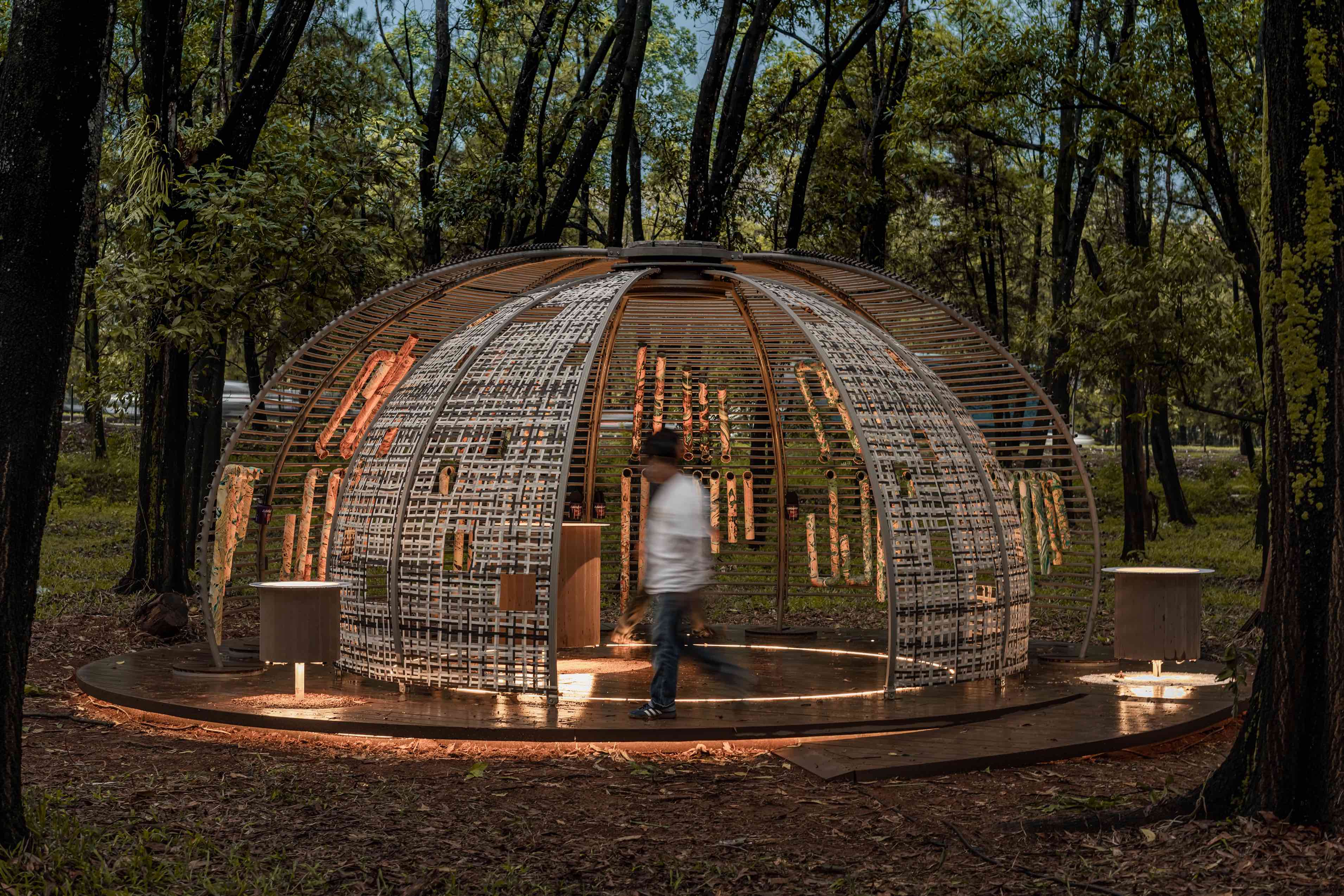
Kinematic Pavilion 2.0, Photo: Artehaus
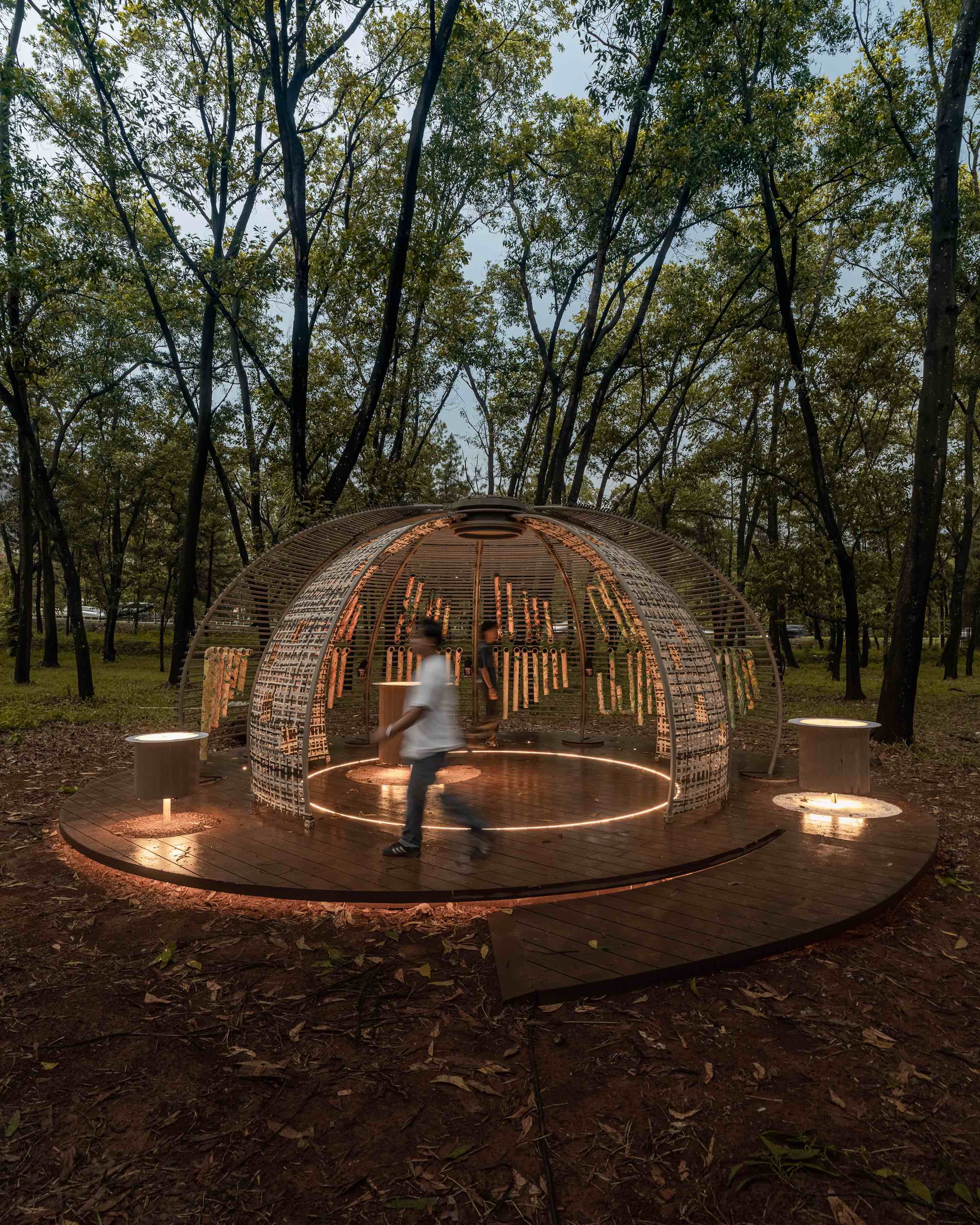
Kinematic Pavilion 2.0, Photo: Artehaus
以下、ヘレン・アグスティン・スタジオのリリース(英文)です。
Project Name: Kinematic Pavilion
Project Type: Architectural Installation
Location: Jakarta, Indonesia
Completion: 22 February 2024
Size Area: 80 m²Client: Rootslab & BYO Living
Musician Collaborator: Greybox
Contractor: Rootslab
Lighting Consultant: ErreLuce
Kinetic System: Kudos
Alumunium: Estica
Blind Waste: Sandei
Weaving : BYO Living
Wood Veneer: MUKA
Wood finishes: Protego Estica
Plywood: Prima Wana Plywood
Reclaimed PVC Pipes: Pralon
Outdoor Deck: Plana Wood
Stage Lighting: Convert Id
Performance: The Ballet Academy, GreyboxDescription (480 words):
Kinematic Pavilion – Architecture in Motion
Jakarta is a city defined by density and dynamism, its cultural energy constantly shifting, yet constrained by a lack of inclusive public spaces. Venues for performance, exhibition, or education often feel rigid and institutional, unable to capture the fluid character of its communities. In a city where creative activities often lack accessible infrastructure, Kinematic Pavilion offers a counterpoint to this challenge, an architectural installation that is transformative, movable, and adaptable to different sites, functions, and communities. The pavilion serves multiple functions from performance platform to exhibition stage, from urban landmark to interactive instrument. It merges technology, craftsmanship, and sustainable material exploration while remaining grounded in the social and spatial realities of Jakarta.
From Performance Stage to Musical Architecture
Kinematic Pavilion was first developed as a mobile stage for an architectural event, exploring the relationship between architecture and dance. Its dome-shaped form was inspired by the mechanics of a camera lens that capable of opening and closing to create immersive 360° spatial experiences. Performers and visitors became part of the installation, shaping and activating the space through movement and interaction. Robotic & kinetic system were attached to the inner layer skin, programmed to move in rhythm with music, creating a responsive architectural backdrop for performance. Patinated copper plates were chosen for their recyclability as the outer skin of the installation, which will age gracefully over time when exposed to the sun. Discarded roller blinds were cut and woven into rotating domes structure, recalling the lightweight traditional stage curtains.
When relocated to a forest site in Bintaro, the pavilion was reimagined as an open, analog musical architecture. The dome was reused, but its skin was removed to engage directly with nature. New addition such as tongophone percussion instruments made from lead-free PVC pipes, tuned by musicians to simple scales, to encourage spontaneous and inclusive musical collaboration across ages and backgrounds. In its second life, the pavilion became both performance space and the performer, an evolving, multisensory cultural experience. Drums and flooring made from recycled plastic and rice husks explore new musical and tactile qualities of upcycled materials. This installation not only reuses material, but also reuses the steel structure itself, adapting and redesigning it across different locations and communities, extending its life and meaning through reinvention.
Kinematic Pavilion proposes a progressive model of adaptive, inclusive design in Indonesia, challenging the idea of architecture as static or function-specific. In cities where space is scarce and cultural life often overlooked, it offers a evolving platform for experimentation and cultural life of its users. Rather than relying on spectacle, the pavilion embraces low-tech sensibilities rooted in craft, tactile interaction, and circular material use. Everyday materials such as woven blinds, recycled plastics, and PVC pipes are reimagined into sustainable, accessible components. By merging architecture, music, and community engagement, it transforms design from object into interactive experience that deeply connected to community.
ヘレン・アグスティン・スタジオ 公式サイト
https://helenagustine.studio

![[Report]RUI Architectsが可動モジュールを設計して松竹のアートスペースをリニューアル、柿落とし展「継承のトランジション」の会場デザインも担当](https://magazine-asset.tecture.jp/wpcms/wp-content/uploads/2026/07/24141011/20260713shutl_press11-01309-c-900x629.jpeg)
![[Interview]BIM図面審査がスタート! さまざまな設計者のニーズに応えるVectorworksによる「限界のないデザイン」の世界](https://magazine-asset.tecture.jp/wpcms/wp-content/uploads/2026/07/13084316/rinterview_vectorworks_056-e1784200974912-900x555.jpg)