釜山の水辺に現れたスノヘッタの最新作 - 2つの曲線が織りなす〈釜山オペラハウス〉の建設写真が公開
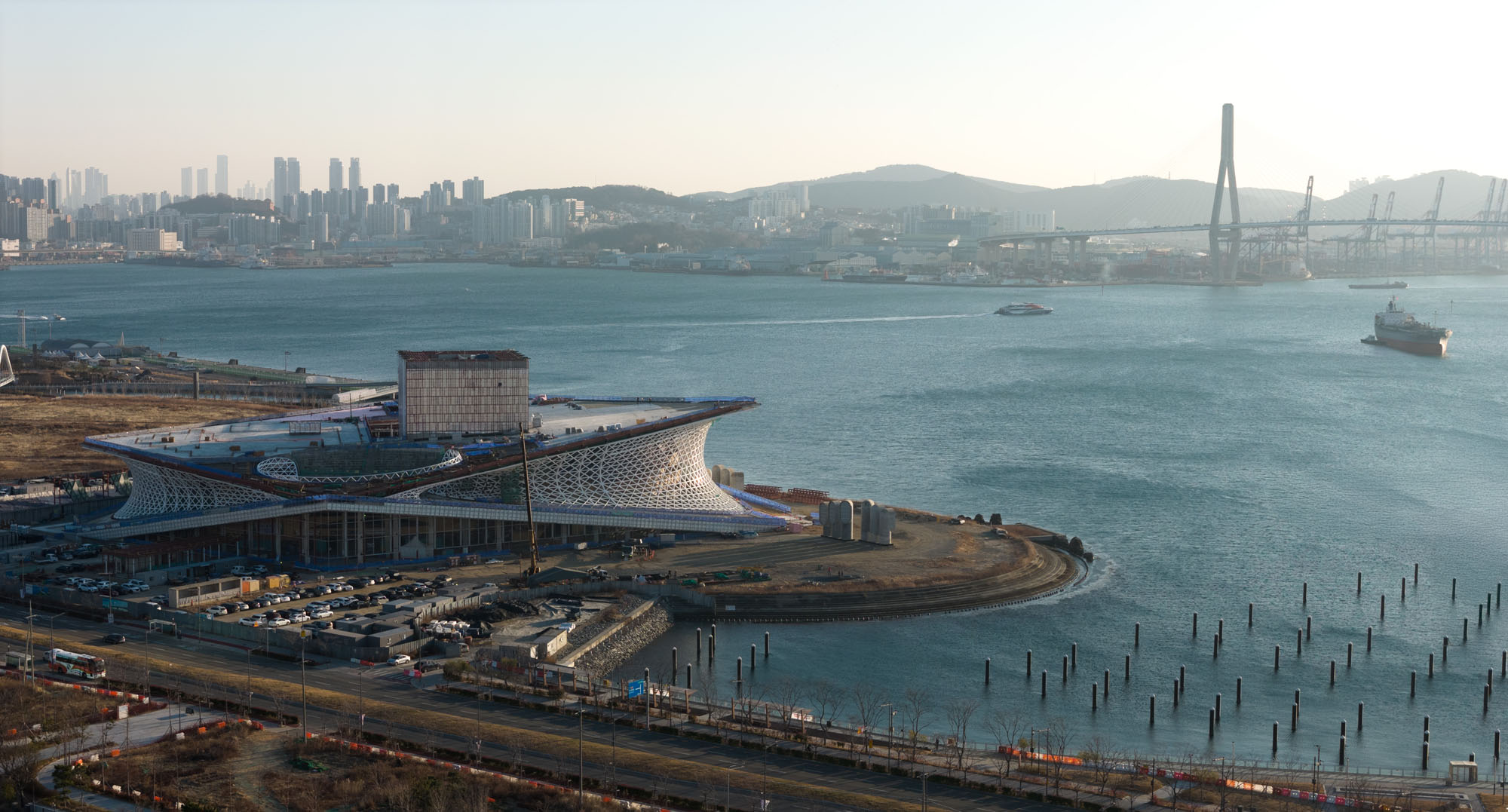
©︎ StudioSZ Photo | Justin Szeremeta
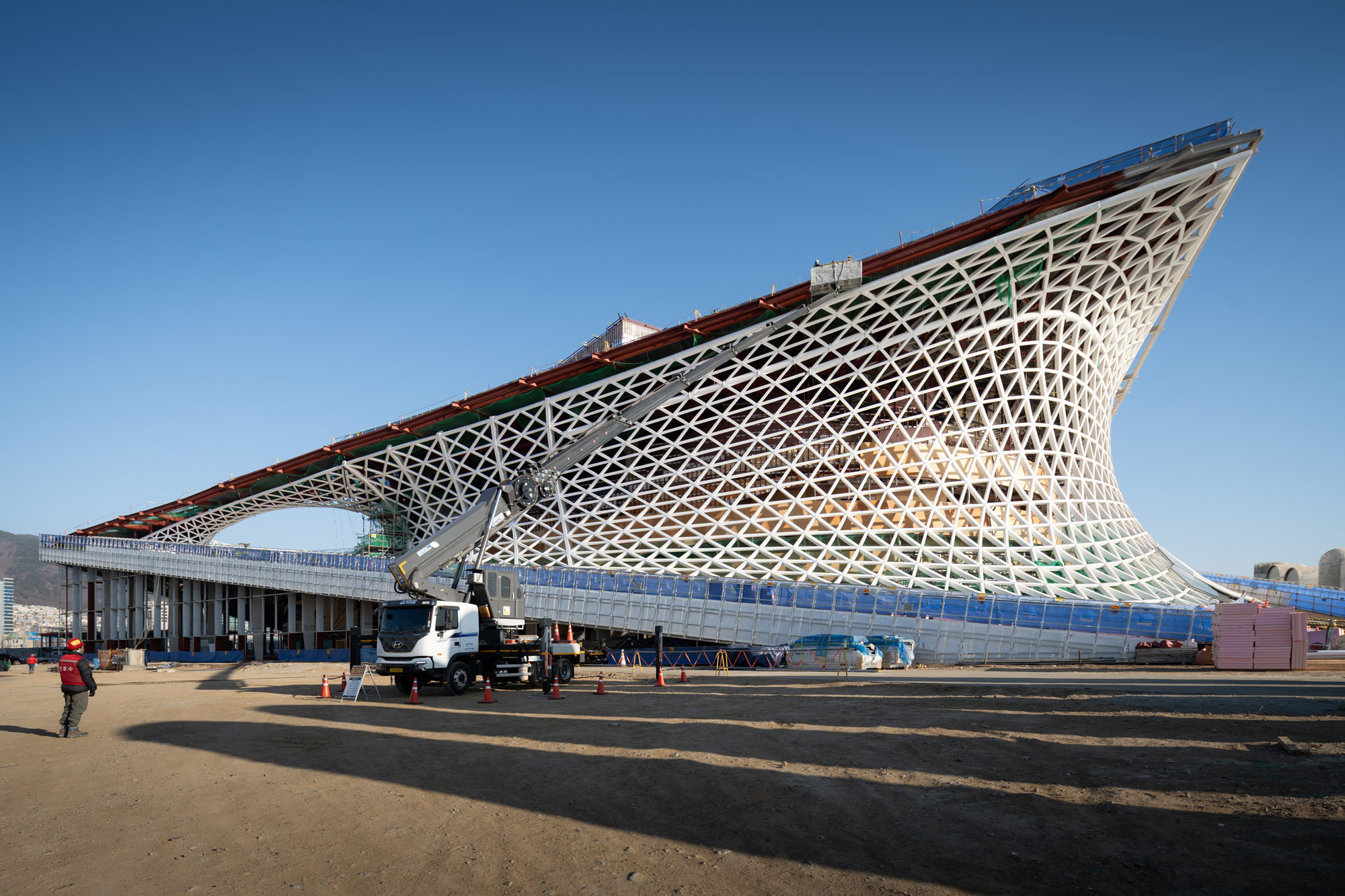
©︎ StudioSZ Photo | Justin Szeremeta
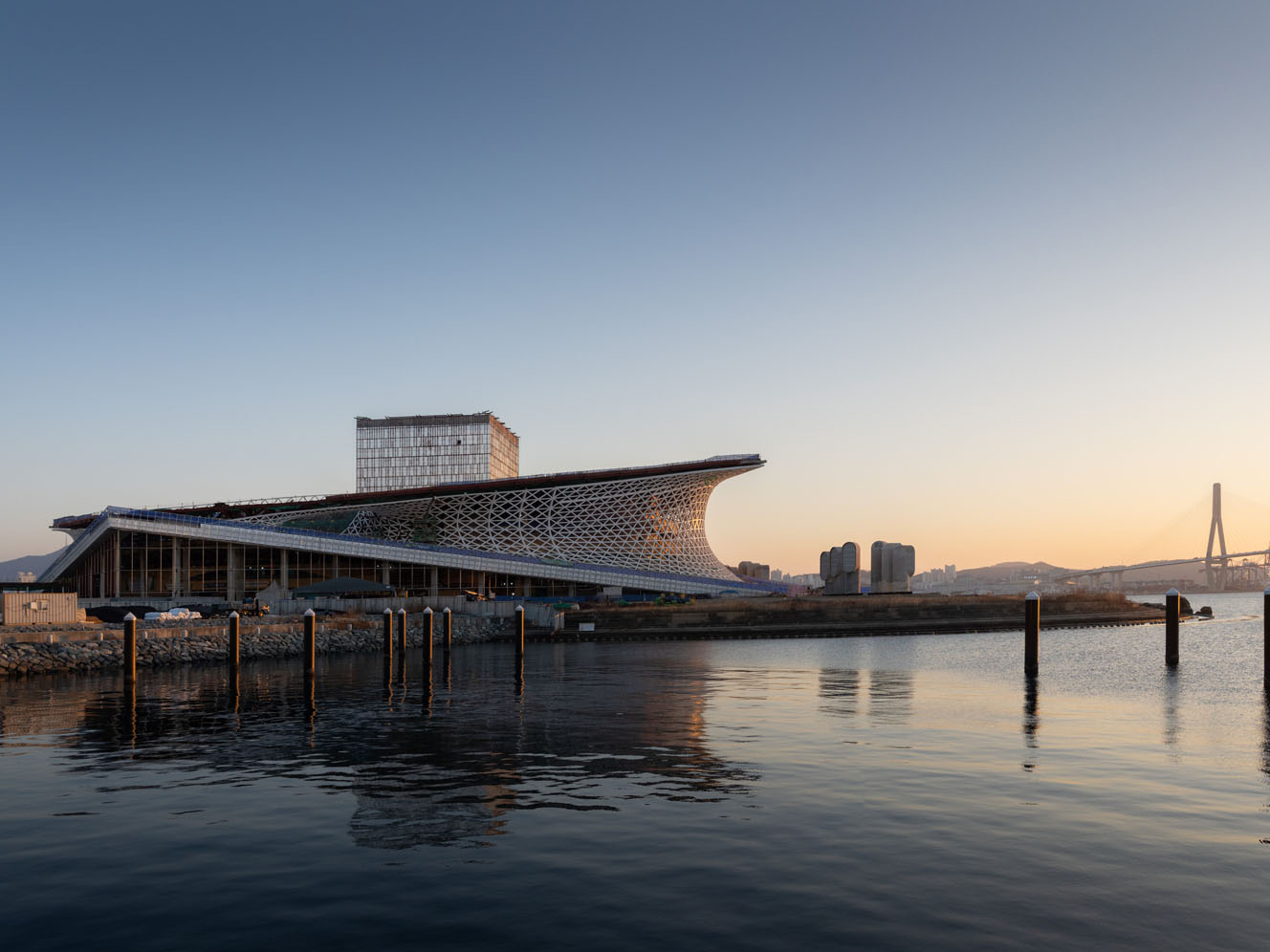
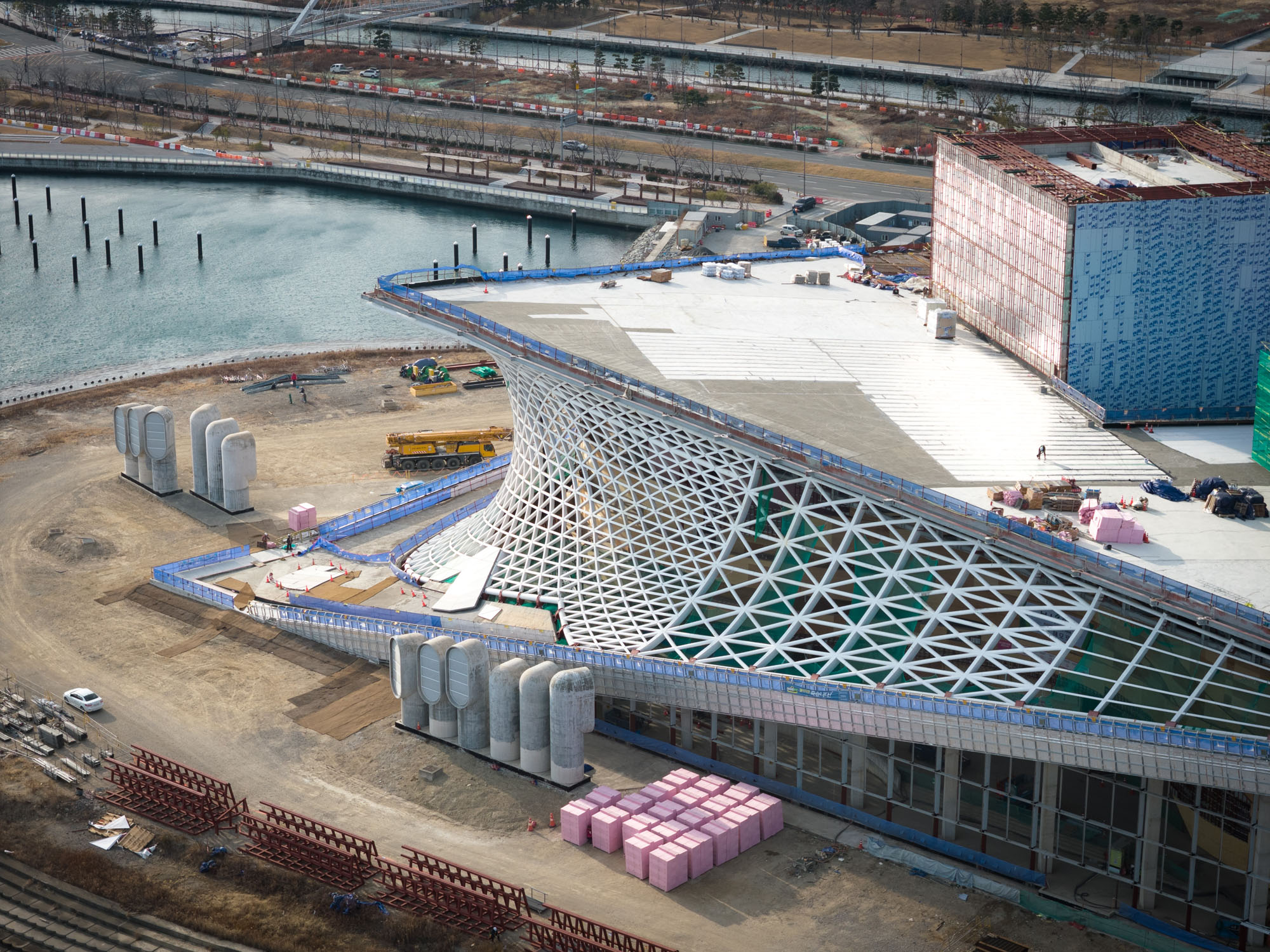
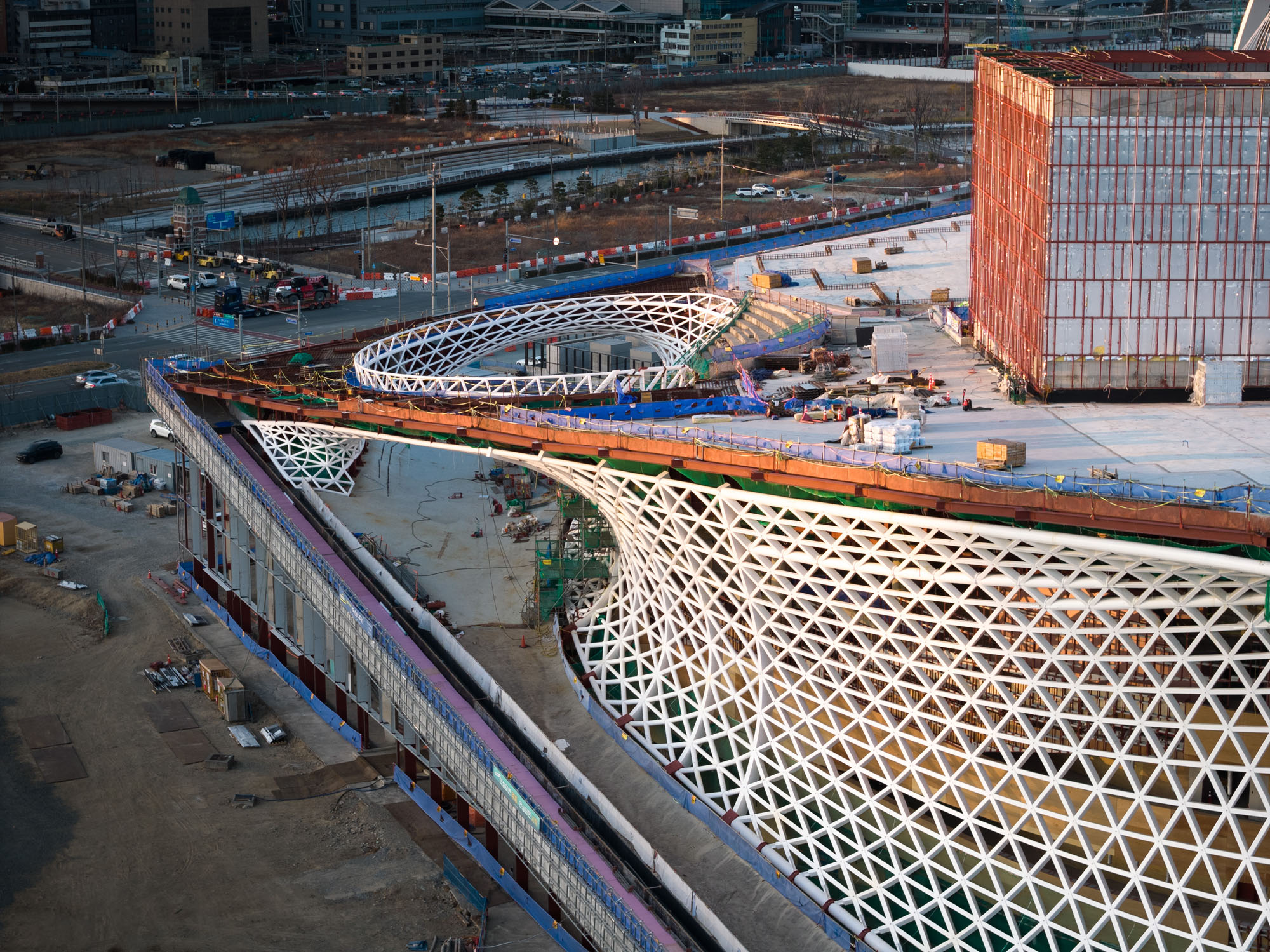
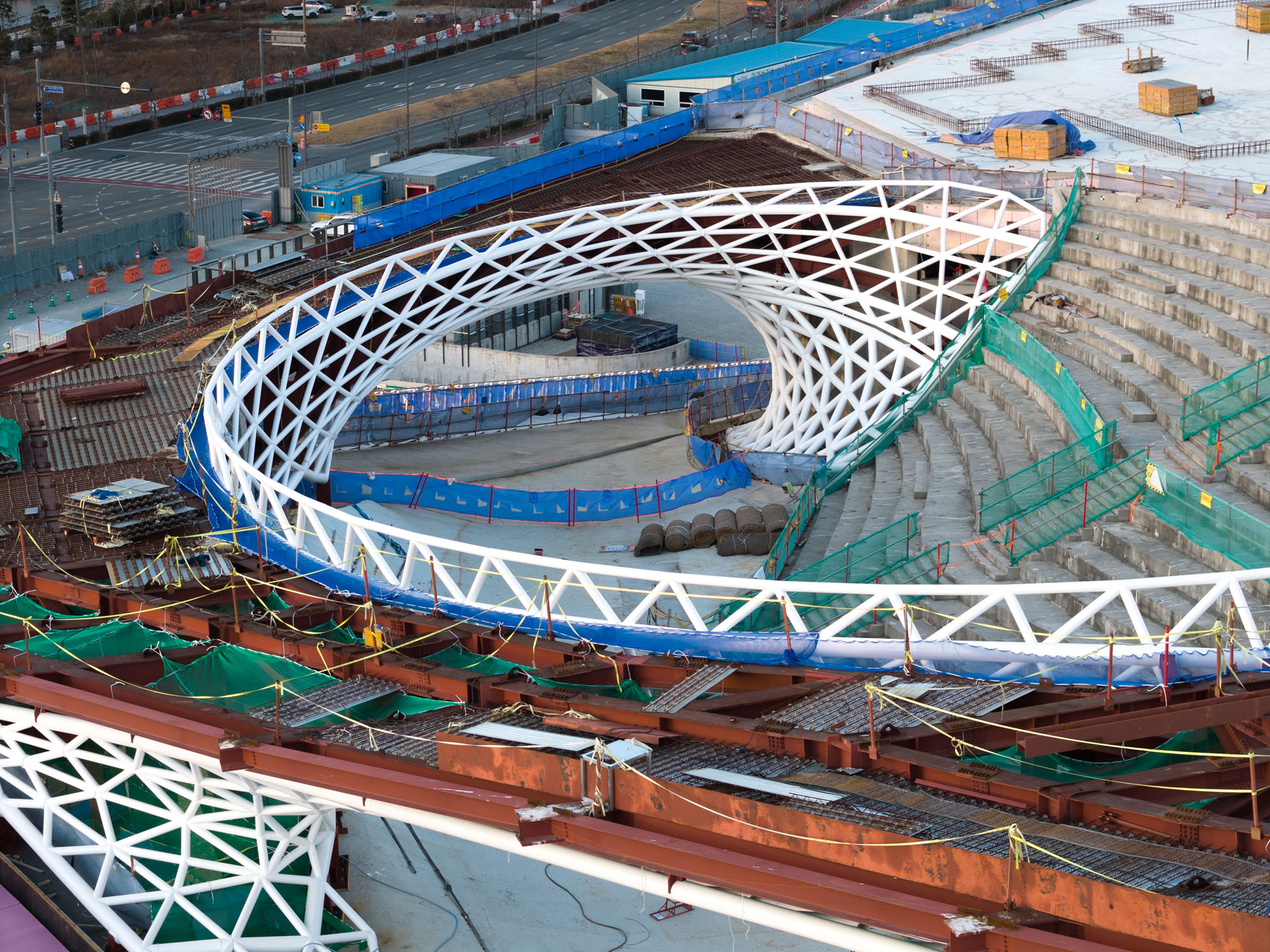
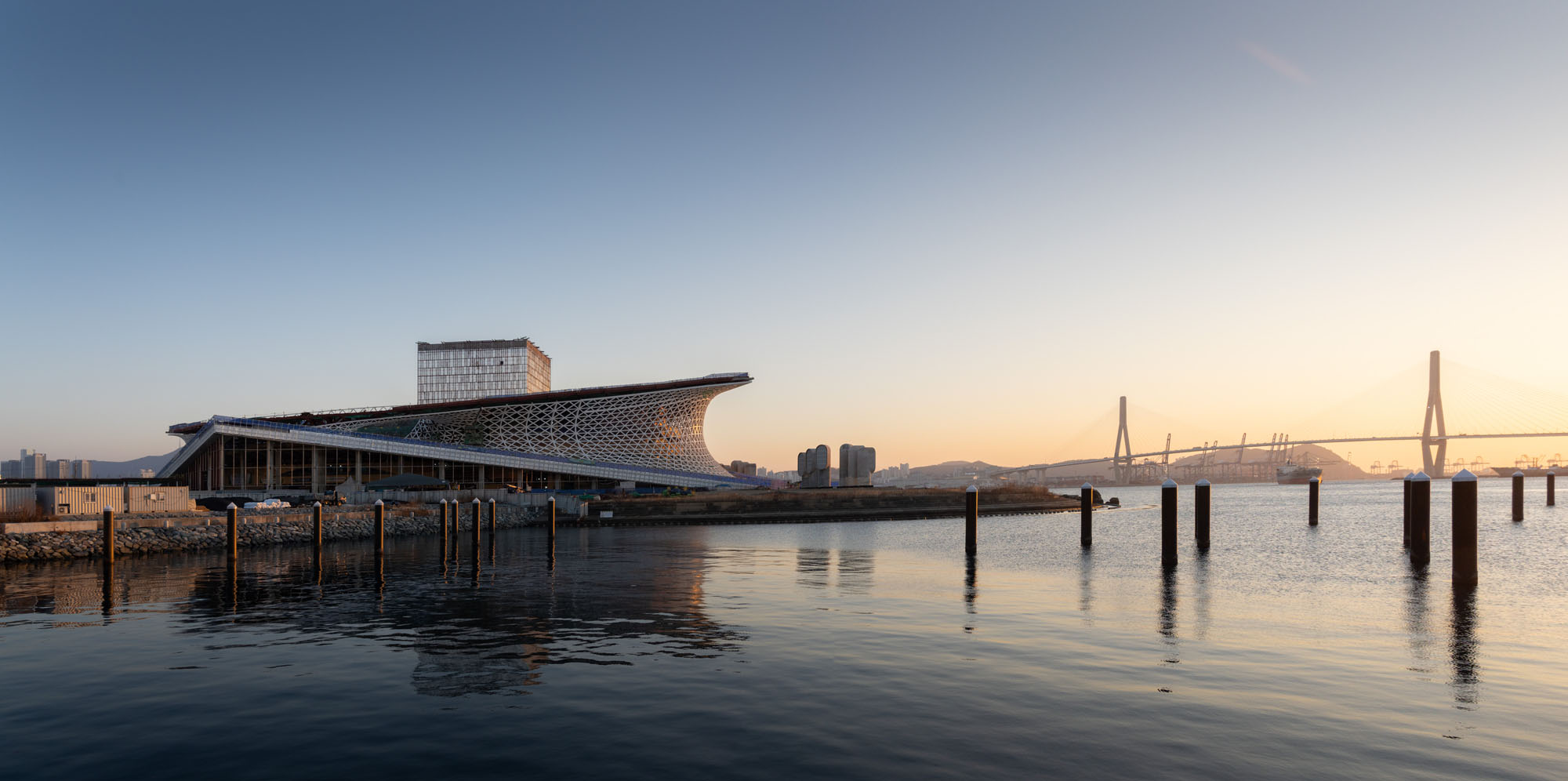
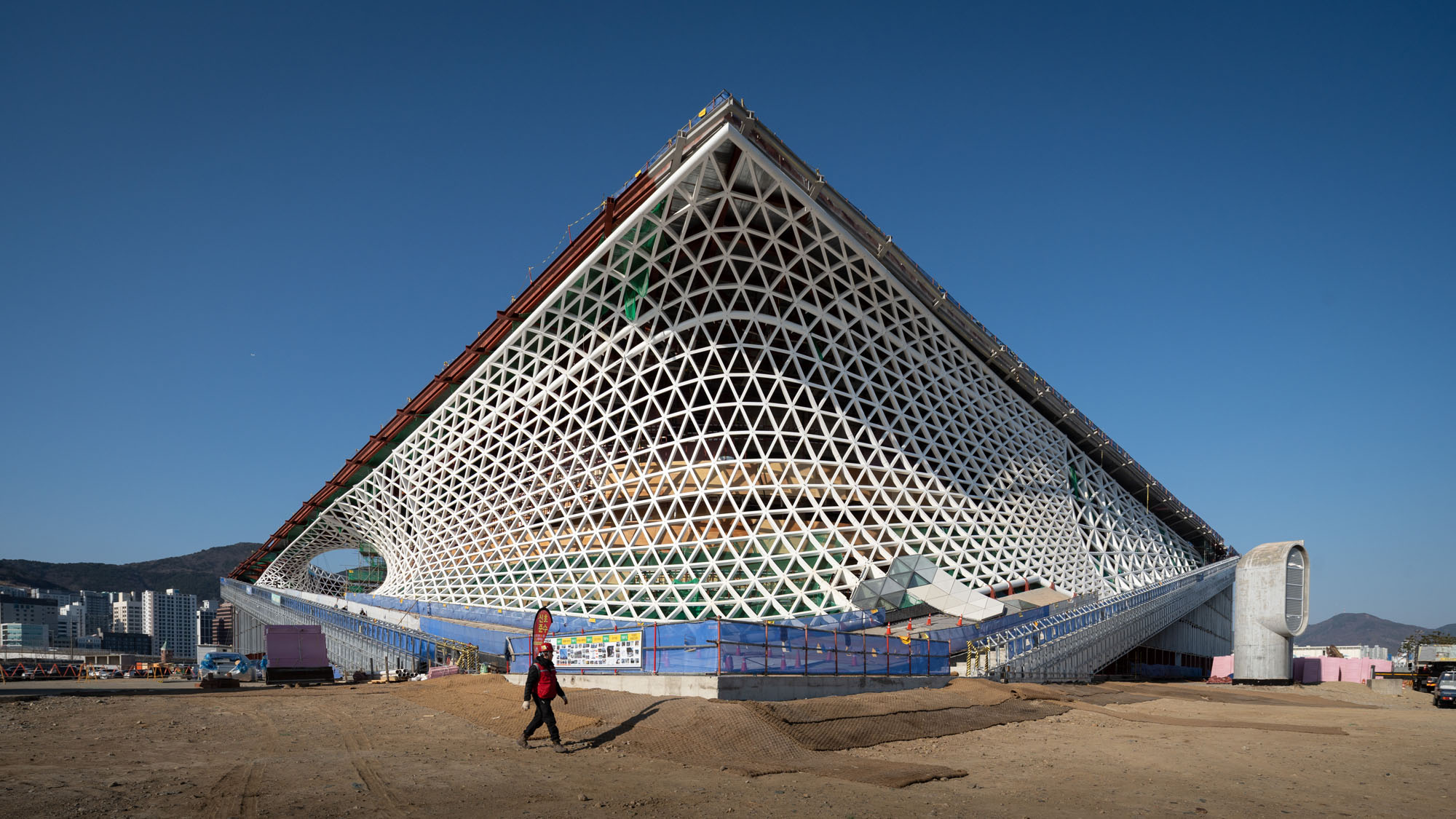
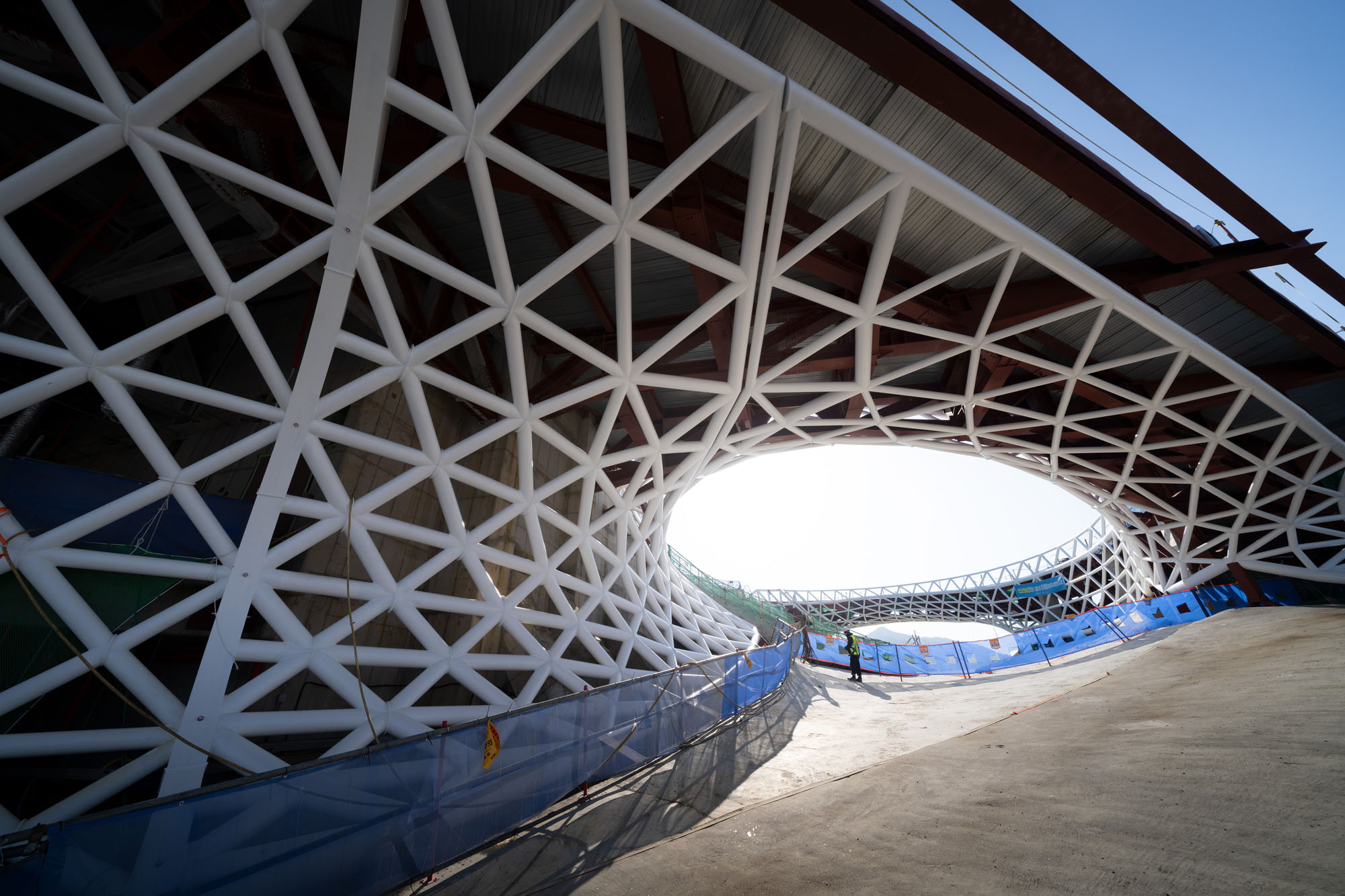
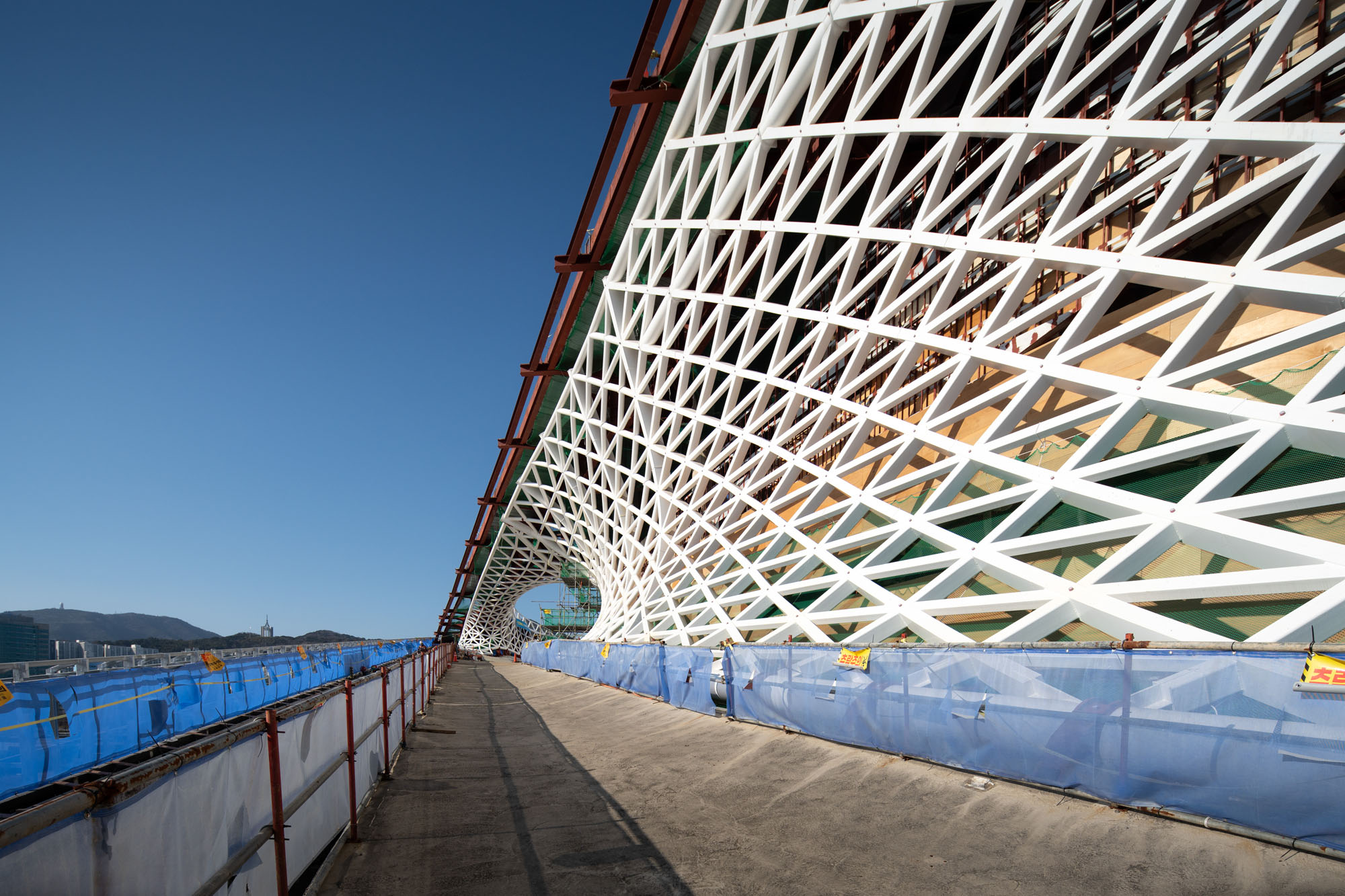
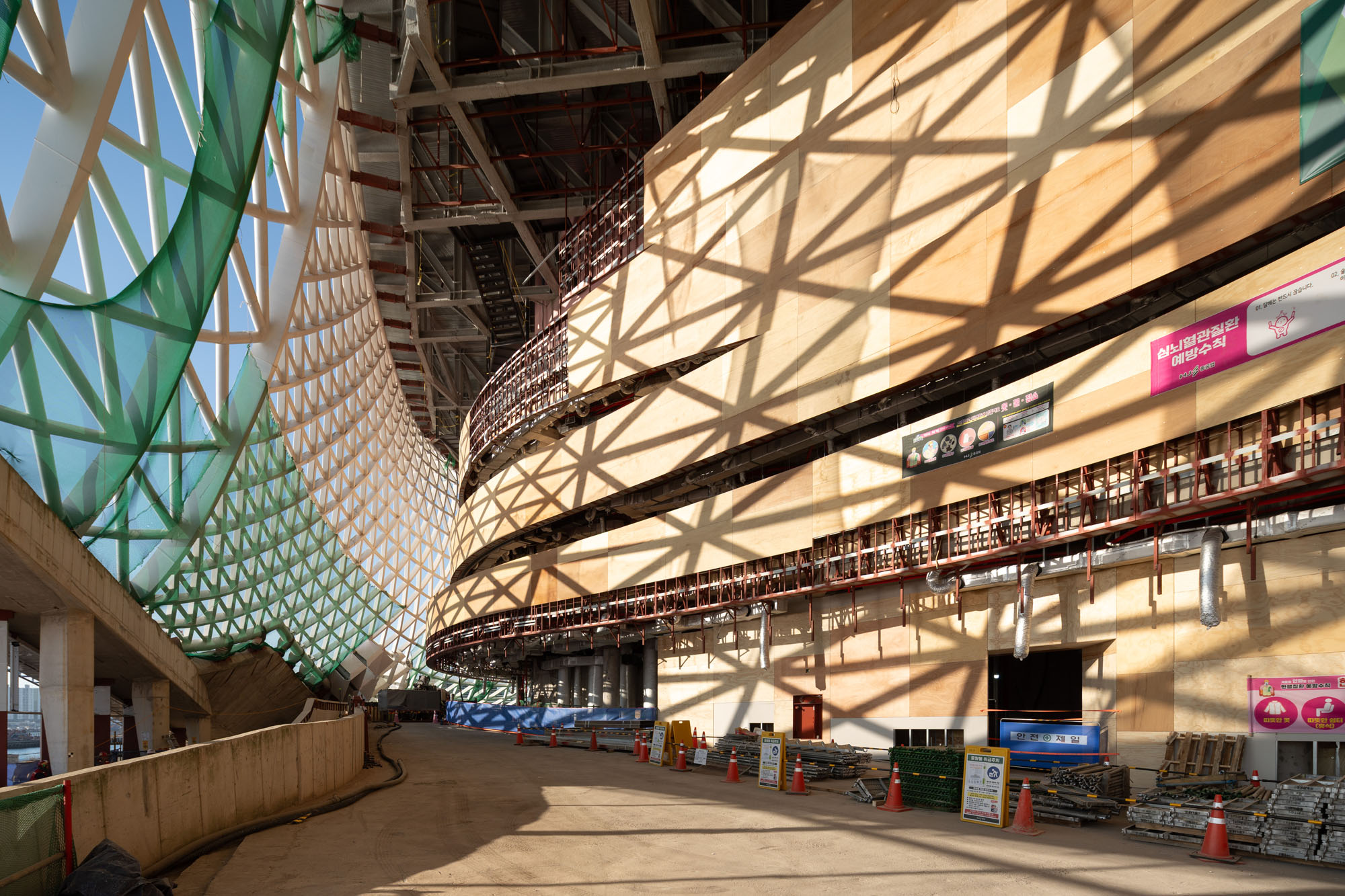
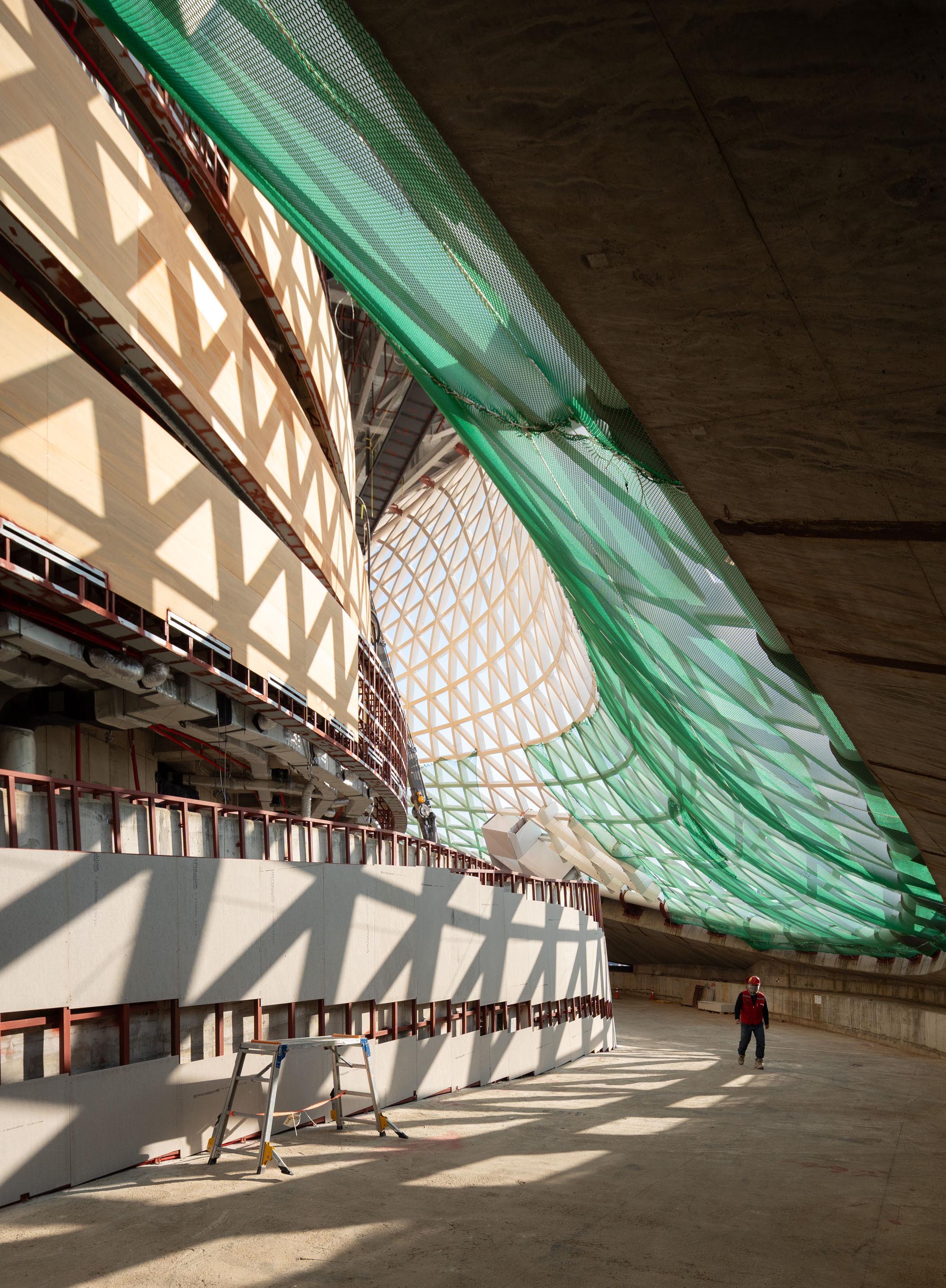
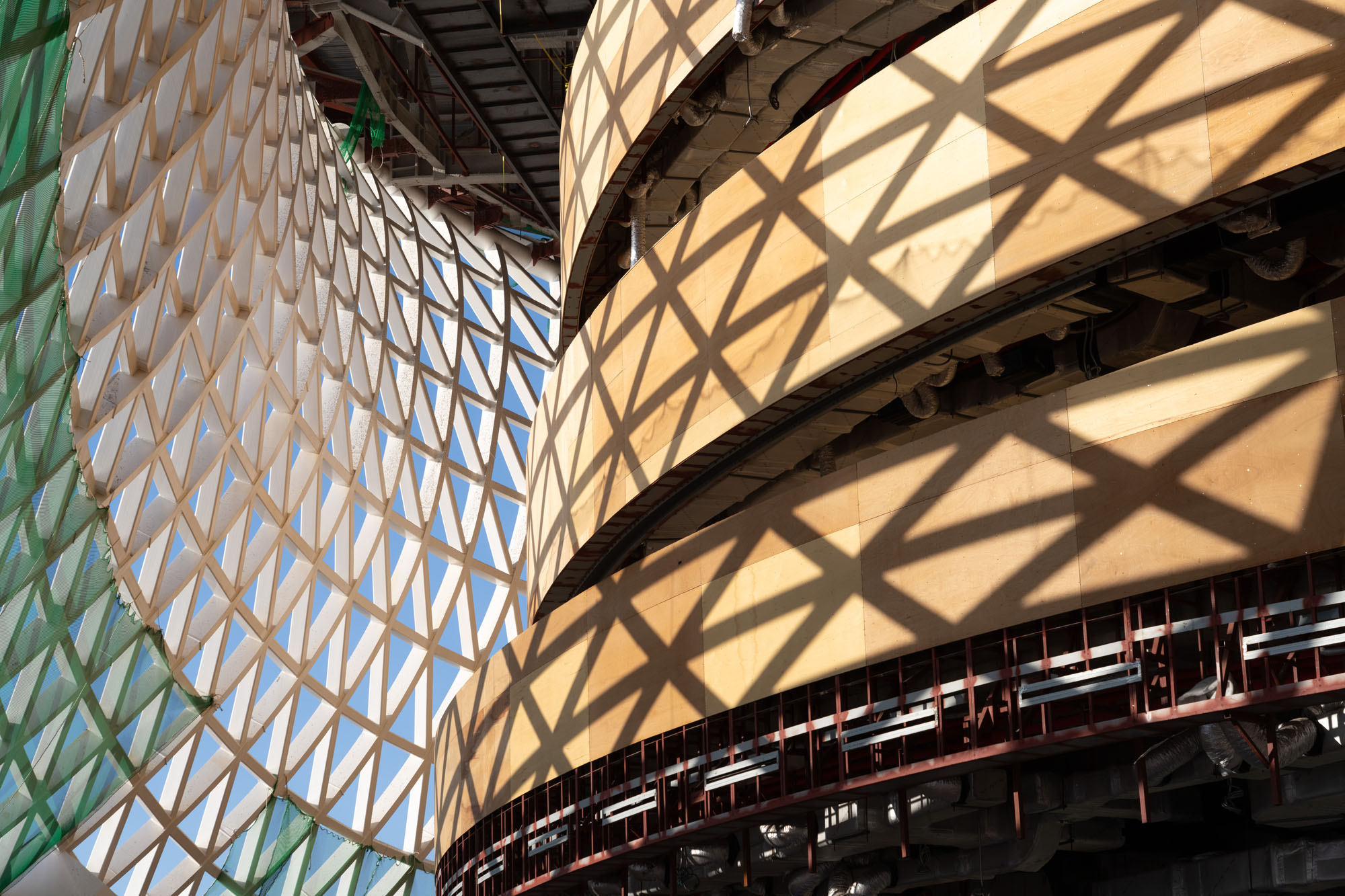
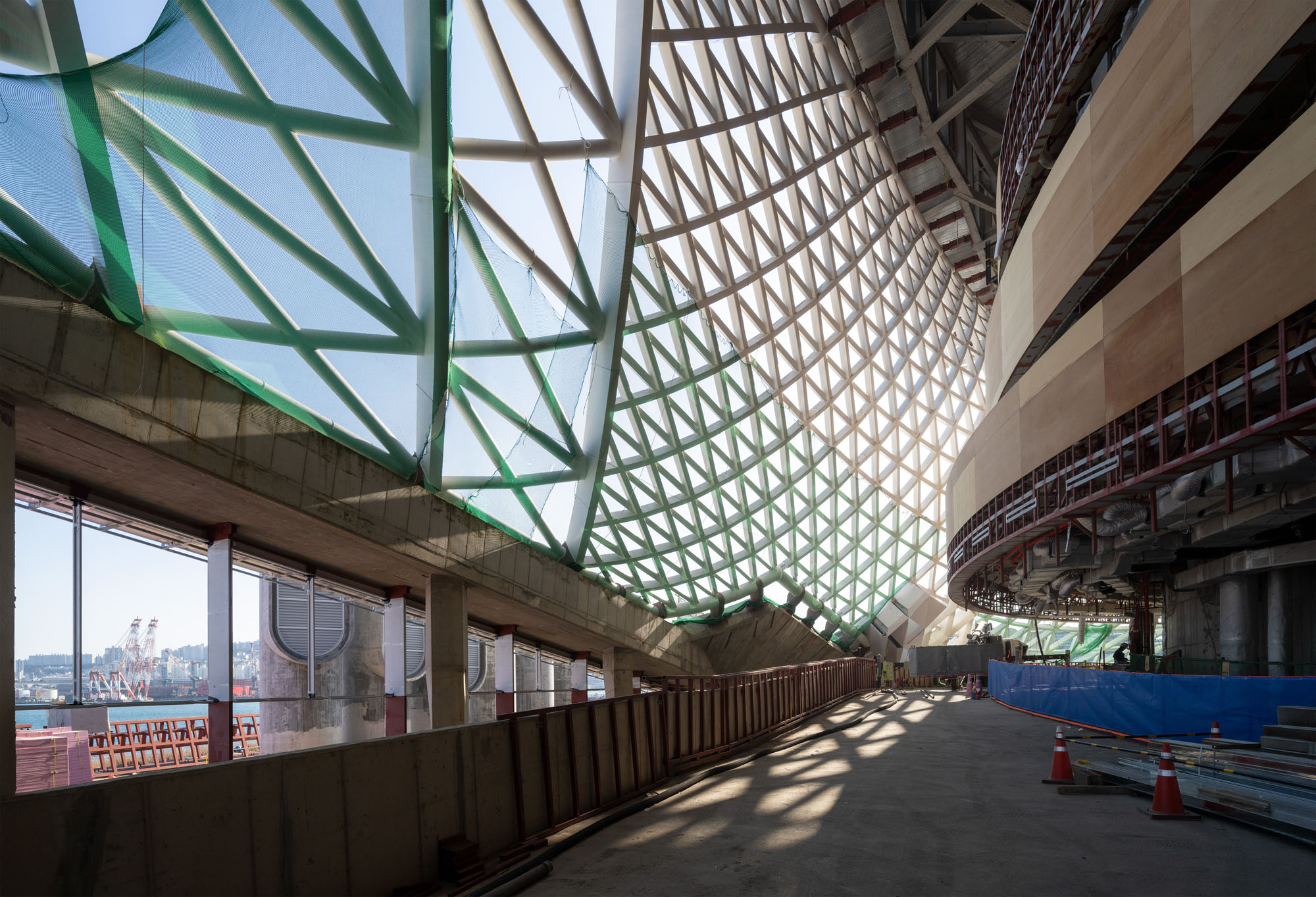
韓国・釜山にスノヘッタ(Snøhetta)が設計した〈釜山オペラハウス(Busan Opera House)〉の建設中の写真が公開されました。
同施設の主要な建設工事は2026年末に完了し、2027年に開館する予定となっています。
注目ポイント
- 従来の排他的な芸術施設という概念を脱却する「民主的なオペラハウス」
- 2つの曲線が織りなす幾何学的な建築形態
- 屋上を解放し、フットプリント(占有面積)を公共空間として還元
- 音響を追求した「楽器」としてのホール
(以下、スノヘッタから提供されたプレスキットのテキストの抄訳)
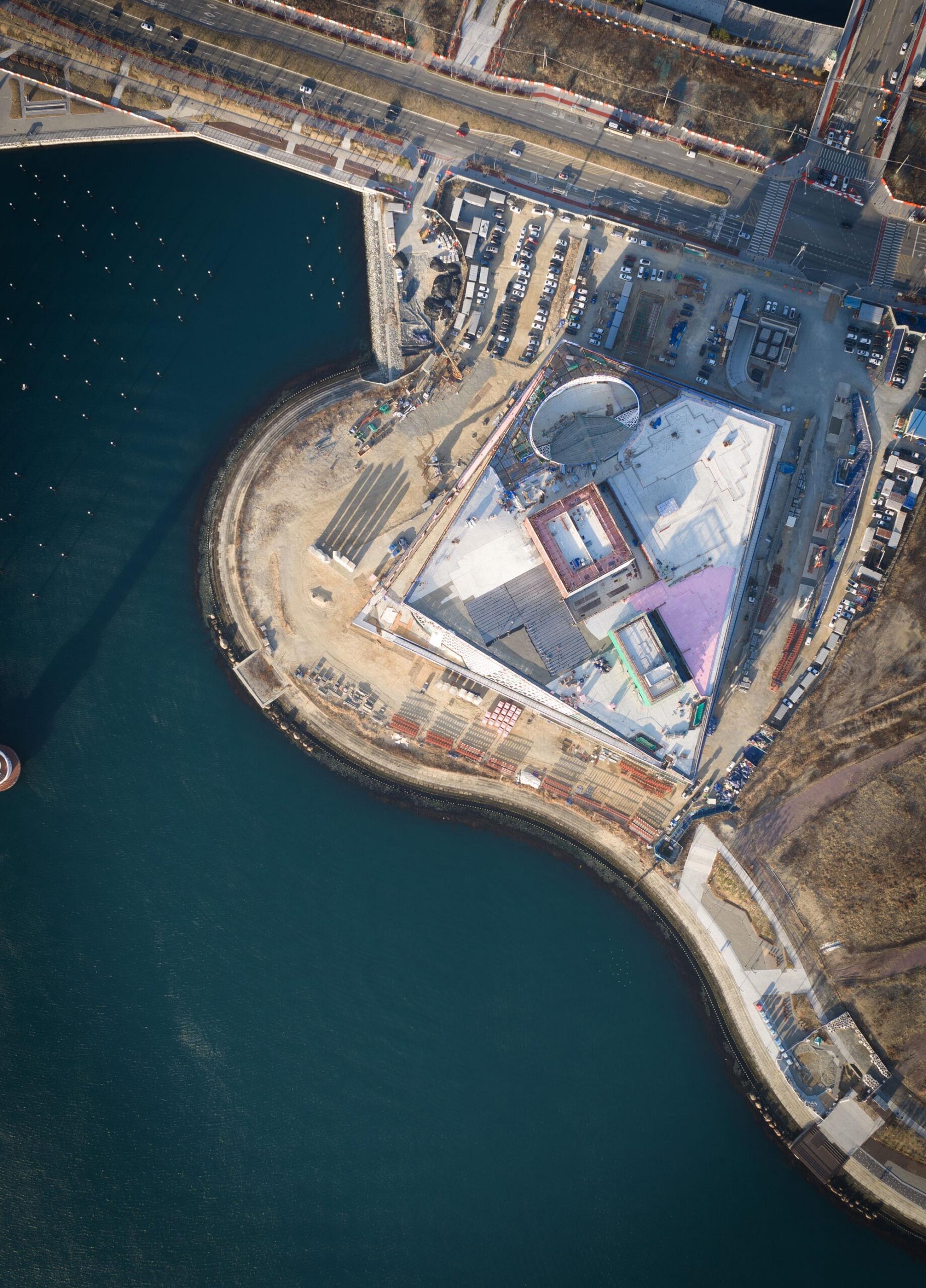
©︎ StudioSZ Photo | Justin Szeremeta
新たな文化の地平:スノヘッタによる〈釜山オペラハウス〉が姿を現す
国際設計コンペを経て、スノヘッタは2012年に〈釜山オペラハウス〉の設計を委託された。オペラを排他的な施設から脱却させるという構想のもと、このプロジェクトはパフォーマンス建築を開放的で双方向性のある民主的な空間として再定義する。それは集団体験と日常的な利用を誘う空間である。
韓国第2の都市に誕生する初のオペラハウスとして、このプロジェクトは舞台の枠を超えた文化的ランドマークとなることが期待されている。
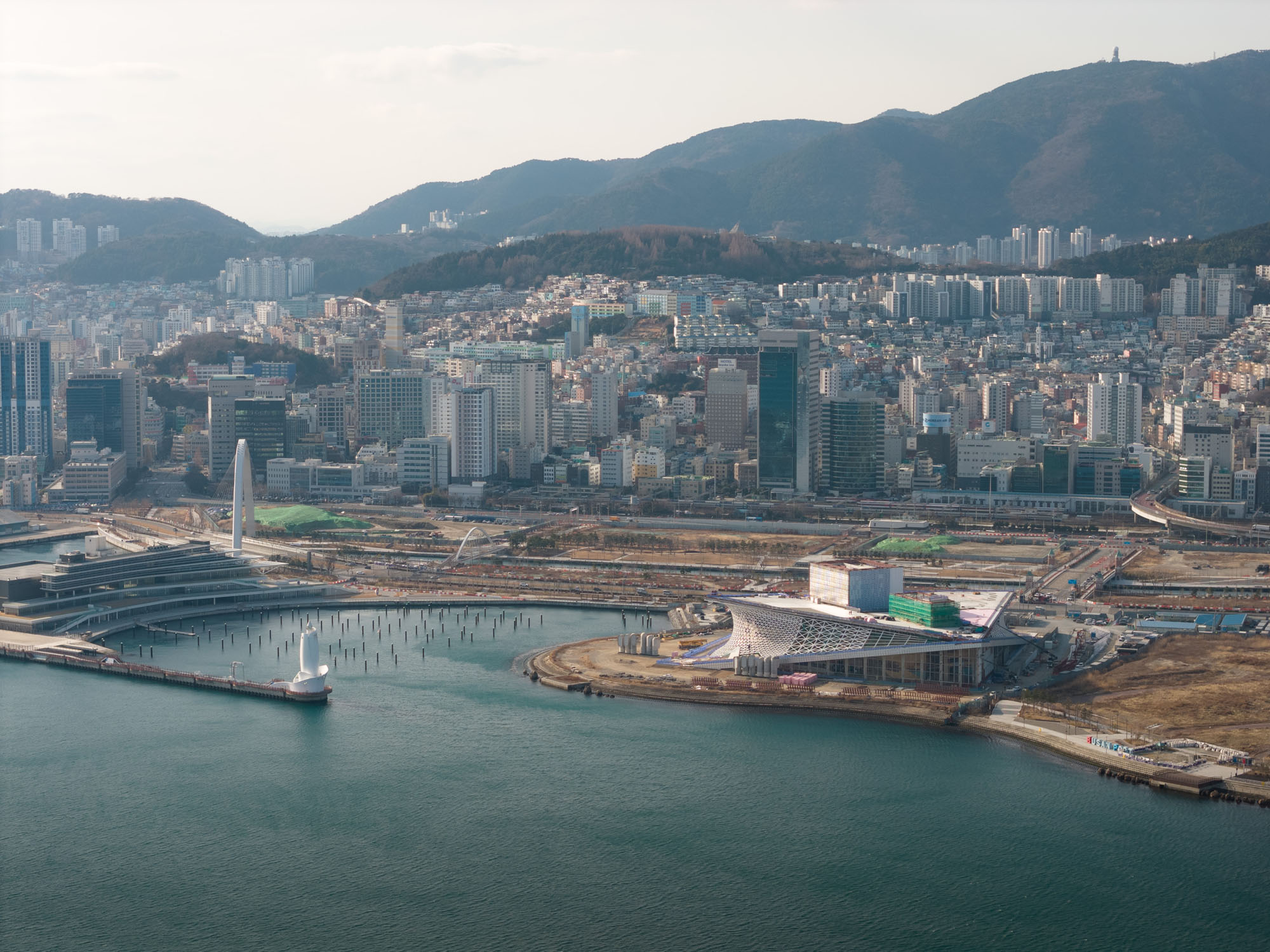
©︎ StudioSZ Photo | Justin Szeremeta
©︎ StudioSZ Photo | Justin Szeremeta
工業地帯から市民のための公共空間へ
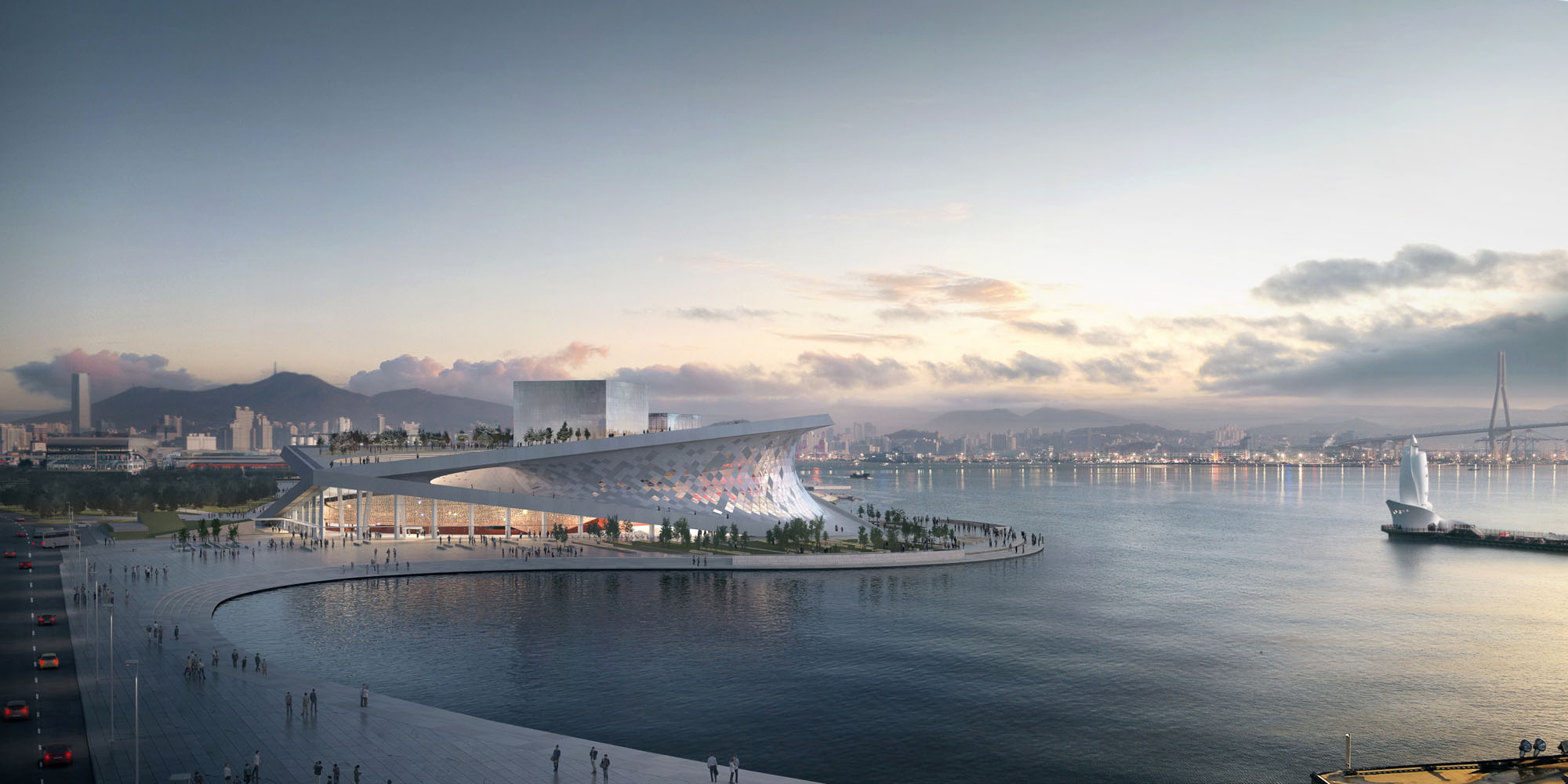
釜山北港ウォーターフロントの埋め立て地に位置する新オペラハウスは、歴史的に工業地帯であった地域を、活気ある包摂的な公共空間へと転換させる。この親しみやすい建築は、開放性、アクセシビリティ、そして市民への寛大さという価値観を反映しており、韓国現代建築の新たな章を告げるものである。
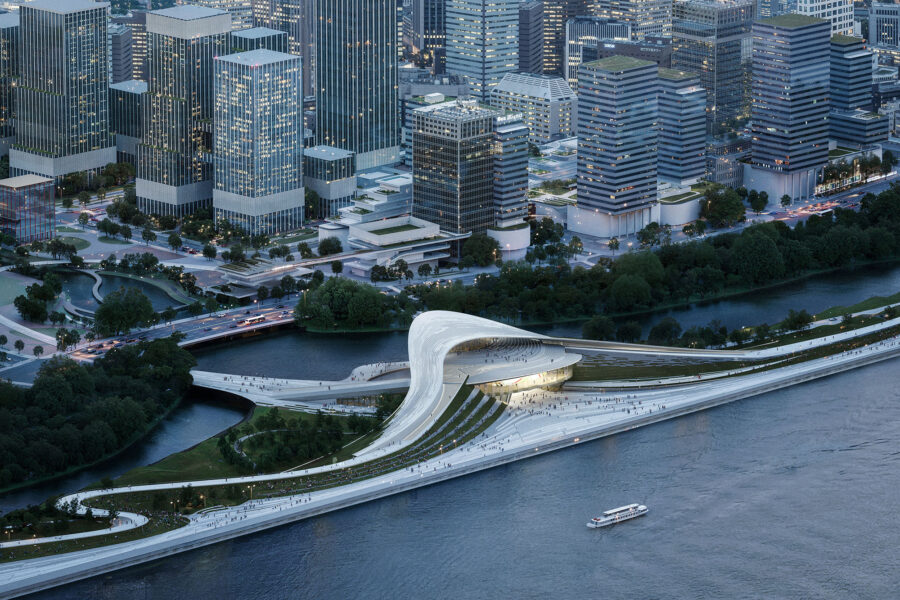
柔らかな包み込むような形状、一般公開される屋上、公園側と海側の両方に設けられた入口を備えたオペラハウスは、都市を包み込む連続的な建築的ジェスチャーを形成する。延床面積48,000m²に及ぶ館内には、1,800席の大ホール、300席の多目的劇場、リハーサルスペース、そして公共広場が配置される。
©︎ StudioSZ Photo | Justin Szeremeta
©︎ StudioSZ Photo | Justin Szeremeta
建設の進捗と開館予定
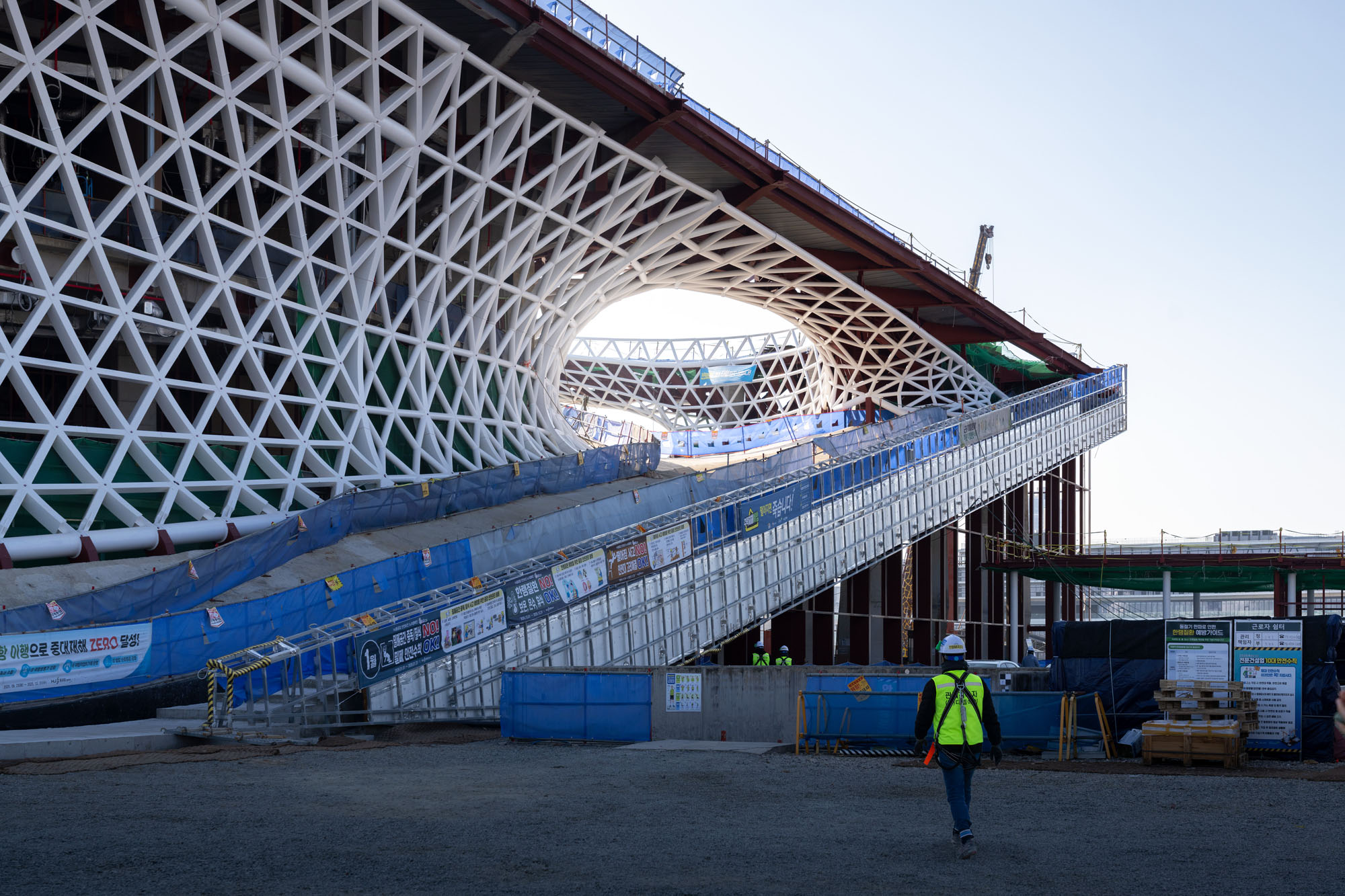
ここ数カ月で建設は急速に進展した。主要構造体とファサードの骨組みが完成したため、現在はファサードの設置、内装工事、および造園へと焦点が移っている。主要な建設工事は2026年末に完了し、2027年に開館する予定となっている。
©︎ StudioSZ Photo | Justin Szeremeta
©︎ StudioSZ Photo | Justin Szeremeta
©︎ StudioSZ Photo | Justin Szeremeta
「大地と空」が交差する幾何学
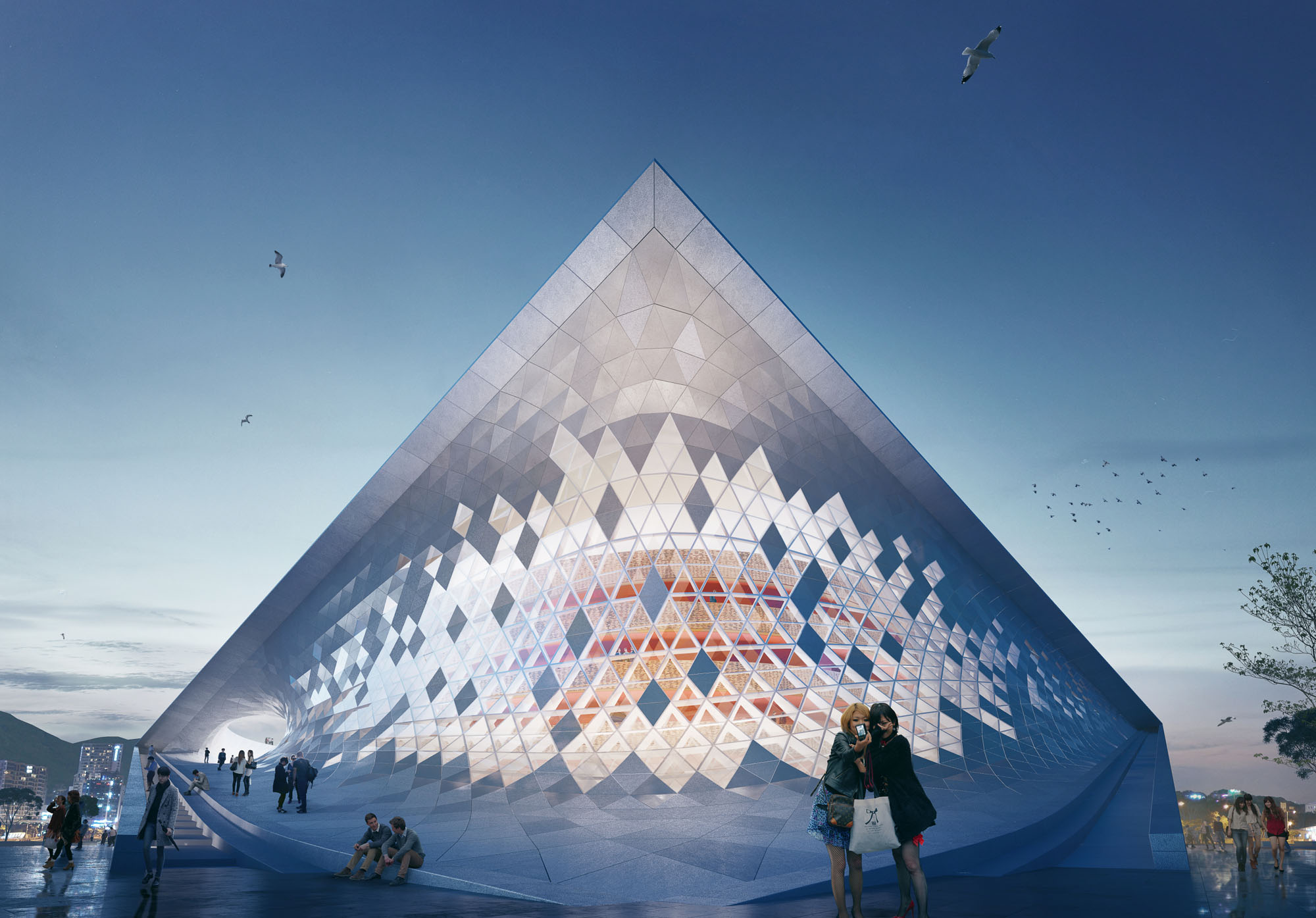
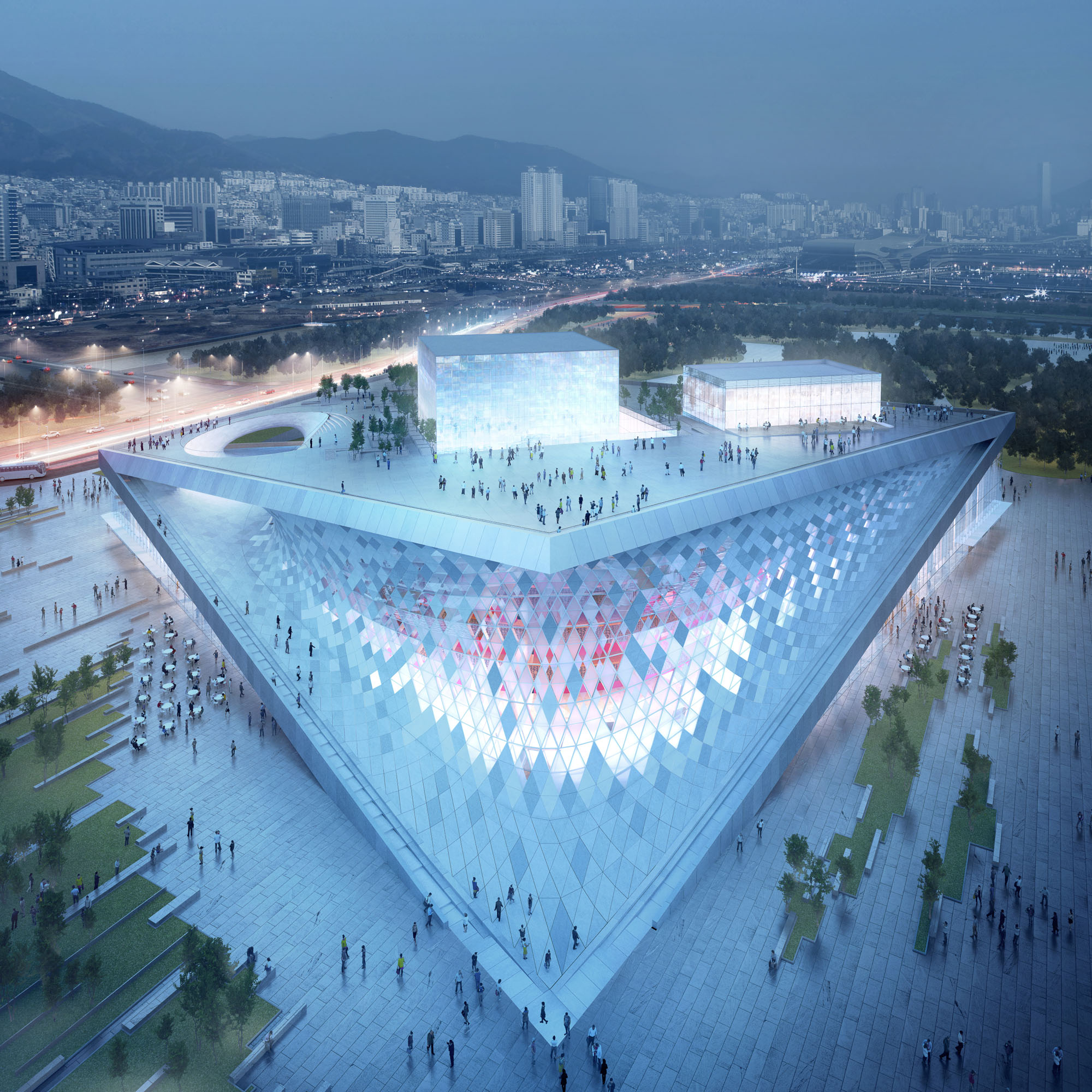
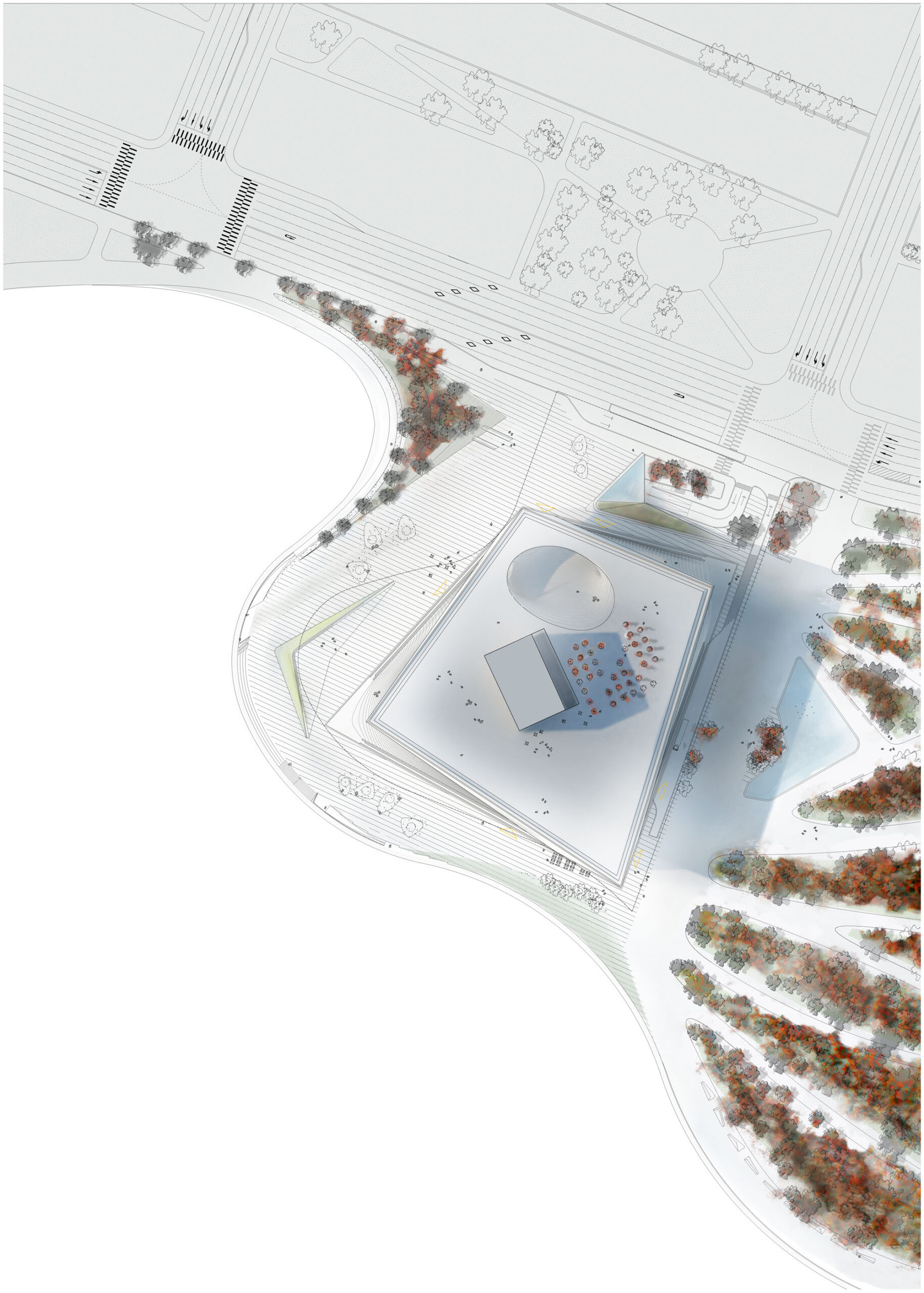
〈釜山オペラハウス〉の幾何学は、2つの対向する連続曲線によって定義される。下部のアーチ状の平面は建物を大地に固定し、敷地を橋渡しして都市と海をつなぐ。その上部に広がる第2の面は空へと開かれ、天を抱擁する。この2つの平面の緊張と対話、すなわち大地と空が交わり、山と水が接する地点に、このオペラハウスは立ち現れる。
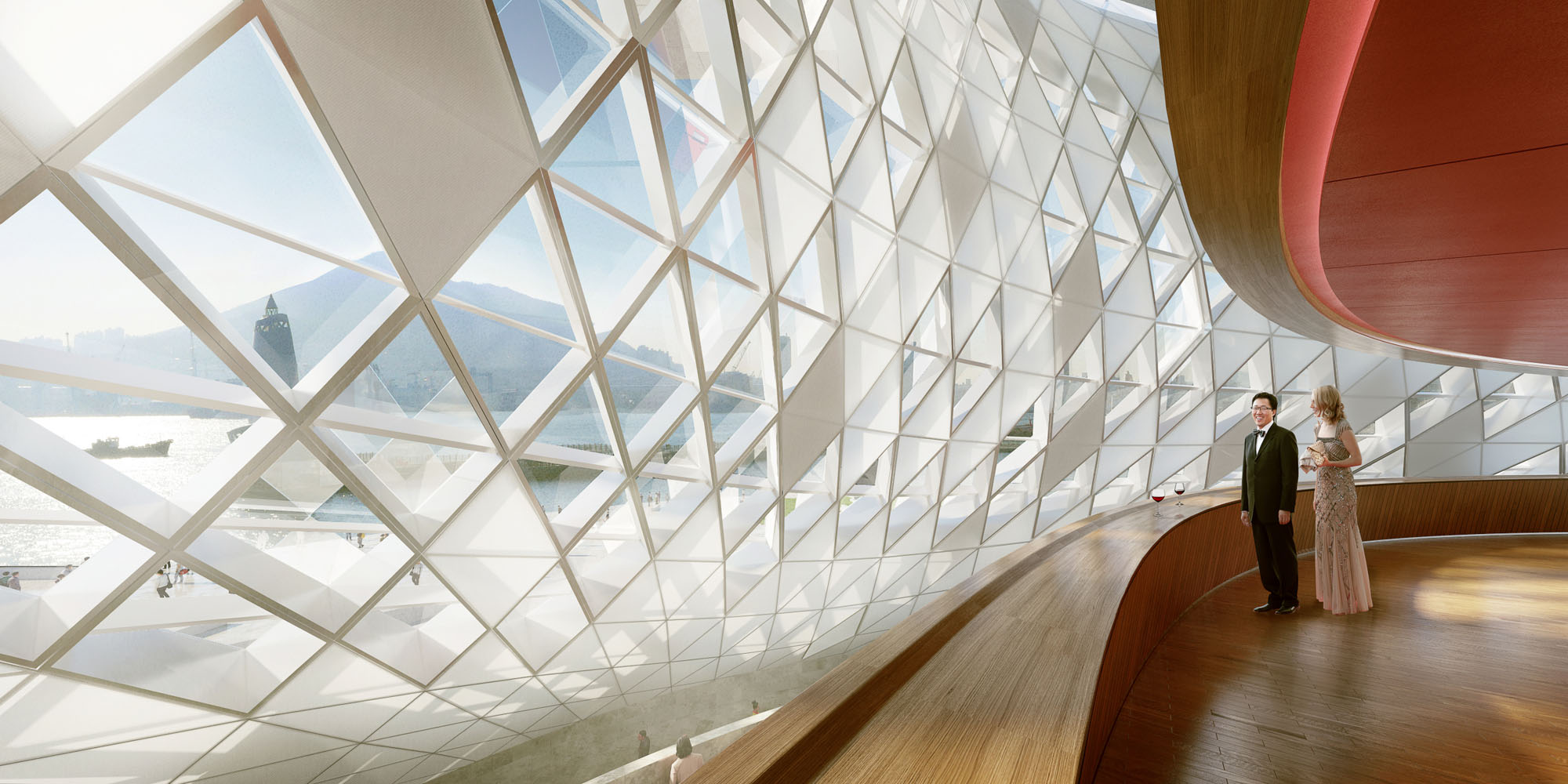
建物の四隅は海へと延び、物理的かつ視覚的に都市と海辺を結びつける。対向する2つの角は持ち上げられ、都市側と水辺側の2つの明確な入口を形成する。これらの入口は、建物を巡り周囲の広場へと続く流動的な公共プロムナードで連結されている。上部平面は対角線上に持ち上げられて機能的なボリュームを収容すると同時に、都市と海に向かって弧を描くように下向きに、そして海と空に向かって剥がれるように上向きに広がる外装面を形成している。
©︎ MIR, Tegmark
©︎ MIR, Tegmark
内外の境界を曖昧にする開放的な設計
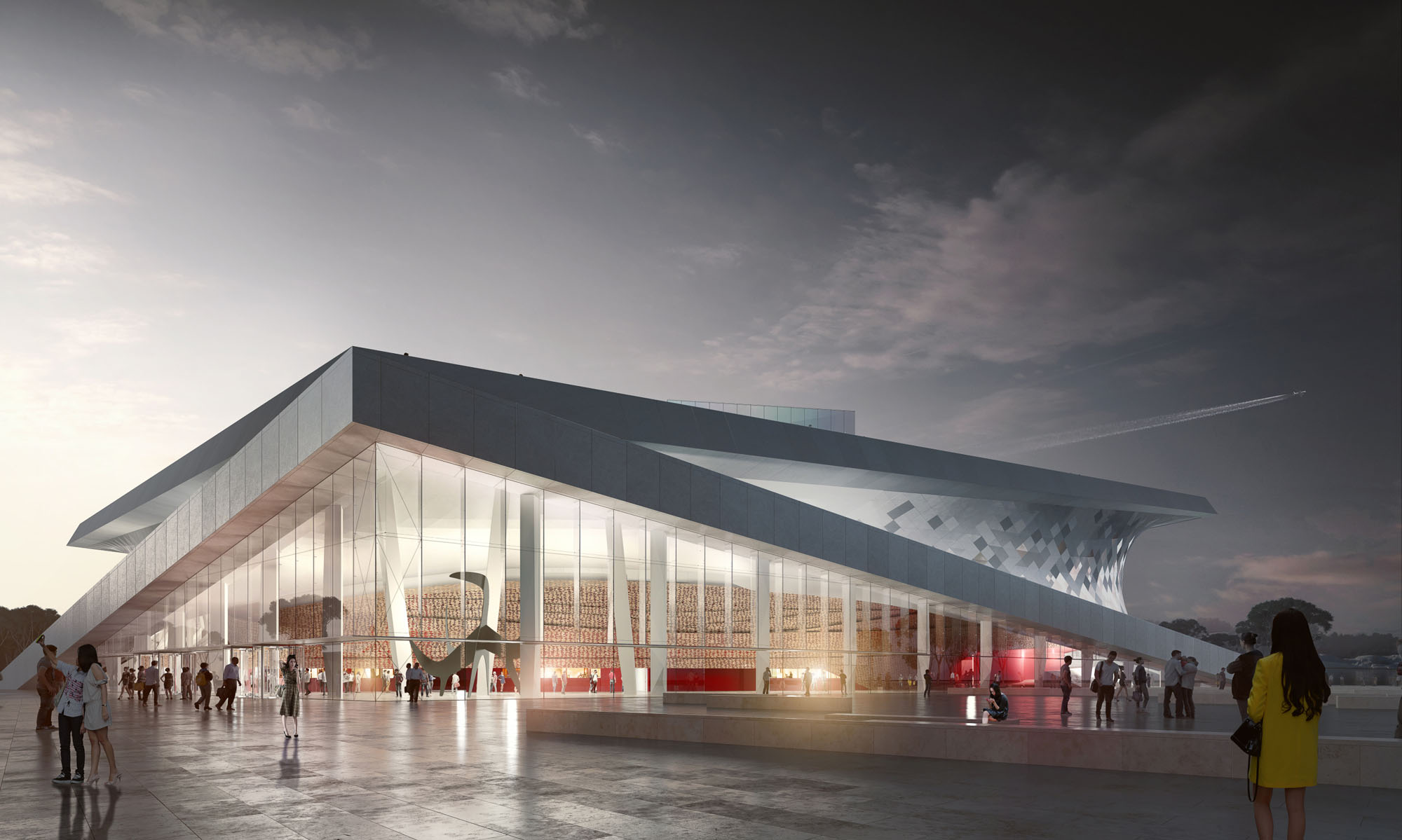
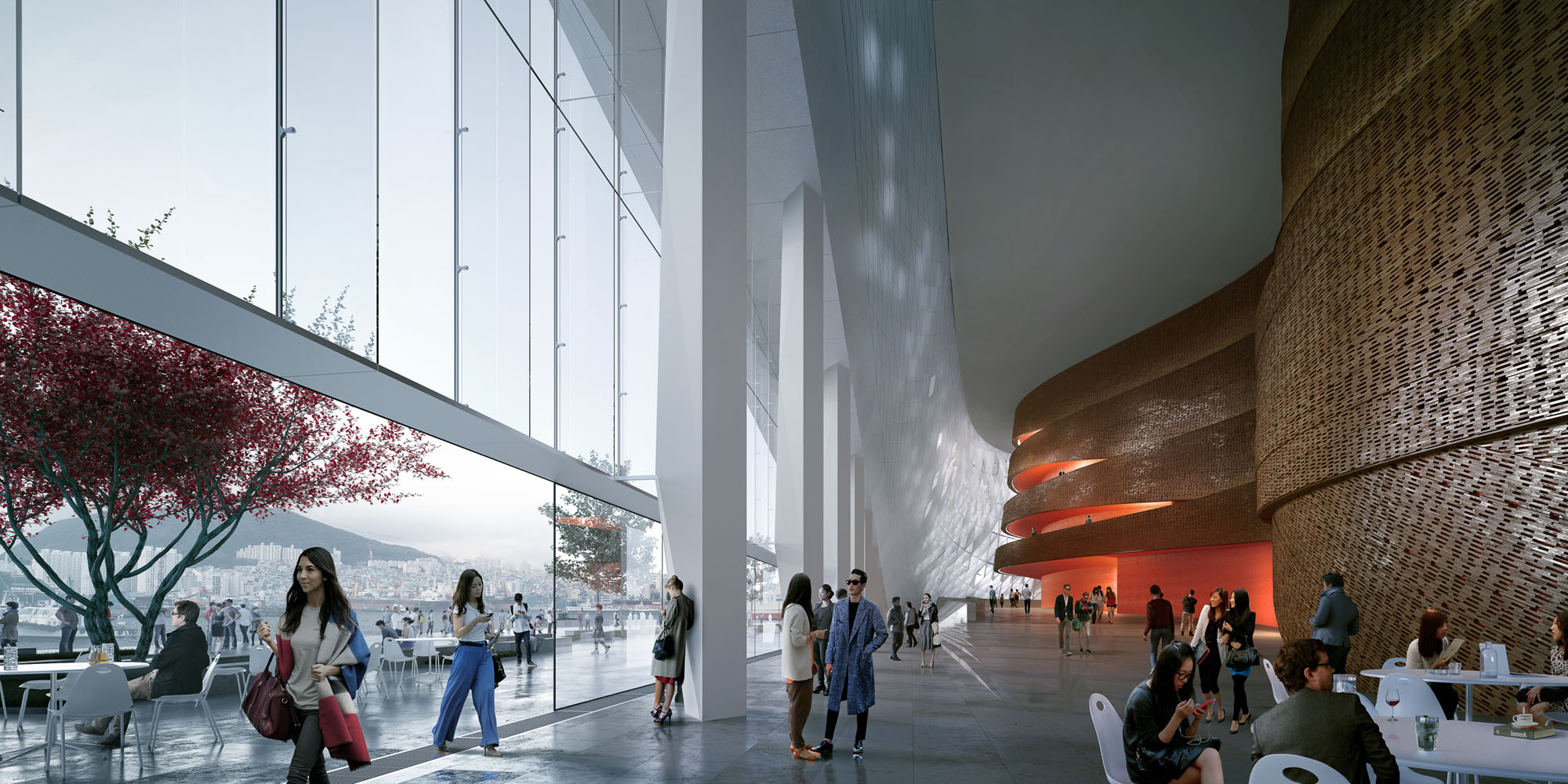
地上階において、オペラハウスは開放的で浸透性のある公共空間として構想されている。メイン・ホワイエは建物の両側を囲み、内部を海に向けて配置することで、内と外の境界を曖昧にしている。この階にはメイン・ホワイエ、レストラン、パテール(一階席)の一般客用入口など、主要なフロント・オブ・ハウス機能が配置される。
©︎ MIR, Tegmark
©︎ MIR, Tegmark
©︎ MIR, Tegmark
音響を追求した「楽器」としてのホール
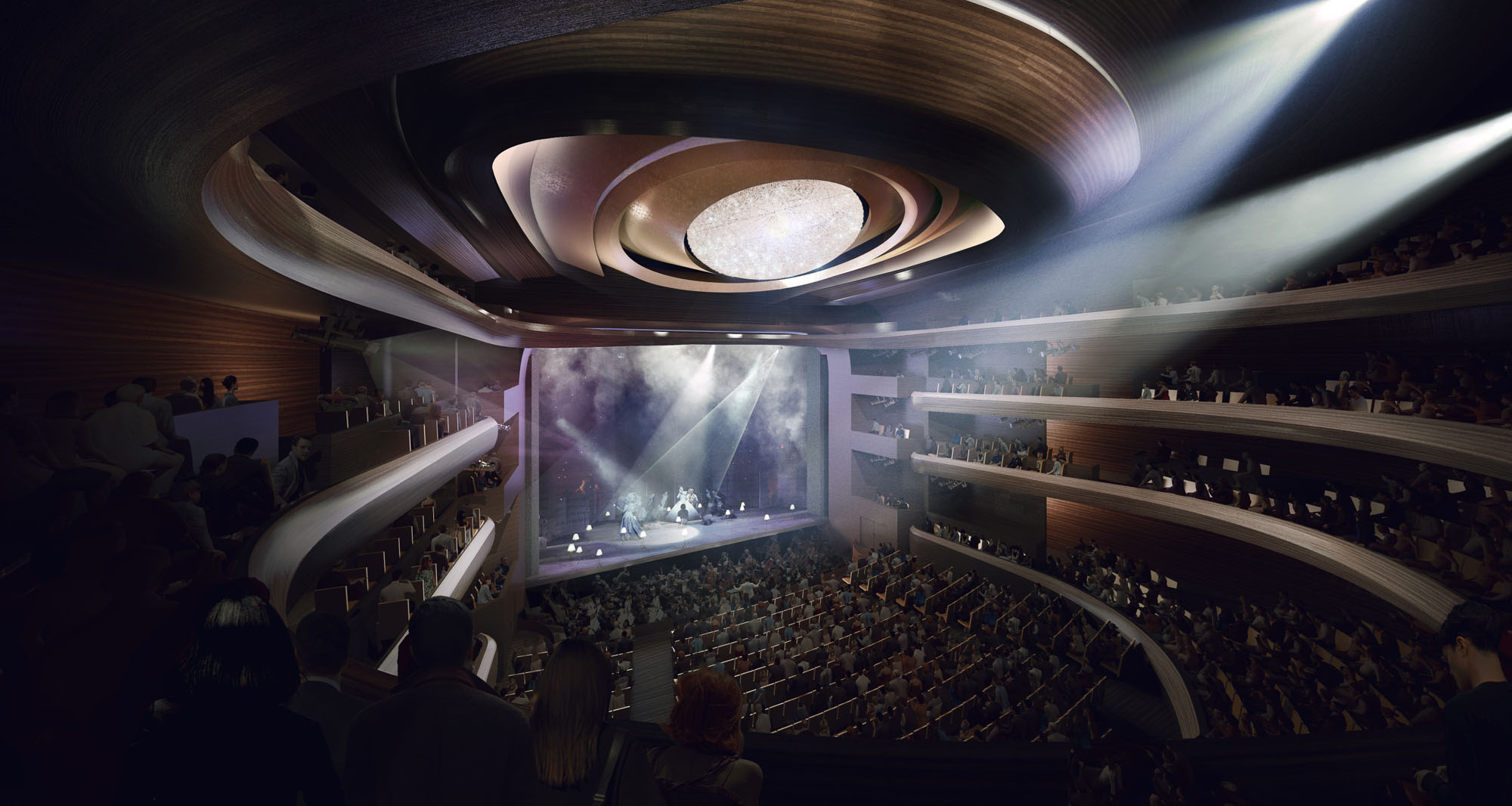
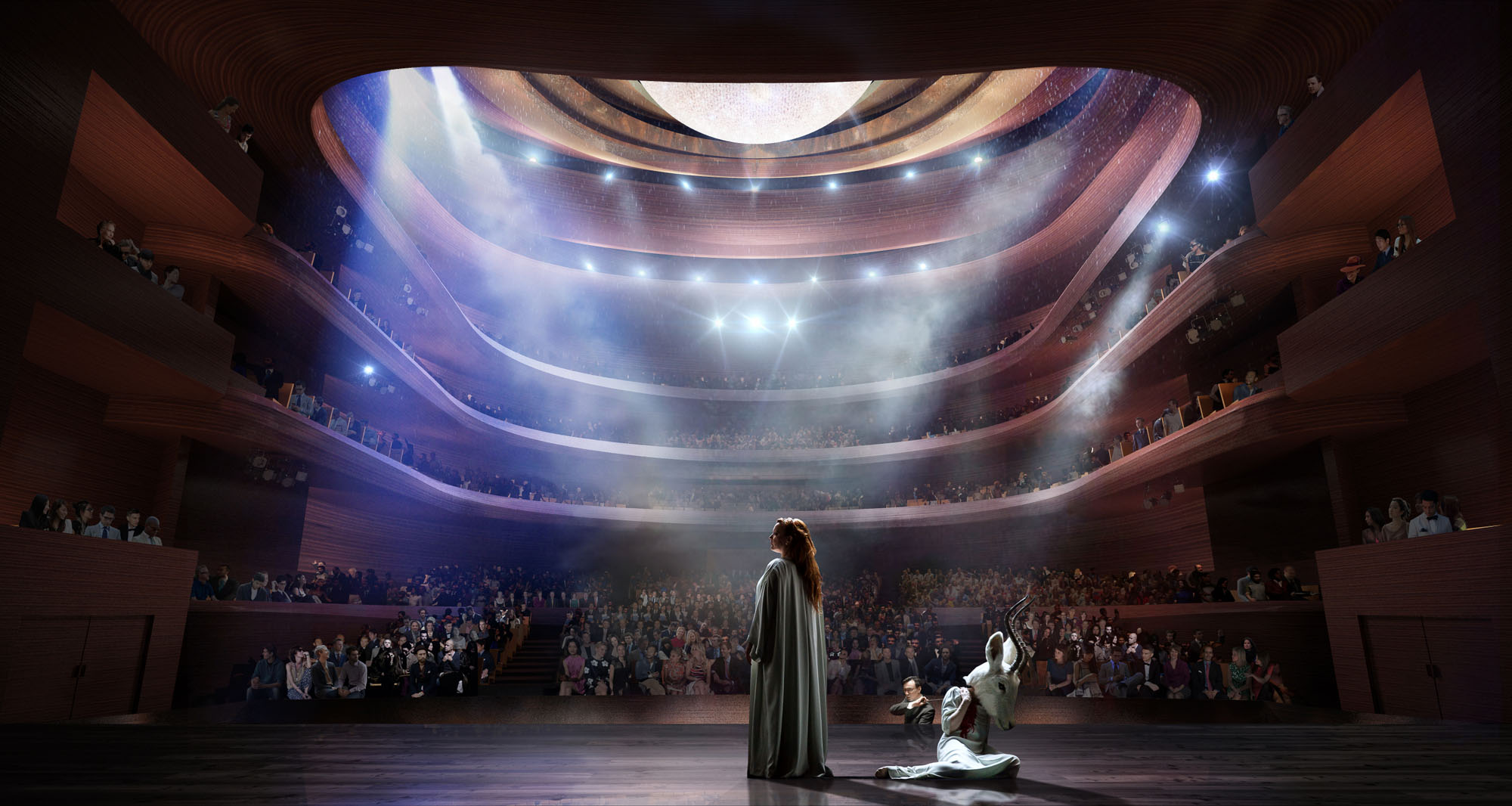
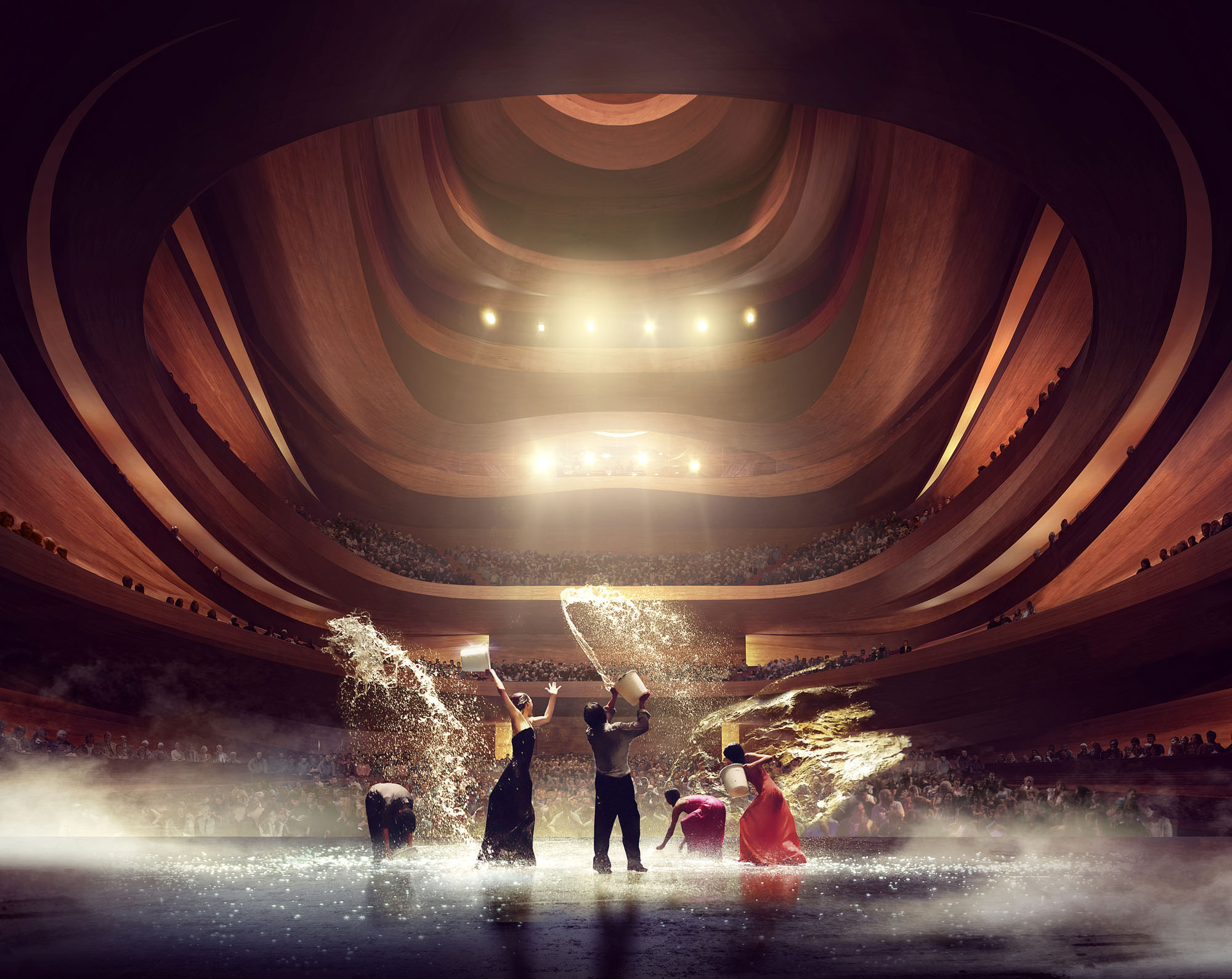
建物の中心部に位置するオペラホールは、精密に調整された楽器のように設計されている。その形状は世界クラスのオペラ音響を実現するために入念に設計され、内部を形づくるチェリー材のパネルが共鳴性、温かみ、そして音の明瞭さを高めている。
©︎ MIR, Tegmark
©︎ MIR, Tegmark
©︎ MIR, Tegmark
都市を一望する静寂の屋上景観
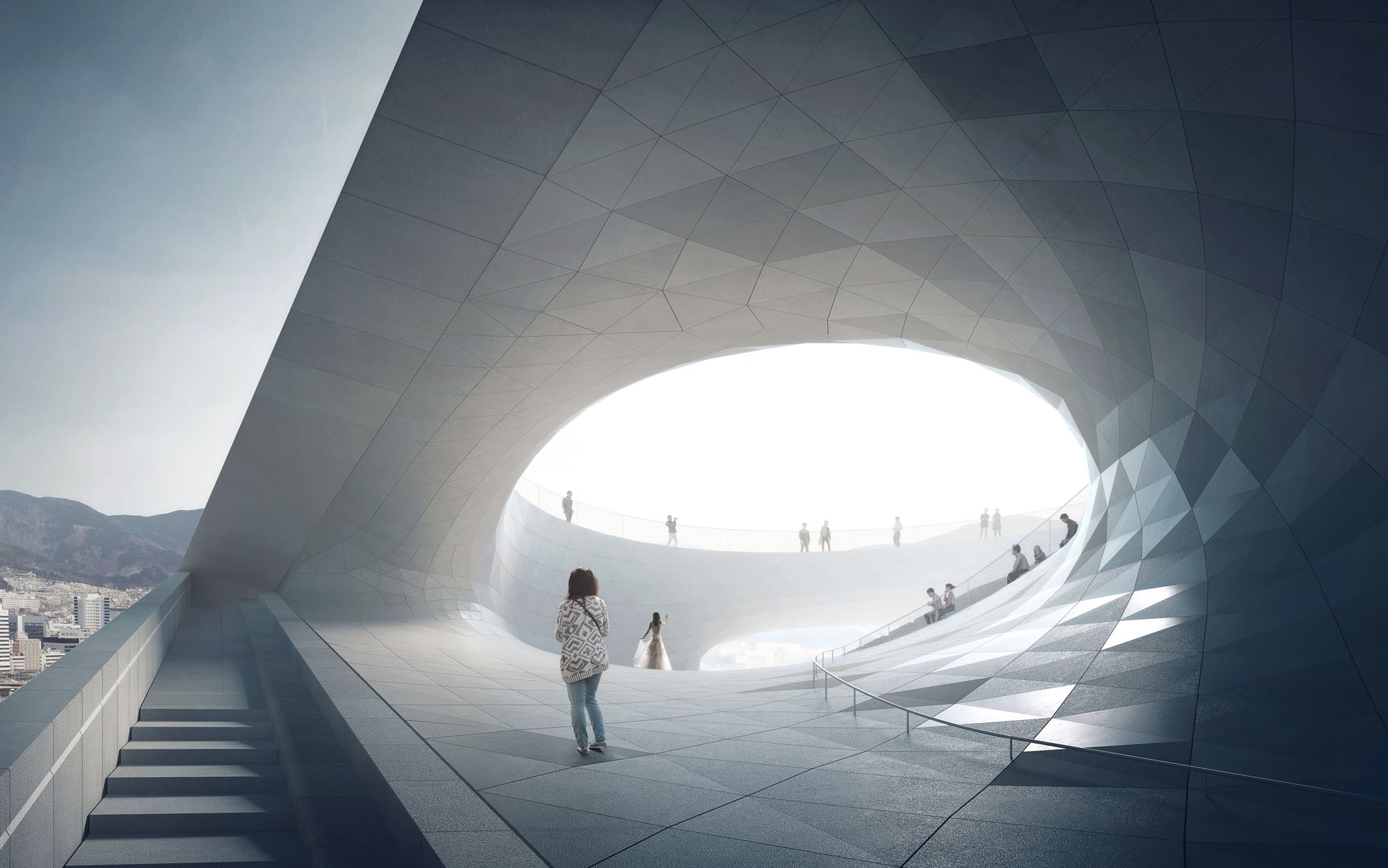
緩やかな傾斜の通路が訪問者をオキュラス(天窓)へと導き、建物最上部の第2の公共空間へ至る。歩行可能な屋上景観を通じて、建築のフットプリント(占有面積)を市民へと還元するのである。瞑想と内省の場として設計された屋上は、地上階の喧騒とは対照的な静寂を湛えている。開放的で誰もがアクセス可能なこの屋上階からは、山々と海への比類なき眺望を楽しむことができる。
©︎ MIR, Tegmark
建築が体現する市民生活の表現
柔らかく流れるような外装が2つの公共空間を覆い、公共機能をも包み込む。この流動的な外装は、透明性と保護性の間を仲介し、視覚的・空間的に2つの公共レベルを単一の連続した動きで結びつける。それは、開放性、連続性、そして市民生活を建築的に表現した姿にほかならない。
©︎ MIR, Tegmark
©︎ StudioSZ Photo | Justin Szeremeta
©︎ StudioSZ Photo | Justin Szeremeta
©︎ StudioSZ Photo | Justin Szeremeta
©︎ StudioSZ Photo | Justin Szeremeta
©︎ StudioSZ Photo | Justin Szeremeta
©︎ StudioSZ Photo | Justin Szeremeta
©︎ StudioSZ Photo | Justin Szeremeta
Site plan
以下、スノヘッタのリリース(英文)です。
A New Cultural Horizon: Snøhetta’s Busan Opera House Is Taking Shape
Following an international design competition, Snøhetta was commissioned in 2012 to design the Busan Opera House. Conceived as a shift away from the opera as an exclusive institution, the project reimagines performance architecture as an open, interactive, and democratic space one that invites collective experience and everyday use. As the first opera house in South Korea’s second-largest city, the project is set to become a defining cultural landmark, extending its relevance far beyond the stage.
Located on reclaimed land along Busan’s North Port waterfront, the new opera house converts a historically industrial area into a lively and inclusive public realm. The inviting building announces a new chapter in contemporary architecture in South Korea, reflecting values of openness, accessibility, and civic generosity. With a soft wrapping, a publicly accessible rooftop and entrances from both the park and seaside, the Opera House establish a continuous architectural gesture that welcomes the city in. At a scale of 48,000 square meters, the Busan Opera House will host an 1,800-seat grand auditorium, a 300-seat multipurpose theater, rehearsal spaces, and public plazas.
Construction has advanced rapidly in recent months. With the primary structure and façade framework now in place, the focus has shifted to façade installation, interior works, and landscaping.
The major construction is set to be completed in late 2026 and open in 2027.
The geometry of the Busan Opera House is defined by two opposing, continuous curves. The lower, arching plane anchors the building to the ground, bridging the site and connecting city to sea. Above it, a second surface opens upward, embracing the sky. The opera house emerges within the tension and dialogue between these two planes—where earth meets sky, and mountains meet water.
The four corners of the building extend toward the sea, physically and visually linking the city to its maritime edge. Two opposing corners are lifted to create distinct entrances: one from the urban side and one from the waterfront. These entry points are connected by a fluid public promenade that wraps around the building and extends into the surrounding plaza. The upper plane is lifted on the opposite diagonal to accommodate the programmatic volume and to create an exterior plane that both arches down to the city and the sea at the same time as it peels upwards to meet the sea and the sky.
At ground level, the opera house is conceived as an open and permeable civic space. The main foyer wraps around two sides of the building, orienting the interior toward the sea and blurring the boundary between inside and out. This level houses the primary front-of-house functions, including the main foyer, restaurant, and public access to the parterre.
At the heart of the building, the opera hall is designed as a finely tuned musical instrument. Its form is meticulously engineered to support world-class operatic acoustics, with solid cherry wood panels shaping the interior and enhancing resonance, warmth, and sonic clarity.
Gently sloping visitors are lead through an oculus to a second public realm atop the building, returning the footprint of the opera house to the city through a walkable rooftop landscape. Designed as a plane of reflection and contemplation, the rooftop is a stark contrast to the bustle of the ground. Open and accessible to all, the roof level enjoys unrivalled views to the mountains and ocean.
A soft, flowing skin spans the two public planes while also enveloping the public functions. This flowing envelope mediates between transparency and protection, visually and spatially linking the two public levels in a single, uninterrupted movement—an architectural expression of openness, continuity, and civic life.
Busan Opera House
Year: 2012–2026
Status: Under Construction
Location: Busan
Size: 48,000 sqm
Client: Busan Metropolitan City Government
Collaborator: Ilshin Architects
Scope: Architecture, Landscape Architecture, Interior Architecture
Typology: Performance Space, Public Space, Destination
Photos: StudioSZ Photo | Justin Szeremeta
Images: MIR, Tegmark
スノヘッタ 公式サイト
https://www.snohetta.com


![[Report]RUI Architectsが可動モジュールを設計して松竹のアートスペースをリニューアル、柿落とし展「継承のトランジション」の会場デザインも担当](https://magazine-asset.tecture.jp/wpcms/wp-content/uploads/2026/07/24141011/20260713shutl_press11-01309-c-900x629.jpeg)
![[Interview]BIM図面審査がスタート! さまざまな設計者のニーズに応えるVectorworksによる「限界のないデザイン」の世界](https://magazine-asset.tecture.jp/wpcms/wp-content/uploads/2026/07/13084316/rinterview_vectorworks_056-e1784200974912-900x555.jpg)