
スノヘッタによるエネルギー「ポジティブ」建築が誕生 - フランス・ダンケルク港に現れた自給自足の未来型プラットフォーム〈エコシステムD〉
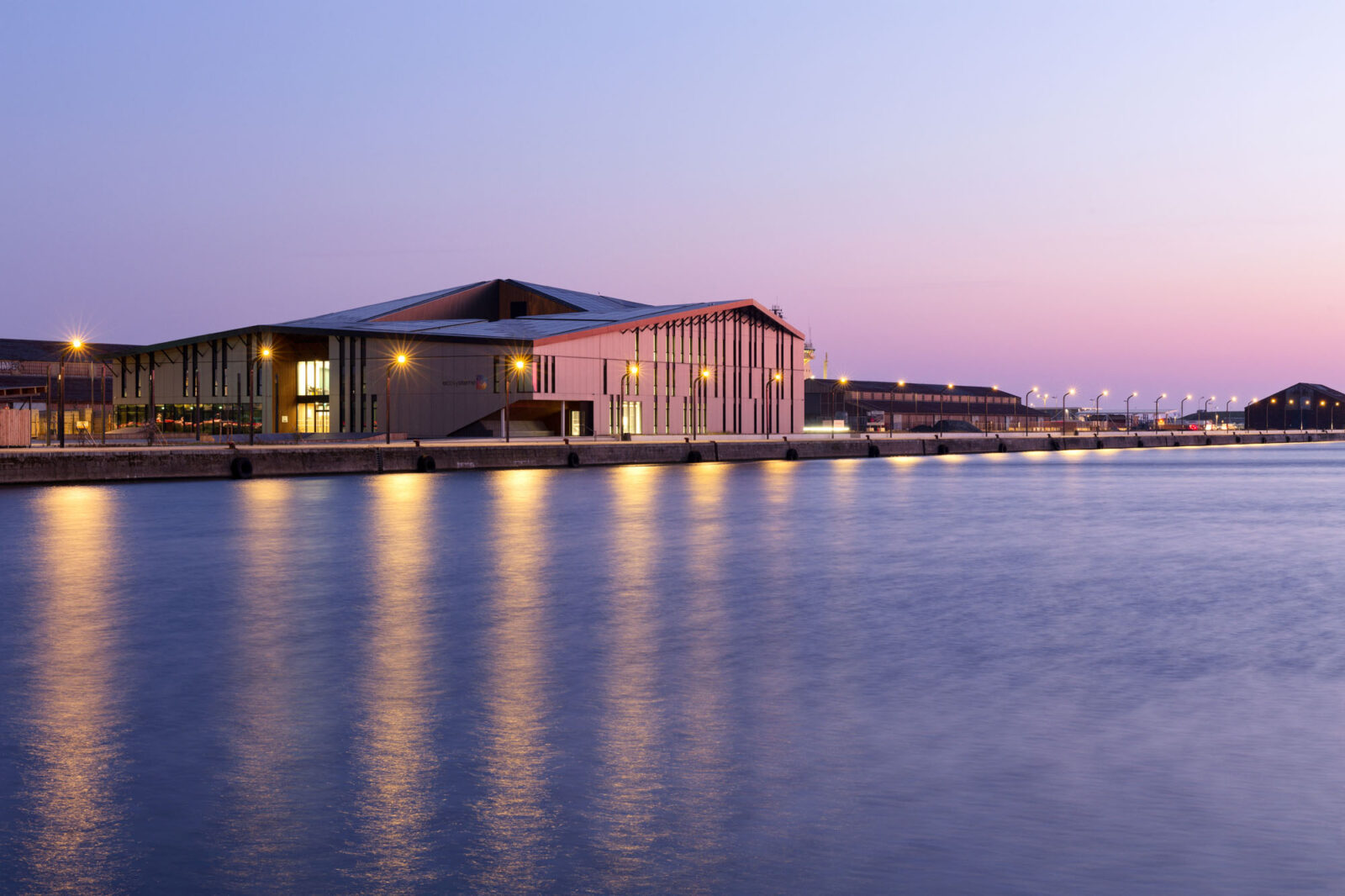
フランス北部の港湾都市ダンケルクに建つ〈エコシステムD(Écosystème D)〉は、スノヘッタ(Snøhetta)が手掛けたインキュベーターや研究施設、ショールームを内包する複合施設です。
「形態は環境に従う」という考えを具現化し、消費を上回るエネルギーを創出する「エネルギー・ポジティブ建築」として、地域の脱炭素化を牽引するフラッグシップとなっています。
注目ポイント
- 周辺街区へのエネルギー供給も視野に入れた「プラスエネルギー」を実現
- 日射取得の最適化と周辺インフラからの視認性を両立する屋根形状
- 空調設備に頼らないパッシブクーリング
- フランス最高峰の基準を達成したバイオベース建築
(以下、スノヘッタから提供されたプレスキットのテキストの抄訳)
©︎ Nicolas Fussler
©︎ Nicolas Fussler
ダンケルクのエネルギー転換を支えるプラットフォーム
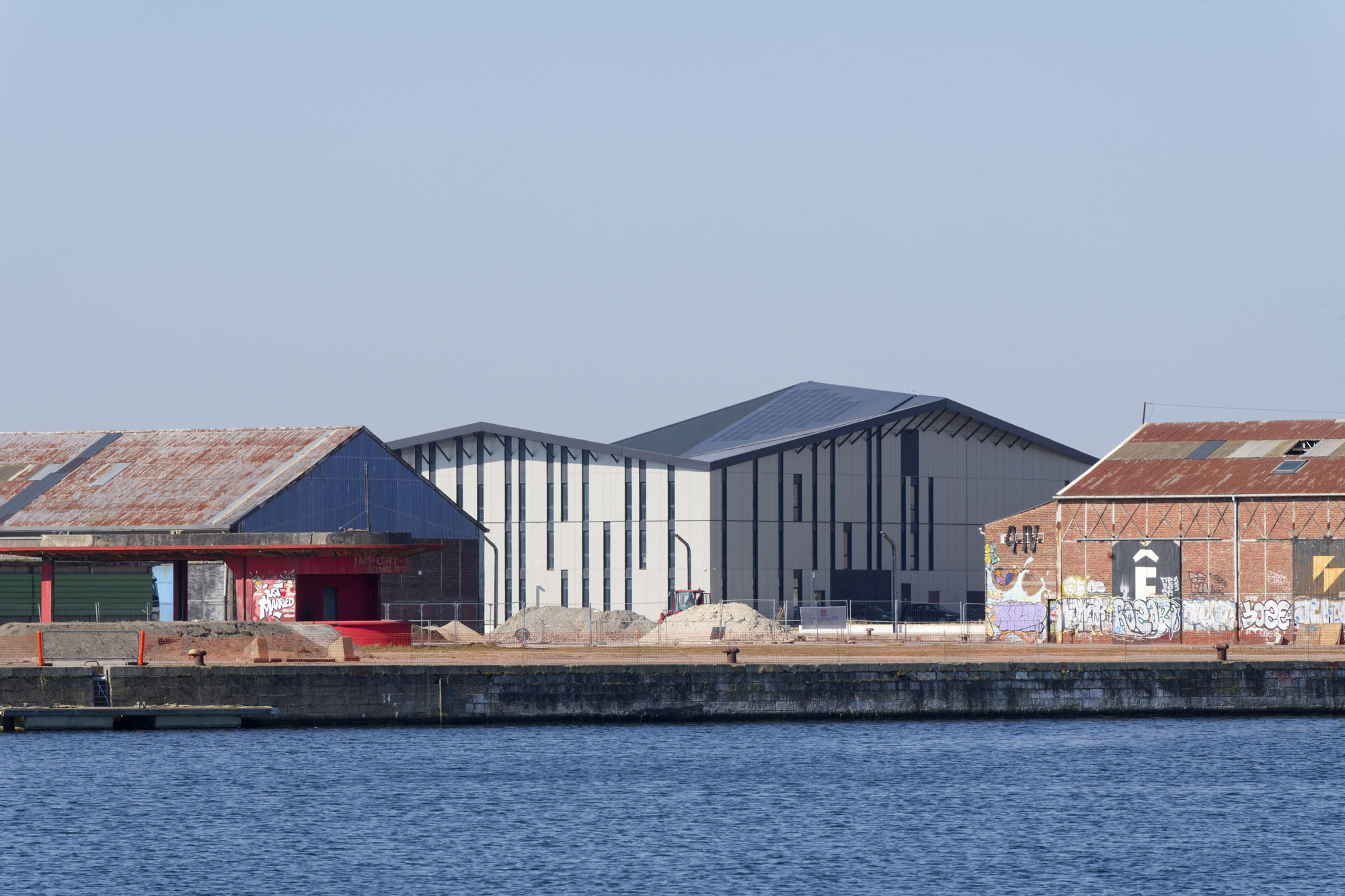
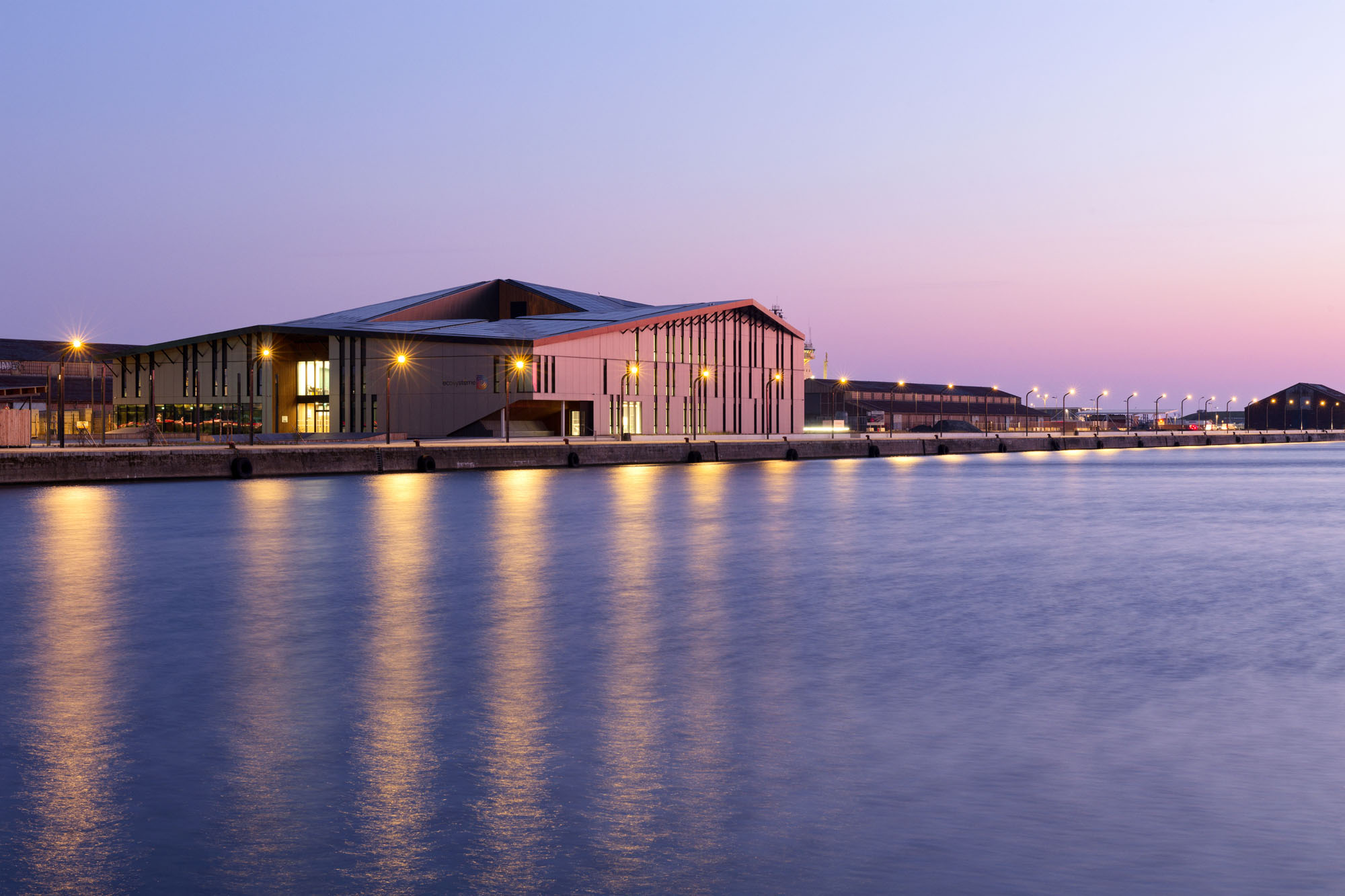
ダンケルクの港湾景観に溶け込む〈エコシステムD〉は、エネルギー転換の触媒となることを目指して設計されたエネルギー・ポジティブ建築である。再生可能エネルギーのイノベーションに特化し、インキュベーター、テクノロジーホール、トレーニングセンター、ショールームを1つの建物に集約している。
建物全体は、イノベーションを体現する環境負荷の低い生物気候学的(バイオクライマティック)建築の一部となっている。環境と絶えず相互作用するこの建物は、オー=ド=フランス地域における新たな都市的・産業的ダイナミズムを体現している。
©︎ Nicolas Fussler
©︎ Nicolas Fussler
©︎ Nicolas Fussler
産業港の変革を象徴するフラッグシッププロジェクト
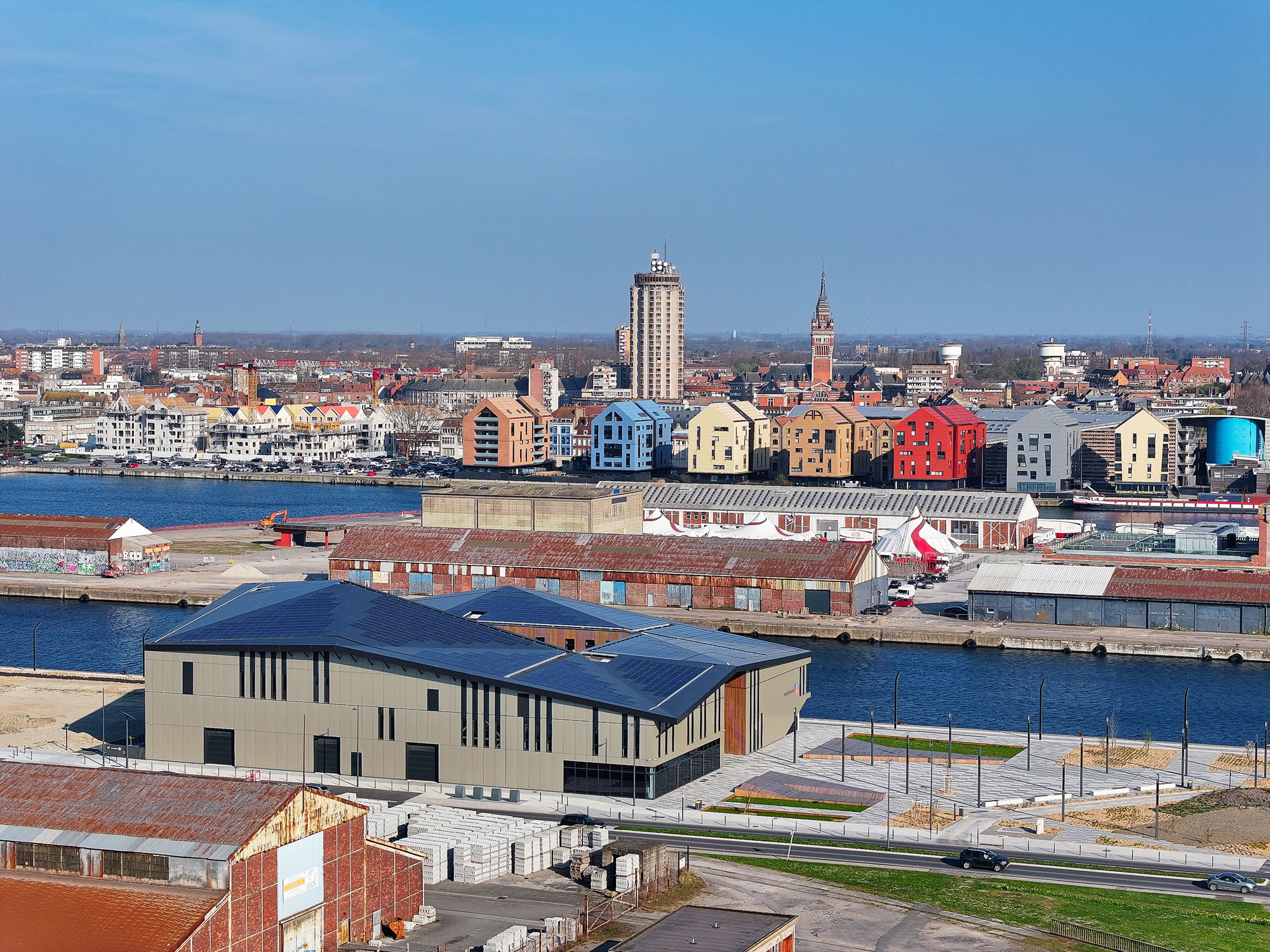
〈エコシステムD〉は、ダンケルクの産業港の変革に完全に組み込まれている。旧港湾エリアの中心部であるモール2に位置し、1990年代に開始された「ネプチューン」開発戦略に統合されている。この戦略は、産業の廃墟となった地域と市街地を再接続し、持続可能な発展の勢いを促進することを目的としている。
この建物は、地域、技術、環境の各パートナーとの緊密な連携によって実現したものであり、その戦略的な立地、明確な機能的役割、そして模範的なエネルギー目標を際立たせている。ダンケルクの地域再生における重要なマイルストーンとなることを目指している。
©︎ Nicolas Fussler
©︎ Nicolas Fussler
©︎ Nicolas Fussler
地域再生の象徴となるプラスエネルギービル
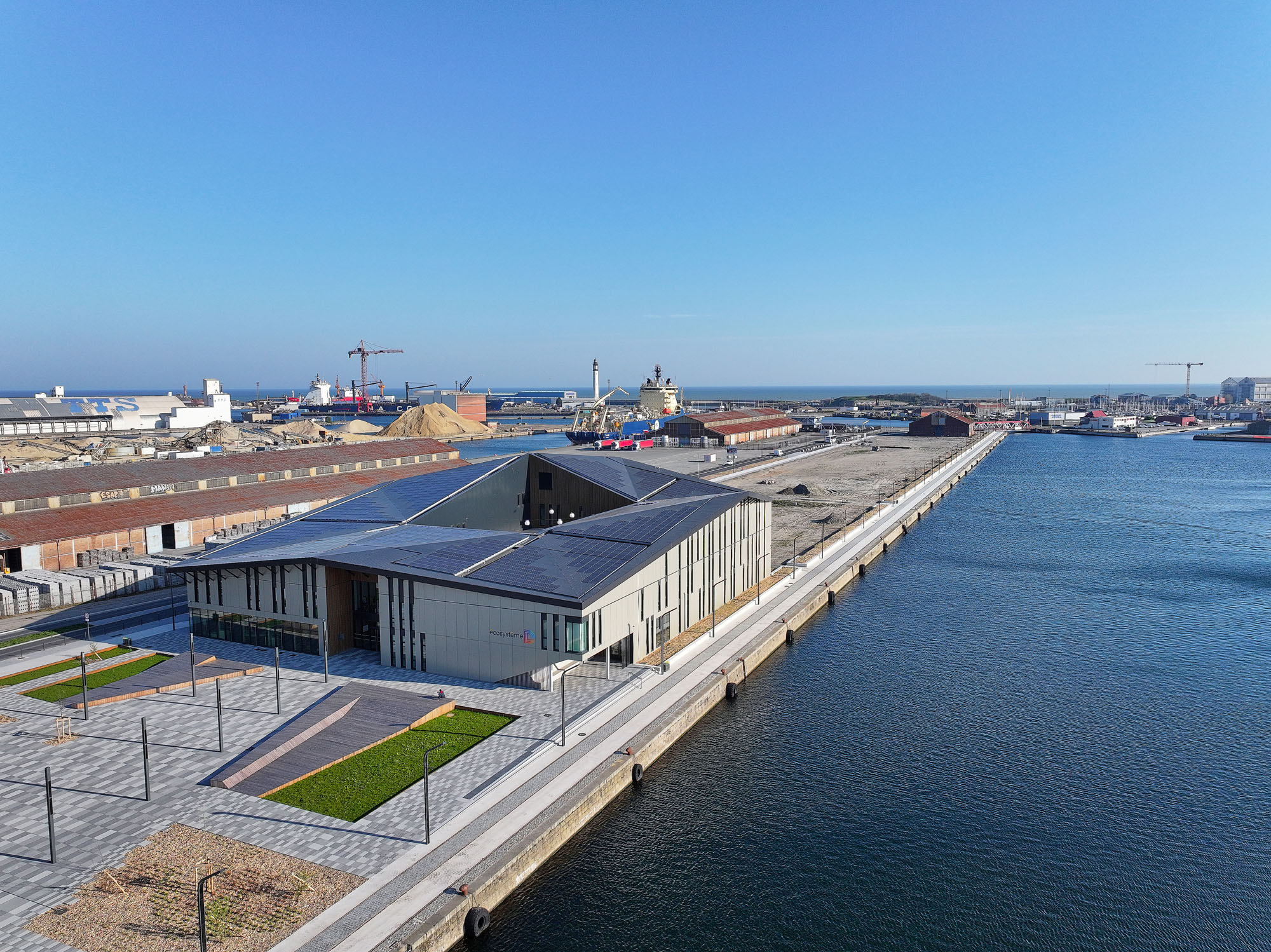
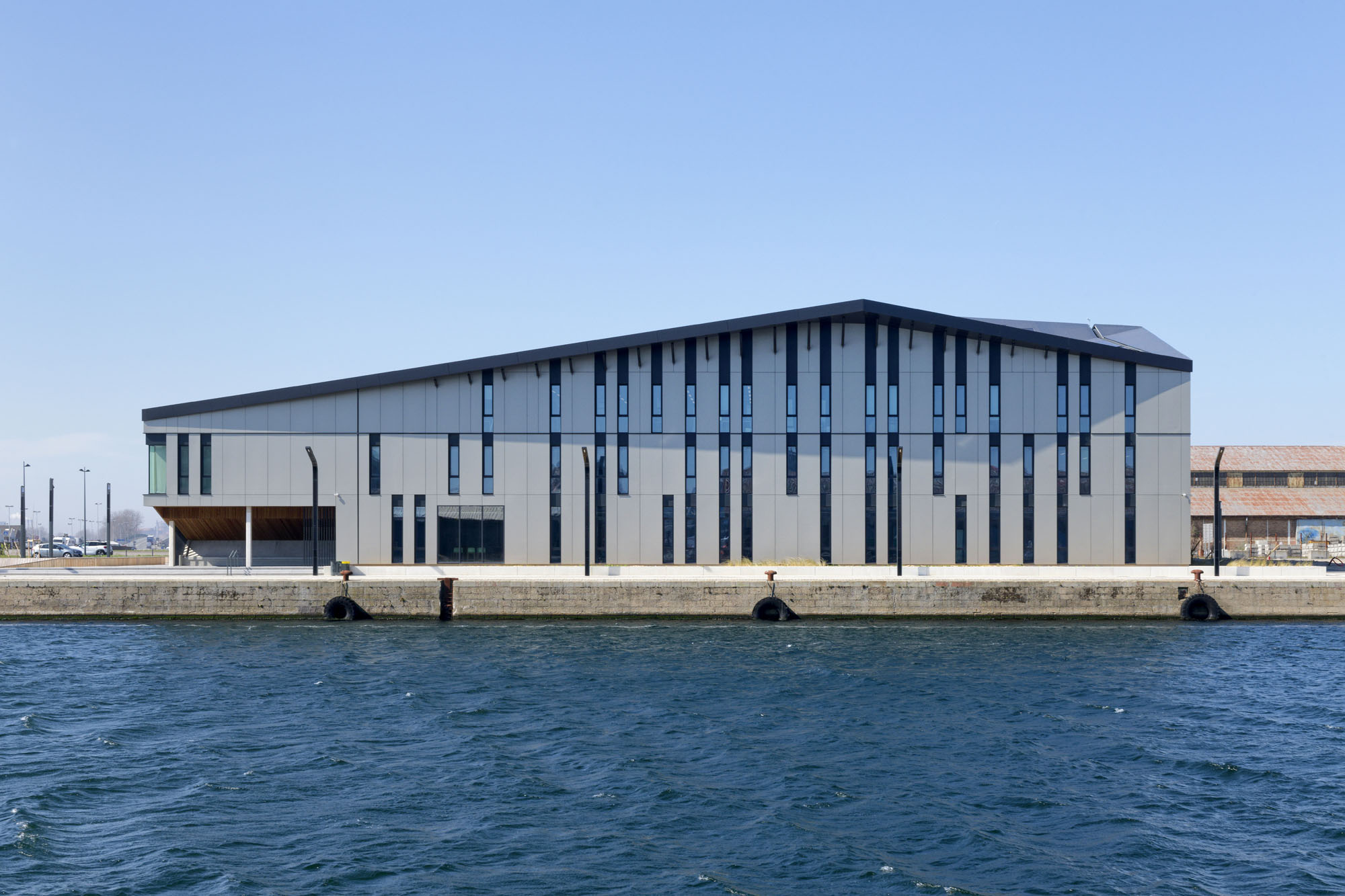
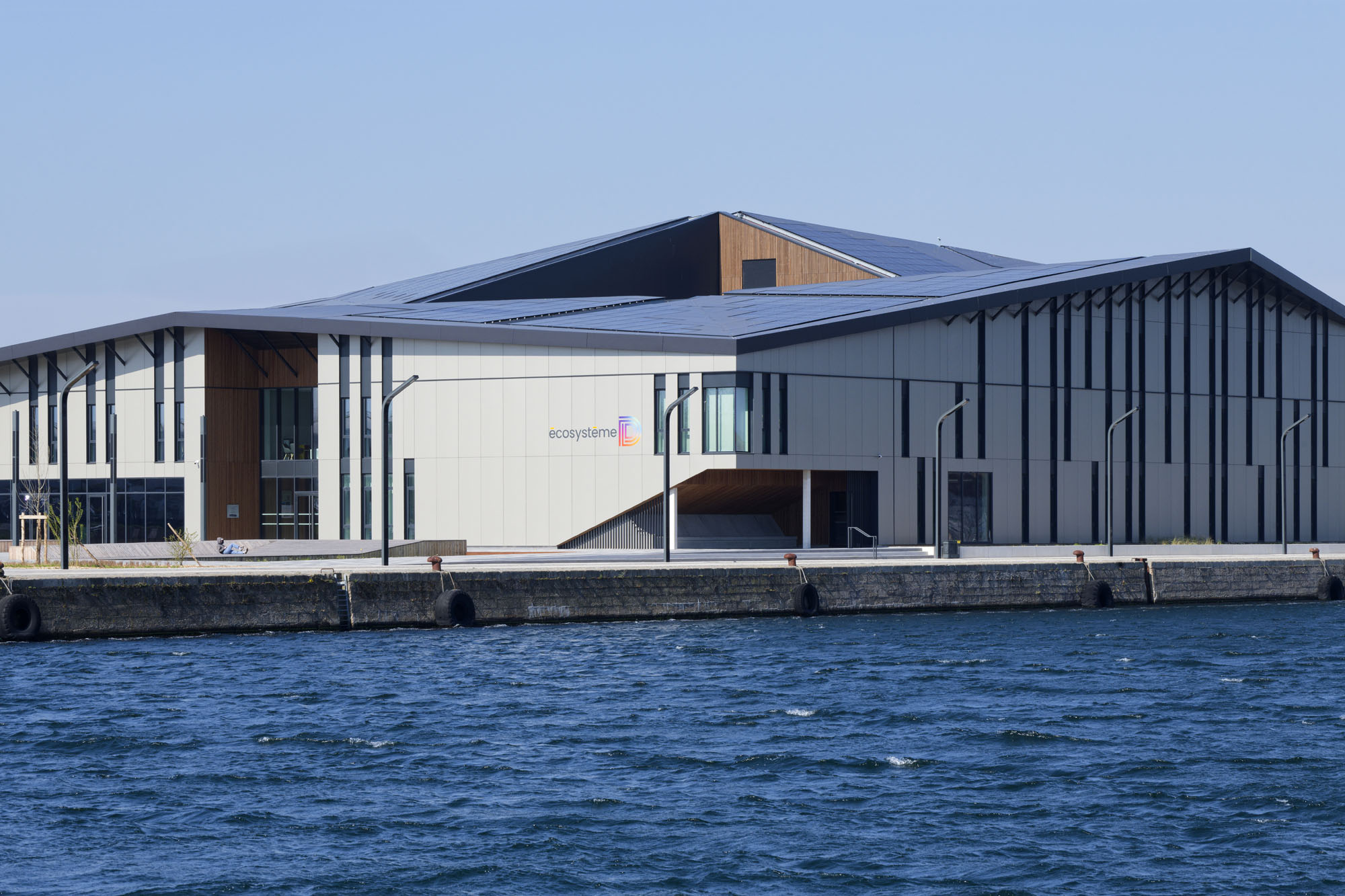
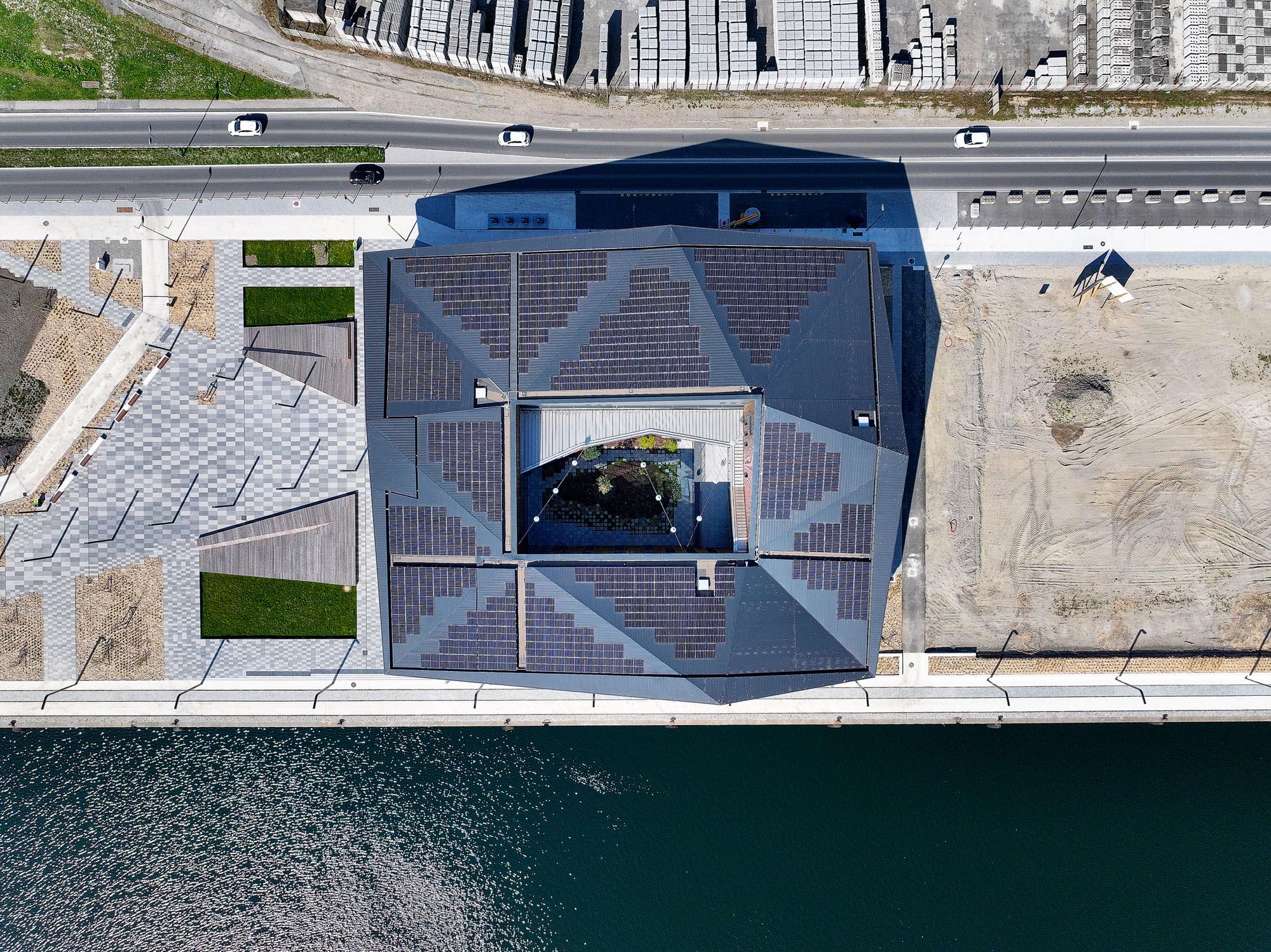
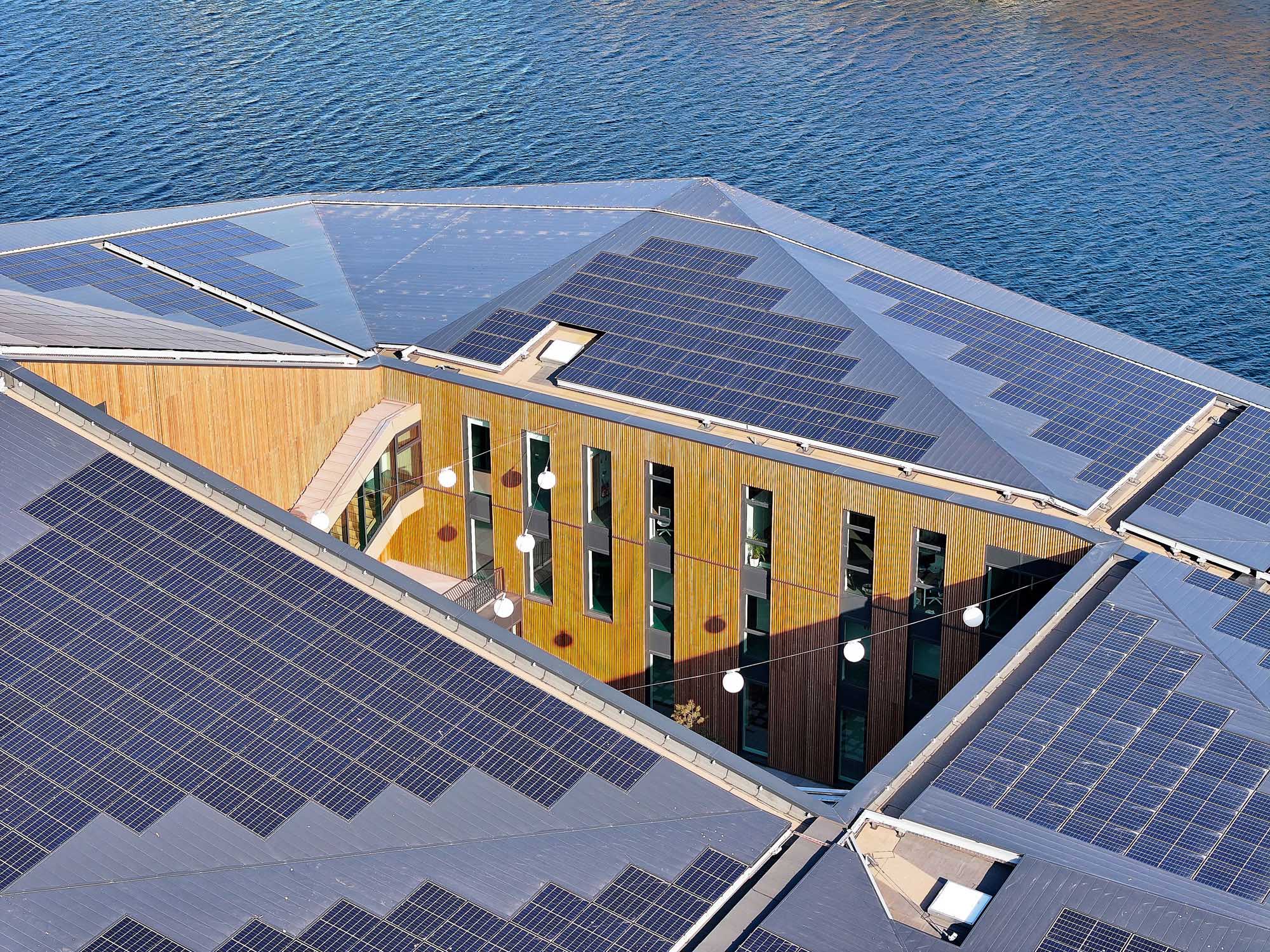
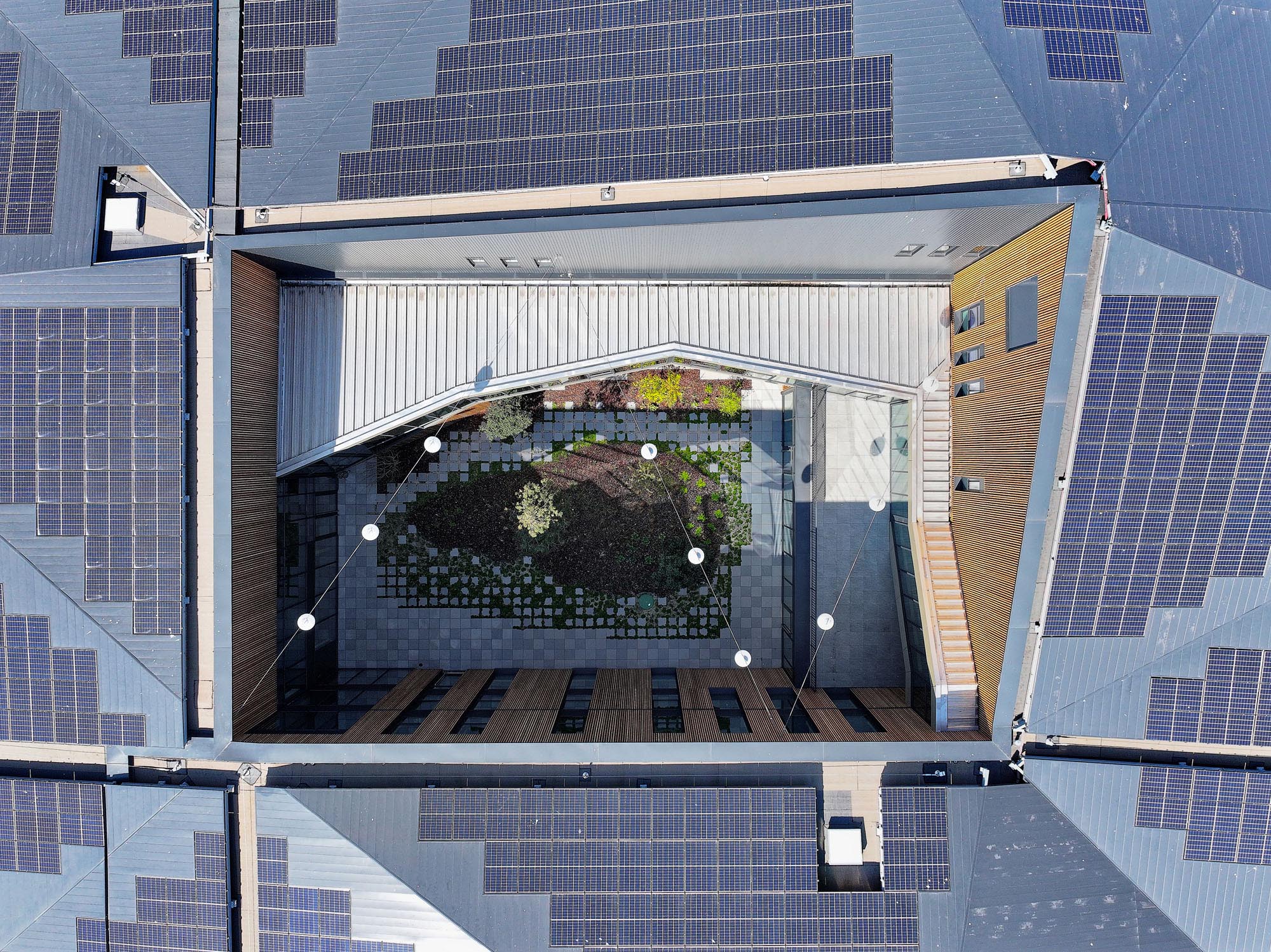
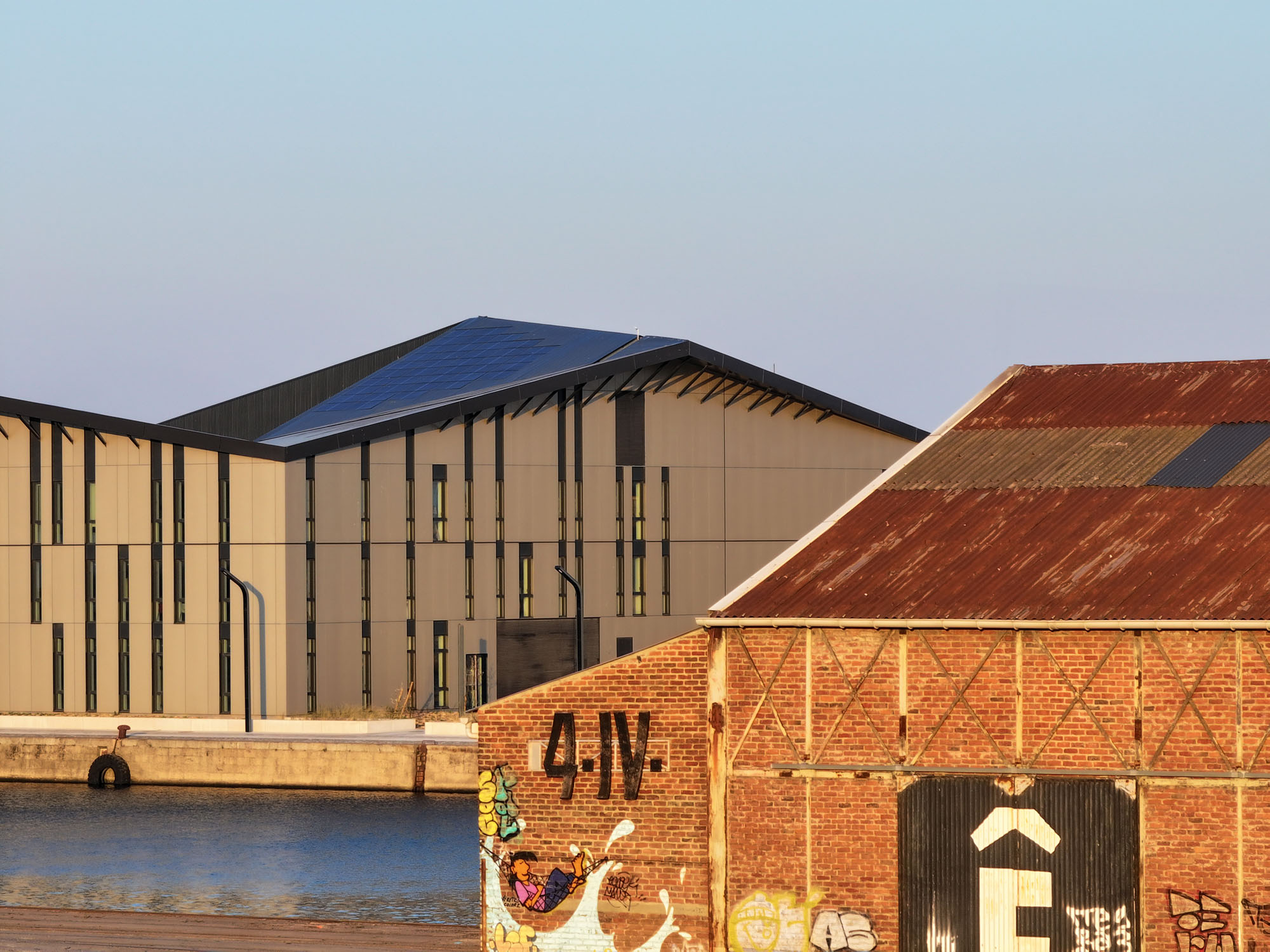
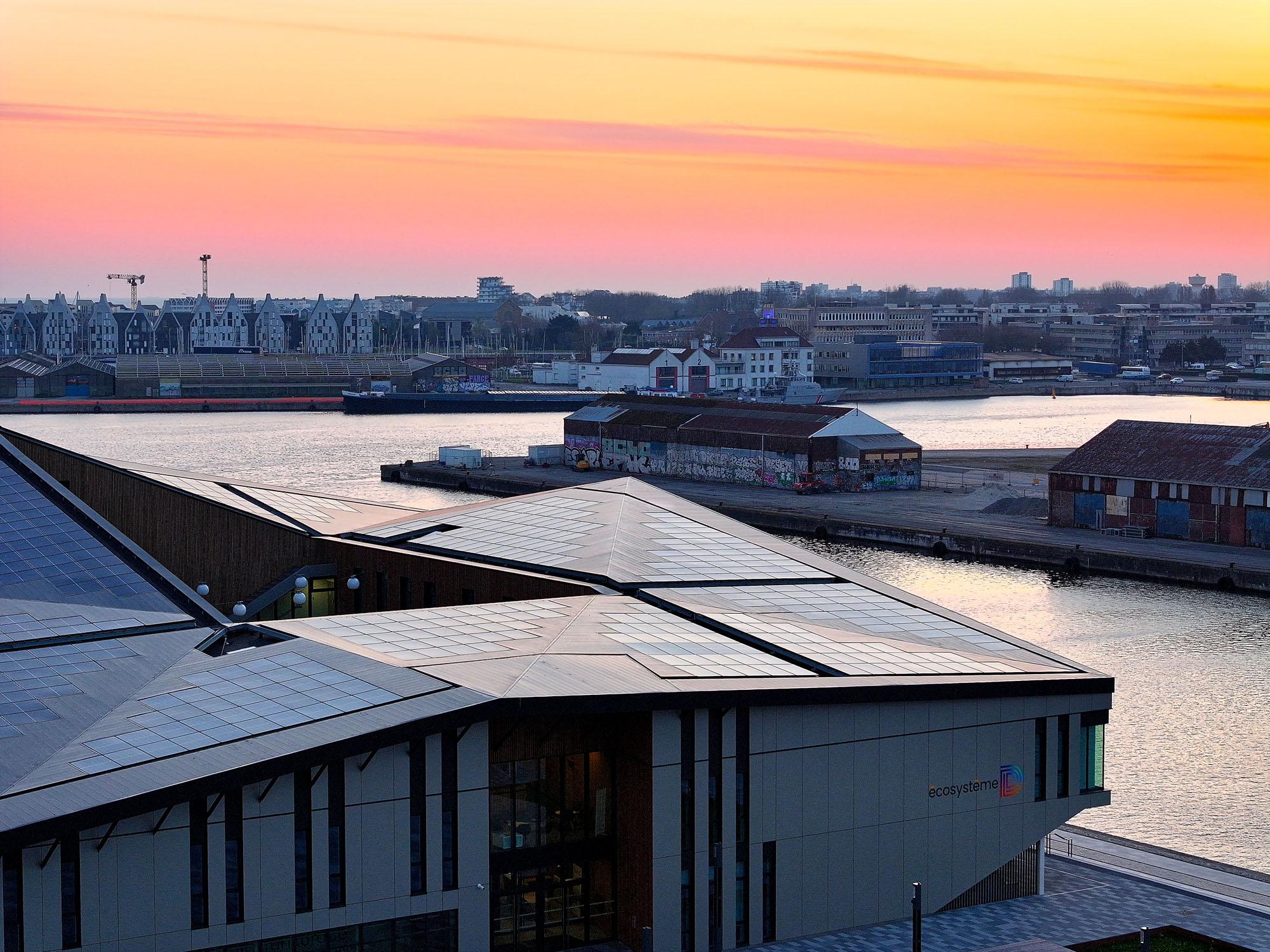
エネルギーハブとして設計されたこの建物は、消費するエネルギーよりも多くのエネルギーを生み出し、将来の建築に向けた新たな基準を打ち立てている。厳格な生物気候学的設計と、屋根に設置された1,200m²の太陽光パネルにより、自らのエネルギー需要を賄うだけでなく、今後建設されるイノベーションパークのエネルギー循環にも貢献する。
このアプローチは、「パワーハウス(Powerhouse)」の原則に従ったものであり、クリーンエネルギーの生産を最大化し、エネルギー需要を最小限に抑え、利用者に対して質の高い生活環境を提供することを目指している。
「エネルギー・ポジティブ建築こそが未来の建築である。デザイン業界のモットーは『形態は機能に従う』ではなく、『形態は環境に従う』であるべきである。」
スノーヘッタ創設パートナー/建築家
シェティル・トレーダル・トールセン(Kjetil Trædal Thorsen)
イノベーションと教育の拠点
機関および産業パートナー(ダンケルク都市共同体、AGUR、ダンケルク・プロモーション、ポレネルジー、エコパル、CCIリトラル、ダンケルク大港湾、ULCO、IMTリール・ドゥエ)によるエコシステムが主導する〈エコシステムD〉は、イノベーションに特化した多様な活動を結集している。
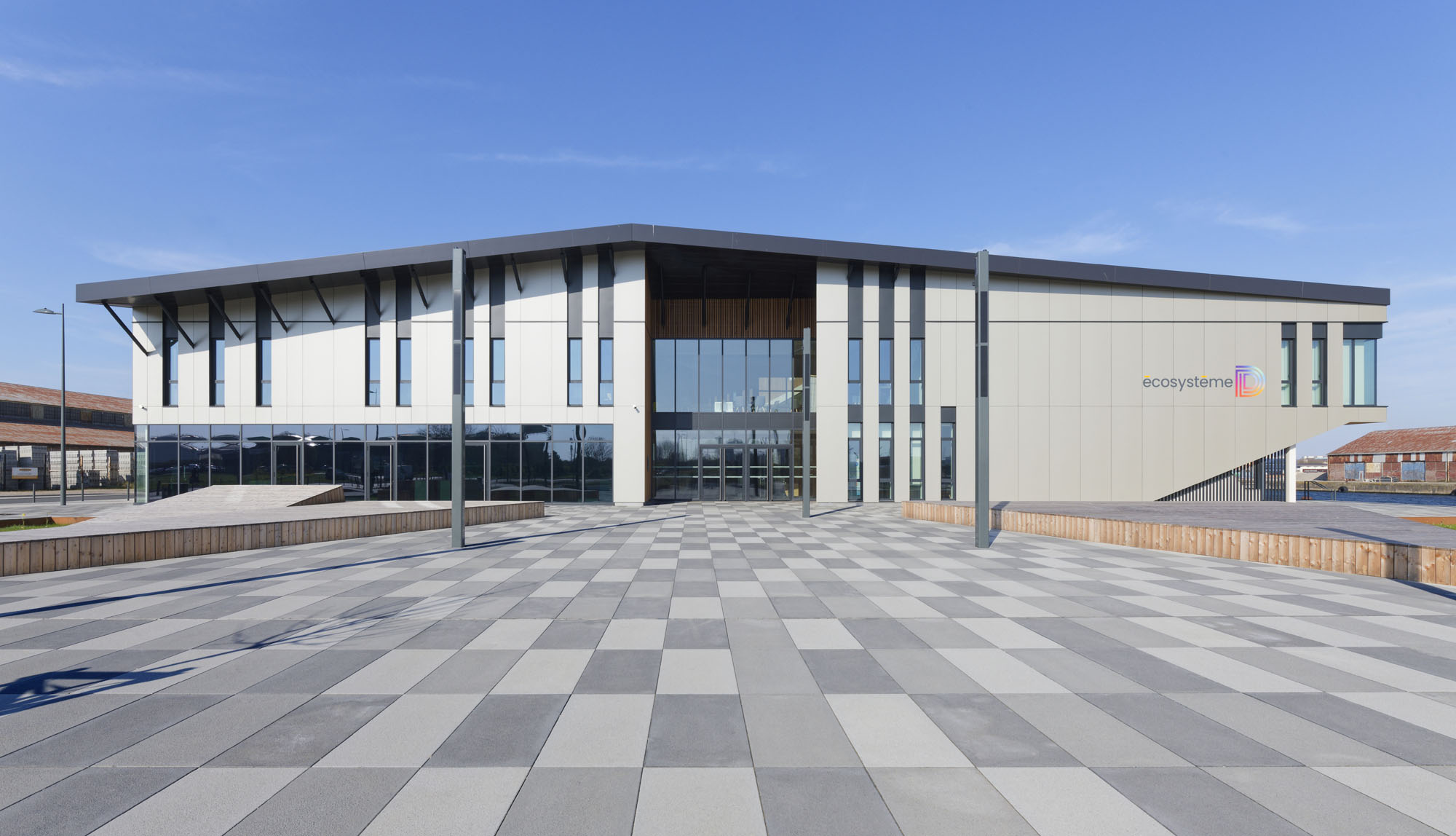
ここには、大規模なプロトタイピング技術ホール、トレーニングセンター、インキュベーター、ショールーム、そして数多くのフレキシブルなワークスペースが設けられている。工学系大学や脱炭素化に取り組む企業とのパートナーシップを通じて、研究、教育、イノベーションを推進している。建物の前庭への開放性と空間の透明性は、イノベーション、地域、社会をつなぐというその使命を反映している。
©︎ Nicolas Fussler
©︎ Nicolas Fussler
環境に寄り添う建築
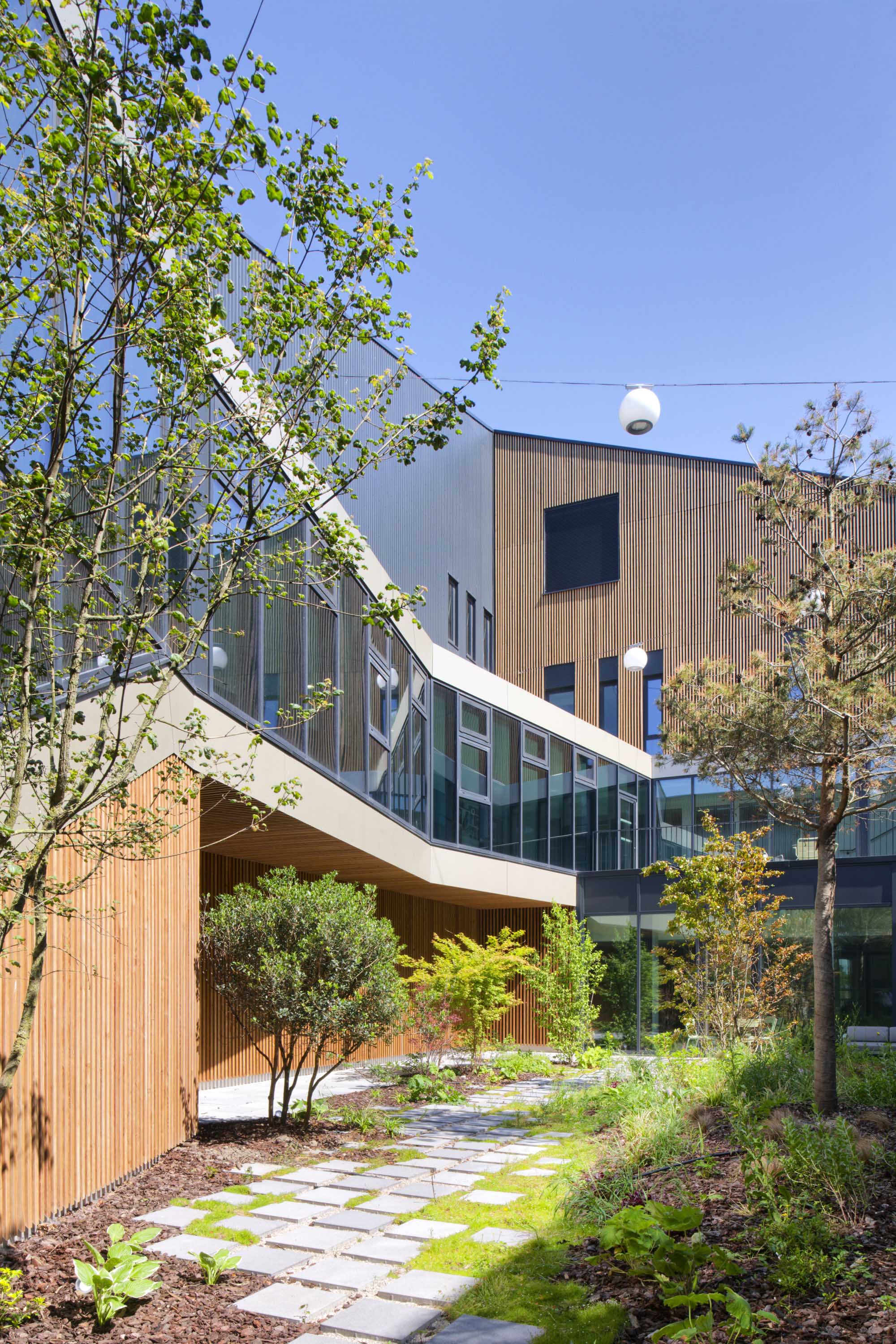
建物の形態は、その産業的・気候的文脈の分析から直接導き出されている。海抜5mの高さに位置する敷地は、主要な風向きや近隣のインフラから生じる大気汚染の影響を受けやすい環境にある。
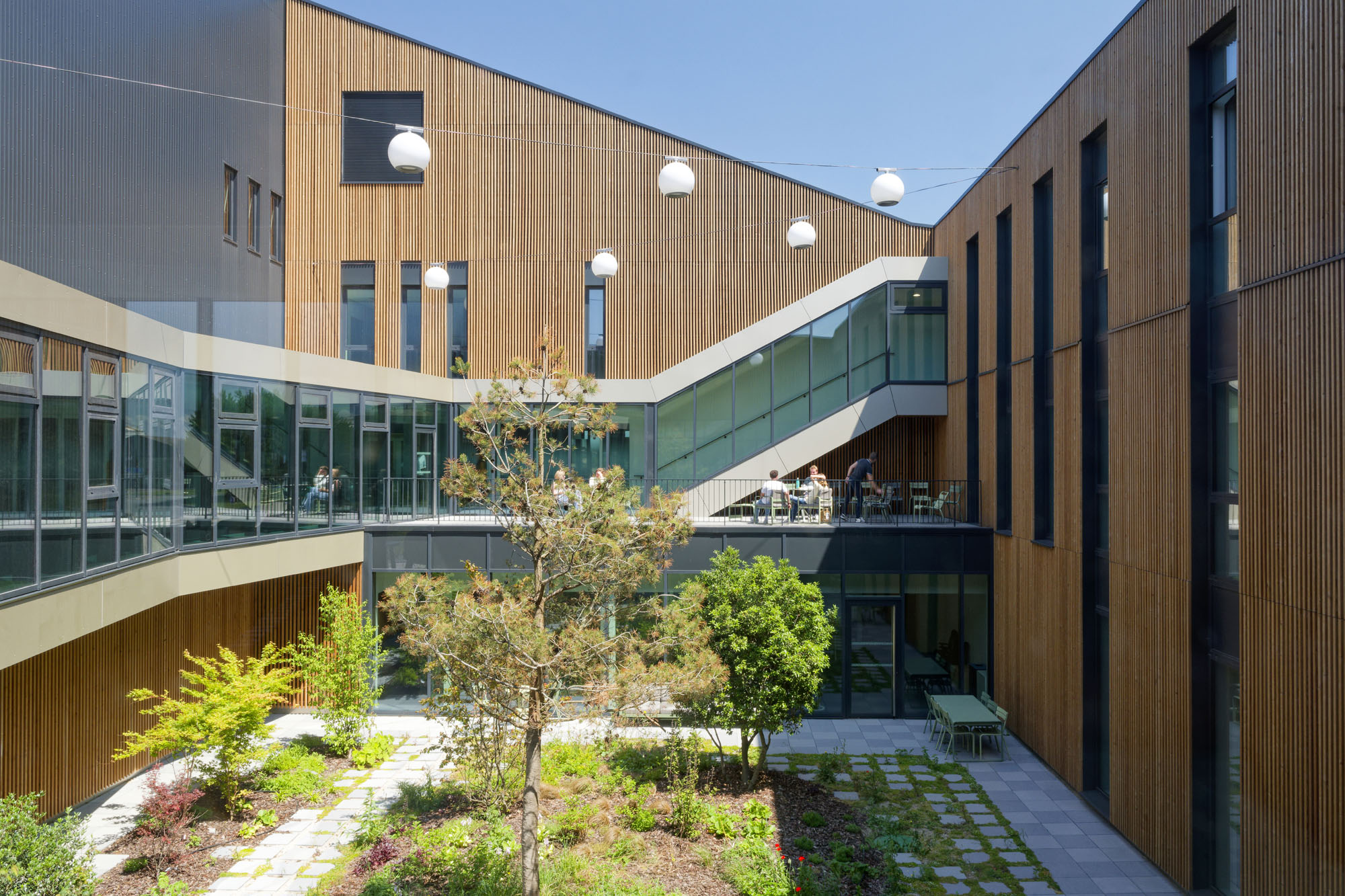
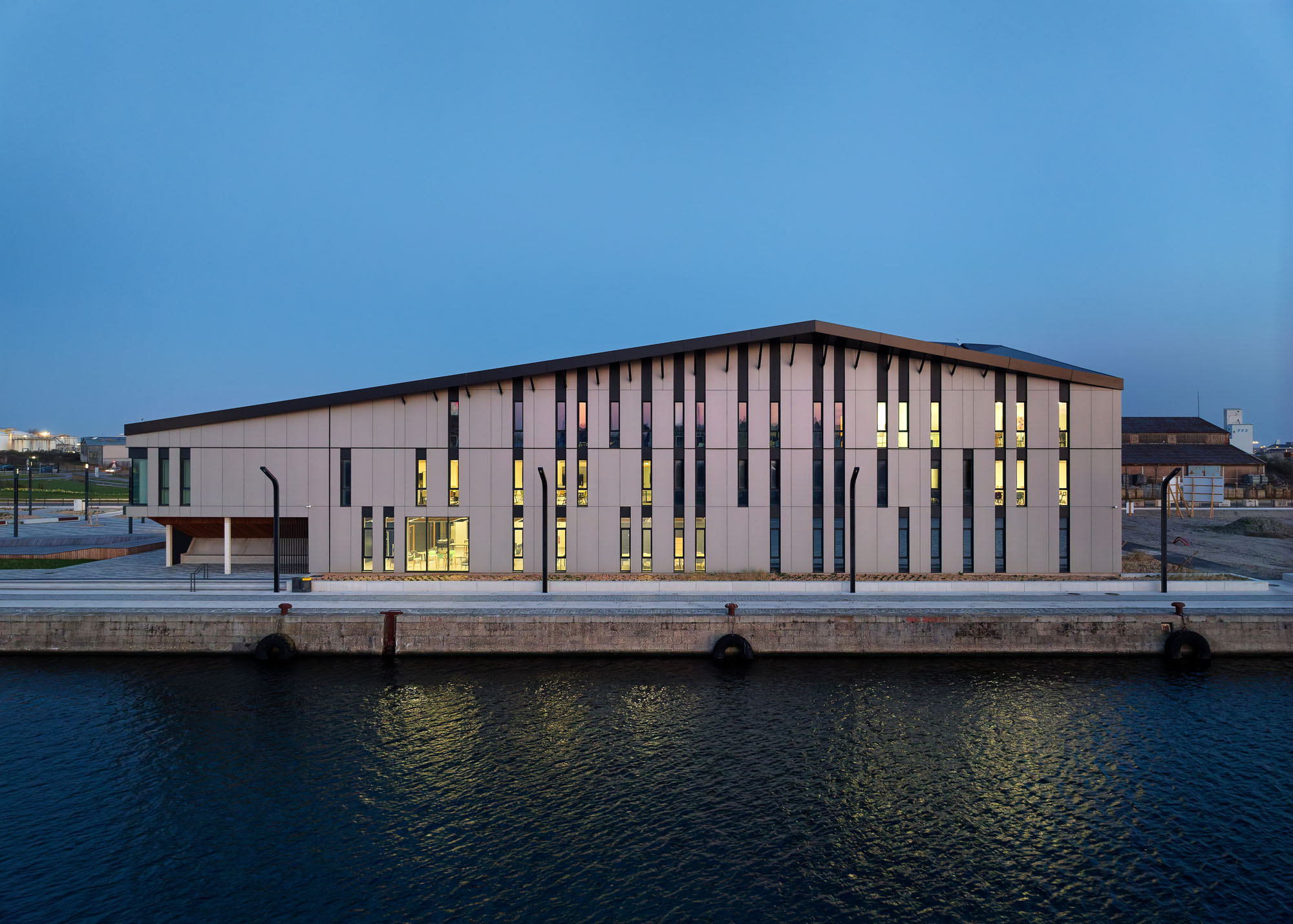
建物の高さは内部用途に応じて9mから18mまで変化し、折り重なる屋根が異なるボリュームを調和のとれた全体へと結びつけている。古い港湾倉庫から着想を得たこの屋根は、近隣の都市軸(シタデル、ショセ・デ・ダルス、ジェテ1)から多様な眺望を提供すると同時に、日射取得を最適化している。
©︎ Nicolas Fussler
©︎ Nicolas Fussler
©︎ Nicolas Fussler
5つの基本原則に基づく生物気候学的戦略
この建築は、5つの基本原則を中心に展開された厳格な生物気候学的戦略に基づいている。
コンパクトさと自然光:建物は、風から守られたパティオを中心に据えた長方形の平面(50×60m)を採用している。すべての機能はこの緑のコアを囲むように配置され、自然光、通風、そして利用者間の交流を促進している。
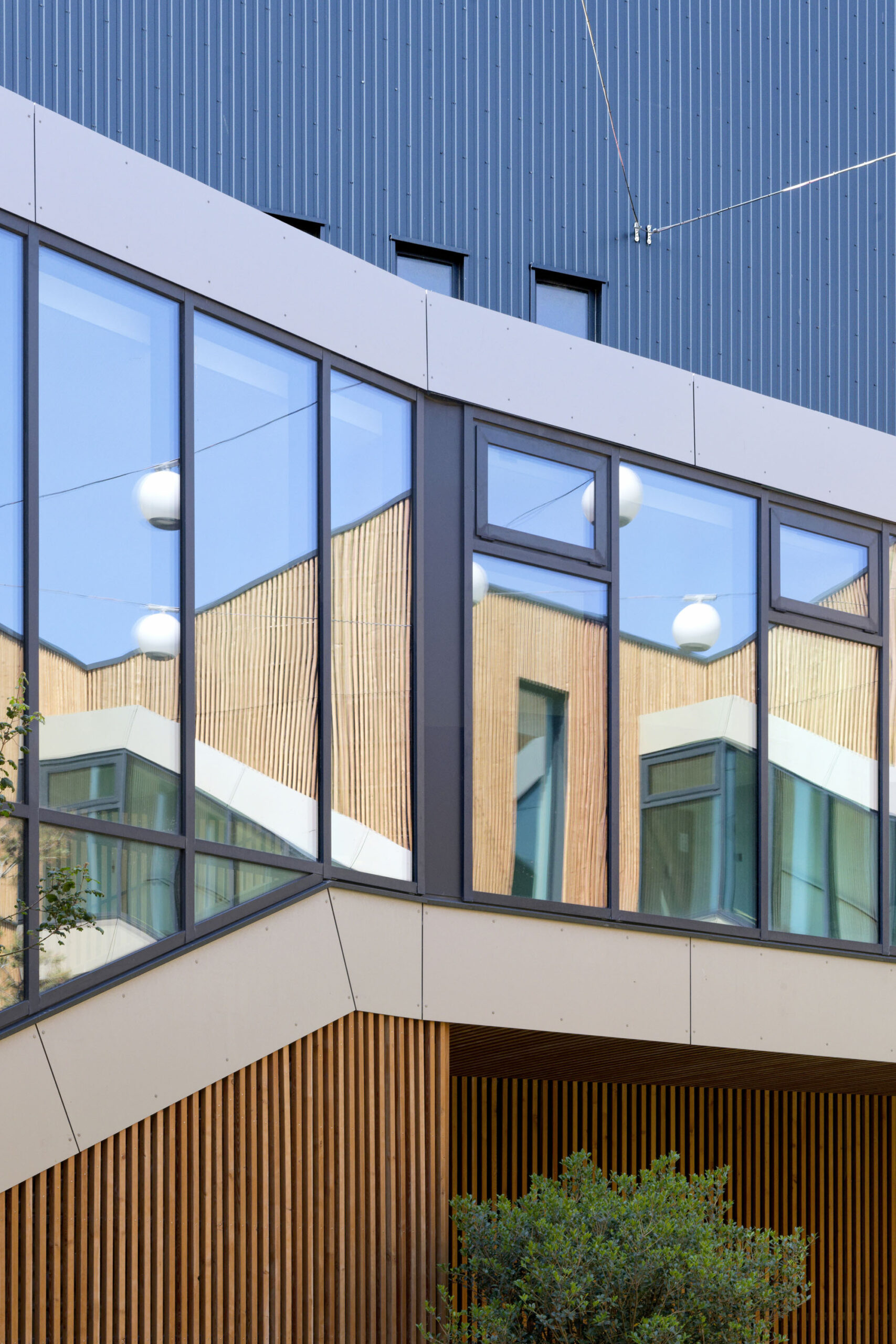
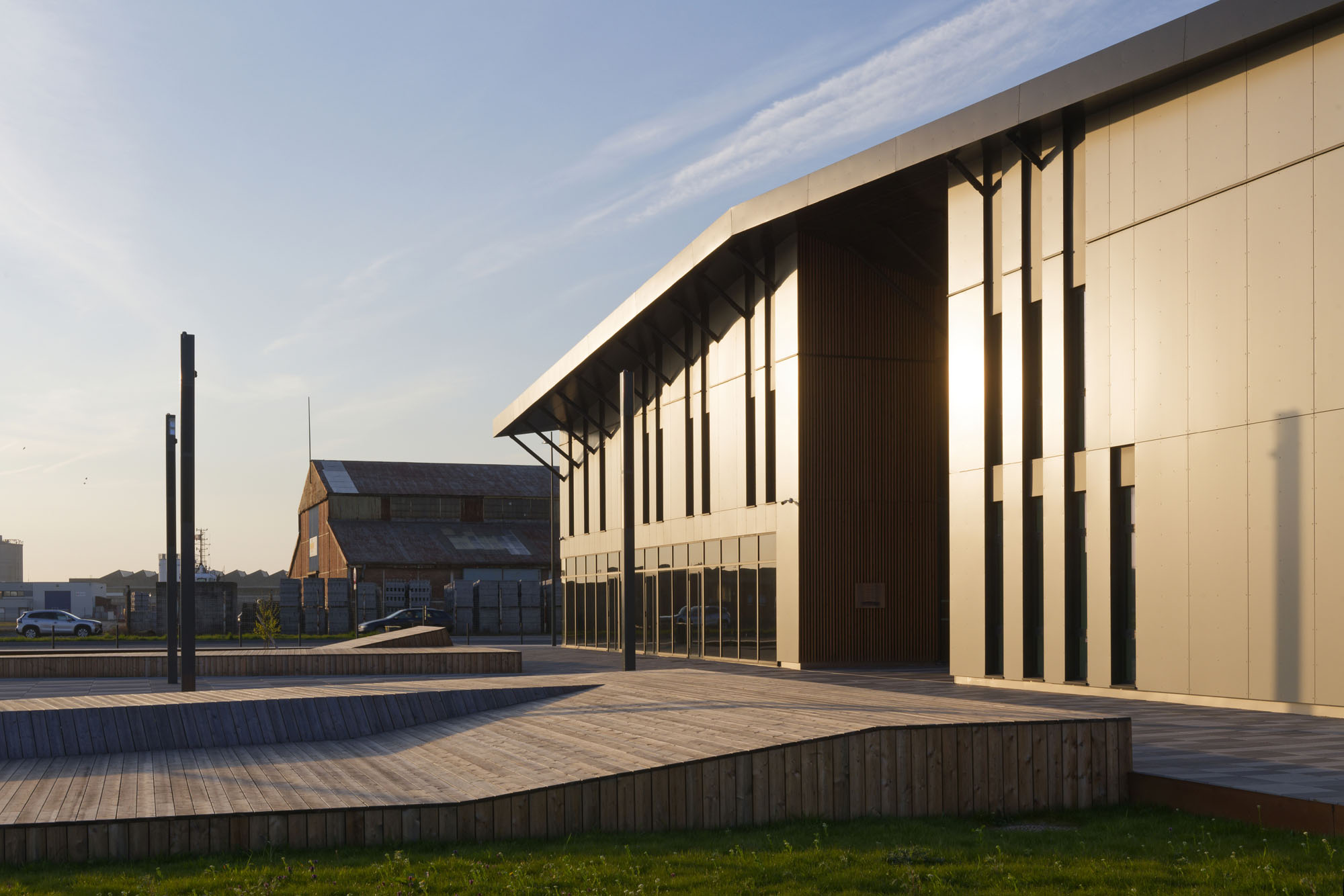
パッシブかつ高性能な断熱外皮:三重ガラス、強化された断熱材、高性能な建具、日除けとして機能する屋根の張り出し、そして高いアルベド(反射率)を持つ金属外装により、妥協のない熱効率が確保されている。
空調なしの自然冷却:海に近い立地を活かした断熱冷却により、通風を促進する。能動的な空調システムは不要である。
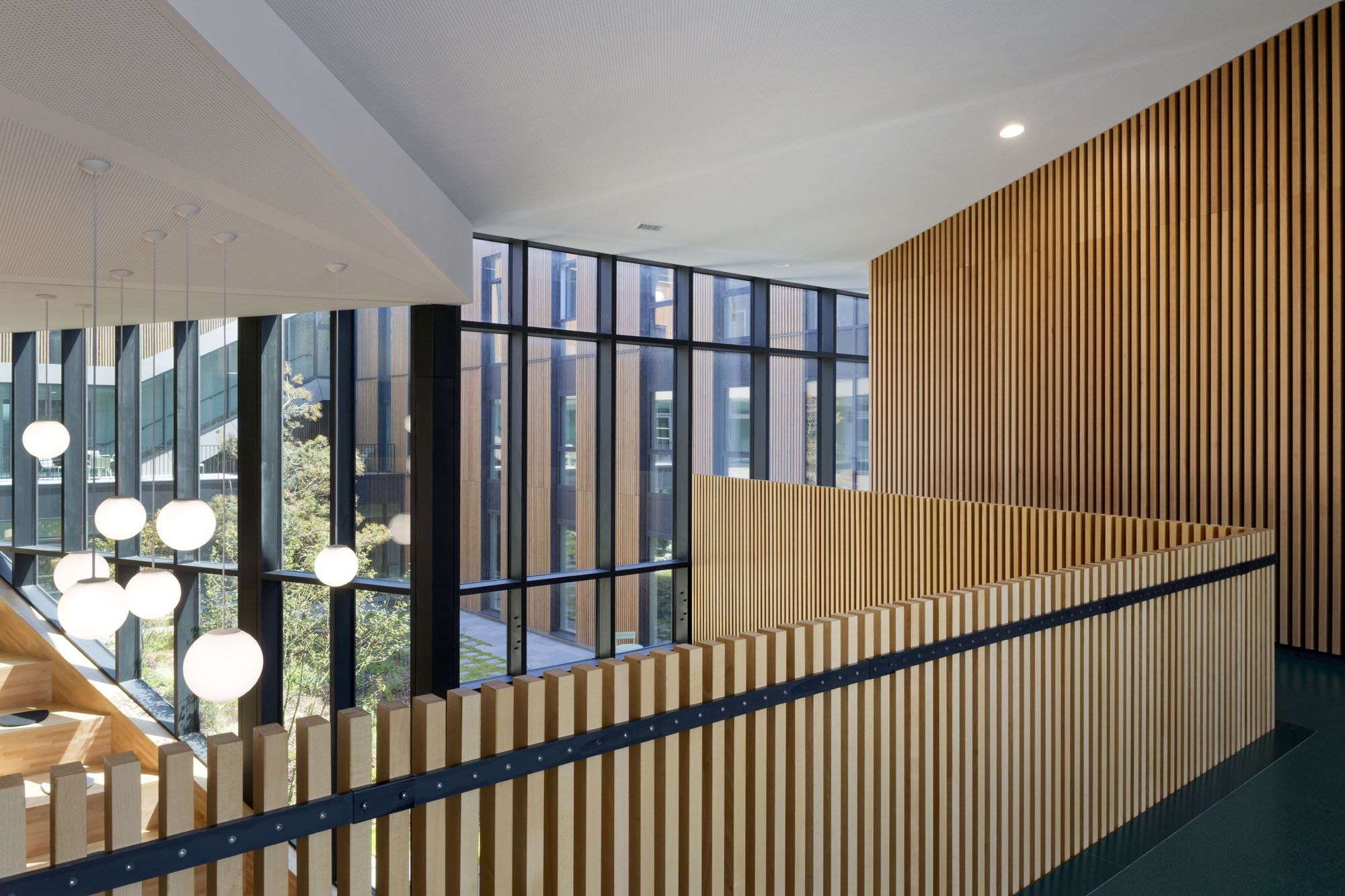
バイオベースおよび地元産資材:無垢材構造により、「バイオベース・ビルディング」ラベルのレベル3達成に貢献し、床面積1m²あたり36kg以上のバイオベース資材を使用している。資材は主に地元産である。
簡素化されたメンテナンスと耐久性:建物はメンテナンスの必要性を最小限に抑えるよう設計されており、アクセスしやすく、堅牢で、長期的な視点に立ったシステムが採用されている。
©︎ Nicolas Fussler
©︎ Nicolas Fussler
©︎ Nicolas Fussler
港と都市をつなぐ開放的で一体感のある空間
港と都市構造の接点に位置する〈エコシステムD〉は、建築的なランドマークとしての役割を果たしている。近隣の象徴的な建物との視覚的なつながりを生み出し、港湾埠頭の活性化に貢献している。
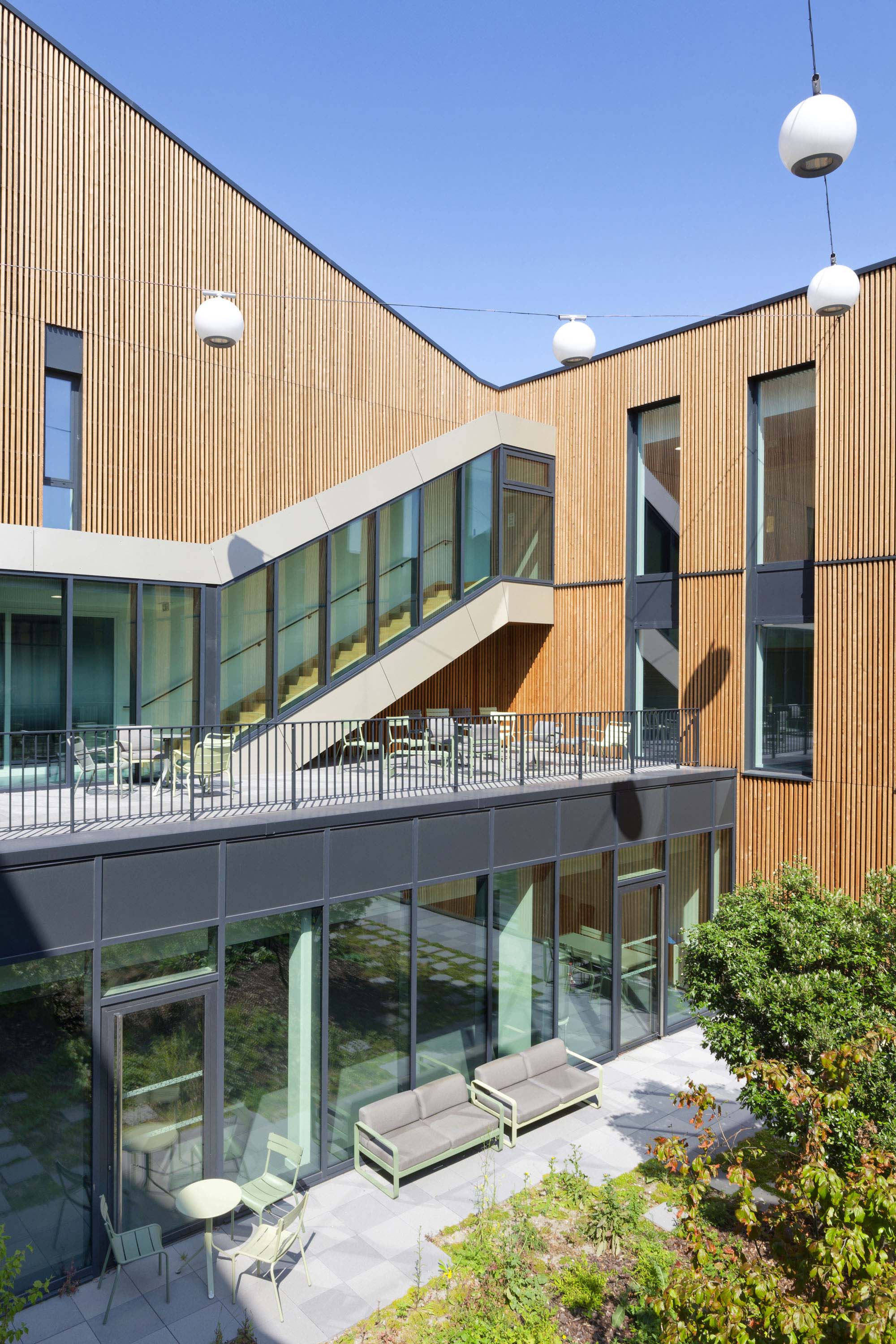
活気あふれる前庭は、ガラス張りのショールームの屋外への延長として機能し、街路家具、連結されたプラットフォーム、再生可能エネルギーに関する教育施設が組み込まれている。
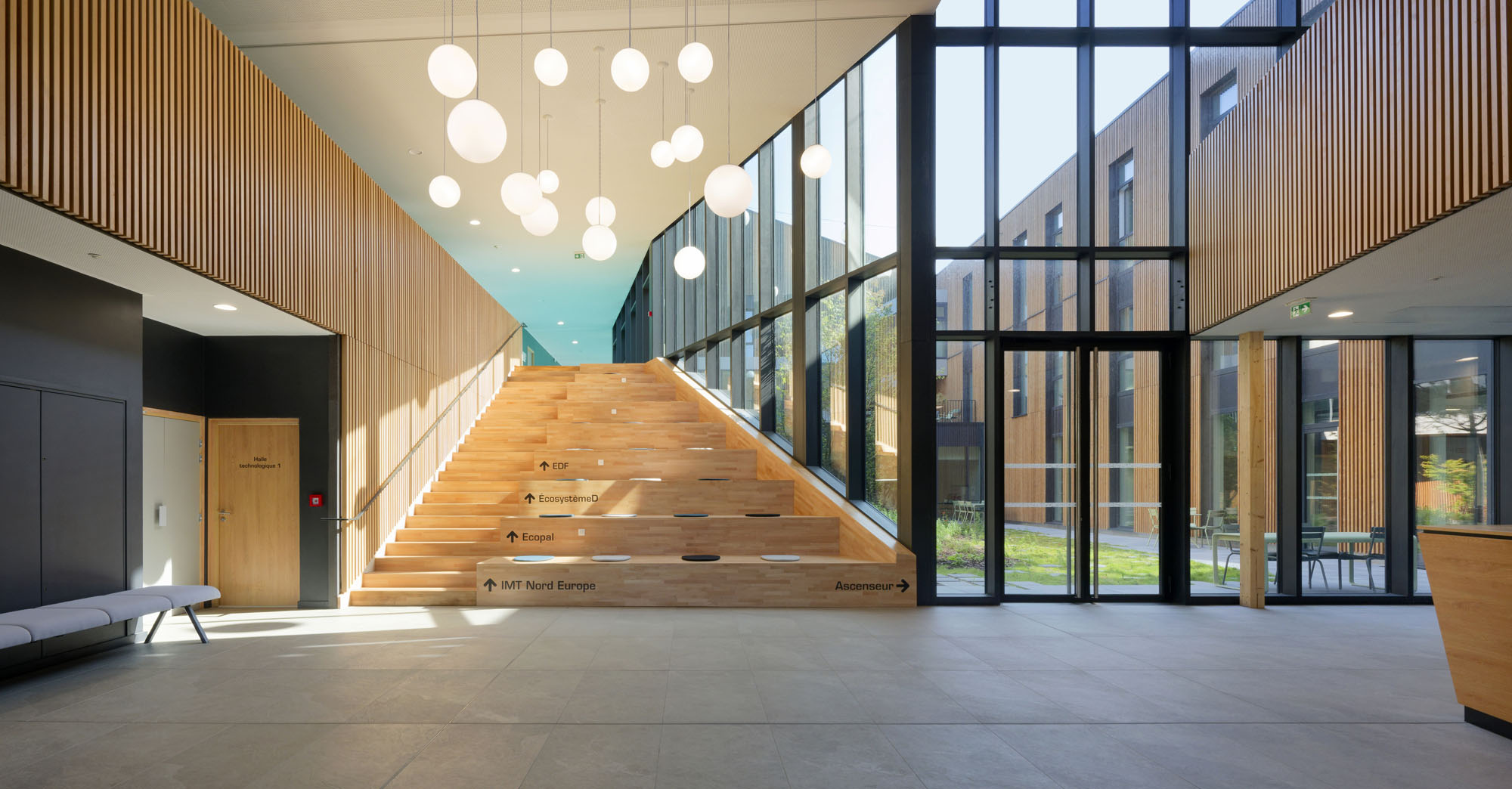
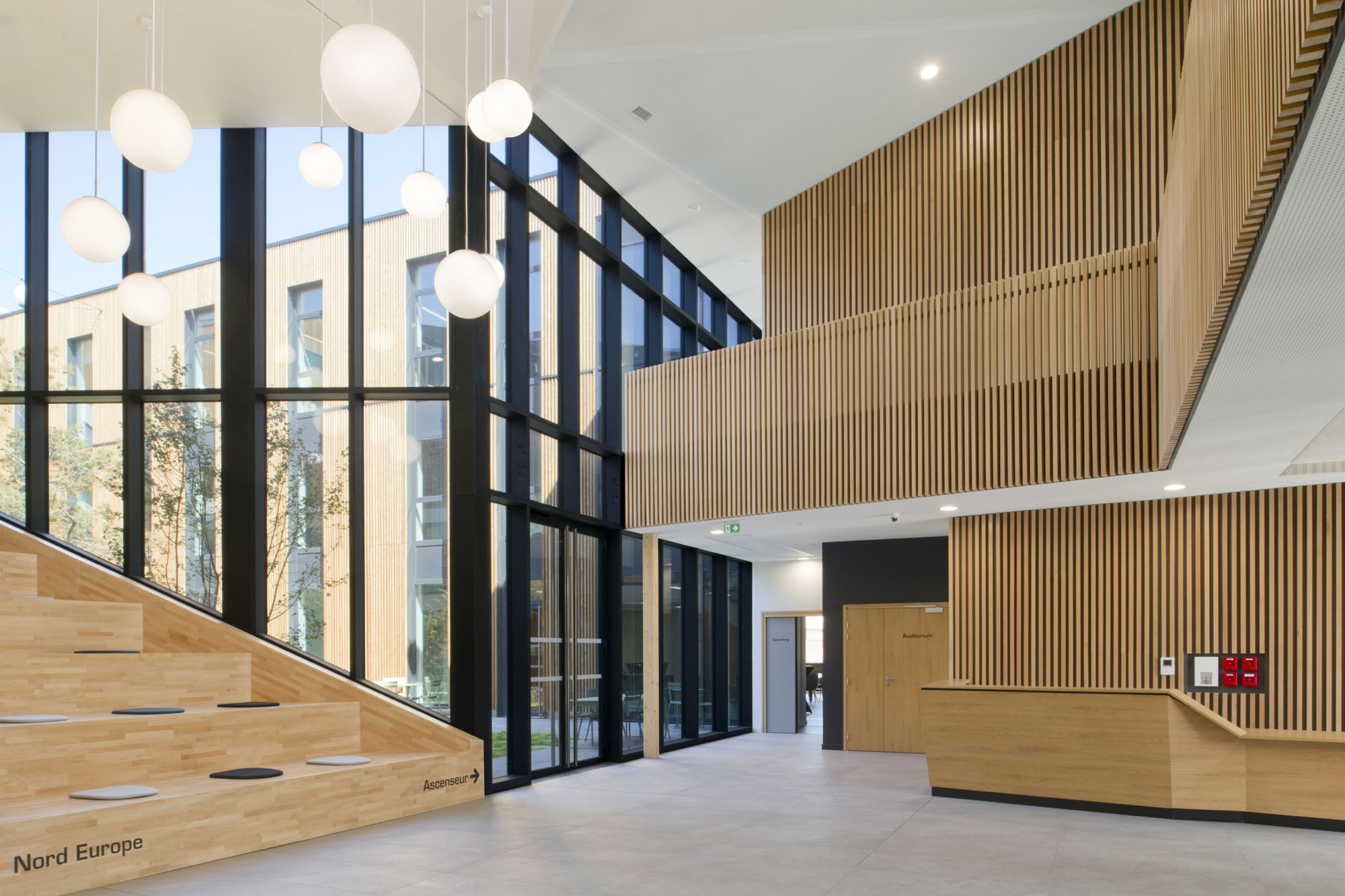
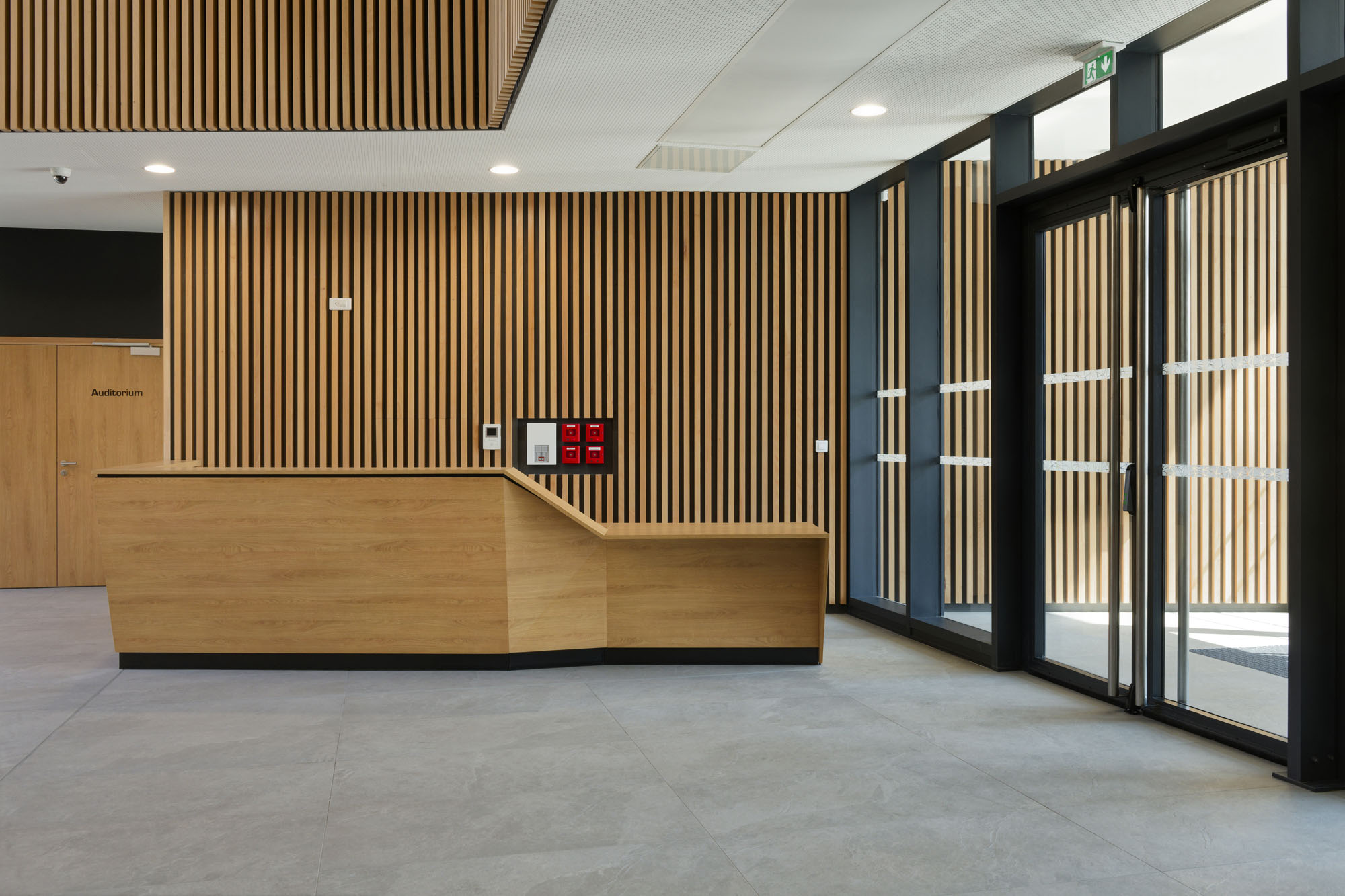
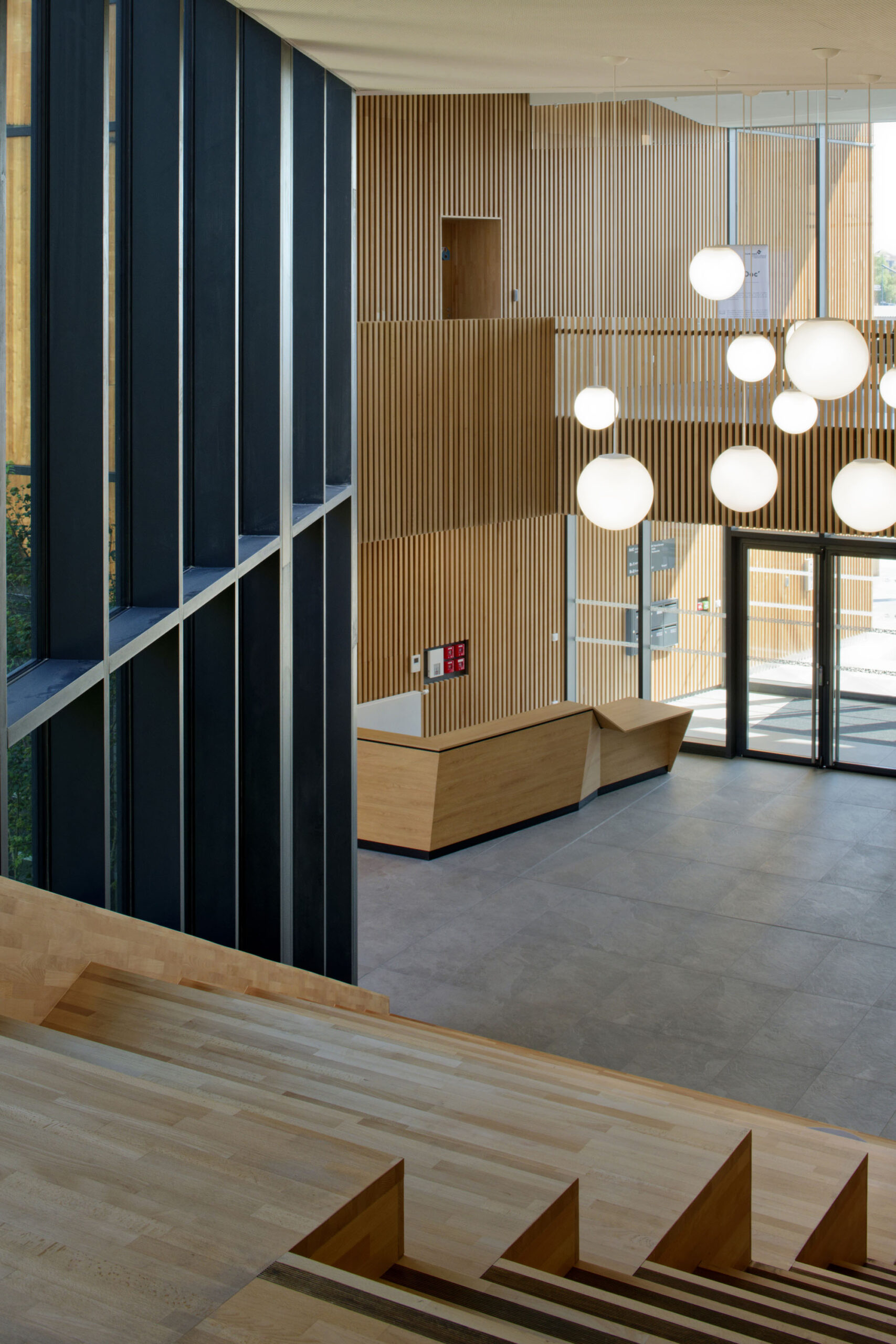
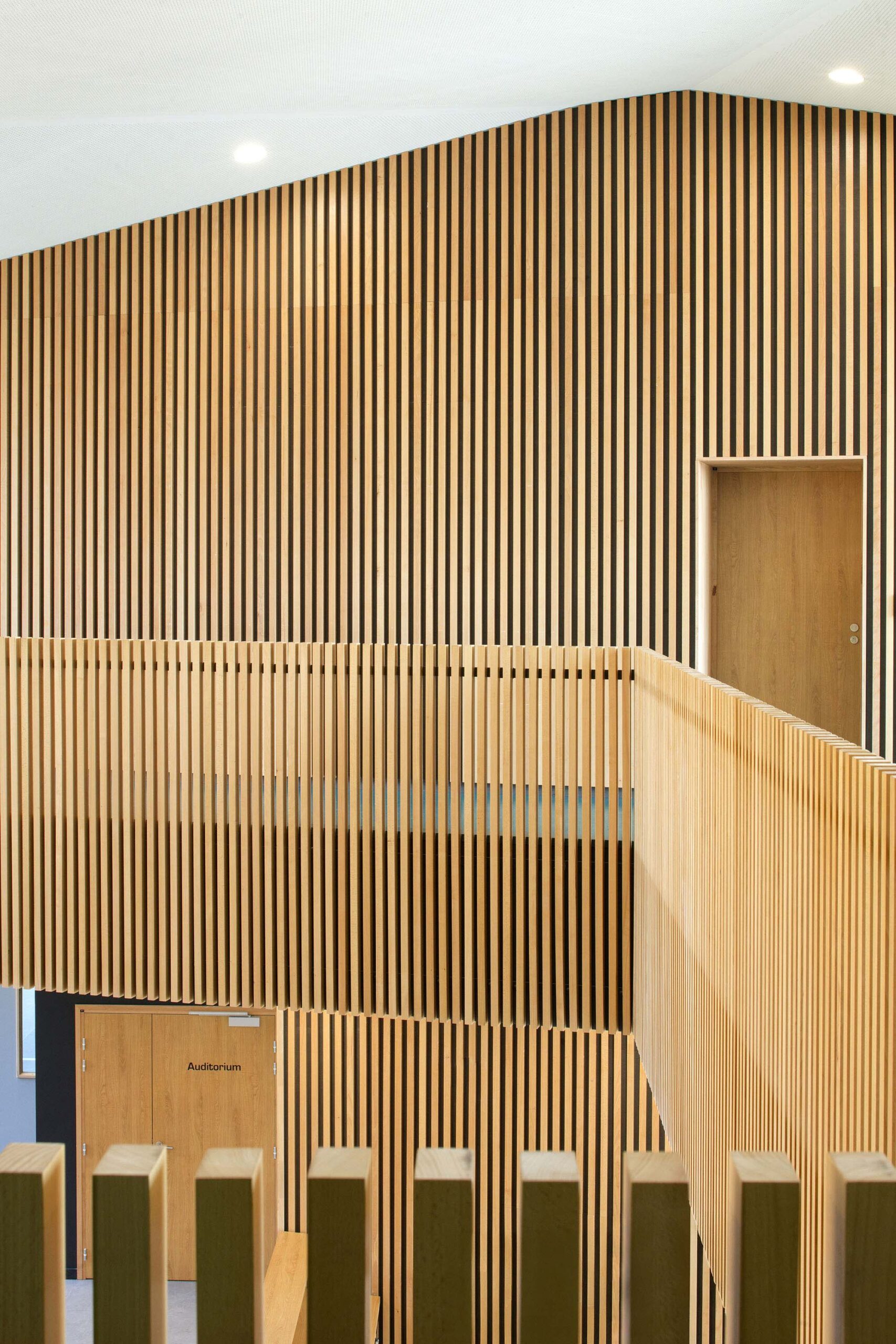
内部では、パティオを中心に構成された中央空間が、人々の交流を促す。各階を縫うように伸びる広い階段は、垂直動線として機能するだけでなく、カジュアルな集いの場や展望台としての役割も果たしている。この流動的な動線は、学習センター、ワークスペース、実験室、そして管理機能を結びつけている。視覚的・物理的な強固なつながりにより、利用者は建物のリソースを探索し、積極的に活用するよう促される。
©︎ Nicolas Fussler
©︎ Nicolas Fussler
©︎ Nicolas Fussler
©︎ Nicolas Fussler
©︎ Nicolas Fussler
©︎ Nicolas Fussler
©︎ Nicolas Fussler
©︎ Nicolas Fussler
©︎ Nicolas Fussler
以下、スノヘッタのリリース(英文)です。
Ecosystème D
A platform for the energy transition in DunkirkRooted in the port landscape of Dunkirk, Écosystème D is an energy-positive building designed to serve as a catalyst for energy transition. Dedicated to innovation in renewable energy, it brings together an incubator, a technology hall, a training center, and a showroom under one roof. The entire structure is part of a low-impact, bioclimatic architecture that embodies innovation. In constant interaction with its environment, the building represents a new urban and industrial dynamic for the Hauts-de-France region.
A flagship project for the transformation of the industrial port
Ecosystème D is fully part of the transformation of Dunkirk’s industrial port. Situated on Mole 2, in the heart of the former port area, it integrates into the “Neptune” development strategy launched in the 1990s, which aims to reconnect industrial wastelands with the city center and foster sustainable momentum.
The building is the result of close collaboration with local, technical, and environmental partners, highlighting its strategic location, clear programmatic role, and exemplary energy ambitions – aiming to be a major milestone in Dunkirk’s territorial renewal.
A positive energy building, symbol of territorial renewal
Designed as an energy hub, the building produces more energy than it consumes, setting a new standard for future constructions. Thanks to a rigorous bioclimatic design and 1,200 m² of photovoltaic panels on the roof, it not only powers its own needs but also contributes to the energy loop of the upcoming innovation park.
This approach follows the principles of Powerhouse, which aim to maximize clean energy production, minimize energy needs, and provide a high-quality living environment for its users.
“Positive energy buildings are the buildings of the future. The mantra of the design industry should not be ‘form follows function,’ but ‘form follows environment.” Kjetil Trædal Thorsen, Founding Partner, Architect, Snøhetta
An epicenter of innovation and training
Led by an ecosystem of institutional and industrial partners (Urban Community of Dunkirk, AGUR, Dunkerque Promotion, Pôlénergie, Ecopal, CCI Littoral, the Grand Port Maritime of Dunkirk, ULCO, and IMT Lille Douai), Écosystème D brings together a range of activities dedicated to innovation.
It houses a large-scale prototyping technology hall, a training center, an incubator, a showroom, and numerous flexible workspaces. Through its partnerships with engineering schools and companies committed to decarbonization, it promotes research, training, and innovation.
The building’s openness to the forecourt and the transparency of its spaces reflect its mission to connect innovation, territory, and society.
An architecture that follows the environment
The building’s morphology is directly derived from the analysis of its industrial and climatic context. The site, located 5 meters above sea level, is exposed to prevailing winds and atmospheric pollution from nearby infrastructures.
The volume varies in height from 9 to 18 meters, depending on internal uses, and the folded roofs connect the different volumes into a coherent whole. Inspired by old port warehouses, they offer varied perspectives from nearby urban axes (Citadel, Chaussée des Darses, Jetée 1) while optimizing solar capture.
A bioclimatic strategy based on five key principles
The architecture is based on a rigorous bioclimatic strategy, developed around five key principles:
Compactness and natural light:
The building adopts a rectangular plan (50 x 60 m) centered around a wind-protected patio. All program functions are organized around this green core, promoting natural light, ventilation, and interactions between users.Passive and high-performance thermal envelope:
Triple glazing, enhanced insulation, high-performance joinery, roof overhangs serving as sunshades, and metal cladding with high albedo ensure uncompromising thermal efficiency.Natural cooling without air conditioning:
Adiabatic cooling leverages the proximity of the sea and promotes cross ventilation. No active air conditioning system is necessary.Bio-based and local materials:
The solid wood structure helps achieve level 3 of the “Bio-Based Building” label, with more than 36 kg of bio-based materials per m² of floor area. Materials mainly come from local sources.Simplified maintenance and durability:
The building is designed to minimize maintenance needs, with accessible, robust, and long-term, thought-out systems.An open and unifying space between port and city
Positioned at the interface between the port and the urban fabric, Écosystème D acts as an architectural landmark. It creates visual connections with neighboring iconic buildings and contributes to the revitalization of the port docks.
Its lively forecourt, an open-air extension of the glazed showroom, incorporates street furniture, connected platforms, and educational installations about renewable energies.
Inside, a central space organized around the patio encourages social interaction. A wide staircase winds between the levels, serving simultaneously as a vertical link, an informal meeting area, and an observation platform.
This fluid circulation connects the learning center, workspaces, experimental labs, and administrative functions. With strong visual and physical connectivity, users are encouraged to explore and fully engage with the building’s resources.
Fact sheet
Location : Môle 2, Dunkirk, Northern France
Client : SPAD on behalf of Dunkirk Urban Community
Timeline : Building started in November 2022 – Delivery of the building October 2024
Size:
Gross: 4400m²
Net: 3570 m²
Plot: 5000m²
Construction cost
11,8 M euros
Collaborators
Mandatory architect: Snøhetta
Local architect/execution architect: Santer Vanhoof
Landscape: RVB Paysage
Environmental engineer: Impact Ingénierie
Building engineer: CET Ingénierie
Acoustic engineer: GAMBA
Certifications
Certification biobased level 3, E+C- (E4C1)
スノヘッタ 公式サイト
https://www.snohetta.com/



![[Report]方丈庵から生き方を問う、21_21 DESIGN SIGHT 企画展「方丈記に学ぶ –生きるを編み直す小さな建築–」会場レポート](https://magazine-asset.tecture.jp/wpcms/wp-content/uploads/2026/09/01181900/20260828hojoki-ex_01_mag-endo4350-900x676.jpeg)