
CULTURE
© Arch-Exist
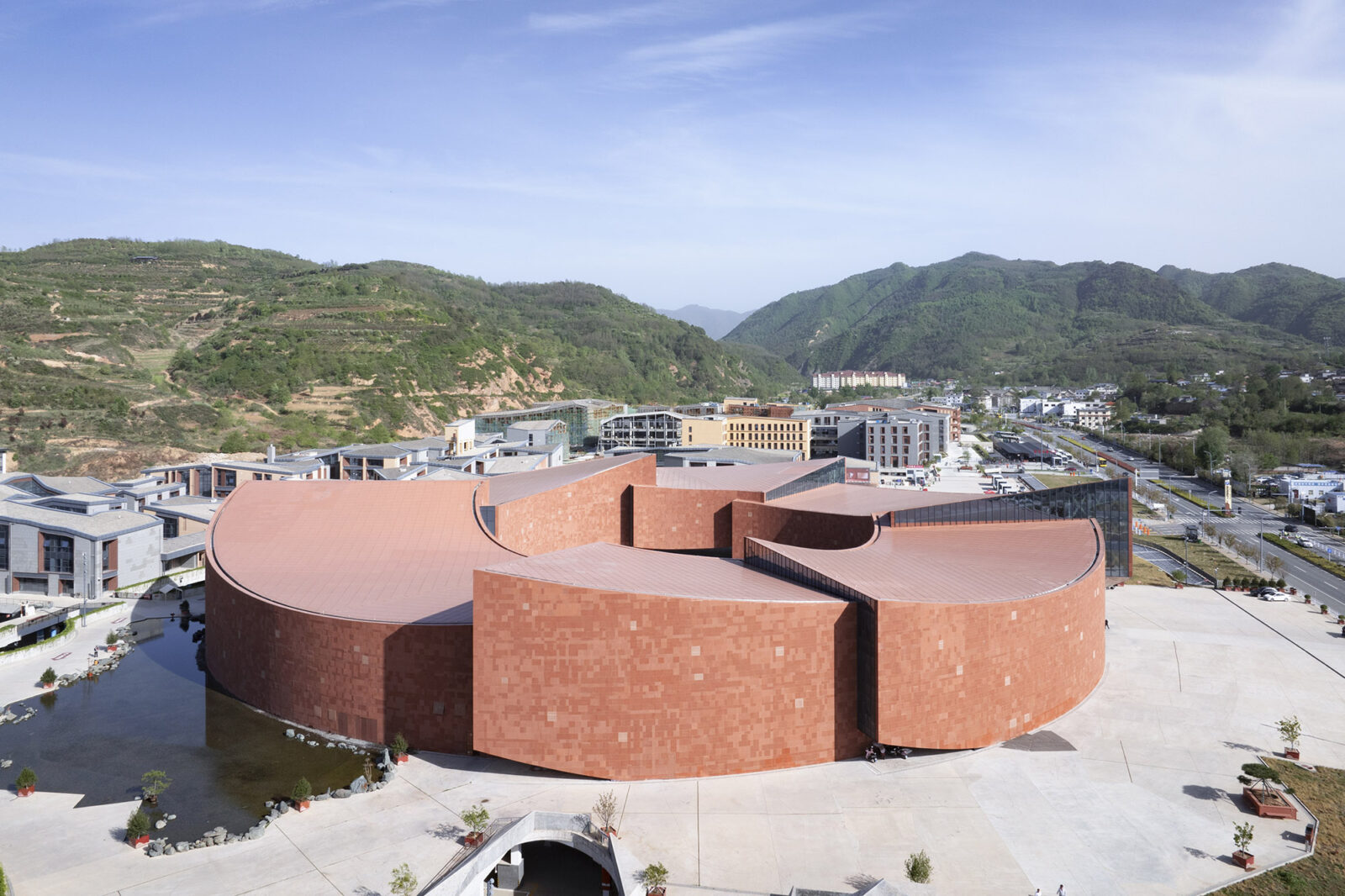
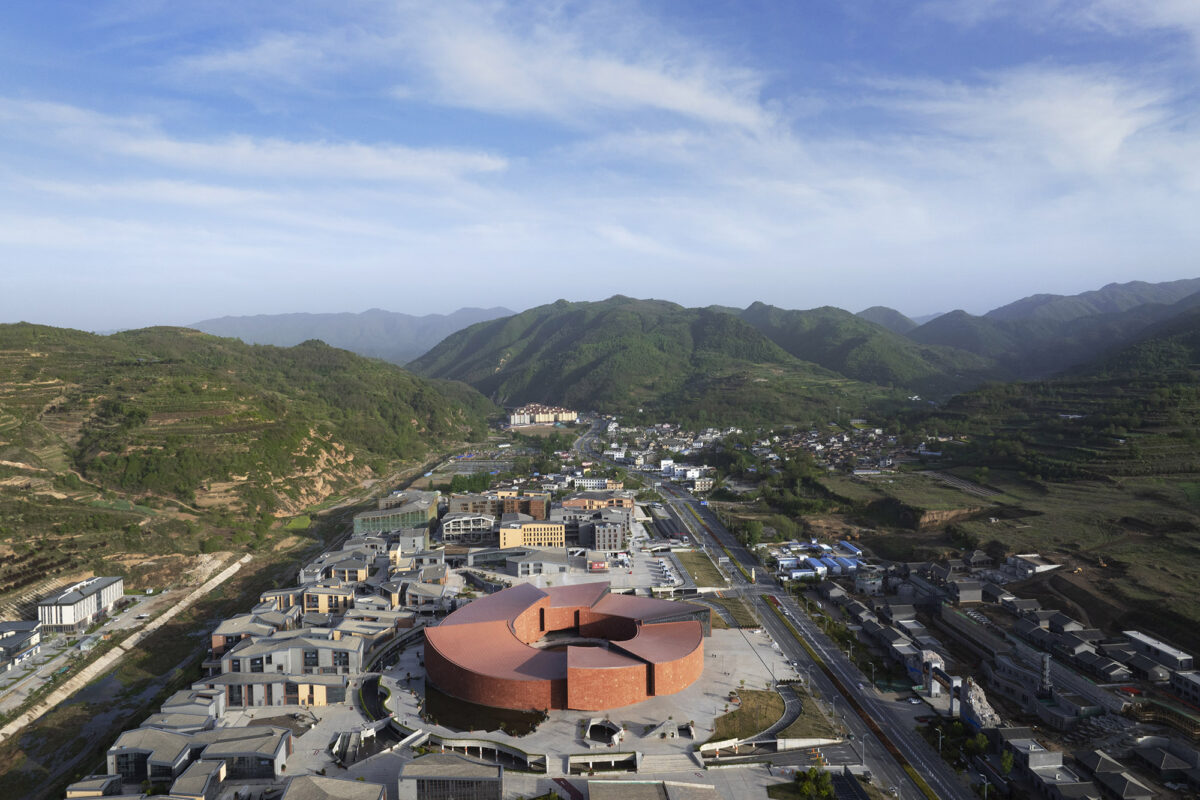
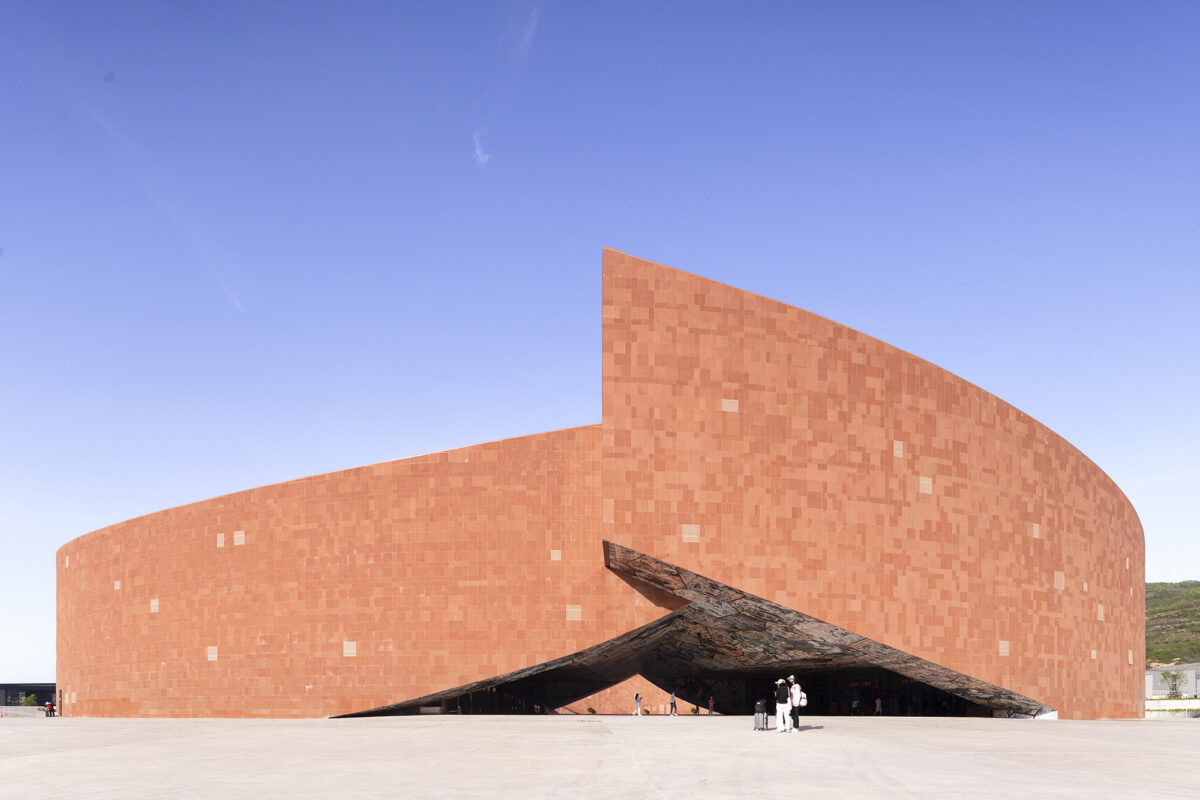
中国の甘粛省(かんしゅくしょう)、天水市(てんすいし)に建つ〈麦積山ビジターセンター(Maiji Mountain Visitor Center)〉は、断崖に刻まれた仏教彫刻が特徴的な麦積山から着想を得て設計された、展示空間を含む文化施設です。
北京を拠点に活動するZXDアーキテクツ(ZXD Architects)が設計しました。
注目ポイント
- 仏教の精神性を反映する赤砂岩の質感、円環形状、光と影の演出
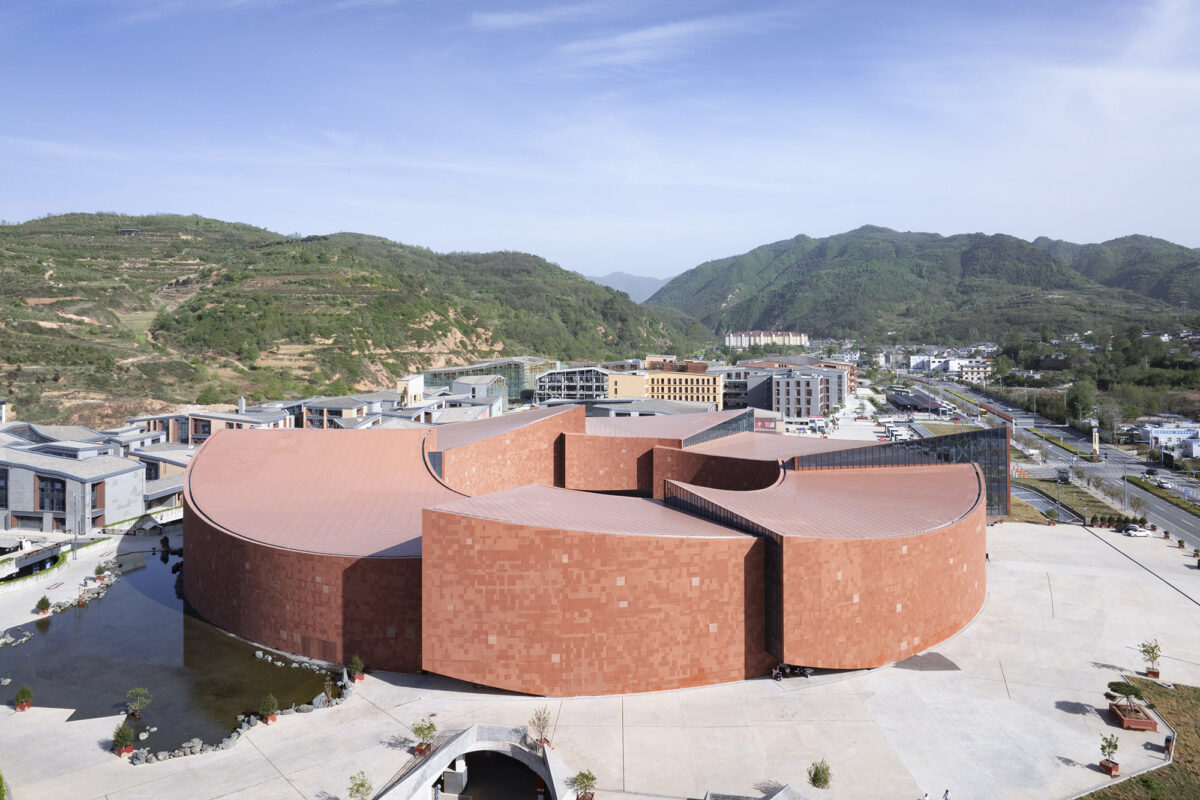
- 輪廻転生思想に着想を得た6つの台形ボリュームから成る環状構造
- 各ボリュームの接合部の隙間から、自然光を内部に取り入れる
- 光が空間の流れを演出し、来館者を次の展示へと導く
(以下、ZXDアーキテクツから提供されたプレスキットのテキストの抄訳)
© Arch-Exist
© Arch-Exist
麦積山は、四方を山々に囲まれた中でひときわ際立つ特異な峰である。前秦時代より続く断崖の洞窟掘削の歴史は、施主の信仰と職人の敬虔さを物語り、精緻な仏教彫刻芸術の傑作を今に伝えている。
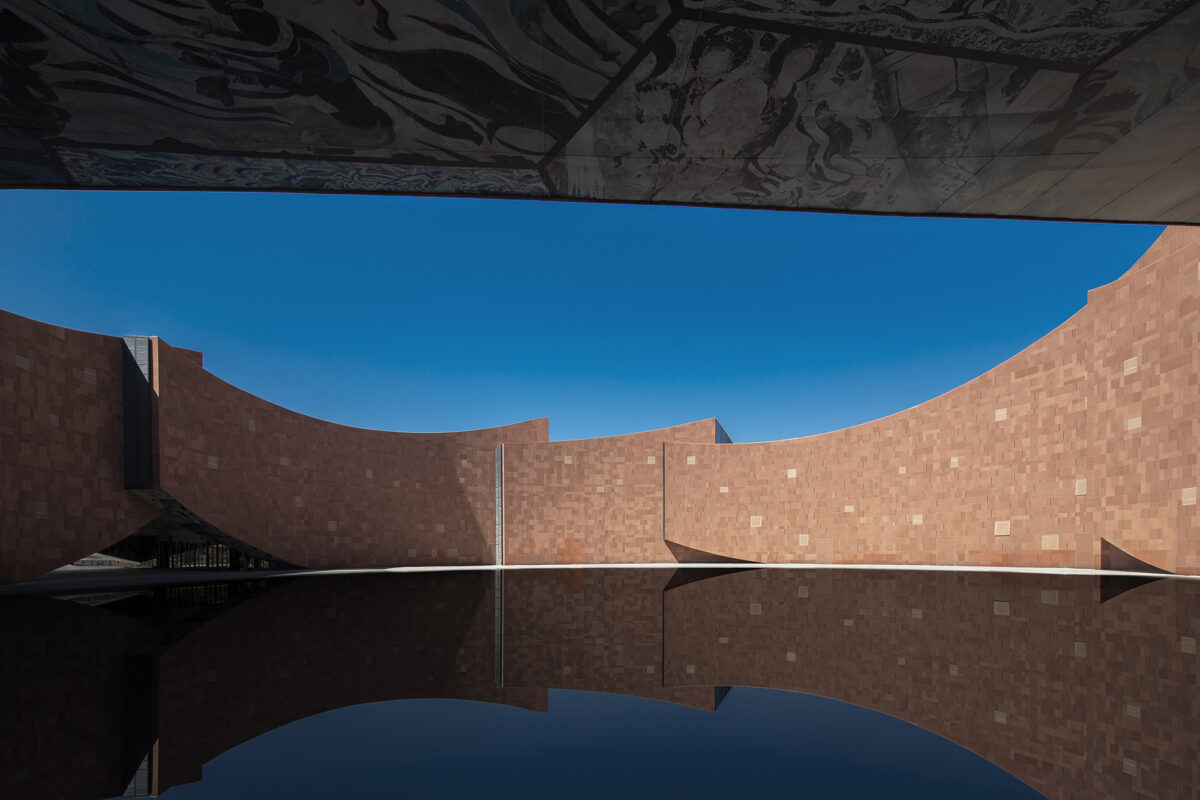
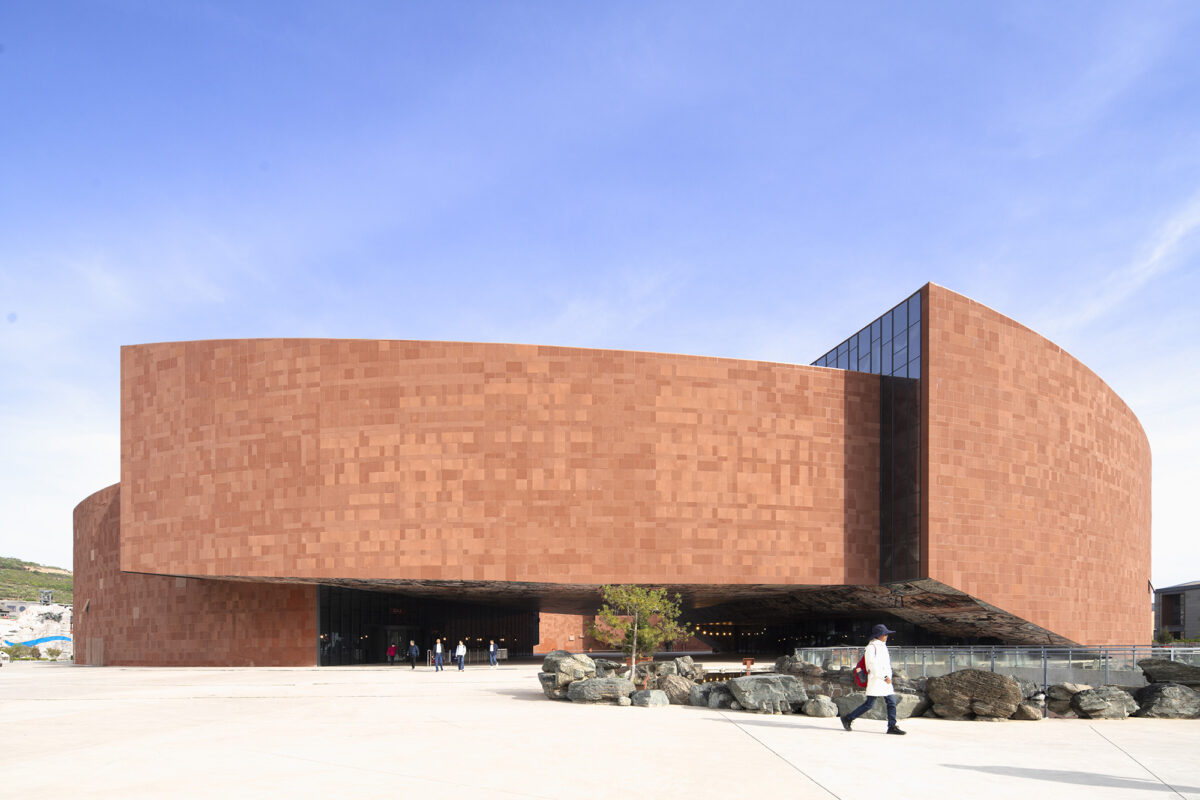
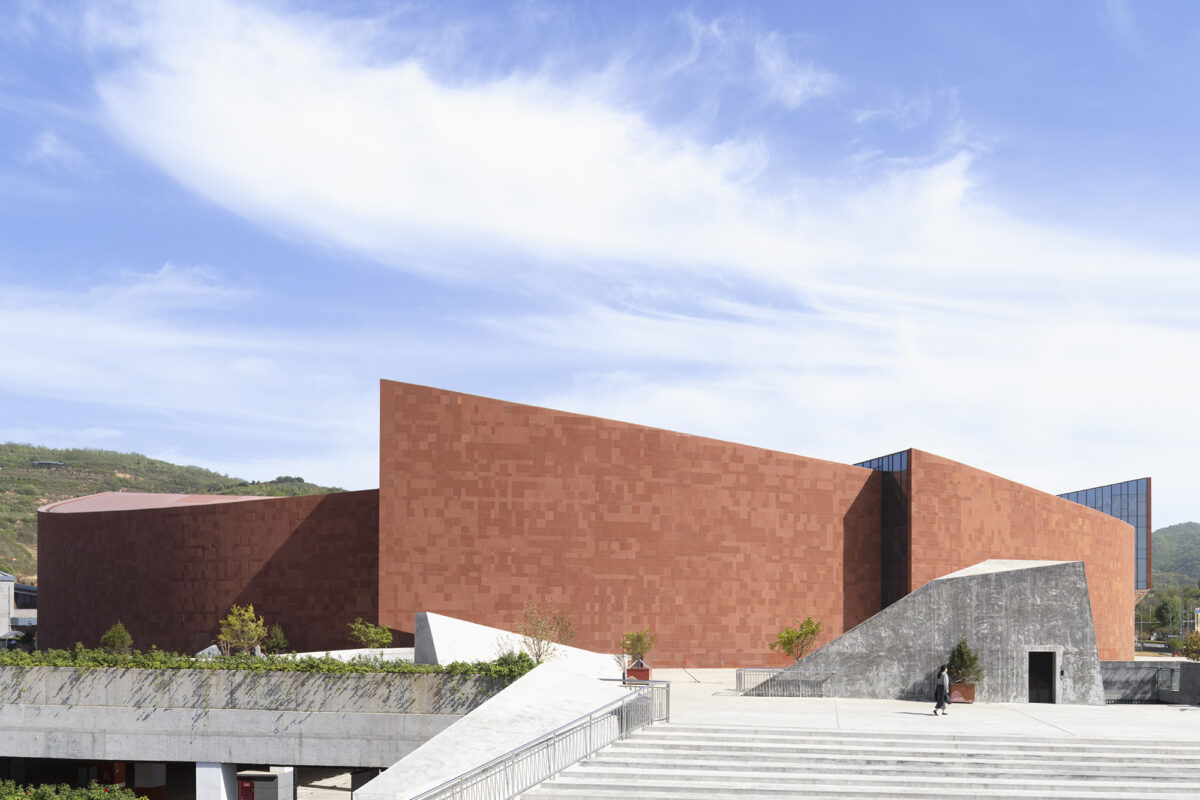
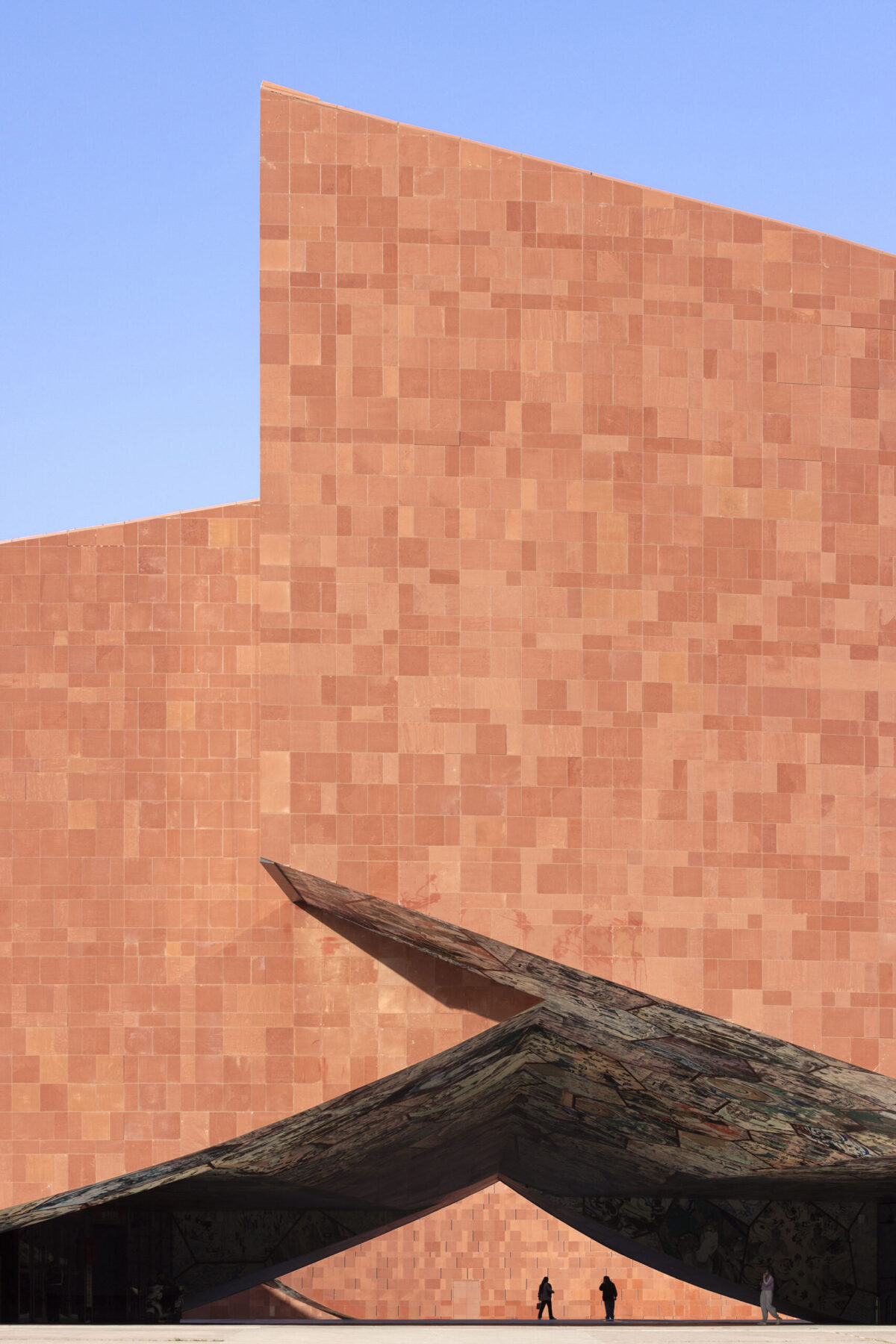
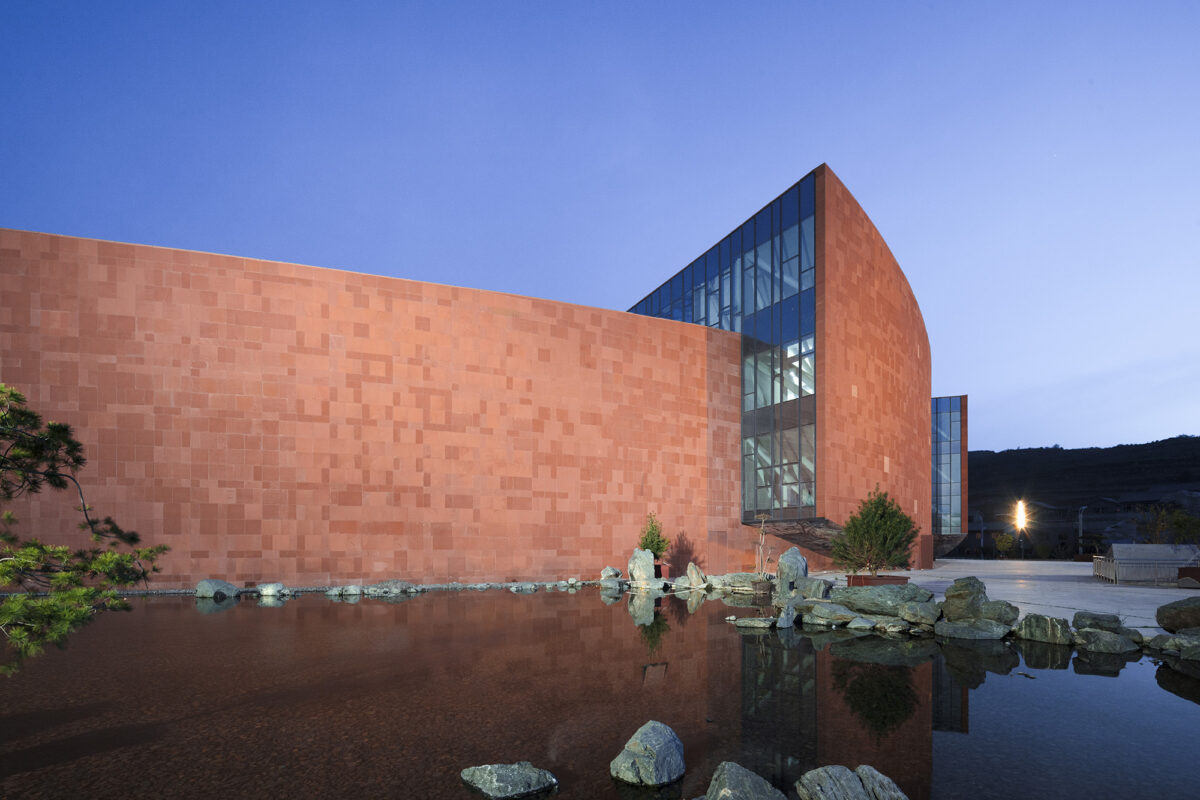
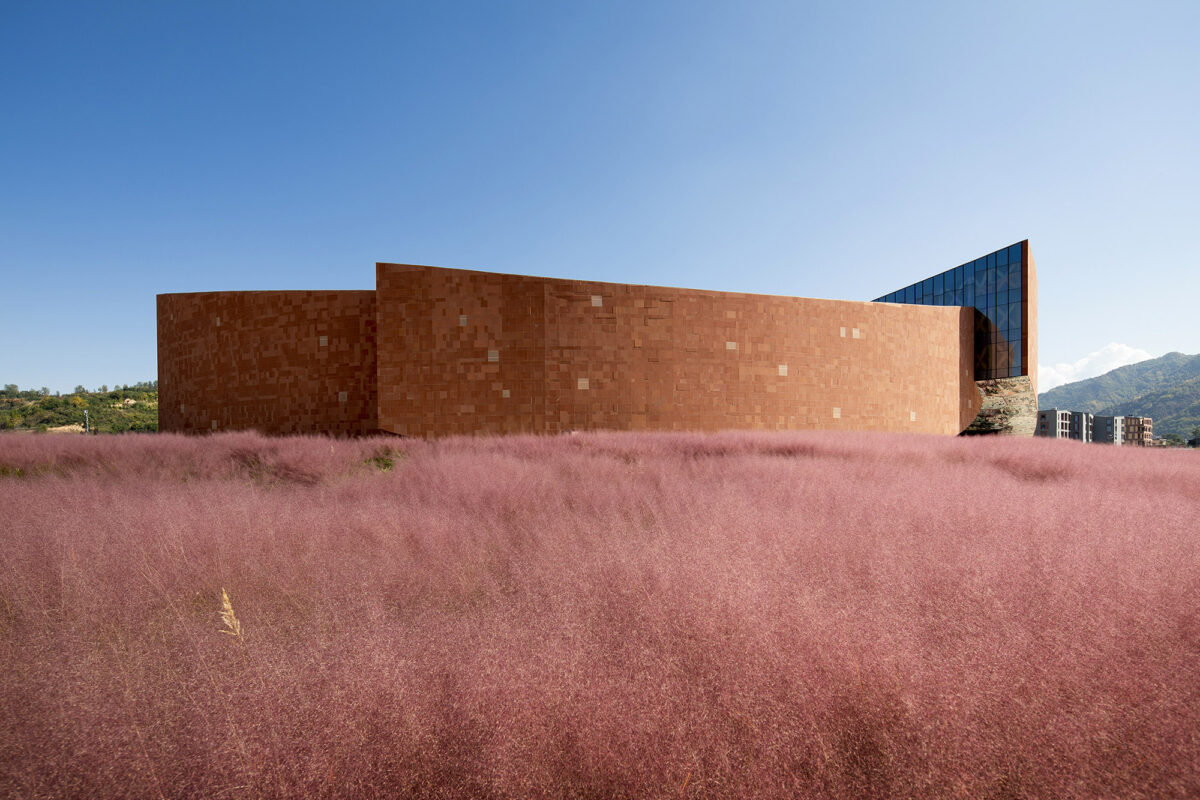
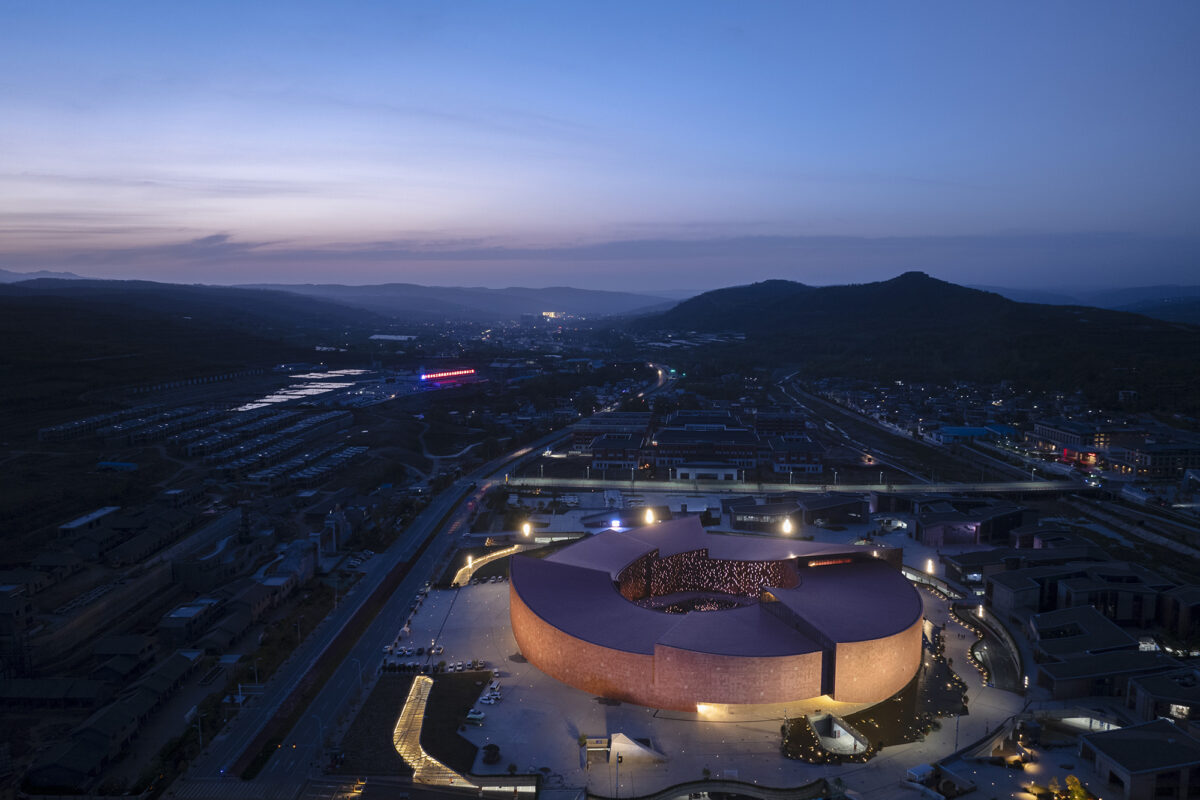
〈麦積山ビジターセンター〉は、赤砂岩の質感、円環のパターン、移ろう光と影、そして精密な展示を通して、過去と未来をつなぐ橋として設計された建築である。
© Arch-Exist
© Arch-Exist
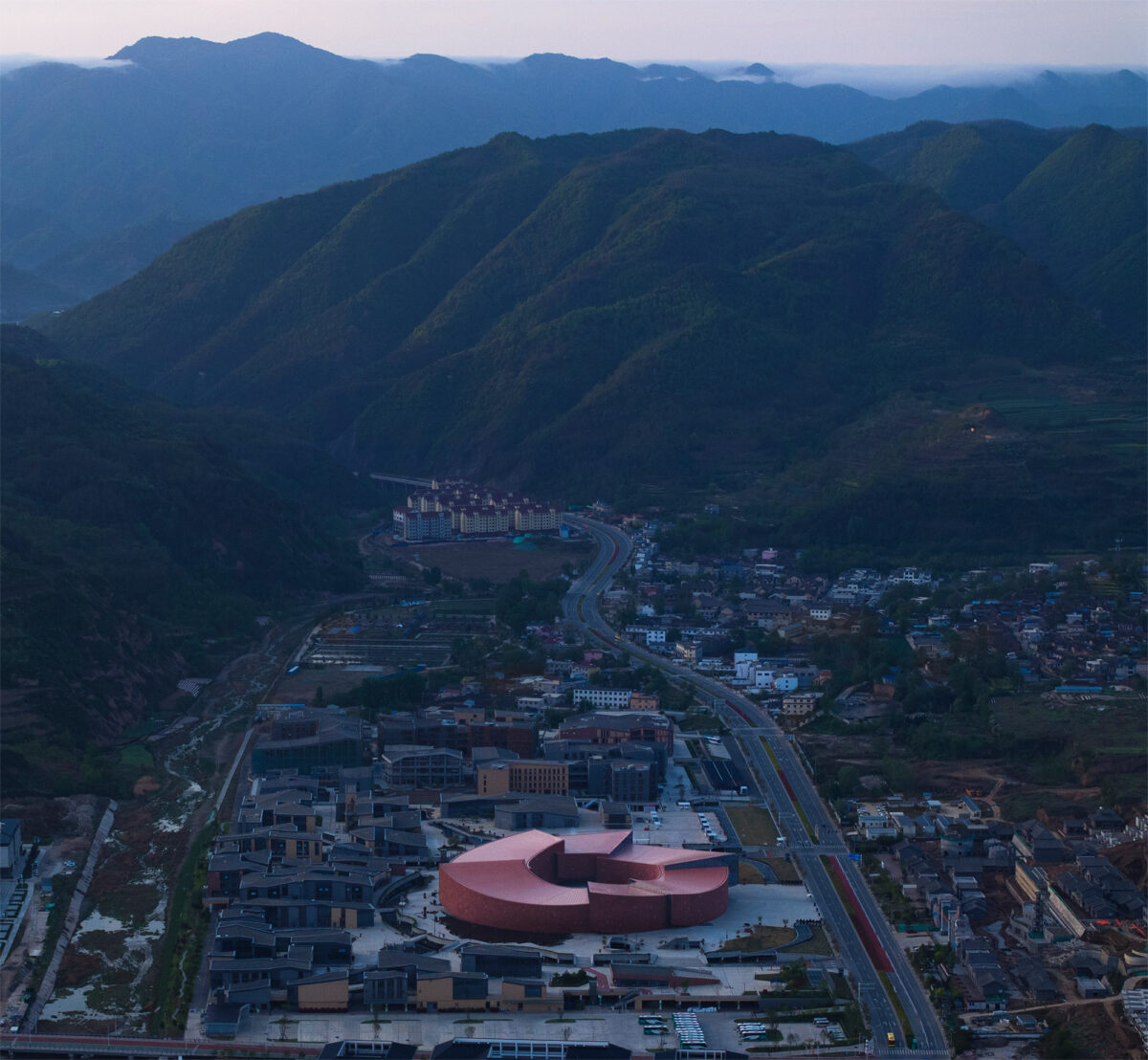
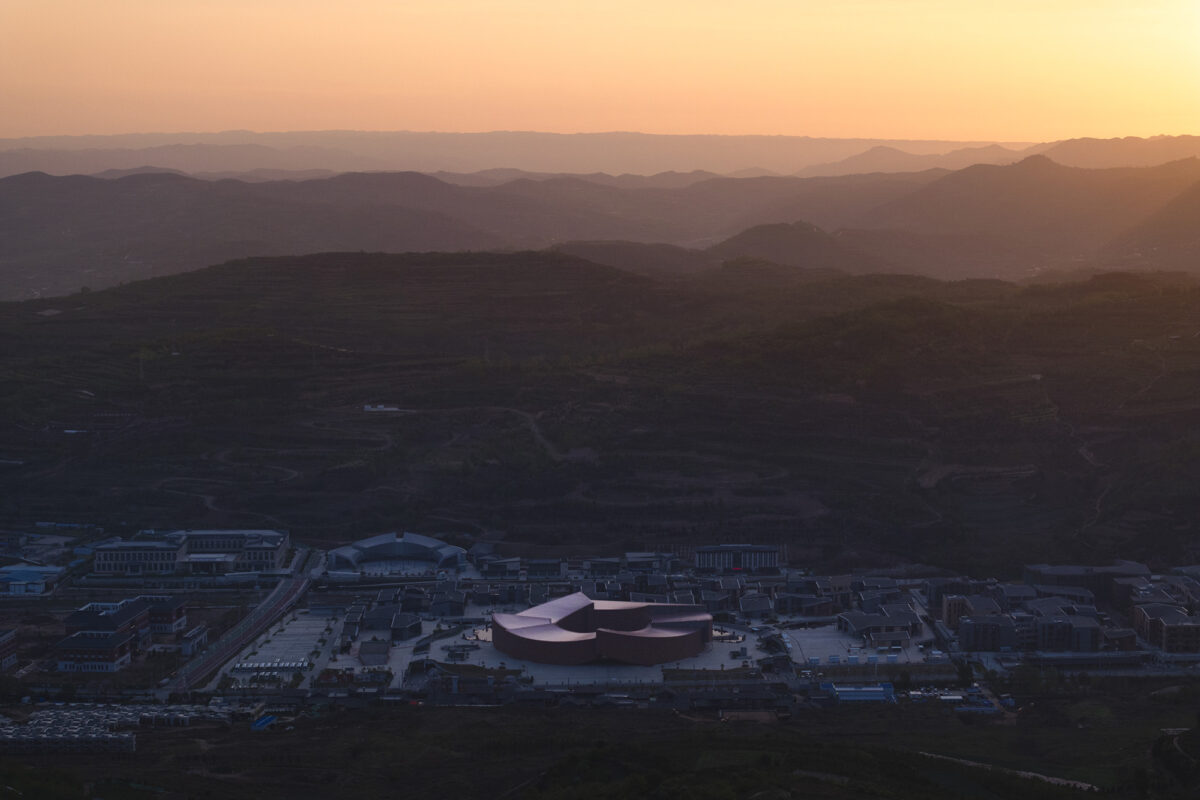
麦積山洞窟の断崖に沿って設けられた道路を上ると、周囲の山々を見渡すことができる。無数の起伏する峰々が一体となって巨大な周回構造を形成しており、その中でも麦積山は最も規模が大きく象徴的な存在である。
これらの山々は大地に穏やかに広がりつつ、互いに競うように連なり、斜面と輪郭が重なり合いながら最終的に節点で急峻な断崖を形成している。
© Arch-Exist
© 王祥东
麦積山洞窟とその周辺に点在する歴史的遺構は、古代中央平原と古代西部地域との長期的な統合と融合の過程を物語る歴史的証人である。
この過程で導入された仏教は、中央平原における原始文化と衝突しつつ相互作用を繰り返し、地域の農村における精神生活に深い影響を及ぼした。
© Arch-Exist
© Arch-Exist
輪廻転生の思想に基づく空間デザイン
麦積山の文化と芸術の意義を探るには、仏教の影響を考慮することが不可欠であり、建築デザインもこの観点から始める必要がある。
巡礼構造は、人類の意識が覚醒した後に生まれた儀式的・記念的な空間の最も原初的な形態であり、仏教の輪廻転生の思想と対応する。すべての生命は「解脱」を求めない限り、「六道」における生死の輪廻から脱することができず、永遠に循環する運命にある。
これらの概念は、長い歴史の中で文化的な融合を通じて変化してきた。特に漢民族の固有文化との接触や近代化の過程において、仏教は本来の意味を超え、より現代的な解釈を獲得し、持続可能な発展を象徴する力として、我々の生活体験にも影響を与えている。
© Arch-Exist
© Arch-Exist
地形と重なり合う空間構成
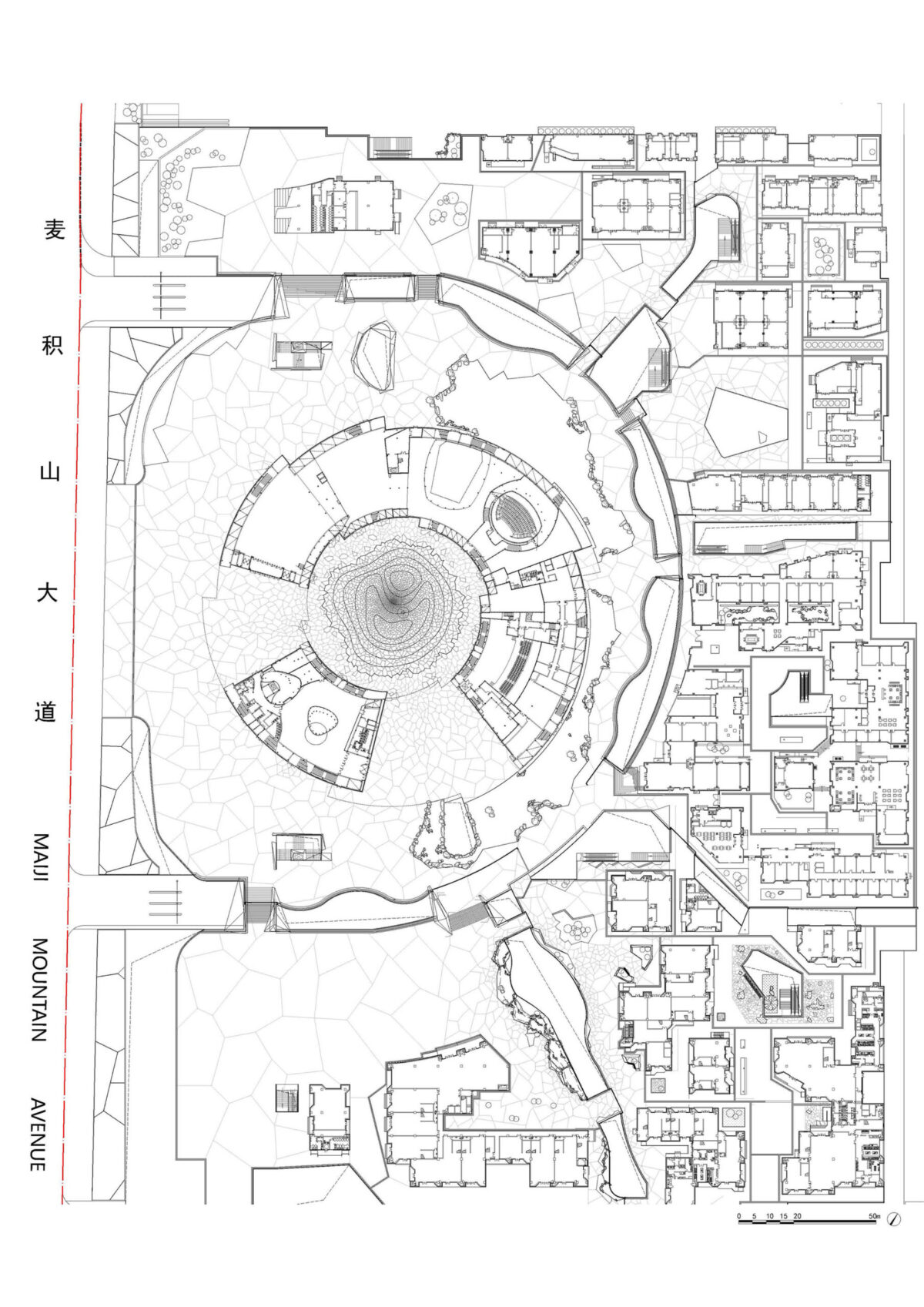
環状の空間は、建築体験における根源的な感覚である。同時に、周囲の自然地形である起伏に富んだ山岳環境が全体の設計に取り込まれ、人間的な情感と自然の力が融合する現代的なエネルギーフィールドが形成されている。
この空間は、環境の力をもった公共空間の構成要素として機能し、その勢いを敷地全体に拡張している。
© Arch-Exist
©王祥东
6つの台形ボリュームによる環状建築
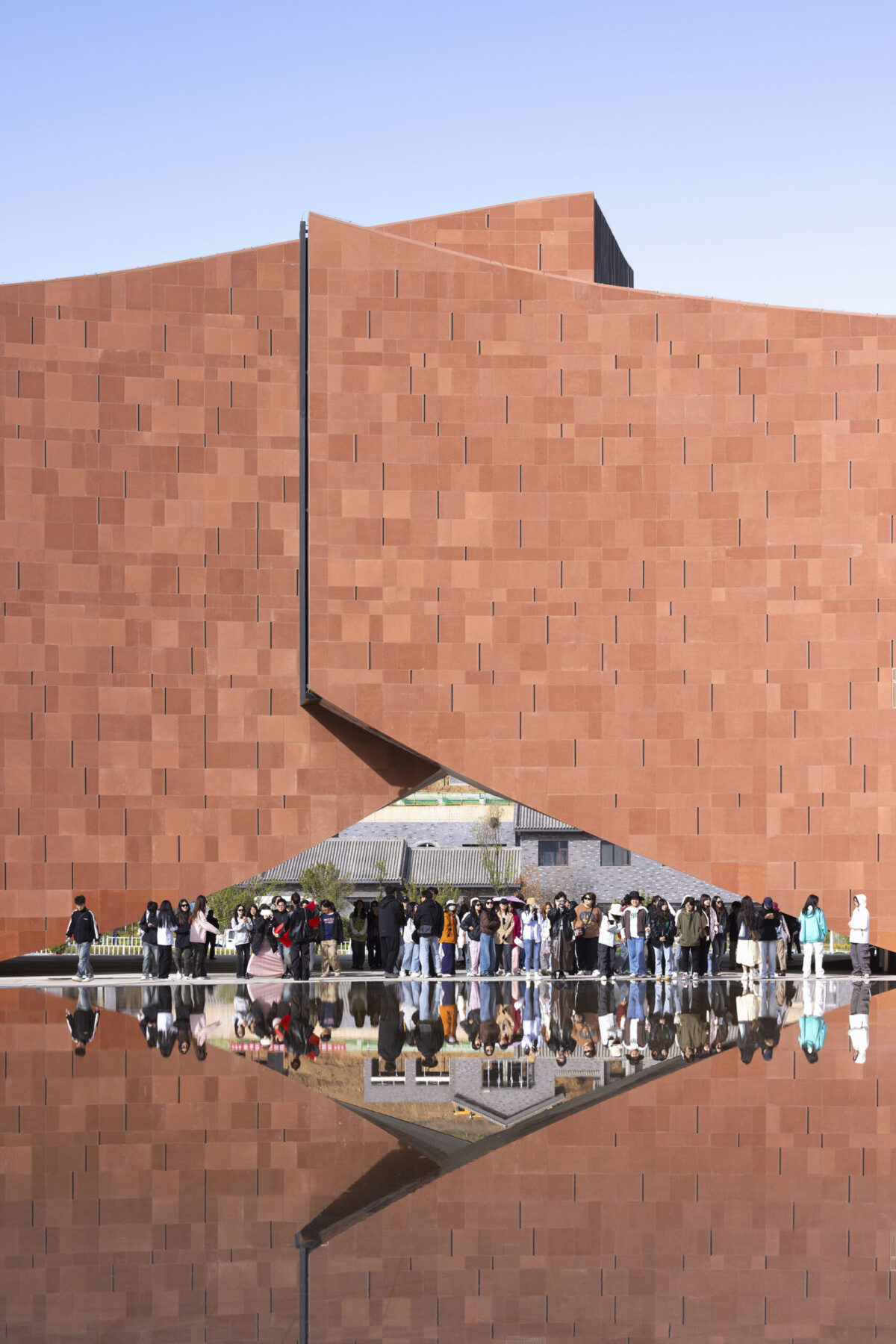
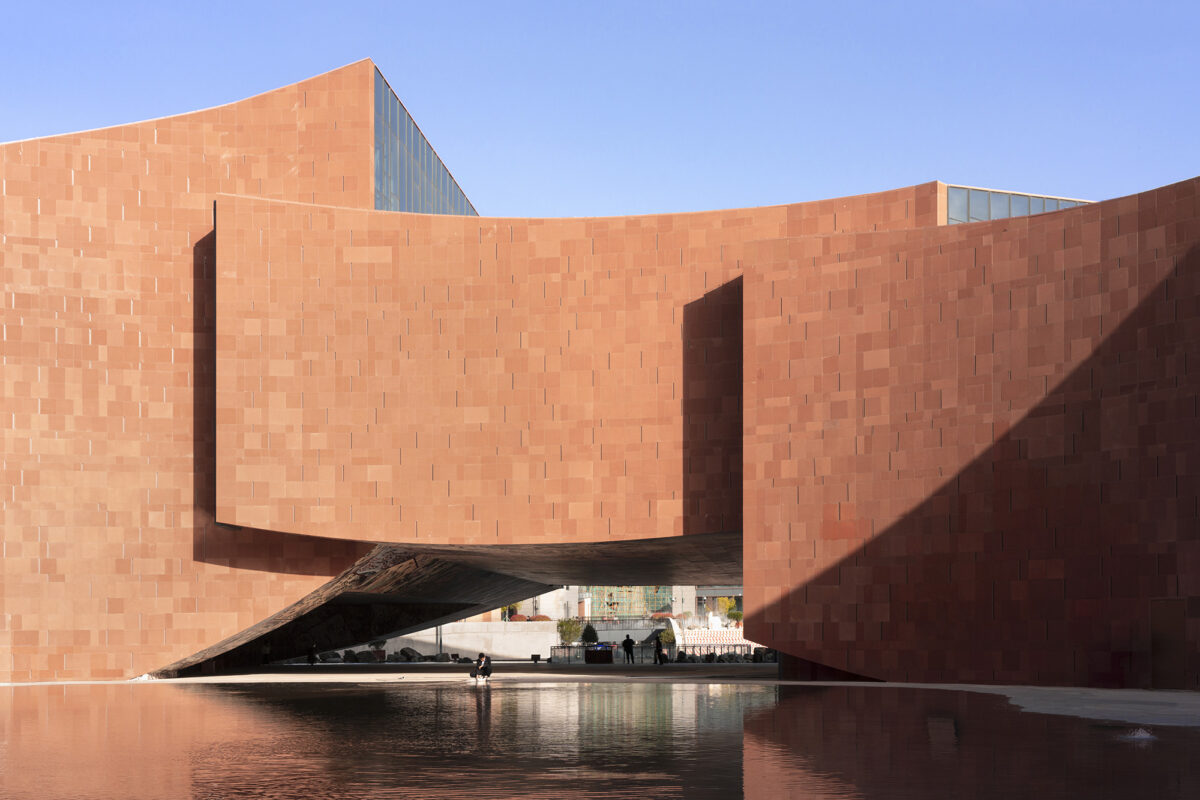
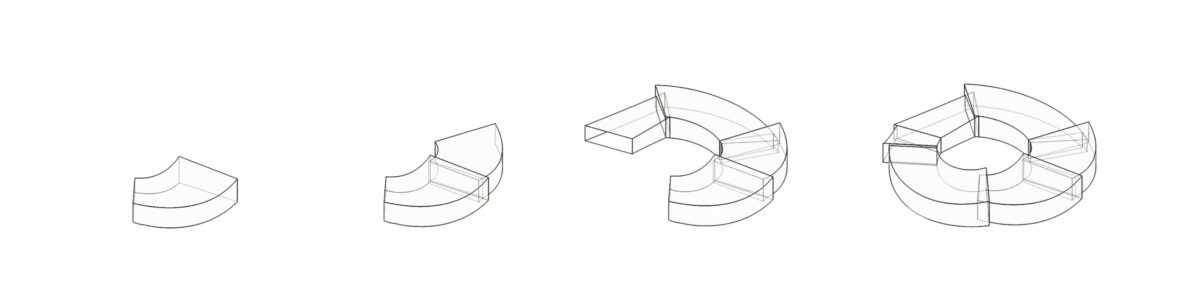
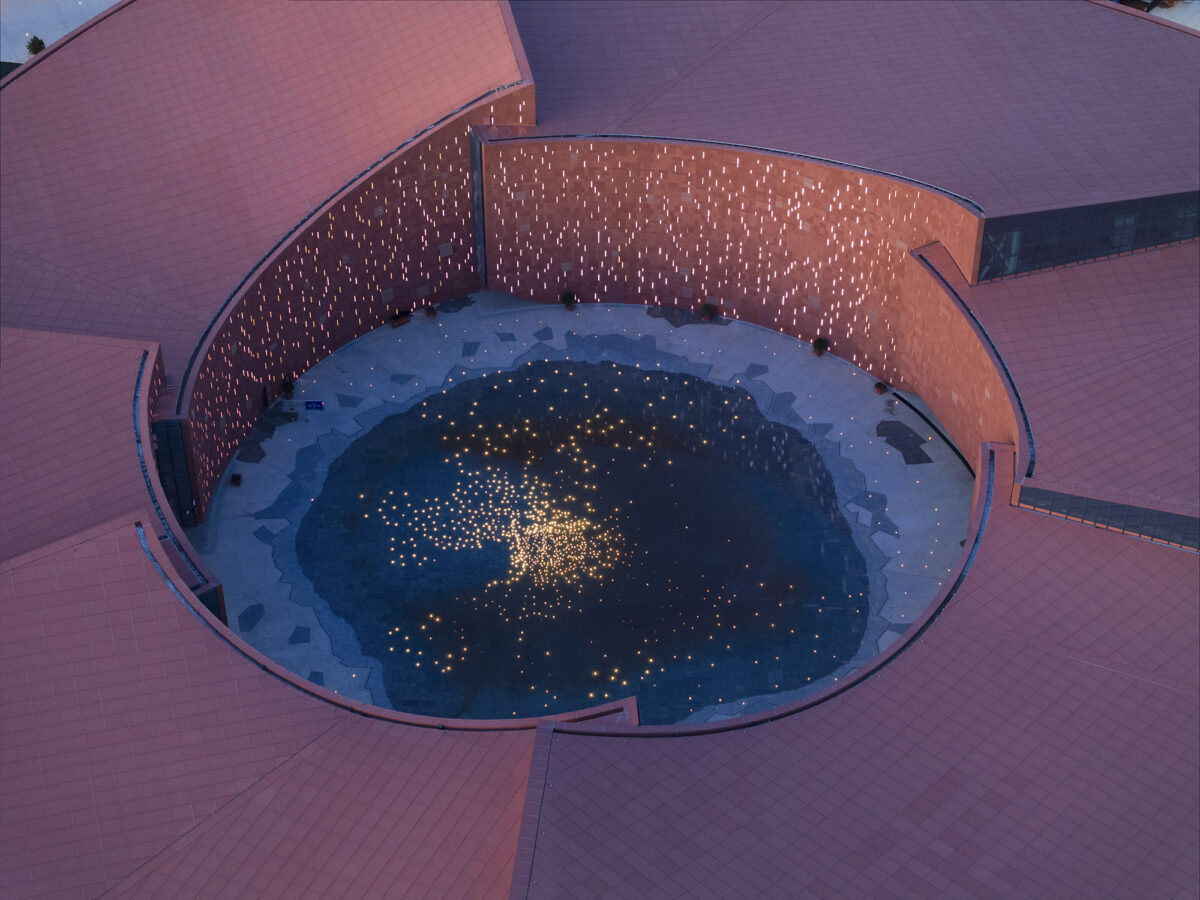
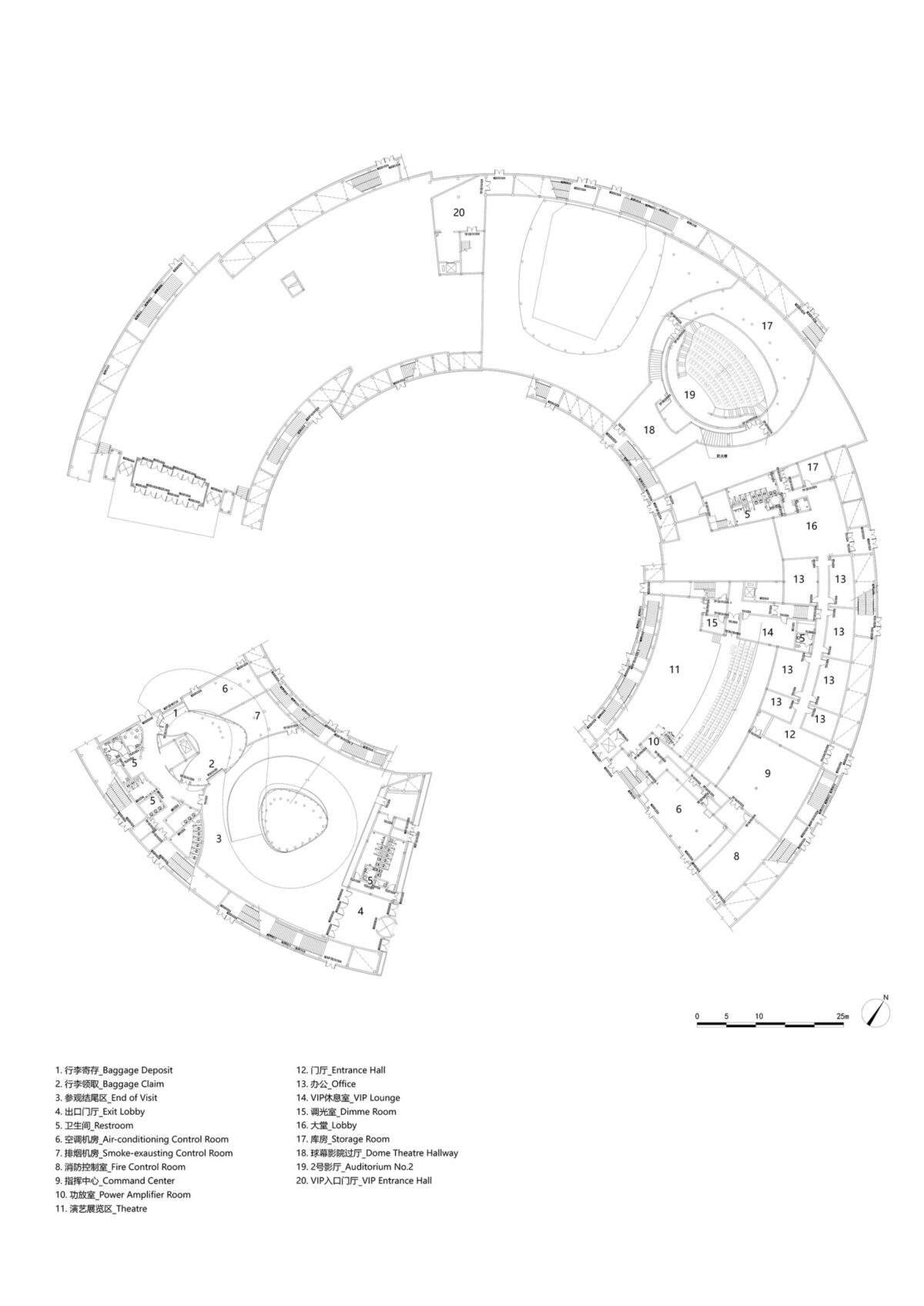
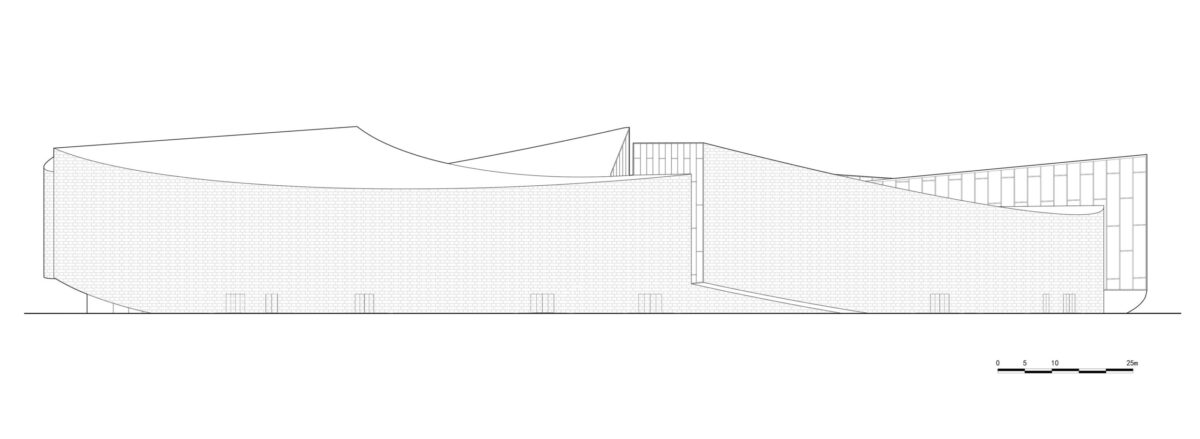
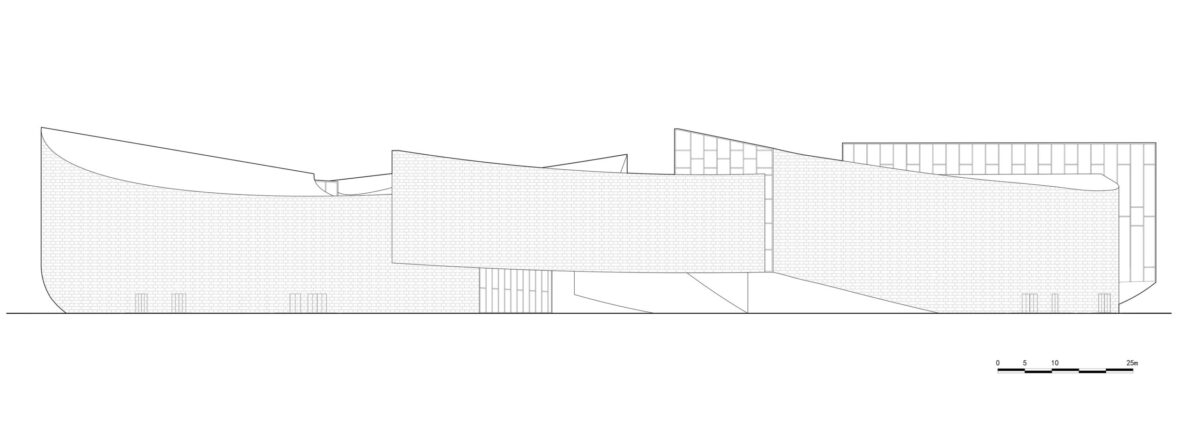
周回構造は6つの台形のヴォリュームに分割され、それぞれが相互に浸透し合っている。接合部には「隙間」が現れ、外部からは形状の節点として、内部では屋外光を取り込む開口部として機能する。
差し込む光は建物内部に神秘的な力をもたらし、来館者を次なる空間へと導く導線となっている。この空間構成のもとで、ビジターセンターにおける多様な展示機能が連続的に展開されている。
Mass process
©瀚墨视觉
文化と芸術が交錯する回遊型展示構成
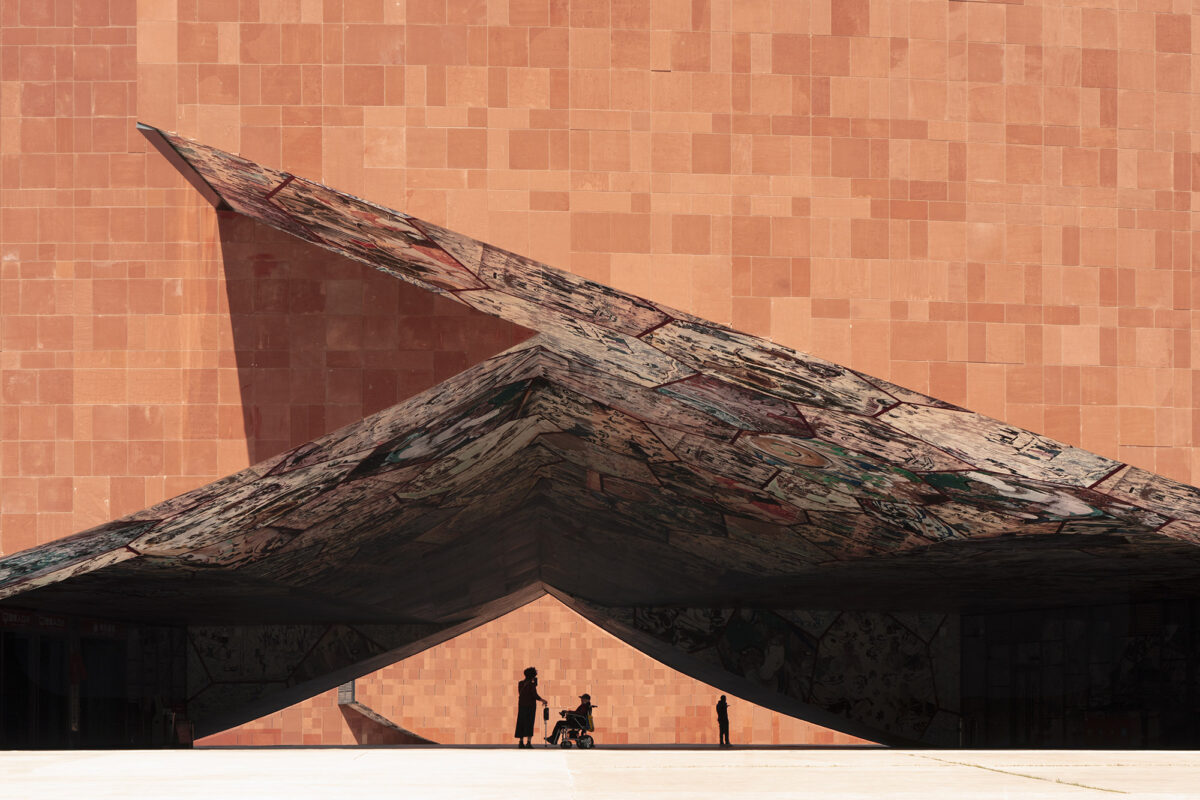
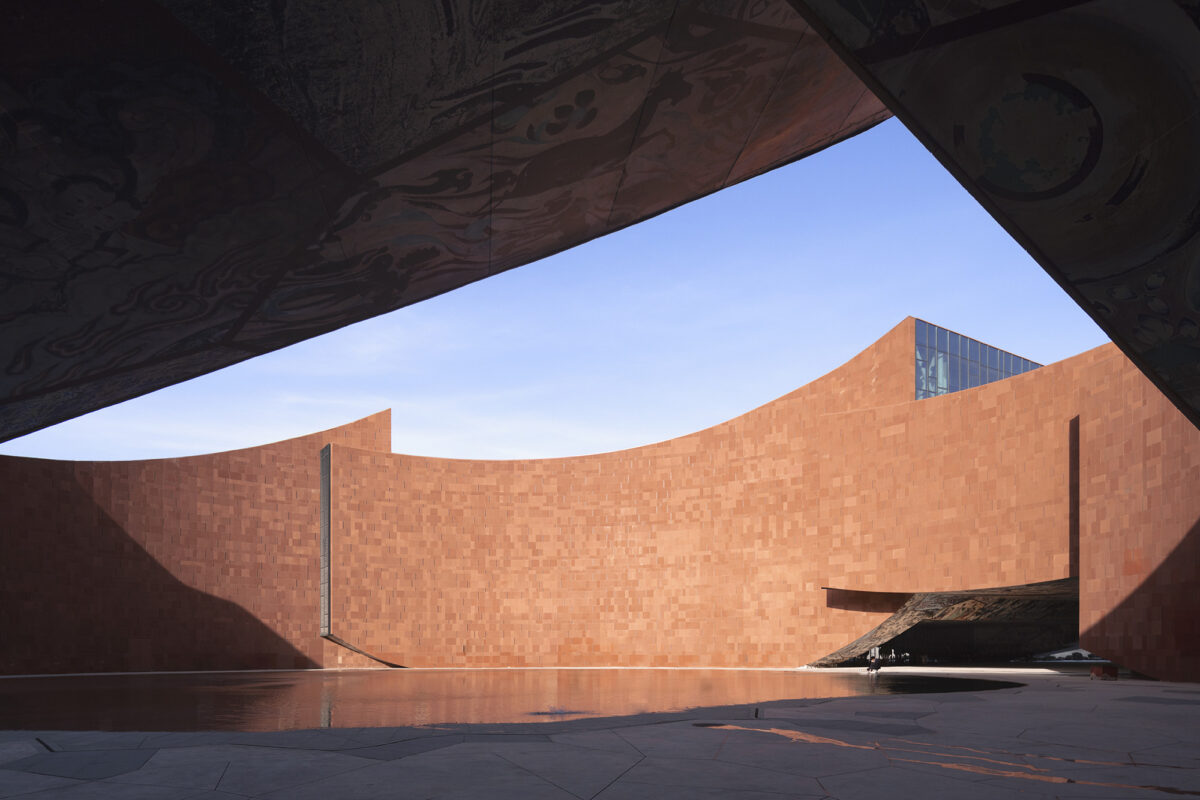
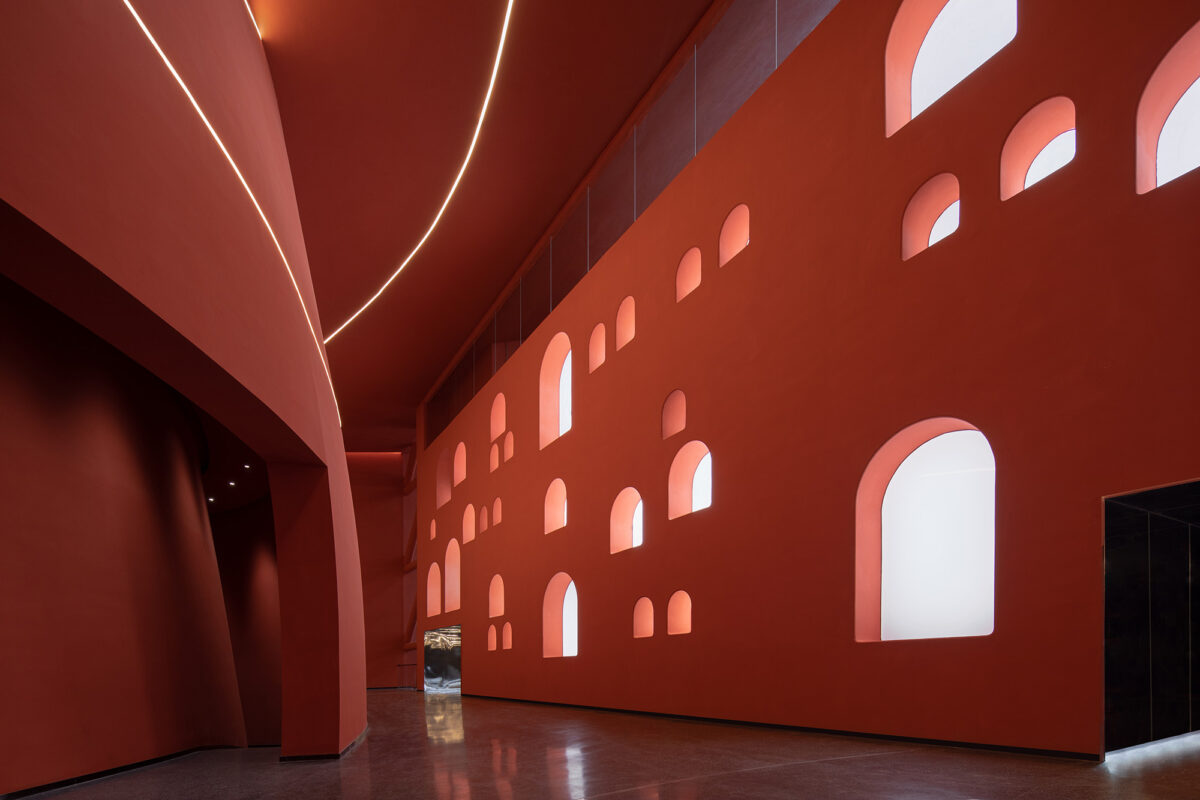
建物の内部は、前述の特別な光の導きによって展開されている。メインエントランスは西側の道路に面し、2つのボリュームが交差することで中間領域が生まれている。
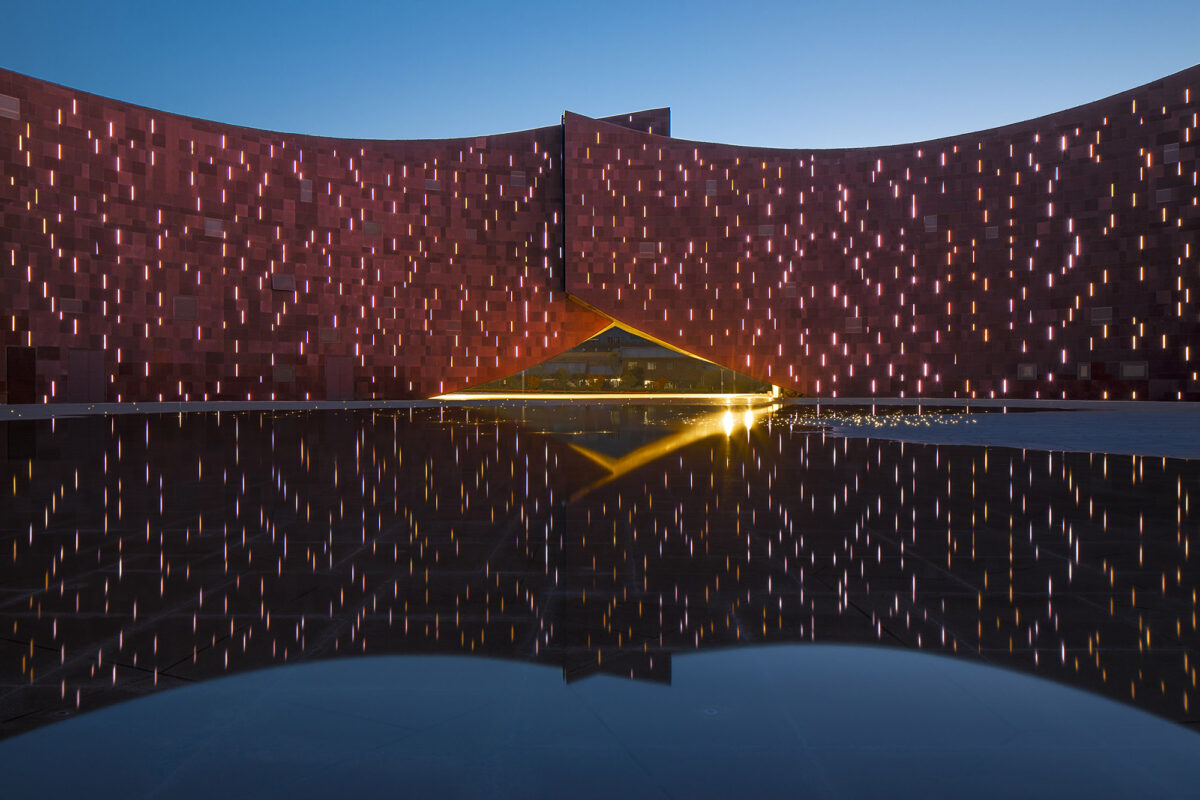
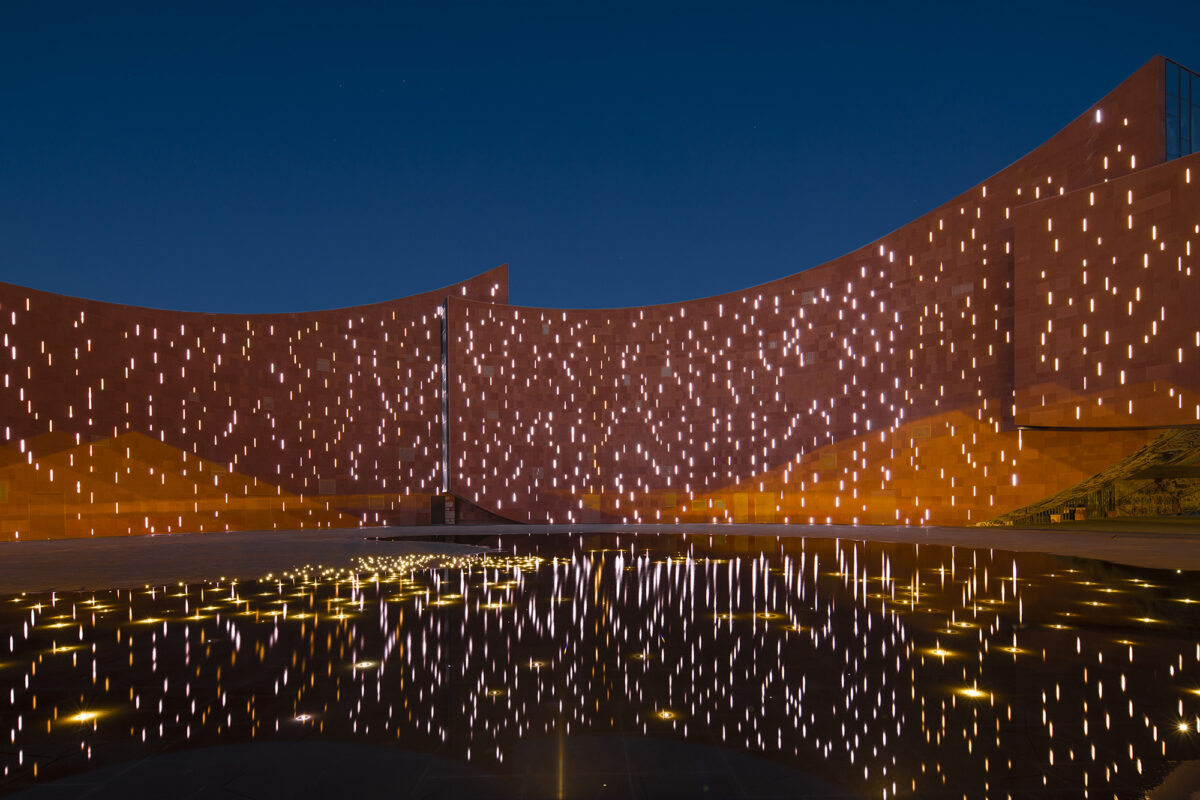
ここからは中庭を直接望むことができ、天井には金属板で描かれた麦積山洞窟の壁画があしらわれている。色彩は明るくも古風であり、強い文化的雰囲気を醸し出している。
©瀚墨视觉
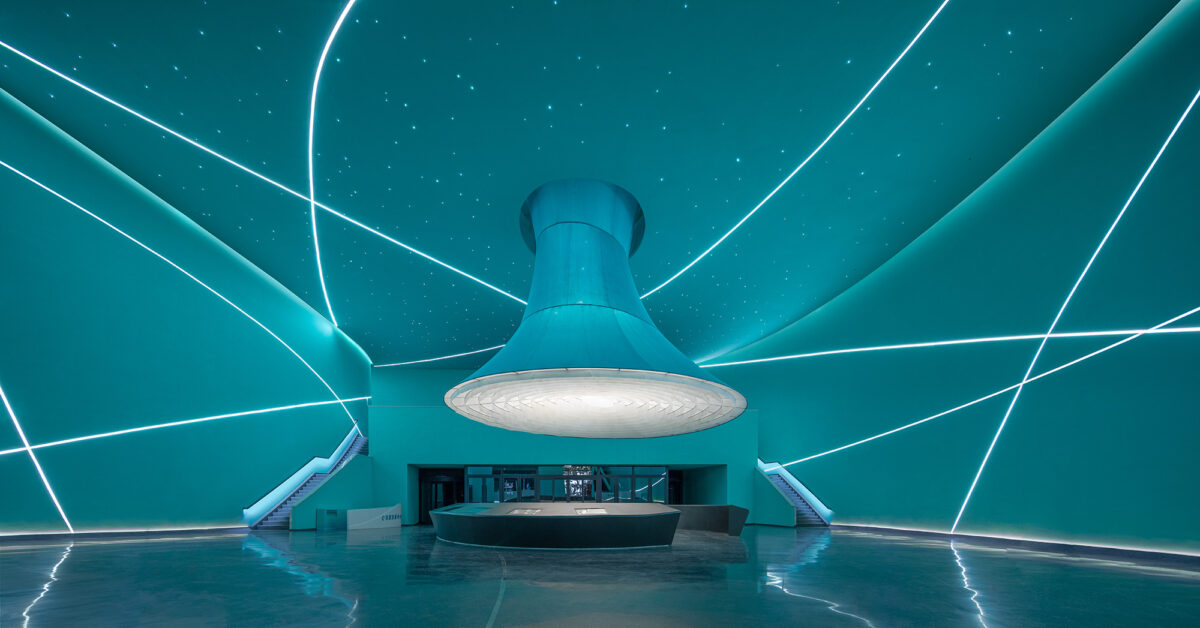
内部へと進むと、緩やかな傾斜に沿って時計回りに空間が展開される。
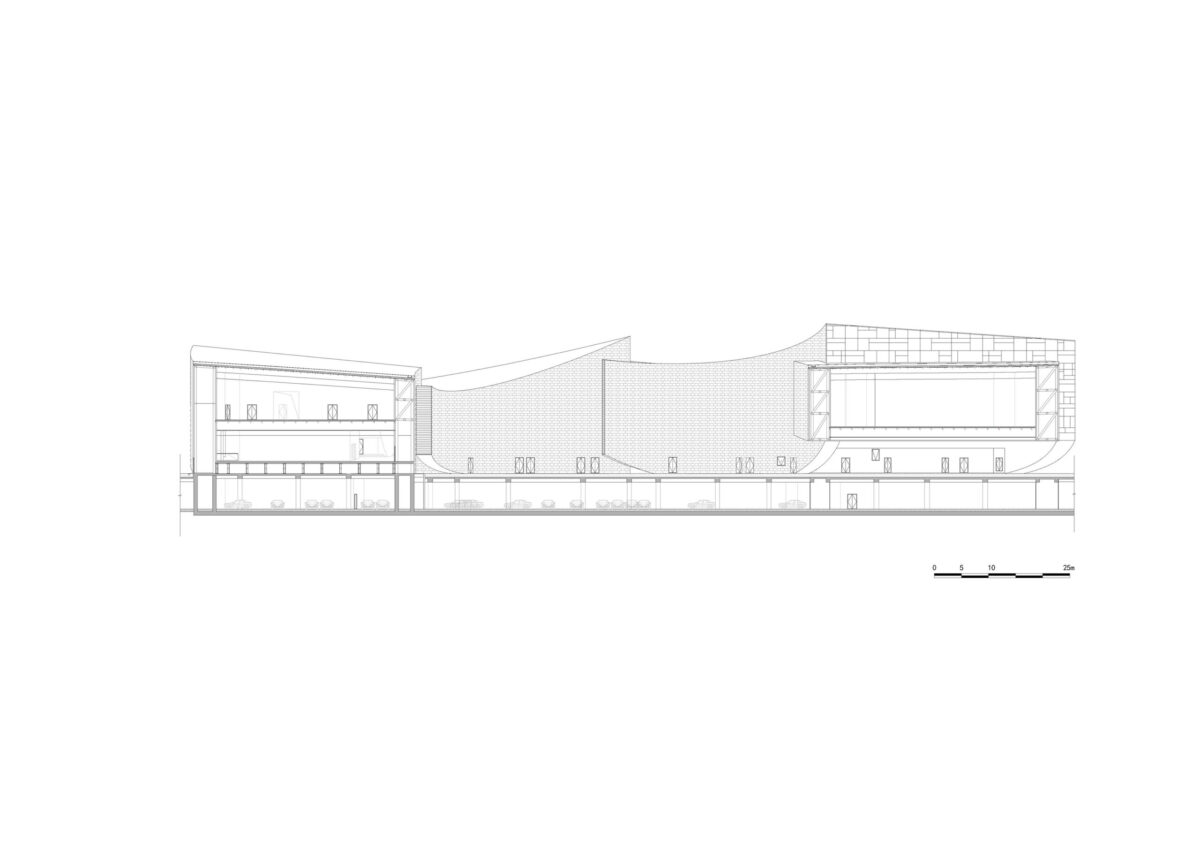
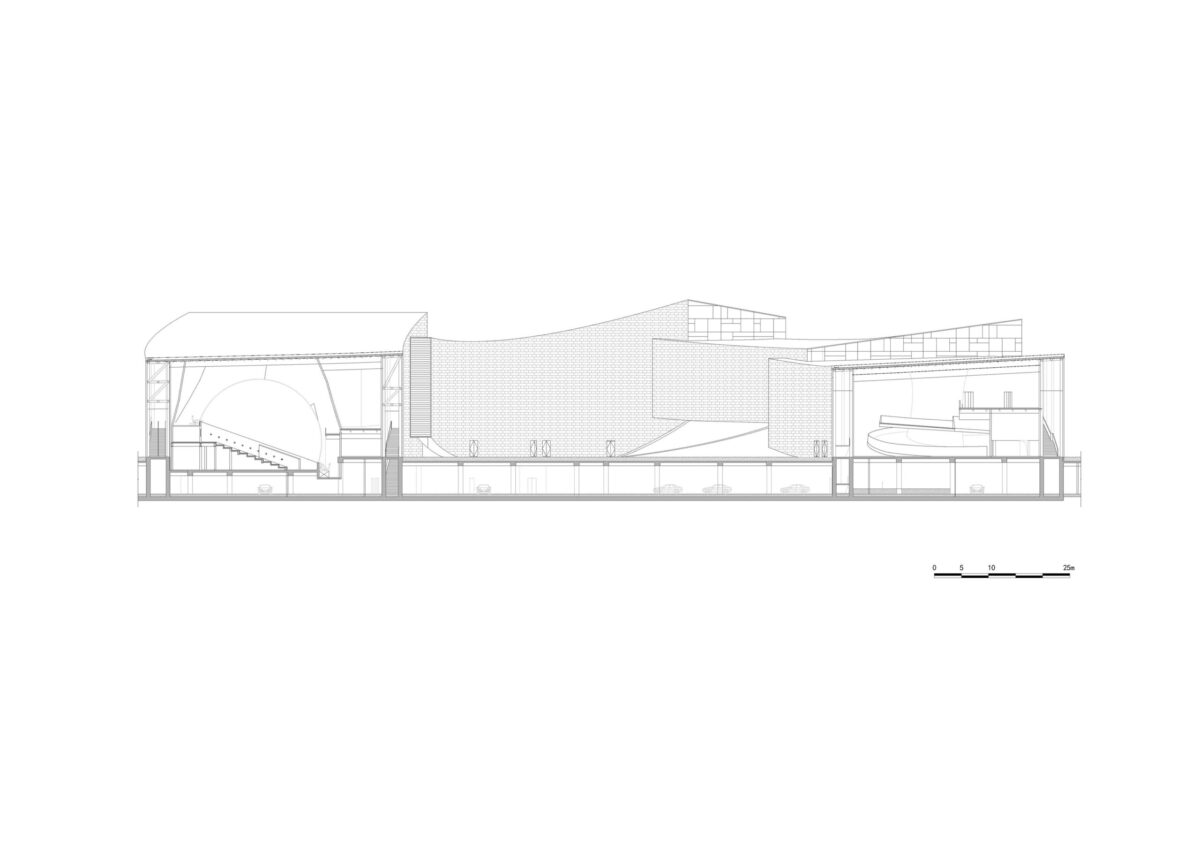
受付スペースを皮切りに、デジタル麦積山正面ホール、5Dデジタルシネマ、パフォーマンスシアター、展示・レクリエーションエリア、文化創造センターという6つのテーマ空間が連なり、正面ホールの上部に辿り着くという循環ループを完成させている。
©瀚墨视觉
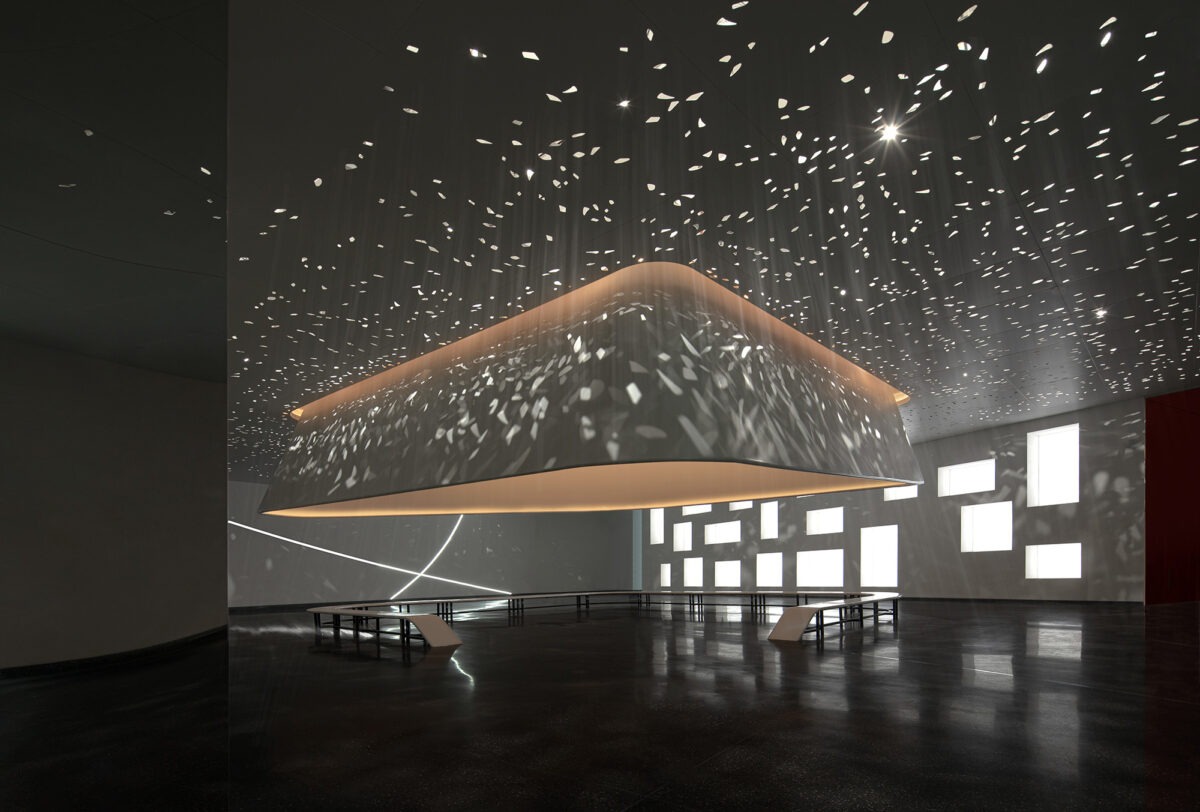
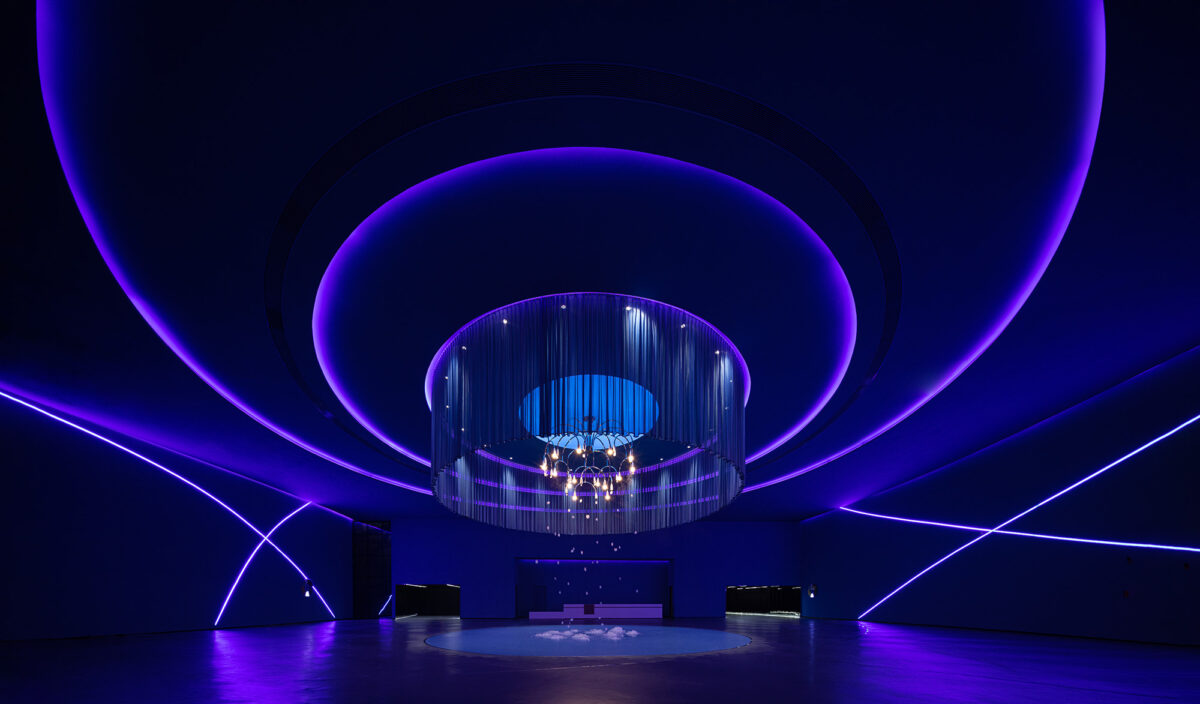
コア構造が支えるダイナミックな無柱空間
内部の最大の特徴は、6つの台形コアによって区切られた6つの巨大な無柱空間である。このうち4つは構造支持および耐震の役割を担い、それぞれのコア内部に機能的な空間が配されている。
6つの自由な空間と色彩の展開は、東部の河西回廊における中原文化と仏教文化の調和的融合から着想を得たものである。
©瀚墨视觉
仏教の思想を体現する環状建築
環状の形態は、明確な辺や角をもたない完結したかたちであり、高い包摂性を備えており、方向性や境界の制約がなく、多様な存在を受け入れる余地がある。
その形状は、仏教があらゆる衆生を受け入れるという広大な心を体現しており、異なる文化や背景をもつ観光客に対しても包摂と調和の空間を提供している。
© Arch-Exist
滑らかな環状の流線形は、柔らかく穏やかな印象を与え、訪れる者の心を内側から落ち着かせ、喧騒から離れた静けさを感じさせる空間を創出する。
これは仏教が追求する平和な雰囲気と調和し、観光客が内面的な静けさを感じ取れる環境を生み出している。また、観光客同士の自然な交流を促進し、体験の質を高めるとともに、文化的蓄積と現代的機能を併せもつランドマーク建築として位置づけられている。
© Arch-Exist
©王祥东
©王祥东
© Arch-Exist
© Arch-Exist
Site plan
Ground floor plan
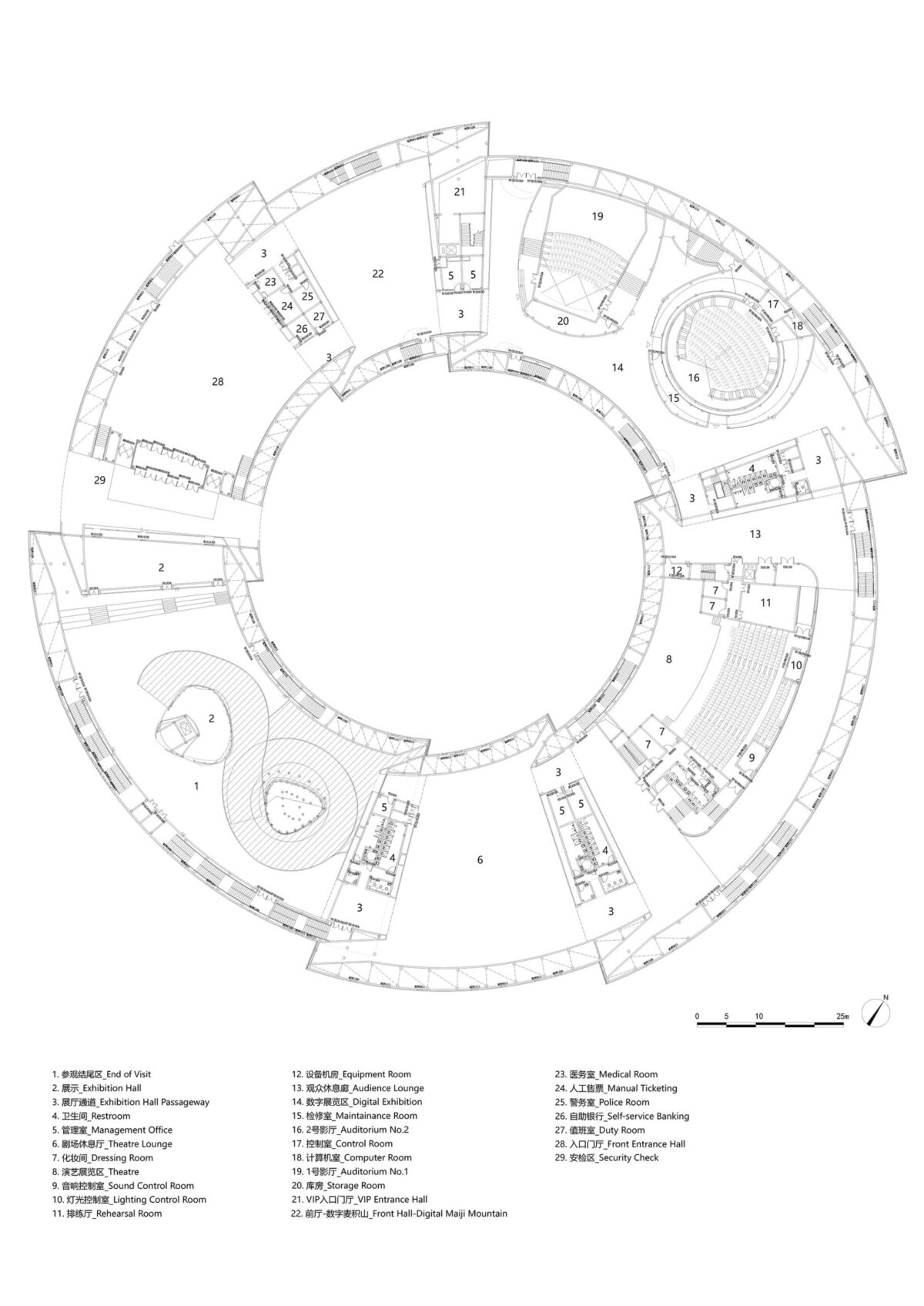
Mezzanine plan
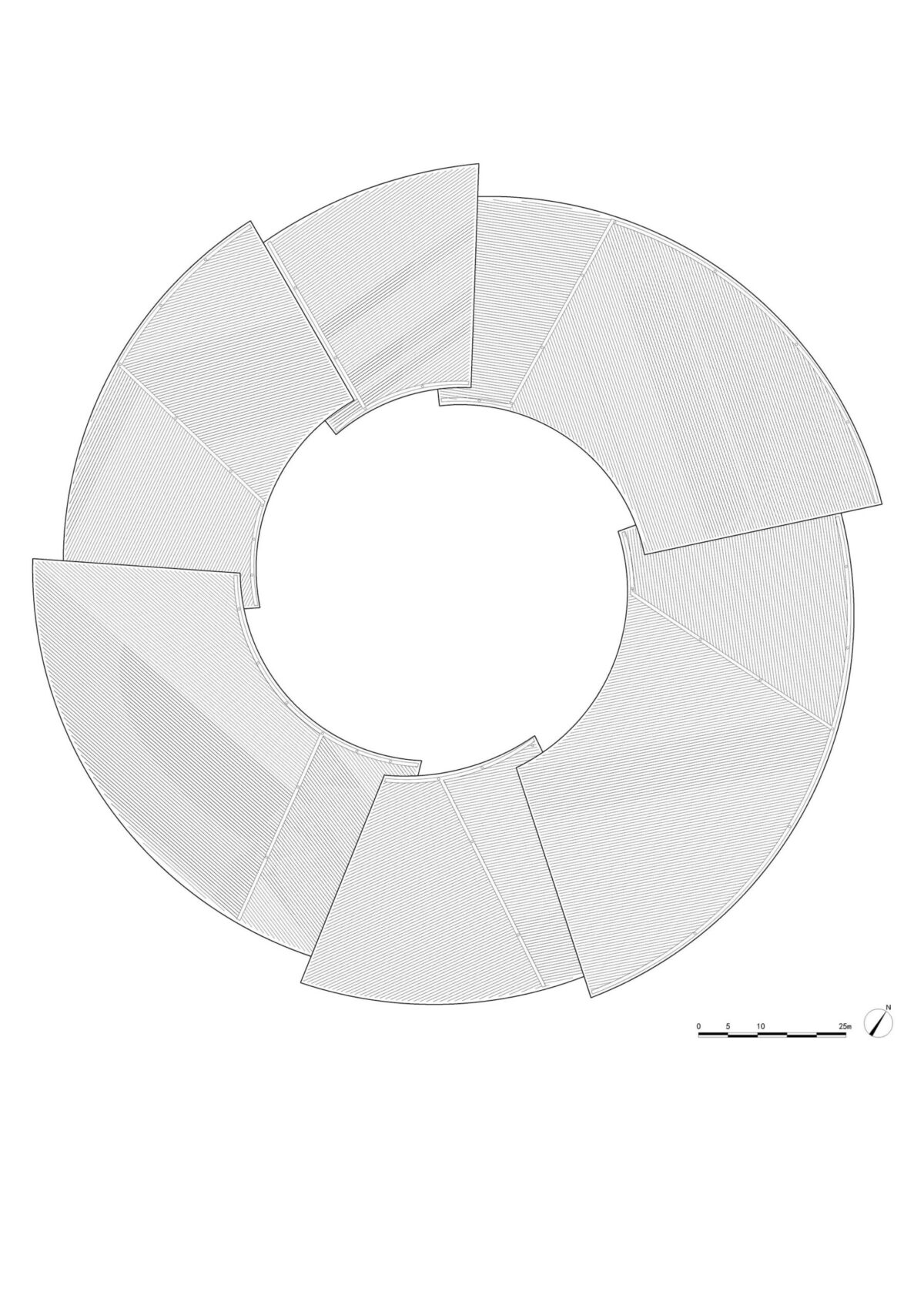
Roof plan
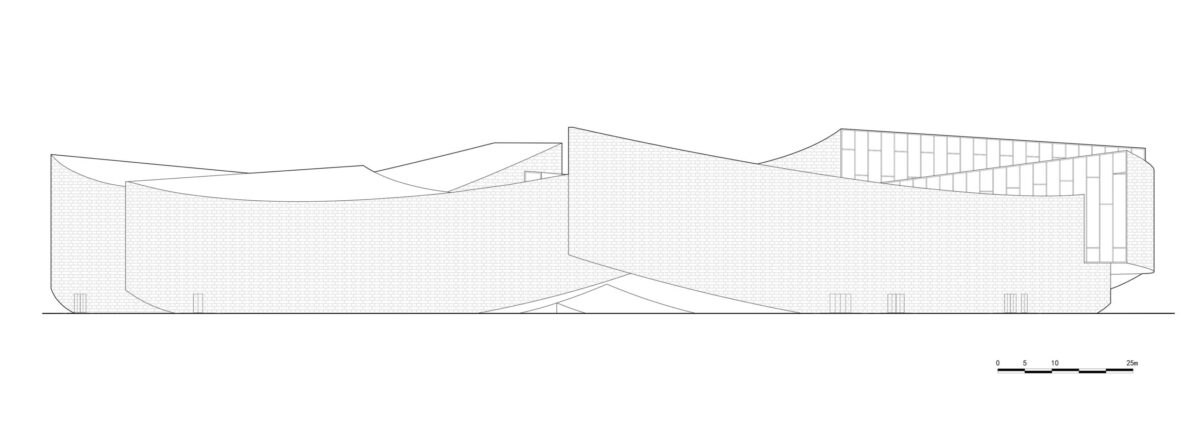
Elevation
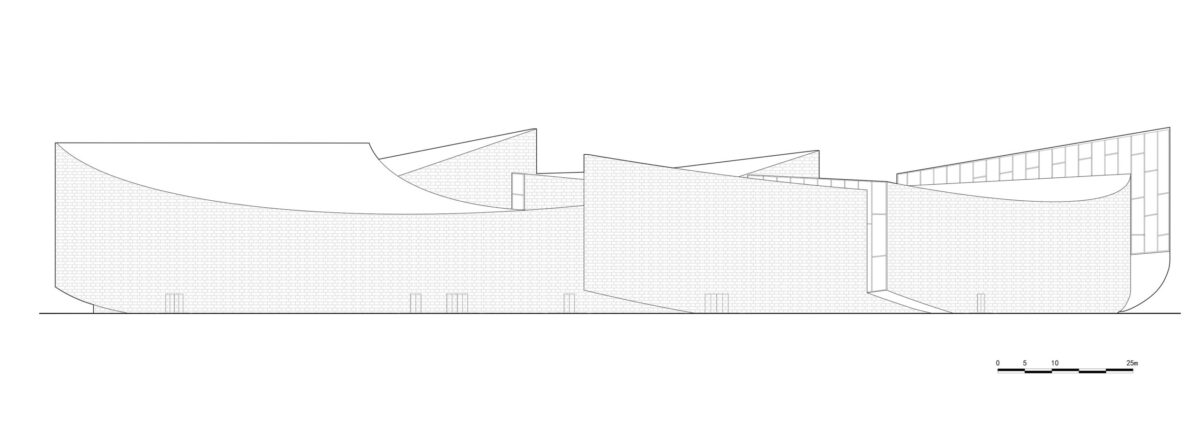
Elevation
Elevation
Elevation
Section
Section
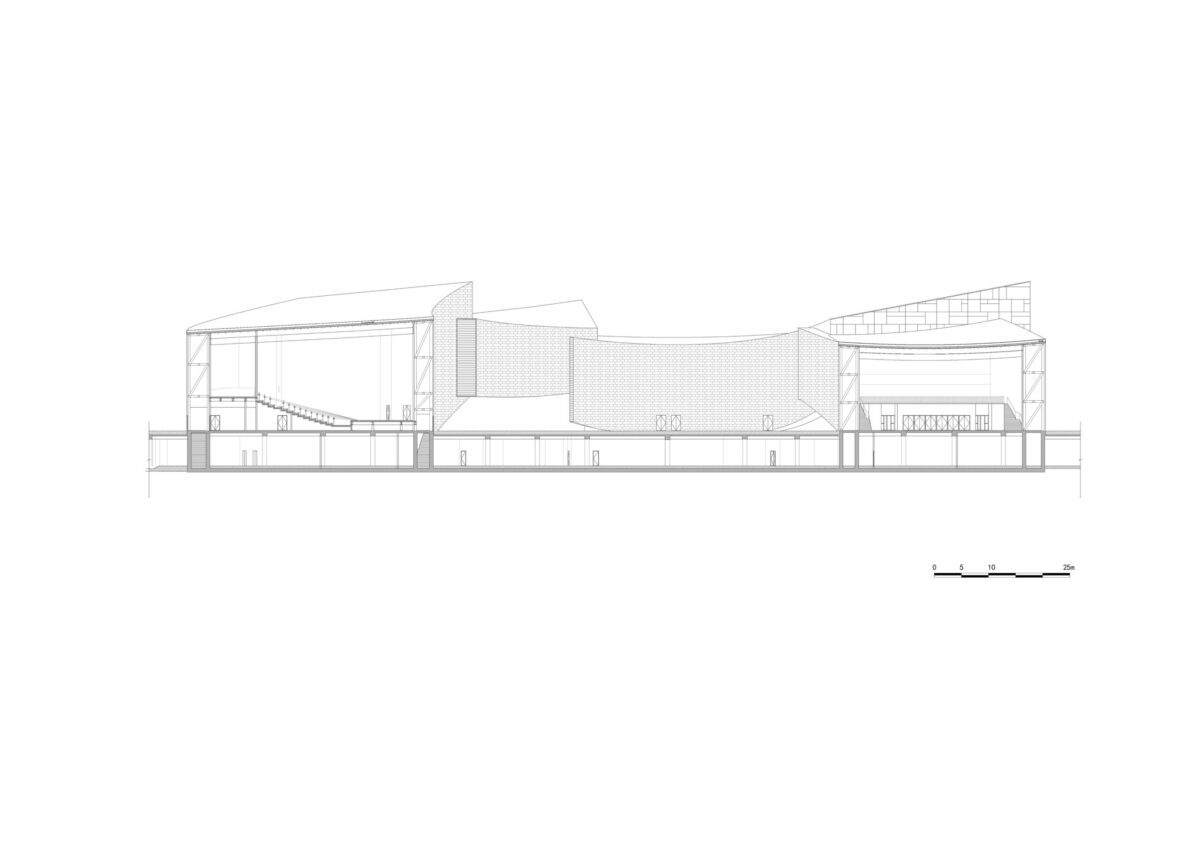
Section
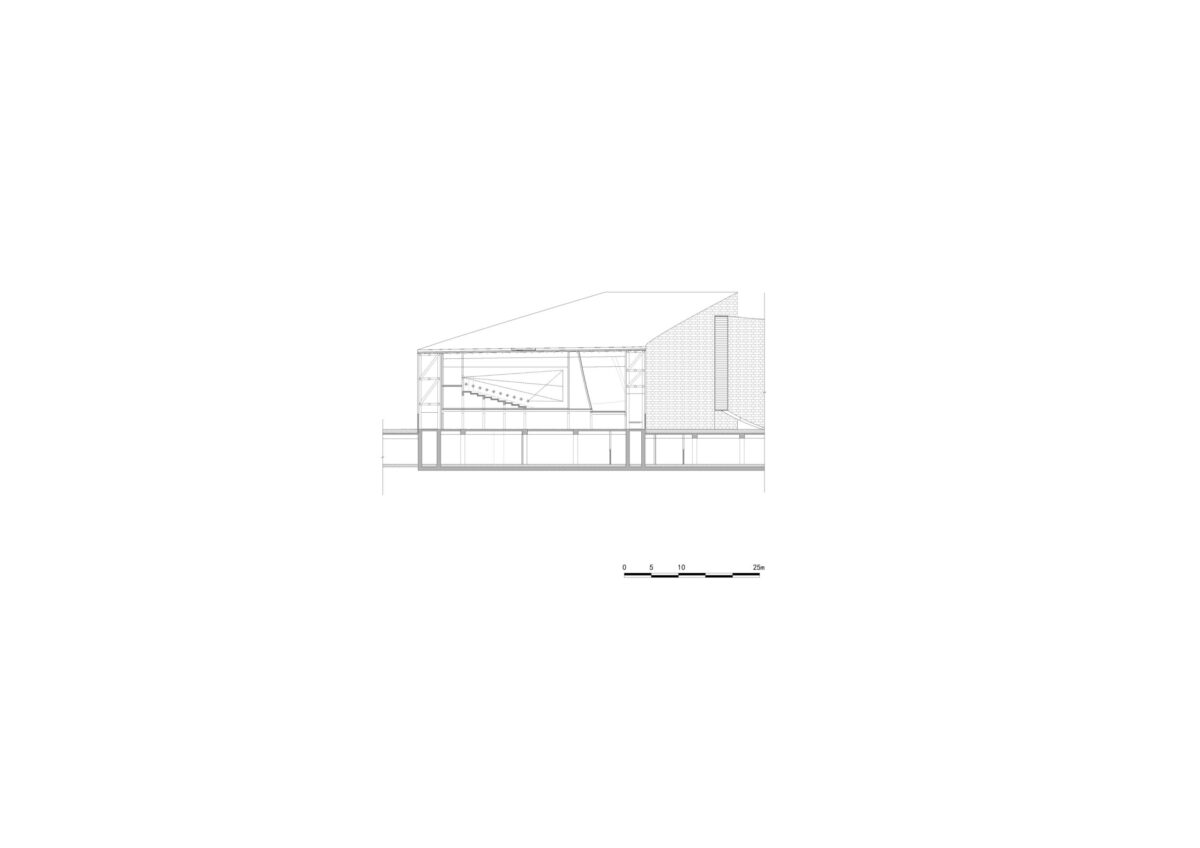
Section
以下、ZXDアーキテクツのリリース(英文)です。
Maiji Mountain Visitor Center
The Maiji Mountain, surrounded by mountains, stands out as a unique peak. The history of cave excavation since the Former Qin Dynasty on the cliff tells the story of the benefactor’s faith and the craftsman’s piety, leaving behind a masterpiece of exquisite Buddhist sculpture art. The Maiji Mountain Visitor Center has built a bridge connecting the past and the future with the appearance of red sandstone, a circular pattern, a space of changing light and shadow, and rich and detailed displays.
Climbing onto the cliff roadway of Maiji Mountain Grottoes, one can overlook the surrounding mountains, which forms a huge circumambulatory structure with numerous undulating peaks. Within sight, there are several mountain structures similar to Maiji Mountain, and Maiji Mountain is just the largest of these. The mountains stretch across the earth, calm and steady and form a series of rivalries, one slope after another and one ring after another, ultimately forming steep cliffs at the nodes.
The Maiji Mountain Grottoes and surrounding historical relics are historical witnesses of the long-term integration and convergence between the ancient Central Plains region and the ancient western region. In this process, the introduced Buddhism collided and interacted with the original culture of the Central Plains, and had a profound impact on the spiritual life of countrymen.
To explore the significance of Maiji Mountain culture and art, we must first consider the influence of Buddhism, and design begins from here. Circumambulatory structures are the most common and primitive form of space used for ceremonial and commemorative purposes after the awakening of human consciousness, corresponding to the Buddhist concept of reincarnation. All living things, if they do not seek ‘liberation’, will forever be in the cycle of life and death in the ‘Six Paths’, with no end. Of course, these concepts and annotations have undergone changes through cultural integration in the long river of history, especially in the process of communication and integration with the native culture of the Han ethnic group, and even in the process of modernization. They have surpassed the original meaning of Buddhism and have a more contemporary interpretation, which will foreshadow the realistic power of sustainable development and affect our life experience.
The annular space is the fundamental feeling of the architectural experience. Meanwhile, the undulating mountain terrain of the surrounding natural environment is integrated into the overall design, enabling the humanistic sentiment and the power of the environment to overlap and form an energy field with contemporary spirit. It acts as a participant in the public space with environmental power, and extends this momentum throughout the entire site design.
The circumambulatory structure is divided into six volumes, all of which are in trapezoidal shapes and interpenetrate each other. “Gaps” appear at the junctions of the volumes. From the outside, these can be regarded as the nodes of the shape, while inside, they form openings for outdoor light. The light shines into the building with a mysterious power and serves as a summons that guides the audience from one space to the next. The various exhibition functions of the visitor center unfold continuously under such spatial arrangements.
The interior of the building is unfolded under such special light guidance. The main entrance of the building faces the west side road, and under the collision of two volumes, a gray space is formed. Here, you can directly see the courtyard in the circumambulatory structure, with the mural content from the Maiji Mountain Grottoes presented by a metal plate painted ceiling at the top. The colors are both bright and quaint, giving people a strong cultural atmosphere.
From here, you enter the interior of the center and walk clockwise along the gentle slope. First, there is the reception space, followed by the Digital Maiji Mountain front hall, 5D digital cinema, performance theater front hall, exhibition and leisure area, and finally the cultural and creative center, totaling six themed spaces. At the same time, this space is also above the departure front hall, completing the closed-loop of the circulation.
The biggest feature of interior is that it consists of six relatively enclosed and huge column free spaces separated by six trapezoidal cores, four of which serve as structural support and seismic resistance, with various function spaces arranged in each core. The six freely arranged spaces and colors are inspired by the harmonious integration of Central Plains culture in the eastern Hexi Corridor with Buddhist culture.
There are no obvious edges or corners in the ring-shape, it is a perfect shape with strong inclusiveness, no clear directionality or boundary limitations, and can accommodate and accept various things. Just as Buddhism accepts sentient beings with a broad mind, the shape of the building also symbolizes inclusion for tourists from different cultures and backgrounds, providing a space for harmonious coexistence.
The fluent toroidal streamline gives a soft and soothing feeling, which can make people feel calm inside, as if they are outside the hustle and bustle of the world, creating an environment that is in line with the peaceful atmosphere pursued by Buddhist practice, allowing tourists to feel inner peace when entering it. It has created favorable conditions for communication and interaction among tourists, greatly enhancing their travel experience and becoming a landmark building that combines cultural deposits and modern functions.
Time: 2016-2024
Area: 16,154m²
Type: cultural
Status: completion
Location: Tianshui, Gansu, China
Client: Tianshui Maijishan Cultural Tourism Development Co., LtdDesign Firm: ZXD Architects + BIAD
Chief Architect: Zhu Xiaodi
Design Team:
Architecture: Dawei Wang, Hua Fan, Zaijian Zhang, Jian Wang, Xiang Li, Xiaoyong Cui, Zheng Zhang, Wei Jiang, Yiwei Li, Yuanyuan Song, Kun Liu, Haonan Wang, Wenjuan Fan, Wenjing Liu, Yanan Cheng
Structure: Yi Yang, Keyu Gai, Shaoxue Tang, Qing Geng, Chunyang Song, Zhongyi Zhu (design director)
Equipment: Liang Sun, Jie Li, Peng Liang, Guocheng Zhao, Jiecong Liu, Hanlin Shi, Pengfei Bai
Electrical: Wei Liang, Xu Wang, Yang Gao, Shuochen Liu, Lingli WangInterior Design: ZXD Architects + Wu Yanming Studio
Landscape: BIAD + Green Alliance (Beijing) International Engineering Design Co., Ltd
Lighting Design: Tsinghua University Planning and Design Institute Co., Ltd. Zhe Wu, Li TangPhotography: ©Arch-Exist ©Xiangdong Wang ©Hanmo Vision
Video: ©Arch-Exist ©Wu Yanming Studio
Video Editing: Zhepeng Zhang
ZXDアーキテクツ 公式サイト
https://zxdarchitects.com/en/projects/680749f3d14cf200209cc298
【購読無料】空間デザインの今がわかるメールマガジン TECTURE NEWS LETTER
RECOMMENDED ARTICLE



