CULTURE
©︎ 吴清山
©︎ 吴清山
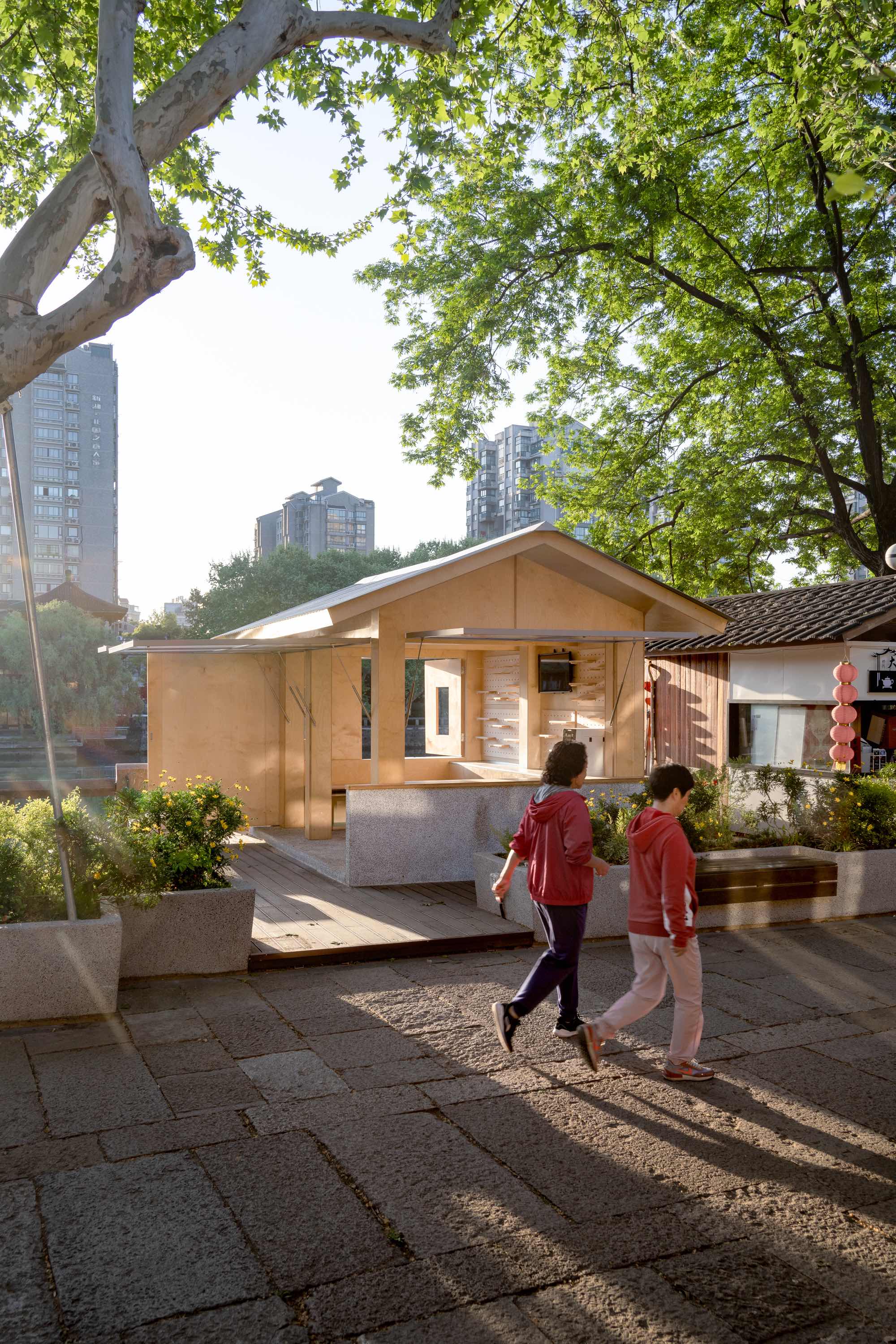
中国・杭州市に位置する〈Canal Pavilion Post〉は、運河のほとりの木造空き家を改修した、観光客向けの休憩所です。可動式のファサードにより、ボランティアのための閉じた小屋としても機能します。
杭州を拠点に活動するZAOZUO ARCHITECTURE STUDIOが設計しました。
注目ポイント
- わずか10m²の極小規模空間に集約した多機能性
- 内外の連続性を実現する公共性と開放性の追求
- 可動式のファサードや扉を用い、閉じれば小屋、開けば公共空間となる二面性
(以下、ZAOZUO ARCHITECTURE STUDIOから提供されたプレスキットのテキストの抄訳)
©︎ 吴清山
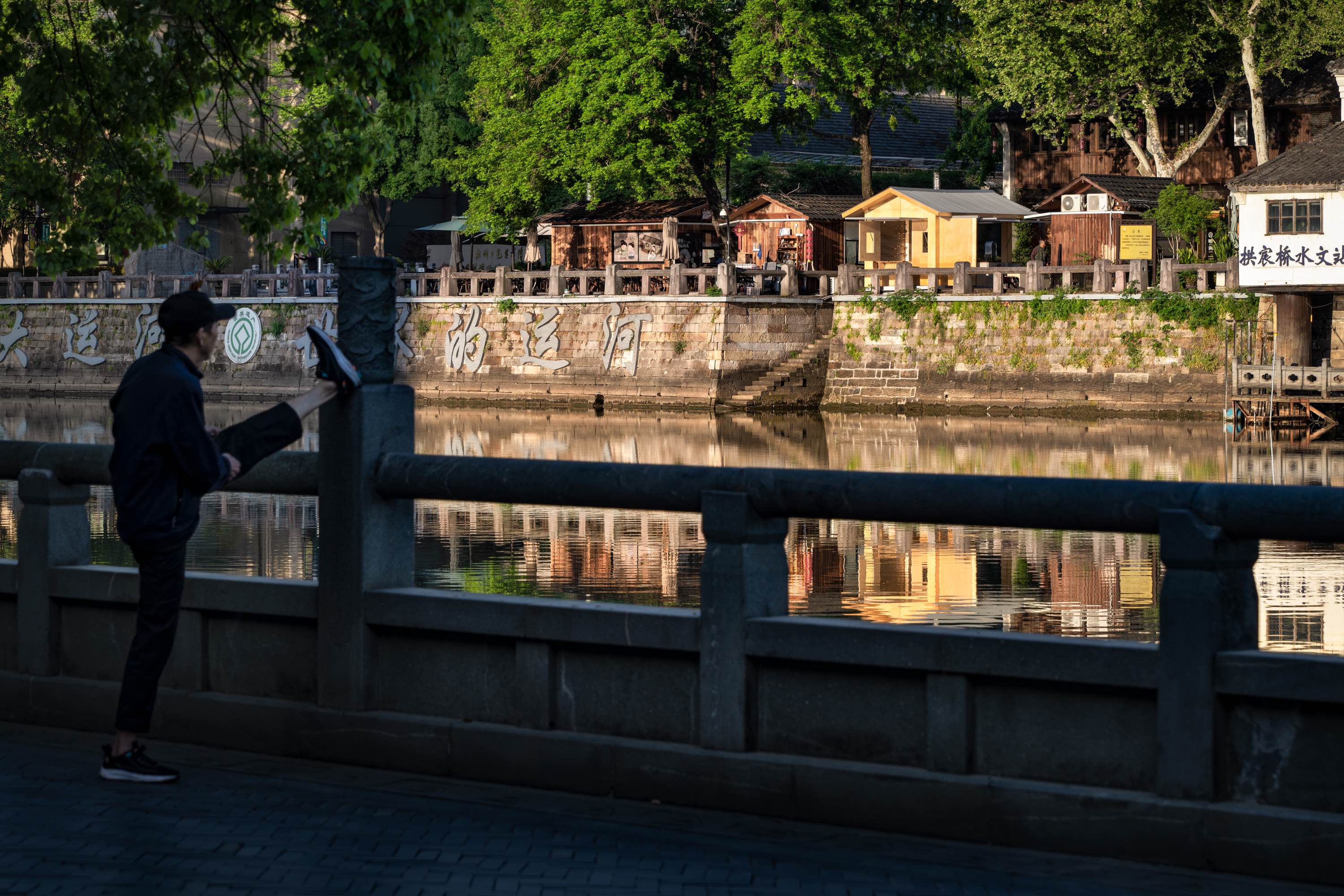
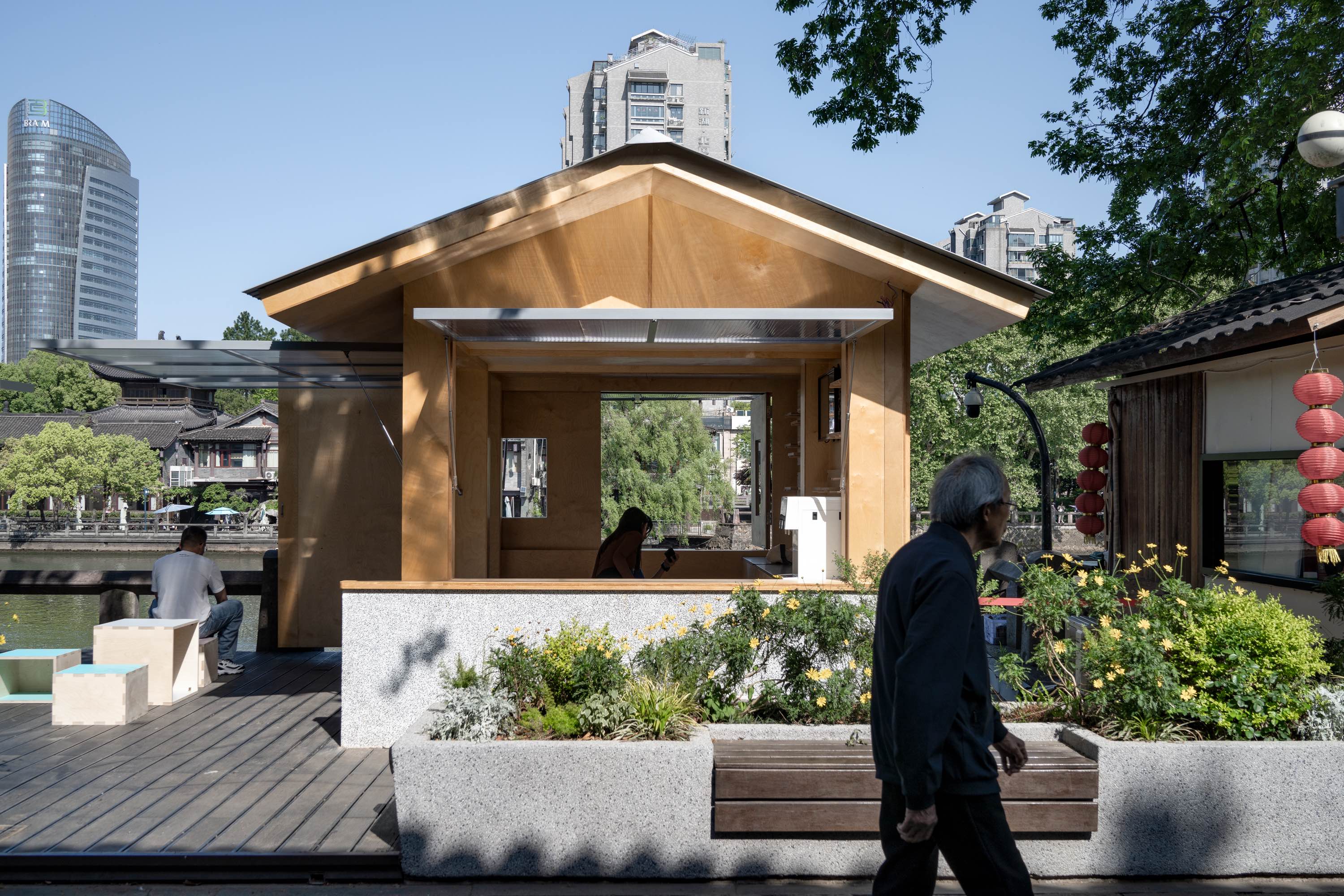
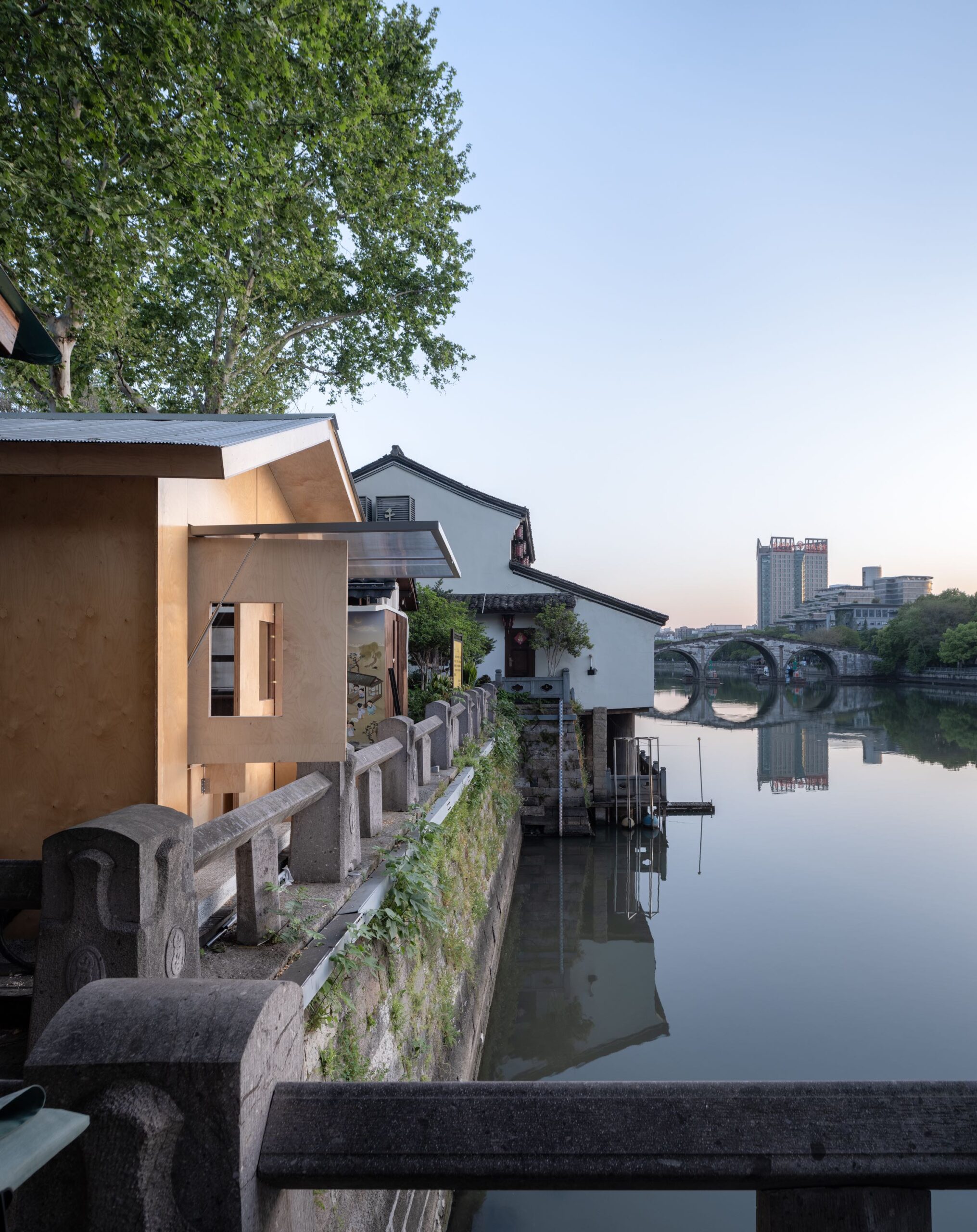
〈Canal Pavilion Post〉は、北京・杭州大運河の杭州区間に位置する拱臣橋のそばに建つ建築物の公益改修プロジェクトである。面積は10m²、高さは2m以上のシンプルな木造構造からなるこの建築は、四角く素朴な形状から「小さな箱」と私たちは呼んでいる。
クライアントは、空き家となっていたこの木造家屋を、観光客に無料の飲料水と休憩スペースを提供する景観ポストへと改修することを望んだ。同時に、この施設は杭州を代表する歴史的ランドマークである拱臣橋の宣伝スポットとして機能し、観光土産や文化的・クリエイティブ製品の販売も担うこととなった。
©︎ 吴清山
©︎ 吴清山
パビリオンと回廊と家屋
杭州橋西直街周辺には、小さな木造家屋が点在し、茶店や小売店として利用されている。観光客にとって、それらの家屋は「厨房」のような存在であり、立ち入ることを許されない閉ざされた空間である。
©︎ 吴清山
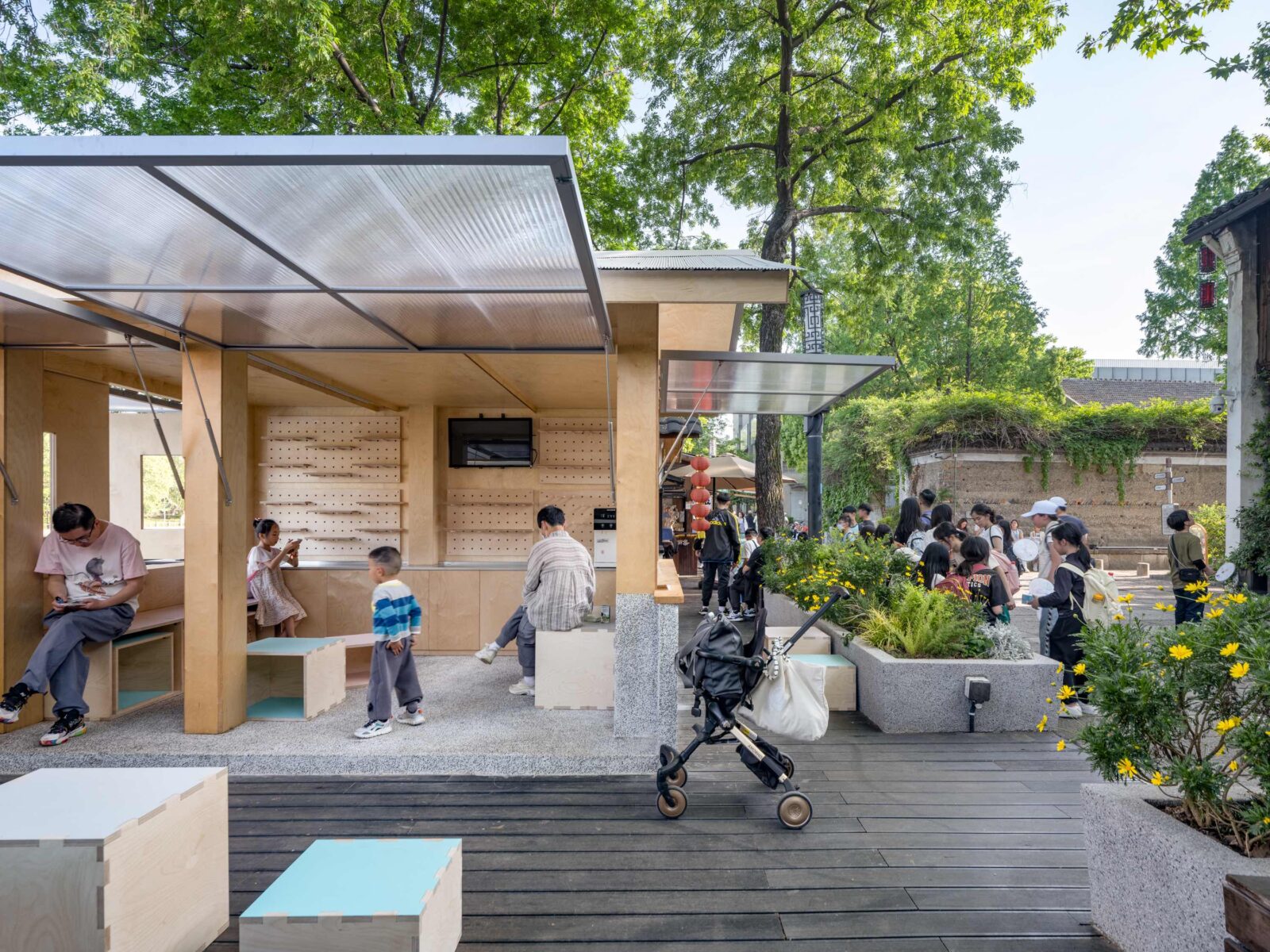
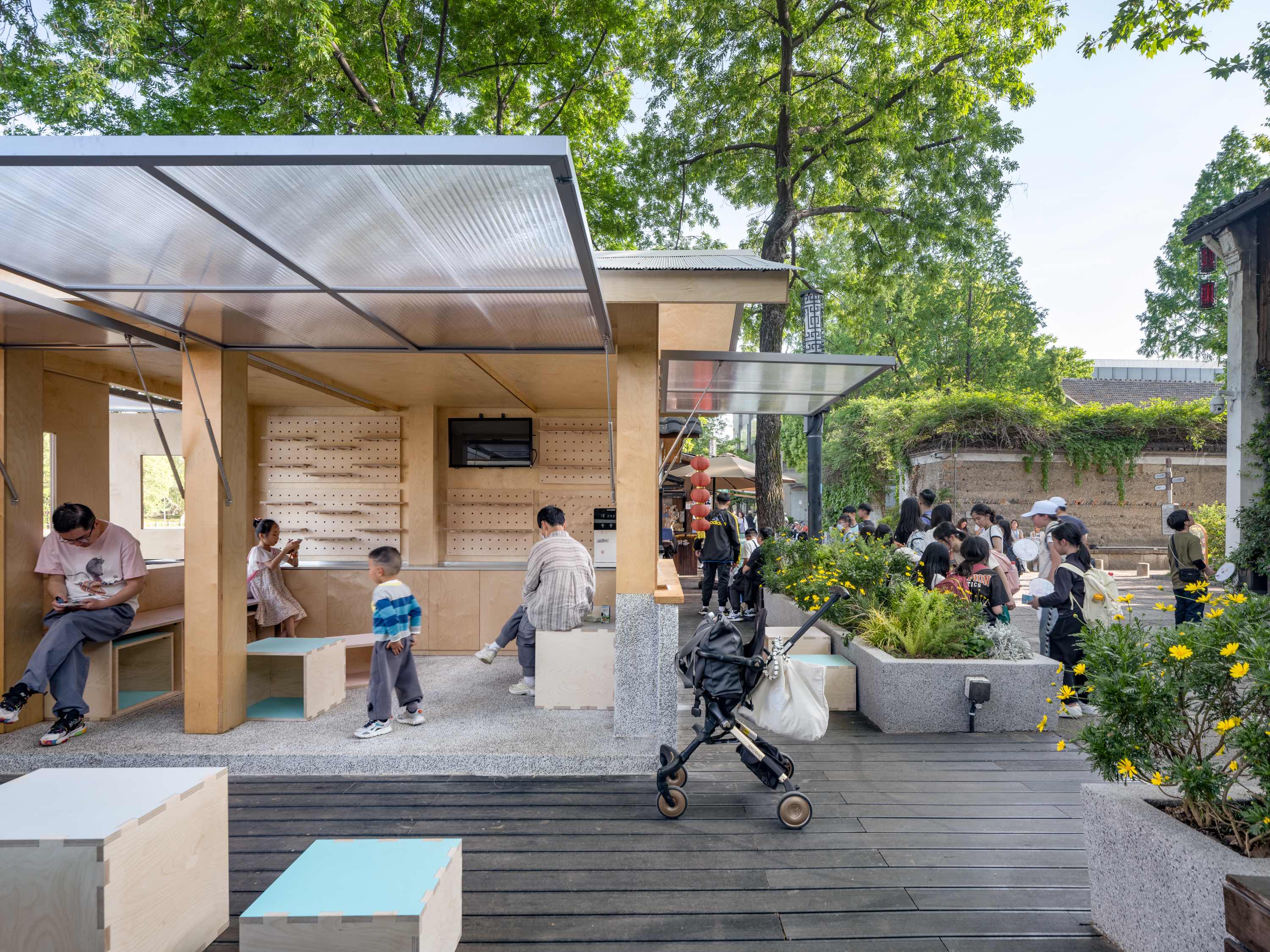
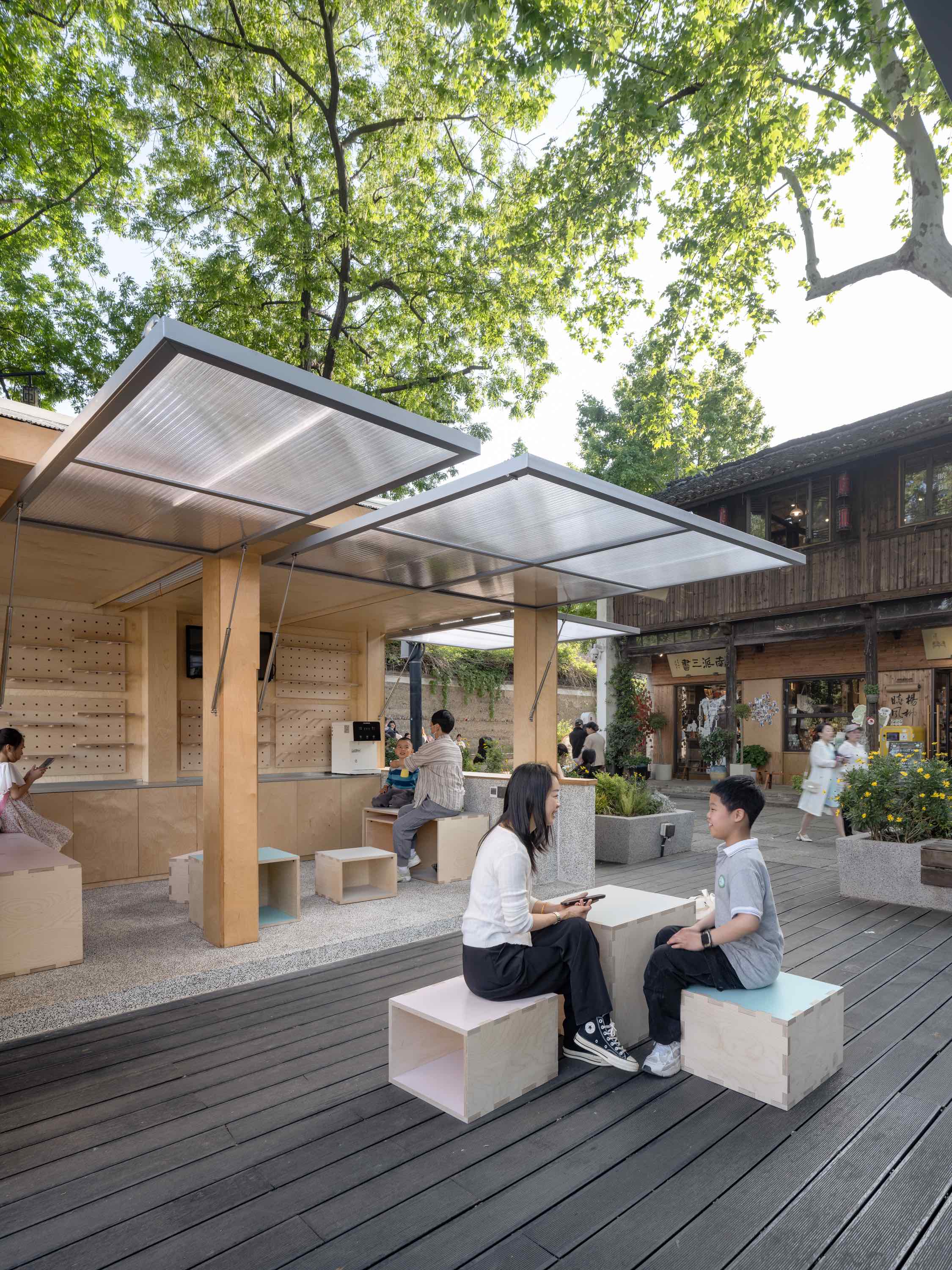
しかし本プロジェクトで求められるのは、無料で飲料水や休憩を提供する公共空間であり、開放的で境界のない場であるべきだと考えた。それは訪れる人が自由に腰を下ろし、好きな時に立ち去れる場所である。
その意味において、この小さな建築は家屋というよりも、景観を楽しむためのパビリオンや、雨風をしのぐ回廊に近い。
©︎ 吴清山
©︎ 吴清山
このために求められるのは「開放性」である。
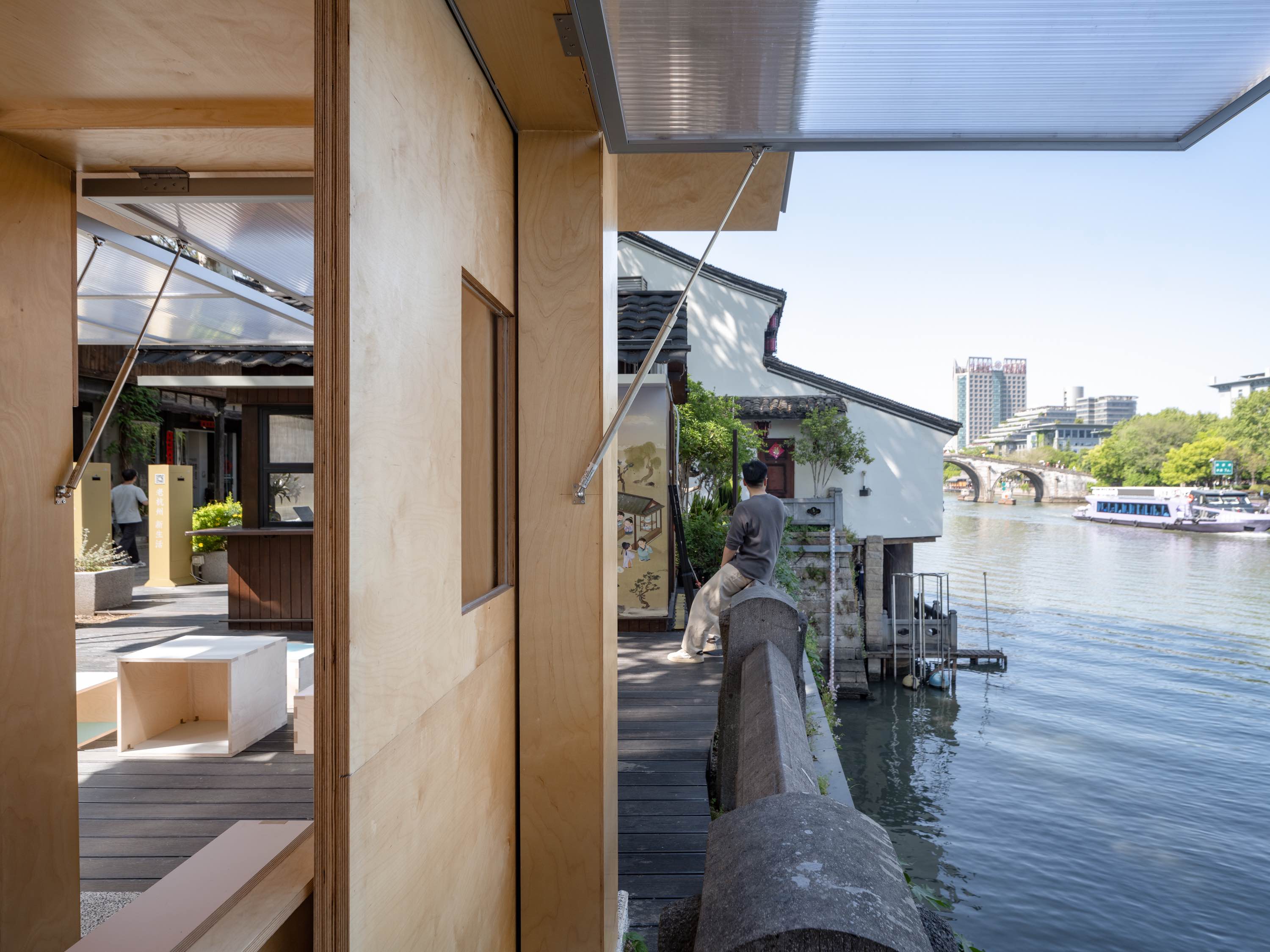
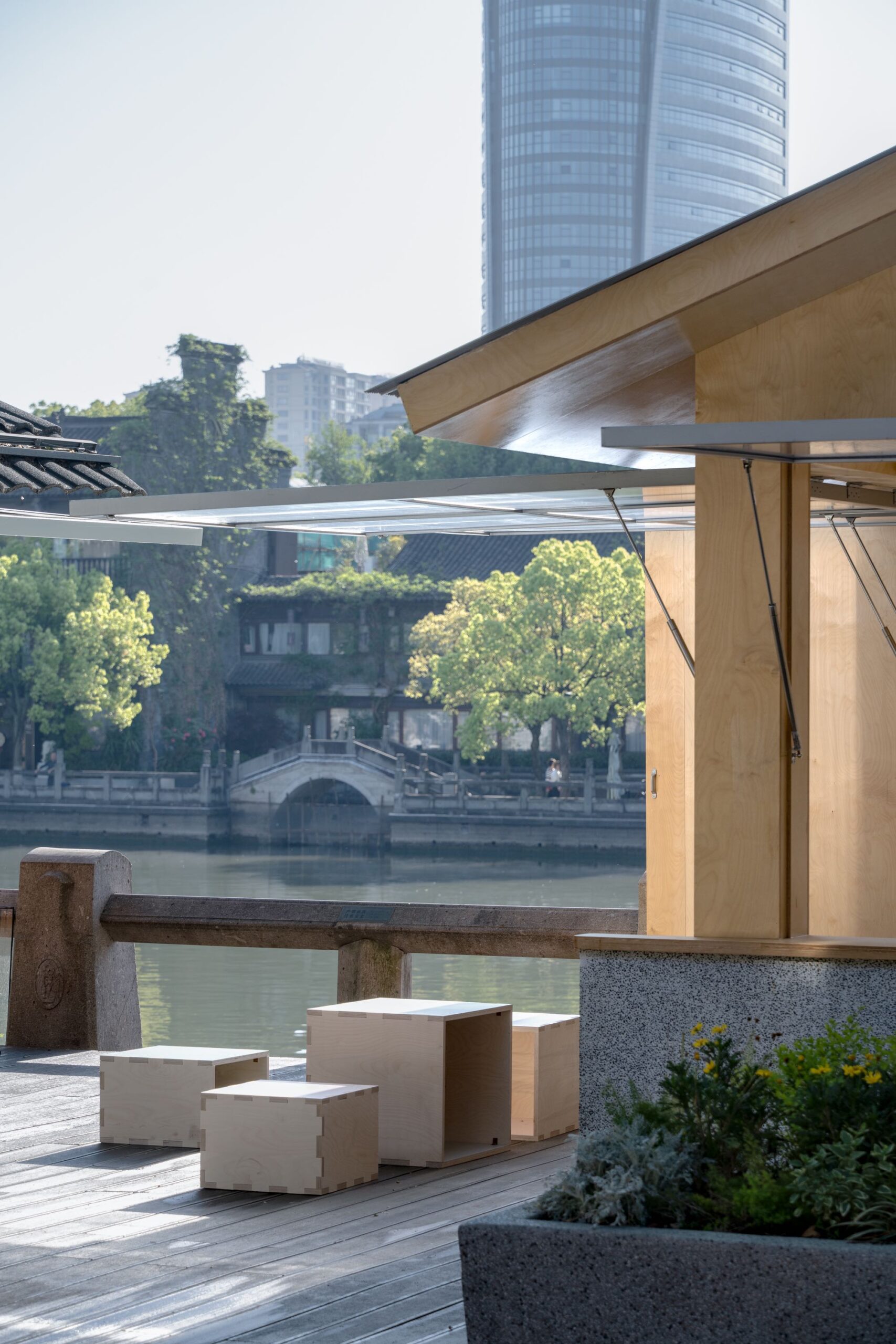
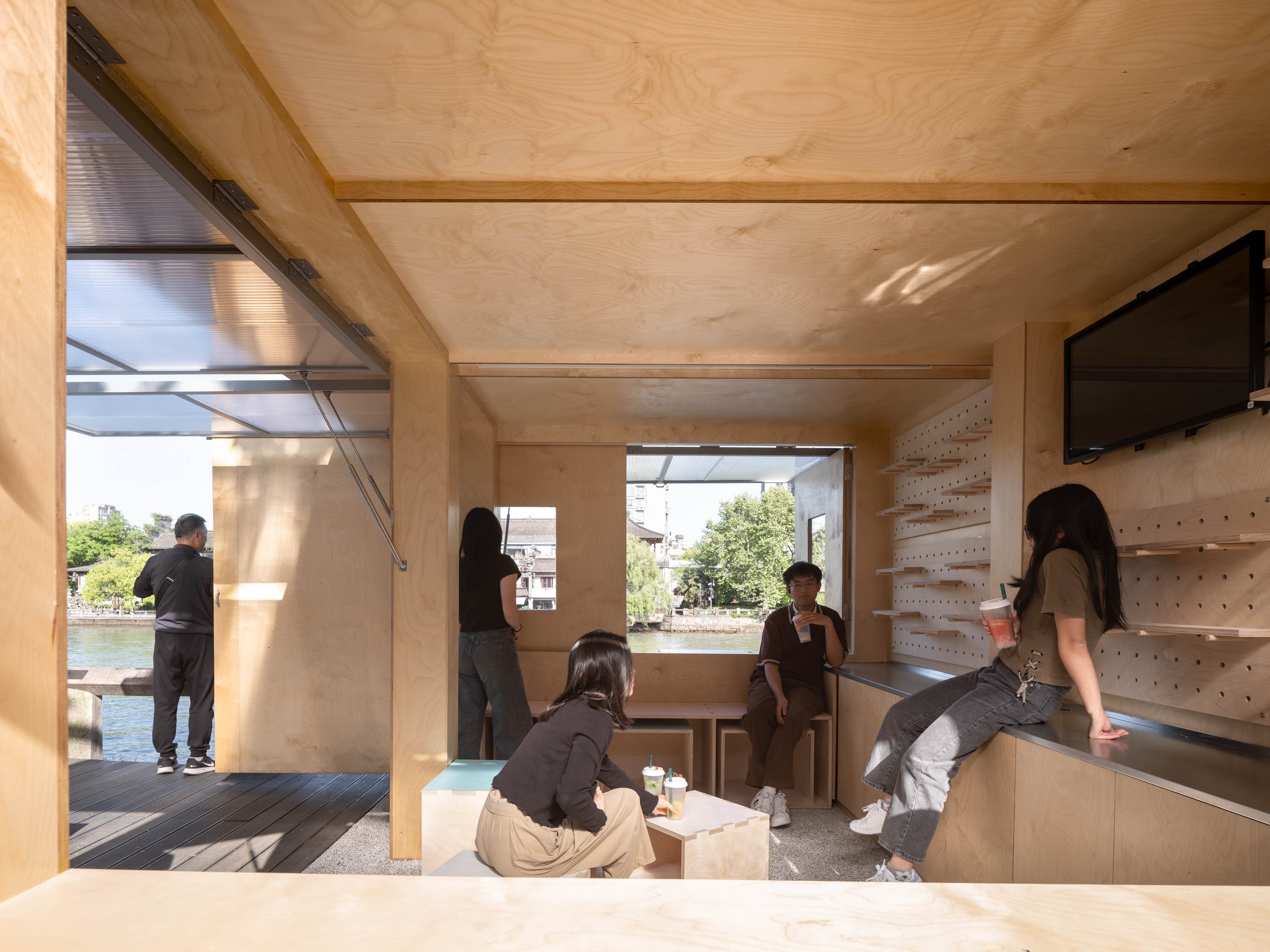
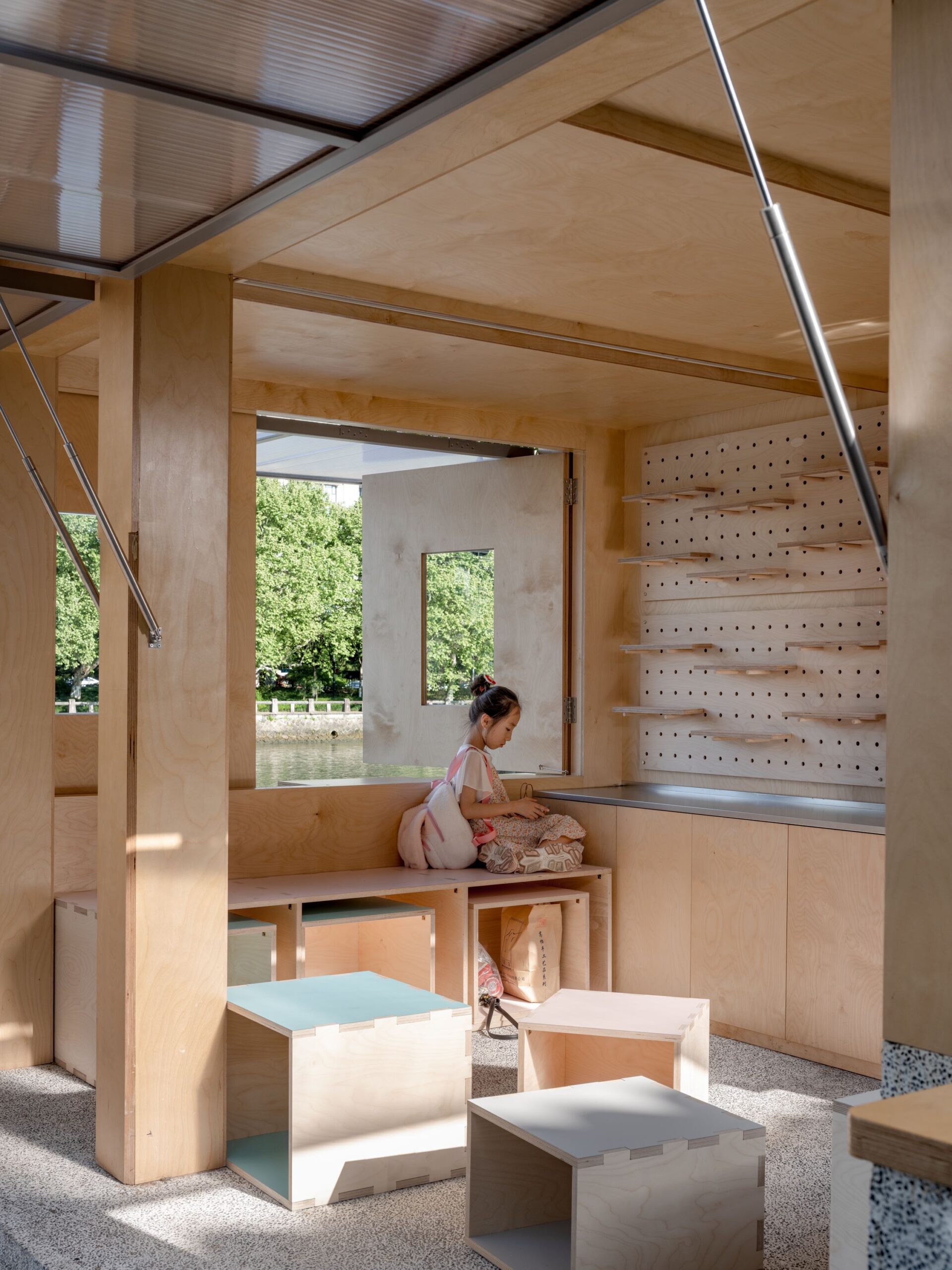
この開放性には、訪問者がこの小屋を介して運河を直接眺望できる「視線の開放性」、全面的に開放されたファサードにより出入りという境界感を弱める「動線の開放性」、カウンターや椅子を壁際に配置し、内外の区別をなくすことで中心性を解消する「レイアウトの開放性」がある。
©︎ 吴清山
変形可能な箱
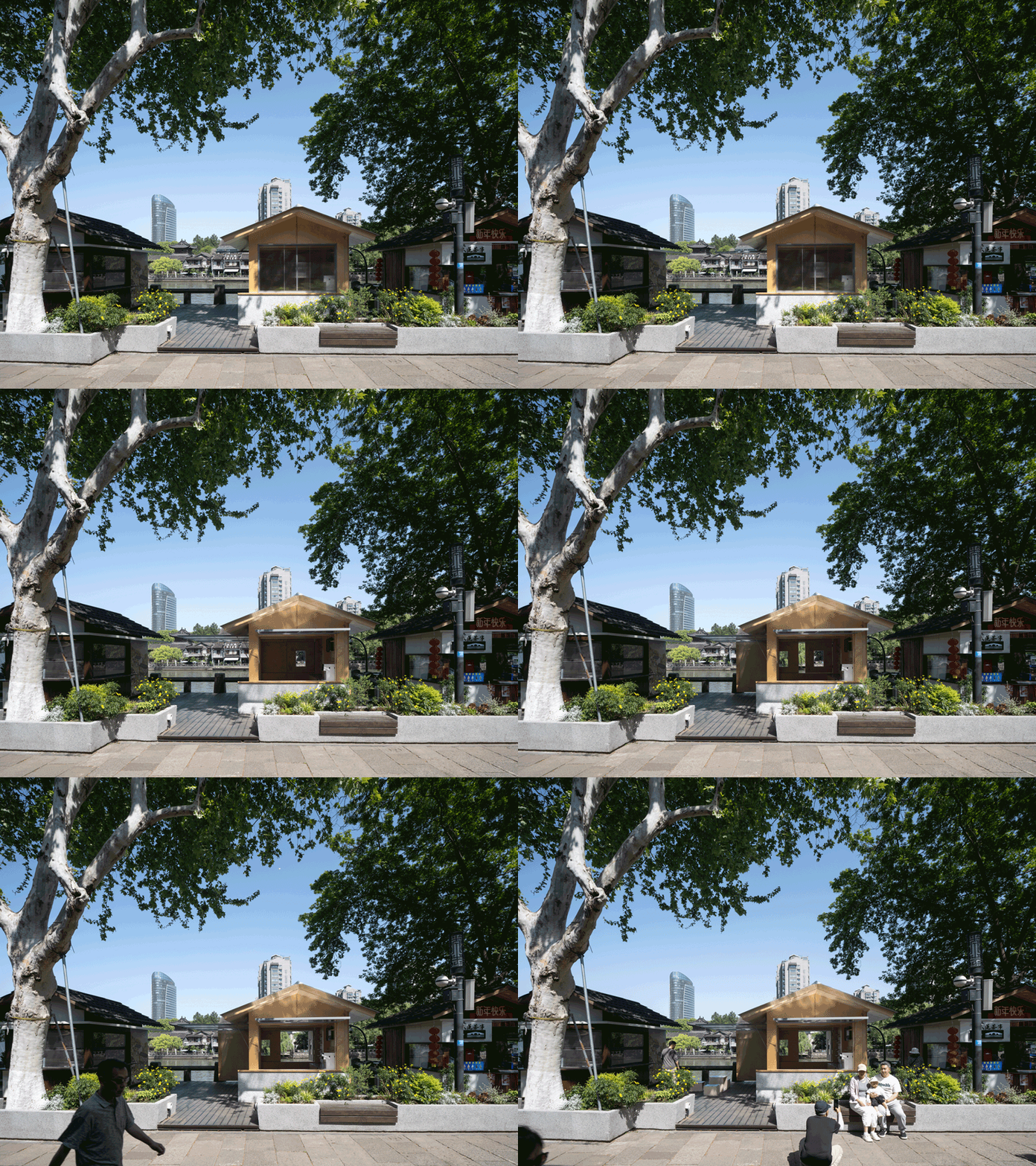
一方で、この小屋は完全に開放されているだけでは十分でない。ボランティアの休憩スペースや備品の収納といった機能も担わなければならず、小さな建築としての性格を備える必要がある。そのため、この箱は「変形可能」な建築となっている。
Model
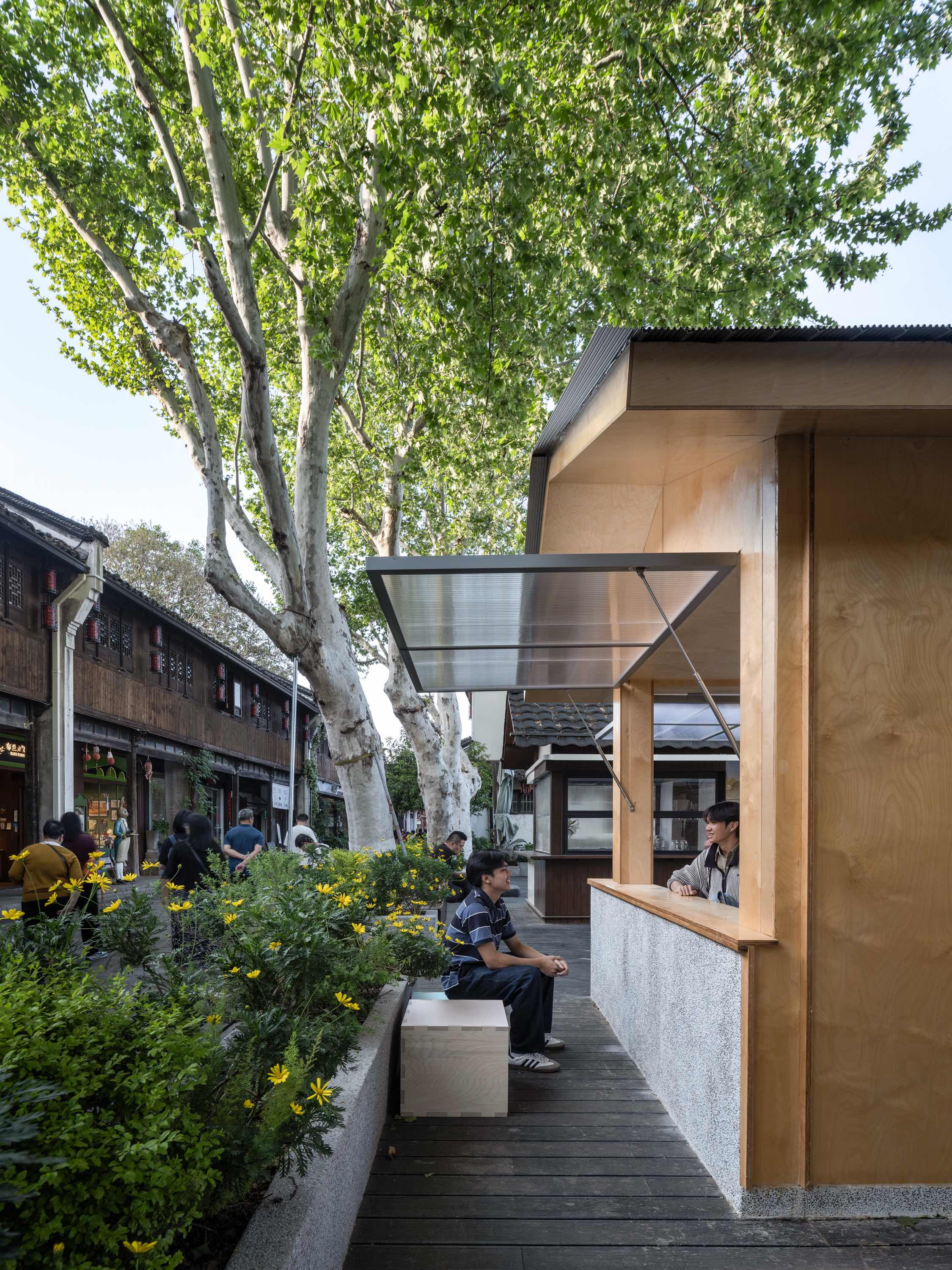
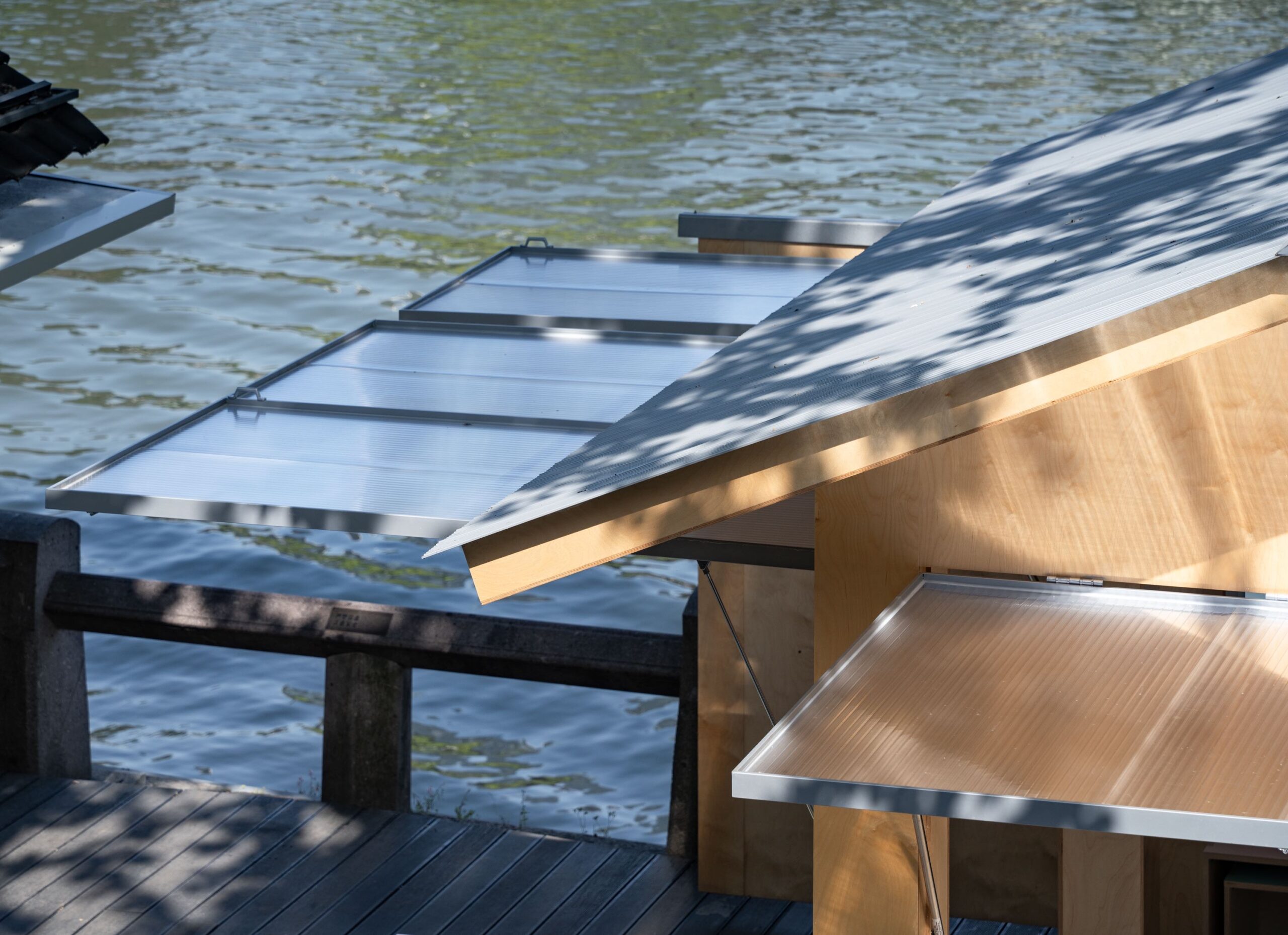
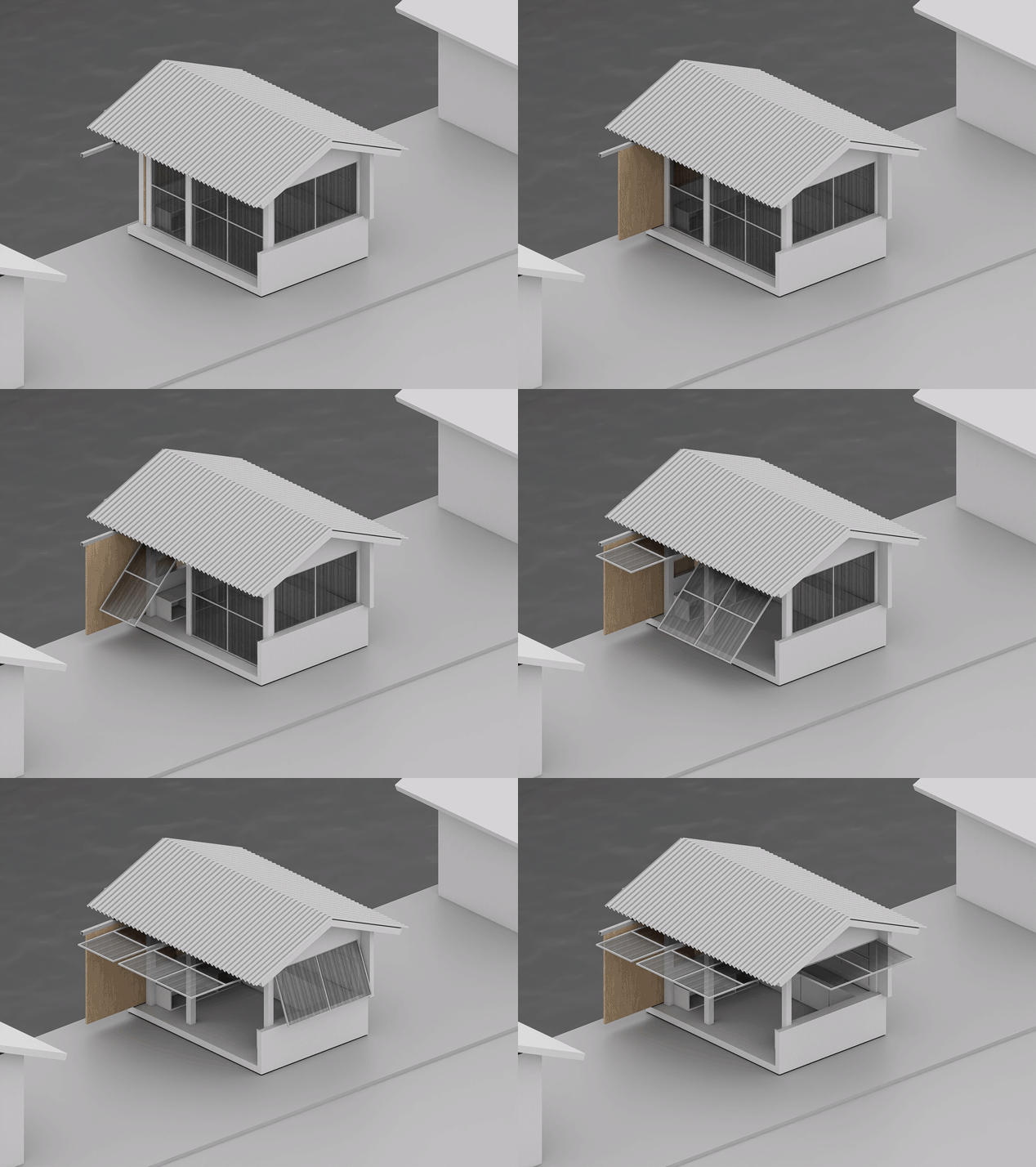
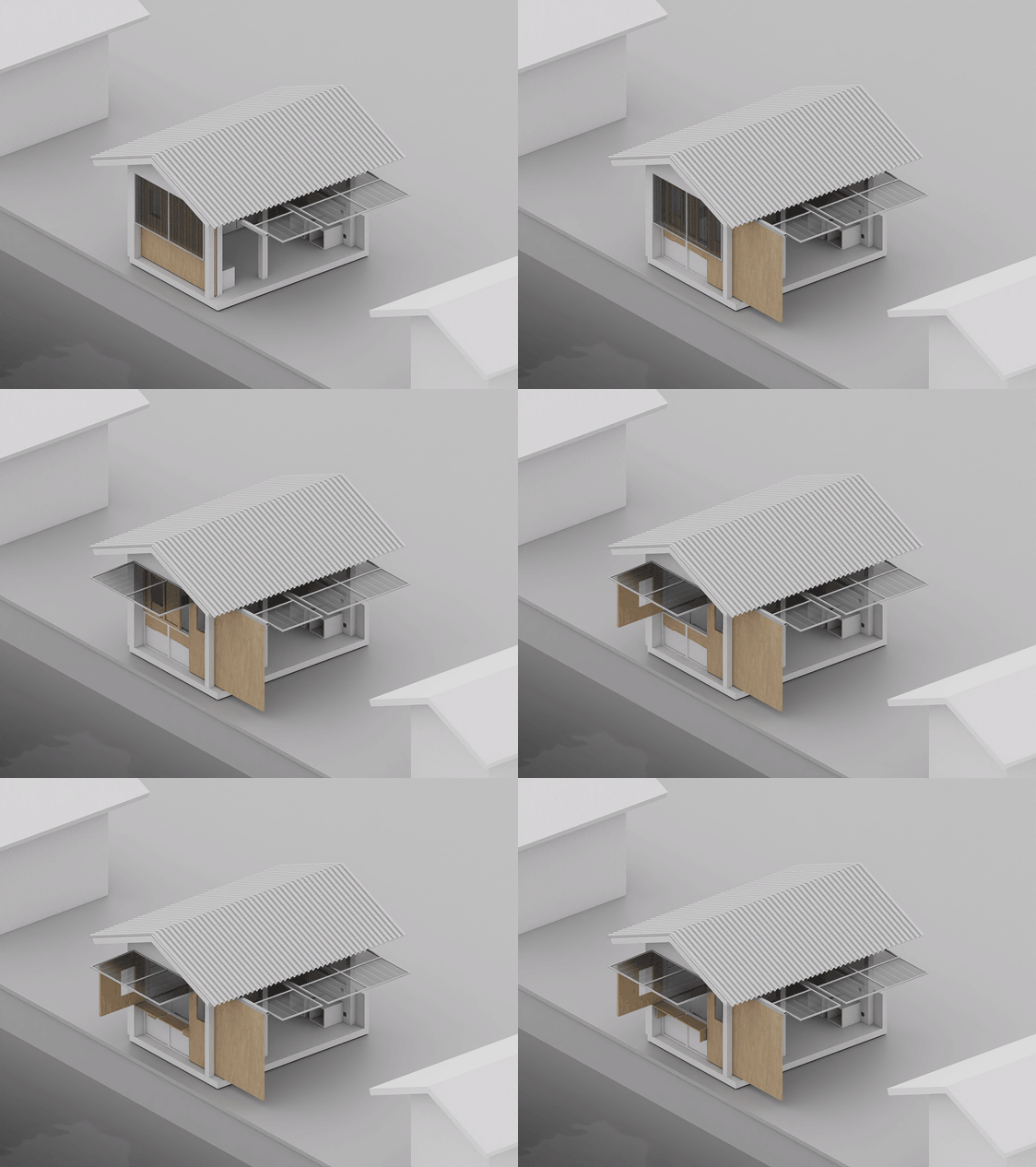
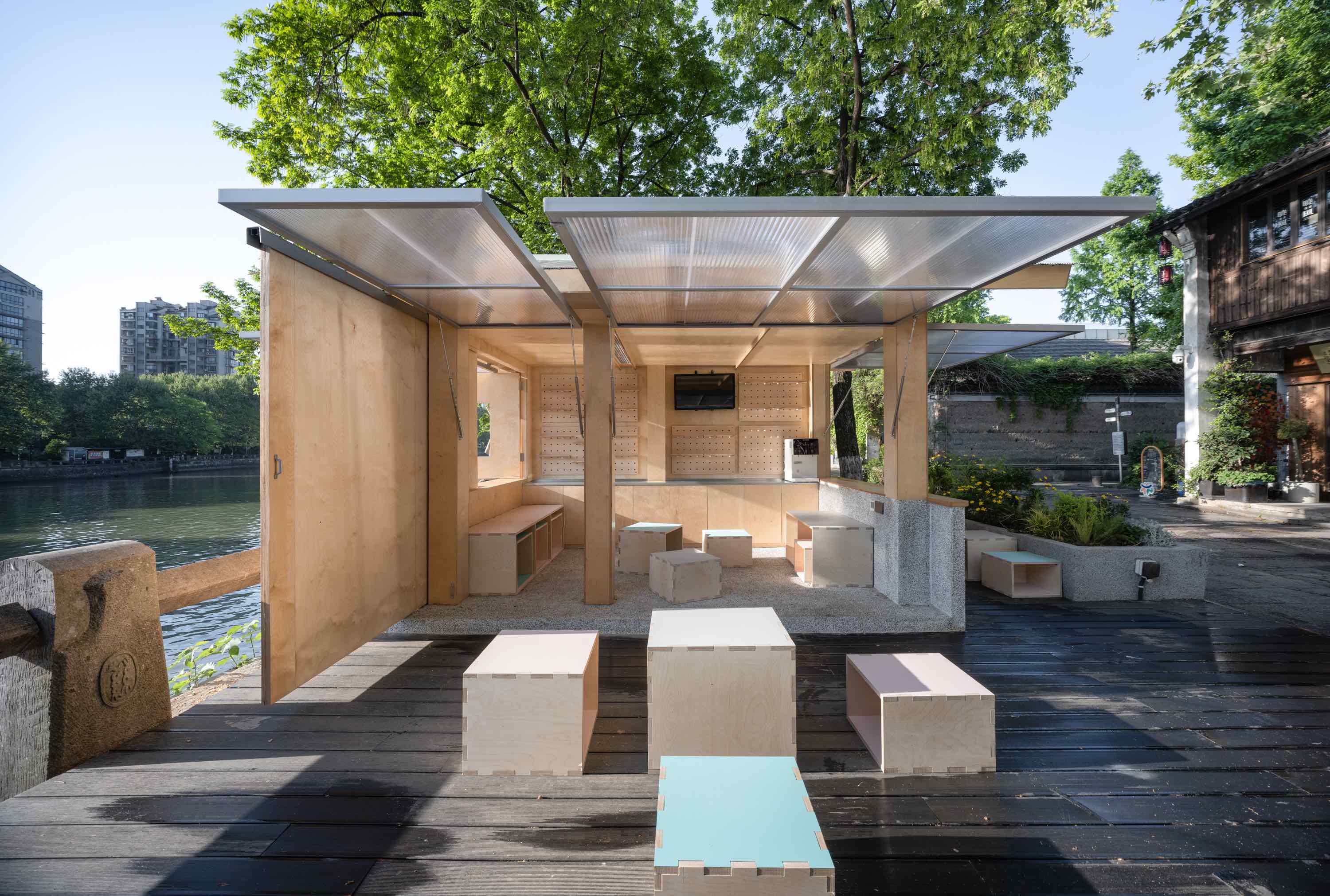
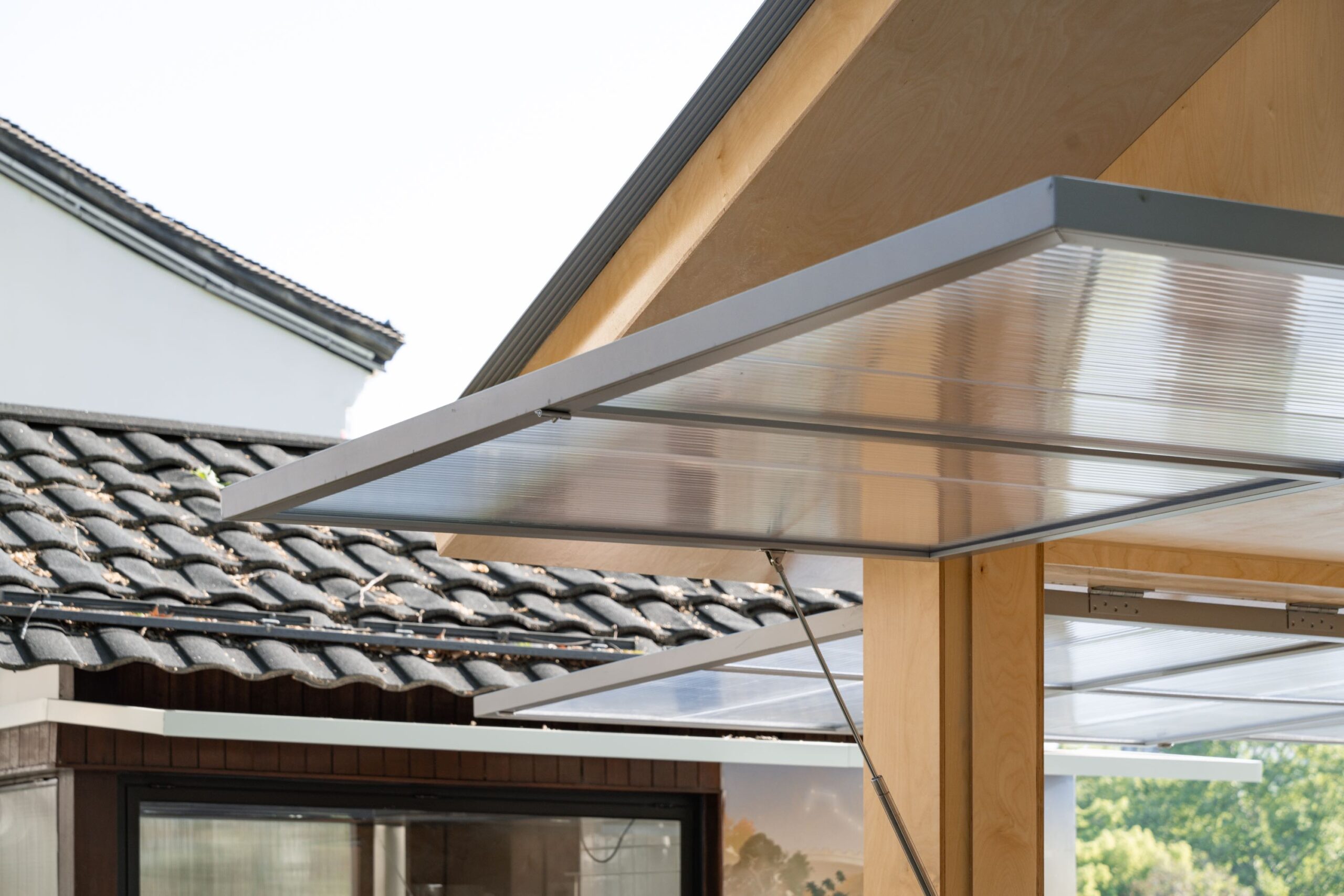
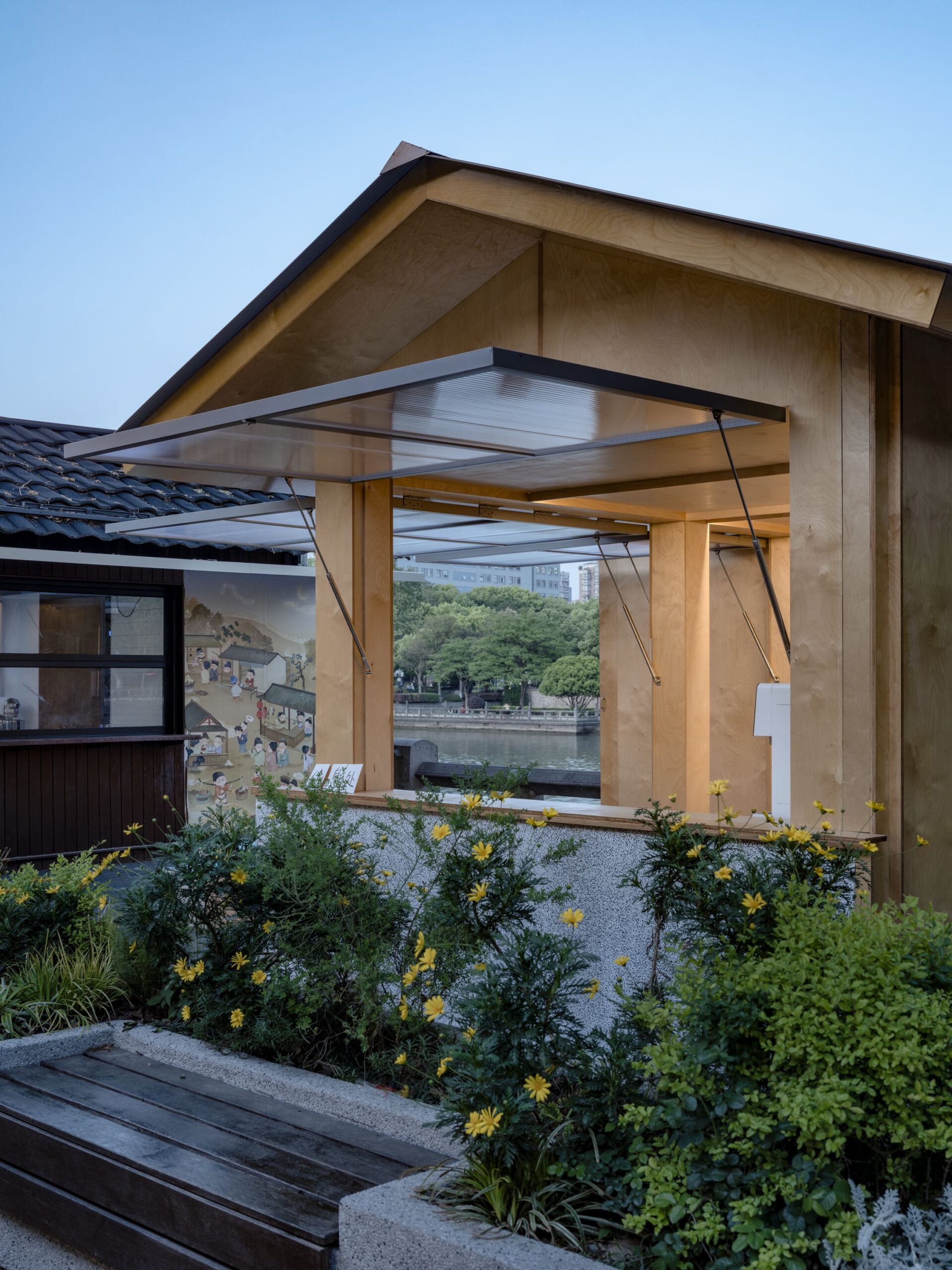
入口は長辺側の小さなプラットフォームに設けられ、ファサード全体を上方に開くことで天蓋として機能する。
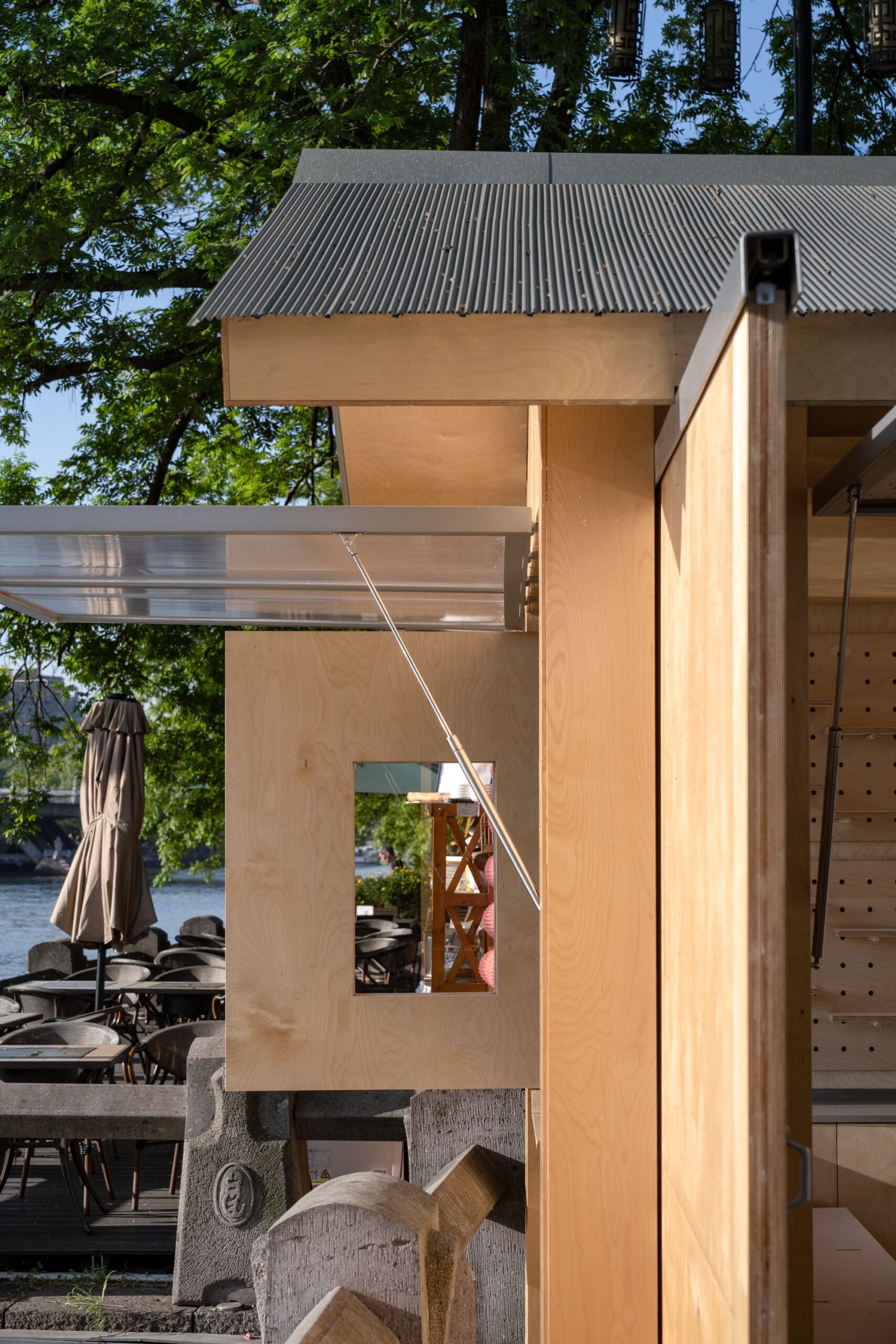
運河に面した側には4つの開閉部があり、壁上部は展開して天蓋となる。内壁は大小2つの扉に分かれ、小扉は運河側に開いて眺望窓となり、大扉はレールに沿って横へスライドし、文化宣伝の背景幕として機能する。その後、大扉は腰壁に収納され、反転して窓枠となる。
Model
これらの可動部は、閉状態から展開、そして再び閉じる過程で一連の固定手順に従う。ボルトやラッチ、ハンドル操作を含め、秩序だった順序で進められる仕組みである。
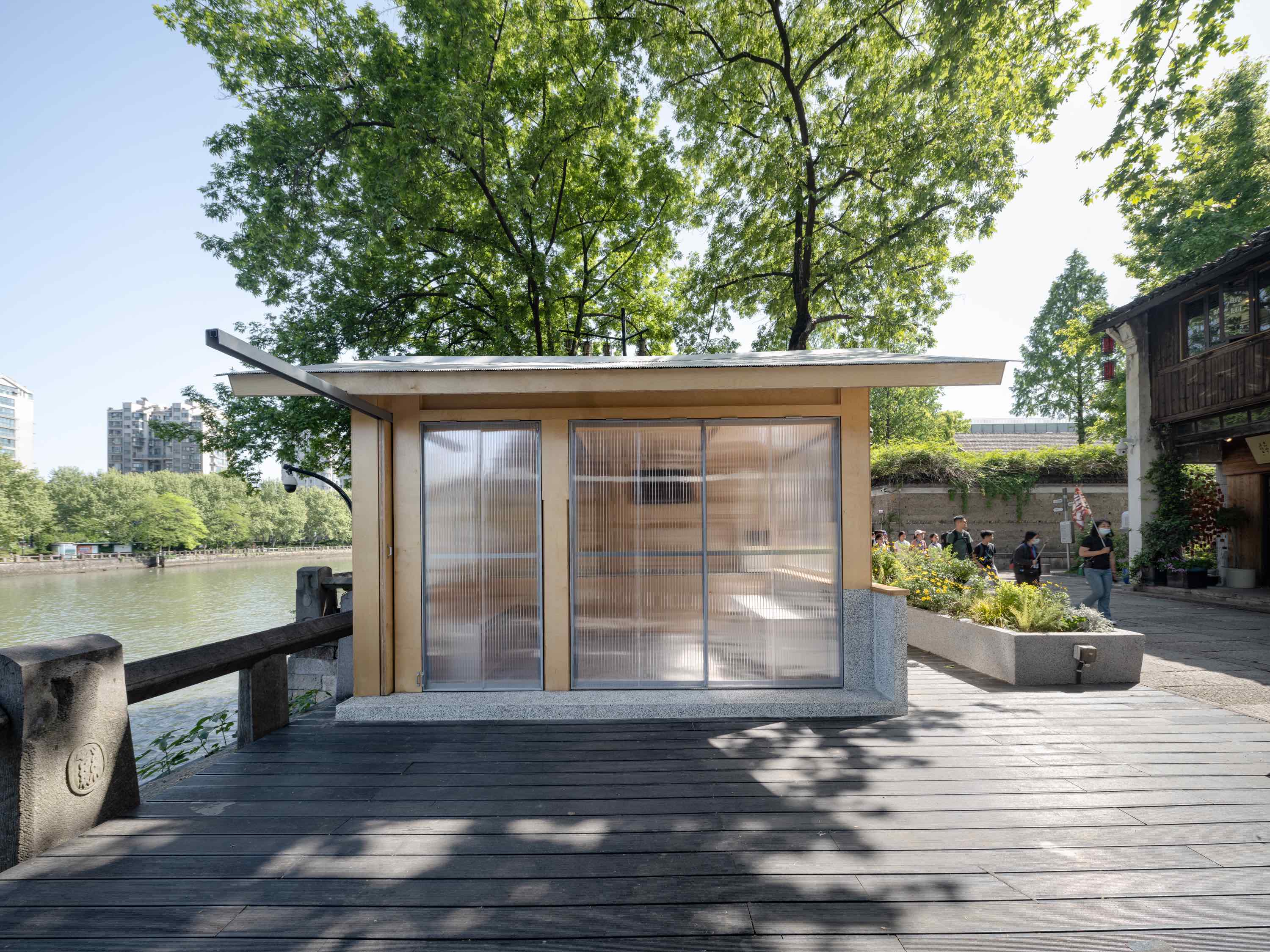
この操作には儀式的な感覚すら漂い、出勤や退勤のようにモードを切り替えるのである。閉じたときは控えめな小さな家屋であり、開いたときは公共の休憩所となる。
©︎ 吴清山
©︎ 吴清山
いくつかの後悔
拱臣橋周辺の建築には様式上の制約があり、改修は「切妻木造家屋」のモチーフから逸脱できなかった。また、建設費が極端に制限されていたため、当初は屋根や構造を変更する予定はなかった。
施工中に判明したのは、既存の軒先と黒色アルミ瓦は周囲の木造家屋とは調和していたものの、この敷地においては重厚感が過剰であるという事実であった。そこで構造を変更せず、外壁パネルの張替えと屋根金属板の交換を行った。
©︎ 吴清山
しかしその結果、主材である海洋合板の素材感が失われた。本来ならモジュール性や継ぎ目、側面のラインを活かすべき板材が、単なる被覆材へと矮小化されてしまったのである。
それでも、小さな箱に仕込まれた実験的要素「折り畳みと開閉の仕組み」が実現されたことは幸運であった。
©︎ 吴清山
©︎ 吴清山
©︎ 吴清山
©︎ 吴清山
©︎ 吴清山
©︎ 吴清山
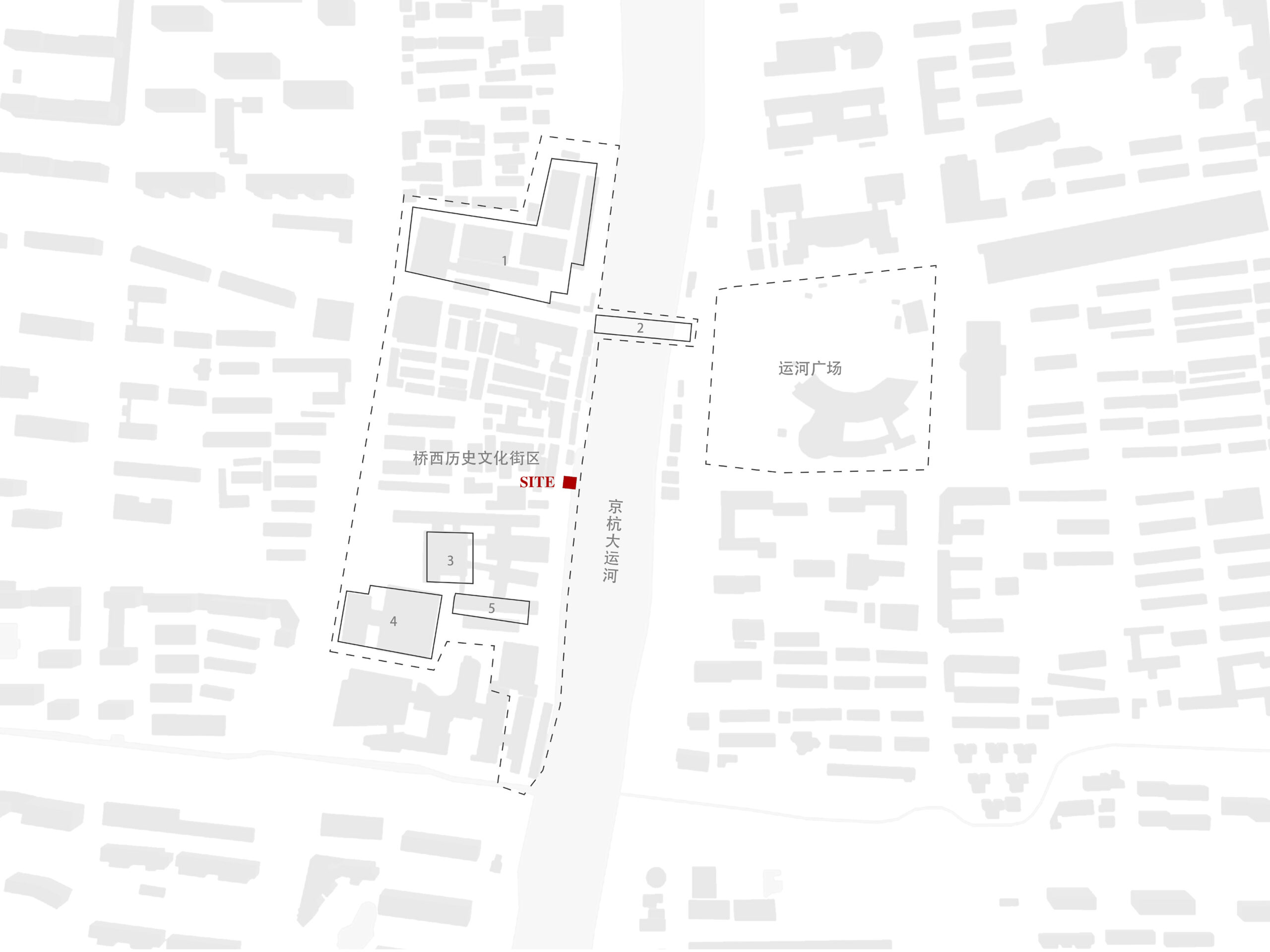
Site plan
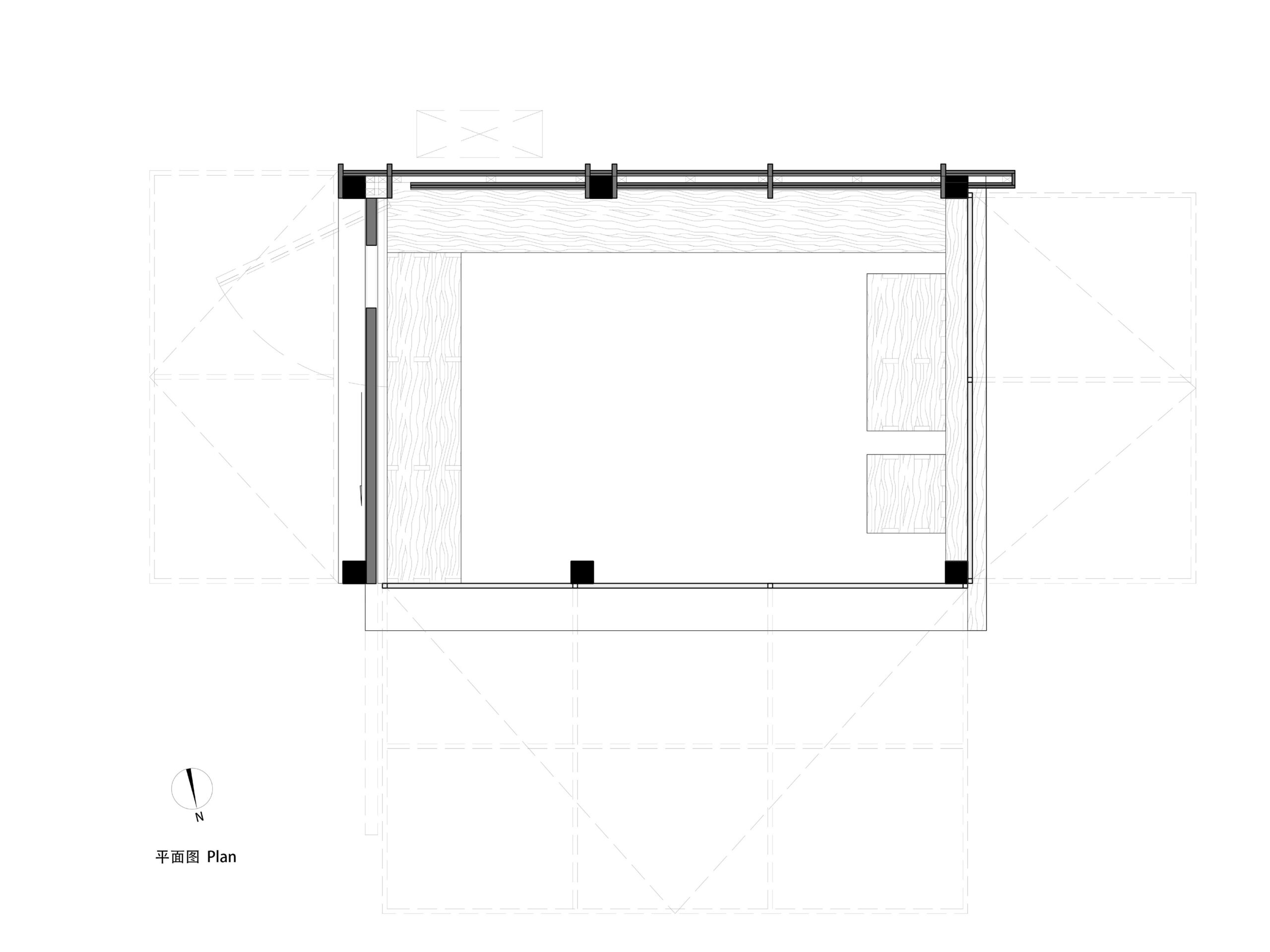
Plan
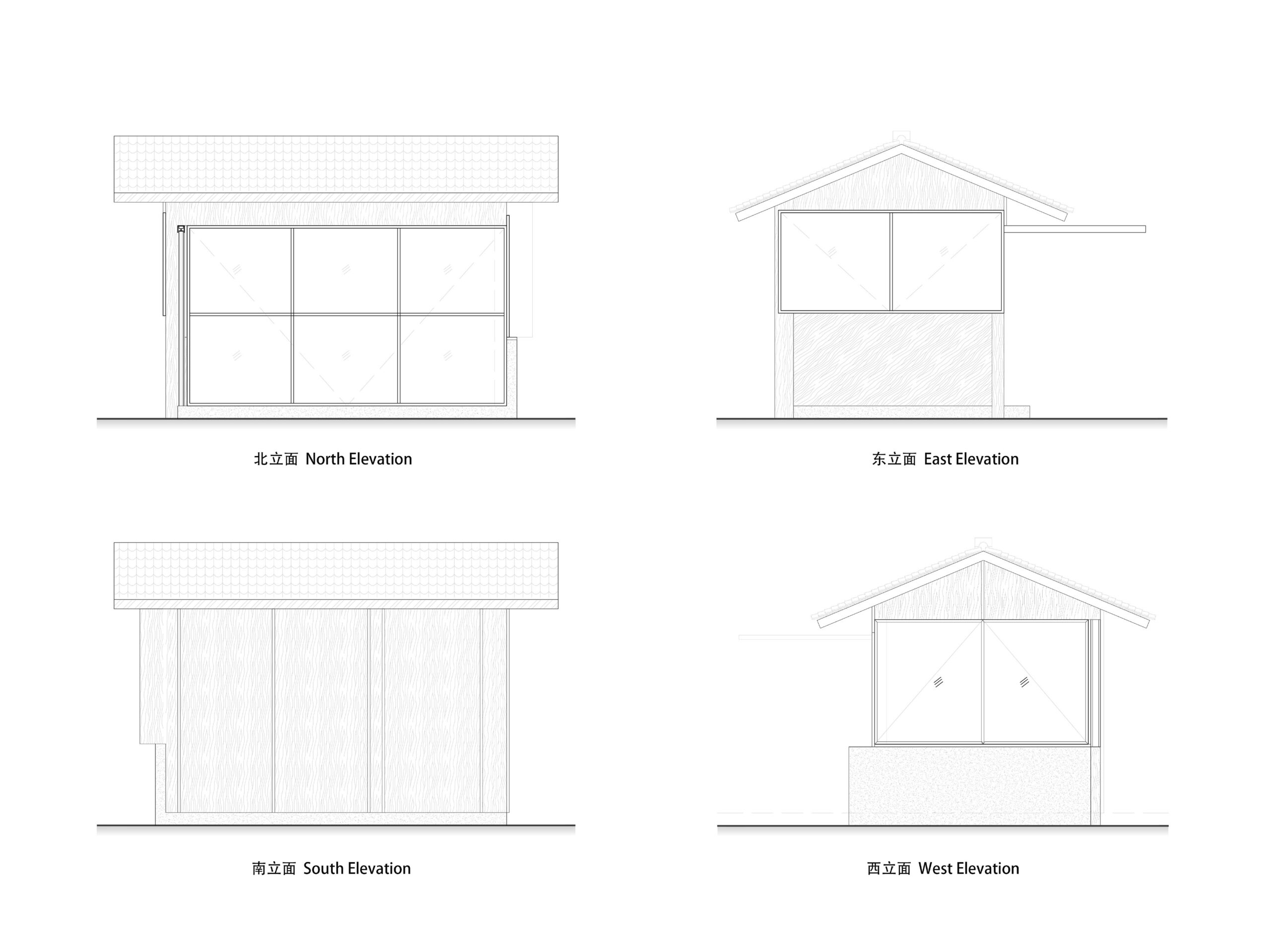
Elevations
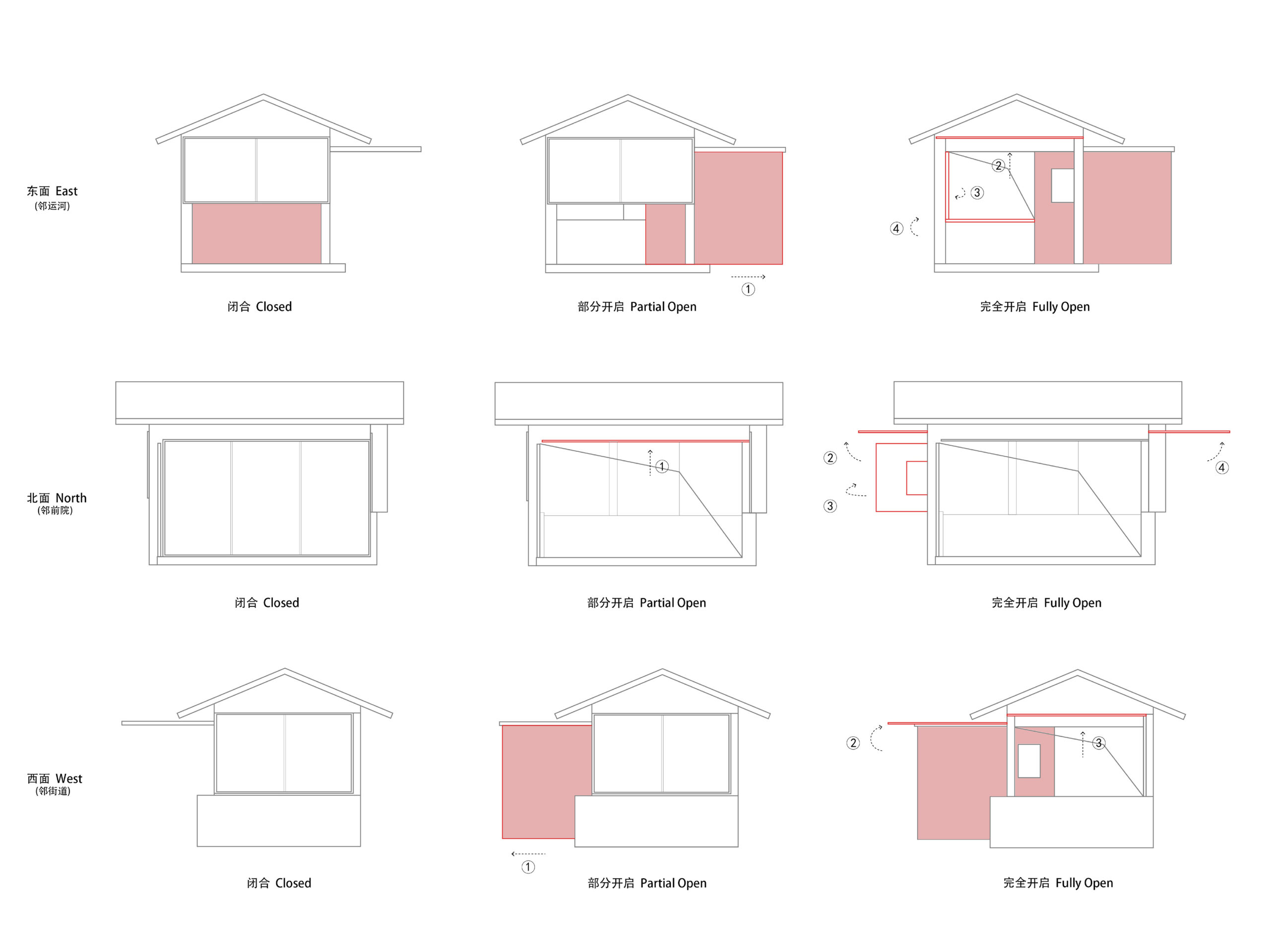
Analysis
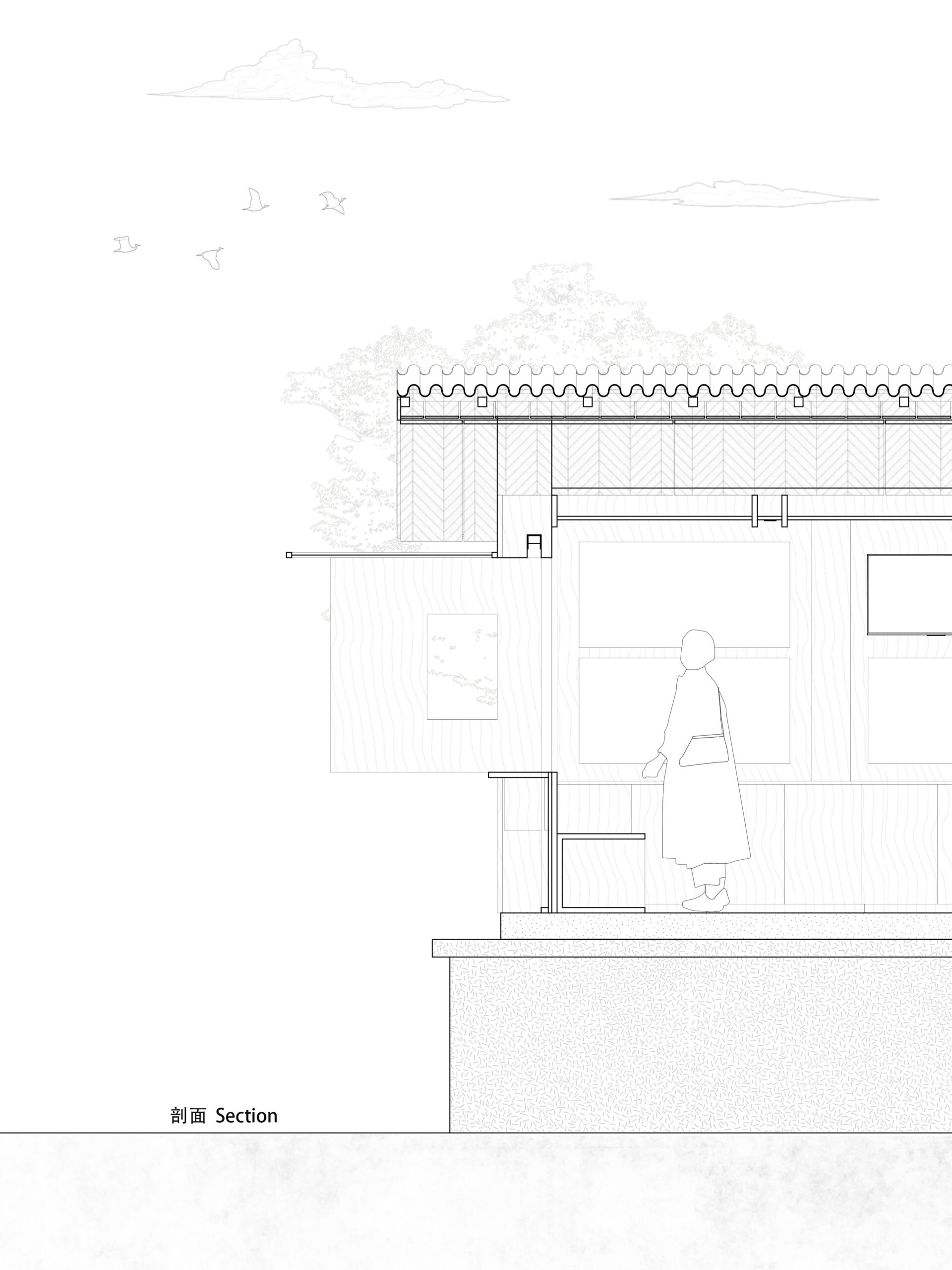
Detail
以下、ZAOZUO ARCHITECTURE STUDIOのリリース(英文)です。
Canal Pavilion Post
Overview
Canal Pavilion Post is a public welfare renovation project of a temporary building, located by Gongchen Bridge on the Hangzhou section of the Beijing-Hangzhou Grand Canal. It covers an area of 10 square meters, stands over 2 meters high, and has a simple wooden structure. We are used to calling it “Little Box” because of its square and simple shape, which makes it easy to understand at a glance. The client hopes to transform this originally vacant wooden house into a scenic post that provides free drinking water and rest spaces for tourists. Meanwhile, it will serve as a publicity spot for the street and Gongchen Bridge – a landmark historical building in Hangzhou – and sell some tourist souvenirs and cultural and creative products.
Pavilions, Corridors, and Houses
In the area around Qiaoxi Straight Street in Hangzhou, there are several small wooden houses that operate small tea and retail businesses. To visitors, these wooden houses are like kitchens—off-limits to them. However, as a public welfare space offering free drinking water and rest for visitors, the small post should be open and borderless: visitors can sit down whenever they arrive and leave whenever they wish. From this perspective, it is more like a scenic pavilion or a wind-and-rain corridor. Therefore, it must be open enough. First, in terms of sightlines: when standing on the street, visitors should be able to look directly at the canal through the post. Second, in terms of circulation: it should no longer have a “door” but instead be an entirely open facade, weakening the sense of boundary brought by “entering and exiting.” Finally, in terms of layout: furniture such as counters and chairs are all placed against the surrounding walls, eliminating the distinction between inside and outside and, incidentally, achieving decentralization.
A Transformable Box
Yet while being fully open to visitors, the post also needs to serve functions such as providing a rest space for volunteers and storing facilities—it has to be a miniature building. Thus, to some extent, it can transform: the entrance is located at the small platform on the long side, and the entire facade can be opened upward to serve as a cover. On the side facing the canal, there are four opening sections. The upper half of the wall can unfold to become a canopy; the inner wall is divided into two doors, a small one and a large one. The small door can be opened toward the canal to serve as a view window, while the large door can be slid out sideways along a track to act as a backdrop for block cultural promotion. It can then be tucked into the waist partition and flipped upward to become a windowsill.
All movable surfaces follow a series of fixed procedures when transitioning from closed to unfolded, and then back to closed. Whether via bolts, latches, or handle-assisted operations, each step follows an orderly sequence. This even gives the post a sense of ritual—like clocking in and out of work, it switches modes: in its closed state, it is a reserved small house; in its open state, it becomes a public rest pavilion.
Some Regrets
There are architectural style constraints for buildings around Gongchen Bridge, and the renovation could not deviate from the motif of “gabled wooden houses”. With the construction cost being extremely compressed, there were initially no plans to modify the roof or structure. However, during construction, it was found that although the original eaves and black aluminum tiles were consistent with the surrounding wooden houses, they still felt overly heavy in this specific site. Thus, the plan was revised temporarily: without altering the structure, facade panels were used for cladding, and the roof metal sheets were replaced. In this process, the material texture of marine plywood—used as the main material—was wasted. By nature, it is a type of board that should showcase modularity, joint seams, and side lines, but in the end, it was reduced to a simple cladding material.
Nevertheless, it is a stroke of luck that the experimental elements of the small post—folding and opening/closing—were successfully realized in the construction.
ZAOZUO ARCHITECTURE STUDIO 公式サイト
http://www.zaozuodesign.com
【購読無料】空間デザインの今がわかるメールマガジン TECTURE NEWS LETTER
RECOMMENDED ARTICLE



![[大阪・関西万博]トイレや休憩所などを紹介_トイレ5](https://magazine-asset.tecture.jp/wpcms/wp-content/uploads/2025/07/31114533/0200109-min-900x600.jpg)