

CULTURE
Photograph by Xue Liang
Photograph by Xue Liang
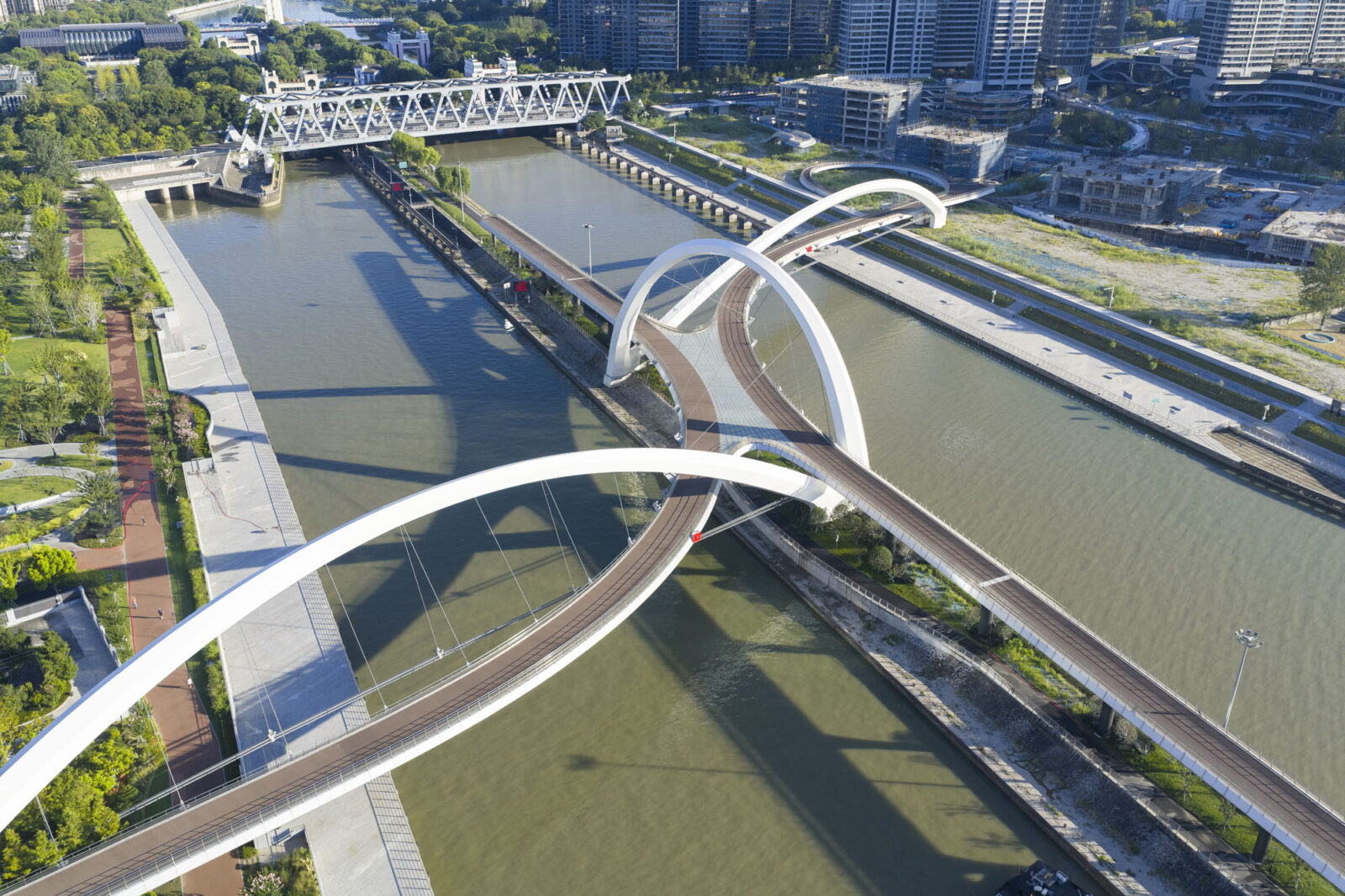
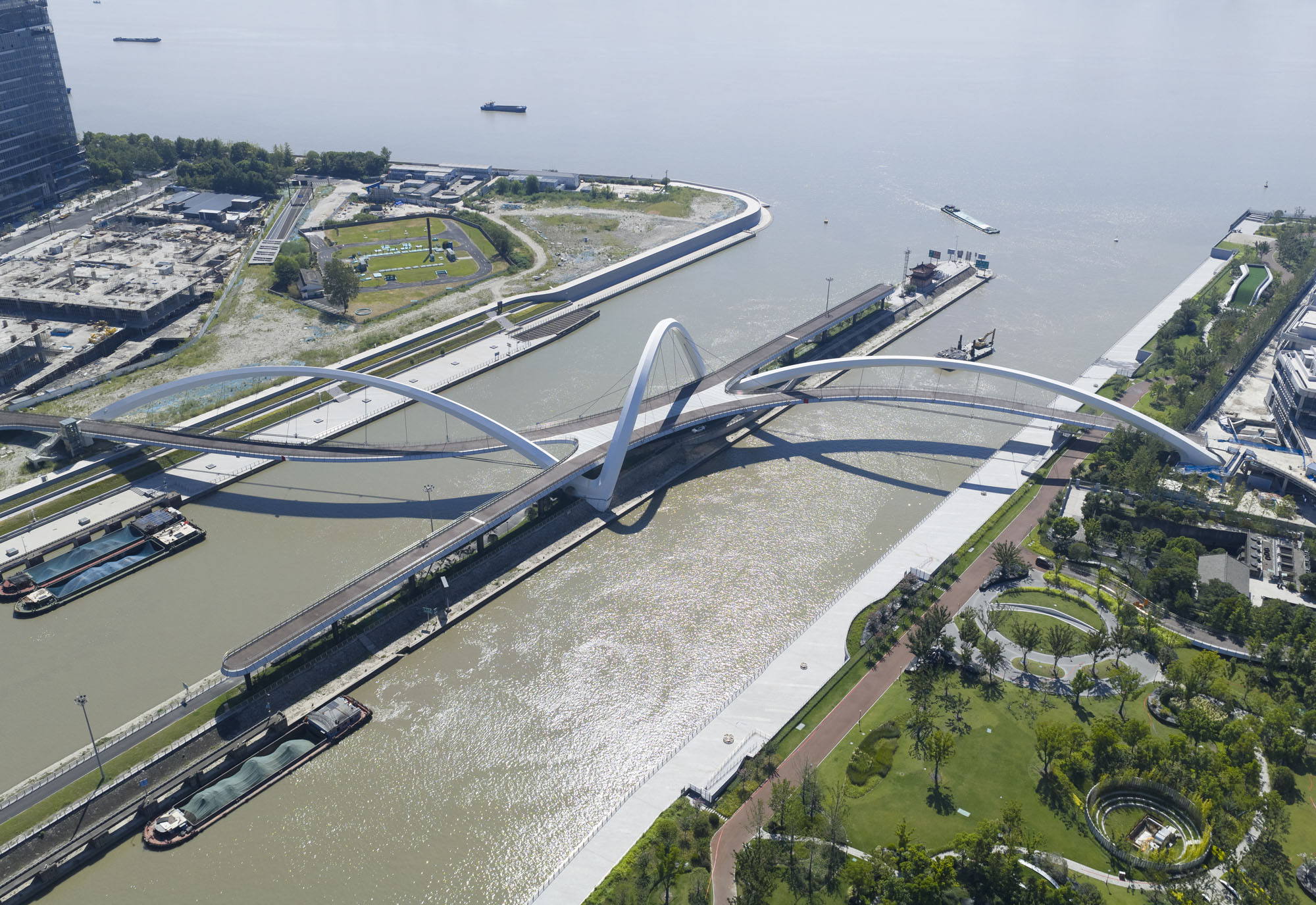
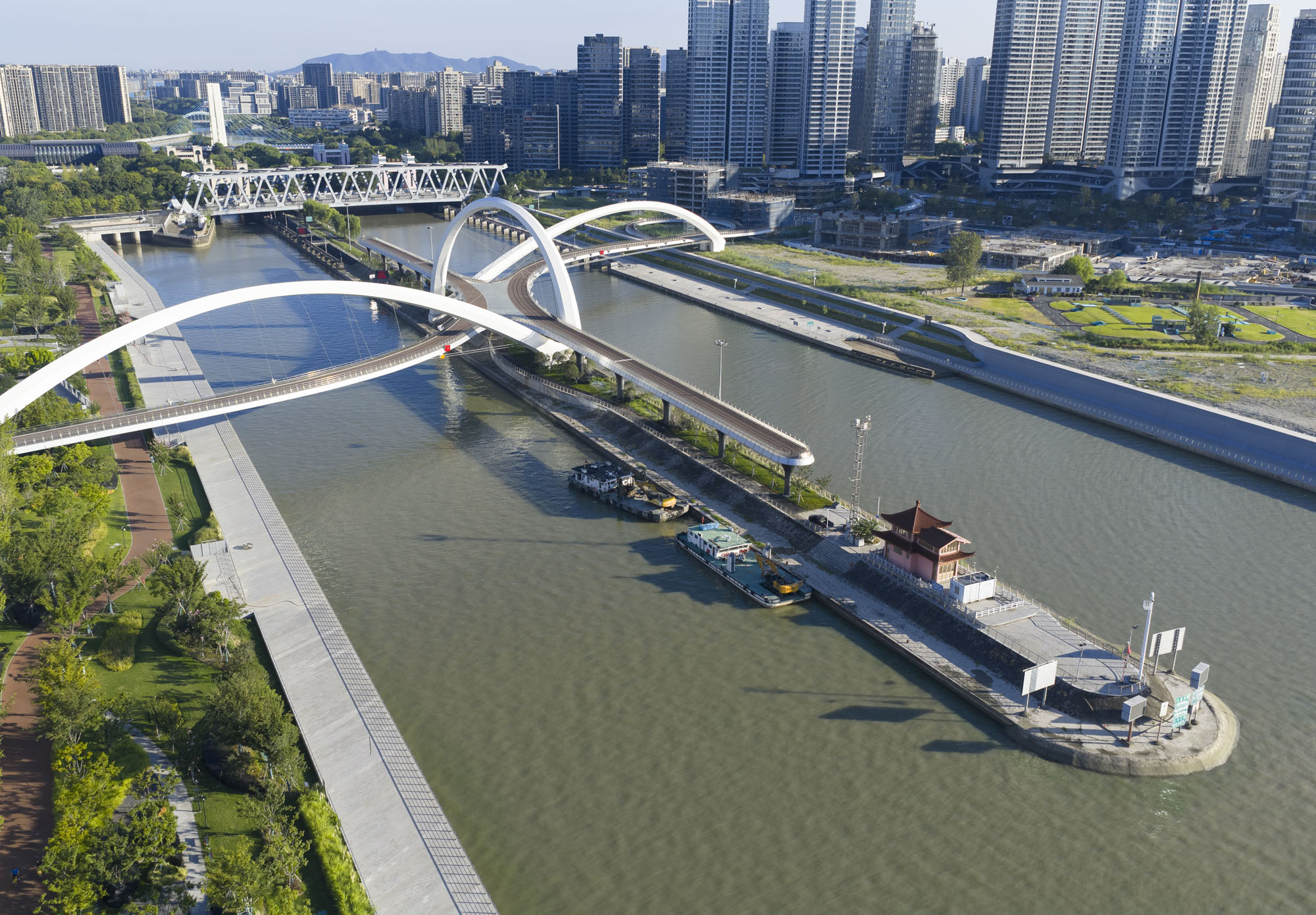
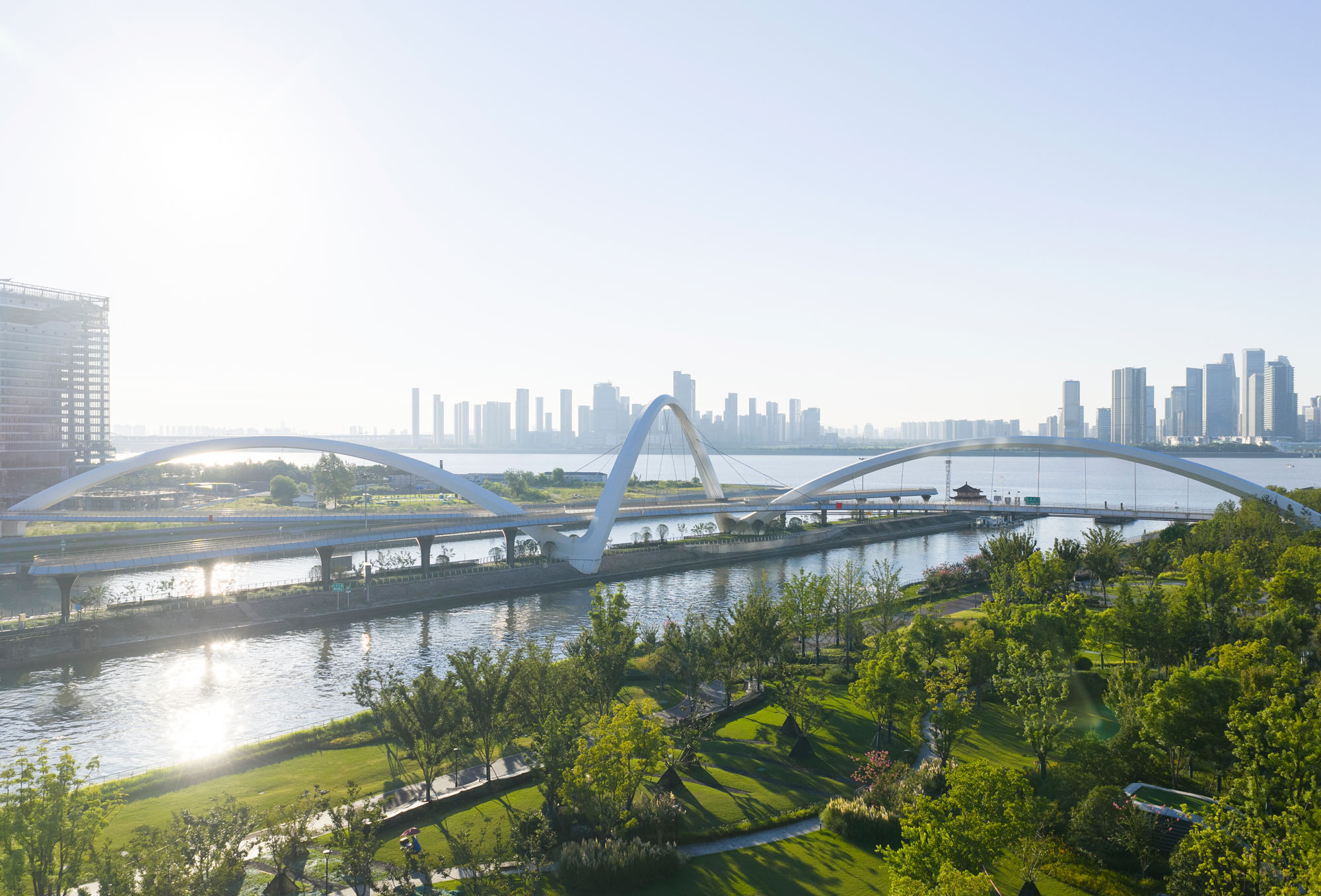
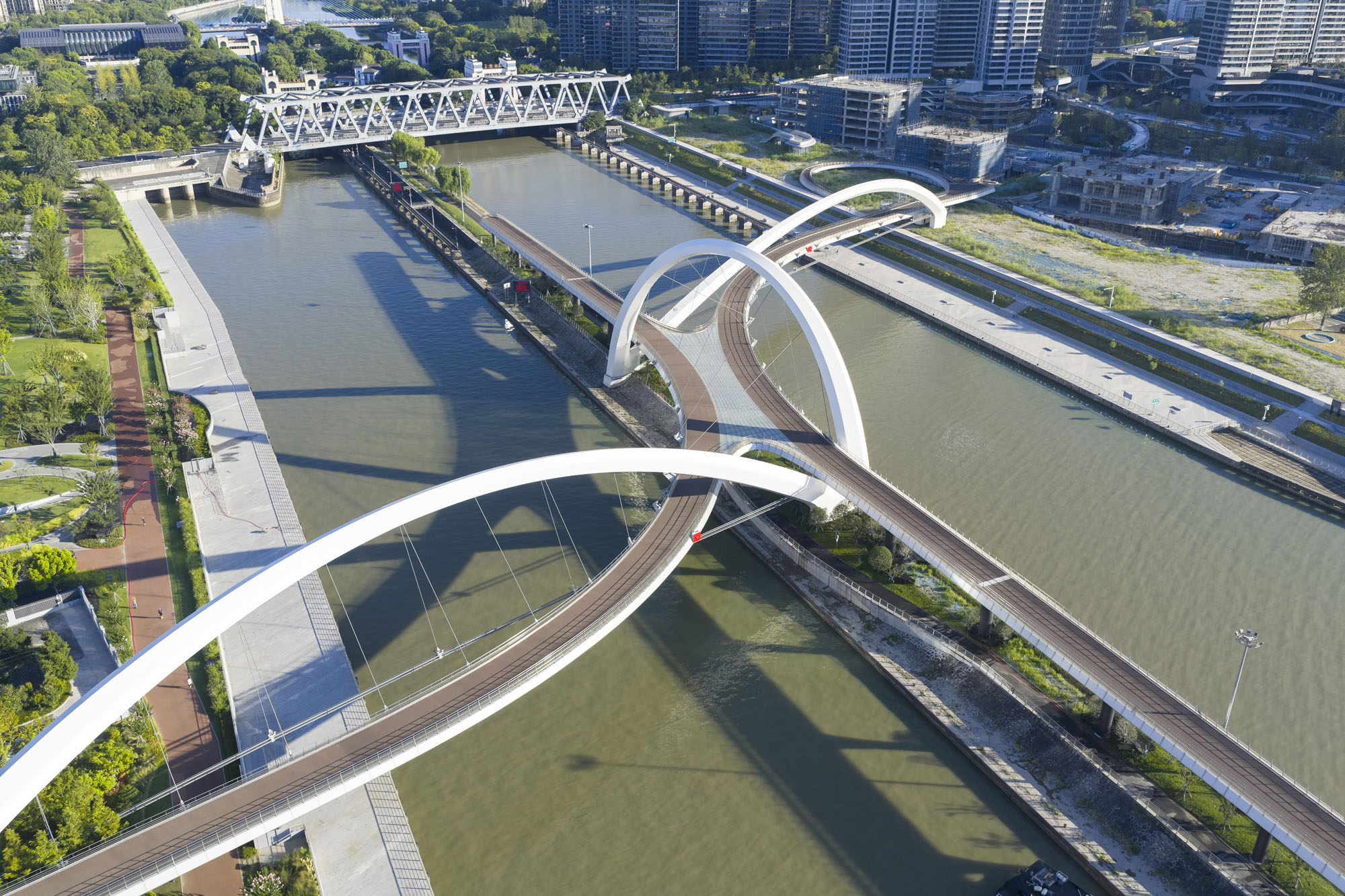
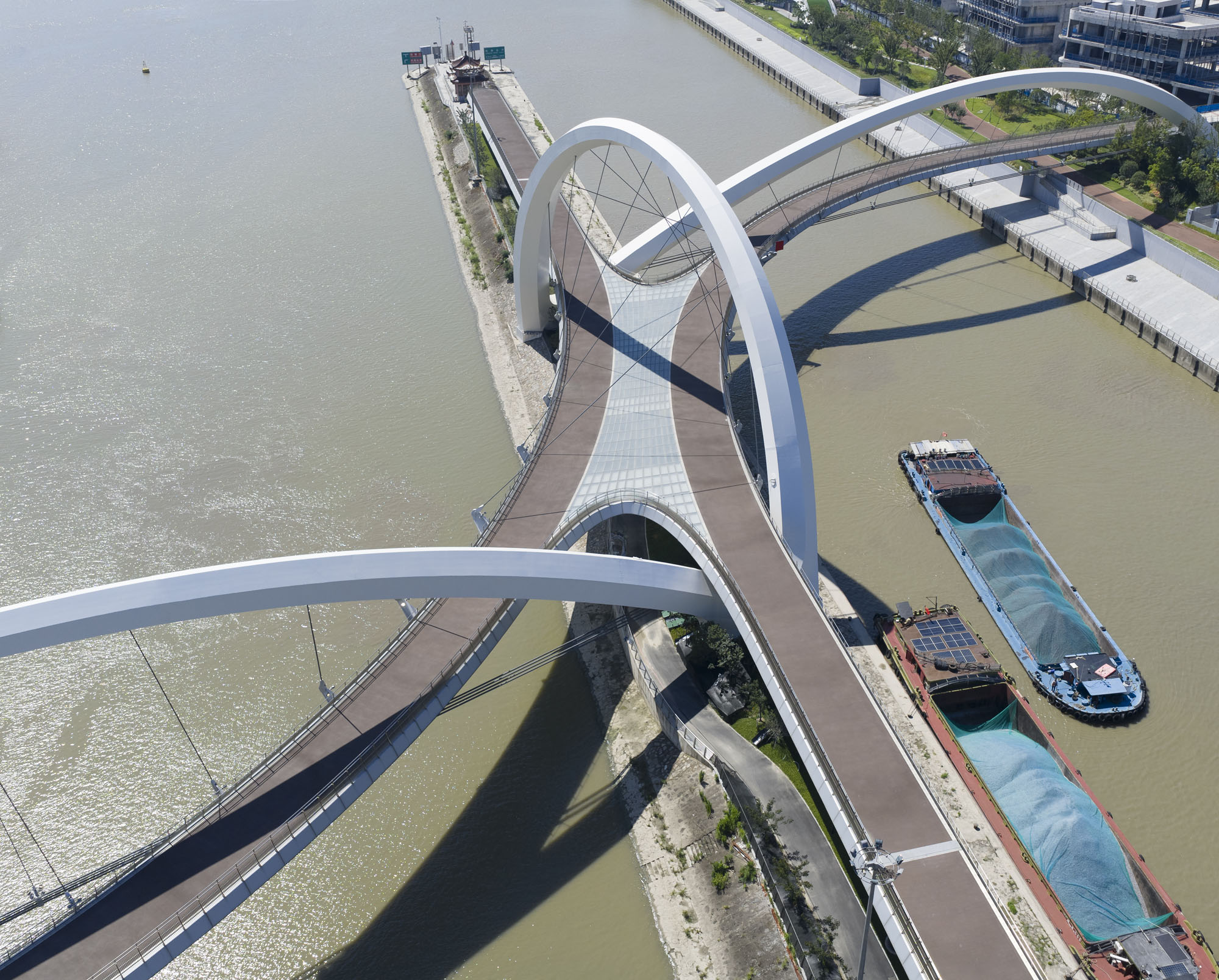
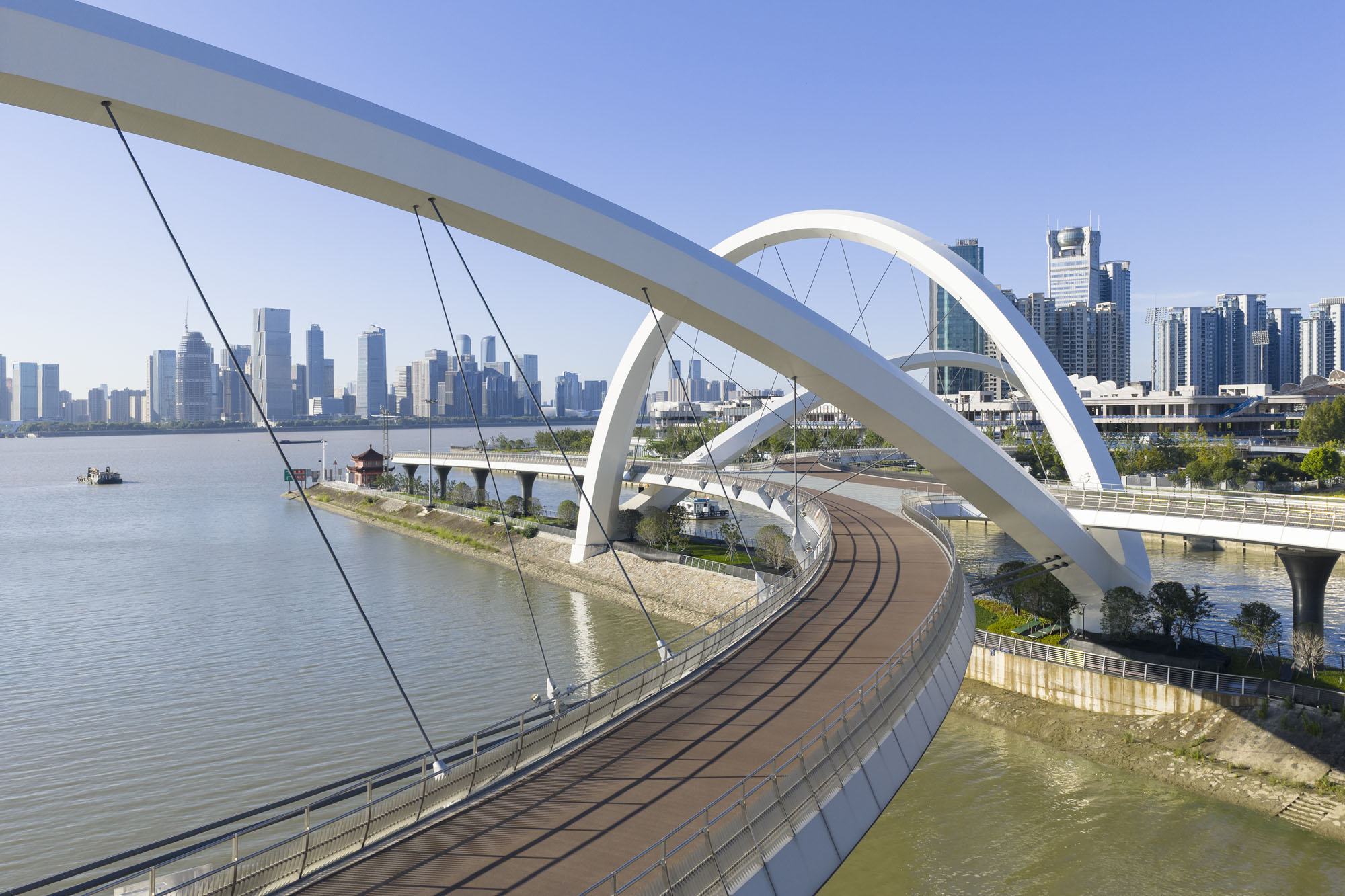
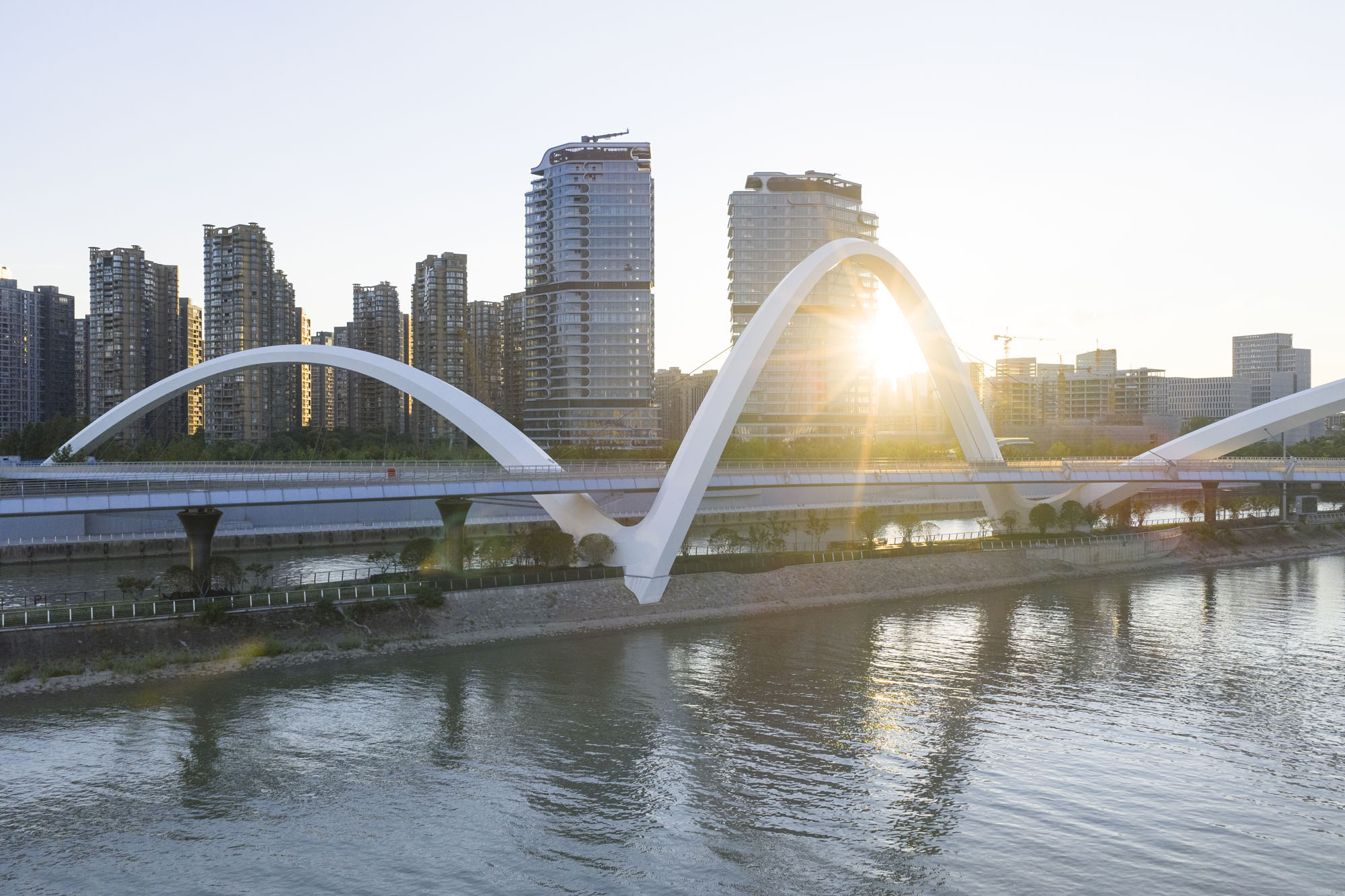
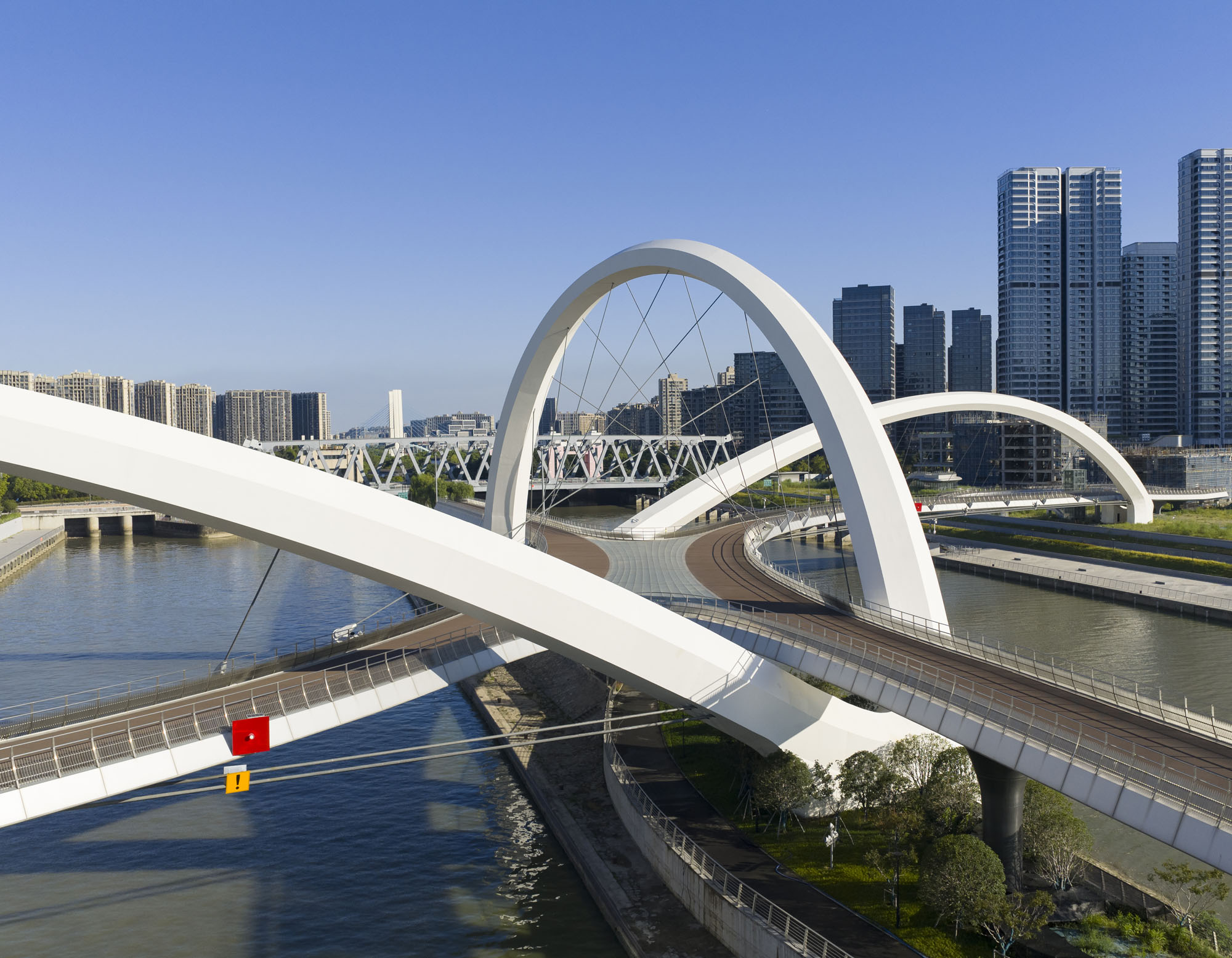
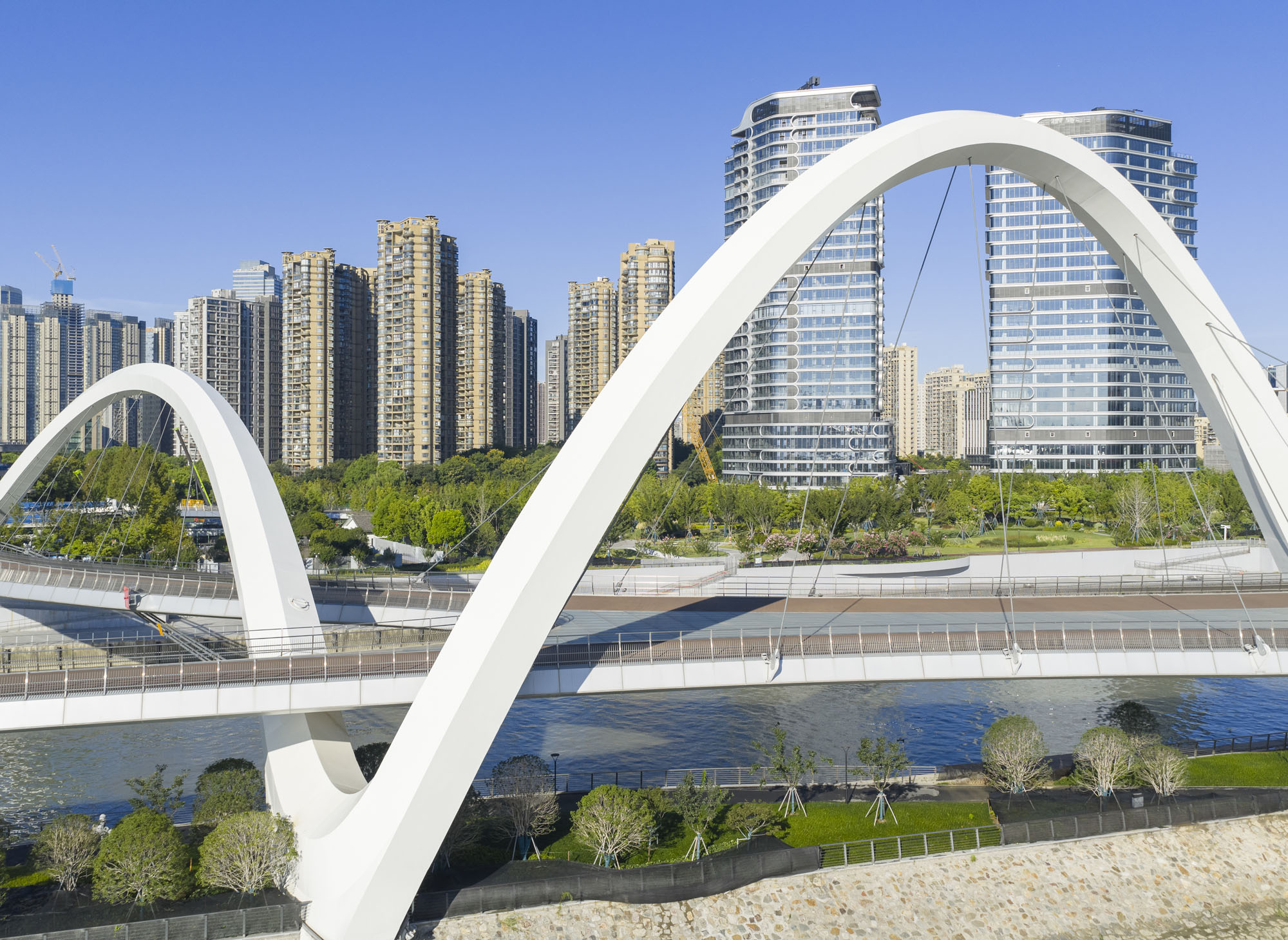
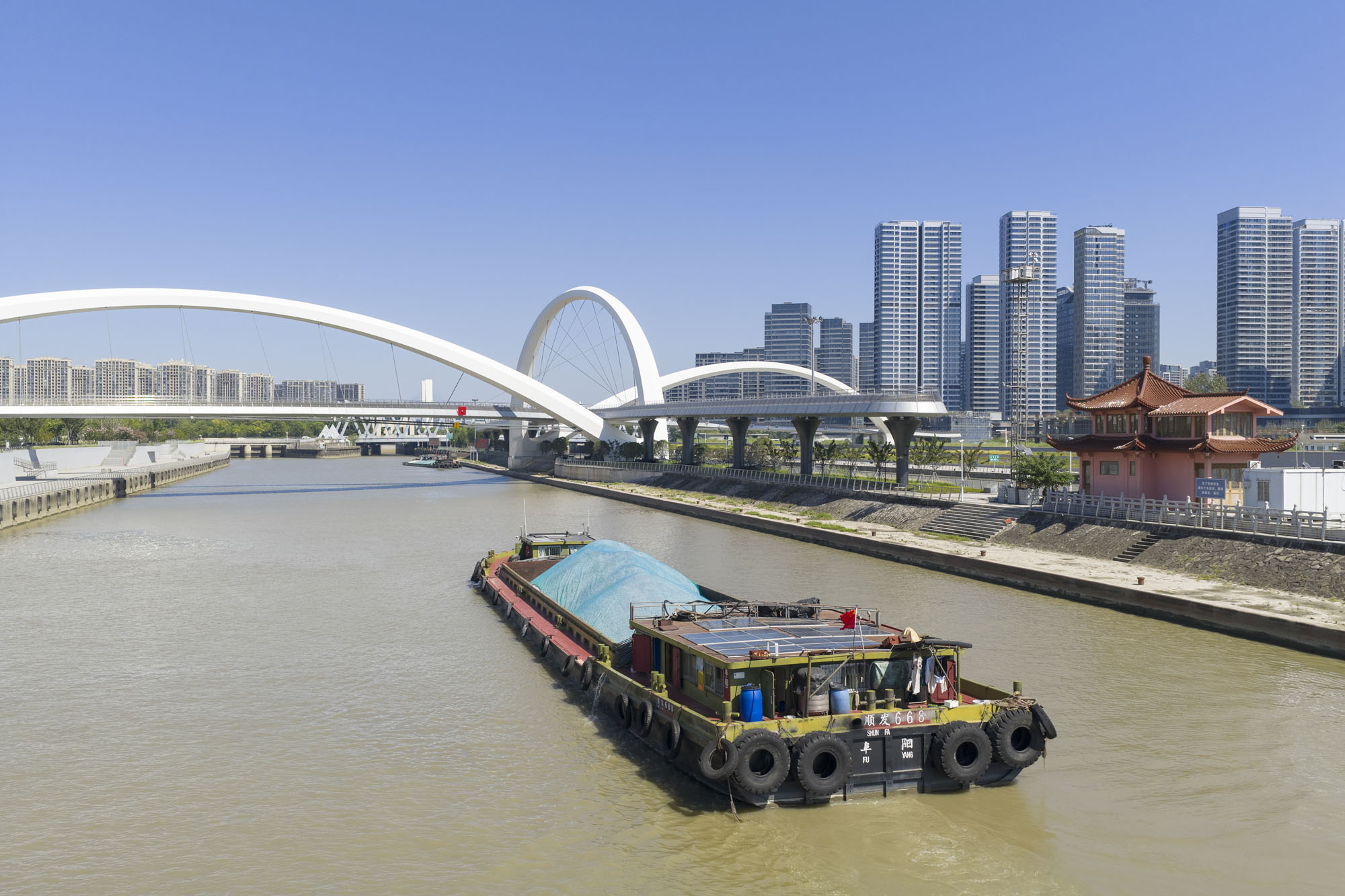
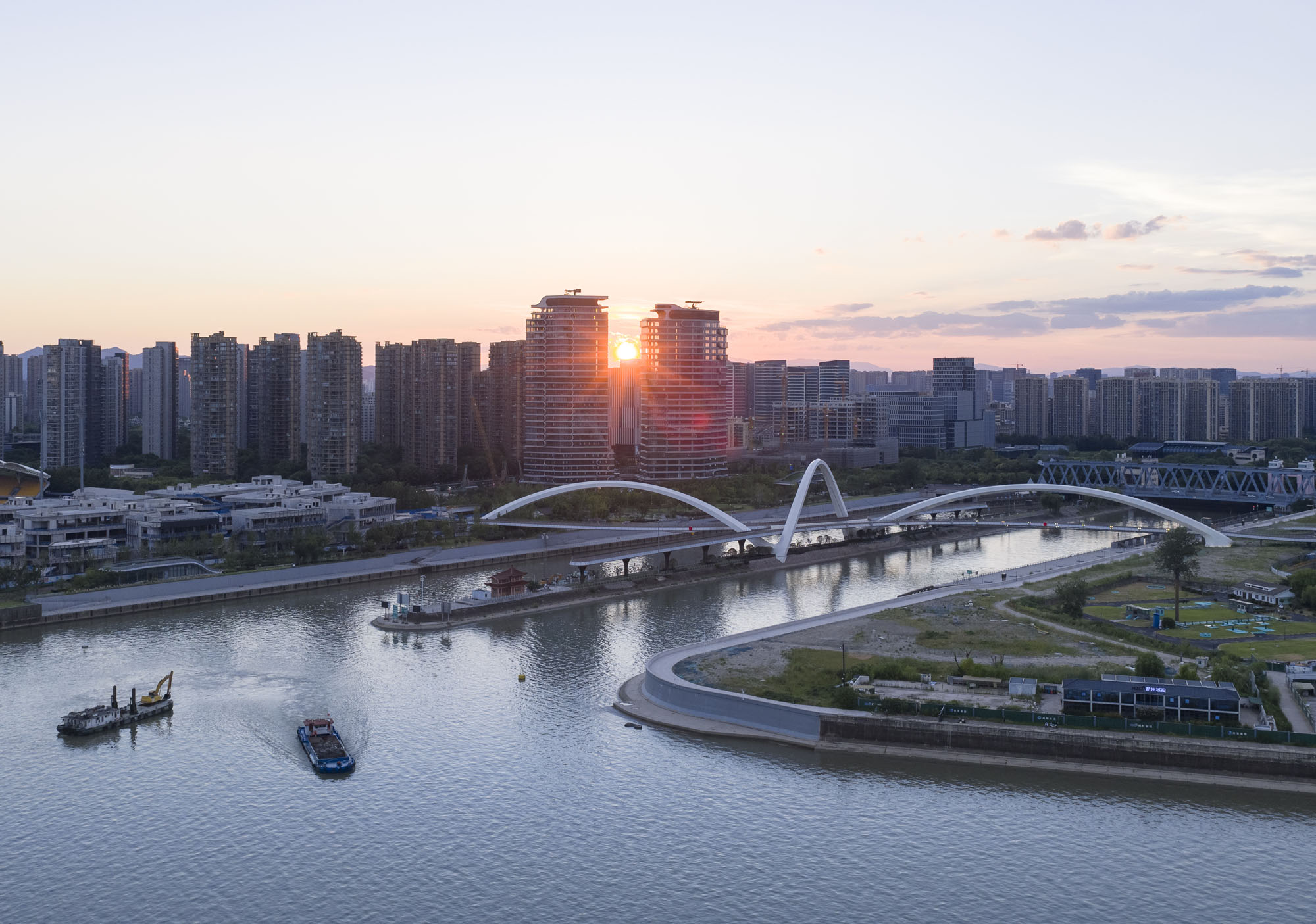
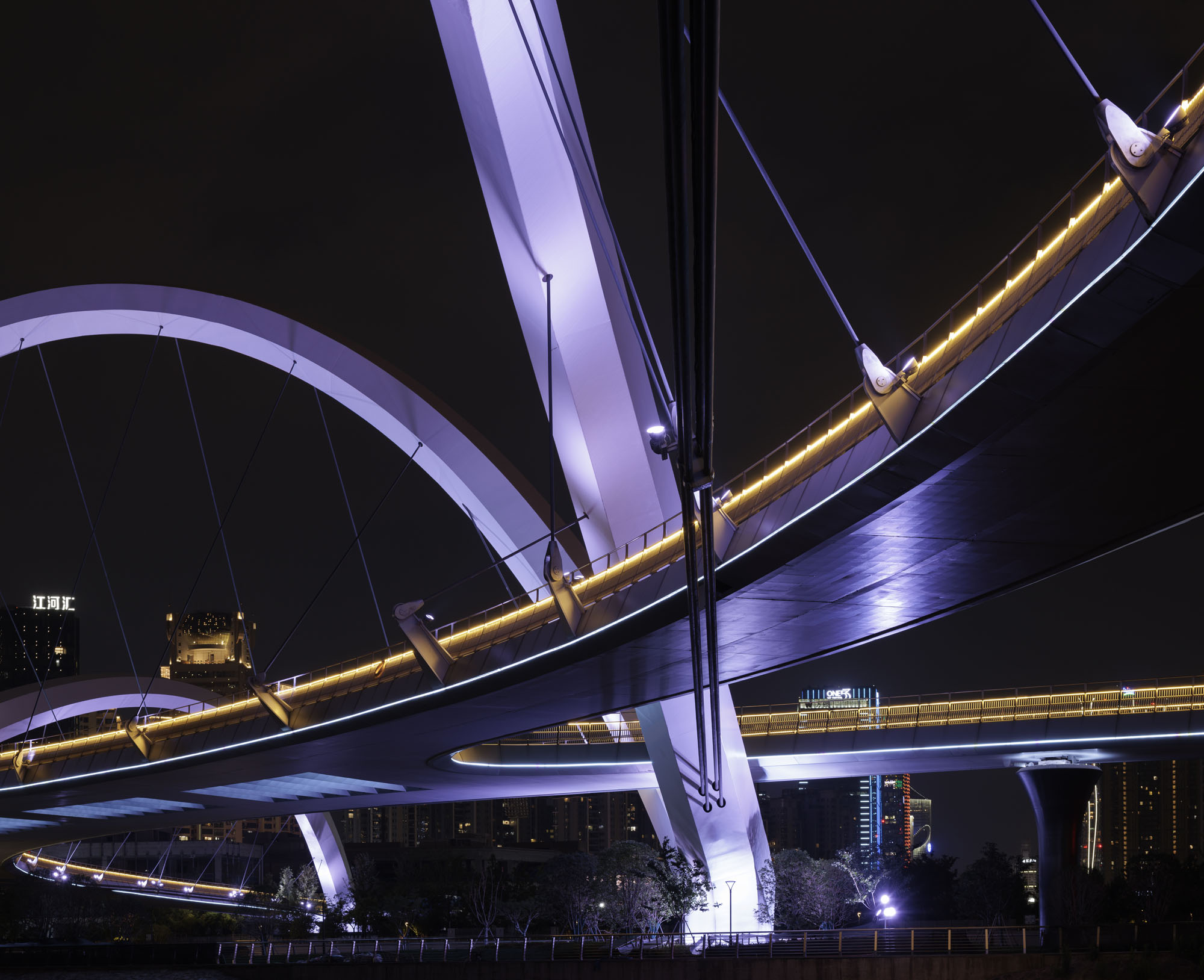
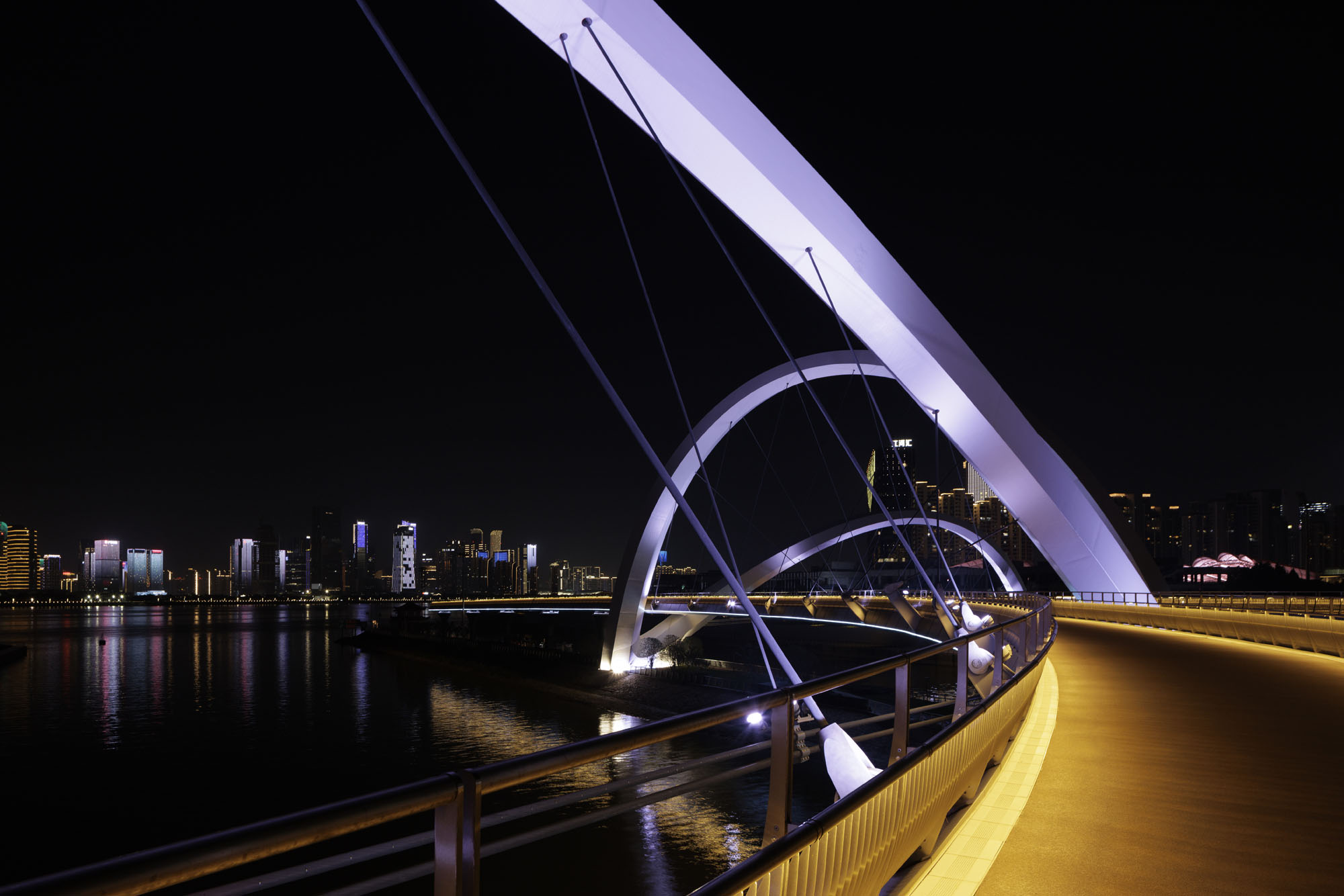
中国・杭州に位置する〈大運河ゲートウェイブリッジ(Grand Canal Gateway Bridge)〉は、世界遺産にも登録されている歴史的な大運河にかかる、ザハ・ハディド・アーキテクツ(Zaha Hadid Architects)による歩道橋です。
同じくザハ・ハディド・アーキテクツが大運河の東西岸に設計した80万m²の「シームレスシティ」のマスタープランをつなぐ存在となっています。
注目ポイント
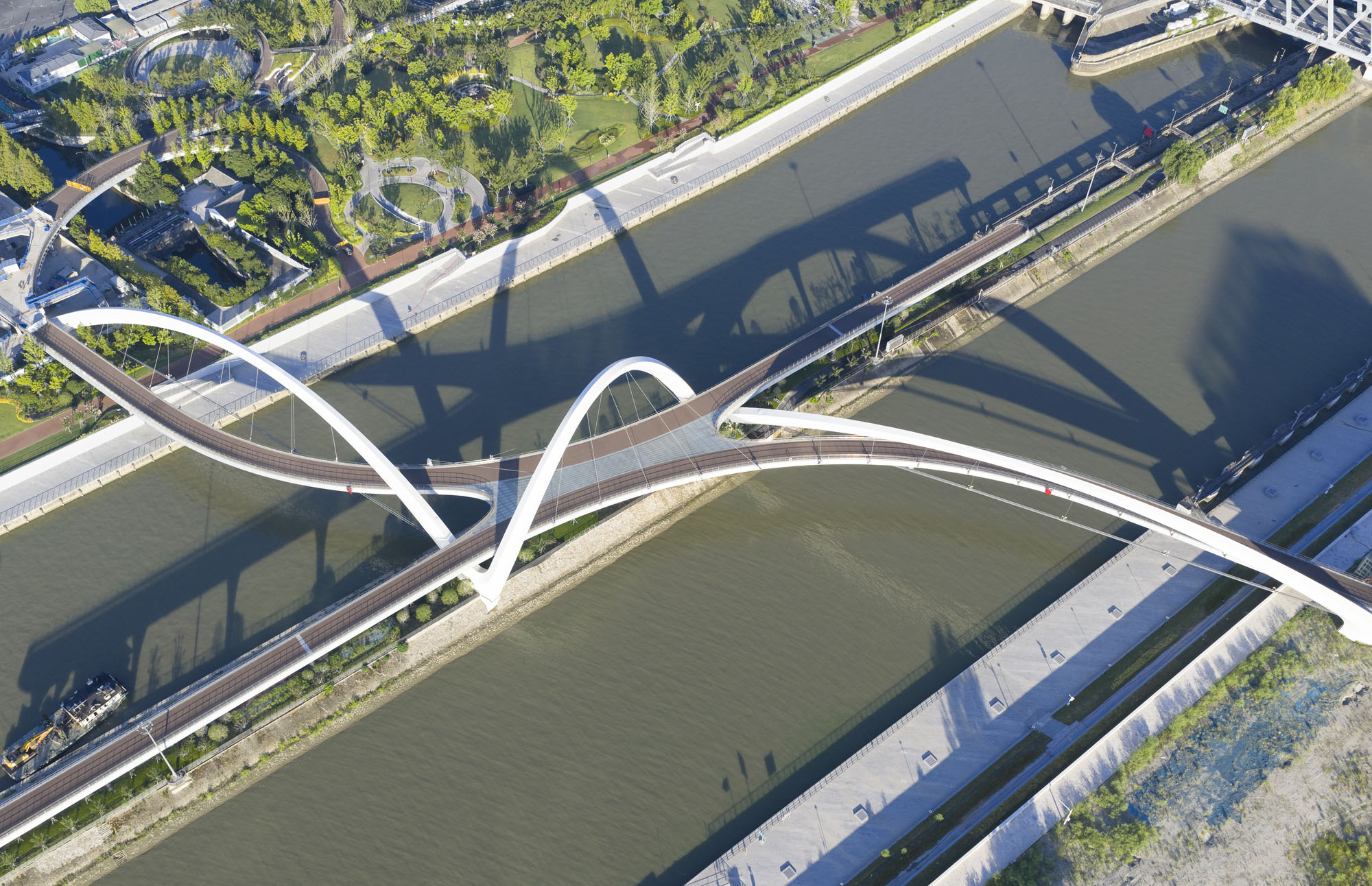
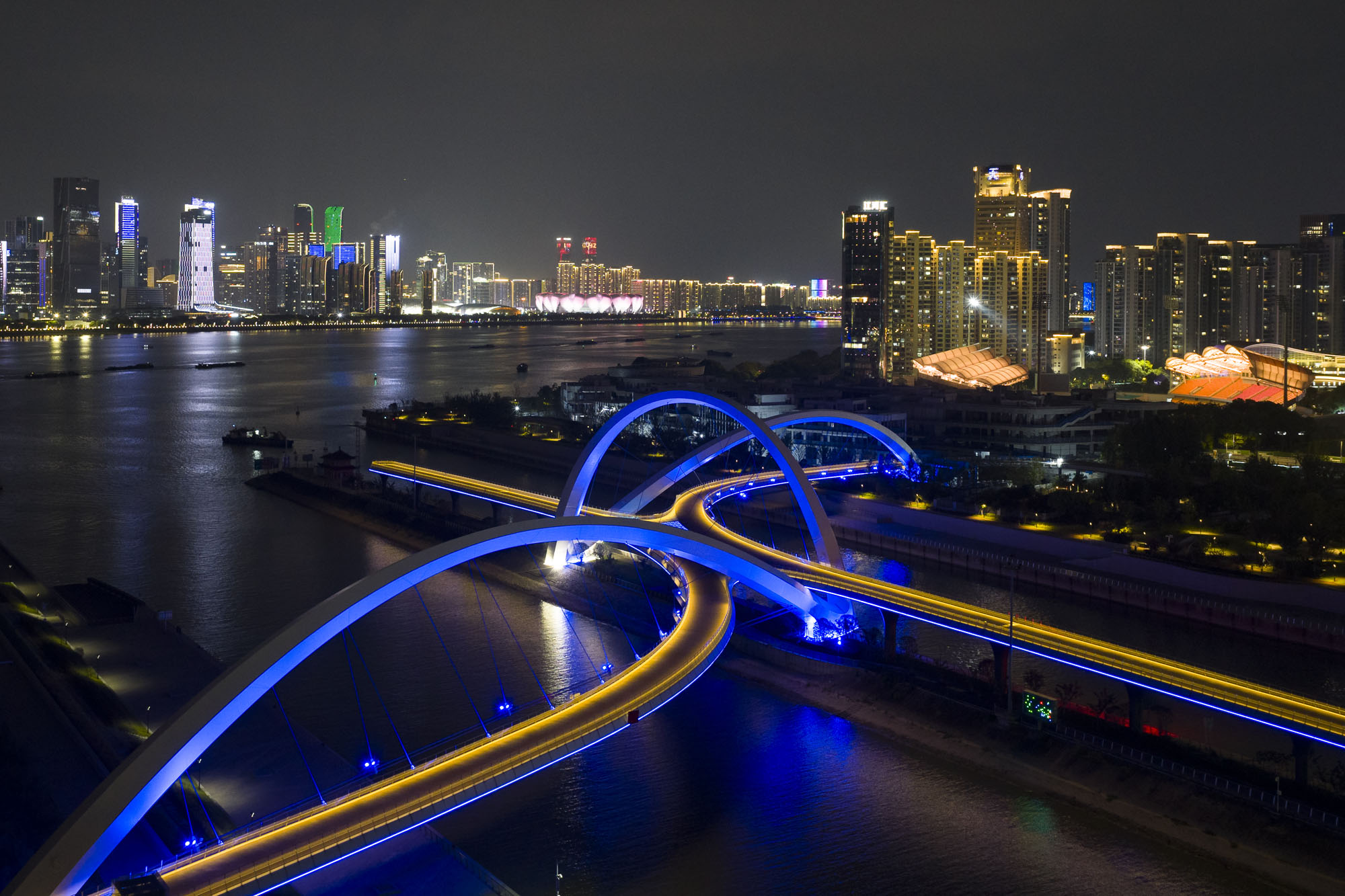
- 杭州の刺繍文化をモチーフとした、3連アーチによる構造表現
- 3Dデザインとプレファブ式モジュールによる材料最適化と現場廃棄ゼロ化
- 大運河の航行(年間10万隻)に影響を与えない施工戦略
- 地産材の採用および低環境負荷仕上げ材によるサステナブルな調達方針
(以下、ザハ・ハディド・アーキテクツから提供されたプレスキットのテキストの抄訳)
Photograph by Xue Liang
マスタープランと連携する歩道橋
杭州に位置する〈大運河ゲートウェイブリッジ〉は、大運河の東西岸で建設中の80万m²に及ぶシームレスシティ・マスタープランを結びつけるものである。
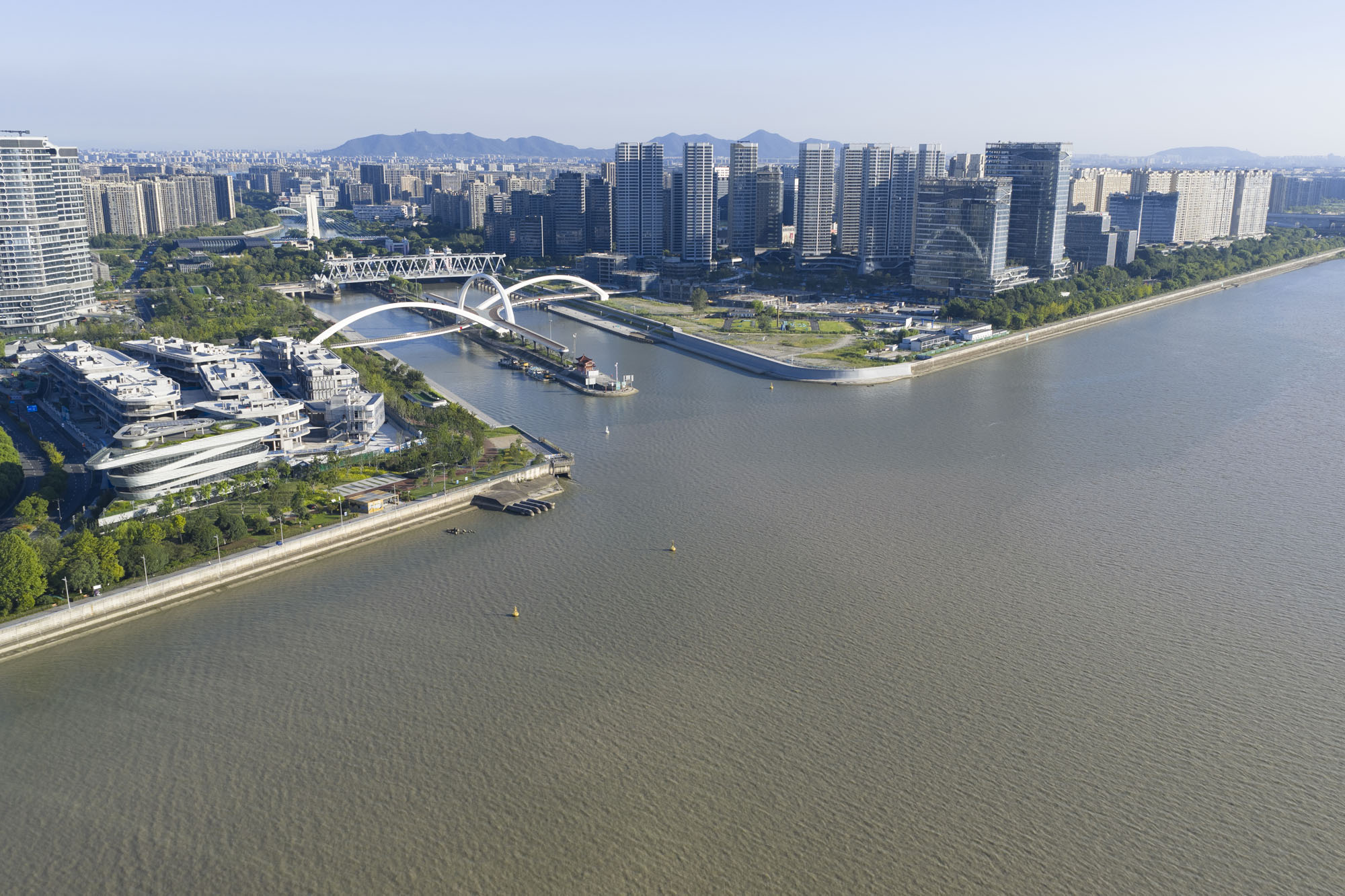
ザハ・ハディド・アーキテクツが設計したこの橋と周辺マスタープランは、14.7ヘクタールに及ぶ新たな河川中州公園と遊歩道の中心を成し、住宅・職場・生活施設とレクリエーション・レジャー・観光のための重要な公共空間を統合することで、都市と歴史的な大運河・銭塘江との再接続を実現する。
Photograph by Xue Liang
Photograph by Xue Liang
世界遺産の大運河を体験する場
ユネスコ世界遺産に登録されている大運河は、紀元前5世紀に遡る驚異的な土木技術による中国最古かつ最長の人工水路である。北京から南下し黄河・長江と合流した後、杭州の南の玄関口で銭塘江(せんとうこう)に注ぐ。
杭州の銭塘江は「銀龍」として知られる世界最大の潮汐波で有名である。杭州湾からの潮が遡上し、最大9mの高さ、時速40kmで移動する波を生み出す。生態系への配慮と都市開発の野心を両立させた橋の歩道と広場は複数の展望ポイントを提供し、訪問者が銀龍の自然の力の生々しい迫力と光景を安全に体験できるようにしている。
Photograph by Xue Liang
Photograph by Xue Liang
杭州の刺繍文化を反映した構造デザイン
杭州が中国随一の絹刺繍の卓越した中心地として築いてきた長い伝統に着想を得て、橋のデザインは伝統的な縫製技術を再解釈している。
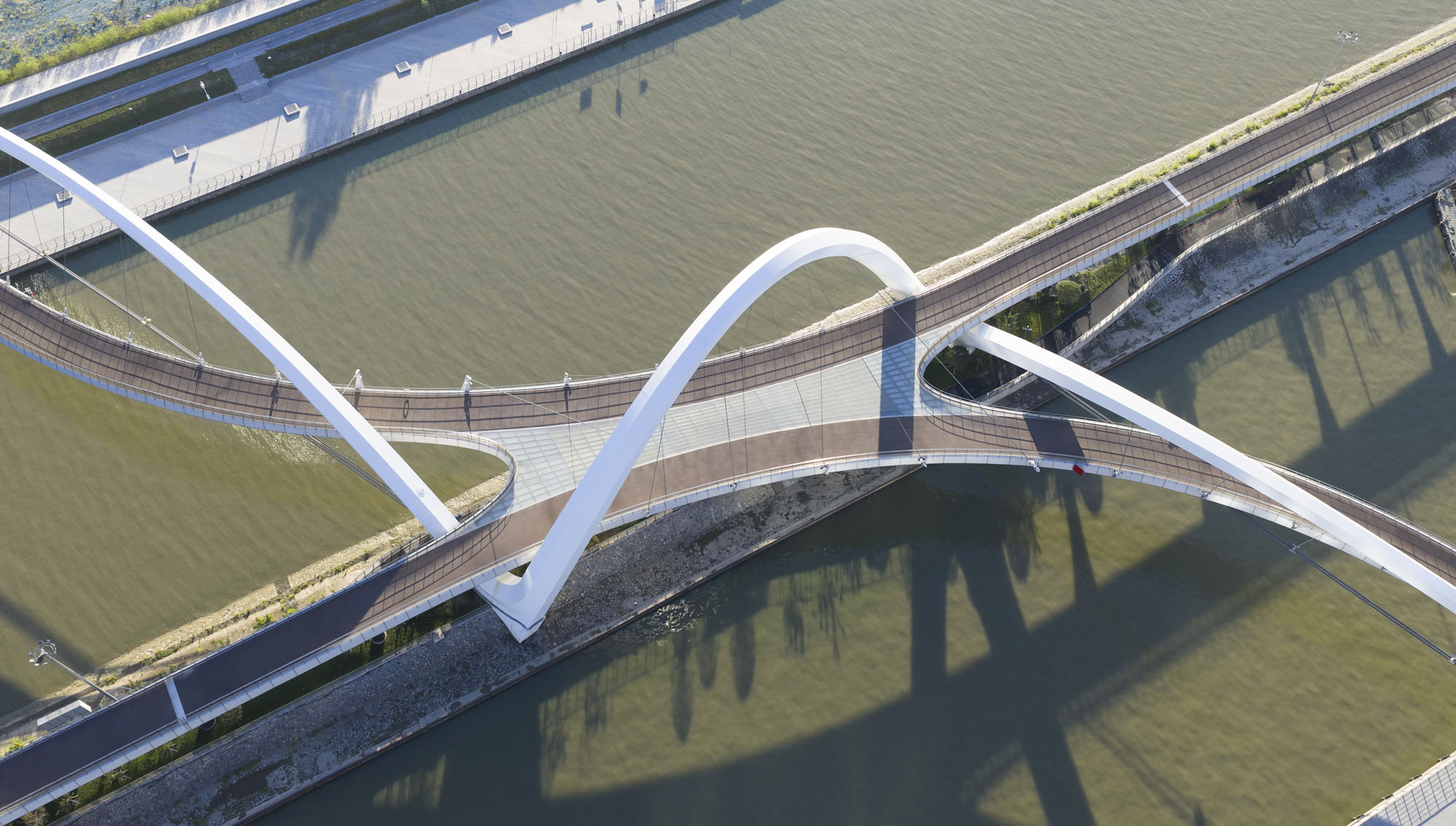
そのうねるような構造システムは、織り交ぜ、重なり、結び合うことで、大運河の東西岸に位置する杭州の「シームレスシティ」マスタープランにおける新たな住宅・公共・商業地区を結ぶ歩行者と自転車用の橋を支えている。
Photograph by Xue Liang
Photograph by Xue Liang
デジタル設計と省資源・低廃棄の施工
高度なデジタル3Dモデリングにより資材使用量を最小化した〈大運河ゲートウェイブリッジ〉は、プレファブリケーション式モジュール構造を採用し、効率的な現場組立により廃棄物を排除している。
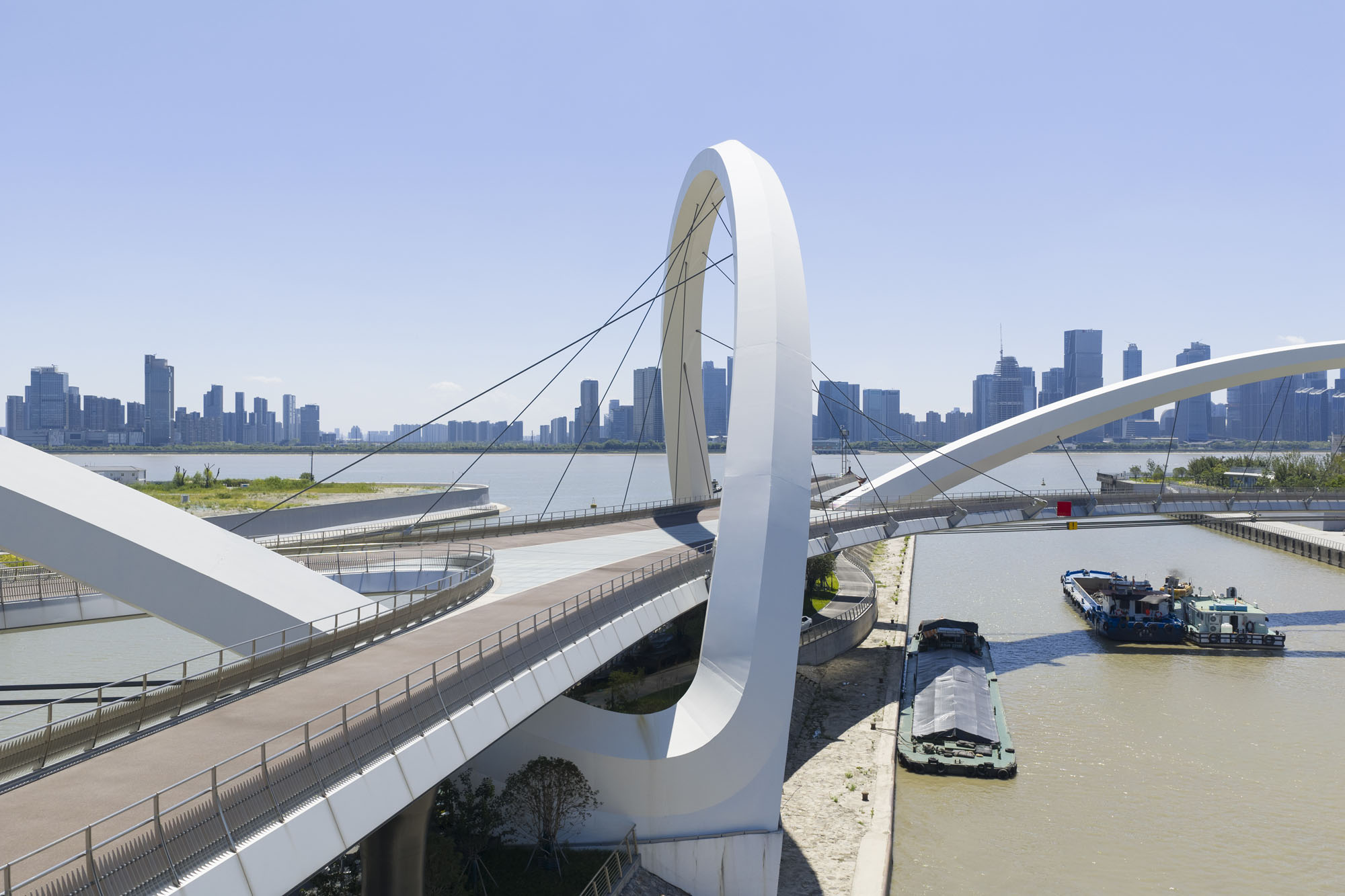
建設戦略は工期短縮と運河交通への影響最小化を重視し、年間10万隻の運河船が2億6000万トンの貨物を中国国内で持続可能に輸送する大運河の航行を妨げないよう配慮されている。
Photograph by Xue Liang
Photograph by Xue Liang
地産材と再生可能エネルギーを用いた環境配慮
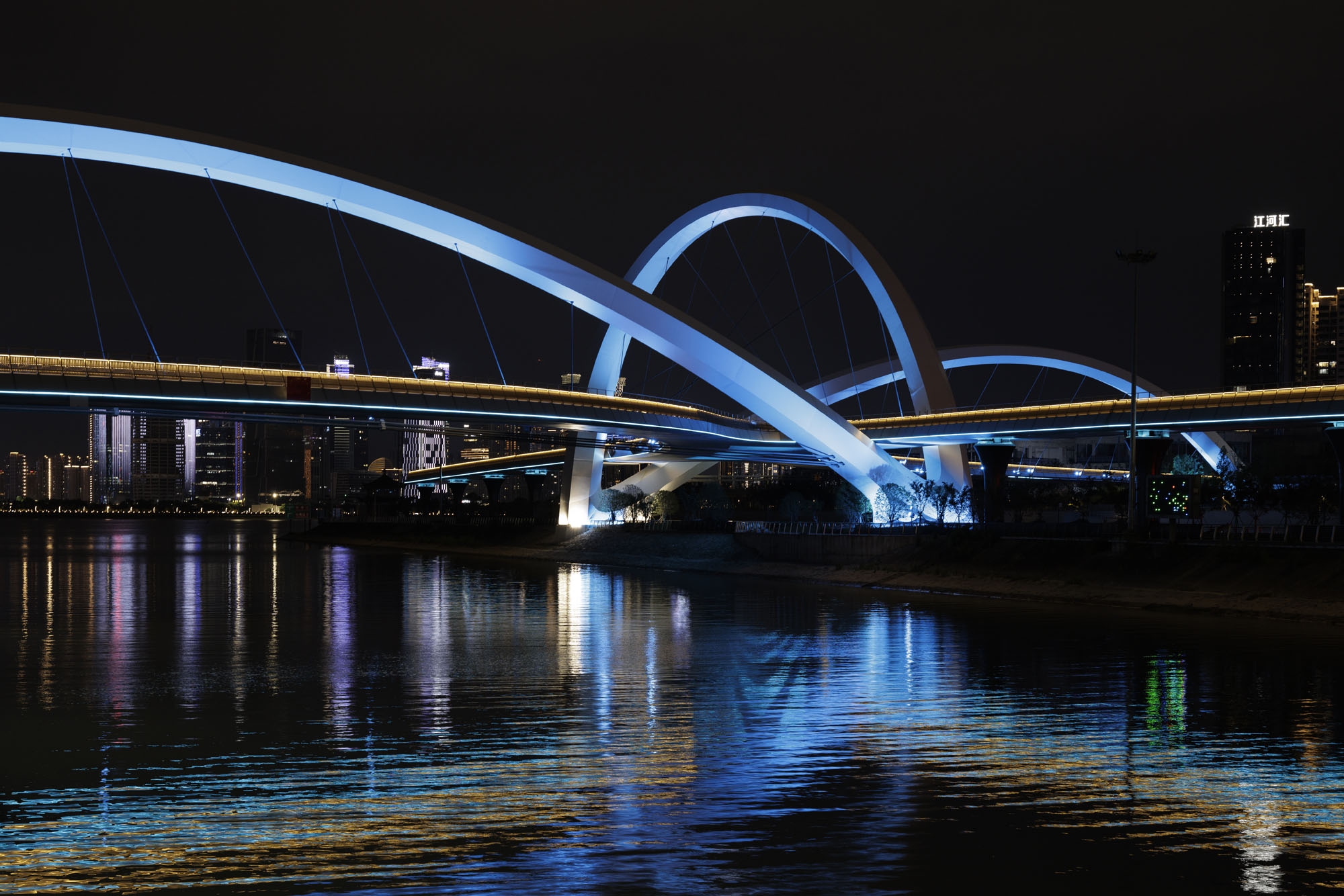
地元調達資材と低環境負荷仕上げ材を採用することで地域の製造業を支援し、集合的専門知識による持続可能な建設を促進している。再生可能エネルギーで日中充電されるバッテリー群を動力源とする統合LED照明が夜間に橋梁を照らす。
Photograph by Xue Liang
Photograph by Xue Liang
鋼製3連アーチの構造設計と地盤条件への対応
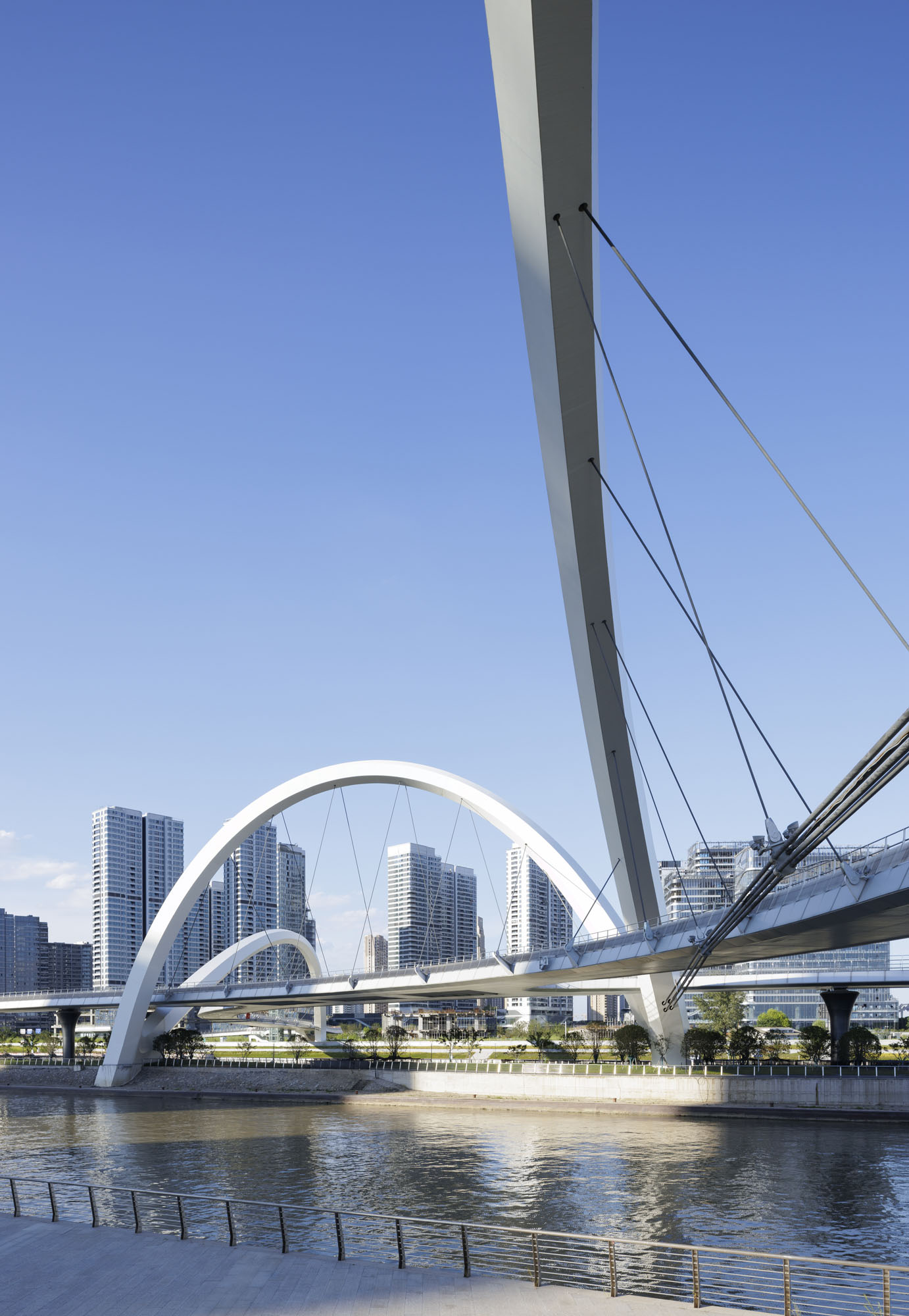
全長390mの鋼製3連アーチ橋は、大運河と銭塘江の合流点における軟弱地盤条件に対応するため、幾何学構造が精密に設計されている。河川から内陸へ吹く強風が歴史的建造物群に影響するのを防ぐため、二次曲げを低減する設計により安定性を確保し、基礎部の横方向力を最小化している。
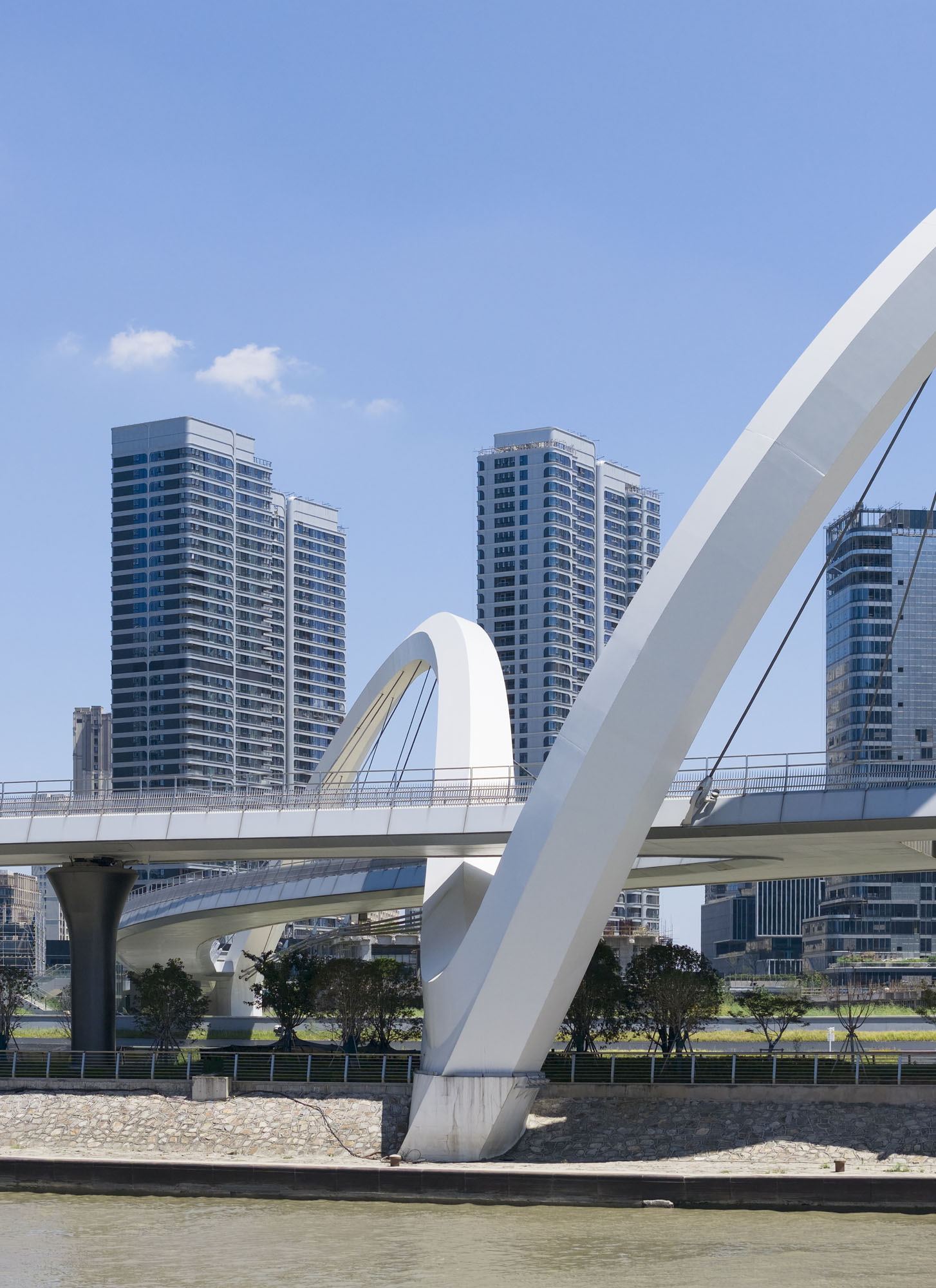
鋼材の高い強度重量比を活用することで、橋はコンクリート橋よりも大幅に軽量化され、製造・設置工程の効率化を実現した。
Photograph by Xue Liang
力学の統合と島内橋脚への着地
橋梁は、デッキからのねじりを含むすべての力を統合し、バランスよく支持部に伝達するよう設計されている。運河の南北水路を分ける島内に造形されたコンクリート橋脚に支えられ、運河横断に必要なスパン長を半減させつつ、構造的均衡と視覚的統一性を達成している。
Photograph by Xue Liang
文化遺産と現代技術の融合
文化遺産と21世紀のエンジニアリング、再生可能素材を融合させた〈大運河ゲートウェイブリッジ〉は、彫刻的でありながら持続可能である。環境への影響を最小限に抑えつつ、長寿命設計を実現している。
Photograph by Xue Liang
Photograph by Xue Liang
Photograph by Xue Liang
Photograph by Xue Liang
Photograph by Xue Liang
Photograph by Xue Liang
以下、ザハ・ハディド・アーキテクツのリリース(英文)です。
Grand Canal Gateway Bridge completed
Hangzhou, ChinaConstruction of the Grand Canal Gateway Bridge in Hangzhou is now complete. When opened for public use later this year, the footbridge will unite the 800,000 square metre Seamless City masterplan under construction on the east and west banks of the Grand Canal. The centrepiece of the city’s new 14.7-hectare River Middle public park and river promenade, the bridge and surrounding masterplan by Zaha Hadid Architects (ZHA) reconnects the city with its historic Grand Canal and Qiantang River by integrating homes, workplaces and amenities for its community with vital civic spaces for recreation, leisure and tourism.
A UNESCO World Heritage site, the Grand Canal is China’s most ancient and longest man-made waterway—an extraordinary feat of engineering dating from the 5th century BC—flowing south from Beijing to connect with China’s Yellow and Yangtze Rivers before joining the Qiantang River at its southern gateway in Hangzhou.
The Qiantang River in Hangzhou is renowned for its Silver Dragon, the world’s largest tidal bore, generated by incoming tides from Hangzhou Bay surging upstream, creating waves up to 9 metres high and travelling at 40 km/h. Balancing ecological sensitivity with civic ambition, the bridge’s walkways and plaza provide multiple vantage points, allowing visitors to safely experience the raw power and spectacle of the Silver Dragon’s force of nature.
Drawing on the city of Hangzhou’s long-established heritage as a centre of excellence for China’s renowned silk embroidery, the bridge’s design reinterprets traditional stitching techniques. Its sinuous structural system weaves, overlaps and binds to support a bridge for pedestrians and cyclists that connects the new residential, civic and commercial districts of Hangzhou’s Seamless City masterplan on the east and west banks of the Grand Canal.
Optimised through advanced digital 3D modelling to minimise material usage, the Grand Canal Gateway Bridge employed prefabricated modular construction with efficient on-site assembly to eliminate waste. The bridge’s construction strategy was specifically designed to shorten build time and minimise disruption to river traffic on the Grand Canal, currently used by 100,000 barges each year to transport 260 million tons of cargo sustainably within China.
Using locally sourced materials and low-impact finishes, the project supported regional manufacturing and fostered sustainable construction through collective expertise. Powered by banks of batteries charged throughout the day by renewable energy, integrated LED lighting illuminates the bridge at night.
The 390-metre-long bridge is a steel, tied three-arch system, its geometry is precisely engineered to address the weak ground conditions at the confluence of the Grand Canal and Qiantang River. Preventing the powerful wind forces that blow inland from the river transferring to the sensitive historic site, the design reduces secondary bending, ensuring stability and minimising lateral forces within the foundations. By harnessing steel’s high strength-to-weight ratio, the bridge is significantly lighter than concrete alternatives, enabling the most efficient fabrication and installation processes.
Designed to consolidate all forces—including torsion from the deck—and deliver them in balance to its bearings, the bridge lands on a sculpted concrete pier within the island separating the canal’s north and south waterways, halving the required spans to cross the canal while providing structural equilibrium and visual coherence.
Uniting cultural heritage with 21st century engineering and recyclable materials, the Grand Canal Gateway Bridge is both sculptural and sustainable, designed for longevity with minimal environmental impact.
Project Team
Client: Hangzhou CBD Development Group, ltd.
Architect: Zaha Hadid Architects (ZHA)
ZHA Principal: Patrik Schumacher
ZHA Project Directors: Paola Cattarin, Paolo Matteuzzi
ZHA Project Architect: Maria Loreto Flores
ZHA Concept Project Architect: Saman Dangostar
ZHA Concept Design Team: Berkin Islam, Christy Yin, Delfina Bocca, Enoch Kolo, Federico Borello, Hunter Paine, Irena Predalic, Kalliopi Mouzaki, Lorena Espaillat Bencosme, Luciano Letteriello, Marcella Fedele, Maria Tsironi, Mariagrazia Lanza, Mariana Custodio Dos Santos, Marie-Perrine Placais, Mattia Santi, Michael On, Milind Khade, Miron Mutyaba, Mohamed Al-Jubori, Nastasja Mitrovic, Natasha Marks, Philipp Siedler, Pierandrea Angius, Qiuru Pu, Raquel Arauco Ordas, Saman Dadgostar, Satoshi Ohashi, Shahd Abdelmoneim, Shajay Bhooshan, Sven Torres, Thomas Bagnoli, Tommaso Casucci, Vincent Konate, Vincenzo Barilari, Vishu Bhooshan, Xiaoyu Zhang, Yuan Zhai, Yuzhi Xu
ZHA Design Team: Andy Lin, Damir Alispahic, Effie Nakajima, Gaganjit Singh, Gigi Ho, Hangyul Jeong, Iris Chen, Joanna Saade, Jose Castaneda, Kalliopi Mouzaki, Ke Yang, Maria Echeverri, Milica Pihler-Mirjanic, Millie Anderson, Miron Mutyaba, Natasha Tariq, Qiuru Pu, Stefano Iacopini, Xuan Zhao, Yuan Zhai
Grasshopper definition: Gaganjit Singh, Miron Mutyaba, Qiuru Pu
Artistic Supervision: Qiuru Pu, Gaganjit Singh, Miron Mutyaba, Xuan ZhaoConsultants
LDI: Tongji University Architectural Design Research Institute (Group) Co., Ltd
Structural Engineering: Schematic Design: Arup. Preliminary Design – Construction
Documentation: Tongji University Architectural Design Research Institute (Group) Co., Ltd
Landscaping & Lighting: Tongji University Architectural Design Research Institute (Group) Co., Ltd
General contractor: Hangzhou Xiaohong Construction Environment Group Co., Ltd.; Third-party monitoring unit: Zhejiang University. 总承包商 杭州萧宏建设环境集团有限公司; 第三方监控单位 浙江大学
Steel Fabricator: Hunan Valin Iron and Steel Co., Ltd. 湖南华菱钢铁股份有限公司
ザハ・ハディド・アーキテクツ 公式サイト
https://www.zaha-hadid.com/2025/10/28/grand-canal-gateway-bridge-completed/
【購読無料】空間デザインの今がわかるメールマガジン TECTURE NEWS LETTER
RECOMMENDED ARTICLE


![[大阪・関西万博]シグネチャーパビリオン紹介_福岡伸一氏](https://magazine-asset.tecture.jp/wpcms/wp-content/uploads/2025/04/11190903/rR0050246-900x596.jpg)

