CULTURE
©︎ Jin Weiqi
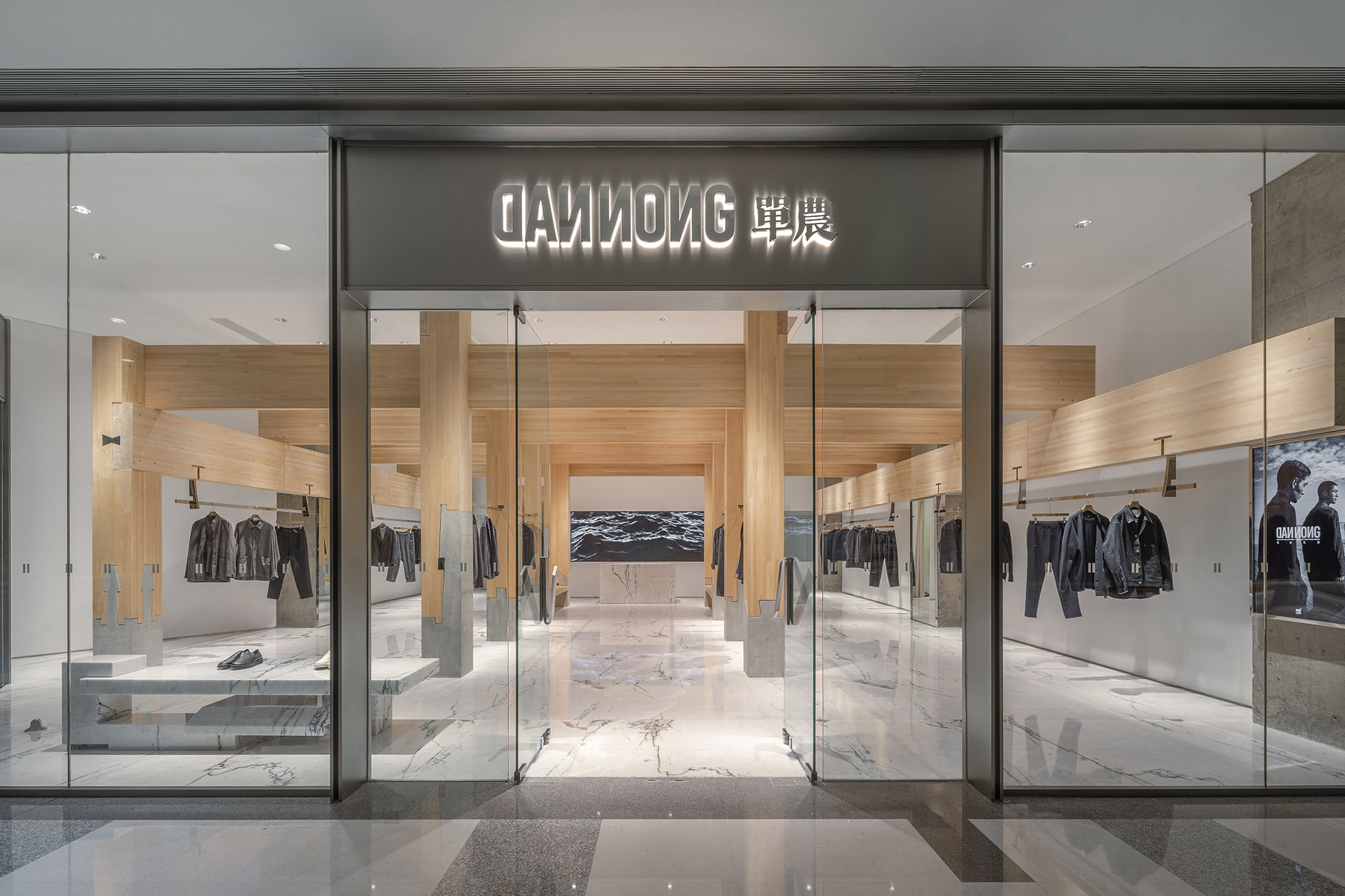
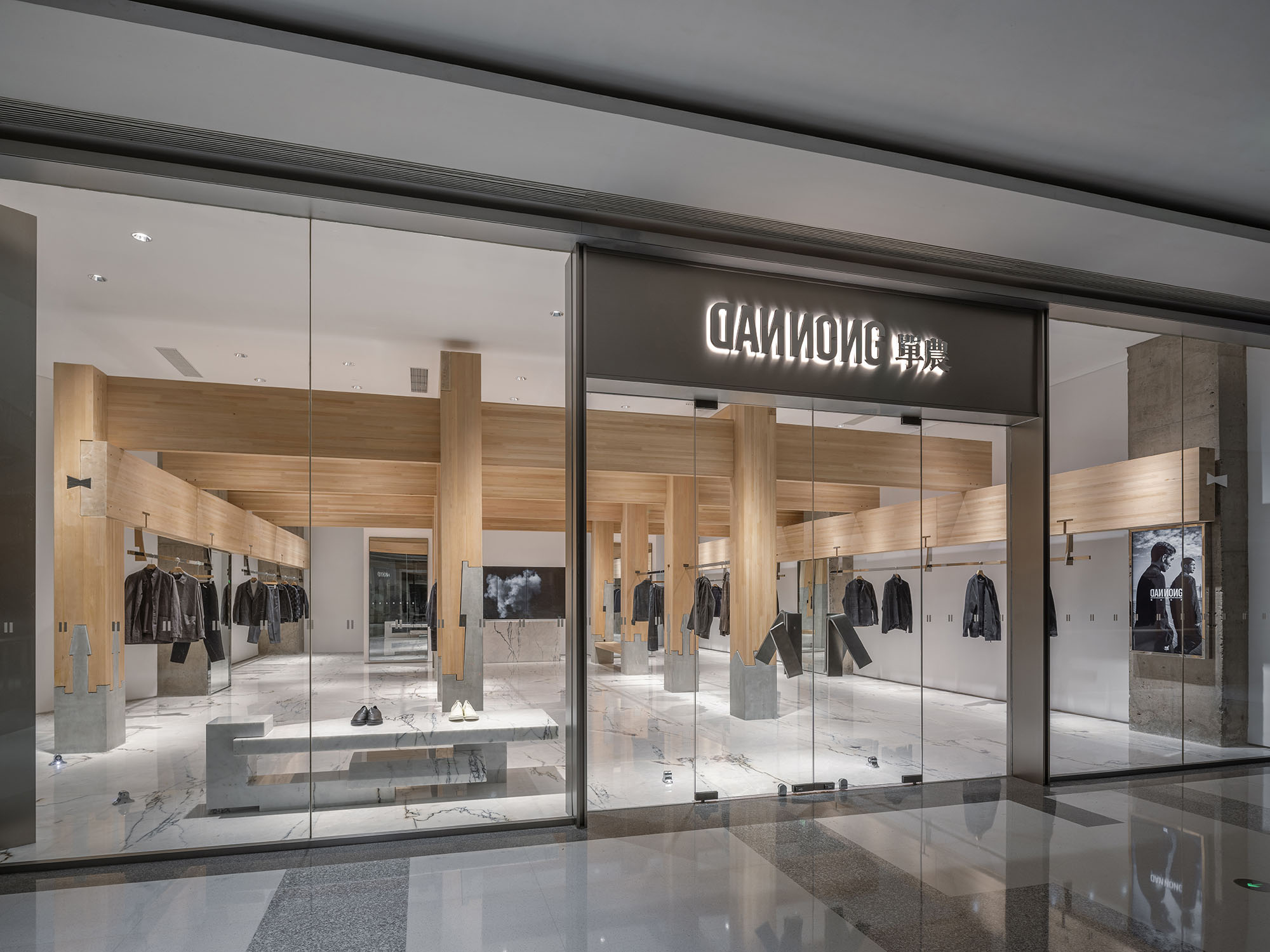
〈禅の柱(Pillar of Zen) — DANNONG Store at The MixC Taiyuan〉は、中国・山西省の複合商業施設内に設計された、東洋的感性を根幹に据える衣料ブランド「DANNONG」の店舗です。
中国の設計事務所LUOスタジオ(LUO studio)が設計しました。
注目ポイント
- 伝統的な東洋建築が数多く残る山西省の歴史を受け継ぐ店舗デザイン
- コンクリートと木材をつなぐ4種の「ほぞ継ぎ」
- マクロ(架構)からミクロ(ハンガーロッドなどの什器レベル)まで貫通する構築論理
(以下、LUOスタジオから提供されたプレスキットのテキストの抄訳)
©︎ Jin Weiqi
©︎ Jin Weiqi
山西省の建築遺産との対話
直交する木造フレームは、長らく東洋における主要な構造の原型として、殿堂や寺院から住居に至るまで、あらゆる建築形態を支えてきた。プロジェクトの舞台となる山西省は、南禅寺や佛光寺といった貴重な実例が現存する、中国古代木造建築保存の重要地域である。これらの建築群は、伝統的な東洋建築がもつ深い文化的系譜を今に伝えている。
©︎ Jin Weiqi
©︎ Jin Weiqi
この地に、内なる東洋的感性を根幹に据える衣料ブランド「DANNONG」が店舗を構えることとなった。 山西省という歴史ある都において、衣服は空間でいかに提示されるべきか。そして、地域の建築遺産と共鳴しながら、店舗はいかに成長していくべきか。これらの根源的な問いが、設計の出発点となった。
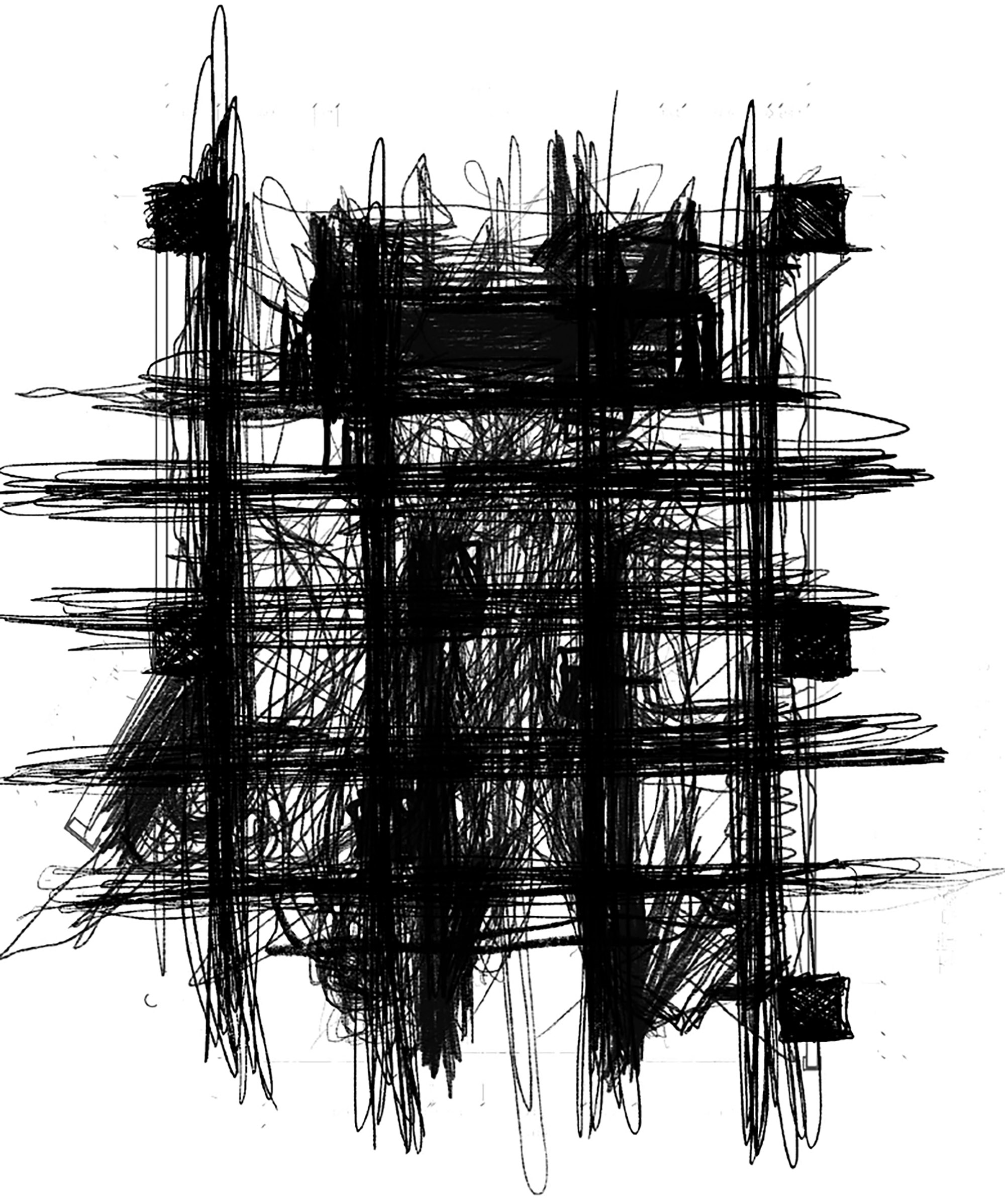
sketch © Luo Yujie
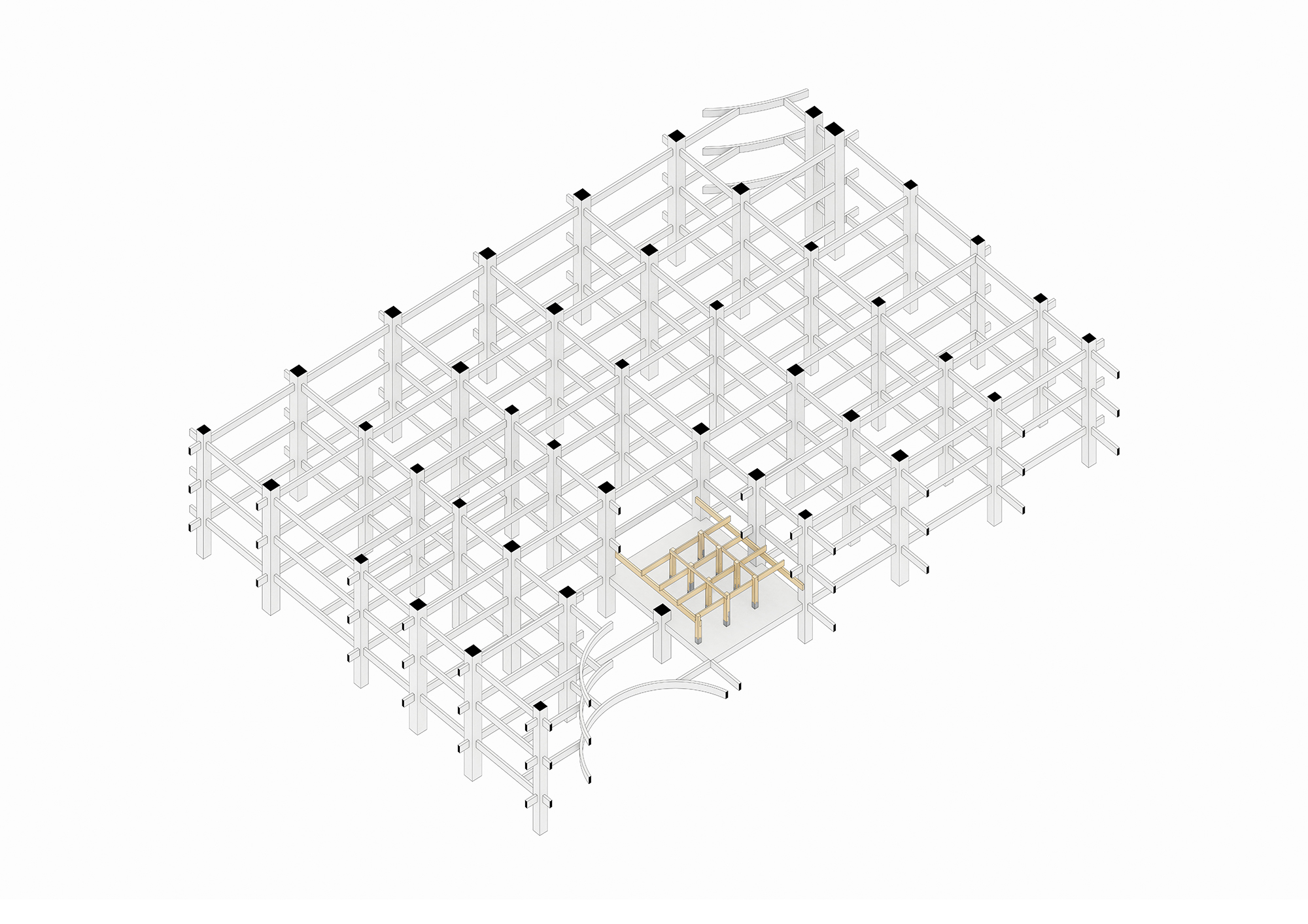
idea © LUO studio
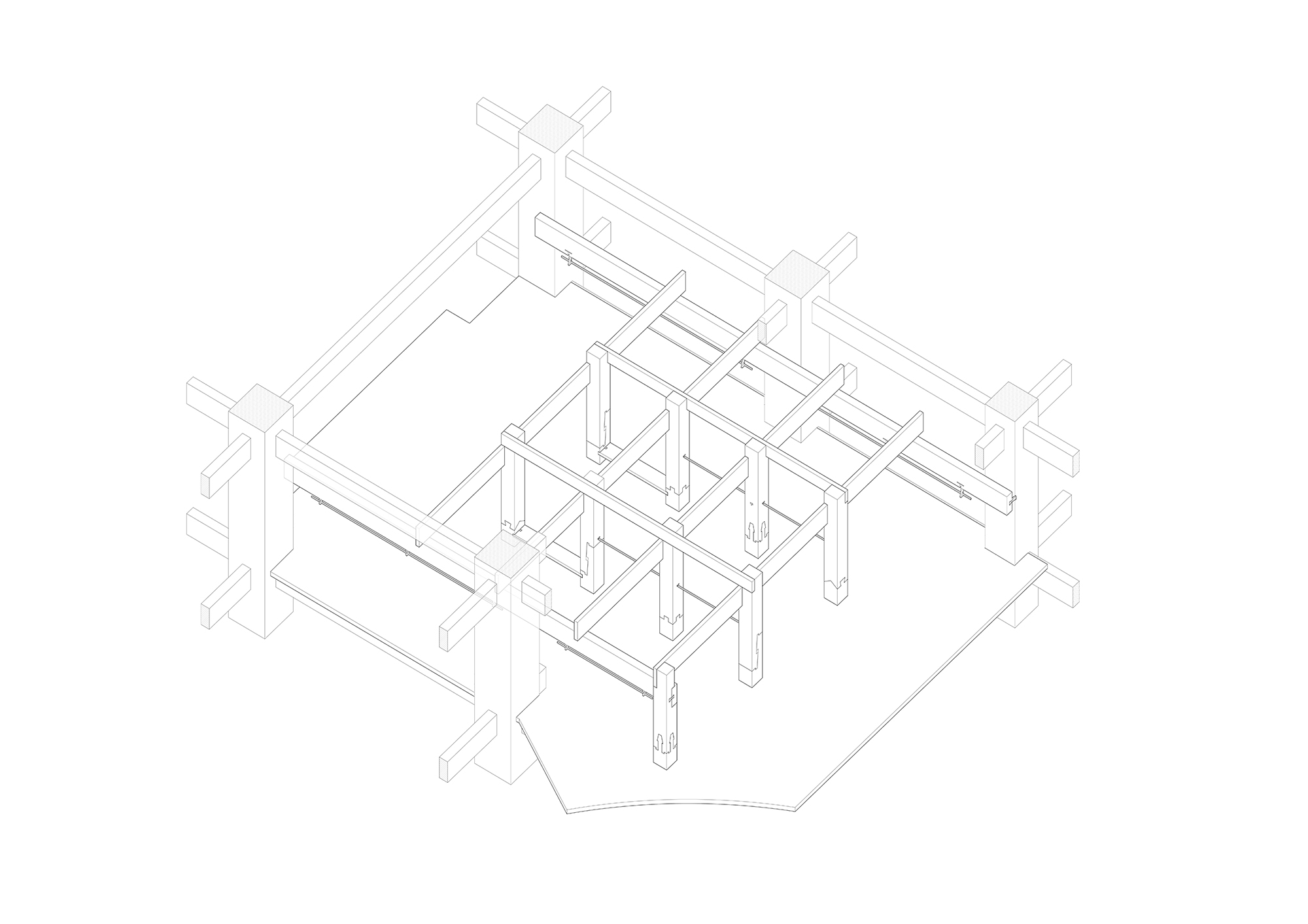
axonometric © LUO studio
線と重さ:架構と衣服の共鳴
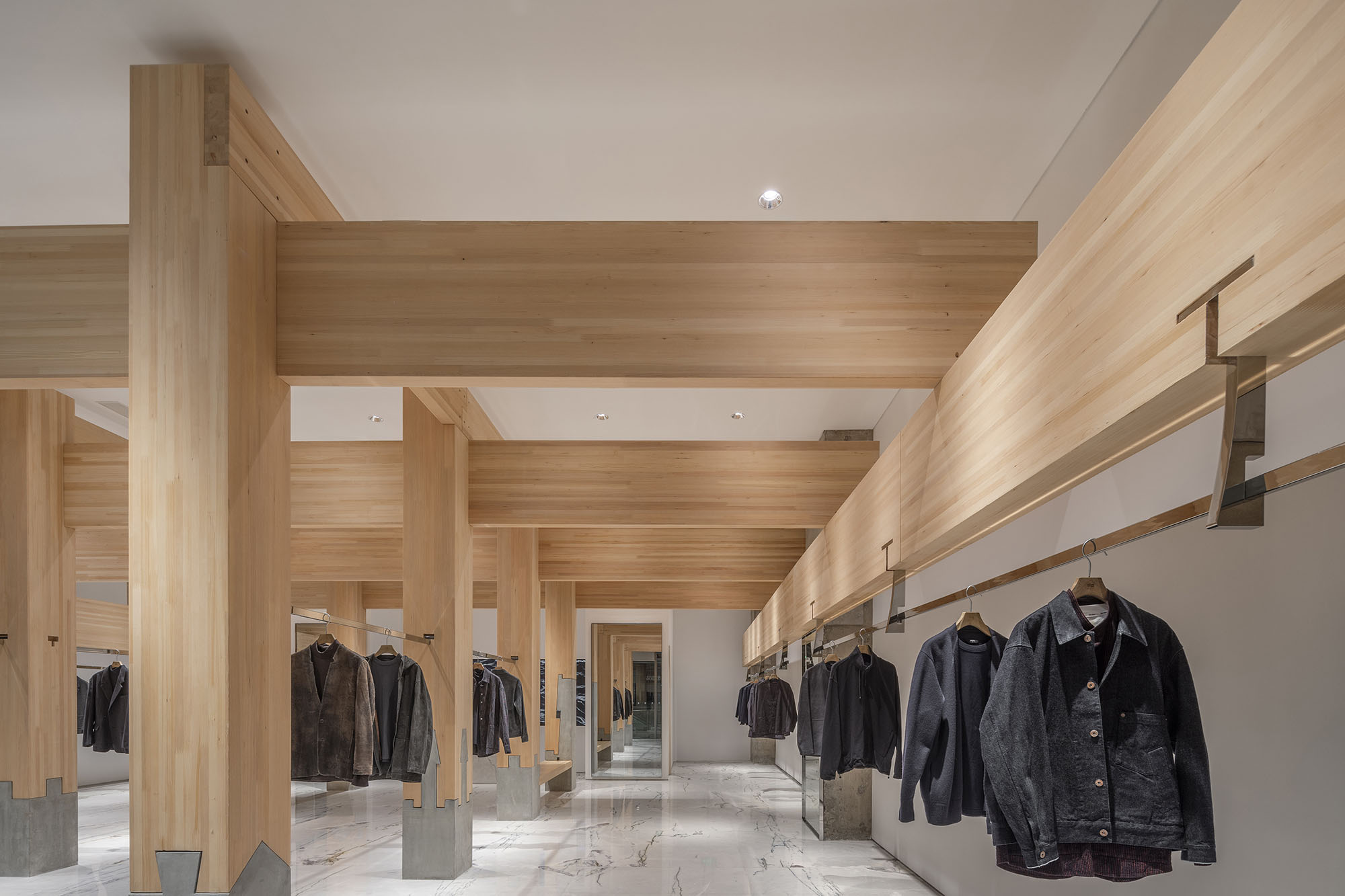
平面においても断面においても、伝統的な東洋の木造フレームは、直線的かつ直交する秩序によって展開される。図式的に捉えれば、垂直部材も水平部材も1本の「線」である。同様に、衣服もまた「線」のシステムによって構成される存在であり、この点において、建築と衣服は高い概念的整合性を有していると言える。
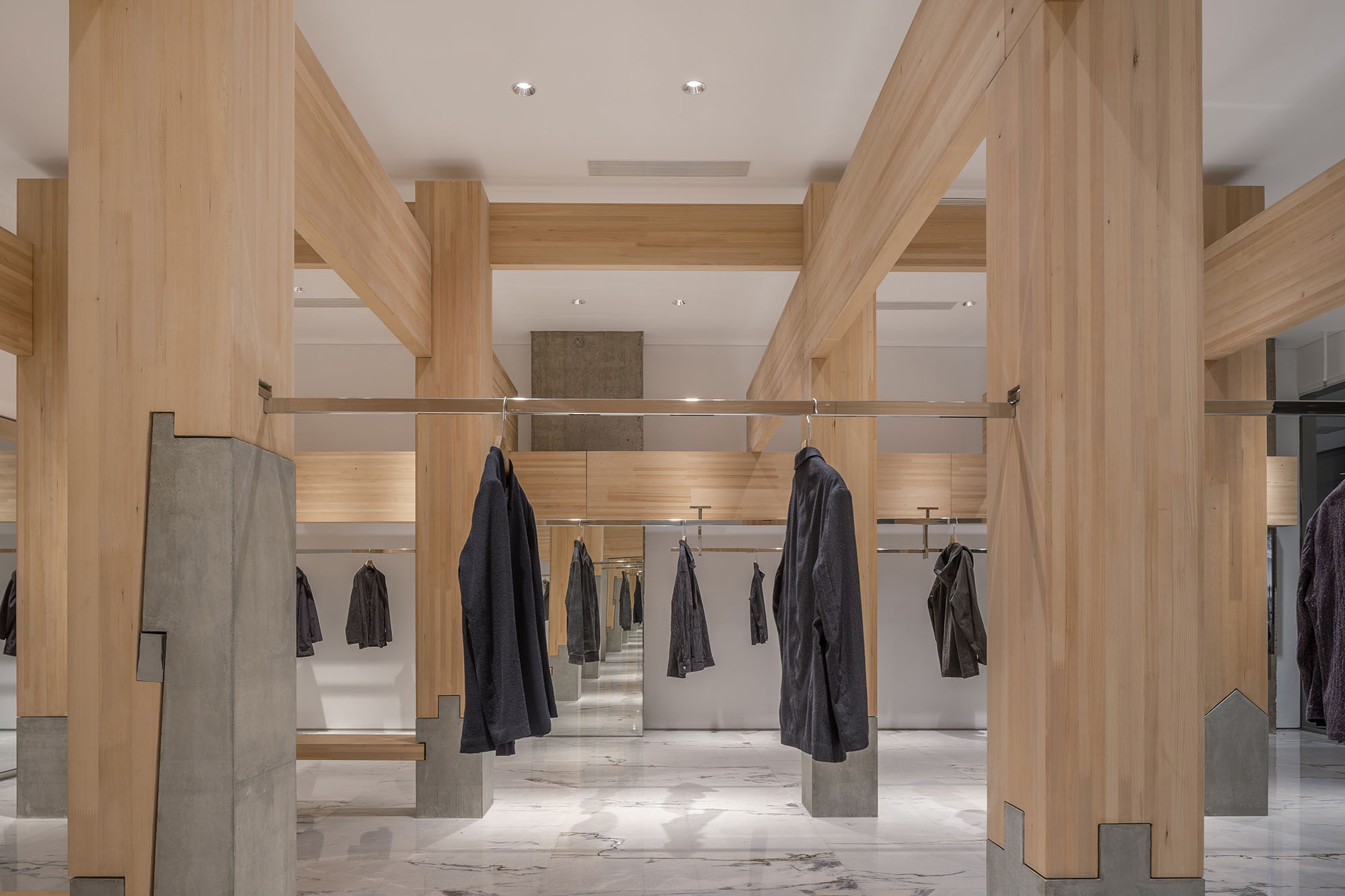
©︎ Jin Weiqi
©︎ Jin Weiqi
©︎ Jin Weiqi
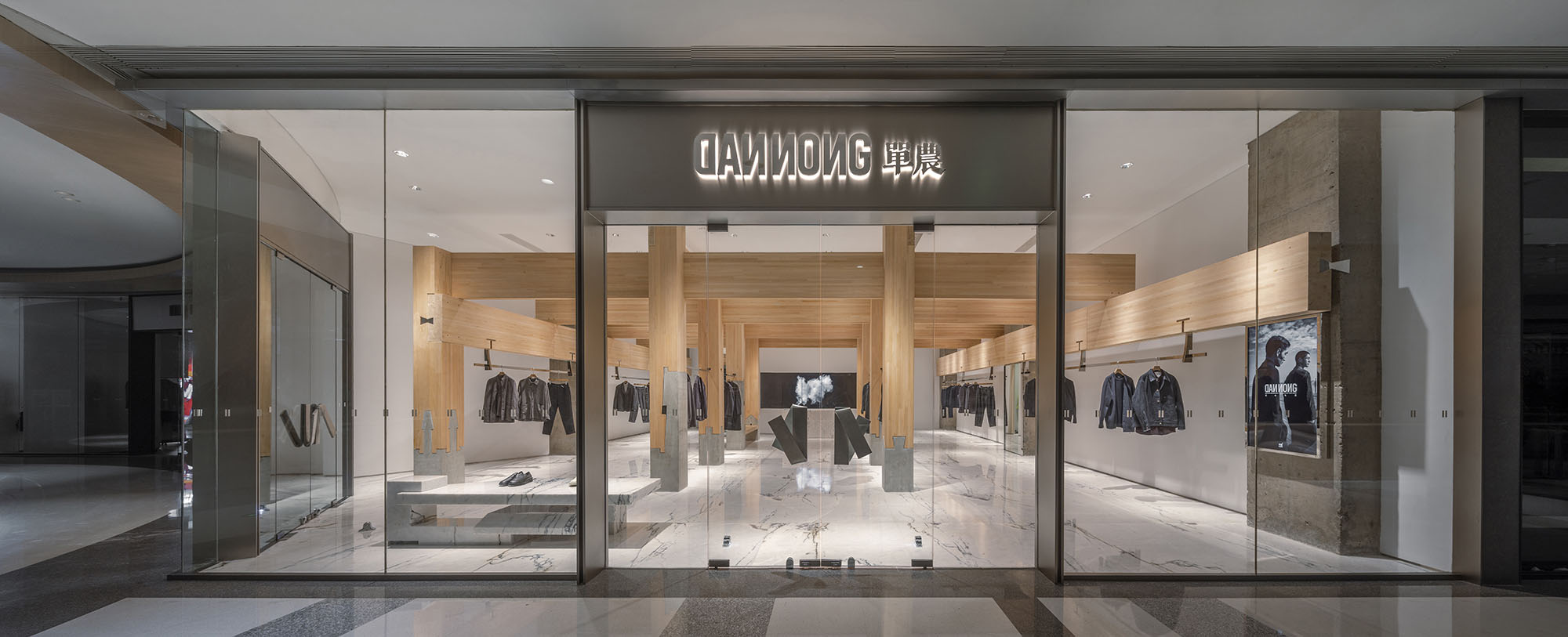
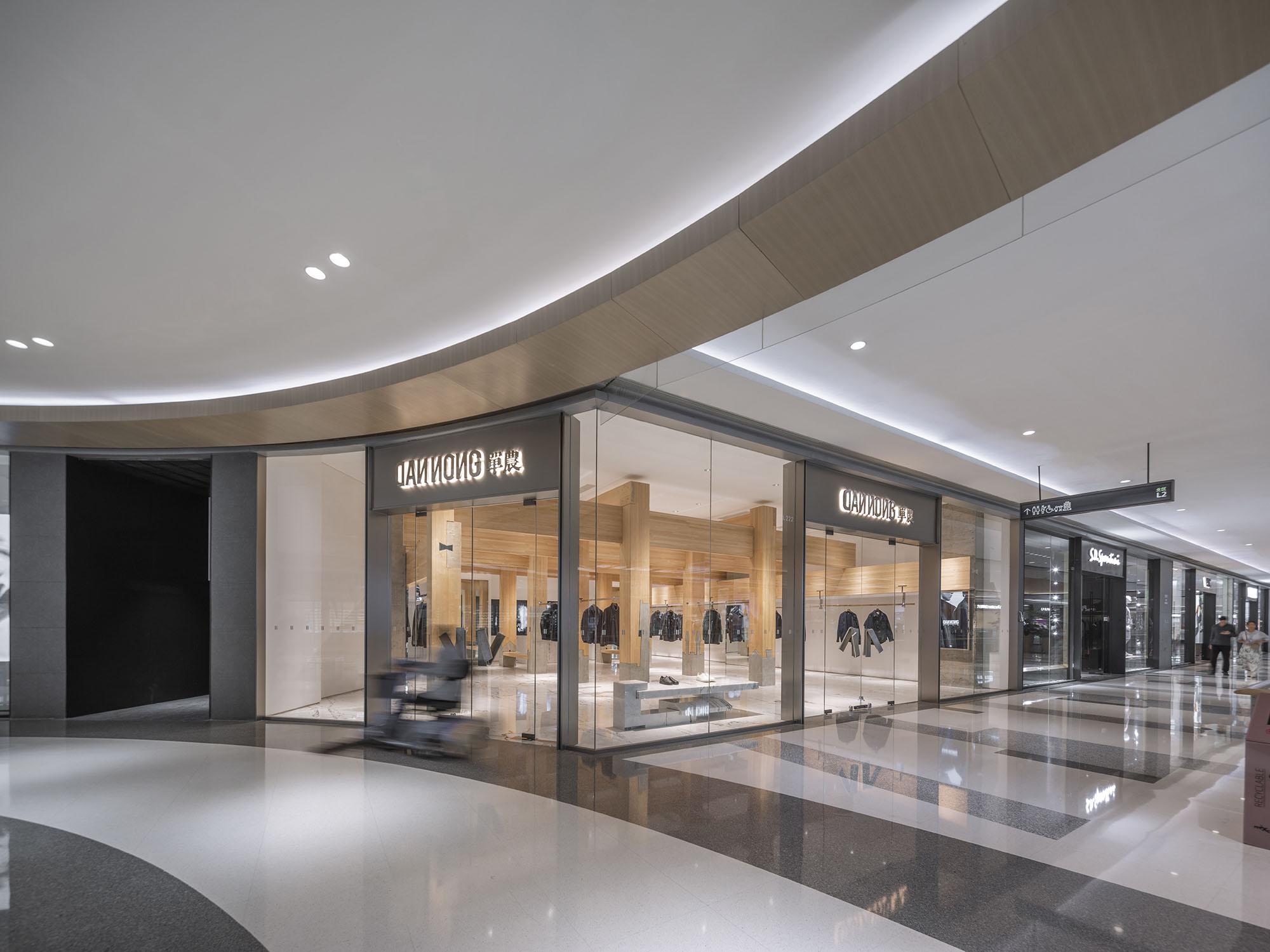
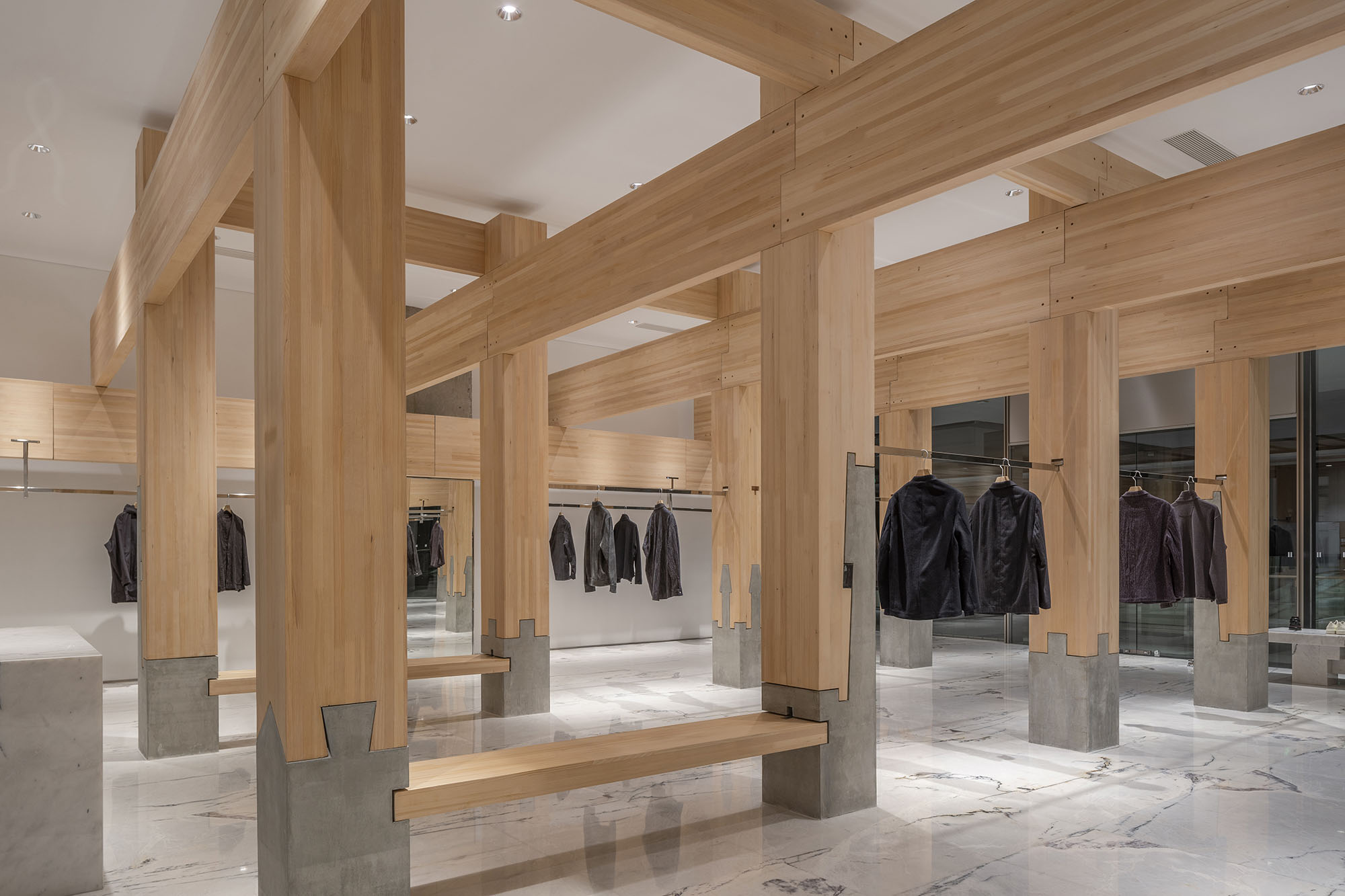
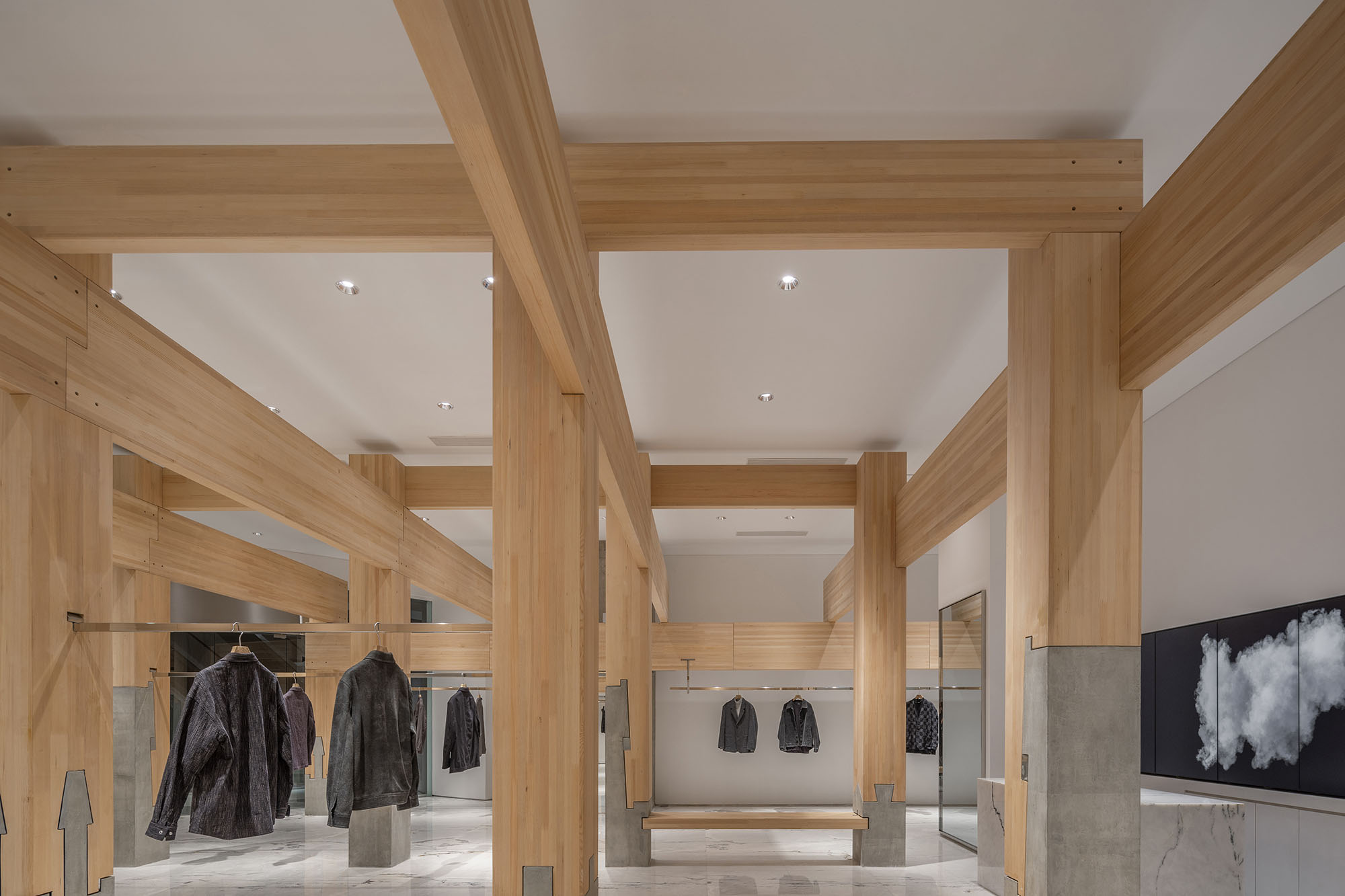
本プロジェクトは現代的な複合商業施設内に位置しており、その躯体は鉄筋コンクリート造のフレームである。この工業化されたシステムの中に伝統的な木組み構造を「接ぎ木」することで、現代の商業空間の中に山西省の木造建築の系譜を呼び覚ますことを試みた。
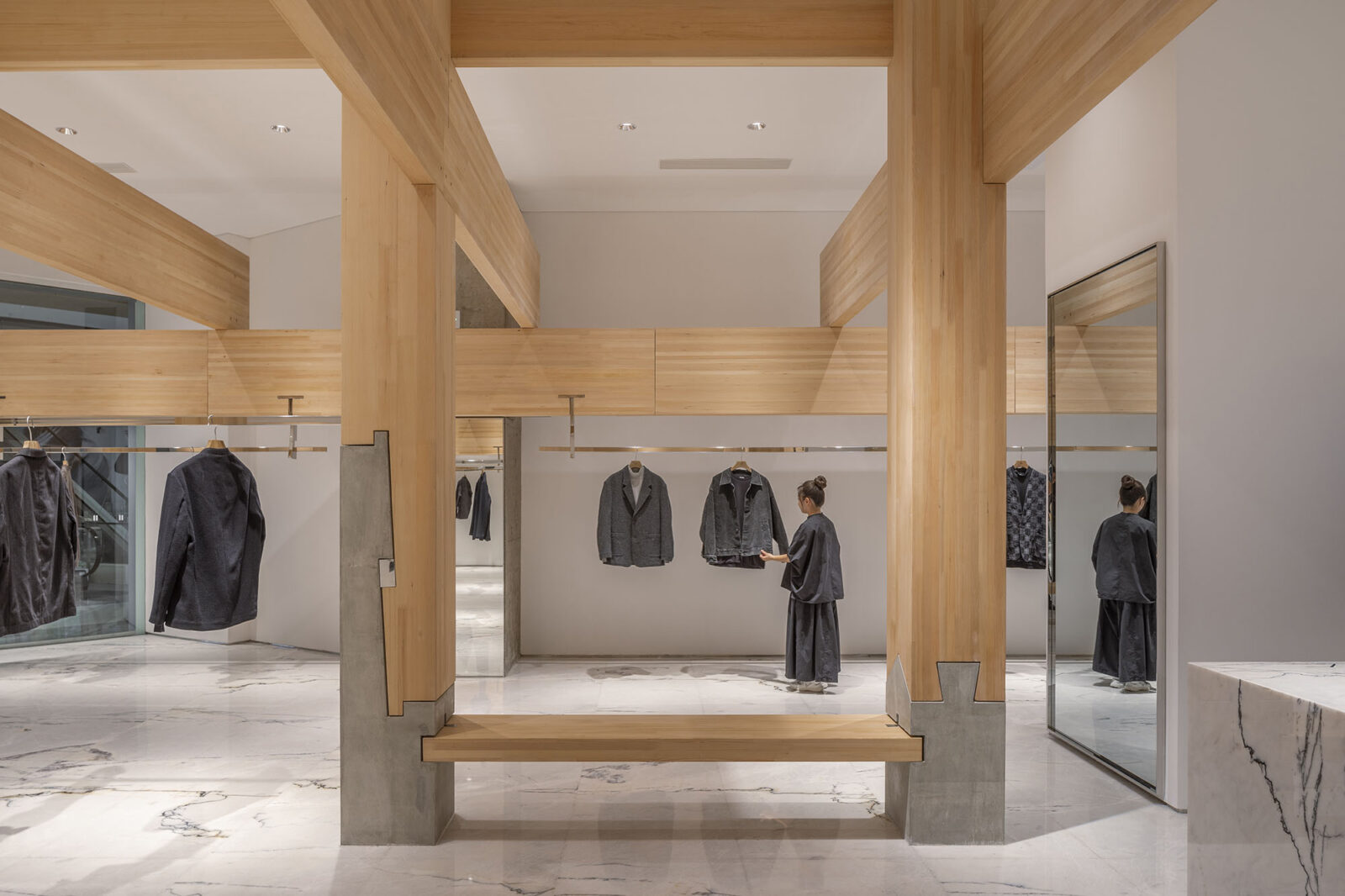
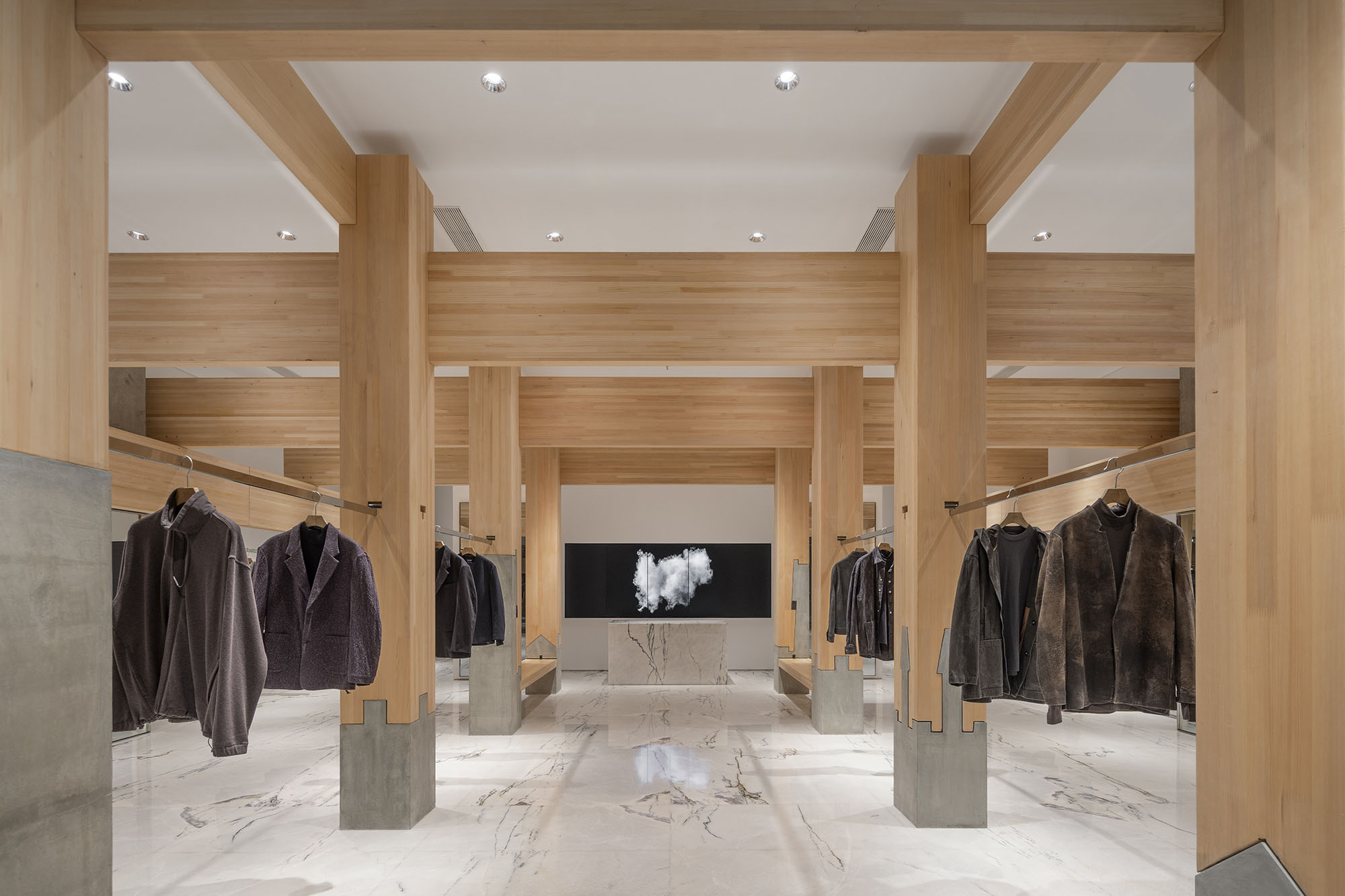
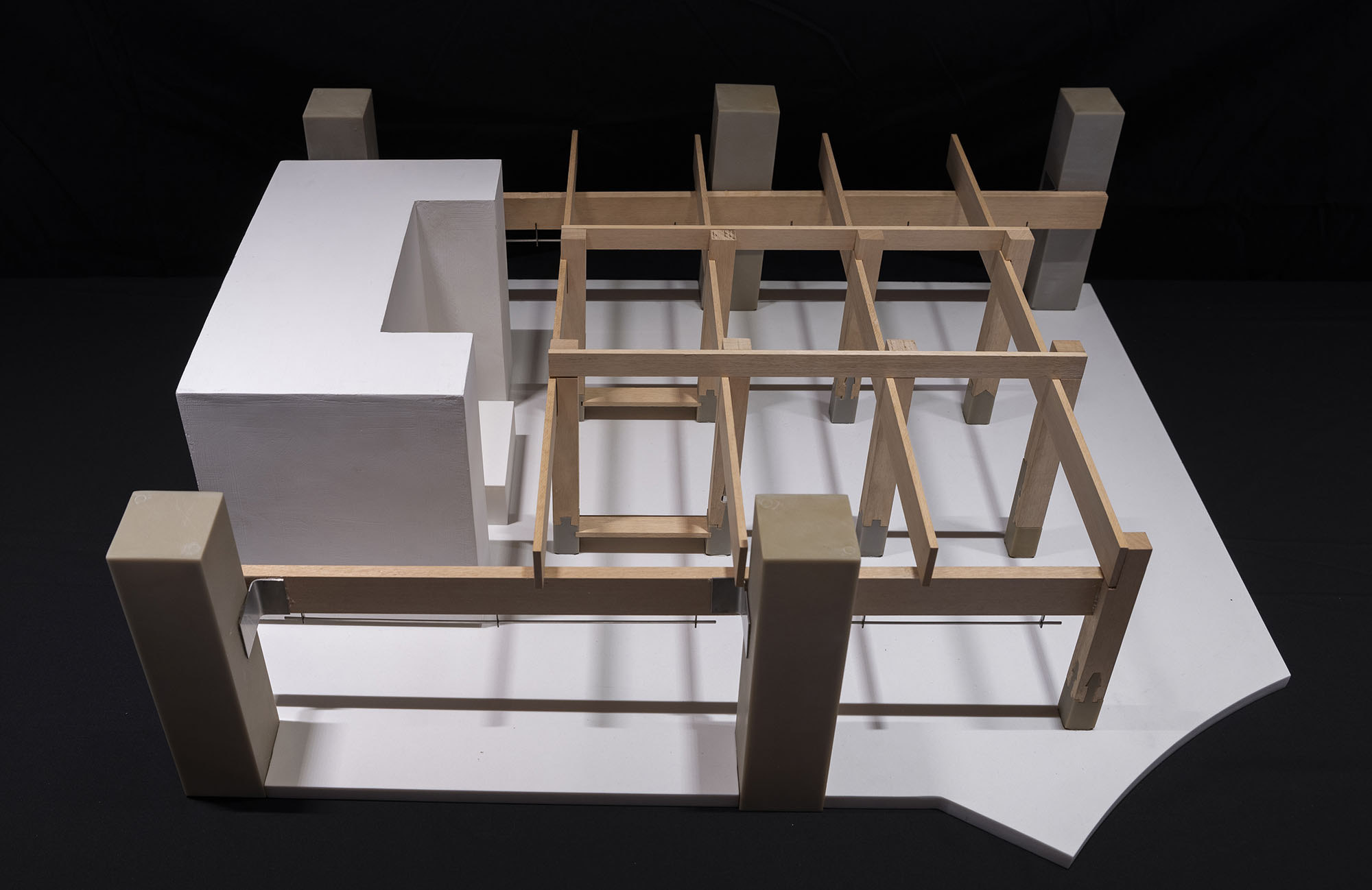
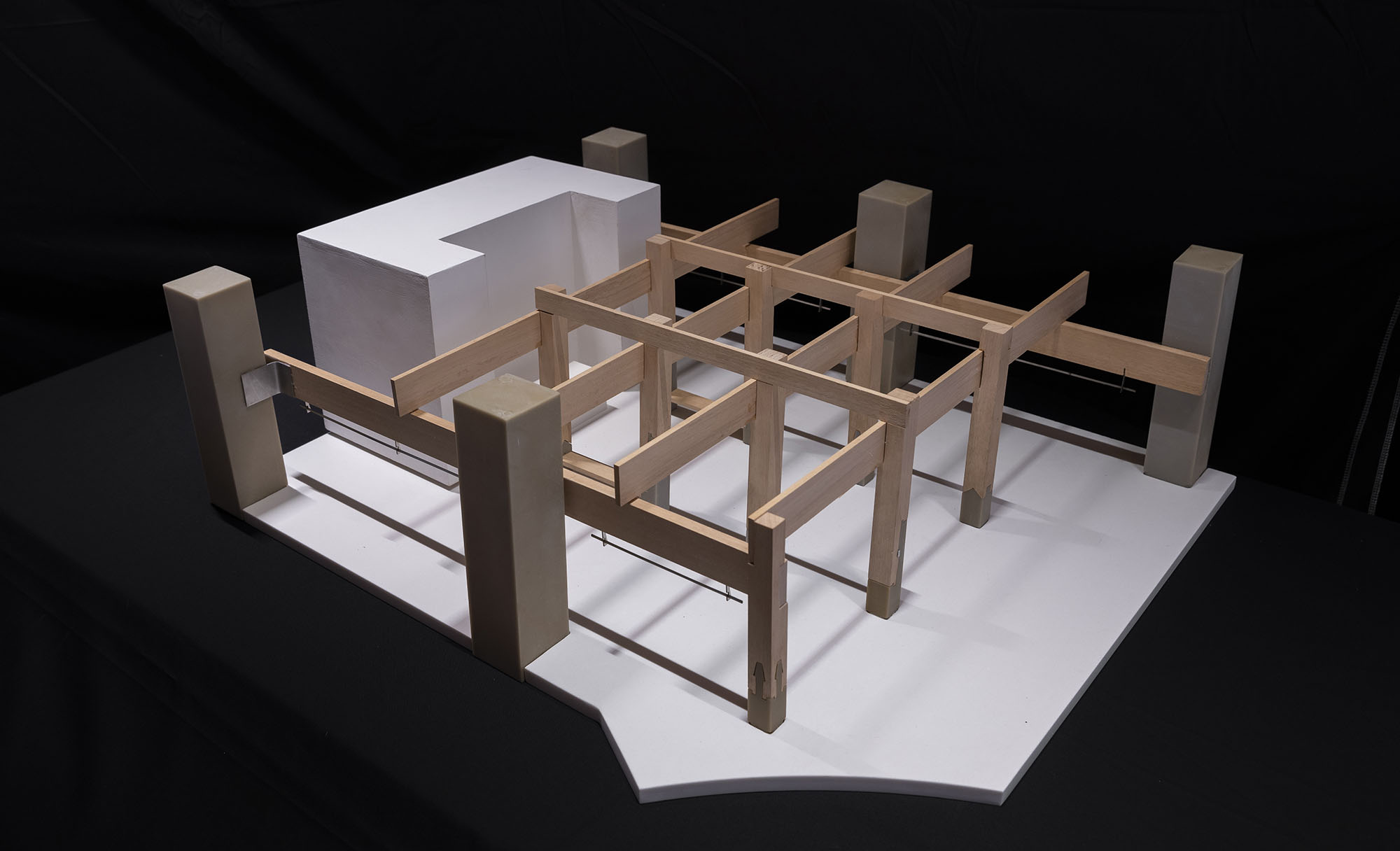
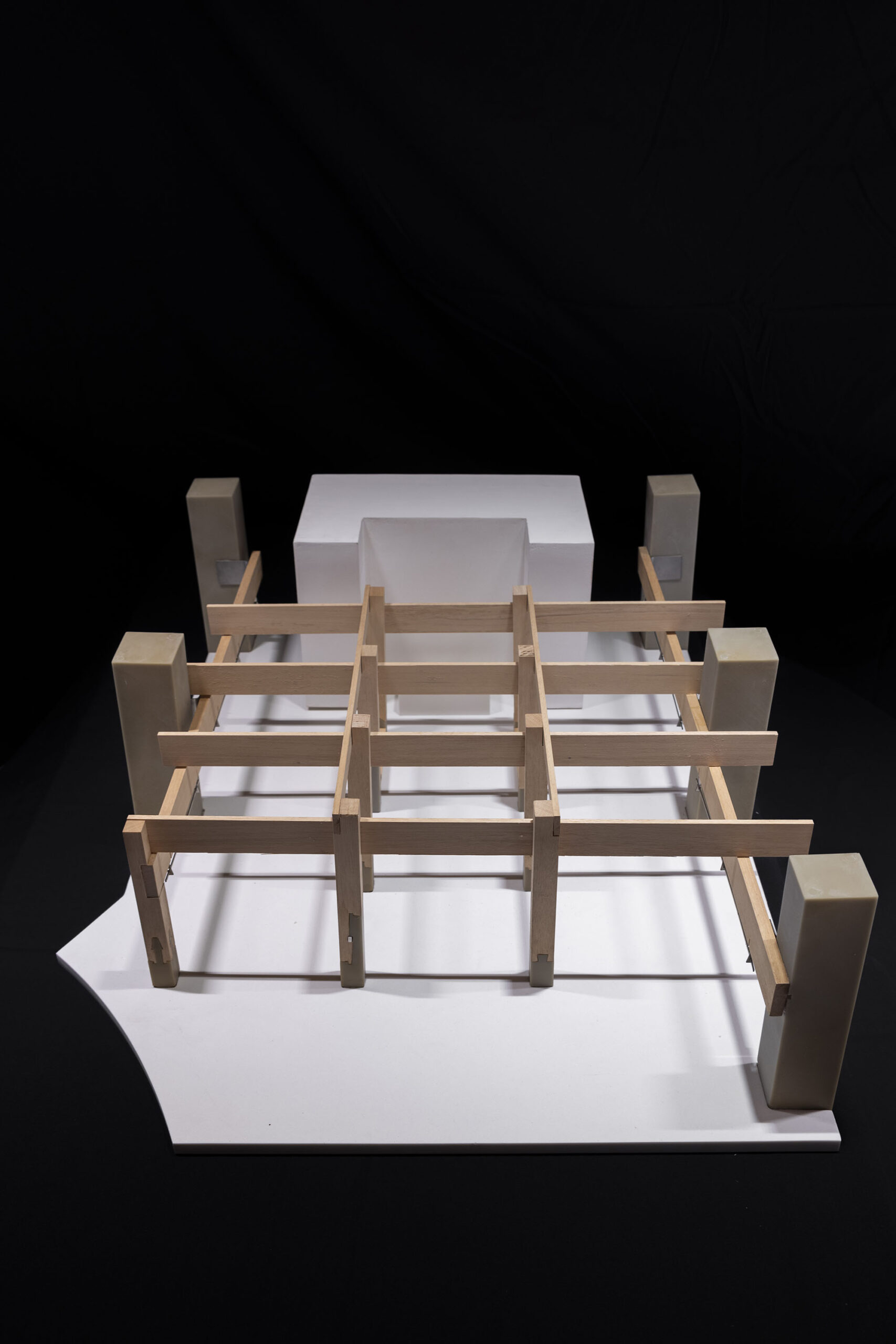
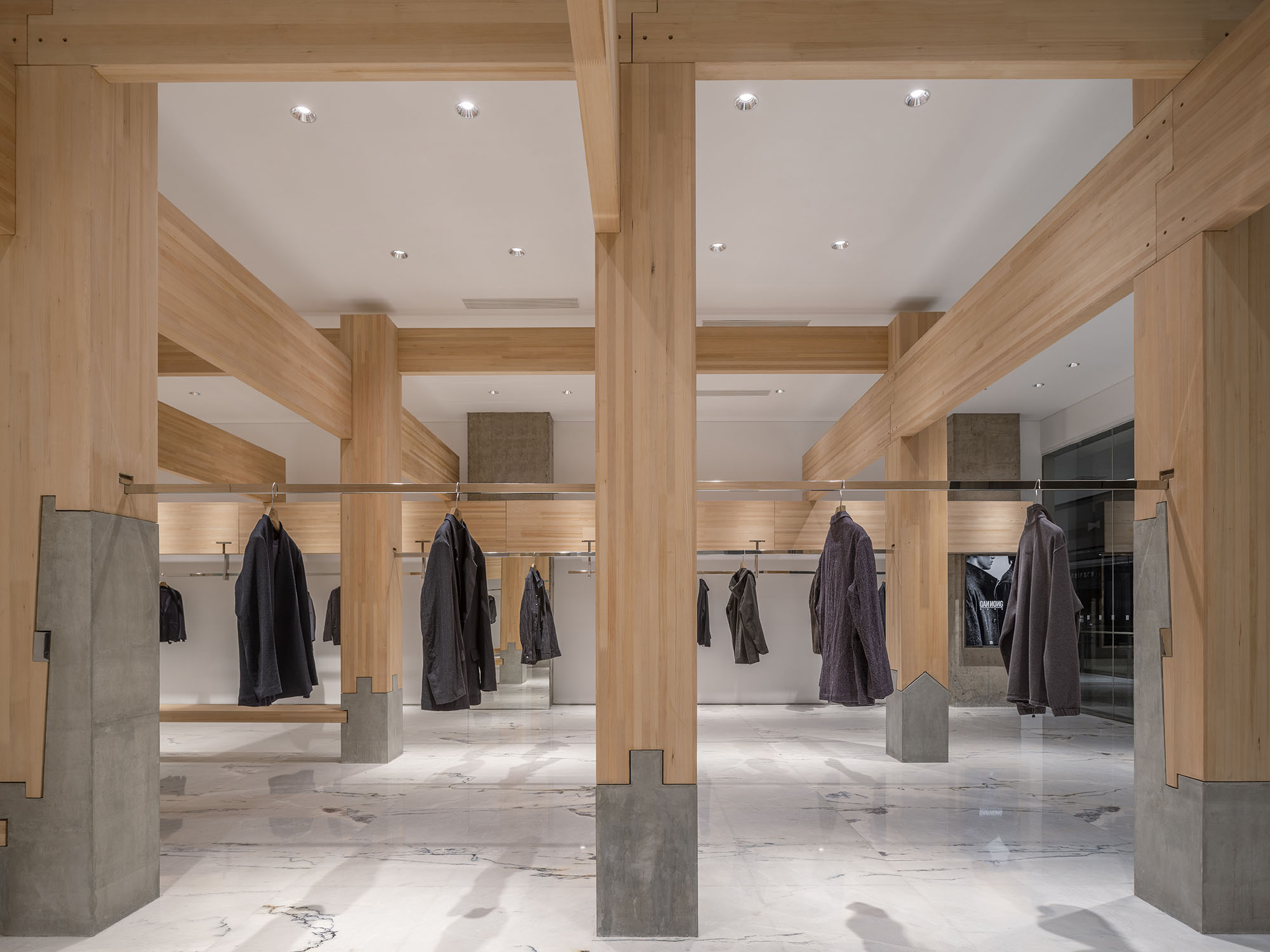
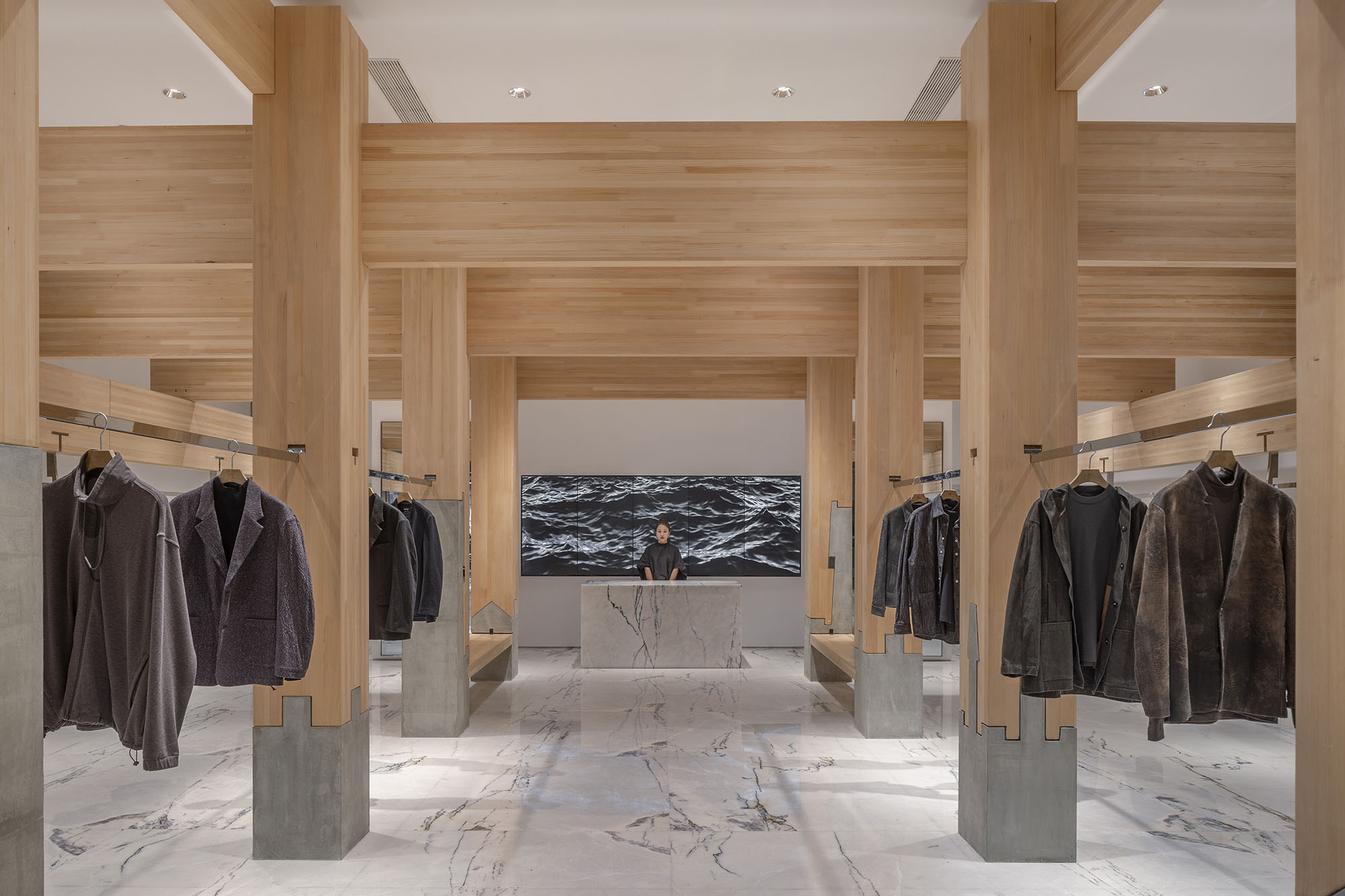
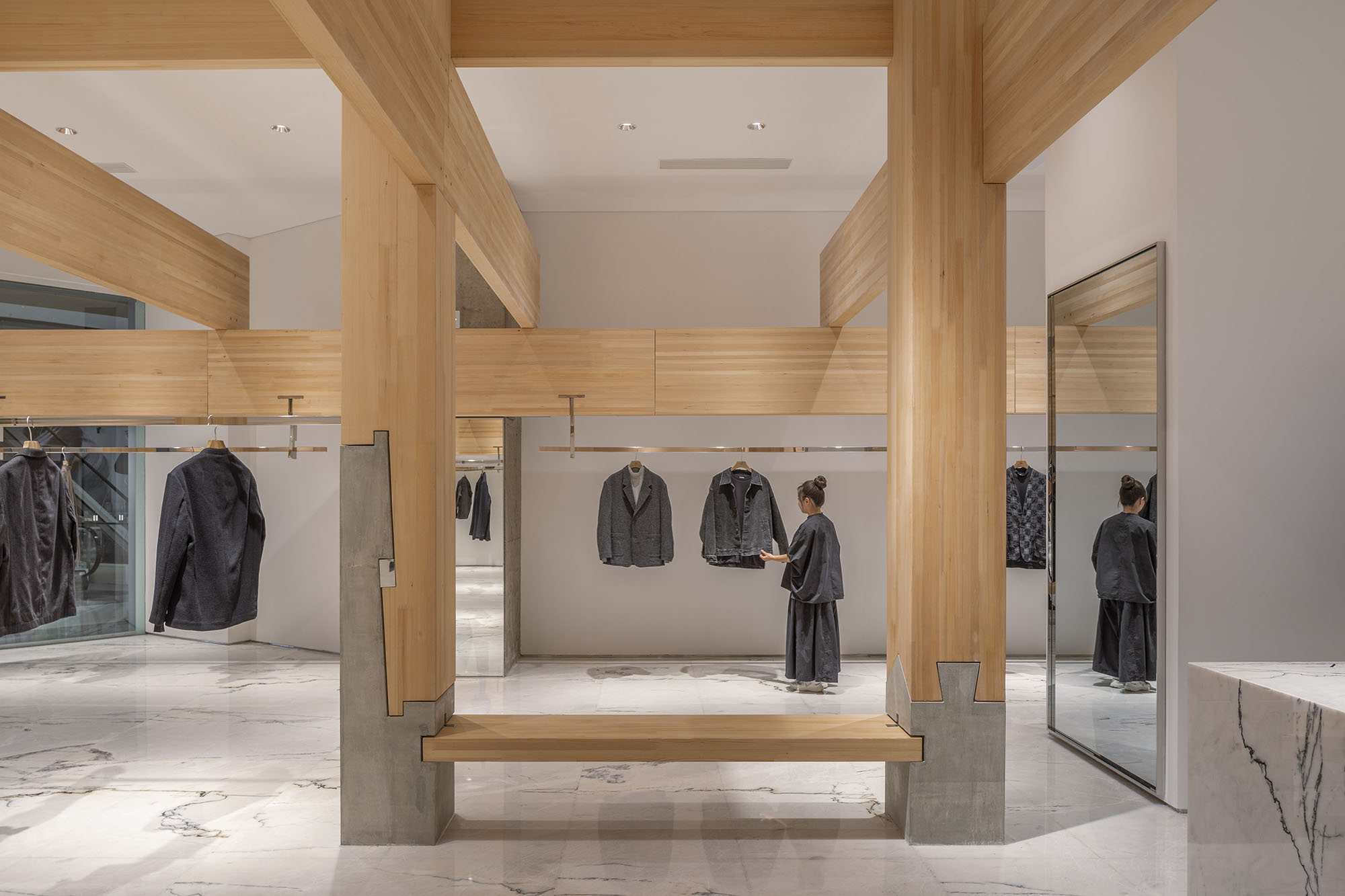
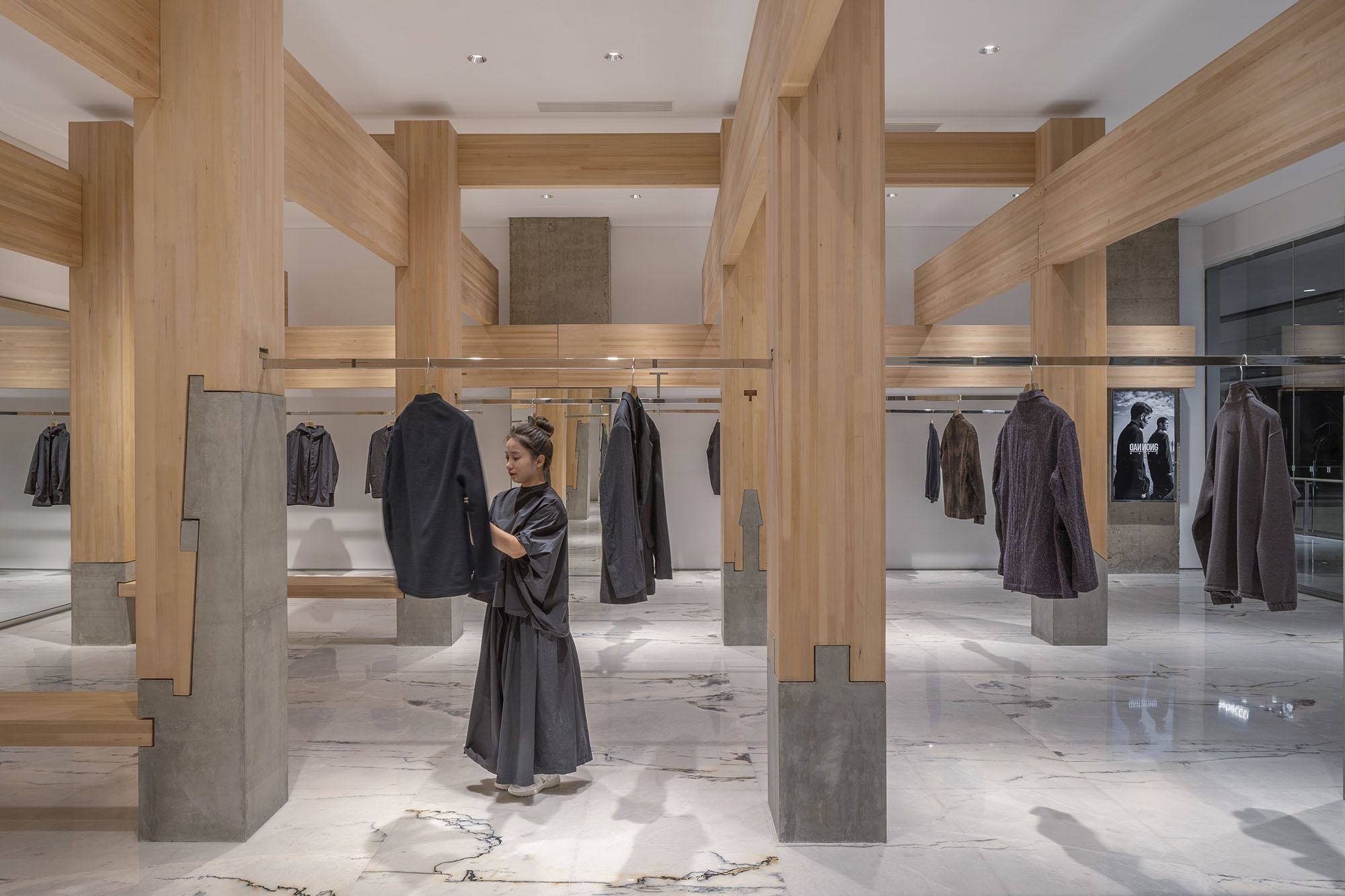
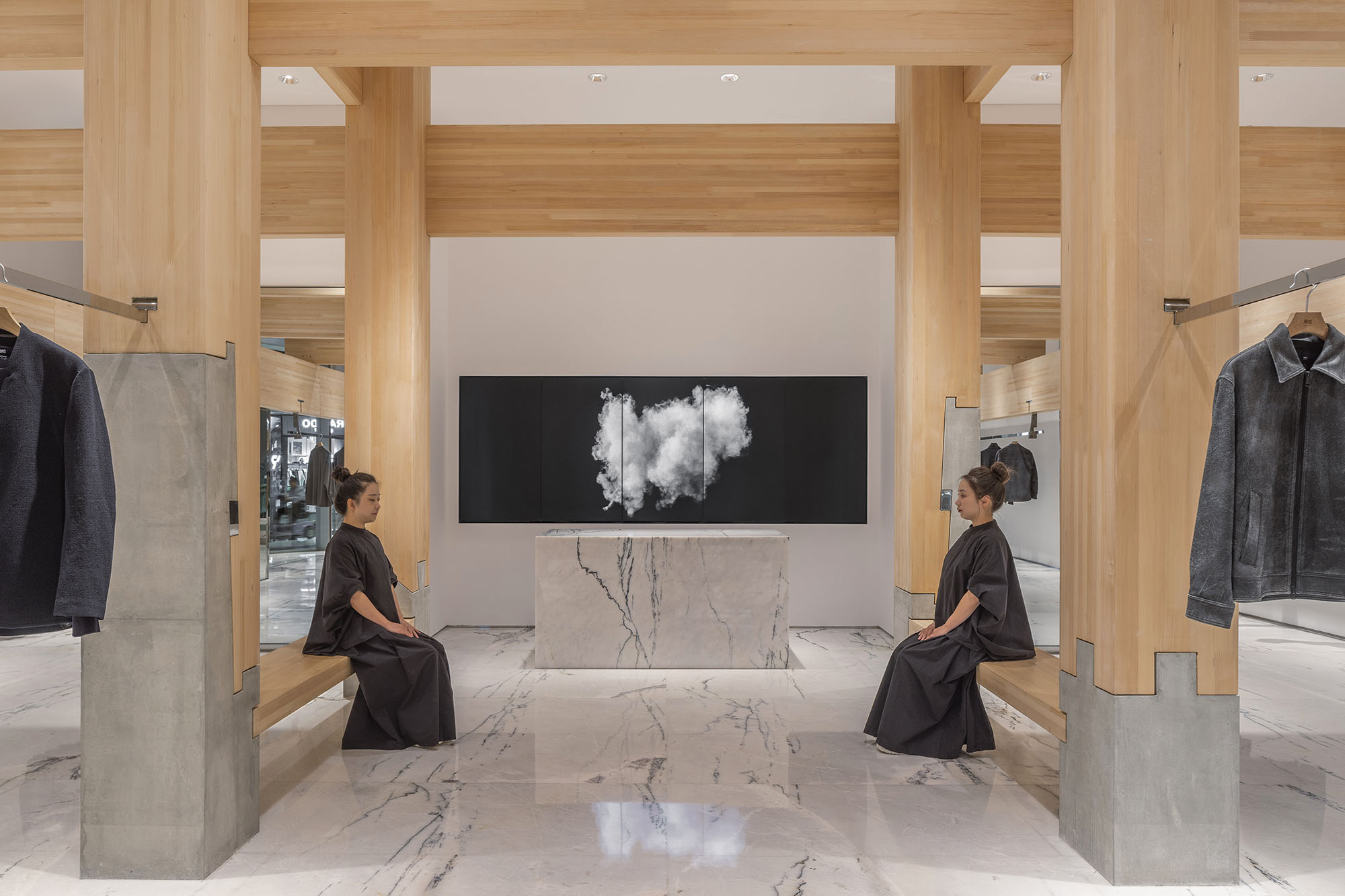
店舗を構成するグリッドは、既存の構造グリッドに基づいたスパンを採用している。中央の区画は入口から座席エリア、レジ、そしてメインビジュアルとなる背景へと続く軸線をつくり出し、両サイドの区画には衣服を展示するための長いハンガーロッドを配置した。吊り下げられた衣服は、梁と柱がもつ直線的な特性をより一層際立たせている。
©︎ Jin Weiqi
©︎ Jin Weiqi
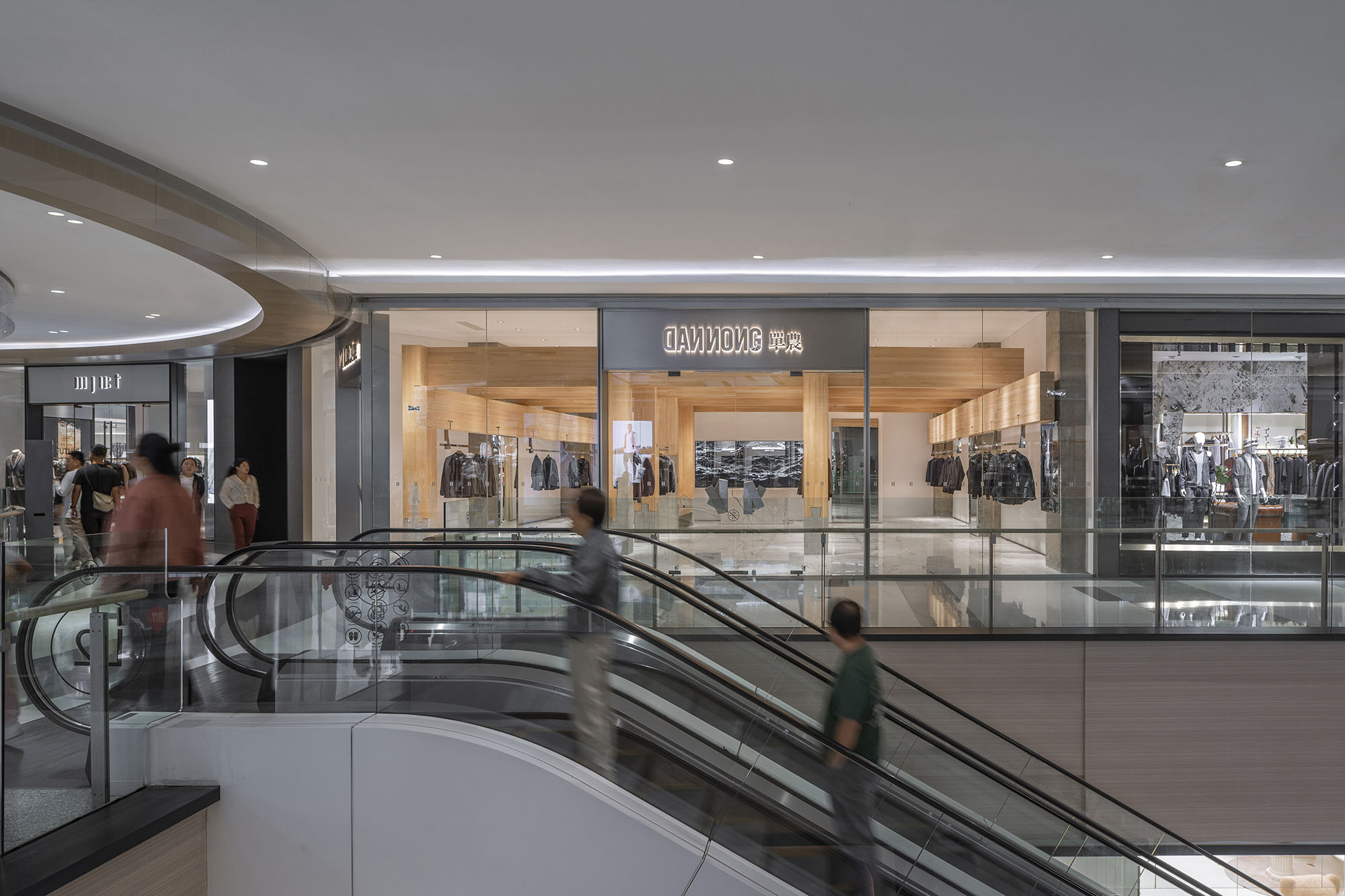
©︎ Jin Weiqi
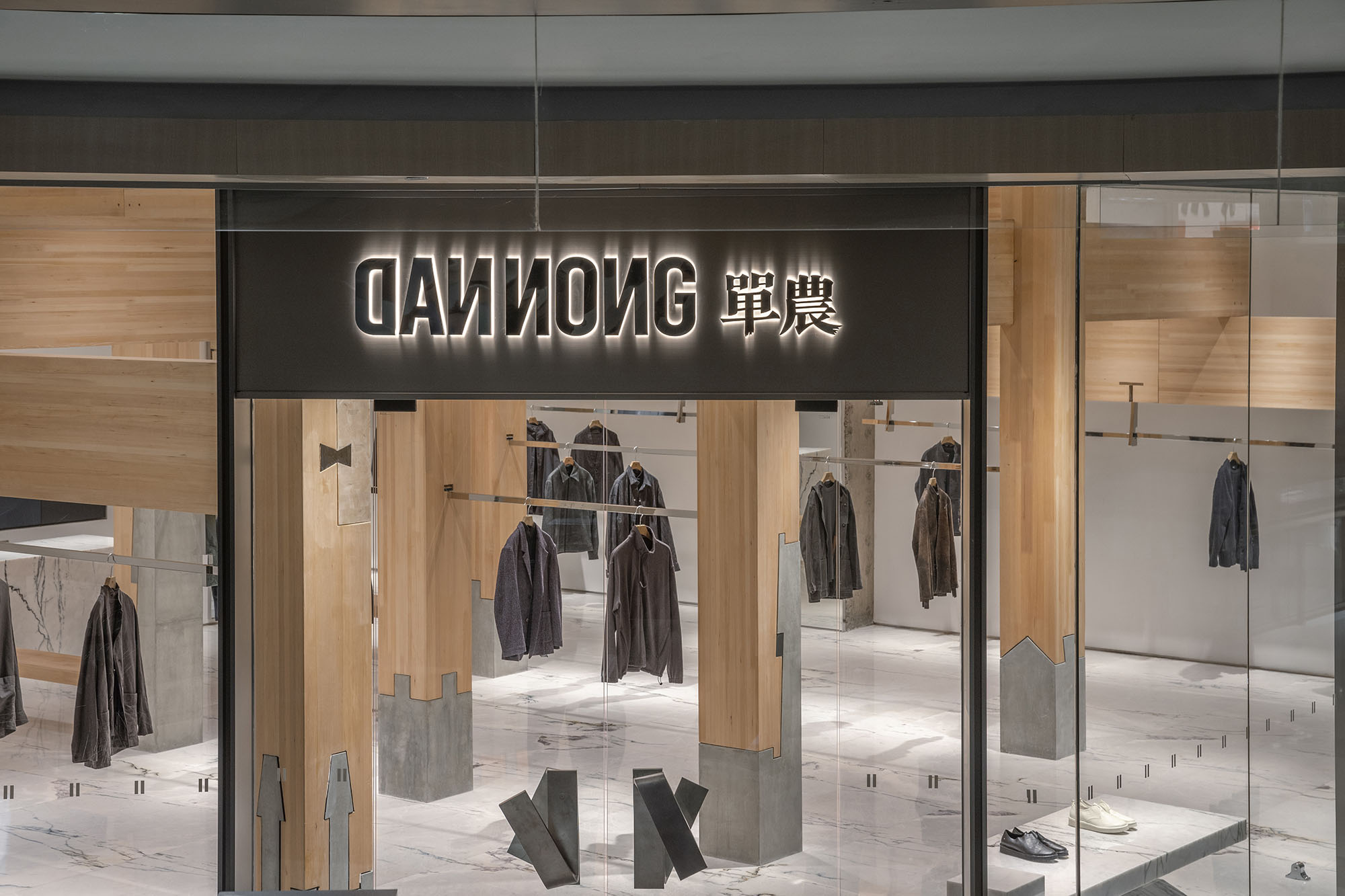
©︎ Jin Weiqi
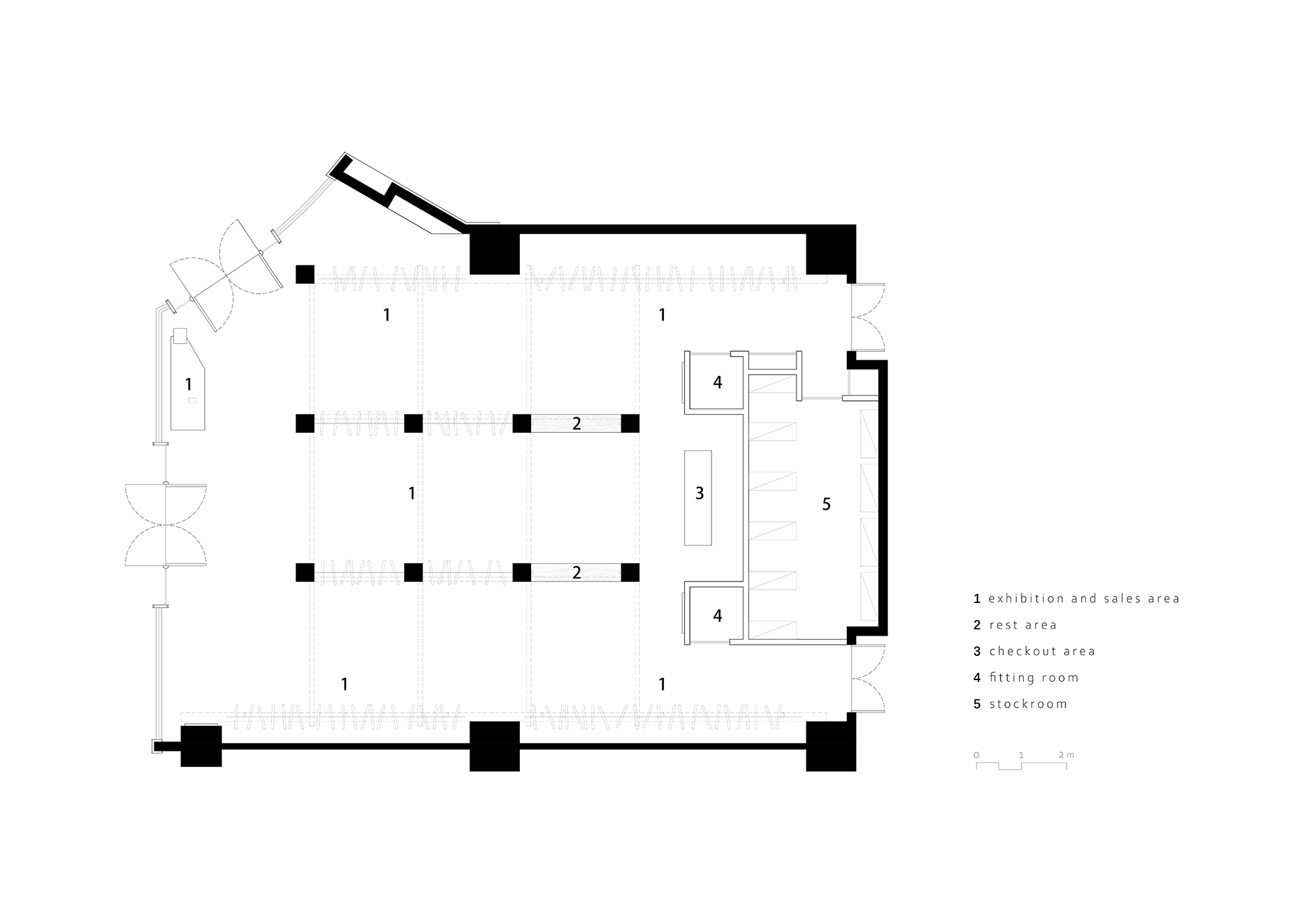
plan © LUO studio
南禅寺や佛光寺に代表される山西省の伝統木造建築は、その堅牢な質量と重厚な木材のプロポーションで知られる。この原理に倣い、本プロジェクトでも厚みのある角材を採用し、地域の建築言語へと呼応させた。
重厚な梁の下には、柔らかな布地が横たわる。重さと軽やかさ、粗削りな木材と繊細なファブリック。この対比が互いの素材感を高め合っている。
「巨大な梁が繊細な物を吊るす」かのようなこの構成は、「細部に至るまで丹念につくり上げる」というDANNONGの精神とも静かに調和している。
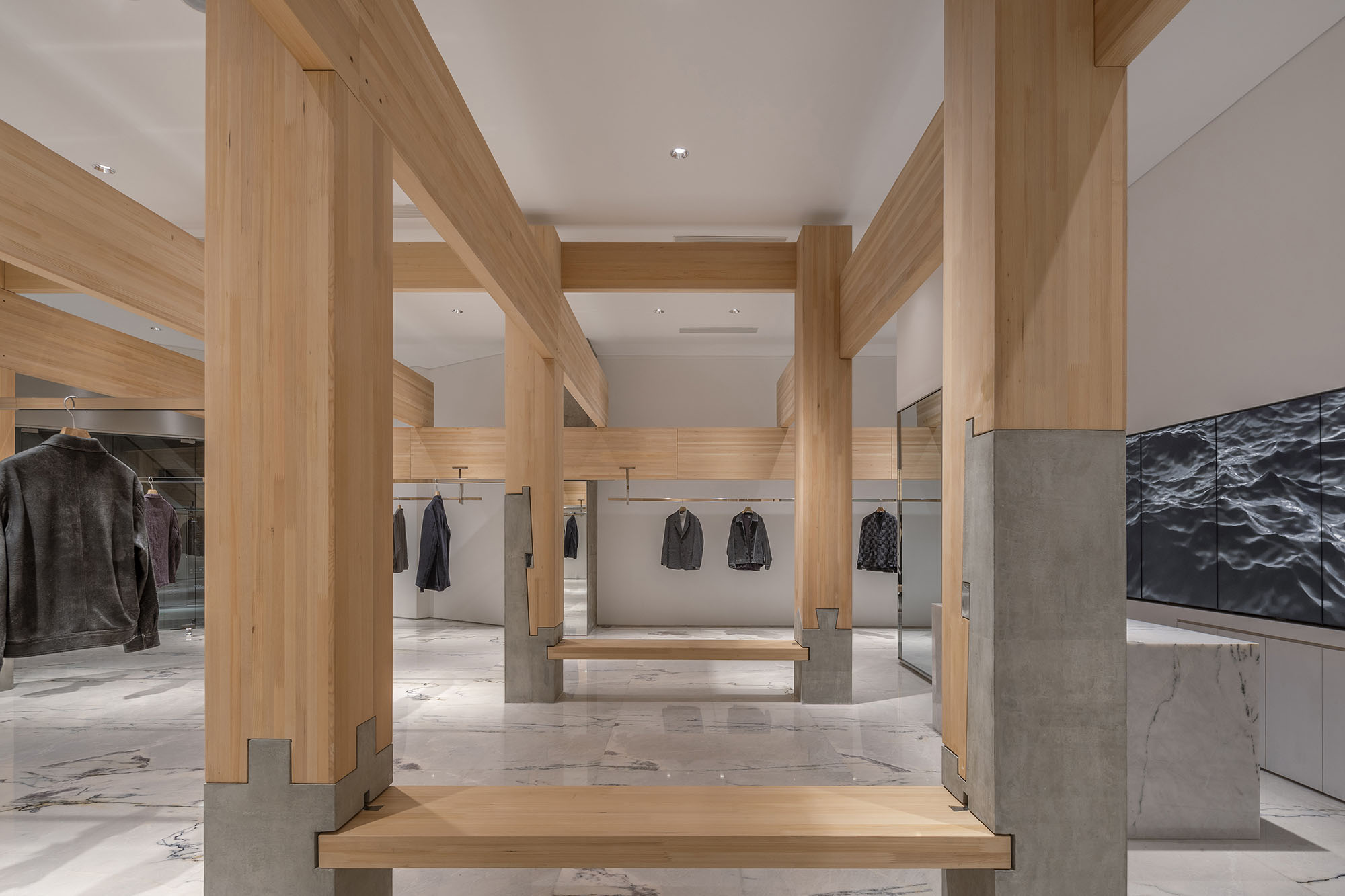
©︎ Jin Weiqi
©︎ Jin Weiqi
©︎ Jin Weiqi
©︎ Jin Weiqi
©︎ Jin Weiqi
継手・仕口の知恵:ほぞ継ぎの技法とその論理
「ほぞ継ぎ」は東洋の知恵と職人技を象徴する技法であり、産業革命以前には文化的意義だけでなく、構造上の必然性をも担っていた。その柔軟な接合部は地震に対して驚くべき耐震性を示し、建具などの小規模な木工においては、湿気による膨張・収縮を効果的に吸収する役割も果たす。
©︎ Jin Weiqi
©︎ Jin Weiqi
©︎ Jin Weiqi
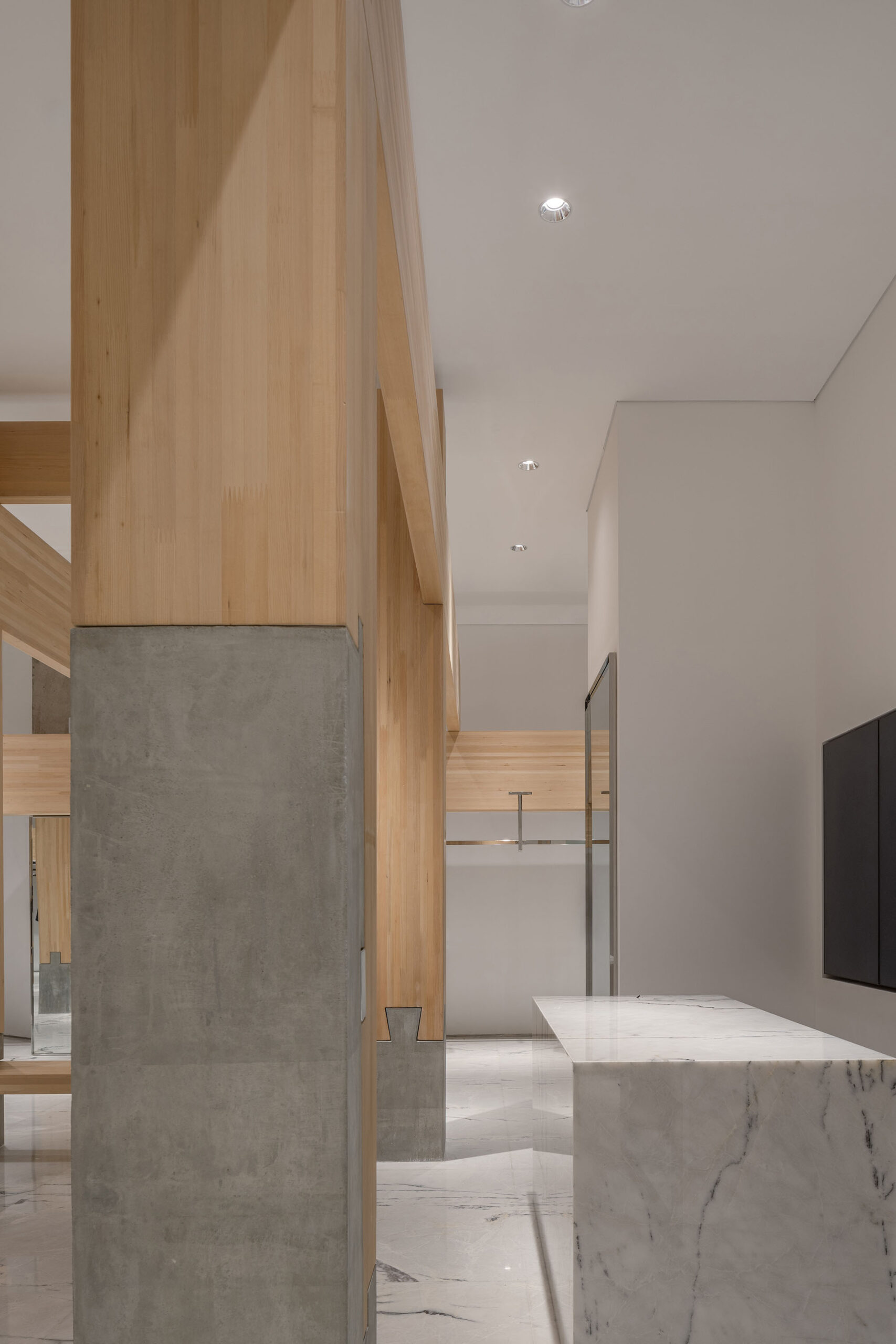
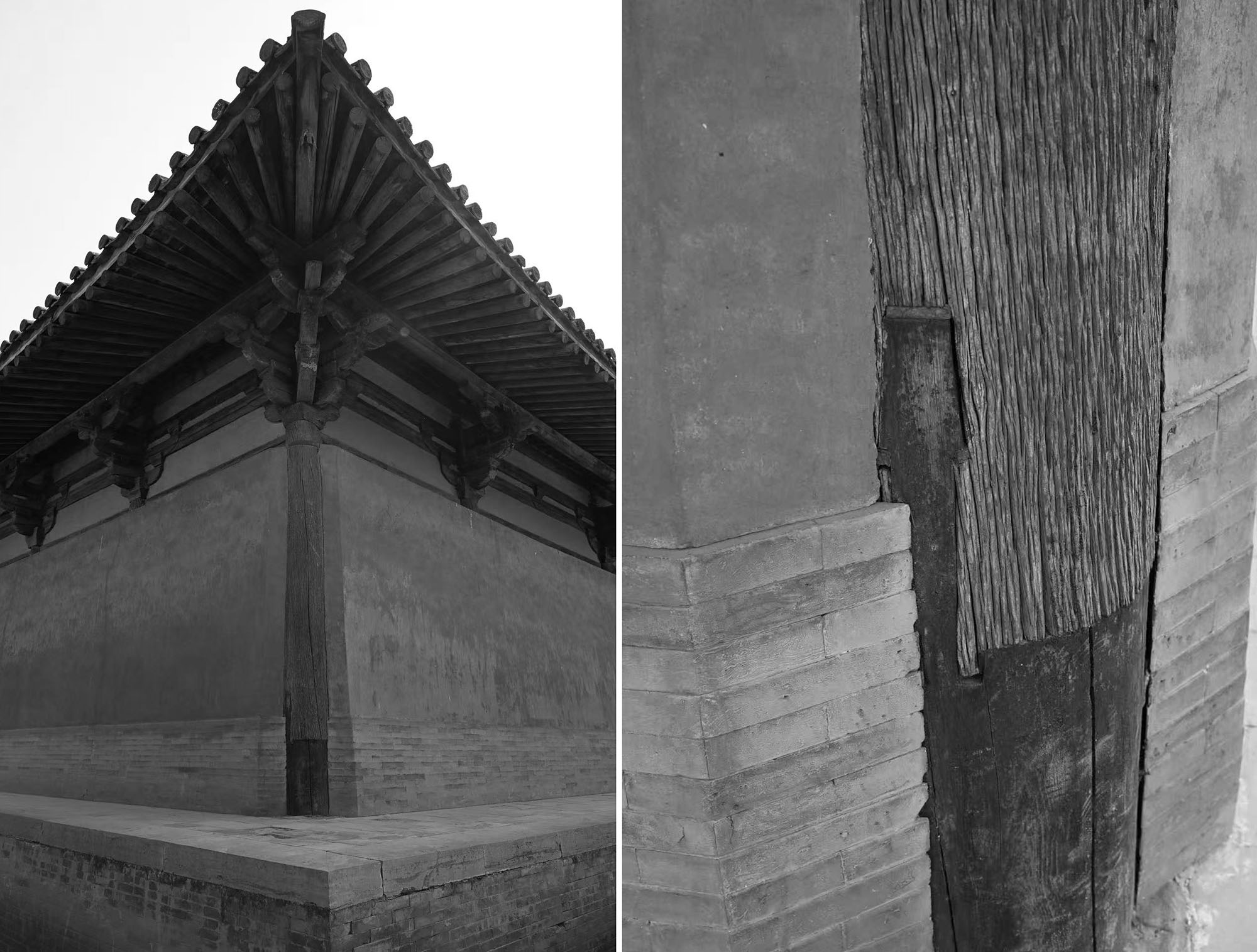
例えば南禅寺では、唐代以降(宋代とされる)に虫害を受けた外壁北東隅の柱を「蟷螂枘(カマキリほぞ)」と呼ばれる技法で修復している。シミュレーションによると、その独特な形状は横方向からの挿入を可能にし、隅部の修復に最適であることが示されている。これは、ほぞ継ぎという機構がもつ独創的な論理の好例と言えるだろう。
©︎ Jin Weiqi
©︎ Jin Weiqi
伝統技法を現代に落とし込む3つの戦略
本空間においても、以下の3つの戦略を通じて、この「ほぞ継ぎの技術」を具現化する設計を追求した。
1. 柱基部と接合部インサート
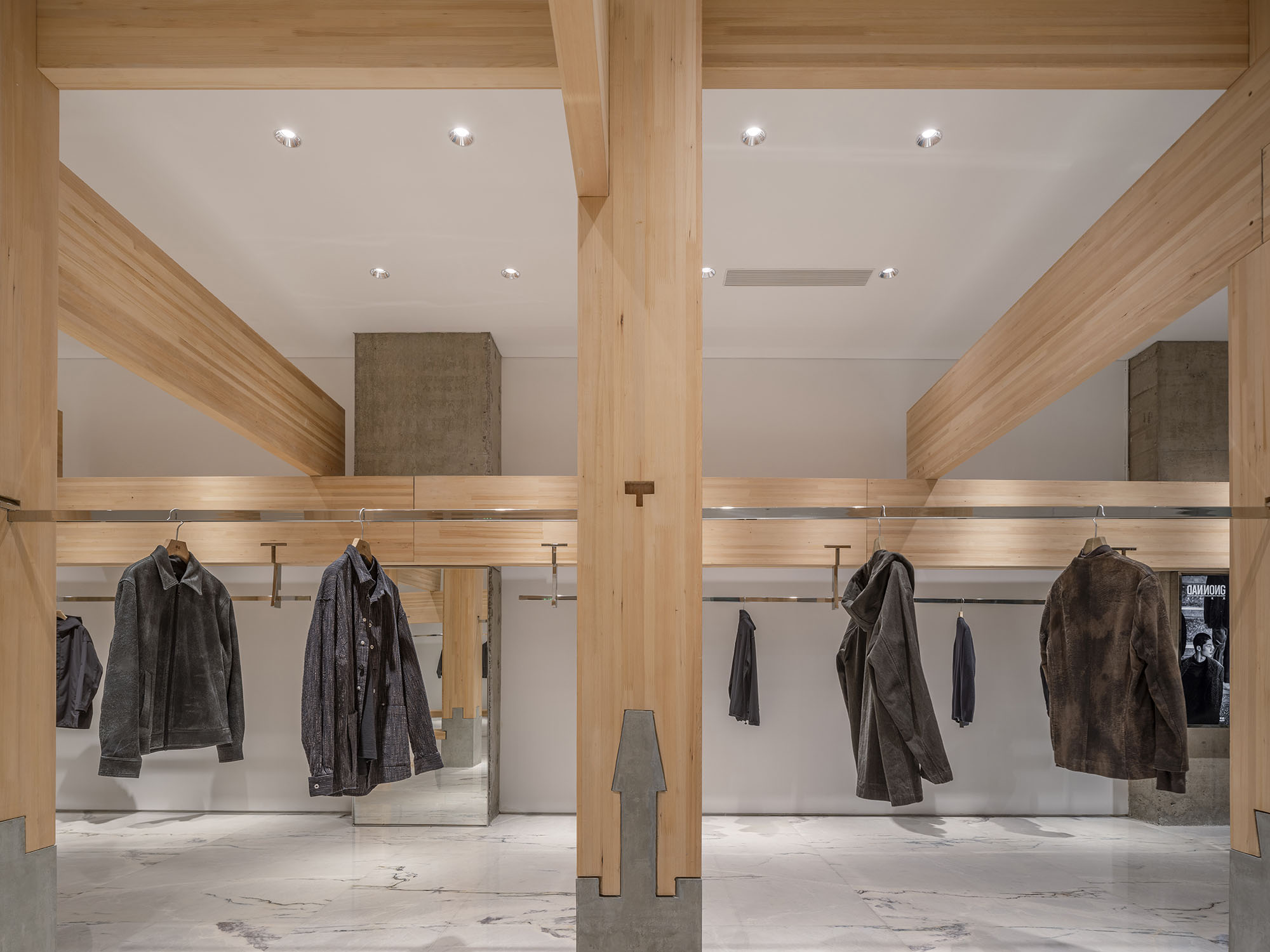
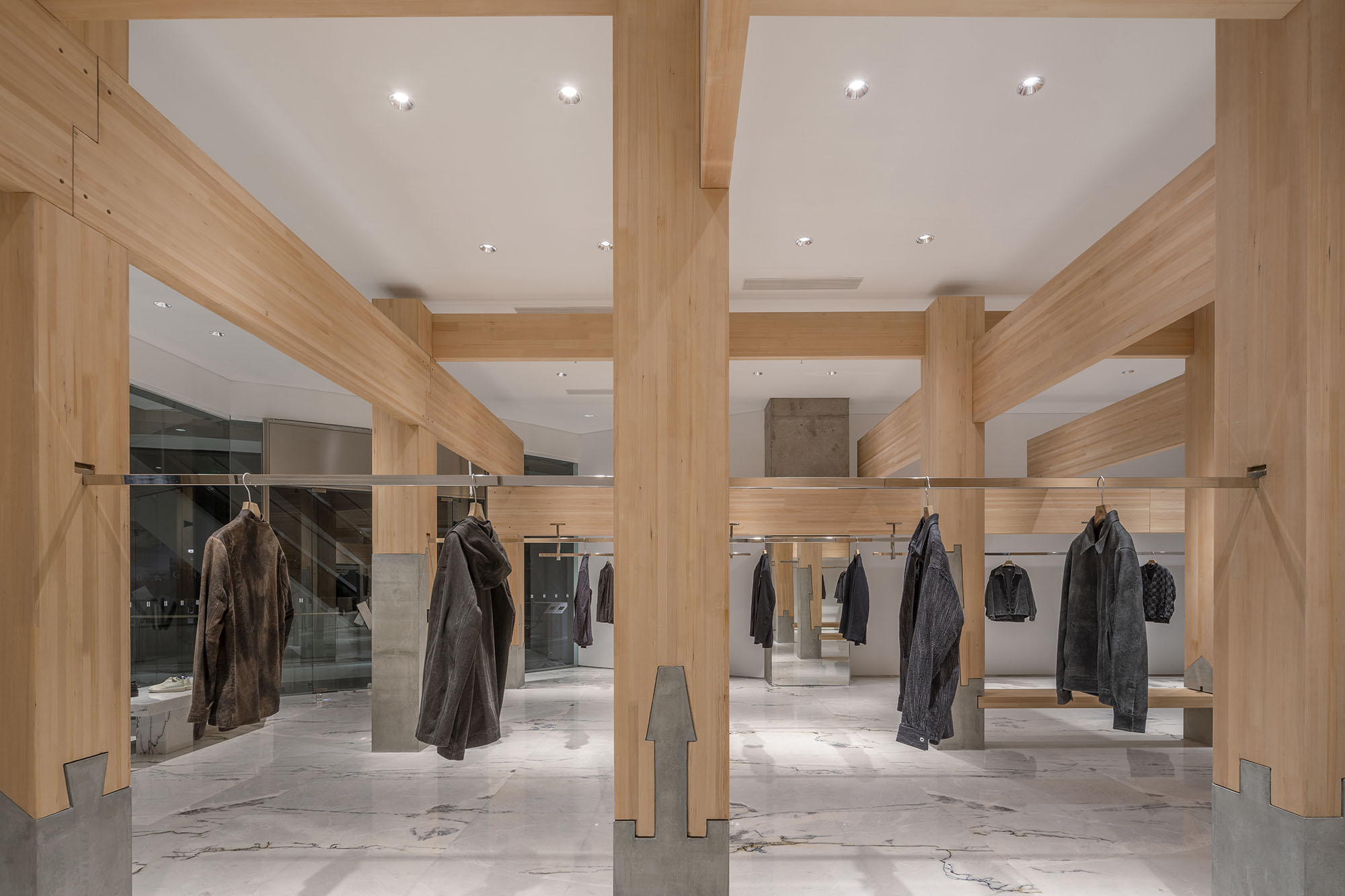
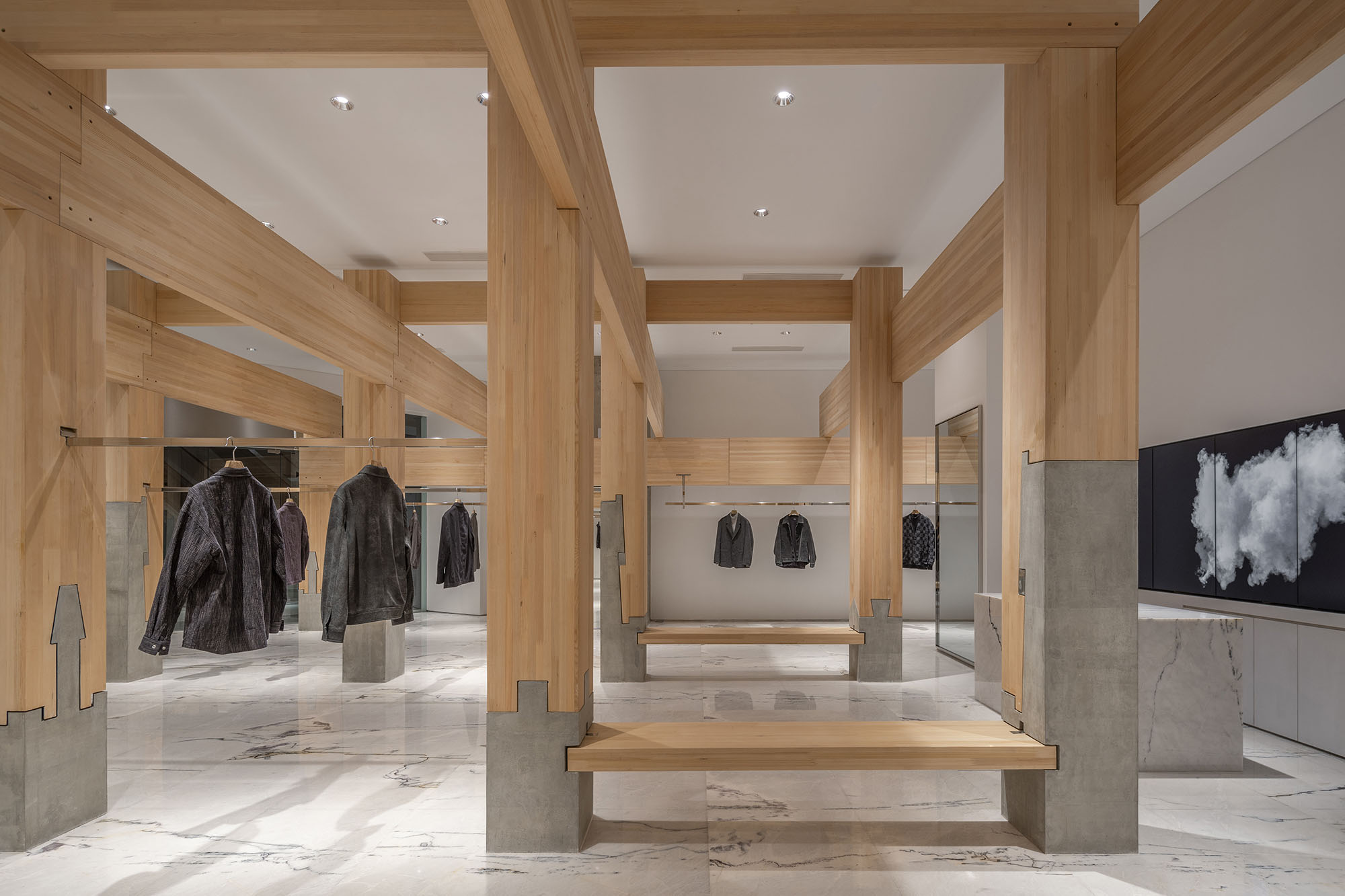
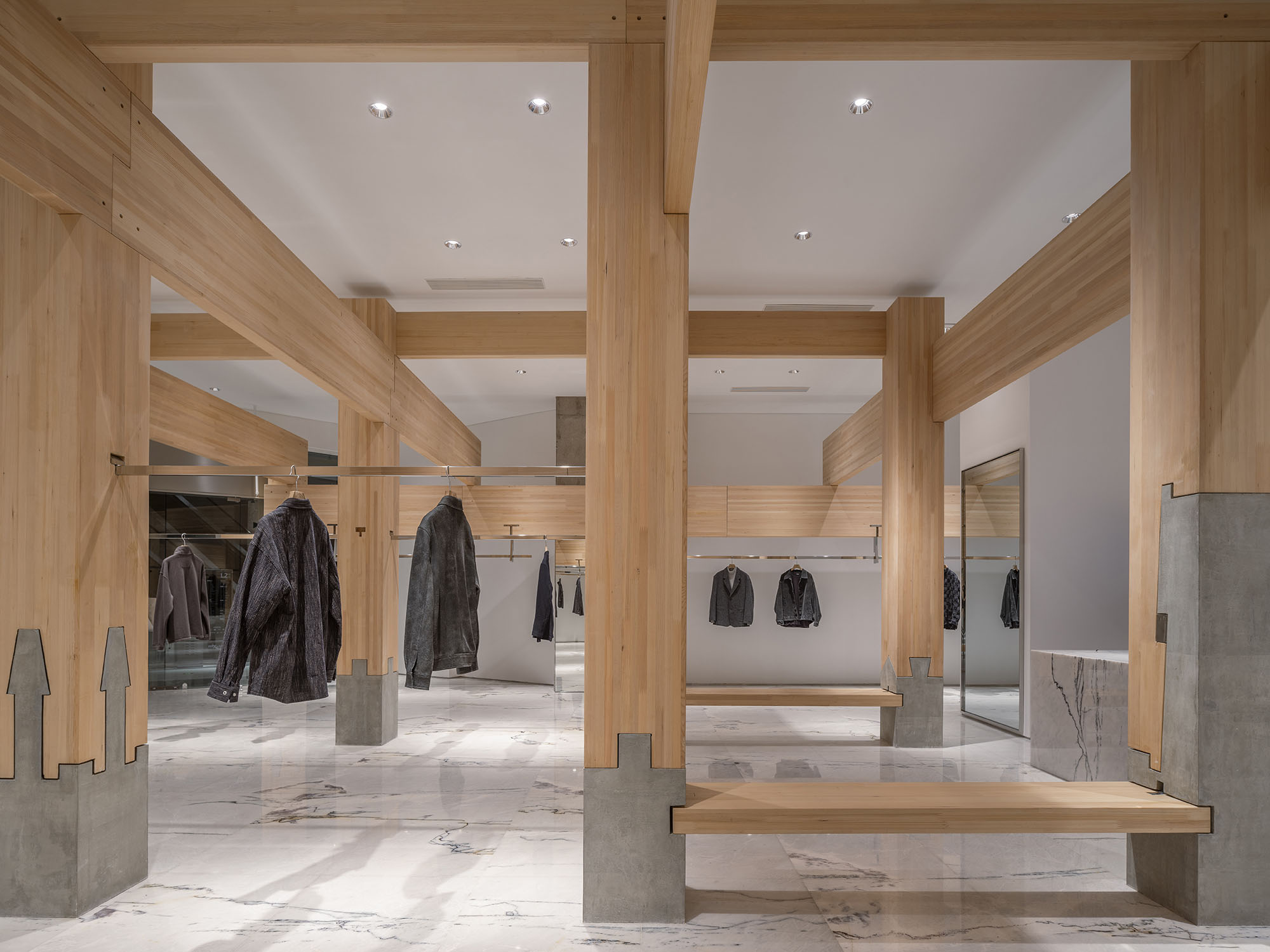
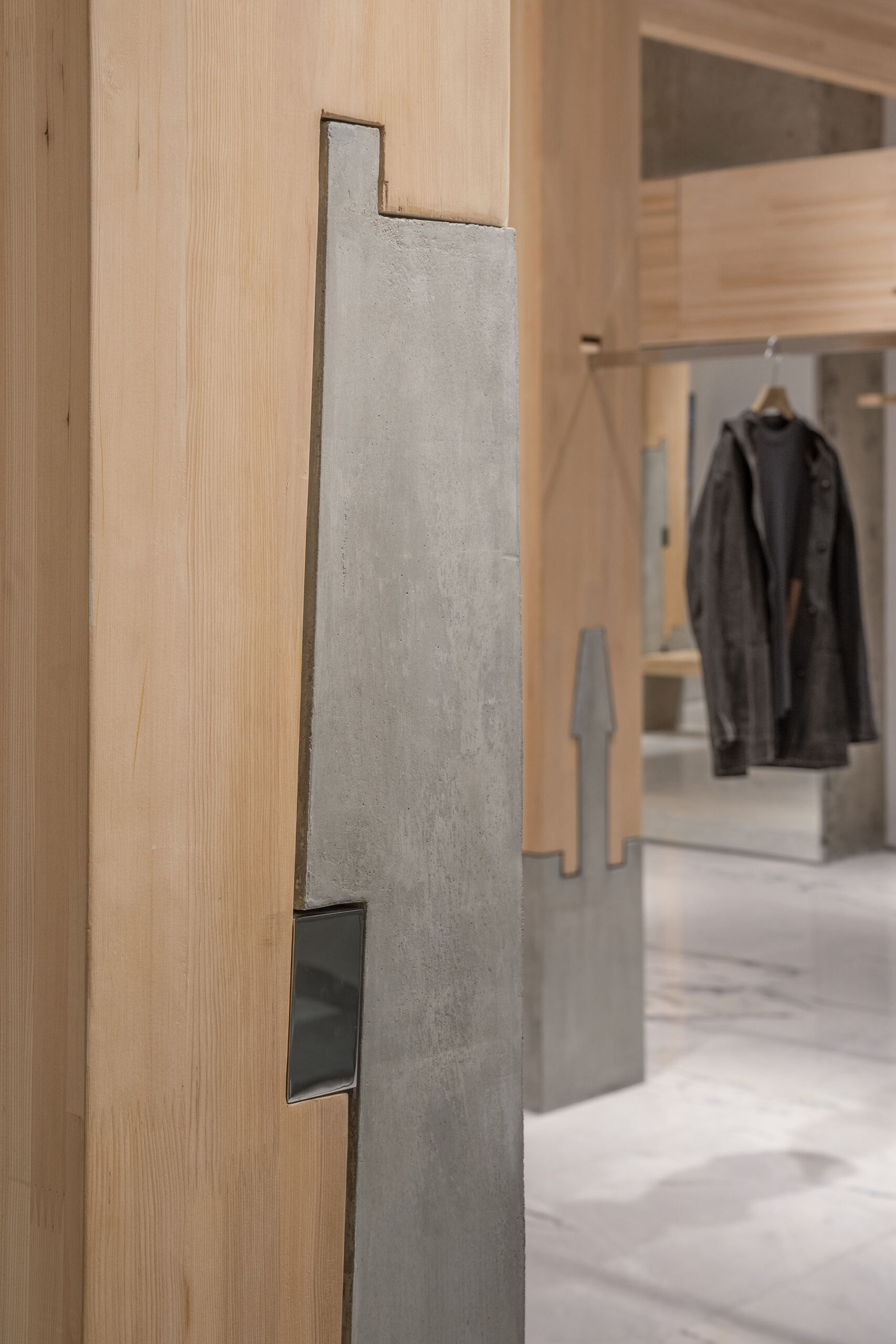
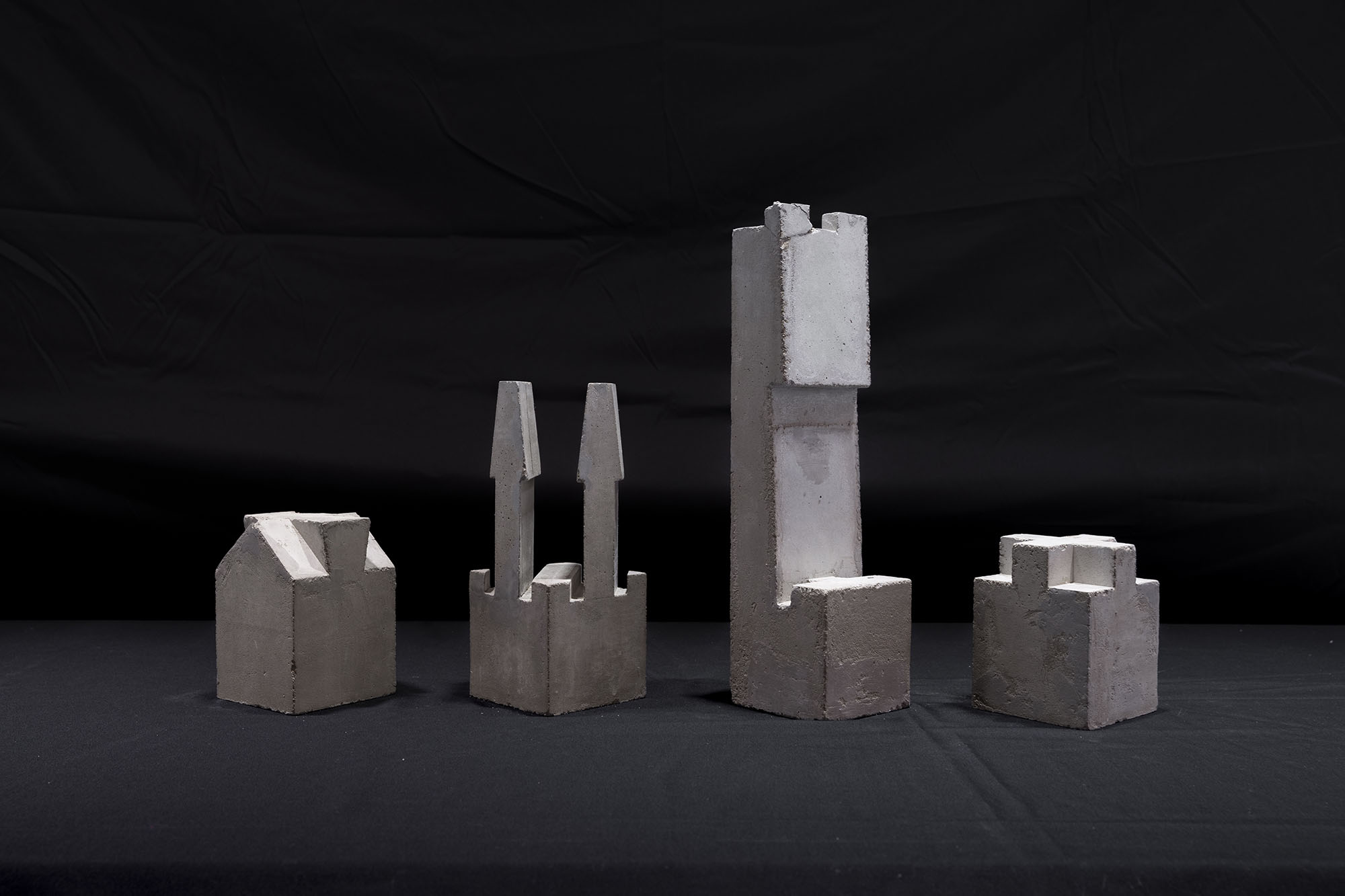
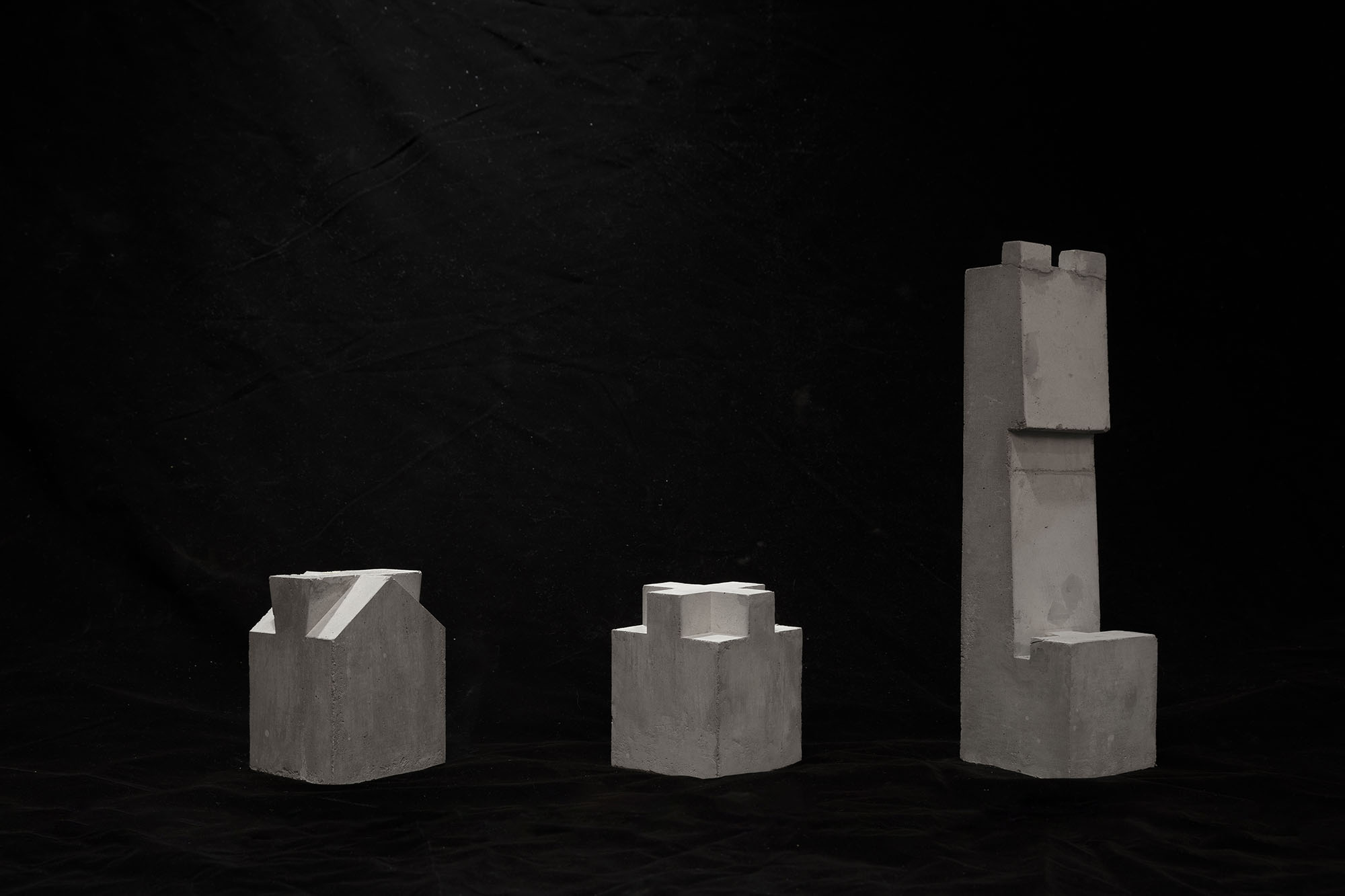
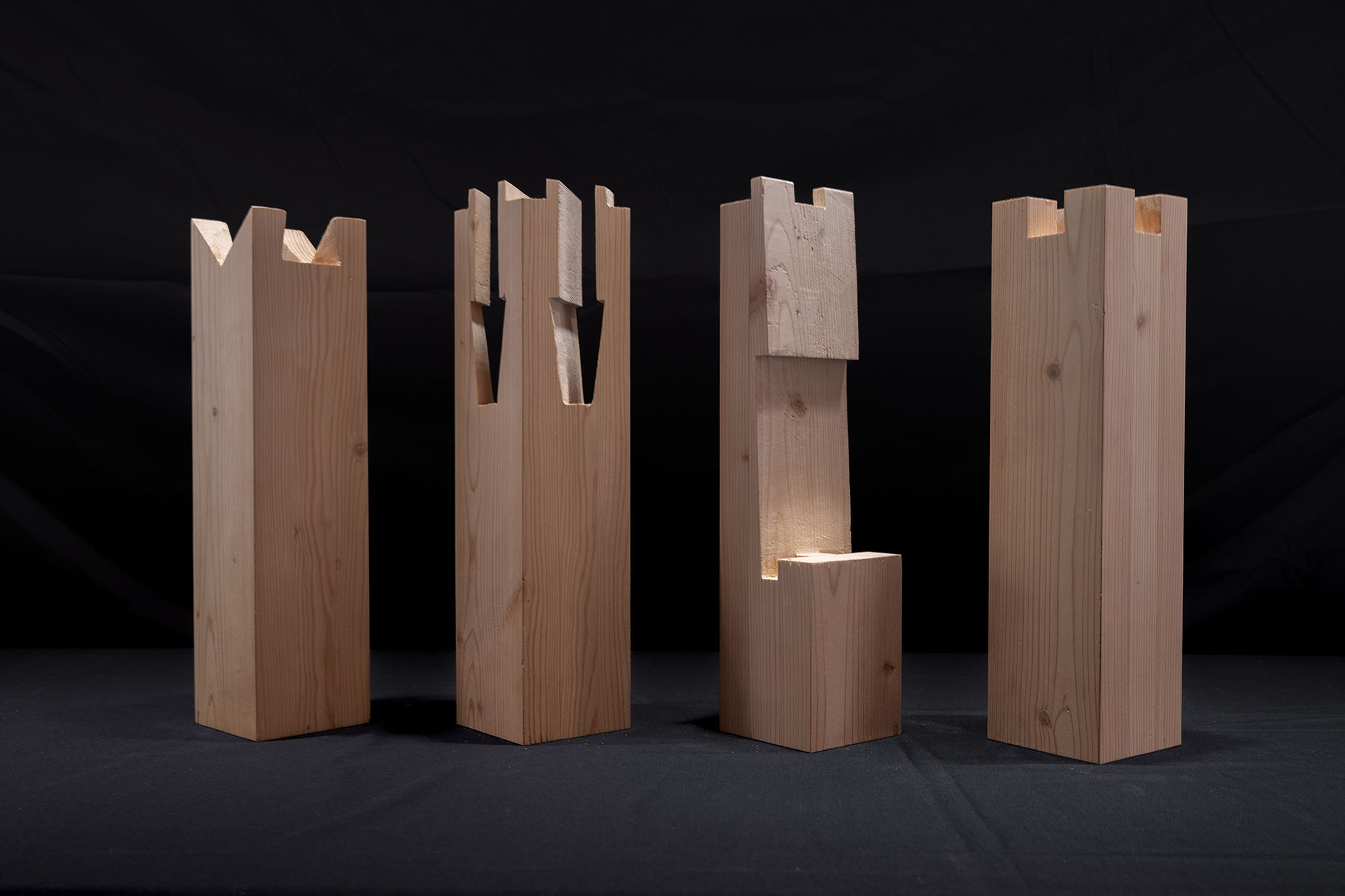
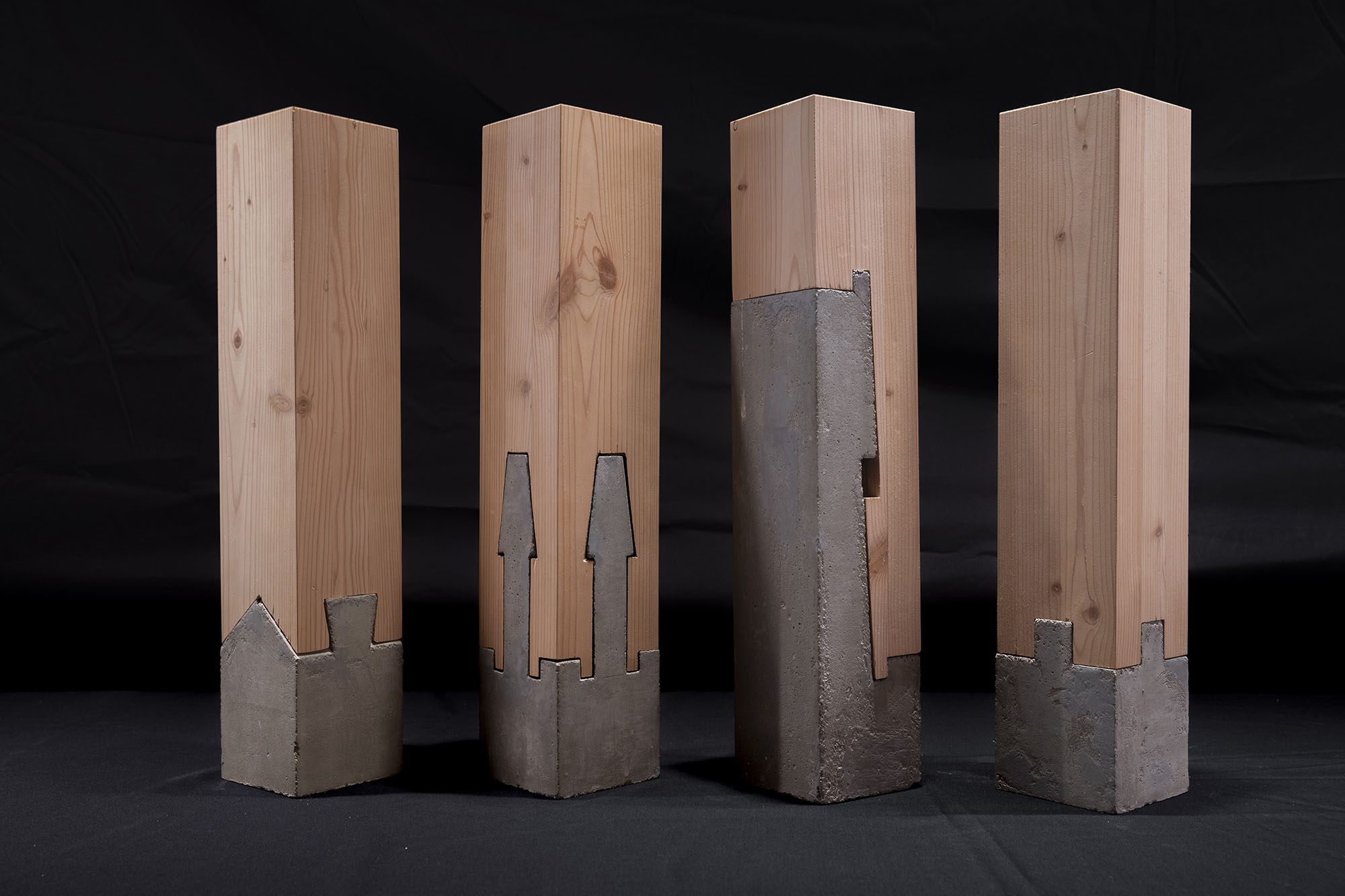
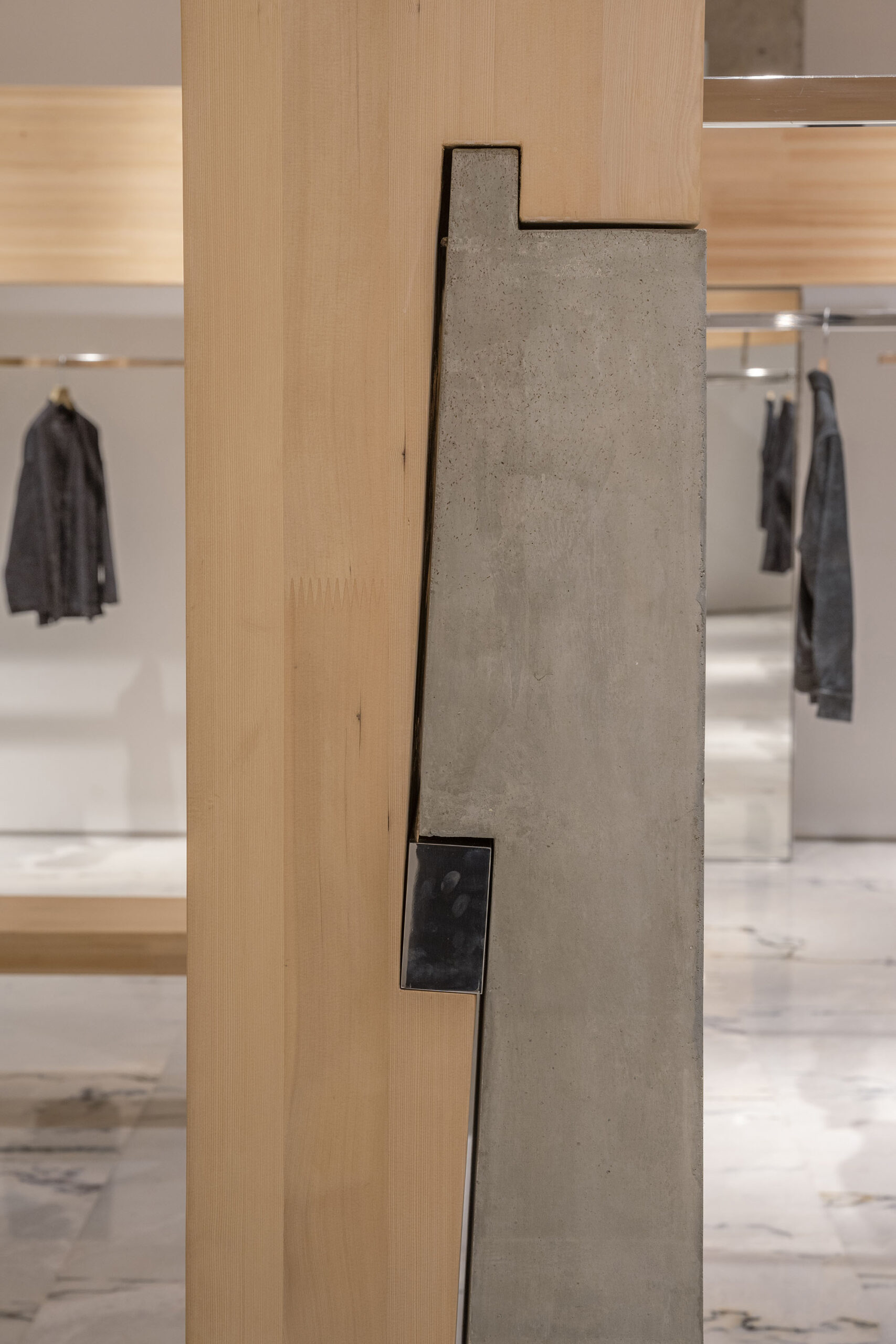
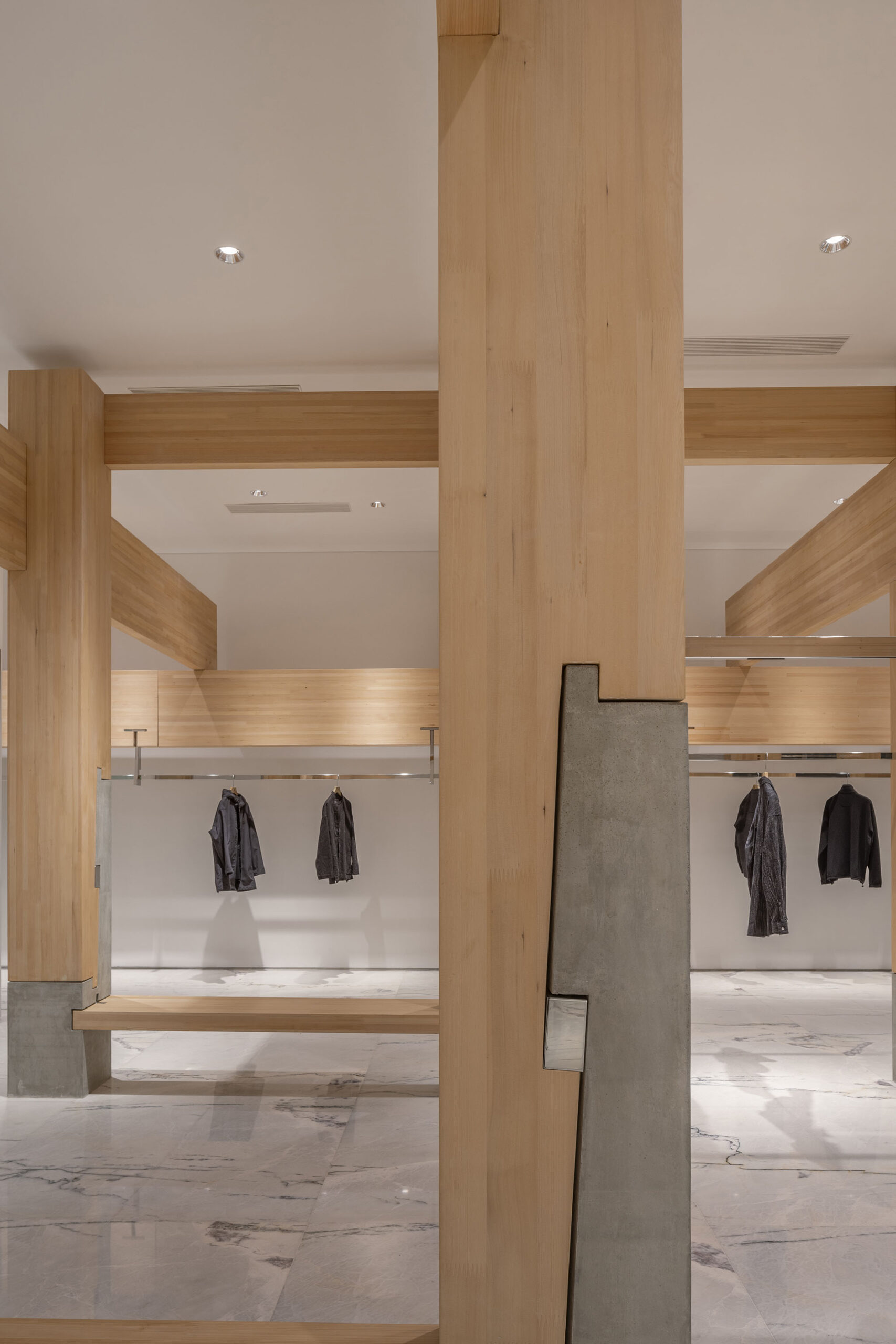
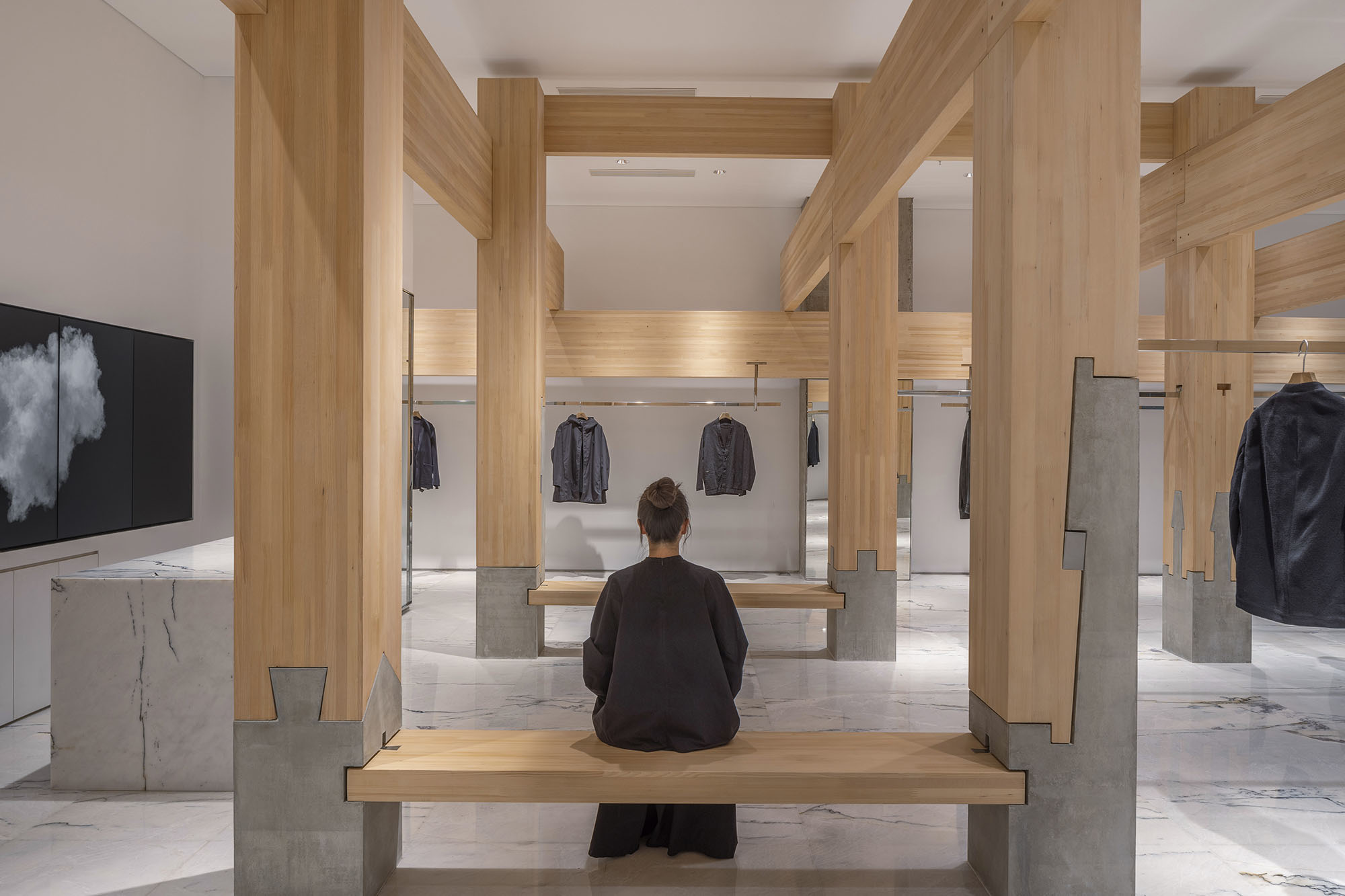
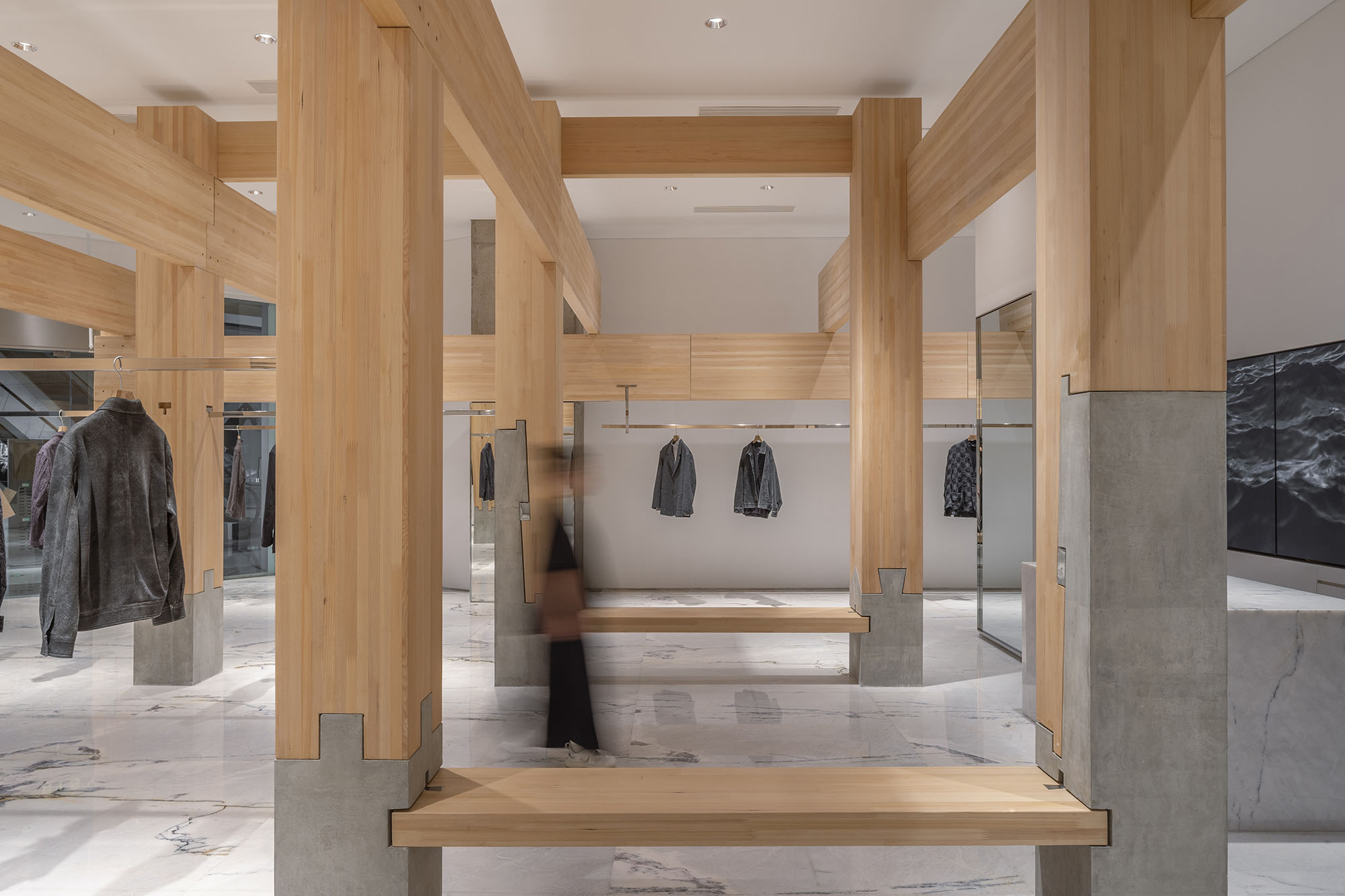
さまざまな接合システムに関する広範なリサーチと模型スタディを経て、4種類の接合方式を選定した。南禅寺に見られる横滑り式の「カマキリほぞ」、低い位置での垂直な「相欠き継ぎ」、高い位置で中心ピンを用いる「掌(てのひら)ほぞ」、そして45度の角度で挿入する必要がある複雑な仕口である。これら4つのシステムは、それぞれ形態、論理、設置順序が異なり、職人技の豊かなレイヤーを空間に付与している。
©︎ Hong Lun
©︎ Jin Weiqi
©︎ Jin Weiqi
©︎ Jin Weiqi
©︎ Jin Weiqi
2. 柱と梁の接合部
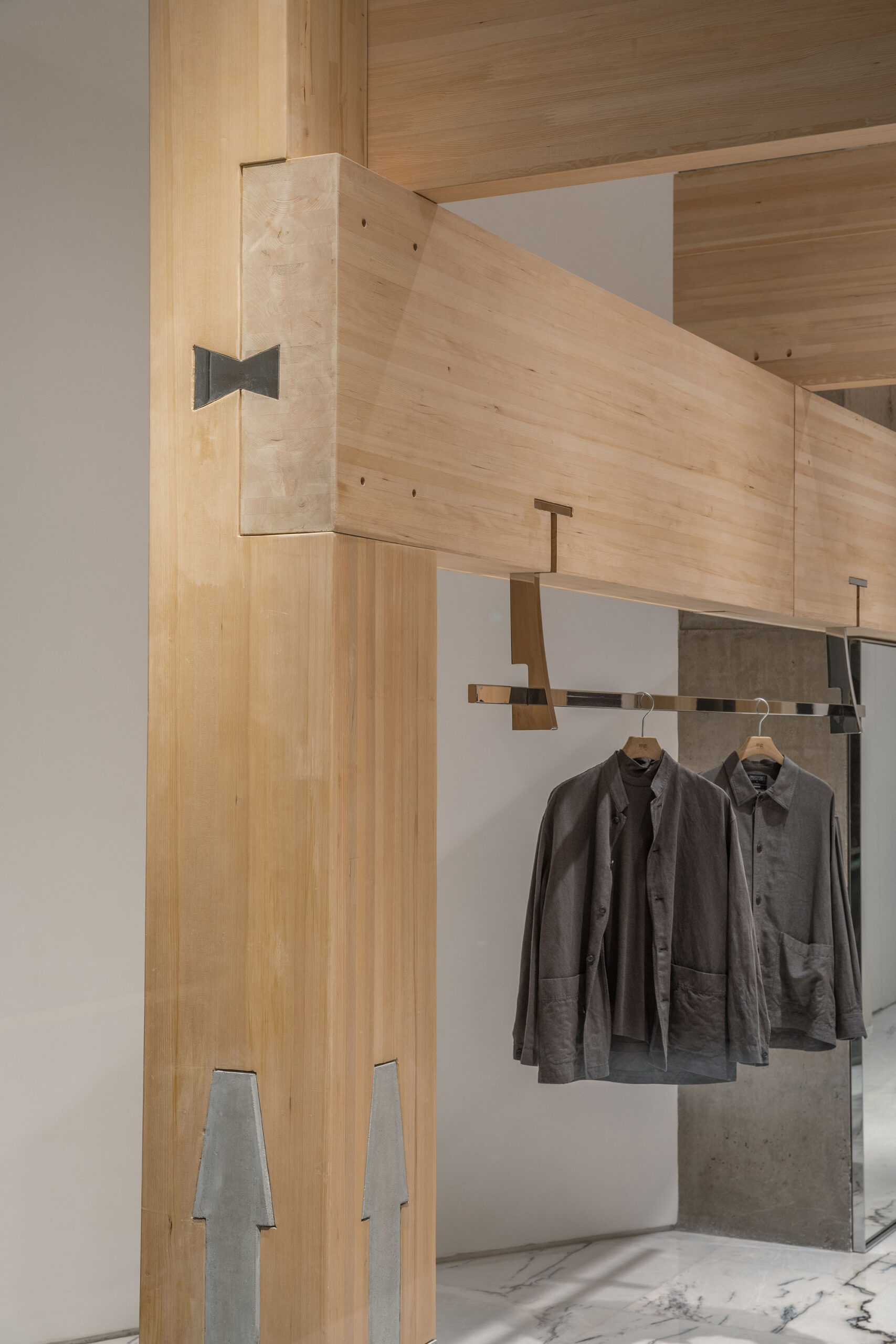
伝統的な架構において、柱と梁の接合にほぞ継ぎを用いないのが一般的だが、本プロジェクトでは構造的整合性を保つため「半重ね継ぎ(相欠き)」を採用した。また、輸送・据付上の制約から梁を分割する必要があったが、その分割部の接合にも同様に半重ね継ぎを施している。これにより、構造の可読性を確保しつつ、工芸的な完全性を維持した。
©︎ Jin Weiqi
©︎ Jin Weiqi
©︎ Jin Weiqi
3. 2次的要素へのほぞ継ぎ技術の統合
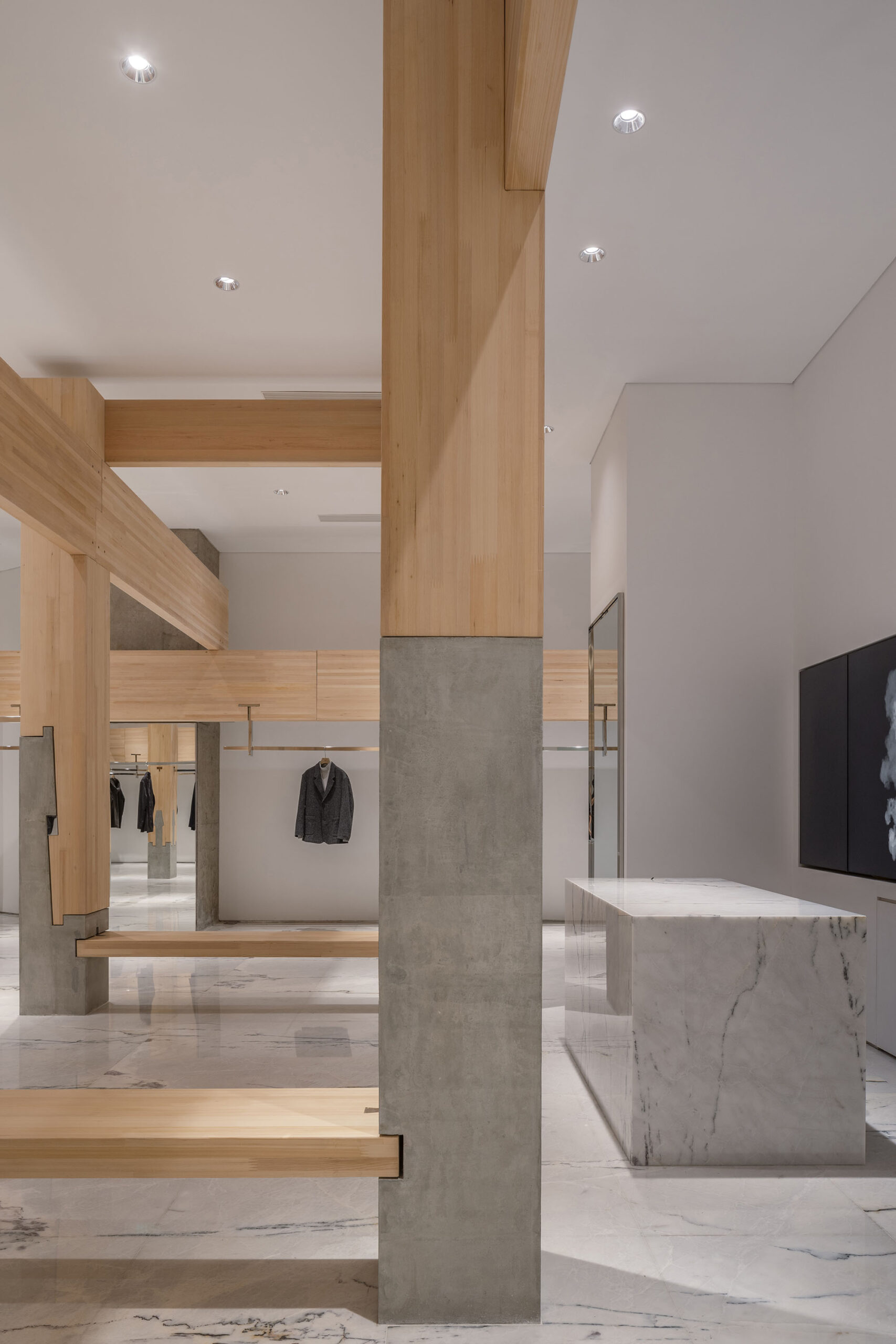
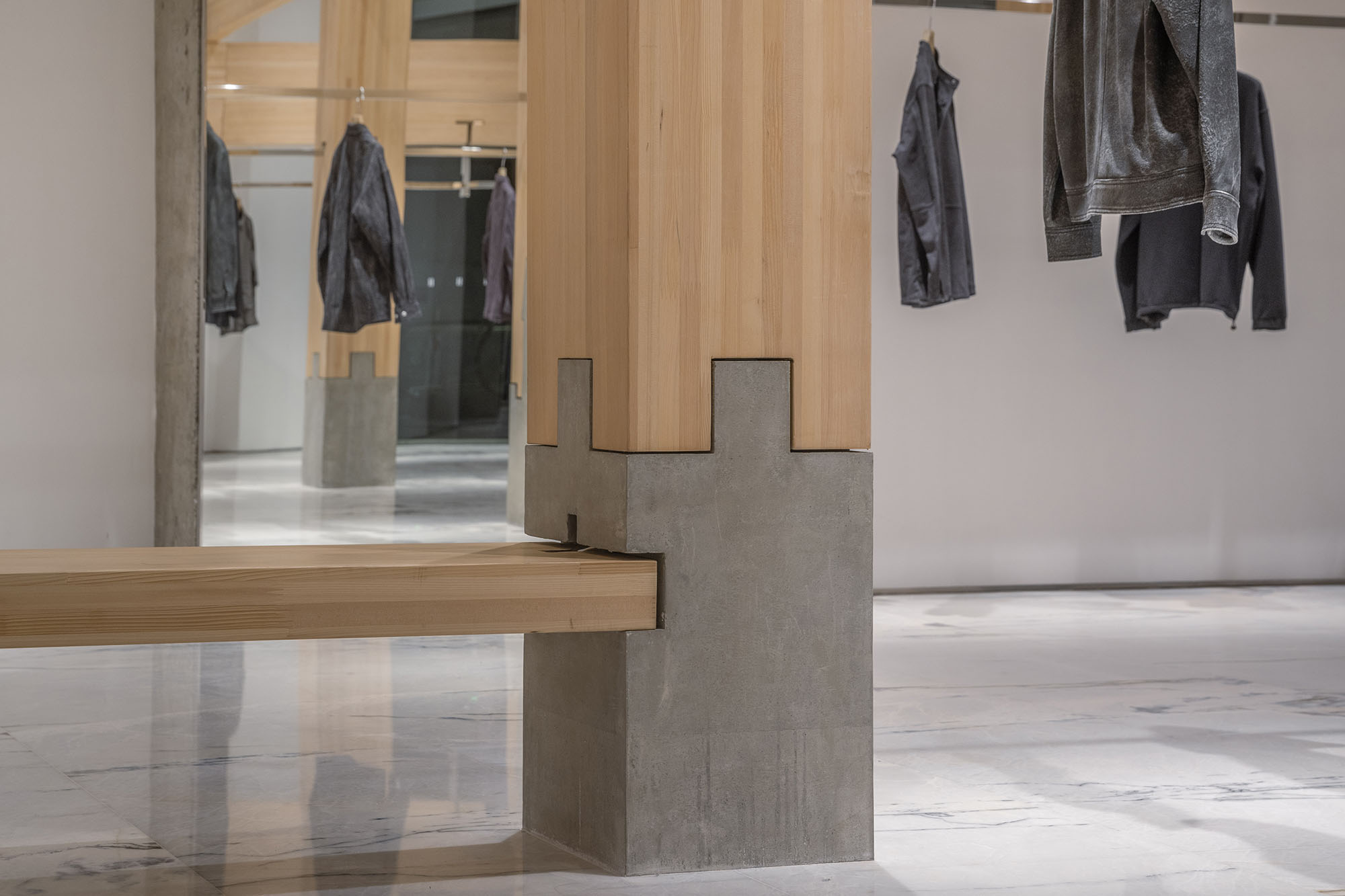
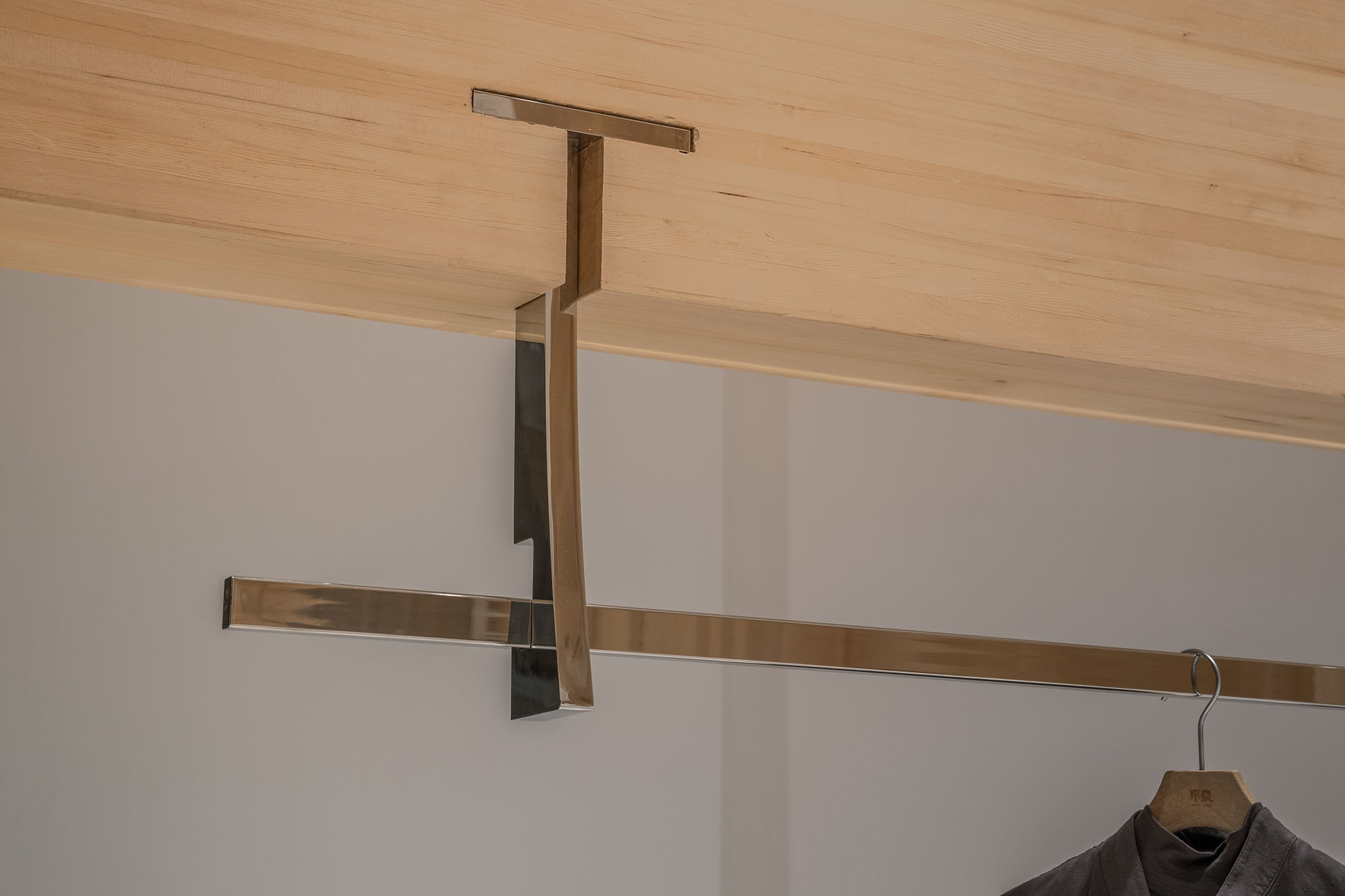
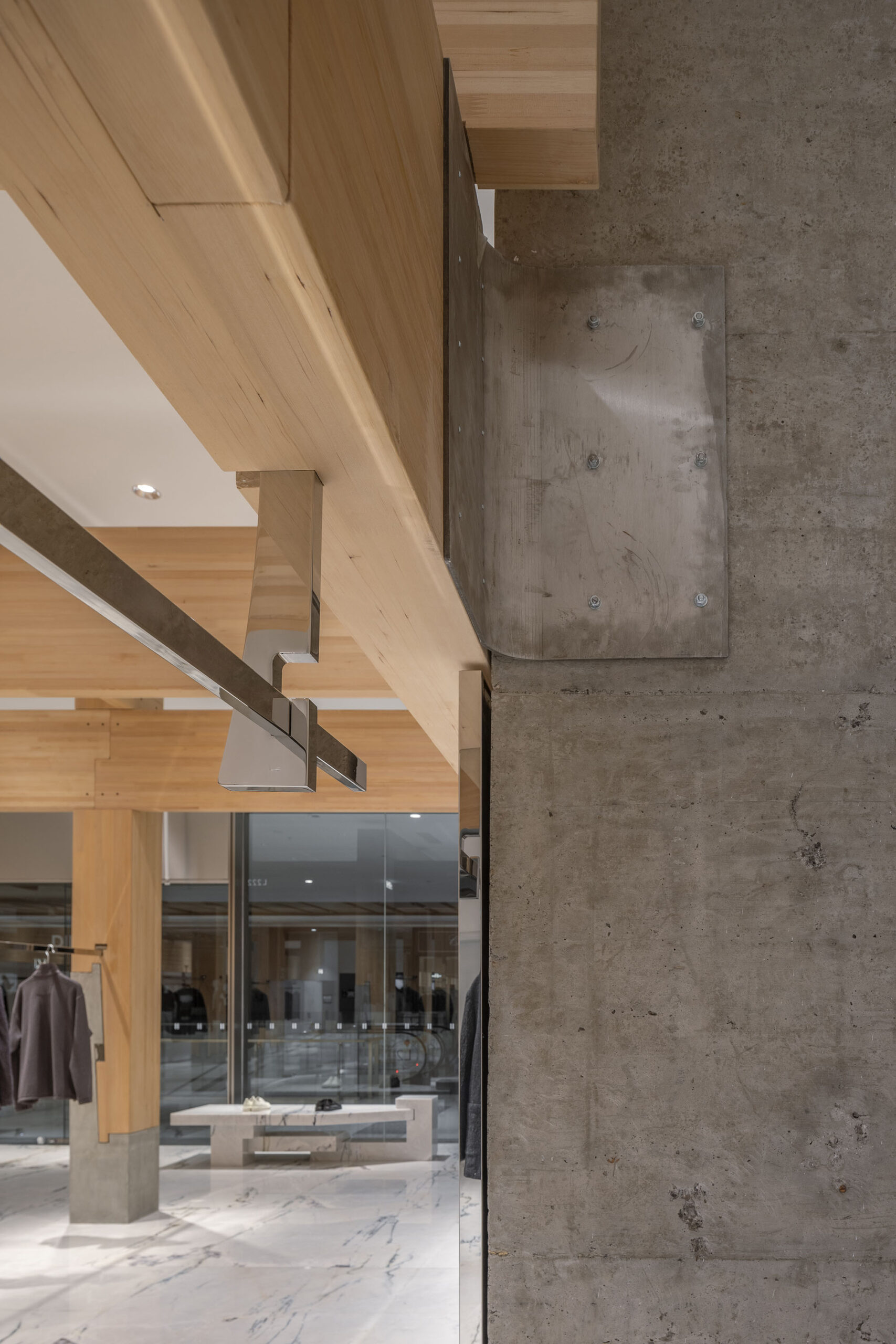
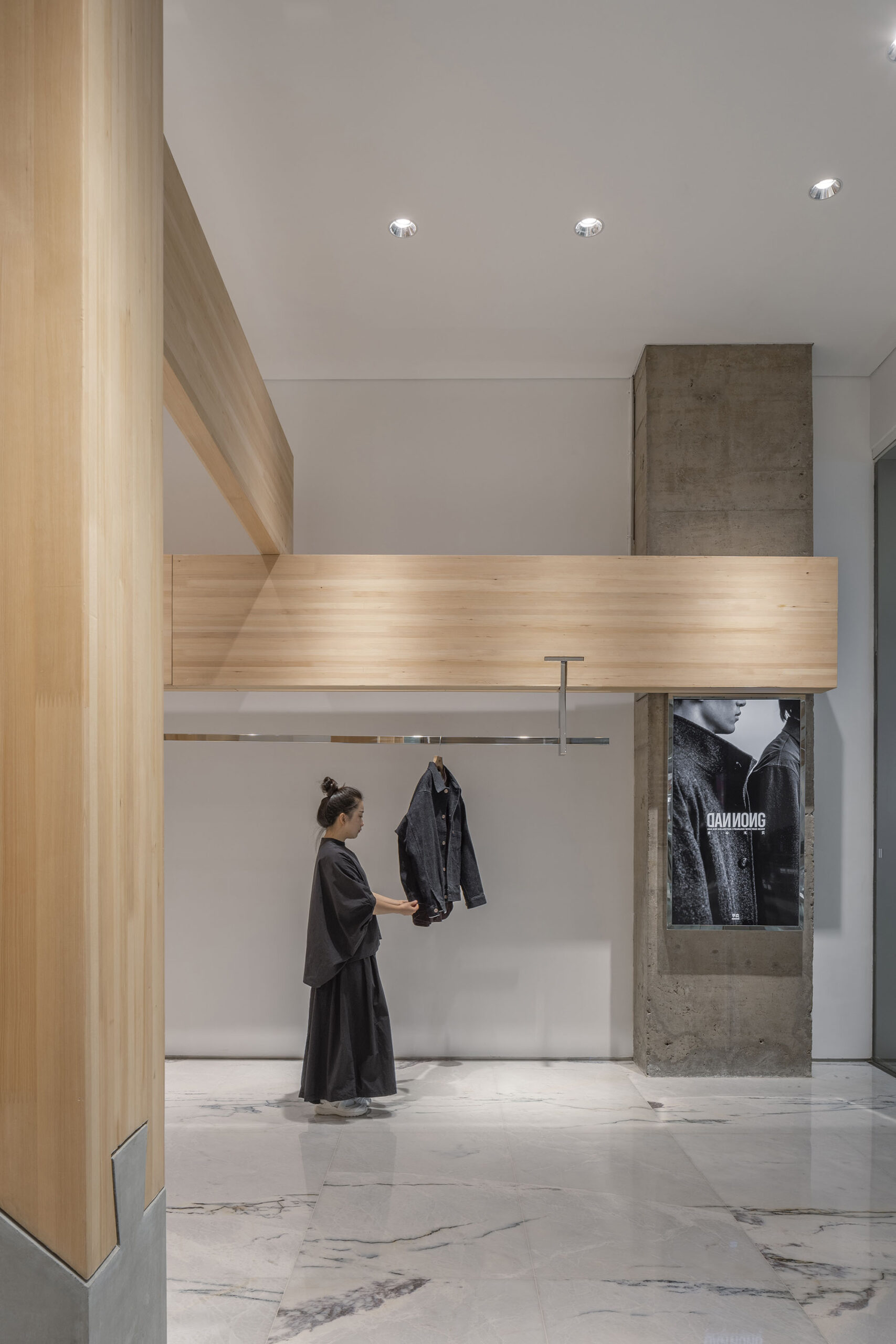
東洋の伝統木造建築は、家具と構造論理の統一性を重視する。本店舗では、座席要素をコンクリート柱の窪みにほぞ継ぎの要領で接合し、構造システムの一部として統合した。同様に、ハンガーロッドも柱に予め穿ったほぞ穴を利用し、金属棒をほぞのように挿入することで固定している。これにより、マクロな構造からミクロなディテールに至るまで、一貫した構築言語が生み出されている。
©︎ Jin Weiqi
©︎ Jin Weiqi
©︎ Jin Weiqi
©︎ Jin Weiqi
日常の中の儀式:空間、衣服、そして生
商業空間とは究極的には人間のための空間である。「都市」が囲いと集いを意味し、「市場」が交換と消費を意味するように。しかし、物質的豊かさを極めた現代において、「衣服をまとう」という行為は、単なる機能的な行動を超え、物質から精神へと至る道筋となっている。
©︎ Jin Weiqi
©︎ Jin Weiqi
それゆえ、DANNONGのためのこの空間は、決して単なる「衣料品店」として意図されたものではない。すべての衣服を取り払ったとしても、この空間はまず、本物の素材、精密な接合、抑制されたリズムによって構築された、物質性・秩序・精神を具現する現代美術作品として存在すべきである。用いられるすべての素材は敬意をもって扱われ、伝統的な木造建築がもつ認識論的な態度を反映している。
©︎ Jin Weiqi
©︎ Jin Weiqi
人々はこのフレームを通り抜け、素材に触れ、光と影を観察し、物体・空間・自己との深い関係性を築いていく。このミニマルでありながら凝縮された秩序の中で、服を着るという行為は、生きるための儀式へと昇華される。
ブランドが掲げる「誠実さ、純粋さ、秩序」という理念は、衣服を包む空間と、生活に応答する衣服によって具現化される。「衣服、衣服を選ぶこと、衣服を着ること」、それは、生きるための儀式的実践となるのである。
©︎ Jin Weiqi
©︎ Jin Weiqi
©︎ Jin Weiqi
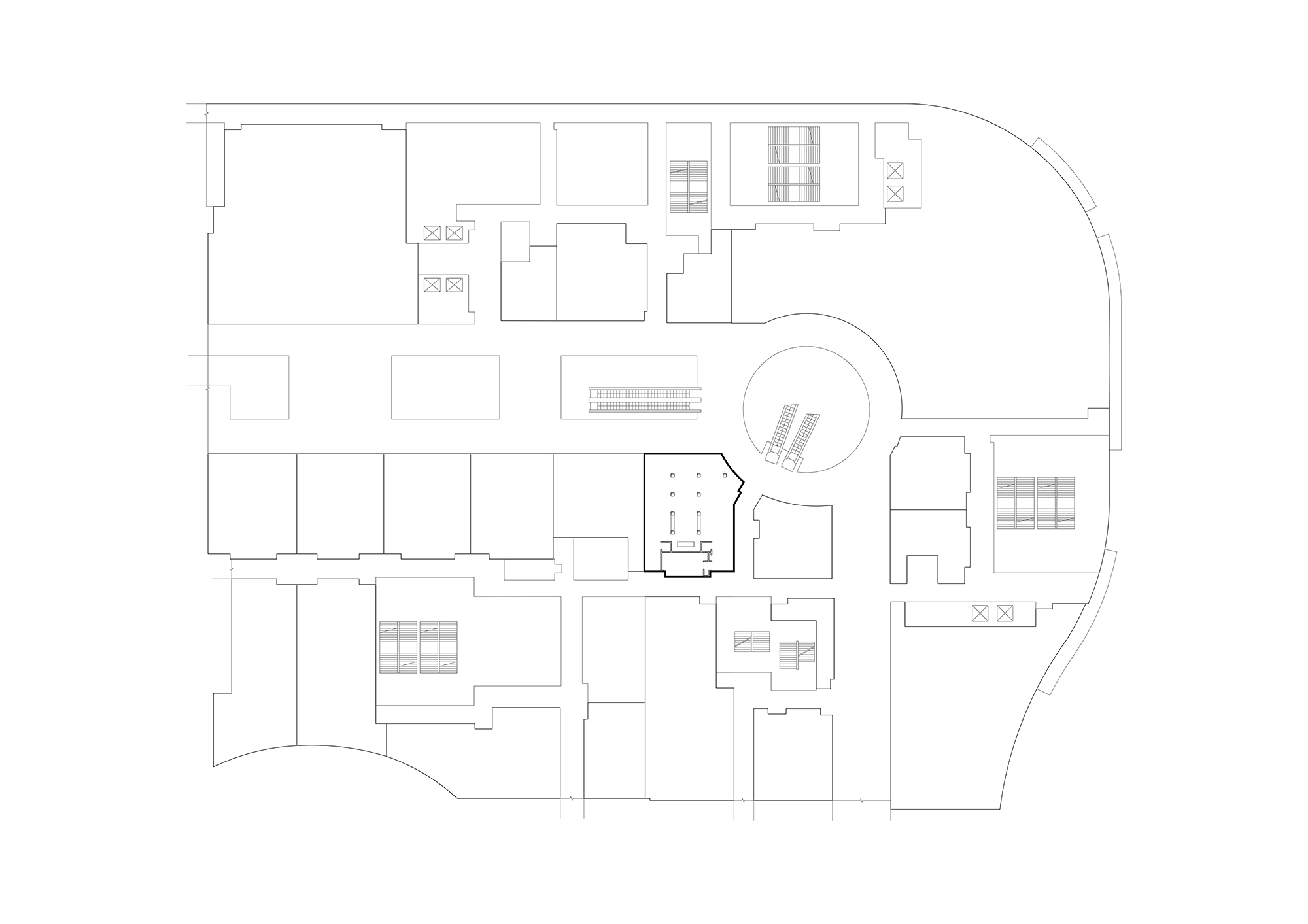
site plan © LUO studio
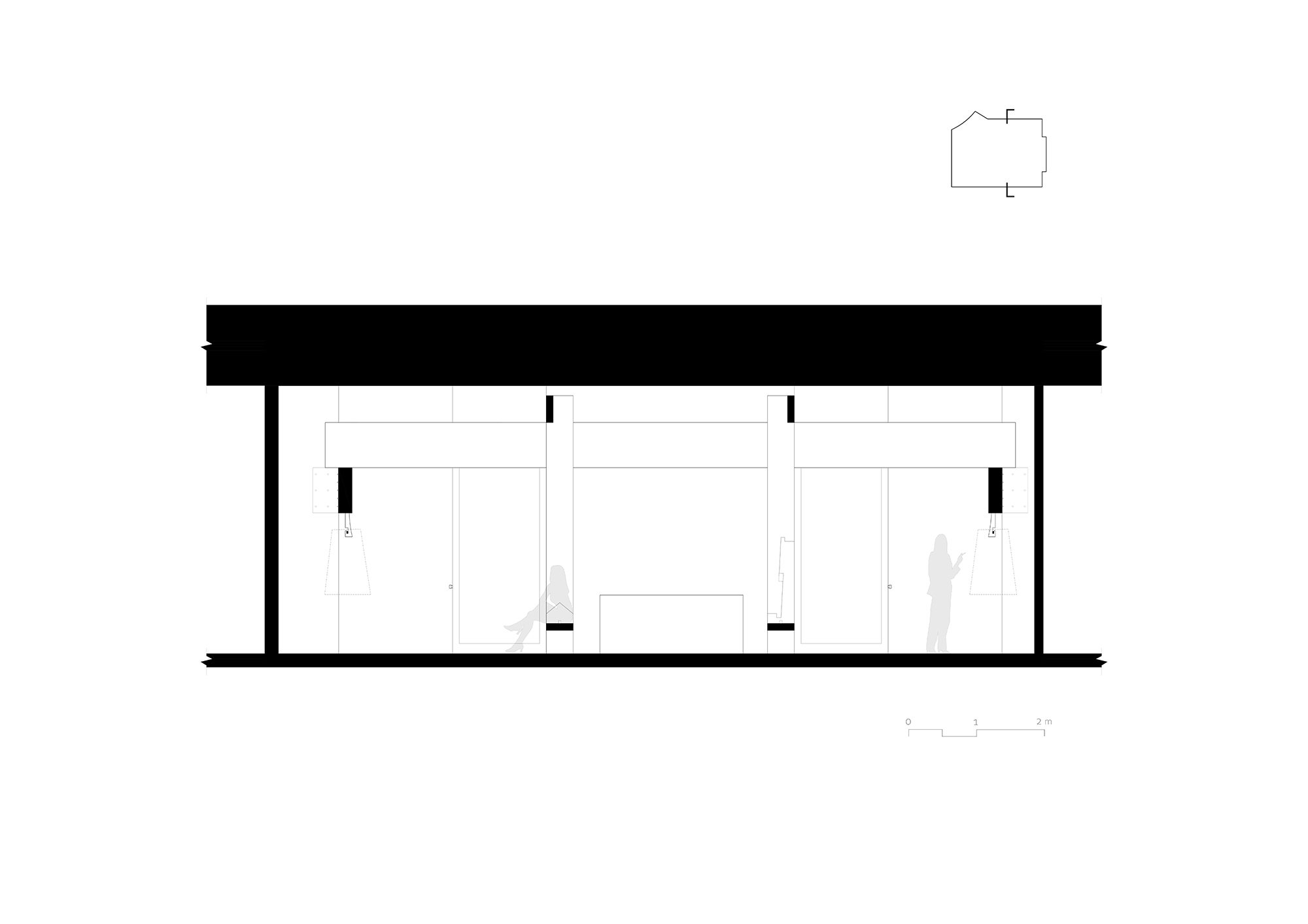
section 1 © LUO studio
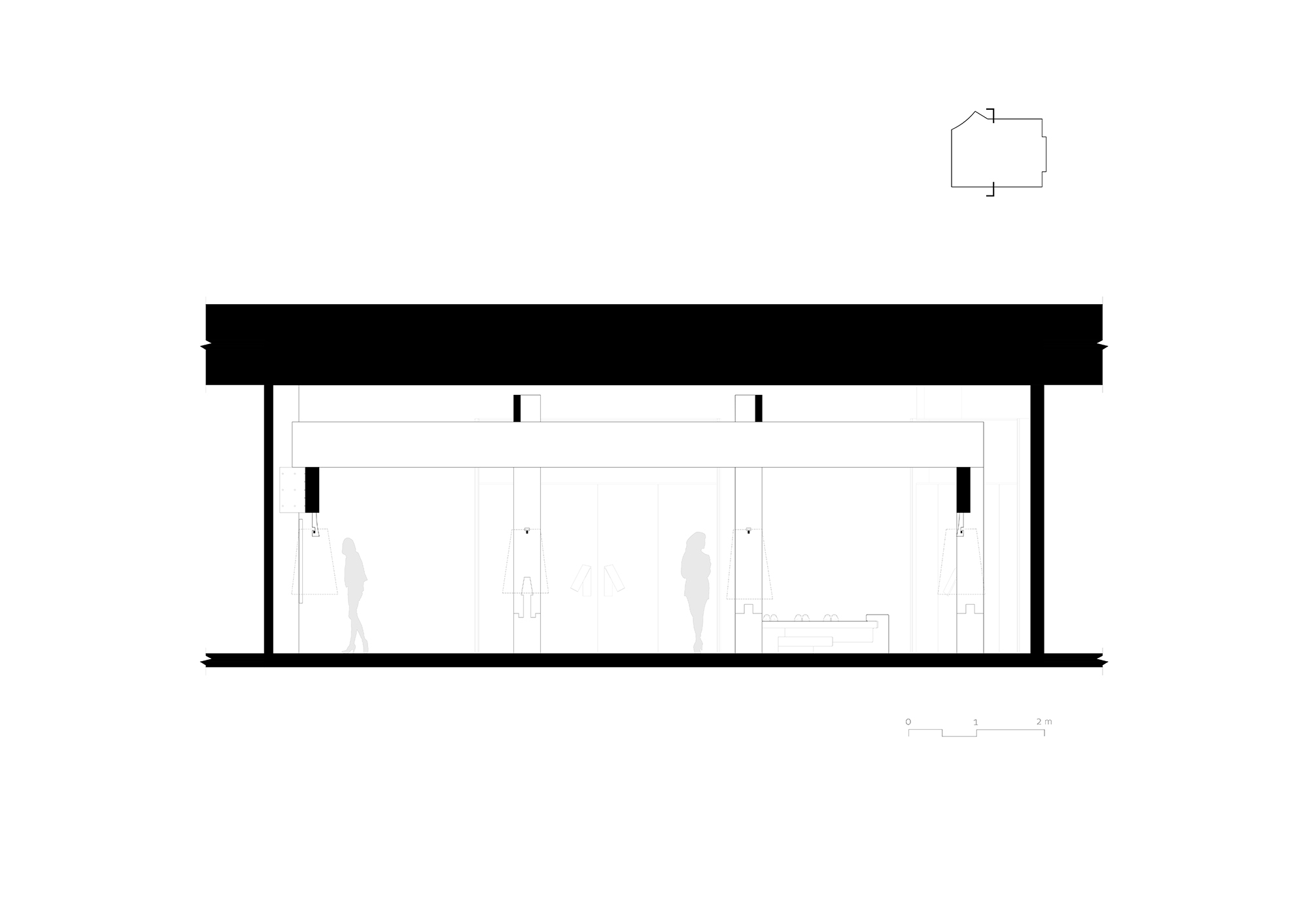
section 2 © LUO studio
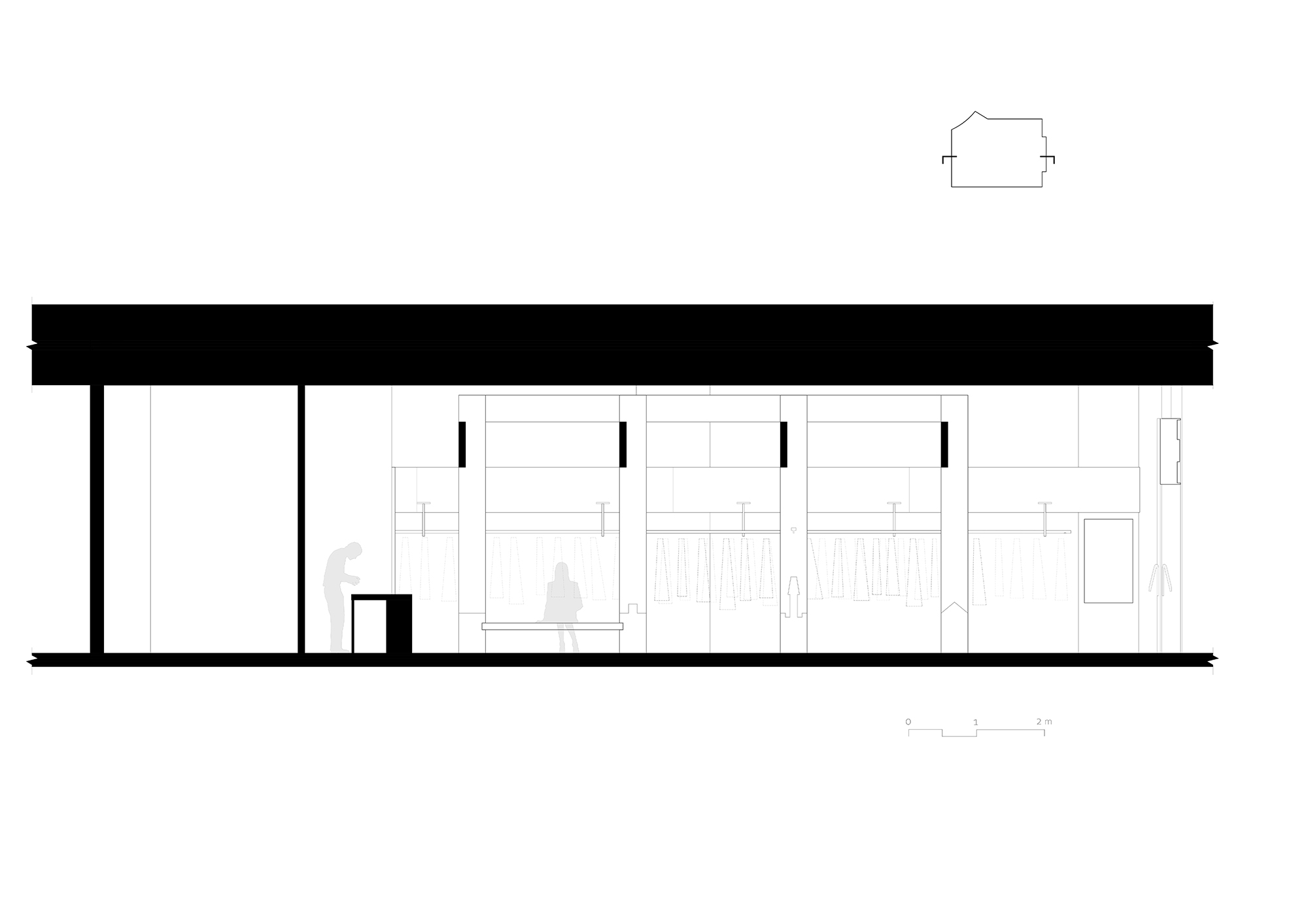
section 3 © LUO studio
以下、LUOスタジオのリリース(英文)です。
Pillar of Zen — DANNONG Store at The MixC Taiyuan
The orthogonal timber frame has long been the primary structural prototype for nearly all functional building types in the East—from halls and temples to dwellings. Shanxi, as one of the most important regions for the preservation of ancient Chinese timber architecture, retains many precious examples such as Nanchan Temple and Foguang Temple. These surviving entities embody the deep cultural lineage of traditional Eastern architecture.
DANNONG, a clothing brand grounded in an inner Eastern sensibility, already operates many stores. Yet in the capital of Shanxi, how should garments be presented in space? How should the store grow in resonance with the region’s architectural heritage? These questions became the starting point of the design.
Frames and Garments: Weight and Lightness
In plan and section, traditional Eastern timber frames often unfold in a rectilinear, orthogonal order; in graphic terms, both the vertical and horizontal members are “lines.” Garments are likewise suspended through a system of “lines.” In this sense, the two possess a high degree of conceptual alignment.
The project is located within a contemporary commercial complex, whose building structure is a reinforced-concrete frame. Within this industrialized system, a traditional timber frame is grafted to evoke the lineage of Shanxi’s wooden architecture in a contemporary retail setting. Based on the store’s existing structural grid, a “three-bay, four-span” composition is adopted. The central bay naturally generates an axial sequence for the entrance, seating zone, cashier, and main visual backdrop, while the two side bays host long hanging rods for displaying garments. The suspended clothes further emphasize the linear qualities of the beams and columns.
The traditional timber structures of Shanxi—exemplified by Nanchan and Foguang Temples—are known for their robust mass and heavy timber proportions. Following this principle, the project selects thick square timbers to echo the regional architectural vocabulary. Beneath the weighty beams lies the softness of textile. The contrast between the heavy and the light—between coarse timber and delicate fabric—heightens the material presence of each. As if “massive beams suspend fine objects,” the composition aligns subtly with DANNONG’s spirit of “crafting with meticulous attention to the smallest detail.”
Craft of the Mortise-and-Tenon
The mortise-and-tenon joint—an iconic manifestation of Eastern intelligence and craftsmanship—held not only cultural significance in pre-industrial times but also structural necessity. Its “flexible” connections demonstrate remarkable resilience in earthquakes; in small-scale joinery, various mortises effectively accommodate humidity-driven expansion and contraction.
At Nanchan Temple, the northeast corner column of an exterior wall, damaged by insects, was repaired after the Tang dynasty (reportedly in the Song) using a “praying mantis” mortise. Simulations show that its unique form allows lateral insertion, making it ideal for corner repairs—an example of the ingenious logic of mortise-and-tenon mechanisms.
In this space, the design seeks to embody the “craft of the mortise-and-tenon” through the following strategies:
1. Column Bases and Joinery Inserts
After extensive research and model studies of various joinery systems, four types were selected: the lateral-sliding “praying mantis” mortise from Nanchan Temple; a low, vertically interlocking cross mortise; a taller center-pinned palm mortise; and a more complex piece requiring a 45° spatial insertion path. These four systems differ in form, logic, and installation sequence, contributing to a rich layering of craftsmanship.
2. Joinery Between Columns and Beams
Although traditional “tie-beam” structures typically refrain from using mortise-and-tenon joints between column and beam, this project adopts semi-lapped joints to preserve structural coherence. Due to transport and installation constraints, full-length beams must be segmented, and the segment joints are likewise treated with half-lap joinery—making the structure legible while maintaining its crafted integrity.
3. Integration of Joinery in Secondary Elements
Traditional Eastern wooden architecture values the unity of furniture and structural logic. In this store, seating elements are joined into the concrete column recesses using mortise-and-tenon methods, becoming part of the structural system. Hanging rods are integrated by pre-cutting mortises at the columns and inserting metal rods through a tenon-like maneuver—creating a consistent construction language from macro to micro scales.Ritual and Everyday Life
A retail space is ultimately a human space. “City” implies enclosure and gathering; “market” implies exchange—consumption. In the current age of material abundance, “putting on clothes” is no longer merely functional but a pathway from the material to the spiritual.
Thus, this space for DANNONG was never intended simply as “a clothing store.” Stripped of all garments, the space should first exist as a contemporary artwork with tangible materiality, order, and spirit—constructed through genuine materials, precise joints, and a restrained rhythm. All materials are treated with respect, echoing the epistemic attitude of traditional timber construction.
People walk through frames, touch materials, observe light and shadow, and form deeper relations with objects, space, and self. In this minimalist but concentrated order, dressing becomes a ritual of living. The brand’s ethos—“earnestness, purity, and order”—is grounded through the space holding the garments, and the garments responding to life. “Clothes, choosing clothes, wearing clothes” becomes a ritual practice of living.Design Team: LUOstudio
Designers: Luo Yujie, Hong Lun, Cao Yutao, Liang Jiahui
Client: DANNONG
Construction Coordination: Guangzhou Chaorong Decoration Design Engineering Co., Ltd.
Concrete Contractor: Beijing Sanmi Space Decoration Co., Ltd.
Timber Contractor: Liaoning Jinbaisheng Timber Structure Technology Co., Ltd.
Location: L222, The MixC, No. 5 Changxing Road, Wanbailin District, Taiyuan, Shanxi Province
Area: 171 m²
Design Start: May 2024
Completion: September 2024
Photography: Jin Weiqi
LUOスタジオ 公式サイト
http://www.luostudio.cn/
【購読無料】空間デザインの今がわかるメールマガジン TECTURE NEWS LETTER
RECOMMENDED ARTICLE