CULTURE
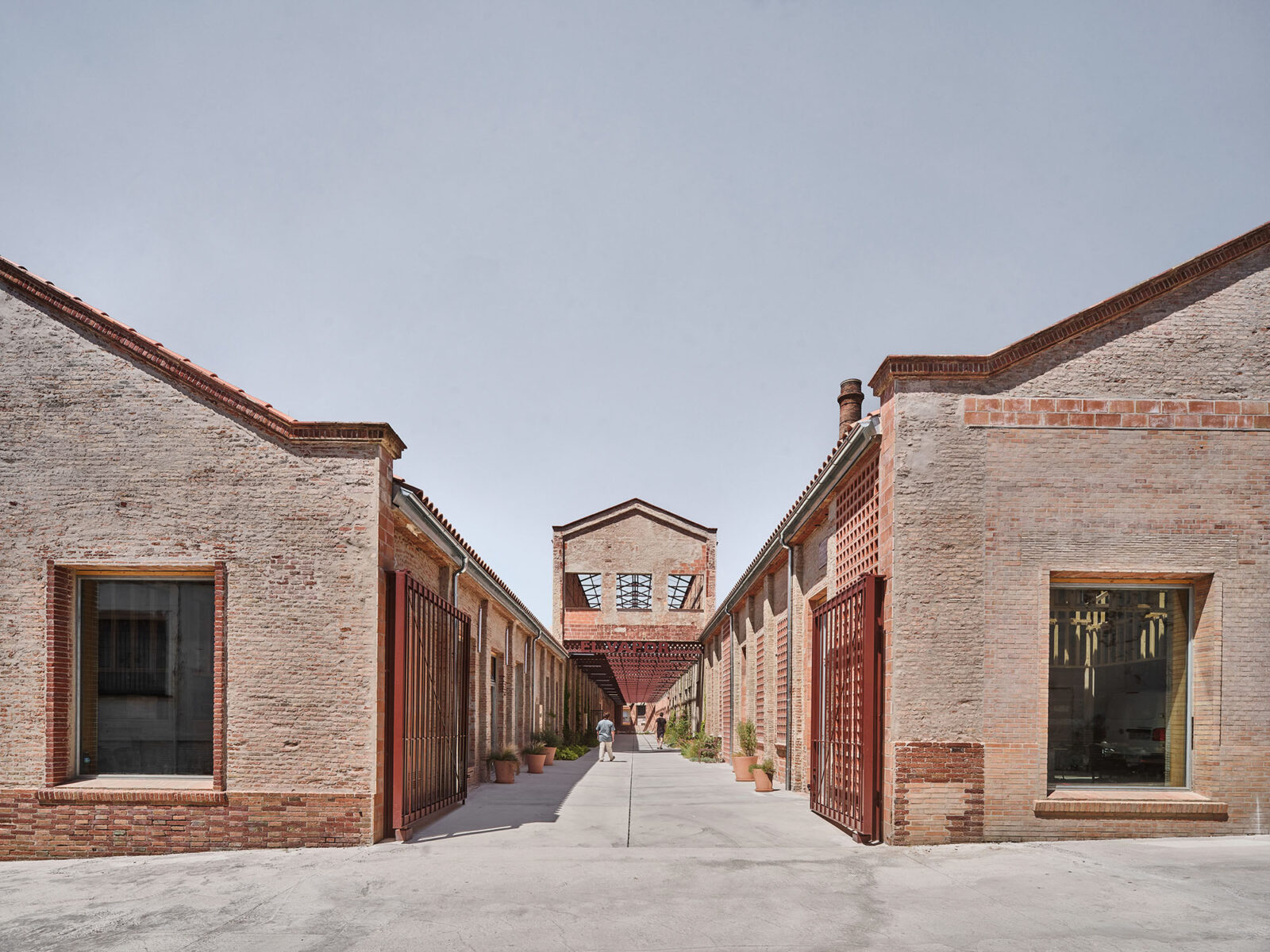
市民と利用者をつなぐ「新たな通り」としての施設
バルセロナの工場群を再生した、障がい者支援組織の新本社〈Rehabilitation of Vapor Cortès. Prodis 1923〉
©︎ Adrià Goula
©︎ Adrià Goula
スペイン・バルセロナに位置する〈Rehabilitation of Vapor Cortès. Prodis 1923〉は、障がい者の総合的な支援と促進を目的とするNPO法人の新本社です。
2棟の古い工業建築とその間の通路を一体的に再生したアダプティブリユース・プロジェクトであり、バルセロナを拠点に活動する HARQUITECTESが設計しました。
注目ポイント
- 既存建築の歴史を尊重しつつ都市に開くプロジェクト
- 利用者と市民が交わる「公共の通り」として再生した通路
- 既存の特徴をデザインコードとして踏襲した新たな構造
- オリジナルの開口部を活かしたパッシブデザイン
(以下、HARQUITECTESから提供されたプレスキットのテキストの抄訳)
©︎ Adrià Goula
歴史的背景と既存建物の特徴
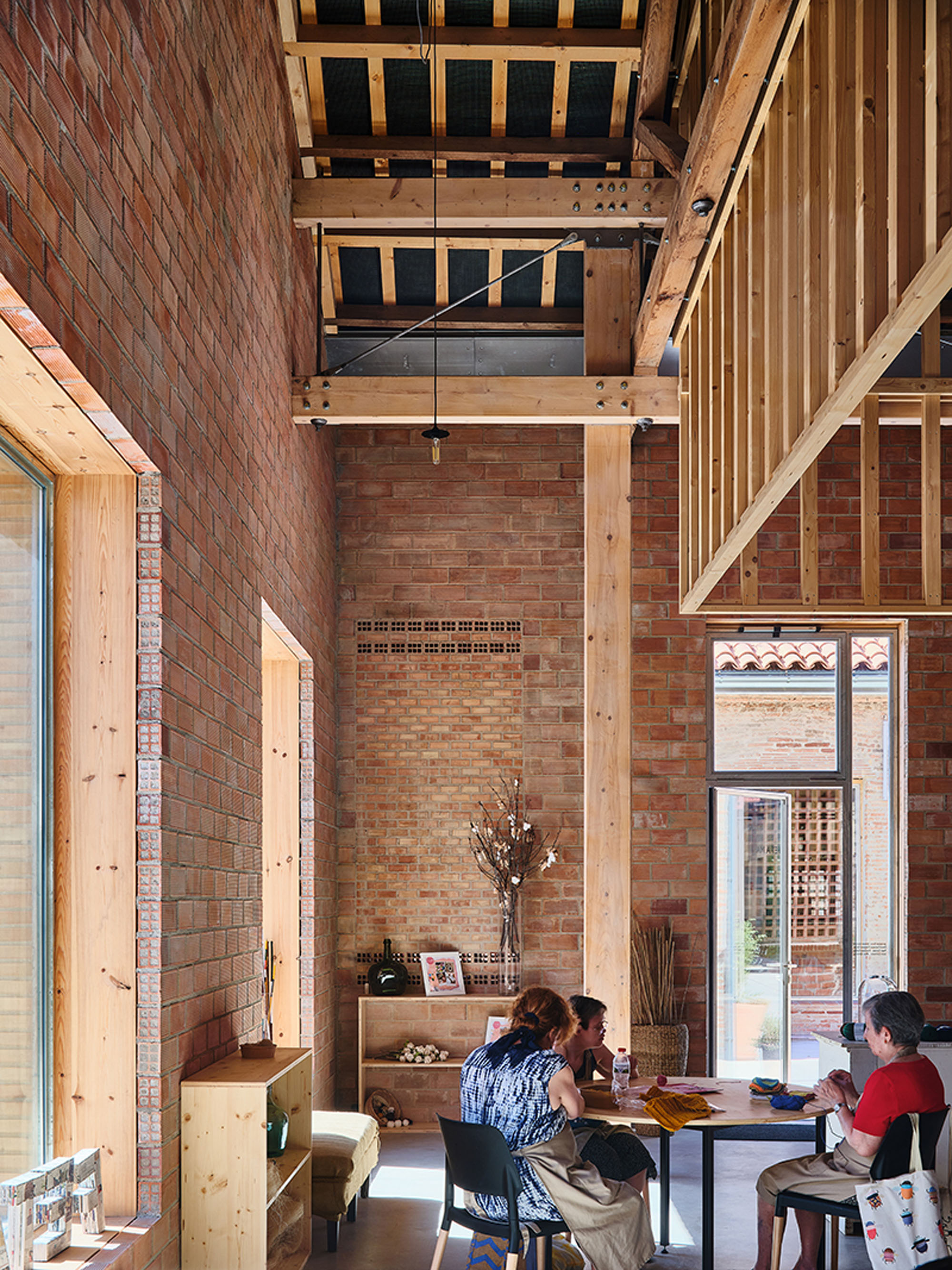
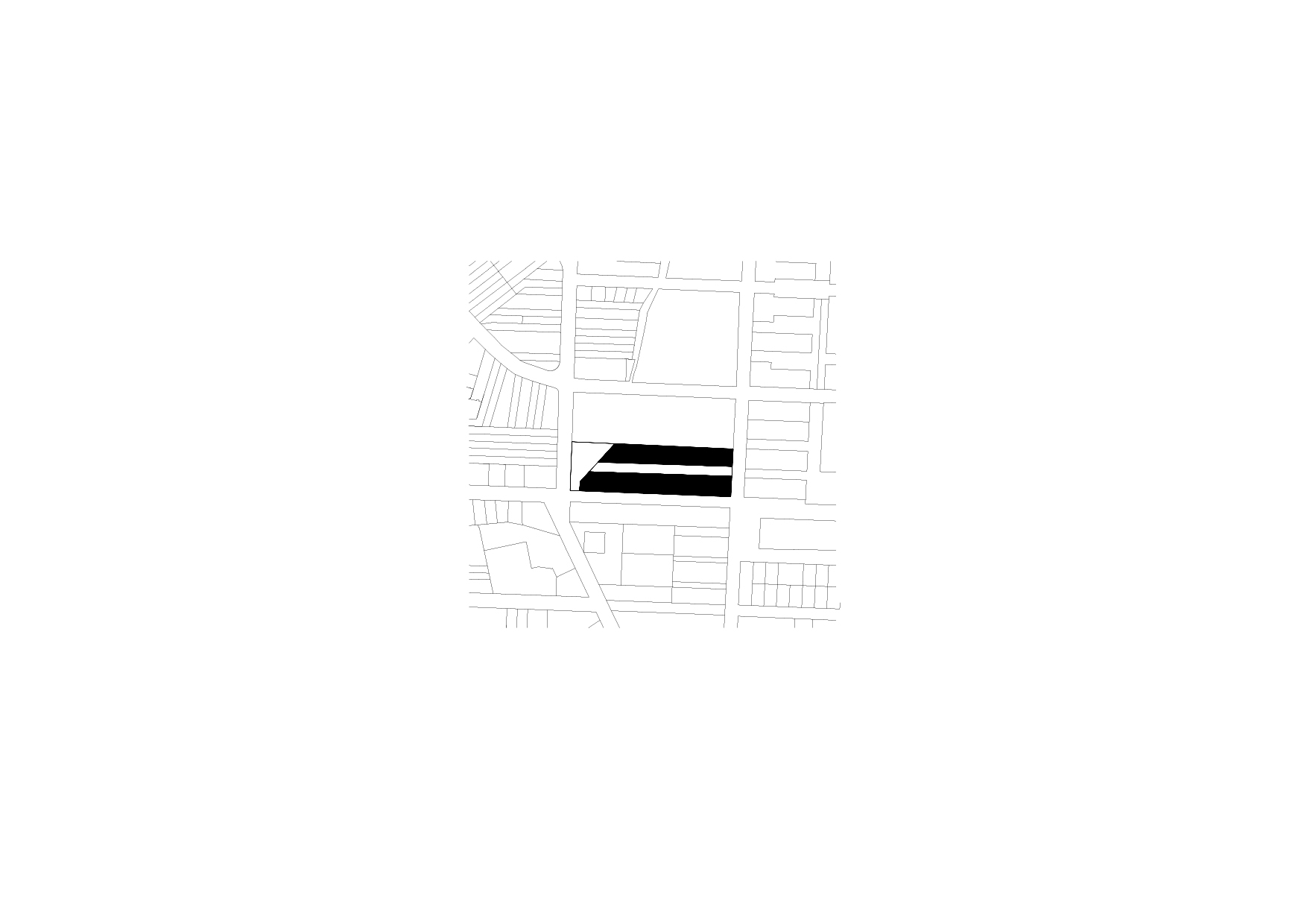
プロディス社の新本社は、かつてバポル・コルテスの一部であった古い工場建築群の中に位置している。建物は、3mごとに規則的なピラスター(壁付き柱)と開口部が繰り返される、伝統的なセラミックレンガ耐力壁による周縁構造で構成されている。
12mにおよぶスパンは、ピラスターと同じリズムで配置された木製トラスによって支えられているが、その一部は屋根の雨漏りによる影響をかなり受けていた。屋根もまた、木製の垂木と野地板の上にアラビアタイルが敷かれる伝統的な構造を踏襲している。
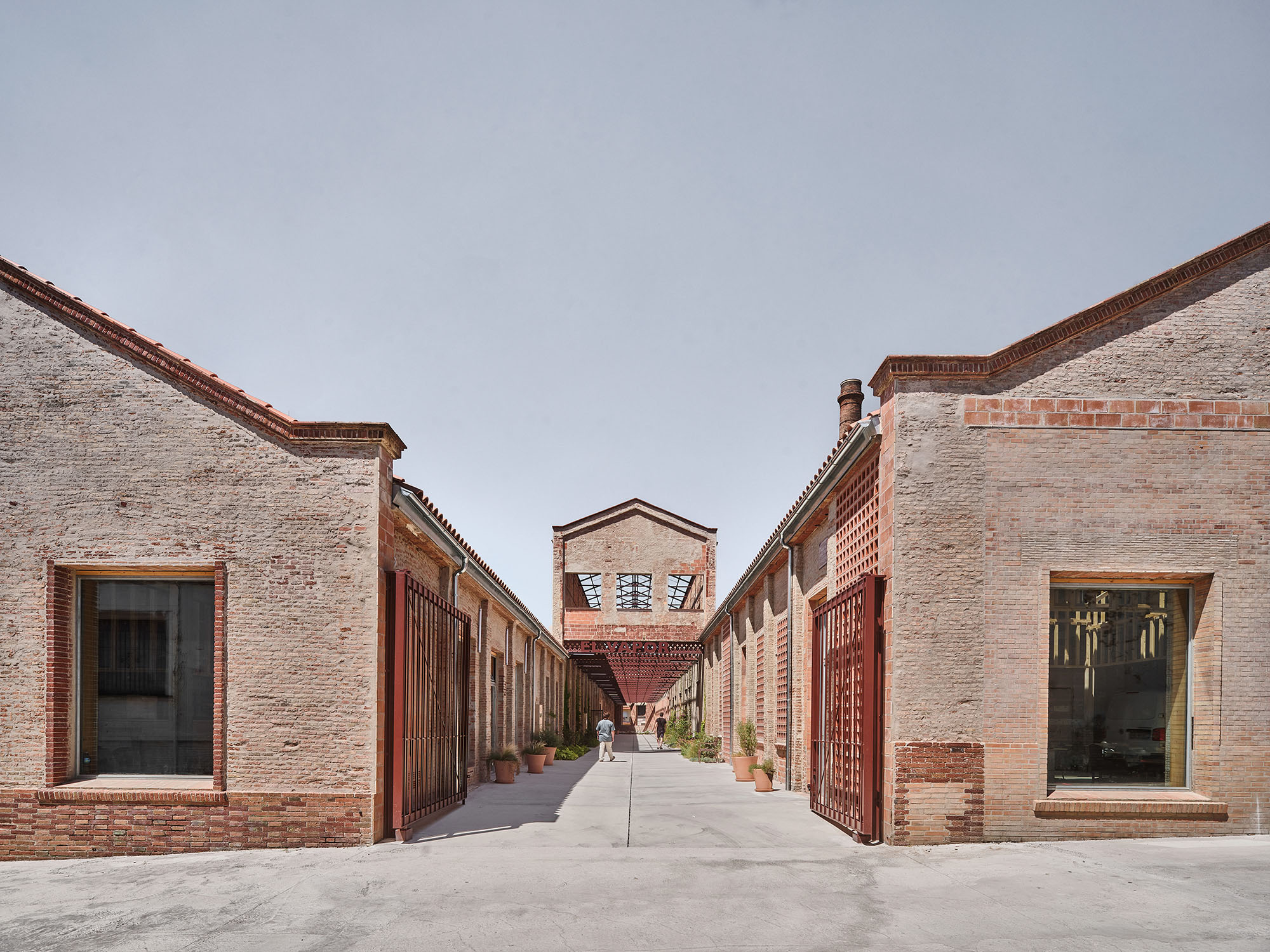
2棟の建物の間にはかつてサービス用通路が存在していたが、長年にわたり金属構造と陶製アーチを組み合わせたハイブリッドな増築によって覆われてきた。この場所で行われてきた産業活動の結果、すべての建物は長い年月を経て変容・改変を繰り返している。
したがって、この施設の主な価値は、「倉庫-通り-倉庫」という都市構造、産業倉庫としての原型的な在り方、そして歴史的変遷と蓄積された記憶の産物としての「固有の不完全性」にあると考えた。
©︎ Adrià Goula
©︎ Adrià Goula
社会とつながる新たな施設理念
ここ数年、プロディス財団は利用者との協働のあり方について概念の変革を推進している。障がいをもつ人々にとって、社会の中に居場所を見つけることは常に困難な課題であった。財団の目的は、もはや彼らに一定の生産性を伴う有用な機能を与えることだけではない。利用者が社会と直接的に関わり、その労働がより感情的な報酬を得て、有用性がより深い意味をもつようになること。そうした、より共感的な機能へと施設を段階的に開放する取り組みが始まっている。
本プロジェクトは、こうした課題を空間構成と都市との関係性において具現化しようとする試みである。
©︎ Adrià Goula
©︎ Adrià Goula
都市に開かれた「通り」としての再生
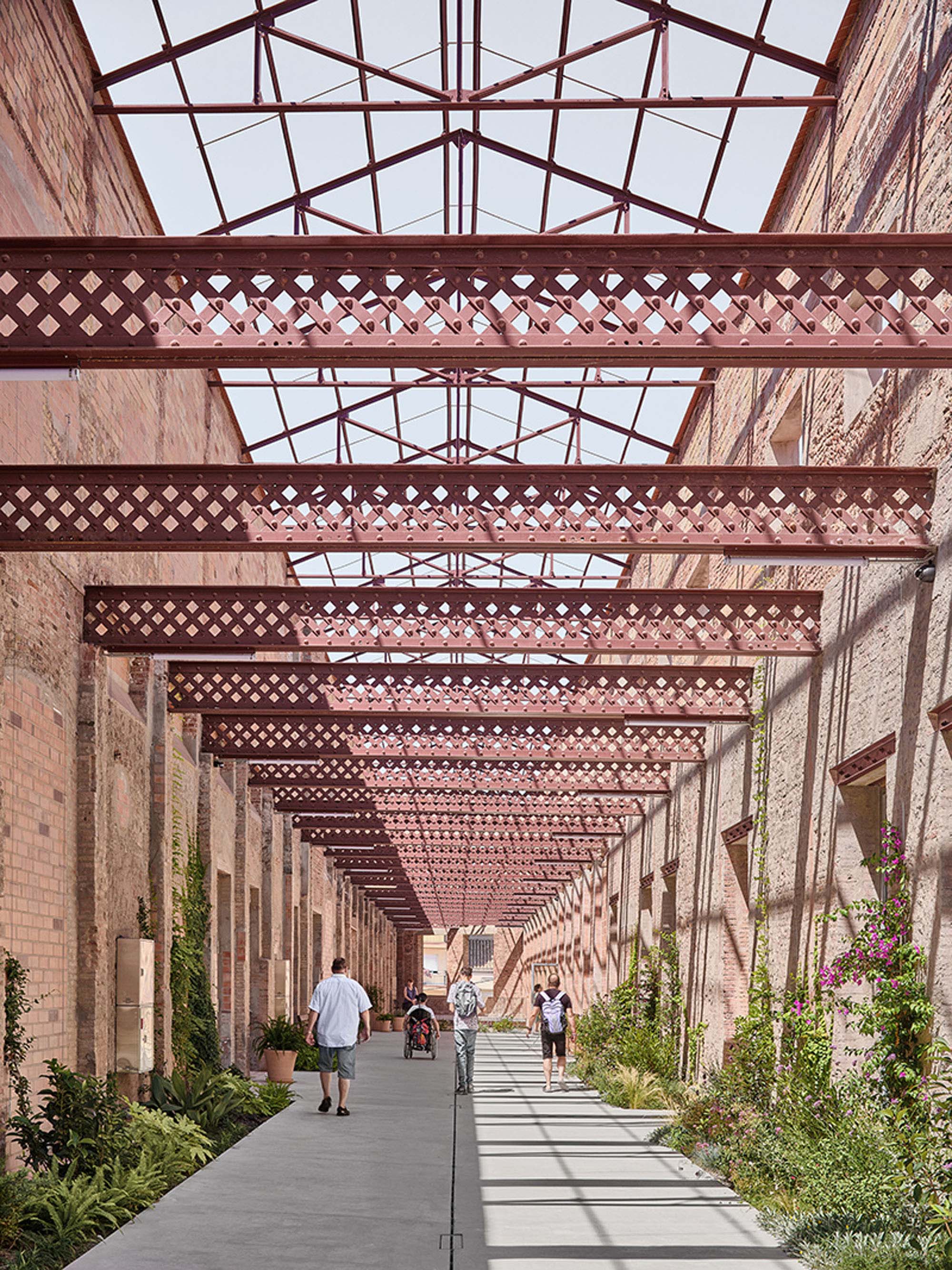
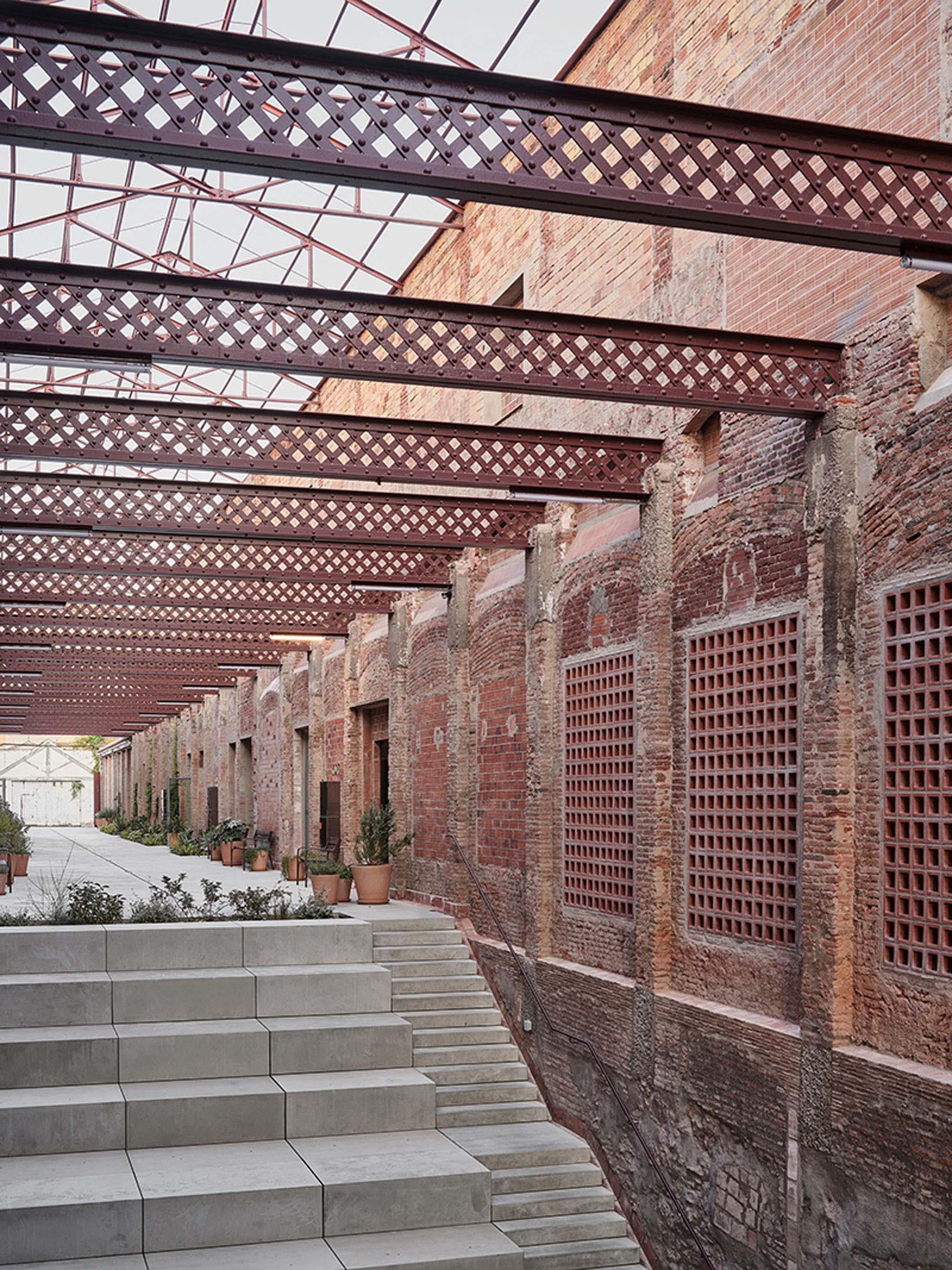
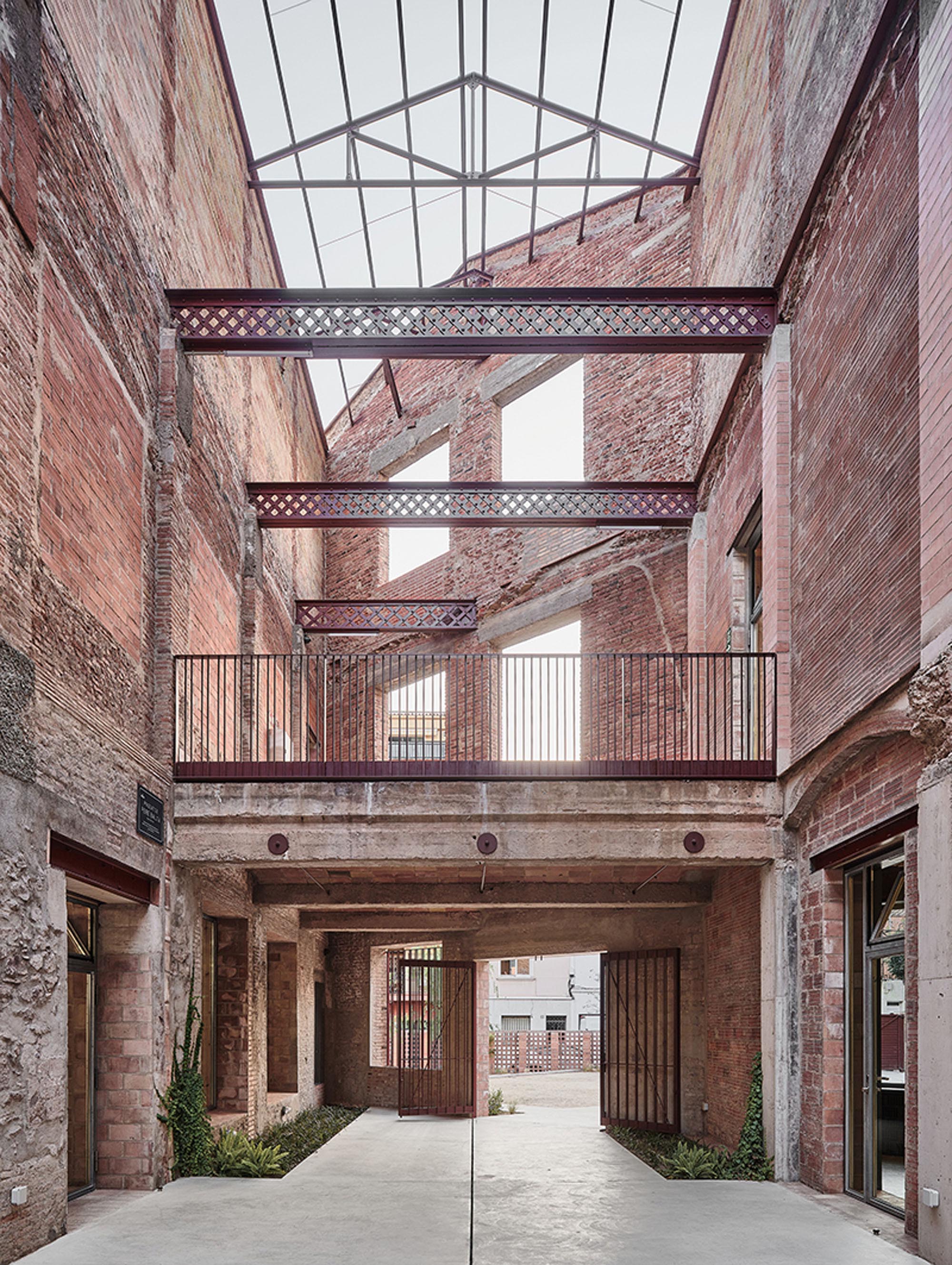
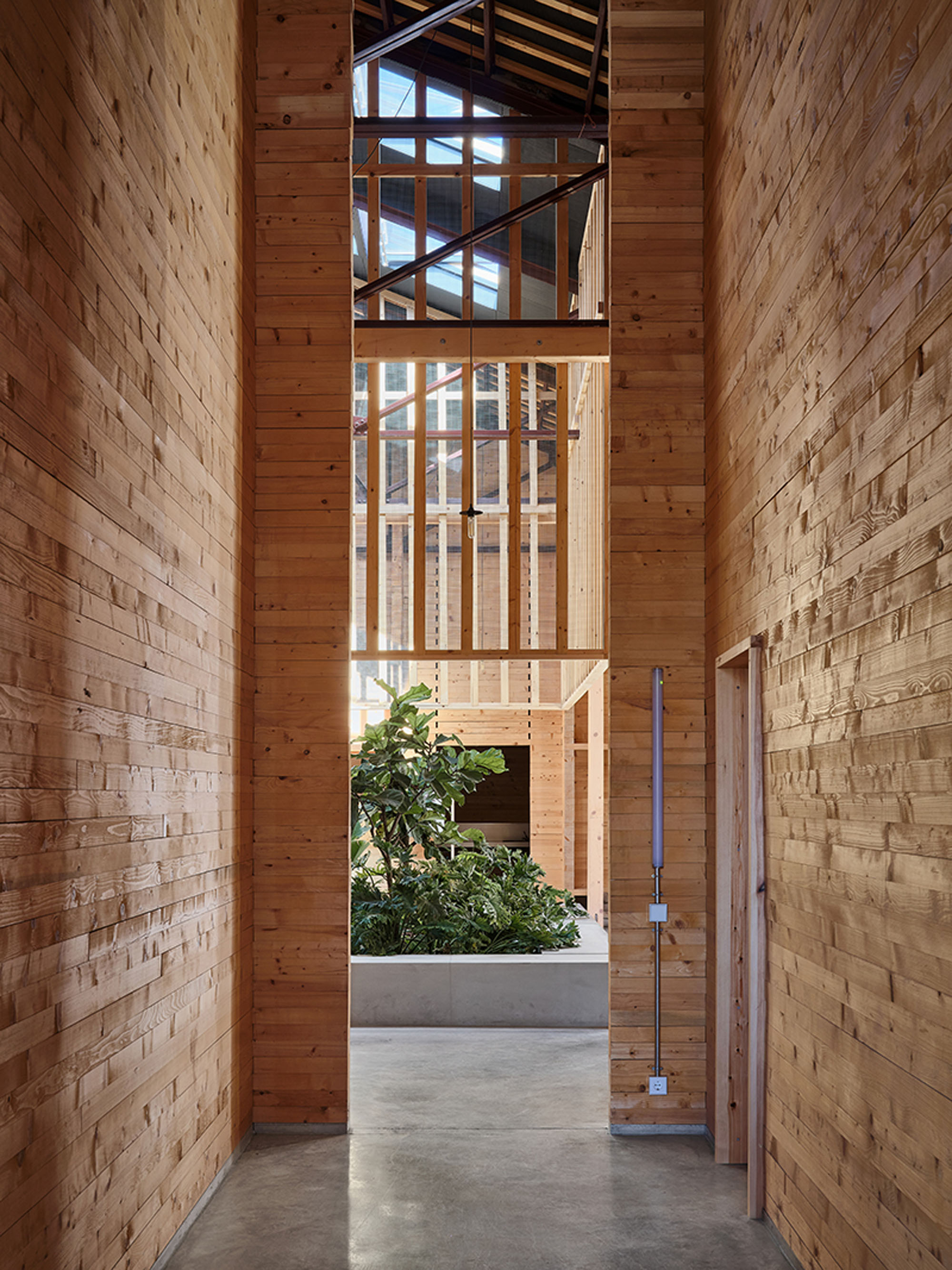
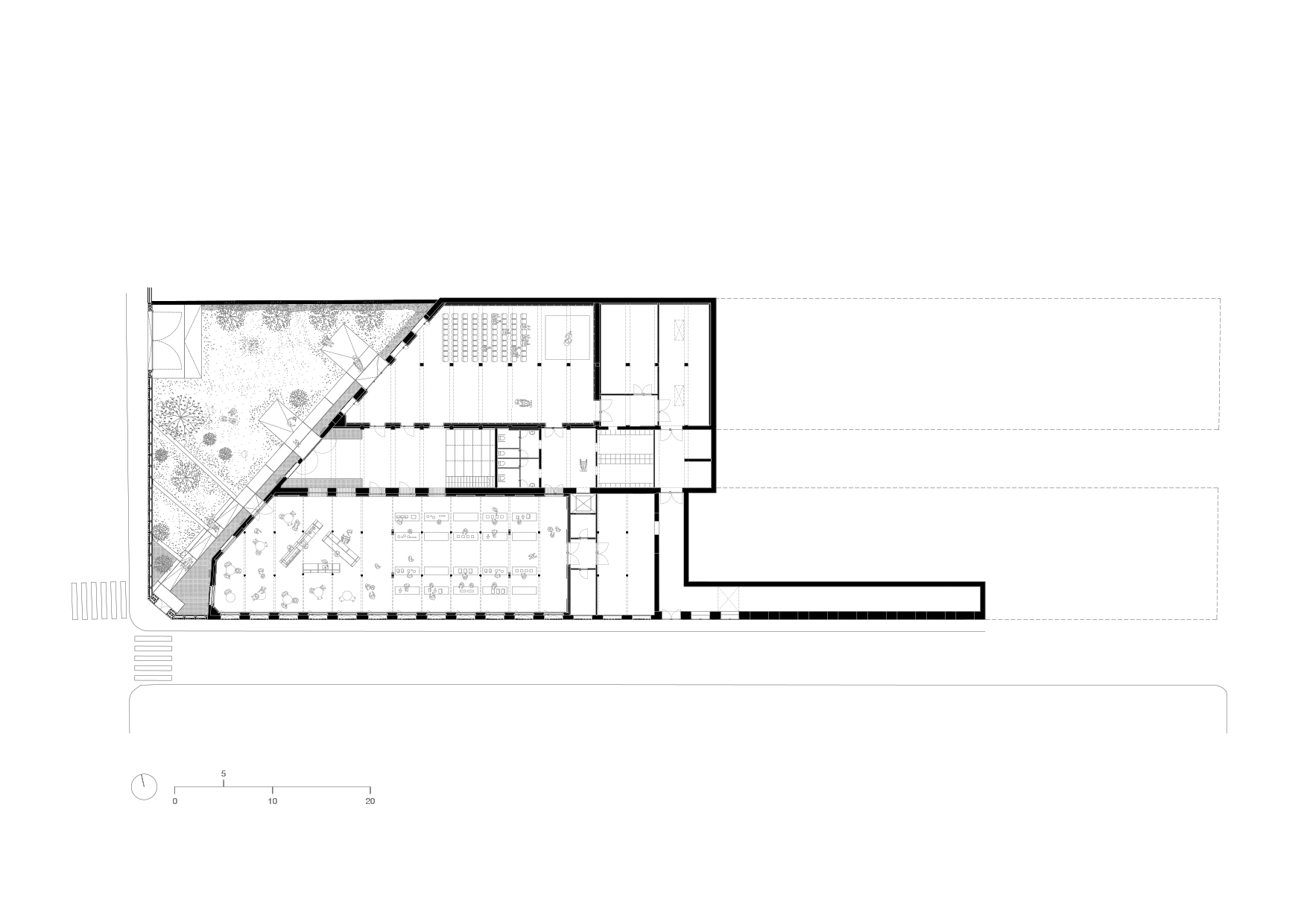
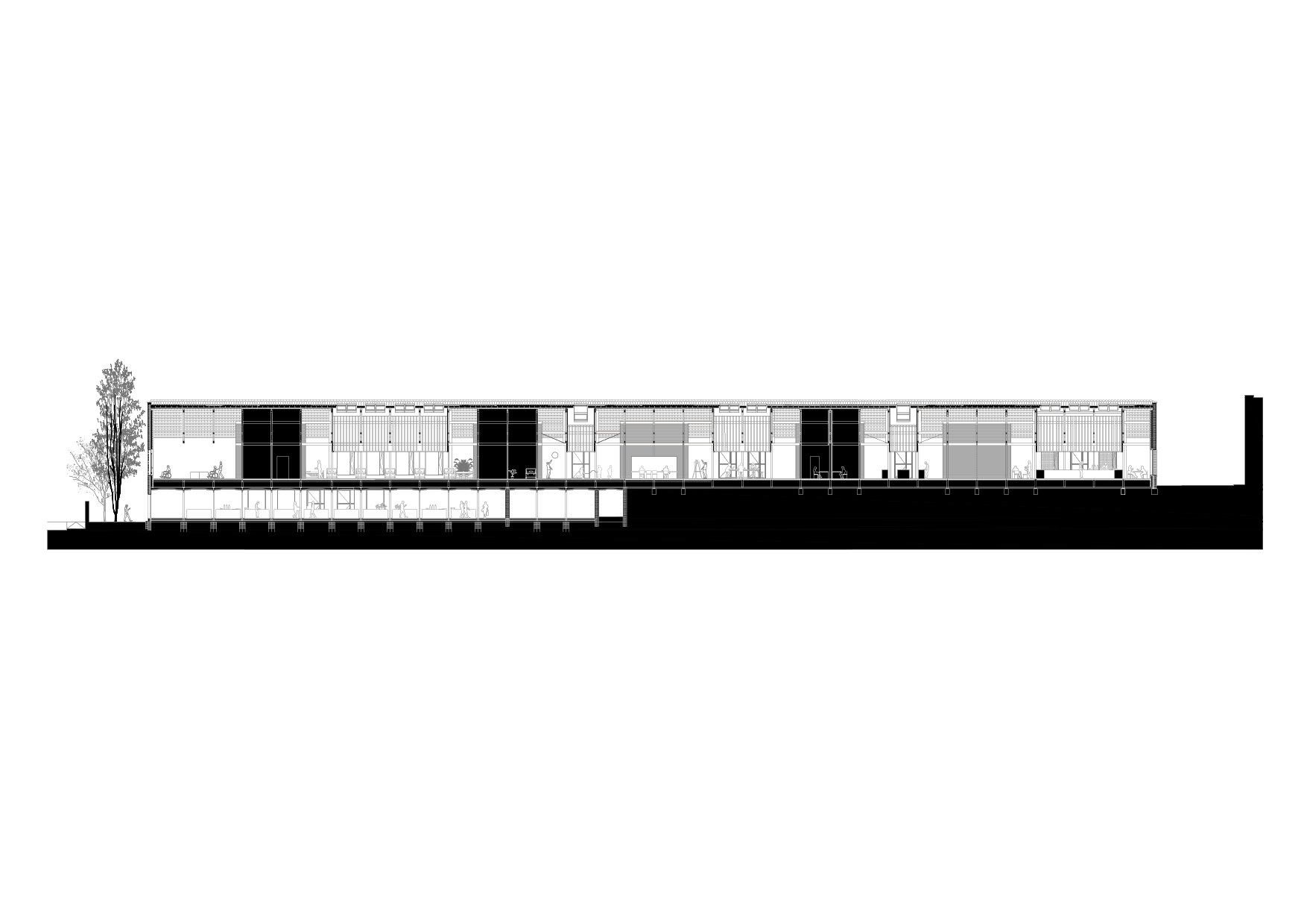
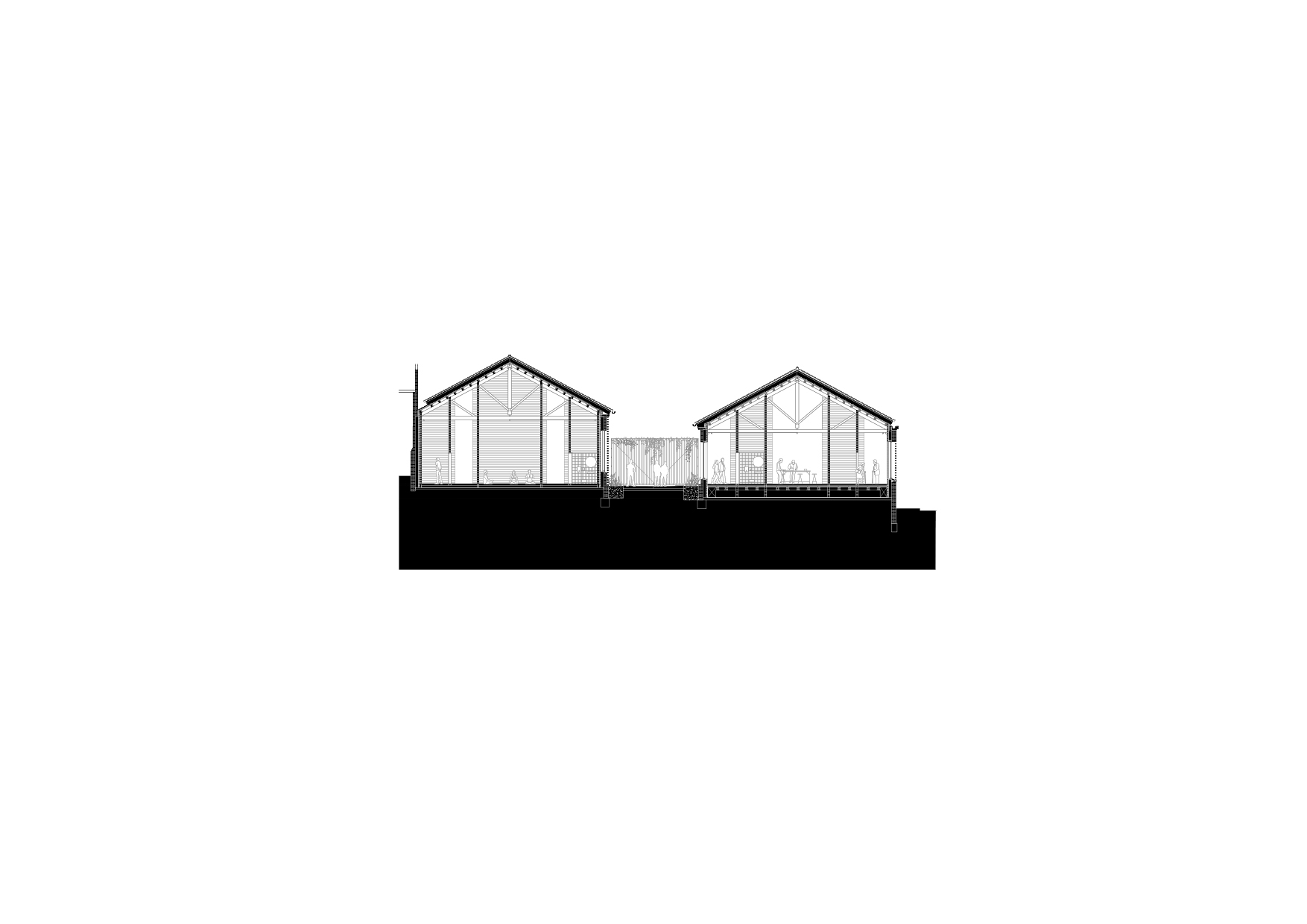
設計における第1の戦略は、2つの身廊(メインボリューム)の間にある中央通路の再生である。施設の稼働時間中は、内部のすべての動線と活動を統括する、都市における「もう1つの通り」となるような通路を提案した。
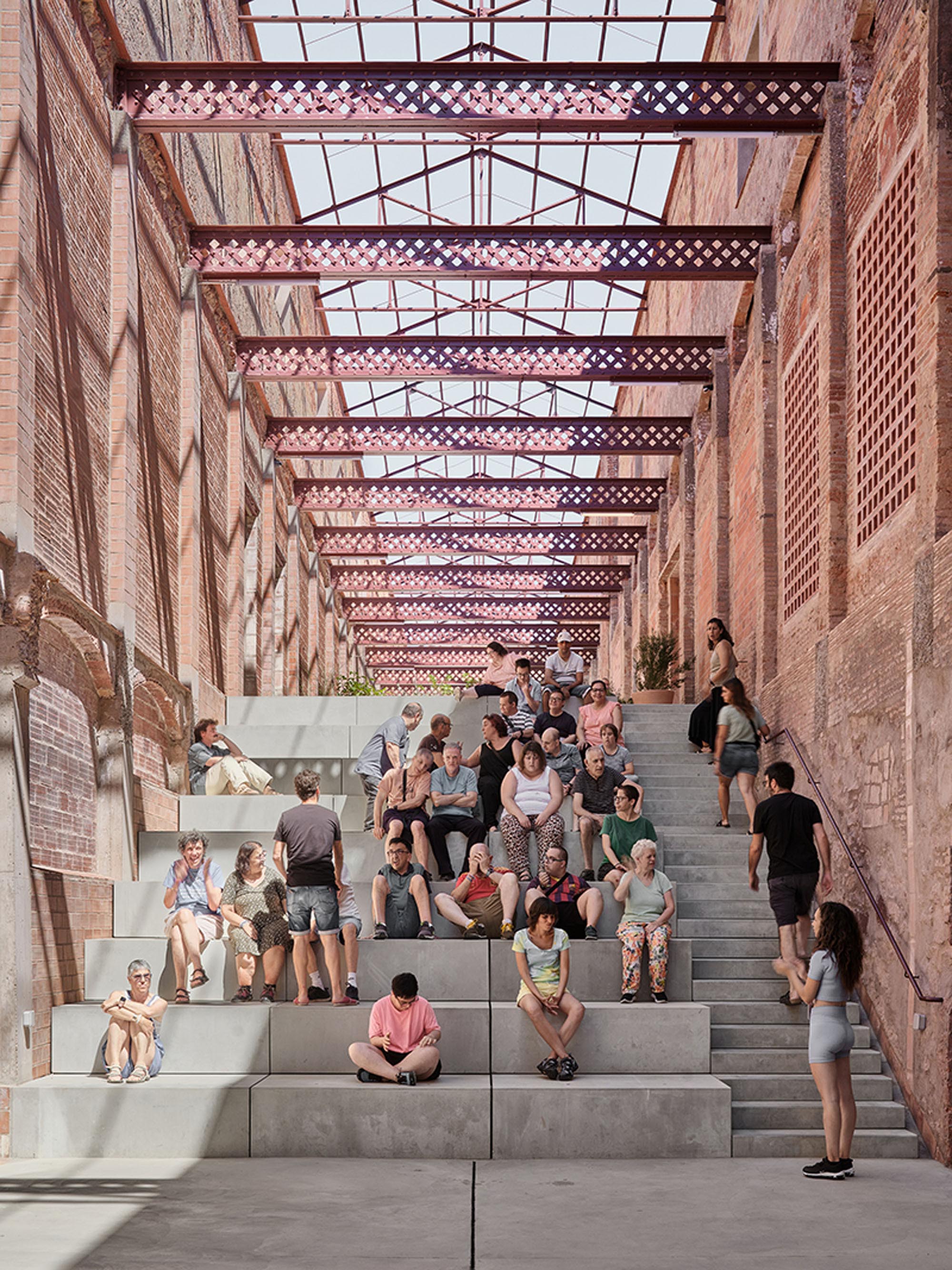
この通路の公共性は、センターを都市へ開放するという理念を強化し、市民が同じ空間を利用することで利用者との交流を可能にする。閉鎖的で分離された建物ではなく、この内部歩行者通りは施設と都市の間に遥かに透過的な関係を築き、利用者同士や市民との間に直接的で開放的な関係をもたらす。
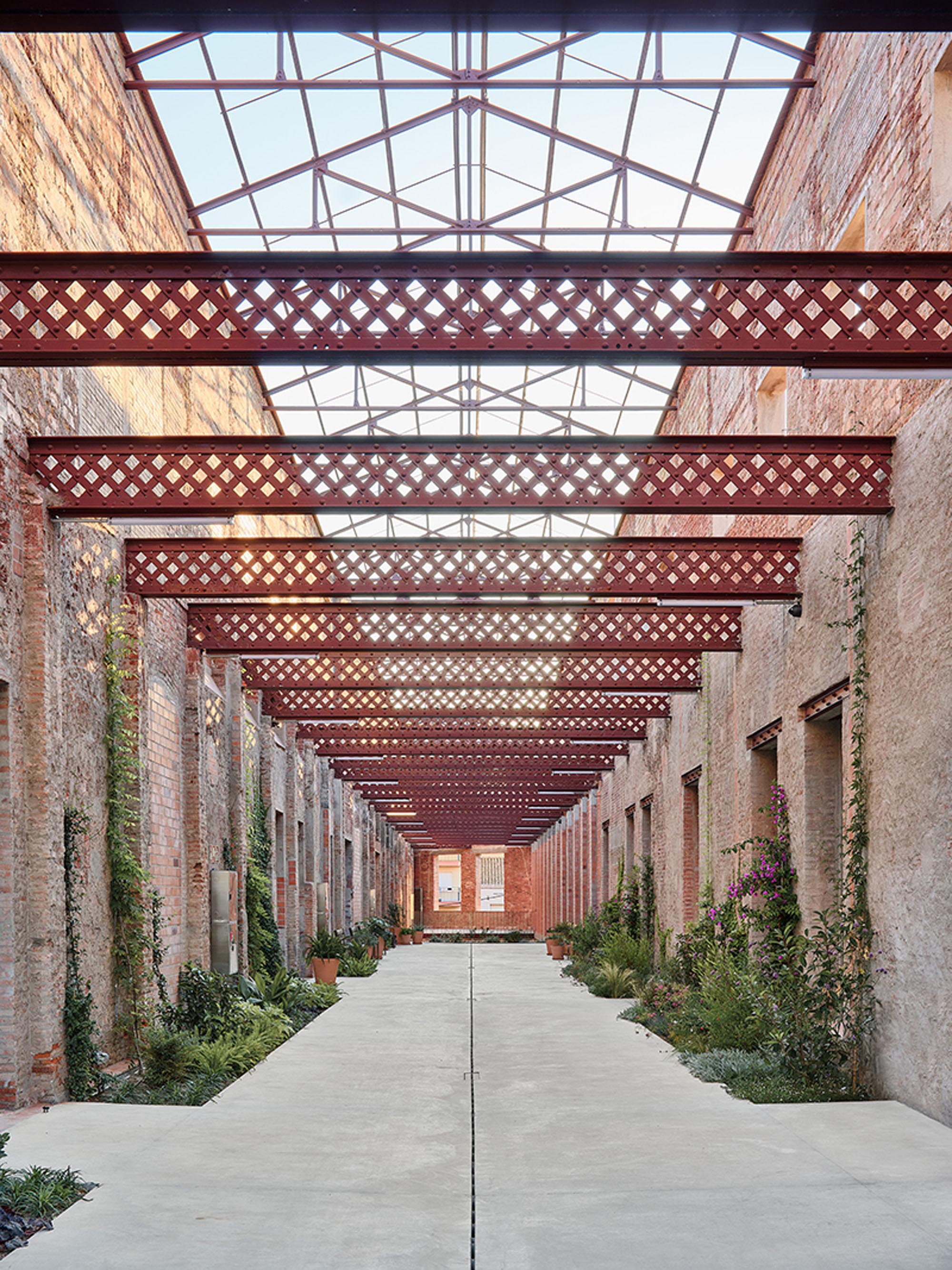
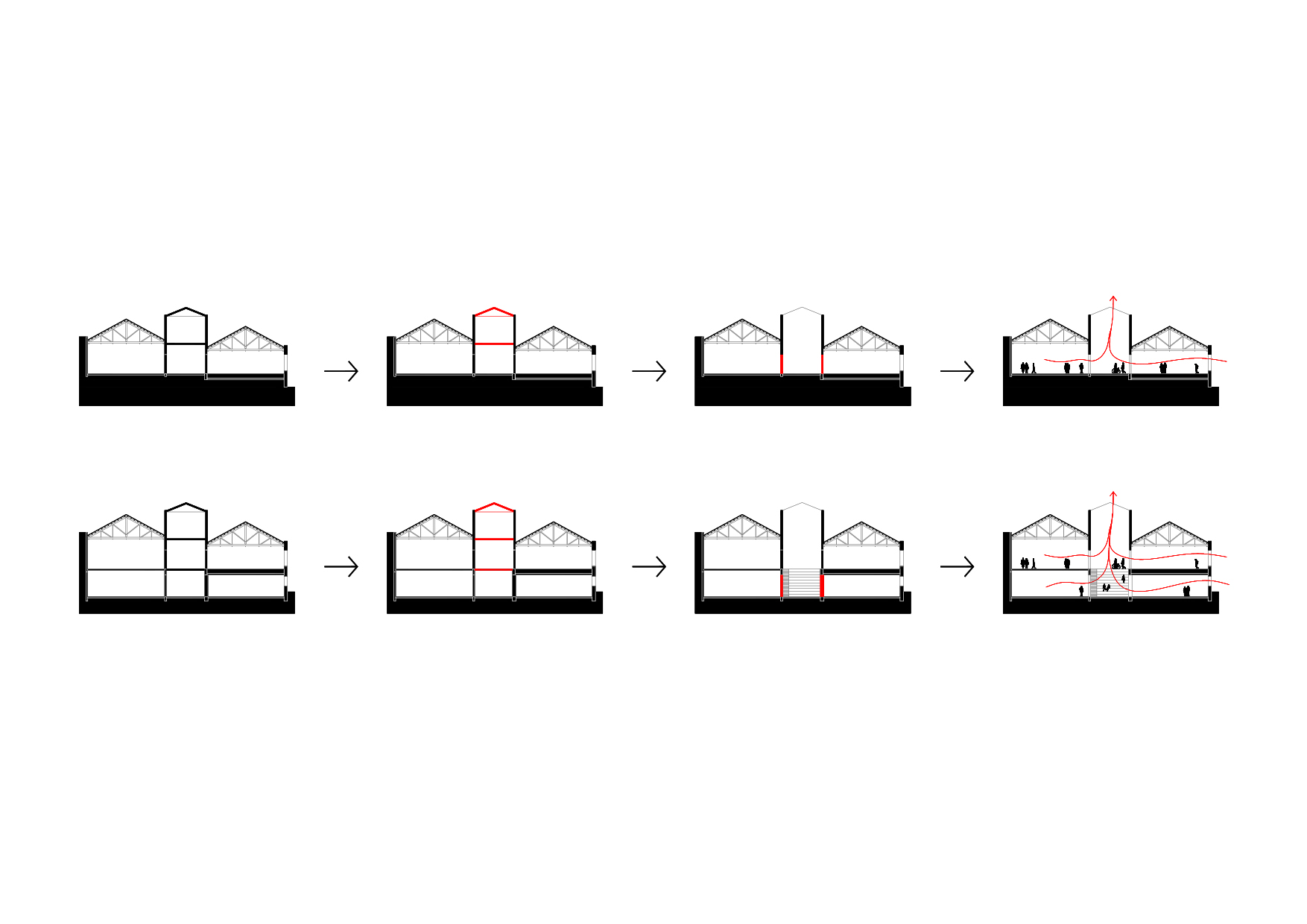
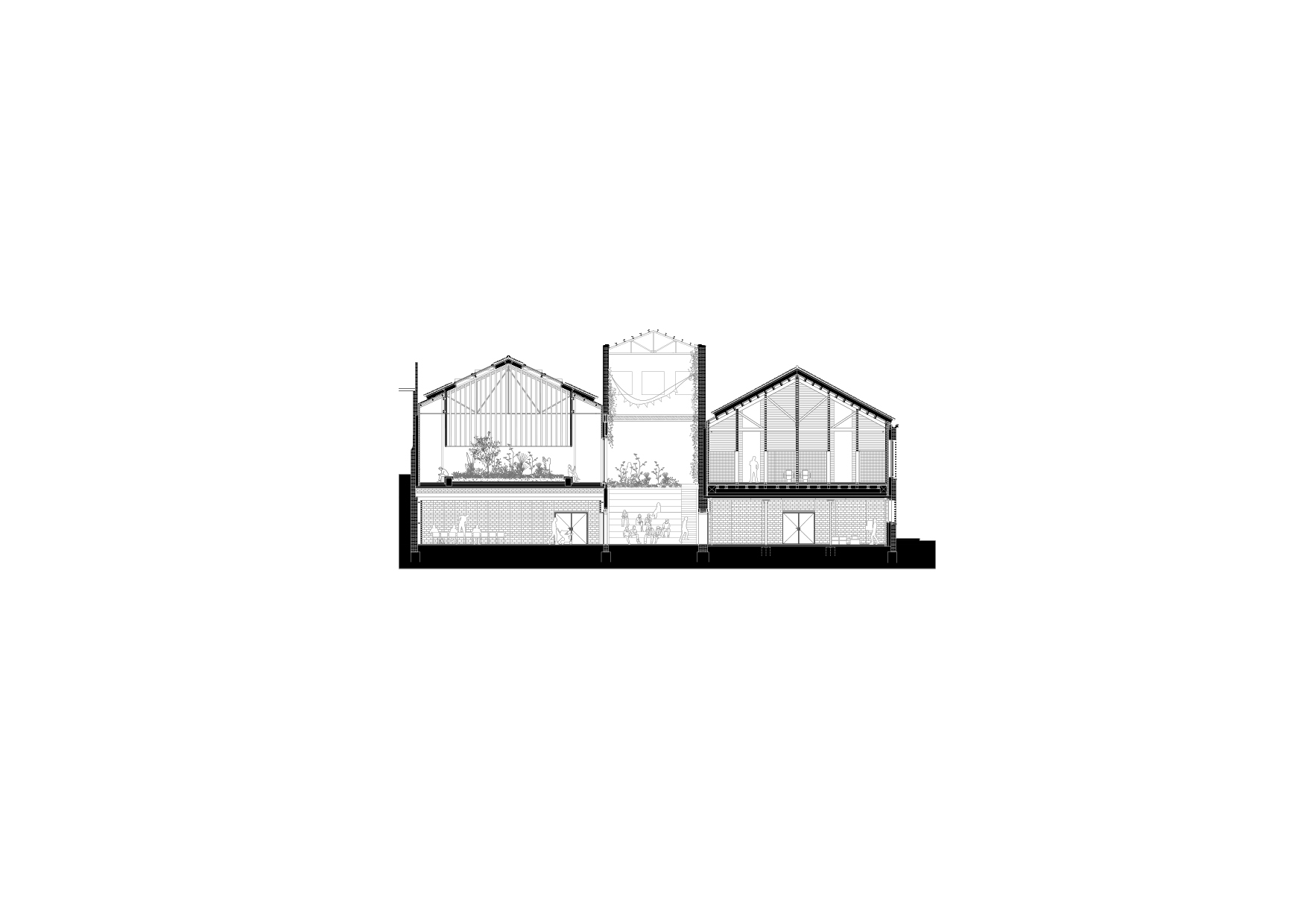
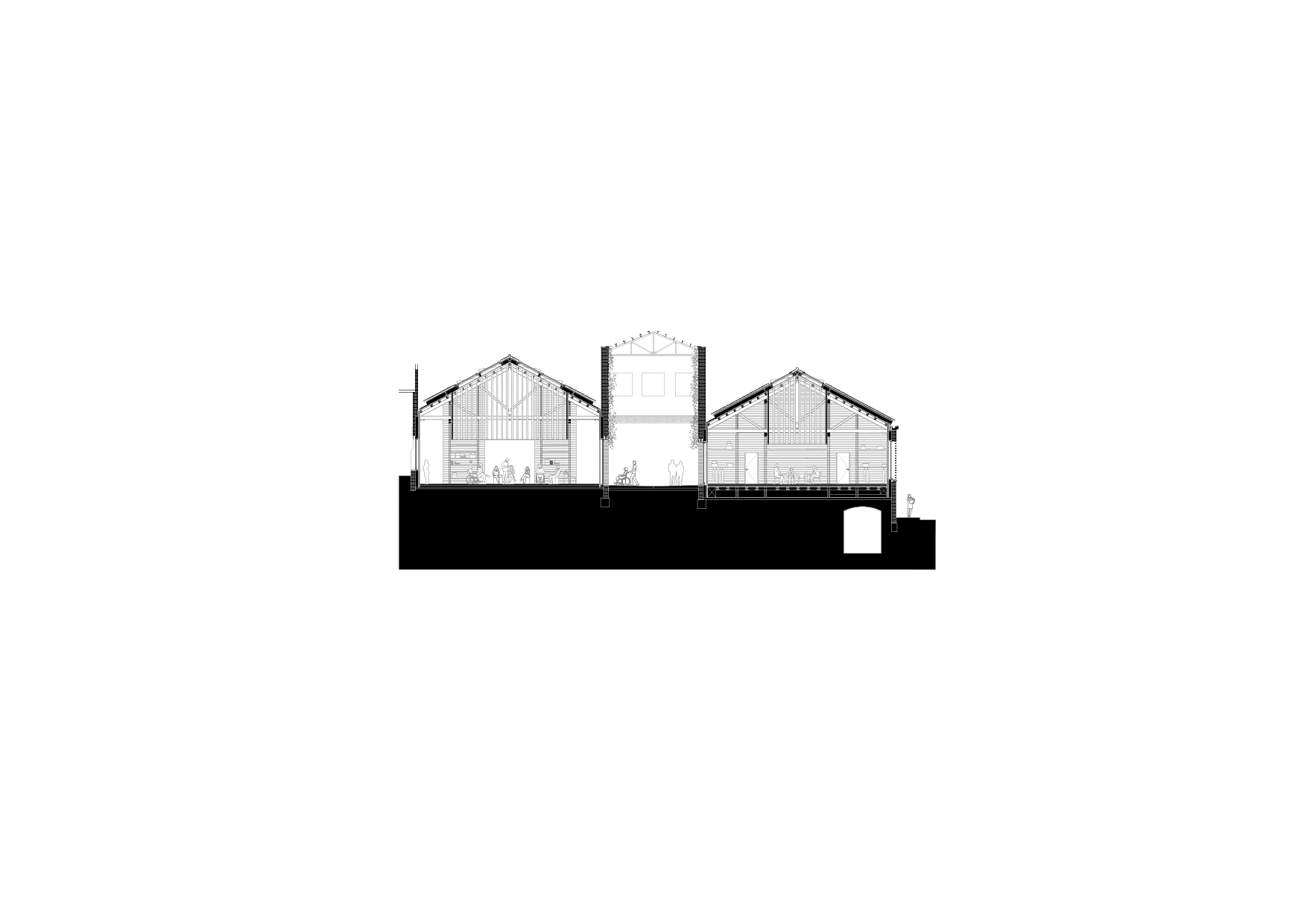
中央棟においては、工業的な特徴をもつファサードとそれを安定させる梁は維持しつつ、床と屋根をヴォイド化する提案がなされた。あたかも内部が完全にくり抜かれた遺構のように、雨は降り注ぎ、空気は街路と同じように流れる。
しかし同時に、壁や横梁には今も残る歴史のすべてが保持されている。屋根の選択的解体から現れたこの通りは、その近年の歴史が何であったかを喚起し続ける空間である。
©︎ Adrià Goula
まちをつなぐ階段と都市的次元
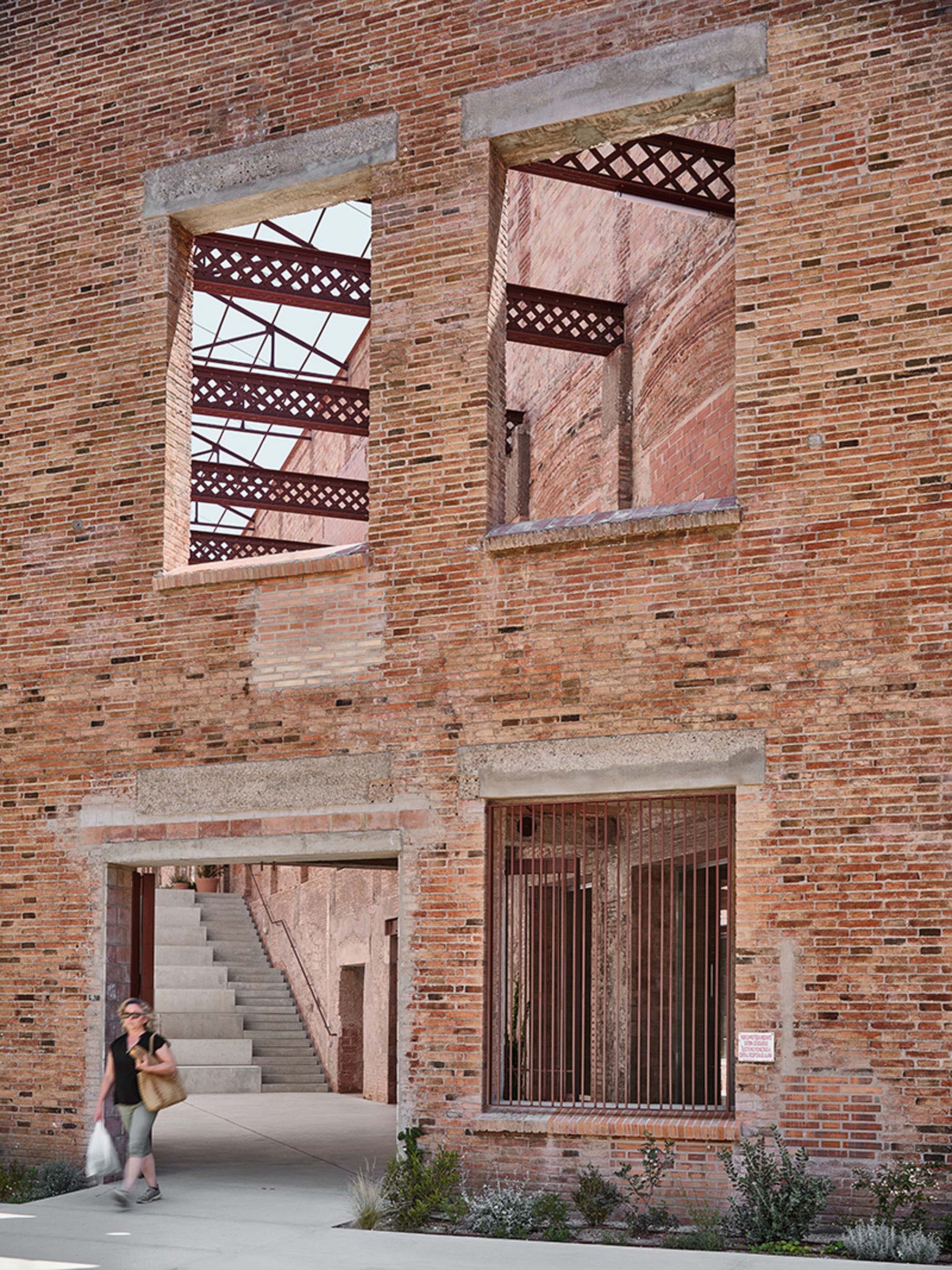
通路の両端を接続し、市街地の高低差を解消するため、最終区間には階段が設けられた。これによりレベル差が解消され、下層階の補完的プログラムへのアクセスが可能となる。この階段は通路に都市的・文化的次元を与え、単なる通過空間としてだけでなく、滞在の場としても人々を誘う役割を果たす。
©︎ Adrià Goula
主要空間と機能の構成
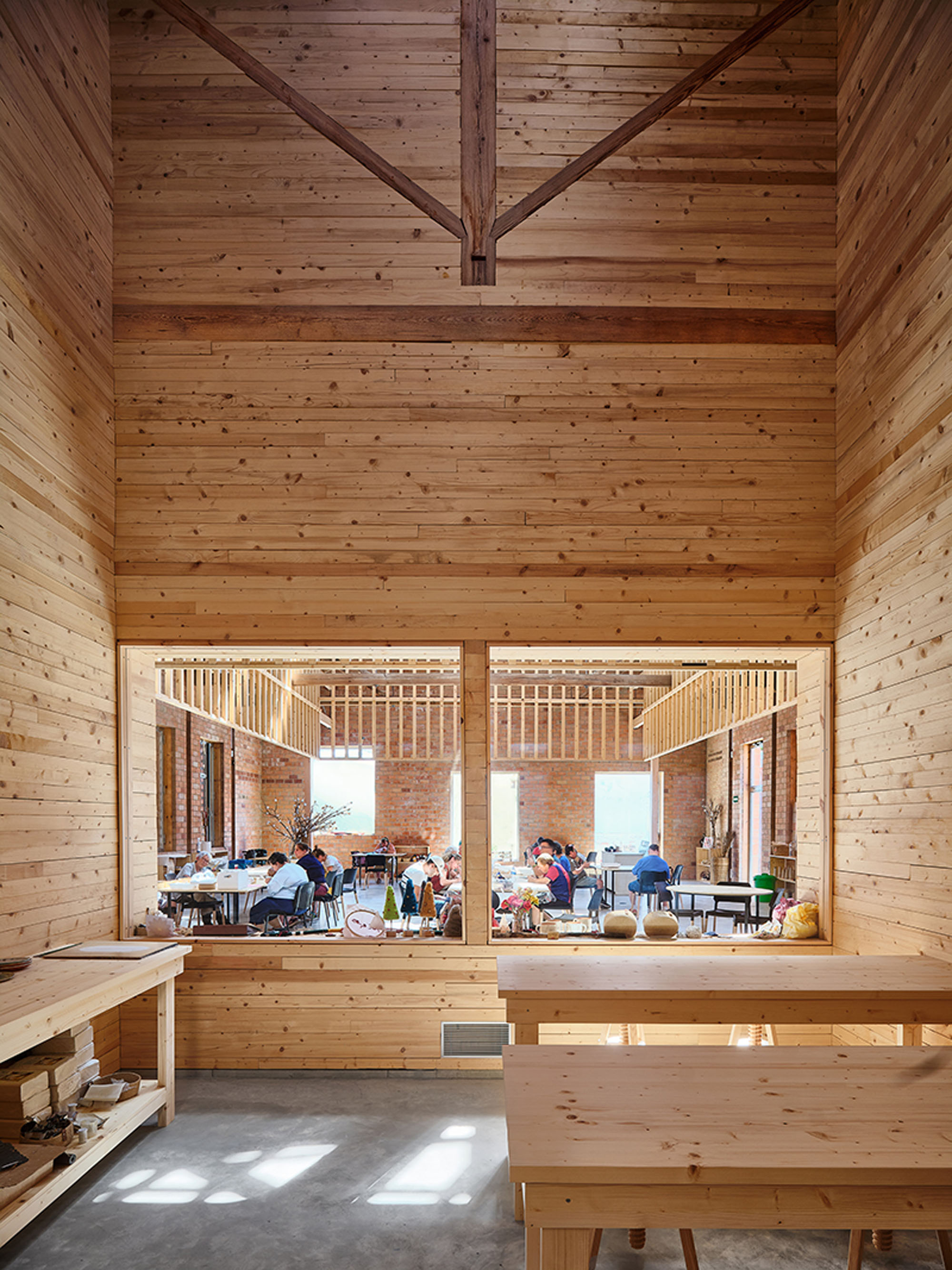
2つの主要な(かつ原初的な)身廊に沿って、施設のさまざまな空間が配置される。これらは内部通りから直接アクセス可能でありながら、同時に内部でも相互接続されている。
ワークショップ、研修教室、厨房や食堂といった主要用途と、トイレ、会議室、倉庫といった補完的空間を組み合わせた活動空間であり、障害の程度に応じた多様な利用者層に対応できるよう計画されている。
©︎ Adrià Goula
構造補強が生む空間の秩序と光
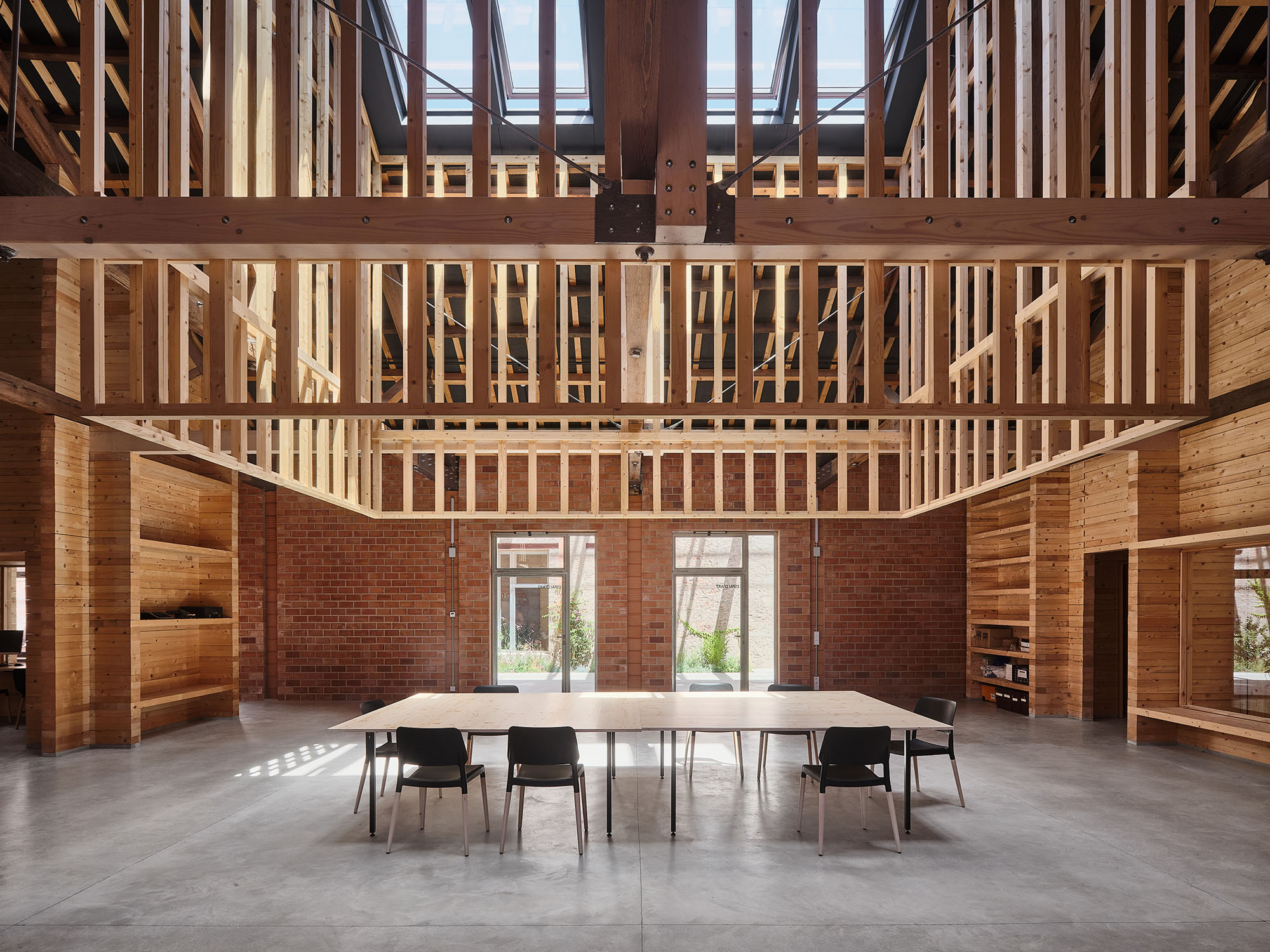
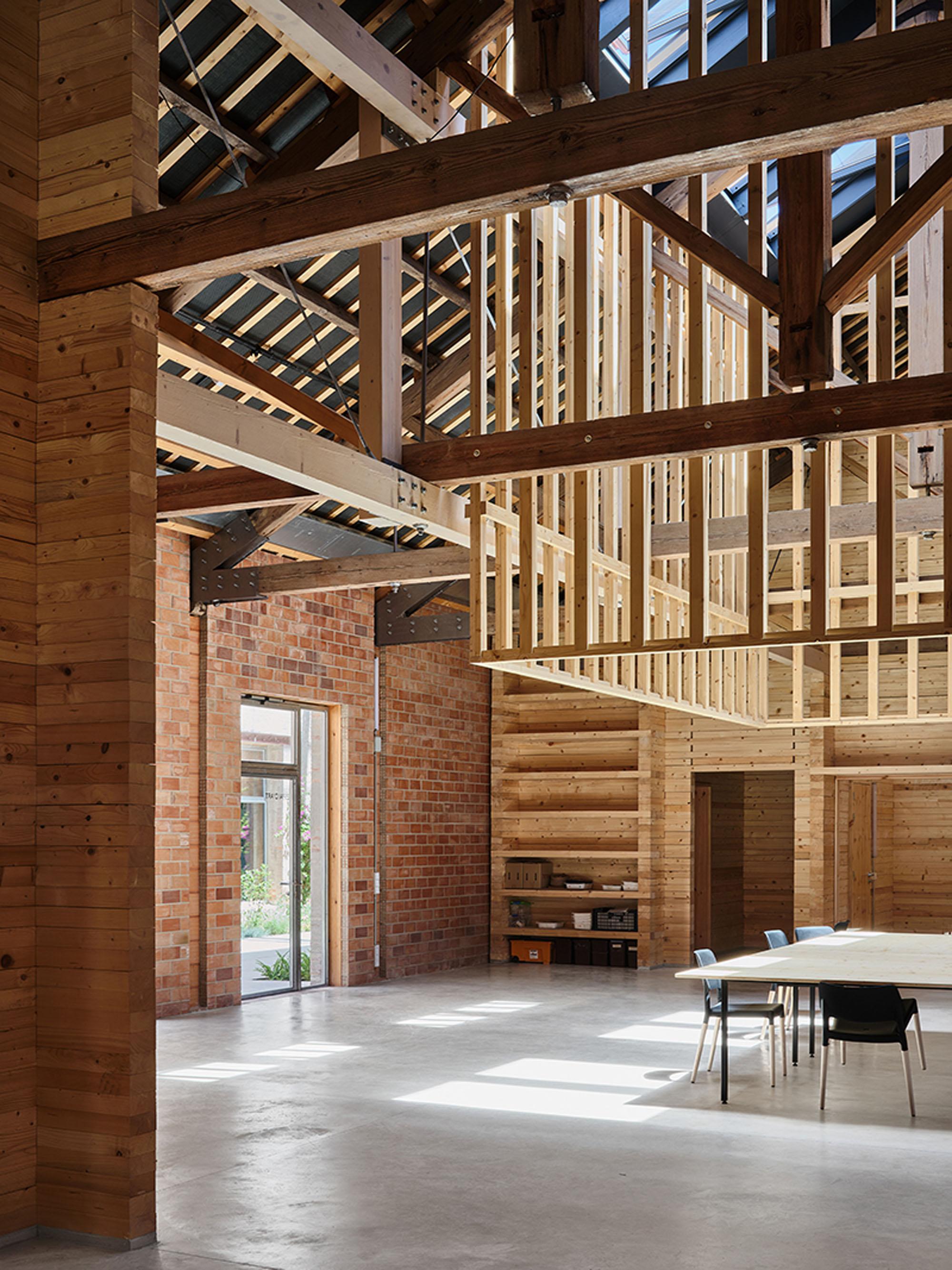
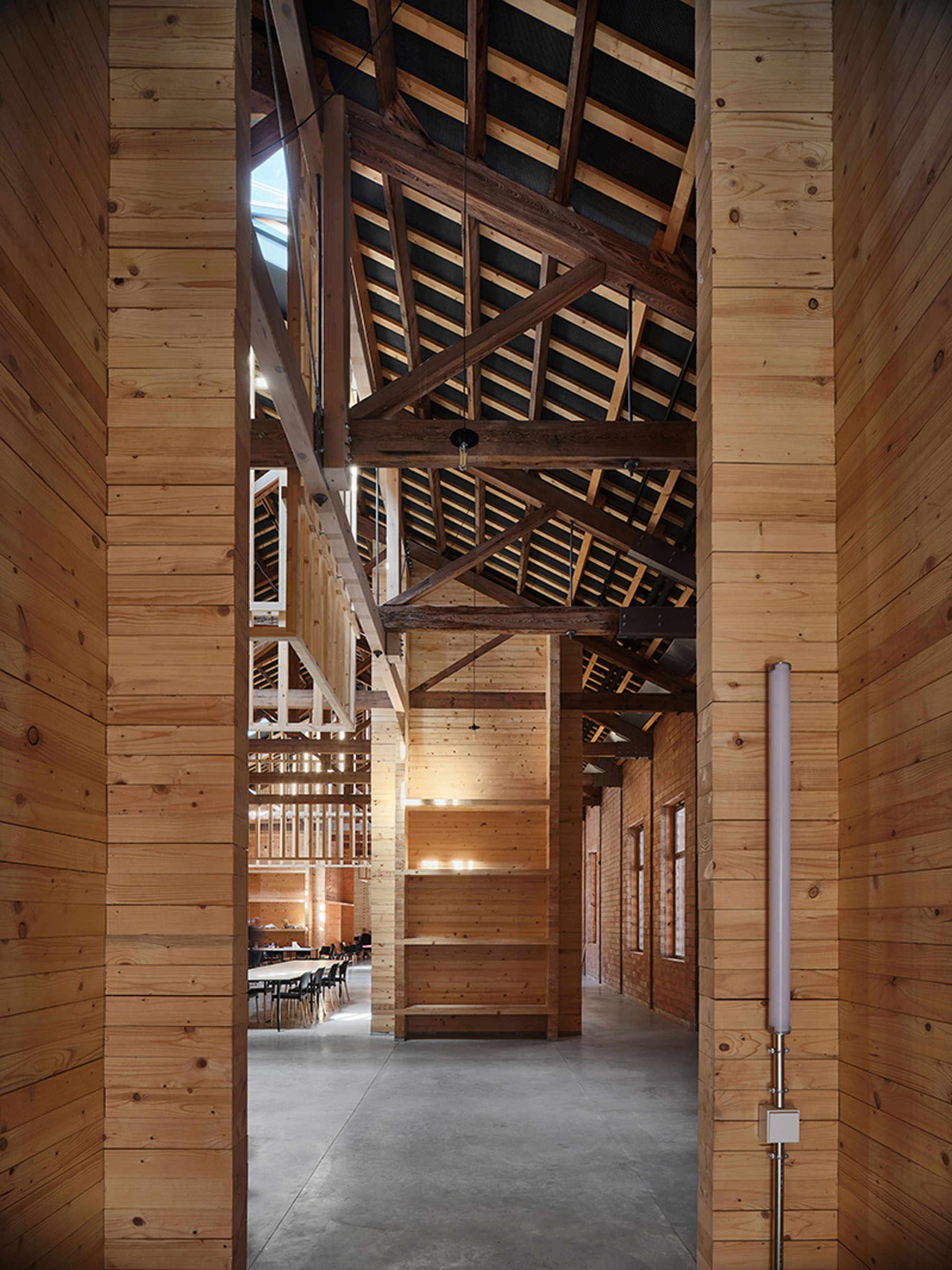
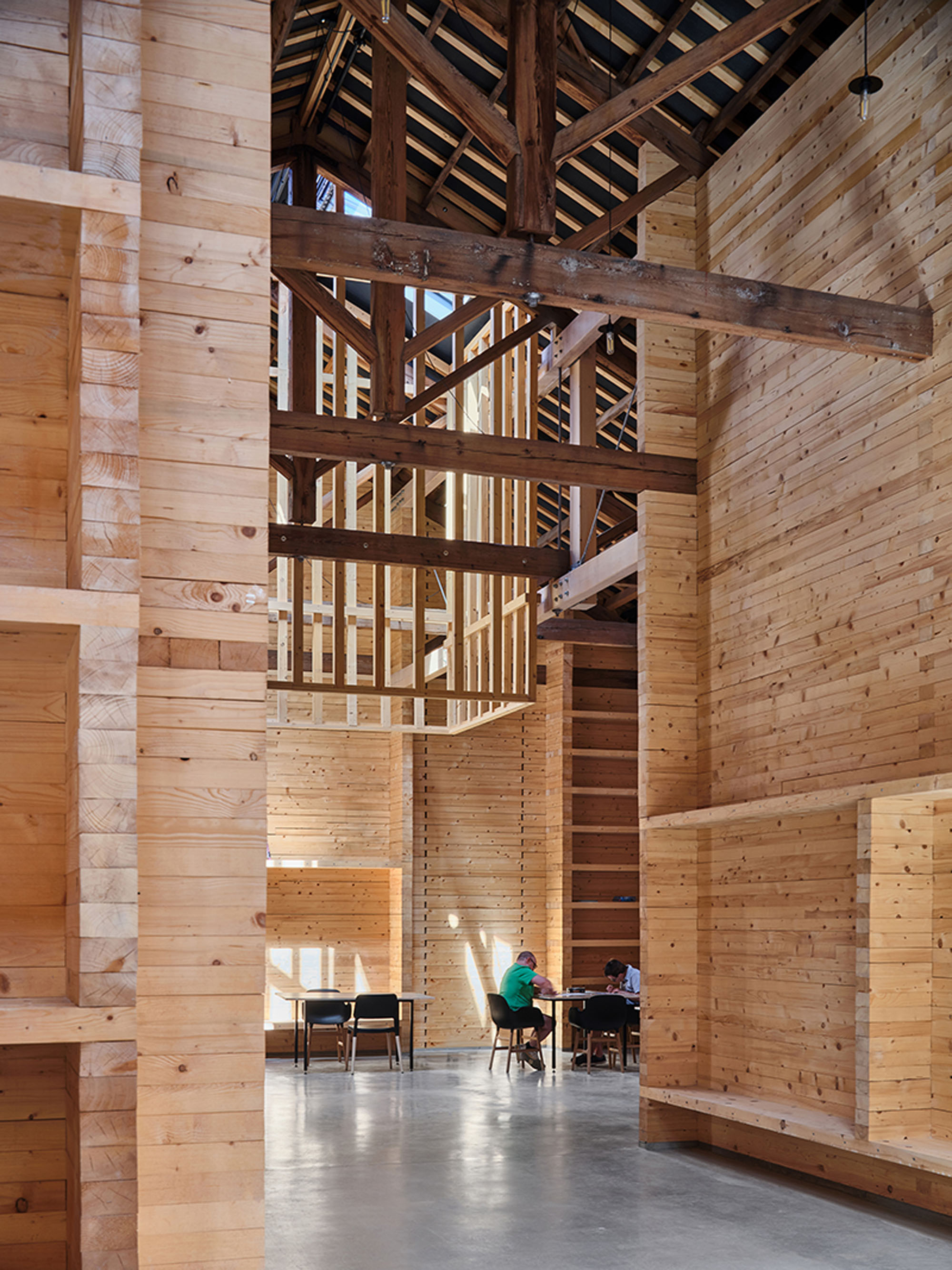
巨大な空間内での区画分割と既存トラスの補強という必要性から、構造補強を基軸とした空間構成と階層性が生まれた。 既存トラスに対して垂直に新設された梁は、元来の単方向構造を双方向構造へと転換させている。新しい梁が既存梁の負担するスパン(荷重)を軽減することで、それらの保存を可能にしたのである。
新旧構造の交差部は、元の構造と同一の構築・材質論理に従う極めて繊細な空間パターンを生み出し、本来の性質を損なわず、また逆らうことなく空間を階層化させている。既存構造に重ねられた新たな構造秩序は、主要プログラムを収めるボックスの配置と、各主要空間を特徴づける中央天窓の設置を可能にした。不透明なボックスは閉鎖的なプログラムを収容すると同時に、新たな梁の重量を支え、その梁はさらに元のトラスの重量を支えている。そして、既存トラスと新梁の交点には、主要空間の中心を照らす天窓である「ライトボックス」が現れる。
©︎ Adrià Goula
「木と木の重なり」によるテクスチャ
本プロジェクトは、既存構造を特徴づける「木と木の重なり」を拡張する試みでもある。踏板・帯金・板金といったシステム間の重なりが、異なる寸法の木製スラットによる独特の複雑な質感を創出している。
新たな梁、閉鎖ボックス、天窓は、かつて屋根を形成したのと同一の構造システムを拡張し、建物の新たな要求を解決するかのように、この「木と木の重なり」という本質を継承している。
©︎ Adrià Goula
屋根構造の刷新と環境性能
新たな屋根は外装にアラビアタイルを継続採用し、既存の垂木と野地板を保持しつつ、タイル自体は軽量化を図った。これにより、現行の省エネ基準に適合する断熱ソリューションを実現すると同時に、下層屋根を吸音層として機能させている。この吸音層は、木製垂木の間に保持された多孔質ベールで仕上げられている。
また、新たな屋根の異なるレイヤーは天窓も構成し、屋根のソリューションを展開させている。垂直に配置された下見板と仕上げ材は、光の質と天窓の存在感を形づくる要素となっている。
©︎ Adrià Goula
光が導く感情的・実存的な空間体験
空間の異なる寸法と、主要空間・副次空間の関係性が連鎖する空間の連続性を生み出し、建物の巨大な規模感を理解させつつ、全体の中に家庭的な隅部や空間を創出している。天窓は主要空間、特にそこでの使用状況と人々に注意を集中させる役割をもつ。中央の頭上から差し込む自然光はそこで起きる出来事を強調し、建築はより控えめな役割に徹する。
光と構造は環境と強い絆を築き、私たちが世界の一部であると感じさせてくれる。重力や自然光の質の変化を感じることで、より感情的な状況へと誘われるのである。私たちは、この施設がまさにこの実存的側面を再発見する必要があると確信している。
©︎ Adrià Goula
記憶を継承する修復とファサード
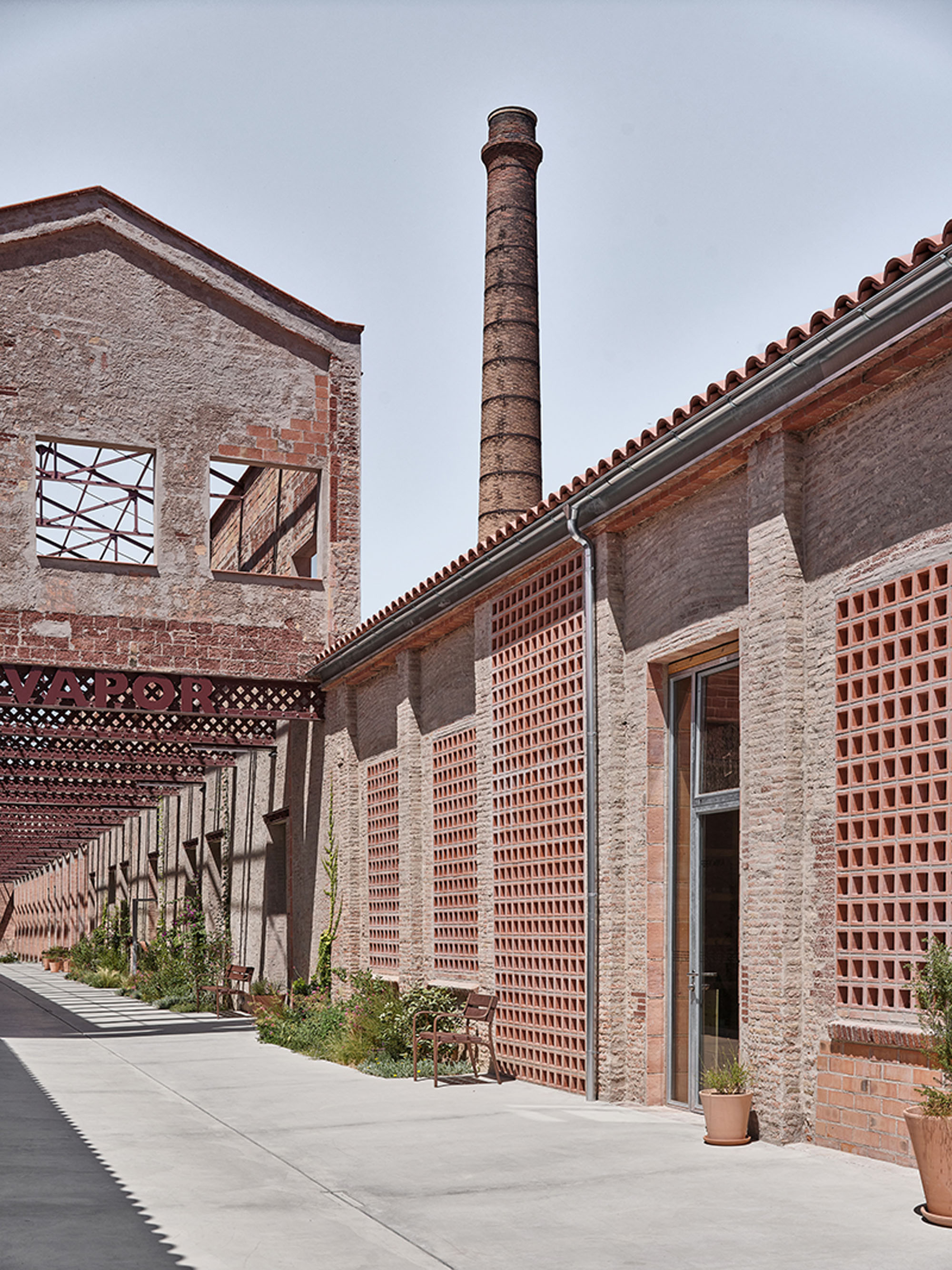
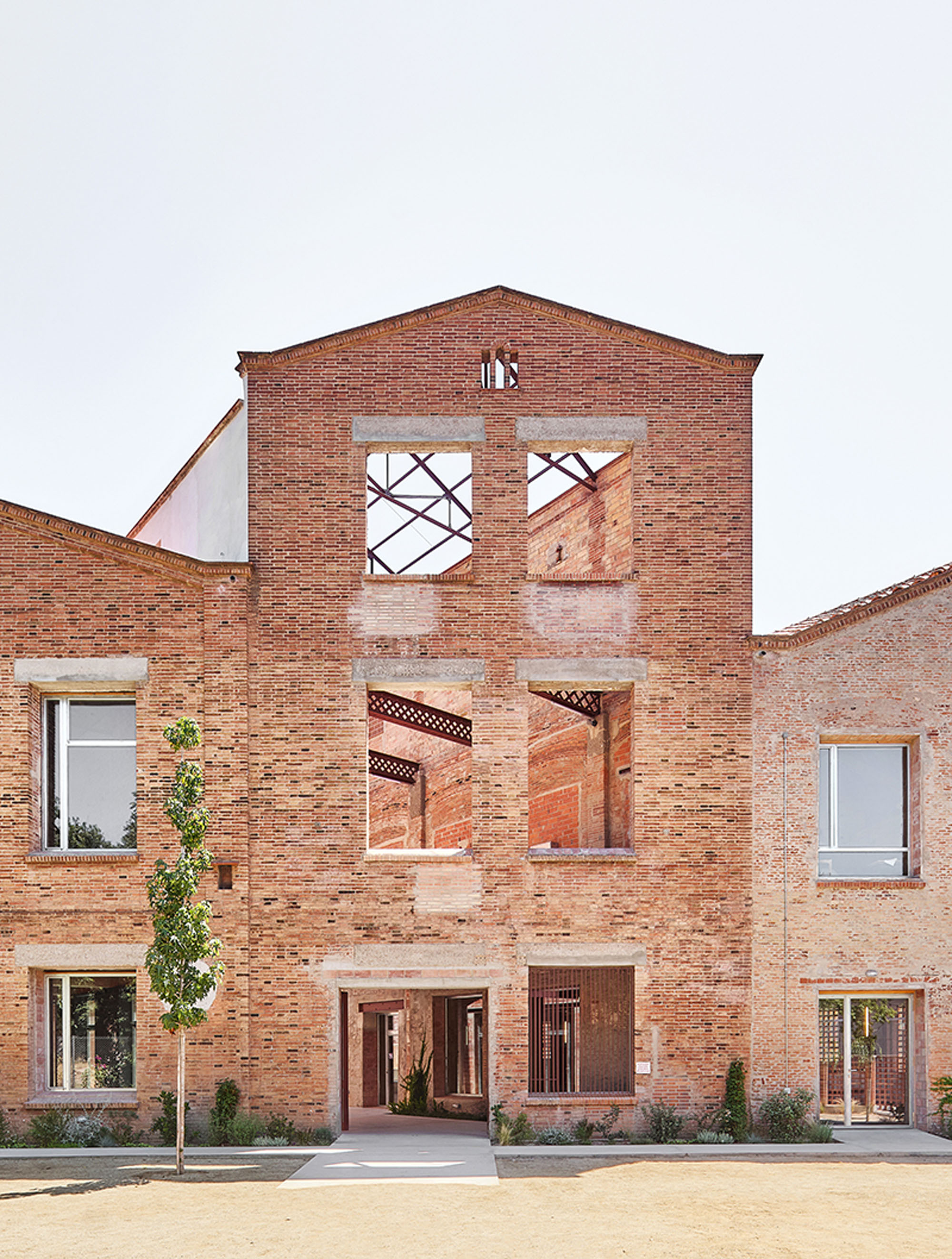
新たな木造構造による介入を除き、その他の改修は建物の本来のエッセンスと、そこに刻まれた痕跡や変遷を保存するため、極力控えめに施されている。ファサードを保護するため、断熱層は内部側への設置が選択され、ファサードのリズムに沿った露出セラミック壁パネルで仕上げられた。
外部においては、変形していた元の開口部を復元し、マスとヴォイドの関係性を回復させつつ、建物が経験した微細な変遷の特性を保持しようと試みた。時の経過を物語る傷跡や皺を保存するのである。こうした加算・減算・開口・後付けの壁の積み重ねこそが建物の魂の一部を形づくっており、歴史的建造物の説得力を支える「蓄積された時間」を失わぬよう、それらを可視化することが極めて重要だと考えた。
この観点から、建物の変遷と段階を説明する構造的変容を再発見すべく、すべての上張りや覆いを除去することを提案している。構造の中にこそ、その遺伝的要素と時代を超えた本質が存在するからである。
©︎ Adrià Goula
パッシブデザインと気候との共生
開口部は元の形態で保存または復元される。ファサードに面した技術・設備スペースなどで窓が不要な箇所については、それらの開口部をトロンベ壁(および動的壁)に転換し、内部空間の空調補助と、空気の取り入れ口として機能させている。
優れた断熱性能、自然換気、トロンベ壁、日射遮蔽により、極めて良好なパッシブ性能が保証される。この建物は内部と通路空間の境界を曖昧にし、気候の自然条件そのものが、この機関の外部への新たな開放性を構成する要素となっている。
©︎ Adrià Goula
Site plan
Sectional diagram
1st floor plan
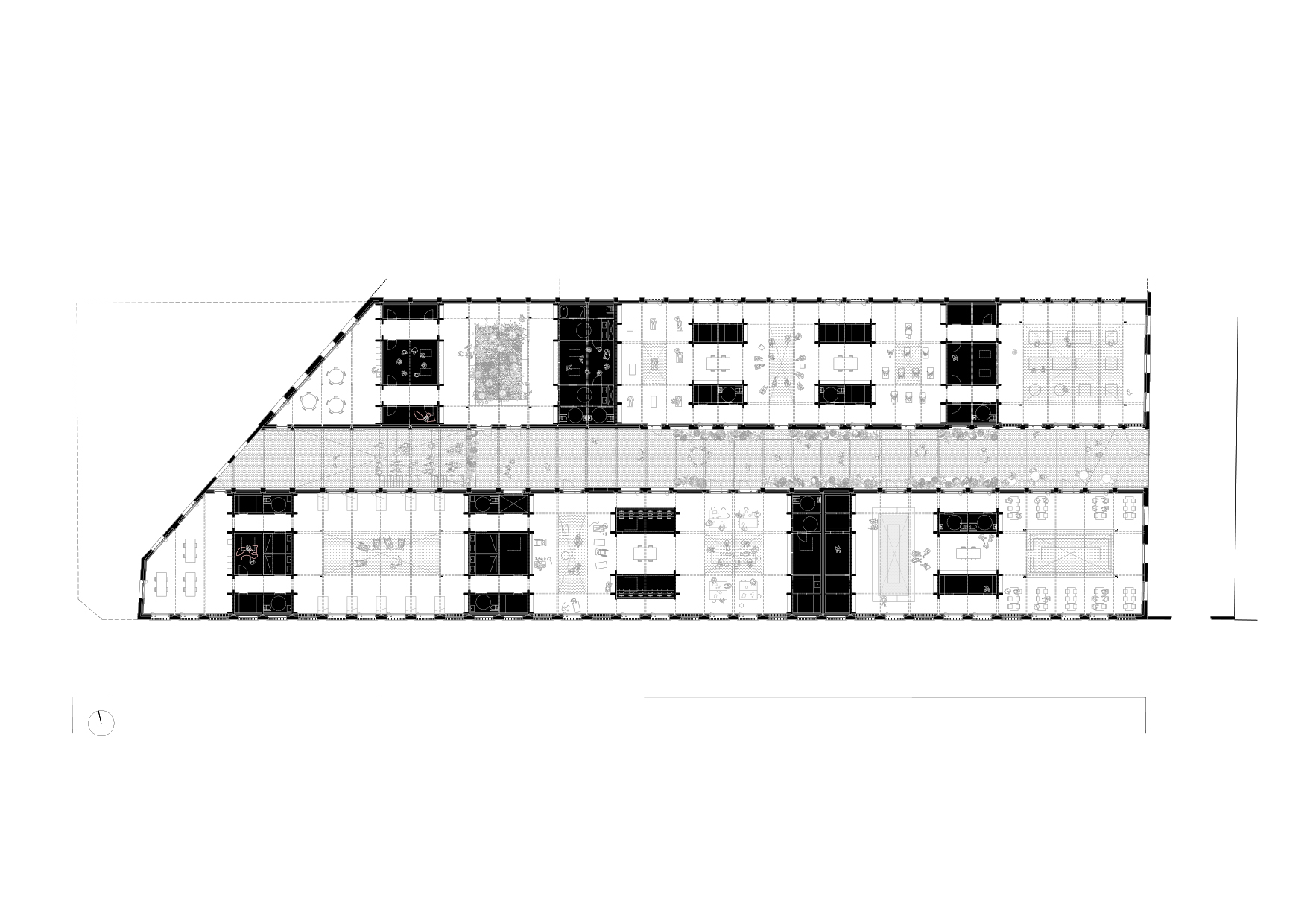
2nd floor plan
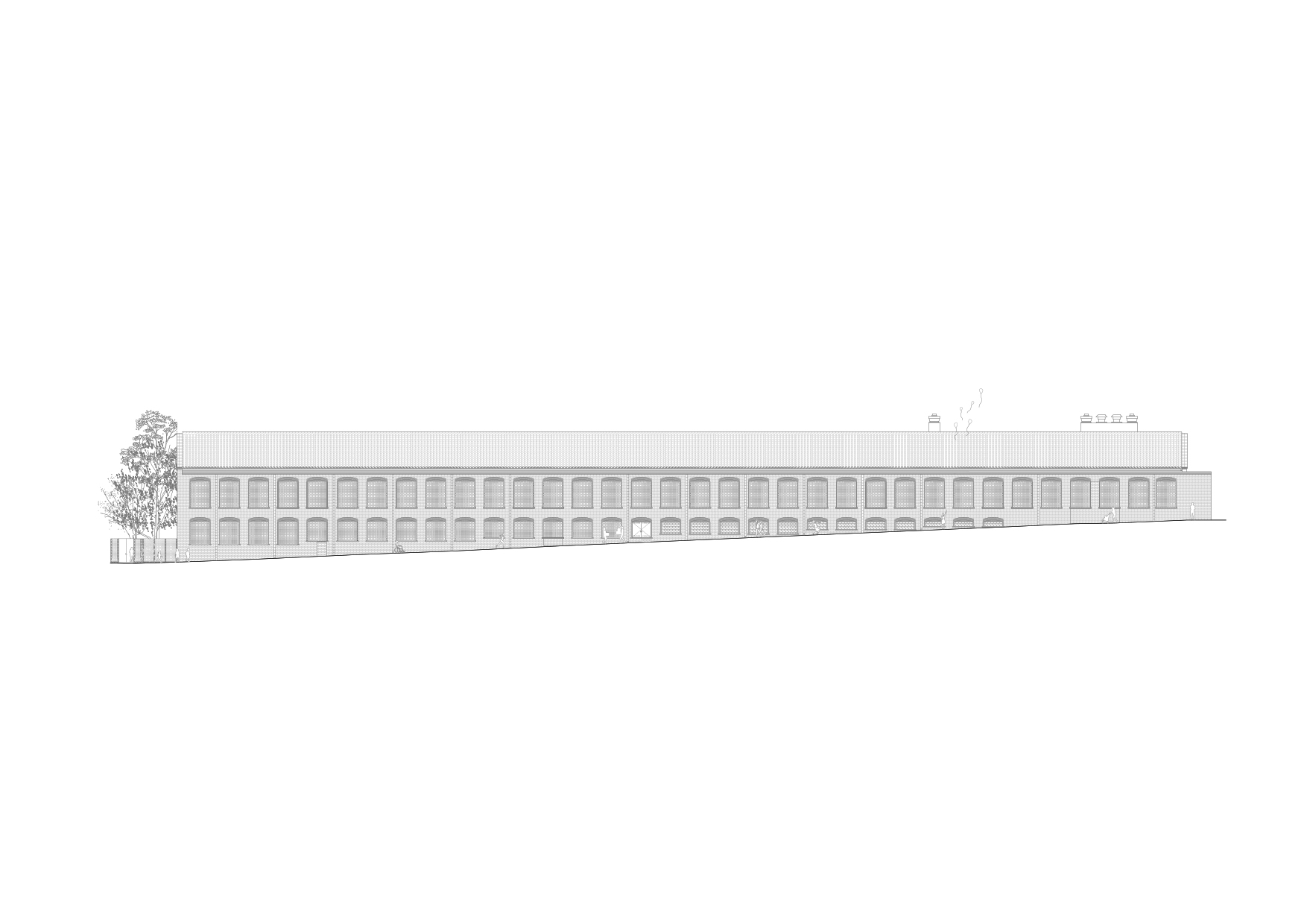
Elevation
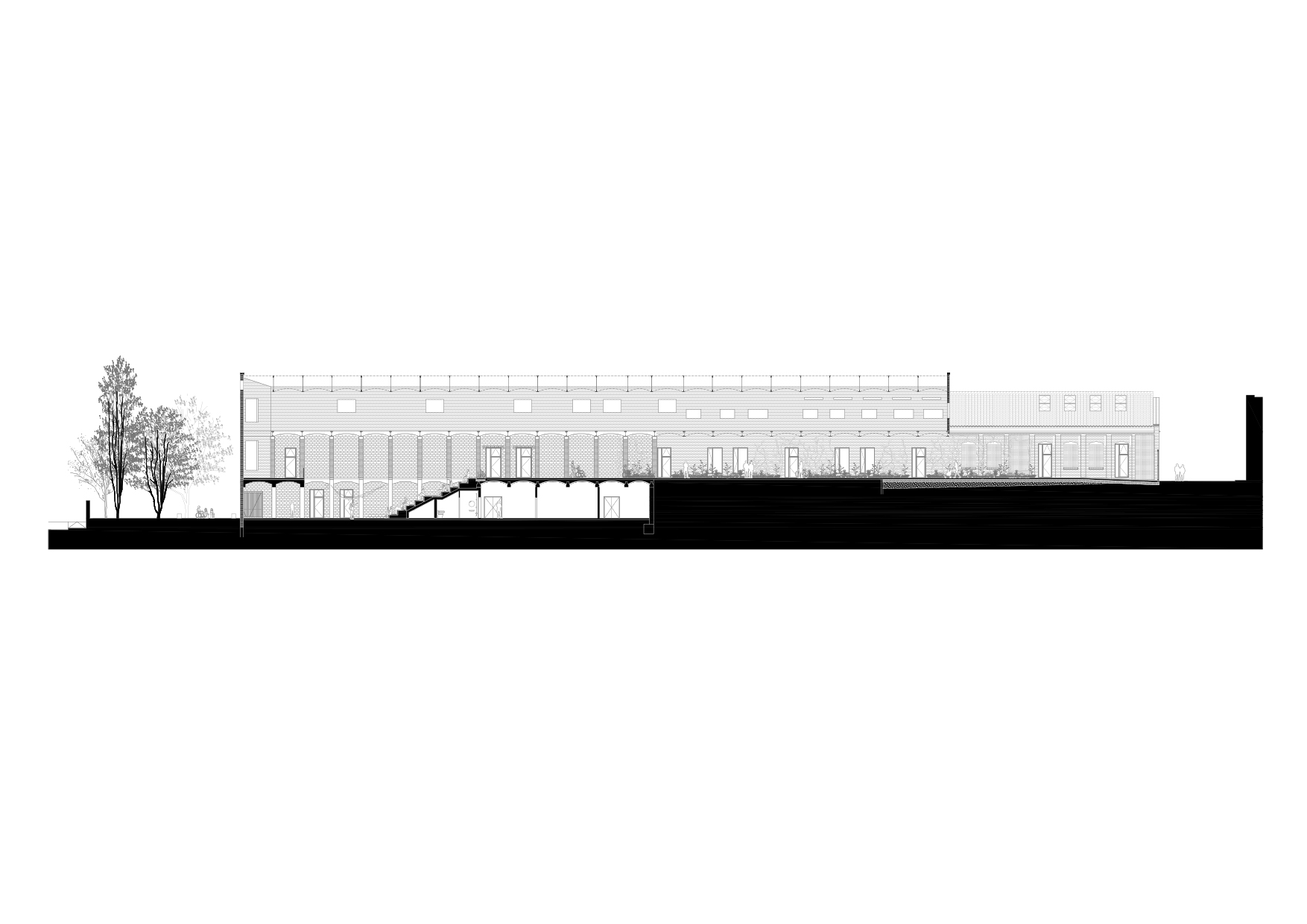
Section
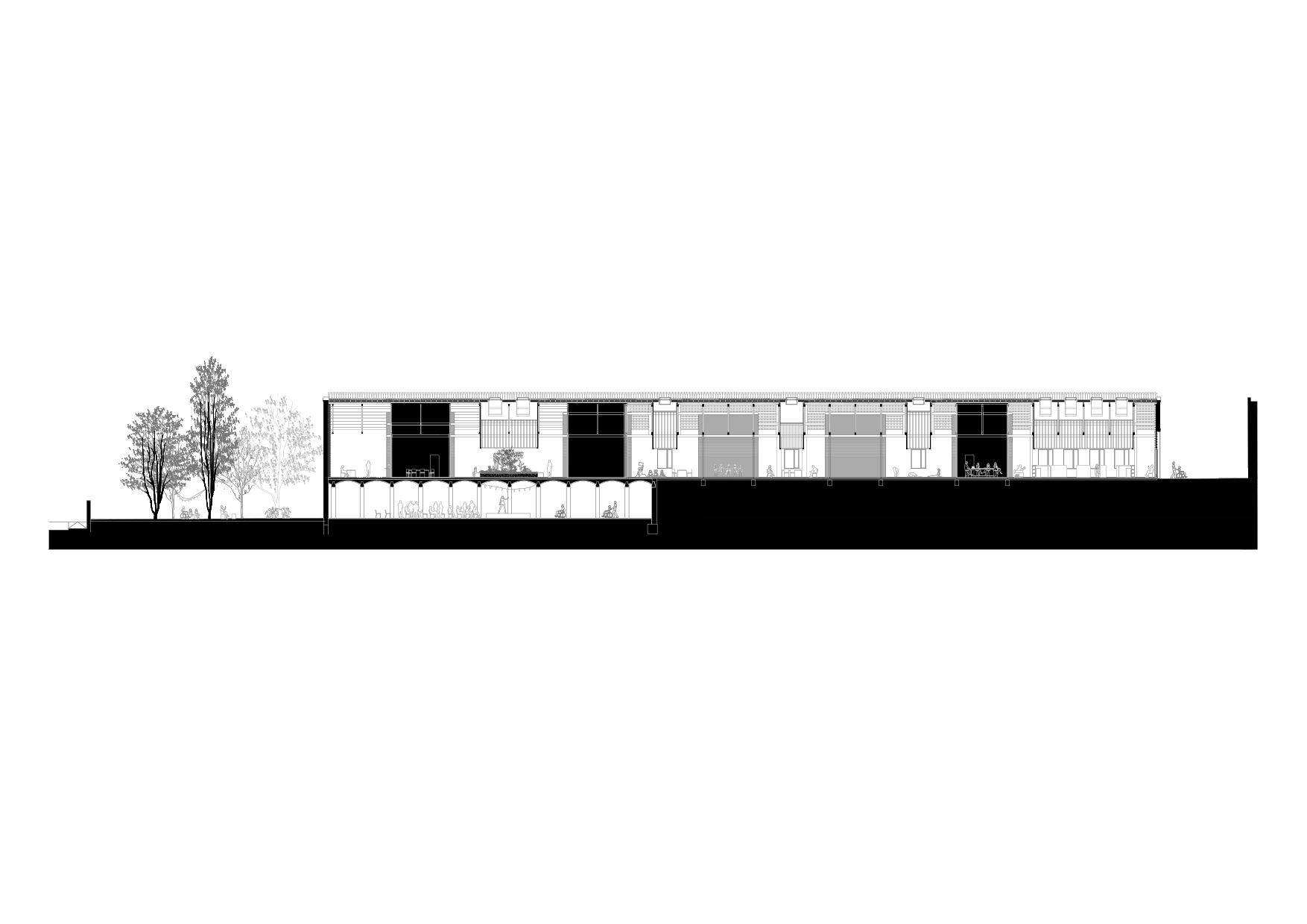
Section
Section
Section
Section
Section
以下、HARQUITECTESのリリース(英文)です。
REHABILITATION OF VAPOR CORTÈS. PRODIS 1923
Site: Terrassa, Barcelona
Client: PRODISCAPACITATS FUNDACIÓ PRIVADA TERRASSENCA (PRODIS)
Architect: HARQUITECTES (David Lorente, Josep Ricart, Xavier Ros, Roger Tudó)
Collaborators: Maya Torres – Miquel Arias – Itziar González – Albert Ferraz – Andrea Arasa – Sara Ferran – Mariona Dalmau – Maria Azcárate
Team: DSM ARQUITECTES (structure), M7 ENGINYERS (installations), Carles Bou (quantity surveyor), SOCIETAT ORGÀNICA (environmental consulting), MC ACÚSTICA (acoustics), TERRITORIS XLM (planning), GEOMÈTRIC (topography)Project years: 2020-2021
Construction years: maig 2022 – abril 2024
Built area: 3.842,2 m2
Architect’s website: www.harquitectes.com
Architect’s email: harquitectes@harquitectes.com
Photographer: Adrià Goula adriagoula@coac.netSUMMARY (eng) / MEMÒRIA (cat) / MEMORIA (esp)
[English]
The new Prodis headquarters is located in old industrial buildings that were originally part of the Vapor Cortès. The buildings are made up of the traditional perimeter structure of ceramic brick load-bearing walls following a regular rhythm of pilasters and openings every 3 meters. The 12-meter span of the buildings is covered by wooden trusses -some quite affected by roof leaks- that follow the same rhythm as the pilasters. The roof also follows the traditional structure of wooden straps and battens topped with Arabic tiles.
Between the two buildings, the original service street has been built over the years with hybrid constructions of metal structure and ceramic vault. As a result of the industrial activities that have been carried out there, all the buildings have been transformed and altered over the years and therefore the main value of the complex lies in its urban structure (warehouse-street-warehouse), in its archetypal condition as an industrial warehouse and in its inherent imperfection as a product of the history of its transformations and the accumulated memory.
For some years now, the Prodis foundation has been initiating a transformation of its conception of how to work with its users. People with disabilities have always had difficulty finding their place in society. The foundation’s objective is no longer just to give them a useful function with a certain productive performance, but rather a progressive opening of its centres towards more empathetic functions is being initiated where users begin to interact directly with society and where their work has a more emotional reward and its usefulness takes on more meaning.
The project attempts to gather these concerns and give them shape in the organization of the spaces and in the relationship with the city.
The first strategy is the recovery of the central street between the two naves. We propose a kind of passage that during the building’s operating hours will become like another street in the city from where all the circulations and activities of the centre are organized. The public condition of this passage reinforces the idea of opening the centre to the city and allows citizens to use the same spaces and interact with users. Instead of a closed and separate building, this interior pedestrian street will allow a much more porous relationship between the entity and the city. A much more direct and open relationship between users and citizens.
It is proposed to empty the floors and roof of the central body while maintaining the facades that give it its industrial character and the beams that stabilize them. Like a vestige completely emptied from the inside, where it rains and the air flows like any street but at the same time preserving all its history still present in its walls and transverse beams. A street that emerges from the selective demolition of the roofs but that continues to evoke what its recent history had been.
In order to connect the two ends of the passage and solve the difference in elevation between the two parts of the city, a staircase-staircase appears in the final section that solves the unevenness and allows access to the complementary programs on the lower level. This staircase ends up giving an urban and cultural dimension to the passage and invites it to be not only a space for passage but also a place to stay.
Along the two main (and original) naves, the different spaces of the centre are organized, accessed directly from the interior street but at the same time interconnected internally. These are activities that combine main uses such as; workshops, training classrooms, kitchen or dining rooms with more complementary spaces such as; bathrooms, meeting rooms or warehouses and that at the same time respond to different types of users according to the level of their disabilities.
The need to subdivide spaces within an enormous space and at the same time the need to reinforce the existing trusses allows an organization of the spaces and their hierarchies based on these structural reinforcements.
New beams perpendicular to the existing trusses convert the original unidirectional system into a bidirectional structure where the new beams reduce the light of the existing ones and allow them to be preserved. These intersections between new and old structures create very subtle spatial patterns that follow the same constructive and material logic as the original and that allow the space to be hierarchized without losing or going against its original nature. These new structural orders superimposed on the existing ones also help us to place the most closed programs -which will become great pillars- and at the same time central skylights in each main space that qualify and characterize them. The opaque boxes house the closed programs while also taking on the weight of the new beams that in turn take on the weight of the original trusses. At the intersection between the existing trusses and the new beams, the light boxes appear, skylights that illuminate the centre of the main spaces.
The project attempts to extend the wood-wood work that currently characterizes the original construction where the overlap between systems (tread-strap-sheet metal) creates a characteristic intricate texture of wooden slats of different dimensions. The new beams, the new closed boxes and the new skylights will follow the same nature of wood-wood overlap as if the same constructive system that configured the roof were extended to also solve the new needs of the building.
The new roof continues to have an exterior finish of Arabic tiles and retains the original straps and battens but replaces the tiles with a lighter solution that allows for thermal insulation solutions according to current energy requirements while allowing the lower layer of the roof to function as an acoustic absorber finished with a porous veil held between the wooden battens.
The different layers of the new roof also configure the skylights, making the roof solution unfold and the battens and finishes -placed vertically- help us configure the type of light and the presence of the skylight.
The different dimensions of the spaces and the different relationships between main and secondary spaces create a sequence of linked spaces that allow us to understand the large size of the buildings but at the same time manage to create more domestic corners and spaces within a whole. The skylights help to focus attention on the main spaces and in particular to focus on use and people. The central and zenithal natural light emphasizes what is happening and the architecture takes on a more discreet role. Light and structure establish an intense bond with the environment and somehow help us feel part of the world. Feeling the force of gravity or the changes in the quality of natural light transport us to a more emotional situation. We are convinced that this is an institution that needs to rediscover this existential dimension.
Beyond the new structural interventions with wood, the rest of the interventions try to be very discreet in order to preserve the original essence of the building and all its marks and transformations. To isolate the facades, an interior transposal has been chosen, finished with exposed ceramic wall panels that follow the rhythm of the facade.
On the outside, the original holes that had been disfigured are recovered, recovering the full-empty relationship but at the same time trying to preserve the character of the micro transformations that the building has undergone. Preserving its wounds and wrinkles that tell us about the passage of time. We believe that this sum of additions, subtractions, openings or subsequent walling-up define part of its soul and we think that it is very important to show them so as not to lose this accumulated time that makes historic buildings so convincing. In this sense, we propose to remove all the coverings to rediscover the structural transformations that explain the changes and stages of the building. It is in the structure where we find its genetics and its transhistorical condition.
The openings are preserved or recovered in their format and in cases where we have technical or service spaces attached to the facade that do not need a window, we convert those openings into trombe walls (and dynamic walls) to help air-condition the interior spaces and at the same time they serve as an inlet for pre-treated renewal air.
The good level of thermal insulation, natural ventilation, trombe walls and solar protections guarantee us a very good passive operation. A building that will live half inside and half in the passage where the natural condition of the climate will also be part of this new opening of the institution towards the exterior.
HARQUITECTES 公式サイト
https://www.harquitectes.com/en/
【購読無料】空間デザインの今がわかるメールマガジン TECTURE NEWS LETTER
RECOMMENDED ARTICLE