CULTURE
© Kejia Mei
© Kejia Mei
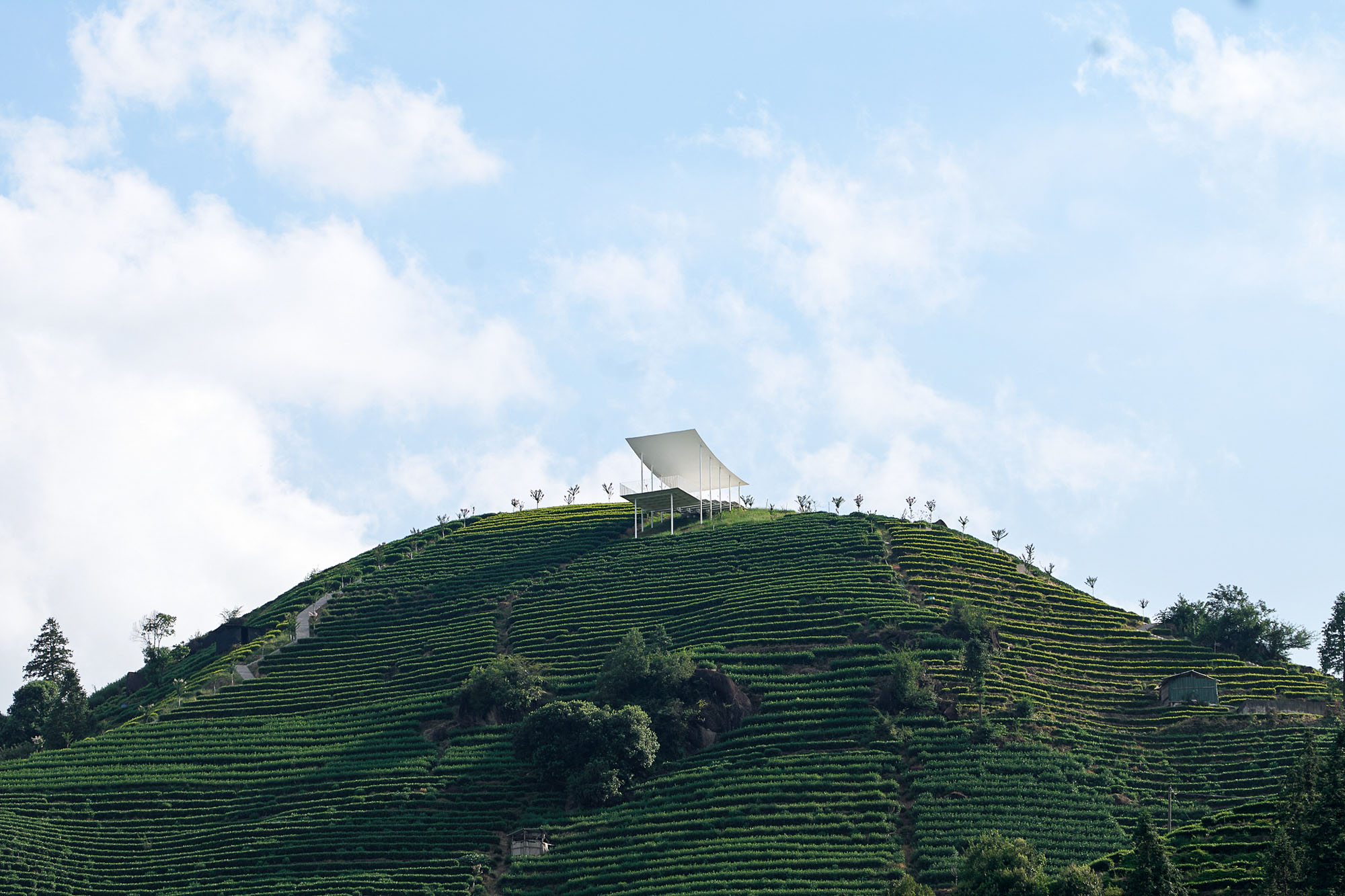
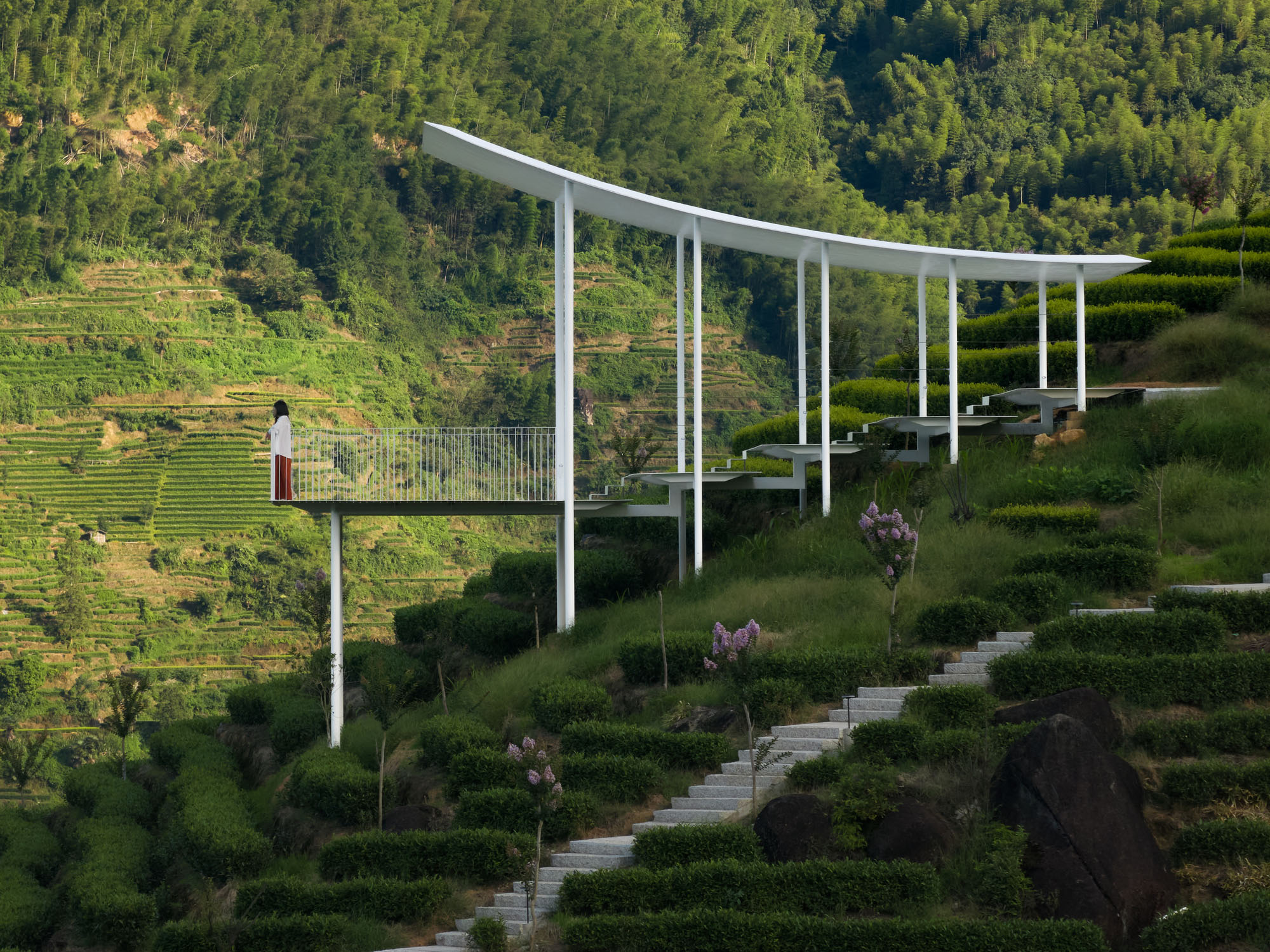
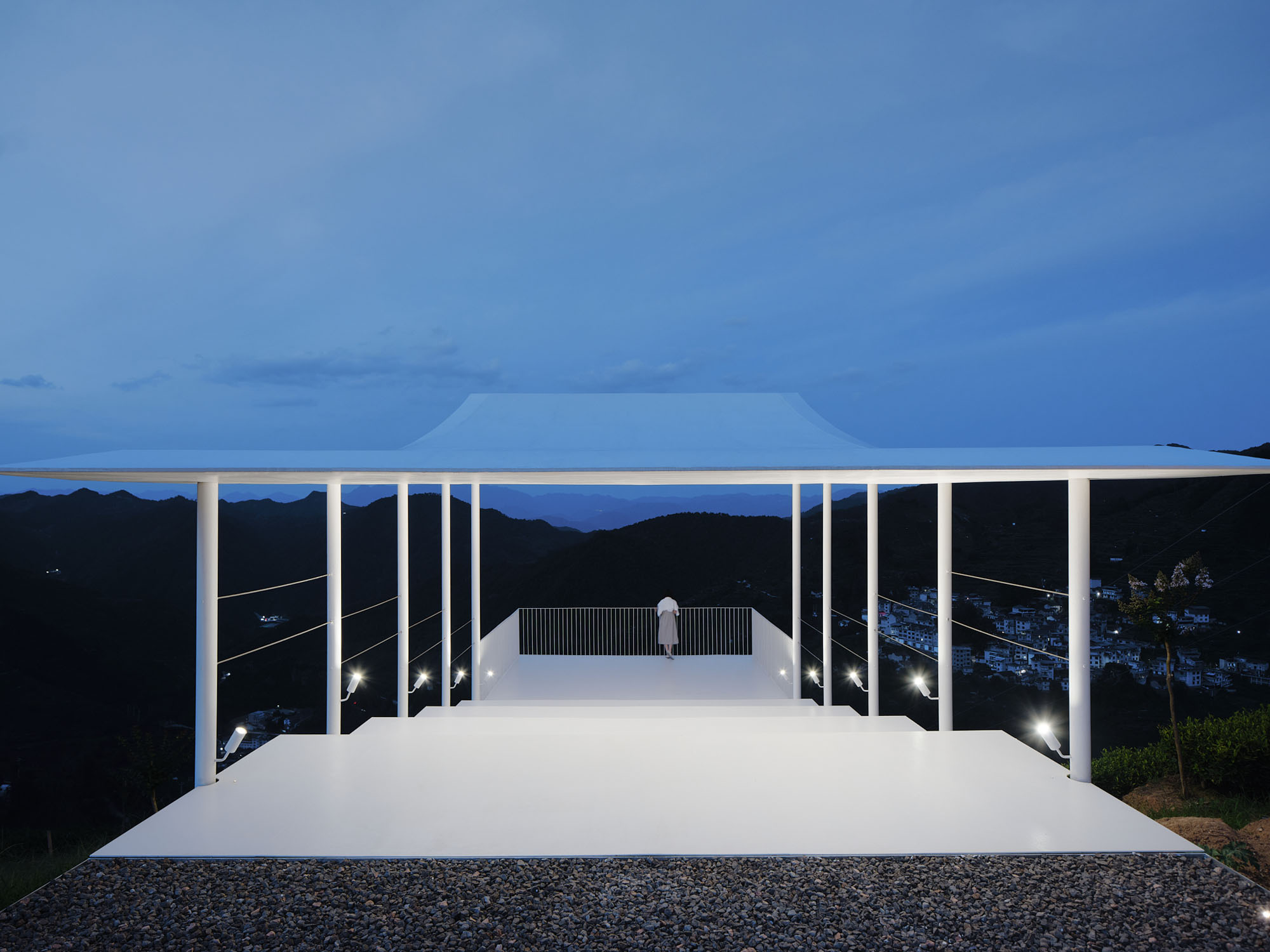
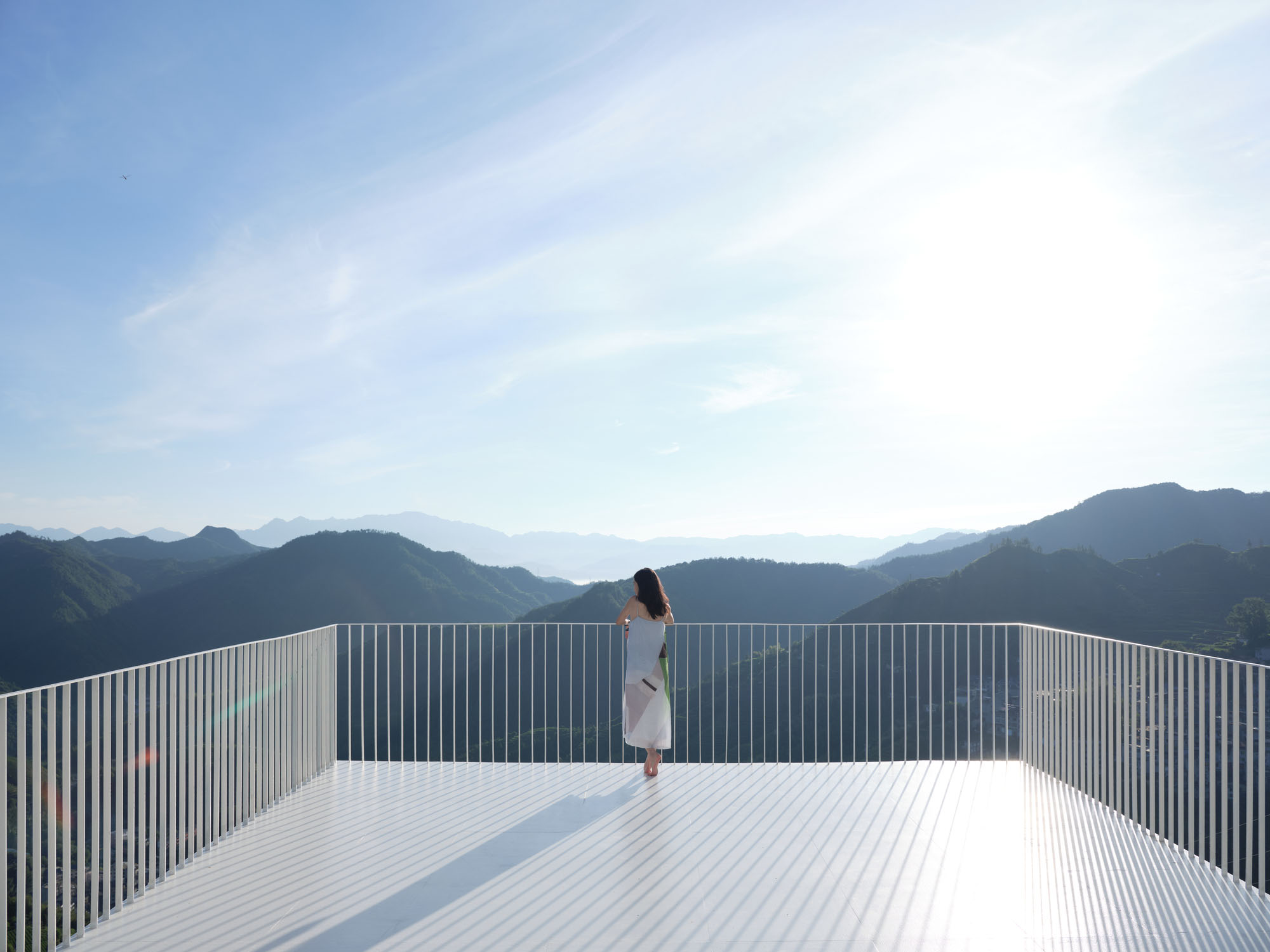
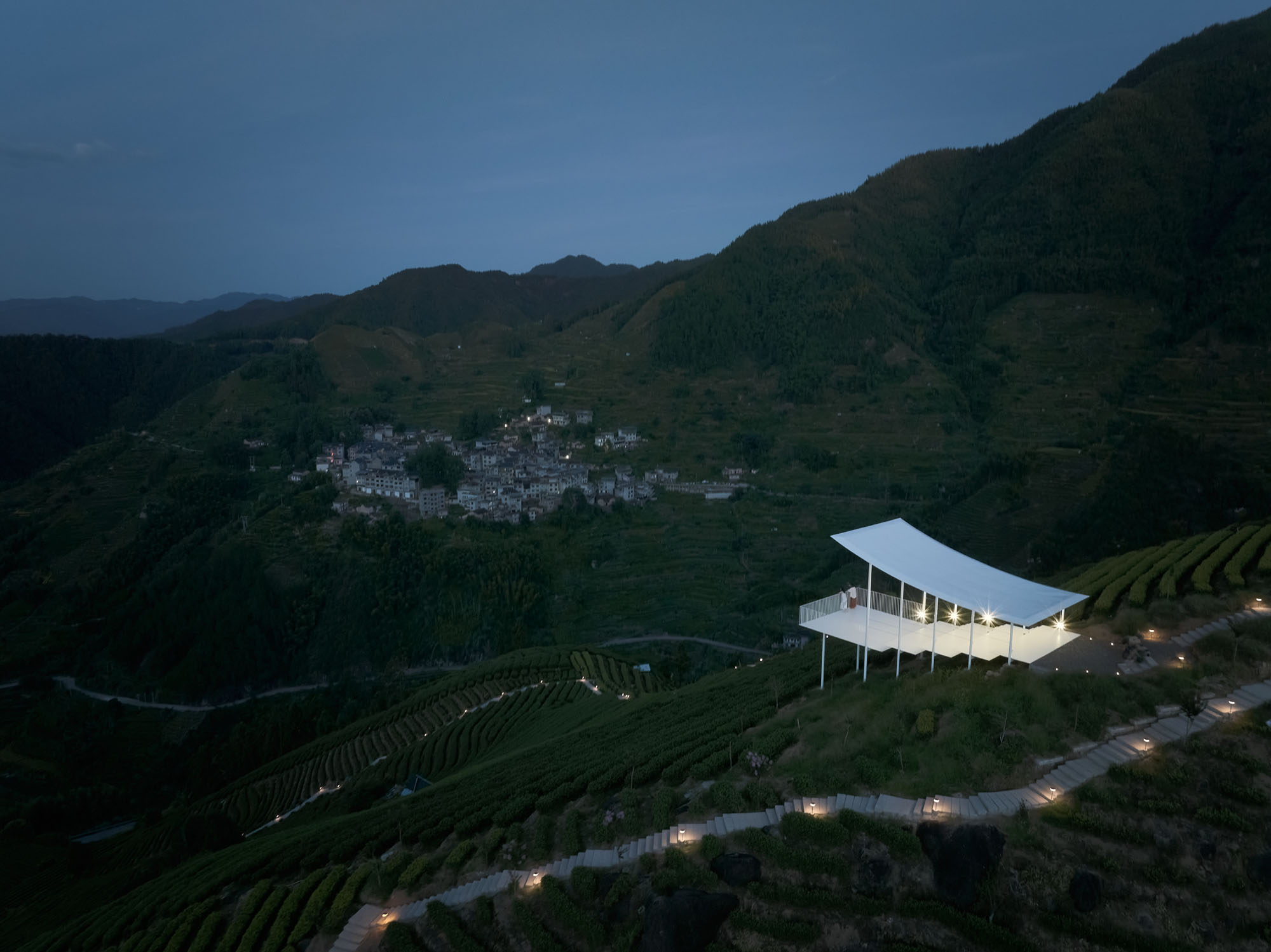
中国浙江省松陽県に建つ〈フローティング・パビリオン(Floating Pavilion)〉は、標高約500mの茶畑に浮かぶ、村人や訪問者の散策や休憩、展望のための場です。
中国・杭州に拠点を置くデザイン事務所 Studio RE+Nが設計しました。
注目ポイント
- 茶畑への介入を最小限にする、細い柱と薄いスラブ
- アクセス経路からプラットフォームへと至る、圧縮から解放へのシークエンス
- 浮かぶような視覚効果を実現する構造システム
(以下、Studio RE+Nから提供されたプレスキットのテキストの抄訳)
© Kejia Mei
茶畑に現れた、雲海に溶け込む建築
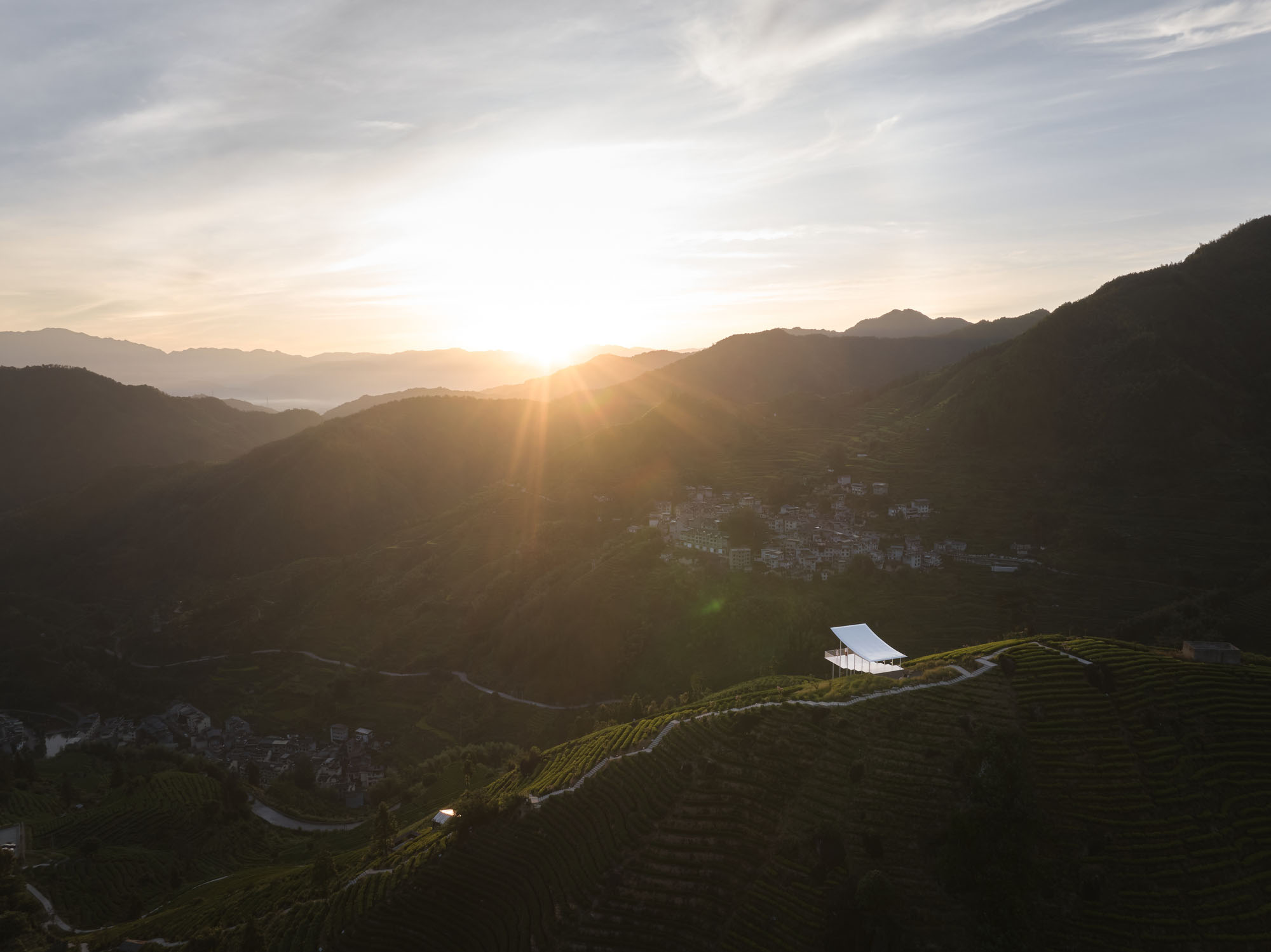
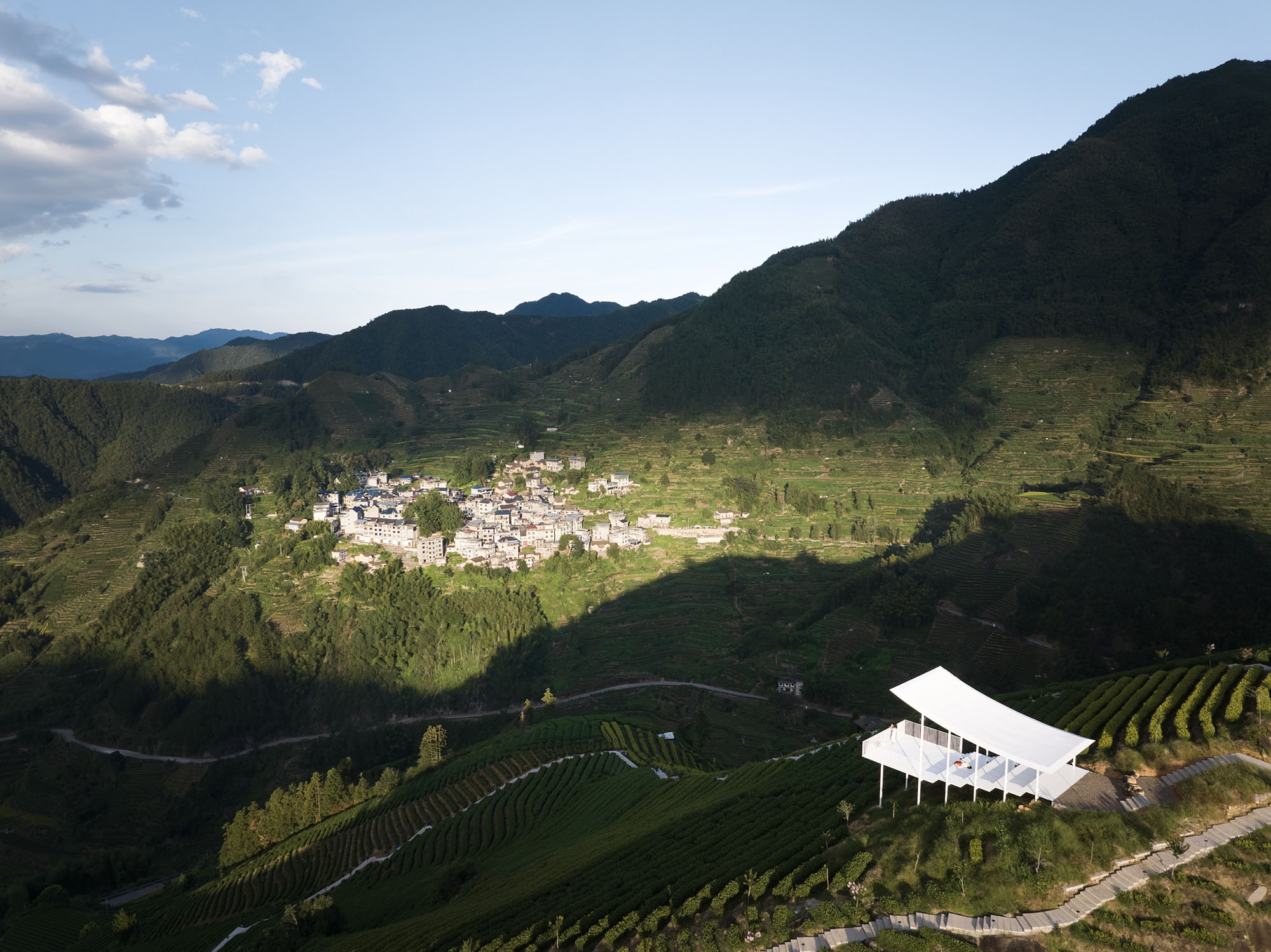
茶畑の段々畑が地平線に向かって連なり、漂う霧が幻想的な光景を織りなす。中国浙江省松陽県、標高約500mの山頂に位置するのが、この〈フローティング・パビリオン〉である。
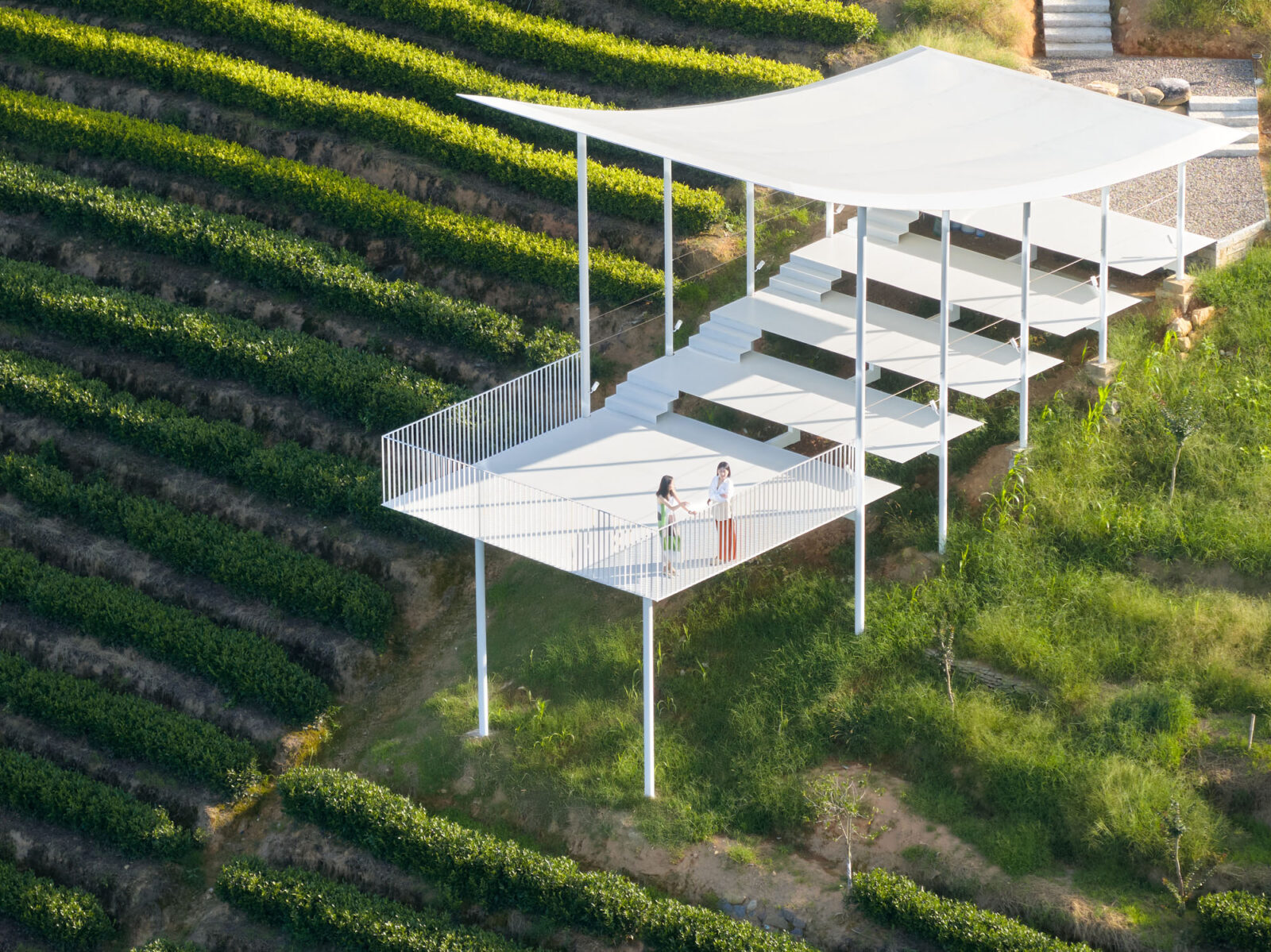
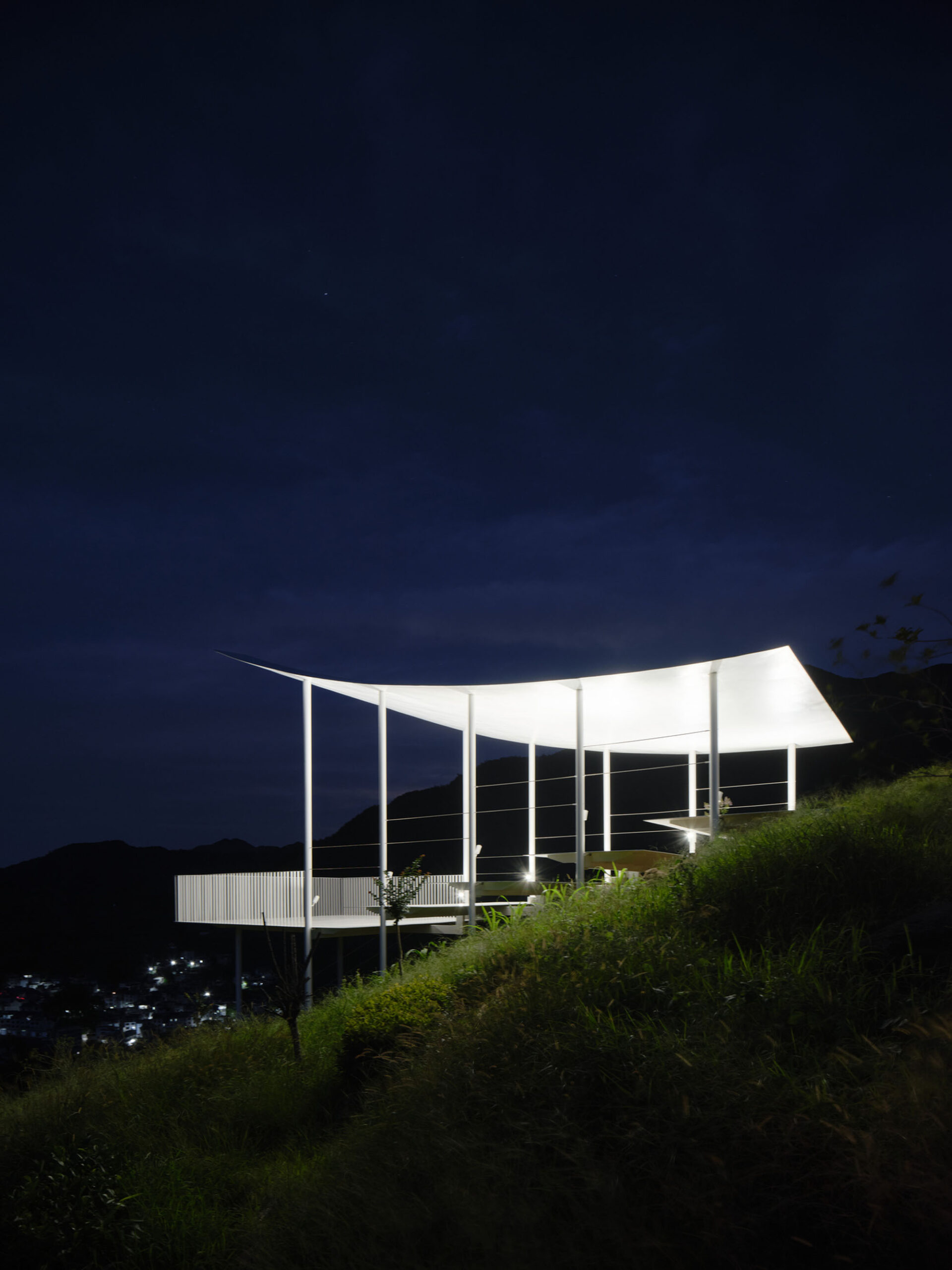
細身の白い構造体は、最小限の支柱によって支えられ、まるで薄い翼が風に乗って舞い上がったかのように、茶畑の上に静かに浮かんでいる。「フローティング」という言葉は、地面から吊り下げられた薄い屋根という「構造的な状態」を指すと同時に、霧が漂い、光が移ろう山中で、ひととき立ち止まる安らぎのような「時間の質」をも象徴している。
© Kejia Mei
© Kejia Mei
地形への最小限の介入と、有機的な空間構成
敷地は新星鎮の「オーガニック・ティー・バレー」内にあり、なだらかな茶畑の丘に囲まれている。計画当初、ここには既存の建造物がなく、険しい地形を横切る狭い農道だけが唯一のアクセス手段であった。
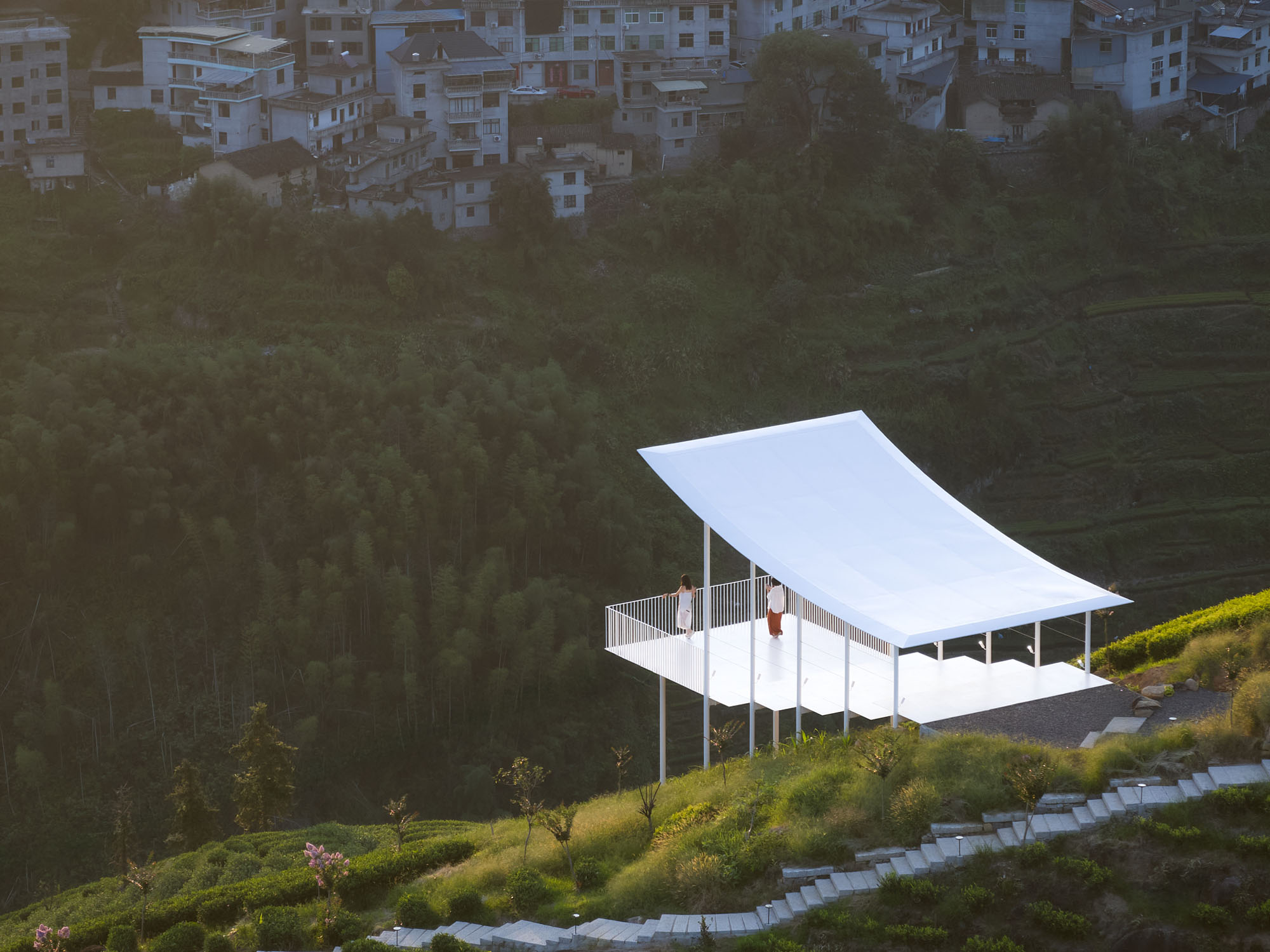
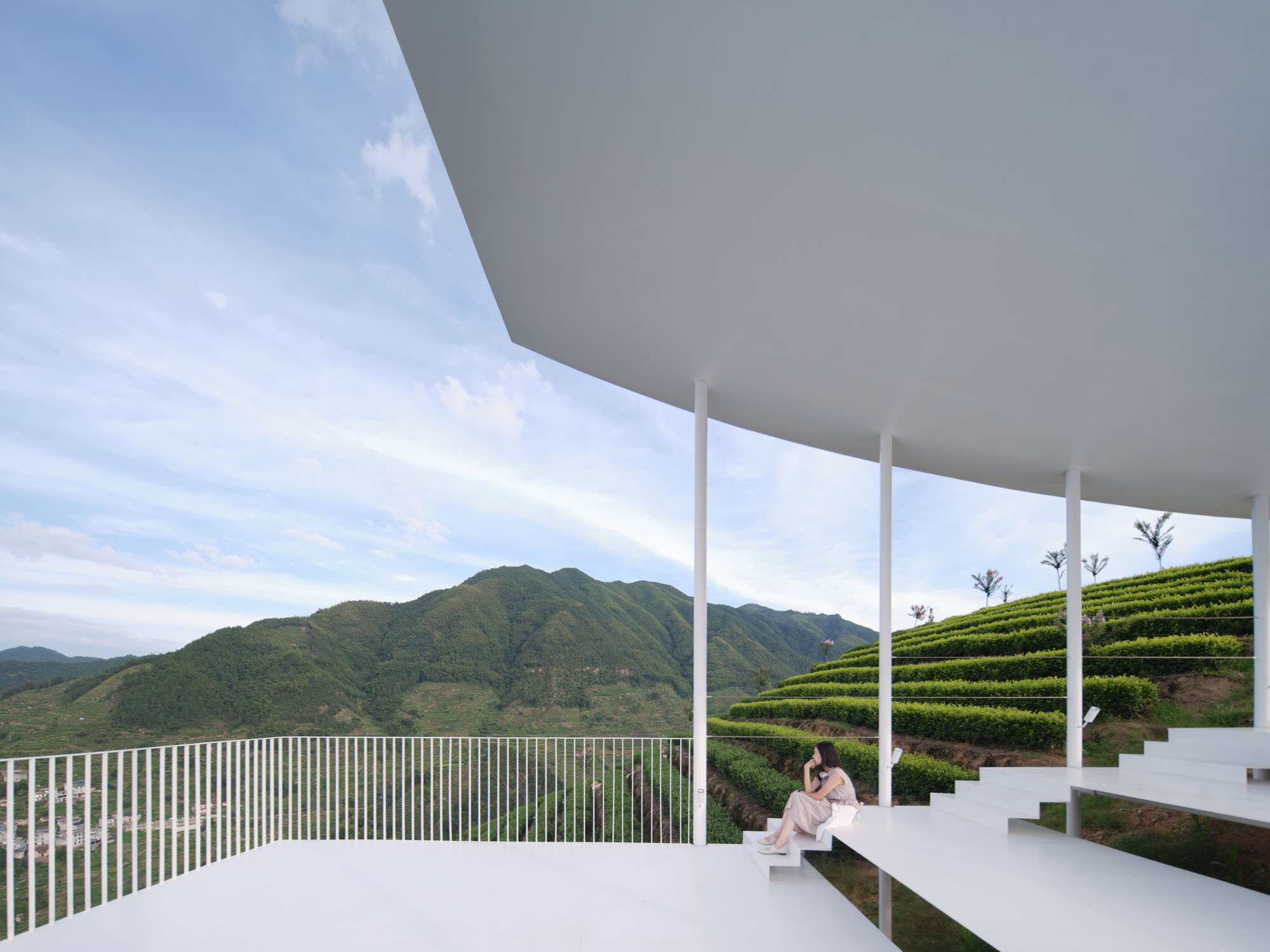
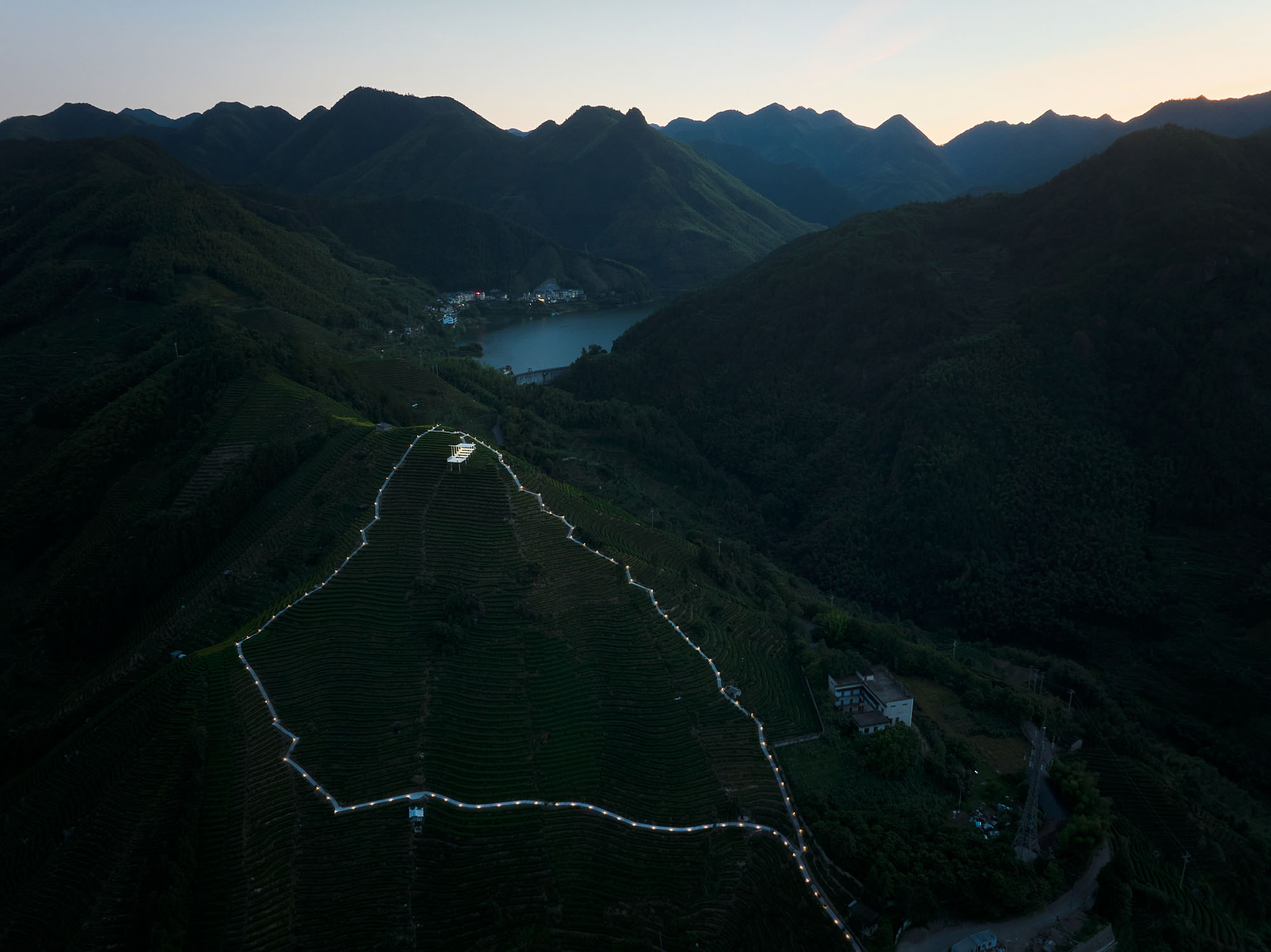
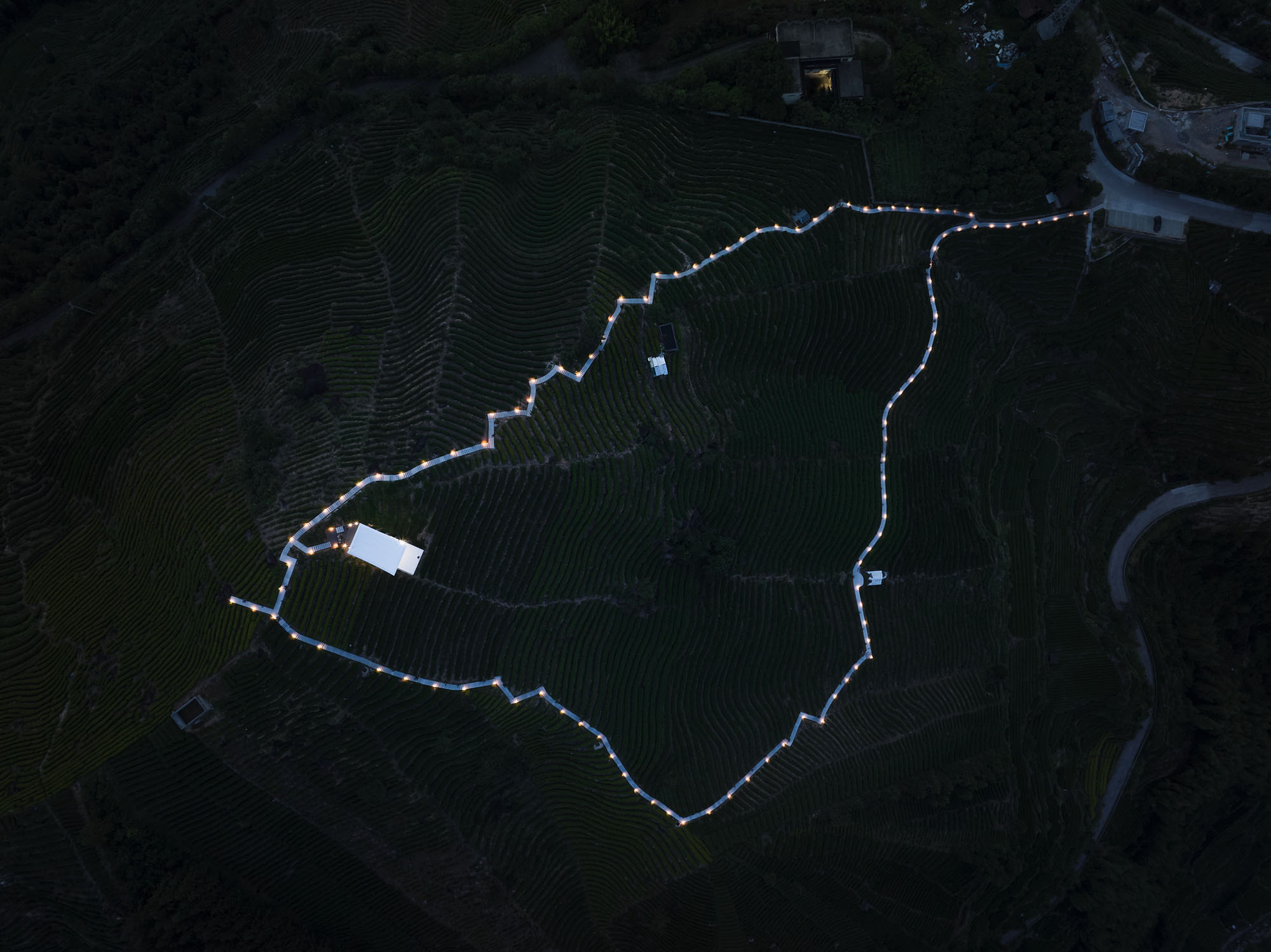
「最小限の介入」という原則に基づき、設計では茶畑の上に浮かぶ軽量構造を採用した。空間の連続性と構造的な精密さを通じて、建築の存在感と自然地形との境界が探求されている。上り坂のアプローチは既存の茶摘みルートを辿り、それを強化する形で構成された。花崗岩の階段が段々畑をくねくねと上っていくにつれ、パビリオンが時折その姿を現す。この介入は、耕作された景観の有機的な延長として立ち現れるのである。
© Kejia Mei
© Kejia Mei
圧縮から解放へ:地形に呼応する空間のリズム
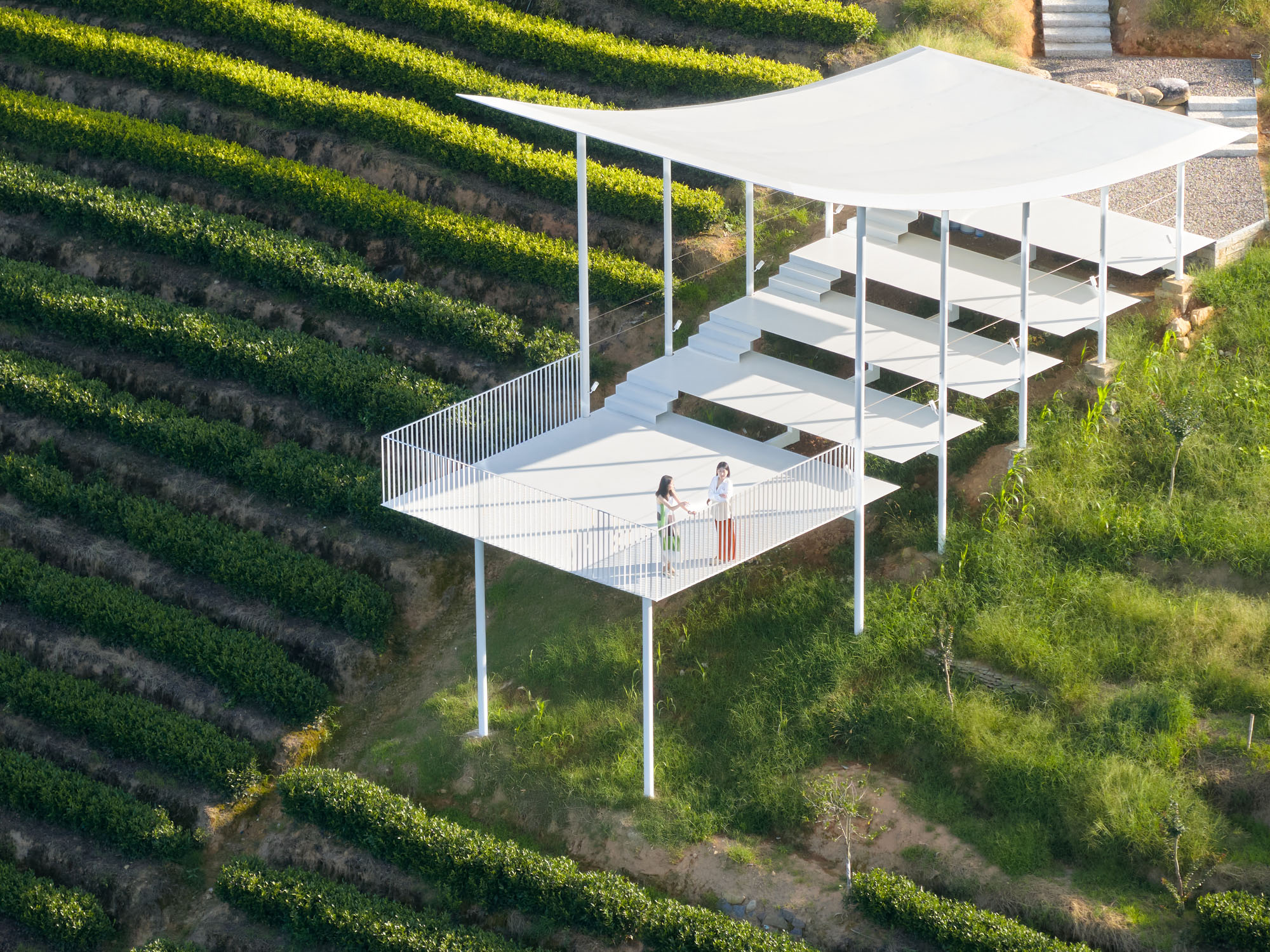
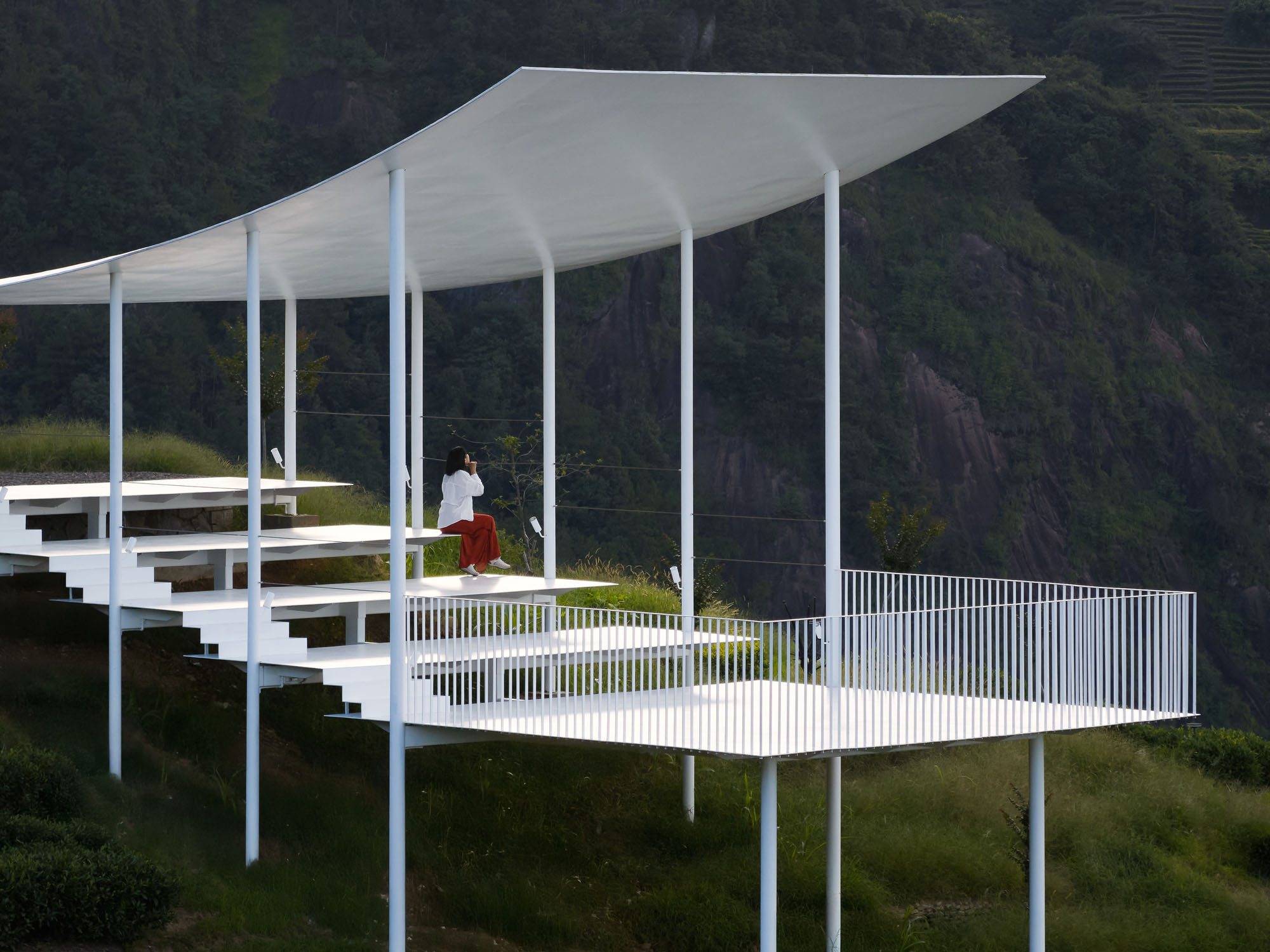
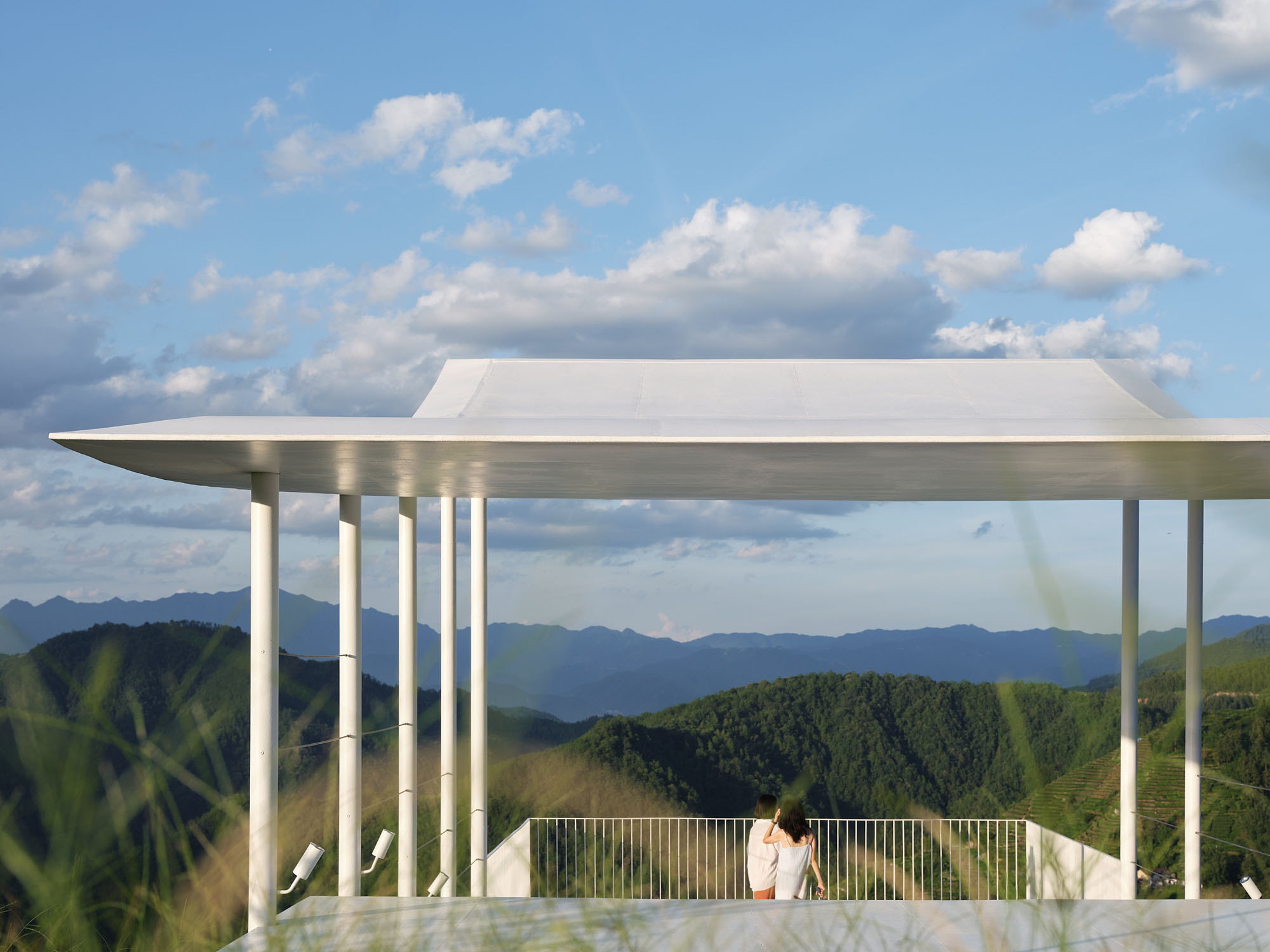
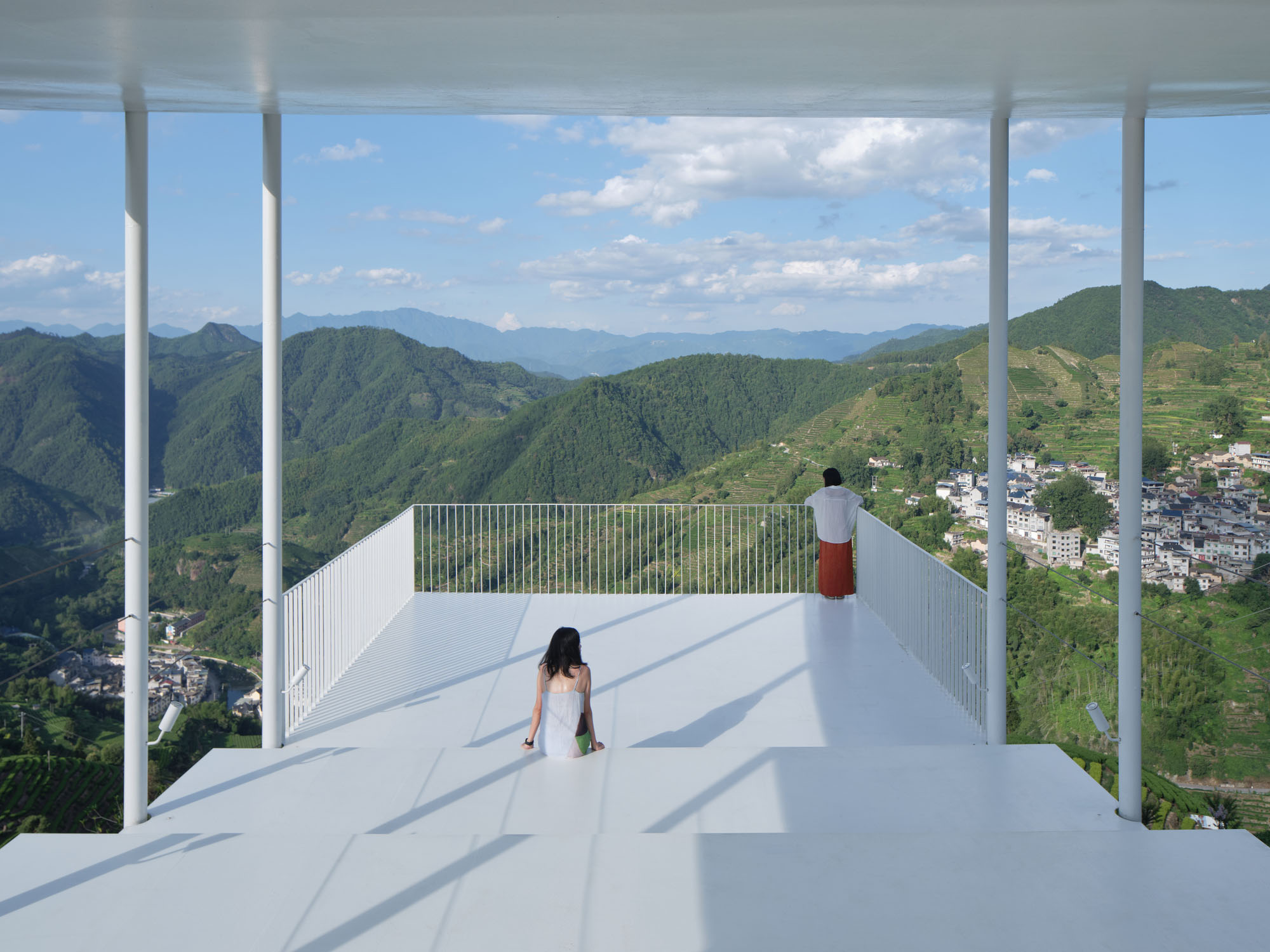
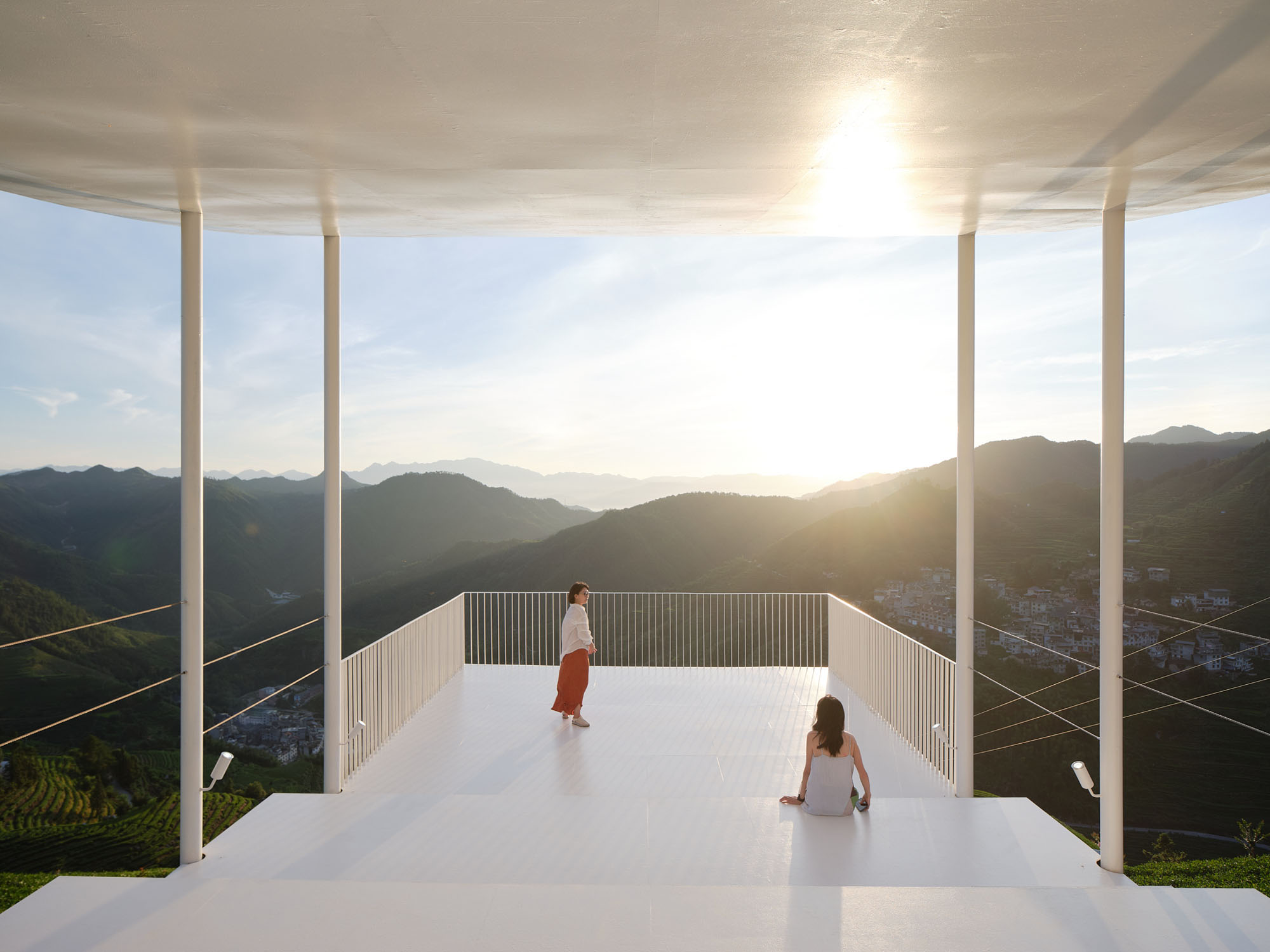
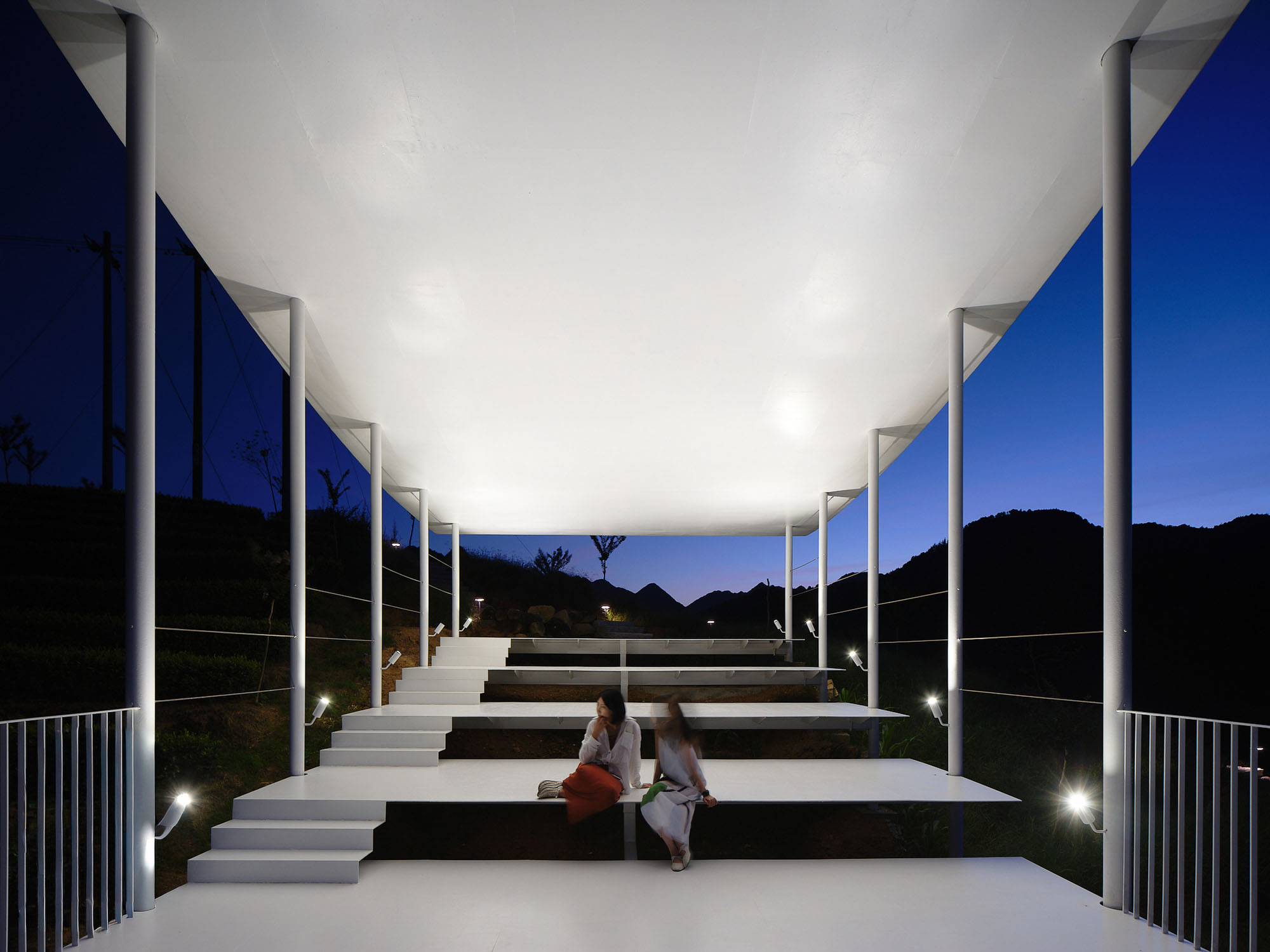
内部では、眺望体験が「圧縮」から「解放」へとドラマチックに移行する。入口付近では、低く抑えられた屋根の端に縁取られた遠景しか見えない。しかし、階段状のプラットフォームを降りていくにつれ、日光と周囲の山々が徐々に視界に広がり、最下層に到達すると、屋根が大きくもち上がって茶畑の谷の全景が露わになる。
この空間的なリズムは、形式的な複雑さからではなく、地形の高低差に対する屋根の曲率の精密な調整から生まれている。階段状のプラットフォームは段々畑の起伏に応答し、人々に立ち止まり、休息し、思索にふけるための多様なスケールを提供している。
© Kejia Mei
© Kejia Mei
環境に応答する構造システム
屋根には、上下の鋼板の間に鋼製グリッドを挟み込んだ「薄い複合サンドイッチ構造」が採用された。先細りのエッジは、構造的論理、排水機能、そして視覚的なコントロールを、ブレードのような鋭いプロファイルへと統合している。
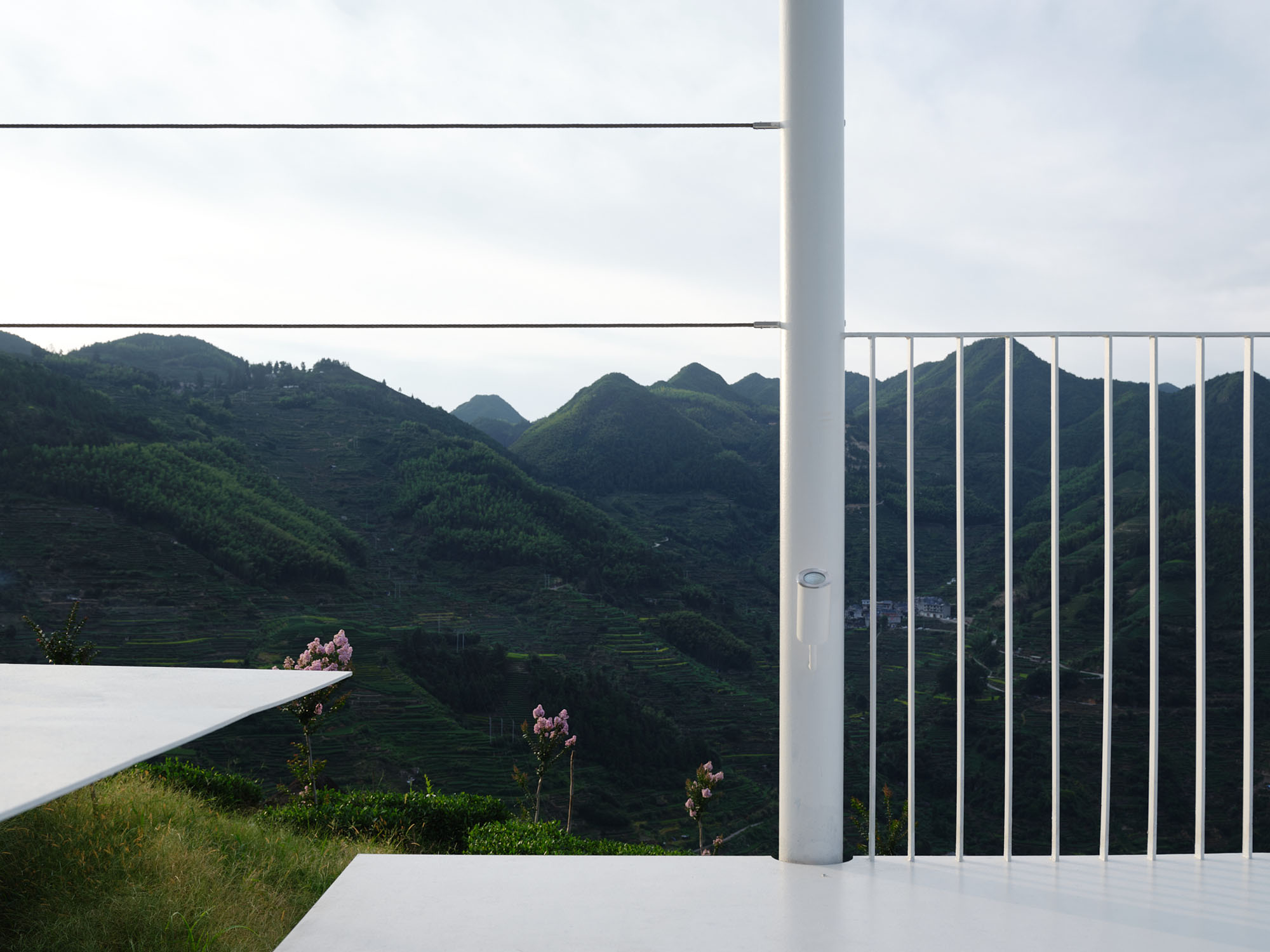
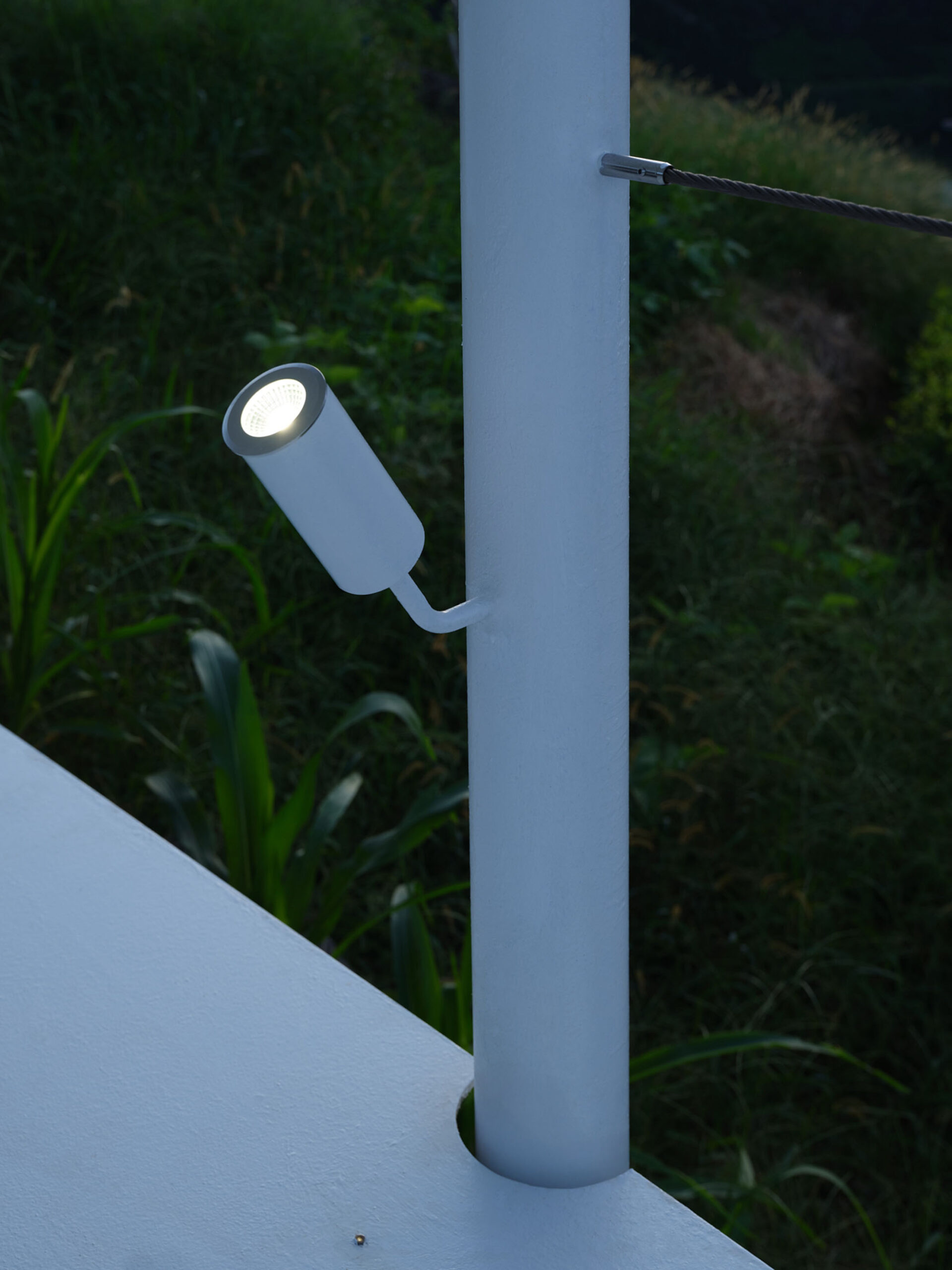
各プラットフォームは、くさび形の補強材を介して単一の横梁から片持ち梁(キャンティレバー)として張り出している。プラットフォームの端と柱の間に設けられた半円形の隙間からは、下部からの光が差し込む設計だ。また、柱間に張られた細い鋼製テンションケーブルは、パビリオンの透明感を損なうことなく安全性を確保している。
急峻な地形ゆえに重機の使用が不可能であったため、鋼製部材はすべて工場でプレハブ化され、車輪付き台車とケーブルシステムを用いて山頂まで運搬された。
© Kejia Mei
© Kejia Mei
柱の基部に設置された特注の円筒形照明器具は、湾曲した屋根に沿って上向きに光を放つ。それは夜間の茶畑に漂う霧を思わせる、柔らかな輝きを創出する。マットに仕上げられた金属表面は、周囲の色彩の季節的な変化を繊細に映し出す。春から夏にかけては緑豊かに、秋から冬にかけて霧に包まれれば、まるで雲のような質感へと変化する。
完成以来、パビリオンとそこに至る小道は、村人や訪問者の日常のリズムに溶け込んでいる。ここは散策や休憩、日の出や日没を眺めるための拠点であると同時に、収穫期には茶農家の作業動線を改善する役割も果たしている。
このプロジェクトの志は、単なる景観的なランドマークを創ることにとどまらない。軽やかで控えめな介入を通じて、自然景観に対する人々の認識を導きつつ、利用される中で少しずつ、その風景そのものへと同化していくのである。
© Kejia Mei
© Kejia Mei
© Kejia Mei
© Kejia Mei
© Kejia Mei
© Kejia Mei
© Kejia Mei
© Kejia Mei
© Kejia Mei
© Kejia Mei
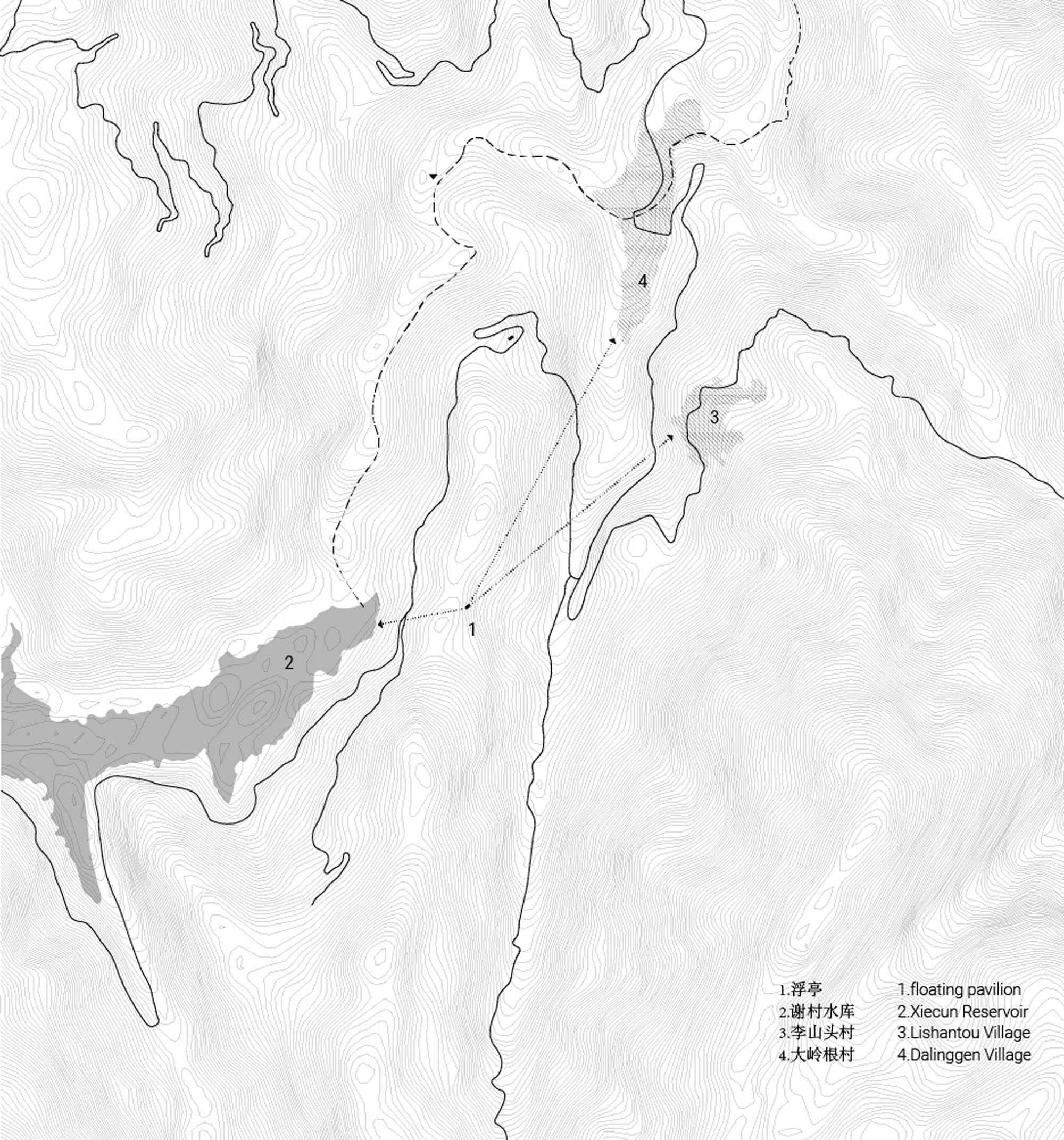
Location analysis © Studio RE+N
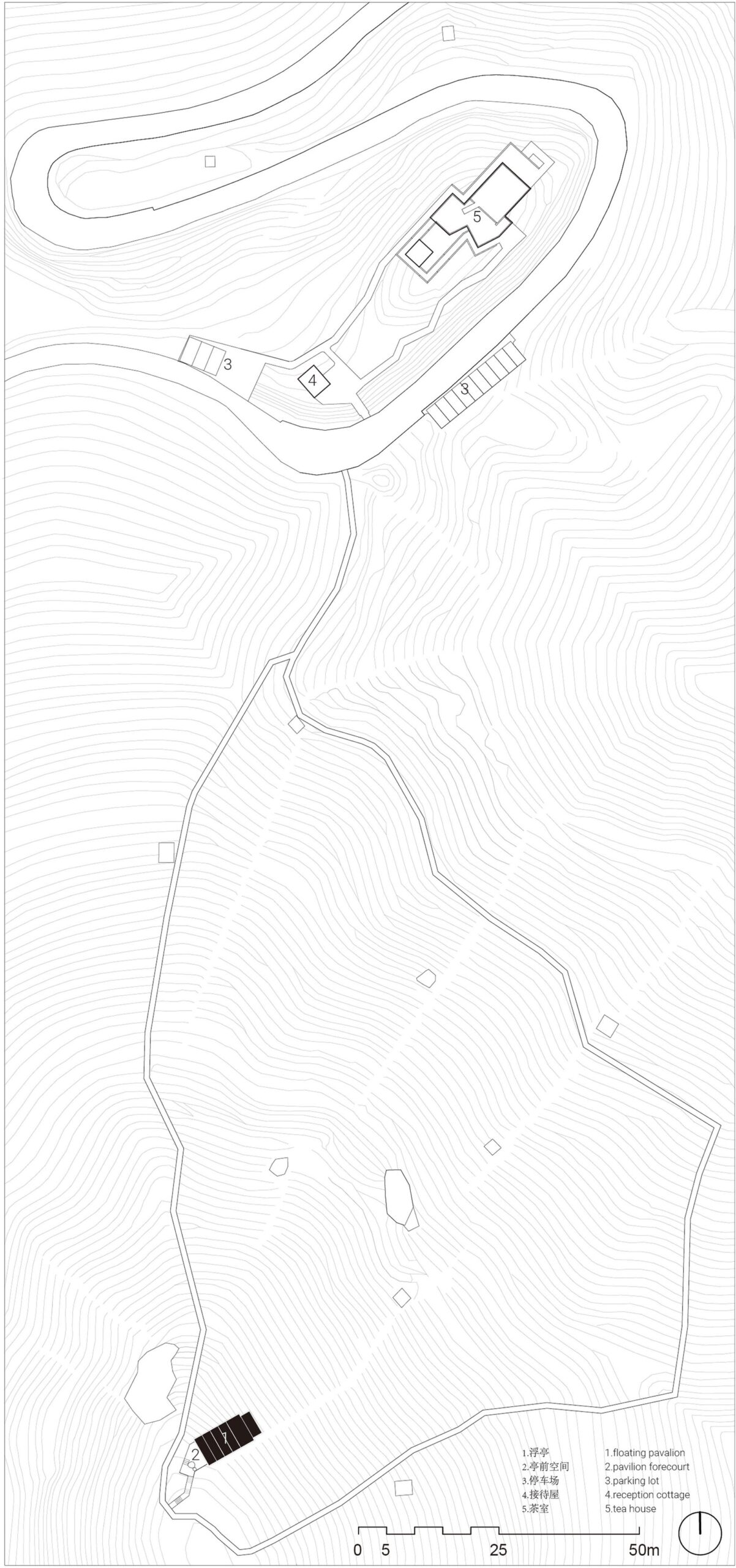
Site plan © Studio RE+N
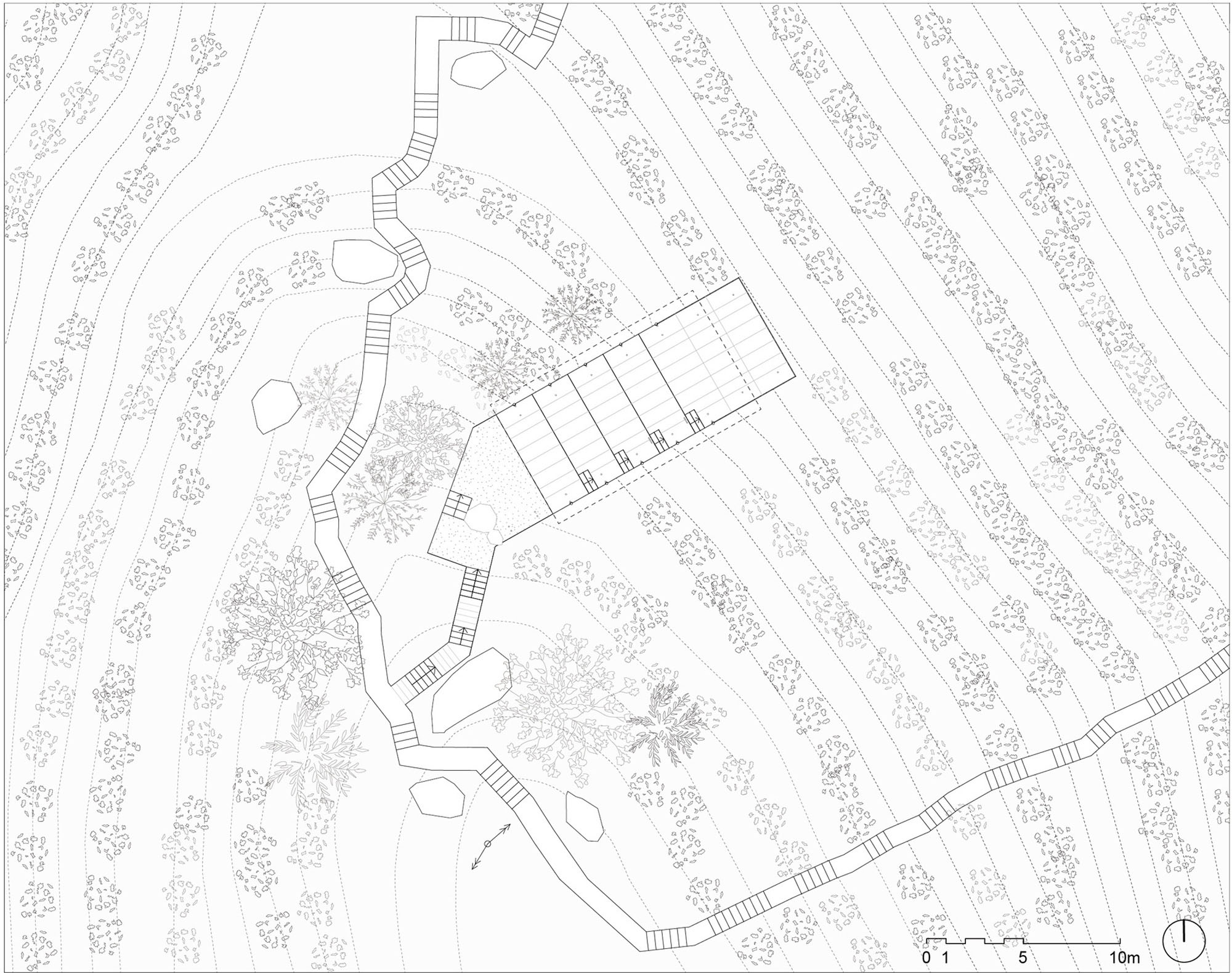
Ground floor plan © Studio RE+N
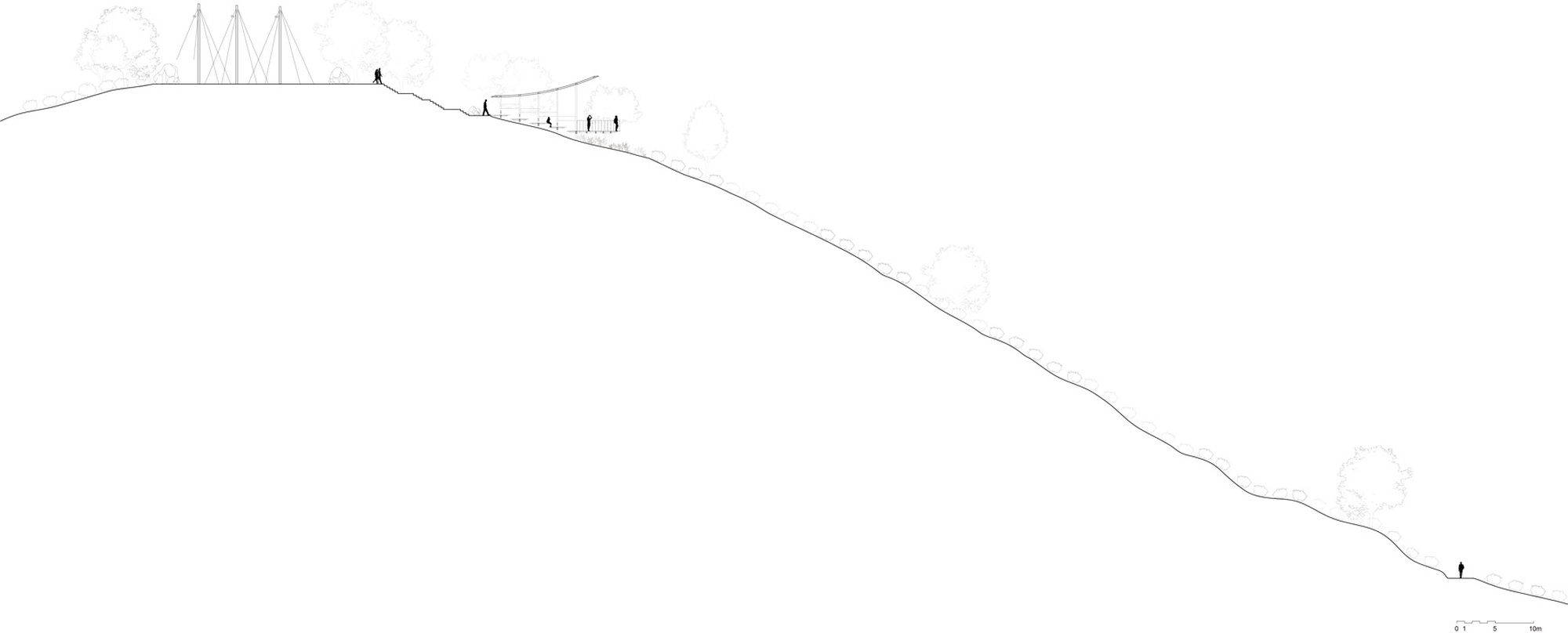
Site section © Studio RE+N
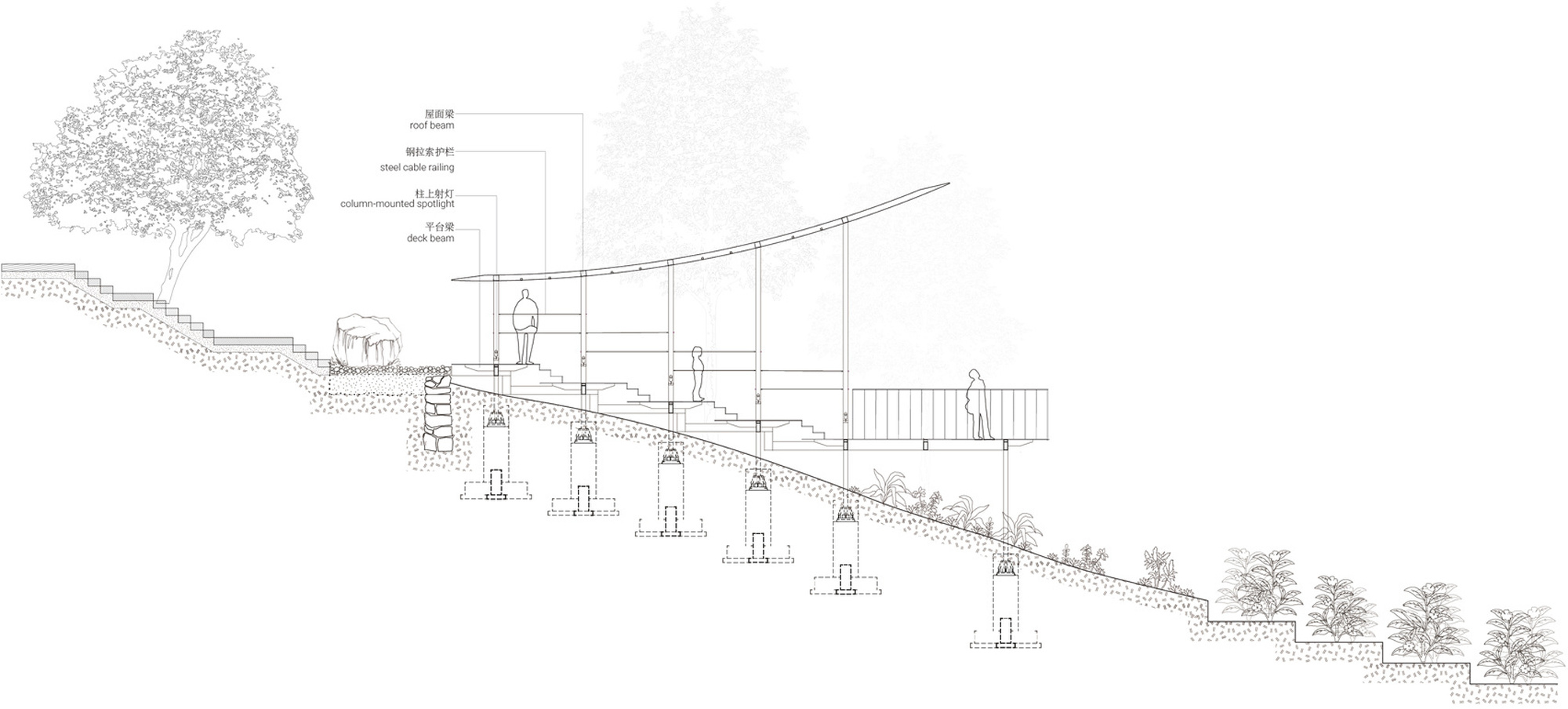
Building section © Studio RE+N
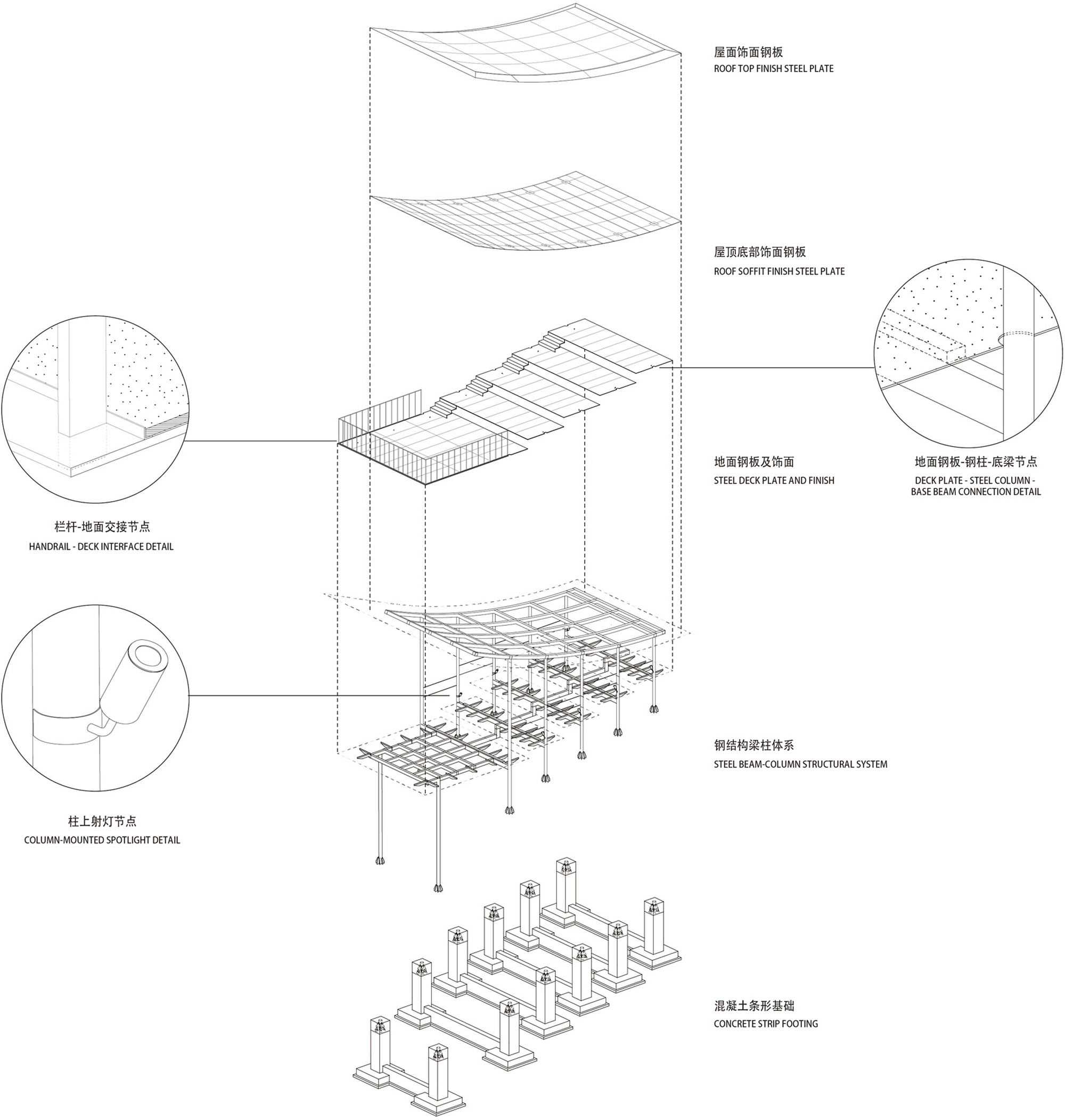
Exploded structural axonometric © Studio RE+N
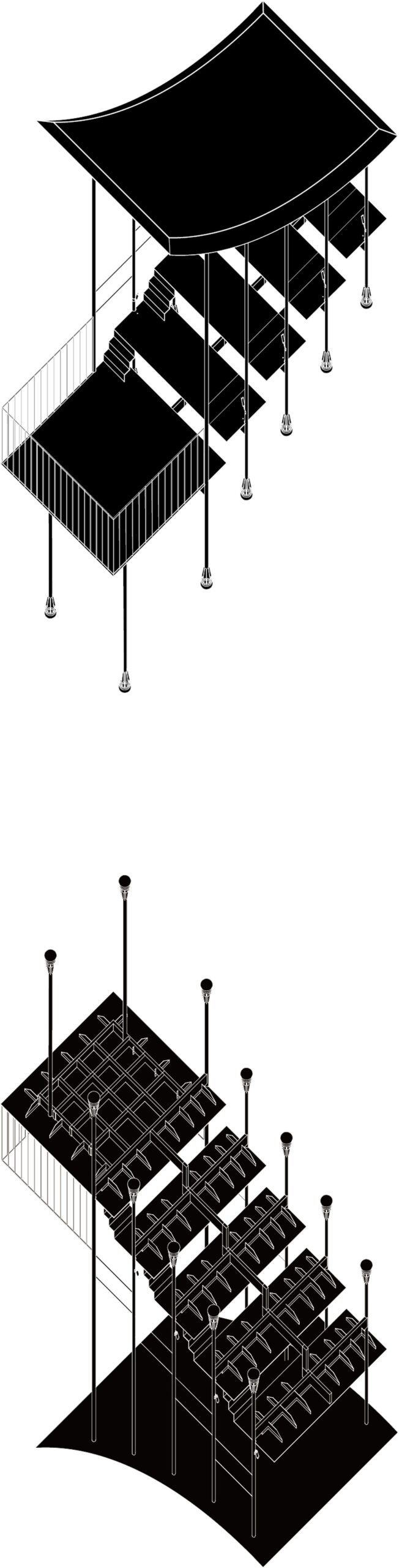
Axonometric diagram © Studio RE+N
以下、Studio RE+Nのリリース(英文)です。
FLOATING PAVILION 浮亭
Studio RE+N 衍述设计━━━━━━━━━━━━━━━━━━━━━━━━━━━━━━━━━━━━━━
PROJECT INFORMATION
Project name: Floating Pavilion 浮亭
Architecture: Studio RE+N 衍述设计
Location: Organic Tea Valley, Xinxing Town, Songyang County, Zhejiang, China
Completion: July 2025
Area: 85 sqm
Client: Xinxing Town Government, Songyang County
Lead architects: Yuting Zhang, Pu Zhang
Design team: Jianwu Han, Meng Zhang
Structural engineer: Lihui Feng
Design coordination: Xiangdi Ji
Main contractors: Hangzhou Baiguyuan Construction Co., Ltd. + Zhejiang Huafang Construction Co., Ltd.Website: https://www.studio-re-n.com/
Instagram: @studio_re_nVideo: https://vimeo.com/1170286591
━━━━━━━━━━━━━━━━━━━━━━━━━━━━━━━━━━━━━━
PHOTO & IMAGE CREDITS
All photographs: © Kejia Mei 梅可嘉
Photographer website: https://www.kejiamei.xyz/
Photographer Instagram: @kejia_mPlease credit all photographs as:
Photo: Kejia Mei / 摄影:梅可嘉All architectural drawings: © Studio RE+N 衍述设计
Please credit all drawings as:
Image: Studio RE+N / 图片:衍述设计 Studio RE+N━━━━━━━━━━━━━━━━━━━━━━━━━━━━━━━━━━━━━━
PROJECT DESCRIPTION
Tea terraces cascade toward the horizon, threaded with drifting mist — the Floating Pavilion sits at the summit of a terraced tea mountain in Songyang County, Zhejiang Province, China, some five hundred meters above sea level. A slender white form hovers above the fields on minimal supports, as if a thin wing had just been lifted by the wind. “Floating” describes both a structural condition — a thin roof suspended above the ground — and a quality of time in this place, where mist drifts, light shifts, and one pauses briefly on the mountain, as in a fleeting moment of respite.
The site lies within the Organic Tea Valley of Xinxing Town, surrounded by rolling tea hills, originally accessible only by narrow field paths across steep terrain with no existing structures. Guided by a principle of minimal intervention, the design employs a lightweight structure hovering above the tea fields, exploring the threshold between architectural presence and natural terrain through spatial sequencing and tectonic precision. The ascending path follows and reinforces existing tea-picking routes — granite steps wind upward through the terraces with the pavilion intermittently appearing from view, allowing the intervention to emerge as an organic continuation of the cultivated landscape.
Inside, the viewing experience shifts from compression to release. At the entrance, only a distant scene framed by the roof edge is visible; descending along stepped platforms, daylight and surrounding mountains gradually unfold; at the lowest level, the roof lifts to reveal a full panorama of the tea valley. This spatial rhythm arises not from formal complexity but from the precise calibration of roof curvature against topographic drop. The stepped platforms respond to the terraced terrain, offering varied scales for pause, rest, and contemplation.
The roof employs a thin composite sandwich construction — a steel grid embedded between upper and lower steel plates — with tapering edges that integrate structural logic, drainage, and visual control into a blade-like profile. Platforms cantilever from a single transverse beam via wedge-shaped stiffeners, with semicircular gaps between platform edges and columns allowing light to infiltrate from below. Slender steel tension cables between columns provide safety while preserving the pavilion’s transparency.
With steep terrain precluding the use of heavy machinery, steel components were prefabricated off-site and transported to the summit using wheeled carts and cable systems. Custom cylindrical luminaires at column bases project light upward along the curved roof, producing a gentle glow that evokes mist drifting above the tea mountain at night. The matte metal skin registers seasonal shifts in ambient color — verdant in spring and summer, cloud-like when diffused through autumn and winter fog.
Since completion, the pavilion and its path have been absorbed into the everyday rhythms of villagers and visitors — a node for walking, pausing, and witnessing sunrise and sunset, while providing improved access for tea farmers during harvest. The project’s ambition extends beyond a scenic landmark: through a light and restrained intervention, it guides perception of the natural landscape while gradually becoming part of that landscape through use.
Studio RE+N 公式サイト
https://www.studio-re-n.com/home
【購読無料】空間デザインの今がわかるメールマガジン TECTURE NEWS LETTER
RECOMMENDED ARTICLE