アイノ&アルヴァ・アアルトの傑作をスノヘッタが再生する、〈パイミオ・サナトリウム〉の新たなマスタープラン
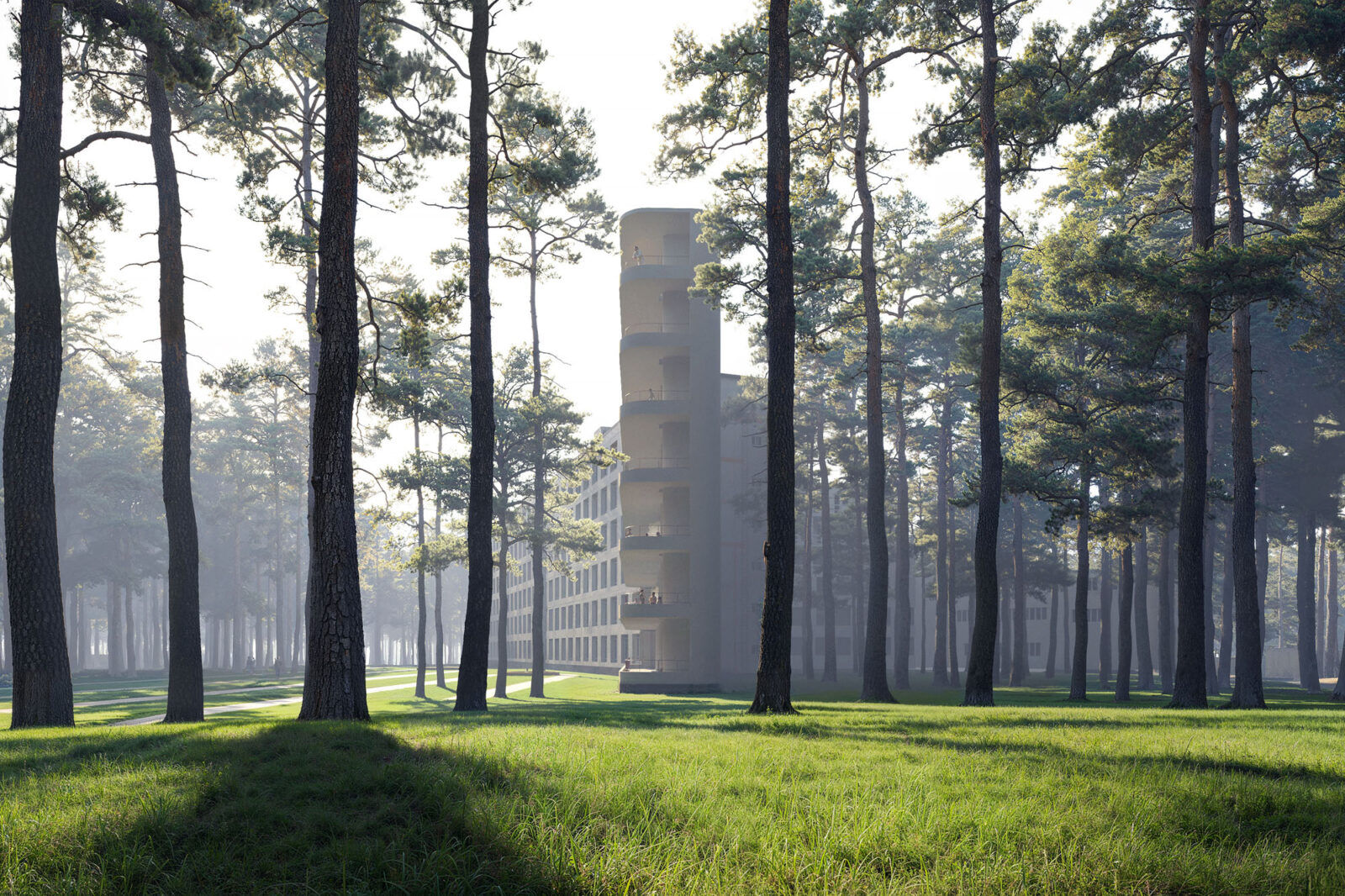
フィンランドのパイミオに位置する、アイノ&アルヴァ・アアルトが手がけたモダニズム建築〈パイミオ・サナトリウム〉の新たなマスタープランをスノヘッタ(Snøhetta)が発表しました。
結核療養所として設計され病院へと転用された後、観光名所となっていた建築を、既存の空間を活かしながらホテルやウェルネスセンター、文化空間が融合した施設へと再生する計画となっています。
注目ポイント
- 結核の治療法が存在しなかった時代における、治癒の手段としての建築
- 創造的な変革をもたらす「ささやかな介入」
- 施設の日常運営とイベントを両立させる動線・空間戦略
(以下、スノヘッタから提供されたプレスキットのテキストの抄訳)
©︎ Proloog/Snøhetta
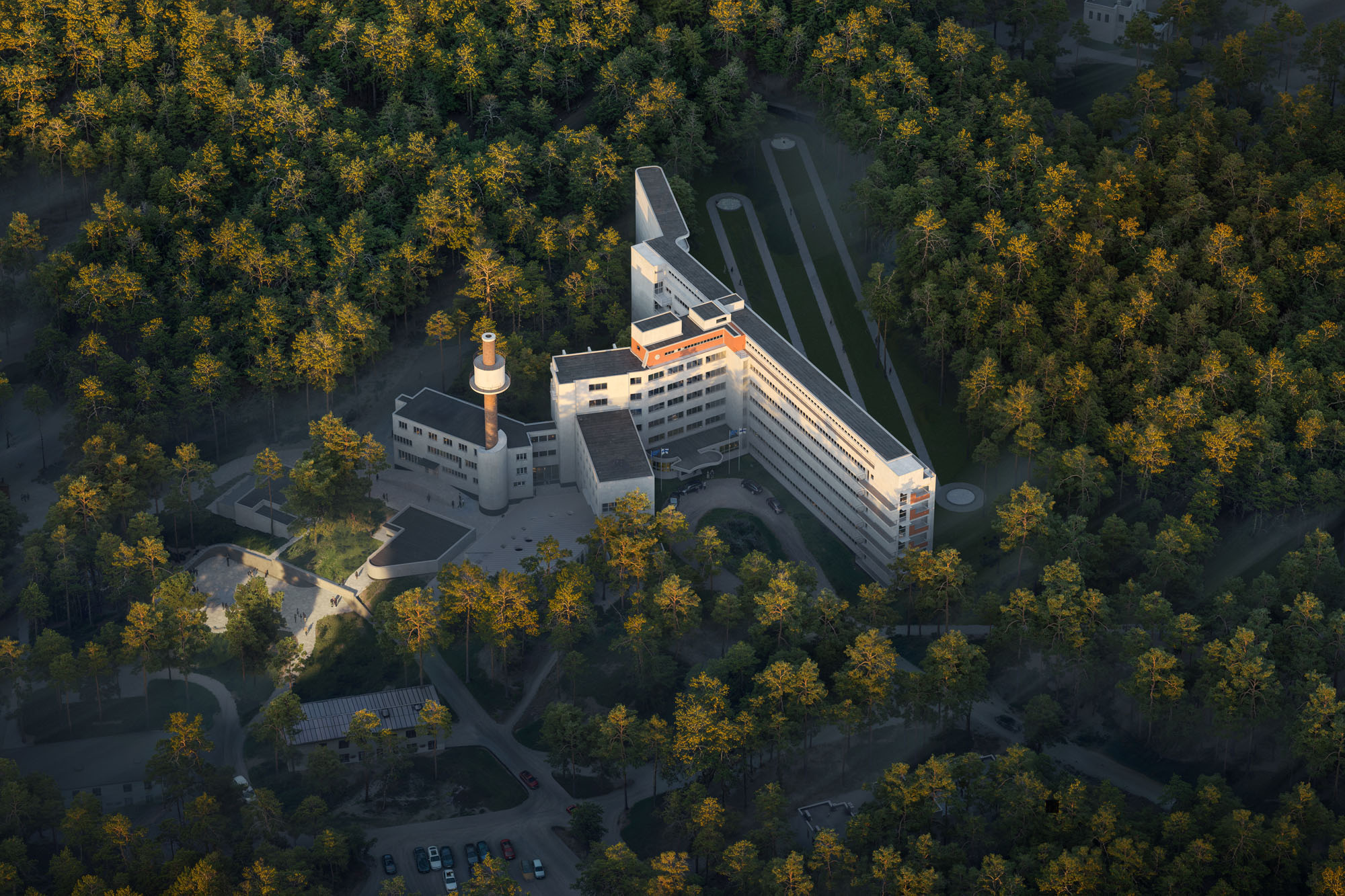
スノヘッタによる〈パイミオ・サナトリウム〉の新たなマスタープラン
人間の幸福のための建築
フィンランドのパイミオの森に佇む、アイノ&アルヴァ・アアルトによる傑作における未来のビジョンの一環として、スノヘッタはかつて結核療養所および病院であった〈パイミオ・サナトリウム〉の新たなマスタープランを策定した。この提案は、アアルト夫妻が作品制作を通じて一貫して抱いていた信念、すなわち「建築は、何よりもまず人間の幸福のために存在する」という考えに基づいている。
スノヘッタはパイミオ・サナトリウム財団と緊密に連携し、この療養所をホスピタリティ、ウェルネス、文化空間、そして国際的な対話の場が融合した目的地として再構想した。この施設が、内省、ウェルビーイング、そして社会外交の拠点となり、ケア、デザイン、そして私たちの共有する未来に関する問いを探求できる出会いの場となることを目指している。
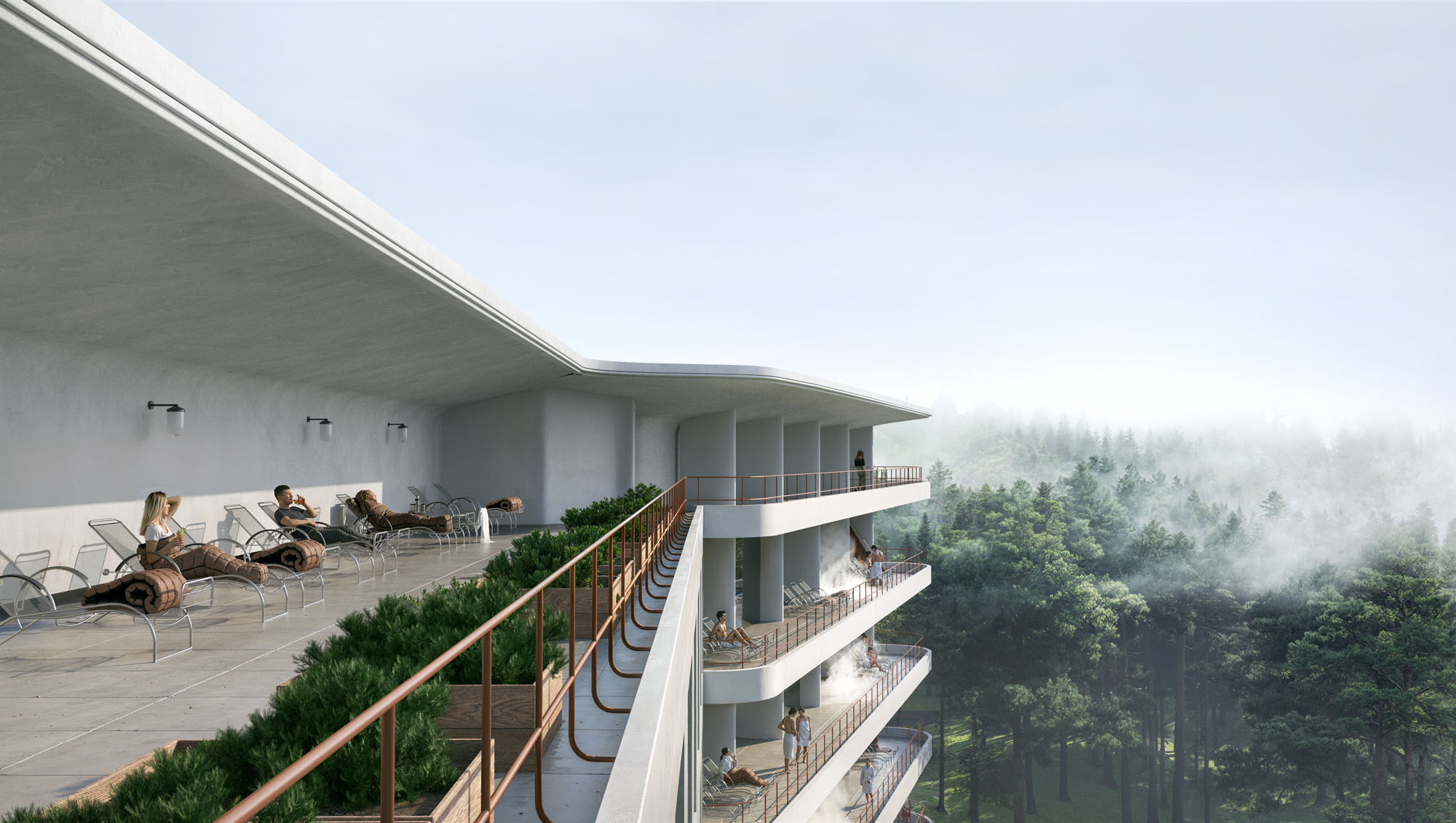
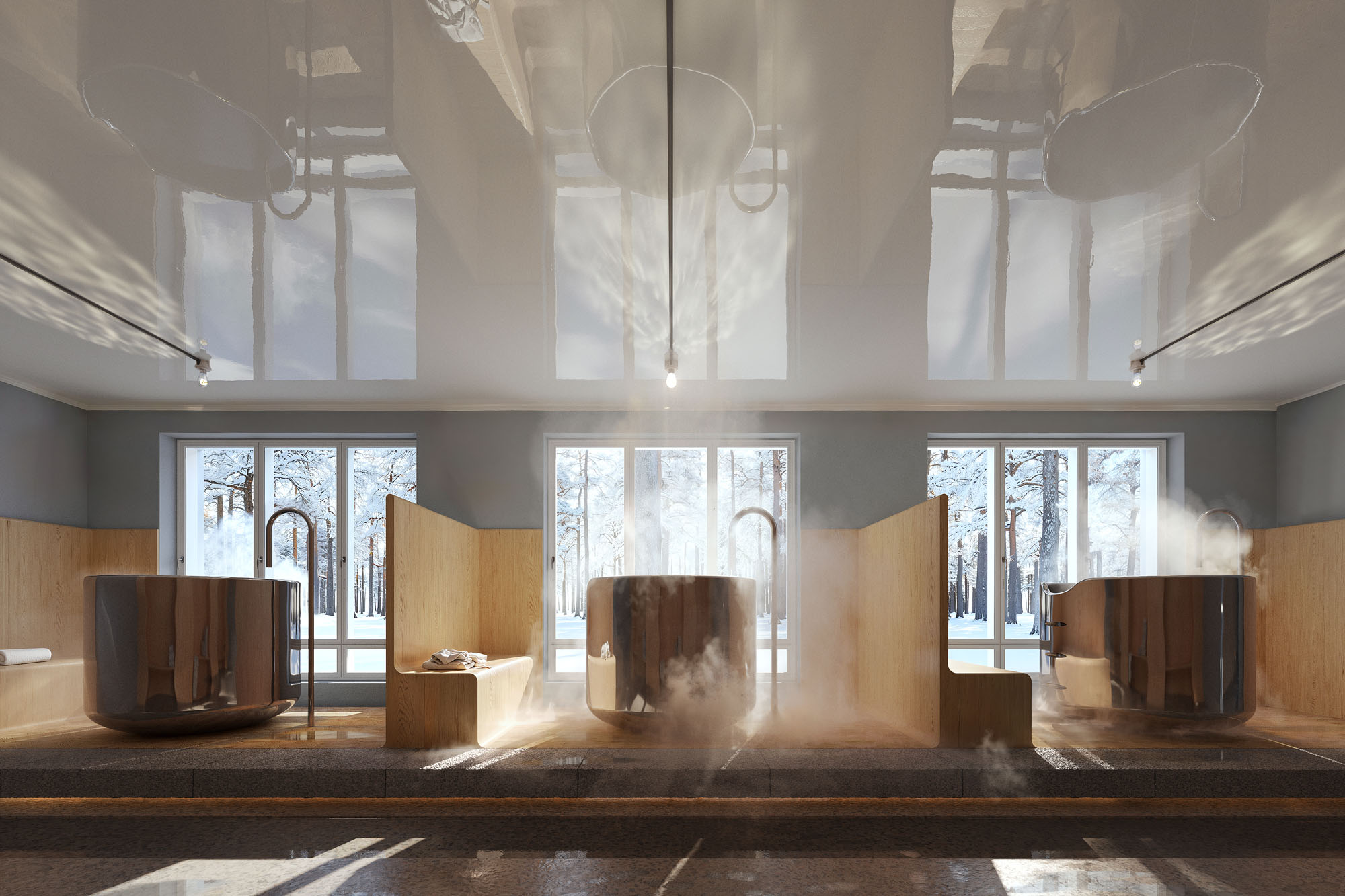
かつての手術棟は、来訪者用の新しい入口を備えた多目的講堂へと改修され、患者棟は静かで控えめなホスピタリティエリアとして構想されている。象徴的なサンバルコニーの再開放に加え、屋外や周囲の森へ直接アクセスできる地下階のスパを導入することで、光、空気、森、そして呼吸を癒しの不可欠な要素とするアアルト夫妻の当初のビジョンをさらに発展させ、建築物の永続性と自然との調和の両方を確保する。
©︎ Proloog/Snøhetta
自然を再び身近に
「アイノ&アルヴァ・アアルトの遺産、とりわけ〈パイミオ・サナトリウム〉への深い敬意を胸に、私たちは、この敷地を将来にわたって思慮深い活用へと開くという志をもってこのプロジェクトに取り組んでいる。調査研究に基づいて各介入策は慎重に検討され、建物の完全性を保ちつつ、その進化を可能にするものである」
スノヘッタ創設パートナー
ケティル・トレイダル・トーセン(Kjetil Trædal Thorsen)
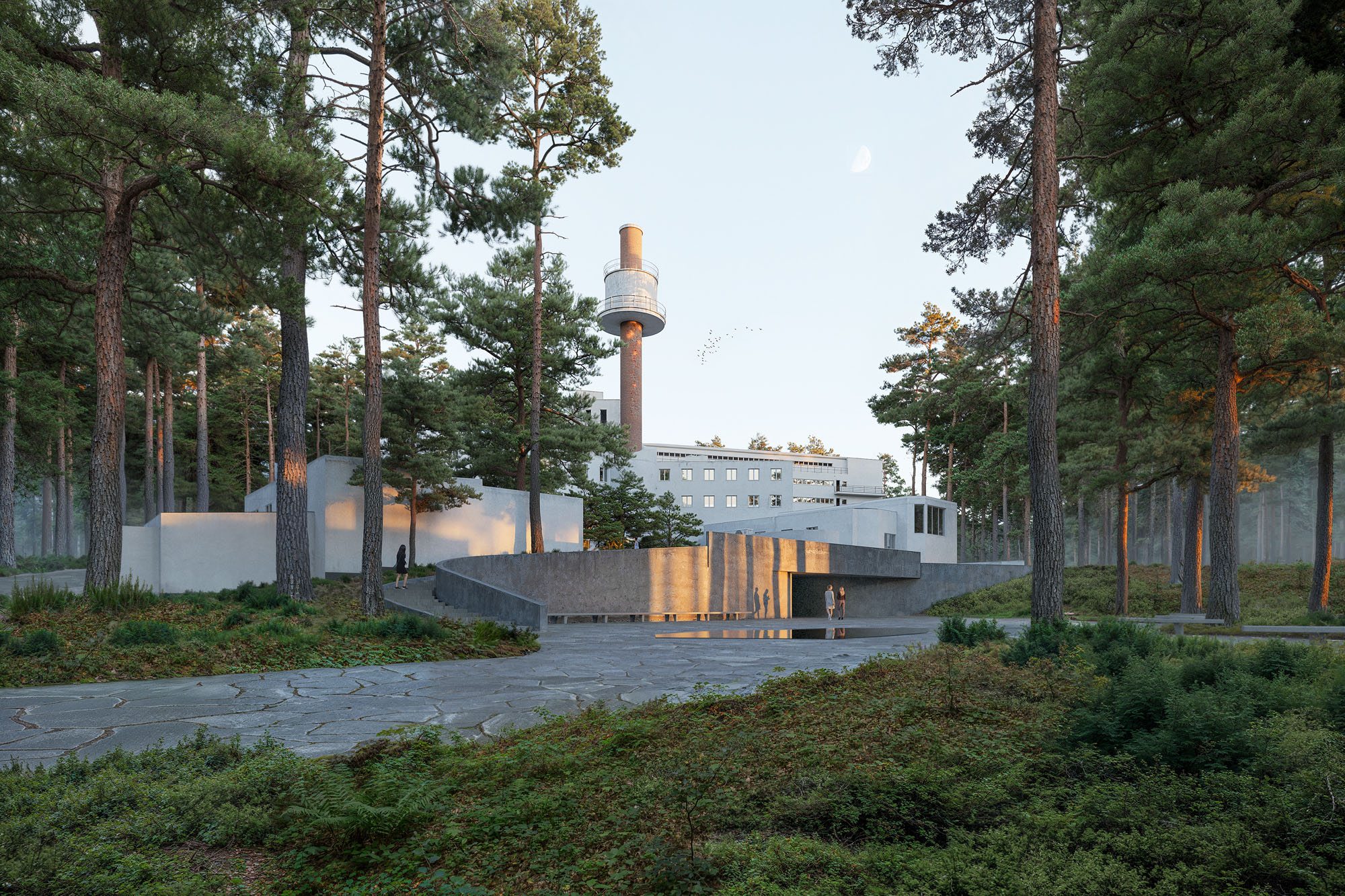
検討されている戦略の1つは、新たなエントランスを設けることで、建物の裏側のファサードに自然をより身近に呼び込むことである。現在アスファルト舗装されている前庭は、スレートで舗装し直し、新たな植栽を配置することで景観を整えることが提案されている。
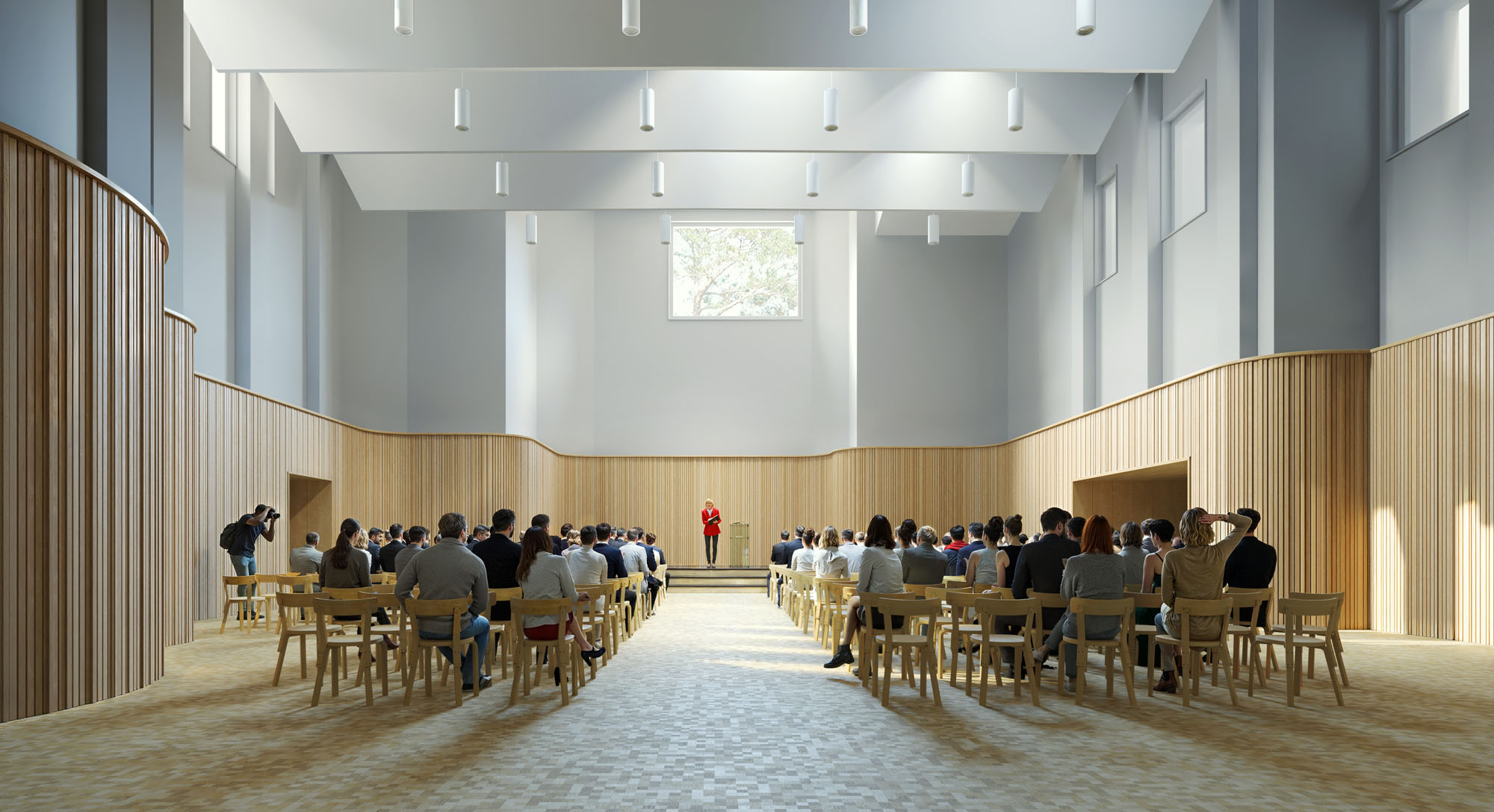
多目的講堂へ直接アクセスが可能な新たなエントランスにより、建物の日常業務とは独立してイベントを開催できるほか、敷地内の動線も改善される。オーディトリアム内部については、2つの階層にわたって空間を開放し、約200人を収容できる広々とした多目的会場とする案が提案されている。この空間には、アアルトの建築様式を彷彿とさせる白樺のスラット壁が構想されており、技術設備と音響性能の両方を統合する設計となっている。
©︎ Proloog/Snøhetta
控えめな改修による変革
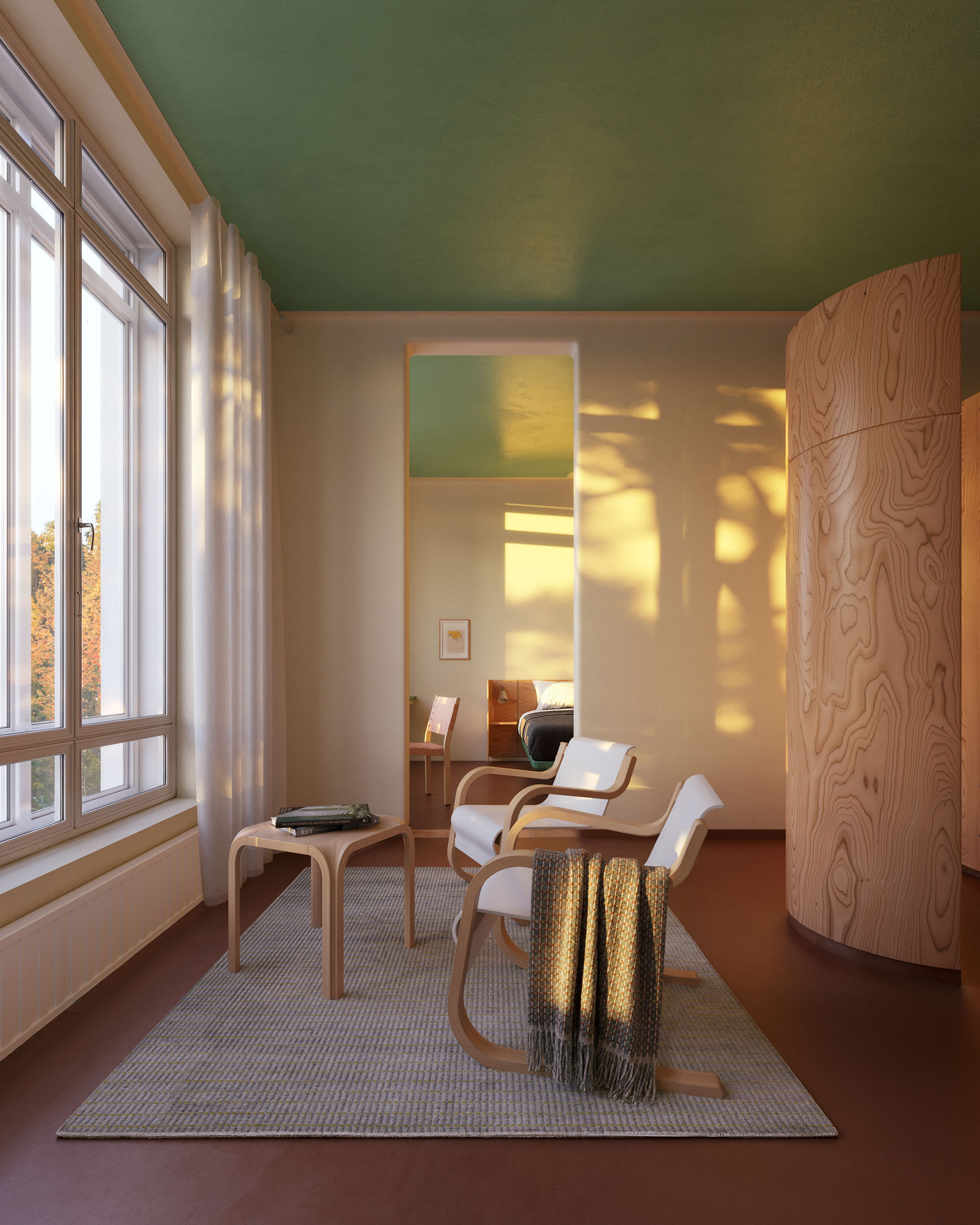
既存の患者室は、控えめな改修を経てホテル客室へと転換することが提案されている。以前は廊下沿いに共用バスルームが配置されていたが、新しい計画では、共用設備を備えたコンパクトな客室から、小型のバスルームユニットを内蔵した客室、そして充実した設備を備えた広めの客室まで、さまざまなサイズの客室が導入される。
客室は元のプロポーションを維持することで、患者への配慮を重視して設計するというアアルト夫妻の当初の意図を強調している。表面は丁寧に復元される一方、バスルームユニットなどの新しい要素は、ラッカー塗装されたバーチ材の突き板を用いた独立型家具として導入され、既存部分と新規部分との明確な区別を生み出している。
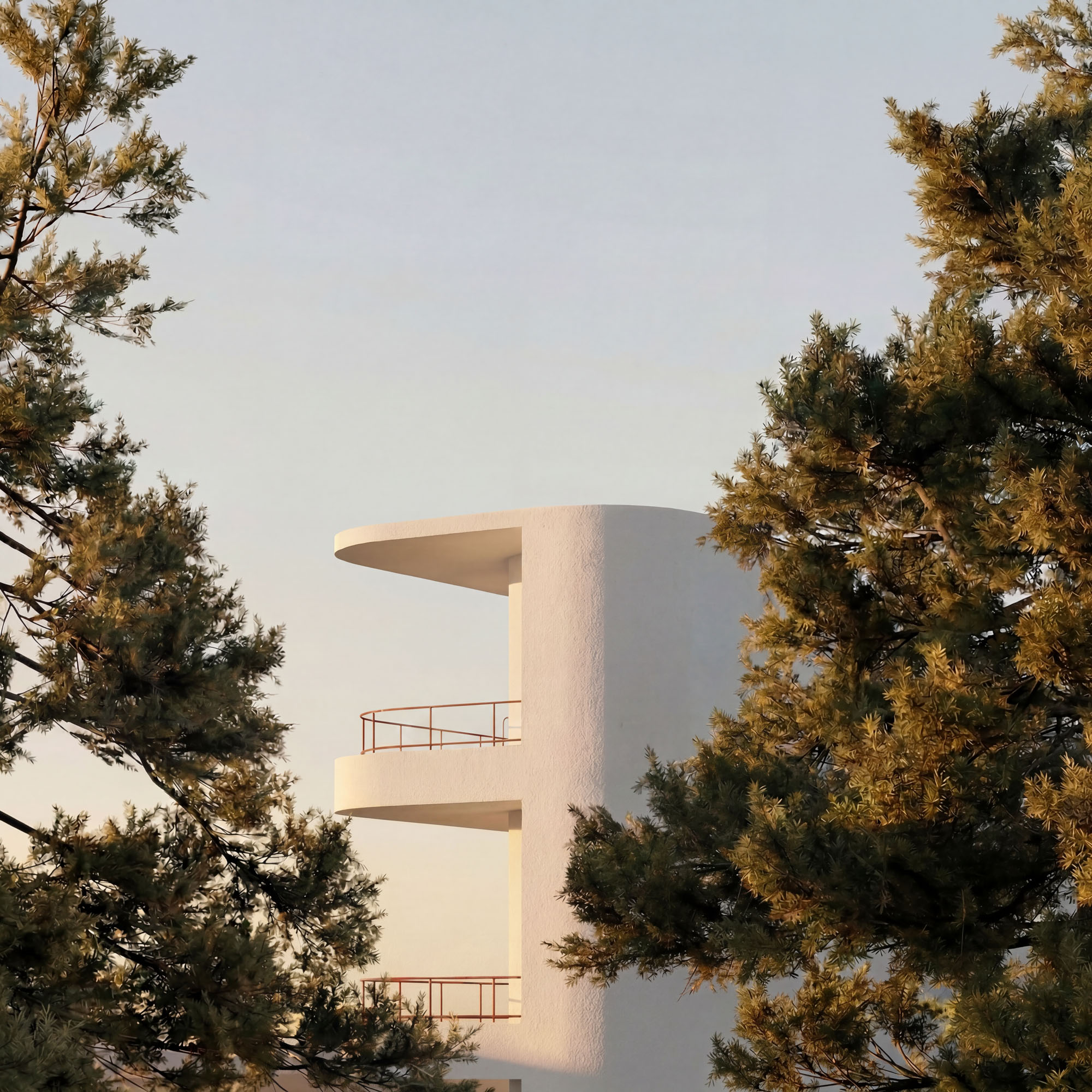
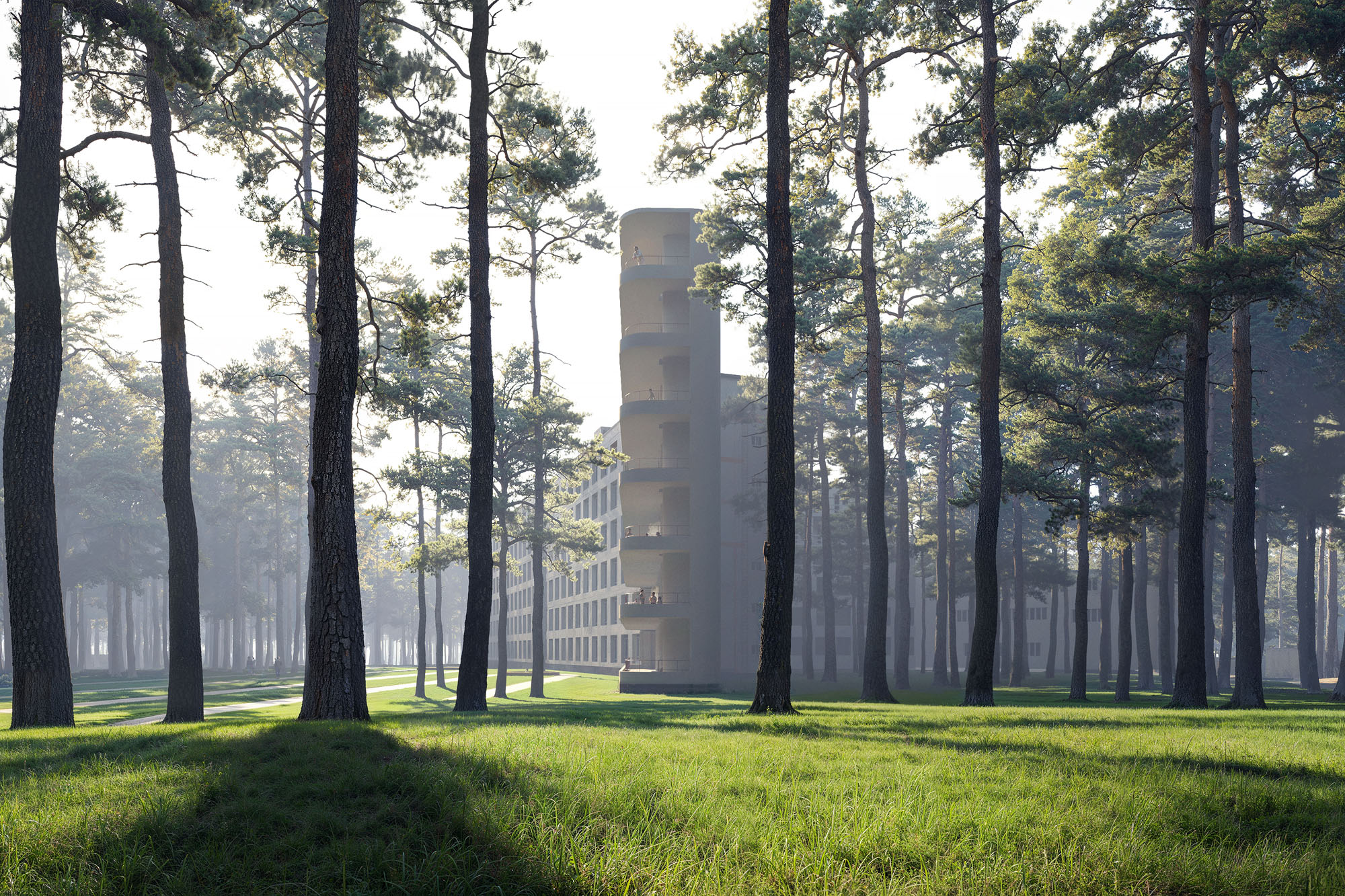
部屋の外の廊下からは、象徴的な細長いオープンバルコニーへとアクセスできる。このバルコニーは、後年に追加されたガラス張りの囲いを撤去し、開放的な構造として復元することが提案されている。
©︎ Proloog/Snøhetta
©︎ Proloog/Snøhetta
©︎ Proloog/Snøhetta
治療法なき時代のケア
アルヴァ・アアルトとアイノ・アアルトによって設計され、1933年に完成した〈パイミオ・サナトリウム〉は、近代建築の基礎を築いた作品の1つである。結核の治療法が存在しなかった時代に、治癒の手段として構想されたこの建物は、あらゆる側面で患者を中心に据え、光、空気、そして周囲の景観との人間的な関わりを重視して形づくられている。
この建物は当初、当時広く蔓延し、しばしば死に至る病気であった結核の患者のための療養所として機能し、後に総合病院として転用され、2010年代半ばまで使用され続けた。〈ヴィボルグ図書館〉と並んで、フィンランドの建築を世界の舞台へと押し上げ、アアルト夫妻をモダニズム運動の第一人者としての地位を確固たるものにした。
「スノヘッタのチームは、保存と修復建築の間に思慮深いバランスを築き上げると同時に、アイノ&アルヴァ・アアルトの建築的遺産を敬意をもって称えつつ、新しいアイデアや未来志向の思考のための余地を切り拓くことに成功した」
「提案されたコンセプトは、国際的な意義をもち、知的に説得力があり、学際的な性質を備えている。ケティル・トレイダル・トーセンのリーダーシップの下、スノヘッタチームは、保存と修復建築の間に思慮深いバランスを築き上げると同時に、アイノ&アルヴァ・アアルトの建築的遺産を敬意をもって称えつつ、新しいアイデアや未来志向の思考のための余地を切り拓くことに成功した。このマスタープランは、国内外のパートナーや協力者とのネットワークを構築するための条件を整え、それによって〈パイミオ・サナトリウム〉の新たな未来に向けた基盤を築くものである」
パイミオ・サナトリウム財団理事長
ミルク・クルベルグ(Mirkku Kullberg)
©︎ Proloog/Snøhetta
世界遺産登録に向けた新たな時代の幕開け
パイミオの再生は、アアルト夫妻のビジョンを守りつつ、この場所の活気ある未来を確保することを目的として、2020年にパイミオ・サナトリウム財団が設立されたことを皮切りに始まった。調査の結果、ウェルビーイング・センターとホテルが最も適した新たな用途であると特定され、文化活動も併せて計画されることとなった。これにより、国内外の専門家の支援を得て、計画および許認可手続きが進められている。
〈パイミオ・サナトリウム〉は、ユネスコの世界遺産リストへの登録が提案されているアアルト関連遺産の1つであり、2026年7月に決定が下される見込みである。
マスタープランの1段階は、ヘルシンキを拠点とするALAアーキテクツ、およびアアルト夫妻の建築遺産に関する第一人者であるムストネン・アーキテクツ(Mustonen Architects)との協力のもとで実施された。
〈パイミオ・サナトリウム〉について
所在地:フィンランド、パイミオ
竣工:1933年
設計:フィンランドの建築家・デザイナー夫婦、アイノ&アルヴァ・アアルト。2人はモダニズム建築の第一人者として広く知られ、特に人間本位で自然を重視したアプローチで著名である。
沿革:結核療養所として建設され、後に病院として使用された。現在は観光名所となっている。
設計コンセプト:この建物は、横たわる人体の形状を出発点として設計されており、複合施設全体が患者を第一に考えて形づくられている。
規模:敷地内には、本館に加え、14の付属建物がある。
保護状況:1993年、フィンランドの建築物保護法に基づき、フィンランド国内で保護対象に指定された。
世界遺産への道:この複合施設は2004年にユネスコの暫定リストに登録され、「アアルトの作品群」の候補の一部となっている。
©︎ Proloog/Snøhetta
以下、スノヘッタのリリース(英文)
Snøhetta reveals new masterplan for Paimio Sanatorium
As part of a new future vision for Aino and Alvar Aalto’s iconic masterpiece in the woods of Paimio, Finland, Snøhetta has developed a masterplan for the former tuberculosis sanatorium and hospital. The proposal builds on the conviction that guided the Aaltos throughout their work: that architecture exists, above all, to serve human wellbeing.
Working in close partnership with the Paimio Foundation, Snøhetta reimagines the Sanatorium as a destination that combines hospitality, wellness, cultural spaces, and arenas for international dialogue. The ambition is that the premises can become a destination for reflection, wellbeing and social diplomacy – a meeting place where questions of care, design, and our shared future can be explored.
The former surgery wing will be adapted into a flexible auditorium with a new entrance for visitors, while the patient wing is envisioned as a calm and understated hospitality section. The reopening of the iconic sun balconies, alongside the introduction of a lower-level spa with direct access to the outdoors and surrounding forest, extends the Aaltos’ original vision of light, air, forest, and breathing as integral elements of healing – helping to secure both the longevity of the architecture and its relationship to nature.
With profound respect for the legacy of Aino and Alvar Aalto – and particularly the Paimio Sanatorium – we approach this project with the ambition of opening the site for thoughtful future use.
Kjetil Trædal Thorsen, founding partner of SnøhettaBringing the nature back close
Kjetil Trædal Thorsen, founding partner of Snøhetta, says:
“With profound respect for the legacy of Aino and Alvar Aalto – and particularly the Paimio Sanatorium – we approach this project with the ambition of opening the site for thoughtful future use. Grounded in research, each intervention is carefully considered, preserving the building’s integrity while allowing it to evolve.”One of the strategies under consideration is to bring nature closer to the rear façade of the building by introducing a new entrance. The currently asphalted forecourt is proposed to be resurfaced in slate and articulated with new planting.
By introducing a new entrance that provides direct access to the flexible auditorium, events can be hosted independently of the building’s daily operations, while also improving circulation through the site. Within the auditorium, the space is proposed to be opened up across two levels to create a large, flexible venue accommodating approximately 200 people. The room is envisioned with a birch slatted wal – referencing the Aaltos’ architectural language – that integrates both technical installations and acoustic performance.
Modest interventions with a transformative effect
The existing patient rooms are proposed for conversion into hotel rooms through modest adaptations. Whereas bathrooms were previously shared along the corridor, the new programme introduces rooms of varying sizes – ranging from compact rooms with shared facilities, to rooms with small, integrated bathroom units, and larger rooms offering full amenities.
The rooms emphasise the Aalto couple’s original intention of designing with care for the patient by retaining the original proportions. Surfaces are carefully reconstructed, while new elements – such as the bathroom units – are introduced as freestanding furniture in lacquered birch veneer, creating a clear distinction between the existing and the new.
From the corridors outside the rooms, there is access to the iconic, elongated open balconies, which are proposed to be reinstated as open structures without the glass enclosures introduced at a later stage.
Care without a cure
Designed by Alvar and Aino Aalto and completed in 1933, Paimio Sanatorium stands among the foundational works of modern architecture. Conceived as an instrument of healing at a time when no cure for tuberculosis existed, it was shaped in every dimension around the patient and the human relationship to light, air, and the surrounding landscape.
The building served first as a sanatorium for patients suffering from the then‑widespread and often fatal disease, and later as a general hospital, remaining in use until the mid-2010s. Together with the Vyborg Library, it carried Finnish architecture onto the world stage and confirmed the Aaltos among the leading figures of the modern movement.
(…) the Snøhetta team has succeeded in creating a thoughtful balance between conservation and restorative architecture, while at the same time opening space for new ideas and future-oriented thinking that respectfully honours the architectural legacy of Aino and Alvar Aalto.
Mirkku Kullberg, Chair of the Board, Paimio Sanatorium FoundationMirkku Kullberg, Chair of the Board, Paimio Sanatorium Foundation, says:
“The proposed concept is internationally relevant, intellectually compelling, and multidisciplinary in nature. Under the leadership of Kjetil Trædal Thorsen, the Snøhetta team has succeeded in creating a thoughtful balance between conservation and restorative architecture, while at the same time opening space for new ideas and future-oriented thinking that respectfully honours the architectural legacy of Aino and Alvar Aalto.
The Masterplan establishes the conditions for building both national and international networks of partners and collaborators, thereby creating the foundation for a new future for Paimio Sanatorium.”
Entering a new era
The revitalisation of Paimio began in 2020 with the establishment of the Paimio Sanatorium Foundation, with the aim of safeguarding the Aaltos’ vision while securing an active future for the site. Research has identified a well-being centre and hotel as the most suitable new use, complemented by cultural activities, enabling planning and permit processes to advance with the support of both national and international experts.
Paimio Sanatorium is among the Aalto sites proposed for inscription on UNESCO’s World Heritage List, with a decision expected in July 2026.
The first phase of the master planning has been carried out in collaboration with Helsinki-based ALA Architects and Mustonen Architects, one of the foremost authorities on the Aaltos’ built legacy.
About Paimio Sanatorium
In Paimio, Finland
Completed 1933
Designed by Finnish architect and designer duo Aino and Alvar Aalto – widely regarded as among the leading figures of modernist architecture, particularly known for their humanistic, nature-oriented approach.
Built as a tuberculosis sanatorium, later used as hospital. Today a tourist attraction.
The building is designed with the reclining human body as its point of departure, and the entire complex is shaped with the patient in mind.
The property comprises the main building together with fourteen additional structures.
Granted protection in Finland in 1993 under the Finnish Building Protection Act.
The complex was included on UNESCO’s tentative list in 2004, and is part of the “Aalto Works” nomination.
スノヘッタ 公式サイト
https://www.snohetta.com/