

長江の流れを映し出す流線的な会議センター - 内部に引き込まれた金属ファサードが内外の境界を曖昧にする〈長江国際会議センター〉
© Tian Fangfang
中国・江蘇省に位置する〈長江国際会議センター(Yangtze River International Conference Center)〉は、敷地である南京市を都市の中心部へと拡張するという都市戦略の中核を担う国際ビジネス拠点です。
2005年にプリツカー賞を受賞したアメリカ人建築家トム・メイン(Thom Mayne)が主宰するモーフォシス・アーキテクツ(Morphosis Architects)が設計しました。
注目ポイント
- 川と都市の間という敷地条件を反映した建築形態
- 長江の流れから形態的・概念的に着想を得たデザイン
- 水面の反射を表現する波打つポディウムとチタン屋根
- 内外の境界を曖昧にする、内部に引き込まれた金属ファサード
(以下、モーフォシス・アーキテクツから提供されたプレスキットのテキストの抄訳)
© Tian Fangfang
国際都市へと拡張する南京の戦略拠点
〈長江国際会議センター〉は、世界的な接続のハブとしての機能を担う世界最高水準の施設であり、南京市が長江を越えて江北の新都市中心部へと拡張する都市戦略における、中核を担う資産である。
中国東部の沿岸都市と長江デルタ地域の中間に位置する江北区は、新たなグローバルビジネスの中核拠点として大きな成長の可能性を秘めている。
© Tian Fangfang
このプロジェクトは南京市江北新区から委託されたものであり、持続可能かつ生態系に配慮した開発の指針を体現しながら、地域最高峰の会議・イベント施設を目指して設計された。
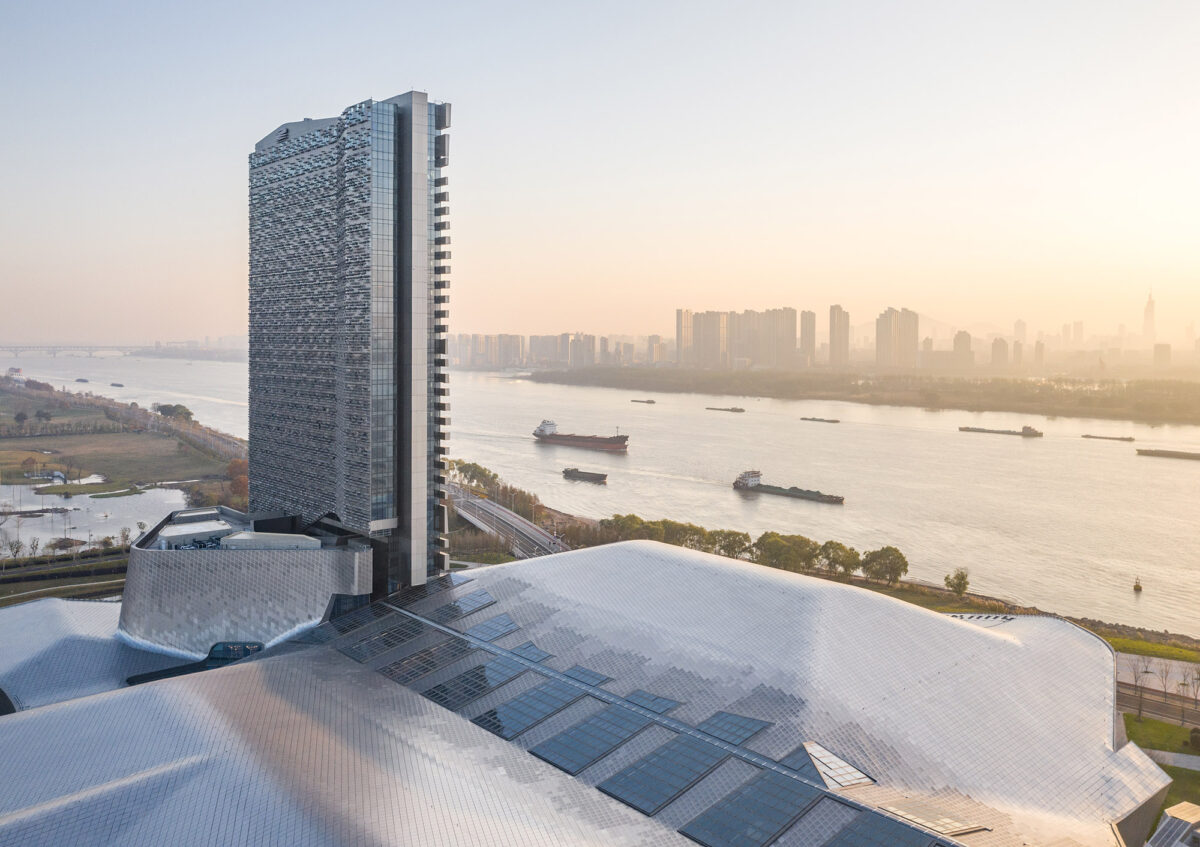
建物は、長江の河岸、江北区の新興商業エリア、そして南京都市圏の歴史的まち並みに接する、地理的・文化的交差点に位置する。そのボリューム、方向性、形態は、川岸の敷地と調和しながら、将来江北区に林立するオフィスタワー群による都市景観を予見している。
© Tian Fangfang
長江の流れを映す建築
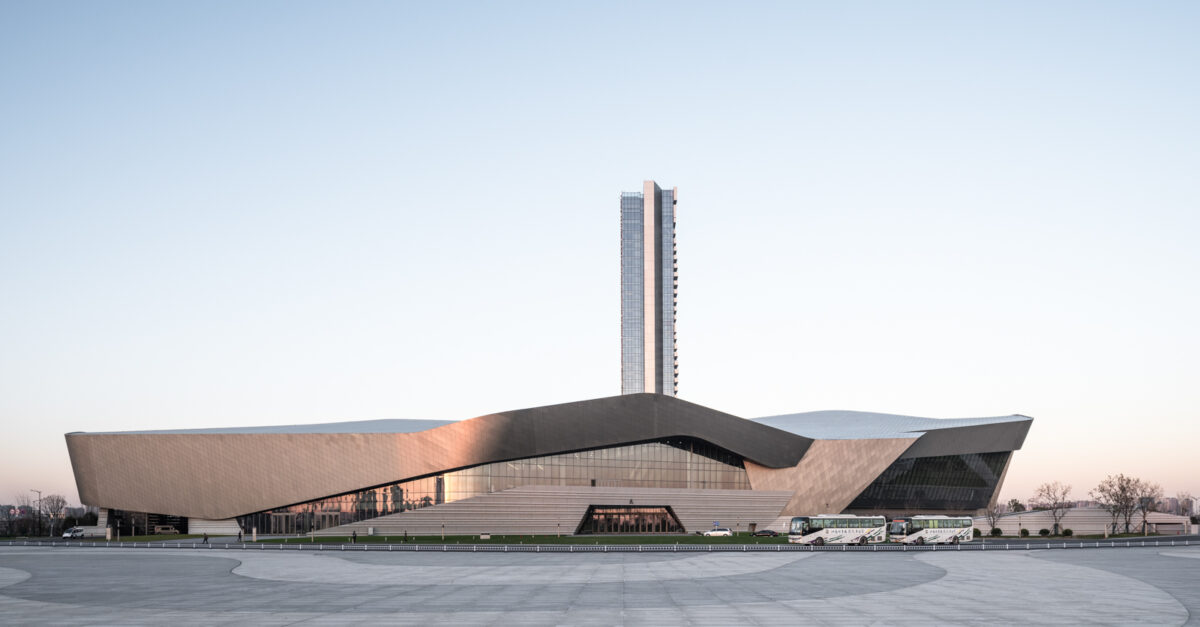
建築デザインは、長江から概念的かつ形態的なインスピレーションを得ている。長江は中国における最も重要な動脈の1つであり、歴史的にもこの地域の人類の発展を支えてきた存在である。会議センターは、まさにこの川のように、地域と世界をつなぎ、発展と国際交流を促進する役割を担う。
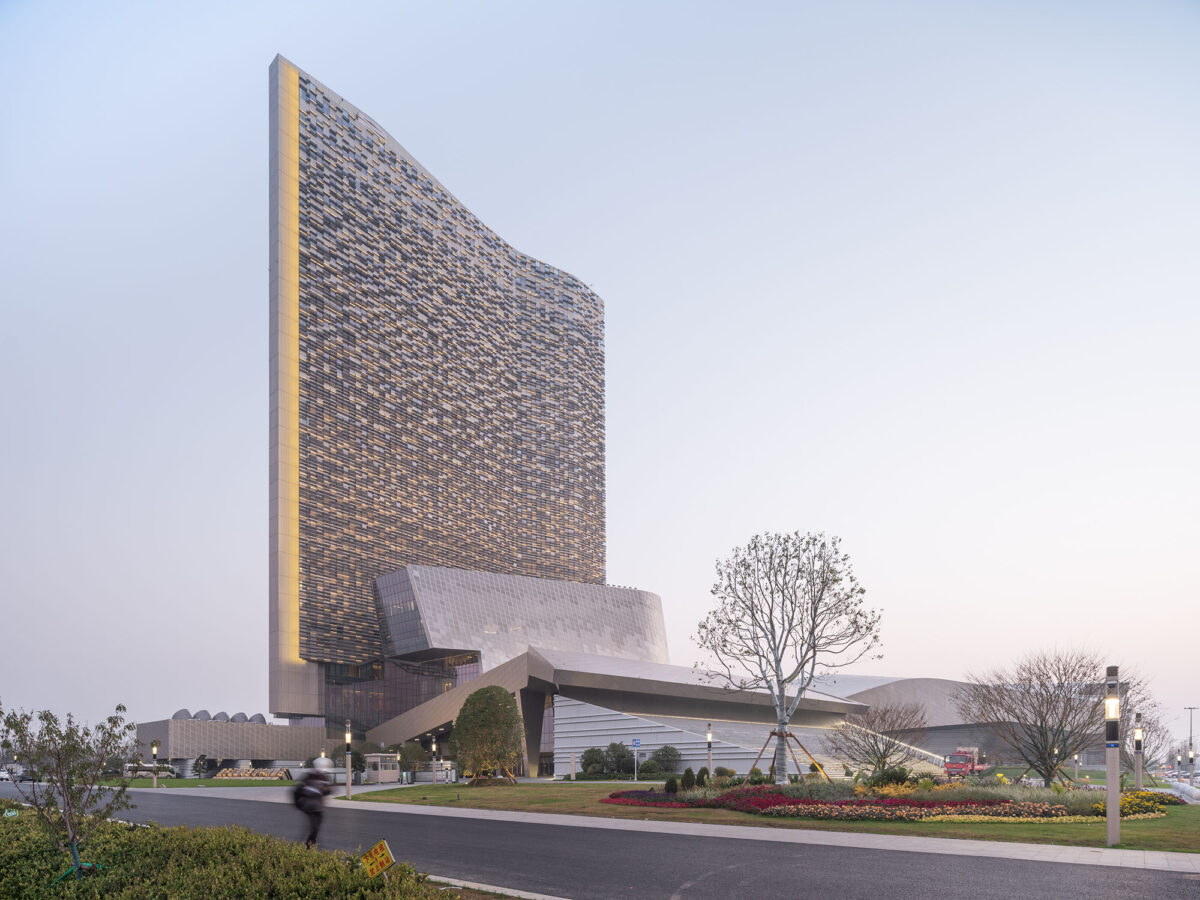
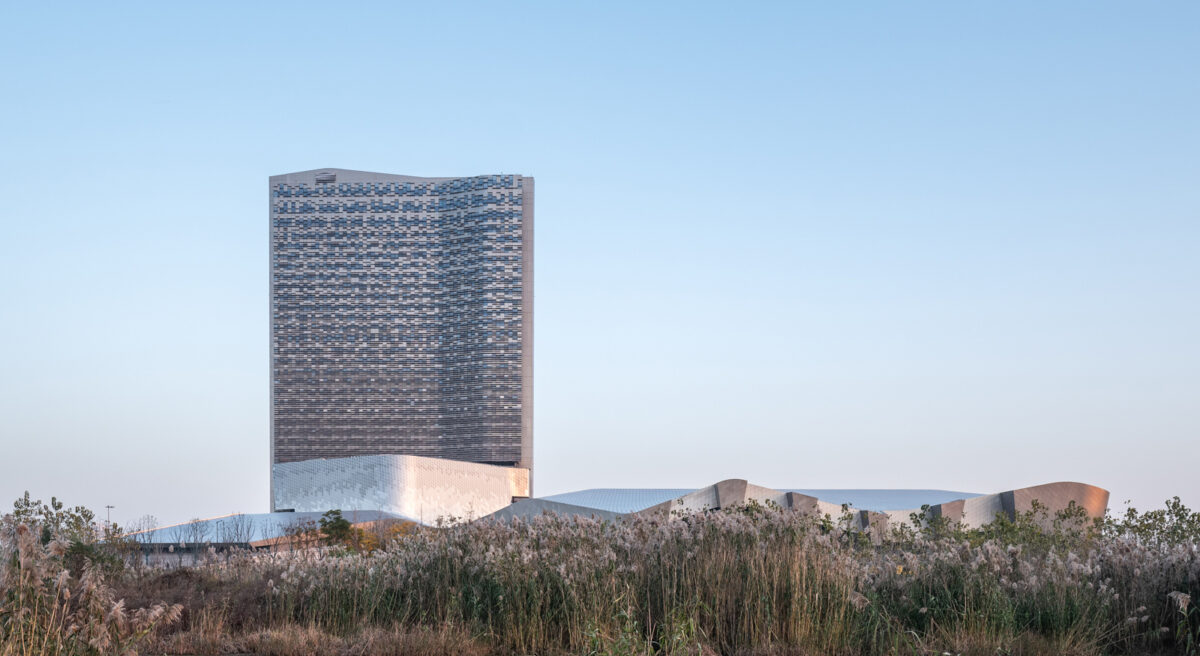
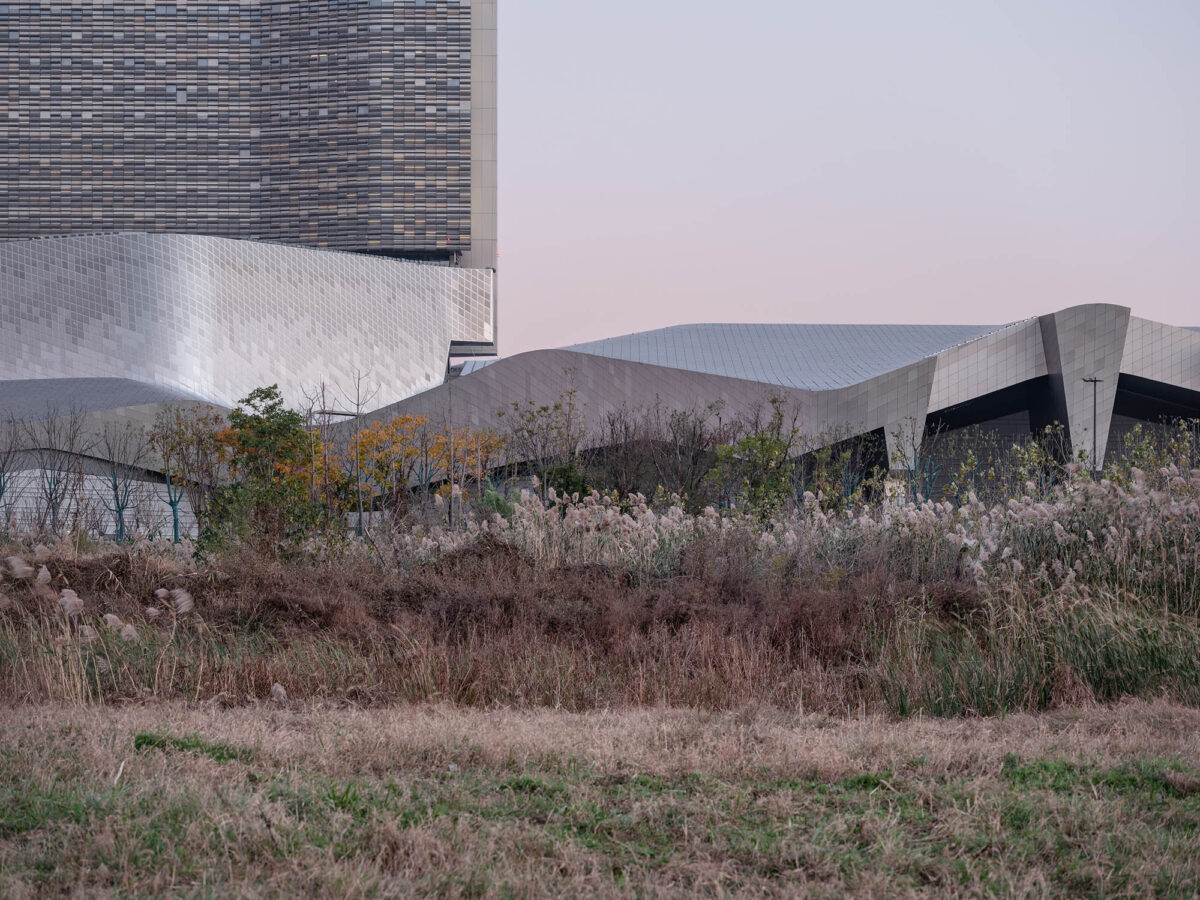
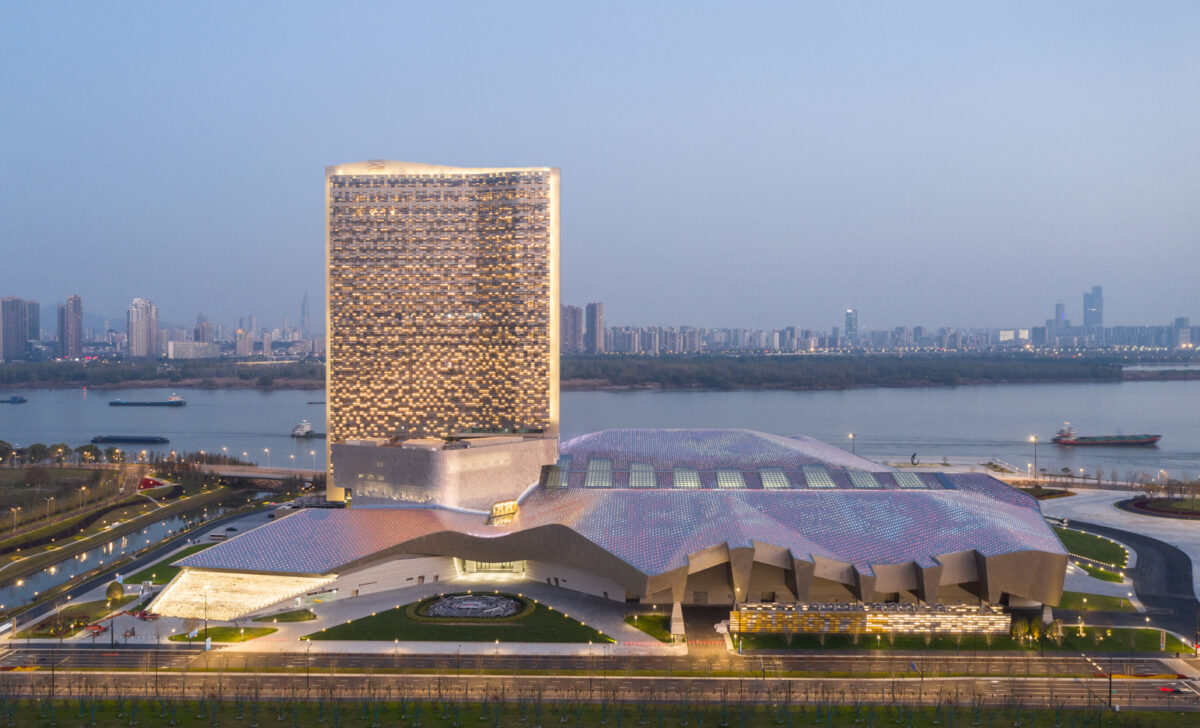
建物の形態には、川の流れる曲線がポディウムの波打つ造形として反映されている。さらに、チタン製の屋根パネルは、水面に反射する日光を想起させる光を放つ。また、ポディウム上にそびえ立つホテルタワーのフォルムは、かつて長江で広く使用された伝統的な風力推進の川船「ジャンク(junk)」の帆を連想させる。
© Tian Fangfang
形態を導くプログラム
建築構成は、明確なプログラム要件によって形成されている。ポディウムには36,000m²を超える会議スペースが配置され、タワーには340室を有する4つ星ホテルが収容されており、すべての客室が川に向けて配置されている。
© Tian Fangfang
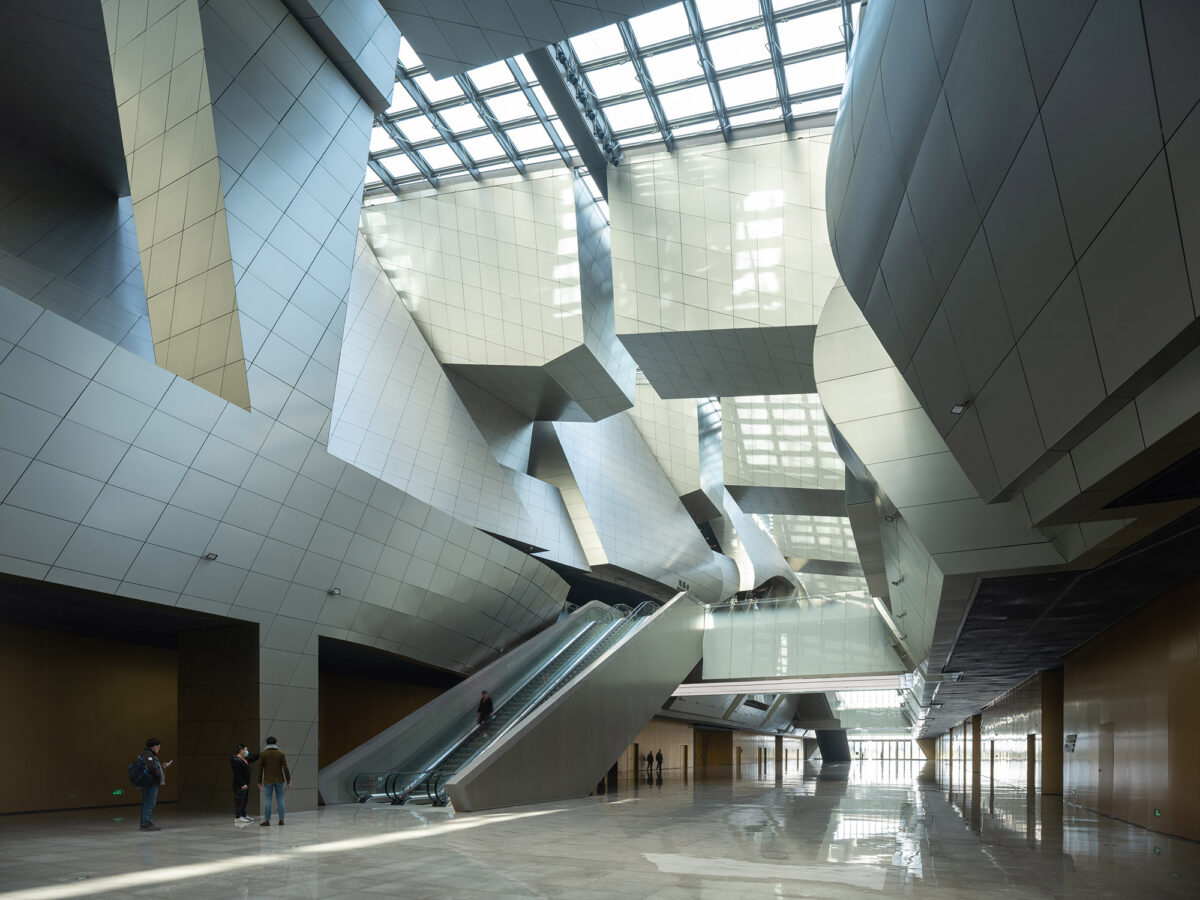
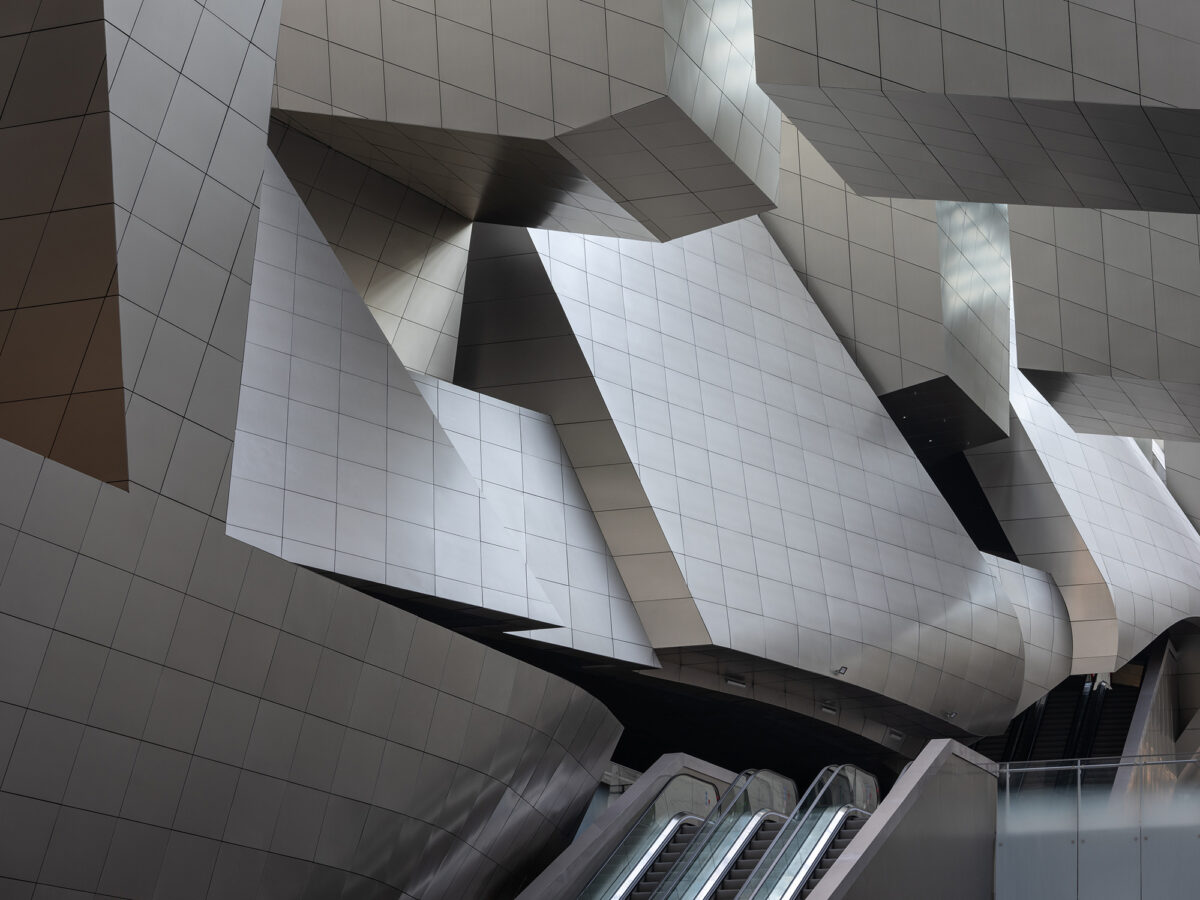
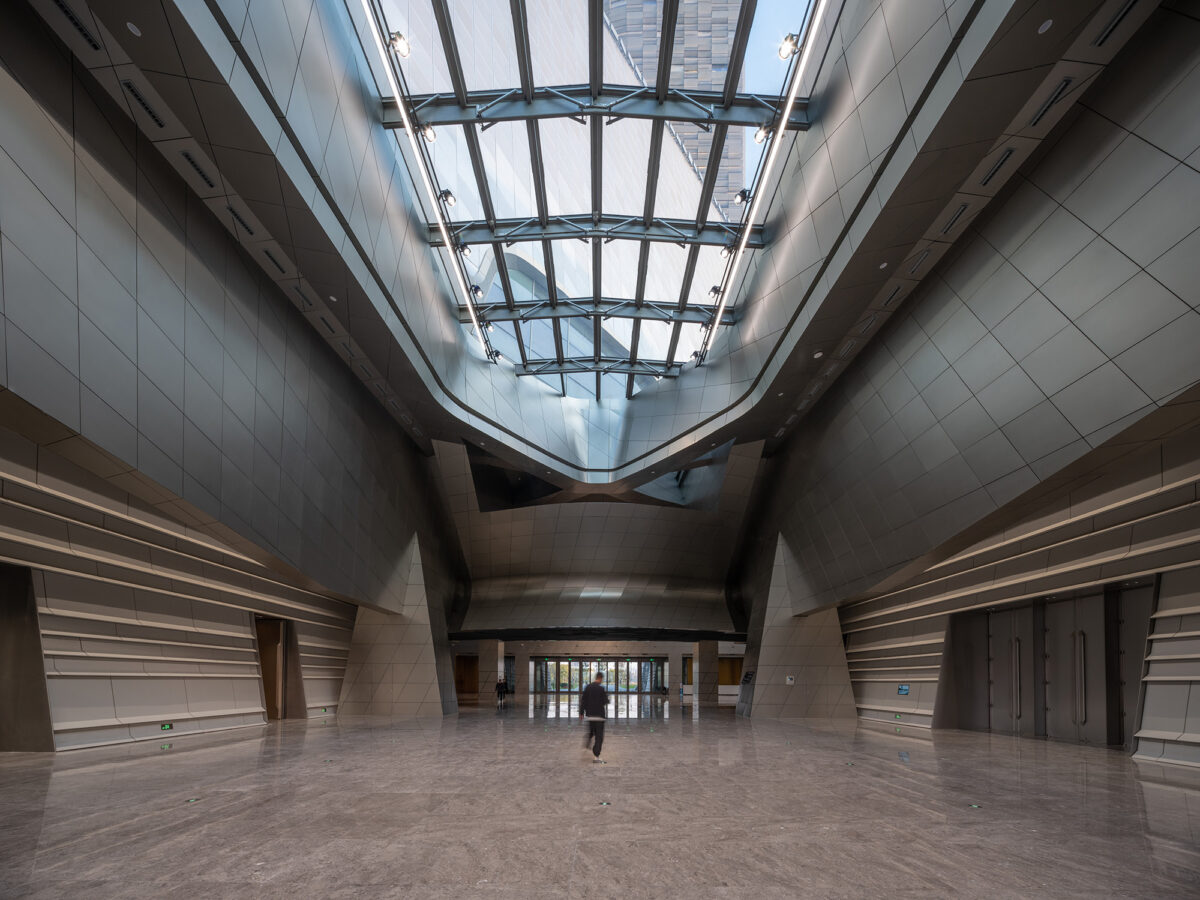
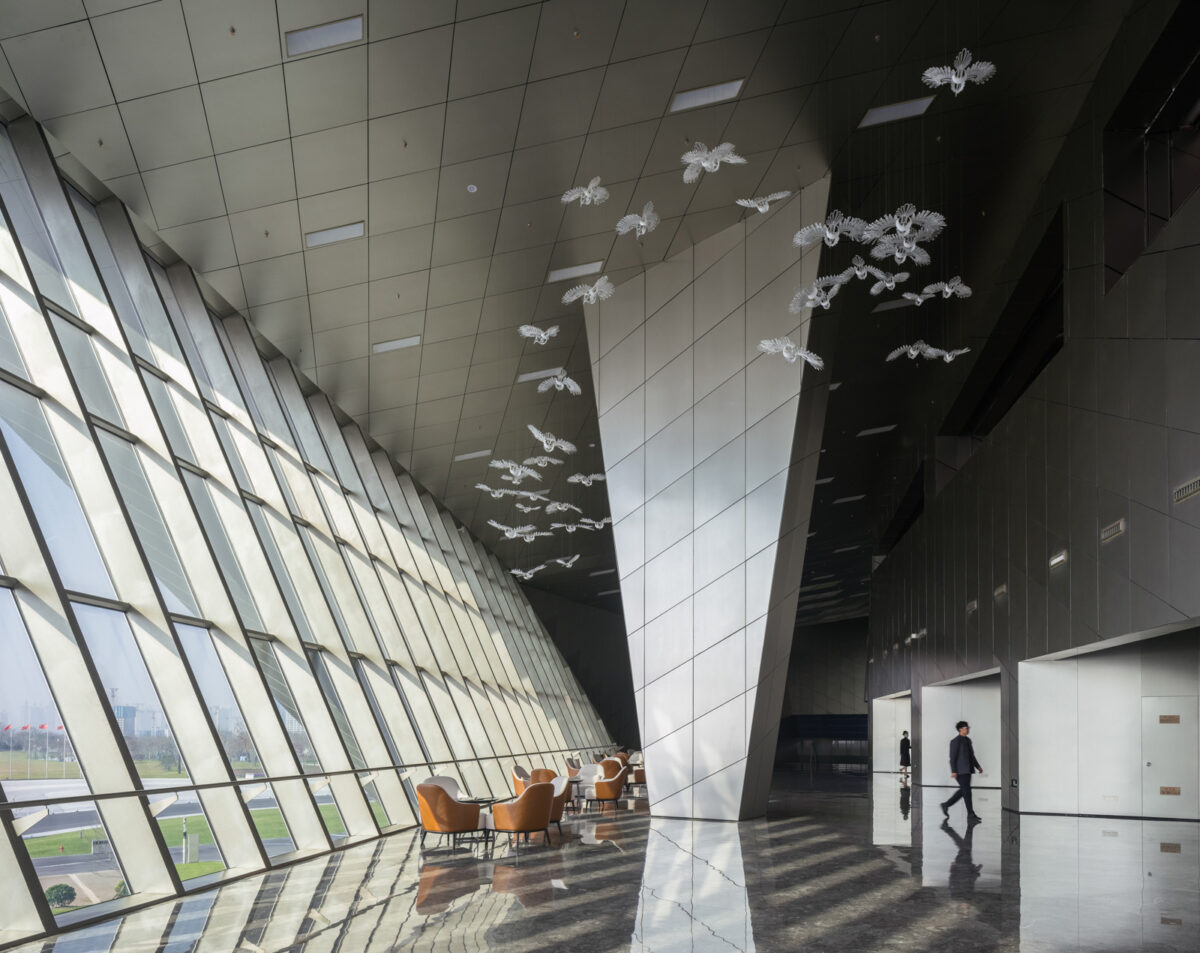
会議センター内の広大なエリアは、箱型トラスによって体系的に構成されており、建物中央を貫く200mのアーケードを挟む形で、柔軟な会議スペースが北と南に分かれて並んでいる。このアーケードは、建物の主要な動線軸となっており、VIPエントランスやホテルタワーからの短いブリッジと交わっている。
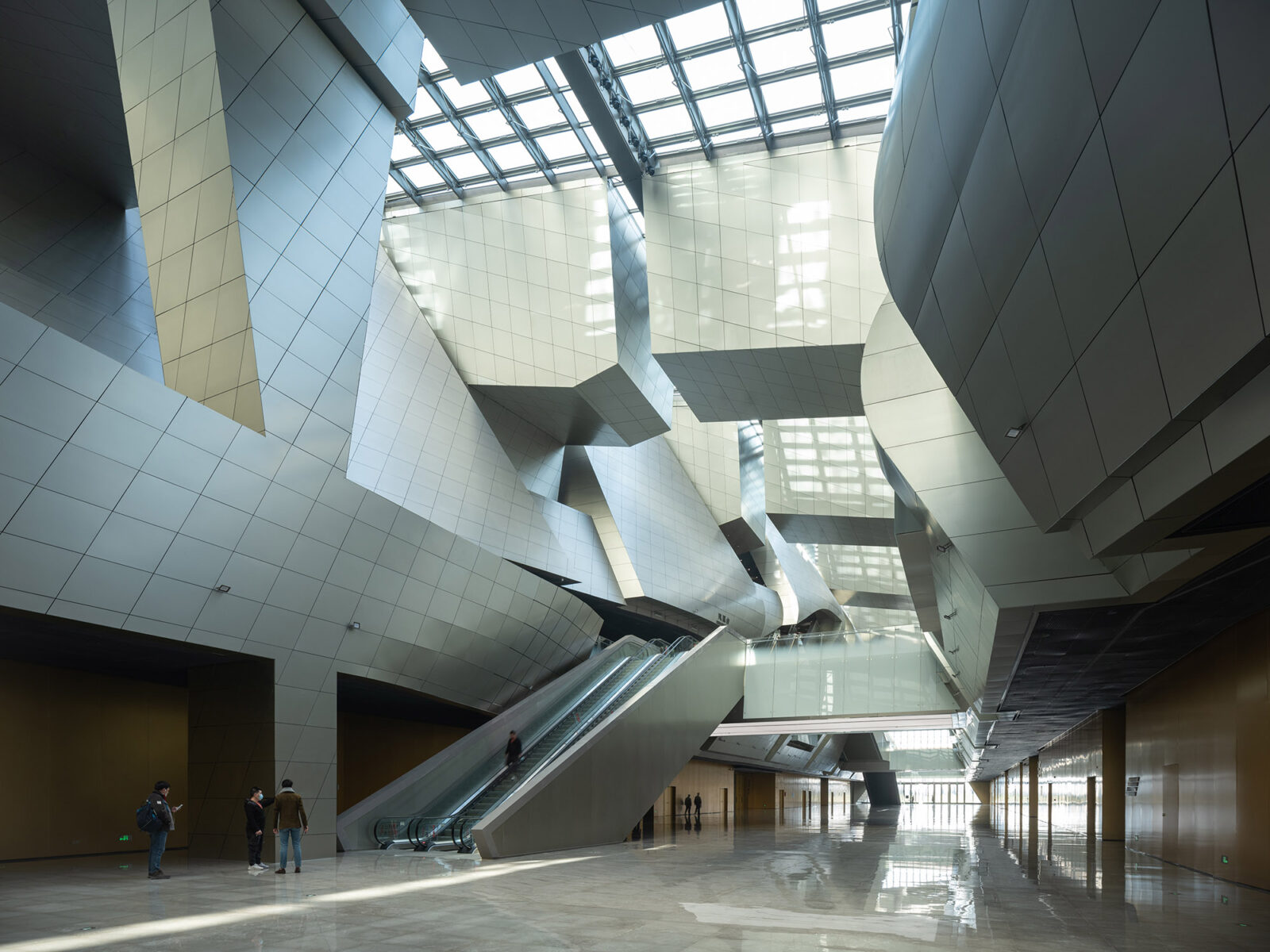
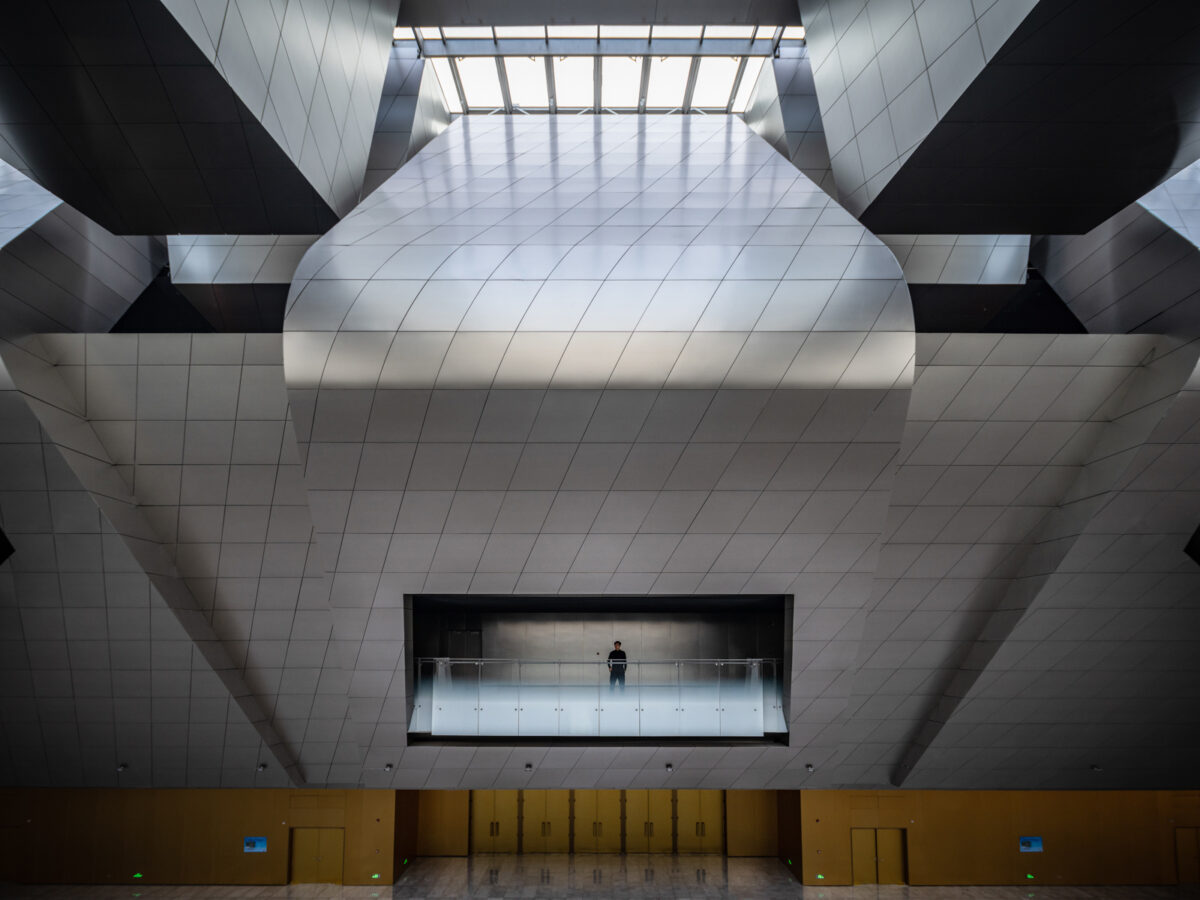
また、会議センターの壮麗な正面エントランスとアトリウムは、大型スカイライトによって明るく照らされており、そこから上方に位置するホテルタワーへの視線を自然に導く。これによりホテルタワーの金属ファサードが建物内部に引き込まれ、アトリウムの曲線形の内装へとつながることで、内と外の境界があいまいになる設計がなされている。
© Tian Fangfang
© Tian Fangfang
都市と自然、両極の間に生まれる建築的特性
川と都市の間という敷地条件は、この施設の波のような形態と都市的な特徴を形づくっている。
北側となる都市側に面するホテルタワーのファサードには、効率的にパネル化されたセクションを組み合わせた、完全ユニット化された金属製ブリーズ・ソレイユシステムが採用されている。日中はこの金属ファサードが日射遮蔽として機能し、エネルギー効率を高める役割を果たす。一方で夜間には、ファサードに組み込まれた照明が都市の夜景に独自の存在感を加えている。
© Tian Fangfang
南側となる川側では、ファサードの流れるような質感が水辺の有機的な性質を映し出しており、9万枚を超える個別設計の金属パネルで構成された波打つ金属とガラスのブリーズ・ソレイユが採用されている。ランドスケープは「スポンジランドスケープ」の原則に基づいて設計されており、特に川沿いの敷地における雨水管理において、環境配慮型のソリューションを提示している。
このような高性能ファサードと環境に配慮したランドスケープデザインの組み合わせにより、この建築は中国国家グリーンビルディング基準における最高位の「3つ星評価」を獲得している。
スポンジランドスケープ(Sponge Landscape):都市や敷地の地面を「スポンジ」のように見立てて、雨水を一時的に貯留し、ゆっくりと浸透・排出させる仕組みを取り入れたランドスケープ設計手法
© Tian Fangfang
© Tian Fangfang
以下、モーフォシス・アーキテクツのリリース(英文)です。
Yangtze River International Conference Center
Nanjing, ChinaProject information
Client: Nanjing Planning Bureau
Site Area: 8.74 hectares / 21.60 acres
Size: 187,200 gross m² / 2,015,004 gross ft²
Program: Large scale exhibition and conference spaces, hotel and amenities, office
Design: 2019-2020
Construction: 2019-2021
LEED Rating (or similar): 3-Star Rating GBEL (Green Building Evaluation Label)
Type: Governmental / Commercial / HospitalityKey Project Numbers:
Above grade height: 157m
Above grade area: 132,700sqm
Below grade depth: 7.5m
Below grade area: 54,450sqm
Exhibition area: 9000sqm
Main conference Hall: 3000sqm
Main banquet hall: 2700sqm
Roof titanium panel area: 50,000sqm
Single truss length: 130m
Longest span: 72m
Total steel: 46,000 tonProject Description
The Yangtze River International Conference Center represents a world-class hub for global connectivity and a key asset of Nanjing’s expansion westward across the Yangtze river to the new urban center of Jiangbei. Situated at a key position between China’s eastern coastal cities and the Yangtze River Delta region, the Jiangbei District is poised to become China’s newest epicenter for global business. Commissioned by Jiangbei New District of Nanjing City, The Yangtze River International Conference Center embodies a charter for sustainable and ecologically-sensitive development while creating a superlative meeting and event venue for the region. The building sits at a unique geographical and cultural junction in Nanjing, bordering the banks of the Yangtze River, the burgeoning commercial edge of the Jiangbei District, and the historic fabric of the Nanjing Metropolitan area. In its massing, orientation, and form, the tower engages its riverside site while anticipating the future collective urbanscape of office towers emerging in Jiangbei.
The design of the building takes conceptual and formal inspiration from its namesake, the Yangtze River, which provides one of the most important arterial connections across China and has shaped human development in the region throughout history. Like the river, the Conference Center connects the region with the broader world, supporting development and global exchange. Formally, the flowing curves of the river are reflected in the building’s undulating podium, while the glinting titanium roof paneling evokes sunlight playing on the water’s surface. Rising above the podium, the shear, broad angles of the hotel tower evoke the sail of a junk, the traditional wind-powered river boat once common on the Yangtze.
The main programmatic demands inform the building’s parti; the podium hosts more than 36,000 m2 of conference spaces, while the single-loaded tower holds a 340 room, 4-star hotel, with rooms oriented to face the river. In the podium, the immense program area of the convention center is organized systematically by cladded box trusses, which define a flexible series of conference spaces flanking a central 200-meter arcade that bisects the building into a north and south wing. This arcade serves as the primary circulation spine for the building, intersected by short, perpendicular bridges providing access from VIP entrances and the hotel tower. Bringing visitors to the arcade, the convention center’s grand, formal entrance and atrium is illuminated by a massive skylight, which frames views upwards to the hotel tower. This blurring of interiority and exteriority is further emphasized by drawing the metallic façade of the hotel tower back into the building to become the dramatic curved forms of the atrium liner.
The site’s boundary condition, between the river and the city, shape the conference center’s wavelike forms and urban character. On the city side, to the north, the hotel tower’s façade utilizes a fully-unitized metal brise-soleil system, composed of efficiently panelized sections that come together to create an overall complex effect. During the day, the metal façade serves to shade the building and increase energy efficiency; in the evening, lighting integrated in the façade creates a distinctive night-time presence within the city.
On the river side, to the south, the sinuous quality of façade mirrors the organic nature of the river’s edge, with a rippling metal and glass brise-soleil comprised of over 90,000 distinct metallic panels. The overall landscape is designed following a “sponge landscape” principle, aiding in environmentally responsible management of runoff especially important to the riverside site. The high-performance facades and environmentally conscious landscape design contribute to the building’s “3-Star rating”, the highest sustainable design grade recognized by China’s national green building standard.
モーフォシス・アーキテクツ 公式サイト
https://www.morphosis.com/architecture/283/
![[無償モニター]キノシタの家具ブランド「Coccole」から新作チェア・ソファが登場。選べる体験モニターの応募は12月31日まで](https://magazine-asset.tecture.jp/wpcms/wp-content/uploads/2026/10/13222506/f07965e0ad312e8170b6bee7af7adb5b-900x590.png)
![[建築NOTE]不利な敷地条件を建築体験へと転換。倉方俊輔が読み解く、谷口吉生が〈資生堂アートハウス〉に込めた設計思想](https://magazine-asset.tecture.jp/wpcms/wp-content/uploads/2026/06/13180420/arthouse_18-900x675.jpg)