1600枚の古石板で描く曲面屋根 - 中国の歴史あるまちと風景に溶け込む〈太行新宇美術館〉
©︎ Coppak Studio
©︎ Zhu Yumeng
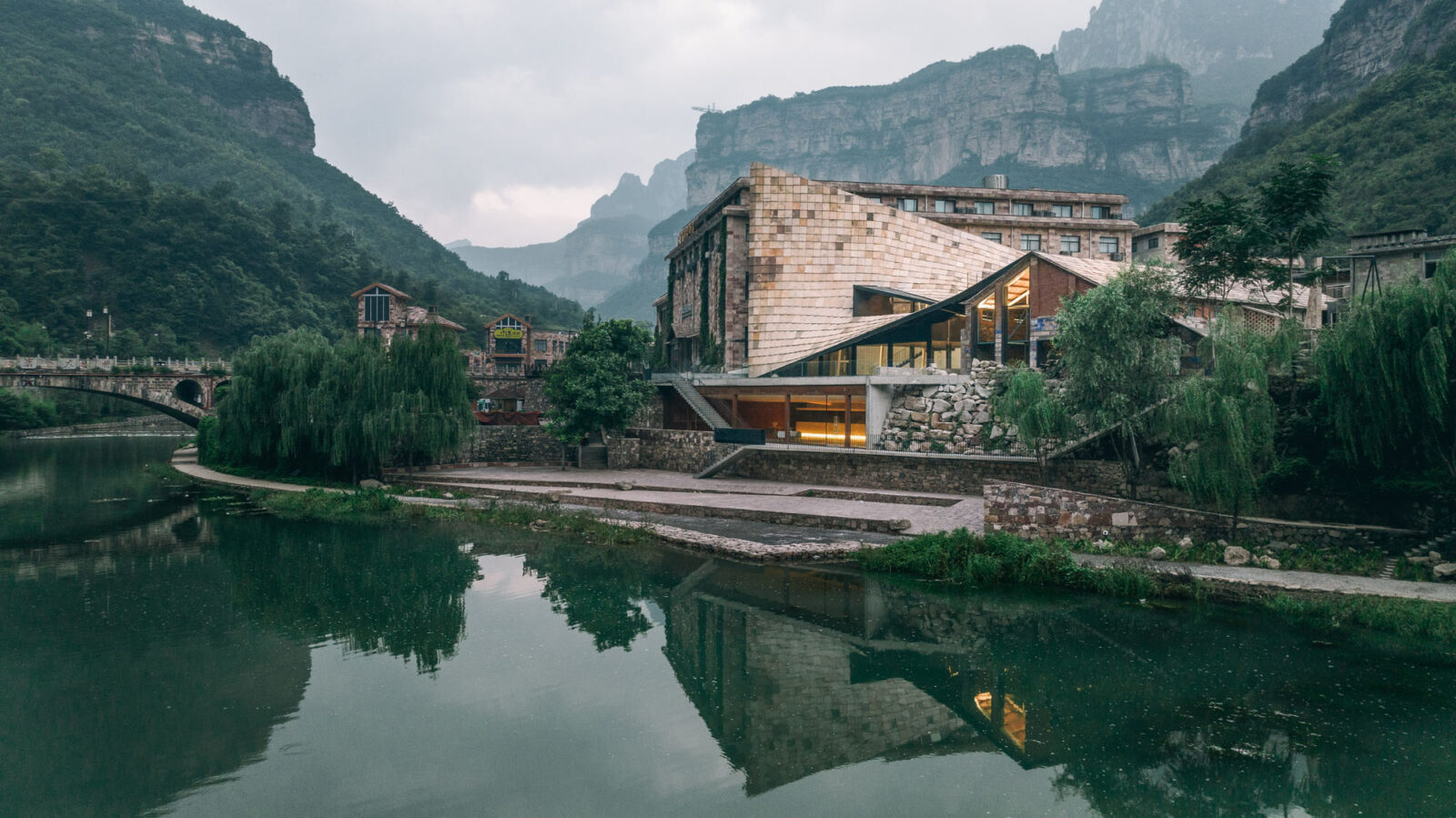
中国河南省、林州市に建つ〈太行新宇美術館(Taihang Xinyu Art Museum)〉は、古い倉庫を再生し、地域密着型のアートコミュニティを生み出す美術館です。
社会的にも環境的にも持続可能であるよう構想された、「政府・芸術家・民間」による三者協力モデルを実践したプロジェクトであり、中国の設計事務所 王冲スタジオ(Wang Chong Studio)が設計しました。
注目ポイント
- 社会的にも環境的にも持続可能な、「政府・芸術家・民間」による三者協力モデル
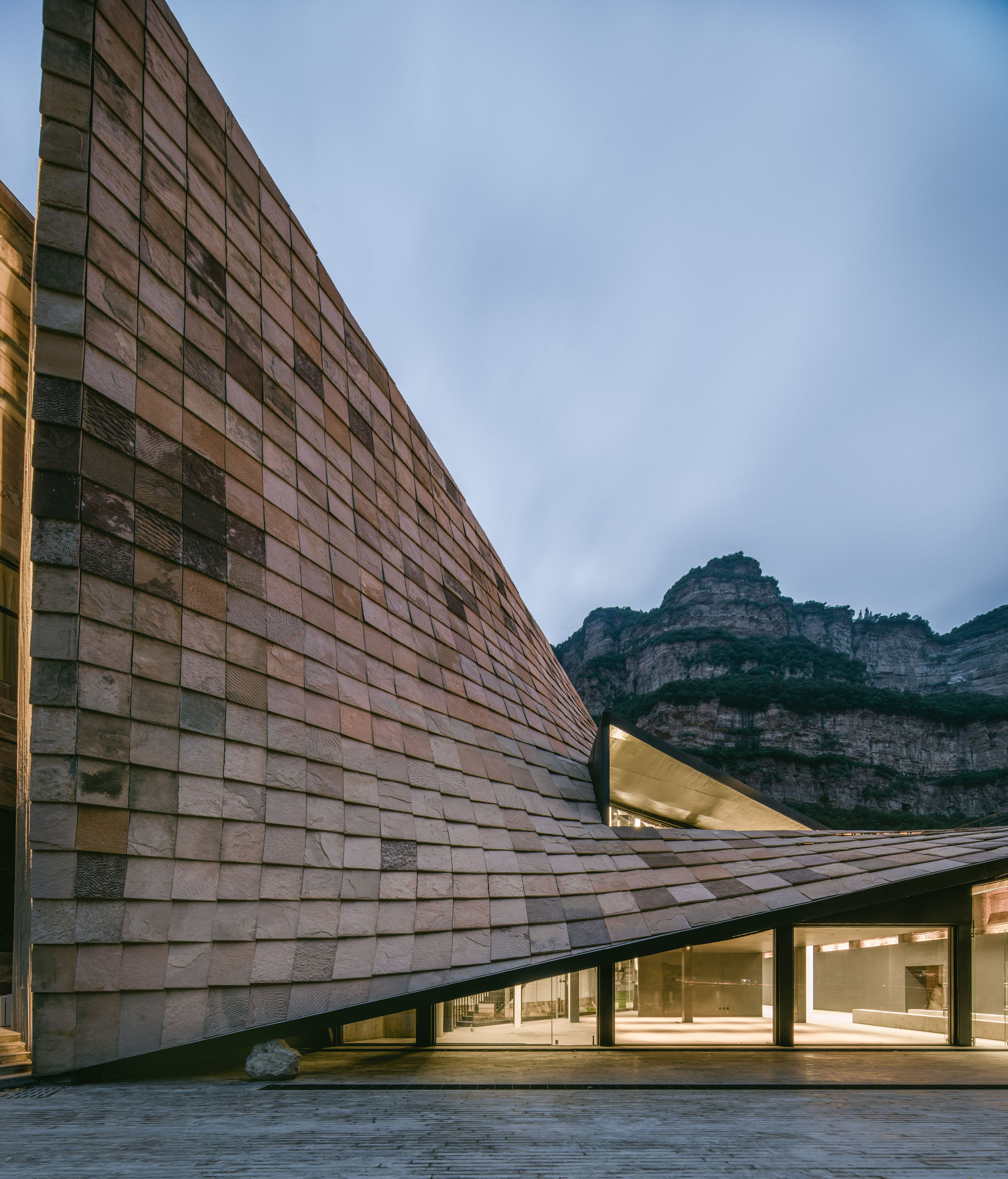
- 1,600枚の古いスレートを再利用した曲面屋根
- 芸術家と地域の人々が自然に会話を交わす、日常の美的体験
- 閉館時でも軒下やプラットフォームを開放した、「まちの居間」としての空間構成
(以下、王冲スタジオから提供されたプレスキットのテキストの抄訳)
©︎ Coppak Studio
山河と村落の間に育つ、美術館の持続可能な発展
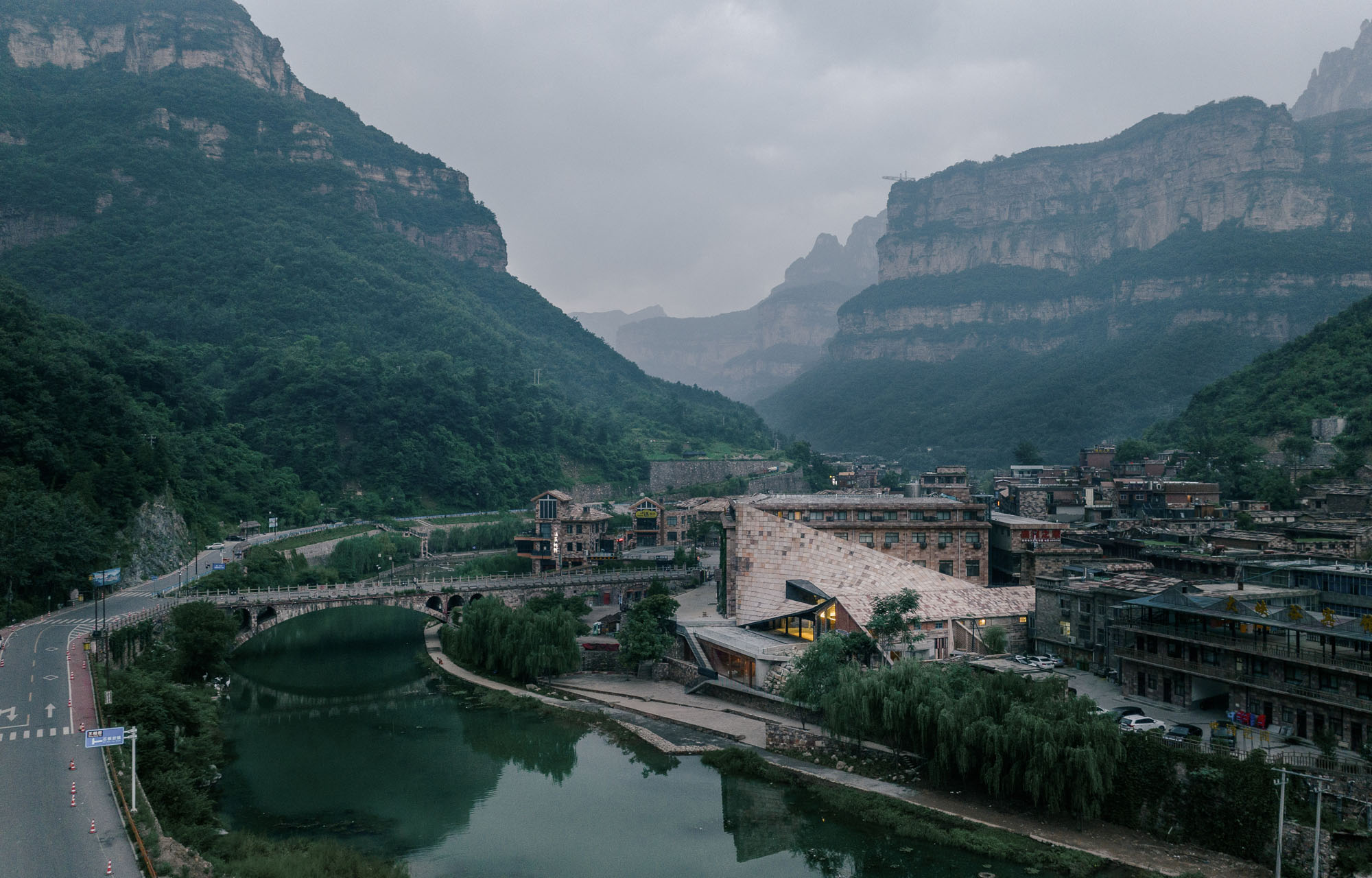
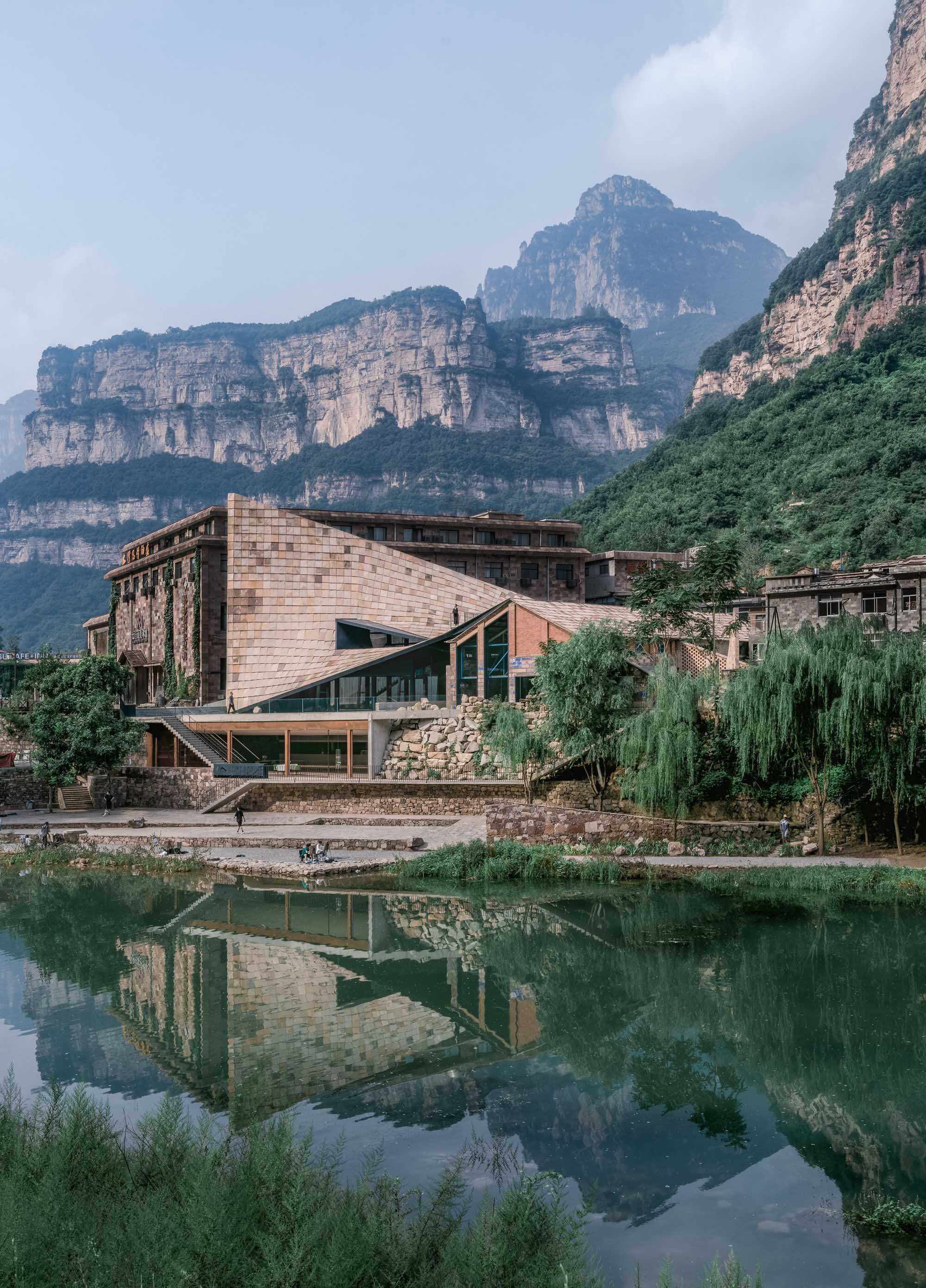
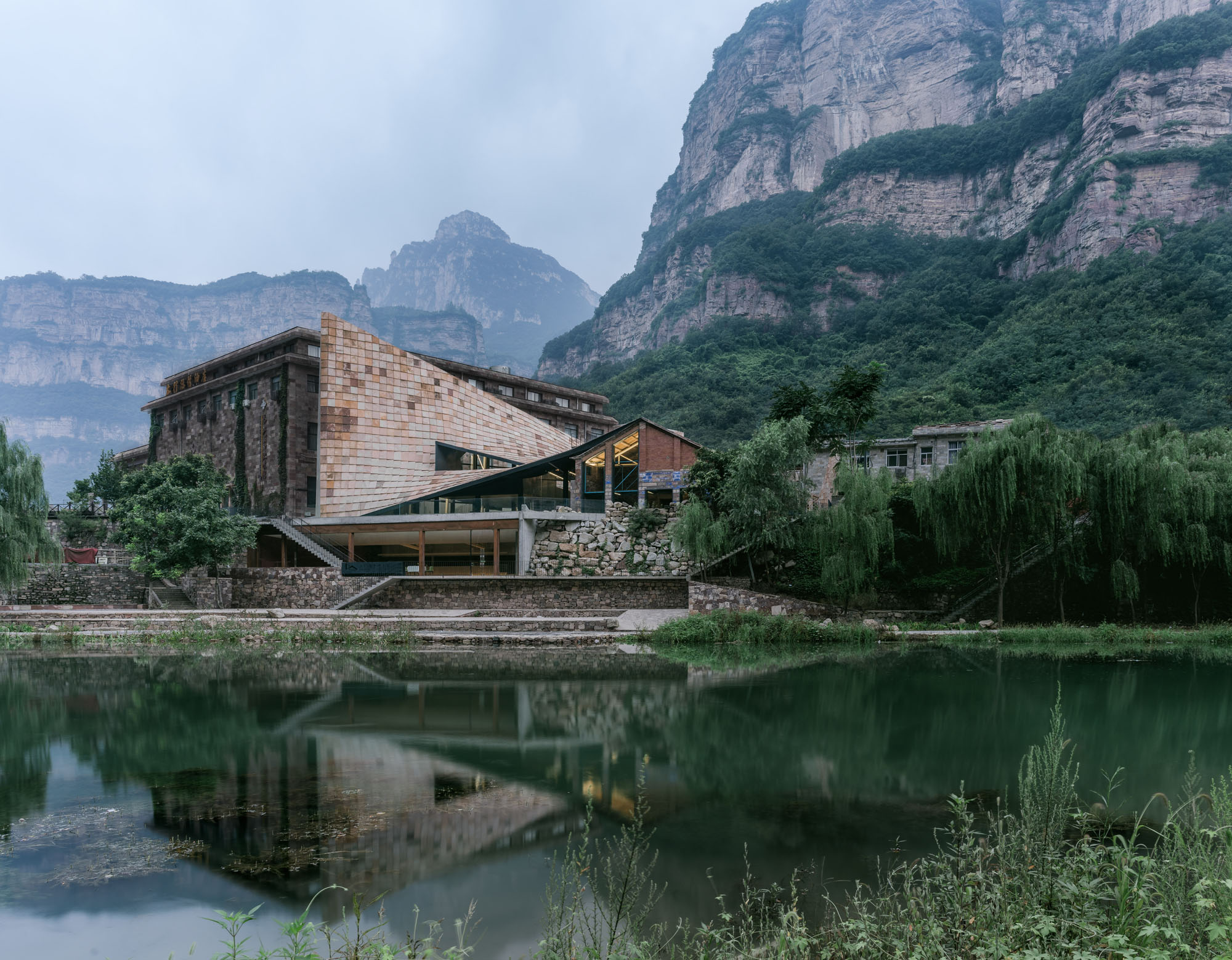
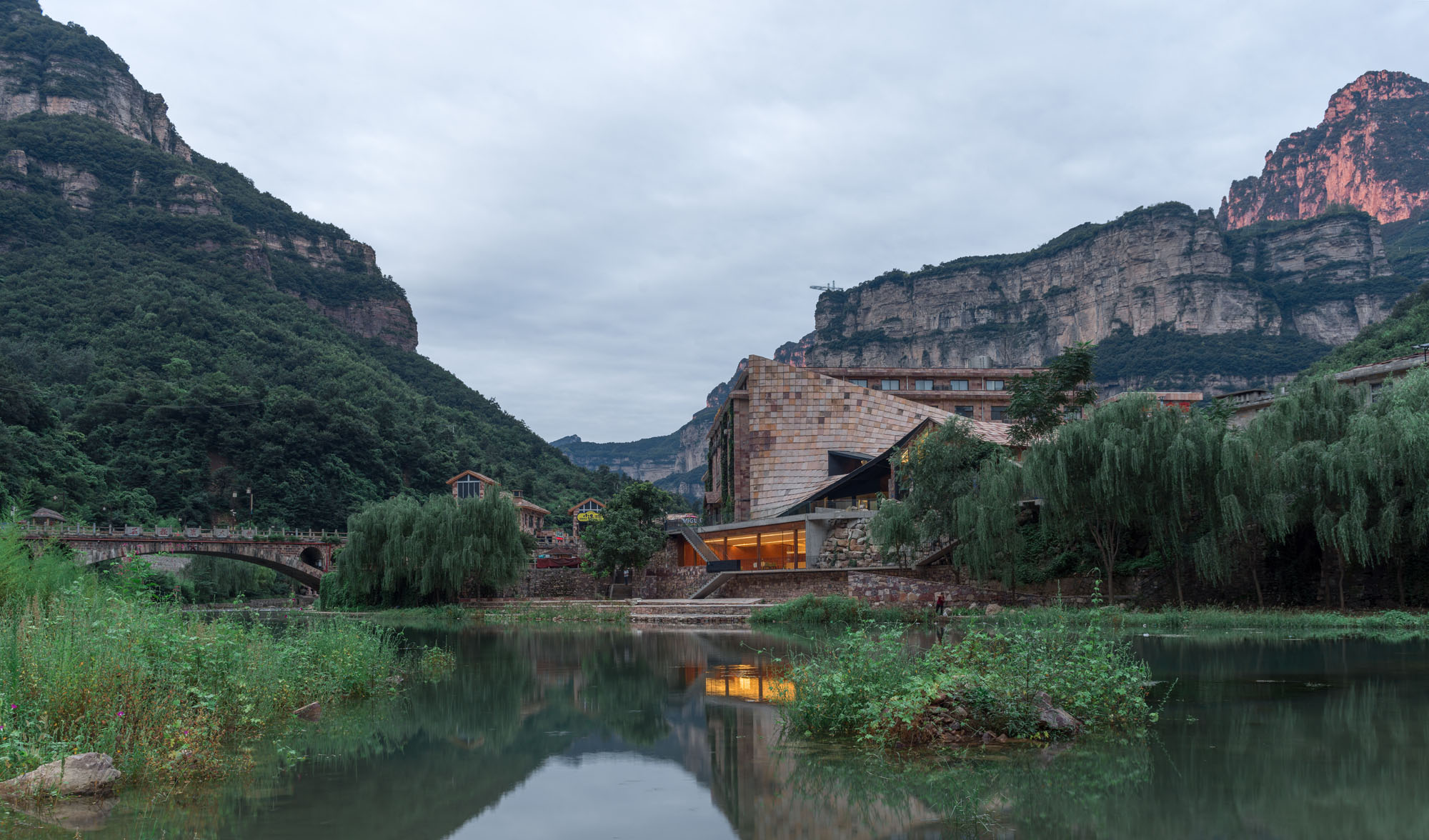
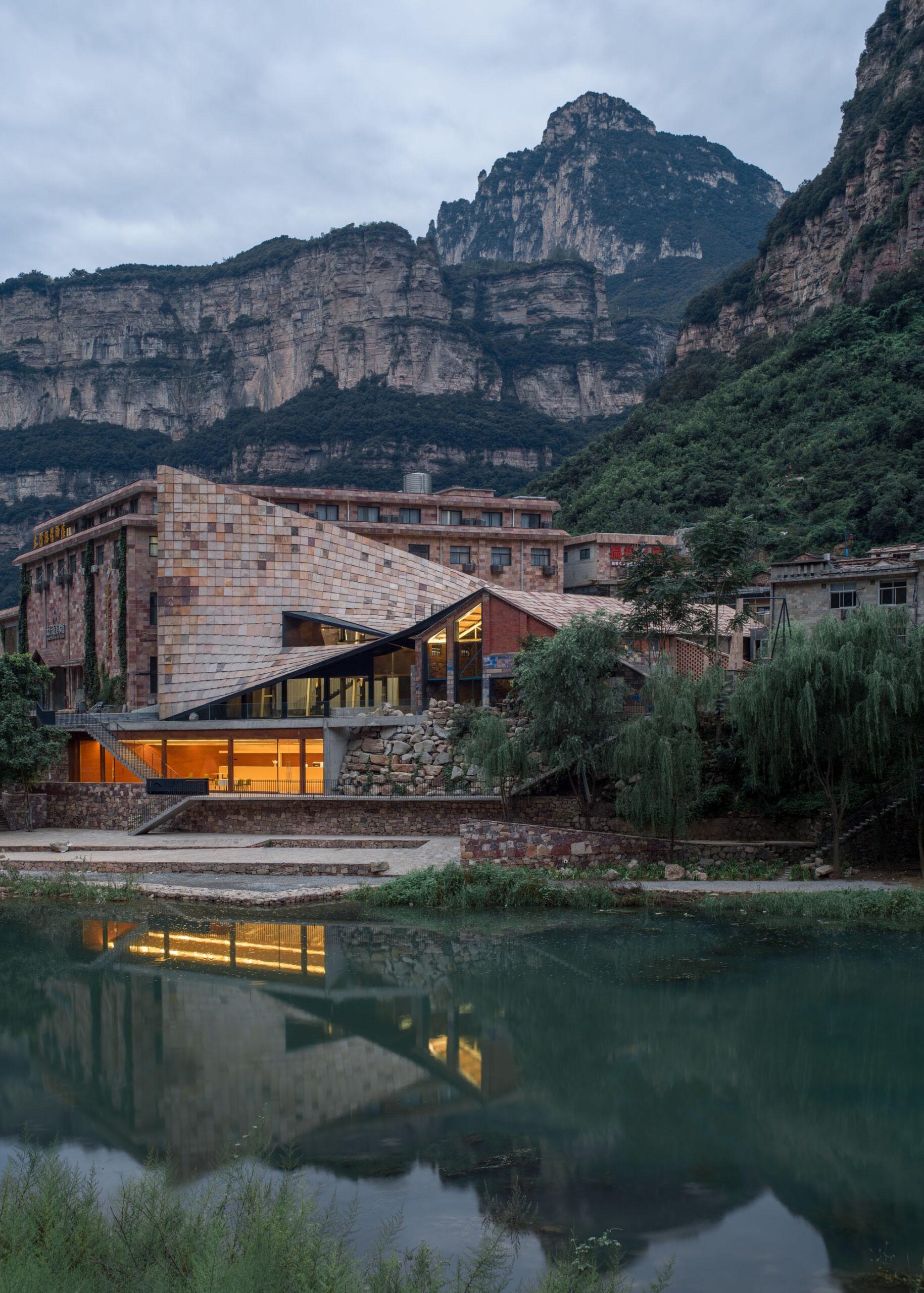
石板岩鎮(Shibanyan Town)に建つ〈太行新宇美術館〉は、太行山を背にし、蒼渓を望むまちの路地裏に静かに溶け込んでいる。この建築は、まちの風情を修復し、古い倉庫を再生させ、景観の接点を活性化させるものである。あたかも風景から自然に生え出たかのように、狭小な敷地の中で新旧の融合を実現している。
地元の古い石材を持続的に再利用することで伝統的な石工芸を再生させ、多層的な公共のオープンスペースを創出した。本作は、経済・環境・芸術的生活・自然という多様な視点から持続可能性を追求し、創造的な手法によって人々の「より良い生活」と「まちの発展」を促進する試みである。
©︎ Zhu Yumeng
©︎ Zhu Yumeng
1. 背景:地域の記憶と産業の転換
中国北部にあり、太行山脈と中原の接点に位置する石板岩鎮は、中国のまちの変遷を体現するような場所である。ここでは断続的な歴史の中断を経ても、文化と生活様式が継続してきた。
清の時代には水不足のため平原の住民がこの山林を開拓し、中華民国時代の宿屋の遺構も残る。耕作地の不足により、この燕鎮は長らく未開発地域であったが、1990年代以降、商品経済の発展と労働力輸出の拡大に伴い、村とまちの街路空間の輪郭が初めて確立された。スケッチや観光を基盤とした飲食・商業・宿泊の第三次産業が徐々に形成されたものの、それらは主に外部からの輸入型であり、画一的なビジネスモデルに留まっていた。
近年、「中国画の谷」としての産業高度化を軸に新たなテーマが提起されている。それは、地元住民・芸術家・学生・行政・観光客をつなぐ「持続可能なコミュニティライフスタイル」をいかに創造するかという問いである。
©︎ Coppak Studio
©︎ Coppak Studio
2. 〈太行新宇美術館〉の役割:地域密着型アートコミュニティへ
〈太行新宇美術館〉は時代の要請に応えて誕生した。
絵画を軸とした産業高度化は、創造的階層の集積を促し、地域密着型のアートコミュニティを創出できるのだろうか?多様な人々のための交流・展示・パフォーマンスの場、そしてクロスボーダーなイノベーションのプラットフォームとして機能し、多様性と地域性、そして個性を備えた公共アートを形成し、包摂性と開放性をもちつつ、アイデンティティと地域性を備えた文化コミュニティを結集できるか?
共通のビジョンと生活体験をもつ人々の集積は、都市化を新たな段階へと導く可能性を秘めている。歴史的遺構と新空間を融合したこの美術館は、新たな生活様式を描く第一歩に過ぎない。
©︎ Zhu Yumeng
©︎ Coppak Studio
©︎ Coppak Studio
3. 持続可能性へのアプローチ
経済的・社会的持続可能性:「政府・芸術家・社会資本」による三者協力モデル
政府は政治的成果を上げ、文化的イメージと地域ブランドを確立し、中国における文化観光競争に参加する必要がある。しかし、利益や権限のバランスによる非効率な開発は回避しなければならない。政府には多額の建設資金の負担が難しく、一方で民間資本の介入は政策支援を必要としつつも、公有地が経済的利益のみに利用されることを防ぐ制限も必要である。さらに芸術家たちも、地域の風景を描きながら市民と交流する場を欠いていた。
通常の運営形態ではこれら三者の連携は困難だが、ここでは「政府・芸術家・社会資本」による三者協力モデルが実践されている。
- 政府・政策:美術館は市民に美的教育と文化的恩恵を提供し、臨州の文化ブランドを確立する。
- 芸術家:「太行芸術家新居」として文化的交流の場(文化的居間)を提供し、長期的な視点で運営に関わる。
- 民間資本:文化観光による収益を得て、文化施設の運営を持続させる。
また、この美術館建設は一連の産業発展を牽引している。
- 観光経済の活性化:都会の人々が山河へ戻り、学生たちはスケッチだけでなくロードショーや展示会も実施する。中国美術家協会主席や中央美術学院学長などの著名な芸術家も交流に訪れる。
- 地域住民への恩恵:住民は実習生のホームステイ収入だけでなく、独自の文化創造品や農産物の生産・販売、学生作品の購入などを通じて経済循環を形成できる。
- 運営者の利益:建物に併設されたレストランやカフェを通じ、屋外プラットフォームで観光客にサービスを提供することで、より良い収入を得ることができる。
©︎ Zhu Yumeng
©︎ Zhu Yumeng
©︎ Zhu Yumeng
©︎ Zhu Yumeng
©︎ Zhu Yumeng
©︎ Zhu Yumeng
©︎ Zhu Yumeng
©︎ Zhu Yumeng
環境的持続可能性:既存ストックと地形の活用
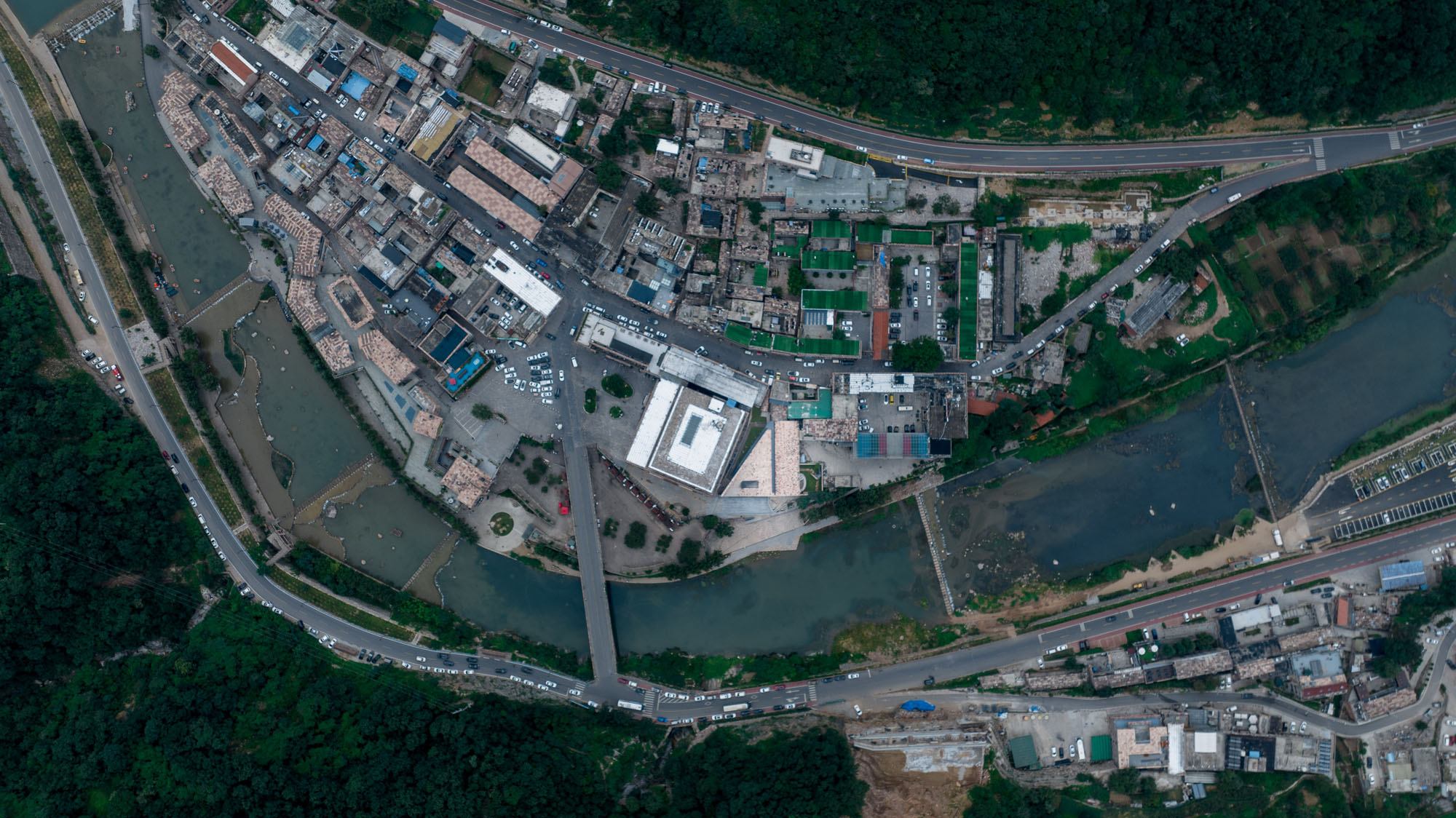
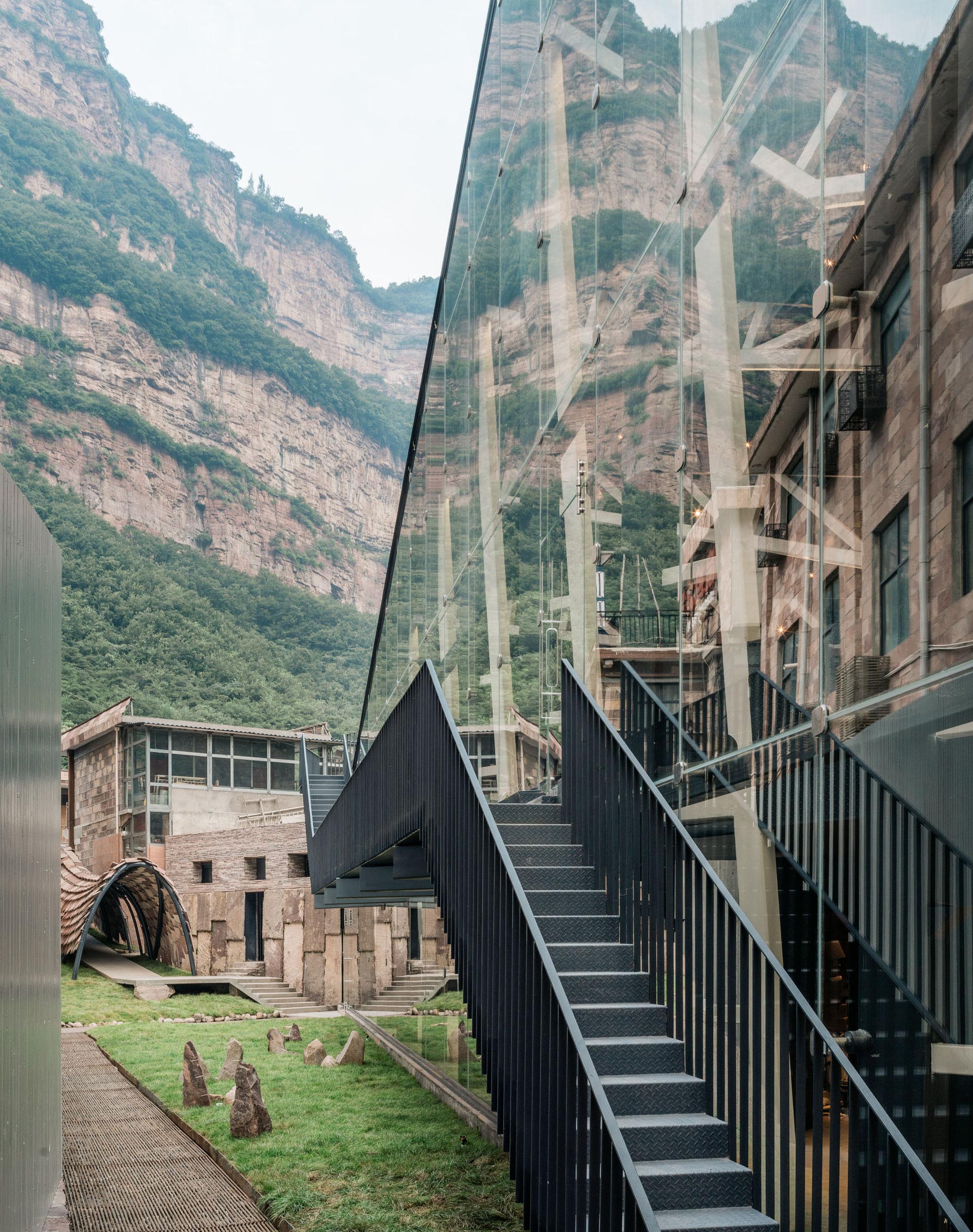
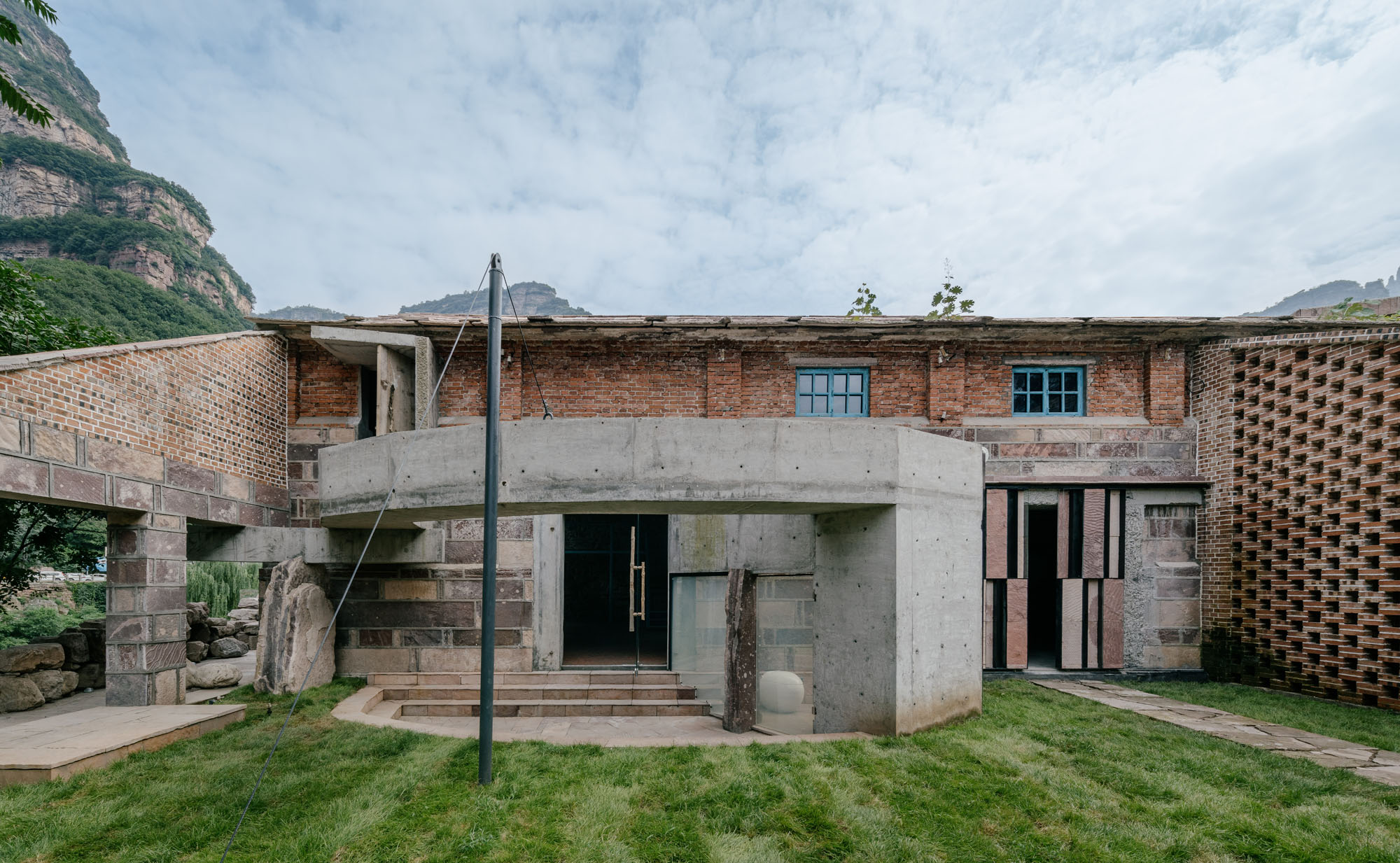
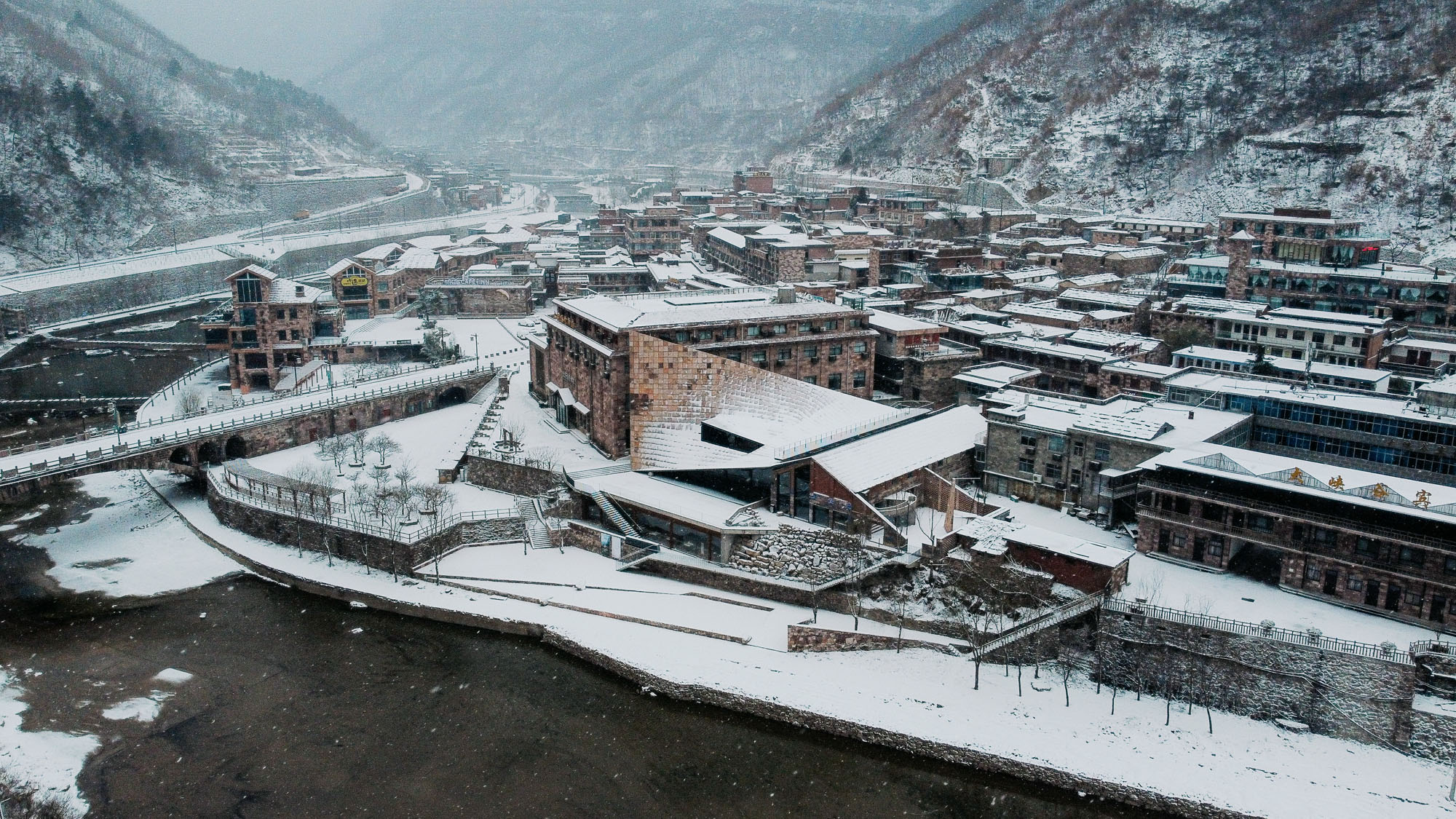
設計過程において地域の文化的・歴史的遺産を尊重し、古い家屋と新しい家屋を統合することを選択した。家屋に囲まれた三角形の敷地は、当初、厨房排気と公衆トイレの浄化槽のためのネガティブスペースであった。そこで、採光と通風を確保するために細長い中庭を切り取り、西側の通りと東側の水辺をつなぐ人の流れを生み出した。残りの空間を美術館に充て、北側の旧倉庫を保存・連結することで、まちの風情を縫い合わせている。
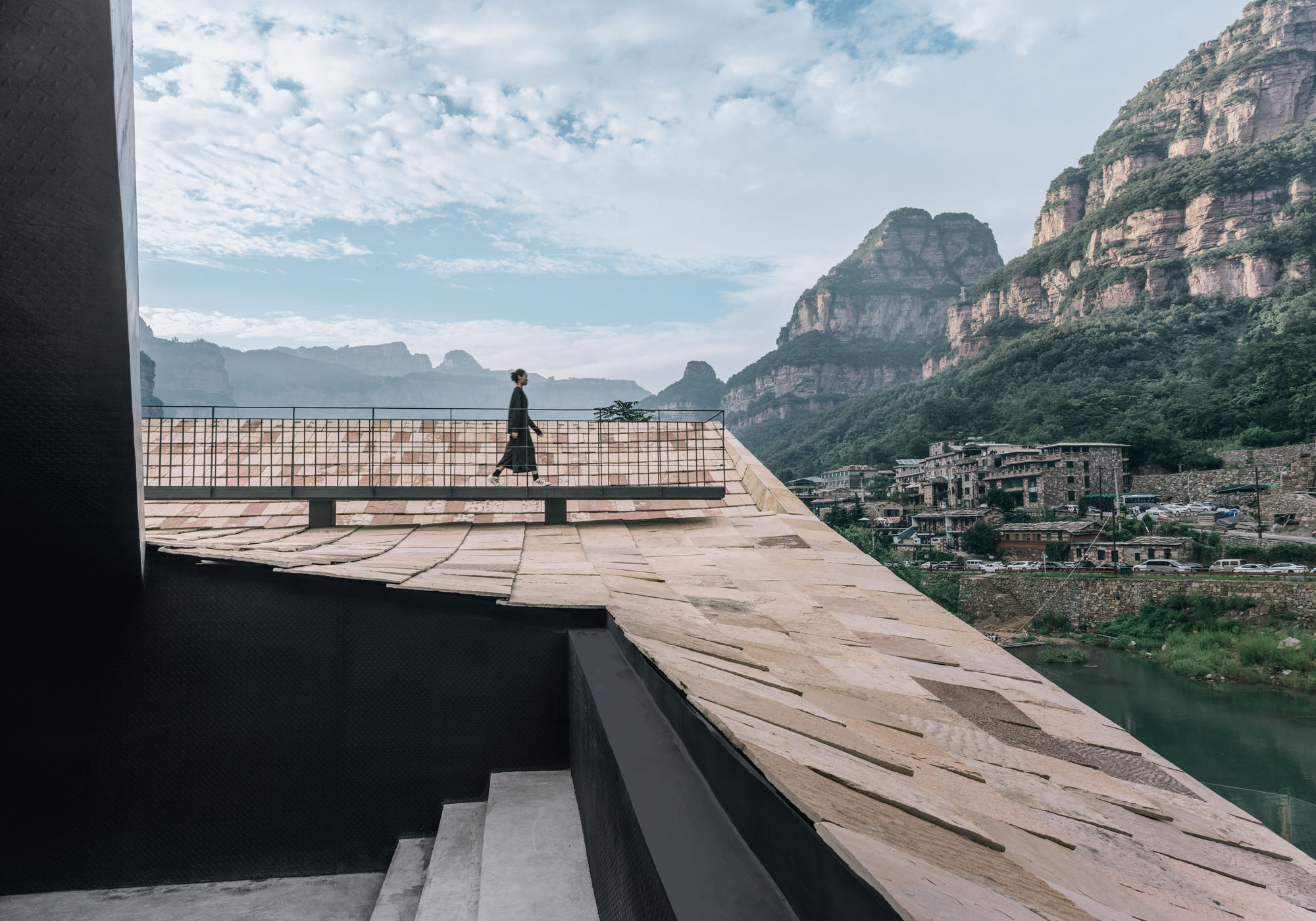
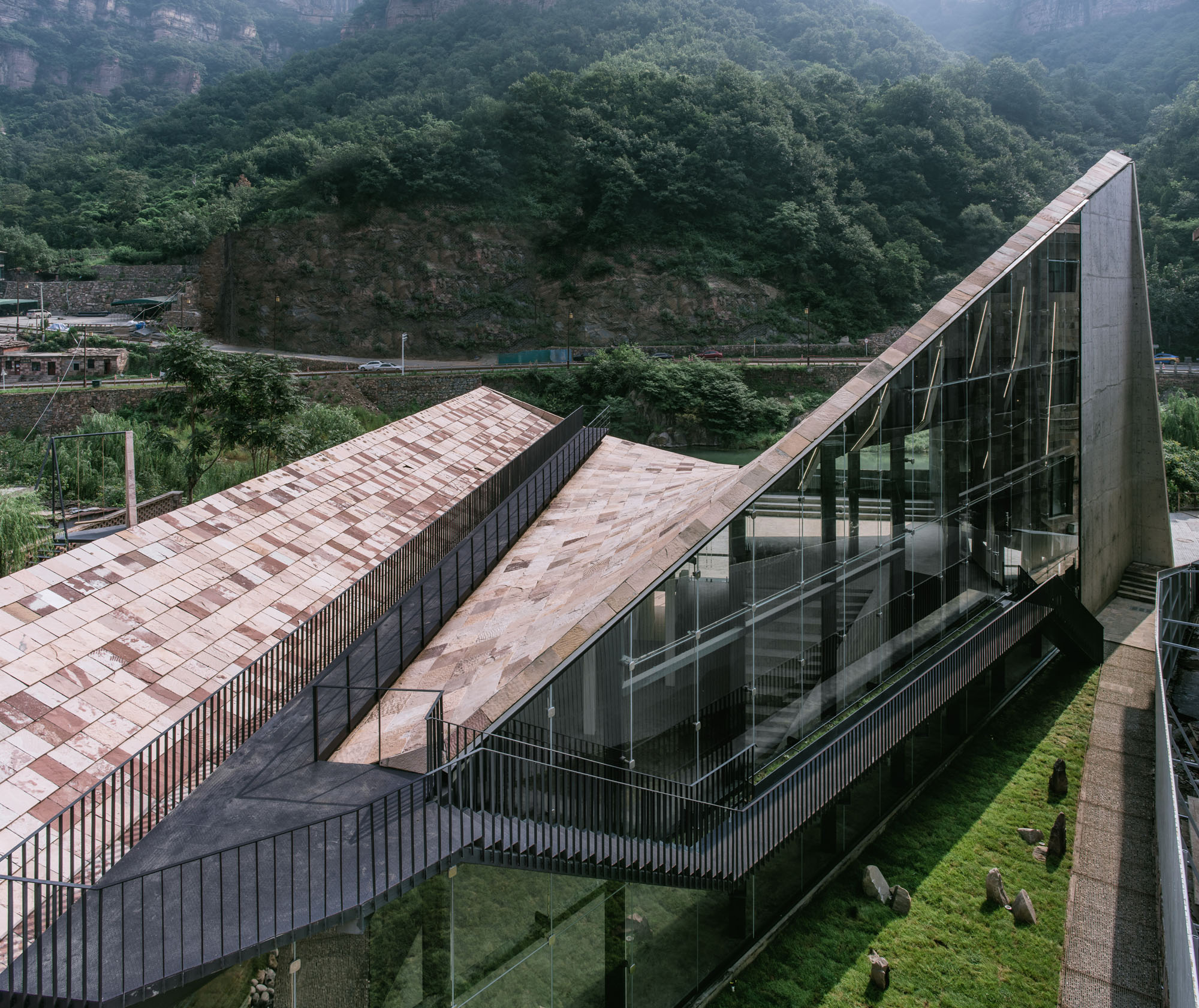
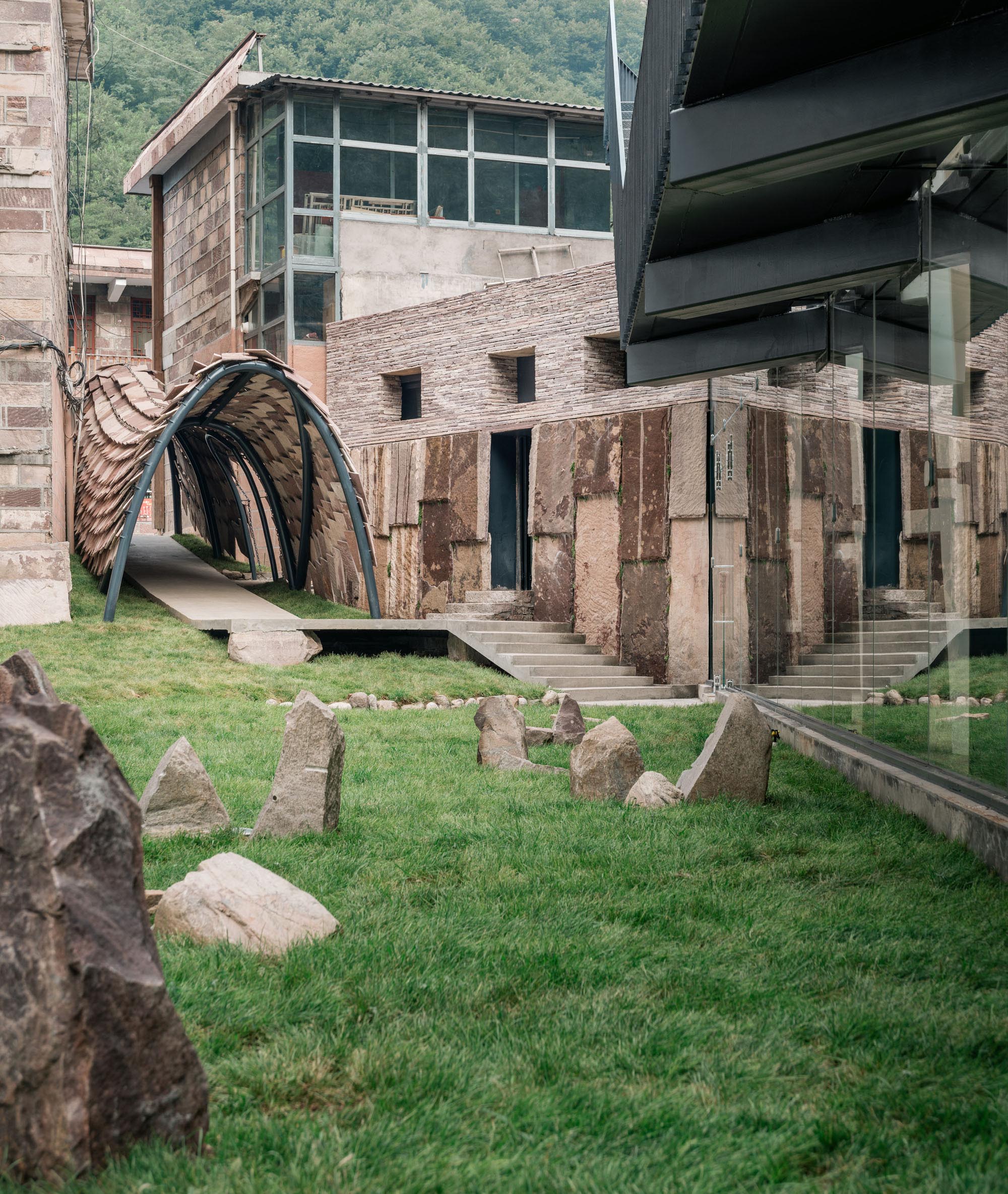
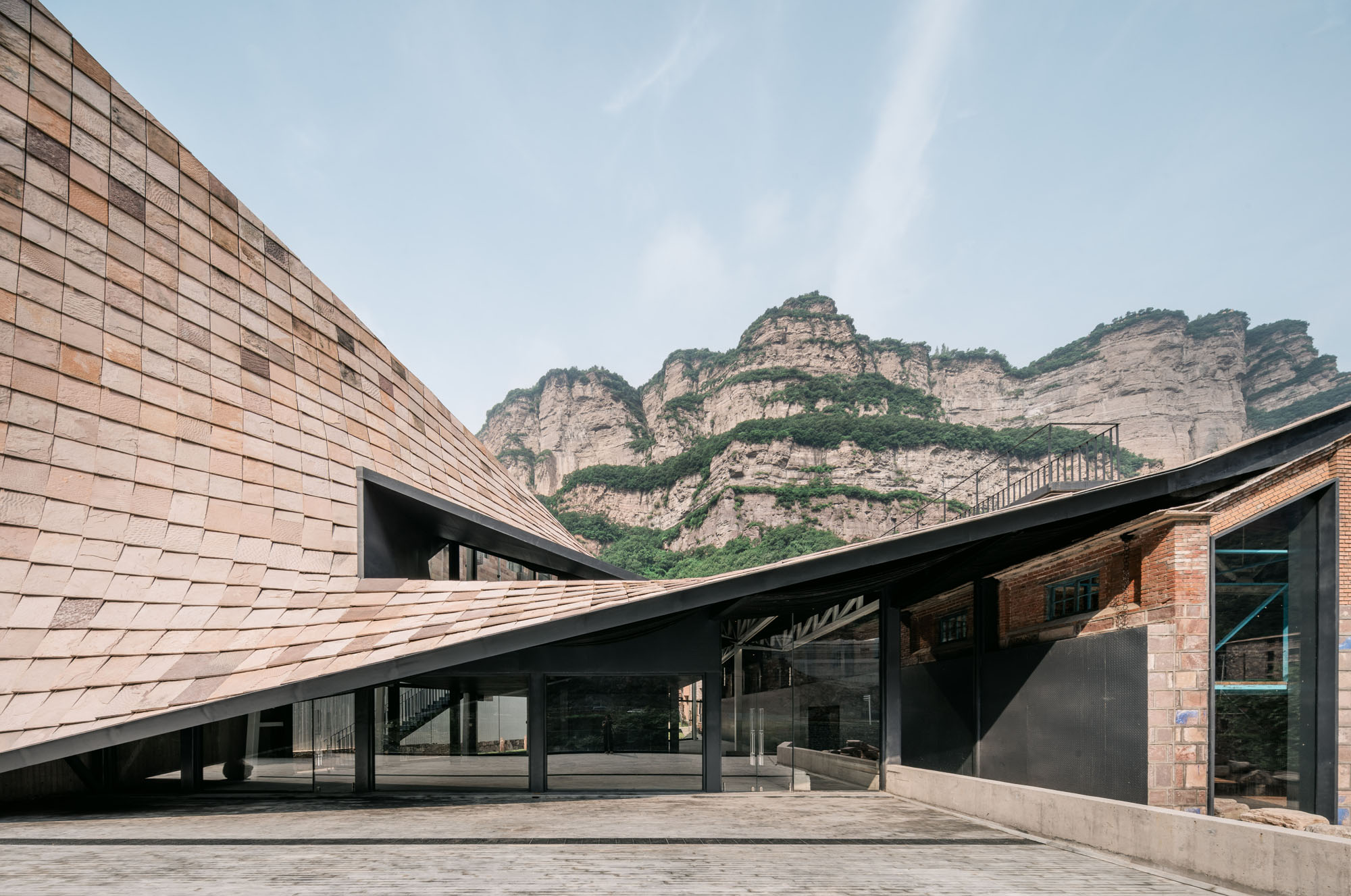
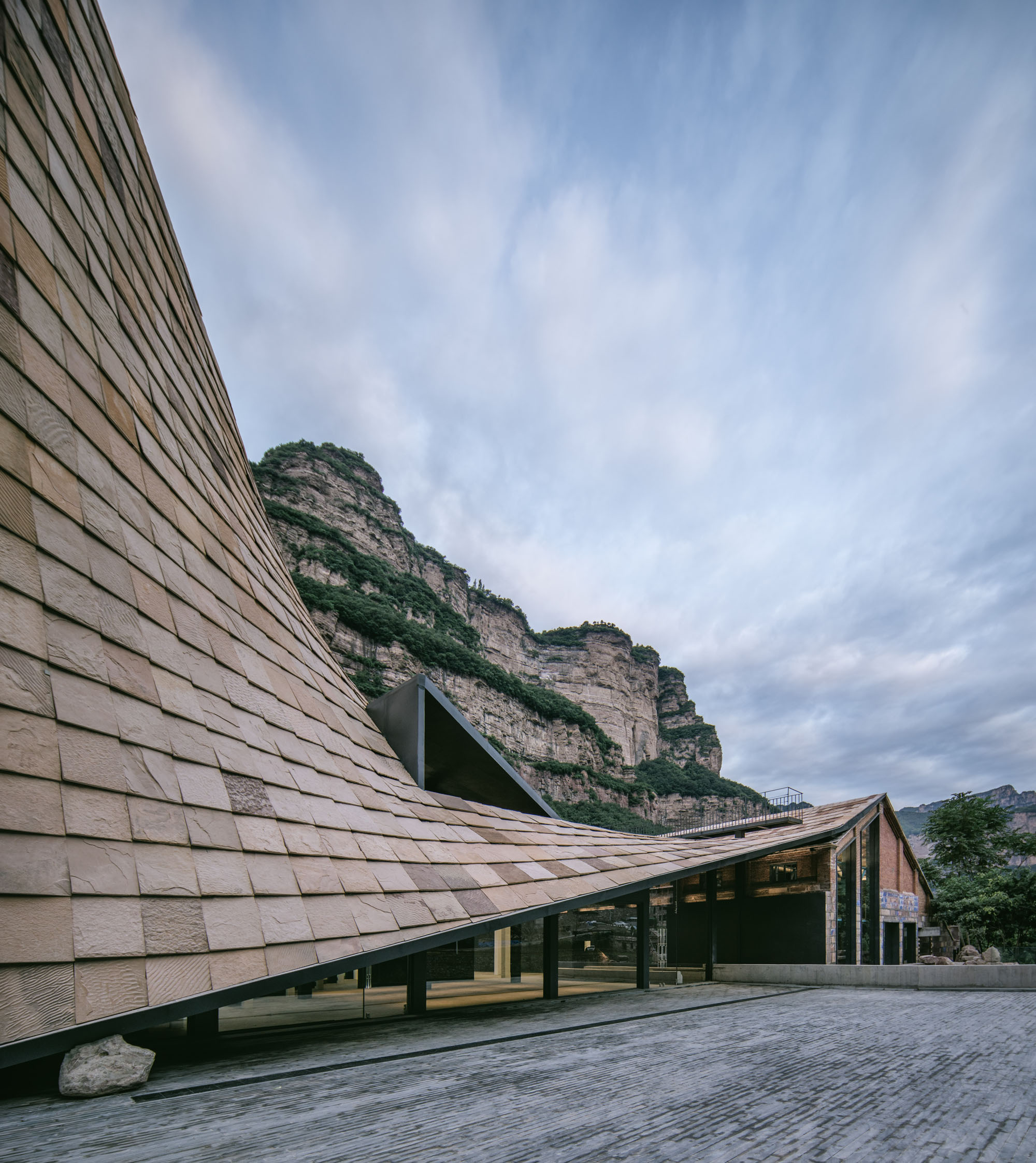
敷地南側の高層な建物と北側の旧倉庫群との間には大きな高低差がある。新築建物を小規模にすれば存在感が薄れ、大規模にすれば倉庫群との調和が取れない。そこで、美術館は南側の地形を創造的に活用し、三角形状の表面で旧倉庫を包み込むように一体化を図り、倉庫の軒線に沿って弧を描きながら地面へと延ばす手法を採用した。
建築のあり方とエネルギー消費:この美術館は、継承と発展の問題に対し、「ホワイトキューブ」でも「フェイク・アンティーク」でもない創造的な解答を示している。 西洋近代美術におけるホワイトキューブは、日常から切り離された「聖域」であるが、中国の農村では浮遊した抽象記号になりがちである。一方、傾斜屋根などの地域的記号を用いたフェイク・アンティークな建築は、複雑な都市テクスチャの中ではステレオタイプな演出に還元されてしまう。だからこそ、私たちは異なる方法を試みたのである。
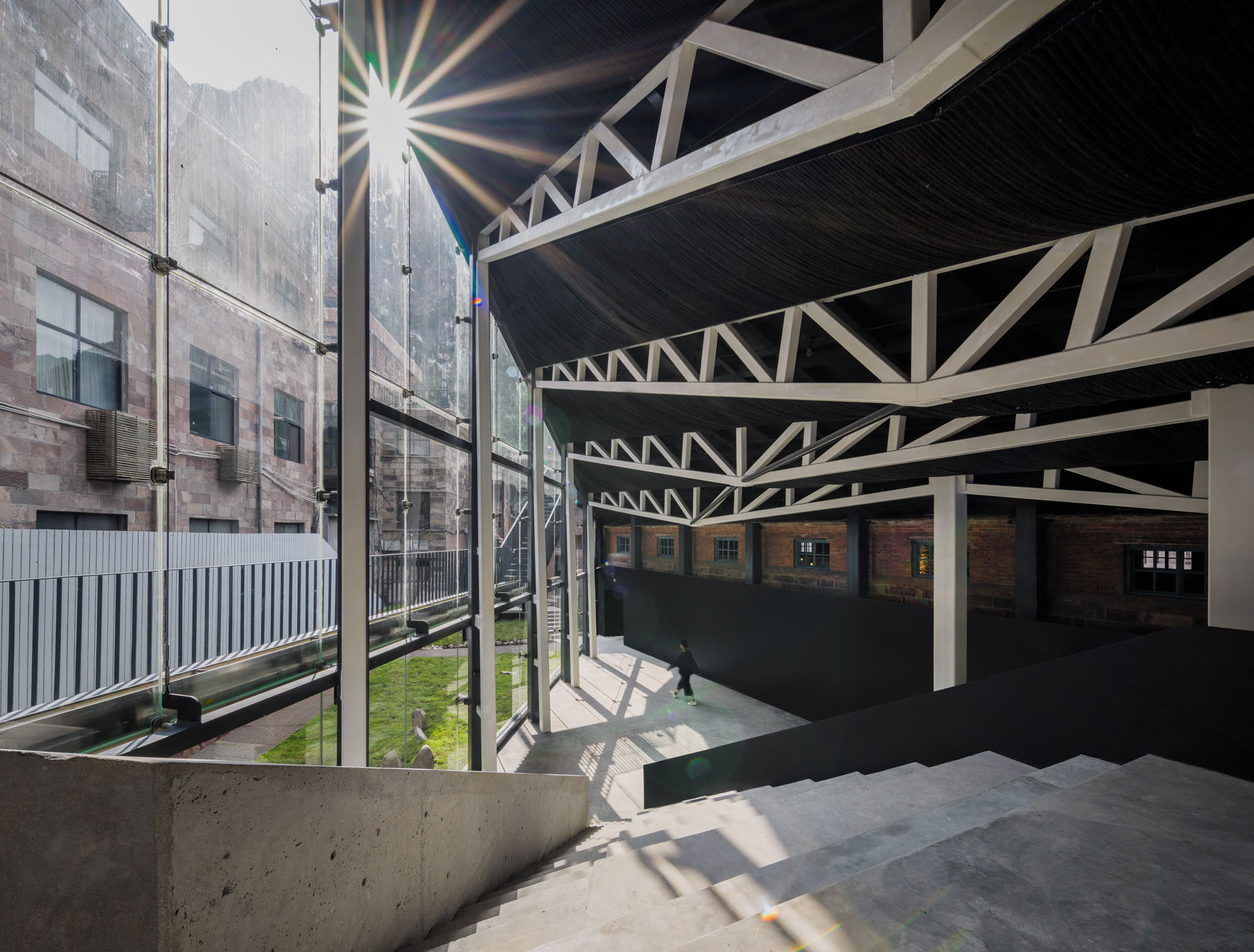
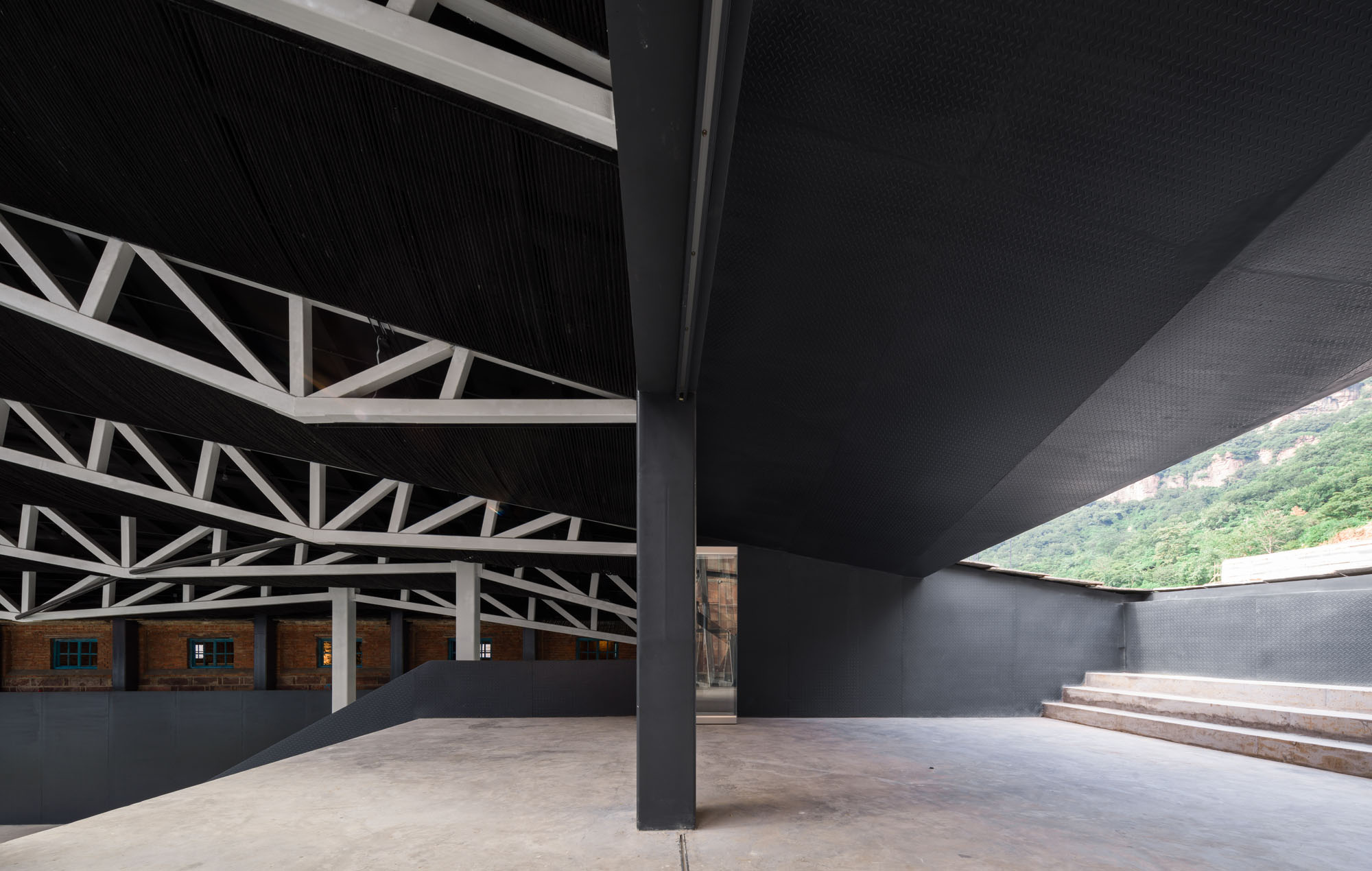
低エネルギー消費:大型屋根で日射を遮り、北側から安定した採光を確保。自然採光と東西の通風を最大限活用し、エネルギー消費削減と室内空気質の向上を実現した。
地域資材の活用と廃棄物削減:敷地斜面の掘削で発生した大量の石材は搬出せず、現場の盛土や緑化に再利用し、環境負荷を低減した。
©︎ Zhu Yumeng
©︎ Coppak Studio
©︎ Zhu Yumeng
©︎ Zhu Yumeng
人と生活の持続可能性:開かれた「文化的居間」
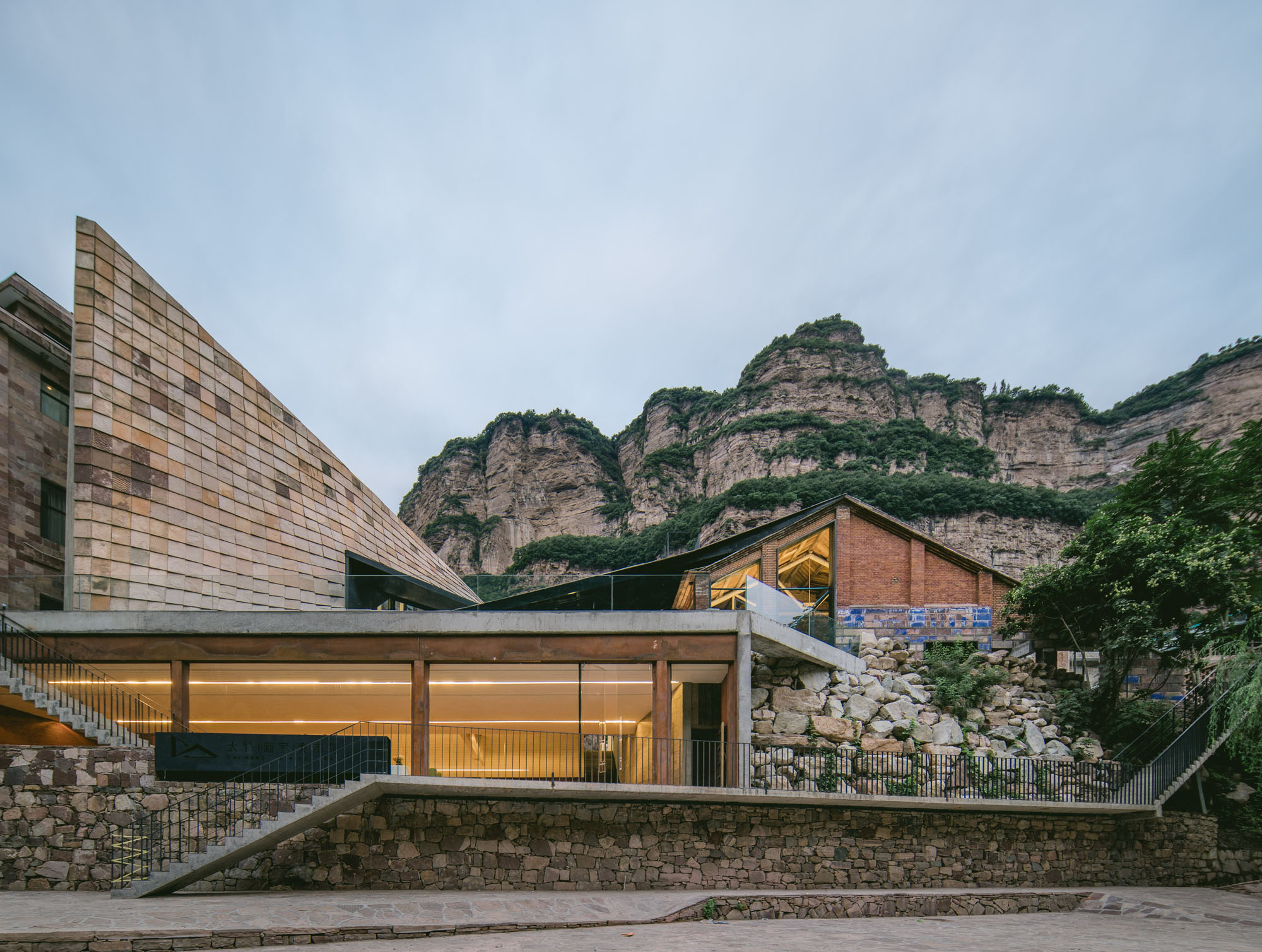
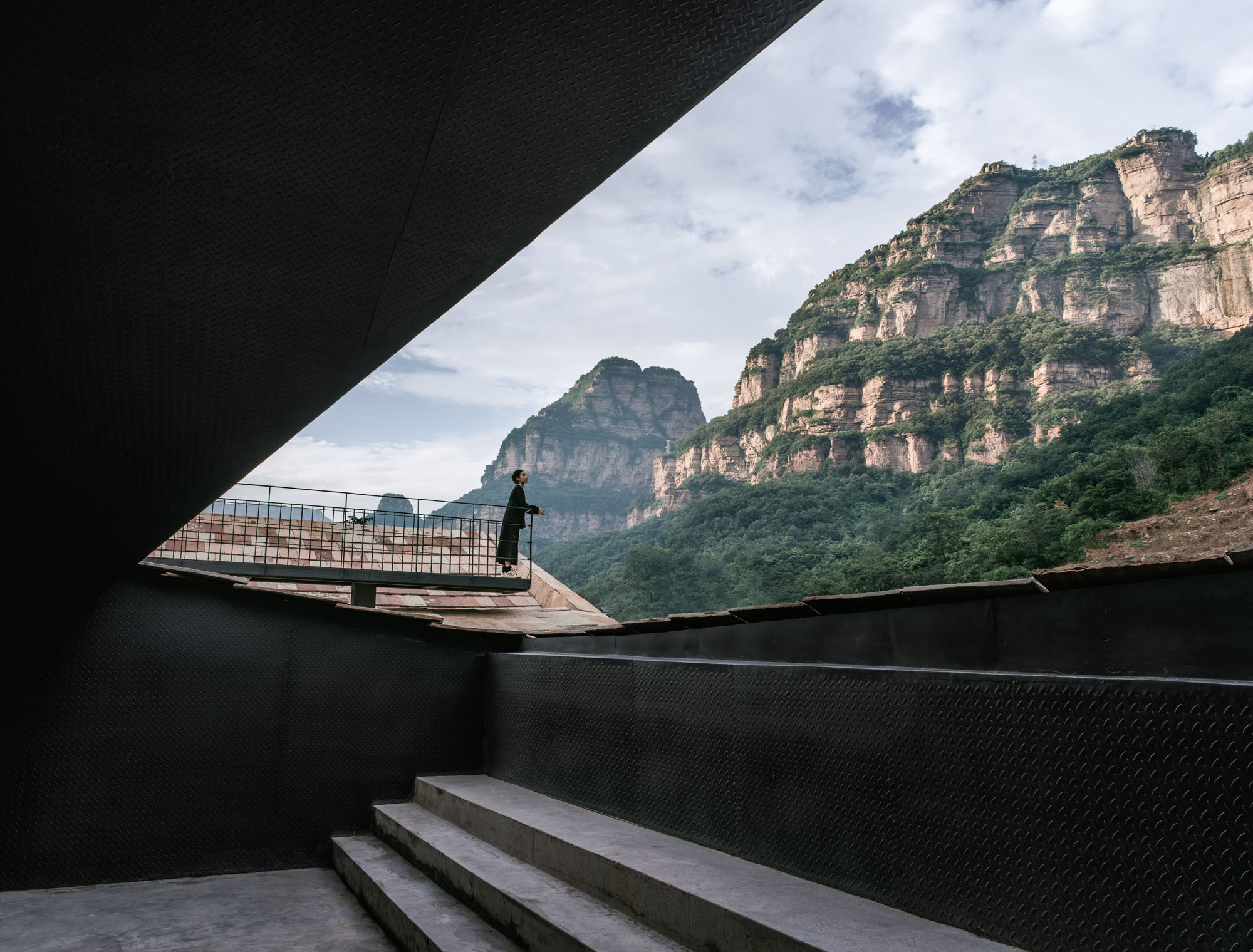
本施設は周辺コミュニティに公共空間を提供する。美術館には複数の入口と公共プラットフォームが設置され、通りや水辺から容易にアクセス可能である。屋内が閉鎖されていても、軒下での絵画制作、ダンス、商業利用などにプラットフォームを利用できる。
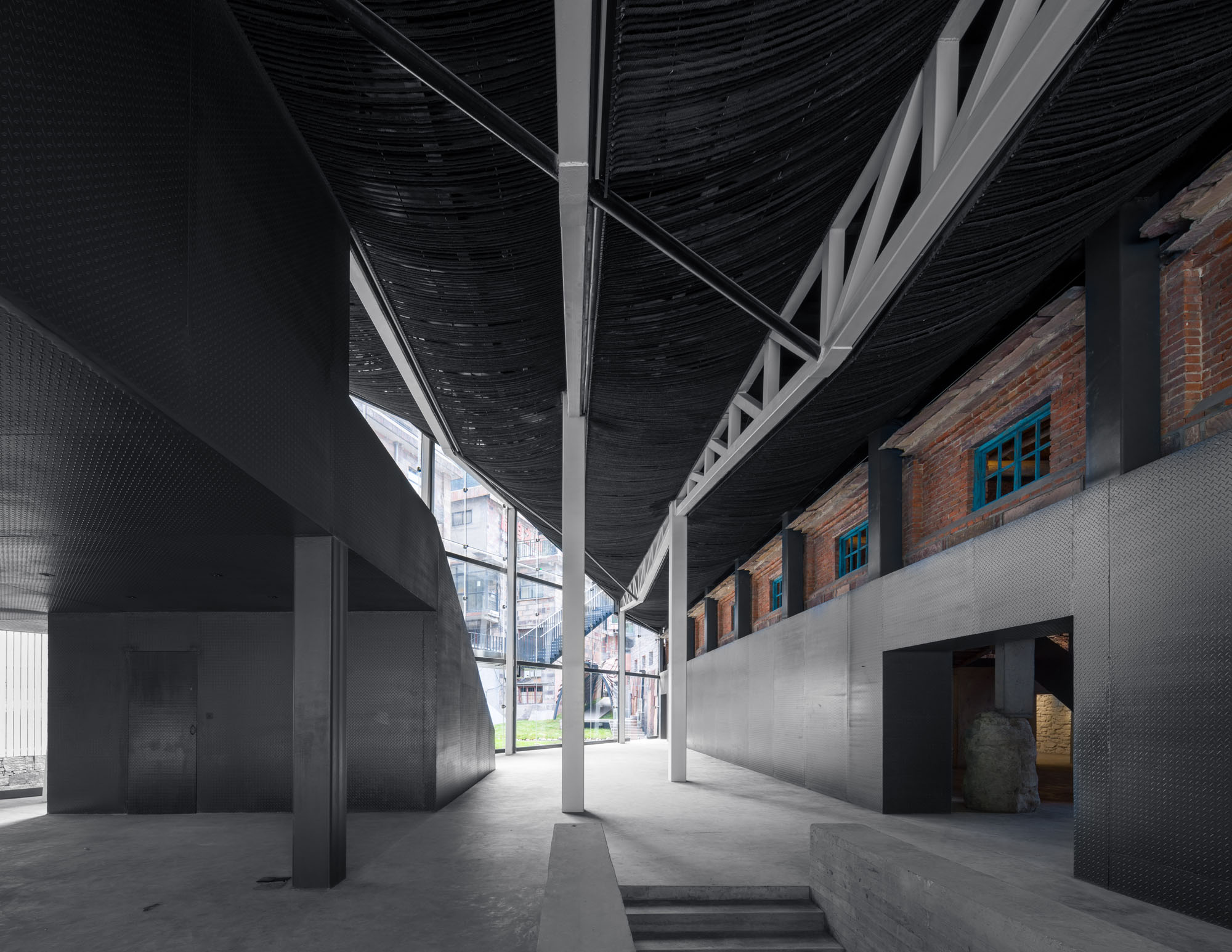
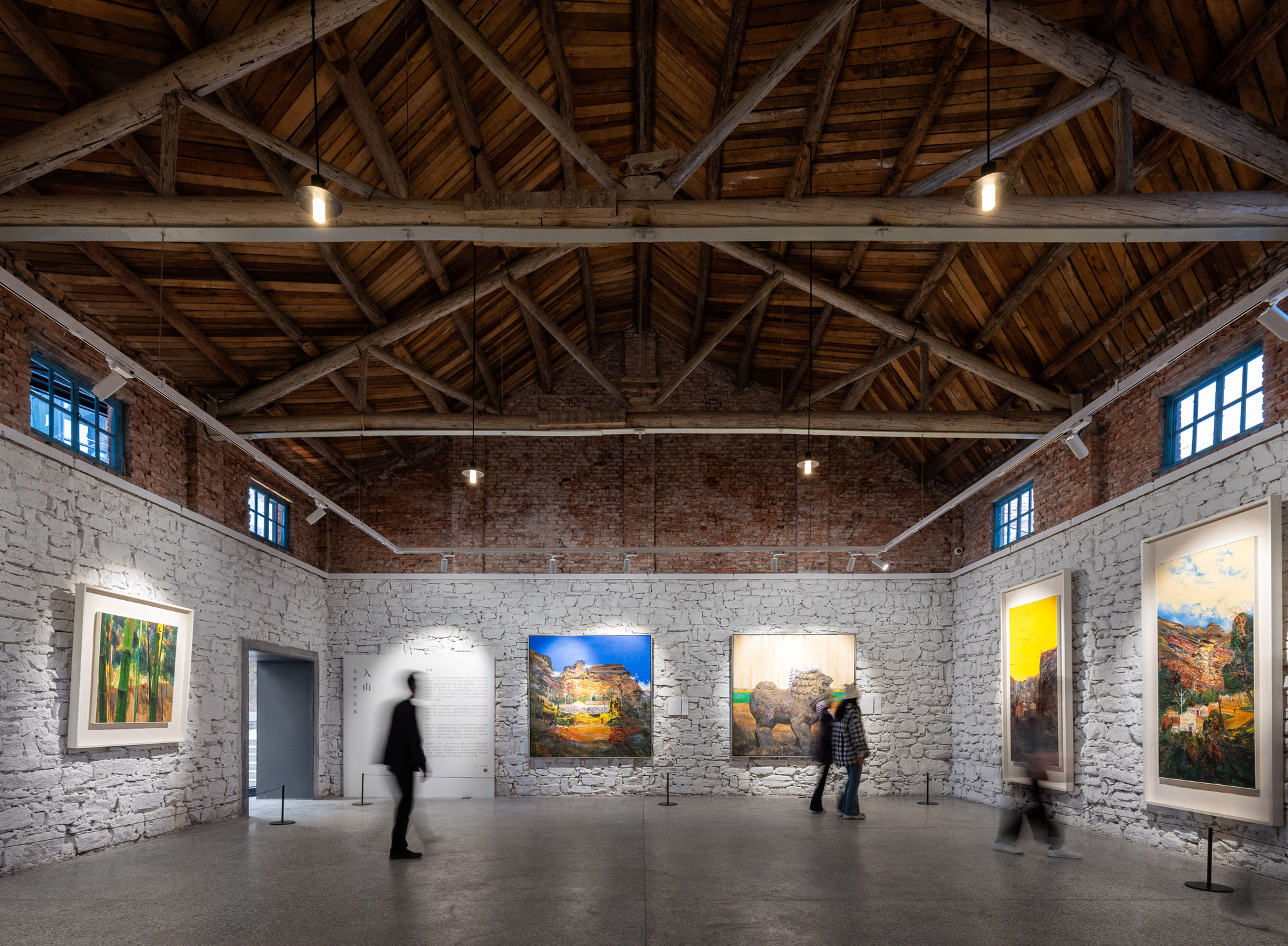
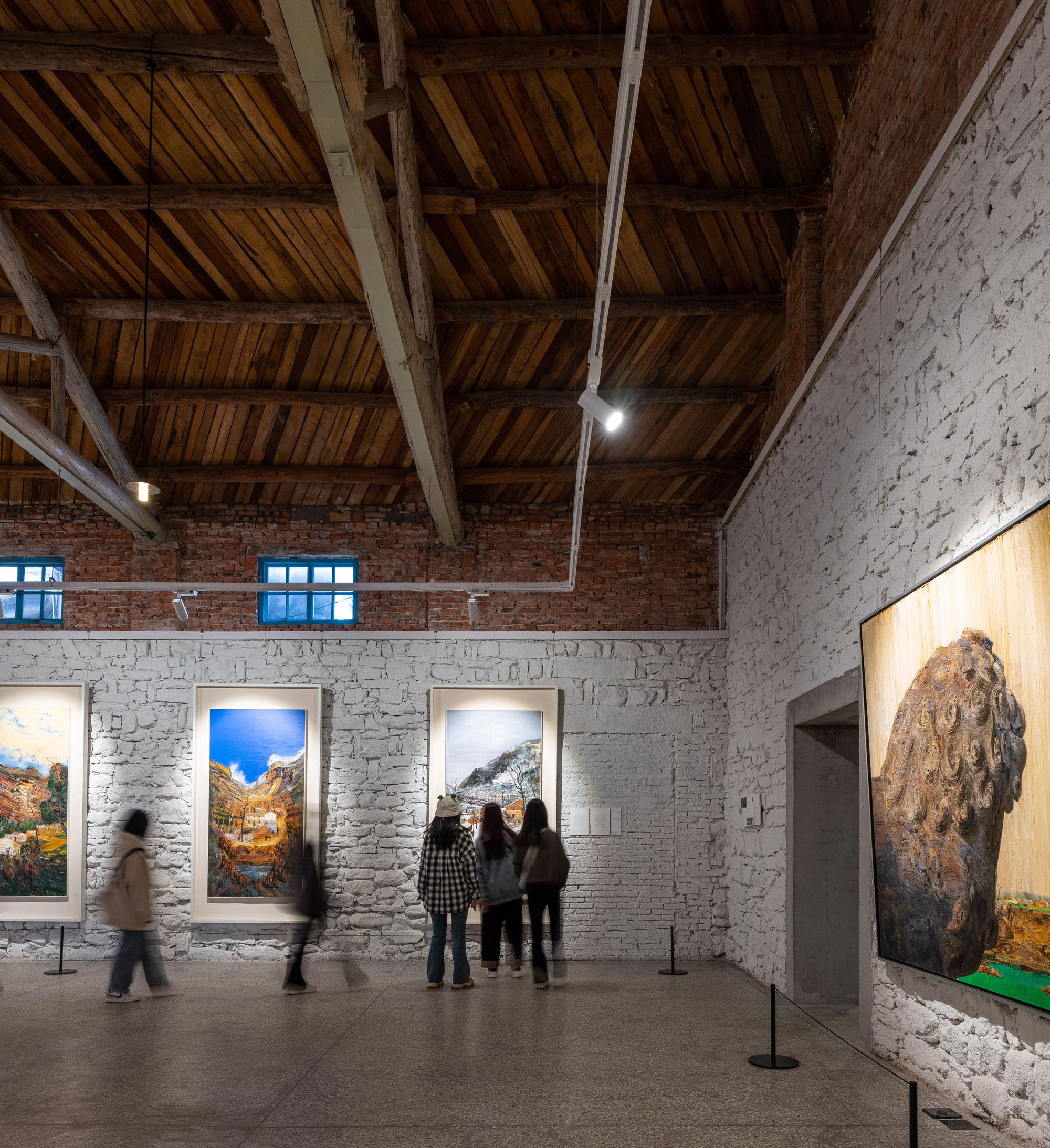
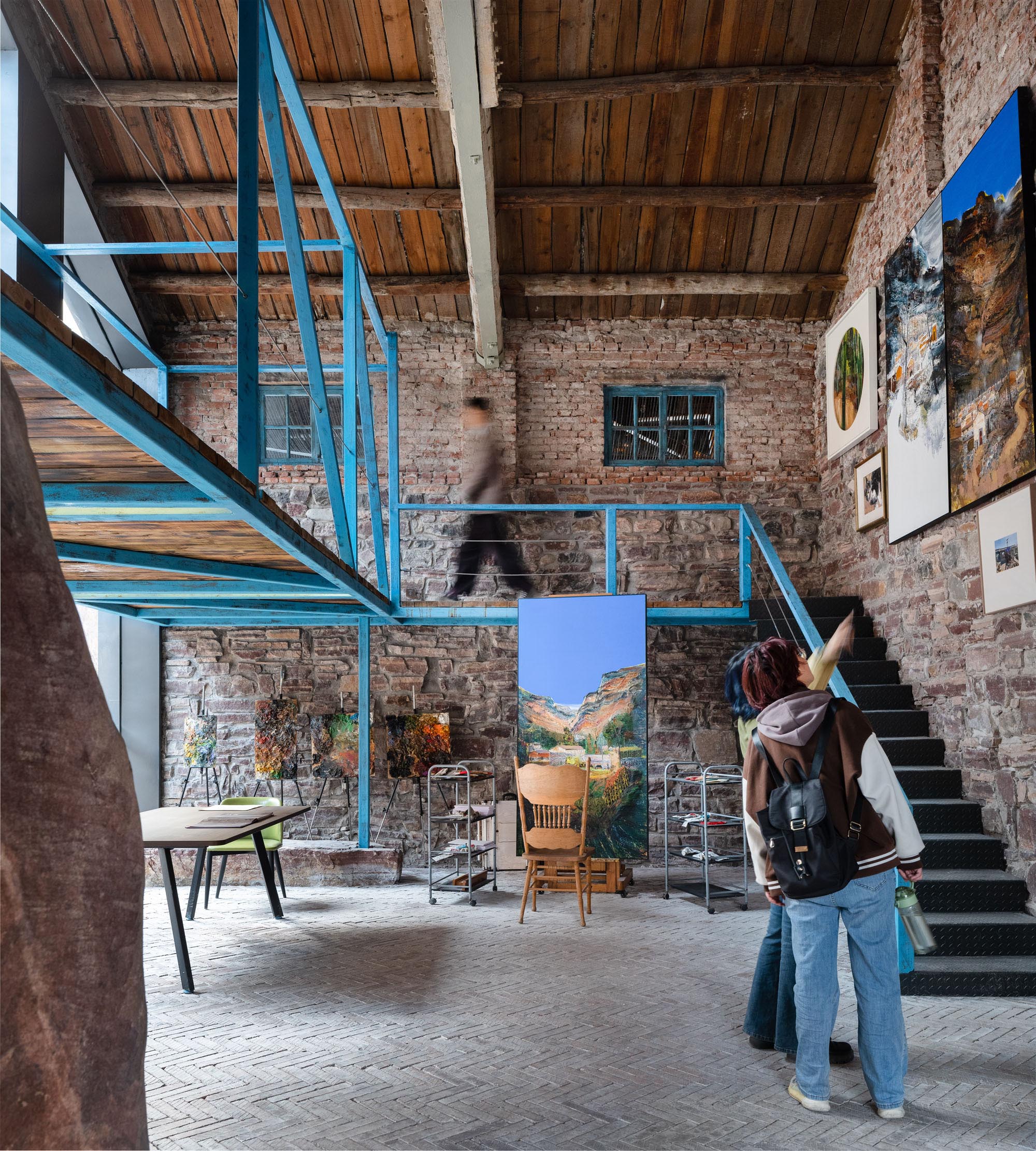
内部空間はフレキシビリティが高く、展示ギャラリーのような汎用照明設計により、美術展から手工芸品・農産物展示、演劇、会議、単なる休憩所まで幅広く対応する。倉庫展示場には画家のアトリエも配置し、制作現場を再現することで芸術を公共生活の一部としている。
建設への参加と「身近な異質性」:地域住民は建設プロセスに積極的に参加し、その後の維持管理にも関与している。伝統的要素と現代技術の融合は、地元に雇用機会をもたらした。 素朴で田舎風の素材を露出させることで、石と共に生きる住民には「親しみと異質さ」を感じさせ、スケッチ愛好家には自由な感覚を与える。画家・孟新宇が提唱する牧歌的な生活様式を通じ、芸術家と地域の人々が自然に会話を交わすような日常の美的体験を創造している。
©︎ Coppak Studio
©︎ Zhu Yumeng
©︎ Zhu Yumeng
自然との持続性:山水画の精神
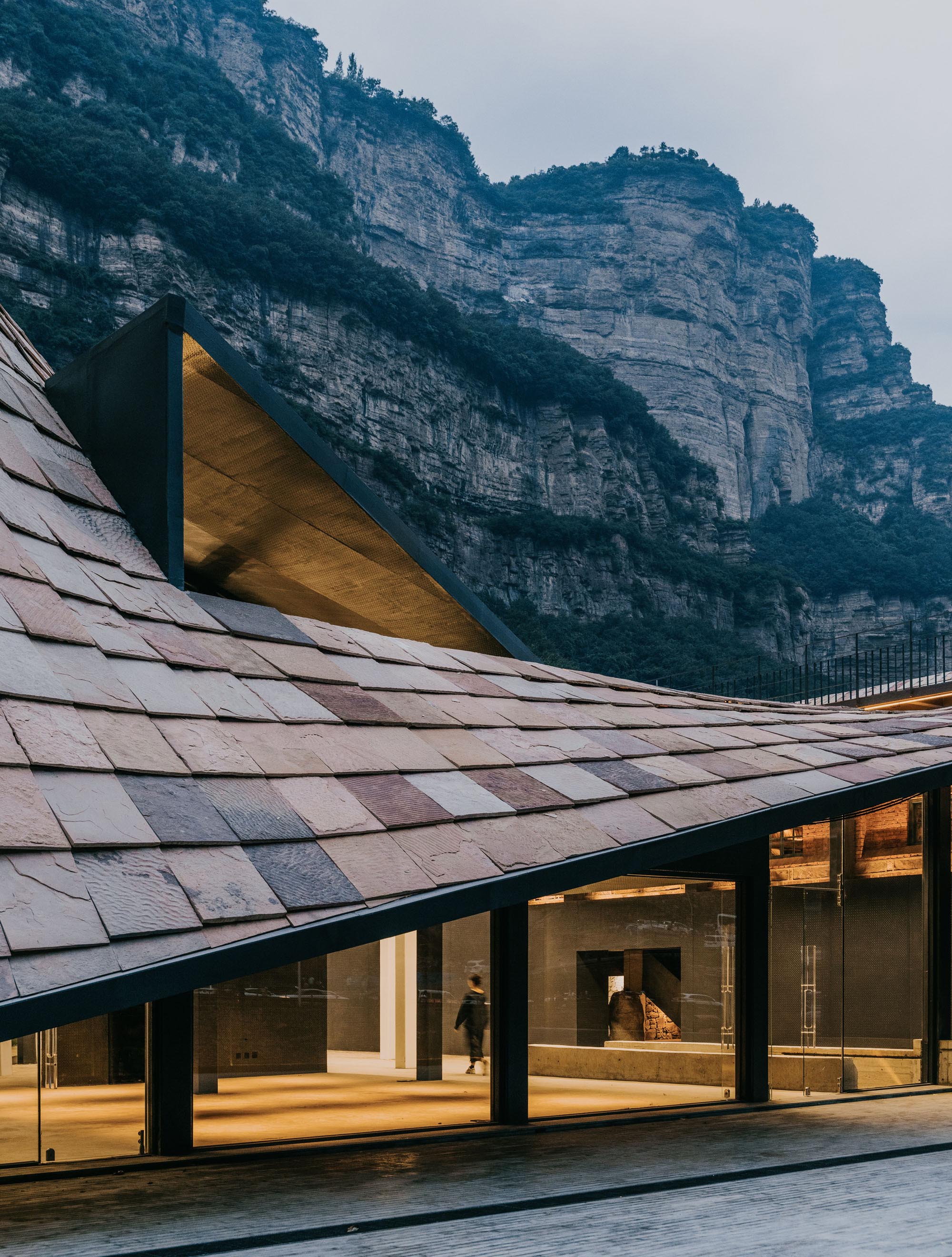
建物は周囲の自然環境に溶け込み、調和した一体となる。川沿いのインターフェースはデザインの焦点であり、垂直方向に見れば、四角い家屋の人工的な秩序と、背後の山の自然な秩序が対立している。美術館は、迫りくる古山と山麓の人工的な町を調和させる媒介となるべきである。
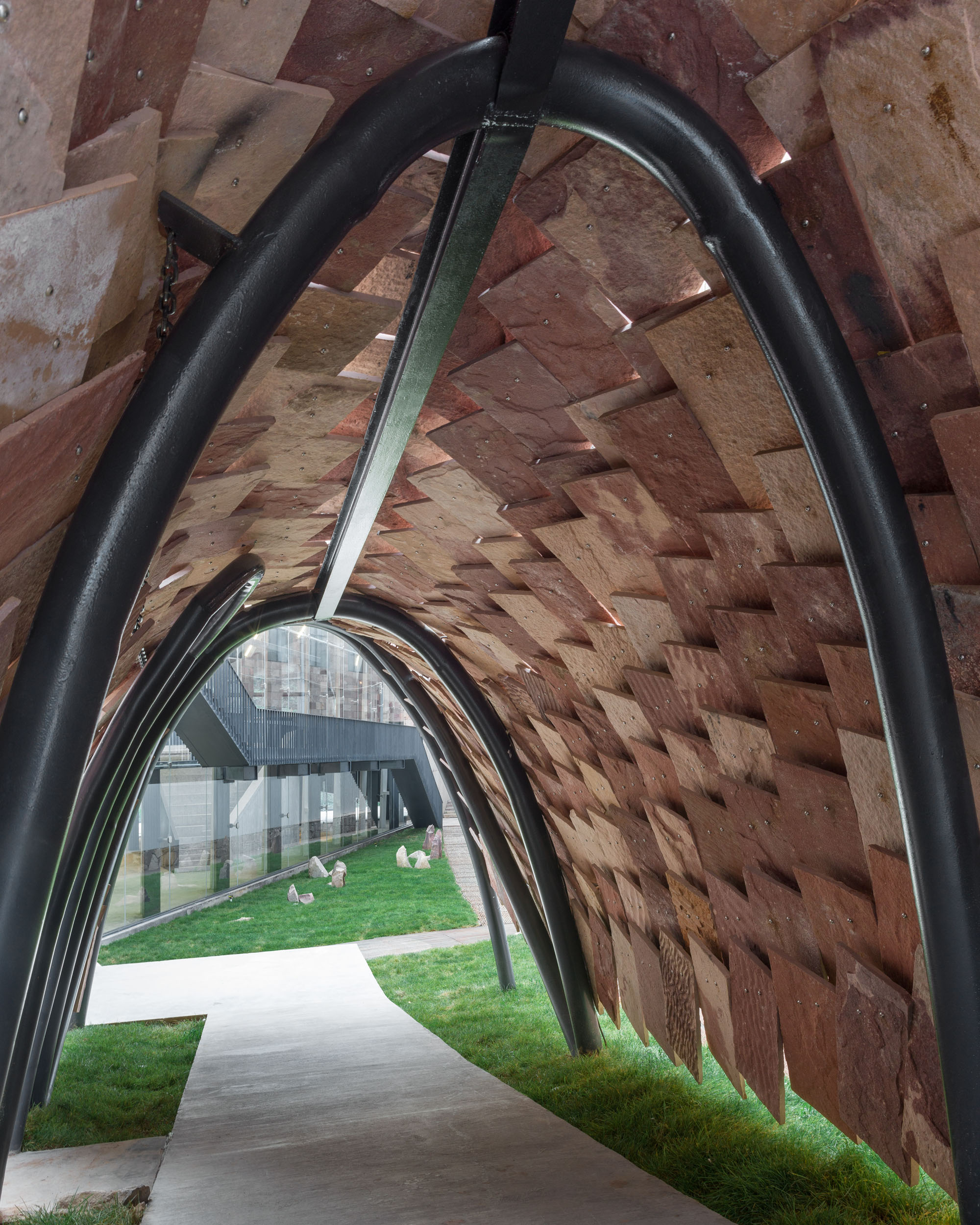
北宋の范寛『渓山行旅図』がその答えを示唆する。高く聳える山々と、密林を抜ける小道、渓流が形成する複雑な立体感。私たちは美術館のインターフェースを「多孔質」かつ「傾斜した」近山の形態と定義し、迂回する小道によって蒼渓と遠山をつなぎ、層を成す遠近感を生み出した。
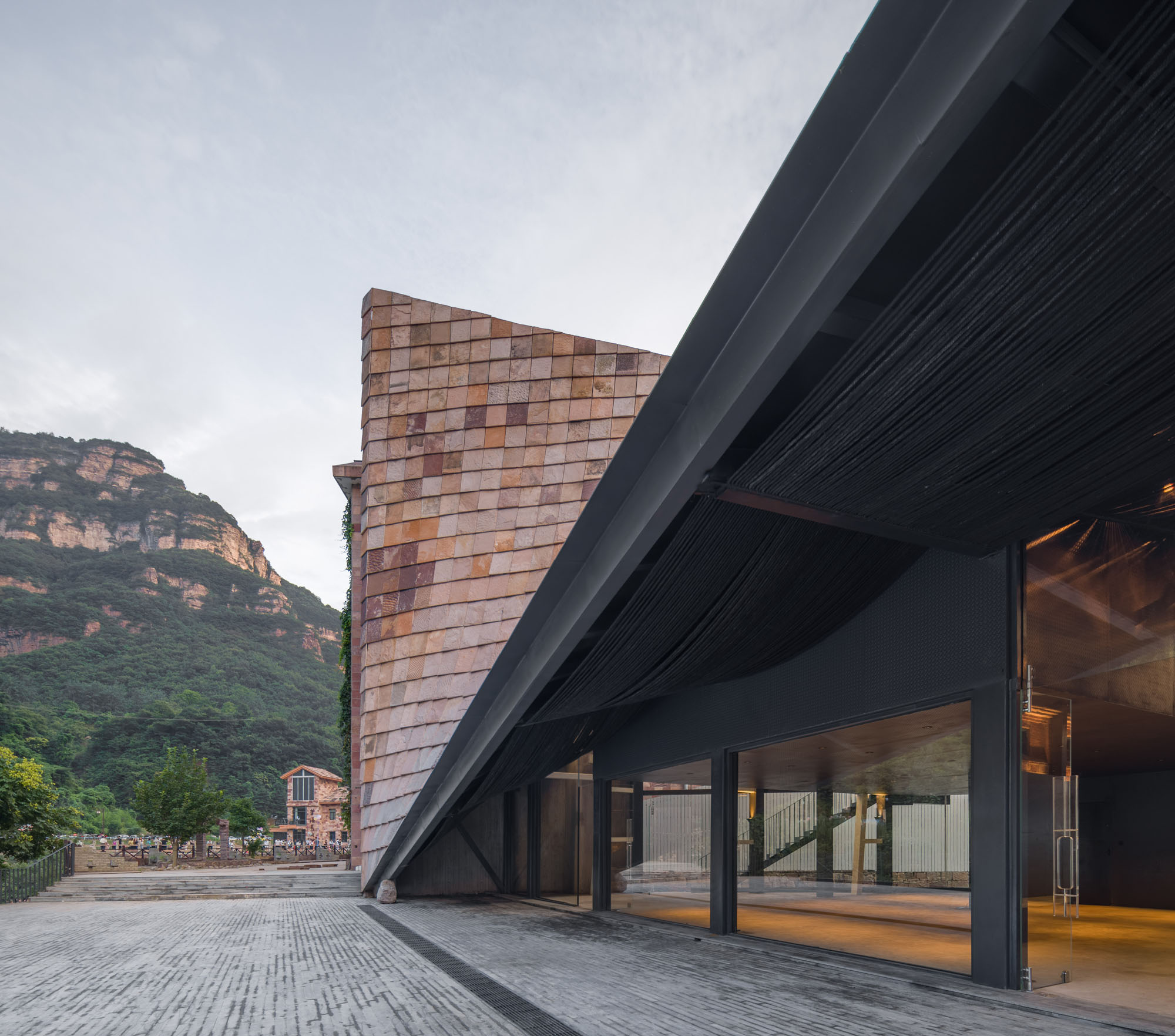
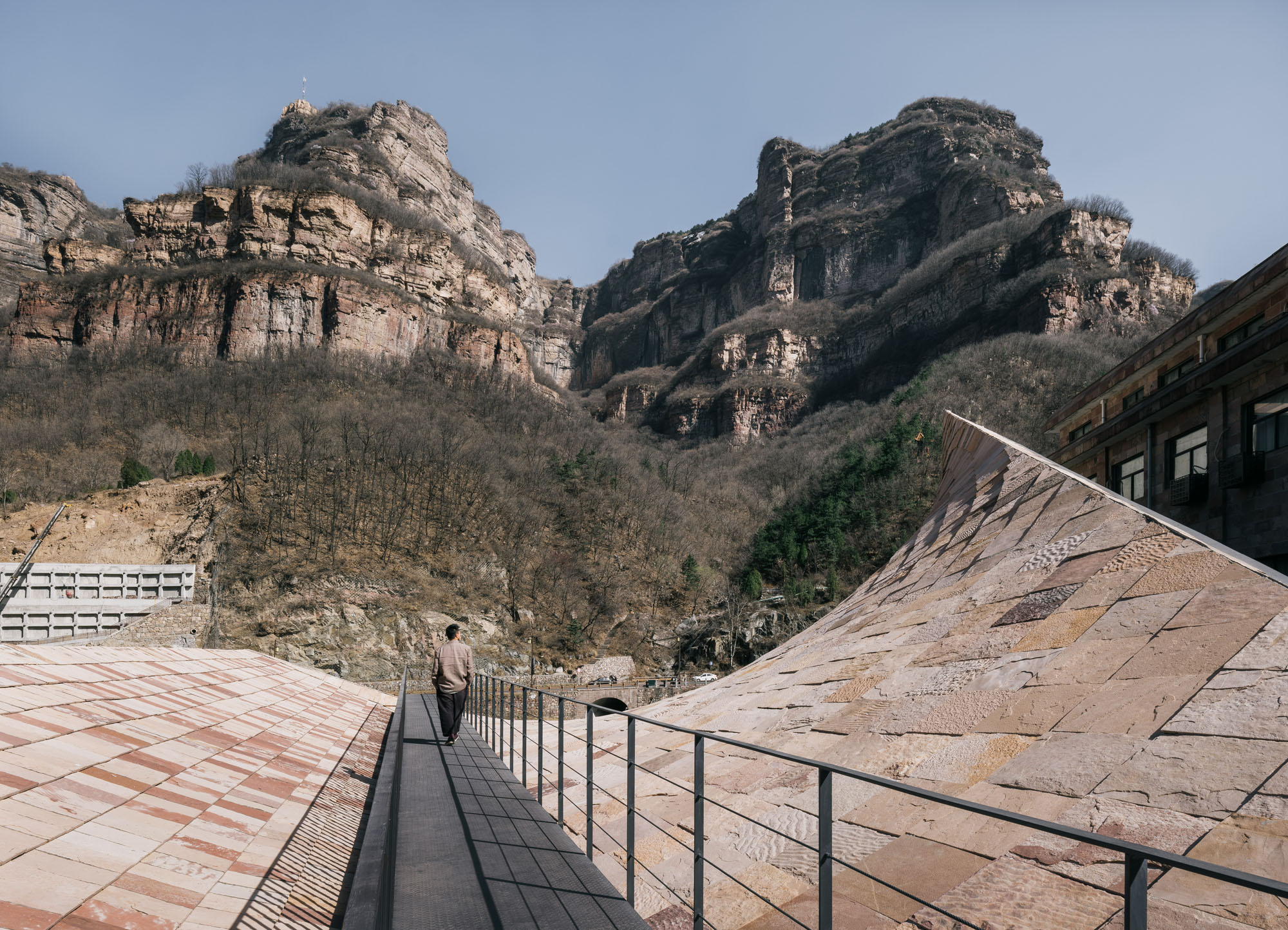
素材としての石:自然で再生可能な建材である石材を選択し、地元産の石や古石板(40%)を回収再利用した。スレートや石材は単なる建材ではなく展示媒体でもある。実験的な石造工法は、地域の伝統継承と低コスト建設の要請に基づいている。 商品経済の影響で、現在の石湾鎮では石造技術が放棄されがちだが、我々は効率的な鉄骨構造と伝統的な石工技術を融合させた。これは文化観光ブランド構築のための重要な試みである。
©︎ Coppak Studio
©︎ Zhu Yumeng
4. 具体的な工法とディテール
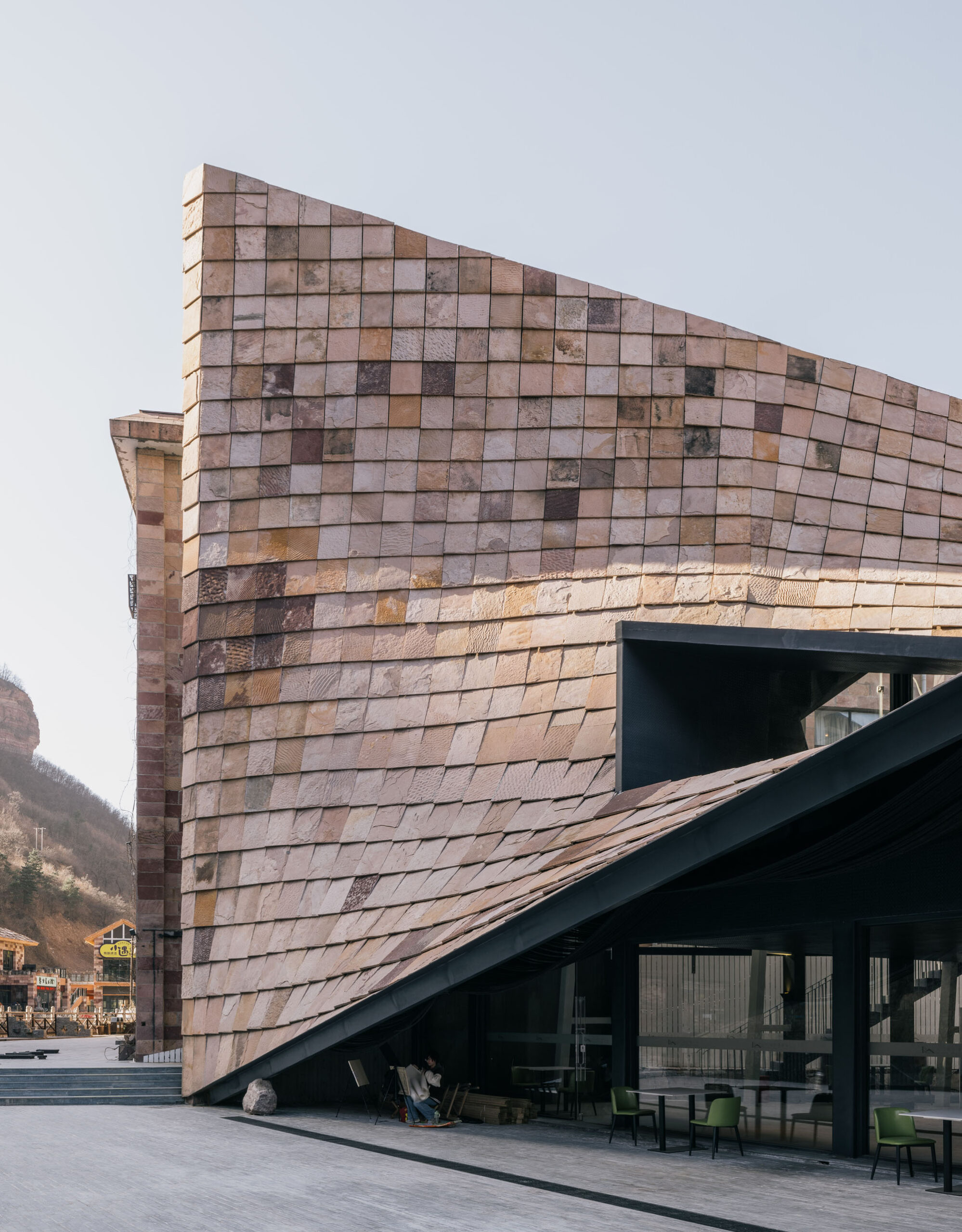
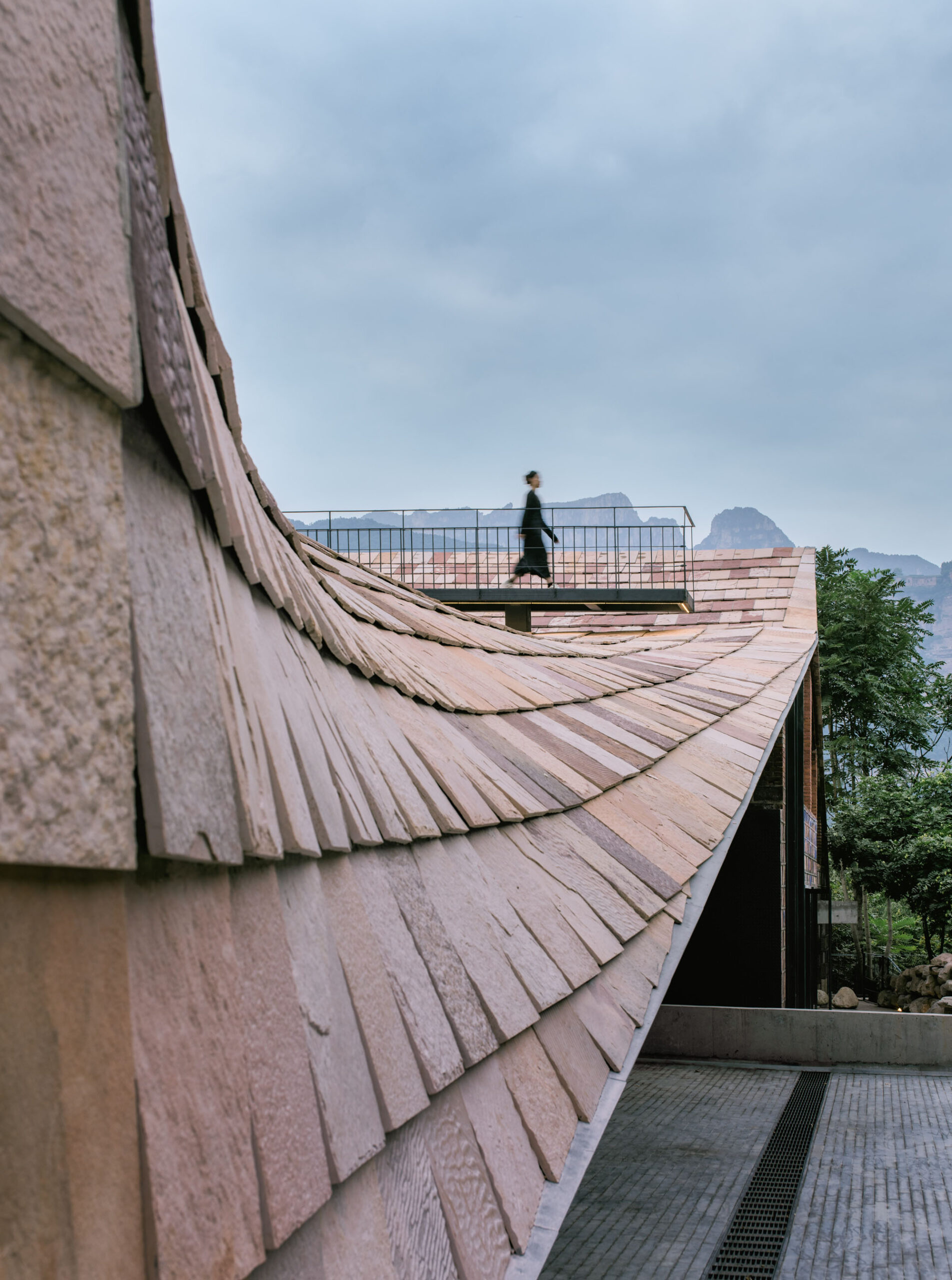
- スレート屋根:大量の古いスレート(赤砂スレート)を回収し、厚さ4cm、約60×80cmの石板1,600枚(総重量70トン)を新技術で屋根に設置することで再利用した。南東隅から敷設を開始し、西側軒先に集約しており、現地の熟練職人の協力により鉄骨構造を簡素化し、各トラスを2点で接続することで施工性と屋根の曲率を両立させた。
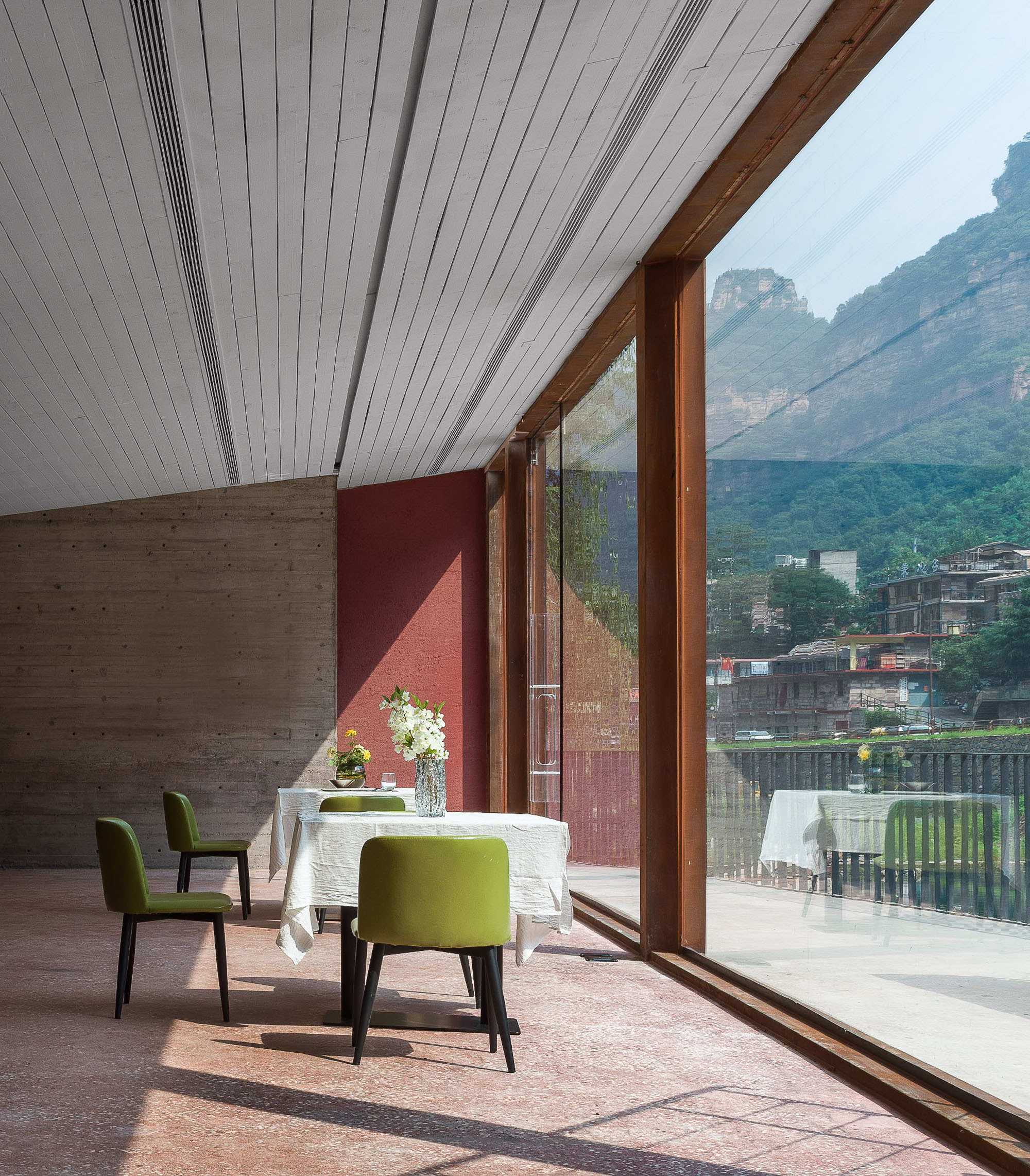
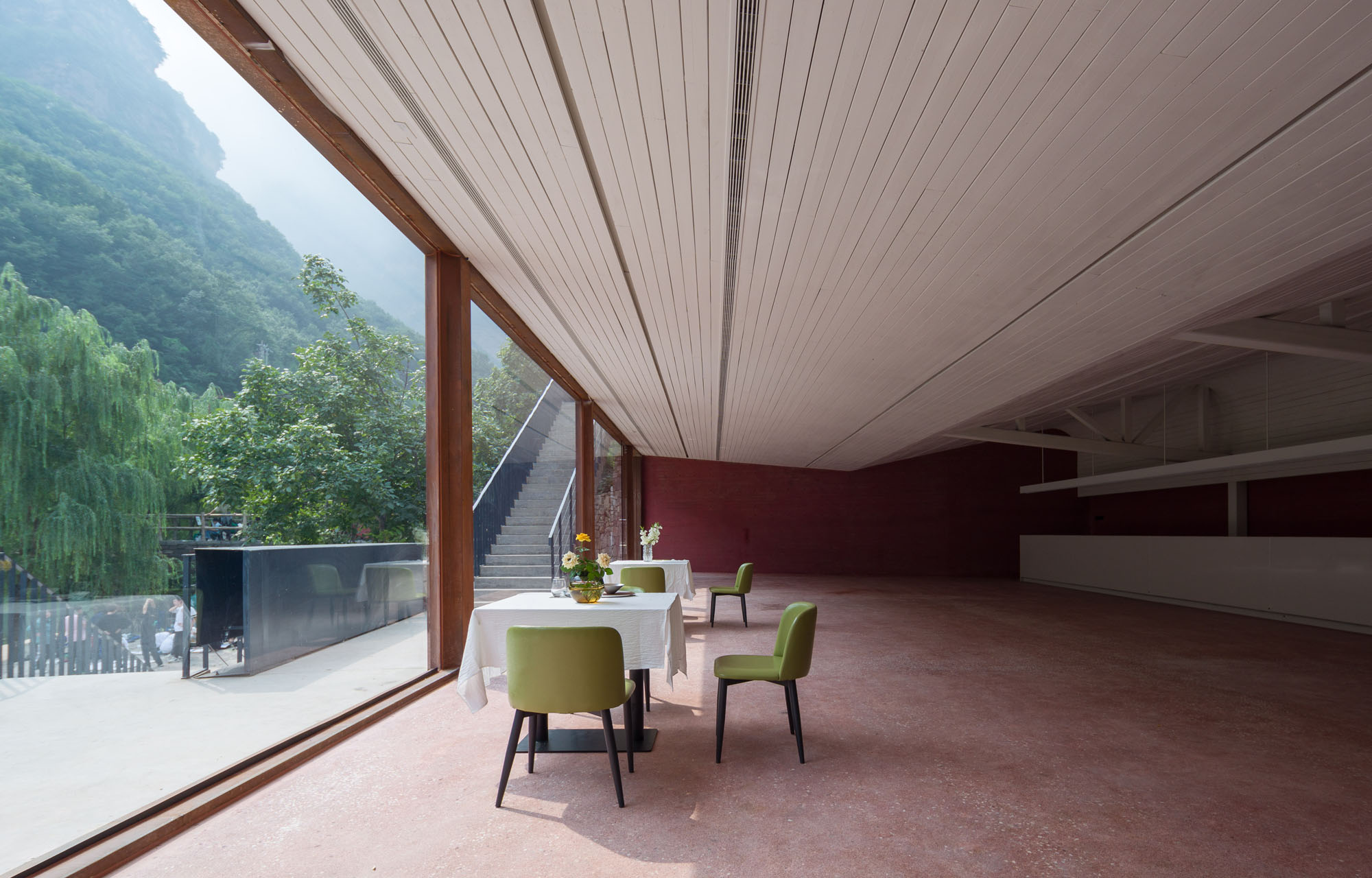
- レストランの掘削:美術館下の丘陵を掘削してレストランとし、現れた巨石や地質に合わせてコンクリート擁壁の形状を調整した。床のテラゾーにも地元の赤砂岩を骨材として使用している。
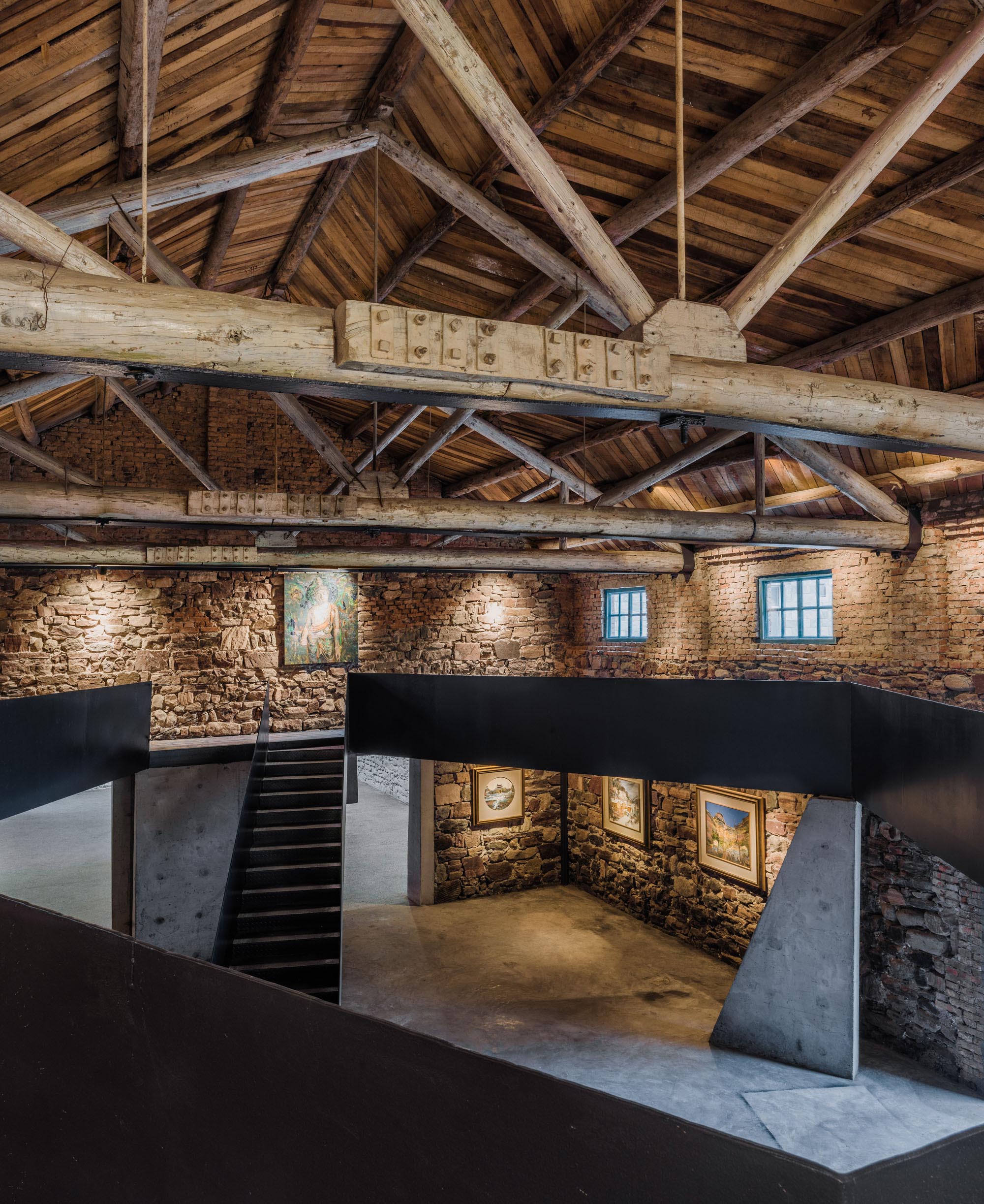
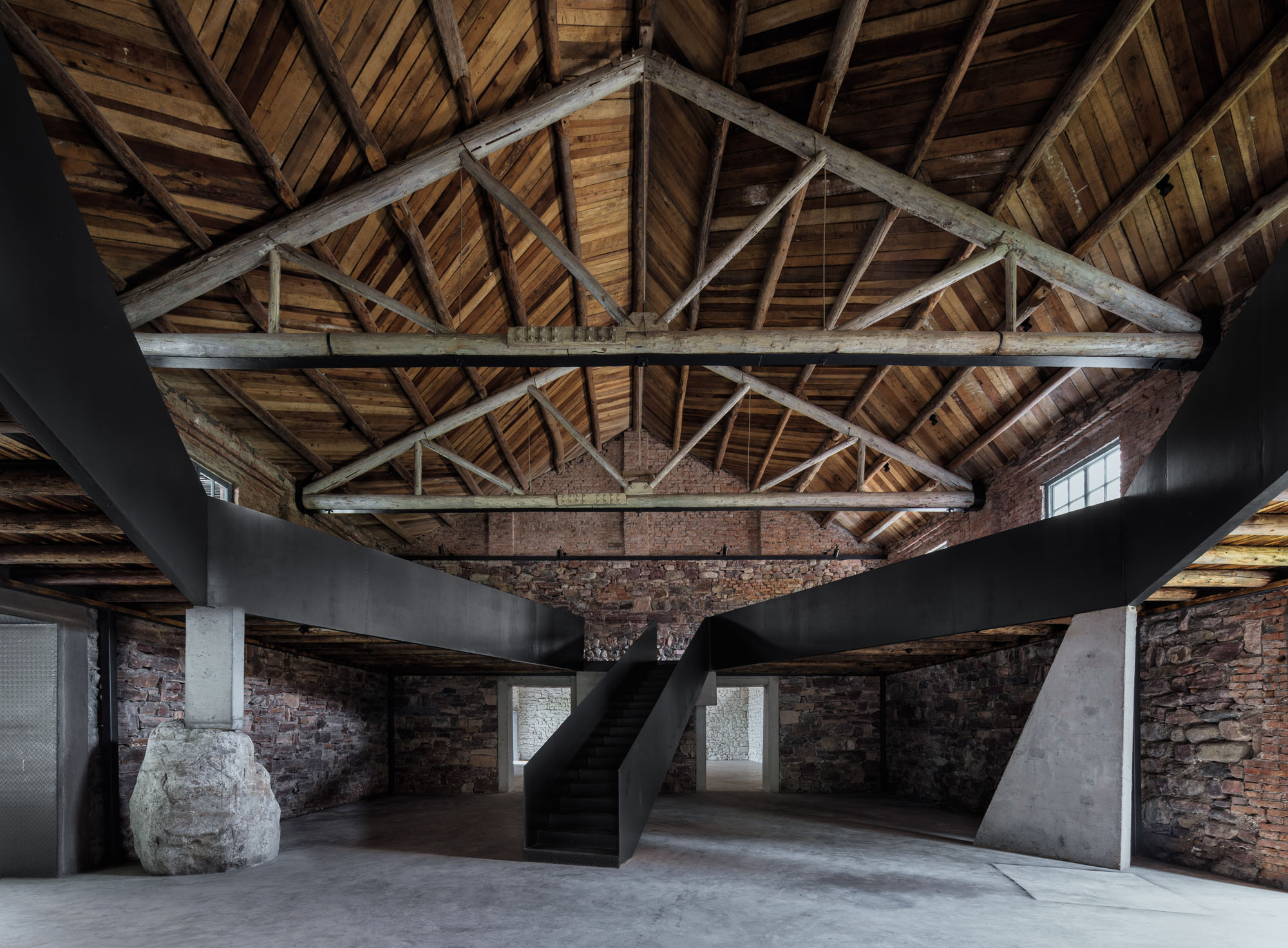
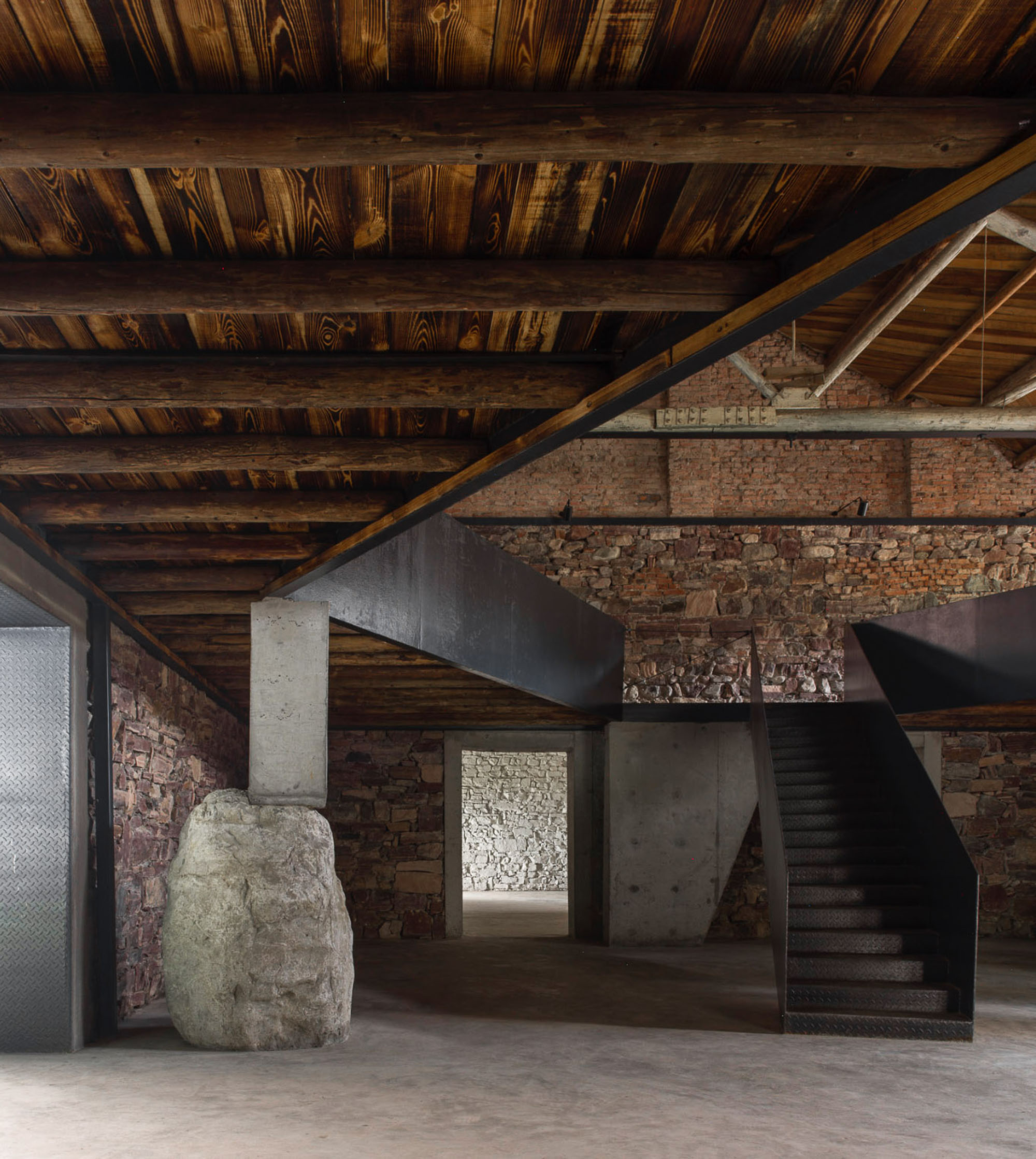
- 石材の循環:掘削で発生した石材は、水辺の護岸や庭園の景観石に活用した。渓流の巨石は倉庫屋根裏の基礎となり、鉄骨の軽やかさと石の粗野な対比を生んでいる。
- 倉庫の再生:倉庫の壁は石積みのテクスチャを露出させ、白堂・黒堂・アトリエからなる展示空間を構成した。
建材の耐候性は高く、美的価値と共に維持管理の容易さも兼ね備えている。
©︎ Zhu Yumeng
©︎ Zhu Yumeng
5. 国際的な評価と広がり
「農村金融モデル」や「地域性(中国文化)」、「公共空間化」、「地元資材の活用」といった〈太行新宇美術館〉のアプローチは、世界中のメディアで注目されている。
英国の『Dezeen』やイタリアの『Designboom』、『ARCHDAILY』などの主要建築メディアをはじめ、スペイン、ロシア、カナダ、ドイツ、インド、チリ、台湾など各国のメディアで取り上げられている。『Dezeen』では2023年上半期にPinterest中国で最も注目された文化プロジェクトの1つに選出された。また、中国河南省文化観光局も公式サイトで推進し、省政府の農村振興視察プロジェクトの訪問先となっている。
©︎ Zhu Yumeng
6. 未来へのビジョン
〈太行新宇美術館〉プロジェクトは、明確な未来へのビジョンを提示する。
環境要因:建設・維持におけるエネルギー効率化や石材リサイクルを通じた、人間と環境の共存による持続可能な発展。
文化・文明のビジョン:建築デザインを通じて現代社会の価値観と美意識を反映し、地域の歴史的遺産を尊重しながら新旧を統合する。伝統と現代技術を融合させ、持続可能な発展と異文化交流の理念を提唱している。
©︎ Zhu Yumeng
©︎ Coppak Studio
©︎ Coppak Studio
©︎ Coppak Studio
以下、王冲スタジオのリリース(英文)です。
The Sustainable development of Taihang Xinyu Art Museum Growing up between mountains and rivers and villages and towns
Taihang Xinyu Art Museum is embedded in the streets and alleys of Shibanyan Town, Linzhou, backed by Taihang and facing Cangxi. The building repairs the texture of the village and town, activates the old warehouses, and activates the landscape interface, as if growing out of the landscape, and realizes the integration of the old and the new in the cramped site. Sustainably reuse local old stone materials, revitalize traditional stone crafts, and create a multi-level public open space. Creative ways from the perspectives of sustainable economy, sustainable environment, sustainable artistic life, sustainable nature, etc. help people live a better life and build a better town.
1.Background Shibanyan Town is located in North China, at the junction of the Taihang Mountains and the Central Plains. It can be regarded as a slice of Chinese town changes. Culture and lifestyle continue after repeated breaks (Doctrine of Duration). Jing Hao and Guo Xi’s The painting traces have been passed down from the Northern Song Dynasty to the present, when the moon shines on the mountain at night; in the Qing Dynasty, due to lack of water, the residents of the plains ventured into this forest and mountain to settle down, and there are still remains of the inn during the Republic of China; Due to the lack of cultivated land, Yan Town is still an underdeveloped area; after the 1990s, with the development of the commodity economy and the expansion of labor export, the outline of the street space of the village and town was initially established; The tertiary industry of catering, commerce, and accommodation based on sketching and tourism has gradually formed, but it is mainly an imported and homogeneous business model; in recent years, new topics have been raised around the industrial upgrading of the “Valley of Chinese Painting”. Create a sustainable community lifestyle that connects local residents, artists, sketch students, government, and tourists?
Taihang Xinyu Art Museum emerged as the times require. Can the industrial upgrading around painting promote the gathering of the creative class and create a localized art community? Make it a platform for social exchanges, exhibitions and performances, and cross-border innovation for different groups of people, and then form a diverse, community-oriented and personalized public art, and gather a cultural community that is inclusive and open, but also has a sense of identity and region. So, can the gathering of people with a common vision and life experience bring urbanization to a new stage? The art museum that integrates historical relics and new space is just a step in drawing a new way of life.
Sustainability
A . Economic and social sustainability (benefits for different groups)
The government has made political achievements, established a cultural image, built a local brand, and participated in China’s ascendant cultural and tourism competition. In order to avoid inefficient development caused by interests, rights and power checks and balances (on the one hand, the government needs to establish the cultural image of the town, but it is difficult to pay a large amount of construction funds; on the other hand, the intervention of private capital needs to rely on policy support, and at the same time It needs to be restricted to prevent the high-quality public land in the town from being used only to meet economic interests; in addition, artists also have many paintings depicting local landscapes, lacking space to communicate with the public. In the usual mode, these three cannot produce good Connect to promote development), a government-artist-social capital tripartite cooperation model is practiced here, the art museum supported by the policy provides aesthetic education and cultural benefits for the public, establishes a cultural brand for Linzhou; it also creates a long-term view of Taihang Artist Xinyu provides a living room for cultural exchanges; it also provides local investors with income from cultural tourism to maintain the operation of cultural facilities. The shaping of multiple values brings sustainable long-term development.
The construction of the art museum has driven the development of a series of industries Busy people in the city return to the mountains and rivers to drive the tourism economy; the students who come to paint not only sketch the scenery, but also carry out road shows and exhibitions; other artists come to communicate, such as the chairman of the China Artists Association and the president of CAFA, etc. creation.
Local residents benefit from the art museum industry Residents are no longer just earning homestay expenses from students doing internships. They can also produce and trade some special cultural and creative products and agricultural products, and even buy some student paintings to form an economic cycle.
Artist’s cultural living room While disseminating culture, it has gained more attention and promoted local culture.
Operators get substantial economic returns They serve and consume tourists on the outdoor platform through restaurants and coffee shops attached to the building, and obtain better income.
B .Environmental Sustainability
Respect the local cultural and historical heritage during the design process, and integrate old and new houses instead of demolishing them. Surrounded by houses, this triangular site has become a negative space for kitchen exhaust and public toilet septic. In order to meet the requirements of lighting and ventilation, we cut out a long and narrow courtyard to realize the flow of people between the street on the west and the waterfront on the east, and leave all the remaining space for the art museum, retaining and connecting with the old warehouse on the north. As a whole, the stitching of the town texture is realized. The tall buildings on the south side of the site and the old warehouses on the north side form a large height difference. If the new building adopts a small volume, it will lose its momentum; otherwise, it will be difficult to coordinate with the warehouses on the north side. Therefore, the art museum creatively took advantage of the situation on the south side to wrap the old warehouse with a triangular surface to make it integrated. Then, an arc followed the eaves of the warehouse and drew to the ground.
Local art museums This building creatively answers the problem of inheritance and development, neither a white box (obtrusive) nor a fake antique (outdated). There is no doubt that architecture bears the symbolic coding task of shaping the image. In the images of the consumption landscape, art museums are usually divided into two types, one is “indifferent box”, and White Cube is an exhibition of Western modern art The usual mode of public space, thus stripping the works from daily life experience, so that the aesthetic experience takes place in a pure, neutral and bright alienated “temple”. But in the Chinese rural context, it often becomes an abstract symbol of airborne. The second option is to use local symbols. The buildings with sloping roofs satisfy the imagination of cultural nostalgia and seem to be able to realize the identity positioning of inheritance. However, this immediately fails in the complex urban texture here, and the building volumes of different scales will overwhelm it , reduced to a stereotyped performance, so we tried different ways.
Low energy consumption in building operations by design The building is shaded from the sun in the form of a large roof, collecting stable light from the north side, and making full use of natural lighting and ventilation to achieve east-west cross ventilation, thereby reducing energy consumption and improving indoor air quality.
Use local materials during construction. During the design process, environmental issues such as waste disposal and water conservation measures need to be considered to reduce the negative impact of the building on the environment. A large number of stones produced during the excavation of the hillside of the site were not transported to other places, but were used to fill the embankment on site and restore the site with green plants to reduce construction energy consumption and damage to the environment.
C. Sustainability of people and life
The building provides public space and events for the surrounding community. The art museum has set up multiple entrances and public platforms, so that people can easily enter the site from the west side of the street or the east side of the waterfront promenade, and use these platforms (such as painting under the eaves, dancing on the platform, commercial catering on the side of the water) etc.), even when closed indoors. The interior space is also suitable for a large number of flexible and changeable functions. For this reason, the interior hall is given a general lighting design, like an exhibition gallery, holding art exhibitions, handicrafts and agricultural products exhibitions, folk traditional theater performances, small meetings, and shelves. Oil painting exhibitions, art lectures, training for supply and marketing cooperatives, or just visiting a large number of tables and chairs for people to relax and chat. In the warehouse exhibition hall, in addition to the life-like art exhibition, artist studios are also arranged to simulate the scene of painting, making art a kind of public life.
Significant local participation in construction Combining traditional elements with contemporary technology, employment opportunities are provided, and local residents are still involved in later maintenance.
Familiar strangeness Aesthetics in the environment, life is full of design sense, familiar strangeness, villagers feel different environment, tourists experience the aesthetics of architecture, harmonious daily life, not the noisy and inferior commercial environment in the past. Modern art museums often isolate the situation of artistic creation from the situation of public viewing, and create a worship of artworks with an alienated white box atmosphere. In the context of a small town, it is necessary to create an aesthetic experience of daily life. We expose the simple and rustic building materials, so that residents who face stones all day long find a sense of familiarity and strangeness, and let many sketchers feel free and open. At the same time, let the painter Meng Xinyu face the audience with the idyllic lifestyle of “Lin Lushan House”. One day, when the artist and his friends are swinging and drinking tea in the small courtyard in the north, let the passers-by chat together .
D.Natural sustainability
The building blends into the surrounding natural environment as much as possible to make it a harmonious whole. The relationship between architecture and nature is no longer what it used to be, say goodbye to fast and shoddy construction. The organic form coexists harmoniously with the mountain and surrounding towns. The interface along the river becomes the focal point of the design. From a vertical perspective, the artificial order of the square house and the natural organic order of the mountain behind it form a conflict. In other words, the art museum should coordinate the ancient mountains rushing toward us and the emerging artificial towns at the foot of the mountain. Fan Kuan of the Northern Song Dynasty’s “Traveling in the Streams and Mountains” gives the answer. The picture in the picture is high mountains, standing upright, majestic, vast, and powerful. The trail slopes through the dense forest, and the mountain trails and streams form an intricate volume. We define the interface of the museum as the “porous” and “sloping” near mountain, and the zigzag extended zigzag path, which communicates the Cangxi River and the distant mountain, creates a sense of distance that retreats layer by layer, and triggers a sense of mystery in the high and far view profound realm.
Choose a natural, renewable building material – stone In order to reduce the damage to the natural environment, local stone materials were selected, old stone slabs (40%) were collected, and new crafts were tried. From the perspective of image communication, slates and stones are not only construction materials, but also a display medium. The experimental stone construction method is based on the continuation of local traditions and the realistic needs of low-cost construction. It embodies a sustainable design method that reduces material and resource consumption. The local construction method also reshapes the simple and rustic aesthetics of daily life. However, under the impact of the commodity economy and cheap construction, the current buildings in Shibanyan Town often abandon the stone construction skills, and instead use simple wet-bonded surface materials to wrap the facade of the frame structure. We try to integrate efficient steel structure construction with traditional stone techniques. This is not a simple experiment, but is based on the consideration of cultural tourism brand building.
Specific process:
Collect a large number of old slates for recycling. The rich colors and textures of red sand slate are full of artistic expression. We use new technology to mount them on the roof. The slate is 4 cm thick and the plane size is about 60*80 cm, 1,600 pieces with a total weight of 70 tons. The laying of stone slabs starts from the southeast corner, unfolds along the vertical and horizontal axes, and gathers at the eaves on the west side. The color distribution is controlled during the mounting process, and cut and adjusted in time as needed. For this reason, the local master workers also simplified the steel structure, forming each truss through the connection of two elevation points, which facilitates construction and meets the compliance of the roof curvature.
The hillside under the art museum was dug down to become a restaurant. The concrete retaining walls on the north and south sides of the restaurant are irregular. When encountering huge stones during the excavation process, they were changed according to local conditions. The red terrazzo floor was also made of local red sandstone. aggregate.
The hillside under the art museum was dug down to become a restaurant. The concrete retaining walls on the north and south sides of the restaurant are irregular. When encountering huge stones during the excavation process, they were changed according to local conditions. The red terrazzo floor was also made of local red sandstone. aggregate.
A large number of stones were produced in the excavation of the hillside, which were used for the masonry of the waterside embankment and the arrangement of garden landscape stones.
The huge stones excavated and collected in the stream are used as the supporting foundation for the warehouse attic. The lightness of the steel structure contrasts sharply with the roughness of the stones.
The walls of the warehouse expose their masonry texture to display paintings, forming the White Hall, Black Hall and Studio. The pebbles become the foundation of the building structure and the counterweight on the steel plates of the courtyard stairs on the north side.
The aging resistance of building materials is more aesthetically pleasing and easy to maintain.
Expansion and sharing Taihang Xinyu Art Management’s approach to solving problems includes: 1. Rural financing model from an economic perspective (all parties benefit from sustainable development) 2. Locality in terms of site environment (Chinese culture) 3. Sustainable life (a large number of public spaces instead of into private commercial space) 4 Sustainability of the natural environment (use of local materials). Therefore, it has also been reported by many media around the world. The British architectural design magazine website Dezeen reported it and rated it as one of the eight cultural projects that received the most attention on Pinterest China from January to June 2023 (cover project). . In addition, Italian authoritative design magazine website Designboom, the world’s most popular architectural website ARCHDAILY, Spanish “METALOCUS” magazine, Russian architectural design media architime, Canadian architectural travel website ÅVONTUURA, German interior design network DINZ, Indian design media STIRworld, Indian design website It was reported by abir pothi, Chilean architectural design magazine Ambientes, Chinese Taiwan magazine ” WABI SABI” and many domestic design media. The Department of Culture and Tourism of Henan Province of China also promoted it on its official website and became a stop of the provincial government’s rural revitalization inspection project.
Propose a vision for the future Taihang Xinyu Art Museum project puts forward a clear vision.
Environmental factors Sustainable development of coexistence of human beings and the environment, including energy efficiency reduction in building construction and maintenance, recycling of stone materials, etc.
Vision of a forward-looking culture and civilization The architectural design advances a vision of culture and civilization by reflecting contemporary social values and aesthetics. In the design process, the local cultural and historical heritage is respected, and the old and new houses are integrated rather than demolished. Combining traditional elements with contemporary technology, and advocating the concepts of sustainable development and cross-cultural communication.