焼杉をまとう多面体木造キャビン - IAACがスペイン・ピレネーに生み出すCLTの実験住居〈フォレストーン〉
©︎ Adrià Goula
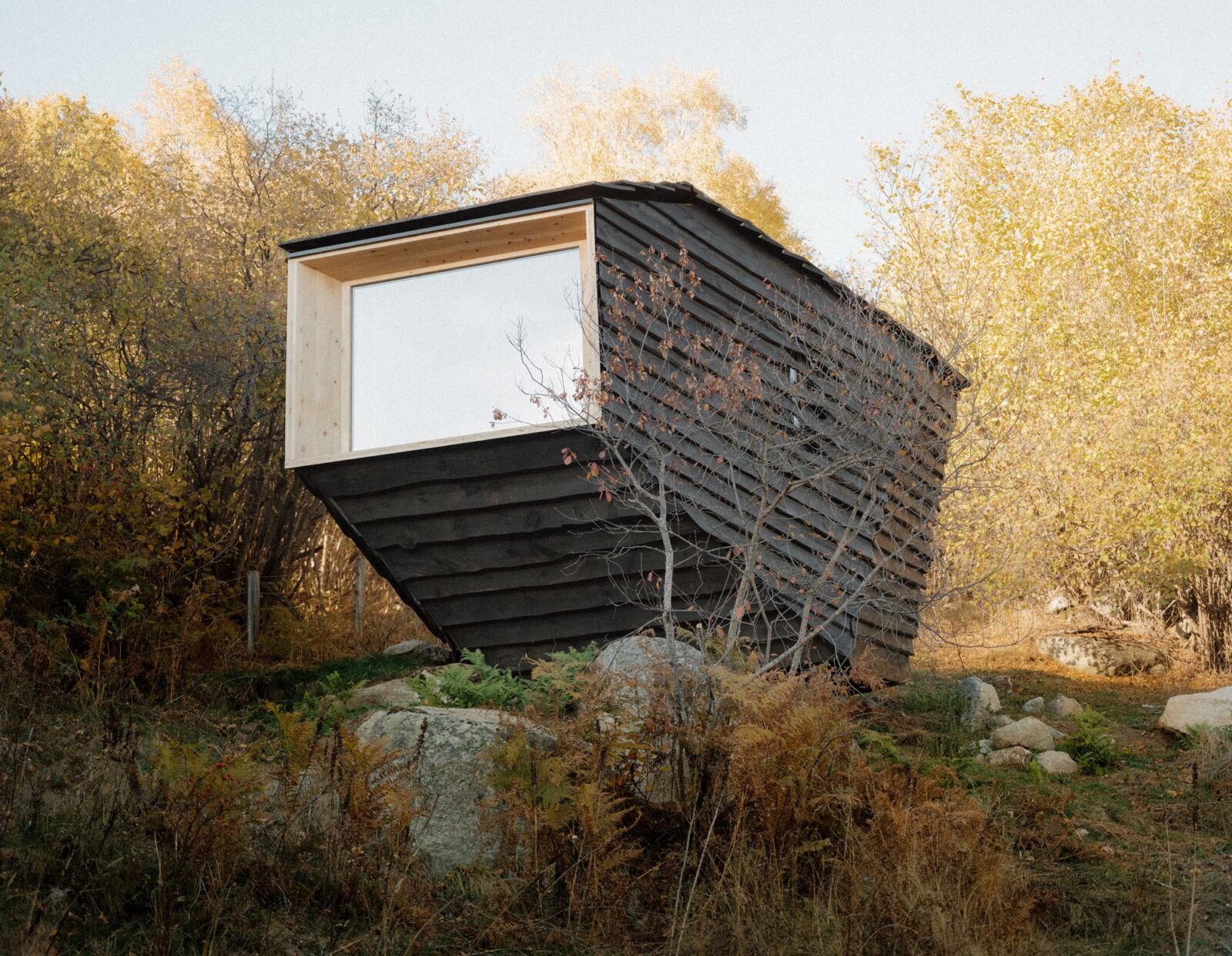
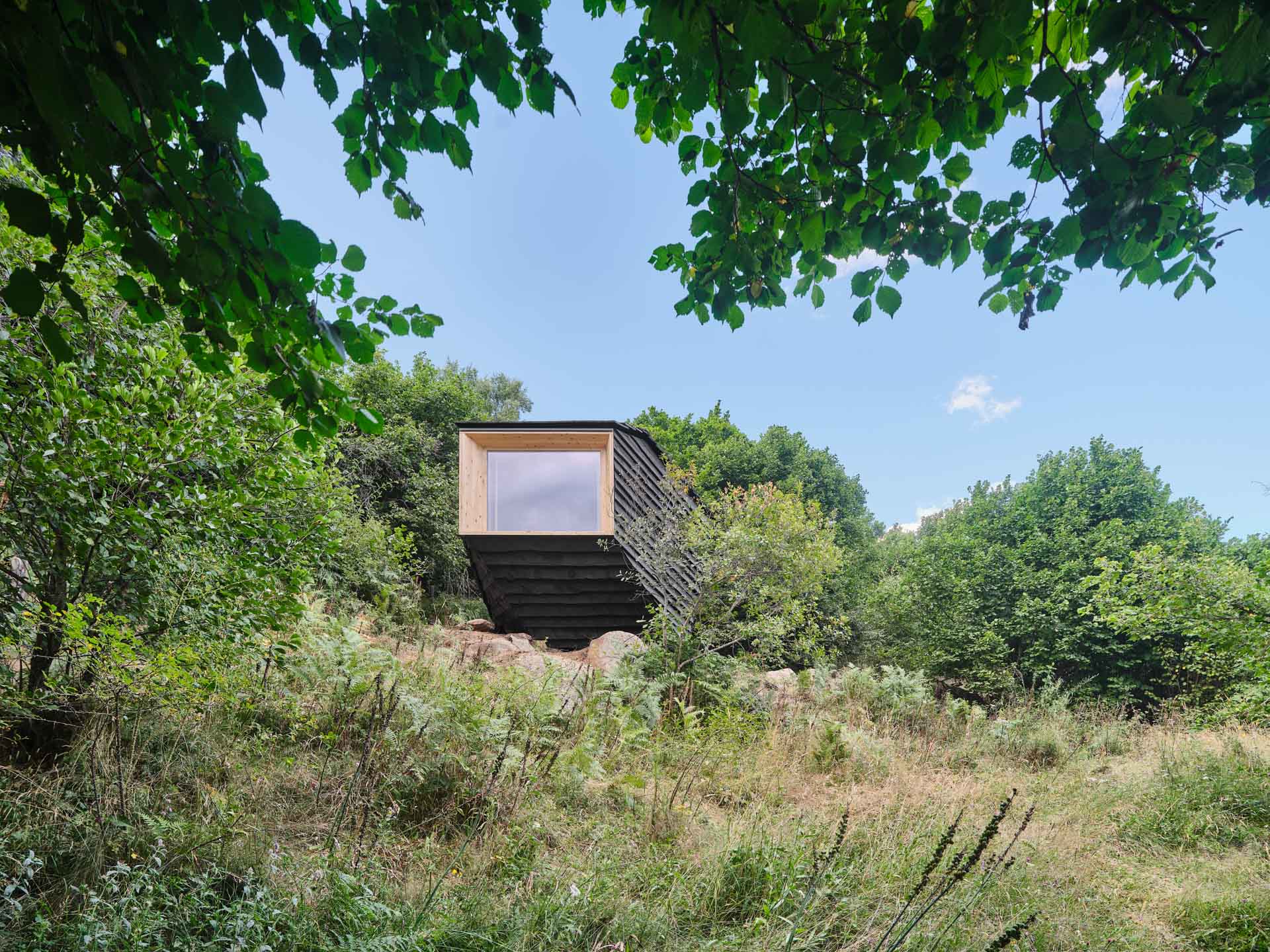
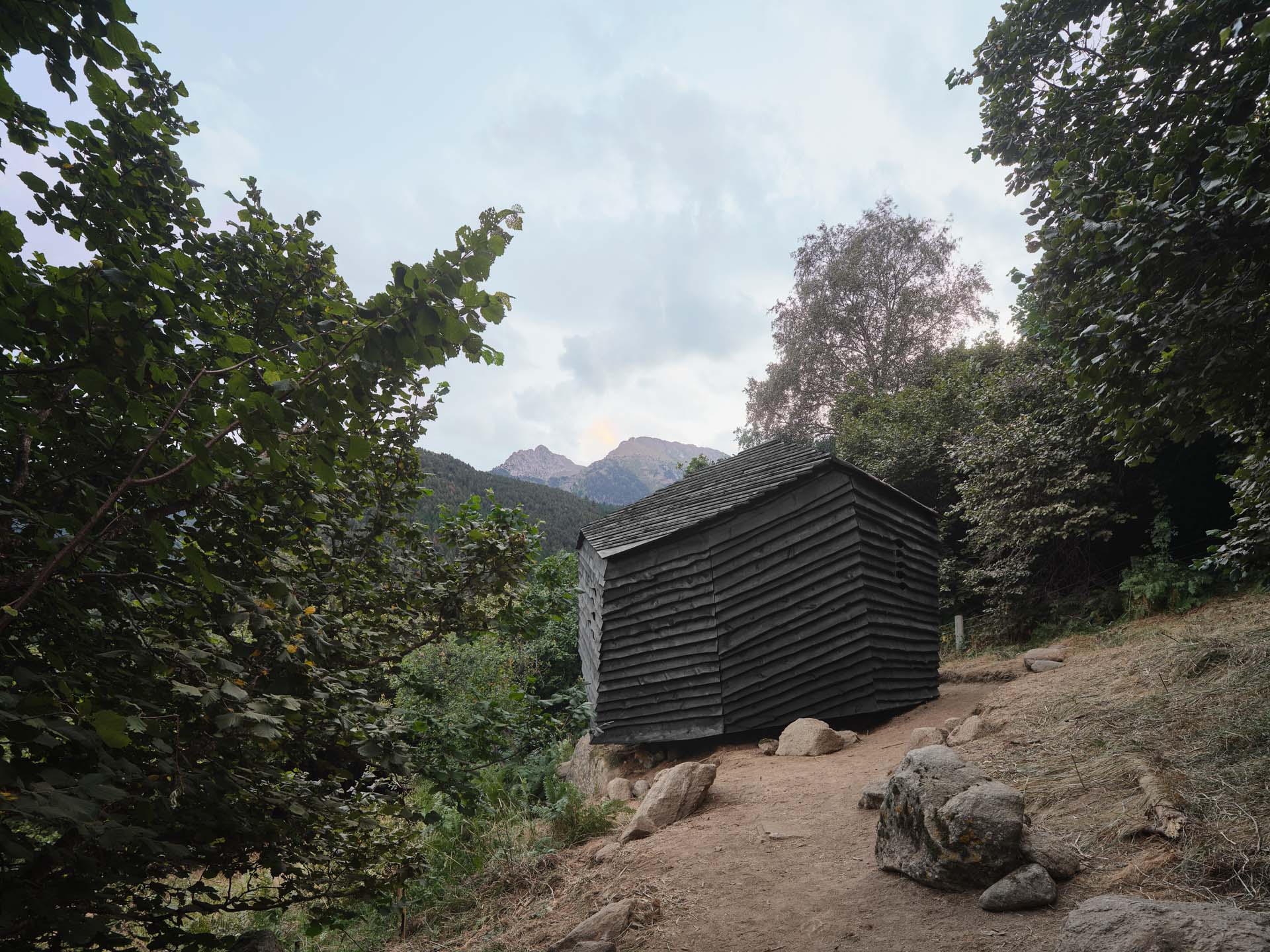
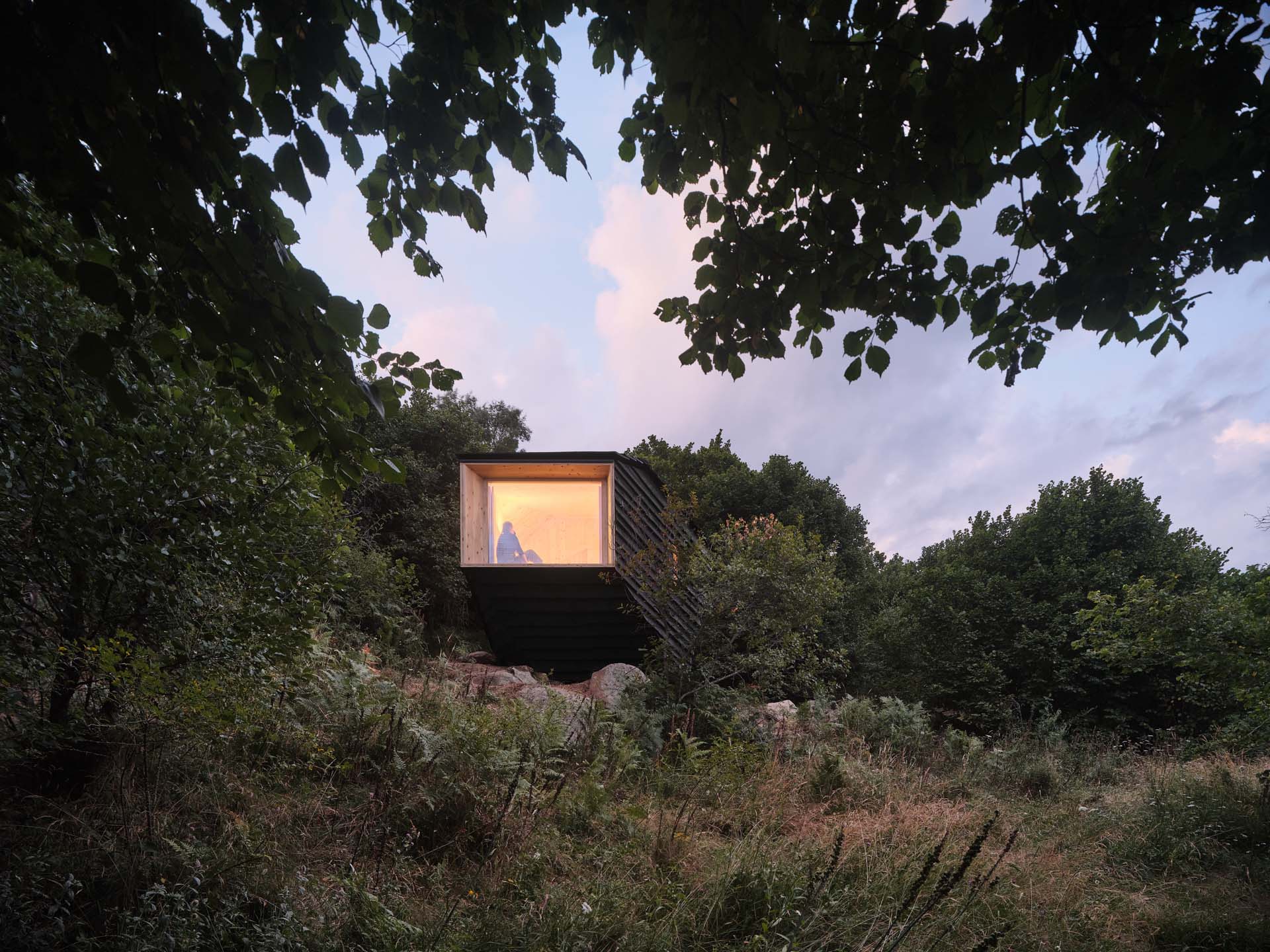
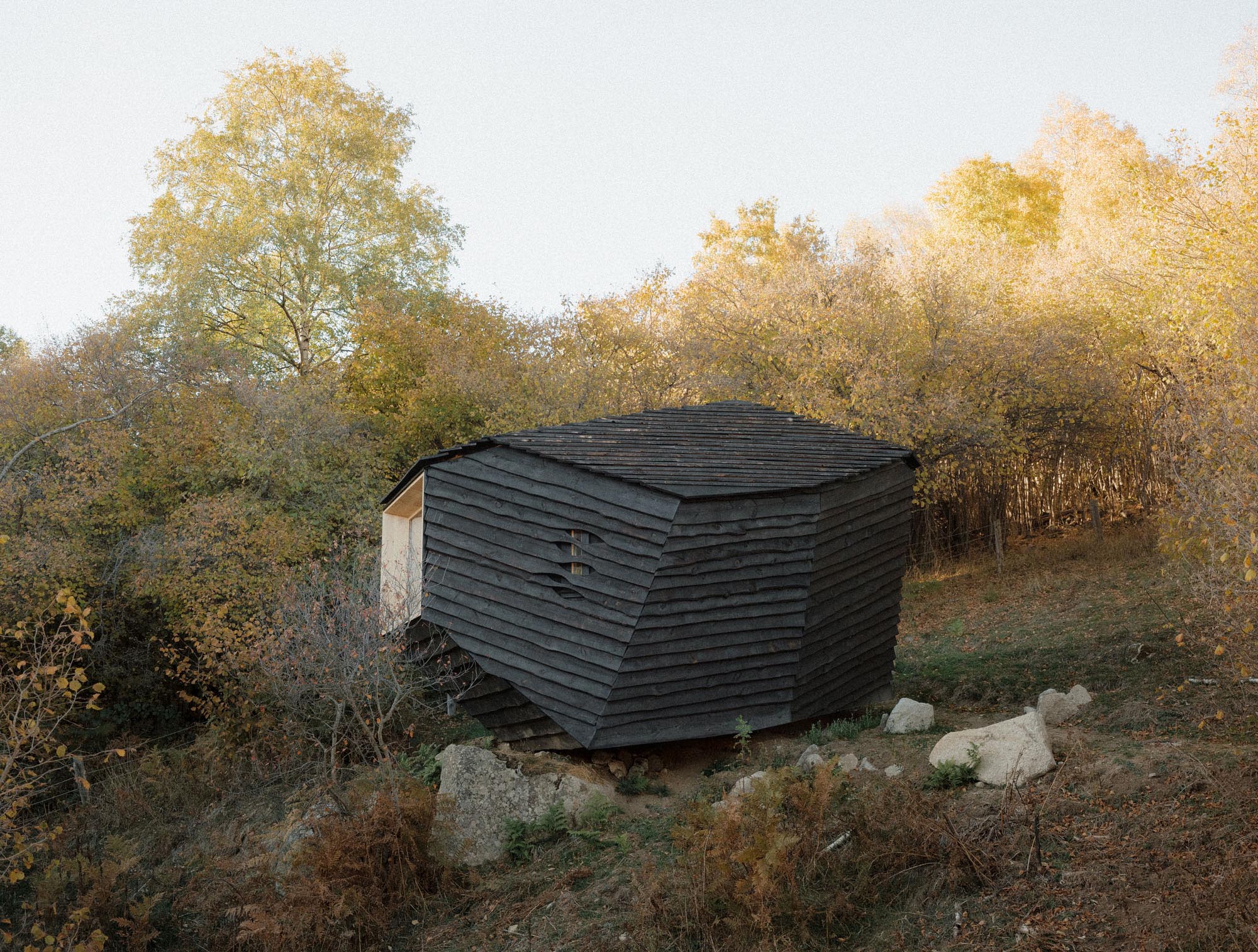
スペインのピレネー山脈・モンナトゥーラに誕生した〈フォレストーン(Forestone)〉は、IAAC(カタルーニャ先端建築研究所)の修士課程生らが設計から建設までを手がけた、広さ20m²の木造実験住居です。
宿泊客にも開放されたキャビンであり、地元産のCLT(クロスラミネートティンバー)だけでなく、近隣の町で得た羊毛や石材を自ら加工してラグや洗面台を作成した、地域の資源と技術で生み出さた建築となっています。
注目ポイント
- 斜面の岩肌から着想を得た多面体形状
- 日本の「焼杉」技法の導入による機能性とコンセプトの融合
- 建築・構造・家具を単一素材(CLT)で統合する空間設計
- 乾式構法とモジュール化による持続可能な森林居住のモデル
(以下、IAACから提供されたプレスキットのテキストの抄訳)
©︎ Adrià Goula
©︎ Adrià Goula
©︎ Adrià Goula
ピレネーの山火事対策に貢献する生態学的シェルター
IAACは、ピレネー地域の産業・社会団体と共同で、新たな建築プロトタイプ〈フォレストーン〉を開発した。
- 建築研究と実践的な製作を統合した実践的プロジェクト: 生態建築・先進建設学修士課程(MAEBB)の2025年度生が設計から建設までを担当
- 地域資源の活用:構造と外装には、地元産のクロスラミネート材(CLT)パネルと、近隣森林から調達した炭化木材を使用
- 伝統工芸と建築の融合:室内には特注のCLT家具に加え、地元産の羊毛テキスタイル、手彫りの石製洗面器を配置し、地域の技術を建築に導入
©︎ Adrià Goula
©︎ Adrià Goula
ピレネーの再生林業を象徴する実験住居
バルセロナ、2026年2月。〈フォレストーン〉キャビンは、ピレネー山脈の再生林業と森林資源の持続可能な利用を推進する「バイオ・フォー・ピリ(Bio for Piri)」構想の一環として誕生した、広さ20m²の実験的木造住居である。
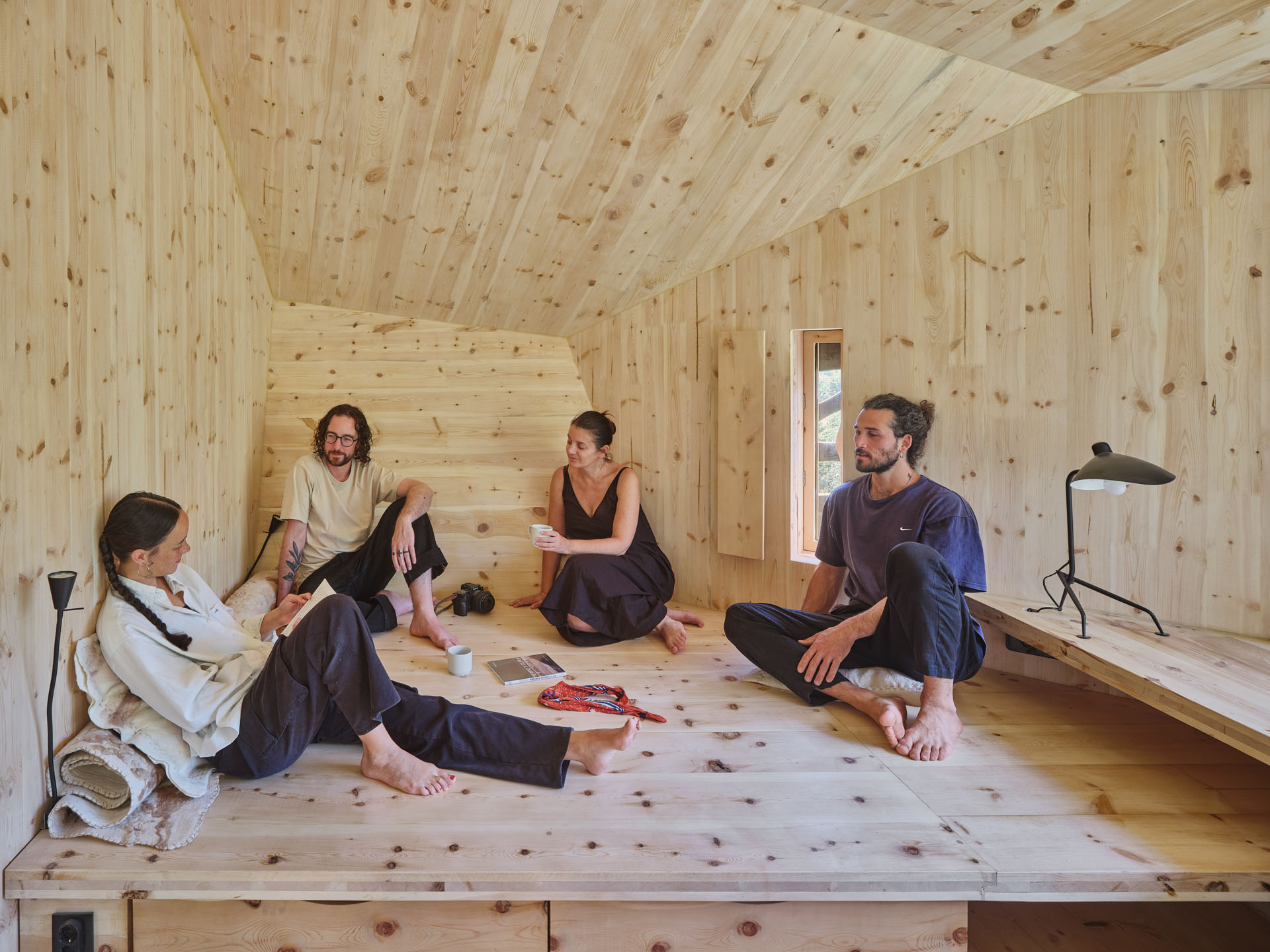
カタルーニャ・ラ・ペドレラ財団が主導し、欧州次世代基金による生物多様性財団の資金提供を受けたこのイニシアチブは、リェイダ県アリニャなどの森林保全を目的としている。ピレネー山脈のモンナトゥーラ・ソルト、既存ホステルのすぐそばの傾斜地に建つこのキャビンは、2名用の仮設宿泊施設として、寝室、作業スペース、浴室を備えている。
©︎ Adrià Goula
©︎ Adrià Goula
休息の岩:地形に呼応する幾何学と自然光の制御
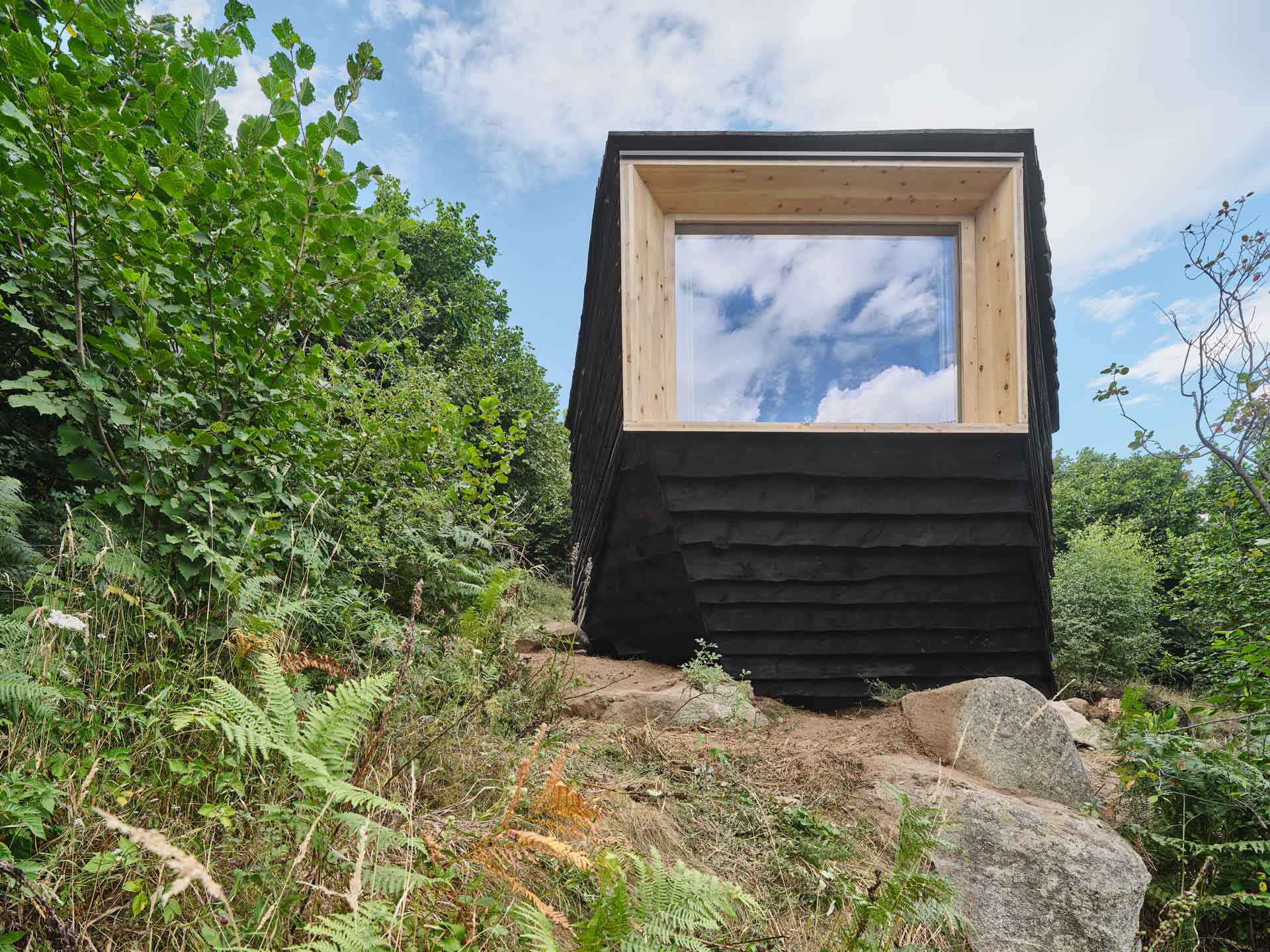
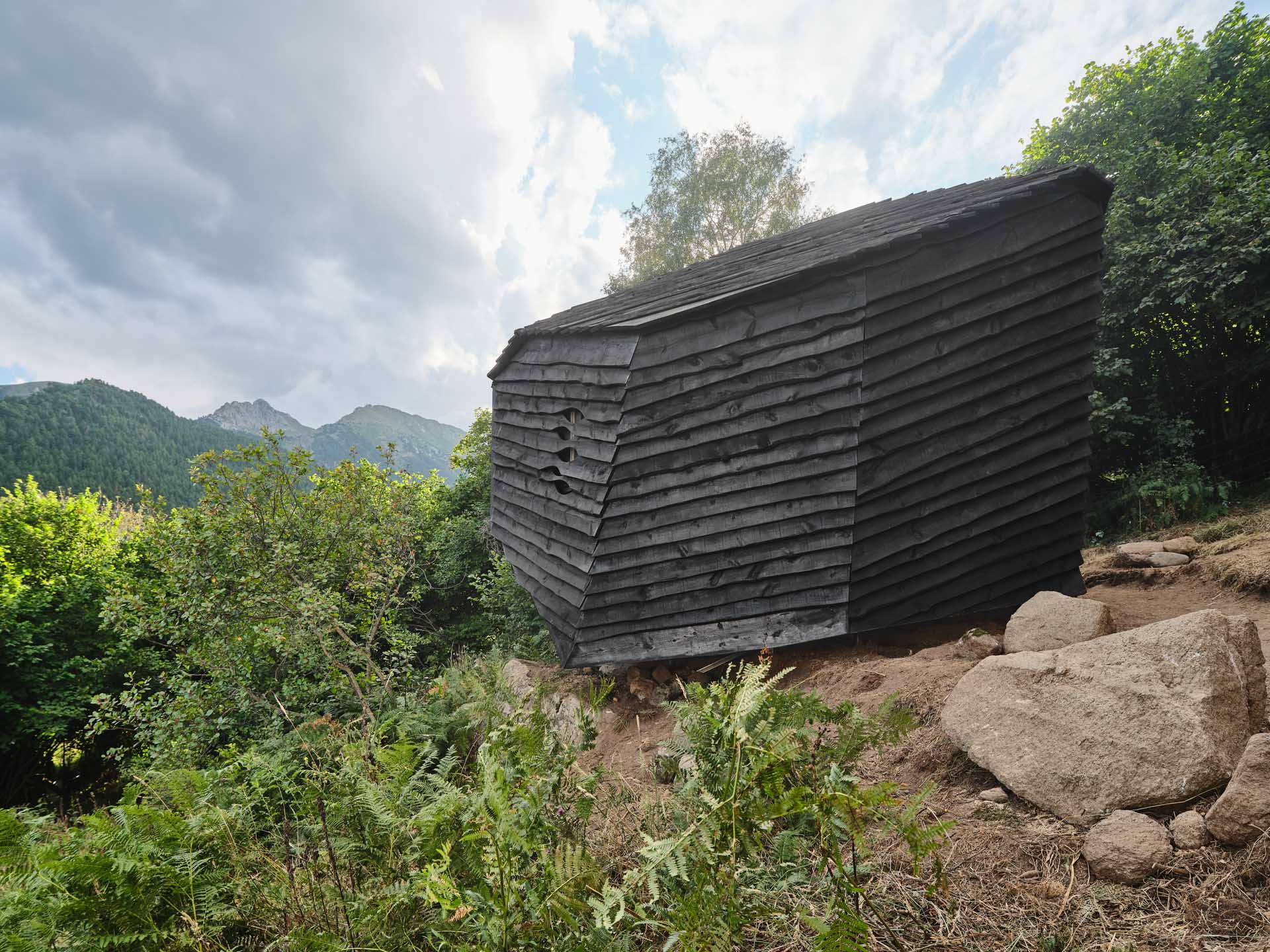
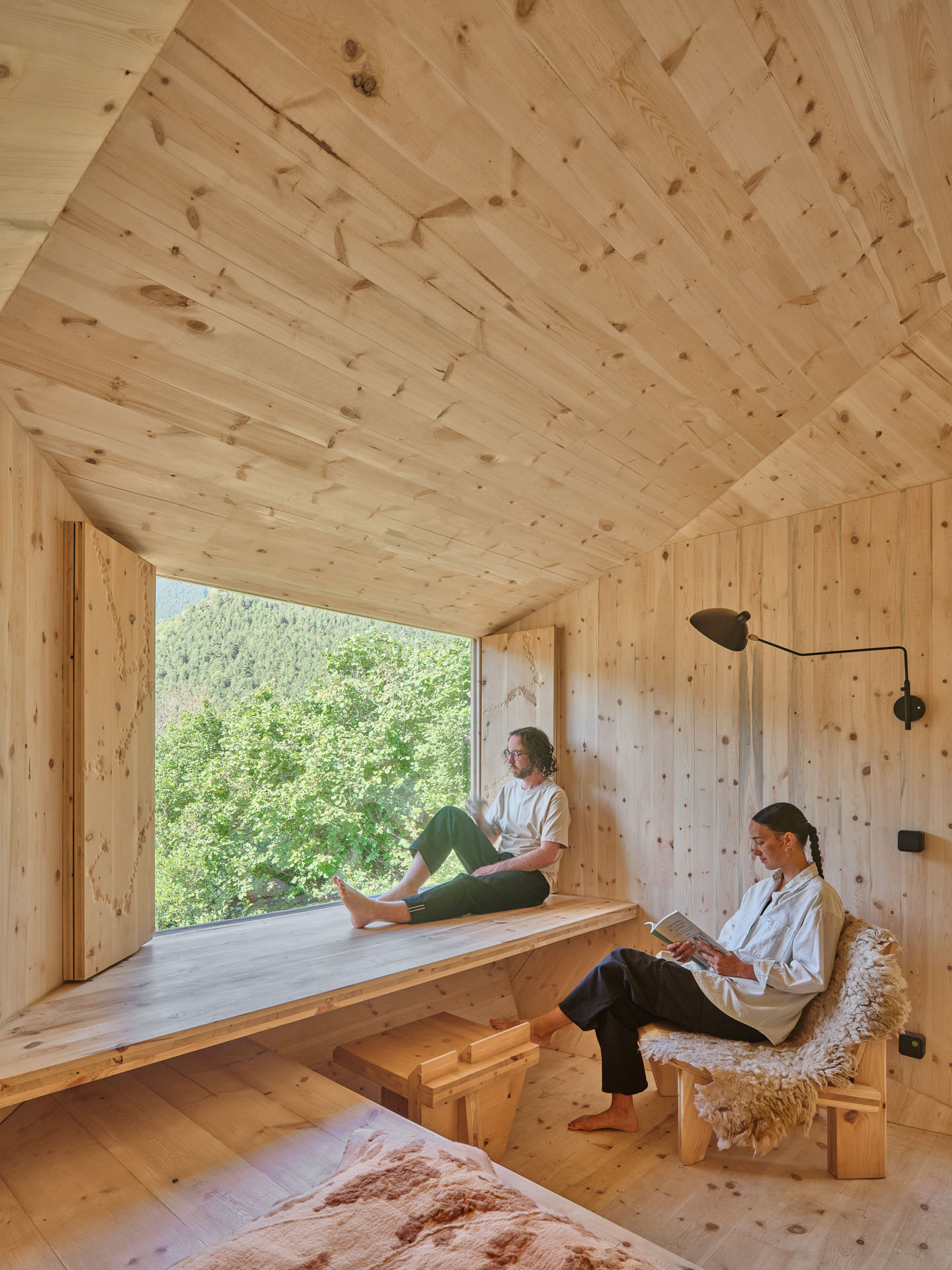
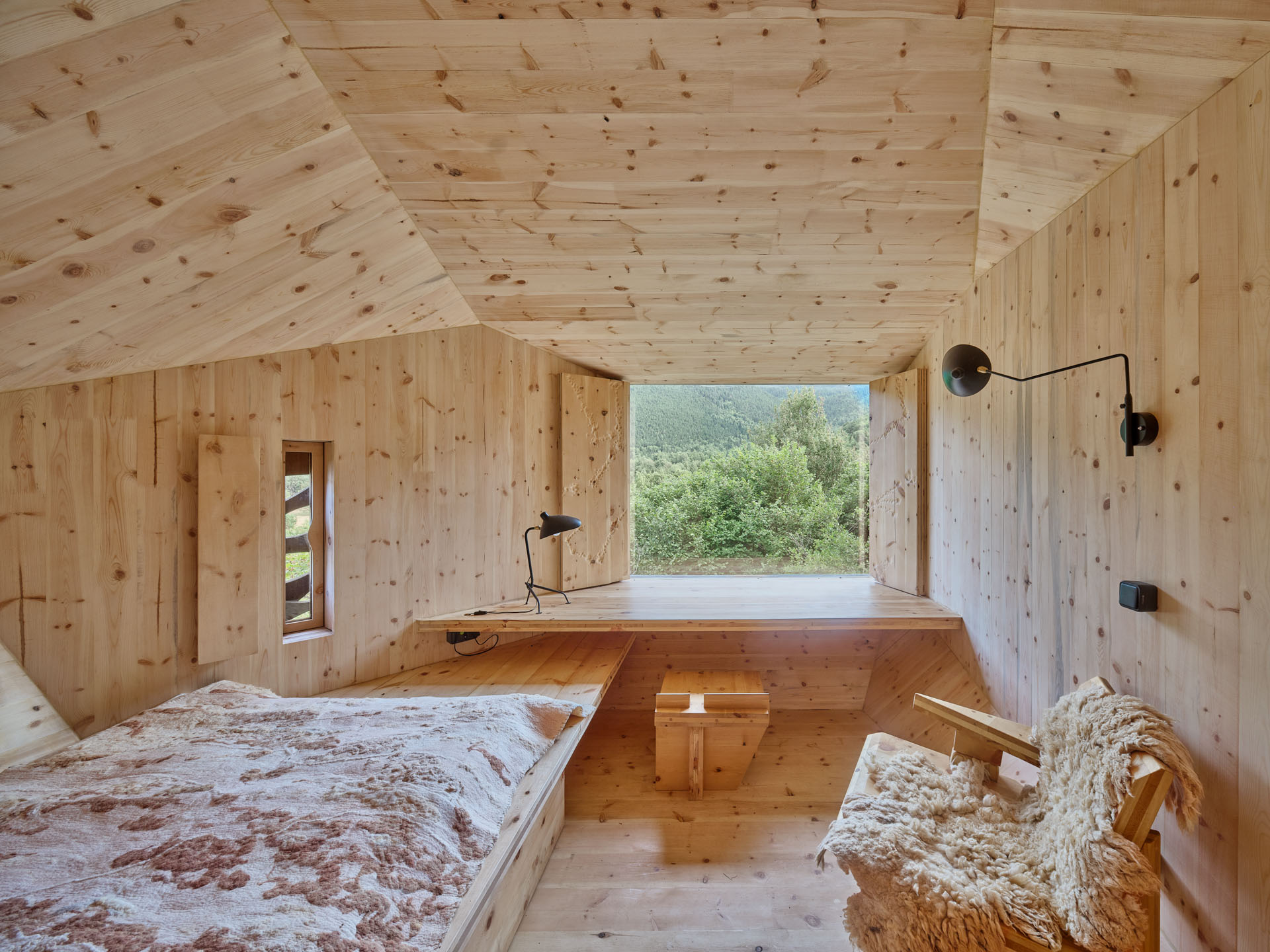
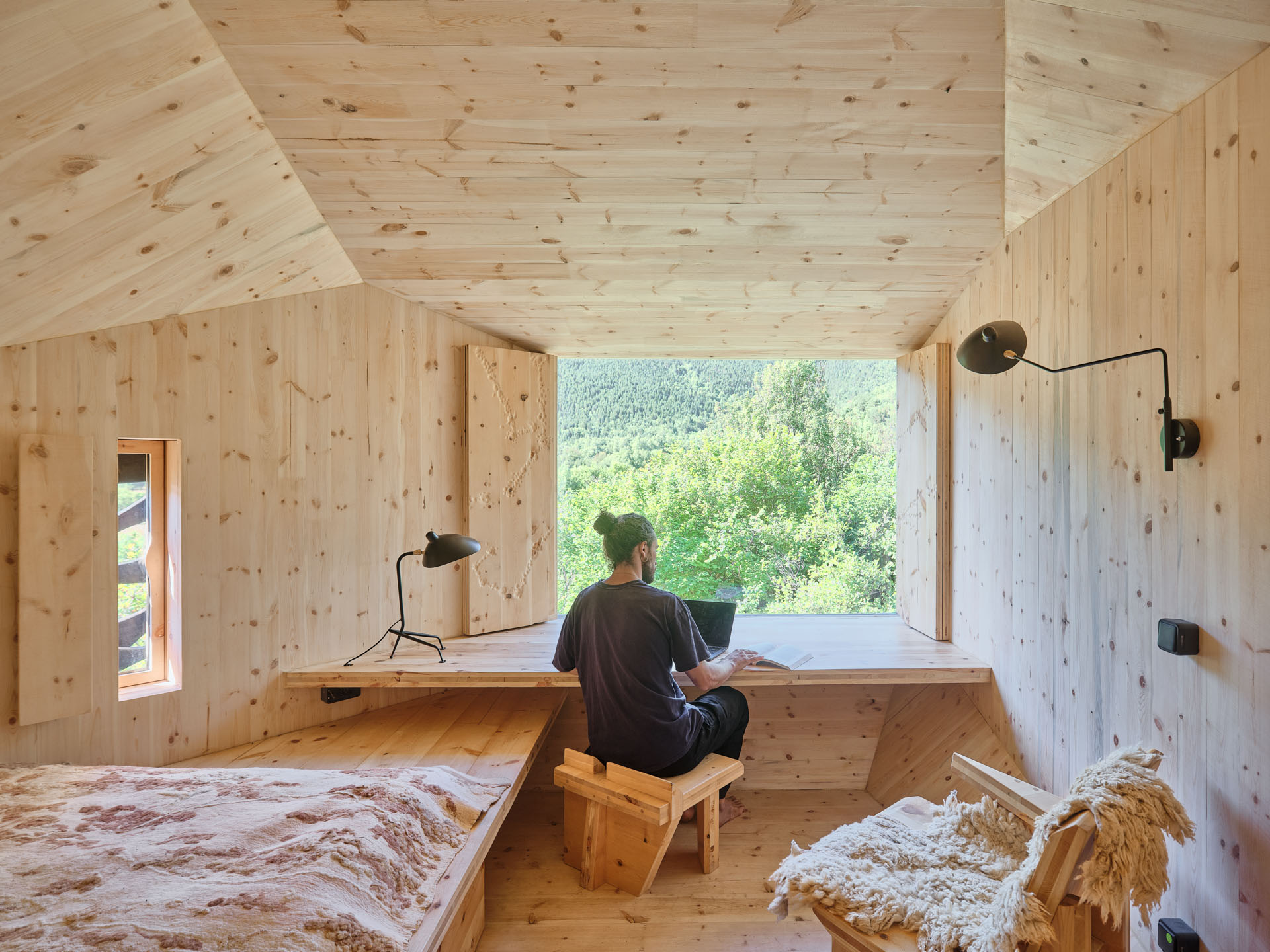
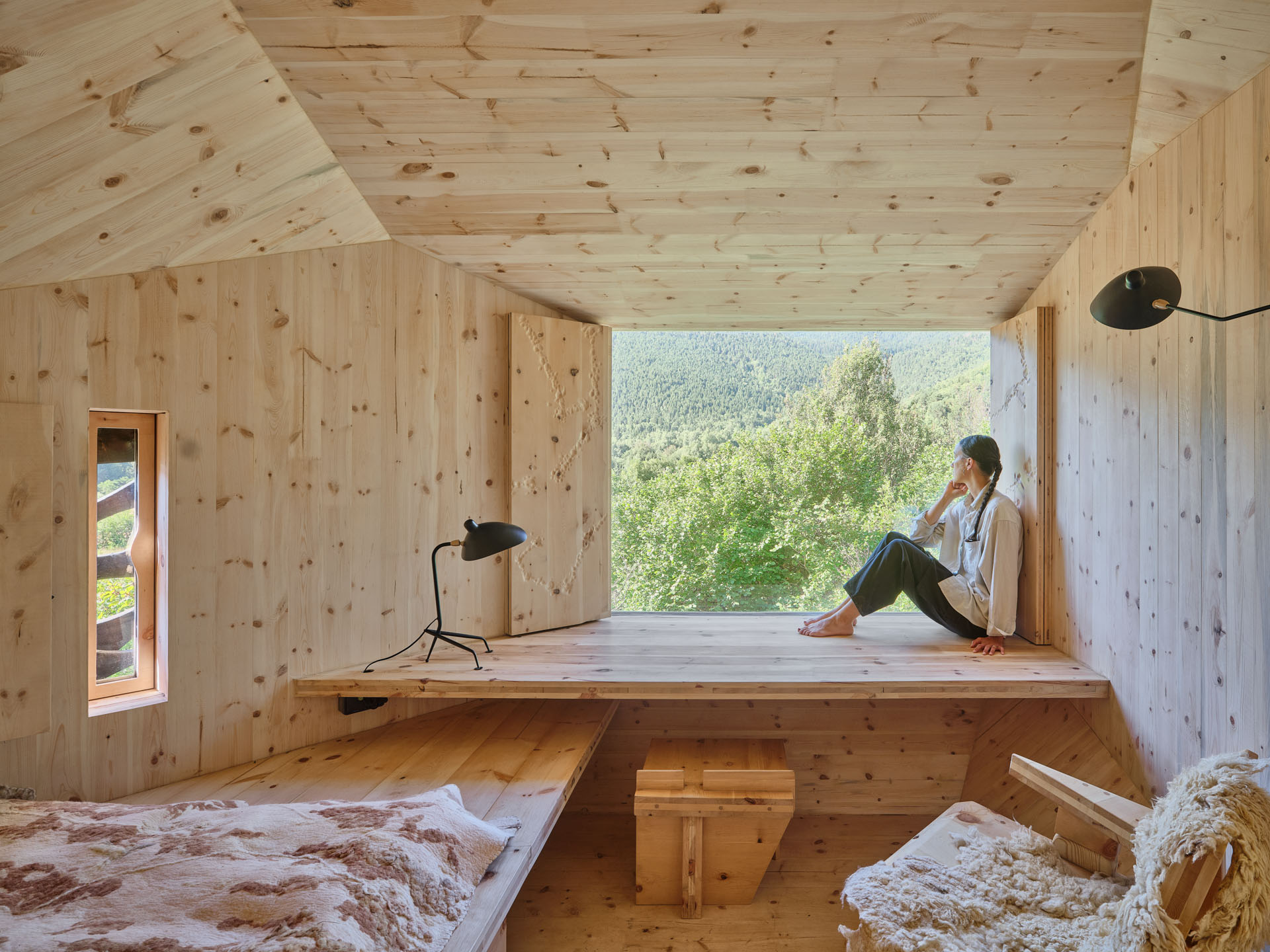
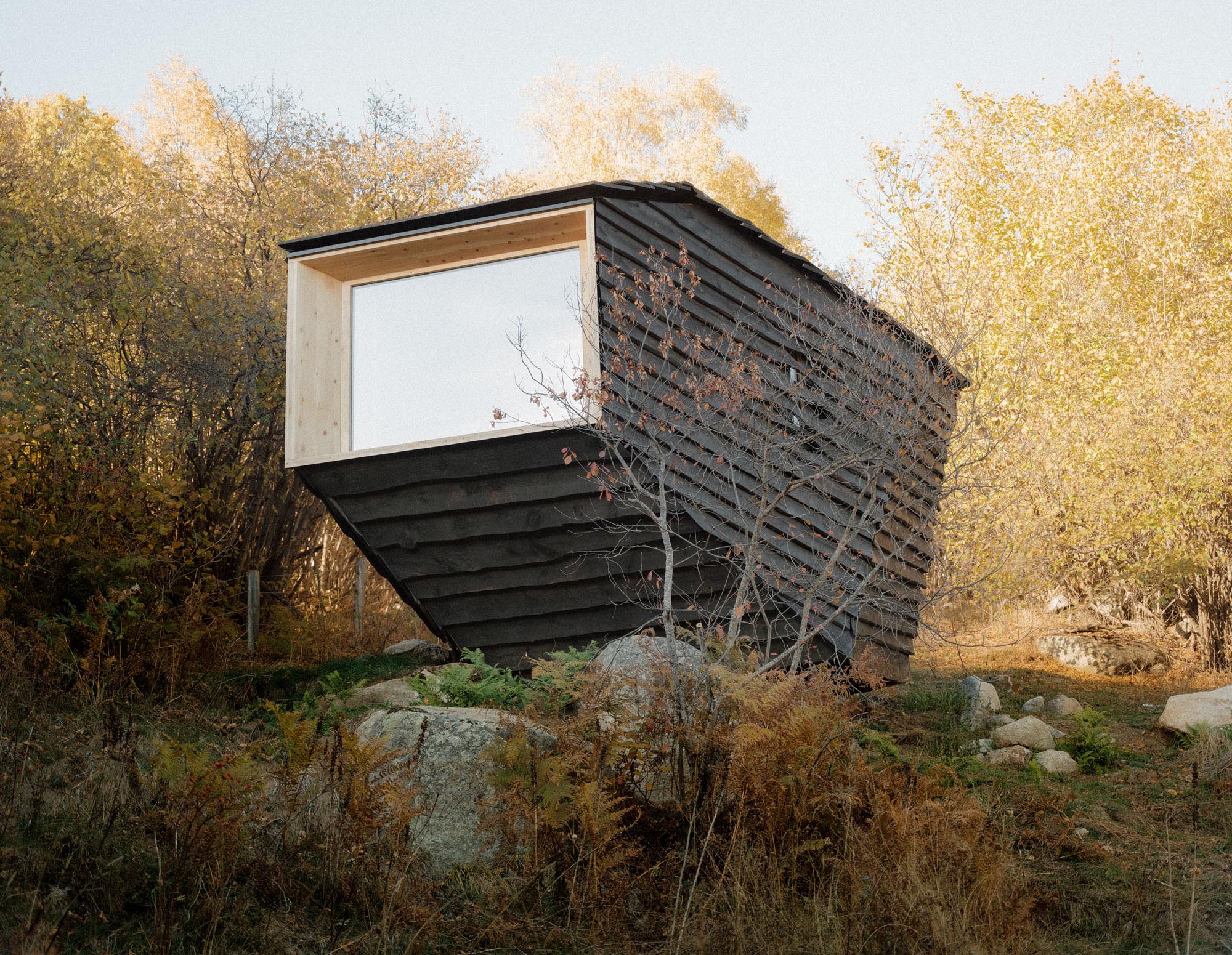
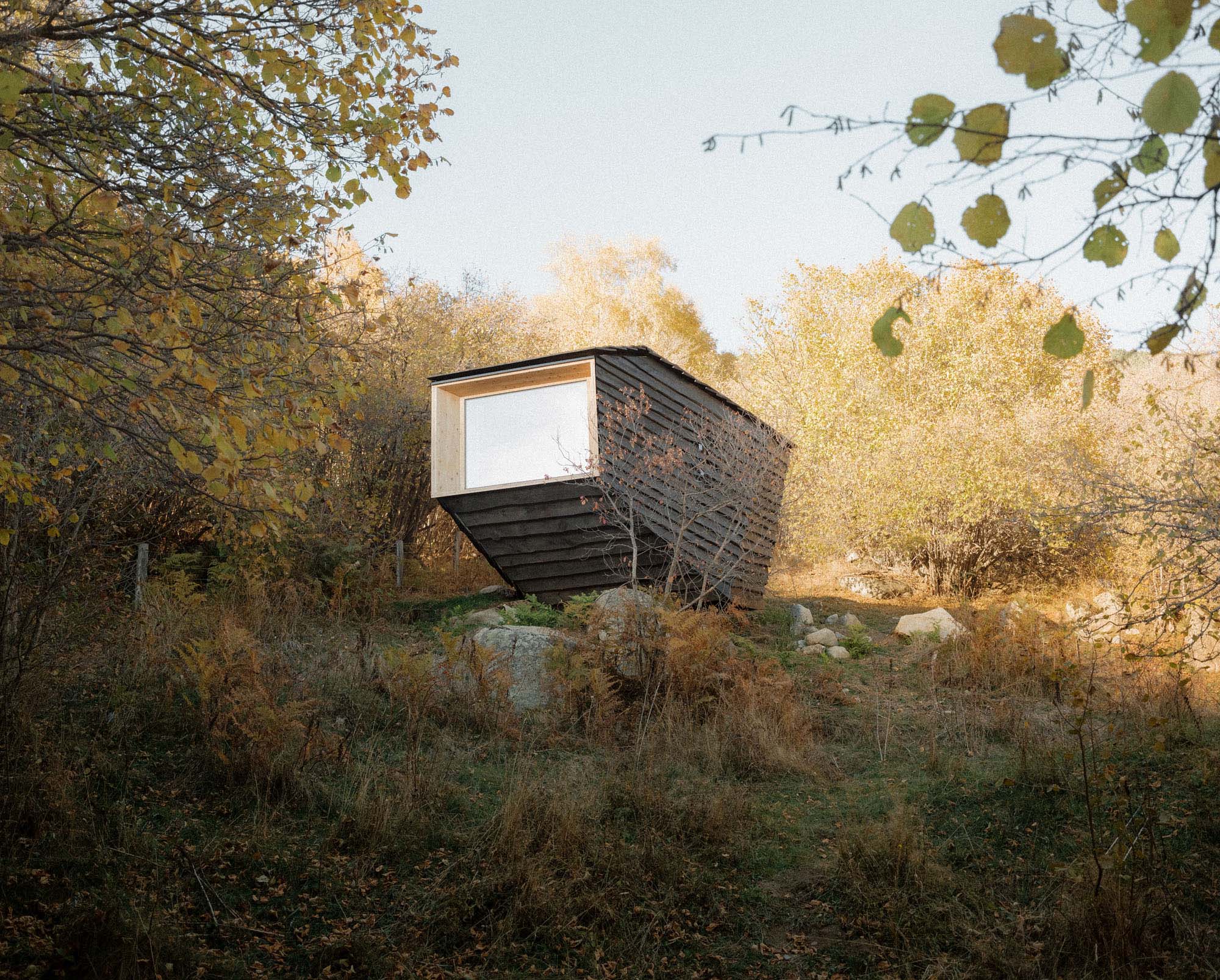
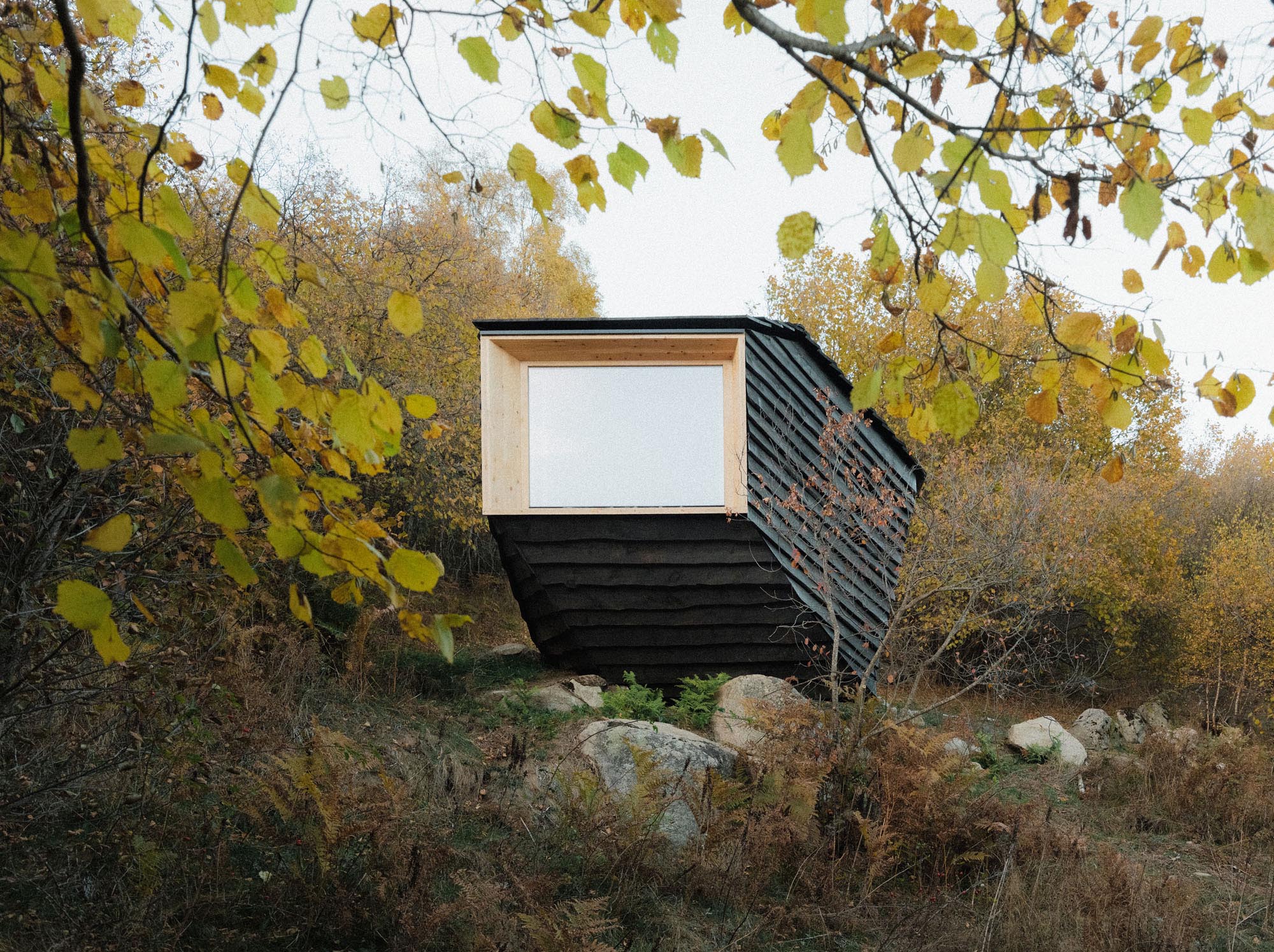
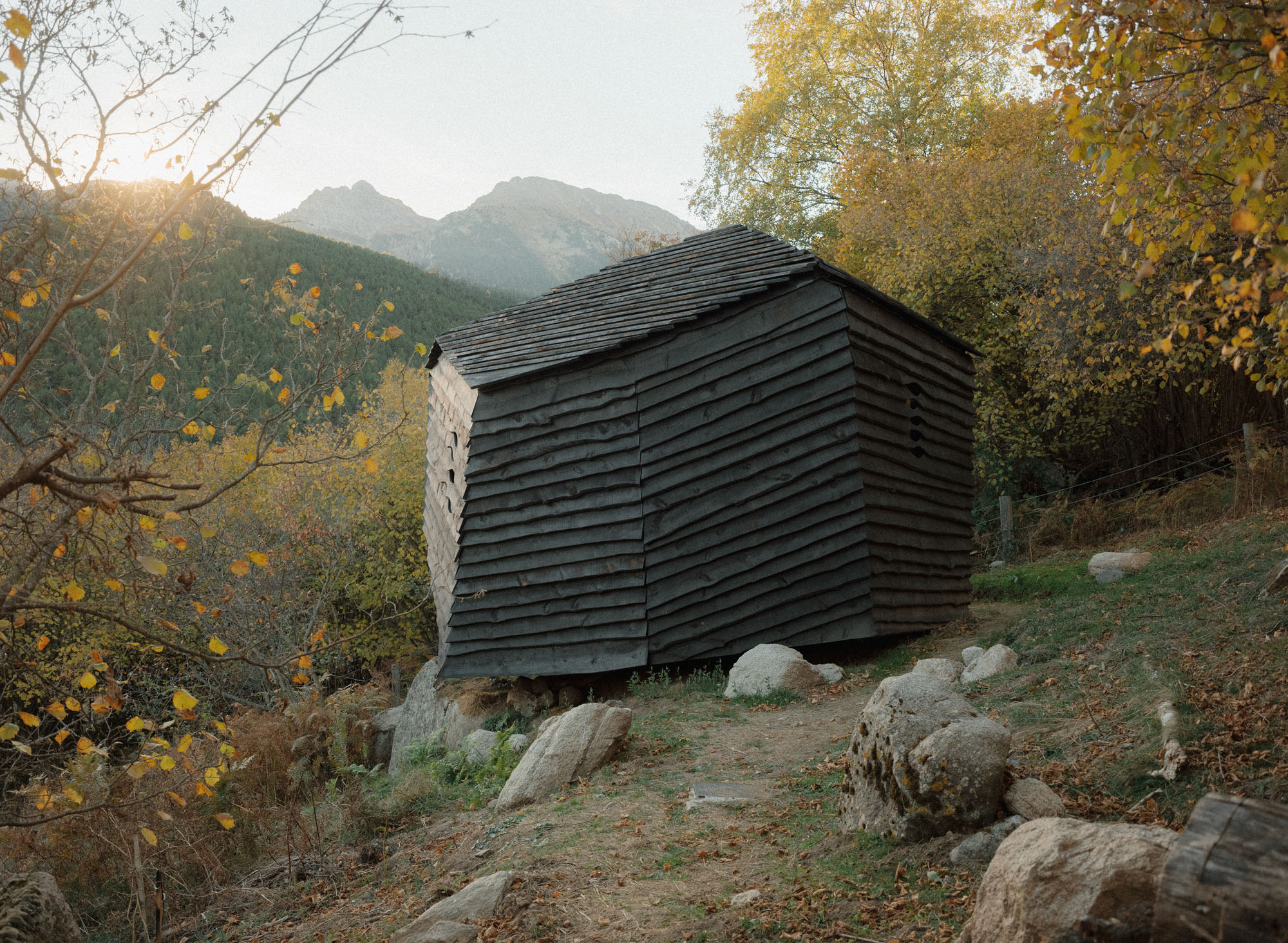
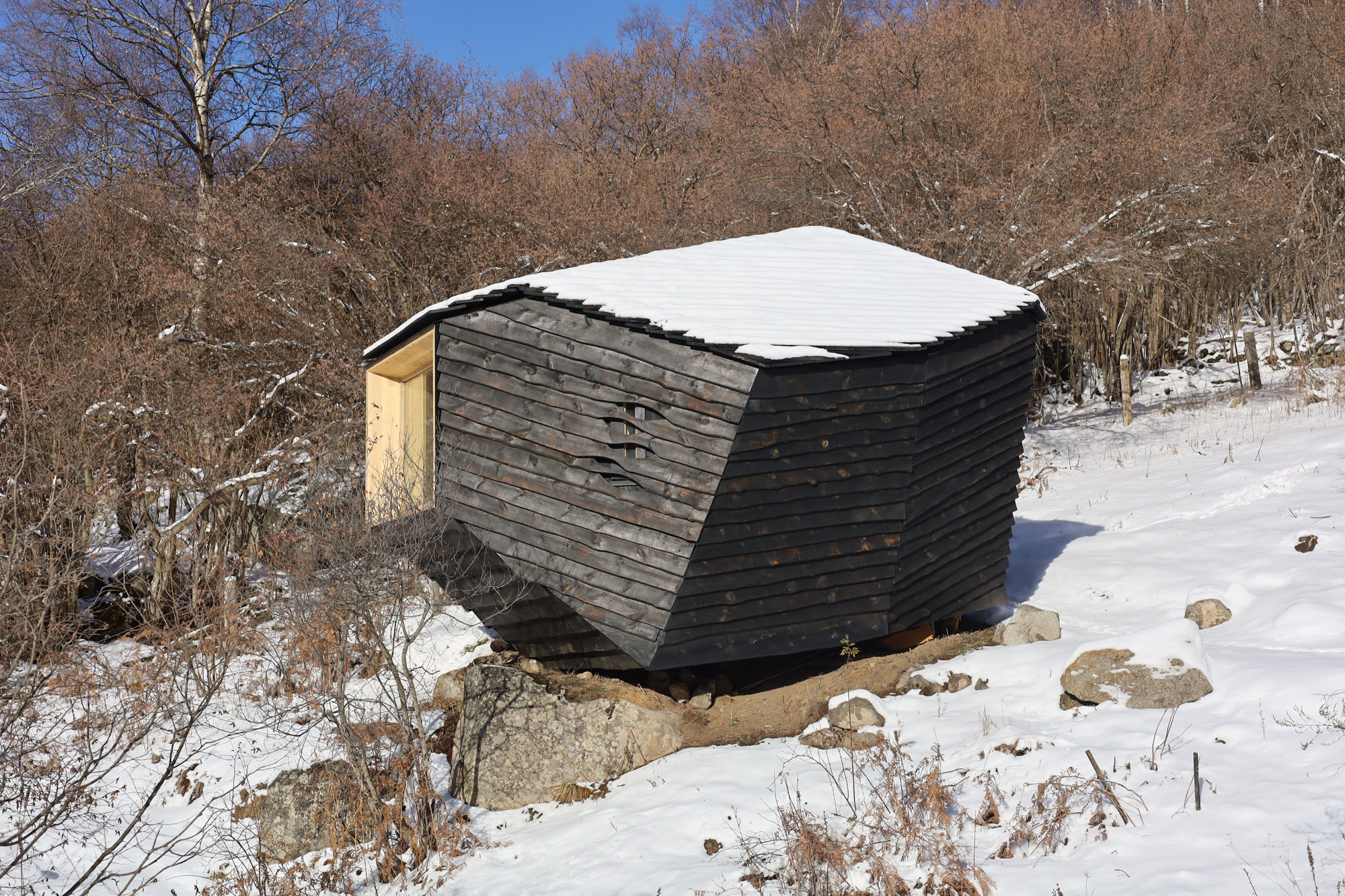
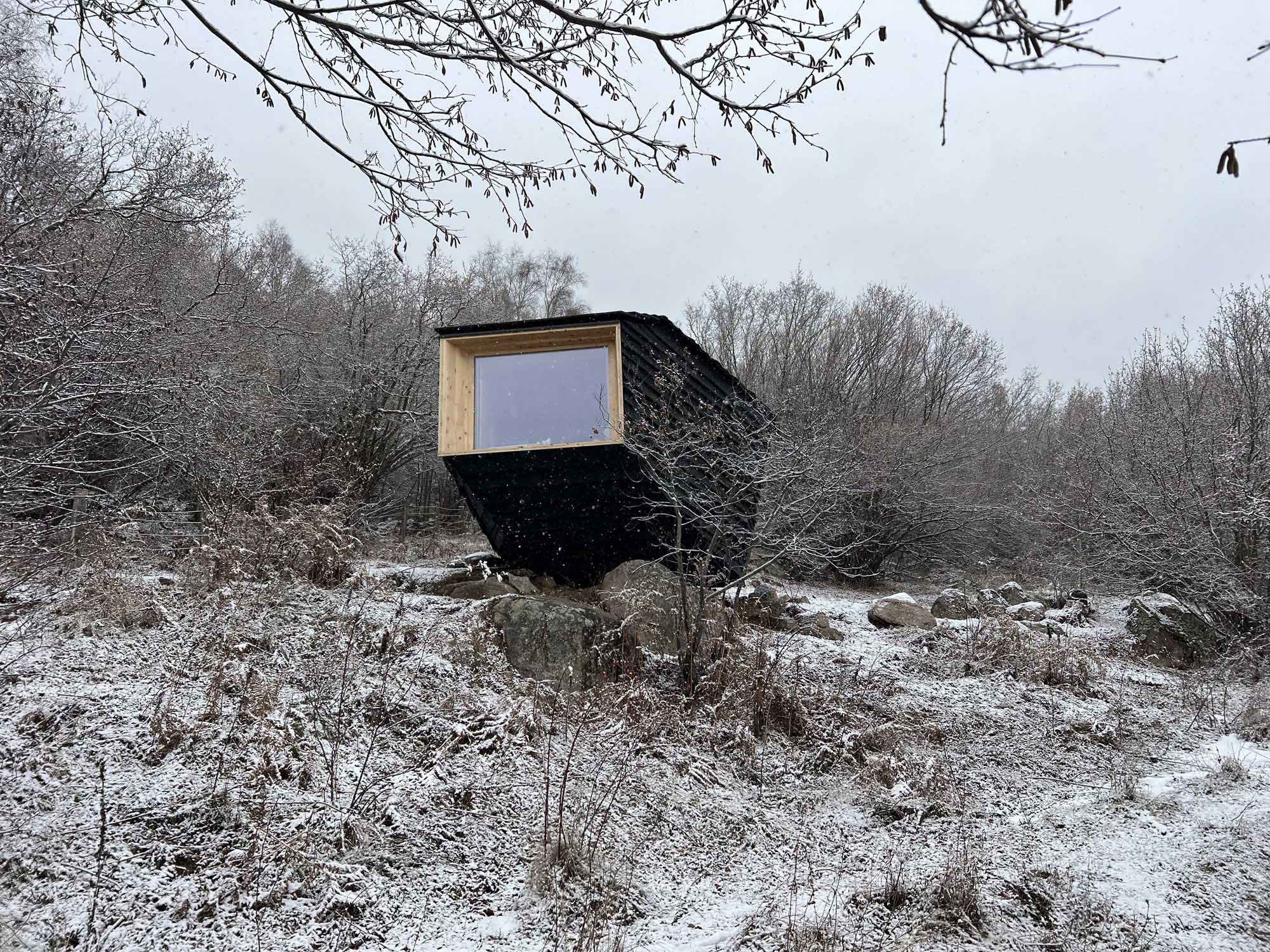
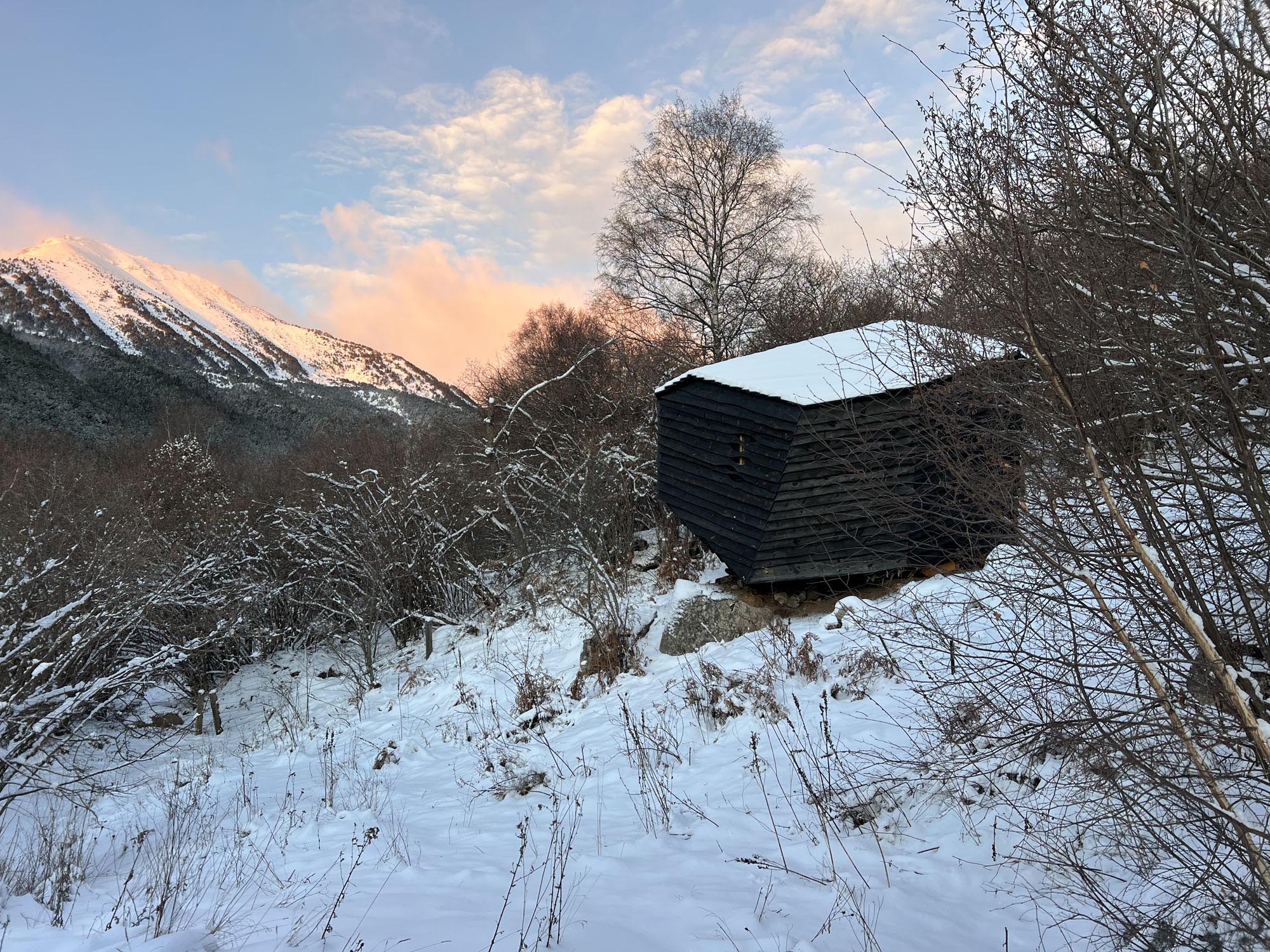
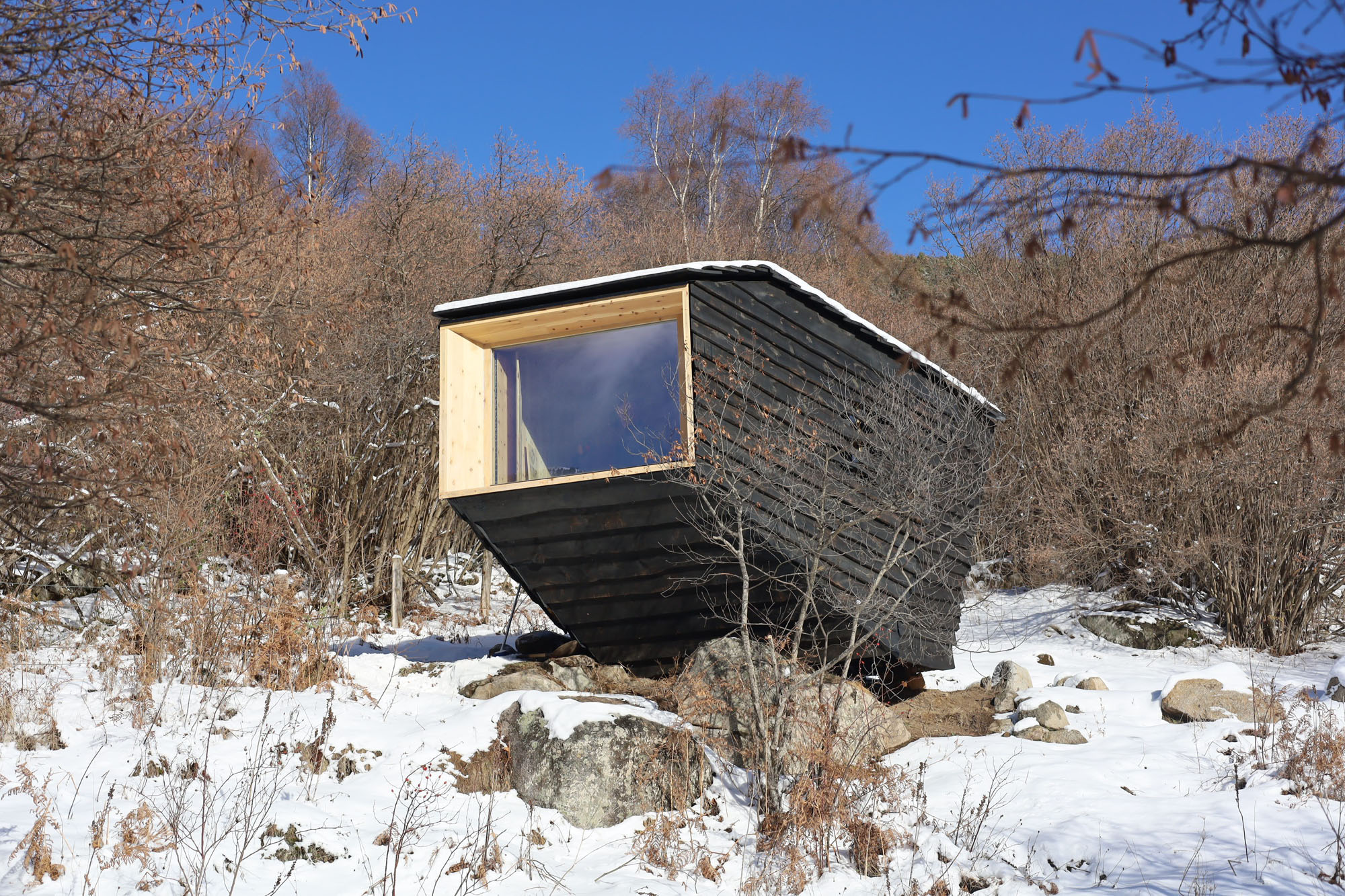
キャビンの彫刻的な形状は、ピレネー山脈の岩肌から着想を得ている。山から転がり落ちて自然にこの地に落ち着いた石塊を思わせるこの構造は、傾斜した壁と傾斜屋根からなる多面体形状を呈している。この幾何学形状は、機能要件・気候条件・日照条件に応えるとともに、コンパクトな敷地面積内で多様な用途に対応するため、天井高と空間比率を微妙に調整している。
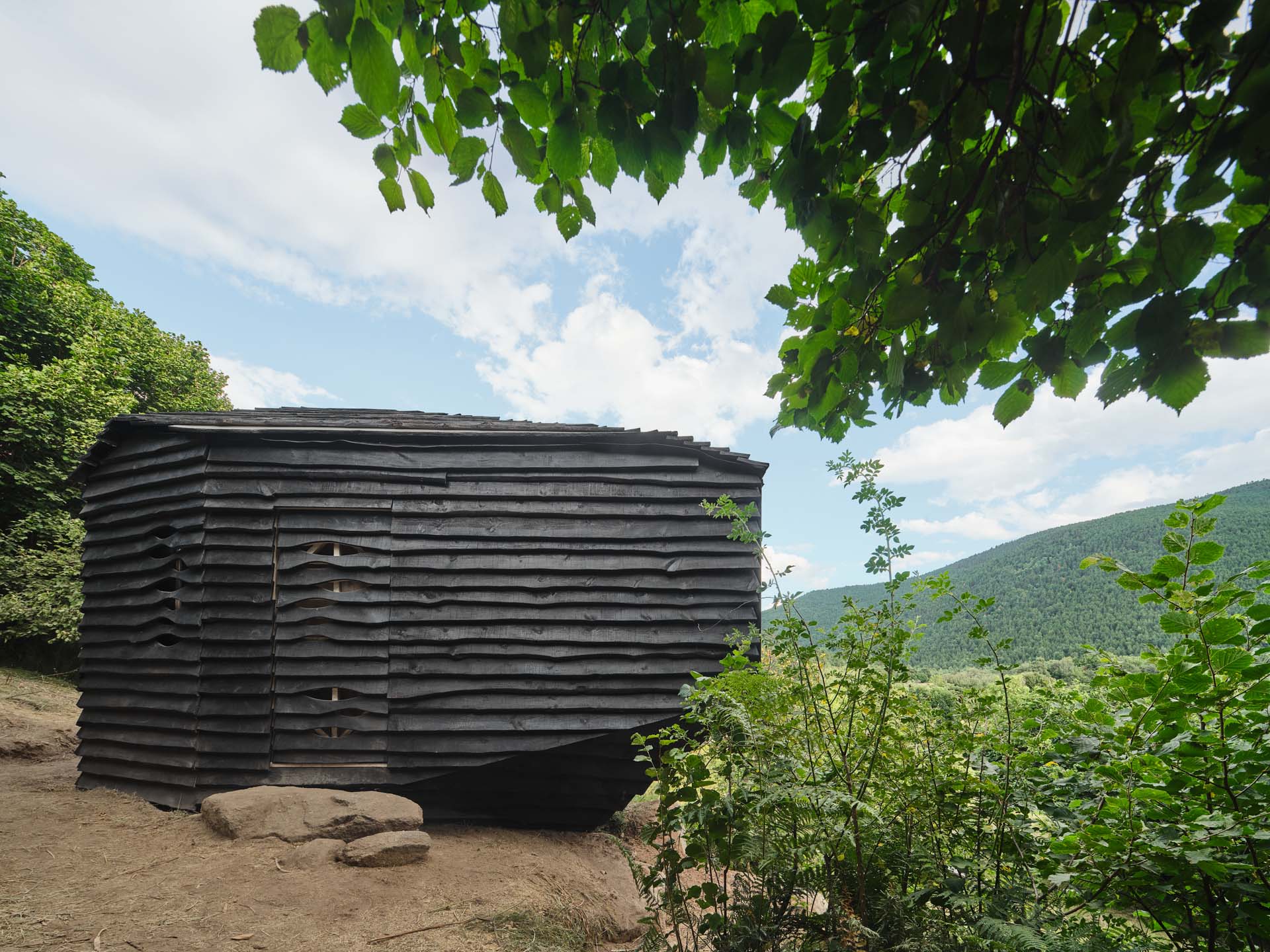
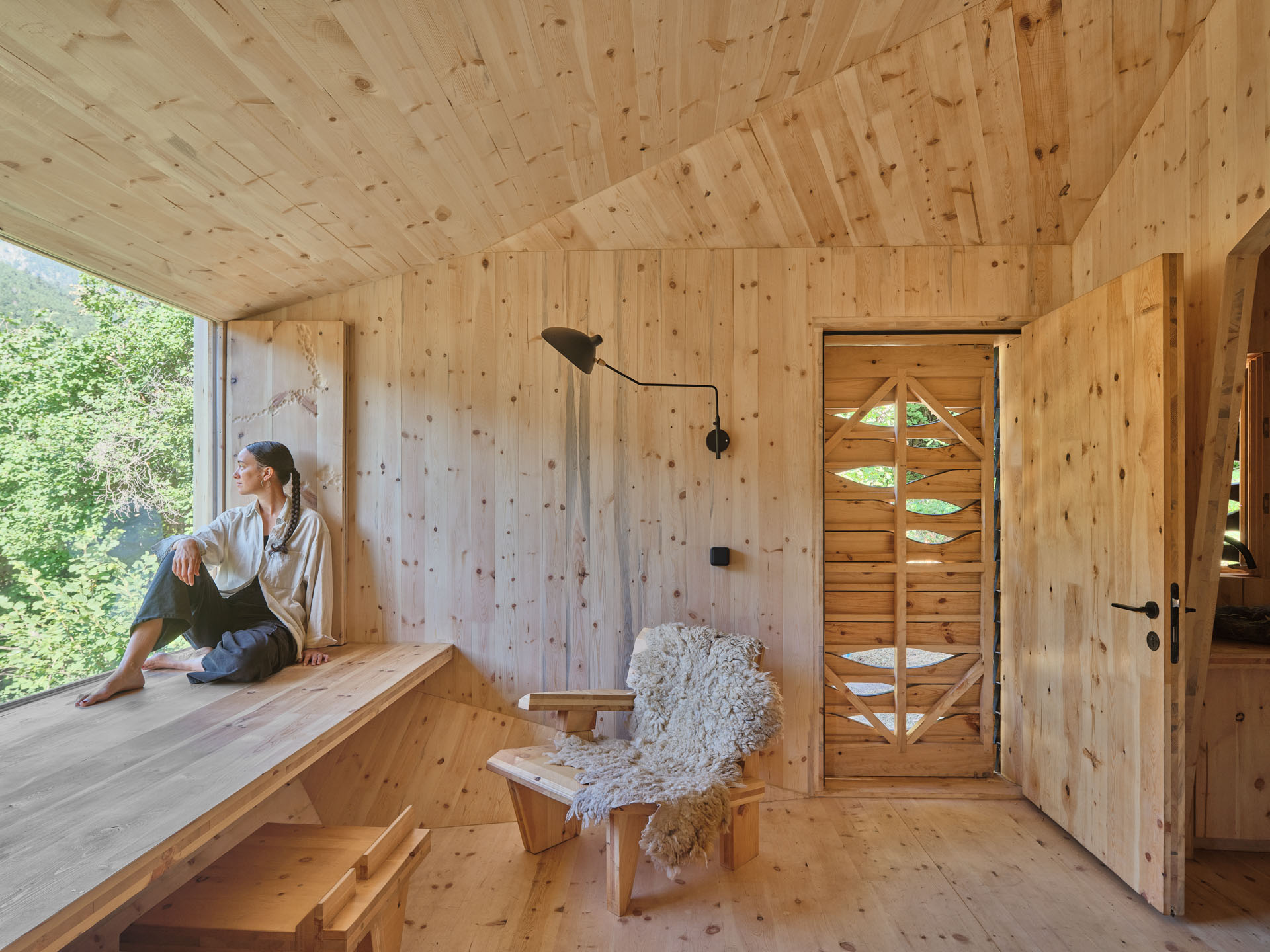
また、周囲の山々をフレームに収めるように配置された開口部は、効果的な通風を可能にしている。開閉可能な木製シャッターは夜間の完全な暗闇を確保して光害を防止するとともに、敷地で行われる天文観測活動を支える役割も果たす。
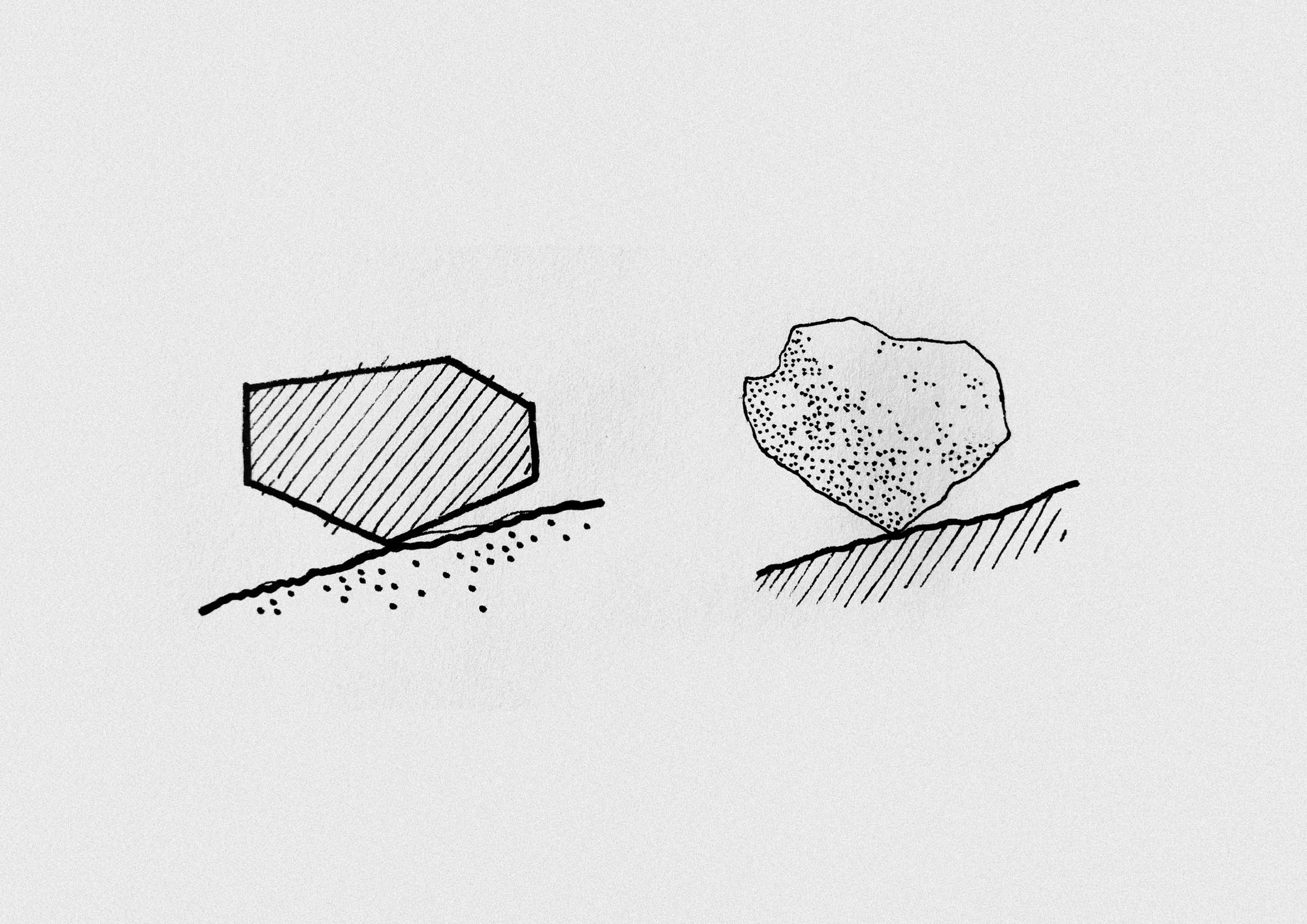
rock balancing
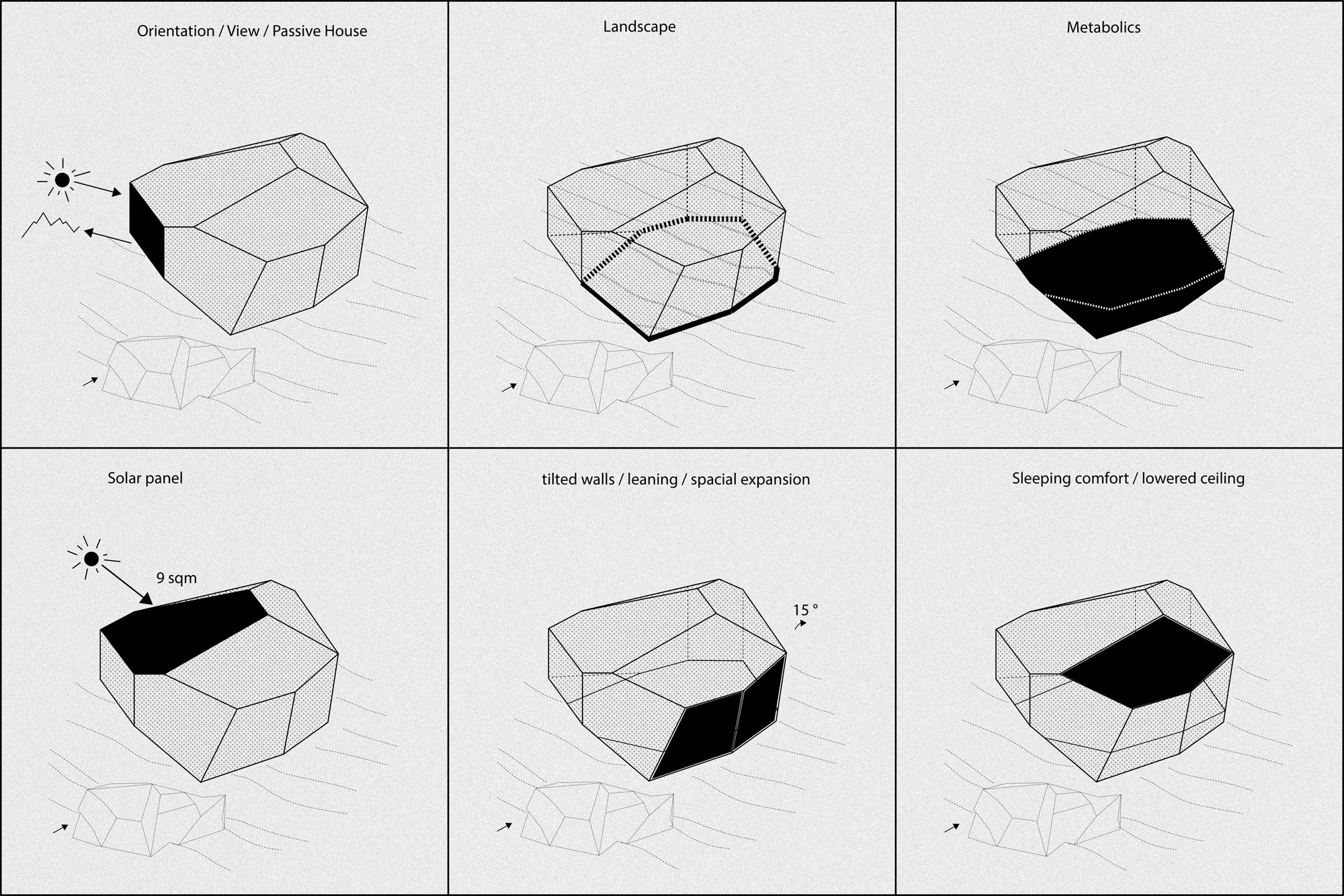
Form finding
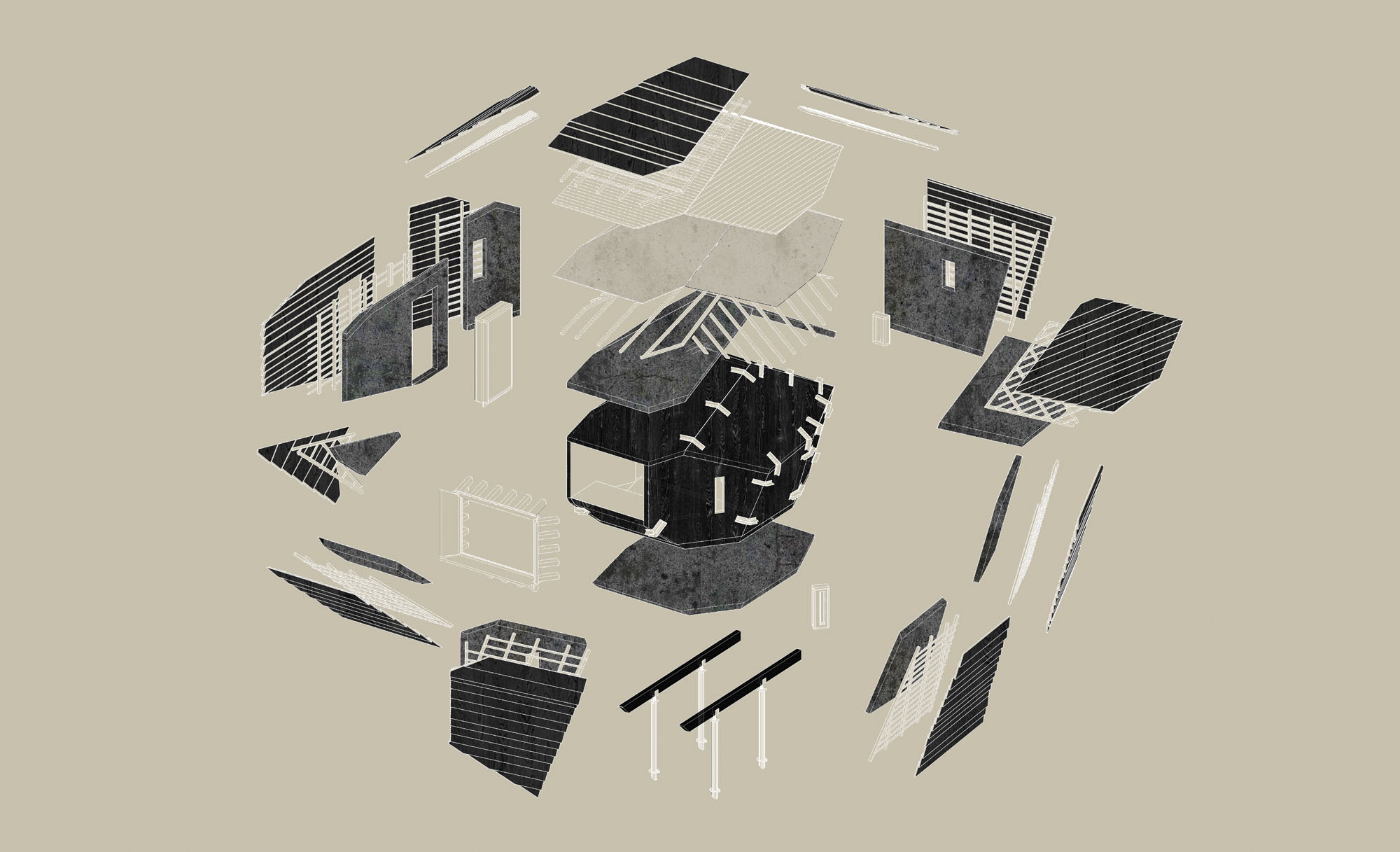
EXPLODED AXO more contrast
日本の「焼杉」技法の採用:火の管理と予防の象徴
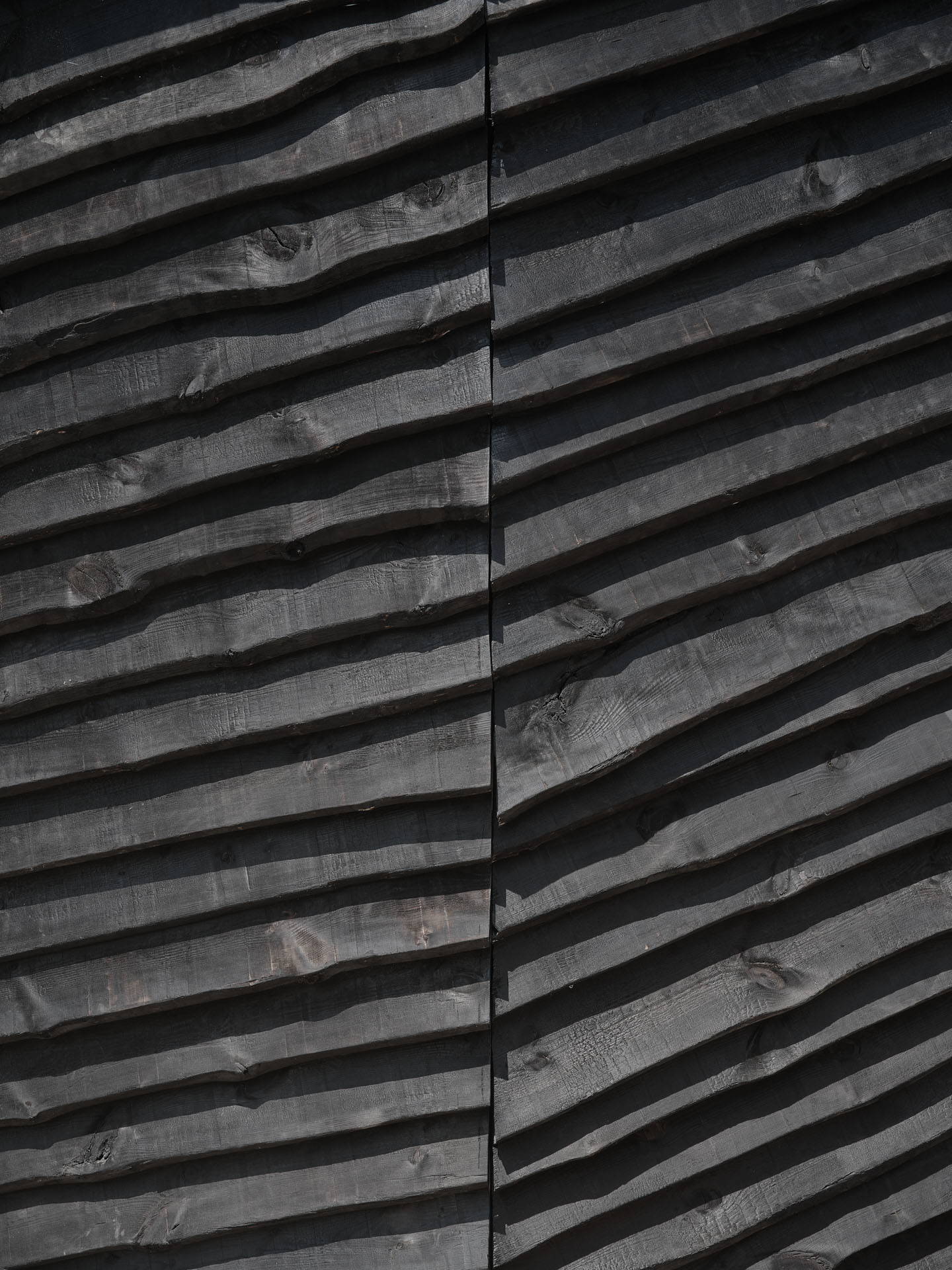
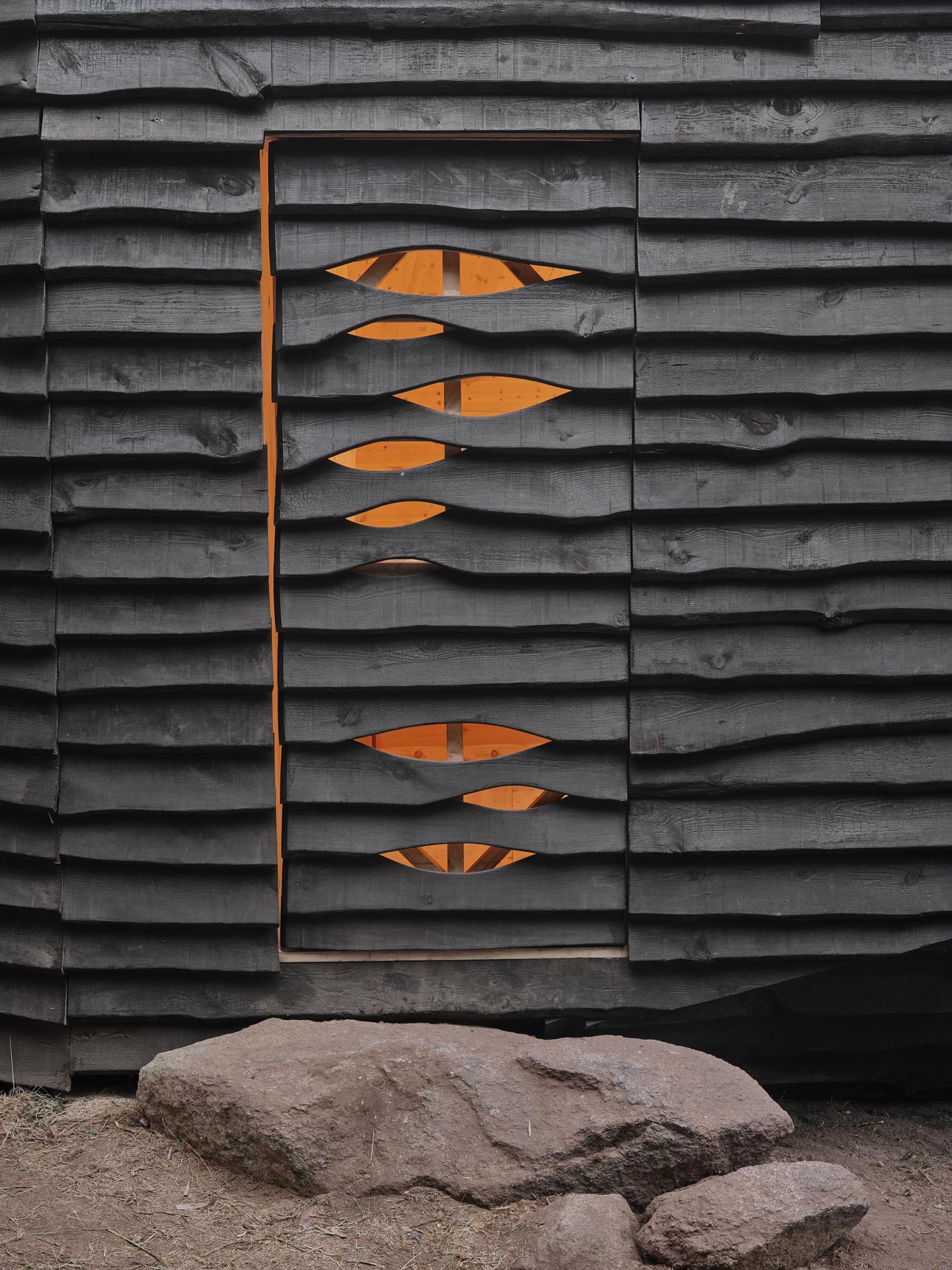
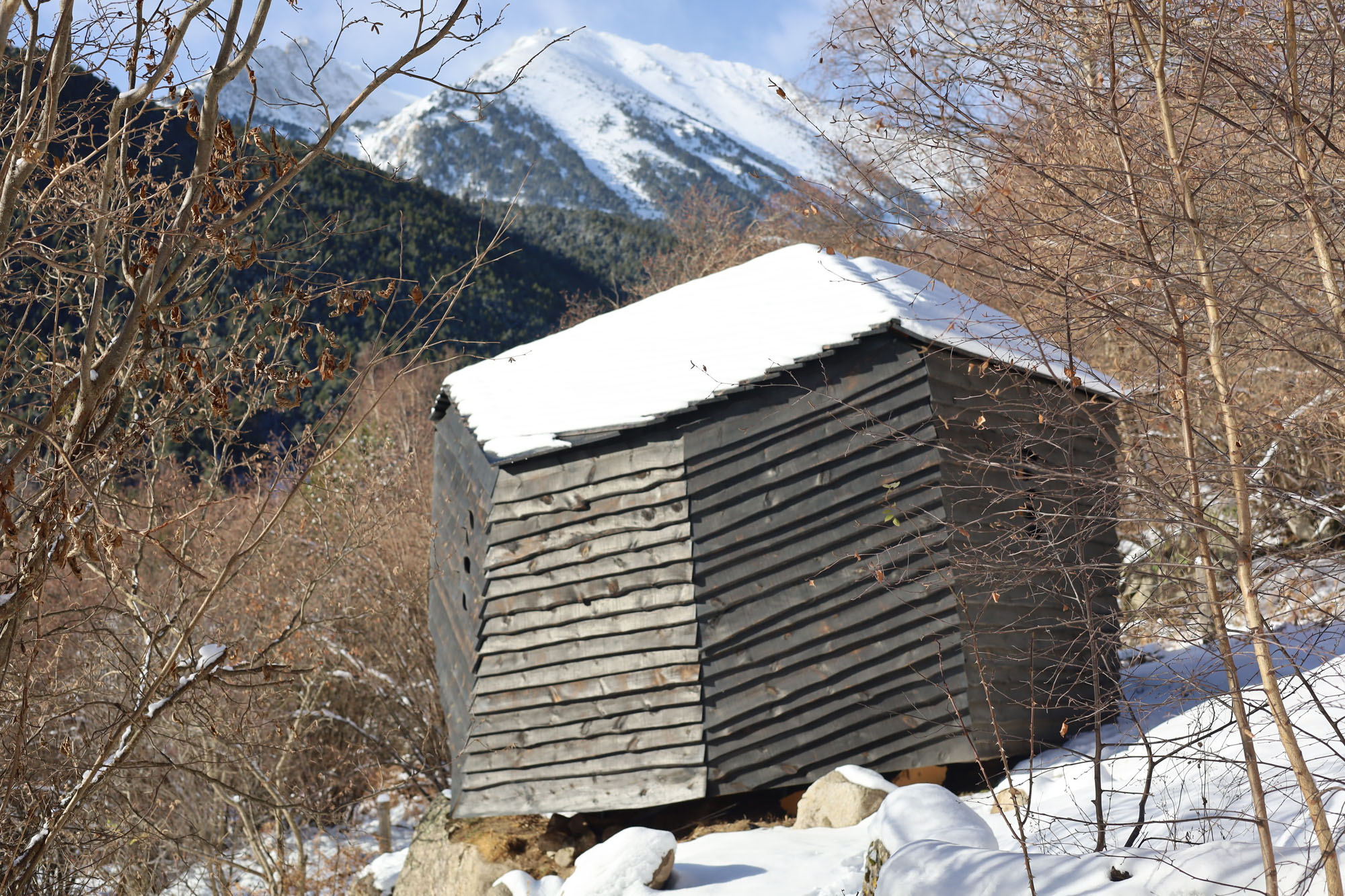
外壁は天然縁の松板で構成され、日本の焼杉技法に従って表面を焦がしている。これは木材の表層を焼くことで、虫・水・火・カビから保護する手法である。
学生たちが自ら裁断し焦がしたこれらの板は、素材の耐久性を高めるだけでなく、火の管理と予防を象徴的に喚起する。これはスペインとフランスを分ける山脈、ピレネーにおける再生林業の不可欠な側面であり、その名「ピロス(Pyros)」はギリシャ語で「火」を意味している。
©︎ Adrià Goula
森から家を創る:建築と家具を統合する木造空間
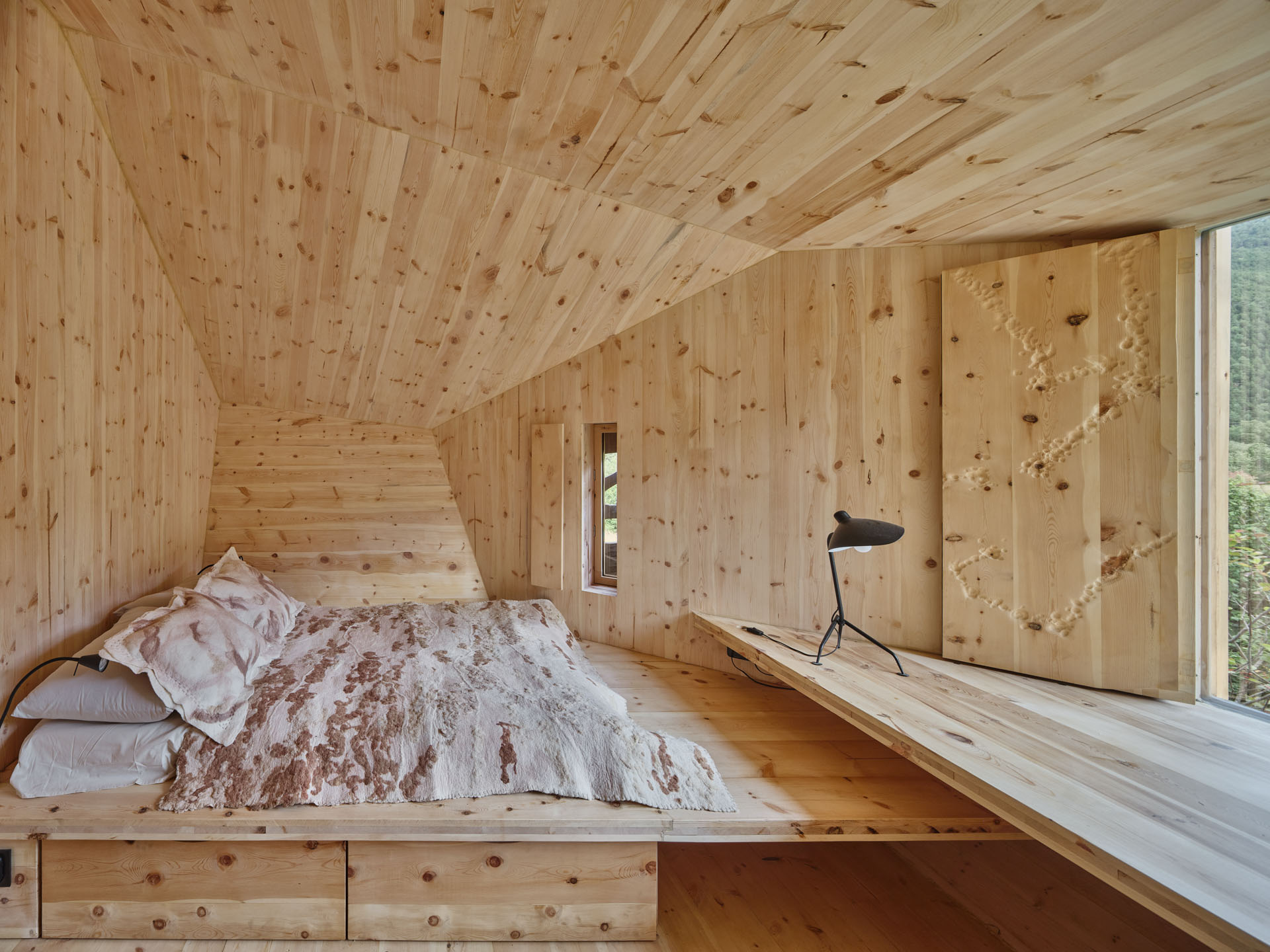
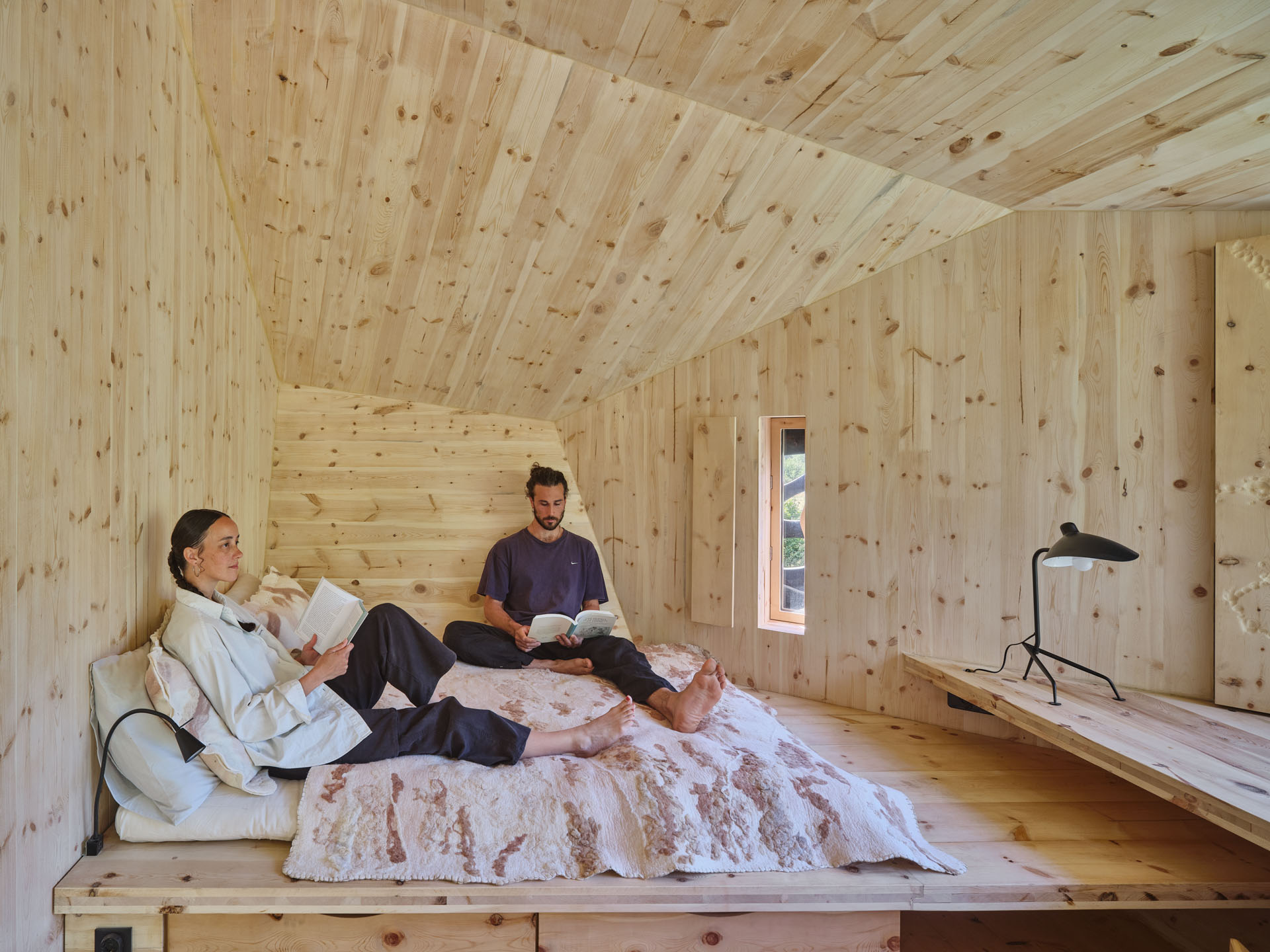
内部では、小屋は完全に統合された木造空間となる。ベッド、造り付け家具、洗面台カウンター、座席を含む特注のCLT(クロスラミネートティンバー)要素は、ヴァルダウラ・ラボの学生たちによって設計・製作された。これにより、建築、構造、家具が単一の素材システムを形成するという実践的なアプローチが強化されている。
©︎ Reuben Diamond
©︎ Reuben Diamond
羊毛と石材の活用:地域の職人技と風土の統合
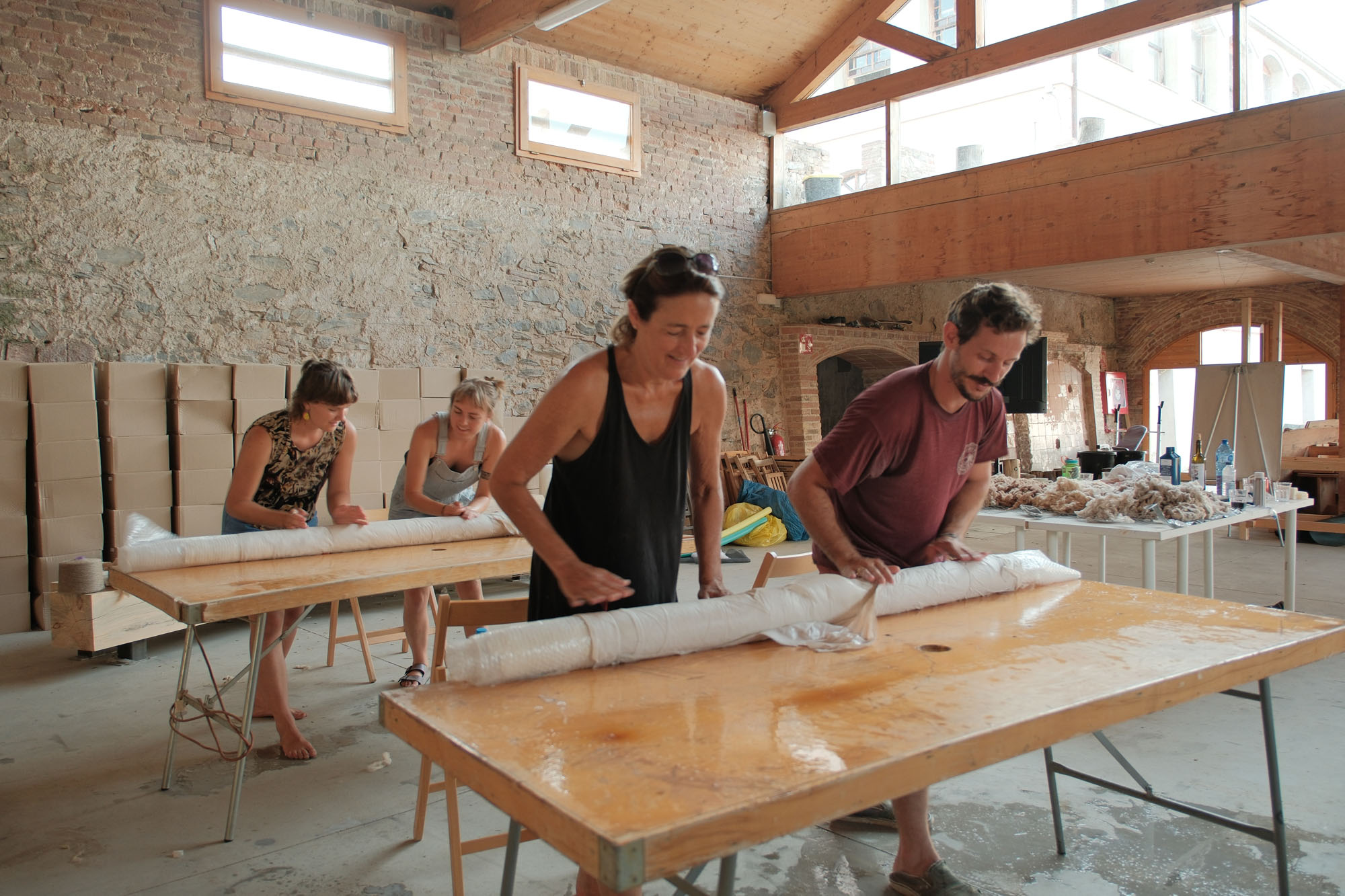
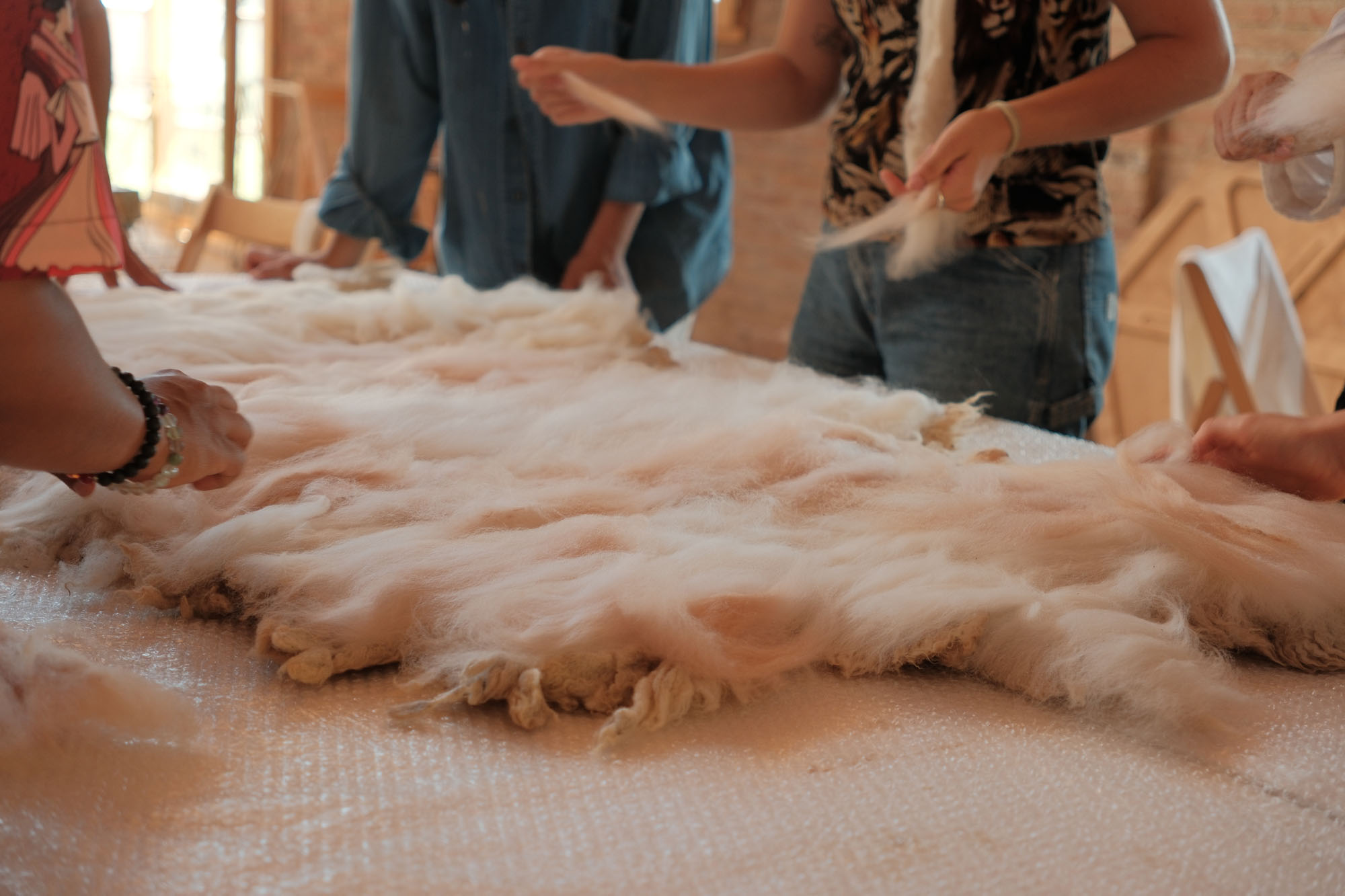
地元素材の循環は木材に留まらない。近隣のソルト町で開催される年次羊毛祭では、学生が地元農家と協力して羊毛を収集した。その後、オランダ人アーティストであるリアン・ファン・ダイクの支援のもと、バルダウラで洗浄・乾燥を経てフェルトに加工された。こうして生まれた毛布、ラグ、枕カバーがキャビンを彩り、地域の職人技と農業副産物をプロジェクトへと統合している。
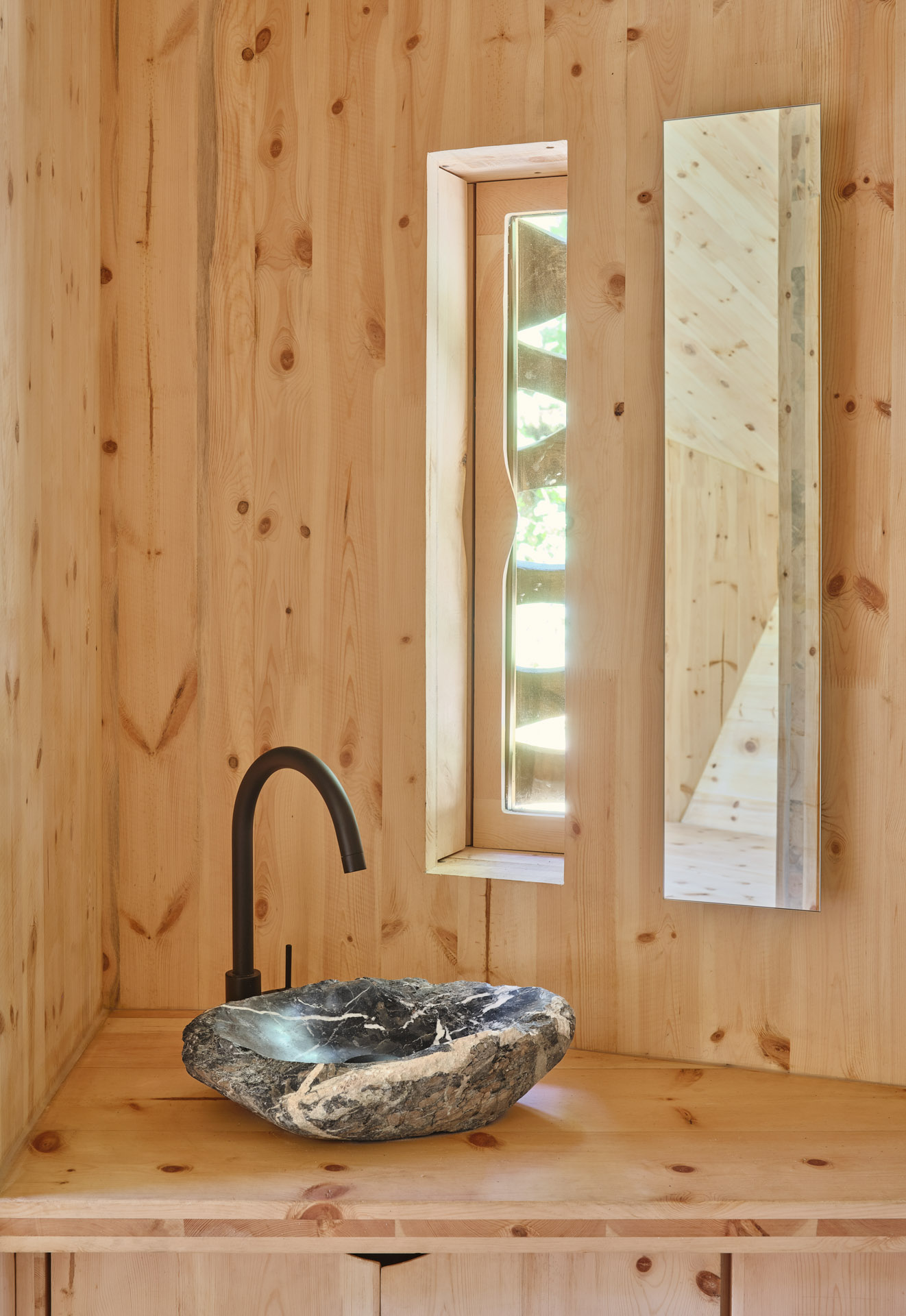
また、同じ訪問で学生たちは周辺の景観から石を持ち帰り、電動工具を用いて手作業で彫刻を施すことでユニークな洗面器を制作した。これにより、プロジェクトの地理的・文化的文脈への結びつきがさらに強固なものとなった。
©︎ Adrià Goula
環境負荷の低減と再現性:持続可能な森林居住のモデル
当初から、このプロジェクトは再現性を重視して構想された。〈フォレストーン〉は、地元の木材、地域の知見、環境負荷の低い工法を用いて小規模建築を建設し、既存の生態系を損なわずに森林景観に溶け込む方法を示すプロトタイプとして設計された。モジュール式CLT部材、乾式組立技術、現地調達材の採用により、キャビンは必要に応じて改造・複製・解体が可能なつくりとなっており、建築生産と長期的な環境保全を両立させる持続可能な森林居住のモデルを提供している。
〈フォレストーン〉は教育・地域産業・職人技・再生林業の統合を体現する。緻密なディテール、層状構造、場所との深い結びつきを通じ、地域資源・知識移転・生態系責任に基づく、敏感な景観における建築の代替手法を提案するプロジェクトである。
モンナトゥーラ・ピリネウでの宿泊体験
2026年1月より、このキャビンはプラネス・デ・ソンのモンナトゥーラ・ピリネウにて宿泊客に開放されている。訪問者はこのプロトタイプに滞在することで、景観・素材・気候との関わりを直接体験できる機会を得ることができる。
©︎ Adrià Goula
©︎ Adrià Goula
©︎ Adrià Goula
©︎ Adrià Goula
©︎ Adrià Goula
©︎ Adrià Goula
©︎ Adrià Goula
©︎ Adrià Goula
©︎ Adrià Goula
©︎ Alexander Herbig
©︎ Alexander Herbig
©︎ Alexander Herbig
©︎ Alexander Herbig
©︎ Alexander Herbig
©︎ Nina Poort
©︎ Nina Poort
©︎ Nina Poort
©︎ Nina Poort
©︎ Nina Poort
以下、IAACのリリース(英文)です。
Forestone by IAAC: an ecological shelter that helps fight wildfires in the Pyrenees• The Institute for Advanced Architecture of Catalonia (IAAC) has developed this prototype in collaboration with industrial and social entities from the Pyrenees.• The 2025 cohort of the Master in Ecological Architecture and Advanced Construction was responsible for the design and construction of Forestone Cabin, integrating hands-on fabrication and architectural research• The structure and envelope were built using locally sourced cross-laminated timber (CLT) panels and charred wood from nearby forests.• The interiors incorporate custom-made CLT furniture, local wool textiles, and a hand-carved stone washbasin, merging local craftsmanship with the building’s architecture.Barcelona, February 2026Forestone Cabin is a 20 m² experimental wooden dwelling designed and built by the 2025 cohort of IAAC’s Master in Ecological Architecture and Advanced Construction, as part of the Bio for Piri initiative. Led by the Fundació Catalunya La Pedrera and funded by the Biodiversity Foundation with European Next Generation funds, this initiative promotes regenerative forestry and the sustainable use of local timber from Pyrenean forests, specifically in Alinyà (Lleida). Located at MónNatura Sort, in the Pyrenees, the cabin sits on a sloping site just a few steps from the existing hostel, offering temporary accommodation for two people, with a sleeping area, workspace, and bathroom.A resting rock: where wood meets the PyreneesThe cabin’s sculptural form is inspired by the rocky terrain of the Pyrenees. Conceived as a block of stone that appears to have rolled down the mountain and come to rest naturally on the site, its faceted geometry is composed of inclined walls and a sloping roof that respond to programmatic needs, climatic conditions, and solar exposure. The geometry subtly adjusts ceiling heights and spatial proportions to accommodate different uses within a compact footprint, while carefully positioned openings frame views of the surrounding mountains and enable cross-ventilation. Operable wooden shutters ensure complete darkness at night, preventing light pollution and supporting the site’s astronomical activities.The exterior façade is made of pine boards with natural edges that have been charred following the Japanese Yakisugi or Shou Sugi Ban (焼杉) technique, which involves burning the surface layer of the wood to protect it from insects, water, fire, and mold. These boards, cut to size and charred by the students themselves, not only increase the durability of the material but also symbolically evoke fire management and prevention—an essential aspect of regenerative forestry in the Pyrenees, the mountain range that separates Spain and France and whose name, Pyros, comes from Greek and means fire.Forging a home from the forest: hands, fire, and woolInside, the cabin becomes a fully integrated wooden space. Custom-made CLT elements—including the bed, built-in furniture, washbasin counter, and seating—were designed and fabricated by the students at Valldaura Labs, reinforcing a hands-on approach in which architecture, structure, and furniture form a single material system.The cycles of local materials extend beyond wood. During an annual wool festival in the nearby town of Sort, students collaborated with local farmers to collect sheep’s wool, which was later washed, dried, and transformed into felt at Valldaura, with the help and support of Dutch artist Rian van Dijk. The resulting blankets, rugs, and pillowcases furnish the cabin, integrating local craftsmanship and agricultural by-products into the project. On the same visit, students brought back a stone from the surrounding landscape, which they manually carved using power tools to create a unique washbasin, further consolidating the project’s connection to its geographical and cultural context.From the outset, the project was conceived with an emphasis on replicability. Forestone was designed as a prototype demonstrating how small-scale architecture can be built using local timber, regional knowledge, and low-impact construction methods, while inhabiting forest landscapes without altering existing ecosystems. The use of modular CLT elements, dry-assembly techniques, and locally available materials allows the cabin to be adapted, replicated, or dismantled as needed, offering a model of sustainable forest habitation that aligns architectural production with long-term environmental stewardship.Forestone exemplifies the integration of education, local industry, craftsmanship, and regenerative forestry. Through its careful detailing, layered construction, and deep connection to place, the project proposes an alternative approach to building in sensitive landscapes, grounded in local resources, knowledge transfer, and ecological responsibility.From January 2026, the cabin is open to guests at MónNatura Pirineu, in Planes de Son, offering visitors the opportunity to inhabit the prototype and experience firsthand its relationship with the landscape, materials, and climate.About IAACThe Institute for Advanced Architecture of Catalonia (IAAC) is a center for research, education, production, and dissemination, based in Barcelona with more than 20 years of experience. Its goal is to envision the future habitat of our society and build it in the present. IAAC supports the digital revolution at all scales to expand the boundaries of architecture and design and to address the challenges facing humanity. It is an experimental center where learning takes place through doing, using a trial-based methodology that fosters the development of real-world solutions.About Master in Ecological Architecture and Advanced ConstructionThe Institute for Advanced Architecture of Catalonia (IAAC) Valldaura Labs and its Master’s program in Ecological Architecture and Advanced Construction are engaged in the learning and development of ecological projects, parametric design techniques, and the processing of locally sourced materials. Founded on the principle of a circular bioeconomy, Valldaura Labs is known for its interest in exploring the boundaries of self-sufficiency and seeking to meet essential human needs, such as food, energy, and everyday use objects. In the previous years, students built the acclaimed projects, the Niu Haus, the VOXEL Quarantine Cabin, the Solar Greenhouse, FLORA, MOCA, and now CORA.PROJECT CREDITS:Direction:Vicente Guallart, Daniel Ibañez, Michael SalkaDeveloped by:
The students of the Masters programme in Ecological Architecture and Advanced Construction, 2024/25 class:
Alexander Bruce Herbig, Ateet Singh, Atticus Cummings, Breno Teixeira Martinelli, Dammes de Zoeten, Georgia Ann Hoyer, Isabel Flores, Jasper Runge, Magdalena Kurdzialek, Nina Poort, Pragyna Madhav Thondapu, Reuben Diamond, Shivani Edukulla, Shanon Shahan, Santosh Shyamsundar, Sipan Celiker SporidisHost: Mon Natura Pirineus, Fundació Catalunya la PedreraValldaura Management: Laia PifarréProject Coordination: Esin AydemirAssisted by: Bruno Ganem, Oliver Needham, Alkis AvarkiotisStructural assembly: Fustes Sebastia ( Sergi Sebastia, Emma Sebastia Sarroca, Estel Arnal Llunell) y Tallfusta (Ignasi Caus, David Valldeoriola)Advised by: Miquel Rodriguez, Elena Orte, Guillermo Sevillano , Firas Safieddine, Rian van DijkWith the support of: Fundació Catalunya-La PedreraVolunteers: Andrew Cardona, Grace Yang, Maeve Daley, Sam HoshinPhotography: Adrià Goula, Alexander Herbig (Autumn series), Nina Poort (Winter series)Drawings and diagrams: IAAC Students of Master in Ecological Architecture and Advanced ConstructionCommunication: Pati Nuñez Agency
IAAC 公式サイト
https://iaac.net