
アースブロックで実現するパッシブデザイン - フランシス・ケレによる、地元の資源と技術を結集した教育と交流の拠点〈ゲーテ・インスティトゥート・ダカール〉
©︎ Iwan Baan
セネガルの首都ダカールに建つ〈ゲーテ・インスティトゥート・ダカール(Goethe-Institut Dakar)〉は、ドイツの国際文化交流機関の新たな拠点です。
プリツカー賞建築家フランシス・ケレ(Francis Kéré)率いるケレ・アーキテクチャ(Kéré Architecture)が設計を手掛けた本施設は、同機関の75年にわたる歴史において初めて専用設計された語学教育および文化交流のための施設となっています。
注目ポイント
- 建物の大部分を構成する地元調達の「圧縮アースブロック」
- 通気性と軽やかさをもたらす、透かし積みによる半透明の外装
- パッシブデザインを体現するキャノピー屋根
- 現地のステークホルダーとの協働プロセスとしての建築実践
(以下、ケレ・アーキテクチャから提供されたプレスキットのテキストの抄訳)
©︎ Iwan Baan
©︎ Iwan Baan
ケレ・アーキテクチャによる〈ゲーテ・インスティトゥート・ダカール〉がオープン
ダカール拠点は、ゲーテ・インスティトゥートの75年にわたる世界的な歴史において、初めて専用に建設された施設である。
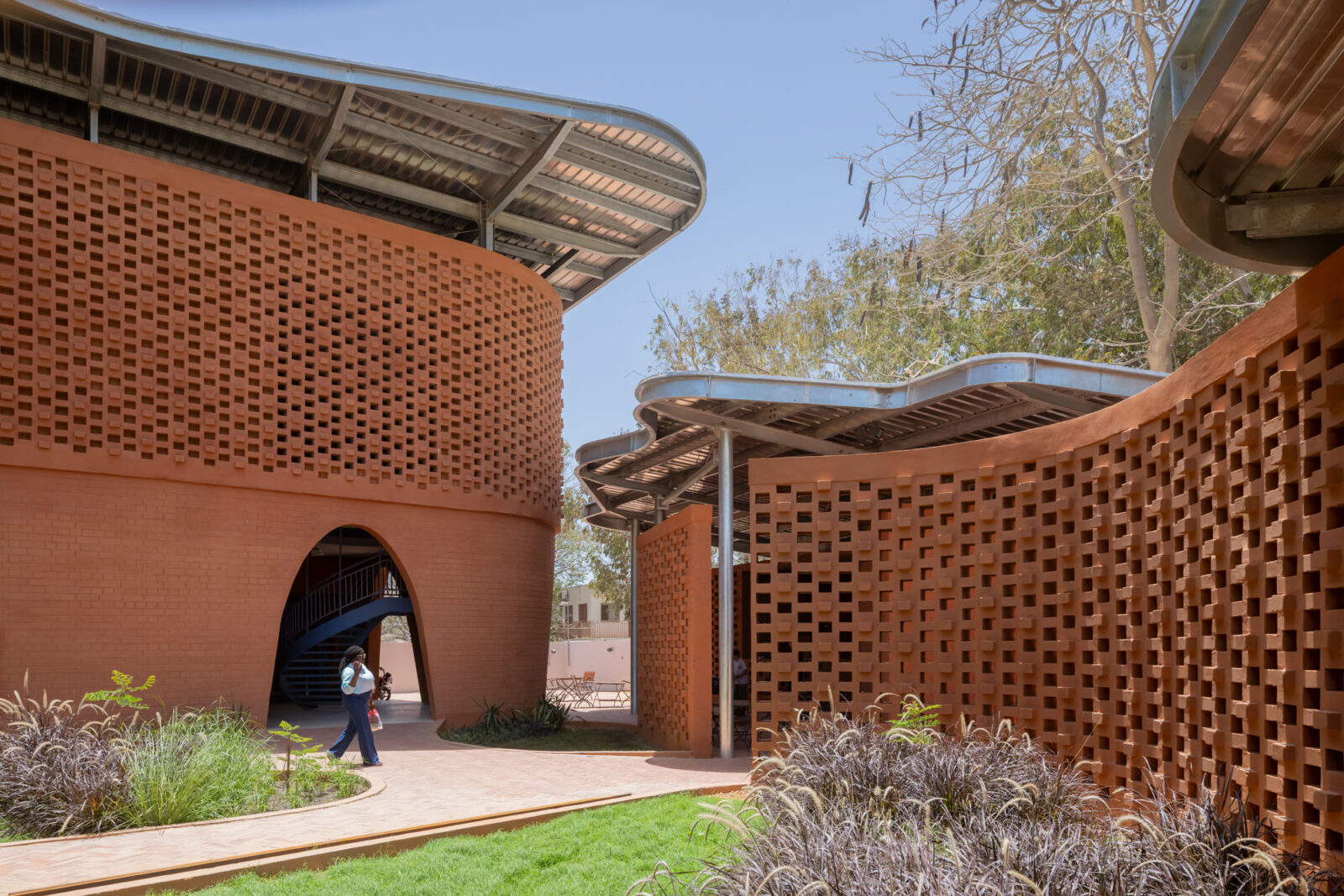
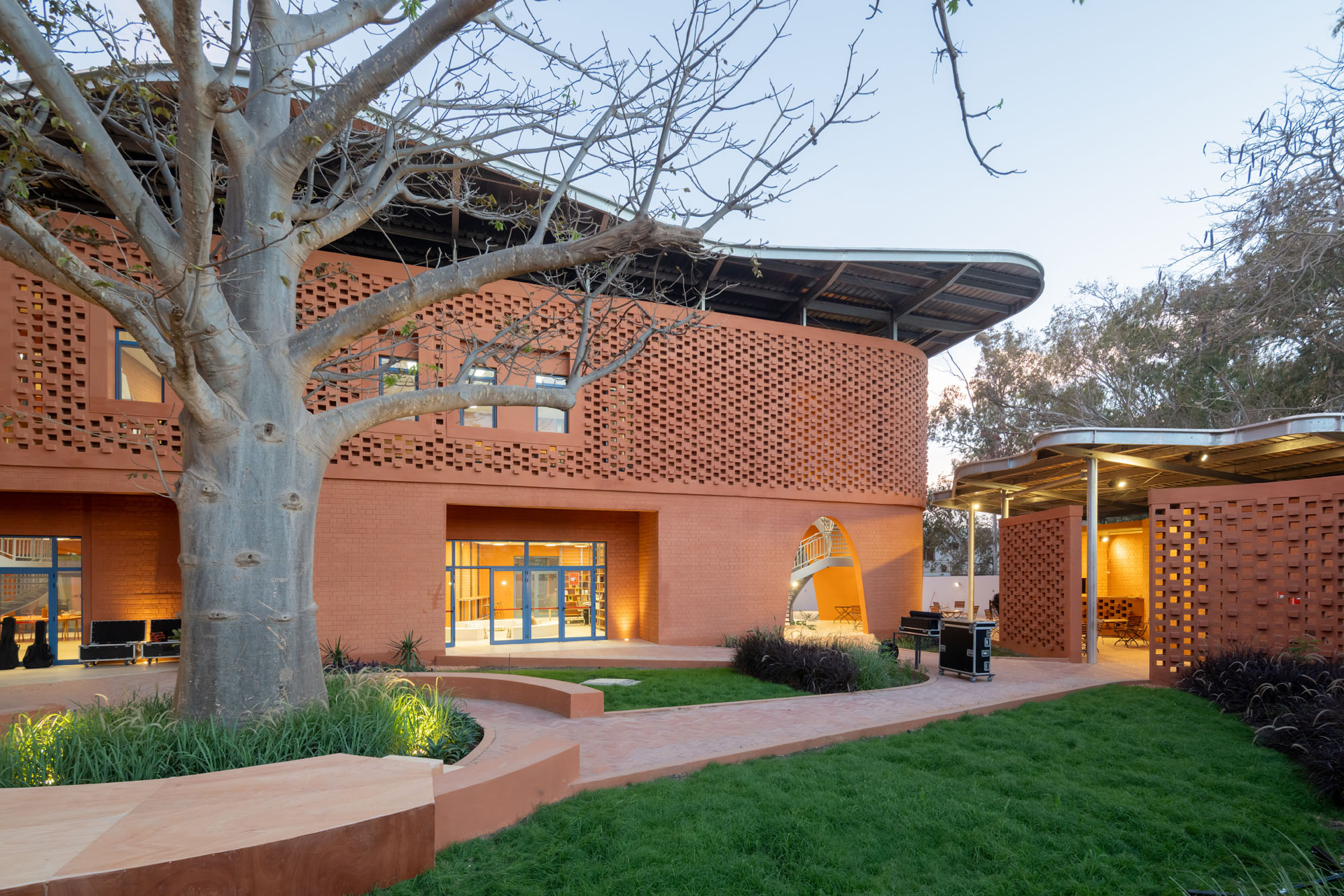
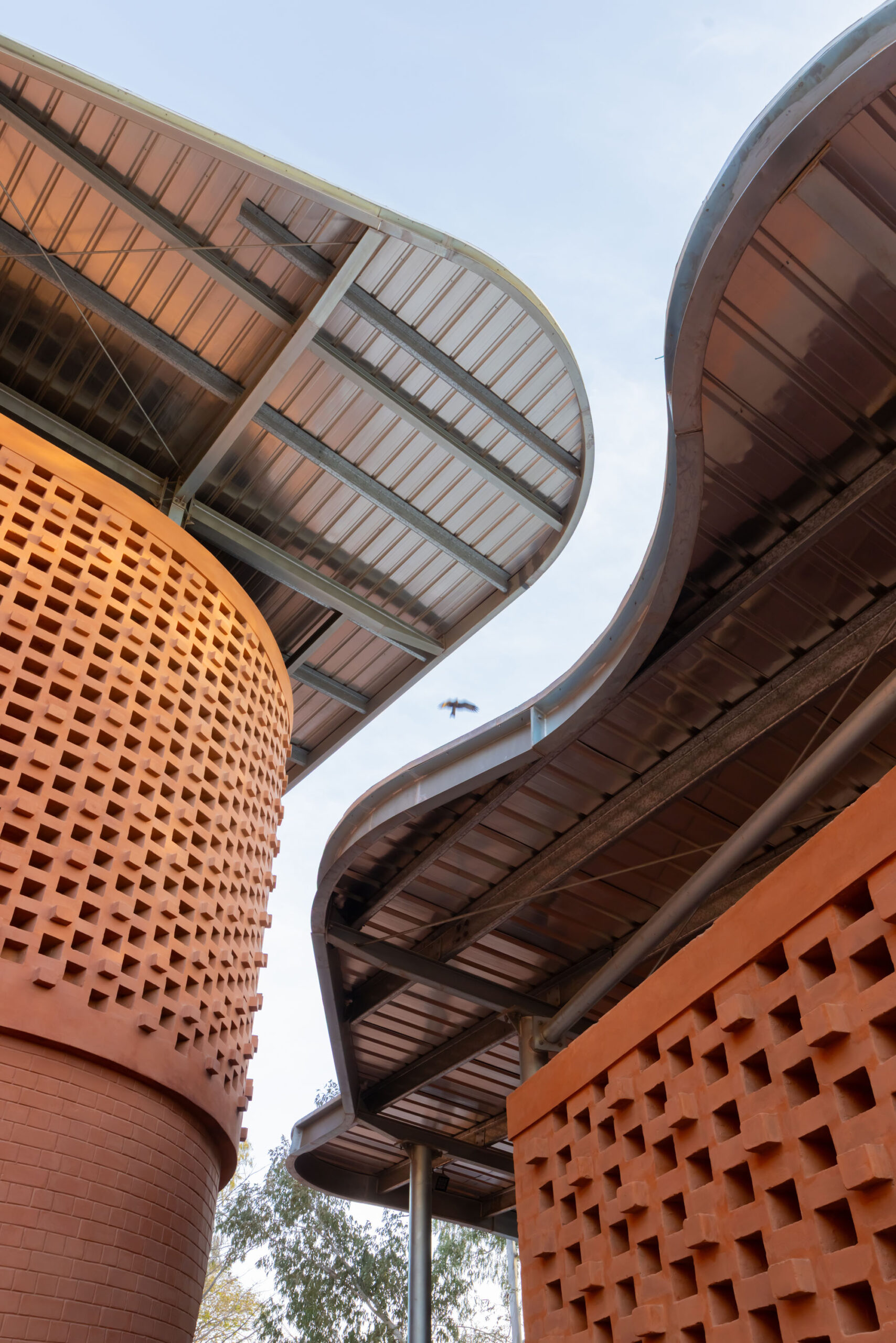
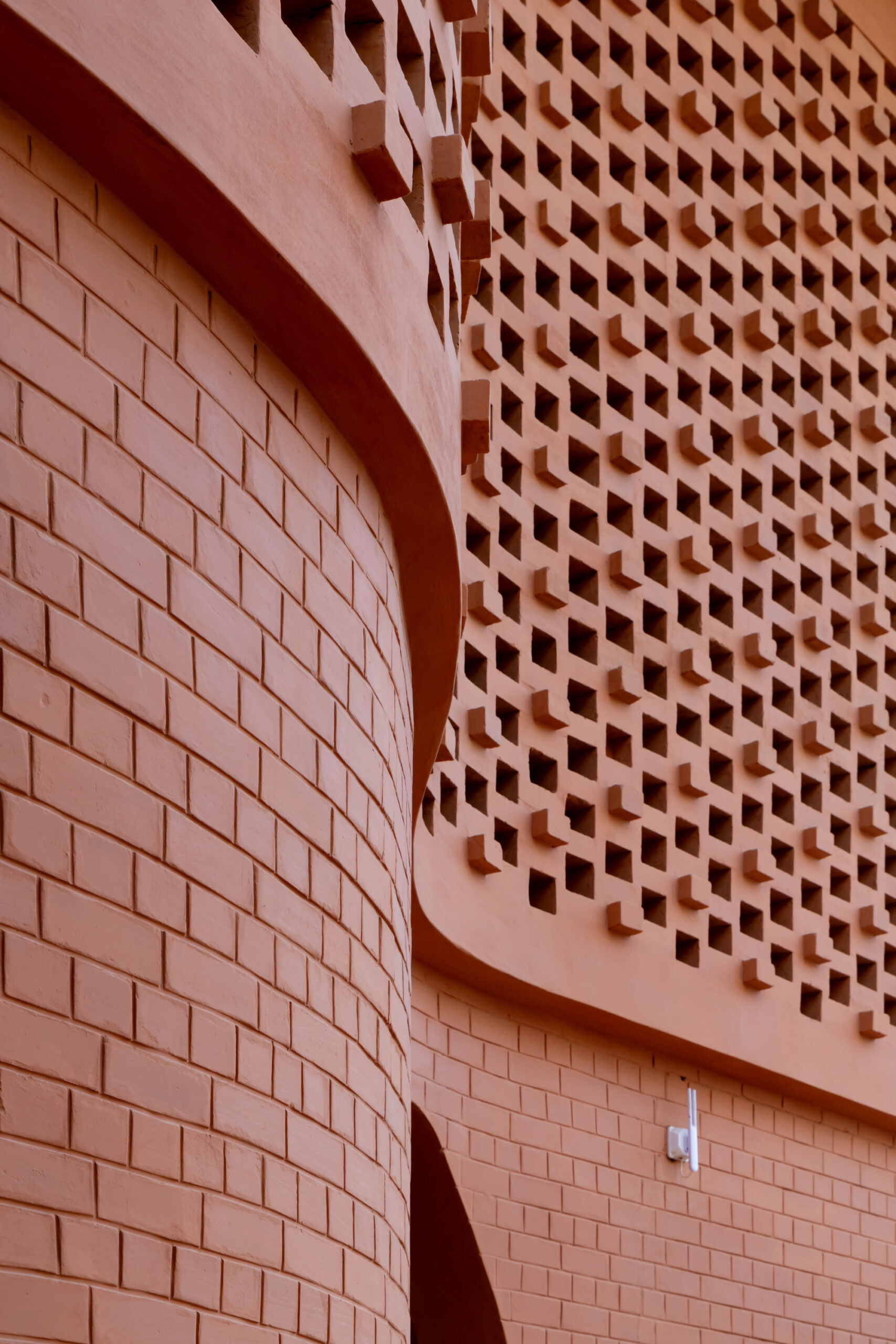
このプロジェクトでは、建物の大部分に、周辺地域から調達した圧縮アースブロックがふんだんに使用されている。
圧縮アースブロック(Earth Blocks、Compressed Earth Blocks):土などを機械により高圧で圧縮し成形するブロック。また、セメントなどで安定化されている場合にはCSEB(Compressed Stabilized Earth Blocks)とも呼ばれる。
©︎ Iwan Baan
©︎ Iwan Baan
歴史ある文化交流機関初となる専用設計された拠点
ドイツの国際文化交流機関「ゲーテ・インスティトゥート(Goethe-Institut)」は、ケレ・アーキテクチャが設計したダカールの新拠点をオープンした。
2026年4月18日に行われた公式開所式には、セネガル文化・工芸・観光大臣のアマドゥ・バ(Amadou Ba)閣下、ドイツ連邦外務省のセラップ・ギュレル(Serap Güler)国務大臣、 ドイツ連邦外務省文化社会局長のクリスティーナ・ベインホフ(Christina Beinhoff)氏、ドイツ駐セネガル・ギニアビサウ大使のカイ・バルドウ(Kai Baldow)閣下、ゲーテ・インスティトゥートのゲシェ・ヨスト(Gesche Joost)会長、および〈ゲーテ・インスティトゥート・ダカール〉所長のステファニー・ペーター(Stefanie Peter)博士が出席した。
75年以上にわたり世界中で活動してきたゲーテ・インスティトゥートは、その歴史上初めて、コンセプトから建設に至るまで専用施設の設計を委託した。西アフリカにおける主要拠点の1つとしてケレ・アーキテクチャを選定したことは、21世紀における文化交流の在り方を定義しようとする〈ゲーテ・インスティトゥート・ダカール〉の強い意欲を反映している。
©︎ Iwan Baan
©︎ Iwan Baan
周辺環境と調和するランドスケープと建築デザイン
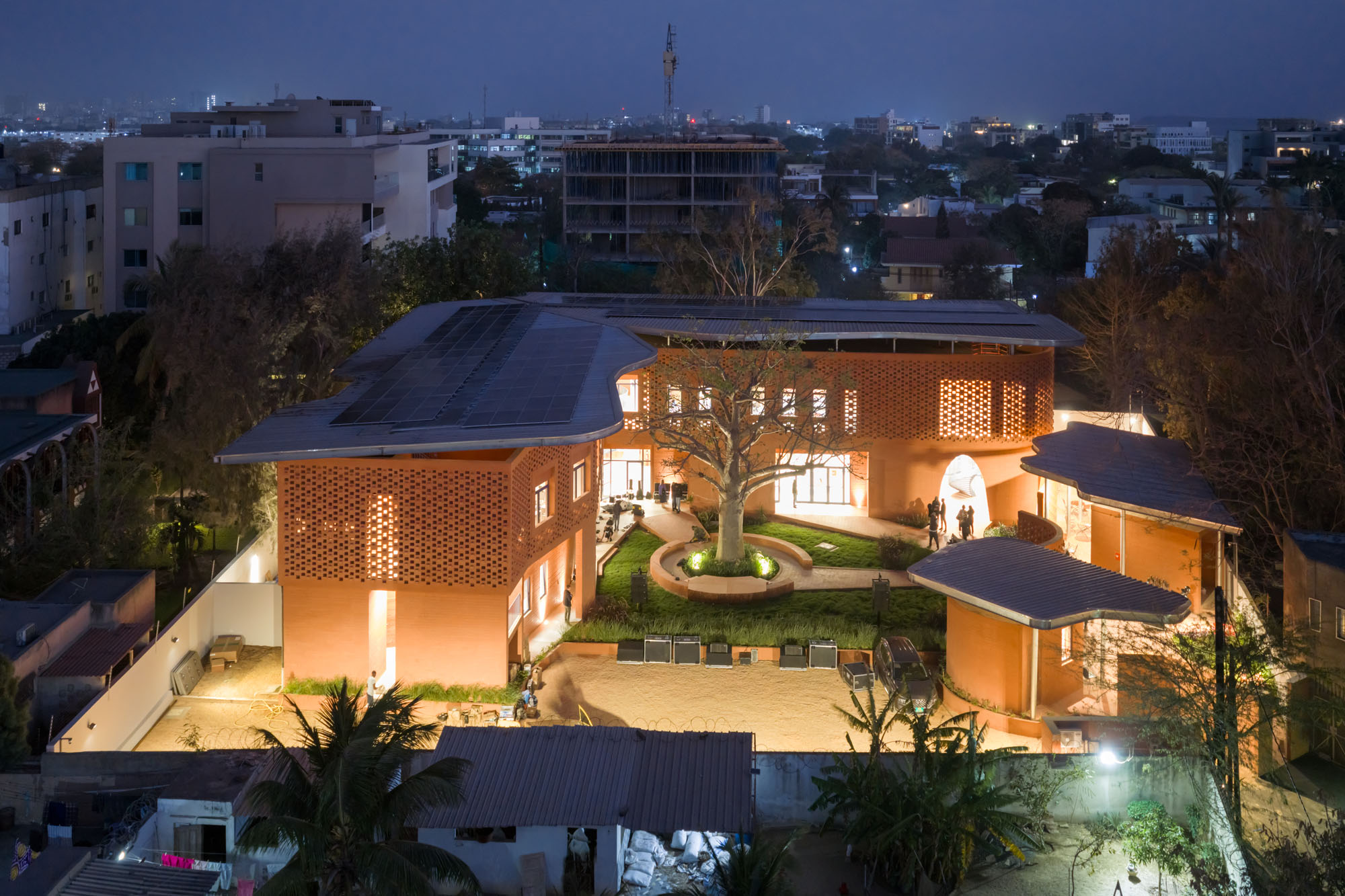
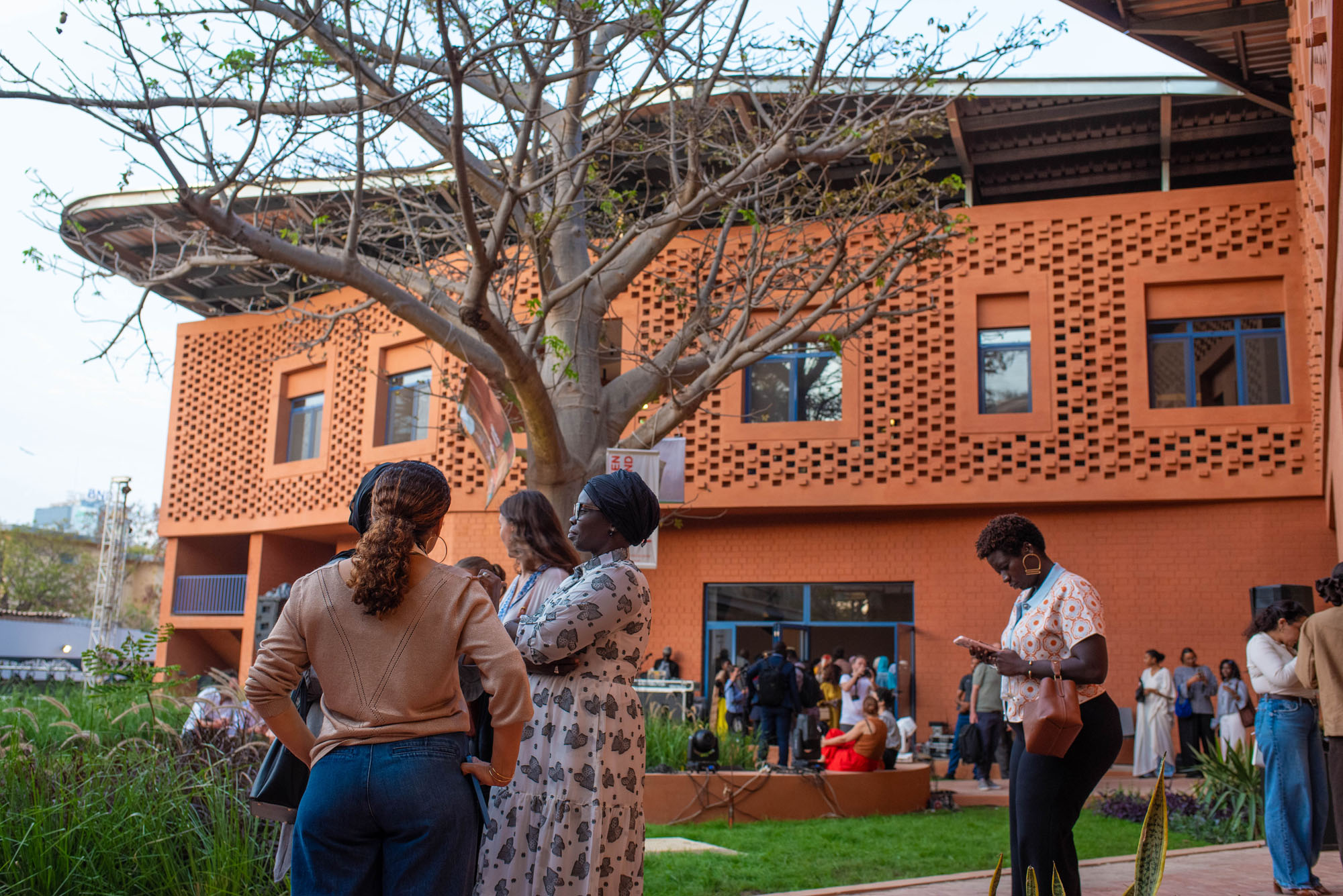
建物はダカールの住宅街に位置し、緑豊かな庭園に囲まれている。ケレ・アーキテクチャの設計は、隣接する〈レオポルド・セダール・センゴール博物館〉を含む近隣環境への配慮と、展覧会、語学講座、コンサート、そしてカジュアルな集まりを主催する多忙な文化機関としての要件とを見事に両立させている。
建物のコンパクトな2階建ての形状は、長年この敷地に生い茂る木々の樹冠の輪郭をなぞるように形成された。そのボリュームそのものがシールドの役割を果たし、近隣住民を騒音から守りつつ、来訪者を通りの交通騒音から遮断している。
©︎ Iwan Baan
地元素材の活用:通気性と軽やかさをもたらす圧縮アースブロック
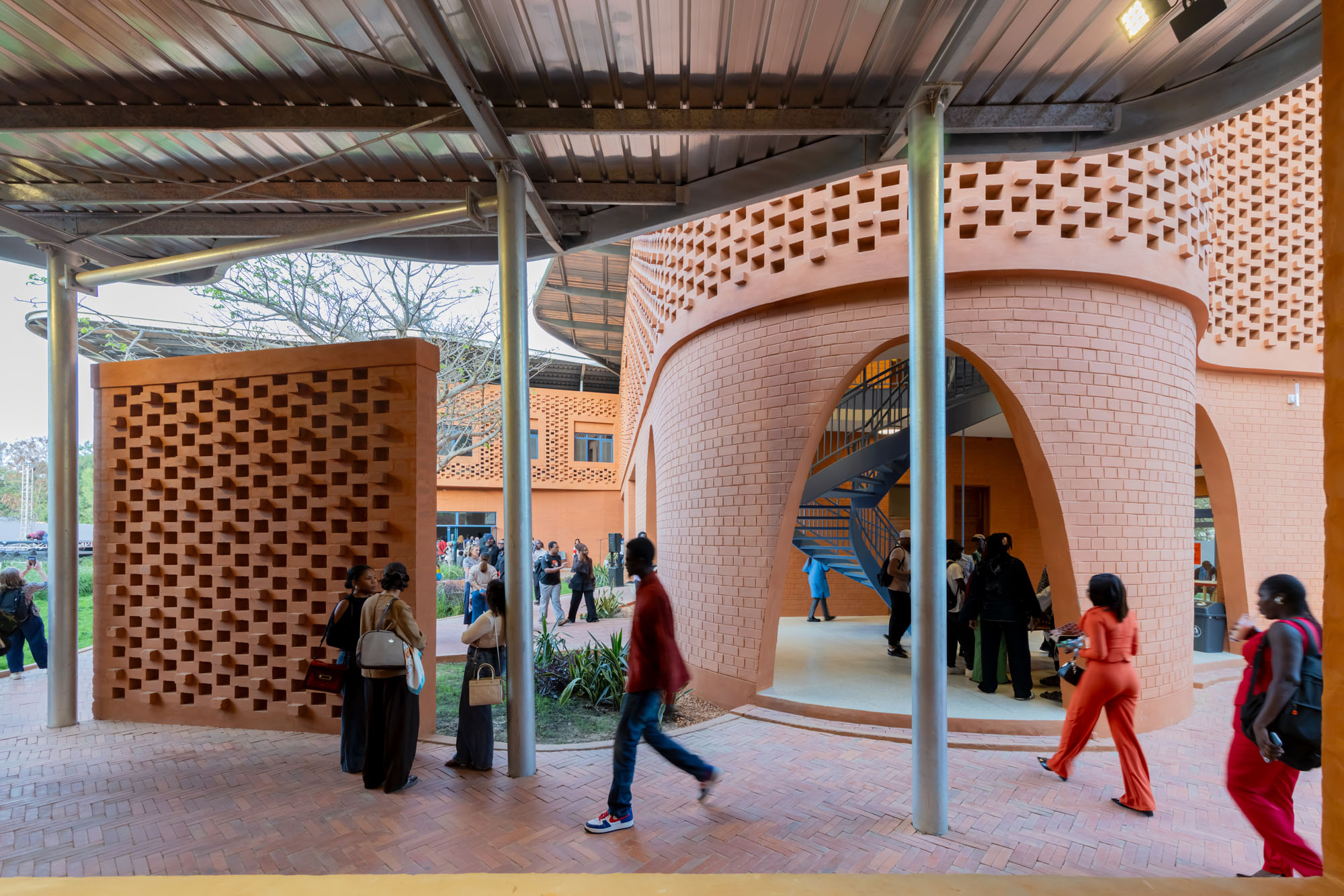
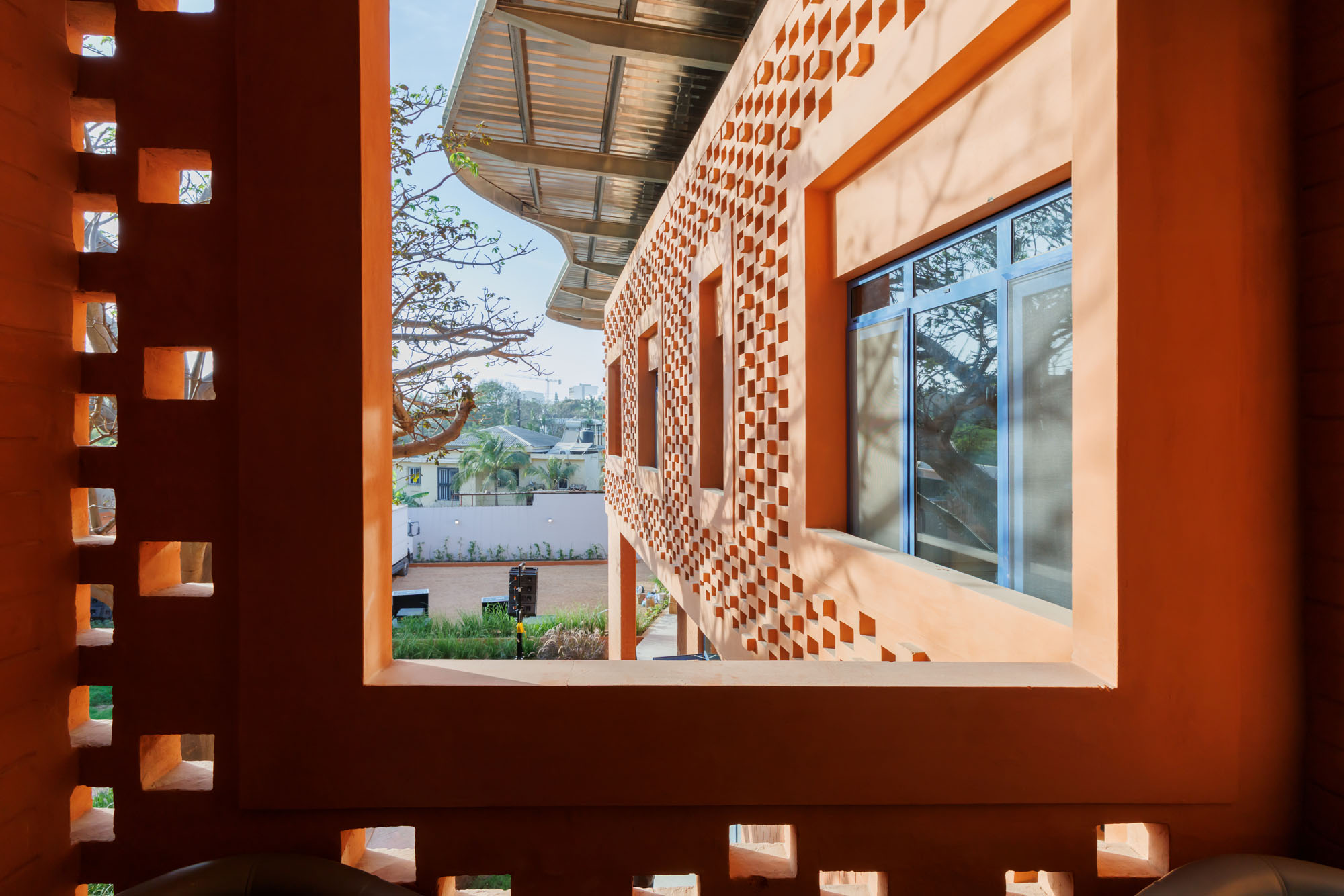
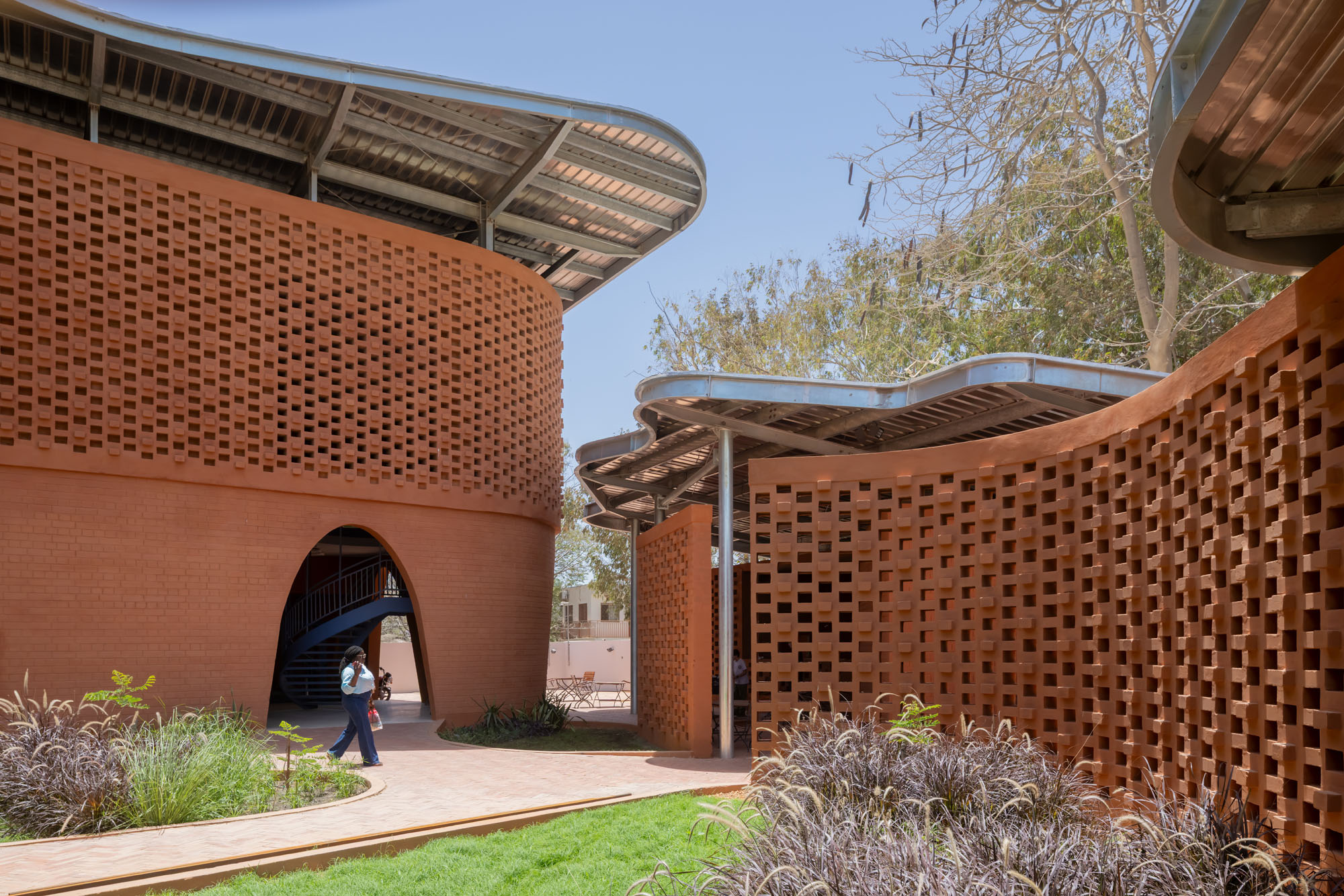
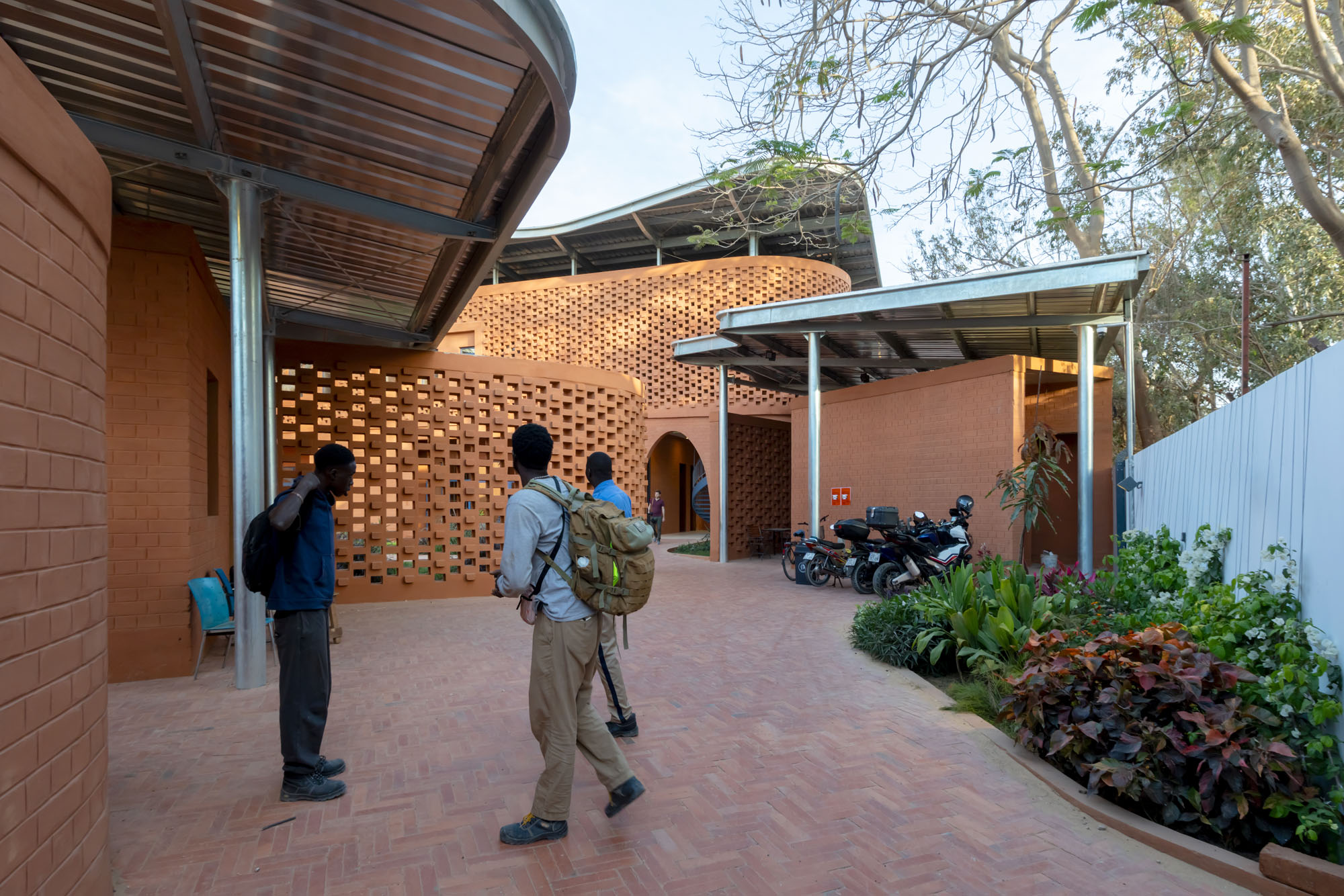
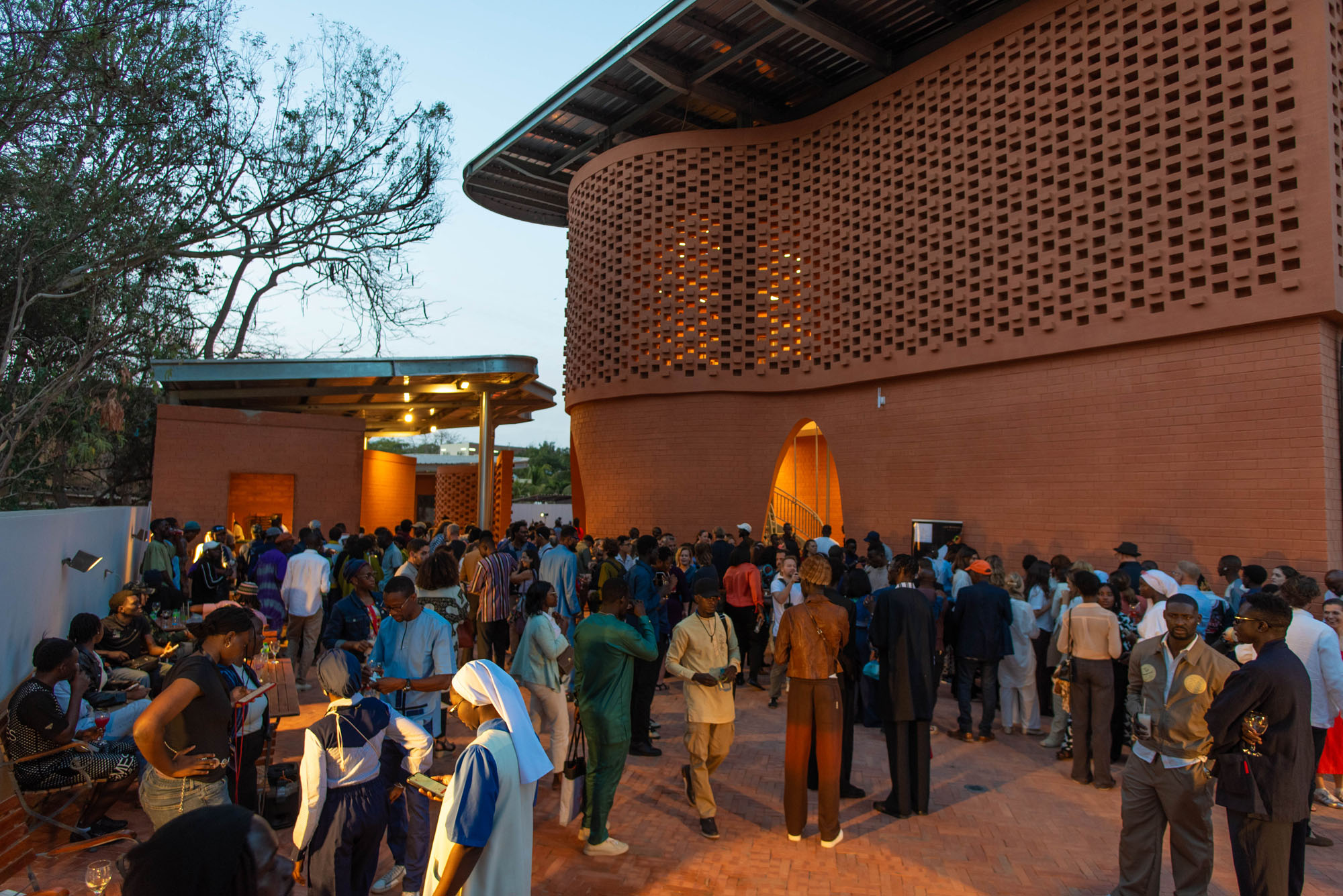
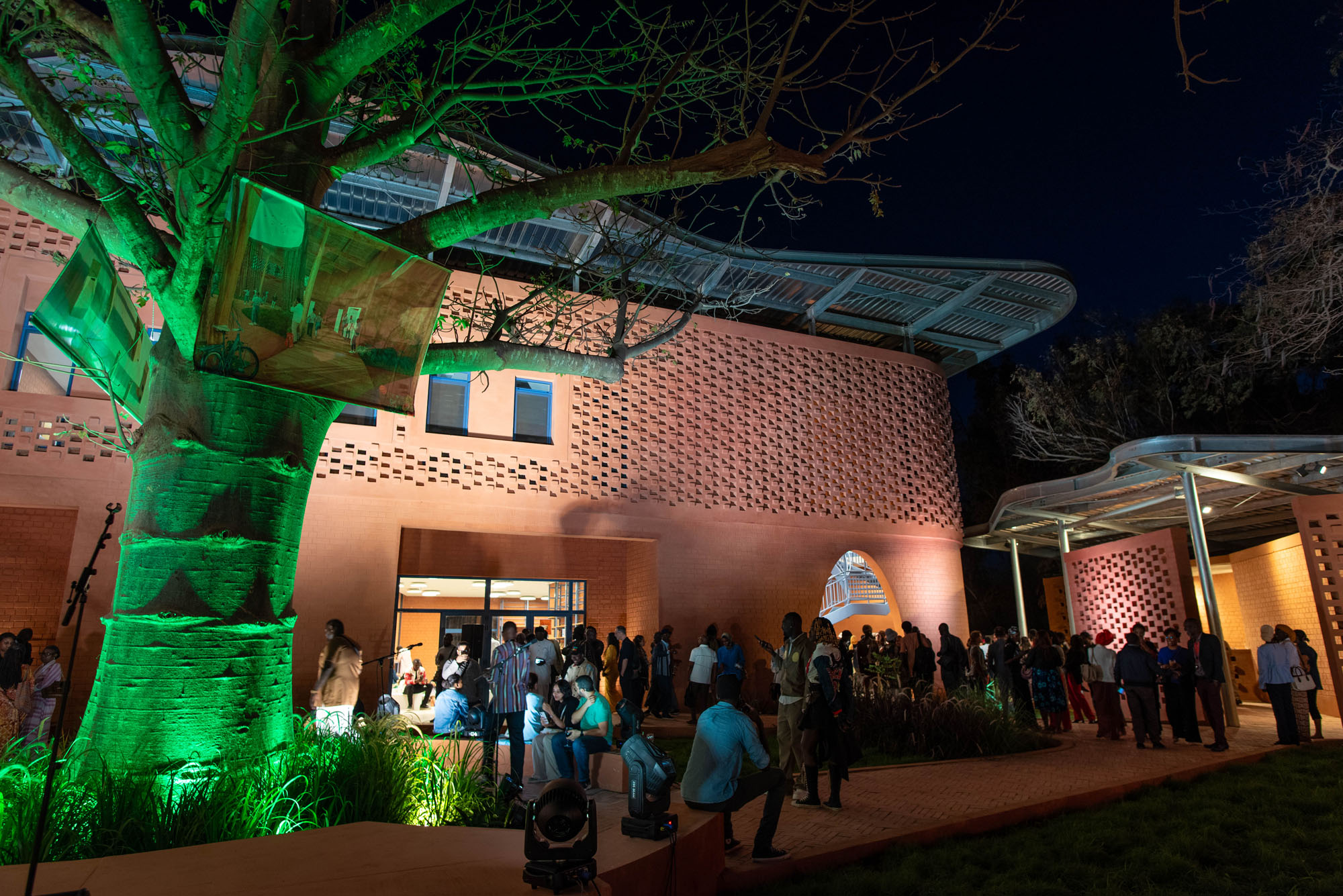
構造体には、現地で調達された圧縮アースブロックが採用されている。このブロックは耐力壁や間仕切り壁としてだけでなく、建物に軽やかで通気性のある外観を与える半透明の外装材としても使用されている。
こうした地元素材へのこだわりは、その地域ですでに利用可能な資源や技術を用いて建築を行うという、ケレ・アーキテクチャの広範な実践理念と本プロジェクトを強く結びつけている。
©︎ Iwan Baan
©︎ Iwan Baan
サステナビリティを体現する空間構成とキャノピー屋根
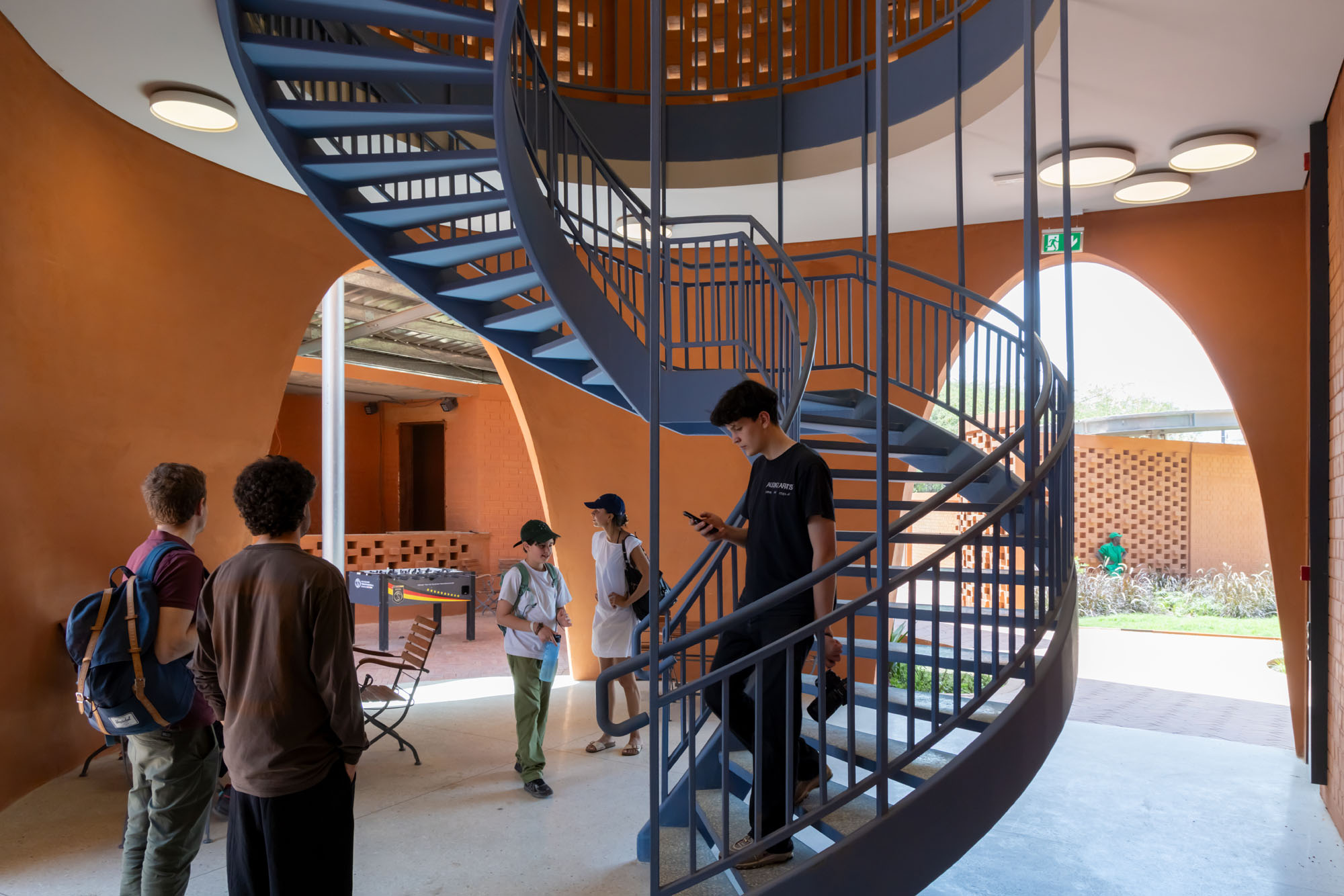
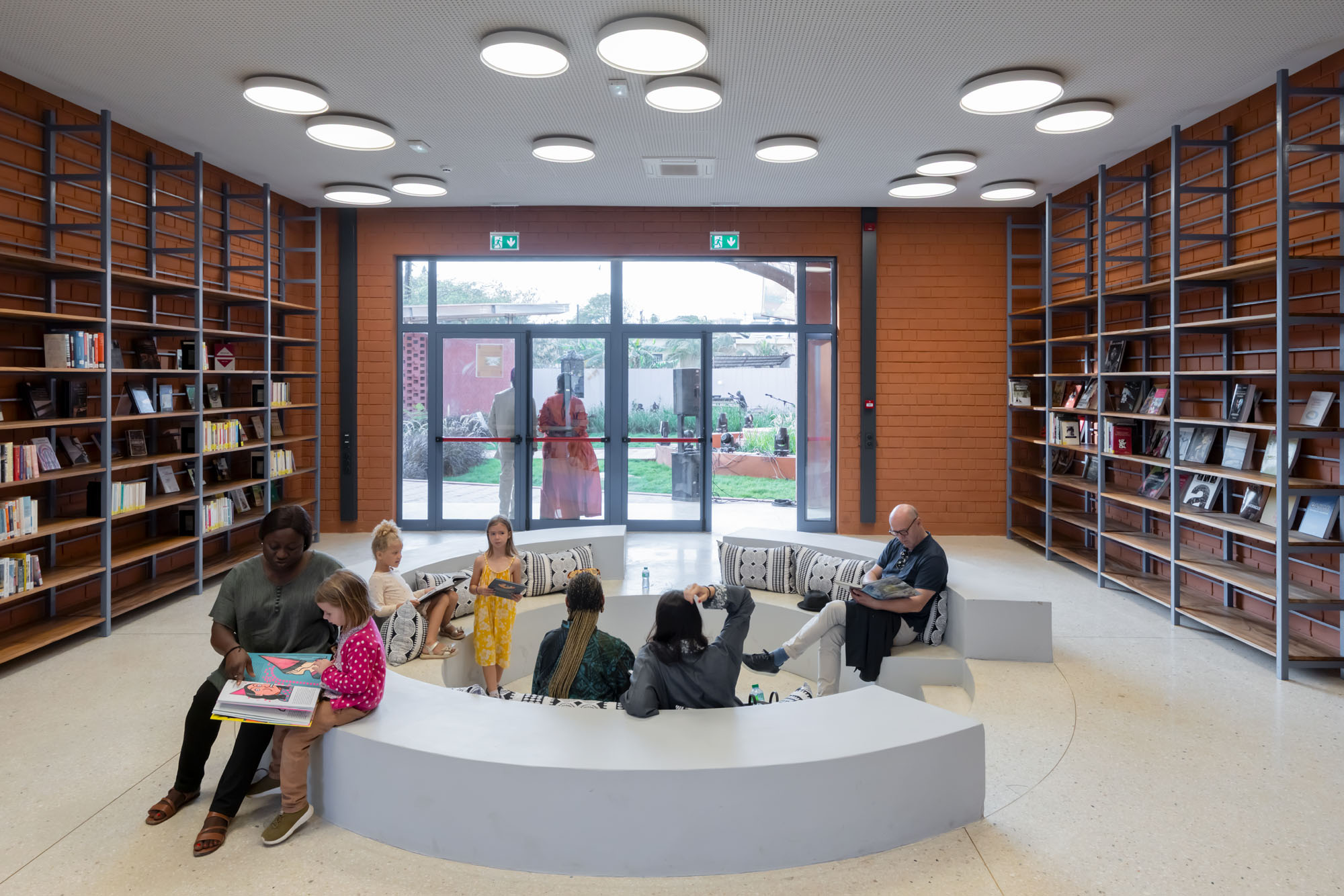
公共プログラムは1階に集中しており、講堂、カフェテリア、図書館が配置されている。続く2階には、事務室と教室が配置されている。建物の頂部を覆うキャノピー屋根は、全階層に日陰を提供し、断熱性能を高めるとともに、内部を雨から守りつつ、眼下に広がる木々や庭園の自然で有機的なフォルムを反映している。
全階層において、この設計は持続可能なアプローチを優先しており、建物が物理的に占有する空間を超えて、環境への負荷を最小限に抑えるよう配慮されている。
©︎ Jean-Baptiste Joire, courtesy of Goethe-Institut Dakar
関係者からのメッセージ:建築が切り拓く新たな文化交流
「この新館により、ゲーテ・インスティトゥートは西アフリカにおける文化協力の中核的な役割をさらに強固なものにする。新施設は、語学教育、展覧会、芸術的実験のためのさらなる空間を提供する。しかし同時に、象徴的な意味でも新たな空間、すなわち、ダカールの活気ある文化シーンと密接に結びついた新たな対話の場を創出するのである。当機関として、フランシス・ケレ氏と共にこの道を歩み始めることを誇りに思う。」
ゲーテ・インスティトゥート会長
ゲシェ・ヨスト(Gesche Joost)
「私たちは『セネガルとドイツの間、西アフリカとヨーロッパの間の真の協力とは、実際には何を意味するのか?』という問いを指針としている。そして、この挑戦的な分野において、最初の『翻訳』の役割を果たせるのは、建築そのものなのかもしれない。このプロセスでは、建築家、エンジニア、建設作業員、機関、そして地元のステークホルダーが共に働く。交渉、仲介、そして長期的な協力を通じて生まれるものとしての建築。この視点から見れば、私たちの新しい建物は、ダカールにおけるゲーテ・インスティトゥートの今後の活動の指針となる星となるだろう。」
ゲーテ・インスティトゥート・ダカール所長
ステファニー・ペーター博士(Dr. Stefanie Peter)
「私が最初に手がけた建築は学校であった。私は常に、人々が学びに来る場所には出会いもあると理解してきた。そして、人々が出会う場所こそが、文化が生まれる場所なのである。ゲーテ・インスティトゥートは、世界中で出会いと学びを促進する空間を創出するために存在している。同機関にとって初となる専用施設を設計することは、私が真剣に受け止めている責任である。アフリカ大陸の偉大な文化都市の1つであるダカールにおいて、私はこの建物を、開放的で安全であり、地に足をつけつつも柔軟で、そして生き生きとしたものにしたいと考えた。」
ケレ・アーキテクチャ創設者
フランシス・ケレ
©︎ Jean-Baptiste Joire, courtesy of Goethe-Institut Dakar
©︎ Jean-Baptiste Joire, courtesy of Goethe-Institut Dakar
多様なコミュニティに開かれた未来の拠点
完成したこの施設は、ダカールの多様なコミュニティにとって、温かく迎え入れ、多目的に活用できる拠点となることを目指している。セネガルの首都がもつ重層的な文化の歴史を尊重しつつ、幅広い人々に門戸を開き、共有され、包摂的な未来を共に形づくる場となることが期待されている。
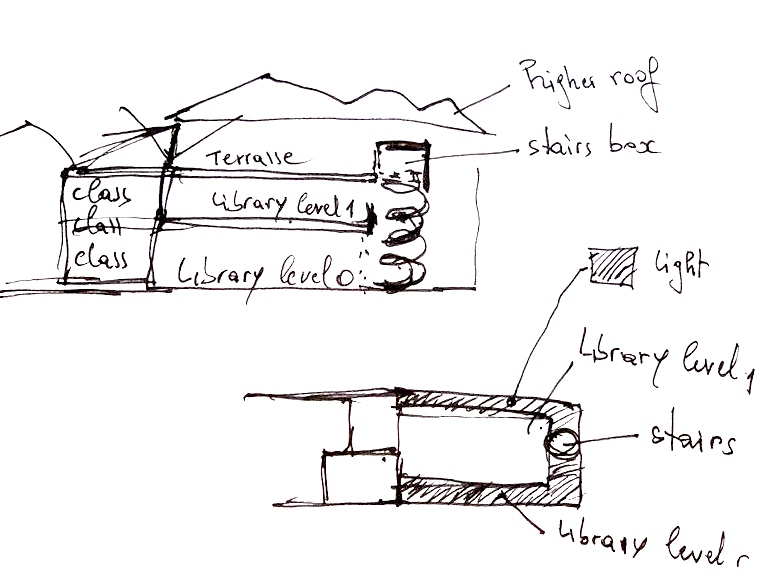
Sketch by Francis Kéré of classrooms and library
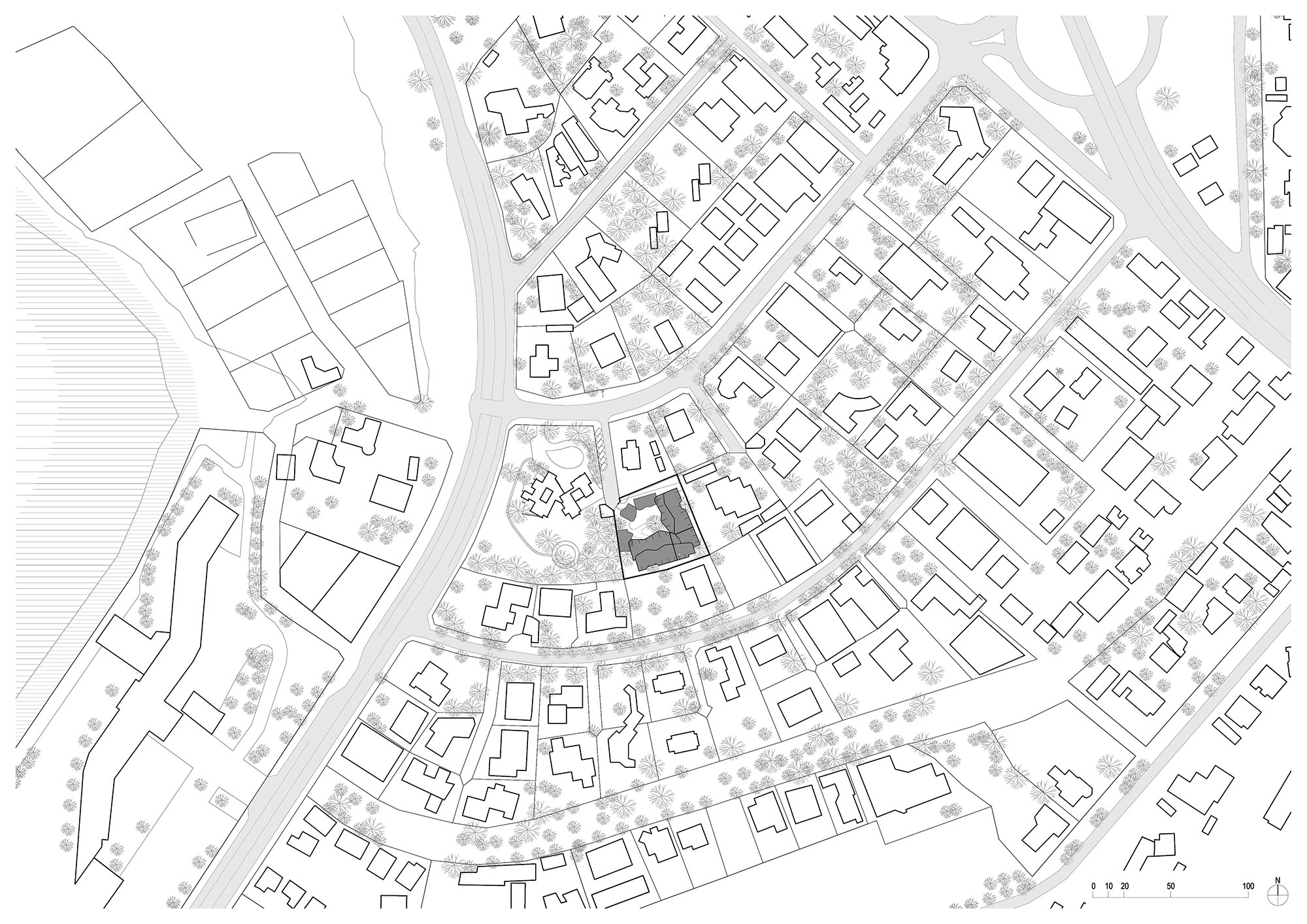
Siteplan
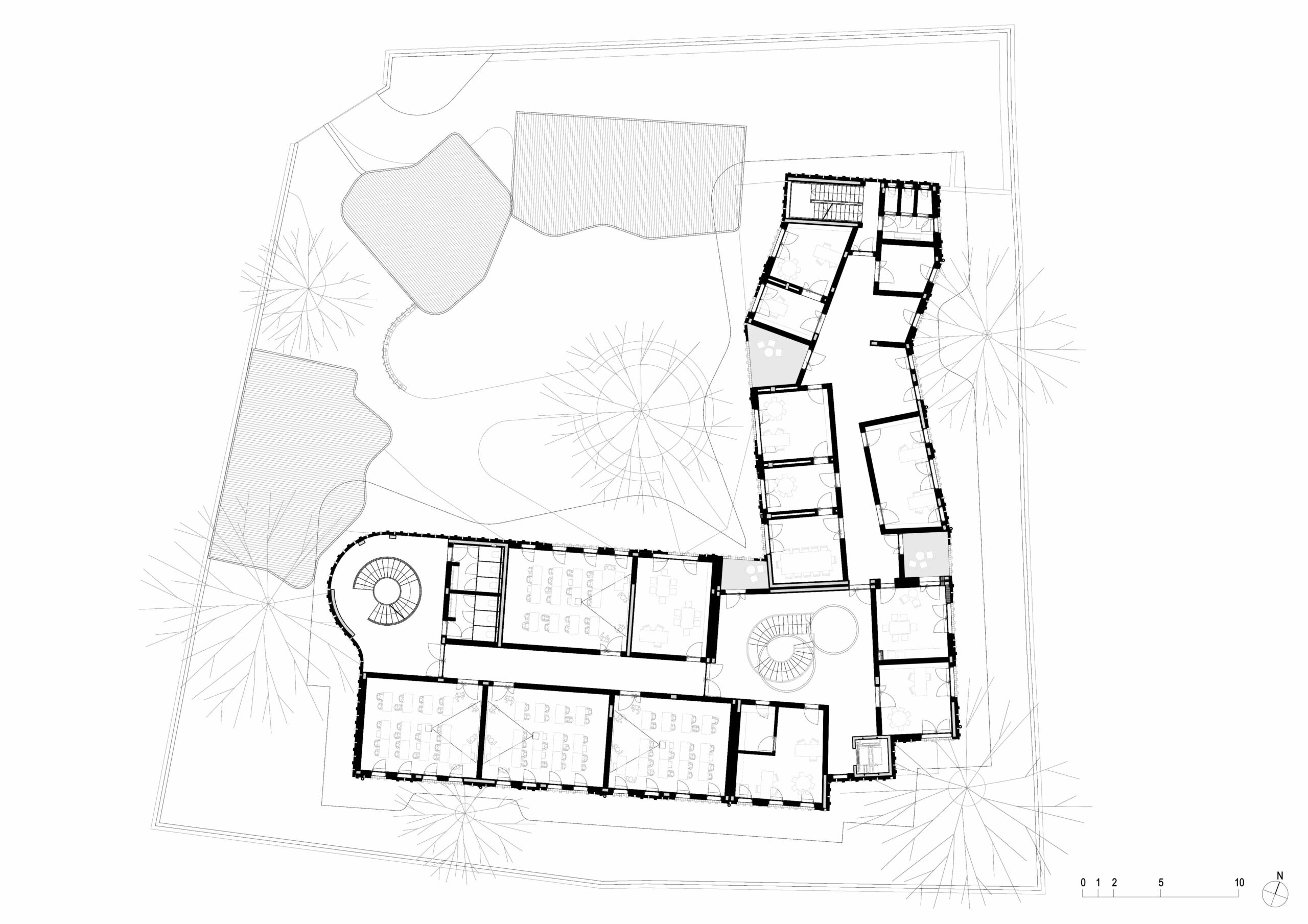
First Floor Plan
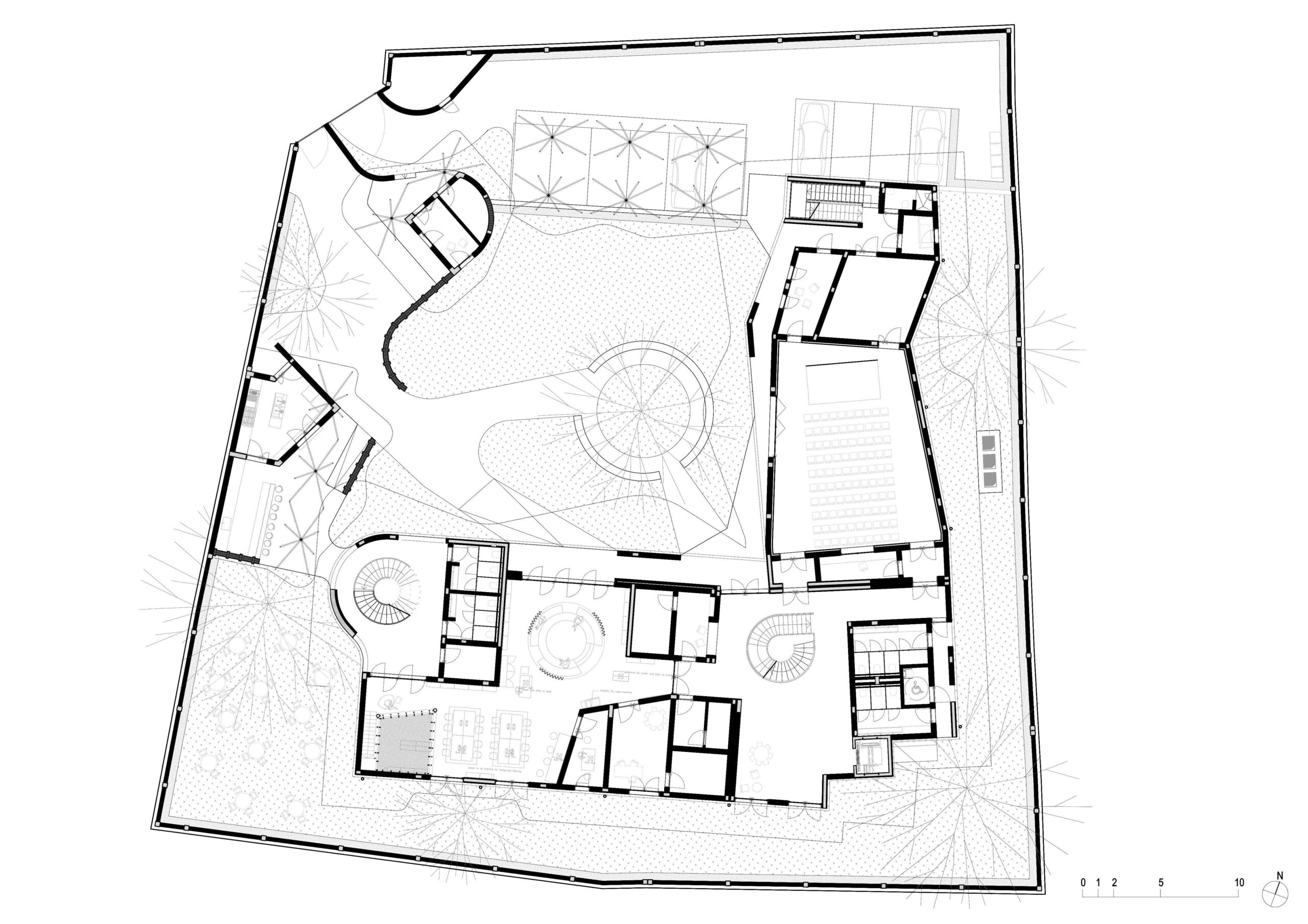
Ground Floor Plan
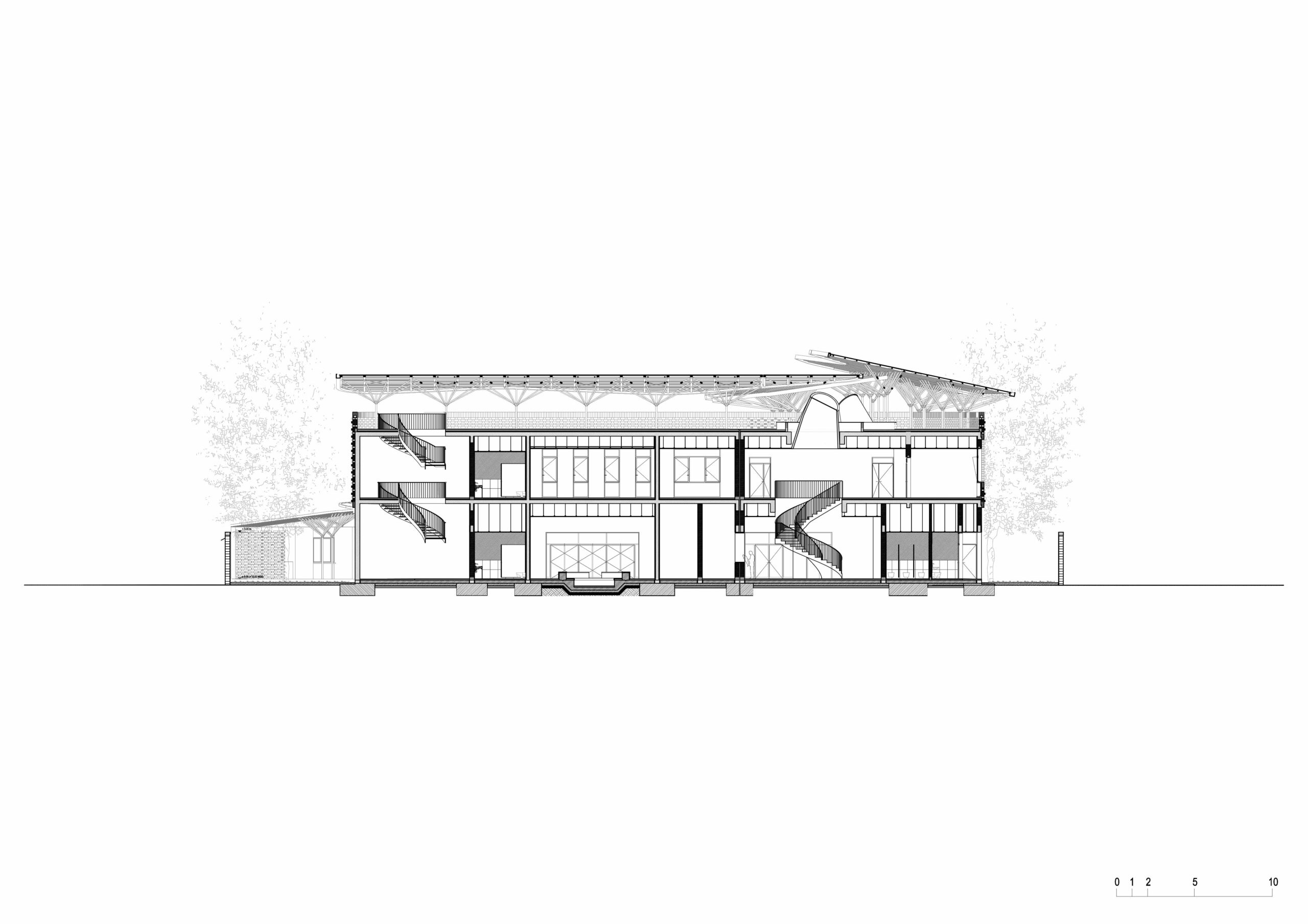
Section
以下、ケレ・アーキテクチャのリリース(英文)です。
GOETHE-INSTITUT SÉNÉGAL, DESIGNED BY KÉRÉ ARCHITECTURE, OPENS IN DAKAR
- The Dakar location is the first purpose-built space in the Goethe-Institut’s 75-year global history
- The project makes extensive use of compacted earth blocks sourced from the surrounding region across much of the building
Dakar, April 20, 2026 – The Goethe-Institut, Germany’s global cultural exchange organization, has opened its new Dakar location, designed by Kéré Architecture. The official inauguration on April 18, 2026 was attended by His Excellency Amadou Ba, Minister of Culture, Crafts and Tourism of Sénégal; Serap Güler, Minister of State at the German Federal Foreign Office; Christina Beinhoff, Head of the Department for Culture and Society at the Federal Foreign Office; His Excellency Kai Baldow, German Ambassador to Senegal and Guinea-Bissau; Gesche Joost, President of the Goethe-Institut; and Dr. Stefanie Peter, Director of the Goethe-Institut Dakar.Active worldwide for more than 75 years, the Goethe-Institut commissioned a purpose-built space from concept to construction for the first time in its history. As one of its main hubs in West Africa, the choice of Kéré Architecture reflects Goethe-Institut Dakar’s ambition to define what cultural exchange looks like in the 21st century.The building sits within a residential area of Dakar surrounded by a lush garden. Kéré Architecture’s design balances sensitivity to the immediate neighborhood — including the adjacent Léopold Sédar Senghor Museum — with the demands of a busy cultural institution hosting exhibitions, language courses, concerts, and informal gatherings. The building’s compact two-story form is shaped to mirror the canopy outline of the trees that have long occupied the site, and its massing acts as a shield, protecting neighboring residents from noise while insulating visitors from street traffic.The structure is built from locally sourced compacted earth blocks, used for the load-bearing walls, partition walls and a second translucent outer skin that gives the building a light, permeable appearance. This commitment to local materials connects the project to Kéré Architecture’s wider practice of building with resources and techniques already available in the region.Public programming is concentrated on the ground floor, which houses an auditorium, a cafeteria, and the library. Administrative offices and classrooms occupy the first floor. Crowning the building, a canopy roof provides shaded protection across all levels, improving thermal performance and sheltering the interior from rain, while echoing the natural, organic forms of the trees and garden below. Across all levels, the design prioritizes a sustainable approach, making sure the building leaves a minimal footprint beyond the space it physically occupies.Gesche Joost, President of the Goethe-Institut: “With this new building, the Goethe-Institut underscores its role as a central player in cultural cooperation in West Africa. Our new location will offer even more space for language instruction, exhibitions, and artistic experimentation. But it will also create new spaces in a symbolic sense: for new discourse in close connection to Dakar’s vibrant cultural scene. As an institution, we are proud to be embarking on this path together with Francis Kéré.”Dr. Stefanie Peter, Director of the Goethe-Institut Dakar: “We are guided by the question: what does genuine collaboration between Senegal and Germany, between West Africa and Europe actually entail? And perhaps it is architecture itself that can provide an initial act of translation in this challenging field. In this process, architects, engineers, construction workers, institutions and local stakeholders work together. Architecture as something that emerges through negotiation, mediation and long-term cooperation: viewed in this light, I believe our new building could serve as a guiding star for the future work of the Goethe-Institut in Dakar.”Francis Kéré: “My first building was a school. I have always understood that where people come to learn, they also come to meet, and where people meet is where culture is made. The Goethe-Institut exists to create spaces that facilitate meeting and learning across the world. Designing their first ever purpose-built space is a responsibility I take seriously. In Dakar, one of the great cultural cities of the African continent, I wanted this building to be open and safe, rooted and flexible, and very much alive.”The completed facility is intended to serve as a welcoming and versatile home for Dakar’s diverse communities — a space that honors the layered cultural history of Senegal’s capital while inviting a broad public to participate in shaping a shared and inclusive future.PROJECT CREDITSLocation: Dakar, Sénégal
Type of project: Cultural – Educational
Size: 1800 m2
Design: 2018 – 2021
Construction: 2022 – 2026
Status: Completed
Architect: Kéré Architecture, Diébédo Francis Kéré
Design Team: Project Architects: Jaime Herraiz Martínez, Andrea Maretto
Contributors: Fabiola Büchele, Léon Bührer, Javier Mola Cardenes, Linda Franken, Juan Carlos Zapata
Collaborators: Worofila, André Poretti, Delta Ingenieurs Conseils, Dial Consulting, Scat Internationale s.a., Elementerre, Matthias Middelkamp
Client: Goethe Institut e.V.
ケレ・アーキテクチャ 公式サイト
https://www.kerearchitecture.com

![[Report]方丈庵から生き方を問う、21_21 DESIGN SIGHT 企画展「方丈記に学ぶ –生きるを編み直す小さな建築–」会場レポート](https://magazine-asset.tecture.jp/wpcms/wp-content/uploads/2026/09/01181900/20260828hojoki-ex_01_mag-endo4350-900x676.jpeg)