
パンテオンの裏側を紐解く小さな介入 - ローマの孤立した遺構を都市へとつなぐ〈パンテオン - 考古学のためのマイクロアーキテクチャ〉
©︎ STARTT – Alessandro Penso and Flytodiscover
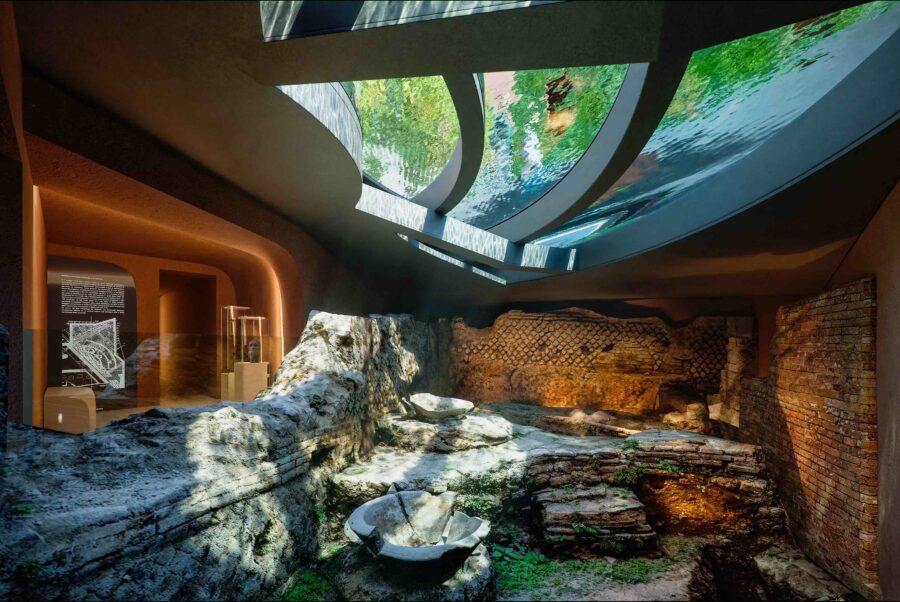
〈パンテオン – 考古学のためのマイクロアーキテクチャ(Pantheon – Micro architectures for archaeology)〉は、イタリア・ローマに位置する世界的名建築「パンテオン」のこれまで非公開だったエリアを、遺跡見学ルートおよび展示空間として再生したプロジェクトです。
古代ローマの遺構に現代的な「マイクロアーキテクチャ」を挿入することで、建物の重層的な歴史を紐解きながら、新旧の素材が共鳴する新たな空間体験を創出しています。ローマを拠点とする建築事務所STARTTが設計しました。
注目ポイント
- 孤立したモニュメントから、本来の「都市的文脈」の再生
- 2つの巨大な円筒形に挟まれた特異な空間
- 新旧の素材が鮮やかな対比を生む「マイクロアーキテクチャ」
- 非侵襲的な介入による「アダプティブリユース」のアプローチ
(以下、STARTTから提供されたプレスキットのテキストの抄訳)
©︎ Alessandro Penso
ロトンダ背後の考古学エリアを公開する、パンテオンの改修工事
「私の意図は、この神々の聖域が、地球と天球の姿を再現することにある。すなわち、永遠の炎の種を内包する地球と、万物を包み込む中空の天球である。それは、人類最古の炉の煙が頂上の開口部から立ち上っていた、我々の祖先の住居の形でもあった。硬くも軽量な火山岩で造られ、まるで炎の上昇運動に今なお加わっているかのようなそのドームは、中央の大きな穴を通して空を露わにし、暗闇と青を交互に映し出していた。」
フランスの小説家
マルグリット・ユルスナール(Marguerite Yourcenar)
©︎ Alessandro Penso
©︎ Alessandro Penso
国家理念の具現化としての「パンテオン」
イタリア建築史の権威であるマリオ・マニエリ・エリア(Mario Manieri Elia)は、ギリシャ神殿の大理石の正面と、エトルリア・ローマ起源のコンクリート製アーチ円筒が融合して生まれたパンテオンの姿を、ギリシャ文化とローマの技術の結合に基づいて築かれたローマ国家の理念の具現化であると描写した。
少なくともこの時代以降、建築はもはや純粋に構造的な問題のみに還元されることはなくなった。空間形態の設計は、共同体の価値観を伝える媒体となったのである。パンテオンが世界で最も有名な建築物の1つに数えられ、孤立した記念碑としての自律的な存在として描かれ、語られてきたのもまさにこの理由からである。
©︎ Alessandro Penso
隠された空間の開放と、都市ネットワークの再発見
イタリア文化省の推進のもと、STARTTの設計によって最近完了した新たな工事により、この名高いロトンダ(円形建築物)の背後に広がる考古学区域が一般公開されることとなった。これにより、かつては技術的な機能のためにのみ使用されていた空間が、誰もが利用可能な場所となっている。
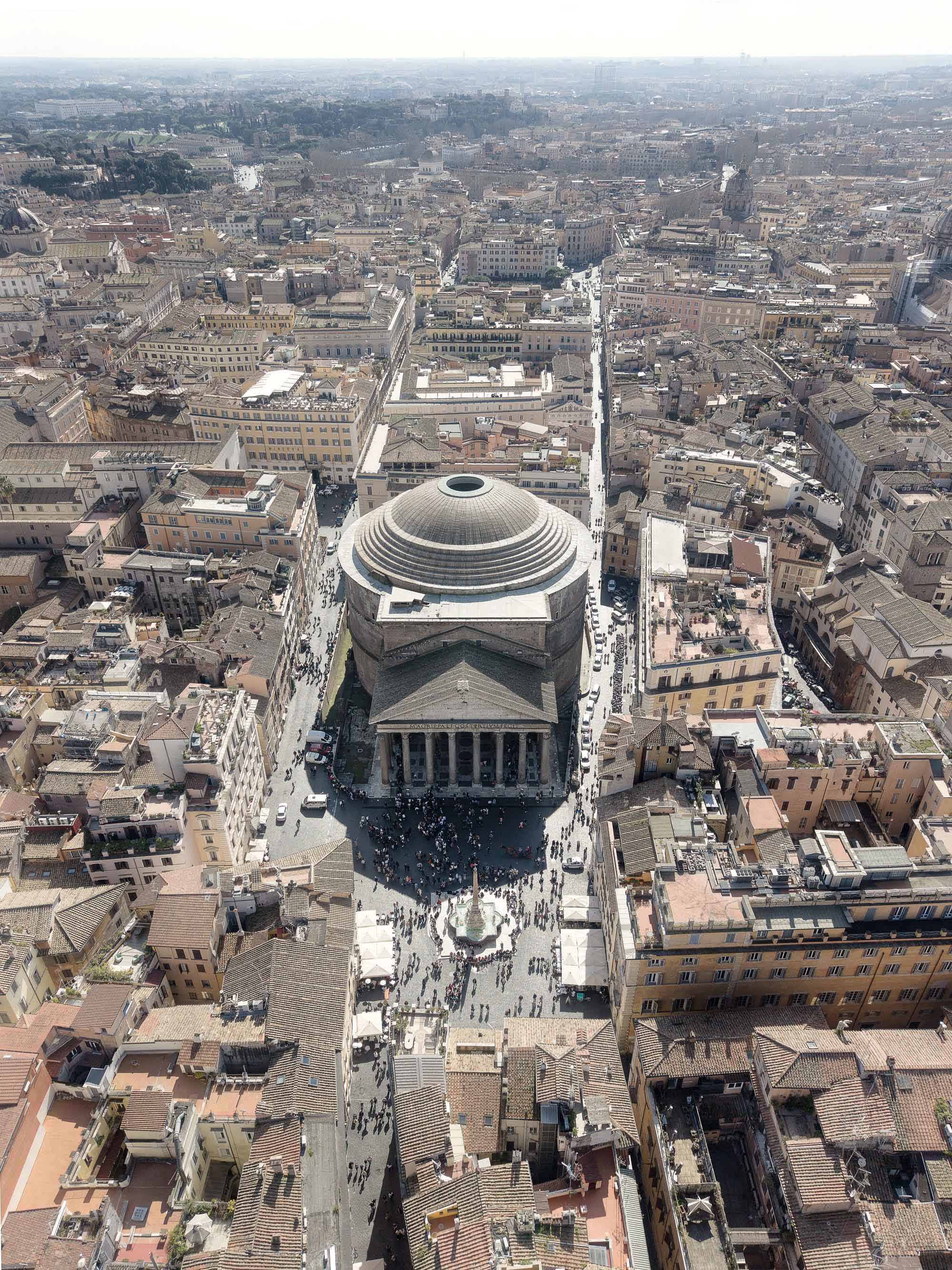
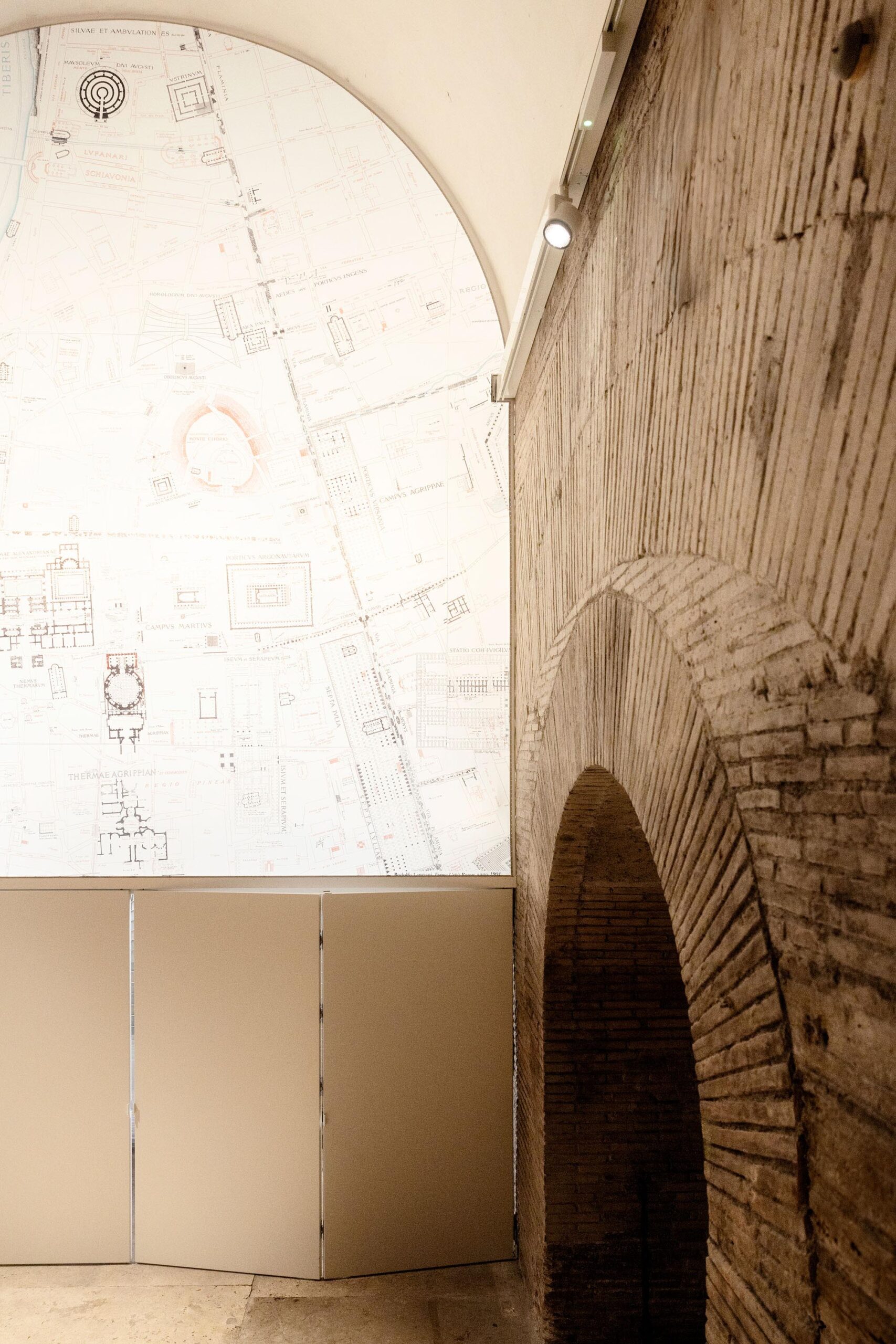
STARTTによるこのプロジェクトは、新たな見学ルートを通じて、パンテオンがかつて担っていた役割を来訪者に実感させるものである。この記念碑は本来、現在のトッレ・アルジェンティーナ広場に至るまで街区全体に伸びる、縦長の都市システムの中心に位置していた。しかし、イタリア王国時代に行われた取り壊しによって、ヴィットーリオ・エマヌエーレ2世(King Vittorio Emanuele II)の霊廟へと改築するという特定の目的のために、周囲から切り離され、孤立してしまったのである。
©︎ Alessandro Penso
©︎ Alessandro Penso
重層する歴史と、2つの円筒が織りなす空間性
したがって、今日我々が目にするパンテオンは近代的な発明と見なすことができる。その一方で、アウグストゥス時代のパンテオンは、ギリシャ式のプロナオス(前室)、ロトンダ、そしてその後背に位置する都市とその機関という3つの要素からなる融合体であった。
パンテオンのすぐ背後にはネプトゥヌス神殿(バシリカ)が立っていたが、その遺構はまさに前述の隔離工事の際に発掘されたものである。
Plan – visit path
Plan – scheme
Axonometric
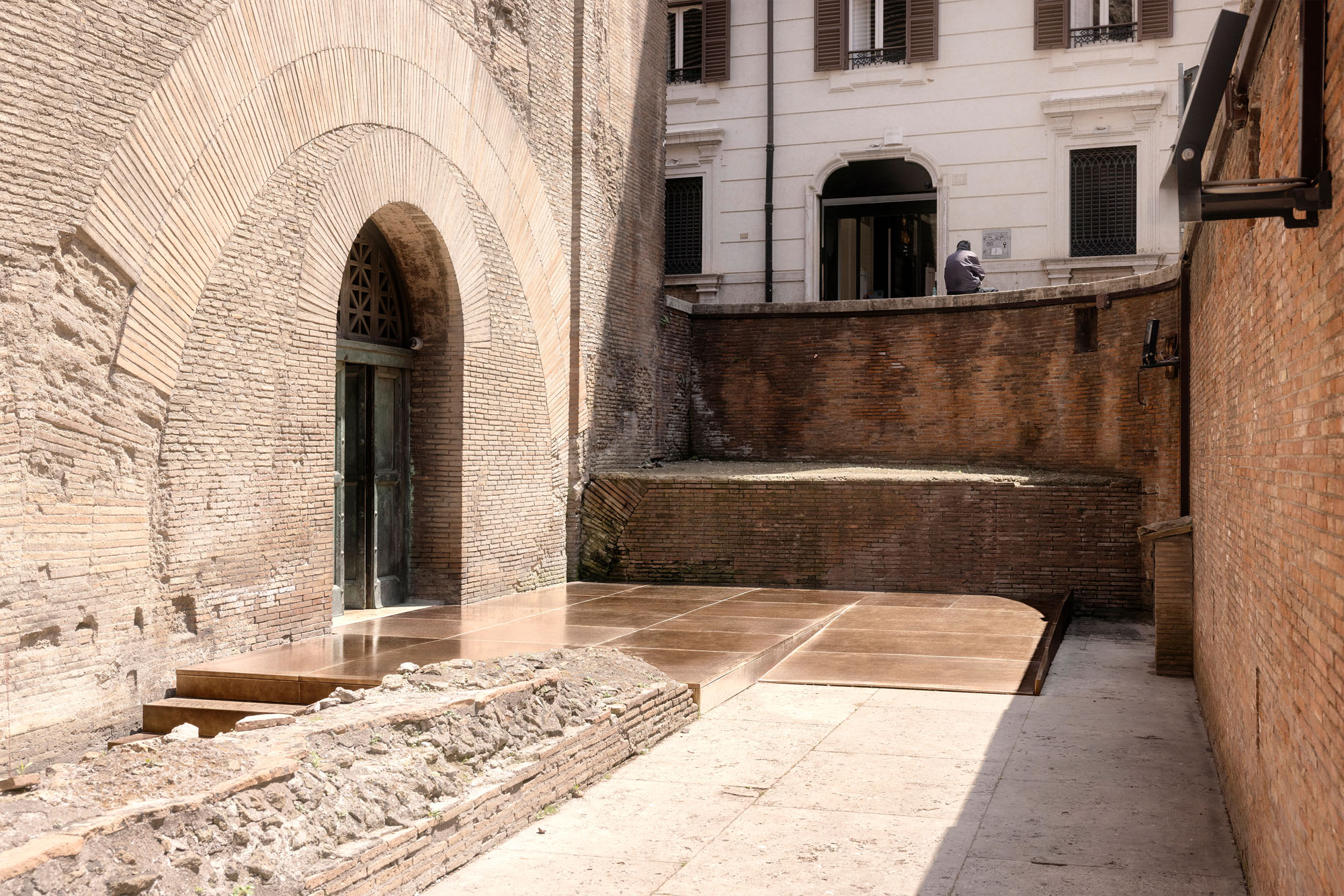
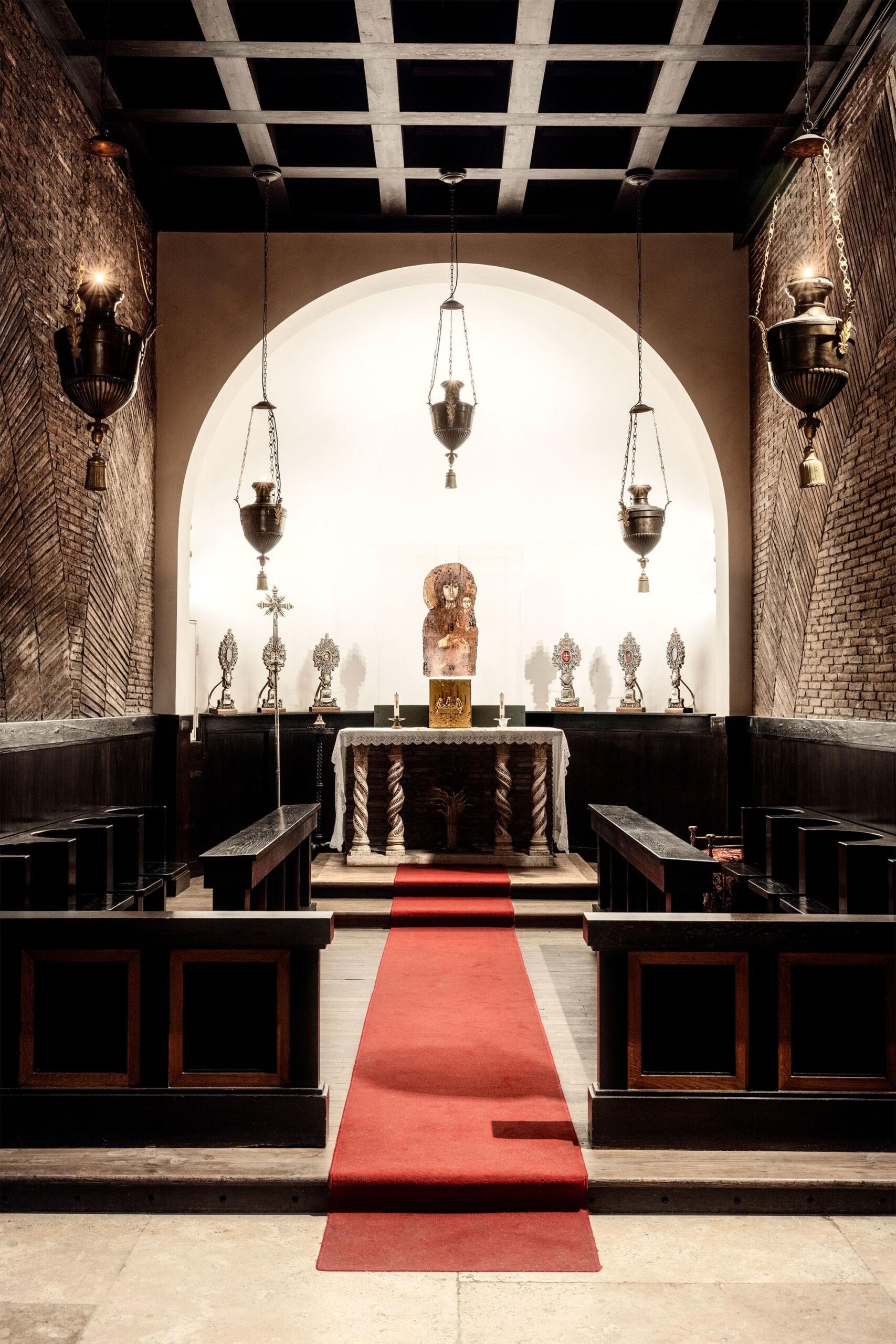
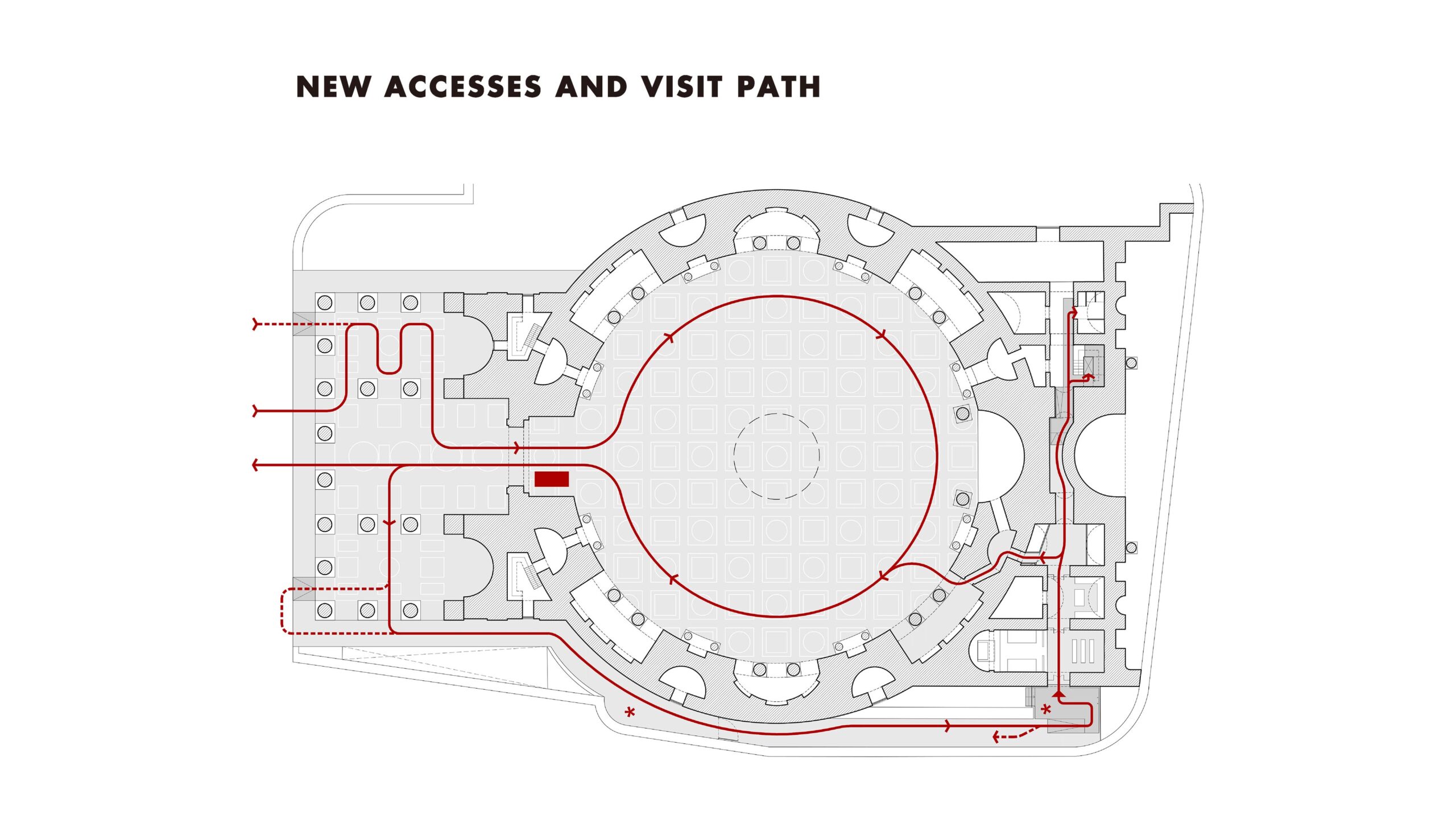
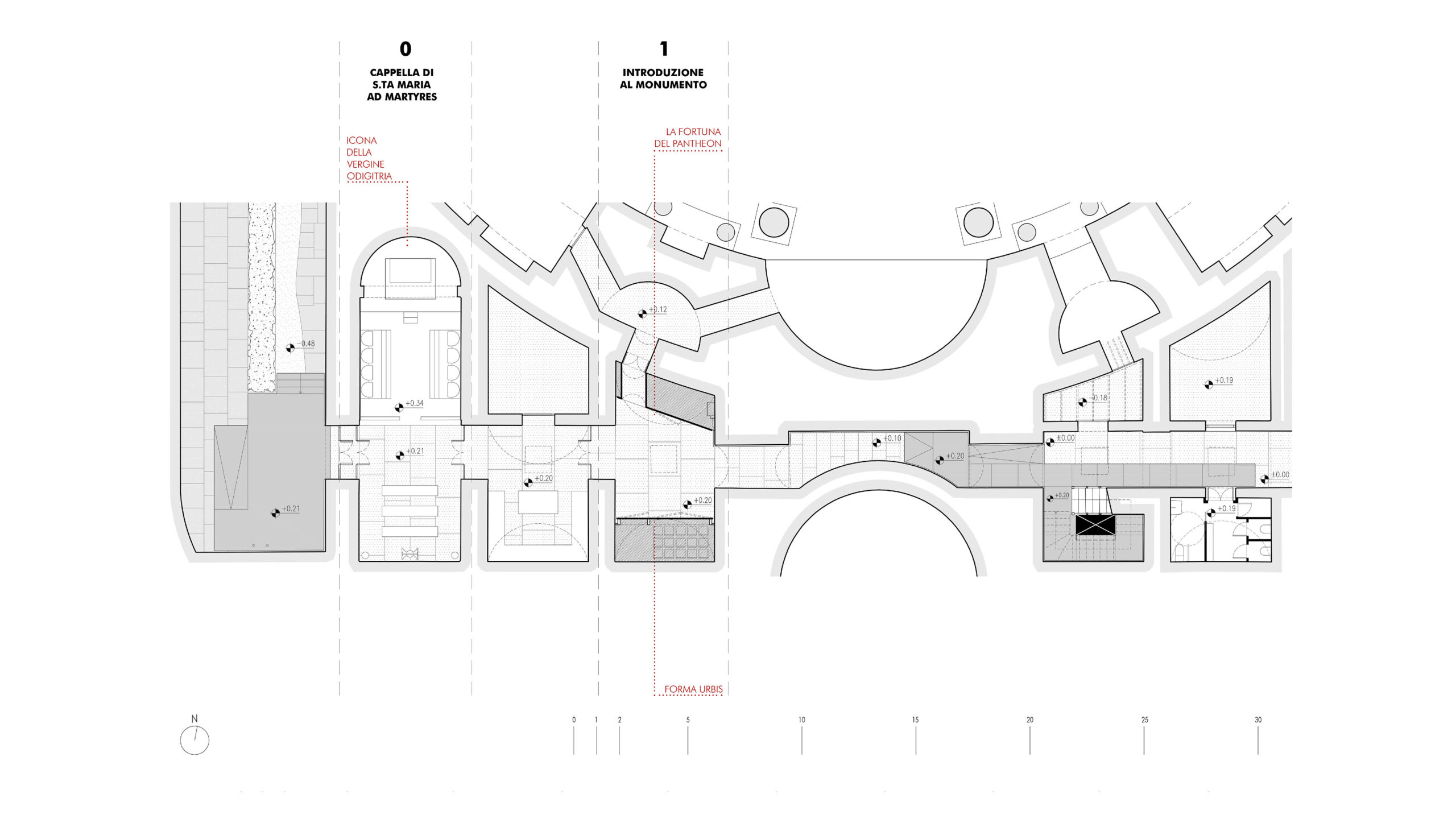
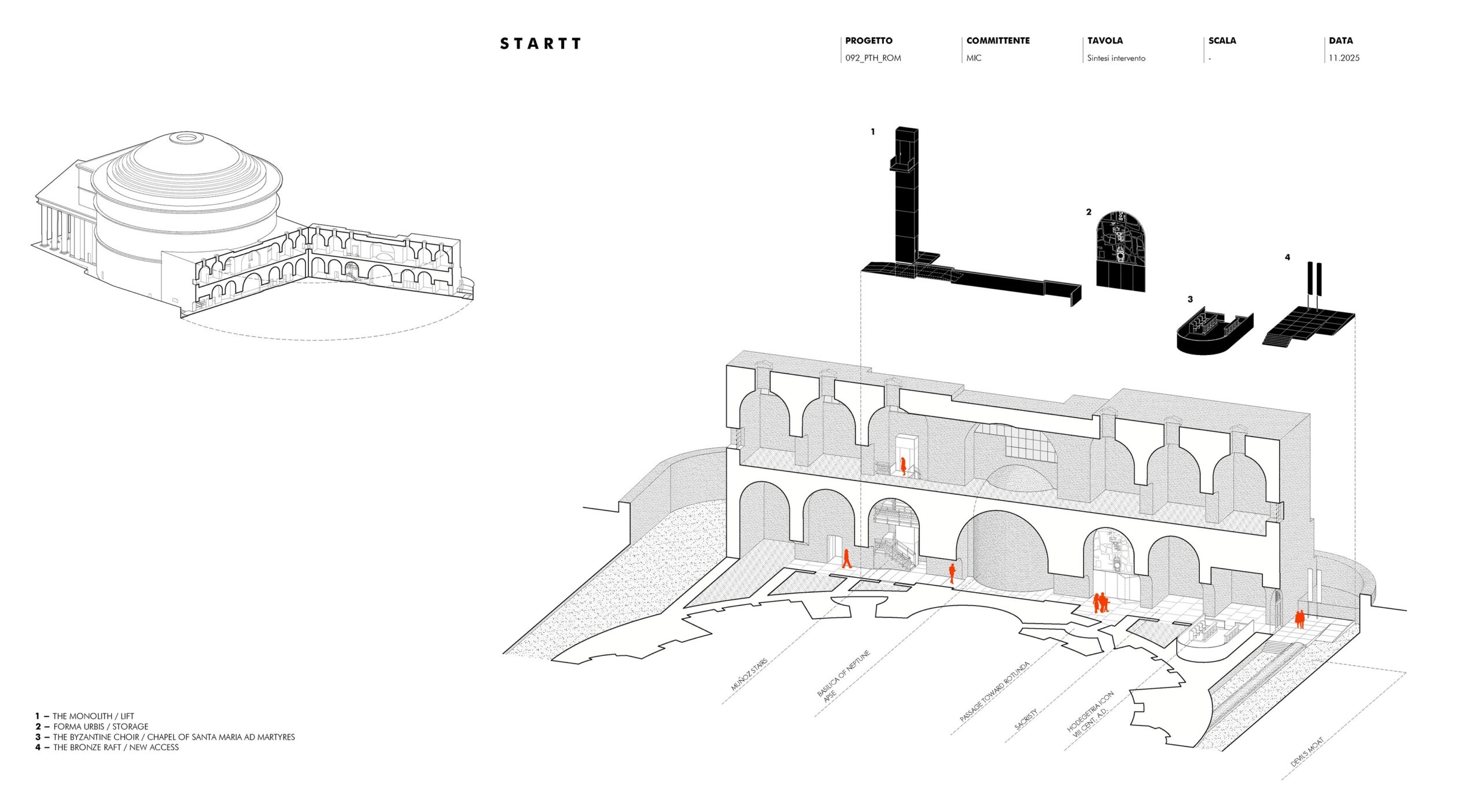
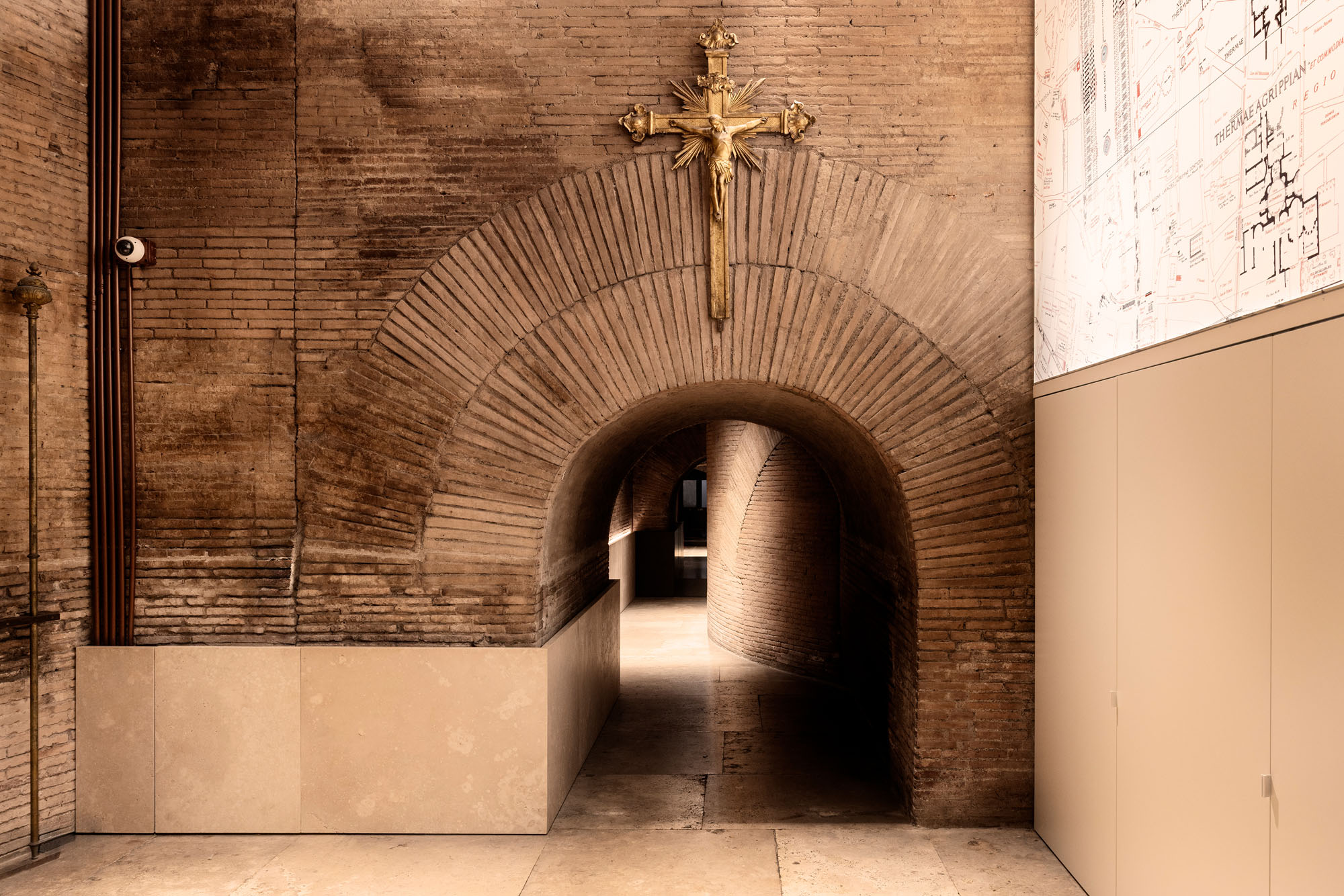
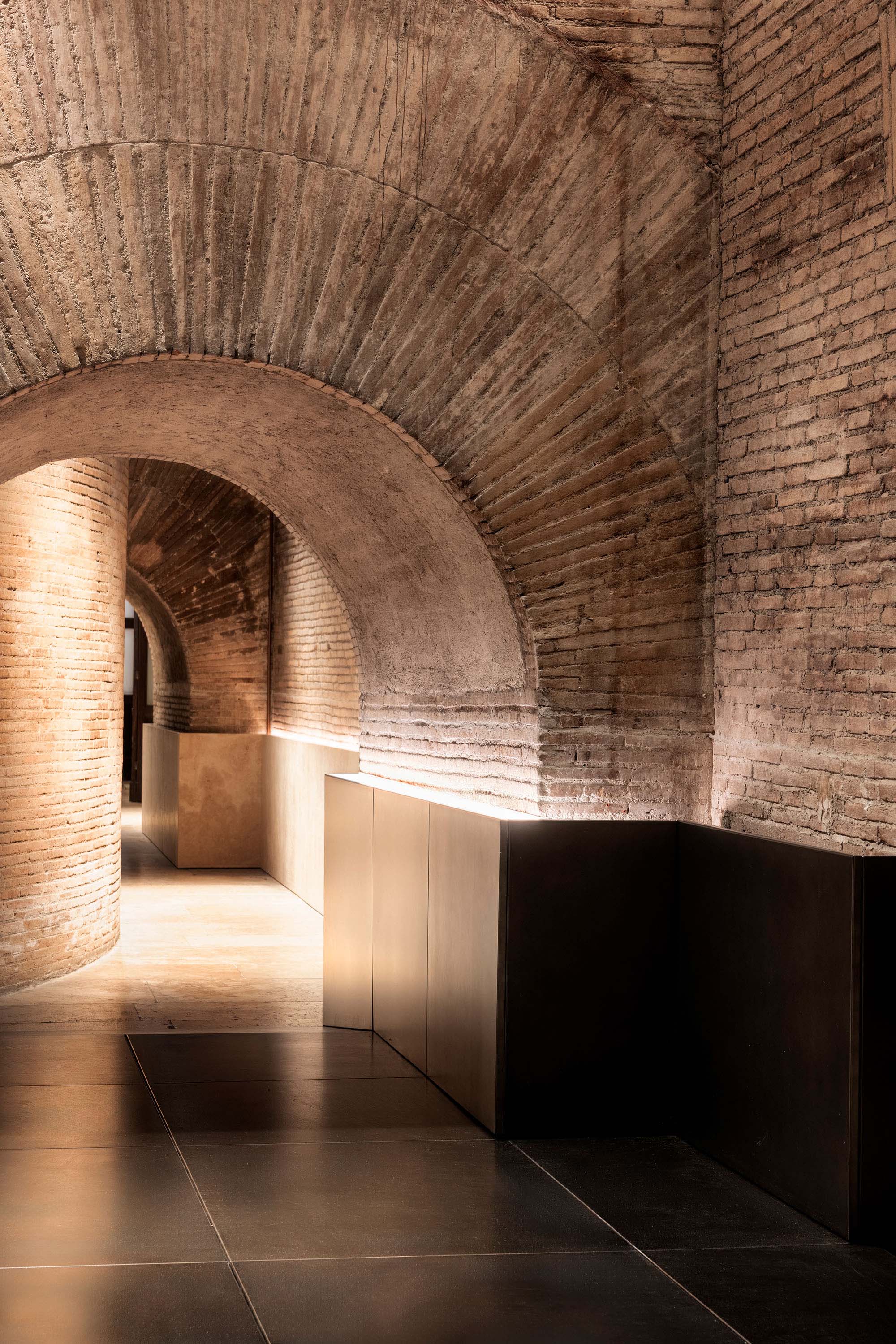
現在一般公開されている空間は、ロトンダとネプトゥヌス神殿の遺跡をつなぐバットレス(控え壁)によって区切られている。そこには、ローマ最古のビザンチン様式のイコンを所蔵する「サンタ・マリア・アド・マルティレス聖堂」の礼拝堂のほか、パンテオンが経てきた各歴史的段階の建築構造の断片や、海の神を祀る神殿の遺構が保存されている。
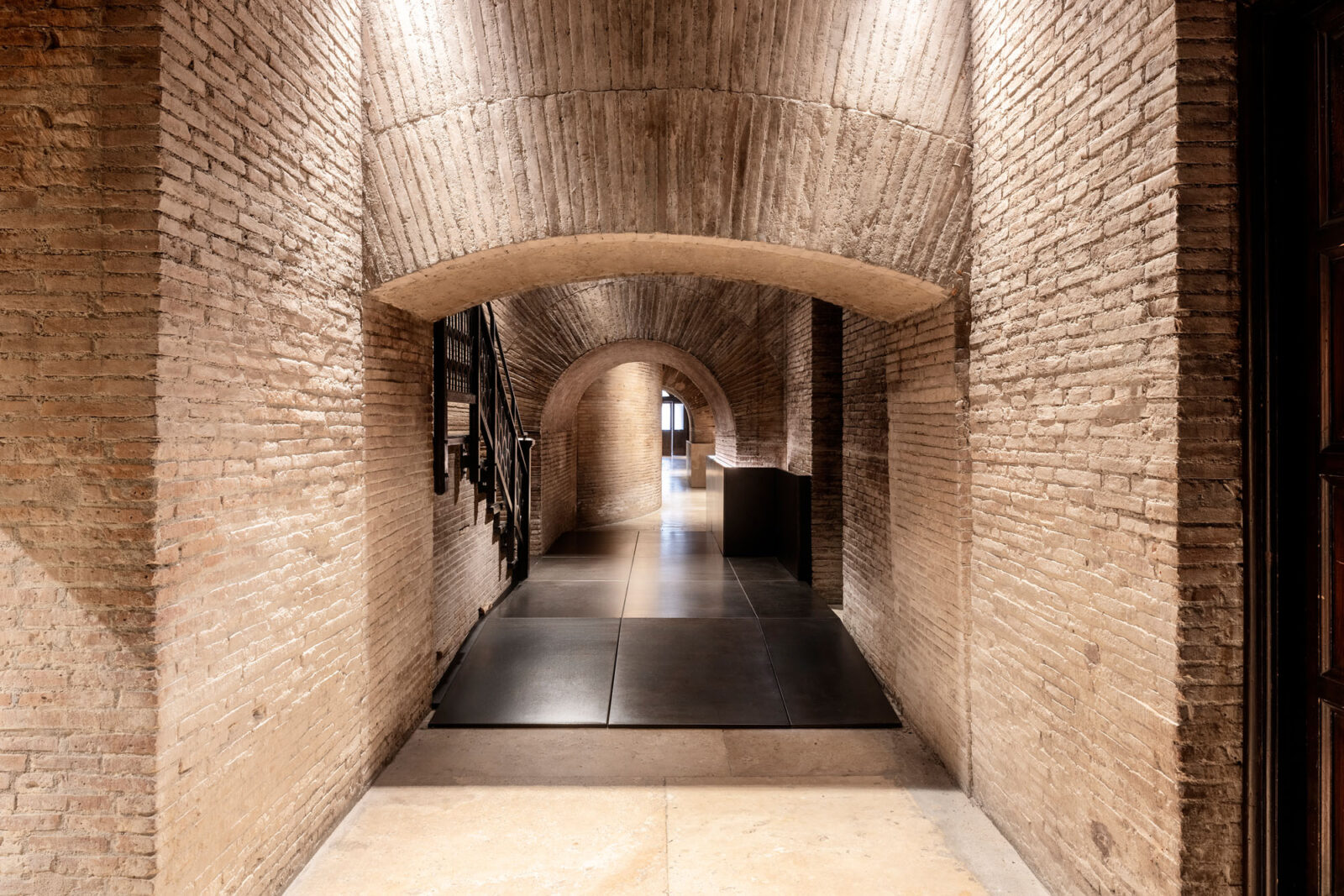
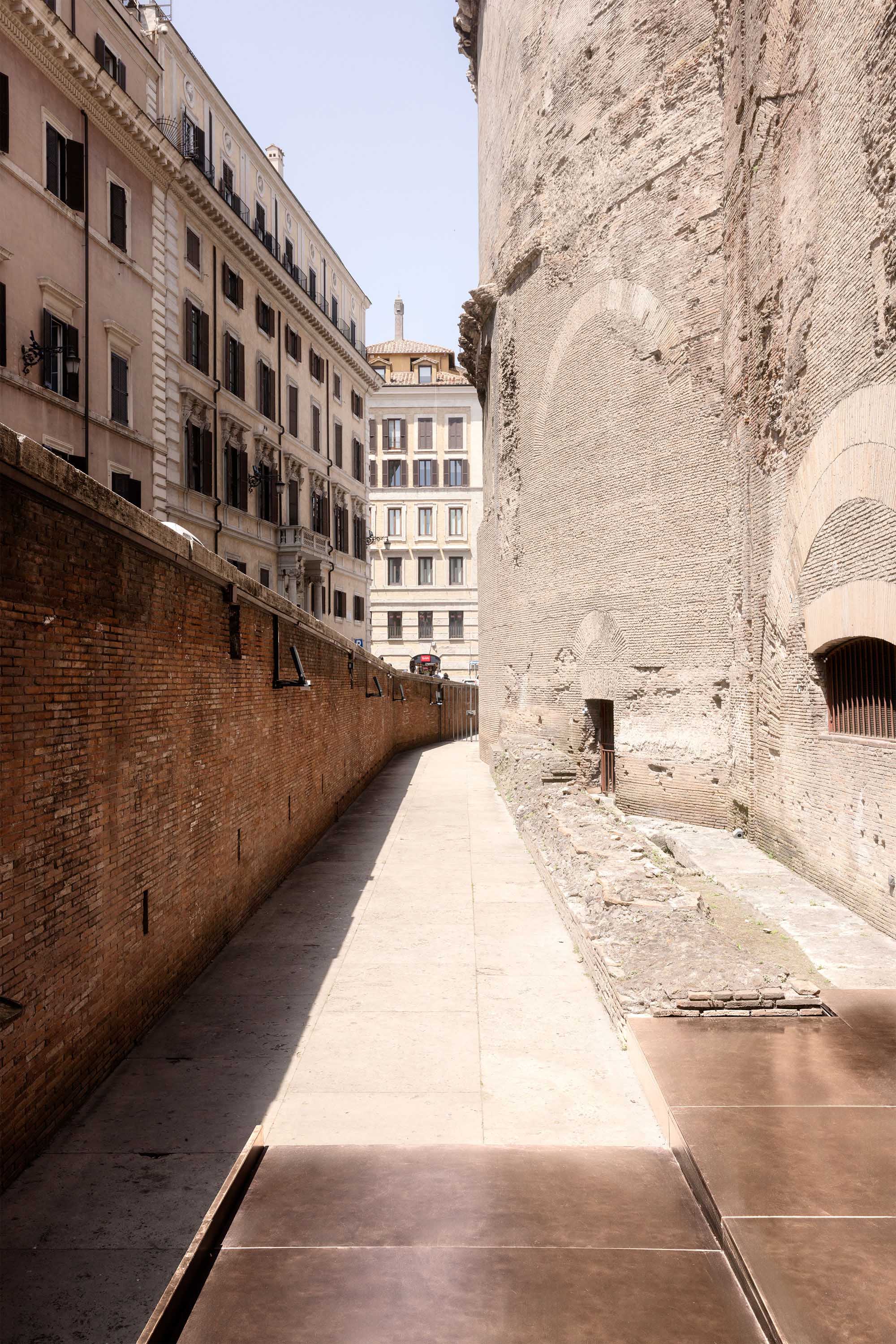
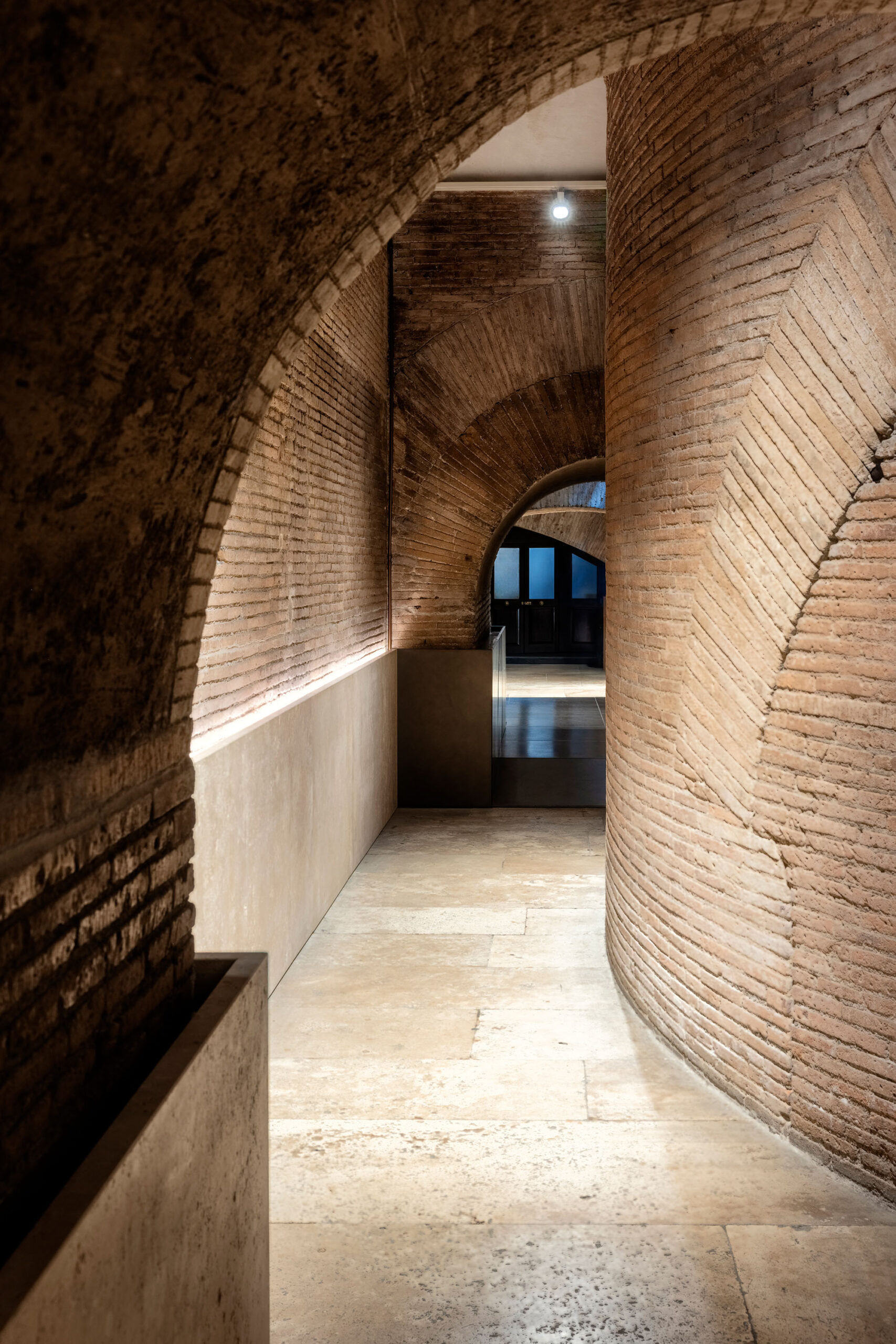
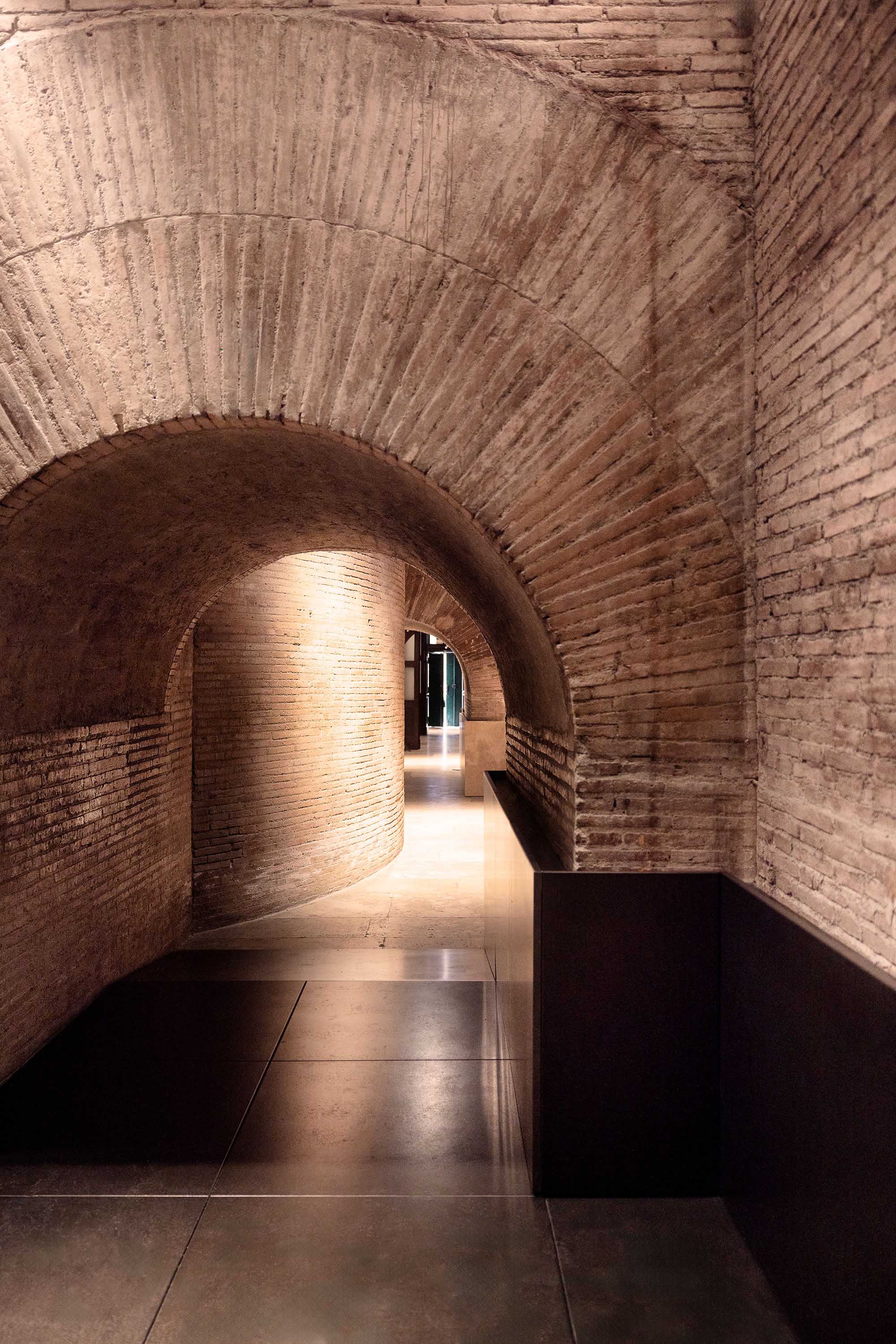
新たな見学ルートは、ロトンダの円筒形空間と、ネプトゥヌス神殿の後陣が描く円筒形空間の間に圧縮され、バットレスの構造的なリズムによって構成されたローマ的な空間性を際立たせている。
©︎ Alessandro Penso
©︎ Alessandro Penso
考古学に奉仕するアダプティブリユースのアプローチ
STARTTのプロジェクトは、この対照的な2つの曲線に挟まれた空間において、古代の物質性を尊重するよう配慮された、抑制の効いた介入によって展開されている。
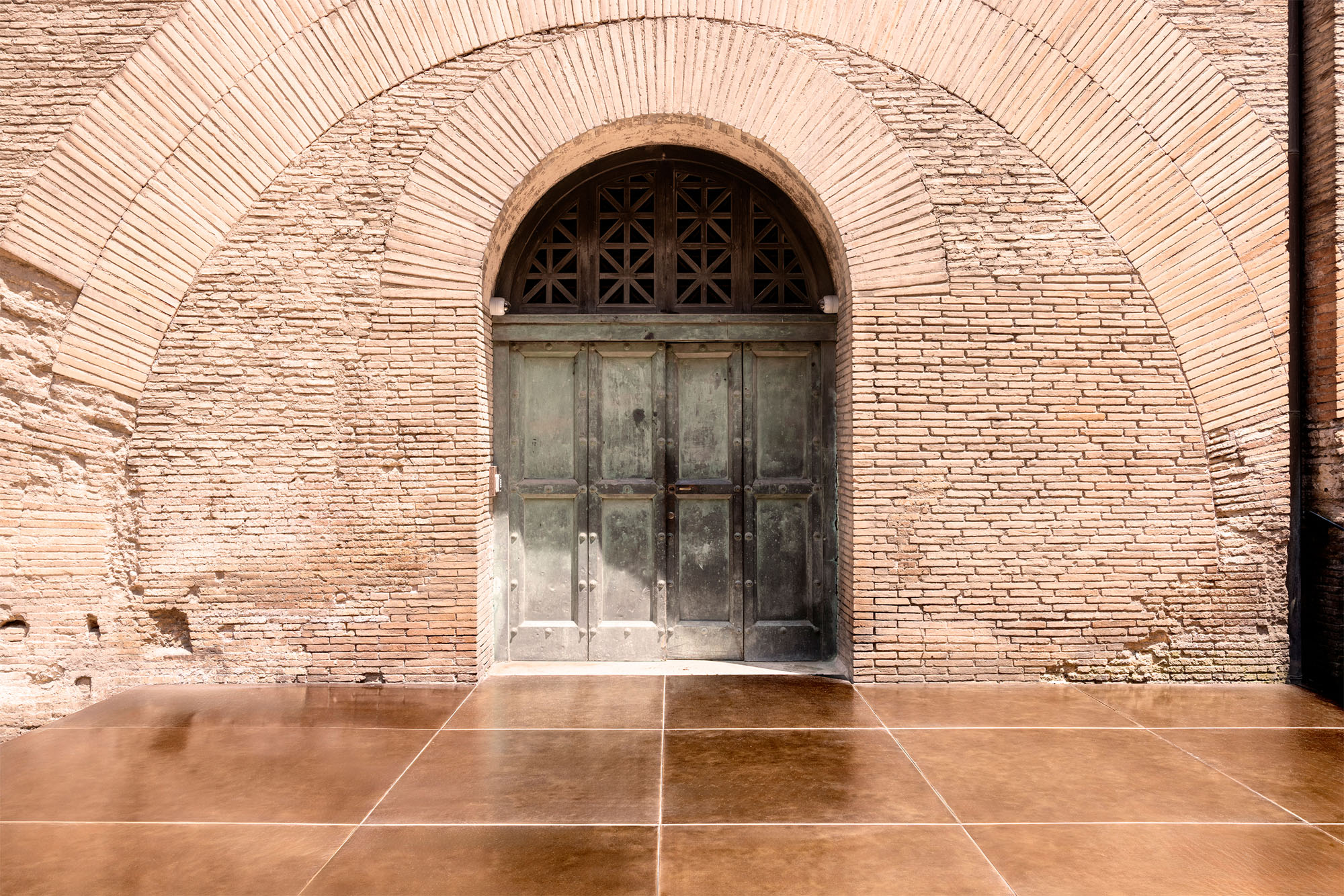
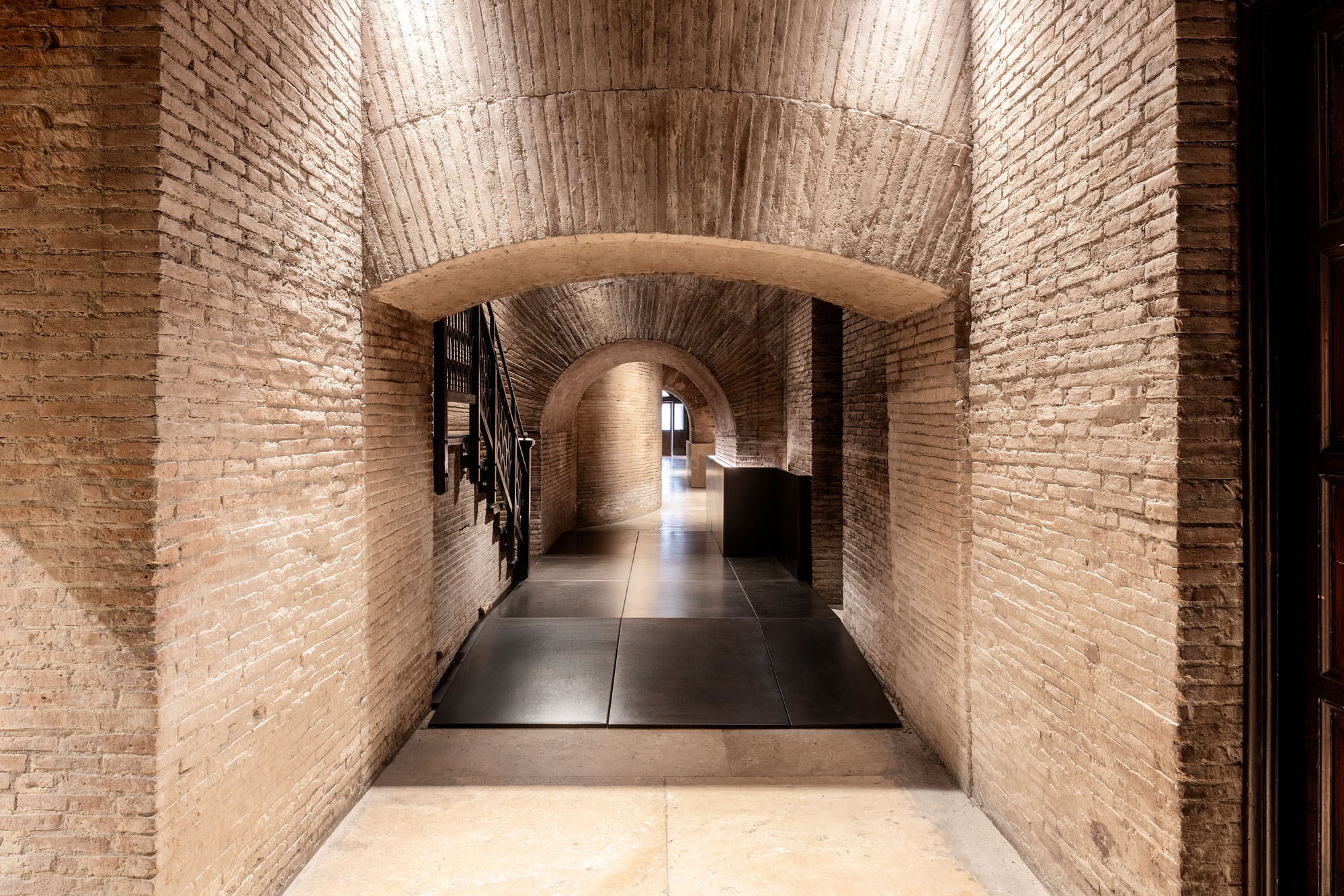
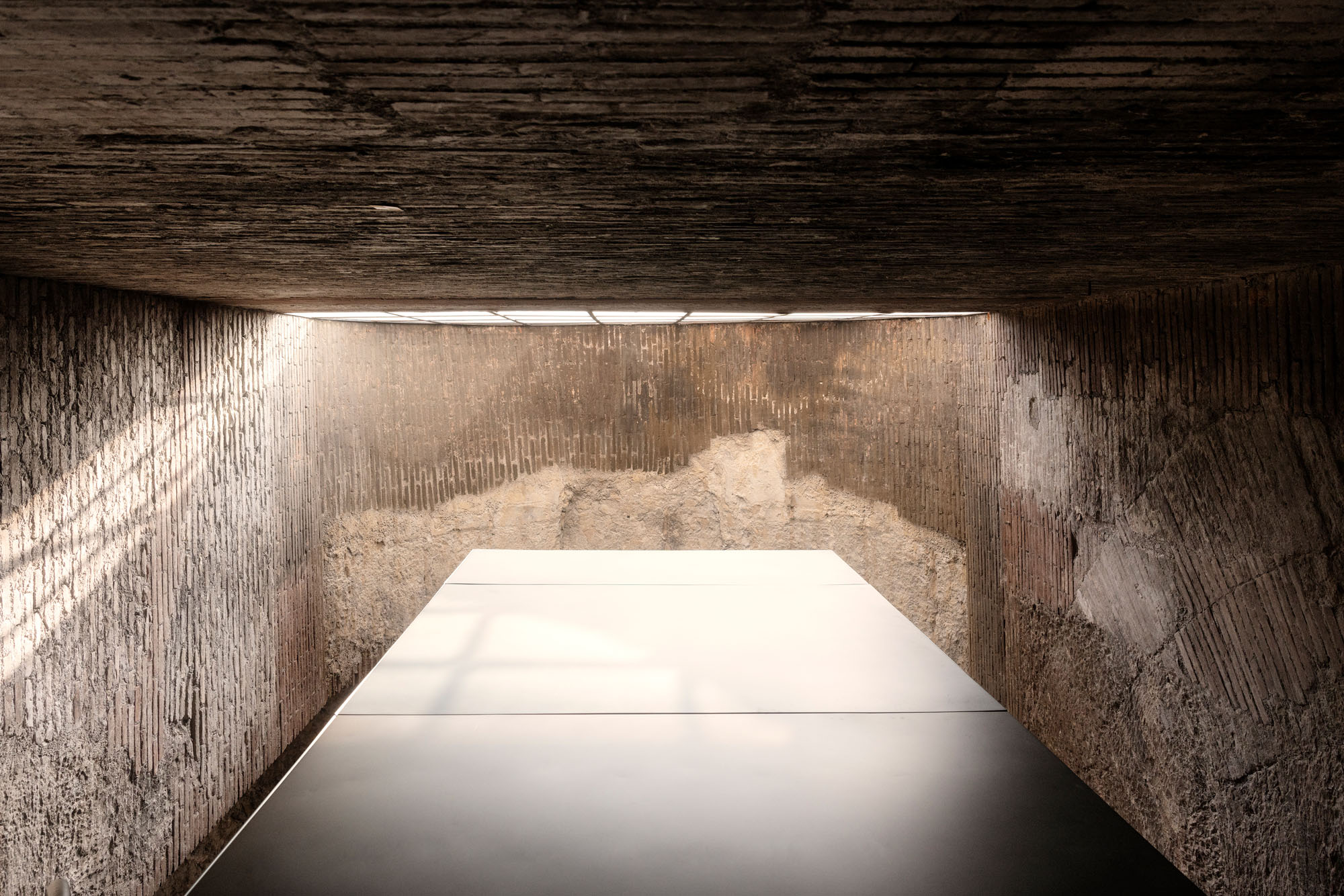
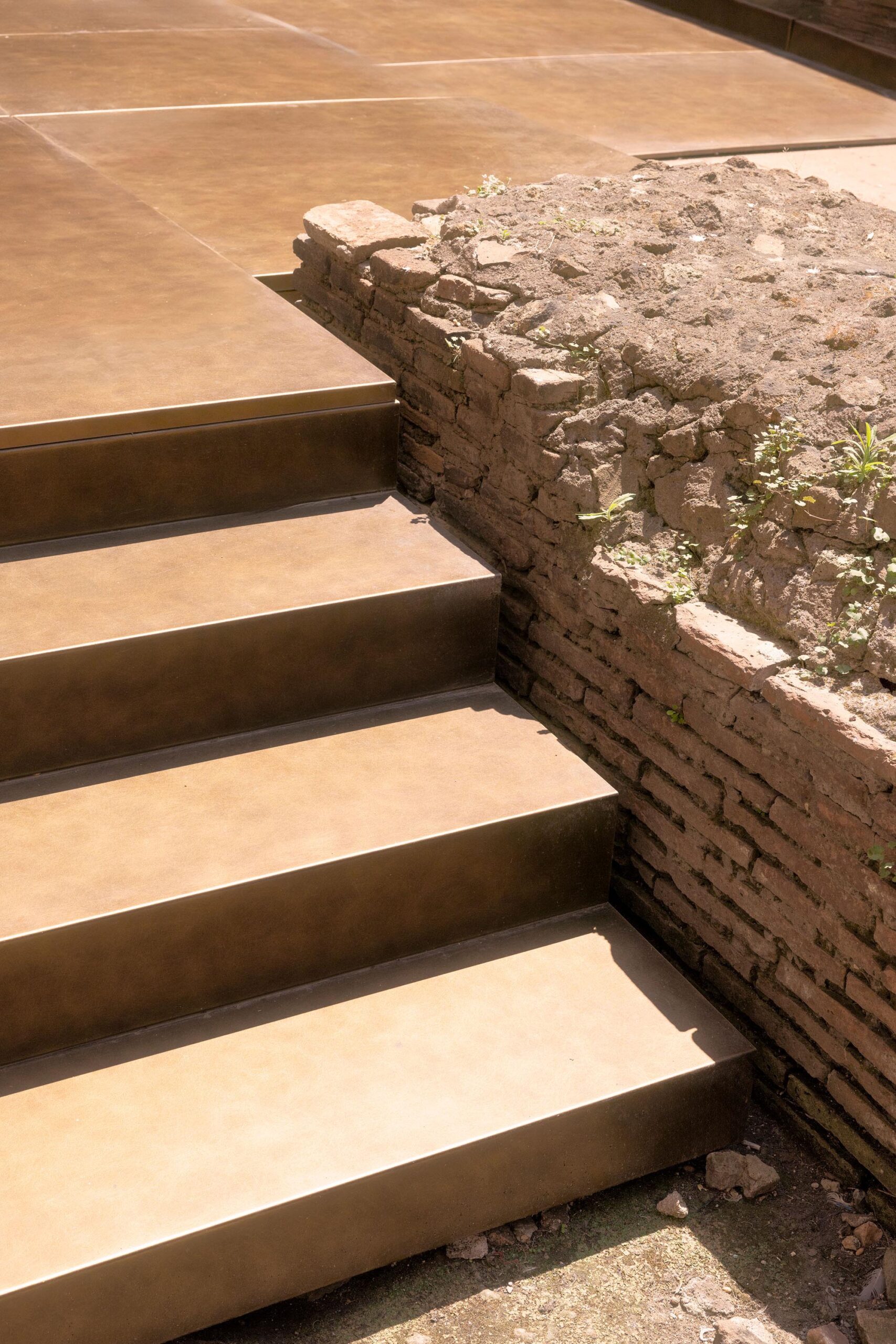
本プロジェクトは、差異によって明確に認識される最小限の要素「マイクロアーキテクチャ」で構成されており、空間の特性は、現代の製造プロセスを経て処理された鋼板と、古代ローマの煉瓦積みやコンクリートとの関わりから浮かび上がってくる。
©︎ Alessandro Penso
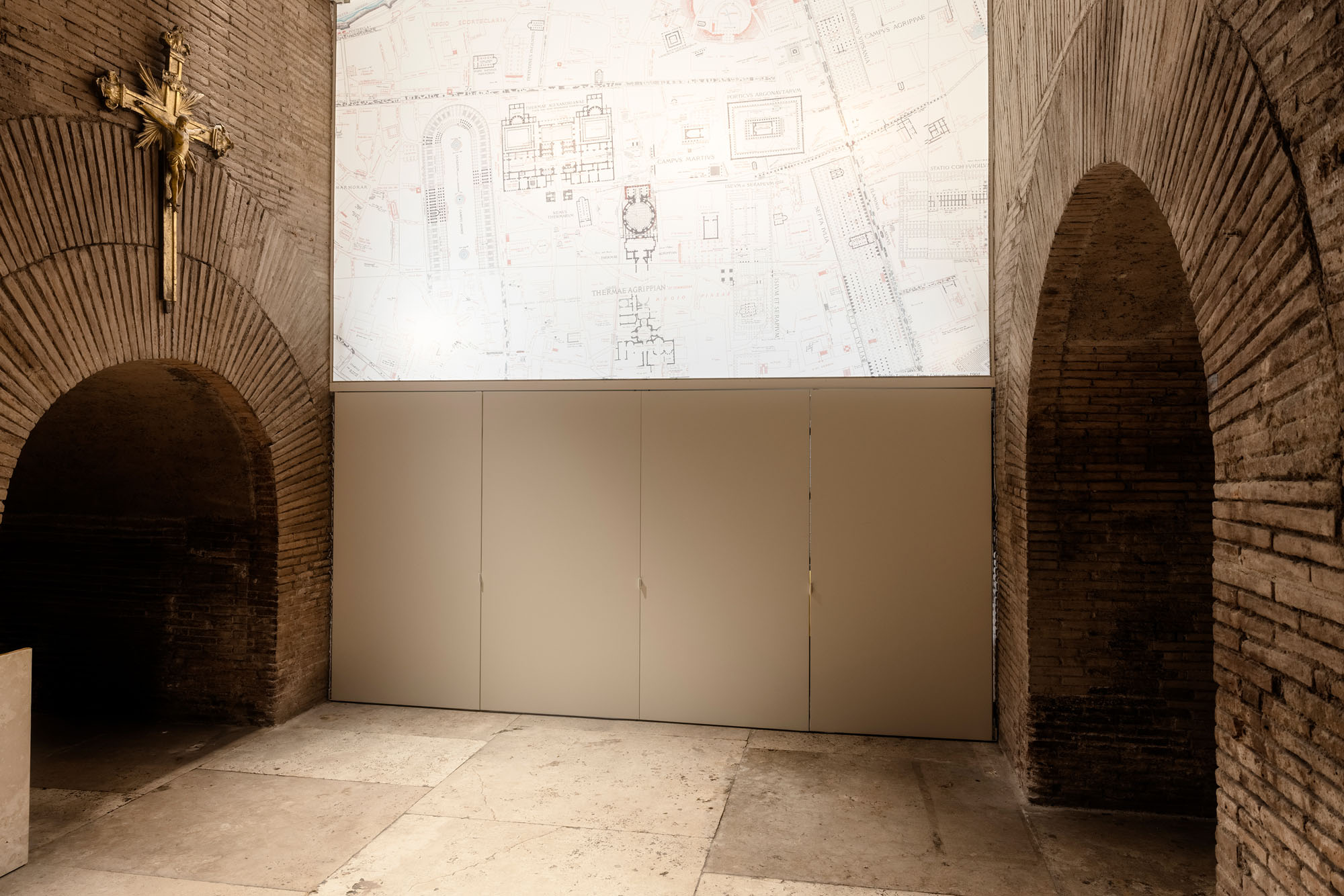
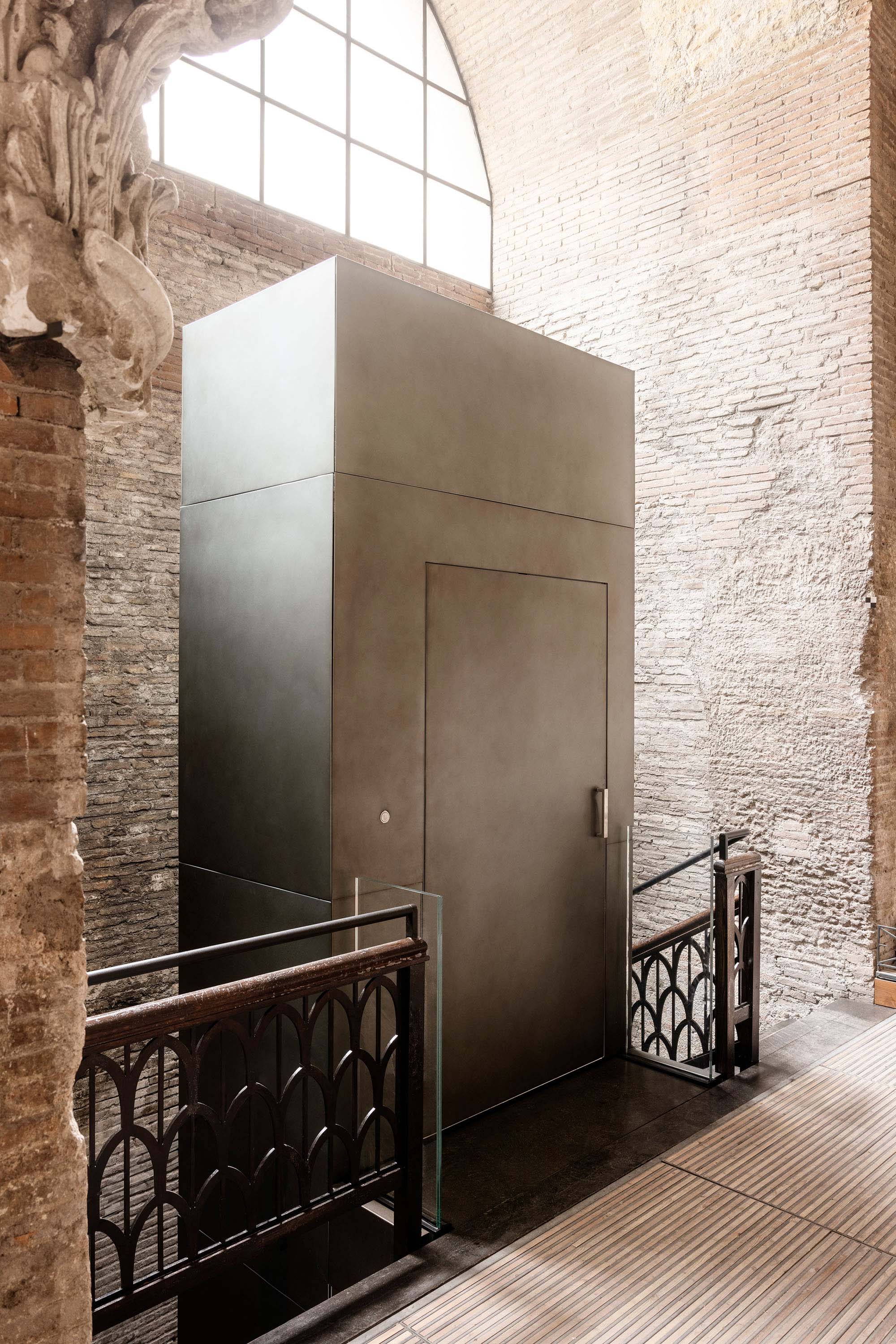
また、新たな要素の1つとして、彫刻的なモノリスとして構想されたエレベーターが、これらの空間の上層部へのアクセスを提供している。そこでは、ルカ・メルクリ(Luca Mercuri)の指揮の下、文化省がこの記念碑の歴史に捧げられたマルチメディア展示を実現している。
STARTTによる「アダプティブリユース(適用的再利用)」のアプローチは、敷地全体において非侵襲的でありながら、すべての利用者がアクセス可能な包括的な動線を定義している。これにより、本プロジェクトは、考古学に奉仕する現代建築の介入として明確に位置づけられているのである。
©︎ Alessandro Penso
©︎ Alessandro Penso
©︎ Alessandro Penso
©︎ Alessandro Penso
©︎ Alessandro Penso
©︎ Alessandro Penso
以下、STARTTのリリース(英文)です。
THE INTERVENTION BY STARTT AT THE PANTHEON OPENS THE ARCHAEOLOGICAL AREA BEHIND THE ROTUNDA TO THE PUBLIC
«My intention had been that this sanctuary of All Gods should reproduce the likeness of the terrestrial globe and of the stellar sphere, that globe wherein are enclosed the seeds of eternal fire, and that hollow sphere containing all. Such was also the form of our ancestors’ huts where the smoke of man’s earliest hearths escaped through an orifice at the top. The cupola, constructed of a hard but lightweight volcanic stone which seemed still to share in the upward movement of flames, revealed the sky through a great hole at the center, showing alternately dark and blue»
Marguerite YourcenarMario Manieri Elia, renowned historian of Italian architecture, described the image of the Pantheon—resulting from the union of the marble front of a Greek temple and the concrete vaulted cylinder of Etrusco-Roman origin—as an embodiment of the idea of the Roman State, founded on the union between Greek culture and Roman technique. At least from this moment onward, architecture could no longer be reduced to a purely constructive problem: the design of spatial forms became a medium through which the values of collective life are communicated. It is also for this reason that the Pantheon stands among the most famous architecture in the world—an icon represented and narrated in its autonomous condition as an isolated monument.
New works, recently completed, promoted by the Italian Ministry of Culture, and carried out to a design by STARTT, now opens to the public the archaeological area behind the celebrated Rotunda, making accessible spaces that had previously been reserved for technical functions.
Through a new visitor route, the project by STARTT makes the former role of the Pantheon perceivable to the visitor: the monument was the head of a longitudinal urban system extending across the city block up to what is now Largo Argentina —prior to the demolitions undertaken during the Kingdom of Italy, which isolated the monument with the specific purpose of transforming it into the mausoleum of King Vittorio Emanuele II.
The Pantheon as we see it today may therefore be considered as a modern invention, whereas the Augustan Pantheon was the union of three elements: the Greek pronaos, the Rotunda, and the city behind it with its institutions. Immediately behind the Pantheon stood the Basilica of Neptune, whose remains were brought to light precisely during these works of isolation.
The spaces now accessible to the public are defined by the buttresses that connect the Rotunda to the ruins of the Basilica. They host the chapel of the Basilica of Santa Maria ad Martyres, which preserves the earliest Byzantine icon in Rome, as well as fragments of the architectural fabric from the various historical phases of the Pantheon and remains of the Basilica of the god of the sea. The new visitor route enhances the Roman spatiality compressed between the cylinder of the Rotunda and that of Neptune’s apse, and articulated by the structural rhythm of the buttresses.
STARTT’s project operates on this space between two contrasting curves through measured interventions that are thought to be respectful of the ancient materiality. The project is composed of minimal elements—micro-architectures—clearly recognizable by difference: the character of the space emerges from the relationship between steel plates, treated according to contemporary production processes, and the brickwork and concrete of ancient Rome. Among the new elements, an elevator conceived as a sculptural monolith provides access to the upper level of these spaces, where the Ministry of Culture, under the direction of Luca Mercuri, has realized a multimedia set-up devoted to the history of the monument.
STARTT’s approach to adaptive reuse defines an inclusive route that is accessible to all users while remaining non-invasive across the site, positioning the project as an intervention of contemporary architecture in service of archaeology.
Credits
Year: PROJECT 2020 – REALIZATION 2025
Place: Pantheon, Rome
Client:
MIC, Ministero della Cultura, Repubblica Italiana
Direttore Generale Musei dott. Massimo Osanna,
Direttore Polo Museale del Lazio (2020 – 2021) Dott.ssa Edith Gabrielli, Direttore del Pantheon dott. Luca Mercuri,
Direttore Musei Statali della città di Roma (2021 – 2024) Mariastella Margozzi, Direttore del Pantheon arch. Gabriella Musto,
RUP. Arch. Antonio Zunno.
Direttore Pantheon e Castel Sant’Angelo – Direttore Musei Nazionali della città di Roma (2024- ), Dott. Luca Mercuri.PROJECT
Architectural design: STARTT
Simone Capra, Claudio Castaldo, Dario Scaravelli
team: SM Ingegneria – Prof. Claudio Modena (strutture), IPM ingegneria (impianti)REALIZATION
Work Supervisor: architect Gabriella Musto (MIC)Construction
Supervision Office: STARTT (architecture), SM Ingegneria – Prof. Claudio Modena (structure) IPM ingegneria (systems)
Works:
S.A.C. Società Appalti e Costruzioni S.p.A.
Project Manager: Architect Adriano Draghini
Construction Manager: Architect Tommaso Fersini
PHOTO CREDITS: Alessandro Penso
Courtesy of Direzione Musei Nazionali della città di Roma – PantheonSTARTT
We design the space for life together
STARTT – Studio of Architecture and Territorial Transformations – is an architectural firm founded by architects Simone Capra, Claudio Castaldo, and Dario Scaravelli. STARTT operates in the fields of architecture, urban design and spaces for culture. The office conceives architecture as part of the wider territorial transformations, where people, landscapes, cultures and economies interact. The work of STARTT is characterized by a tailor-made approach to design, ensuring bespoke solutions for different scales, programs, and levels of complexity.
STARTT’s projects range from the architectural scale to the urban and landscape dimension; they aim to increase the quality of the places where we live by making the tangible and intangible values of a territory perceivable. STARTT’s work is distinguished by its experience in transforming buildings of high heritage values for new cultural functions, including museums, theaters, and cultural institutions.
STARTT has received several awards and mentions, including the European Prize for Architecture under 35 y.o., YAP MAXXI 2011, with the Whatami project. In December 2013 STARTT was selected for Piccole Utopie, Small Utopias, the exhibition promoted by the Italian Ministry of Foreign Affairs to present the Italian architecture abroad. In 2014 STARTT displayed its work at Fundamentals, the 14th International Architecture Exhibition of the Venice Biennale, curated by Rem Koolhaas.
In 2018 Tribute to Luigi Ghirri, the work for the renewal of the Pavaglione in the city of Lugo has been awarded with the first prize at S-ARCH AWARD, category Urban Design, and with the Honorable Mention at Premio Gubbio which promotes contemporary interventions into historical contexts. In 2023 – and again in 2024- Tribute to Kounellis, the work for the renewal of the Archaeological Museum of Pesaro has been Shortlisted at the Italian Architecture Prize.
ALESSANDRO PENSO is an Italian photographer.
He comes from the field of reportage, his works are remarked by a deep commitment to social issues, always representing the person within her/his environmental and urban context. He has produced well-known works such as the ones on detention centers in Malta, on the situation of migrant workers in the agricultural sector of Southern Italy, and on young people crossing the border between Greece and Turkey.
He has received several awards by World Press Photo; Magnum Foundation Emergency Fund Grant; Getty Editorial Grants; Burn Magazine Emerging Photographer Fund and the Terry O’Neill Tag Award. Alessandro’s images have been widely exhibited at photography festivals in Europe and he regularly leads workshops and professional seminars.
Alessandro works with Italian and international publishers, including: The International Herald Tribune, TIME, The Washington Post, Businessweek, The Guardian, BBC, Human Rights Watch, L’Espresso, D di Repubblica and Vanity Fair Italy.
STARTT 公式サイト
https://www.startt.it/en/

![[Report]方丈庵から生き方を問う、21_21 DESIGN SIGHT 企画展「方丈記に学ぶ –生きるを編み直す小さな建築–」会場レポート](https://magazine-asset.tecture.jp/wpcms/wp-content/uploads/2026/09/01181900/20260828hojoki-ex_01_mag-endo4350-900x676.jpeg)