
セラミックが纏う超高層タワー - ドバイに竣工した、砂漠気候に適応する高さ302mの建築〈ワスルタワー〉
© Ahmad Alnaji – SARAB
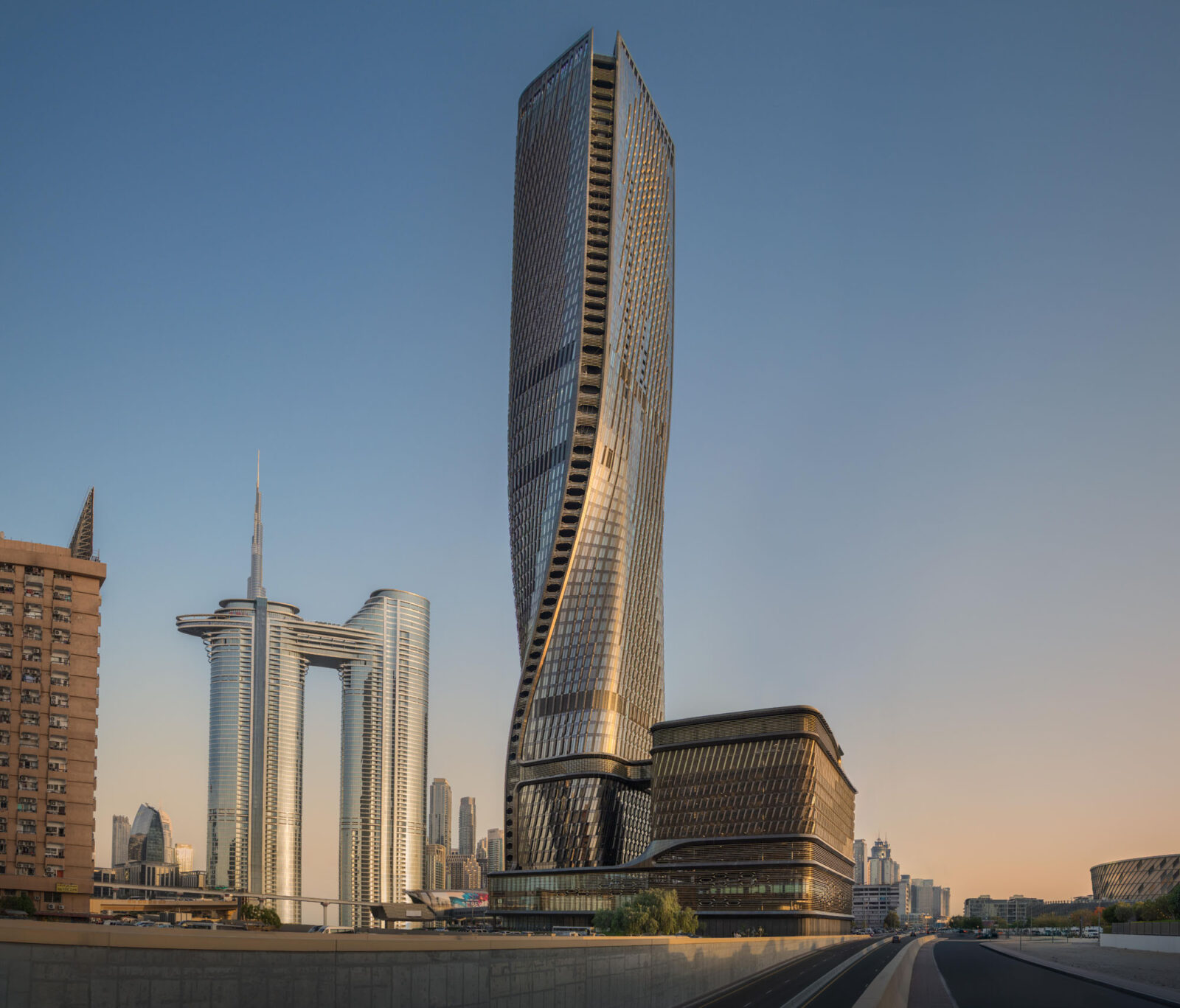
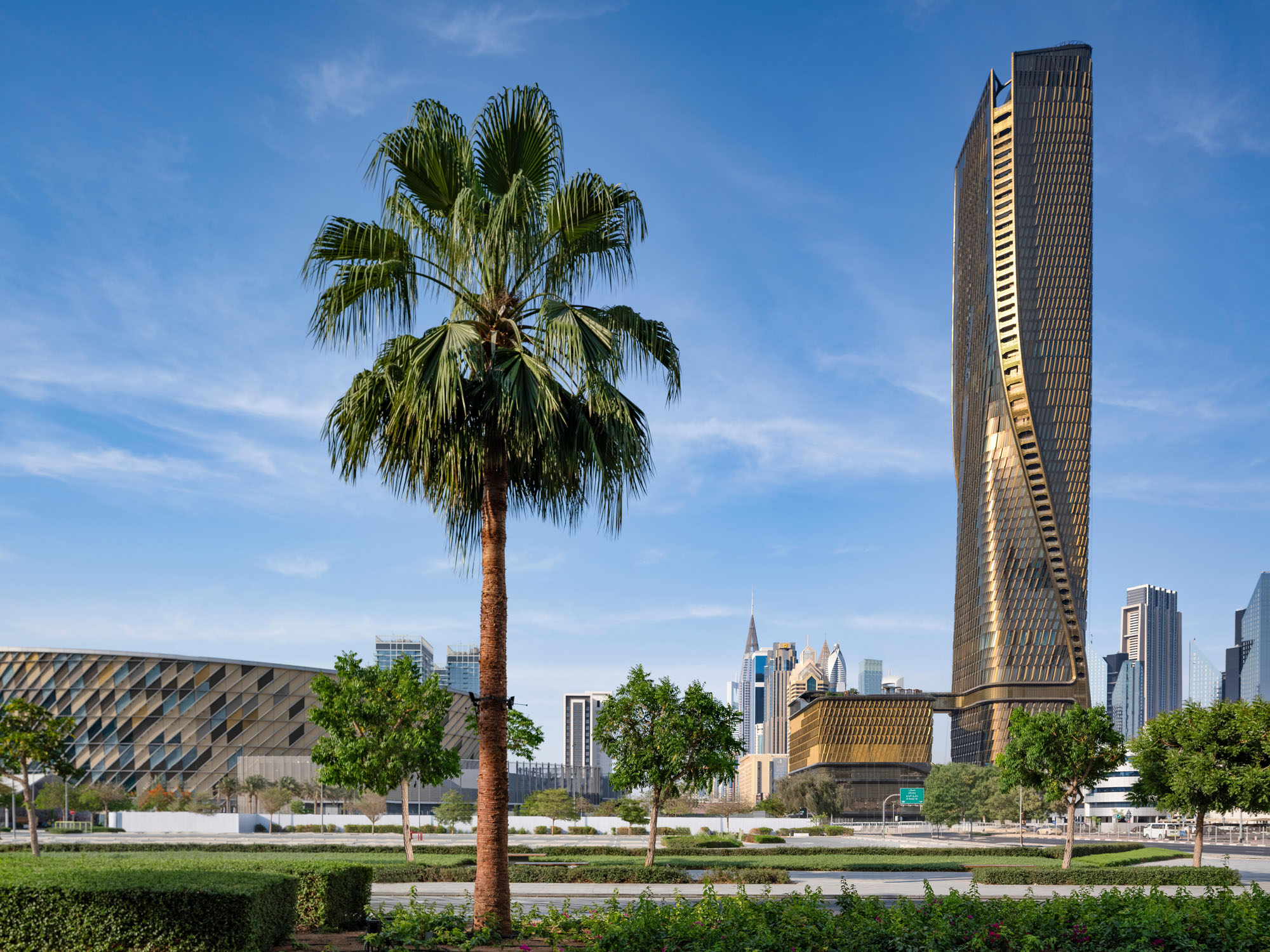
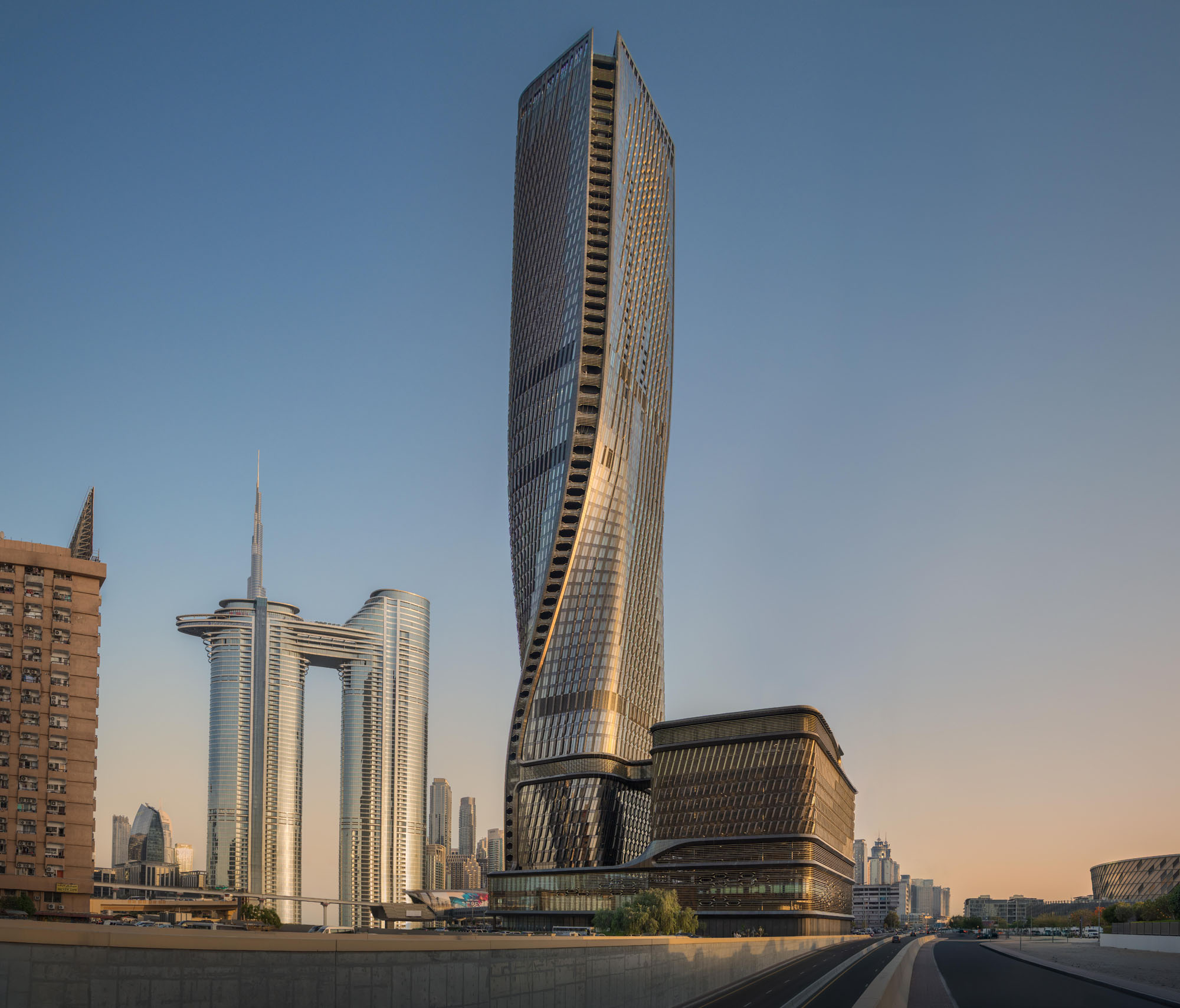
ドバイの中心部に誕生した〈ワスルタワー(Wasl Tower)〉は、世界各地に拠点をかまえる設計事務所 UNSが設計した高さ302mの超高層ビルです。
高級ホテル、住宅、オフィス、コンベンションホールなどを内包する複合用途施設であり、世界有数の規模を誇る特注のテラコッタ・セラミック製ファサードがその最大の特徴となっています。
注目ポイント
- 砂漠の過酷な気候に適応する持続可能な高層建築
- パラメトリック・デザインが実現するパッシブな環境フィルター
- セラミックフィンとアルミニウムグリルを組み合わせた360度のファサードシステム
- 絶えず変化するシルエットを創出する「コントラポスト」を取り入れた形態
(以下、UNSから提供されたプレスキットのテキストの抄訳)
© Ahmad Alnaji – SARAB
セラミックの革新と高層建築デザインの融合:高さ302mの〈ワスルタワー〉が竣工
ドバイの中心部に位置し、主要エンジニアリングコンサルタントであるヴェルナー・ソベック(Werner Sobek)との提携によって設計された〈ワスルタワー〉が竣工した。2013年以来、設計チームはワスル・グループと協力し、世界的な持続可能な変革において主要な役割を担うというUAEの野心を支え、今後100年にわたって世界的に著名な建築を追求するというドバイの目標に貢献する高層ビルをつくり上げてきた。
今日、〈ワスルタワー〉は、都市の中心部において革新的で適応性が高く、持続可能なランドマークとして、都市のスカイラインの中で際立った存在となっている。この建物は単なる建築物の枠を超え、モビリティ、持続可能性、そして新たな可能性を大胆に表現したものである。
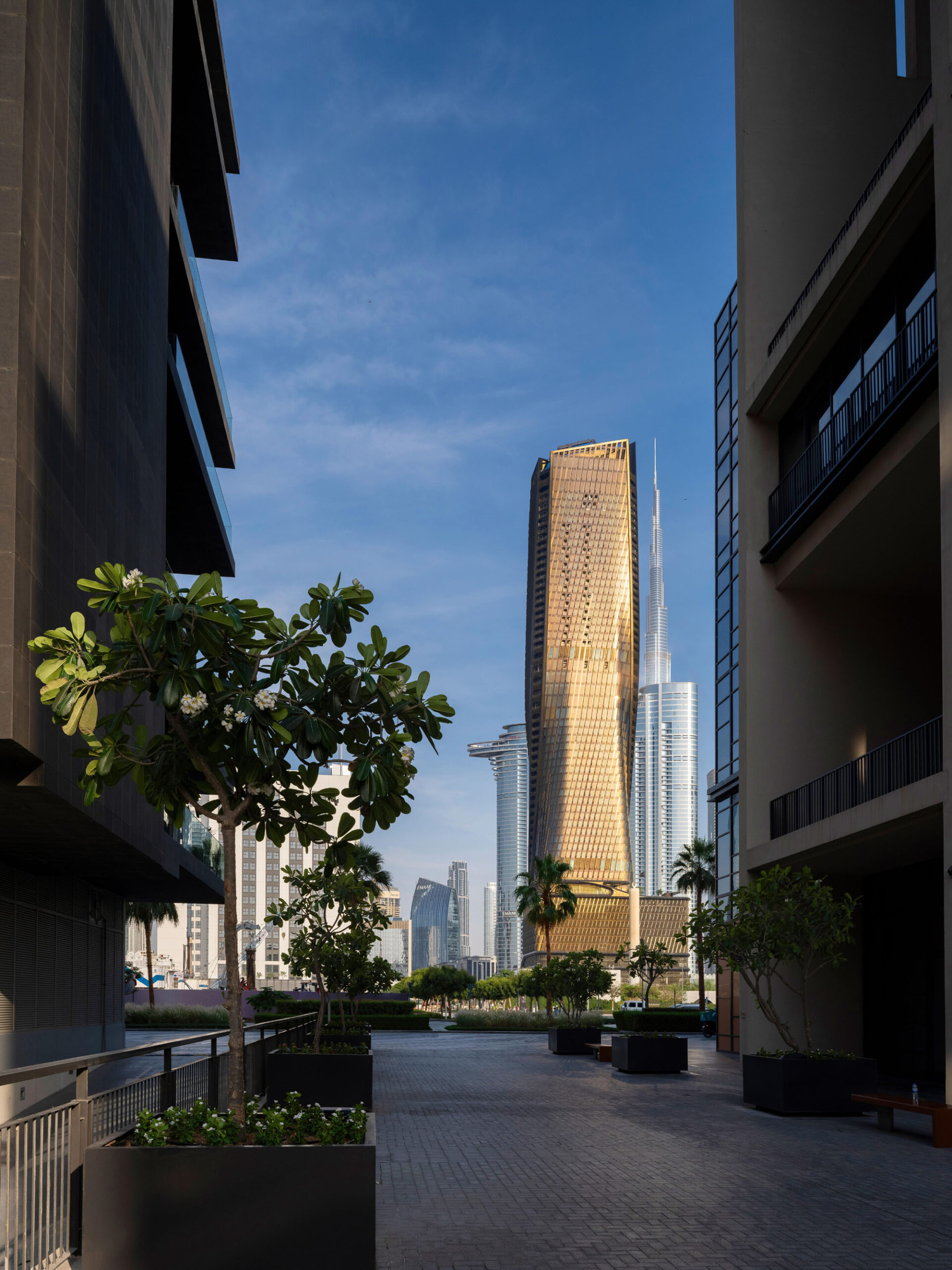
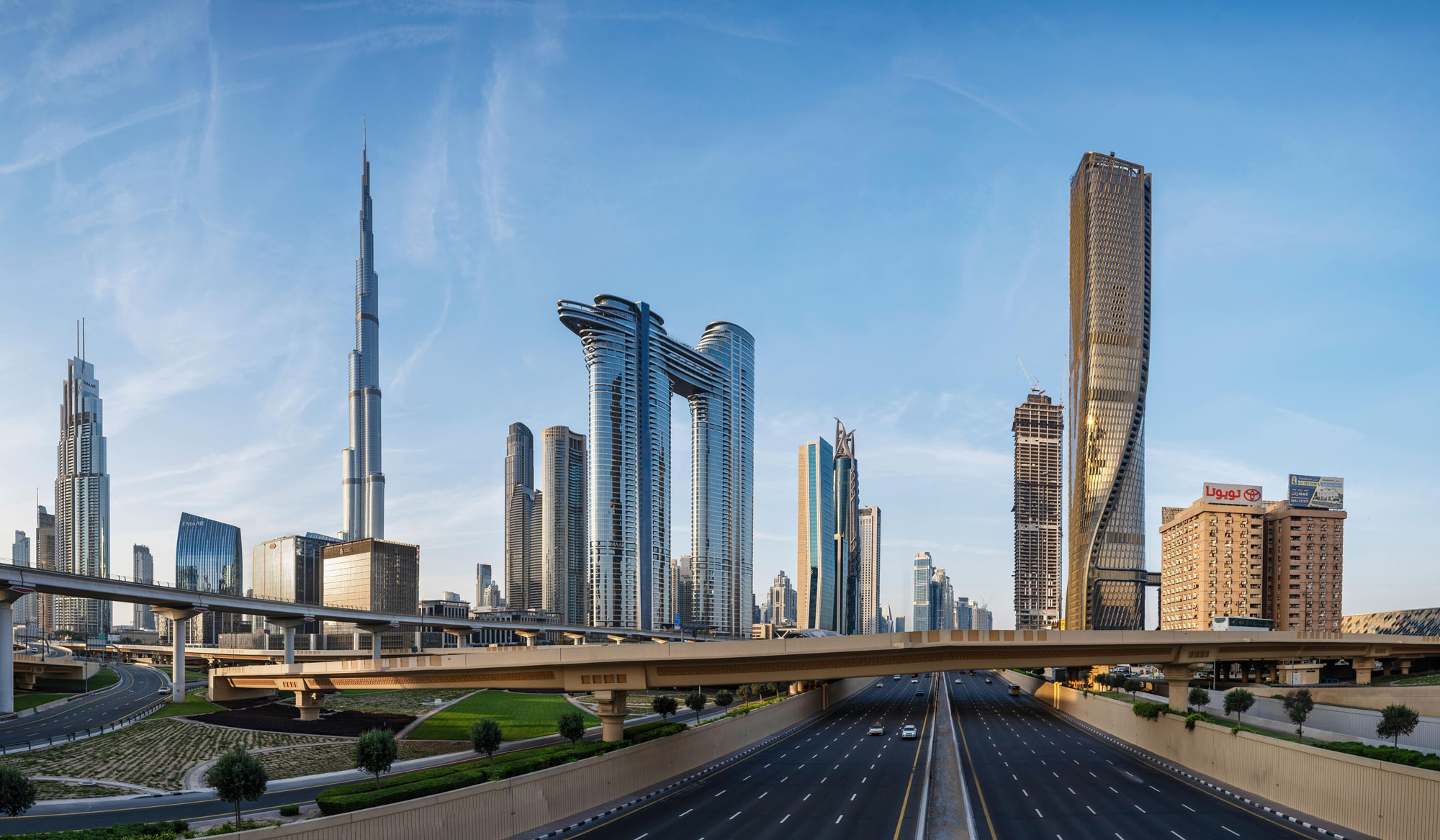
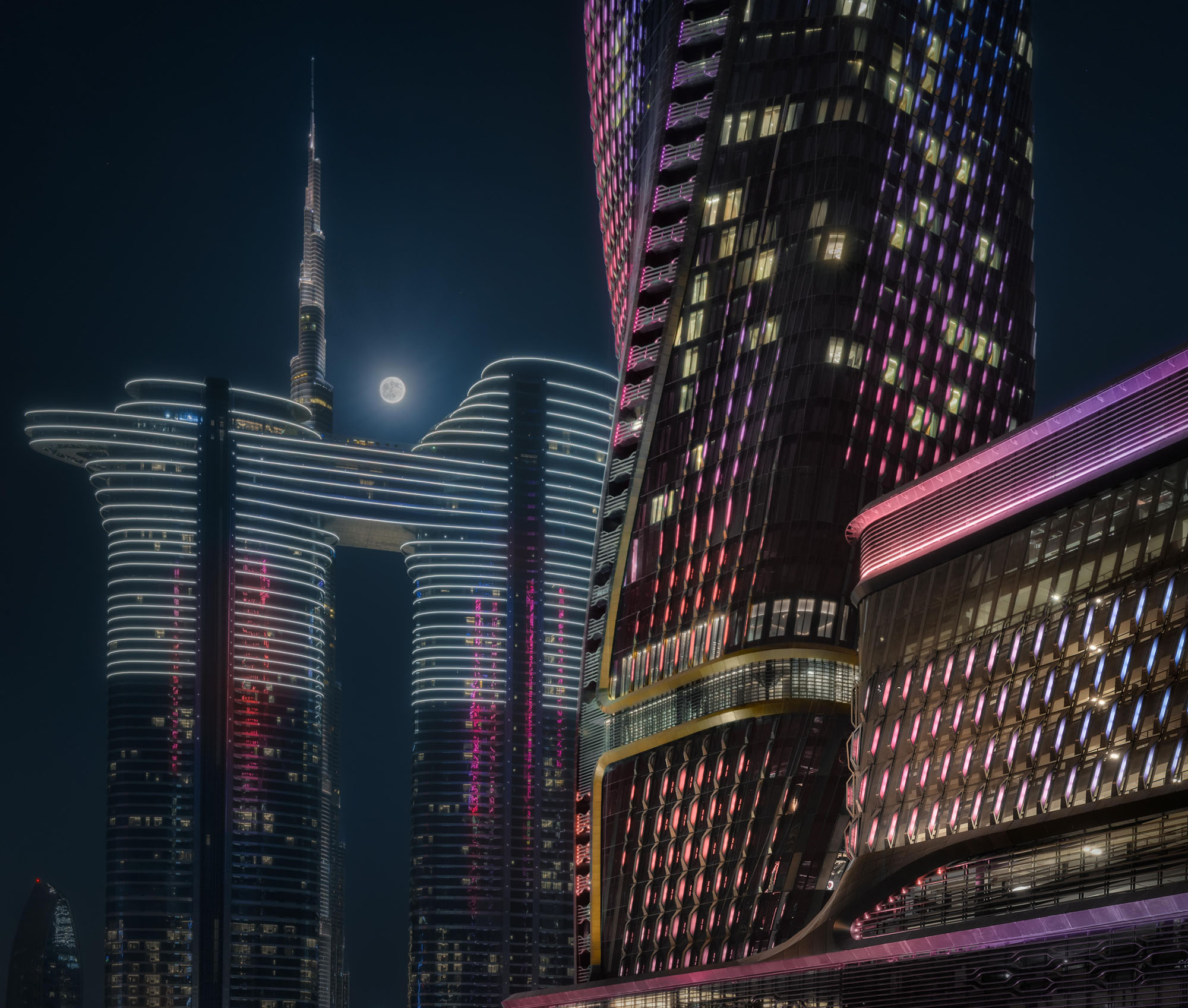
シェイク・ザイード・ロード沿いに位置する高さ302mの超高層ビルである〈ワスルタワー〉は、ドバイ都心部の中心にある〈ブルジュ・ハリファ〉の隣にそびえ立っている。2025年後半に竣工した本タワーは、世界有数の高さを誇るテラコッタ・セラミック製のファサードを備え、この時代を超越した素材とその固有の持続可能性を活かした活用において、地域における新たな基準を打ち立てている。
© Ahmad Alnaji – SARAB
過酷な気候に適応するフォルムと設計プロセス
ファサード全体に施されたパッシブな日除けや冷却技術により、過酷な気候条件に適応し、環境変化に対応する特性は、ドバイのスカイラインにおいてこの建物を際立たせている。建物の形状は、太陽熱の直接的な影響を最小限に抑えつつ、耐摩耗性および耐熱性を備えたセラミックの外装による遮熱効果を最大化するために、変形し折り重なるように設計されている。インフラへのダイナミックな近接性、多様な用途の組み合わせ、そして持続可能性への高い志が、ソリューション主導の設計プロセスを生み出す原動力となった。
UNSの設計コンセプトは、地下鉄、歩行者用通路、主要道路へのアクセスに恵まれたこのユニークな立地とのつながりを反映している。デザインには「コントラポスト(体重の大部分を片脚にかけて立っている人を描いた視覚芸術)」の動きが取り入れられており、この複合用途タワーは複数の方向に向きを変えることで、街全体に向けて絶えず変化するシルエットを提示している。
© Ahmad Alnaji – SARAB
多様なニーズに応える垂直のコミュニティ
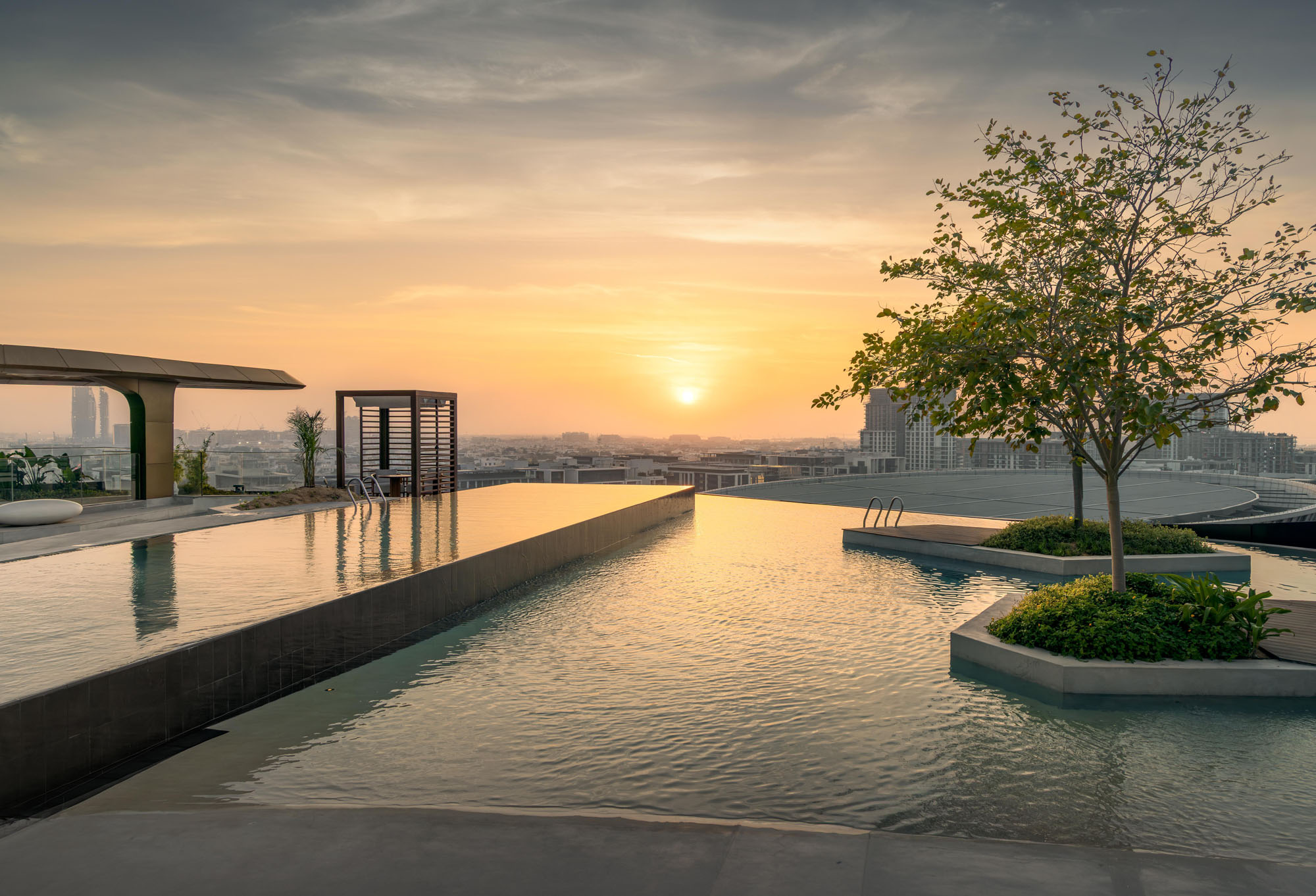
延床面積16万7,733m²の〈ワスルタワー〉には、マンダリン・オリエンタル・ダウンタウン・ホテル、住宅ユニット、オフィスが収められている。さらに、ホテルの多層階にわたるヘルス&ウェルネスセンターや、式典・結婚式・会議用のコンベンションホールといったアメニティスペースなど、多様な複合用途プログラムが組み込まれており、さまざまな利用者層に対応する垂直的なコミュニティを形成している。また、設計には高層階のパブリックエリアも含まれており、街を見下ろす高層階において、交流、食事、ウェルネス、そして偶然の出会いを楽しめるユニークな空間を提供している。
「〈ワスルタワー〉への訪問を、可能な限り魅力的かつ現代的なものにすることが設計の目的であった。そのため、建物全体を通じて、健康、快適さ、そしてウェルビーイングに特化したコンセプトが開発されたのである。」
UNS創設者兼主任建築家
ベン・ヴァン・バーケル(Ben van Berkel)
© Ahmad Alnaji – SARAB
変革をもたらすセラミックファサード
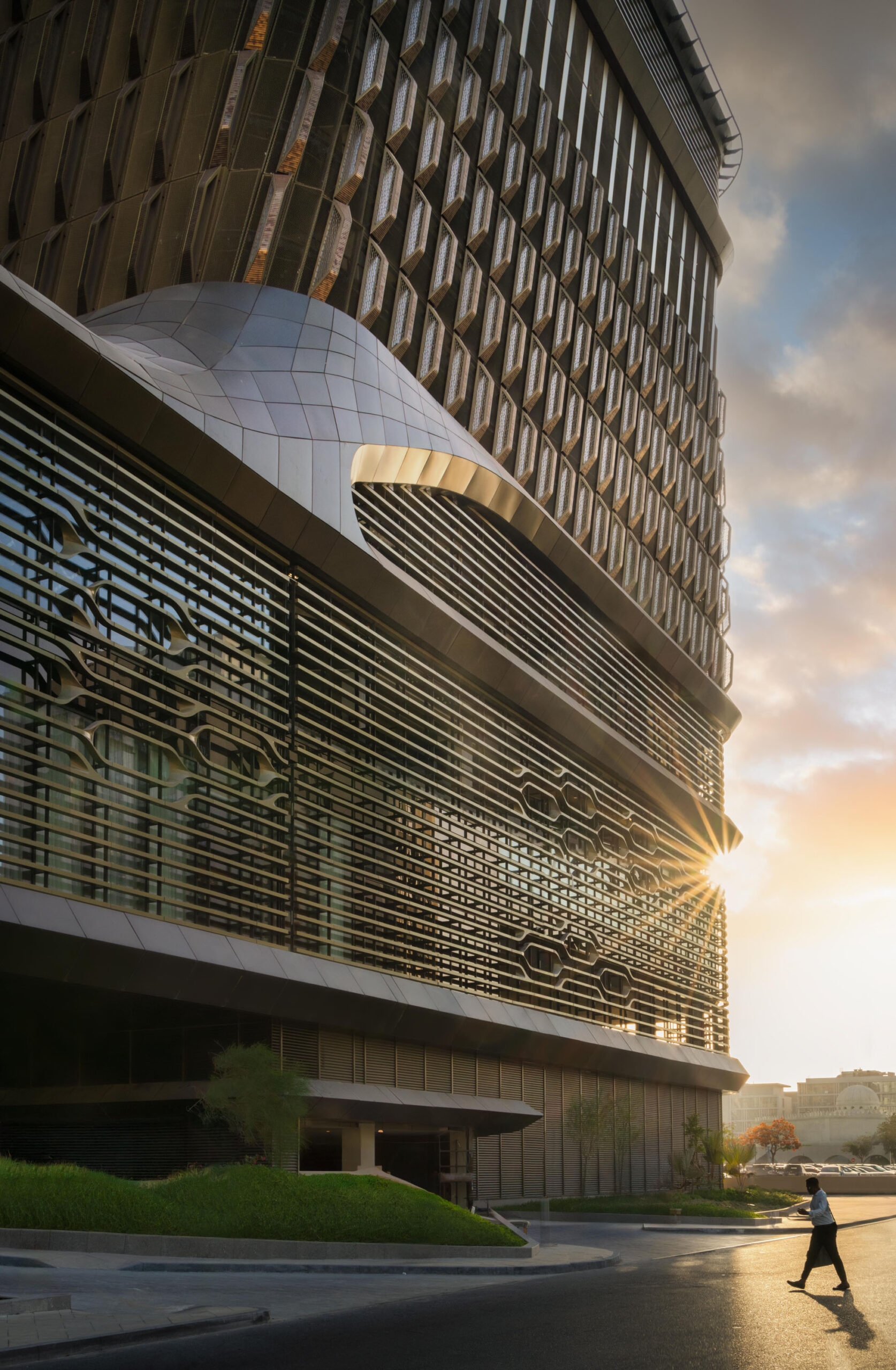
完成した〈ワスルタワー〉は、文化的意義と耐久性を理由に選ばれた堅牢な素材であるセラミックファサードを採用した、この地域で最も高いビルとなった。数千枚のセラミックフィンが日陰をつくり、熱放射を低減し、強風を捉えることで、砂漠の気候に適応しつつ、市内の旧来のタワーと比較して冷房負荷を約10%削減している。
この地域における伝統的な素材であるセラミックは、UNSによって高層建築への適用に向けて再考され、ローテクな製造方法と先進的な設計技術が融合された。この大規模な再発明は、素材の伝統と現代のイノベーションとの連続性を示している。
© Ahmad Alnaji – SARAB
パラメトリック・デザインが生む360度の環境フィルター
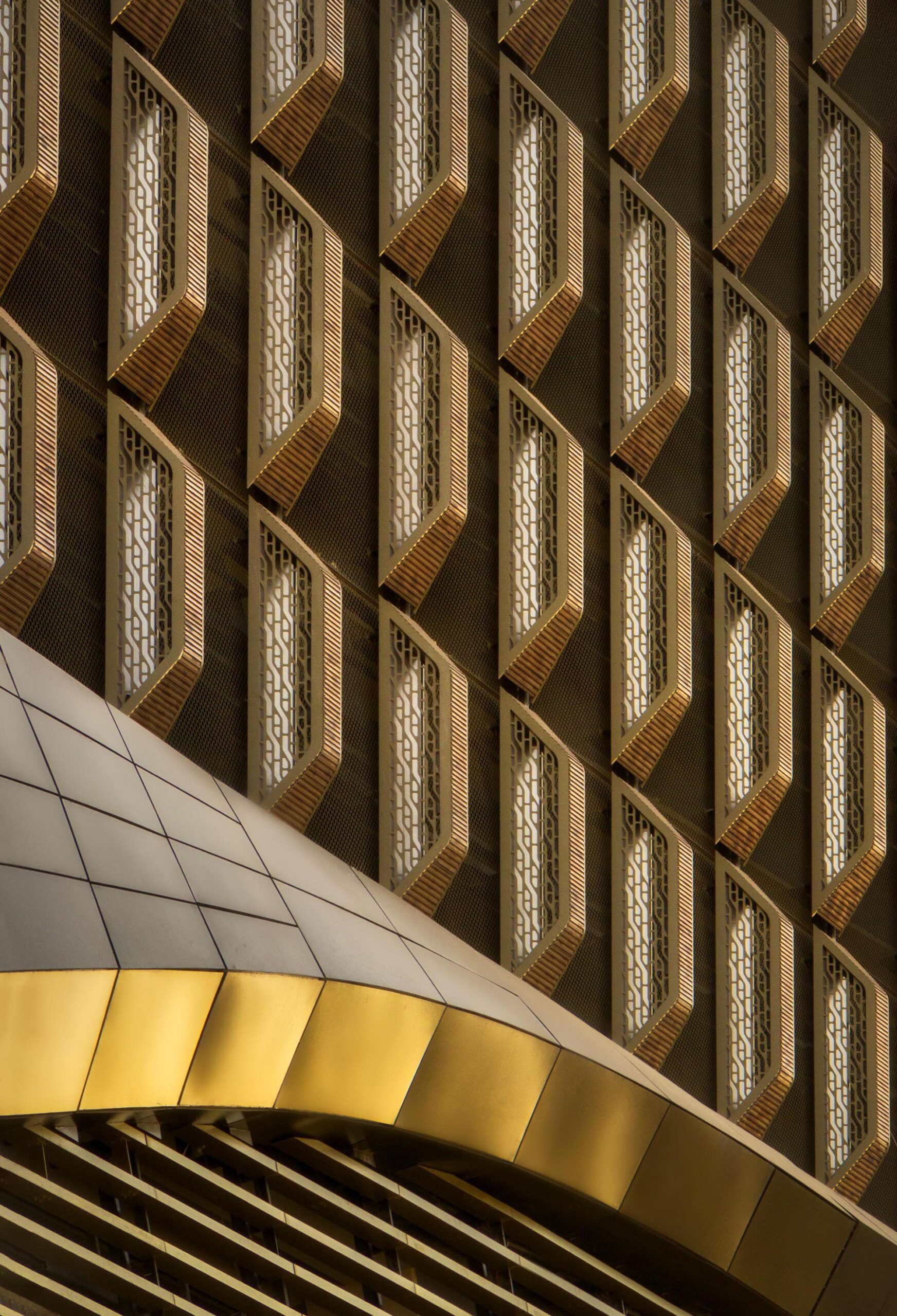
ファサードは、建物の日照方位に応じて層状に構成された360度のシステムとして機能する。セラミックフィンはタワーを包み込む保護の外套を形成し、パッシブな環境フィルターとして作用する。パラメトリックモデリングを通じて開発されたファサード上の配置と構成は、環境性能と美観のバランスを取っている。フィンは、直射日光による熱取得を遮りつつ、自然光を建物の奥深くまで取り込むことで、エネルギー効率と居住者の快適性の両方を支えている。
各複合セラミックフィンは特注のテラコッタプロファイルを採用しており、金属釉薬で焼き上げられているため、1日や季節を通じて視覚的に変化する。フィンが建物の周囲に風を導く際、組み込まれたアルミニウムグリルが気流を誘導し、セラミックモジュールが吸収した熱を冷却する仕組みである。また、フィンとタワーの内部カーテンウォールシステムとの間の空洞が、パッシブ冷却をさらに促進する。この二重の役割を果たす外皮は、機能性と表現力豊かなデザインを融合させ、エネルギー効率に優れ、かつ視覚的に印象的なファサードを生み出している。
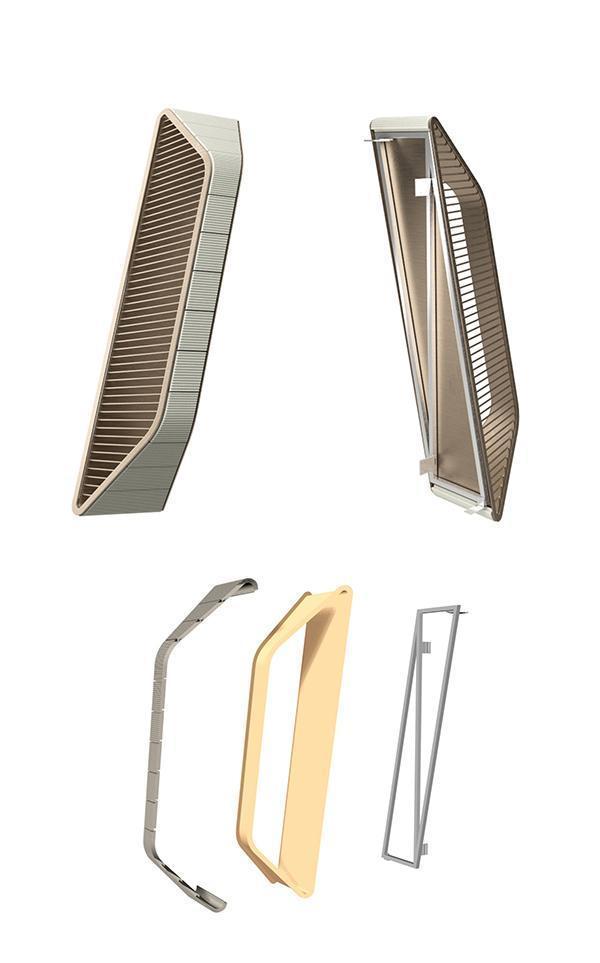
©︎ UNS
このヴェールには、アラップ・ライティング(Arup Lighting)社と共同で設計された特注の照明システムも組み込まれており、24時間絶え間なく変化する都市のリズムを反映するようにプログラムされている。暗くなってからは、色調と輝度の微妙な変化がファサードに動きを与え、建物を都市景観の能動的な一員へと変貌させる。
伝統的な素材と先進的なエンジニアリングを融合させた〈ワスルタワー〉のファサードは、デザインの質、高い性能、そして環境への責任を一体化した拡張可能なアプローチを提供し、世界中のより持続可能な高層プロジェクトに応用可能なモデルを提示している。
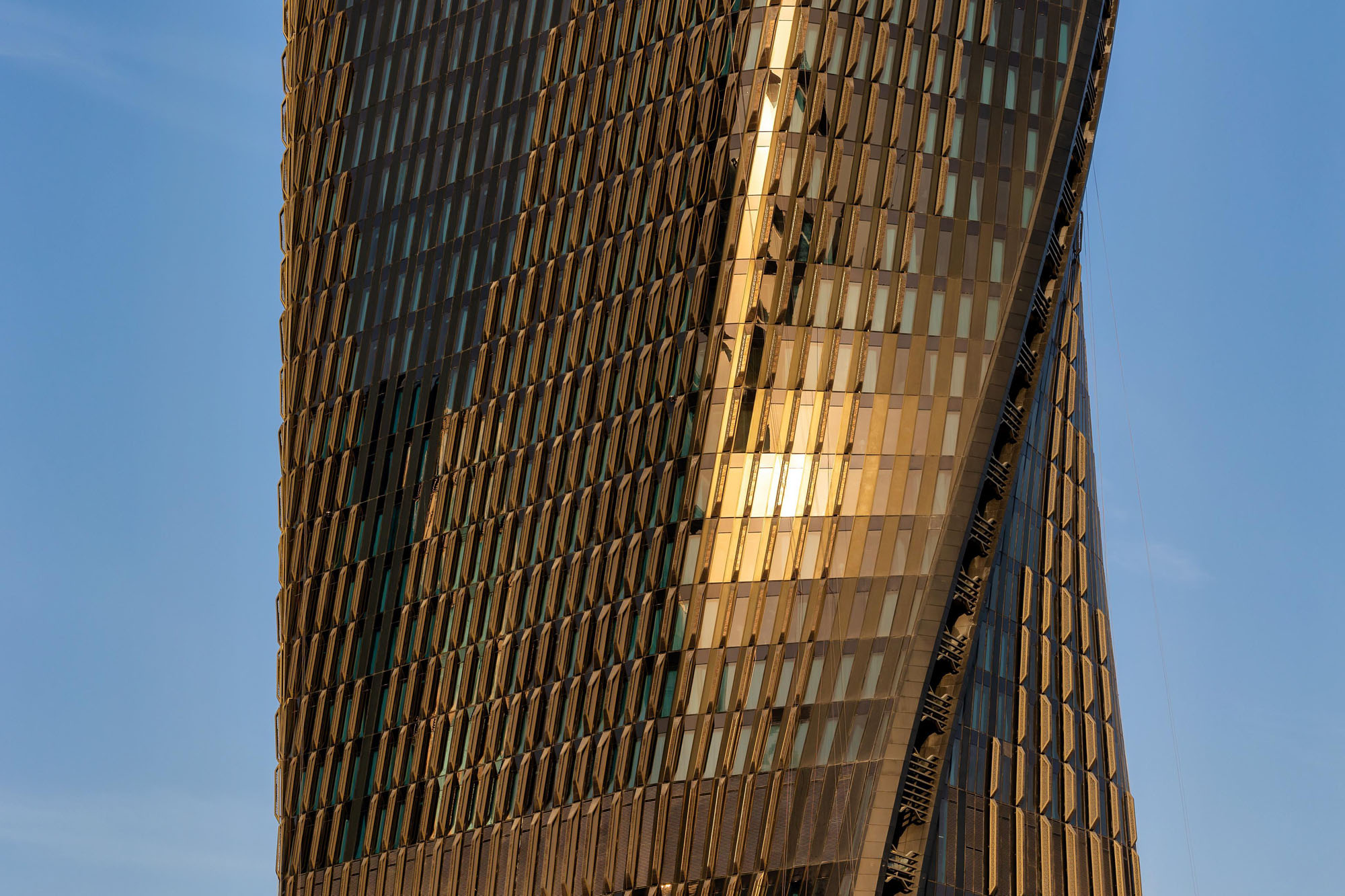
© Ahmad Alnaji – SARAB
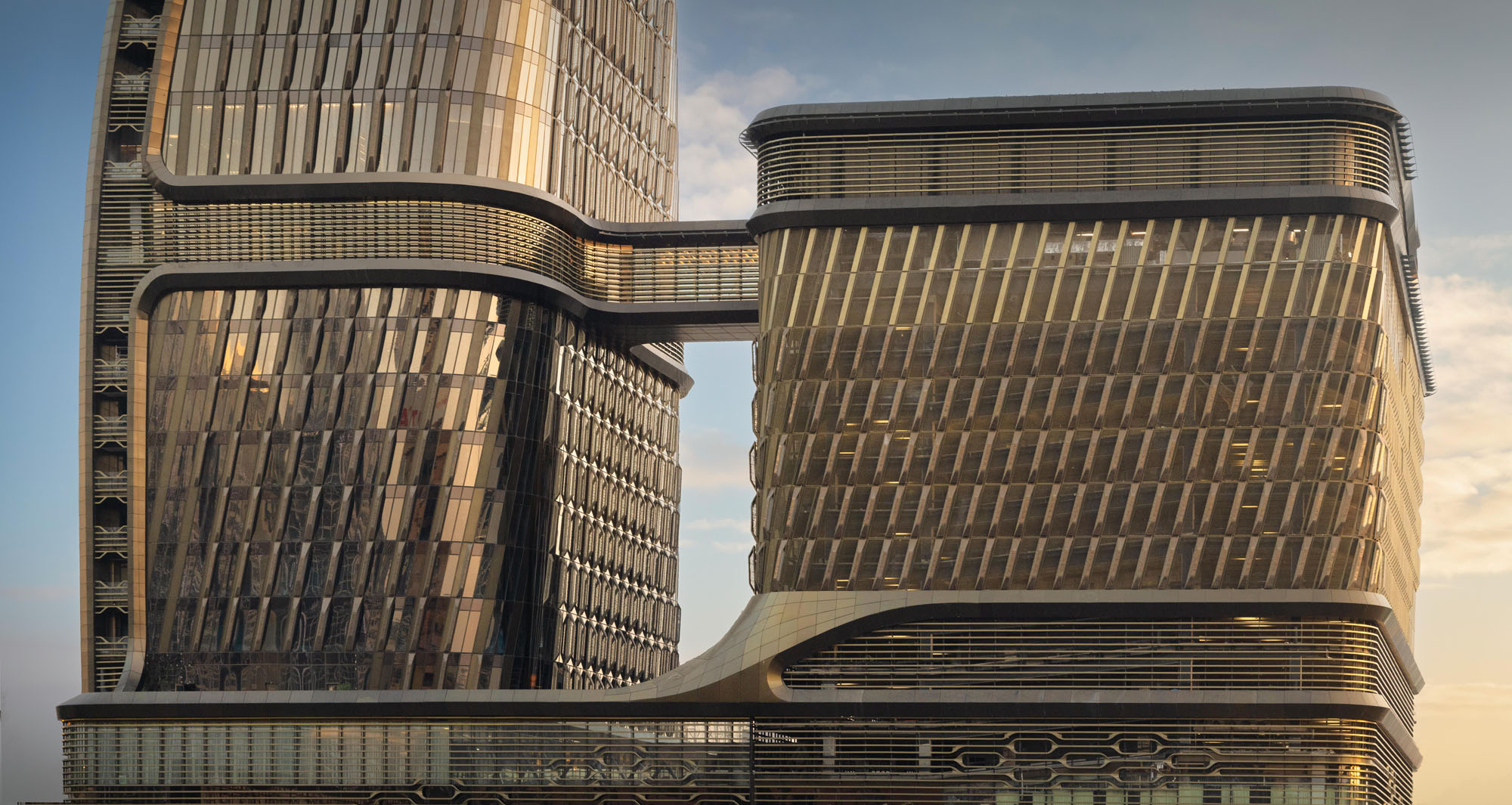
© Ahmad Alnaji – SARAB
結節点としてのタワー
〈ワスルタワー〉は単なる独立したオブジェクトとしてではなく、インフラ、機能、そして人々をつなぐ都市の結節点として機能する。
シェイク・ザイード・ロードの西側において、この規模では初の高層ビルとなる〈ワスルタワー〉は、ドバイの2つの異なるエリア、すなわち〈ブルジュ・ハリファ〉周辺の商業クラスターと、シティ・ウォークのストリート型開発エリアとを結びつける架け橋となっている。
この特徴的な立地に応えるため、設計にはセミパブリックゾーン、共有アメニティ、高所に設けられた集いの場が取り入れられ、交流と関与の機会が創出されている。このように、このタワーは居住者、ホテル宿泊客、従業員だけでなく、7軒のレストランやバーを利用できる一般の人々をも歓迎するように設計されている。
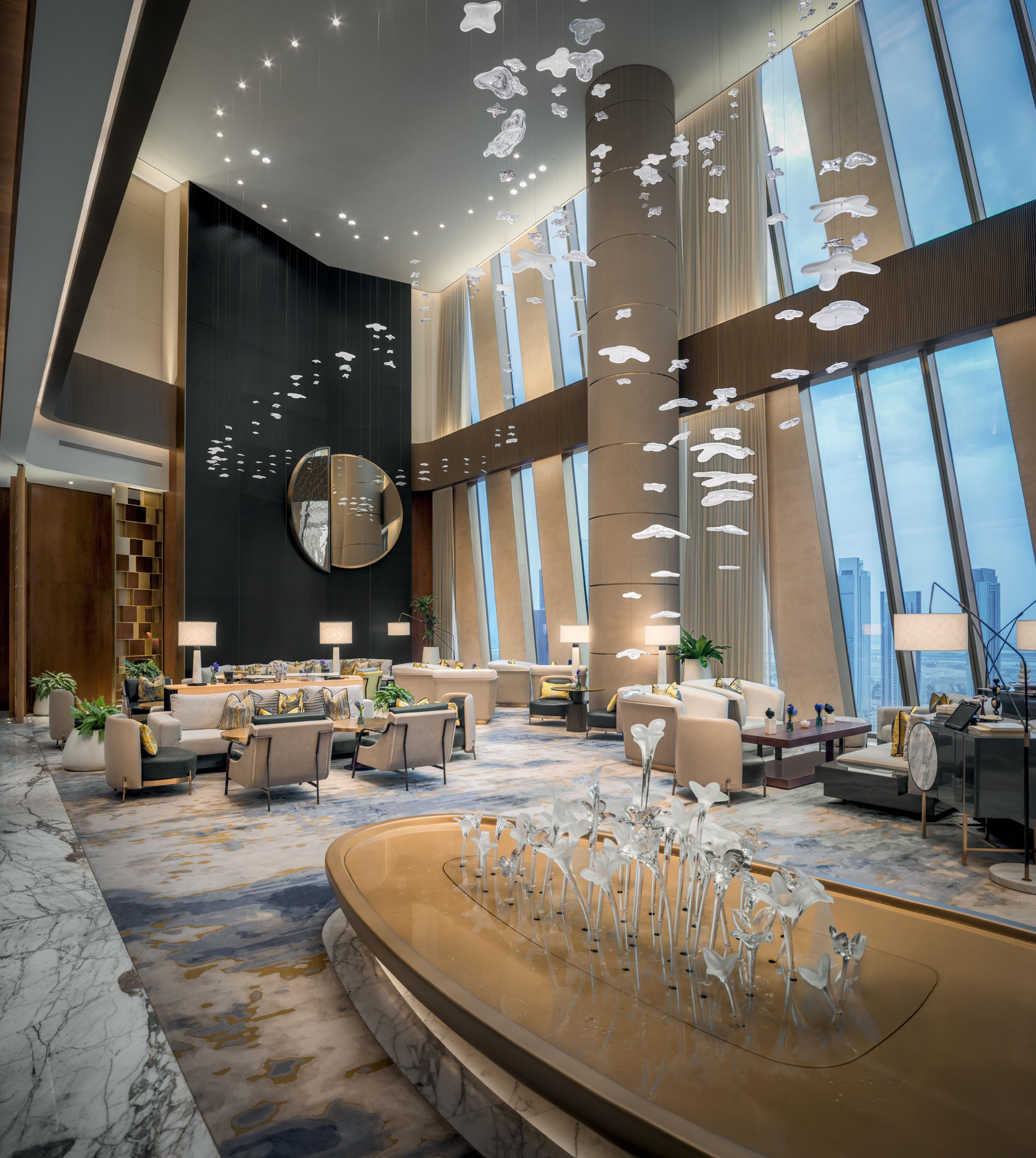
© Ahmad Alnaji – SARAB
計算し尽くされた動線とアメニティ空間
中央の垂直動線システムは、各機能間のスムーズな移動を保証すると同時に、運営効率を維持し、建物の公共エリアから分離されたバックオフィス機能を目立たないように組み込んでいる。エレベーターの配置計画は、各機能ごとに明確で独立した動線を演出している。
- エクスプレスエレベーター(3基):地上、スパ、スカイ、ルーフトップの4つの主要ロビーを結びつけ、150mの高さでパブリックエリアとホテルの到着エリアを統合する。
- 共有エレベーター群(オフィス用4基・客室用4基):中央シャフトを占め、効率的な移動を提供する。
- レジデンス専用エレベーター:上層階のレジデンスには、地下へ直接アクセスできる専用グループが配置されている。
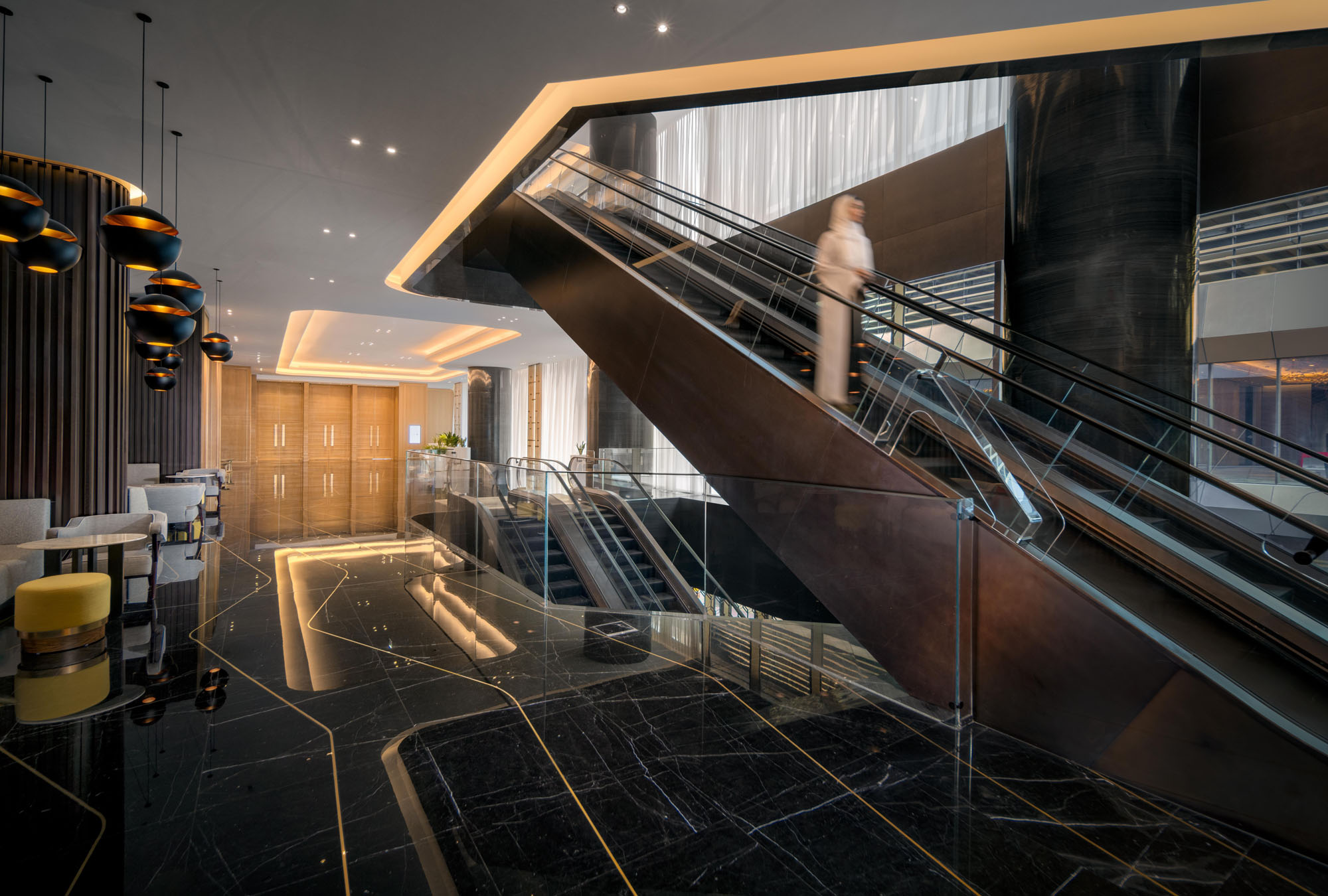
© Ahmad Alnaji – SARAB
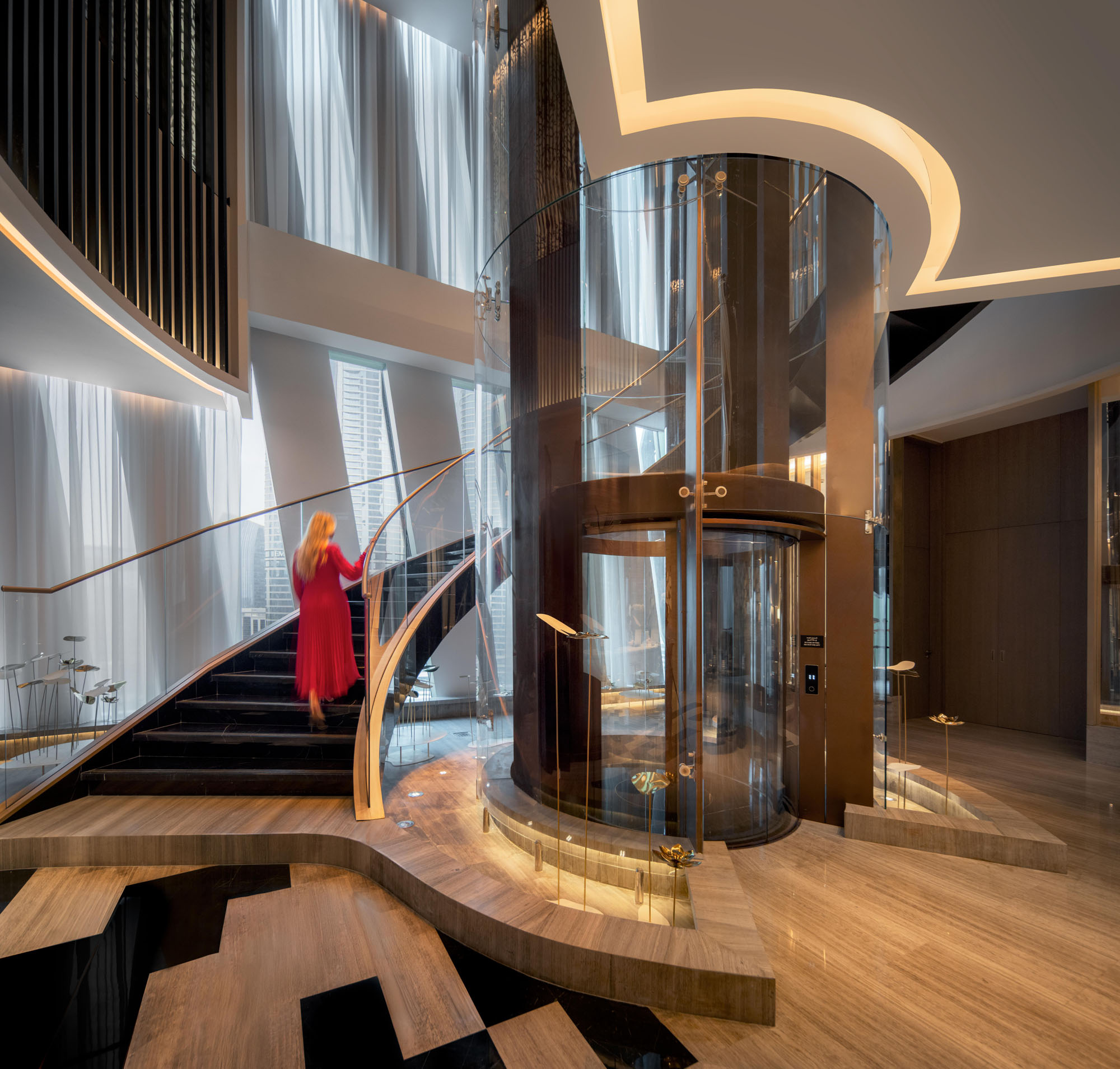
© Ahmad Alnaji – SARAB
合計17基のエレベーターが稼働しており、そのうち5基はサービス用である。また、駐車場棟には1,500m²の無柱空間のボールルームも設けられており、緑豊かな中庭を備え、橋を介してタワーに直接接続することで、回遊性を高め、一体感のある都市体験を生み出している。
健康、快適性、そして運用パフォーマンスは、ヴェルナー・ソベック・グリーン・テクノロジーズ(Werner Sobek Green Technologies)が開発した「人にも環境にも良い(Good for the People, Good for the Environment)」という枠組みを通じて、プロジェクトに組み込まれた。その結果、多様な利用者グループの日常生活を支え、ドバイの地上レベルにおける都市体験の継続的な変革に寄与する建物が完成した。
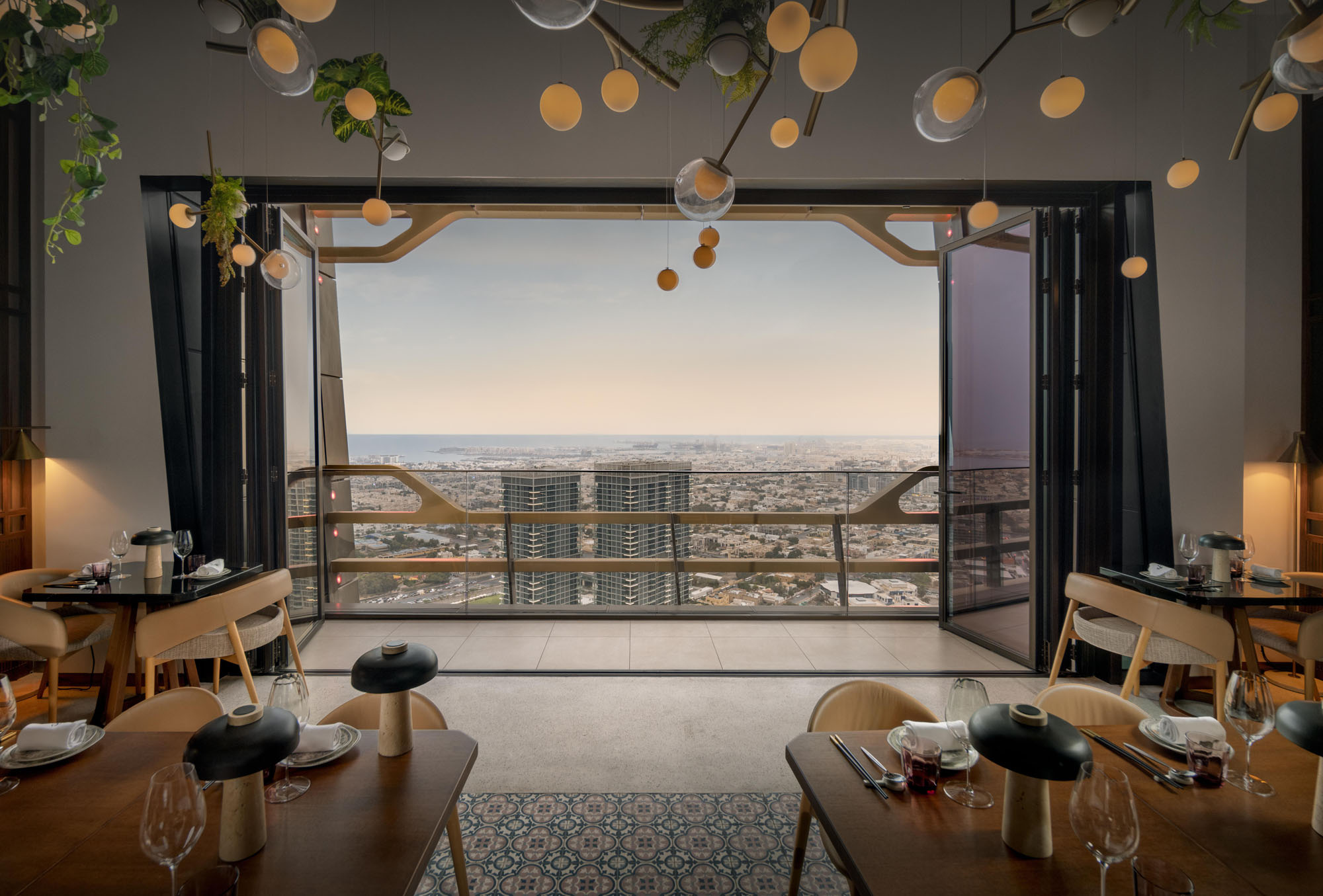
© Ahmad Alnaji – SARAB
持続可能性、技術、そして健康を中核に
〈ワスルタワー〉の設計と建設には、効率性を向上させ、環境への影響を低減するための様々な革新技術が取り入れられている。
- エネルギー効率の向上:ファサードのセラミック製フィンは日射熱の侵入と冷房需要を低減し、太陽熱パネルと反射ガラスがエネルギー効率を向上させる。タワーの照明は自然光応答システムによって制御され、LED照明の採用により周辺エリアのエネルギー使用量を最大20%削減している。統合型ヒートポンプシステムと地域冷房システムにより、カーボンフットプリントをさらに低減させている。
- 環境配慮型素材の選定:建材は環境性能を重視して選定され、地域産の御影石やアルミニウム、再生PET製吸音パネル、低VOC塗料が建物全体に使用されている。屋外エリアでは、パッシブクーリングと植栽を組み合わせ、快適な微気候を創出している。
- 画期的な構造システム:タワーの構造システムは、効率性と柔軟性を重視して設計された。ポストテンション床スラブ、ハイブリッドコンクリート柱、および機械室レベルのアウトリガーにより、内部柱を最小限に抑えた効率的なフロアプランが実現している。ドバイではかつて例のないこのアプローチにより、コンクリート使用量は合計で3,000立方メートル削減された。
さらに、健康と利用者の快適性を最優先し、CO2ベースの換気制御、自然採光、開放的なフロアプラン、明確な空間のオリエンテーションにより、利用者のウェルビーイングを促進している。〈ワスル・タワー〉は、UAEの気候変動対策の取り組みと歩調を合わせ、人を中心とした高性能な環境を創出するという、UNSの絶え間ないイノベーションへの取り組みの証である。
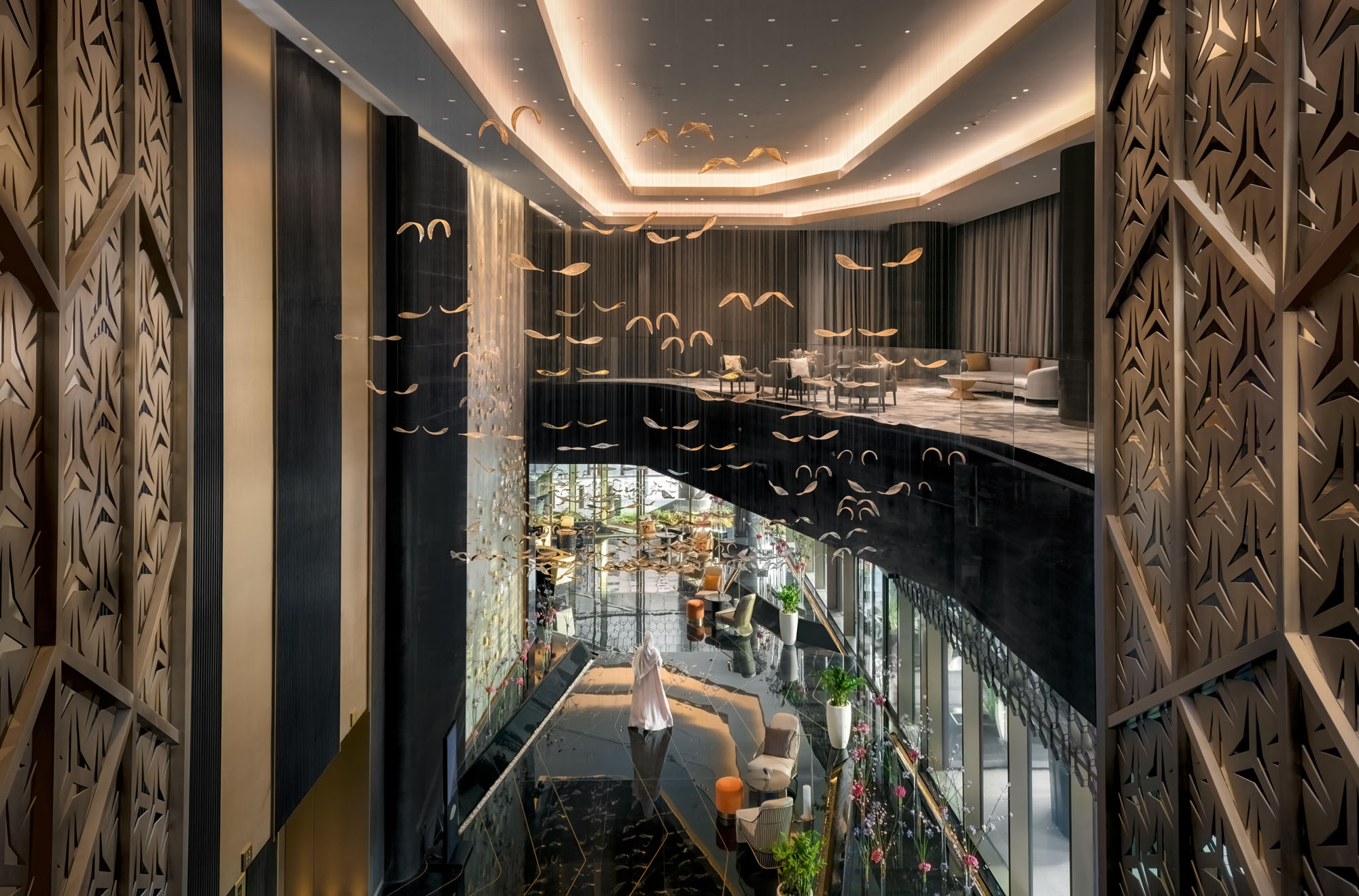
© Ahmad Alnaji – SARAB
唯一無二の体験を提供するホテル
〈ワスルタワー〉内に位置するマンダリン・オリエンタル・ダウンタウン・ドバイは、ホテル運営会社、およびホテルエリアのインテリアデザインコンセプトを担当したGAデザイン(GA Design)との緊密な連携のもとで開発された。これにより、建築コンセプトとホテルの具体的な要件との整合性が確保されている。
施設は垂直的な「ネイバーフッド(近隣住区)」に分割され、ウェルネス施設、ダイニングエリア、イベントスペースが複数の階に分散して配置されている。この設計は、公共の到着エリア、プライベートサービス、共有アメニティの間の明確な関係性を支えている。会議室や祝賀エリアなどの公共イベントスペースは下層階に配置され、1階から完全にアクセス可能である。これらのスペースは1階や緑化された中庭に直接面しており、透明性とつながりを確保している。
35階から37階に位置するホテルロビーは、ユニークな到着体験を提供する。61階と62階にある夜遅くまで営業する施設からは街の眺望を一望でき、11階と12階のウェルネス施設は都会の喧騒から逃れる安らぎの空間となっている。この空間構成は、ホスピタリティと建物の複合用途プログラムを統合し、建物全体にホスピタリティ体験を織り込むという、タワー全体の設計目標を反映したものである。
建築とインテリア体験を統合した本プロジェクトのアプローチが評価され、マンダリン・オリエンタル・ダウンタウン・ドバイは、中東全域における優れたデザインを称える「2025年アイデンティティ・デザイン・アワード」において、「建築:ホテル部門」賞を受賞している。
© Ahmad Alnaji – SARAB
© Ahmad Alnaji – SARAB
以下、UNSのリリース(英文)です。
Ceramic Innovation Meets High-Rise Design: 302-Metre-Tall Wasl Tower Now Completed
Wasl Tower, located in downtown Dubai and designed by partnership with lead engineering consultant Werner Sobek, has been completed. Since 2013, the teams have worked with Wasl Group to create a high-rise in Dubai that supports the UAE’s ambition to be a key player in sustainable transformation worldwide, while contributing to the city’s drive for world-renowned architecture over the next 100 years. Today, Wasl Tower stands out within the city skyline as an innovative, adaptable, and sustainable landmark in the heart of the city. The building goes beyond architecture: a bold expression of mobility, sustainability, and possibility.
The Wasl Tower is a 302-metre-tall high-rise structure located off Sheikh Zayed road, rising adjacent to the Burj Khalifa in the heart of Dubai’s city centre. Completed in late 2025, Wasl Tower has one of the world’s tallest terracotta ceramic facades, setting a regional standard for the use of this timeless material and its inherent sustainable properties.
The Tower’s responsiveness and ability to acclimate to harsh climatic conditions by way of passive shading and cooling techniques articulated throughout the facade set this building apart in the Dubai skyline. The building’s form morphs and folds to minimise solar incident heat exposure while maximising the shielding effect of its abrasion and heat-resistant ceramic cloak. The design’s dynamic proximity to infrastructure, varying mix of programmatic typologies, and ambition towards sustainability all provided the catalyst for a solution driven design process.
UNS’s design concept reflects the building’s connection to its unique location, which enjoys access to the metro, pedestrian walkways, and major roadways. The design adopts a ‘contrapposto’ movement, allowing the mixed-used tower to face in multiple directions and to offer a constantly changing profile across the city.
Covering 167,733 m2, Wasl Tower houses a diverse mixed-use programme that includes the Mandarin Oriental Downtown hotel, residential units, offices, and amenity spaces such as the hotel’s multi-story health and wellness centre, and a convention hall for ceremonies, weddings, and conferences, creating a vertical community that caters to a variety of user groups. The design also incorporates elevated public areas, offering unique spaces for socialising, dining, wellness, and chance encounters high above the city.
“The aim was to make a visit to Wasl Tower as attractive and contemporary as possible,” says Ben van Berkel, Founder and Principal Architect of UNS. “As such, a dedicated concept of health, comfort, and wellbeing throughout was developed for the building.”
A transformative facade
With its completion, Wasl Tower now hosts the region’s tallest building to feature a ceramic facade, a robust material chosen for its cultural significance and durability. Thousands of ceramic fins provide shading, reduce heat radiation, and capture high winds, adapting to the desert climate while reducing cooling loads by approximately 10% compared to older towers in the city. Ceramics, a traditional material in the region, were reimagined by UNS for high-rise applications, combining low-tech manufacturing methods with advanced design techniques. Its reinvention at scale signals a continuity between material heritage and modern innovation.The facade operates as a 360-degree system, layered in response to the building’s solar orientation. The ceramic fins form a protective cloak that wraps around the tower, acting as a passive environmental filter. Their placement and configuration on the facade, developed through parametric modelling, balance environmental performance with aesthetics. The fins allow daylight to penetrate deep into the interior while shielding incident solar heat gain, supporting both energy efficiency and occupant comfort.
Each composite ceramic fin features a custom terracotta profile, baked with a metallic glaze that enables it to transform visually throughout the day and seasons. As the fins channel wind around the building, integrated aluminum grills enable the airflow to cool the heat absorbed by the ceramic modules, while the cavity between the fins and the tower’s interior curtainwall system further supports passive cooling. This dual-purpose envelope combines functionality with expressive design, creating a facade that is both energy efficient and visually striking.
This veil also houses a custom lighting system designed in partnership with Arup Lighting, which is programmed to reflect the ever-changing rhythm of the 24-hour city. Subtle shifts in tone and intensity animate the facade after dark, turning the building into an active participant in the urban landscape.
By pairing traditional materials with advanced engineering, the Wasl Tower facade offers a scalable approach that brings design quality, high performance, and environmental responsibility together, setting out a model that can be applied to more sustainable high-rise projects worldwide.
A walk in the city
Wasl Tower functions not as a standalone object, but as an urban node connecting infrastructure, programme, and people.As the first high-rise of its scale on the west side of Sheikh Zayed Road, Wasl Tower bridges two distinct areas of Dubai: the commercial cluster around Burj Khalifa, and the street-based development of City Walk. As a response to this distinctive location, the design features semi-public zones, shared amenities, and elevated gathering spaces to create opportunities for interaction and engagement. As such, the tower was designed to welcome not only residents, hotel guests, and employees, but also the wider public who can access its seven restaurants and bars.
A central vertical circulation system ensures smooth transitions between programmes, while maintaining operational efficiency and discreetly incorporating back-of-house functions that ensure separation from the public areas of the building. The lift strategy choreographs clear, separate journeys for each programme. Three high‑speed express lifts stitch together the four primary lobbies – ground, spa, sky, and rooftop – convening the public programme and the hotel arrival at 150 metres. A shared bank of four office and four guestroom lifts occupy a central shaft, while upper‑level residences use a dedicated group with direct basement access; in total, 17 lifts operate throughout, five of them for service. The parking structure also includes a 1,500 m2 column-free ballroom with a green courtyard that connects directly to the tower via a bridge, enhancing connectivity and creating a cohesive urban experience.
Health, comfort, and operational performance were embedded into the project through a ‘Good for the People, Good for the Environment’ framework developed by Werner Sobek Green Technologies. The result is a building that supports daily life across different user groups and contributes to the ongoing transformation of Dubai’s ground-level urban experience.
Sustainability, technology, and health to the core
The design and construction of Wasl Tower incorporates a range of innovations to improve efficiency and reduce environmental impact. The ceramic fins on the facade reduce solar gain and cooling demand, while solar thermal panels and reflective glazing improve energy efficiency. The tower’s lighting is also managed through daylight-responsive systems, and LED lighting reduces perimeter-zone energy use by up to 20%. An integrated heat pump system and district cooling further reduce the carbon footprint.Materials were selected for their environmental performance, with regionally sourced granite and aluminum, recycled PET acoustic panels, and low-VOC finishes used throughout. Outdoor areas feature passive cooling and planting to create comfortable microclimates.
The Tower’s structural system was designed for efficiency and flexibility. Post-tensed floor slabs, hybrid concrete columns, and mechanical-level outriggers enabled an efficient floorplate with minimal internal columns. This approach, which had never been used before in Dubai, resulted in 3,000 cubic metres less concrete used in total. Additionally, health and user-comfort were prioritised, with CO2-based ventilation controls, natural daylight access, open floorplates, and clear spatial orientation promoting user wellbeing.
Wasl Tower stands as a testament to UNS’s continuous drive for innovation – creating people-centered, high‑performance environments in step with the UAE’s climate agenda.
One-of-a-kind hotel
The Mandarin Oriental Downtown Dubai hotel within Wasl Tower was developed in close collaboration with the hotel operator and GA Design – who were responsible for the interior design concept of the hotel areas. This ensured alignment between the architectural concept and the hotel’s specific requirements. As such, the organisation is divided into vertical neighbourhoods, with wellness facilities, dining areas, and event spaces distributed across several levels.The design supports a clear relationship between public arrival, private services, and shared amenities. Public event spaces, such as meeting rooms and celebration areas, are located on the lower levels and remain fully accessible from the ground floor. These spaces open directly onto the ground floor and landscaped courtyard, ensuring transparency and connectivity.
The hotel lobby, located on Levels 35 to 37, offers a unique arrival experience. Late-evening venues on Levels 61 and 62 provide elevated views of the city, while wellness facilities on Levels 11 and 12 offer a retreat from the urban environment. This spatial arrangement reflects the tower’s broader design goals, integrating hospitality with the building’s mixed-use programme and embedding a hospitality experience throughout the entire structure.
Reflecting the project’s integrated approach to architecture and interior experience, Mandarin Oriental Downtown Dubai was recognised with the Architecture: Hotel award at the 2025 Identity Design Awards, which celebrate excellence in design across the Middle East.
Technical sheet
Client: Wasl Group
Location: Dubai – U.A.E.
Building surface: 107,539 sq. meters
Programme: Mixed-use; hotel, residential, offices, meeting centre, ballroom, spa and pools, F&B.
Height: 302m.
Status: completed 2025Credits
Lead consultancy design
Architecture
Interior ArchitectureUNS: Ben van Berkel, Gerard Loozekoot with Frans van Vuure and Nick Marks, Harlen Miller, Crystal Tang and Derrick Diporedjo, Machiel Wafelbakker, Dana Behrman, Roman Kristesiashvili, Filippo Lodi, Rene Wysk, Hans Kooij, Patrik Noome, Megan Hurford, Elizabeth White, Fernando Herrera and Aleksandra Sliwinska, Pietro Scarpa, Mihai Soltuz, Philip Wilck, Rutger Stefan Oor, Bao An Nguyen Phuoc, Nanang Santoso, Thomas van Bekhoven, Ka Shin Lu, Henk van Schuppen, Matthew Harrison, Jung Jae Suh, Jae Geun Ahn, Pieter Doets, Shankar Ramakrishan, Meng Zhang.
Werner Sobek AG: Contractual Partner, Lead Consultant Engineering
Services by Werner Sobek AG
General Planning
Structural Engineering
Facade Engineering
Sustainability consultancy
Acoustic Engineering
MEP Engineering
Site supervision
BIM discipline coordination (demand planning; Visualisation; Analysis, simulation and verification; Quantity take off and cost analysis/estimation)Advisors
Facade light Design: Arup, Amsterdam
Architect of Record: U+A Architects, Dubai
Structural Engineering Construction Model: DeSimone Consulting Engineering, Dubai
Local MEP Engineering: Seed, Dubai
Landscape Architect: Green4Cities, Vienna / Terra Firma Landscape, Dubai
Cost Consultant: Kulkarni Quantity Surveyors, Dubai
FLS Consultant: Aecom, Dubai
Vertical Transportation: Dunbar & Boardman / TUV Sud, London
AV/IT Consultant: Shen Milson Wilke
Kitchen Consultant: Sefton Horn Winch
Pool Engineering: Barr & Wray, Dubai
Interior Design Hotel: GA Design, London UK
Interior Design F&B: LWD, Dubai
Interior Light Design: DPA, London/Dubai
Wind Engineering: Wacker IngenieureAbout UNS
Since 1988, when Ben van Berkel and Caroline Bos established UNS in Amsterdam, the firm has been driven by the singular vision to design spaces that shape the way people live, work, and connect.
Today, UNS is a global design and consulting studio that goes beyond architecture. From interiors and product design to urban development, landscape design, and user experience, they create solutions that are as diverse as the challenges they face. With strategically located offices in Amsterdam, Shanghai, Hong Kong, Dubai, Frankfurt, Melbourne, and Austin, UNS is equipped to work seamlessly across the globe, bringing local insights to every project. With a passion for innovation at the heart of their work, their designs stand for quality, originality, optimism, and intelligence, and they take pride in building spaces that inspire, adapt, and endure.
UNS 公式サイト
https://www.unstudio.com



![[Interview]廃墟から地域資産へ、石と建築の時間軸を再統合する〈大谷グランド・センター〉。建築家・針谷將史氏が語る再生のプロセス](https://magazine-asset.tecture.jp/wpcms/wp-content/uploads/2026/06/07172730/003_ASA4434-900x600.jpg)