

ヘルツォーク&ド・ムーロンがスイスの山岳リゾートに手がけた、旧陸軍のアンテナタワーに新たな価値を付与する〈ティトリス・タワー〉
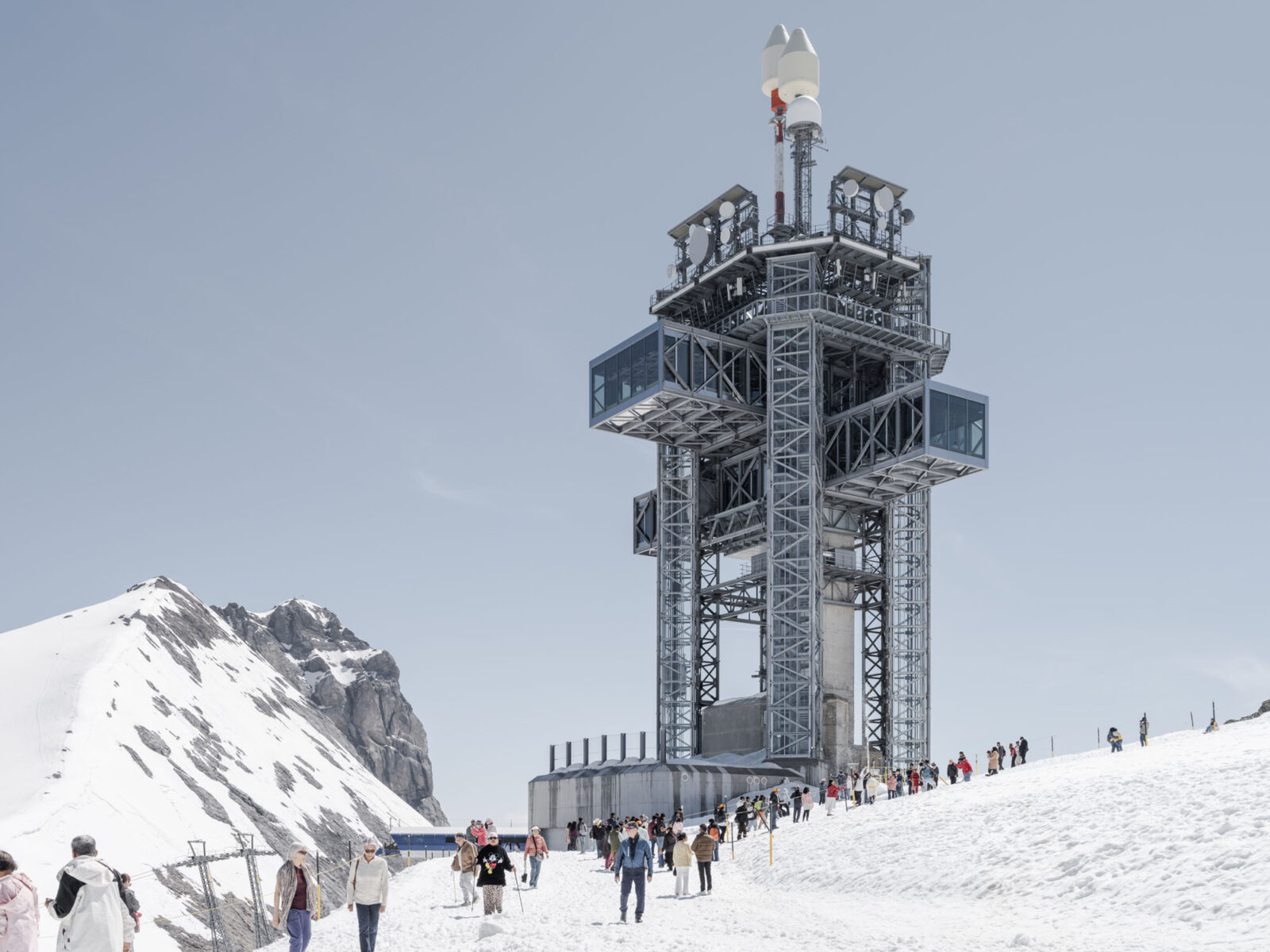
スイス、エンゲルベルクの山頂に建つ〈ティトリス・タワー(Titlis Tower)〉は、ヘルツォーク&ド・ムーロン(Herzog & de Meuron)が設計した山岳観光施設です。
1980年代に建設された旧陸軍のアンテナタワーに十字型のボリュームを付加することで、既存ストックを創造的に再生しています。
注目ポイント
- 拡張の限界を迎えた山岳リゾートを刷新するプロジェクト
- アンテナタワーに追加する柱のない大空間
- 360度パノラマビューを生み出す「十字型」のキャンティレバー
- 既存の地下トンネルも活用した利用者体験の向上
(以下、ヘルツォーク&ド・ムーロンから提供されたプレスキットのテキストの抄訳)
©︎ Maris Mezulis
©︎ Maris Mezulis
世界を魅了するアルプスの名峰ティトリス
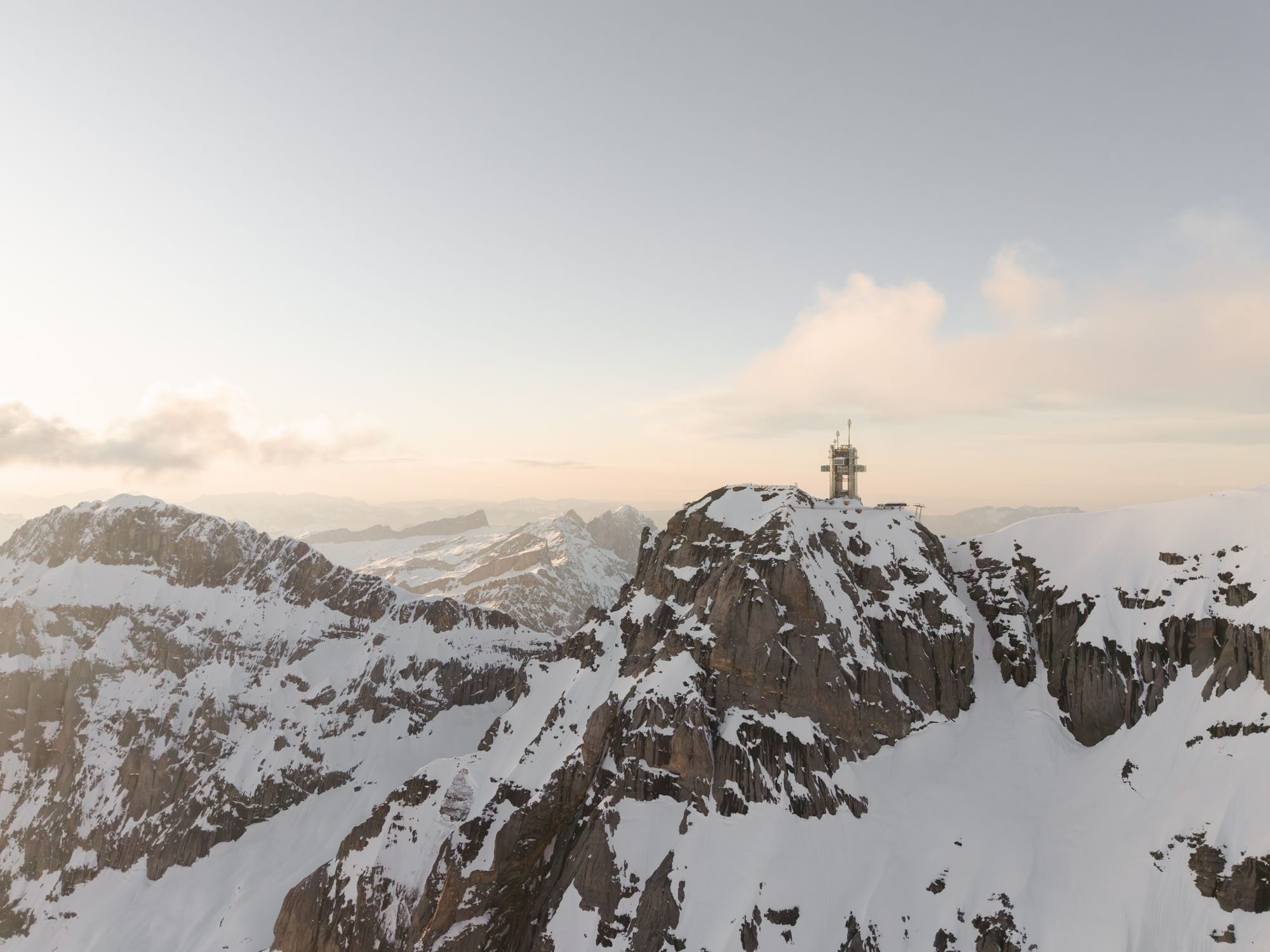
海抜3,000mを超えるティトリスは、スイスで最も有名な山岳リゾートの1つであり、世界中からスポーツ愛好家や観光客を惹きつけている。その山頂からは、南に氷河の景観、北にスイス高原を望む、息をのむような360度の広大なパノラマが広がる。エンゲルベルクの上方に位置し、アクセスが極めて容易であることに加え、ルツェルンからも近いという好立地により、ティトリスは国内で最も訪問者の多い観光地の1つとなっている。
観光インフラの拡充により迎えた限界
1967年、険しい山頂からわずか200mほど下方に位置するクライン・ティトリスへの最初のケーブルカーが開通した。これを皮切りに、既存のインフラは継続的に拡張されていく。
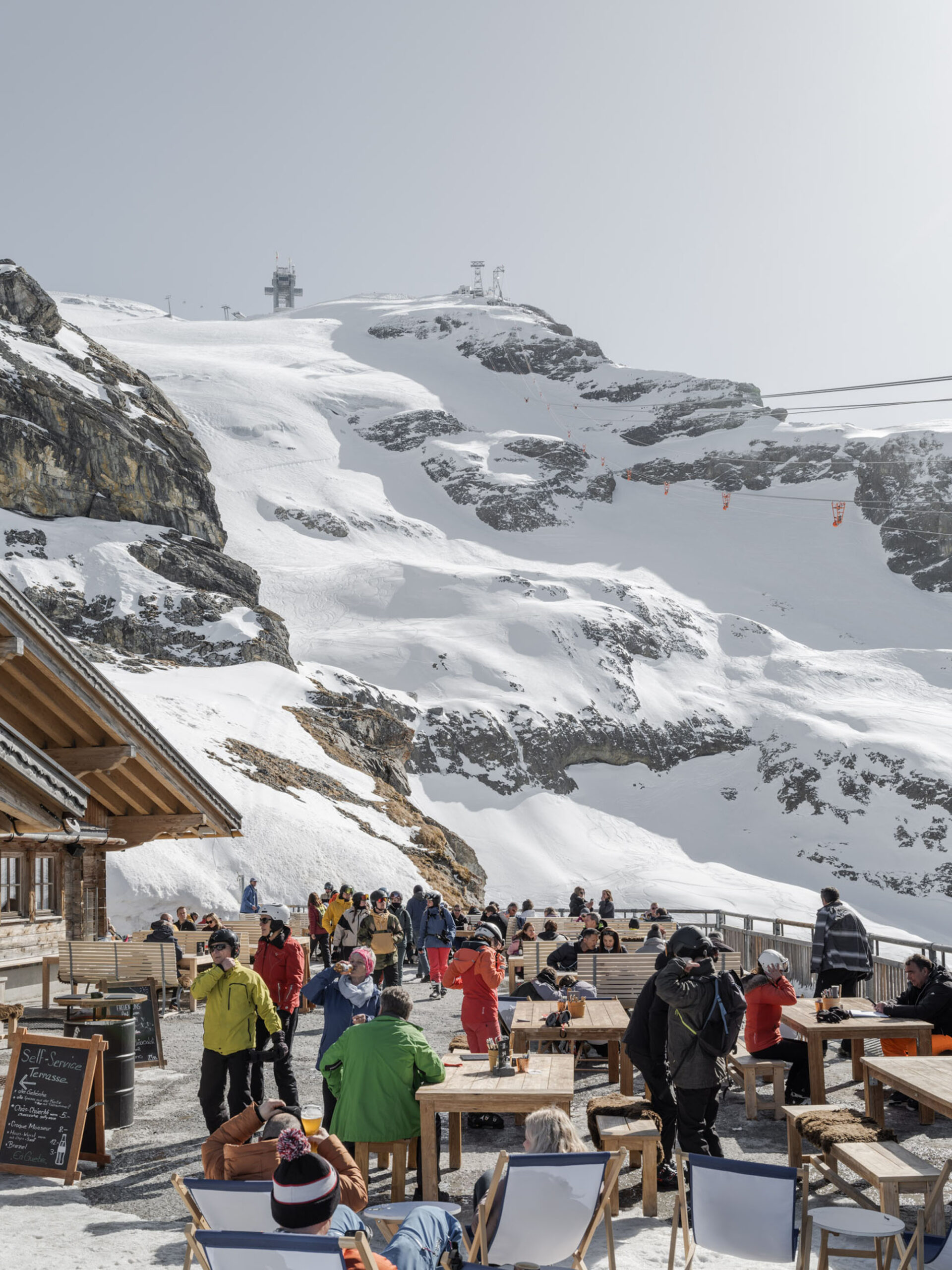
現在、ティトリスには年間約110万人が訪れており、その約4分の1が伝統的なウィンタースポーツを楽しむゲストである。一方で、その大半は山そのものとアルプスの景観を体験するために訪れる国際的な旅行者である。こうした需要が数十年にわたり続いた結果、敷地内にはレストラン、ショップ、氷河洞窟、吊り橋など、多彩な観光インフラが有機的に整備されていった。
しかし、このように増設を重ねて発展してきた施設群は現在、限界に達している。度重なる拡張の結果、既存の山頂駅は複雑化し、現代の観光施設に求められる収容能力、分かりやすい方向性、そしてスムーズな来訪者の動線といった要件を満たせなくなっているのである。
Diagram
アンテナタワーの取得と、新たな建築コンセプトへの出発
こうしたなか、運営会社であるティトリス・ベルクバーネン社が、1980年代に建設されたスイス陸軍のアンテナタワーを取得したことで、プロジェクトに新たな要素が加わった。この取得資産には、アンテナタワーを山頂駅およびその下層にある氷河洞窟へと直接つなぐ地下トンネルも含まれている。
このタワーこそが、観光インフラを再考し、現代のニーズに合わせて再設計するための出発点となった。すなわち、単なる純粋に機能的な構造物を超え、統合された1つの建築コンセプトへと昇華させる試みである。
©︎ Maris Mezulis
©︎ Maris Mezulis
全体コンセプト:既存構造の継承と刷新
2017年、ヘルツォーク&ド・ムーロン(Herzog & de Meuron)は、山頂全体を対象としたマスタープランの一環として、山頂駅の刷新と、アンテナタワーをビジター体験の一部へと転換する設計を委託された。
このコンセプトの核となるのは、既存の構造物を資源として配慮し、計画的に活用することである。タワー、地下トンネル、ケーブルカー駅といった既存の要素は維持され、新しい全体システムへと統合される。
既存の山頂駅、特にその耐力構造を精査した結果、この建物を単に改修するだけでは、動線、方向性、収容能力という根本的な課題を十分に解決できないことが判明した。そのため、山頂駅の一部は再利用のために残されるものの、既存構造の一部は、既存のケーブルカー駅を包み込むような新しい建物へと建て替えられる。なお、タワーや山頂駅を含むすべての建物のエネルギー消費量は、インテリジェントな建築技術の導入によって大幅に削減される計画である。
©︎ Maris Mezulis
〈ティトリス・タワー〉:既存フレームを基盤とした拡張
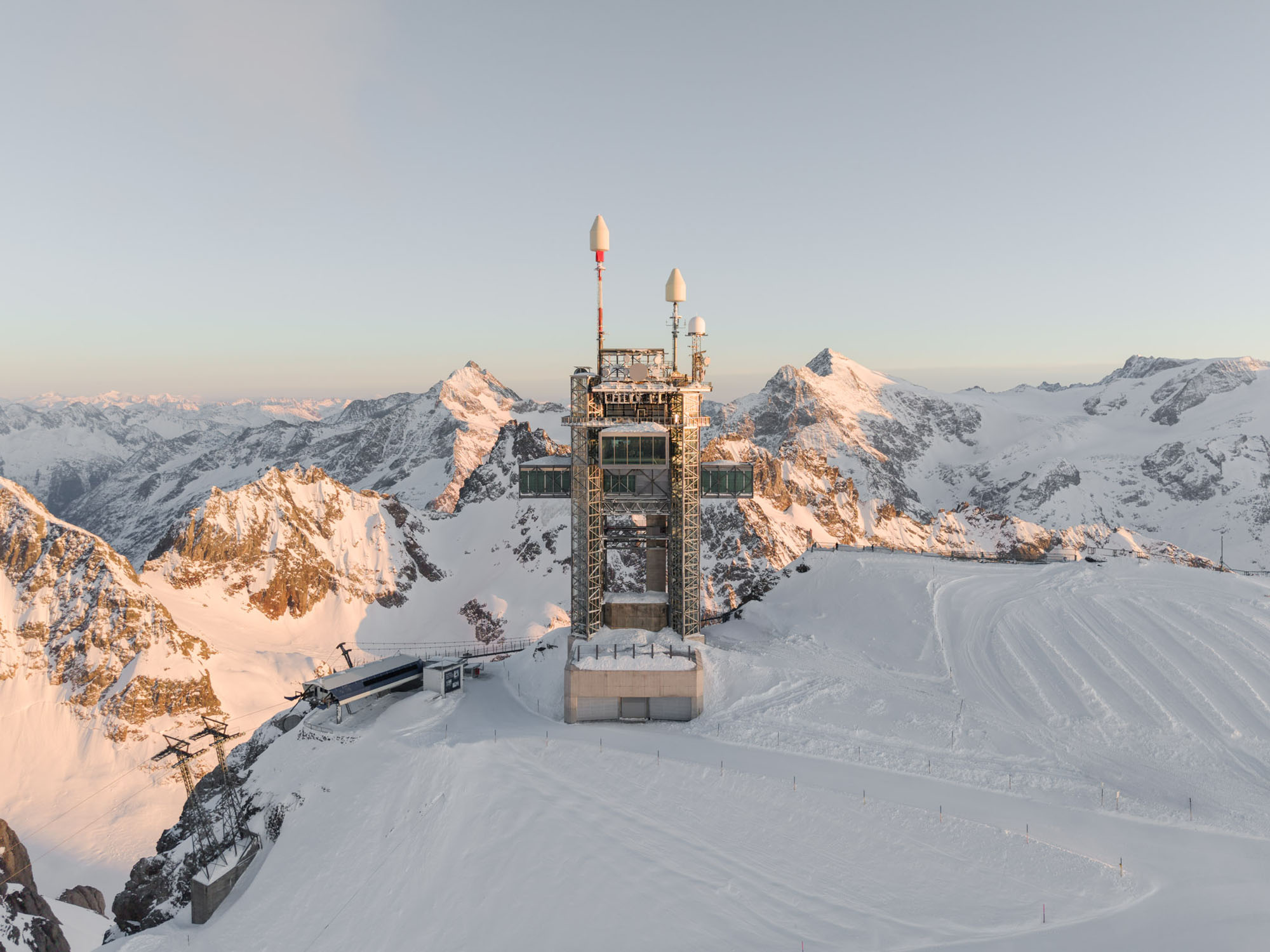
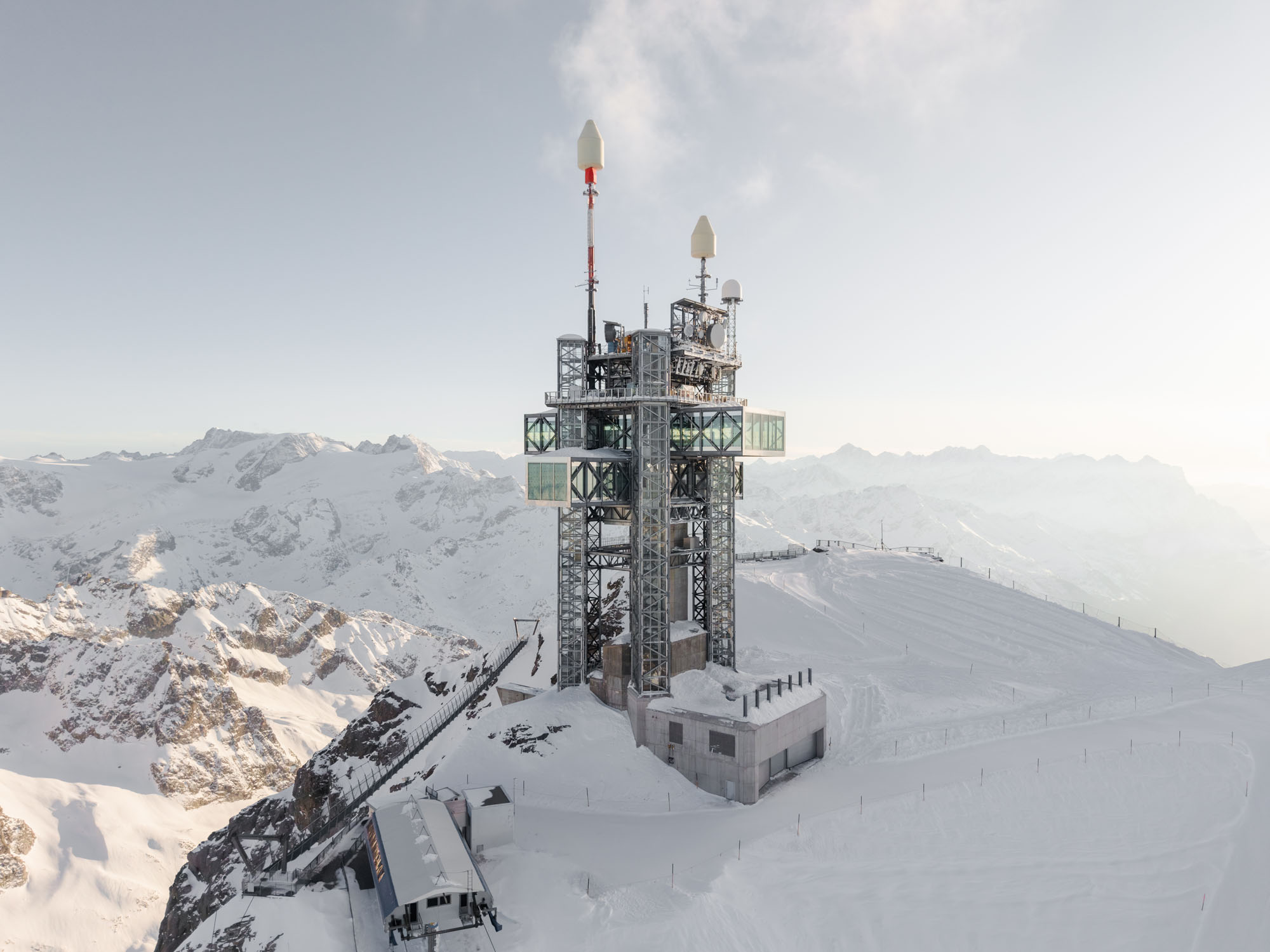
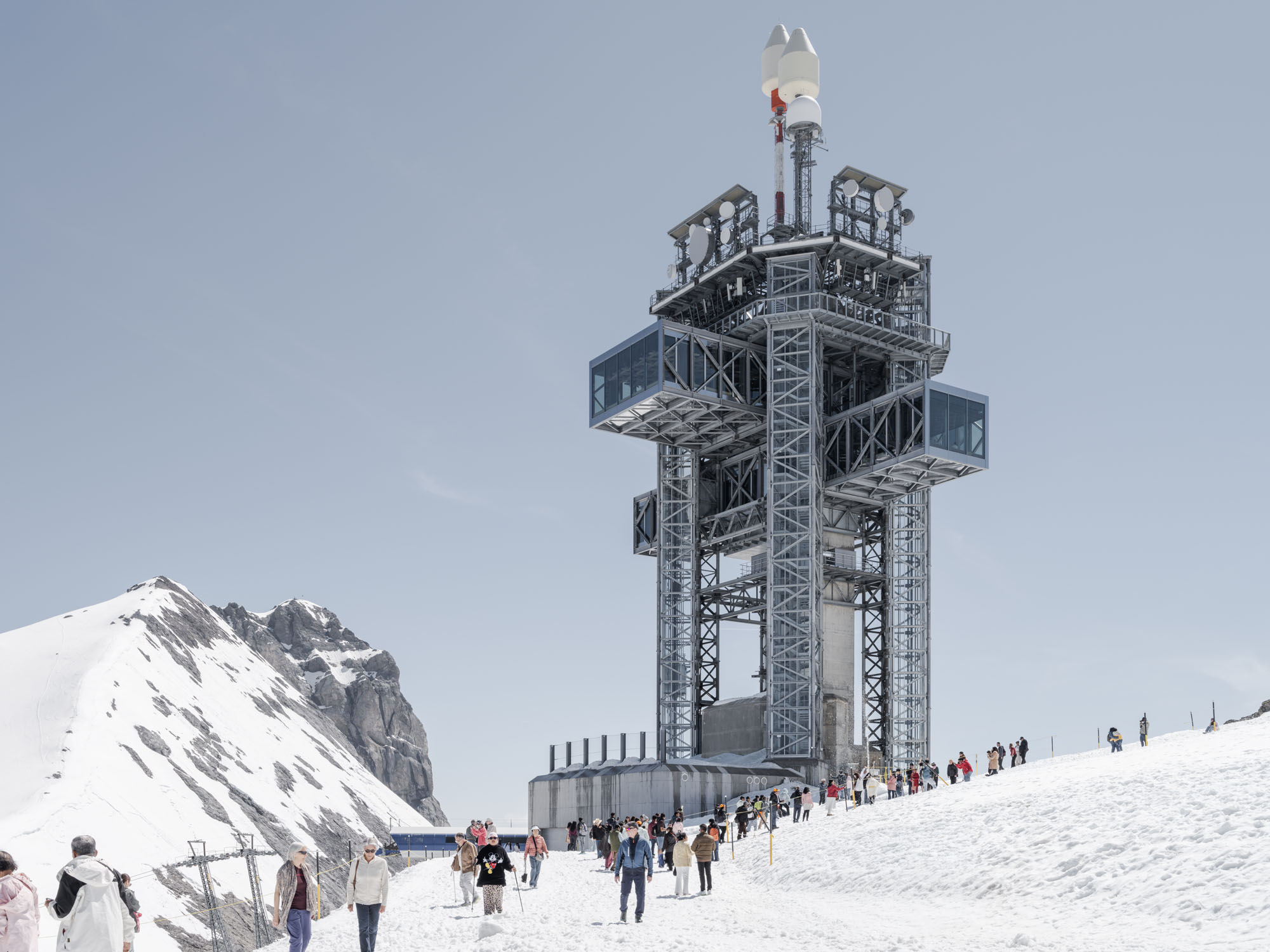
高さ56mのアンテナタワーは、1980年代半ばに通信インフラとして建設された。海抜3,000mを超える風雨にさらされる過酷な立地条件のため、タワーはコンクリート構造によって石灰岩の山深くに強固にアンカー固定されており、その上部は繊細な金細工を思わせる軽快なスチールフレームで構築されている。
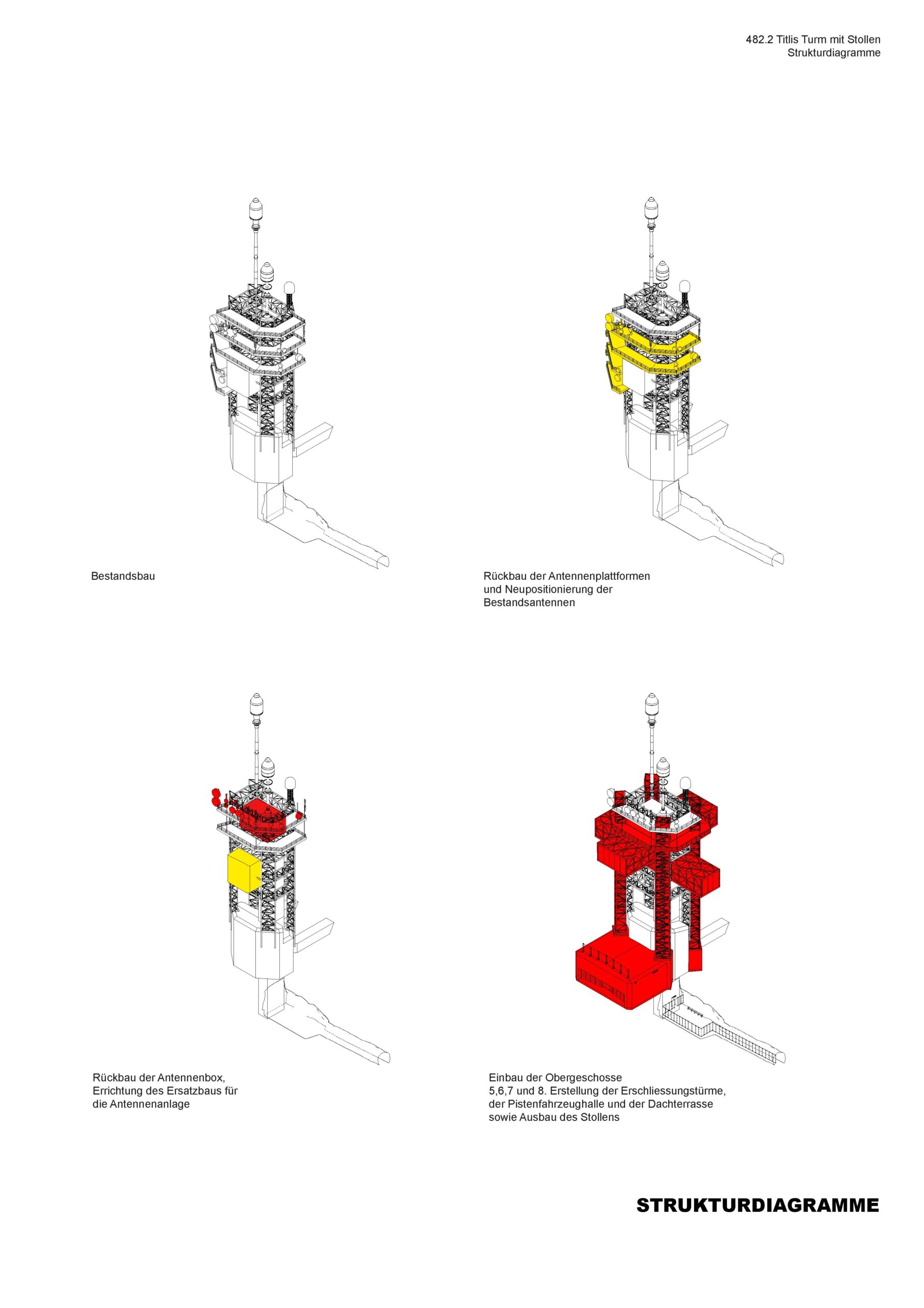
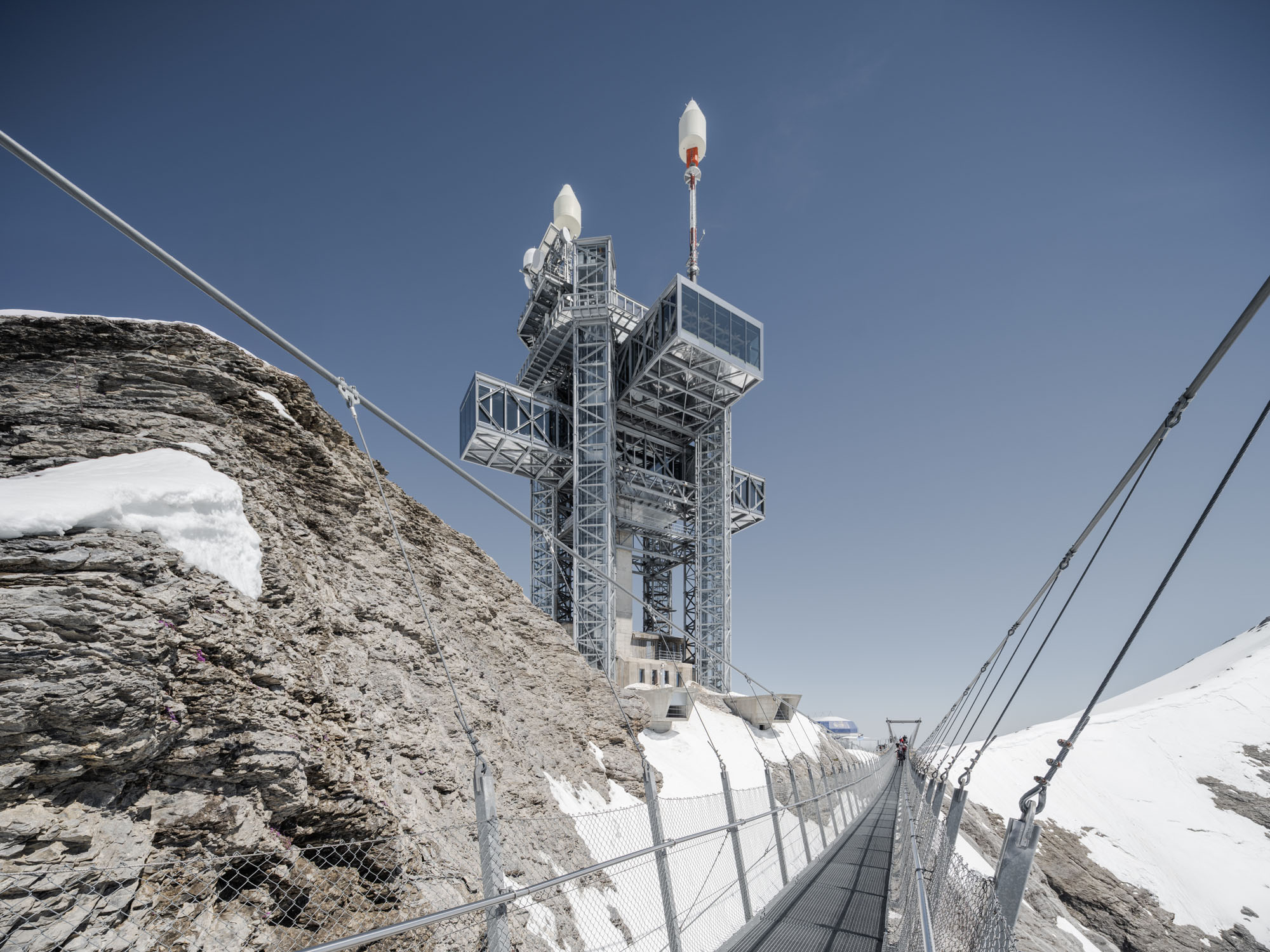
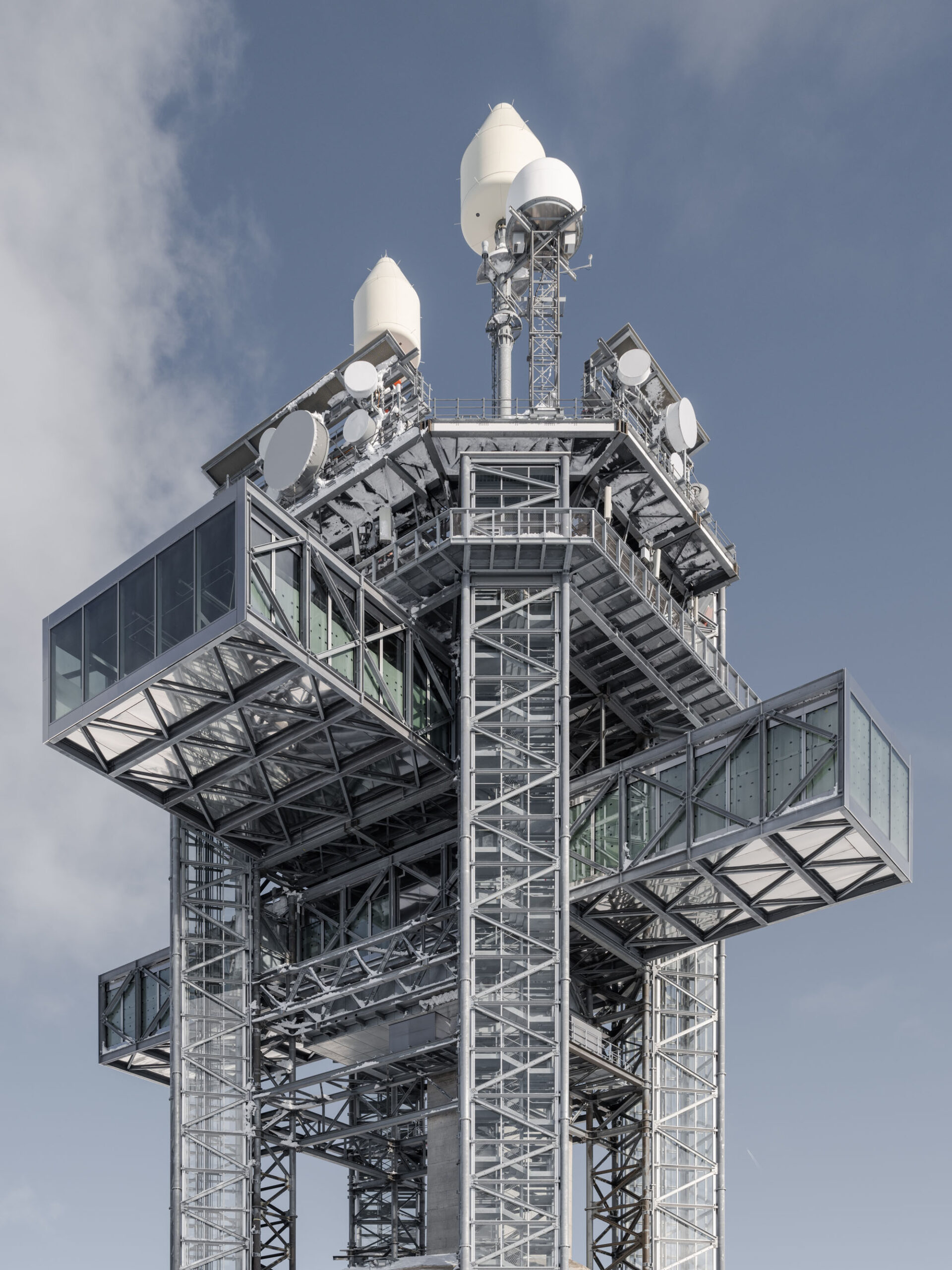
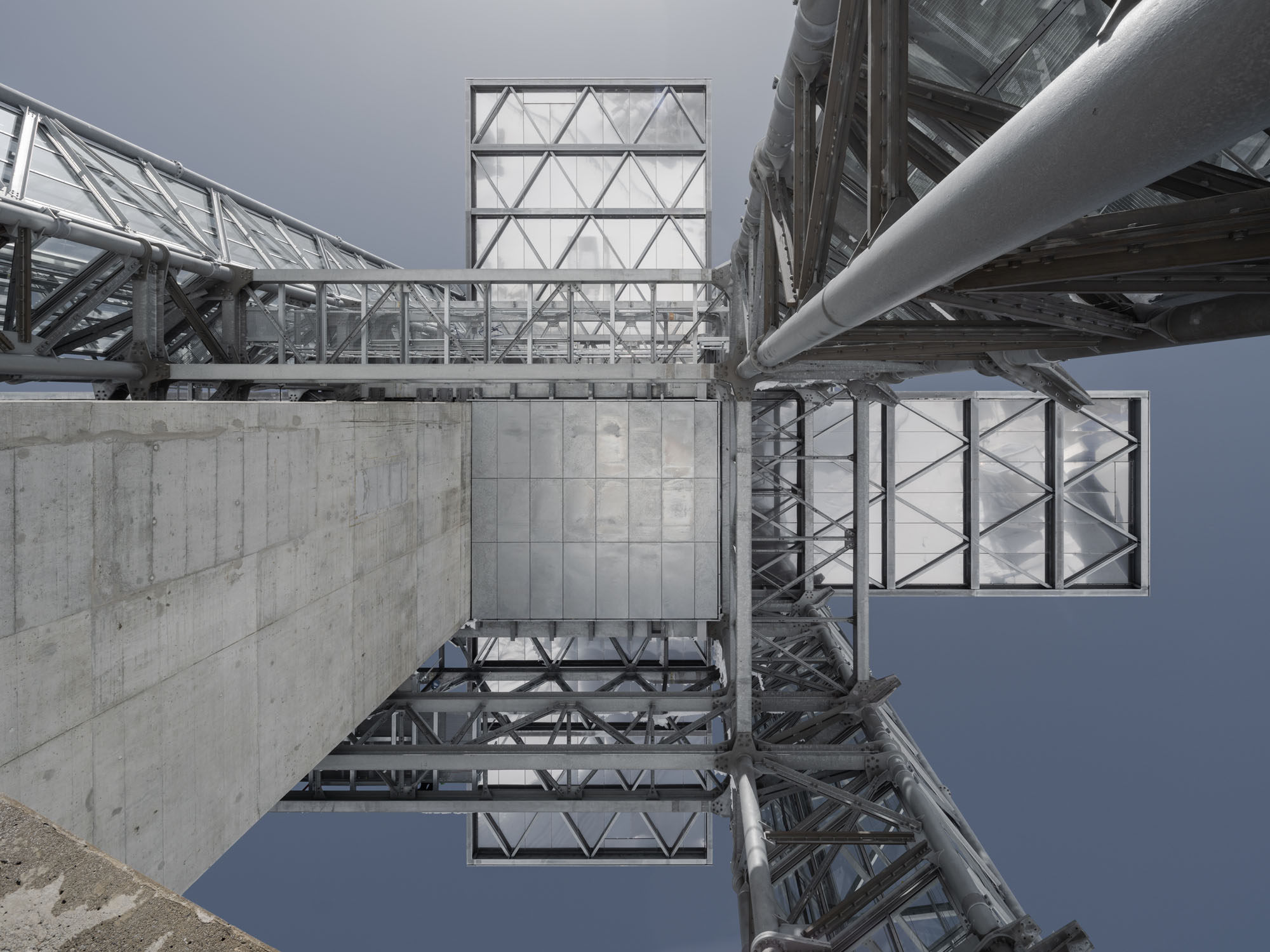
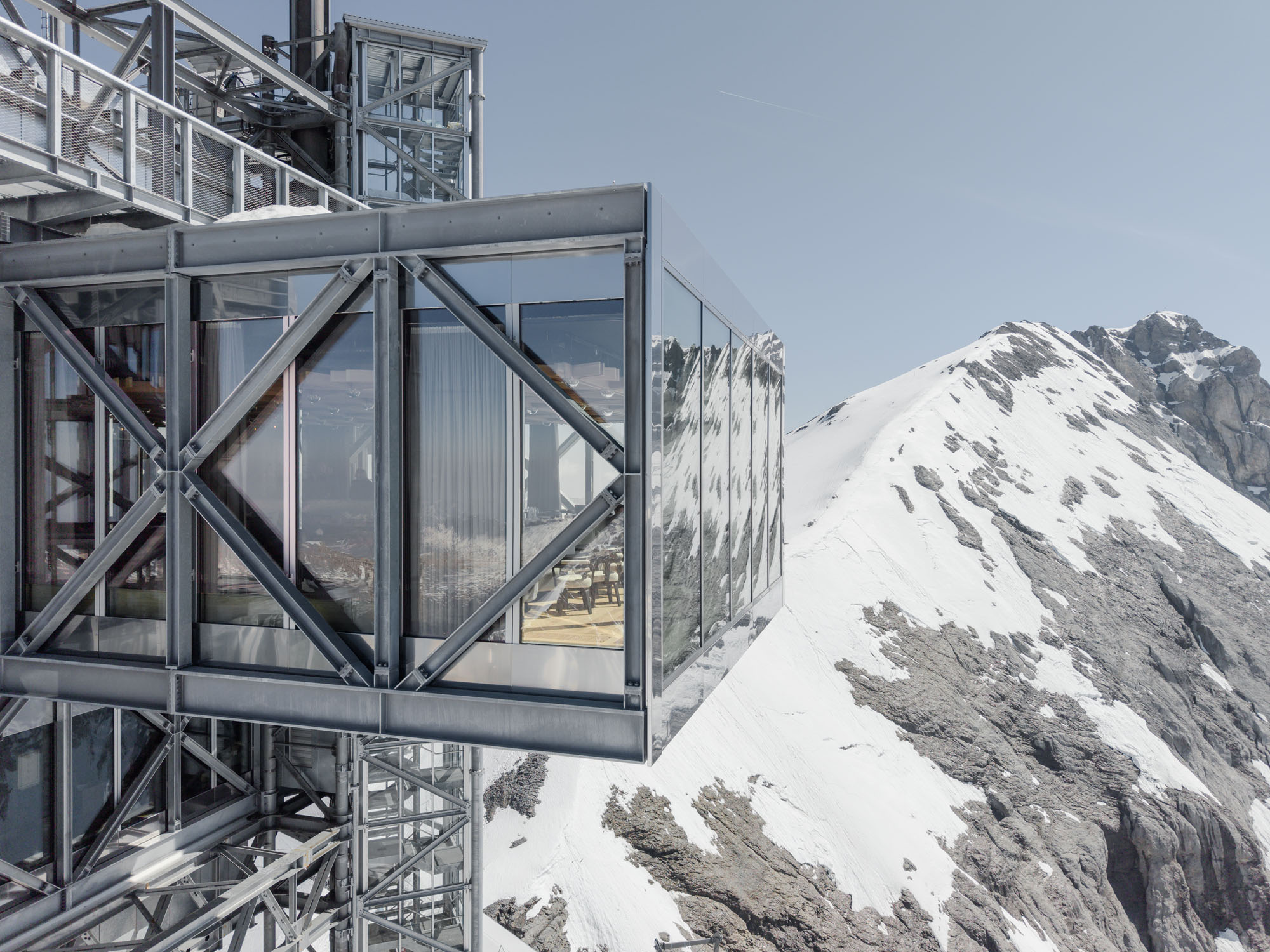
この既存の鉄骨構造こそがタワーを定義づける特徴であり、建築家はこれに2つの水平なボリュームと、4つの垂直な動線タワーを付け加えることで、構造を拡張・発展させた。外部に耐力構造を配置したことにより、新たに追加された2つのボリュームの内部は、完全に柱のない空間を実現している。また、既存のコンクリート基礎は拡張され、エントランスおよびガイダンスを担う案内フロアへと生まれ変わった。ここでは、来訪者のアクセス、テクニカルエリア、そしてトレイル整備車両用のガレージが集約され、一体化している。
©︎ Maris Mezulis
悪天候でも施設をつなぐ地下トンネルの活用
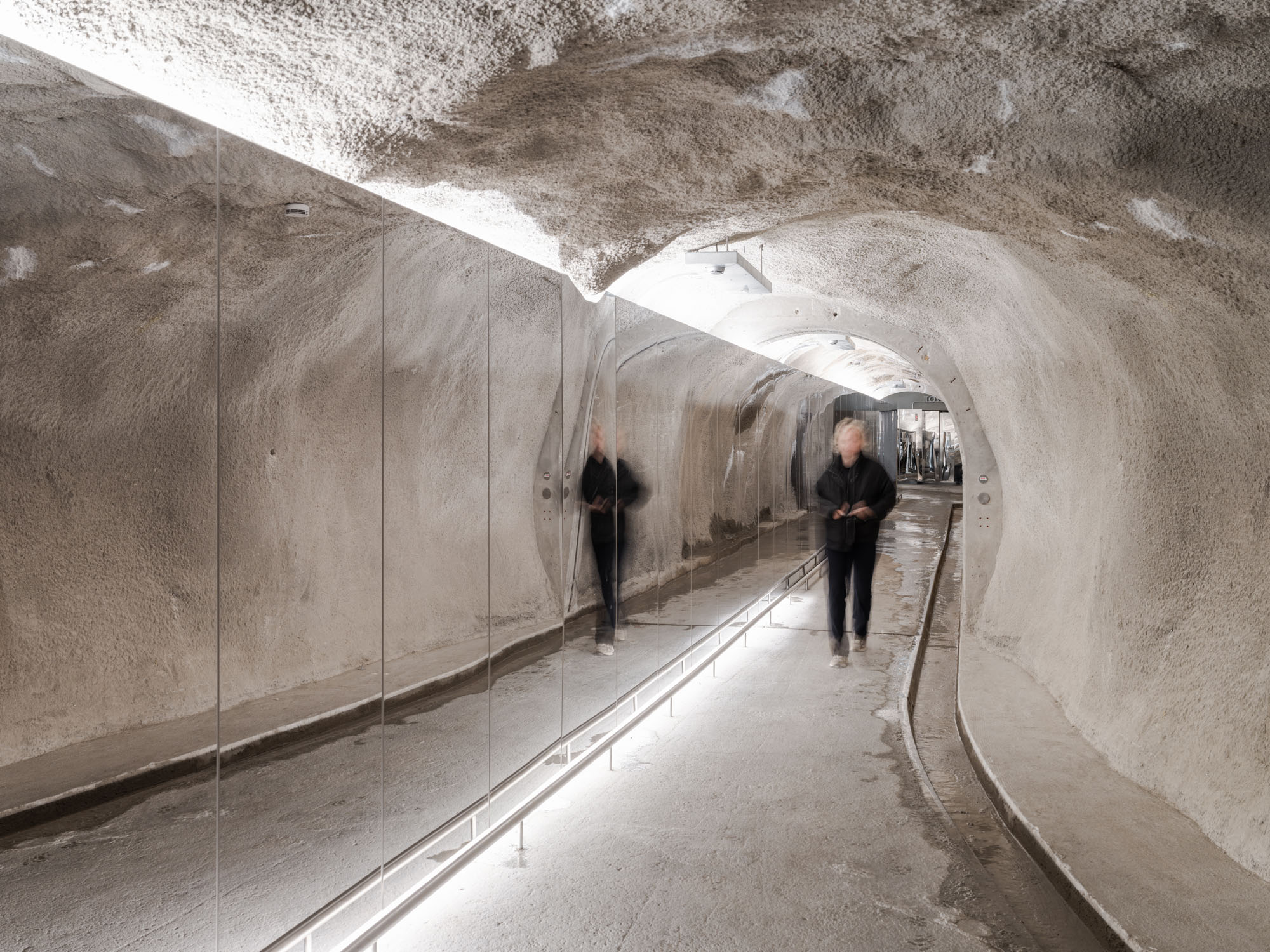
アンテナタワーと同時に建設された地下トンネルは、タワーから山頂駅へと、天候に左右されない確実な直通連絡路を提供している。同時に、このトンネルは氷河洞窟へのアクセス路としても機能し、岩盤内部を貫くインフラの「へその緒」のような役割を担っている。
このトンネルがもつ荒々しい素朴な素材感とは対照的に、内部では光を反射するスチールバンドが設置され、山頂駅からの来訪者をタワーへと滑らかに導く。トンネルの終点に達すると、通路はまるで洞窟のようなホールへと広がる。スチールバンドに組み込まれた2つの大型LEDスクリーンは、周囲の山岳景観に関する情報を提供するとともに、来訪者が地下空間の中で自身の位置や方向を把握するのを助ける役割を果たしている。
©︎ Maris Mezulis
垂直の動線と、十字に交差する展望ボリューム
〈ティトリス・タワー〉の基部に到着した訪問者は、4つの垂直動線タワーを通って上階へと進む。これらの動線タワーは、建物の各コーナーにある既存の鋼製柱を補完するように配置され、最上部の展望台まで直結している。これら4つのスチール構造のうち、2つは避難階段として機能し、残りの2つにはエレベーターが配置されている。
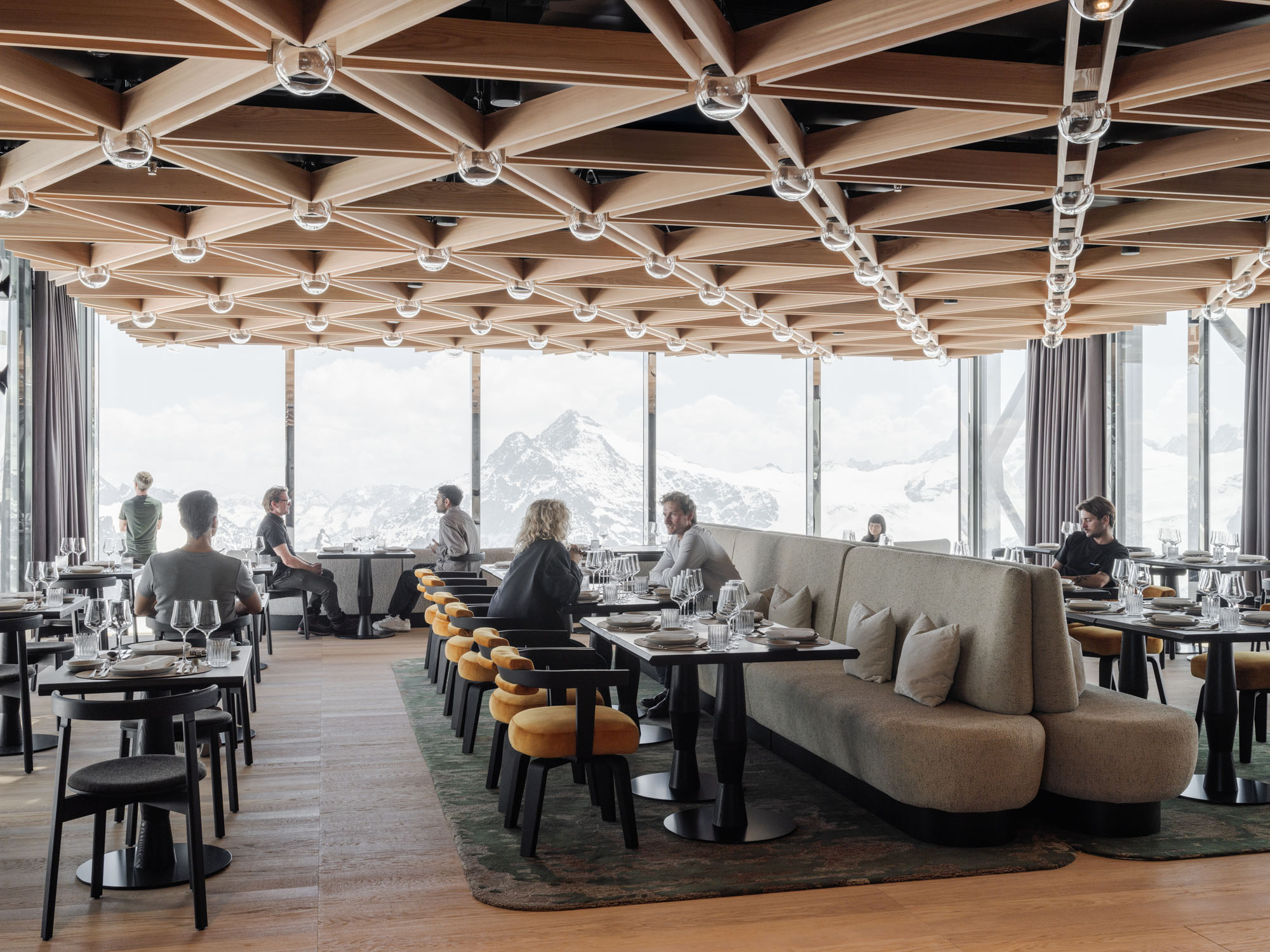
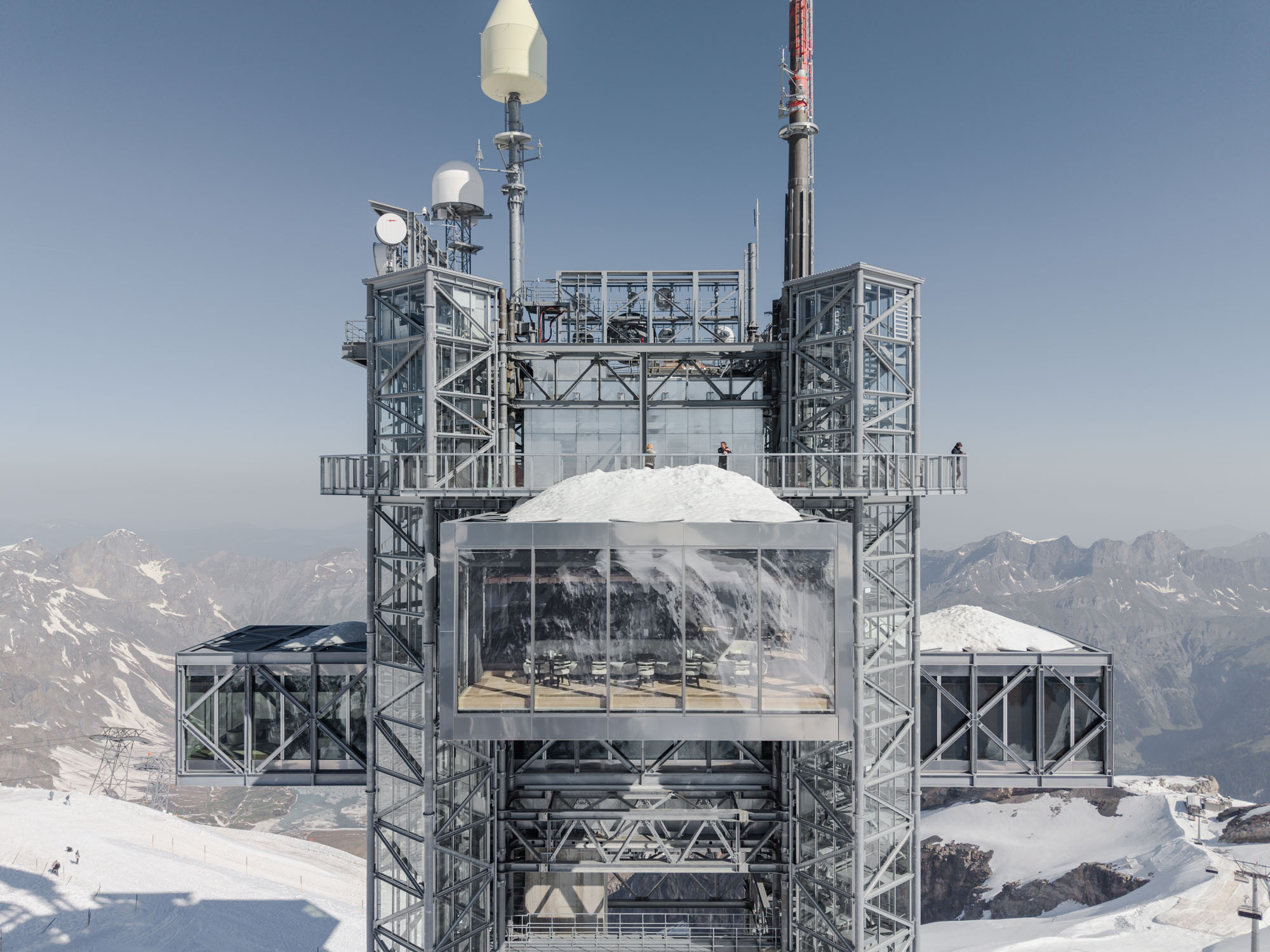
全面ガラス張りの2つの水平なボリュームは、周囲に大きく張り出した片持ち梁構造を採用し、平面上で十字に重なり合うレイアウトをとる。これにより、遠方からでも一目でそれと分かる象徴的なシルエットを形成すると同時に、内部からはアルプスの壮大な風景を臨む、極めて印象的なパノラマビューを提供している。このうち、下部のボリュームには物販エリアが、上部のボリュームには140席を擁するレストランが配置されている。
一般に開放された最上階の展望台は、このタワーの集大成であり、視界を遮るもののない360度の圧倒的なパノラマを提供する。これにより、タワーは来訪者にとって体験のハイライト、すなわち最高到達点となる。
©︎ Maris Mezulis
©︎ Maris Mezulis
過酷な自然に呼応するマテリアル・コンセプト
建築を構成する素材のコンセプトは、既存の構造物、そしてこの敷地がもつ極限の気候条件から直接的に導き出された。具体的には、亜鉛メッキ鋼、ステンレス鋼、コンクリート、そしてガラスが選定されている。
建物内部では、これら素材の素朴な質感が意図的に露出されたまま残されている。既存の構造体や歴史の痕跡はそのまま維持され、そこに精密に設計された新しい要素が挿入されることで補完し合う関係がつくられた。
その一方で、レストランのインテリアは意図的なコントラストを描いている。内部空間は全面的に木材で仕上げられており、冷涼な外部環境に対して、温かく、身体を優しく包み込むような安らぎの空間を創出している。
©︎ Maris Mezulis
©︎ Maris Mezulis
©︎ Maris Mezulis
以下、ヘルツォーク&ド・ムーロンのリリース(英文)です。
Titlis Tower
Engelberg, Switzerland
Project 2017-2026At over 3,000 meters above sea level, Titlis is one of Switzerland’s best-known mountain destinations, attracting sports enthusiasts and sightseers from around the world. Its peak offers an impressive 360-degree panorama, with the glacial landscape to the south and the Swiss Plateau to the north. Thanks to its central, easily accessible position above Engelberg and its proximity to Lucerne, Titlis is one of the most visited destinations in the country.
The opening of the first cableway to Klein Titlis in 1967, just over 200 meters below the rugged summit, marked the beginning of a continuous expansion of the existing infrastructure. Today, around 1.1 million people visit Titlis each year, roughly a quarter of them traditional winter-sports guests. The majority are international travelers who come to experience the mountain and its landscape. Over the decades, this has given rise to a varied tourist infrastructure, including restaurants, shops, a glacier cave, and a suspension bridge, amongst other attractions.
This organically evolved ensemble has reached its limit. Successive additions have resulted in a complex mountain station that no longer meets today’s requirements for capacity, orientation, and visitor flow. The acquisition by Titlis Bergbahnen of the 1980s antenna tower from the Swiss Army added a further element, including an underground tunnel connecting the tower directly to the mountain station and glacier cave below. This tower was our starting point for rethinking the tourist infrastructure and designing it for today’s needs: moving beyond purely functional structures towards an integrated architectural concept.
Overall Concept
In 2017, Herzog & de Meuron was commissioned to renew the mountain station as part of a masterplan for the entire summit, and to transform the antenna tower into part of the visitor experience. A central element of the concept is the resource-conscious development of the existing structures. Elements including the tower, the tunnel, and the cableway station are retained and integrated into the new overall system.
An assessment of the existing mountain station, particularly its load-bearing structure, showed that a conversion of this building would not be able to sufficiently resolve the fundamental issues of circulation, orientation, and capacity. While some elements of the mountain station are being kept for reuse, a portion of the existing structure will be replaced by a new building that encloses the existing cableway station. The energy consumption of all buildings, including the tower and mountain station, will be significantly reduced through intelligent building technology.The Tower – Building on the Built
The 56-meter-high Titlis antenna tower was built in the mid-1980s as an element of telecommunications infrastructure. Due to its exposed location over 3,000 meters above sea level, the tower is anchored deep into the limestone mountain by a concrete structure and built with an almost filigree steel framework.
The tower is defined by this existing steel structure, which we extend and develop with the addition of two horizontal volumes and four vertical circulation towers. The external load-bearing structure allows the interiors of the two new volumes to remain entirely column-free. The existing concrete base has been enlarged to create an entrance and orientation level, bringing together visitor access, technical areas, and a garage for trail grooming vehicles.The underground tunnel, built at the same time as the original tower, provides a direct, weather-protected connection from the tower to the mountain station; It also gives access to the glacier cave and serves as a technical link — an infrastructural umbilical cord within the rock.
In contrast to the raw materiality of the tunnel, a reflective steel band guides visitors from the mountain station towards the tower. At the end of the tunnel, the path opens into a cavern-like hall. Two large-format LED screens integrated into the steel band provide information about the surrounding mountain landscape and help visitors orient themselves within the underground space.
From the base, visitors ascend through the four vertical circulation towers, which complement the existing steel columns at each corner, leading all the way up to the viewing platform. Two of these steel structures serve as escape stairs, while the other two accommodate lifts.
The two fully glazed horizontal volumes extend in far-reaching cantilevers and overlap in a cross-shaped arrangement, creating a striking figure visible from afar while offering impressive panoramic views of the alpine landscape from within. The lower volume contains a retail area, while the upper volume houses a 140-seat restaurant.
The publicly accessible viewing platform forms the culmination of the tower, offering an unobstructed 360-degree panorama and making the tower the high point of the visitor experience.
The material concept follows directly from the existing structure and the extreme climatic conditions of the site: galvanized steel, stainless steel, concrete, and glass. Inside the building, the raw materiality remains deliberately visible. Existing structures and traces are retained and complemented with precise insertions. The restaurant forms a deliberate contrast: entirely lined in wood, the interior creates a warm, sheltering atmosphere.
ヘルツォーク&ド・ムーロン 公式サイト
https://www.herzogdemeuron.com/


![[Report]方丈庵から生き方を問う、21_21 DESIGN SIGHT 企画展「方丈記に学ぶ –生きるを編み直す小さな建築–」会場レポート](https://magazine-asset.tecture.jp/wpcms/wp-content/uploads/2026/09/01181900/20260828hojoki-ex_01_mag-endo4350-900x676.jpeg)