

CULTURE
© Atelier XÜK
© Atelier XÜK
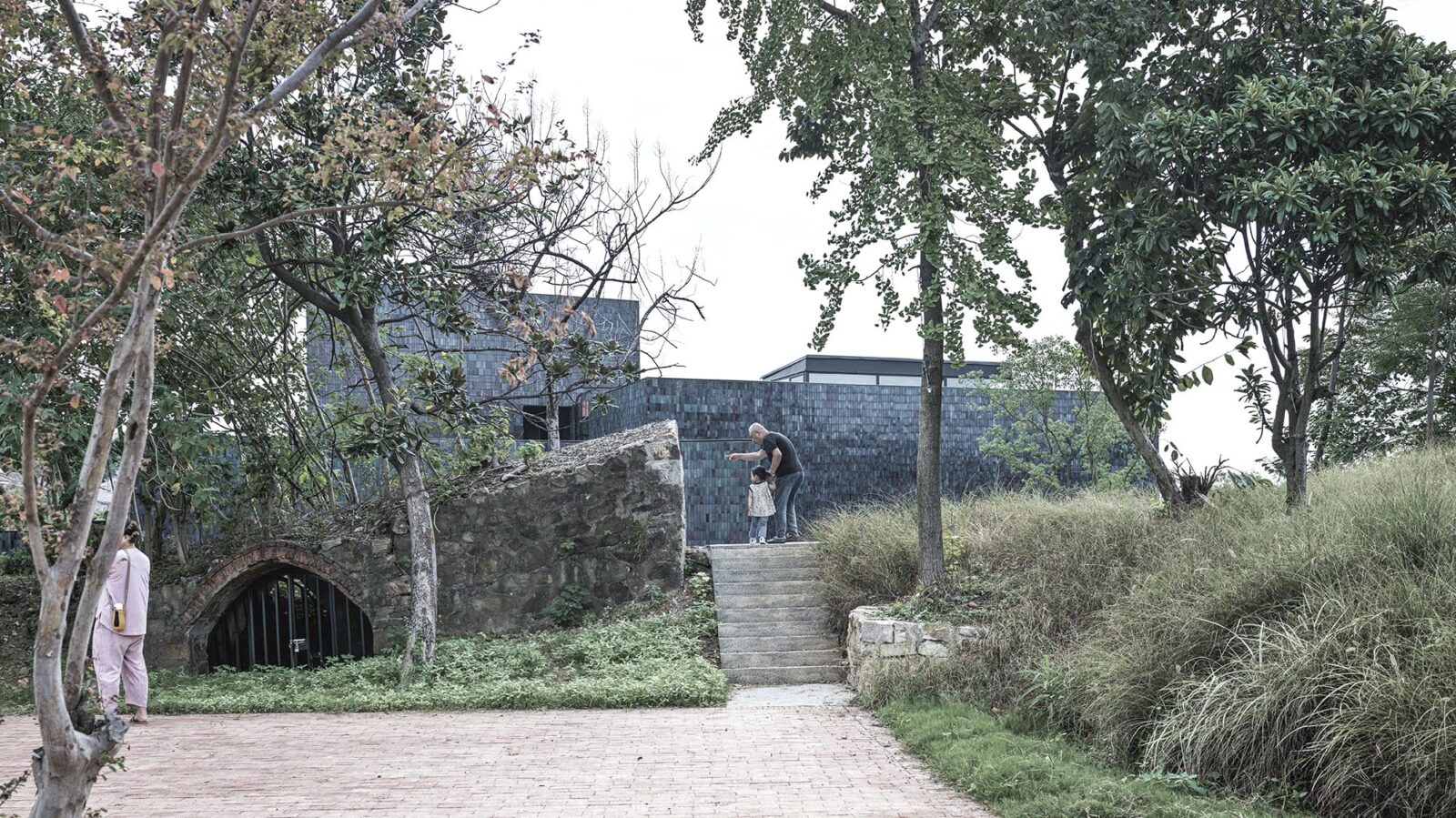
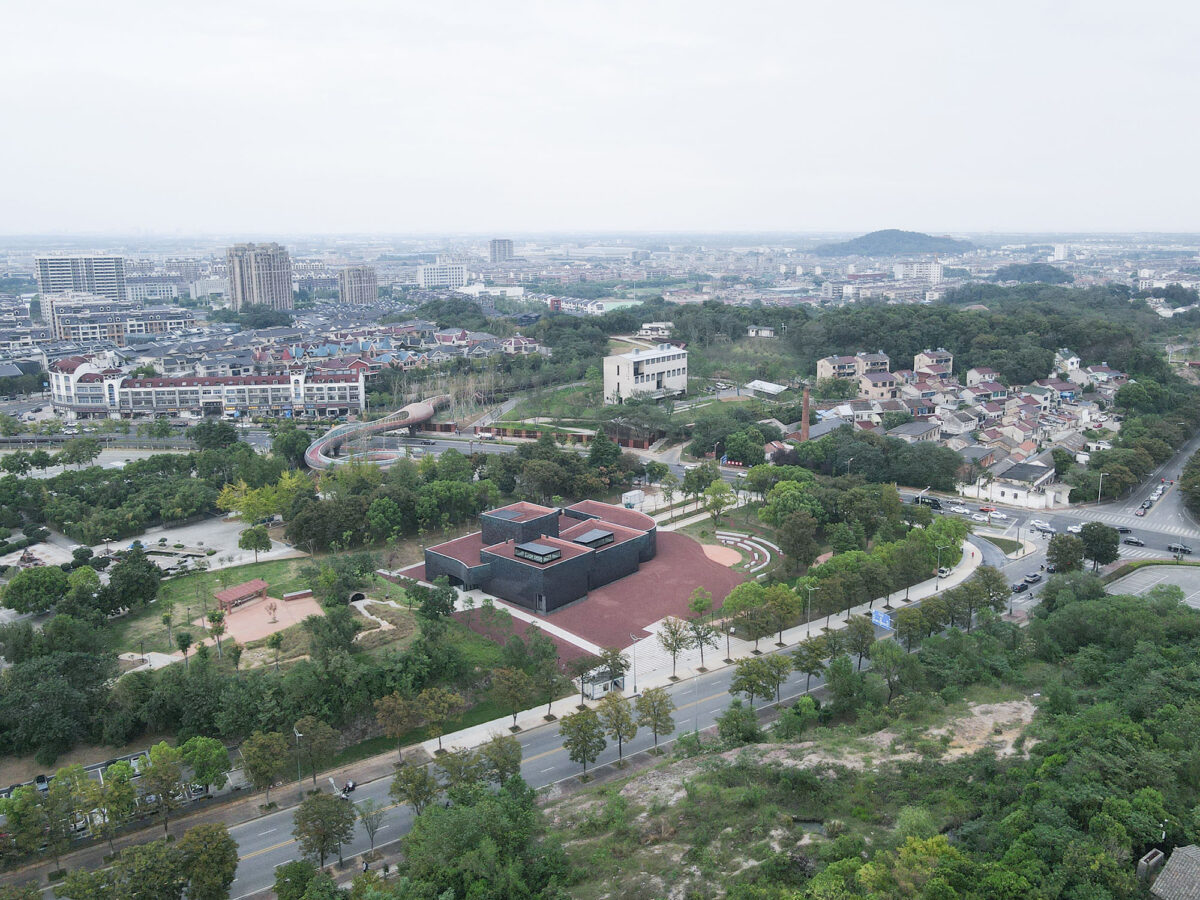
中国・江蘇省の宜興市(ぎこうし)に位置する〈黄龍山・紫砂鉱泉博物館(Huanglong Mountain·Zisha Mineral Source Museum)〉は、「陶器の都」と称される丁蜀鎮に残る遺跡を保護しつつ展示空間として統合した博物館です。
東南大学建築学院とアトリエXÜK(Atelier XÜK)による共同プロジェクトです。
注目ポイント
- 修復しつつ展示に統合する鉱山遺跡の再生プロジェクト
- 観光客の探索行動を自然に促す設計
- 損傷した山・建物・景観全体の再接続と、内外の展示ルートの連携
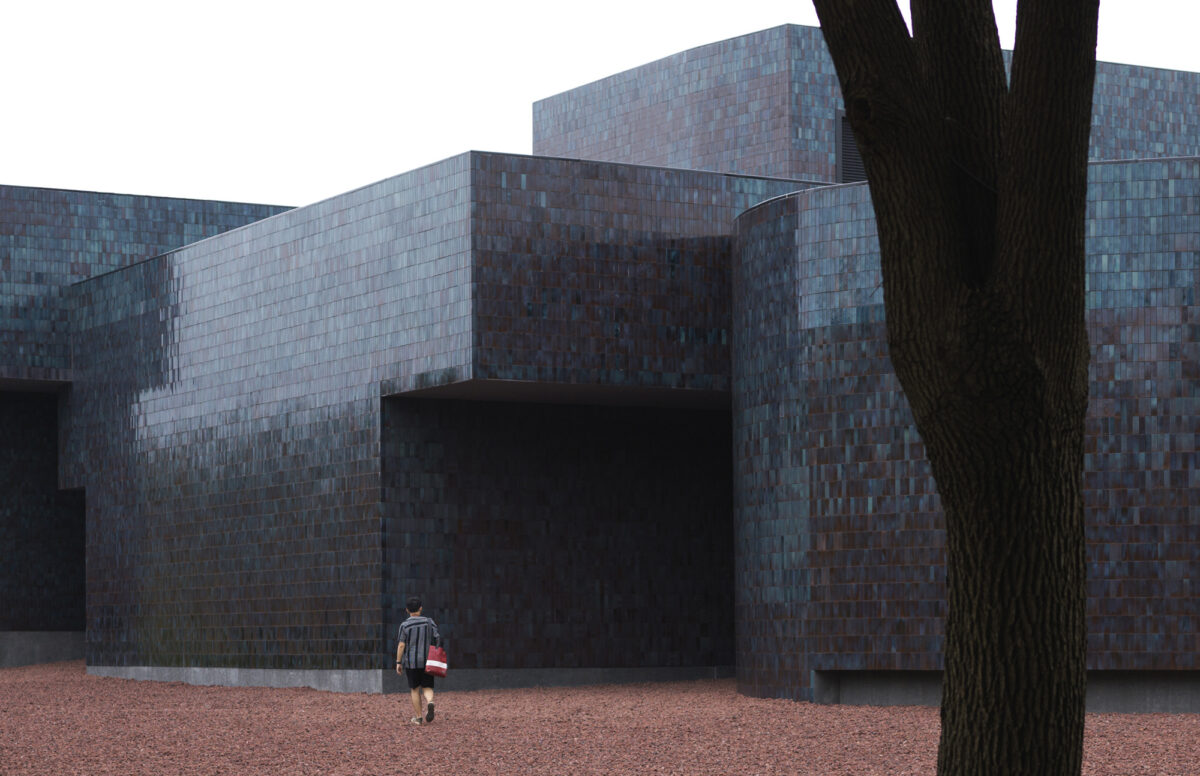
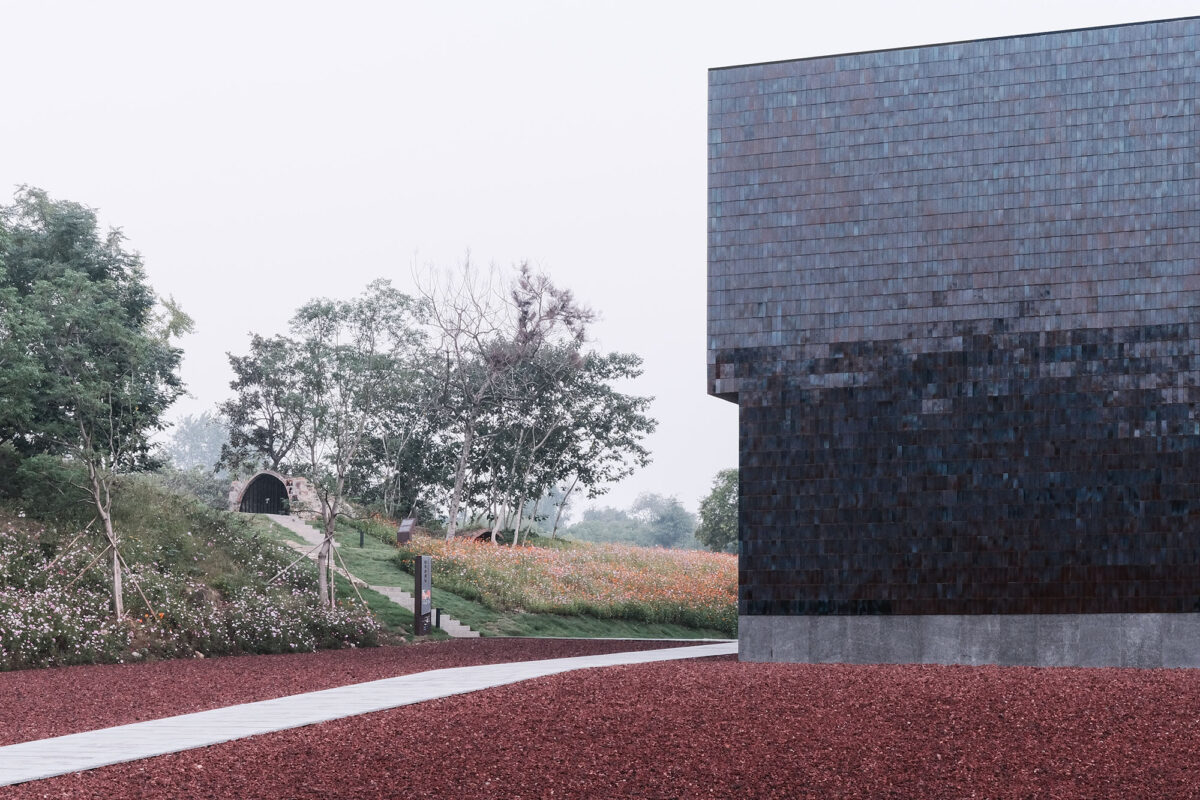
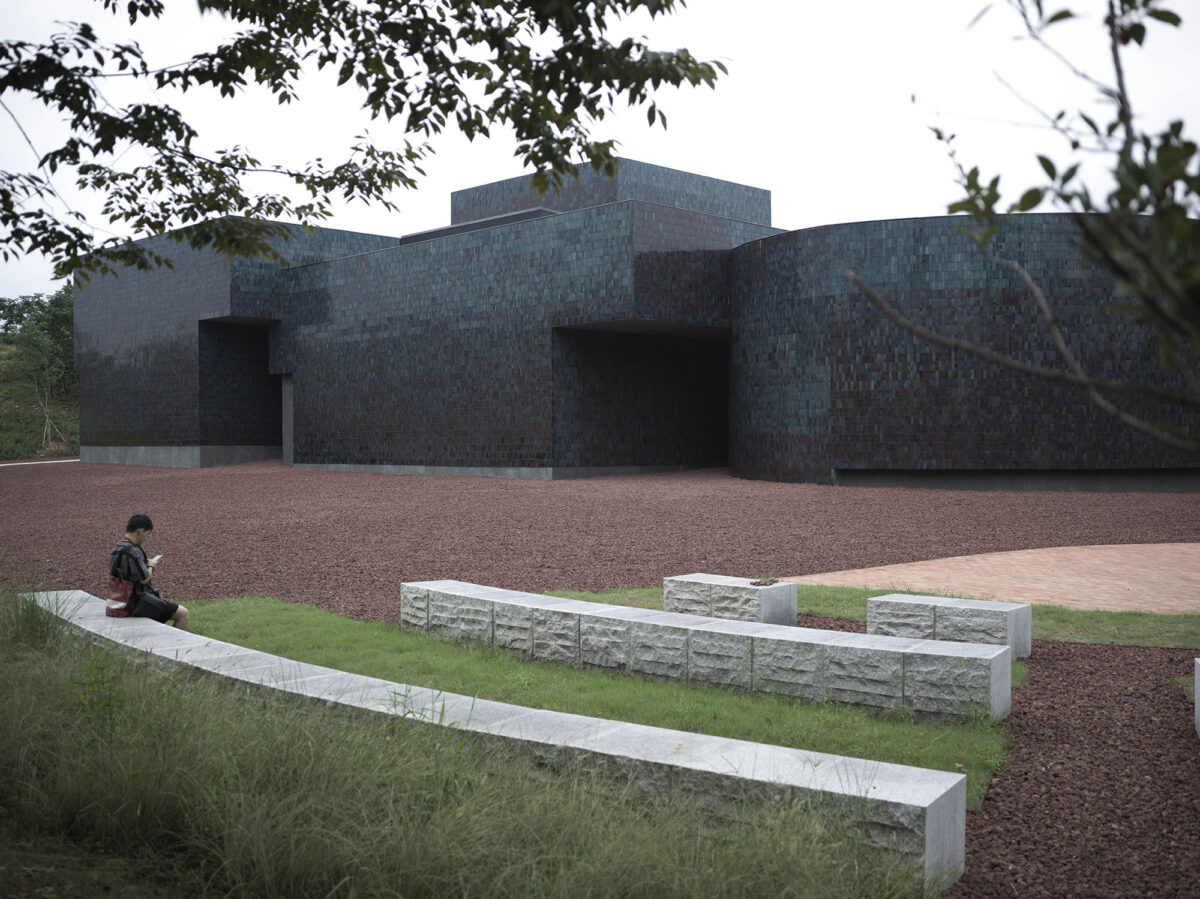
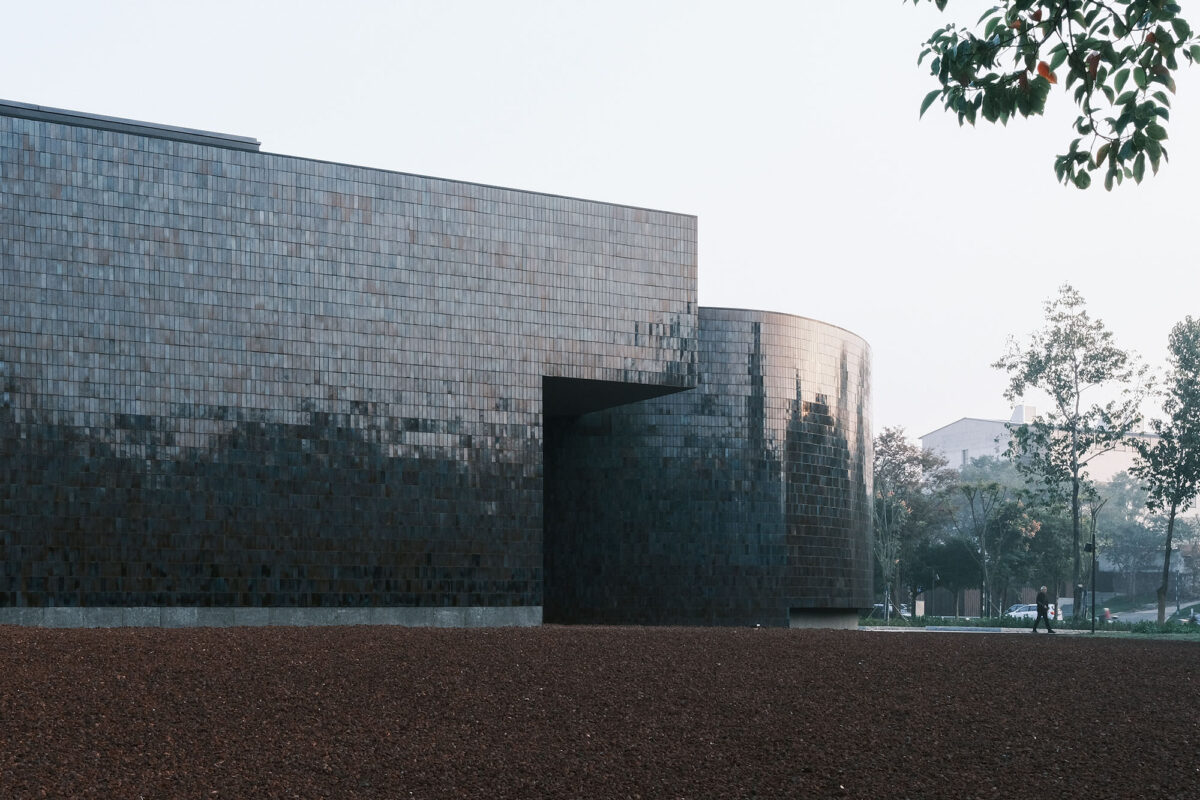
- 地域の伝統が宿る「釉薬タイル」を用いた外装
(以下、アトリエXÜKから提供されたプレスキットのテキストの抄訳)
© Atelier XÜK
© Atelier XÜK
墨には5つの色素があり、土には5つの色がある。墨で文字を記し、土で器をつくることが、中国文化の源流となった。
湖の岸辺と連なる山脈が、丁蜀鎮の独特な地形と鉱物環境を形成した。中国文化の脈、地形の脈、鉱物の脈からインスピレーションを得て、〈黄龍山・紫砂鉱泉博物館〉は誕生した。
© Atelier XÜK
© Atelier XÜK
「陶器の都」の遺跡とつながる博物館
江蘇省宜興市の南東部に位置する丁蜀鎮は、「陶器の都」として広く知られている。中でも黄龍山は、歴史的に高品質な紫砂粘土の産地として著名であり、「紫砂の源」と称されてきた。本プロジェクトは、その黄龍山に位置する第4鉱山遺構を保護しつつ、新たに博物館を設計するものである。
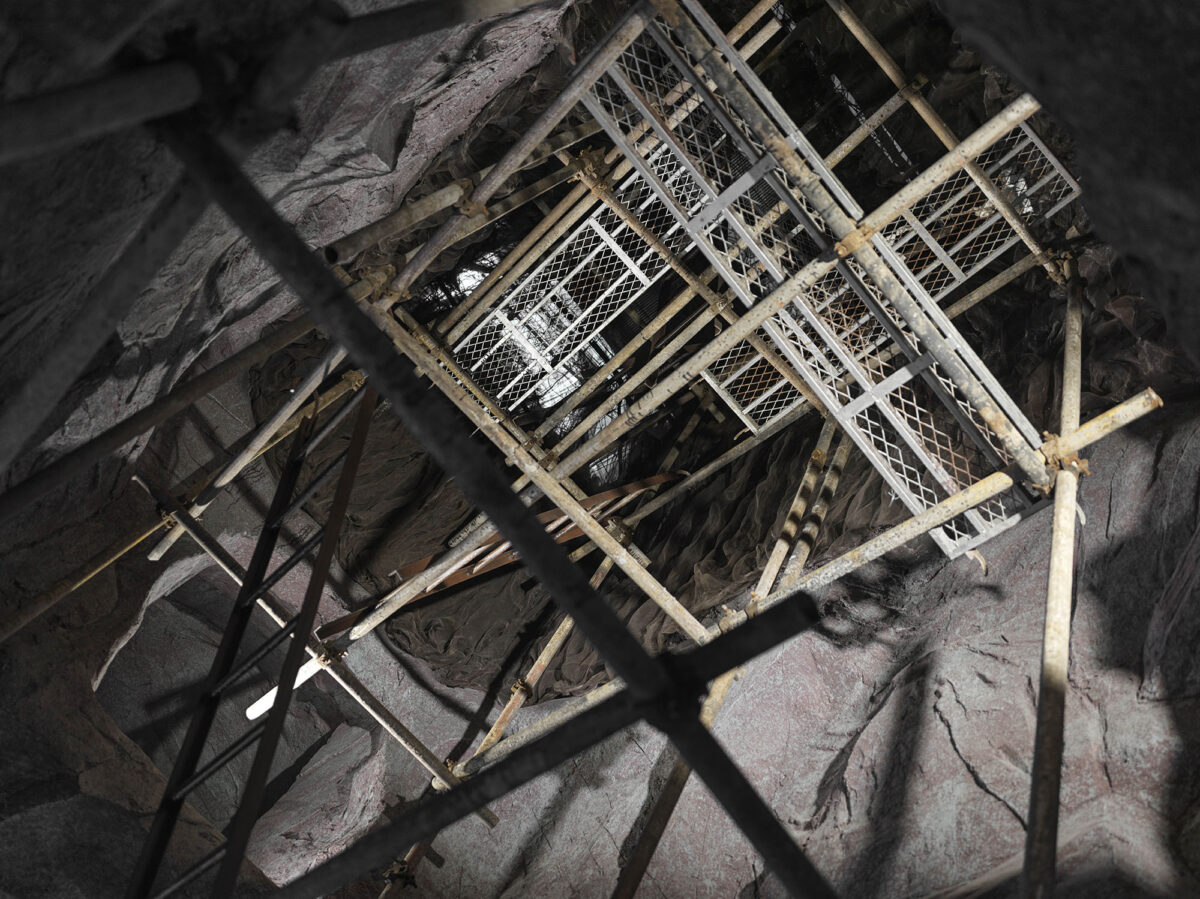
黄龍山の第4紫砂鉱山は1972年に建設され、1997年に採掘が停止された。その後、2009年に宜興市行政により文化遺産に指定され、歴史的価値をもつ産業遺構として保護の対象となっている。
© Atelier XÜK
© Atelier XÜK
遺構保護と建築的戦略
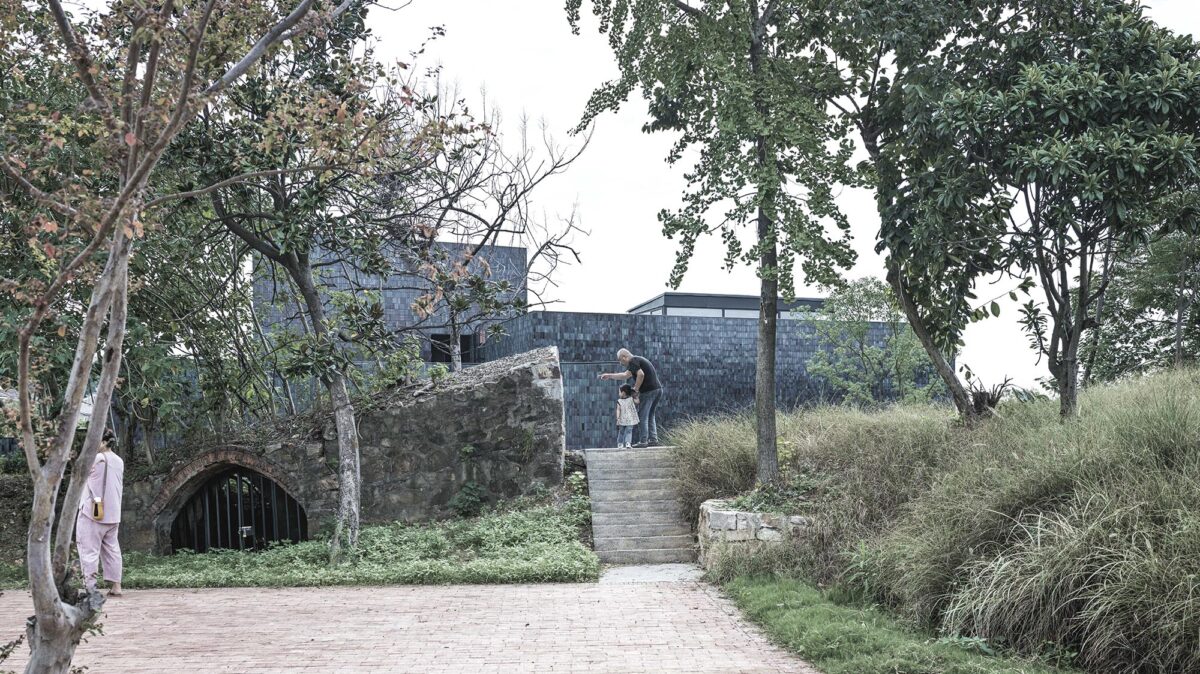
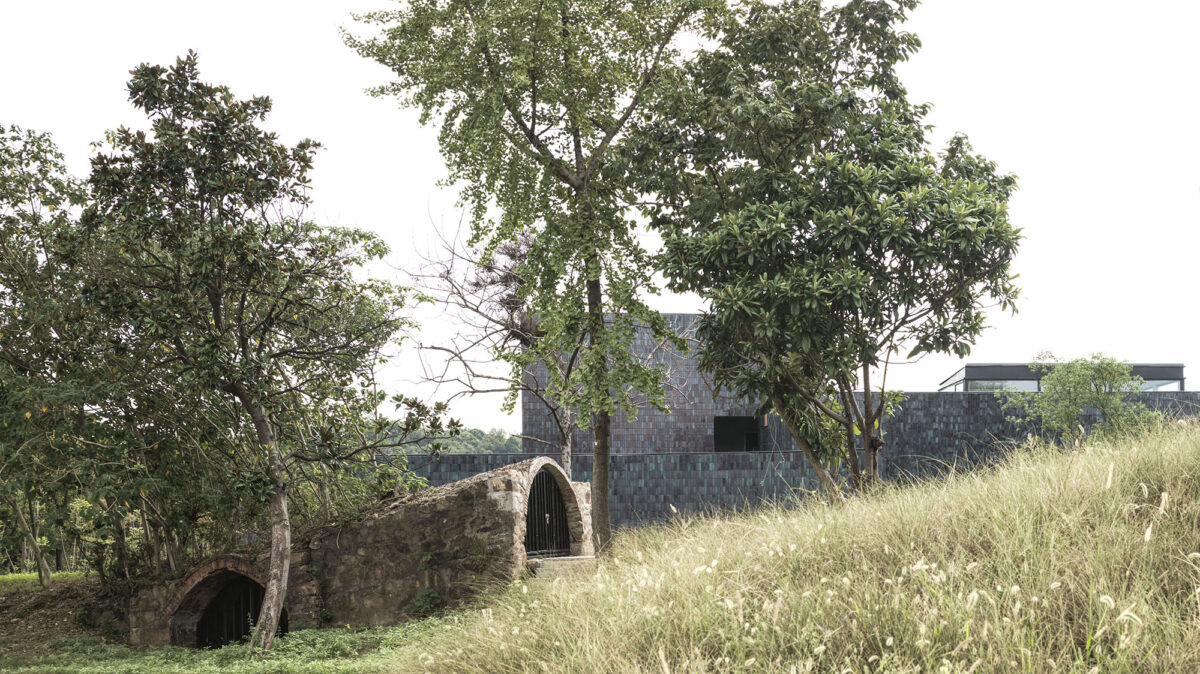
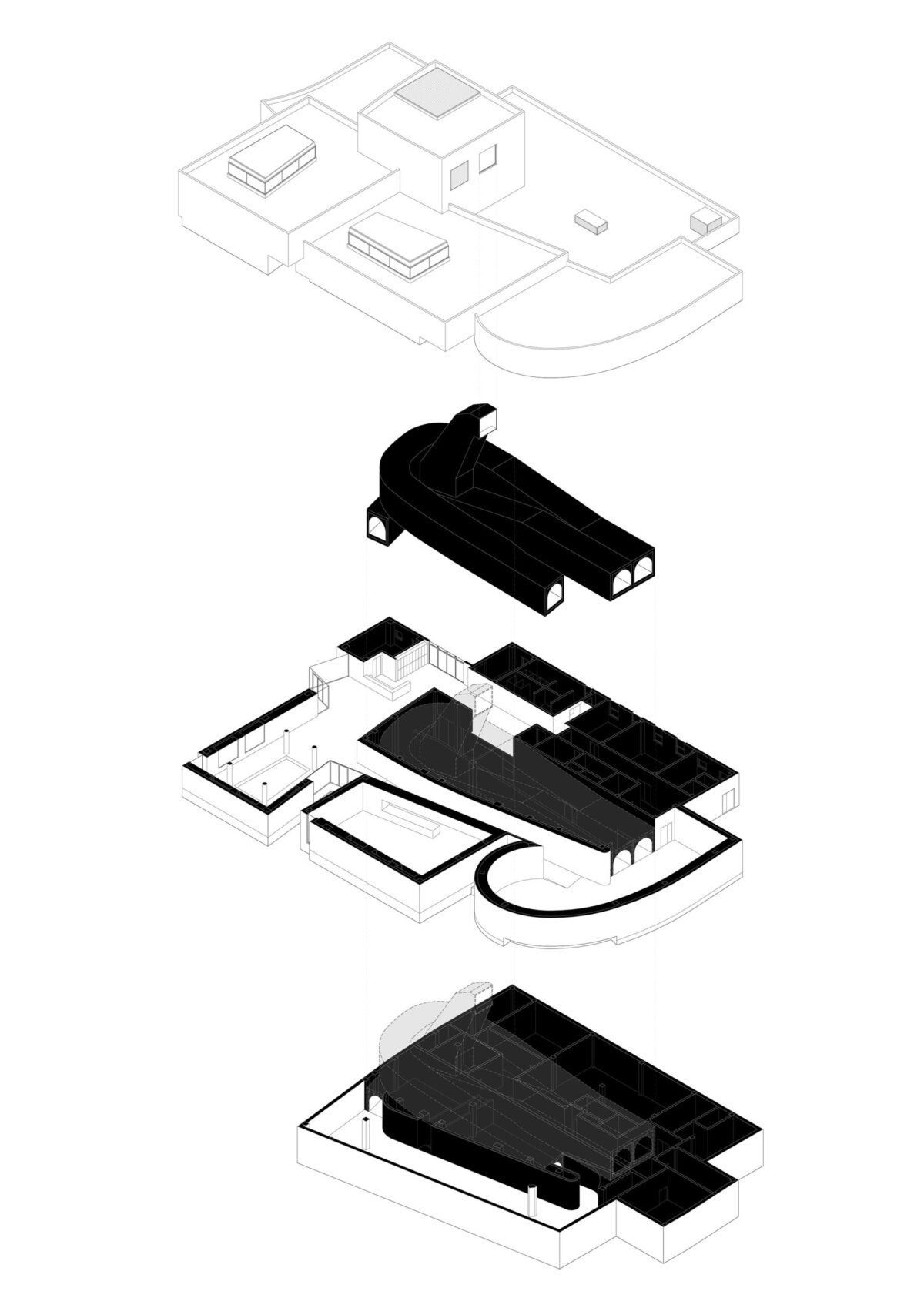
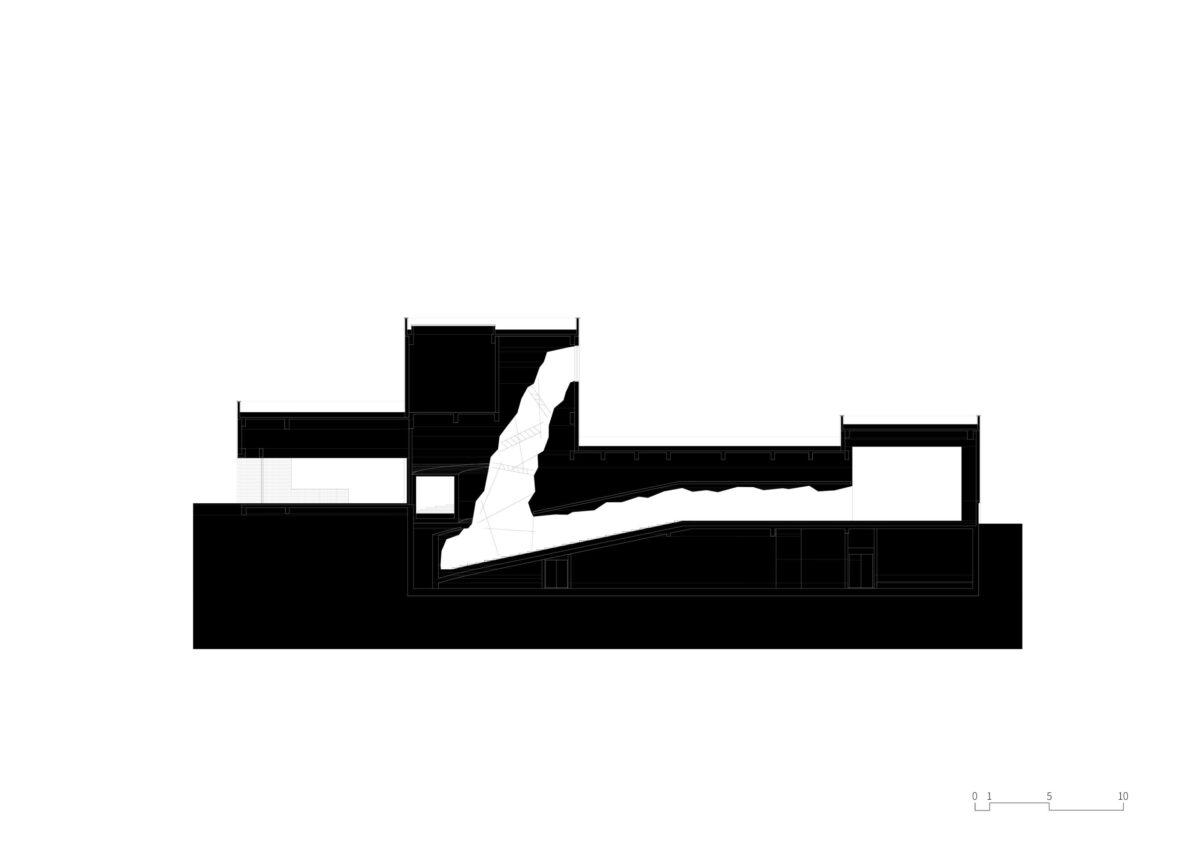
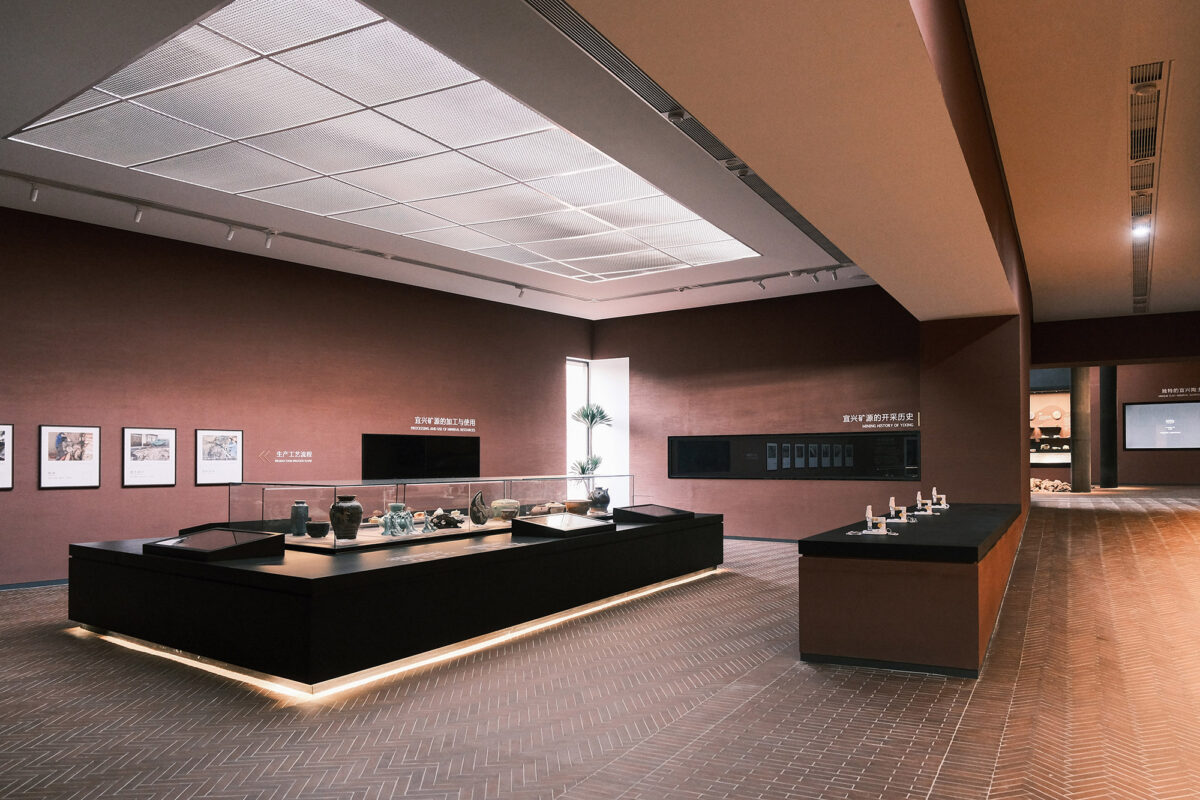
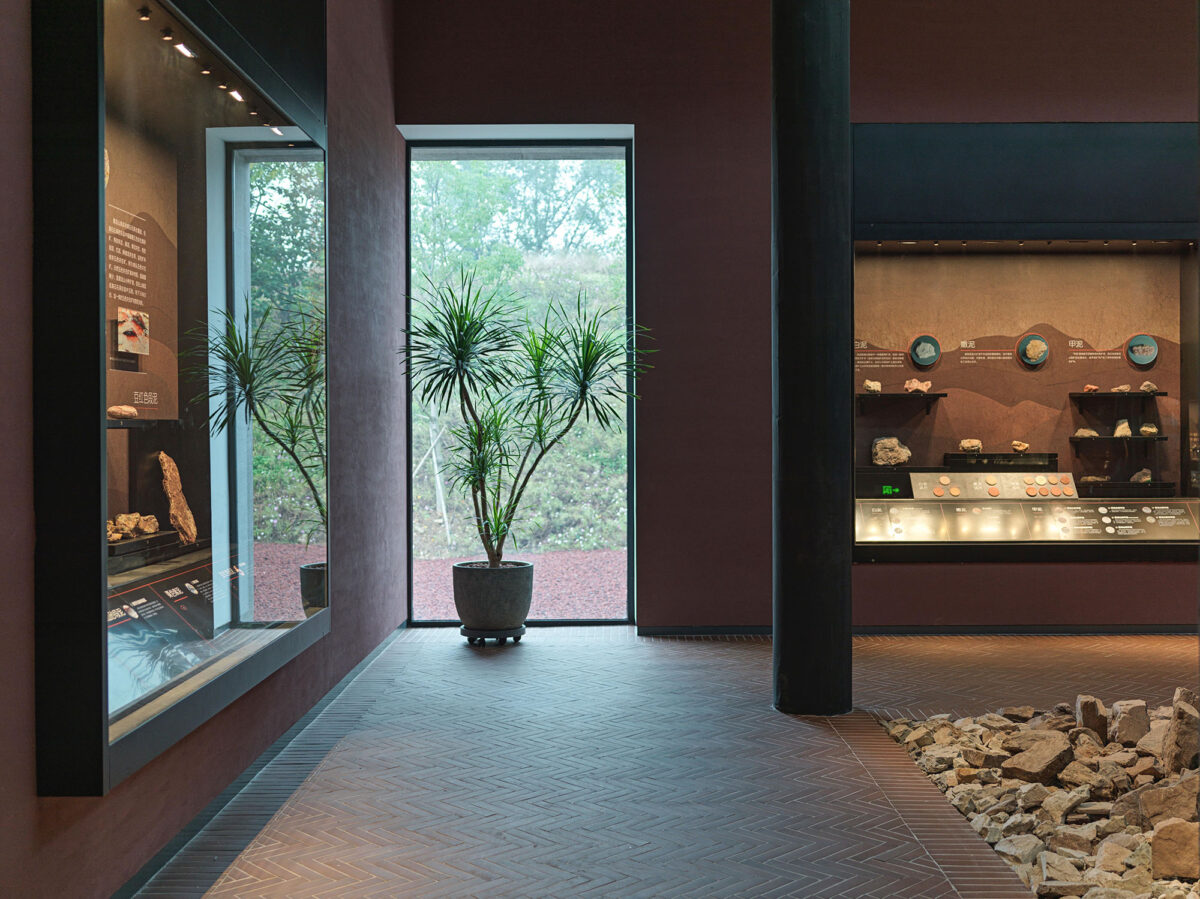
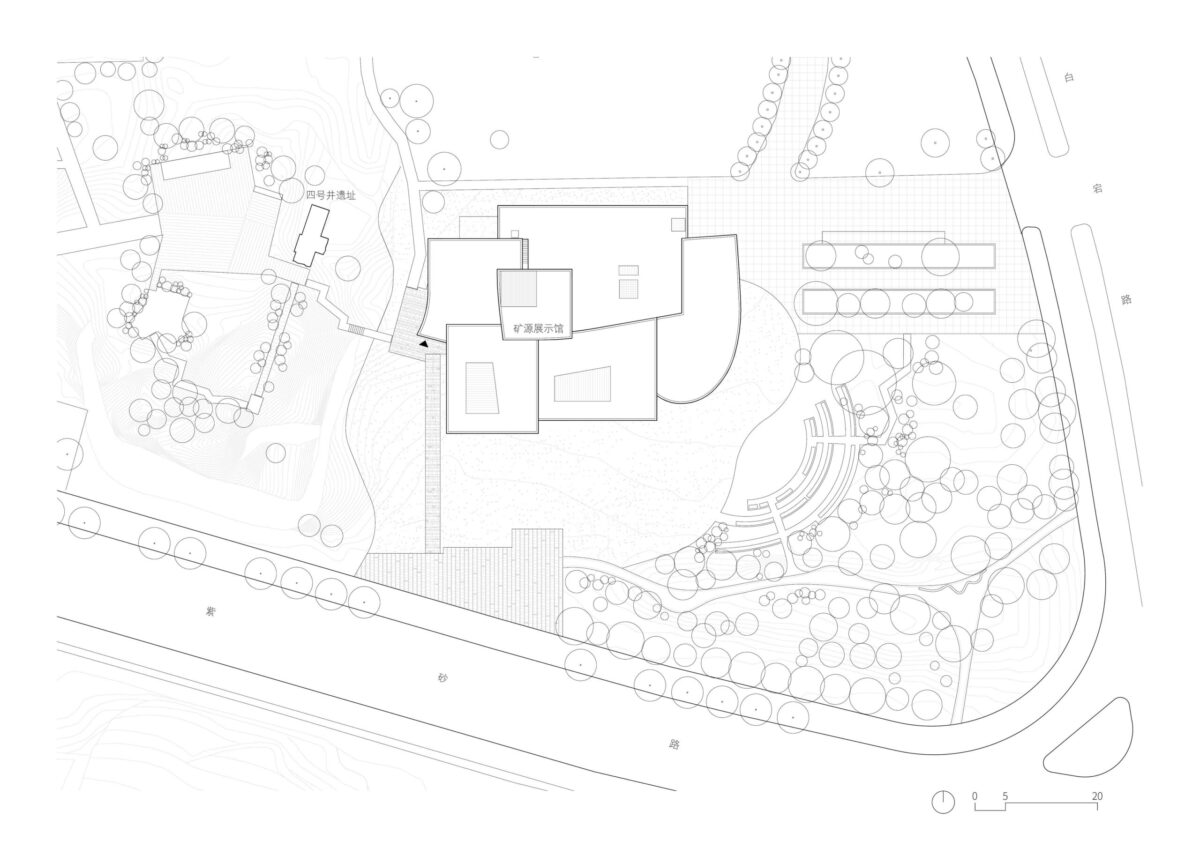
〈黄龍山・紫砂鉱泉博物館〉は、遺構を補強・修復・保護しながら外部の展示空間として整備し、内部の展示ホールとの動線や視線を統合することで、一体的な空間体験を提供している。「最小限の介入、歴史的復元、活性化」を設計方針の軸とし、建築遺産保護と再生の新たなモデルを提示するものである。
また、建築の境界や入口の配置を通じて、訪問者が第4鉱山遺跡サイトを自然に探索できるように導き、損傷した山並みや建物といった景観全体を再接続し、統合している。屋外展示スペースと内部の展示巡回ルートを接続することで、断絶のない連続した鑑賞体験を実現している。
© Atelier XÜK
Section © Atelier XÜK
本計画は、敷地環境を圧迫することなく尊重する統合的なデザインを追求し、観光客が自然に発見し、自由に散策できる空間を創出している。
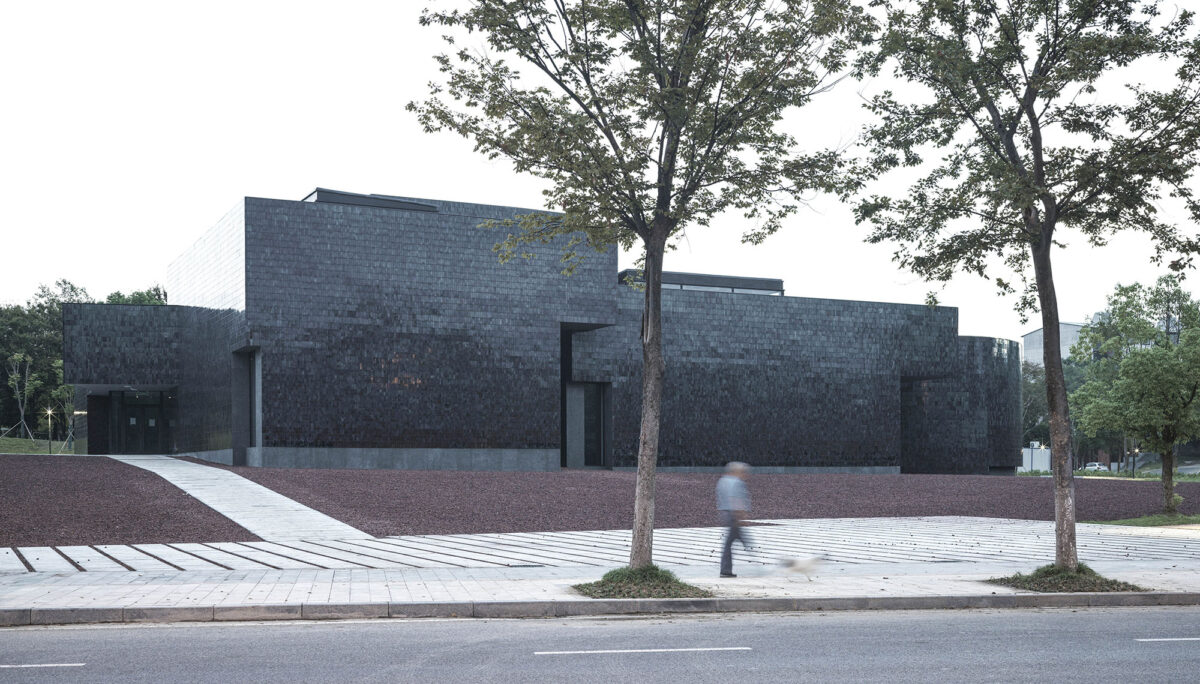
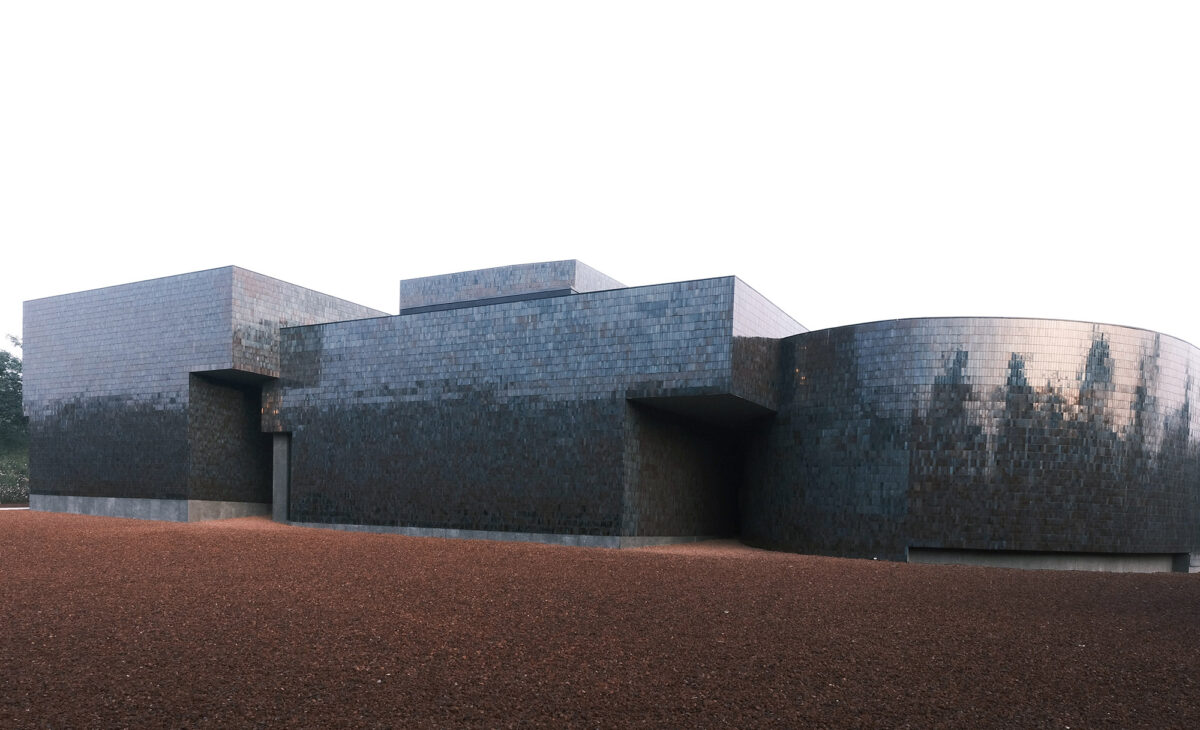
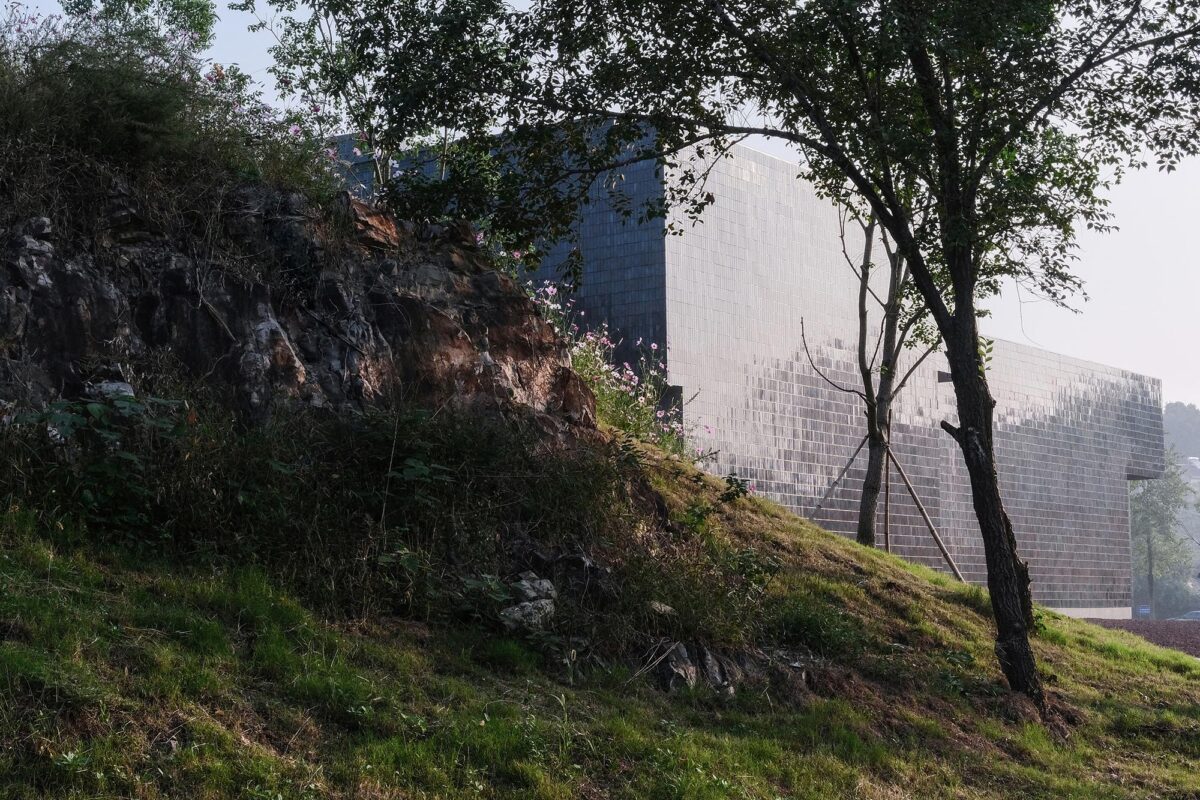
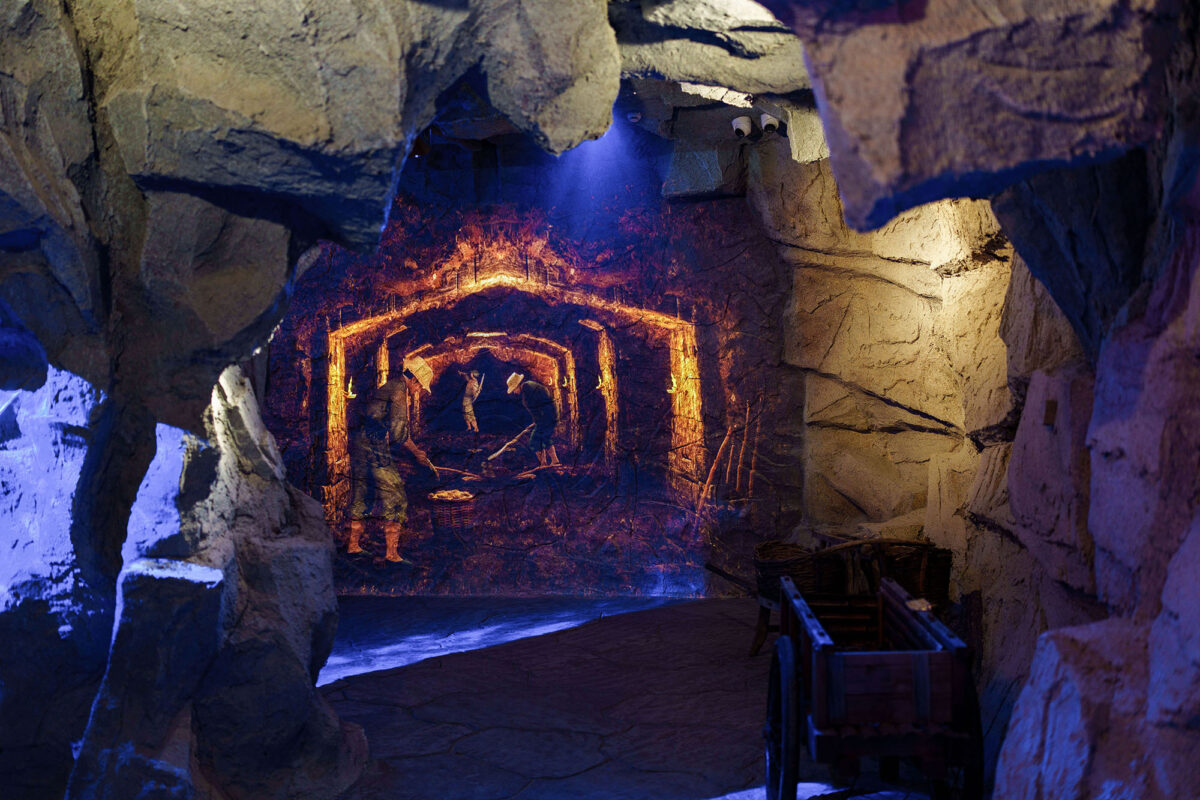
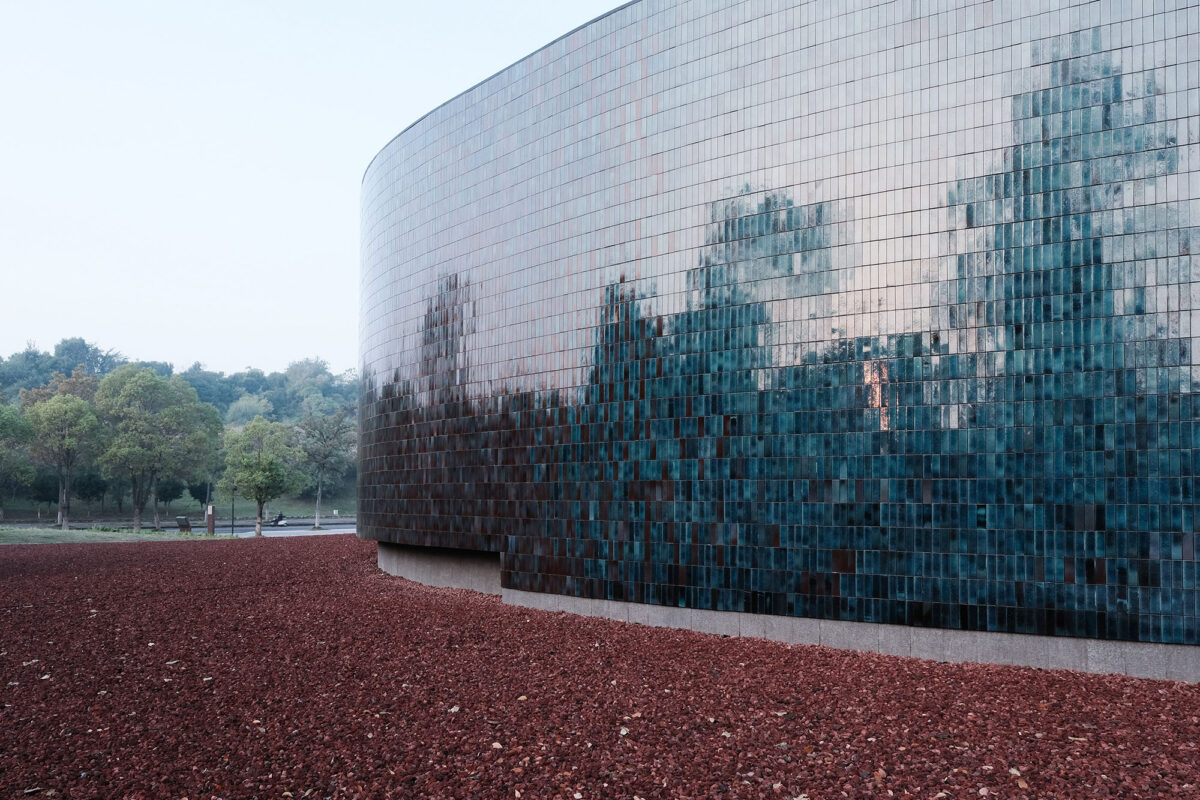
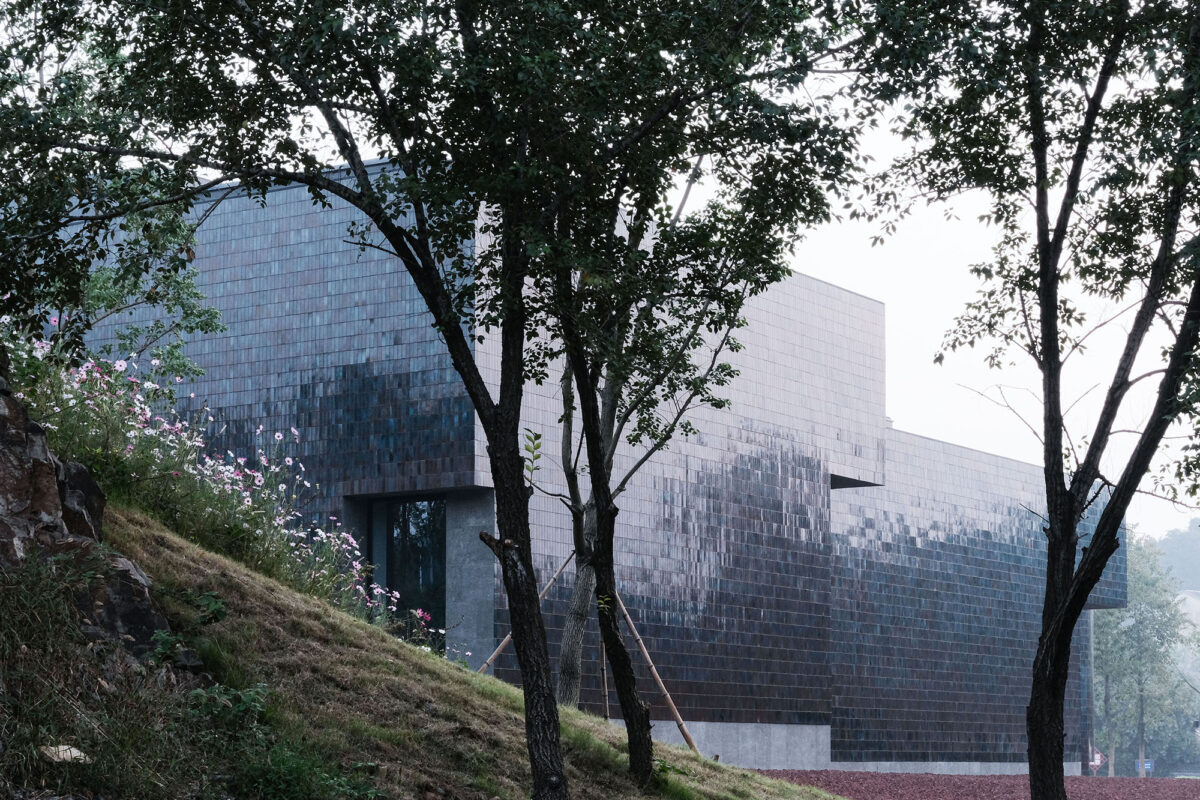
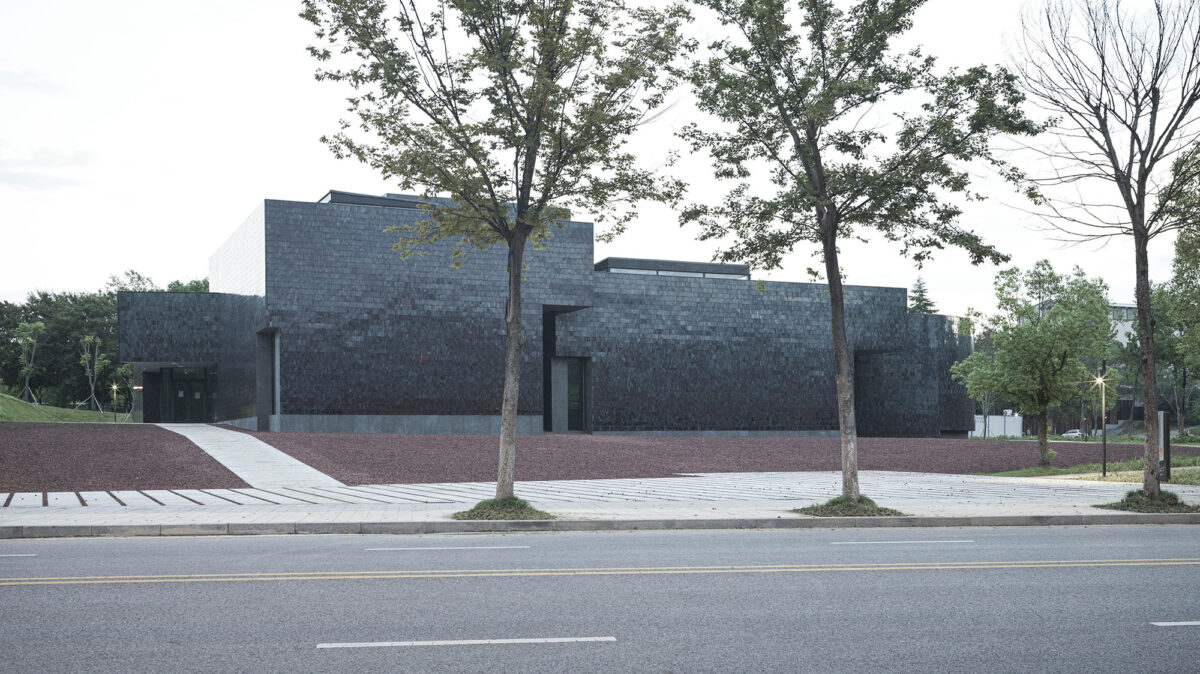
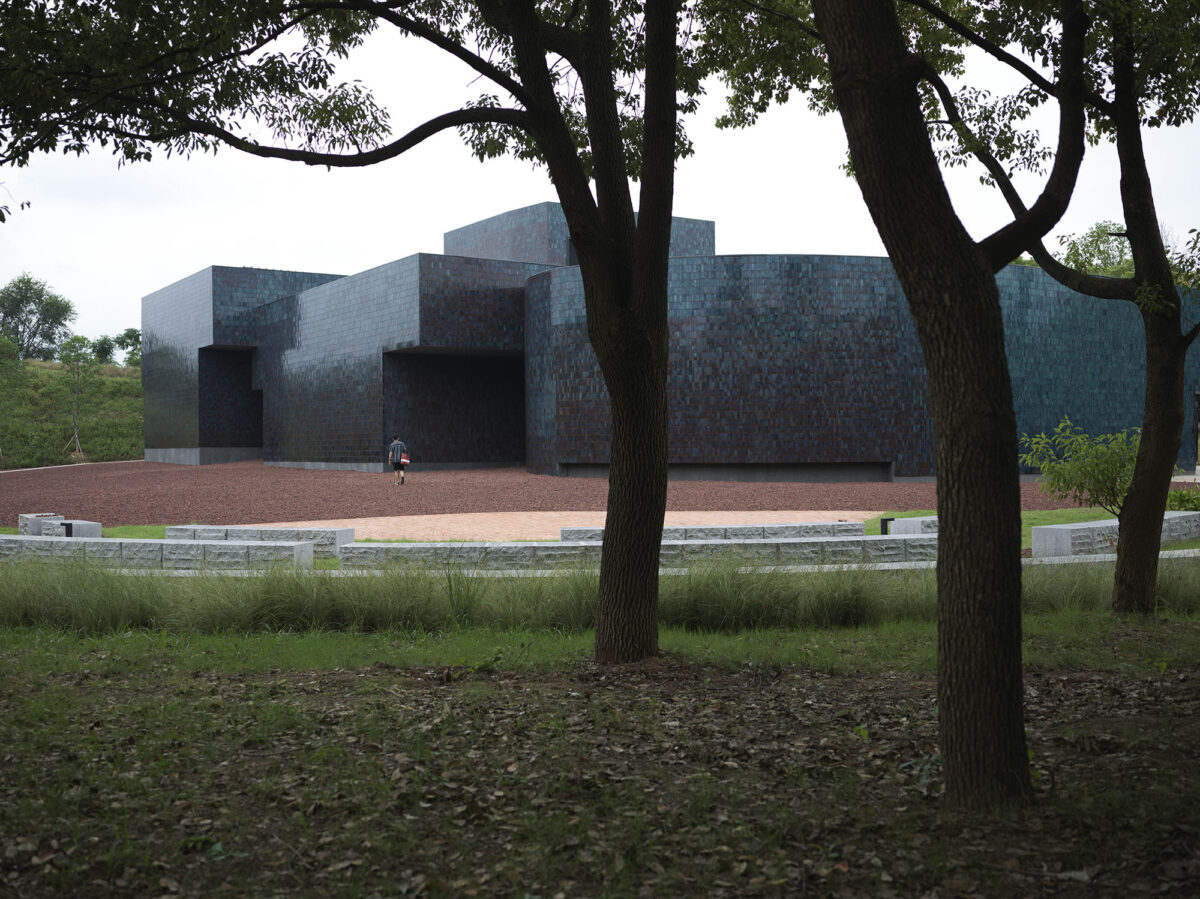
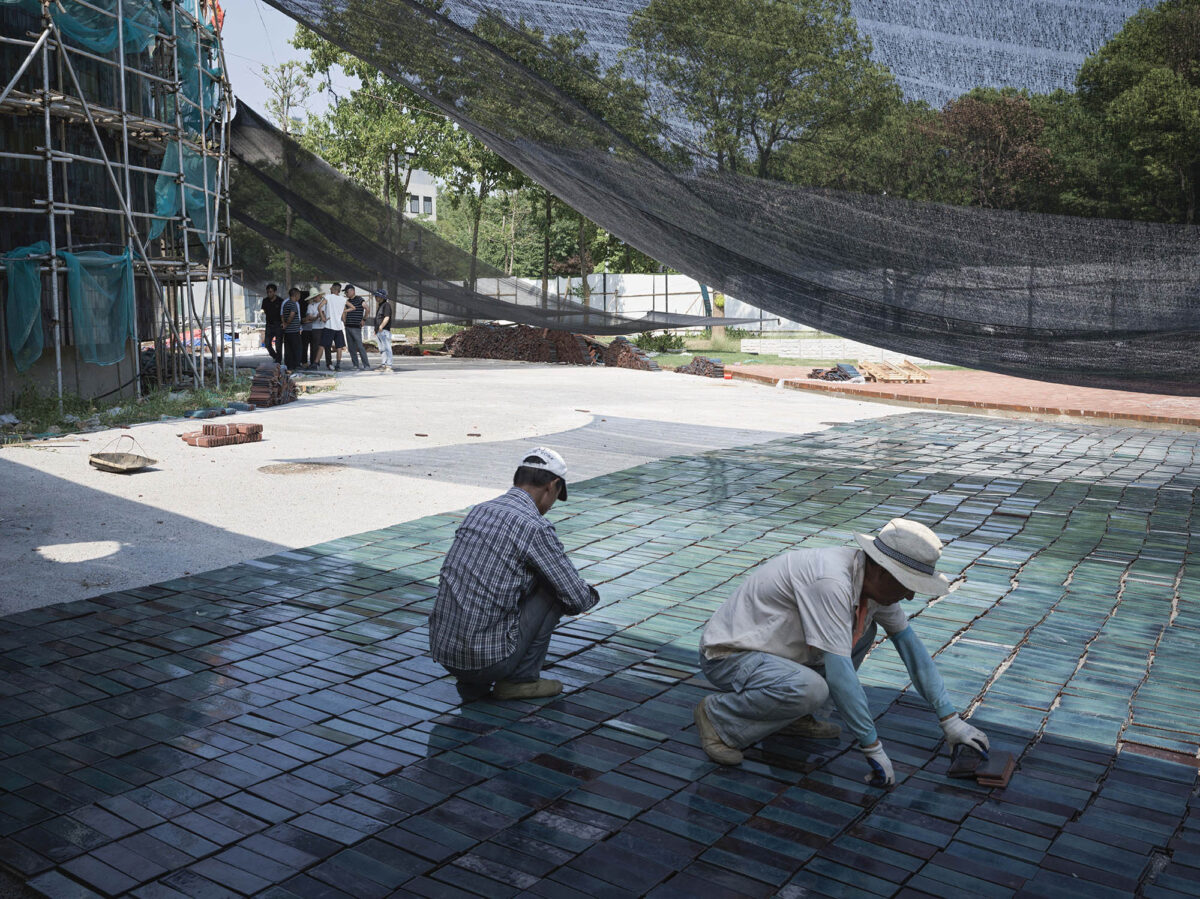
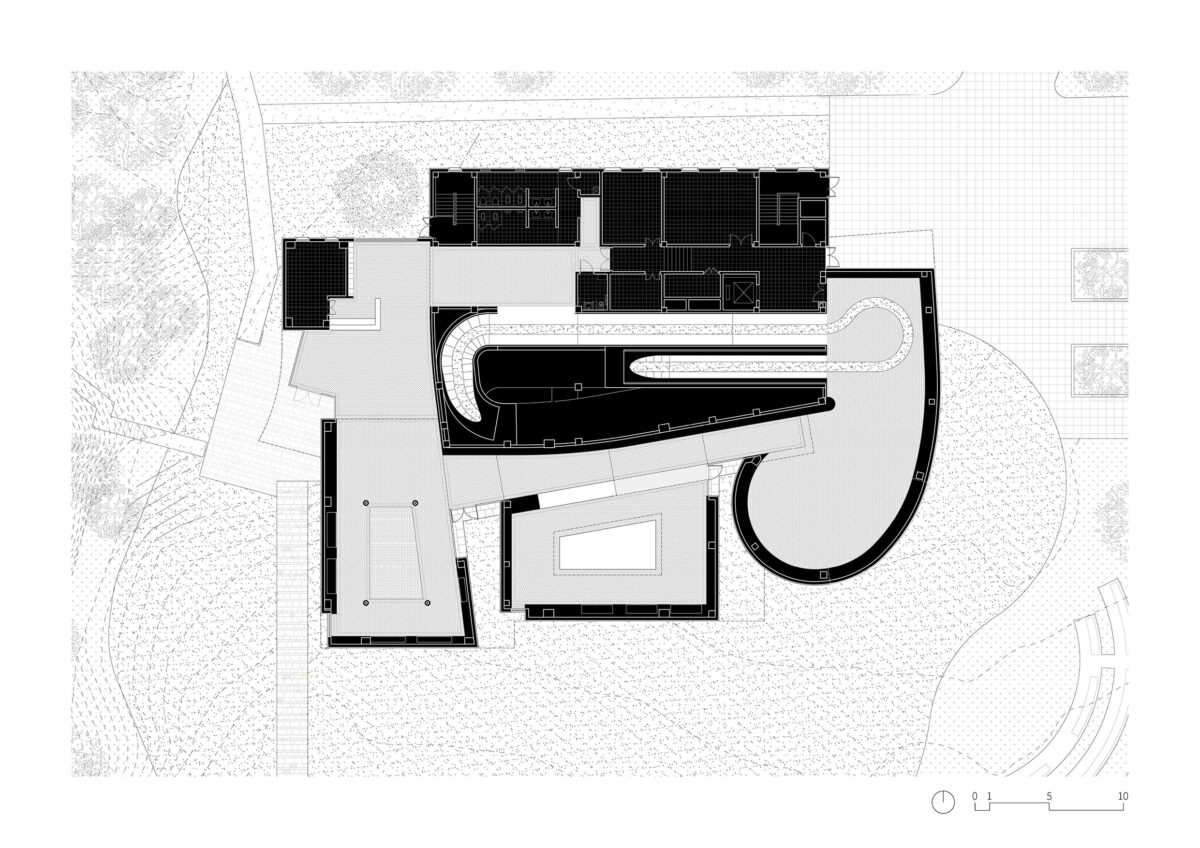
5つの建築ブロックは、5つの「黄金の花」を象徴して配置されており、その外装には釉薬タイルが使用され、時間とともに5色の墨のような表情へと変化する。博物館の地上階にある3つの展示ホールと、地下に広がる鉱山トンネルは、地上から地中へと続く渦巻き状の展示ルートによって結ばれている。
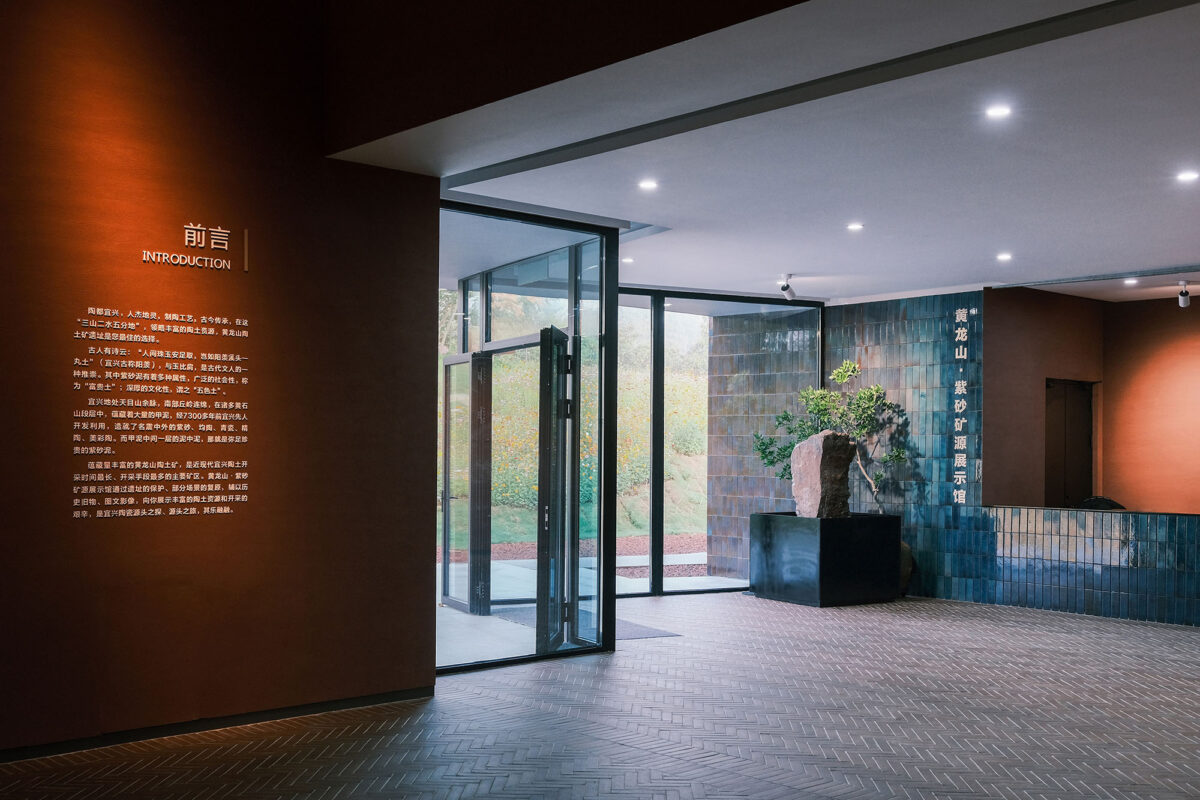
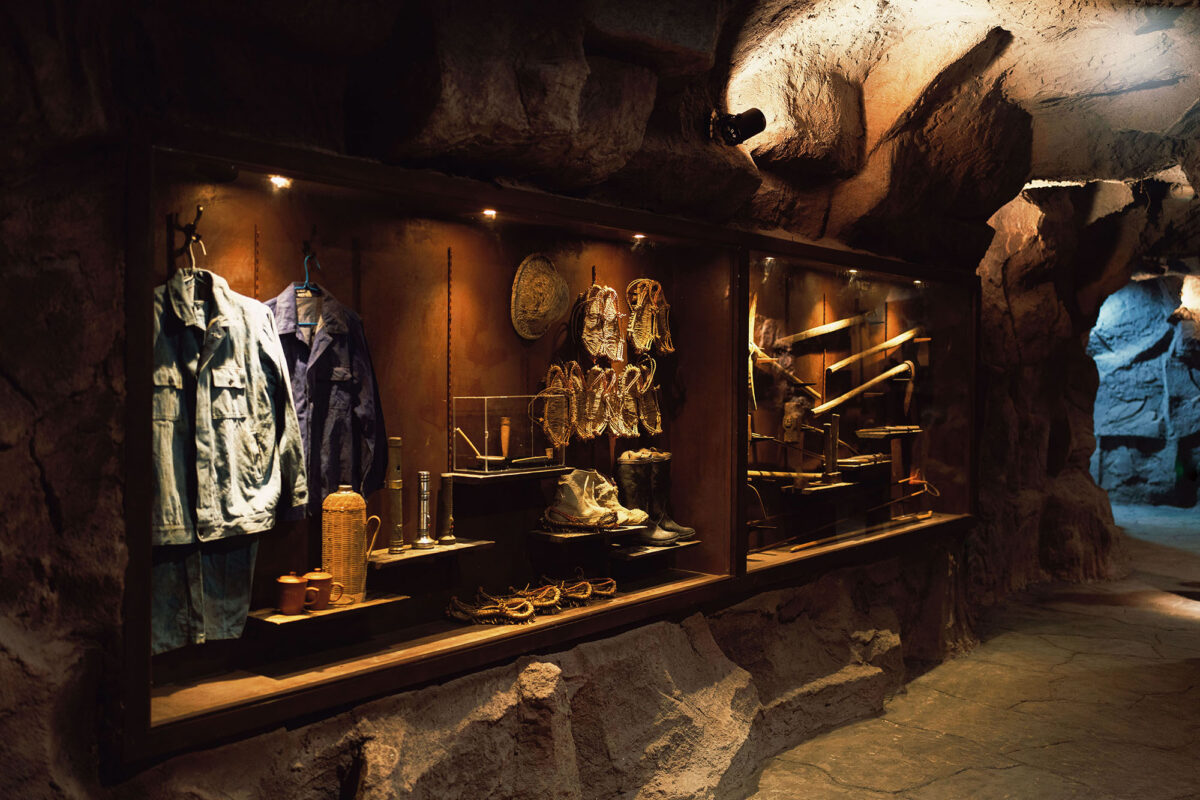
館内ではマルチメディア技術を活用し、かつての採掘体験を臨場感のある形で再現している。これにより、この地が歩んだ産業の歴史を現代的な手法で蘇らせた。
© Atelier XÜK
© Atelier XÜK
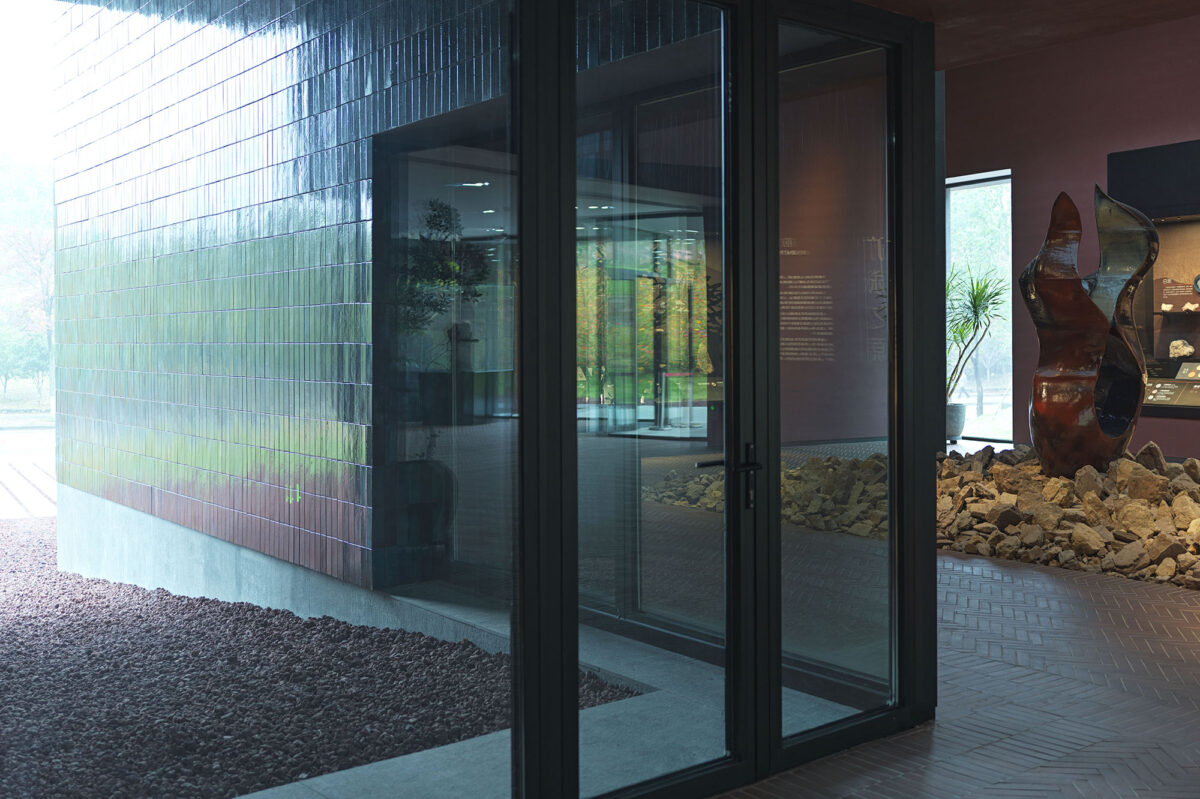
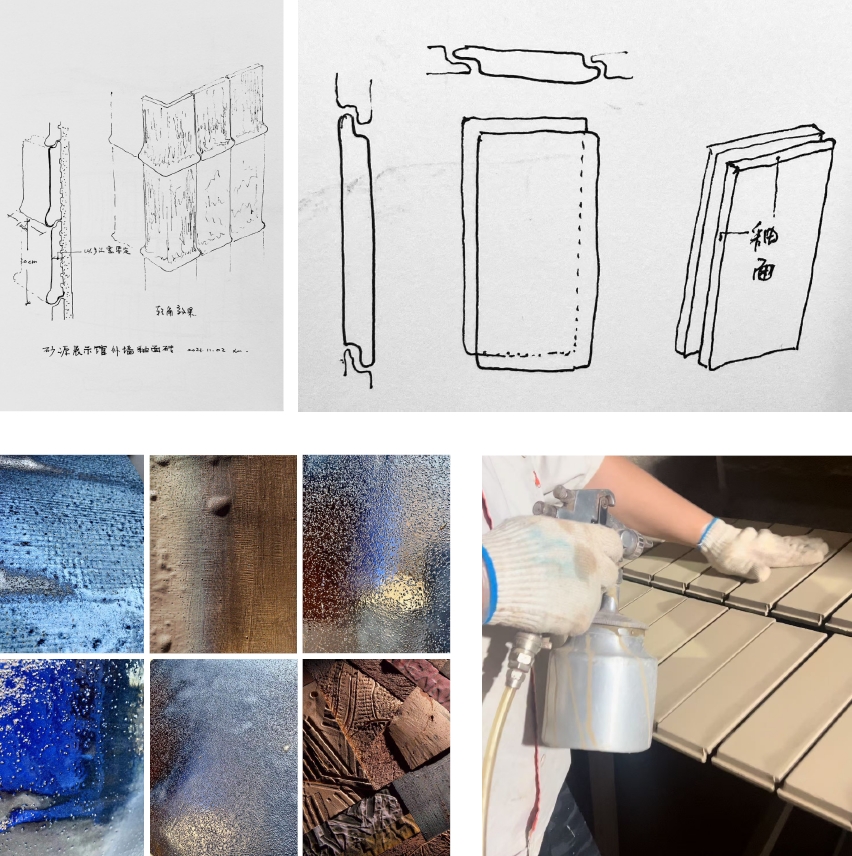
外装材としての釉薬タイル
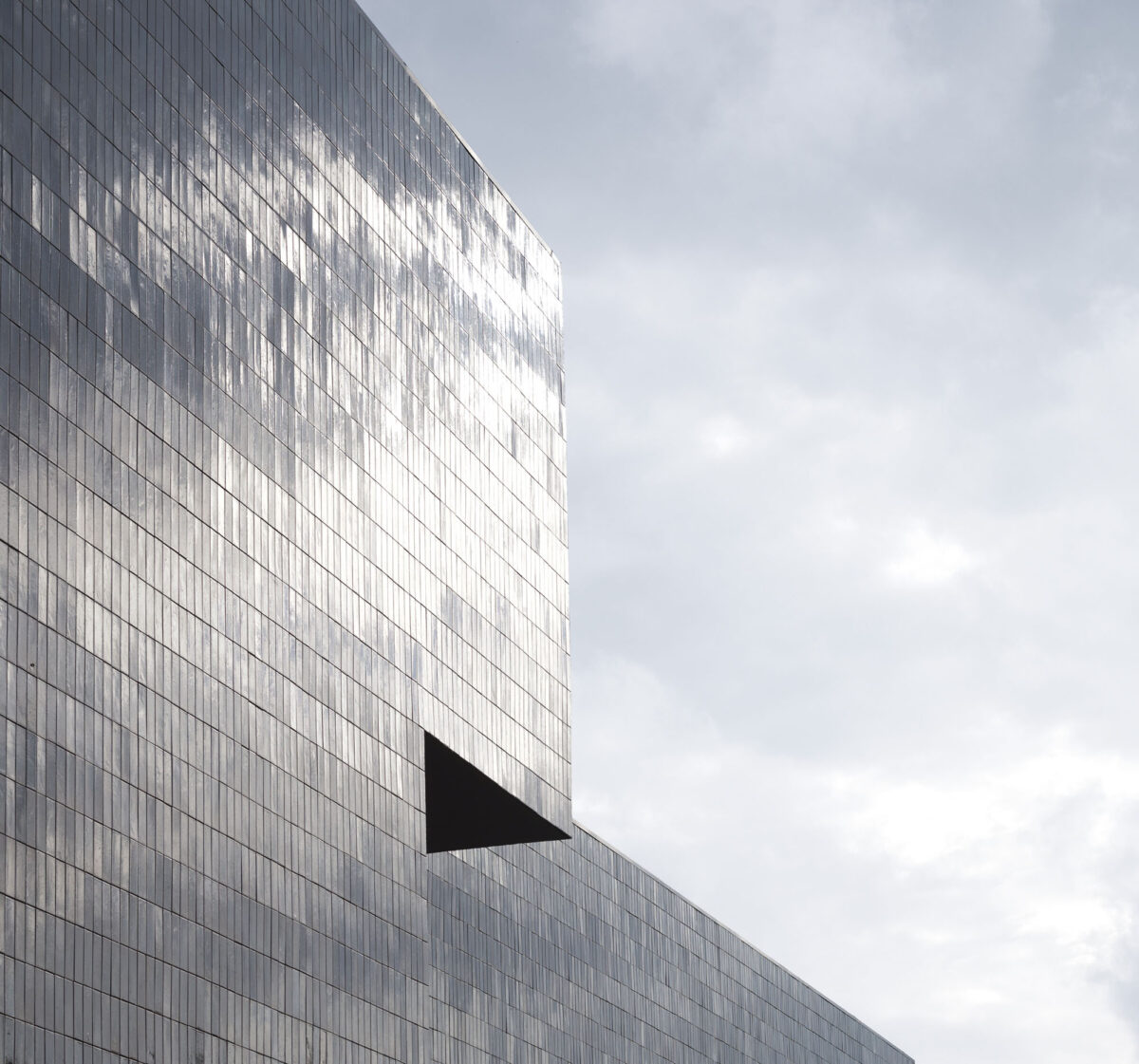
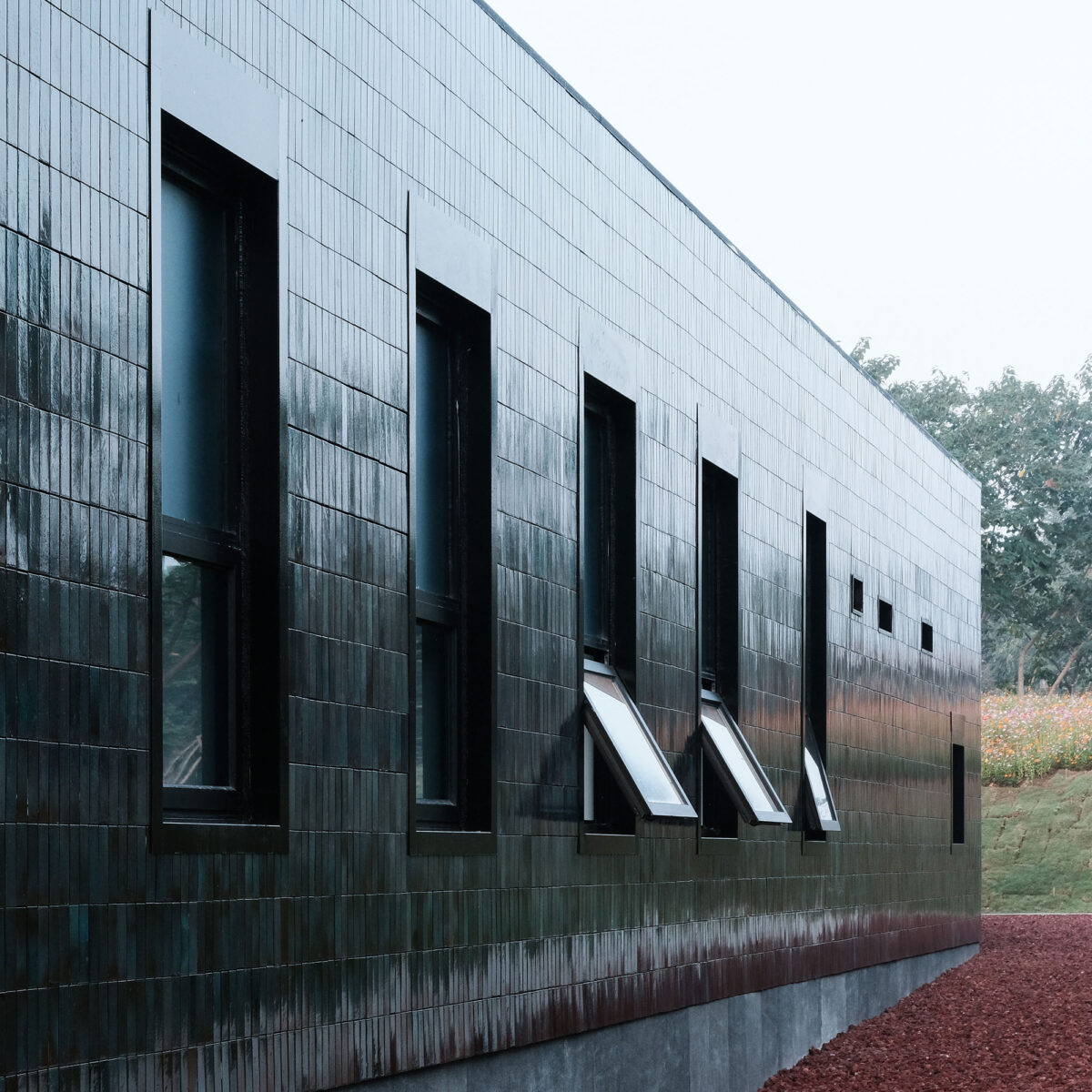
「釉薬」とは、陶器の表面に仕上げ層を塗布し、美観、気密性、防水性、強度向上を目的とする技法である。
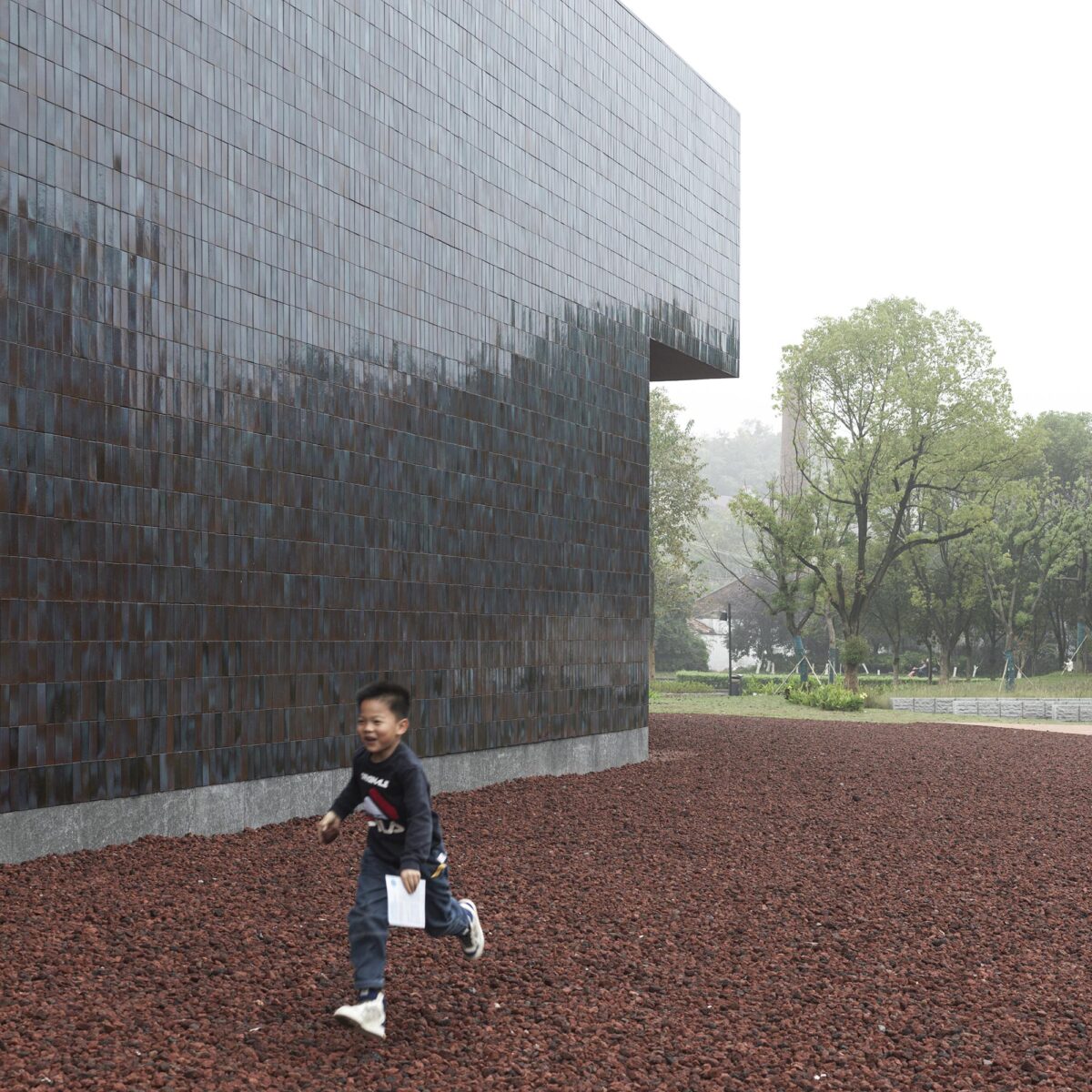
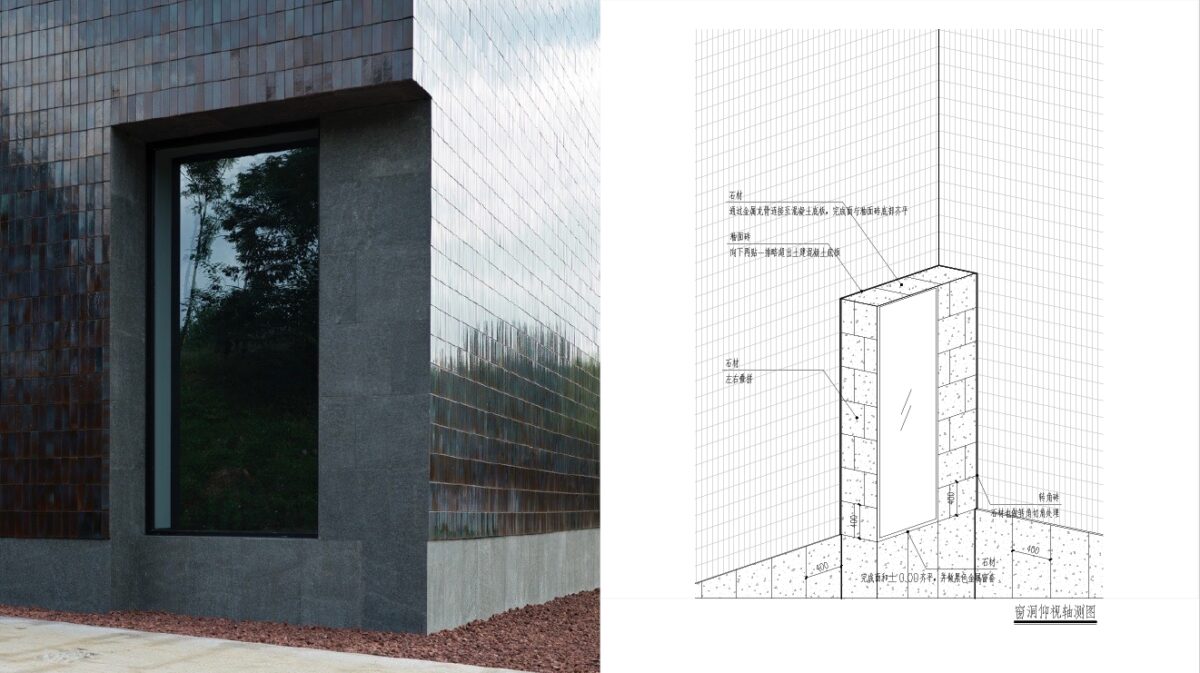
外壁タイルには彩色釉薬処理を施し、外壁に豊かな光と影の反射効果を表現している。人が近づき手で触れると、建物との豊かな接触感覚を呼び起こす。
老子は「物の存在によって利益を得、物の非存在によって奉仕される」と説いた。こうした古代の哲人の知恵を再解釈し、陶器と建築、第4鉱山遺跡と博物館の関係性を、実体と虚空のように織り交ぜながら、新旧が共存する場として表現している。
© Atelier XÜK
© Atelier XÜK
© Atelier XÜK
© Shiliang Hu
© Shiliang Hu
© Atelier XÜK
© Atelier XÜK
© Atelier XÜK
© Atelier XÜK
© Atelier XÜK
© Atelier XÜK
© Atelier XÜK
© Atelier XÜK
© Atelier XÜK
© Atelier XÜK
© Atelier XÜK
© Atelier XÜK
Siteplan © Atelier XÜK
Groundfloor Plan © Atelier XÜK
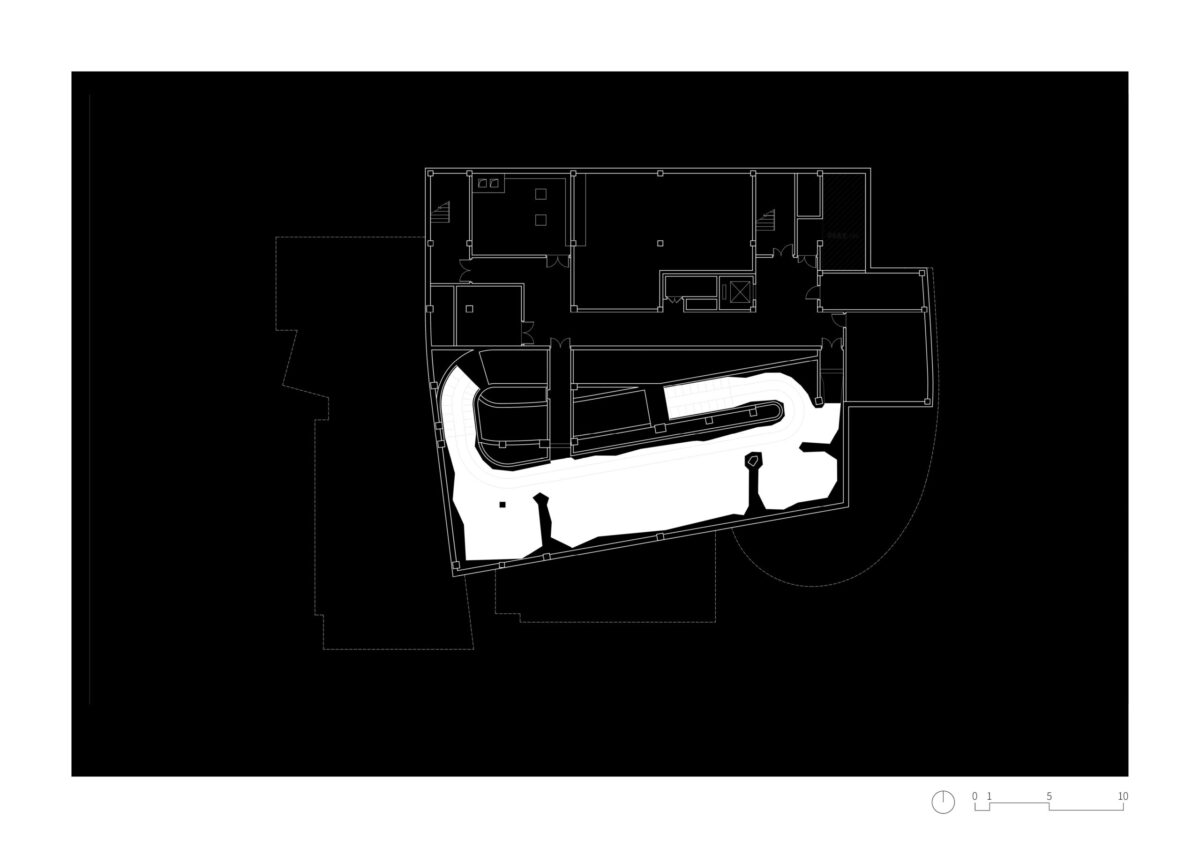
Underground Plan © Atelier XÜK
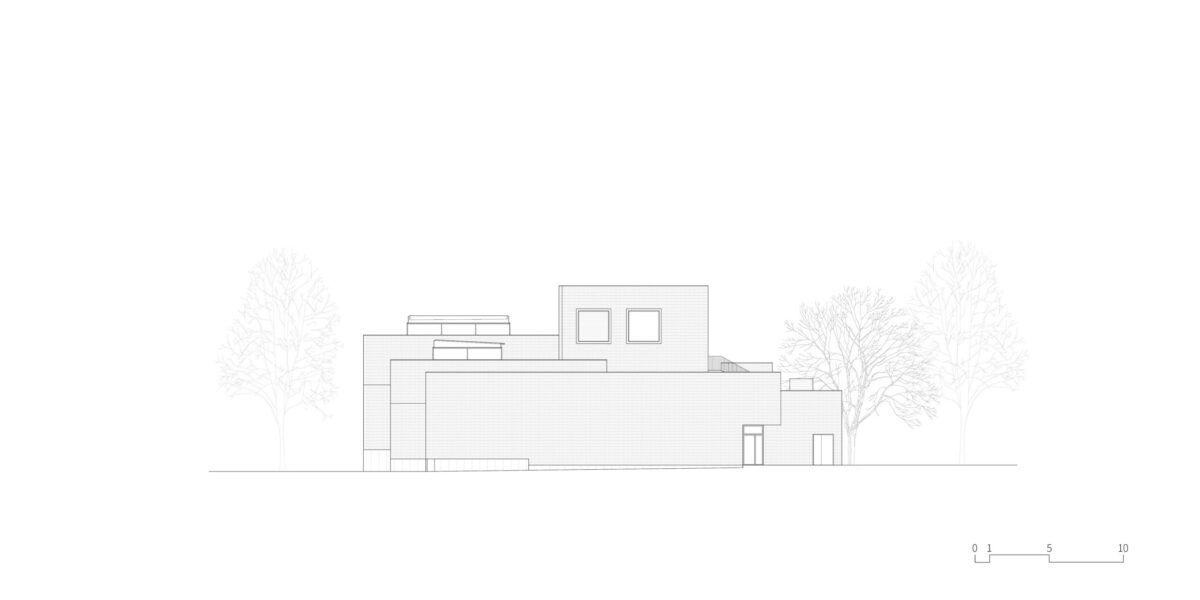
East Facade © Atelier XÜK
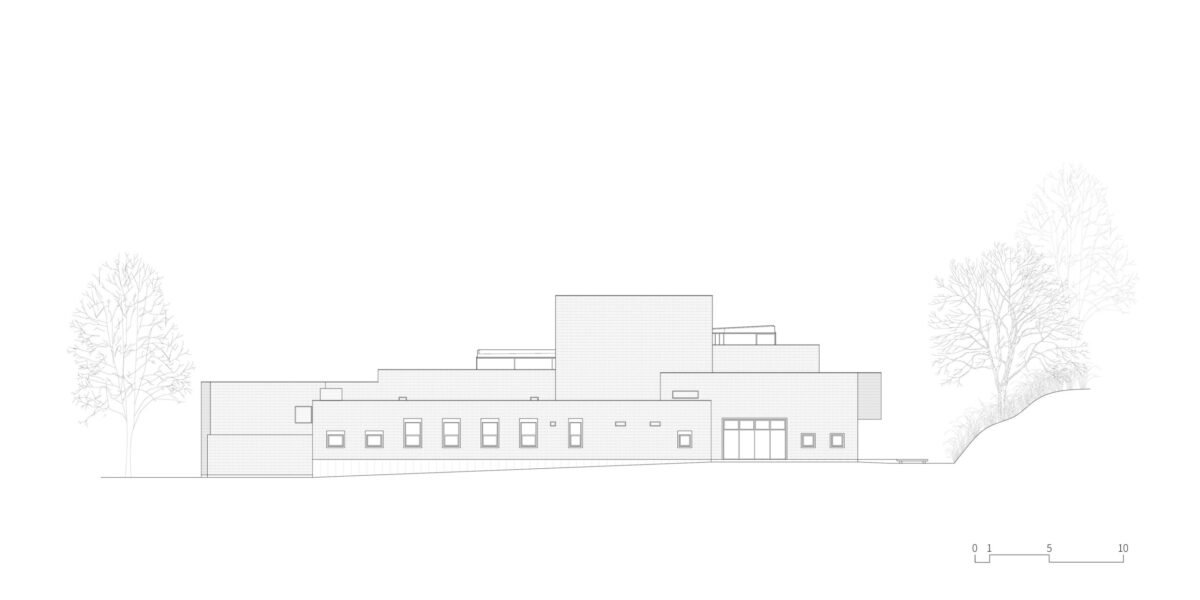
North Facade © Atelier XÜK
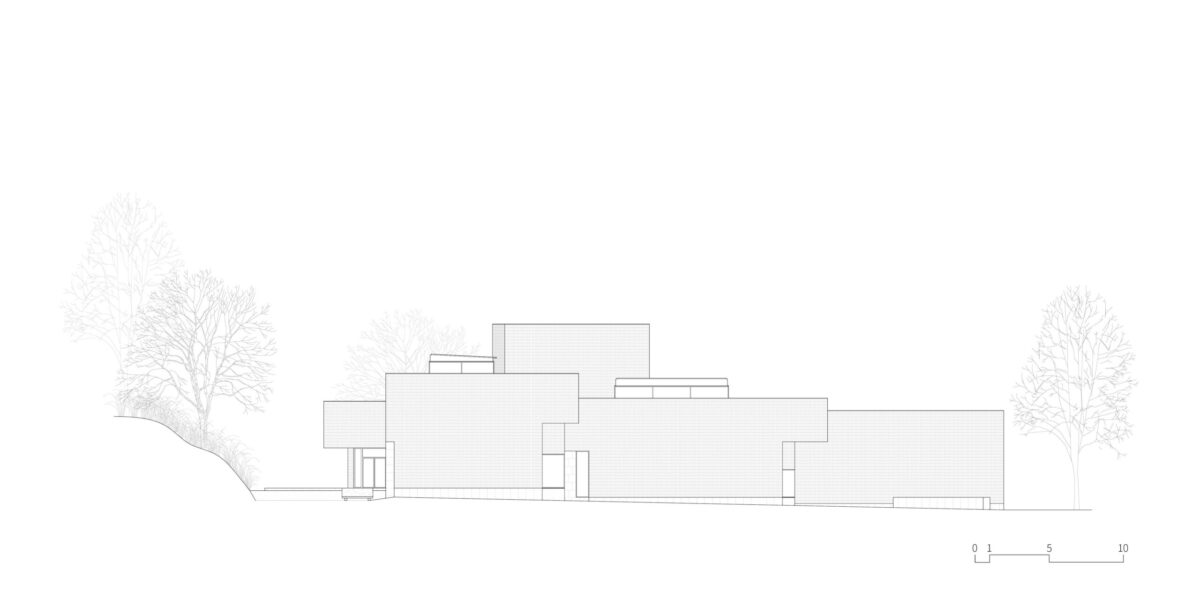
South Facade © Atelier XÜK
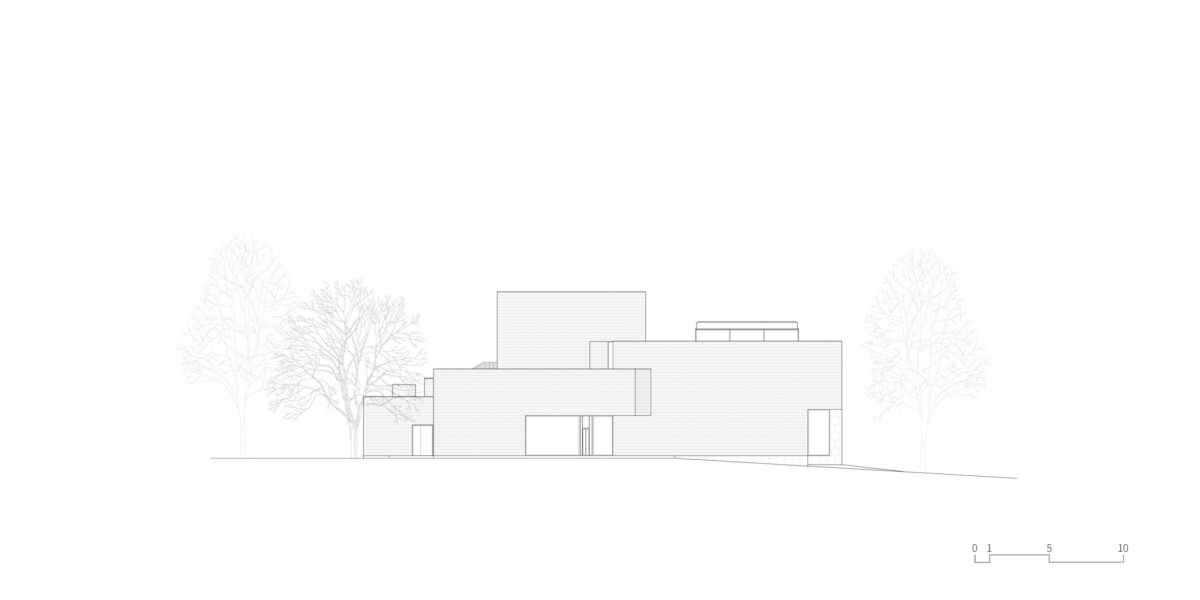
West Facade © Atelier XÜK
Section © Atelier XÜK
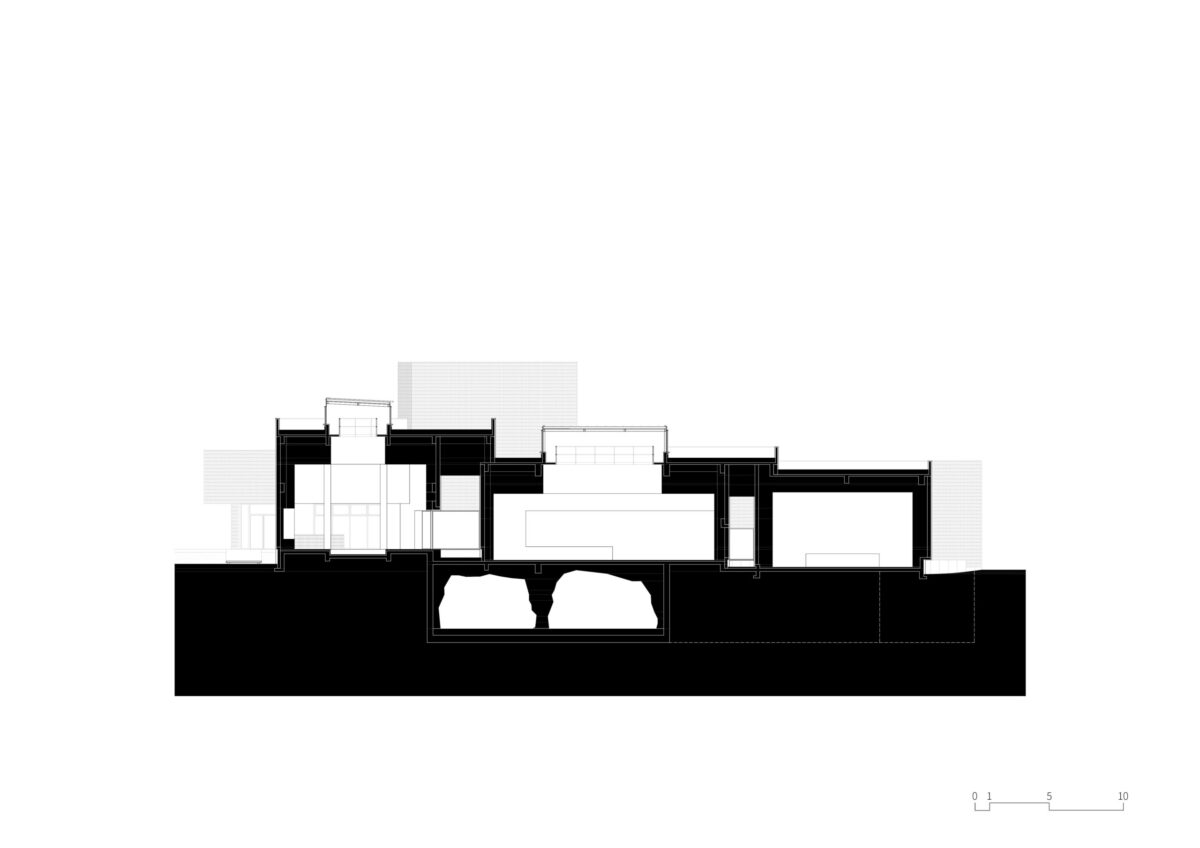
Section © Atelier XÜK
以下、アトリエXÜKのリリース(英文)です。
Project Name: Huanglong Mountain·Zisha Mineral Source Museum
Completion Year: 2024
Gross Built Area: 2435m²
Design Firm: Architecture School of Southeast University & Atelier XÜK
Contact Name: Yiming Yang
Contact e-mail: yangyiming@atelier-xuk.com.cn
Lead Architects: Xu Zhang, Kenan Liu
Lead Architects e-mail: zhangxu@atelier-xuk.com.cn
Project location: Zisha Road, Dingshu Town, Yixing, ChinaProject Type: Museum\Heritage\Culture ArchitectureAdditional CreditsClients: Construction Bureau of Dingshu Town
Lead Architects: Xu Zhang, Kenan Liu
Historical Research and Project Scheme: Xu Zhang, Yang Shen
Design Team: Xiaoxia Shi, Yiming Yang, Shiyun Sun, Lanxi Li, Hua Xu, Yin Song, Tianze Yu, Tao Zhang, Ang Li, Xinqi Dong, Tong Niu (Intern), Yuanlanyi Zhao (Intern)
Interior Design and Exhibition: Fengyuzhu
Interior Design Consultant: Atelier XÜK
Landscape Design: Atelier XÜK
Landscape Construction Design: Jiangsu Henghong Construction Consulting CO., LTDMedia ProviderPhoto credits: Yiming Yang, Xu Zhang, Shiliang HuProject DescriptionInk has five pigments, and clay has five colors. Chinese people write with ink and cast utensils with clay, which gave birth to the Chinese culture.The shore of Taihu Lake and the continuing range of Tianmu Mountain have created the terrain and mineral context of Dingshu.The Chinese culture veins, the Dingshu terrain veins, and the Zisha mineral veins are the source of inspiration for the Huanglong Mountain·Zisha Mineral Source Museum.Project BackgroundDingshu Town, which is located in the southeast of Yixing City, is well known as the “Capital of Pottery”. Huanglong Mountain has been a producer of high-quality Zisha raw materials (a special type of clay) since ancient times in the history, and can be named as the “Source of Zisha”. This project specifies the protection strategy for the No. 4 mine historical remains and designs the Zisha Mineral Source Museum.No. 4 MineThe No. 4 Zisha mine of Huanglong Mountain was first built in 1972, while stopped mining in 1997. In 2009, it was announced as a municipal cultural relic protection unit by the Yixing Municipal Government.Protection StrategyReinforce, repair and protect the ruins to make it an exterior exhibition space, which is integrated with the interior exhibition hall through circulation and visual contact. The design appropriately transform it based on the principle of “Minimum intervention, Historical restoration, and Activation” to make it a reference for the protection and renewal of architectural heritage.· Respect the ruins: Guiding tourists to discover the No. 4 Mine Ruins Site through the architectural boundaries and entrance orientation.· Activate and regenerate the damaged area: Considering and reconnecting the damaged mountain with the landscape of the building as a whole.·Forming entirety with the building: Connecting the exterior exhibition space of the No. 4 mine ruins with the interior exhibition touring route.Design Concept·Integrated Design: Strive to respect the site, rather than oppressing the environment, and guiding tourists to discover and roam naturally in the territory.·Space for Communication and Integration: The five blocks symbolize five ‘Golden Flowers’, and the surface of the glazed tiles transforms into five-color ink. A vortex-shaped exhibition route from the ground to the earth in the museum connects the three exhibition halls on the ground floor and the underground mine tunnel into one complete space.·Multi-media Exhibition: Using multi-media to simulate the real mining experience, so that this period of history can be reborn in a modern method.Glazed Tiles as Surface Material“Glazing” means applying a finishing layer to the surface of pottery to achieve the purpose of beauty, airtightness, anti-penetration, and increase strength.The colored glaze treatment is used on the facade tiles, in order to make the facade present a rich light and shadow reflection effect. When people approach and touch it with their hands, it will evoke a rich sense of contact with the building.Project SignificanceLaozi said, “By the existence of things we profit, and by the non-existence of things we are served.” Both pottery and architecture interpret the wisdom of the ancient philosophers. Therefore, the No.4 mine ruins and the museum are just like the entity and void, weaving together the old and new.
アトリエXÜK 公式サイト
http://www.atelier-xuk.com.cn
【購読無料】空間デザインの今がわかるメールマガジン TECTURE NEWS LETTER
RECOMMENDED ARTICLE



