CULTURE
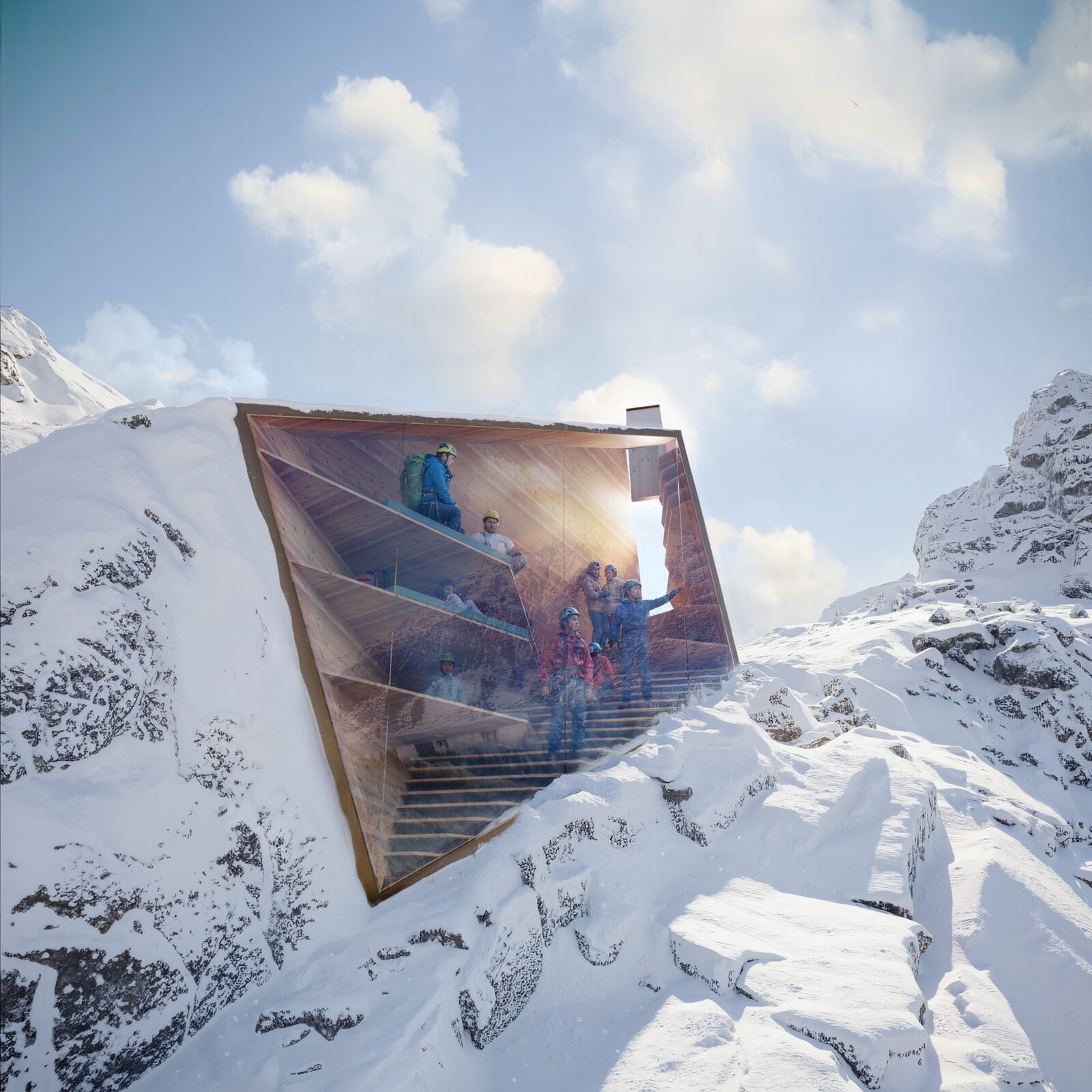
トリノとニューヨークを拠点とするデザイン&イノベーション事務所 カルロ・ラッティ・アソシエイト(Carlo Ratti Associati)とミラノサローネは、ミラノ・コルティナ2026冬季オリンピックに向けた「デジタル製造するビバーク」を発表しました。
注目ポイント
- 地形と一体化する、岩層を3Dスキャンした地形データをもとに生成した形態
- デジタルファブリケーション×CLTで構築する結晶のような建築
- 太陽光発電や飲用水生成システムによる「自給自足型マイクロアーキテクチャ」
- 五輪期間中はパビリオンとして展示後、アルプスへ空輸し設置する二重のライフサイクル
(以下、カルロ・ラッティ・アソシエイトから提供されたプレスキットのテキストの抄訳)
©︎ Carlo Ratti Associati
2026年冬季オリンピックに向けた、デジタル製造するビバーク
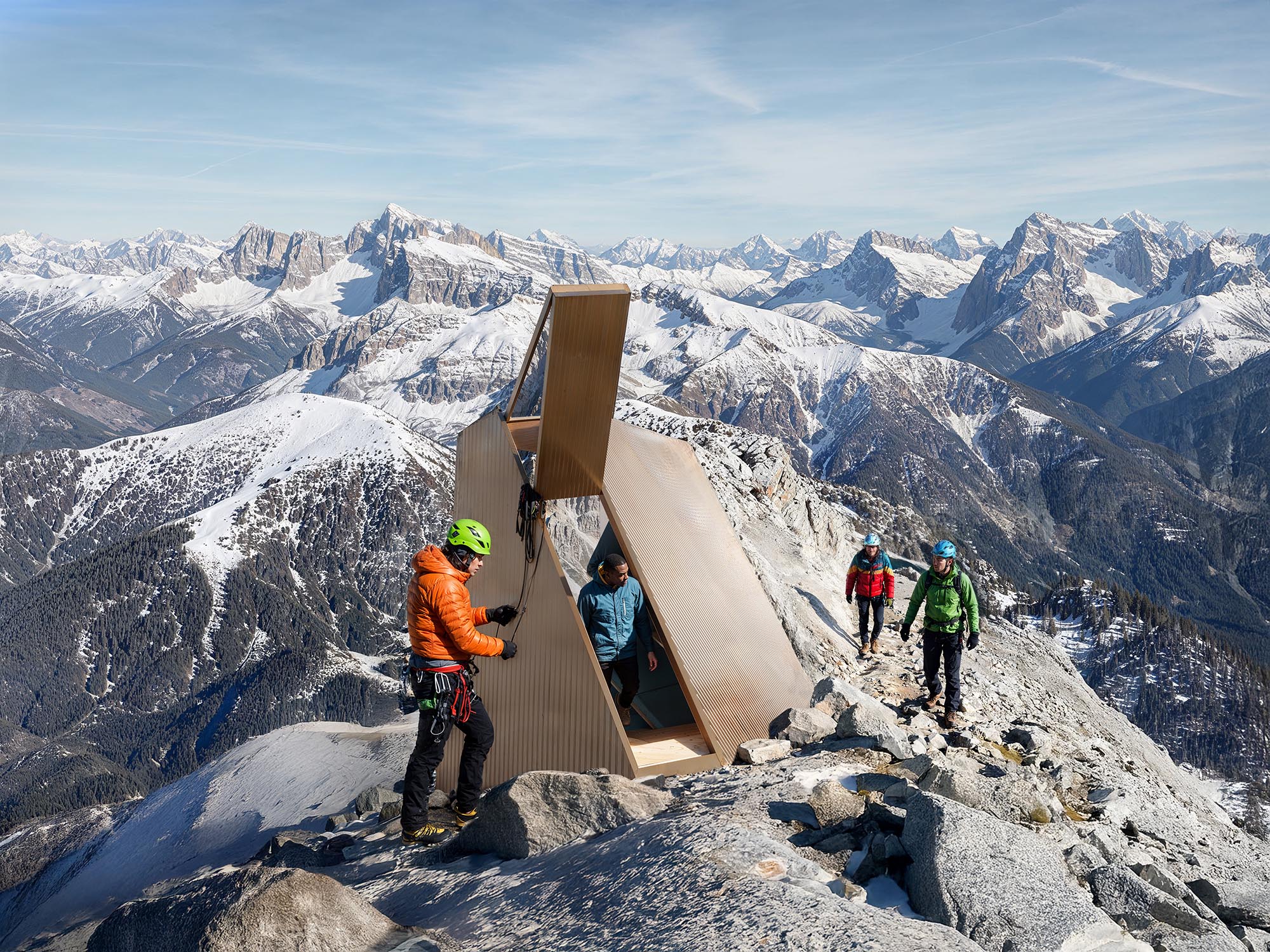
カルロ・ラッティ・アソシエイトは、ミラノサローネとの共同プロジェクトとして、2026年冬季オリンピックを前に、険しいアルプスの景観に溶け込むデジタル製造のビバーク(野営地)のデザインを発表した。
自給自足性を中核に設計されたこの構造体は、エネルギー生産・貯蔵機能に加え、空気凝縮による雨水回収システムを内蔵している。2026年冬季オリンピック期間中は都市型パビリオンとして使用された後、恒久設置地であるアルプスへ空輸され、登山家たちの永続的な避難所となる。
©︎ Carlo Ratti Associati
アルプスの岩層から生まれた形態
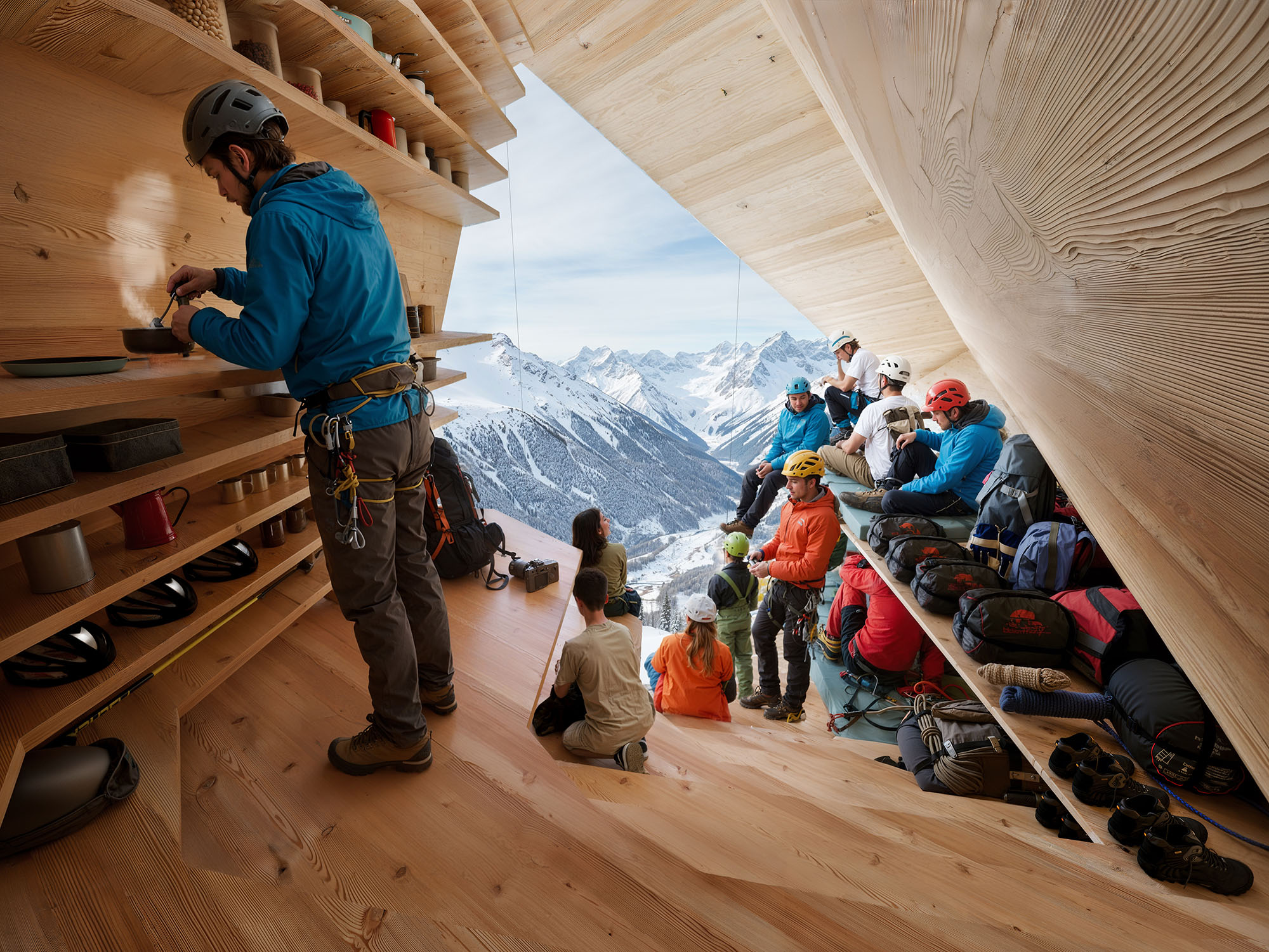
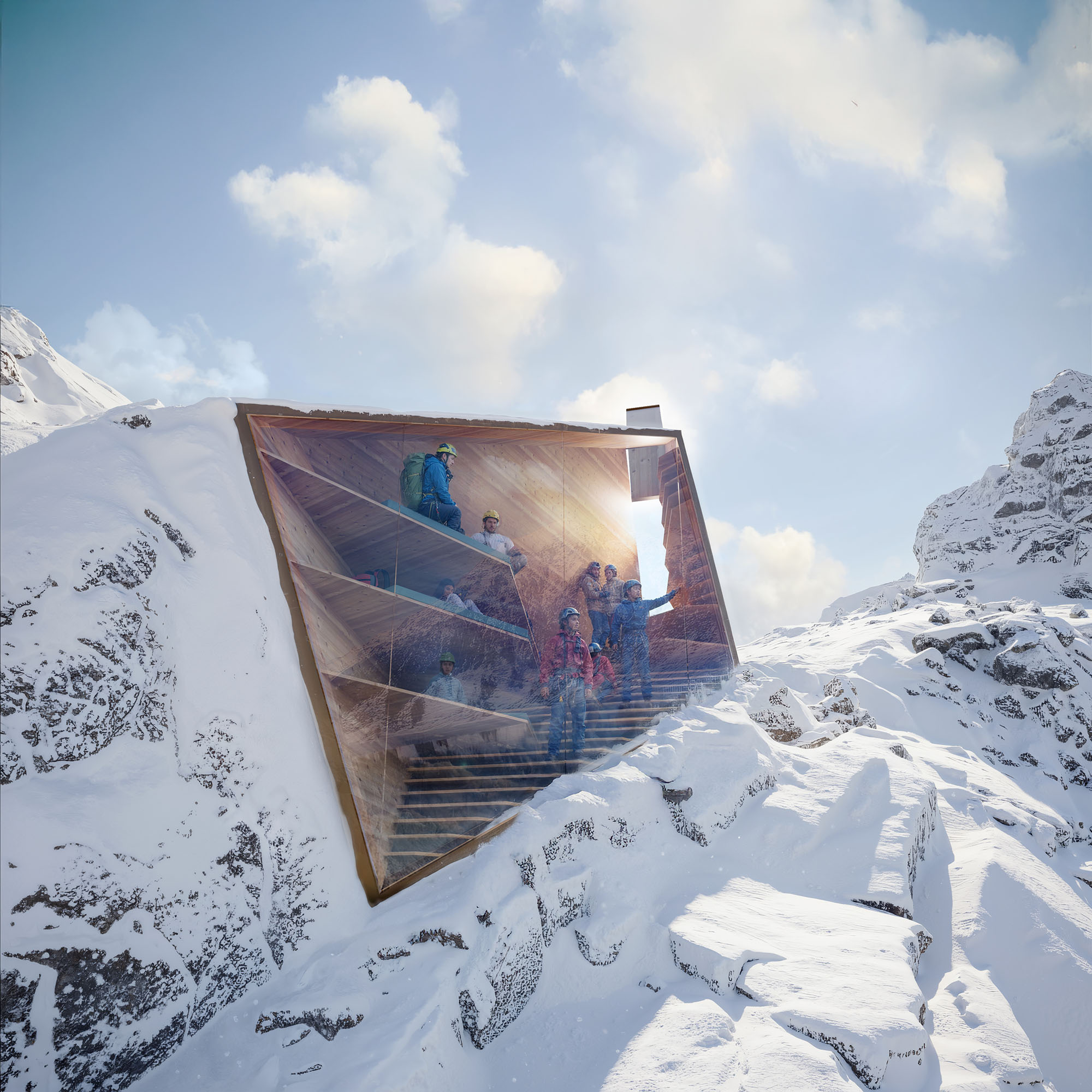
カルロ・ラッティ・アソシエイトの設計アプローチは、自然と人工の境界を溶解させることを目指すものである。まずアルプスの岩層を3Dスキャンし、そのデータをもとに地形の精密なデジタルモデルを生成した。そこから導き出されたデザインは、視覚的インパクトを最小限に抑えながら機能性を最大化している。
構造体はアルプスの結晶構造に着想を得たもので、クロスラミネート材(CLT)、エアロゲル、金属によって形成され、周囲の地形と連続的な関係を保つよう設計されている。
©︎ Carlo Ratti Associati
自給自足型建築としてのテクノロジーと機能
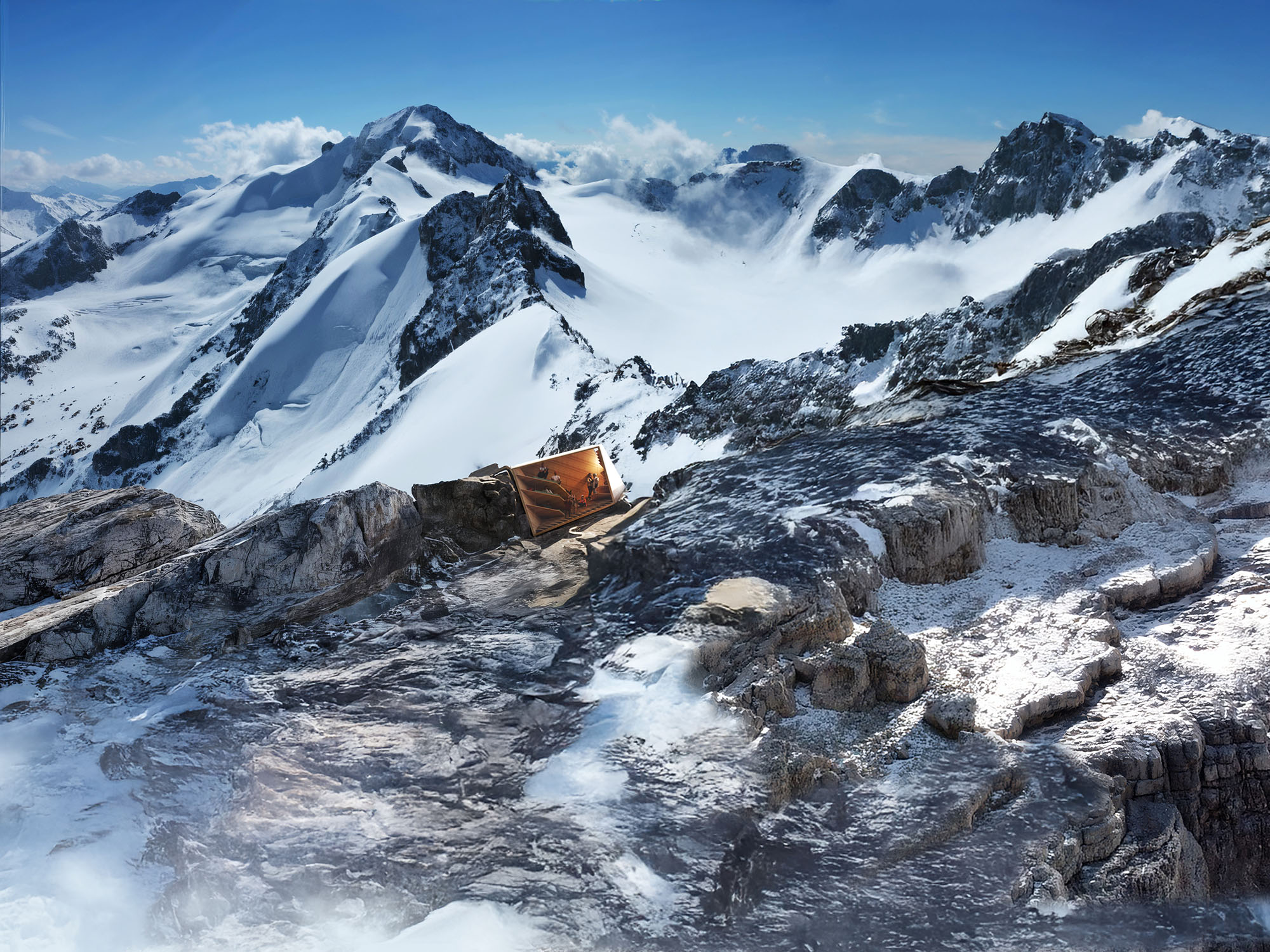
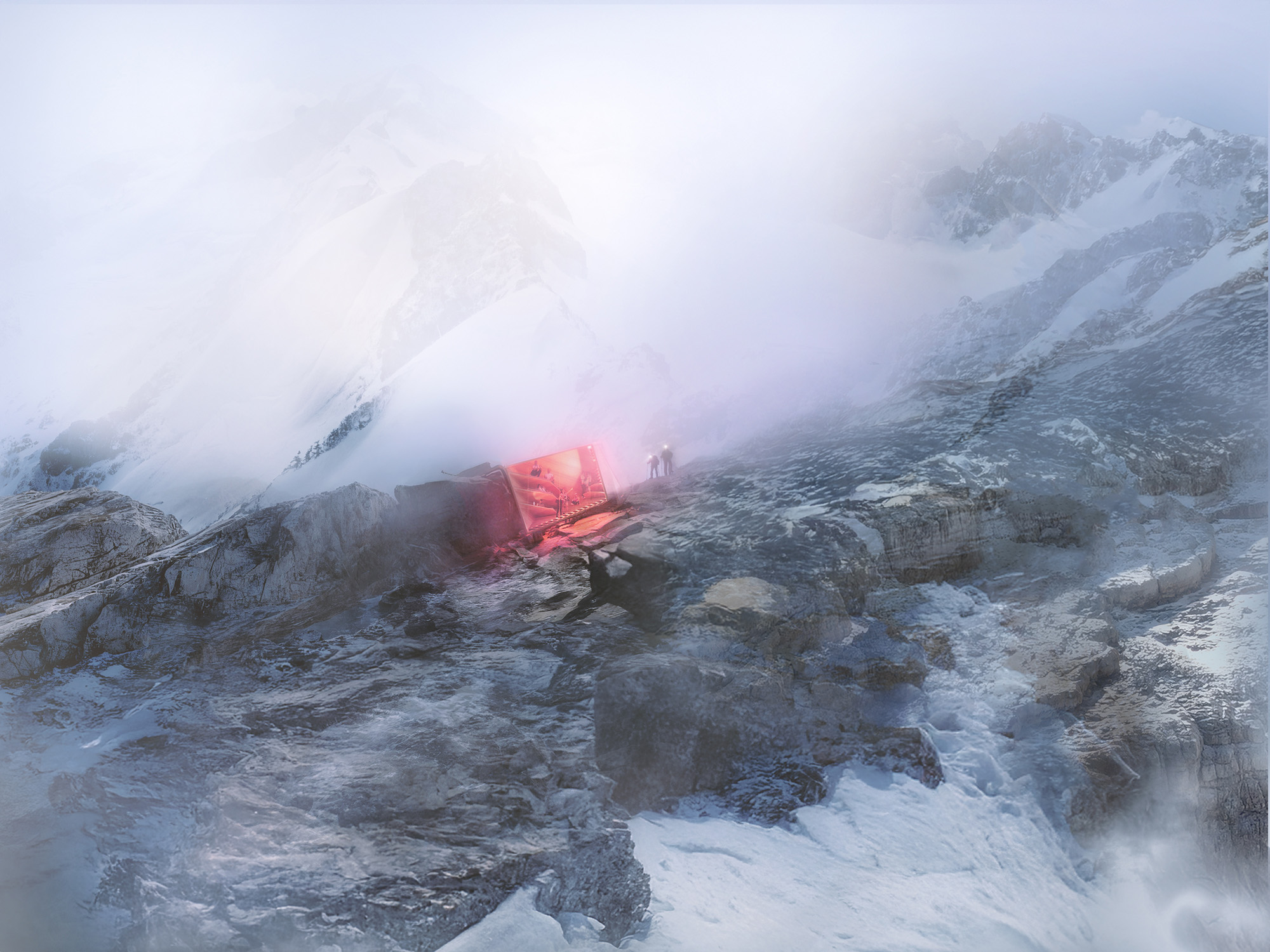
このビバークは完全な自給自足を前提として設計されている。蓄電機能を備えた5kWピーク太陽光発電システムを搭載し、通信を含むすべてのエネルギー需要を賄う。さらに、自然水源へのアクセスが難しい地域においても、空気凝縮システムにより1日数リットルの飲用水を生成することが可能である。
従来のビバークが霧や曇天時の視認性を高めるために鮮やかな色で塗装されるのに対し、このシェルターは景観に溶け込む控えめな外観を採用している。視界不良時には、代わりに鮮やかな赤色灯が点灯し、安全性を確保する仕組みとなっている。
©︎ Carlo Ratti Associati
瞑想的な空間体験
ビバークのガラス壁からは、周囲のアルプスを瞑想的に眺めることができる。避難所としての機能を超えてこの構造物は、内省と休息の場、そして自然とのつながりを提供する「一時的な聖域」として機能する。
二重のライフサイクルと循環型デザイン
このビバークは二重の存在意義を備える。まず、2026年冬季オリンピックに合わせて都市に設置され、アルプス文化を象徴する一時的なパビリオンとして展示される。その後、ヘリコプターによって高地の最終設置地へ輸送され、次世代にわたって登山者の拠点として存続する。
この2段階のライフサイクルは、カルロ・ラッティ・アソシエイトが掲げる循環型デザインの理念を体現し、都市文化と山岳遺産とを持続的に結びつける。
©︎ Carlo Ratti Associati
「現代のビバーク小屋は、美しいアルプスの景観に不自然に浮かぶ飛行船のように見えることが多いのに対し、我々はその正反対のアプローチを採用した。環境にできる限り溶け込む構造体である。20世紀の建築家ジオ・ポンティの『建築は水晶のようである』という言葉を我々は文字通り解釈し、デジタルファブリケーションを用いて、自然の岩層の一部のような建築を実現した。」
カルロ・ラッティ・アソシエイト共同創設者
カルロ・ラッティ(Carlo Ratti)
「カルロ・ラッティ・アソシエイトによるビバークは、景観・革新・敬意の融合という、私たちが共有するデザインビジョンを体現している。建築が環境に適応し、観察し、対話する未来を示すものであり、選定素材である木材は自然との対話の象徴である。このプロジェクトは、ミラノからアルプスへの旅を通じて、循環的で責任あるデザインという共通原則を表現している。」
ミラノサローネ会長
マリア・ポロ(Maria Porro)

©︎ Carlo Ratti Associati
自然と人工の融合を探るプロジェクト
本プロジェクトは、自然界と人工世界の融合を試みるカルロ・ラッティ・アソシエイトの研究の延長線上に位置づけられる。これまでに、ミラノ・コルティナ2026冬季オリンピックの聖火台や、COP30イタリア館の中核となるヴェネツィアのアクアプラサなどを手がけており、本作はその理念をさらに深化させたものである。
アルプスのビバークを通じて、カルロ・ラッティ・アソシエイトは「自然に対抗する建築」ではなく、「自然とともに在る建築」の可能性を改めて提示している。
以下、カルロ・ラッティ・アソシエイトのリリース(英文)です。
A DIGITALLY FABRICATED BIVOUAC AHEAD OF THE 2026 OLYMPICS
CRA-Carlo Ratti Associati, in collaboration with Salone del Mobile.Milano, unveils the design of a digitally fabricated bivouac, which blends seamlessly with the rugged Alpine landscape ahead of the 2026 Winter Olympics. Designed with self-sufficiency at its core, the structure incorporates energy production and storage, along with water harvesting through air condensation. Set to debut as an urban pavilion during the 2026 winter games, it will then be airlifted to its permanent alpine position, where it will provide a lasting sanctuary for mountaineers.
27 OCTOBER 2025 – FOR IMMEDIATE RELEASE
For more information and high-resolution images, please contact pr@carloratti.com.
CRA-Carlo Ratti Associati, in collaboration with Salone del Mobile.Milano, unveils a new digitally fabricated bivouac that harmonizes with the Alpine landscape. The process begins with a 3D scan of rock formations in the Alps. The resulting design minimizes visual impact while maximizing functionality – incorporating energy production, storage, and water harvesting through air condensation. Set to debut as an urban pavilion during the 2026 Winter Olympics in Milan, the shelter will then be airlifted to its permanent location in the Alps, where it will serve as a lasting refuge for mountaineers.
CRA’s approach to the design seeks to dissolve the boundary between nature and human-made structures. By digitally scanning alpine rock formations, the team created a precise 3D model of the landscape, which informed the shelter’s design. The result is a shell structure made of cross-laminated timber (CLT), aerogel, and metal that is inspired by the crystalline formations of the Alps and blends with the shape of its surroundings.
Designed to be completely self-sufficient, the bivouac features a 5KW peak photovoltaic system with storage, providing power for all its energy needs, including network connectivity. In an area with no access to natural water sources, the bivouac utilizes an air condensation system to produce several liters of potable water per day, ensuring climbers and trekkers always have access to clean water, even in emergencies. Unlike traditional bivouacs, which are painted in bright colors to ensure visibility in foggy or cloudy weather, the shelter employs a more subtle approach, blending into the landscape. Instead, a bright red light will activate only in conditions of limited visibility, reducing its visual impact while still ensuring safety in critical moments.
The glass wall of the bivouac offers a meditative view of the surrounding Alps. Beyond its function as a shelter, the structure provides a temporary sanctuary—a place for reflection, rest, and connection to nature.
The bivouac will have a dual existence. Initially, it will be showcased as a temporary pavilion coinciding with the 2026 Winter Olympics, to celebrate alpine culture. After the event, it will be airlifted by helicopter to its final permanent site at high altitude, where it will continue to serve climbers for generations to come. This two-phase lifecycle embodies the deeper principles of circular design, with the structure bridging urban culture and mountain heritage in a sustainable, lasting way.
“Unfortunately, today bivouacs often look like airships that have landed on our beautiful alpine landscapes. Here we took the opposite approach: a structure that blends as much as possible with the surroundings,” said Carlo Ratti, professor at MIT and the Politecnico di Milano, co-founder of CRA, and director of the Biennale Architettura 2025. “Great 20th-century Italian architect Gio Ponti once said that architecture is ‘like a crystal’. We took that literally in this design, using digital fabrication to design a bivouac as if it were part of the natural rock formations that shape the Alps.”
“For the Salone, the bivouac by CRA-Carlo Ratti Associati conveys a vision of design we share: one capable of blending landscape, innovation, and respect. It speaks of a future in which architecture does not impose itself but adapts, observes, and enters into dialogue with the environment, highlighting our material of choice—wood—as an emblem of conversation with nature. It is a gesture that turns research into a form of harmony with the natural world and that, in its journey from our Milan to the Alps, expresses the principles we share: a circular, responsible design,” stated Maria Porro, President of Salone del Mobile.Milano.
The bivouac is the latest in a series of key projects from CRA that blend the natural and artificial world. Previous works include the studio’s award-winning Olympic torches for the Milano Cortina 2026 games, as well as the recently unveiled AquaPraça in Venice, a centerpiece of the Italian Pavilion at COP30. Through projects like the Alpine bivouac, CRA reaffirms its commitment to creating architecture that works with nature, not against it.
CREDITS
Design: CRA-Carlo Ratti Associati
A collaboration with Salone del Mobile.MilanoABOUT CRA-CARLO RATTI ASSOCIATI
CRA-Carlo Ratti Associati is an international design and innovation practice based in Turin, Italy, and New York City. Drawing on Carlo Ratti’s research at the Massachusetts Institute of Technology (MIT), the office is currently involved in many projects across the globe, embracing every scale of intervention – from furniture to urban planning. Among recent projects are the Italian Pavilion at Expo 2020 Dubai, the biophilic skyscraper CapitaSpring in Singapore, the urban curatorship of Manifesta 14 Prishtina biennial, the redesign of the Agnelli Foundation headquarters in Turin, and the master plan for the Milan Innovation District (MIND). CRA is the only design firm whose work has been featured three times in TIME Magazine’s “Best Inventions of the Year” list – with the Digital Water Pavilion, the Copenhagen Wheel, and Scribit. Carlo Ratti is the appointed Curator of the 19th International Architecture Exhibition of La Biennale di Venezia (2025).ABOUT SALONE DEL MOBILE.MILANO
The Salone del Mobile.Milano has been an international benchmark for the design and furnishing world since 1961, thanks to the extraordinarily high quality of the products on exhibit. It is more than a trade fair, rather an ecosystem with the power to accelerate business and broaden relationships throughout the industry, proffering new visions of the future of living. It takes place in April and consists of four annual exhibitions – the Salone Internazionale del Mobile, S.Project, Workplace3.0 and the International Furnishing Accessories Exhibition – with alternating biennial exhibitions: Euroluce in odd years and EuroCucina with FTK/Technology For the Kitchen and the International Bathroom Exhibition in even years. These have been accompanied by SaloneSatellite since 1998, a launchpad for young designers under 35 from all over the world – so far more than 14,000 of them have passed through its doors – and a point of reference for companies on the look-out for new talents. About 2,000 exhibitors took part in the 63rd edition of the Salone del Mobile.Milano in April, with an overall influx of more than 302,000 attendees, with the highest-ever share of foreign professionals (68% of attendees). The Salone del Mobile is ISO 20121 certified for sustainable event management and is a member of the United Nations Global Compact.
www.salonemilano.it/en
カルロ・ラッティ・アソシエイト 公式サイト
https://carlorattiassociati.com/project/a-digitally-fabricated-bivouac-ahead-of-the-2026-olympics/
【購読無料】空間デザインの今がわかるメールマガジン TECTURE NEWS LETTER
RECOMMENDED ARTICLE