CULTURE
©︎ Nigel Young / Foster + Partners
©︎ Alex Szeles / Foster + Partners
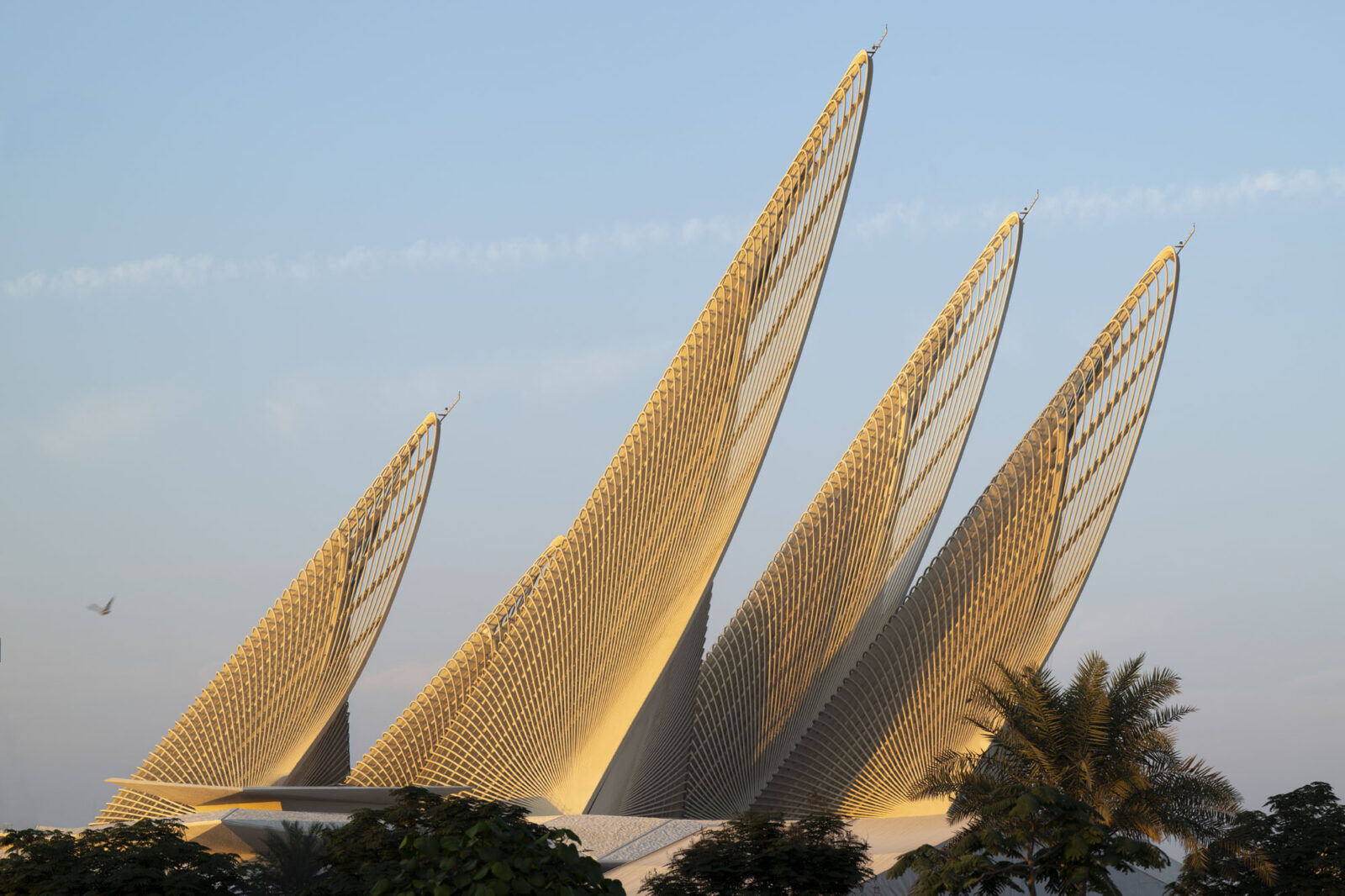
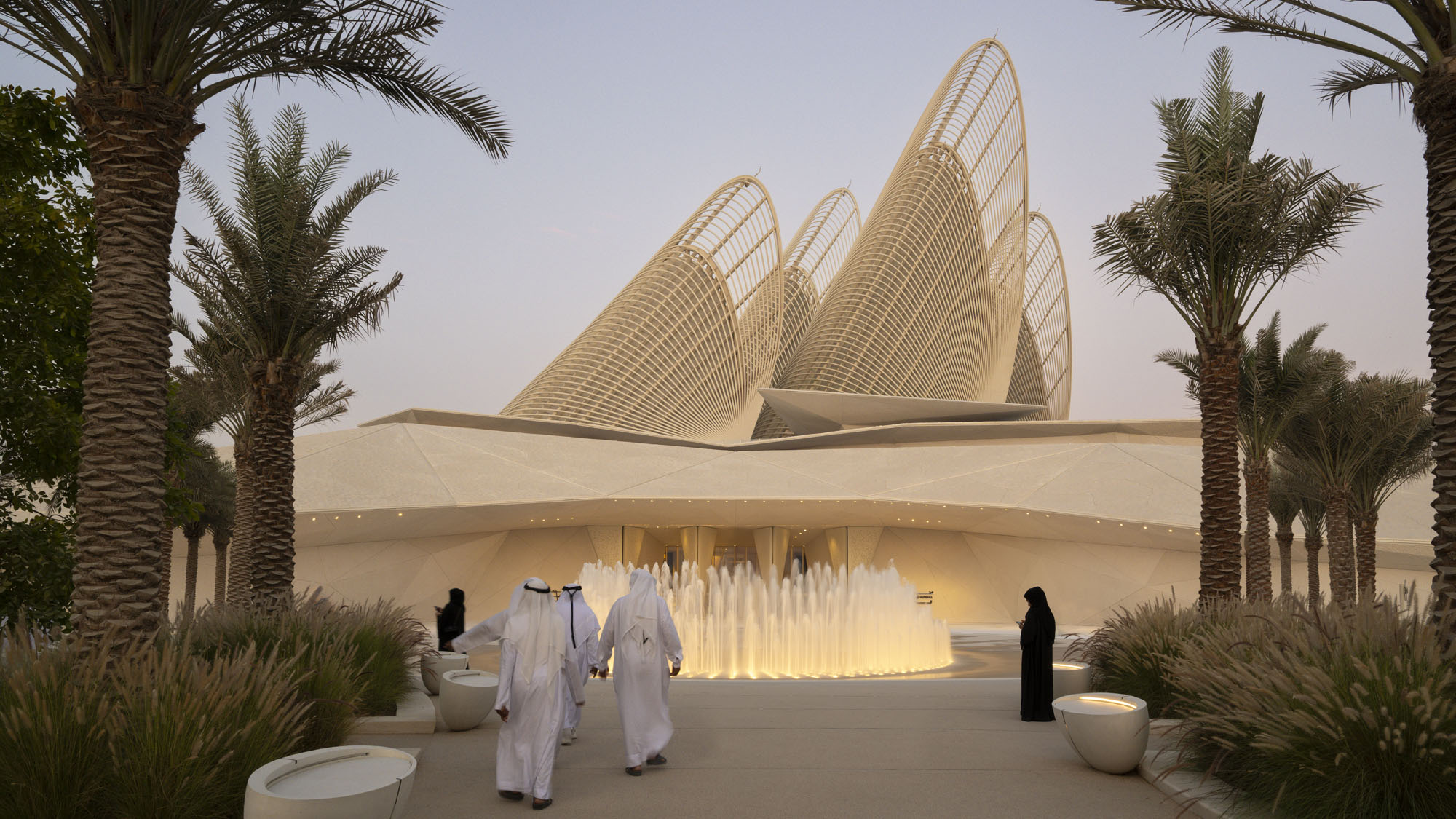
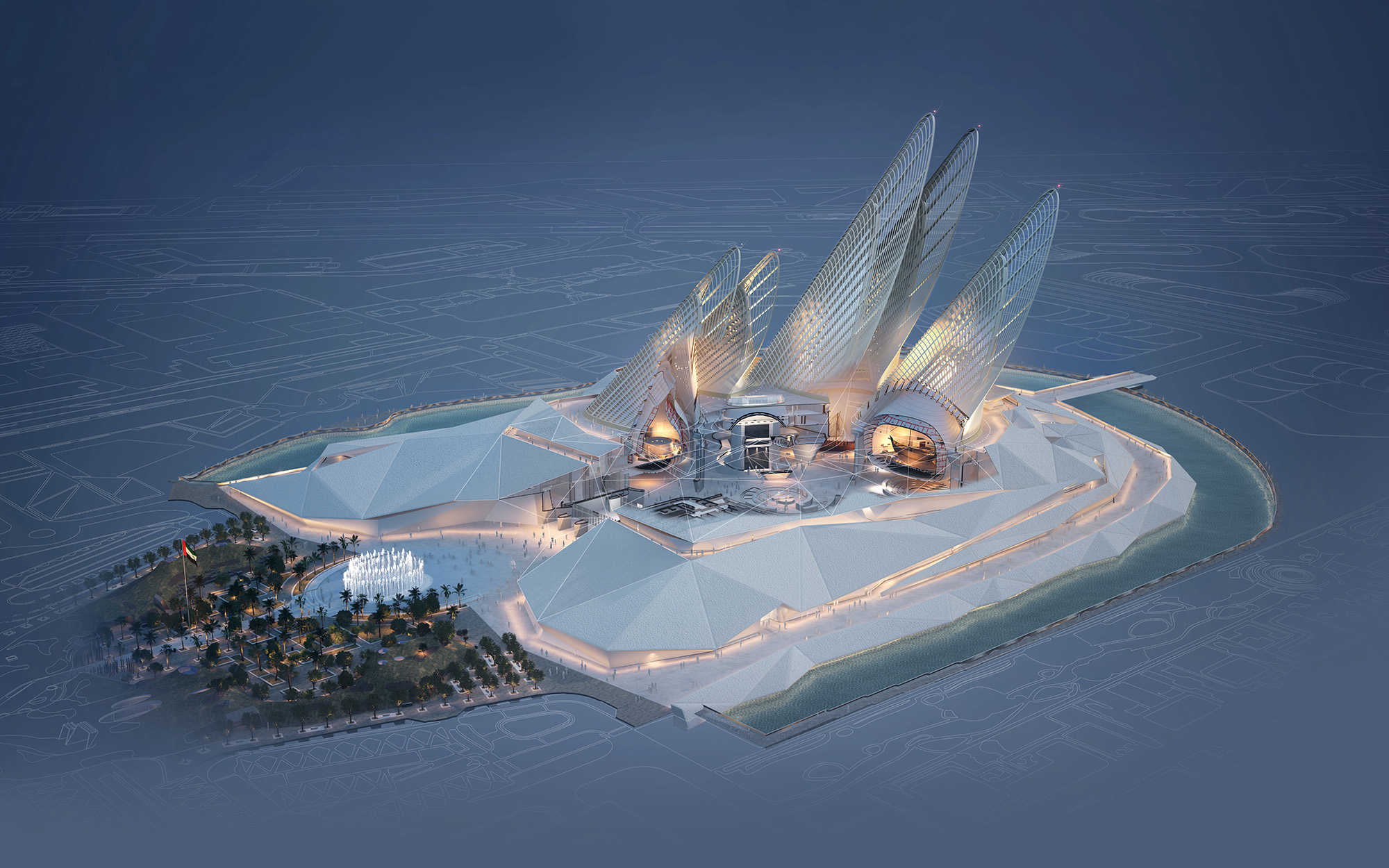
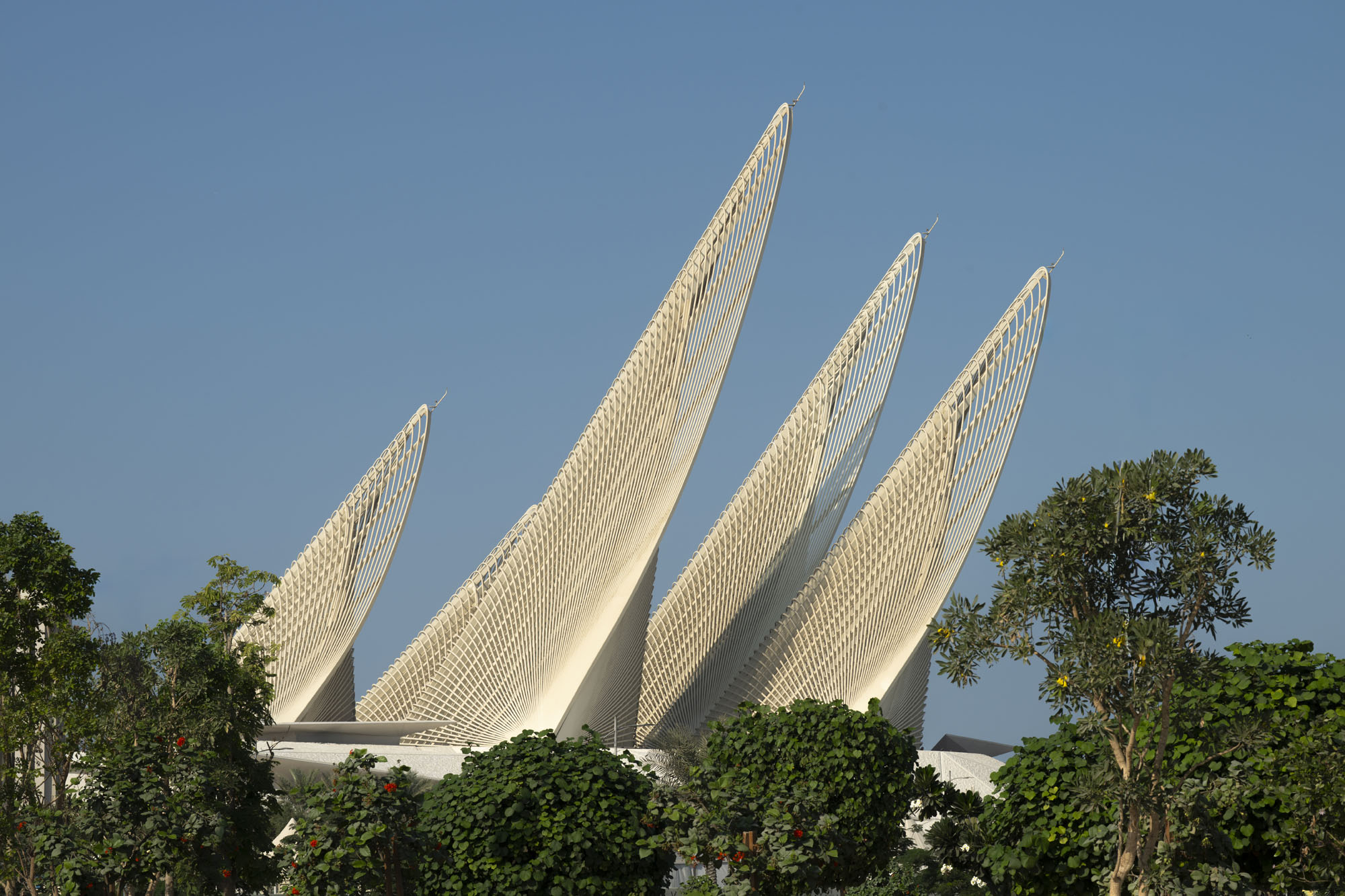
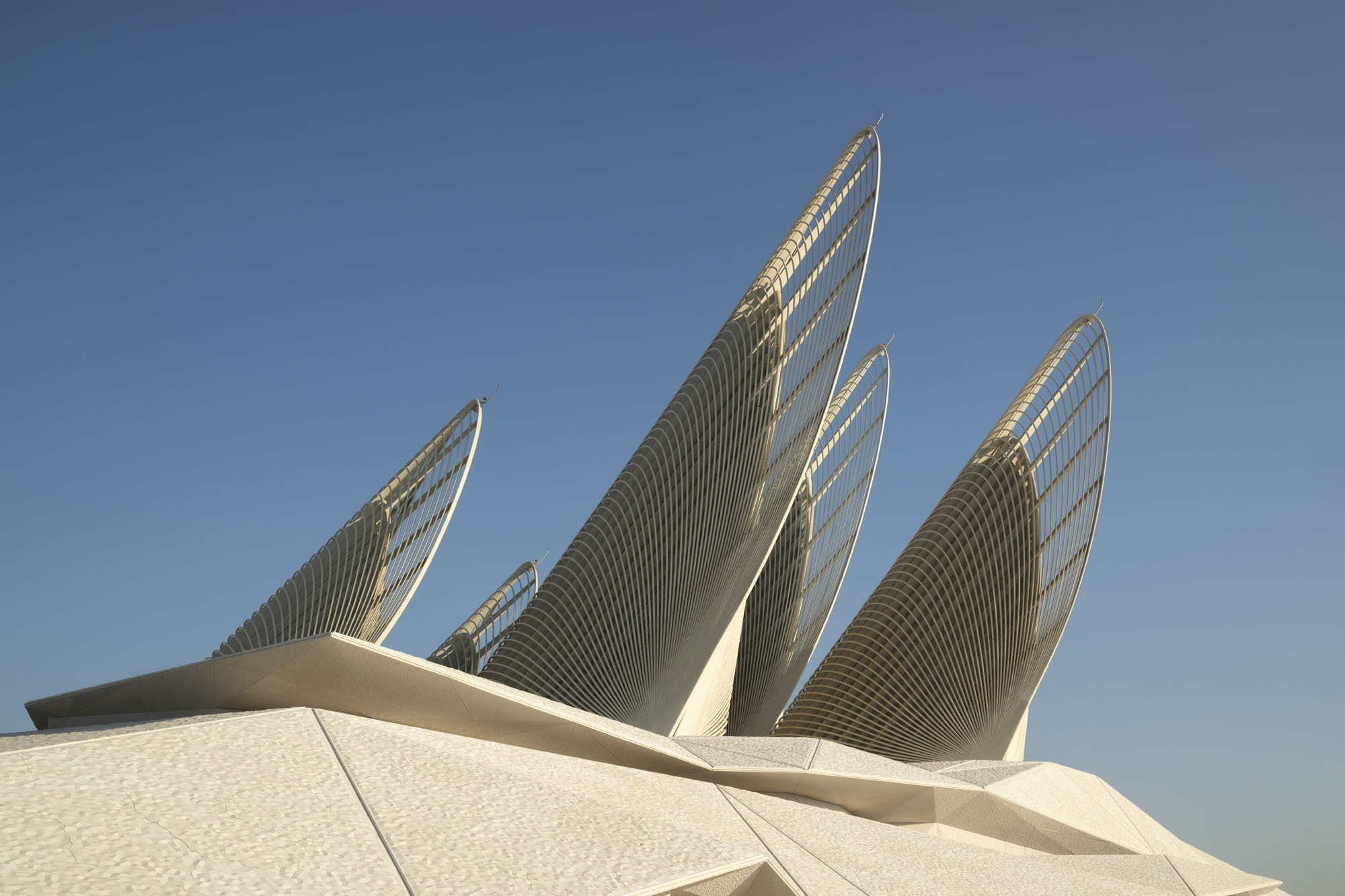
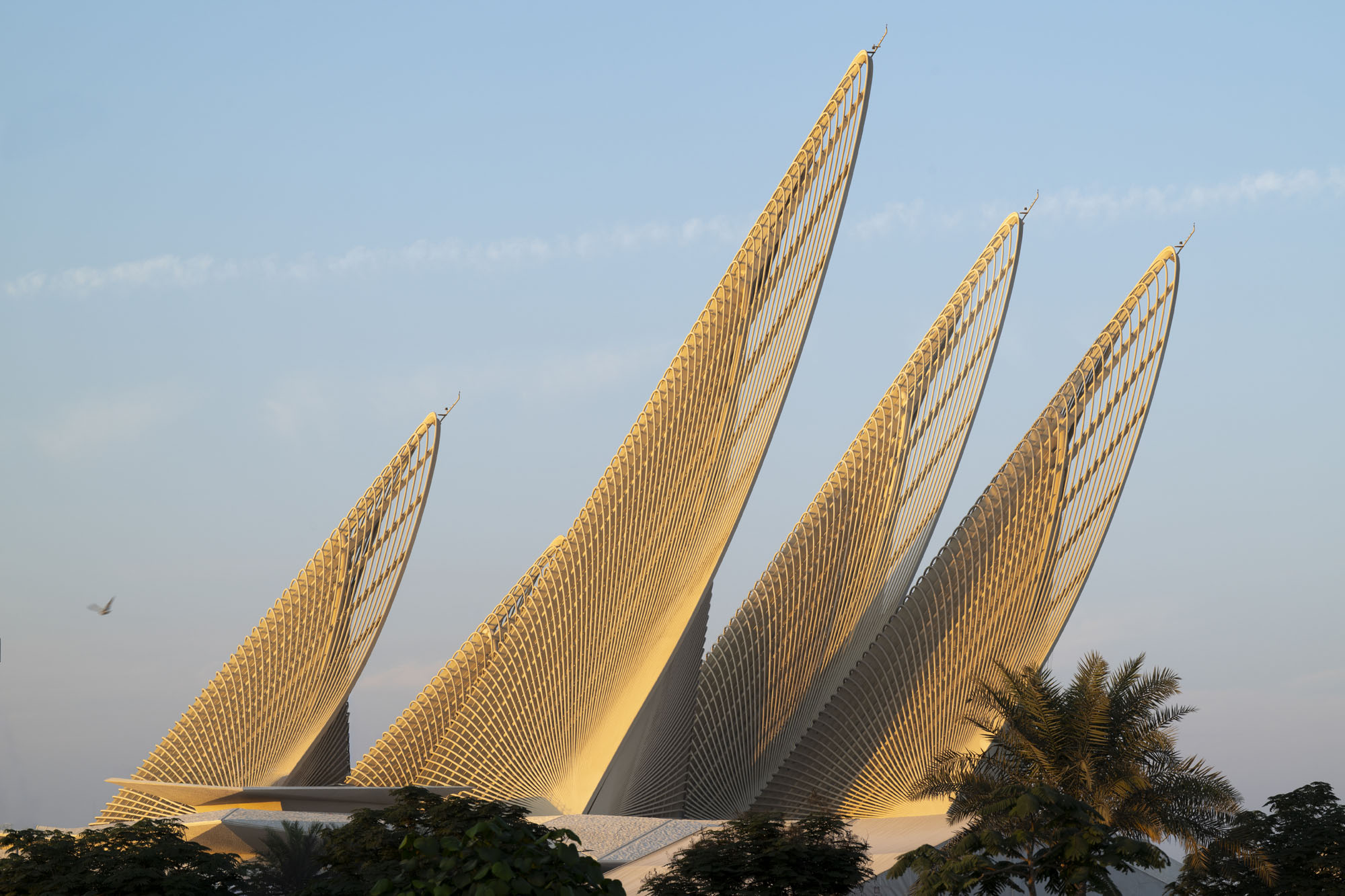
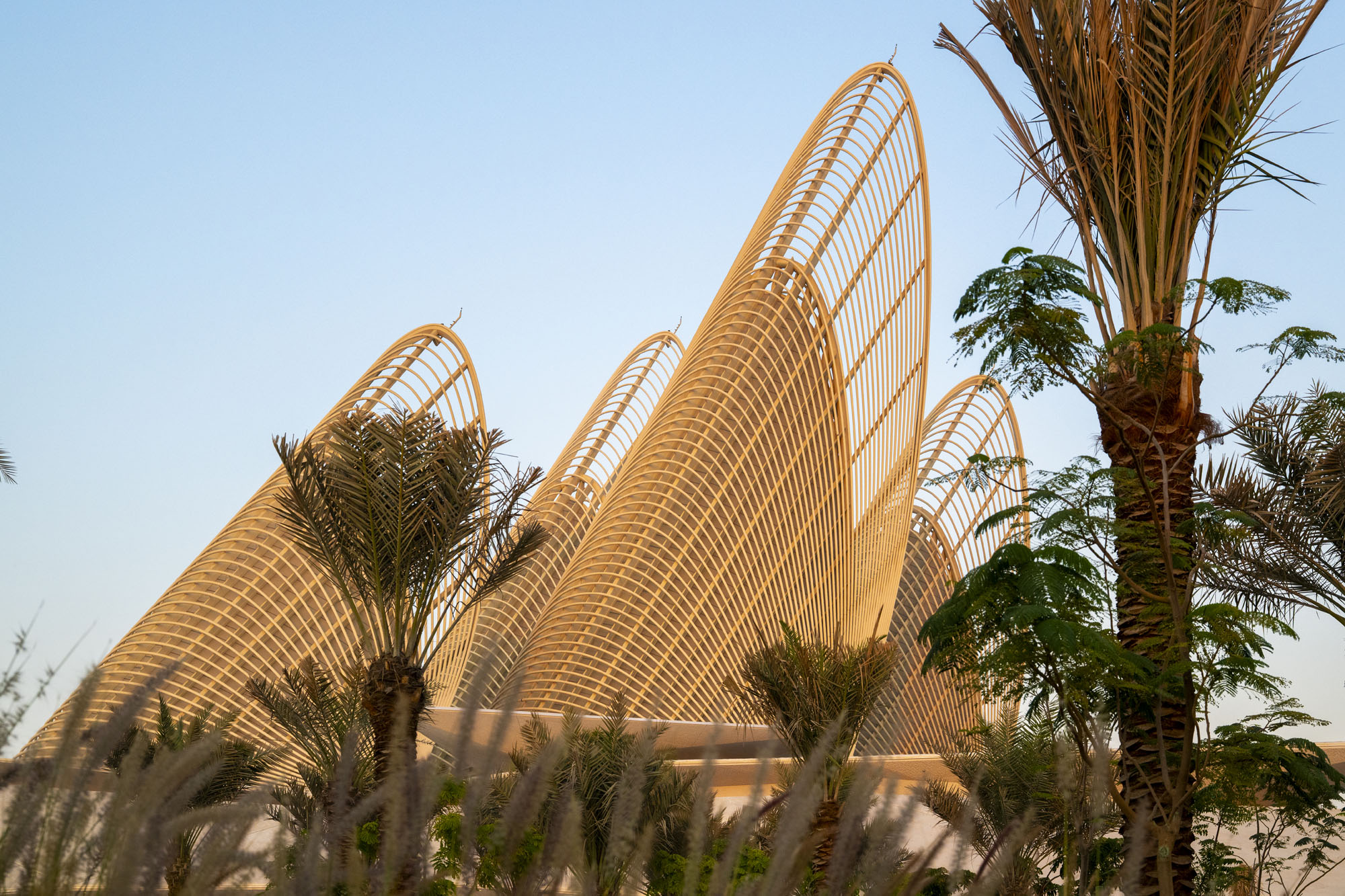
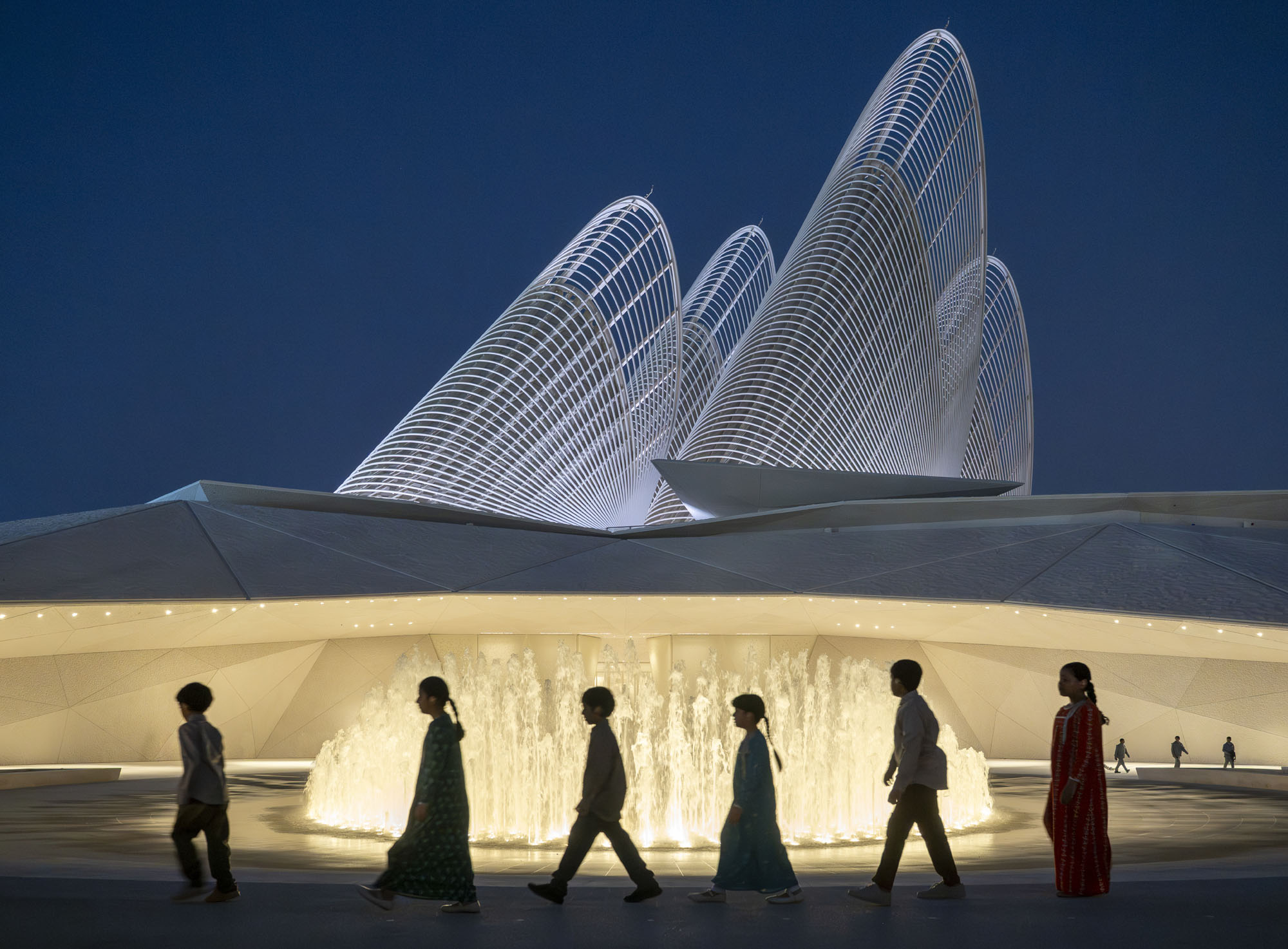
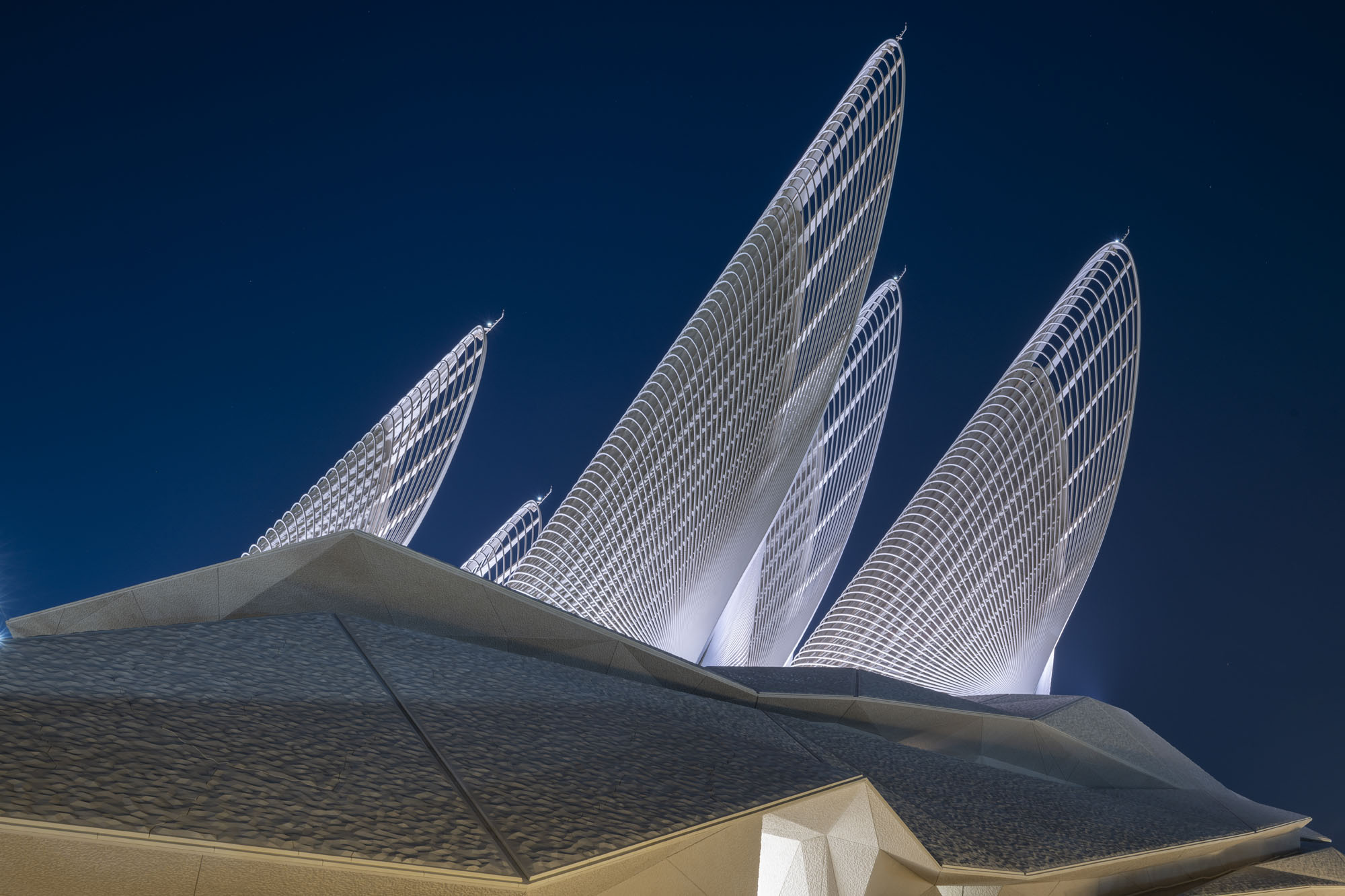
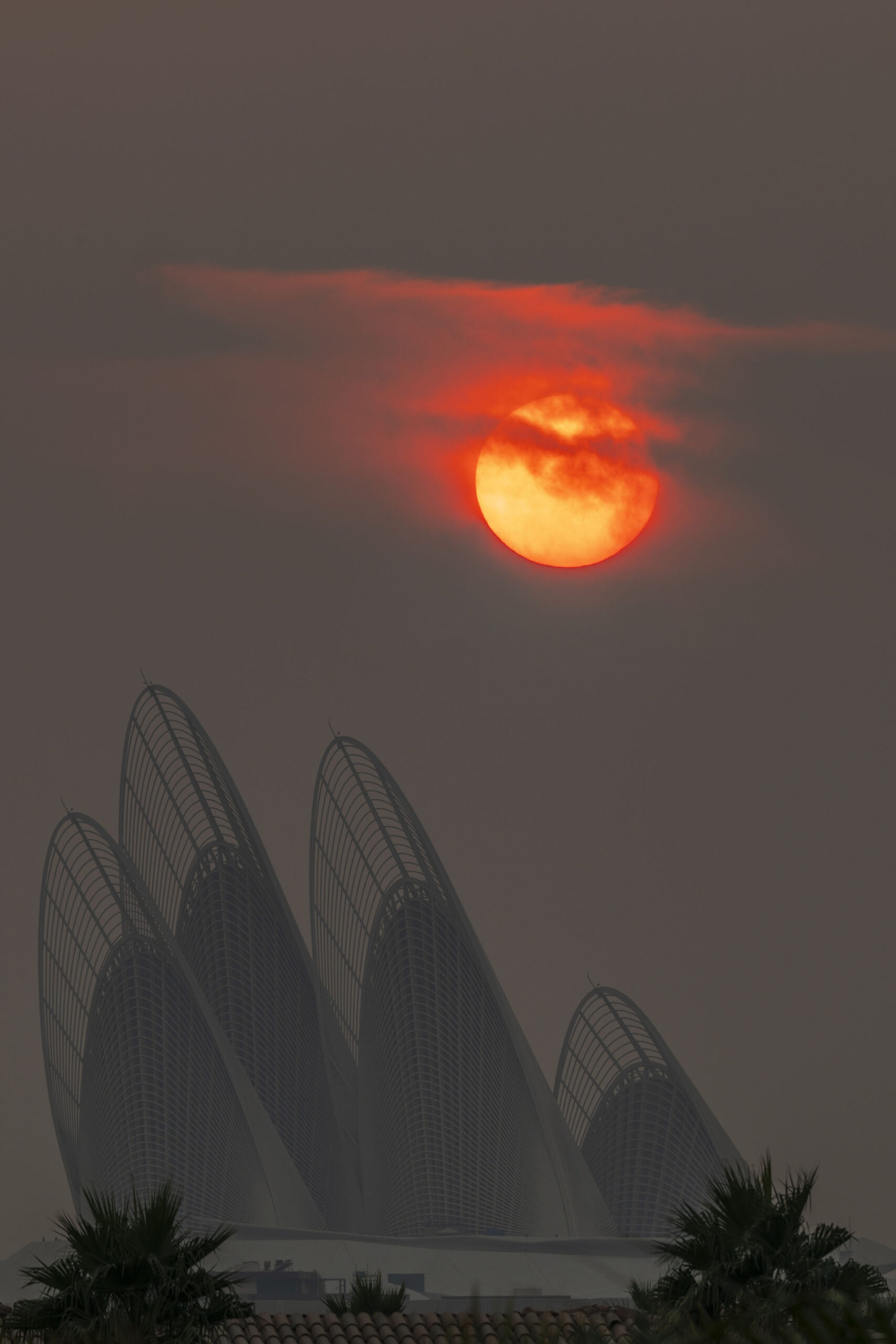
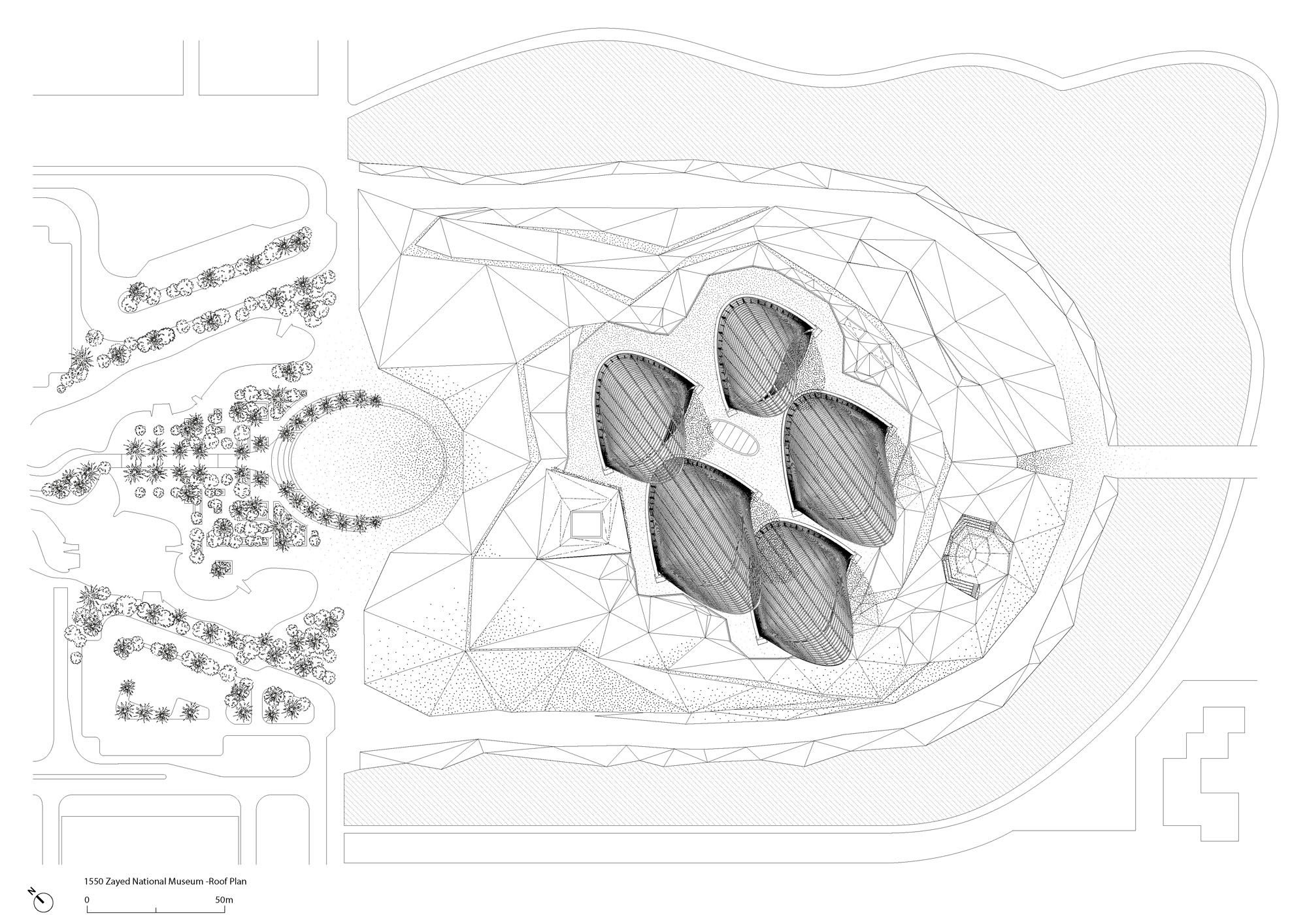
アラブ首長国連邦(UAE)のアブダビに建つ〈ザイード国立博物館(Zayed National Museum)〉は、マウンド状の建物頂部から伸びる5つのウィングが特徴的な博物館です。
ノーマン・フォスター(Norman Foster)率いるイギリスの建築設計事務所フォスター アンド パートナーズ(Foster+Partners)が設計しました。
注目ポイント
- ウィングによる自然換気システム等によるパッシブデザイン
- 内部空間を太陽熱の侵入から遮断する、建物を覆うテクスチャードパネルのマウンド
- 7つの首長国の砂の色合いを反映した温かみのある内外装
(以下、フォスター アンド パートナーズから提供されたプレスキットのテキストの抄訳)
©︎ Nigel Young / Foster + Partners
©︎ Nigel Young / Foster + Partners
砂漠の環境と伝統に応えるUAEの新たな文化拠点
2025年12月3日、〈ザイード国立博物館〉が一般公開を開始した。アブダビのサディヤット文化地区の中心に位置するUAE新たな国立博物館は、同国の建国の父である故ザーイド・ビン=スルターン・アール=ナヒヤーンの価値観に根ざしている。
博物館は、人類居住の最も古い痕跡から、その文化とアイデンティティを形成した文明に至るまで、首長国の歴史をたどる内容となっている。建物の形態は、砂漠環境における生命維持の課題とUAEの強い文化的伝統への対応を体現している。
©︎ Nigel Young / Foster + Partners
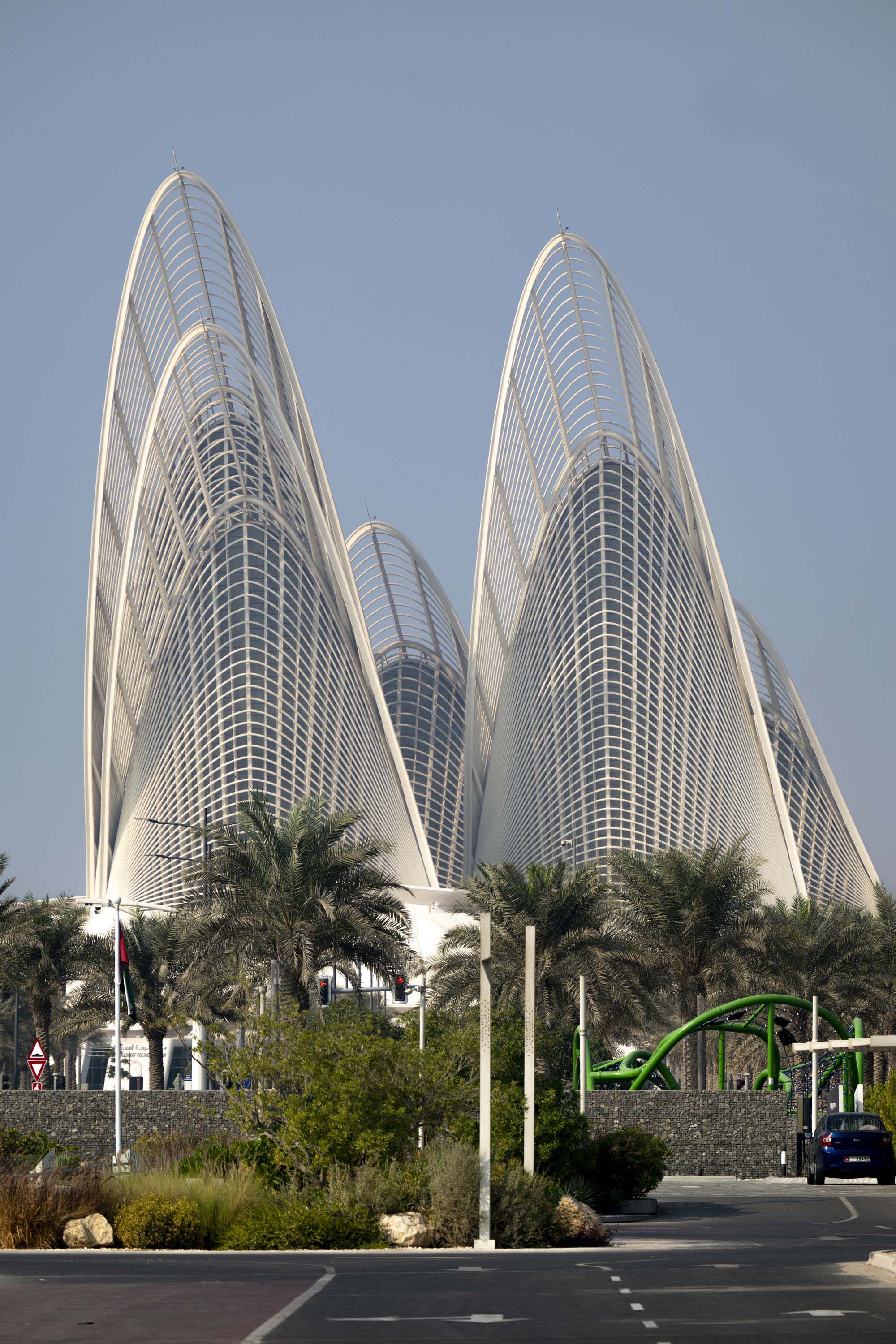
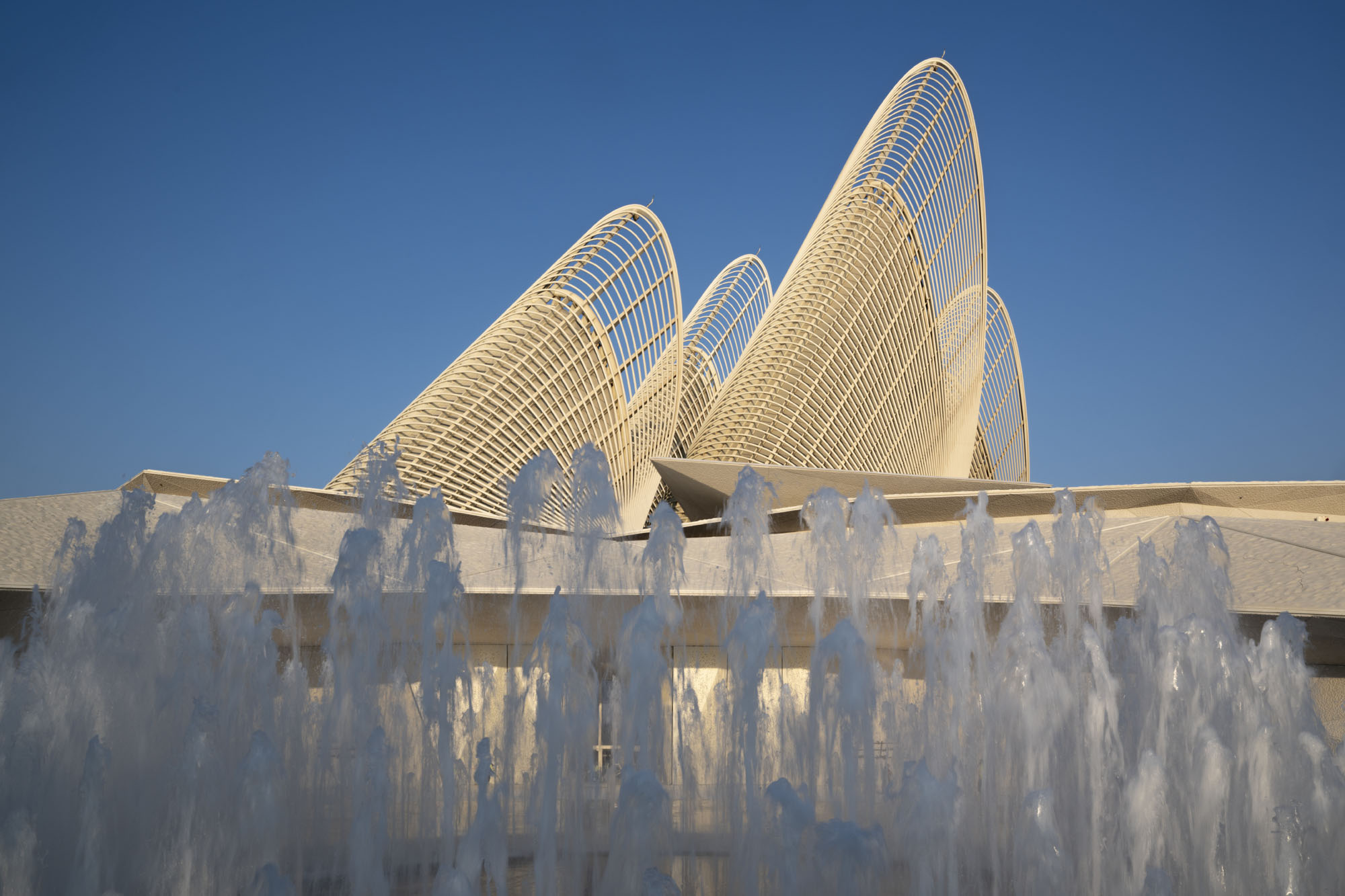
5つのウィングによる自然換気システム
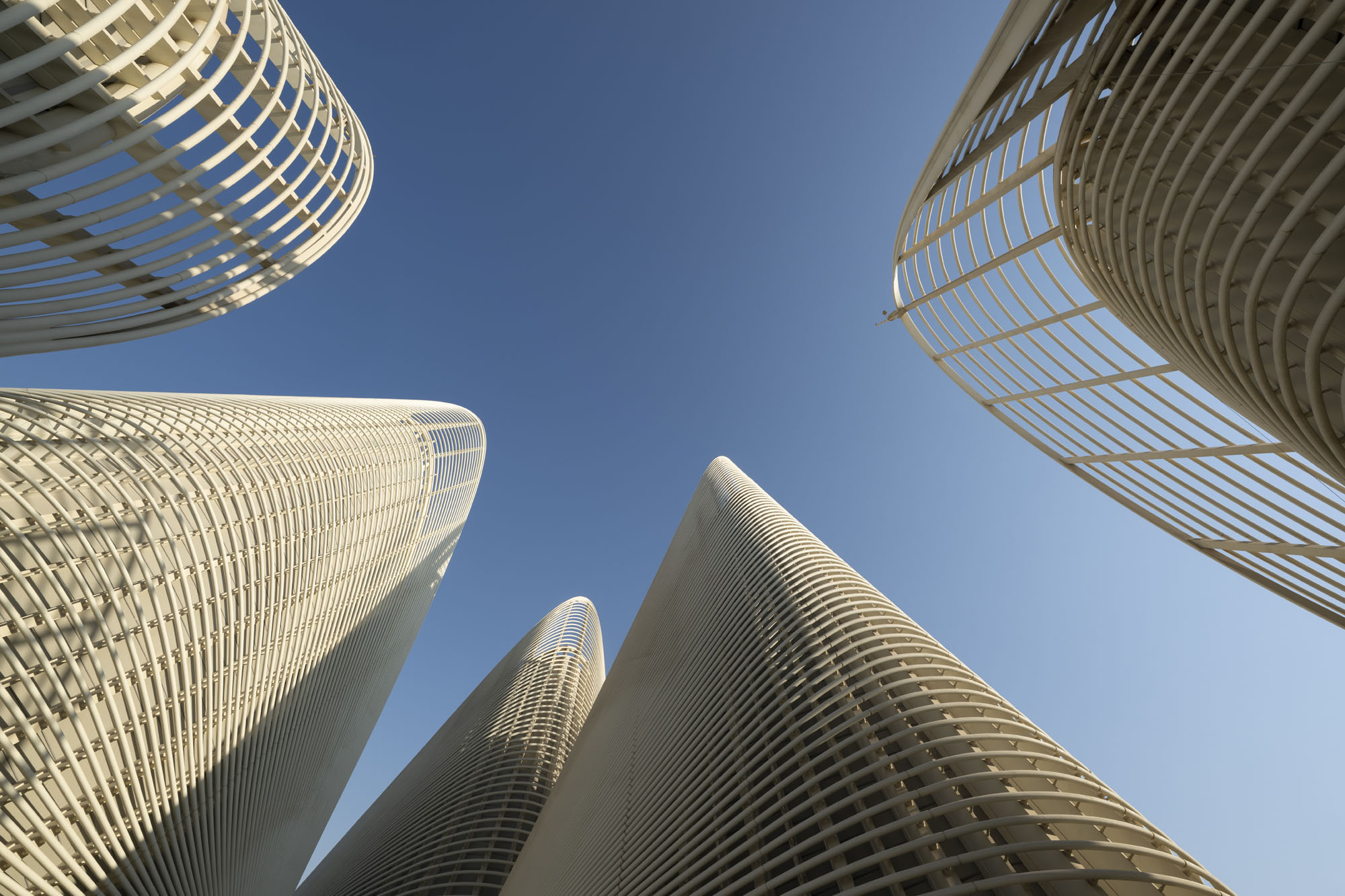
博物館の5つの軽量鋼製ウィングは自然換気システムの一部である。塔頂部の通気口が開くと、風下側で生じる負圧を利用してアトリウムから熱気を排出する仕組みとなっている。
この作用は、ウィング先端に蓄積する熱の熱効果によって補助される。一方、砂漠地盤深く埋設されたパイプで自然冷却された空気は、低層換気システムを通じてアトリウムに流入する。ウィング部はガラス張りで、自然光を下層の展示室へ導く設計であり、各ウイングは個別に調整が可能である。
©︎ Nigel Young / Foster + Partners
©︎ Nigel Young / Foster + Partners
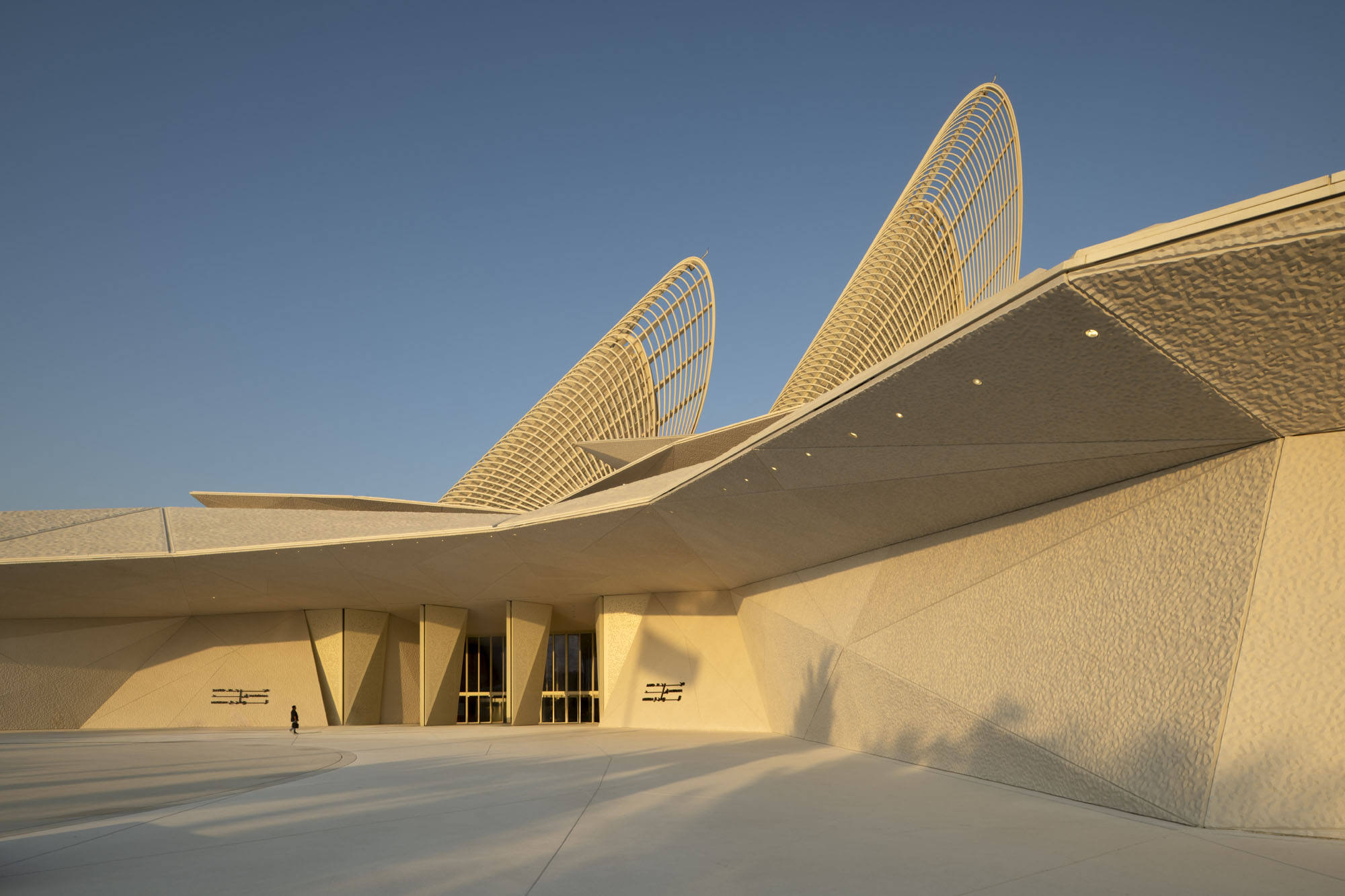
太陽熱から内部を守るマウンド構造
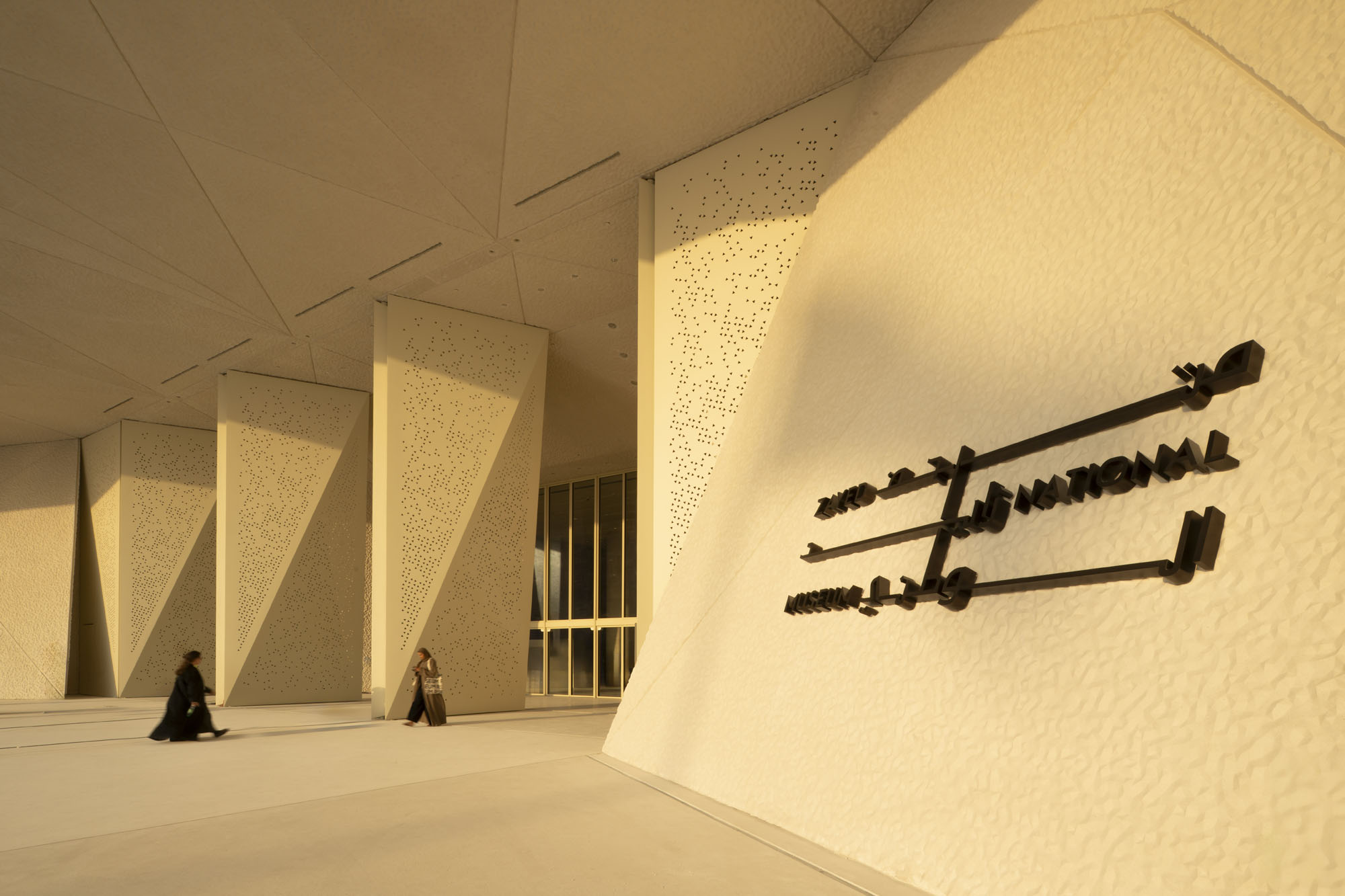
博物館空間は、UAEの地形を抽象化した多面体のテクスチャパネルで覆われたマウンド内に配置されている。
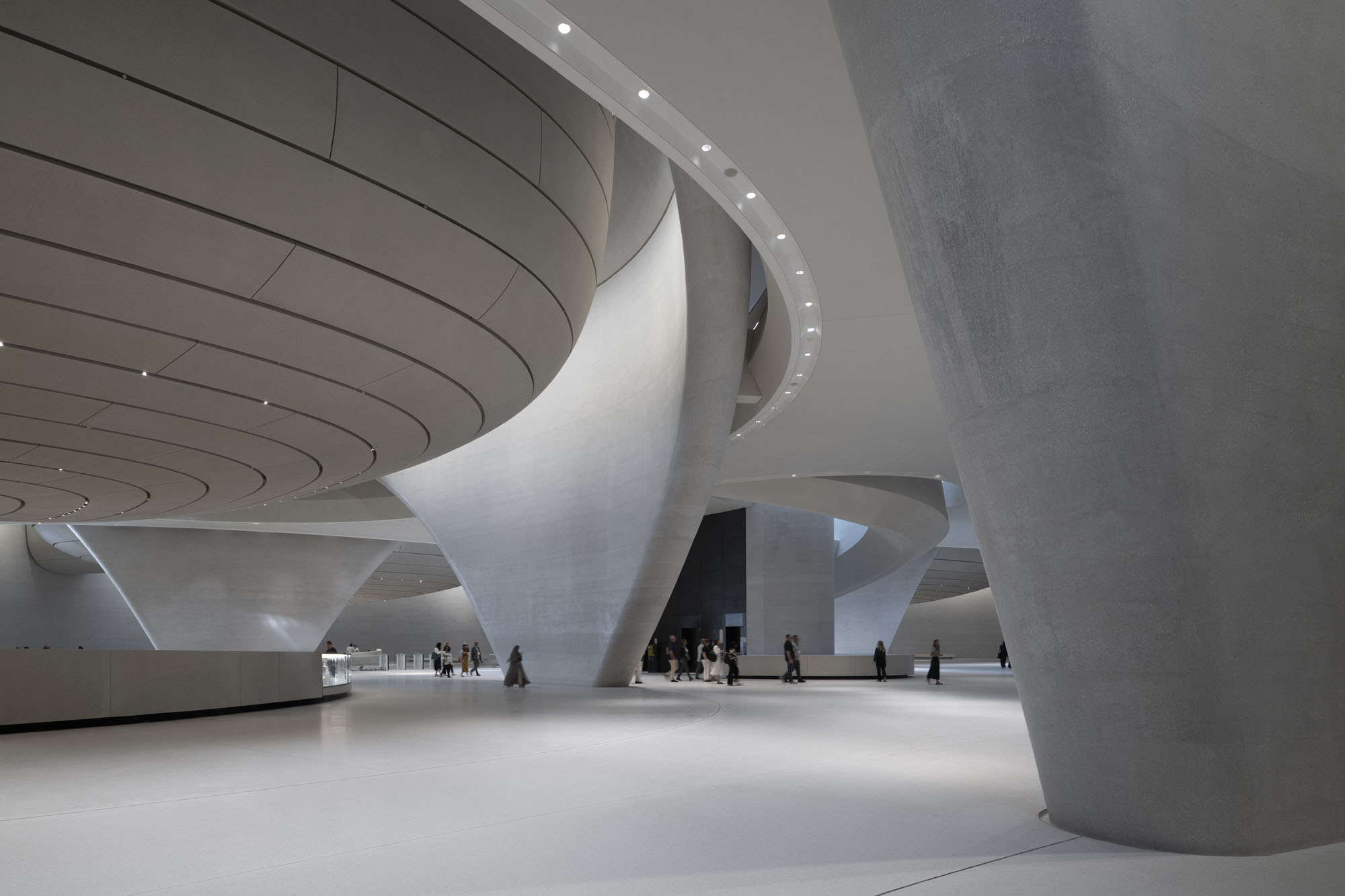
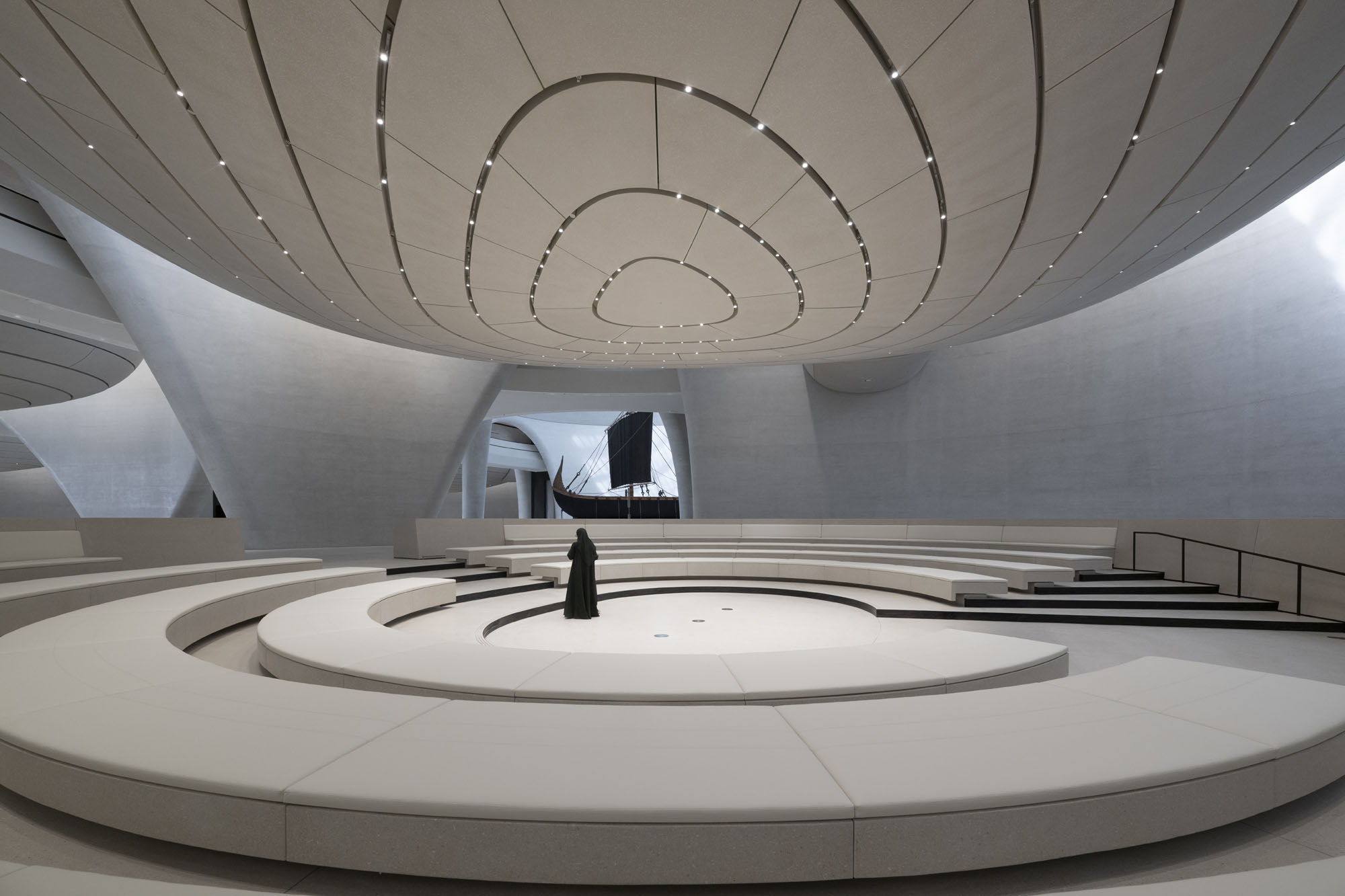
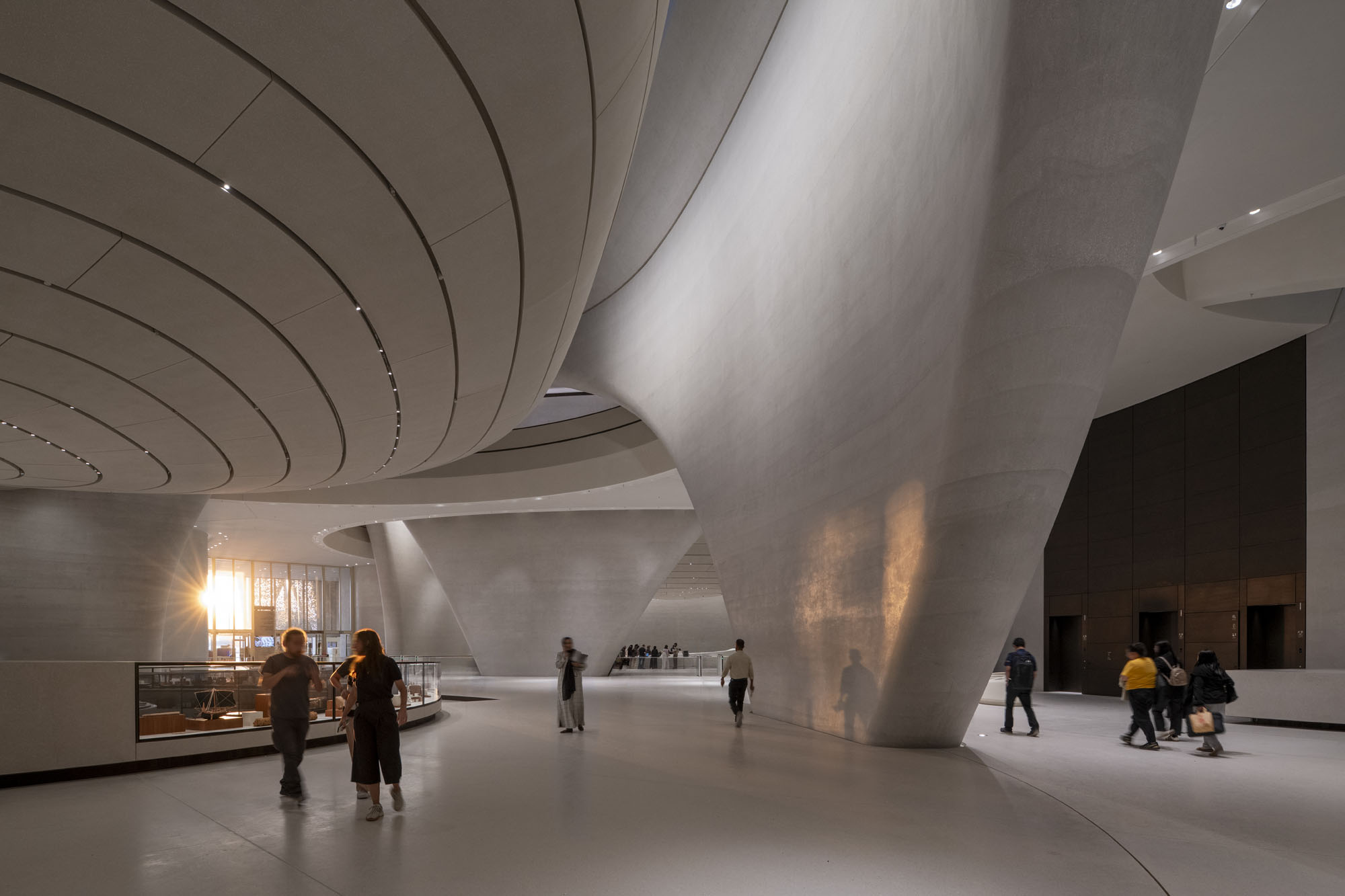
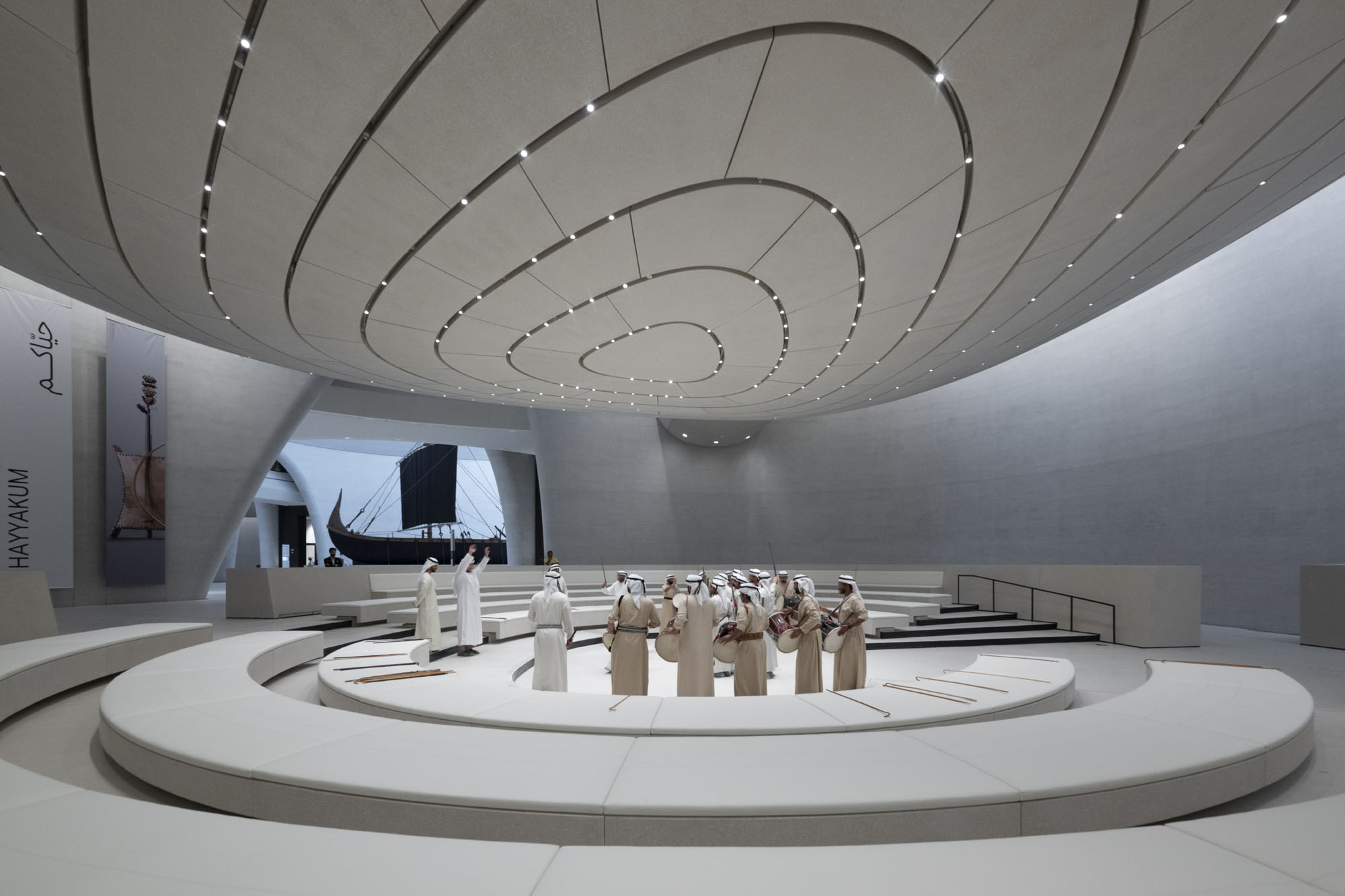
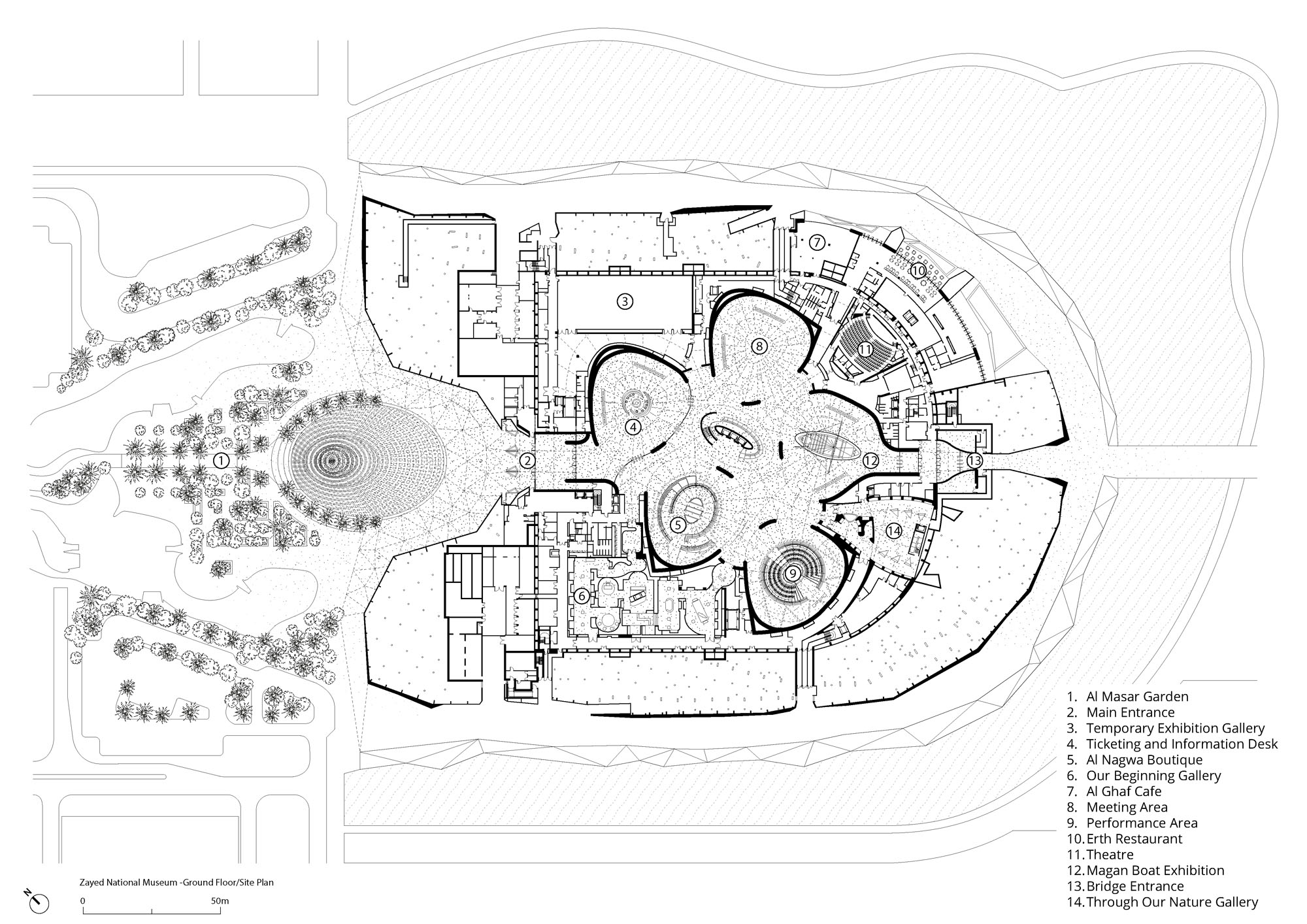
このマウンドは内部空間を太陽熱の侵入から遮断し、建物の熱侵入を防ぐ保護シールドを形成している。訪問者が博物館内に入ると、光に満ちたアトリウム「アル・リワン」に到達する。ここは集会・案内スペースとして機能し、伝統舞踊や詩の朗読などのパフォーマンスも開催される場である。
©︎ Nigel Young / Foster + Partners
©︎ Nigel Young / Foster + Partners
展示空間と採光の工夫
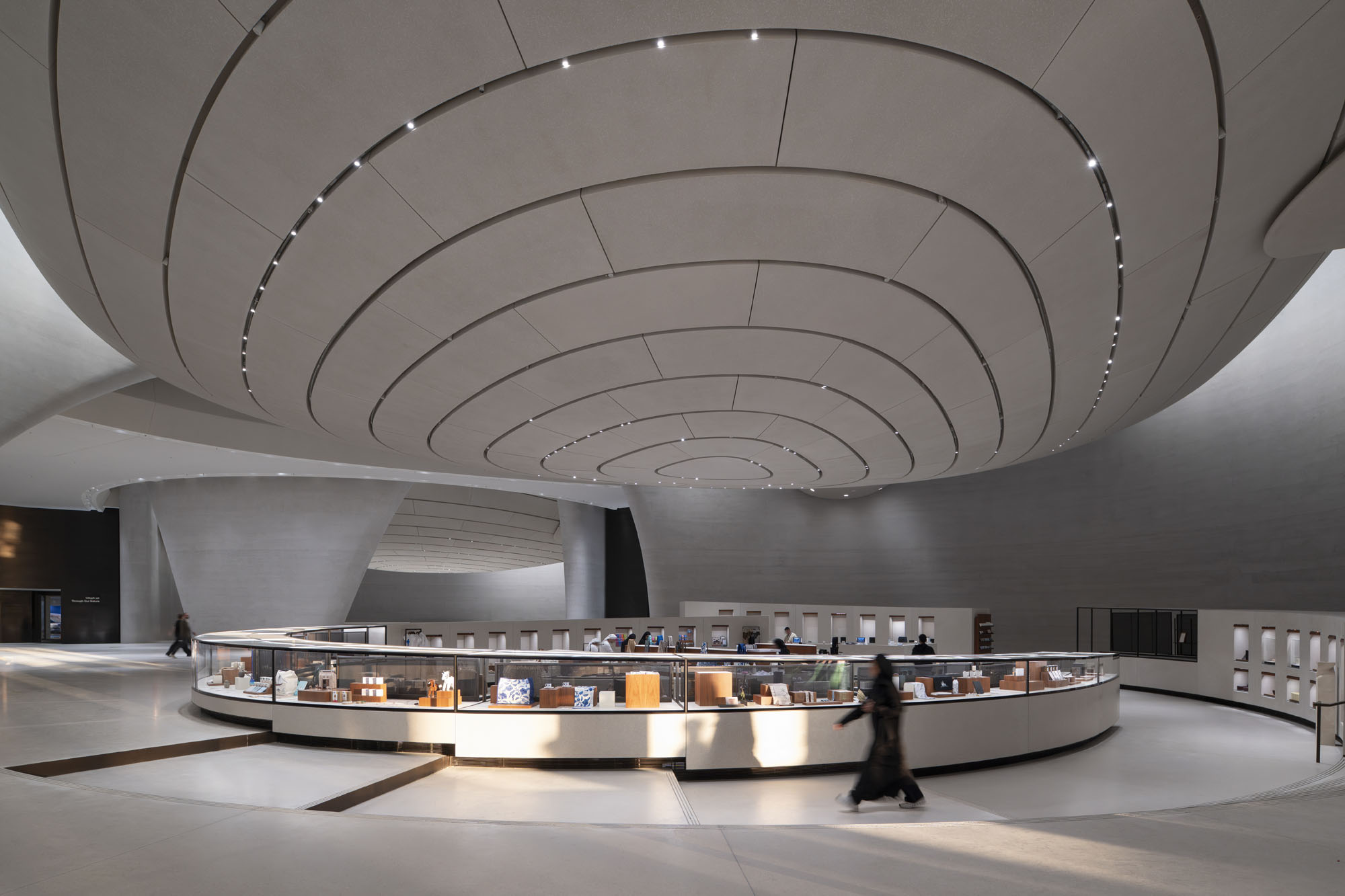
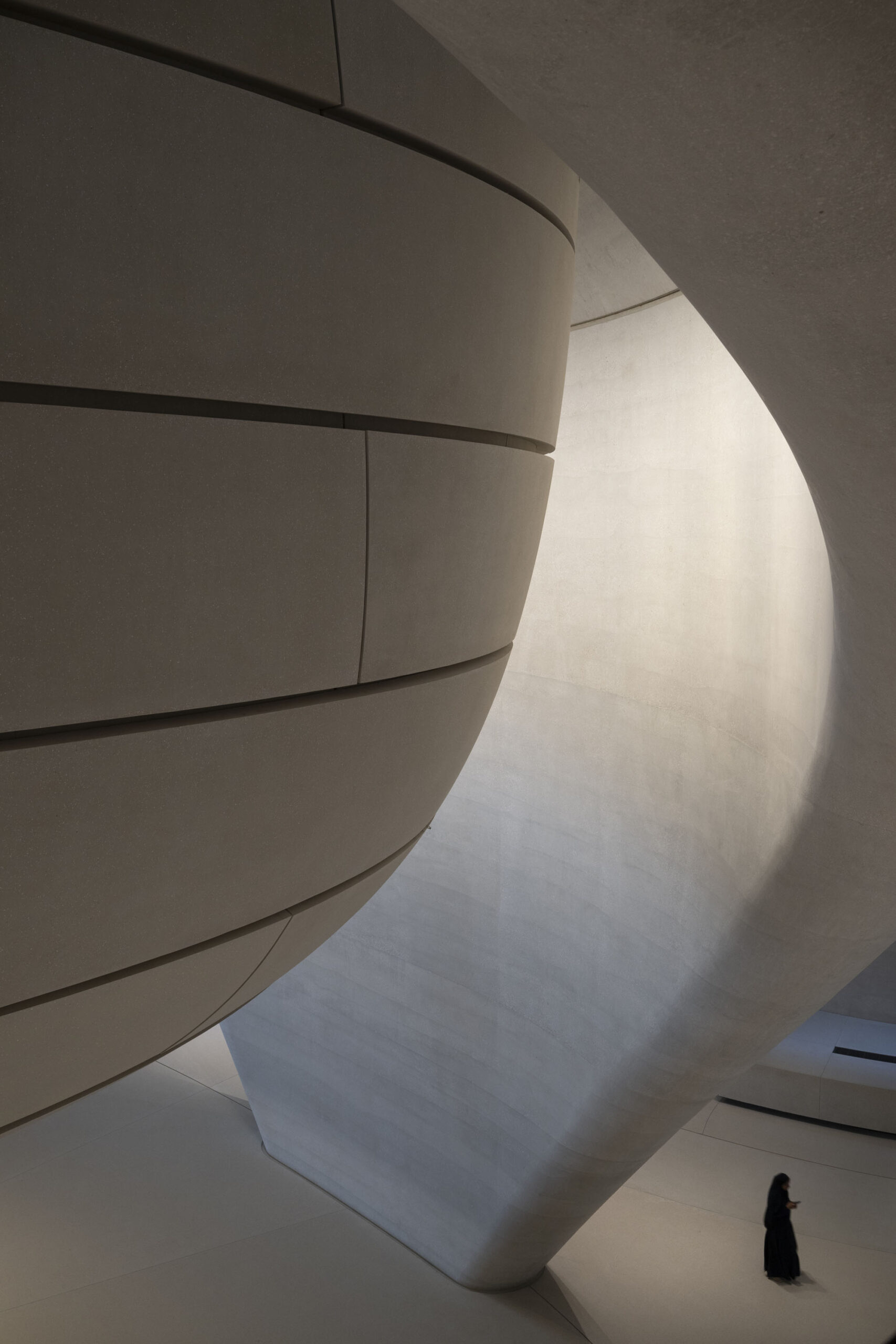
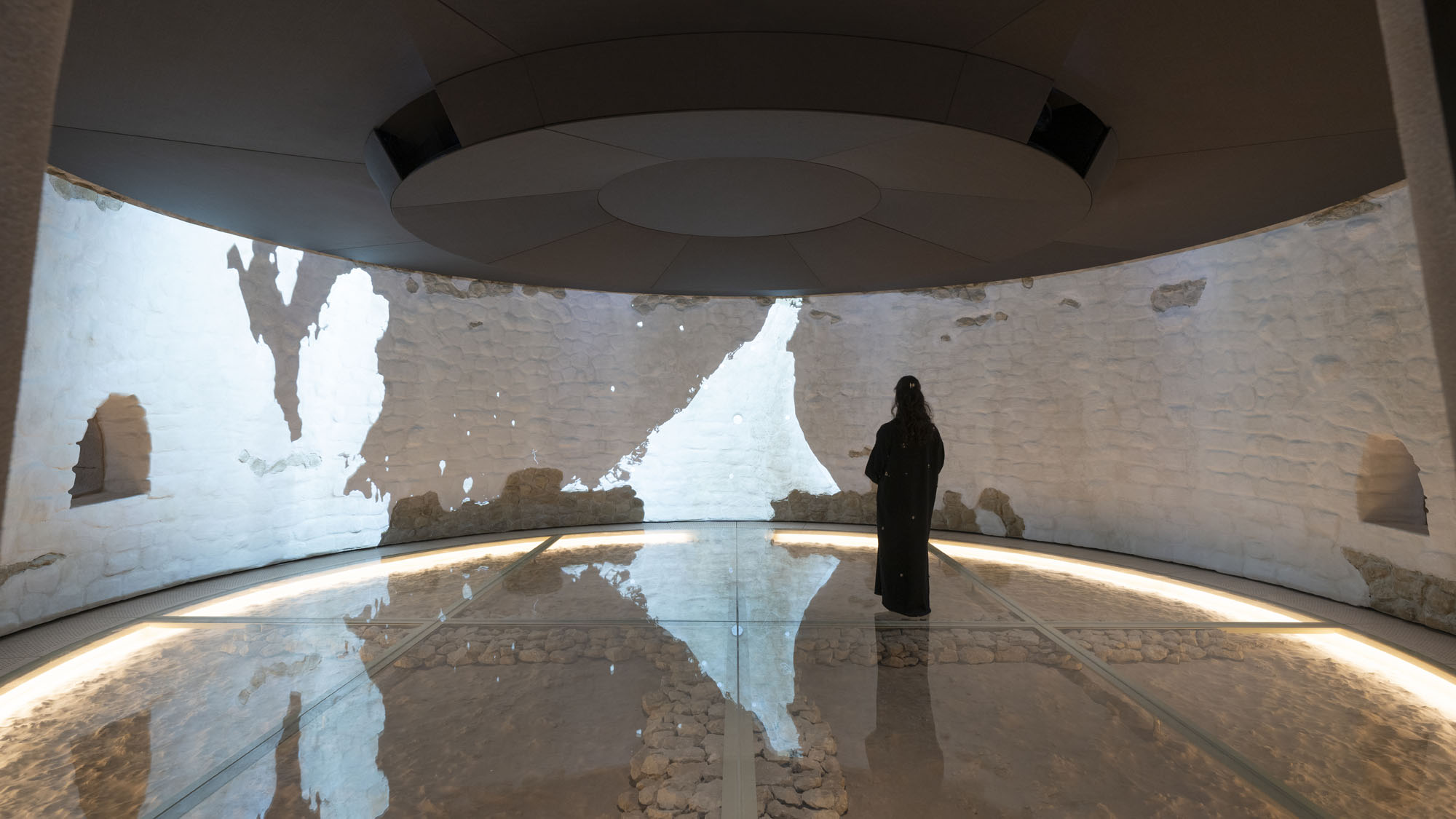
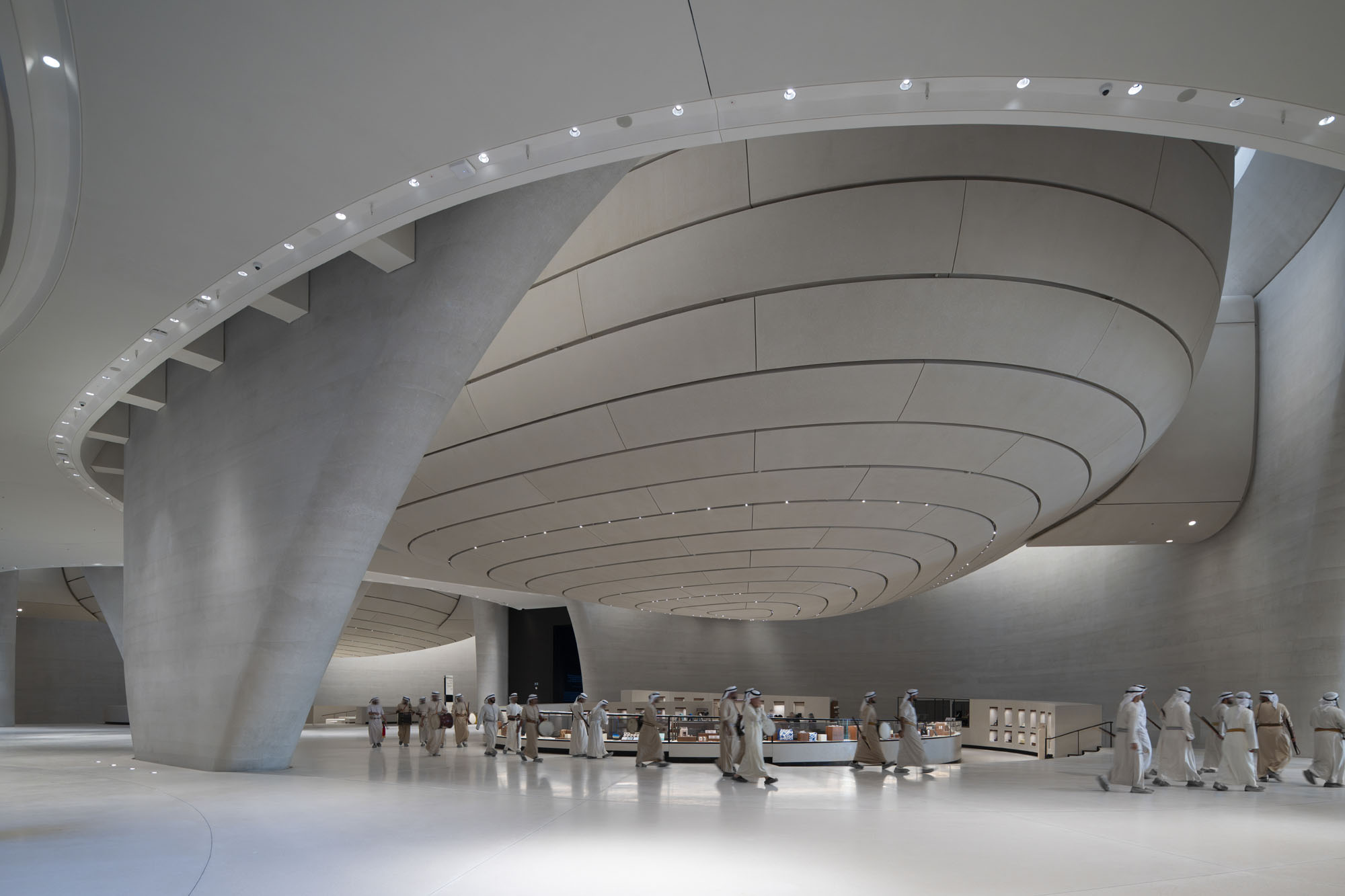
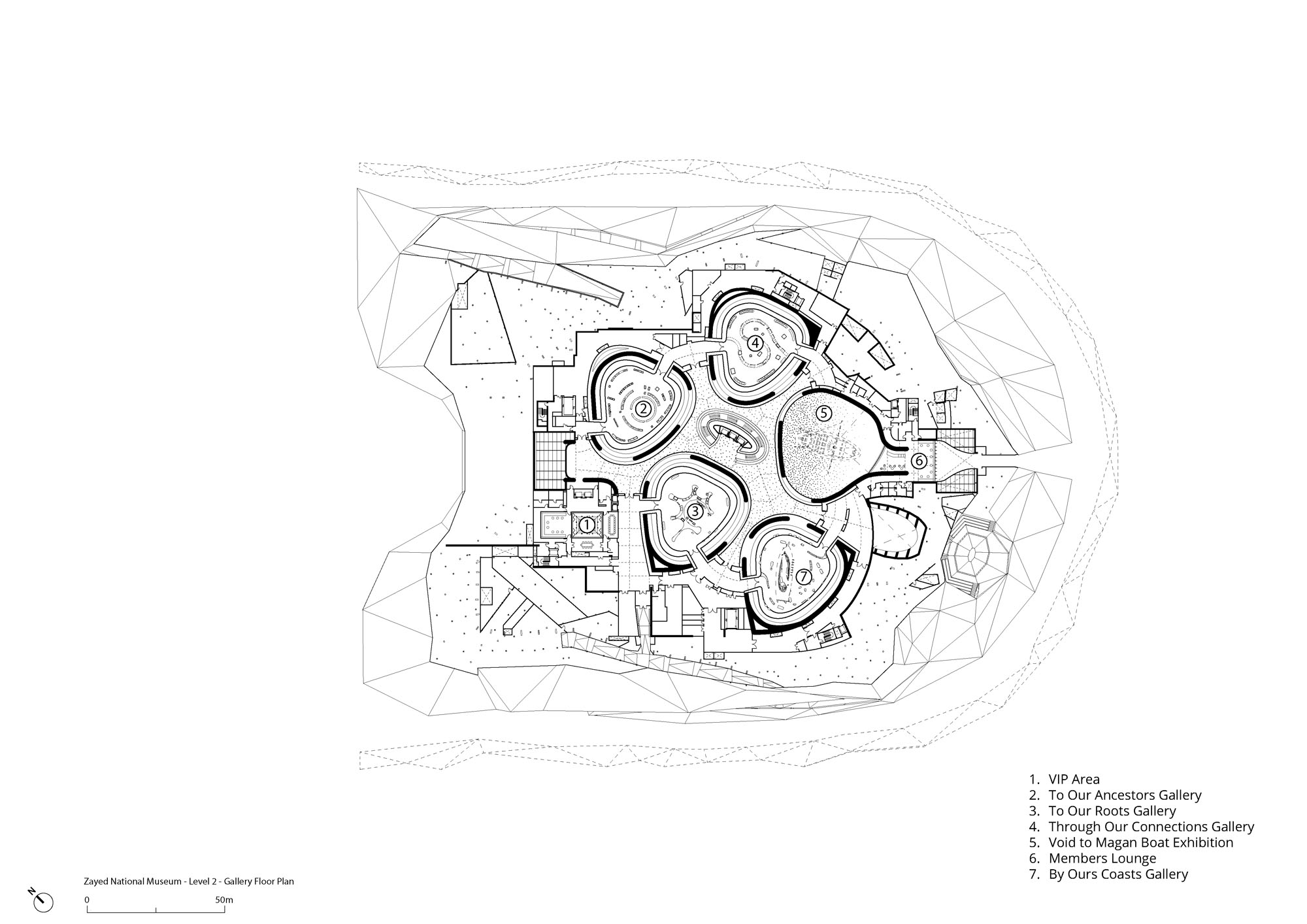
常設展示室6室のうち、4つのポッド型展示室がアル・リワンの上方に懸垂されている。これらは、展示される繊細な工芸品を保護するための環境制御空間を提供する。
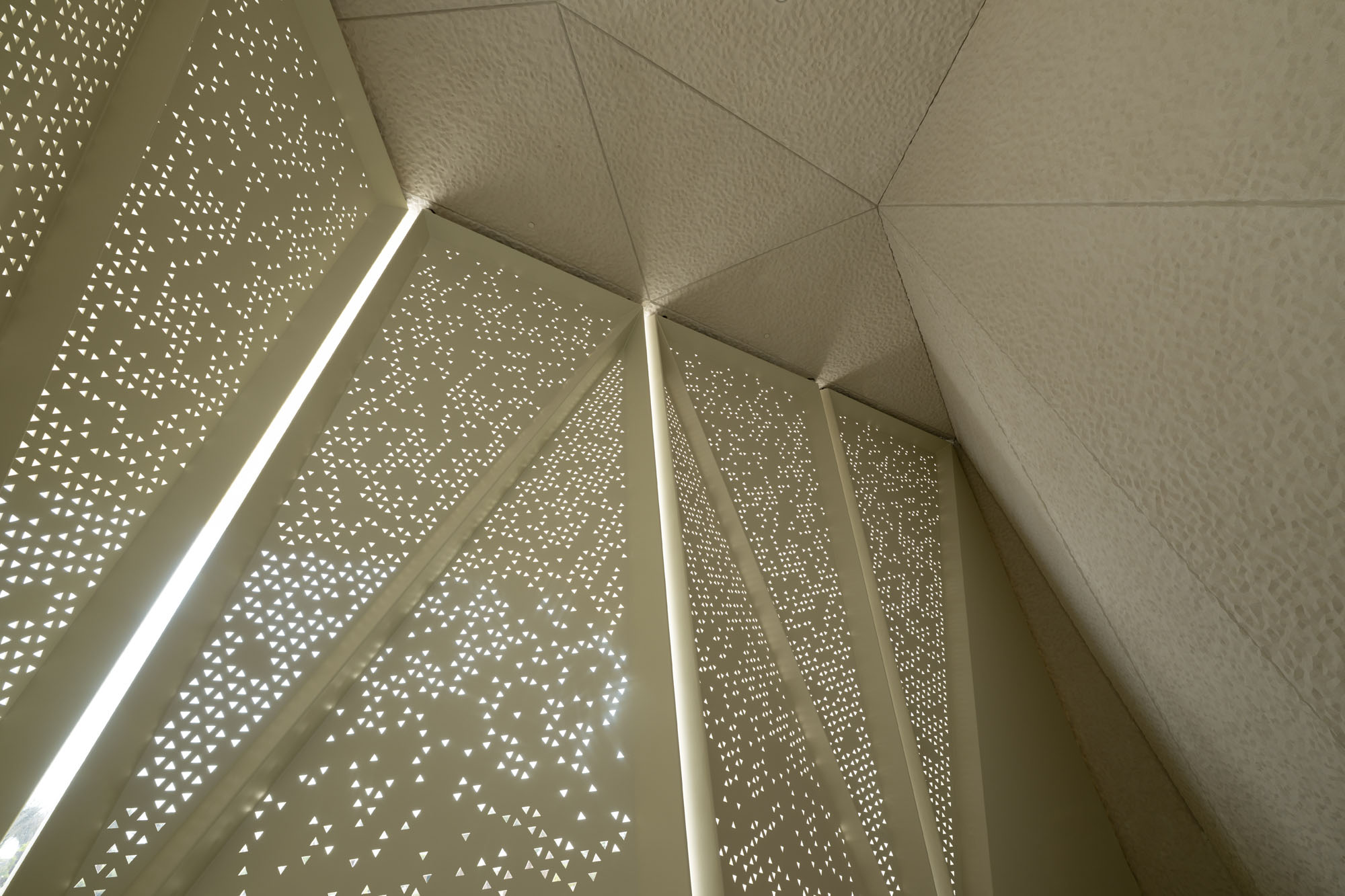
塔部の三重ラミネートガラスはロビーと展示室への日射量を調節する役割を担う。ガラスには高密度メッシュ中間膜が組み込まれており、さらに各ポッドには、外部光量に応じて透過性を変化させるエレクトロクロミックガラス製天窓が設けられている。
©︎ Nigel Young / Foster + Partners
©︎ Nigel Young / Foster + Partners
ギャラリーの構成と回遊性
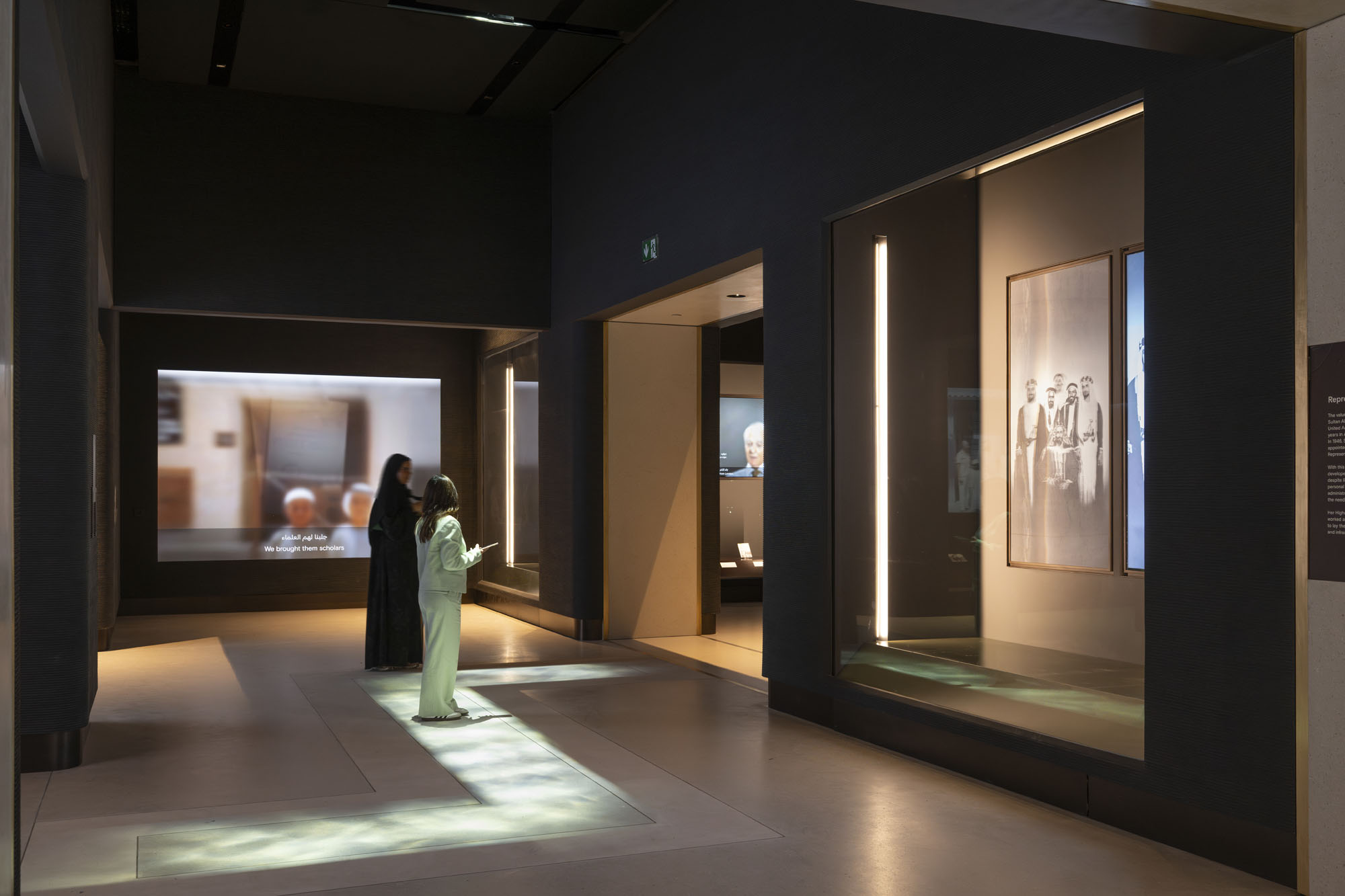
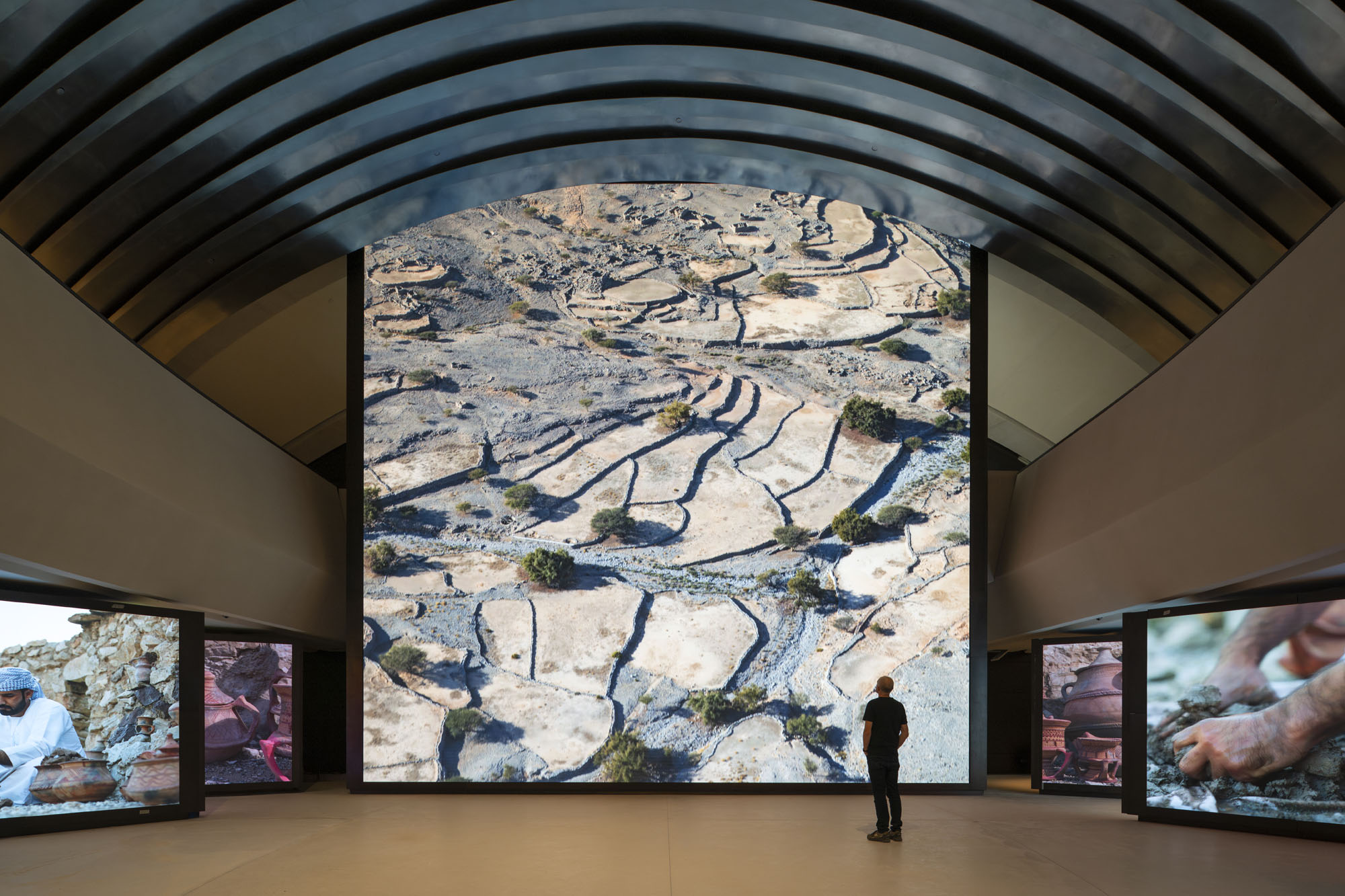
各ポッド型ギャラリーは特定のテーマを反映して企画されており、接続する結節空間がそれらを結びつける文脈情報を提供する。
訪問者は異なるギャラリーを自由に巡ることができ、彫刻的な螺旋階段またはエレベーターで上層階へ移動できる。地上階には博物館入口付近にさらに2つの常設展示スペースに加え、臨時展示スペース、高級レストラン、カフェが設けられている。
©︎ Nigel Young / Foster + Partners
©︎ Nigel Young / Foster + Partners
外部空間:アル・マサール庭園と展望台
博物館の外では、シェイク・ザーイドの自然愛が表現されたアル・マサール庭園が広がり、建物と海岸線を結んでいる。
景観と遺産を融合させたこの庭園は、交流・遊び・思索の場を備えた新たなコミュニティ資産として設計された。訪問者はまた、地上階から日陰の通路を通って、鋼鉄塔基部の丘頂にある展望台へ登ることができ、周囲のパノラマビューを楽しむことができる。
©︎ Nigel Young / Foster + Partners
©︎ Nigel Young / Foster + Partners
©︎ Nigel Young / Foster + Partners
7つの首長国の伝統を受け継ぐ素材の選定
素材は、現地の環境と調和し、7つの首長国に点在する歴史的建造物を反映するよう慎重に選定された。
これらは各地で異なる砂の色合いを映し出している。この伝統を受け継ぎ、博物館の外装と内装空間は、サアディヤート島特有の温かみのある白みを帯びた砂の色を再現している。本プロジェクトはアブダビ文化観光局との緊密な連携により実現した。
©︎ Nigel Young / Foster + Partners
©︎ Nigel Young / Foster + Partners
©︎ Nigel Young / Foster + Partners
©︎ Nigel Young / Foster + Partners
サステナビリティへの取り組み
エネルギー・カーボン
- 博物館を取り囲むマウンドが建物を太陽熱の侵入から遮断し、建物への熱流入を低減するバリアを形成
- 換気システムは占有率に基づき気流を調整し、室内空気質を維持しながらエネルギー消費を最適化
- カナディアンダクトシステムにより外気を予冷し、建物システムの負荷を軽減。
- 省エネ型LED照明が空間を照らしつつ、電力消費を大幅に削減
- タワーは熱気流塔として機能し、加熱された空気が冷却気流を生み出し、建物内に自然に対流する
- 太陽の軌道を精密に分析し、ギャラリーとロビー空間に自然光を取り込む建物配置を実現
- 中央ロビーから吊り下げられたポッド型ギャラリーは、格子構造で入射日光を調整し、空間内の照明を制御
移動性と接続性
- 博物館はサディヤット文化地区の中心に位置し、他の博物館へ徒歩圏内でアクセス可能
- 地域全体のインフラ投資計画の一環として、将来のライトレール交通プロジェクトが計画されている
- 電気自動車の普及拡大に対応するため、充電ステーションを設置
資材と廃棄物
- 設計の多くの要素(マウンドや歩道パネルを含む)は現地で製造
- 博物館は有機廃棄物管理戦略に基づき設計され、埋立処分からの有機廃棄物転用、メタン排出削減、持続可能な廃棄物処理の促進を包含している
土地と生態系
- 庭園は地域の在来植物で構成され、900種以上の植物や樹木が植栽
- アル・マサール庭園には、オアシスのファラジ灌漑水路や伝統的灌漑技術など、伝統的な水管理システムを採用。ファラジは重力を利用した古代の革新技術であり、電力不要の持続可能な方法として、数千年にわたり乾燥地帯の農業と定住に不可欠であった
ウェルビーイング
- 館内全域に段差のないアクセスとエレベーターを設置。博物館は地域環境に合わせて設計され、内外装の温かみのある白色調はサディヤート島の砂色と調和している
- 在室センサーと調光制御により、室内の占有状況と自然光の量に応じて照明レベルを自動調整
文化と遺産
- 当館はアラブ首長国連邦の歴史と文化に捧げられており、建物の現代的かつ時代を超えた形態を通じて地域の伝統を伝えている
- UAEの地形を表すマウンドのテクスチャードパネル
主要素材と構造システム
主要素材
- メイン訪問エリア(中央ロビー「アル・リワン」含む)には研磨仕上げの白コンクリート壁を採用
- ギャラリー入口には緑青処理を施したブロンズクラッディングを採用
- マウンド上部の軽量鋼構造にはアルミニウムクラッディングと塗装鋼構造を採用
構造システム
- 杭基礎を採用
- 地下室壁にはスリップフォーム工法によるグレーコンクリートと標準型枠システムを採用
- メインロビー壁には現場打ち白コンクリートを採用
- 軽量鋼構造には溶接鋼構造と三重積層ガラスを採用
©︎ Nigel Young / Foster + Partners
©︎ Nigel Young / Foster + Partners
©︎ Nigel Young / Foster + Partners
©︎ Nigel Young / Foster + Partners
©︎ Nigel Young / Foster + Partners
©︎ Nigel Young / Foster + Partners
©︎ Foster + Partners
©︎ Foster + Partners
©︎ Foster + Partners
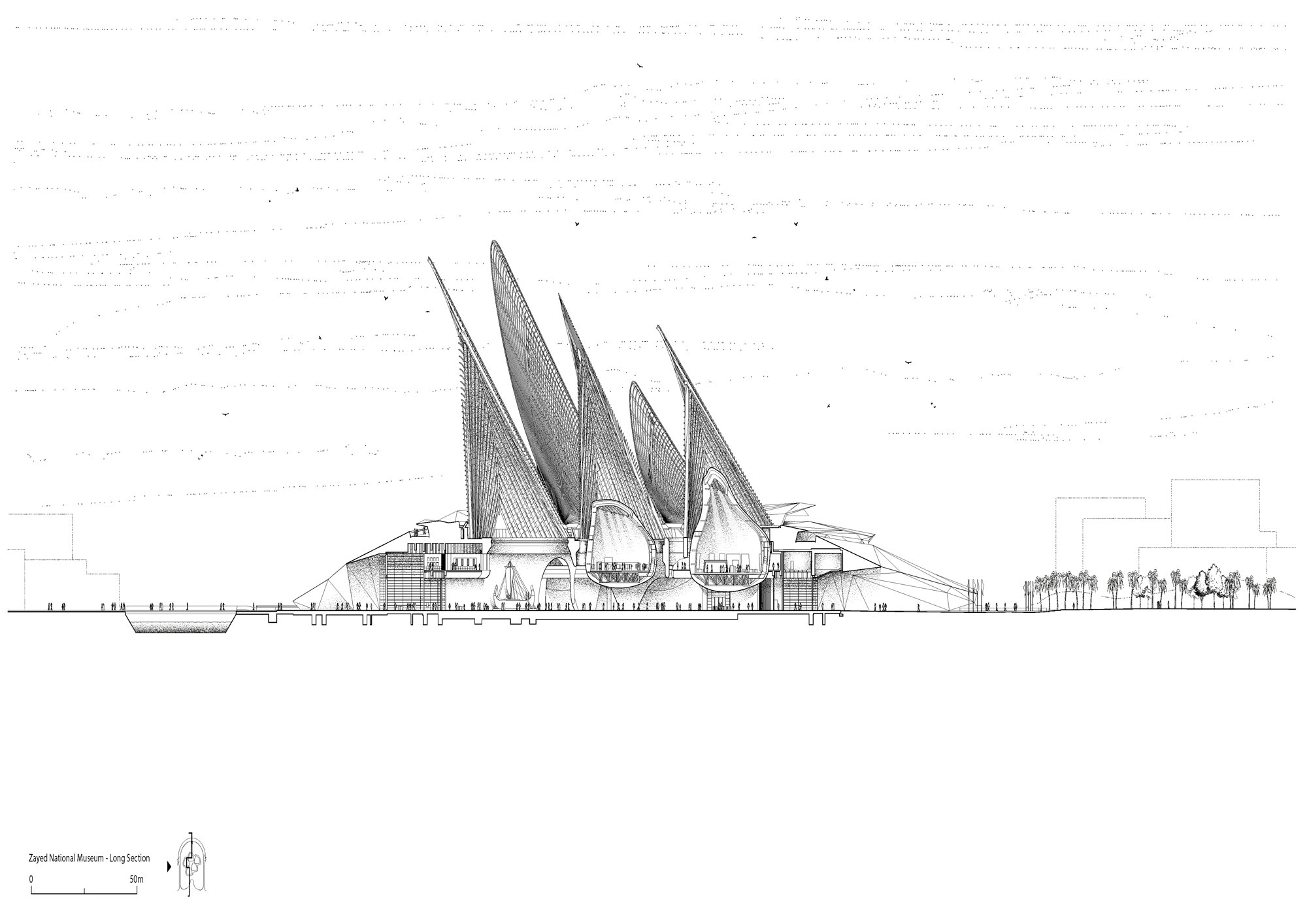
©︎ Foster + Partners
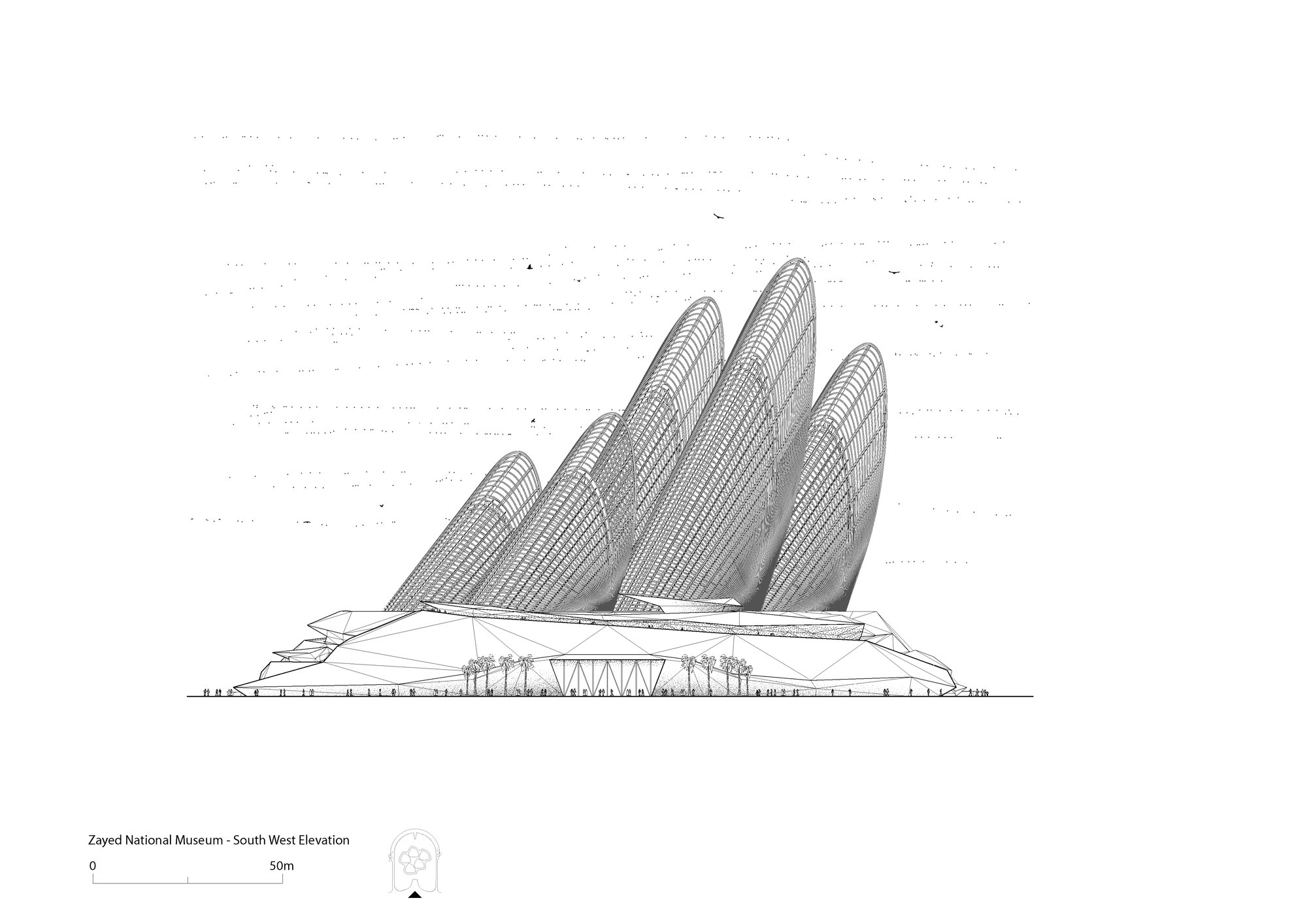
©︎ Foster + Partners
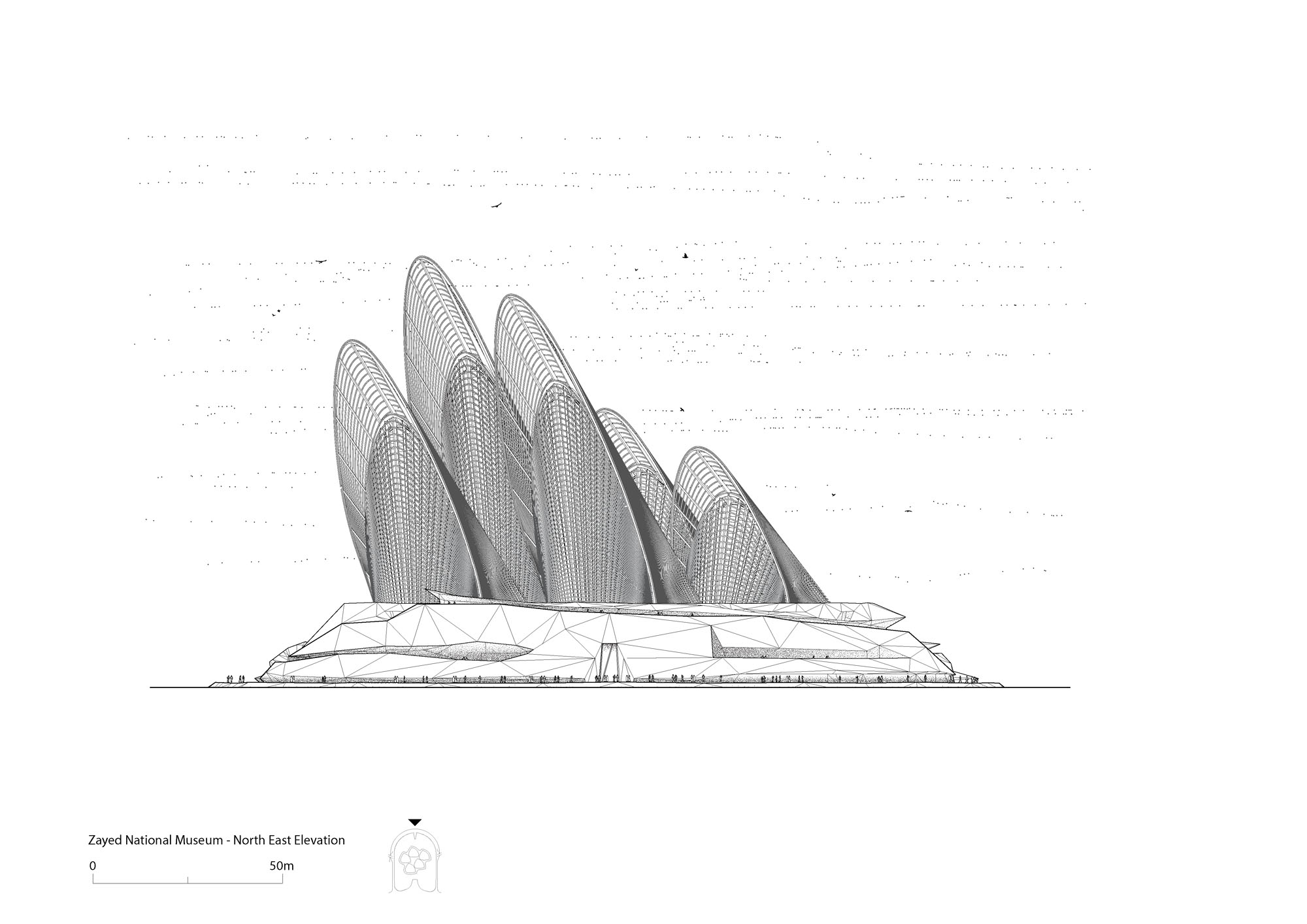
©︎ Foster + Partners
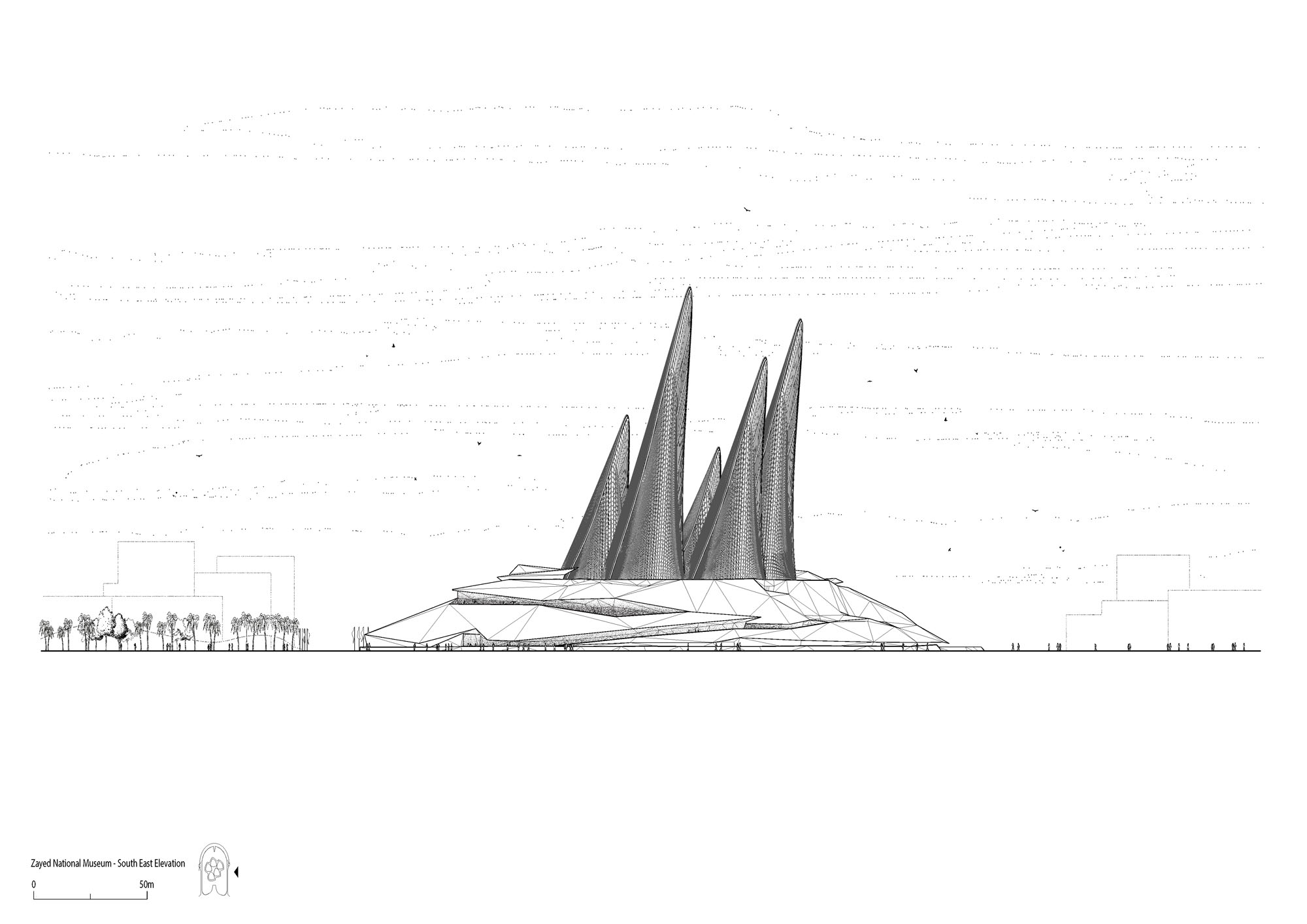
©︎ Foster + Partners
以下、フォスター アンド パートナーズのリリース(英文)です。
Zayed National Museum
Abu Dhabi, United Arab Emirates03 December 2025
Zayed National Museum has opened its doors to the public. Located at the heart of the Saadiyat Cultural District in Abu Dhabi, the new national museum of the United Arab Emirates (UAE) traces the history of the Emirates, from the earliest evidence of human habitation to the civilisations that shaped its culture and identity, rooted in the values of the UAE’s Founding Father, the late Sheikh Zayed bin Sultan Al Nahyan. The building’s form addresses the challenge of sustaining life in a desert environment and the strong cultural traditions of the UAE.
The museum’s five lightweight steel wings are part of the system of natural ventilation. Air vents open at the top of the towers, taking advantage of the negative pressure on the lee-side of the profile to draw hot air out from the atrium, assisted by the thermal effect of the heat build-up on the tips of the wings. Air that has been naturally cooled through pipes buried deep below the desert floor then flows into the atrium through a low-level ventilation system. The wings are glazed to channel natural light into the galleries below, and each one is individually tuneable.
The museum spaces are located within a mound, which has textured faceted panels that are an abstraction of the UAE’s topography. The mound insulates the interior spaces from solar gain, forming a protective shield that prevents heat from entering the building. When visitors step inside the museum, they enter the light-filled atrium, or Al Liwan, which serves as both a meeting and orientation space, hosting performances such as traditional dance and poetry.
Of the six permanent galleries, four pod-shaped galleries are suspended above Al Liwan, and provide controlled environments to protect the sensitive artefacts on display. The towers’ triple-laminated glazing moderates the amount of daylight entering the lobby and the gallery spaces. The glazing includes a dense mesh interlayer, and each pod has a rooflight made of electrochromic glass that changes its transparency in response to outside light levels.
Each of the pod-shaped galleries is curated to reflect a specific theme, while the connecting nodal spaces provide contextual information that tie them together. Visitors can choose their own route through the different galleries and make their way to the upper level via a sculptural spiral staircase or lifts. At ground level, there are also two more permanent gallery spaces that are near to the museum’s entrances, as well as a temporary exhibition space, a fine dining restaurant, and a cafe.
Outside the museum building, Sheikh Zayed’s love of nature is represented by the Al Masar Garden, which links the building to the coast. Integrating landscape and heritage, the garden is intended as a new community asset, with spaces for socialising, play, and reflection. Visitors are also invited to take a shaded route from ground level to a viewing platform at the top of the mound, at the base of the steel towers, which offers panoramic views of the surrounding area.
Materials have been carefully selected to resonate with the local surroundings and mirror historic buildings across the seven Emirates, which reflect the changing colour of the sand in different locations. Building on this tradition, both the museum’s exterior and its interior spaces mirror the distinctive warm-white shade of sand that is found on Saadiyat Island.
The project has been delivered in close collaboration with the Department of Culture and Tourism in Abu Dhabi.
Fact
2007年 – 2025年
Abu Dhabi, UAE
Client: Department of Culture and Tourism
Competition Win: 2007
Appointment: 2008
Initial Construction Phase: 2008 – 2012
Construction Phase: 2018 – 2025
Completion Date: 2025
Area (Gross): 56,687m²
Built-up Area: 88,870m²
Site Area: 86,876m²
Number of Storeys: 3
Number of Basements: 1
Length of Al Masar Garden: 600m
Height: 123m above National Abu Dhabi Datum (NADD)Sustainability
Energy & Carbon
•The mound surrounding the museum insulates the building from solar gain, forming a barrier to reduce the heat coming into the building.
•The ventilation system adjusts airflow based on occupancy levels, optimising energy consumption while maintaining indoor air quality.
•The Canadian duct system enables pre-cooling of external air to reduce the demand on building systems.
•Energy-efficient LED lighting illuminates the space while significantly reducing power consumption.
•The towers act as thermal chimneys, heating up to create cooling air currents that naturally flow through the building.
•The movement of the sun was carefully studied to position the building such that it allows natural light into the gallery and lobby spaces.
•The pod-shaped galleries, suspended from the central lobby, utilise a lattice structure that filters incoming sunlight to regulate lighting within the spaces.Mobility & Connectivity
•The museum is centrally located within the Saadiyat Cultural District, allowing visitors to access the other museums within walkable distance.
•Future light rail transit projects are planned as part of wider infrastructure investment in the region.
•Electrical charging stations have been installed to support the growing use of electric vehicles.Materials & Waste
•Many elements of the design have been fabricated locally, including the mound and walkway panels.
•The museum was designed according to an organic waste management strategy that involves diverting organic waste from landfills, reducing methane emissions, and promoting sustainable waste practices.Land & Ecology
•The garden is formed from the region’s native plants, including more than 900 different plants and trees.
•The Al Masar Garden features traditional water management systems, such as oasis falaj irrigation channels and irrigation techniques. The falaj, an ancient innovation, relies on gravity for water flow, making it a sustainable, non-electric method that has been crucial for agriculture and settlement in arid regions for thousands of years.Wellbeing
•Level access and lifts are provided throughout. The museum is specifically designed for its regional setting, with the warm-white colour of the interior and exterior spaces matching the Saadiyat Island sand.
•Occupancy sensors and dimming controls adjust lighting levels based on room occupancy and daylight availability.Culture & Heritage
•The museum is dedicated to the history and culture of United Arab Emirates, relating to local traditions through the building’s contemporary and timeless form.
•The mound’s textured panels represent the topography of the UAE.Main Materials
•White concrete walls with a honed finish for the main visitor areas, including the central lobby – Al Liwan.
•Patinated bronze cladding for the gallery entrance.
•Aluminium cladding and painted steel structure for the lightweight steel structures above the mound.Structural System
•Piled foundations.
•Slipformed grey concrete and standard formwork system to basement walls.
•Cast in-situ white concrete to main lobby walls.
•Welded steel structure to lightweight steel structures with triple laminated glazing.Other Statistics
•The five lightweight steel structures are glazed with more than 6,600 panels, each crafted with a unique size and shape.
•The museum has 7 gallery spaces (6 permanent + 1 temporary/changing gallery).Credits
Client: Department of Culture and Tourism
Architect: Foster + Partners
Foster + Partners team: Norman Foster, Gerard Evenden, David Nelson, Emily Phang, Ross Palmer, Marilu Sicoli, Toby Blunt, Adam Newburn, Irene Gallou, Martin Castle, Martha Tsigkari, Andrew King, Wolfgang Muller, Barrie Cheng, Dara Towhidi, Nicholas Arthurell, Cristine Castilhos Balarine, Jefferson Barnes, Giovanni Betti, Ho Ling Cheung, Harvey Cullis, Miriam Dall’Igna, Marta Diego, Alejandra Florez-Estrada Diaz, Hamza Farooq, Oscar Gil, Alexandra Kogia, Angeliki Koliomichou, Joliette Lange, Won Suk Lee, Paul Leo, Richard Maddock, Elizabeth Miller, Alessandro Milazzo, Josef Musil, Hossein Naser Vafai, Irina Nazarova, Eleonora Neri, Mouzo Ntagkala, Chan Ik Park, Jose Pedro Santiago Da Silva, Ezmira Peraj, Javier Perez Torrejon, Laura Podda, Luca Poian, Sladjana Putnik, Merino Ranallo, Alfie Recarte Olaran, Emanuele Renzi, Florian Rieger, Ramit Saksena, Laura Suico
Chris Storie, Takashi Tsurumaki, Karsten Vollmer, Dominic Williams, Simon Wing, Xiaoming Yang, Munehiko Yokomatsu, Bo YoonConsultant
Structural Engineers: AKT II, WSP
Main Contractor: Arabtec, Six Construct-Trojan JV
Enabling Works Contractor: Swissboring
Civil Engineers: Philip Habib + Associates
Piling Contractor: NSCC
Sub-structure Contractor: Al Habtoor Murray Roberts
MEP Engineer: BDSP, WSP
Cost Consultant: RLB
Lighting Consultant: Lerch Bates
Landscape Consultant: Atelier Dreiseitl, WATG
Specification Writers: Schumann Smith, Foster + Partners
Air Flow Consultant: RWDI
Environmental Engineer: Transsolar
Auditorium Consultant: Shen Milsom & Wilke
People Movement Consultant: Intelligent Space
フォスター アンド パートナーズ 公式サイト
https://www.fosterandpartners.com/news/zayed-national-museum-in-abu-dhabi-completes
【購読無料】空間デザインの今がわかるメールマガジン TECTURE NEWS LETTER
RECOMMENDED ARTICLE