
歴史と今に寄り添う「背景としての建築」 - KWK PROMESが手がけたポーランドの国立博物館〈プシェウォミ・ダイアログセンター〉
©︎ Jaroslaw Syrek
ポーランドの北西部、歴史的な傷跡を残すシュチェチンのソリダリチ広場に位置する〈プシェウォミ・ダイアログセンター(Przełomy Dialogue Center)〉は、同国の建築スタジオ KWK PROMESが手がけた国立博物館です。
隣接するアイコニックな現代建築や広場の歴史的文脈に敬意を払い、建物のボリュームを地下に隠すことで「背景としての建築」として設計されています。
注目ポイント
- 対角線の角が隆起する「街区」と「広場」のハイブリッド
- 一枚岩のようなファサードが変貌するダイナミックな可動壁
- 歴史と空間の文脈が生んだ「地下空間」というアプローチ
- 建築の「地形化」による多様なアクティビティの誘発
(以下、KWK PROMESから提供されたプレスキットのテキストの抄訳)
©︎ Juliusz Sokołowski
広場の歴史的・空間的背景
シュチェチンは、ポーランドにおいて歴史的暴力の最大の犠牲地の1つである。1945年までこの都市はドイツの国境内に位置していたが、その後、突如としてポーランドに編入された。この急激な人口の入れ替わりは社会構造を崩壊させ、都市のアイデンティティを歪めることとなった。
戦前、現在のソリダリチ広場(Solidarności Square)は、北側にコンツェルトハウス(Konzerthaus)を配し、格式ある集合住宅が立ち並ぶ街区を擁する、まさに都市の顔として機能する場所であった。しかし、連合軍による爆撃でこの街区とその周辺は消滅し、都市組織に空白が生じてしまう。さらに、都市のこの一角は交通路によって分断されることとなった。
この「準広場」とも言える空間は、1970年に労働者による抗議活動の舞台となったが、無残にも鎮圧され、16名もの抗議者が命を落とした。その瞬間から、この場所は自由を求める闘いの象徴となったのである。
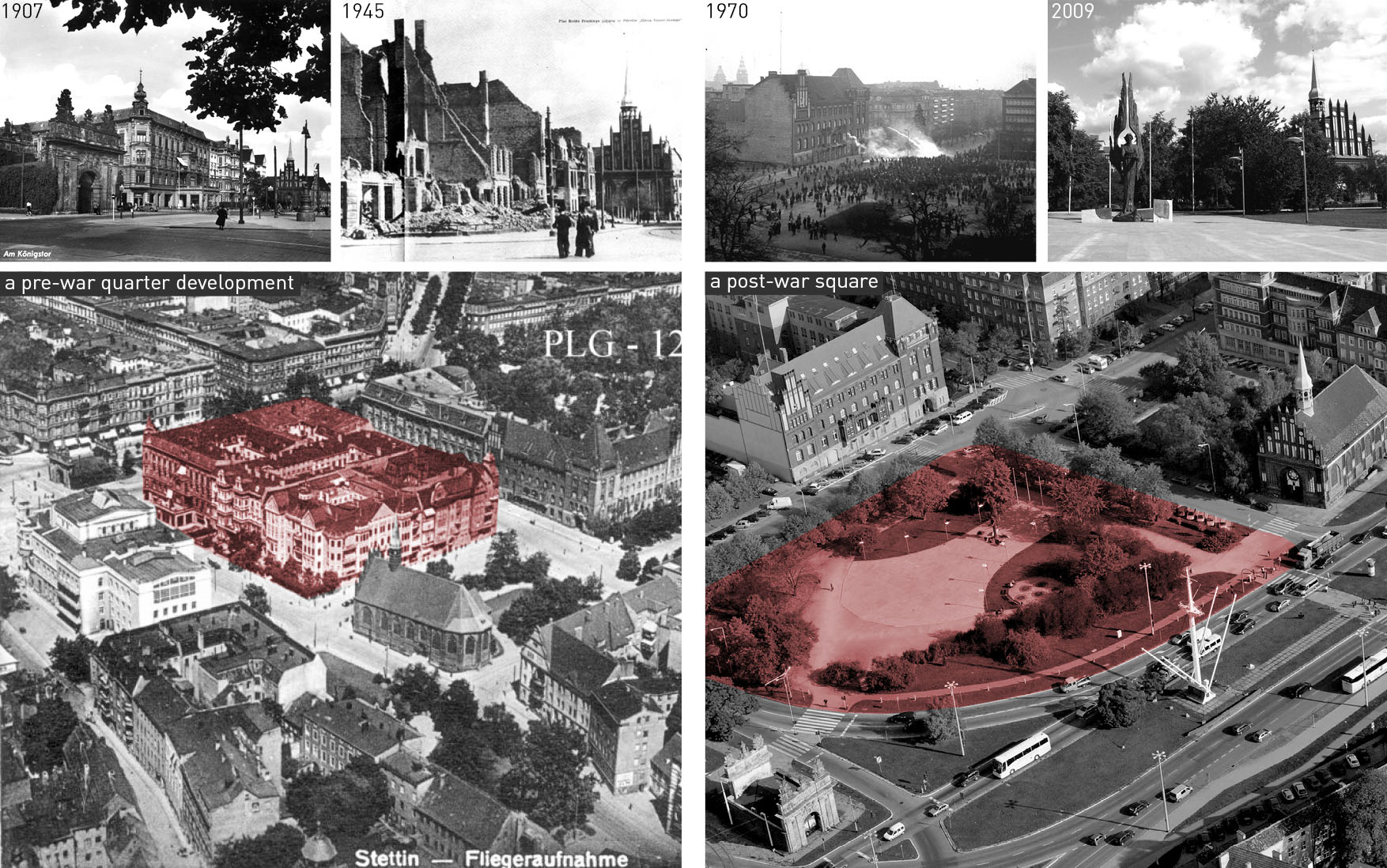
Pre-war quarter development and a post-war square
広場の形骸化と21世紀の建築的介入
長年にわたり、ソリダリチ広場は名ばかりの広場に過ぎなかった。境界は曖昧で、正面は開放されており、周囲は交通量の多い騒がしい通りに面していた。2005年に1970年12月の事件を記念する記念碑が設置されたものの、明確な機能をもたないままであった。
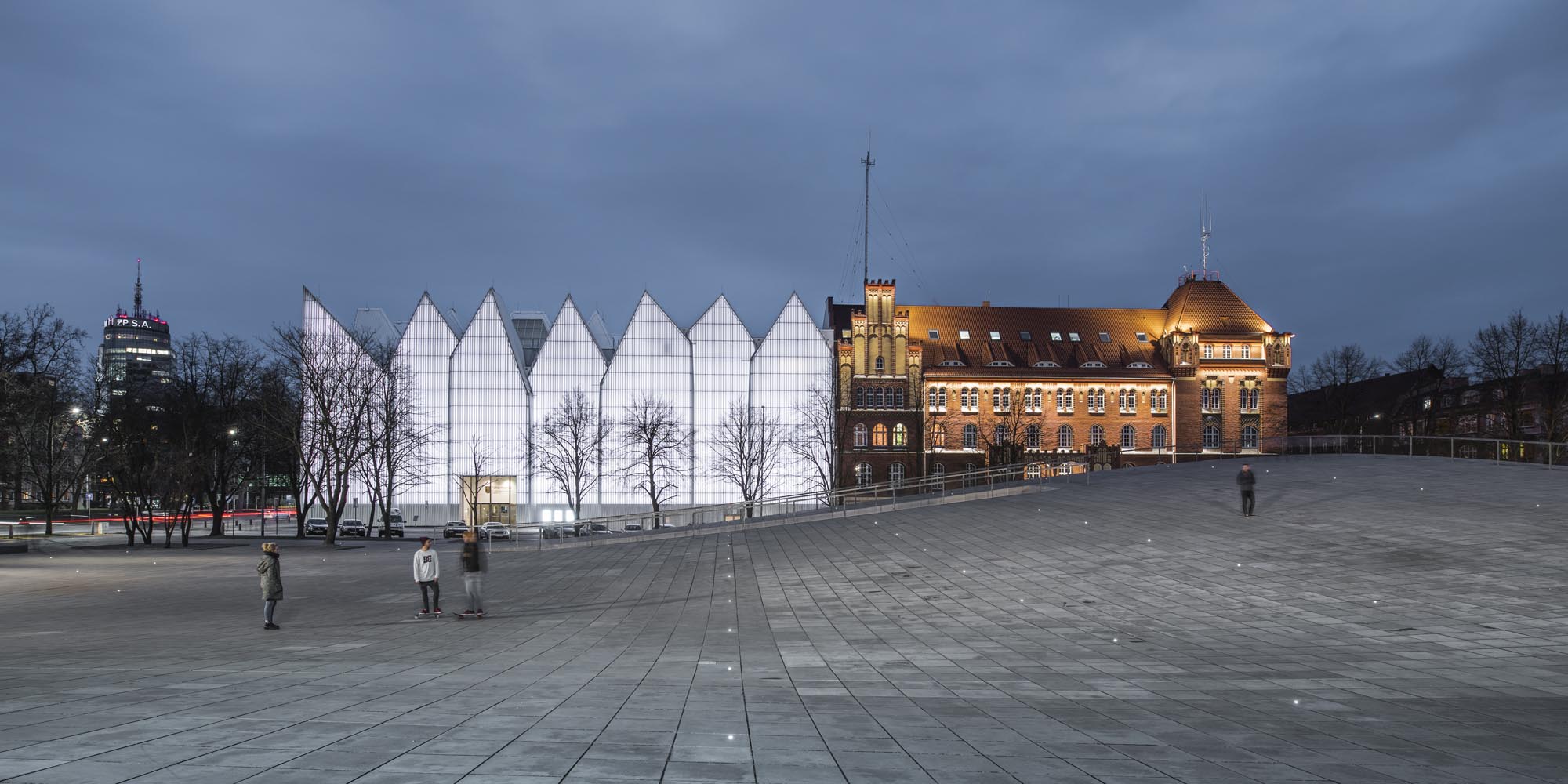
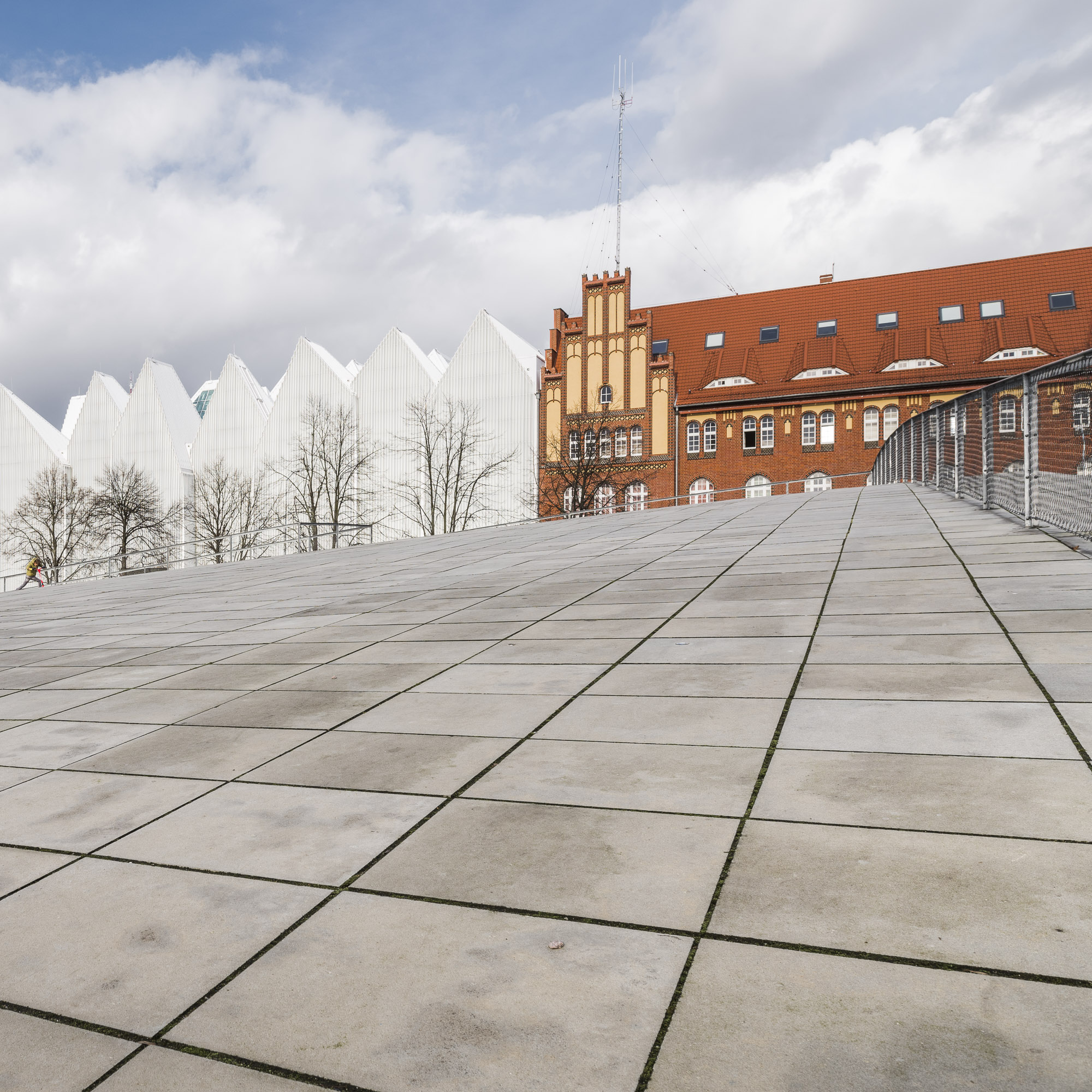
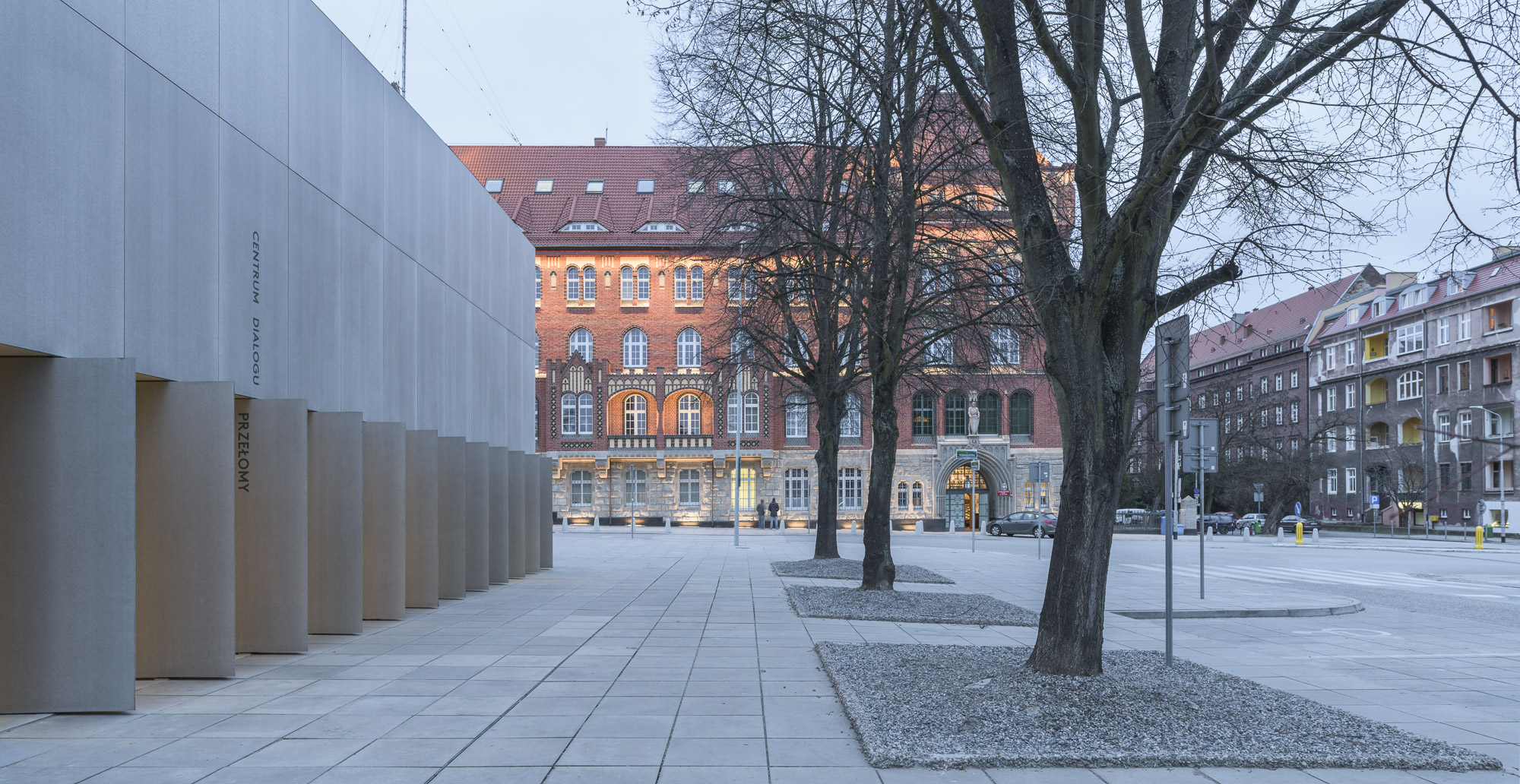
しかし21世紀に入り、この地域は重要な建築的介入の舞台となる。2014年、旧コンツェルトハウスに代わり、エストゥディオ・バロッツィ・ヴェイガ(Estudio Barozzi Veiga)が設計した新しい〈フィルハーモニーホール〉が建設された。この建物は2015年にミース・ファン・デル・ローエ(Mies van der Rohe)賞の主要賞を受賞し、新たな都市の象徴となった。
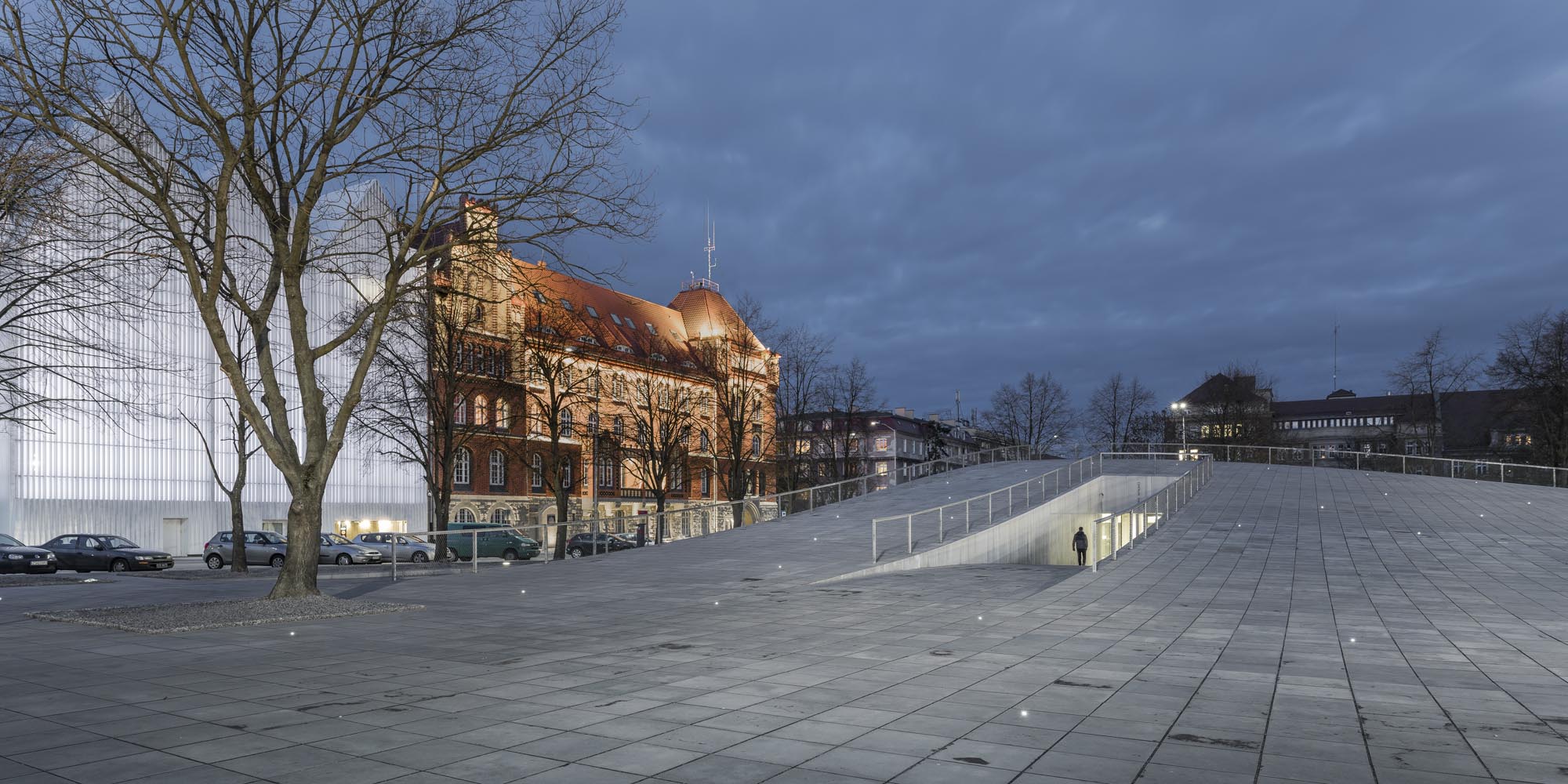
©︎ Juliusz Sokołowski
地下に隠された「背景となる建築」
この空間に対する認識を一変させる契機となった次の取り組みが、シュチェチンの歴史に捧げられた、国立博物館の〈プシェウォミ・ダイアログセンター〉である。
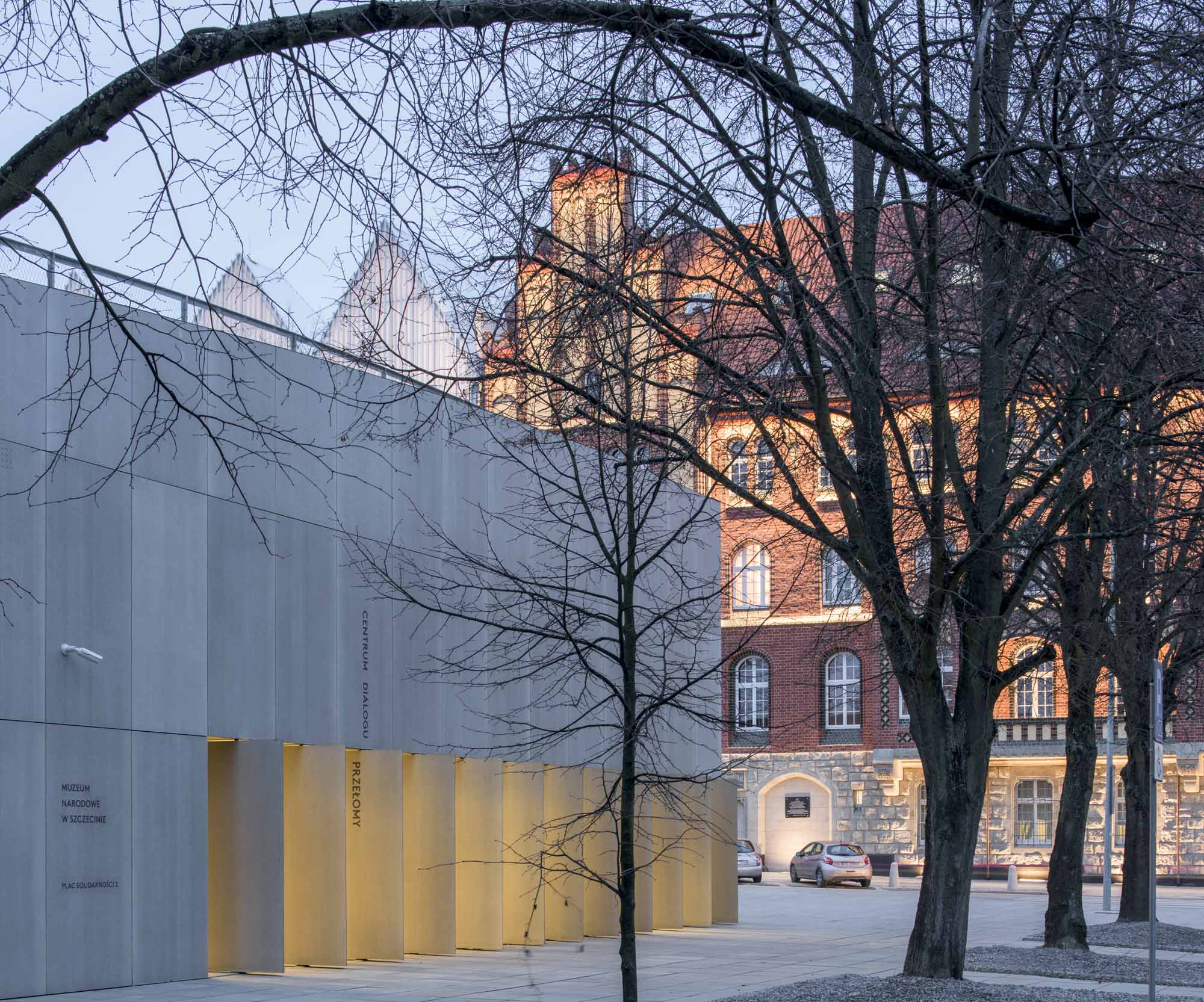
この博物館を設計するにあたり、設計者はこの場所がもつ歴史と、すぐ目の前に誕生した新たな都市のシンボルに対して、謙虚な姿勢で向き合った。そこで導き出されたのが、博物館を地下に隠し、「背景となる建築」を創出するというアイデアであった。
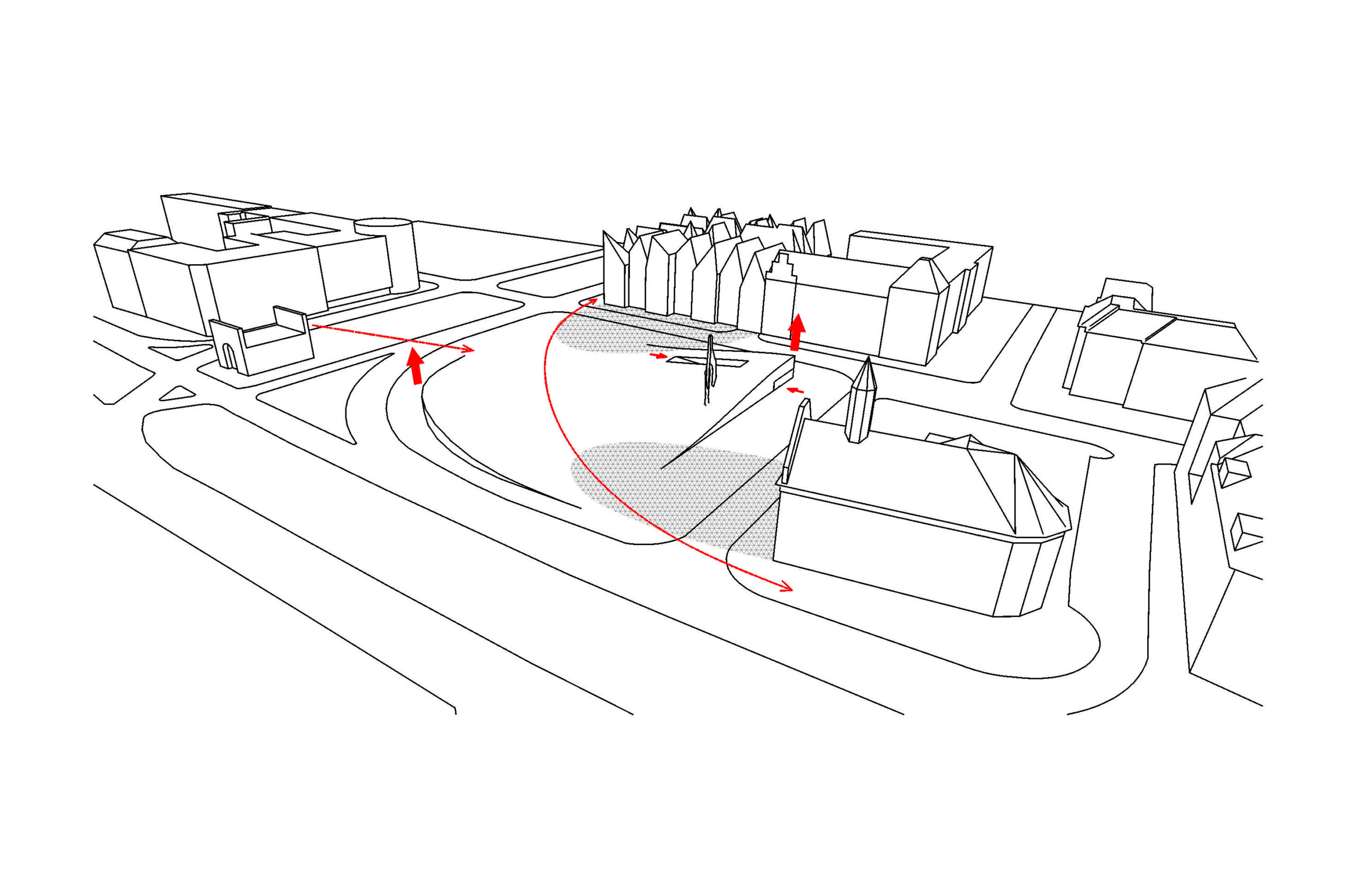
Diagram
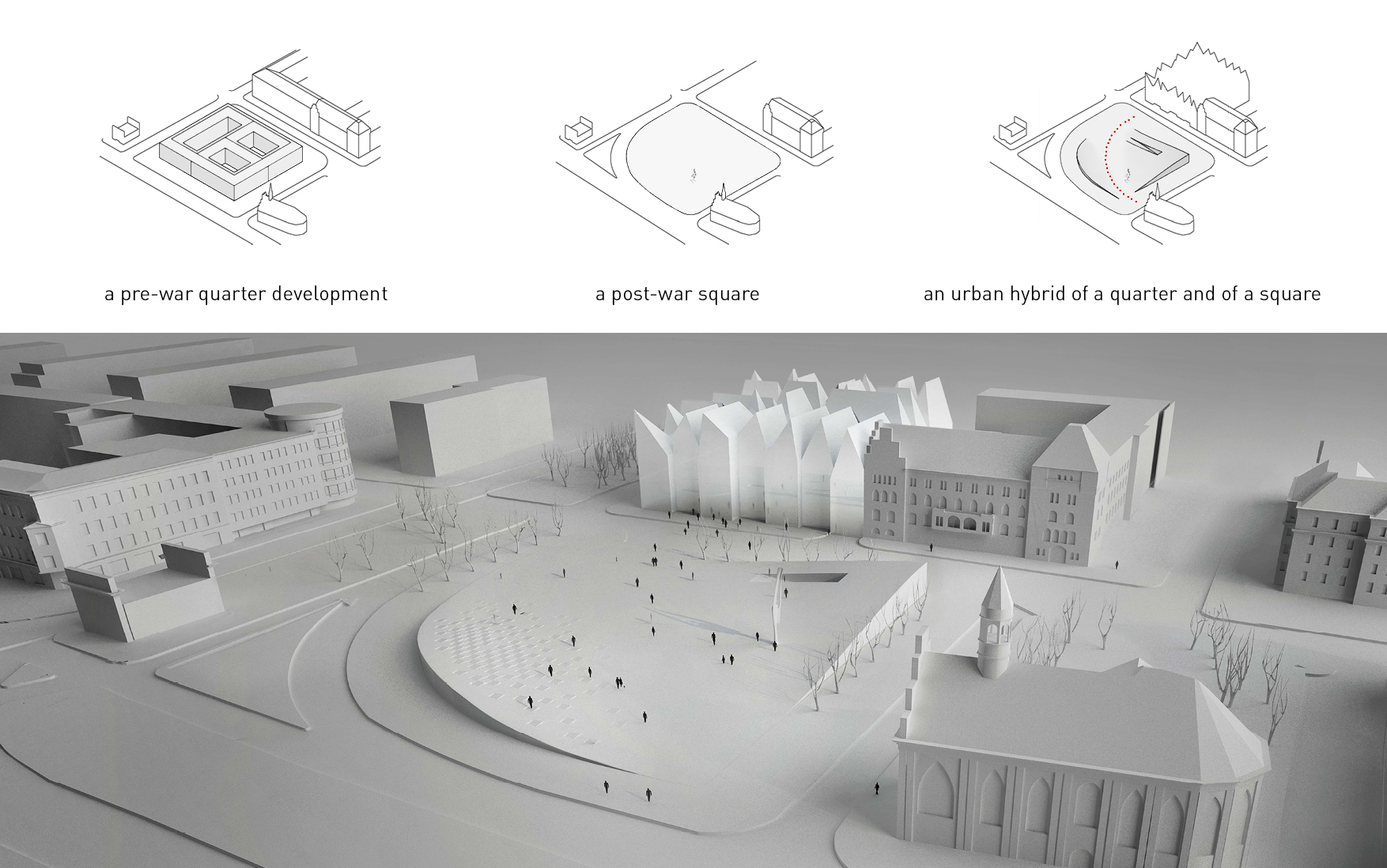
Idea diagram
コンセプト:「街区」と「広場」のハイブリッド
「街区」と「広場」という、相反する2つの伝統がこの設計の出発点となった。これは、開放的な公共空間としての価値を保ちながら、空間を街区として包み込むという、都市デザインにおけるハイブリッド(融合)である。
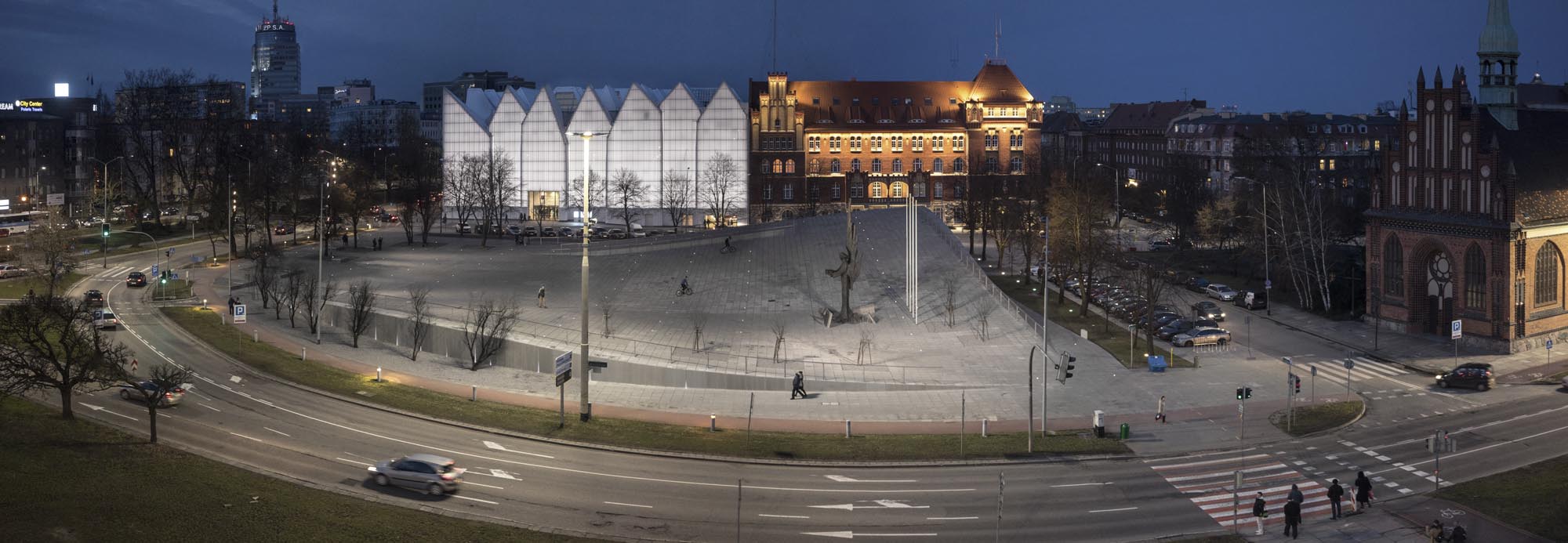
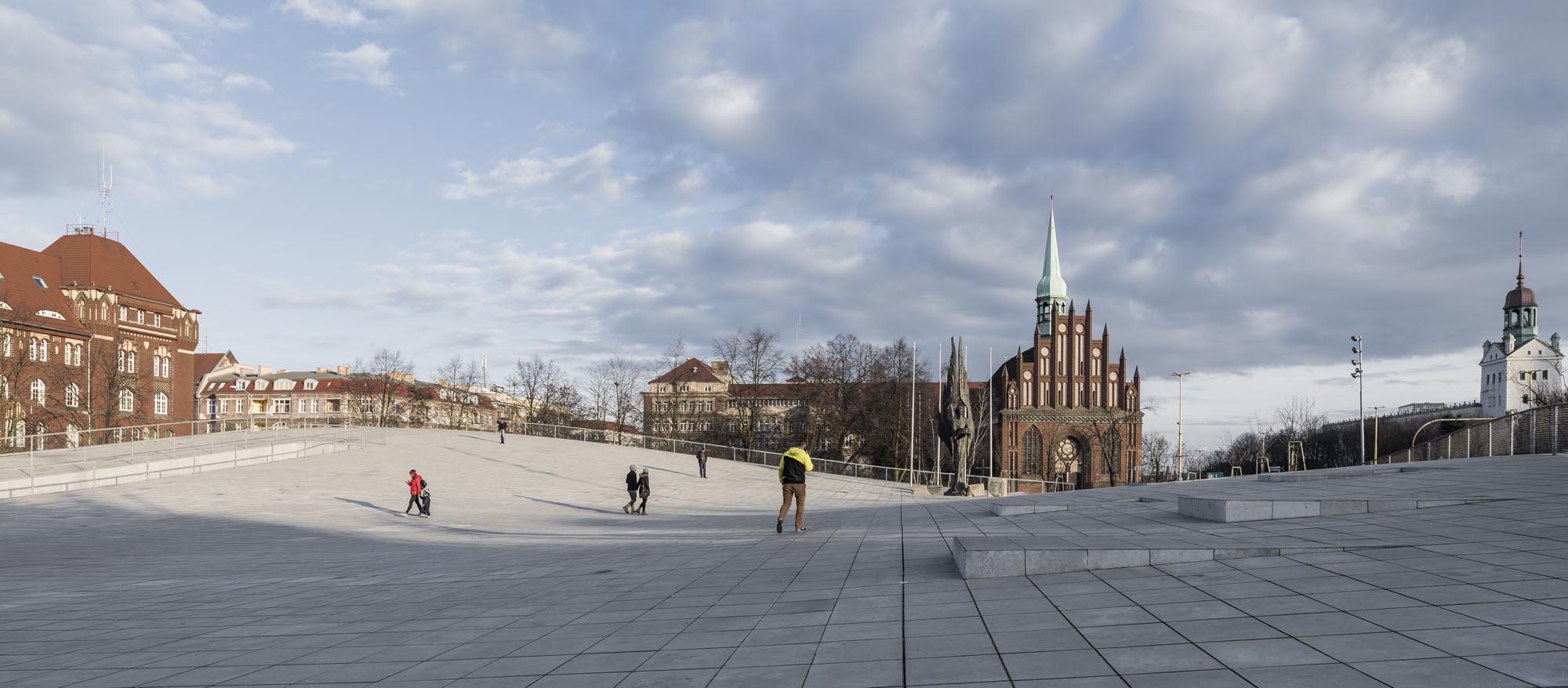
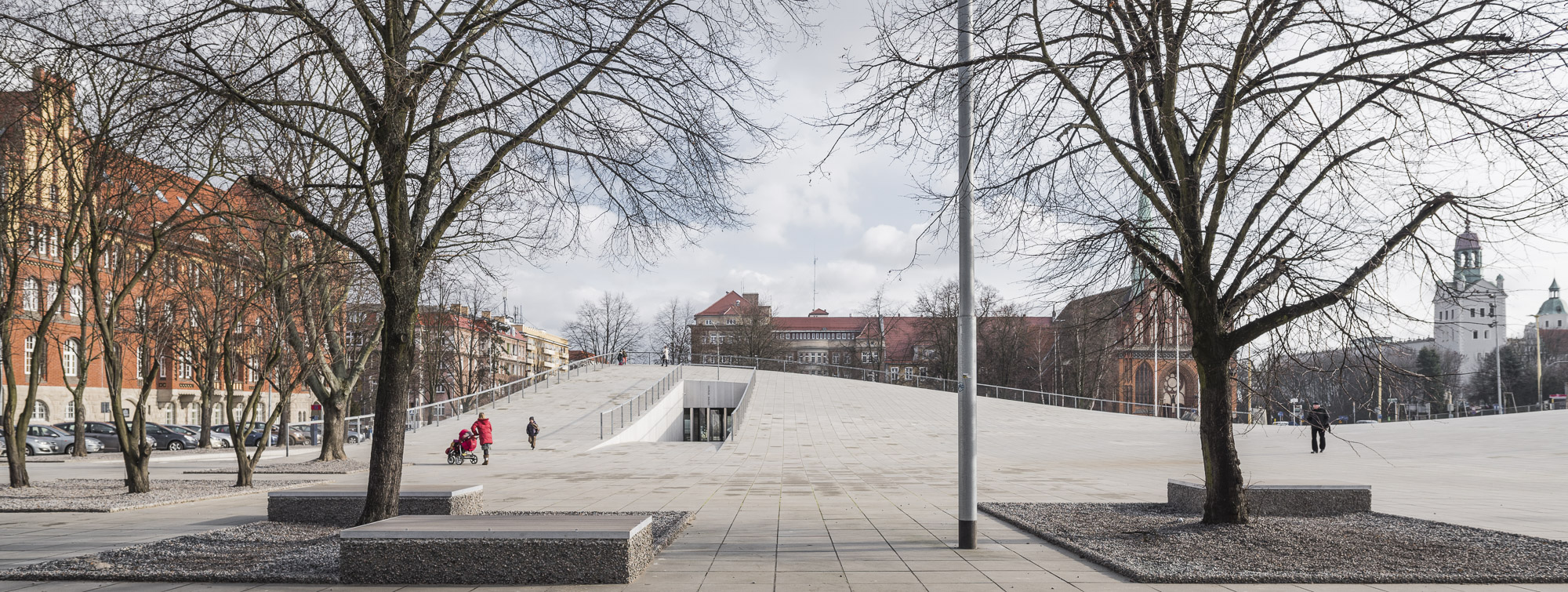
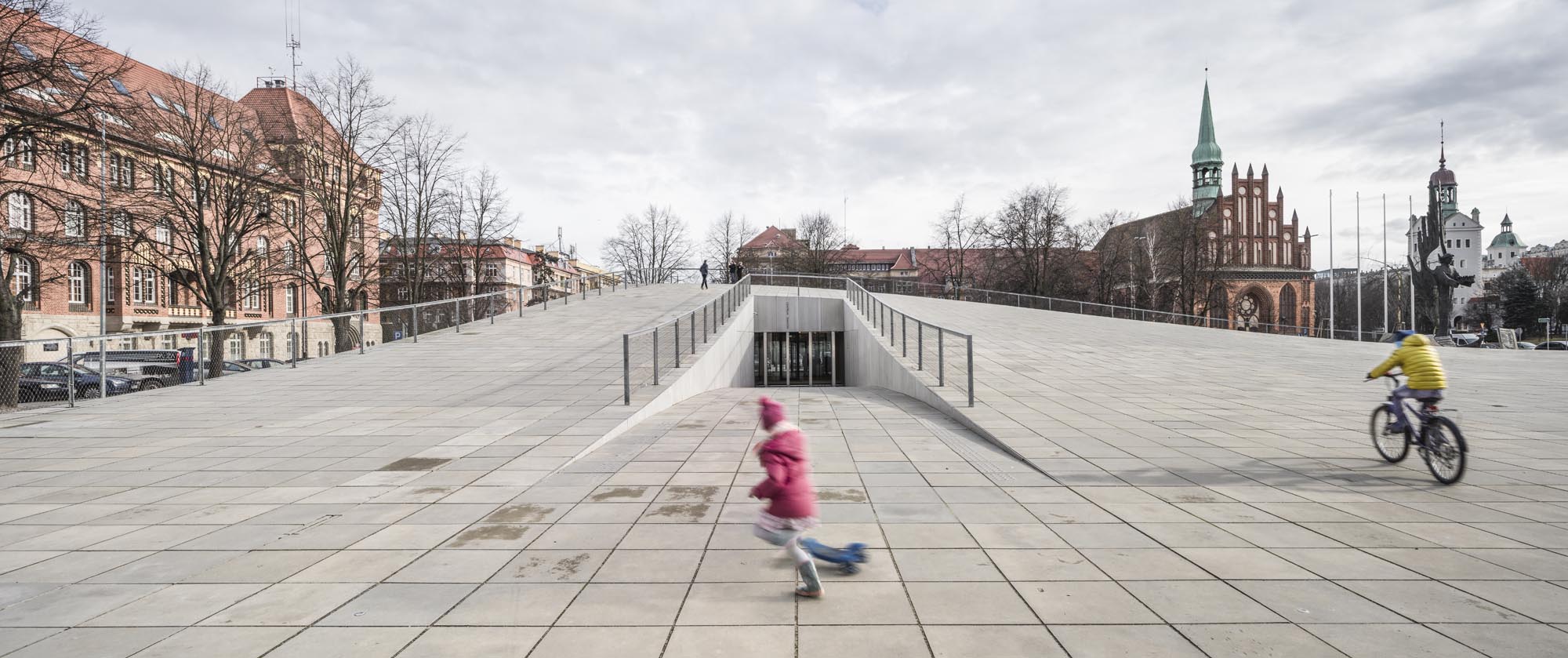
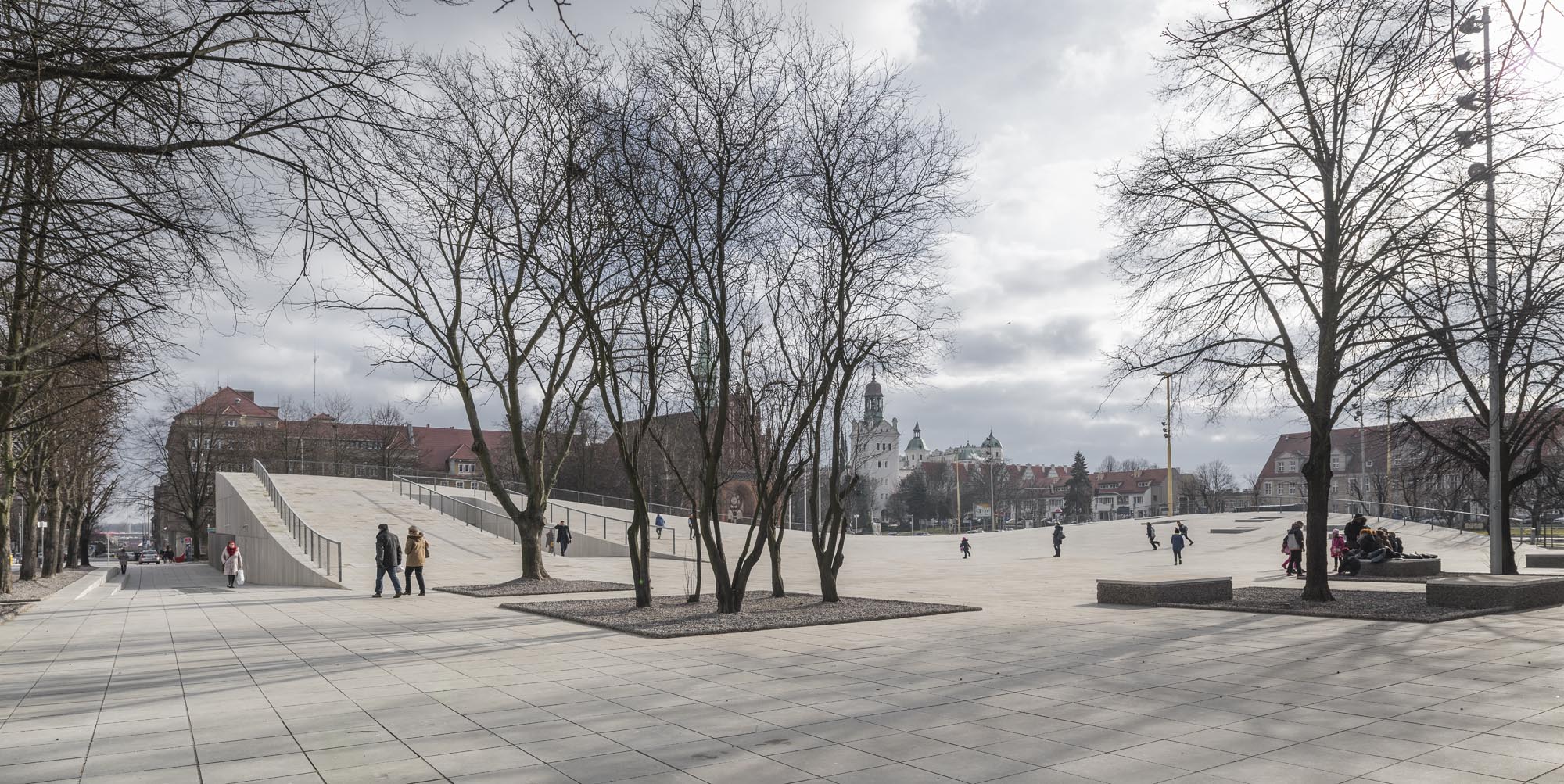
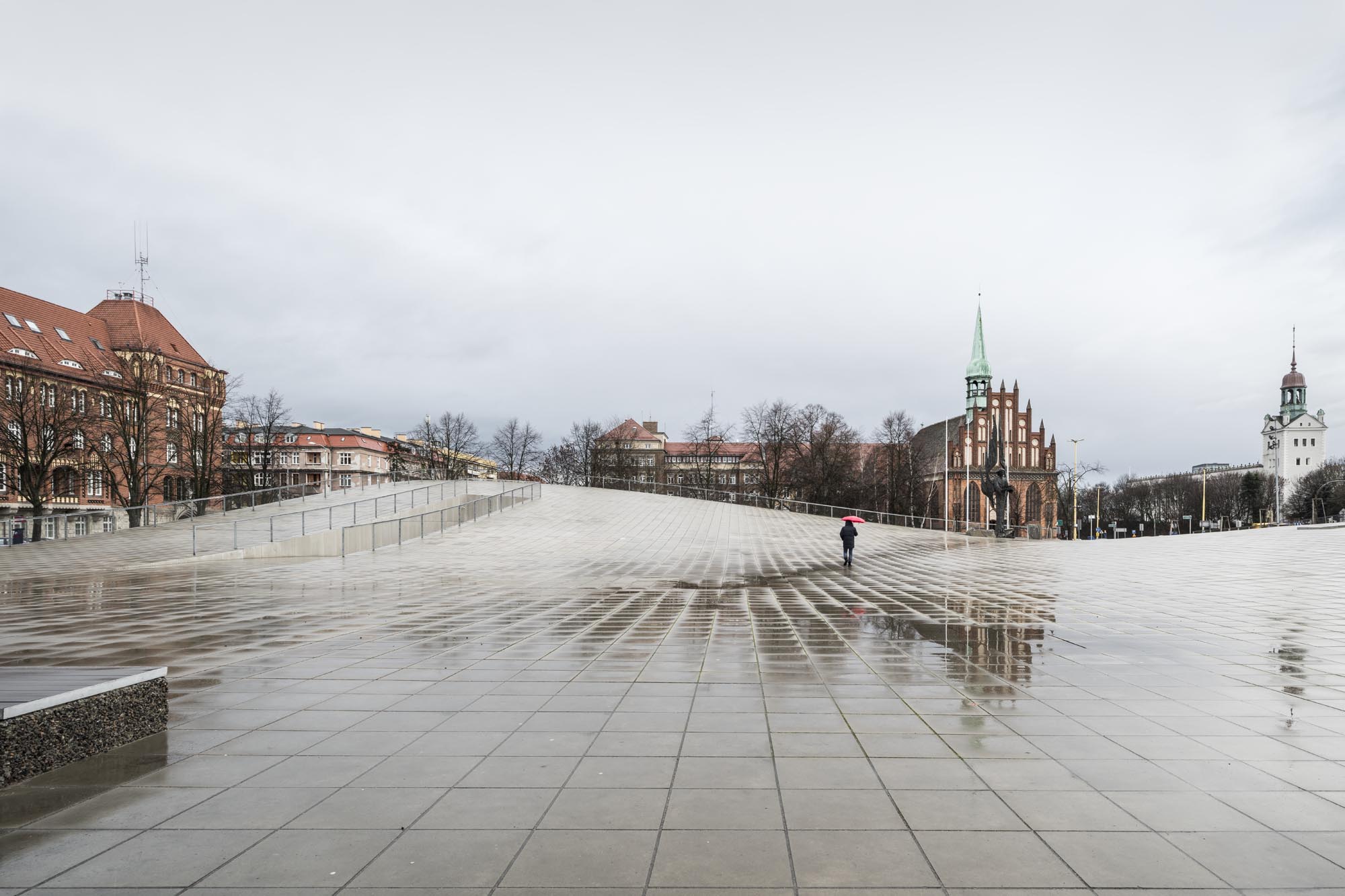
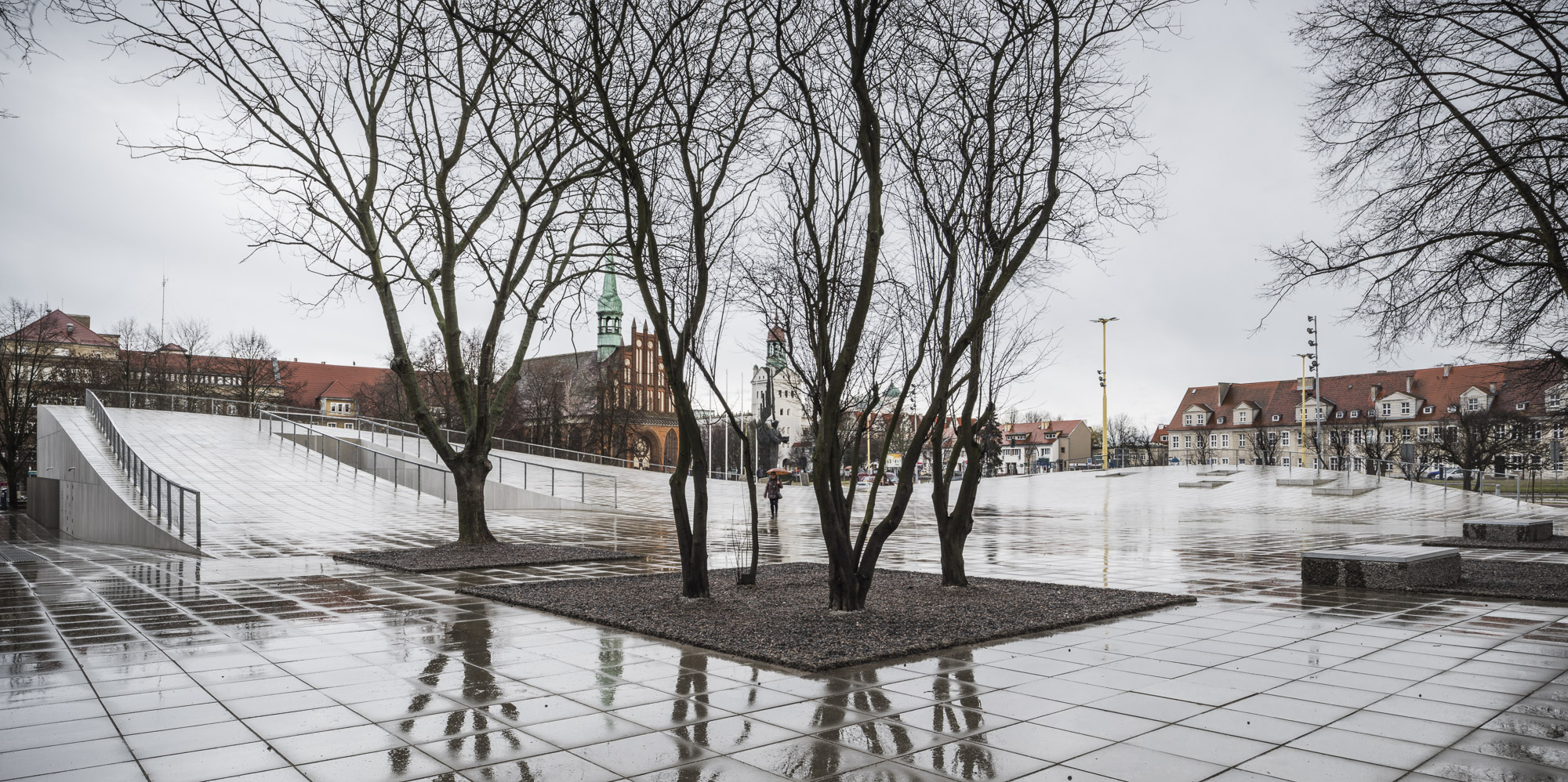
広場の平坦な部分は、フィルハーモニーホールや教会の前面に広がる前景を形成する。一方で街区は、対角線上に位置する角部をもち上げることで、広場の床を立ち上げるように形成されている。
その一方の立面に博物館が配置され、もう一方は人工の丘となって都市の内部空間を包み込み、賑やかな通りの喧騒から遮断している。ここには、建築と都市計画の間の明確な境界線は存在しない。
©︎ Juliusz Sokołowski
©︎ Juliusz Sokołowski
©︎ Juliusz Sokołowski
©︎ Juliusz Sokołowski
建築:構造とメカニズム(可動壁)
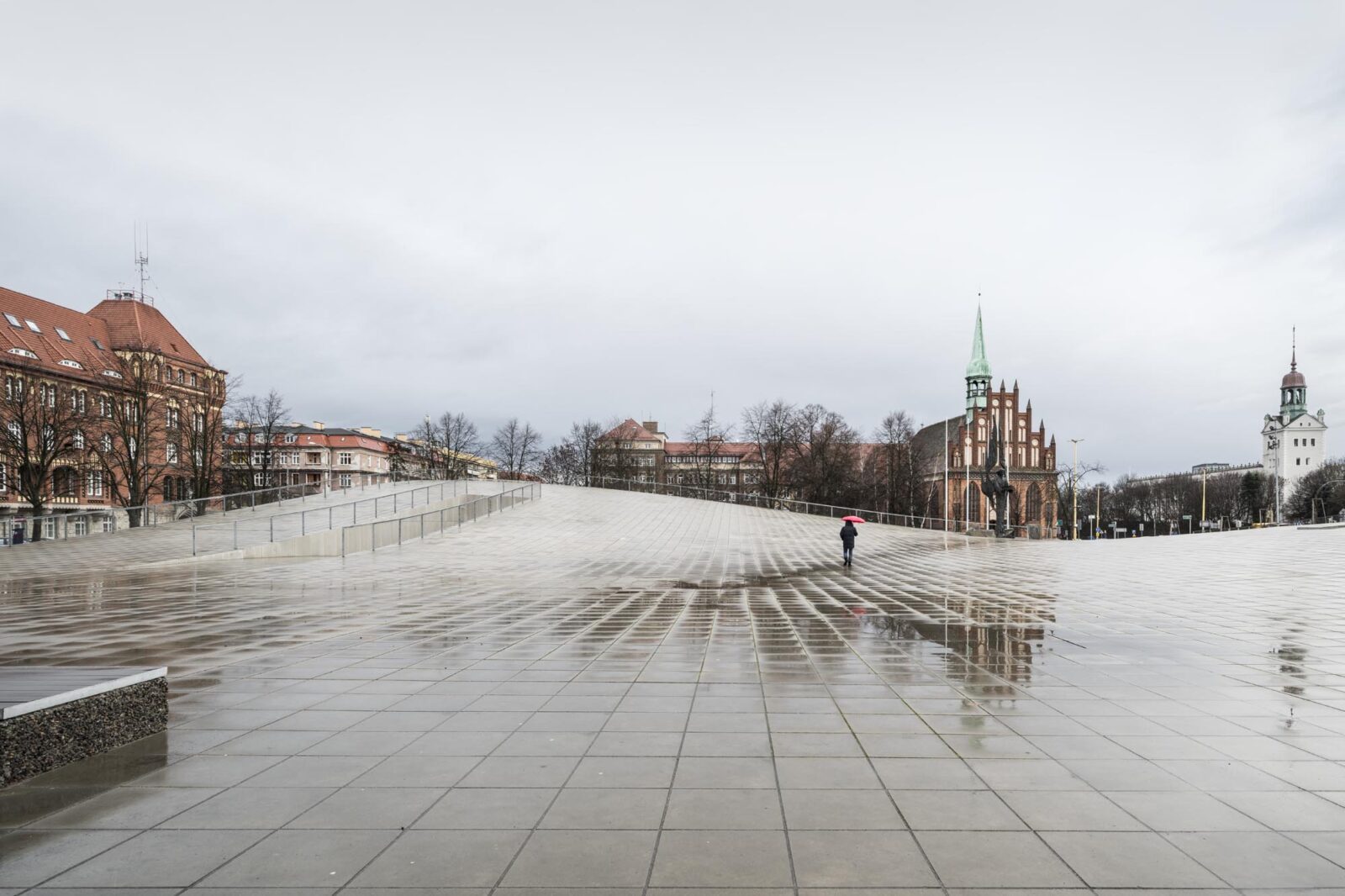
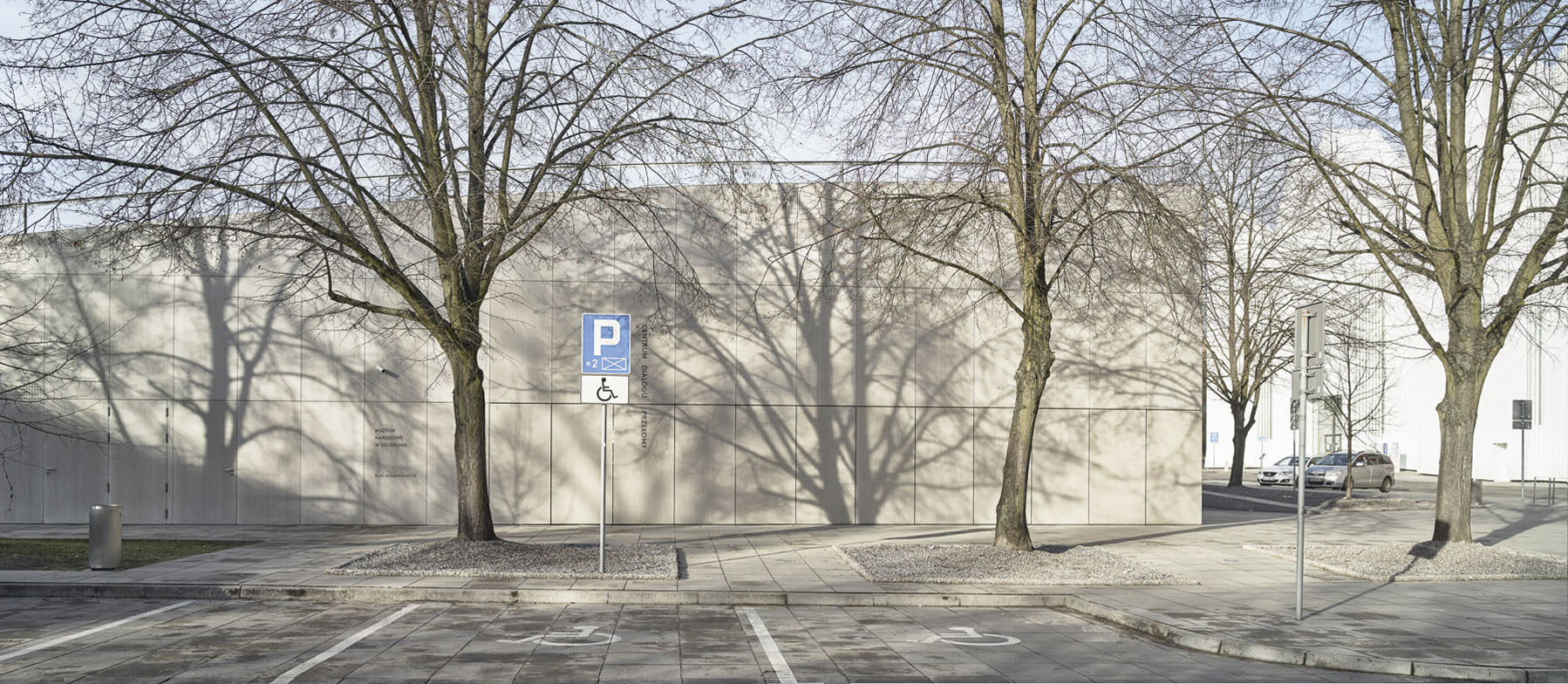
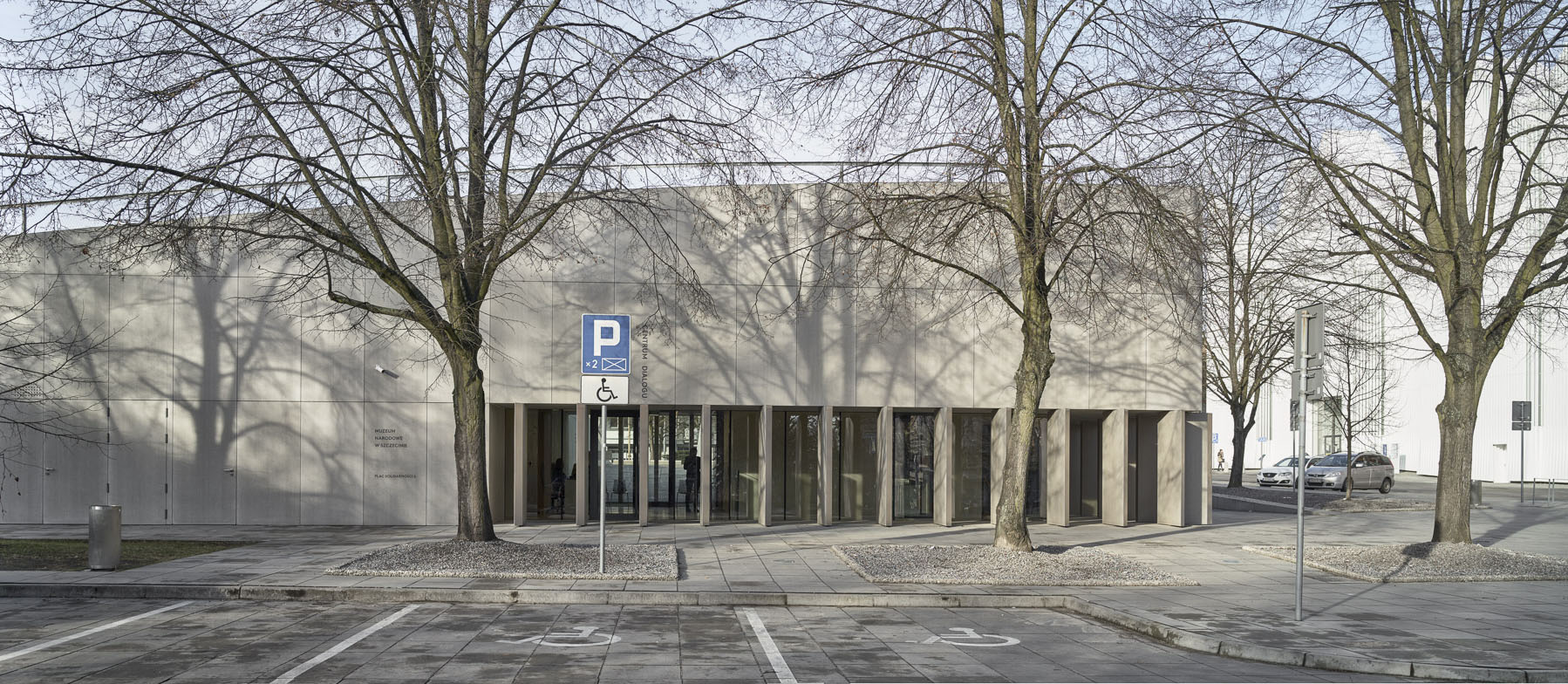
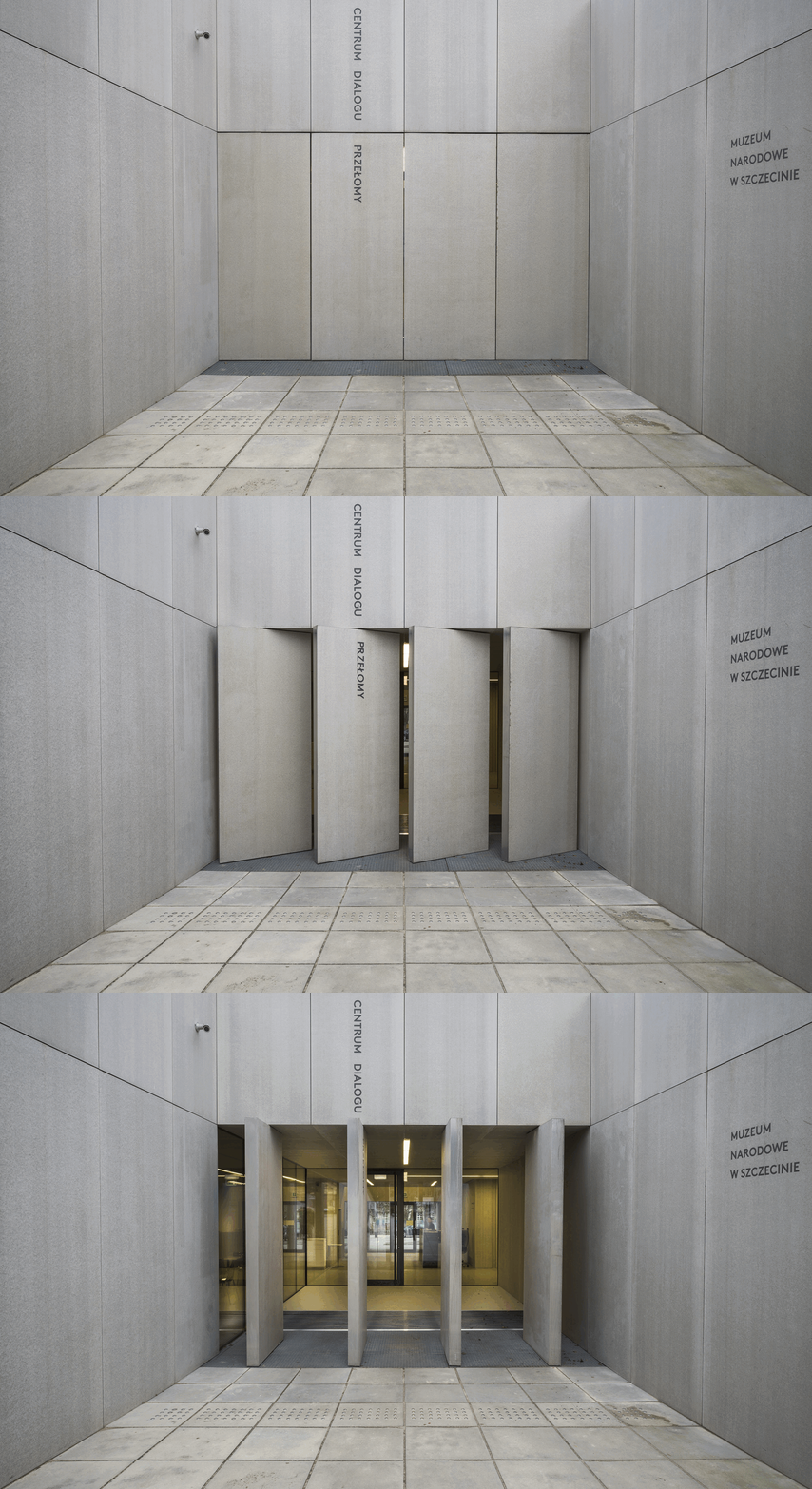
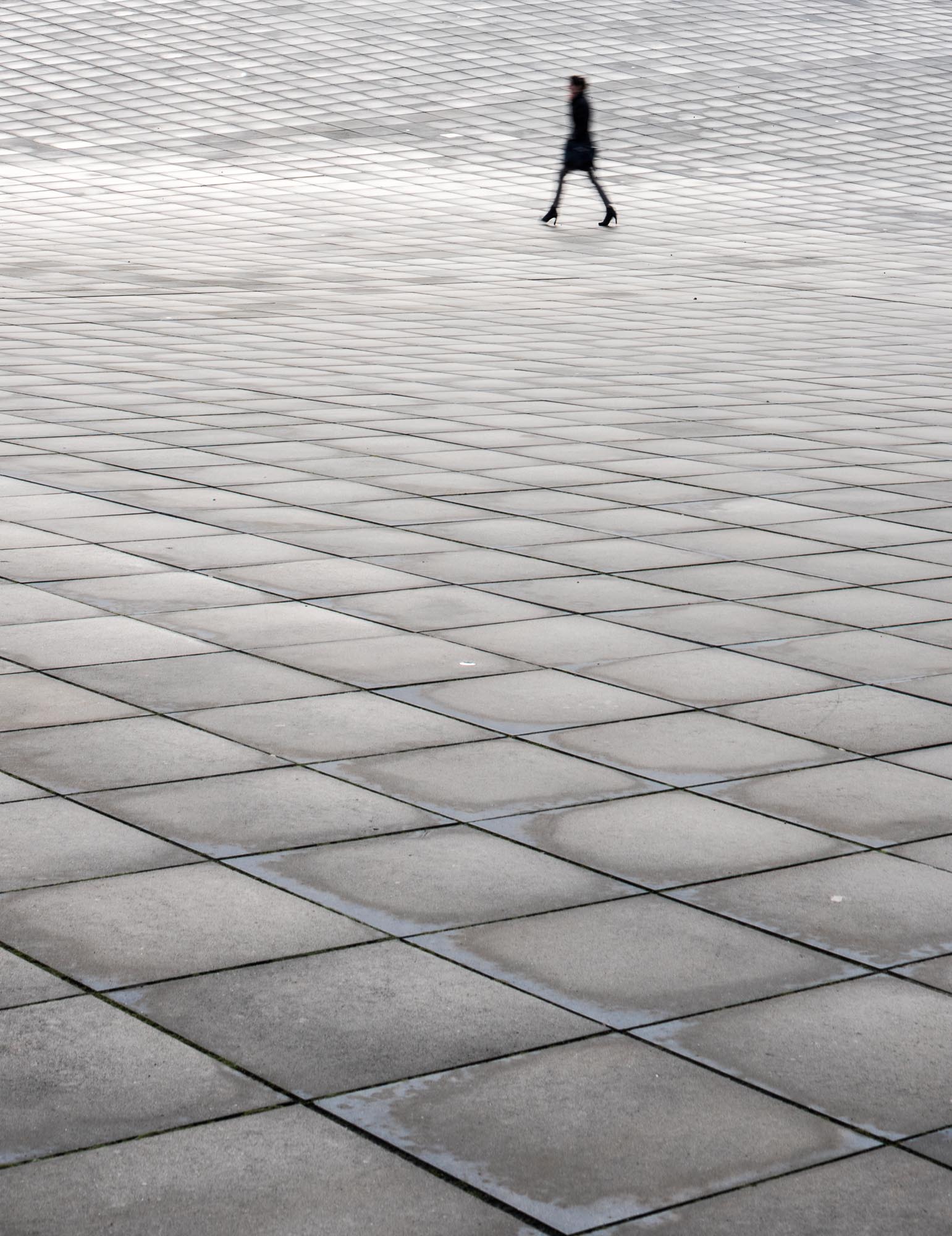
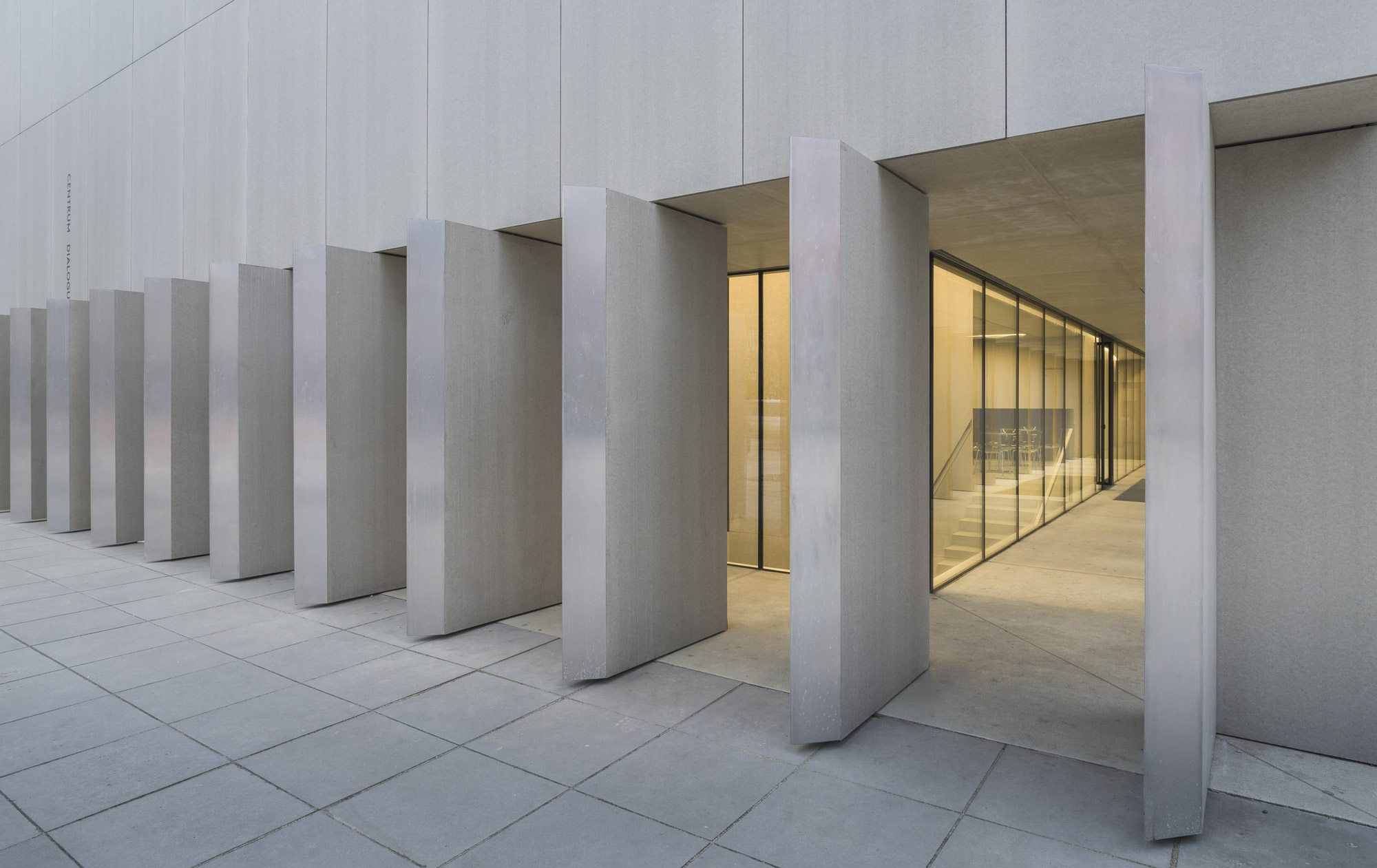
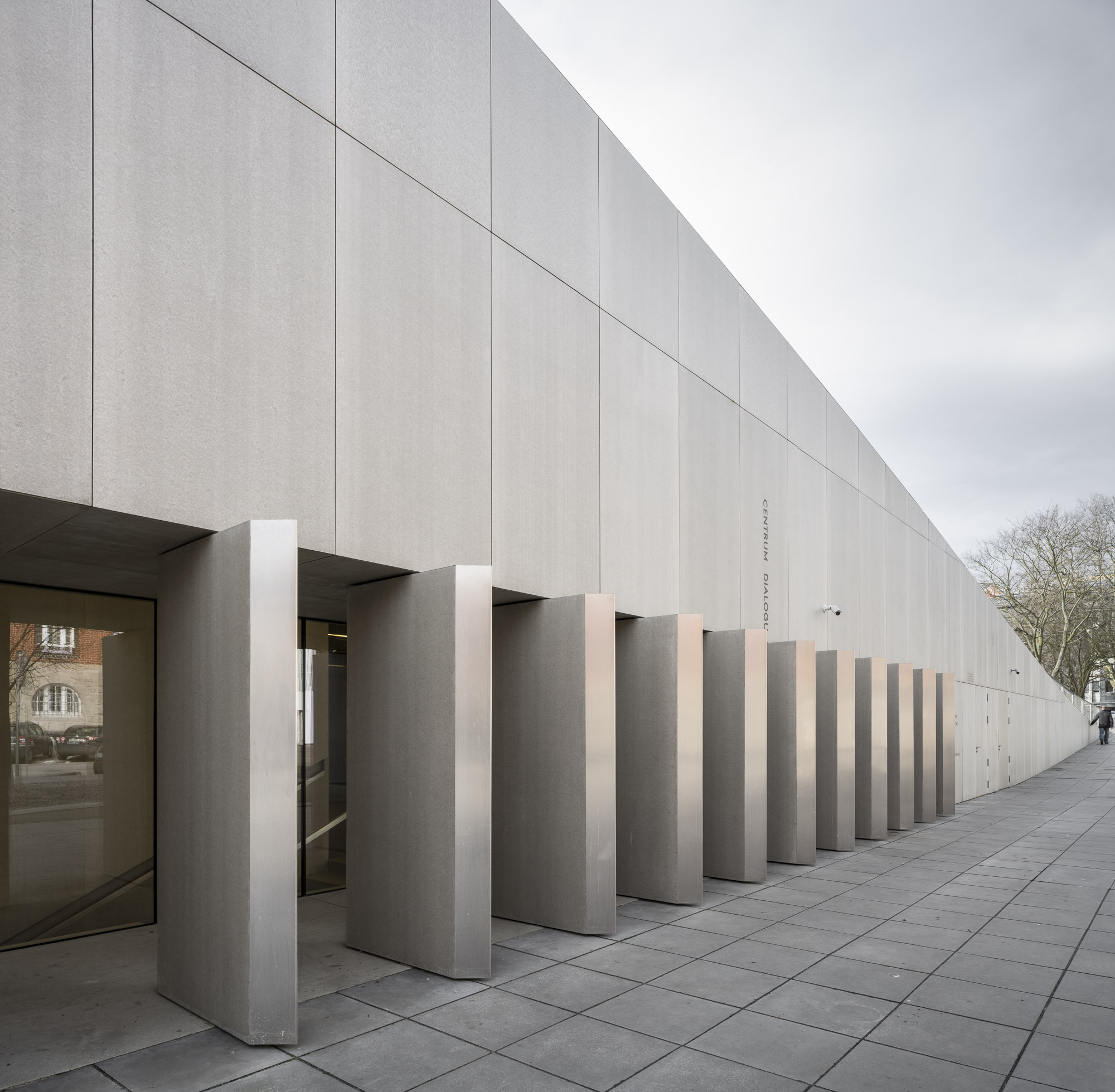
建築が地形に追従しているため、博物館の形態は長方形のタイルで覆われた広場のコンクリート床の延長となっている。盛り上がった角部では、これらのタイルが3次元の厚みを獲得し、直方体のブロックへと変化する。
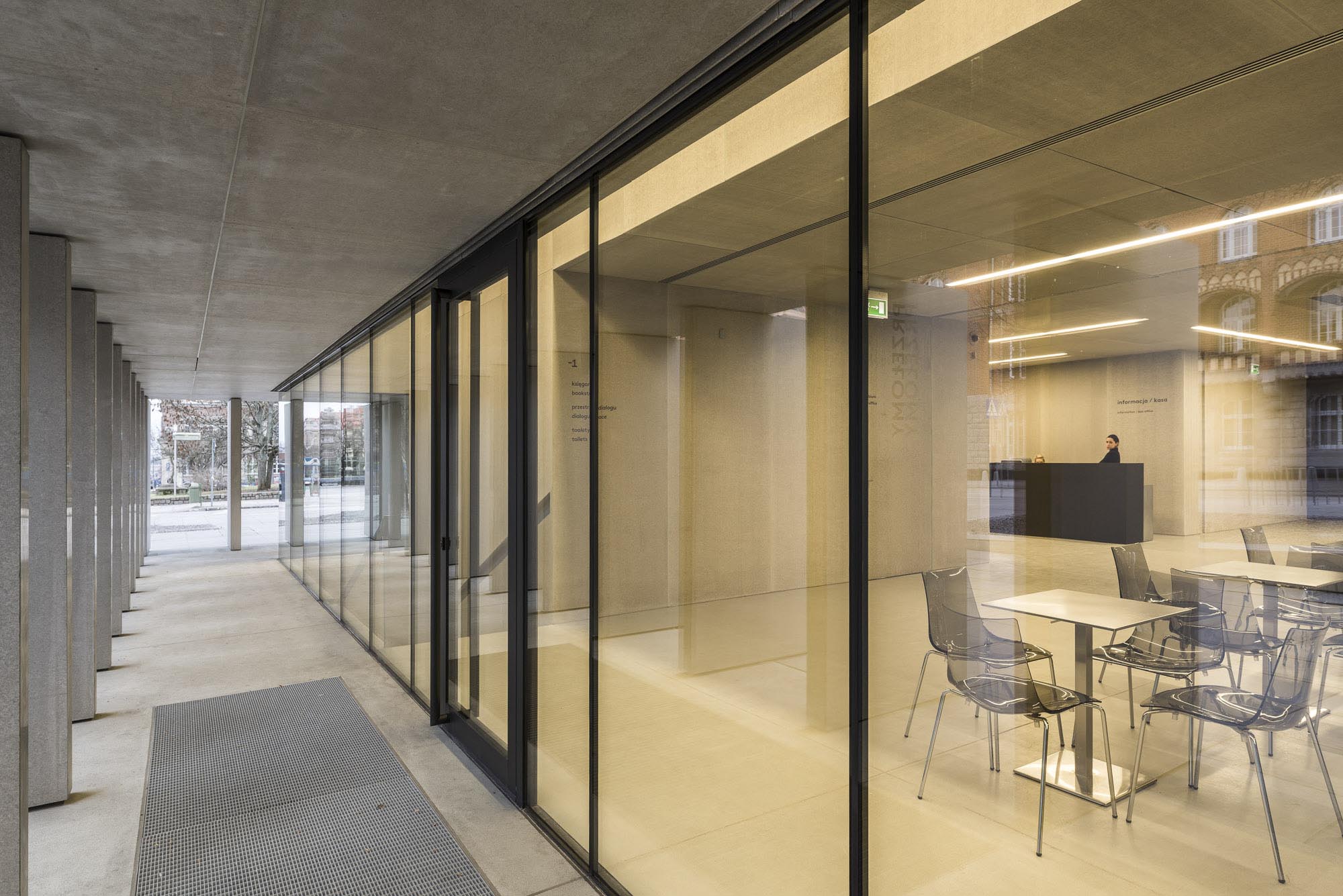
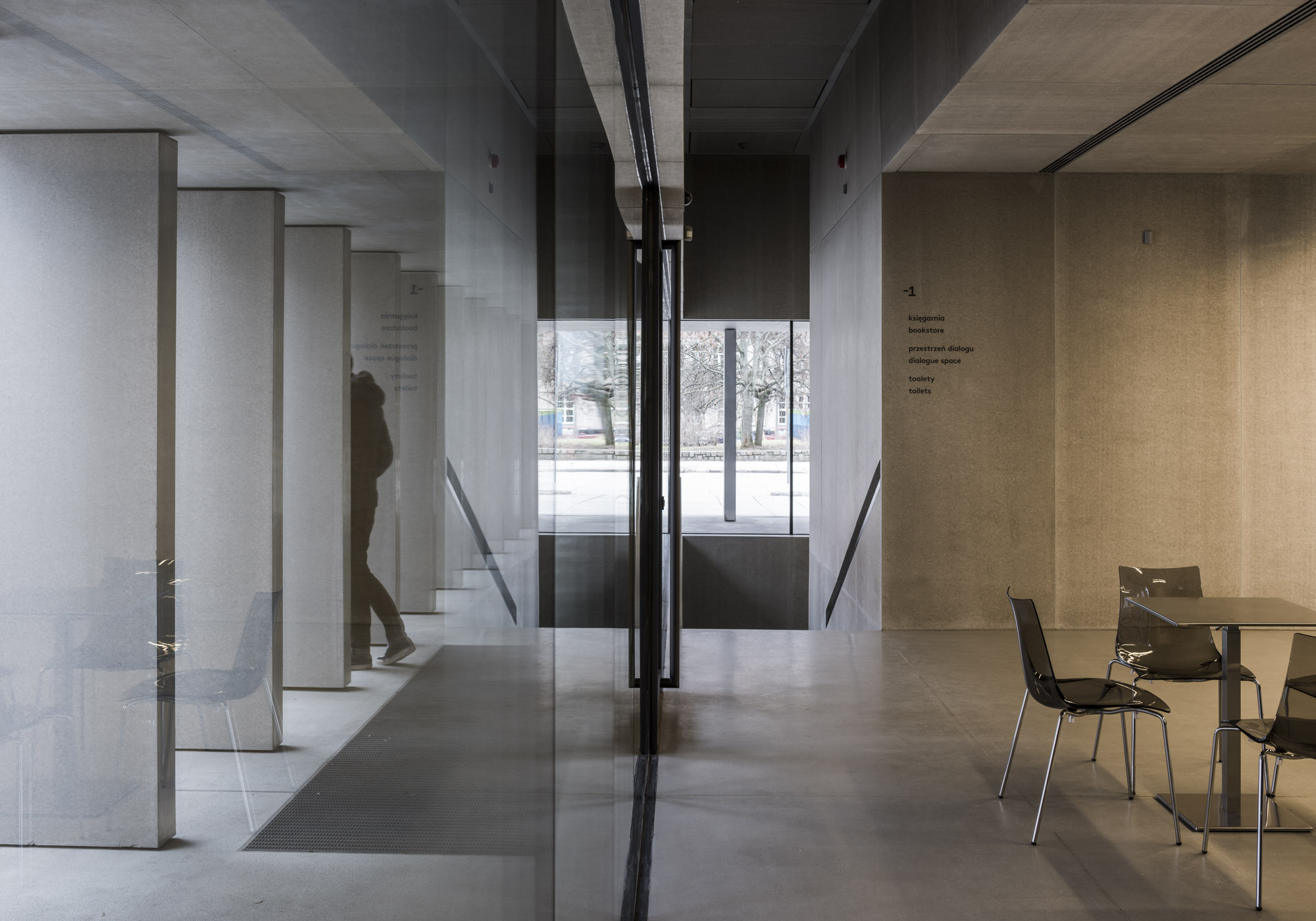
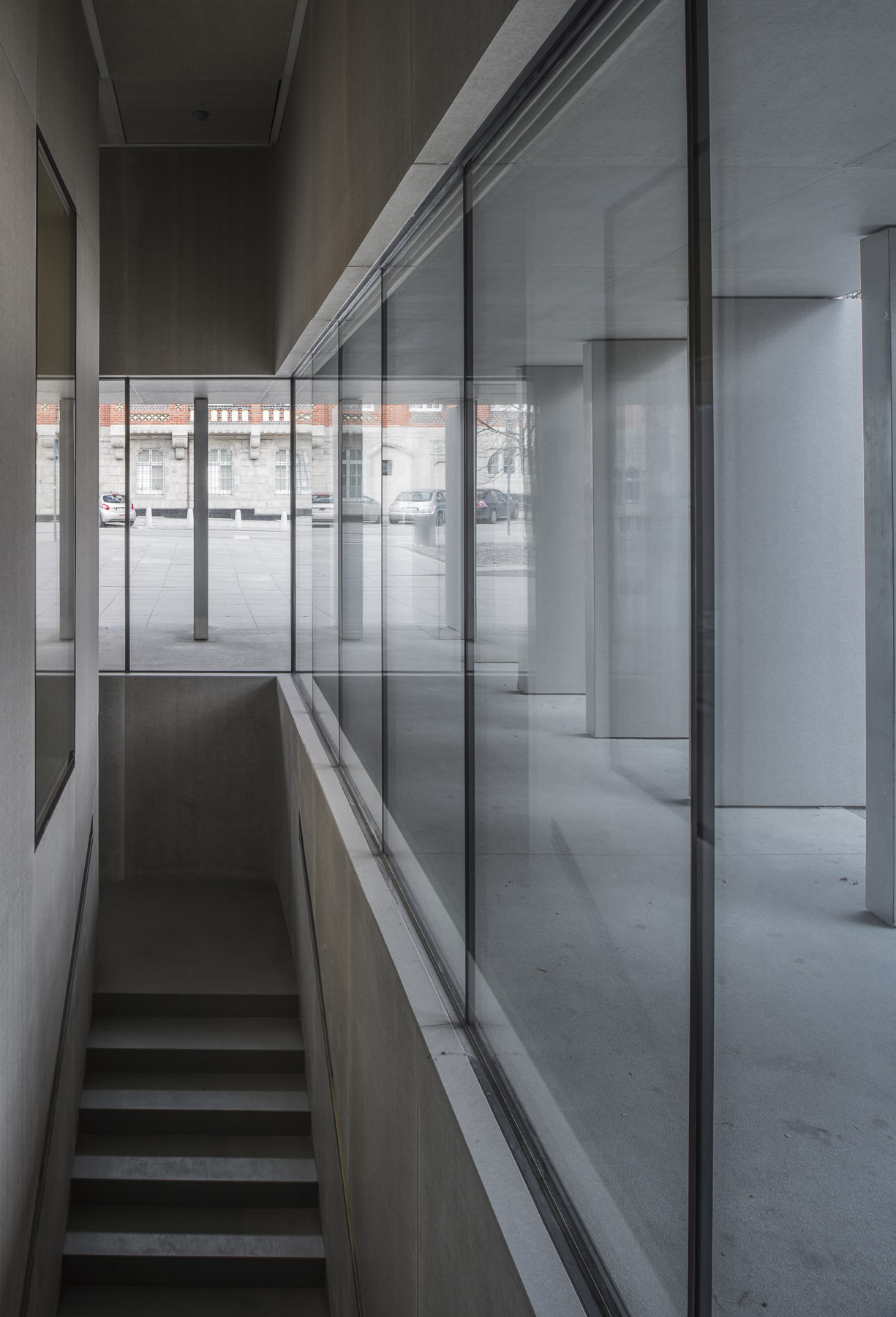
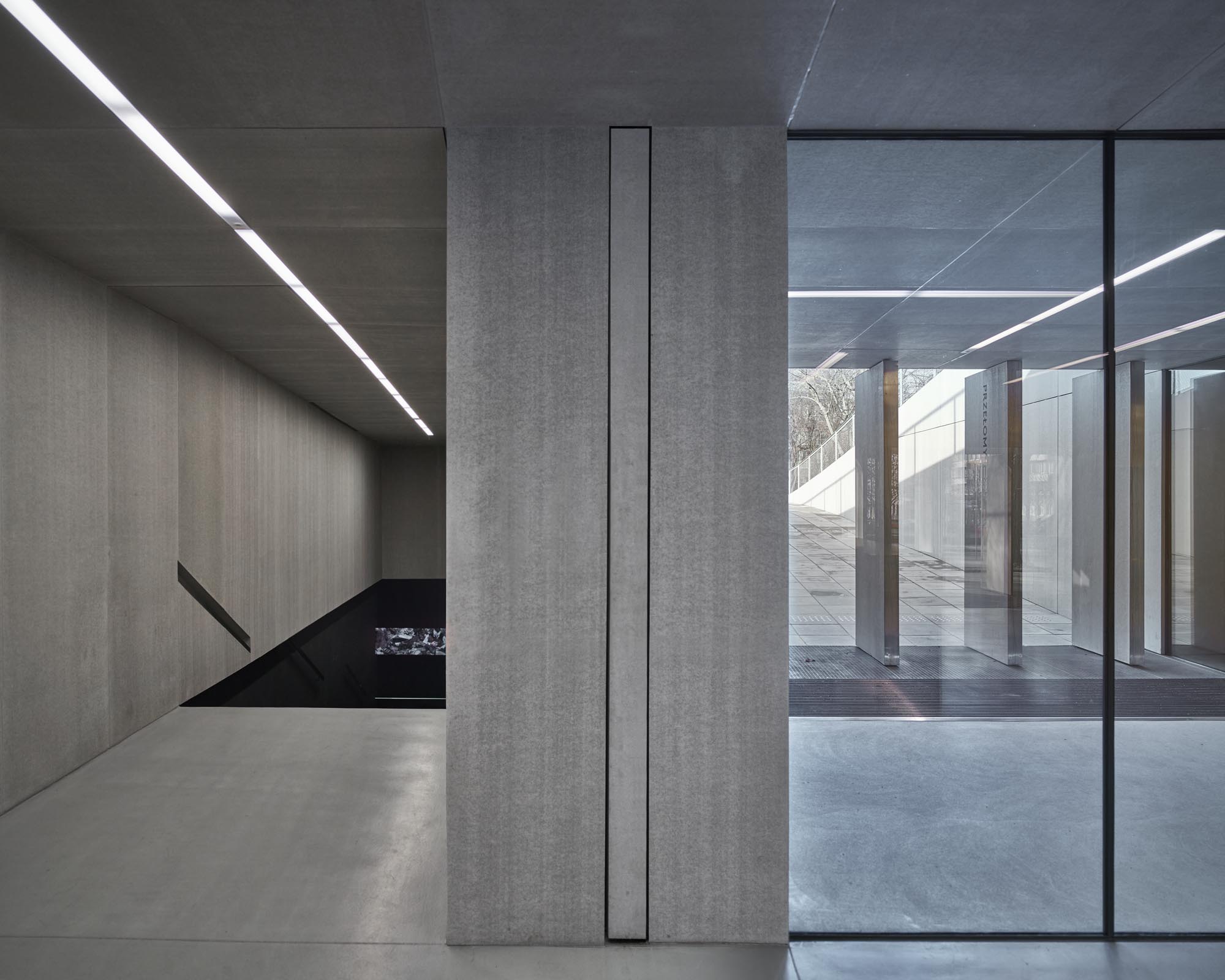
全体は一枚岩のような構造を成しているが、博物館が開館するとその姿を変貌させる。一部の垂直プレートが回転してアーケードを形成し、2つの入口を現すのである。3つ目の入口は、広場の曲線に沿って切り込まれたスロープによって形成される。1階は広場の延長であり、エントランスホールとして機能する。
©︎ Jakub Certowicz
©︎ Jakub Certowicz
©︎ Juliusz Sokołowski
©︎ Juliusz Sokołowski
展覧会:芸術が語る歴史
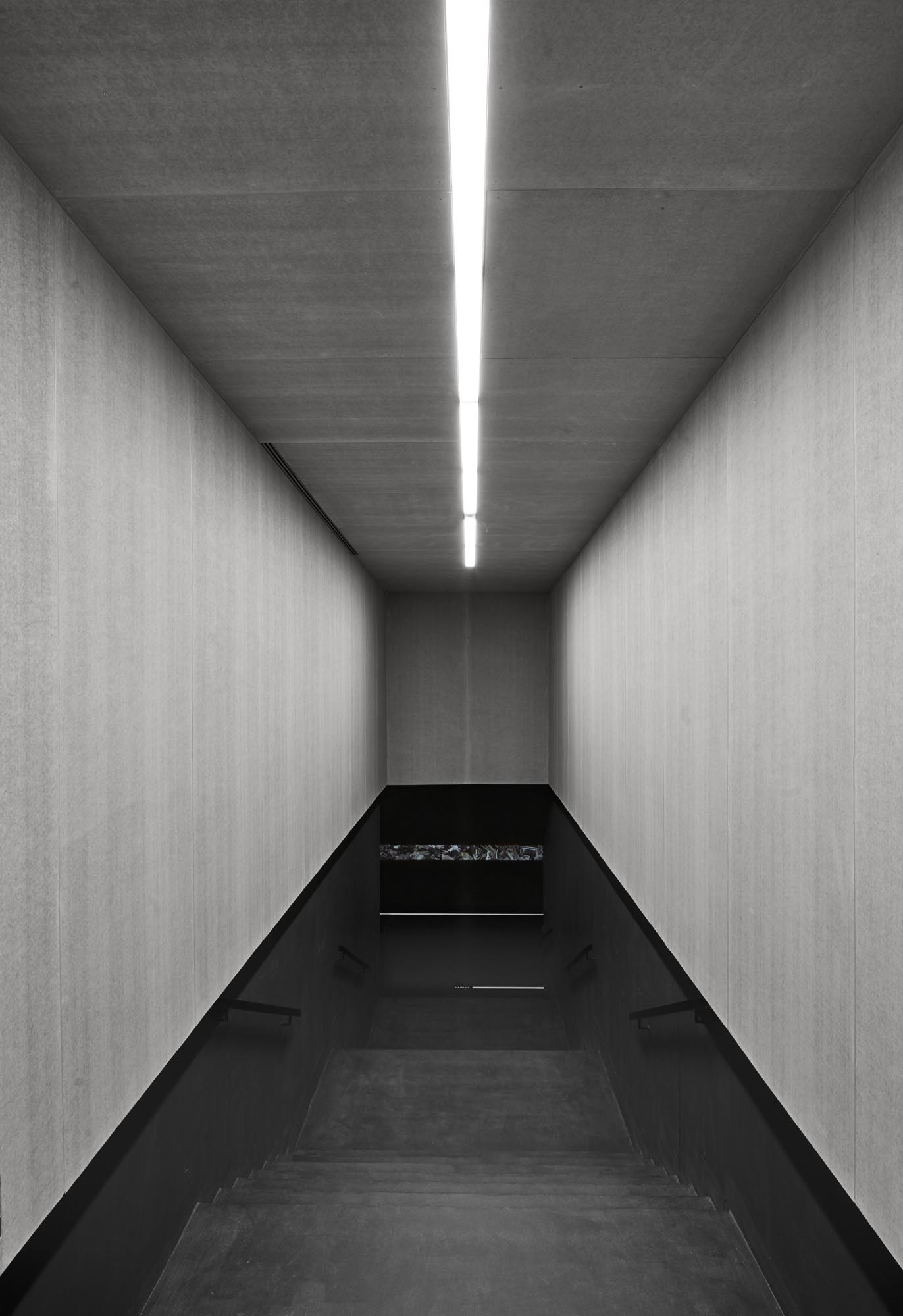
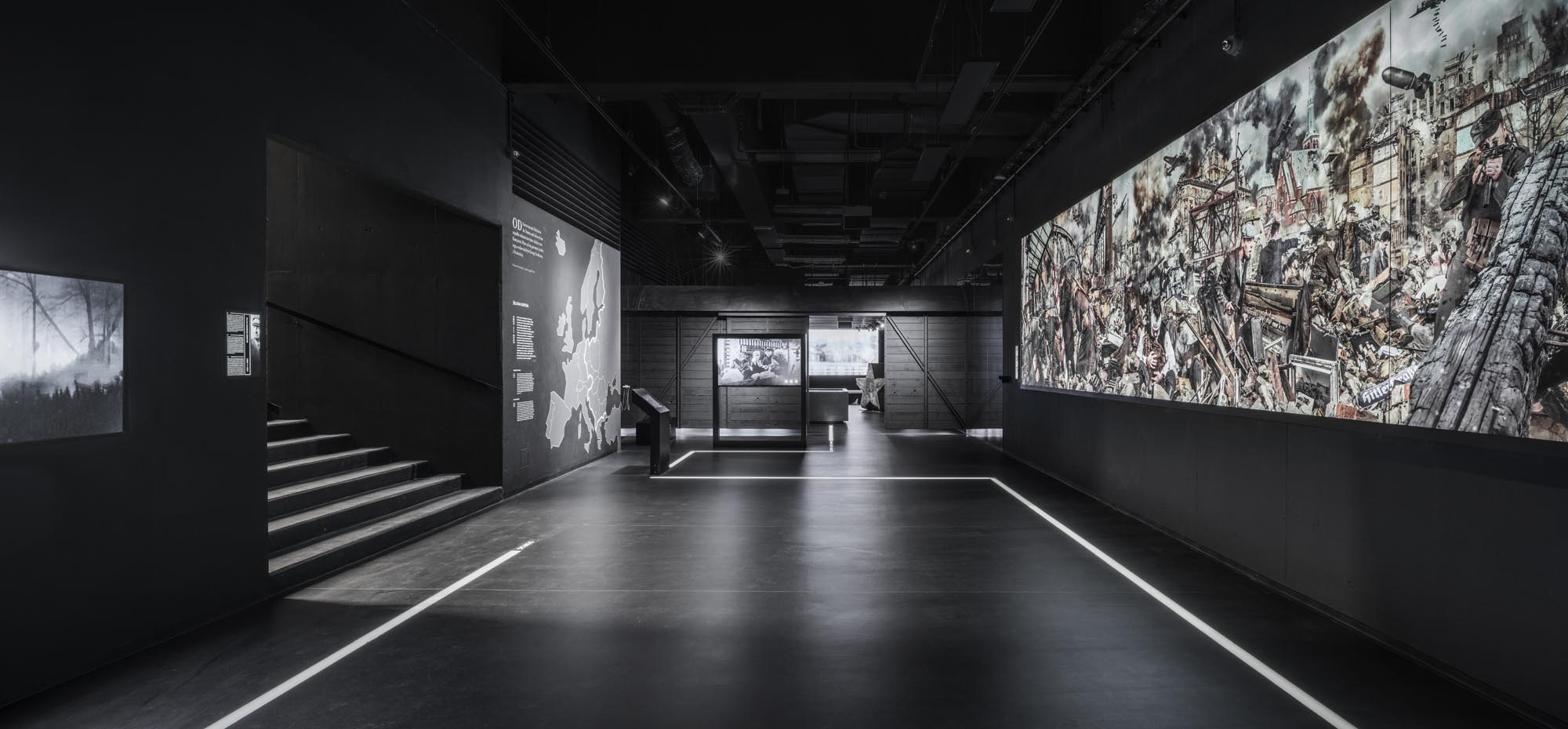
展示スペースは地下に隠されている。階段を下りるとコンクリートの床は途切れ、私たちは暗闇に包まれる。その暗闇は、第二次世界大戦以降のシュチェチンの物語の背景となり、ポーランド国内、そして世界中で起こっていた出来事とのつながりを描き出す。
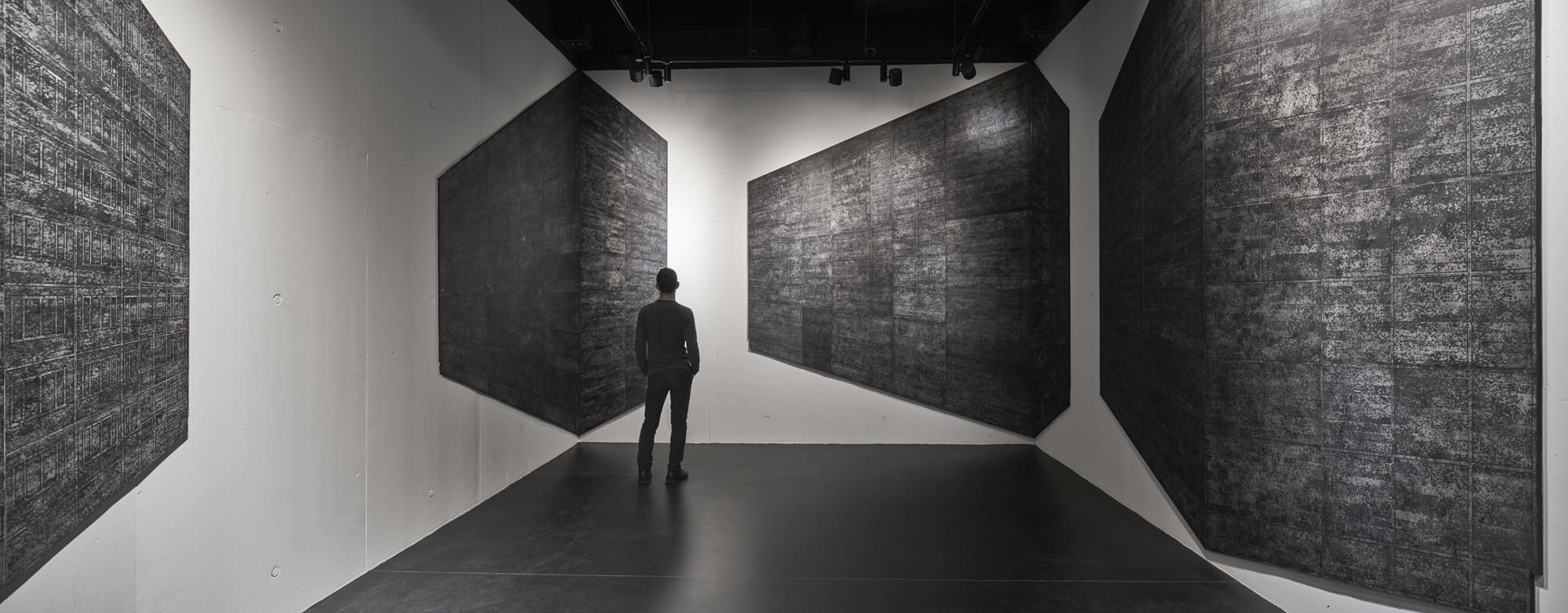
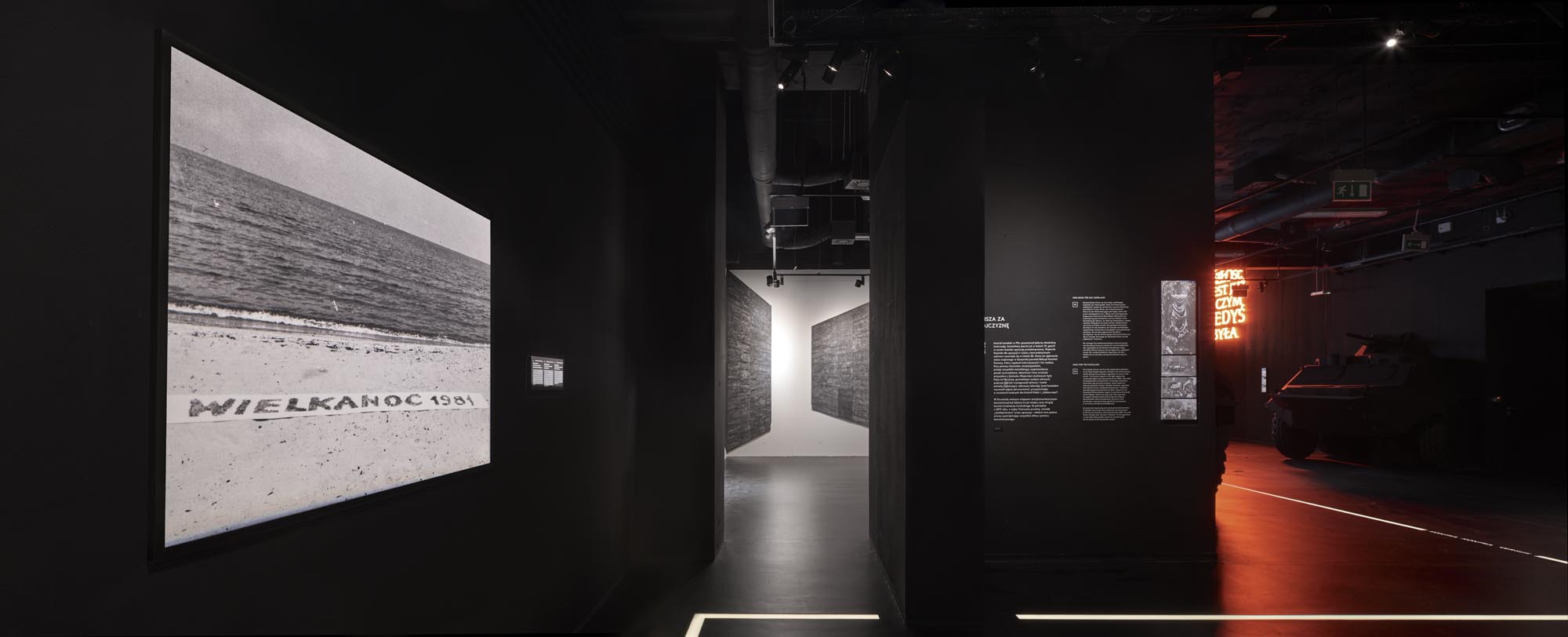
純粋な情報に基づく歴史展示と並行して、アーティストの傑作によって紡がれる物語を付け加えている。これには、博物館が開館するはるか以前から存在していた作品もあれば、この会場のために意図的に制作された作品も含まれる。
このようなアプローチにより、展示はより広範で普遍的なものとなった。暗闇は、無限の空間という印象を与えながら、展示されたオブジェクトへの集中を可能にする。この全く新しい展示の形式により、歴史博物館であると同時に美術館にもなっている。
©︎ Juliusz Sokołowski
©︎ Juliusz Sokołowski
©︎ Juliusz Sokołowski
©︎ Jakub Certowicz
©︎ Jakub Certowicz
©︎ Juliusz Sokołowski
©︎ Jakub Certowicz
©︎ Jakub Certowicz
広場:社会的交流を促す地形
かつて、この広場は単に歴史を記念するだけの場所であった。しかし再開発の結果、この都市の一角は、今もここに暮らす住民にとっても魅力的な場所へと生まれ変わった。その開放的な構成は、利用者が自らの存在感を表現することを促している。
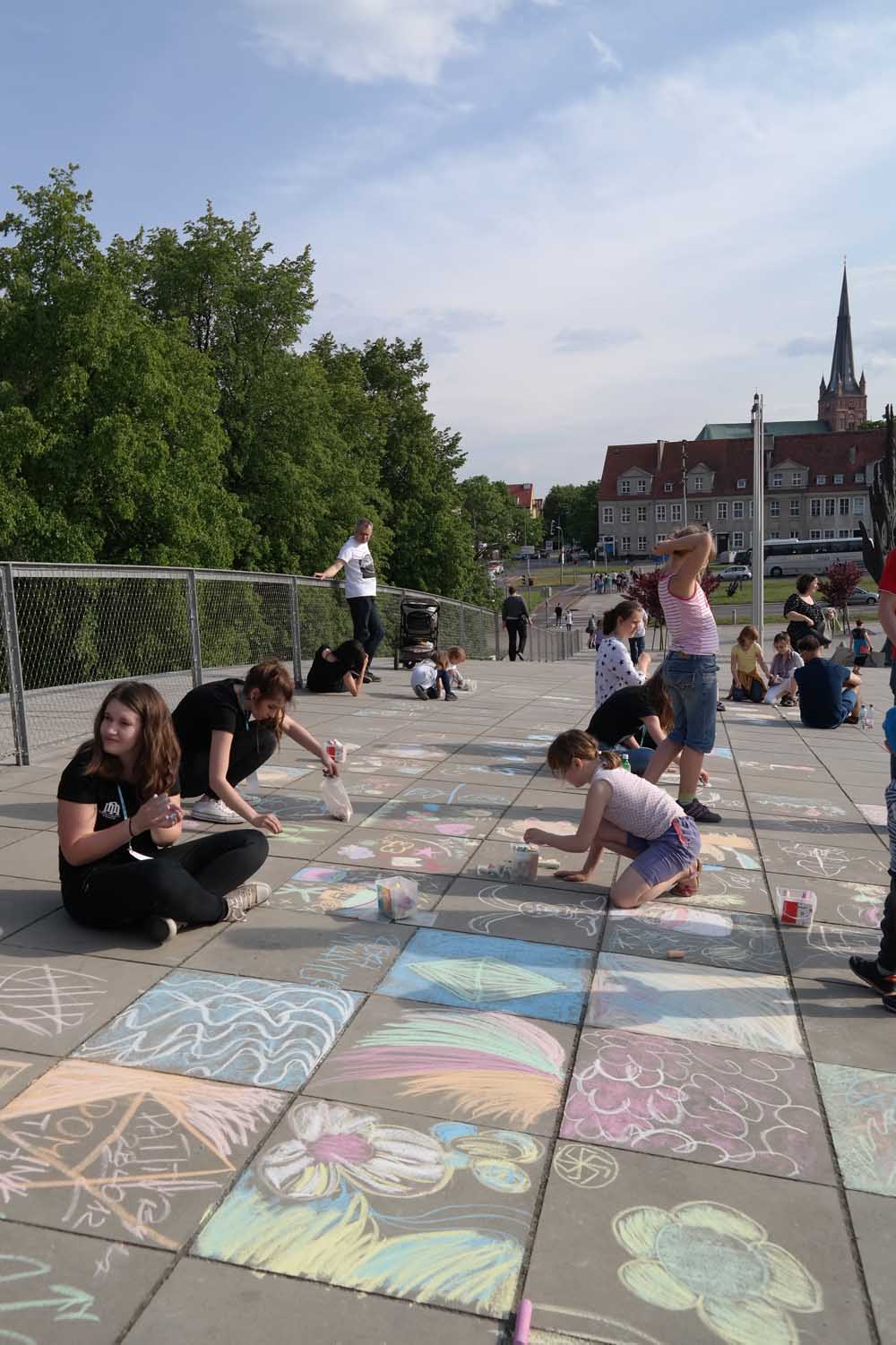
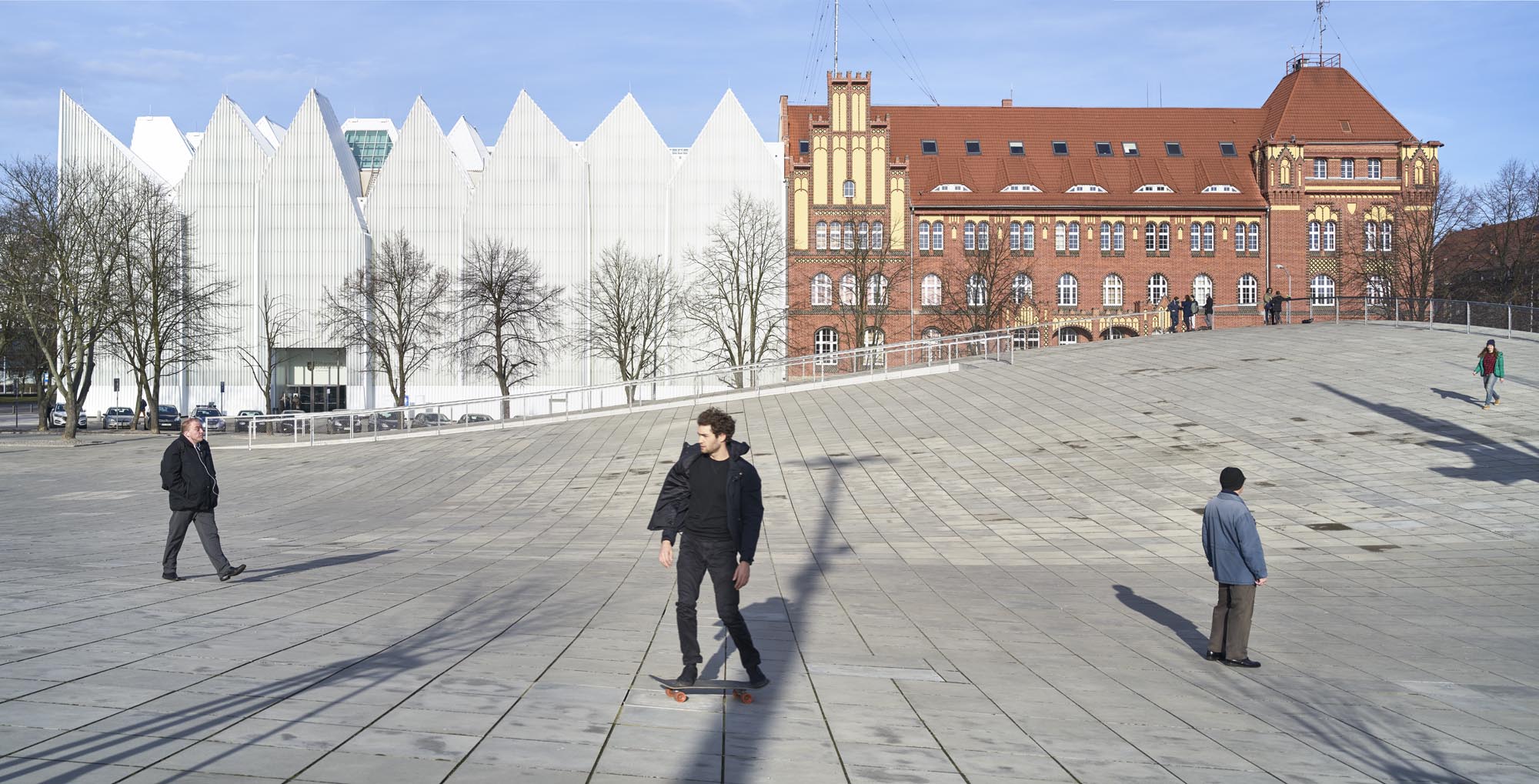
人工の丘は、都市の新たな景観を発見する機会を提供し、散策を誘い、日光浴へと人々を導く。傾斜した床はさまざまなアクティビティを誘発し、スケートボーダーにとっては練習に最適な場所となる。
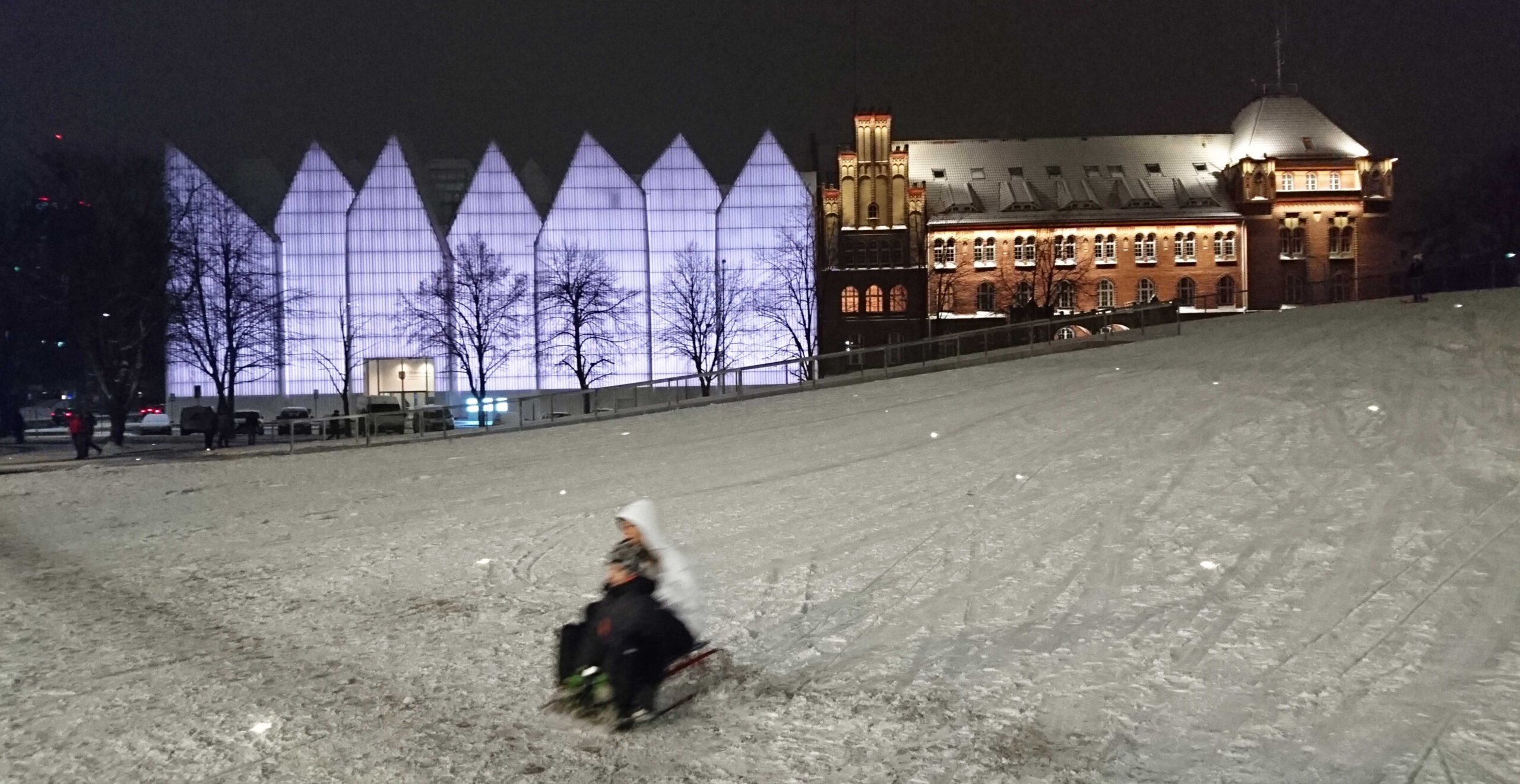
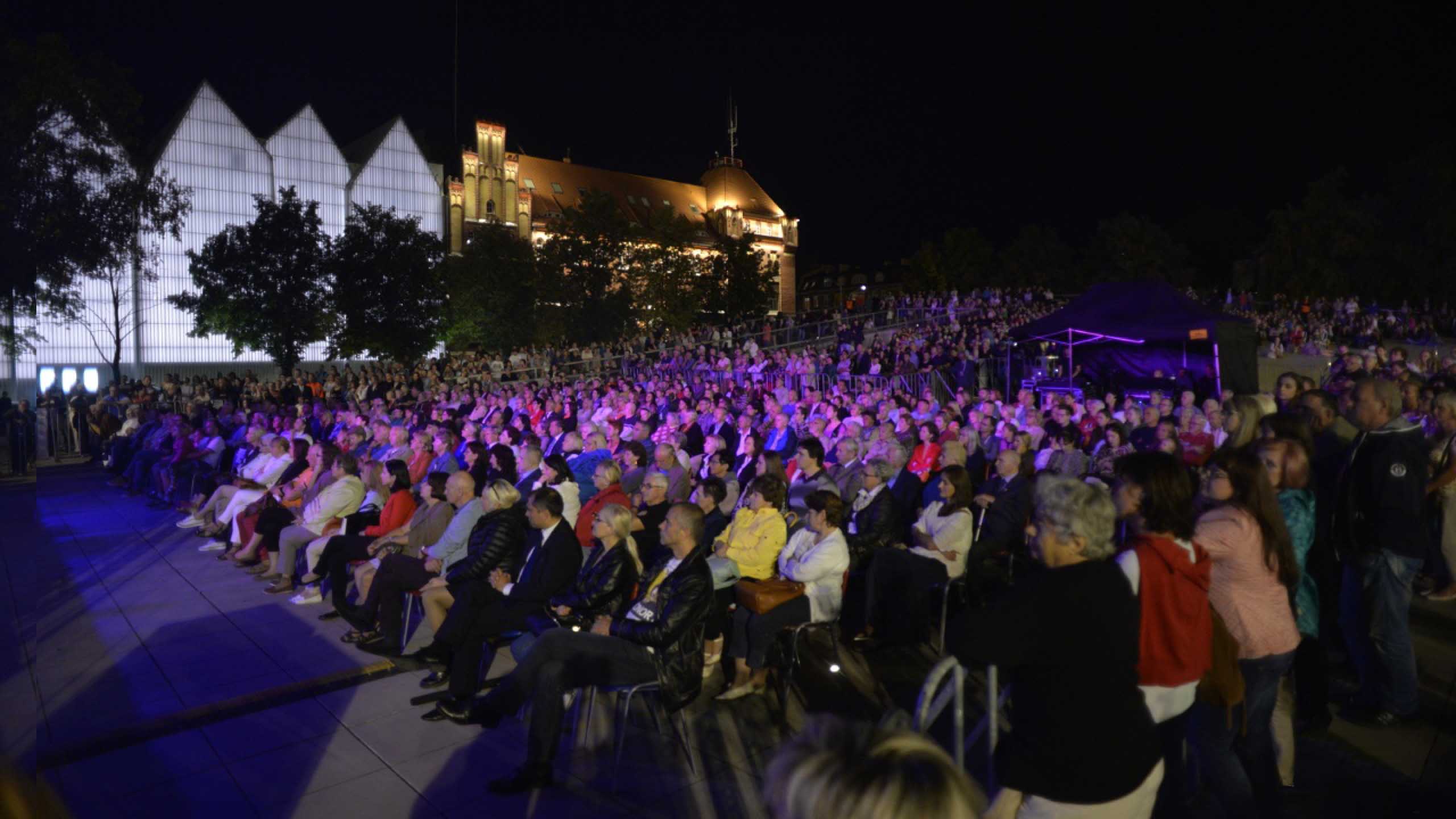
冬には、広場はそり滑りのコースとしても機能する。この広場は、記念碑が毎年行われる祝賀行事で今も退役軍人を惹きつけているように、象徴的な側面も残している。とはいえ、それがもはや支配的な要素ではない。今日、この都市空間は、異なる年齢層や社会集団が友好的に共存する場所となっている。
©︎ KWK PROMES
Piotr Rakowski
©︎ Magdalena Kotelon
©︎ Jakub Certowicz
©︎ Juliusz Sokołowski
©︎ Juliusz Sokołowski
©︎ Juliusz Sokołowski
©︎ Juliusz Sokołowski
©︎ Juliusz Sokołowski
©︎ Juliusz Sokołowski
©︎ Juliusz Sokołowski
©︎ Juliusz Sokołowski
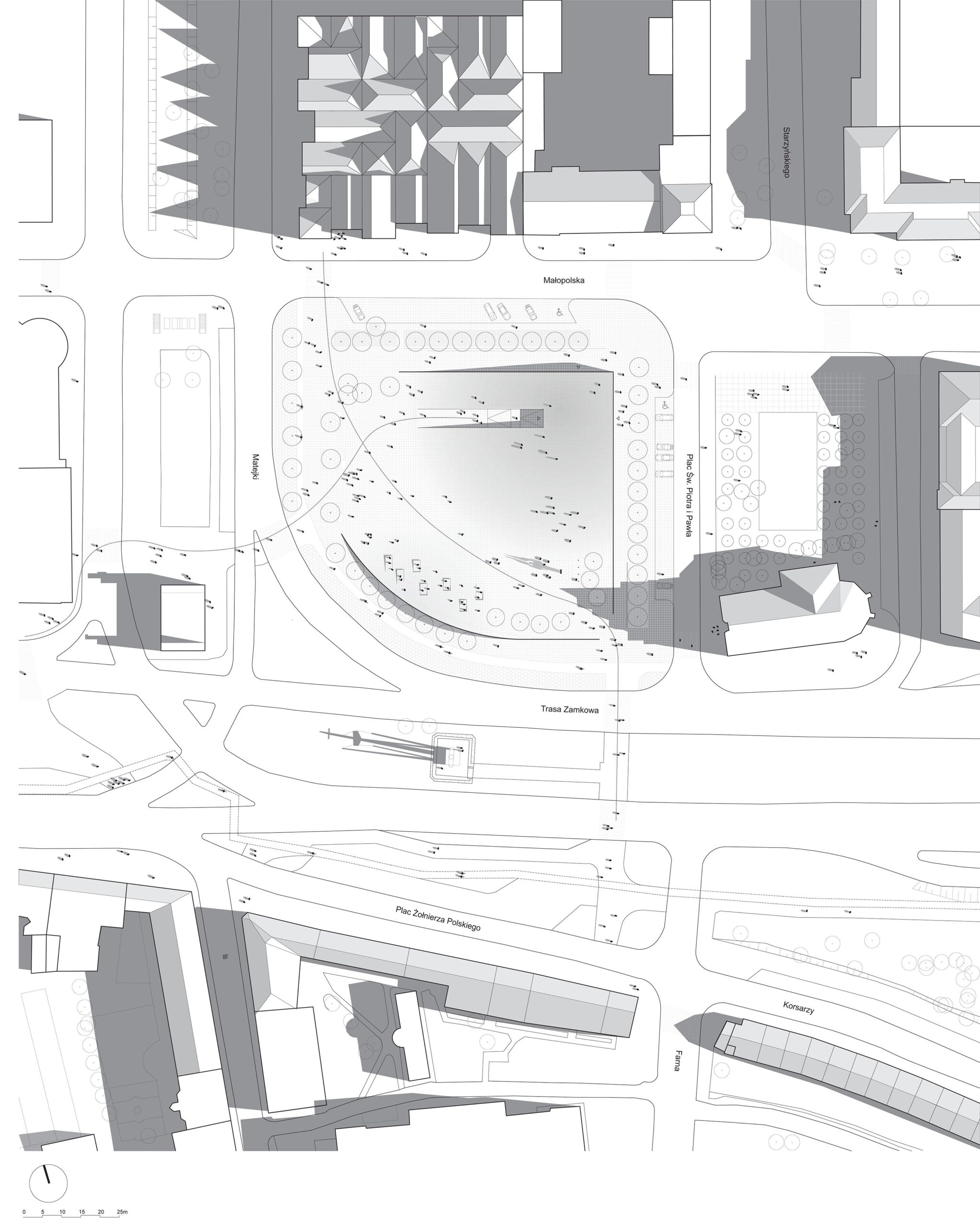
Site Plan
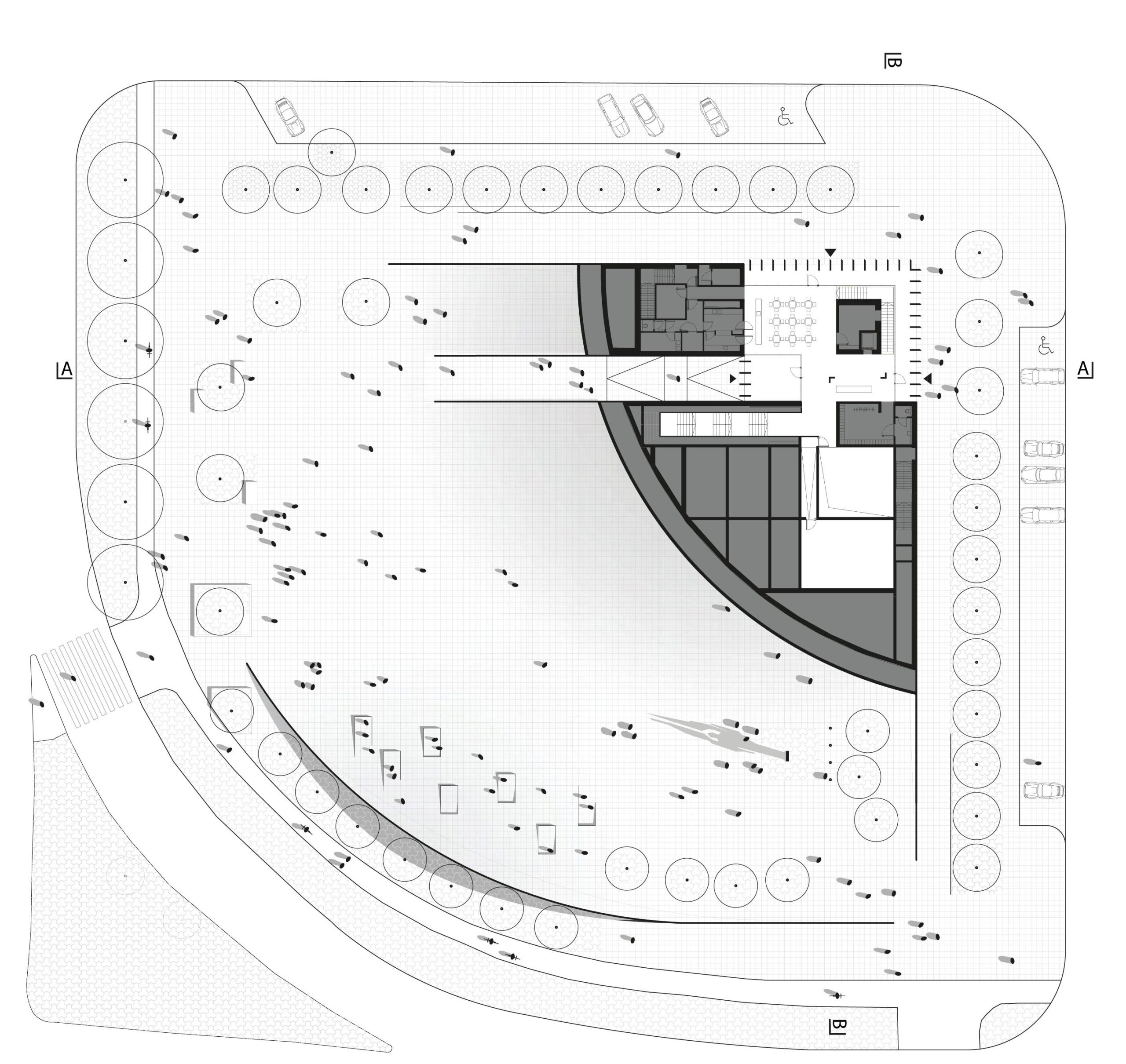
Level 0 Extension of the square
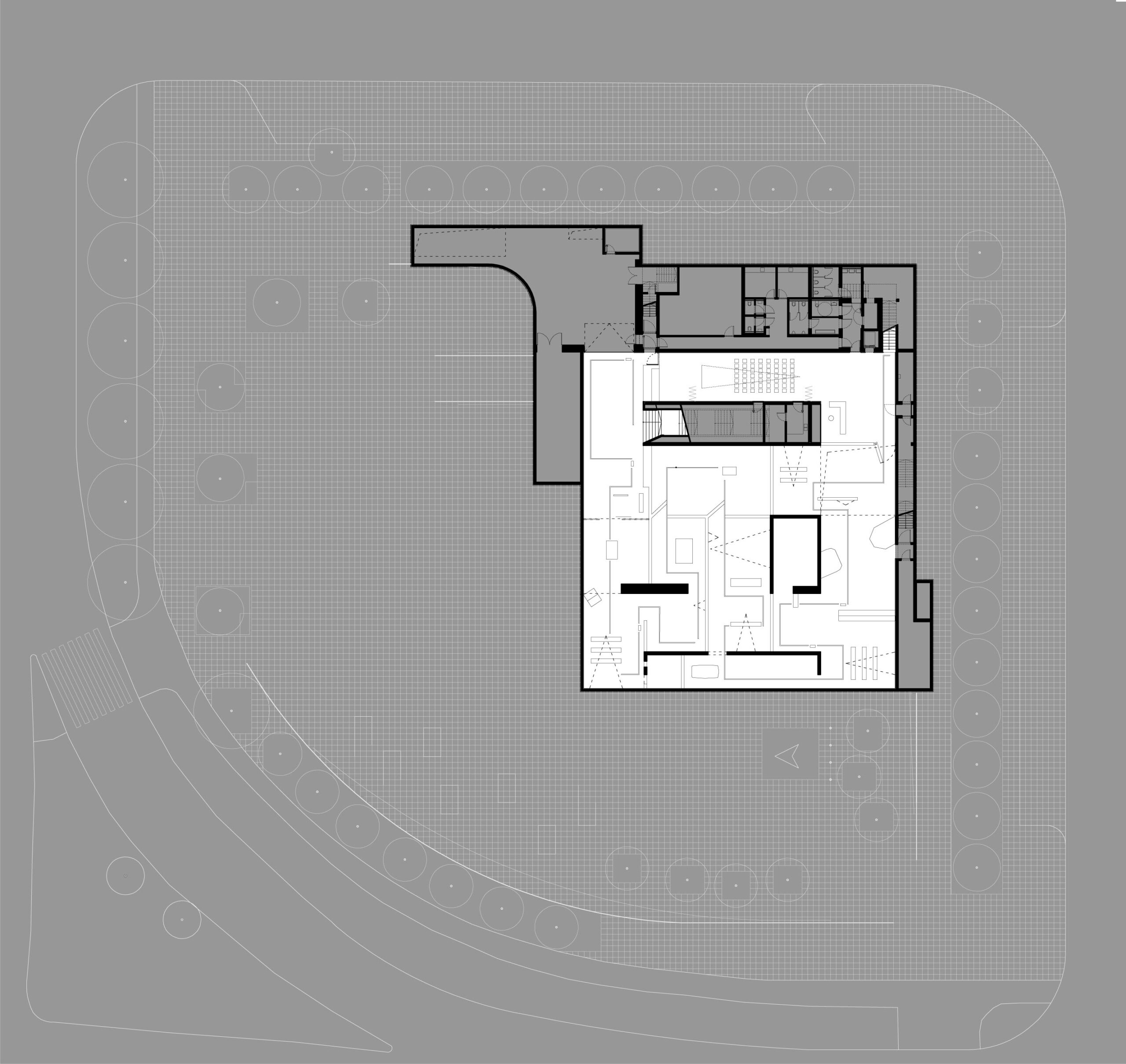
Level -1 Exhibition
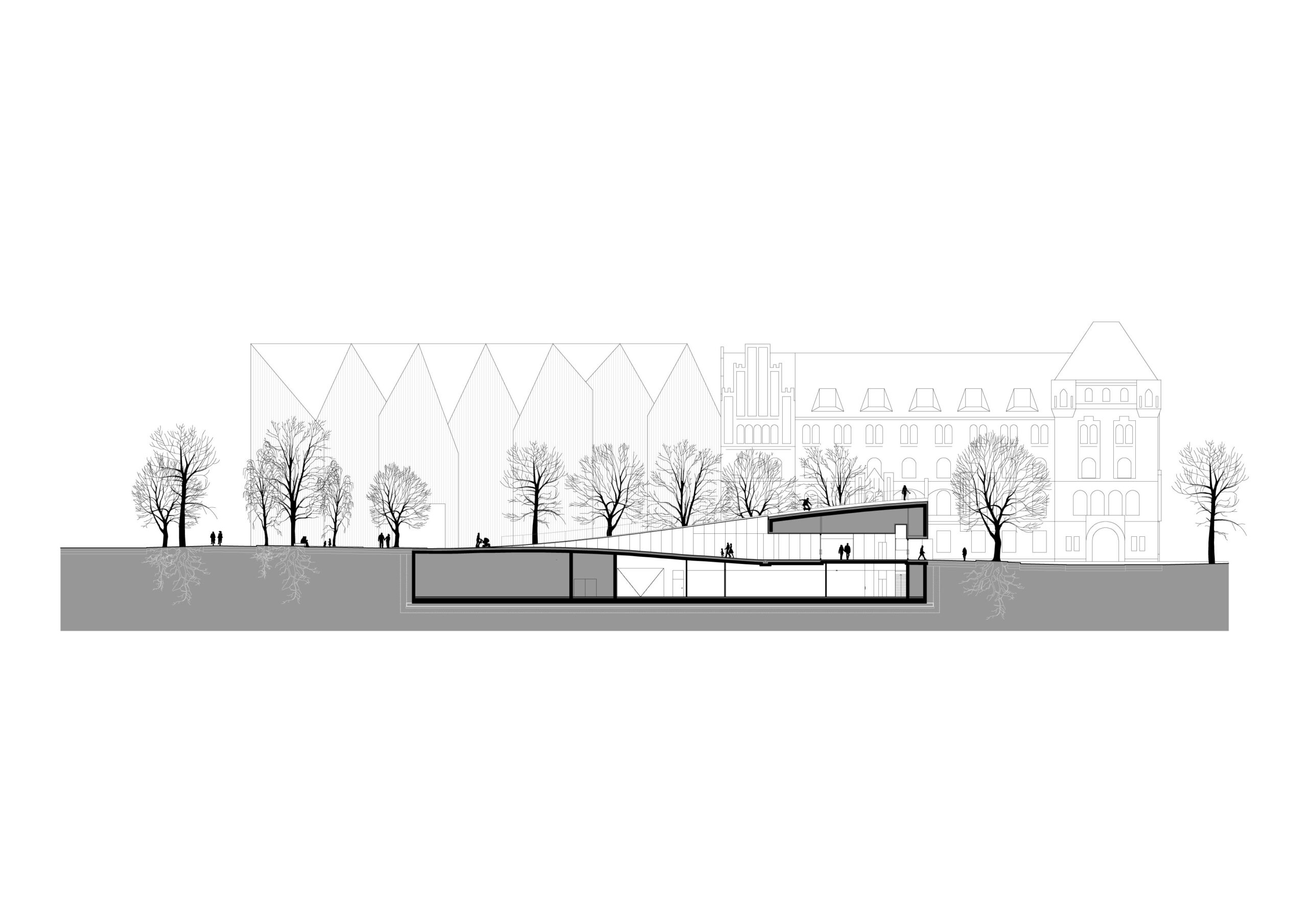
Section AA
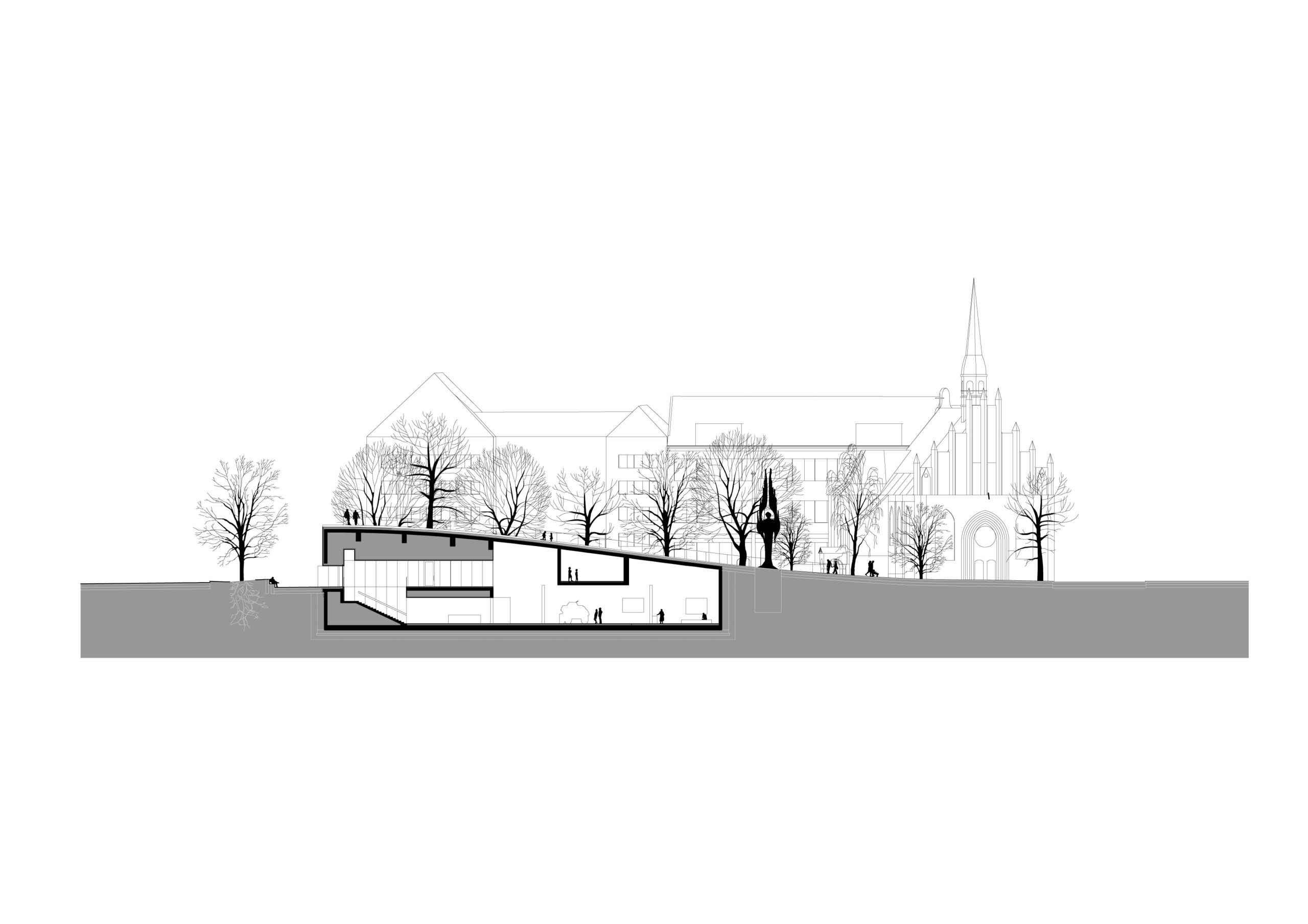
Section BB
以下、KWK PROMESのリリース(英文)です。
NATIONAL MUSEUM IN SZCZECIN – DIALOGUE CENTRE PRZEŁOMY
Authors: KWK Promes, architects Robert Konieczny, Michał Lisiński, Dorota Żurek, Katarzyna Furgalińska
Collaboration: architects Aleksandra Stolecka, Piotr Tokarski, Adam Radzimski, Joanna Biedna, Magdalena Adamczak
General contractor: Skanska
Investor: National Museum in Szczecin (Muzeum Narodowe w Szczecinie)
Site area: 9577 m2
Gross covered area: 1628 m2
Usable floor area: 2117 m2
Exhibition surface: 960 m2
Volume: 15 845 m3
Competition: 2009
Project: 2010-2011
Construction: Jan 2012- Feb 2016HISTORICAL AND SPACIAL CONTEXT
Szczecin is one of the largest victims of historical violence in Poland. Until 1945, the city lay within the borders of Germany, after which it was suddenly incorporated into Poland. Instant exchange of its population deconstructed the social fabric and distorted the city’s identity. Before the war, the current Solidarności Square was the showcase of the city, featuring a quarter of representative tenements, enclosed by the Konzerthaus in the North. During bombing raids of the Allied forces the quarter and its vicinity ceased to exist, creating a gap in the urban tissue. Furthermore, this fragment of the city was cut through by a transportation route. This quasi-square became the arena for worker protest in 1970, which was brutally pacified, and 16 protesters were killed. From that moment on, this place became a symbol of fight for freedom.For years, the Solidarności Square had been a square by name only – with vague borders, open frontages, burdensome busy street neighborhood and the absence of a defined function, despite the dominating one – to commemorate the events of December 1970, where the place was provided a monument in 2005. In the 21st century, the area became the arena of significant architectural interventions. In 2014, the former Konzerthaus was replaced by a new philharmonic venue designed by Estudio Barozzi Veiga. The building became the new city icon, winning the main Mies van der Rohe award in 2015.
The next initiative, which contributed to changing the perception of the space was the National Museum’s Dialogue Centre “Przełomy”, devoted to the history of Szczecin. When designing the Museum we set our mind humble to the history of the place and the new city icon closeby. Thus, the idea to hide the museum underground to create a background architecture.
IDEA – URBAN HYBRID
Two contradictory traditions: of a quarter and of a square were the point of departure for the design, an urban design hybrid which encloses the space as a quarter, while retaining the values of open public space. The flattened areas of the square create foregrounds in front of the philharmonic and the church. The quarter forms in oposite corners as elevated square floor. The one elevation houses the museum facillity, the other one is an artificial hill, closing up the urban interior and shielding it from the tumult of the busy street. There is no definite boundary between architecture and ubanism.BUILDING – STRUCTURE AND MECHANISMS (MOVABLE WALLS)
The architecture follows topography, hence the museum’s form is a continuation of the concrete floor of the square which is covered with rectangular tiles. In the elevated corner these tiles gain 3rd dimension, becoming cuboidal blocks. The whole makes a monolith that transforms when the museum opens. Some of the vertical plates rotate, thus creating the arcades unveiling two entrances. The third entrance is determined by a ramp carved in the square’s curvature. Ground floor is a square’s extension and it functions as an entrance hall.EXHIBITION – HISTORY TOLD WITH ART
The exhibition space is hidden underground. When we go down the stairs the concrete ends and we submerge in blackness that is a background for the tale of Szczecin since the II world war, in a connection of what was happening in Poland and the rest of the world.Simultaneously with the historic exhibition, based on pure information, we add a narration spinned by artists’ masterpieces – both, the works from long before the museum was opened, and the ones intentionally created for this venue. This kind of attempt allowed the exhibition to become wider and more universal. The blackness allows to focus on presented objects while giving the impression of an infinite space. This brand new formula for the exhibition makes a historical museum an art museum as well.
SQUARE – TOPOGRAPHY ENCOURAGING SOCIAL INTERACTIONS
Before, the square was only to commemorate the history – as a result of redevelopment this part of the city became attractive for the other (remaining) habitants. Yet, its open formula encourages its users to express their impact. Artificial hills provide an opportunity for discovering new outlooks on the city, welcome walking tours and invite to sunbathing. The slanted floor inspires various activities: for skateboarders, this is the ideal spot to practice. In the winter, the square serves as a sled track. The yard has retained its symbolic dimension – the monument is still attracting veterans during annual celebration events – it is not dominating aspect after all. Today, this urban space is a place of amicable coexistance of different age and societal groups.
KWK PROMES 公式サイト
https://www.kwkpromes.pl/en/


![[無償モニター]キノシタの家具ブランド「Coccole」から新作チェア・ソファが登場。選べる体験モニターの応募は12月31日まで](https://magazine-asset.tecture.jp/wpcms/wp-content/uploads/2026/10/13222506/f07965e0ad312e8170b6bee7af7adb5b-900x590.png)
![[建築NOTE]不利な敷地条件を建築体験へと転換。倉方俊輔が読み解く、谷口吉生が〈資生堂アートハウス〉に込めた設計思想](https://magazine-asset.tecture.jp/wpcms/wp-content/uploads/2026/06/13180420/arthouse_18-900x675.jpg)