

アリの視点から生まれた巨大な花びらが覆う空間 - 中国の村の谷間に建つベーカリーカフェ〈Buzzy Sunny - 渓谷の石窯〉
© HereSpace
中国・四川省の瀘州市(ろしゅうし)に位置する〈Buzzy Sunny – 渓谷の石窯(Buzzy Sunny · The Stone Kiln in the Valley)〉は、村の谷間に建てられたベーカリーカフェです。
アリの視点から見た花びらから着想した建築であり、成都を拠点に活動する建築事務所 Archermit が設計しました。
注目ポイント
- 梨の花、巨岩、アリの動きを建築イメージへと転換
- 花びらと岩のモチーフを融合したデザインアプローチ
- 巨大な岩が屋根を支え、花びらが屋根と壁を兼ねる空間構成
(以下、Archermitから提供されたプレスキットのテキストの抄訳)
© Archermit
© Archermit
アリから着想した建築
2021年後半、私たちが初めて瀘州市の麗花村を訪れた際、秋の葉を落とした後に谷を覆う梨の木々の骨組みのような姿に衝撃を受けた。曲がりくねった小道の端には巨大な岩が立ち並び、荒涼とした冬の谷は強い印象を残している。
翌年3月に再訪したとき、満開の梨の花が広がる光景に息をのんだ。白い花びらが風に舞い、小道の上を漂っていた。その中をアリの群れが駆け抜け、姿を現しては消えていった。この一場面は、私たちにとって実に魅惑的なものであった。
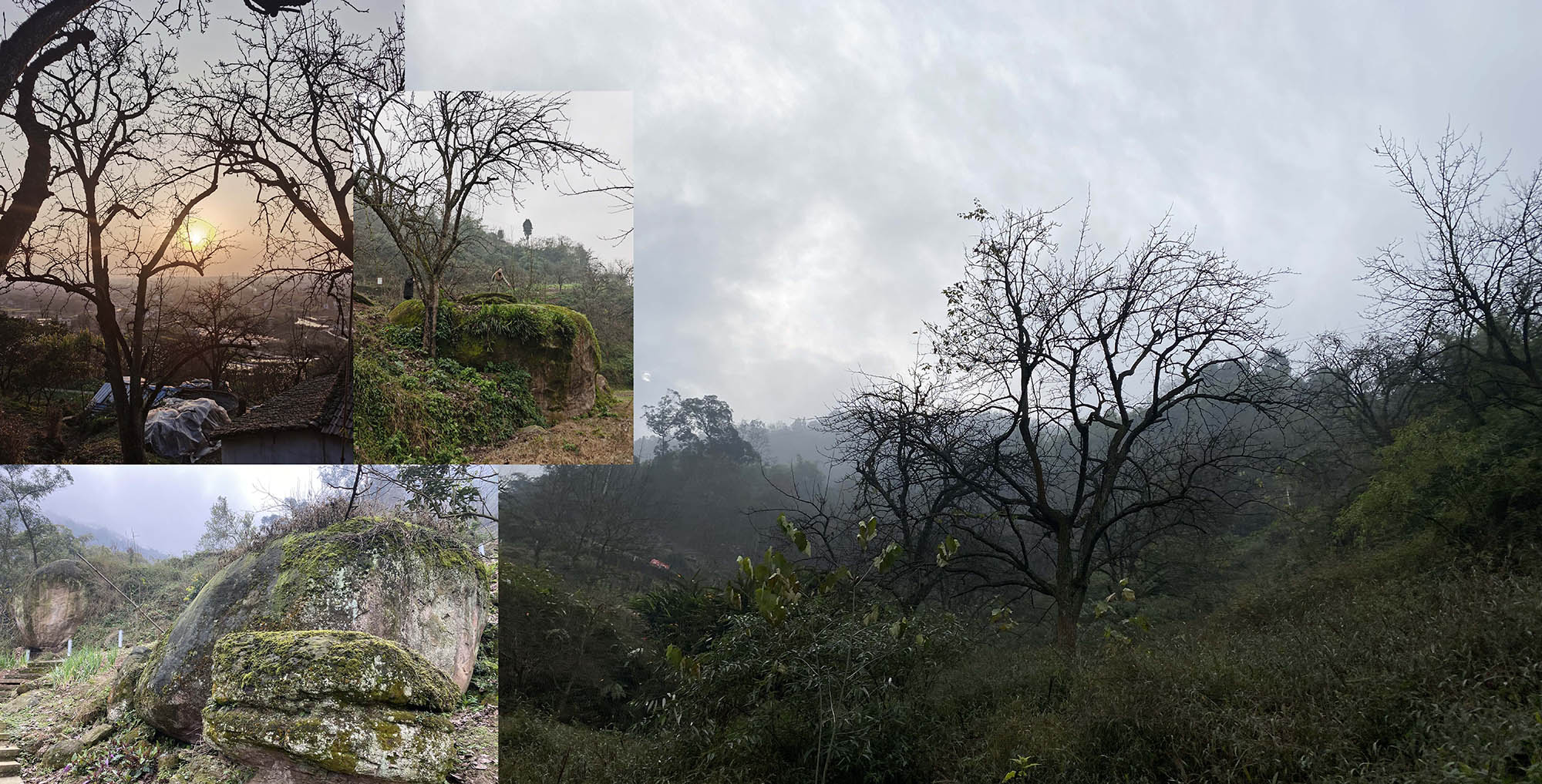
First time stepping into Lihua Village © Archermit
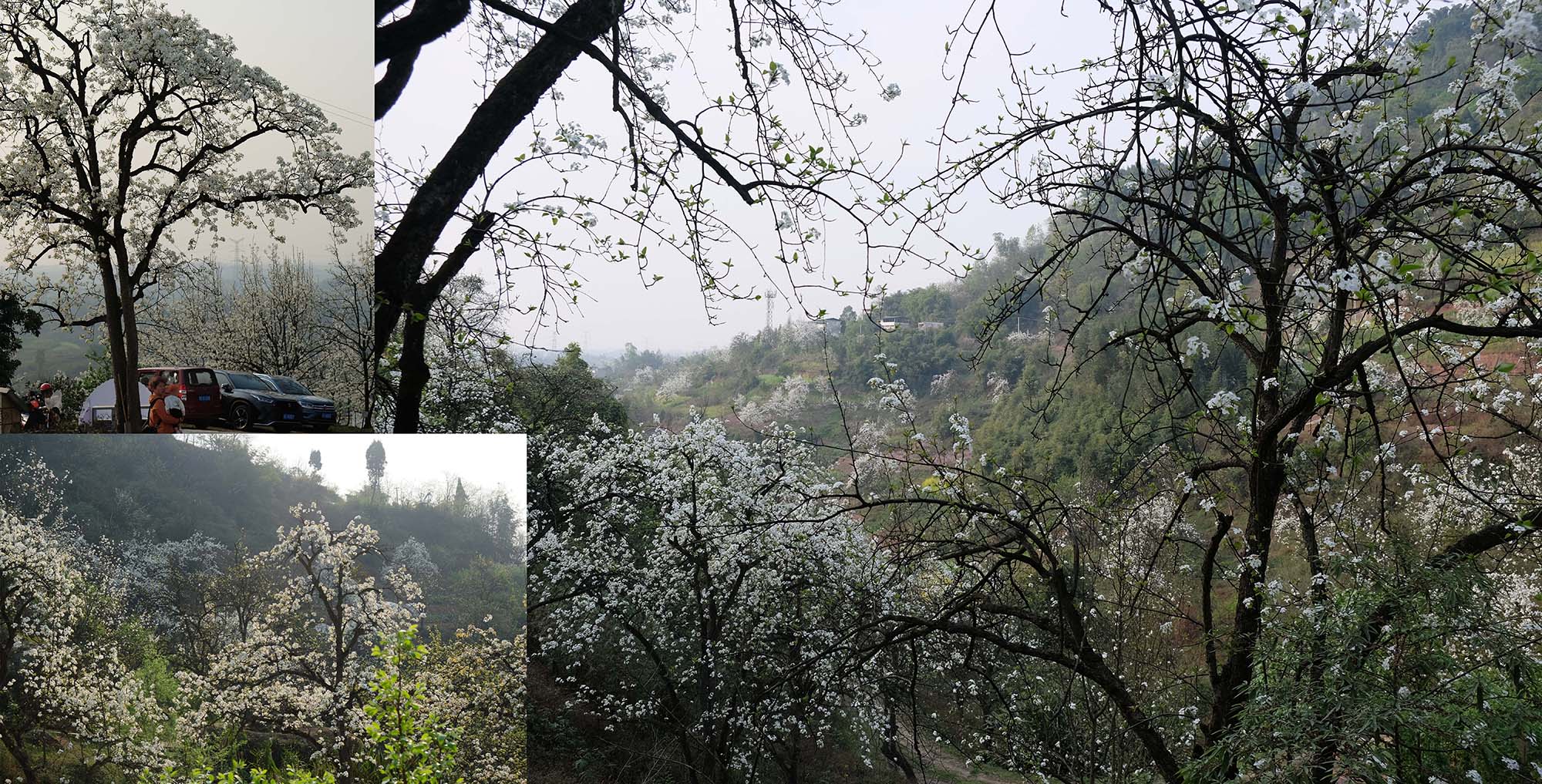
Pear blossoms in full bloom © Archermit
その3カ月後、〈Buzzy Sunny〉の設計が始動した。計画は麗花村の谷の入口に小規模な構造物を建設し、窯焼きパンのベーカリー、焼き場、カフェ、さらに文化展示スペースとして機能させるものであった。
Archermitが掲げる「イメージアーキテクチャ」理論に基づき、まず設計に適したイメージソースの探索を行った。
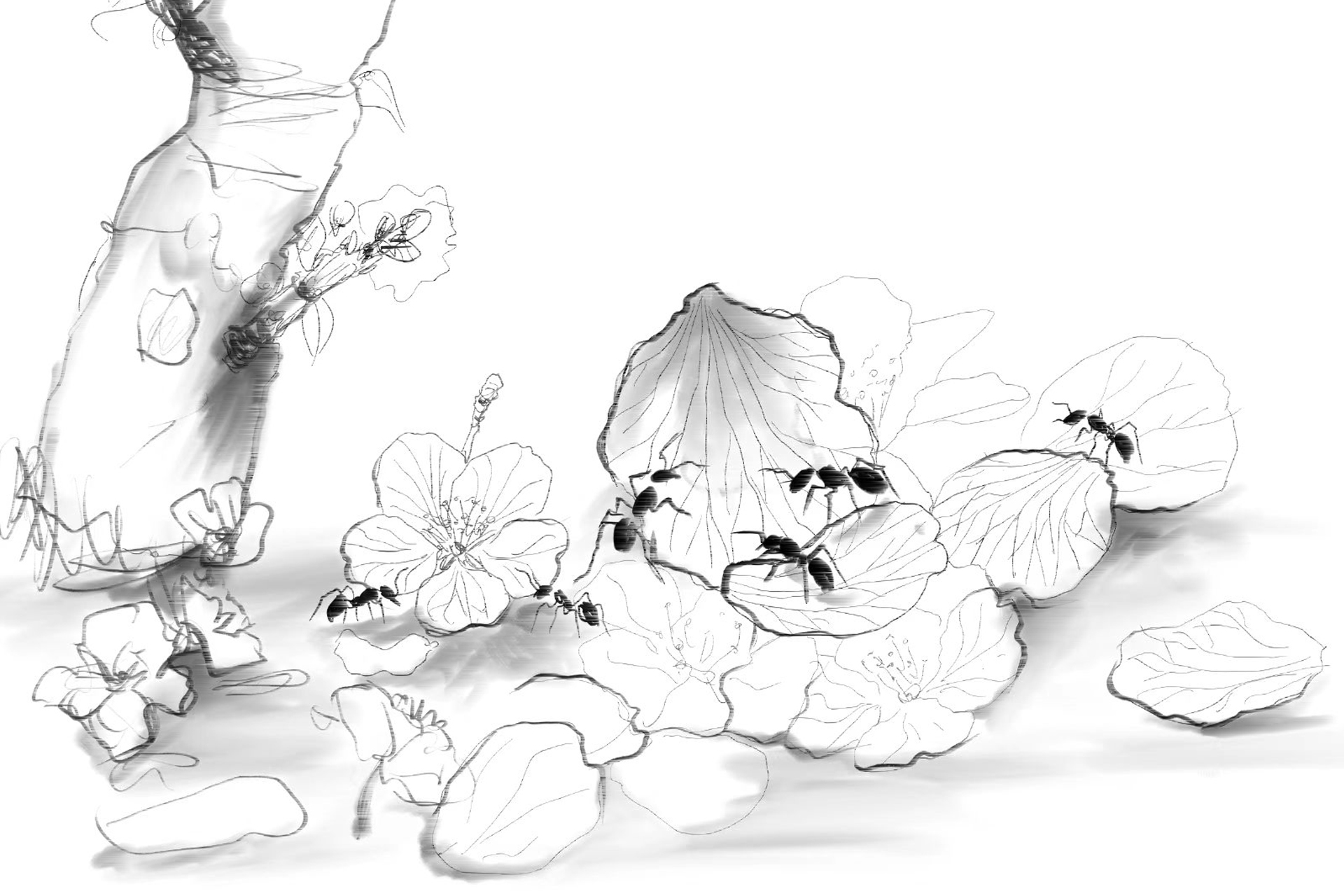
Ants shuttling through pear petals © Archermit
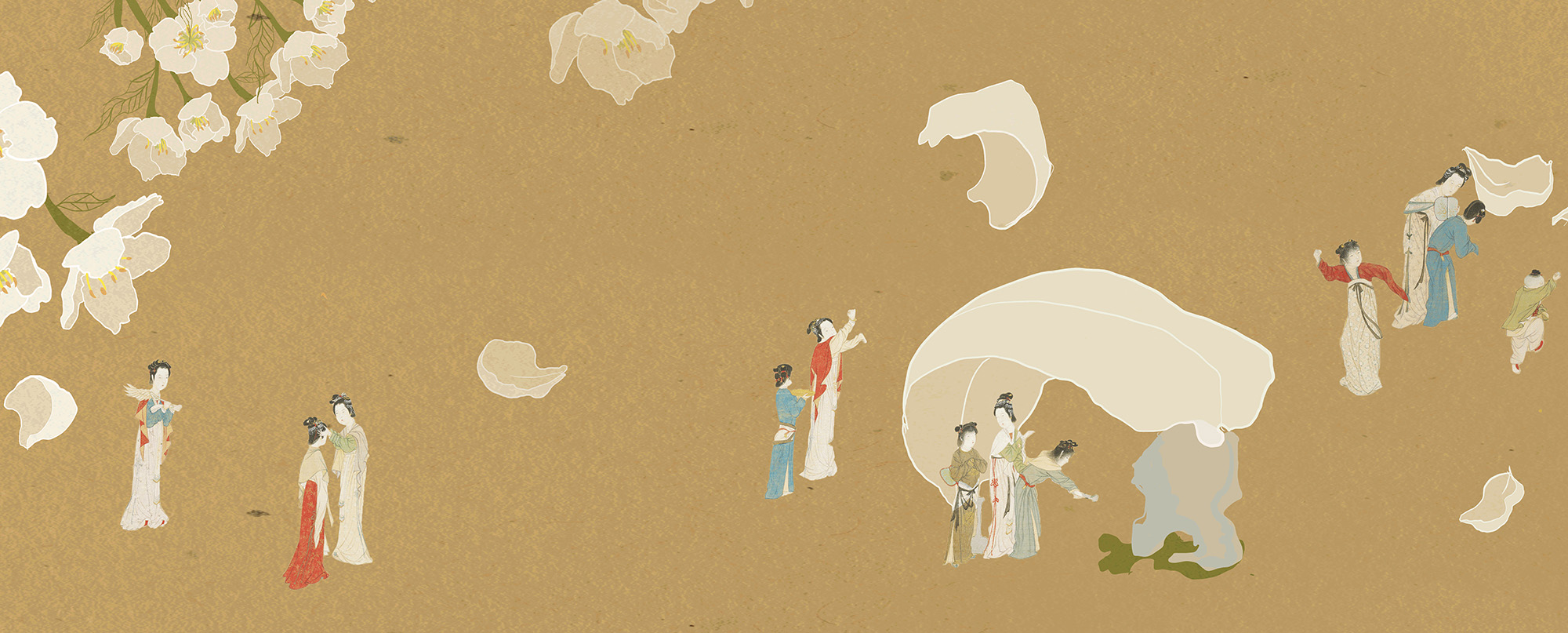
CONCEPTUAL DIAGRAM © Archermit
梨の花、巨岩、夕焼けが、麗花村で心に深く刻まれたイメージであった。
これらをいかに自然で魅力的に融合させるべきか。散りゆく花びらの下を行き交うアリの姿を思い浮かべたとき、アリの視点では花びらが巨大な建築物のように映るのではないかと考えた。この発想が「渓谷の石窯」の構想へとつながったのである。
© Archermit
© Archermit
花びらと巨岩の融合
建物のデザインは、梨の花びらと谷に点在する岩のイメージを重ね合わせたものである。花びらの形状や質感、石の形態や感触が建築と空間に反映されている。
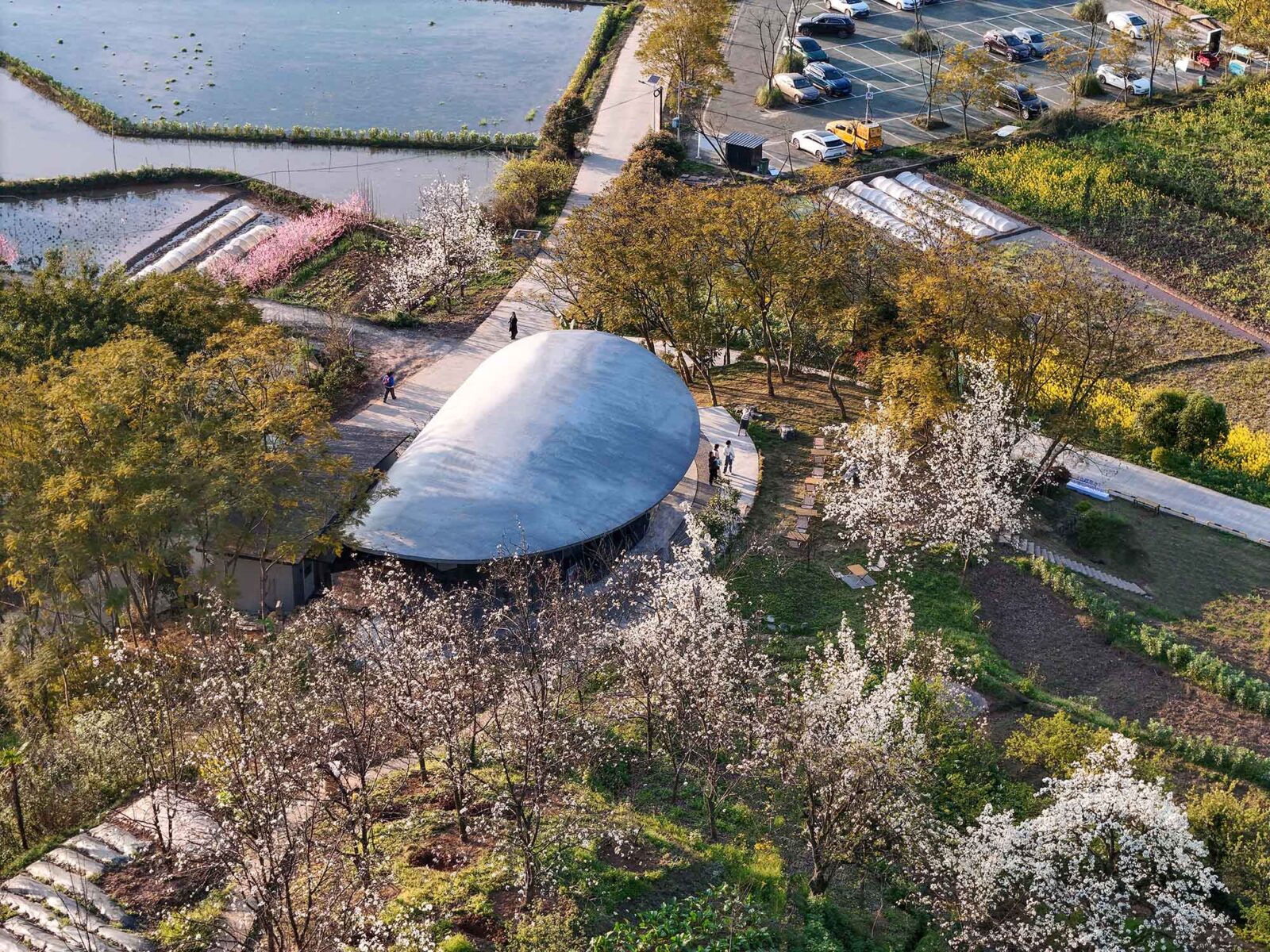
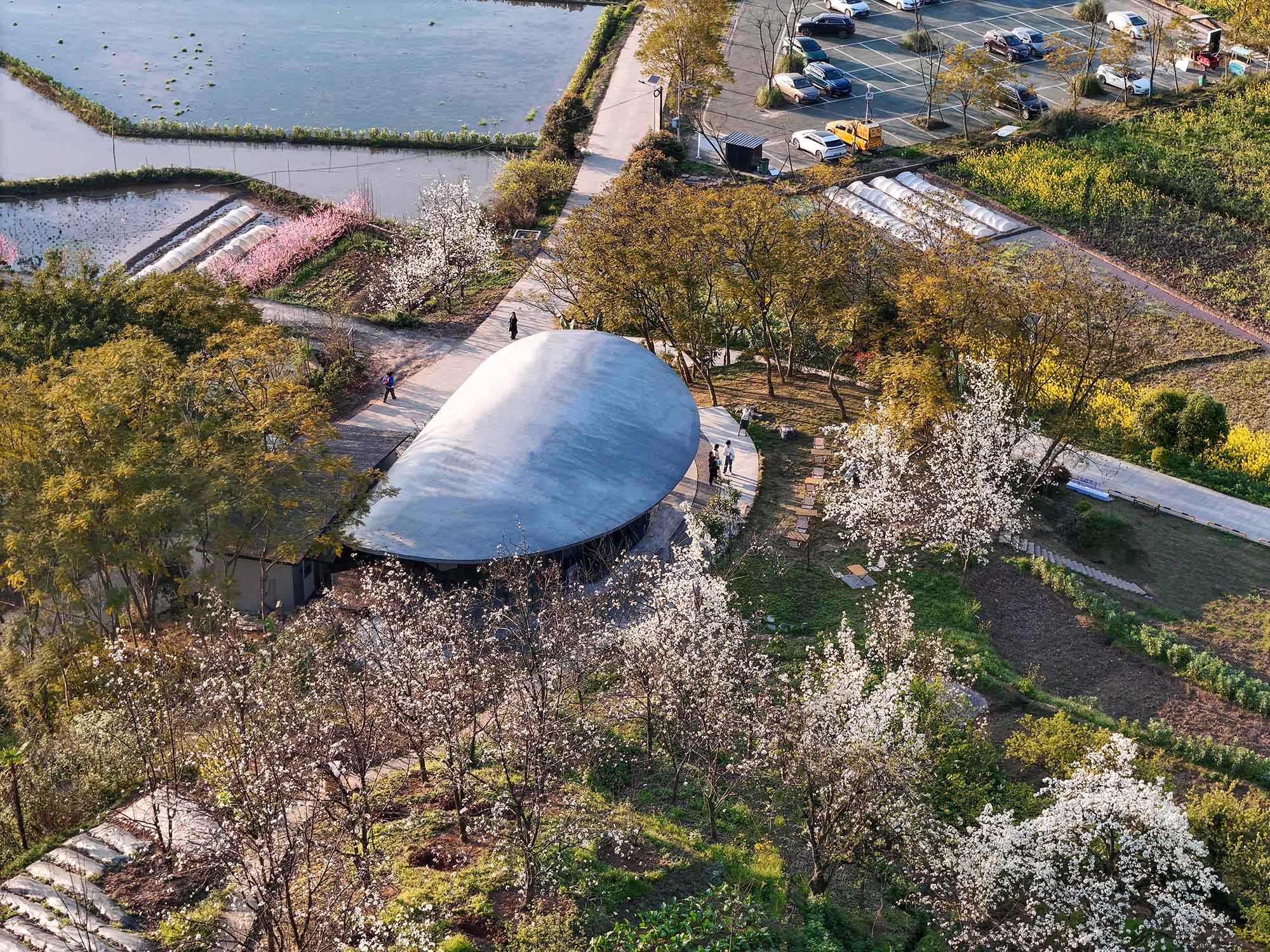
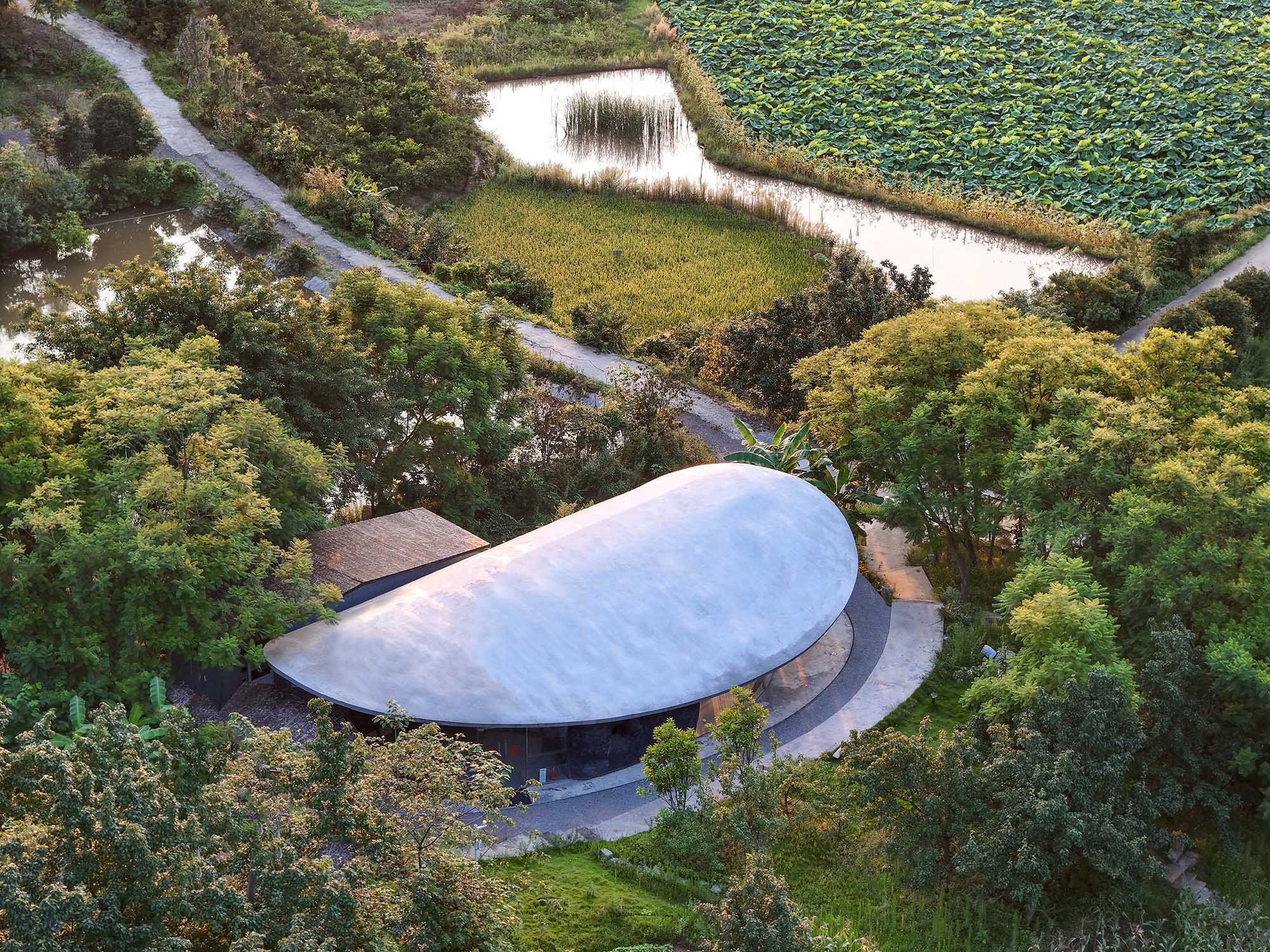
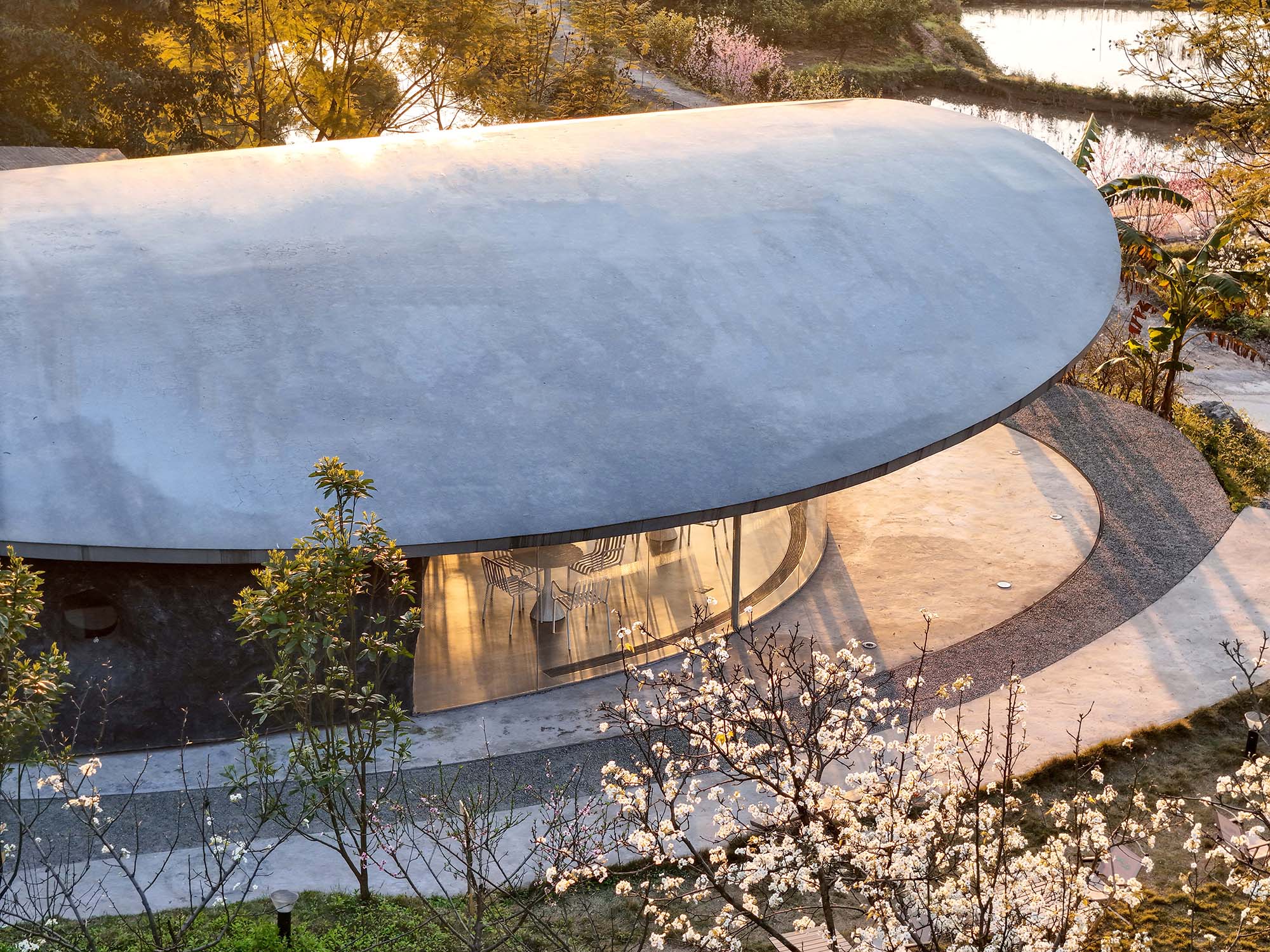
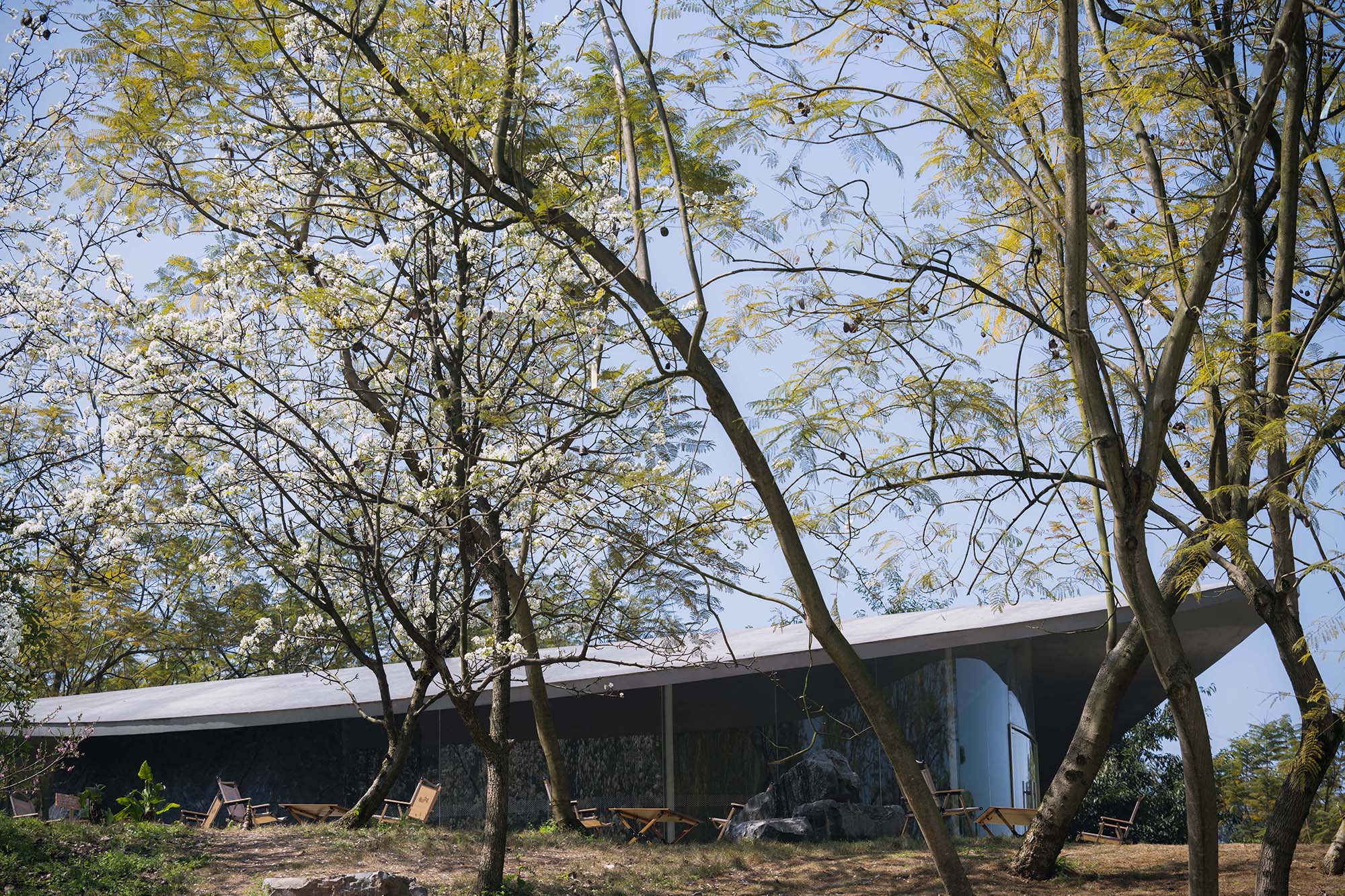
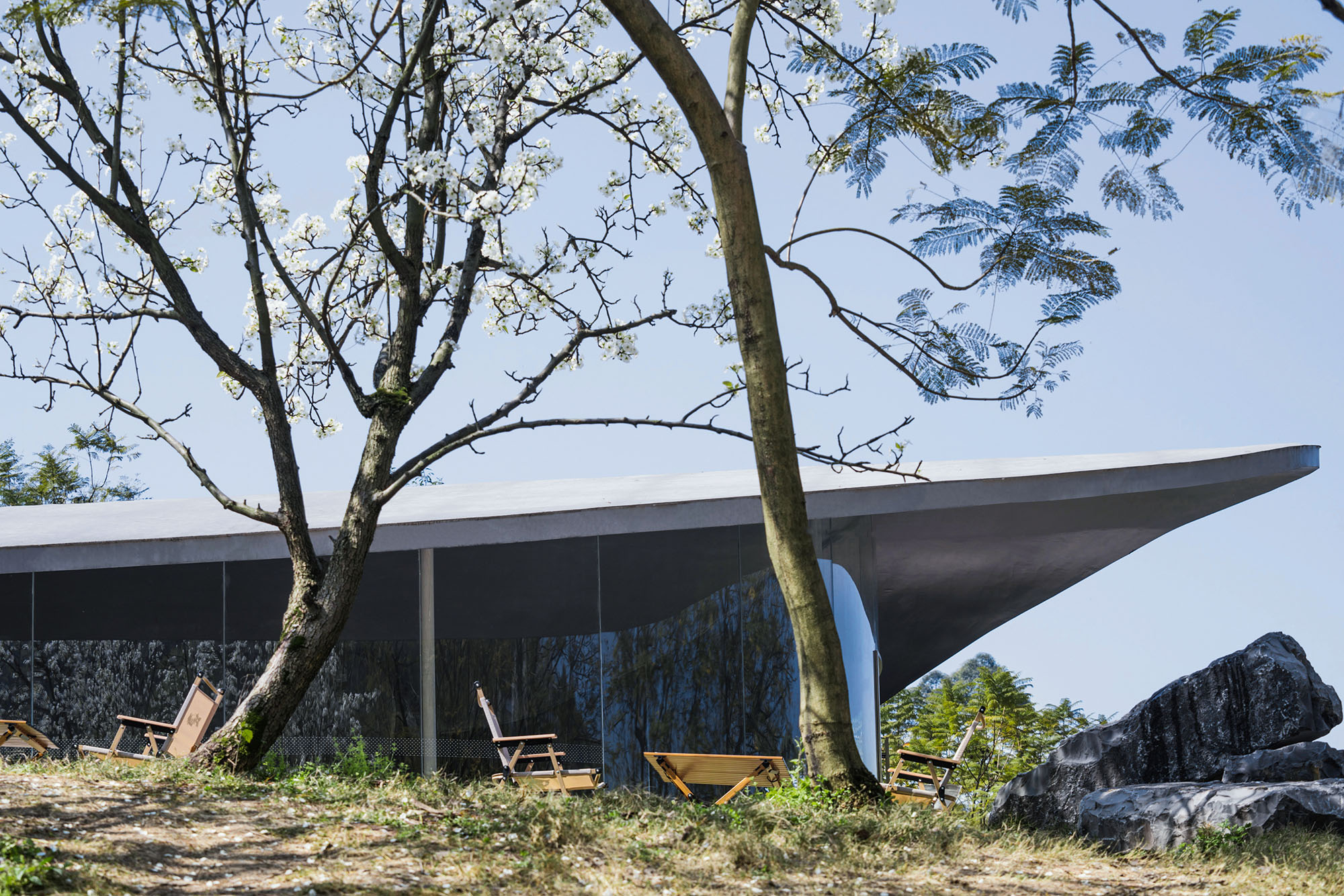
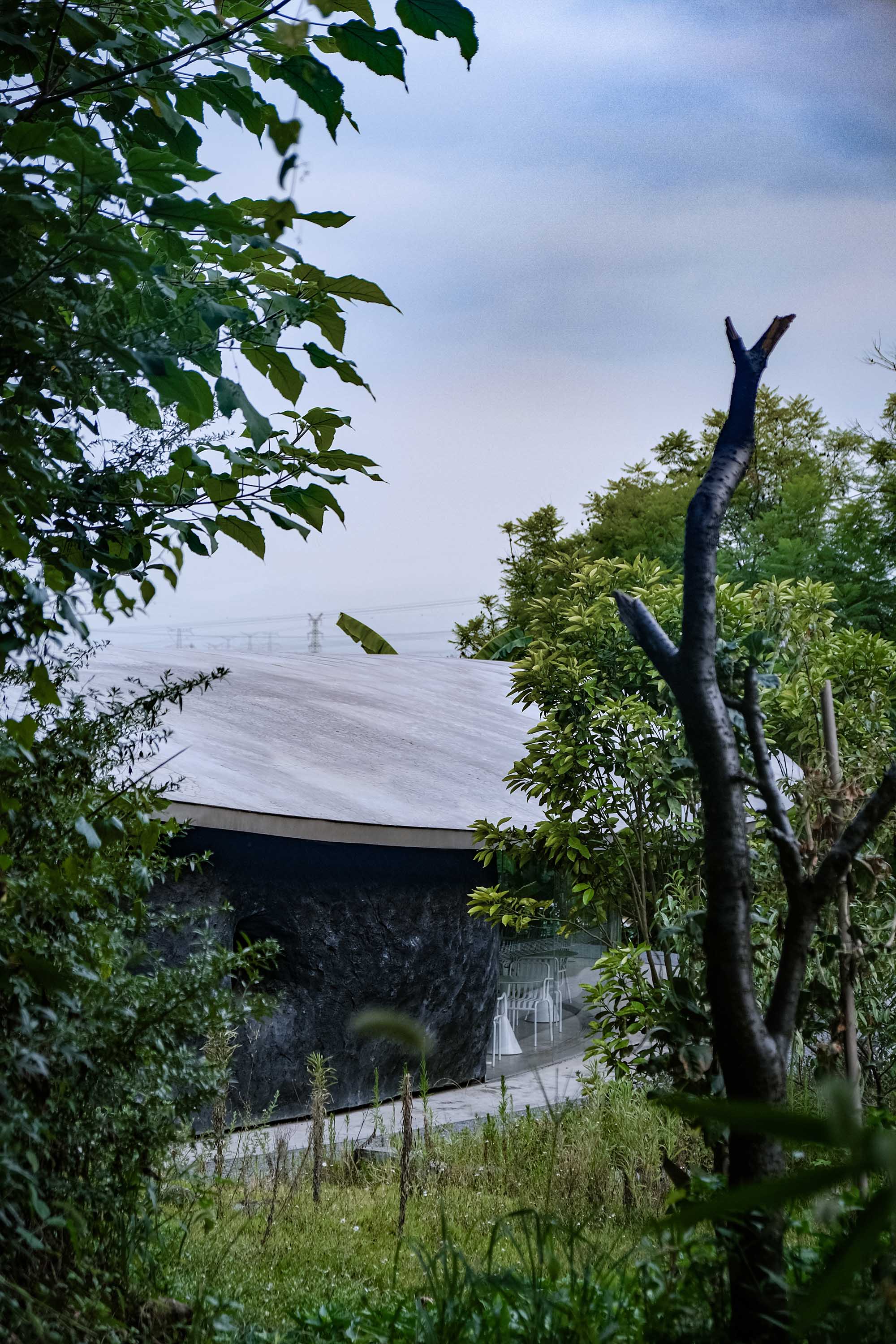
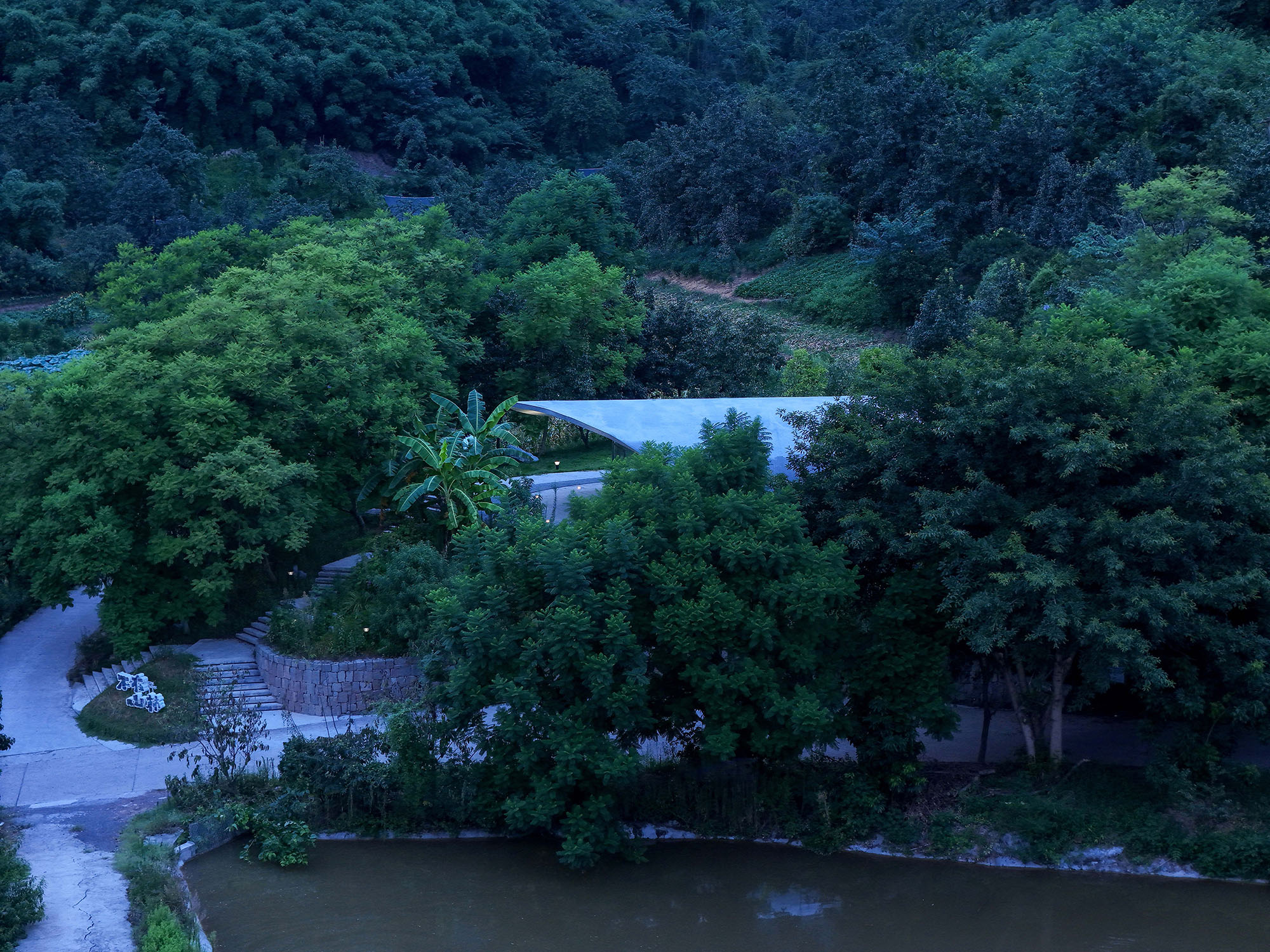
全体は、巨大な花びらが巨岩の上にそっと降り立ったかのような姿であり、幽玄で繊細な視覚効果を生み出している。遠くから眺めると、うねる白い花びらは巨大な一枚岩のようにも見え、大地に力強くそびえ立つ。
© HereSpace
© HereSpace
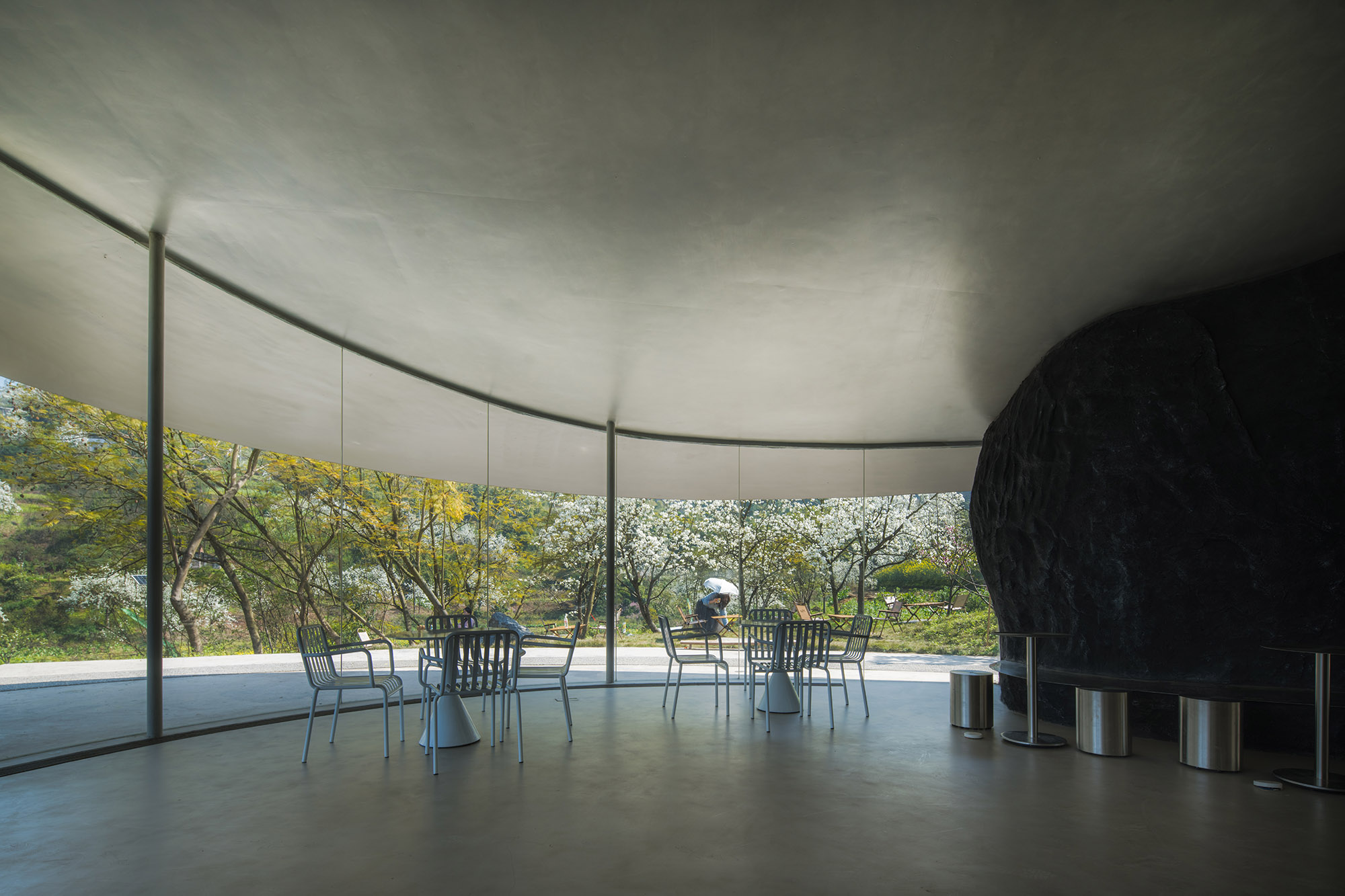
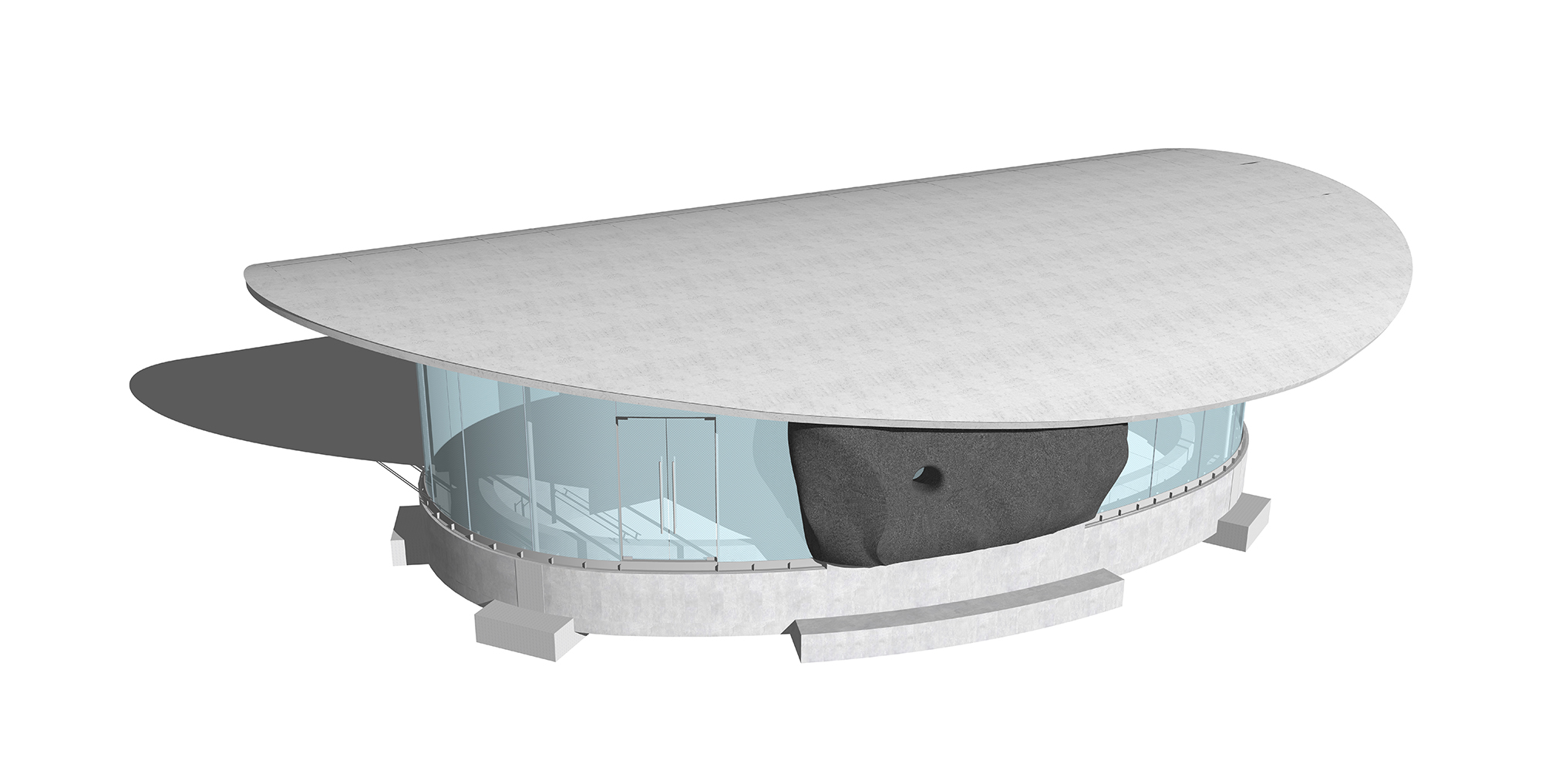
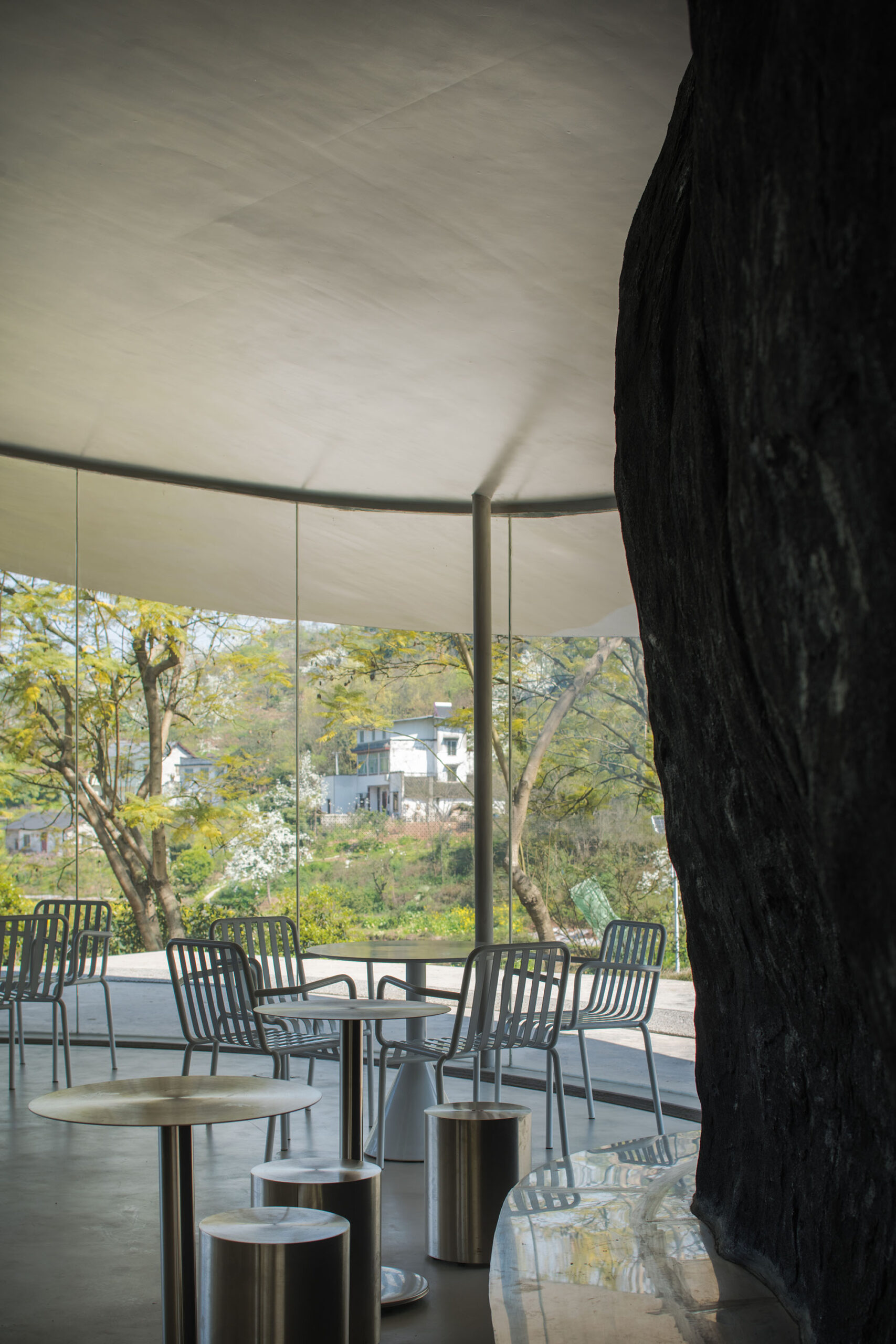
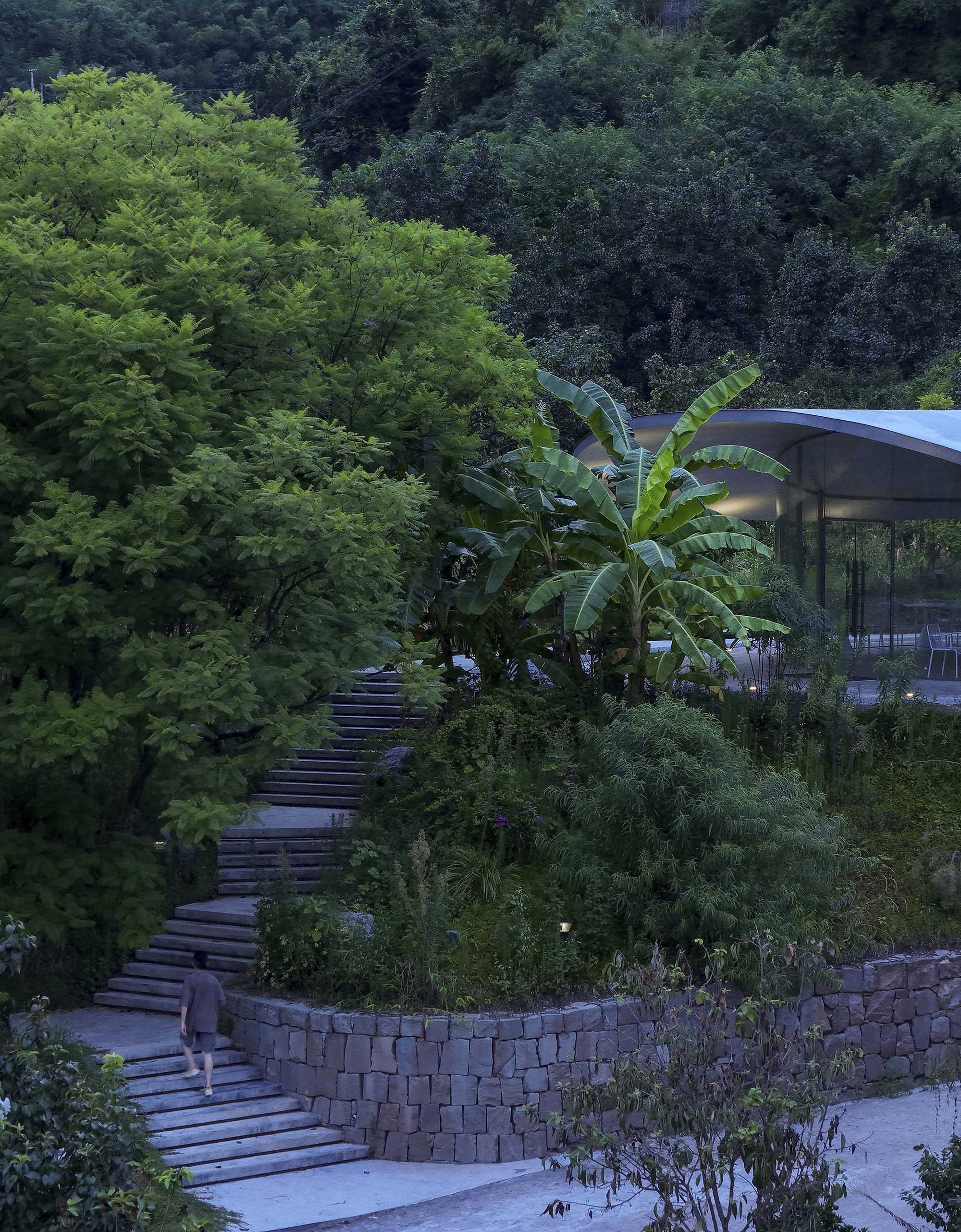
〈Buzzy Sunny〉には明確な壁が存在しない。巨大な「石」が全体を支え、湾曲した屋根を掲げ、その内部には浴室を隠すようにくり抜かれた「石」が置かれている。
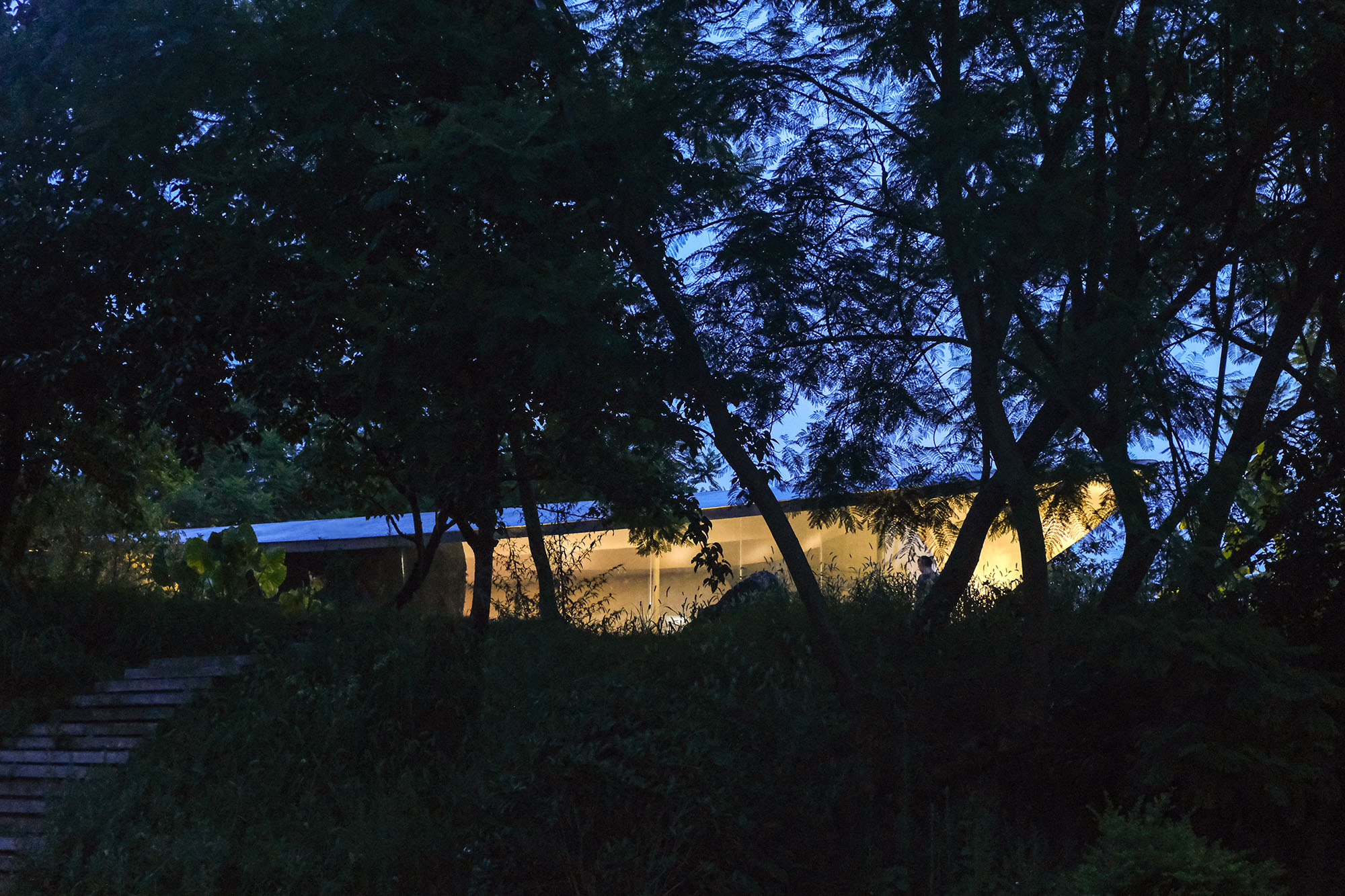
花びらは壁と屋根を兼ね、その下には大きなガラス窓を通じて周囲と一体化した空間が広がる。人々は花びらの中を群れとなって移動し、時に見え隠れしながらそれぞれの姿を示す。その様子はまるでアリの群れのようである。
© Archermit
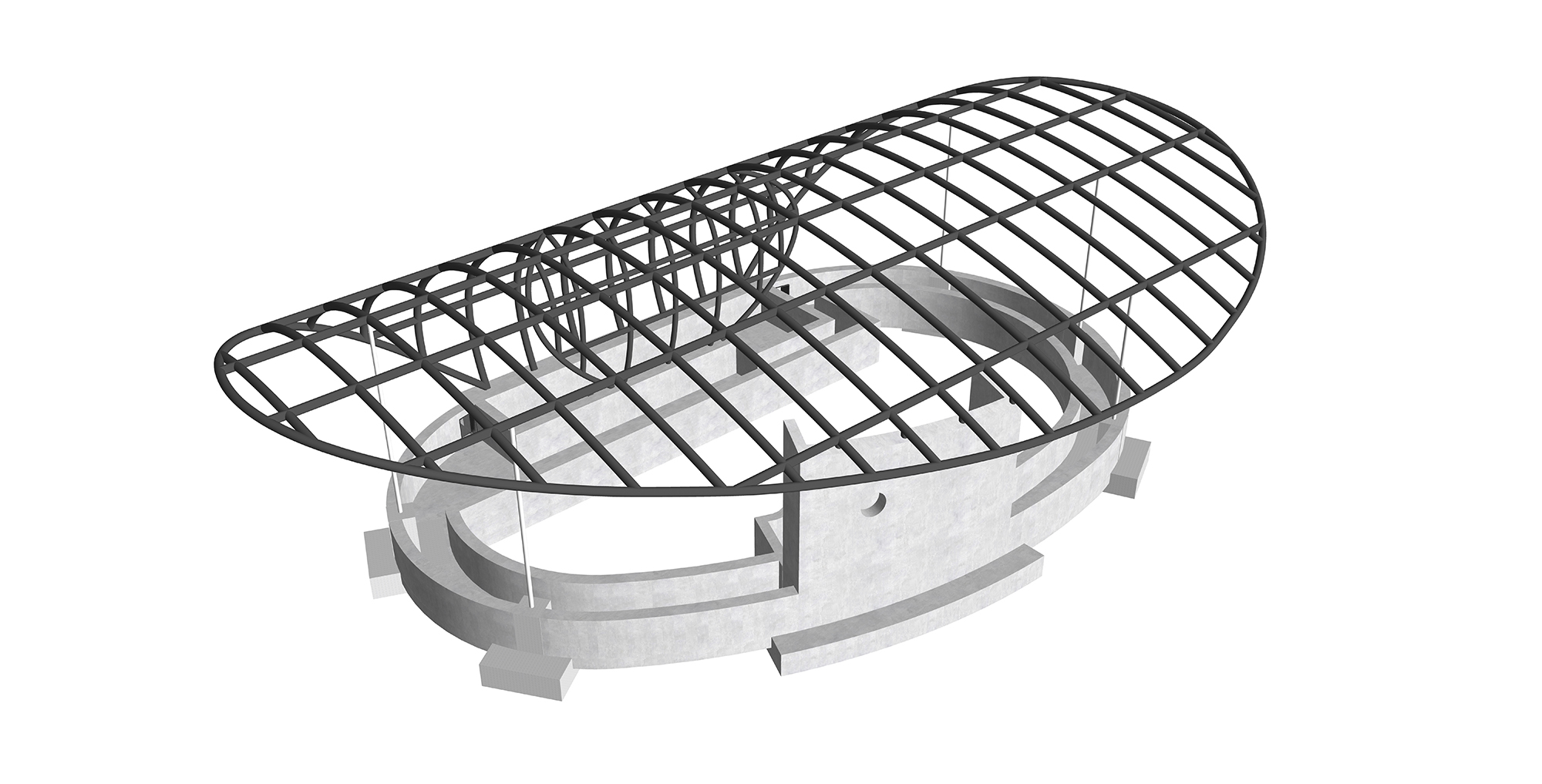
構造は鋼材をフレームとし、屋根は「花びら状の脈」を簡略化した鋼ネットワークで形成されている。囲い構造は単一せん断壁と、直径80mmの鋼柱5本を円形に配置したものから成る。全体の構造設計は簡潔であり、建築の最終形態と調和している。
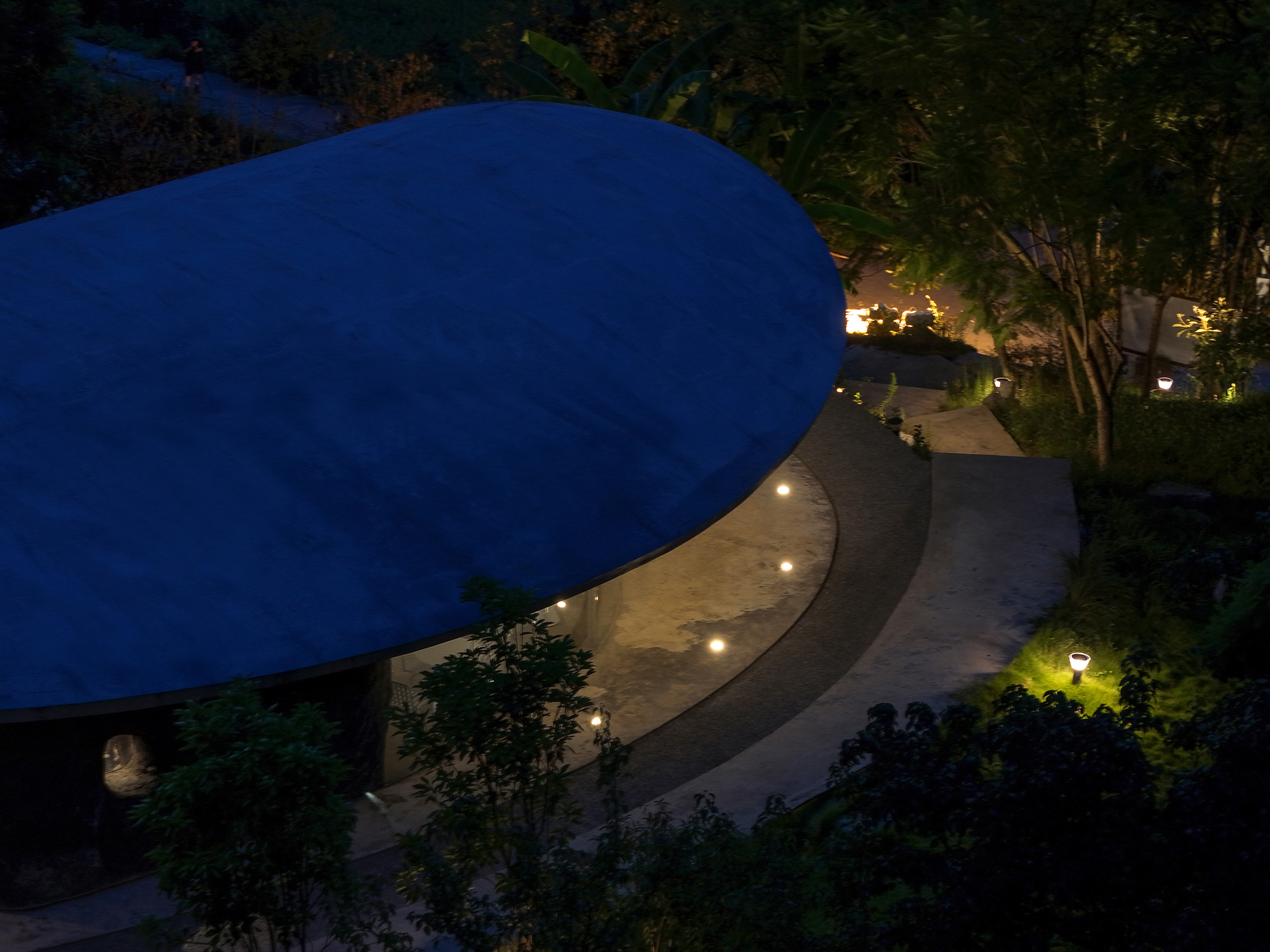
花びらの形状は、厚さ3mmの亜鉛メッキ鋼板を二重に重ねてフレームを覆うことで実現した。層間には断熱ロックウールを充填し、外装はセメント系塗料で仕上げて真っ白な花びらの質感を表現している。鋼板自体が防水性を備えるため従来の屋根材は不要であり、厚みを160mm未満に抑えることで梨の花びらの軽やかさを生み出した。
Structural diagram © Archermit
Model Diagram © Archermit
配置と周辺環境
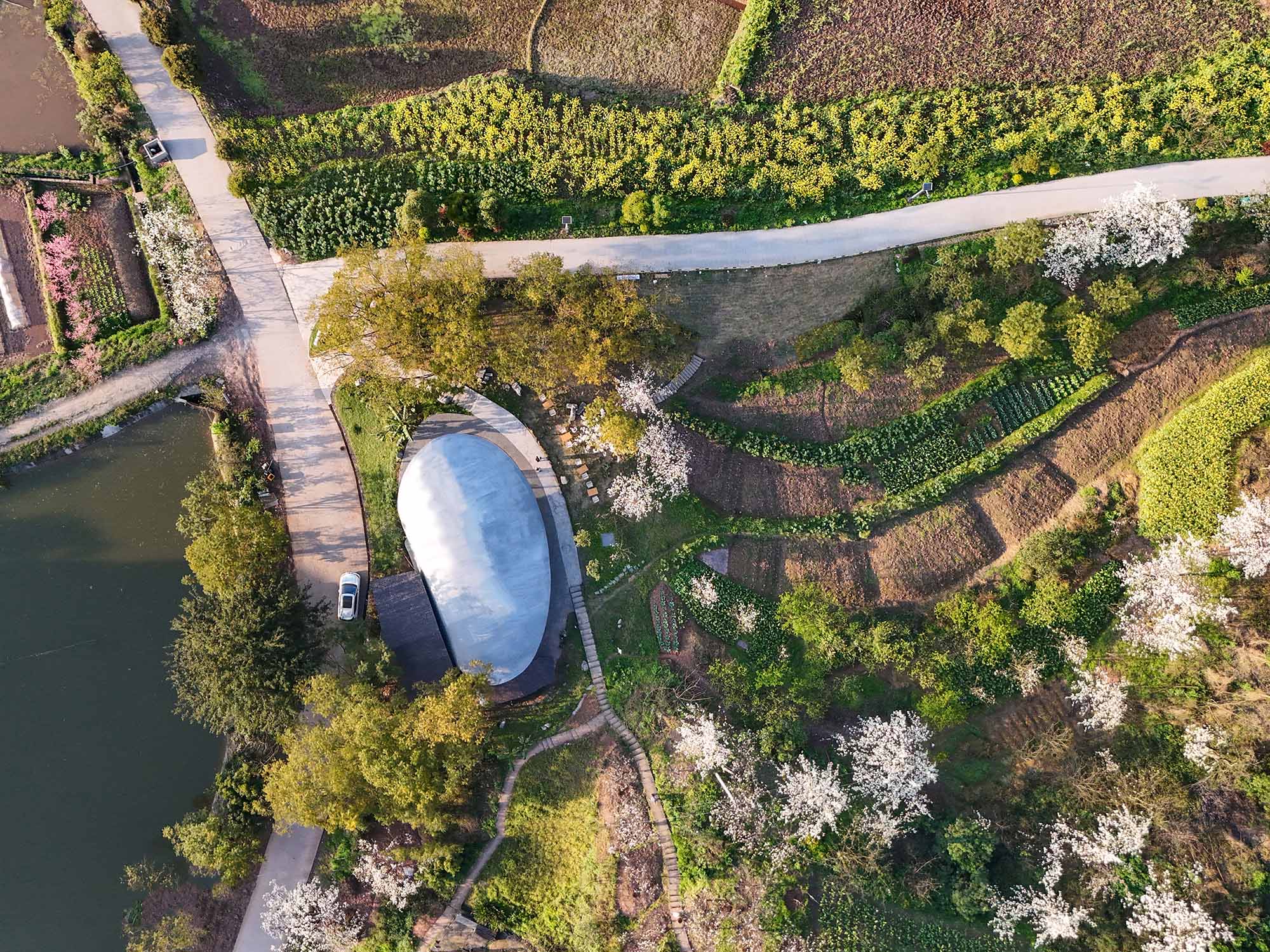
〈Buzzy Sunny〉は田舎道沿いに位置し、北と南にはジャカランダの木が茂り、東は農地、西は約3m下がった道路に接している。
屋根の反り返った壁面は西を向き、午後の強い日差しを遮ると同時に、道路からの望ましくない景観や騒音を遮断している。開口部は東側に設けられており、朝日を受け入れ、ジャカランダとつながる広々とした中庭を形成している。
© HereSpace
音を響かせる建築
平面は楕円形であり、曲面屋根と組み合わさることで内部に独自の音響効果をもたらしている。建物内の異なる位置で発生した音は残響を伴い、空間全体に広がることで、より明瞭で耳に心地よい響きとなる。この効果は特に管弦楽に適している。
ここでは小規模な音楽イベントが数回開催されており、子供たちは巨大な花びらのような空間の中で音楽の美しさを体感したのである。
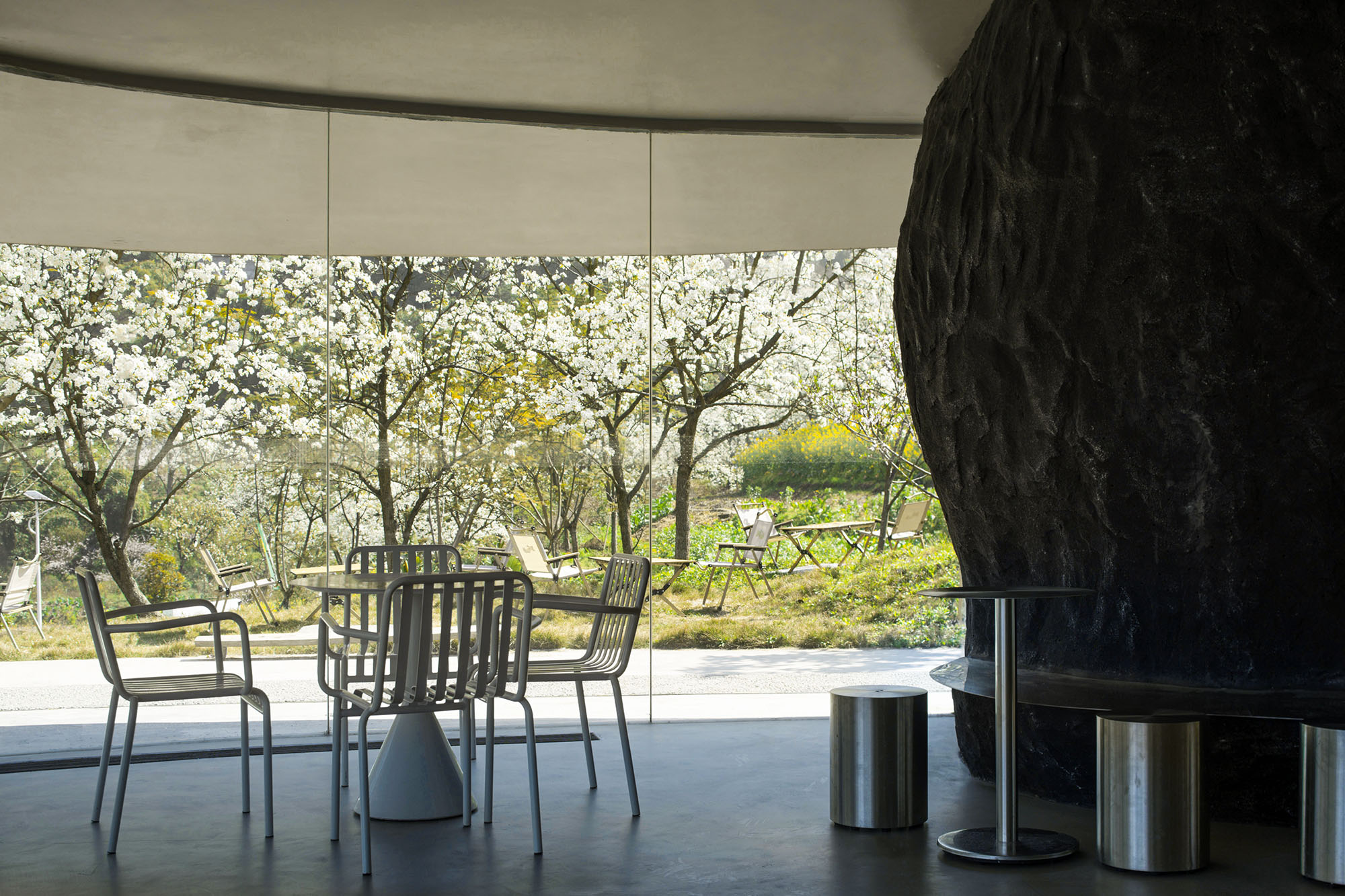
© HereSpace
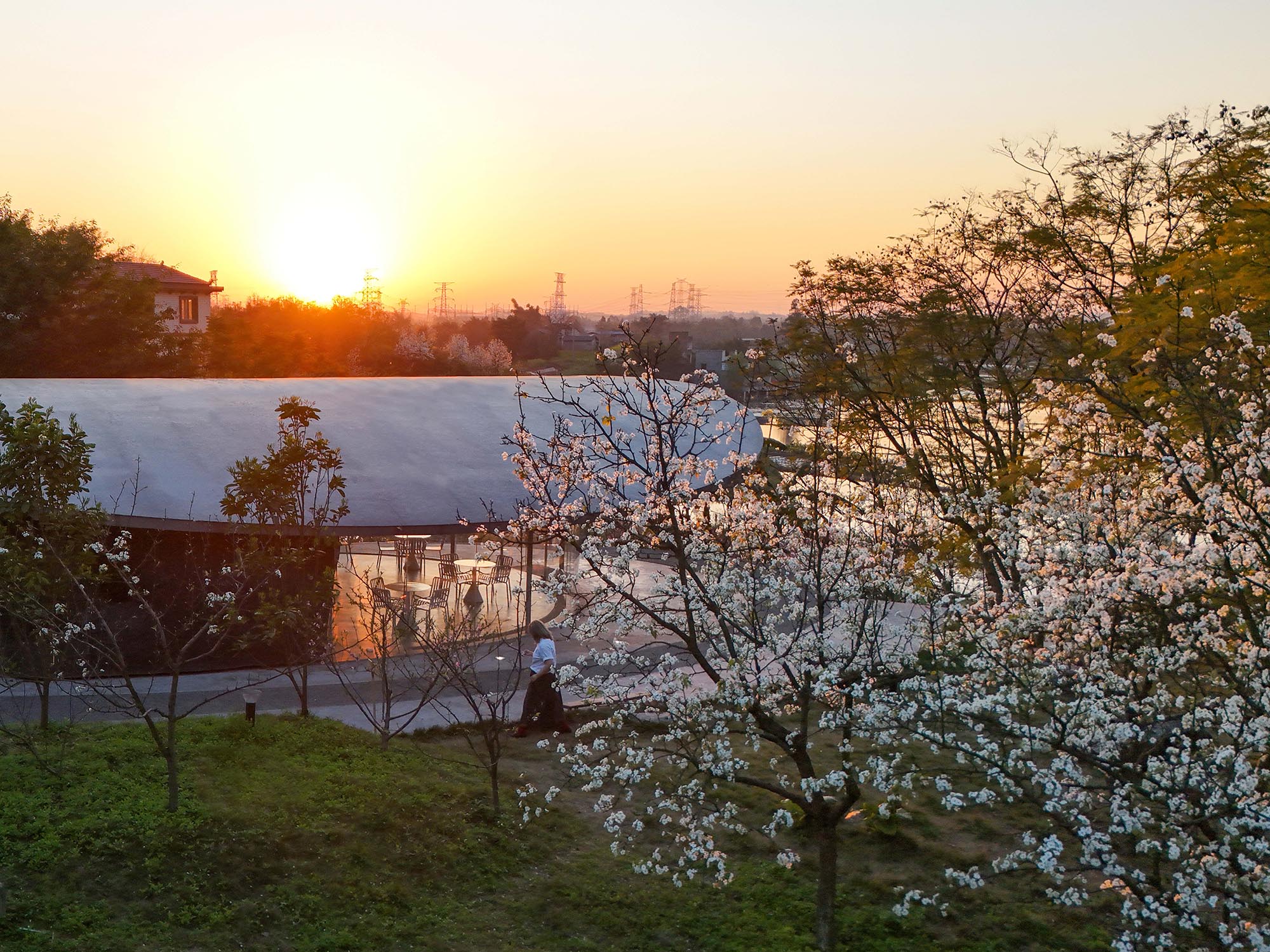
© Archermit
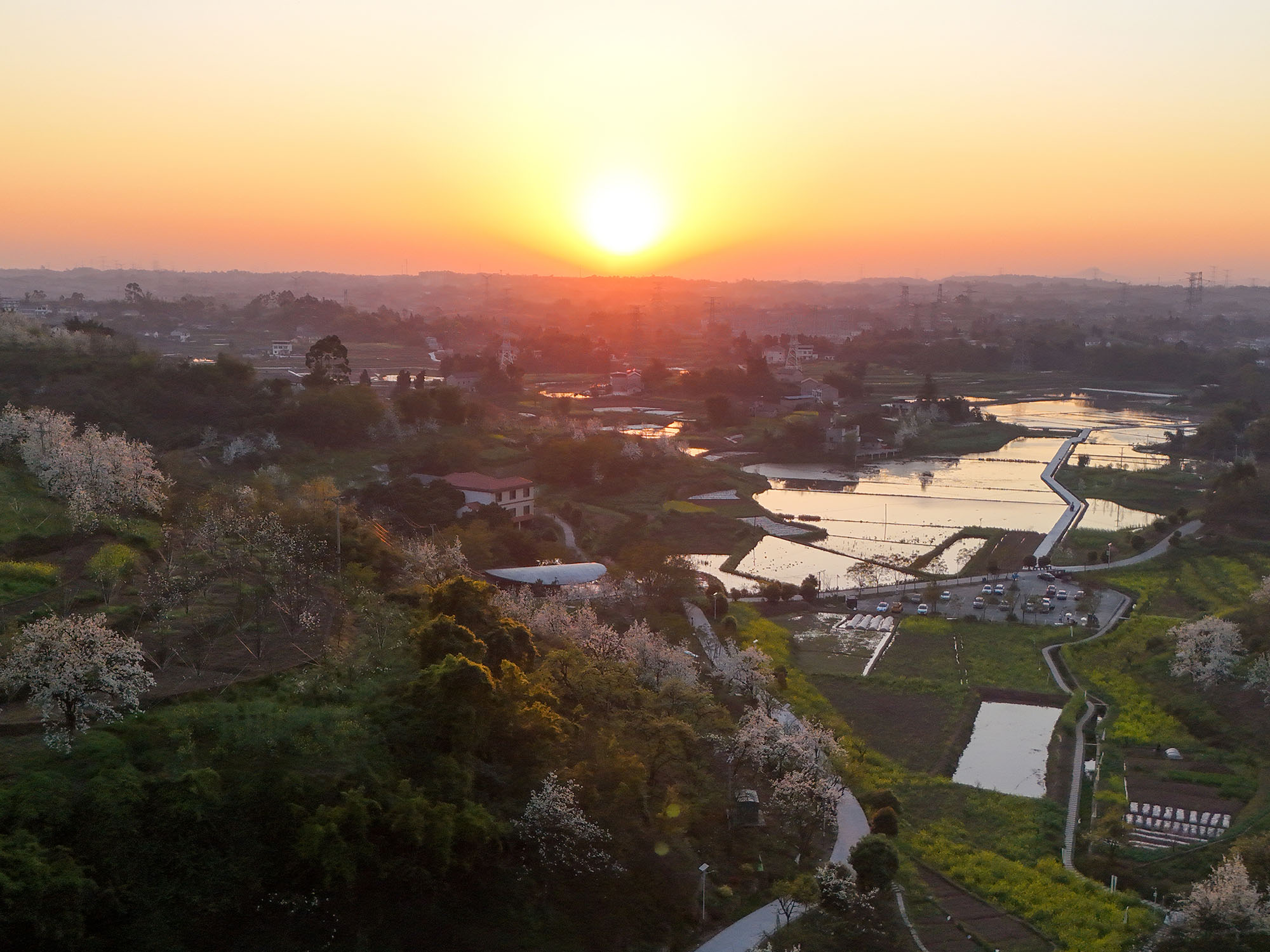
© Archermit
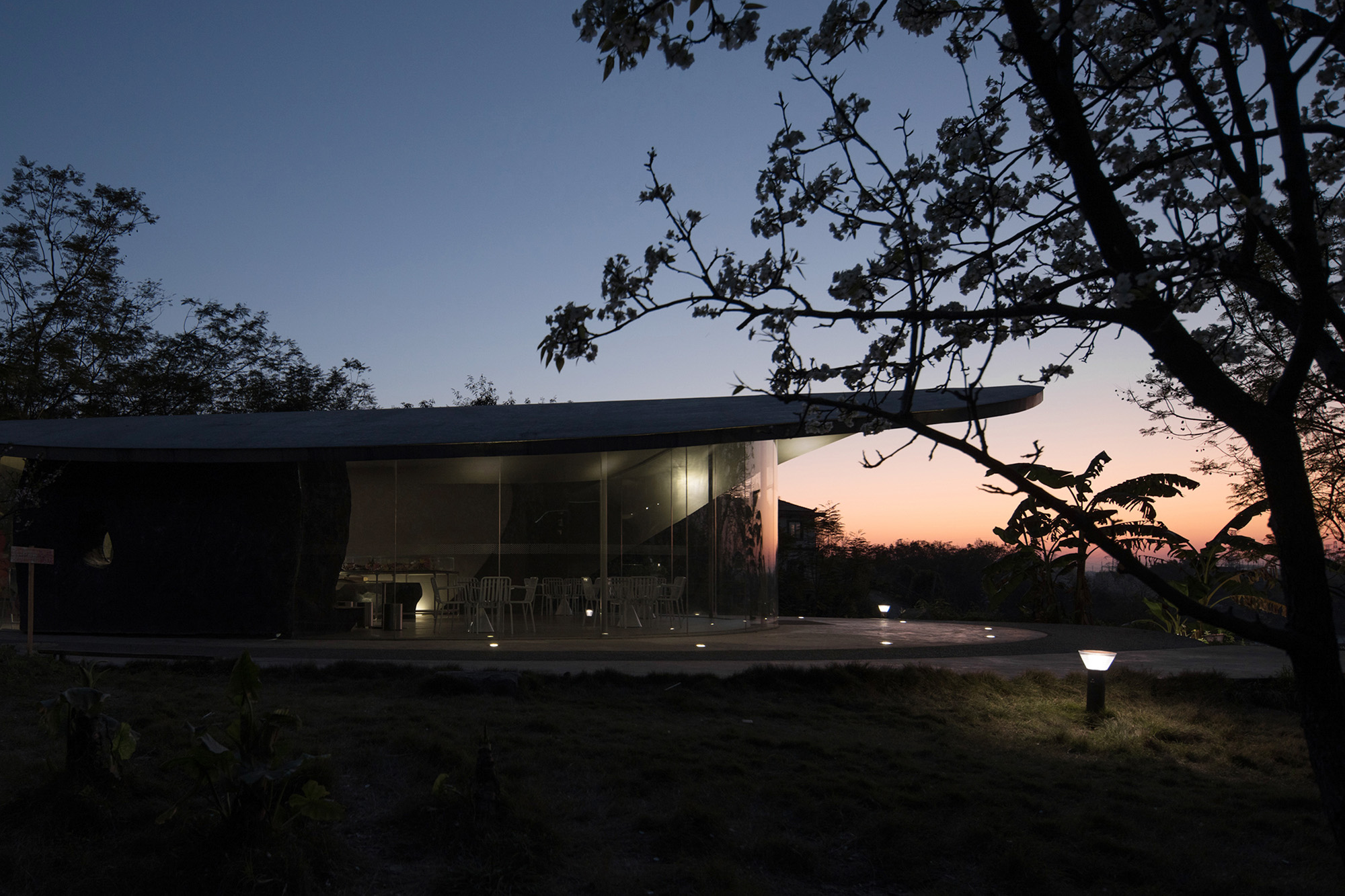
© HereSpace
© Archermit
© Archermit
© Archermit
© Archermit
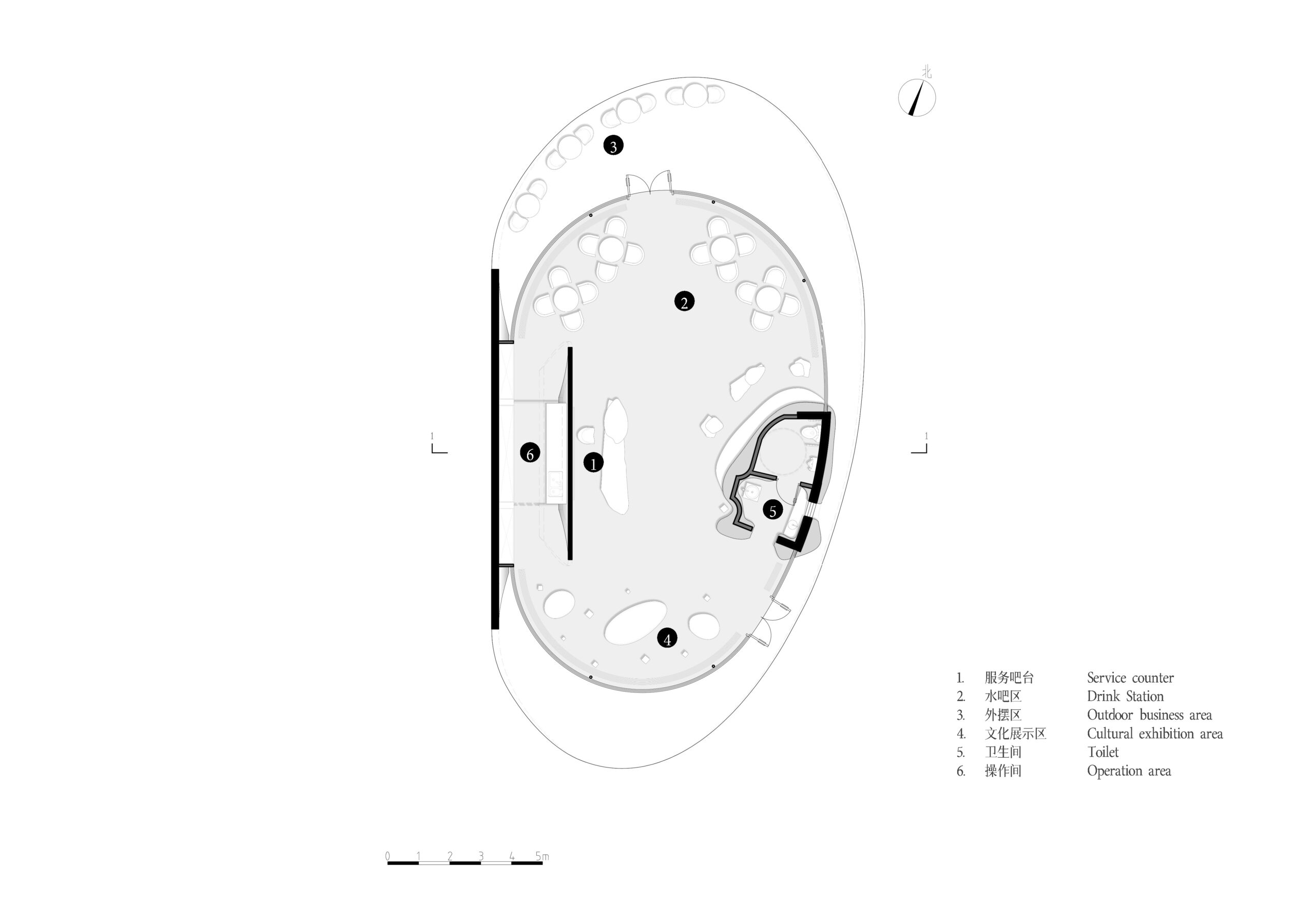
PLAN © Archermit
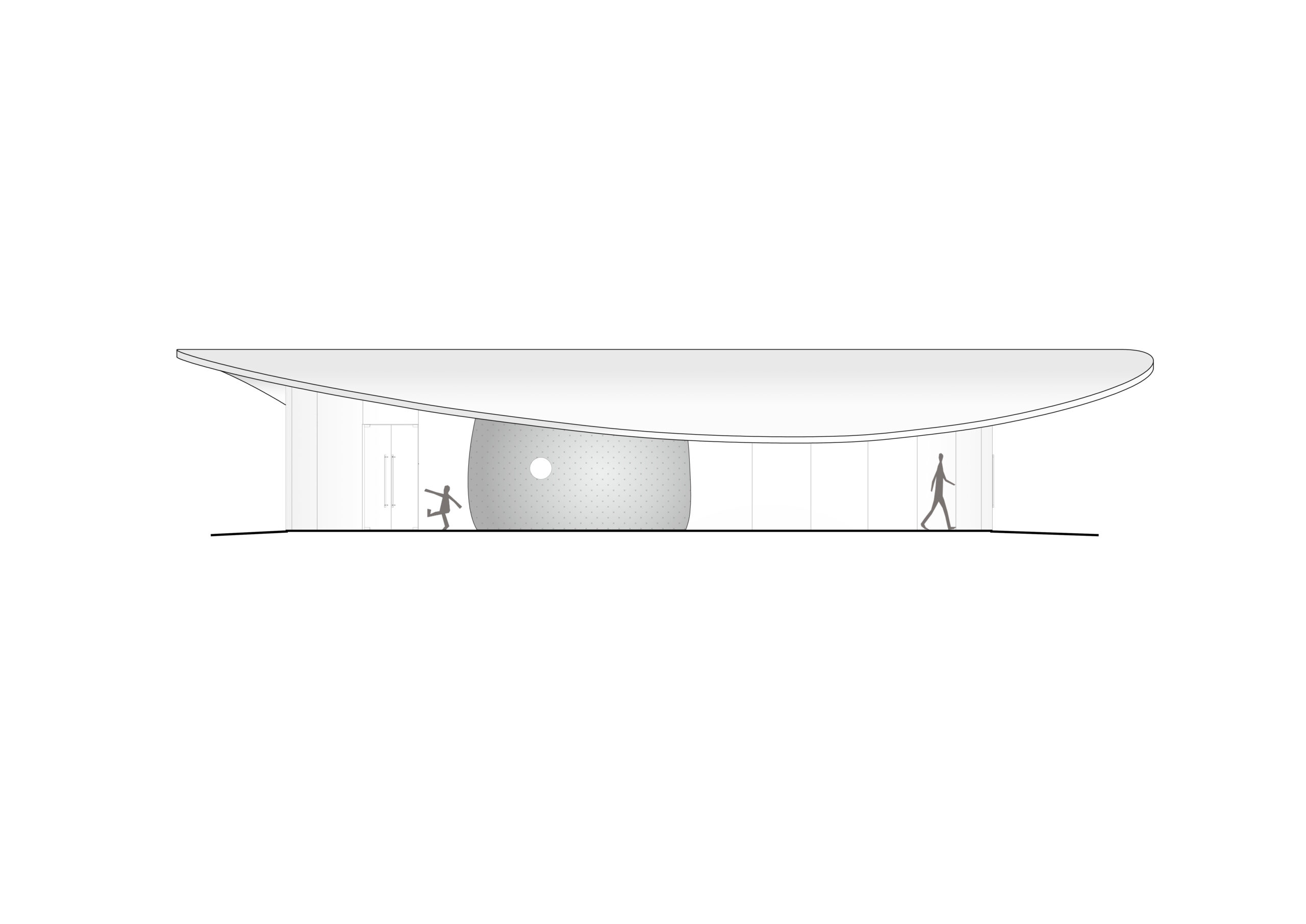
East elevation © Archermit
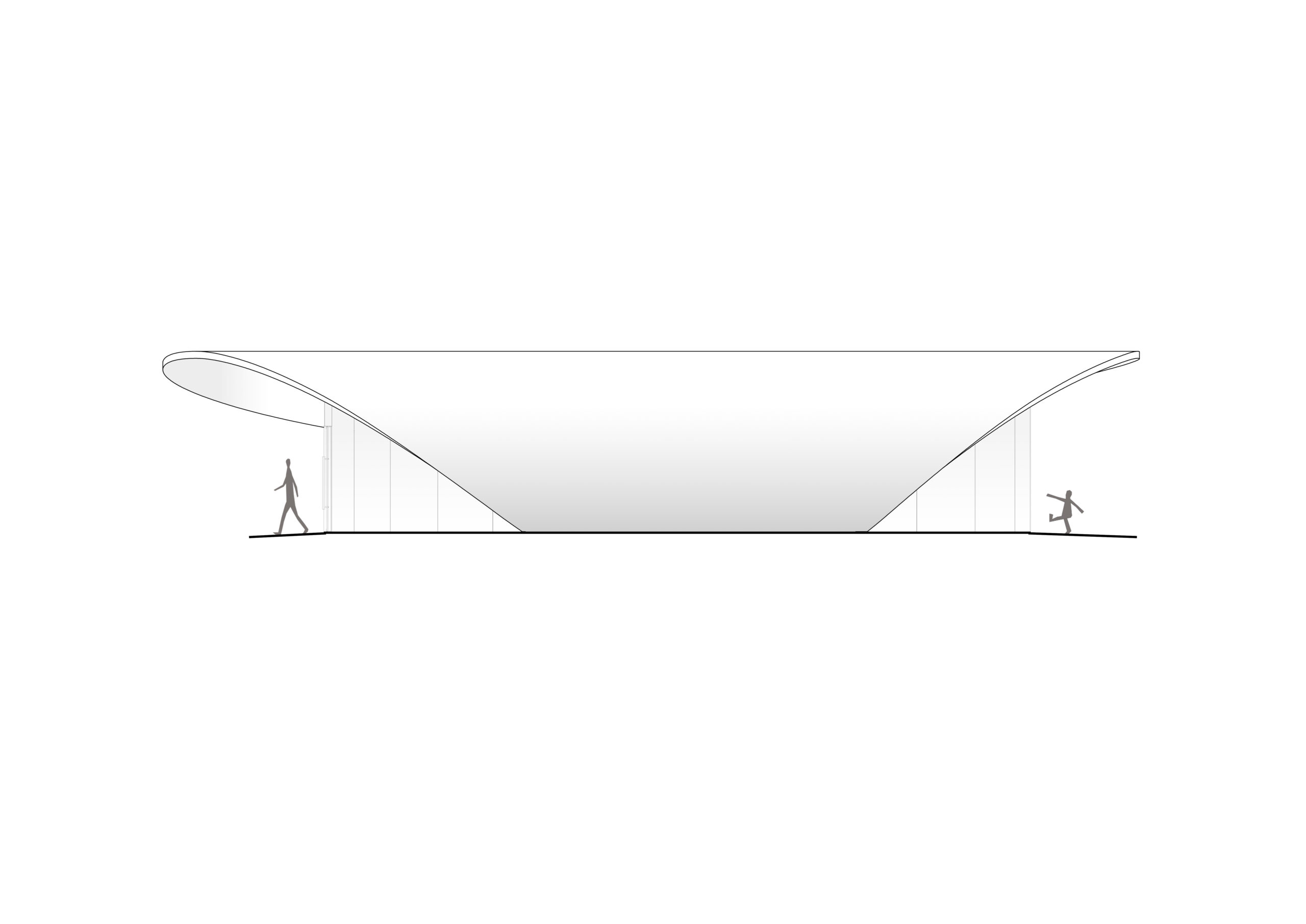
West elevation © Archermit
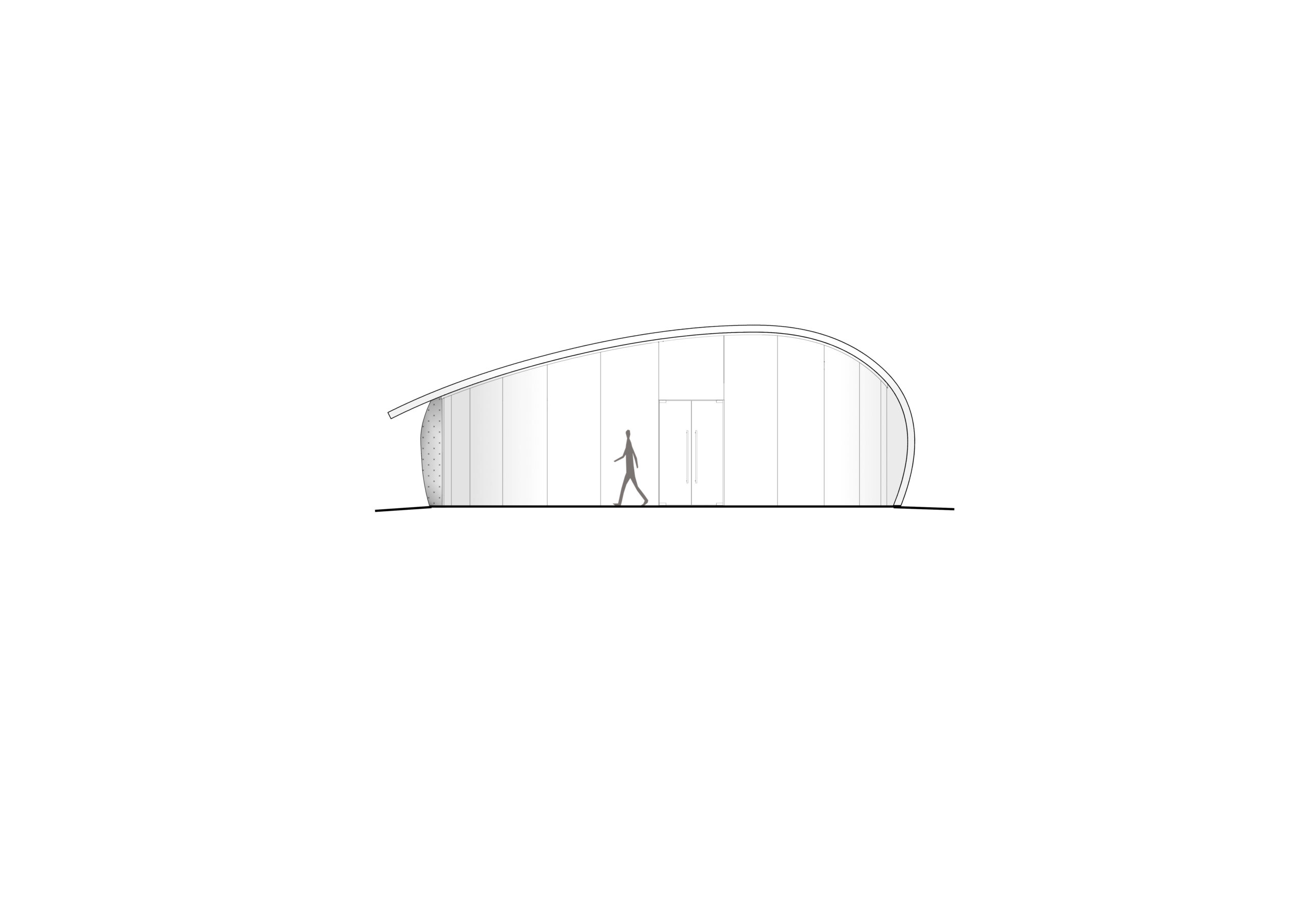
North elevation © Archermit
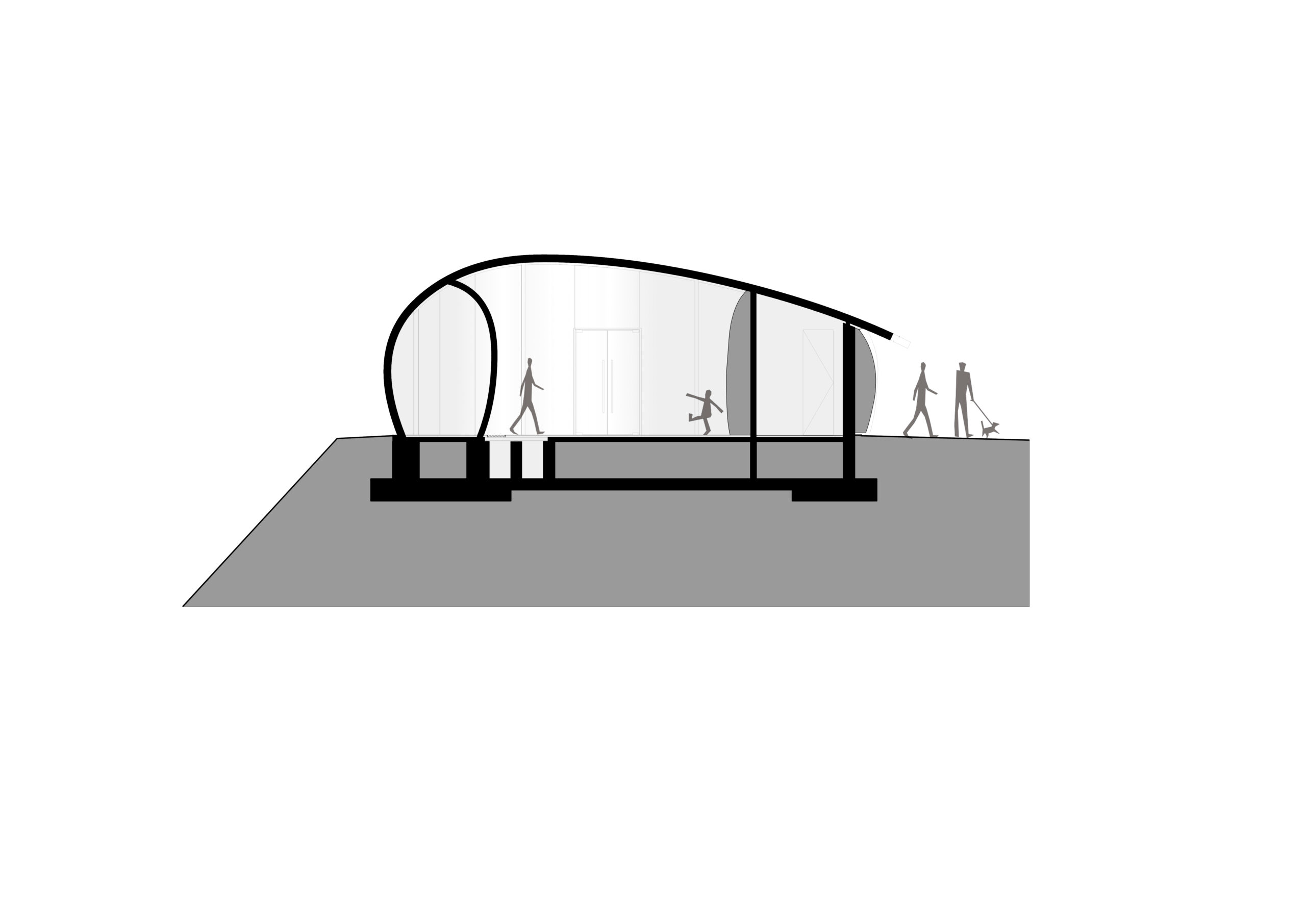
Section © Archermit
以下、Archermitのリリース(英文)です。
Buzzy Sunny · The Stone Kiln in the Valley — The Ant’s Architectural Dream /Archermit
Inspiration from Ants
In late 2021, on the first visit to Lihua village in Luzhou, I was struck by the bare, skeletal pear trees that blanketed the valley after the autumn leaves had fallen. Giant rocks stood at the edges of winding paths, and the desolate winter valley left a lasting impression.
When I returned in March the following year, I experienced the stunning sight of pear blossoms in full bloom. The white petals fluttered in the wind, drifting gently across the winding paths. A group of ants scurried through the fallen petals, moving in clusters, each with its own rhythm—sometimes appearing, sometimes disappearing. Watching this scene was quite fascinating.
Three months later, the design for “Buzzy Sunny · Stone Kiln in the Valley” began. The plan was to create a small structure in Lihua Village’s valley entrance, which would serve as a bakery for kiln-baked bread, a baking room, a café, and a cultural display space. Guided by the “Imagery Architecture” theory from Archermit, we started by exploring appropriate imagery sources for the design.
Pear blossoms, giant rocks and sunsets were the most vivid images from our mind in Lihua Village. How could we combine these imagery sources in a way that was not only engaging but also natural and seamless? The sight of ants running under the petals kept coming back to my mind. If we scaled down to the size of an ant, wouldn’t those fallen petals be like enormous buildings? Thus, the idea for the Stone Kiln in the Valley emerged.
The design of the building draws from the imagery of pear petals and the valley’s distinctive rocks. The shape and texture of the petals, and the form and feel of the stones, are translated into the architectural design and spatial layout. “A single fallen petal lightly knocks on the stone, within the petals of the pear flowers dances the new attire.” The entire building resembles a giant petal that has gently fallen atop a massive stone, creating an ethereal and delicate visual effect. From a distance, the curling white “petals” look like a massive, intact rock, standing tall on the land.
The Stone Kiln in the Valley has no defined walls; the entire structure is supported by a giant “stone,” holding up a curved roof, with a hollowed-out “stone” concealing a bathroom inside. The petals act as both walls and the roof, creating spaces underneath that are tightly connected to the surroundings through large glass windows. People move through the petals in groups, each with own posture, at times visible and at times hidden—just like the busy ants.
Echoes in the Petals
The Stone Kiln in the Valley uses a steel structure as its framework, with a roof designed as a simplified network of “petal-like veins” using steel. The enclosing structure consists of a single shear wall for the bathroom and five steel columns with a diameter of 80mm, arranged in a circular pattern. The overall structural design is simple and clear, perfectly aligning with the final architectural form.
The petal shape is achieved with two layers of 3mm galvanized steel panels, which fully cover the structural framework. The cavity between the layers is filled with insulating rock wool. The exterior of the steel panels is finished with decorative cement paint, achieving the effect of a completely white petal. The steel panels themselves are waterproof, which eliminates the need for traditional roofing materials, keeping the roof thickness under 160mm to preserve the lightness of the pear petal.
The Stone Kiln is situated on the land beside a rural road, with dense Jacaranda trees to the north and south, farmland to the east, and a road that drops about 3 meters to the west. The curled roof’s solid walls face west, blocking the afternoon sun, while blocking the undesirable views and noise disturbances from the road. The opening faces east, welcoming the warmth of the morning sun and creating a spacious courtyard that connects with the Jacaranda trees.
The near-elliptical floor plan and curved roof combine to create a unique acoustic effect inside the building. Sound produced at different locations in the building creates distinct echoes, and the sound reverberates throughout the space, becoming clearer and more pleasing to the ear. This effect is particularly suited for orchestral music. During the later stages of operation, we organized several small music events, where children experienced the beauty of music inside this giant petal-like space.
Project Team: Archermit
Lead Architect: Pan Youcai
Design Director: Yang Zhe (Partner)
Technical Director: Chen Renzhen (Partner)
Design Team: Yang Rui, Hu Qinmei, Gou Yuanjun, Zhao Yaxian
Construction Drawing Team: Chengdu Meixia Architectural Design Co., Ltd.
Client: Lihua Village Collective Asset Management Co., Ltd., Jiangyang District, Luzhou
Construction Company: Luzhou Xingyang Jianchuan Industrial Co., Ltd.
Photography: HereSpace, Archermit
Written by: Pan Youcai, Wu Xiaoxue
Project Address: BuzzySunny, Lihua Village, Danlin Town, Luzhou, Sichuan
Building Area: 148 square meters
Materials Used: Steel round tubes, galvanized steel plates, decorative cement paint, weather-resistant textured paint, tempered ultra-clear laminated glass
Completion Date: March 2025
Archermit 公式サイト
http://www.archermit.com
![[Interview]iF Design代表のウヴェ氏に聞く、建築と都市の2026年メガトレンド](https://magazine-asset.tecture.jp/wpcms/wp-content/uploads/2026/07/23221054/iF_AwardCeremony_2026_AwardCeremony-82-900x600.jpg)
![[Report]激変する時代の中で、建築とデザインはどう拡張するか。「iF DESIGN AWARD 2026」授賞式&最新トレンド](https://magazine-asset.tecture.jp/wpcms/wp-content/uploads/2026/07/24010304/iFDesignTrendConference26-45-900x600.jpg)
![[Report]RUI Architectsが可動モジュールを設計して松竹のアートスペースをリニューアル、柿落とし展「継承のトランジション」の会場デザインも担当](https://magazine-asset.tecture.jp/wpcms/wp-content/uploads/2026/07/24141011/20260713shutl_press11-01309-c-900x629.jpeg)
![[Interview]BIM図面審査がスタート! さまざまな設計者のニーズに応えるVectorworksによる「限界のないデザイン」の世界](https://magazine-asset.tecture.jp/wpcms/wp-content/uploads/2026/07/13084316/rinterview_vectorworks_056-e1784200974912-900x555.jpg)