

巨大な螺旋に包まれた MAD最新作 - 3本のコアチューブが無柱空間を生み出す〈海南科技館〉がオープン
©︎ Yang Siyi
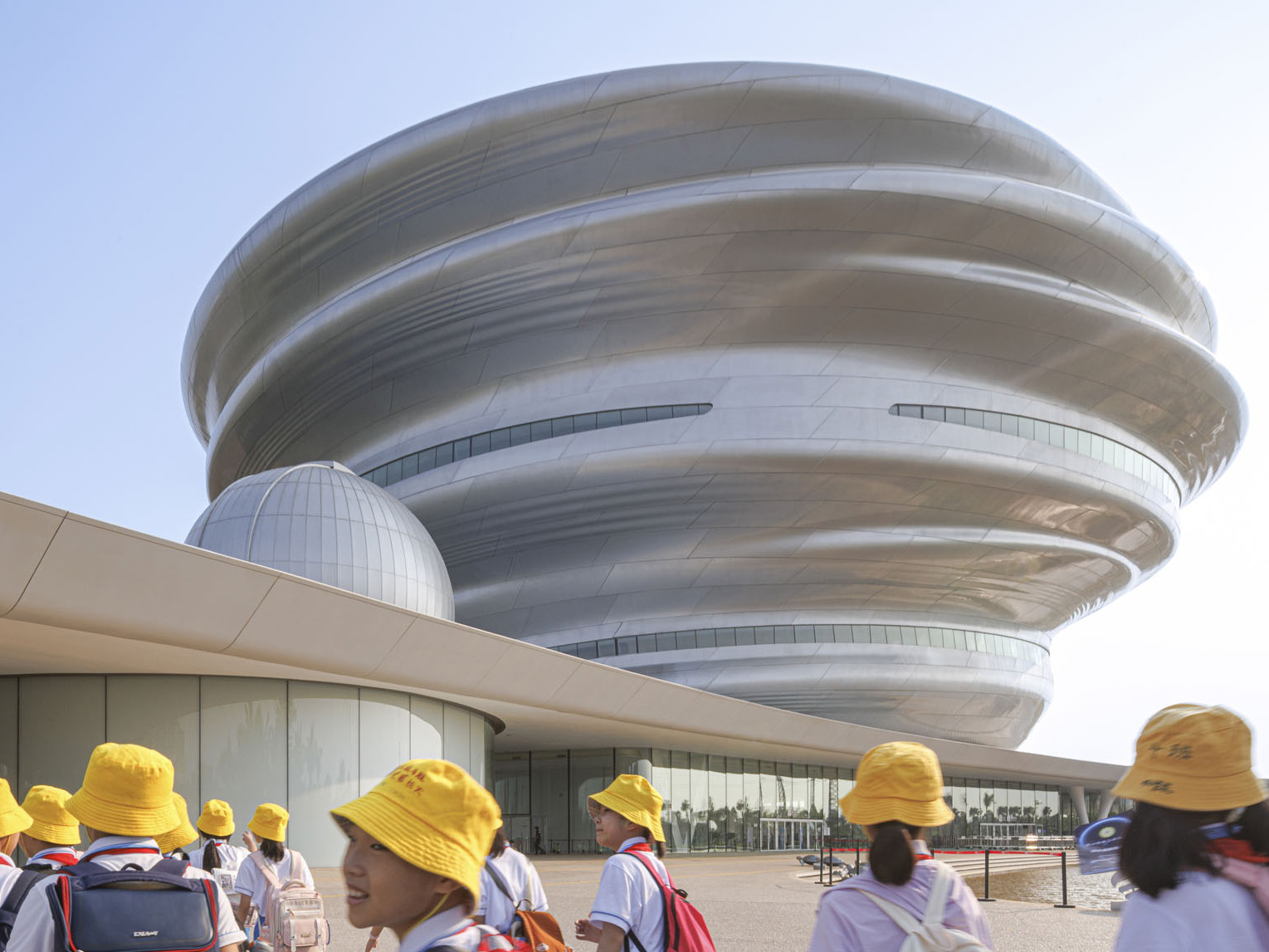
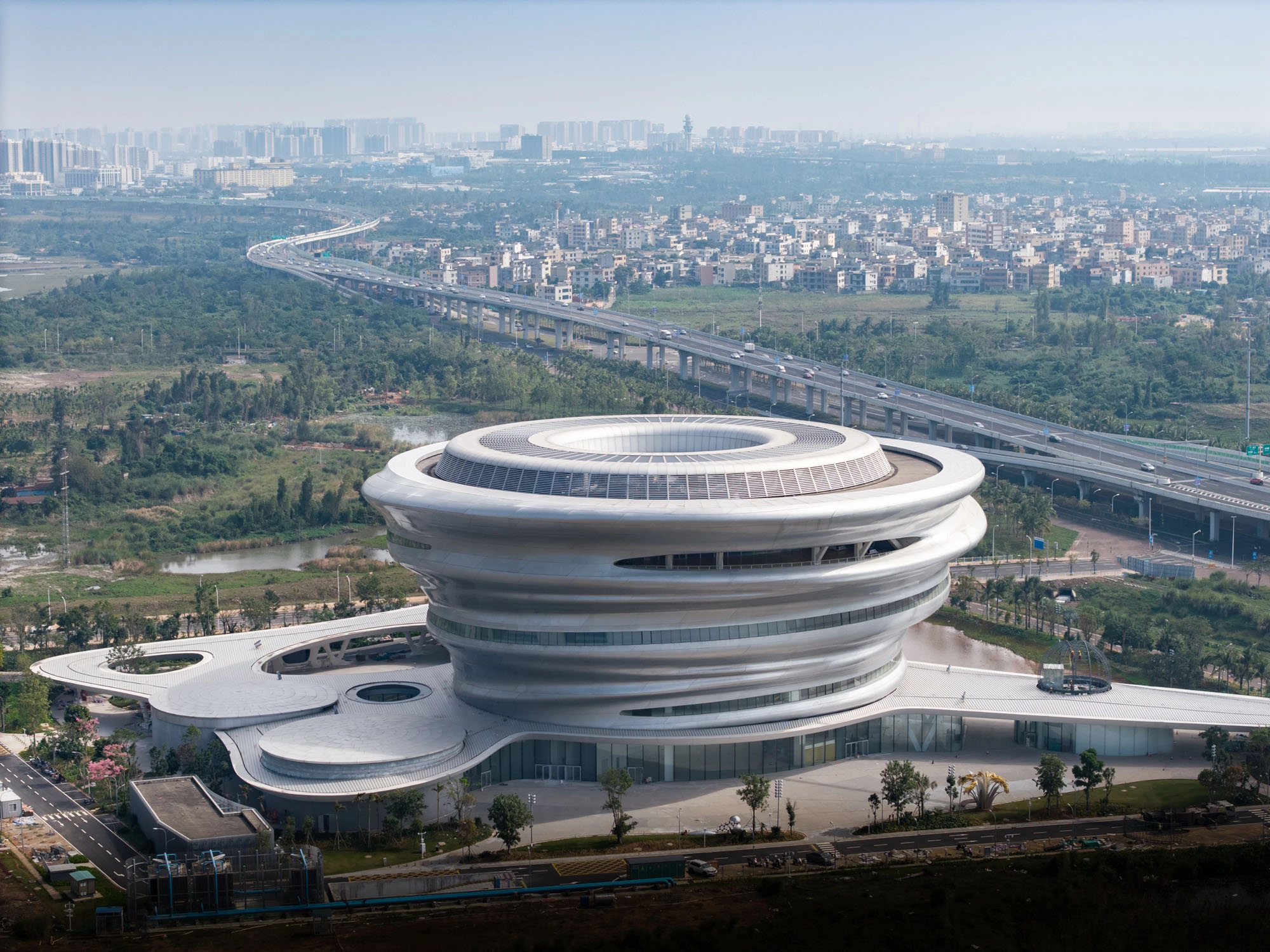
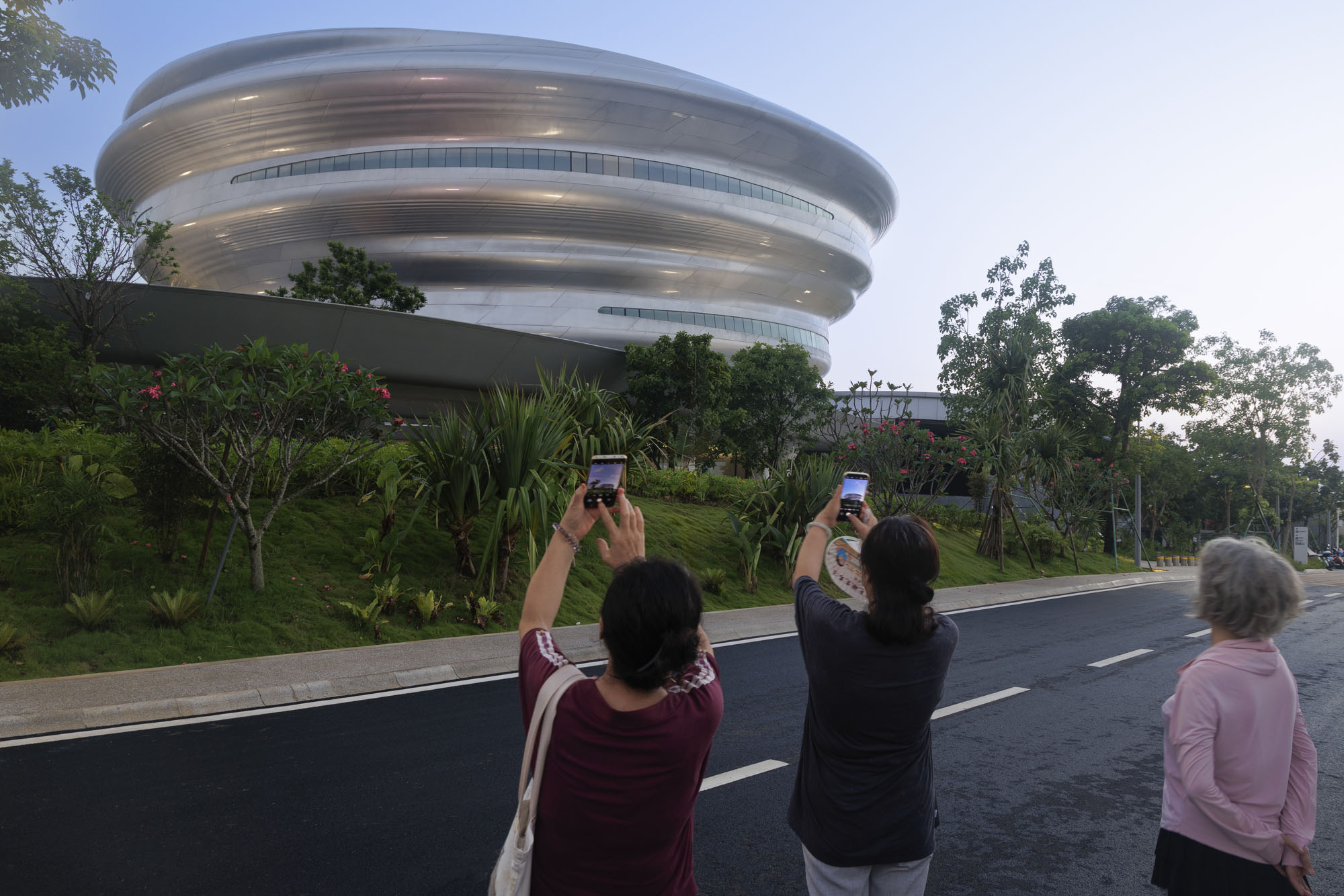
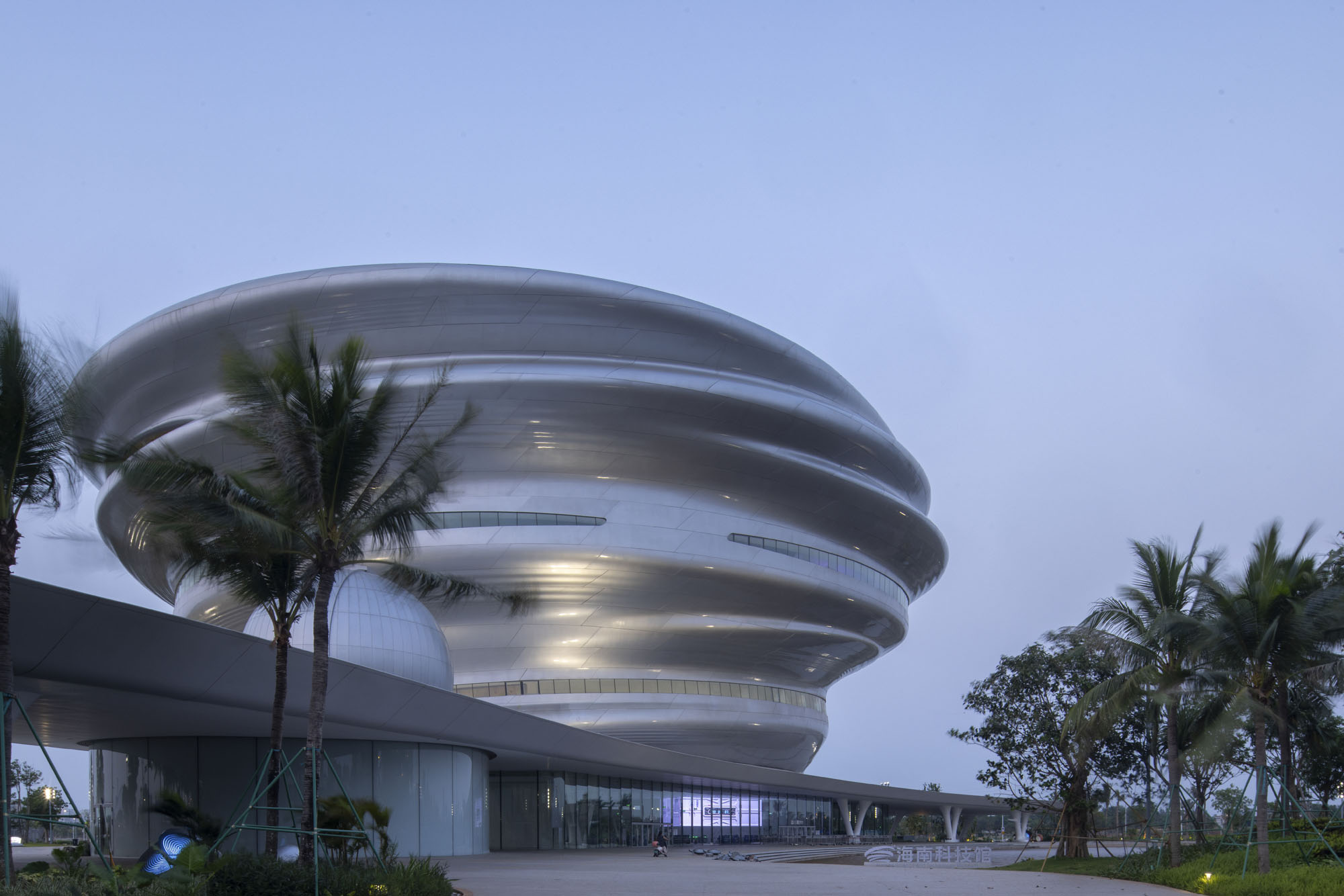
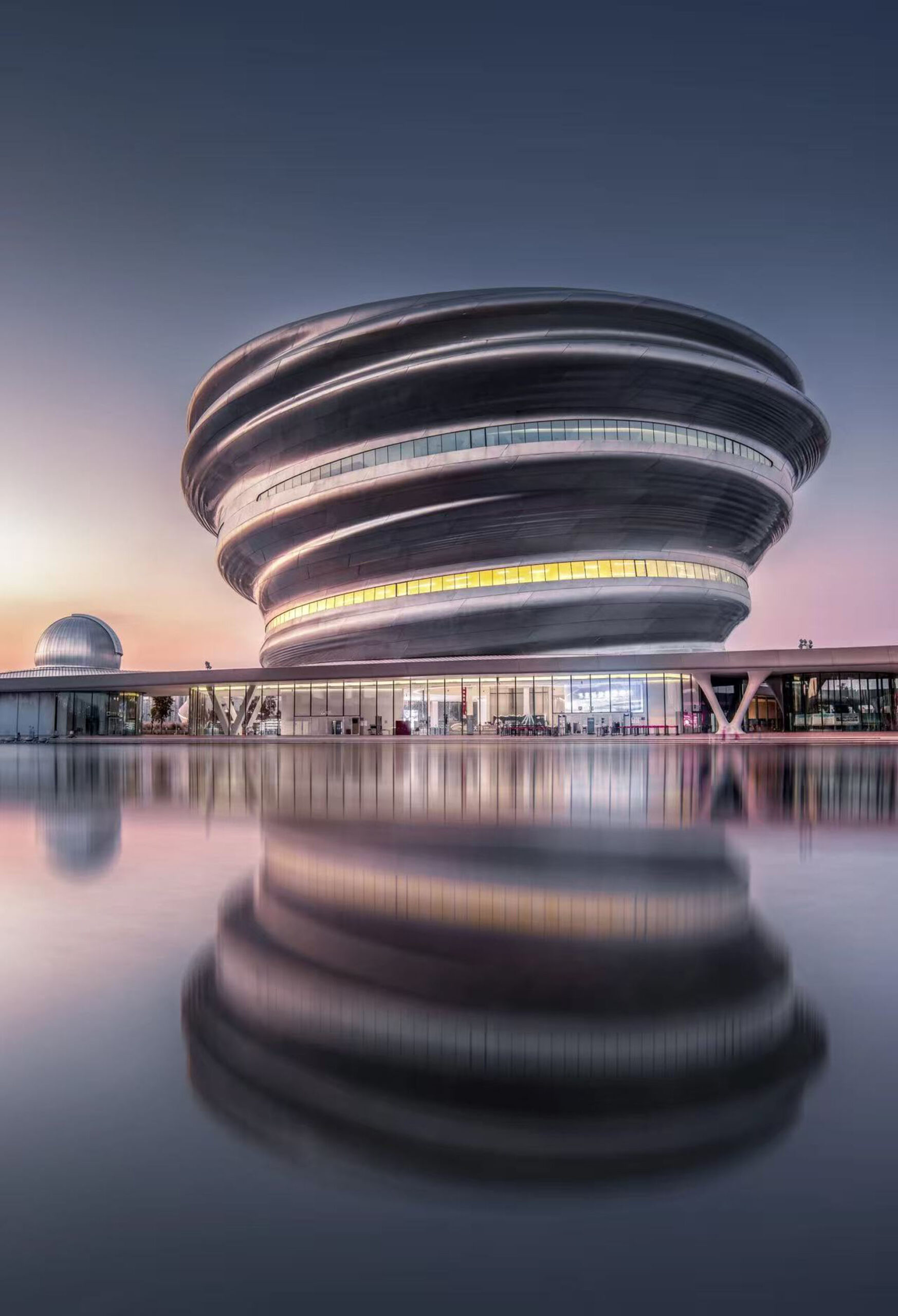
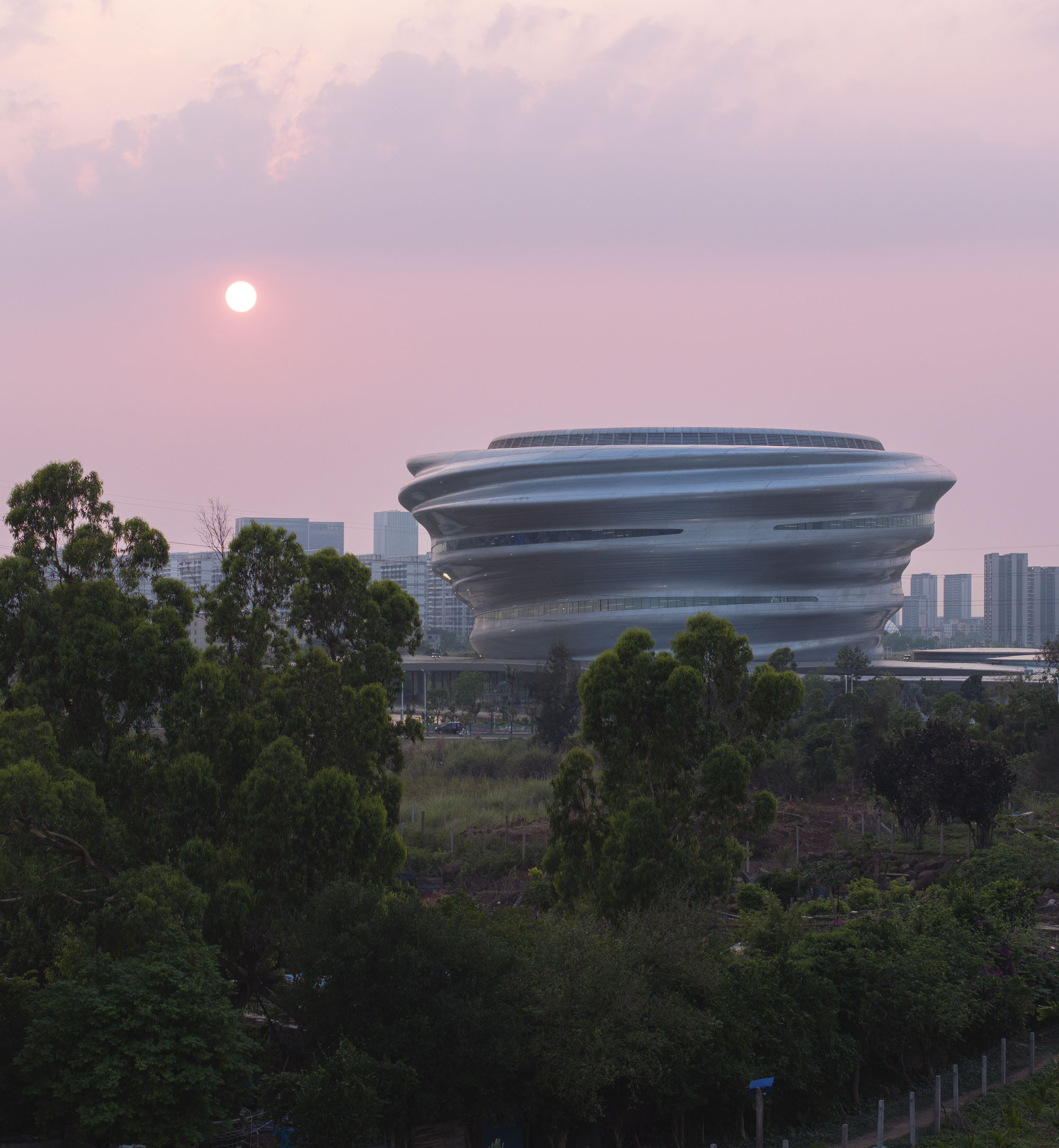
中国・海口市に誕生した〈海南科技館(The Hainan Science Museum)〉は、マー・ヤンソン(Ma Yansong)率いるMADアーキテクツ(MAD Architects)が手掛けた新たな「浮遊する」科学博物館です。
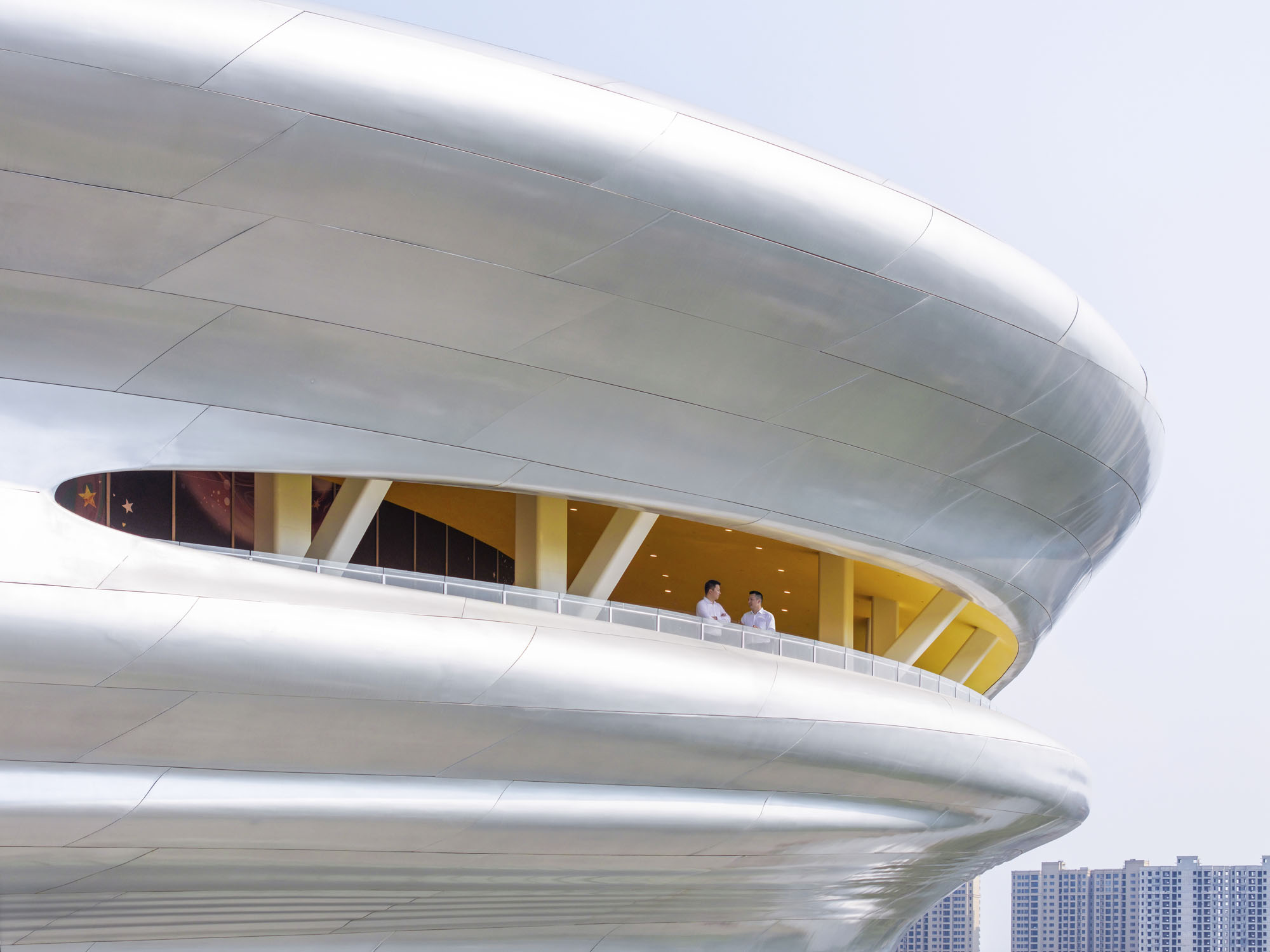
3本のコンクリート製コアチューブによって支持された柱のない空間と、館内のすべての展示室をシームレスにつなぐ単一の螺旋状通路が最大の特徴となっています。
注目ポイント
- 無柱空間と浮遊感を生み出す構造計画
- 上下どちらからでも体験できる「単一の螺旋状ルート」
- 空間と知識が自由に交錯する新しい展示動線
- コンテンツを収める容器から、建築自体がコンテンツとなる存在へ
(以下、MADアーキテクツから提供されたプレスキットのテキストの抄訳)
©︎ Arch-Exist
©︎ Arch-Exist
空間と知識が交錯する「浮遊する」ミュージアム
マー・ヤンソンとMADアーキテクツが中国・海口市に設計した、柱のない博物館が竣工した。すべての展示室が単一の螺旋状通路で結ばれた〈海南科技館〉は、プレオープンからの4カ月間で早くも35万人以上の来場者を迎え、ピーク時には1日で5,800人以上が訪れている。
「このプロジェクトは、空間、機能、知識が互いに自由に流れ込むように。『流れ』と『カオス』という概念に基づいて構築した。異なる分野はつながり、重なり合い、開かれたままであるべきである。もし人工知能がすでにほぼあらゆる質問に答えられるのであれば、科学博物館の役割はもはや事実を伝えることではない。子供たちに、どう質問すべきかを教えることなのである。」
MADアーキテクツ創設者兼代表パートナー
マー・ヤンソン
©︎ Arch-Exist
©︎ Arch-Exist
©︎ Arch-Exist
日常生活と科学をつなぐ、地域に開かれた市民インフラ
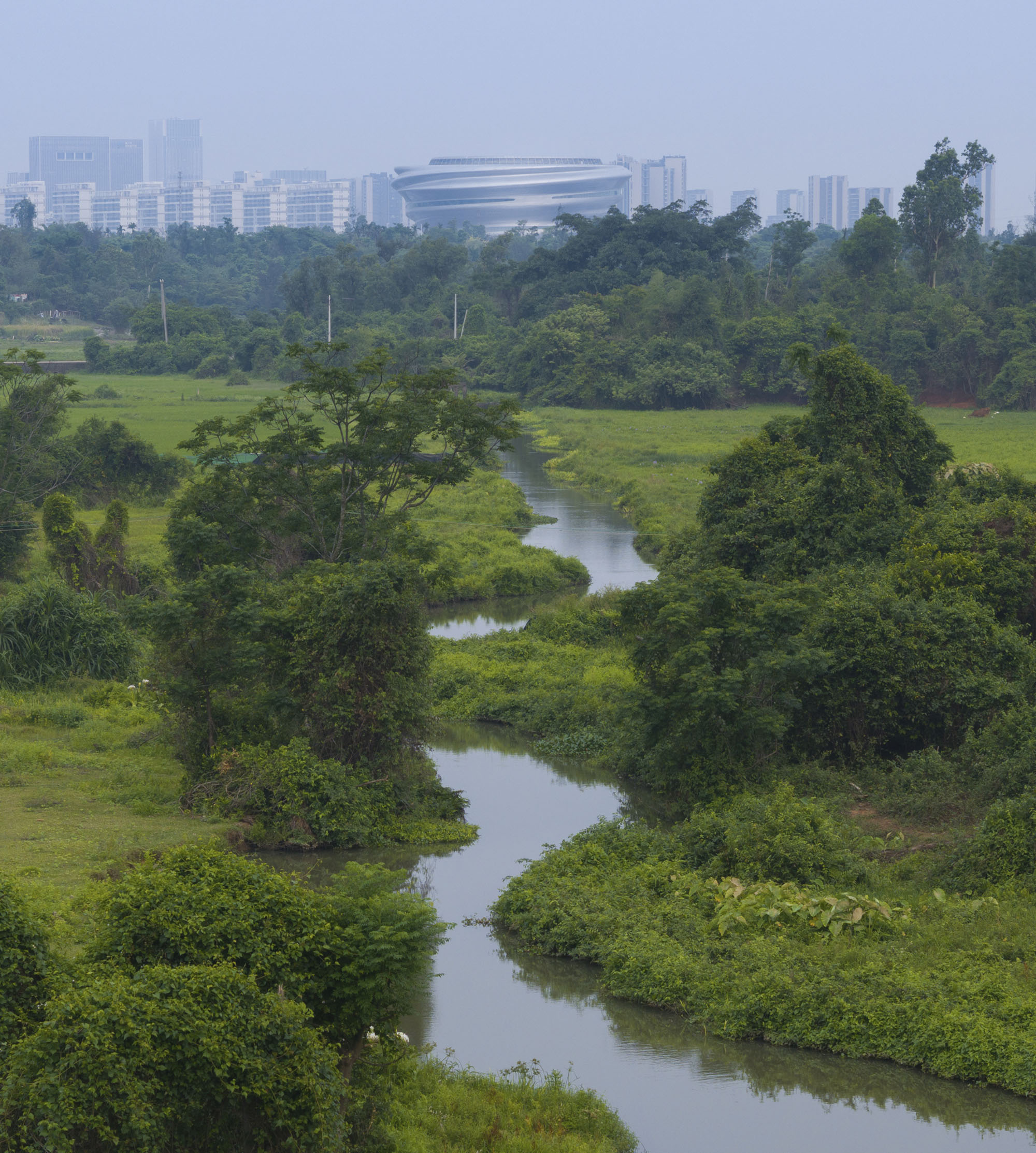
海南島は、静かに中国の科学インフラの一部となっている。中国唯一の沿岸宇宙基地が島の東海岸に位置し、2016年以降、月や火星へのミッションを含め40回以上の打ち上げを行ってきた。海南省の「公共文化施設トップ10」に選ばれたこの〈海南科技館〉は、科学を遠い存在としてではなく、すでに日常生活の中で起きていることとして捉えている。
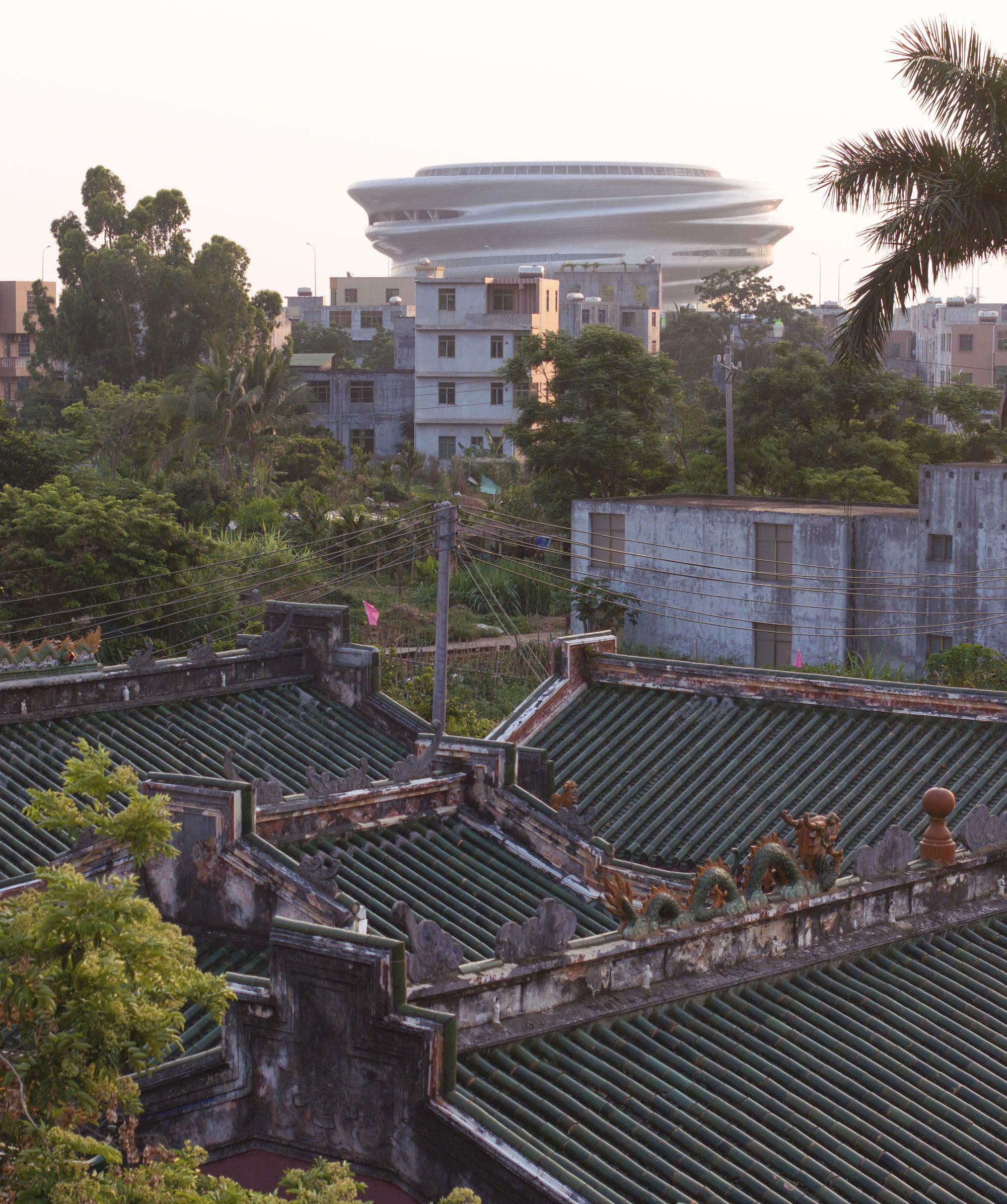
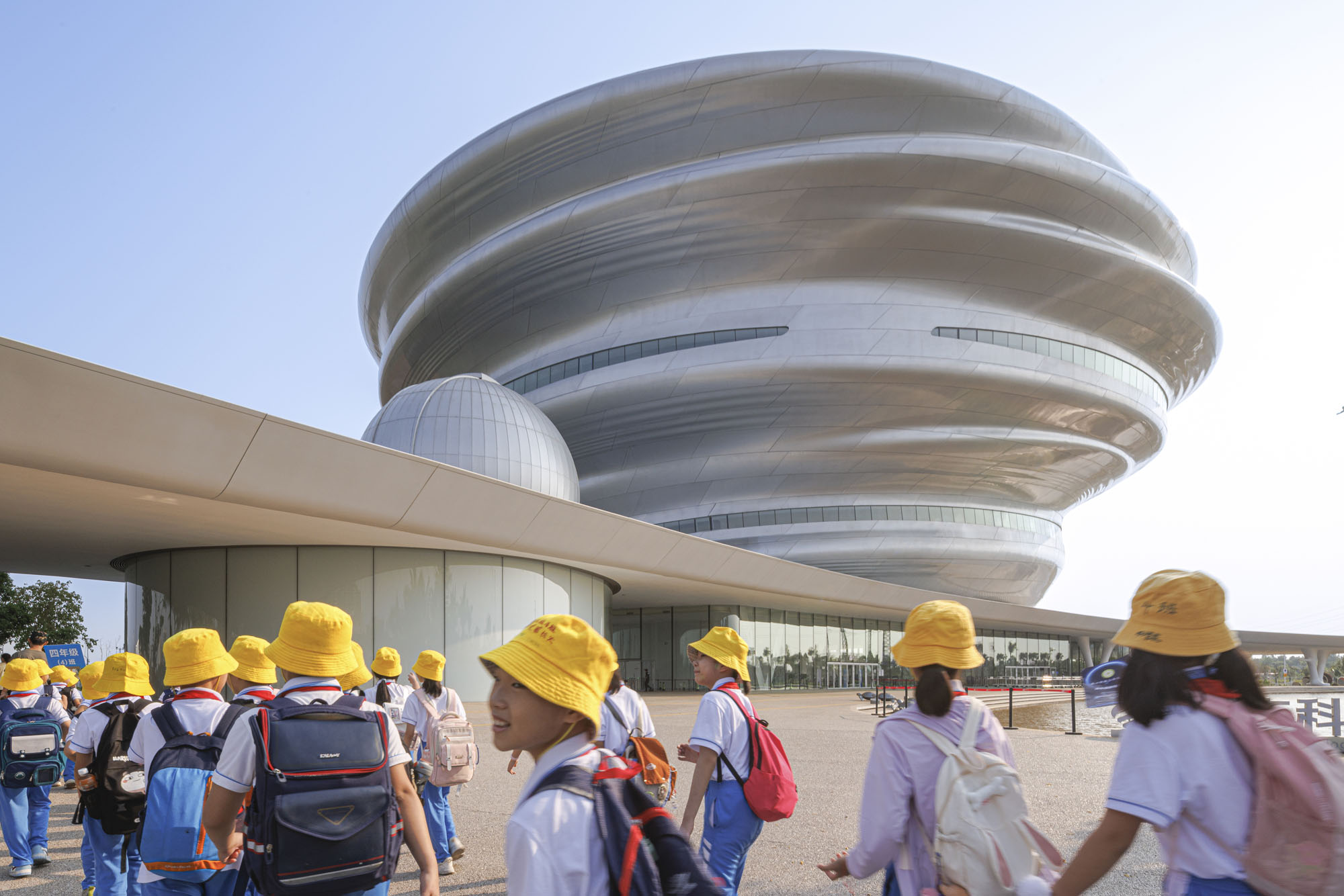
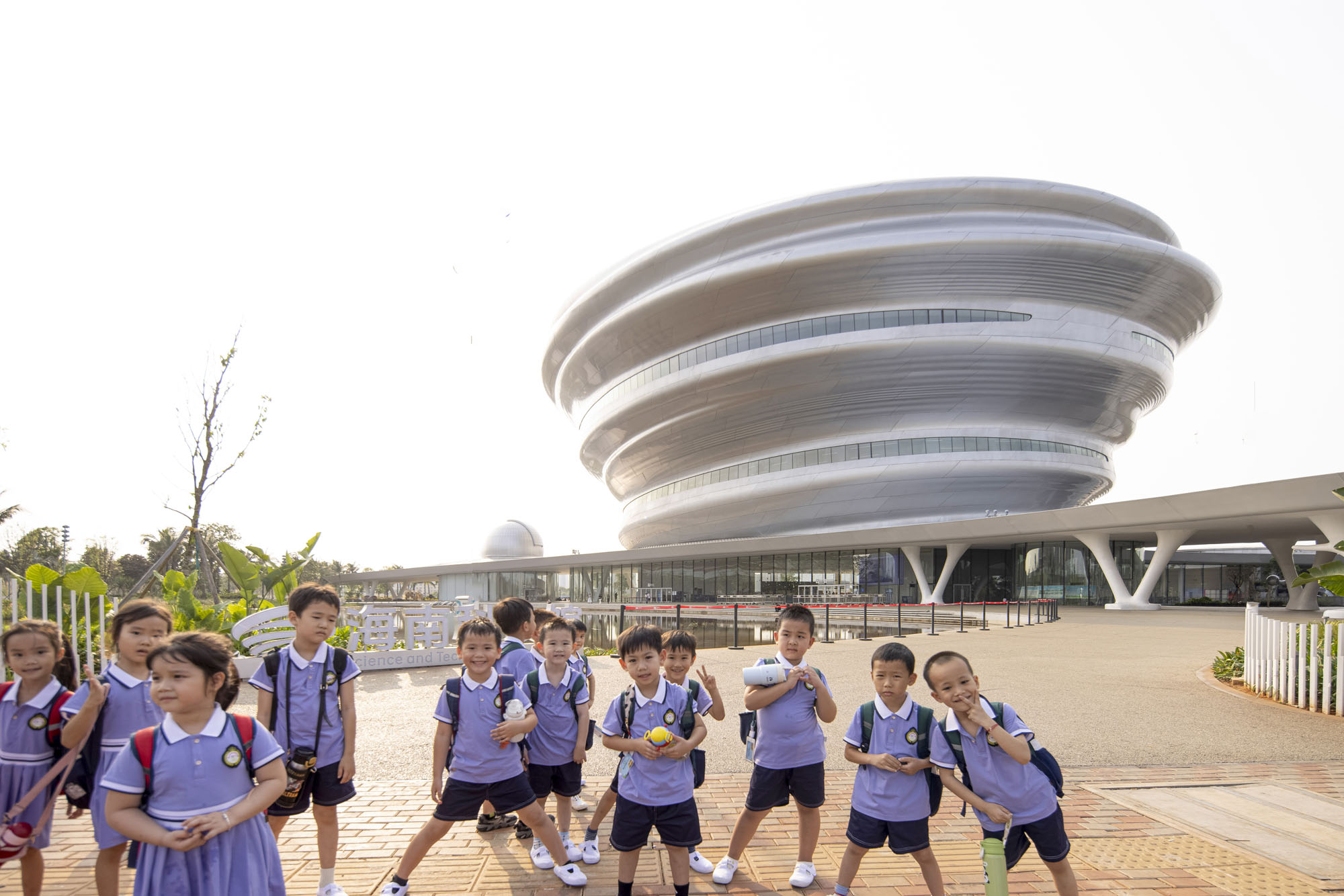
半径3km圏内に30校以上の学校や幼稚園があることから、マー・ヤンソンは最初のスケッチの段階から、この建物を周辺の家族のための市民インフラとして構想した。それは、単なるランドマークというよりは、公共図書館に近い存在である。
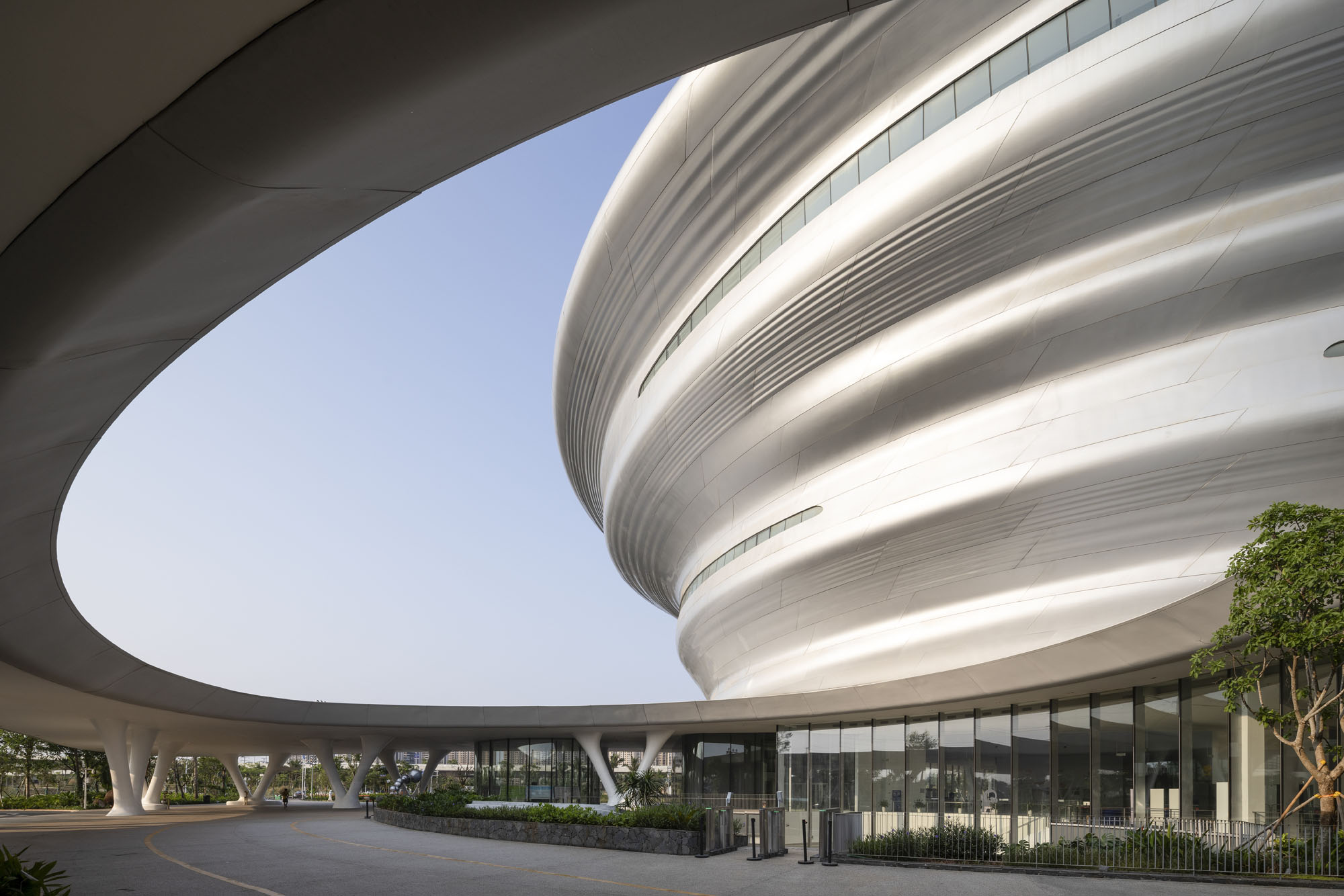
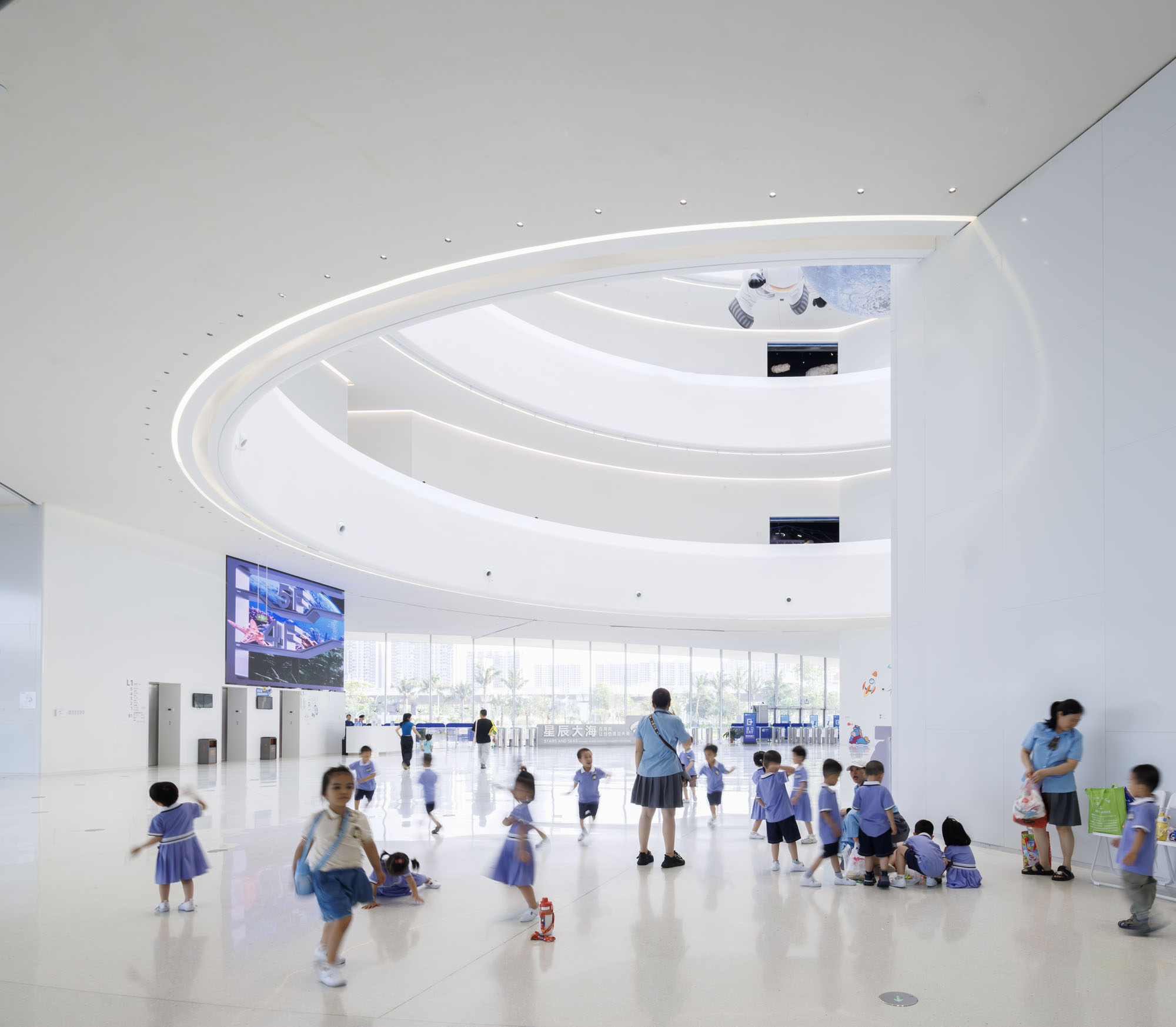
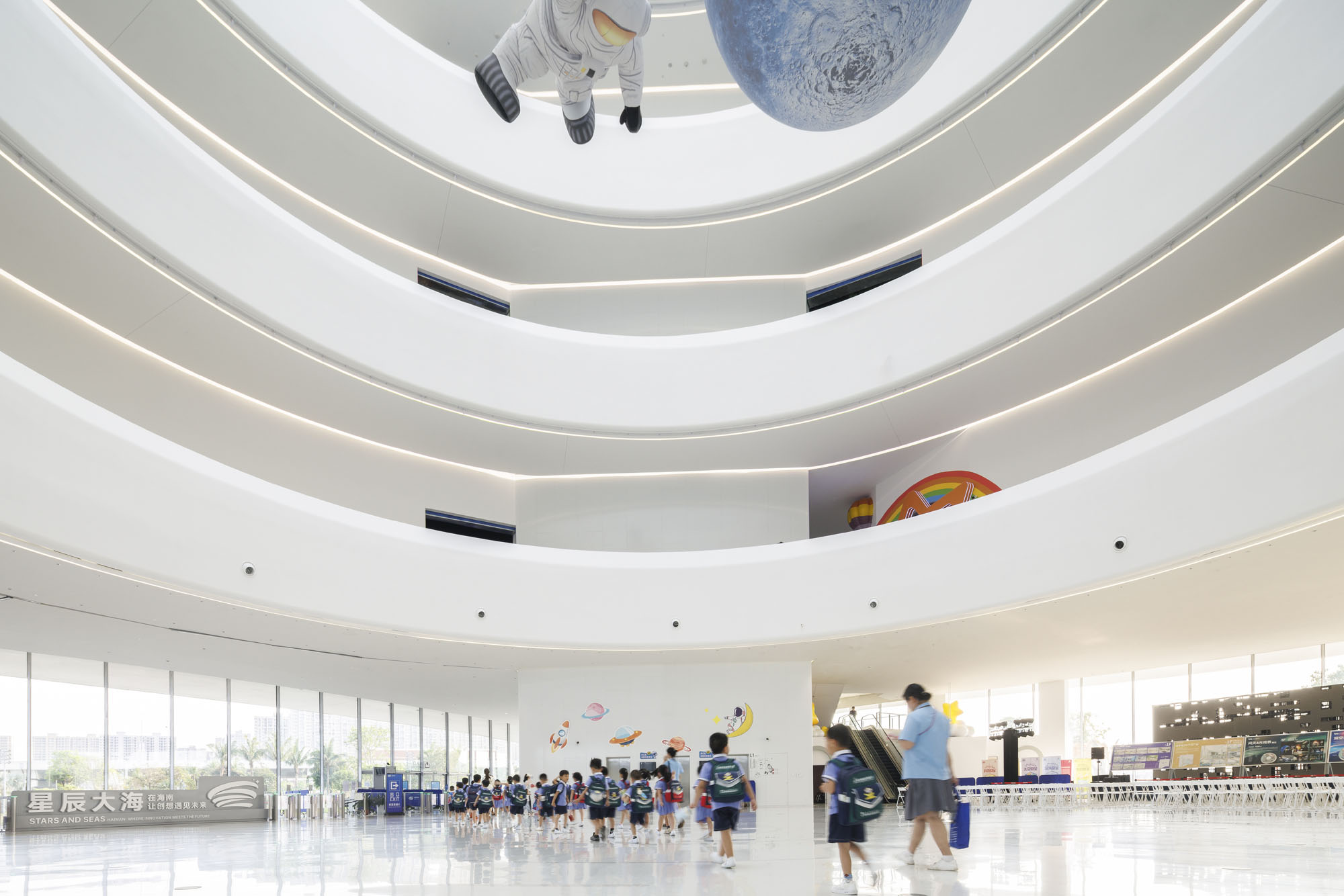
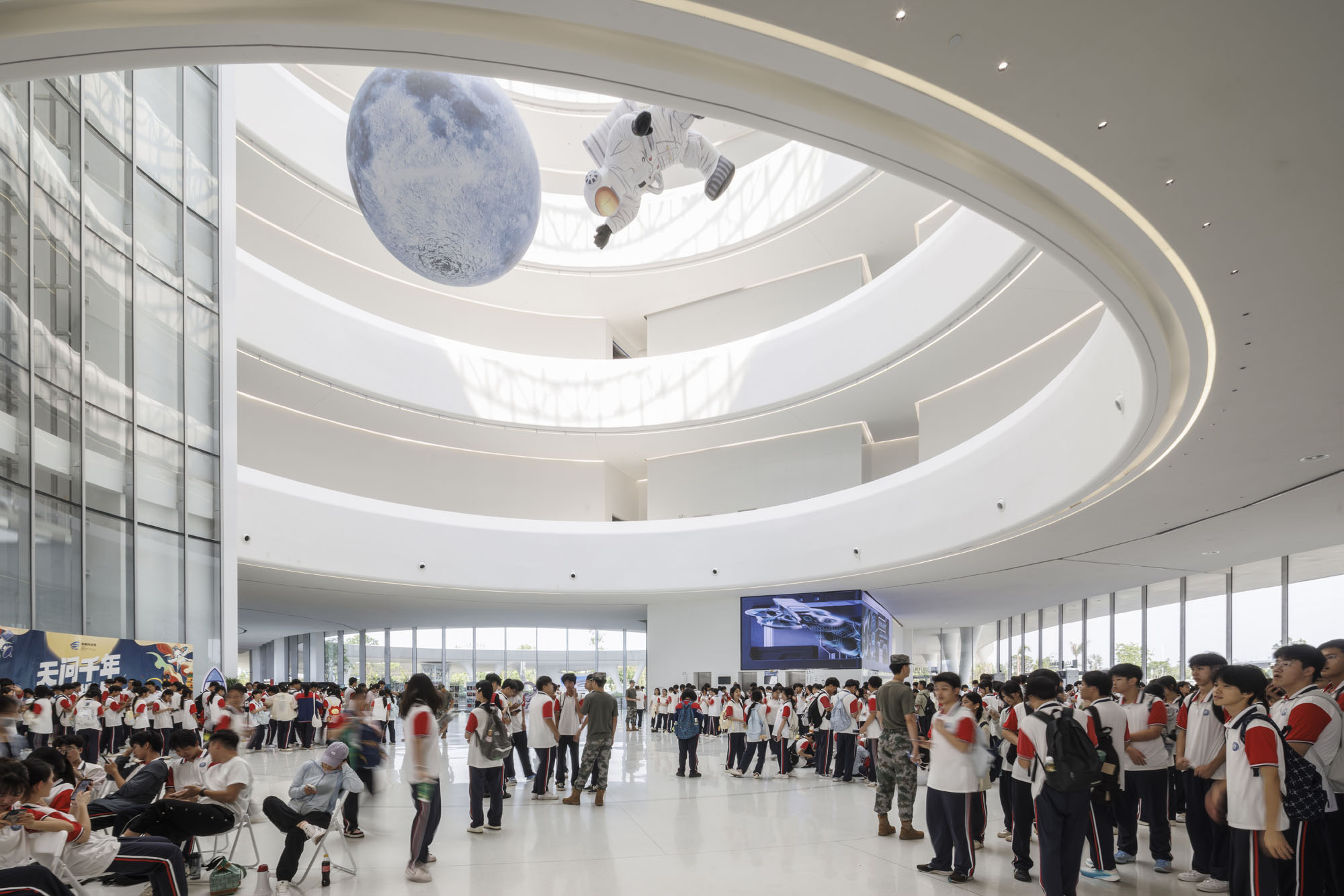
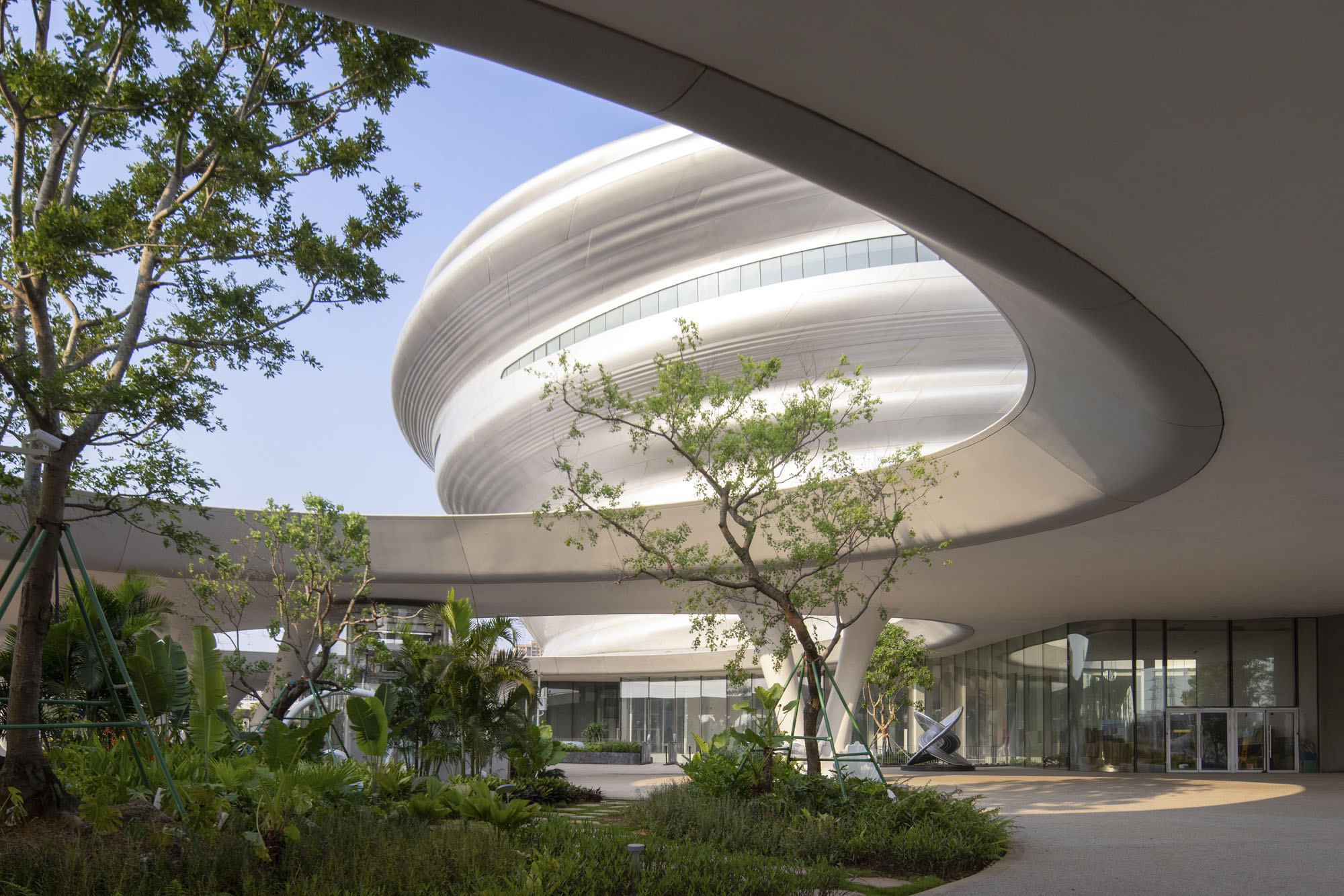
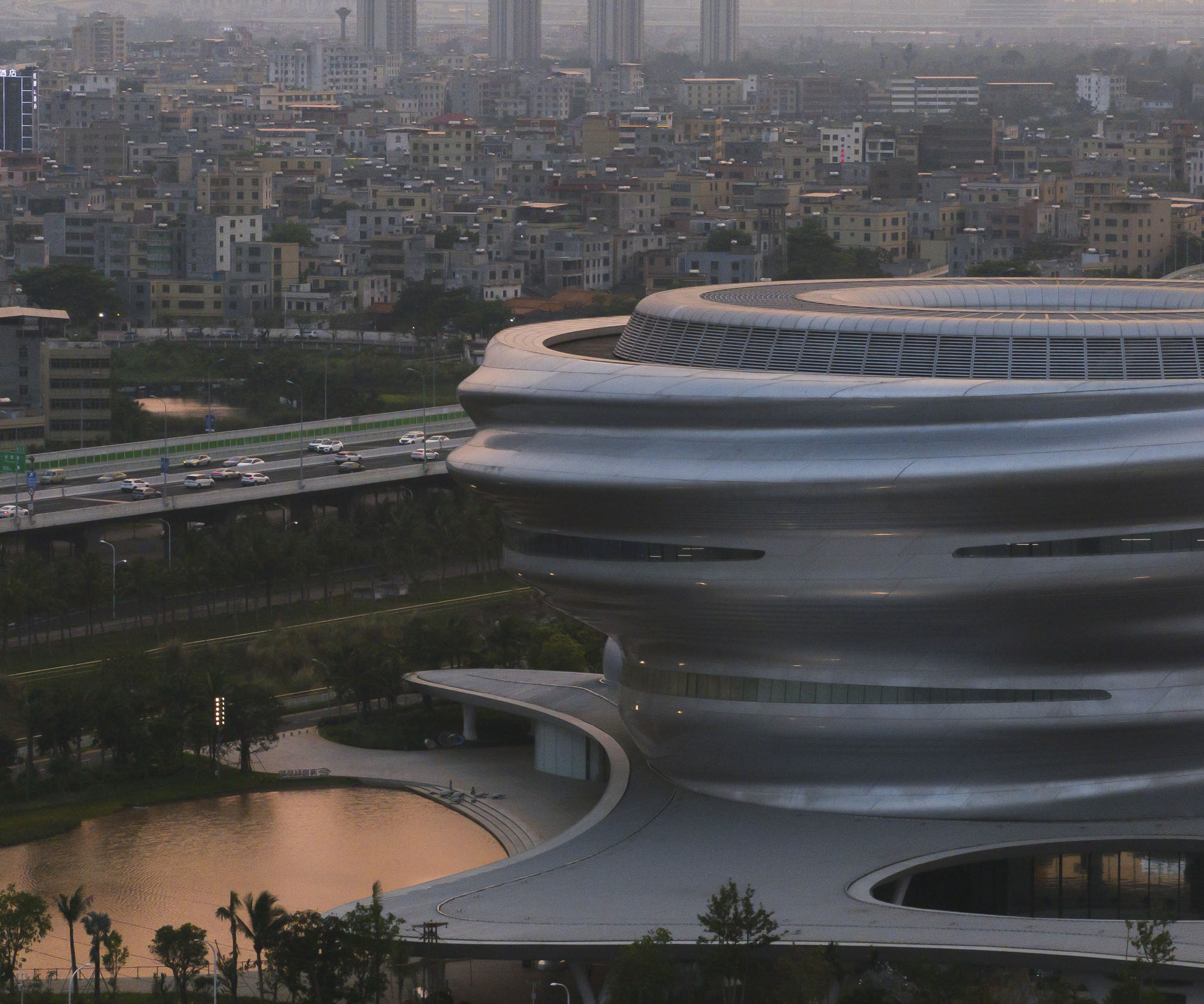
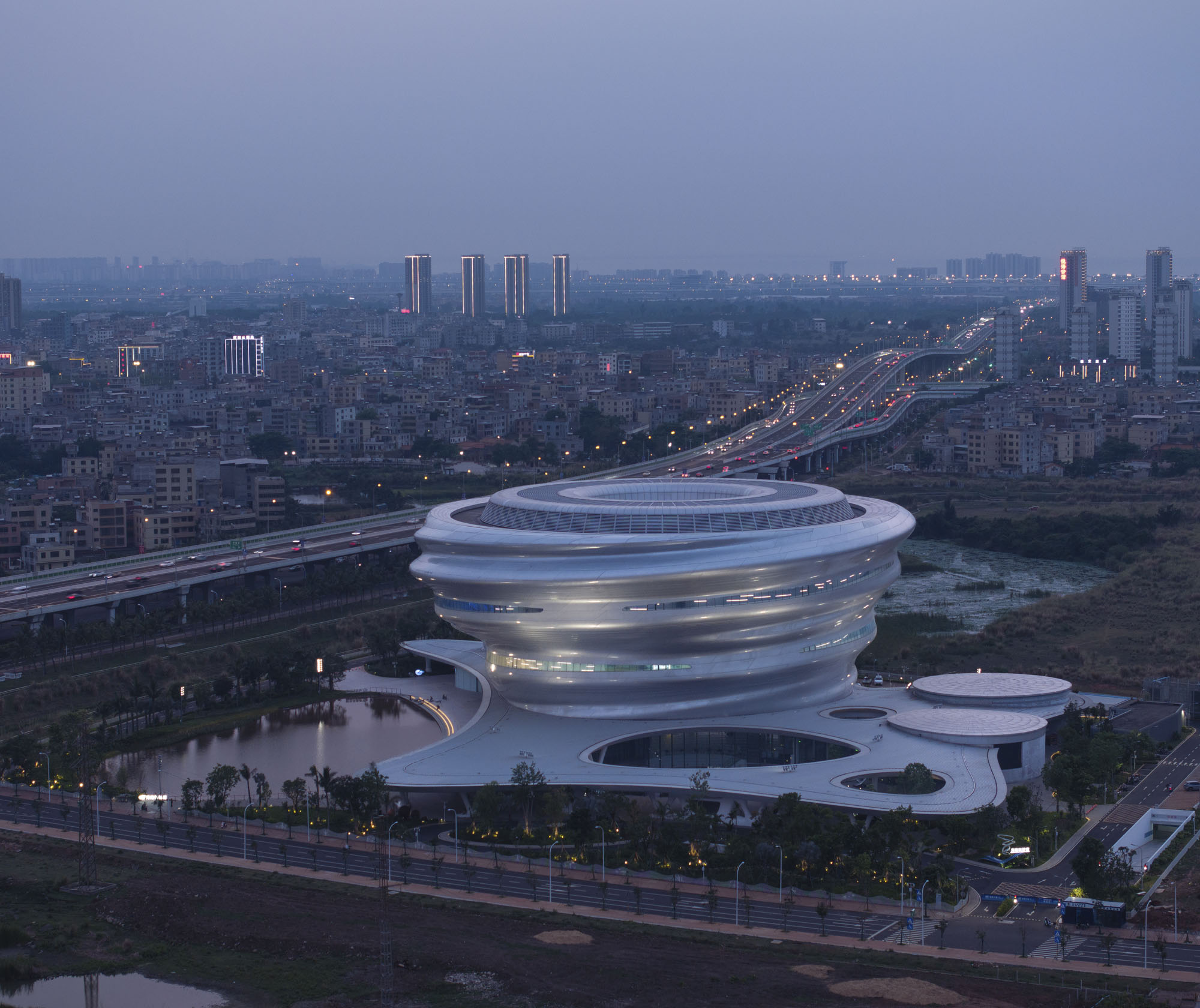
広々としたキャノピーが1階から立ち上がり、博物館の下にある開放的な広場を覆うことで、建物の下に公共空間を導き入れている。保護者が待ち合わせをし、生徒たちが集まり、住民が帰宅途中に立ち寄るこのロビーは、アトリウムというよりは、屋根の下にあるまちの広場のような雰囲気を醸し出している。
©︎ Arch-Exist
©︎ Arch-Exist
©︎ Arch-Exist
©︎ Arch-Exist
建築デザイン:1つの螺旋、2つの旅、3つのコア
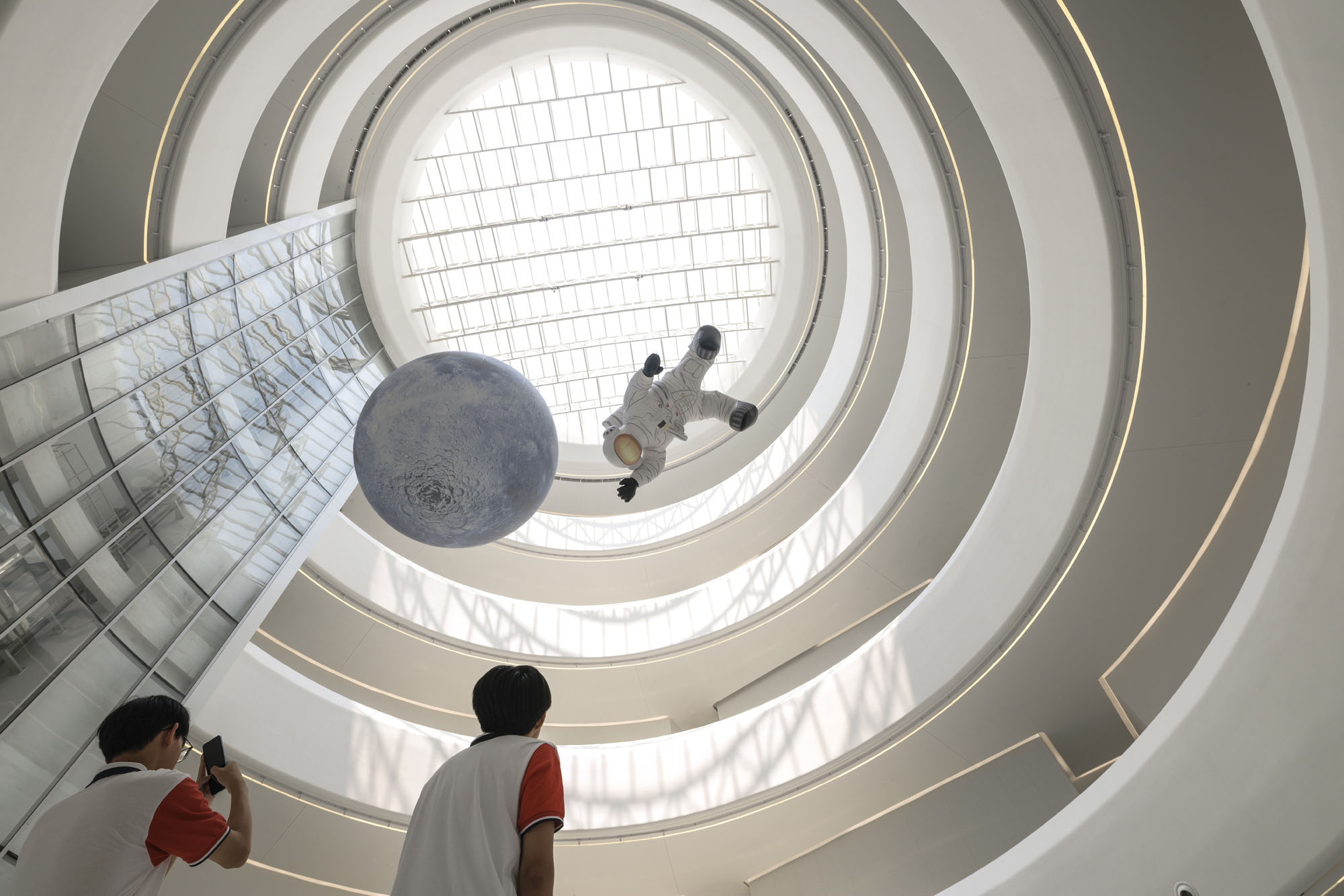
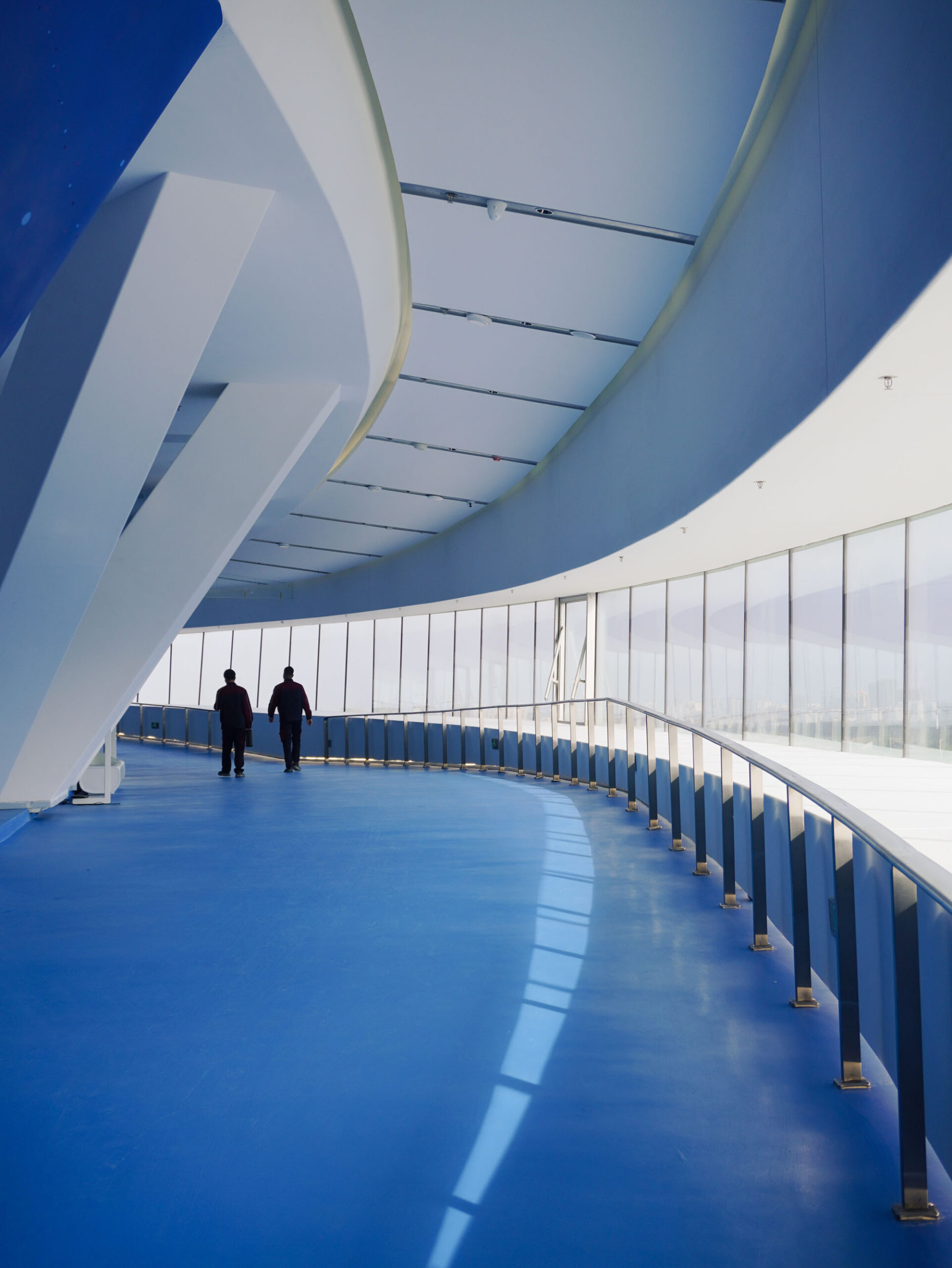
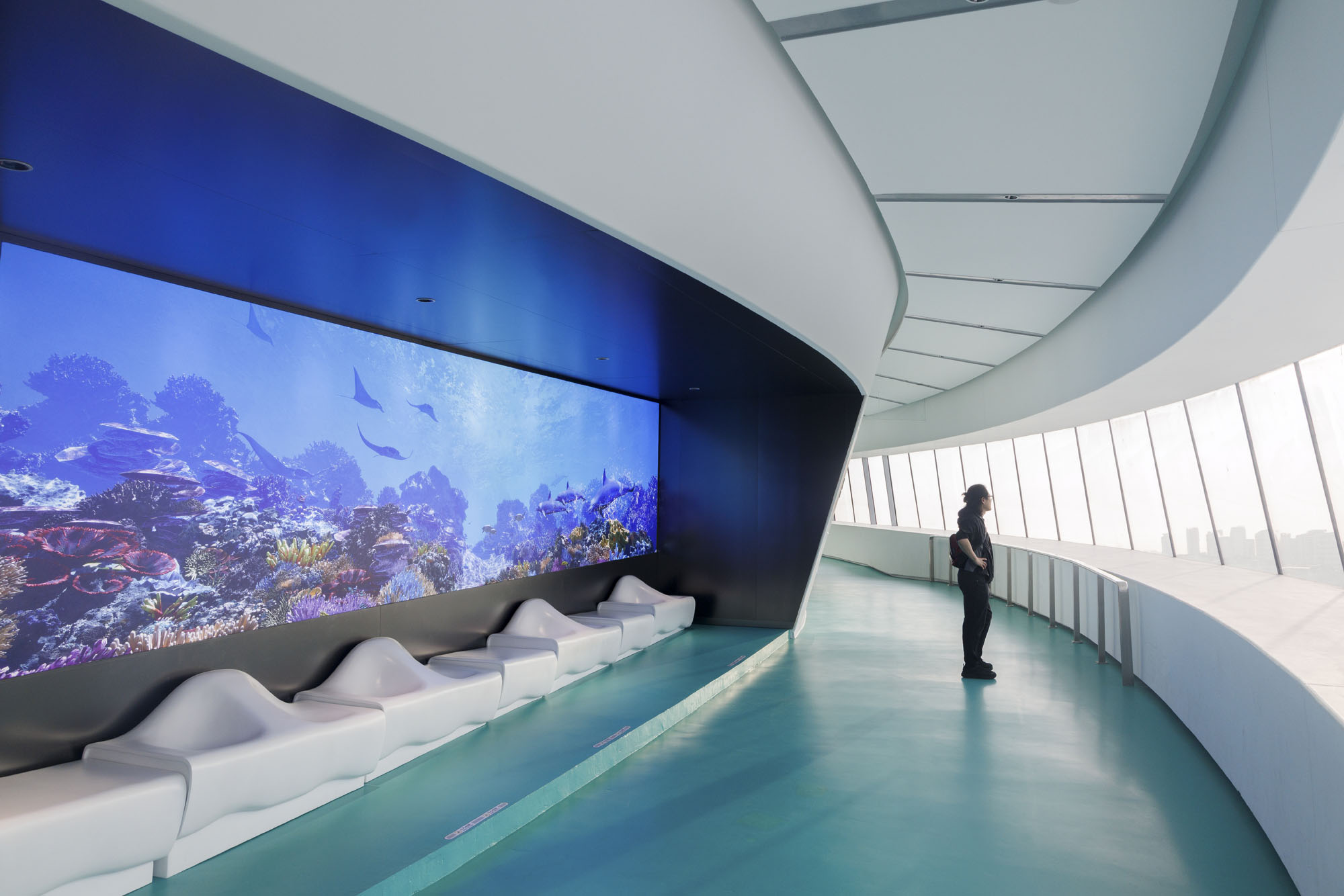
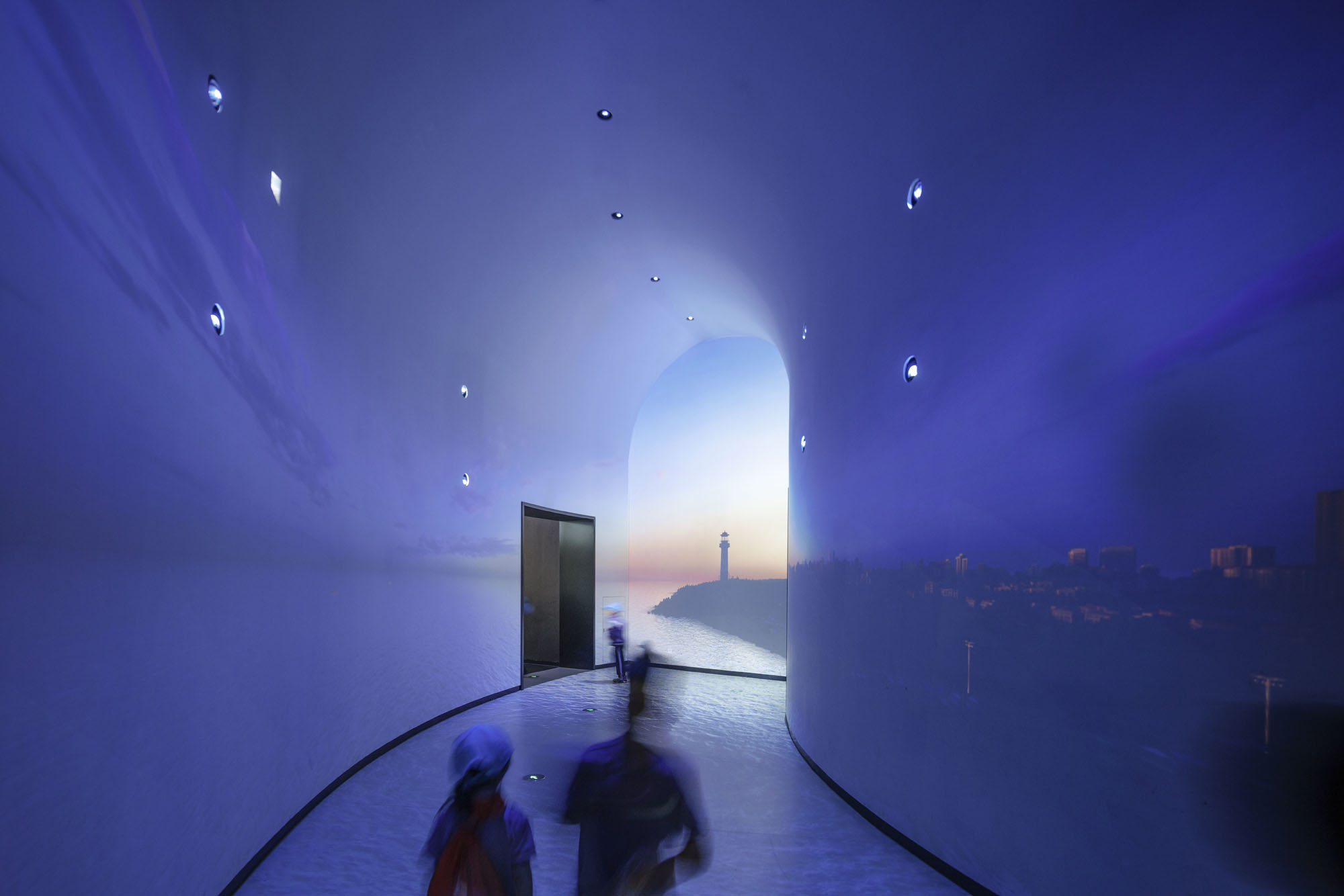
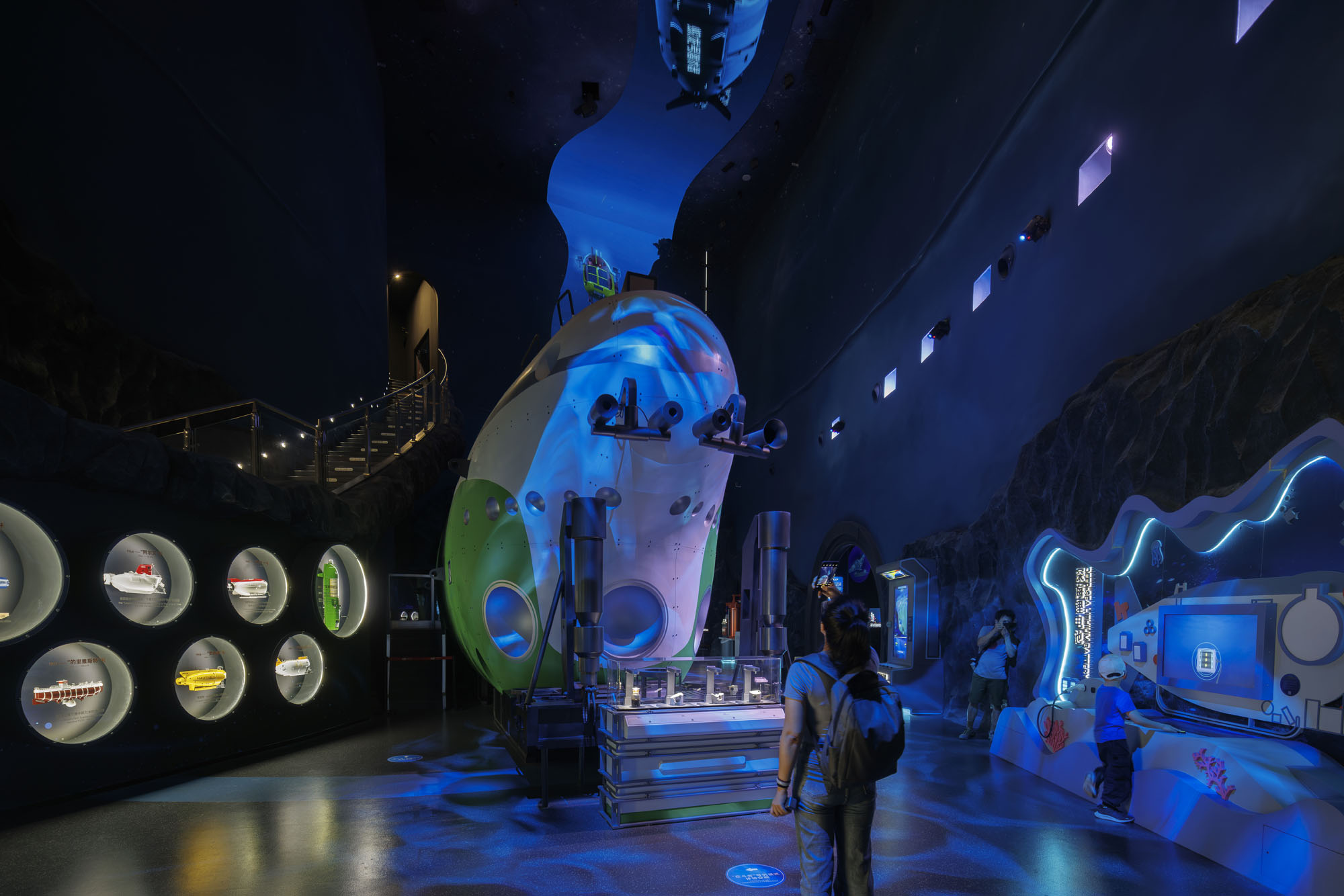
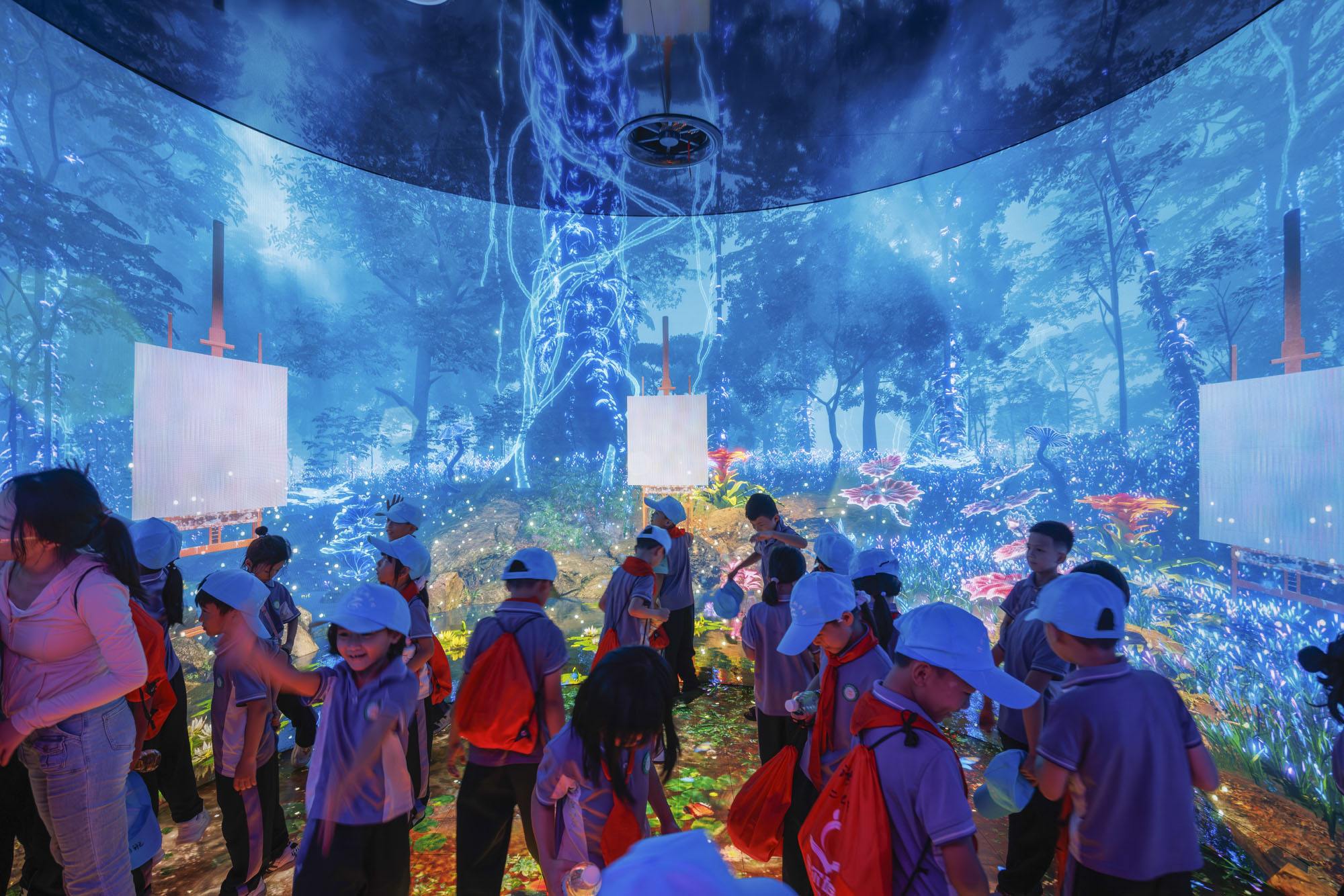
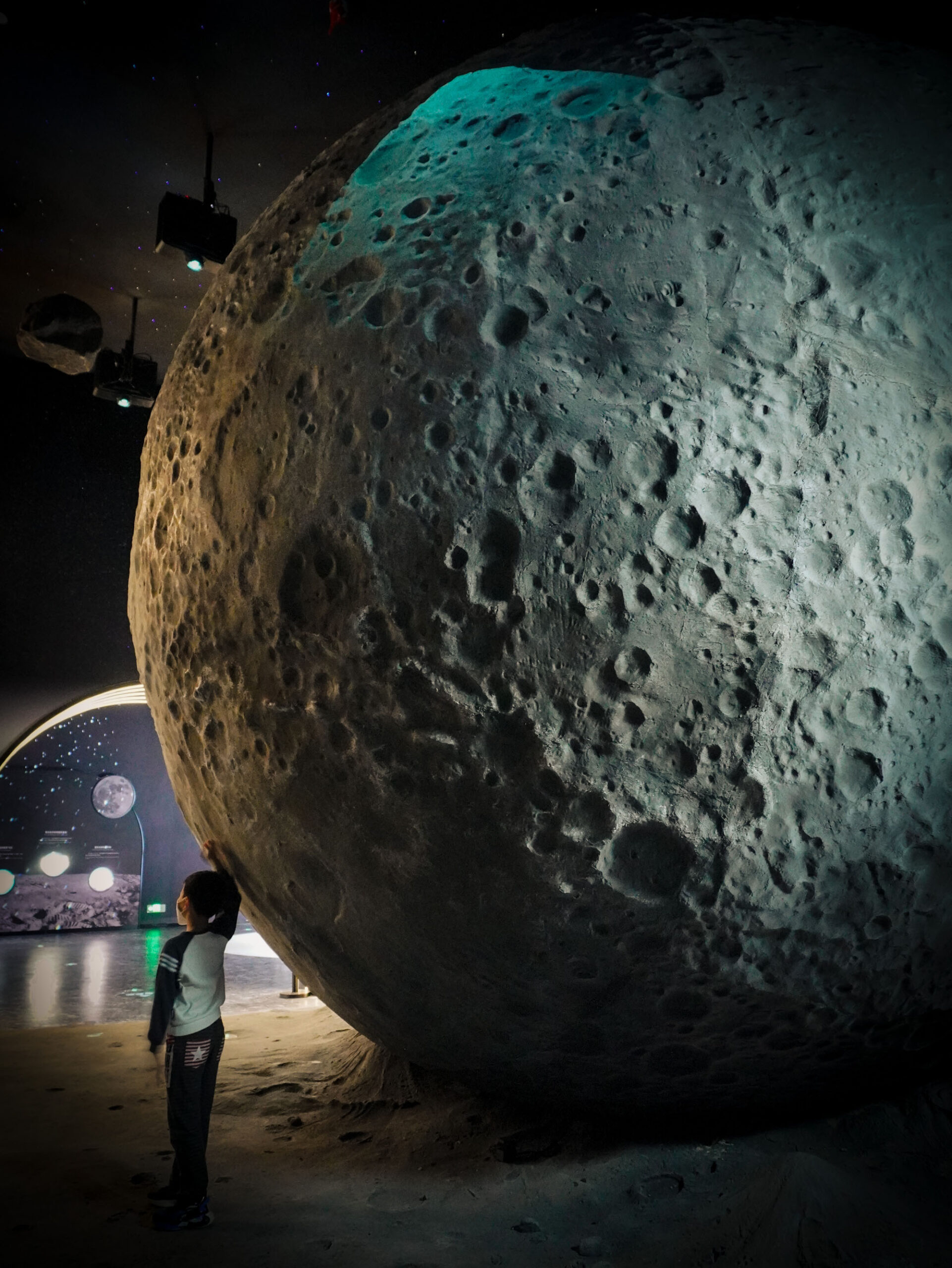
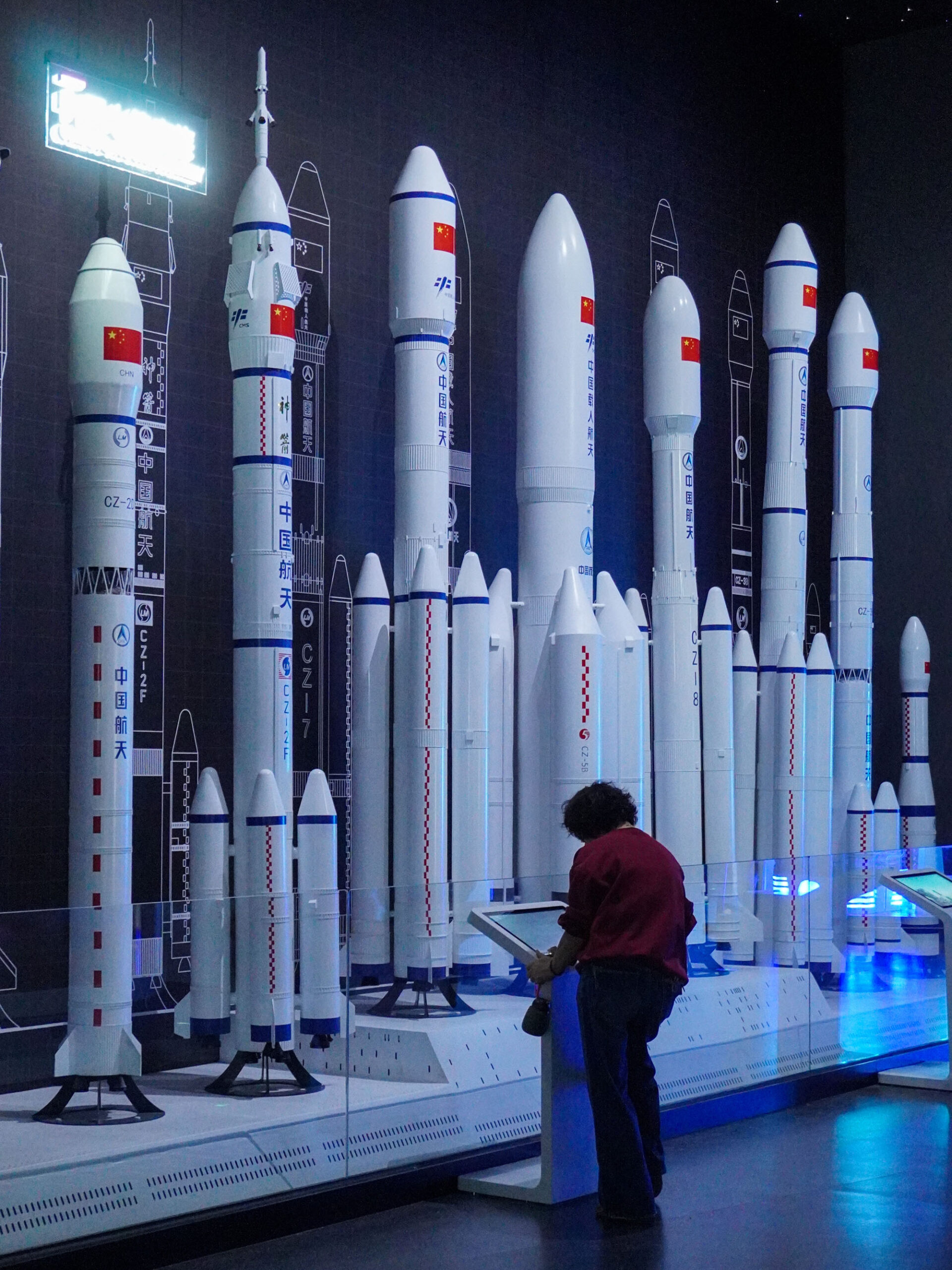
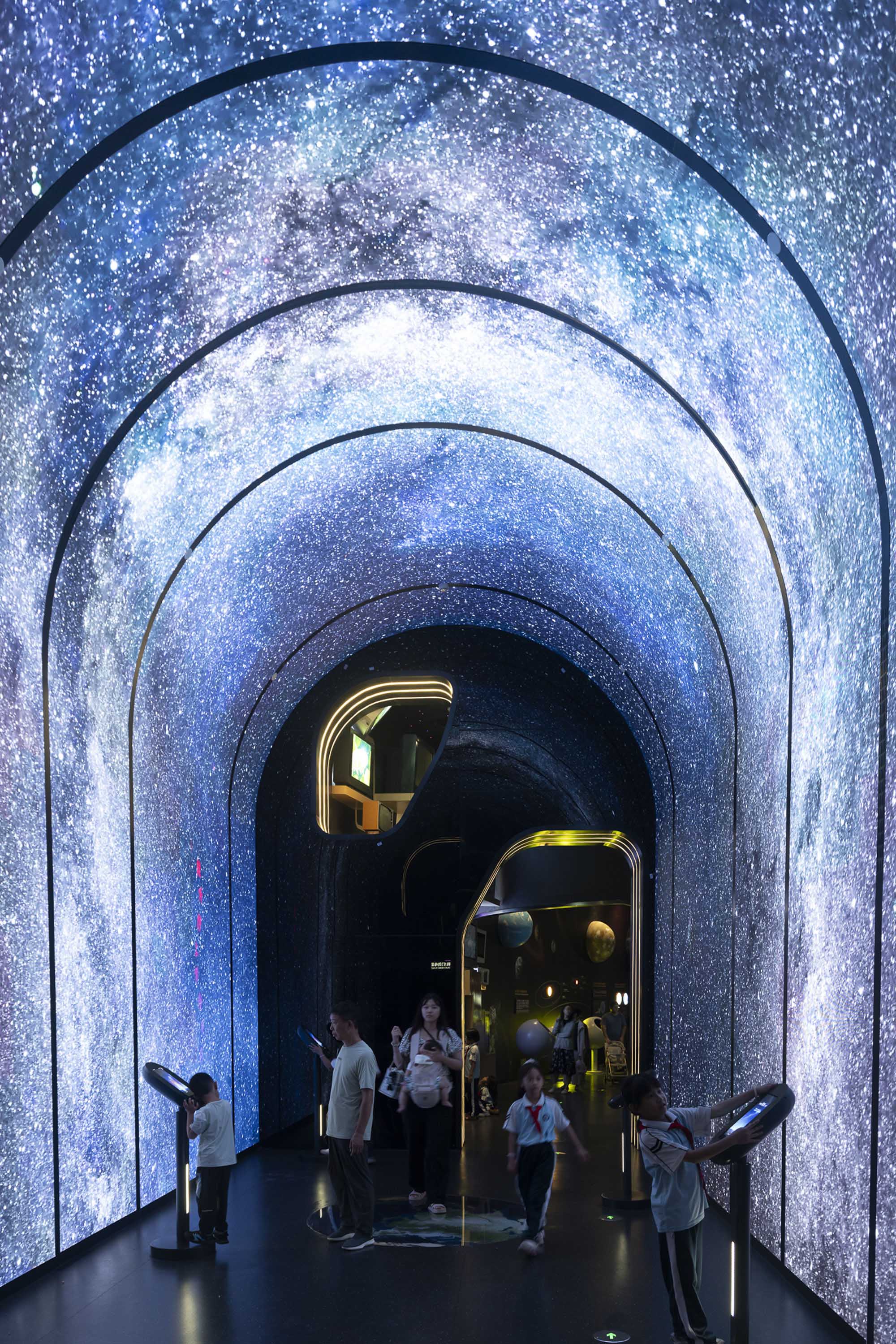
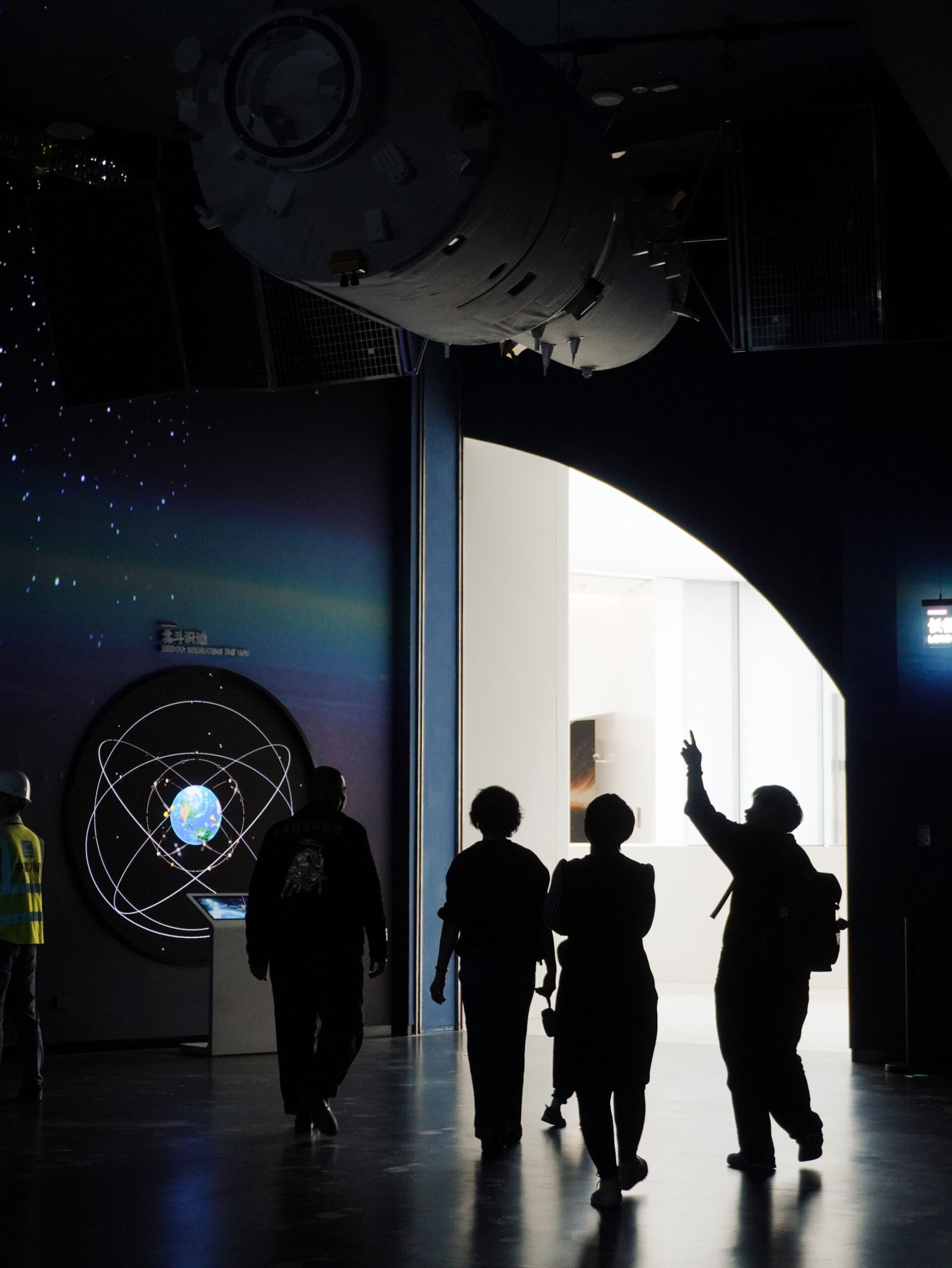
このプロジェクトの核心にあるのは、館内のすべての展示室をつなぐ単一の螺旋状ルートであり、どちらの方向からも歩けるようになっている。最上階から入った来館者は、リング状の展示室を降りていく。深宇宙と海から始まり、海南島の熱帯雨林や熱帯農業を経て、最終的には子供向けの体験フロアへと至る。
一方、1階から入った来館者は、同じルートを逆方向にたどる。触れて遊ぶ体験から始まり、外側へと広がり、やがて頭上に宇宙が広がる。2つの方向、同じ建物に対する2つの読み方である。展示テーマは別々の扉の向こうに隔てられるのではなく、互いに溶け合っており、その順序は馬の設計により、来館者が自由に選べるようになっている。
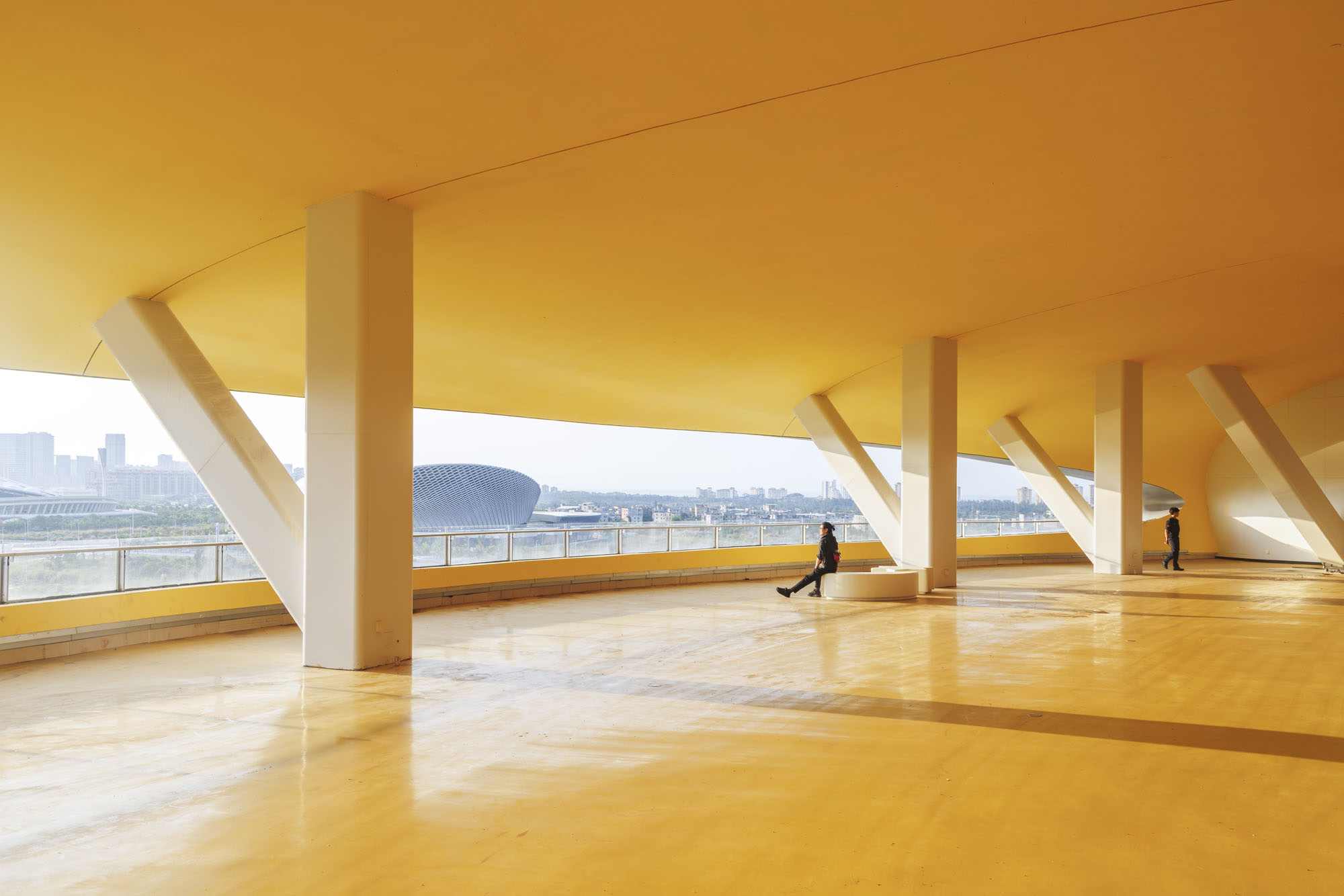
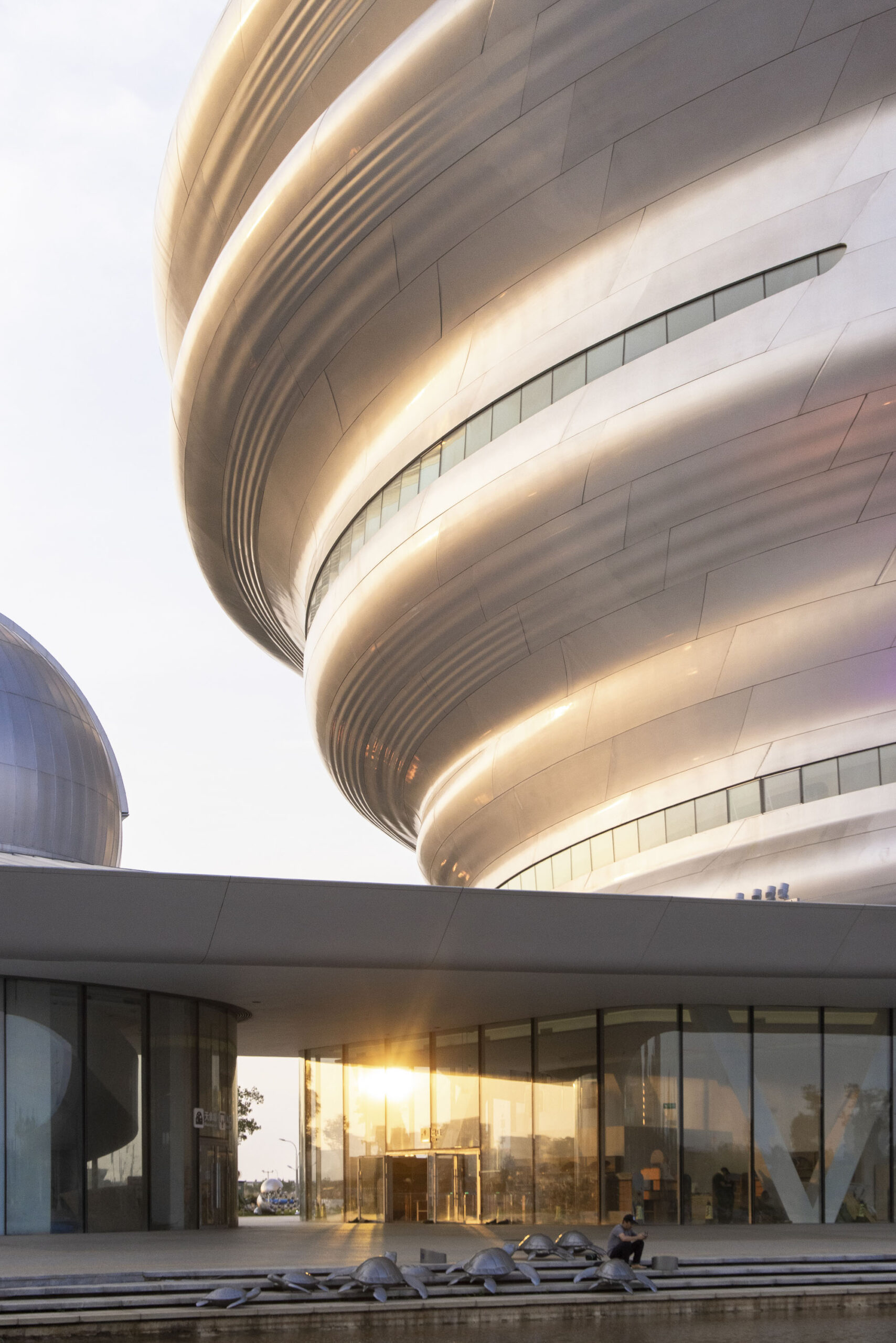
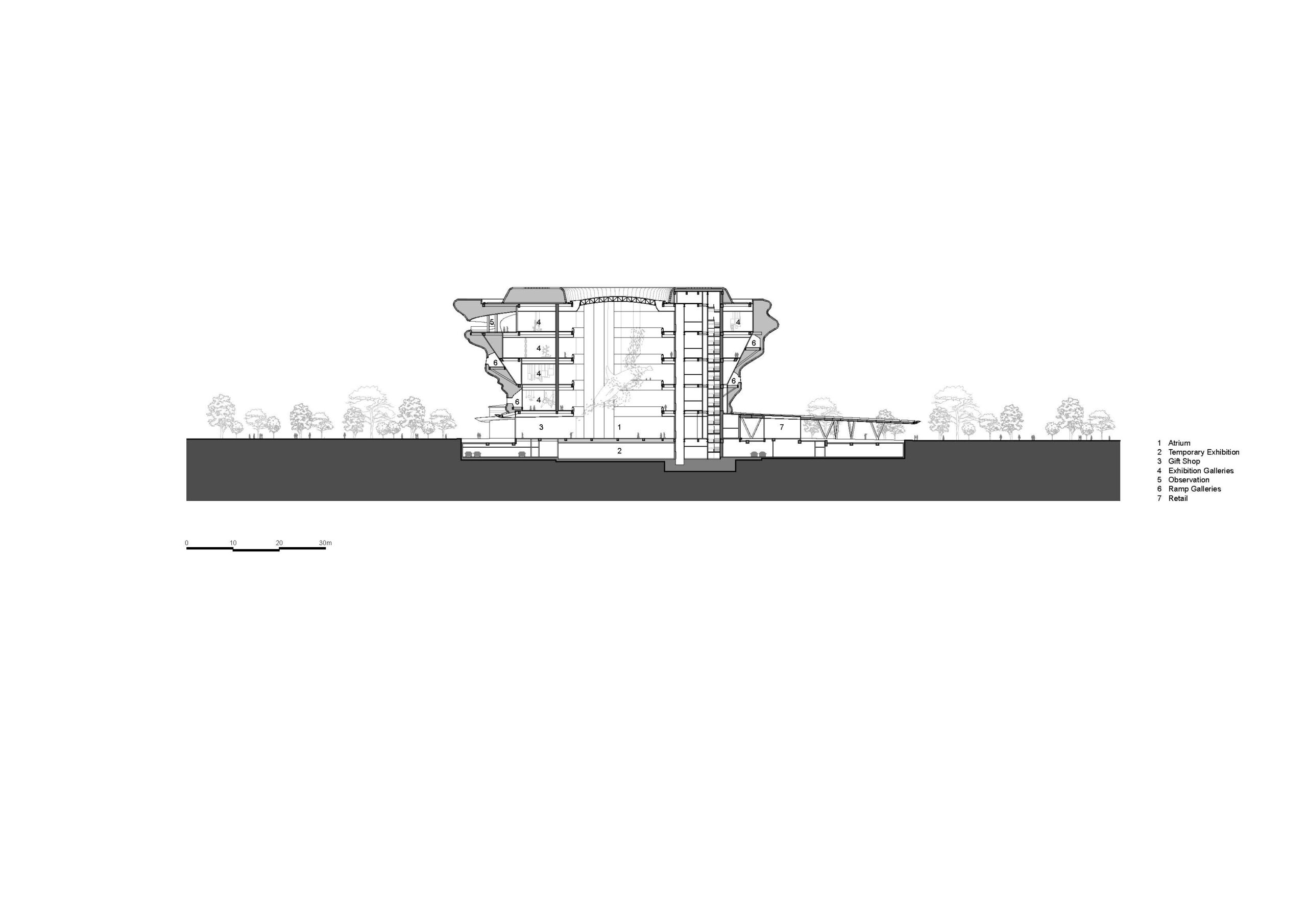
構造的には、螺旋全体が3本のコンクリート製コアチューブによって支えられている。これにより展示フロアから柱が排除され、リング状のボリュームが開放的な地上階より上にもち上げられることで、建物は反射池とその下の樹冠の上に浮かんでいるかのように見える。外観は843枚の繊維強化ポリマーパネルで覆われており、日光や空、天候に応じて色合いを変える銀色のシェルを形成している。
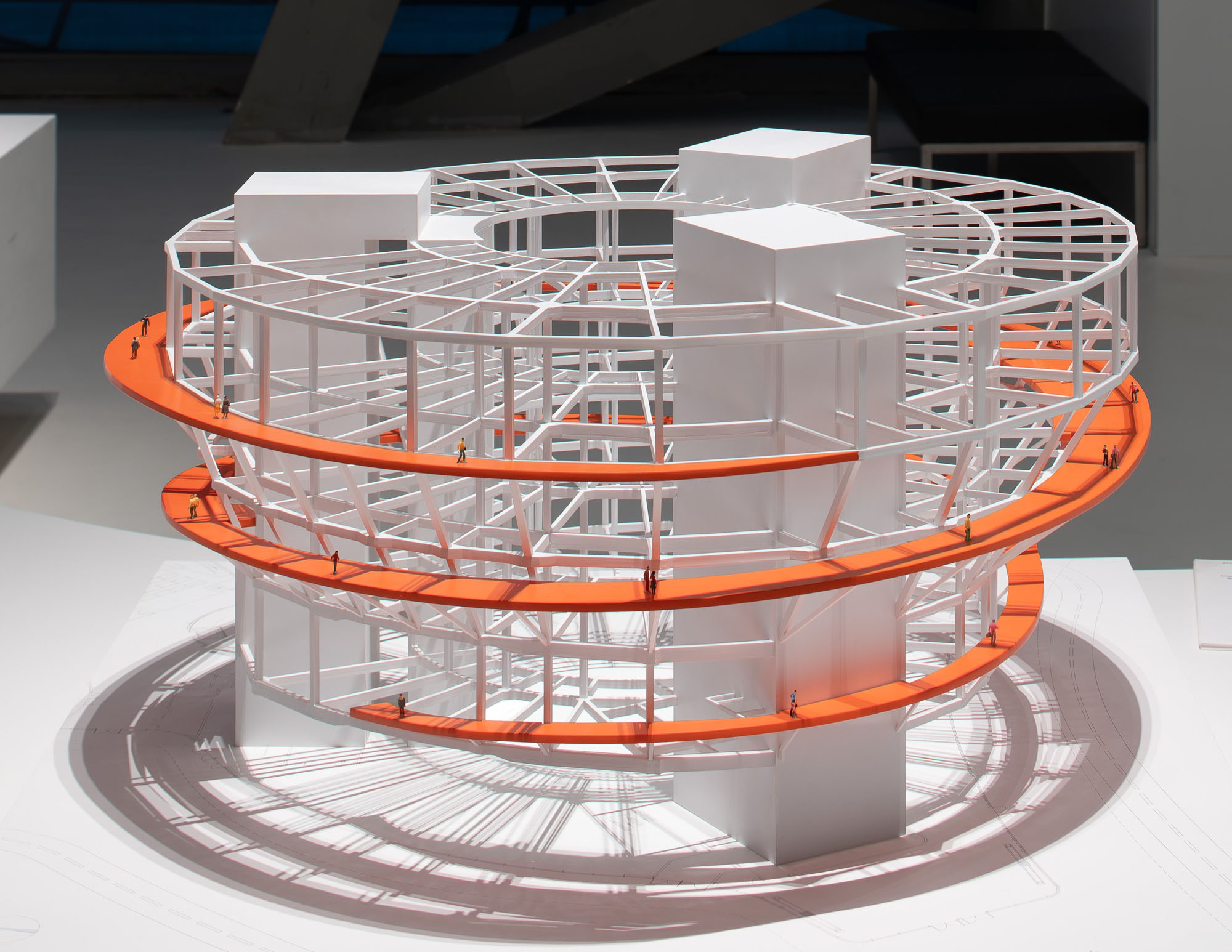
Structure Model ©︎ Tal+ Baiyu
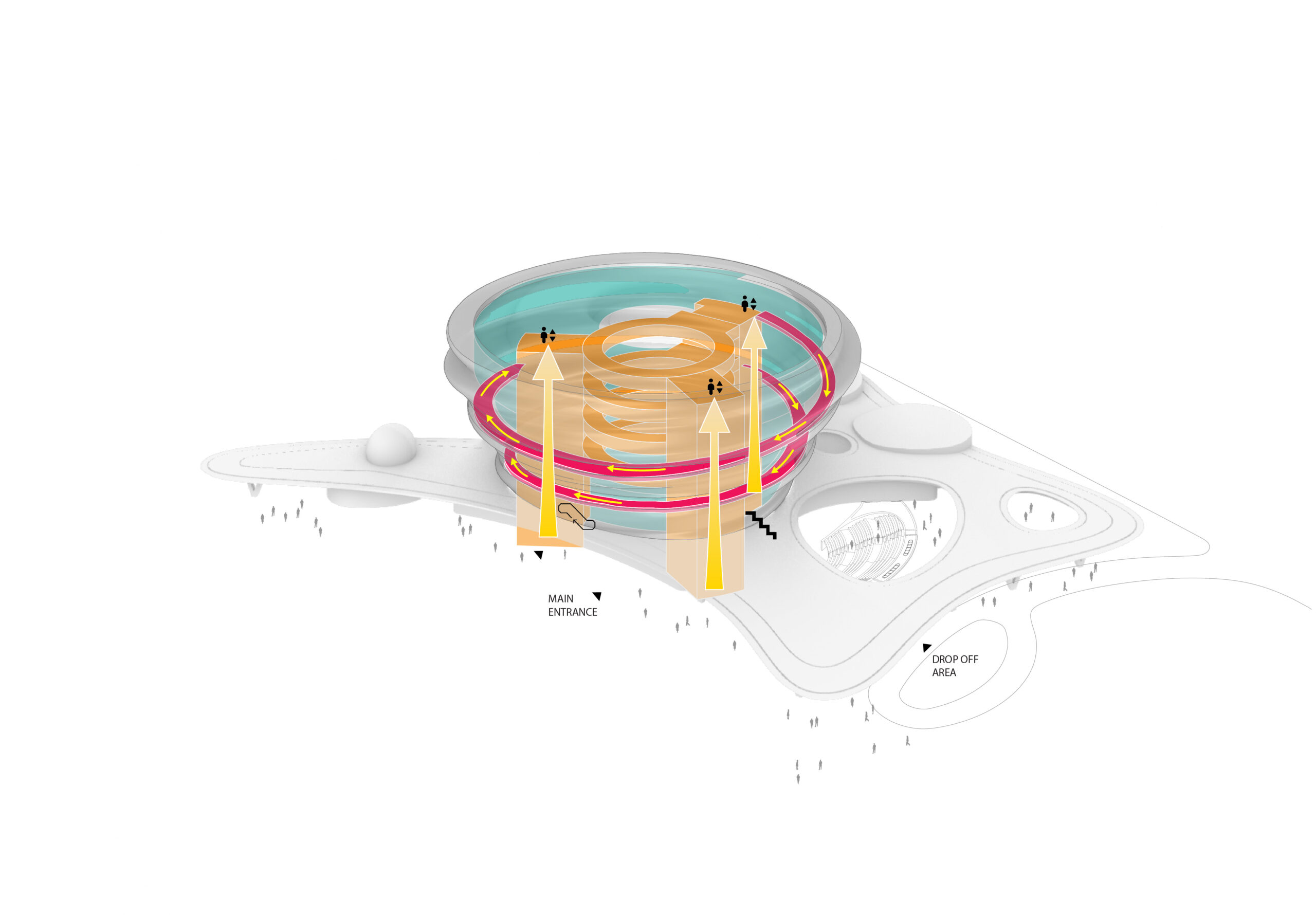
Diagram Circulation
©︎ Moden Wang
©︎ Arch-Exist
©︎ Arch-Exist
©︎ Arch-Exist
コンテンツを収める容器から、建築自体がコンテンツとなる存在へ
46,528m²に及ぶこの複合施設には、プラネタリウム、巨大スクリーン映画館、地下広場、そして植物や農業の体験学習のための日陰の屋外植栽エリアも含まれており、これらはすべて屋根付きの歩道でつながっている。
ある意味、これは馬が20年にわたり探求し続けてきた問いそのものである。すなわち、「建築は、いかにして単なる『コンテンツ』を収める容器から、それ自体が『コンテンツ』となる存在へと変容するのか?」という問いである。〈海南科技館〉は、おそらく彼がこれまでに示した中で最も明確な答えと言えるだろう。
©︎ Arch-Exist
©︎ Arch-Exist
©︎ Arch-Exist
1人の建築家が描き続ける海岸線
MADアーキテクツが以前手掛けた、市の海辺で静かな話題を呼んだ小さな白い読書パビリオン〈Cloudscape of Haikou〉と共に、〈海南科技館〉は海口の海岸線に沿って西へと連なる公共建築群を拡張している。
2つのプロジェクト、1人の建築家、1つの海岸線。中国の都市には、感情に訴えかける、夢のような公共空間が必要だとキャリアを通じて主張してきたマー・ヤンソンにとって、海口はこれまでで最も明確なその主張の実証の場となりつつある。
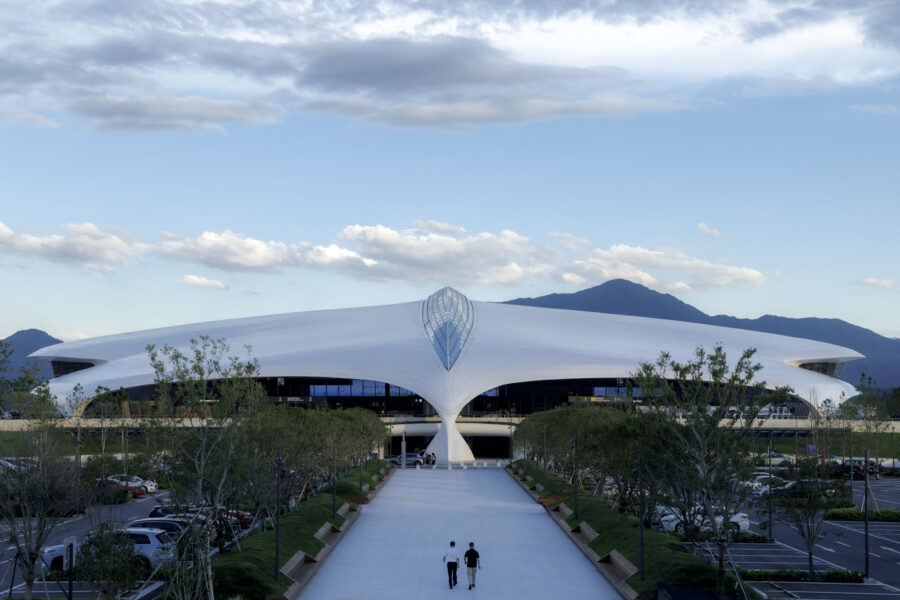
洞窟のような建築で非日常を体験する読書空間、MADアーキテクツが設計した図書館やカフェを有する有機的な建築〈Cloudscape of Haikou〉中国
©︎ Arch-Exist
©︎ Arch-Exist
©︎ Arch-Exist
©︎ Moden Wang
©︎ Moden Wang
©︎ Arch-Exist
©︎ Moden Wang
©︎ Arch-Exist
©︎ Luo
©︎ Arch-Exist
©︎ Arch-Exist
©︎ Arch-Exist
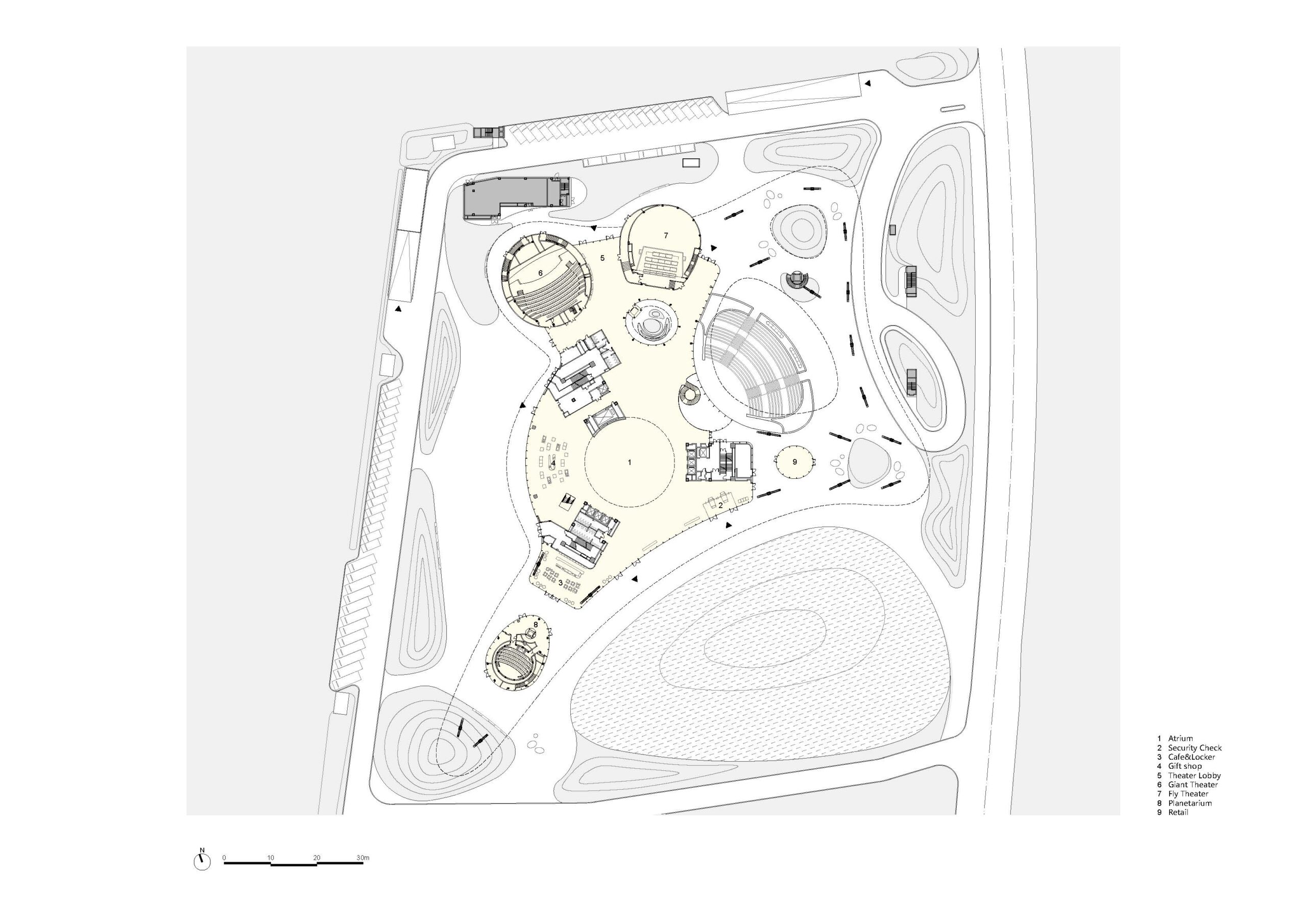
Ground Floor Plan
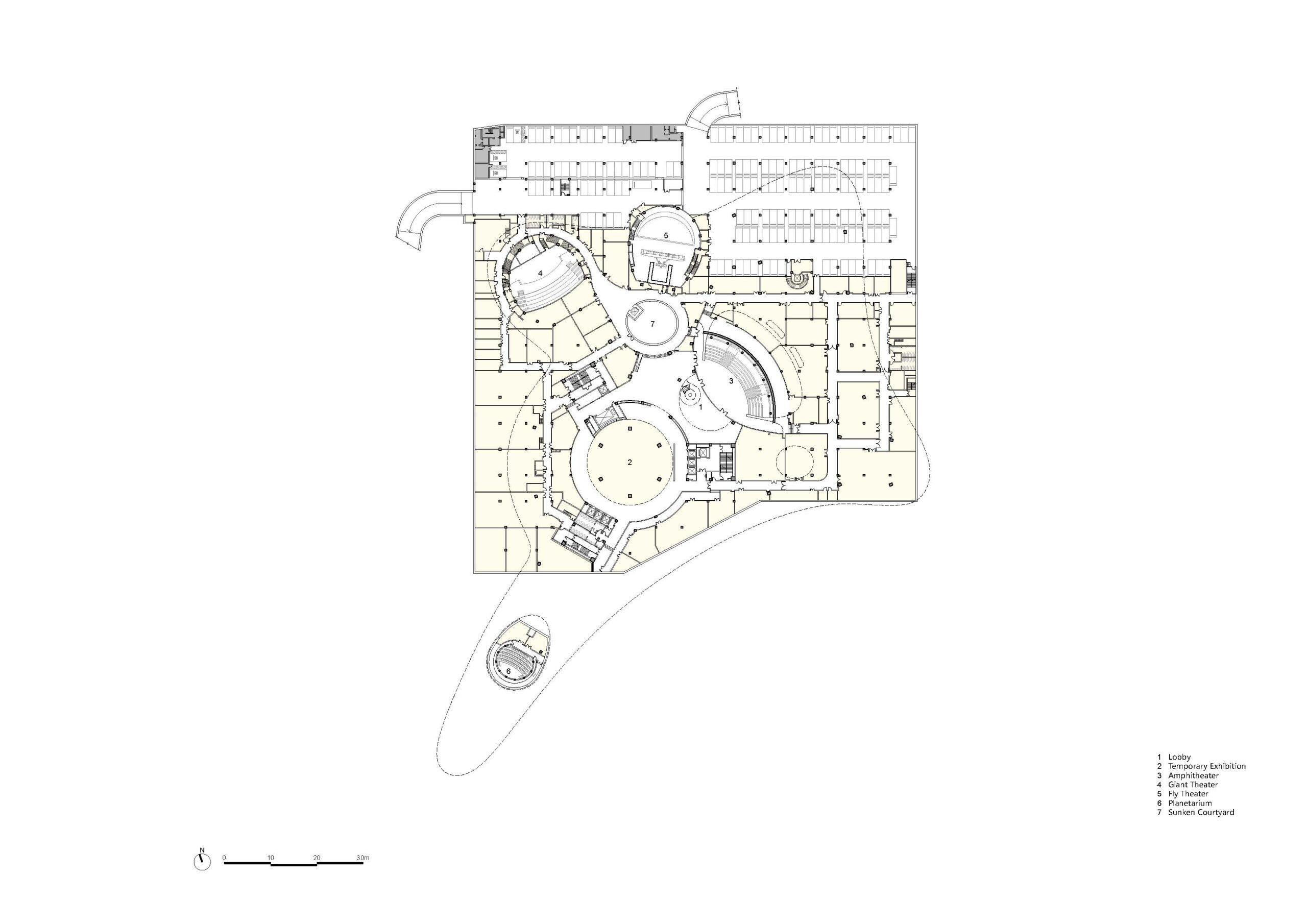
B1 Floor Plan
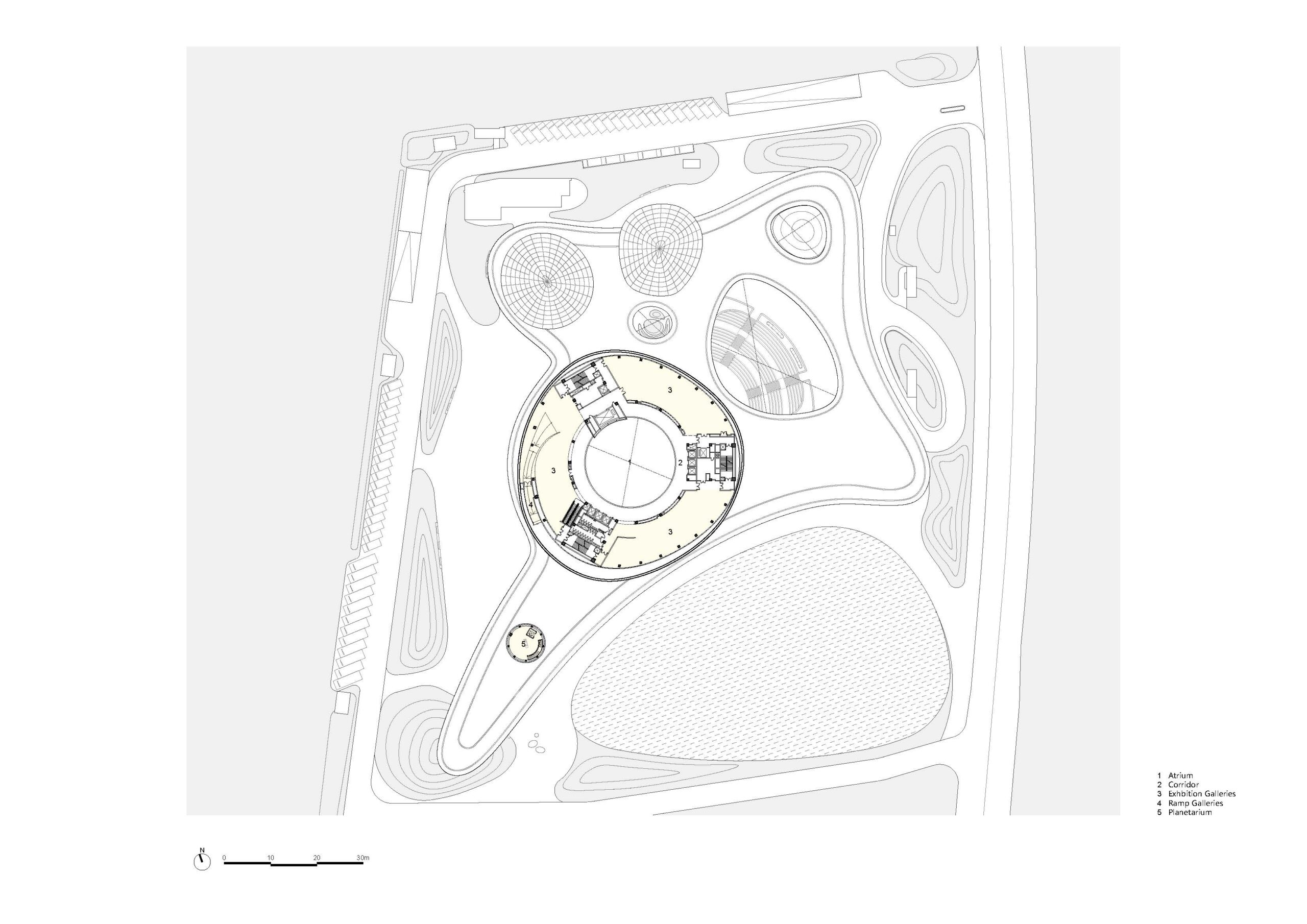
2nd Floor Plan
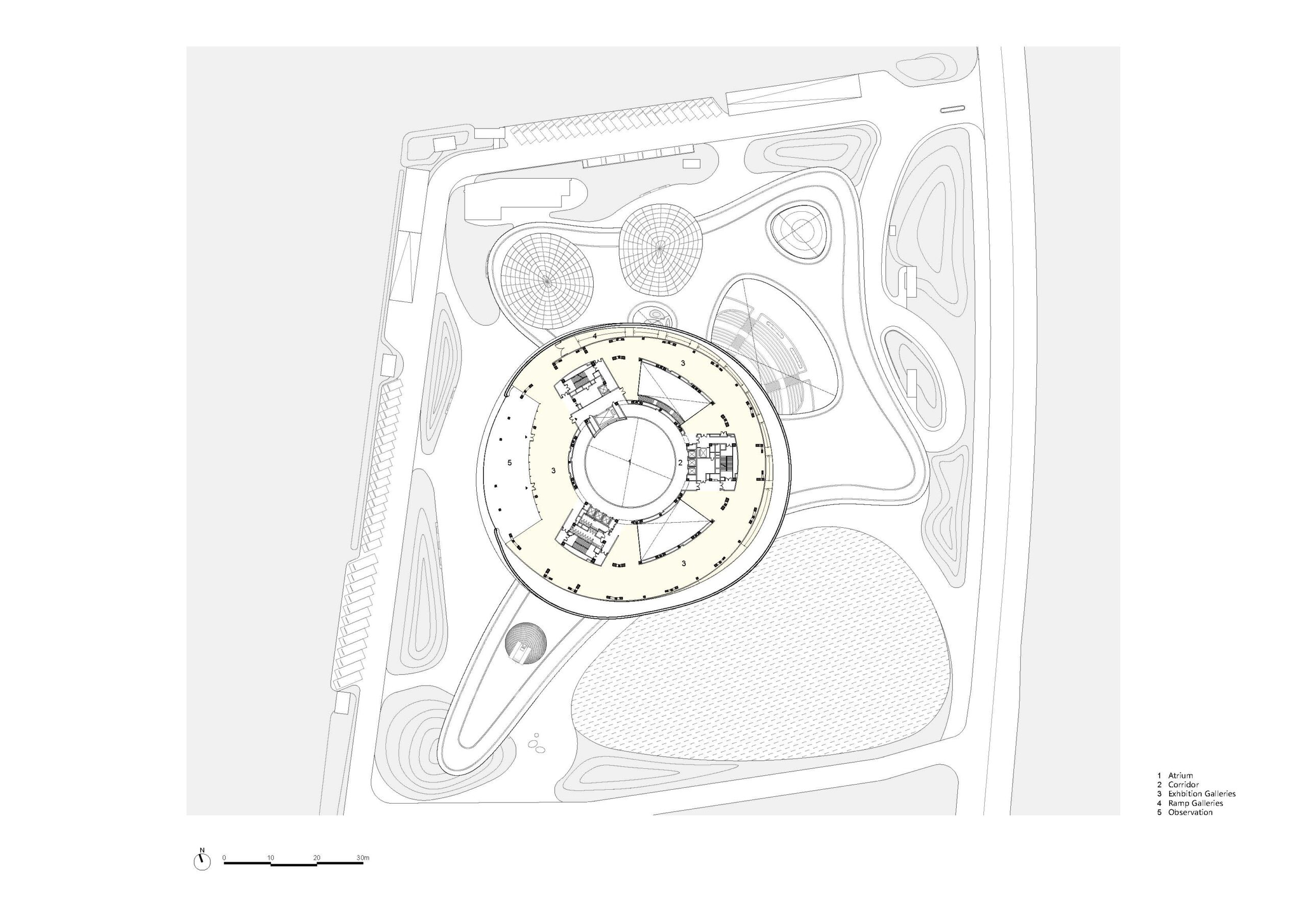
5th Floor Plan
Section
以下、MADアーキテクツのリリース(英文)です。
May 13, 2026 — Los Angeles, CA
Ma Yansong Builds a Science Museum that Floats
In Haikou, MAD’s founder creates a museum without columns that connects all galleries with one single spiral — and over 350,000 visitors have already walked it.HAIKOU, CHINA — The Hainan Science Museum, designed by Ma Yansong and his firm MAD, has opened to the public on the edge of Wuyuan River National Wetland Park. Since its trial opening, it has welcomed more than 350,000 visitors in four months, with peak days drawing more than 5,800 people.
“I wanted the project to be built on the idea of flow and chaos — space, function, and knowledge to flow into one another, freely.” says Ma Yansong, Founder and Principal Partner of MAD. “Different subjects should connect, overlap, and stay open. If artificial intelligence can already answer almost any question, a science museum’s job is no longer to deliver facts. It is to teach children how to ask them.”On the frontline of China’s space ambitions, a museum for the families next door
Hainan has quietly become part of China’s scientific infrastructure. The country’s only coastal spaceport sits on the island’s east coast and has carried more than 40 launches since 2016, including missions to the Moon and Mars. The museum, named one of Hainan Province’s “Top Ten Public Cultural Facilities,” frames science not as a distant subject, but as something already happening in everyday life.
With more than 30 schools and kindergartens within a three-kilometer radius, Ma conceived the building from the first sketch as civic infrastructure for the families around it, closer to a public library than a destination landmark.
A wide canopy lifts off the ground floor, shading an open plaza beneath the museum and pulling public space under the building itself. Parents wait, students meet, residents pass through on the way home, and the lobby reads less like an atrium than a town square under a roof.Architecture: One Spiral, Two Journeys, Three Cores
At the heart of the project is a single spiraling route that connects every gallery in the museum, walkable in either direction. Visitors who arrive at the top descend through ring-shaped galleries, moving from deep space and the ocean, down through Hainan’s rainforests and tropical agriculture, and finally to a hands-on level for children. Those who enter at the ground floor walk the same path in reverse: from touch and play, expanding outward until the cosmos is overhead. Two directions, two readings of the same building. Subjects flow into one another rather than sit behind separate doors, and the order, by Ma Yansong’s design, is the visitors to choose.
Structurally, the entire spiral is carried by three concrete core tubes. They eliminate columns from the exhibition floors and lift the ring-shaped volume above an open ground level, allowing the building to float over its reflecting pools and the canopy beneath it. The exterior is wrapped in 843 fiber-reinforced polymer panels that form a silver shell shifting with daylight, sky, and weather. The 46,528-square-meter complex also includes a planetarium, a giant-screen cinema, a sunken plaza, and shaded outdoor planting areas for hands-on plant and agriculture education all connected by a covered walkway.
It is, in some ways, the question Ma Yansong has been circling for two decades: how does a building stop being a container for content and start being the content itself? The Hainan Science Museum may be his clearest answer yet.Part of a coastline Ma is still drawing
Together with MAD’s earlier Cloudscape of Haikou, the small white reading pavilion that became a quiet phenomenon on the city’s seafront, the Hainan Science Museum extends a sequence of public buildings westward along Haikou’s coast.
Two projects, one architect, one coastline. For Ma Yansong, who has spent his career arguing that Chinese cities deserve emotional, even dreamlike public space, Haikou is becoming the clearest demonstration of that argument so far.About Ma Yansong
Ma Yansong founded MAD in 2004. In 2025 he was named one of TIME magazine’s 100 Most Influential People and served as curator of the China Pavilion at the 19th Venice International Architecture Biennale. In 2026 he was elected an Honorary Fellow of the American Institute of Architects (Hon. FAIA).
His built and ongoing work includes the Harbin Opera House, the Lucas Museum of Narrative Art in Los Angeles, Cloudscape of Haikou, the Quzhou Stadium and Sports Park, the Fenix in Rotterdam, and the Shenzhen Bay Culture Park.About MAD
Founded in 2004 by Ma Yansong and led by Ma Yansong, Dang Qun and Yosuke Hayano, MAD is a global architecture practice with offices in Beijing, Los Angeles, and Rome. The studio is known for projects that integrate landscape, public space, and cultural narrative at all scales.
The Hainan Science Museum is now open to the public.Hainan Science Museum
Haikou, Hainan Province, China
2019-2026
Gross Floor area: 46,528 sqm
Above-ground GFA: 27,782 sqm
Below-ground GFA: 18,746 sqmPrincipal Partners in Charge: Ma Yansong, Dang Qun, Yosuke Hayano
Associate in Charge: Fu Changrui, Kin Li, Tiffany Dahlen
Design Team: Wang Yiding, Chen Yiwen, Sun Feifei, Pan Siyi, Wang Shuang, Lyu Dechen, Yang Xuebing, Zhu Yuhao, Reem Mosleh, Alan Rodríguez Carrillo, Anri Gyuloyan, Rozita Kahirtseva, Zheng Chengwen, Wu Qiaoling, Feng Yingying, Edgar NavarreteClient: Haikou Association for Science and Technology
Project Management: Haikou Construction Engineering Group Co., Ltd.
Lead Architect: MAD
Executive Architect: CCDI Group
Supervising Consultant: Chongqing CCID Engineering Consulting Co., Ltd.
Facade Consultant: RFR Shanghai
Landscape Consultant: EADG
Interior Design: MAD, CCDI Group
Lighting Consultant: Ning Field Lighting Design Corp., Ltd.
Signage Consultant: CCDI Group
Contractor: China Construction Eighth Engineering Bureau Co., Ltd.
Exhibition Design: Shanghai Kaiyi Architectural Design Co., Ltd.
Photography: Arch-Exist, LUO, Moden Wang, Yang Siyi
Model Photography: Tal+ Baiyu
MADアーキテクツ 公式サイト
https://www.i-mad.com



![[Interview]廃墟から地域資産へ、石と建築の時間軸を再統合する〈大谷グランド・センター〉。建築家・針谷將史氏が語る再生のプロセス](https://magazine-asset.tecture.jp/wpcms/wp-content/uploads/2026/06/07172730/003_ASA4434-900x600.jpg)