Lendagerが手がけた、家具を建築へと展開する「アップサイクルチェア」のパビリオン計画
デンマークの設計事務所 Lendagerが手がけた「アップサイクルチェア(Upcycled chair)」は、プラスチックや産業廃棄物、再生木材を用いた椅子です。
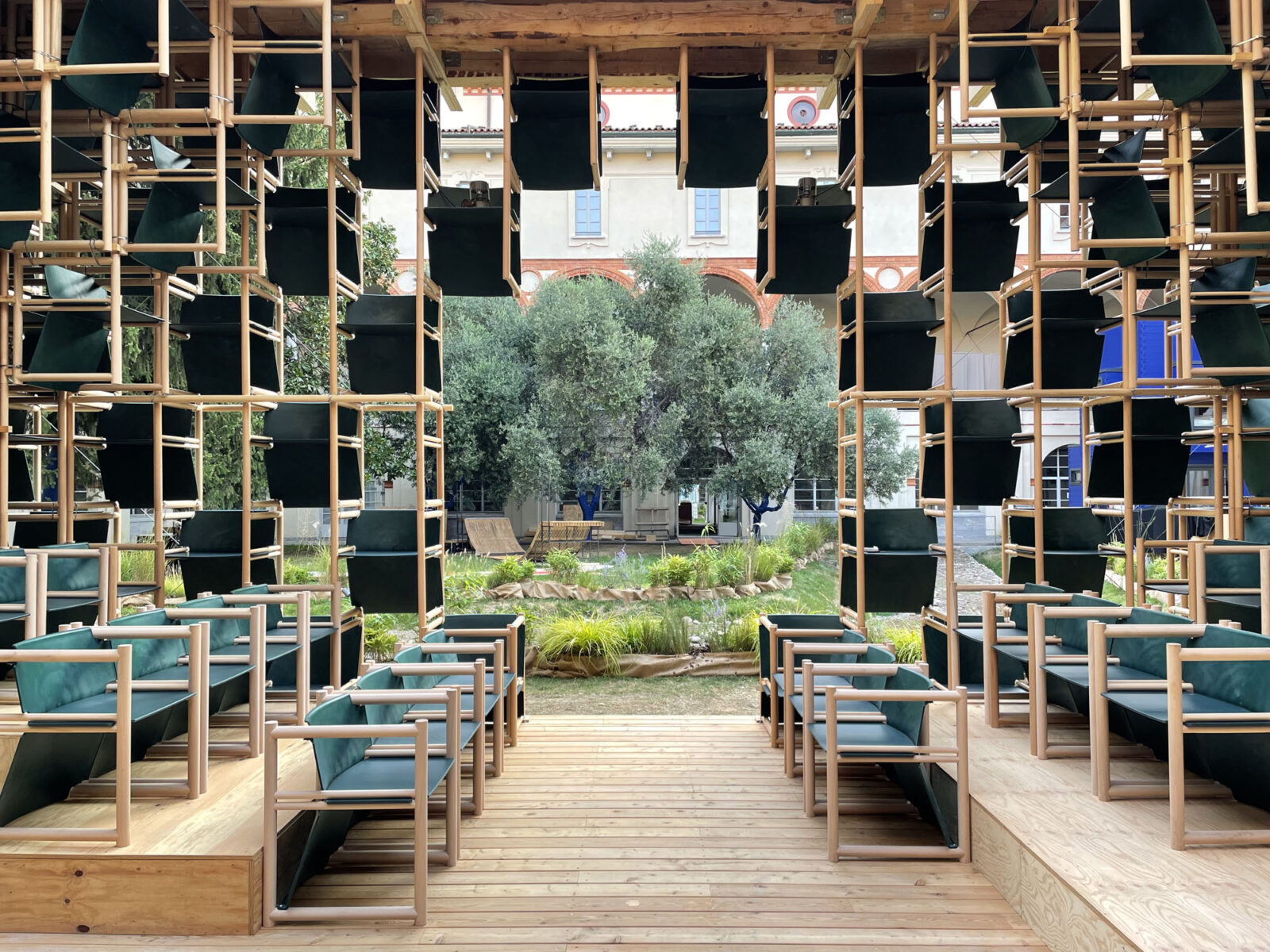
2,500脚のこの椅子を建築モジュールとして組み合わせることで、パビリオンを構成することが可能であり、2020年東京オリンピックに向けて計画されたのち、2021年9月のミラノ・デザイン・ウィークにて展示されました。
注目ポイント
- 家具を建築へと展開するパビリオン計画
- 海洋プラスチック、使用済みビール樽、再生木材を活用したアップサイクルチェア
- 60×60×70cmの椅子をクランプで連結し、壁や天井、ファサードを形成するモジュール構法
(以下、Lendagerから提供されたプレスキットのテキストの抄訳)
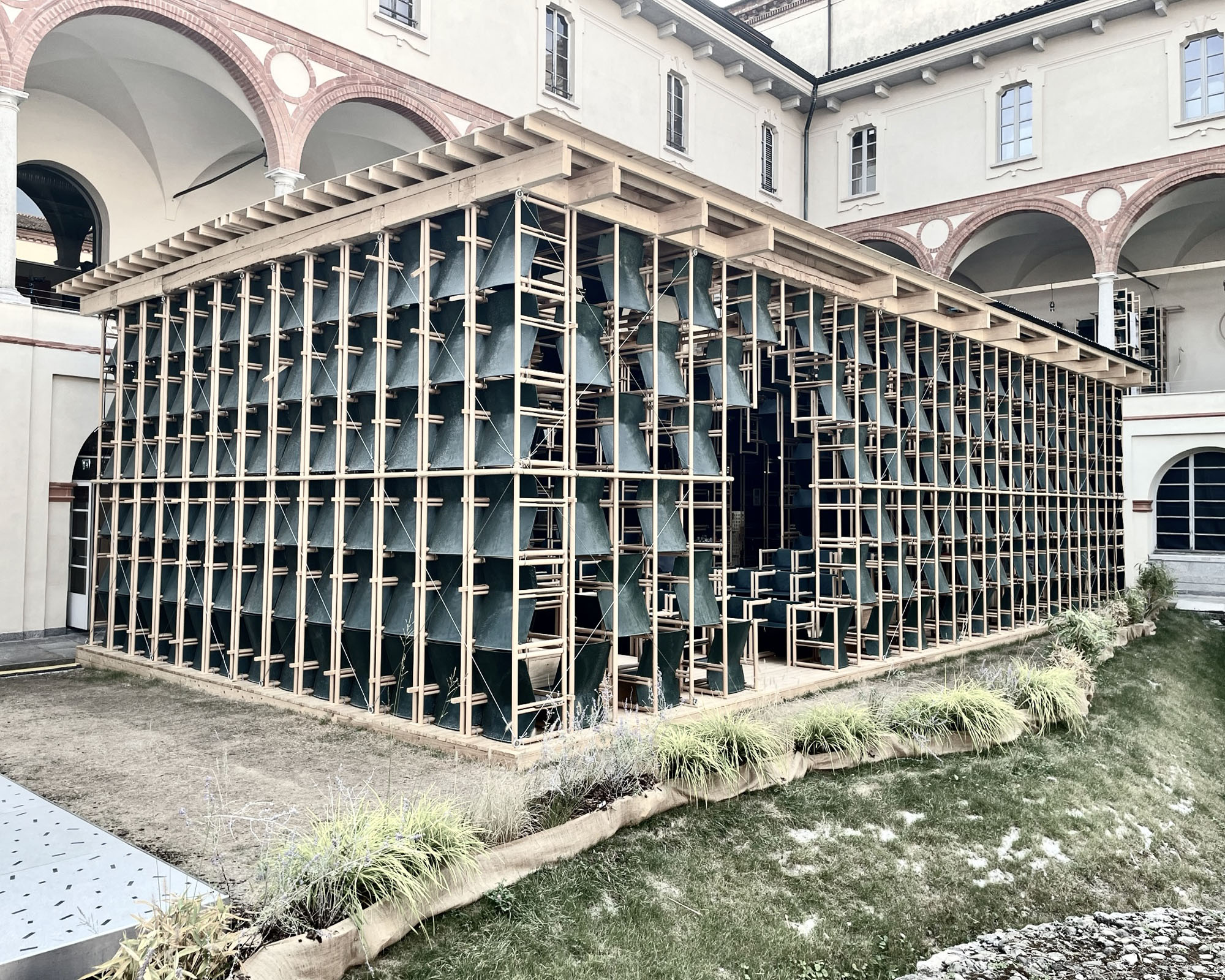
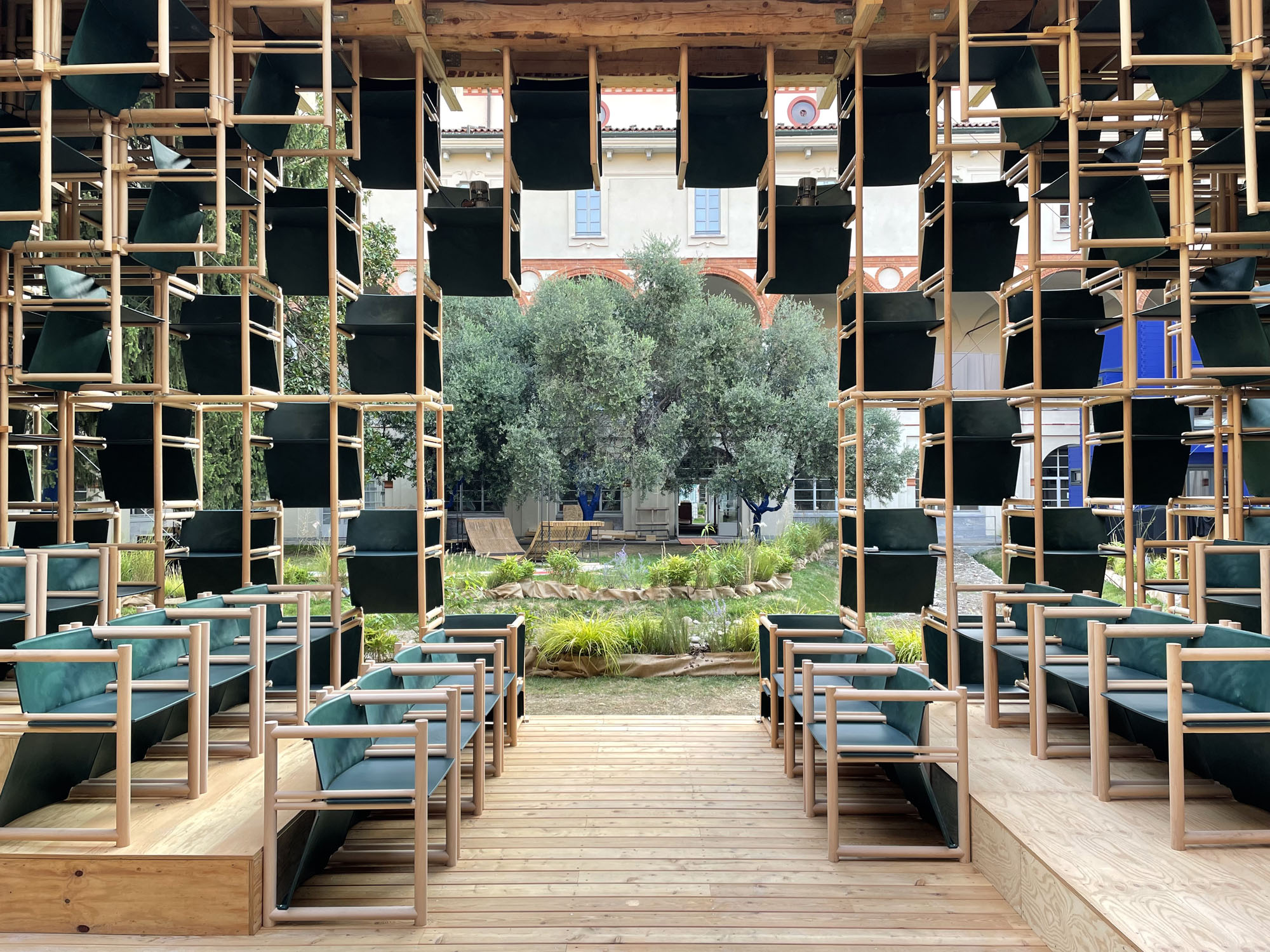
Milan Pavilion ©︎ Lendager
解体・再利用を前提とした、椅子が構成するパビリオン
Lendagerが手がけた「アップサイクルチェア」は、産業廃棄物や海洋プラスチック廃棄物を素材として製作されている。これらの椅子を積み重ね、組み合わせることで、壁や棚、さらにはファサードシステムを形成することができる。廃棄物を、美しさと機能性を兼ね備えた建築要素へと転換する取り組みの一環である。
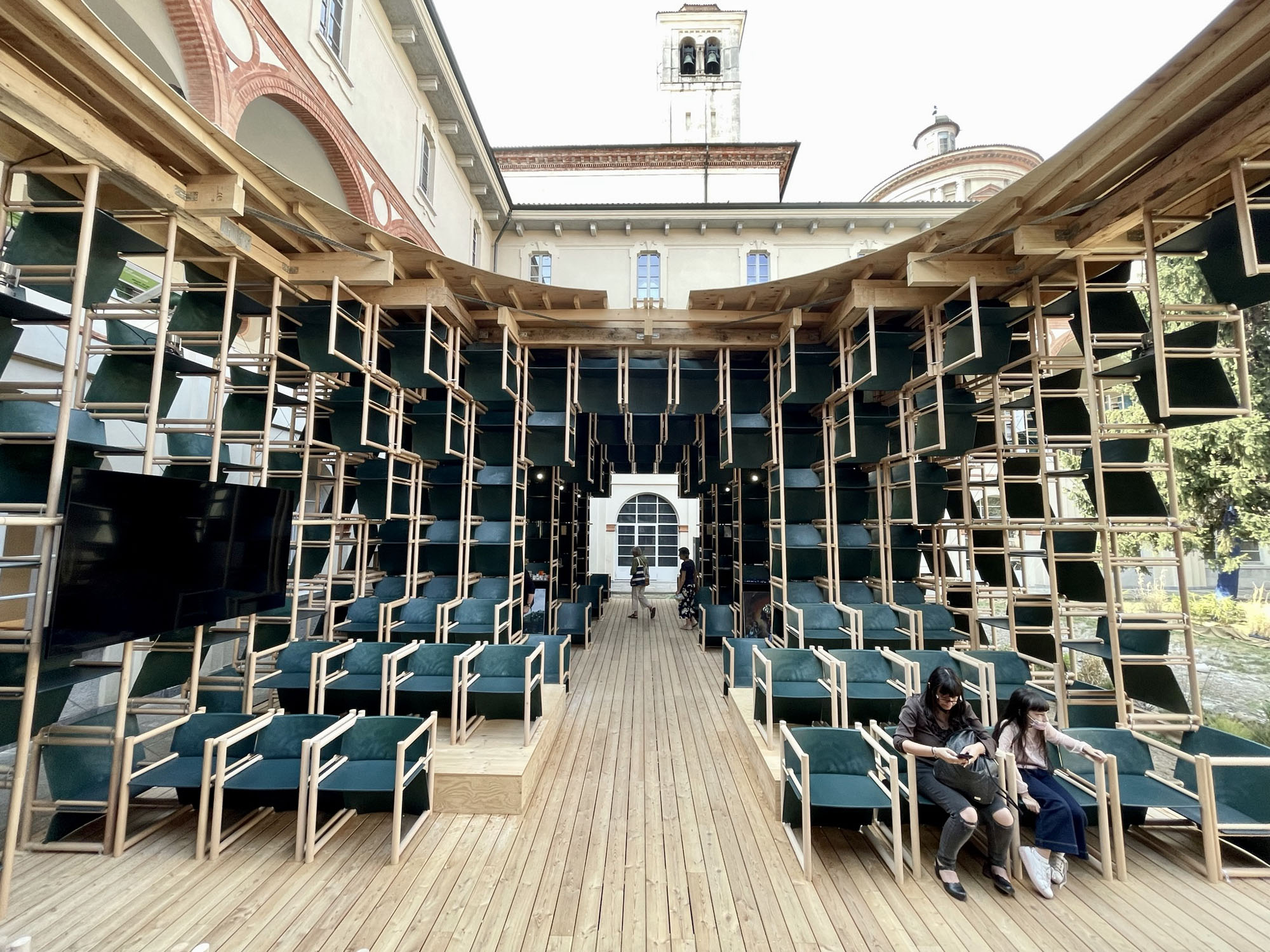
Milan Pavilion ©︎ Lendager
2,500脚の椅子で構成するパビリオン
2020年東京オリンピックに向けて、Lendagerはデンマーク産業・ビジネス・金融省、レアルダニア、デンマーク産業財団、ビジット・デンマークの依頼を受け、〈デンマーク・オリンピック・パビリオン(Olympic Pavilion Denmark)〉を設計した。
このパビリオンは、再生プラスチックを使用した2,500脚の椅子によって構成される計画であった。建築材料として「椅子」が採用された背景には、日本においてデンマークの椅子のデザインに対する関心が高かったことが挙げられる。
Lendagerは、誰もが認識できる椅子という身近な存在を通じて、デンマークの文化的遺産を伝えるとともに、持続可能なアプローチと循環型建築の原則を提示した。
(東京オリンピック向けのパビリオン計画は新型コロナウイルス感染症の影響で中止となった。その後、椅子は再利用され、2021年9月のミラノ・デザイン・ウィークで展示された。)
Milan Pavilion ©︎ Lendager
産業廃棄物と再生木材を活用したアップサイクルチェア
パビリオンを構成する椅子には、すべて再生素材が使用されている。
座面には海洋プラスチック廃棄物を使用し、背もたれにはカールスバーグ(Carlsberg)の醸造所で使用されたビール樽に由来する産業廃棄物を採用している。さらに、椅子のフレーム自体も再生木材によって製作されている。
こうした製造プロセスは、CO2排出量の直接的な削減に寄与するだけでなく、廃棄物を長く使い続ける価値のある製品へと転換するものであり、従来の製造方法と比較して、より持続可能なアプローチとなっている。
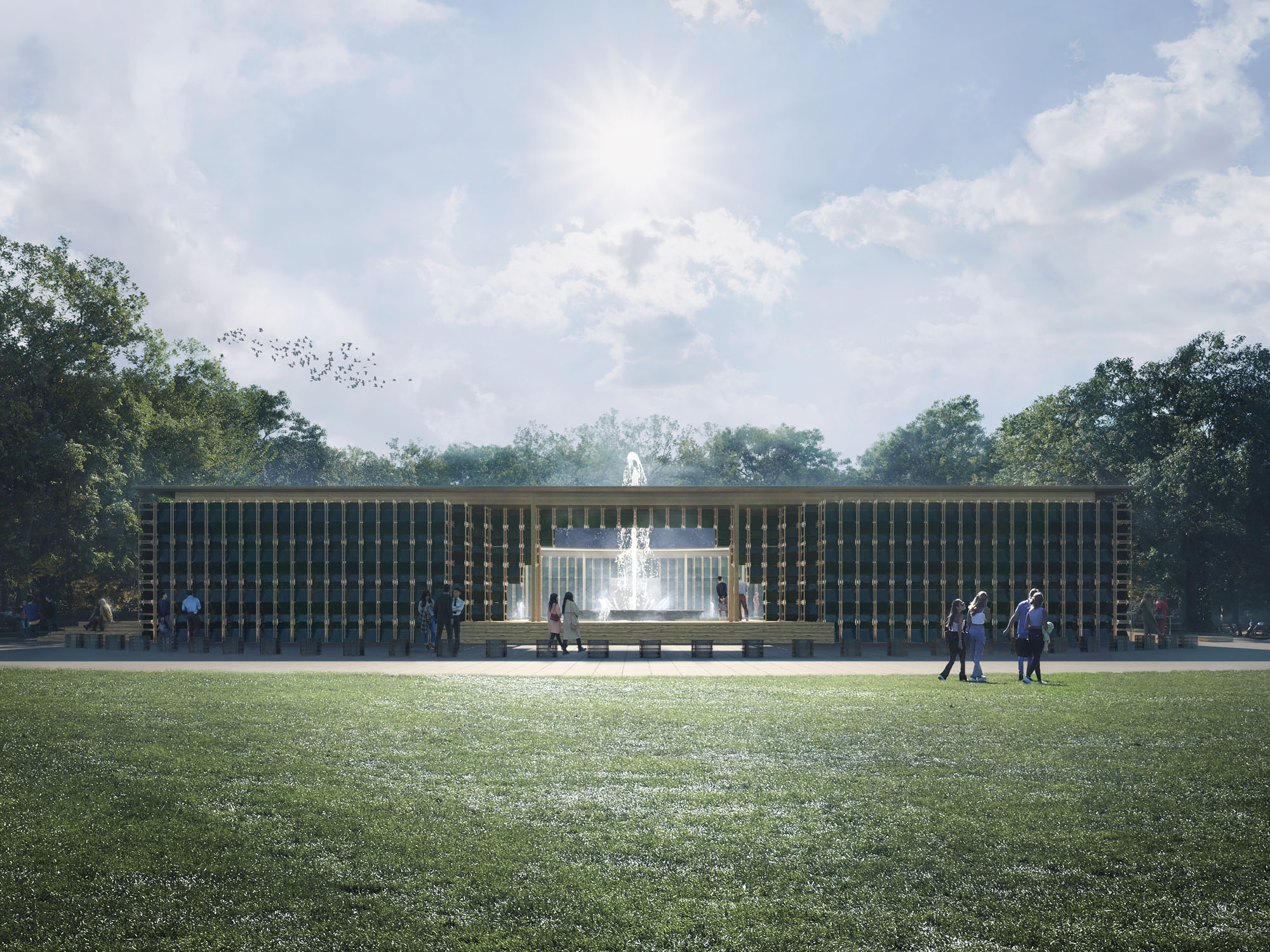
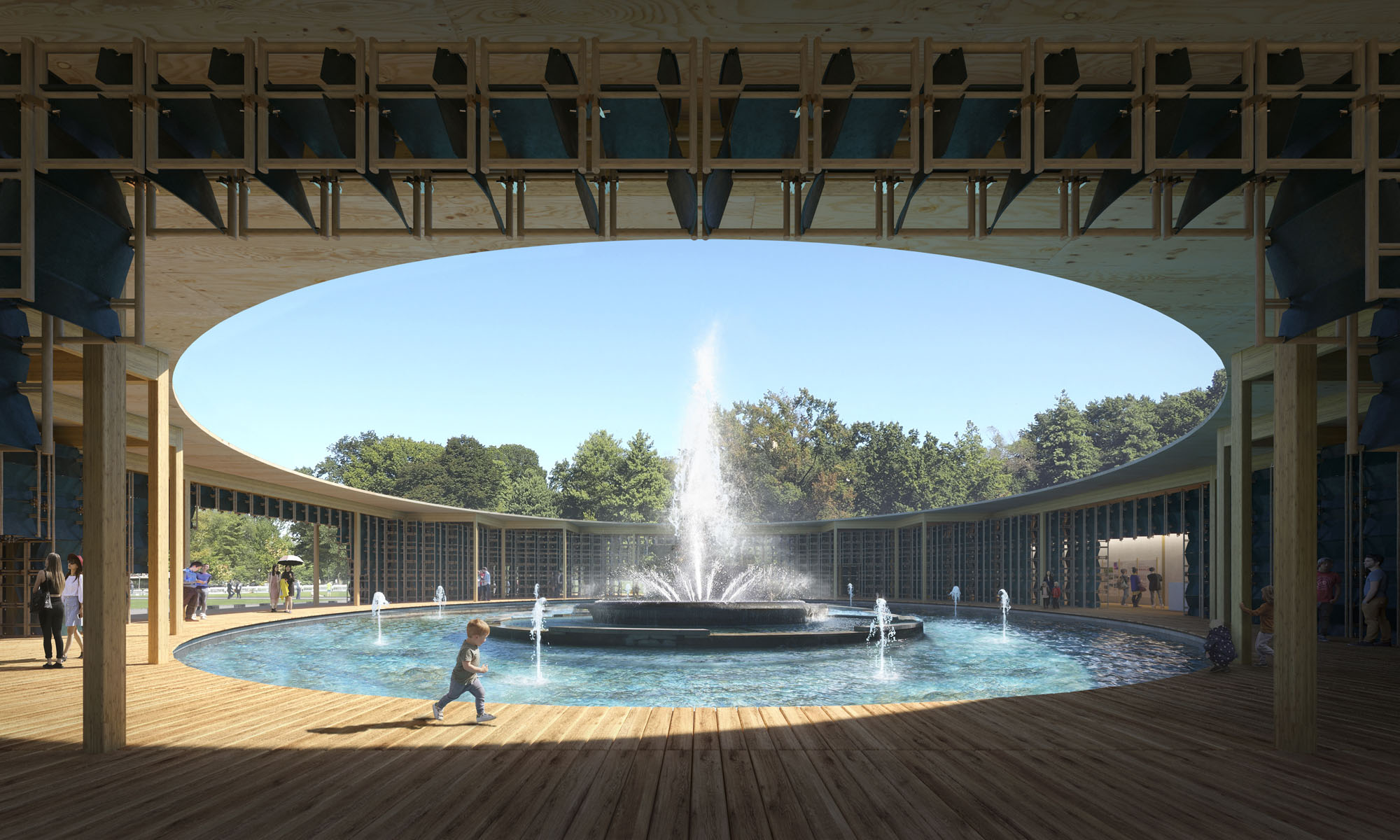
Danish Pavilion Tokyo 2020 ©︎ Josep Villanueva Studio
解体・再利用が可能な建築モジュール
この椅子は、60×60×70cmの「グリーン・ビルディングブロック」として機能し、解体と繰り返しの使用を前提として設計されている。椅子同士はクランプによって強固に固定・連結することができ、さまざまな組み合わせや配置によって、壁や天井、来場者用の座席などを形成できる。
また、椅子そのものも多機能であり、向きを変えるだけでダイニングチェアとしてもラウンジチェアとしても使用できる。このように、1脚の椅子を家具として利用するだけでなく、複数の椅子を組み合わせて建築空間を構成することで、用途に応じた柔軟な活用を可能としている。
Danish Pavilion Tokyo 2020 ©︎ Josep Villanueva Studio
デンマークデザインの可能性を示す建築
「これは単なる建物ではなく、1つのエコシステムであり、現代のデンマークデザインを力強く示すショーケースである。この作品は、デンマークデザインを象徴する『椅子』が、それ以上の可能性を秘めていることを示している。大規模イベントが抱える根本的な問題である『廃棄物』に取り組み、高い美的品質を維持しながら、パビリオンの利用方法や資金調達のあり方を再考している。その象徴的かつ記念碑的なデザインは、まさにオリンピック級である」
2021年デンマーク・デザイン賞 審査員会
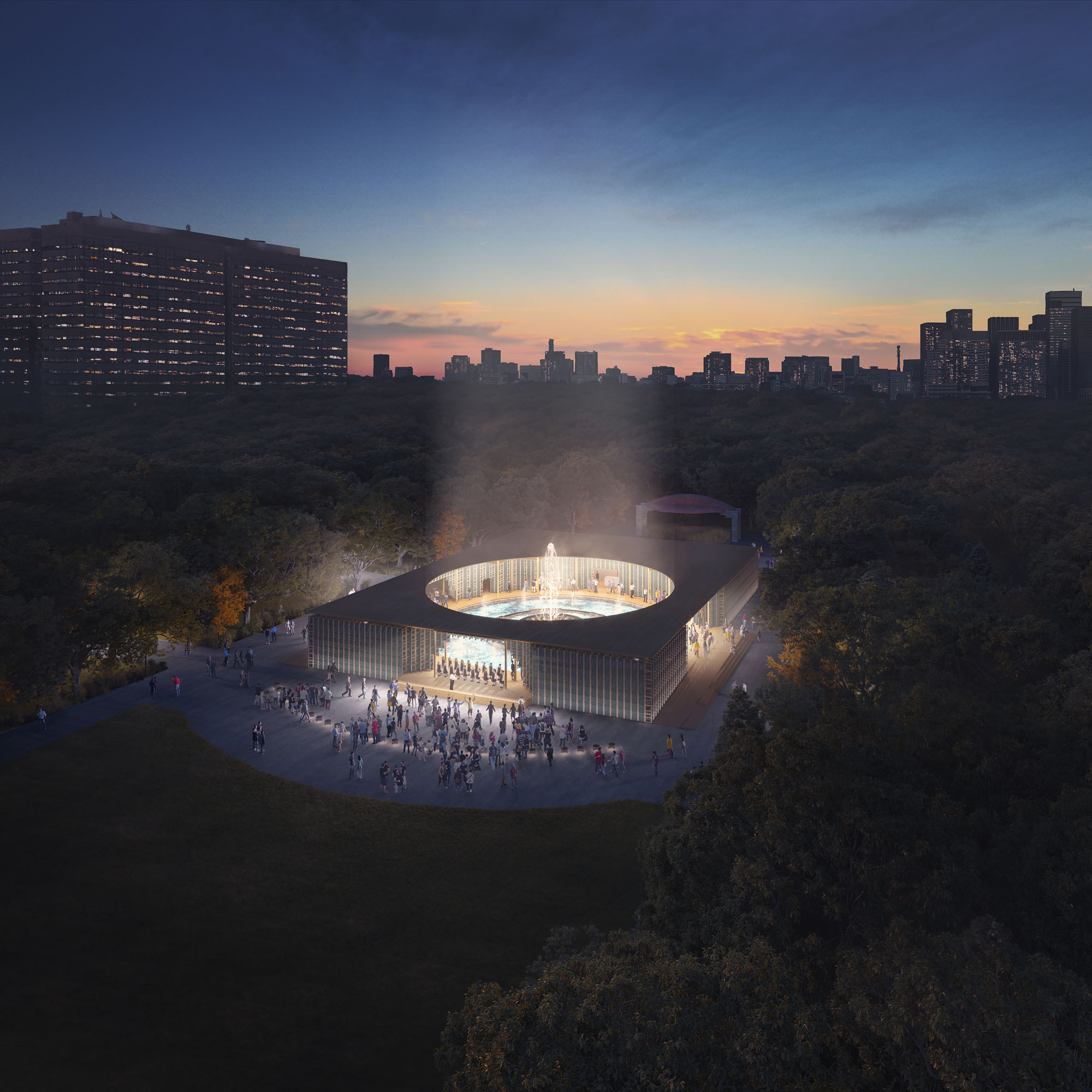
Danish Pavilion Tokyo 2020 ©︎ Josep Villanueva Studio
以下、Lendagerのリリース(英文)です。
Olympic Pavilion Denmark
Olympic design for disassemblyLendager’s upcycled chairs are made from industrial- and ocean plastic waste. and can be stacked and assembled to form both walls, shelves and a facade system. They are part of the story of how to turn a waste stream into something aesthetic and functional.
LOCATION Museum of Science and Technology Leonardo Da Vinci, Milano, Italien
ÅR 2020 –
COLLABORATORS VisitDenmark, the Danish Embassy in Rome, Confederation of Danish Industry, Creative Denmark, Danish Architecture Center. The project is supported by the Danish Ministry of Foreign Affairs and RealdaniaINDUSTRIAL PLASTIC WASTE AND RECYCLED WOOD
For the 2020 Tokyo Olympics, Lendager designed the Danish pavilion for the Danish Ministry of Industry, Business and Financial Affairs, Realdania, the Danish Industry Foundation and VisitDenmark. The pavilion consisted of 2500 chairs made from recycled plastic. The fact that the building material was a chair was due to the great interest in Danish chair design in Japan. Through the recognizability of the chair, Lendager was able to convey Danish cultural heritage while highlighting a sustainable approach and circular building principles. The chairs are built from pure recycled materials: the seats are made from plastic waste from the ocean, while the chair back is made from industrial waste in the form of used beer kegs from Carlsberg’s breweries. In addition, the chair structure itself is made from recycled wood. It is a more sustainable approach than usual because its production helps to create a direct CO2 reduction as well as by turning waste into a valuable product worth preserving. The chair acts as a 60 x 60 x 70 cm green building block that is designed for disassembly and can be used repeatedly. It can be joined together with clamps that hold the chairs securely to each other and can be assembled in many different constellations to form walls, ceilings, and seating for visitors. It is multifunctional and can be used as both a dining chair and a loynge chair by rotating it accordingly.
‘It is more than a building, it is an ecosystem and a very powerful showcase of Danish design today. It shows that this iconic piece of Danish design – a chair – can be so much more. It addresses a fundamental problem with major events – waste – and rethinks how a pavilion is used and financed while still maintaining a high aesthetic quality. It is almost Olympic in its iconic and monumental design.’
The jury, Danish Design Award 2021
Lendager 公式サイト
![[Report]落合陽一プロデュース、万博から進化した null²ⁿ(ヌルヌルネクサス)横浜ランドマークタワーに10/14オープン](https://magazine-asset.tecture.jp/wpcms/wp-content/uploads/2026/10/12155717/20261009nullnullnexus-press01-1-900x600.jpeg)