MADが中国・深圳に手がけた、すべての人に開かれたテンセントの企業キャンパス〈Tengyun Center(Tencent Cloudrise)〉
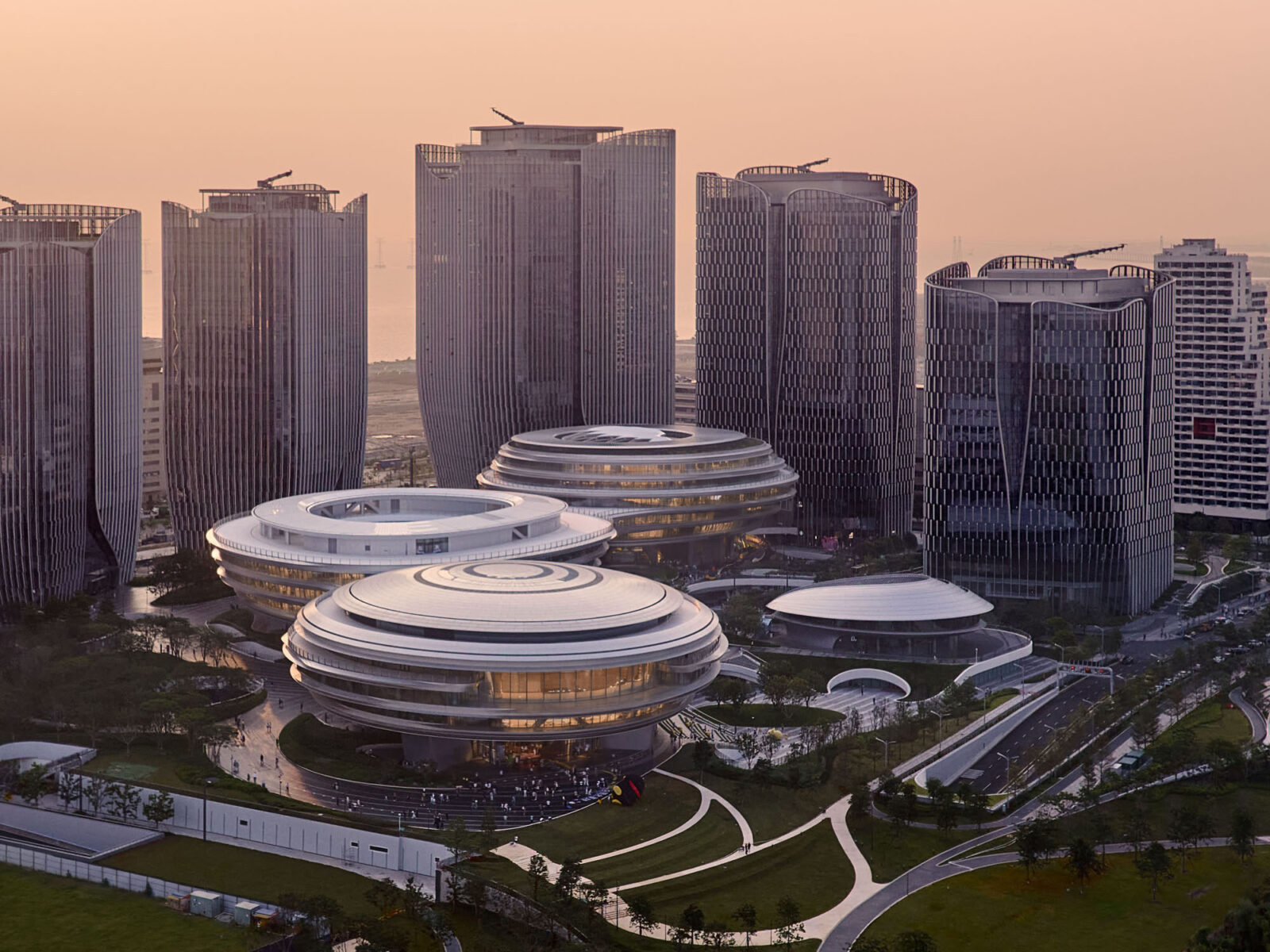
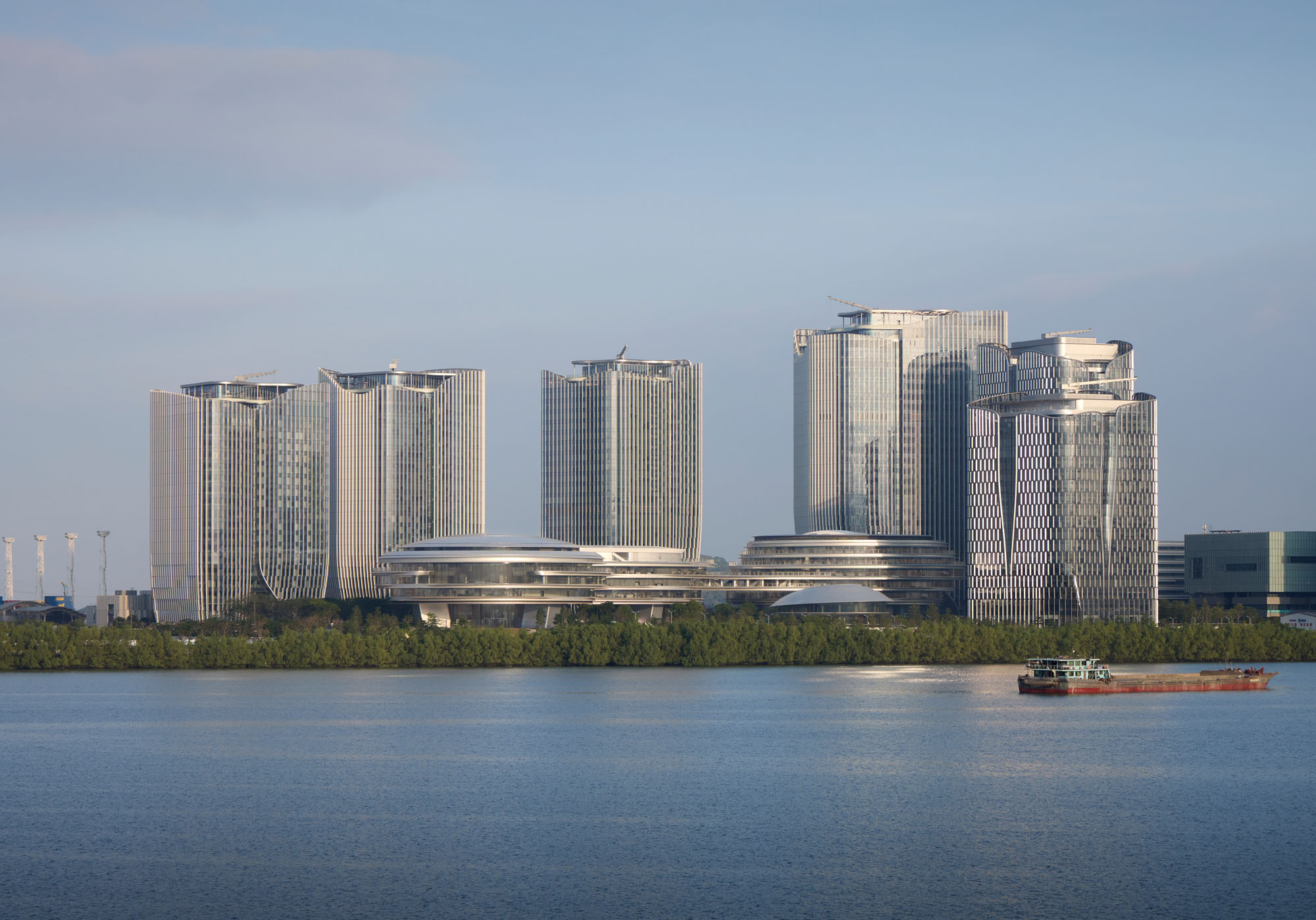
MADの最新プロジェクト〈Tengyun Center(Tencent Cloudrise)〉は、中国・深圳に位置するテクノロジー企業テンセントのキャンパスに竣工した新本社です。
建物の主要部を地上約8.6m上空へと浮き上がらせ、足元の広大な敷地を壁のない公共空間として都市に開放しています。
注目ポイント
- 地上8.6mに浮遊する建築と大スパン構造
- 「雲」のような3つのボリュームと連続する動線
- オフィスのヒエラルキーを解体する平面計画
- 既存の生態系を内包する環境統合アプローチ
(以下、MADから提供されたプレスキットのテキストの抄訳)
©︎ Zhang Chao
©︎ Zhang Chao
MAD × テンセント:すべての人に開かれた企業キャンパス
世界で最も注目を集めるテクノロジー企業の本社には、ある共通した傾向がある。それは「内向き」になることである。従業員のために自給自足的な世界を完璧につくり上げる一方で、一般の人々は門の外に留め置かれる。
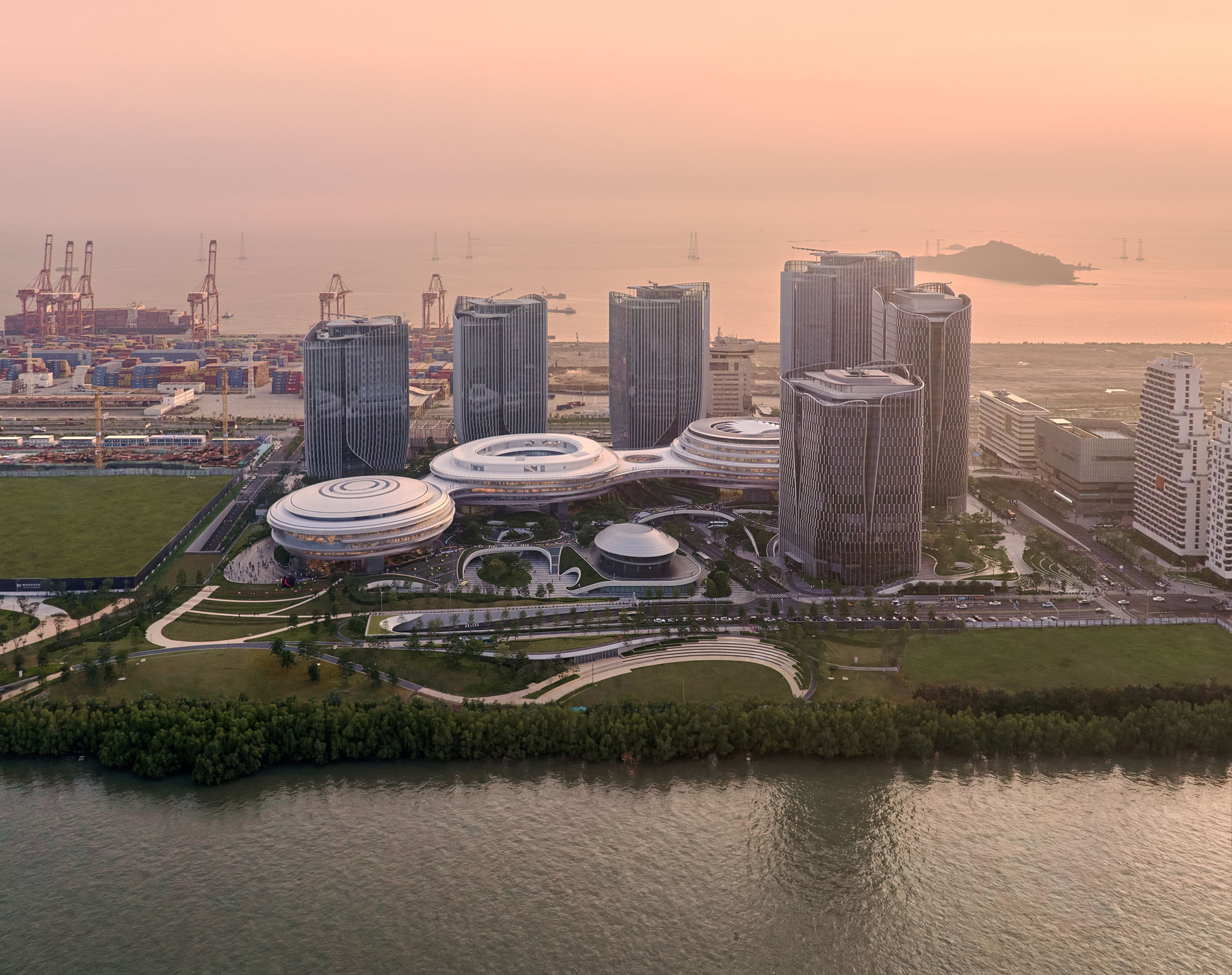
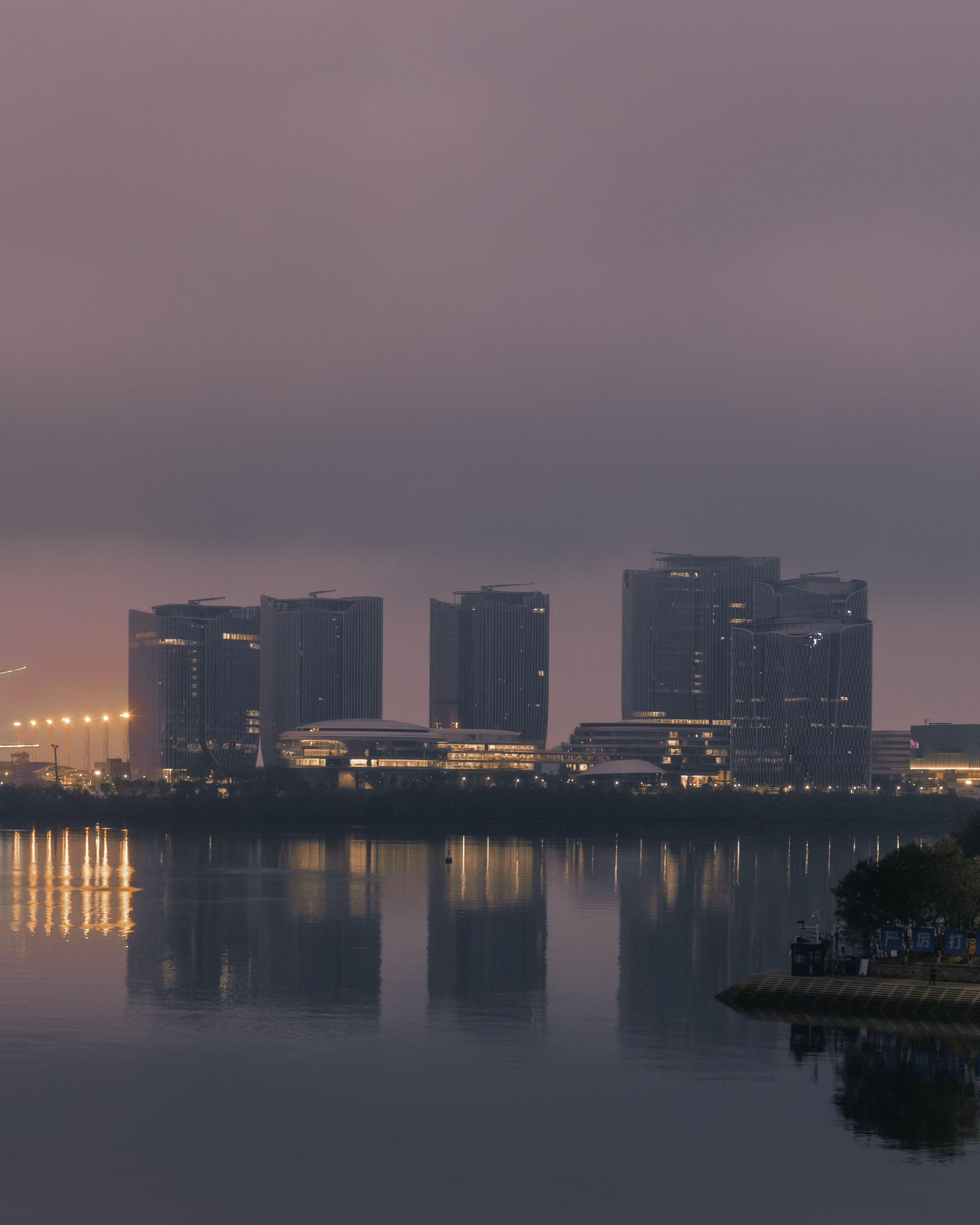
テンセントの新本社は、これとは正反対のアプローチをとっている。マー・ヤンソン(Ma Yansong)、ダン・チュン(Dang Qun)、早野洋介が率いる建築家集団MADが設計した〈Tengyun Center(Tencent Cloudrise)〉は、主要な建物全体を約8.6m上空に浮かせ、その下の地面を都市に還元している。ここには壁が一切ない。建物の下の土地は誰にでも開放されており、歩行者や家族連れ、通りすがりの人々が通り抜けることができる沿岸の公共空間となっている。
深圳の大鏟湾(Da Chan Bay)に完成し、現在テンセントの広範なキャンパスの一部として開放されているこのプロジェクトは、世界で最も閉鎖的な建築形態の1つである「企業本社」を、公共インフラの一部として再定義している。
©︎ aogvision
©︎ aogvision
©︎ aogvision
地面を開放する、浮かぶ建築
「『浮遊』は視覚的な効果ではなく、空間的な発想であり、本社を浮き上がらせることで、その下の土地を都市に還元する。閉ざされた企業のシンボルをつくるのではなく、建物を日常の都市生活の一部に溶け込ませることが目的である。この意味で『浮遊』とは、単に公共空間をより開放的で利用しやすいものにするための手段に過ぎない」
MAD 創設者兼プリンシパル・パートナー
マー・ヤンソン
〈Tengyun Center(Tencent Cloudrise)〉のプロジェクトは、建築的かつ都市的な問いから始まっている。それは、「数千人の従業員を擁する本社ビルが、貴重な沿岸の敷地を占有しつつ、いかにして公共生活の一部であり続けられるか」という問いである。
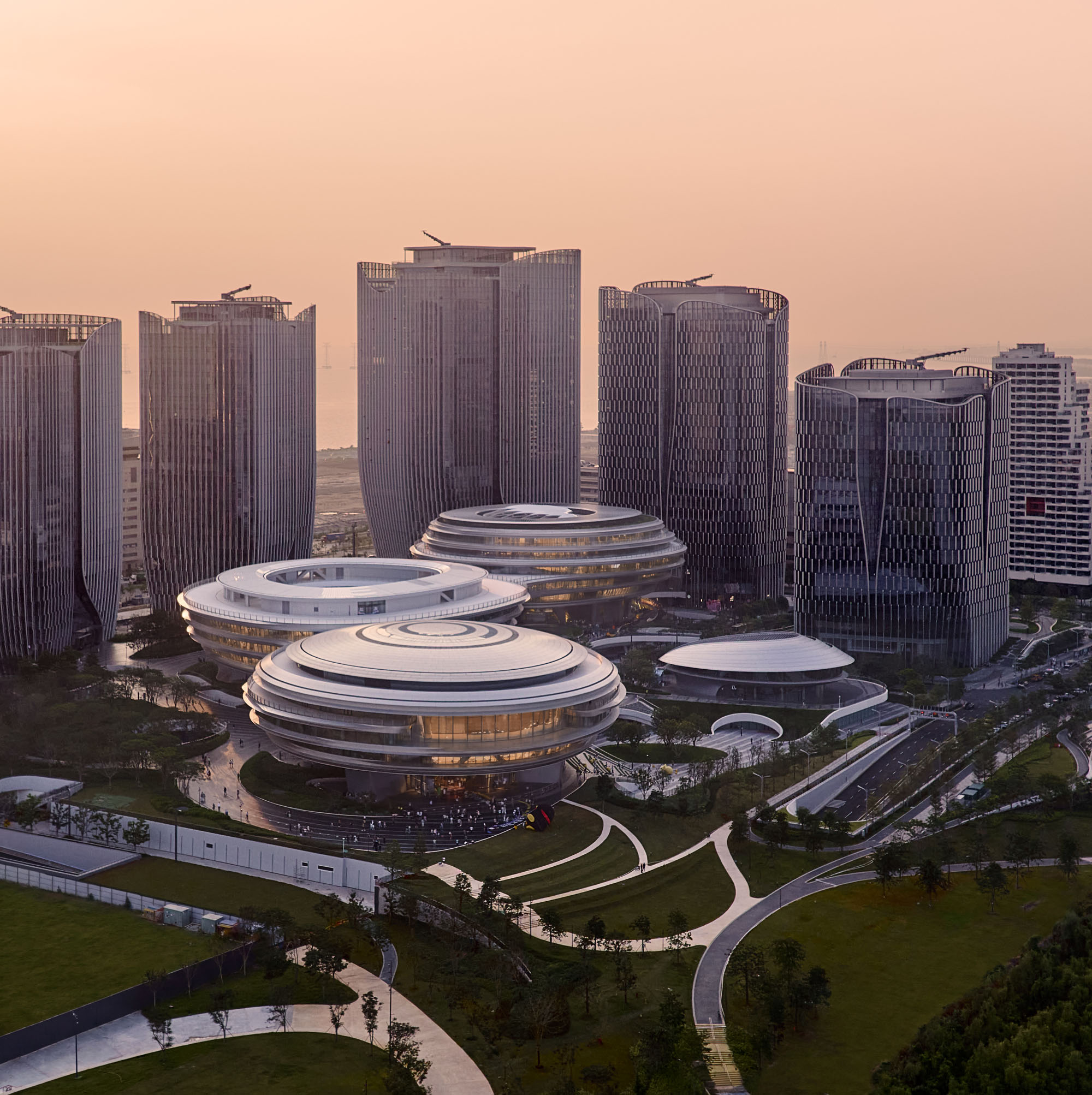
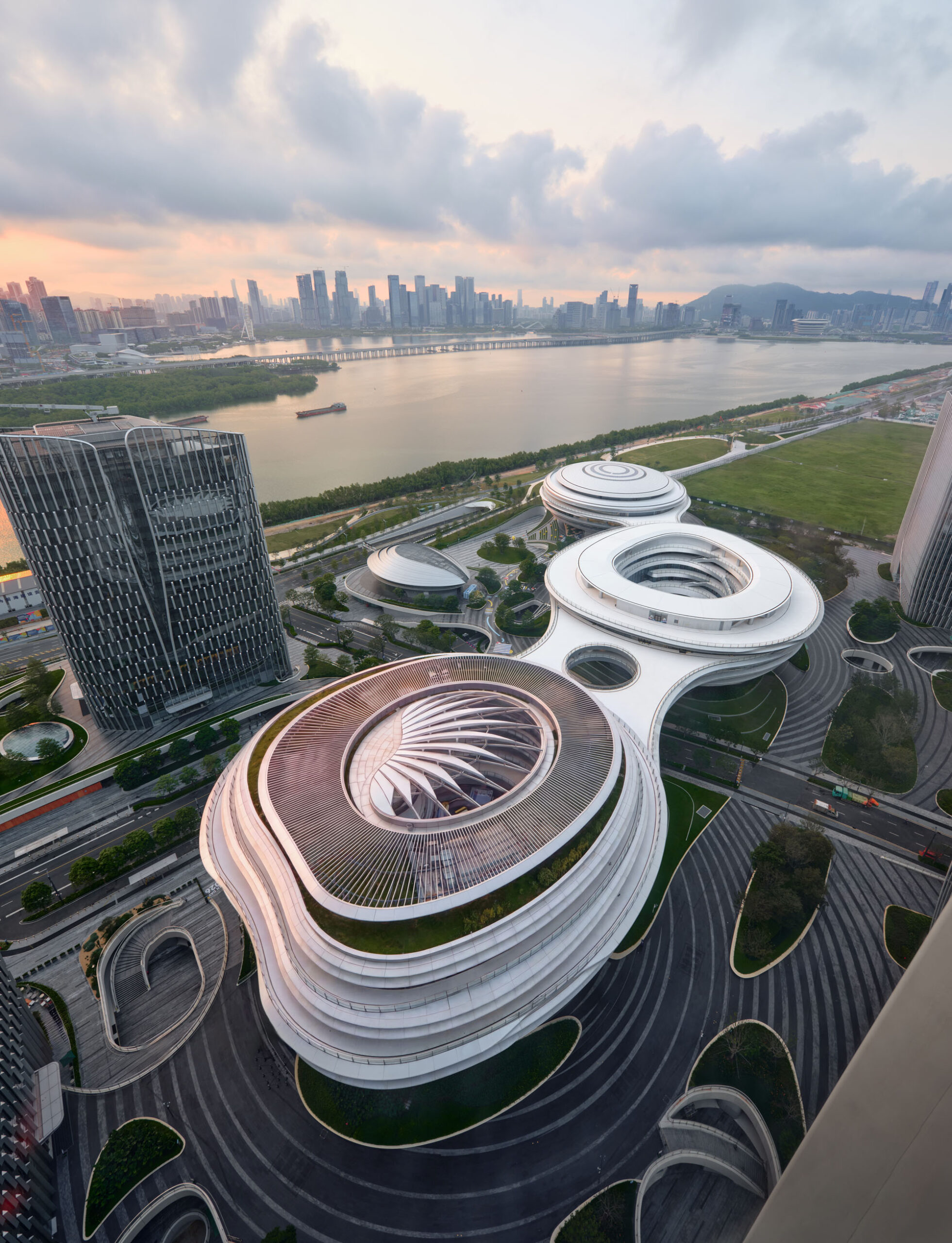
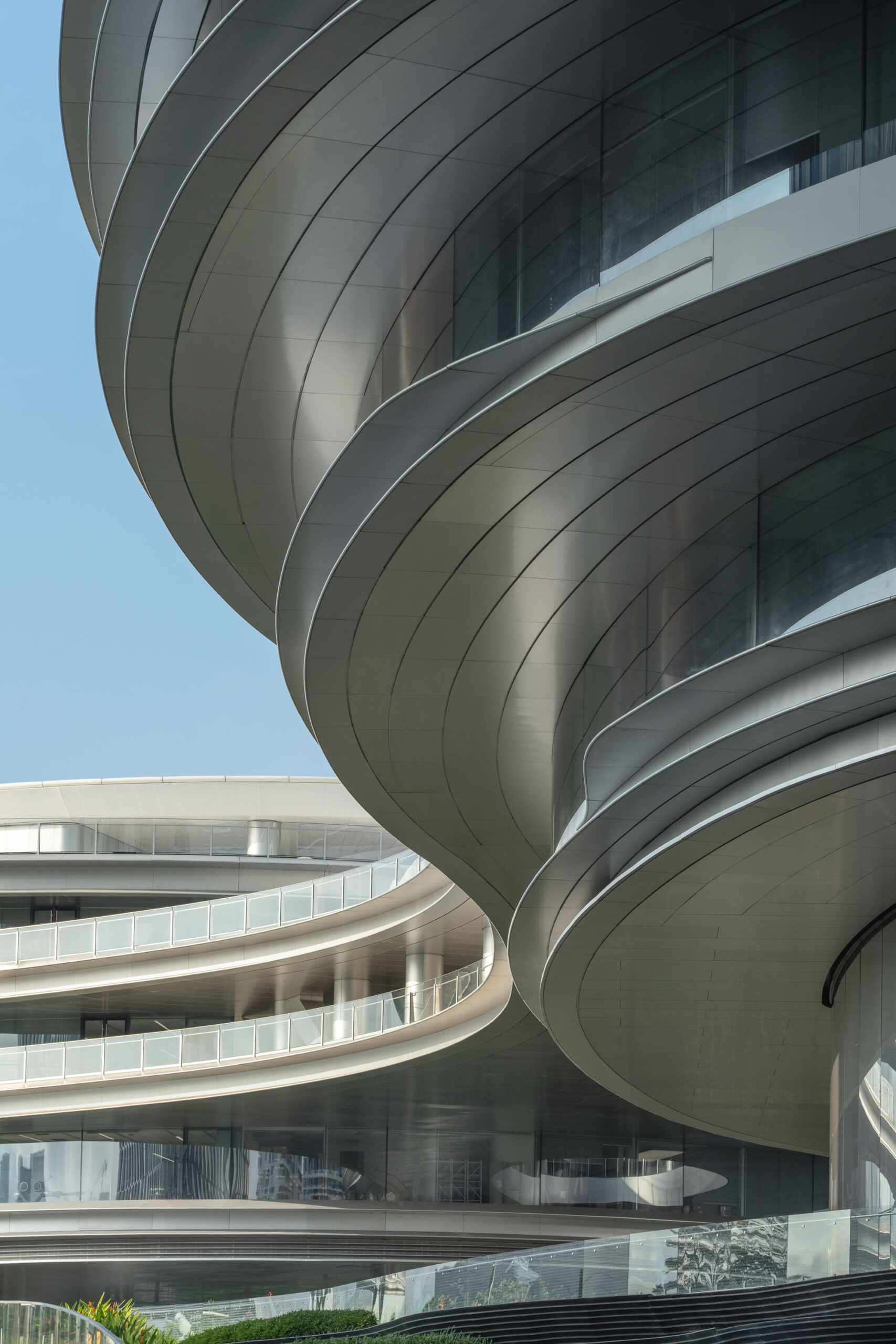
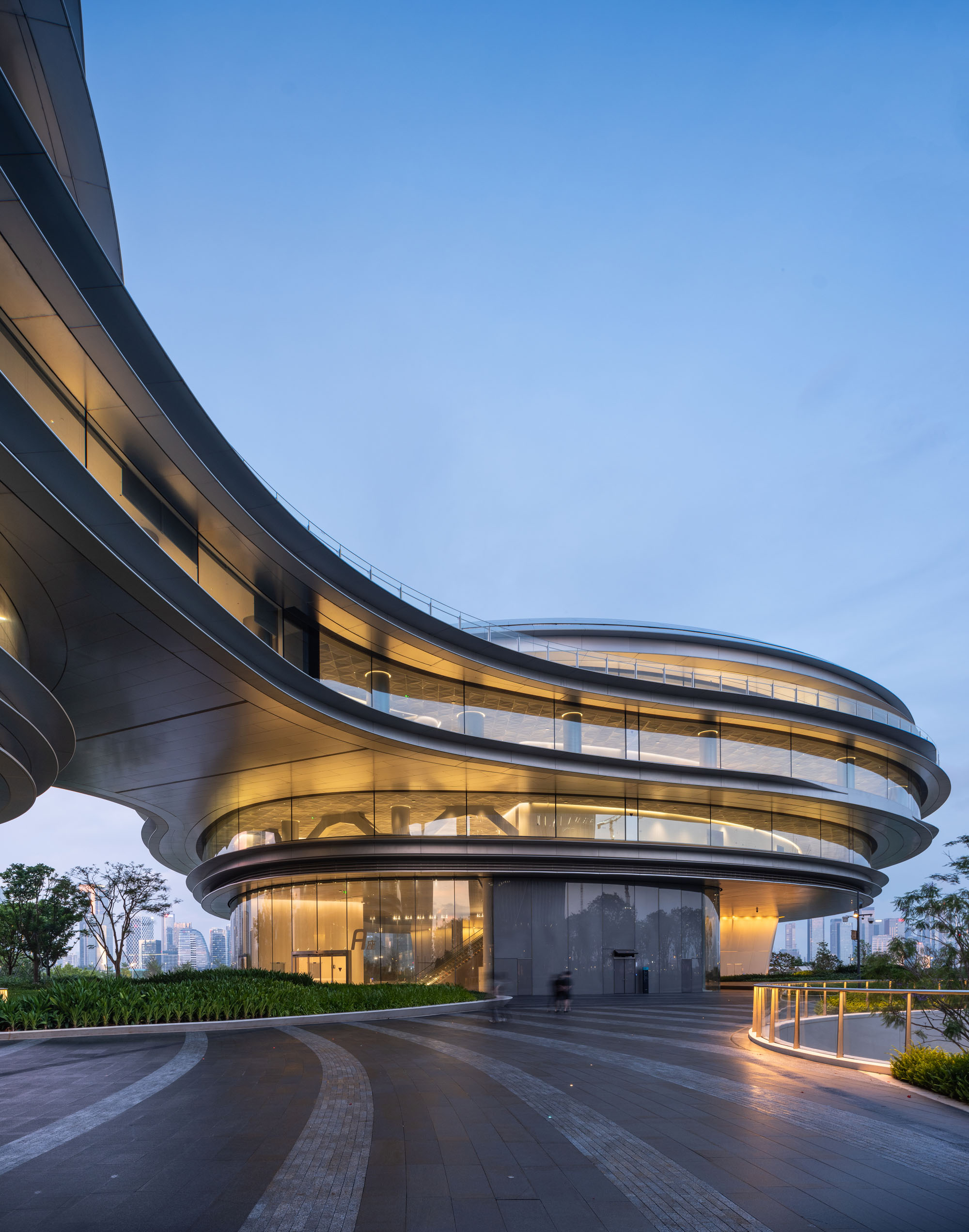
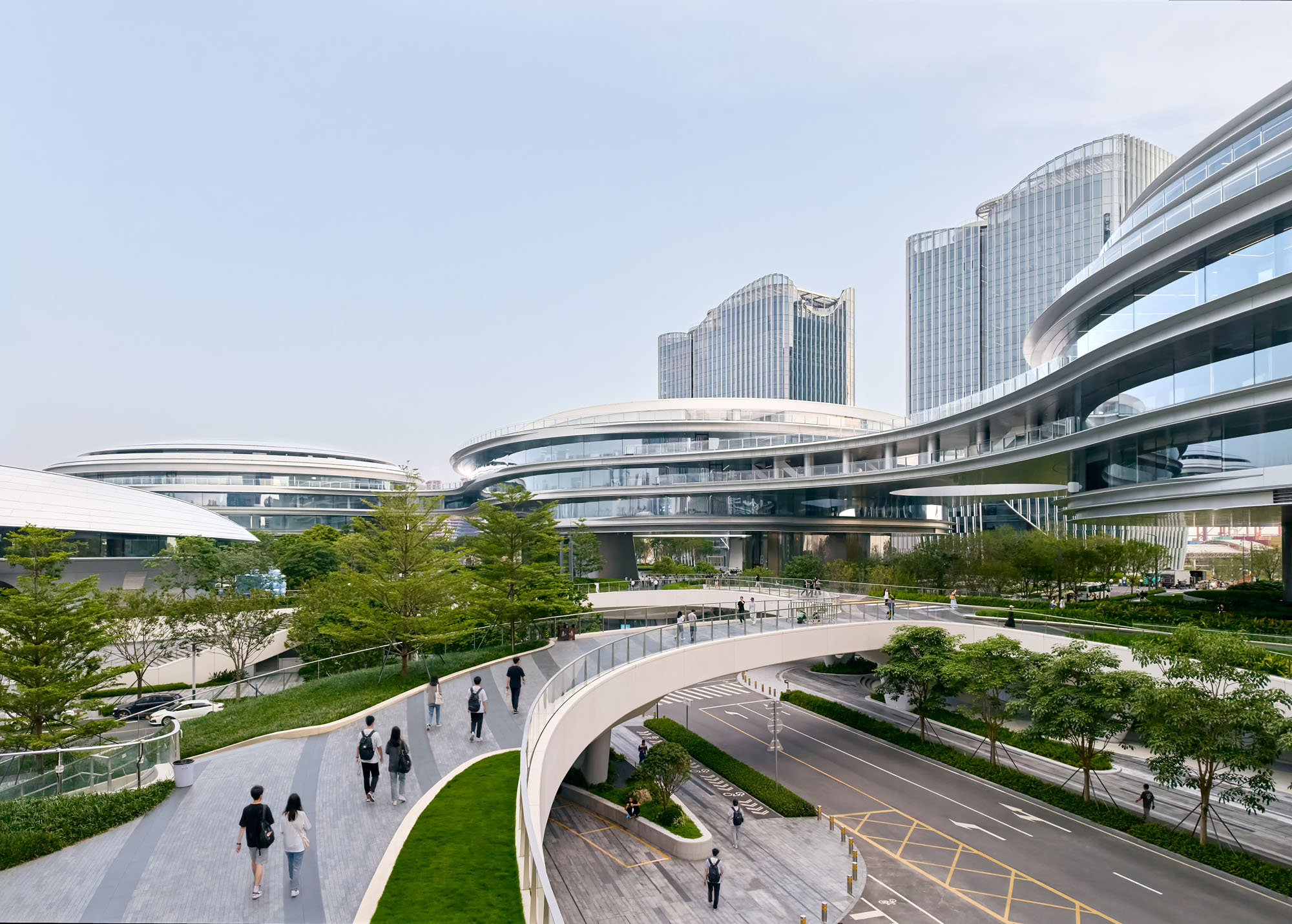
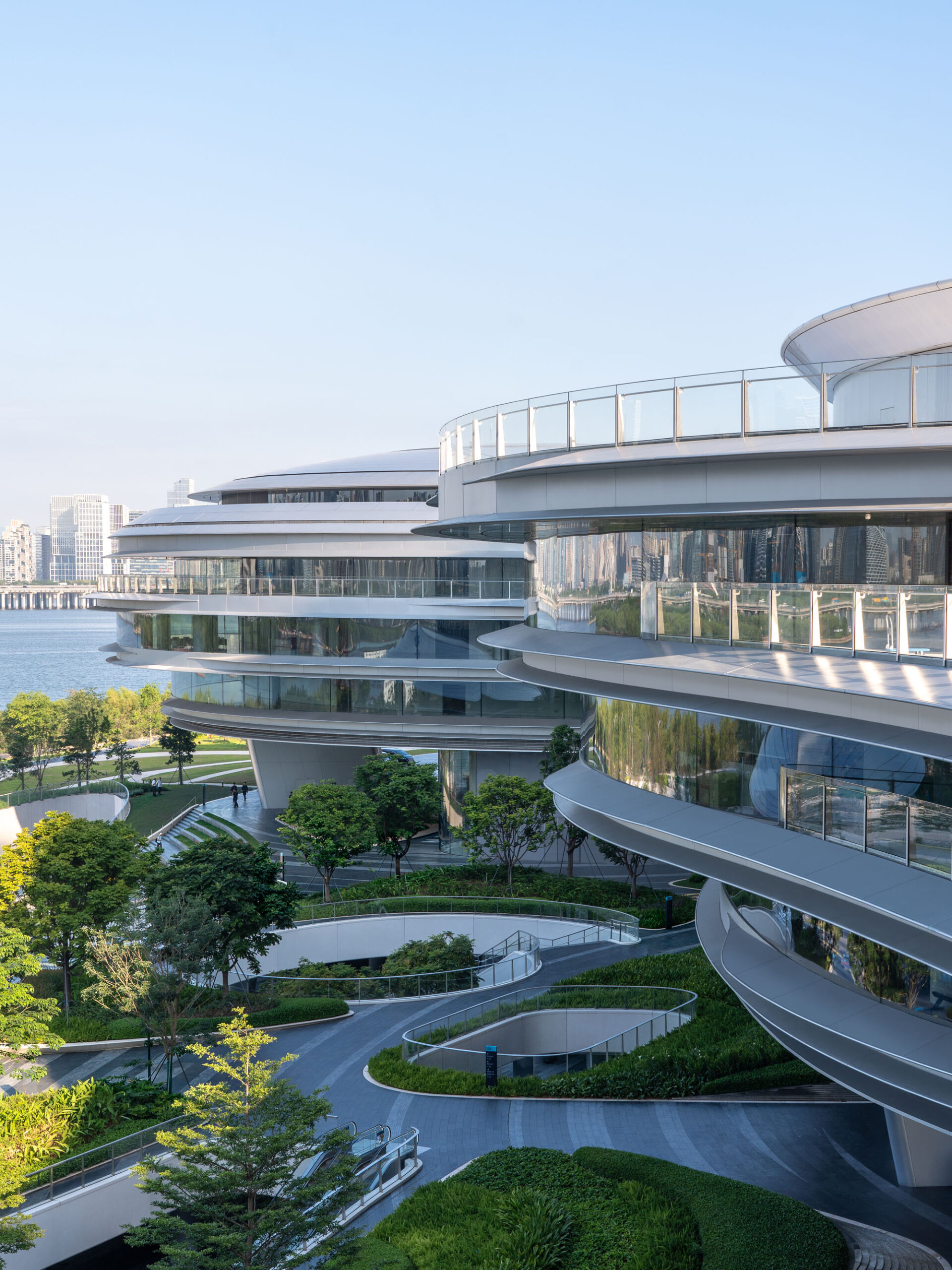
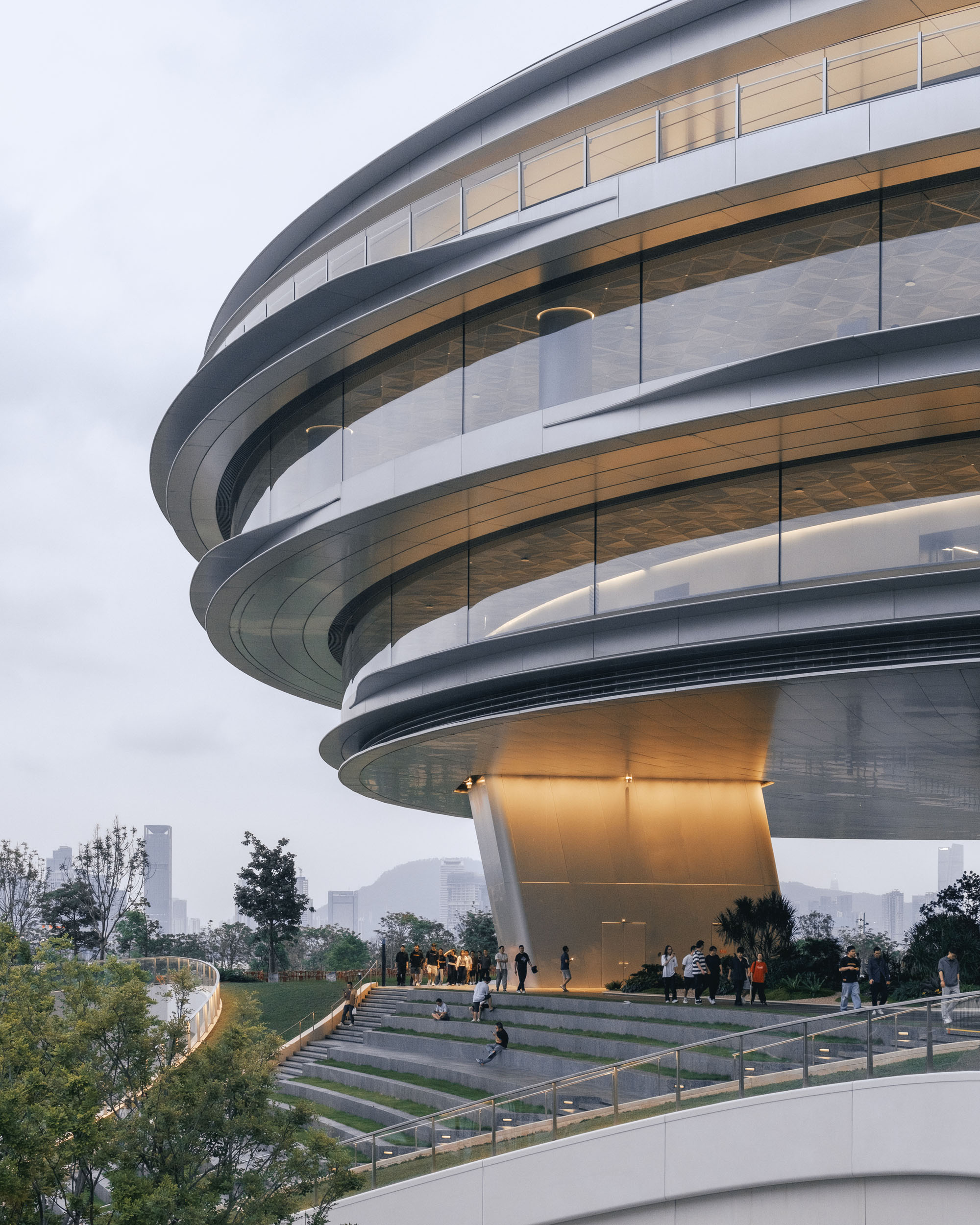
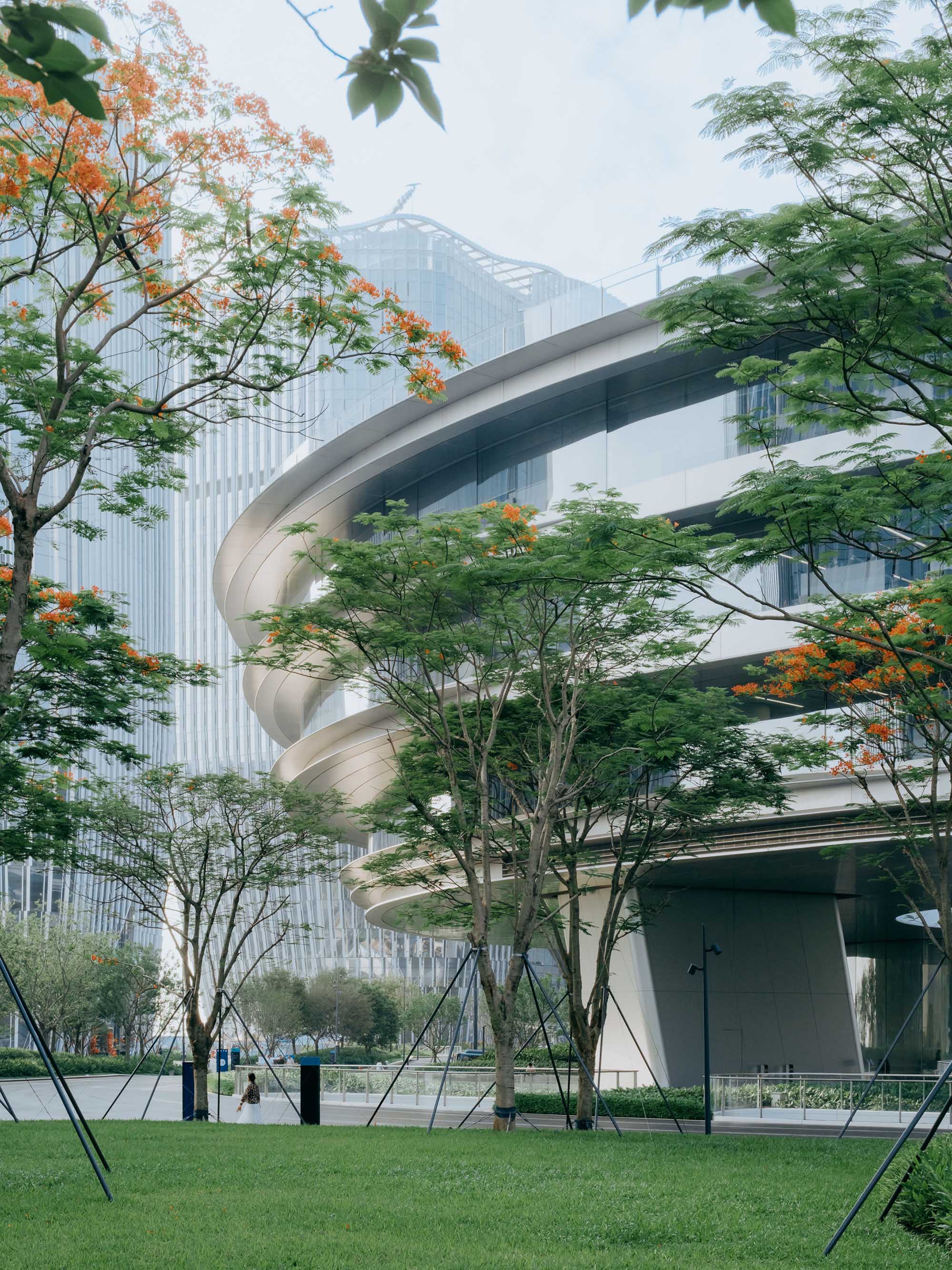
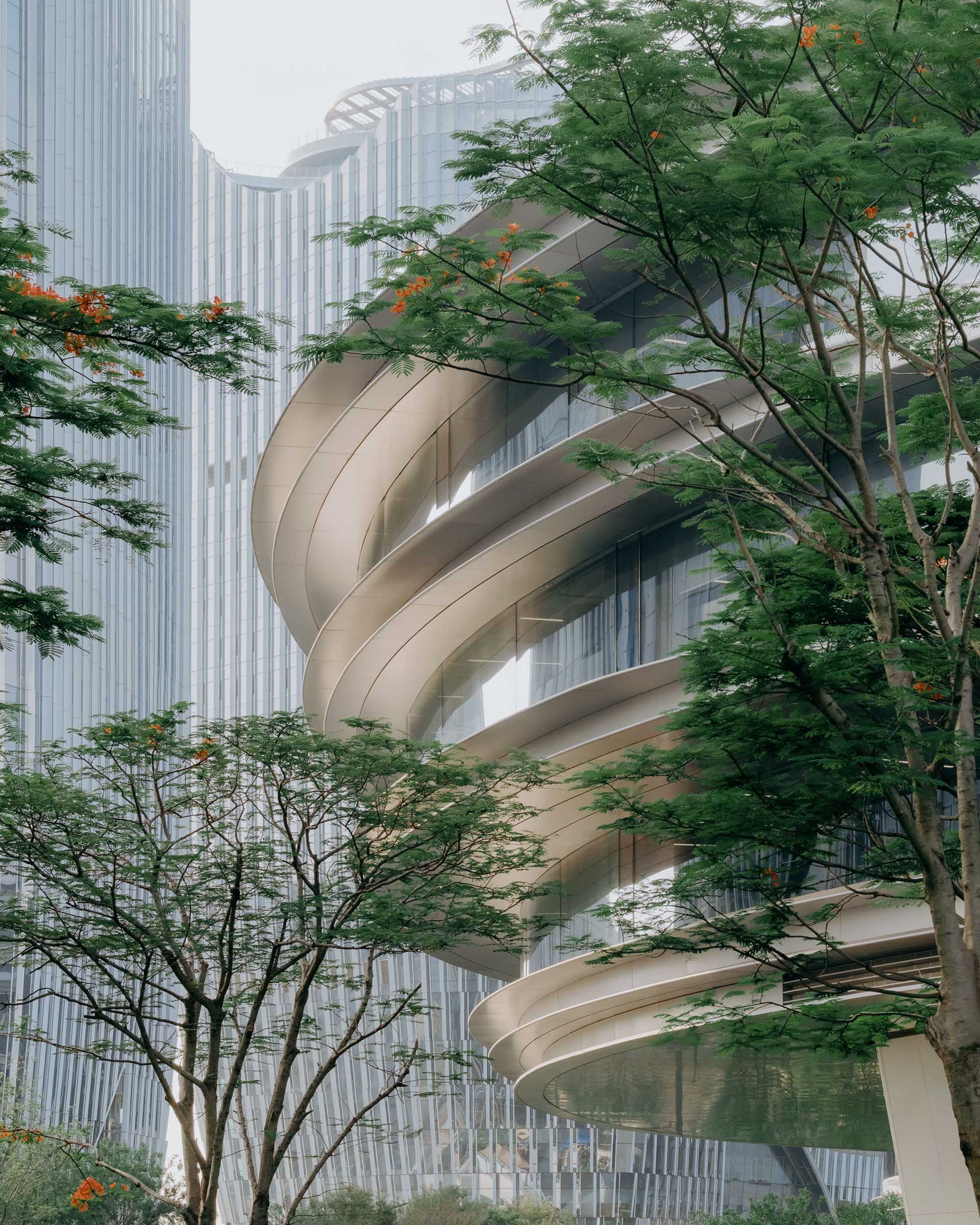
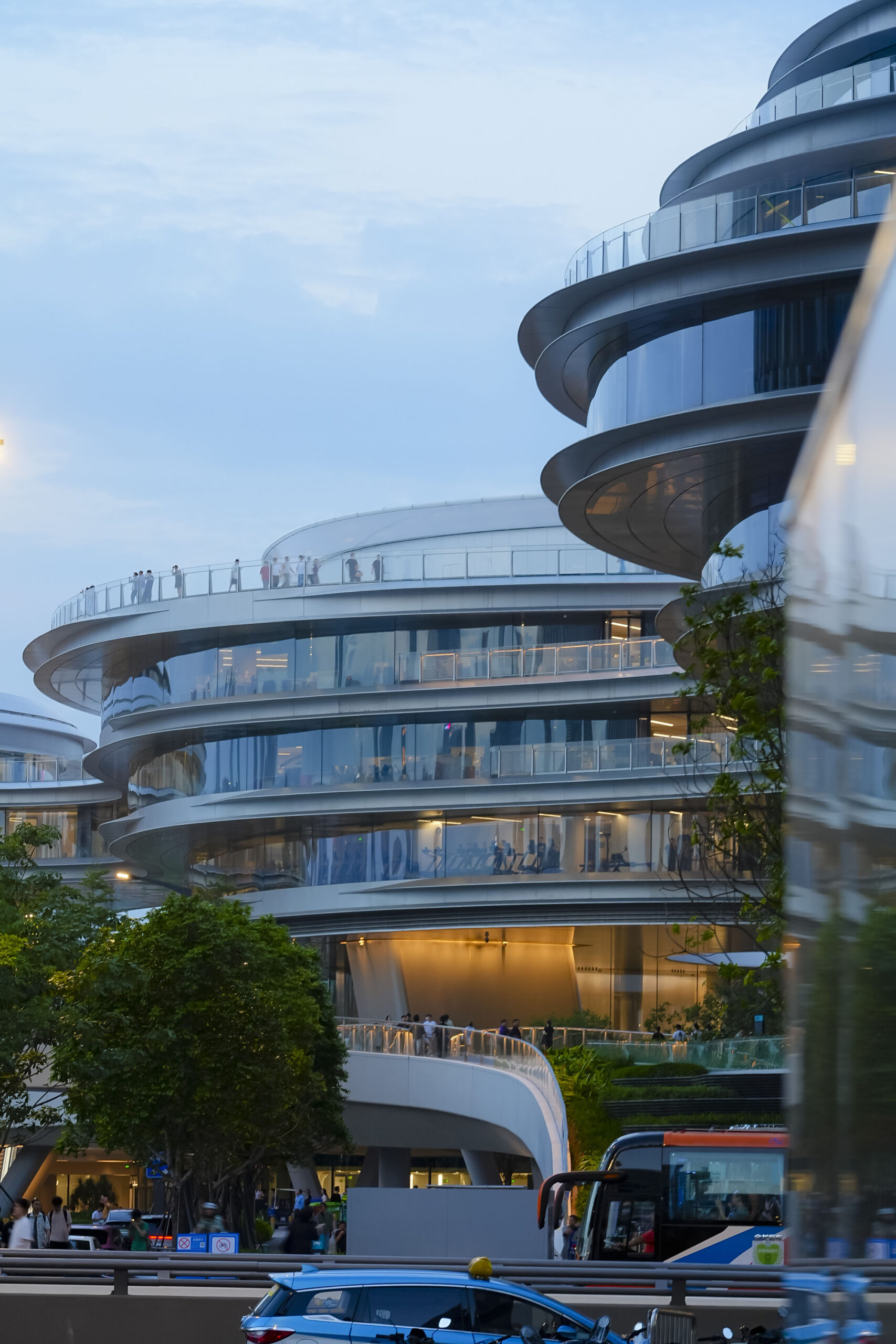
MADの出した答えは、建物をもち上げ、その土地を都市に還元することであった。3つの相互に連結した「雲」のようなボリュームが、10本の構造コアによって地上約8.6mまでもち上げられ、事実上、2フロア分の空間が都市に還元されている。その下では、敷地が連続した公共のランドスケープへと開かれ、散策や集い、日陰、そして海の眺めを楽しめる空間が広がっている。
通常、企業キャンパスにおいて最も私有化されがちな「地面」こそが、このプロジェクトにおける主要な市民への贈り物となっているのである。
©︎ Zhang Chao
©︎ Sun Haiyong
©︎ Zhang Chao
雲のような3つの建物
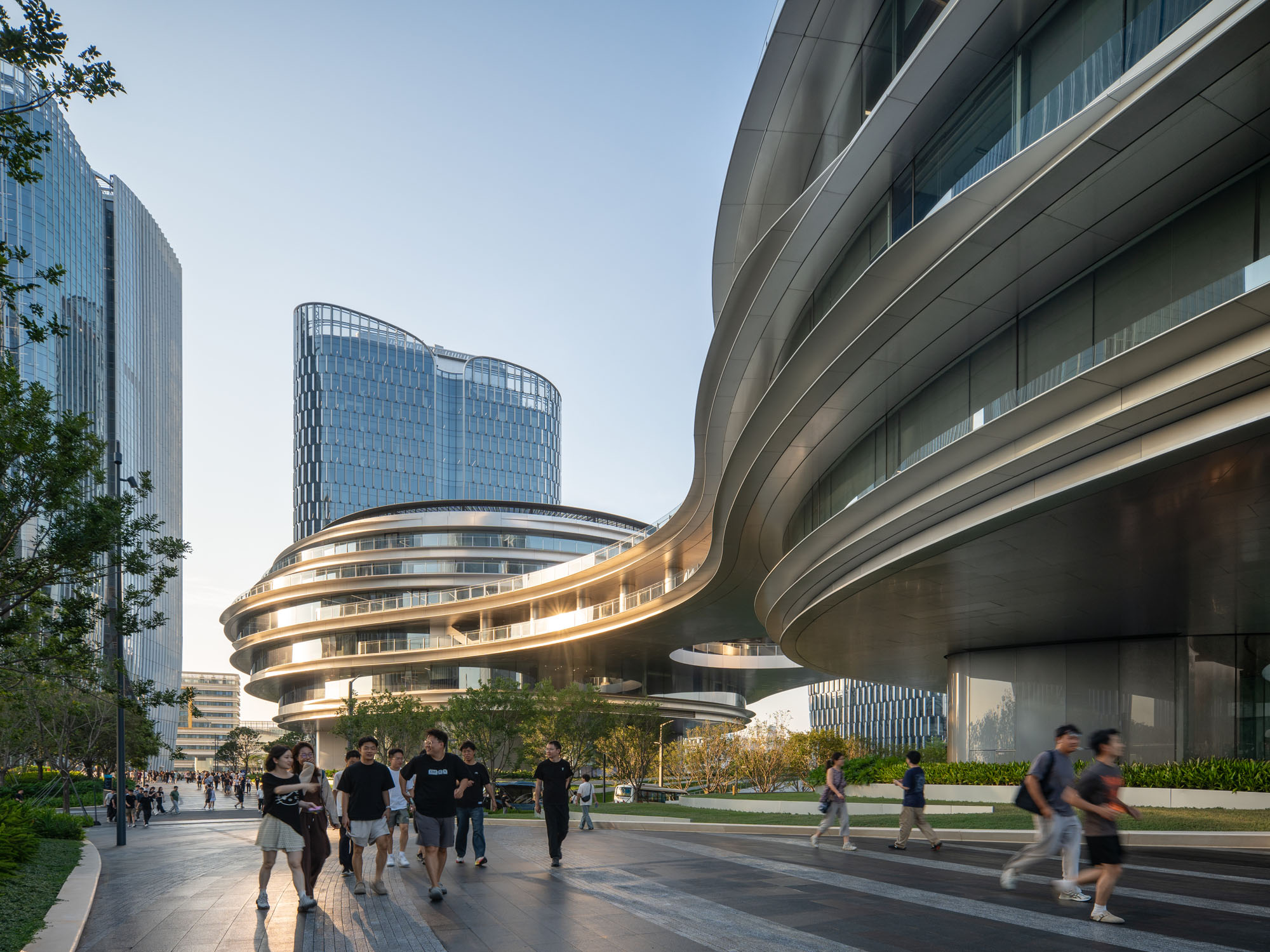
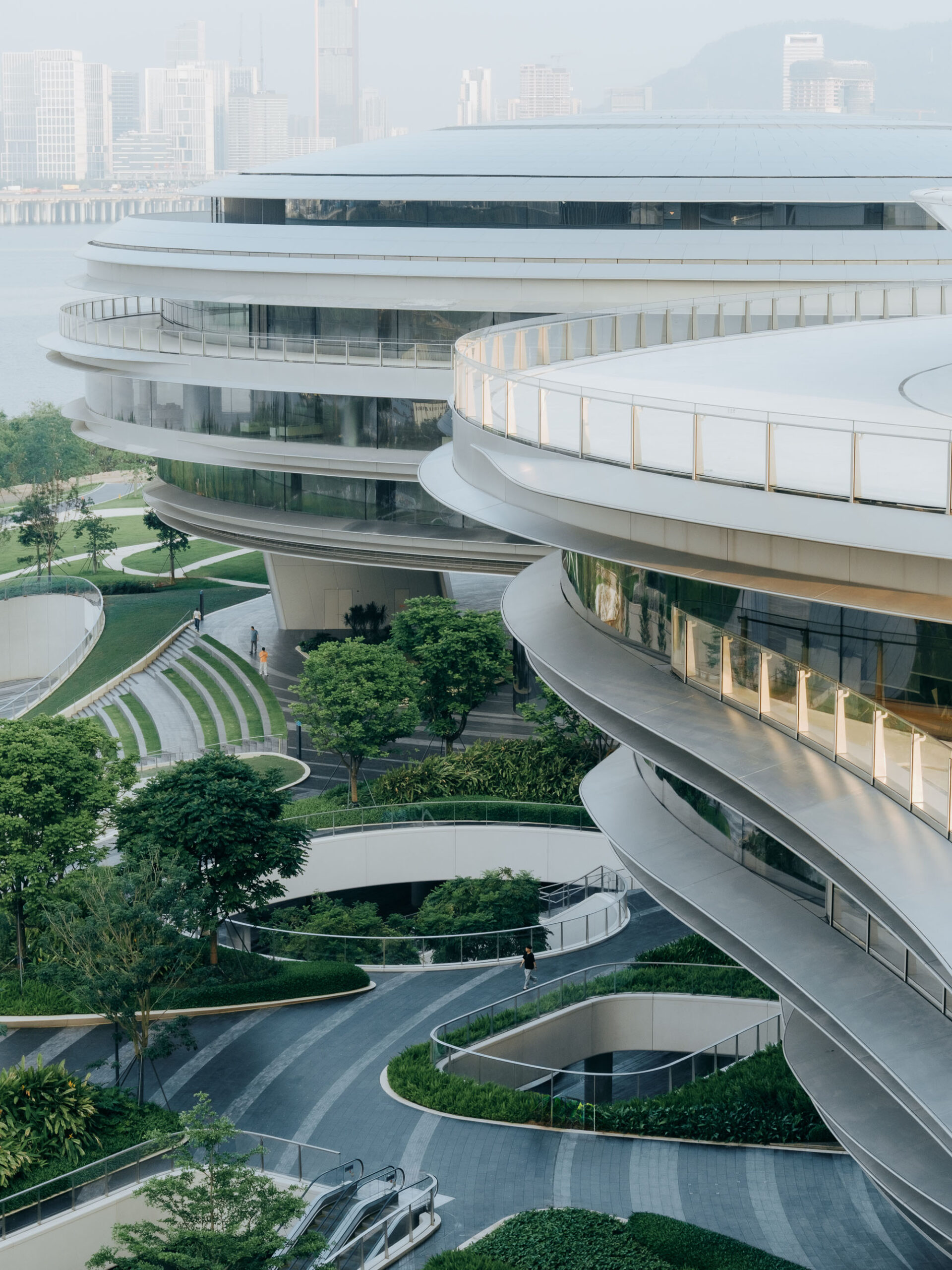
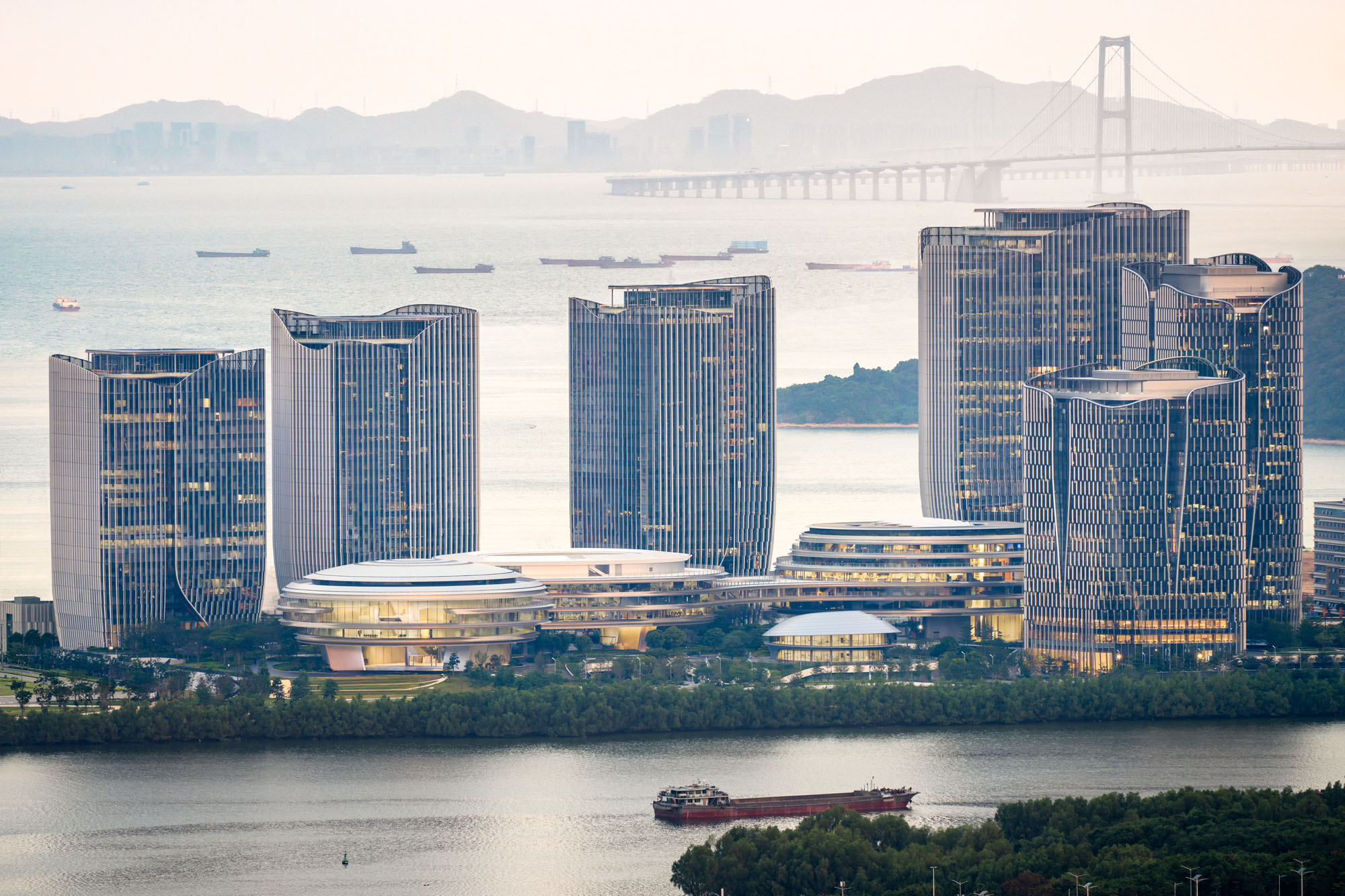
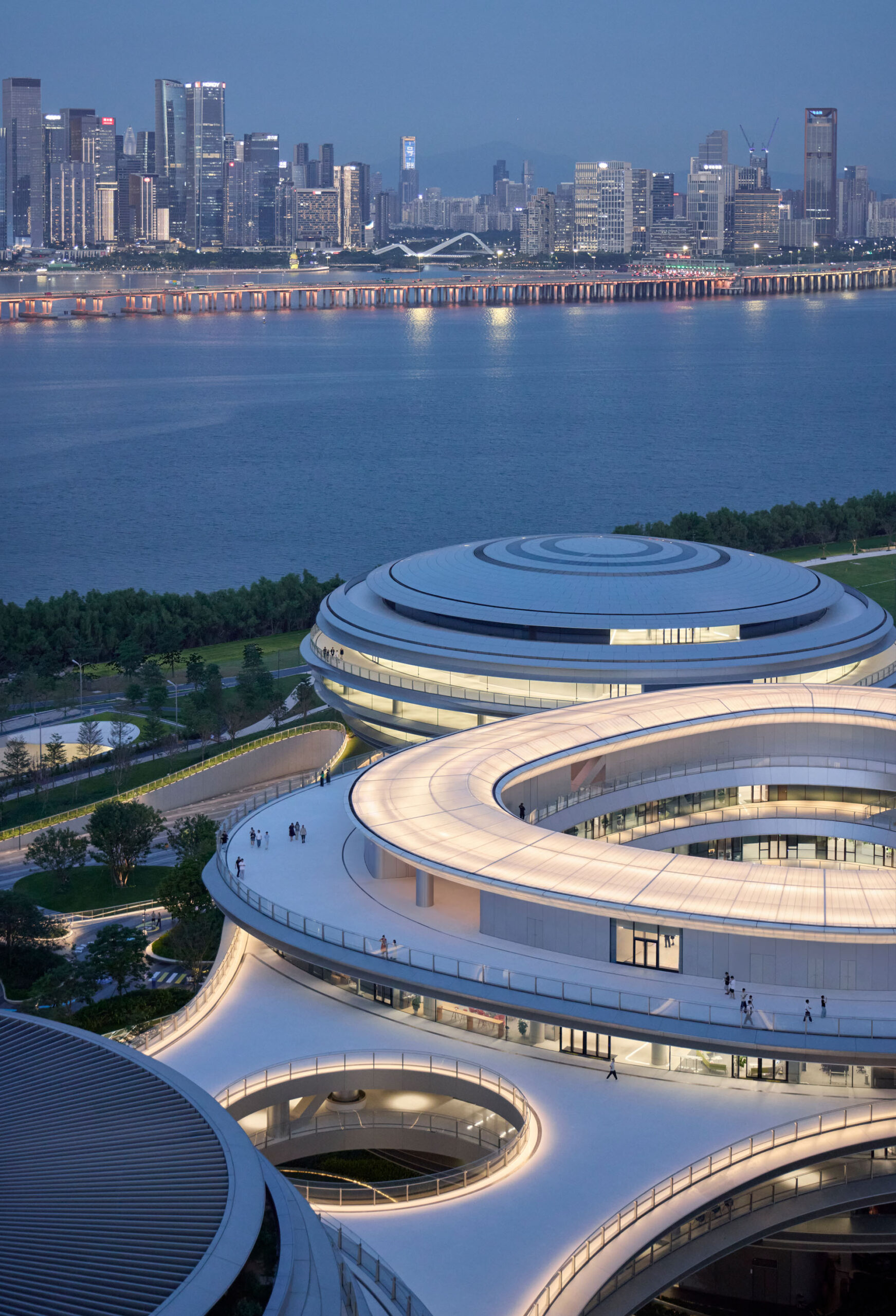
本社は、南北軸に沿って相互に連結された3つの「雲」のようなボリュームで構成されており、高架の鋼製トラス橋で結ばれている。この橋は、単なる通路ではなく、立ち止まったり、交流したり、湾を眺めたりする場所としても機能する。キャンパス内を巡るルートは、都市から庭園へ、日陰の地面から高架橋へ、そして職場から海岸線へと、その様相を徐々に変えていく。
これら3つのボリュームは、それぞれ異なる形態の共同利用を支えている。
- 南棟: 展示会や多目的イベントが開催され、2階のパブリックルームは湾に向かって開かれている。
- 中央棟・北棟: 開放的なアトリウムを囲むようにオフィスが配置されている。
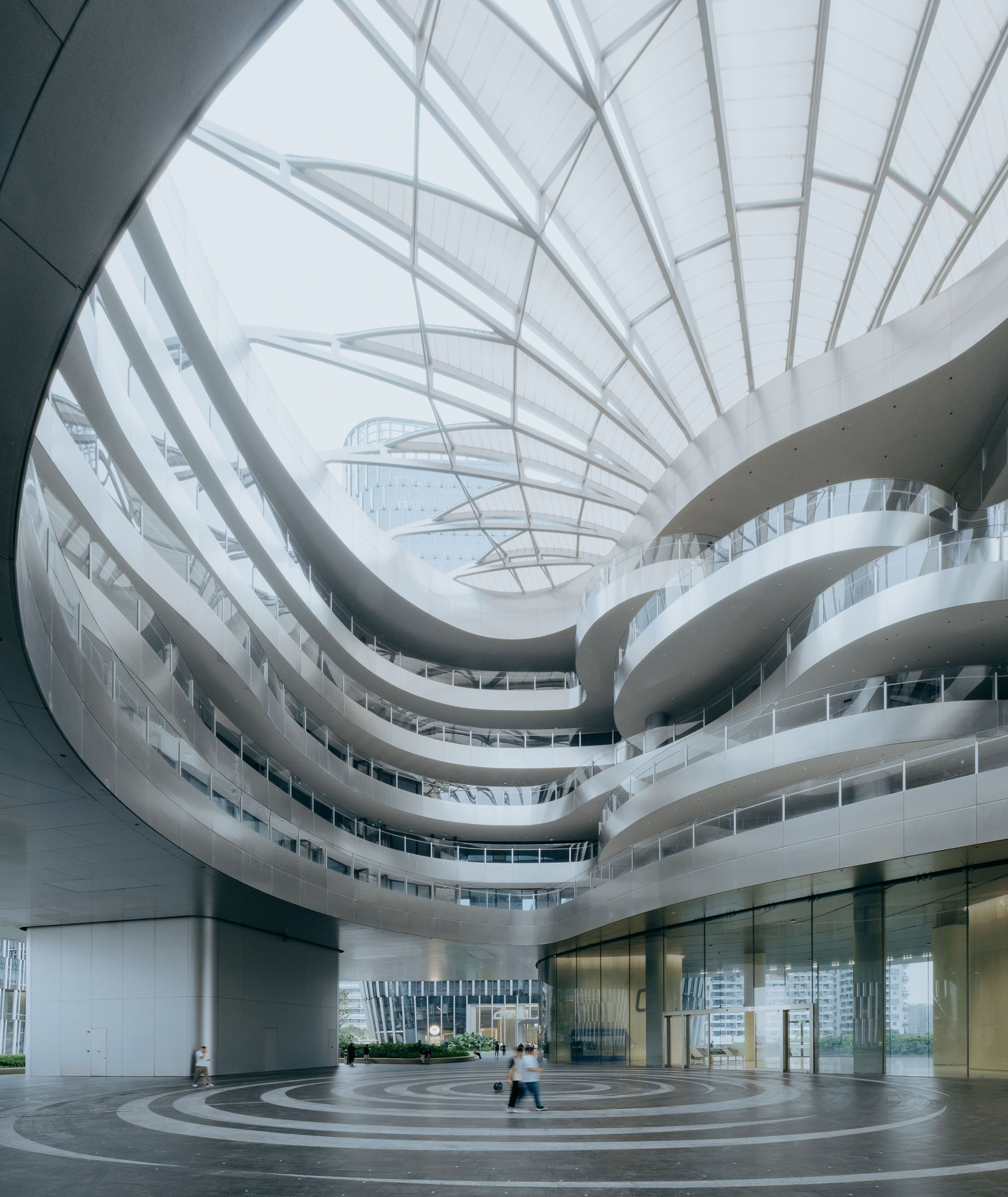
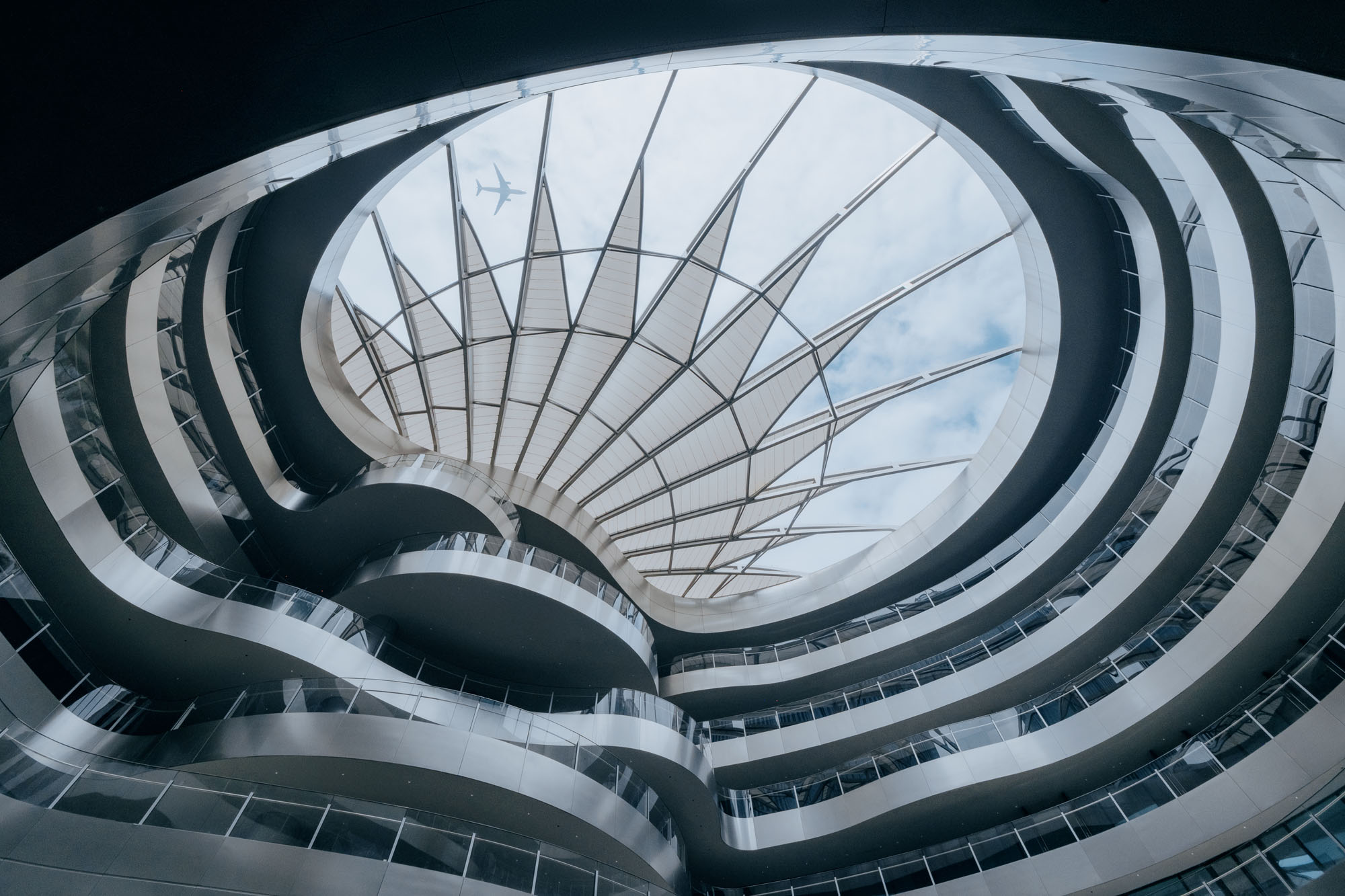
- 北棟の天窓: 海岸の強い日差しを和らげつつ自然光を採り入れる、半開放型の貝殻状ETFE製天窓が設けられている。
©︎ aogvision
©︎ Zhang Chao
すべての人に開かれた海に面したワークスペース
多くのオフィスタワーでは、海の眺めは角部屋の特権となっている。しかし、〈Tengyun Center(Tencent Cloudrise)〉はこのヒエラルキーを覆している。
ワークステーションの約80%が海に面しているのである。動線や共用施設も、海岸線への視界が途切れないように配置されており、その素晴らしい眺望は上層部の特権階級だけでなく、建物全体に属するものとなっている。試運転の開始以来、約14,000人のテンセント社員がこの敷地に移転してきた。
海は、日常的な業務の合間にも常にその存在感を放ち続けている。
©︎ Zhu Yumeng
©︎ Zhu Yumeng
企業の境界線ではなく、公共の景観を
地上階において、このプロジェクトは従来の「企業的なファサード」を排し、芝生、植栽された斜面、木陰の庭園、歩行者用通路からなる開放的な景観に置き換えている。これにより、キャンパスに直接織り込まれた海岸沿いの公園が創出された。
境界線は意図的に曖昧にされ、公共空間、職場、生態系ゾーンが互いに連なり合うよう設計されている。ここでの「オープンなキャンパス」とは、社員証保持者にのみ開放されるシリコンバレー型のものではない。都市に対して、真に開かれた空間なのである。
©︎ Zhu Yumeng
©︎ Zhu Yumeng
©︎ Zhu Yumeng
©︎ Zhu Yumeng
既存の生態系の中に築かれたキャンパス
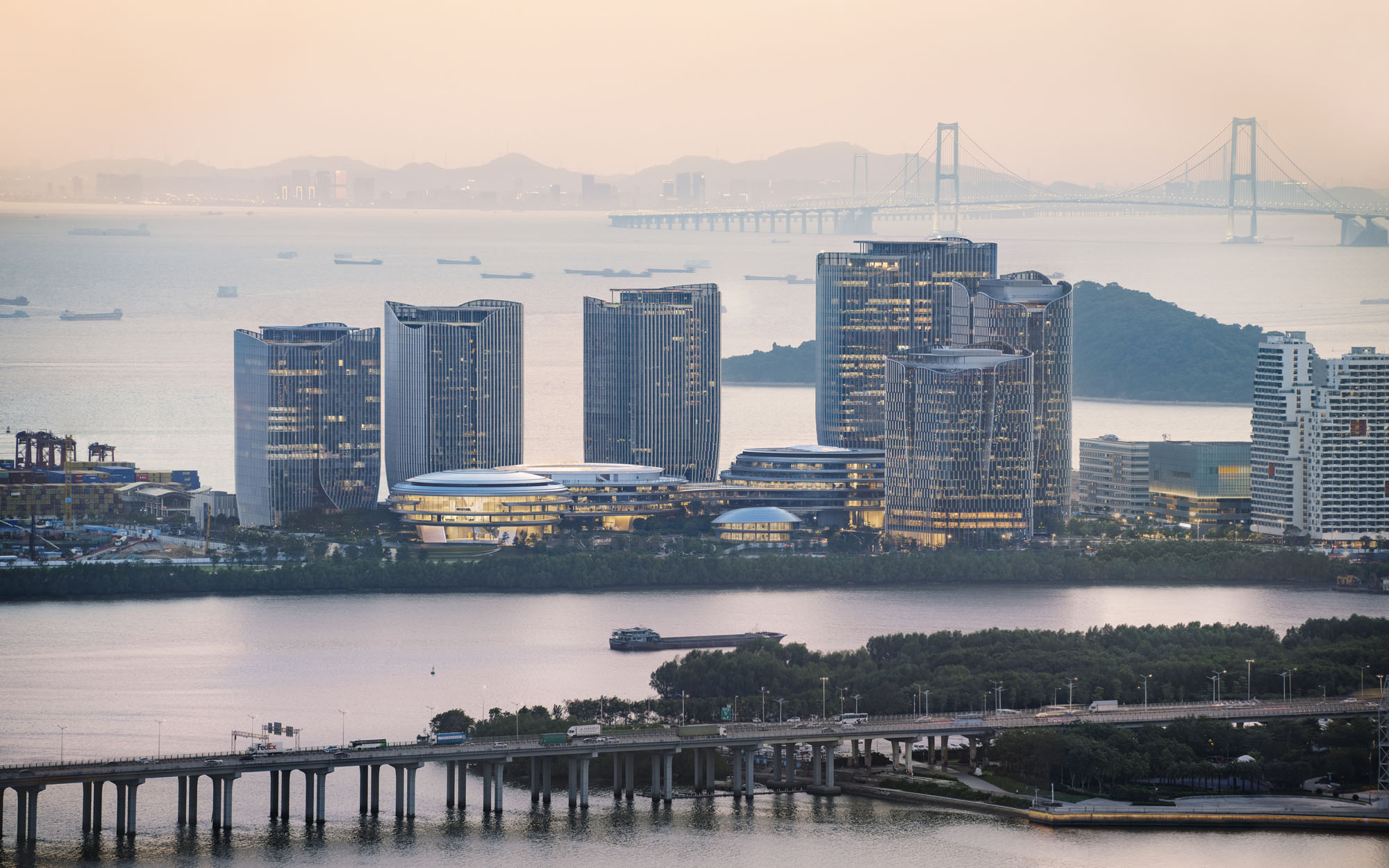
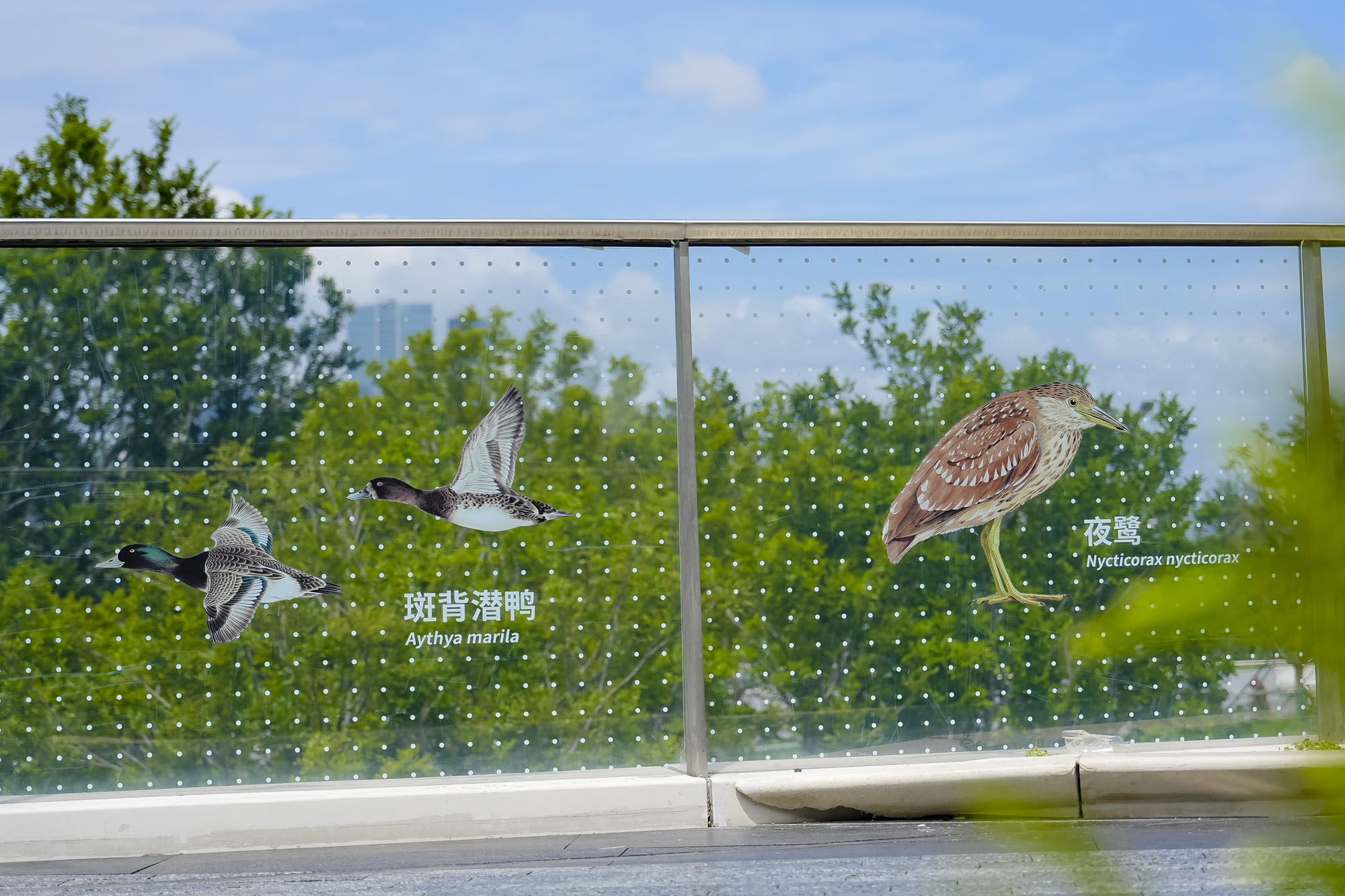
キャンパスは、プロジェクトがその保全に努めている、活き活きとした沿岸生態系の中に位置している。政府主導の沿岸再生事業と連携し、敷地内の既存のマングローブ、潮間帯の生息地、鳥類の渡りルートは、キャンパスの日常風景の中でそのまま保全されている。
マングローブは、この埋め立てられた海岸線の真の先住者であり、天然の沿岸防波堤であると同時に、シギ・チドリ類や海洋生物の生息地でもある。本プロジェクトでは、これらを移設や再設計の対象となる「景観素材」として扱うのではなく、そのままの場所に留めることを選択した。建物は地上部分を街に向けて開放し、海岸線はすでにそこに生息する生命たちに委ねているのである。
©︎ Zhu Yumeng
©︎ Zhu Yumeng
©︎ Tencent
開放性を支える構造
構造システムとファサードシステムも、これらと同様の理念に基づいている。大スパン構造により、「雲のような建物」の内部空間は遮られることなく広々と保たれ、鋼製トラスのスカイブリッジが、公共の地上空間の上空で各ボリュームを結びつけている。大規模な曲面ファサードとフレームレスガラスは、海への視界を遮る要素を最小限に抑える一方で、建物の曲線に沿って統合された水平日除けが過剰な日射を遮っている。
技術システムは、単独の表現として扱われてはいない。それらは、「仕事、移動、景観、そして気候」を直接的な関係に保つという、単一の目標にのみ奉仕している。
©︎ Zhang Chao
©︎ Tencent
企業キャンパスに対する新たな考え
〈Tengyun Center(Tencent Cloudrise)〉は、オフィス空間、公共の景観、そして沿岸の生態系を1つの空間的枠組みの中に統合している。MADはこの本社を「市民インフラ」として位置づけている。つまり、敷地を都市に開放し、自然を日常の利用に組み込み、深圳の海岸線沿いの公共生活を支える職場である。
結局のところ、これはある種の賭けである。「企業本社が沿岸の好立地を活用して行える最も価値あることは、その大部分を無償で提供することだ」という壮大な賭けなのである。
〈Tengyun Center(Tencent Cloudrise)〉は、前海(Qianhai)と大鏟湾にまたがるテンセントの広範な本社キャンパスの一部である。多段階開発が行われる広域地区内において、その総開発規模は約412,000m²に及ぶ。本プロジェクトは現在すでに竣工して一般公開されており、都市と海を結ぶ新たな公共的な玄関口となっている。
©︎ aogvision
©︎ Zhu Yumeng
©︎ aogvision
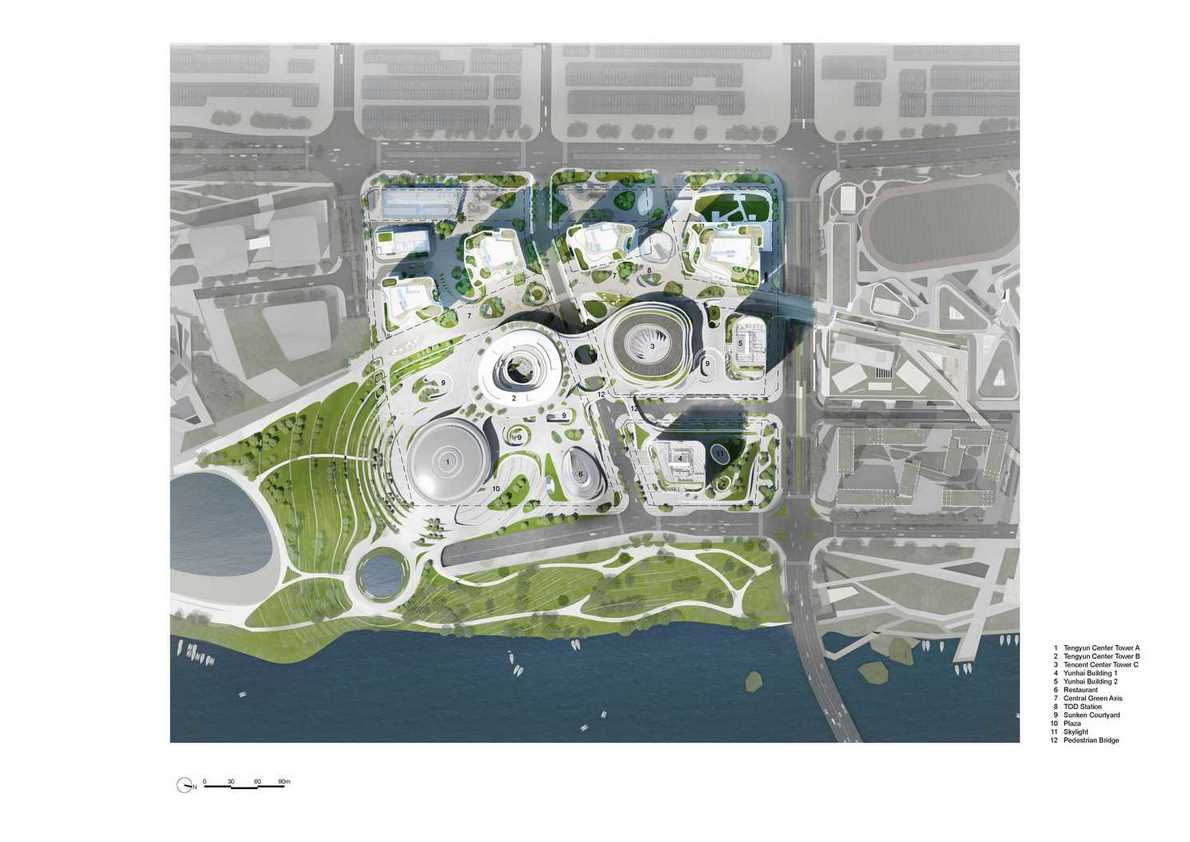
Masterplan
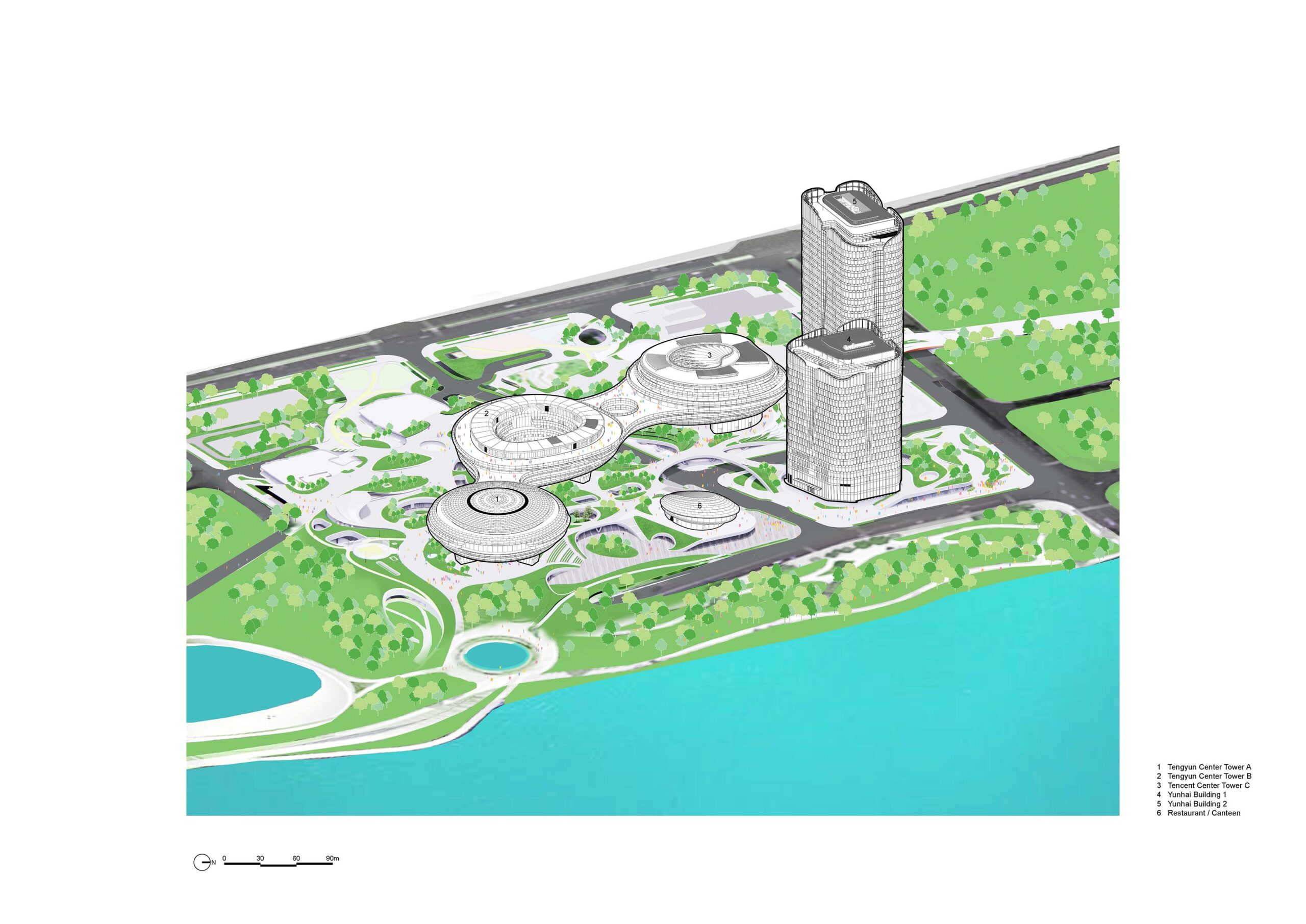
Program Diagram
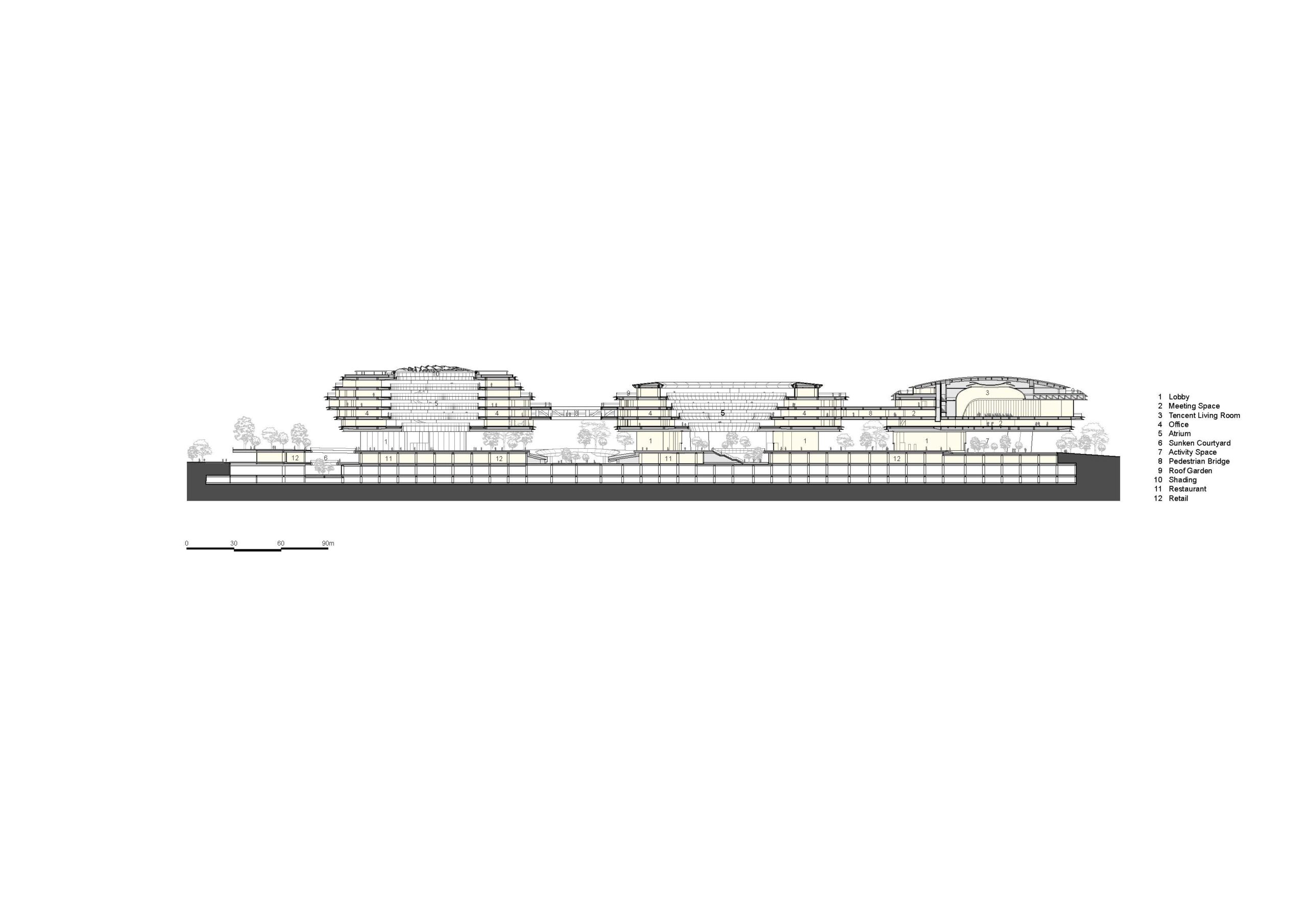
Section
以下、MADのリリース(英文)です。
Ma Yansong × Tencent:
A Corporate Campus Opens to the All
MAD Completes Tengyun Center, the lifted core building complex at Tencent’s Headquarters Campus
Shenzhen, China — 2026
The world’s most celebrated technology headquarters tend to share one instinct: to turn inward. They perfect a self-contained world for their employees, while the public stays at the gate.
Tencent’s new headquarters takes the opposite approach. Designed by MAD, led by Ma Yansong, Dang Qun, and Yosuke Hayano, Tengyun Center lifts its entire main mass roughly 8.6 meters into the air and gives the ground beneath it back to the city. There are no walls. The land under the building is open to anyone: a coastal public space that pedestrians, families, and passers-by can move through without ever entering the company.
Completed in Shenzhen’s Da Chan Bay and now open as part of Tencent’s broader campus, the project reframes one of the most guarded building types in the world, the corporate headquarters, as a piece of public infrastructure.
“Floating is not a visual effect, it’s a spatial idea. By lifting the headquarters, we give the ground back to the city. It’s not about making a closed-off corporate icon, but about letting the building become part of everyday urban life. In this sense, ‘floating’ is simply a way to make public space more open and accessible.”
— Ma Yansong, Founder and Principal Partner, MAD
Lifting the campus, opening the ground
Tengyun Center begins with a question that is both architectural and urban: how can a headquarters for thousands of employees occupy a valuable coastal site while remaining part of public life?
MAD’s answer is to raise the building and return the land to the city. Three interconnected “cloud” volumes are lifted approximately 8.6 meters above ground on ten structural cores, releasing, in effect, two full floors of space back to the city. Beneath them, the site opens into a continuous public landscape for walking, gathering, shade, and views of the sea.
The ground, normally the most privatized surface of any corporate campus, becomes the project’s primary civic gift.
Three cloud buildings, one continuous urban field
The headquarters is organized as three interconnected cloud-like volumes along a north–south axis, linked by elevated steel-truss bridges that double as places to pause, meet, and look toward the bay.
The route through the campus shifts gradually in character, from city to garden, from shaded ground to elevated bridge, from workplace to coastline.
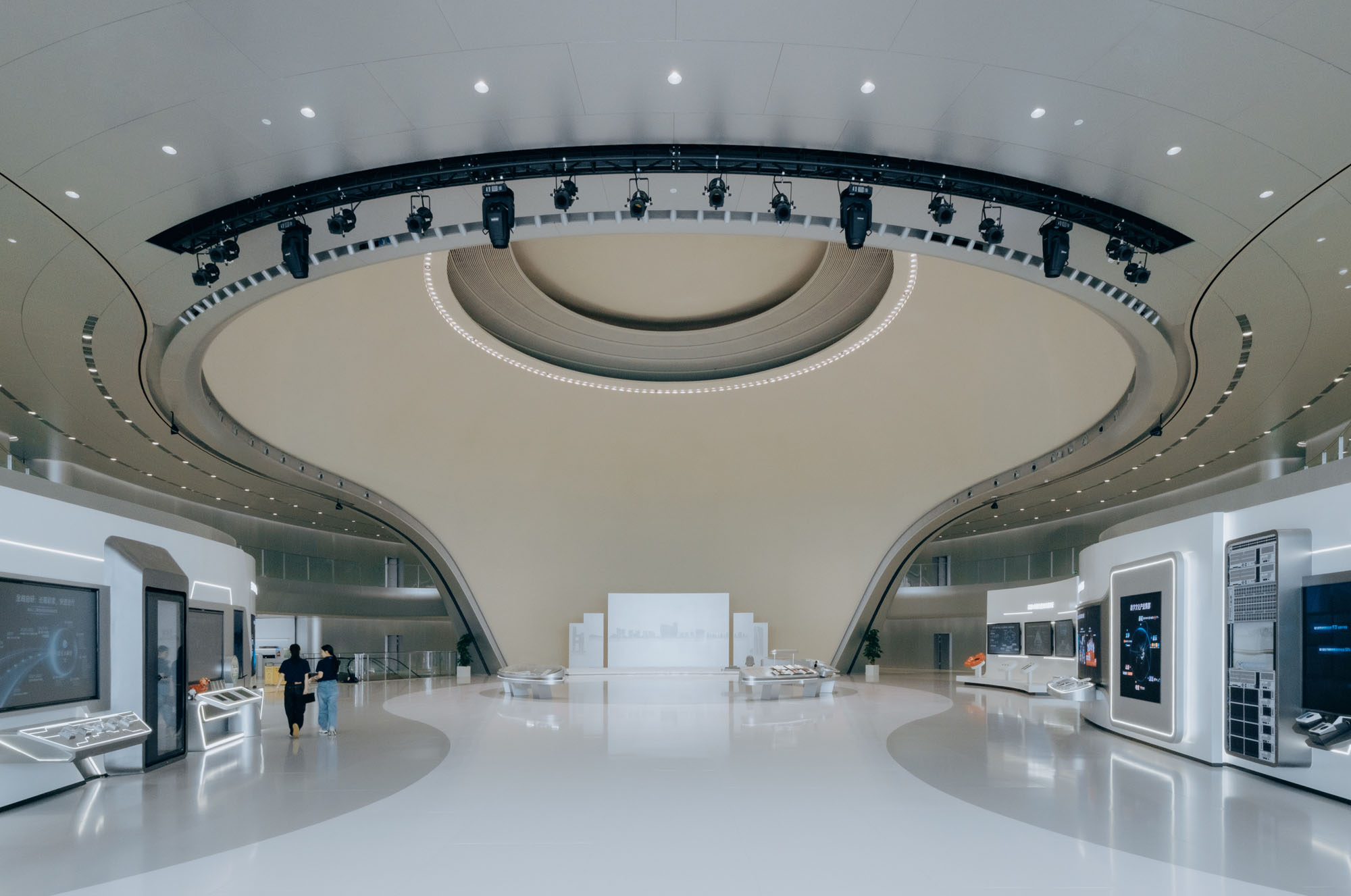
The three volumes support different forms of collective use. The southern building holds exhibitions and multi-functional events, with a second-floor public room opening toward the bay. The central and northern buildings contain offices arranged around open atriums, including a semi-open, shell-shaped ETFE skylight that draws daylight into the northern building while filtering the strong coastal sun.
Work facing the sea — for everyone, not just executives
In most office towers, the sea view is a perk reserved for the corner office. Tengyun Center inverts that hierarchy.
Approximately 80% of workstations face the sea. Circulation zones and shared amenities are also positioned to keep continuous visual access to the coastline, so the view belongs to the building as a whole rather than to its most senior occupants. Since trial operation began, around 14,000 Tencent employees have moved onto the site.
The sea becomes a constant presence across the ordinary routines of work.
A public landscape instead of a corporate edge
At ground level, the project replaces conventional corporate frontage with an open landscape of lawns, planted slopes, shaded gardens, and pedestrian paths, creating a coastal park woven directly into the campus.
The perimeter is intentionally dissolved, letting public space, workplace, and ecological zones interlock. The “open campus” here is not the Silicon Valley kind, which opens only to badge-holders. It is open to the city.
Built within an existing ecology
The campus sits within a living coastal ecology that the project works to keep intact. In coordination with a government-led coastal restoration effort, the site’s existing mangroves, tidal habitats, and bird migration routes are preserved within the daily life of the campus.
The mangroves are the true original inhabitants of this reclaimed shoreline, a natural coastal barrier and a habitat for shorebirds and marine life. Rather than treating them as landscape material to be relocated or redesigned, the project keeps them where they are. The building opens its ground to the city above, and leaves the shoreline to the lives already there.
Structure in service of openness
The structural and façade systems carry the same idea. Long-span structures keep the cloud buildings’ interiors unobstructed; steel-truss sky bridges connect the volumes above the public ground. Large-scale curved façades and frameless glazing reduce visual interruption toward the sea, while integrated horizontal shading follows the building’s curvature to cut solar exposure.
The technical systems are not treated as separate expressions. They serve a single ambition: to keep work, movement, landscape, and climate in direct relationship.
A different idea of the corporate campus
Tengyun Center brings office space, public landscape, and coastal ecology into one spatial framework. MAD frames the headquarters as civic infrastructure: a workplace that opens its ground to the city, embeds nature into daily use, and supports public life along Shenzhen’s coastline.
It is, in the end, a wager: that the most valuable thing a corporate headquarters can do with prime coastal land is to give most of it away.
Completion
Tengyun Center is part of Tencent’s broader headquarters campus across Qianhai and Da Chan Bay, with a total development scale of approximately 412,000 square meters (Lot 04 East) within a larger multi-phase district.
The project is now complete and open, forming a new public-facing threshold between city and sea.Tengyun Center
Shenzhen, China
2020 – 2026Typology: Office Campus
Site Area: Approximately 72,000 square meters
Building Area: Approximately 412,000 square metersPrincipal Partners in Charge: Ma Yansong, Dang Qun, Yosuke Hayano
Associate Partner in Charge: Kin Li, Xu Chen
Design Team: Liu Hailun, Fu Xiaoyi, Jose Maria Urbiola, Antoine Muller, Liu Zifan, Rozita Kashirtseva, Alan Rodríguez Carrillo, Yoshio Fukumori, Yin Jianfeng, Chen Hongbin, Yang Wenzhi, Zeng Hantao, Song Minzhe, Sun Yingna, Li Jiaqi, Tan Miao, Yu Lin, Li Gang, Sun Feifei, Zhao Guijia, Wu Qiaoling, Hou Jingxue, Wang Ruipeng, Feng Xuhui, Li Lingfeng, Zhang Kai, Zhou Qinyuan, Cheng Xiangju, Du Jie, Na Kyung Eun, Gan Mengjia, Xiao Yuhan, Cao Xi, Zhuang Fan, Chen Hao, Chen Rui, Pan Anyi, Claudia Hertrich, Reinier Simons, He Shunpeng, Reem Mosleh, Peng Kaiyu, Huang Yufu, Haruka Tomoeda, Pittayapa Suriyapee, Li Cunhao, Lei Kaiyun, Ma Yiran, Niu Shaobo, Ma Yin, Ma Yue, Zhang Tong, Zhao Lilu, Jiang Yunyao, Xue Yawen, Wang Zhuyun, Qiang Siyang, Zhu Yunfan, Natawat (Jack), Huang Juntao, Gao Chang, Song Chi, Wang Shuobin, Zhu Yuhao, Zhou Haimeng, Li Hui Client: Tencent Technology (Shenzhen) Co., Ltd.
Executive Architect: Shenzhen General Institute of Architectural Design And Research Co., Ltd.
Contractor: China Construction 4th Engineering Bureau 6th Corp., Limited
Project Management: Arcadis Shanghai Limited
Structural Consultant: Meinhardt (Shenzhen) Ltd.
Façade Consultant: SuP Ingenieure GmbH
Interior Design: MAD, Woods Bagot Architectural Design Consultants (Beijing) Co Ltd.
Lighting Consultant: Lighting Planners Associates Inc. & Lighting Planners Associates (S) Pte. Ltd., China Academy of Urban Planning and Design (CAUPD)
Landscape Consultant: SWA Group, Shenzhen Hope Design Co., Ltd.
Signage Consultant: Brand U Creative Studio Shanghai Co.
Transportation Consultant: T. Y. Lin International Engineering Consulting (China) Co. Ltd.
Acoustic Consultant: GRANDY Engineering Consultants (Shanghai) Ltd.
Commercial Consultant: Shenzhen Champion Retail Operation Management Co., Ltd.
MEP Consultant: WSP Engineering Technology (Beijing) Co., Ltd.
Photography: AOGVision, Zhang Chao, Zhu Yumeng, Sun HaiyongAbout Ma Yansong
Ma Yansong founded MAD in 2004. In 2025 he was named one of TIME magazine’s 100 Most Influential People and served as curator of the China Pavilion at the 19th Venice International Architecture Biennale. In 2026 he was elected an Honorary Fellow of the American Institute of Architects (Hon. FAIA).
His built and ongoing work includes the Harbin Opera House, the Lucas Museum of Narrative Art in Los Angeles, Cloudscape of Haikou, the Quzhou Stadium and Sports Park, the Fenix in Rotterdam, and the Shenzhen Bay Culture Park.
About MAD
Founded in 2004 by Ma Yansong and led by Ma Yansong, Dang Qun and Yosuke Hayano, MAD is a global architecture practice with offices in Beijing, Los Angeles, and Rome. The studio is known for projects that integrate landscape, public space, and cultural narrative at all scales.
MAD 公式サイト
https://www.i-mad.com/