

住宅危機とプラスチック汚染を3Dプリントで解決する、MIT発のスピンアウト企業「アトラス・ビルディング・コンポジット」
アトラス・ビルディング・コンポジット(Atlas Building CompositesAtlas Building Composites)社は、廃プラスチックを活用した3Dプリントにより「住宅不足」と「過剰な廃プラスチック」という2つの社会課題の解決を目指す、マサチューセッツ工科大学(MIT)のスピンアウト企業です。
MITによる研究の商用化を進めており、すでに納屋や物置、デッキ、桟橋といった構造物の製造を実現しています。
注目ポイント
- 2つの社会課題に1つのソリューションで挑む企業
- 研究の社会実装により、研究室と現実世界をつなぐ
- 水を使わないことによる「リサイクルの民主化」
- 世界各地での地産地消を目指す「ホームファクトリー」構想
(以下、アトラス・ビルディング・コンポジットから提供されたプレスキットのテキストの抄訳)
プラスチック廃棄物を建築資材に変えるMITのスピンアウト企業
アトラス・ビルディング・コンポジット(Atlas Building Composites)社は、プラスチック廃棄物を建物やその他のインフラ用の部品に変えるという、MITによる研究の商用化を進めている。
世界では、より多くの住宅が求められている。また、世界にはプラスチックが過剰に存在している。おそらく、これら2つの問題に共通しているのは、どちらも解決が難しいという点だけだろう。
MITのスピンアウト企業であるアトラス・ビルディング・コンポジット社はこの2つの問題の両方に対し、1つのソリューションで取り組むことを使命としている。同社は、使い捨てプラスチックを耐久性のある建築資材に変えることができる、AIを活用したロボット製造プラットフォームを開発した。
MIT発の技術で2つの地球規模の課題に挑む
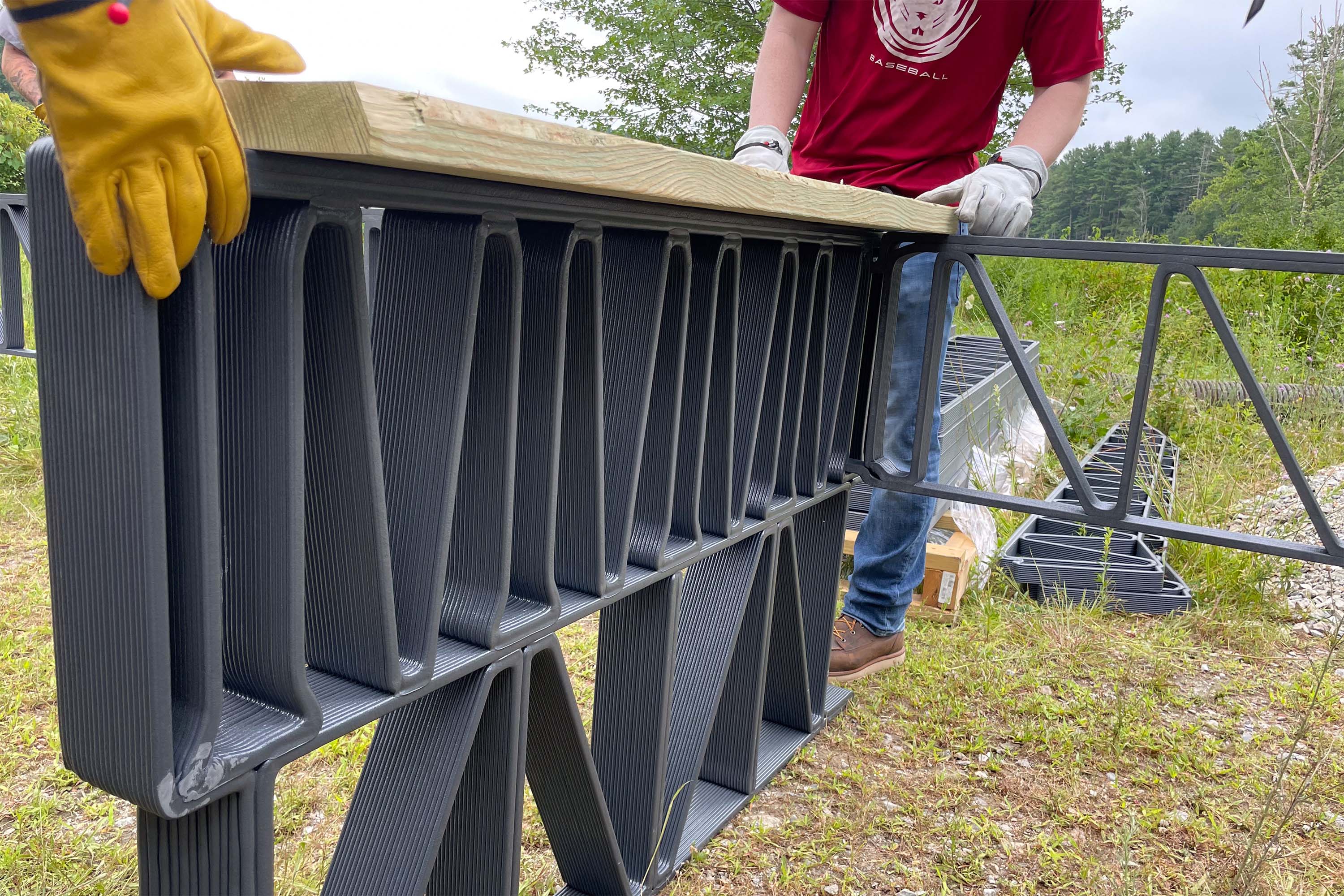
同社は、MIT機械工学科の研究プロジェクト「MIT HAUS」(「Home Architecture for Universal Sustainability」の略)から誕生した。アトラスは、水を使わないプラスチックリサイクル技術と大規模な複合材料積層造形技術を用いて、住宅の基礎、デッキ、壁・床・屋根用のトラスなどの部品を製造している。
「私たちの使命は、廃プラスチック汚染を耐久性のある複合材料に変換し、10億戸の住宅を建設することである。これらの事柄を互いに切り離して考えることはできない。私たちは単に住宅を建てるためだけにここにいるわけでも、単にプラスチックをリサイクルするためだけにここにいるわけでもない」
「従来の住宅建設には、森林伐採、鉱物採掘、精製、その他多くの環境に負荷をかける活動が伴う。私たちはそうしたすべてを回避し、海や埋立地へと流れ込む運命にあるすべてのプラスチック問題に取り組みたいと考えている。私たちはペットボトルを建物に変えているのである」
アトラス・ビルディング・コンポジット会長兼共同創業者、MIT研究科学者
A.J. ペレス(A.J. Perez)
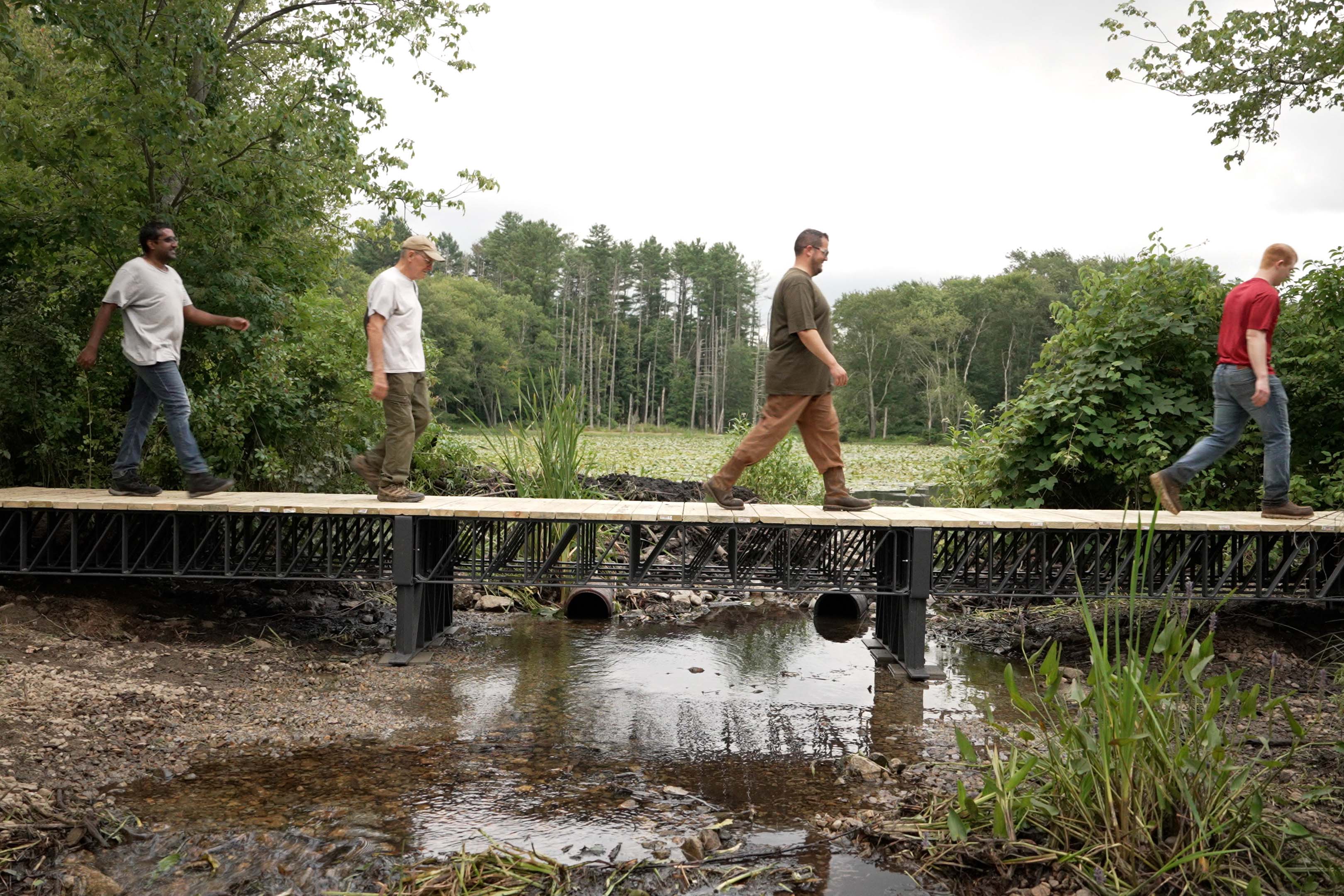
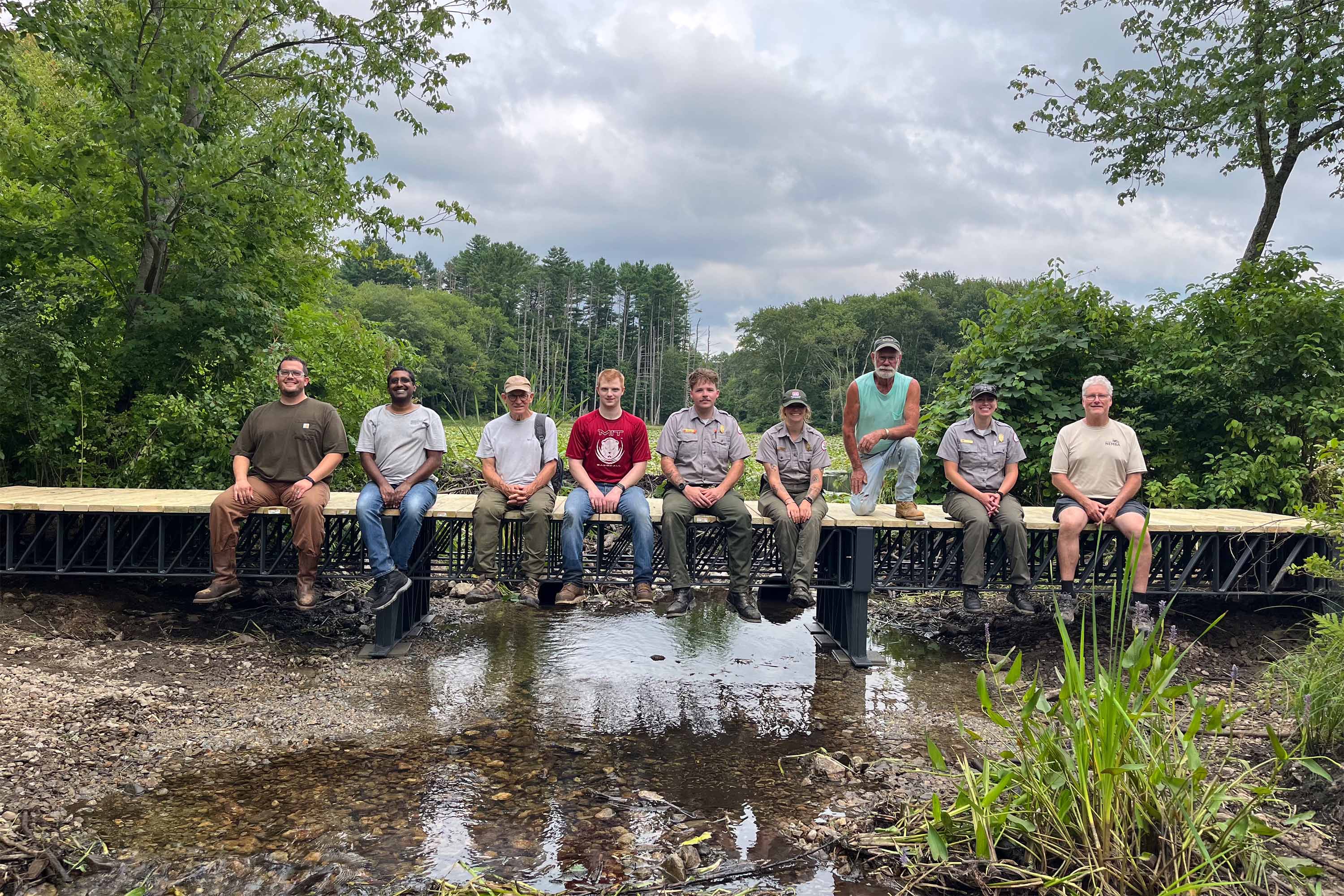
アトラスの部品はすでに納屋、物置、デッキ、桟橋の構造材として活用されている。ごく最近、同社はマサチューセッツ州の湿地帯に40フィートの橋を建設するため、米国陸軍工兵隊に米国製の再生複合材トラスを供給した。
©︎ Atlas
水不要のリサイクルにより実現する「リサイクルの民主化」
アトラスの共同創業者であるペレス氏とマット・プーリオット(Matt Pouliot)氏は、世界中に数千台のAIロボット生産システムを展開することを構想している。その規模を実現する鍵となるのは、水を一切使用せずに低品質のプラスチックを建築部材にリサイクルする同社の技術力である。
「これがリサイクルの民主化の鍵である。これにより、水へのアクセス状況にかかわらず、世界中のあらゆる国がプラスチック問題に対処できるようになる。私たちは、実験室だけでなく、現実の世界でこれらの課題に取り組むよう努めている。政府関係者に新しいリサイクル施設の建設について相談すると、地元の水道局の関与が必要になったり、許認可の手続きが必要になったりする。しかし、水を使わないリサイクルプロセスであれば、そうした手間や作業の多くが不要になるのである」
A.J. ペレス
社会にインパクトを与える研究
MITで博士号を取得して以来、ペレス氏は住宅向けの先進的な製造技術や、プラスチックリサイクルの新技術の開発に取り組んできた。2019年には、MITのラルフ・E・アンド・エロイーズ・F・クロス製造学教授であるデビッド・ハート(David Hardt)氏と共に「MIT HAUS」を立ち上げた。
「当初は、30年間で10億戸の住宅を建設可能にするというシンプルな使命から始まった。しかしその後、それらの住宅に必要な資材が、世界のサプライチェーンにどれほどの負担をかけるかということに気づいたのである。従来の方法でこれらの住宅を建設する場合、コンクリートなどの資材の世界的な生産能力を2倍に増やす必要があり、世界的な森林伐採が劇的に加速することは言うまでもない。そこでひらめいたのである。人類が抱えるもう1つの問題がある。それは、これまでに生産された8ギガトンのプラスチックが、海や川、都市を汚染しているという問題だ。私たちは、この2つの非常に巨大で厄介な問題を結びつけることに決めたのである」
A.J. ペレス
©︎ Atlas
独自プラットフォーム「アトラス・ファクトリー・スタック」
ペレス氏は、元メイン州上院議員のプーリオット氏と出会い、2人はペレス氏がMITで開発していた技術を商用化するためにアトラスを設立した。創業者はMITの技術ライセンス事務所と協力し、その後、他大学の研究者たちとも連携して、創業者が「アトラス・ファクトリー・スタック」と呼ばれる、同社のロボット製造プラットフォームのための技術を独自に開発してきた。
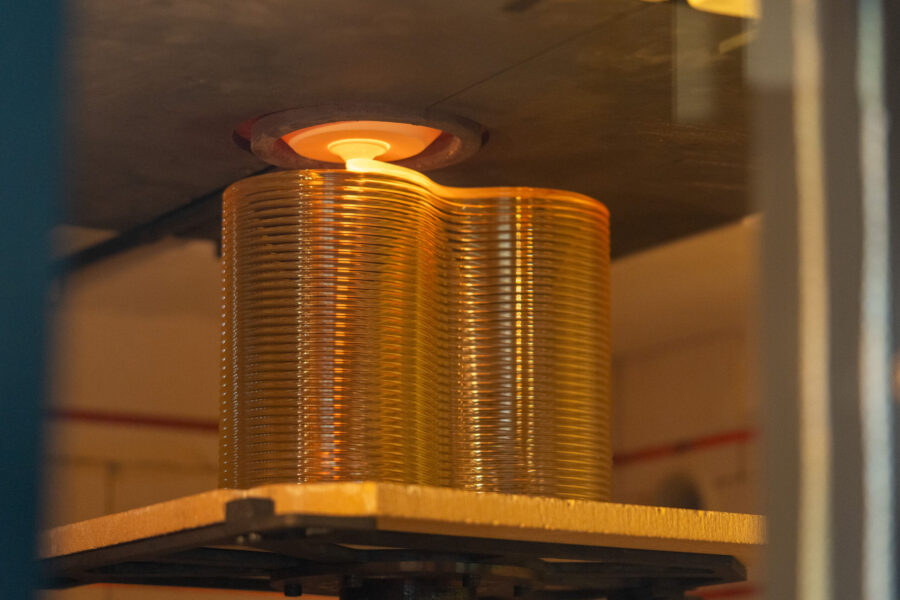
まず、ペットボトルなどの使い捨てプラスチックを細断してアトラス・システムに投入すると、そこで溶かされ、米国製のガラス繊維と融合されることで、木材よりも強度の高い素材となる。そこから、大型の3Dプリンターが、床、壁、屋根、橋用のトラスを含む部品を製造する。
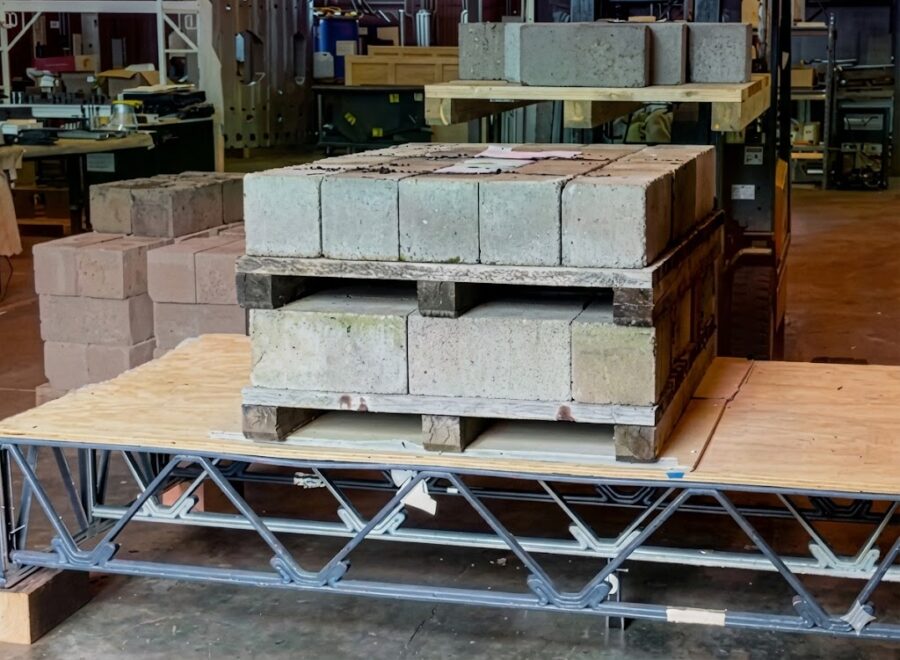
MITでの研究を通じて、ペレス氏は、大型の複合材トラスを13分以内にプリントでき、4,000ポンド以上の荷重に耐え、主要な建築基準を上回ることができることを実証した。
「MITでは、1時間あたり60~80ポンドの部品を生産できることを実証した。また、アトラス・ファクトリーで採用しているシステムは、1時間あたり150~200ポンドの範囲で稼働している。当社のロボット製造プラットフォームには、射出成形よりも低コストで各部品を生産できる可能性があり、柔軟性と利便性もはるかに優れている。例えば、機械の隣にある完成品パレットに直接配置できるよう、部品の製造順序を逆にして生産することも可能である」
A.J. ペレス
©︎ Atlas
地産地消を叶える「ホームファクトリー」構想
創業者はアトラスを、住宅を建設する必要がある場所の近くに「ホームファクトリー」を構築することを可能にする技術プロバイダーとして位置づけている。現在、アトラスの各製造セルは、1日あたり約1軒分の小型住宅の構造用フレーム部品を生産できる能力を備えている。
「従来のやり方といえば、中国のどこかにある巨大な工場で1種類の部品を大量生産し、それを遠くまで輸送するというものであった。それは地球にとって良いことではないと考えている。私たちが射出成形を採用しないもう1つの理由は経済的なものだ。巨大な工場は雇用をそれほど生み出さず、カーボンフットプリントもはるかに大きくなる。私たちは、地域社会に利益をもたらすよう、生産を地域に根付かせたいのである。プラスチックはすでに至る所にある。アトラスの生産が地域に密着すればするほど、コストとカーボンフットプリントは低減される」
A.J. ペレス
グローバル展開と究極の持続可能性
プラスチックは木材よりもはるかに長持ちし、特に地面や水と接触する用途ではその差が顕著である。これが同社の環境面でのメリットをさらに高めている。
「建築業界に素材が導入され、その役割を果たせば、それは非常に長い間使用され、長期間にわたって再びリサイクルされる必要がなくなるだろう」とプーリオット氏は言う。「これは重要な点だ。なぜなら、何かを何度もリサイクルすると、その品質は低下するからである。これは、リサイクルされた石油化学製品にとって、最も持続可能な活用例の1つと言える」
アトラス・ビルディング・コンポジット共同創業者
マット・プーリオット
アトラスが米国陸軍工兵隊と共同で設置した橋は、1日足らずで完成した。創業者はまた、アトラス・ファクトリー・スタックを世界中に展開するため、国際的なフランチャイズパートナーと協議を進めている。
「私たちの使命を達成するためには、遠く離れた1社が業界を独占する形にはならないと、私は根本的に信じている。各国が『アトラス・ファクトリー・スタック』を活用し、地元でのリサイクル関連の雇用、工場での雇用、建設関連の雇用を創出し、地元の資材を用いて経済を活性化させていくことになるだろう」
A.J. ペレス
以下、アトラス・ビルディング・コンポジットのリリース(英文)です。
MIT spinout turns plastic waste into resilient building materials
Atlas Building Composites is commercializing MIT research to turn plastic waste into parts for buildings and other infrastructure.
The world needs more homes. The world also has too much plastic. Perhaps the only thing those two problems have in common is that they’re hard to solve.
Atlas Building Composites, a spinout of MIT, is on a mission to address both problems with a single solution. The company has developed an AI-powered robotic manufacturing platform capable of turning single-use plastics into durable building materials.
The company emerged from MIT HAUS, a research effort in the MIT Department of Mechanical Engineering that’s short for “Home Architecture for Universal Sustainability.” Atlas uses waterless plastic recycling and large-scale composite additive manufacturing technology to make parts like home foundations, decks, and trusses for walls, floors, and roofs.
“Our mission is to convert waste plastic pollution into durable composites to build 1 billion homes,” says Atlas chair and co-founder A.J. Perez ’13, MNG ’14, PhD ’23, who is also an MIT research scientist. “You can’t divorce these things from each other. We’re not here just to build homes, and we’re not here just to recycle plastic. The conventional way of building homes involves cutting down trees, mining, refining, and a bunch of other dirty activities. We want to avoid all that and address all the plastic bound for our oceans and landfills. We’re turning bottles into buildings.”
Atlas’ parts are already being used to support barns, sheds, decks, and docks. Most recently, the company supplied the U.S. Army Corps of Engineers with American-made recycled composite trusses to construct a 40-foot bridge in a Massachusetts wetland.
Perez and Atlas co-founder Matt Pouliot envision deploying thousands of their AI robotic production systems around the world. A key enabler for that scale is the company’s ability to recycle low-grade plastic into building components without water.
“This is key to democratizing recycling,” Perez says. “Now, every country around the world, regardless of their water access, will be able to do something about their plastic. We strive to study these issues in the real world, not just a lab. When you talk to government officials about creating a new recycling facility, they have to get the local water agency involved, there’s permitting, etc. A lot of that work disappears with the waterless recycling process.”
Research for impact
Since earning his PhD at MIT, Perez has been developing advanced fabrication techniques for homes and new techniques for plastic recycling. In 2019, he started MIT HAUS with David Hardt, MIT’s Ralph E. and Eloise F. Cross Professor in Manufacturing.
“It started with the simple mission of enabling the production of 1 billion homes over a 30-year period,” Perez says. “Then we realized how much the materials needed for those homes would strain global supply chains.”
Perez says building those homes using conventional methods would require a doubling of global production capacity for materials like concrete, not to mention a dramatic acceleration of global deforestation.
“That’s where the light bulb went off,” Perez says. “There’s this other problem humanity has, which is 8 gigatons of plastic that have been produced and are polluting our oceans, rivers, and cities. We decided to plug two really big, hairy problems together.”
Perez met Pouliot, a former Maine senator, and the pair started Atlas to commercialize the technology Perez had been developing at MIT. The founders worked with MIT’s Technology Licensing Office and have since worked with researchers at other universities to independently develop technology for the company’s robotic manufacturing platform, which the founders call the Atlas Factory Stack.
First, single-use plastic from water bottles and other objects is shredded and fed into the Atlas system, where it is melted and fused with American-made fiberglass to make it stronger than wood. From there, a large-scale 3D printer creates the parts, including trusses for floors, walls, roofs, and bridges.
Through research at MIT, Perez has shown large composite trusses can be printed in under 13 minutes and support over 4,000 pounds, exceeding key building standards.
“At MIT, we’ve demonstrated we can produce 60 to 80 pounds of parts per hour, and the systems we’re specifying in Atlas factories operate in the 150 to 200 pound per hour range,” Perez says. “There’s the potential for our robotic manufacturing platform to produce each part at a lower cost than injection molding, and it’s far more flexible and convenient. For example, we can manufacture the parts in the reverse order so that they’ll be placed on the finished goods pallet next to the machine.”
The founders envision Atlas as a technology provider enabling the creation of home factories close to wherever homes need to be built. Today, each Atlas factory cell is capable of producing the structural framing components for about one small home per day.
“The old way of doing things would be some huge factory in China would mass produce one type of part and ship it far away,” Perez says. “I don’t think that’s good for the planet. Another reason we don’t use injection molding is economic: Mega factories don’t produce as many jobs and have a much higher carbon footprint. We want this to be localized to benefit local communities. The plastic is already everywhere. The more local Atlas is, the lower the cost and footprint.”
Going global
Plastics last far longer than wood, especially for applications where they’re in contact with the ground or water. That adds to the company’s environmental benefits.
“If you get a material into the building world and it does its job, it’s going to be used for a very long time and not need to be recycled again for a very long time,” Pouliot says. “That’s important because when you recycle something over and over again, it degrades. This is one of the most sustainable use cases for recycled petrochemical products.”
Atlas’ bridge with the Army Corps of Engineers was installed in less than a day. The founders are also in talks with international franchise partners to deploy the Atlas Factory Stack across the globe.
“To accomplish our mission, I fundamentally believe it’s not going to be one far-away company dominating the industry,” Perez says. “It’s going to be every country leveraging Atlas Factory Stacks to create local recycling jobs, local factory jobs, local construction jobs, and to stimulate their economies with local materials.”
アトラス・ビルディング・コンポジット 公式サイト
https://atlsinc.com/

![[無償モニター]キノシタの家具ブランド「Coccole」から新作チェア・ソファが登場。選べる体験モニターの応募は12月31日まで](https://magazine-asset.tecture.jp/wpcms/wp-content/uploads/2026/10/13222506/f07965e0ad312e8170b6bee7af7adb5b-900x590.png)
![[建築NOTE]不利な敷地条件を建築体験へと転換。倉方俊輔が読み解く、谷口吉生が〈資生堂アートハウス〉に込めた設計思想](https://magazine-asset.tecture.jp/wpcms/wp-content/uploads/2026/06/13180420/arthouse_18-900x675.jpg)