前面道路の拡幅に伴う工場事務所の建て替えである。場所は、50年以上続く工場団地の一区画で、周囲は工場の建屋や資材に囲まれている。
まず、この景観に木造を持ち込みたいと思った。道路が拡幅されて見通しが良くなれば、無機質な街並みを変える契機になると考えた。また、今回解体する旧事務所は、職人の宿泊所に使われたことがある。今も残る「長屋」のような生活感、建物との距離の近さを現在工場で働く人々にも感じたことから、この感覚を継承する「道具立」を建築の構成や各所部品、材料選択に組み込むことで、”簡易なメンテナンスは自分たちでする”といった製作現場独自の持続可能性を担保できるのではないかとも考えた。
構成としてはまず、1階資材置場の搬出入に必要な高さ3m、間口13mを無柱で飛ばした鉄骨造の台座に木造空間を載せる原型を考えた。結果的には、13mスパンの梁を上階からブレースで吊る必要もあって、四周を鉄骨造、2〜3階の内部を木造とした。鉄骨と木の接合は、水平梁をパネリード鋼の長ビスで縫い合せて実現している。また、設備が集中する東面では構面をブレースごと700mm外にずらして外壁との間に足場スペースを設けた。
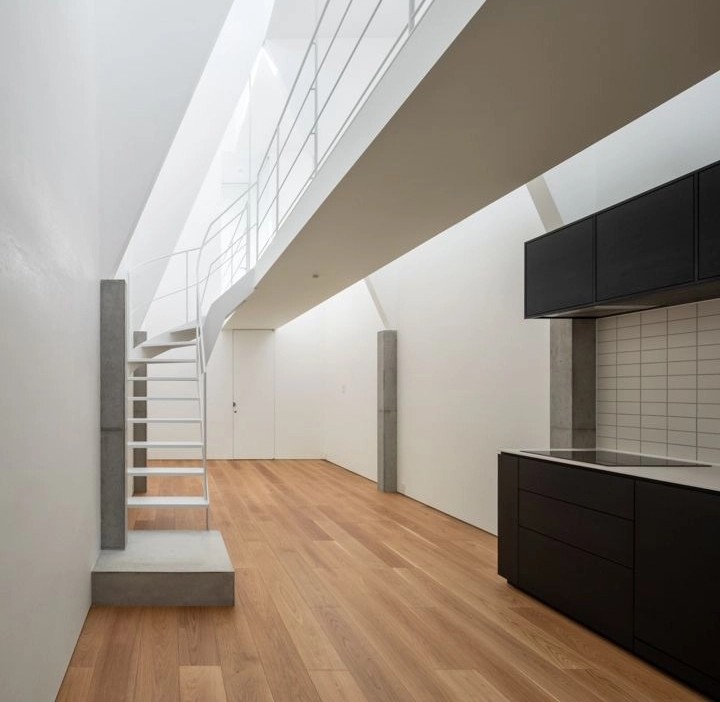
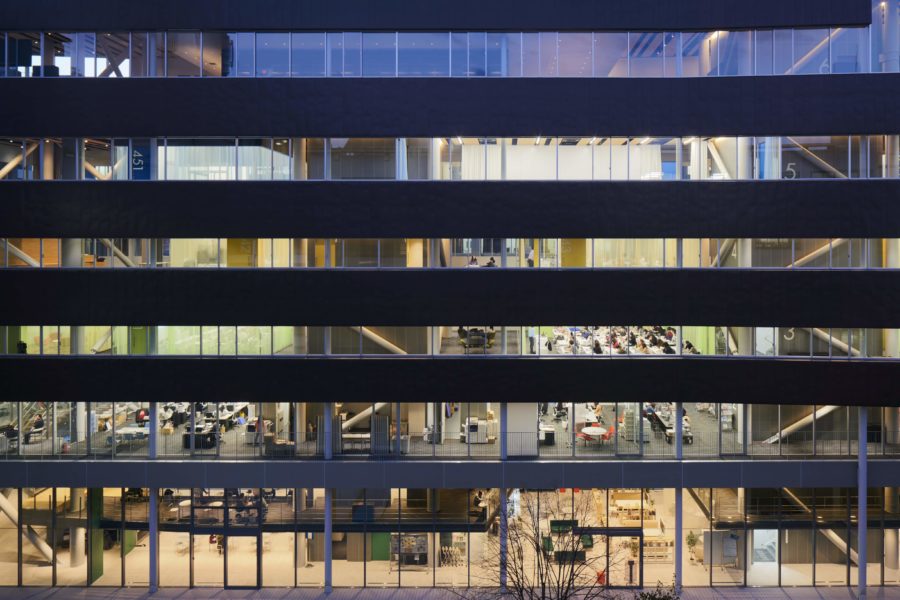
内部空間は、「オフィスと生活空間を明確に区分したい」との要望もあり、2階は水平方向に長いひと繋がりのオフィス空間としたのに対して、3階は休憩室に繋がる路地状の空間沿に生活空間が連なる「長屋」を意識した構成とした。加えて、前面道路に面した北側のファサードには、木質化した内部を見通す大開口を設けた。
各所部品は、建築金物を階段の支持材に転用したり、電設資材を組合せて照明器具とするなど、汎用品を用いることで、増設やメンテナンスをイメージしやすくした。また、フックでヘルメットや工具を吊ったり、ベランダを緑化するなど、使い方や場所に合せて手摺りや衝立の幕板に用いる鋼製面材の種類も変えた。材料選択でもガルバリウム鋼板、サイディングボードを始め、鉄骨の防錆塗料まで汎用性を優先した。
この工場を運営するのは巨大煙突のメンテナンスや解体を請負う会社で、工場では作業用のゴンドラを製作している。巨大煙突における高所作業は「チームワーク」が重要と聞いた。その根底となる組織風土が建築の持続を通して育つとすれば、「道具立」となることも工場事務所の1つのあり方ではないかと考えた。(野口 修)
Wooden tenement office rising in an inorganic cityscape
This is a reconstruction of a factory office due to the widening of the front road. The location is a section of a factory complex that has been in existence for over 50 years, surrounded by other factory buildings and materials.
First, we wanted to bring wood construction into this landscape. If the road were widened to improve visibility, it would provide an opportunity to change the inorganic streetscape. Additionally, the former office to be demolished this time was previously used as a lodging house for artisans. We felt that the people who work in the factory today have a “tenement house” lifestyle and a sense of closeness to the building that remains to this day. We thought that by incorporating “tools” which carries on this sense, into the architectural structure and selection of parts and materials, we could ensure the sustainability of the unique manufacturing site, such as “doing simple maintenance ourselves. We also considered the possibility of “doing simple maintenance ourselves” to ensure the sustainability of the production site.
First, we considered a prototype of a wooden space on a steel-framed base with a height of 3 m and a frontage of 13 m, which was necessary for loading and unloading the first-floor material storage area, without pillars. As a result, the 13m span beams had to be braced and suspended from the upper floors. Consequently, the four perimeters of the building were steel-framed, while the interior of the second and third floors was wood-framed. The steel and wood joints were achieved by stitching the horizontal beams together with long screws of paneled steel. On the east facade, where equipment is concentrated, the structural plane was shifted outward by 700mm with each brace to create a scaffolding space between it and the exterior wall.
The second floor is a long, horizontally connected office space, while the third floor is an alley-like space that leads to a break room, with the living space attached to it. Additionally, the north façade, facing the front road, features a large opening that allows the wooden interior to be visible.
For various parts, general-purpose products were used, such as architectural hardware converted into staircase supports and electrical materials assembled into lighting fixtures, to facilitate easier envisioning of additions and maintenance. The type of steel surface materials used for handrails and curtain panels of the balcony were also changed according to the use and location, such as using hooks to hang helmets and tools, and greening the balcony. In the choice of materials, too, priority was given to versatility, from galvalume steel sheets and siding boards to rust-preventive paints for steel frames.
The factory is operated by a company that undertakes maintenance and dismantling of giant chimneys, and the factory manufactures gondolas for the work. We were told that “teamwork” is essential for working at heights in giant chimneys. We thought that if the organizational culture that forms the basis of such teamwork is fostered through sustained construction, then one way for the factory office to become a “toolmaker” would be to become a “toolhouse” for the company. (Osamu Nogutchi)
【工場団地の長屋オフィス】
所在地:神奈川県相模原市
用途:工場・倉庫、事務所
クライアント:株式会社サンメイ
竣工:2025年
設計:野口修+DAT/株式会社 都市環境研究室
担当:野口 修
構造設計:坂田涼太郎(坂田涼太郎構造設計事務所)、西野祐介(西野建築構造)
施工:渡辺富工務店
撮影:井上 登
工事種別:新築
構造:混構造
規模:地上3階
敷地面積:226.01m²(工場区画の一部)
建築面積:84.08m²
延床面積:229.7m²
設計期間:2023.09-2024.04
施工期間:2024.05-2025.04
【Tenement Office in Factory Complex】
Location: Sagamihara-shi, Kanagawa, Japan
Principal use: Factory / Storage, Office
Client: SANMEI CORPORATION
Completion: 2025
Architects: Osamu Nogutchi + DAT/Corporation Urban Environment Laboratory
Design team: Osamu Nogutchi
Structural Design: Ryotaro Sakata / Ryotaro Sakata Structural Engineers, Yusuke Nishino / Nishino architectural structure
Construction: WATANABE TOMI CORPORATION
Photographs: Noboru Inoue
Construction type: New building
Main structure: Mixed
Building scale: 3 stories
Site area: 226.01m² (part of factory area)
Building area: 84.08m²
Total floor area: 229.7m²
Design term: 2023.09-2024.04
Construction term: 2024.05-2025.04