

既存を壊さず挿入する空間再生プロジェクト - 生活と制作のネットワークを生み出す〈磁器工房プラグイン・リバイバル〉
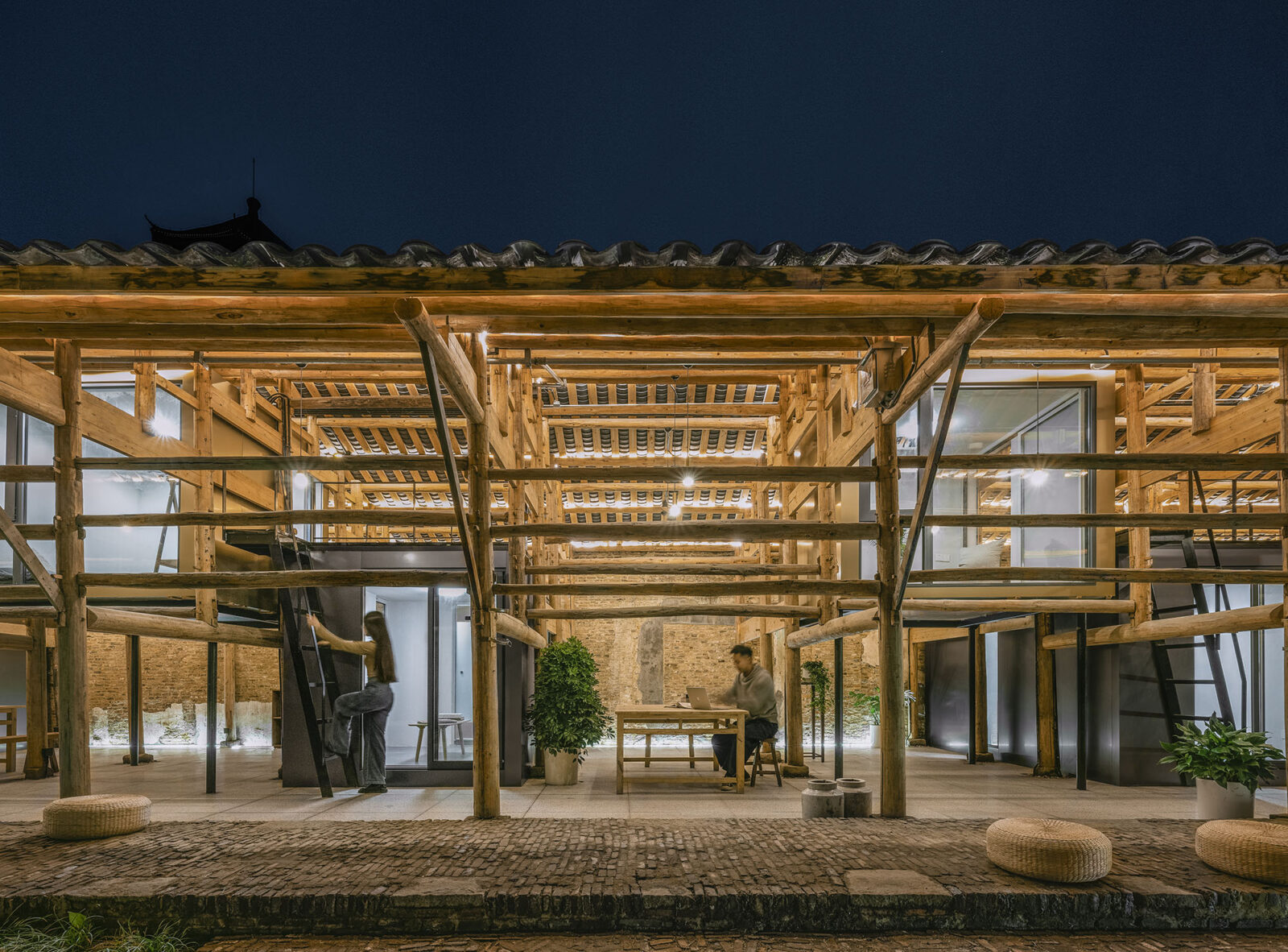
Courtyard C34 ©︎ PAO
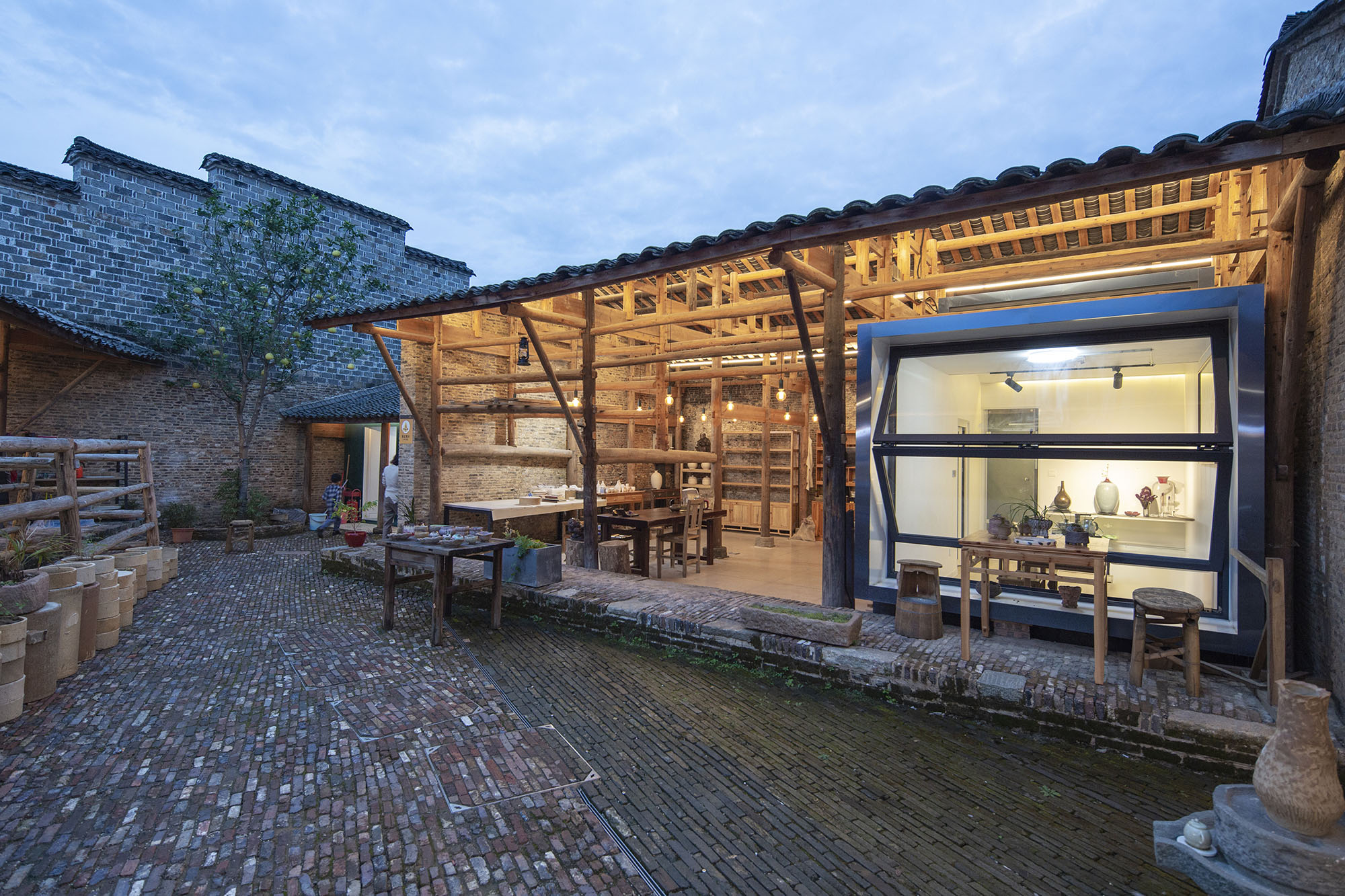
Courtyard C34 ©︎ PAO
磁器の産地として名高い中国の景徳鎮に位置する〈磁器工房プラグイン・リバイバル(Porcelain Studios Plugin Revival)〉は、廃れた磁器工房を再生した居住・作業空間です。
PAO(People’s Architecture Office)とLiu Kecheng Design Studioによる、歴史的建造物を保存しつつ新たな建築を挿入し再生する「プラグイン・アーキテクチャ」手法を採用したプロジェクトです。
注目ポイント
- 既存を維持しながら内部にプラグインユニットを挿入する建築アプローチ
- サイズ・素材・ディテールの多様化を可能にするモジュールシステム
- マイクロコミュニティを形成する、4つの敷地で一貫した建築言語
- 居住・制作・交流の複合によって、小規模で持続的な地域コミュニティを再生
(以下、PAOから提供されたプレスキットのテキストの抄訳)
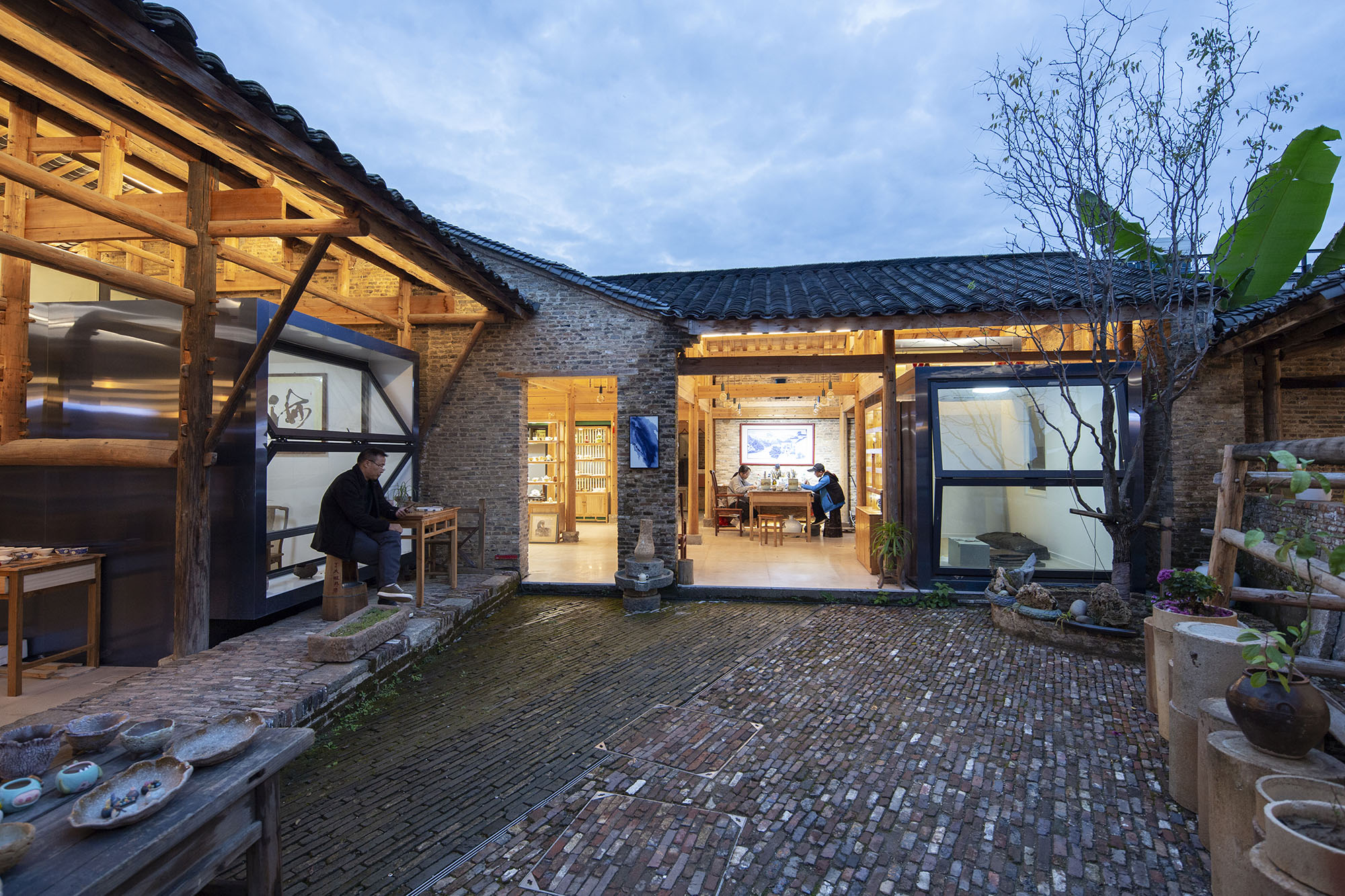
Courtyard C34 ©︎ PAO
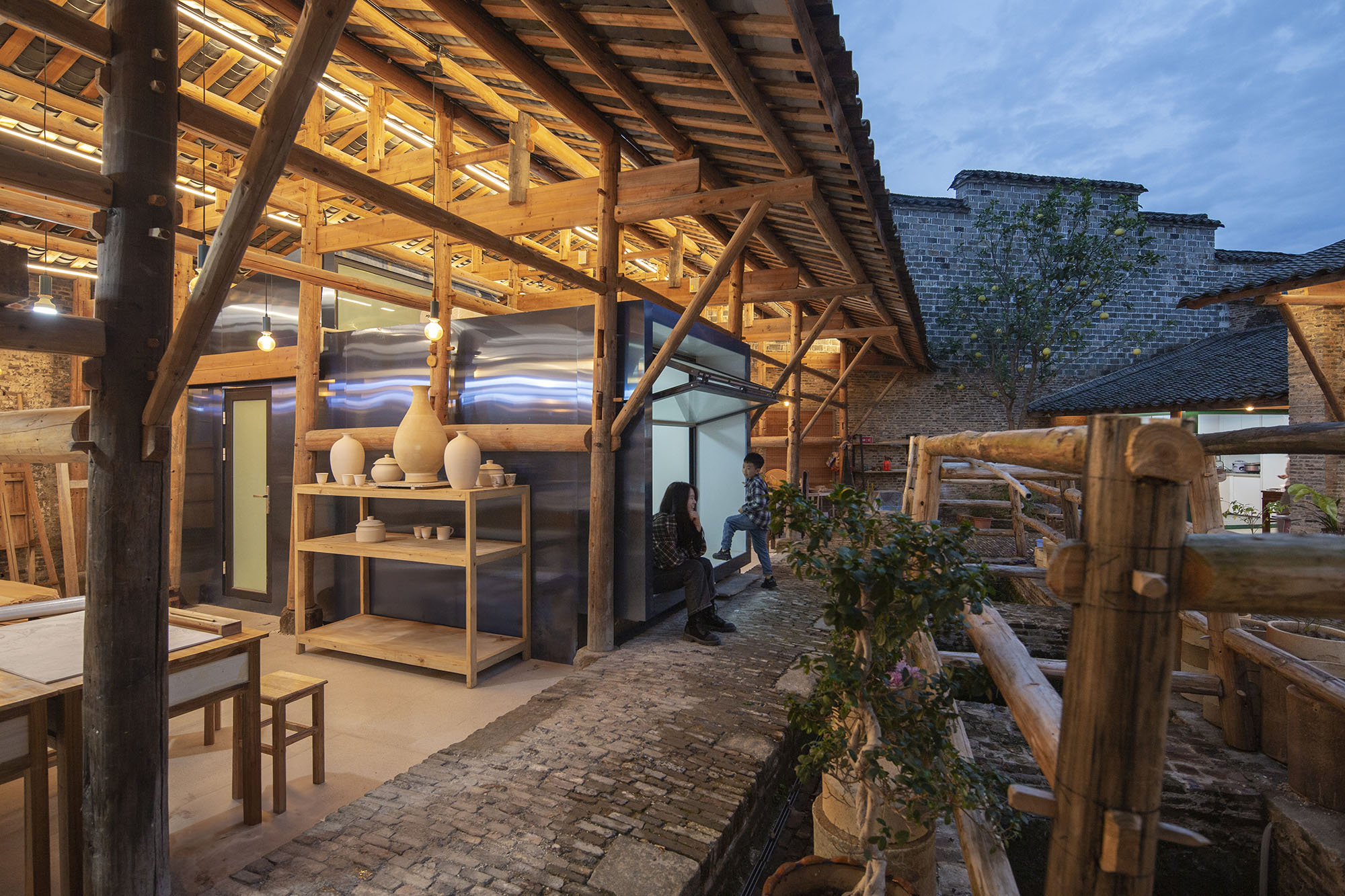
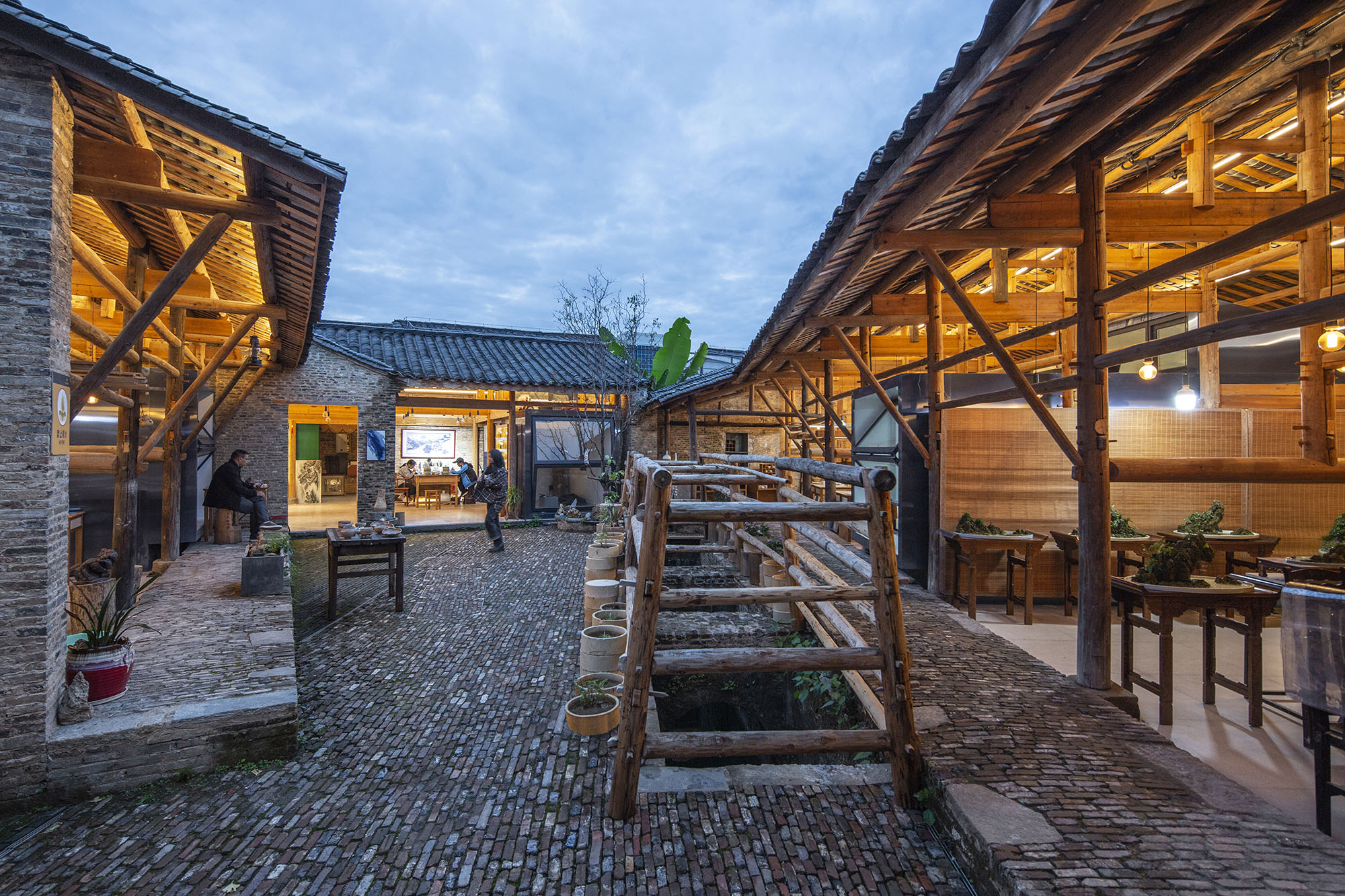
Courtyard C34 ©︎ PAO
歴史的建物への新たな挿入
〈磁器工房プラグイン・リバイバル〉は、PAOが景徳鎮・御窯歴史地区に設計した再生プロジェクトの最新作である。
既存の歴史的建造物にプレファブリケーション構造物を戦略的に挿入することで、廃れた磁器工房を現代のニーズに応える居住・作業空間へと再生している。また、「プラグイン・アーキテクチャ」の手法を用いながら、オリジナルの構造の特性を保全している。
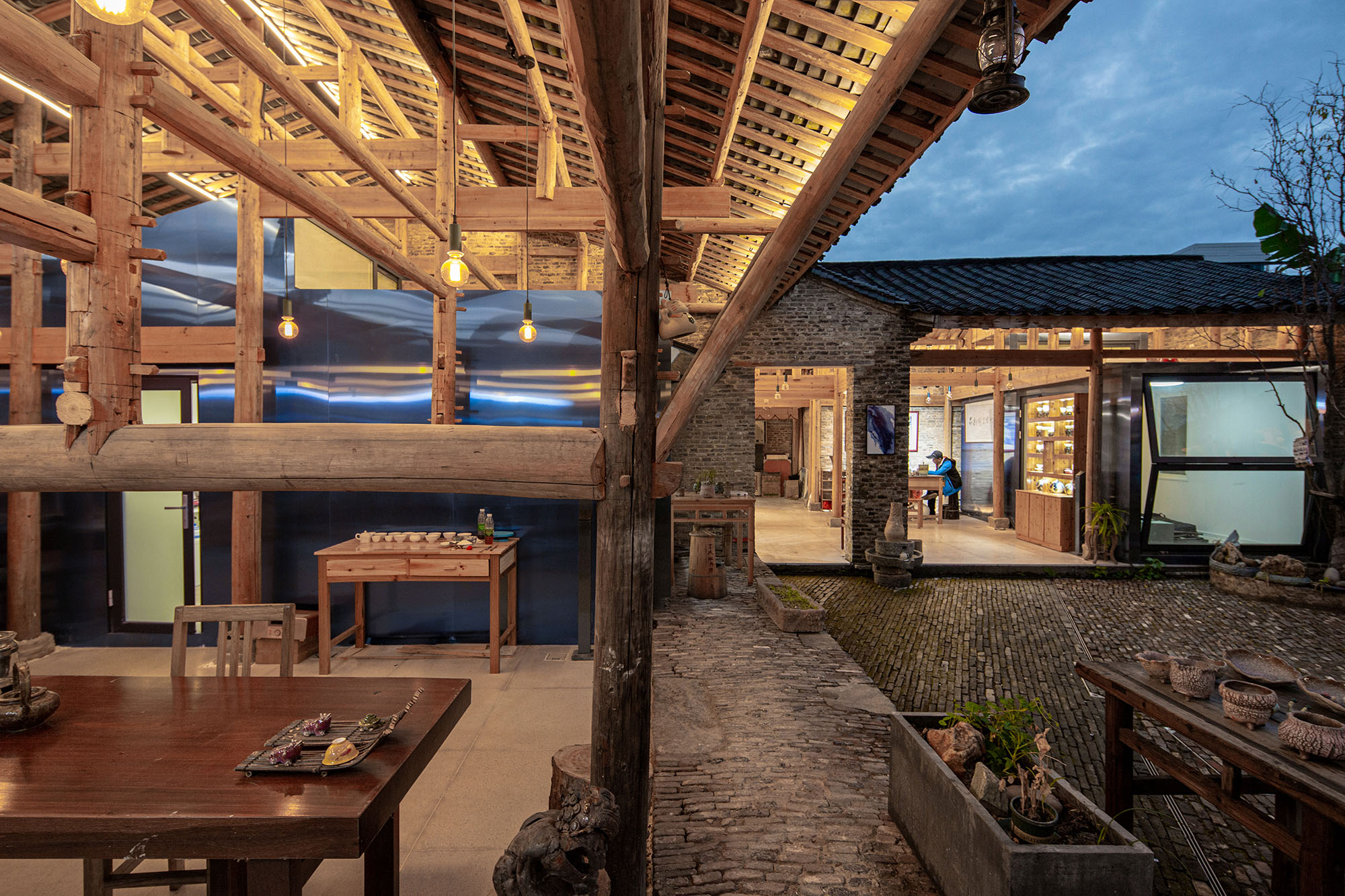
Courtyard C34 ©︎ PAO
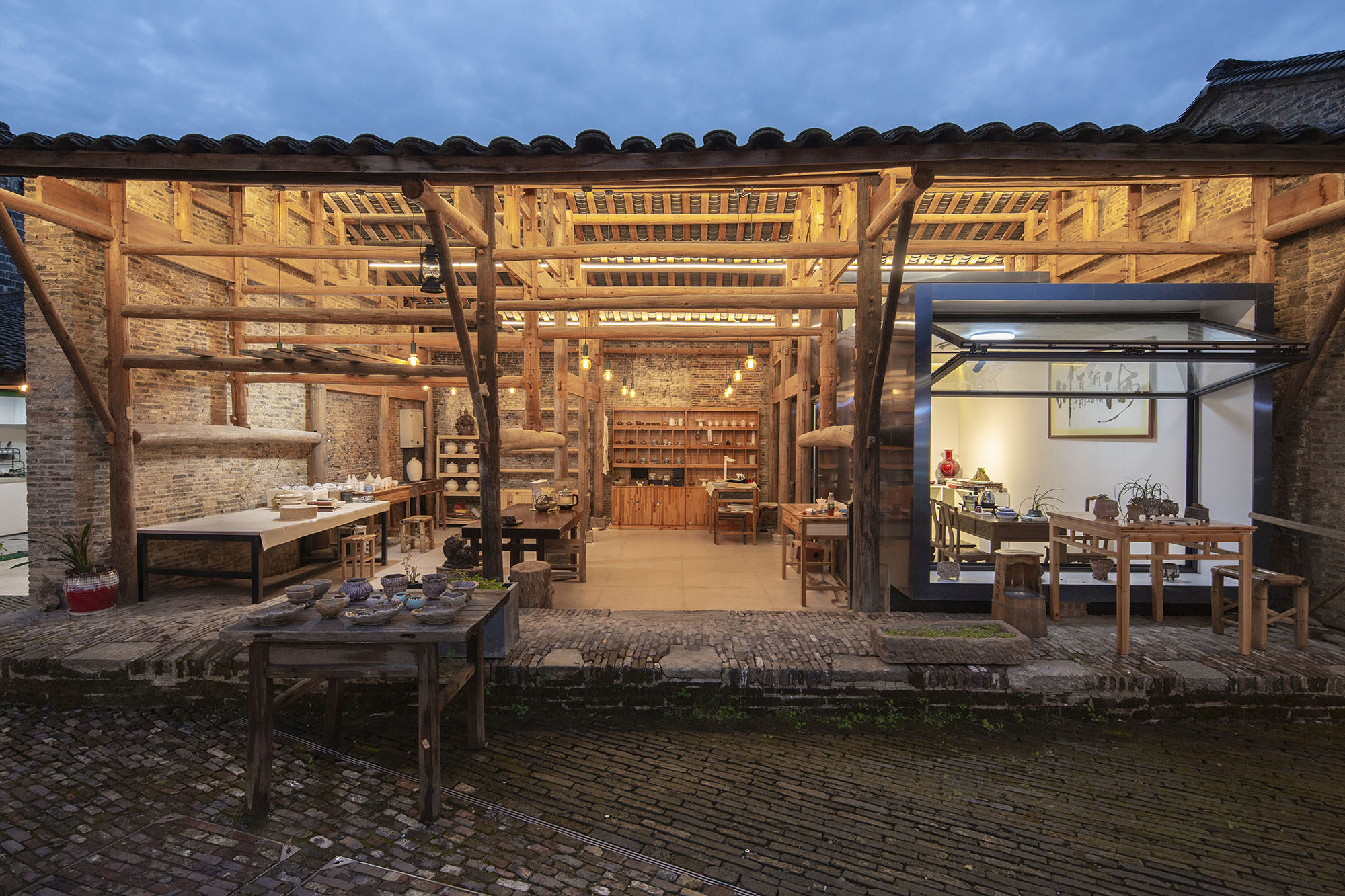
Courtyard C34 ©︎ PAO
プラグイン手法の拡張
本プロジェクトはLiu Kecheng Design Studioとの共同開発によるものである。長らく放棄された工房内部に居住・作業・調理・集会といった新たな機能を埋め込むことで、「プラグインアーキテクチャ」手法をさらに拡張している。
プレファブリケーション式のプラグインユニットは既存構造を改変せず、直接床面に設置される。軽量・断熱・自立型のこれらユニットは、建物の空間的論理と素材の完全性を維持しながら年間を通じた快適性を提供し、木造フレーム、レンガ壁、瓦屋根はそのまま残されている。
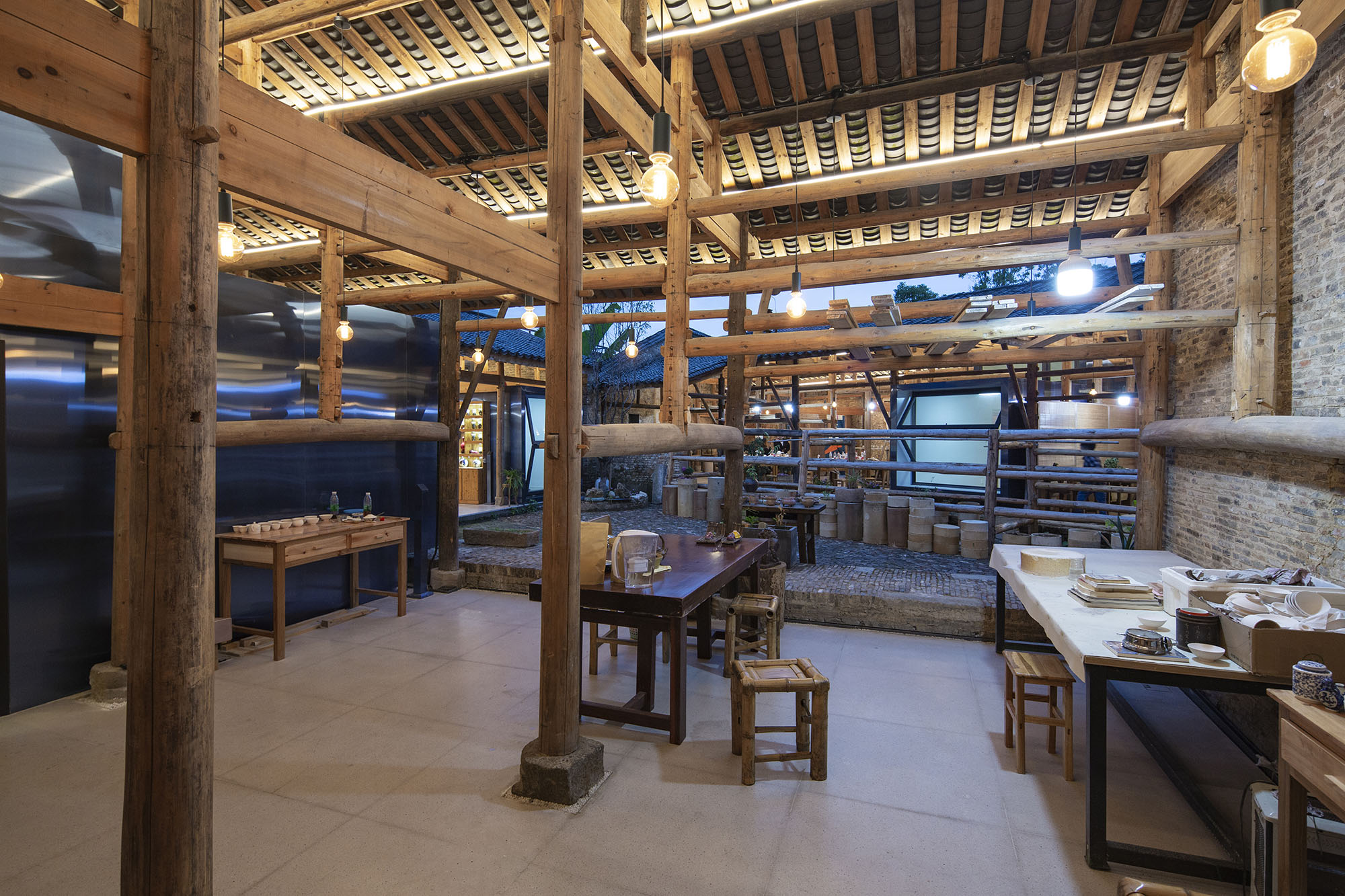
Courtyard C34 ©︎ PAO
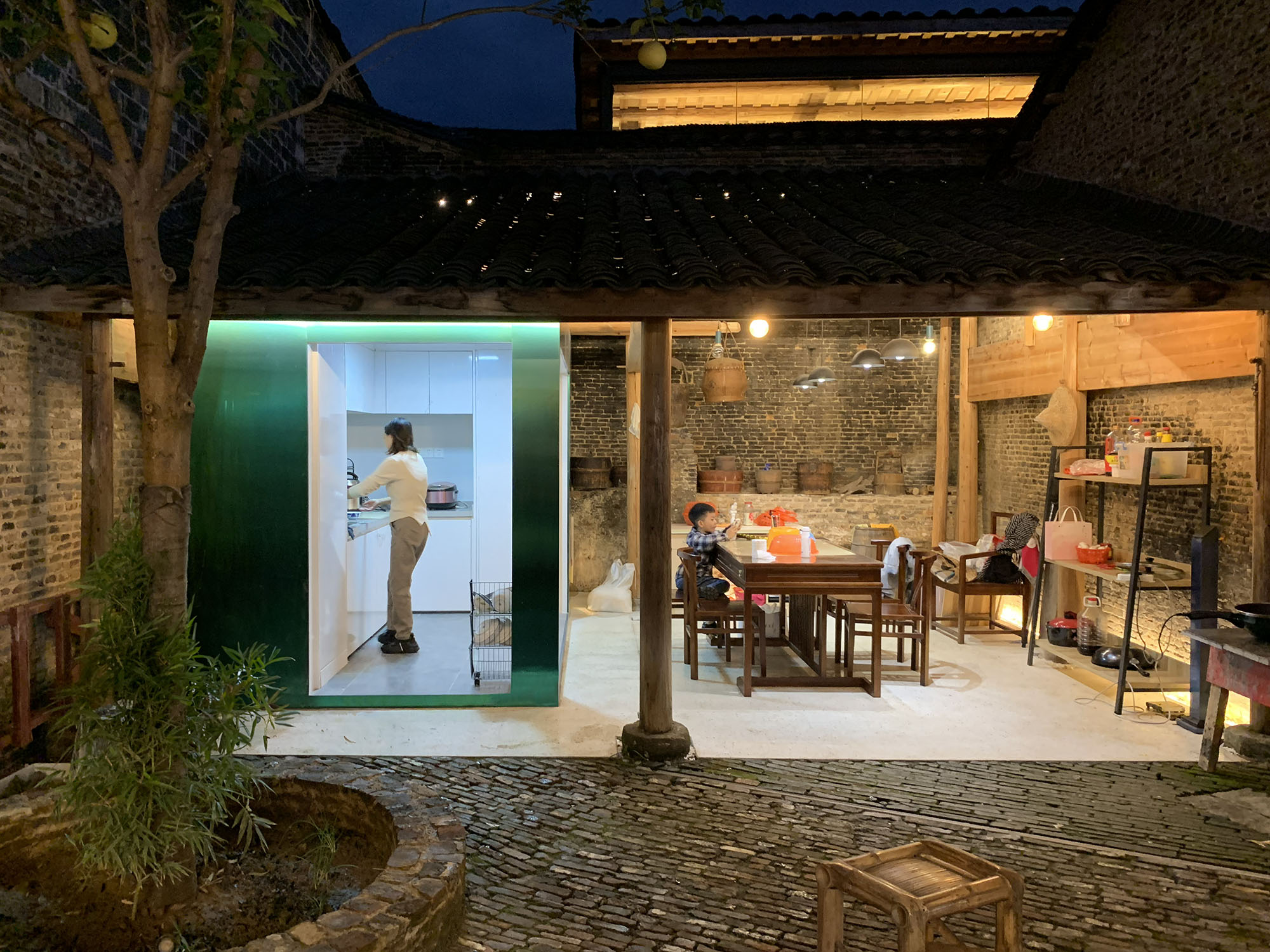
Courtyard C34 ©︎ PAO
各中庭に展開するプログラム
中庭C34では、3名のアーティストが2つの陶芸工房と2つの小規模住居から成る三角形の敷地を共有する。1棟は共同キッチンとなり、他の棟には睡眠・作業・浴室を組み合わせたプラグイン構成が配置されている。傾斜屋根と統合空調システムは日照と気候条件に対応している。
中庭H20では、1人のアーティストが中2階の寝室、柔軟な作業スペース、内部と中庭を再接続する開閉式ファサードを備えたスタジオに居住する。
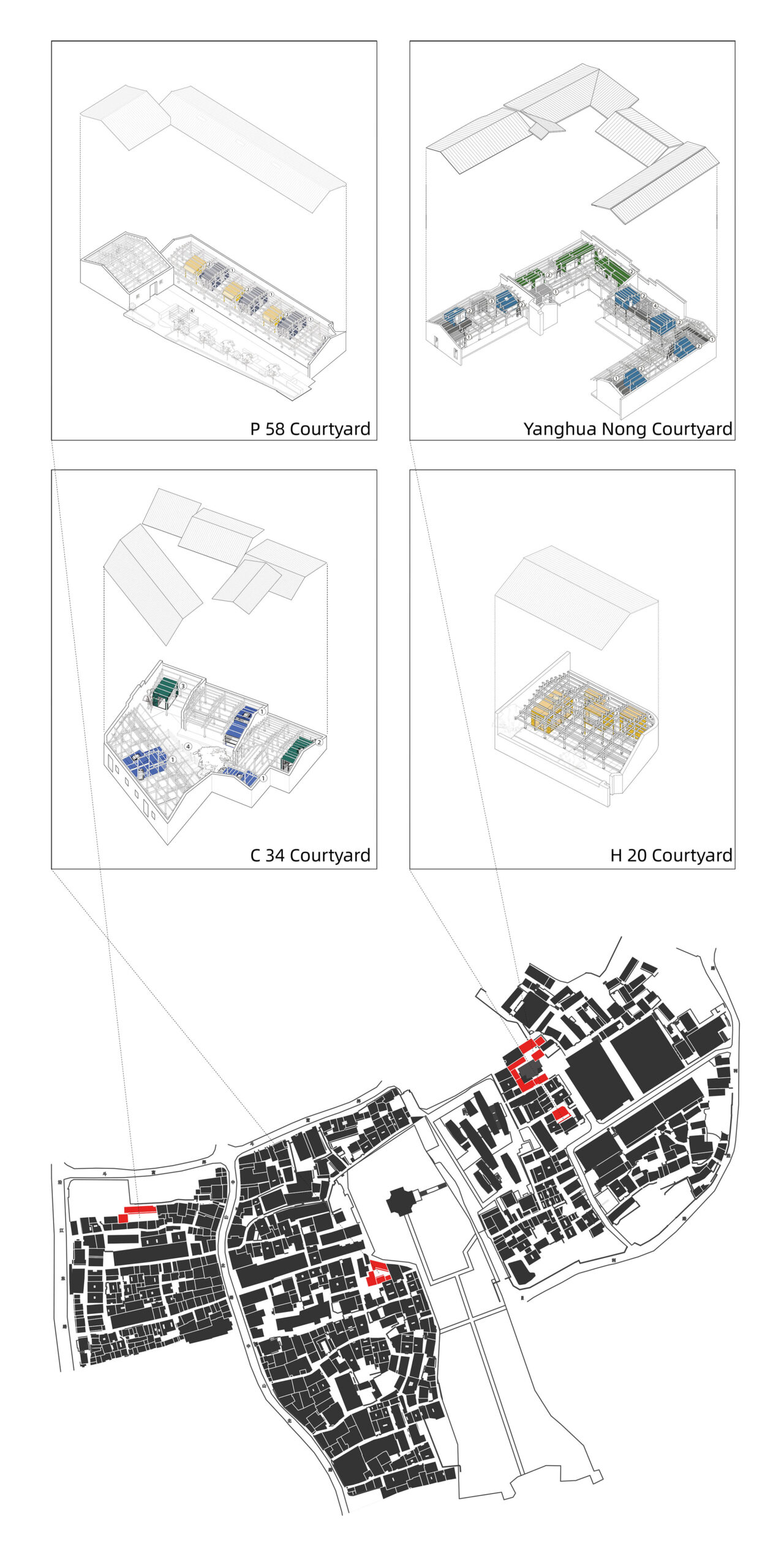
Porcelain Studio Plugin Sites ©︎ PAO
中庭P58では、長い工房内に3つのアーティストスタジオを収容し、各スタジオは1階にオフィス、上階に寝室ロフトを有している。隣接する建物は公共ギャラリー兼集会スペースへと再構想され、開放性とプライバシーを両立させるジグザグ配置を採用している。
また楊花郷ではカフェが中庭の核となり、3つの歴史的スタジオとL字型住宅に囲まれている。複数のプラグインユニットがグループ滞在や共同利用を支え、歴史地区に埋め込まれたマイクロコミュニティを形成している。
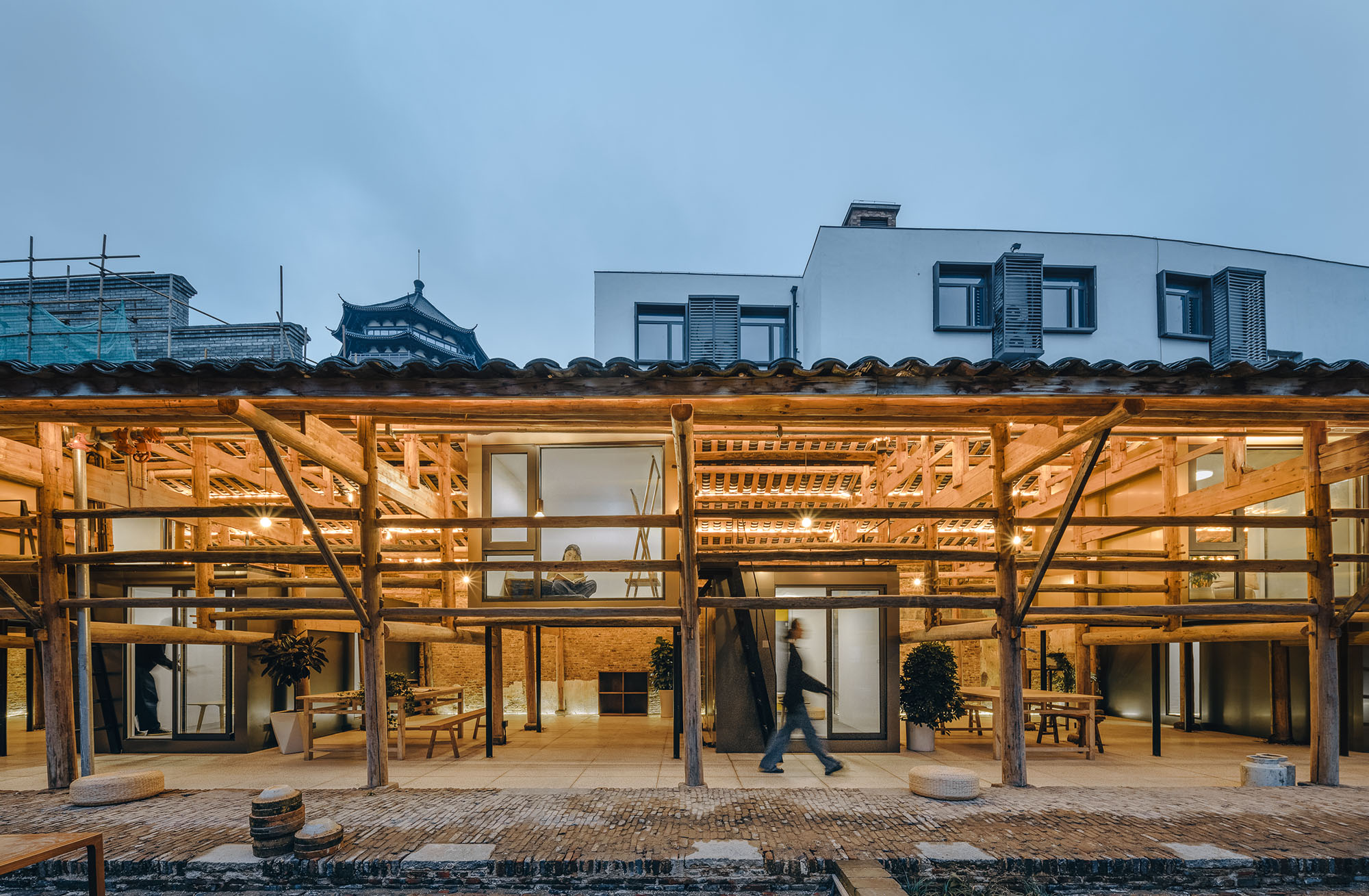
Courtyard P58 ©︎ Zhu Yumeng
一貫した建築言語の確立
プラグインシステムは多様な空間条件に適応しつつ、4つの敷地すべてにおいて一貫した建築言語を維持している。
プレファブリケーション式のモジュラーパネルシステムはサイズ・素材・ディテールの変化を可能にし、不規則な幾何学形状や進化するプログラム要件に対応する。その結果、個性的でありながら結束力のある介入群が生まれ、文脈に応答しながらも統一戦略の一部であることを明確に示している。
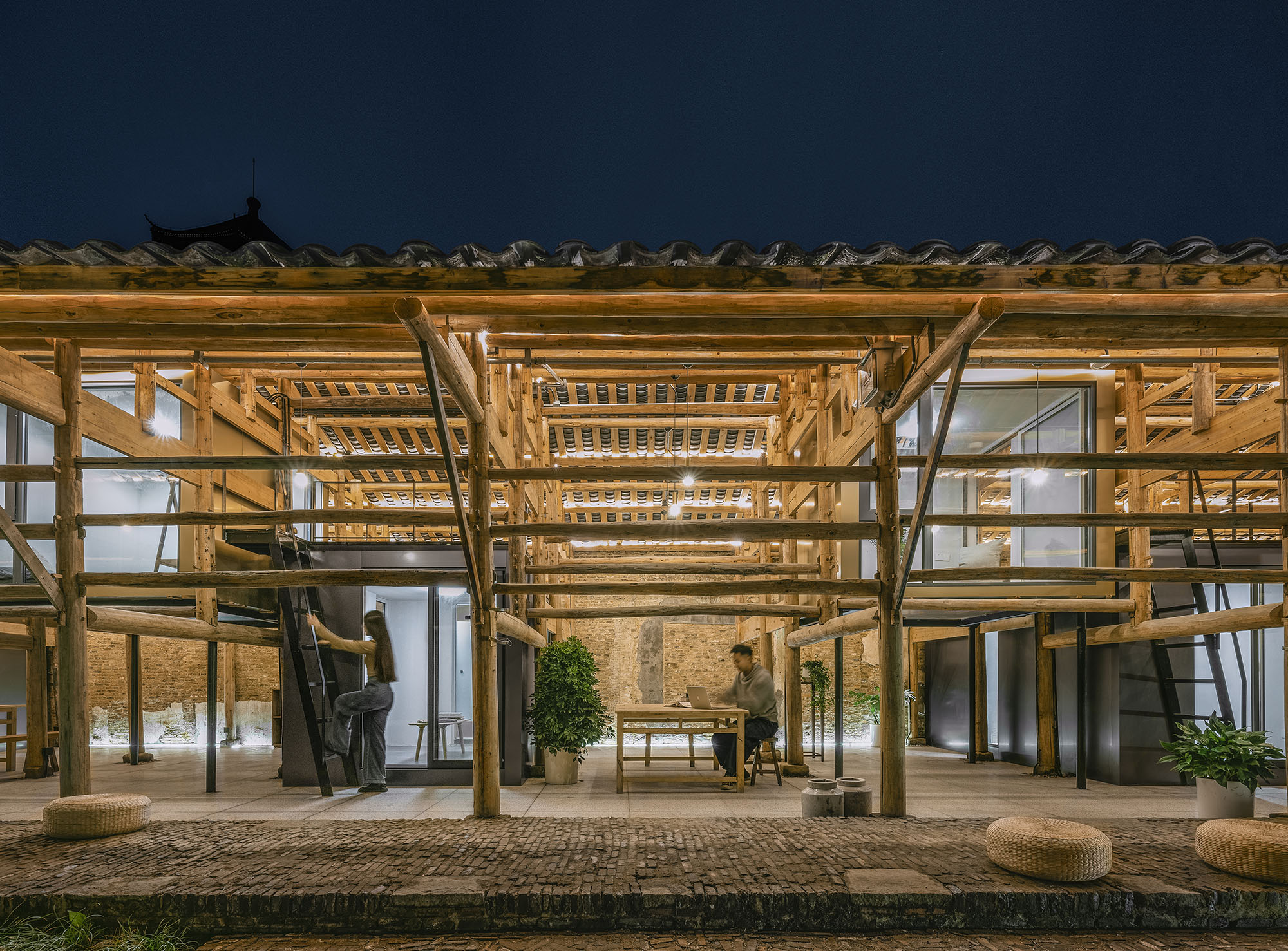
Courtyard P58 ©︎ Zhu Yumeng
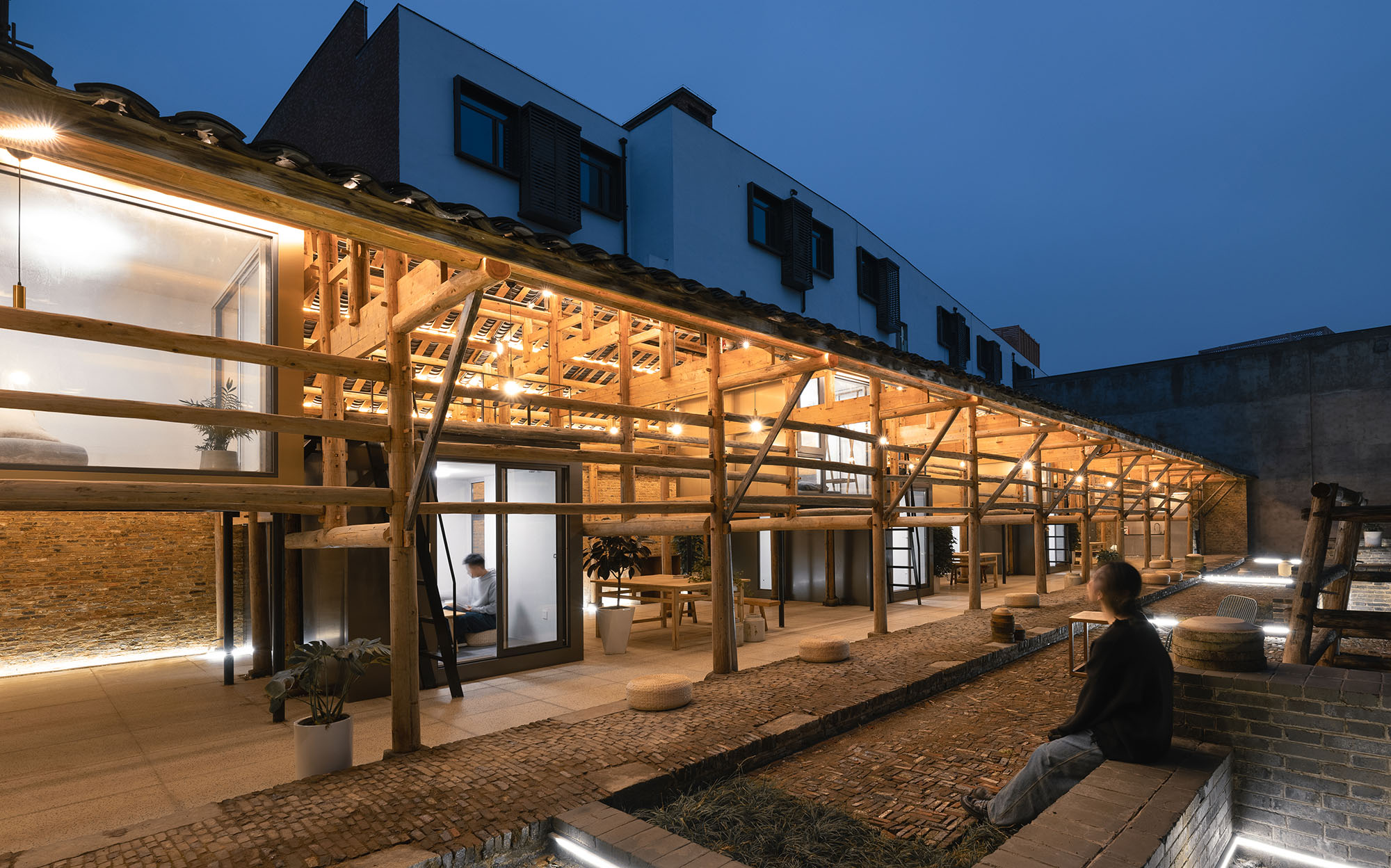
Courtyard P58 ©︎ Zhu Yumeng
生活のリズムに息吹を与える建築
地区における先行事業が市民的ランドマークと公共集会場を導入したのに対し、本フェーズは変革を近隣の内部空間へと拡大している。活用不足の空間を活性化し、日常活動のリズムに新たな息吹を吹き込むのである。
景徳鎮の陶磁遺産が紡ぐ建築的文脈に沿って展開される〈磁器工房プラグイン・リバイバル〉は、制作・生活・記憶の連続性を育む、再現可能かつ敬意を込めた建築再利用のモデルを提示している。
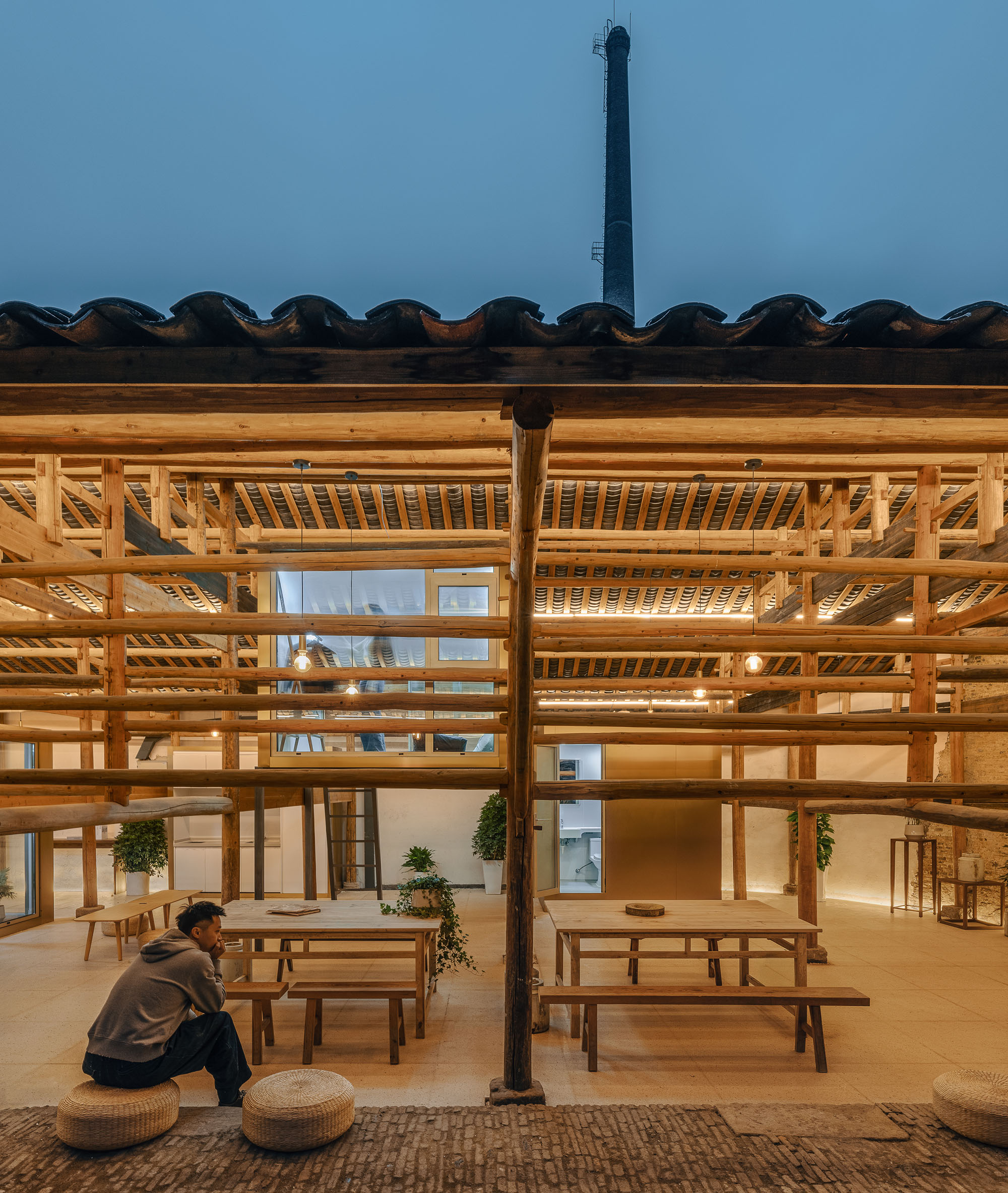
Courtyard H20 ©︎ Zhu Yumeng
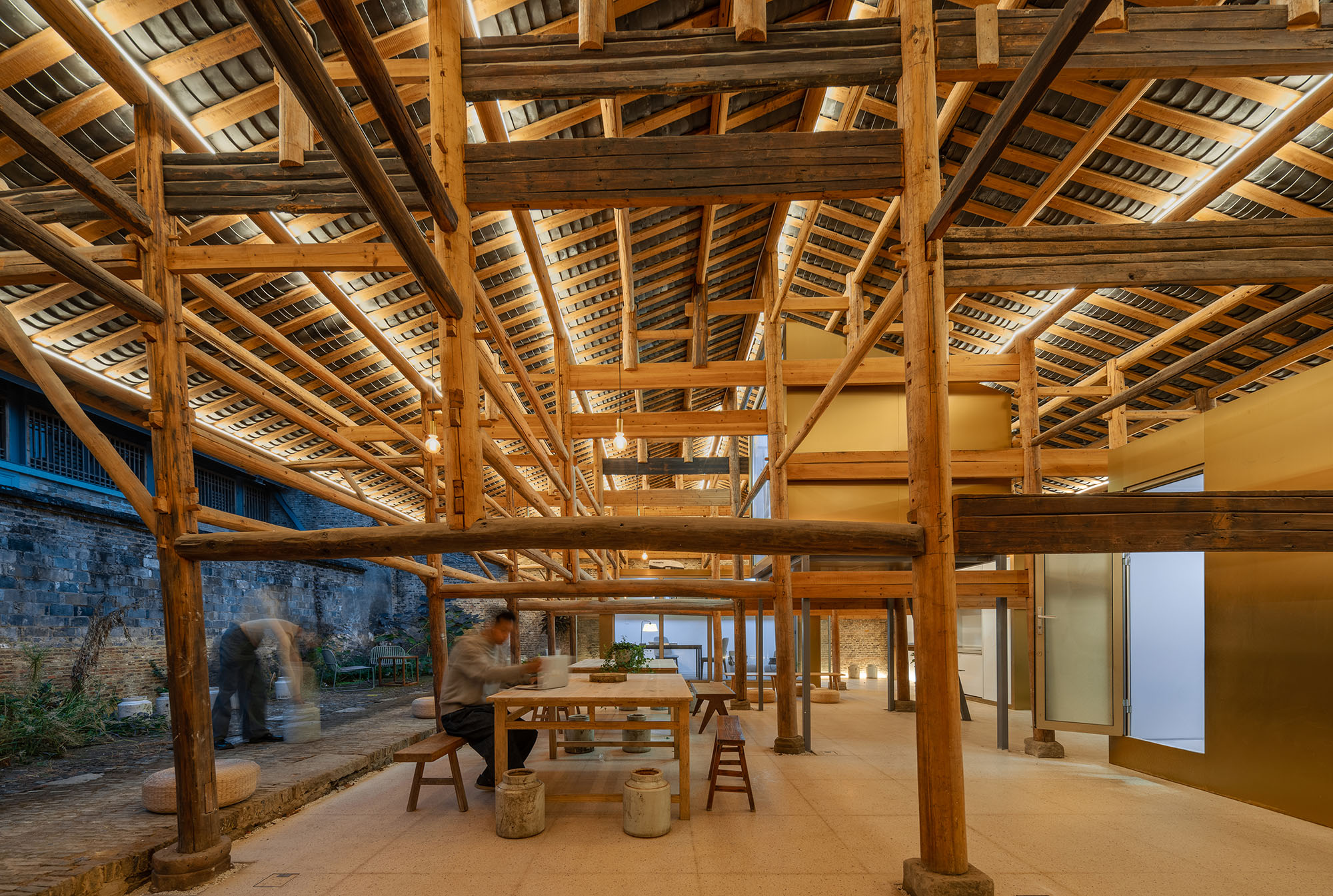
Courtyard H20 ©︎ Zhu Yumeng
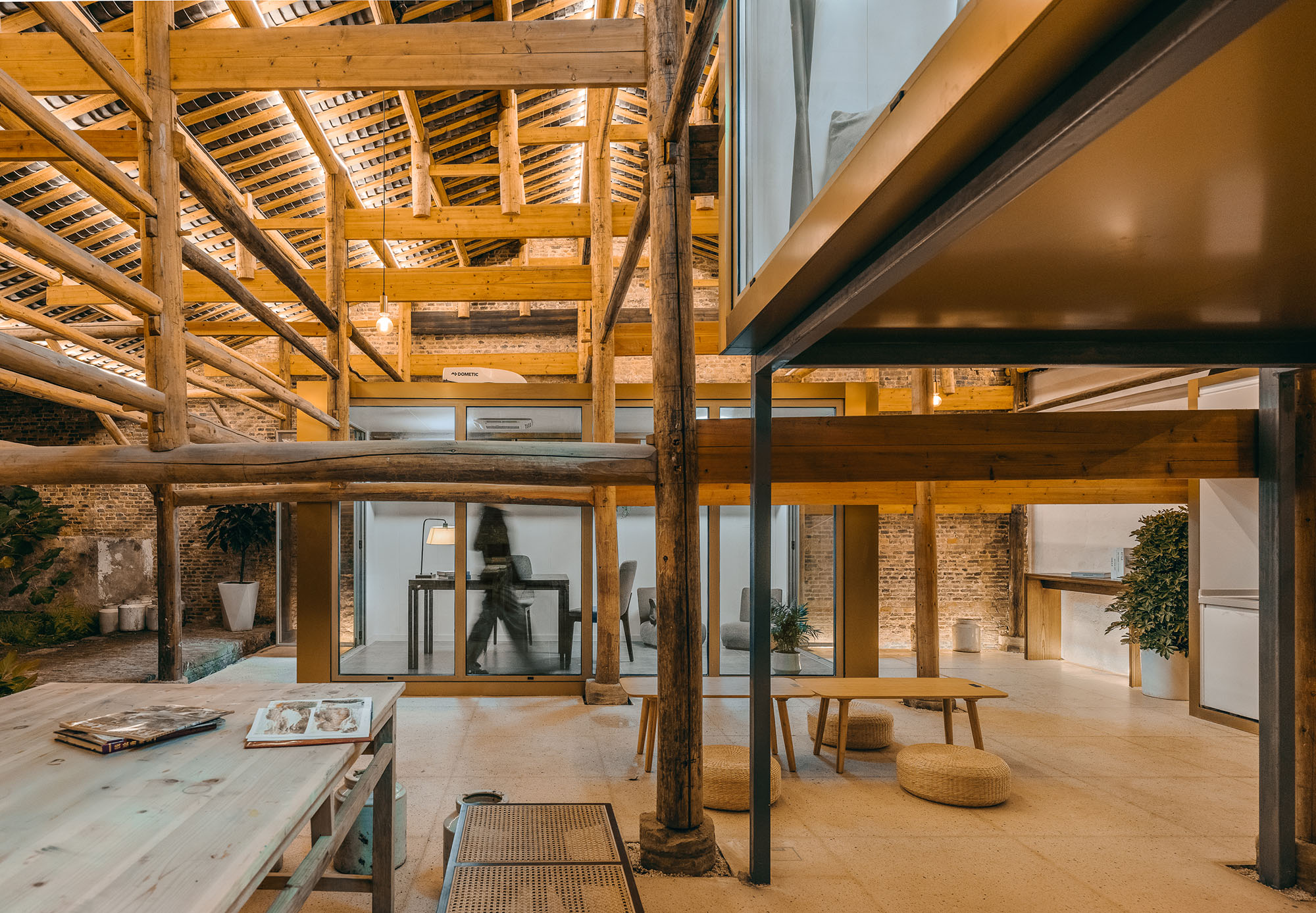
Courtyard H20 ©︎ Zhu Yumeng
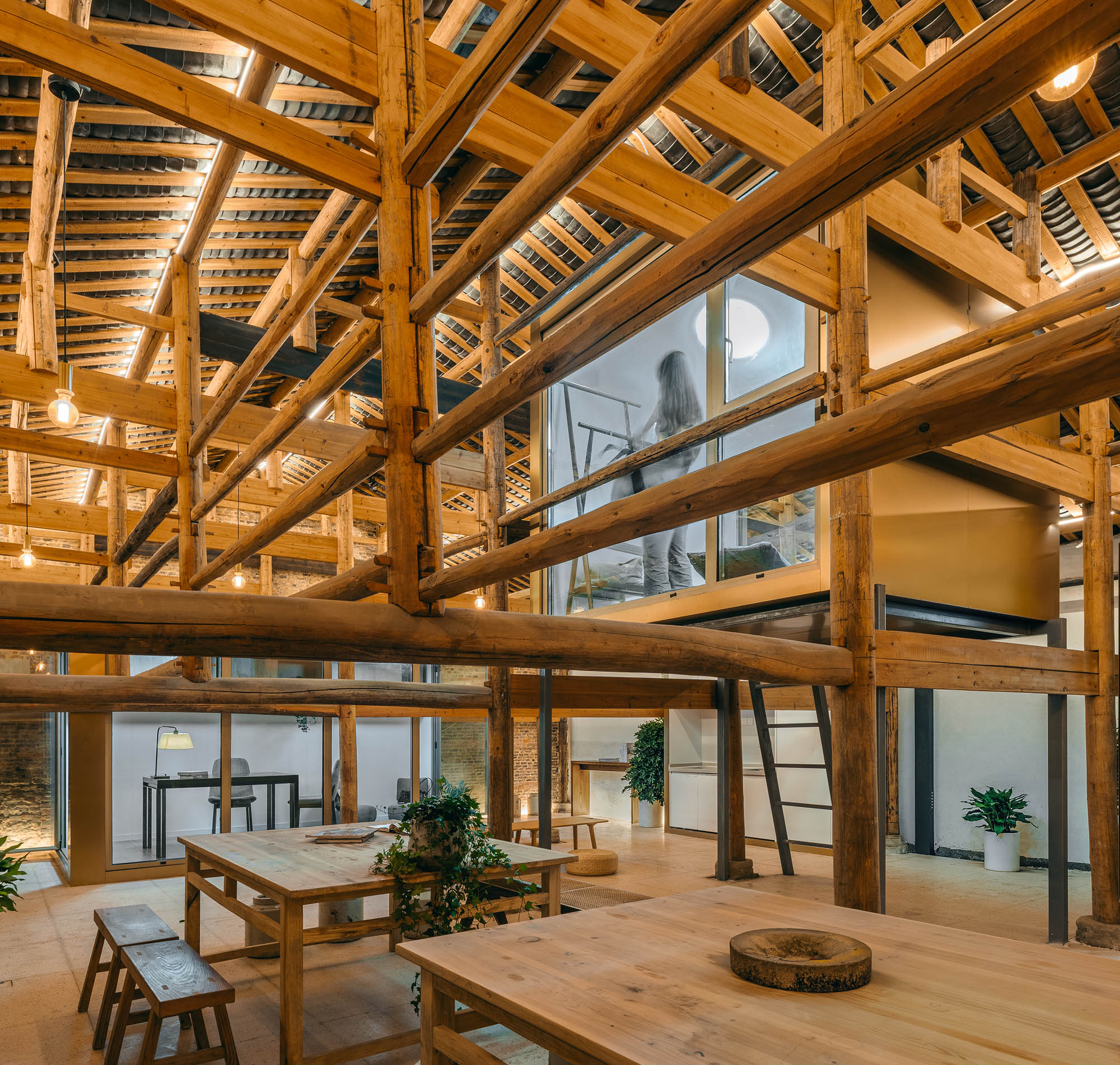
Courtyard H20 ©︎ Zhu Yumeng
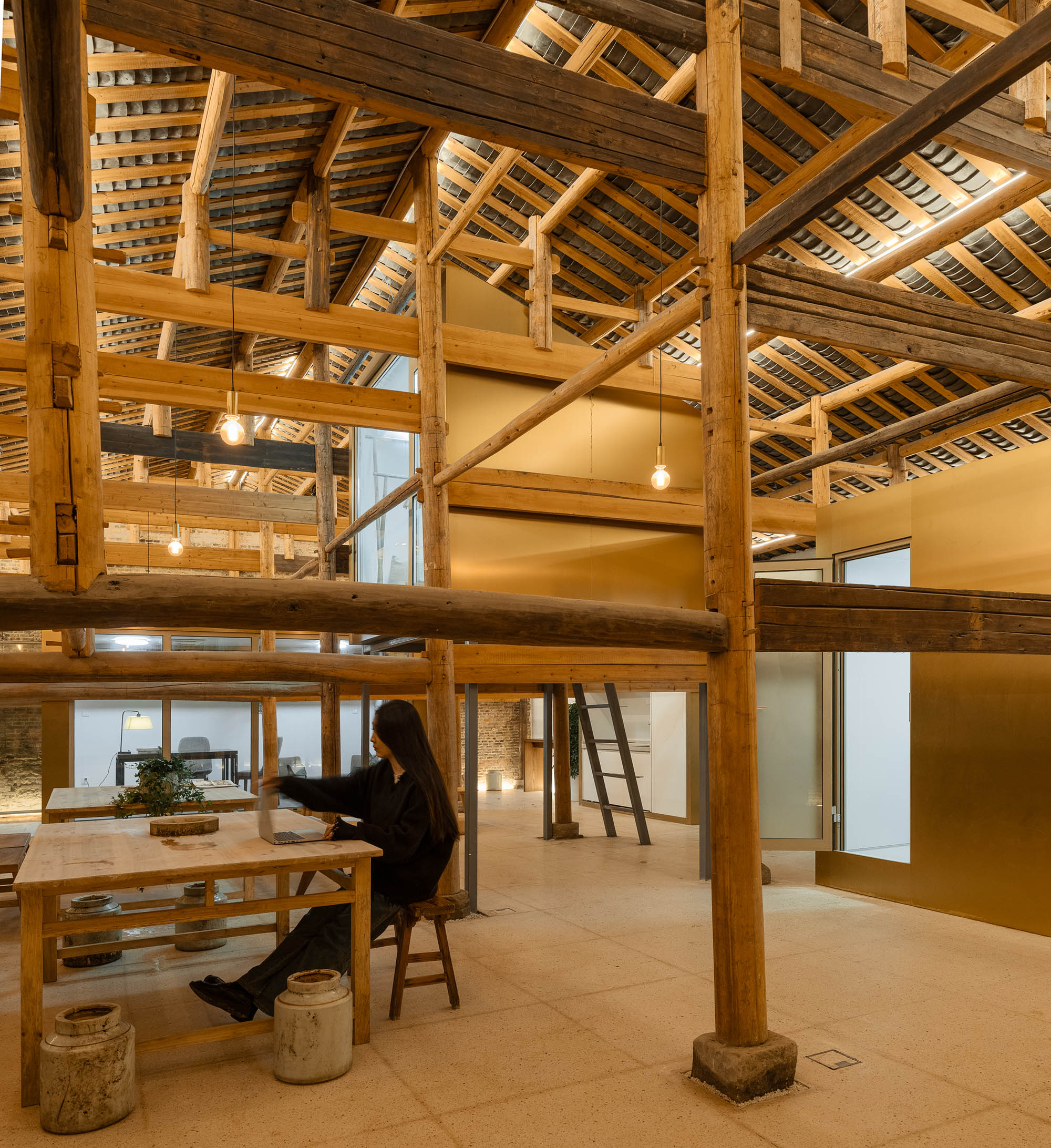
Courtyard H20 ©︎ Zhu Yumeng
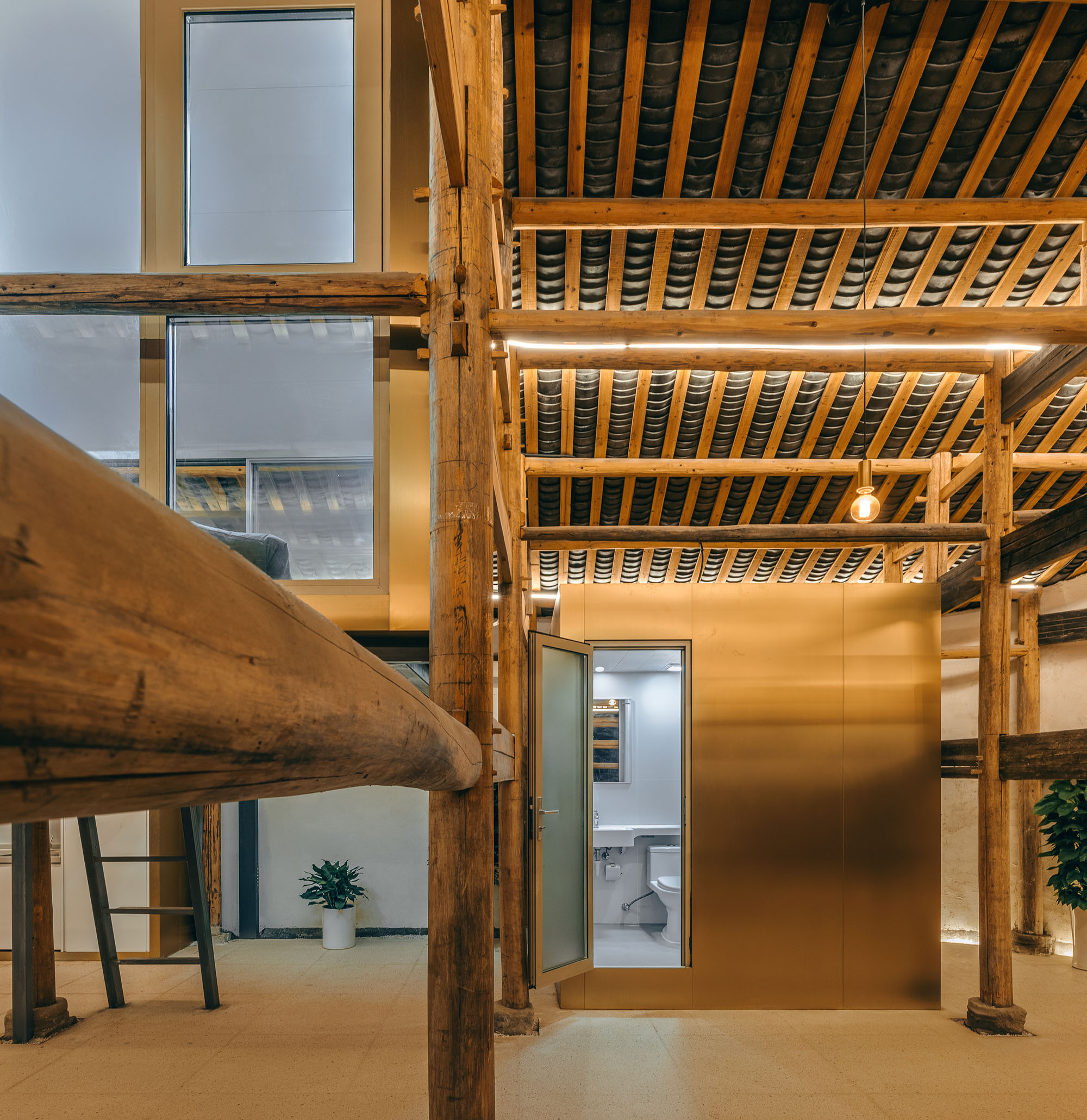
Courtyard H20 ©︎ Zhu Yumeng
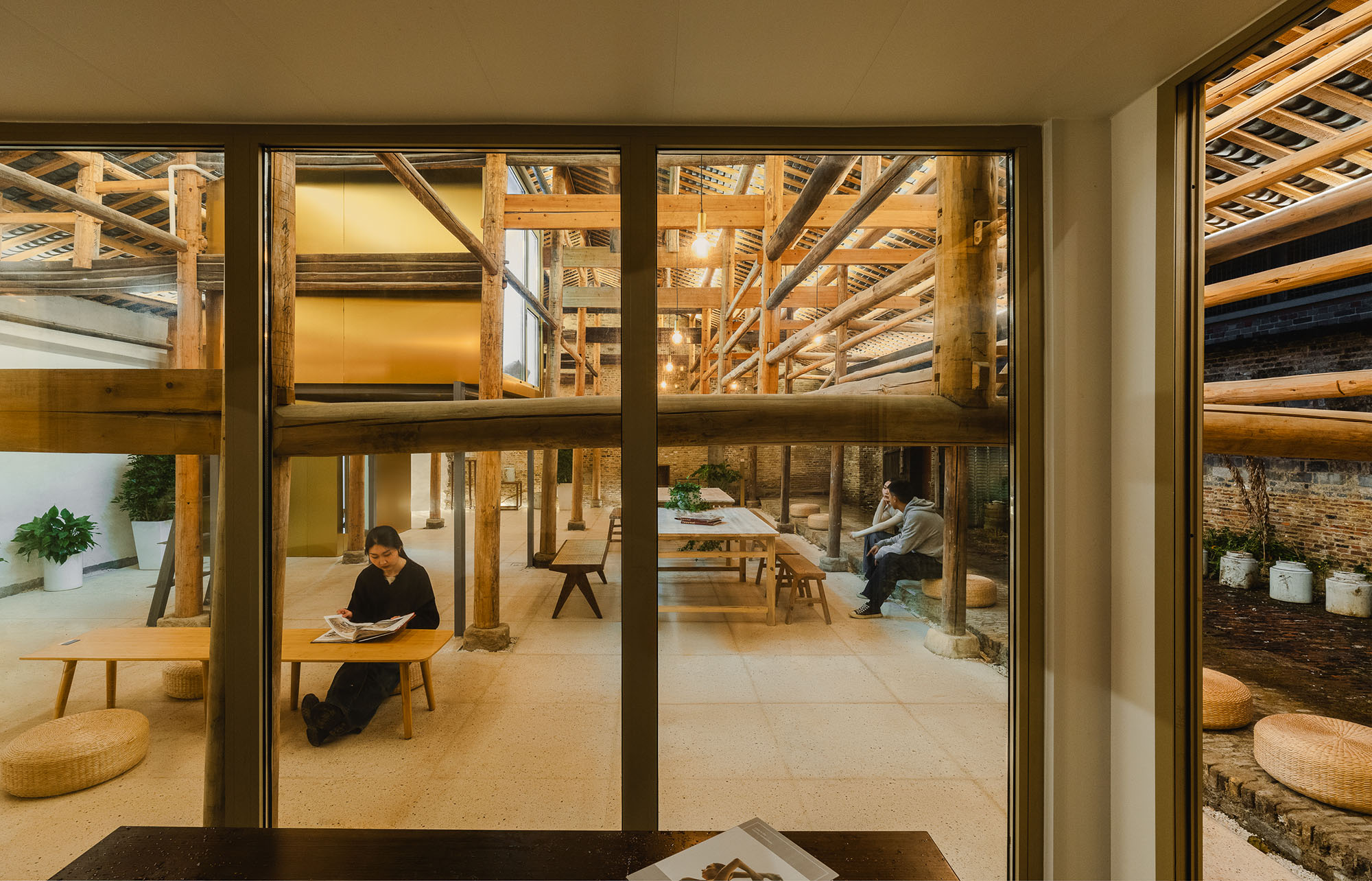
Courtyard H20 ©︎ Zhu Yumeng
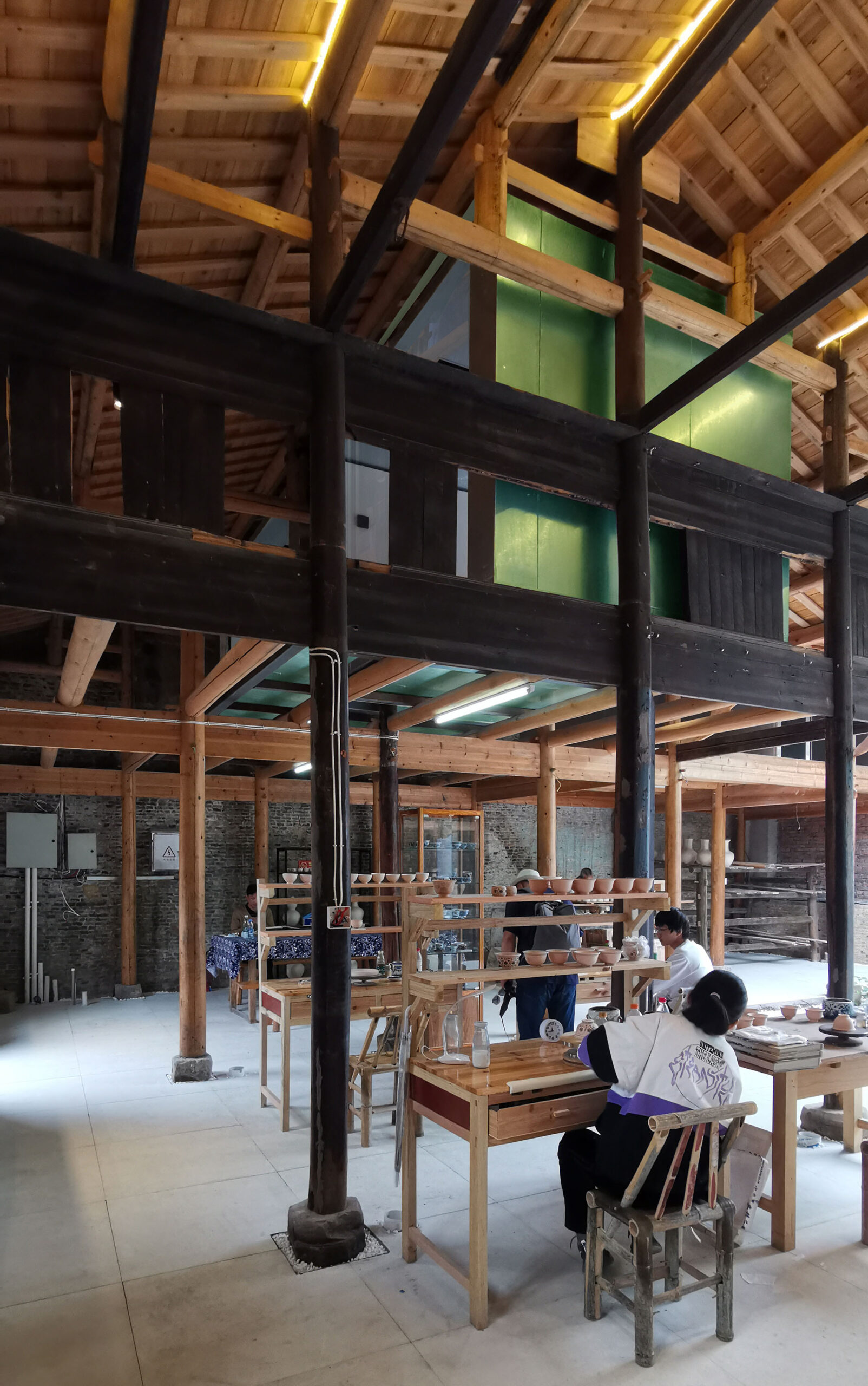
Courtyard Yang Huanong ©︎ PAO
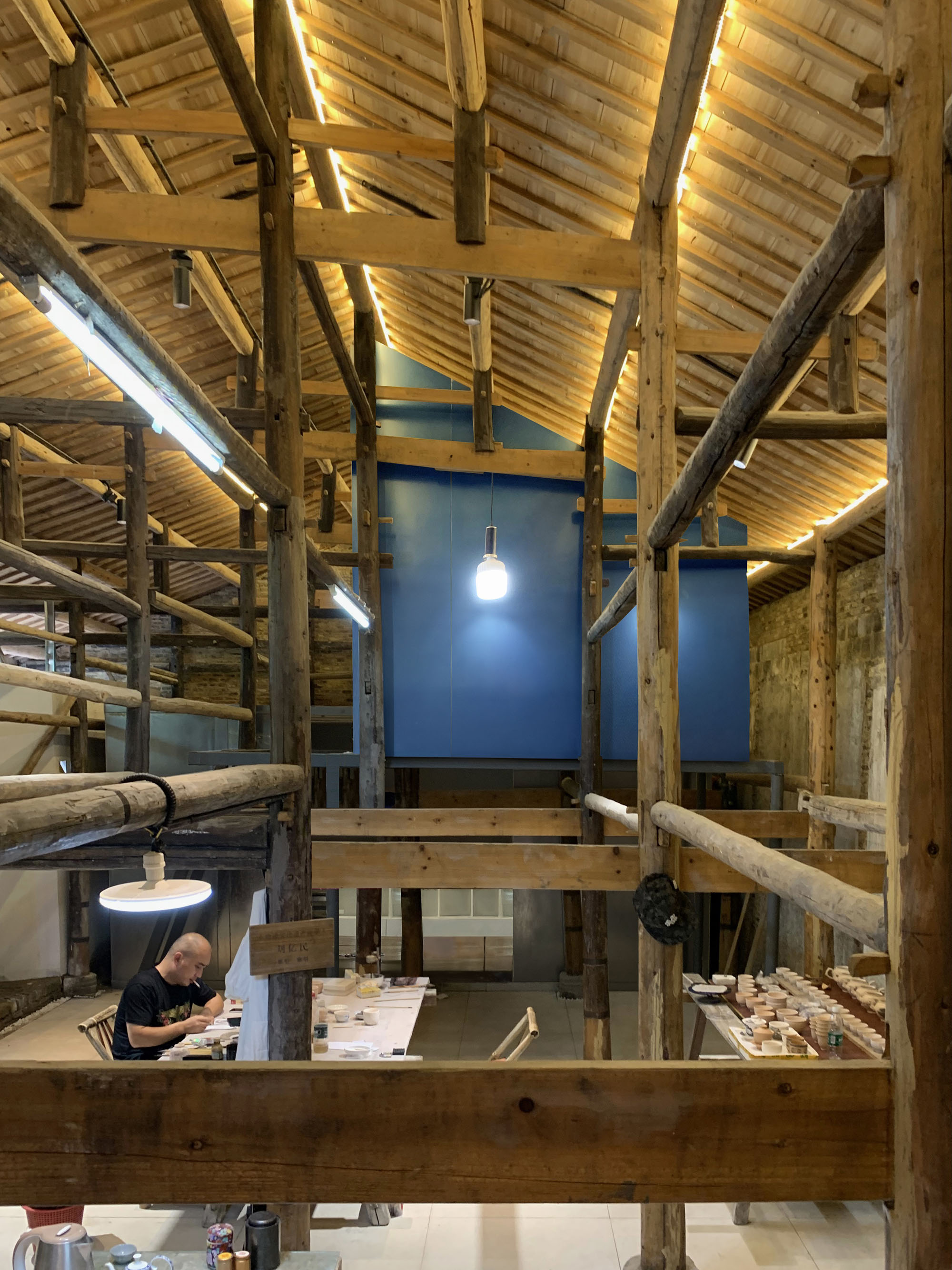
Courtyard Yang Huanong ©︎ PAO
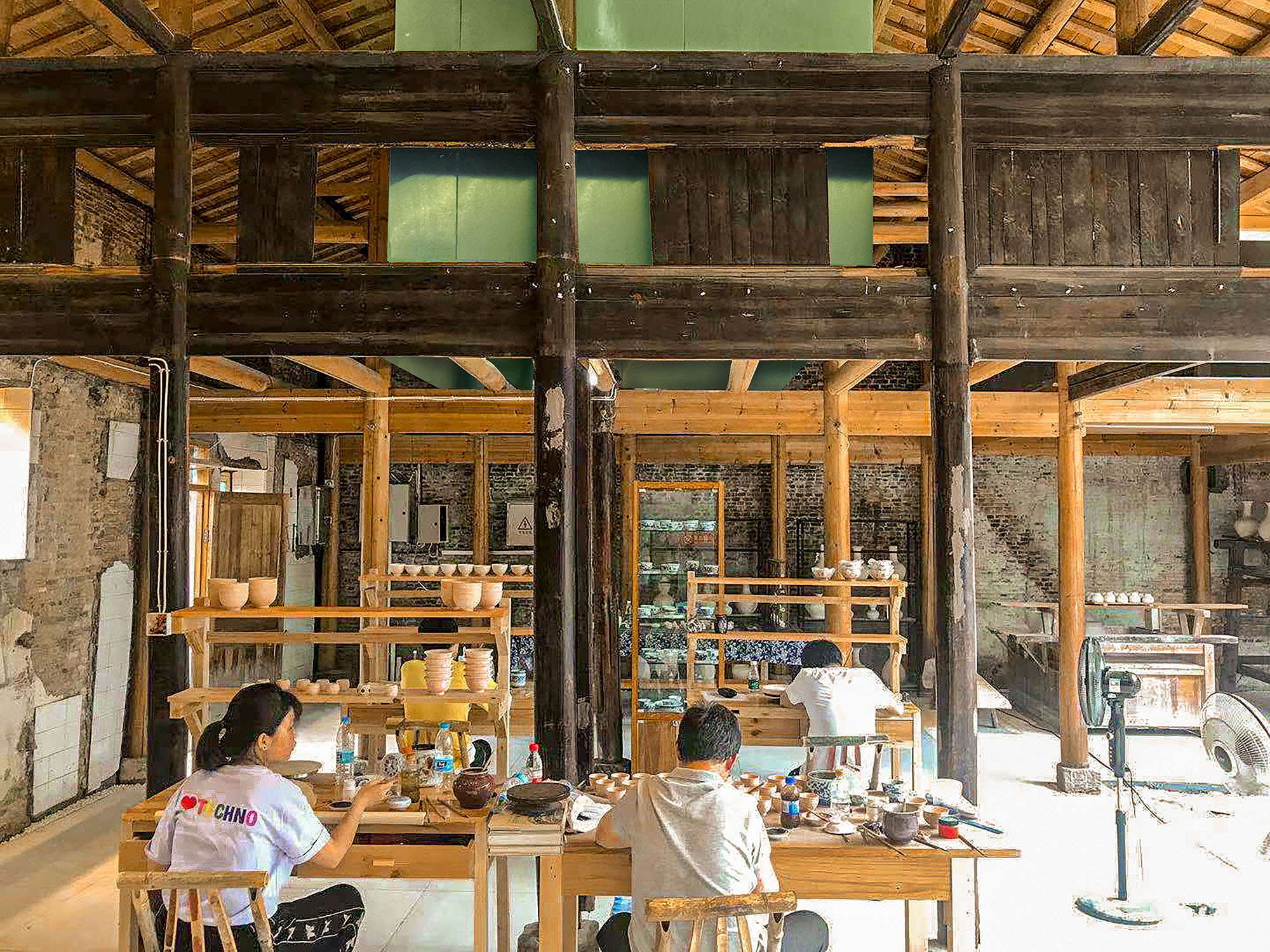
Courtyard Yang Huanong ©︎ PAO
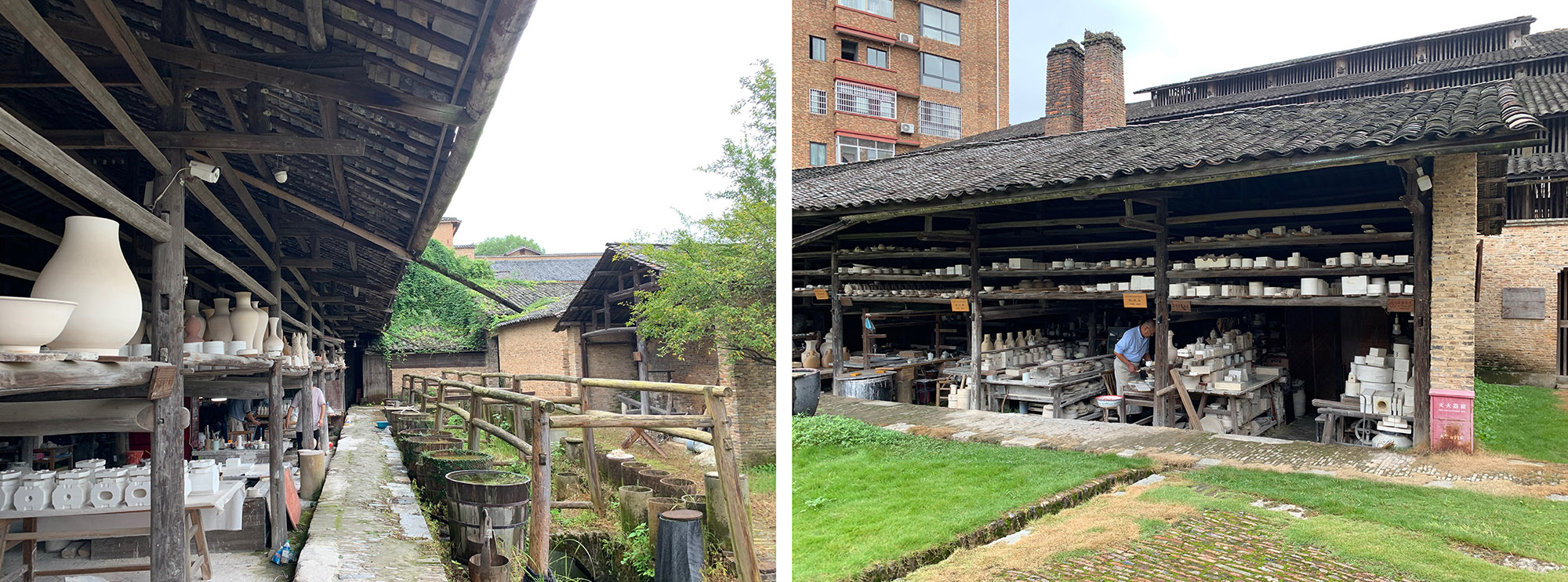
Traditional Porcelain Studio Exterior ©︎ PAO
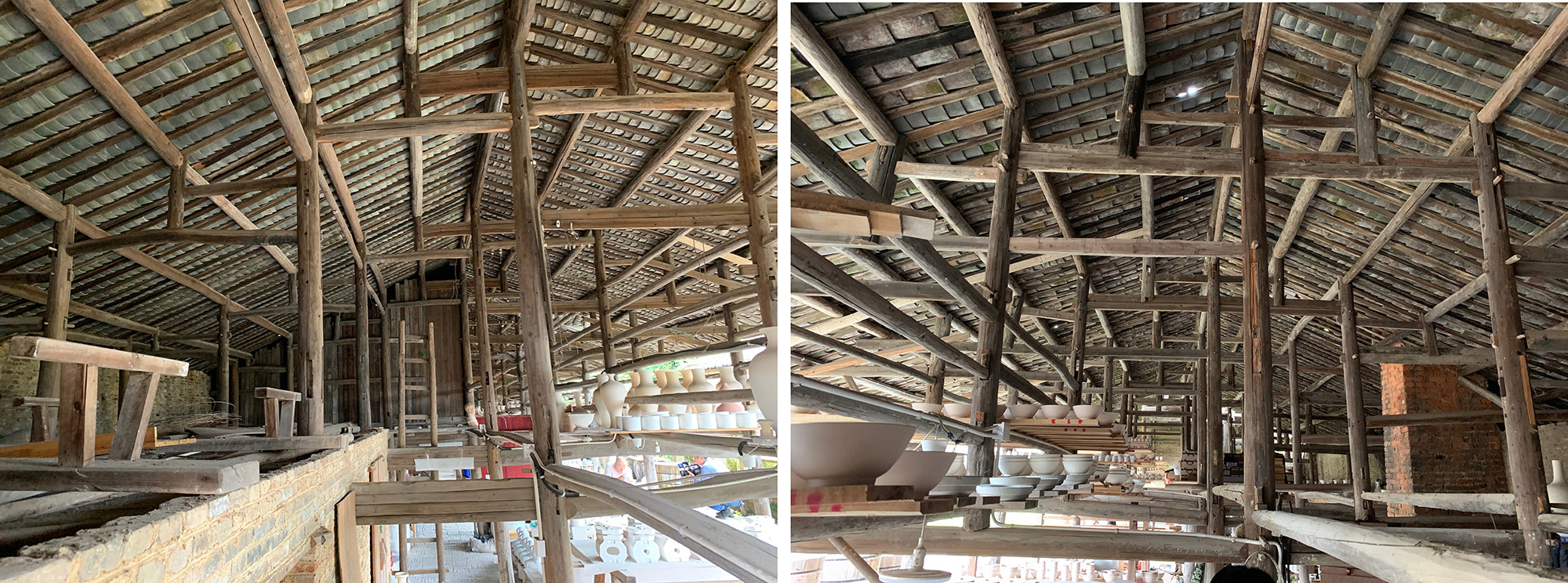
Traditional Porcelain Studio Interior ©︎ PAO
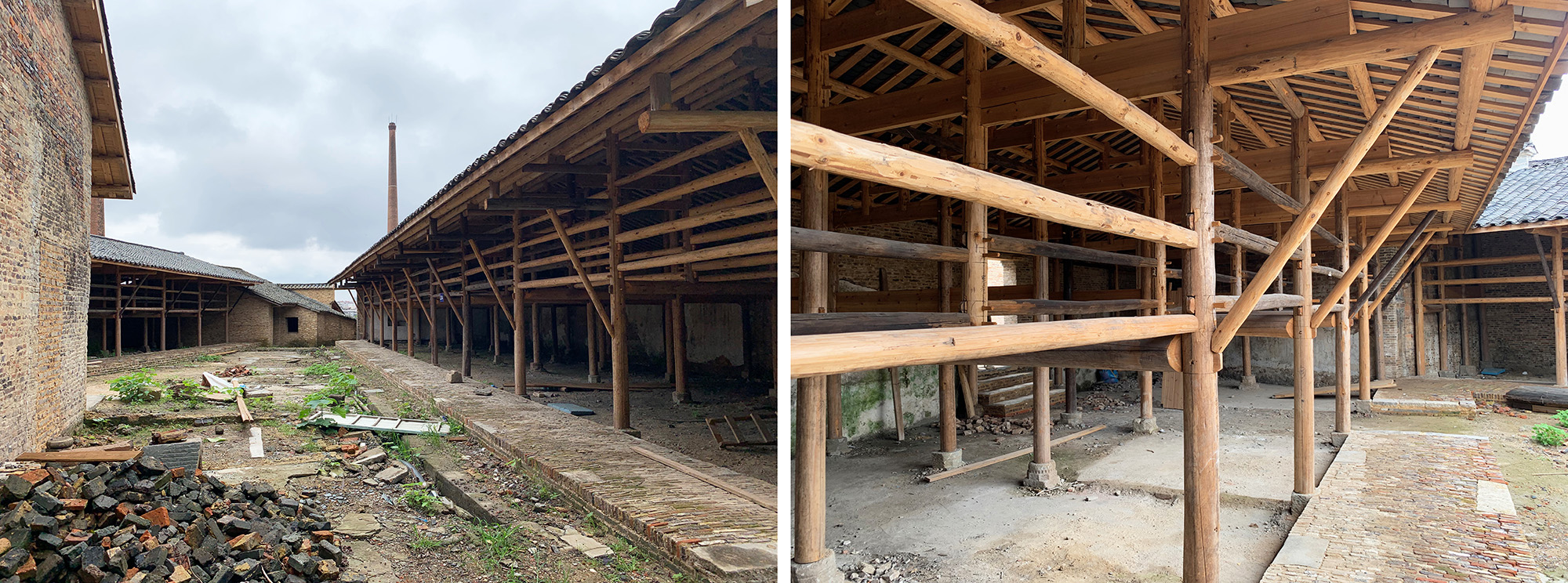
Traditional Porcelain Studios before renovation ©︎ PAO
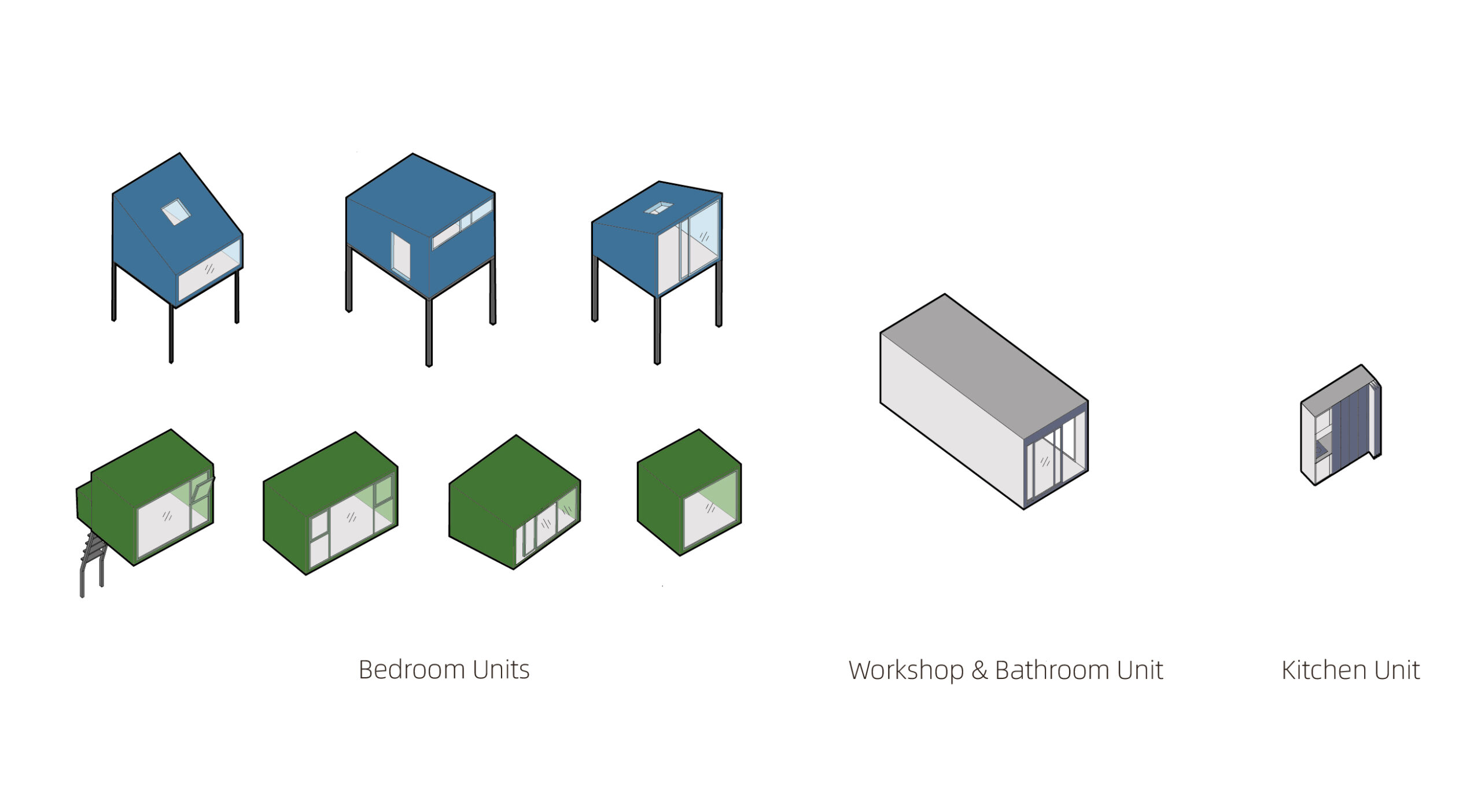
Porcelain Studio Plugin Units ©︎ PAO
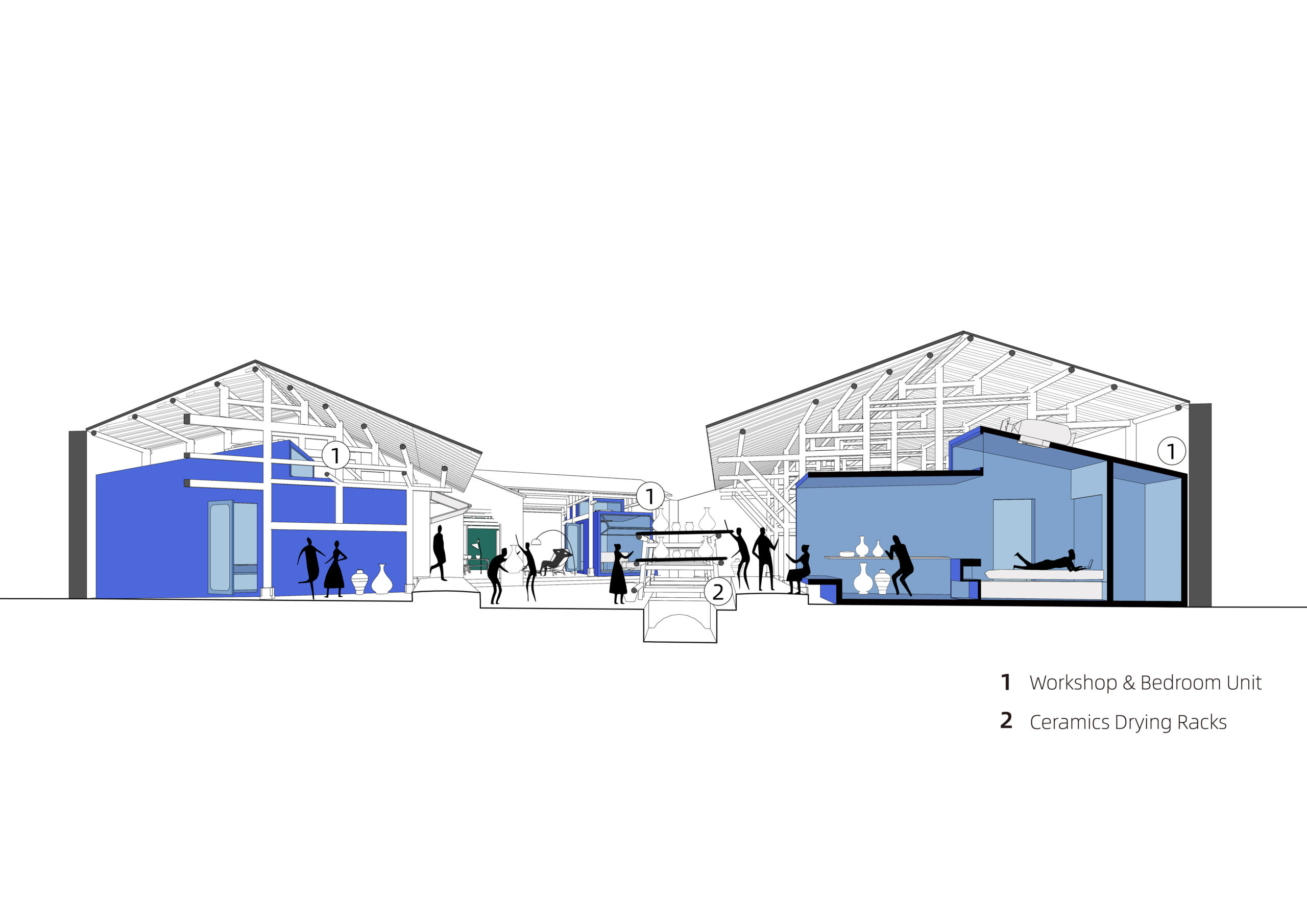
Courtyard C34 Section ©︎ PAO
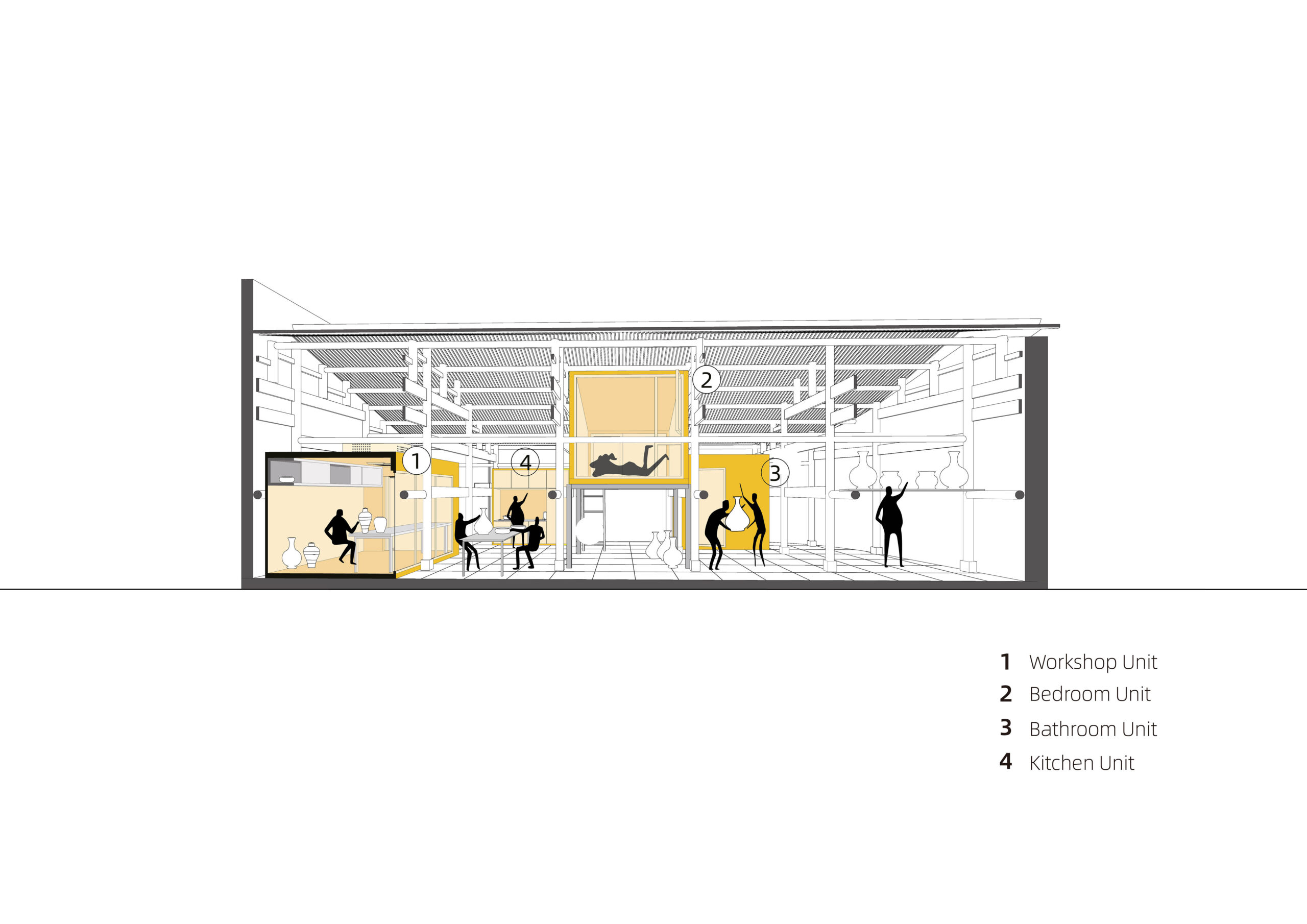
Courtyard H20 Section ©︎ PAO
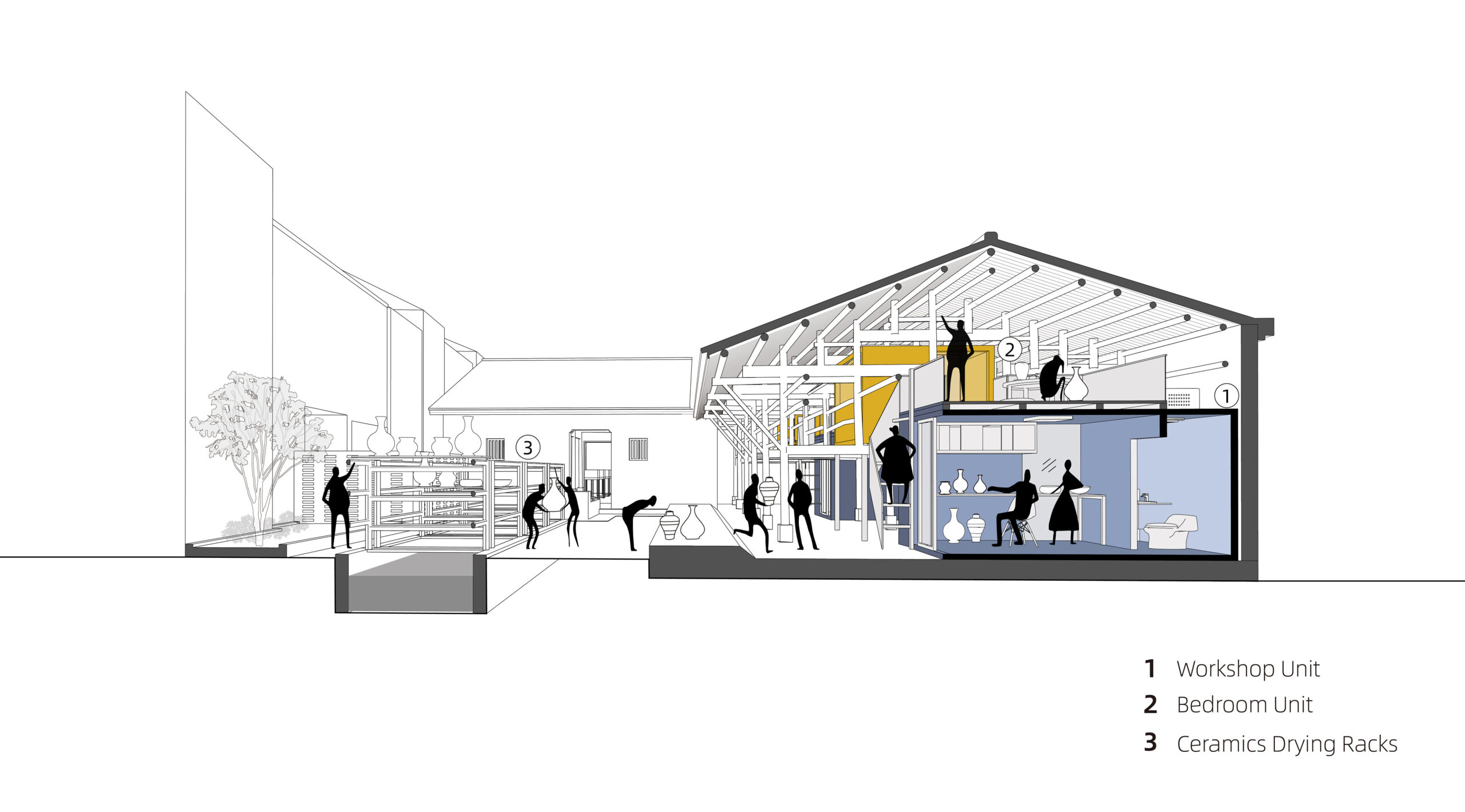
Courtyard P58 Section ©︎ PAO
以下、PAOのリリース(英文)です。
Porcelain Studios Plugin Revival
Porcelain Studios Plugin Revival is the latest effort by People’s Architecture Office to transform Jingdezhen’s Imperial Kiln Historic District through the strategic insertion of prefabricated structures into existing historic buildings. Using their Plugin Architecture approach, PAO reactivates disused porcelain studios as living and working spaces that address contemporary needs while preserving the character of the original fabric. In contrast to an adjacent phase centered on civic-scale landmarks, this chapter turns inward, engaging the finer grain of historic courtyards and timber-framed workshops that once formed the everyday infrastructure of porcelain production.
Developed in collaboration with Liu Kecheng Design Studio, the project extends the Plugin Architecture method by embedding new functions—living, working, cooking, gathering—within the interiors of long-abandoned studios. Prefabricated Plugin units are installed directly onto existing floors without altering the original structures. Lightweight, insulated, and self-contained, these units offer year-round comfort while maintaining the spatial logic and material integrity of the buildings. Timber frames, brick walls, and tiled roofs remain untouched.
At Courtyard C34, three artists share a triangular site comprising two porcelain workshops and two small dwellings. One structure becomes a communal kitchen, while the others house individual Plugin configurations combining sleeping, working, and bathroom spaces. Sloped roofs and integrated HVAC systems respond to daylight and climate conditions. In Courtyard H20, a single artist inhabits a studio fitted with a mezzanine bedroom, flexible workspace, and openable façades that reconnect interior and courtyard. Courtyard P58 accommodates three artist studios within a long workshop, each with a ground-floor office and a sleeping loft above. A neighboring building is reimagined as a public gallery and gathering space, with a zig-zag layout that balances openness and privacy. At Yanghua Lane, a newly built café anchors a courtyard framed by three historic studios and an L-shaped residence. Multiple Plugin units support group residencies and collaborative use, forming a micro-community embedded within the historic district.
Across all four sites, the Plugin system adapts to diverse spatial conditions while maintaining a coherent architectural language. Its prefabricated modular panel system allows for variation in size, material, and detailing, accommodating irregular geometries and evolving programmatic needs. The result is a family of interventions that are distinct yet cohesive, responsive to their contexts while clearly part of a unified strategy.
While earlier work in the district introduced a civic landmark and public gathering space, this phase extends the transformation into the neighborhood’s interiors, activating underused spaces and stitching new life into the rhythms of daily activity. By working within the architectural grain of Jingdezhen’s porcelain heritage, Porcelain Studios Plugin Revival offers a replicable and respectful model for architectural reuse, one that fosters continuity between making, living, and memory.Client: Jingdezhen Cultural Tourism Group
Location: Imperial Kiln District, Jingdezhen
Design Firms: People’s Architecture Office + Liu Kecheng Design Studio
Design Leads (PAO): He Zhe, James Shen, Zang Feng
Design Leads (LKC Studio): Liu Kecheng, Xiao Li
Project Managers: Yuan Yingzi, Zhang Meng
Team Members: Yang Quanyue, Yang Qian, Huang Liying, Zhang Mengyuan, Zhou Shimin, Liu Yixin, Wang He, Wen Hao, Liu Yifeng
Structural Design: Yu Fengbo
MEP Design: Xi’an Xinhui People’s Architecture Engineering Design Consulting Co., Ltd.
Photography: Zhu Yumeng, People’s Architecture Office
Drawings: Zhang Meng, Jiang Ying
PAO 公式サイト
https://www.peoples-architecture.com
![[Interview]iF Design代表のウヴェ氏に聞く、建築と都市の2026年メガトレンド](https://magazine-asset.tecture.jp/wpcms/wp-content/uploads/2026/07/23221054/iF_AwardCeremony_2026_AwardCeremony-82-900x600.jpg)
![[Report]激変する時代の中で、建築とデザインはどう拡張するか。「iF DESIGN AWARD 2026」授賞式&最新トレンド](https://magazine-asset.tecture.jp/wpcms/wp-content/uploads/2026/07/24010304/iFDesignTrendConference26-45-900x600.jpg)
![[Report]RUI Architectsが可動モジュールを設計して松竹のアートスペースをリニューアル、柿落とし展「継承のトランジション」の会場デザインも担当](https://magazine-asset.tecture.jp/wpcms/wp-content/uploads/2026/07/24141011/20260713shutl_press11-01309-c-900x629.jpeg)