CULTURE
©︎ C-Context Architectural Photography (Zhao Yilong)
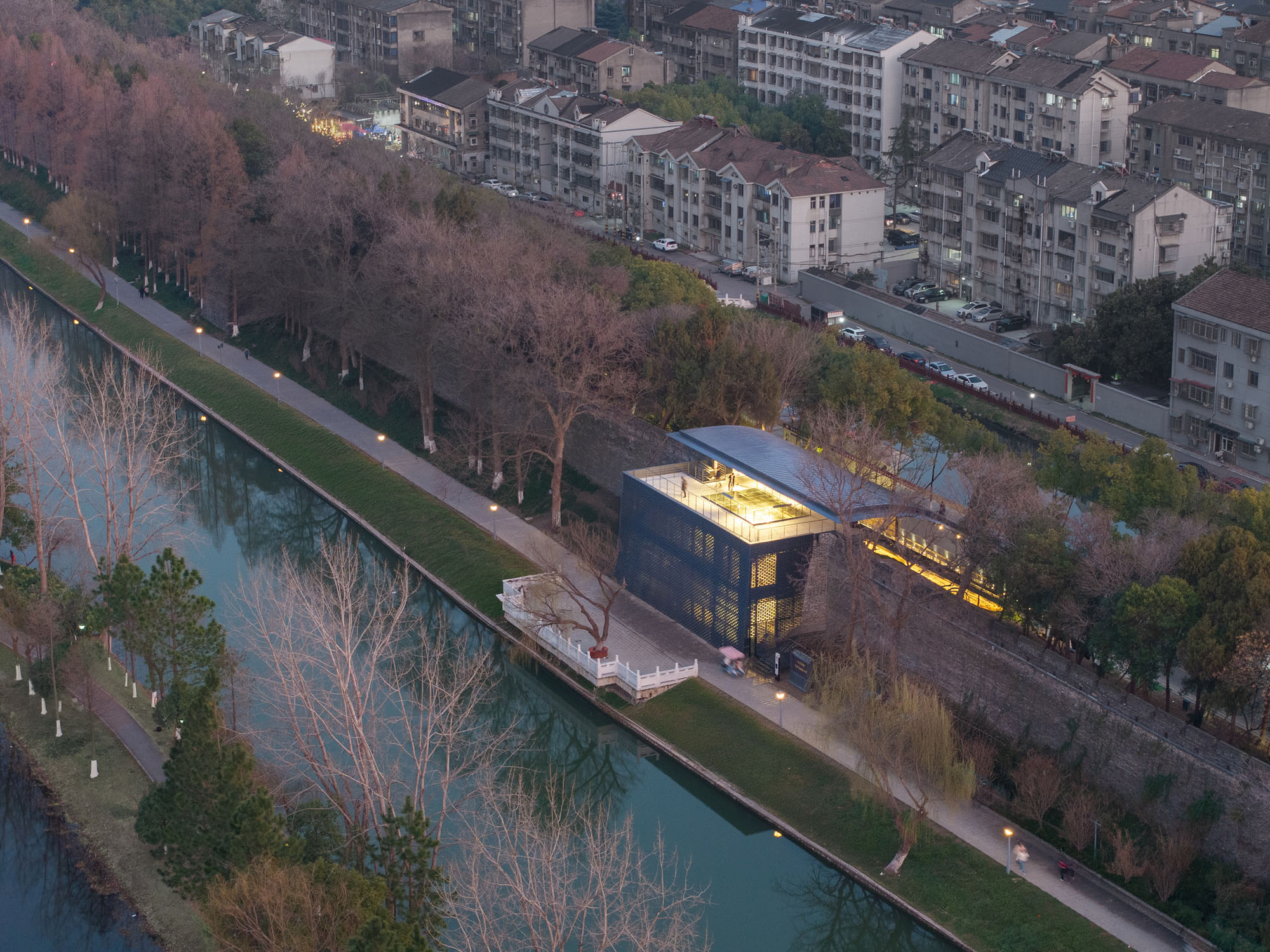
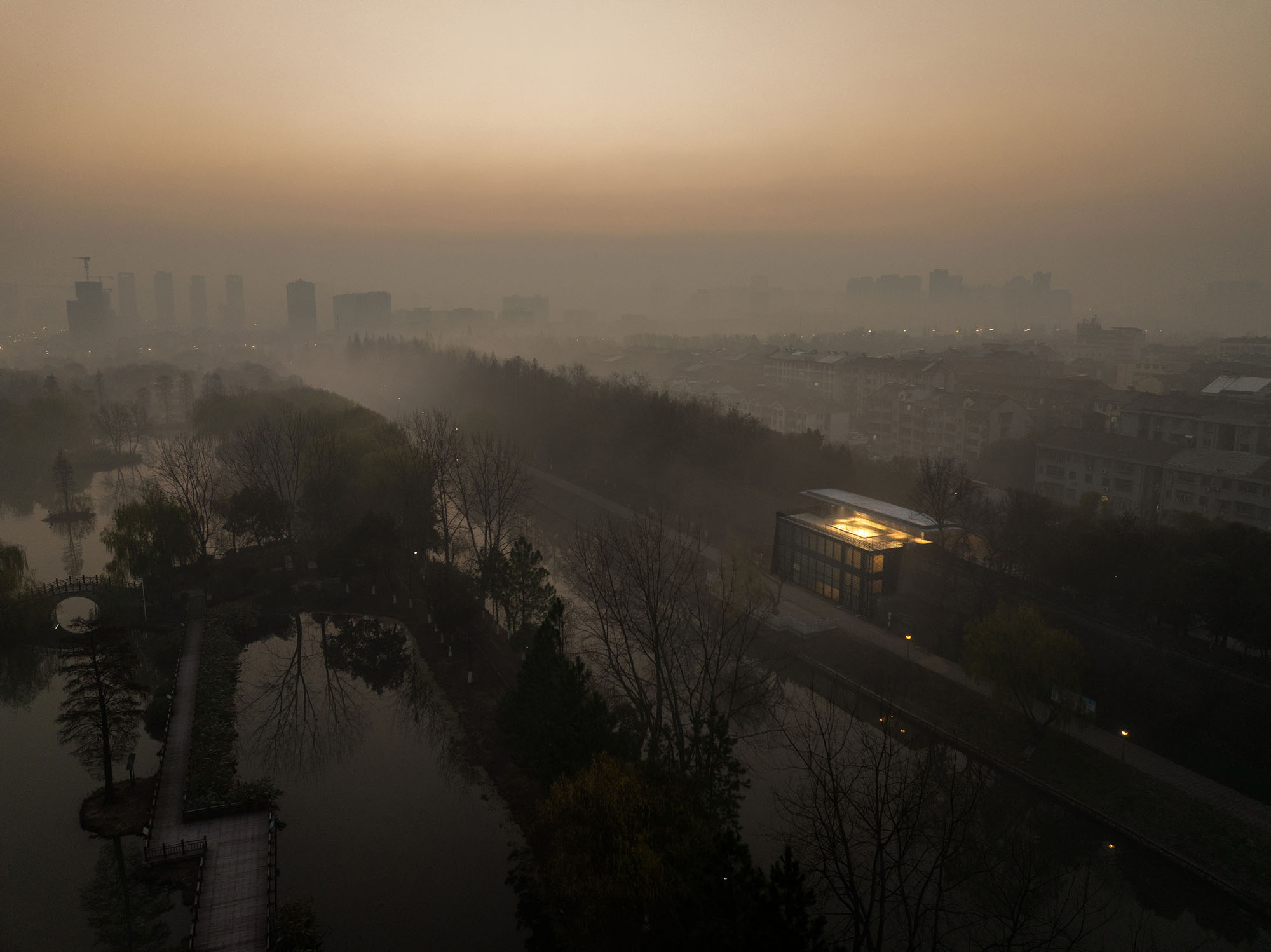
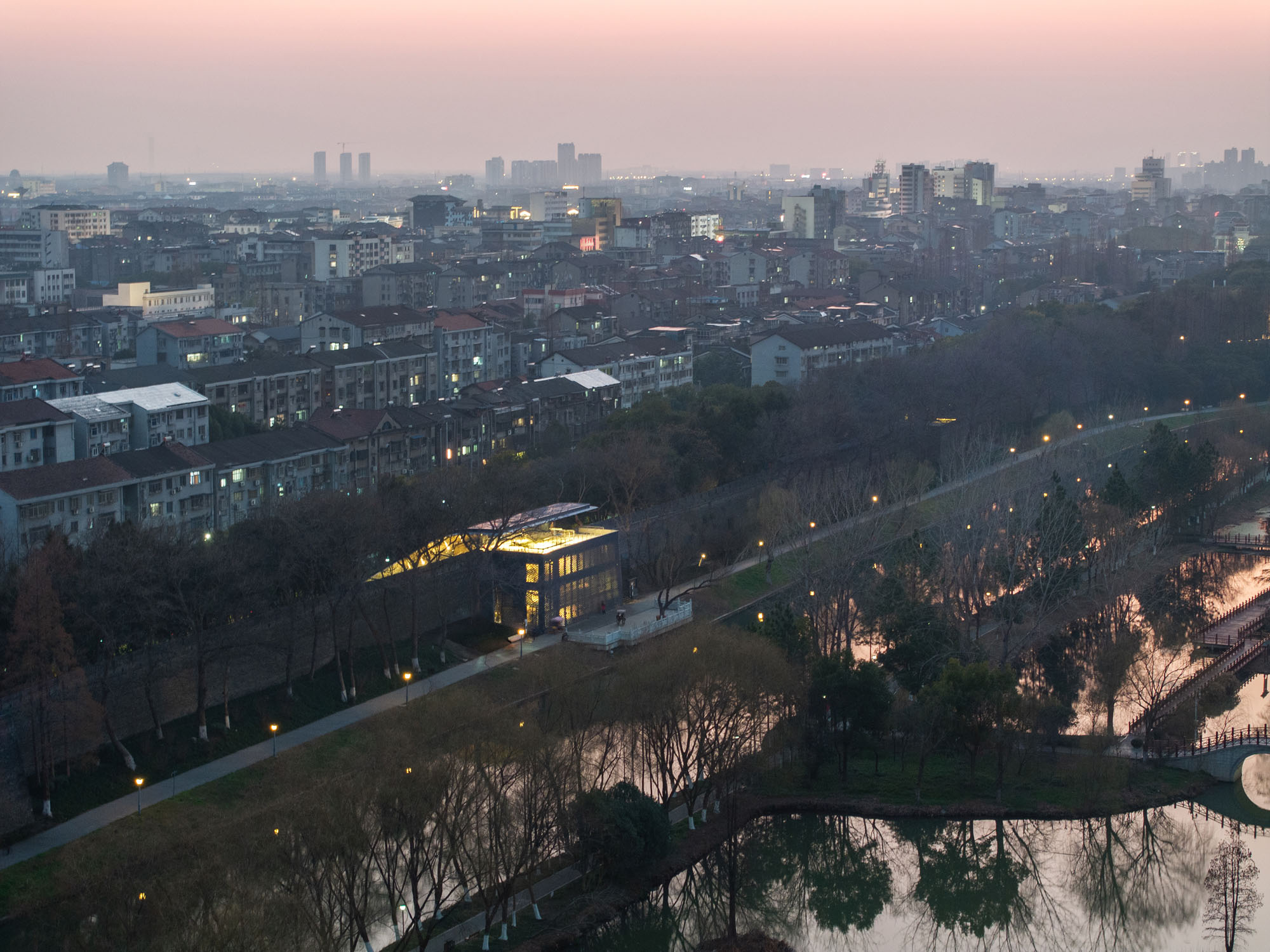
中国・荊州市に位置する〈荊州市城壁遺跡展示館(Jingzhou City Wall Archaeological Site Exhibition Pavilion)〉は、修復作業中に偶然発見された、五代から清代に至る千年の城壁遺構を保護・公開するための展示施設です。
古代の地層を市民が行き交う日常の街路へとシームレスに接続する空間であり、中国の設計事務所 Qing Studioが設計しました。
注目ポイント
- 巨大な屋根の圧迫感を消し、景観と同化するキャノピーの形態操作
- 遺構への影響を抑える、「最小限の介入」としての構造計画
- 存在感を消しながら訪問者の視線を遺跡へ誘導する穿孔プラットフォーム
- 歴史的遺構を隔離するのではなく、市民の日常へと接続
(以下、Qing Studioから提供されたプレスキットのテキストの抄訳)
©︎ C-Context Architectural Photography (Zhao Yilong)
©︎ C-Context Architectural Photography (Zhao Yilong)
生きた街路に刻まれた千年の断面
予想外の発見から始まったプロジェクト
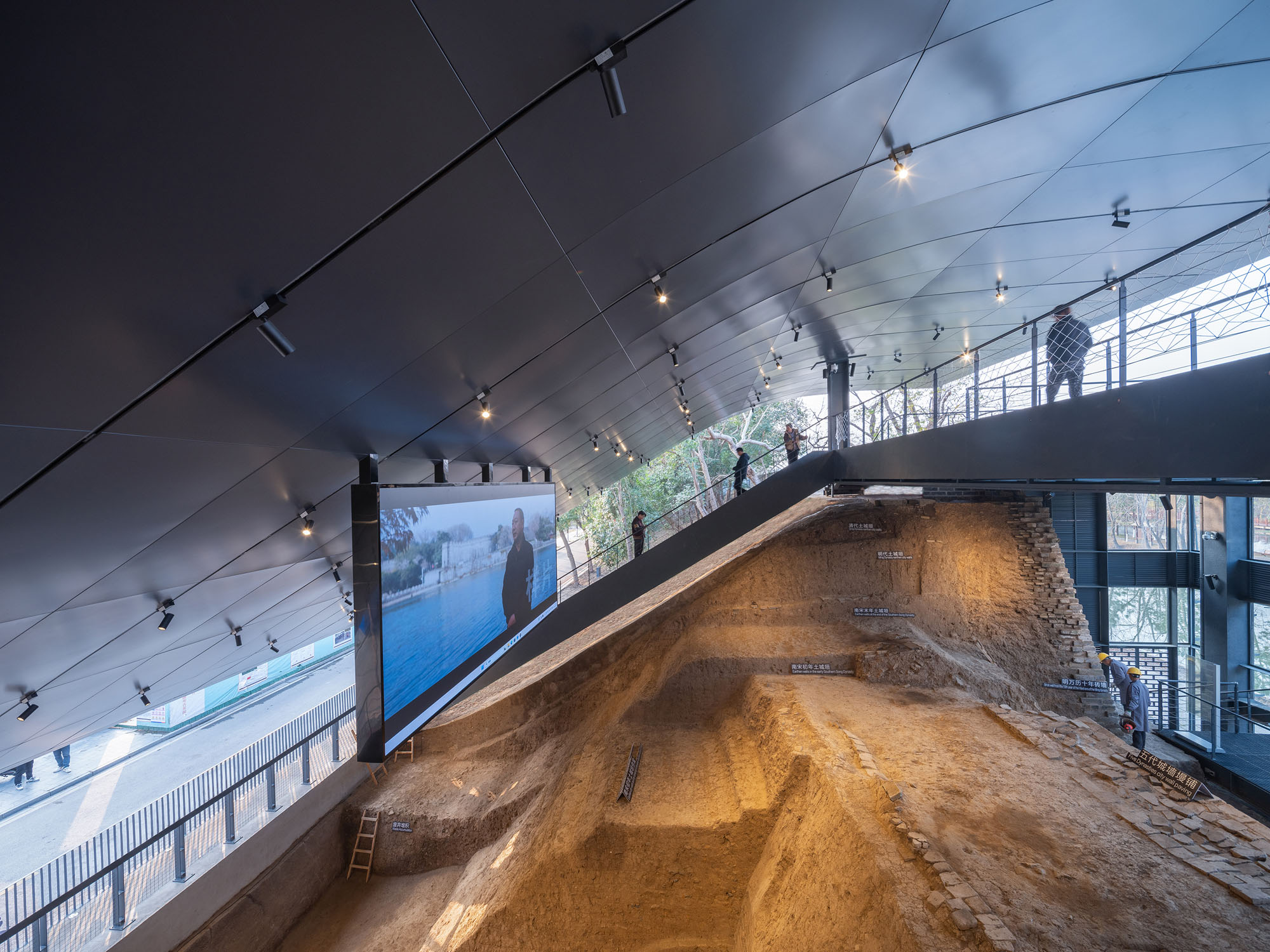
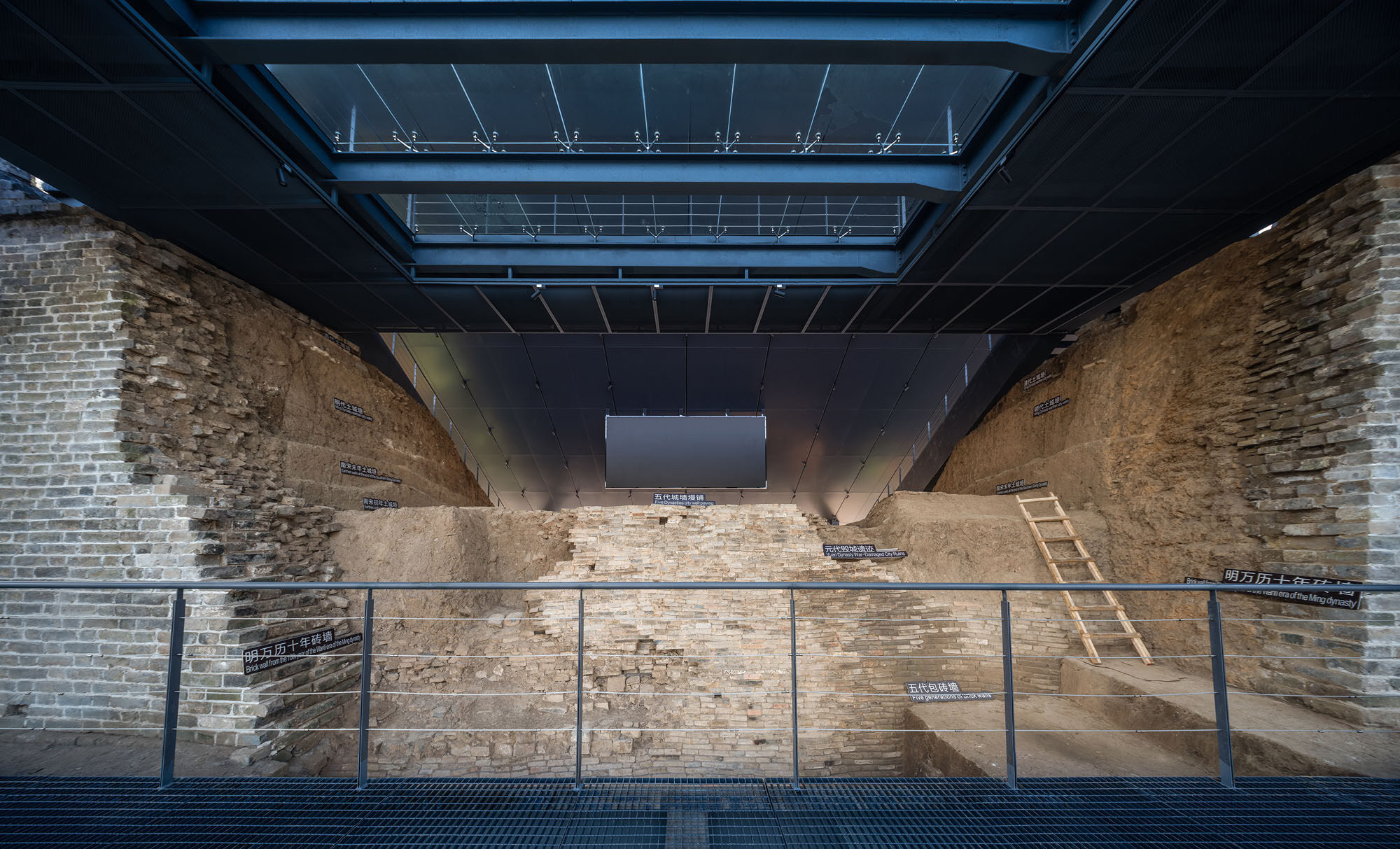
本プロジェクトは、荊州城壁第11稜堡における考古学的な大発見と、その保存修復における画期的な取り組みから端を発している。2016年以降、この古い城壁区間は地盤沈下と構造的な亀裂により、緊急保存の対象に指定されていた。その修復作業の過程で、五代十国、宋、明、清という複数の時代にまたがる「壁の上に壁を築く」という層状構造が発見され、国家文物局によって系統的な考古学発掘が承認されたのである。
©︎ C-Context Architectural Photography (Zhao Yilong)
©︎ C-Context Architectural Photography (Zhao Yilong)
歴史の証人としての遺跡と、現代への問い
第11稜堡での発見は、荊州のレンガ城壁の起源が五代時代にまで遡ることを証明した。五代から清代にかけて城壁がどのように建造され、利用されてきたのかという実態を明らかにし、この古城が持つ歴史的・文化的な奥深さを鮮やかに浮き彫りにしたのである。
極めて重要な歴史的証人としての役割を果たすこの遺跡は、同時に我々へ新たな問いを投げかけている。すなわち、「考古学的な遺構をいかにして生き生きとした姿で展示し、人々の日常的な文化生活へと統合できるか」ということである。
©︎ C-Context Architectural Photography (Zhao Yilong)
©︎ C-Context Architectural Photography (Zhao Yilong)
キャノピー:景観に溶け込む「光の介入」
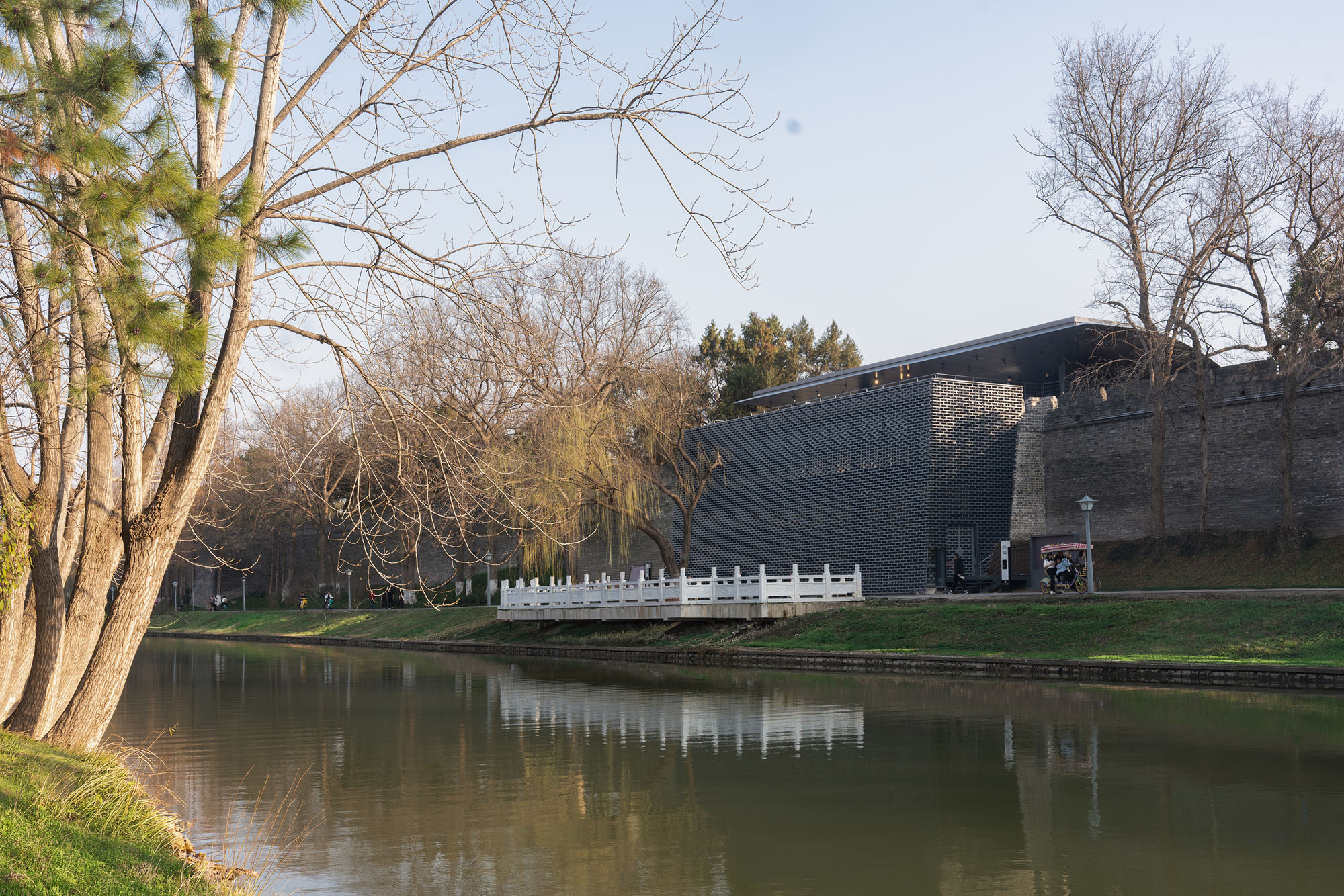
本計画の主な課題は、風雨から考古学的遺構を保護することであった。しかし、巨大な屋根や派手な覆いを設けることは、古代都市がもつ美しいシルエットを暴力的に損なう結果を招いてしまう。
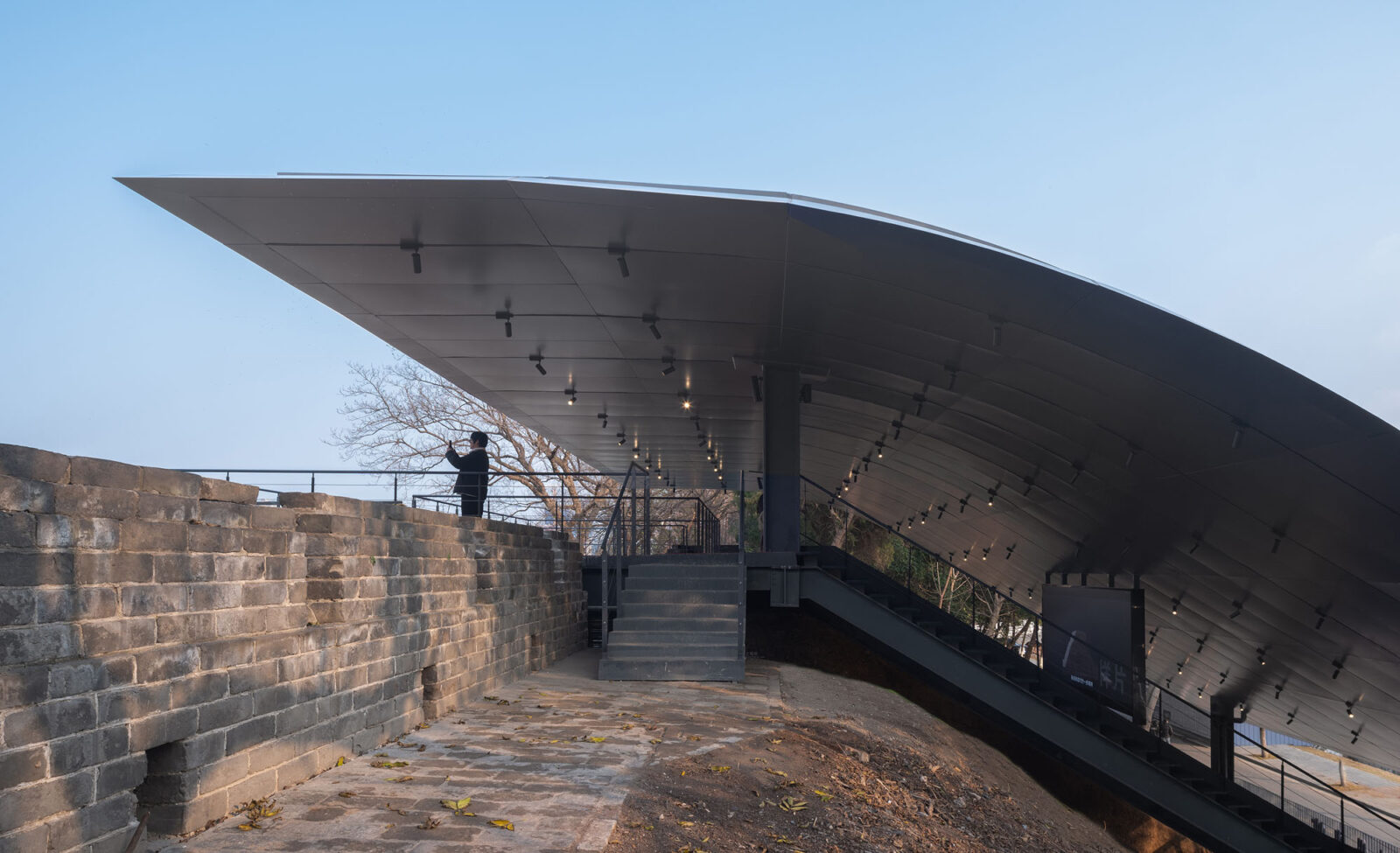
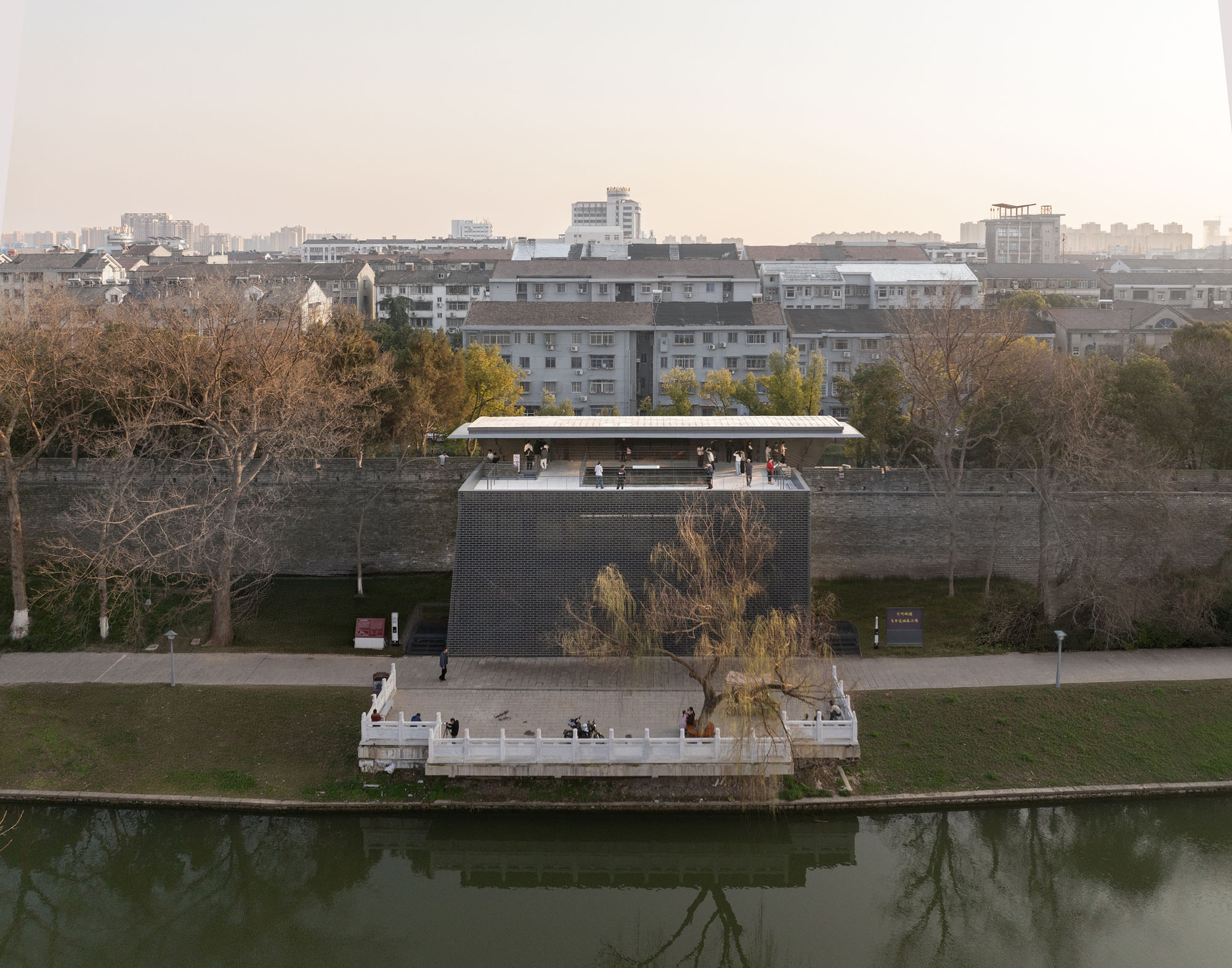
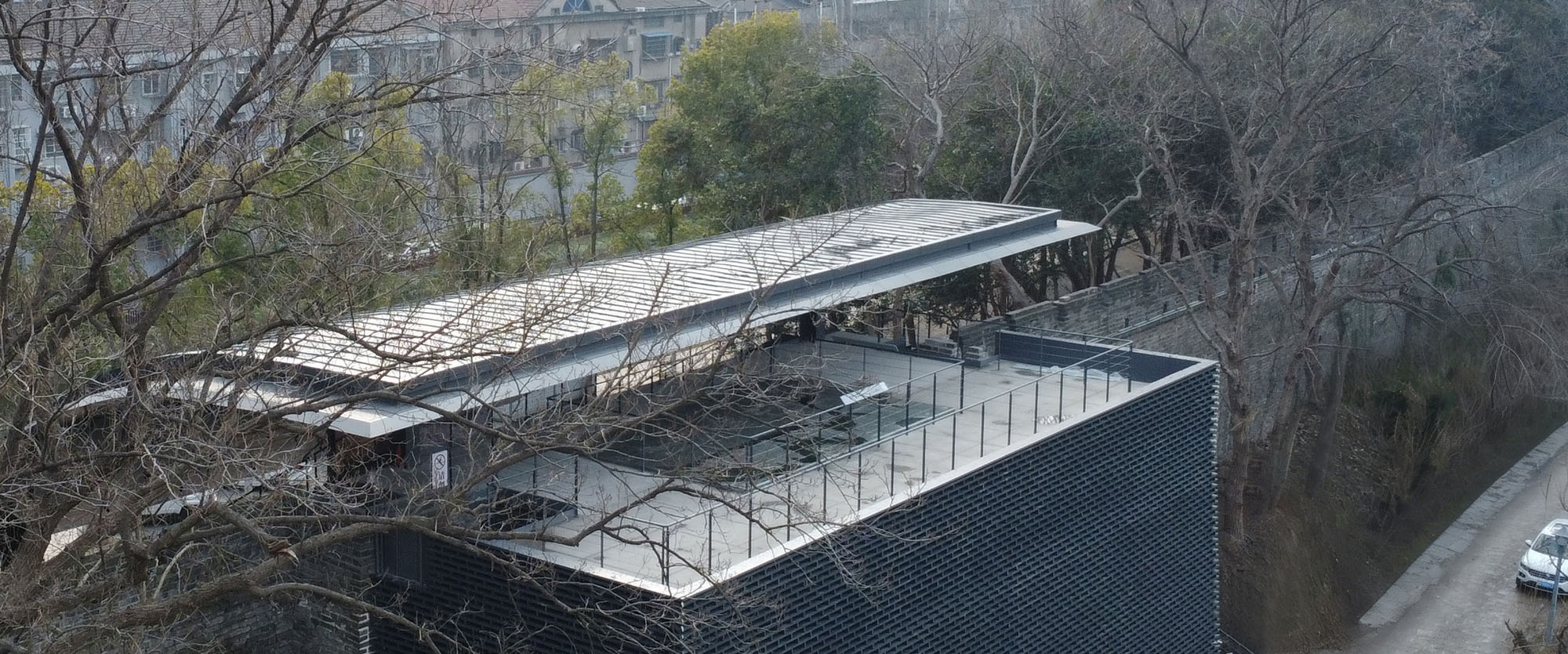
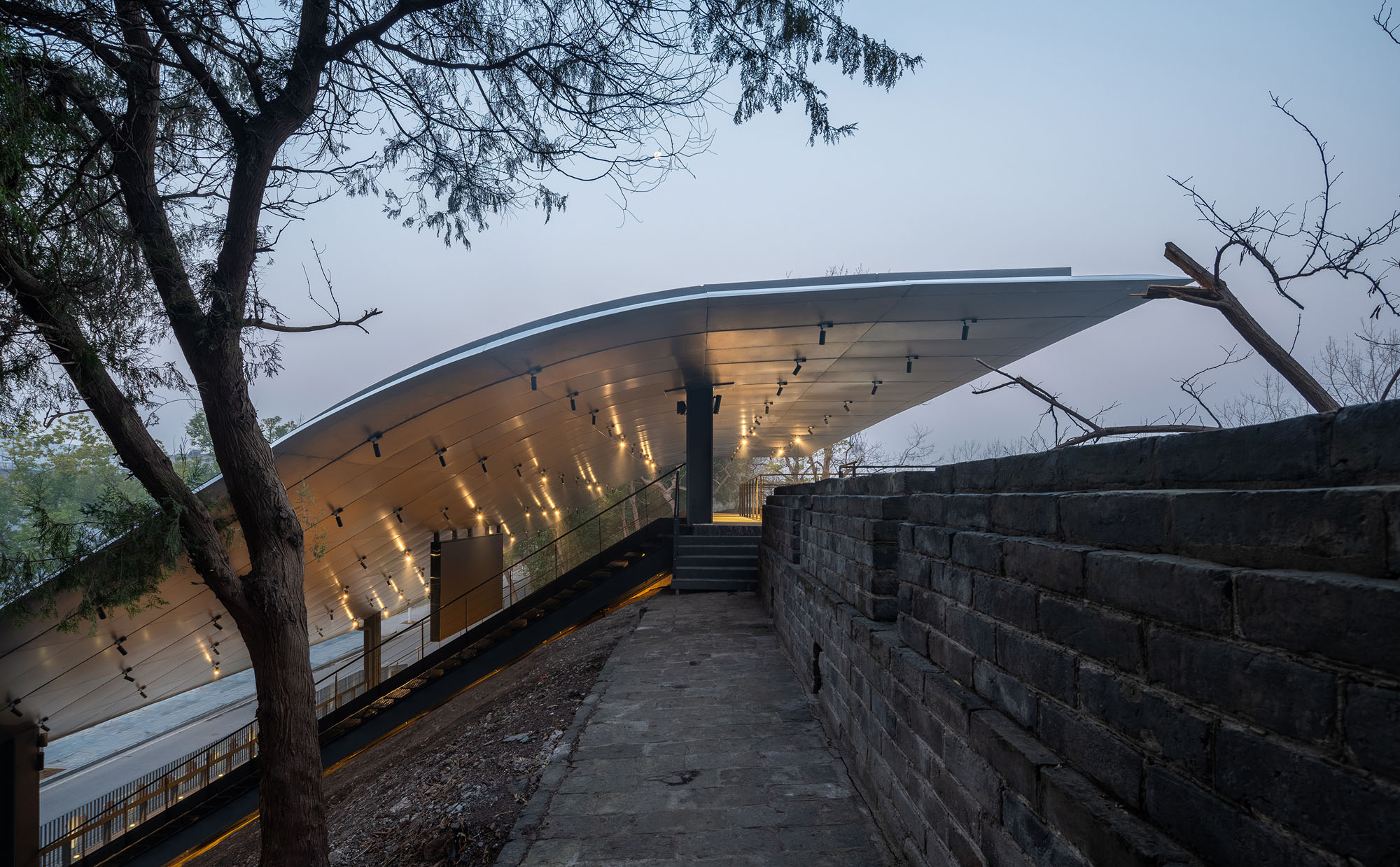
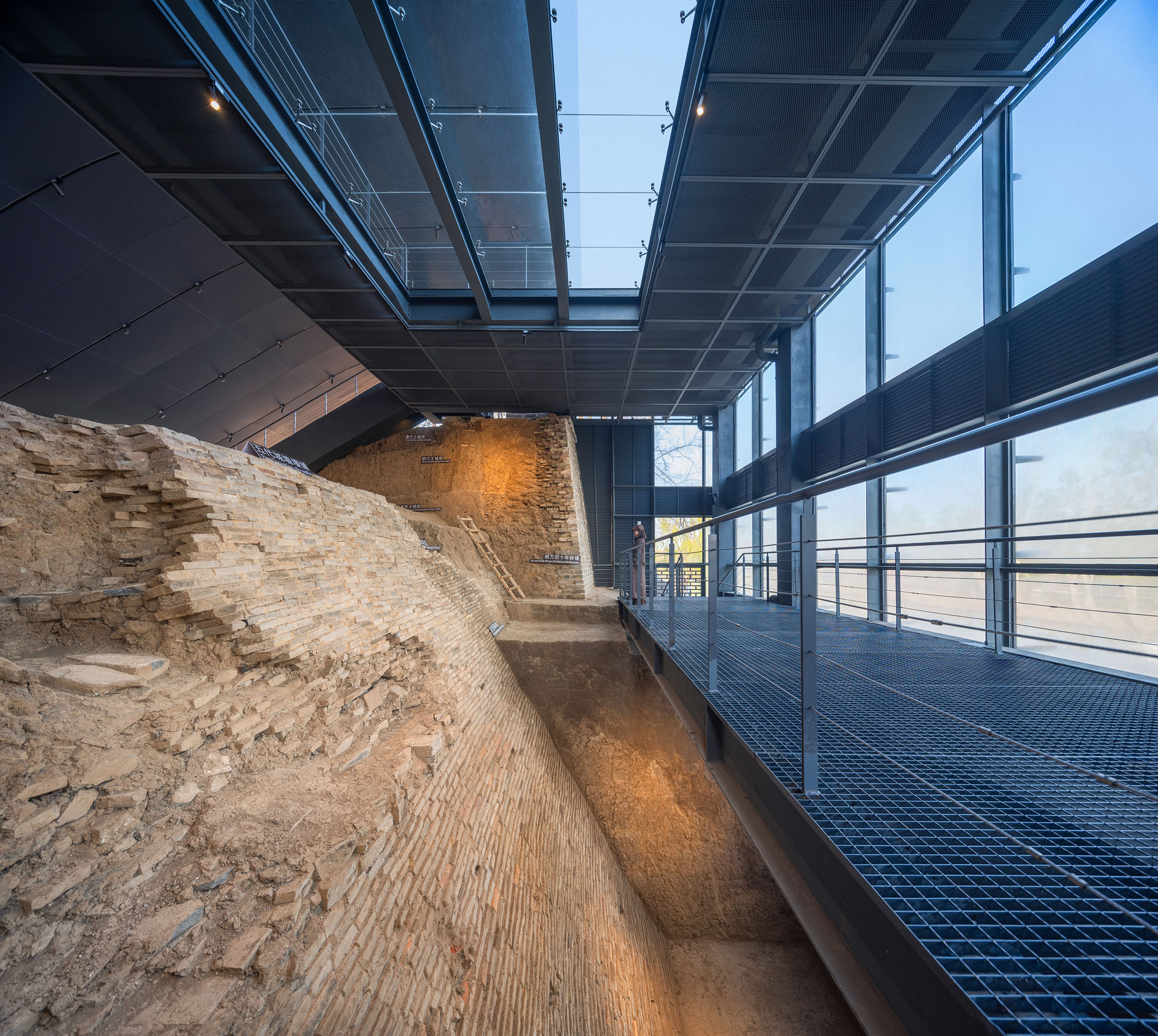
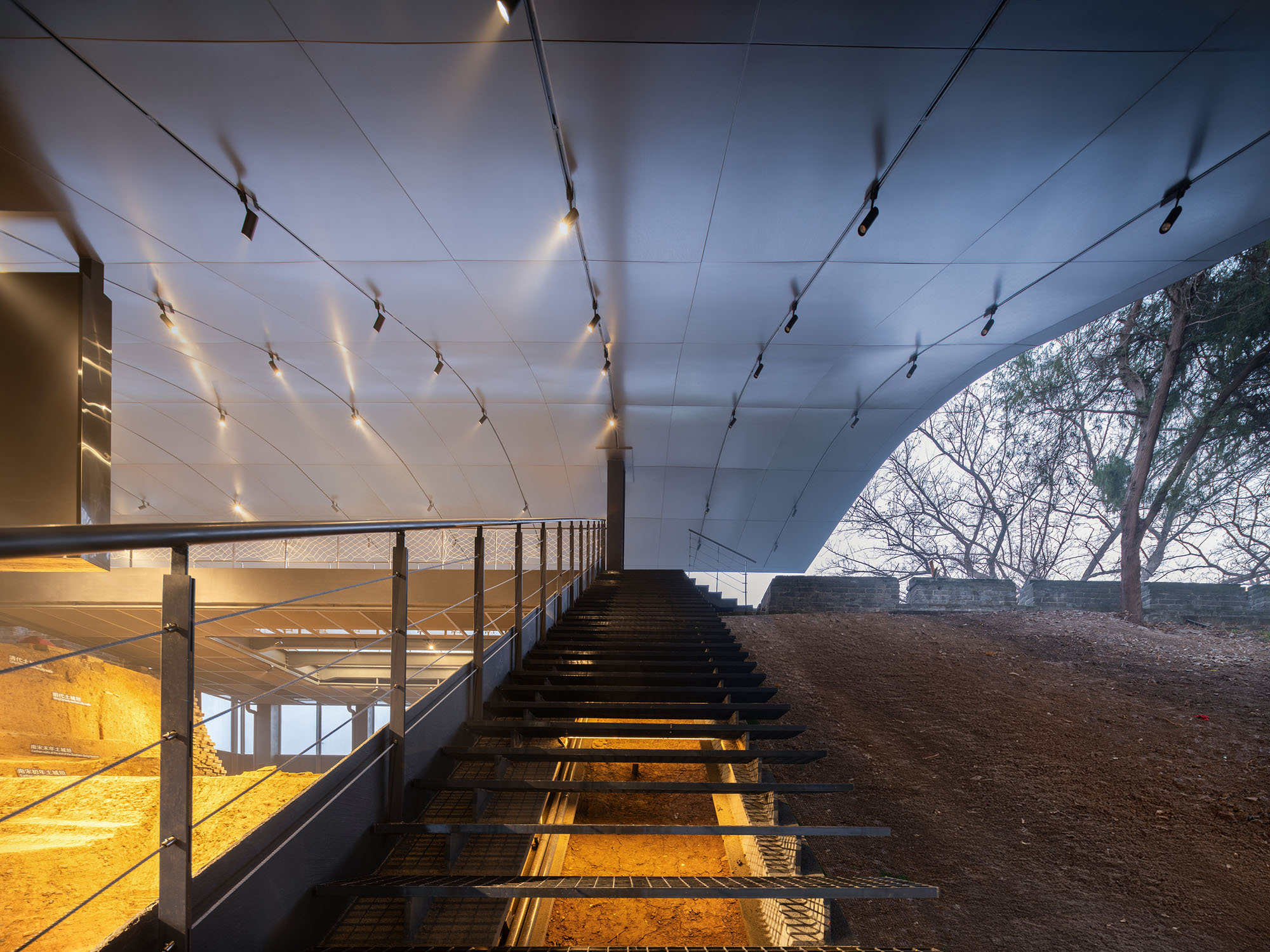
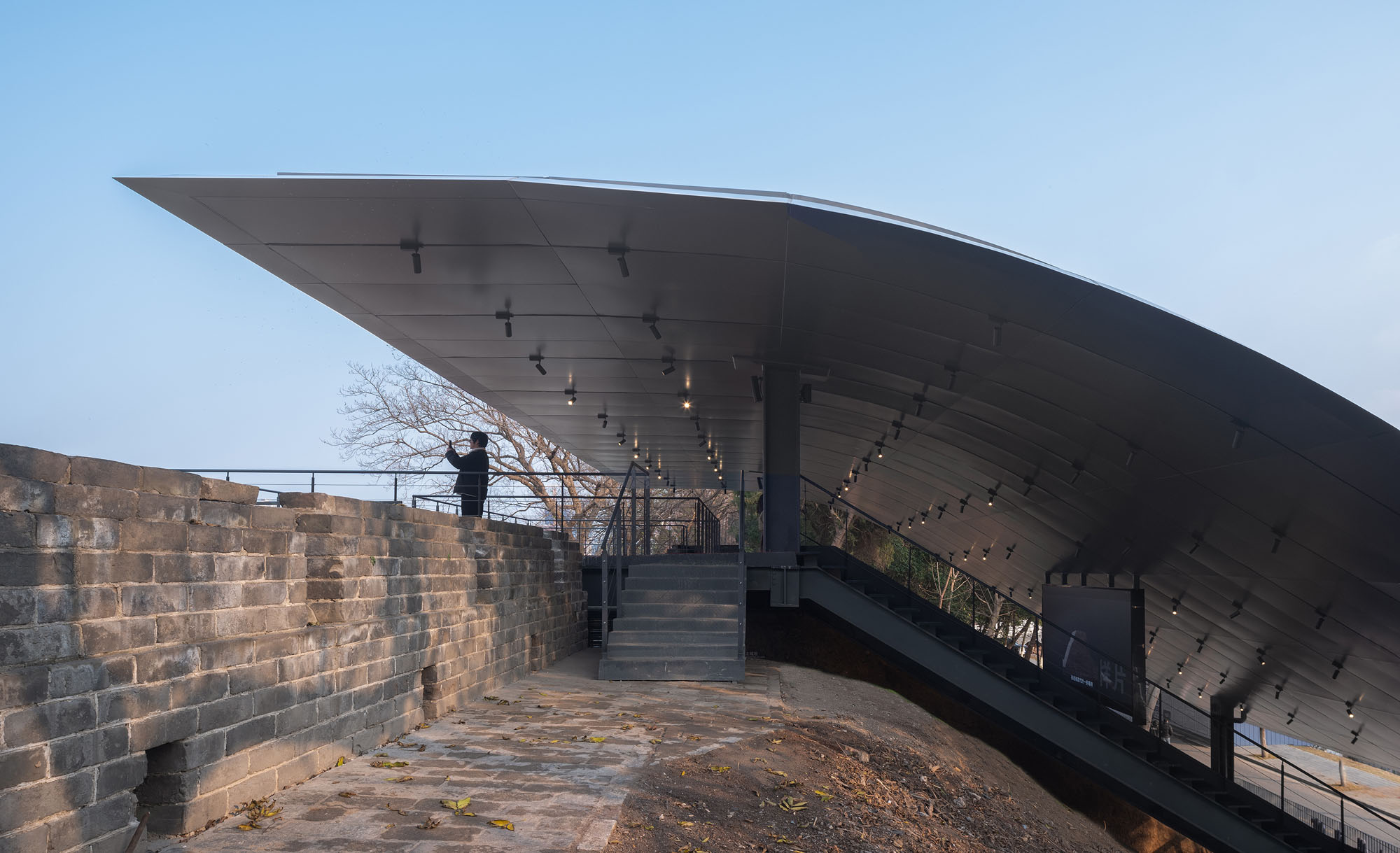
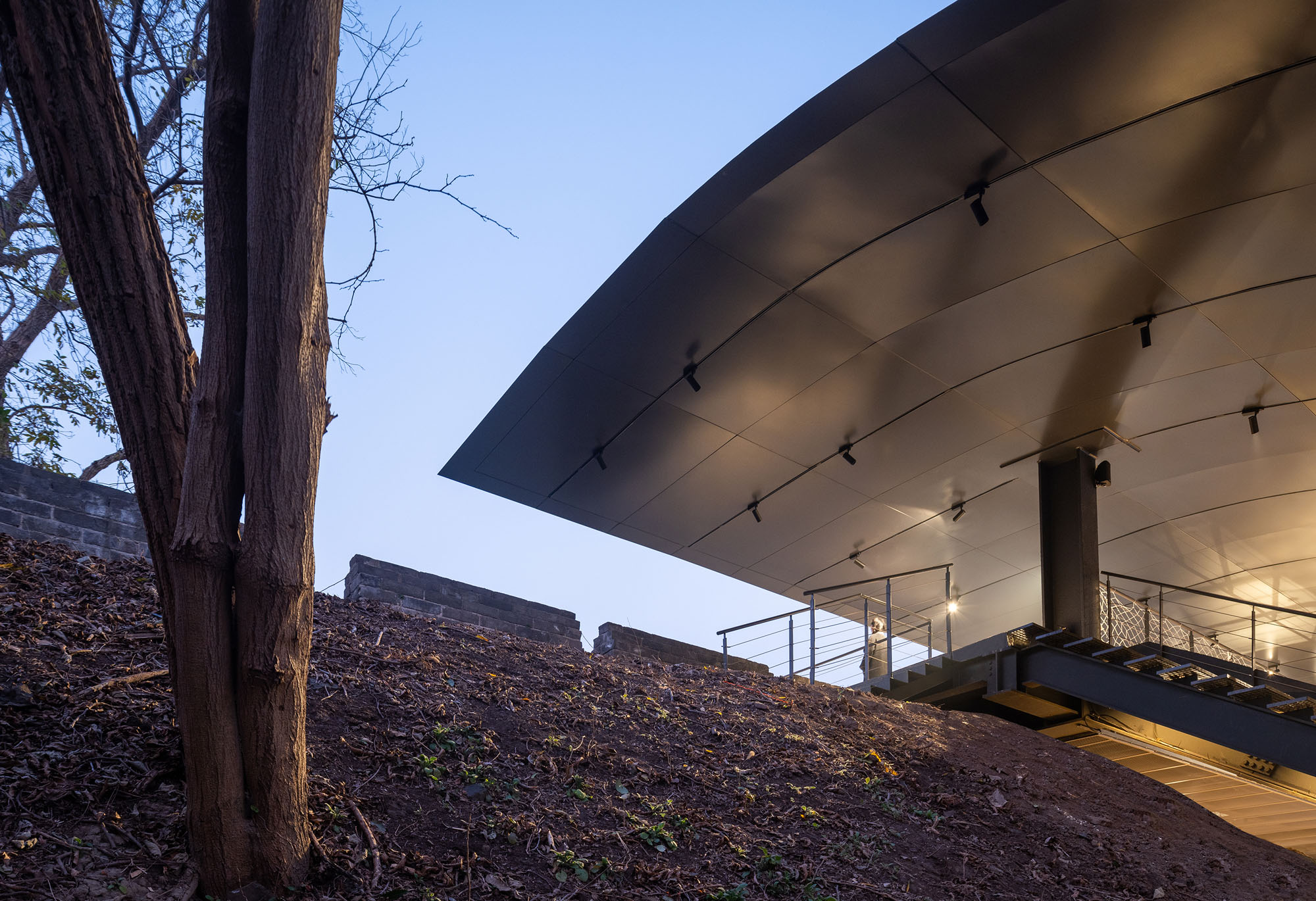
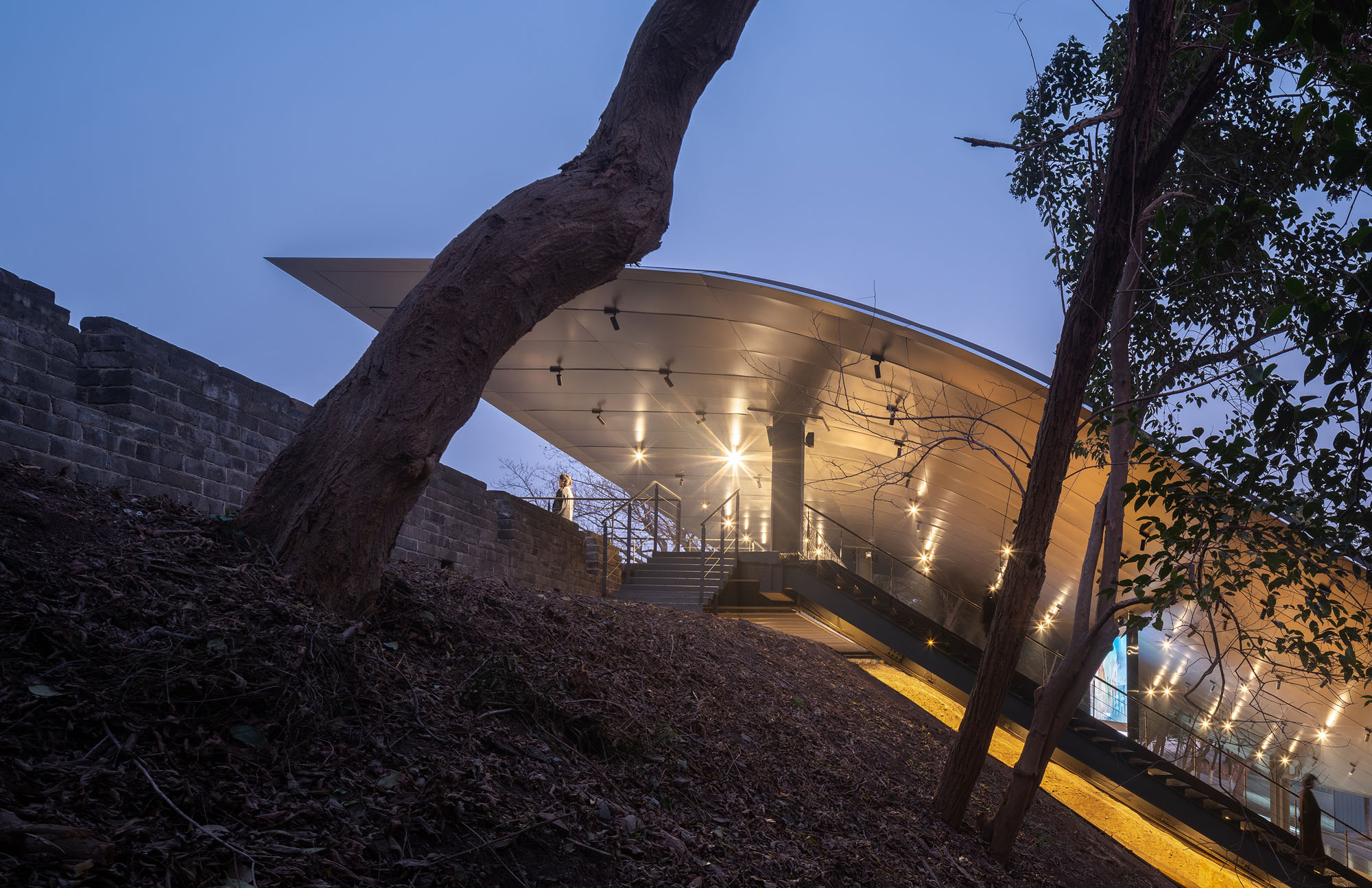
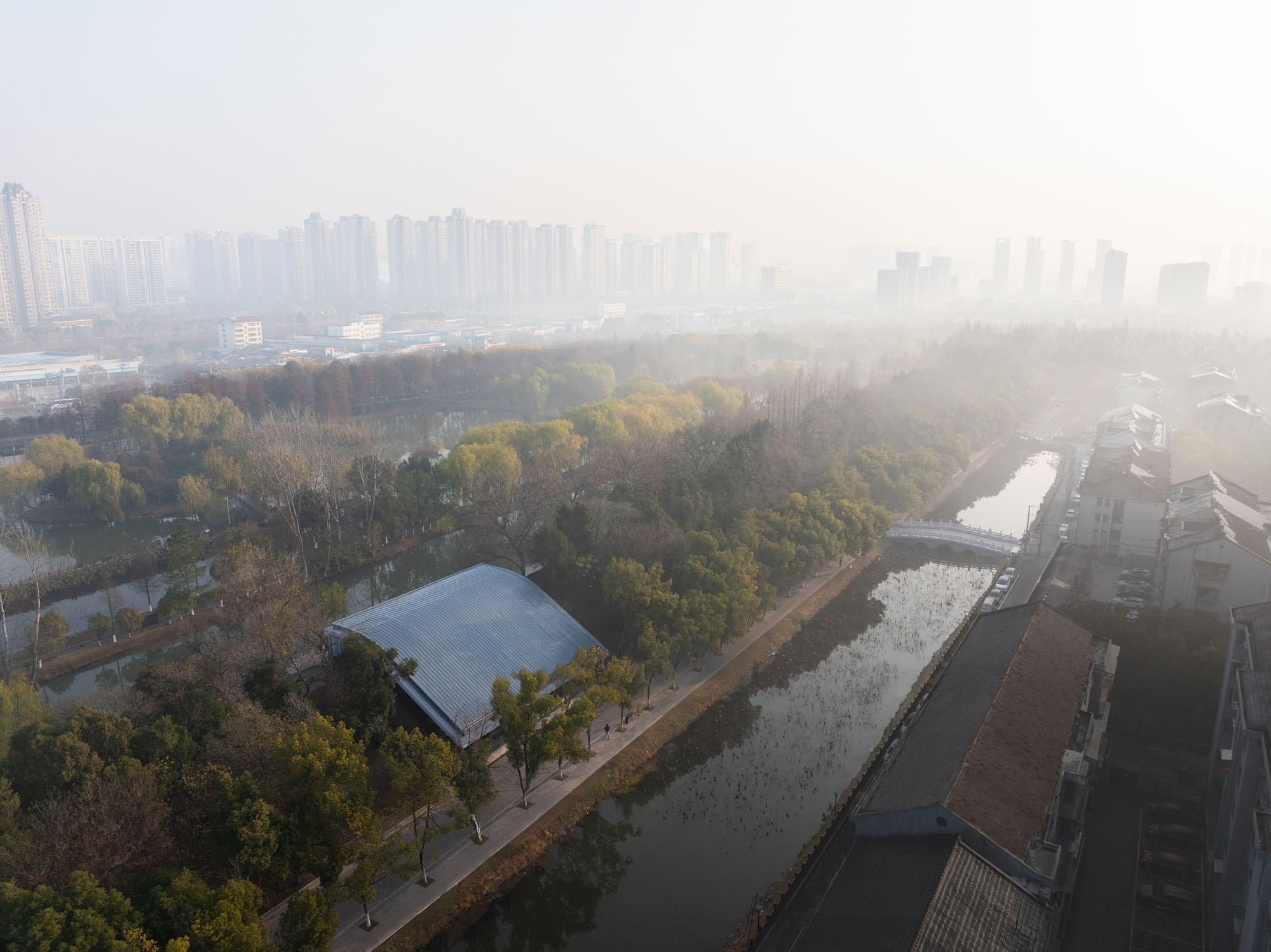
そこで採用された戦略が「分解」と「視覚的な後退」である。保護用のキャノピーは2つのセグメントに分割されている。南側は内側の土塁が描く傾斜に沿い、北側は残存する外側の稜城壁の方向とテーパー角に同調させている。その結果、キャノピーは上空から圧迫する巨大な物体ではなく、既存の地形から優しく「浮かび上がる」ような新たな輪郭として姿を現している。
©︎ C-Context Architectural Photography (Zhao Yilong)
©︎ C-Context Architectural Photography (Zhao Yilong)
最小限の介入による構造的配慮
新設された鋼製の梁と柱はすべて、歴史的な城壁から明確に物理的な距離を保つよう設計されている。基礎部分には、以前設けられていた仮設保護施設の支柱位置をほぼそのまま流用した。これにより、遺跡や城壁の基礎に対する二次的な撹乱を極限まで抑え、「最小限の介入」という原則を貫きながら、敷地を軽やかに跨ぐように配置されている。
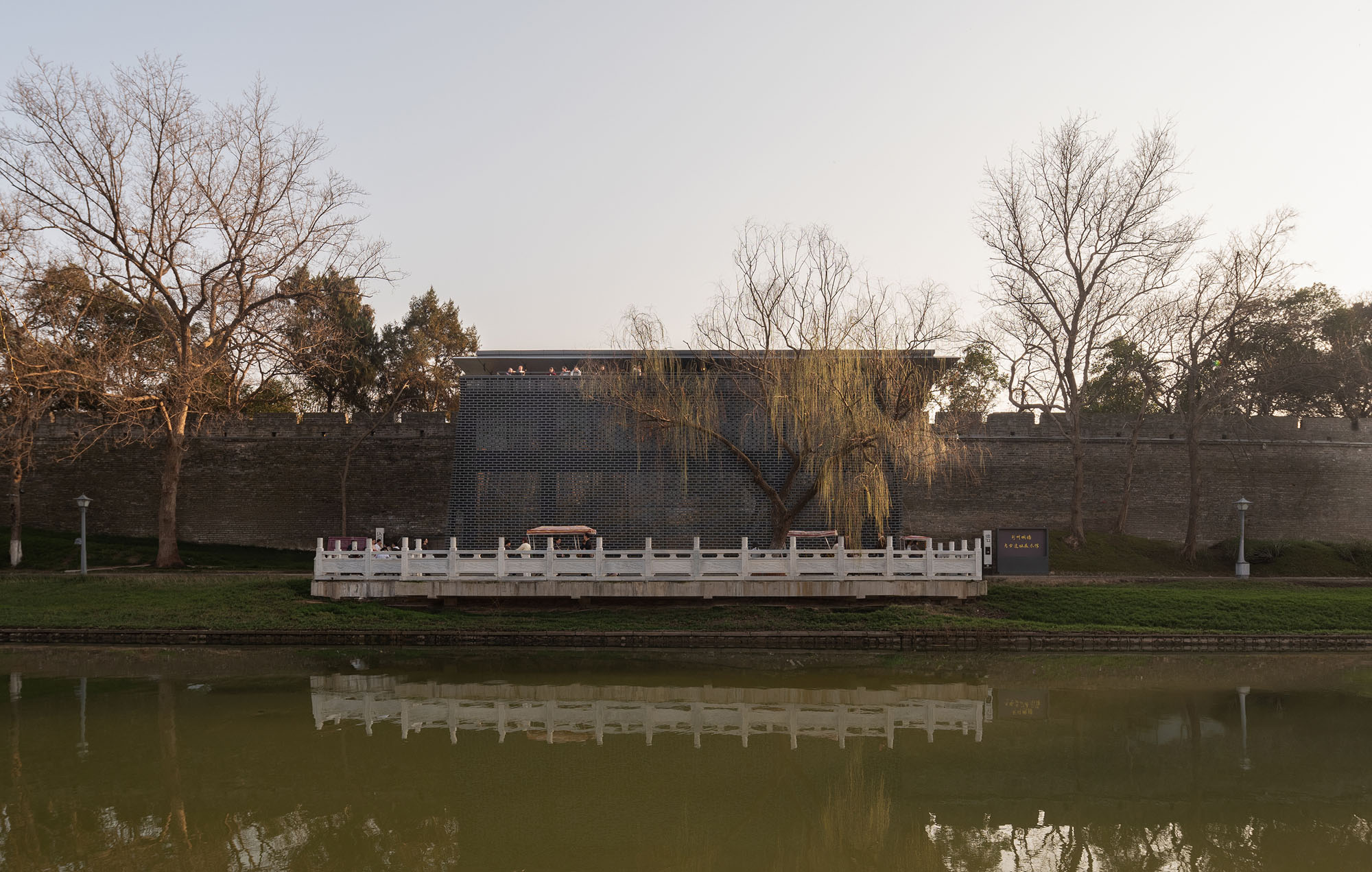
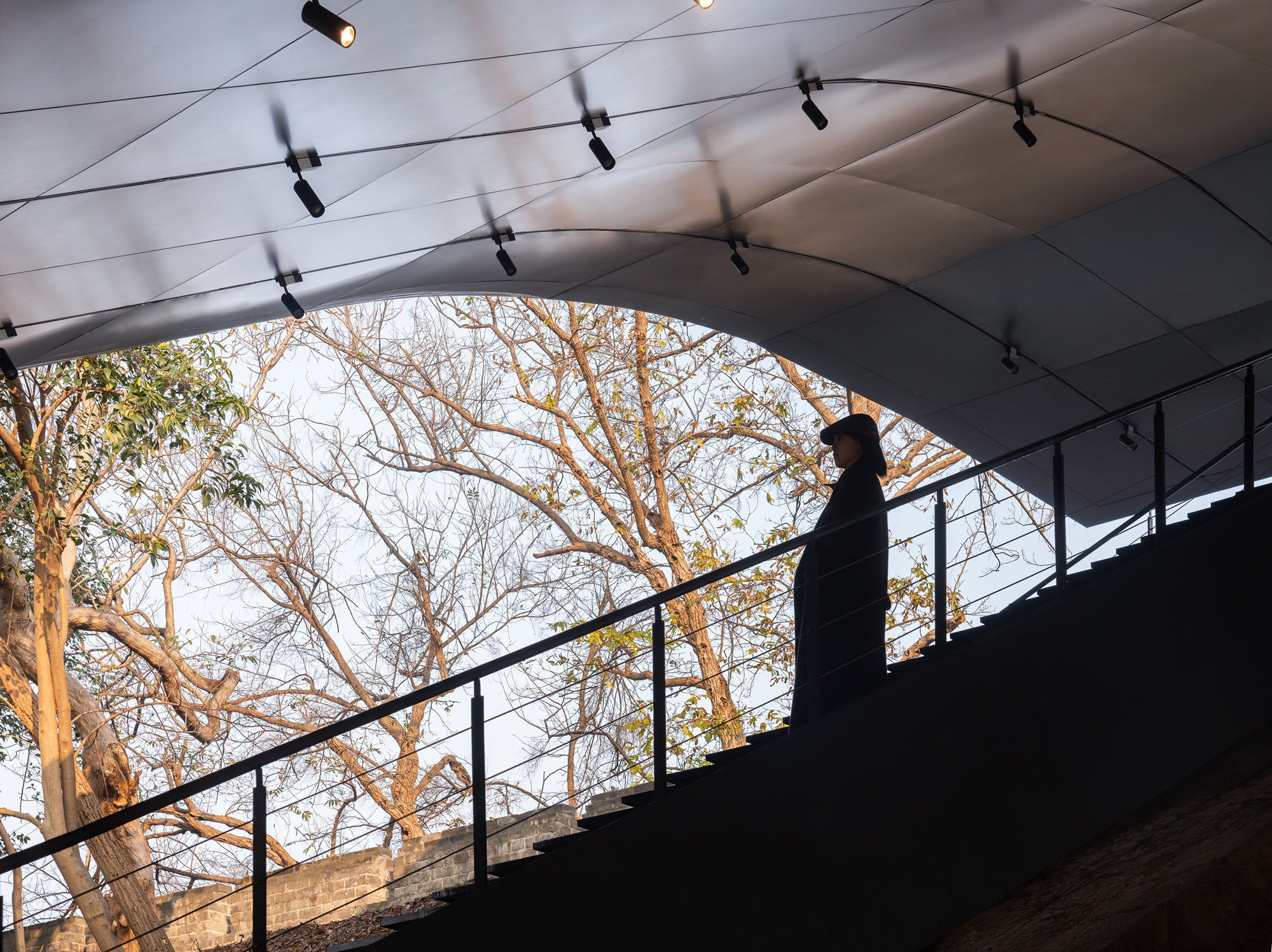
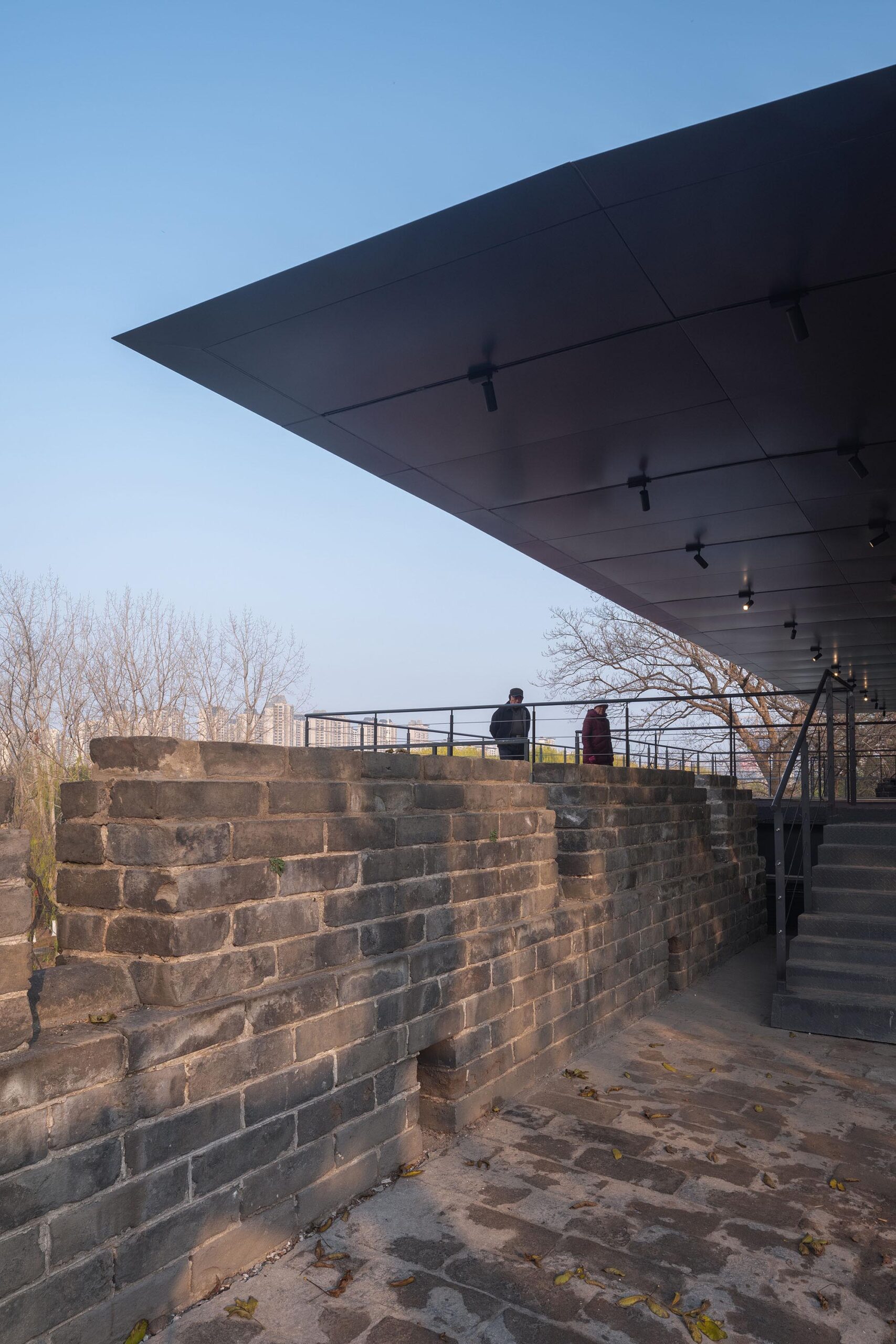
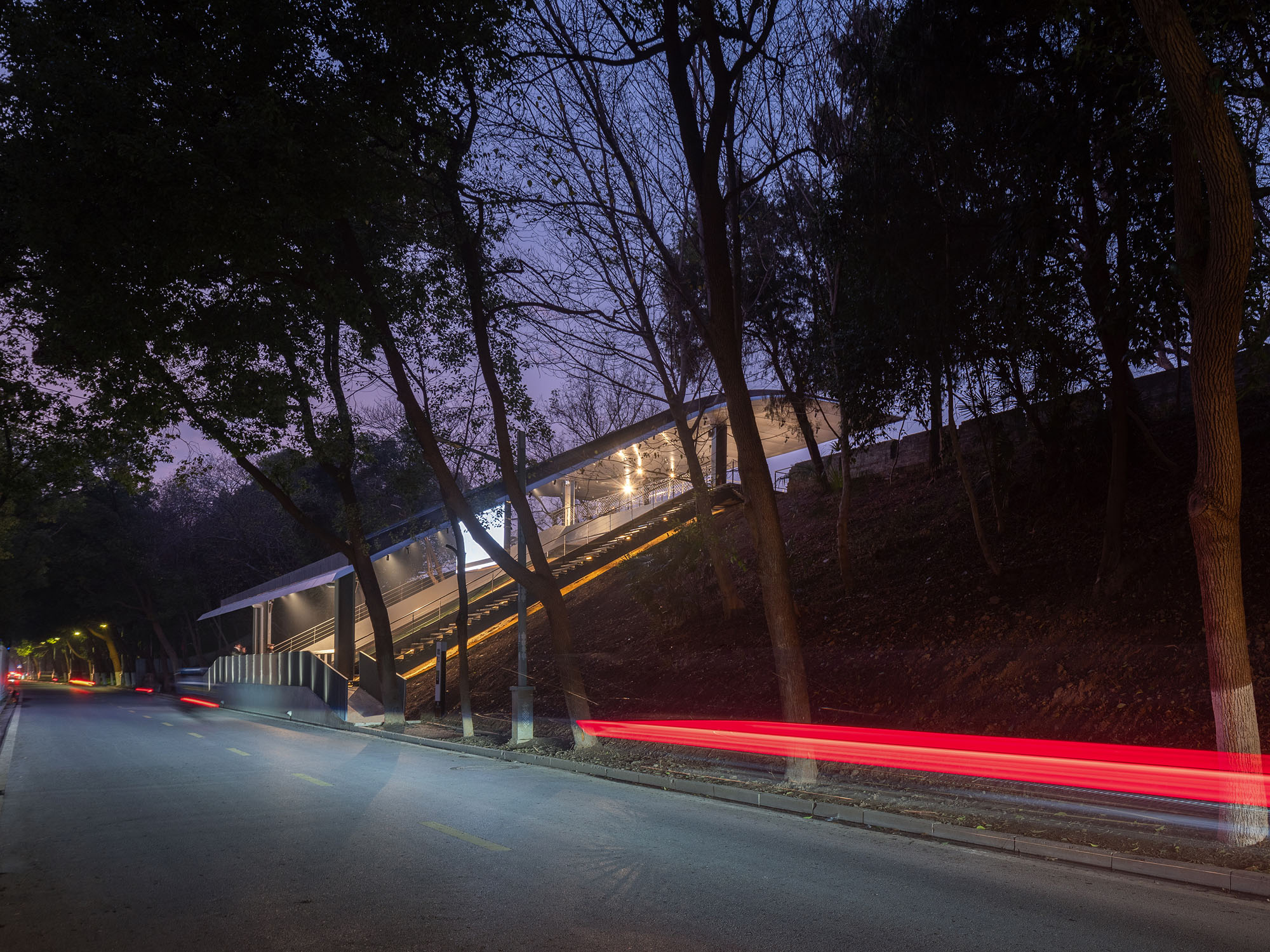
また、視覚的な繊細さを極限まで追求すべく、軒先には可変断面設計を採用した。外部の道路からは刃のように薄い縁として認識され、古代都市のスカイラインと見事に一体化する。一方、敷地内部から見上げると、完全で滑らかな曲線を描く天井面が現れ、遺構と訪問者の双方に対して静謐な庇護の空間を提供している。
©︎ C-Context Architectural Photography (Zhao Yilong)
©︎ C-Context Architectural Photography (Zhao Yilong)
©︎ C-Context Architectural Photography (Zhao Yilong)
道:宙に浮き、歴史を読み解く
第11稜堡は、交差する2つの「時間の軸」が収束する場所であり、荊州城壁の歴史を理解する上で極めて重要な拠点である。
垂直の軸は、五代から清代までの遺構が層状に堆積してきた歴史そのものを示す。対して水平の軸は、今日まで完全な姿で保存されてきた古代城壁を意味している。中国南部だけでなく中国全土を見渡しても最も完全に残存する州級城壁の1つとして、その真の価値は11,281mにも及ぶ途切れることのない周長と連続性にある。
©︎ C-Context Architectural Photography (Zhao Yilong)
©︎ C-Context Architectural Photography (Zhao Yilong)
©︎ C-Context Architectural Photography (Zhao Yilong)
視線を導き、存在を消す歩道
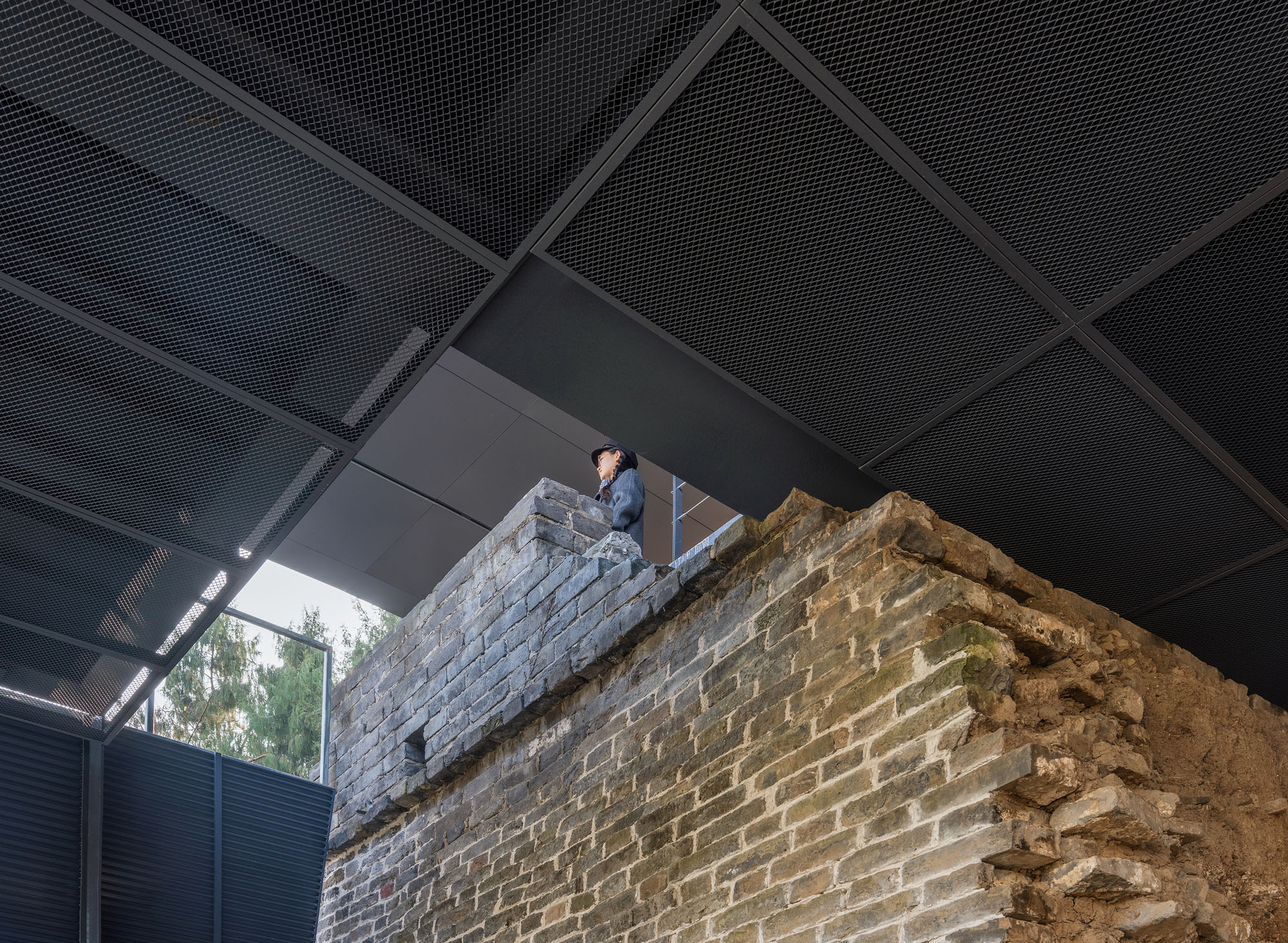
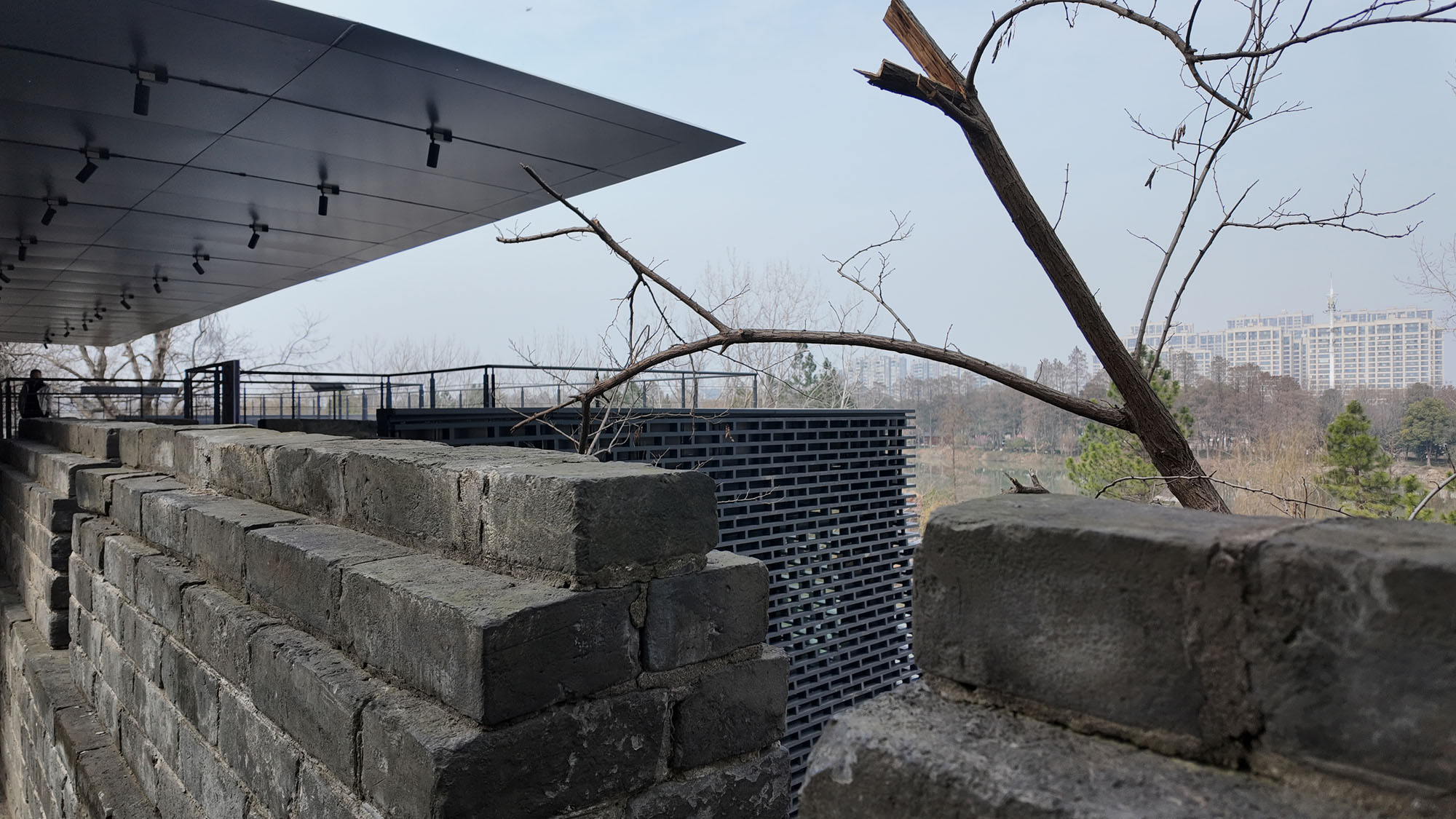
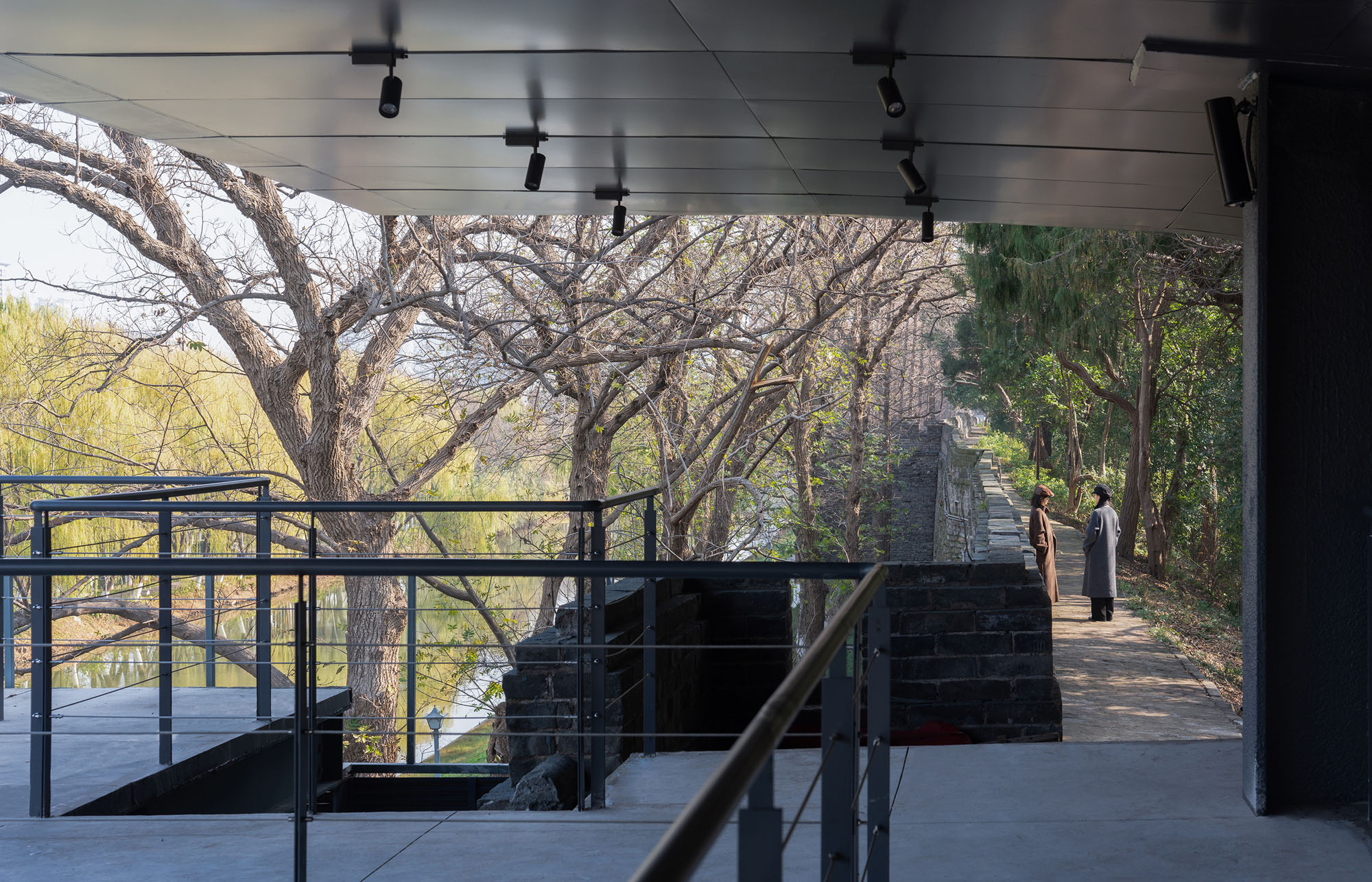
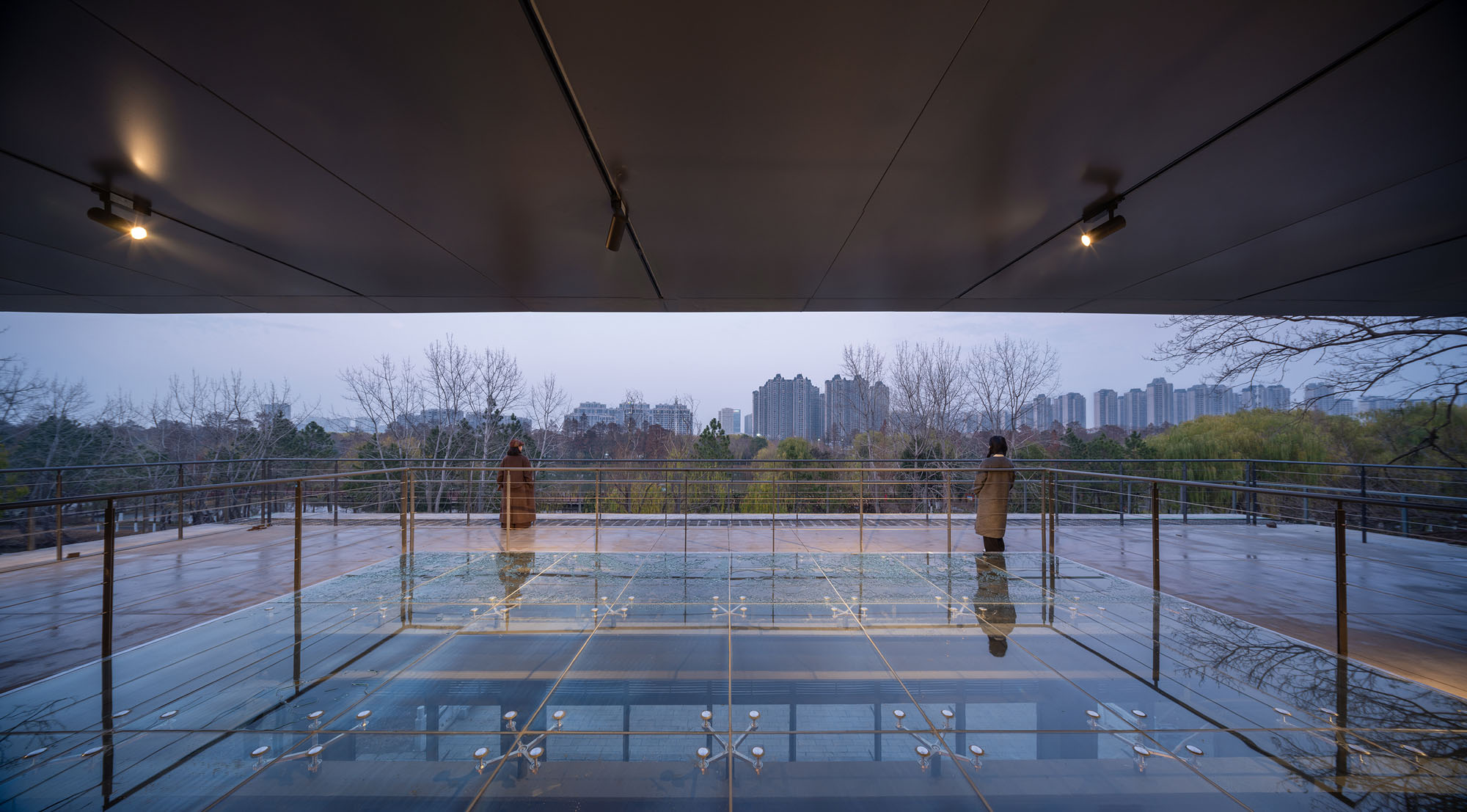
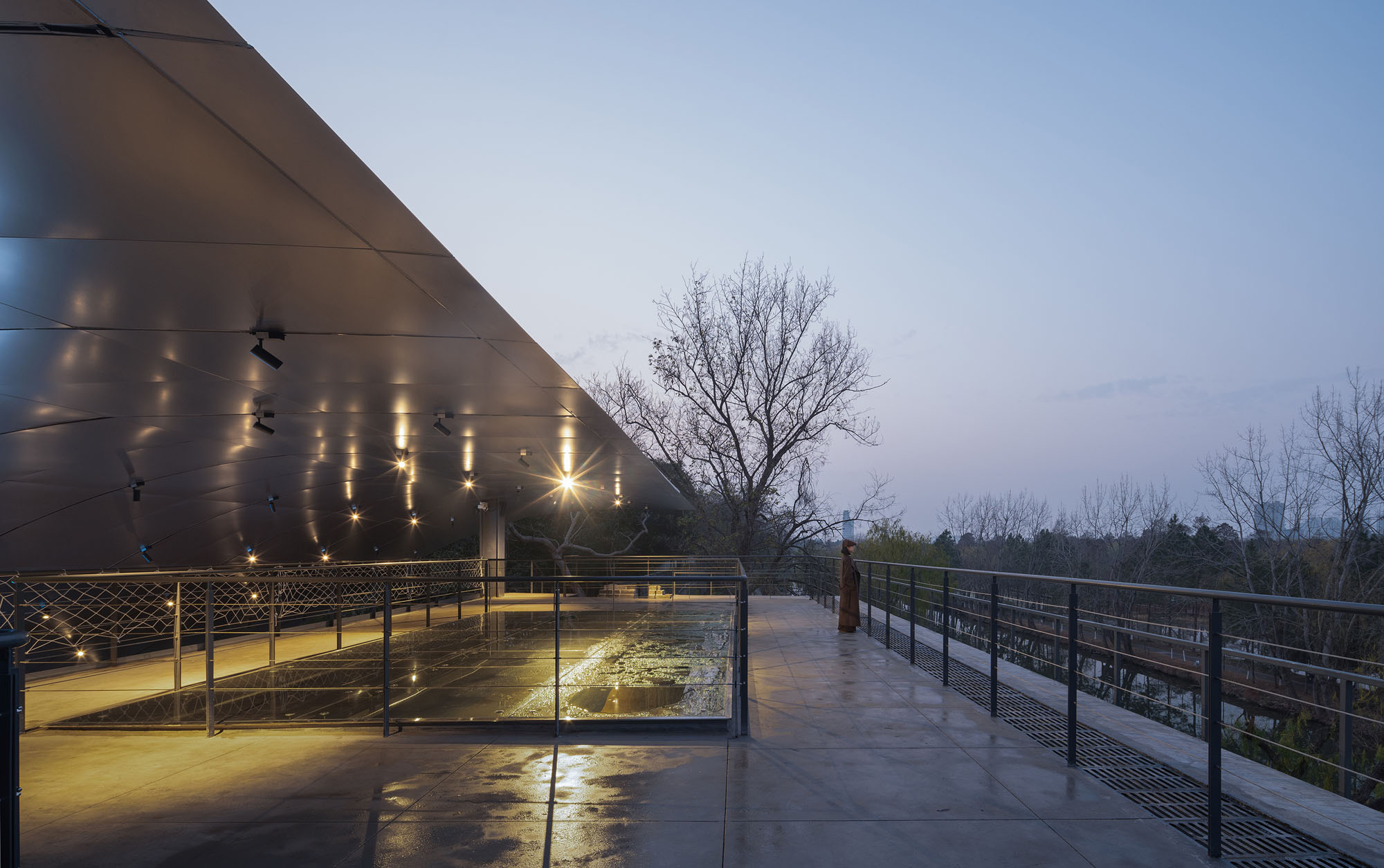
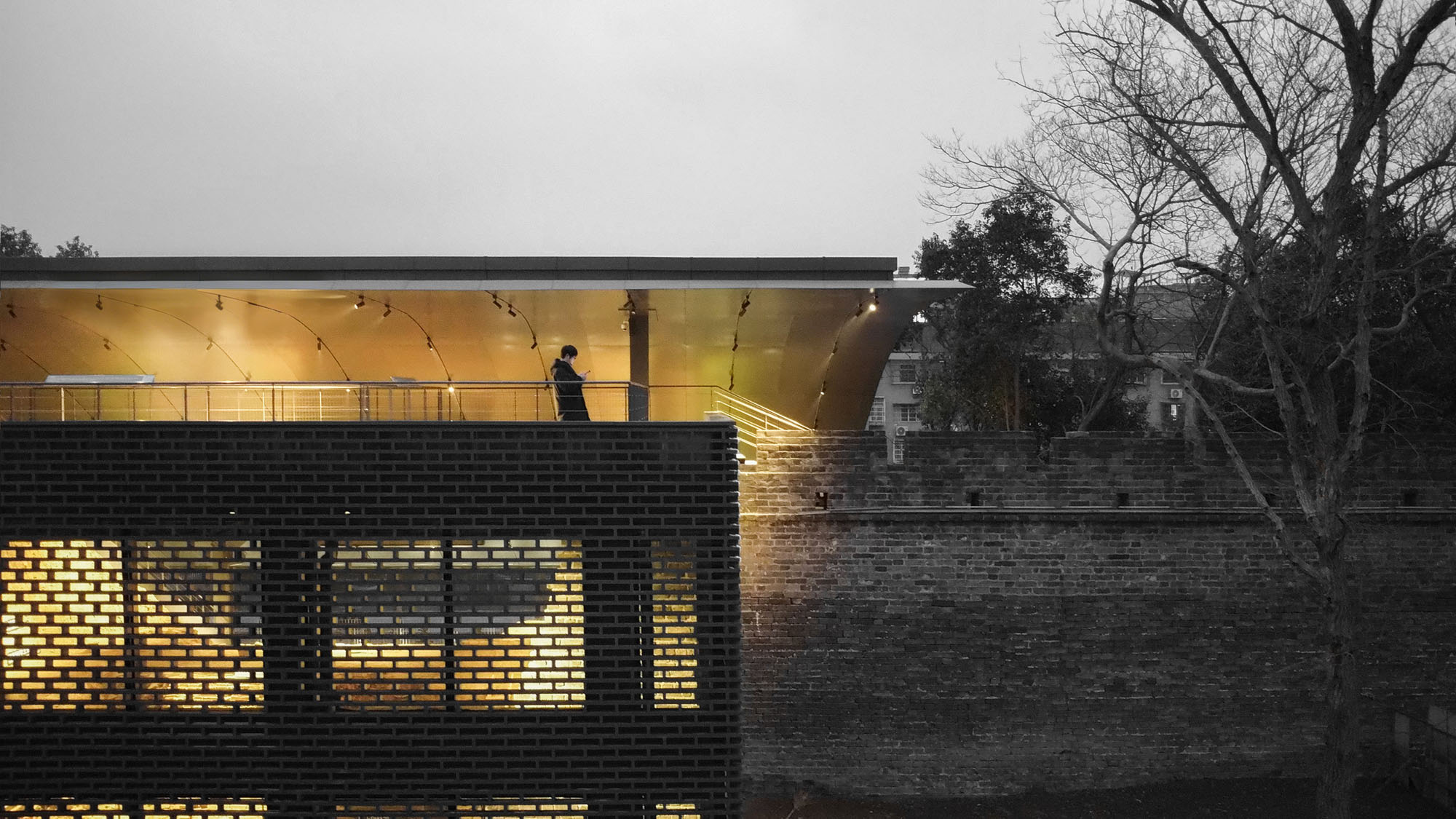
上部においては、これまで途絶えていた城壁上の巡回路を復元し、古代都市の空間的な連続性を再構築した。これにより、考古学遺跡と周辺の都市景観を見渡すことができる展望ポイントが誕生している。
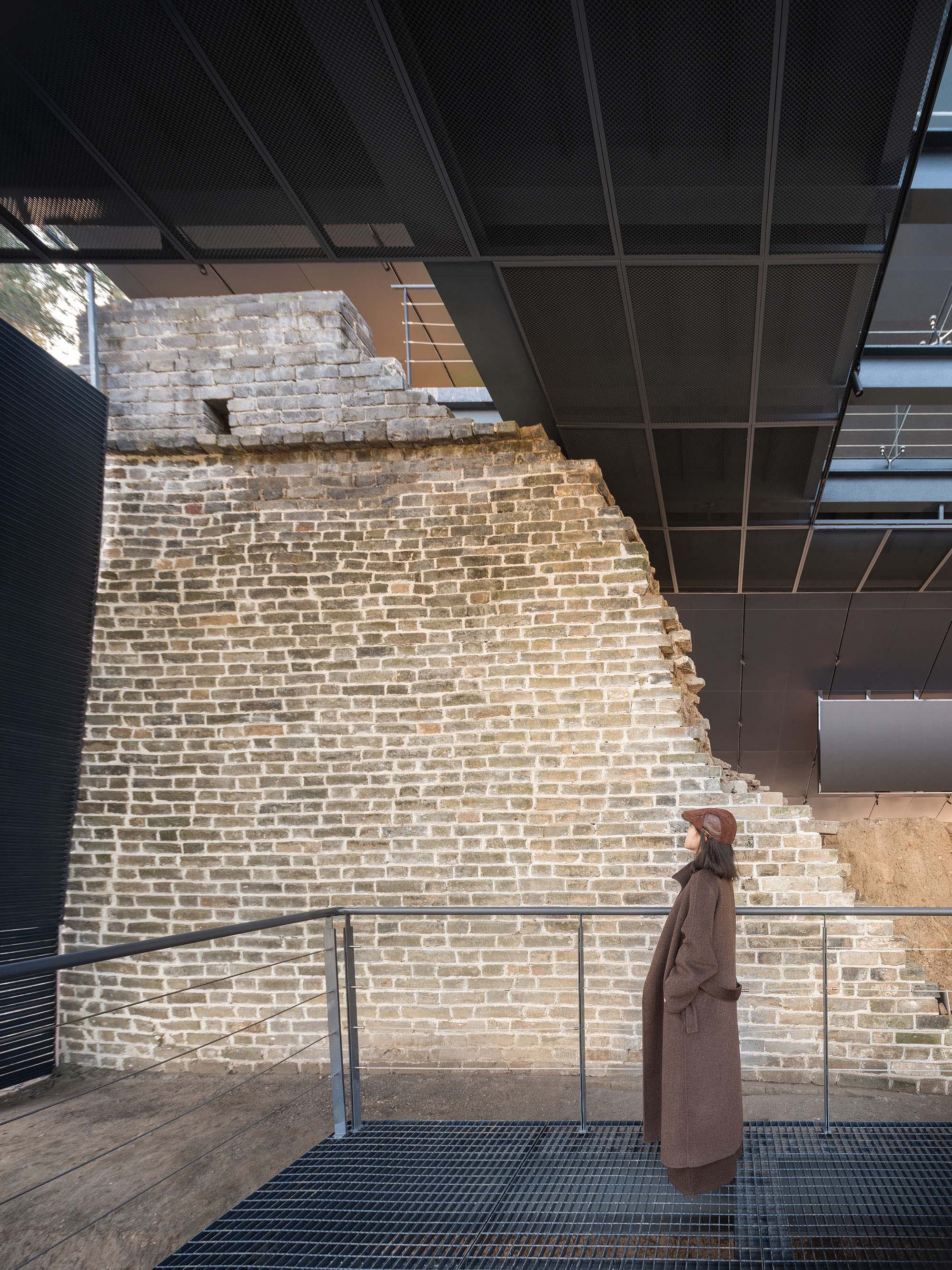
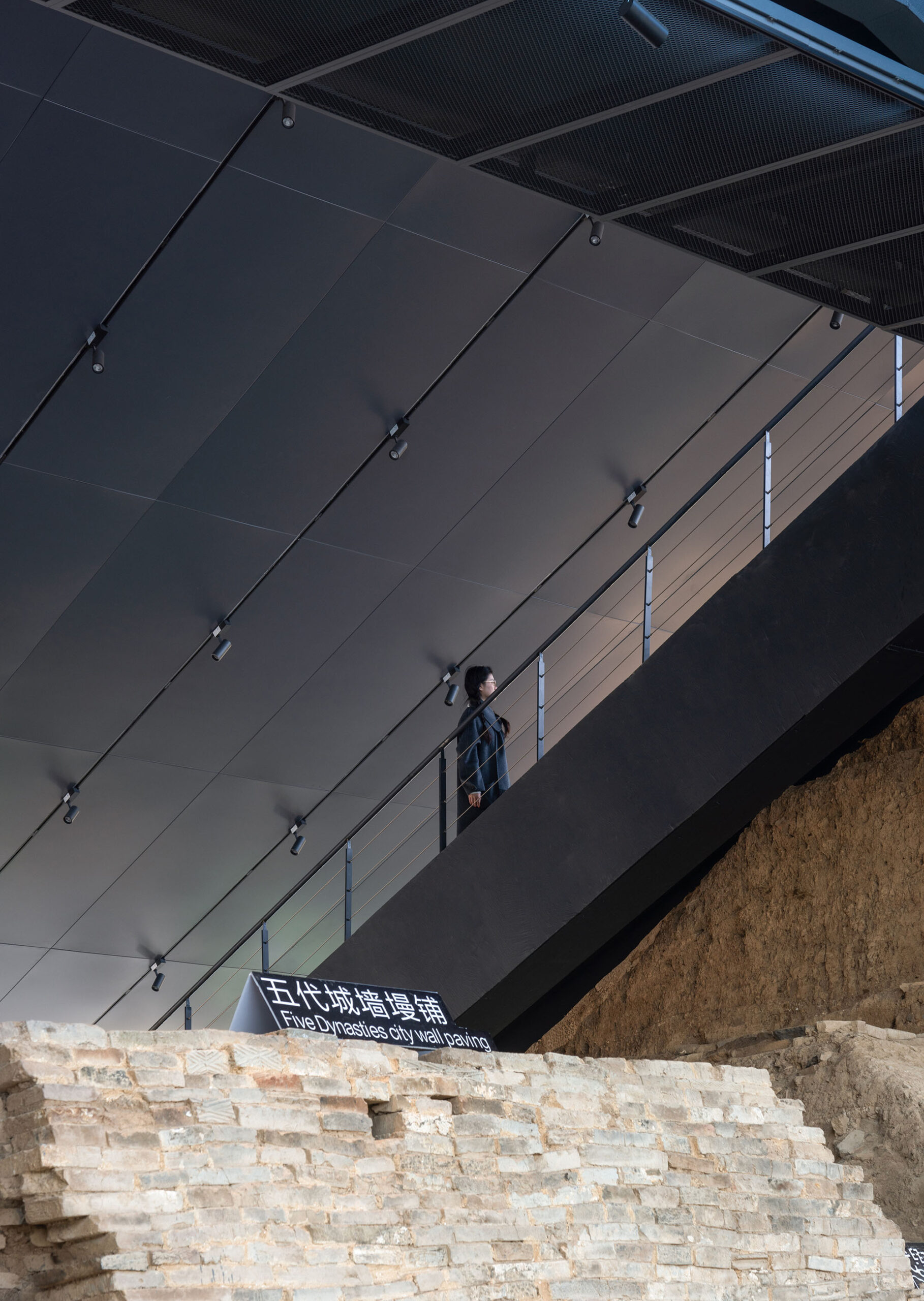
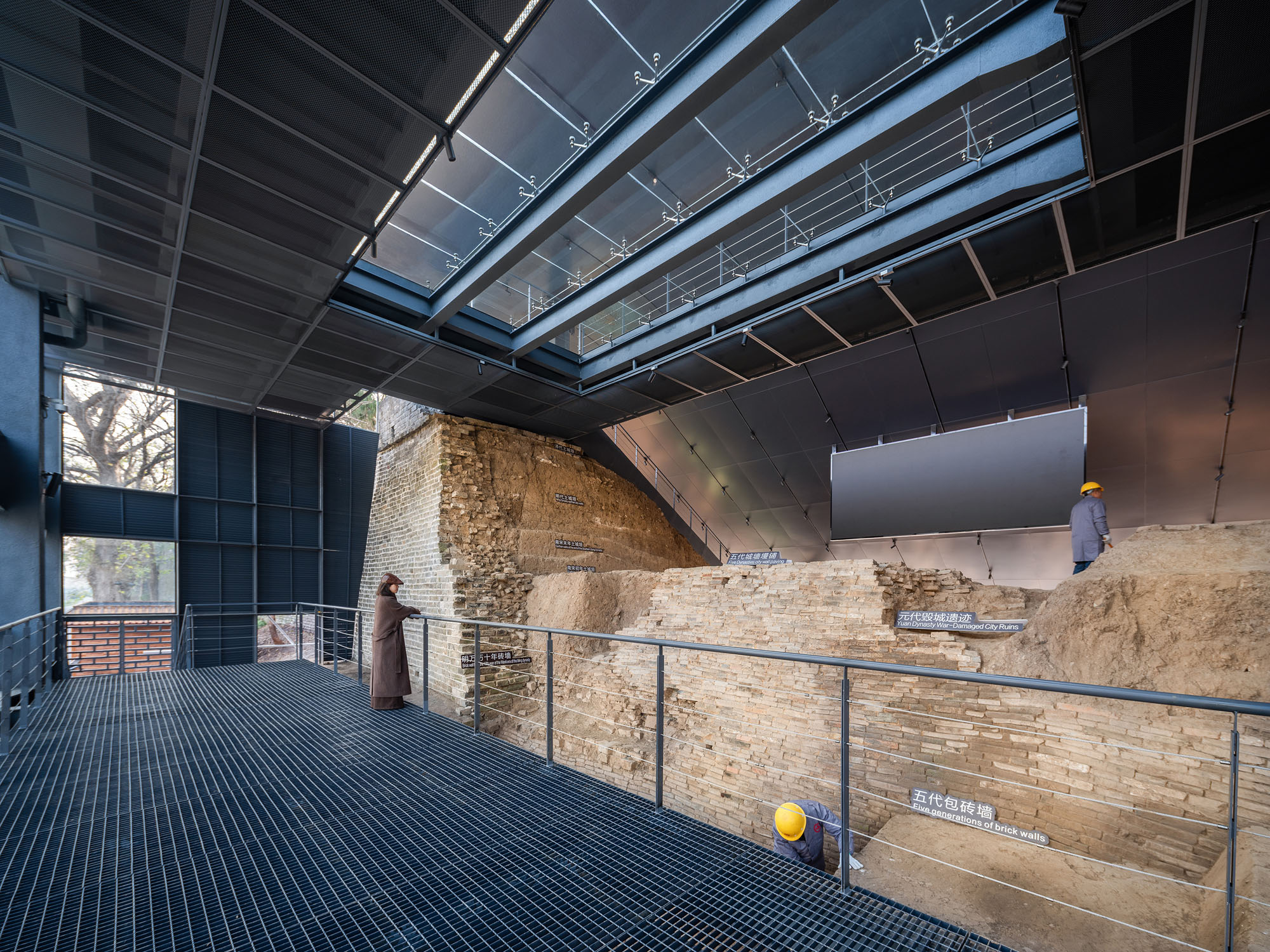
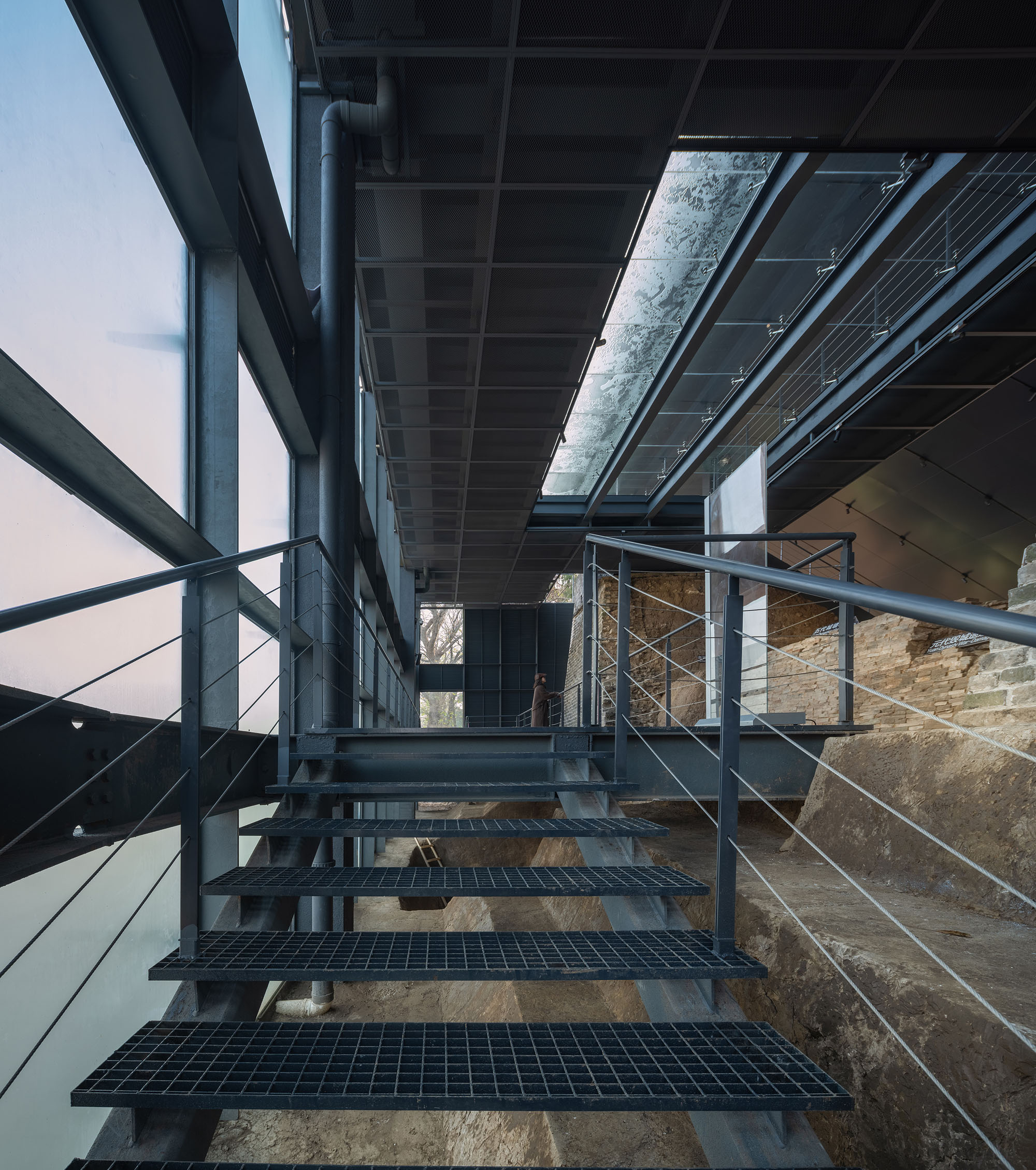
下部においては、軽量な穿孔プラットフォームが発掘された壁面に沿って張り出している。ここでは訪問者がまるで考古学者のような鳥瞰的な視点に立ち、土層や石積みの細部を観察することが可能である。
展望台と歩道はすべて、構造上の要求が許す限り最小の寸法に抑えられ、ダークグレーのマットな金属で仕上げられている。人々がこの歩道を進むとき、その意識は完全に足元に広がる歴史の断面へと引き寄せられる。歩道そのものは、視線を導くための控えめな枠組みとして背景に退き、やがて消え去るような感覚をもたらすのである。
©︎ C-Context Architectural Photography (Zhao Yilong)
©︎ C-Context Architectural Photography (Zhao Yilong)
©︎ C-Context Architectural Photography (Zhao Yilong)
境界線:日常と交差する「生きた展示」
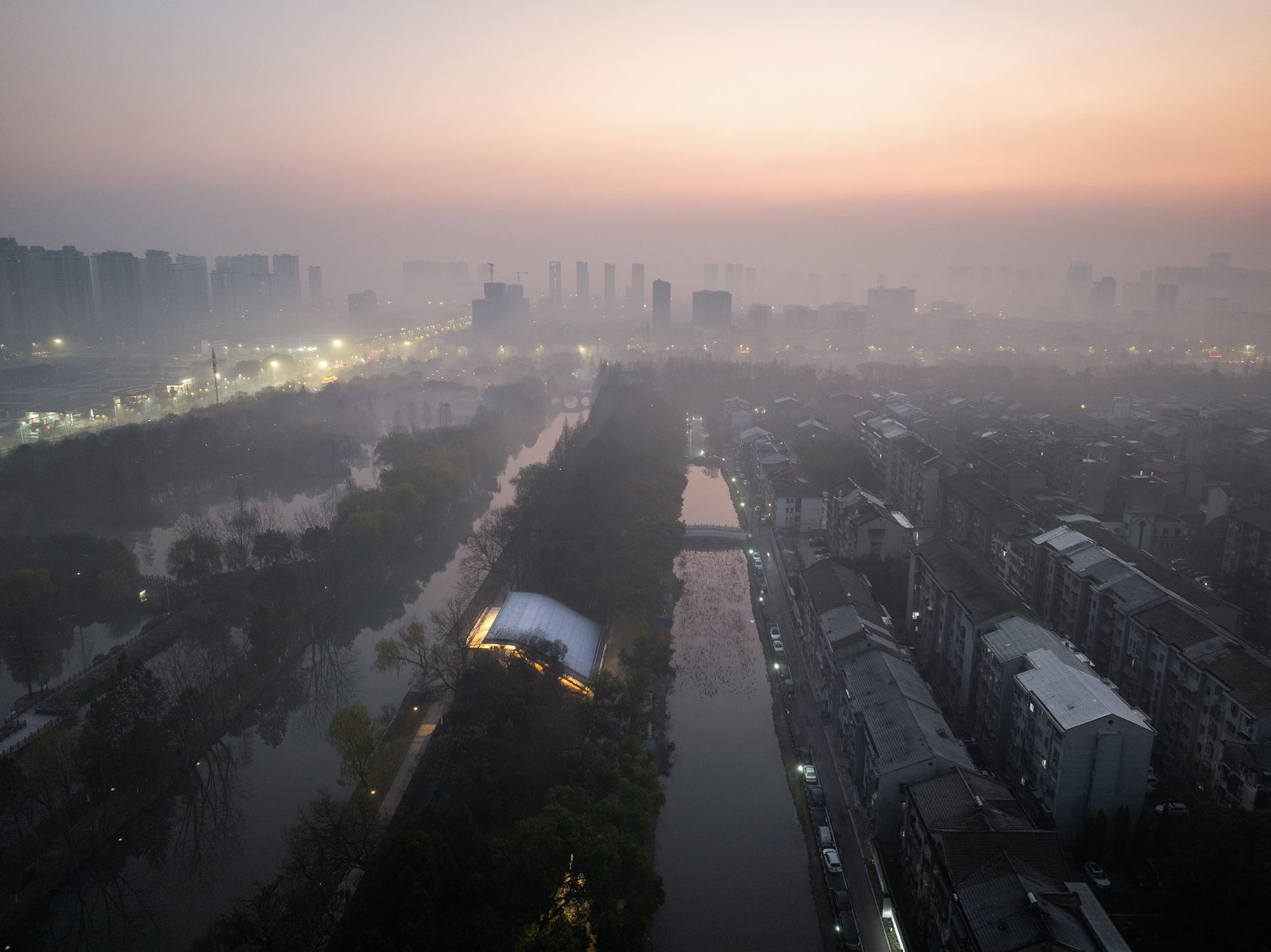
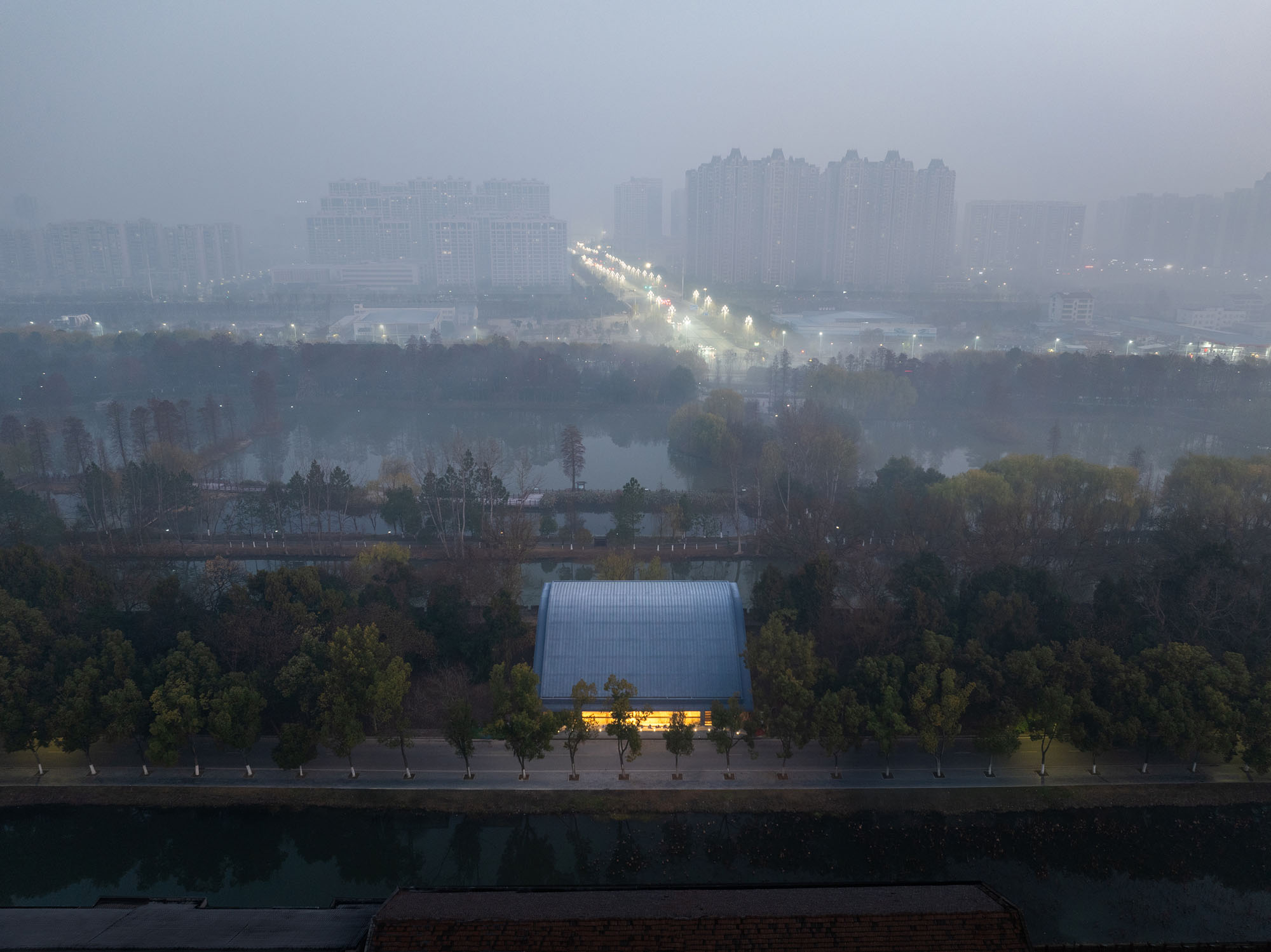
千年にわたる建造の歴史を露わにするこの地層の断面は、決して荒野に隠されたり、保護区域内に隔離されたりしているわけではない。古代都市の南縁に位置する、人々の活気にあふれた街路に直接露出させることで、遺跡の保存と展示が、都市における公共生活の自然な延長となっているのである。
展示パビリオンとしての空間からはあらゆる囲い壁が排除された。チケット売り場も改札も存在せず、ただ街路とシームレスにつながる緩やかなスロープと階段のみが存在する。
©︎ C-Context Architectural Photography (Zhao Yilong)
©︎ C-Context Architectural Photography (Zhao Yilong)
©︎ C-Context Architectural Photography (Zhao Yilong)
まち歩きの延長としての歴史探訪
活気ある環状道路から足を踏み入れると、散策やサイクリングを楽しむ市民や観光客は、この奥深い考古学的断面を容易に垣間見ることができる。歴史はもはやガラスケースの向こう側にある遠い標本ではない。思わず立ち止まり、思索に耽りたくなるような、魅力的な街角の風景へと変貌を遂げたのである。
動線のシステムは、既存の都市構造のなかに巧みに織り込まれている。訪問者は、城壁上のループを歩きながら古代都市を振り返ることもできれば、南側の通りから直接遺跡へ入り込むこともできる。あるいは、北側から城壁の内部へと滑り込み、版築やレンガ積みを間近で観察することも自由である。
このような多様な経路の存在が、博物館特有の形式的で一方向的な性質を解体し、歴史探訪を「近所をぶらつく」のと同じくらい自由で、偶然性に満ちた体験へと変えている。
©︎ C-Context Architectural Photography (Zhao Yilong)
©︎ C-Context Architectural Photography (Zhao Yilong)
©︎ C-Context Architectural Photography (Zhao Yilong)
都市の呼吸に溶け込む千年遺跡
〈荊州市城壁遺跡展示館〉は、わざわざ目的地として訪れるべき場所ではない。それは日常の結節点である。地域住民が市場へ向かう途中に、あるいは子供の迎えや夕暮れの散歩の折に通りかかり、ふと足を止めるような場所となっている。
ここでは歴史保存の空間が現代生活の空間と重なり合い、見事に融合している。千年の時を刻んだ技術的な遺構は、静かに都市の日常の息吹の一部として、あるべき場所へ帰還したのである。
©︎ C-Context Architectural Photography (Zhao Yilong)
©︎ C-Context Architectural Photography (Zhao Yilong)
©︎ C-Context Architectural Photography (Zhao Yilong)
©︎ C-Context Architectural Photography (Zhao Yilong)
©︎ C-Context Architectural Photography (Zhao Yilong)
©︎ C-Context Architectural Photography (Zhao Yilong)
©︎ C-Context Architectural Photography (Zhao Yilong)
©︎ C-Context Architectural Photography (Zhao Yilong)
©︎ C-Context Architectural Photography (Zhao Yilong)
©︎ C-Context Architectural Photography (Zhao Yilong)
以下、Qing Studioのリリース(英文)です。
Jingzhou City Wall Archaeological Site Exhibition Pavilion / Qing Studio
A Millennium Cross-Section on a Living StreetThis project originates from a major breakthrough in the archaeological discovery and conservation practice at Bastion No. 11 of the Jingzhou City Wall. Since 2016, this section of the ancient wall had been listed for emergency conservation due to foundation settlement and structural cracking. During the repair process, a stratified structure of “walls built upon walls,” spanning the Five Dynasties, Song, Ming, and Qing periods, was uncovered. This led to the approval by the National Cultural Heritage Administration for systematic archaeological excavation.
The discoveries at Bastion No. 11 confirmed that Jingzhou’s brick city wall can be traced back to the Five Dynasties period, clarified the construction and use of the wall from the Five Dynasties through the Qing dynasty, and vividly revealed the historical and cultural depth of the ancient city. Serving as an important historical witness, the site also raises a new question: how can archaeological remains be displayed in a living manner and integrated into the everyday cultural life of the public?
The Canopy: A Light Intervention
The primary task was to shelter the archaeological remains from wind and rain. Yet any bulky or ostentatious covering would have brutally disrupted the silhouette of the ancient city. Our strategy was one of “decomposition” and “visual retreat.” The protective canopy is divided into two segments: the southern segment follows the inclined profile of the inner earthen rampart, while the northern segment aligns with the direction and tapering angle of the remaining outer bastion wall. Rather than a massive object descending from above, the canopy appears as a new contour gently “floating up” from the existing terrain.
All newly added steel beams and columns maintain a clear physical distance from the historic wall. They lightly span over the site, with foundations largely reusing the points of the former temporary archaeological shelter, minimizing secondary disturbance to the remains and the wall’s foundations, and adhering to the principle of minimal intervention. To achieve maximum visual subtlety, the eaves adopt a variable cross-section design: from the street outside, they read as a blade-thin edge, almost merging into the skyline of the ancient city; from within the site, the canopy reveals a complete and cleanly curved soffit, providing calm shelter for both the relics and visitors.
The Path: Suspended Reading
Bastion No. 11 is a critical node for understanding the history of the Jingzhou City Wall, where two intersecting “axes of time” converge. The vertical axis represents the stratified accumulation of remains from the Five Dynasties to the Qing dynasty; the horizontal axis is the intact ancient city wall preserved to this day. As one of the most complete prefectural-level city walls in southern China—and even nationwide—its value lies in its uninterrupted circumference of 11,281 meters, continuous and intact.
At the upper level, the project restores the interrupted wall-top circulation route, re-establishing the continuous spatial sequence of the ancient city and providing viewpoints overlooking the archaeological site and the surrounding city. At the lower level, a lightweight perforated platform cantilevers closely along the excavation wall, guiding visitors to observe the soil layers and masonry details from an almost archaeologist’s bird’s-eye perspective. All viewing platforms and pathways are reduced to the minimum dimensions permitted by structural requirements and are finished in dark-gray matte metal. As people walk along them, their attention is fully drawn to the historical section beneath their feet, while the paths themselves recede into discreet frameworks that guide vision and then disappear.
The Threshold: A Living Exhibition
This geological cross-section revealing a millennium of construction history is not hidden in wilderness or isolated within a protected enclave. Instead, it is directly exposed alongside a living street on the southern edge of the ancient city, allowing conservation and display to become a natural extension of urban public life. The exhibition pavilion removes all enclosing walls: there is no ticketing, no turnstiles—only gentle ramps and steps seamlessly connected to the street.
Turning in from the lively ring road, citizens and visitors strolling or cycling can effortlessly glimpse the profound archaeological section. History is no longer a distant specimen behind glass, but a compelling streetside scene that invites pause and contemplation.
The circulation system is woven into the existing urban fabric. Visitors may walk along the wall-top loop and look back toward the ancient city; enter the site directly from the southern street; or slip in from the north into the interior of the wall to closely observe rammed earth and brickwork. This multiplicity of routes dissolves the formality and one-directionality typical of museums, allowing the exploration of history to be as free and incidental as wandering through a neighborhood.
The Jingzhou City Wall Archaeological Site Exhibition Pavilion is not a destination that demands a deliberate visit. It is an everyday node—one that residents might pass by on their way to the market, while picking up children, or during an evening stroll, and then linger at by chance. Here, the space of historical preservation overlaps and merges with the space of contemporary life, allowing engineering remains that span a thousand years to quietly return as part of the city’s everyday breathing.
Supervising Institution: Hubei Provincial Center for the Conservation of Historic Architecture (Deng Yunqi, Hao Han, Xie Hui)
Architectural Design Team: Hu Xing, Liu Changming, Yan Chunyang, Luo Tingkai, Tang Ziji, Gao Qi, Niu Jiayin, Liu Luoya
Architectural Design Firm: Qing Studio
Contact: contact@studio-qing.comCultural Heritage Conservation Design: Hubei Provincial Center for the Conservation of Historic Architecture (Deng Yunqi, Hao Han, Xie Hui, Cheng Yunong, Tan Tuo)
Construction Drawing Design: Wuhan Light Industry Architectural Design Co., Ltd. (Jia Jing, Huang Haiyan, Gong Xueqin)
Contractors: Hubei Taiyue Landscape and Historic Architecture Engineering Co., Ltd. (Yang Fan, Tan Qingjia, Zhan Ping); Hubei Lianhao Construction Group Co., Ltd.
Structural Consultant: School of Civil Engineering, Huazhong University of Science and Technology (Nie Sufei)
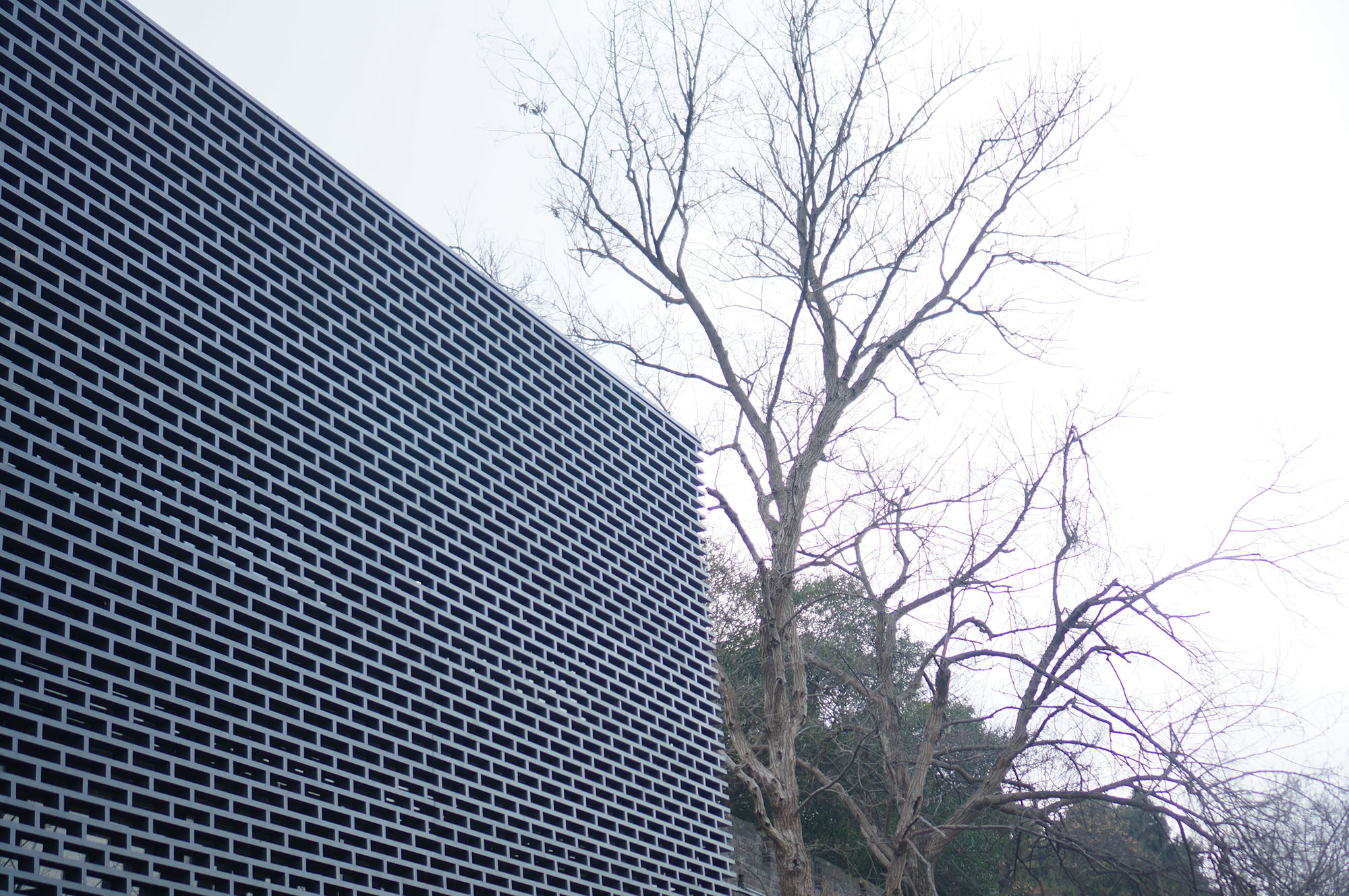
Curtain Wall Consultant: Beijing Boya Engineering Consulting Co., Ltd. (Zhang Yanxin, Fan Ran)
Client: Jingzhou Museum
Photography: C-Context Architectural Photography (Zhao Yilong)
Gross Floor Area: 330 m²
Completion: February 2026
Location: Bastion No. 11, Jingzhou City Wall, Jingzhou, Hubei Province
【購読無料】空間デザインの今がわかるメールマガジン TECTURE NEWS LETTER
RECOMMENDED ARTICLE

![NOSIGNERが店舗をデザイン、観葉植物専門店[REN]がリニューアル](https://magazine-asset.tecture.jp/wpcms/wp-content/uploads/2021/09/10120047/20210812ren_sub1-900x450.jpg)