

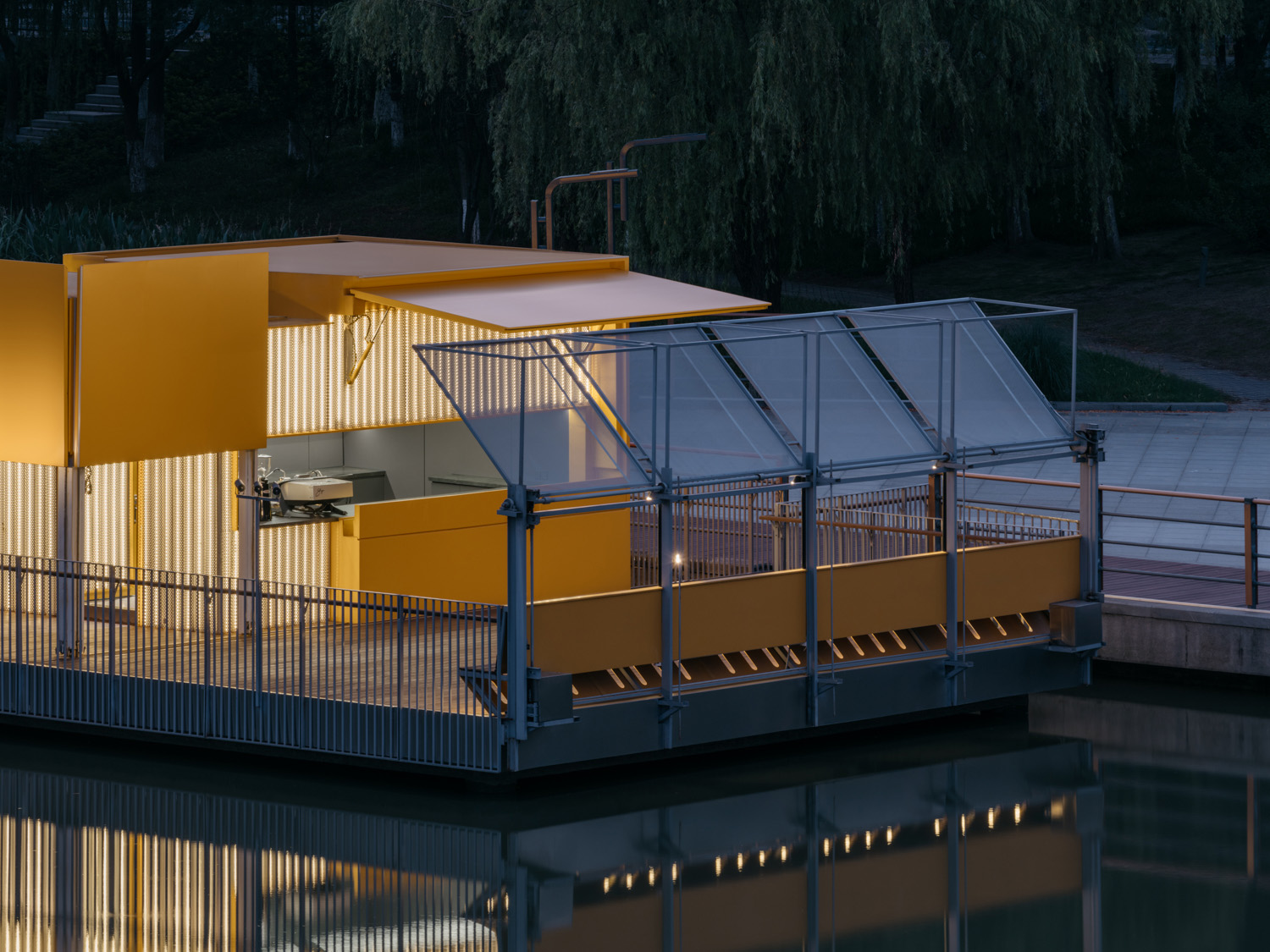
湖畔に展開する動的なカフェ空間 - 可動する外皮により多様な用途を実現する〈ブルームボックス〉
© Wen Studio
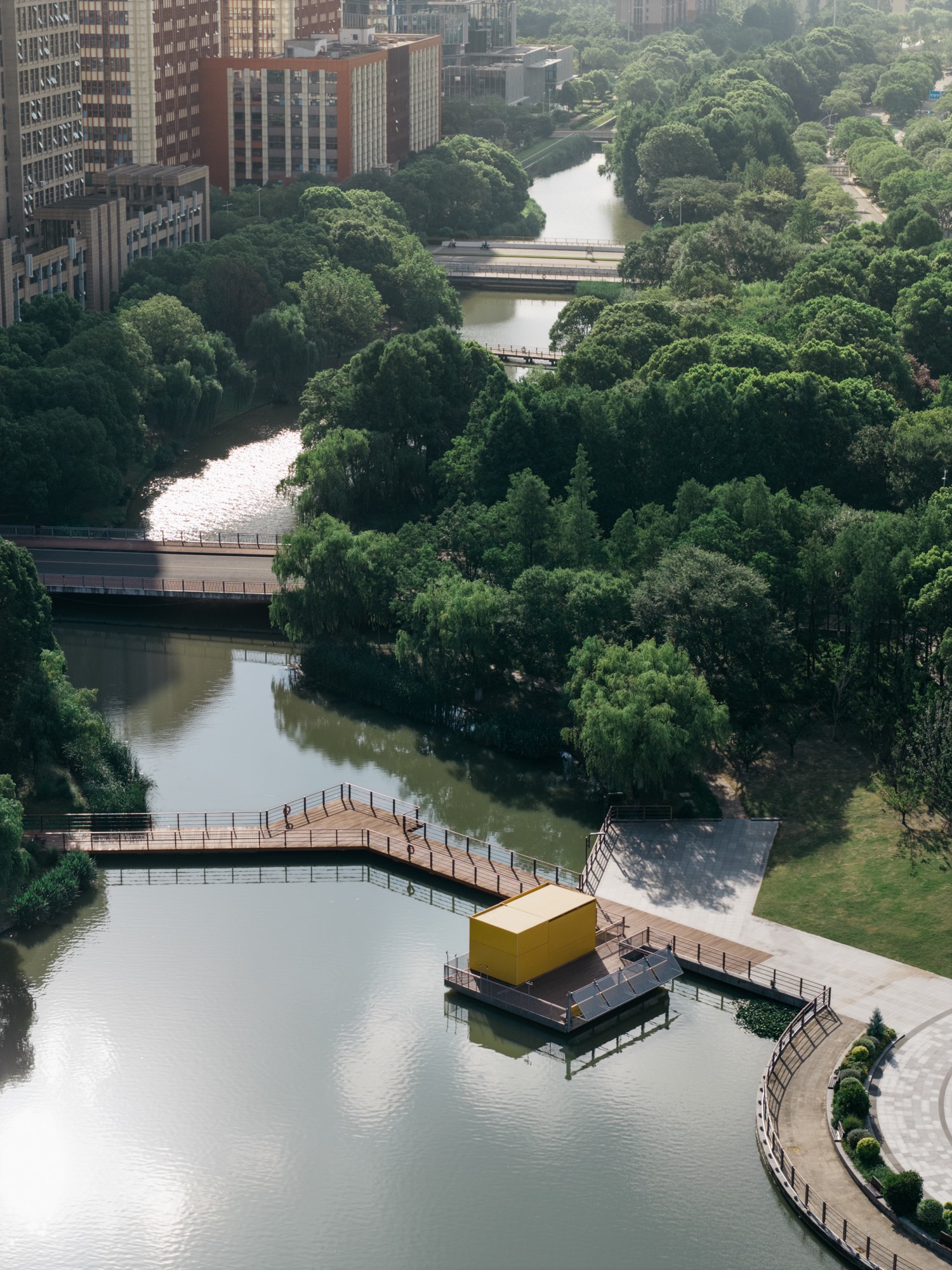
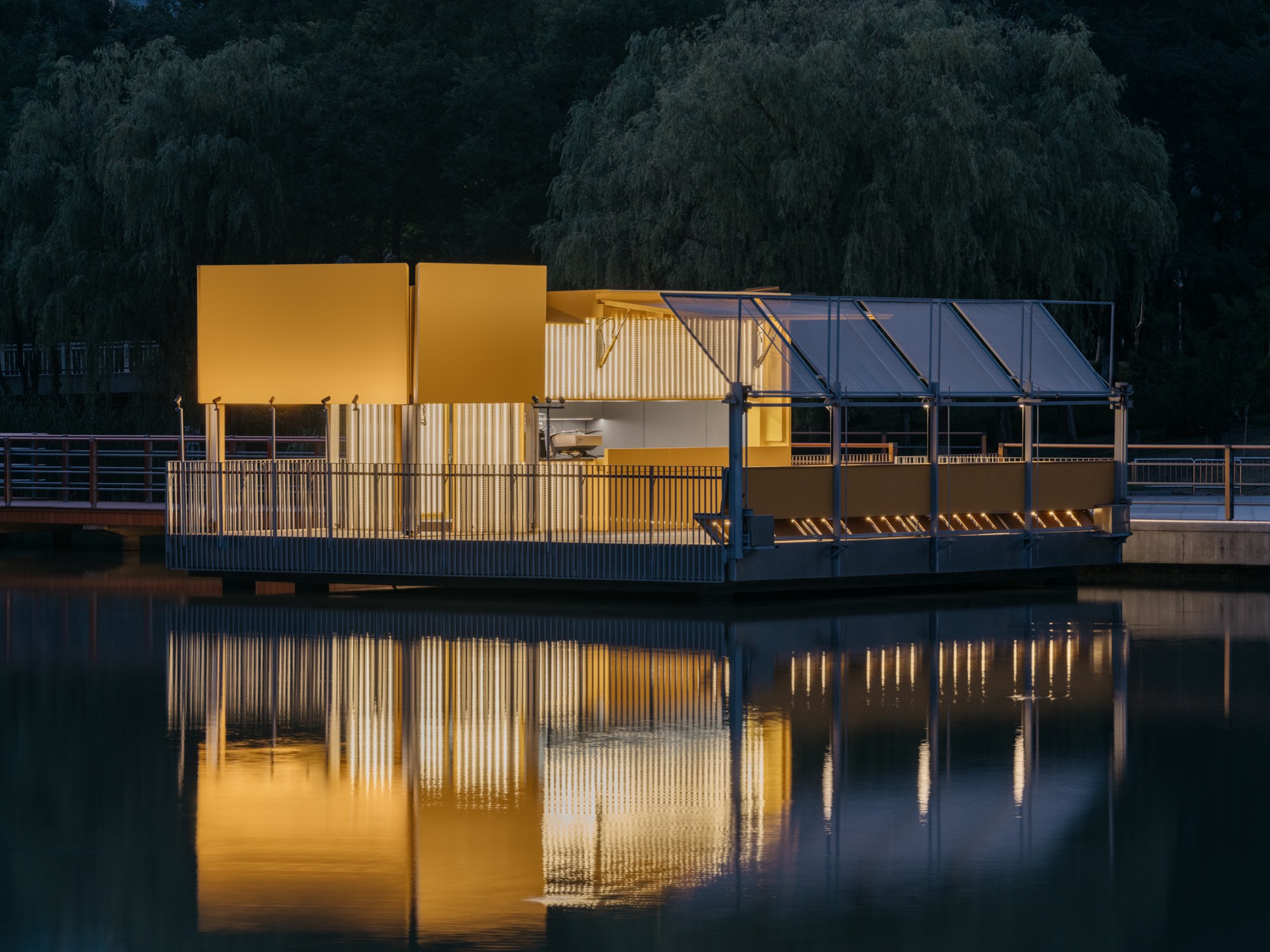
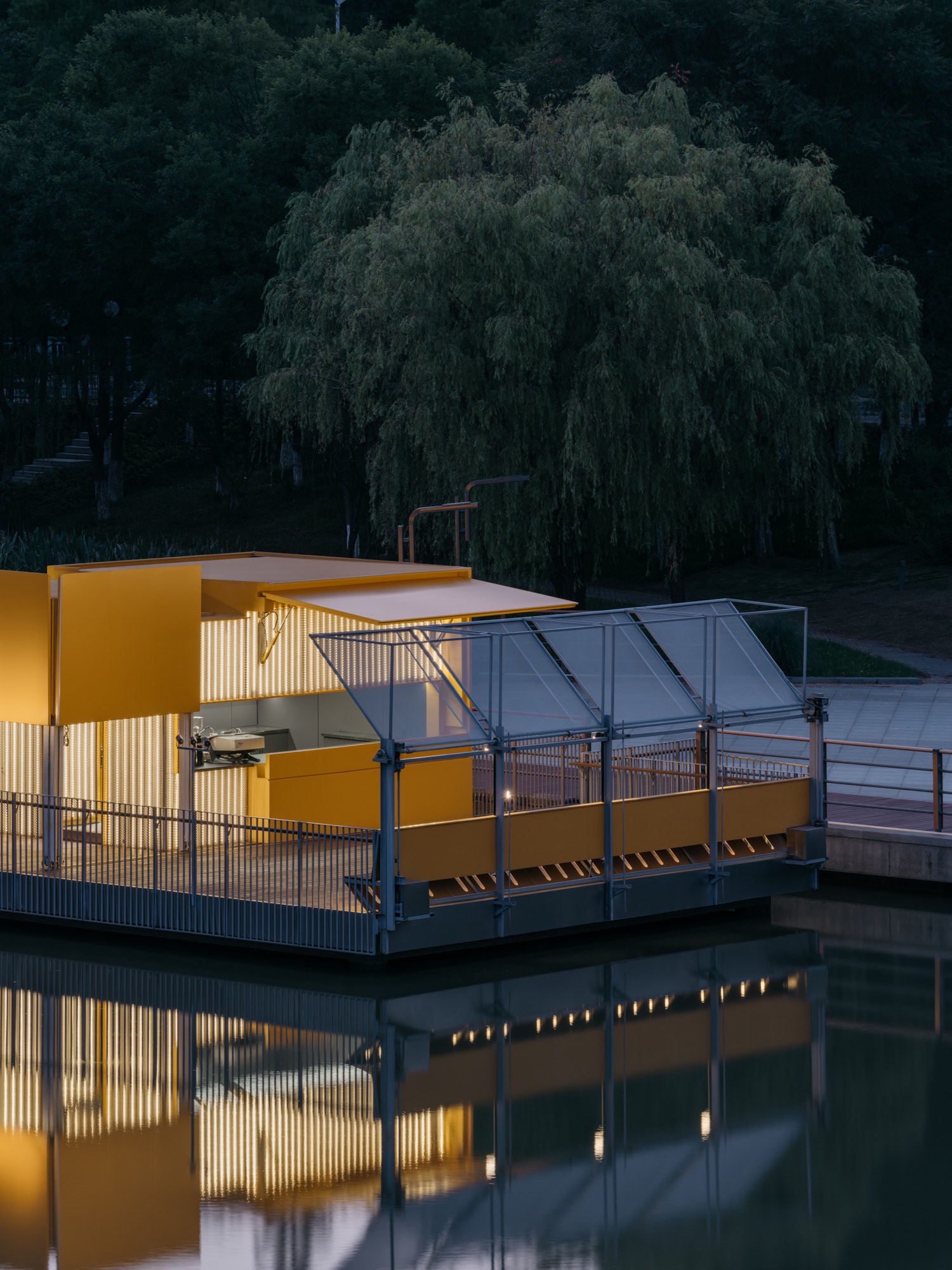
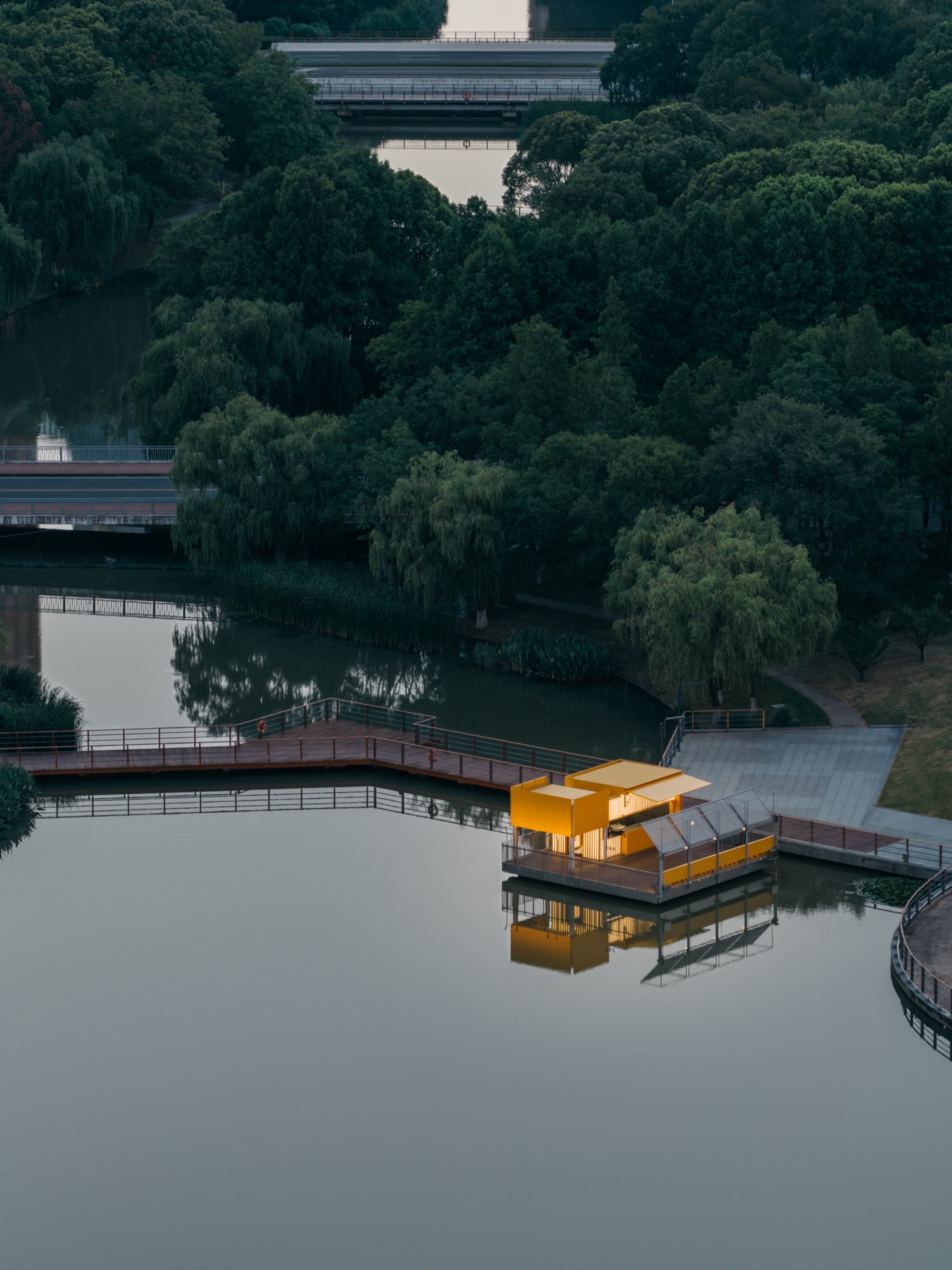
中国、江蘇省の公園に建つ〈ブルームボックス(The Bloom Box)〉は、湖畔のプラットフォームに設計された、変形する外皮に覆われた「動的な建築」です。
カフェとしてだけでなく花市場や休憩所など多様な使い方ができるよう、蘇州とニューヨークに拠点を置く SoBA(Soft Build Architects)が設計しました。
注目ポイント
- 時間・天候・利用者の行為に応答する「生きた建築」
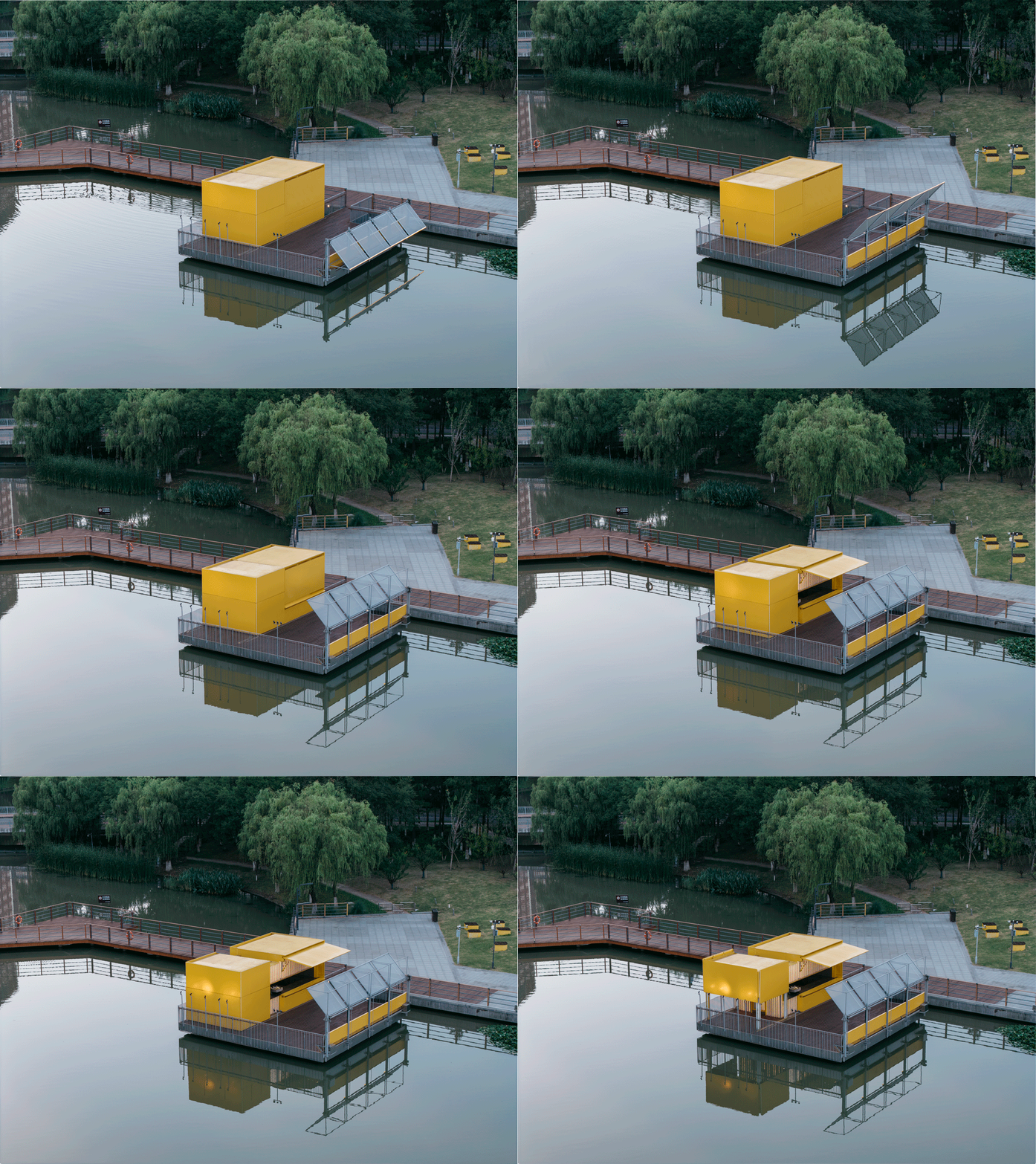
- スライド・反転・昇降といった多様な開閉動作により可動する外皮
- 空間の開閉を視覚的に表現し、通行人に直感的に伝える
(以下、SoBAから提供されたプレスキットのテキストの抄訳)
© Wen Studio
Original Site © SoBA
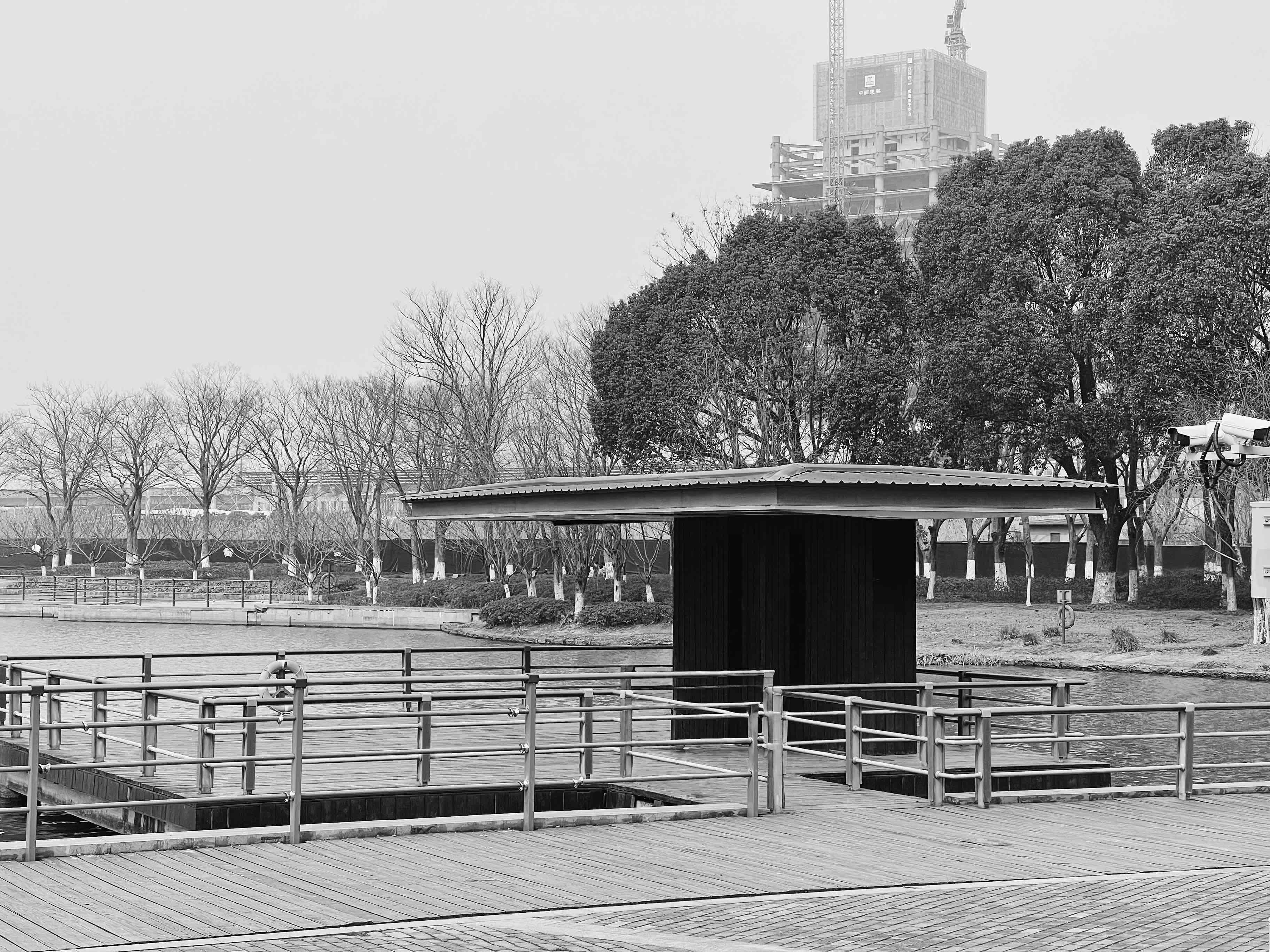
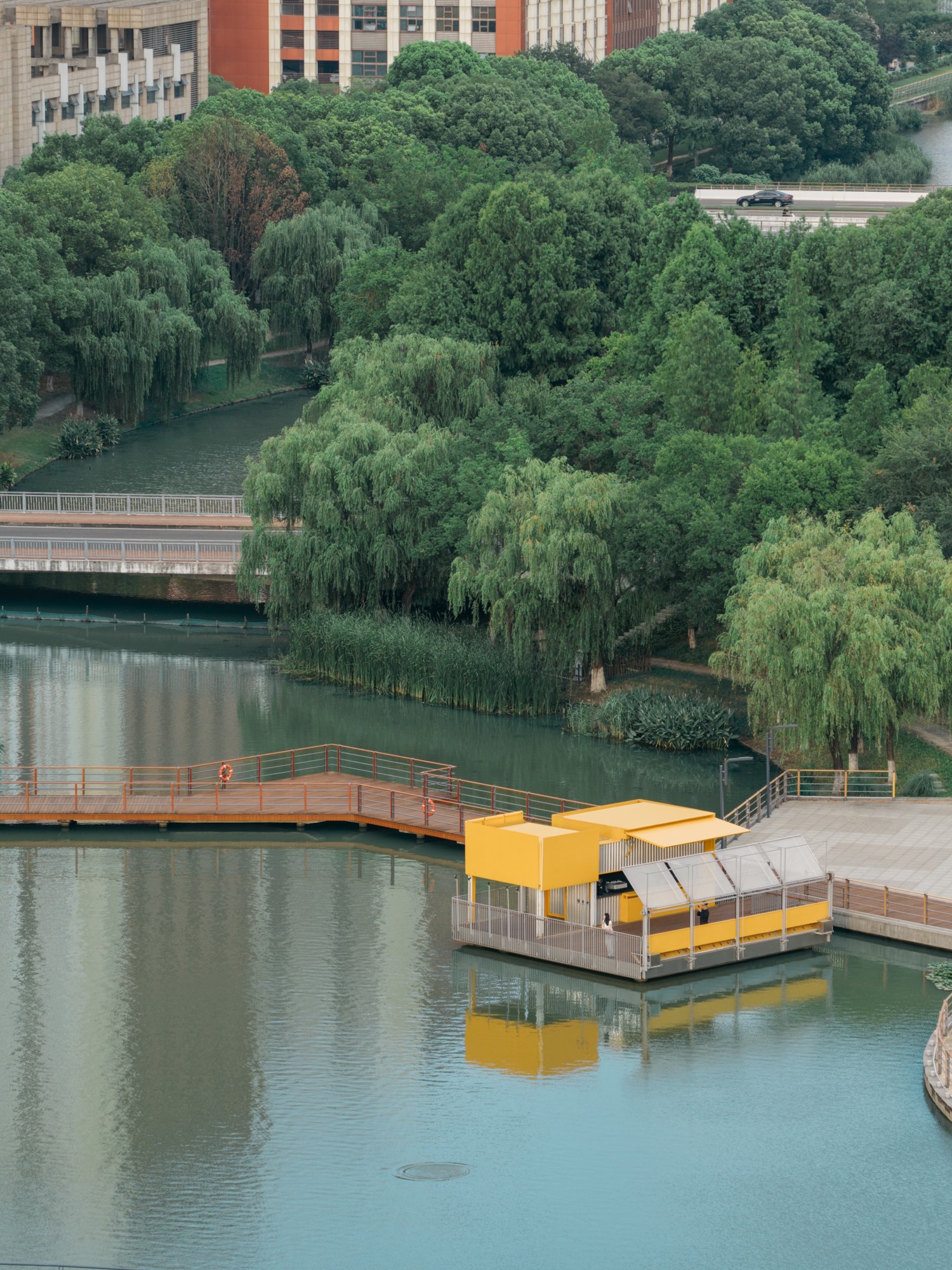
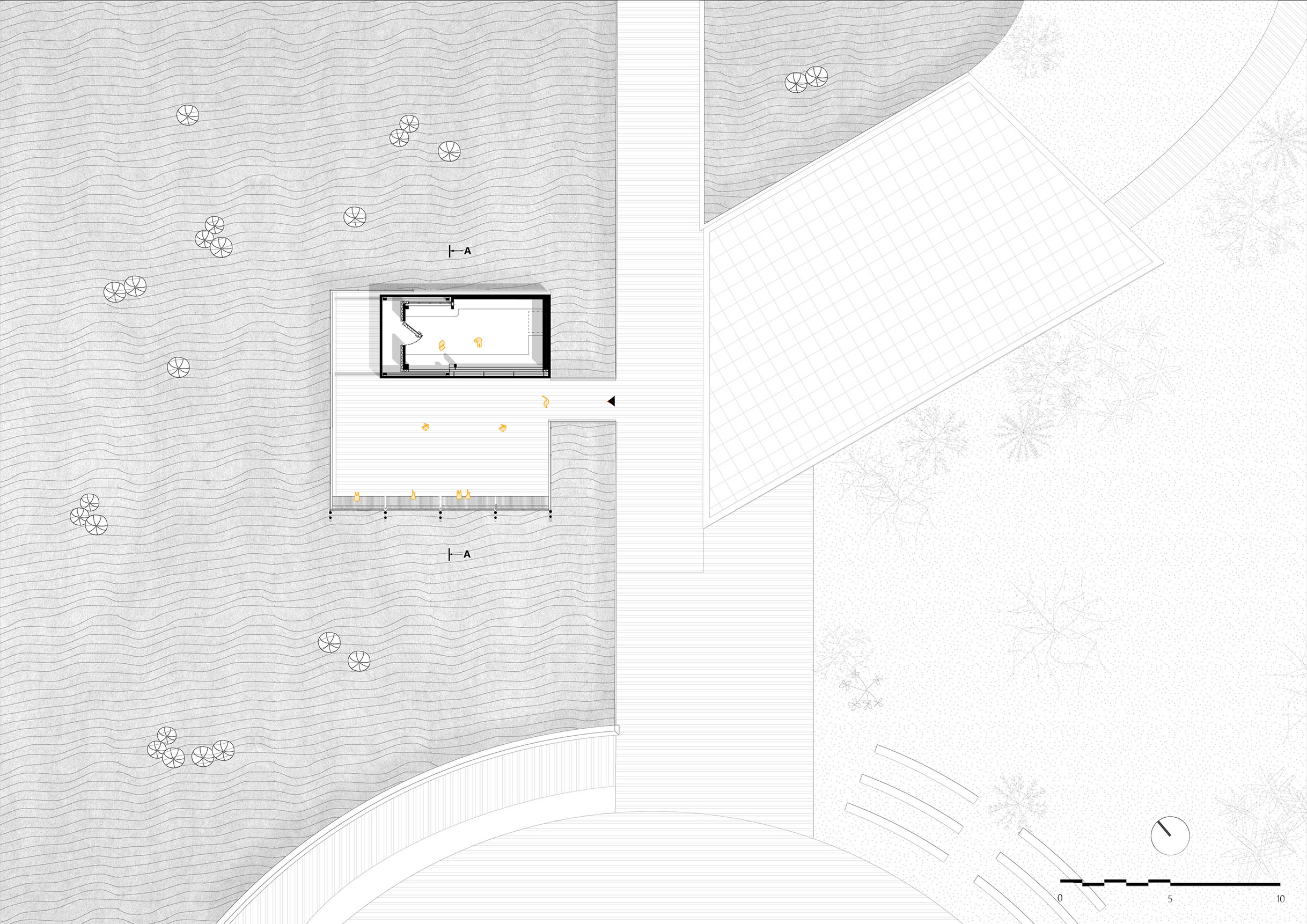
本プロジェクトは江蘇省花橋鎮のセントラルパークの湖畔に位置する。敷地には老朽化した日除け用の建物が建っていたが、好立地にもかかわらず機能性の低さから長年見過ごされていた。
私たちの目標は、軽量かつ柔軟なデザイン介入によってこの場所に命を吹き込み、人々が立ち止まり、長居したくなる空間を創出することであった。
© Wen Studio
「生活のための機械」から「生きた建築」へ
初期モダニズム建築はしばしば「生活のための機械」と呼ばれ、明確な機能と合理的な形態を重視してきた。しかし本プロジェクトでは、時間や天候、利用者のニーズに能動的に応答する「生きた建築」を追求した。
© Wen Studio
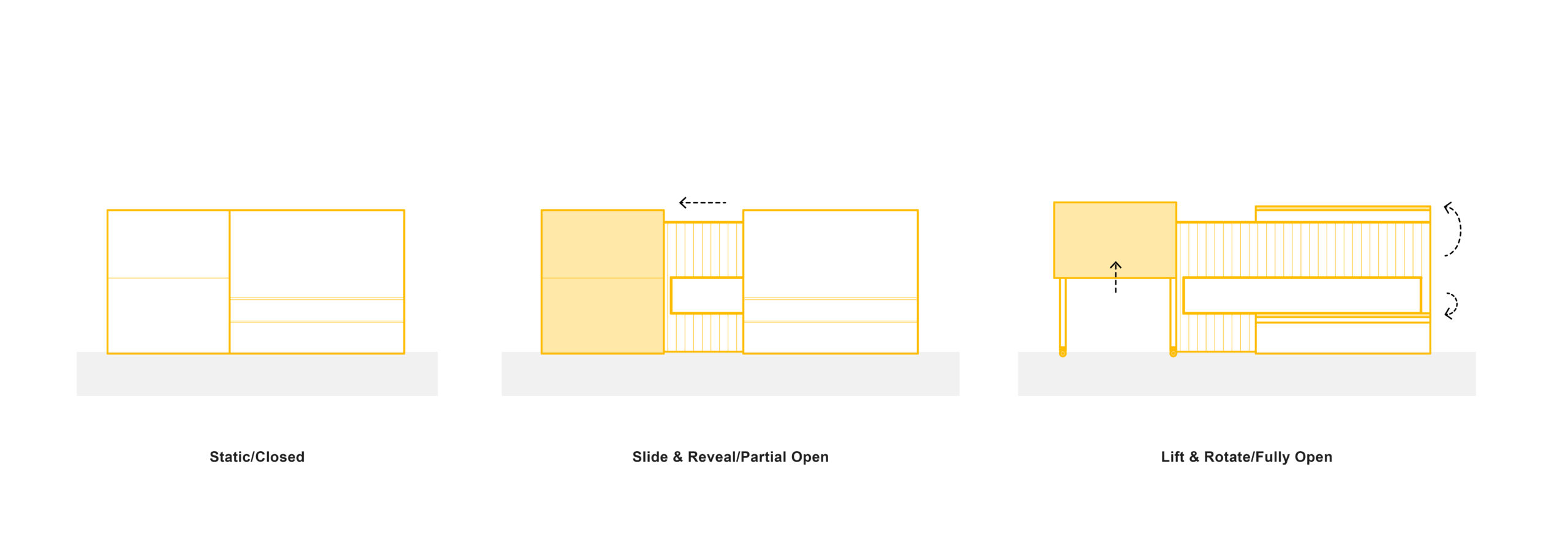
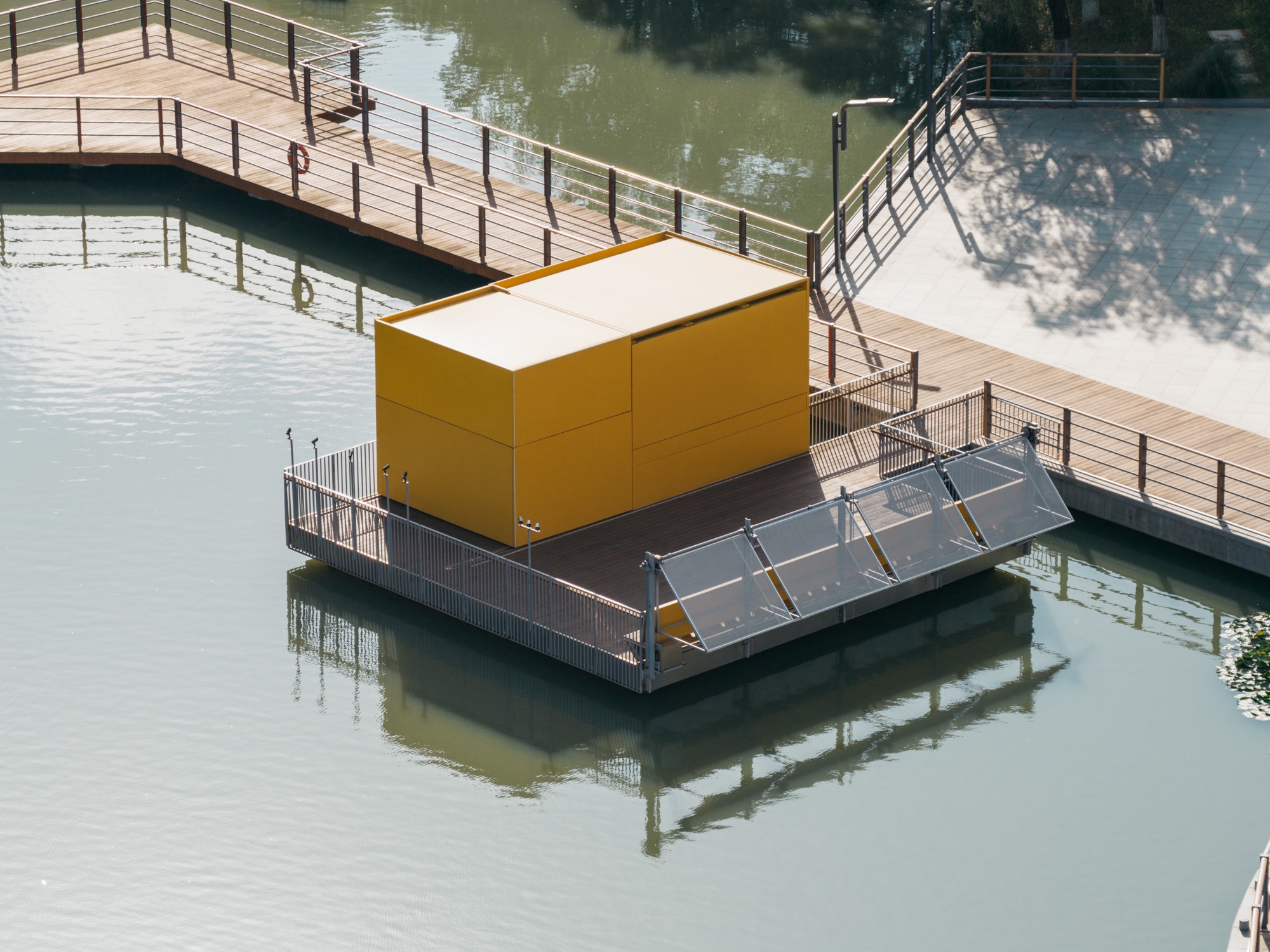
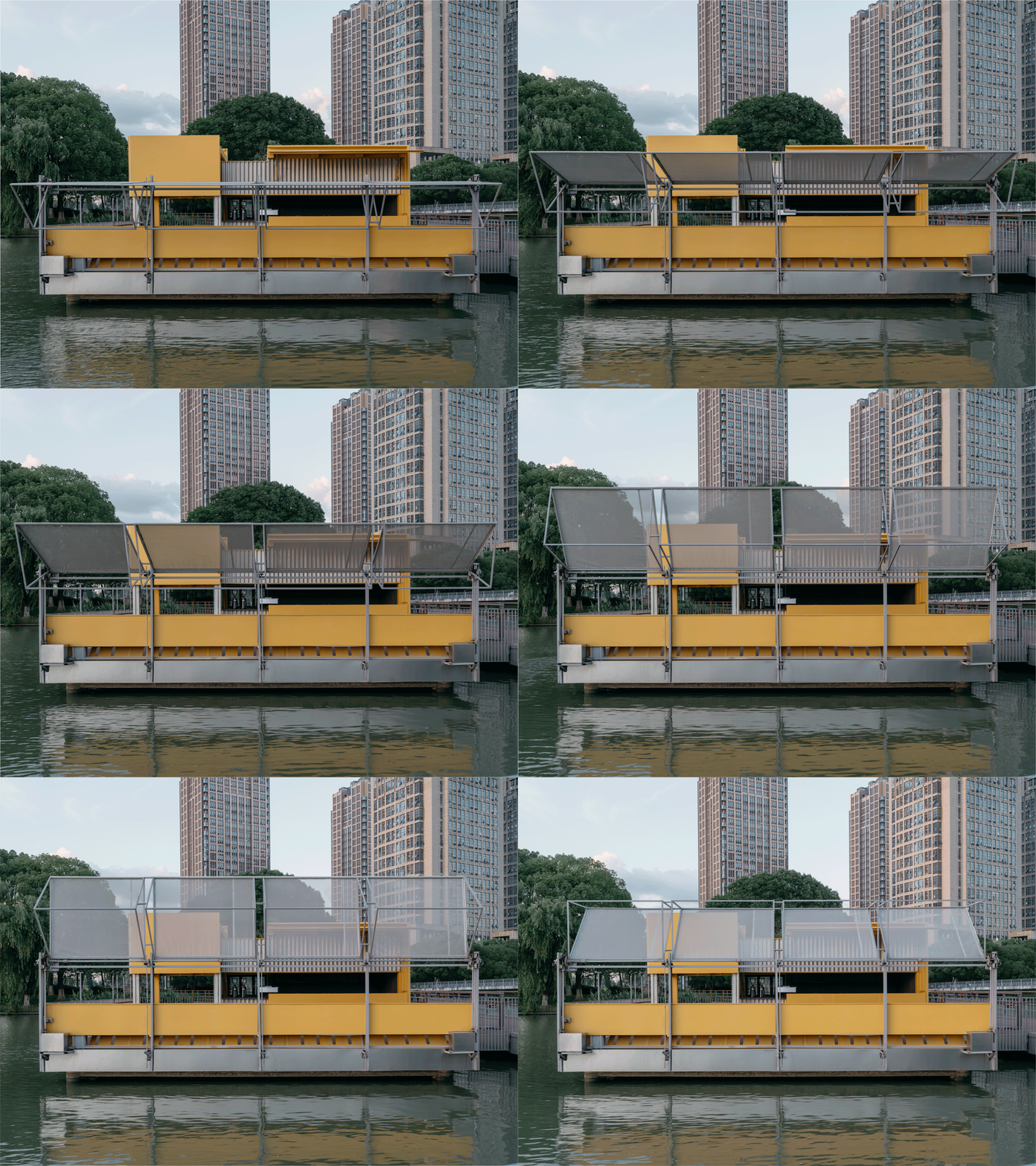
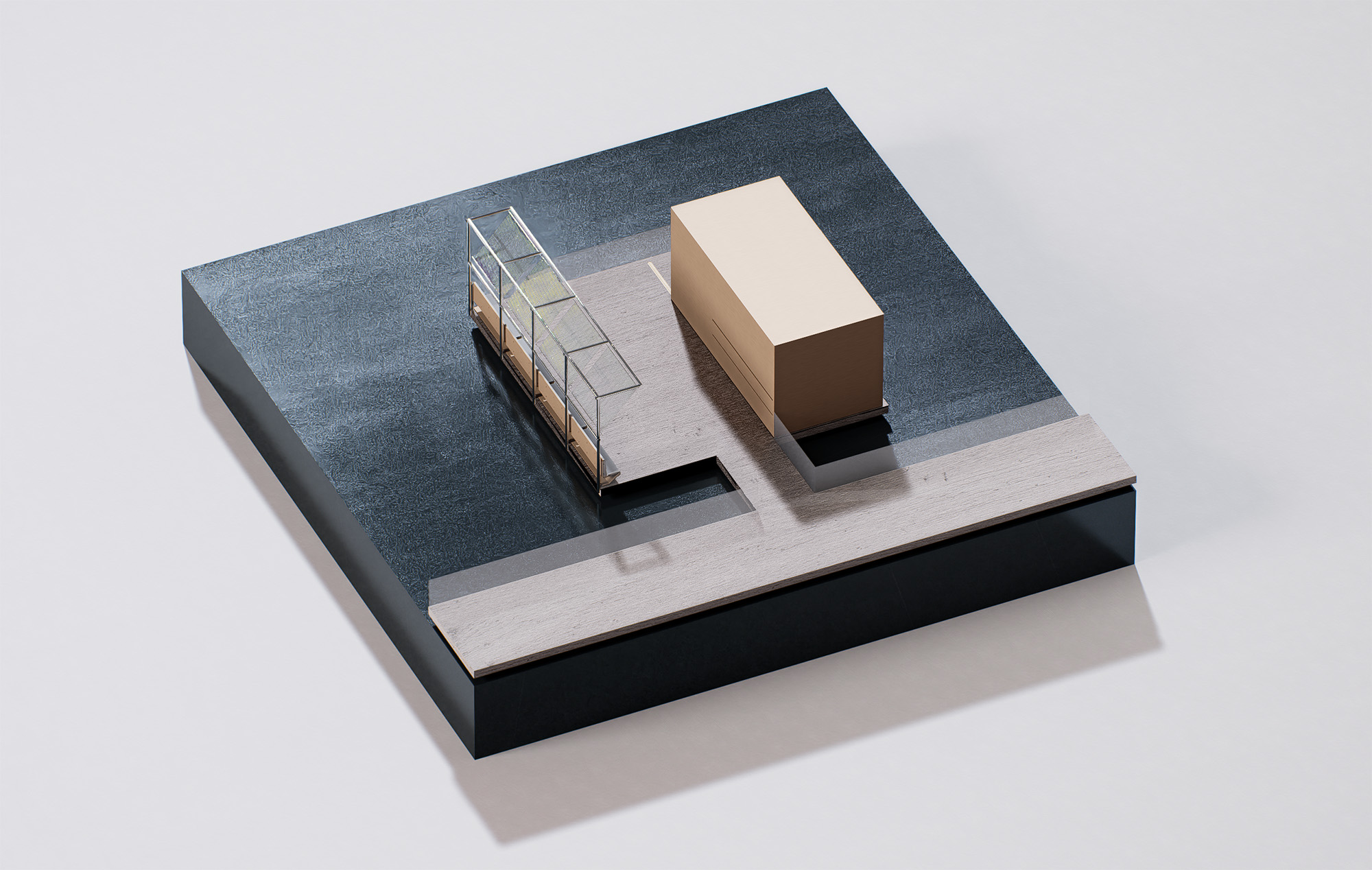
このコンセプトから、スライド・反転・昇降が可能な可動壁を備えた箱型構造を設計した。営業時間帯には内部を完全に開放し、人々を誘い込み、未使用時には静謐でコンパクトなボリュームへと折り畳まれる。
この開閉の行為は単なる機能的対応にとどまらず、空間的表現として建築を都市のリズムに組み込み、通行人に「開いている」ことを直感的に伝える存在となる。
Facade Transformation Diagram © SoBA
© Wen Studio
敷地との対話と「グレーゾーン」の創出
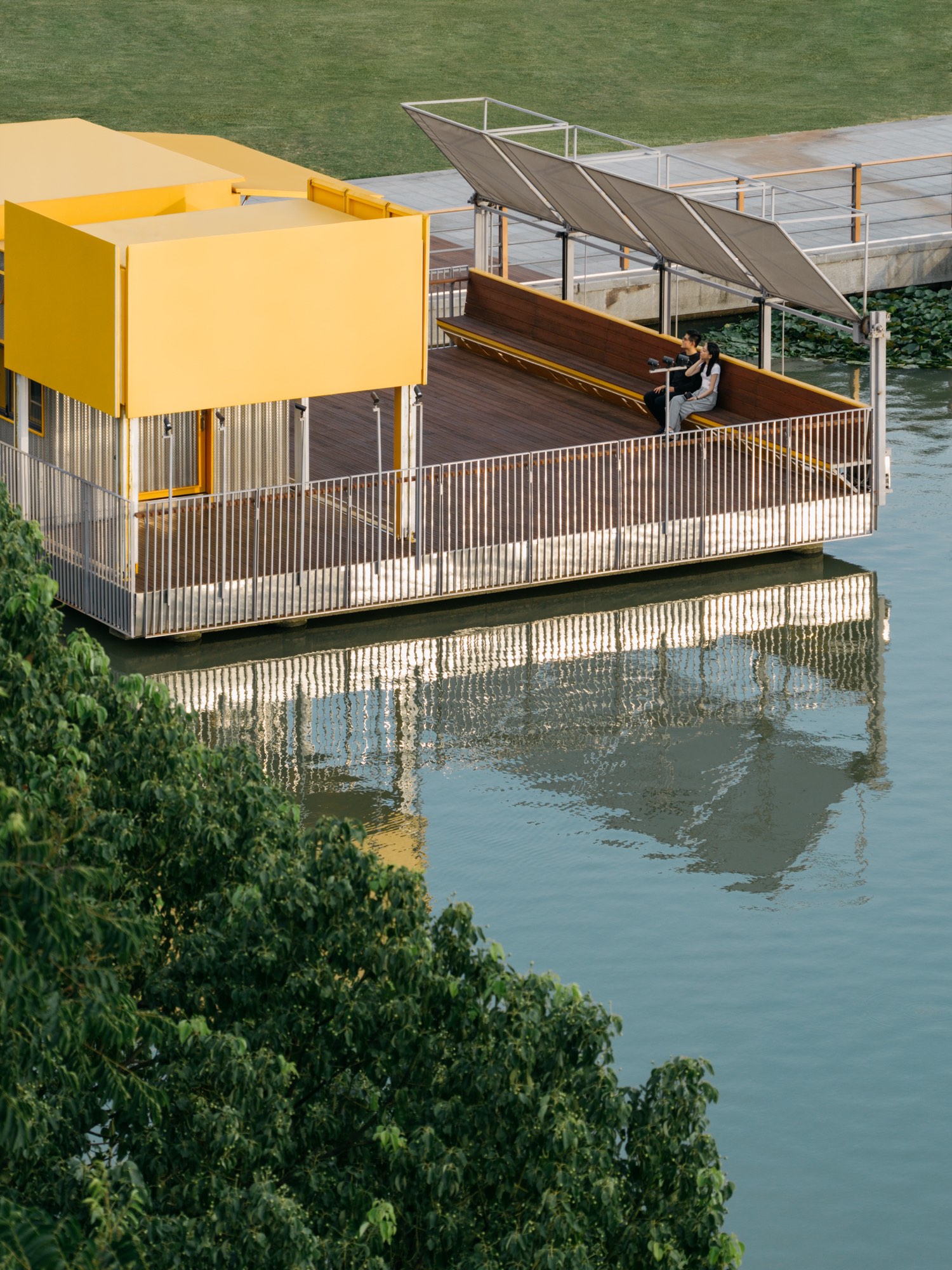
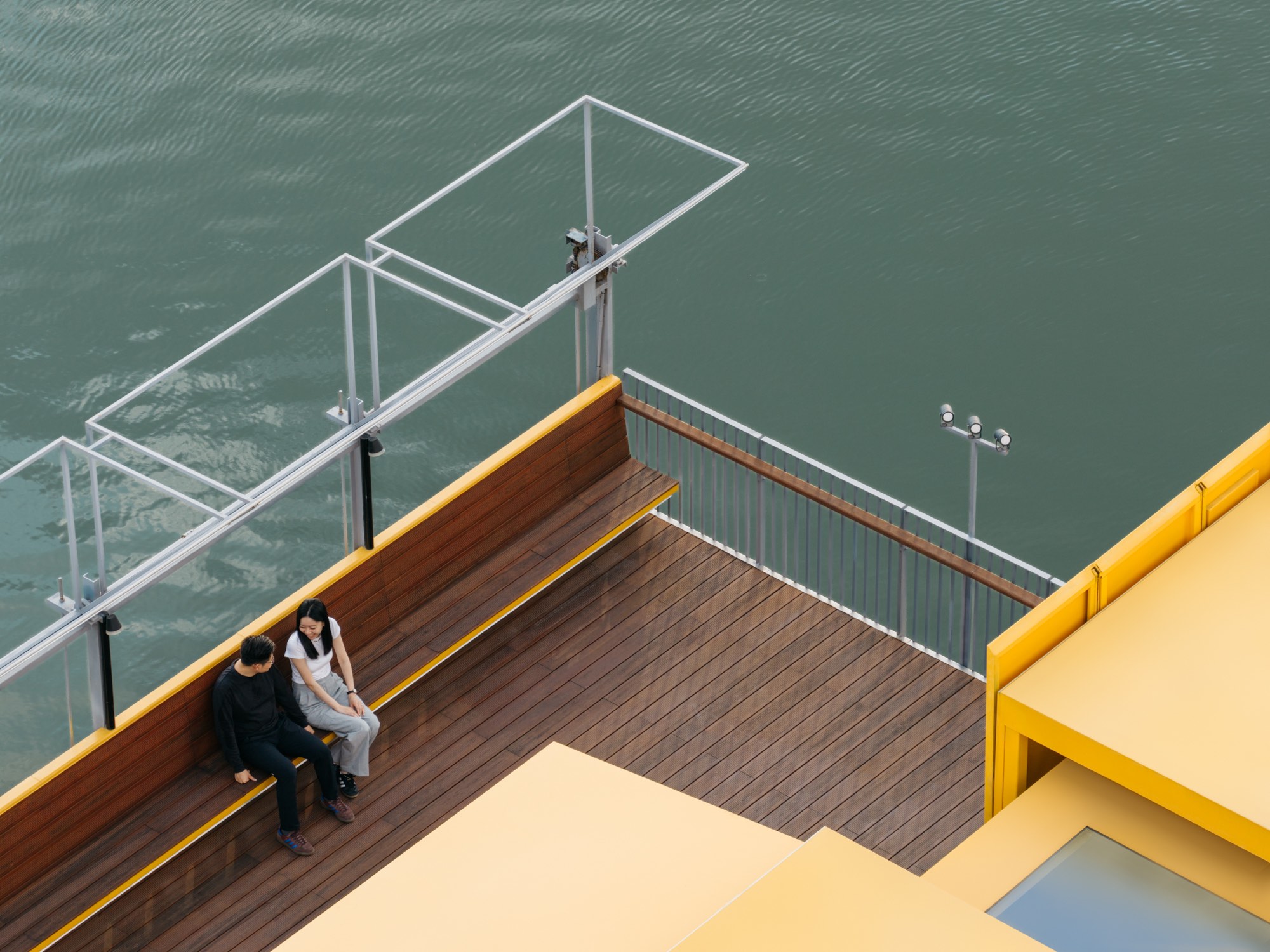
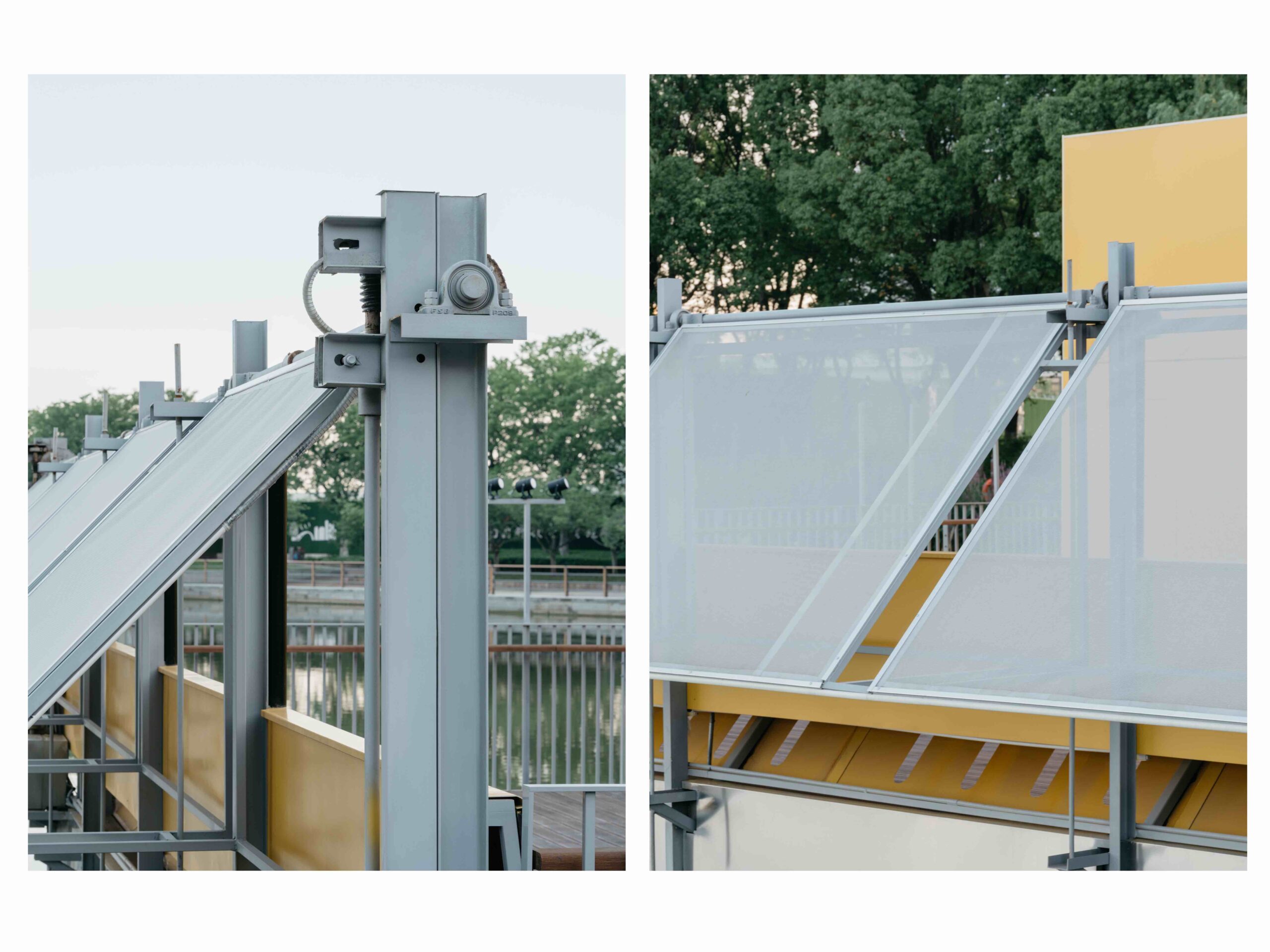
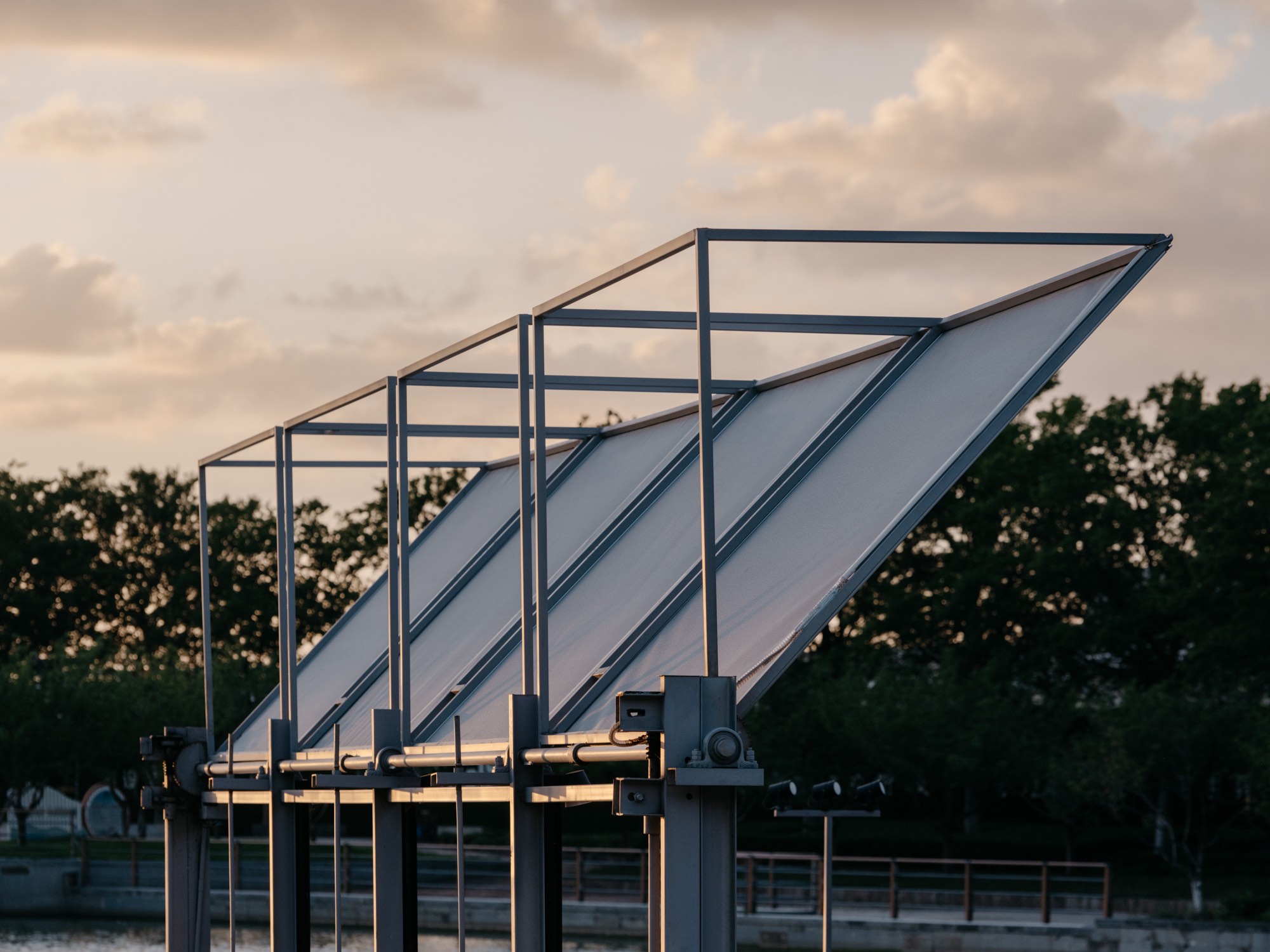
閉じたボックスを設計するのではなく、小さな構造物を周囲と一体化させ、自ら開く存在とすることを目指した。折り戸、スライド式ファサード、半透明素材を用いることで内外の境界を曖昧にし、日陰と避難場所を提供しつつ風と光を通す「グレーゾーン」を生み出した。
© Wen Studio
© Wen Studio
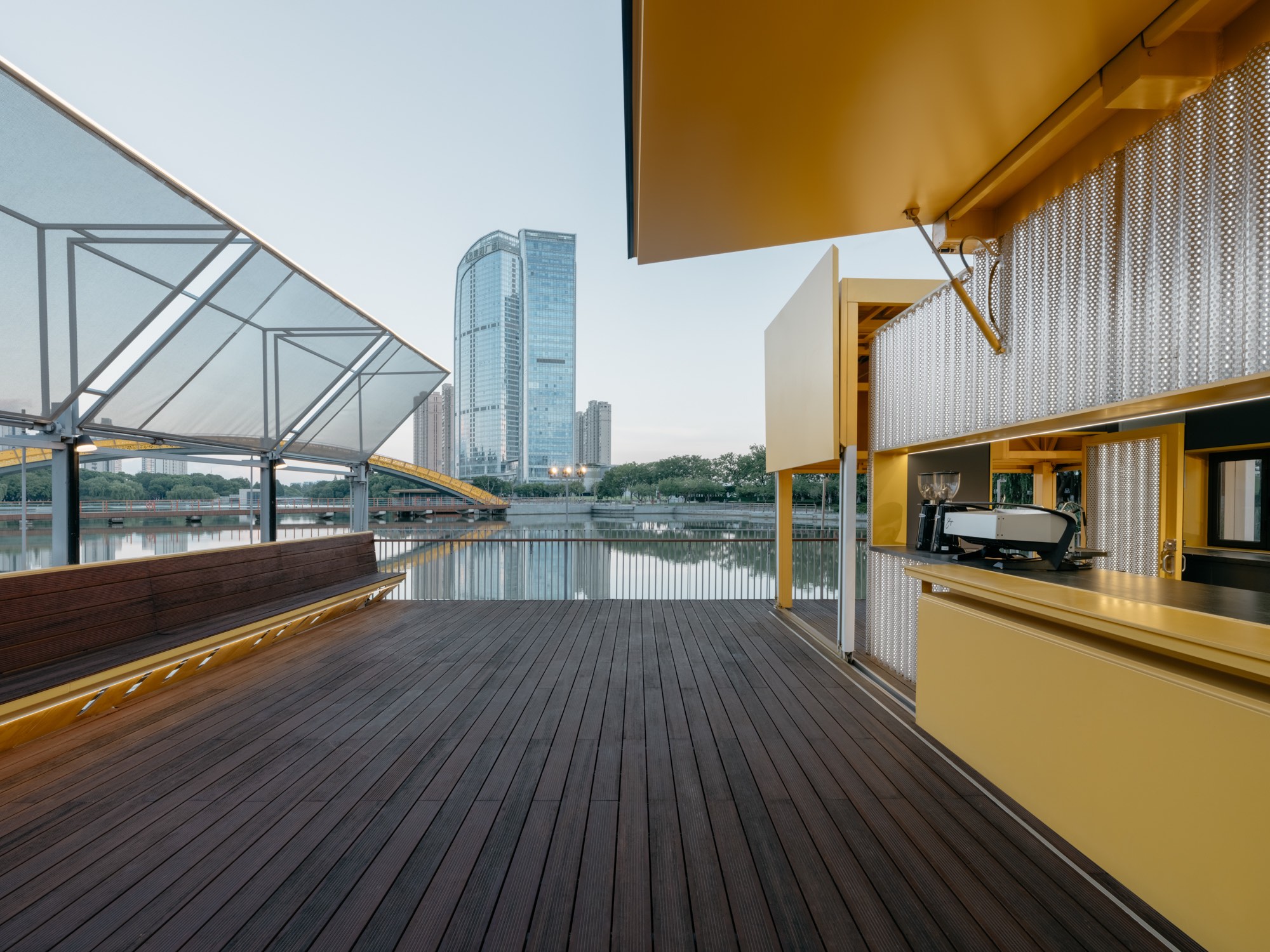
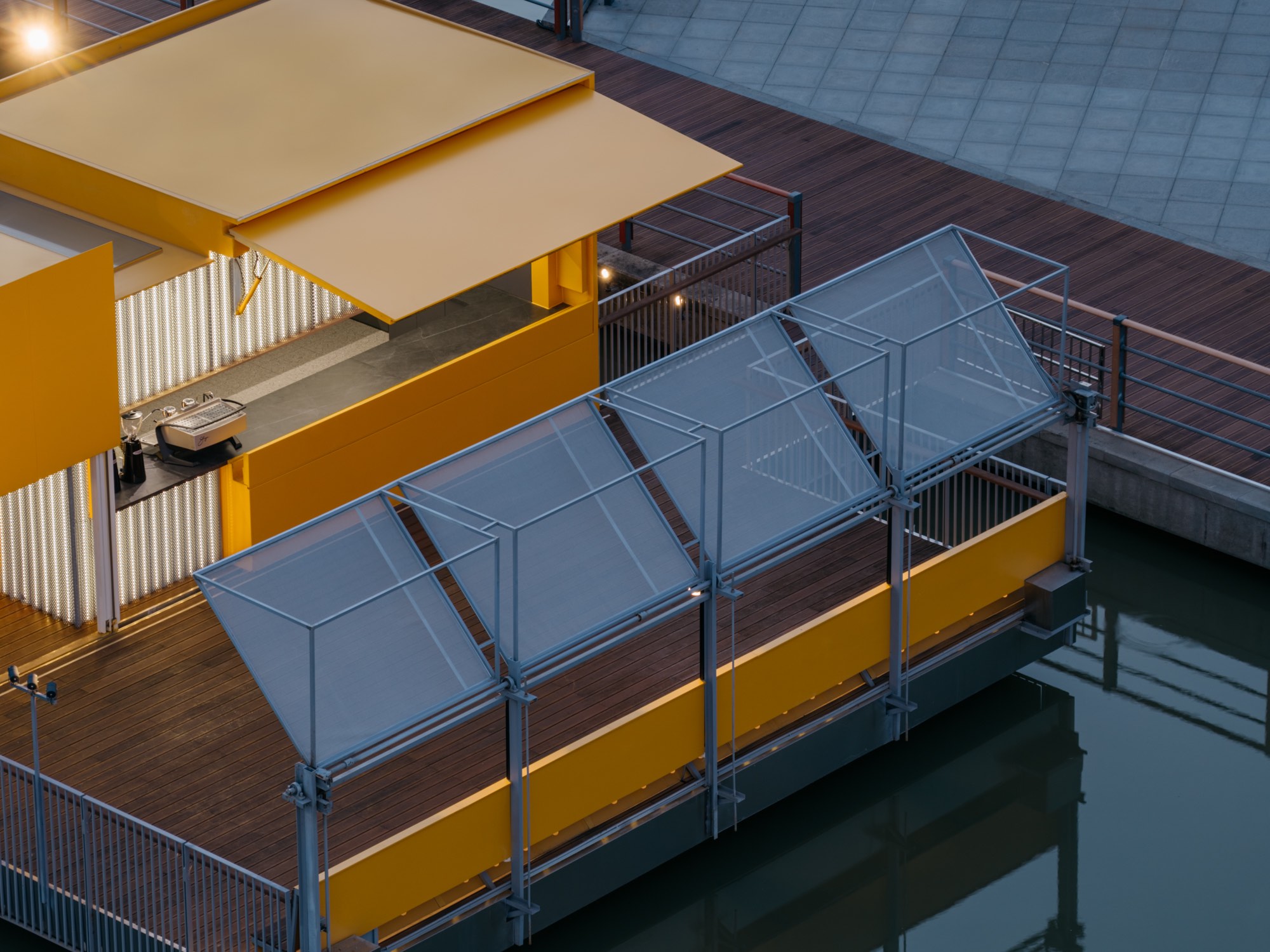
建物向かいに設けた日除けと座席は一体となって開放的な場を形成し、用途や時間に応じて快適な環境を提供する。
この開放性により閉ざされた空間は双方向的な場へと変容し、コーヒーを待つ、景色を楽しむ、あるいはポップアップマーケットを開催するなど、多様な利用方法を可能にする。建築は単なる物体ではなく、生活が展開するインターフェースとなる。
© Wen Studio
© Wen Studio
軽量構造と持続可能な思考
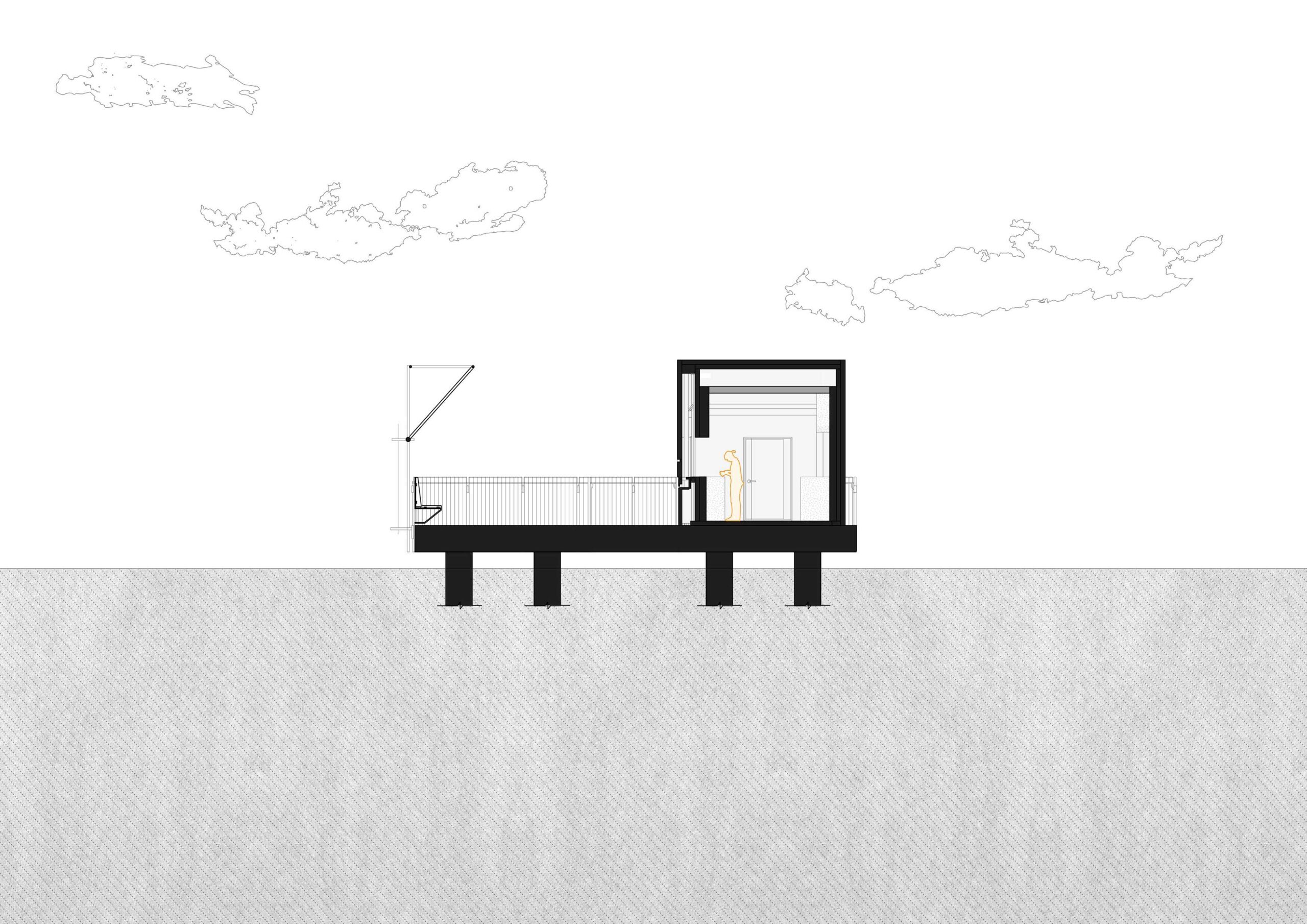
既存プラットフォームへの影響を最小化するため、軽量鋼フレームにアルミニウムパネルを被せ、床材には竹を採用した。
主要構造は固定式として長期的な安定性を確保しつつ、ファサードには操作可能な要素を設け、運用シナリオや季節、照明条件に応じて柔軟に対応できる構成とした。この「安定したフレーム+動的なスキン」という戦略により、建物はライフサイクルを延長し、都市環境の中で持続的に適応し反応することが可能となる。
目指すのは単なる機能空間ではなく、継続的に活性化され再利用可能な枠組みである。
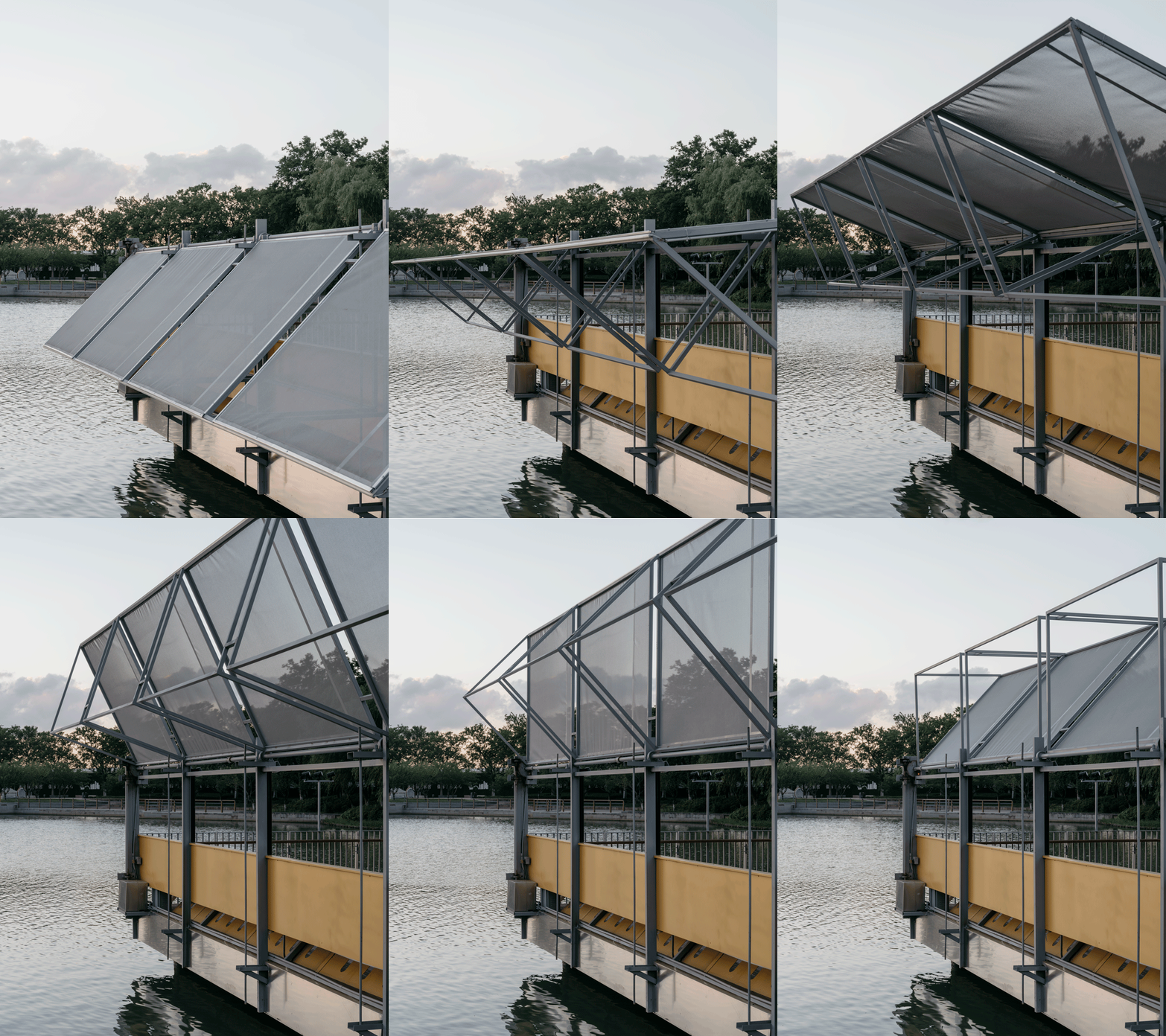
© Wen Studio
境界をもたない再定義可能な場所
〈ブルームボックス〉と名付けられたこの建築は、単なるコーヒーと花の店にとどまらない。旅の途中で出会う温かい飲み物、親子が水辺を眺める安らぎの場所、週末の花市場、友人が集う居心地の良い空間となり得る。
固定的なプログラムの境界をもたない曖昧さは、利用者に自由な定義を許容する。ここでは香り、光、水が調和し、穏やかな都市の隠れ家が形成される。我々はこれを完成された建築ではなく、使用を通じて進化する生きた器と捉えている。
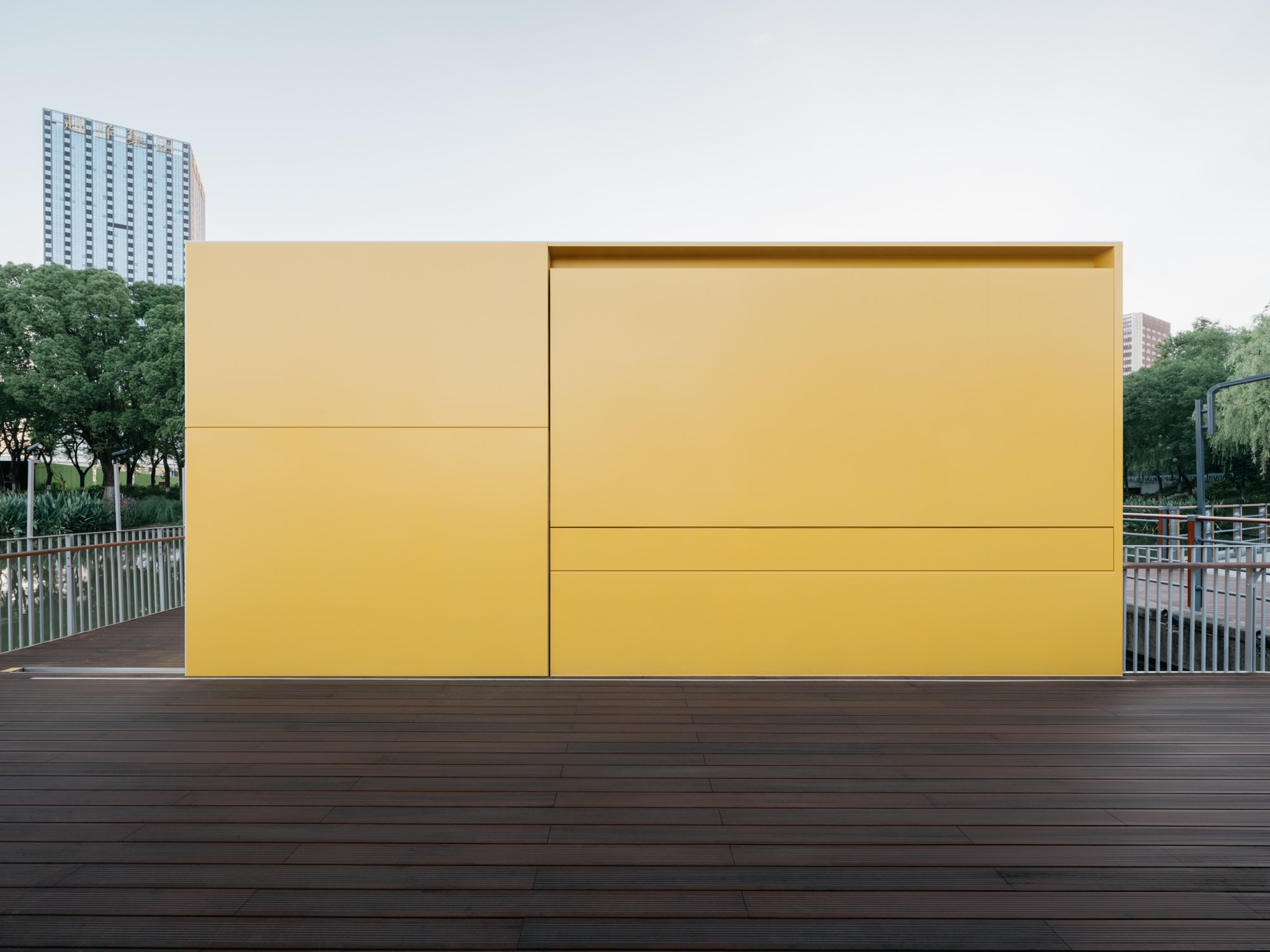
© Wen Studio
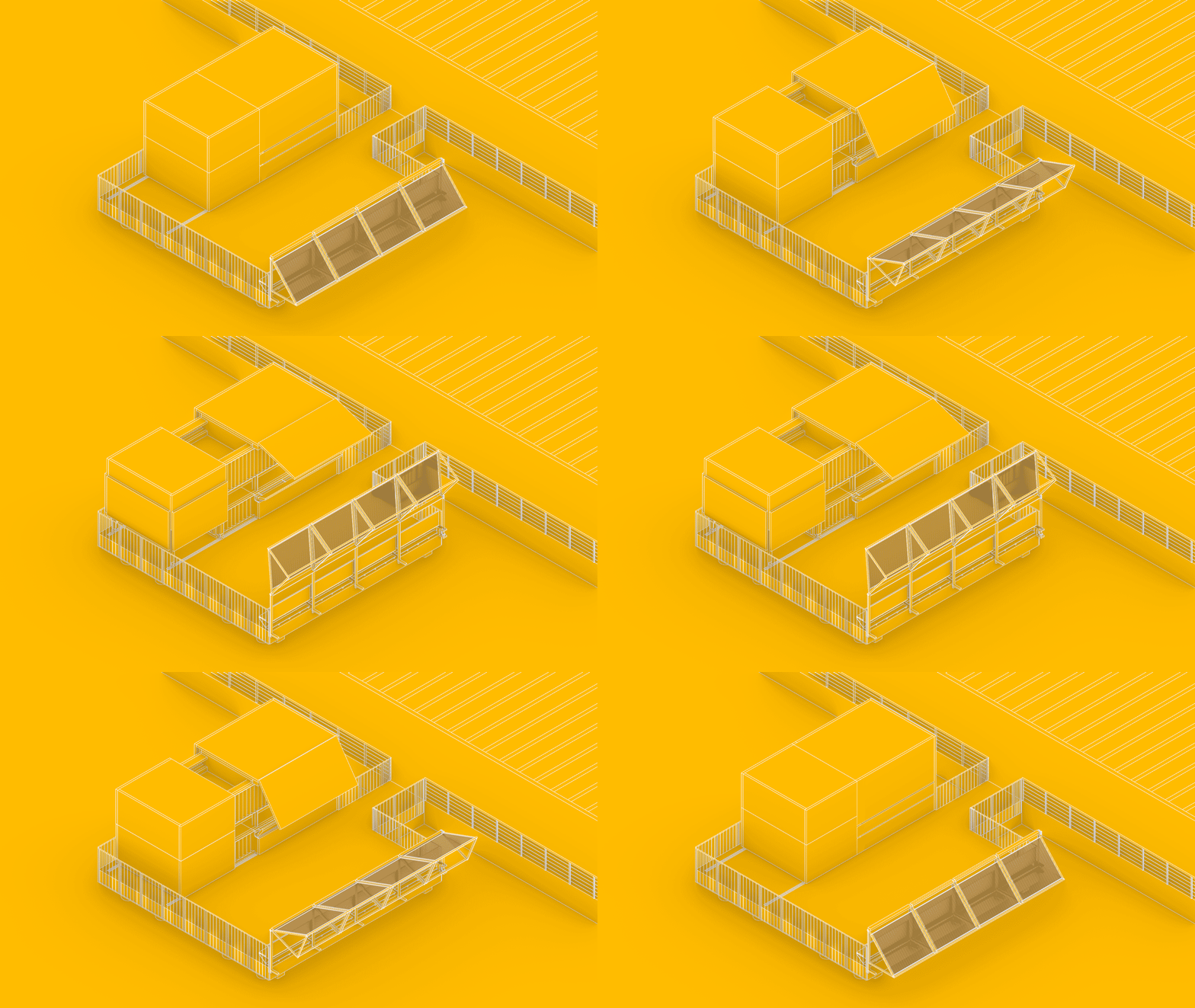
Facade Opening Mechanism © SoBA
小規模介入がもたらす大きな影響
〈ブルームボックス〉を通じて、小規模な都市介入の可能性を探求した。日常に軽やかさと柔軟性を組み込み、細部からのアプローチによって場所を再活性化させ、人と自然、そして人と人との関係を育むことを目指す。
建築の意義は壮大なスケールや記念碑的な形態に限られない。小さく、呼吸するように開閉するボックスにも宿り得るのである。それは生活に参加し、時間と共に応答しながら都市の集合的記憶の一部となっていく。
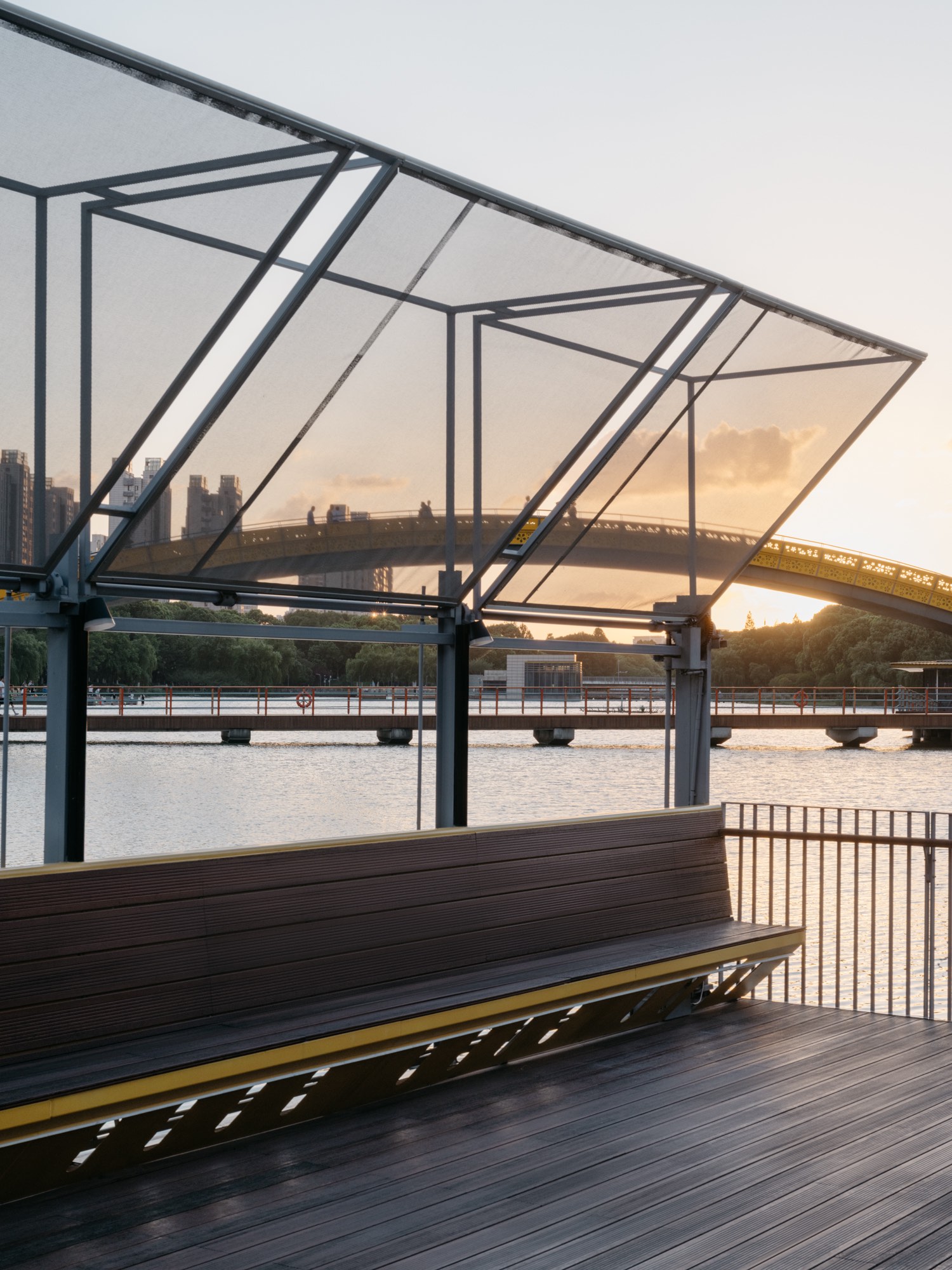
© Wen Studio
小規模な空間再生
〈ブルームボックス〉は、都市の文脈に軽やかかつ柔軟に溶け込み、空間的負担を与えることなく都市生活の実情に応答する。
適応性のある外皮と開放的なインターフェースを通じて場所の可能性を活性化し、人・空間・自然・人々同士のつながりを紡ぎ出す。日常の流れの中に、触知可能で記憶に残る都市の断片を残し続けるのである。
© Wen Studio
© Wen Studio
© Wen Studio
© Wen Studio
© Wen Studio
Model Illustration © SoBA
Plan © SoBA
Section A-A © SoBA
以下、SoBAのリリース(英文)です。
The Bloom Box
A Living Structure Breathing with the CityThe project is located on a lakeside platform in Central Park, Huqiao, Kunshan, Jiangsu. The site was originally occupied by an aging sunshade pavilion. Despite its prime location, the space had long been overlooked due to its limited functionality. Our goal was to bring this place to life through a lightweight and flexible design intervention—creating a spot where people genuinely want to pause and linger.
01|From “Machine” to “Living” Architecture
Early modernist architecture was often called a “machine for living,” emphasizing clear functions and rational forms. In this project, however, we sought a building that feels alive—one that actively responds to time, weather, and user needs. To achieve this, we designed a box-like structure with operable walls that slide, flip, and lift open during business hours, fully revealing the interior and inviting people to come closer and stay. When closed or not in use, it folds into a quiet, compact volume.
This act of opening and closing is more than a functional response—it’s a spatial expression that makes the building part of the city’s rhythm rather than a static object. Passersby can immediately tell when it’s “open,” as if the building itself senses time.02|Dialoguing with the Site: Creating “Gray Spaces”
Instead of designing a closed box, we aimed to integrate the small structure with its surroundings, making it a presence willing to “open itself up.” Through folding doors, sliding façades, and translucent materials, we created a series of “gray spaces” that blur the boundary between inside and outside—providing shade and shelter while allowing breeze and light to pass through.
The sunshade and seating opposite the building work together to create an open, inviting space. The sunshade can open and close, making the area comfortable for different times and uses.
This openness transforms the originally enclosed volume into an interactive space, enriching how people use it: whether waiting for coffee, enjoying the view, or hosting pop-up markets and events. The building becomes not just an object, but an interface where life unfolds.03|Lightweight Construction and Sustainable Thinking
To minimize disruption to the existing platform, we employed a lightweight steel frame clad in aluminum panels, with bamboo flooring. The main structure is fixed and non-removable to ensure long-term stability and durability; meanwhile, the façade features operable, adjustable elements that adapt to different operational scenarios, seasonal changes, and lighting conditions. This “stable skeleton + dynamic skin” strategy extends the building’s lifecycle while enabling it to continuously adapt and respond within the urban environment.
Our aim is for this to be more than just a functional space—it’s a framework that can be continually activated and reused.04|A Place That Can Be Redefined
We call it The Bloom Box, but it’s far more than a coffee and flower shop. It can be a warm drink encountered on a journey, a comfortable spot where parents sit and watch the water with their kids, the starting point of a weekend flower market, or a cozy corner for friends to gather.
With no fixed programmatic boundaries, its ambiguity invites users to define it freely. Here, fragrance, light, and water combine to create a gentle urban nook. We envision it not as a “finished building,” but as a living container that evolves through use.05|Small Scale, Light Touch, Big Impact
Through The Bloom Box, we explore the possibility of small-scale urban intervention—embedding lightness and flexibility into everyday life. Starting from details, we aim to reactivate the site through use, fostering genuine connections between people and nature, and between people themselves. We believe architecture’s meaning isn’t confined to grand scales or monumental forms; it can also live in a small, openable, breathable box that participates in life, responding over time to its environment and users, and becoming part of the city’s collective memory.06|A Small-Scale Spatial Renewal
The Bloom Box integrates lightly, flexibly, and participatively into the urban fabric, responding to the realities of daily city life without adding spatial burden. Through its adaptable skin and open interfaces, it activates the site’s potential and continuously weaves connections among people, space, nature, and each other—leaving behind urban fragments that are tangible and memorable amid the flow of everyday life.Facts
Project Name: The Bloom Box
Project Type: Architecture and Interior Design
Project Location: Central Park, Huqiao, Kunshan, Suzhou, Jiangsu Province, China
Client: Huaqiao Town, Kunshan Municipal Government
Consultant: Huaqiao Economic Development Zone Planning and Construction Bureau
Design Period: September 2023 – July 2024
Construction Period: August 2024 – January 2025
Site Area: 100 sqm
Building Area: 40 sqm
Design & Construction Drawing Firm: SoBA
Design Firm Website: https://www.sobarchitects.com/
Design Firm Contact: office@sobarchitects.com
Lead Architects: Wang Ruo, Tang Haiyin
Design Team: Chen Tuo, Li Chuanzhang, Wang Yuan, Shen Yichen (Intern), Li Zizhen (Intern)
Lighting Consultant: Shanghai Guangyue Lighting Design Co., Ltd.
Structural Consultant: Zang Yuhong
Contractor: Wenshanglv Group Kunshan Chuanshi Hezhong Advertising & Decoration Engineering Co., Ltd.
Photographer: Wen Studio
SoBA 公式サイト
https://en.sobarchitects.com


![[Interview]iF Design代表のウヴェ氏に聞く、建築と都市の2026年メガトレンド](https://magazine-asset.tecture.jp/wpcms/wp-content/uploads/2026/07/23221054/iF_AwardCeremony_2026_AwardCeremony-82-900x600.jpg)
![[Report]激変する時代の中で、建築とデザインはどう拡張するか。「iF DESIGN AWARD 2026」授賞式&最新トレンド](https://magazine-asset.tecture.jp/wpcms/wp-content/uploads/2026/07/24010304/iFDesignTrendConference26-45-900x600.jpg)
![[Report]RUI Architectsが可動モジュールを設計して松竹のアートスペースをリニューアル、柿落とし展「継承のトランジション」の会場デザインも担当](https://magazine-asset.tecture.jp/wpcms/wp-content/uploads/2026/07/24141011/20260713shutl_press11-01309-c-900x629.jpeg)
![[Interview]BIM図面審査がスタート! さまざまな設計者のニーズに応えるVectorworksによる「限界のないデザイン」の世界](https://magazine-asset.tecture.jp/wpcms/wp-content/uploads/2026/07/13084316/rinterview_vectorworks_056-e1784200974912-900x555.jpg)